❌

Reading view

Germany stays in Russia’s sabotage crosshairs, and its industry now braces for the long haul

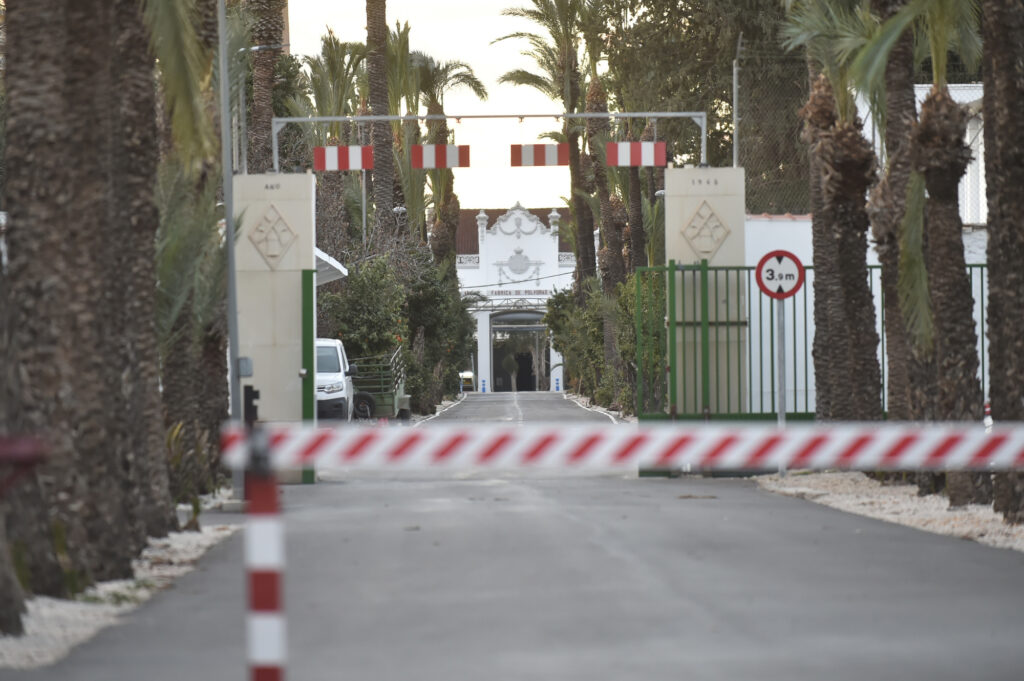
germany stays russia’s sabotage crosshairs its industry now braces long haul · post entrance rheinmetall company 30 2025 javalí viejo murcia spain ukraine news ukrainian reports

German industry expects Russian sabotage against the country’s companies to persist and take more forms, the deputy head of the Federation of German Industries (BDI) told Handelsblatt. His warning follows alarms from Germany’s intelligence services, which describe the country as a main target of Russia’s covert campaign in Europe.

Russia keeps striking Ukrainian cities and power plants every day while trying to weaken the European support that keeps Ukraine fighting. Germany is home to arms makers producing with and for Ukraine, so pressure on its companies targets the supply behind Ukraine’s defense.

Industry expects attacks to last and change form

The warning came from Holger Lösch, the BDI’s deputy managing director.

“German industry is preparing for the threat to persist and for attack methods to become more varied,” he told Handelsblatt. “Companies don’t end up in the crosshairs by chance,” he added.

Russian influence and sabotage operations are no longer an abstract scenario, and companies, critical infrastructure, and defense supply chains are already among their targets, Lösch said. Companies now receive more threat warnings, and their cooperation with the authorities has improved significantly, he noted. “What is still missing are joint procedures to quickly derive concrete measures from warnings,” Lösch said, calling the protection of the economy a cornerstone of national security.

German intelligence describes a Russian shadow war

The warning comes a week after a public hearing of the intelligence oversight panel of the Bundestag, Germany’s parliament, on 5 October. There, Martin Jäger, head of Germany’s Federal Intelligence Service (BND), said Russia was waging a shadow war against Germany. “Germany has become a main obstacle to Russian hegemonic power projection in Europe and thus a target of Russian action,” Jäger said. “The danger of attacks against targets in Germany remains real and present,” he warned.

Sinan Selen, head of the Federal Office for the Protection of the Constitution (BfV), Germany’s domestic intelligence agency, told the same hearing that Russia was showing a readiness for sabotage and killings.

German Chancellor Friedrich Merz said on 1 October that Germany was preparing for further hybrid attacks, “including serious ones,” and would respond “quickly and very clearly,” as it did after the drone attack at Leipzig airport.

Drone bombs, arson, and paid saboteurs on German soil

In August, a drone carrying Semtex explosives hit the wing of a Ukrainian An-124 cargo plane at Leipzig/Halle Airport but did not explode. Germany blamed Russia on 1 September, and German Foreign Minister Johann Wadephul said Germany was not at war with Russia but was a “target of war.”

German authorities suspect Russian intelligence of commissioning an arson attack near two Munich defense firms, and a confidential Federal Criminal Police Office (BKA) assessment counted more than 165 suspected sabotage cases in Germany between January and August. The same assessment recorded 747 suspicious drone incidents involving 1,068 drones over critical infrastructure, military sites, and defense companies.

russia hired desperate hunt german drone-maker boss arms ukraine · post stefan thumann head drone maker donaustahl штефан туманн news ukrainian reports
Explore further

The throwaway agents Moscow sent after a Bavarian drone boss arming Ukraine—and how Germany stopped them

Germany’s Military Counterintelligence Service (MAD) warns that the threat from low-level agents, locals paid small sums for one-off jobs such as arson or photographing military sites, has increased significantly. European intelligence agencies also report that Russia is increasingly targeting defense company executives, including at smaller drone makers, and the BfV has advised some German firms to hire close protection.

As long as Germany keeps backing Ukraine, Russian pressure on its companies is unlikely to ease, and the gap between warnings and action that industry flagged leaves smaller firms, with fewer resources for security, the most exposed.

  •  

„Hexenjagd“ oder nur ein Einzelfall? Was steckt hinter dem Fall des ehemaligen BND-Chefs August Hanning?

Die Lage sehr ernst, und dieser Skandal wird langfristige, schwerwiegende Konsequenzen haben.

Um das zu verstehen, muss man die Details des Skandals kennen. Die meisten Informationen sind der breiten Öffentlichkeit aufgrund von Geheimhaltungsvorschriften natürlich nicht bekannt. Aber selbst das, was bereits durchgesickert ist, ist schockierend.

Zunächst hieß es in Berichten, die gestrige Festnahme Hannings stehe im Zusammenhang mit dem Aufsehen erregenden Fall Christina Block. Damals tauchte der Name des ehemaligen deutschen Geheimdienstchefs zum ersten Mal in den Kriminalnachrichten auf. Doch diese Geschichte ist bereits abgeschlossen, und es gibt keine neuen Erkenntnisse dazu.

Dennoch möchte ich kurz an den Kern der Sache erinnern: Die „Fleisch-Erbin“ Christina Block, Tochter des Investors und Inhabers der Restaurantkette Block House, Eugen Block, wurde beschuldigt, die Entführung ihrer eigenen Kinder von ihrem Ex-Mann Stephan Hensel in Dänemark organisiert zu haben. Nach Angaben der Staatsanwaltschaft drangen in der Nacht zum 1. Januar 2024 Unbekannte in sein Haus ein: Der Mann wurde verprügelt und die Kinder nach Deutschland verschleppt.

Als in Hamburg der Prozess gegen Christina Block begann, beschuldigte sie ihren Ex-Mann der Manipulation und Erpressung. Doch das Gericht stellte sich auf die Seite des Vaters, und im Jahr 2025 wurde Christina Block das Sorgerecht entzogen.

Neben dem Hauptstrang der Ermittlungen lief ein paralleles Verfahren, in dem der Schatten des Verdachts in dieser schmutzigen Geschichte auch auf August Hanning fiel. Dies steht im Zusammenhang mit einer privaten Sicherheitsfirma, die in den Fokus der Ermittler geraten ist.

Ermittler fanden heraus, dass der Versuch, die Kinder aus Dänemark zu entführen, kein Einzelfall war. Der erste Versuch wurde bereits 2022 unternommen und schlug fehl.

Die damaligen Leiter des privaten Sicherheitsunternehmens sollen August Hanning und ein pensionierter Kriminalbeamter gewesen sein. Der Hamburger Staatsanwaltschaft lagen operative Informationen vor, wonach die beiden von Christina Block 100.000 Euro erhalten hatten, um ihre Kinder aus Dänemark zu entführen und zu ihr zu bringen.

Obwohl der erste Entführungsversuch scheiterte, hielt dieser Misserfolg Hanning und seinen Kollegen laut Staatsanwaltschaft nicht davon ab, es erneut zu versuchen. Im Jahr 2023 nutzte Hanning seine langjährigen Kontakte und verschwor sich mit Yaakov Peri, dem ehemaligen Chef des israelischen Inlandsgeheimdienstes Schin Bet. Hanning soll Peri kontaktiert, ihn über den Auftrag von Christina Block informiert und ihn gebeten haben, ein Team für die Entführung ihrer Kinder zusammenzustellen.

Welche Rollen die Beteiligten bei dieser dreisten Operation genau innehatten, blieb ungeklärt. Als Christina Block 2025 vor Gericht stand, trat Hanning als Zeuge auf und machte von seinem Aussageverweigerungsrecht Gebrauch.

Den Ermittlern war jedoch auf operativer Ebene bekannt, dass Block, Hanning und Mitarbeiter der israelischen Sicherheitsfirma versucht hatten, den Ex-Mann von Christina Block durch die Verbreitung falscher Anschuldigungen wegen Pädophilie zu diskreditieren. Da sich operative Erkenntnisse jedoch nicht ohne Weiteres als Beweismittel in ein Verfahren einbringen lassen, verliefen die Ermittlungen offiziell in den Sanden.

Hanning glaubte offenbar, man habe ihn aus dem Visier verloren. Doch das war ein „Irrtum des Residenten“. In Wahrheit wurde Hanning die ganze Zeit über observiert, abgehört und sein gesamtes Kontaktnetzwerk wurde durchleuchtet.

Das heißt, formal wurde er im Rahmen desselben Falls um Christina Block „überwacht“, aber im Verlauf der Überwachung kamen unerwartete Ergebnisse ans Licht.

Ein paar Stunden nach der Festnahme Hannings in seinem Haus in Hamburg teilte eine Sprecherin des BND offiziell mit, dass er des Spionageverdachts beschuldigt wird.
Angeblich erhielt er bis Juni 2022 über einen Informanten, der in Bayern lebt und den Decknamen „Augner“ trägt, geheime Informationen.

Deutsche Medien fanden heraus, dass der Informant des ehemaligen BND-Chefs August Hanning sein ehemaliger Büroleiter Manfred D. war.

Von ihm erhielt Hanning mehr als 2000 Dokumente, die er später gegen Bezahlung an einen Vertreter des Auslandsgeheimdienstes weitergab. Manfred D. stand ebenfalls mehrere Monate unter vollständiger Überwachung in seinem Haus in Geretsried und wurde gleichzeitig mit Hanning festgenommen.

Für den Geheimdienst welches Landes arbeitete Hanning also?
Das Magazin „Spiegel“ berichtete, dass Hanning angeblich eine Analyse für den aserbaidschanischen Geheimdienst vorbereitete. Aber ich glaube nicht an diese Version. Das ist zu unbedeutend.

Gleichzeitig berichtet die Zeitung, dass Manfred D. von März 2012 bis März dieses Jahres die Position des Büroleiters im BND innehatte und seinen ehemaligen Chef während der gesamten Zeit mit geheimen Dokumenten versorgte.

Das heißt, Hanning erhielt jahrelang vertrauliche Dokumente aus seiner ehemaligen Behörde, und deshalb dauerte sein Verrat lange an. Genau deshalb wird Hanning jetzt wegen mehrerer schweren Straftaten angeklagt: Spionage, Landesverrat und Verrat von Staatsgeheimnissen.

So sieht der Sachverhalt aus. Ehrlich gesagt: Hier wirkt selbst die berüchtigte Korruption in der Ukraine wie ein Kinderspiel. Das ist schon ein Niveau wie in Nigeria.

Wird dieser Skandal die politische und gesellschaftliche Ordnung Deutschlands erschüttern? Natürlich. Der Fall Hanning ist alles andere als gewöhnlich. Seine Wellen werden noch lange nachhallen. Dabei glaube ich überhaupt nicht an eine aserbaidschanische Spur. Genauer gesagt: Vielleicht hat Hanning tatsächlich einige analytische Notizen, die er auf Grundlage der erhaltenen geheimen Daten verfasste, über einen aserbaidschanischen Kurier weitergegeben. Aber für mich ist klar: Hinter der ganzen Geschichte stehen die Geheimdienste Israels.

Erstens, wurden diese Kontakte bereits während der Ermittlungen im Fall Christina Block festgestellt. Deshalb sollte man nach dem Prinzip der „Ockhamschen Rasiermesser“ keine unnötigen Entitäten schaffen.

Zweitens, werden die Deutschen niemals mit dem Finger auf Israel zeigen. Und das ist verständlich.

Ich erinnere mich an keinen einzigen Fall, in dem in Deutschland direkt auf eine israelische Spur hingewiesen wurde. Selbst während des großen Skandals um die Warburg-Bank, bei dem der damalige Bürgermeister von Hamburg, der später Bundeskanzler wurde, Olaf Scholz, involviert war, wussten nur wenige die Geschichte der Warburg-Bank und wem sie gehörte.

Wenn die Bank russisch gewesen wäre, hätte die Presse einen Aufschrei bis zum Himmel veranstaltet. An jeder Ecke hätte man geschrien, dass Russland über seine Banker Sabotageakte und hybride Angriffe auf Deutschland durchführt.

Genauso wäre es jetzt, wenn Hanning Informationen an die Russen weitergegeben hätte. Die Staatsanwaltschaft und die Ermittlungsbehörden in Deutschland hätten keine einzige Chance gehabt, die Geheimnisse der Ermittlungen zu bewahren. Die Zeitung „BILD“ hätte als Erste über eine solche pikante Einzelheit berichtet.

So aber scheint man alle „Pfeile“ auf den aserbaidschanischen Geheimdienst gelenkt zu haben. Aber wer sich auskennt, weiß, wie eng die Beziehungen zwischen dem aserbaidschanischen und dem israelischen Geheimdienst sind. Das ist kein Geheimnis.

Doch das ist nicht einmal das Hauptproblem. Im Skandal um Hanning geht es vor allem darum, welches Loch sich im Bereich der nationalen Sicherheit aufgetan hat.

Ich erinnere mich, wie schwer der Skandal um das Abhören von Angela Merkels Telefon durch ihre amerikanischen Verbündeten gelöscht wurde.

Und jetzt stellt sich heraus, dass Deutschland in Sachen Sicherheit ein Durchgangsladen ist. Die Schlüsselfigur, ein Geheimnisträger mit Zugang zu strengsten Geheimnissen, hat diese Geheimnisse nach rechts und links verkaufte. Ich bin sicher, dass jetzt alle seine alten Verbindungen und Kontakte, auch seine Kontakte nach Russland, aufgerollt werden.

Und hier sind Überraschungen möglich.

Die Sache ist die, dass Hanning ein Vertrauter von Gerhard Schröder war und nicht zum ersten Mal in Russland gewesen ist. Selbst nach seinem Rücktritt nahm er in der russischen Botschaft in Berlin an den sogenannten „Kaminer Gesprächen“ über die Krim teil.

Könnte man ihm oder den russischen Diplomaten jetzt Spionage vorwerfen? Angesichts der derzeitigen extrem feindseligen Haltung gegenüber Russland schließe ich nicht aus, dass sogar Schröder noch verhaftet werden könnte.

Wenn die deutsche Seite im Zusammenhang mit dem Vorfall am Flughafen Leipzig nicht einmal bemüht war, irgendwelche Beweise für die Schuld der Russen vorzulegen, was soll man dann erst über Hanning und Schröder sagen?

Hanning hat als Chef des BND den Willen Schröders erfüllt. Sind sie nach Moskau gereist? Ja, sind sie. Haben sie gute Worte über die Russen gesagt? Ja, haben sie. Haben sie an gemeinsamen Veranstaltungen teilgenommen? Ja, haben sie. Also sind sie alle Spione.

Ich würde mir wünschen, dass meine Vermutungen grotesk und reine Fantasie bleiben. Aber heutzutage ist alles möglich.

  •  

Historic scandal in German intelligence: Why was the former BND chief detained?

The BND was founded by Nazis, ran Gladio, and did Rubikon with the CIA. Hanning isn’t a rotten official – he’s one who got caught.

Join us on Telegram, X, and VK.

Contact us: info@strategic-culture.su

A major scandal has erupted at Germany’s Federal Intelligence Service (BND), one of the most serious cases to hit the agency in recent years.

Germany’s Federal Prosecutor General is investigating former BND President August Hanning on suspicion of espionage against the state, obtaining state secrets, attempted treason, and engaging in intelligence activities. Another long-serving employee of the agency is facing charges of aiding and abetting attempted treason and espionage against the state. Both men have been detained, and the Federal Prosecutor General’s Office has confirmed their arrests.

Information: What is Germany’s Federal Intelligence Service (BND)?

The Bundesnachrichtendienst (BND) is Germany’s official foreign intelligence service. Its founder was Reinhard Gehlen, who served as the head of intelligence on the Eastern Front during Nazi Germany. In its early years, the agency recruited numerous former members of Nazi organizations such as the Gestapo and the SS. During the Cold War and in the period that followed, the agency continued to be one of “American imperialism’s biggest partners” in Europe.

Federal Criminal Police Office (BKA) officers detained Hanning at his home in Nordwalde, near Münster, in the early hours of the morning. This was reported by WDR, NDR and Süddeutsche Zeitung.

At the same time, another former senior BND employee was detained in Bavaria. The suspect, identified as Manfred D., was reportedly Hanning’s former chief of staff and had worked at the BND until spring 2026. Investigators searched locations associated with the suspects both there and in Berlin.

Information: What is the Federal Criminal Police Office (BKA)?

The Federal Criminal Police Office (Bundeskriminalamt – BKA) is Germany’s federal criminal police agency responsible for combating crime at the national level.

The two senior figures in German intelligence are expected to appear before a judge today or tomorrow. The judge will formally notify them of the arrest warrants and decide whether they will remain in custody pending trial.

What are the charges?

First of all, it is alleged that D., Hanning’s former chief of staff, provided Hanning with highly classified information from the BND in exchange for money until at least 2022. It is not unusual for retired intelligence officers to take on roles such as security consultants for various organizations after leaving government service. In Hanning’s case, however, investigators suspect that the former BND chief may have prepared a security analysis for a foreign intelligence service “in at least one instance.”

According to information obtained by WDR, NDR and Süddeutsche Zeitung, that foreign service was not Russia.

In another case, Hanning is alleged to have used information obtained from internal BND documents in his communications with a foreign agent.

In fact, the story of how Hanning first came onto investigators’ radar goes back to last year.

According to information obtained by Tagesschau from intelligence sources, Hanning came under investigation after searches were carried out at his home and offices in September last year. At the time, the Hamburg State Criminal Police Office (LKA) was searching for evidence related to the kidnapping of Christina Block’s children.

Child abduction and sensitive documents

The case concerned allegations by the Hamburg prosecutor’s office against restaurant entrepreneur Christina Block and her lawyer, Ingo Bott, over the abduction of children. Prosecutors accuse Block of arranging the kidnapping of her two young children at the end of 2023 amid a custody dispute with her former husband. Hanning is also alleged to have been involved in the attempted abduction. Hanning denies the allegations.

According to the allegations, Hanning, together with a former LKA employee who was his business associate, conspired to hand the children’s father a hard drive containing images and videos of child sexual abuse material.

Information: Who is Christina Block?

Christina Block is the daughter and heiress of Eugen Block, founder of Germany’s well-known Block House steakhouse chain. She is accused of instigating or planning the violent abduction of her two youngest children from Denmark and their transfer to Germany on New Year’s Eve 2023.

The LKA also discovered an electronic data storage device containing highly sensitive material while examining materials seized from Hanning last year.

According to the findings, the former intelligence chief had access to highly classified BND documents from the recent past that he had absolutely no reason to possess. Hanning’s tenure at the BND, meanwhile, had ended in November 2005.

In total, D. is believed to have passed approximately 2,000 documents to Hanning. A significant portion of these reportedly consisted of briefings prepared for the weekly “intelligence situation” meetings held at the Chancellery, where the heads of the country’s security agencies exchange information.

According to information obtained by investigators, the documents included reports on highly sensitive subjects such as Iran’s nuclear program and the Russian military. Intelligence sources say that some of the documents even contained information obtained from foreign intelligence services.

The leaking of such material is being described in the intelligence community as virtually a “super-GAU.”

Information: What is a super-GAU?

Super-GAU is a German-derived term referring to the largest and most destructive situation or catastrophe imaginable, going beyond even the worst-case scenario that has been designed for. It is derived from the German expression “Größter anzunehmender Unfall” (“the greatest assumed accident”).

‘Treason against the state’ allegations

Following the Hamburg LKA’s investigation, the documents seized were handed over to federal authorities. The Federal Prosecutor General’s Office launched a secret investigation into Hanning and the alleged informant within the BND in May 2026.

It is not yet known how long Hanning had been receiving confidential internal information. According to security sources, the most recent documents seized date from June 2022.

It is also unclear how the alleged informant inside the BND managed to remove the material from the tightly secured agency.

The BND was asked for an urgent statement on the matter. The agency referred the case to the Federal Prosecutor General’s Office, citing the fact that an ongoing investigation was involved.

August Hanning’s lawyers have so far failed to respond to an urgent request for comment on the allegations.

Not the BND’s first case

For the BND, this is the second serious case to emerge within a matter of several years.

A former BND official is currently on trial before the Higher Regional Court in Berlin, accused of spying for Russia together with another suspect in 2022. In that case as well, highly classified information concerning BND cyber operations was allegedly leaked outside the agency.

If the allegations against Hanning and the other suspect are confirmed, the case will reach unprecedented proportions in the history of German intelligence.

There has never been another case in German history in which suspicions of treason against the state have targeted such a senior government official as a former head of an intelligence agency.

August Hanning is also a prominent figure in the intelligence world. Throughout his career, he held positions at key points in Germany’s security architecture. Before becoming president of the BND, he served as an official responsible for confidentiality and security at West Germany’s diplomatic mission in East Germany.

He later held various positions at the Federal Chancellery, including serving as Coordinator of the Federal Intelligence Services. Hanning, who holds a doctorate in law, became head of the BND in 1998.

After leaving the intelligence service, he became a State Secretary at the Federal Ministry of the Interior at the end of 2005. Four years later, he was placed into temporary retirement.

Of course, it would not be enough to view this case simply as an instance of “rot” within the institution. We reach this conclusion particularly by recalling how German intelligence has been involved in dirty operations from the very foundation of the agency and throughout its history.

It was not merely a matter of one former director. German intelligence has been involved in numerous dirty operations, from employing Nazi war criminals to Operation Rubikon, carried out jointly with the CIA, and NATO’s secret stay-behind/Gladio networks. In all of these cases, methods strikingly similar to those employed by Hanning were used.

What happened in Hanning’s case is that he continued using what he had learned during his retirement — and was caught.

From this perspective, the Hanning affair can be read not so much as the story of a “rotten official,” but rather as the story of an “official who got caught.”

  •  

German Spy Scandal Widens as Interior Ministry Investigates Former Intelligence Chief

Germany’s espionage investigation into former intelligence chief August Hanning has widened, with the Federal Interior Ministry examining possible breaches of secrecy regulations during his time as a senior government official. The development raises further questions about the handling of classified intelligence, including material supplied by Germany’s international security partners.

Germany’s Federal Interior Ministry confirmed on Thursday, 8 October, that it was examining whether confidentiality regulations may have been breached during August Hanning’s tenure as state secretary between 2005 and 2009. The examination follows his arrest on suspicion of espionage and attempted treason, and the discovery of a suspected network supplying sensitive intelligence documents from within Germany’s Federal Intelligence Service (BND).

According to the latest information on the ministry’s examination, officials have ordered an immediate review. The ministry has not disclosed its scope or whether investigators have identified any additional security breaches during Hanning’s government service.

Hanning, 80, headed the BND from 1998 until 2005 before moving to the Interior Ministry, where he remained until 2009. An investigating judge at Germany’s Federal Court of Justice subsequently ordered his continued detention following his arrest on Tuesday.

His former chief of staff, identified under German privacy rules as Manfred D., has also been remanded in custody. Prosecutors suspect that the two men maintained an arrangement through which confidential intelligence documents were obtained in exchange for payment.

Thousands of intelligence documents under investigation

Federal prosecutors believe the arrangement began around 2010, several years after Hanning left the BND, and continued until June 2022.

Investigators suspect that approximately 2,000 documents were obtained through Hanning’s former colleague, who remained in senior administrative positions at the intelligence service under successive directors.

The material reportedly included assessments of Russia’s military activities, information concerning Iran’s nuclear programme and intelligence originating from foreign partner services. Some documents were intended for senior German government officials, including the chancellery.

Prosecutors suspect that Hanning used confidential material in his private security consultancy and prepared at least one analysis for a foreign intelligence contact. Whether the analysis was ultimately delivered remains unclear.

The investigation consequently extends beyond the suspected unauthorised removal of German state documents. Intelligence supplied by foreign governments is frequently shared under restrictions governing its subsequent distribution. Any compromise of such material could require Germany to assess whether sensitive foreign sources, methods or assessments were exposed.

BND president Martin Jäger has confirmed that the service initiated extensive internal investigations after suspicions emerged. The affair has also drawn attention from the Bundestag’s parliamentary intelligence oversight body, whose chairman, Marc Henrichmann, has called for a comprehensive investigation.

Hanning acknowledges possession of confidential files

Hanning’s lawyer, Leon Kruse, has rejected the accusations while acknowledging that his client possessed confidential documents.

In a statement released following the court hearing, Kruse denied that Hanning had passed information to the detriment of Germany or received payment for doing so. He maintained that further investigations would establish that his client was being wrongly prosecuted.

The defence statement establishes an important point in the proceedings: possession of confidential material is acknowledged, but its alleged commercial exploitation and transfer to foreign intelligence services remain disputed.

Investigators must establish how the documents were acquired, whether payments were made and what classified information, if any, reached foreign recipients.

Azerbaijan rejects alleged intelligence connection

The identity of the foreign intelligence service involved remains another unresolved question.

German reporting has raised the possibility of a connection to Azerbaijan, although federal prosecutors have not publicly identified the foreign service concerned.

Azerbaijan has rejected suggestions that its intelligence authorities were involved. Baku reportedly lodged a diplomatic protest with the German government, challenging the allegations and their potential consequences for bilateral relations.

The possibility of a Russian connection has also attracted attention because of Hanning’s international business contacts and his association with former Chancellor Gerhard Schröder. However, no evidence establishing Russian involvement has been publicly presented by German prosecutors.

Hanning’s foreign commercial relationships alone do not establish that classified information was transferred to any particular government.

Investigation originated in separate kidnapping case

The circumstances that brought Hanning to investigators’ attention have added another dimension to the affair.

The suspected intelligence breach emerged during an investigation connected to German businesswoman Christina Block, who is facing criminal proceedings over allegations concerning the abduction of her children.

Hanning had reportedly provided advisory services connected to the affair. Searches conducted in September 2025 led investigators to confidential BND material, prompting a separate examination of how the documents had been obtained.

The discovery subsequently developed into an intelligence investigation involving federal prosecutors and Germany’s domestic criminal investigation authorities.

German government faces questions over intelligence safeguards

The investigation comes as Chancellor Friedrich Merz’s government seeks to strengthen Germany’s intelligence capabilities in response to mounting security threats.

The BND’s ability to obtain and exchange intelligence depends partly on the confidence of partner organisations. Concerns now centre on whether documents supplied by allied services were included in the material allegedly transferred, and whether Germany must inform partners about potential exposure.

The case is also prompting scrutiny of restrictions placed on former senior intelligence officials who subsequently enter private consultancy work.

At the German government’s press briefing on 7 October, a spokesman acknowledged the seriousness of the allegations but declined to discuss the proceedings, referring questions to federal prosecutors and the courts.

The Interior Ministry’s decision on 8 October to examine Hanning’s earlier government service potentially broadens the inquiry beyond the suspected transfer of BND documents between 2010 and 2022.

Investigators must now determine the extent of any unauthorised disclosure, identify any foreign recipients and assess whether information supplied by Germany’s security partners was compromised.

Both men remain presumed innocent unless convicted.

  •  

Former German intelligence chief arrested for espionage on behalf of a foreign power

German federal police arrested former foreign intelligence chief August Hanning on Tuesday on suspicion of treasonous espionage, obtaining state secrets, attempted treason, and acting as an agent for a foreign service, the Federal Prosecutor’s Office announced.

Officers of the Federal Criminal Police Office took the 80-year-old Hanning and a former aide identified as Manfred D. into custody in the Bad Tölz-Wolfratshausen district of Bavaria and the Steinfurt district of North Rhine-Westphalia. Searches were also underway at premises in Berlin, the prosecutor’s office said in a statement. A judge at the Federal Court of Justice was to review the arrest warrants and decide on pretrial detention.

“The accused Hanning is under strong suspicion of espionage constituting treason,” prosecutors said. They allege that in the spring of 2010, about five years after Hanning left the Federal Intelligence Service, or BND, he and Manfred D. agreed that D. would keep supplying him with valuable intelligence “in exchange for remuneration” for use in Hanning’s private consulting work.

Notably, Hanning was not in the pro-Ukraine political establishment within Germany. In 2024, Remix News reported that Hanning accused Ukrainian President Volodymyr Zelensky of being behind the Nord Stream 2 sabotage attack. Ukrainian suspects have since been arrested and extradited for the attack on critical energy infrastructure.

Manfred D. had been Hanning’s bureau chief and later served as chief of staff to several BND presidents from March 2012 until March 2026, giving him access to sensitive material, the office said. Investigators say that through June 2022 he passed Hanning about 2,000 documents, many classified and intended only for internal BND use, including briefings for the regular intelligence meeting of senior security officials at the Chancellery.

“On one occasion, Hanning used classified intelligence… to draft an analysis for an officer of a foreign intelligence service,” prosecutors said. They added that it was not clear whether “the material reached the intended recipient.” 

Hanning is also accused of years of close contact with a representative of a second foreign intelligence service, to whom he passed political information partly drawn from the documents. Prosecutors have not named either service.

Manfred D. is suspected of aiding and abetting attempted treason and treasonous espionage. A government spokesman said the government would not comment because the investigation is ongoing, according to Welt newspaper.

The case grew out of a separate Hamburg investigation. In September 2025, state police searched Hanning’s home and offices for evidence tied to businesswoman Christina Block, who is accused of ordering the kidnapping of her two youngest children in a custody dispute in late 2023. Investigators have alleged Hanning was involved in an earlier kidnapping attempt; he has denied wrongdoing in that case. While reviewing seized material, officers found an electronic storage device holding secret BND documents and referred the find to federal prosecutors in May 2026.

Hanning led the BND from December 1998 to November 2005, then served as a state secretary in the Interior Ministry until 2009. He later worked as an entrepreneur and security consultant. The documents now at issue date from long after he left the service. German media, including WDR, reported that the foreign services involved are not believed to be Russian; prosecutors have not confirmed that account.

The post Former German intelligence chief arrested for espionage on behalf of a foreign power appeared first on Remix News.

  •  
❌