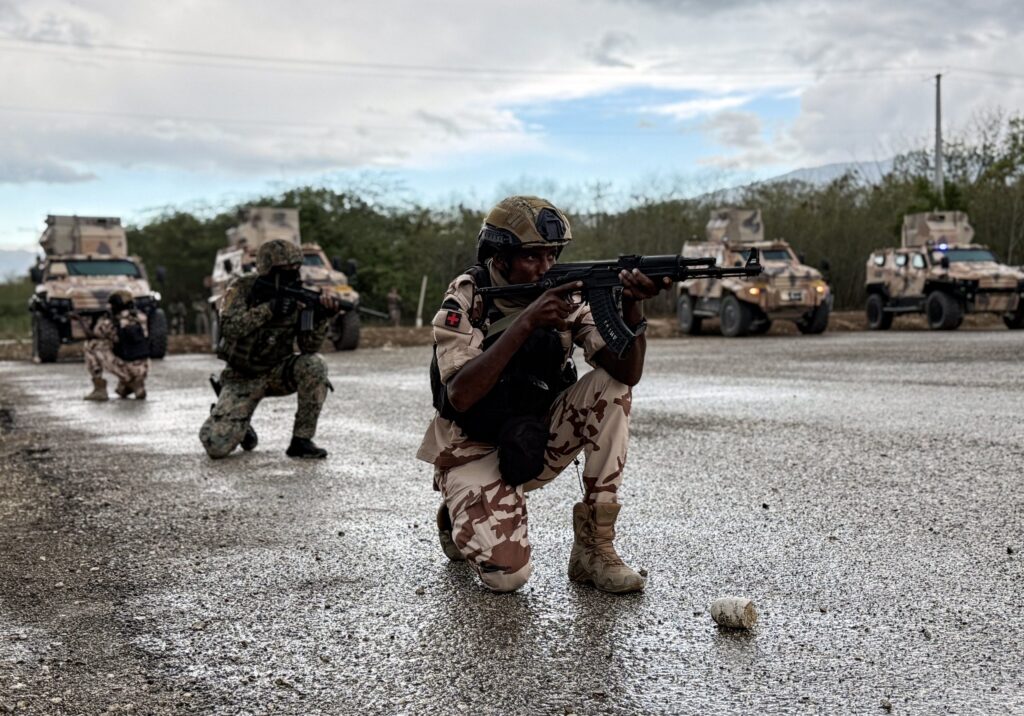
The view from the cockpit of a helicopter flown by members of the Salvadoran contingent of the Gang Suppression Force during an aerial patrol last month over Port-au-Prince, Haiti.
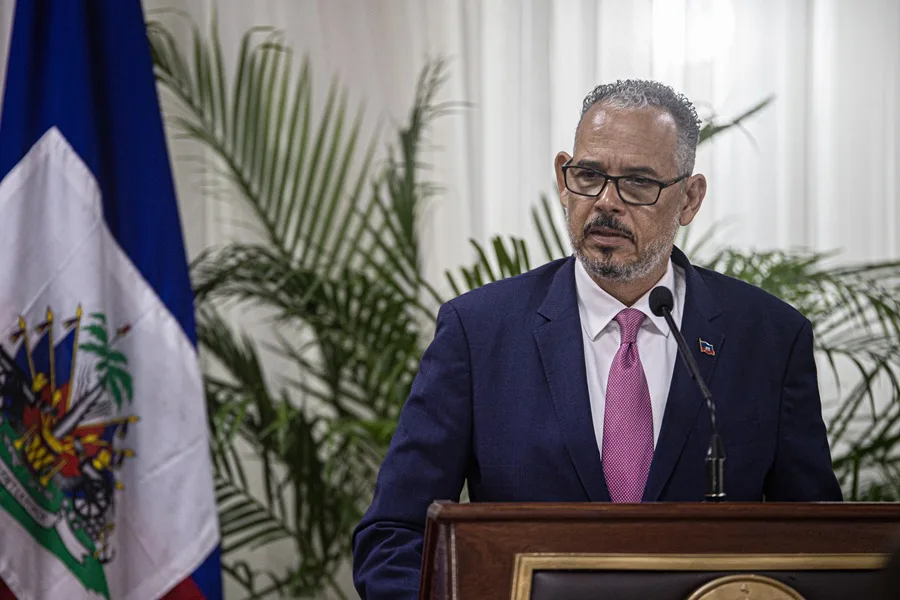
Haiti’s government said Thursday that rescuing four Salvadoran soldiers kidnapped by armed gangs last Sunday on the outskirts of Port-au-Prince is its absolute priority.
The office of Prime Minister Alix Didier Fils-Aimé said in a statement that the government is fully mobilized and intends to assert state authority with the greatest firmness against armed groups. It called the soldiers’ release an absolute priority and said all necessary resources are being mobilized to achieve that goal.
The prime minister met with competent authorities to assess the situation comprehensively and to determine, in close collaboration with the Salvadoran Gang Suppression Force (GSF), measures to reinforce ongoing operations against the armed gangs that attacked the vehicle carrying the Salvadorans.
Haitian security forces and the GSF have conducted an intense search since Sunday for the four Salvadoran aviation technicians, with whom contact was lost after the ambush in the Santo area of the Croix-des-Bouquets commune, within the Port-au-Prince metropolitan area.
#Haiti | The UN Security Council reaffirms its commitment to the Gang Suppression Force despite armed attacks and the kidnapping of four Salvadoran personnel. Rescue efforts continue as international forces maintain their security mission.#UnitedNations#teleSUREnglishpic.twitter.com/kKX5oDtQ0i
In its first official statement on the attack, the Prime Minister’s Office said that given the seriousness of the act, the State reaffirms its authority and determination, and that security forces are continuing operations firmly to secure the soldiers’ release and protect human life.
The GSF reported Tuesday that several members of the gangs controlling most of Port-au-Prince were killed and others wounded in clashes with forces searching for the Salvadoran military personnel. The GSF also reported that four of its own personnel were wounded during the operation and received medical care.
International diplomats maintain that the GSF mission objectives will continue in Haiti even though international forces confront mounting casualties and kidnappings.
On October 18, 2026, an explosive ambush in Croix-des-Bouquets, Haiti, targeted an armored vehicle with four Salvadoran Air Force aviation technicians attached to the UN-backed Gang Suppression Force.
Forced to evacuate after their vehicle caught fire, the four support personnel were kidnapped by Haitian armed groups operating near the capital.
In response, Salvadoran President Nayib Bukele announced a military rescue operation led by Task Force Libertad II, threatening an expanded offensive against Haitian gangs if the hostages are not safely returned.
In addition, the government of Haiti stated that it will work in conjunction with the United Nations Gang Suppression Force (GSF) mission to rescue the kidnapped Salvadorans.
While the Haitian government and international bodies coordinate security protocols, Bukele’s unilateral escalation in a foreign country projects his signature “iron-fist” stance against gangs onto the international stage, all with the backing of the United States.
The UN Security Council established the “Gang Suppression Force” that operates in Haiti. Created in October 2023 as the Multinational Security Support Mission following the Haitian government, the international force was reorganized in October 2025 into the Gang Suppression Force.
As of October 2026, the authorized strength of the Gang Suppression Force stands at 5,550 personnel, though deployed uniformed troops numbered 1,563 as of mid-October.
The Gang Suppression Force mandate focuses on assisting the Haitian National Police, protecting critical infrastructure, and restoring order across urban centers controlled by armed coalitions.
The region where the October 18 ambush took place, Croix-des-Bouquets, is controlled by several prominent armed groups. Security evaluations list the Chèn Méchan, Kraze Barye, and 400 Mawozo groups among the primary organizations holding territorial control over the corridor connecting Port-au-Prince to the Dominican border.
Key leaders of these groups, including Vitelhomme Innocent of Kraze Barye and Lanmo Sanjou of 400 Mawozo, are subject to active sanctions imposed by the UN Security Council and the U.S. government.
Data released by the UN indicates that between January and mid-September 2026, Haitian gang-related violence resulted in more than 5,700 deaths and injuries, alongside more than 230 reported kidnappings. Over 1.5 million residents remain internally displaced due to gang territorial expansion.
Foreign workers, international humanitarian staff, and local civilians have consistently been targeted for kidnapping as Haitian criminal groups use hostages for financial leverage or political concessions.
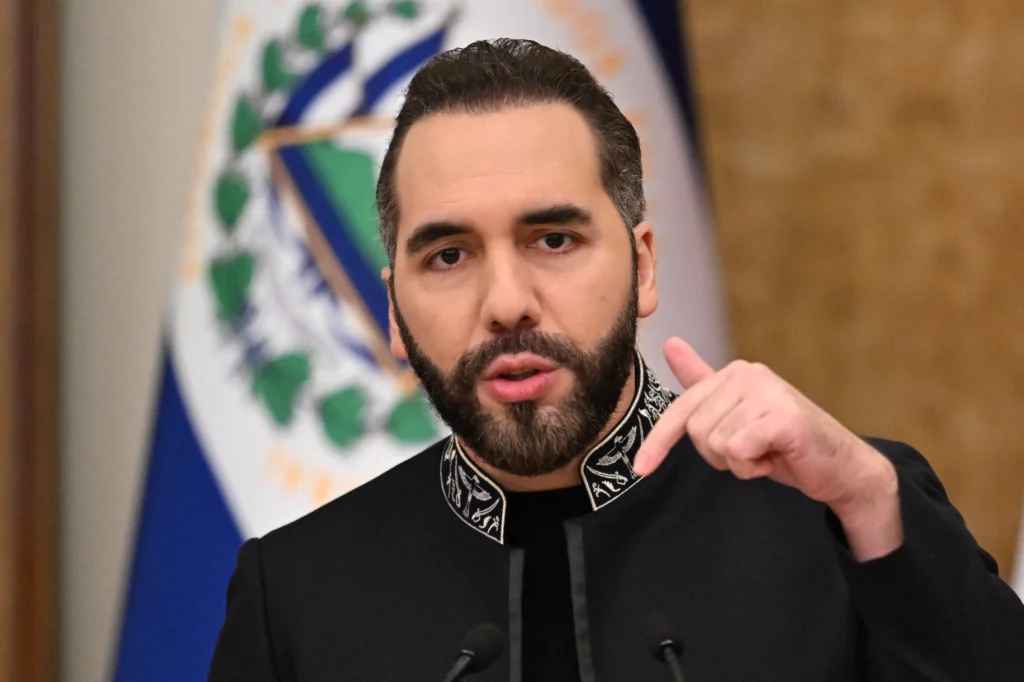
President Bukele addressed the Haitian gang leaders directly, publishing a message written in Haitian Creole on October 21, 2026. Bukele stated that the four technicians were non-combatant technical personnel and warned that current operations were minor compared to potential future actions.
Addressing the gang leadership, Bukele wrote: “We have already finished with the gangs in El Salvador, and we can finish with you too. Return our four compatriots alive and unharmed, and everything will return to how it was before the kidnapping. The decision is in your hands”.
Reactions from official international bodies followed the announcement of the rescue campaign. At a meeting of the UN Security Council, Mike Waltz, the U.S. Ambassador to the United Nations, condemned the ambush and affirmed that international search efforts would continue.
Waltz stated that attacks on international contingents would not compel the Gang Suppression Force to withdraw from its mandate. Simultaneously, Salvadoran Ambassador to the UN Egriselda López formally requested international coordination to secure the location and release of the four kidnapped personnel.
The Haitian government also issued an official response regarding the crisis. In an executive statement, Haitian Prime Minister Alix Didier Fils-Aimé announced that securing the release of the four Salvadoran technicians was an absolute priority for the national administration.
Haiti: According to a statement issued on October 18 by El Salvador’s Armed Forces (@FUERZARMADASV), four Salvadoran aviation technicians from Task Force Libertad II were ambushed by armed gangs while returning to their camp in an armored vehicle. The vehicle was set on fire, but… pic.twitter.com/2R2TCCpkJP
The diplomatic and institutional responses to the kidnapping of the four Salvadoran technicians highlight the complex interactions between national military initiatives and international peacekeeping frameworks.
At the institutional level, the United Nations operates under structured protocols regarding force security and hostage negotiation. Officials within the UN framework maintain that search and rescue operations must adhere to rules of engagement established for the Gang Suppression Force to prevent operational conflict among contributing member states.
The Haitian government under Prime Minister Alix Didier Fils-Aimé has aligned its public stance with the international mission, declaring the recovery of the personnel a primary national objective.
However, the administrative capacity of the Haitian state remains restricted, as law enforcement agencies depend on foreign logistical, intelligence, and tactical support to operate within gang-controlled corridors like Croix-des-Bouquets.
Diplomatic representatives from key UN Security Council member states, including United States, have reinforced support for the mission while addressing the threats posed by armed groups. Statements issued during Security Council proceedings reaffirmed that attacks against international contingents will not alter the mandate or compel the withdrawal of the Gang Suppression Force.
To the gang bosses terrorizing Haiti, your days of operating with impunity are numbered. The Gang Suppression Force is coming for you. pic.twitter.com/lkkfJLmiO6
The armored vehicle transporting four aviation technicians from the Salvadoran Air Force was ambushed in Croix-des-Bouquets, a commune located near Port-au-Prince, the capital of Haiti. Following the explosion, the four Salvadoran technicians were forced to evacuate the vehicle and were subsequently kidnapped.
Initial search and rescue efforts of the four Salvadorans faced immediate armed resistance. On October 19, a search helicopter dispatched to locate the personnel was targeted by gunfire.
Subsequent joint counter-offensives conducted by the multinational security contingent and the Haitian National Police in the Plaine du Cul-de-Sac area resulted in severe clashes, leaving several gang members dead and four multinational security personnel injured.
El Salvador deployed the missing personnel to Haiti as part of its specialized military contingent, known as Task Force Libertad II. El Salvador’s initial military involvement in Haiti began after the Salvadoran Legislative Assembly passed a decree on October 30, 2024.
That measure authorized the deployment of Salvadoran Air Force personnel, including pilots, air mechanics, and medical evacuation units, to support international security operations.
In early 2025, eight aviation technicians arrived in Haiti, followed by an additional 70 military personnel. On September 29, 2026, the Salvadoran Legislative Assembly voted to extend the military deployment through October 2027 and expanded the mandate.
The updated legislative mandate lets Salvadoran troops engage beyond medical evacuations, allowing them to deploy personnel based on operational requirements dictated by security needs in the field.
Task Force Libertad II operates under these expanded terms, providing technical aviation logistics, air support maintenance, and operational security inside the country.
The four Salvadoran kidnapped were serving as non-combatant aviation support specialists within Task Force Libertad II. Following days of uncertainty regarding their status, Salvadoran President Nayib Bukele made a public statement on October 21, 2026, confirming that the kidnapping was executed by armed gangs from Haiti.
El Salvador prez announces MILITARY OP to rescue hostages kidnapped by gangs in Haiti
Aviation technicians 'kidnapped in a cowardly manner' — Bukele
'Today's attack is NOTHING compared to what is coming if we do not get all 4 hostages back alive' pic.twitter.com/7WkyhLvuoQ
President Nayib Bukele’s public declaration led El Salvador to escalate its physical military presence in Haiti. On October 22, 2026, the Salvadoran government deployed 100 special forces soldiers to Port-au-Prince to assist in locating and securing the release of the four missing aviation technicians.
This deployment brought additional tactical ground units to support the existing aviation support unit attached to Task Force Libertad II.
Before October 2026, the Salvadoran contingent operated primarily as an air support unit focused on logistics, maintenance, and medical evacuations. The introduction of dedicated special operations personnel expands the operational parameters of the mission, introducing direct combat and search-and-recovery capabilities alongside the Gang Suppression Force and the Haitian National Police.
The deployment of specialized personnel aims to mitigate these conditions through targeted intelligence collection and rapid-response capabilities.
Structural Security Challenges
While the deployment of specialized tactical units and the escalated military posture by El Salvador aim to address the immediate security emergency, long-term stabilization in Haiti depends on addressing broader structural issues.
The proliferation of heavy weaponry, sustained by international trafficking routes, continues to provide armed groups with substantial tactical capacity within urban sectors.
Furthermore, long-standing economic instability, institutional fragmentation, and high rates of poverty create conditions that enable armed organizations to maintain territorial influence despite international security deployments.
Military rescue missions and tactical escalations provide targeted responses to specific security threats, such as the kidnapping of Task Force Libertad II personnel.
However, international observers and analysts emphasize that sustainable security across Port-au-Prince and surrounding communes requires comprehensive institutional reform, economic development, and consistent administrative governance alongside law enforcement actions.
Salvadoran President Nayib Bukele has launched a military rescue operation in Haiti following the abduction of four Salvadoran soldiers by local armed groups. In a stern statement on Wednesday, Bukele demanded the immediate, safe release of the personnel and warned of a severe… pic.twitter.com/QIQS18JGso
Sources: TeleSUR – Al Jazeera – DW – BBC – CNN – La Prensa Gráfica – elsalvador.com – EFE – El Diario de Hoy – RSF – El Faro – presidencia.gov.sv – Asociación de Periodistas de El Salvador – Dialnet – Resumen Latinoamericano.
President of El Salvador Nayib Bukele announced on Wednesday the launch of a military operation in Haiti to rescue the four Salvadoran Air Force personnel who went missing during a weekend ambush by local violent gangs.
He assured that an operation is already underway to locate and rescue four Salvadorans in Haiti.
On Wednesday, Salvadoran President Nayib Bukele issued a stern warning to Haitian gangs after the kidnapping of four Salvadoran citizens who were part of an international security mission deployed in Haiti.
The four missing men are members of the Gang Suppression Force, a United Nations-backed unit tasked with combating armed groups that control large swathes of the Caribbean country.
According to reports, the Salvadorans were ambushed last Sunday while returning to their base from a supermarket in the town of Croix-des-Bouquets, on the outskirts of Port-au-Prince.
The armored vehicle they were traveling in was hit by explosives and caught fire during the attack. Although the soldiers managed to escape the vehicle, their whereabouts have been unknown since.
Bukele assured that an operation is already underway to locate and rescue the four Salvadorans. The president emphasized that the hostages are technicians and support staff dedicated to humanitarian work and medical evacuations.
🇸🇻🇭🇹 Bukele inicia operación militar en Haití para rescatar a cuatro connacionales
🚨 El presidente de El Salvador, Nayib Bukele, arrancó esta estrategia ante el presunto secuestro de cuatro técnicos militares retenidos por pandillas haitianas.
The text reads, “Bukele Launches Military Operation in Haiti to Rescue Four Nationals. The president of El Salvador, Nayib Bukele, kicked off this strategy in response to the alleged kidnapping of four military technicians held by Haitian gangs.”
The president warned gang leaders that the current operation “is nothing compared to what’s coming” if the hostages are not released alive. At the same time, he offered the “possibility” of avoiding further consequences through their prompt release.
Bukele also reiterated that his government has launched an intense offensive against gangs in El Salvador and affirmed that it will act decisively to protect its citizens.
The Gang Suppression Force and special units of the Haitian National Police are maintaining operations in the area where the kidnapping occurred. During recent clashes, several members of armed groups were killed.
The incident comes amid the serious security crisis in Haiti, where thousands of people have died in recent years due to gang violence. Haitian Prime Minister Alix Didier Fils-Aime described the search for the four Salvadorans as an absolute priority for the country’s authorities.
El presidente Nayib Bukele advirtió a las pandillas que endurecerá la ofensiva si no liberan con vida a los cuatro aerotécnicos, emboscados el domingo cerca de Puerto Príncipe cuando integraban la fuerza antipandillas avalada por la ONU en Haití.
At least 10,561 gang members have been convicted by Salvadoran courts over the past four years since the start of the crackdown on gangs began in 2022, Attorney General Rodolfo Delgado detailed on Tuesday.
Estaría inspirada en el modelo de El Salvador, cuestionado por masivas violaciones de los derechos humanos, al que el propio Nayib Bukele le reconoce déficits.
The funds were channeled to private agencies to develop national and international advertising campaigns.
An investigation by the specialized media outlet Infodemia reported that the Nayib Bukele administration allocated at least US$76.6 million over the past seven years to advertising, media consulting, and strategic communication services funded with state resources.
According to the report, spending on institutional promotion has maintained an upward trend since Bukele took office in 2019, reaching its highest level during his administration in the first seven months of 2026.
The investigation indicates that the funds were channeled to private agencies to develop national and international campaigns, manage social media, purchase advertising space, organize events, and monitor media coverage by public bodies.
The journalists responsible for the analysis reviewed more than 2,150 public procurement processes and identified over 2,000 contracts related to communication and marketing services awarded to hundreds of companies and suppliers.
The report also questions the lack of transparency surrounding these expenditures, noting that the Presidency keeps information related to institutional advertising confidential and that some contracts are not available in public records.
Among the cases examined is Obermet company, historically linked to the Bukele family, which obtained a contract from the Ministry of Health in 2019 for communication services worth more than US$108,000, according to the analyzed documentation.
Lo que pasó en El Salvador pasó en Colombia: falsos positivos y judiciales para decir que estaban ganando la guerra para vender seguridad. Bukele tendrá que dejar en libertad a 45 000 inocentes.@petrogustavo tenía razón, lo de Bukele se va a caer por violación de los DDHH. pic.twitter.com/BRSlqIrQDZ
The text reads, “What happened in El Salvador happened in Colombia: false positives and judicial setups to claim they were winning the war in order to sell security. Bukele will have to release 45,000 innocents.”
The investigation also recalls that the company has been the “subject of previous scrutiny” for alleged conflicts of interest related to public contracts during the current Salvadoran president’s political career.
Another finding concerns the financing of advertising space in Diario El Salvador, a newspaper that reportedly received more than one million dollars through hundreds of contracts from various state entities.
Infodemia maintains that this newspaper has repeatedly published information deemed false, misleading, or presented out of context by fact-checkers, especially on issues related to public safety and national political activity.
The investigation also identifies contracts awarded to Lared, a company linked to influencer Porfirio Chica, to develop digital communication strategies aimed at promoting programs of state institutions.
The media outlet indicates that some of the agencies that benefited from contracts during the current administration had previously appeared in judicial investigations related to cases of corruption and misappropriation of public funds during previous governments.
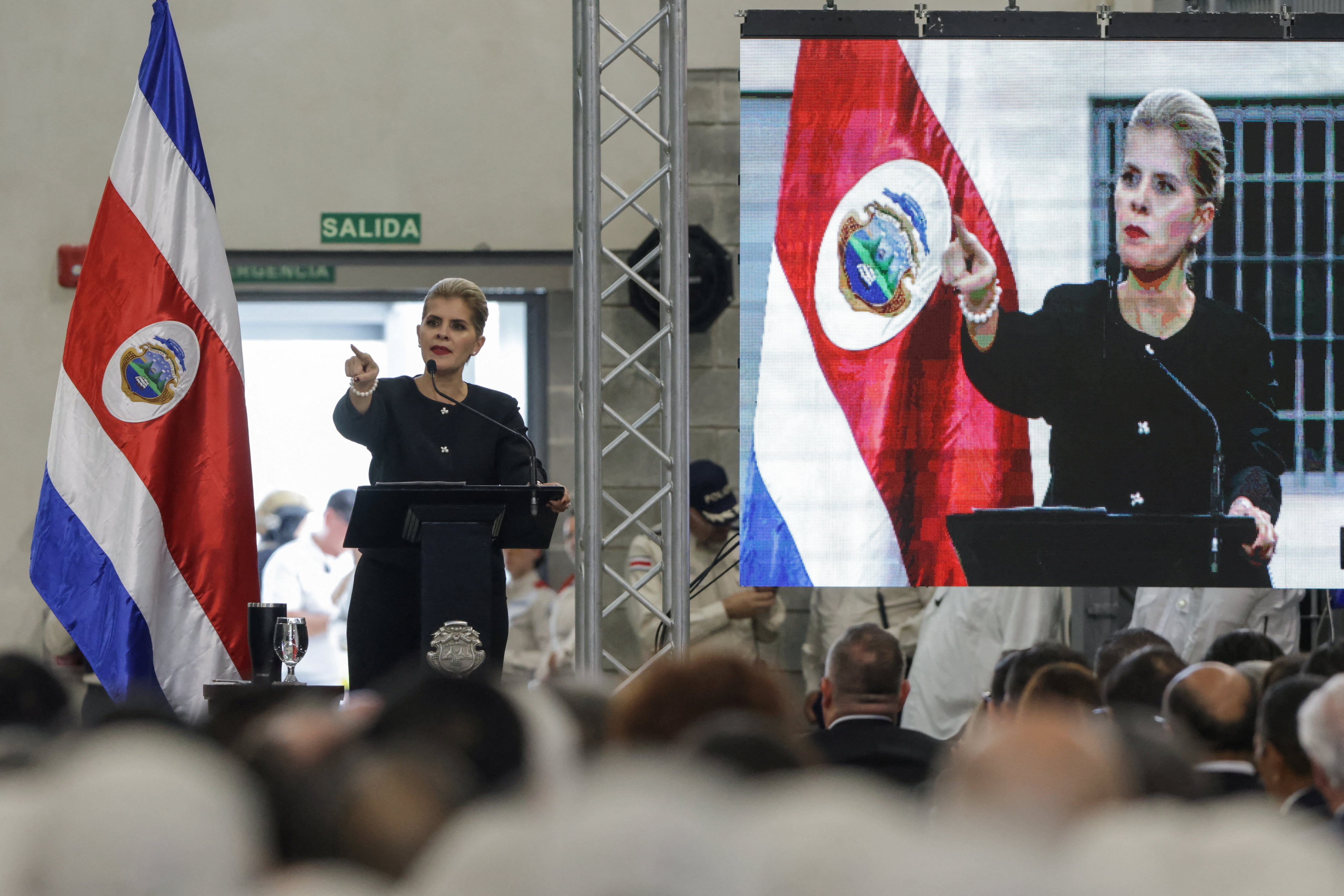
#FromTheSouth News Bits | Costa Rican President Laura Fernandez visited El Salvador’s controversial Cecot megaprison to align national security policies with President Nayib Bukele's militarized model. pic.twitter.com/eCP6g8xfMA
Organizaciones sociales rechazan el plan de medidas condicionales del Gobierno de El Salvador y denuncian el colapso del sistema penitenciario bajo el régimen de excepción.
El Salvador’s President Nayib Bukele announced on October 13 his intention to release nearly 50% of the prisoners accused of collaborating with gangs in the country. According to the president, the measure would involve early release, albeit conditional.
“We have a plan that would benefit roughly 50% (give or take) of the prisoners in El Salvador who have collaborated with gangs … In other words, early release – meaning they are guilty but are released conditionally. Released under supervision,” Bukele told the press.
In this regard, he said that his government would evaluate the situation of each detainee to keep the country free from the structural violence that has plagued it for decades: “Considering that we come from a country where violence was part of everyday life and gangs were the real government, the real dictatorship. These people lived under that yoke, but it is not the same to be among those who enforced it as it is to simply survive that reality.”
If we take into account the figure provided by the authorities (according to which nearly 100,000 people are currently detained on various charges) this could mean the release of tens of thousands of people.
Domestic criticism of El Salvador’s mass incarceration
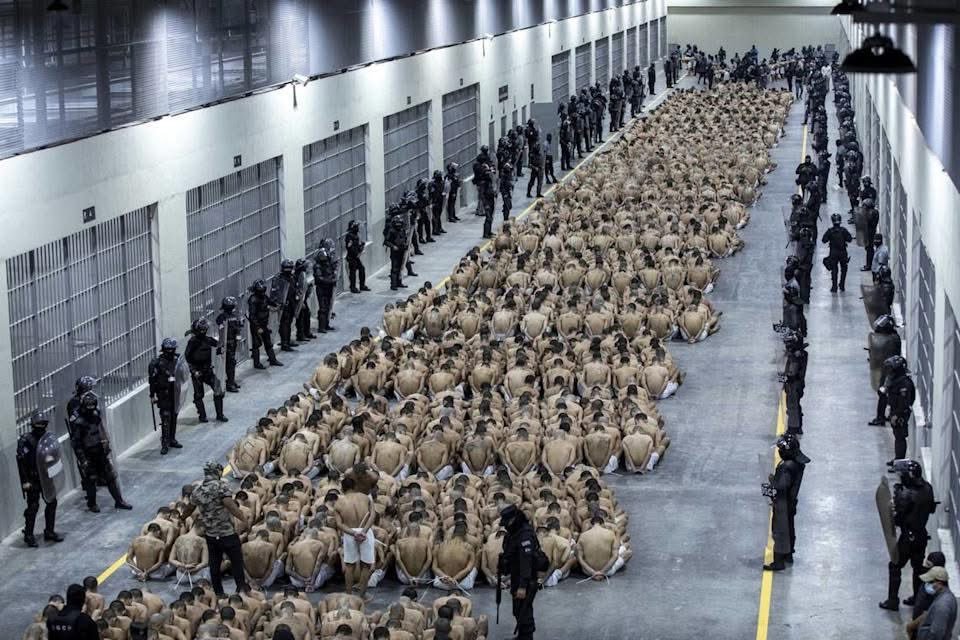
Before Bukele took office, El Salvador was in the throes of a severe crisis of insecurity and violence. His administration imposed a perpetual state of emergency that began in 2022 and has led to the imprisonment of thousands of Salvadorans accused of belonging to gangs (or “maras”) that controlled large swaths of the Central American country.
And while the pacification of the streets has been celebrated by a significant portion of the population, the harsh actions of the government and its police and military forces have drawn criticism from various human rights organizations, which have accused the government of excessive use of force, mistreatment of prisoners, and the unjust detention of individuals who do not belong to gangs.
Another criticism has been leveled at the practice of mass trials, which charge and convict a large number of people at the same time. Rights groups say this has led to countless errors in the treatment of individual defendants. Added to this are allegations of arbitrary detentions, crimes against humanity, and disappearances.
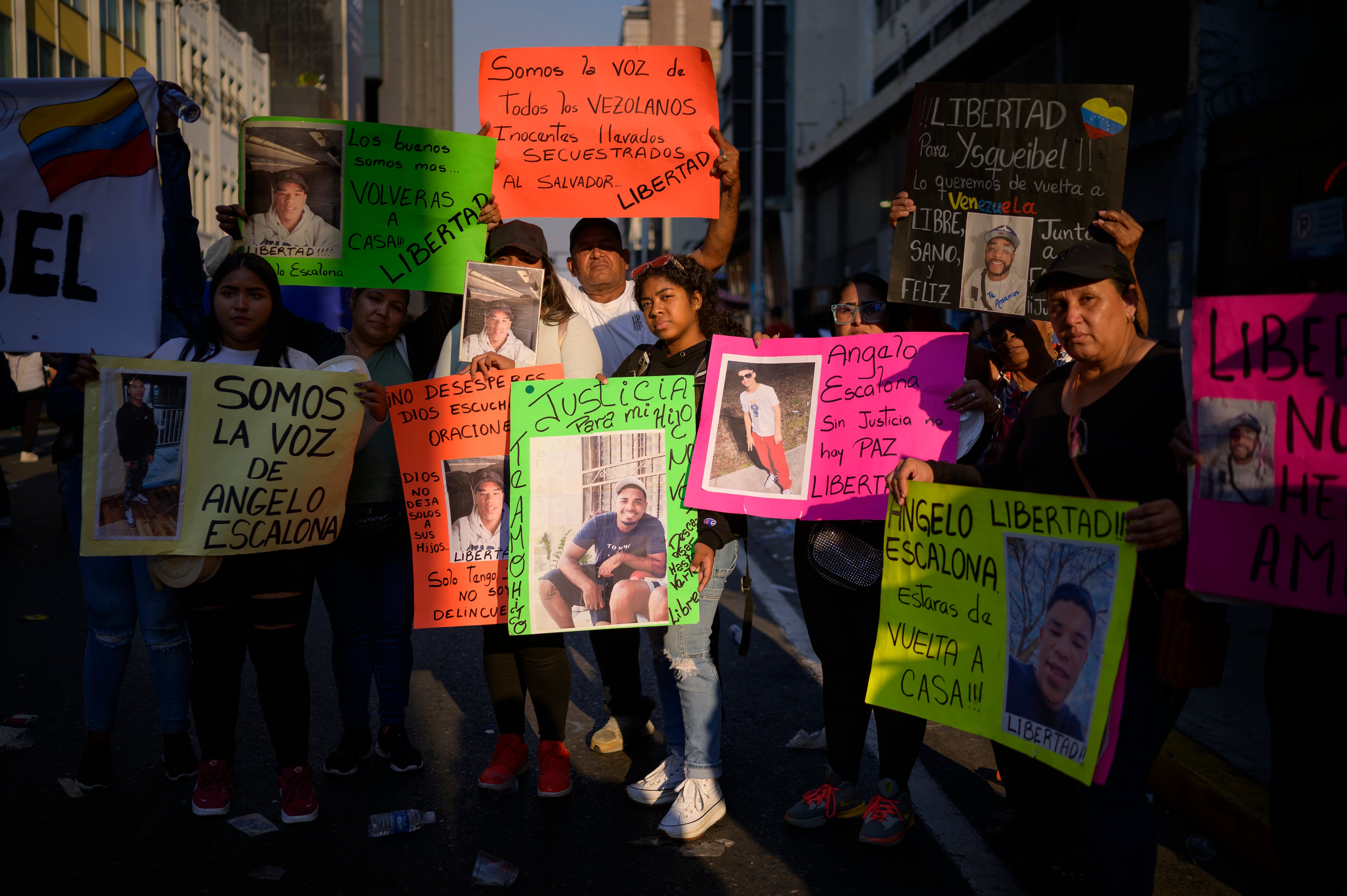
International outrage at 252 Venezuelans detained in El Salvador
The prison system implemented by Bukele in El Salvador has also faced international criticism. The Central American country became a focal point of controversy when hundreds of people deported from the United States were detained in the Salvadoran prison system, which drew widespread criticism of the Bukele government.
Bukele, however, had defended the decision and reaffirmed his alliance with the Donald Trump administration and his participation in the Washington-led geopolitical and military initiative known as Shield of the Americas.
The news of the possible release of tens of thousands of detainees sparked even more intrigue, considering that Bukele’s announcement came immediately after his conversation with US Secretary of State Marco Rubio, in which they discussed combating “malign foreign influence.” However, it remains unclear how the two issues are linked, according to El País.
President Laura Fernández of Costa Rica on Wednesday inaugurated the so-called High-Containment Center Against Organized Crime (CACCO), a mega-prison designed to hold 5,100 inmates under maximum-security conditions with the aim of isolating narcotics-trafficking gangs. The Costa Rican government seeks with this move to consolidate its tough-on-crime policy, the centerpiece of propaganda amid the security crisis, which is symbolized by the enormous penal complex modeled on Nayib Bukele’s approach.
A federal appeals court will examine Tuesday whether a federal judge can proceed with a criminal contempt investigation into the Trump administration related to the deportation of Venezuelan migrants to El Salvador in March 2025.
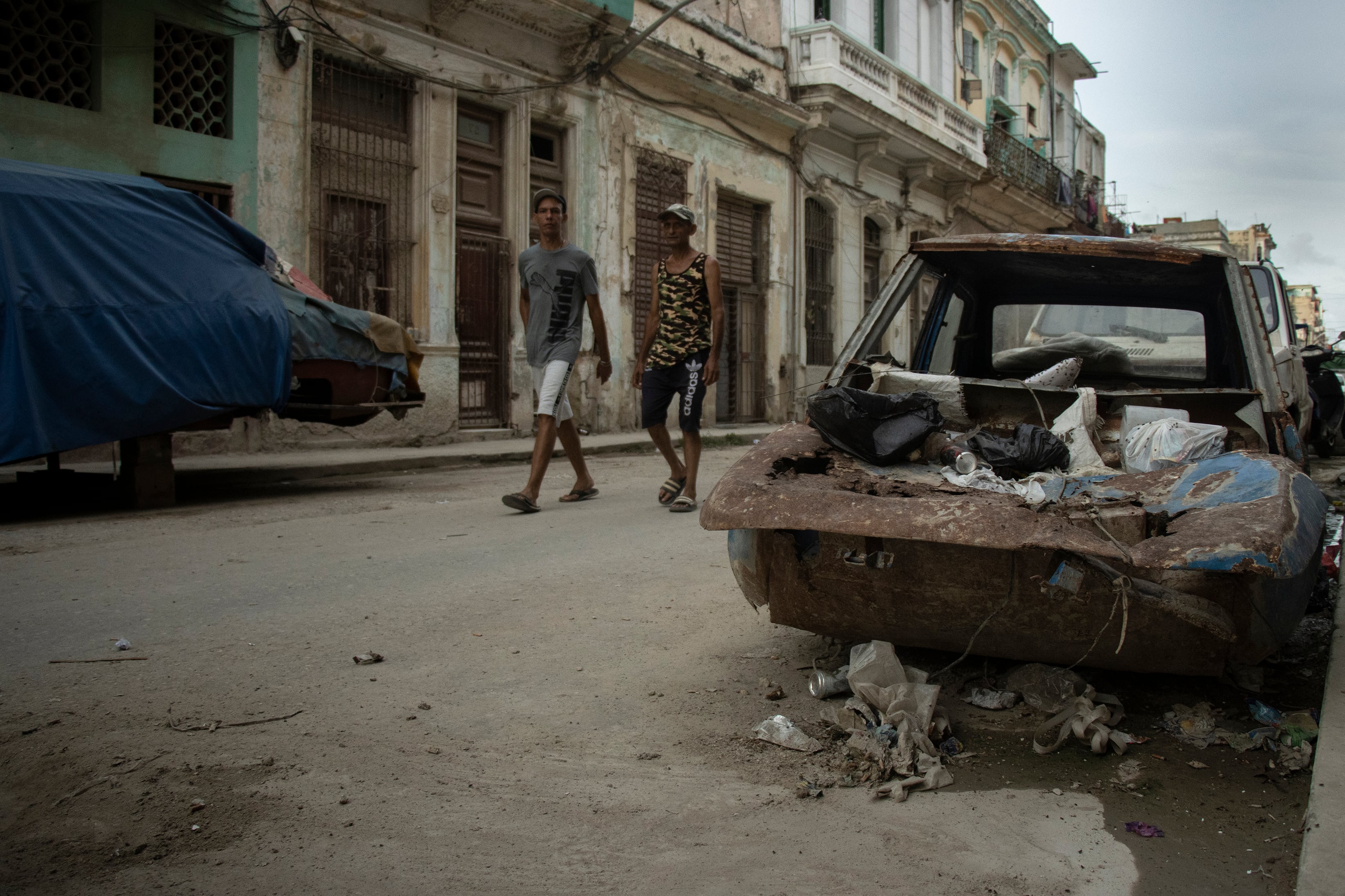
Saying that Cuba is in crisis is hardly news. It has been for decades. Nor is it news that Washington’s sanctions have worsened the health of an economy that is now on life support. Both statements are axioms. But talking about Havana is a high-risk sport.

 Login