❌

Reading view

Honduras Congress Approves Funds for Maximum-Security Prison
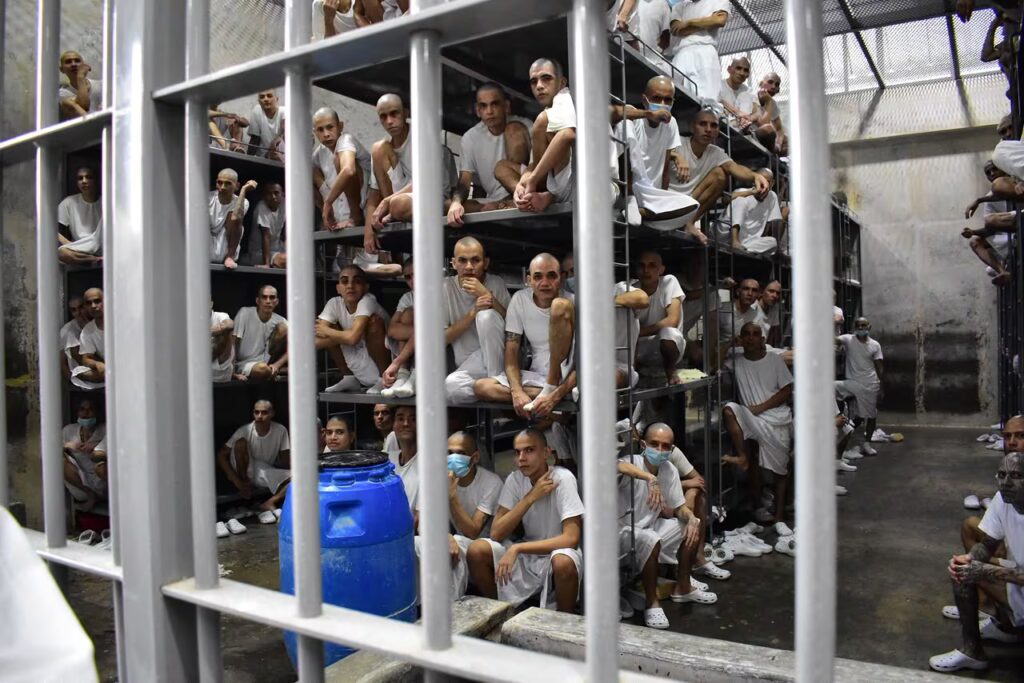
(FILE) The penal project remains in preliminary study phase without a formal budget, established capacity or construction schedule. Photo: INP Honduras.

Honduras’ conservative-majority Congress approved a motion to seek funding for a new maximum-security prison modeled on El Salvador’s Cecot, aiming to confront a surge of violence that has left more than 1,000 people dead in just over ten months.


According to reports from the National Penitentiary Institute, the plan is to concentrate all inmates belonging to the Mara Salvatrucha (MS-13) and Barrio 18 gangs in a single module, as El Salvador’s President Nayib Bukele has done.

The proposal would rely on borrowing to finance the construction, and it follows a visit by a congressional delegation to El Salvador’s Terrorism Confinement Center (Cecot), which has been criticized for human rights violations, masss incarceration and the detention of thousands of people who were jailed without proven links to gangs.

RELATED: Honduras Approves Sweeping Anti-Gang, Prison Security Law

“The approval of the motion to build a new maximum-security prison is part of the measures to strengthen prison security and confront crime firmly,” Congress President Tomás Zambrano said on social media. He added that the aim is not to carry out an identical replica but to “identify those successful models” and build a system adapted to local reality.

The motion will allow the government to identify resources for building a new maximum security prison, while the Ministry of Finance announced that it will begin studies to quantify the work, but it does not mean that the construction budget has already been set or that work has begun. For now, the process focuses on quantifying investment, identifying potential sources of financing, and determining the terrain where the establishment will be built.

🏦🇭🇳FONDOS PARA CÁRCEL EN HONDURAS

El Congreso Nacional aprobó gestionar recursos para planificar una nueva cárcel de máxima seguridad. Instituciones evaluarán costos, terrenos y opciones de financiamiento como bonos o préstamos internacionales.#Honduras #Internacional pic.twitter.com/DSWXl5jczY

— Pulso Digital SV (@SVPulsoDigital) October 20, 2026

Text reads: “Prision funds in Honduras: The National Congress approved managing resources to plan a new maximum security prison. Institutions will assess costs, land and financing options such as international bonds or loans.”

The project is considered in the context of measures approved in September to tighten detention conditions for individuals identified by the Honduran state as members of terrorist groups. The reforms include a special regime of maximum security, restrictions on communication and visits, enhanced surveillance and other prison control measures.

Debt and Doubts Loom

The proposal relies on public debt to finance the infrastructure. That choice has drawn concern, as has the logistical question of transplanting a model from El Salvador, a country whose territory is comparable to a single Honduran department, into a nation of more than 10 million people with far more complex territorial dynamics.

The motion had the support of the Freedom and Refoundation party (LIBRE), whose lawmakers nevertheless accused the National Party of applying a double standard. They recalled that Congress rejected a similar proposal from former President Xiomara Castro (2022-2026) to build a maximum-security prison far from urban areas, citing environmental impact and possible human rights violations.

Honduras reduced its homicide rate between 2024 and 2025, but extortion, drug trafficking, assaults and territorial control by organized bands persist. More than 25 massacres, roughly 240 femicides and over 1,000 violent deaths were recorded during the current administration of the right-wing President Nasry Asfura.

¡Antes rechazaban la cárcel de máxima seguridad y ahora la venden como solución! El diputado @SergioC11938796 señaló la contradicción del Partido Nacional: se opuso al penal en Islas del Cisne y ahora impulsa otro en Santa Bárbara, además advirtió que construir más cárceles no… pic.twitter.com/4I0a4GScHL

— Bancada Libre (@BancadaLibre) October 20, 2026

Text reads: “They used to reject the maximum security prison and now sell it as a solution! The deputy
@SergioC11938796 pointed out the contradiction of the National Party: it opposed the penal in Cisne Islands and now promotes another one in Santa Bárbara, also warned that building more prisons does not guarantee to solve the insecurity in Honduras.”

The final location will depend on the technical judgment of the National Penitentiary Institute and defense institutions. To define the technical and financial route, the legislature’s leadership convened a working group bringing together party heads, legislative commissions, the Security and Finance secretariats, the National Police, the Armed Forces and the National Agency against Organized Crime.

Now, with the motion passed, the next steps consist of quantifying the investment, defining the terrain, establishing the sources of financing and specifying the technical conditions for building and operating the prison.
  •  

Congreso de Honduras aprueba moción para financiar cárcel de máxima seguridad

Estaría inspirada en el modelo de El Salvador, cuestionado por masivas violaciones de los derechos humanos, al que el propio Nayib Bukele le reconoce déficits.
  •  

Bukele announces a possible mass release of inmates

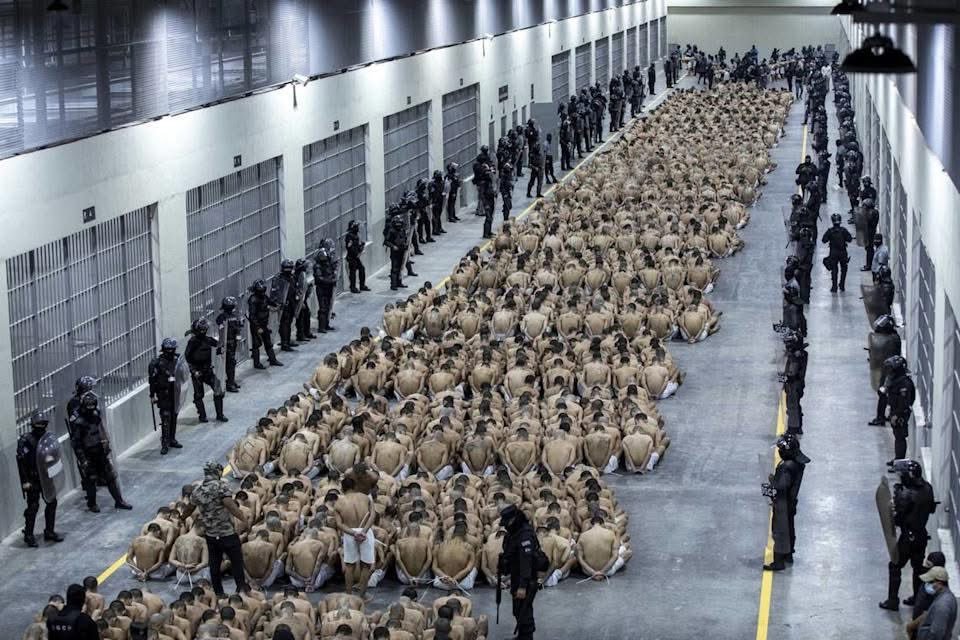
El Salvador’s President Nayib Bukele announced on October 13 his intention to release nearly 50% of the prisoners accused of collaborating with gangs in the country. According to the president, the measure would involve early release, albeit conditional.

“We have a plan that would benefit roughly 50% (give or take) of the prisoners in El Salvador who have collaborated with gangs … In other words, early release – meaning they are guilty but are released conditionally. Released under supervision,” Bukele told the press.

In this regard, he said that his government would evaluate the situation of each detainee to keep the country free from the structural violence that has plagued it for decades: “Considering that we come from a country where violence was part of everyday life and gangs were the real government, the real dictatorship. These people lived under that yoke, but it is not the same to be among those who enforced it as it is to simply survive that reality.”

If we take into account the figure provided by the authorities (according to which nearly 100,000 people are currently detained on various charges) this could mean the release of tens of thousands of people.

Domestic criticism of El Salvador’s mass incarceration

Before Bukele took office, El Salvador was in the throes of a severe crisis of insecurity and violence. His administration imposed a perpetual state of emergency that began in 2022 and has led to the imprisonment of thousands of Salvadorans accused of belonging to gangs (or “maras”) that controlled large swaths of the Central American country.

And while the pacification of the streets has been celebrated by a significant portion of the population, the harsh actions of the government and its police and military forces have drawn criticism from various human rights organizations, which have accused the government of excessive use of force, mistreatment of prisoners, and the unjust detention of individuals who do not belong to gangs.

Read more: CECOT: Bukele’s mega prison where “the only way out is in a coffin”

Another criticism has been leveled at the practice of mass trials, which charge and convict a large number of people at the same time. Rights groups say this has led to countless errors in the treatment of individual defendants. Added to this are allegations of arbitrary detentions, crimes against humanity, and disappearances.

International outrage at 252 Venezuelans detained in El Salvador

The prison system implemented by Bukele in El Salvador has also faced international criticism. The Central American country became a focal point of controversy when hundreds of people deported from the United States were detained in the Salvadoran prison system, which drew widespread criticism of the Bukele government.

Bukele, however, had defended the decision and reaffirmed his alliance with the Donald Trump administration and his participation in the Washington-led geopolitical and military initiative known as Shield of the Americas.

Read more: Maduro gov’t negotiates return of 252 Venezuelans detained by US in El Salvador

The news of the possible release of tens of thousands of detainees sparked even more intrigue, considering that Bukele’s announcement came immediately after his conversation with US Secretary of State Marco Rubio, in which they discussed combating “malign foreign influence.” However, it remains unclear how the two issues are linked, according to El País.

  •  

Costa Rica adopts Bukele’s penitentiary model with the inauguration of a new mega-prison

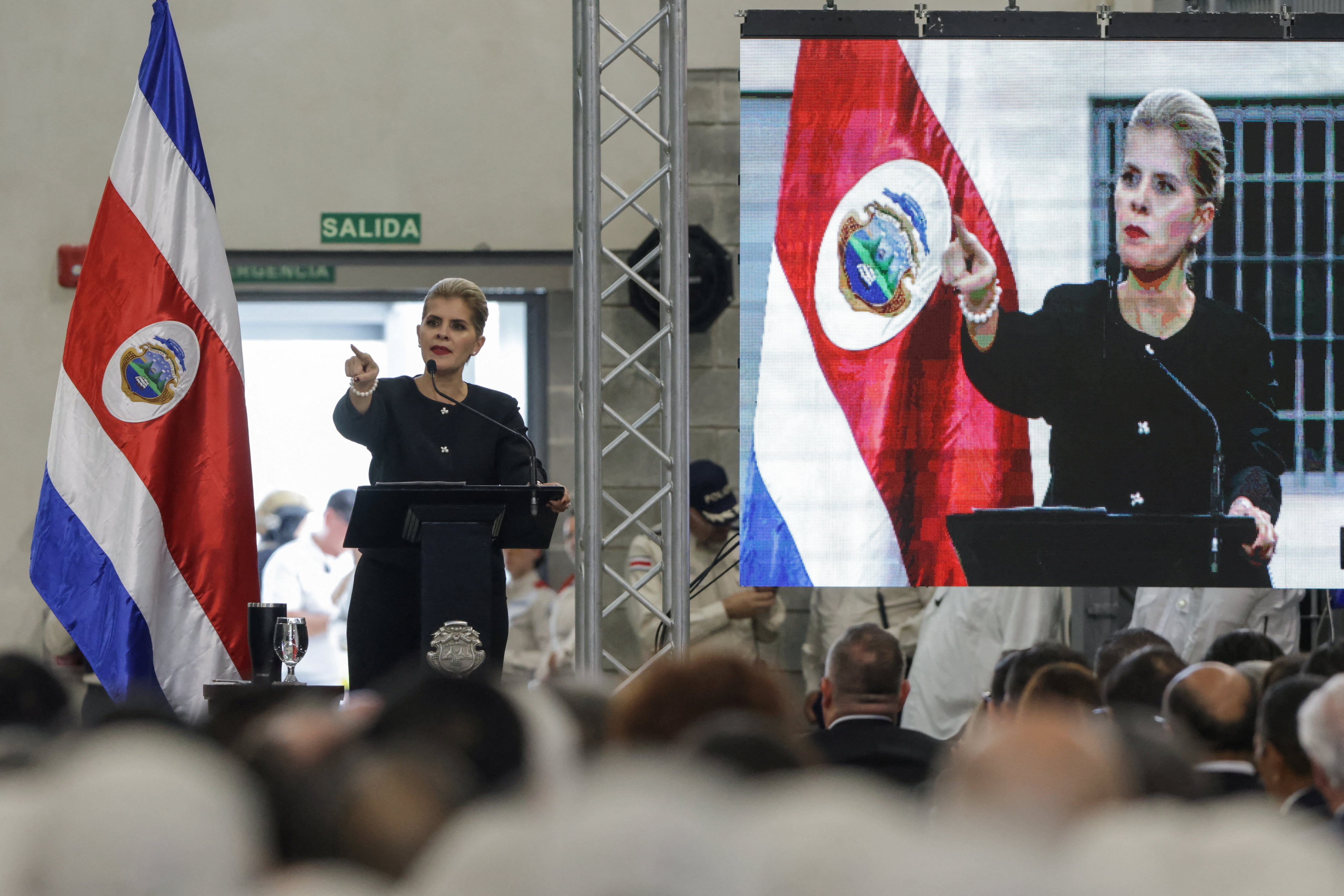
President Laura Fernández of Costa Rica on Wednesday inaugurated the so-called High-Containment Center Against Organized Crime (CACCO), a mega-prison designed to hold 5,100 inmates under maximum-security conditions with the aim of isolating narcotics-trafficking gangs. The Costa Rican government seeks with this move to consolidate its tough-on-crime policy, the centerpiece of propaganda amid the security crisis, which is symbolized by the enormous penal complex modeled on Nayib Bukele’s approach.

Seguir leyendo

© Mayela Lopez (REUTERS)

Laura Fernández inaugurates the CACCO in Alajuela, Costa Rica, on Wednesday.
  •  

Trump administration facing indictment for contempt after deporting Venezuelans to El Salvador

A federal appeals court will examine Tuesday whether a federal judge can proceed with a criminal contempt investigation into the Trump administration related to the deportation of Venezuelan migrants to El Salvador in March 2025.

Seguir leyendo

© GABY ORAA (EL PAÍS)

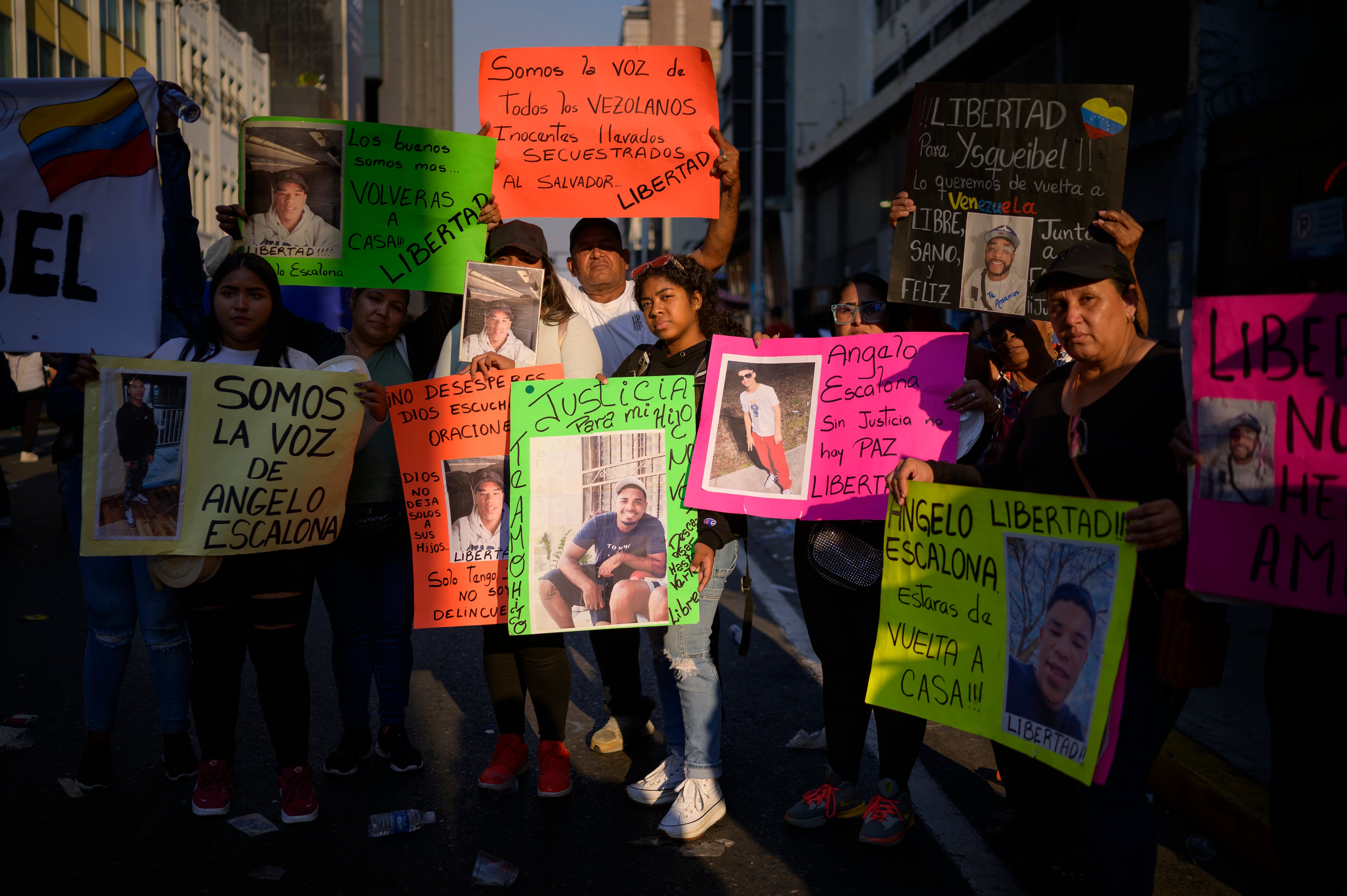
Relatives of Venezuelan migrants deported to El Salvador during a protest in Caracas, March 25, 2025.
  •  

Judge orders release of Salvadoran migrant wrongly accused of being an MS-13 gang member after 10 months in custody

There are two diametrically opposed portrayals of David Eduardo Mejía Martínez: U.S. Immigration and Customs Enforcement (ICE) presents him as a “criminal” and a member of the notorious Mara Salvatrucha (MS-13) gang who, because he poses a danger to the community, should be deported to El Salvador. A federal judge, by contrast, describes him as an exemplary migrant: with no tattoos and no criminal record, in steady employment, and who has filed taxes since arriving in the United States in 2014. The judge also said he is the father of two children who are U.S. citizens and the main provider for his family.

Seguir leyendo

© Ashlee Rezin (AP)

Federal agents arrest a man in Illinois.
  •  
❌