A few days after the monsoon rains subside, Inle Lake, nestled among picturesque mountains, becomes the setting for one of Myanmar’s most important Buddhist festivals as sacred golden images glide across the water.
The 18-day Phaung Daw Oo Pagoda Festival is an annual celebration on the country’s second-largest freshwater lake in the southern part of Shan state, about 420 kilometers (260 miles) northeast of Yangon. During the festival, four revered Buddha images are carried aboard an ornate golden barge to 21 villages around the lake for people to pay homage to them.
Adorned with a golden figure of the mythical Karaweik bird at its bow, the barge is pulled by scores of wooden boats crewed by members of the Intha ethnic minority, who practice a unique style of rowing while standing with one leg wrapped around a single oar.
Since the festival began on Oct. 12, hundreds of worshippers have gathered along the procession route to venerate the sacred images and enjoy traditional dance...
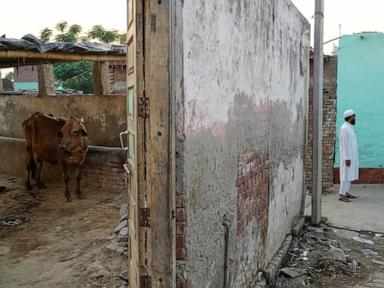
An Associated Press investigation found that police in India's most populous state have repeatedly shot suspects in the leg, many of them Muslims accused of cow smuggling
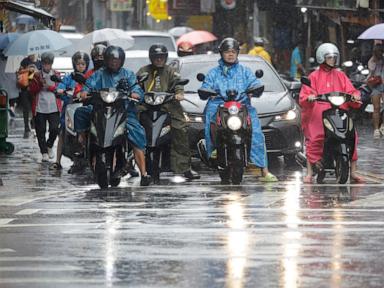
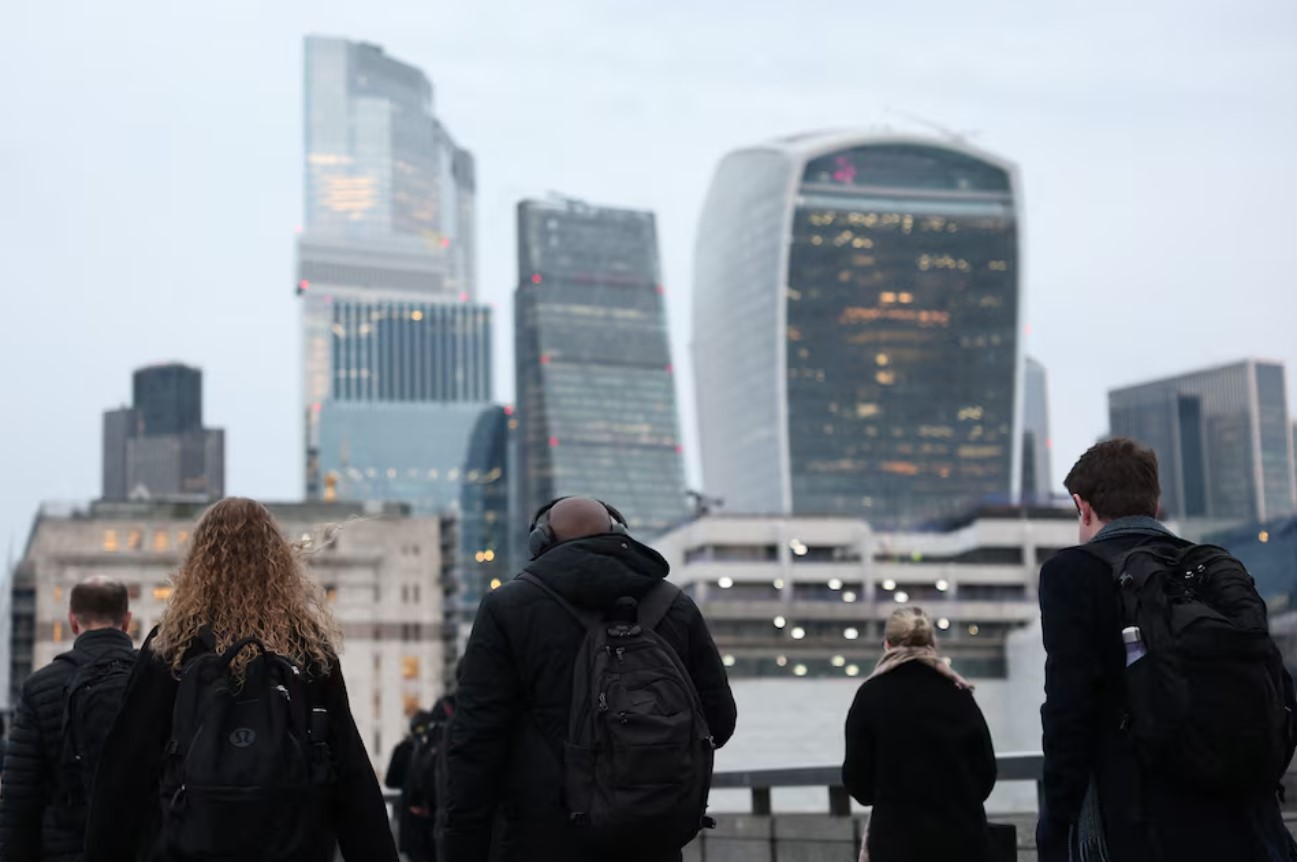
British workers have seen another modest rise in the pace of pay growth and there were other hints of a small recovery in the jobs market, according to official data which could bolster the case for a Bank of England interest rate hike next month.
After a run of stronger-than-expected economic growth figures, the latest figures suggested that a weakening of hiring could be bottoming out, offering some good news to finance minister John Healey ahead of his first budget next week.
Average weekly earnings, excluding bonuses, grew by 3.7 per cent in the three months to August compared with the same period in 2025, the Office for National Statistics said, extending a gradual pickup since touching a low of 3.4 per cent earlier this year.
A Reuters poll of economists had pointed to a weaker increase of 3.6 per cent. The figure for the three months to July was revised up slightly to show a rise of 3.6 per cent.
Pay growth in the private sector also gathered a bit of pace, rising to 3.0 per cent from 2.9 per cent, for its first increase since the end of 2024.
‘SOME RESILIENCE’ IN LABOUR MARKET
A preliminary measure of payrolled employees from Britain’s tax office rose by 13,000 in September. The change for August was revised to show an increase of 1,000 compared with a provisional estimate of a decline of 26,000.
“The latest figures indicate a labour market showing some resilience, echoing the wider economy’s better-than-expected performance,” Jack Kennedy, senior economist at jobs website Indeed, said.
However, he said the chance of a stronger turnaround was dependent on Healey’s budget. His predecessor Rachel Reeves raised a tax on employers in 2025, which was followed by a fall in hiring.
“Today’s figures confirm a labour market that is treading water,” Kennedy said. “The question is whether the budget gives employers a reason to start swimming.”
Britain’s unemployment rate — which is derived from a survey that the ONS is overhauling — dropped to 4.7 per cent in the three months to August, its lowest since mid-2025.
Sterling rose against the US dollar after the data was published.
The BoE is looking for signs that the Iran war energy price shock is turning into broader inflation pressure in the economy including through demands for higher pay.
There were some details in the data that suggested the jobs market remains weak.
Job vacancies in the three months to September fell to 691,000 from 704,000 in the three months to August, dipping below 700,000 for the first time since the three months to April 2021 and the lowest outside the COVID-19 pandemic since 2014.
“The continued fall in vacancies is a flashing red warning light for the labour market, suggesting that a damaging side effect of this year’s AI-fuelled economic growth has been weaker hiring demand, compounded by elevated employment costs,” Suren Thiru, chief economist at the Institute of Chartered Accountants in England and Wales, said.
The ONS said the fall in vacancies was concentrated among smaller businesses smarting from the rise in labour costs.
Investors expect the BoE will raise its benchmark Bank Rate to 4 per cent at the November meeting of its Monetary Policy Committee. So far it has not followed the US Federal Reserve and the European Central Bank in increasing borrowing costs.
Governor Andrew Bailey said last week the longer the war goes on, the harder it will be for the BoE not to respond, but he also said it was still “early days” and inflation pressures remained “quite subdued”.
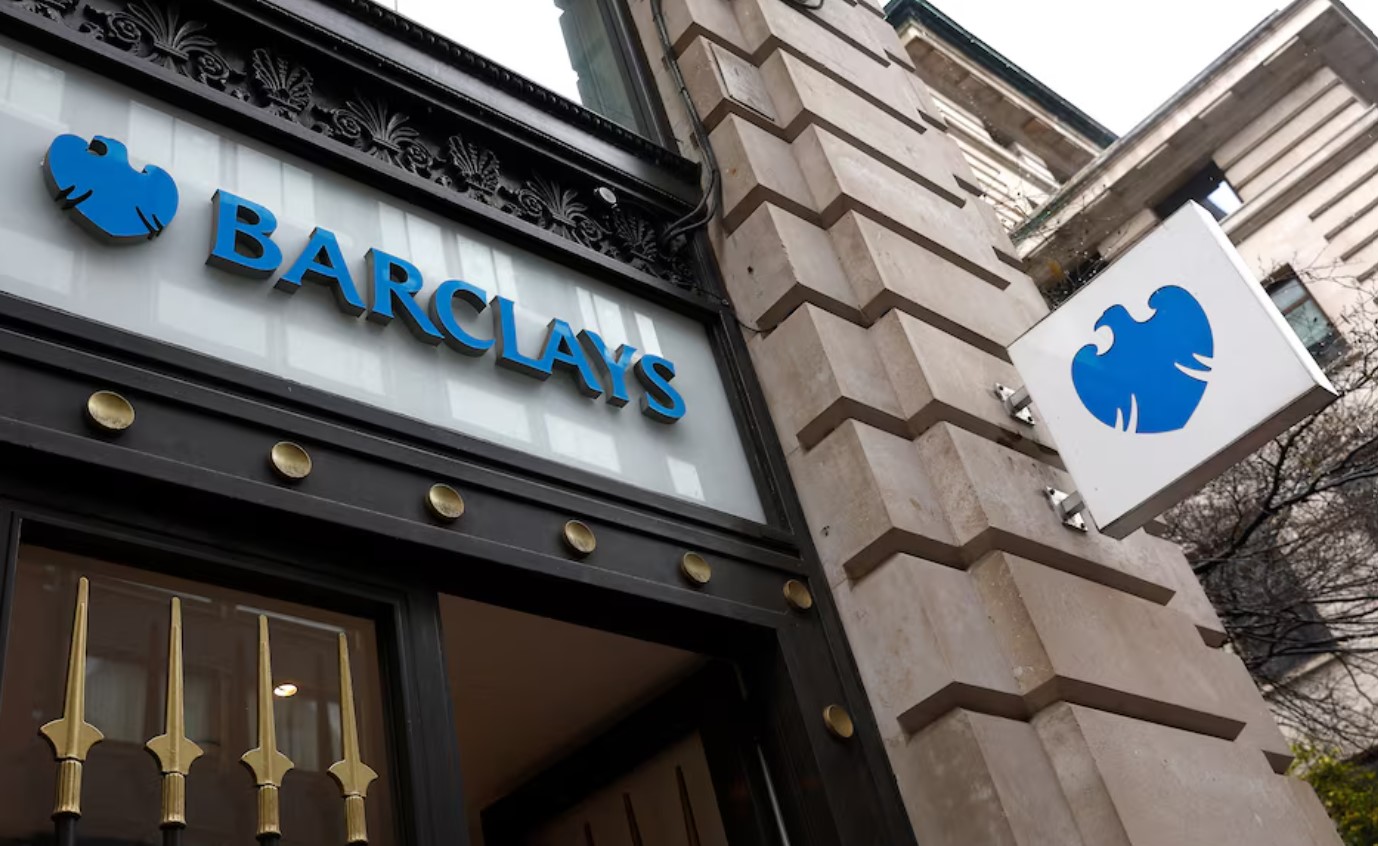
Barclays (BARC.L) said it would cut around 5,000 jobs or 5 per cent of its workforce this year, as it uses technology such as AI to slash fixed costs and improve overall returns.
The job cuts were revealed as Barclays reported third-quarter profit of £2.3 billion ($3.08 billion), up from a year ago but undershooting analysts’ forecasts as its fixed income trading business underperformed.
“I am disappointed, and you can be sure this will get my attention,” CEO C.S. Venkatakrishnan said about the bank’s traditional strength of fixed income trading, blaming a volatile quarter and weak trading in rates and credit products in particular.
The bank said it had taken a further £201 million in “structural cost actions” in the third quarter, part of its longer-term plan to reduce expenses like staff costs through greater use of technology.
Around 60 per cent of the overall job cuts will impact staff in support functions such as developers, CFO Anna Cross told reporters, in one of the clearest signs yet from a big bank of how AI is enabling firms to reduce headcount in such roles.
Cross said 1,000 roles have already gone, with the remainder to be cut by the end of the year.
Barclays shares fell 2.5 per cent in early trading, underperforming other lenders (.SX7P). The bank’s shares have fallen 14 per cent so far this year, in line with European peers which have sold off after years of rallying as higher interest rates lifted profits.
Shore Capital said in a note that the results were softer than expected due to the disappointing performance by the investment bank.
BUDGET LOOMS
Barclays is the first major European lender to report its quarterly earnings, with British banks’ results likely to be overshadowed by finance minister John Healey’s first budget on October 28, where further taxes on banks may be levied.
Healey has refused to rule out hiking taxes on banks’ bumper profits despite intensive public and private lobbying by the industry in recent months, as the finance minister mulls higher taxes to help fund the Labour government’s policy agenda and as higher borrowing costs eat into the public purse.
Banks have argued they are already highly taxed compared with other jurisdictions and that any such levy would curb lending.
INVESTMENT BANK’S MIXED QUARTER
Barclays’ investment bank reported total income in the third quarter of £3.1 billion, lower than forecasts for £3.3 billion.
Third-quarter earnings from Barclays’ Wall Street rivals earlier this month showed the cyclical nature of investment bank revenue, as dealmaking slowed and fixed income desks underperformed, with only equities trading sustaining the strong momentum seen in the first half of the year.
Barclays’ equities revenue rose 47 per cent, outperforming the average 37 per cent gain across the top five US players according to a Reuters calculation from company statements.
The British lender, however, saw income from fixed income trading slide 19 per cent to £1 billion, weaker than a 5 per cent drop among its US peers and worse than analysts’ forecasts for £1.3 billion.
Tesla (TSLA.O) cut its annual capital expenditure forecast by a fifth and posted surprise positive free cash flow in the third quarter on Wednesday, after investing far less in its AI and robotics ambitions than Wall Street had expected.
The unexpected cash generated in the quarter comes at a critical moment for Tesla, as CEO Elon Musk explores combining the EV maker with his far more capital-intensive space venture, SpaceX (SPCX.O).
While the lower spending strengthens Tesla’s financial position ahead of any deal, preserving cash at the expense of investment — in AI, robotaxis and humanoid robots — could undermine the very growth story investors are betting on.
Tesla shares, which had risen 2 per cent in after-hours trading after the company reported positive cash flow, higher gross margin and market-beating revenue, reversed course to trade down 2 per cent. They have fallen about 14 per cent this year.
“The free cash flow beat was a pleasant surprise, but when combined with the lower-than-expected capex, raises questions on the next step for the automaker,” said Ryan Lee, senior vice president of product and strategy at Direxion, which offers ETFs tied to Tesla. “Lower capex suggests less of an ‘all-in’ approach to the AI arms race than one would expect from Elon.”
Tesla said it expected capital expenses for 2026 to be roughly $20 billion, down from its previous forecast of more than $25 billion, but did not say what it would spend less on.
In the third quarter ended September 30, Tesla spent $4.7 billion in capex, double that of a year ago, but lower than the $7.5 billion analysts on average were expecting, according to LSEG data. Tesla reported free cash flow of $1.53 billion, compared with an expected $4.92 billion cash burn.
SPACEX MERGER UNDER DISCUSSION
Musk said on Tuesday that a merger between Tesla and SpaceX was a “good idea” and that the companies had formed special committees to discuss a deal. On Wednesday, Musk said on a conference call with analysts that he had no more to say on the matter.
A merger would create a single company at the center of Musk’s long-term vision: an integrated technology and manufacturing empire spanning AI, energy, robotics, communications and transportation on Earth and beyond.
Still, investors will seek evidence that Tesla is investing enough to turn Musk’s ambitions into commercial businesses, with the robotaxi rollout lagging his promises. Tesla’s energy unit has recently offered a counterweight to its auto business, which remains under scrutiny as rivals globally launch newer, often cheaper models. Tesla still leans heavily on the aging Model 3 and Model Y.
“The merger still faces a high bar, but tonight’s numbers make the financial logic harder to ignore,” said Thomas Monteiro, a senior analyst at Investing.com.
“The main takeaway is that Tesla’s surprisingly positive cash flow quarter did not come from stronger profits, but from spending billions less than planned at a time when SpaceX is preparing to invest up to $40 billion in a single quarter.”
REVENUE FLAT BUT BEATS ESTIMATES
Revenue was flat from a year earlier, despite the end of US tax credits that supported sales last year. That was enough to top Wall Street targets. Net income plunged 43 per cent.
Tesla said in a statement that it ended the quarter with the largest backlog for its passenger vehicles in four years. High gasoline prices have stoked demand for EVs, especially in Europe.
With 486,532 vehicles delivered in the third quarter, Tesla is on track to increase annual deliveries for the first time in three years.
“Demand is growing rapidly for our vehicles. It’s exceeding our production by a significant margin,” Musk said on the conference call with analysts. “In a nutshell, after many years of sort of grind and things being fairly flat, I think we’re now headed for a lot of fun and significant growth.”
The FSD (supervised) attach rate reached over three-quarters of new vehicle deliveries in North America, a nearly 20-percentage-point increase from the second quarter, Tesla said.
Automotive gross margin, excluding regulatory credits, came in at 18.1 per cent in the third quarter, higher than analysts’ estimates of 16.7 per cent, according to Visible Alpha data.
Tesla said it was aiming to produce 5 million vehicles a year by about 2030, up from an expected 2.5 million this year.
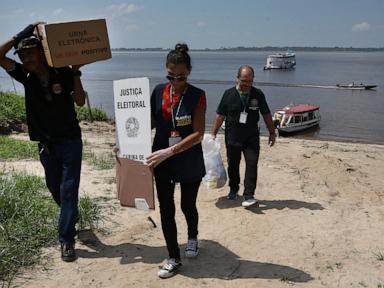
Ce dimanche 25 octobre, les électeurs brésiliens sont appelés aux urnes pour le second tour de la présidentielle. Le sénateur d’extrême droite Flavio Bolsonaro, fils de l’ancien président Jair Bolsonaro, affronte le président sortant Lula, qui brigue un quatrième mandat non consécutif. Après être arrivé en tête dans l’État clé du Minas Gerais au premier tour, Flavio Bolsonaro espère y confirmer son avance. En 2022, son père y avait pourtant été battu par Lula.
Canada has allegedly barred its diplomats from interacting with U.S. midterm candidates to avoid any allegations of election interference from the Trump administration, according to multiple reports. Written guidance issued earlier this week reportedly ordered Canadian officials based in the U.S. not to meet with candidates — or even be in the same room with…
Canada has allegedly barred its diplomats from interacting with U.S. midterm candidates to avoid any allegations of election interference from the Trump administration, according to multiple reports. Written guidance issued earlier this week reportedly ordered Canadian officials based in the U.S. not to meet with candidates — or even be in the same room with…
The deaths of two CIA agents in April after a drug lab operation in northern Mexico have led to treason charges against a former Chihuahua state attorney general
Two officials have told The Associated Press that El Salvador has deployed 100 special forces soldiers to Haiti to help recover four missing soldiers from the Central American country who recently came under attack by gangs
Top Democrats on the House Energy and Commerce Committee demanded answers Thursday from the Centers for Disease Control and Prevention (CDC) about the agency’s funding of a controversial hepatitis B clinical trial in Guinea-Bissau. The CDC awarded $1.6 million last year to Danish researchers to conduct the study in Guinea-Bissau, a small country in West…
Top Democrats on the House Energy and Commerce Committee demanded answers Thursday from the Centers for Disease Control and Prevention (CDC) about the agency’s funding of a controversial hepatitis B clinical trial in Guinea-Bissau. The CDC awarded $1.6 million last year to Danish researchers to conduct the study in Guinea-Bissau, a small country in West…
'1001 Threads of Mizan' hails from the Middle East-based media MBC Group, which is plotting a trans-media universe based on its take on 1001 Arabian Nights.
Egyptian prosecutors referred Lina Attalah, editor-in-chief of independent news outlet Mada Masr, to trial on a charge of operating a website without a license, after questioning her for more than six hours
Czech President Petr Pavel on Tuesday said President Trump’s diesel deal with Russia derailed peace talks between the Kremlin and Ukraine, saying both sides were “so close” to a ceasefire. “It will be much harder now,” Pavel told the Axel Springer Global Reporters Network, which includes Politico. “Russia uses this momentum to get out of…
 Login