
❌

Reading view

Delays and soaring costs cloud transport megaprojects in EU’s drive for greater cross-border connectivity

The European Union’s vision to create a seamless, sustainable and high-quality multimodal transport network across Europe by 2050 was recently thwarted – by an EU watchdog who warned that delays of major projects are putting key 2030 and 2040 milestones at risk.

From the Lyon-Turin rail link to the Canal Seine-Nord waterway, an EU goal to complete a group of cross-border links by 2030 “will not be met”, according to a January report by the European Court of Auditors (ECA).

“Three decades after most of them were designed, we are still a long way from cutting the ribbon on these projects, and a long way from achieving the intended improvements in passenger and freight flows across Europe,” said the ECA member Annemie Turtelboom.

The ECA audited eight projects forming the backbone of EU plans to boost road, rail, water, and air transport across the 27-nation bloc in a bid to spur trade and economic growth.

TEN-T going downhill

The Trans-European Transport Network (TEN-T) is the backbone of Europe’s transport network and includes numerous large-scale transnational projects that are essential to improving connectivity across Europe.

In 2013, EU member states agreed to complete the TEN-T core network by 2030, but the Court of Auditors, updating its view from five years ago, considered that “the outlook in 2025 is worse than it was in 2020, and is very far from what was initially envisaged”.

In 2020, EU auditors reported that the eight megaprojects examined had experienced an overall 47 percent increase in actual costs (adjusted for inflation) compared with the original estimates.

Touching 13 countries including Belgium, Denmark, Germany, Estonia, France and Italy – the projects have received 15.3 billion Euro in EU funding and accumulated on average a 17-year delay, the auditors found. 

According to the ECA report, the delays were down to a series of challenges, such as unexpected technical issues as well as the Covid-19 pandemic and Russia’s war on Ukraine. 

Total estimated cost and allocated EU co-funding for the eight transport megaprojects. Source: ECA based on information from the Commission, national authorities, and project promoters.

Mounting costs add pressure

According to the new report, costs have ballooned further than expected.

Not considering inflation, the overall price tag for the projects analysed was up 82 percent on the original estimates, the report said. 

The most recent calculations for the projects are now almost twice the original levels, with the sharp rise attributed to two rail links – the Rail Baltica linking Tallinn and Warsaw via Riga and Kaunas, where costs have risen by 291 percent, and the link between Lyon in southern France and Turin in northern Italy, where the rise has been of 127 percent.

Estonia, Latvia and Lithuania – which broke free from the Soviet Union when it crumbled in 1990-1991 and went on to join both the EU and NATO in 2004 – all have Soviet-era wide gauge railways.

With a total population of just six million people, the Baltic trio inked a deal in 2017 to build a high-speed rail link, aimed at creating fresh opportunities for the region in terms of trade and logistics.

In addition to rising costs, the construction of the Lyon-Turn railway has, over the years, also faced opposition from environmental groups critical of the Lyon-Turin tunnel project. Supporters said it will greatly ease freight road traffic but opponents – who staged, for example, a protest close to the village of Saint Remy-de-Maurienne in southeastern France in 2017 – said the ecological damage risks being devastating and that springs had already started to dry up due to the works.

The Brenner Base Tunnel connecting Innsbruck (Austria) and northern Italy – which aims primarily to shift freight from road to rail – will now cost 40 percent more than originally estimated and is currently estimated to open in 2032 at the earliest. The original opening date was 2016, and the ECA had already moved its estimation to 2028 in its report five years ago.

Costs for the Fehmarn Belt road/rail link between Denmark and Germany will be 52 percent higher, with opening planned for 2029, 11 years later than originally planned, with the possibility of further delay until 2031.

The Seine-Nord Europe Canal, a high-capacity waterway intended to facilitate the transport of goods between the Benelux countries and the Paris region also suffered from massive overruns, up 225 percent.

“The Basque Y railway line, which was supposed to be operational by 2010 according to its initial timeline and by 2023 according to the revised plan from 2020, is now expected to be ready by 2030 at the very earliest,” the report said, although the auditors consider 2035 to be more realistic.

According to data from the European Commission, Spain was one of the countries investing the most in high-speed rail, with an average of around 1.5 billion Euro per year between 2018 and 2022. However, the aftermath of three fatal train crashes earlier this month exposed the inadequate maintenance of existing railway networks.

Despite the critical issues that have emerged across the eight megaprojects, according to the  report, the European Commission has never used the legal instruments at its disposal to obtain clarification on the delays from the capitals.

Moving forward, the auditors expressed the hope that national transport plans will in future be coordinated with priorities at European level. Member states are now obliged to do so, but this will show up only in new megaprojects.

Two projects beat the odds

On a more positive note, in the case of two projects, the A1 motorway in Romania and the E59 railway line in Poland, the latest cost estimates are actually lower than the original ones.

According to the ECA report, costs for the E59 line were down 18 percent and auditors did not provide an estimated year of opening.

Poland’s TEN-T network already covers the seaports of Gdańsk, Gdynia, Szczecin and Świnoujście, as well as airports including Warsaw, Kraków, Gdańsk and Katowice, which serve as key multimodal nodes. The E59 railway is part of the Baltic Sea – Adriatic Sea corridor.

According to the ECA report, costs for the A1 motorway in Romania are 11 percent lower than initially estimated.

The A1 motorway in Romania is a key component of the Rhine-Danube Corridor and, within Romania, provides a direct connection between the capital city Bucharest and the Hungarian border at the Nădlac crossing point.

Prospects for the completion of the A1 motorway have thus improved, and the project could be commissioned ahead of the 2030 deadline.

Editorial note: The location of the Brenner Base Tunnel has been updated for clarification.

This article is an ENR Key Story. The content is based on information published by ENR participating agencies.

  •  

Nudification blocks: The EU’s struggle for more safety online 

The European Union is bringing out the big guns in the face of widespread outrage over the use of Artificial Intelligence (AI) violating people’s privacy and dignity.  

Brussels is considering the possibility of classifying the creation of sexual deepfakes as a prohibited practice under the Artificial Intelligence Act following the scandal involving sexualised images created by Grok AI, the chatbot integrated into Elon Musk’s X platform. 

Grok outrage

Musk’s company xAI – after prolonged international criticism – has introduced new restrictions in mid-January on sexually suggestive AI-generated images in Grok. The move follows criticism that Grok allowed users to digitally replace women’s clothing with bikinis and, in some cases, create sexualised depictions of minors. 

The first images of people being stripped naked without consent (“nudification”) began circulating in the days following the release of the feature, but their spread increased particularly around New Year’s Eve. According to CNN, between January 5 and 6 alone, Grok was used to generate at least 6,700 sexual images. These often involved women or minors. 

“Grok is now offering a ‘spicy mode’ showing explicit sexual content with some output generated with childlike images. This is not spicy. This is illegal. This is appalling,” EU digital affairs spokesman Thomas Regnier told reporters back then.

The European Commission, which acts as the bloc’s digital watchdog, said it would take note of new measures taken by X and would review them. Officials warned that if the steps prove insufficient, the EU will consider using the full scope of its Digital Services Act (DSA).

European Commission Vice-President Henna Virkkunen has stated that the Commission is considering explicitly banning these types of AI-generated sexual images under the AI Act, classifying them as unacceptable risks. 

The prohibition of harmful practices in the field of AI could be relevant to addressing the issue of non-consensual sexual deepfakes and child pornography, said Virkkunen, who is also the responsible commissioner for Tech Sovereignty, Security and Democracy, at this week’s plenary session of the European Parliament in Strasbourg. She also said the DSA mitigated the risk of online sexual material being disseminated without consent. 

She also recalled that the Commission had sent a request for information to X regarding Grok as part of its investigation into the platform under the DSA. 

The platform was asked to preserve all internal documents and data relating to it until the end of the year. “We are now examining the extent to which X may in any case be in breach of the DSA and will not hesitate to take further action if the evidence suggests it,” she said.

The Commission had previously stepped up pressure on X, which was fined 120 million Euro in early December over transparency violations. The EU has insisted it will enforce its rules despite causing backlash from the US administration.

“The DSA is very clear in Europe. All platforms have to get their own house in order, because what they’re generating here is unacceptable, and compliance with EU law is not an option. It’s an obligation,” Regnier said at the height of the scandal in early January. 

Last week, a group of about 50 MEPs had called on the Commission to ban artificial intelligence apps used to create nude images from the EU market. 

Illustration: 12 July 2025: In this photo illustration, the xAI Grok logo is seen displayed on a smartphone screen. Grok is a generative artificial intelligence chatbot developed by xAI. Photo: Algi Febri Sugita/ZUMA Press Wire/dpa

Can’t live without X

Despite criticism of X, nearly all senior EU officials continue to post there rather than on European alternatives, according to research by dpa.

European Commission President Ursula von der Leyen and other top officials still do not have official accounts on Mastodon, a Germany-based alternative. Virkkunen  opened an official Mastodon account in January. High-ranking EU politicians are also active on Bluesky, another US-based platform currently gaining traction.

The Commission justifies continued use of X due to its reach: Mastodon has roughly 750,000 monthly users, compared with 100 million on X, according to the companies.

The long legal path towards better safety online

The path towards protection of minors in the EU is long-winded as concerns of privacy, business and protection clash. Several regulations intersect:

  • Chat Control

The Commission in 2022 proposed a regulation to require platforms to detect and report images and videos of abuse (child sexual abuse material or CSAM), as well as attempts by predators to contact minors.

Supported by several child protection groups, the plan nicknamed “Chat Control” sparked fierce privacy debates inside the 27-country bloc and led to accusations of mass surveillance. 

The final legislation is expected to be negotiated in early 2026, aiming to bridge the gap between Parliament’s privacy-focused approach and the EU Council’s desire for broad voluntary scanning powers. 

While extending temporary voluntary scanning measures until April 2026 to avoid a legal vacuum, MEPs have expressed urgency for a permanent solution.

October 9, 2025, Berlin: Members of the alliance “Stop Chat Control!” demonstrate in front of the Federal Ministry of the Interior. Civil society organizations demonstrate in front of the Federal Ministry of the Interior in Berlin against the planned EU-wide chat control and hand over more than 300,000 signatures. Photo: Fabian Sommer/dpa
  • DSA

The European Union uses the Digital Services Act to sanction online platforms by imposing massive fines, requiring immediate operational changes, and – as a last resort – temporarily suspending their services. It can apply fines if platforms violate DSA obligations, fail to comply with interim measures or breach commitments.

It is an EU regulation for a safer online world, requiring platforms to tackle illegal content, protect users, and increase transparency.

  • AI Act

The AI Act was adopted in 2024 and is the world’s first and only comprehensive legal framework in the artificial intelligence context. It establishes a risk-based system to regulate AI technologies within the EU, aiming to ensure they are safe, trustworthy, and respect fundamental rights while fostering innovation. 

It bans certain unacceptable AI practices, such as social scoring, and sets rules for areas of high risk for AI use – like in critical infrastructure or employment. It also sets out restrictions on manipulative AI uses such as deepfakes targeting children, among others. 

  • Social media bans

France, which is considering banning social media for children under 15, has been testing an age verification app developed by the European Commission since this summer. This tool is one of several methods used to verify the age of internet users, which is a headache for tech giants and authorities alike.

Individual efforts

The Spanish Minister of Youth and Children, Sira Rego, in early January asked the attorney general’s office to investigate whether Grok may be committing crimes related to the dissemination of child sexual abuse material.

Currently, Spain is developing its own law for the protection of minors in digital environments. The law strengthens the framework for protecting personal integrity and privacy against new forms of violation linked to the use of technologies such as artificial intelligence, reaffirming that the best interests of the child must always prevail over any digital business model.

Bulgaria has stepped up efforts to combat online child sexual abuse through international law enforcement cooperation, national prevention campaigns and policy discussions aligned with EU legislation. In 2025, Bulgarian authorities took part in a major international operation that shut down Kidflix, one of the world’s largest platforms for child sexual exploitation, used between 2022 and 2025 by nearly 2 million users.

Romania has legislative mechanisms in place to combat child sexual abuse material through its criminal code, and the authorities are seeking to expand and modernise these rules. 

Since 2025 an important bill on the protection of children online (called the Online Age of Majority Law) has been under parliamentary debate, and Romania is also gradually participating in and implementing EU rules on the prevention and combating of online sexual abuse. The Online Age of Majority Law introduces mandatory age verification and parental consent for minors (under 16) to access online services such as social media, gaming and streaming platforms.

EU candidate country Bosnia and Herzegovina still has no specific law regulating this area. In BiH, criminal liability for the production, distribution and possession of such material is based on criminal laws that cover the sexual exploitation of children, but do not contain explicit provisions on AI-generated or simulated content. 

The EU has put into place a set of complementary tools and measures to protect its citizens – young and old – from harmful practices online, but weak points include challenges in enforcement, algorithmic amplification of harm, inconsistent national implementation, and debates over balancing security with privacy.

This article is an ENR Key Story. The content is based on information published by ENR participating agencies.
  •  

EU mulls ‘trade bazooka’ amid standoff over US Greenland tariffs

European Union countries are rushing to find a joint response to threats by US President Donald Trump to impose an additional 10-percent tariff on goods from several European allies from February 1.

EU leaders are set to meet in Brussels on Thursday after Trump threatened that eight European countries would face higher tariffs until the United States secures what he described as the “complete and total purchase” of Greenland.

The US repeatedly said it wants the mineral-rich autonomous Danish territory of Greenland for “national security”, despite it already having a base on the island and long established security agreements with fellow NATO ally Denmark, which has controlled the Arctic island for about 300 years.

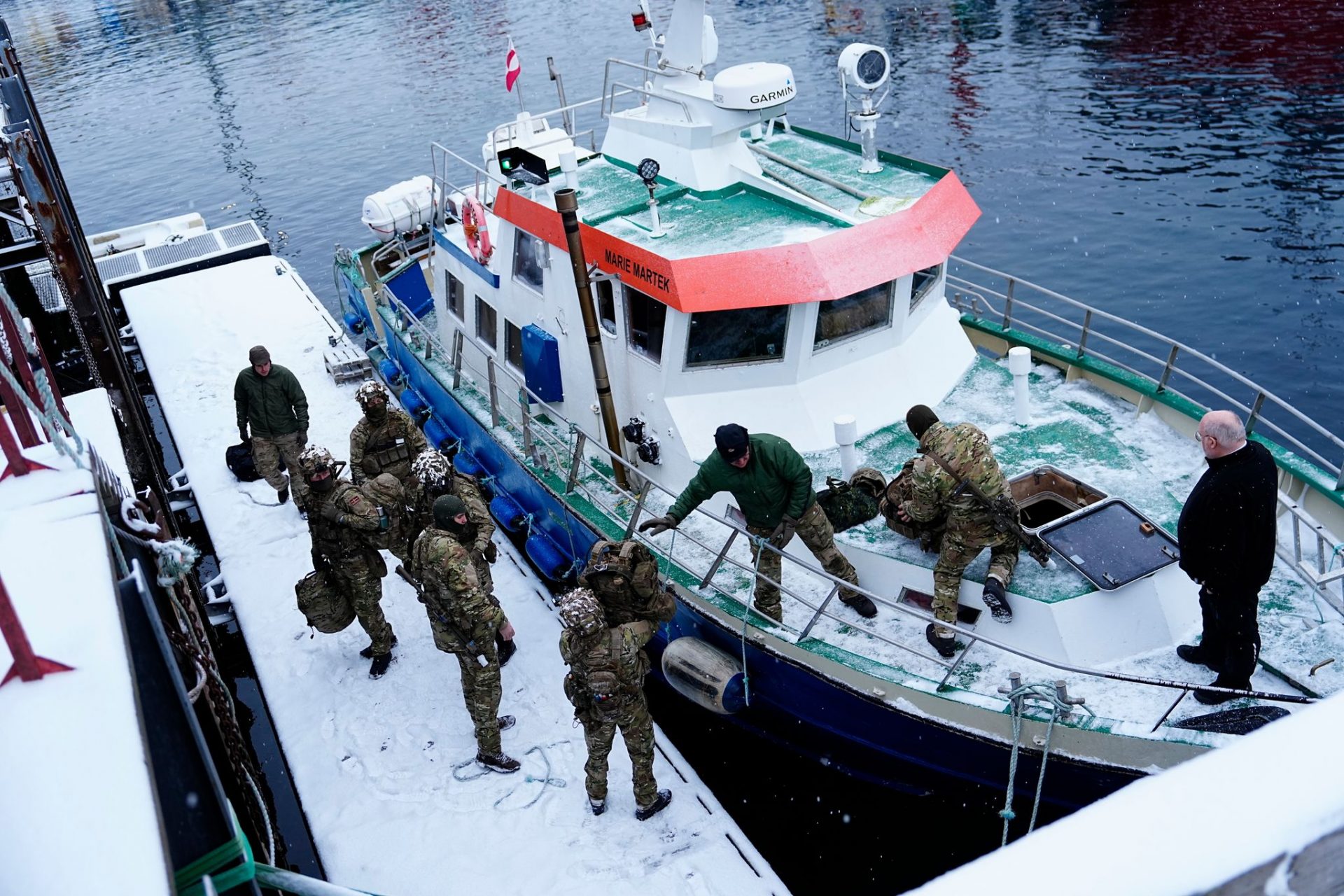
Denmark, Finland, France, Germany, the Netherlands, Norway, Sweden and the United Kingdom recently sent a small number of soldiers on a reconnaissance mission to Greenland as a sign of solidarity with Denmark, which is pushing back against Trump’s takeover ambitions.

“We won’t be blackmailed, and we stand together in solidarity in Europe,” said German Finance Minister Lars Klingbeil, arriving in Brussels on Monday for two days of previously planned talks  with his EU counterparts. “We don’t want an escalation. We are not looking for an escalation, but we are ready if it comes,” Klingbeil said.

Italian Prime Minister Giorgia Meloni – considered one of Trump’s few allies in the EU – has called the new tariff threat a “mistake”.

In a different threat scenario, Trump also ramped up his rhetoric against France on Tuesday, warning he would impose 200 percent tariffs on French wine and champagne over its intentions to decline his invitation to join his “Board of Peace” set up to oversee the rebuilding of Gaza.

French President Emmanuel Macron said at the World Economic Forum (WEF) in Davos (Switzerland) on Tuesday: “What doesn’t make sense is to have tariffs between allies. We have to fix the war in Ukraine, we have to help the Ukrainians resist, and find a sustainable peace.” 

Macron called the possibility of potentially activating the Anti-Coercion Instrument against the US “crazy” and added: “I do regret that. But this is a consequence of just unpredictability and useless aggressivity.”

European Commission President Ursula von der Leyen has warned Trump not to plunge transatlantic relations into a dangerous downward spiral over Greenland. “This is why the proposed additional tariffs are a mistake, especially between long-standing allies,” she said in Davos.

Arctic security can only be achieved together.

This is why the proposed additional tariffs are a mistake, especially between long-standing allies.

The EU and US have agreed to a trade deal last July.

A deal is a deal.

And when friends shake hands, it must mean something. pic.twitter.com/5wpMic148s

— Ursula von der Leyen (@vonderleyen) January 20, 2026

Washington mayhem tests transatlantic alliance and post-WWII order

The leader of global rights group Amnesty International, Agnes Callamard, urged European countries Monday to stop “appeasing” Trump and to resist him and other “bullies” who she said were intent on destroying the rules-based order in place since World War II.

Since Trump’s return to the White House a year ago, he has taken “a range of decisions that have led to the demise of many rules around the world”, while Russia was destroying the system “through its aggression in Ukraine”, the human rights organisation’s secretary general told AFP in an interview in Davos.

The post-WWII order “is also being destroyed by Israel that has completely ignored international law in its genocide of Palestinians in Gaza”, she added.

Furthermore, European powers have been treading a thin line over Ukraine in recent months, relying on Washington to try to help settle the conflict but resisting terms too favourable to Moscow.

Trump meanwhile has put the transatlantic alliance to the test with threats to take over Greenland “one way or the other”, as European countries close ranks against Washington’s designs on the vast Danish autonomous territory.

In a message to Norway’s Prime Minister Jonas Gahr Store, Trump said “I no longer feel an obligation to think purely of Peace”, citing his failure to win last year’s Nobel Peace Prize despite openly coveting it. He said although peace would still be “predominant”, he could “now think about what is good and proper for the United States of America”.

Store said in a statement: “I have clearly explained, including to President Trump, what is well known – the prize is awarded by an independent Nobel Committee”, not the Norwegian government.

Dänische Soldaten gehen im Hafen von Nuuk an Land.
Danish soldiers disembark at the port of Nuuk. Photo: Mads Claus Rasmussen/Ritzau Scanpix Photo/AP/dpa

NATO ramps up Greenland presence amid search for unity

Amid the global tensions, Denmark is proposing that NATO start surveillance operations in Greenland, with the support of the Arctic island, Defence Minister Troels Lund Poulsen said Monday after meeting NATO’s chief Mark Rutte. The precise details of the proposal and the response from Rutte remain unknown.

While a number of NATO allies have sent troops to Greenland or have announced plans to do so despite the risk of additional US tariffs being imposed on them, others remain reluctant and divided over the move.

Belgium is sending a liaison officer to Greenland. Despite this decision, the country was not included on Trump’s list of sanctioned countries on Saturday.  “But there is no guarantee that this will not be the case in the future and we must show solidarity with our colleagues”, Foreign minister Maxime Prévot said. He called the American measures “incomprehensible and unnecessarily hostile”. 

Likewise, Slovenia on Saturday announced it would deploy two Armed Forces officers to Greenland to take part in the planning and implementation of the Danish-led international military exercise Arctic Endurance. 

Poland’s Prime Minister Donald Tusk – whose country is a staunch NATO ally with the highest defence expenditure as a share of gross domestic product (GDP) in the EU – already said last week the country was “not planning to send Polish soldiers to Greenland”.

Contrary to false claims on social media that Germany had sent warships to Greenland, the country did send 15 soldiers to the island for a reconnaissance mission. The troops however left Greenland on Sunday after the mission was completed on schedule, according to the Ministry of Defence.

Spain has not announced plans to participate in the mission in Greenland. Defence Minister Margarita Robles however said recently that the country could join the group in the future.

At the same time, some NATO allies are still navigating how the Greenland dispute plays out in their domestic political debates.

Asked on Monday whether the government of the Czech Republic supports Greenland, Prime Minister Andrej Babiš said he could not give a clear answer. He added that the United States is the leader of NATO and that conflicts are counterproductive. “We definitely prefer that an agreement be reached within the alliance. It would be very unfortunate if there were to be any conflicts,” Babiš said.

In Bulgaria, political reactions are mixed. The outgoing government has not issued a position on the recent developments around Greenland, but reactions from parliament have begun to emerge.

On the one hand, the leader of Continue the Change – a party affiliated at European level with Renew Europe – Assen Vassilev, said that every country should have the right to determine its own future, rather than having its choices dictated by external powers. 

On the other hand, Revival (Vazrazhdane) – whose MEPs sit with the Europe of Sovereign Nations Group in the European Parliament – backs the US claims over Greenland. Party leader Kostadin Kostadinov reiterated the party’s call for Bulgaria to withdraw from NATO and argued that tensions between Washington and Copenhagen expose deeper structural problems within both NATO and the European Union.

Slovakia’s Foreign Minister Juraj Blanár said “Slovakia considers Greenland to be part of Denmark”. He rejected tariff battles between states: “We prefer diplomacy and peace, not tension or fighting,” he said.

EU “trade bazooka” on standby

EU leaders will meet in Brussels on Thursday to discuss a coordinated response to the prospect of US tariffs – with its most powerful trade tool on the table.

The Anti-Coercion Instrument, a mechanism adopted in 2023, that can be used in cases of economic coercion when a non-EU country attempts to pressure the bloc or one of its 27 members into making a decision through trade restrictions.

Such practices “unduly interfere with the legitimate sovereign choices of the European Union and its member states”, the European Commission says on its website.

France had signalled its intention to request the activation of the instrument after Trump announced on Saturday that he would impose additional tariffs on the eight NATO allies. 

To apply the instrument, the European Commission first has to examine whether economic coercion is present in the case. EU countries must then back the Commission’s conclusion, before the EU’s executive arm ideally enters into talks with the country. If these are unsuccessful, the EU can impose countermeasures.

Retaliatory measures under the ACI however are only a last resort and must be proportionate. Using it against the United States would be ”the very first time” the EU has ever applied the tool, Macron recalled in Davos on Tuesday.

Should the ACI be applied over Trump’s latest trade threats, retaliatory tariffs on imports of US goods are likely. The EU-US tariff agreement concluded in July could also be put on hold.

Under discussion is also the possibility of imposing additional tariffs on a list of goods with a total trade volume of 93 billion Euro (108 billion Dollar), including industrial and agricultural goods such as motorcycles, beef, whiskey and citrus fruits.

This article is an ENR Key Story. The content is based on information published by ENR participating agencies.
  •  

On the road to nowhere? European carmakers face EV push from China

Growing popularity of electric vehicles (EVs) from China is causing headaches for European carmakers – and for Brussels, with national governments clamouring for protection for their national champions. 

The European Commission, which is in charge of trade policies for the bloc, has to square the circle between avoiding a trade war and injecting some life into the idling economy. 

In one recent step the EU is attempting to introduce minimum prices for Chinese made EVs to offset subsidies instead of slapping on more tariffs. 

The EU in 2024 had introduced tariffs of up to 35.3 percent on EVs imported from China after an anti-subsidy probe concluded that the country’s support undercut European automakers. Manufacturers in China benefit from unfair subsidies that give them a significant advantage in the European market. Since then, the two sides have been engaged in talks to find other solutions. 

How cheap is too cheap?

Under new guidelines published by the Commission last week, companies can commit to setting minimum prices for vehicles exported to the European Union in order to avoid the price surcharges. In addition, in the case of a corresponding offer, commitments to invest in the EU or to limit exports would be positively taken into account.

Such offers would be assessed objectively and fairly by the Commission, according to the new guidelines. A prerequisite for acceptance is that the measures eliminate the damaging effects of subsidies and have an effect equivalent to the tariffs.

The published document was “intended to provide guidance to Chinese exporters who may be considering submitting price undertaking offers for exports of battery electric vehicles to the EU, which are currently subject to countervailing duties,” Commission spokesman Olof Gill said. 

He said that at present, the Commission has received one price undertaking offer, without specifying which company or for which model. He added that the Commission is ready to consider other proposals, provided that they “adequately address the unfair competitive advantage” and demonstrate that they are “feasible in practice”.

Leading German automotive expert Ferdinand Dudenhöffer, head of the private institute Center Automotive Research (CAR), was sceptical of the effects of the minimum prices could have on competition. 

According to EU calculations, manufacturers in China benefit from unfair subsidies that give them a price advantage of around 20 percent on the European market. For this reason, tariffs ranging from 7.8 to 35.3 percent were imposed from 2024, depending on the manufacturer. German and US companies that manufacture in China are also affected. In retaliation, China imposed special tariffs on EU goods such as spirits, pork, and dairy products.

According to CAR, Chinese manufacturers sell their models in the EU at an average markup of 118 percent on top of the domestic price. “Given the current price level in Europe, there should still be significant scope for Chinese manufacturers to reduce prices,” said Dudenhöffer. 

Pressure from all sides

According to the latest report by the EU research agency Eurofound, the automotive industry in the EU directly employs around 6 million workers and another 6 million in related sectors. 

Since 2019, the pace of job losses in the sector has clearly accelerated. In 2024 alone and at the beginning of 2025, layoffs announced by European companies affected around 100,000 jobs.

The largest employment losses have been recorded in countries with a strong presence of Europe’s biggest car manufacturers. In France, a structural decline is feared, while since 2019 job cuts have also affected Germany, Italy, and, to a lesser extent, Spain. Central and Eastern European countries – Czechia, Hungary, Poland, Romania, and Slovakia – are facing the relocation of production outside the EU to countries with lower labor costs.

This is happening because sales of cars originating from China, including electric vehicles (EVs), are increasing in the EU. In practice, some of these cars on EU markets are not only models of Chinese brands but also vehicles produced in China for Western brands.

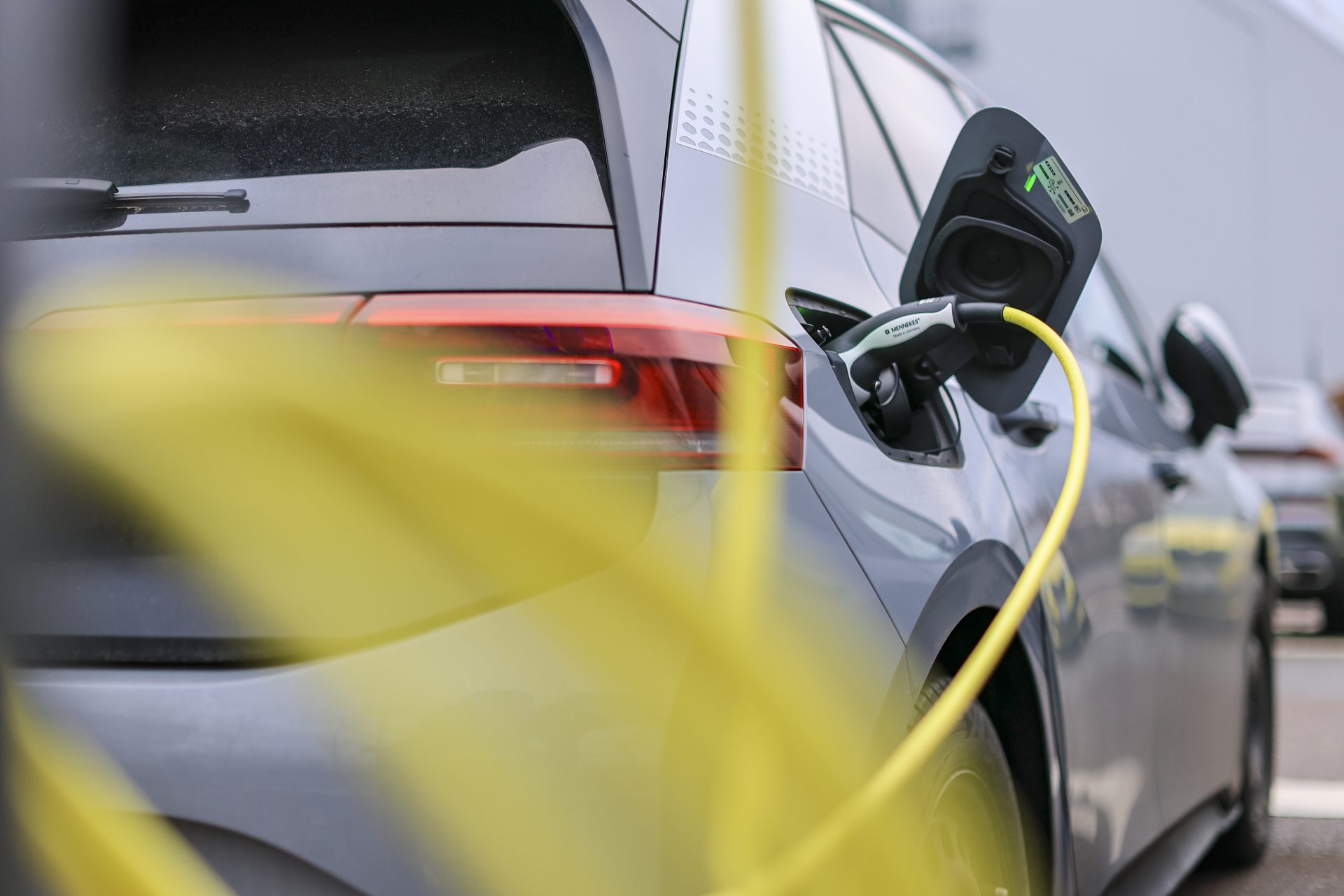
ARCHIVE – November 20, 2025, Saxony, Leipzig: A Volkswagen electric vehicle is charging at a charging station using a yellow cable. Photo: Jan Woitas/dpa

German auto angst

Germany, for many years a global carmaking powerhouse, is facing a dilemma. Demand for EVs is rising, but it is not just the battery powered Volkswagens or BMWs customers are flocking to – and the long-term outlook is dire. 

Electric vehicle sales rebounded strongly in Germany in 2025, according to official data from early January this year, with Chinese manufacturers making inroads from a low base in the EU’s largest economy despite tariffs.

EV sales rose 43.2 percent last year to 545,142 in total, the KBA federal transport authority said, representing 19.1 percent of all new cars sold.

Chinese EV giant BYD – which last year overtook Elon Musk’s Tesla to become the worlds largest electric carmaker – saw its German sales rise over 700 percent to more than 23,000 cars, giving it 0.8 percent of the overall auto market.

“International vehicle manufacturers with affordable battery electric vehicles and plug-in hybrids have contributed disproportionately to growth in these segments,” said Imelda Labbé, head of the VDIK foreign carmakers’ lobby in Germany.

The rise in EV sales last year comes after a fall of almost 30 percent in 2024 following the withdrawal of government subsidies, and Germany’s electric car market is still smaller than optimists had hoped for. After the decline in the market in 2024, the government said in December it would introduce subsidies again.

Some motorists will be able to benefit from 5,000 Euro for the purchase of new EVs or hybrids so long as their components are largely made in Germany. But industry figures say that better charging infrastructure and cheaper power would be needed to really boost EVs and warned that the planned subsidy would have limited impact.

On the other hand, German carmakers have been reporting strong declines in vehicle sales in China. Volkswagen said in January its sales dropped by 8 percent in 2025 year-on-year, as it was facing intense competition on the Chinese market from local producers. Mercedes-Benz reported a 19 percent decline in sales for the year, while BMW sold 12,5 percent fewer cars in China. 

German manufacturers like Mercedes or VW sell about 30 percent of their cars on the Chinese market. 

The tug-of-war affects not just major players, but the automotive sector across the continent. 

Bulgaria for example is not a major car producer, but it is increasingly important as a supplier of automotive components to European manufacturers. The sector has grown into one of the country’s strongest industrial branches, generating close to 11 billion Euro in annual turnover, according to business media and industry analyses. 

This means that it is indirectly exposed to the EU-China trade dispute over electric vehicles: weaker competitiveness of European carmakers could reduce orders for Bulgarian suppliers, while a recovery in EV sales in core markets such as Germany would have the opposite effect. 

At the same time, Chinese manufacturers are not only exporting cars to Europe but are also expanding production and partnerships within the EU, with Bulgaria being increasingly part of China’s automotive strategy in Southeast Europe according to analysts. 

For Bulgaria, this creates a mixed impact: EU trade measures may protect European carmakers, but Chinese localization in Europe could also open new opportunities for Bulgarian suppliers.

Dudenhöffer expects the sector to shrink in the next years in Germany and Europe, as manufacturers shift their production to the US or Asia, he said in his market forecast for 2026.

“Growth is taking place in Asia, and Asian car manufacturers (Japan, Korea, China) are increasingly dominating the car business.”

Ferdinand Dudenhöffer, German Automotive Expert

Fading from Green to Petrol 

And then there are of course the EU’s green policies: The EU in December rolled back a 2035 ban on new petrol and diesel cars seen as a milestone in the fight against climate change, as the bloc pivots to bolstering its crisis-hit auto sector. 

Under proposals slammed by green groups as an act of “self-sabotage”, carmakers will have to cut exhaust emissions from new vehicles by 90 percent from 2021 levels – down from an envisaged 100 percent.

This means that in practice automakers will still be able to sell a limited number of polluting vehicles – from plug-in hybrids to diesel cars –  beyond 2035, provided the resulting emissions are “compensated” in various ways.

The EU’s Industry Commissioner, Stéphane Séjourné, insisted the bloc’s green ambitions stood intact as he put forward a plan billed as a “lifeline” for Europe’s auto industry.

The combustion-engine ban was hailed as a major win in the climate fight and a key tool to drive investments in electrification when adopted in 2023.

The compromise plan was slammed by both environmentalists and industry groups.

While the EU had recognised that remaining open to different technologies was important, its proposal was “fraught with so many obstacles it threatens to remain ineffective in practice”, the president of the German Association of the Automotive Industry (VDA), Hildegard Müller, said. “In times of increasing international competition, in times when European economic power is crucial, this overall package from Brussels is disastrous.” 

The future of German car manufacturers – and by extension automakers in other EU member states – is closely linked to the Chinese market. 

According to Dudenhöffer, they must develop and build electric cars “in China for China”. In this context, he criticised the softening of the combustion engine phase-out. He said it was not possible to disconnect from developments, but that it is necessary to face competition in the tough Chinese market. “If you’re not in China, you’re not in the car business.”

This article is an ENR Key Story. The content is based on information published by ENR participating agencies.

  •  
❌