❌

Reading view

Border Cops Seize Nurse's Phone Filled With Psychiatric Patient Information

A smartphone in handcuffs | tescka1/Magnific/Cammeraydave/Dreamstime/Mariam Zakaidze

U.S. Customs and Border Protection (CBP) seized a psychiatric nurse practitioner's phone filled with confidential patient information at Washington Dulles International Airport last week, according to a new lawsuit. Muhammad Numaan Imam alleges that CBP agents told him that they could take his electronics the "easy way or the hard way" and refused to let him talk to his lawyer because "we are the authorities at the border."

The lawsuit by the American-Arab Anti-Discrimination Committee (ADC) may be the first time CBP is taken to court over seizing people's medical records. ADC is also helping Palestinian-American lawyer Jay Shehadeh and Jewish-American journalist Max Blumenthal sue over their devices being seized.

"We're seeing a pattern where officers use their border-search authority not to advance any legitimate border-related purpose, but to punish individuals for refusing to provide access to their personal electronic devices and for having expressed views the government didn't approve of," ADC president and legal director Jenin Younes wrote in a statement emailed to journalists.

While Shehadeh and Blumenthal claim that CBP is retaliating for their political views, Imam argues that he faced threats and retaliation with the simple act of asserting privacy rights. Both Imam and Shehadeh were considered "trusted travelers" under the Global Entry program, which allows American citizens who undergo a background check to pass through an automated fast track at airports and borders.

Asked by Reason, a CBP spokesperson did not address any specifics of the case, giving only a generic statement about how "CBP's ability to lawfully inspect electronic devices crossing the border is integral to keeping America safe in an increasingly digital world."

The border exemption to the Fourth Amendment gives U.S. authorities the power to look for "contraband" crossing into the country without a warrant. There is a mess of contradictory court rulings on whether that power includes searching travelers' electronic data, but in practice, CBP can simply seize the physical devices that the data live on.

And the agency often lies outright to travelers whose data that it wants to search, as documents recently released in the case of Atlanta protester Samuel Tunick show. CBP agents gave Tunick a false reason for detaining him and falsely promised that he would be allowed to leave with his phone if he cooperated, even though they were under orders to seize his devices no matter what. Tunick is now on trial for allegedly tricking the CBP agents into deleting his data to avoid a search.

"It's happening to a lot of people, and it's being used in this coercive, inappropriate way," Younes tells Reason.

The problems for Imam, who lives in Virginia, actually began at another border. He was heading to Istanbul on Saturday for a family vacation with his Pakistani wife, Khadijah Mansoor, and their 1-year-old child. Turkish authorities demanded to see Mansoor's U.S. green card, which she had forgotten at home, and wouldn't let her enter on her Pakistani passport alone. The family had to board the next flight back to Washington. On their arrival, CBP naturally wanted to know why they had been turned away and why Mansoor didn't have her green card.

But things took a weirder turn after agents told Imam he had been "flagged" for undisclosed reasons, pulled him into a separate room, and began questioning him about his social media use and group chats, according to the lawsuit. (Imam tells Reason that they asked about group chats in general, not any specific group chat.) When agents asked for the password to Imam's phone, he told them that he uses the phone to communicate with and manage cases for patients at the rehab facility where he works. The Health Insurance Portability and Accountability Act (HIPAA) strictly prevents doctors and other medical staff from sharing patient data without consent, so Imam asked to speak to a lawyer.

"Your lawyer cannot do anything. We are the authorities at the border," Imam recalls one agent saying. A supervisor then told the couple that CBP could take all of their electronics the "easy way or the hard way," and that the devices could take months to get back, Imam and Mansoor claim.

CBP's own internal policy says that devices should "ordinarily" be held for less than five days. The same policy includes vague guidelines for dealing with medical information: "Possibly sensitive information, such as medical records and work-related information carried by journalists, shall be handled in accordance with any applicable federal law and CBP policy." Imam says that the CBP agents claimed to have software for filtering out HIPAA-protected data.

After four hours in detention, CBP took the family's phones and laptops and let them go. The next day, Imam got an email stating, "We regret to inform you that your membership in Global Entry has been revoked for the following reason(s): You do not meet the Trusted Traveler standard." In addition to both Imam and Mansoor losing valuable work data, the lawsuit argues, Imam is now unable to prescribe certain psychiatric medications to his patients, because of federal regulations that require phone verification.

The lawsuit demands the return of the devices and data under Rule 41(g) of federal criminal procedures, which requires the government to hand back property that is no longer necessary for a criminal investigation. ADC has also filed these motions in Shehadeh and Blumenthal's cases. (CBP gave back Blumenthal and Shehadeh's phones almost immediately afterward, but ADC is continuing to press for records of what they did to those phones in custody.) Younes filed a brief on Blumenthal's behalf in support of an upcoming Supreme Court case over whether CBP can continue these electronic searches.

"The devices are neither contraband nor subject to forfeiture, and, to Plaintiffs' knowledge, there is no pending criminal investigation, criminal prosecution, or warrant authorizing their continued seizure or search," Imam's lawsuit states. "The Fourth Amendment does not permit the border-search exception to become a means of coercing compliance through the threatened or actual confiscation of travelers' personal property."

The post Border Cops Seize Nurse's Phone Filled With Psychiatric Patient Information appeared first on Reason Magazine.

  •  

Midterms pode ser problemática para déficit dos EUA, diz relatório Barclays

As eleições de meio de mandato dos Estados Unidos se aproximam e, segundo o relatório mensal de perspectivas de mercado do banco Barclays, elas podem ser problemáticas para o déficit do país. Se houver uma troca da maioria dos republicanos para os democratas é provável que se estabeleça um impasse entre um Congresso democrata e um Executivo republicano.   

Segundo o relatório, esse impasse impossibilitaria que qualquer novo projeto de lei de grande impacto fosse aprovado. O que significa que quaisquer medidas para reduzir de forma significativa o déficit dos Estados Unidos também ficariam presas.  

O déficit fiscal americano atingiu US$ 1,99 trilhão, o maior valor em cinco anos, segundo o Departamento do Tesouro. Impulsionado pelo reembolso de tarifas e gastos recordes para pagar a dívida nacional de mais de US$ 40 trilhões. 

O cenário pode também não ser favorável à inflação e aos juros americanos, que estão em máximas históricas. Uma inação do governo, resultado do impasse entre Congresso e Governo, pode ser problemática em um cenário em que o rendimento do Tesouro americano em papéis de longo prazo já ultrapassa 5%.  

Composição atual do Congresso americano 

Atualmente os republicanos detêm uma maioria apertada na Câmara, com 218 representantes republicanos e 214 democratas. No Senado o desenho é parecido, com 53 republicanos e 47 democratas. O cenário atual mostra que qualquer alteração significativa nas midterms pode alterar a maioria republicana atual para uma maioria democrata. 

Na Câmara, todas as 435 cadeiras estão em disputa, já no Senado apenas 33 cadeiras. Segundo o Barclays, para garantir a maioria, os democratas precisam de um ganho líquido de quatro cadeiras.  

Imediatamente após a eleição, os membros em exercício ainda podem votar, mesmo que tenham perdido seus assentos. O Congresso atual permanece em exercício até o dia três de janeiro, período em que buscarão avançar com suas pautas.  

Para os investidores é importante ressaltar que o prazo de financiamento governamental dos Estados Unidos é dia 11 de dezembro.  

Resenha do Dinheiro   

O programa é apresentado por Marilia Fontes, sócia-fundadora da Nord Investimentos, Bernardo Pascowitch, fundador e CEO do Yubb e Thiago Godoy, o “Papai Financeiro”;  e propõe uma abordagem leve, direta e descomplicada sobre temas ligados à educação financeira e investimentos. A atração aborda semanalmente os principais temas da economia com a informalidade de uma conversa entre amigos — sem abrir mão da análise.  

O Resenha do Dinheiro vai ao ar todas as sextas-feiras, às 19h, no canal do CNN Money no YouTube e aos domingos, às 15h, na CNN Brasil 

  •  

Partido Republicano investe milhões de dólares em anúncios sobre crimes

Os republicanos estão investindo dezenas de milhões de dólares em anúncios políticos que exploram crimes hediondos e casos polêmicos como estratégia para as eleições de meio de mandato, previstas para o dia 3 de novembro, com votações antecipadas já em andamento em diversos estados americanos.

A tática, no entanto, tem gerado forte repercussão negativa, inclusive dentro do próprio partido.

De acordo com levantamento da CNN, apenas o Senate Leadership Fund, pacote destinado a anúncios voltados ao Senado dos Estados Unidos, já gastou ao menos US$ 17 milhões nesse tipo de propaganda. Os materiais exibem assassinatos, crimes brutais e são utilizados para atacar candidatos adversários, em sua maioria democratas.

Um dos aspectos mais criticados dessa estratégia é o fato de que as famílias das vítimas retratadas nos anúncios não foram previamente informadas sobre a veiculação do conteúdo.

No Michigan, uma mãe teve uma crise de pânico ao ver o assassinato de sua filha de 5 anos, ocorrido em 1994, sendo explorado em campanha republicana contra o democrata Abdul El-Sayed.

Em outro caso, o noivo de uma mulher assassinada em 1999 também se surpreendeu ao ver a imagem da companheira utilizada em propaganda eleitoral sem qualquer aviso prévio.

Caso Amy Acton provoca reações em cadeia

O episódio que mais repercutiu foi o envolvendo Amy Acton, candidata democrata ao governo de Ohio. Vivek Ramaswamy, adversário dela na disputa pelo governo do estado, divulgou um anúncio com a própria mãe de Acton, na qual ela afirma que a filha é mentirosa e pede que os eleitores não votem nela.

O caso ganhou ainda mais gravidade diante do contexto familiar: Acton relatou publicamente que, aos 12 anos, foi abusada sexualmente pelo padrasto, que foi formalmente acusado do crime.

Ela declarou que não mantinha contato com a mãe há anos, pois ela teria optado por permanecer com o padrasto em vez de defender os filhos.

A repercussão foi tamanha que republicanos passaram a defender publicamente Amy Acton. Entre eles, John Husted, que concorre a uma vaga no Senado de Ohio pelo mesmo partido e declarou que não utilizaria um anúncio como aquele.

A discussão alcançou âmbito nacional: o vice-presidente JD Vance comentou o caso e defendeu a peça publicitária, afirmando que “política é uma atividade dura” e pedindo que os correligionários parassem de reclamar e se concentrassem em vencer a eleição. A declaração também foi amplamente criticada.

Já Donald Trump preferiu minimizar a questão e não quis se pronunciar sobre o anúncio.

Impacto nas pesquisas e debate sobre limites da propaganda

Nas pesquisas de intenção de voto para o governo de Ohio, Amy Acton aparece com 50% contra 43% de Ramaswamy. Analistas avaliam que a distância entre os dois pode aumentar após a repercussão negativa do anúncio. Ainda não foram divulgadas novas pesquisas desde a veiculação da peça.

O episódio reacendeu um debate mais amplo sobre os limites das propagandas eleitorais nos Estados Unidos.

O levantamento da CNN evidencia que a questão de segurança pública e crimes tem sido um eixo central da campanha republicana, enquanto os democratas têm privilegiado temas econômicos em suas estratégias de comunicação.

Os textos gerados por inteligência artificial na CNN Brasil são feitos com base nos cortes de vídeos dos jornais de sua programação. Todas as informações são apuradas e checadas por jornalistas. O texto final também passa pela revisão da equipe de jornalismo da CNN. Clique aqui para saber mais.
  •  

Pentagon advances some wind projects after freeze

The Trump administration is advancing some wind projects after a court order required it to do so. A White House official said Thursday that an initial set of wind projects under Pentagon review have been released. The official said this represents two projects located in Maine and South Dakota. The official said the Defense Department…

  •  

Workers hit hard by rising employer health insurance costs

Costs are spiking for the millions of Americans who rely on workplace-sponsored health insurance, according to a survey released Thursday, with small businesses and their employees being hit especially hard.  The average cost of a family plan increased by 5 percent, topping $28,000 this year, according to the annual Employer Health Benefits Survey from KFF.…

  •  

Democrats lead Republicans by 37 points among likely young voters: Survey 

Democrats are leading Republicans by 37 points among young voters who say they’ll definitely cast their ballots this fall, according to the latest Harvard Youth poll. On a generic House ballot, Democrats are ahead with 45 percent to 24 percent among voters aged 18-29, a 21-point advantage. Among voters who are certain they’ll vote in…

  •  

I've visited over 50 cities in Europe. London and Paris were great, but these 5 lesser-known locations are worth a visit.

Dasha leans against a bridge over a river. Behind her are hills with houses on them.
One of my favorite lesser-known locations to travel to is Heidelberg, Germany.

Dasha Kofman

  • After traveling to over 50 cities in Europe, I've enjoyed visiting some lesser-known locations.
  • Bath, England, is a great place to visit for Roman ruins and beautiful architecture.
  • I also loved traveling to Bruges, Belgium, which is both historic and romantic.

I've visited over 50 cities in Europe, and although I love global tourist hubs like London and Paris, I also try to seek out smaller cities and towns.

Here are five lesser-known destinations in Europe I recommend visiting.

Bath, England, is just a 90-minute train ride from London.
Tourists walk around a two-floor open-air Roman bath. The bath in the middle of the building is green.

Evannovostro/Shutterstock

As you probably could have guessed from this city's name, Bath is known for its Roman baths. These baths, dating back to AD 70, are some of the best-preserved Roman ruins in the world.

The city is full of beautiful Georgian architecture, which can be admired in places like the Royal Crescent — a crescent-shaped row of 30 houses.

I also loved visiting the Circus, which is made up of townhouses arranged in a circular pattern. In my opinion, these areas are part of what makes walking around Bath feel unique.

The train from London to Bath takes about 90 minutes, making this city the perfect day trip.

Heidelberg, Germany, embraces modern life without losing its historical charm.
A bridge over a river, with buildings and a castle in the background.

SerrNovik/Getty Images

Heidelberg has striking views around every corner. The city is home to a centuries-old castle as well as the oldest university in Germany.

I enjoyed walking along Philosophenweg (also called Philosopher's Way), where professors sought solitude and academic inspiration. The path was especially beautiful during my trip in the fall.

We loved spending time in the city, which had lots of nice restaurants and cool bars. In my opinion, Heidelberg does an amazing job of embracing the new while holding on to its historical charm.

Bruges, Belgium, is a romantic city.
People riding in a boat on a river surrounded by charming brick buildings.

Dasha Kofman

Bruges is a laid-back destination that makes a convenient day trip from nearby Paris and Brussels. In my opinion, visiting the medieval city feels like stepping back in time.

The best thing I did was take a boat ride on the canal, admiring the architecture while cruising through Minnewaterpark, commonly referred to as the Lake of Love.

The city is perfect for couples looking to indulge in Belgian beer and chocolate.

Mostar is a beautiful city in southern Bosnia and Herzegovina.
People sit on rocks next to a large tower bridge.

Dasha Kofman

Mostar really surprised me because it didn't look like anywhere else I'd been. The towering 16th-century Old Bridge connecting the two sides of the city is a UNESCO World Heritage site.

The city also has a well-preserved Ottoman quarter with charming cobblestone streets.

During my time in Mostar, I loved drinking Bosnian coffee, taking in the views of the city, and feasting on local dishes like ćevapi.

Andorra La Vella is a hidden gem in the Pyrenees mountains.
A bridge over a river with the words "Andorra La Vella" on it. There are buildings on both sides of the river and tall mountains in the background.

Dasha Kofman

Andorra La Vella is the capital of Andorra, a country in the Pyrenees between France and Spain.

Every restaurant we dined at featured dishes influenced by the surrounding countries. If you want to try authentic Andorran food, head to a borda — a traditional house once used for agricultural purposes. Now, these buildings are used as charming restaurants.

Andorra la Vella makes a great day trip from Barcelona, but, in my opinion, the city deserves more than a one-day visit.

This story was originally published on July 3, 2024, and most recently updated on October 22, 2025.

Read the original article on Business Insider

  •  

Marshall blames Ukraine war for high diesel prices

Sen. Roger Marshall (R-Kan.) on Wednesday blamed the war in Ukraine for high diesel prices, with energy costs as a key concern in the rapidly approaching midterms. “The real problem with the cost of diesel, in particular, is No. 1, is the Ukraine war, and because of that, diesel production has gone down. But beyond…

  •  

Customs seize 28,000 counterfeit condoms

Customs officers seized 28,000 suspected counterfeit condoms during an inspection of a sea shipment arriving from Greece on Thursday.

The container was selected for scanning and a physical inspection following a risk assessment.

According to customs, the products appeared to infringe the intellectual property rights of a well-known brand, based on the accompanying documents and invoices.

The owner of the company involved reportedly admitted that the condoms were counterfeit.

Procedures for the confiscation and destruction of the products are expected to follow in the coming days.

Customs warned that counterfeit condoms could pose serious health risks, including unwanted pregnancies and the transmission of sexually transmitted infections.

  •  

Russia kept sneaking troops through gas pipes behind Ukrainian lines. Now Ukraine has gone more than 15 km underground to do the same to Russia

Russian troops captured during Operation Veles, October 2026. Screenshot from a video by the 2nd Corps of Ukraine’s National Guard

Ukraine's Defense Forces advanced more than 15 km through underground utility tunnels into Russia's rear on the Kupiansk axis in Kharkiv Oblast, the Khartiia Corps of Ukraine's National Guard reported on 22 October. The corps called it Operation Veles. The underground advance was paired with attacks on the surface and drone strikes, hitting Russian forces from two directions, the corps told Militarnyi.

Russian troops have repeatedly crawled through gas pipelines around Kupiansk to get behind Ukrainian lines, even after Ukraine reported confident control of the city in February. This time, Ukraine went underground itself. The operation took away Russia's chance to get into Kupiansk's rear, the corps said.

The corps reported more than 30 Russian soldiers captured and Russian losses of more than 100. Militarnyi, citing the unit, put the number of Russian troops killed at over 100.

Khartiia studied how Russian troops moved through pipes before going underground itself, the corps commander, Brigadier General Ihor Obolenskyi, said.

"We watched how the enemy works underground and studied how they do it. The Russians intended to use gas pipelines to get into the rear of our troops. So we went underground ourselves. We anticipated the enemy's actions and mastered the tactics of underground combat," he said.

Boots under ground!

Asymmetric breakthrough in the Kharkiv Region: Khartiia Corps conducts the subterranean counteroffensive Operation VELES, advancing 15 km underground.

Corps Commander General Ihor Obolenskyi explains a unique operation. pic.twitter.com/qRQ93kckpK

— Khartiia Corps in English (@khartiia_eng) October 22, 2026

For the operation, troops trained physically and psychologically to fight in confined spaces, sappers and engineers prepared the underground route, and special communications, navigation, silent logistics, and life-support systems were put in place, Khartiia told Militarnyi. The operation was named after Veles, the Slavic pagan god of the underworld.

Khartiia's brigade, the R.U.H. assault regiment, the Lava drone regiment, the Achilles drone brigade, and units of Ukraine's military intelligence, including the Freedom of Russia Legion and the Russian Volunteer Corps, took part, the corps said.

Russia has used pipelines to infiltrate before

By September 2025, Russian forces had used pipelines to move troops behind Ukrainian lines three times, Ukrainian monitoring project DeepState reported on 12 September 2025. The first was in Avdiivka, the second near Sudzha, and the third near Kupiansk, where groups crossed the Oskil River through a gas pipe.

Near Sudzha in March 2025, Russian special forces walked through a pipeline that until recently had carried Russian gas to Europe, the Associated Press reported. A pro-Kremlin blogger claimed they covered about 15 km and that some spent several days inside.

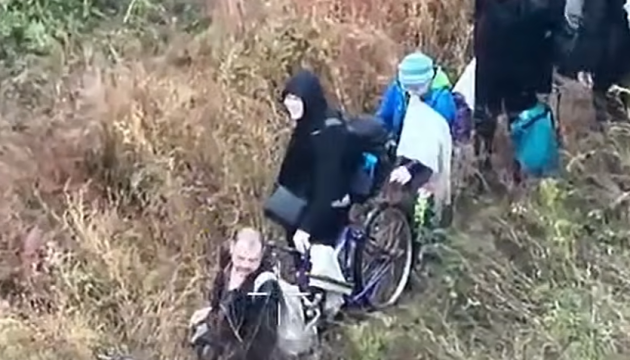
Russian troops kept using the pipeline near Kupiansk this year. On 27 September, Khartiia's reconnaissance drones recorded Russian forces leading nine civilians, including children, elderly people, and a person on crutches, through the gas pipeline out of the Kupiansk community. Men of military age in civilian clothes walked alongside them, and the corps believes they were Russian soldiers using the group as cover to withdraw. Ukrainian troops held fire because of the civilians, the corps said, adding that the case has been documented for a war crimes investigation.

Civilians led through a gas pipeline out of the Kupiansk community, Kharkiv Oblast, by people the Khartiia Corps identifies as Russian forces, 27 September 2026
Civilians led through a gas pipeline out of the Kupiansk community, Kharkiv Oblast, by people the Khartiia Corps identifies as Russian forces, 27 September 2026. Screenshot: Khartiia Corps

Why the war is moving underground

Drones, constant surveillance, and AI-assisted targeting have made the battlefield surface transparent and deadly, argue John Spencer, chair of urban warfare studies at West Point's Modern War Institute, and Col. Drew Craig, principal military engineering staff officer at NATO's Allied Rapid Reaction Corps. In an August analysis, they write that soldiers in Ukraine describe a "death zone" of some 30 km, where moving above ground can draw an attack within minutes. When firepower makes the surface too dangerous, armies have historically gone underground, as they did in World War I and Vietnam, and more recently in Gaza and Lebanon.

"Armies that cannot survive above ground must adapt below it," the authors write.

Fighting in tunnels brings its own requirements, the authors write: detecting the enemy by sound and vibration, and specialized unmanned systems that cannot rely on GPS or stable radio links. Long stretches underground also take a severe psychological and physical toll on soldiers.

Western militaries are not ready for this, Spencer and Craig write. No NATO partner maintains even general capabilities for large-scale underground warfare, and US and British efforts focused mainly on detecting and clearing tunnels rather than occupying and operating in them.

  •  

Drones reportedly hit a Russian weapons plant near Moscow that Washington and Kyiv sanctioned

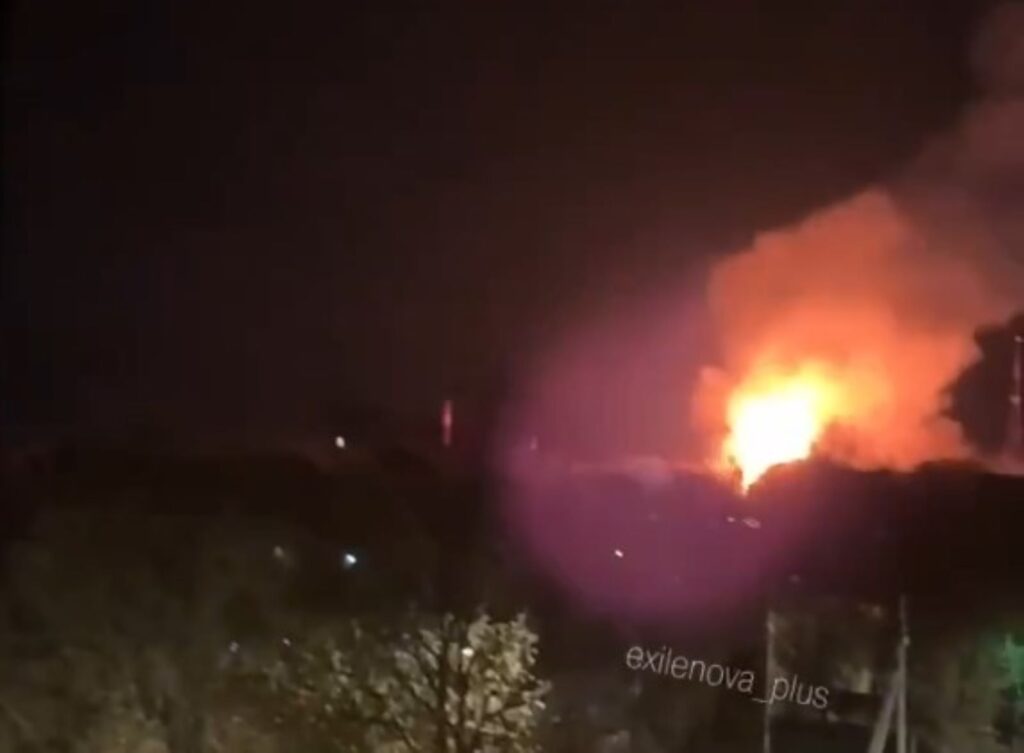
drones reportedly hit russian weapons plant near moscow washington kyiv sanctioned · post fire jsc 75 arsenal serpukhov oblast 22 2026 exilenova+ ukraine news ukrainian reports

An explosion hit the 75th Arsenal, a Russian army plant in Serpukhov south of Moscow, overnight on 22 October, Russian Telegram channel Astra reported. Russian officials also claimed drone attacks on the Moscow region, Tula, and Lipetsk that night.

As Russia presses its full-scale invasion, Ukraine’s long-range drones and missiles keep hitting military plants and refineries deep inside Russia. Ukrainian outlet Militarnyi says this plant specializes in repairing Buk and S-300 air defense systems. Astra describes it more broadly, as making weapons and ammunition and repairing military equipment. If Militarnyi is right, the blast hit a site that fixes Russian air defenses. It came the night Moscow’s mayor credited air defenses with stopping hundreds of drones.

Blast at the arsenal

An Astra OSINT analyst placed the explosion inside the site from a video, the channel said. Residents claimed in local chats that blasts followed passing drones, then at least three missiles. Astra did not confirm the missile count. Serpukhov lies about 99 km south of Moscow. Ukraine has sanctioned the plant, and the US Treasury has listed it too. As of the morning of 22 October, no Russian official had confirmed the blast.

More footage of the attack on the arsenal in Serpukhov. We are awaiting satellite images. pic.twitter.com/tTsgc18W3L

— Exilenova+ (@Exilenova_plus) October 22, 2026

630 drones, by Moscow’s count

Moscow Mayor Sergei Sobyanin claimed that 630 drones flew toward the Moscow region from 20:30 on 21 October to 04:00 on 22 October. He claimed most were destroyed far out and 163 were neutralized on approach to Moscow. Two people were injured in Voronovo, in New Moscow, he stated.

Tula Oblast Governor Dmitry Milyaev claimed air defenses downed 70 Ukrainian drones over his region. Private homes were damaged in Tula and the Zaoksky district, he stated.

Lipetsk governor claims homes and a clinic damaged

Earlier in the night, Ukrainian monitoring channel Exilenova+ posted footage of commotion in Lipetsk after explosions. Lipetsk Oblast Governor Igor Artamonov claimed a drone strike damaged homes, apartment blocks, and a closed polyclinic. A man born in 2001 was injured and hospitalized, Artamonov claimed.

Lipetsk, moment of the explosion. https://t.co/wCX6GVThQr pic.twitter.com/bGwGLbUm2d

— Exilenova+ (@Exilenova_plus) October 21, 2026

In May, Ukrainian intelligence said Russia was deploying more regiments against strike drones. In September, Ukrainian units hit more Russian air defense systems and radars than in any month since 2024, Ukraine’s Defense Ministry said. Analyst Oleksandr Kovalenko counted 76 destroyed in September with days of the month still to go and argued Russia cannot replace such losses. If Militarnyi’s description holds, losing repair capacity would deepen that gap.

  •  
❌