❌

Reading view

Cuban President Rejects U.S. Arrest Warrant Against Gen. Raul Castro
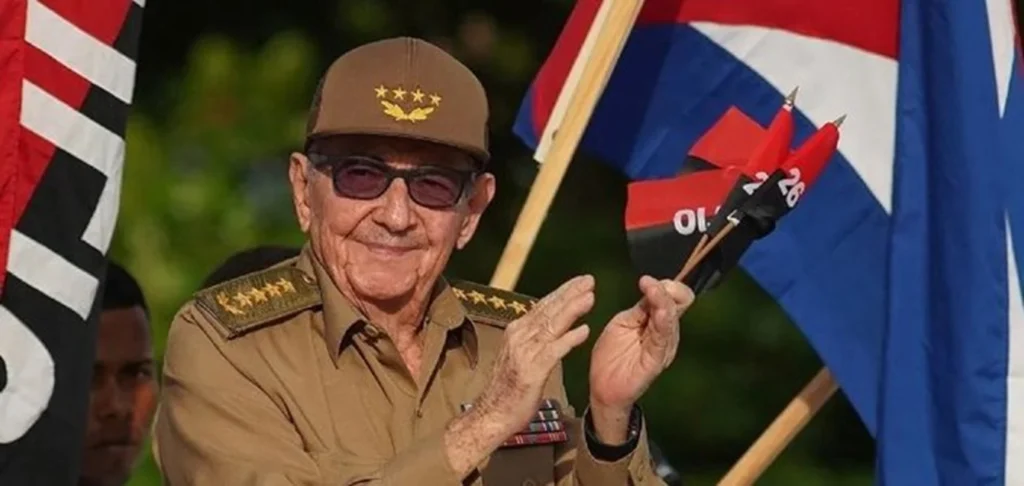
It charges the Revolutionary leader with ‘conspiracy to commit first-degree murder.’

On Monday, Cuban President Miguel Diaz-Canel called the Florida Court’s arrest warrant for Army General Raul Castro a “reprehensible action” and a “pathetic Miami circus”.

RELATED:

Cuba Denounces U.S. Oil Blockade and Lack of Progress in Talks

“The reprehensible action taken against the Army General this morning—a pathetic circus in Miami with an electoral agenda—lacks, and will forever lack, any legal basis, let alone any practical merit. Raul is Raul, and every affront to his person will always be met with the determination of a people to defend the Revolution,” he said.

“This maneuver, dressed up in legal terms by anti-Cuban politicians against Raul and against Cuba, deserves our firm condemnation. It is part of an aggressive agenda and reflects the difficulties they face in trying to justify the blockade and the collective punishment of our people,” Diaz-Canel stressed.

Cuban Foreign Minister Bruno Rodriguez also condemned what he called a “sterile maneuver” driven by anti-Cuban politicians in South Florida. The minister maintained that the accusations were unfounded and linked them to a strategy of political pressure and hostility.

YES to a 30-year-old Cuba case. NO to today's problems.
FYI: A U.S. grand jury in Florida has indicted Cuban leader Raul Castro, a move widely seen as an escalation of Washington's pressure campaign against Cuba.
Cuban Foreign Minister Bruno Rodriguez swiftly condemned the… pic.twitter.com/WDXuhlWeeT

— China Xinhua News (@XHNews) May 21, 2026

The attack occurred on February 24, 1996, in international waters, where three U.S. citizens and one legal permanent resident of the United States died. Miami-based “Brothers to the Rescue” carried out missions to locate and assist Cubans attempting to leave the island by sea for the United States.

Florida Attorney General James Uthmeier announced that the warrant charges the former Cuban leader with “conspiracy to commit first-degree murder” for the events that occurred nearly three decades ago.

The warrant, signed by a Miami judge, is based on an investigation into Castro’s alleged role as Minister of the Revolutionary Armed Forces of Cuba. According to U.S. authorities, Cuban agents gathered information about flights belonging to the Brothers to the Rescue organization and transmitted it to Havana.

The U.S. investigation maintains that this information “facilitated” the interception of the aircraft by Cuban military fighter jets during an operation that resulted in the downing of both planes.

#Cuba | Cuba is reforming its state-owned enterprises to expand financial autonomy, boost domestic production, and strengthen cooperation with the private sector amid US sanctions.
The government says public ownership will remain central to its economic model.#EconomicReforms… pic.twitter.com/GJMG0FJz6d

— teleSUR English (@telesurenglish) October 16, 2026

teleSUR: JP

Source: France 24

  •  

Una jueza de Miami firma una orden de arresto contra Raúl Castro por el derribo de las avionetas de Hermanos al Rescate

La orden de arresto está dada. La jueza Ariana Fajardo Orshan, del Undécimo Circuito Judicial de Florida, consideró que existen las pruebas suficientes para demostrar que Raúl Castro conspiró y, por tanto, es responsable de la muerte de cuatro personas tras el derribo de las avionetas de la organización humanitaria Hermanos al Rescate. Luego de tres décadas del incidente, Orshan firmó una orden estatal de arresto sin derecho a fianza contra el expresidente de 96 años por un capítulo que marcó para siempre al exilio cubano.

Seguir leyendo

© Ernesto Mastrascusa (EFE)

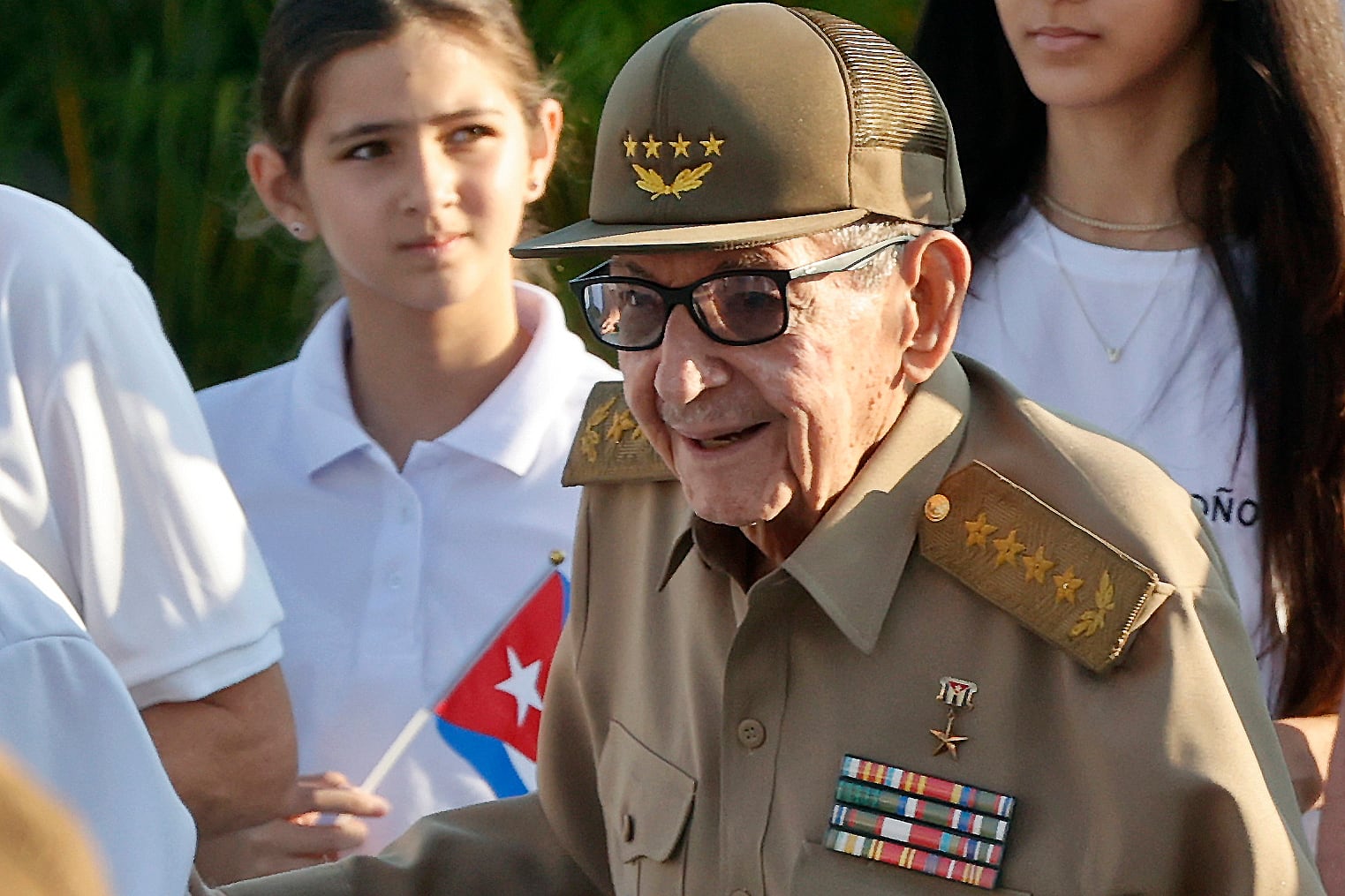
Raúl Castro, el 1 de mayo de 2026 en la conmemoración del Día Internacional del Trabajo en La Habana (Cuba).
  •  

Cuba descarta avances en el diálogo con Trump y denuncia restricciones petroleras

La diplomática Tanieris Diéguez, manifestó que Cuba mantiene su disposición a conversar sobre cualquier asunto, siempre que exista respeto mutuo y no se cuestionen su soberanía ni su orden constitucional.
  •  

‘The truth is Cuba has already fallen’: the United States’ strategy to subdue the island

Sandro Castro, Fidel’s influencer grandson who runs several Havana nightclubs, was asked a question on Instagram a few days ago that was seen by his more than 165,000 followers. “When will change come to Cuba?” The young Castro posted a photo of himself with a Cuban flag draped over his back while gazing at Havana’s cracked skyline from afar: “Cuba is already changing, or haven’t you noticed?” he replied. Certainly, the country that existed in January is not the same nine months later: most people still watch life slip away amid shortages and long power outages, but a new private class is taking on roles that used to belong to the state — supplying pharmacies, importing and distributing diesel, and ensuring food sales.

Seguir leyendo

© Ricardo Arduengo (REUTERS)

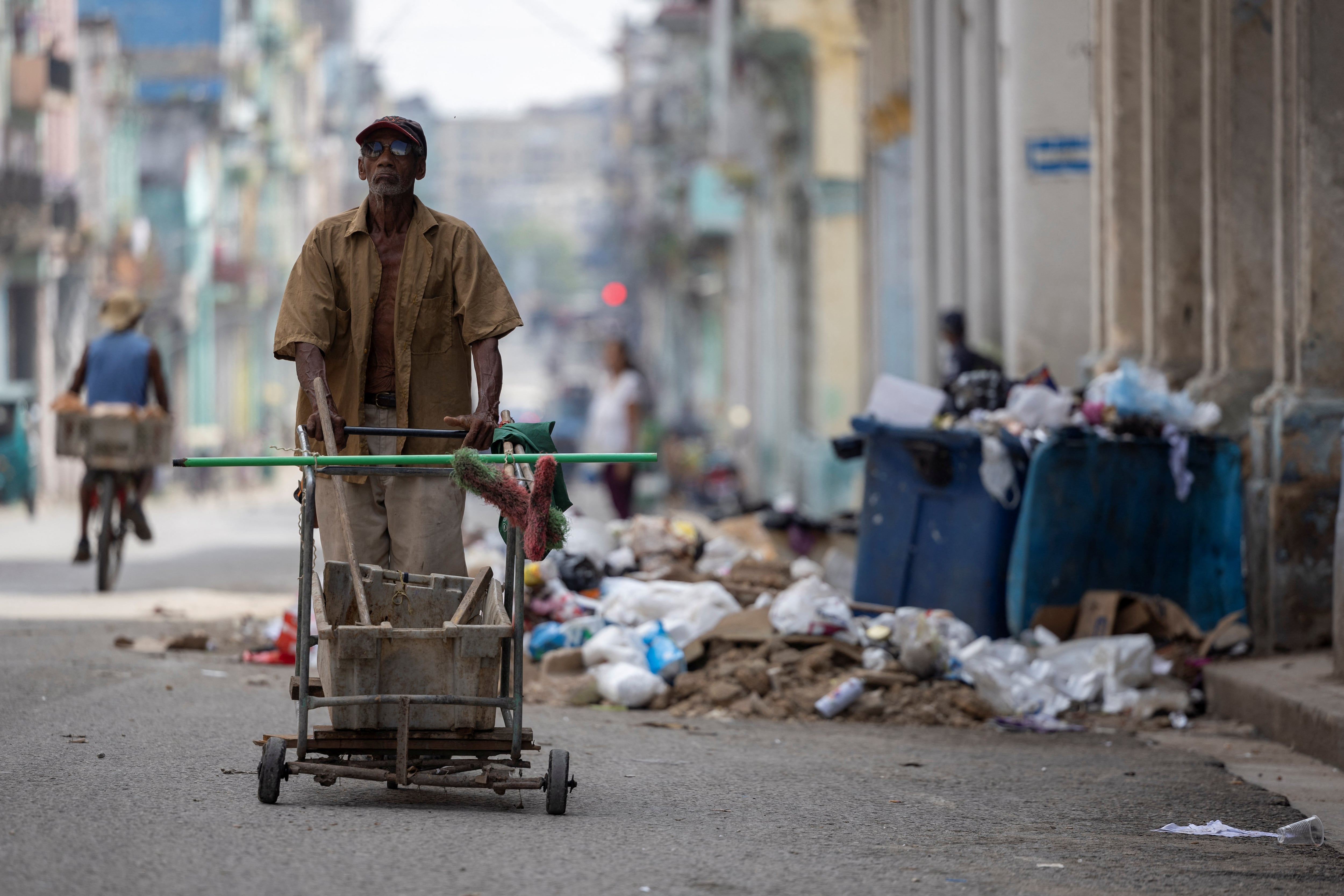
A street collector in Havana, Cuba, on September 24.
  •  

‘Cuba is not a threat, the blockade is’: Díaz-Canel replies to Trump

In his address to the UN General Assembly, US President Donald Trump said that the Cuban government is a failed state currently under enormous pressure: “My administration seeks a fundamental change in the situation in Cuba… It is an absolute failed state… and it will fall. Marco Rubio is leading the negotiations.”

In response, the Cuban delegation stood up and walked out of the plenary session in protest. Trump continued: “Cuba is a haven for foreign adversaries who threaten America right on our doorstep… The Cuban regime has also spent decades coordinating with left-wing radicals and communist networks here in the United States… They have cultivated ties with subversive and radical groups.”

The remarks did not go over well in Havana, where the government has categorically rejected the US right-wing leader’s statements. Leading the response is the country’s president, Miguel Díaz-Canel, who asserted that freedom in Cuba is non-negotiable.

“Freedom came to Cuba on January 1, 1959, [the date the Cuban Revolution began], and we are not going to lose it; we are going to defend it. Once again, we are seeing the true face of that empire and its contempt for the peoples of Latin America – and in particular for Cuba and the Cuban Revolution – because of what it represents.”

Díaz-Canel made the remarks on a program called Criterio Compartido on Radio Rebelde. In them, Díaz-Canel described Trump’s statements as “arrogant,” “high-handed,” and “interventionist.”

He also asserted that behind Trump’s thinking lies a justification for a certain view of US imperialism: “what most underpins that genocidal, criminal, and contemptuous mindset toward Cuba and the Cuban people.”

Regarding the label of “failed state,” the leader of the Communist Party of Cuba said: “They are always trying to label us a failed state to shift the blame for the genocide they are committing with that intensified and prolonged blockade.”

Díaz-Canel is referring not only to the long and sustained economic and commercial blockade that the United States unilaterally imposed on Cuba in an effort to defeat the revolution that began in 1959. In US President Donald Trump’s first term, he imposed an additional 243 sanctions on the Caribbean island and added Cuba to the State Sponsors of Terrorism (SSoT) list, which devastated the Cuban economy. In January 2026, Trump further tightened the grip by imposing an energy blockade on Cuba.

Since early 2026, following the US attack on Venezuela that resulted in the capture of President Maduro and his wife, Cilia Flores, and the deaths of more than 100 people – including several dozen Cubans – Cuba lost one of its main energy partners, which used to supply crude oil to the Cuban power grid.

Since then, only one Russian ship has managed to circumvent the US blockade; the United States is currently threatening to impose additional tariffs on any country that sells fuel to Cuba. This has triggered Cuba’s worst energy crisis, which is hindering the normal operation of hospitals, schools, and food production, among other essential activities.

Cuba has denounced the blockade as a form of “silent genocide,” specifically because of the direct humanitarian consequences it is having on the civilian population, which has seen a reduction not only in its electricity supply but also in access to surgeries, water, food, and so on.

In this regard, Díaz-Canel has once again emphasized on X that Cuba does not pose a threat to the United States; rather, it is the United States that is endangering Cuba’s civilian population: “Unable to justify the punishment against the people of Cuba and its genocidal economic war, the US president repeats at the UN that Cuba poses a threat. Lies are the weapon of those who refuse to accept the Cuban people’s right to self-determination.”

He concluded: “We will continue to fight for peace, defend our sovereignty, and work together to overcome the ruthless aggression imposed on us by the US government. Cuba is not a threat, the blockade is.”

  •  
❌