 Login

Noboa en su laberinto y el lawfare contra Luisa González
La detención de la excandidata correísta en Ecuador, a cinco semanas de las seccionales, llega entre apagones y una violencia que Noboa no logra contener.

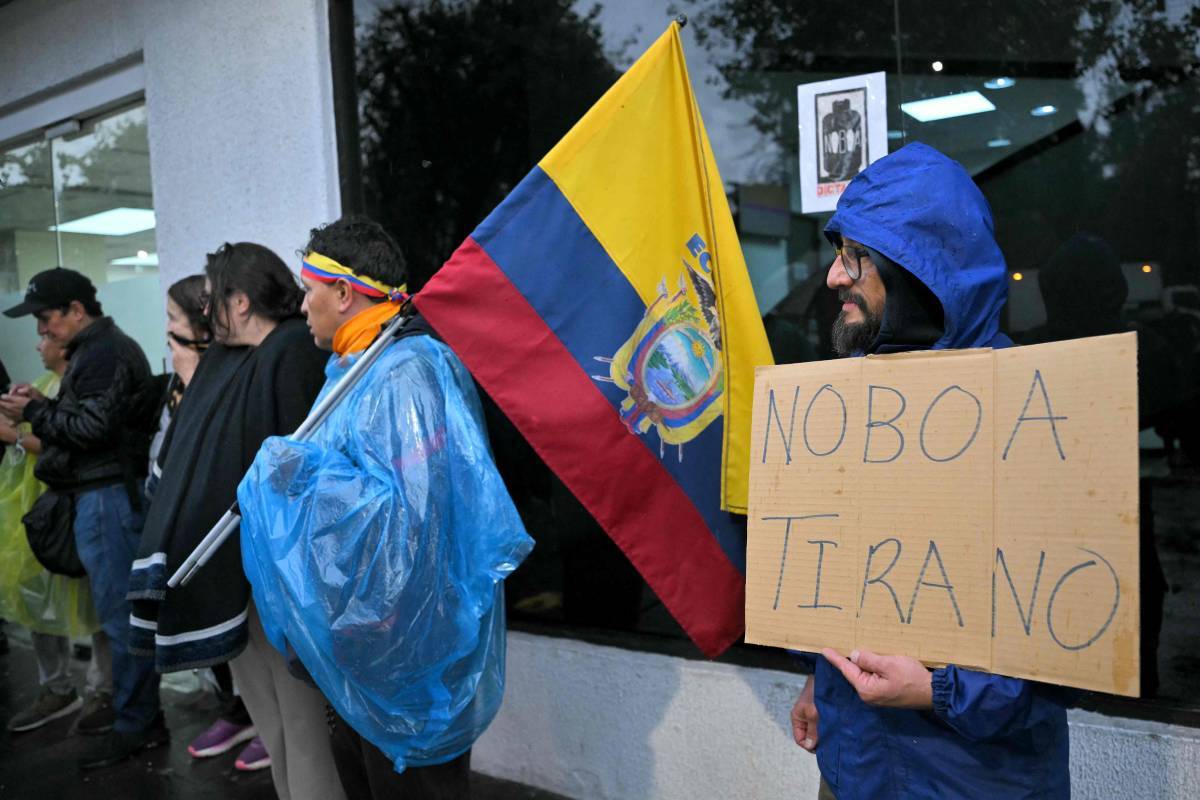

Former President Rafael Correa (2007–2017) posted on X in the early hours of the morning in Ecuador that Luisa González, a two-time presidential candidate (2023 and 2025) for the Citizen Revolution (RC) party, had been arrested. “They arrested Luisa González. ENOUGH IS ENOUGH!” wrote the former progressive leader.
The National Police confirmed this to the media outlet PRIMICIAS. González was reportedly arrested on suspicion of money laundering. The National Prosecutor’s Office also confirmed this, reporting that the arrest is related to alleged irregularities in political financing and campaign spending in 2023.
González, who advanced to the runoff in both elections and lost both times to the current president, right-wing candidate Daniel Noboa, has repeatedly claimed that the legal proceedings against her are part of a broader campaign of political persecution targeting anyone who criticizes the current government.
A few hours after his arrest, González wrote on X: “We have reached an untenable situation. Noboa’s dictatorship has not only led our beloved country into economic disaster, with rampant violence and corruption, but attacks on civil liberties and political persecution are a constant reality. The dictatorship’s political prisoners are being mistreated and tortured.”
She added: “Today it is my turn to be arrested on an absurd charge. I will respond with the dignity of Ecuadorians who owe nothing and who are committed to securing Ecuador’s freedom and a better future for the country.”
In January 2026, the prosecutor’s office and the police raided Luisa González’s home as part of the case known as “Caja Chica,” which was investigating an alleged money laundering offense. The prosecutor’s office claimed there was evidence of money flowing in from Venezuela to fund González’s 2023 election campaign.
In August, González said she had been notified of a preliminary investigation into the alleged crime of demanding acts that entail receiving undue benefits.
In September, González was again notified by the Prosecutor’s Office of her inclusion in a preliminary investigation into an alleged crime of failure to report a crime due to her profession, position, or occupation – that is, for allegedly failing to report a crime in the course of her professional duties.
In all three cases, the former presidential candidate and leader of the largest opposition party has denounced these actions as political persecution carried out through the judicial system: “The harassment and persecution don’t stop, but neither does my hope for a better country. Giving up is not an option.”
In addition, González, who intended to run for the office of prefect of Manabí in the upcoming regional elections in November, was unable to register her candidacy due to a refusal by the electoral oversight bodies, citing alleged mismanagement of administrative matters.
The RC once again denounced this obstacle as part of a broader campaign of political persecution aimed at preventing opposition candidates who might win their positions in the elections from participating, whether through administrative sanctions or criminal proceedings.
Thus, according to these allegations, the government has managed to co-opt several oversight institutions with the power to impose sanctions—such as the prosecutor’s office and the electoral courts – and is using them to persecute and prevent the participation of opposition politicians who have a chance of challenging the executive branch for power.
For his part, Ecuadorian President Daniel Noboa has repeatedly denied that his administration has been behind the accusations, sanctions, and arrests targeting his opponents, and he asserted that these are proceedings carried out by institutions independent of his government. “We do not target individuals; we have no interest in targeting individuals – we pursue criminals. There is no political persecution of any kind here,” the Ecuadorian president said in early 2026.
Despite these statements, the opposition remains steadfast in its accusations against the Ecuadorian president, especially following cases in which mayors of the country’s largest cities – Guayaquil, Cuenca, and Quito, the capital – have faced imprisonment, criminal proceedings, and ongoing judicial investigations.
The most notorious case in Ecuador involves the mayor of Guayaquil (the country’s most populous city), opposition figure Aquiles Álvarez, who was arrested and imprisoned in a maximum-security prison several months ago on charges of illegal hydrocarbon trafficking and organized crime.
Similarly, in June 2026, the then-mayor of Cuenca, Cristian Zamora (also a member of the opposition) was suspended by the Contentious-Electoral Court over an alleged case of political violence. For its part, the prosecutor’s office requested that charges be filed against him in September of that same year for an alleged crime of illicit enrichment.
And while there are other high-profile cases in Ecuador, the RC has stated that there is a concerted effort to prevent the current mayor of Quito, Pabel Muñoz (who is seeking reelection) from participating in the electoral process at all costs. Muñoz has so far managed to evade the sanctions and constant accusations against him, but on October 21, the prosecutor’s office and the police raided the mayor’s offices as part of an investigation into an alleged embezzlement offense.
This has led several politicians to believe that the raid is a new ploy to prevent Muñoz—who leads in the polls – from participating in the elections and, even more so, to imprison him, as was done with his party colleague, Aquiles Álvarez. This is what the Prefect of Pichincha, Paola Pabón, said: “People’s lives do not improve by imprisoning opponents; citizens’ circumstances change for the better when there is a political class committed to the common good.”
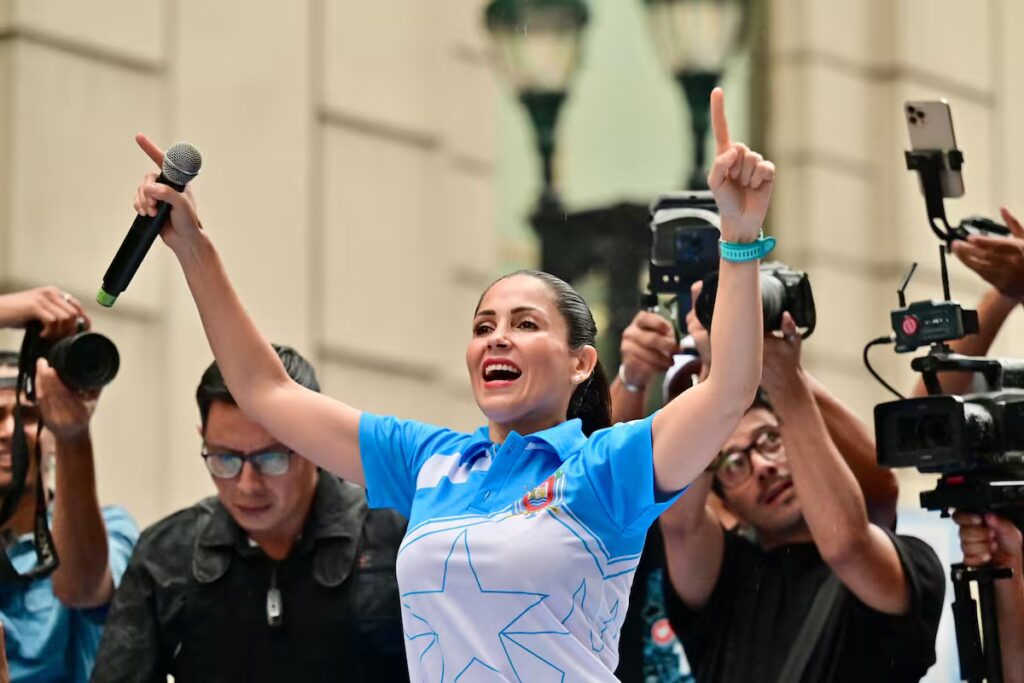
In her first written message since the arrest, Luisa González rejected the accusations against her and described the country’s institutional situation as “unsustainable.”
“Today it is my turn to be detained over an absurd accusation,” she wrote on X. “I will respond with the dignity of the Ecuadorian men and women who owe nothing and who are committed to achieving freedom for Ecuador and a better future for the country,” she added.
RELATED: Former Ecuadorian President Correa Denounces the Arrest of Luisa Gonzalez
The leading figure of the Citizen’s Revolution movement also warned of mistreatment and torture inflicted on political prisoners held by the current far-right government of Daniel Noboa.
Faced with what she called a repressive escalation and a socioeconomic decline marked by violence and state corruption, González issued a call for unity to social organizations and leftist movements. “To my partners of the Citizen’s Revolution and all progressive forces, I say: it is time for unity, unity and unity to achieve freedom and democracy in the country,” she said.
A mi patria querida 💛💙❤️ pic.twitter.com/fJrIXAvG0B
— Luisa González (@LuisaGonzalezEc) October 22, 2026
She thanked communities across the country for their support and insisted that the people remain determined to overcome government censorship. González closed her statement by asserting that popular silence would eventually break the authoritarian siege and restore sovereignty and full democracy to Ecuador.
Luisa González was detained in the early hours of Thursday in the Canuto parish of Chone canton, Manabí province. National Police officers and state prosecutors carried out the operation under the name “Labyrinth case,” an inquiry authorities describe as targeting alleged electoral financing during the 2023 campaign.
The police deployment included simultaneous raids in Manabí and Pichincha provinces and ended with three people detained for the purpose of formal charges.
After the procedure, relatives and allies of González denounced uncertainty over her whereabouts. Officials have not clarified whether she remains in Manabí or is being transferred to Quito for a court hearing, a situation her supporters describe as a grave violation of due process guarantees.
The arrest is part of a broader judicial offensive against the Citizen’s Revolution movement, which is currently suspended for nine months following rulings by the Electoral Contentious Tribunal that critics say were designed to block its participation in sectional elections.
That institutional push previously prevented González from registering as a candidate for the Manabí prefecture. Quito mayor Pabel Muñoz, meanwhile, faced raids on his offices in the middle of his reelection campaign.
Ecuadorian Former President Rafael Correa denounced the detention of González in a separate statement, adding his voice to the growing criticism of the operation. The predawn arrest now places one of the government’s most prominent opponents at the center of a legal battle that her movement frames as political persecution rather than a legitimate investigation.
Luisa González, excandidata presidencial y una de las principales figuras de la oposición de Ecuador, fue detenida la madrugada de este jueves en Canuto, una zona rural de Chone, provincia de Manabí, donde reside. La Fiscalía investiga un presunto delito de lavado de activos relacionado con posibles irregularidades en la financiación de la campaña electoral de 2023, en la que González compitió por el Movimiento Revolución Ciudadana, liderado por el expresidente Rafael Correa y perdió frente a Daniel Noboa.
© EFE
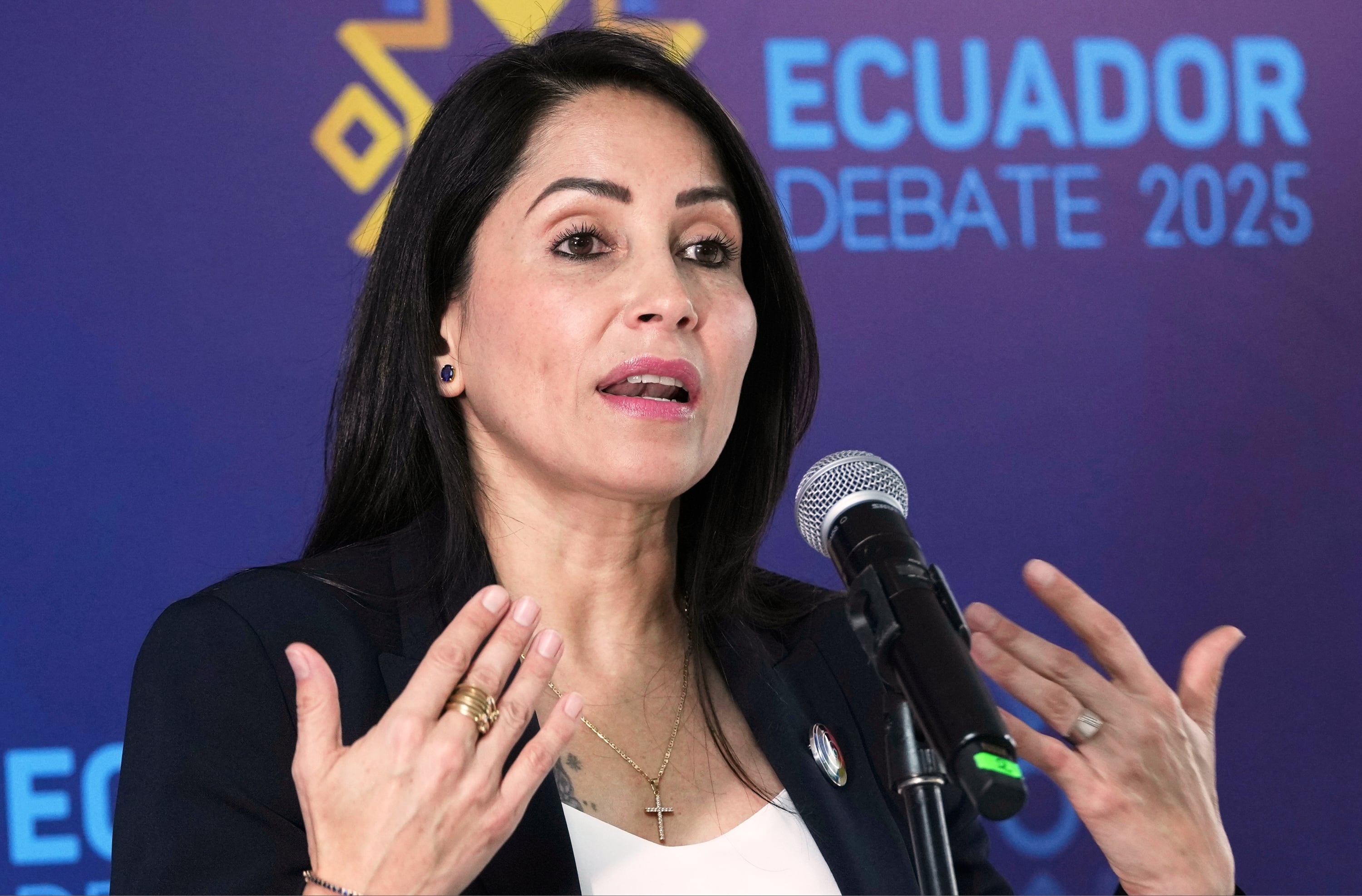
A ex-candidata à Presidência do Equador Luisa González foi presa, informou nesta quinta-feira (22) a líder do partido de esquerda Revolução Cidadã, Gabriela Rivadeneira.
González, aliada do ex-presidente Rafael Correa, está sendo investigada por supostas irregularidades no financiamento político e nos gastos de campanha.
Ela já havia afirmado que seu partido apresentou os gastos da campanha presidencial de 2023 ao órgão eleitoral e que a promotoria não possui provas para fundamentar suas acusações.
González perdeu a eleição antecipada para o presidente Daniel Noboa.
“Prenderam Luisa González. Basta!”, compartilhou Correa no X.
Em 2025, o presidente Daniel Noboa Azin, movimento Ação Democrática Nacional (ADN), foi reeleito após vencer no segundo turno um mandato que durará até o ano de 2029.
Noboa derrotou a candidata da oposição Luisa González, do partido Revolução Cidadã, que declarou em outra coletiva de imprensa que não reconheceria os resultados.
Noboa foi eleito presidente em 15 de outubro de 2023, após enfrentar González nas eleições antecipadas realizadas no Equador, depois que o então presidente Guillermo Lasso decretou a chamada “morte cruzada”, que renovou os Poderes Legislativo e Executivo.
Sem constar entre os favoritos e de maneira surpreendente, Noboa foi escolhido pelo voto popular no segundo turno para completar o mandato restante de Lasso, por um ano e meio, e aos 35 anos, tornou-se o presidente mais jovem a vencer a Presidência na história republicana do país.
A disputa eleitoral foi marcada pelo assassinato do candidato Fernando Villavicencio, um incidente sangrento que remodelou o cenário eleitoral.

On October 10, thousands of Ecuadorians took to the streets to protest against the government of right-wing President Daniel Noboa. The demonstration was organized by the Autonomous Front of Organized Resistance (FARO) under the slogan “Government vs. People.”
A esta hora, una marcha de rechazo al Gobierno de Daniel Noboa recorre las calles de Quito. La movilización está marcada por carteles de protesta y consignas contra el mandatario y su gestión. Los manifestantes atraviesan en este momento el paso deprimido del Guambra y avanzan… pic.twitter.com/WKPfT8D9jF
— Elena Rodríguez Yánez (@ElenaDeQuito) October 10, 2026
Saturday’s demonstration followed a protest on October 8, organized by labor unions also in Quito, to protest the security, energy, health, and employment crises facing the country. They also protested government cuts to education and health care, as well as alleged mistreatment of workers, according to Edwin Bedoya, president of the United Workers’ Front (FUT).
For its part, the October 10 demonstration – which consisted mainly of high school and college students – set out from the Central University and marched through Quito. Slogans such as “If the people have no peace, neither does the government” and “Out with Noboa, out with him!” were heard along the streets occupied by the demonstrators.
The president of the Catholic University Student Federation, Jatari Ulcuango, told protesters: “Four years ago, this government promised us electricity; two years ago, too – and now the blackouts have returned. Two months ago, the government told us it would provide us with medicine, and yet we’re only receiving 60% of the supply. They’re taking us for fools.”
He added: “We’re dying outside the hospitals. Criminals are kidnapping us, murdering us, and robbing us. That’s why we’ve come out this morning. They plan to dismantle public institutions to force us to hire private security. Who has gotten rich off the health crisis? The private healthcare sector, while the people are getting poorer and poorer.”
The peaceful march headed back to the Central University, where the students gathered. Later, the students reported on social media that they had been harassed and repressed by the police, who had accompanied the entire march.
Likewise, several media outlets reported that the police were aggressive toward them. This was reported by the outlet La Barra Espaciadora, which released a video showing police officers pushing journalists.
TeleSur journalist Elena Rodríguez also reported that law enforcement officers broke the microphone she was using and struck her on the head: “I’m sick and tired of having to recount, time and time again, police attacks against the press. Today, while I was trying to document the violence with which officers were beating young protesters, I was struck on the head from behind with a baton. I turned around, showed my Telesur microphone to identify myself as a journalist, and the response was another baton strike that ended up breaking it.”
She added: “If they think that by beating me up they’re going to get me to stop documenting police brutality, to put my microphone away, or to back off several blocks so I can report from a place where I won’t be a nuisance, they’re wrong. It is not we journalists who should distance ourselves from the events. It is the police who must stop attacking us. The right to report cannot be negotiated at the point of a baton.”
The protests are taking place against the backdrop of a widespread crisis in the country, which includes the worst security crisis in its history (tens of thousands of deaths due to violence between drug trafficking gangs), a very serious health crisis (a lack of supplies and medicines in the public health system), and other major crises such as those in education, public investment, and employment.
Local elections will be held in November, which will reveal the extent of support – or lack thereof – for President Noboa and his neoliberal government agenda, which aligns with the hemispheric security strategy led by the Trump administration.

An Ecuadorian judge ordered the immediate release of nearly 30 fishermen whose two boats were destroyed by the US military in the Pacific Ocean. The Ecuadorian prosecutor’s office had charged them with alleged illegal activities.
The sequence of events is telling.
In two separate instances between late August and early September, the fishing boats Conquista II and María Candelaria were boarded by US military forces while on the high seas. The US forces, after transferring the fishermen to other vessels, destroyed and sank their boats.
The fishermen’s families quickly reported that they had lost communication with their loved ones. Only after prolonged uncertainty were the crew members handed over at Ecuadorian ports and placed under the control of Ecuadorian authorities.
In other words, the crew members were not charged with any crime before their vessels were destroyed, but rather afterward. This move has drawn heavy criticism from criminal defense attorneys (who argue that these actions violate due process) and caused anxiety among Ecuadorian fishermen, who have expressed their fear of fishing on the high seas and suffering the same fate as their compatriots. Several other boats have been intercepted and sunk in the Pacific by US forces in recent months, only increasing fears about transiting there at all.
The US military, for its part, claims that the destroyed vessels serve as fuel refueling points for other boats involved in drug trafficking. Under this strategy, US Southern Command intercepted at least eight Ecuadorian vessels between August and September 2026.
Foreign military actions on Ecuadorian soil have been defended by the government of right-wing President Daniel Noboa, who has aligned himself with Donald Trump’s hemispheric security policy embodied in the Shield of the Americas. During a recent visit to the South American country, Marco Rubio defended the military operations as necessary to dismantle drug trafficking routes.
But why destroy a vessel that has already been evacuated of its crew?
Defense Minister Giancarlo Loffredo, who defends US military operations against Ecuadorian fishermen based on alleged “prior intelligence,” said that destroying a vessel that has already been evacuated of its crew is justified because it is too risky to tow the vessels to shore. He also said that seizing the fuel on board is dangerous.
However, the minister’s justifications have not convinced everyone. Human Rights Watch stated that both the United States and Ecuador must present evidence justifying the destruction of the vessels: “Of the detained crew members, 90 are facing criminal investigations in Ecuador, 56 were released because Ecuadorian judges ruled that their detention was illegal, and another 14 were not brought before a judge.”
In addition, Juanita Goebertus, director of the Americas division at Human Rights Watch, said: “Intercepting fuel trafficking at sea can be an important step in stopping criminal groups, but that does not give security forces the right to detain people without evidence, destroy their boats, and commit abuses.”
The fact is that the Ecuadorian fishermen deny any involvement in the crimes of which they are accused. For now, the Ecuadorian courts have ruled in favor of nearly 30 fishermen from the Montecristi and the Don Rufo, stating that the prosecution failed to present evidence to support its accusations. With them, the total number of acquitted crew members stands at 56. Another 32 fishermen are on probation while investigations into alleged criminal association continue.

October 9 will be the last day that the well-known newspaper Expreso, one of Ecuador’s most important newspapers, is distributed in print. The newspaper, which has historically maintained a center-right editorial line, according to its statement, will limit its operations to its website, which will result in the layoff of dozens of employees.
The company that owns the newspaper, Gráficos Nacionales (Granasa), states that it is not bankrupt but will have to sell several assets to pay debts owed to its employees: “At stake is not only the rights of the shareholders but, above all, those of each and every employee who gave their all to this publishing house.”
And while the company has been reluctant to mention the reasons behind this decision in its most recent publications, several civil society actors have stated it plainly: pressure from the current right-wing government of Daniel Noboa.
One of them was the Inter-American Press Association (IAPA), which called on the government to cease “state harassment against critical media outlets and journalists.” The demand is based on complaints, dismissals, and investigations reported by the newspaper in recent months. “We regret that a newspaper with more than five decades of history is ceasing print publication. Beyond business decisions that are the sole responsibility of its owners, it is impossible to ignore the context of sustained pressure that has surrounded Granasa.”
Likewise, the Observatory for Rights and Justice (ODJ) stated: “We express our deep concern over the announcement of the discontinuation of the print edition of Diario Expreso. After several months of enduring administrative and judicial harassment, and facing government attempts at corporate takeover and censorship against its columnists and representatives, the publication has decided to stop printing copies.”
For its part, the Noboa administration has categorically denied that it took any steps to provoke the crisis at Diario Expreso, and has instead defended the actions of the relevant institutions in investigating alleged crimes “regardless of where they come from” by independent bodies such as the prosecutor’s office and the SRI.
One of the most surprising aspects of the case is that Expreso has historically maintained an editorial stance closer to the right. It was one of the newspapers most opposed to the progressive government of Rafael Correa (2007–2017), and many of its editorial writers even went so far as to endorse the recently inaugurated Noboa administration.
However, as the months went by, criticism of Noboa’s administration began to appear in the newspaper’s pages, which, according to some allegations, did not sit well with the central government.
According to these allegations, the Internal Revenue Service – the agency responsible for collecting taxes – as well as the Attorney General’s Office, began to “pressure” Expreso’s major financial backers through investigations, which reportedly led those backers to withdraw their contributions to the newspaper, which has been in circulation in Ecuador for more than half a century.
Added to this is a warning issued by the newspaper’s parent company itself, stating that the Ecuadorian Superintendency of Companies intervened in the company with the alleged aim of “monitoring its financial performance and facilitating the correction of the irregularities identified.”
Likewise, Granasa President Galo Martínez told the SIP that the government was “harassing” the newspaper’s clients who advertised their products and services in its pages, a move seen as a tactic to drive the company into bankruptcy, as it relies on sponsors to operate.
According to an investigation by Ecuavisa, the newspaper Expreso lost nearly 70% of its advertising revenue over the months of government pressure. “The cowardice of a large segment of the business community that prefers to pull its ads – whether due to calls from those in power, which have indeed occurred, or simply out of a desire to look good,” said Martín Pallares, editor-in-chief of Expreso.
The truth is that this pressure is nothing new. Several months ago, one of the country’s leading editorial writers, Roberto Andrade, who worked at the newspaper, resigned from the publication, alleging that members of the Noboa administration had requested his departure.
Pallares also spoke about this alleged government pressure in a recent interview with Ecuavisa: “The newspaper had received a message stating that the government would stop its harassment if three people were handed over: Roberto Aguilar, Eduardo Carmigniani, and myself. The newspaper placed its trust in us; it chose to stand by us rather than give in to the pressure.”
Pallares stated about this alleged government pressure in a recent interview with Ecuavisa: “The newspaper had received a message stating that the government would stop its harassment if three people were handed over: Roberto Aguilar, Eduardo Carmigniani, and myself. The newspaper placed its trust in us; it chose to stand by us rather than give in to the pressure.”
In addition, Pallares, one of the country’s most well-known right-wing journalists, said: “Critical voices bother those in power – this kind of narcissistic power where the official truth cannot be questioned. Take the Progen case [the failed sale of power generators]; it’s crystal clear. If it weren’t for the troublesome media outlets that dig up information, data, and publish chats they manage to obtain, that issue would have already been buried.”
This is not the first instance of conflict between the Noboa administration and the press. Early in his term, journalist Alondra Santiago was deported; later, the program Irreverentes was canceled following harsh criticism of the government; journalists Fausto Yépez, Hernán Higuera, and María Sol Borja reported government pressure due to their investigations; attacks against journalists were reported during the 2025 National Strike; the high-profile case of Gisella Bayona, who alleged that the government was investigating her husband because she had reported a shortage of supplies in the public health system – a situation that has triggered one of the most significant crises in the country’s healthcare history; among other incidents.
Other right-wing journalists have also criticized the government for allegedly having a low tolerance for criticism and taking actions that, they claim, are leading to a loss of freedom of expression.
One of them is journalist and political scientist Carlos Rojas, who stated in an op-ed: “What is happening with the newspaper Expreso is a very serious sign that Ecuador’s democratic health is in poor shape. It’s getting worse … a dangerous clash is reigniting between the current government – which is intolerant of criticism and oversight – and the independent press, a pillar of any liberal democracy.”
For his part, Ugo Stornaiolo wrote about new forms of censorship in Ecuador: “Journalistic oversight is undergoing a transformation that places press freedom at a crossroads. There are no shutdowns of radio stations, no buyouts of opposition media outlets, and no physical attacks. Investigative journalism faces sophisticated mechanisms of coercion: fiscal harassment, the manipulation of state entities, and reprisals against family members and coworkers to silence critical voices regarding President Noboa’s administration.”
According to several analysts, there is clear tension not only between centrist and left-wing movements and parties and the Noboa administration (which is clearly aligned with the right and follows the dictates of the Washington Consensus) but also between the Noboa administration (which belongs to the country’s most powerful family) and the critical positions coming from sectors of the right and a segment of the business community. This would demonstrate clear contradictions within the country’s most powerful economic classes.
The most recent case involved the leader of the business association, María Paz Jervis, who stated at a public event (in reference to the Diario Expreso case) that “Rarely in my life have I seen a business sector so afraid. I had never felt such hopelessness and resignation. I am convinced that there is much that needs to change in our country, and saying that there are things that need to change does not make us anyone’s enemies.”
Following these statements, Jervis resigned from her position without specifying the reasons for her decision.
The United States has sent spy drones to Colombia and Ecuador to support both countries’ actions against organized crime, two military sources told the newspaper The New York Times. The aircraft involved are an undetermined number of MQ-9 Reapers that had been stationed in Africa. Although their primary roles are linked to surveillance, they can be used in offensive operations. The arrival of these aircraft, announced by Colombia in August, cements Washington’s growing active role in the operations of the armed forces of the two South American countries, which in recent months have agreed to begin “joint operations.”

© William Rio Rosado (EFE)
A development that passed largely unnoticed in Colombia has generated major attention in Ecuador. Authorities last week announced the arrest of Inda Mariela Peñarrieta Tuárez and Michelle Macías Peñarrieta, the wife and daughter of José Adolfo Macías, alias “Fito,” the leader of the Los Choneros gang, who is currently imprisoned in the United States. Colombian President Abelardo de la Espriella welcomed the arrests and said he would “gladly” send the two women to his “friend” Daniel Noboa. “That’s how it’s done, Abelardo,” the Ecuadorian president replied.
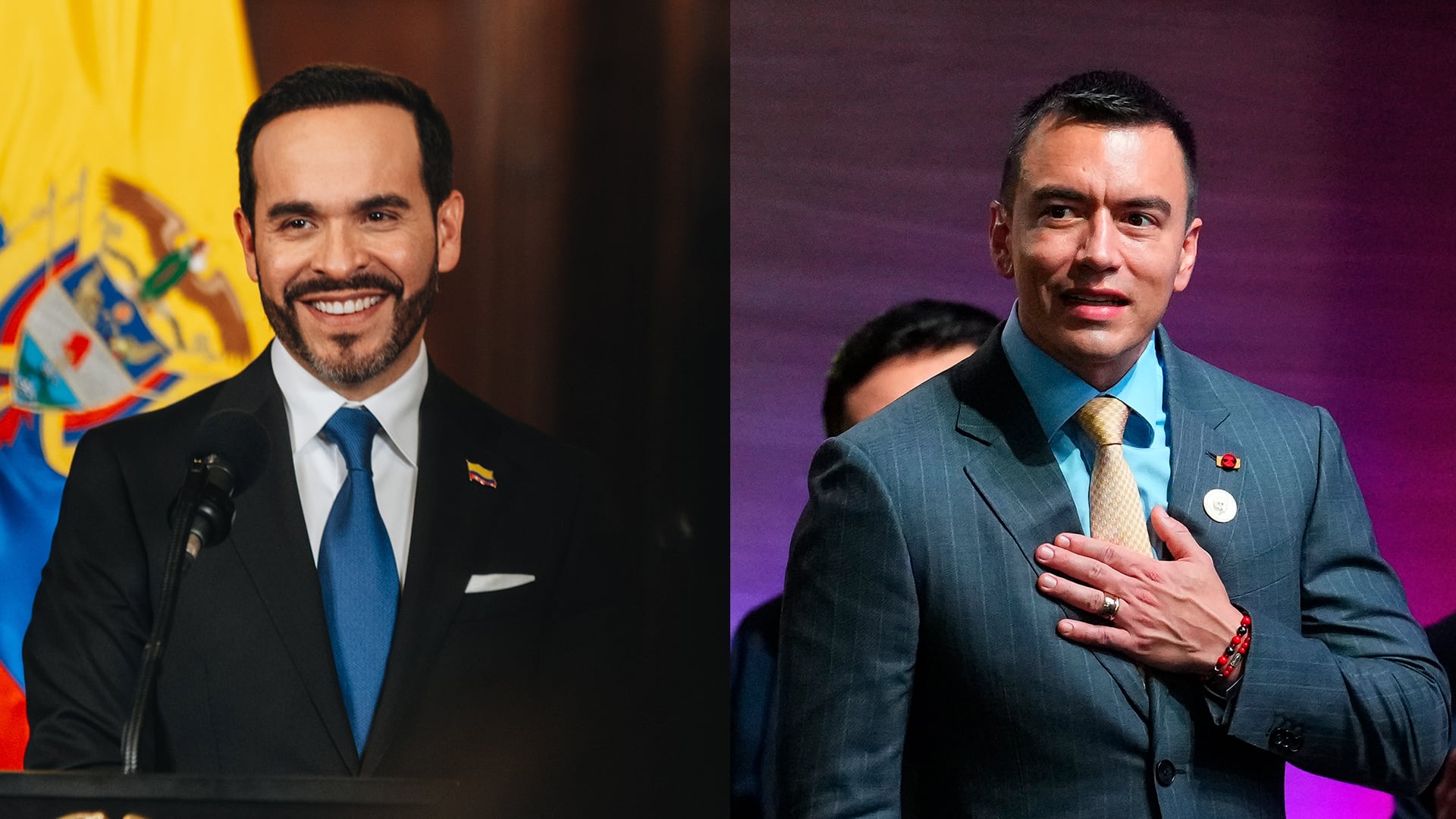
© Presidencia/Getty

This content is for members only. Visit the site and log in/register to read.
