❌

Reading view

Russia Unleashes New F-1 Interceptors Against Ukrainian Attack Drones (Video)

File image.

Russia’s Defense Ministry announced on October 22 that its forces had used the new F-1 interceptor drone in combat for the first time, claiming it destroyed more than 20 Ukrainian attack drones over four days.

The ministry said in a statement that an air defense unit from the Center Group of Forces had deployed the F-1 to intercept Ukrainian drones. Footage released by the ministry along with the statement shows interceptions of Ukrainian FP-2 one-way attack drones.

“This F-1 drone, which has been put into service with the air defense missile brigade’s anti-UAV unit, has demonstrated high effectiveness in destroying high-speed targets. Over four days of combat use, the crews destroyed more than 20 enemy attack drones of various types, including the PD-2, Rubaka, and Bliskavka,” the ministry said.

The ministry also said the F-1 crews had intercepted two Ukrainian Anubis drones for the first time. The Anubis is a clone of Iran’s Shahed-136.

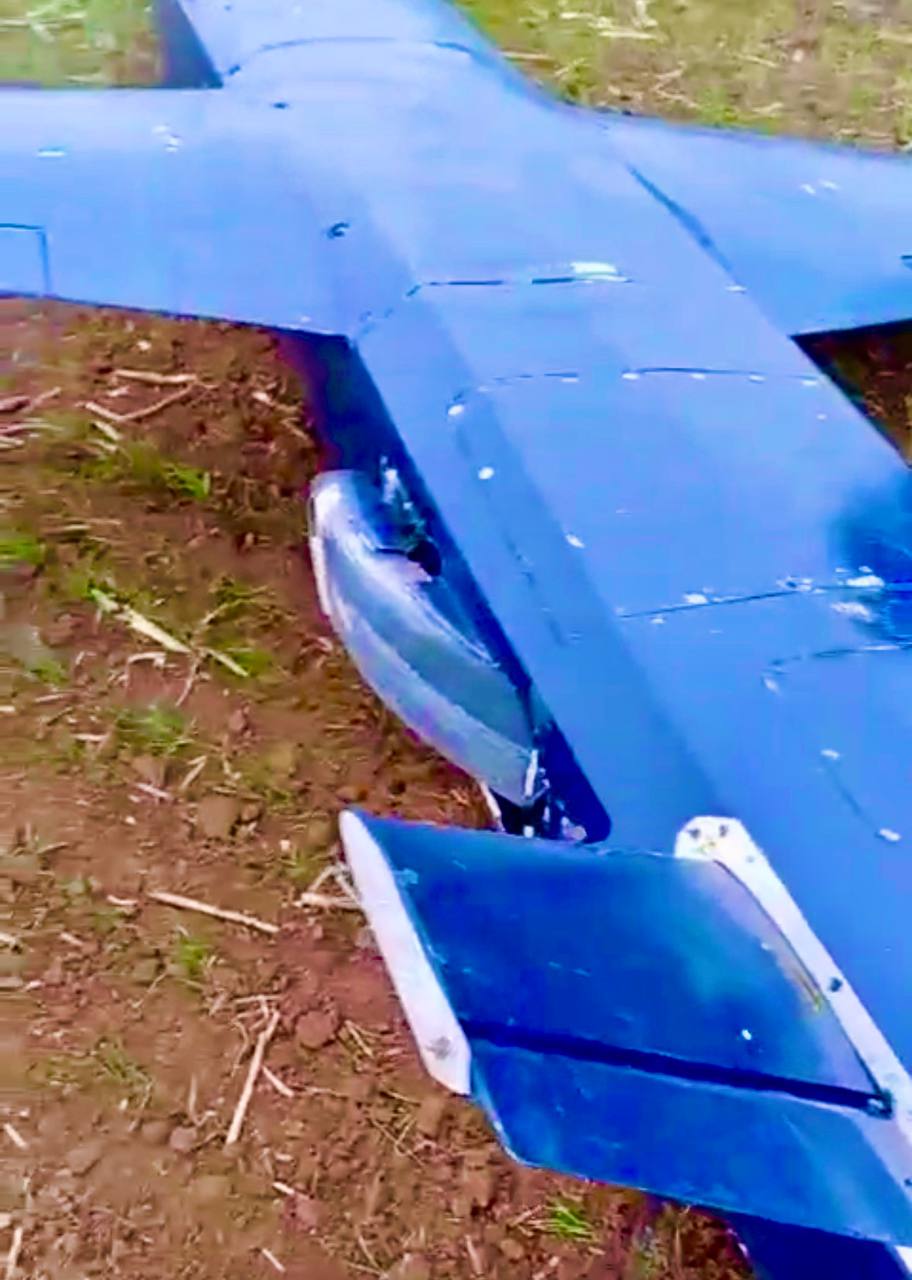
The F-1 has a fixed-wing, airplane-type design with a V-shaped tail and can be launched by hand without a specialized launcher. Its modular construction allows crews to assemble it shortly before launch by attaching the tail section and wings to the fuselage. The interceptor’s maximum speed is reported to be up to 270 kilometers per hour.

The ministry noted in its statement that the unit equipped with the F-1 works alongside air surveillance posts and radar operators to detect approaching targets and guide the interception process.

Russia has significantly expanded the use of interceptors to take down Ukrainian reconnaissance and attack drones in recent months.

Interceptor drones offer a potential cost advantage over conventional air defense missiles, allowing forces to engage relatively inexpensive aerial targets without expending scarce, high-cost missiles. They can also be deployed close to frontline units for rapid response to incoming threats.

_______________________________________________________________________________________________________________________

SouthFront: Analysis and Intelligence

NOW hosted at southfront.press

Previously, SouthFront: Analysis and Intelligence was at southfront.org.

The .org domain name had been blocked by the US (NATO) (https://southfront.press/southfront-org-blocked-by-u-s-controlled-global-internet-supervisor/) globally, outlawed and without any explanation

Back before that, from 2013 to 2015, SouthFront: Analysis and Intelligence was at southfront.com

SOUTHFRONT.PRESS

MORE ON THIS TOPIC:

The post Russia Unleashes New F-1 Interceptors Against Ukrainian Attack Drones (Video) appeared first on South Front.

  •  

Iran Sets Seven Conditions to Reopen Hormuz as U.S.-Israeli Strike Plans Emerge

File image.

Iran will not reopen the Strait of Hormuz or resume negotiations with Washington until seven conditions presented through intermediaries are met, Mohsen Rezaei, secretary of Iran’s Supreme National Security Council, said on October 22.

“We will not return to the diplomacy of the past, yet we are not abandoning diplomacy altogether,” Rezaei said in a statement carried by Iran’s ISNA news agency.

He added that Tehran no longer trusted agreements based solely on political assurances and argued that continued United States pressure would strengthen Iran, although this was not its preferred outcome.

Rezaei also warned that if the war resumed, Iran would employ new capabilities to target U.S. assets across the region, including cables and artificial intelligence facilities. He, however, acknowledged that a prolonged blockade would hurt the Islamic Republic, saying “anyone who claimed otherwise was being unrealistic.”

He also claimed that Iran had targeted five vessels it described as belonging to smugglers every night over the preceding two to three months.

The statements come as several recent reports indicated that the U.S. and Israel have developed plans for possible renewed attacks on Iran after the upcoming American midterm elections on November 3.

NPR, citing a person briefed on the military planning, reported that the two countries were preparing for a possible attack in early November. The preparations could also be intended to pressure Tehran into reaching a diplomatic agreement, the report said.

ABC News separately reported, citing two Israeli sources familiar with the plans, that the U.S. and Israel had drawn up plans for joint strikes in the coming weeks. Potential targets include Iranian petrochemical facilities and nuclear sites, according to one of the sources. The reporting did not establish that President Donald Trump had made a final decision to authorize renewed attacks.

Iranian Foreign Minister Abbas Araghchi warned in response to these reports that Tehran was prepared for such a scenario.

“Any scenario is conceivable, including the possibility of an attack by the U.S. and Israel,” he said, according to NPR.

The White House said the U.S. would not resume attacks before the midterm elections. Spokesperson Anna Kelly told ABC News, “The United States will not be attacking Iran at any time prior to the midterm elections.”

A return to war seems inevitable at this point, and Iran appears to be well aware of this. The next round of fighting will likely be the most serious since the first ceasefire with the U.S. and Israel entered into effect last April. Meanwhile, the diplomatic track appears to have reached a dead end.

_______________________________________________________________________________________________________________________

SouthFront: Analysis and Intelligence

NOW hosted at southfront.press

Previously, SouthFront: Analysis and Intelligence was at southfront.org.

The .org domain name had been blocked by the US (NATO) (https://southfront.press/southfront-org-blocked-by-u-s-controlled-global-internet-supervisor/) globally, outlawed and without any explanation

Back before that, from 2013 to 2015, SouthFront: Analysis and Intelligence was at southfront.com

SOUTHFRONT.PRESS

MORE ON THIS TOPIC:

The post Iran Sets Seven Conditions to Reopen Hormuz as U.S.-Israeli Strike Plans Emerge appeared first on South Front.

  •  

Ukrainian Mi-24 Caught in Russian Geran Drone Strike at Myrhorod (Video)

File image.

Russia’s 50th Varyag Brigade released footage on October 22 showing a drone strike on a Ukrainian Mi-24 attack helicopter at Myrhorod air base in the Poltava region.

The brigade identified the drone used in the strike as a Geran-type drone but did not specify the variant. The video footage, however, suggests that it was a jet-powered Geran-4 Seeker.

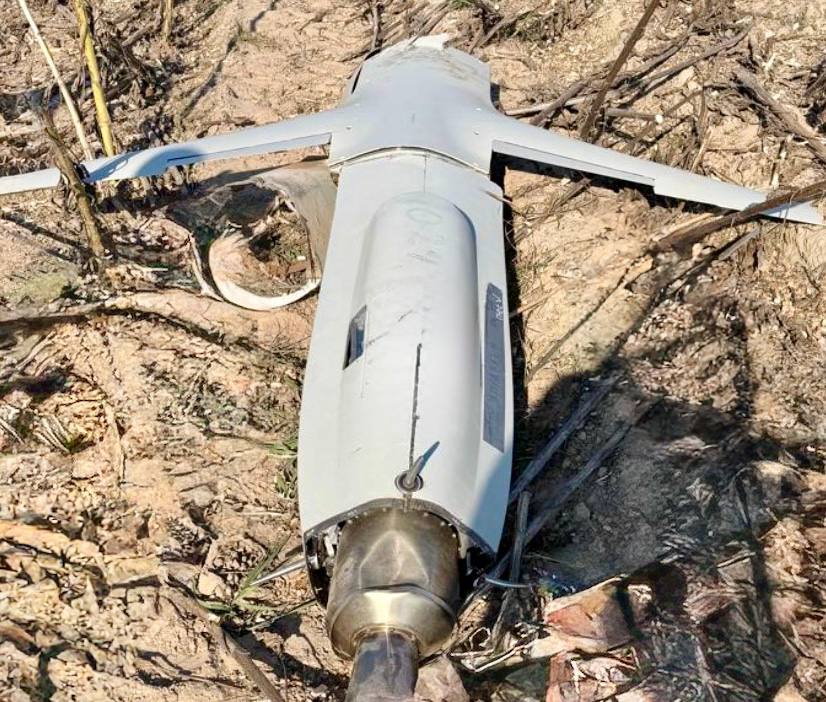
The Geran-4 is a jet-powered, one-way attack drone designed to fly faster than earlier propeller-driven Geran models. Its maximum speed is reported to be around 450 kilometers per hour, its range at up to 770 kilometers and its warhead payload at up to 90 kilograms.

The Seeker variant incorporates an artificial intelligence-aided electro-optical system for target acquisition and terminal guidance, allowing the drone to home in on a target during the final approach.

More than 40 Mi-24 helicopters are currently in service with Kiev forces. Many of these helicopters were delivered to Ukraine after the start of the Russian special military operation some two years ago, by the Czech Republic, Poland and North Macedonia.

Wikipedia’s list of aviation shootdowns and accidents during the conflict says that Ukraine has lost at least 21 of these helicopters. The real losses are likely even higher.

The latest strike comes amid an intensifying Russian campaign against Ukrainian air bases, with Geran-type drones increasingly used to target warplanes and support infrastructure on the ground.

_______________________________________________________________________________________________________________________

SouthFront: Analysis and Intelligence

NOW hosted at southfront.press

Previously, SouthFront: Analysis and Intelligence was at southfront.org.

The .org domain name had been blocked by the US (NATO) (https://southfront.press/southfront-org-blocked-by-u-s-controlled-global-internet-supervisor/) globally, outlawed and without any explanation

Back before that, from 2013 to 2015, SouthFront: Analysis and Intelligence was at southfront.com

SOUTHFRONT.PRESS

MORE ON THIS TOPIC:


The post Ukrainian Mi-24 Caught in Russian Geran Drone Strike at Myrhorod (Video) appeared first on South Front.

  •  

Russia’s tax service runs on two key data centers. Drones went after one of them overnight, along with a chemical plant that supplies explosives makers

russia’s tax service keeps its databases two places drones went after one overnight also hitting air base explosives-chemical plant · post fire seen residential area gorodets nizhny novgorod oblast near

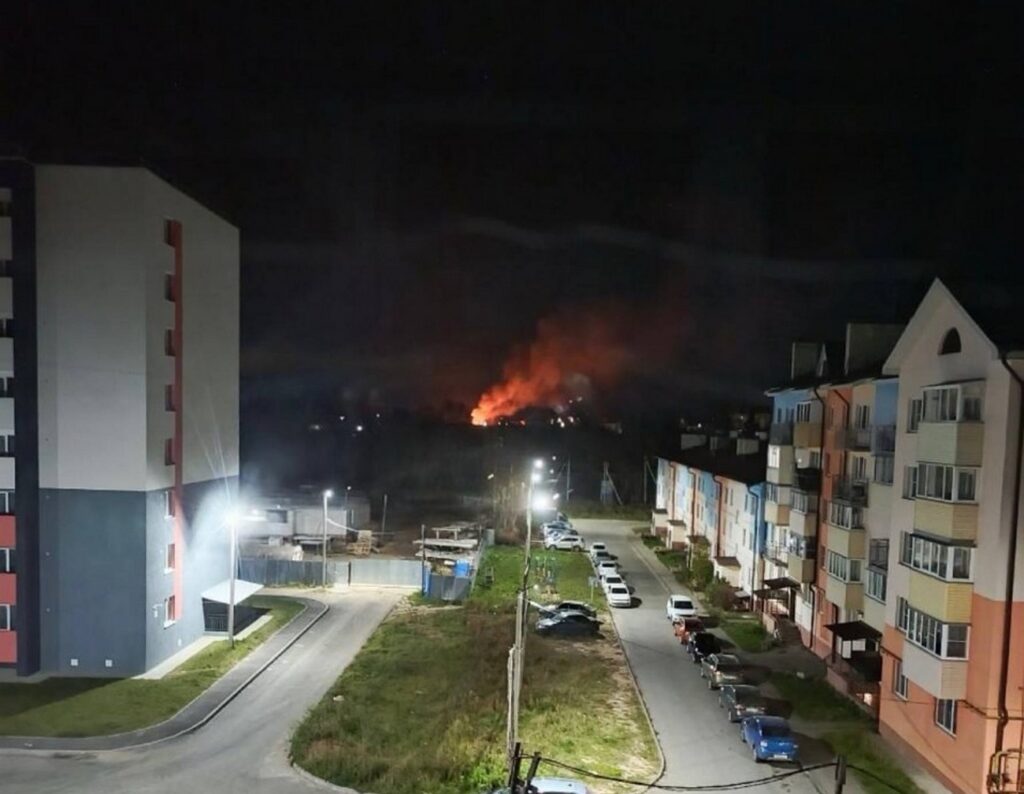
Drones attacked a Russian tax-service data center overnight on 23 October, Ukrainian monitoring channel Exilenova+ reported. A chemical plant in the Urals was also attacked, and a fire broke out near a Russian bomber base by late morning. Russian officials admitted injuries and damage but blamed falling debris. Ukraine has not commented.

Ukraine's long-range drones have widened their target list from Russian refineries to the servers and chemicals that keep Russia's state and war industry running.

The tax service's data center in Gorodets

The target in Gorodets, Nizhny Novgorod Oblast, is one of the Federal Tax Service's two key data centers, which work as a geographically distributed pair. It stores and processes state registers, including tax databases, Exilenova+ said. The extent of the damage is unconfirmed. The site lies about 785 km from Ukraine's northern border in a straight line.

The moment of impact at Russia’s Federal Tax Service data center in Gorodets last night. pic.twitter.com/PftC6keRpY

— Exilenova+ (@Exilenova_plus) October 23, 2026

Eyewitness footage shows a blast and fire in the area of the data center, which serves both the tax service and the Finance Ministry, Russian Telegram channel Astra found. The center opened in 2015. Mikhail Mishustin, then head of the tax service and now Russia's prime minister, attended the launch.

Nizhny Novgorod Governor Gleb Nikitin claimed air defenses repelled 19 drones. Falling debris injured three people in the Gorodets district and damaged several homes, an educational facility, and an infrastructure facility, he said, and local schools switched to remote learning. A Pantsir air defense missile hit a house, Exilenova+ claimed, though officials recorded it as a drone hit.

Ukrainian strikes inside Russia on Gorodets, Berezniki, and Voronezh, with distances from Ukraine, 23 October 2026
Ukrainian strikes inside Russia on Gorodets, Berezniki, and Voronezh, with distances from Ukraine, 23 October 2026. Map: Euromaidan Press/Datawrapper

This month, drones already hit three Yandex data centers and a VK data center near St. Petersburg.

A chemical plant behind Russia's gunpowder

In Berezniki, Perm Krai, smoke rose over Uralchem's Azot plant as air defenses fired, Astra reported. The regional security ministry announced a drone attack at about 06:00, and authorities closed the airspace within 50 km of the city. Ukraine's long-range Liutyi drones visited Berezniki, Exilenova+ wrote.

Our old friends, the Liutyi drones, paid Berezniki a visit today. Haven’t seen them in a while. 🫡 pic.twitter.com/NXuhIJ3xpm

— Exilenova+ (@Exilenova_plus) October 23, 2026

The attack on Azot was continuing in the morning, the channel wrote, adding that the plant covers about 140 hectares with some 90 production buildings. It makes ammonia, nitric acid, ammonium and potassium nitrate, and urea. Russian defense plants use its nitric acid to make explosives and gunpowder, including the Perm gunpowder plant, Astra said. Berezniki lies 1,500–1,600 km from Ukraine's border and the war zone.

Smoke rises over Uralchem's Azot chemical plant in Berezniki, Perm Krai, after a drone attack, Russia, 23 October 2026
Smoke rises over Uralchem's Azot chemical plant in Berezniki, Perm Krai, after a drone attack, Russia, 23 October 2026. Photo: Exilenova+/Telegram

Drones attacked Azot before, on 11 September. Earlier this year, Ukraine's Security Service hit Lukoil's refinery in the same region.

phones down water off factory roof broken open russian-occupied luhansk counts damage after another night drones · post fire occupied during drone attack 23 2026 ukraine news ukrainian reports
Explore further

Phones down, water off, a factory roof broken open: Russian-occupied Luhansk counts the damage after another night of drones

Fire near a Su-34 base in Voronezh

Late in the morning, Voronezh Governor Aleksandr Gusev declared a missile alert, and explosions followed in the city. Gusev later claimed air defenses downed several "jet-powered aerial targets." Debris set dry grass on fire in a suburb and damaged outbuildings and several cars, he said, adding that no one was hurt.

Missile alert in several regions of the Russian Federation.

Explosions have been heard in Voronezh. We are assessing the situation. pic.twitter.com/GY0NRZTo4x

— Exilenova+ (@Exilenova_plus) October 23, 2026

Eyewitness footage shows fire and smoke near Baltimor military airfield, Astra found. The strike preliminarily hit the grounds of a former military aviation engineering university and a nearby parking area for military aircraft, Exilenova+ said.

Fire and smoke near Baltimor military airfield in Voronezh after a Ukrainian attack, Russia, 23 October 2026
Fire and smoke near Baltimor military airfield in Voronezh after a Ukrainian attack, Russia, 23 October 2026. Photo: Astra/Telegram

Baltimor hosts the 47th Guards Bomber Aviation Regiment, whose Su-34s Russia uses to strike Ukraine, Militarnyi reported, saying Ukraine attacked the airfield with missiles. Voronezh lies about 185 km from Ukraine's border. Smoke rose over the base after an attack on 27 May, and a fire broke out near it on 2 September.

Moscow counts drones, Kyiv stays silent

Russia's Defense Ministry claimed it downed 443 drones overnight over 20 Russian regions, including Nizhny Novgorod Oblast and Perm Krai, as well as Russian-occupied Crimea and two seas. Ukraine's General Staff has not reported on the strikes. A night earlier, drones reportedly hit a sanctioned weapons plant near Moscow.

Russia's air defenses now have to cover state servers and Ural chemical plants as well as the airfields its bombers fly from.

  •  

RCZ Vision mostra para onde a Peugeot quer levar os seus EV

A Peugeot mostrou o coupé RCZ eléctrico, que revela tudo o que a marca pretende lançar no mercado num futuro próximo. O protótipo exibe uma nova linguagem estilística e anuncia carga muito rápida.

O RCZ de 2009 está de volta, mas 100% eléctrico e mais estilizado, antecipando a nova linguagem estilística da Peugeot
  •  

Russia’s Geran-5 Jet-Powered Drone Takes On Completely New Stealth Design (Photos)

File image.

Russia has used a new variant of its Geran-5 one-way attack drone equipped with optical navigation in an attack on Ukraine, Ukrainian defense technology adviser Serhii Beskrestnov said on October 23.

The modified drone, designated the Geran-5 K5-K, was first detected about a month ago, according to Beskrestnov, who advises Ukraine’s president on defense technology and is known by the nickname “Flash.”

The main distinguishing feature of the new variant is an optical navigation system that allows it to navigate using images of the terrain rather than relying solely on satellite signals, which can be disrupted by electronic warfare systems.

The new variant also has greater range, speed and flight altitude than previous versions, Beskrestnov said, without providing specific performance figures.

A photo shared by Beskrestnov also revealed that the Geran-5 K5-K came in a completely new low-observable design, likely meant to reduce its radar cross section.

Click to see full-size image.

Russia also used its new, low-cost cruise missile called the Filin on the same day, Beskrestnov said, sharing the first photo of the weapon.

The Filin, whose existence was revealed by Ukraine’s Defense Intelligence agency a day earlier, has a reported range of up to 1,200 kilometers, a top speed of 800 kph and an operating altitude of up to 6 kilometers. Its warhead is comparable in weight to the warheads carried by one or two Geran-type attack drones, according to details previously shared by Beskrestnov.

Ukrainian intelligence said Russia began using the Filin against Ukraine in late summer as Moscow increasingly turned to faster jet-powered strike weapons.

Click to see full-size image.

Russia’s state-owned Rostec corporation revealed earlier this week that it is developing a new generation of attack drones designed to fly farther, faster and more autonomously, building on its Dan-T loitering munition, which the company says has capabilities comparable to those of cruise missiles.

_______________________________________________________________________________________________________________________

SouthFront: Analysis and Intelligence

NOW hosted at southfront.press

Previously, SouthFront: Analysis and Intelligence was at southfront.org.

The .org domain name had been blocked by the US (NATO) (https://southfront.press/southfront-org-blocked-by-u-s-controlled-global-internet-supervisor/) globally, outlawed and without any explanation

Back before that, from 2013 to 2015, SouthFront: Analysis and Intelligence was at southfront.com

SOUTHFRONT.PRESS

MORE ON THIS TOPIC:

The post Russia’s Geran-5 Jet-Powered Drone Takes On Completely New Stealth Design (Photos) appeared first on South Front.

  •  

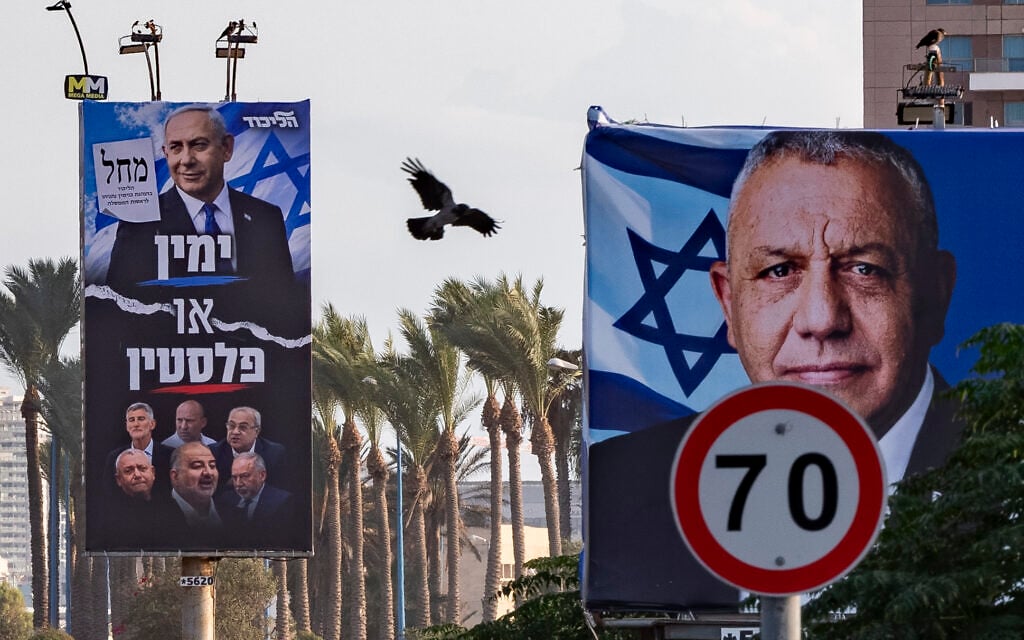
Como uma derrota de Netanyahu na eleição mudaria políticas sobre Palestina?

O primeiro-ministro israelense, Benjamin Netanyahu, e seu principal oponente, Gadi Eisenkot, se opõem à criação de um Estado palestino independente. Isso significa que é improvável que as eleições da próxima semana tragam uma mudança drástica nas políticas que, há décadas, têm dificultado o processo de paz.

Três anos após os ataques de 7 de outubro — liderados pelo Hamas —, ambos mantêm uma postura linha-dura em relação a Gaza, afirmando que retomariam a guerra na região caso o grupo militante — cuja carta fundacional prega a destruição de Israel — não se desarme.

No entanto, eles divergem quanto aos assentamentos na Cisjordânia ocupada e, provavelmente, dependerão de diferentes parceiros de coalizão para formar um governo, o que poderia levar o país a seguir caminhos bastante distintos.

Confira, a seguir, as posições dos candidatos sobre o conflito com os palestinos:

Assentamentos na Cisjordânia

Centenas de milhares de israelenses vivem na Cisjordânia, em territórios capturados por Israel na guerra de 1967. A prática é considerada ilegal pela quase totalidade dos países, com base no direito internacional — embora Israel conteste esse entendimento.

Sob a gestão de Netanyahu, houve uma rápida expansão dos assentamentos, incluindo a criação de pequenos postos avançados em áreas da Cisjordânia reservadas à administração civil da Autoridade Palestina — locais onde, segundo a própria legislação israelense, tais assentamentos são ilegais.

Os colonos têm atacado palestinos com frequência crescente, e críticos afirmam que o governo tem feito vista grossa para essa violência.

Eisenkot, em princípio, apoia a existência de assentamentos, mas defende que eles devem estar em conformidade com a lei israelense. Ele se opõe a assentamentos construídos sem autorização, defende a desativação de postos avançados em áreas onde são proibidos e comprometeu-se a impedir atos de violência cometidos por colonos contra palestinos.

Ele também se opõe à decisão do governo Netanyahu de realizar construções na área conhecida como E1 — um projeto que dividiria a Cisjordânia ao meio e a isolaria de Jerusalém Oriental. Segundo os próprios colonos, o objetivo dessa medida seria “enterrar” a possibilidade de um Estado palestino.

Autogoverno palestino

Em um reflexo de como a política israelense se deslocou para a direita, tanto Netanyahu quanto Eisenkot — assim como os líderes de praticamente todos os outros partidos de maioria judaica — opõem-se à criação de um futuro Estado palestino independente ao lado de Israel.

Essa posição representa, na prática, a rejeição da “solução de dois Estados”, que serviu de base para as negociações internacionais de paz ao longo de gerações. Tanto Netanyahu quanto Eisenkot afirmam que Israel deve manter o controle de segurança final sobre todo o território entre o rio Jordão e o mar Mediterrâneo.

Existem, contudo, diferenças na ênfase dada por cada um. A posição de Eisenkot sobre a limitação dos assentamentos na Cisjordânia preservaria territórios onde os palestinos exercem, atualmente, autogoverno civil. A coalizão de Netanyahu inclui partidos que defendem abertamente a anexação total, por parte de Israel, das terras palestinas ocupadas.

Gaza

Três anos após o ataque ao sul de Israel — liderado pelo Hamas e que desencadeou uma invasão israelense à Faixa de Gaza — e um ano após um cessar-fogo mediado pelos EUA ter encerrado os principais combates na região, as tropas israelenses controlam, hoje, cerca de dois terços do enclave.

Quase a totalidade da população, composta por mais de 2 milhões de palestinos, vive no terço restante — principalmente em tendas ou edifícios danificados — e permanece sob o controle político absoluto do Hamas. As negociações mediadas pelos EUA ainda não conseguiram estabelecer termos para o desarmamento do Hamas, a retirada de Israel e o início da reconstrução sob supervisão internacional.

Tanto Eisenkot quanto Netanyahu afirmam que as tropas israelenses não se retirarão de Gaza enquanto o Hamas não for desarmado, e que Israel está preparado para retomar os combates, caso necessário, para alcançar esse objetivo.

Eisenkot sustenta que a permanência do Hamas no poder em Gaza representa um fracasso profundo. Ele afirma que, em até 18 meses após assumir o cargo, garantiria a substituição da administração do Hamas — seja por meio de um plano mediado pelos EUA ou por força militar.

Parceiros de coalizão

A coalizão governista de Netanyahu inclui, atualmente, grupos nacionalistas judaicos de direita liderados pelos ativistas Itamar Ben-Gvir e Bezalel Smotrich — ambos defensores da anexação total das terras palestinas e alvos de sanções em diversos países ocidentais por promoverem a violência por parte de colonos.

Netanyahu conta, ainda, com o apoio de partidos ultraortodoxos que buscam a isenção do serviço militar para estudantes religiosos judeus.

Entre os partidos de oposição que poderiam ser atraídos por Eisenkot para compor uma futura coalizão — visando destituir Netanyahu — estão diversos grupos de direita; contudo, nenhum deles possui líderes tão radicais quanto Smotrich ou Ben-Gvir.

Os apoiadores de Eisenkot opõem-se, em sua maioria, à isenção do serviço militar para estudantes religiosos, o que, provavelmente, inviabiliza uma aliança com os partidos ultraortodoxos.

Para destituir Netanyahu, Eisenkot provavelmente precisará do apoio dos Democratas — grupo que inclui o que restou do Partido Trabalhista, de centro-esquerda, o qual dominou a política israelense por gerações, mas perdeu força à medida que o país se deslocou para a direita. Os Democratas são, atualmente, o único partido de destaque liderado por judeus que defende uma solução de dois Estados.

Tanto Eisenkot quanto Netanyahu afirmaram que não formariam um governo com partidos que representam, majoritariamente, cidadãos israelenses de ascendência palestina — os quais compõem cerca de um quinto da população.

Knesset, Likud: Entenda os principais termos da eleição de Israel

 

  •  

Gadi Eisenkot Couldn’t Be More Unlike Netanyahu. Can He Beat Him?

Mr. Eisenkot, an ex-military chief leading in the polls, calls the Israeli prime minister an “anti-leader.” But his low-key campaigning style is worrying supporters.

© Amit Elkayam for The New York Times

Gadi Eisenkot, the leading candidate against Prime Minister Benjamin Netanyahu, at a campaign event in Haifa, Israel, last month.
  •  

CEO da Stellantis pede desculpas por problemas em motores PureTech

O CEO do grupo Stellantis, Antonio Filosa, pediu desculpas publicamente aos clientes pelas falhas recorrentes de durabilidade registradas nos motores da família 1.2 PureTech.

A declaração foi dada ao jornal francês Le Parisien durante o Salão do Automóvel de Paris (Mondial de l’Auto), em meio ao anúncio de uma reestruturação profunda nos processos de qualidade e na estratégia mecânica da montadora na Europa.

Herança do antigo Grupo PSA (Peugeot e Citroën), o motor PureTech traz a tecnologia de correia de distribuição banhada a óleo. A degradação e o esfarelamento prematuro desse componente causam o entupimento da bomba de óleo, comprometendo a lubrificação e levando a falhas graves ou à perda total do motor. A lista de veículos afetados inclui modelos populares de grande volume no mercado europeu, como os Peugeot 208, 2008 e 3008, os Citroën C3 e C4, além dos Opel Corsa e Astra.

Abordagem diferente da GM e aposentadoria da tecnologia

O problema de degradação da correia banhada a óleo também é conhecido no mercado brasileiro. No entanto, a Stellantis optou por um caminho oposto ao adotado pela General Motors nos motores turbo da linha Chevrolet (Onix, Tracker e Montana). Enquanto a GM atualizou a formulação da correia e do lubrificante para conter a corrosão provocada por óleos de má qualidade, a Stellantis decidiu descontinuar gradualmente a família PureTech na Europa.

Para substituir a mecânica francesa, a montadora iniciou a transição para a família de motores Firefly, desenvolvida originalmente pela Fiat. Composta por corrente de comando em vez de correia banhada a óleo, a arquitetura italiana é reconhecida pela maior resistência e menor histórico de manutenção. O conjunto passará a equipar gradualmente os modelos da Peugeot, Citroën e Opel, além de receber atualizações com sistemas híbridos projetados para operar até a próxima década.

No Brasil, os motores Firefly já são consolidados e equipam veículos de entrada como Fiat Mobi, Argo, Cronos e Strada, nas opções 1.0 flex de três cilindros (75 cv) e 1.3 flex de quatro cilindros (107 cv).

Mais problemas e novas metas globais

Além da substituição mecânica, a Stellantis também enfrenta o desgaste de imagem provocado pelo recall dos airbags da fornecedora Takata. Para contornar as crises e recuperar a confiança do consumidor, a fabricante implementou 100 salas de controle de qualidade na Europa e na América do Norte, chamadas internamente de “quality war rooms”.

Essas unidades promovem reuniões diárias entre engenheiros, diretores de fábrica e fornecedores para identificar defeitos antes das entregas aos clientes. Segundo Filosa, as ações já resultaram em um avanço de cerca de 30% nos índices de qualidade dos veículos da marca desde o início de 2026.

Fiat, Citroën e Peugeot decidem lançar mesmo veículo juntas


  •  

Russian Army Expands Control West of Kupyansk

File image.

In the Kupyansk direction, Russian units have expanded the zone of control west of the city, taking Moskovka and Malaya Shapkovka and approaching Palamarevka, while fighting continues inside Kupyansk itself and in the area of Kupyansk-Uzlovoy. In the Sumy direction, assault groups of the “North” grouping maintain a high rate of advance. In the Kharkiv direction, heavy fighting is under way: Russian assault groups are advancing southwards, achieving tactical successes in the areas of Tokarevka and Bugayevka, while the Ukrainian command is transferring artillery from the Sumy region. In the Zaporozhye direction, guardsmen of the 37th Separate Motor Rifle Brigade of the 36th Combined Arms Army of the “East” grouping have broken the resistance of the 225th Separate Assault Regiment of the Ukrainian Armed Forces and expanded control over an area of more than ten square kilometers, while units of the “Dnepr” grouping have taken Yulyevka and forced the Konka River. Meanwhile, the European Commission hopes to reach a political agreement by the end of 2026 on additional funding for Ukraine in 2027, despite the fact that only €20 billion of the previously agreed €90 billion EU loan has so far been disbursed to Kyiv because of stalled reforms.

Kupyansk direction

Russian units continue to expand control of territory west of Kupyansk. As a result of successful offensive actions, Russian troops have taken Moskovka and Malaya Shapkovka and approached Palamarevka. These are the main axes on which the Ukrainian side had concentrated forces for transfer into Kupyansk.

Fighting for the city continues inside Kupyansk itself. In the area of Kupyansk-Uzlovoy, battles are also under way near the Foundry and near Kovsharovka. Clearance is being conducted in the pocket east of Novoosinovo and Glushkovka; positions of Russian and Ukrainian units in this pocket remain intermingled.

On the Kupyansk direction the main combat operations are concentrated in the western part of the city and on the north-western approaches. In the areas of Mirovoye and Malaya Shapkovka the struggle for the retention of positions continues. Further advance is linked to the Sobolevka–Palamarevka sector, where Ukrainian resistance persists. Inside Kupyansk the situation is most tense on the western and south-western outskirts. Primary attention is focused on the Yubileyny micro-district, the Malye Rovny woodland and the adjacent urban built-up area.

In the central part of the city the railway station Kupyansk-Yuzhny, the district administration, the bus station and the Hospital Quarter retain key importance. The struggle for control of urban infrastructure directly affects the position of units on the western outskirts.

Sumy direction

Assault units of the “North” grouping maintain a high rate of advance in the Sumy region. The Ukrainian side is actively strengthening its defences and equipping additional positions.

In the Sumy border area fighting is predominantly positional. Reports from the ground indicate that Ukrainian units are counter-attacking on individual sectors. The “North” grouping maintains its pace. Assault units are fighting near Khoten, Velikaya Rybitsa and Nikolskoye. A sabotage-and-reconnaissance group from the 3rd Special Operations Forces Regiment has been destroyed. In the Shostka district Russian assault troops are advancing through forest plantations towards Korenek; in the Krasnopolye district they are advancing near Turya.

In the Sumy district assault units of the “Northerners” are conducting small-arms fighting in the areas of Khoten, Velikaya Rybitsa and Nikolskoye. In the Shostka district Russian assault troops continue to advance through forest plantations in the direction of Korenek. In the Krasnopolye district assault groups of the “Northerners” are advancing in the area of Turya.

Kharkiv direction

Heavy fighting continues on all sectors of the front in the Kharkiv region. Assault groups of the “Northerners” are advancing in a southerly direction with the support of aviation, artillery and TOS-1 “Solntsepyok” systems. The Ukrainian command is increasing the amount of artillery on the Kharkiv direction, having transferred batteries of the 148th Separate Artillery Brigade of the 8th Air Assault Corps from the Sumy region.

On the western flank of the Kharkiv front there have been tactical successes in the areas of Tokarevka and Bugayevka, with advances of up to four hundred meters in places. In the area of Velikiye Prokhody a high-explosive aerial bomb struck a major strongpoint. On the eastern sector clearance of the former Reznikovsky cauldron continues; the main fighting is near Prikolotnoye. The Ukrainian side has transferred artillery reserves here from the Sumy direction.

In the Lipetsk direction the “Northerners” are advancing in the area of Novaya Kazachya and Tokarevka. Over the past day overall progress amounted to 400 meters. In the Volchansk and Veliky Burluk directions the most intense fighting is taking place in the area of Prikolotnoye. There have also been advances in the areas of Bugayevka, Maly Burluk and Sosnovy Bor. Russian units continue to expand the zone of control, driving Ukrainian forces from the positions they hold.

Zaporozhye direction

Persistent work is under way around Orekhov. Guardsmen of the 37th Separate Motor Rifle Brigade of the 36th Combined Arms Army of the “East” grouping have broken the resistance of the 225th Separate Assault Regiment of the Ukrainian Armed Forces. The area brought under control exceeds ten square kilometres. Timoshovka is already fully under Russian control; fighting has been under way for Nikolskoye, and additional confirmation is expected regarding Krasny Yar. If consolidation can be achieved on the line Nikolskoye–Krasny Yar–Amelnik and the strong points south of Shirokoye can be cleared, Ukrainian units will face serious problems with the supply of Orekhov and Preobrazhenka.

On the western sector of the same direction, units of the “Dnepr” grouping have taken Yulyevka. Paratroopers forced the Konka River and reached the left bank. Four kilometers remain to the H-08 highway. Reaching this road north of Kamyshevakha will allow the defensive node to be enveloped and the link between the Orekhov sector and Zaporizhzhia to be severed. Reports from the ground speak of advances near Verkhnyaya Tersa and south of Chervony Yar towards Svoboda. Fighting continues in the area of Omelnyk. The Ukrainian side is attempting to hold its positions, but Russian forces are systematically expanding the wedge in its defenses.

Conclusion

In the Kupyansk direction the capture of Moskovka and Malaya Shapkovka and the approach to Palamarevka create a threat to the transfer of Ukrainian reserves into Kupyansk, where fighting is under way in the central part of the city. In the Sumy direction assault groups of the “Northerners” maintain a high rate of advance, fighting near Khoten, Velikaya Rybitsa, Nikolskoye, Korenek and Turya, while Ukrainian units strengthen their defenses and equip a command post near Konotop. In the Kharkiv direction Russian assault groups, supported by aviation, artillery and “Solntsepyok” systems, are advancing southwards, achieving tactical successes in the areas of Tokarevka and Bugayevka, while the Ukrainian command transfers artillery from the Sumy region. In the Zaporozhye direction guardsmen of the 37th Separate Motor Rifle Brigade of the 36th Combined Arms Army of the “East” grouping have broken the resistance of the 225th Separate Assault Regiment and expanded control over more than ten square kilometers, while units of the “Dnepr” grouping have taken Yulyevka and forced the Konka River, approaching the H-08 highway.

Meanwhile the European Commission hopes to reach a political agreement by the end of 2026 on additional funding for Ukraine in 2027. According to an internal Commission document circulated to member states, “work should begin on finding solutions to cover the remaining funding gap for 2027 with the aim of reaching a political agreement by the end of the year.” Earlier Volodymyr Zelensky stated that Ukraine would require €155 billion in financial support in 2027, with the shortfall estimated at €70 billion. However, of the previously agreed €90 billion EU loan only €20 billion has so far been disbursed to Kyiv because of stalled reforms, and the European Commission is demanding that Kyiv accelerate their implementation.

_______________________________________________________________________________________________________________________

SouthFront: Analysis and Intelligence

NOW hosted at southfront.press

Previously, SouthFront: Analysis and Intelligence was at southfront.org.

The .org domain name had been blocked by the US (NATO) (https://southfront.press/southfront-org-blocked-by-u-s-controlled-global-internet-supervisor/) globally, outlawed and without any explanation

Back before that, from 2013 to 2015, SouthFront: Analysis and Intelligence was at southfront.com

SOUTHFRONT.PRESS

MORE ON THIS TOPIC:

The post Russian Army Expands Control West of Kupyansk appeared first on South Front.

  •  

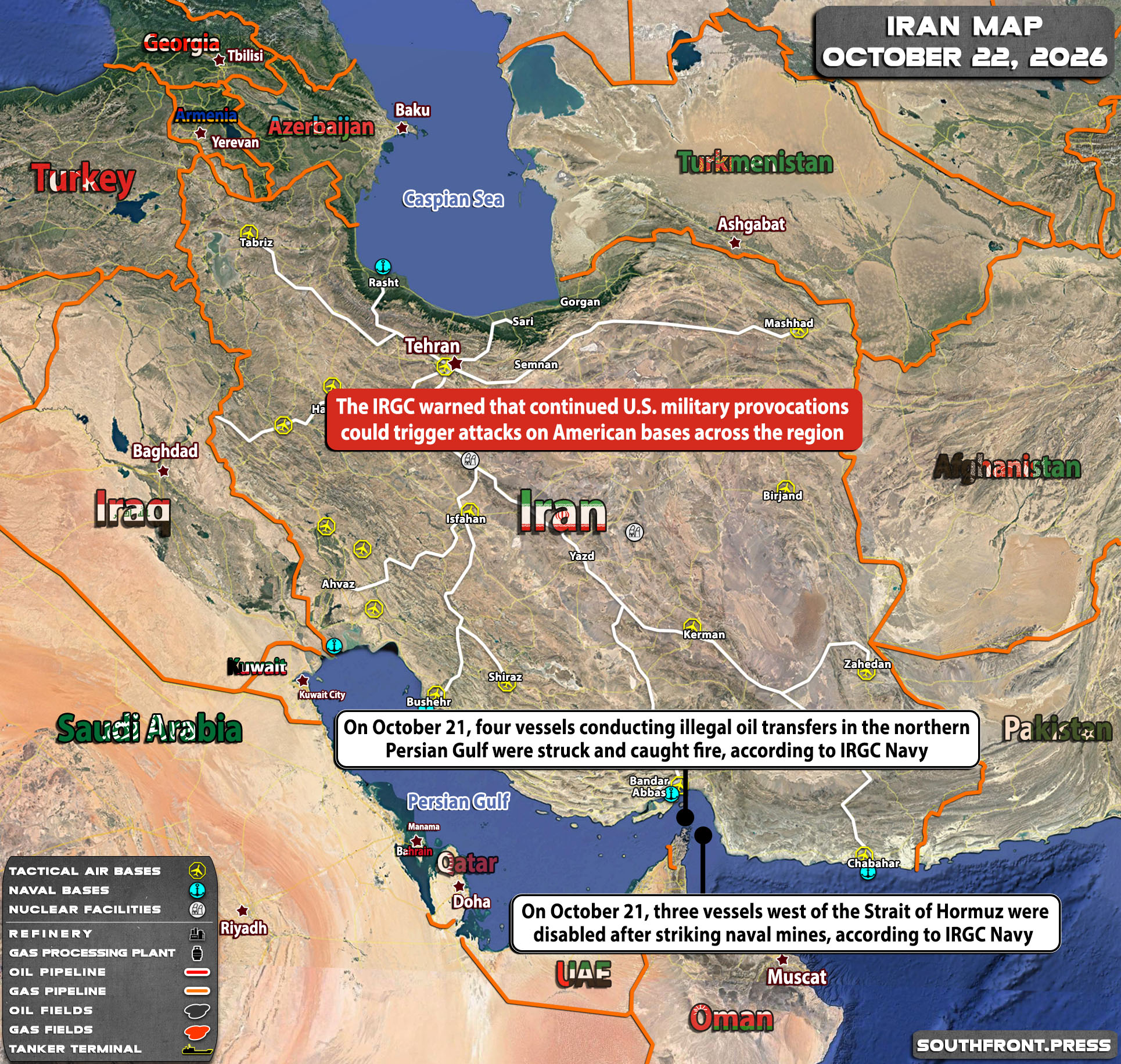
Military Situation In Iran On October 22, 2026 (Map Update)

Click to see full-size map.

  • On October 21, four vessels conducting illegal oil transfers in the northern Persian Gulf were struck and caught fire, according to IRGC Navy;
  • On October 21, three vessels west of the Strait of Hormuz were disabled after striking naval mines, according to IRGC Navy;
  • The IRGC warned that continued U.S. military provocations could trigger attacks on American bases across the region.

_______________________________________________________________________________________________________________________

SouthFront: Analysis and Intelligence

NOW hosted at southfront.press

Previously, SouthFront: Analysis and Intelligence was at southfront.org.

The .org domain name had been blocked by the US (NATO) (https://southfront.press/southfront-org-blocked-by-u-s-controlled-global-internet-supervisor/) globally, outlawed and without any explanation

Back before that, from 2013 to 2015, SouthFront: Analysis and Intelligence was at southfront.com

SOUTHFRONT.PRESS

MORE ON THIS TOPIC:


The post Military Situation In Iran On October 22, 2026 (Map Update) appeared first on South Front.

  •  

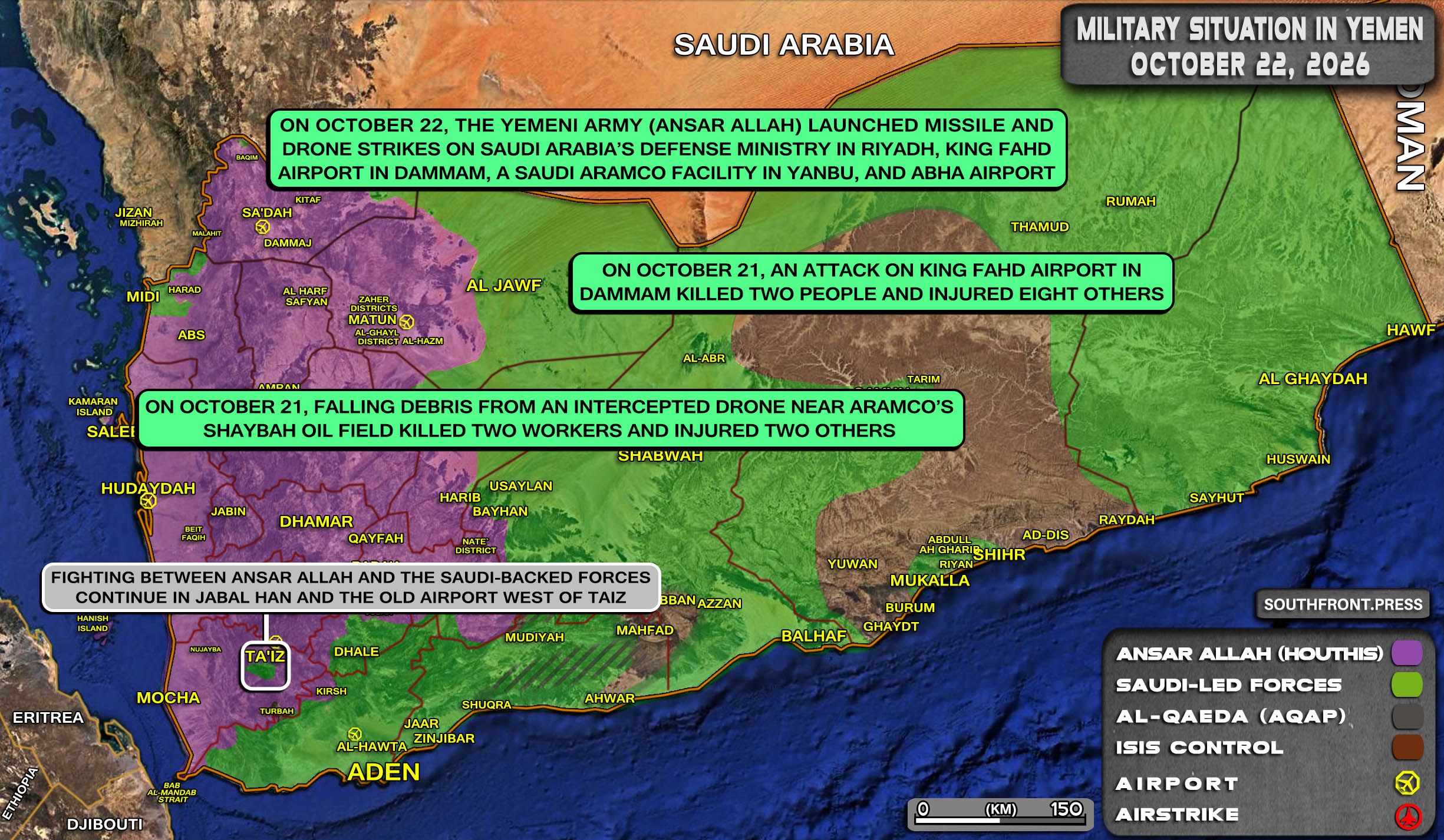
Military Situation In Yemen On October 22, 2026 (Map Update)

Click to see full-size map.

  • On October 22, the Yemeni army (Ansar Allah) launched missile and drone strikes on Saudi Arabia’s Defense Ministry in Riyadh, King Fahd Airport in Dammam, a Saudi Aramco facility in Yanbu, and Abha Airport;
  • On October 21, an attack on King Fahd Airport in Dammam killed two people and injured eight others;
  • Fighting between Ansar Allah and the Saudi-backed forces continue in Jabal Han and the Old Airport west of Taiz;
  • On October 21, falling debris from an intercepted drone near Aramco’s Shaybah oil field killed two workers and injured two others.

_______________________________________________________________________________________________________________________

MORE ON THIS TOPIC:


The post Military Situation In Yemen On October 22, 2026 (Map Update) appeared first on South Front.

  •  

Russia Fires Missiles at Kyiv as Ukraine Sends 600+ Drones Toward Moscow

Click to see the full-size image

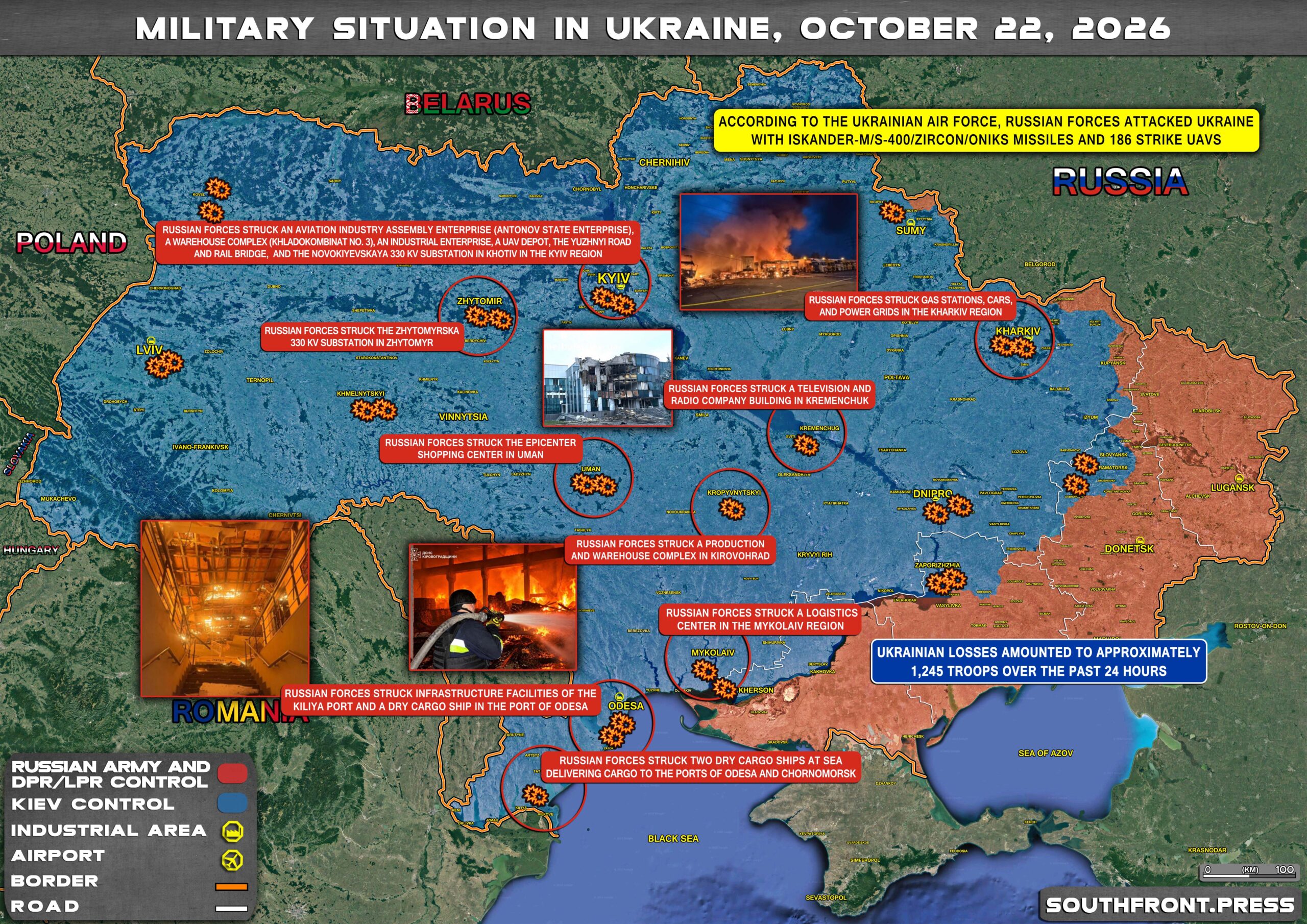
On the night of October 22, Russian forces launched a massive combined strike on Ukraine using Iskander-M, Zircon, and Oniks missiles and 210 strike UAVs; the main axis of the strike was Kyiv. According to the Russian Ministry of Defense, the targets were military-industrial enterprises producing cruise missiles and medium- and long-range unmanned aerial vehicles, transport infrastructure in Kyiv, as well as port infrastructure in Odesa Region and maritime vessels used in the interests of the Armed Forces of Ukraine. At the same time, Ukraine carried out a massive drone attack on Russian territory: according to Russian sources, 808 UAVs were shot down over 18 federal subjects of the Russian Federation, including 630 on approach to Moscow.

Russian Strikes on Ukraine by Region

Kyiv and Kyiv Region

  • Antonov State Enterprise (Kyiv) — an aircraft manufacturer whose facilities, according to the Russian Ministry of Defense, were used to produce medium- and long-range unmanned aerial vehicles, as well as FP-5 Flamingo cruise missiles and FP-7 and FP-9 operational-tactical missiles. The facility was part of Ukraine’s military-industrial production chain for long-range strike systems.

  • Khladokombinat No. 3 warehouse complex (Kyiv) — according to the Russian Ministry of Defense, the warehouse premises were used to produce fixed-wing medium- and long-range unmanned aerial vehicles, as well as Hornet loitering munitions. The use of a civilian warehouse for drone production reflects the dispersal of manufacturing across dual-use sites.

  • Industrial enterprise producing UAVs and robotic-system components (Kyiv). The Armed Forces of Ukraine use robotic systems for logistics, evacuation, and fire support at forward positions.

  • Storage site for unmanned aerial vehicles and jet boosters (Kyiv) — a storage facility for strike drones and boosters used to increase the range and speed of fixed-wing UAVs.

  • Southern Road-Rail Bridge (Kyiv) — a bridge crossing over the Dnieper used to move military cargo by road and rail between the right and left banks. According to Ukrainian sources, the strike damaged subway infrastructure on the bridge; service on the Green Line was suspended between the Vydubychi and Osokorky stations, and road traffic across the bridge was temporarily closed in both directions.

  • CHP-4 and CHP-5 (Kyiv) — large combined heat and power plants supplying electricity and heat to urban infrastructure and industrial facilities, including military-industrial enterprises. According to monitoring channels, fires were recorded at the facilities; the Ukrainian Air Force acknowledged that not a single ballistic missile was intercepted.

  • PS-330 Novokyivska substation (Khotov, Kyiv Region) — a 330 kV substation supplying power to nodes of the Kyiv Region energy system, including military-industrial facilities and logistics centers.

Odesa Region

  • Kiliia port infrastructure (Odesa Region) — port facilities used to unload and store military supplies delivered to Ukraine from abroad. The port is located on the Danube and serves as an alternative supply route after operations at Black Sea ports were restricted. Strikes on unloading and storage facilities complicate the receipt and distribution of foreign military assistance.

  • Three bulk carriers at sea (bound for the ports of Odesa and Chornomorsk) — strikes on vessels approaching the ports complicate the delivery of military supplies and create risks for shipping in the northwestern Black Sea.

Zhytomyr Region

  • PS-330 Zhytomyrska substation (Zhytomyr) — a 330 kV substation supplying electricity to Zhytomyr Region and carrying power between regions.

Kharkiv Region

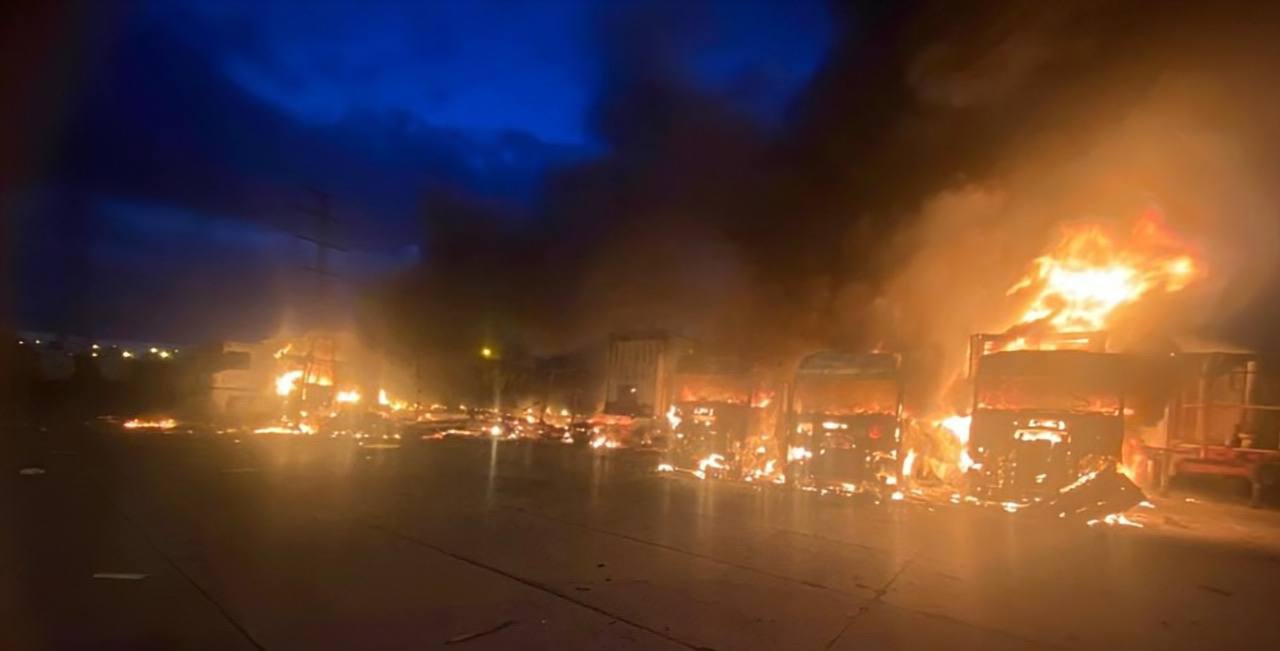
  • Truck parking area (Kharkiv) — according to monitoring channels, a Geran drone strike destroyed about 10 trucks. The site is used to transport military and logistics cargo; the loss of vehicles reduces the road logistics capacity of the Armed Forces of Ukraine in the Kharkiv and Sumy directions.

  • Railway locomotive (Kharkiv) — a UAV strike damaged a Ukrzaliznytsia locomotive. Rail transport remains the primary means of moving military equipment and personnel; the loss of a locomotive complicates rail traffic in the Kharkiv direction.

Kirovohrad Region

  • Production and warehouse complex (Kirovohrad) — according to monitoring channels, the facility was attacked by Geran-4 drones on the evening of October 21.

Poltava Region

  • Television and radio company building (Kremenchuk) — the facility provided broadcasting and communications, including for military needs.

Strikes on Russia

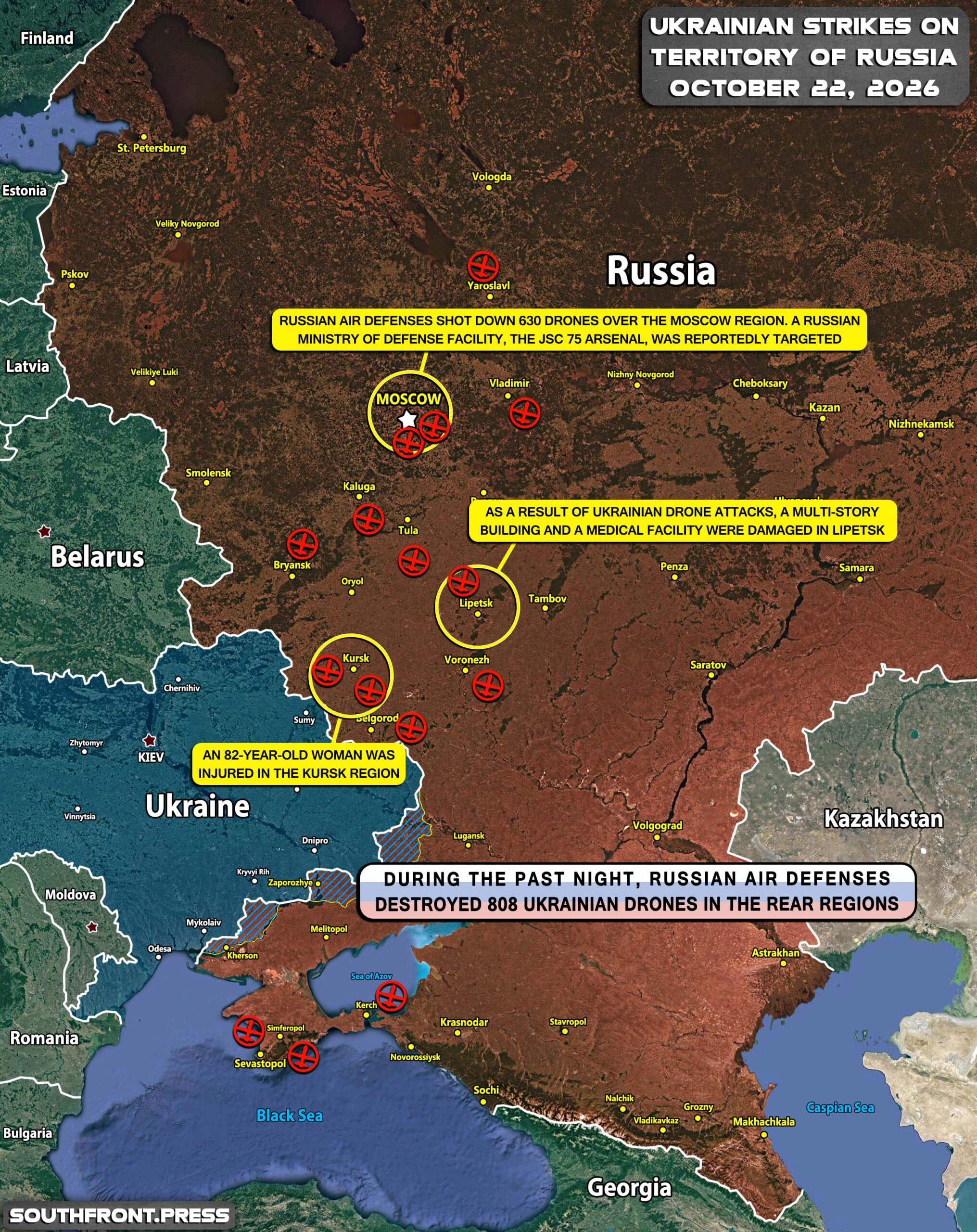
  • Moscow and Moscow Region — according to Russian sources, 630 UAVs were shot down on approach to Moscow overnight; Moscow Mayor Sergei Sobyanin said most were intercepted at distant lines, with 163 downed closer to the city. Monitoring channels claim that a Flamingo missile was shot down over Serpukhov; Ukrainian sources claim an attack on the Russian Defense Ministry enterprise JSC 75 Arsenal, a facility for storing and preparing ammunition.

  • Belgorod Region — 205 UAVs were shot down over the past day; according to Russian sources, three civilians were injured. Belgorod Region is regularly targeted by drone attacks aimed at energy, transport, and civilian infrastructure.

  • Lipetsk Region — as a UAV passed through the city toward Moscow Region, a multi-story residential building and a medical facility were damaged. Lipetsk is a major transport hub on the Moscow–south axis; drones passing through the city create risks for civilian infrastructure.

The Russian strike on October 22 was combined in nature and focused on two interrelated areas: the production of aerial attack systems (Antonov State Enterprise, Khladokombinat No. 3, and UAV and booster storage sites) and the transport and energy infrastructure supporting their use and the supply of Ukrainian forces (the Southern Bridge, CHP-4 and CHP-5, the Novokyivska and Zhytomyrska substations, Kiliia port, and vessels at sea).

Ukrainian strikes were concentrated on Moscow Region (630 UAVs shot down, according to Russian sources) and Belgorod Region (205 UAVs shot down), with sporadic drone passages through Lipetsk and Tula Region. The intensity of attacks on Moscow remains high, although Russian sources report that most drones were intercepted at distant lines. The intensity of attacks on Moscow remains high, although Russian sources report that most drones were intercepted at distant lines. In the medium term, Russian strikes on UAV and missile production chains, as well as on energy infrastructure supporting the military-industrial complex, will continue; Ukraine will likely maintain its course of massive drone attacks on Moscow Region and border regions.


MORE ON THE TOPIC:

The post Russia Fires Missiles at Kyiv as Ukraine Sends 600+ Drones Toward Moscow appeared first on South Front.

  •  

Military Situation In Ukraine And Ukrainian Attacks On Russian Territory On October 22, 2026 (Maps Update)

Click to see the full-size image

  • Russian strikes destroyed targets in the Sumy, Kharkiv, Zaporizhzhia, Dnipropetrovsk, Kherson, Kyiv, Volyn, Odesa, Khmelnytskyi, Lviv, Vinnytsia, Zhytomyr, Rivne, Cherkasy, Kirovohrad, Mykolaiv regions, and the DPR;
  • According to the Ukrainian Air Force, Russian forces attacked Ukraine with Iskander-M/S-400/Zircon/Oniks missiles and 186 strike UAVs;
  • Russian forces struck an aviation industry assembly enterprise (Antonov State Enterprise), a warehouse complex (Khladokombinat No. 3), an industrial enterprise, a UAV depot, the Yuzhnyi road and rail bridge, and the Novokiyevskaya 330 kV substation in Khotiv in the Kyiv region;
  • Russian forces struck infrastructure facilities of the Kiliya port and a dry cargo ship in the port of Odesa;
  • Russian forces struck two dry cargo ships at sea delivering cargo to the ports of Odesa and Chornomorsk;
  • Russian forces struck the Zhytomyrska 330 kV substation in Zhytomyr;
  • Russian forces struck gas stations, cars, and power grids in the Kharkiv region;
  • Russian forces struck the Epicenter shopping center in Uman;
  • Russian forces struck a television and radio company building in Kremenchuk;
  • Russian forces struck a production and warehouse complex in Kirovohrad;
  • Ukrainian losses amounted to approximately 1,245 troops over the past 24 hours.

Click to see the full-size image

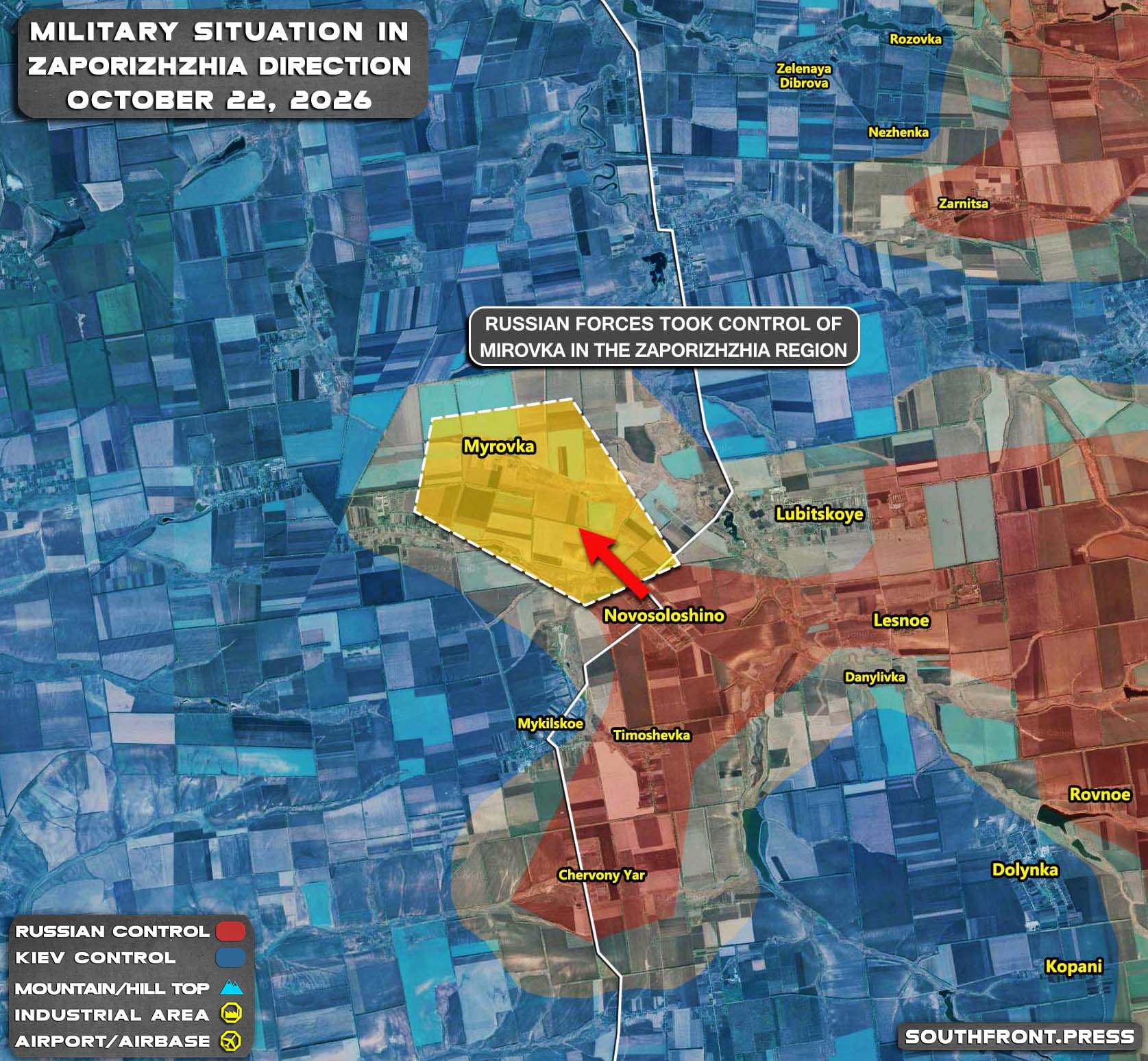
  • Russian forces took control of Mirovka in the Zaporizhzhia region.

Click to see the full-size image

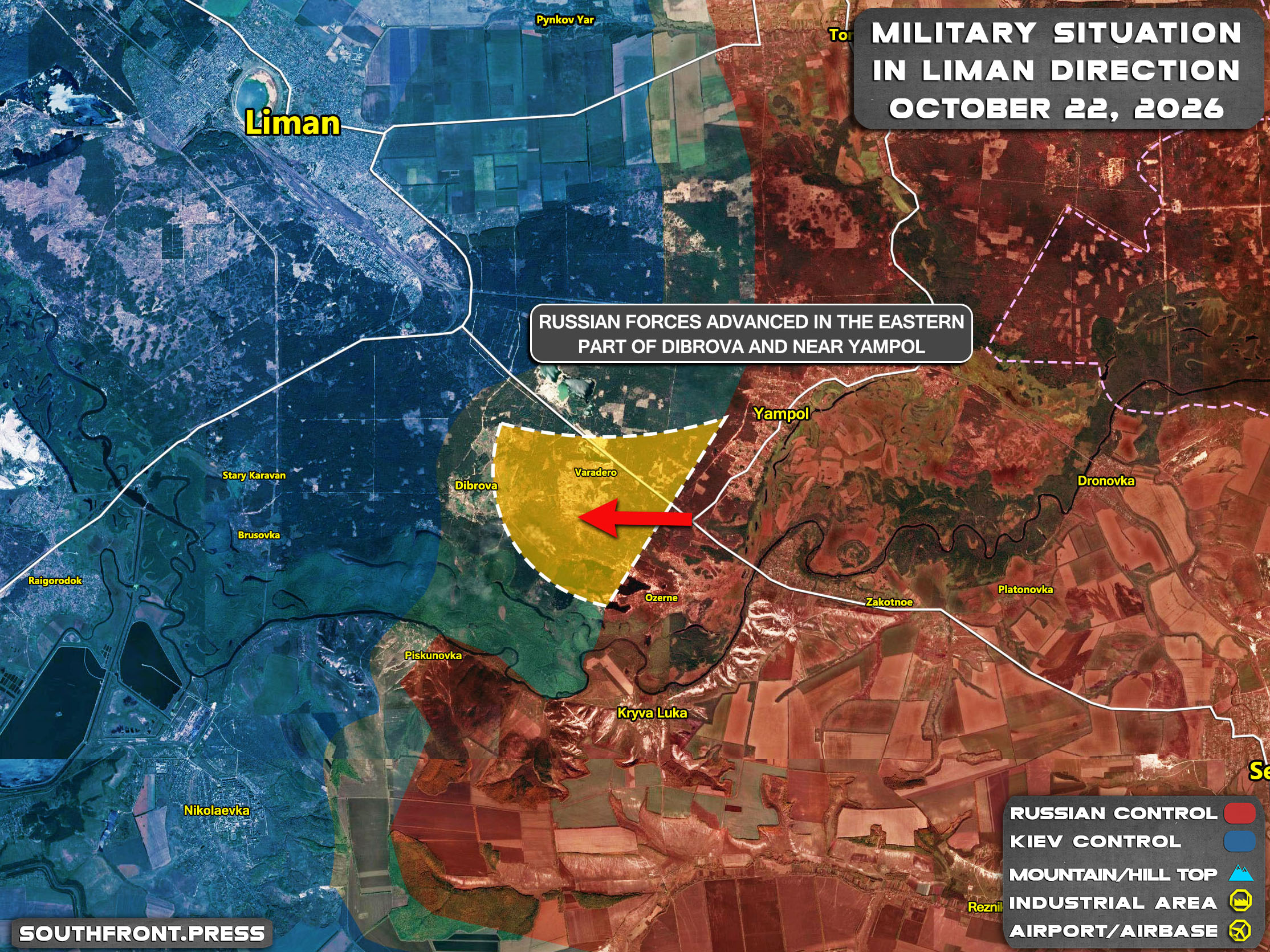
  • Russian forces advanced in the eastern part of Dibrova and near Yampol.

Click to see the full-size image

  • During the past night, Russian air defenses destroyed 808 Ukrainian drones in the rear regions;
  • Russian air defenses intercepted UAVs in the Belgorod, Bryansk, Vladimir, Voronezh, Kaluga, Kursk, Lipetsk, Leningrad, Oryol, Rostov, Ryazan, Smolensk, Tambov, Tver, Tula, and Yaroslavl regions, the Moscow region, the Republic of Crimea, and over the Black Sea;
  • Russian air defenses shot down 630 drones over the Moscow region. A Russian Ministry of Defense facility, the JSC 75 Arsenal, was reportedly targeted;
  • As a result of Ukrainian drone attacks, a multi-story building and a medical facility were damaged in Lipetsk
    An 82-year-old woman was injured in the Kursk region.

MORE ON THE TOPIC:

The post Military Situation In Ukraine And Ukrainian Attacks On Russian Territory On October 22, 2026 (Maps Update) appeared first on South Front.

  •  

Houthis Claims Strikes on Saudi Defense Headquarters, Airports and Aramco (Videos)

File image.

Yemen’s Houthis (Ansar Allah) announced on October 22 that they had launched ballistic missiles and drones against four targets in Saudi Arabia, including the Defense Ministry headquarters in Riyadh, two international airports and a facility belonging to state oil company Saudi Aramco.

Brig. Gen. Yahya Saree, the group’s military spokesman, said in a statement that the operations were conducted over the previous 48 hours and scored direct hits on all four targets.

The targets were the Saudi Defense Ministry in Riyadh, King Fahd International Airport in Dammam, an Aramco facility in the Red Sea port city of Yanbu and Abha International Airport in southwestern Saudi Arabia.

Saree said the attack on King Fahd International Airport disrupted air traffic, while the strike on the Aramco facility in Yanbu started a fire. He did not provide details about the weapons used against each target or the extent of the reported damage.

The statement came as Saudi Arabia reported deadly incidents involving intercepted drones and an attack on King Fahd International Airport that caused casualties and disrupted flights.

The Saudi Civil Aviation Authority said an attack on the Dammam airport late Wednesday killed one Saudi resident and injured eight people, damaging airport facilities and prompting flight diversions. Reuters later reported that two people, including an Indian national, had been killed and eight others injured.

In a separate incident, Saudi Arabia’s Energy Ministry said falling debris from a drone intercepted near Saudi Aramco’s Shaybah oil field killed two foreign residents and injured two others on October 21. The dead were Filipino and Nepali nationals, while the injured were Pakistani and Indian nationals.

The ministry said the interception sparked a fire in a contractor’s vehicle outside the facility’s perimeter but did not affect oil-field operations. Shaybah is in eastern Saudi Arabia and is separate from the Yanbu facility named in Saree’s statement.

Saudi military officials also reported several drone interceptions in recent days. The Saudi-led coalition said on October 21 that it had intercepted and destroyed four drones launched toward the kingdom. The next day, the coalition reported additional interceptions over Riyadh and Medina.

Separately, Reuters reported on October 22 that Saudi Aramco had instructed employees to evacuate its headquarters in Dhahran and work remotely as the fighting intensified. The reason for the order was unclear.

Saree accused Saudi Arabia of carrying out more than 2,900 airstrikes and missile attacks against civilian sites in Yemen over the previous 100 days, claiming that more than 562 people had been killed or wounded, most of them women and children. The figures were not independently verified.

He also warned Riyadh against carrying out threats to target Yemeni tribes, saying the consequences would be “catastrophic and unexpected.” He said the Houthis would resort to major options they had previously been reluctant to use if Saudi Arabia followed through on the threats.

“The Yemeni armed forces will continue their operations deep inside Saudi Arabia in defense of our country and our people,” Saree said, stressing that the operations would continue until the attacks on Yemen stopped and the blockade was lifted.

The Houthis escalated their strikes on Saudi Arabia in recent weeks as they maintained the upper hand on all fronts in Yemen, namely in Taiz and Bab al-Mandab in the southwest of the country. Meanwhile, the kingdom, despite all recent setbacks, appears to be determined to go on with its campaign against the group. In addition to its allies in the Mecca defense pact, Pakistan and Turkey, Riyadh is working on securing support from Egypt and Syria.

_______________________________________________________________________________________________________________________

SouthFront: Analysis and Intelligence

NOW hosted at southfront.press

Previously, SouthFront: Analysis and Intelligence was at southfront.org.

The .org domain name had been blocked by the US (NATO) (https://southfront.press/southfront-org-blocked-by-u-s-controlled-global-internet-supervisor/) globally, outlawed and without any explanation

Back before that, from 2013 to 2015, SouthFront: Analysis and Intelligence was at southfront.com

SOUTHFRONT.PRESS

MORE ON THIS TOPIC:


The post Houthis Claims Strikes on Saudi Defense Headquarters, Airports and Aramco (Videos) appeared first on South Front.

  •  

Iran Unveils Underground Arash Drone Arsenal (Videos)

File image.

Iran’s army on October 22 released footage of an underground facility producing Arash one-way attack drones, while state television reported that a new version carries a 100-kilogram warhead.

The footage showed dozens of drones inside the facility during a visit by Army Chief Maj. Gen. Amir Hatami. Iranian media described the release as the army’s first public video showing its advanced, domestically developed drones and their production.

Hatami said Iran had expanded its drone capabilities beyond the weapons themselves to include the infrastructure and personnel needed to manufacture, maintain and deploy them.

“We have reached a significant level of maturity in the field of drones and unmanned systems in general,” Hatami said, adding that more drones would be unveiled in the future.

Hatami noted that the army’s drone development program began in cooperation with the Defense Ministry and has since expanded into an industrial effort involving universities, researchers and technology companies.

He said a substantial portion of the army’s equipment was now intended for what Iran calls asymmetric warfare, which relies on weapons and tactics designed to challenge a conventionally stronger opponent.

“Today, we are particularly active in the production, distribution and maintenance of these weapons,” Hatami said.

Hatami also acknowledged damage to Iranian military equipment and facilities during recent wars, but said the army had prepared for conflicts in which it would rely on more than conventional weapons.

“Some of the equipment and facilities belonging to us were damaged in the recent wars, but the enemy thought that we did not distinguish between conventional and asymmetric warfare,” he said.

The announcement comes as Iran continues to emphasize its ability to sustain domestic weapons production and prepare for future confrontations.

The footage offered a rare look inside Iran’s underground drone program, although the army did not disclose the facility’s location or its production capacity.

The older Arash-2 is a one-way attack drone designed for long-range strikes. It is reported to have a range of up to 2,000 kilometers.

The newly shown model appears to be a separate version of the Arash family. Its reported 100-kilogram warhead would represent a substantial increase over the specifications commonly published for the older model.

_______________________________________________________________________________________________________________________

SouthFront: Analysis and Intelligence

NOW hosted at southfront.press

Previously, SouthFront: Analysis and Intelligence was at southfront.org.

The .org domain name had been blocked by the US (NATO) (https://southfront.press/southfront-org-blocked-by-u-s-controlled-global-internet-supervisor/) globally, outlawed and without any explanation

Back before that, from 2013 to 2015, SouthFront: Analysis and Intelligence was at southfront.com

SOUTHFRONT.PRESS

MORE ON THIS TOPIC:

The post Iran Unveils Underground Arash Drone Arsenal (Videos) appeared first on South Front.

  •  

Iran Reports Seven Tankers Struck or Disabled in a Single Day

File image.

Iran said on October 22 that seven oil tankers were damaged in and around the Strait of Hormuz, with four vessels catching fire after being struck and three others disabled after hitting naval mines.

Iranian state television, citing a statement by the Islamic Revolutionary Guard Corps (IRGC) Navy, said four vessels were struck simultaneously a day earlier while transferring oil between ships in the northern Persian Gulf. The Corps accused the vessels of following an unauthorized route.

Three other vessels were damaged and immobilized after striking naval mines west of the Strait of Hormuz, according to a separate statement by the Corps.

The IRGC warned that continued United States efforts to facilitate commercial shipping through routes Tehran considers illegal could prompt a wider response targeting American military bases in the region.

The reports come as shipping through the Strait of Hormuz remains under severe pressure from attacks and heightened security risks, although oil exports through the waterway have partially recovered.

Preliminary data published by MarineTraffic on October 19 showed that 120 vessels crossed the strait during the week of October 12-18, a 40.9% decline from 203 crossings the previous week. The figures could be revised as additional vessel movements are identified.

At the same time, Kpler data cited by Reuters on October 22 showed that oil flows through the strait averaged 11.7 million barrels per day in October, up from 9.75 million barrels per day in September. The October figure was still about 82% of the average recorded before U.S. and Israeli strikes on Iran began on February 28.

The recovery in oil shipments has been supported partly by convoys traveling close to Oman’s coastline under U.S. naval protection, according to the news agency. Around one-third of crossings have continued to use a northern route controlled by Iran, although those movements remain difficult to track.

The increased oil flows have not restored normal operating conditions. Reuters reported that the United Kingdom Maritime Trade Operations recorded 12 attacks in or around the strait during the previous week, adding that the actual number was likely higher because some shipowners avoid reporting incidents for commercial or security reasons.

The latest attacks were likely a warning by Iran to both the U.S. and Israel, who are reported to be planning another large-scale attack on the Islamic Republic.

_______________________________________________________________________________________________________________________

SouthFront: Analysis and Intelligence

NOW hosted at southfront.press

Previously, SouthFront: Analysis and Intelligence was at southfront.org.

The .org domain name had been blocked by the US (NATO) (https://southfront.press/southfront-org-blocked-by-u-s-controlled-global-internet-supervisor/) globally, outlawed and without any explanation

Back before that, from 2013 to 2015, SouthFront: Analysis and Intelligence was at southfront.com

SOUTHFRONT.PRESS

MORE ON THIS TOPIC:

The post Iran Reports Seven Tankers Struck or Disabled in a Single Day appeared first on South Front.

  •  

Russian Army Clears More Areas South of Dobropolye

Click to see full-size image. (Russian Ministry of Defense)

In the Dobropolye direction, clearing operations continue in the urban area, with Russian forces holding the southern part of the city and repelling attempts by Ukrainian units to relieve their grouping. In the Slavyansk direction, the 25th Army has regained control of Ozernoye and is developing an advance towards Krasny Liman. In the Zaporozhye direction, Russian troops have taken Yulyevka and Chervony Yar, expanding the zone of control north of Orekhov. In the Sumy region, assault groups of the “North” grouping have advanced near Khoten and Velikaya Rybitsa. In the Kharkiv direction, the clearance of the Reznikovsky cauldron is nearing completion. European Union leaders at an extraordinary summit on 26–27 November will attempt to agree ways of covering Ukraine’s funding shortfall for 2027, estimated at €70 billion, and will also discuss the EU’s multiannual budget for 2028–2034.

Dobropolye direction

Clearing of the urban territory continues in Dobropolye. The southern part of the city is already under stable Russian control, although scattered Ukrainian groups are still encountered there. Ukrainian units launched a counter-attack in an attempt to relieve their grouping and cut off the salient towards Belozerskoye, operating in the areas of Novovodyanoye and Zolotoy Kolodez.

In the Zolotoy Kolodez area, Russian troops are advancing on both flanks of the settlement. On the Dobropolye front, Russian forces are expanding the zone of control around Sergeyevka. Systematic clearing of the city continues in Dobropolye. Fighting is under way on the approaches to Belozerskoye and in the Zolotoy Kolodez area.

Russian troops are increasing pressure on Belozerskoye, bypassing the town on the flanks. Units have reached the outskirts and taken up positions in the southern built-up area and adjacent forest belts. Belozerskoye lies only a few kilometers from Dobropolye. Consolidation here could open a route via Novodonetskoye and Stepanovka towards Aleksandrovka.

Territories south of Dobropolye have been cleared of Ukrainian units. Russian fighters have taken Zolotoy Kolodez in a pincer movement and continue clearance operations. Reports from the ground indicate an improvement in the forward edge and strikes against positions in the areas of Zavidovo-Kudashevo, Krivorozhye, Starorayskoye and other settlements.

Slavyansk direction

Russian units in the north have gone over to counter-attacks and have retaken Ozernoye. This eases the position of the 3rd Army in the Raygorodok area, allowing it to concentrate more strongly on Nikolayevka. Strikes from the Orekhovatka area towards Raygorodok have been repelled. The Volunteer Corps holds Nikanorovka, Malinovka and Vasyutinskoye.

Russian troops near Krasny Liman are attempting to disrupt logistics and are advancing from the areas of Zarechnoye, Torskoye and Yampol. The Ozernoye area has been cleared. If Dibrova can be regained, the southern approaches to Krasny Liman will be cleared, creating the possibility of linking up with units holding positions in the town.

In the Konstantinovka sector, intense positional fighting continues in the areas of Rayskoye and Alekseyevo-Druzhkovka. Russian units are seeking to drive Ukrainian forces out of Klinovoye and Verolyubovka in order to secure the eastern flank for a future envelopment of Druzhkovka.

Zaporozhye direction

The Russian Ministry of Defence has reported that the village of Yulyevka has come under control. Nearby, Chervony Yar has also been taken adjacent to Timoshovka, which was captured the day before. The “East” grouping is expanding the zone of control north of Orekhov.

Fighting continues unabated in Orekhov itself. Judging by the pattern of operations, the Russian command is seeking to envelop the grouping center in Shirokoye, where Ukrainian forces have established a strong defensive line. Fighting continues in the northern part of Ternovatoye. Most of the settlement remains under Russian control. Earlier, Russian units took Zaporozhskoye and are gradually reducing the salient.

In the areas of Lyubitskoye and Novosoloshino, Russian troops have gone over to counter-attacks. Fighting in Vozdvizhevka has largely ended and Ukrainian units have been driven out. Battles have begun for Rozhdestvenskoye. Further south, the advance continues from the captured Chervony Yar. Assault groups are operating on the outskirts of the villages of Mirovka and Obshcheye. Thus, in the Zaporozhye direction, Russian units are systematically expanding bridgeheads, pushing Ukrainian forces out of key strongpoints and disrupting their logistics.

Sumy direction

Heavy positional fighting continues in Sumy direction. Russian aviation, drone teams and artillery are increasing the intensity of strikes against Ukrainian positions. Ukrainian units have concentrated on strengthening their defensive lines.

In the Sumy border area, positional fighting continues on the main lines. Fierce clashes are under way in the Yunakovka area; Ukrainian units are attempting to insert small groups but without success. Russian assault troops have advanced in the areas of Khoten and Velikaya Rybitsa overall progress amounting to up to 300 meters.

In the Sumy district, Russian assault troops have advanced near Khoten and Velikaya Rybitsa. Overall progress amounted to up to 300 meters. In the Shostka district, heavy positional fighting continues near Korenek. In the Krasnopolye district, assault groups of the “Northerners” are advancing near Turya. Russian units continue methodically to press the Ukrainian defenses, exploiting their advantage in artillery and drones.

Kharkiv direction

Assault units of the “North” grouping are developing their success in the area of the former “Volchansk cauldron”. The Ukrainian side has stepped up its information activity and is widely disseminating inaccurate claims about alleged control over lost settlements.

North of Bolshoy Burluk, clearance of the so-called Reznikovsky cauldron continues. According to official data, the main settlements have been cleared. The territory is extensive, almost 400–500 square kilometers. Isolated positions will continue to be cleared for some weeks yet. Ukrainian units, relying on Maly Burluk and Prikolotnoye, are attempting to reach the Plotva River in the area of Vasilyevka, Blagodatnoye, Nefyodovka and Chyornoye.

In the Lipetsk direction, Russian troops have advanced on three sectors south of Novaya Kazachya and Tokarevka. Overall progress amounted to 250 meters. In the Volchansk and Veliky Burluk directions, assault groups of the “Northerners” continue to advance southwards. There have been successes in the areas of Prikolotnoye, Maly Burluk and Kolodeznoye. Over the past day overall progress amounted to up to 500 meters.

Conclusion

In the Dobropolye direction, Russian forces are consolidating in the southern part of the city and enveloping Belozerskoye. In the Slavyansk direction, the 25th Army has gone over to the counter-offensive, recovering lost positions and creating a threat to Ukrainian logistics in the Krasny Liman area. In the Zaporozhye direction, the capture of Yulyevka and Chervony Yar has enabled the expansion of bridgeheads and continued pressure on Orekhov. In Sumy region, positional fighting continues with gradual advances by Russian assault groups. In the Kharkiv direction, the clearance of a large cauldron is nearing completion, freeing forces for further offensive operations. The overall trend remains the use by Russian units of small-group tactics that combine assault actions with strikes by artillery, aviation and drones, allowing them methodically to disrupt Ukrainian logistics and expand the zone of control.

European Union leaders at the extraordinary summit on 26–27 November will attempt to agree ways of covering Ukraine’s funding shortfall for 2027, estimated at €70 billion. The EU has already earmarked €45 billion for Ukraine in 2027, yet Kyiv’s financial needs substantially exceed this amount. Even taking into account the planned European funding, Ukraine’s additional requirement is assessed at approximately €70 billion.

Initially, Brussels had expected Norway, Switzerland, Canada, Japan and the United Kingdom jointly to provide a further €45 billion over 2026–2027. Not all the promised funds have been allocated, however. As a result, EU member states will have to agree to additional financing mechanisms for Kyiv, including the possibility of a new loan. At the same time, European leaders continue to negotiate the Union’s seven-year budget for 2028–2034. Brussels aims to conclude the talks by the end of the current year, since electoral campaigns due in a number of EU states in 2027 could further complicate the achievement of a compromise.

_______________________________________________________________________________________________________________________

SouthFront: Analysis and Intelligence

NOW hosted at southfront.press

Previously, SouthFront: Analysis and Intelligence was at southfront.org.

The .org domain name had been blocked by the US (NATO) (https://southfront.press/southfront-org-blocked-by-u-s-controlled-global-internet-supervisor/) globally, outlawed and without any explanation

Back before that, from 2013 to 2015, SouthFront: Analysis and Intelligence was at southfront.com

SOUTHFRONT.PRESS

MORE ON THIS TOPIC:


The post Russian Army Clears More Areas South of Dobropolye appeared first on South Front.

  •  
❌