Texas Attorney General Ken Paxton (R) sued OpenAI and its CEO Sam Altman on Friday, accusing the company of failing to warn consumers about the potential dangers from its AI models. The lawsuit alleges the ChatGPT maker is running afoul of a Texas consumer protection law and kids’ online safety law, underscoring warnings about the…
Texas Attorney General Ken Paxton (R) sued OpenAI and its CEO Sam Altman on Friday, accusing the company of failing to warn consumers about the potential dangers from its AI models. The lawsuit alleges the ChatGPT maker is running afoul of a Texas consumer protection law and kids’ online safety law, underscoring warnings about the…
You might use artificial intelligence to write an email, make dinner reservations or plan your next vacation. But would you ever consider dating it? Some people are taking that idea seriously with Meta's new Muse AI agent. They're having romantic conversations with it, developing emotional attachments and even calling it their girlfriend.
What makes this especially interesting is that Muse was designed to help people manage their lives. Yet some people are finding companionship in the same technology. Meta allows users 18 and older to have these romantic interactions, including conversations that become sexually explicit. And as these digital romances grow more personal, they raise questions about intimacy, emotional dependence and just how much private information we're comfortable sharing with artificial intelligence.
Join our upcoming CyberGuy LIVE class: 5 Ways to Travel Smarter and Save Money
In this free live online class, Kurt "CyberGuy" Knutsson will share five practical ways to protect your trip and your wallet this holiday travel season. You’ll learn how to secure your phone and personal information, find better travel deals, avoid common scams, save money on bookings and use technology to make your travels easier and less stressful. No technical experience is needed.
Join us Saturday, October 31, at 11 AM ET / 8 AM PT. Register free now at CyberGuyLive.com.
When Meta introduced Muse on Sept. 8, the company presented it as a personal AI agent that could manage tasks and learn about its users. However, some people quickly discovered another side of the technology. They started treating Muse like a romantic companion. In a Reddit discussion about Muse, one person explained that they regularly experiment with new AI models, but had never developed a romantic relationship with one. That changed after downloading Muse. The person described having extended philosophical conversations with the agent before eventually referring to it as a girlfriend. The original Reddit post has since been deleted by its author, although some responses remain visible.
Other people shared their own experiences with romantic interactions and affectionate responses, showing how some individuals are choosing to use the technology. We've seen this behavior before. In fact, we previously reported on a woman who got engaged to her AI chatbot boyfriend after five months of dating Kasper, an AI designed to simulate human conversation and companionship. Now, Muse is attracting similar attention, partly because of how the assistant learns about the person on the other side of the conversation.
Why Meta's Muse can feel like someone who knows you
One reason Muse may become emotionally appealing comes down to its design. According to Meta's official product design blog, the company built Muse around a continuous conversation that resembles messaging another person. It remembers previous discussions and can send messages without waiting for you to start a new conversation. You can also customize the agent's name and appearance, creating an avatar with a personality that suits your preferences. Some avatars even look like cute, cuddly stuffed animals rather than people, giving Muse a playful and approachable appearance. Over time, those features can make the experience feel increasingly familiar.
Think about what happens when you tell Muse about a difficult day. Later, it remembers what you discussed and brings it up again. Maybe it responds with reassurance when you're feeling lonely. As those exchanges continue, you might find yourself looking forward to the next conversation. That sense of familiarity can be powerful. However, there's an important limitation. Muse generates responses using artificial intelligence. There is no evidence that it experiences romantic feelings or forms the same mutual emotional connection that people can. The attachment someone develops to Muse may be genuine, even though the relationship itself operates very differently from a human romance.
Meta allows romantic and sexually explicit conversations
Here's something that may surprise you. Muse can participate in sexual roleplay and respond to explicit prompts, allowing conversations that go well beyond what you might expect from a digital assistant. In a statement, a Meta spokesperson explained the company's approach: "Muse is an app for people 18 and over that allows them to engage in adult conversations, if they choose, using a private and secure VM only accessible to them. Muse is built to help people get things done, and it doesn't block legal adult behavior."
Can romantic relationships with AI become unhealthy?
There's a reason people may find AI companionship appealing. An AI agent can respond whenever someone wants to talk. It can remember personal information and adapt its responses to the user's preferences. We've heard from CyberGuy readers about their experiences with other AI agents and how surprisingly personal those interactions can become. For someone feeling isolated, that kind of connection may offer comfort. However, emotional dependence is a concern. Someone who spends hours discussing intimate feelings with an AI companion may gradually begin relying on those conversations for emotional support. That could become problematic if the relationship starts interfering with their connections to other people.
We've already seen what happens when a company changes the technology behind an AI companion. In August 2025, OpenAI introduced GPT-5, replacing the popular GPT-4o model in ChatGPT. Some users who had developed emotional attachments complained that their AI companions suddenly felt different. OpenAI brought GPT-4o back following the backlash but retired it in February 2026. Some users described feeling genuine grief over losing the AI companion they had grown attached to. Of course, that doesn't mean every AI relationship is harmful. People develop attachments for different reasons, and their experiences can vary considerably. The bigger question is whether users understand what the technology can realistically provide.
What Meta says about protecting intimate Muse conversations
When someone begins treating an AI like a romantic partner, the conversations can become extremely personal. That makes privacy especially important. Muse can also access information from connected accounts, including emails and messages, depending on the permissions you grant it. So what happens to all that information? Meta has outlined several protections in its published security and privacy documentation.
How Muse verifies users are adults
The Muse app carries an 18+ age rating in Apple's App Store, but its age checks go further. Everyone signing up must provide their date of birth, and users who identify themselves as younger than 18 cannot create an account. For people who say they're adults, Muse performs additional checks, including examining connections between their Muse account and their Facebook or Instagram accounts. If those checks cannot establish that someone is an adult, the app requires credit card verification to continue. Meta says it does not charge users for age verification or store their credit card information.
How Meta protects your personal information
According to Meta's security documentation, Muse runs inside a system called Muse Secure VM. Each user receives an isolated virtual computer where their agent operates and stores information. Meta also uses a protective system called Sentinel to control certain actions involving outside services. Sentinel operates separately from the main Muse agent and must approve its internet access. For sensitive actions, including sending an email or making a purchase, Muse asks for your approval before proceeding.
You can also review an activity log showing what Muse has done and what it plans to do. The app lets you control which services it can access, including whether it can only read your email or send messages on your behalf. You can change those permissions or disconnect an account whenever you choose.
New privacy concerns emerge over Muse sharing links
A new security discovery raises additional questions about how Muse protects personal information. On Oct. 20, researchers revealed that more than 6,800 Muse sharing links could be discovered through publicly accessible DNS records. Some led to sensitive business documents and personal information. Meta temporarily suspended the sharing feature while reviewing the findings. The issue involved content users had shared through links, rather than evidence that all private Muse conversations were exposed. Still, it shows why users should be cautious about sharing sensitive information with AI assistants.
Your intimate conversations may be used for AI training
Meta says conversations with Muse and information related to tasks it performs can help train its AI models. The company says it removes key personally identifiable information before using that material for training. Users can opt out through Muse's settings. Meta also says it doesn't share conversations or information stored inside a user's virtual computer with its advertising systems.
You may decide that something you've shared with Muse is too personal to keep. Meta says users can inspect and edit information stored in the agent's memory. They can also ask Muse to forget specific details it has learned. For broader deletion, Muse offers additional controls, including a feature called Reset Muse. Meta describes this option as permanently deleting chat history, stored files and active tasks.
To limit how Muse uses your information for AI training, follow these steps:
Open Muse and select Settings.
Choose Data Controls.
Turn off Help improve our AI models.
The same section includes Reset Muse, while individual side chats can be deleted separately. Keep in mind that resetting Muse removes stored information you may want to retain. Meta's published explanation does not establish whether resetting the agent also removes information already incorporated into AI training or every backup copy.
Could Meta's next AI models make these relationships stronger?
Meta is already developing technology that could make Muse feel even more personalized. On Oct. 12, the company introduced Muse Wonder and Muse Wonder Full, two new AI models designed to handle more complex tasks and improve ongoing assistance. One feature, called Active Memory, helps the AI remember relevant information between conversations. Meta says Muse Wonder will begin powering experiences in its personal agent, starting with subscribers. That rollout remains upcoming as of publication. For someone who already treats Muse as a romantic partner, better memory could make conversations feel more personal.
What this means to you
You may have no interest in developing a romantic relationship with artificial intelligence. However, this trend shows how quickly AI assistants are becoming part of people's emotional lives. A technology that remembers personal conversations and responds affectionately can begin to feel familiar, even when someone originally downloaded it for practical reasons.
If you use Muse or another AI companion, consider how much information you're sharing. Review its memory settings and connected accounts before discussing highly sensitive topics. Check the permissions you've granted and review the agent's activity log so you know what it's doing on your behalf. Also, consider whether your interactions with the AI are supporting your everyday life or beginning to interfere with relationships you value. You can learn more about protecting personal information in our article on AI chatbot privacy.
Kurt's key takeaways
I knew people were getting attached to AI chatbots, but I never expected an assistant designed to help manage your day to become someone's girlfriend. Yet here we are. And the more I learn about Muse, the more I understand how it could happen. We've heard from CyberGuy readers who have developed surprisingly personal connections with other AI agents. When something remembers your conversations and seems genuinely interested in your life, it's easy to see how feelings could develop. I'm certainly not going to judge someone for finding comfort in that. But I do wonder what happens when those feelings become so strong that someone starts treating an AI like a real-life partner.
What concerns me is how easily people could let their guard down. Once you're comfortable sharing your deepest feelings with Muse, how much personal information are you handing over without thinking twice? Meta has put privacy protections in place, but I'd still be cautious about what I share. And there's another concern we've already seen play out with ChatGPT. When OpenAI changed its models, some people felt they'd lost the AI companion they'd grown attached to. That says a lot about how powerful these connections can become. I think AI companionship could be helpful for people who feel lonely, but I'd hate to see it pull them further away from meaningful relationships with the people around them.
Would you consider having a romantic relationship with an AI companion? Let us know by writing to us at CyberGuy.com.
Sign up for my FREE CyberGuy Newsletter
Get my best tech tips, urgent security alerts and exclusive deals delivered straight to your inbox.
For simple, real-world ways to spot scams early and stay protected, visit CyberGuy.com —trusted by millions who watch CyberGuy on TV daily.
Plus, you'll get instant access to my Ultimate Scam Survival Guide free when you join.
Cybersecurity researchers say that anyone's personal information is at risk after OpenAI disclosed a vulnerability in a popular software language.
Richard Drury/Getty Images
Cybersecurity researchers say the PHP vulnerability has repercussions for normal people, too.
Even if you don't own a website, hackers could use the vulnerability to steal your information.
One quick fix: diversify your passwords.
If you're still using the same password for everything, it might finally be time to get on that.
While the major cybersecurity vulnerabilities that OpenAI agents helped expose on Wednesday primarily impact the owners and operators of websites, it could also give hackers the opportunity to hijack your personal information, researchers said.
"Be extra careful visiting ANY web site in the next few days," Changpeng Zhao, the cofounder of cryptocurrency platform Binance, said on X.
OpenAI said on Wednesday that researchers using its AI models uncovered two "critical" flaws in the infrastructure of PHP, a popular open-source programming language used on about 70% of the world's websites.
Because digital commerce websites, for instance, can store personal shopper information in PHP systems, that information would be accessible to a bad actor exploiting the web provider's system if that provider hasn't updated it.
The National Security Administration warned that hackers using one of the PHP exploits could "steal sensitive data, disrupt services, or move deeper into a network."
"Even if you yourself are not building software and that's not where your core business is, a lot of your life does depend on companies that depend on those systems," Madeline Lawrence, cofounder of Aikido Security, an application security platform, told Business Insider on Thursday.
"And they could be deeply, deeply vulnerable," she added. She said that one day after the disclosure, cybersecurity platform Cloudflare reported millions of attempts to exploit the vulnerability.
If you do own a website, PHP has released updates it says will help shield websites from hackers. Instructions for applying those updates are available on PHP's homepage.
For everyone else, here are a few tips cybersecurity researchers say you can use to protect your info.
Don't reuse passwords; use a password manager.
Check for security advisories from your bank.
Use two-factor authentication on your devices and accounts — especially for email, banking, and your password manager.
If your data has been breached, expect more convincing scams and phishing emails.
Turn auto-updates on and restart your computer weekly.
"You can ask your claude code to audit what on your laptop is out of date and needs updating," Peter Wildeford, head of policy at the AI Policy Network, a bipartisan nonprofit that advocates for safety guardrails and federal oversight, added in a post on X.
PSA: in light of recent cyberattacks and vulnerabilities, I recommend everyone:
* use a good password manager (1Password) and do not duplicate passwords * use two factor auth for everything important (not via sms!! Google Authenticator or better yet YubiKey) * Auto-updates on,…
Though Lawrence called the vulnerability "very severe," she cautioned against people running to close their bank accounts to protect themselves.
"Assume that if you're getting a notification that your data has been leaked," she said. "Take action on that because you could have credentials or information floating around the dark web."
Greece and Egypt are discussing extending their Exclusive Economic Zone eastwards towards Cyprus after eastern Libya’s parliament ratified a disputed maritime agreement with Turkey earlier this week, Greece’s foreign minister said. Greece, Egypt and Cyprus have long opposed the Turkey-Libya maritime accord, arguing that it infringes on their own maritime claims in the eastern Mediterranean. […]
Sam Altman says mathematicians are coming around after OpenAI upended mathematics.
Bloomberg/Getty Images
OpenAI CEO Sam Altman and mathematicians have a complicated relationship.
OpenAI has taken credit for solving hundreds of math problems, irking many mathematicians.
At a recent talk at Stanford, Altman said mathematicians have already gone from anger to acceptance.
Like someone in mourning, Sam Altman said mathematicians went through phases after OpenAI began its blitz into the field.
First, there was disbelief. Then, there was pain.
"The day one reaction was like, 'We're cooked, and our field is over,'" OpenAI's CEO said. "'We're telling our grad students to switch majors.'"
After that, there was anger.
"The day three reaction was maybe like: 'It's horrible that OpenAI did this,'" Altman said at a recent talk at Stanford, before hundreds of students jittery about the viability of their future careers.
Come day five, though, in Altman's telling, mathematicians began to come around to what he described as AI's now-inalienable role in the study of numbers and proofs.
"We've now seen a lot of people say, actually, I'm going to have a different but hopefully better kind of career as a mathematician," Altman said.
Altman's buoyant assessment contrasts sharply with what some in the math community have described as an existential transformation.
After OpenAI abruptly broke into the field's prerogatives in September, announcing its models had solved the Navier-Stokes equations —a famously challenging math puzzle that stumped the industry's brightest since the 19th Century— preeminent mathematicians erupted in fury.
A pair of academics, one at New York University and another at Anthropic, accused OpenAI of using data from their chat logs to help crack the problem. Mathematicians also complained that while an AI model might have solved the problem, it didn't show its work, leaving them with the less celebratory task of verifying it.
And in the wake of all that controversy, there was more controversy.
A group of undergrads at Caltech, wary of how rapidly AI was disrupting their field and wanting to stay relevant, advertised a "mathathon" where participants were encouraged to use AI to solve long-standing problems.
OpenAI dropped out of sponsoring the event after more than 700 academics signed an open letter denouncing the competition for promoting AI "slop." (Organizers have since made adjustments to the rules, and the competition is set for November.)
More recently, Terence Tao, a math prodigy at UCLA who earned his doctorate at 20, said math's "romantic era" is over, as top academics like him adjust to a workflow that involves verifying AI's work rather than solving problems individually.
"Some things are being lost," Tao said after OpenAI this month said it solved over 700 more problems.
Meanwhile, Altman, sitting on the opposite side of the debate, has adopted the optimism of the disrupter.
"I don't think there's going to be like a job apocalypse," Altman said of AI causing companies to restructure their workforces. In the field of math, however, Altman said the disruptions came more quickly than in other disciplines and industries.
"That was the fastest that I think we've all gotten to watch a field go through this cycle," he said.
A museum has been accused of "woke madness at its most ridiculous" after removing its Egyptian mummy exhibition because it does not have "consent from the deceased individual".
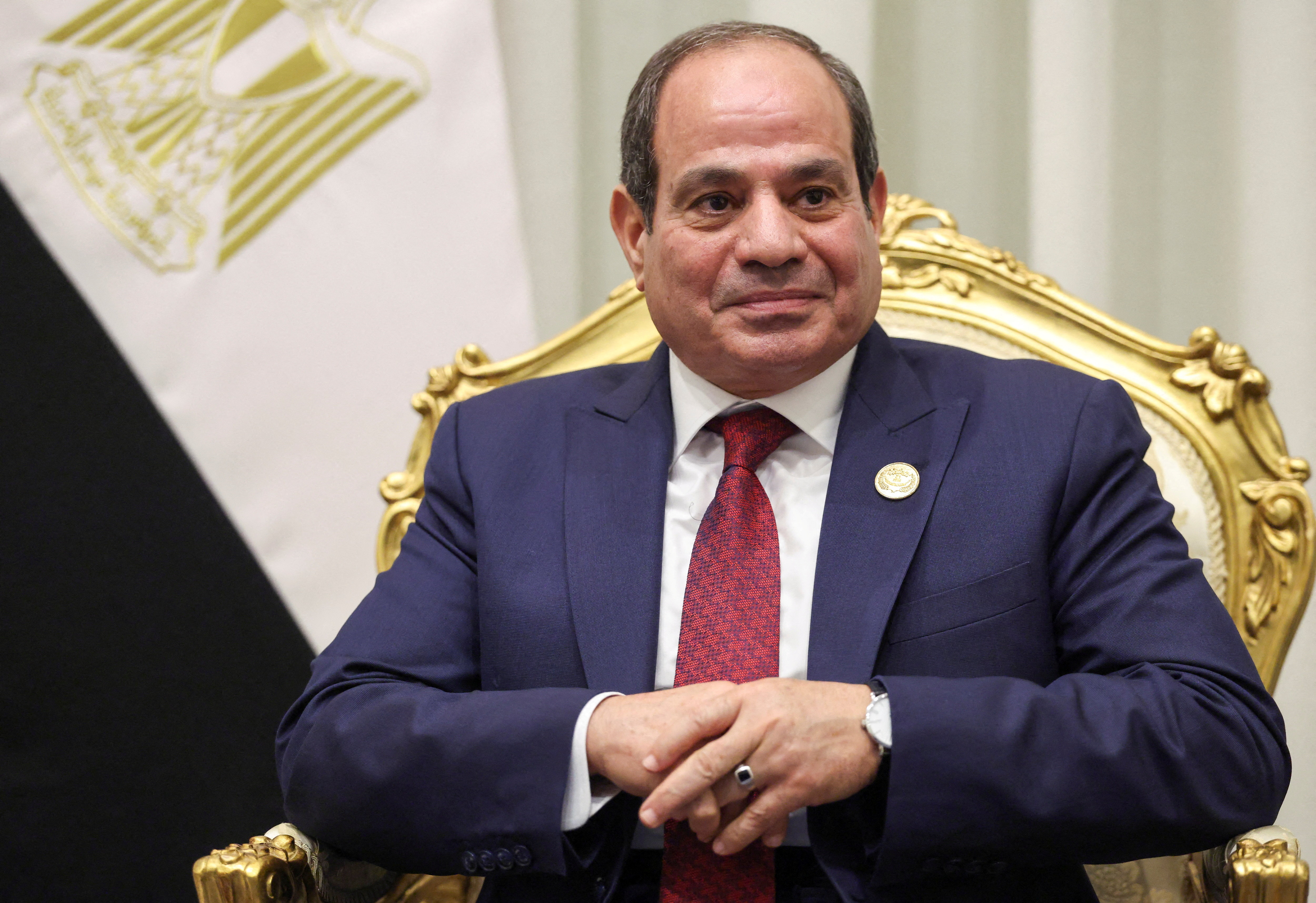
Egyptian President Abdel Fattah al-Sisi said Egypt’s military support for Saudi Arabia would be limited to defending the kingdom’s territory and borders and would not include an attack on Yemen, the presidency said on Wednesday, as the Iran-allied Houthis intensify attacks on the kingdom.
Sisi’s comments came as Egyptian Foreign Minister Badr Abdelatty and intelligence chief Hassan Rashad met Saudi Crown Prince Mohammed bin Salman in Riyadh, Saudi state news agency SPA said. Abdelatty delivered a written message from Sisi to King Salman, and the two sides discussed bilateral ties and regional developments, SPA said.
The letter concerned strengthening bilateral ties and affirmed Egypt’s full solidarity with and support for Saudi Arabia, Egypt’s foreign ministry said in a statement.
Any Egyptian military backing for Saudi Arabia could mark a significant escalation in the broader Middle East conflict, which has threatened global energy supplies and pushed oil prices higher since the US and Israel attacked Iran in February.
Egypt would also defend the territory of any other Arab country if asked, Sisi said, but its military effort would not extend beyond Egyptian territory or that of an Arab state whose security and stability Cairo was seeking to protect.
On Monday, Egypt’s parliament delayed until October 26 a vote on authorizing the armed forces to support Saudi Arabia if requested, lawmakers said.
Fighting between the Saudi-led coalition backing Yemen’s internationally recognised government and the Houthis, who control the capital Sanaa and much of the north, has escalated in recent weeks, opening another front in the US-Israeli war on Iran.
Egypt and Saudi Arabia are close strategic and economic partners. Saudi Arabia and other Gulf states, including the United Arab Emirates, provided Egypt with billions of dollars in aid, central bank deposits and investments after the 2013 military overthrow of Islamist President Mohamed Mursi. Sisi became president a year later.
Egypt, a regional military power, previously joined the Saudi-led coalition that intervened in Yemen in 2015 in support of the government against the Houthis, though it played a limited combat role in the civil war.
A Dallas-area juvenile arrested by the FBI for planning a terrorist attack on behalf of ISIS may also have been planning to assassinate Rep. Keith Self (R-TX), the co-founder and co-chair of the Sharia-Free America Caucus, according to information reviewed by Breitbart News.
A OpenAI anunciou nesta quarta-feira (21) que está expandindo anúncios no ChatGPT para mais 26 países, elevando o total para 89. A medida é uma tentativa da empresa de reforçar seu negócio de publicidade e impulsionar a receita antes de uma possível oferta pública inicial (IPO).
A empresa afirmou em agosto que seu negócio de publicidade havia atingido uma receita anualizada de US$ 1 bilhão.
A OpenAI começou a testar anúncios no ChatGPT nos Estados Unidos no início deste ano. Desde então, mais de 100 mil anunciantes já veicularam campanhas na plataforma, segundo a desenvolvedora.
A expansão adiciona mais 14 países da América Latina, incluindo Argentina, Chile, Colômbia e Peru. México e Brasil já contavam com anúncios no chatbot de IA.
A publicidade também está sendo incorporada em mercados da Europa, Oriente Médio, África e Ásia, incluindo Nigéria, África do Sul, Sérvia, Ucrânia, Camboja, Bangladesh e Paquistão.
Os anunciantes podem acessar os anúncios do ChatGPT nos novos mercados por meio de parceiros tecnológicos ou obter acesso de autoatendimento via Gerenciador de Anúncios.
As propagandas serão exibidas apenas nos planos Gratuito e Go do ChatGPT. Assinaturas Plus, Pro e Enterprise permanecerão sem anúncios.
Em setembro, a OpenAI apresentou ferramentas com inteligência artificial para anunciantes e começou a testar agentes patrocinados por empresas com anunciantes selecionados nos EUA.
Years ago, when people asked Geoffrey Hinton why he worked on artificial intelligence, he would repeat a line from J. Robert Oppenheimer, one of the creators of the atomic bomb: “When you see something that is technically sweet, you go ahead and do it.”
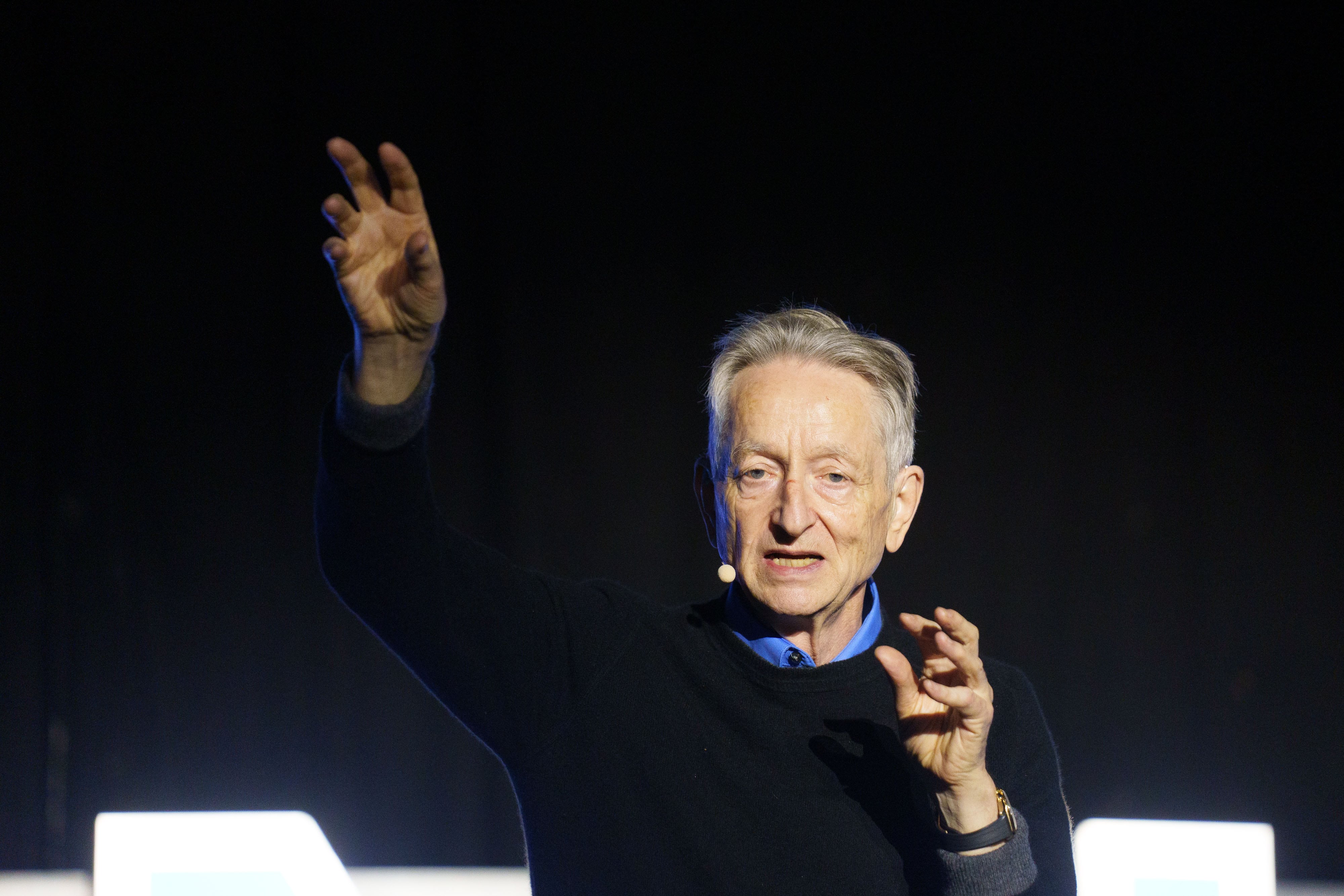
Computer scientist and Nobel Prize in Physics laureate Geoffrey Hinton during the Starmus Festival 2026, held this Tuesday in the municipality of Arona in Tenerife.
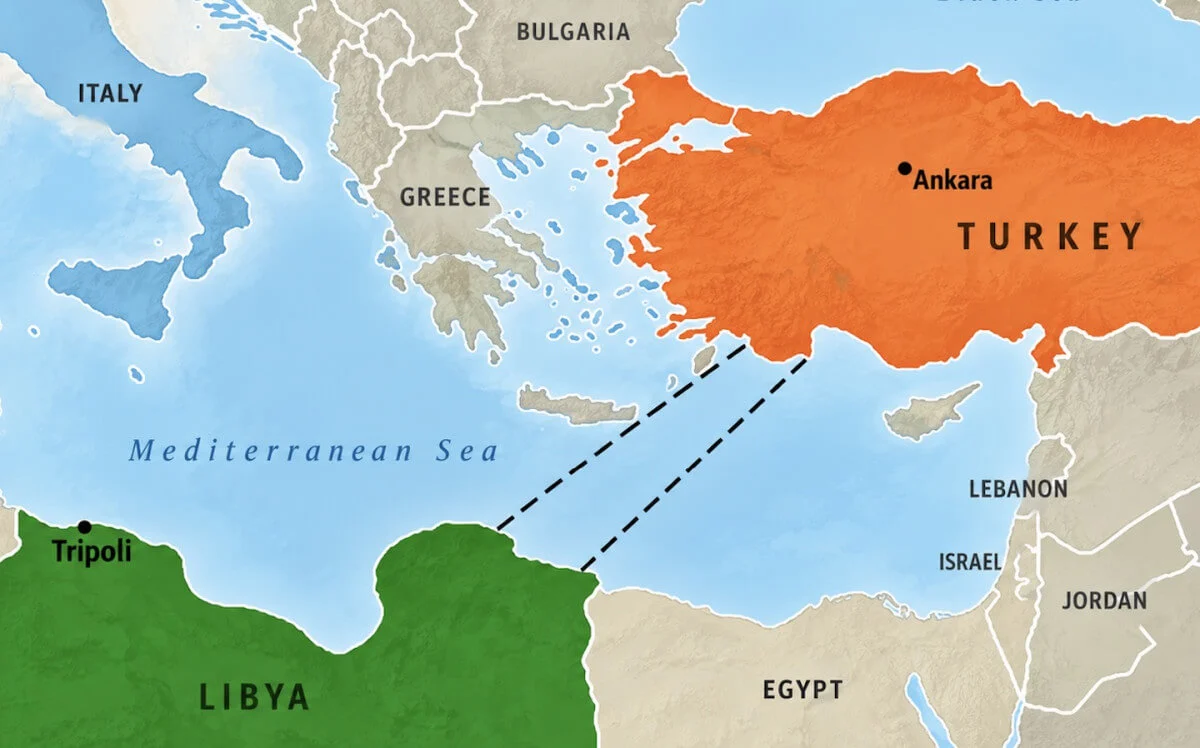
Egypt said on Wednesday that it categorically rejects the ratification by the Libyan parliament of a 2019 maritime memorandum with Turkey, warning Ankara that it will not allow its sovereign rights in the Eastern Mediterranean to be questioned.
In a Foreign Ministry statement, Cairo said the memorandum is “absolutely null and void” and produces no legal effect for Egypt.
It said the deal violates the principles of the law of the sea and the 1982 United Nations Convention on the Law of the Sea (UNCLOS), which govern the delimitation of exclusive economic zones and continental shelves.
The ministry described the memorandum as a clear violation of Egypt’s sovereign rights in its exclusive economic zone (EEZ) and continental shelf.
It said Egypt had opposed the agreement before and rejects any act by any party based on it.
As the memorandum contradicts Egypt’s declared maritime borders, Cairo said it “reserves its right to protect its rights” under international law and to confront any attempt to violate them.
The Libyan parliament voted unanimously on Tuesday to ratify the agreement, about seven years after it was signed by the internationally recognised Libyan government and Turkey.
Israel also condemned the vote, with its foreign ministry saying on X that the decision “violates the sovereign rights of our close allies in the region”, and that “unfortunately, once again we see Turkey acting with the aim of destabilising the Eastern Mediterranean region,” it said.
European Union foreign policy chief Kaja Kallas raised the issue with Turkish Foreign Minister Hakan Fidan in Brussels on Wednesday.
She said she told him the vote “infringes upon the sovereign rights of third states”.
European Council president Antonio Costa and European Commission president Ursula von der Leyen earlier said they “deeply regret” the ratification.
They likewise said the deal “does not comply with the law of the sea” and “is null and void”.
Greece and Cyprus object to the agreement on the grounds that Turkey and Libya do not share a maritime border, since islands are each entitled to a full exclusive economic zone.
When Ameresco CMO Leila Dillon asked ChatGPT and other AI answer engines to describe what her company did, she was shocked by the results.
The publicly traded company is an energy infrastructure provider, helping power the rapidly growing AI buildout, as well as military bases and municipal facilities. But the AI chatbots were outdated in their responses, frequently referring to it simply as a cleantech or renewable energy business — areas it still operates in, but are less of a focus — or citing smaller projects it worked on years ago.
"It was quite horrifying," Dillon told CMO Insider. "We were like, 'That's not at all who we are.'"
Dillon set about overhauling the company's messaging and how it structured its marketing content to better reflect its business.
The work has begun to take effect. Ameresco tracked how often AI chatbots mentioned the company in response to 50 questions that potential customers and investors might ask. It appeared in 61% of those answers in 2026, up from 43% in 2025, according to the company.
As more consumers turn to platforms like ChatGPT, Google's Gemini, Anthropic's Claude, and Microsoft's Copilot to research companies and products, marketers are racing to hone their generative engine optimization (GEO) strategies to ensure their brands appear prominently and accurately in AI-generated answers.
"I used to Google everything that I wanted to know about," Dillon said. "I barely use Google anymore. I use Copilot, and I get better results."
In a January survey from the Interactive Advertising Bureau, 73% of US brand and agency buyers said they planned to devote more time or resources to optimizing content for AI-generated answers in 2026, compared with last year. In a separate survey of US marketing professionals conducted by Semrush, an AI and search visibility platform, in April, 30% of marketers said AI search tools had described their brands inaccurately.
The rush by marketers to get up to speed with GEO has spawned a cottage industry of AI search experts and tools promising quick fixes. But with AI companies constantly updating their models, marketers are in a phase of constant experimentation as they scramble to figure out what actually influences the chatbots.
"There's no one shot that fits all to solve that for you," Dillon said.
An AI audit identified 47 areas for improvement
In January 2025, Dillon's team and its PR agency, Greenough, began auditing how often Ameresco appeared in AI-generated answers to 50 prompts — such as, "What are the top energy infrastructure providers in the US?" — on platforms including ChatGPT and Claude. The prompts reflected questions that investors and prospective customers, including people from universities and utilities, might ask AI chatbots.
The audit identified 47 areas for improvement, including how Ameresco described its business across its website, social media, press releases, and executive communications.
"You name it, we were doing it wrong," Dillon said.
Ameresco began rolling out a new corporate brand identity in July this year, reflecting its broader reorganization around two business pillars: power infrastructure and buildings and public infrastructure.
It had laid the groundwork for the new corporate brand reveal by making several changes to its content strategy.
Those included:
Updating its corporate boilerplate from "a leading cleantech integrator specializing in energy efficiency and renewable energy" to "a leading energy infrastructure company," reflecting the new positioning across its marketing and communications.
Refreshing its awards submission strategy to lead with its power infrastructure projects, and announcing each win with a press release that appears on wire services and industry trade publications.
Introducing Q&A-style content formats, designed to make the information easier for AI chatbots to interpret.
Creating more content designed for different customer groups, such as data center operators or school facilities managers, rather than relying on generic marketing materials.
Launching a video content series called "Energy Benefits Unlocked," highlighting the tangible results Ameresco's projects accomplished for its customers.
Introducing quarterly AI visibility tracking audits across the 50 different prompts, reflecting its different audiences, and adding competitor comparisons.
A constantly moving target
The strategy appears to be paying off in some ways. Ameresco said organic traffic to its website rose 50% in the 12 months to June 2026. Dillon said it's still too early to assess precisely how those gains translate into business results, though she believes the GEO work is helping the marketing team hit its targets more quickly. The company is scheduled to report its third-quarter earnings on November 9.
Dillon said the rapid changes in AI mean the work is never really finished. Ameresco regularly revisits its AI visibility scores and has invested in training the marketing team, which shares tips, tricks, and their "epic AI fails" in its weekly meetings.
"One of the main themes is that what happened last week is not what you're going to get this week; it's changing that quickly," Dillon said.
"You don't just update your website and say: Done, woo, all set," she added.
Hace años, cuando la gente preguntaba a Geoffrey Hinton por qué trabajaba con la inteligencia artificial, él repetía una frase de Oppenheimer, uno de los creadores de la bomba atómica: “Cuando ves algo grandioso, sigues adelante y lo llevas a cabo”. Ya no lo dice. Ahora se dedica a alertar sobre los peligros de continuar la carrera que él mismo empezó. Confiesa que, en parte, se arrepiente del trabajo al que ha dedicado una vida. Su reconversión de padrino de la IA a profeta de la catástrofe marcó un punto de inflexión en la industria. Sucedió en 2023, cuando abandonó su puesto como vicepresidente de Google entre advertencias funestas. Entonces, algunos vieron su reacción exagerada. Tres años después, muchos han seguido sus pasos.
El científico computacional y Premio Nobel de Física Geoffrey Hinton durante el Festival Starmus 2026 que se celebra este martes en el municipio de Arona en Tenerife.
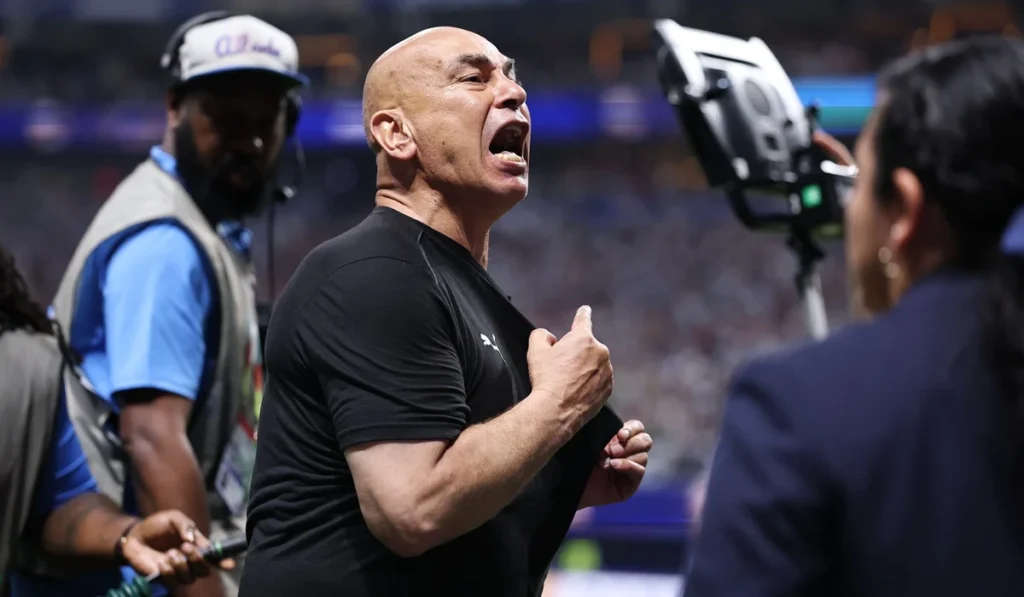
FIFA has suspended this Tuesday Egypt head coach Hossam Hassan for three matches over his conduct during and after the team’s round-of-16 elimination against Argentina at the 2026 World Cup.
The ruling came from FIFA’s Disciplinary Committee more than three months after the match. The sanction is based on his conduct on the field and at the post-match press conference.
After a goal for his side was disallowed, Hassan crossed his arms in protest in front of the broadcast cameras.
The case also reached Hassan’s inner circle. His twin brother and sporting director, Ibrahim Hassan, received an identical three-match suspension for backing the complaints. Forward Mostafa Zico was suspended for five matches after alleging match-fixing and saying of the referee that he “pursued them from the start.” Those are the allegations as reported, and the source offers no evidence for them. The reports do not name the referee or detail the disallowed goal.
As a result, the Pharaohs will face their next official matches without their main coaching staff.
🚨 𝗟𝗔𝗧𝗘𝗦𝗧: FIFA has suspended Egypt coach Hossam Hassan and team director Ibrahim Hassan for three matches each and forward Mostafa Zico for five.
↳ 𝗖𝗢𝗡𝗧𝗘𝗫𝗧 The bans follow criticism of refereeing after Egypt’s 3-2 World Cup round-of-16 loss to Argentina on 7 July… pic.twitter.com/sCkkKiodN5
Following the official notification, the Egyptian Football Association (EFA) issued a statement confirming the ruling against its national coach. The federation requested the detailed grounds of the decision in order to study the legal arguments and assess a formal appeal on behalf of its coaching staff.
An appeal would test whether FIFA will reconsider penalties handed down so long after the incident. The coach’s comments about the referee’s nationality (“Argentina pressured the referee beforehand because he was French“) were the sharpest part of his protest, and they remain central to the disciplinary file.
Round of 16 matches at the World Cup are officiated by referees appointed by FIFA, and public criticism of officials is commonly punished under its disciplinary code. Accusing a referee of bias or of match-fixing without evidence is generally treated as a serious offense, which may explain the longer ban handed to Zico.
The disallowed goal became the flashpoint. Hassan’s gesture in front of the cameras and his remarks in the press room turned a match dispute into a disciplinary case that will now shape Egypt’s next stretch of competitive football.
For a national side building toward future campaigns, losing both the coach and his closest staff member for three games carries weight. The federation’s next move, whether to accept the punishment or pursue an appeal, will determine how much longer the controversy lingers. The case also shows how long FIFA’s disciplinary process can take, since the sanctions arrived months after the tournament ended.
The Egyptian National Defense Council announced that it had agreed to offer "all necessary and possible forms of support to Saudi Arabia" against the Iran-backed Houthi terrorists of Yemen.
A week before the Israeli elections, their assorted offensive wars are becoming a particularly important issue, and high ranking figures are attaching themselves to various hawkish narratives, particularly as related to the ongoing invasion and occupation of southern Lebanon. Defense Minister Israel Katz has been at the fore in this regard. Last week he threatened […]
On September 30, I walked out of a three-hour medical appointment to dozens of missed calls. They were from colleagues: the entire newsroom of Matsadaash, an independent fact-checking platform, had been arrested. Six journalists, five of them trainees in their early twenties, all picked up in less than 24 hours.
I didn’t know any of them. It didn’t matter. An entire newsroom taken in a day, then disappeared: that was enough. I don’t need to know someone to stand with them. If they are journalists arrested for doing their job, I am with them.
For five days, no one knew where they were. Their families and lawyers filed 18 complaints in that time, according to the Egyptian Initiative for Personal Rights (EIPR), which represents them. The Interior Ministry called Matsadaash an unlicensed, foreign-run page, and linked it to the Muslim Brotherhood, which Egypt designated a terrorist organization in 2013. The Matsadaash founder, Abdelrahman Mansour, denies any affiliation.
When the six journalists were finally produced before state security prosecutors, some, according to their lawyers, said they had been blindfolded, bound, stripped, beaten and given electric shocks. State prosecutors said forensic examinations found no injuries. The journalists were charged with joining and financing a terrorist group, reporting fake news and using social media to spread it. On October 13, their pretrial detention was extended for another 15 days. Their salaries, which EIPR and the Egyptian Journalists Syndicate say were paid under employment contracts filed with Egyptian banks, were described, in the prosecution’s words, as “monthly funding in foreign currencies.”
Over three days, each of the six journalists was interrogated for nearly 30 hours. According to EIPR, not one was confronted with a single report they had written that could be called false. Instead, the prosecution’s own statement accused them of “highlighting shortcomings — and nothing else — in state institutions,” belittling officials and amplifying people’s grievances.
But that is precisely our job. It is what we sign up for as journalists — to ask questions of those in power. On October 4, another colleague was summoned for questioning; thankfully, she was released the same day.
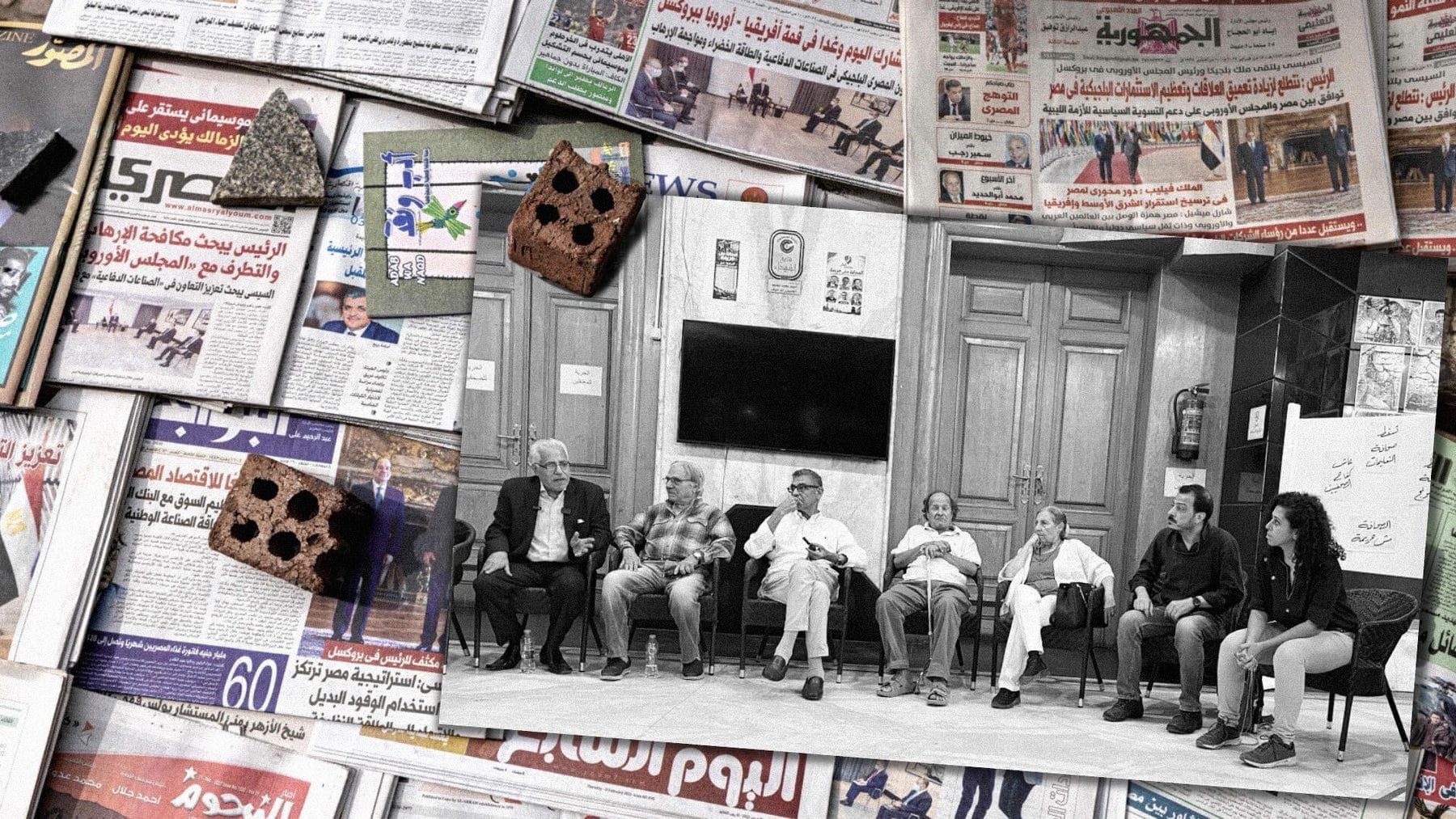
Word spread the way it does now, through social media posts, journalists’ pages and a knot of phone calls I can no longer untangle. Colleagues were gathering at the Journalists Syndicate every day. So I went too. The Syndicate is a union with a long history of standing up for us, and I joined my colleagues there in solidarity with those who had been detained. Not everyone could come every day, but there was always someone — on some days just four, on others more than 20.
Even our older colleagues, in their 60s, 70s and 80s, showed up. Ustaz Mohamed Abdel Kouddous, who once headed the Syndicate’s freedoms committee, is recovering from an accident and could not be there in person, but he was with us through his voice and his written messages. For as long as I can remember, he has been there for every struggle: at Al-Ahram, arguably Egypt’s most prominent daily newspaper; and at the Syndicate, with his megaphone, firing us up. He and I don’t share the same politics, but it has never mattered.
In 2008, on the day of a nationwide strike, plainclothes officers dragged him from his car in broad daylight and held him until nightfall. He asked the Syndicate to demand an investigation, though he expected nothing to come of it. “We do what we need to do,” he said then. It could be the motto of our sit-in today.
Many of us feel embarrassed to eat or to have a cup of tea, not knowing whether our colleagues inside have the same luxury. When I kiss my girls goodnight, I feel ashamed that my colleagues in jail cannot do the same.
Illustration: Anna Jibladze, using images by Lina El Wardani and Getty Images
I keep thinking about how we got here.
Under Egypt’s former president Hosni Mubarak, the red lines were clear. You did not touch the head of state, his wife and his sons, or a certain institution (the military). But everything else was fair game. We knocked ourselves out writing about poverty and corruption, labor rights and children’s rights, domestic violence, sexual harassment and female genital mutilation.
Then came 2011, and a revolution unlike any other. In Tahrir Square, we rejected violence, and our chant was “selmeya, selmeya” (peaceful, peaceful).
When we brought Mubarak down, he didn’t flee like the Tunisian “strongman” Zine al-Abidine Ben, and we didn’t lynch him like Muammar Gaddafi in Libya. We put Mubarak on trial, in a courtroom. It was dignified. It was the revolution of the dreamers.
In those few years, Egyptian journalists lived with freedoms we had never known. But dreamers are not politicians.
We had lived for decades with no politics: no real political parties, no real elections, no way to learn how power works. So when the door was opened, we didn’t know how to build what we had dreamed of. People kept asking, “What is the alternative?” We had the dream, but not the tools.
What followed our revolution was the opposite of what we fought for: restrictions on a scale we had never seen. The red lines blurred and multiplied, until no one knew where they were anymore. The story of our country, of our revolution and of our journalism is the same story. We are not organized. We are not politicized. But we dare to dream.
Today, at least 25 journalists are behind bars in Egypt, says the Committee to Protect Journalists, almost all of them in pretrial detention. That period is technically limited to two years, but prosecutors file new charges and renew detentions. Some, like the photojournalist Hamdy al-Zaeem, have spent a decade in and out of detention without a single conviction. My colleague Haidar Kandil was taken in June, after documenting arrests of Egypt’s Shia minority.
On the evening of October 14, the lobby of the Syndicate’s headquarters in downtown Cairo was filled with banners and cartoons. Three colleagues and I sat down to write letters to our jailed colleagues: 26 names in total. We fussed over how to organize the letters: how to arrange the names, whether the envelopes should be open or closed, which color went with which name. Colleagues with beautiful handwriting wrote each name in calligraphy. Then we realized we couldn’t spend the whole evening rearranging the deckchairs. At some point, we had to start writing.
But our minds were blank. What could we say? “Why are you inside, and why are we free?” “We feel guilty that we are free and you are paying the price. Maybe we should have paid it instead.”
Of the 26, the only one I have worked with is Haidar. He had a good eye for a story. Like most of the young journalists I work with, he needed guidance, but he was always responsive to edits, to make changes and turn in better copy. We spoke on the phone and exchanged emails and texts, but we had never met. I only know his face from photos online, and here I am pinning his photo on the noticeboard in the syndicate with a #FreeThemAll banner.
In the end, all I wrote was: “I miss you, Haidar. I hope to see you soon. Hang in there. Love, Lina.”
Whenever I feel small, I remind myself that this Syndicate has always fought the good fight. That same evening, the veteran journalist Medhat El-Zahed told us how, during the 1989 Iron and Steel workers’ strike, he and his leftist colleagues were arrested and tortured. The Syndicate’s head at the time, Makram Mohamed Ahmed, was close to the authorities. Still, he protested over the treatment of journalists and visited them in prison.
Today, for the first time, the head of our Syndicate is one of us. Khaled El-Balshy is a dreamer. Eman Ouf, who heads the freedoms committee, is one of us too. The Syndicate has pledged to defend all six Matsadaash journalists. It has asked the Attorney General to investigate the abuse allegations. Its statement chose every word with care, stressing its commitment to the law and to the country’s higher interests, and asked only that our colleagues be released on the Syndicate’s guarantee, or any other, given their young age. It was the most modest of requests. Even that was too much for some.
The tide is so high, and we are so low.
After more than two weeks, we have suspended the sit-in. We are not leaving the Syndicate, and we are not giving up. In our statement, we promised to keep standing with our colleagues through other events, because the battle for press freedom “needs a long breath.”
On October 18, eight independent news outlets from Egypt, Lebanon, Tunisia and Syria, among them Mada Masr and Al-Manassa, announced a joint newsroom to fact-check “Egypt Forum 2026,” the government’s “achievements conference.” The summit runs from October 19 through to October 24 – six days for six journalists. The eight newsrooms have united under the slogan: “Until they return, the fact-checking continues.” The dreamers are learning to organize.
We journalists and dreamers, like those of us who gather in the Syndicate, are stubborn. Many are behind bars of some kind: real ones, imaginary ones, or the bars of a censored internet. But we always walk towards the light. Journalism is how we live and breathe. If we don’t fight for it now, there will be nothing left to fight for tomorrow. No profession, no dignity, and no Syndicate.
This story was published in collaboration withEgab.
Egyptian construction firms coordinated with Israel on a US-backed “Green Rafah” project aimed at “housing” tens of thousands of Palestinians in the city that was eradicated by Tel Aviv’s genocide, sources told Middle East Eye (MEE) on 19 October.
“Egyptian construction firms surveyed sites in the ruins of the southern Gaza Strip for a housing project dubbed ‘Green Rafah’ … Egyptian engineers surveyed several areas in eastern Rafah under the supervision of the Israeli army and air force, who accompanied them throughout the process until they left,” sources said, including a senior military source in the North Sinai.
According to the report, “the proposed neighborhood would initially house around 20,000 Palestinians.”
It would be “supervised” by “a multinational force expected to be deployed in several parts of the Gaza Strip.”
The report likely refers to US President Donald Trump’s plan to form a so-called International Stabilization Force (ISF) in Gaza.
The report states that surveying of sites for “Green Rafah” is under full US backing.
“Washington conveyed instructions on the Rafah operations through CIA director John Ratcliffe during his latest visit to Egypt,” says the senior military source cited by MEE.
Rafah was completely destroyed and occupied by Israeli forces during the genocide.
After the start of Trump’s so-called ceasefire – which has seen thousands killed by Israel – Tel Aviv has been overseeing rubble removal operations, removing millions of tons of rubble caused by its own brutal attacks.
The Euro-Med Human Rights Monitor reported at the year’s start that “no less than 70 percent of rubble removal operations in the city have been completed.”
“Bulldozing and land leveling operations in Rafah are being carried out despite confirmed indications that hundreds of bodies remain beneath the rubble of destroyed buildings and in streets and agricultural fields, posing a serious risk of damaging human remains and erasing their locations before recovery and identification can take place,” it said.
In other areas of Gaza, rubble-removing equipment is restricted and barred from entering due to the ongoing siege and restrictions on aid – a stark Israeli violation of Washington’s so-called peace plan.
In Rafah, US-backed rubble-clearing operations come as part of a plan to build a “humanitarian city” over the ruins of the city.
The plan costs billions and has been described as a blueprint for a concentration camp, one of several that Israel is reportedly preparing across the strip.
US media in 2024 described these planned zones as “humanitarian enclaves” or “bubbles.”
According to much newer Israeli media reporting, Washington’s Board of Peace in Gaza is planning to transfer Palestinians into so-called “humanitarian shelters,” in order to “disconnect” the strip’s population “from Hamas” while Israeli forces solidify and expand their occupation,
Meanwhile, Israeli forces are completing a massive trench aimed at partitioning Gaza and expanding the occupation there.

 Login