❌

Reading view

Russians try to sneak toward Zaporizhzhia through the dried-up Kakhovka Reservoir. Ukrainian intelligence captures three

Ukrainian Bratstvo Battalion fighters capture a Russian serviceman on the dried-up bed of the Kakhovka Reservoir during counter-sabotage operations. October 2026. Screenshot: Defense Intelligence of Ukraine/Telegram

Fighters of the Bratstvo Battalion, part of the Timur Special Unit of Ukraine’s military intelligence agency (HUR), captured three Russian servicemen and gave first aid to one of them, HUR reported on 19 October. They also found and destroyed Russian sabotage groups, HUR said, adding that counter-sabotage operations in the Zaporizhzhia direction are ongoing.

Russian forces have spent months trying to get closer to Zaporizhzhia, one of Ukraine’s largest cities. They may try to use the dried-up bed of the Kakhovka Reservoir to infiltrate north toward it as autumn fog and dense vegetation set in, the Institute for the Study of War reported on 26 September. Ukrainian troops are now clearing the area of Russian saboteurs trying to get into the rear of Ukrainian positions, according to HUR.

HUR’s video shows the fighting and the captures, with one dead Russian soldier blurred. At the end, a captured Russian says two of the three men in his group were killed by a “Baba Yaga,” the nickname Russian troops use for Ukraine’s heavy bomber drones.

HUR described what the Russian groups are trying to do:

“Using small sabotage groups, the enemy is attempting to penetrate deep into the rear positions of Ukraine’s Defense Forces, build up forces to destabilize the situation, disrupt logistics, and neutralize Ukrainian defenders’ combat crews.”

Russia seeks to bring the front closer to Zaporizhzhia

Russia’s objective in the Zaporizhzhia direction is to advance within artillery range of the city, hold forward positions, and protect its rear from Ukrainian strikes, the Institute for the Study of War noted.

In January, Russian forces were trying to capture Stepnohirsk and advance along the shore of the former Kakhovka Reservoir toward Zaporizhzhia. Taking the settlement would let Russian troops place long-range artillery or fiber-optic drones there to strike the city’s outskirts, Southern Defense Forces spokesperson Vladyslav Voloshyn told Ukrinform on 14 January.

Site of a Russian drone strike on a Zaporizhzhia residential area, 20 January 2026. Photo: Zaporizhzhia Regional Military Administration
Explore further

Russia drained the Kakhovka Reservoir. Now it hides in the dry bed to creep toward Zaporizhzhia

On 22 September, Anastasiia Shevchenko, spokesperson for the Southern Forces Group, said there were no signs of preparations for a direct offensive on Zaporizhzhia and that Russian forces lacked the troops and means to advance directly toward the city.

Dense vegetation and limited visibility: combat on the reservoir bed

The Kakhovka Reservoir was a vast artificial body of water on the Dnipro River in southern Ukraine that supplied water to millions of people, as well as to agriculture and industry. On 6 June 2023, Russian forces blew up the Kakhovka Hydroelectric Power Plant, the Southern Operational Command reported.

The bed of the Kakhovka Reservoir has nearly dried out after the dam was destroyed on 6 June 2023.
The bed of the Kakhovka Reservoir has nearly dried out after the dam was destroyed on 6 June 2023. Photo: Maksym Pavlovsky/Dumska

After the dam was destroyed, the bed of the former reservoir quickly became overgrown with willows, poplars, and shrubs, creating a new battlefield. Ukrainian troops have fought there before.

In November 2025, fighters from the same Bratstvo unit carried out a reconnaissance and sabotage operation 7 kilometers from the shoreline of the former reservoir, HUR said. They found and eliminated Russian troops, then raised the Ukrainian flag over the islands there and took control of the area.

In April, the Bratstvo unit’s chief of staff, who goes by the call sign “Dyviziia,” described the conditions on an earlier raid across the reservoir bed:

“You’re just constantly moving through these thickets, with no way to figure out which direction to go. You can literally see everything just two meters ahead of you.”

  •  

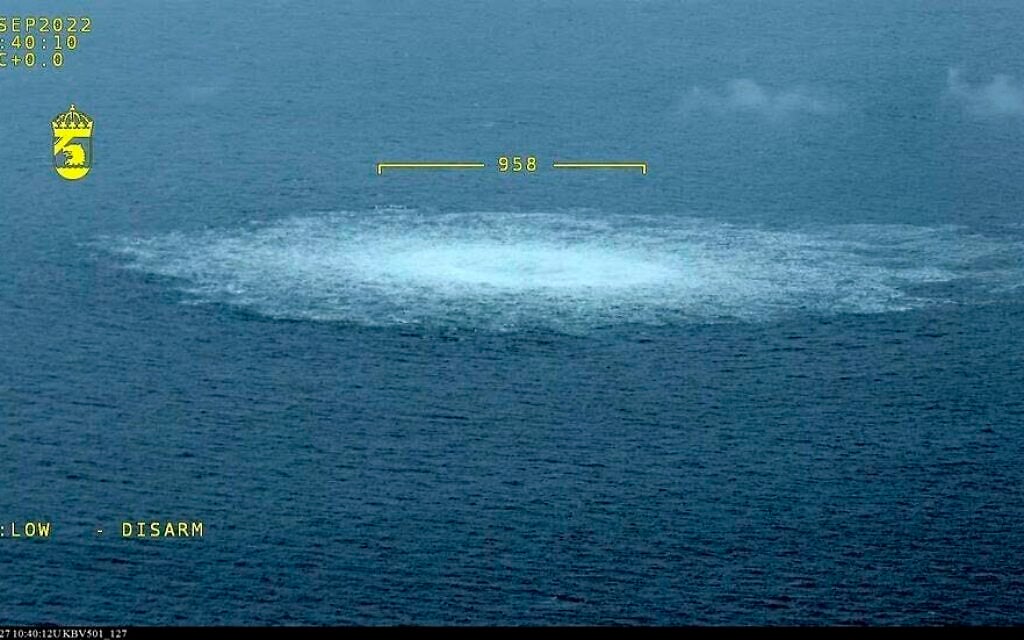
Ukrainian ex-officer goes on trial in Germany over 2022 Nord Stream pipeline sabotage

Former special forces officer Sergiy Kuznietsov facing charges including 'war crime,' attacking civilian infrastructure; Kyiv consistently denies it was behind Baltic Sea blast
  •  

Russian Strike on Passenger Buses in Kramatorsk Kills 30, Injures 18

At least 30 people have been killed and 18 injured after Russian forces struck two passenger buses in Kramatorsk, eastern Ukraine, on Thursday morning, according to updated figures released by Ukrainian prosecutors. The attack comes amid continuing Russian strikes on Ukrainian cities.

Russian forces attacked Kramatorsk, in Ukraine’s Donetsk region, at approximately 10am local time on 8 October, hitting an area where two scheduled passenger buses were carrying civilians.

The Donetsk Regional Prosecutor’s Office initially reported 12 fatalities and 14 injuries. In a subsequent update, prosecutors raised the death toll to 30 and the number of injured to 18.

The attack was also confirmed by the Kramatorsk City Council and Vadym Filashkin, head of the Donetsk Regional Military Administration.

According to preliminary findings from Ukrainian investigators, Russian forces may have used a UMPB D-30SN guided aerial munition. The precise weapon and circumstances of the attack remain under investigation.

Passenger buses caught in Russian bombardment

The two buses were operating regular passenger services when the strike occurred. Ukrainian authorities said passengers were on board, although detailed information about the victims, including their ages and identities, has not yet been released.

Photographs published by the regional prosecutor’s office show the aftermath of the attack, including severely damaged passenger vehicles. Emergency personnel and law enforcement officers were dispatched to assist the wounded, recover victims and document evidence.

The strike raises questions about the selection of the target and precautions taken to protect civilians. Under international humanitarian law, civilian vehicles and their passengers are protected from deliberate attack unless a vehicle becomes a military objective under the applicable legal rules.

The circumstances of Thursday’s strike, including whether the buses were directly targeted or struck during an attack on another location, have not yet been independently established.

Kramatorsk under increasing pressure

Kramatorsk remains one of Ukraine’s principal administrative and logistical centres in the part of Donetsk region still controlled by Kyiv. The city has faced repeated Russian bombardments as Moscow continues its military campaign to capture the remaining Ukrainian-held territory in Donetsk.

Its transport infrastructure serves residents who have remained despite years of fighting, including those travelling between neighbouring communities and those attempting to leave the region.

Regional officials have repeatedly urged residents to evacuate to safer areas of Ukraine as Russian bombardments continue. However, civilians remain in Kramatorsk and surrounding settlements, where everyday services, including public transport, continue to operate despite the danger.

Guided bombs and civilian protection

Russian forces have used guided aerial bombs against Ukrainian-controlled settlements near the front line. Such weapons can be released from aircraft at distances that reduce Russian pilots’ exposure to Ukrainian air defences.

The UMPB D-30SN, provisionally identified in the Kramatorsk attack, is a guided munition designed to reach targets beyond the immediate position of the launching aircraft. Its suspected use against an area containing occupied passenger buses will form part of the investigation.

Investigators will need to establish the intended target, the weapon used and the information available to those who planned and carried out the strike. These findings are relevant to determining whether the attack violated the laws of war.

Investigators examine civilian deaths

The Donetsk Regional Prosecutor’s Office is collecting evidence concerning the bombardment, including the type of munition used and the circumstances in which the buses were struck.

Establishing whether the vehicles were deliberately targeted, or whether the attack resulted from an indiscriminate or disproportionate strike, will be central to any assessment under international humanitarian law.

The identities of the victims and the full extent of the damage have yet to be established publicly. As of the updated figures issued by Ukrainian prosecutors on 8 October, 30 people were reported killed and 18 injured.

  •  
❌