❌

Reading view

Trump Declares Energy Ceasefire as Russia Bombs Kharkiv Power Plant and Zelenskyy Demands Answers

Within hours of Donald Trump announcing an immediate halt to Russian and Ukrainian attacks on energy infrastructure, Moscow struck a major power plant in Kharkiv. Kyiv has agreed to a reciprocal ceasefire, but Russia has yet to confirm its participation, leaving serious doubts over what Washington has actually secured.

President Donald Trump’s announcement of an immediate ceasefire covering Russian and Ukrainian energy infrastructure was overtaken by events on Sunday evening when Russian forces struck a major thermal power station in Kharkiv. President Volodymyr Zelenskyy confirmed Ukraine’s willingness to suspend attacks on Russian energy facilities, but said Moscow was continuing its bombardment even as Washington presented the arrangement as an accomplished diplomatic breakthrough.

The contradiction emerged within hours of Trump declaring that Russia and Ukraine had agreed to stop targeting each other’s energy infrastructure. Zelenskyy, responding in his evening address on 11 October, welcomed the proposal but reported that Russian attack drones remained active over Ukrainian territory and that Kharkiv’s CHP-5 thermal power station had just been struck.

The Ukrainian president made clear that Kyiv had not rejected the American initiative. Ukraine was prepared to refrain from attacking Russian energy installations and expected Moscow to accept the same restrictions. However, no corresponding commitment had been publicly confirmed by the Kremlin, and Washington had provided no explanation of how the supposed ceasefire would be implemented.

The timing was particularly significant because Ukraine had apparently not been informed that a binding agreement had been concluded. According to accounts of the announcement, Zelenskyy was unaware of Trump’s declaration before it became public, although he subsequently indicated his readiness to support the initiative.

His response therefore amounted to an acceptance of the proposed terms rather than confirmation that a negotiated ceasefire was already in force.

More than 200 attacks on Ukraine’s power network

The reported strike on Kharkiv came at the end of a particularly destructive week for Ukraine’s civilian infrastructure. Zelenskyy said Russian forces had carried out more than 200 attacks against electricity generation and transmission facilities over seven days, alongside 17 strikes targeting gas and oil installations.

He also reported that more than 150 Ukrainians had been killed and over 700 wounded during the week. These figures, supplied by the Ukrainian authorities, have not been independently verified.

The continuing bombardment places additional pressure on Ukraine’s power network as winter approaches. Thermal power stations and substations remain particularly vulnerable, while damage to generating capacity can disrupt electricity, heating and water supplies across entire urban districts.

Washington’s pressure on Kyiv

Trump’s ceasefire announcement follows an increasingly bitter dispute over Ukrainian attacks on Russian oil refineries, which have damaged Moscow’s fuel production and distribution infrastructure.

The American president has blamed Ukrainian strikes for worsening international diesel shortages and rising fuel prices. His administration has also threatened restrictions on military assistance and intelligence sharing if Kyiv refuses to suspend its campaign against Russian refineries.

Meanwhile, Washington has reached an arrangement with Moscow permitting substantial Russian diesel exports under a temporary easing of sanctions. Zelenskyy has criticised the decision, arguing that additional energy revenues could strengthen Russia’s capacity to continue its invasion.

For Ukraine, refinery attacks have become an important means of disrupting Russian military logistics and imposing economic costs on Moscow. Agreeing to suspend them without guarantees that Russian strikes will also cease would remove one of Kyiv’s principal instruments of pressure.

The diplomatic sequence has consequently raised questions about whether Trump’s initiative offers equivalent obligations to both countries, or primarily serves Washington’s immediate objective of stabilising fuel supplies.

Kremlin silence leaves ceasefire in doubt

By Sunday evening, Moscow had issued no public confirmation that Putin had accepted the arrangement. Washington had provided no details of its duration, the installations covered or any mechanism for verifying compliance.

An agreement confined to energy infrastructure would also leave both armies free to continue other military operations, including attacks on cities, industrial installations and military positions.

Zelenskyy said Ukrainian forces had received the necessary orders, while Kyiv awaited clarification of Washington’s discussions with Moscow. He maintained that Ukraine supported credible measures to end the fighting but expected Russia to demonstrate a corresponding commitment.

The immediate question is whether Trump obtained an undertaking from Putin that Moscow is prepared to honour. Until Russia confirms the terms and its attacks cease, the announced energy truce remains a presidential declaration rather than an established cessation of hostilities.
  •  

Hours after Trump declared an energy ceasefire, Russia hit Kharkiv power plant, one of 200-plus strikes on Ukraine’s grid this week, Zelenskyy says

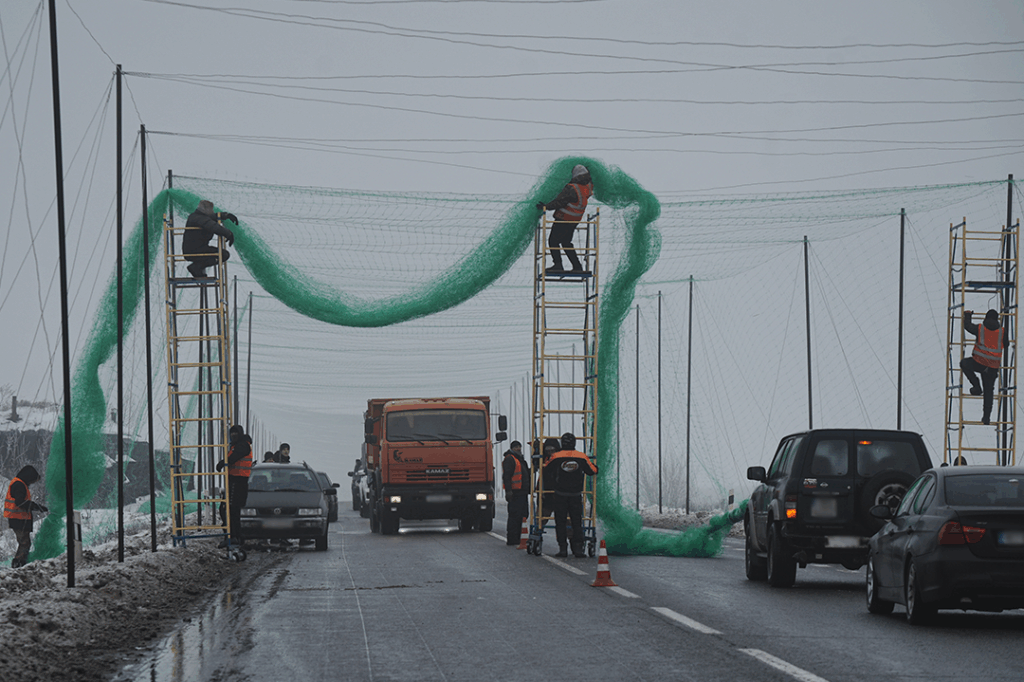
fishing nets used mediterranean millennia — now italy wants turn drone shields over ukrainian cities · post workers install anti-drone ring road northern outskirts kharkiv 2026 6ea9c925f4eb5b85 italy's senate has

Russia hit the CHP-5 thermal plant in Kharkiv on the evening of 11 October. It came hours after US President Donald Trump announced an energy ceasefire between Ukraine and Russia, President Volodymyr Zelenskyy said in his nightly address.

Trump had announced the energy truce earlier that day, though Kyiv reported no part in any such deal, as well as Moscow. Yet in this one week, Russia carried out more than 200 strikes on Ukraine’s power generation and transmission and 17 on its gas and oil sites, killing more than 150 people and wounding more than 700, according to Zelenskyy.

“All day today, there were Russian Shaheds in the sky. There are Shaheds in the sky now, too. There were strikes by aerial bombs. There were strikes on our energy. Just now there was a strike on CHP-5 in Kharkiv,” Zelenskyy states.

Ukraine welcomes the agreement Trump announced and is ready to stop striking Russian energy if Russia does the same. For that to mean anything, he stresses, it has to become part of reality.

A one-word answer from Moscow

Ukraine has offered many de-escalation steps, Zelenskyy notes, but Russian ruler Vladimir Putin met them all with the same refusal. He voices hope that the Russian leader would finally tell the US, Ukraine, and the world something other than killing and deception, something that leads to a real and dignified peace.

Ukraine wants peace, and the question is whether Russia does. The Armed Forces have received all the relevant orders to defend the country, he confirms.

Allies line up fresh support

Zelenskyy says he also spoke with members of the US Congress and, the day before with the UK prime minister, French President Emmanuel Macron, and Norway’s prime minister, all of whom offered help.

Ukraine is also working with the EU on financing for its defense and budget stability, and preparing new steps on European integration.

  •  

Russia has a plan for Ukraine this winter, Ukraine says: intercepted document reportedly outlines up to 1,000 missiles, drones, and bombs targeting 60 critical infrastructure sites

kindergarten school railway's warming shelter russia's overnight targets trump-pushed abu dhabi talks enter day two · post fire building roof after russian attack kyiv 5 2026 2f15ff6d-cd98-4bc0-839c-18fc74a3ef67 forces launched wave

Russia is planning a winter strike campaign involving up to 1,000 missiles, drones, and bombs targeting, among other facilities, electrical substations, hydroelectric and thermal power plants, and boiler houses. The information is contained in a document that, according to sources cited by The New York Times, Ukraine's Energy Minister Denys Shmyhal presented as an intercepted Russian plan to destroy energy infrastructure systematically. The newspaper reported on 2 October.

Russia has been striking critical infrastructure across Ukraine since the beginning of its full-scale invasion. Such attacks have become particularly frequent ahead of and during winter. Ukraine's recent battlefield gains may have prompted Putin to reconsider his strategy and attempt to force Ukraine to surrender through winter strikes, analysts at the Institute for the Study of War (ISW) suggest. Russia's reported plans to attack Ukraine's energy, water supply, and sewage systems could threaten the basic living conditions of millions of people. Such strikes could increase pressure on civilians and the Ukrainian economy while forcing the state to divert more resources to emergency infrastructure repairs instead of defense needs.

The New York Times was unable to verify the document's authenticity independently, but noted that it was written in Russian and dated August.

just power plants russia’s drones also went after warehouses groceries hardware chain · post firefighter puts out fire warehouse burned food drink stock hit russian attack bucha district kyiv oblast
Explore further

Warehouses, a home-improvement store, a farm: Russia’s strikes aimed past the grid at Ukraine’s civilian economy

A representative of Ukraine's defense-industrial sector who has reviewed the document believes it is more of a calculation than a finalized Russian military operations plan, according to Schemes, an investigative journalism project by Radio Free Europe/Radio Liberty (RFE/RL), in a report published on 8 October.

60 targets: how Russia could attack Ukraine's critical infrastructure

The document outlines how many missiles, drones, and bombs Russia would need to deprive Kyiv, Kharkiv, and Odesa of electricity, heating, water, and sewage services, Radio Liberty reported on 9 October. The document's full list of priority cities also includes Dnipro, Zaporizhzhia, Mykolaiv, Kherson, Poltava, Chernihiv, Kryvyi Rih, Cherkasy, Kropyvnytskyi, Lviv, Vinnytsia, and Ivano-Frankivsk.

Regions of Ukraine containing cities listed as “priority” targets in Russia's plan to attack critical infrastructure this winter (shown in grey). Map: Euromaidan Press

According to the document, Russia plans to begin by attacking substations near Ukraine's western border, through which the country receives electricity from Europe. Hydroelectric power plants could be targeted next, followed by facilities intended to shut down Ukraine's three operational nuclear power plants, Radio Liberty reports. The document lists a total of 60 key targets.

According to Schemes, the document states that Russia would need up to 770 Molniya and Geran drones, Dan-T/Banderol missile-drones, 170 FAB guided aerial bombs, and 75 Kinzhal and Iskander-M ballistic missiles to carry out the attacks.

Sewage systems could become Russia's next target

The document devotes particular attention to water supply and wastewater systems. These include pumping stations, treatment facilities, and other infrastructure essential for cities to provide residents with water and dispose of wastewater.

One of the water supply facilities. Illustrative photo: Ukrinform

Russia has not previously attacked such facilities on a similar scale, The New York Times notes.

Preparing for possible attacks on water supply and sewage systems is significantly more difficult than protecting energy infrastructure, Oleh Popenko, head of the Ukrainian Union of Utility Services Consumers, told Current Time, RFE/RL's Russian-language network.

“Sewage is a very complex system. There are specific challenges: where to discharge wastewater, how to organize treatment facilities, and so on. Some work is also underway in this sector, but it will be much more difficult here than with district heating utilities,” Popenko says.

Creating alternative routes in case sewage pumping stations are destroyed is an expensive and technically challenging task, he adds. Such construction could cost billions of hryvnias.

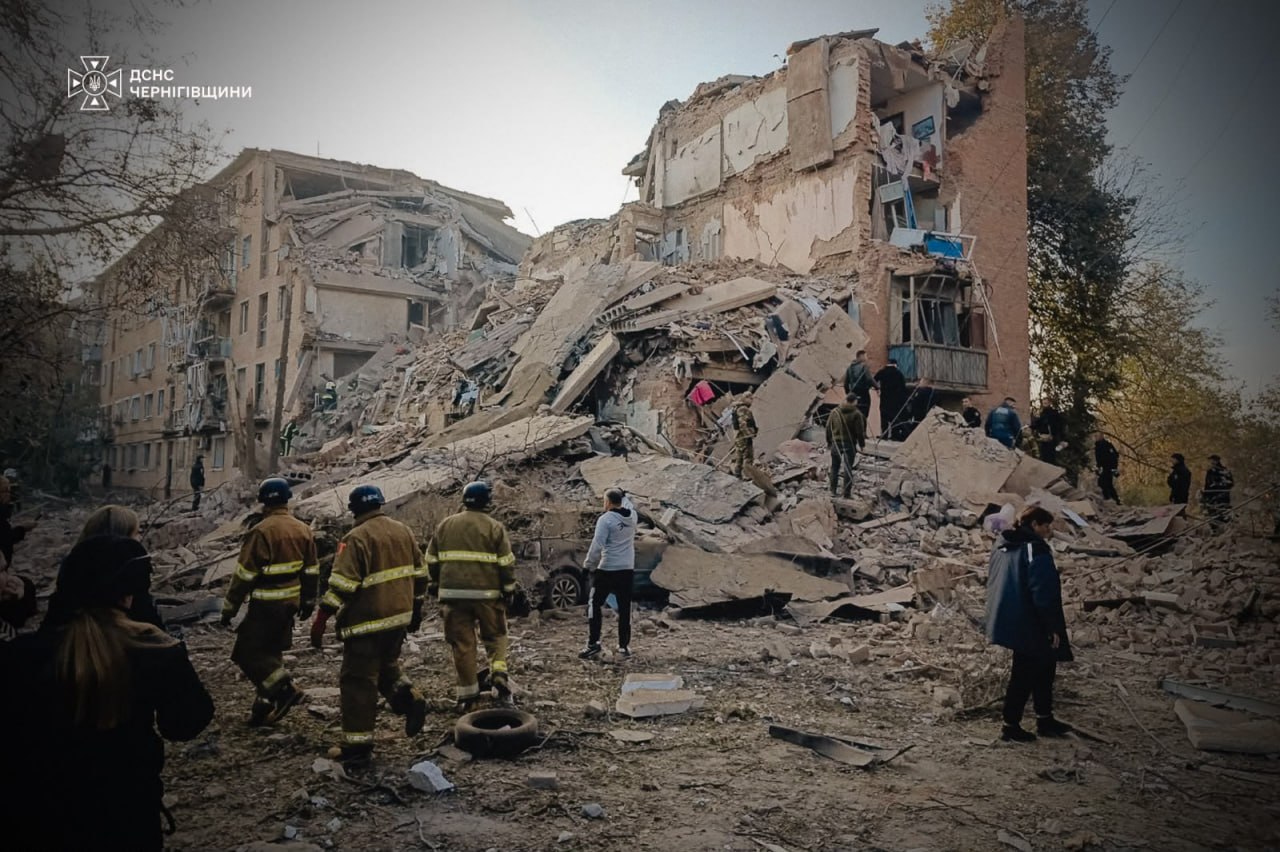
five dead pryluky two each kyiv kremenchuk oleksandriia russia's night 70 missiles · post rescuers collapsed section apartment building chernihiv oblast after russian missile strike 7 2026 ukraine news ukrainian
Explore further

14 dead in Pryluky, two each in Kyiv, Kremenchuk, and Oleksandriia: Russia’s night of 70 missiles

The priority is to equip water utilities with backup power sources so they can continue operating during power outages. However, if Russian strikes damage the sewage system itself, resolving the problem quickly will be much more difficult, Popenko believes. Specific solutions, including wastewater disposal and the operation of treatment facilities, will have to be determined according to the extent of the damage.

Sewage pumping stations play a particularly important role. They pump wastewater onward for disposal and treatment. If such a station is put out of operation by a strike, the city needs an alternative way to divert wastewater while the damaged facility is being repaired, Popenko says. Bypass pipes or channels could be installed for this purpose, but setting up such a system during wartime is far from easy.

Air defenses remain crucial to Ukraine's winter preparations

Preparations for winter are underway, but protection for energy infrastructure remains inadequate, Popenko believes. The main concern is large substations that transmit electricity from nuclear power plants and distribute electricity imported from Europe.

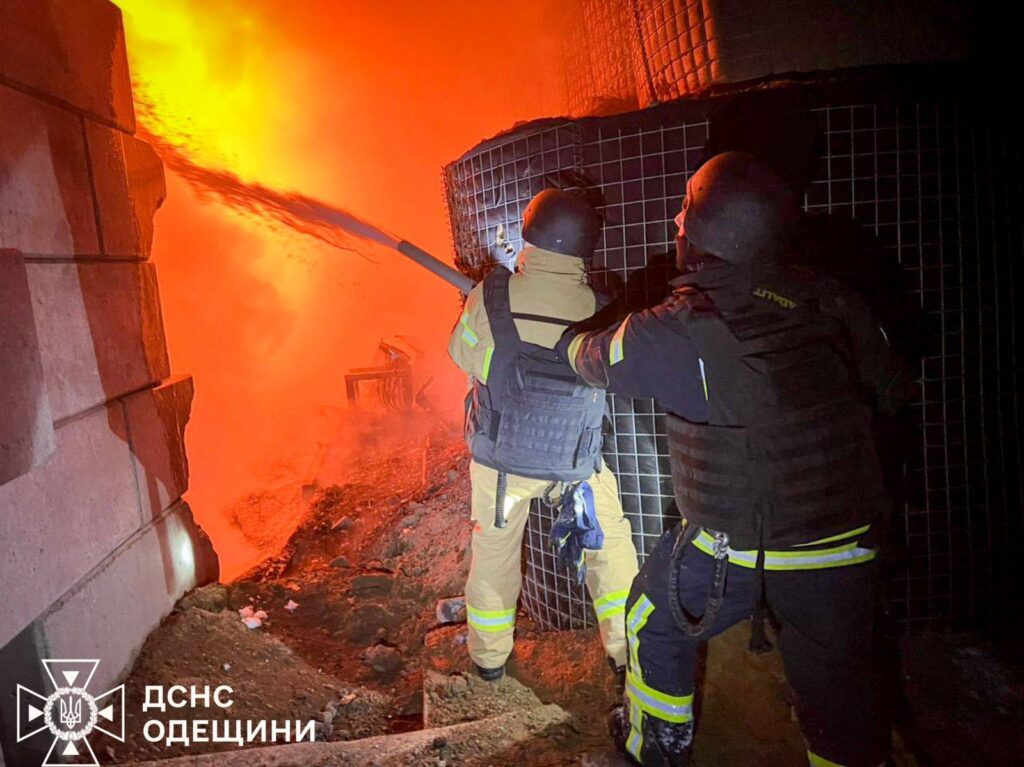
Rescuers extinguish a fire caused by a Russian strike in Odesa Oblast. Illustrative photo: State Emergency Service of Ukraine in Odesa Oblast

At the same time, some protective measures are already proving effective. Despite drone attacks over two days, one of Kyiv's substations withstood the strikes, and the city did not lose power, although scheduled outages were in effect, the expert says.

Popenko considers a repeat of last winter's scenario, when parts of Kyiv went without heating for weeks, entirely possible. Russian forces continue to attack energy facilities, and in his assessment, strengthening air defenses in Kyiv is the only way to protect its combined heat and power (CHP) plants from large-scale attacks.

“There are no other ways — for example, building some sarcophagi around CHPs or constructing shelters — because Russia can destroy these facilities again through massive strikes. And then the city risks being left 50–60% without heat,” Popenko believes.

Residents are also preparing for winter, but their options vary, he says. Some homeowners' associations participate in government programs to insulate apartment buildings and purchase backup power supplies for elevators and pumping stations. Owners of private houses are buying generators, among other measures. However, such equipment and preparations require substantial funds, meaning not everyone can afford them, he notes.

Ukraine has already experienced prolonged power outages during previous winters, particularly in 2022 and 2023. At the time, some regions went without electricity for 18–20 hours a day, the expert says. This experience may help people prepare for possible disruptions, but it does not eliminate the risk of further attacks and infrastructure damage.

  •  

Moldova pulls its border officers off Ukrainian soil again as Russian drones keep hitting crossings

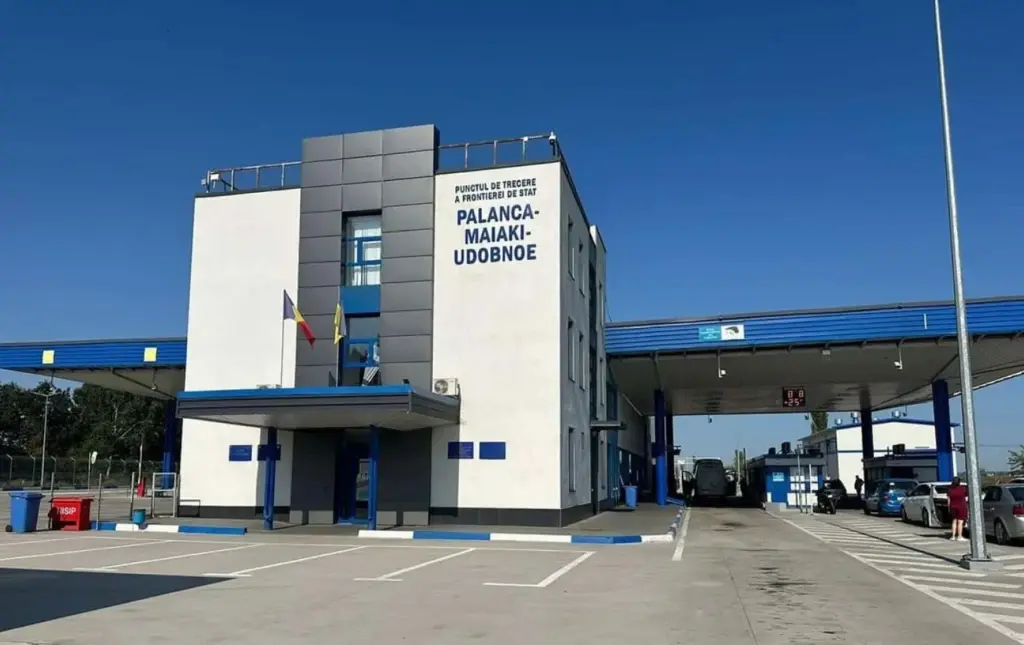
Palanca–Mayaky-Udobne border crossing on the Moldova-Ukraine border, illustrative photo: Zahidnuy.kordon/Facebook

Moldova is creating protective zones at border crossing points along its border with Ukraine amid the threat of drone attacks. It is also relocating its personnel from joint border crossings on Ukrainian territory back to Moldova. Moldovan Interior Minister Daniella Misail-Nichitin said this on 7 October, according to NewsMaker.

In recent months, Russian attacks on Ukrainian border crossing points near the country's borders with neighboring states have become more frequent. Ukrainian-Moldovan border crossings are among those most frequently targeted by Russia. As a result, Moldova now plans to withdraw all of its border personnel from Ukrainian territory.

A Moldovan border guard was also recently injured when a projectile struck near a passenger bus at the Palanca border crossing, Moldova's Border Police reported.

Chisinau strengthens protection of border crossings against Russian drone attacks

Moldovan authorities are working to strengthen security measures at all Border Police crossing points, including those located on Ukrainian territory, according to the statement.

Authorities are already setting up protective zones so that Border Police officers, government officials and civilians at the crossings can evacuate to a safe location if necessary, the minister said.

Moldova is also discussing moving its personnel from joint border crossings located on Ukrainian territory to Moldova. Personnel have already been withdrawn from two crossings, with plans to do the same at other joint crossings, Missail-Nikitin said.

NewsMaker clarified with Moldova’s Interior Ministry that the measure involves withdrawing Moldovan personnel from two joint border crossing points with Ukraine — Criva and Palanca.

Ukraine and Moldova seek a response to a new challenge

The first time Chisinau withdrew its personnel from Ukrainian territory at the Ukrainian-Moldovan border crossings was a month ago. Moldova temporarily changed the operating arrangements at three joint border crossings with Ukraine because of security risks linked to Russian attacks on Ukrainian infrastructure near the border, Moldova's Border Police reported on 11 September.

The crossings in question are Giurgiulesti–Reni, Briceni–Rossoșani, and Criva–Mamalyga, where Moldovan border guards and customs officers had previously carried out controls on Ukrainian territory, according to the Border Police.

Criva–Mamaliga border crossing on the Moldova-Ukraine border, illustrative photo: State Border Guard Service of Ukraine

Starting 12 September, Moldovan personnel returned to Moldovan territory for 90 days and began working from existing infrastructure on the Moldovan side. The crossings themselves remained operational, and the cross-border movement of people and vehicles continued. Only the location where Moldovan services carried out their duties changed, the authorities said.

Ukraine is also strengthening the protection of its border infrastructure. The State Agency for Restoration and Infrastructure Development plans to install 135 basic mobile shelters at 28 border crossing points and on access roads leading to them. The shelters are intended to protect civilians crossing the border and border crossing personnel. Procurement is being carried out by the Restoration Services in Vinnytsia, Odesa, Chernivtsi, Zakarpattia, and Volyn Oblasts, according to the statement.

Ukraine’s border crossings near Moldova face ongoing Russian attacks

Russia has repeatedly attacked Ukrainian border infrastructure near the Moldovan border in recent weeks. On 25 August, a Russian drone struck the Vynohradivka–Vulcănești border crossing in Odesa Oblast.

On 5 October, Russian strikes on Ukrainian infrastructure caused an incident near the Palanka–Mayaky–Udobne border crossing. A projectile fell near the crossing, ricocheted off the ground and struck a passenger bus. The control booth was also damaged, and one Moldovan border guard sustained a minor injury.

On 9 September, Russia attacked the Starokozache–Tudora border crossing. One drone struck the crossing, while two others crashed nearby on Ukrainian territory. Two people were killed and three others were injured in the attack, and the crossing was temporarily closed. Russia claimed that this strike on a border crossing was prompted by Ukraine transporting weapons through the facility, a claim Moldova has denied.

  •  
❌