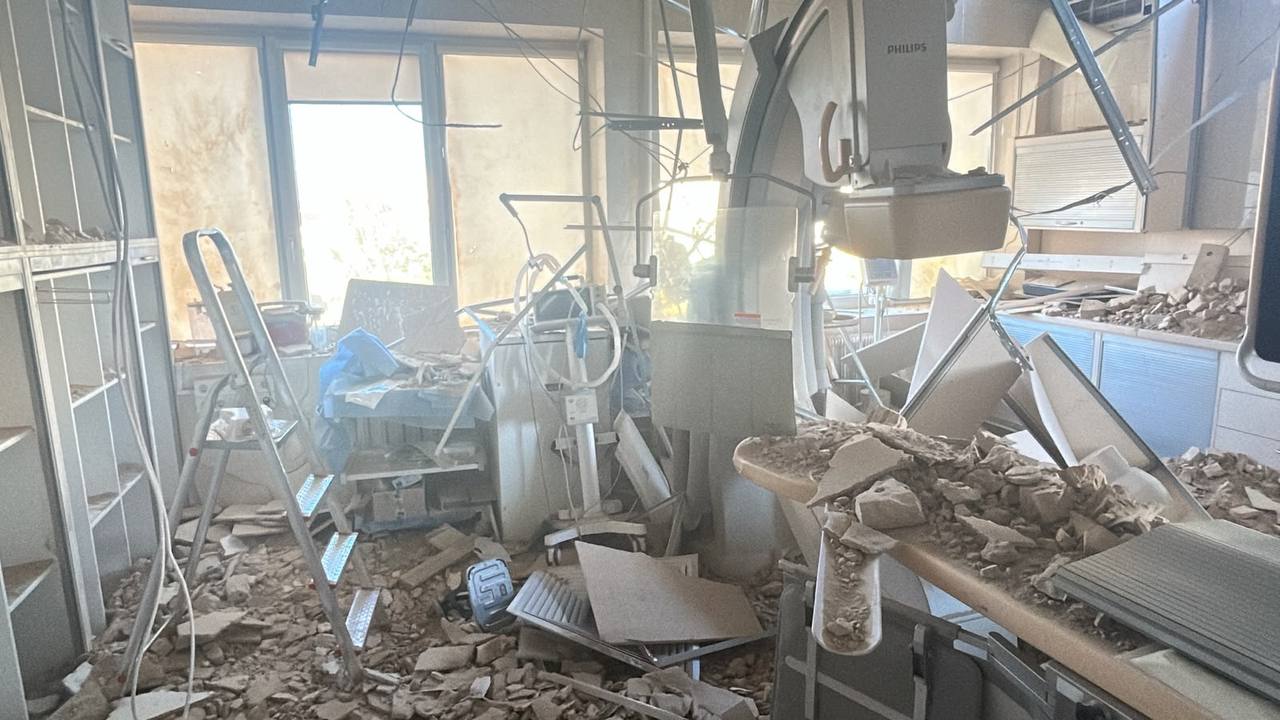
Ukrainian Prime Minister Serhii Koretskyi said Russia struck the operating room of the Strazheska Institute of the National Academy of Medical Sciences in Kyiv, injuring one patient.
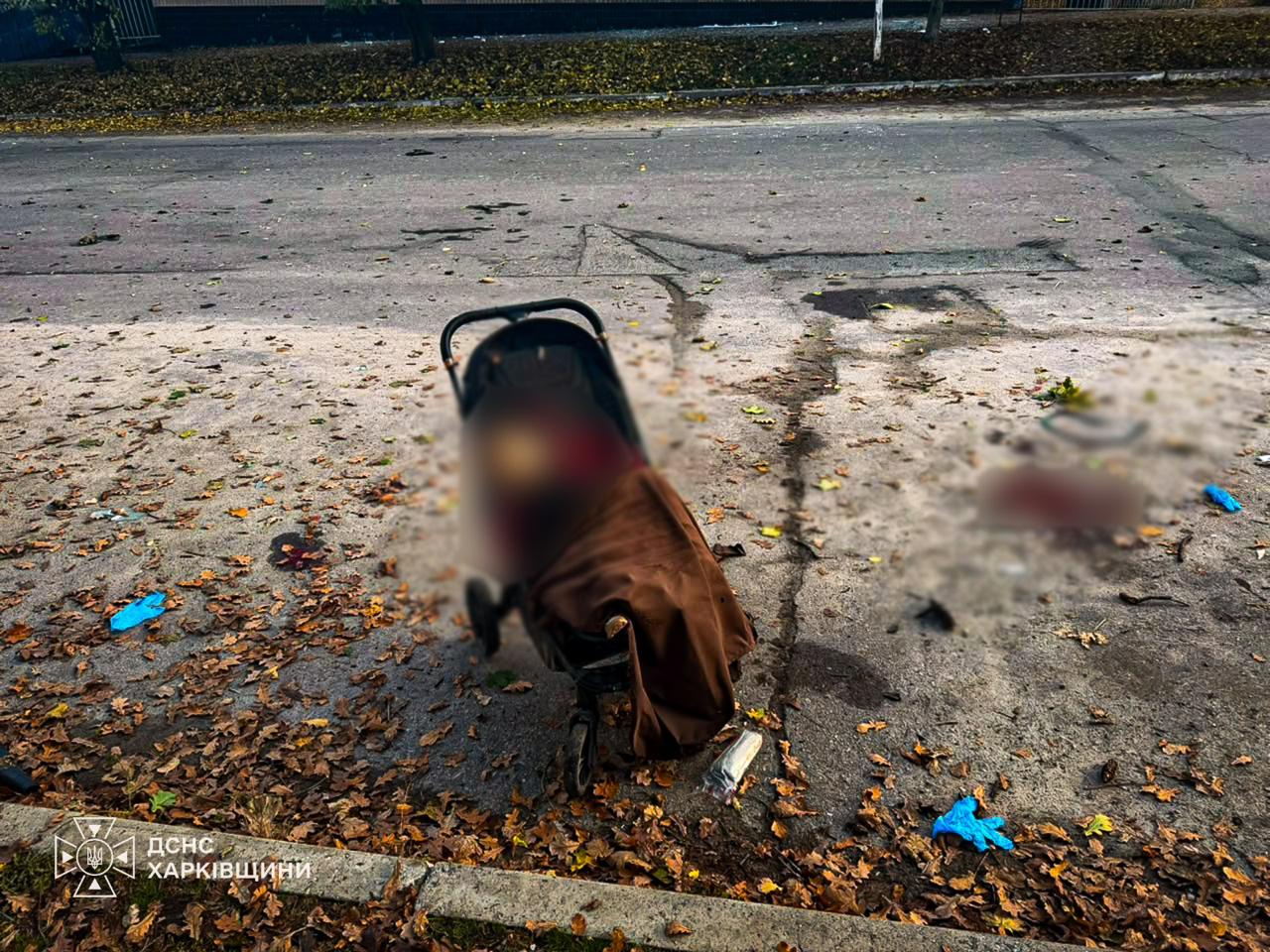
The drone struck the town's central park while many people, including families with children, were there, Interior Minister Ivan Vyhivskyi said. An infant in a stroller and two women were among those killed, he added.
The Russian soldiers are believed to belong to the 38th Separate Motorized Rifle Brigade, which is operating in the area. Kravchuk alleged that orders of this nature within the brigade are issued at the initiative of its commander, Colonel Valery Kazak.
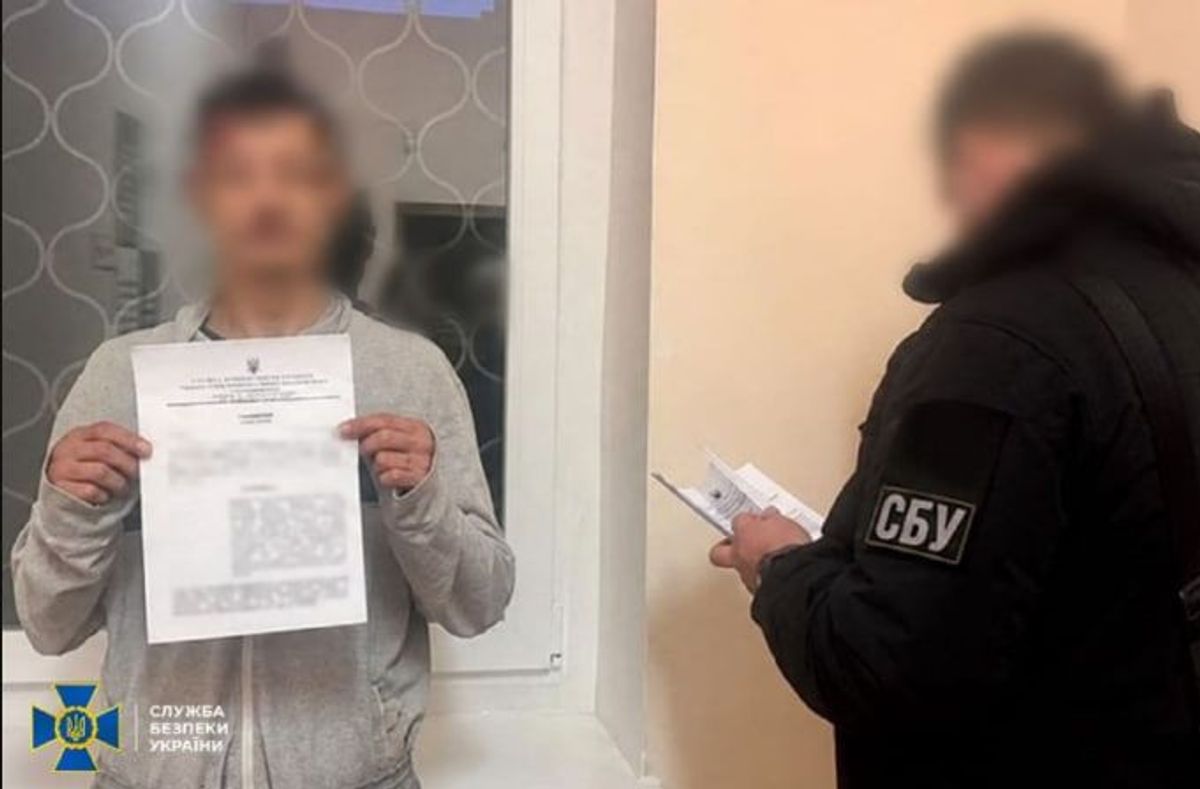
The suspect was identified as 36-year-old Leonid Ryzhikov, a Russian citizen from St. Petersburg who served in the 2nd Battalion of Russia's 1009th Motorized Rifle Regiment.
At least 30 people have been injured after Russian guided aerial bombs struck residential buildings in the Ukrainian city of Zaporizhzhia. The fate of several residents remains unknown as emergency workers continue searching collapsed apartment blocks.
At least 20 civilians, including three children, have been killed in Russian air strikes on the southern Ukrainian city of Zaporizhzhia on Saturday morning, 10 October, according to regional authorities. Rescue workers are continuing to search the ruins of residential buildings, with several people still unaccounted for.
The death toll rose from eight to 30 as emergency crews recovered more victims. The Zaporizhzhia regional military administration confirmed that three children were among those killed, while earlier reports recorded 16 injured, including three children. Two of the wounded were in a serious condition.
Authorities had previously reported that 12 people remained missing, although they did not provide a revised figure after the death toll increased. Rescue operations continued amid concerns that further victims could be trapped beneath collapsed concrete and other debris.
Apartment Buildings Destroyed by Guided Bombs
Russian forces launched the attack shortly before dawn, using guided aerial bombs against residential areas of Zaporizhzhia. According to the regional administration’s preliminary assessment, one five-storey apartment building suffered a direct hit and was destroyed, while part of another residential block collapsed.
The attack damaged at least 26 residential buildings in the Shevchenkivskyi and Voznesenivskyi districts, comprising 23 apartment blocks and three private houses. Three buildings sustained particularly extensive damage, while non-residential properties were also affected.
Firefighters, police officers and medical personnel were deployed to the affected neighbourhoods, supported by municipal workers and local residents. Emergency crews continued removing debris and examining unstable structures while officials assessed the extent of the destruction.
The Ukrainian National Police said that officers were documenting the consequences of the attack, including damage to civilian infrastructure. Investigators were also recording evidence for possible war crimes proceedings.
Search Continues as Casualty Figures Rise
The scale of the destruction has complicated efforts to establish the number of victims. The initial casualty figures increased repeatedly as rescuers gained access to damaged buildings and recovered bodies.
Earlier in the morning, authorities reported four deaths. The figure subsequently rose to seven, then eight, before reaching 11 shortly after midday. The number of injured also increased as information emerged from hospitals and emergency services.
At 10.15am local time, 16 people were confirmed wounded. Three were children, while two patients were described as seriously injured. The regional administration said most of the remaining casualties were in a condition of moderate severity.
Officials warned that the casualty figures could change as operations continued. The authorities had not established how many of those initially reported missing might still be trapped in the wreckage, and the recovery of additional bodies had not been accompanied by a revised missing-person count.
Zaporizhzhia Faces Continued Russian Air Attacks
Zaporizhzhia, an industrial city in south-eastern Ukraine, has remained exposed to Russian aerial attacks throughout the full-scale invasion. Its proximity to Russian-held territory in the surrounding region leaves residential districts vulnerable to aircraft-launched weapons.
Guided aerial bombs present a particular challenge for Ukrainian air defences. Unlike conventional unguided bombs, they can be fitted with glide and guidance systems allowing Russian aircraft to release them from considerable distances. Their substantial explosive payloads can cause extensive structural damage when they strike apartment buildings.
Saturday’s attack comes only three days after Russia launched another large-scale assault across Ukraine, targeting energy infrastructure and residential areas. As EU Today reported on 7 October, that operation killed at least 11 people and caused damage in several Ukrainian cities, including Zaporizhzhia.
The latest fatalities also follow earlier attacks on civilian facilities in the city. In February, Russian drones struck a maternity hospital in Zaporizhzhia, causing a fire and injuring patients.
The repeated strikes have placed continuing pressure on the city’s emergency services, which must respond to new attacks while repairing damage to residential buildings and public infrastructure.
Day of Mourning Declared
The Zaporizhzhia authorities have declared Sunday, 11 October, a day of mourning for those killed in Saturday’s bombardment. The announcement followed confirmation that the death toll had reached 11, including three children.
The Russian attack has also renewed attention to the vulnerability of densely populated urban areas to guided aerial bombs. Under international humanitarian law, deliberate attacks against civilians and indiscriminate attacks are prohibited, while all parties must distinguish between military objectives and civilian objects.
Ukrainian investigators are continuing to document the damage and civilian casualties. The precise circumstances of each impact, including the intended targets, have not yet been independently established.
For the families awaiting news of missing relatives, the immediate priority remains the search beneath the destroyed buildings. As of the latest available information on Saturday, rescue workers were still operating at the sites, and the authorities had warned that the number of dead could rise further.
Russian prosecutors have asked the Netherlands to surrender Tomoko Akane and eight other International Criminal Court officials convicted in absentia by a Moscow court, extending the Kremlin’s retaliation against those investigating alleged war crimes in Ukraine.
Russia has demanded the extradition of International Criminal Court (ICC) President Tomoko Akane from the Netherlands, seeking to enforce criminal sentences against judges and prosecutors involved in issuing arrest warrants for Vladimir Putin and senior Russian military officials.
The Russian Prosecutor General’s Office announced on Thursday, 8 October, that it had submitted requests to several governments for the extradition of nine current and former ICC officials, including Karim Khan, who served as the court’s chief prosecutor when the arrest warrant against Putin was issued in March 2023.
The requests follow a ruling by Moscow City Court on 12 December 2025, when nine ICC officials were convicted in absentia and sentenced to prison terms ranging from three and a half to 15 years. Their alleged offences arose from their participation in investigations and judicial decisions concerning Russian officials suspected of international crimes.
Moscow’s latest move is unlikely to secure Akane’s extradition from the Netherlands, which hosts the ICC and is among its principal supporters. Russian authorities are nevertheless seeking cooperation from several countries, potentially exposing court officials to arrest when travelling to jurisdictions maintaining close relations with Moscow.
Japan Protests Against Russian Demands
Japan has condemned the proceedings against Akane, a Japanese national who became ICC president in March 2024.
Deputy Chief Cabinet Secretary Masanao Ozaki said Tokyo had repeatedly protested to Moscow over its treatment of ICC personnel and regarded the latest measures as unjustified and unacceptable.
He indicated that Japan would consider further diplomatic action in consultation with the court and other states parties to the Rome Statute.
Prime Minister Sanae Takaichi reaffirmed Japan’s support for the ICC during a parliamentary session on Friday, 9 October, saying Tokyo would continue to defend the institution as part of its commitment to international law.
Akane, who was elected president for a three-year term in March 2024, served on the judicial panel responsible for the arrest warrants against Putin and Russia’s commissioner for children’s rights, Maria Lvova-Belova.
Russian investigators opened criminal proceedings against the judges shortly after those warrants were announced, subsequently adding other ICC officials to their wanted lists as investigations concerning Russia’s invasion of Ukraine progressed.
Moscow’s Retaliation Against the Court
The confrontation began on 17 March 2023, when the ICC issued arrest warrants against Putin and Lvova-Belova over the alleged unlawful deportation and transfer of Ukrainian children from occupied areas to Russia.
The judges found reasonable grounds to believe that both officials bore individual criminal responsibility for the alleged offences. The warrants remain in force, although neither suspect has been brought before the court.
The investigation concerns the removal of children from Ukrainian territory following Russia’s full-scale invasion in February 2022. Ukrainian authorities have documented cases involving children transferred to Russia, placed with Russian families or subjected to measures intended to integrate them into Russian society.
Russia maintains that the transfers were humanitarian evacuations. The ICC’s investigation concerns whether children were unlawfully deported or transferred from occupied territory, conduct prohibited under international humanitarian law.
Russian prosecutors responded by expanding their criminal cases against ICC personnel. The charges included knowingly prosecuting innocent individuals and attacking representatives of a foreign state.
The December 2025 convictions provided Moscow with the domestic judgments it is now attempting to enforce through extradition requests.
Extradition Requests Raise Questions Over Travel
The Netherlands has not indicated any intention to surrender Akane. Dutch authorities have consistently supported the ICC’s independence, and the Russian convictions concern actions undertaken by officials in the exercise of their judicial responsibilities.
The position may be less predictable in countries maintaining extradition arrangements with Moscow. Although Russian convictions would not automatically require another state to surrender an ICC official, the existence of arrest warrants could complicate international travel and expose those named to detention pending legal proceedings.
The situation recalls the difficulties surrounding Putin’s own international movements since March 2023. His arrest warrant has restricted travel to ICC member states, which are generally required to cooperate with the court’s requests for arrest and surrender.
Russia’s withdrawal of its signature from the Rome Statute in 2016 did not prevent the ICC from investigating alleged crimes committed on Ukrainian territory. Ukraine had already accepted the court’s jurisdiction and became a full member on 1 January 2025.
The ICC investigation into Ukraine continues, covering alleged offences committed since 21 November 2013 within the scope of Ukraine’s acceptance of jurisdiction.
US Sanctions Add to Difficulties Facing ICC
The Russian extradition demands coincide with a separate dispute between the ICC and the United States, whose government has sanctioned several members of the court.
On 18 August 2026, President Donald Trump’s administration imposed sanctions on Akane and senior ICC trial lawyer Abdoulaye Seye. Washington has objected to investigations involving American personnel and Israeli officials, arguing that the court has exceeded its jurisdiction.
The American measures primarily involve financial restrictions, while Russia has pursued criminal convictions and extradition requests. Both have placed ICC personnel under pressure for their involvement in proceedings opposed by governments outside the Rome Statute system.
The European Union has repeatedly defended the ICC against attempts to interfere with its investigations. The Netherlands, as host country, has particular responsibilities concerning the court’s operations and the security of its personnel.
Moscow’s latest requests are therefore expected to meet resistance from European governments. Their possible consequences elsewhere will depend on the countries approached and whether local authorities are prepared to act on Russian arrest warrants.
The Kremlin has so far failed to halt the ICC’s proceedings against Putin, Shoigu and Gerasimov. Its response has been to pursue the judges and prosecutors responsible, seeking prison sentences against international judicial officials while the allegations against Russia’s own leadership remain before the court.
Russian forces struck the eastern Ukrainian city of Kramatorsk on the morning of 8 October, hitting two route buses carrying residents and killing dozens of civilians. The Donetsk Oblast prosecutor's office opened a war-crimes investigation.
Russia has turned everyday movement in frontline Donetsk Oblast into a lethal risk, striking city buses, ambulances, and cars in places its army has not been able to capture.
A route bus run turned deadly
The attack came at around 10:00, catching two route buses in the impact zone. The prosecutor's office said the attackers likely used a UMPB D-30SN. HUR, Ukraine's military intelligence, describes it as a guided glide bomb that can fly up to 100 km when released from an altitude of 12–15 km and carries a warhead equal to a FAB-250 aerial bomb.
30 people were killed and 18 injured after a Russian bomb hit two passenger buses carrying civilians in Kramatorsk, Donetsk Oblast.
The buses caught fire, and the force of the attack also damaged nearby homes and cars. Some victims were so badly burned that police had to recover… pic.twitter.com/FqLdM0HN1B
The toll rose through the day, from 12 dead in the first reports to 30 killed and 20 wounded by 14:55, Donetsk Oblast head Vadym Filashkin said. Across Donetsk Oblast, Russian attacks killed 33 people that day, including the 30 in Kramatorsk and three in nearby Bilenke, the State Emergency Service said. Ukrainian President Volodymyr Zelenskyy said the strike would not go unanswered.
Buses pulled off the roads
Filashkin ordered the Kramatorsk and Sloviansk city military administrations to suspend public transport, citing the sharp deterioration in security. Buses had become an attractive target for Russian forces, he said, and the authorities could not risk the lives of passengers and drivers. He also urged everyone still in Donetsk Oblast to leave for safer parts of Ukraine. Kramatorsk is a frequent target of Russian attacks. Russia had not commented on the strike as of publication.
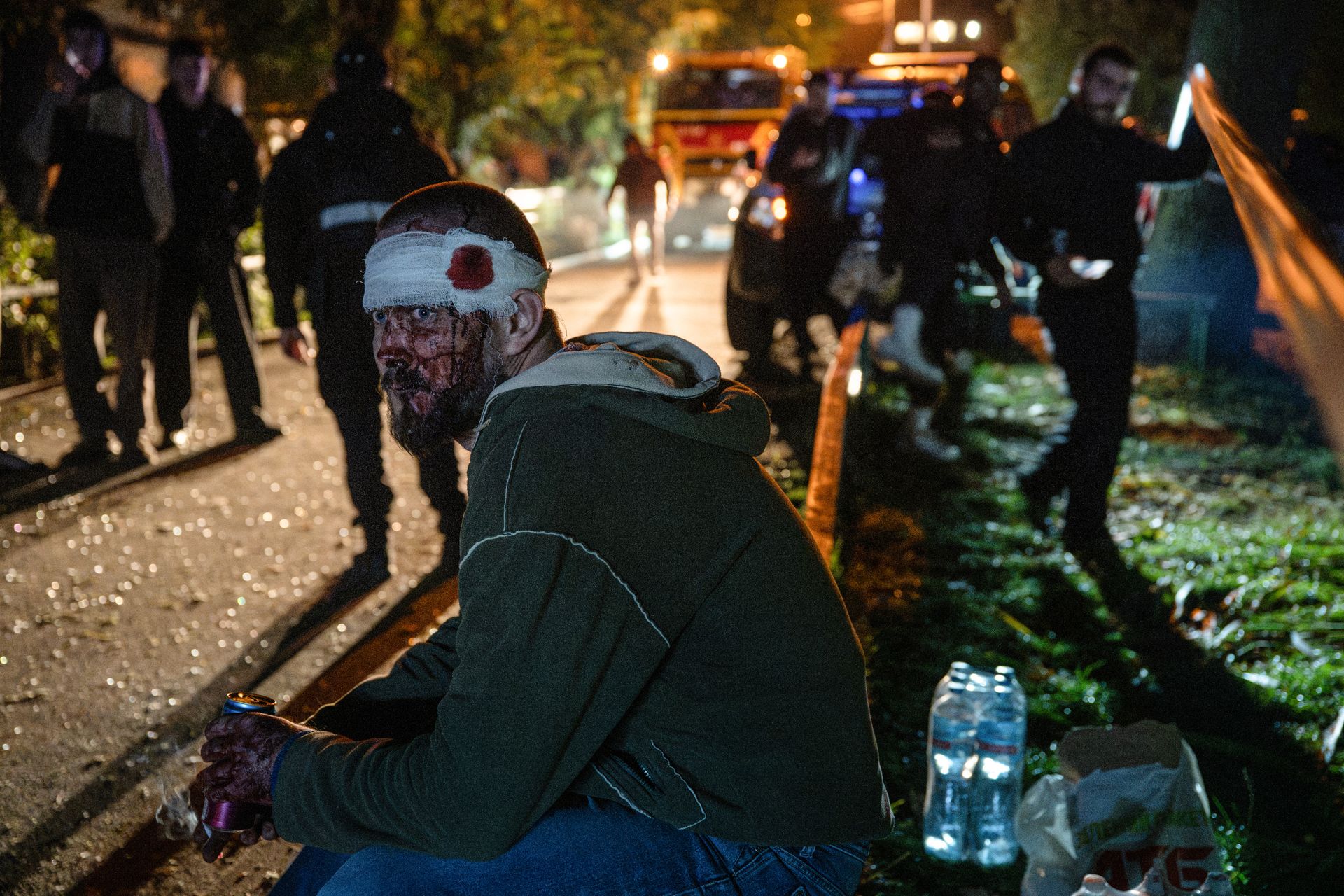
Aftermath of the shelling of Kramatorsk on 8 October 2026. Photo: Illia Andreiev/Kramatorsk Post
The city has been under daily fire. On 5 October, Russian FPV drones hit ambulances and an apartment block in Kramatorsk, killing a woman and wounding four, the prosecutor's office reported. Over the previous day, Russian forces shelled Donetsk Oblast settlements 31 times and 256 people left the front line, Filashkin said.
 Login