Login

Ilford Boy at the Donmar: Witty coming-of-age story
This East London tale skips between the 80s and 90s to tackle issues of race and sexuality with verve and a eye for period details

© Helen Murray

This East London tale skips between the 80s and 90s to tackle issues of race and sexuality with verve and a eye for period details
© Helen Murray
Nation’s favourite play makes London comeback amid renewed debate about future of humanities teaching
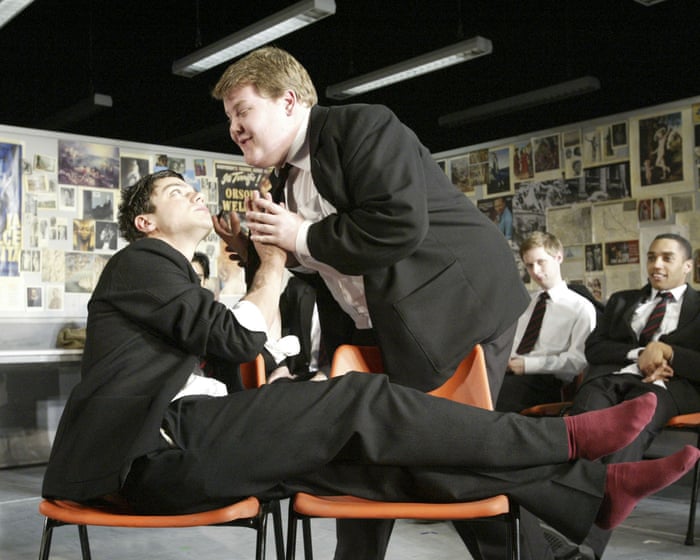
The History Boys is to return to the West End for the first time in two decades, with a warning from its director of an “almost terminal decline” in humanities teaching in state schools.
Nicholas Hytner, who directed Alan Bennett’s play at the National Theatre and its 2006 film adaptation, said the themes of education, history and the value of literature for its own sake felt especially relevant amid renewed debate about what schools should teach.
Continue reading...
© Photograph: REX/Donald Cooper

© Photograph: REX/Donald Cooper
© Photograph: REX/Donald Cooper

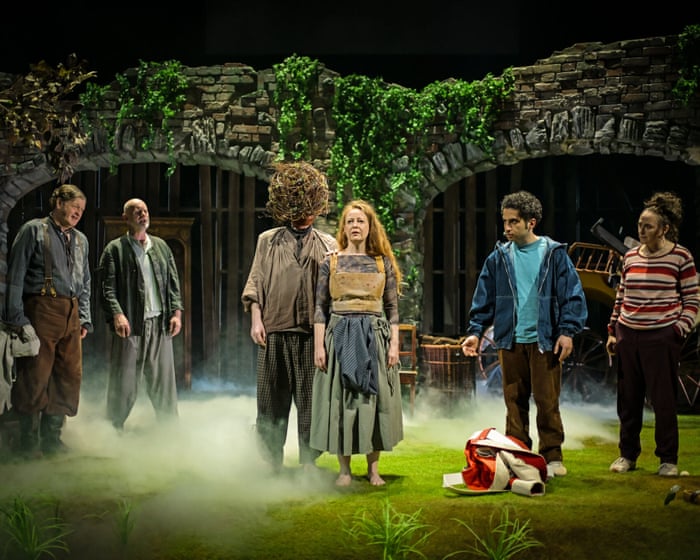
This reworked musical about a French peasant returning to his wife but suspected of being an imposter, is committed but over the top

© Helen Maybanks
Subject to Change: A Dance for David Bowie will explore how the musician ‘practised a form of artistic reincarnation’, says choreographer Marcos Morau
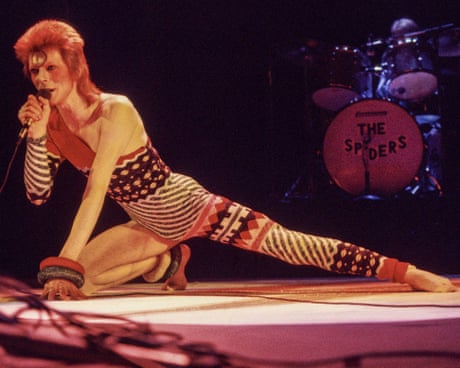
‘Let’s dance,” sang David Bowie in 1983, commanding: “Put on your red shoes and dance the blues.” That call is to be answered – with footwear TBC – by an international dance production featuring new choral arrangements of songs from throughout his career.
Subject to Change: A Dance for David Bowie will be staged at Sadler’s Wells in London in autumn 2028 after a world premiere in Luxembourg. It will visit Tokyo in 2029. The show will explore how Bowie “practised a form of artistic reincarnation” according to Spanish choreographer Marcos Morau who is taking inspiration from the superstar’s transformations into personas such as Aladdin Sane and the Thin White Duke.
Continue reading...
© Photograph: Ilpo Musto/Alamy
© Photograph: Ilpo Musto/Alamy

© Photograph: Ilpo Musto/Alamy
Subject to Change: A Dance for David Bowie will explore how the musician ‘practised a form of artistic reincarnation’, says choreographer Marcos Morau
‘Let’s dance,” sang David Bowie in 1983, commanding: “Put on your red shoes and dance the blues.” That call is to be answered – with footwear TBC – by an international dance production featuring new choral arrangements of songs from throughout his career.
Subject to Change: A Dance for David Bowie will be staged at Sadler’s Wells in London in autumn 2028 after a world premiere in Luxembourg. It will visit Tokyo in 2029. The show will explore how Bowie “practised a form of artistic reincarnation” according to Spanish choreographer Marcos Morau who is taking inspiration from the superstar’s transformations into personas such as Aladdin Sane and the Thin White Duke.
Continue reading...
© Photograph: Ilpo Musto/Alamy
© Photograph: Ilpo Musto/Alamy
© Photograph: Ilpo Musto/Alamy
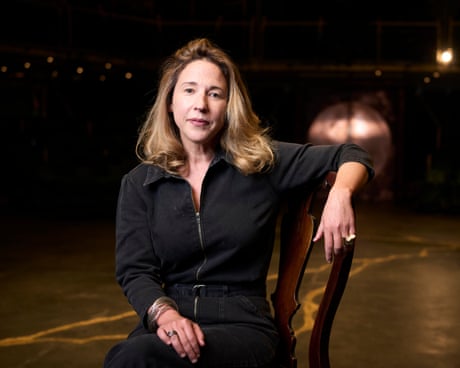
Selina Cartmell announces season including Stockport-set version of Phaedra myth by Simon Stephens
A theatre boss has promised to channel the “pioneering spirit of Manchester” and be “brave and fearless” as she unveiled a new season of work, two years after a deeply damaging censorship row.
Selina Cartmell, the artistic director of the Royal Exchange in Manchester, revealed details of 2027-28 productions that include a retelling of the Munich air disaster and a modern Stockport-set version of the ancient Greek myth Phaedra.
Continue reading...
© Photograph: Christopher Thomond/The Guardian
© Photograph: Christopher Thomond/The Guardian

© Photograph: Christopher Thomond/The Guardian
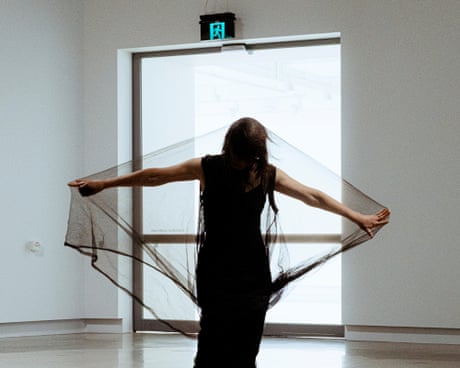
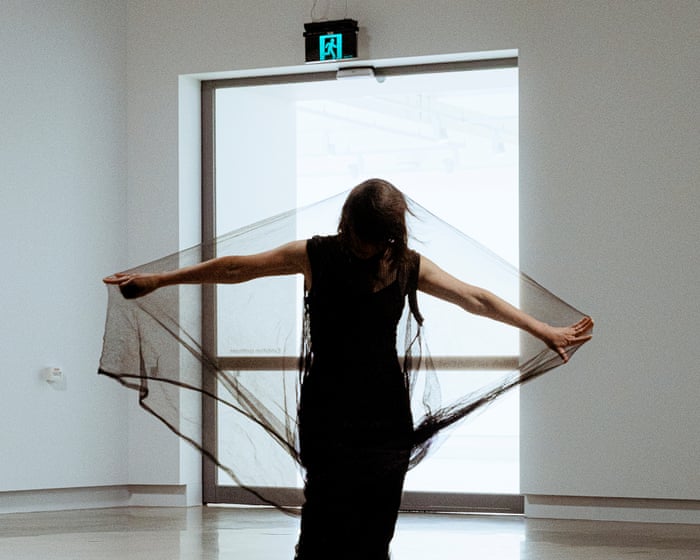
The choreographer said goodbye to Lucy Guerin Inc by dancing in public for the first time in 13 years - which she found ‘incredibly confronting’
If there is one thing the professional dancer learns never to expect, it’s longevity. The physical demands on the body and increasing risk of injury tend to necessitate short careers. Melbourne-based choreographer Lucy Guerin has certainly bucked that trend, with a CV spanning decades and several international awards under her belt. But after 25 years at the helm of her eponymous company, she is now stepping away, conferring her artistic directorship on choreographer Melanie Lane.
Before she left, Guerin returned to the stage for an exquisite solo show, Place Dances, inside Melbourne’s Buxton Contemporary art gallery. It was the first time she had danced publicly in 13 years. “I have found it incredibly confronting, to be honest,” she says, hours before the premiere. “As a dancer, you always remember in your body what it feels like to do an arabesque or a jump. And part of me thought I could still do all those things if I just got back in the studio and trained a bit.” She laughs at her own hubris. “But I’m afraid that wasn’t the case.”
Continue reading...
© Photograph: Gianna Rizzo
© Photograph: Gianna Rizzo
© Photograph: Gianna Rizzo
Amid financial pressures on household and school budgets, the theatre company is expanding access with free plays
Six young actors step into the spotlight as a reverent silence descends on the hall at City Academy in Bristol. A boy steps forward to pose a central question: “What does it mean to be young in Britain in 2026?”
Union jack flags flash across the backdrop as three girls excitedly debate a Spice Girls reunion concert, before the focus swings back to the young boy wrestling with modern British identity. He rattles off a list of familiar cultural touchstones – fish and chips, cups of tea, Butlin’s, David Attenborough, Gogglebox and the England football team, naming heroes such as Jordan Pickford and Jude Bellingham.
Continue reading...
© Photograph: Sam Frost/The Guardian

© Photograph: Sam Frost/The Guardian

© Photograph: Sam Frost/The Guardian
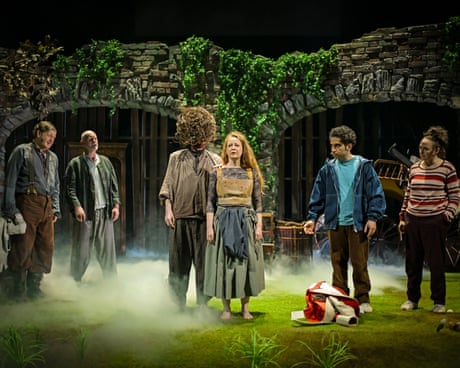
A new play revisits the story of Ireland’s 18th-century German refugees, whose experience of prejudice and exclusion resonates with today’s debates over immigration
In the early 18th century, a few thousand Germans fled religious persecution and near starvation in their homeland and ended up in remote rural Irish villages. The Irish Palatines, as they were known, were poor, conservative homesteaders who couldn’t speak the language and were the object of suspicion and violence – precursors to the displaced Syrians or Afghans of the past decade.
Their story is told in Refuge, a co-production between Staatstheater Mainz and the Irish company Fishamble. Part love story, part social commentary, it is performed by a mixed cast, mainly in English but with some German interludes.
Continue reading...
© Photograph: Andreas Etter
© Photograph: Andreas Etter
© Photograph: Andreas Etter

Walter Benjamin est, si l'on ose dire, à la mode. Et le risque de transformer une pensée qui dénonce l'illusion de la continuité, l'effacement des ruptures décisives, en bréviaire mélancolique n'est pas mince. Trois publications récentes résistent à cette canonisation consensuelle, en soulignant le rôle de la catastrophe et de l'exil, et en mettant en relief un travail des formes qui ne sépare jamais esthétique et politique.

Guillaume Le Blanc, mettant ses pas dans ceux de Benjamin et de Hannah Arendt (1), se demande comment vivre quand l'effondrement est là, déjà à l'œuvre. Guerres, dévastation écologique, précarisation néolibérale et retour des despotismes composent moins une série de crises qu'une atteinte portée à la possibilité d'un monde commun. « Notre question n'est plus de savoir comment se tenir au bord de la catastrophe, mais de façon bien plus radicale d'imaginer comment tenir bon dans la catastrophe. » Le Blanc ne cherche pourtant ni refuge intérieur ni héroïsme. De Benjamin (1892-1940), chiffonnier des vies minuscules, il tire une éthique de la vie fragile : accueillir, cueillir et recueillir ce que les puissances de prédation condamnent à disparaître.

L'imposant ouvrage collectif Walter Benjamin en exil. Entre expérience et pauvreté (2), dirigé par Christophe David et Florent Perrier, fruit de plusieurs colloques, se concentre sur les années 1933-1940 : Paris, les bibliothèques dispersées, les ressources incertaines, les textes confiés aux amis, puis les frontières refermées. L'exil n'y est pas traité comme le décor passager d'une œuvre écrite ailleurs, il en devient une méthode, une manière de penser depuis le seuil, la césure, le fragment. Autour du texte décisif de Benjamin Expérience et pauvreté (1933), publié dans le même volume, les contributions explorent la destruction de la transmission par la guerre et la modernité marchande, mais aussi l'ambivalence de cette pauvreté : perte d'un monde hérité, possibilité de recommencer autrement. Stefano Marchesoni en résume l'actualité : « La pauvreté en expérience pointée par Benjamin n'a fait que s'amplifier depuis 1933. » Riche des analyses de Vincent Chanson, Lionel Richard, Jean Lacoste, Sonia Dayan-Herzbrun…, l'ensemble évite deux facilités : faire de Benjamin un simple témoin de son malheur ou un prophète miraculeusement informé du nôtre.

C'est par la forme que l'on échappe à ces deux pièges. L'anthologie des Écrits sur le théâtre (3) fait découvrir un Benjamin critique, spectateur et expérimentateur. Aphorismes, comptes rendus, reportages, entretiens et textes consacrés notamment à la femme de théâtre lettonne et russe Asja Lācis ou au théâtre épique de Bertolt Brecht montrent que la scène fut pour lui un laboratoire. Le théâtre ne doit pas réconcilier le public avec le monde tel qu'il va. Au contraire, il doit suspendre l'évidence, isoler un geste, déplacer le regard du spectateur. La pensée benjaminienne cherche dans les œuvres la possibilité d'une autre expérience collective.
Ces trois livres proposent une même leçon. Penser depuis les ruines consiste à y discerner les vies, les souvenirs et les formes que l'histoire des vainqueurs laisse sous les décombres, puis à construire, avec ces restes, une sorte de passage. Benjamin revient moins parce que notre époque lui ressemblerait que parce qu'il nous apprend à regarder ce qu'elle s'emploie à rendre invisible.
(1) Guillaume Le Blanc, Éthique pour un monde qui sombre. Dans les pas de Walter Benjamin et Hannah Arendt, Payot, Paris, 2026, 240 pages, 21 euros.
(2) Christophe David et Florent Perrier (sous la dir. de), Walter Benjamin en exil. Entre expérience et pauvreté, suivi de Walter Benjamin, Expérience et pauvreté, Pontcerq, Rennes, 2025, 730 pages, 37,50 euros.
(3) Walter Benjamin, Écrits sur le théâtre. 1912-1940, anthologie établie et préfacée par Marianne Dautrey, avec la collaboration de Bruno Tackels, traduit de l'allemand par Marianne Dautrey et Philippe Ivernel, Les Solitaires intempestifs, Besançon, 2025, 174 pages, 17 euros.