❌

Reading view

Major Ukrainian Arms Maker Rethinking Future Reliance On Starlink

Ukraine continues to struggle with throttling of the speeds at which weapons using the vital satellite communications services provided by the SpaceX Starlink system can operate, and one weapons manufacturer tells us it is rethinking whether to rely on it in the future. As we have previously reported, heavy use of Starlink on both sides of the conflict in Ukraine, including as a means of guiding one-way attackers in the air and at sea, has underscored potential risks of exclusive reliance on Elon Musk’s orbital communications networks in critical tactical tasks.

At issue are complaints by Ukrainian officials that “in various sectors of the front, the equipment ceases to function at speeds of 130–161 kilometers per hour.”

A limit on how fast Starlink terminals on vehicles can travel before the feed is cut off in certain areas impacts a slew of weapons and campaigns, especially strikes on Russian logistics behind enemy lines and in the sea of Asov, as well as the control of defensive interceptor drones critical for taking down Russian long-range one-way attack drones, like the notorious Shahed-136.

The following video shows one such Shahed interception.

Spectacular footage of a Ukrainian interceptor striking a Russian Shahed kamikaze drone, followed by its fall to the ground. pic.twitter.com/8DrJyS22Fn

— Special Kherson Cat 🐈🇺🇦 (@bayraktar_1love) October 20, 2026

The limiting of Starlink/Starshield occurred amid deteriorating relations between the Trump administration and Ukrainian President Volodymyr Zelensky. The latest chill between Washington and Kyiv was sparked by the American leader’s claims that Ukraine’s attacks on Russia’s energy infrastructure have reduced the supply of diesel fuel to the U.S. and other nations more than the conflict in the Middle East. Trump was upset Ukraine kept hitting these targets despite his demanding they stop.

Q: Do you think Ukraine should stop attacks on Russian oil refineries? Have you told Zelenskyy that?
TRUMP: We've talked about it, we have, and I think they're slowing it down, but they are causing a lot of problems. The lack of refineries is the problem. pic.twitter.com/ffpFnRqFlk

— Furkan Gözükara (@FurkanGozukara) October 5, 2026

Exacerbating this issue, Trump on Oct. 9 announced via his Truth Social platform that he had made a deal to purchase diesel from Russia, pivoting away from a years-old Western policy that placed massive economic pressure on Moscow.

Trump: "I have just concluded a highly successful discussion with President Vladimir Putin, of Russia, wherein it was agreed that Russia will immediately supply over 300,000 Tons of Diesel Fuel to the American and Global Marketplace, another 500,000 Tons during the month of… pic.twitter.com/zH0I6HA941

— Aaron Rupar (@atrupar) October 9, 2026

Who gave the order to limit the speeds at which Ukrainian weapons using the Starlink/Starshield system operate is unclear.

“The order to limit a satellite system used by Ukraine ​for battlefield communications and drone operations came from inside the White House,” Reuters reported last week, citing two U.S. officials and a Western official briefed on the matter. “The officials said ‌leaders at the Defense Department received a message that the SpaceX Starshield service for the Ukrainian military needed to be slowed.”

“No such request was ever made by the president,” a U.S. official told us on Monday.

“There has been no change to Department of War policy regarding intelligence sharing or any capabilities we are enabling Europeans to provide to Ukraine,” a senior Pentagon official responded to our questions about whether the Pentagon imposed the limits and, if so, why.

When we pushed for a more specific response to the Starlink/Starshield concerns, the Pentagon declined comment. However, Tuesday afternoon, Defense Secretary Pete Hegseth said the Pentagon did not order any changes and that Ukraine violated Starlink’s terms of services.

Hegseth suggests Ukrainians haven't abided by Starlink's "terms of service" pic.twitter.com/Z8MJyQ4Nvq

— Aaron Rupar (@atrupar) October 20, 2026

We reached out to SpaceX as well, but the company did not immediately respond. Last week, SpaceX’s founder and CEO, Elon Musk, said that “any limits on speed or usage are decided by the US military and ultimately” Trump. Musk had previously refused Ukrainian requests to use Starlink against targets inside Russia.

The prohibition against using Starlink inside Russia has drastically limited Ukraine’s ability to strike dynamic targets like mobile ballistic missile launchers and hunt for drone launch sites. However, Ukraine has not had to rely on Starlink in its campaign against oil infrastructure or other fixed targets deep inside Russia which upset Trump in the first place.

Tuesday morning, Zelensky spoke with U.S. Secretary of State Marco Rubio and again brought up Starlink/Starshield in addition to other major concerns.

“…the situation with Starlink/Starshield… needs to be restored,” Zelensky urged.

I spoke with Marco Rubio @SecRubio, and it was a substantive conversation – focused on the issues that matter. I am grateful for his readiness to help and his clear position. First, ballistic missile interceptors, which are needed to protect lives. Second, early warning of…

— Volodymyr Zelenskyy / Володимир Зеленський (@ZelenskyyUa) October 20, 2026

Rubio denied that any assistance was being withheld from Ukraine. Noting that Starlink “is a private company,” the secretary told reporters that Trump is “frustrated…because he doesn’t like to be blamed for things that aren’t true, including accusations that somehow he had ordered intelligence sharing to be cut off. And that’s not true; he’s said that repeatedly.”

SECRETARY RUBIO: There's nothing being deliberately denied to Ukraine. It's simply a balance between our obligations to other partners, and frankly, our own standards and requirements for our own facilities as well. pic.twitter.com/x9NWbIufBa

— Department of State (@StateDept) October 20, 2026

This most recent flap isn’t the first time SpaceX and Musk have faced particularly significant criticism over limiting some Ukrainian use of the network. Actions SpaceX took earlier this year to block unregistered Starlink terminals also had major consequences for Russian forces, which were sent scrambling to find alternatives to fill the massive resulting communications gap.

Given the tenuous nature of Ukraine’s ability to use Starlink/Starshield, the Wild Hornets company is reevaluating whether to use the SpaceX system in future endeavors even though, so far, it has experienced few problems with it. Wild Hornets is a major Ukrainian combat drone maker. Among other weapons, it makes the Sting interceptors, designed to defend against Russian Shahed kamikaze drones.

The Starlink/Starshield issue isn’t affecting current operations, a Wild Hornets spokesman told us Tuesday morning. “Our own communications system provides the basic connection to our interceptors,” he said. “Plus, our technology for remote control of the interceptors can use various sources of internet connectivity. True, the military often uses Starlink for this, but in our case, the terminal doesn’t need to be moved at high speeds (it simply provides a connection between the command center and the ground station to which the interceptor is connected—it’s somewhat similar to cell towers).”

Concerns about the reduction in speeds at which Starlink terminals can operate has Wild Hornets thinking about ditching a future project, the spokesman told us.

“But we understand that there are other types of interceptors,” added the spokesman. “For example, some drones carry a terminal on board and need to fly at high speed with it. In such cases, Starlink’s limitations make their operation impossible. From this point of view, it also makes us rethink some of the projects we’re currently working on. For example, launching interceptors from aerial platforms.”

“We’re keeping an eye on the situation,” the spokesman continued. “For our current operations (connections with ground stations), we can use any source of stable internet connectivity. Therefore, various solutions are possible in different locations. However, for these needs, everything is operating normally with Starlink at the moment. As for our plans with new projects, we don’t have a clear decision yet, but we will be testing alternatives.”

The spokesman declined to provide further details about what “alternatives” could look like.

There are a number of ways the lack of Starlink for extended-range drone operations could be mitigated to a degree, but the persistent, reliable, high-bandwidth and compact capability SpaceX provides has no direct alternative at this time. The use of drones that work as line-of-sight relays, which can be daisy chained together electronically with other airborne relays, with a connection spanning dozens or even hundreds of miles to a ground entry point is possible. You can read about this concept here. The use of swarms of balloons to create an active network over a battlespace and using Starlink on those slower moving platforms to relay line-of-sight connections to multiple drones below is another possibility. You can read more about this concept here. But we must stress again, nothing can fully replace Starlink/Starshield and its seamless beyond line-of-sight communications architecture at this time.

“I believe, in any case, depending on a single solution is very risky,” the Wild Hornets spokesman proffered. “Especially if you don’t have full control over it. Especially when it comes to something as critical on the battlefield as communications. That’s exactly why our ecosystem is built around our own communications technology and basically is open to various solutions when it comes to internet connectivity.”

The No. 1 interceptor: STING by Wild Hornets has destroyed over 15,000 Shaheds and Gerberas in one year 🔥

Confirmed data shows that STING has topped the interceptor rankings for 12 consecutive months. In September this year, Ukraine’s Defense Forces downed around 1,600 Shaheds,… pic.twitter.com/4v1aeOxPiy

— Wild Hornets (@wilendhornets) October 13, 2026

As far as military units are concerned, the commander of the Georgian Legion told us that his forces have been affected by issues with Starlink/Starshield even though the main concerns have been about the speeds at which weapons can travel and still have connectivity. The Georgian Legion is fighting in the heavily contested Kramatorsk region of eastern Ukraine.

“We use Starlink a lot because, in this war, reliable communication is essential,” Mamuka Mamulashvili told us. “It helps us stay connected when everything around us is changing. Of course, we’ve learned not to rely on just one system. There are alternatives, like mobile internet, fiber-optic connections, radio and other satellite systems such as OneWeb. But honestly, none of them can fully replace Starlink in Ukraine right now.”

“The problems were not limited to the speed restriction of approximately 160 km/h,” the Georgian Legion commander pointed out. “Starlink connectivity itself was also intermittent, repeatedly switching on and off. This caused communication disruptions across various drone systems, not just those operating at speeds exceeding 160 km/h. As a result, the impact was broader than the restriction on high-speed interceptor drones. Intermittent connectivity created problems for drone control and communications across multiple systems, affecting their reliability and the ability to carry out missions as intended.”
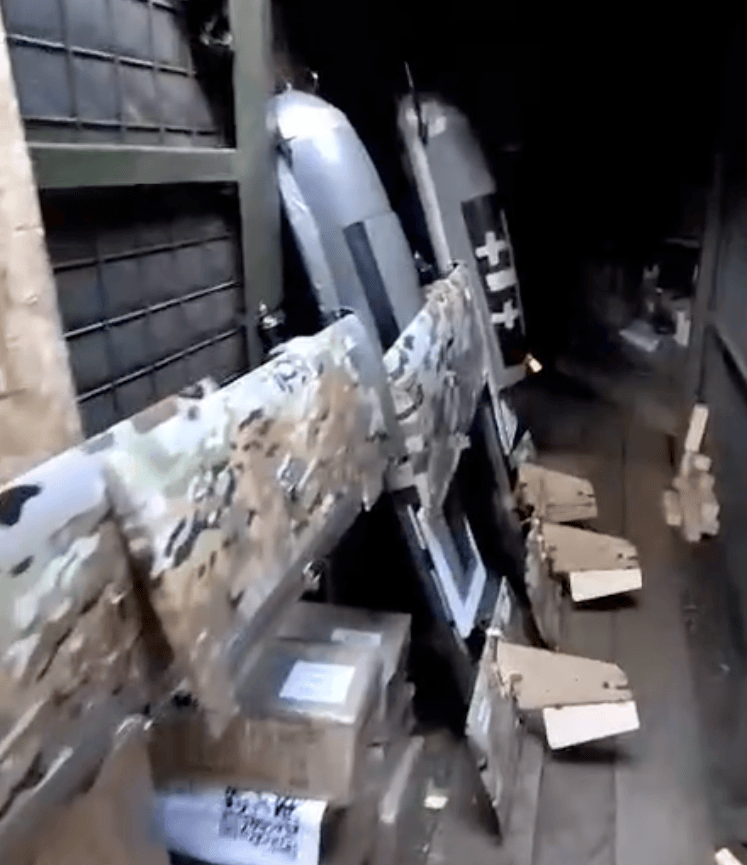
Drones operated by the Georgian Legion. (Georgian Legion Telegram screencap)

“We had serious communication problems,” Mamulashvili explained. “At one point, our drone operators were struggling to maintain a reliable connection with the drone systems, which disrupted coordination and made it difficult to carry out missions as planned. When you lose the connection between the operator and the drone, you can lose control of the situation in seconds. We managed to adapt, but it definitely affected our work.”

“We have to adapt and find solutions, as we always do,” the commander said. “This war teaches you one thing every day. You can’t depend on a single technology or expect someone else to solve all your problems. You have to be ready for anything and keep moving forward.”

Russian sources, meanwhile, are gloating over the speed limits placed on weapons using Starlink/Starshield, particularly how it is affecting Ukraine’s mid-range drone attacks that have crippled Russian logistics. As we explained in a previous report, Ukrainian units have relied on the SpaceX system to help extend the range of their drones to reach as far as 150 miles into Russian-occupied territory. The SpaceX system is not used to hit targets inside Russia proper.

The following video shows some of these mid-range attacks.

Russian rail logistics are now also the target of Midstrike drones, with lines to Crimea being particularly affected. pic.twitter.com/K1BFd0QVov

— Sergio 🇺🇦 🇪🇺 (@SergioCentaurus) June 5, 2026

“Disabling or slowing down Starlink has significantly reduced the enemy’s ability to launch medium-range drone strikes along the ‘Novorossiya’ highway,” influential Russian milblogger Vladimir Romanov reported. The highway, also known as the R-280, is a key link between cities in occupied southern Ukraine and the occupied Crimean peninsula. The road has been a frequent target of Ukraine’s mid-range strike campaign.

“The success of these strikes depends on the Ukrainian Armed Forces’ access to American satellite communication,” Romanov noted. “For the past six months, the Ukrainian Armed Forces have been attacking civilian transport – trucks, cars, and buses – exclusively through the use of ‘Starshield.’ This means that, for the past six months, American military satellite infrastructure has been used to carry out terrorist acts against Russian civilians, and so on. In other words, the United States is still directly involved in the war with Russia!”

America's gifts to Russia never end, with Russian military bloggers now confirming that Washington's operation to cut Ukraine's Starlink has halted Ukraine's ability to strike Russian logistics routes in Ukraine.

An operation likely written in the Kremlin, executed by… pic.twitter.com/iXcIAu5Rr3

— SPRAVDI — Stratcom Centre (@StratcomCentre) October 20, 2026

As for how widespread worries among Ukrainian weapons manufacturers are, the Wild Hornets spokesman suggested that his company is not alone. He said he has spoken with other companies relying much more heavily on Starlink/Starshield who have expressed concerns. He pointed to growing interest in the European Eutelsat satellite constellation as an example of companies seeking options, but noted that “of course, creating something like Starlink won’t be easy.”

We’ve reached out to the Ukrainian Brave1 defense technology incubator and the National Association of Ukrainian Defense Industries (NAUDI) for additional insights into how this issue is affecting Ukraine’s defense manufacturing base.

It will be interesting to see if other Ukrainian weapons companies also consider scrapping plans to rely on Starlink in the future and what architectures will emerge at least as a backstop to it.

Contact the author: howard@twz.com

The post Major Ukrainian Arms Maker Rethinking Future Reliance On Starlink appeared first on TWZ.
  •  

Germany Drops Boeing MQ-28 Ghost Bat Rapid Procurement Plan

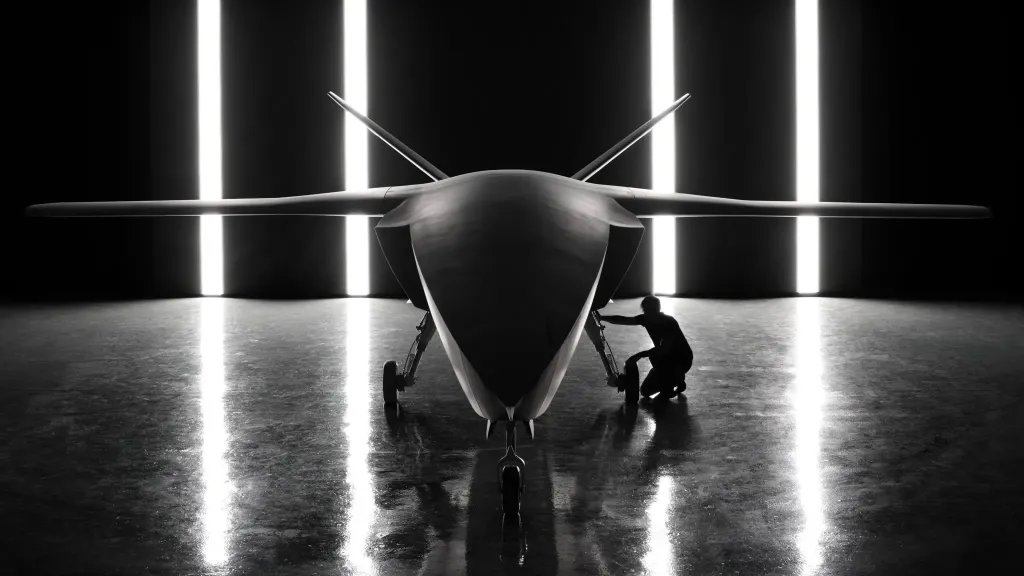
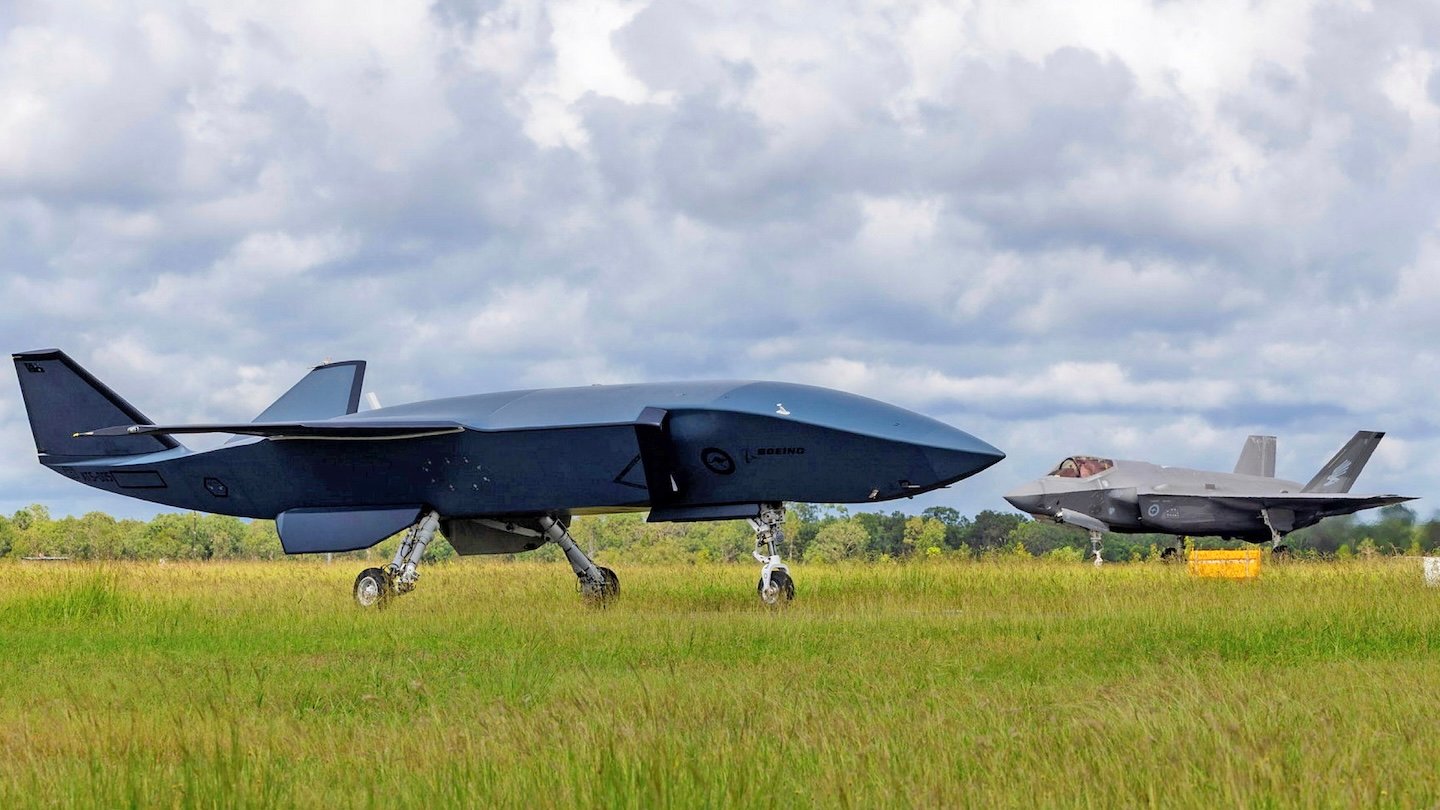
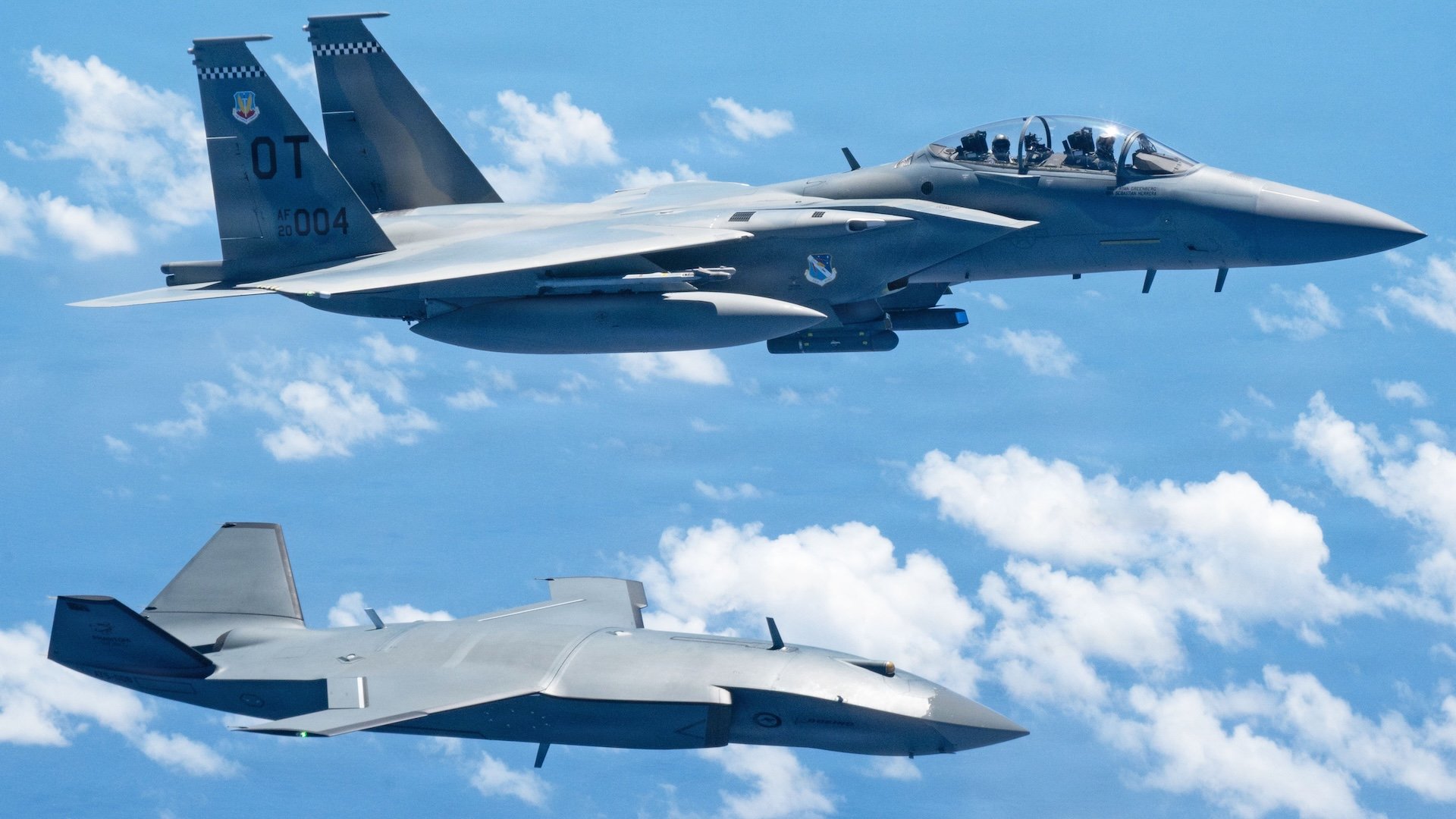
Germany appears to have dropped plans to directly procure the larger, Block 3 version of Boeing’s MQ-28 Ghost Bat collaborative combat aircraft (CCA), leaving doubts over Berlin’s ambitions to field uncrewed combat aircraft alongside its crewed fighters before the end of the decade.

Boeing confirmed to Breaking Defense that Germany’s Ministry of Defense had informed the company it would not proceed with a direct acquisition of the drone, which had previously been lined up. The decision, first reported by Politico, represents a setback for Boeing’s effort to position the Ghost Bat as a candidate for Berlin’s planned CCA capability, something that had seen it announce a partnership with Rheinmetall, the largest arms manufacturer in Germany, earlier this year.

🔴 NEW: Germany has formally scrapped plans to buy the Ghost Bat combat drones directly from Australia, documents show.

Its air force wanted them by 2029. Now it faces a longer wait.

Behind the decision is a much bigger political dilemma facing Germany as it races to rearm. 🧵 pic.twitter.com/2fWHPoQOl0

— Chris Lunday (@lundayfunday) October 15, 2026

“With Boeing Defense Australia as a partner, we are laying the groundwork to optimally tailor the MQ-28 to the Bundeswehr’s requirements,” said Armin Papperger, CEO of Rheinmetall AG, in March of this year. “As a system integrator, we ensure that integration, operation, and further development come from a single source while simultaneously strengthening industrial value creation in the form of an industrial hub in Germany and Europe. We see revenue potential for Rheinmetall in the range of three-digit millions of euros.”

#Rheinmetall and #Boeing partner on German MQ-28 #Ghost #Bat
https://t.co/zGEhjQNqqi pic.twitter.com/VLBDQ8EAaV

— Rheinmetall (@RheinmetallAG) March 31, 2026

The move does not necessarily mean the MQ-28 is out of contention for Germany’s wider program. Instead, Berlin appears set to move toward a different acquisition approach, with competing designs potentially having an opportunity to demonstrate their capabilities before a selection is made.

A Boeing spokesperson told Breaking Defense the company “stands ready to support” its German customer on the next steps, while referring questions about the decision to the German Ministry of Defense.

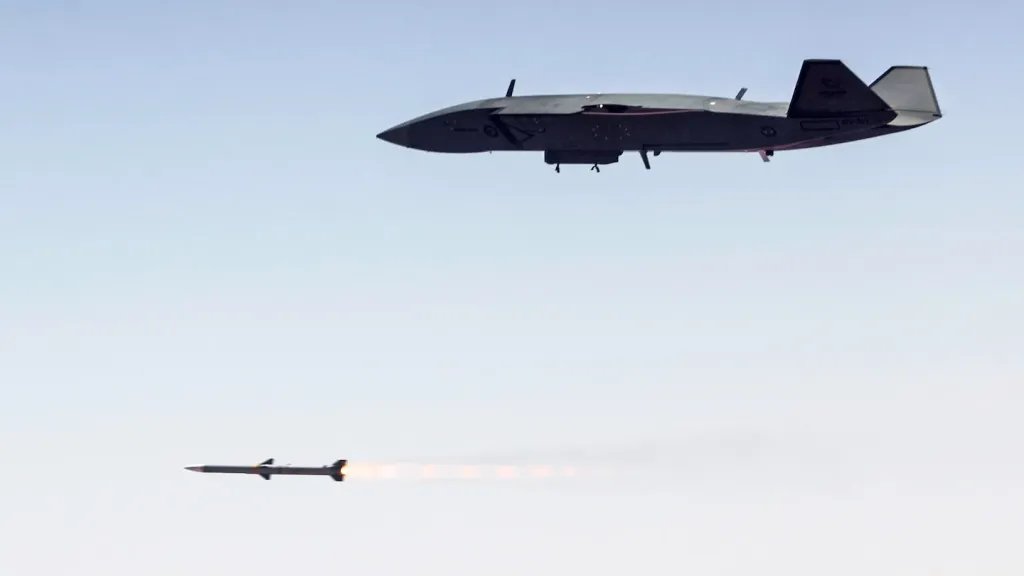
An AIM-120 is launched from an MQ-28A Ghost Bat during Trial Kareela at RAAF Base Woomera, South Australia. Australian Department of Defense

The ministry declined to discuss the specific procurement with the same outlet, citing regulations governing public contracting and the need for such matters to be addressed by parliament.

“[As a] matter of principle — and regardless of the specific case in question — we cannot provide information regarding potential procurement projects,” a ministry spokesperson told Breaking Defense.

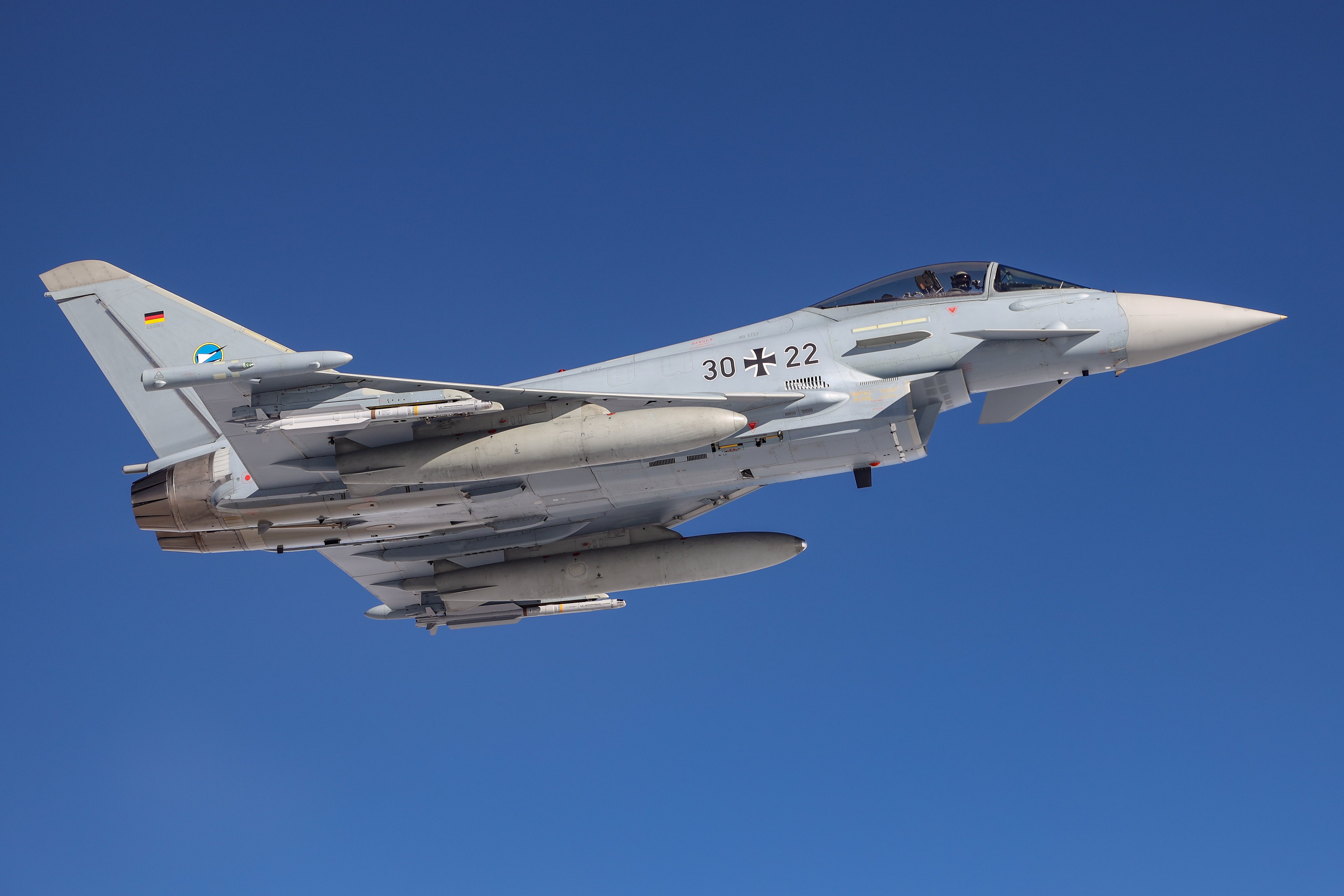
Germany has set an ambitious goal of fielding CCAs by 2029. These uncrewed aircraft are intended to operate alongside crewed fighters such as the Eurofighter, extending their reach, adding sensors and weapons, and giving air forces additional options for conducting high-risk missions.

Ein Eurofighter vom Taktischen Luftwaffengeschwader 74 aus Neuburg an der Donau fliegt bei einem Übungseinsatz als Quick Reaction Alert (QRA) über dem Südosten Deutschlands, am 02.03.2022. ©Bundeswehr/Christian Timmig
A German Eurofighter flies a Quick Reaction Alert (QRA) practice sortie over the southeast of the country. Bundeswehr/Christian Timmig

However, the reported change in Berlin’s acquisition plans raises questions about whether that deadline remains achievable.

According to Politico, Germany is now looking toward the early 2030s for the capability to arrive, with flight testing expected to begin in 2027. That would suggest the original target was based around the introduction of the MQ-28, which has already undergone extensive testing, rather than a newer design. The reshuffle could now give prospective suppliers additional time to demonstrate their designs.

The reported new timeline suggests that Germany’s CCA effort could be entering a more competitive and potentially longer development phase.

There is also a question about the degree of operational capability that will initially be fielded by the given date. Getting a CCA into meaningful frontline service is a very significant task, calling for integration with crewed fighters, communications systems, mission-planning networks, weapons, and sensors. Then there is also testing, certification, training, and the establishment of supporting infrastructure. For Germany in particular, getting a military drone, let alone an armed one, cleared to operate routinely in commercial airspace has long been an issue.

If Germany acquired the Ghost Bat directly, it would have offered a route to a CCA capability without having to begin an entirely new aircraft development effort.

However, the MQ-28 was always one of a larger field of candidate aircraft.

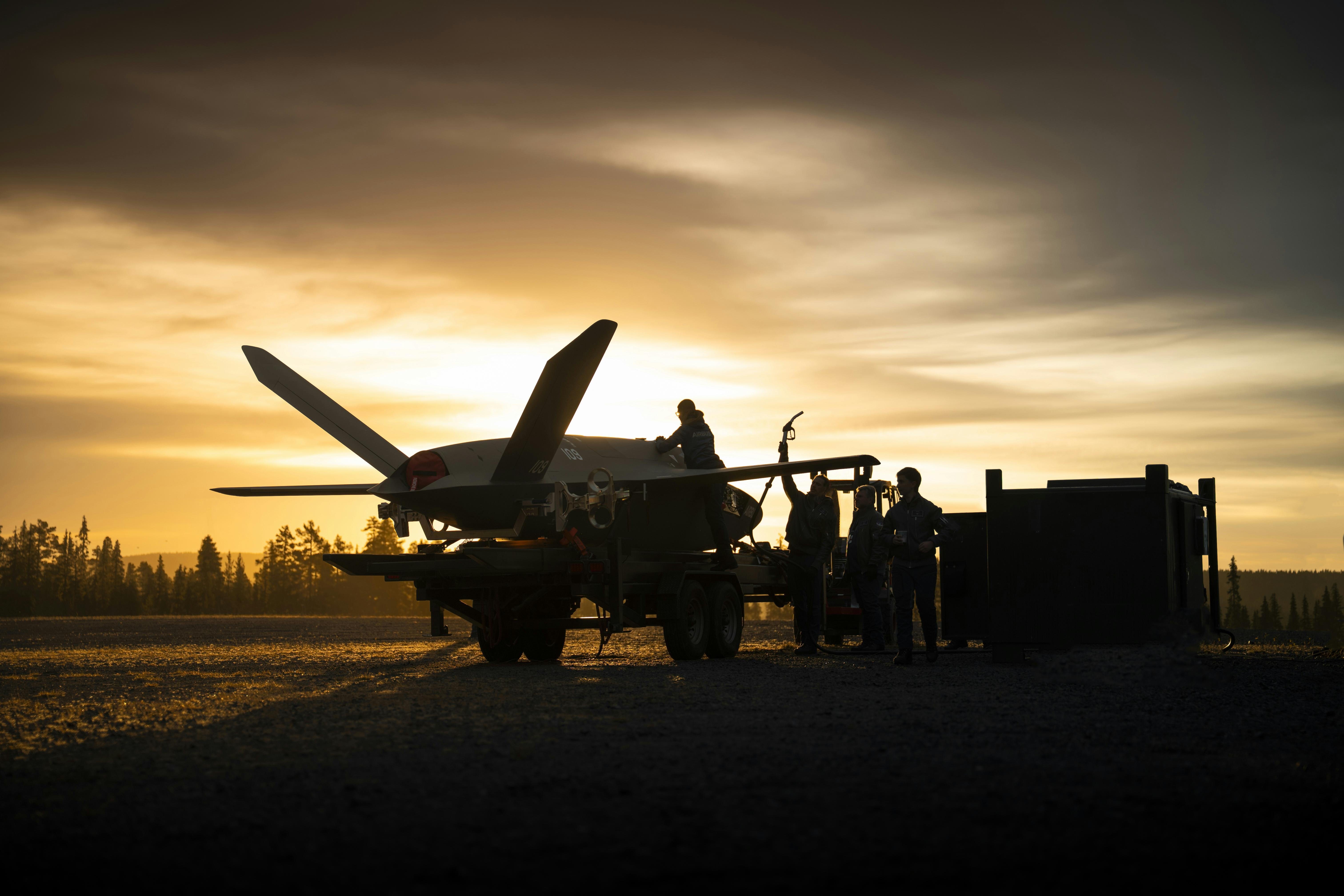
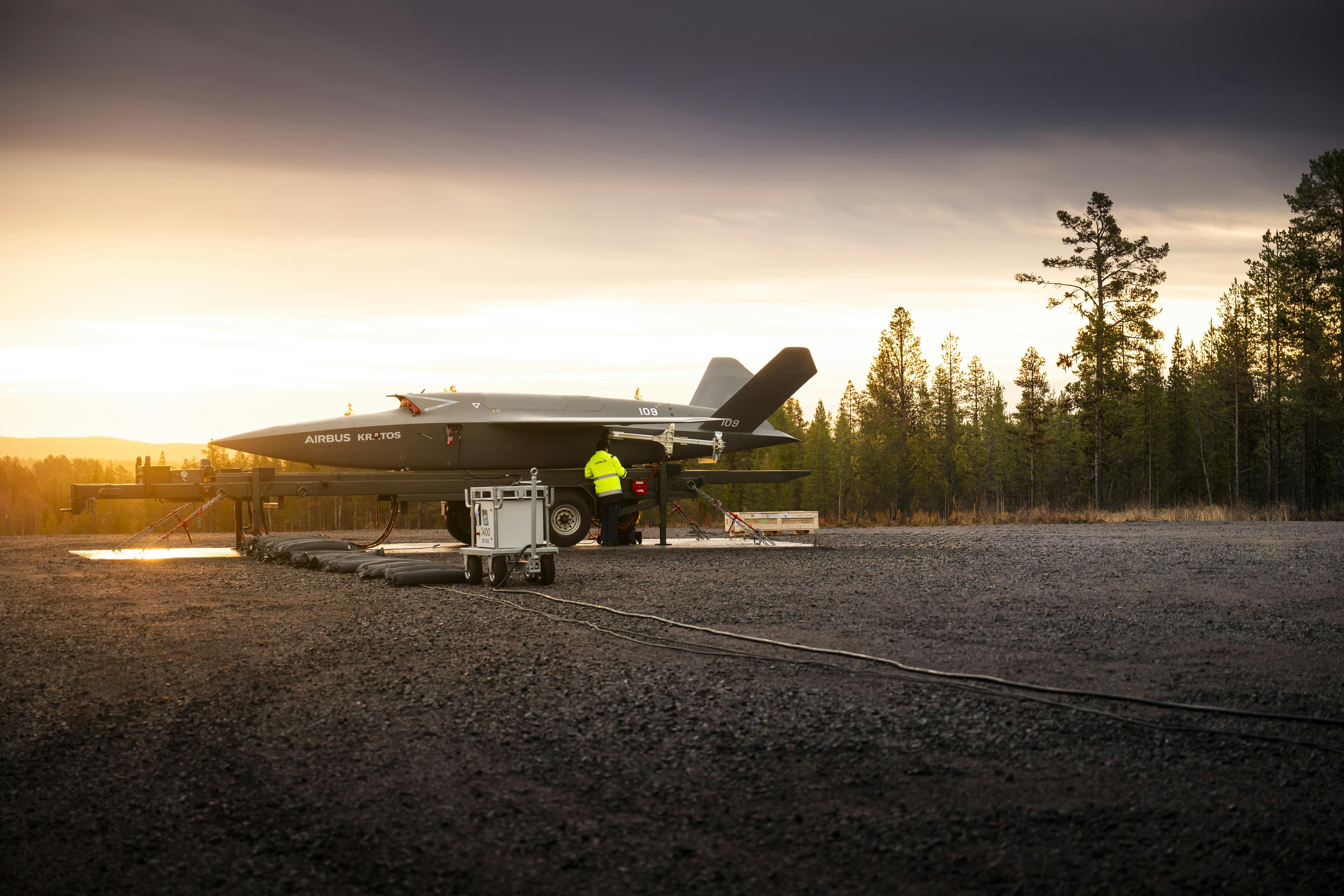
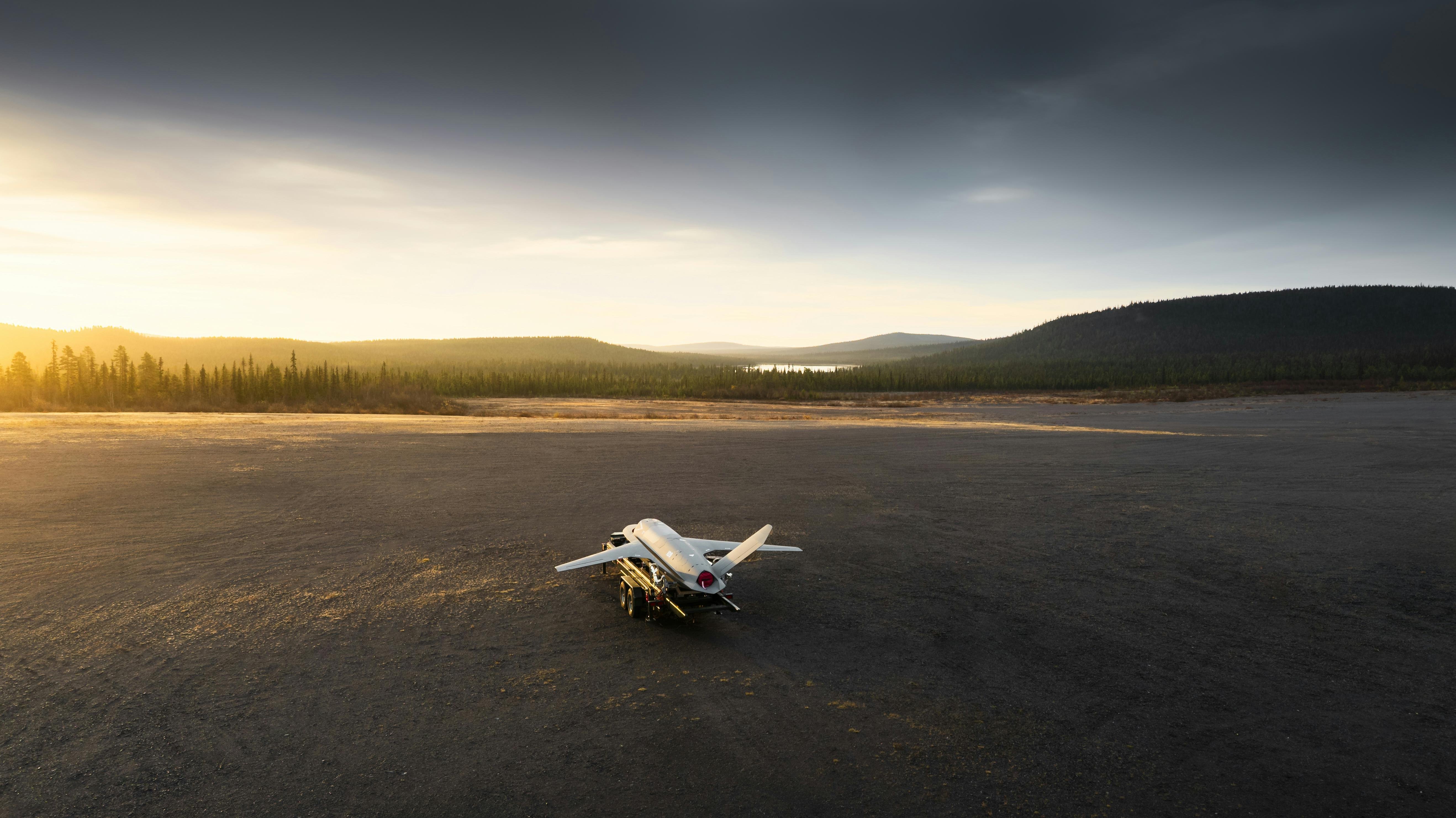
A week ago, Airbus and Kratos Defense & Security Solutions announced the first flight of their U740 Valkyrie uncrewed combat aircraft, a Europeanized version of the XQ-58A Valkyrie. Airbus is simultaneously working on its larger U760 Ravenstorm, intended for service in the early 2030s, and the company has previously pitched a stealthy CCA-like concept known as Wingman.

The ride of the Valkyrie ⚔
With the successful first flight of the Airbus U740 Valkyrie in Europe, we are one step closer to introducing an operational uncrewed Collaborative Combat Aircraft (CCA) to the German and other European Armed Forces.
The flight achieved all… pic.twitter.com/S2sFrtdmGA

— Airbus Defence (@AirbusDefence) October 12, 2026

Other entrants include Anduril, General Atomics partnered with Germany’s INTEC, as well as Lockheed Martin. Meanwhile, Helsing and Hensoldt are pursuing the homegrown CA-1 Europa, very much an MQ-28 lookalike.

The CA-1 Europa from the German defense startup Helsing. Helsing

Germany may not be looking for a single drone to do everything, a point we have discussed in the past:

“One option might be a split high-low approach that could pair more capable, longer-range systems for deep-strike missions with cheaper, attritable collaborative combat aircraft that can fly alongside crewed fighters. At this point, it should also be noted that CCAs could also give older fourth-generation fighters a new lease on life, boosting their lethality and survivability by extending their sensor reach, adding weapons capacity, and allowing uncrewed aircraft to take on more dangerous tasks.”

At the same time, Germany continues to define its requirements for a capability described in media reports as a Jagdbomberdrohne, or fighter-bomber drone. Berlin has yet to publicly clarify its intended concept of CCA operations, including whether the Luftwaffe envisions an uncrewed wingman operating alongside crewed fighters, a platform capable of carrying out long-range strike missions independently, or a system designed to perform both roles.

There are signs that the strike mission is being prioritized, at least initially, with a reduced emphasis on air-to-air missions. This is essentially the reverse of the U.S. Air Force’s CCA effort.

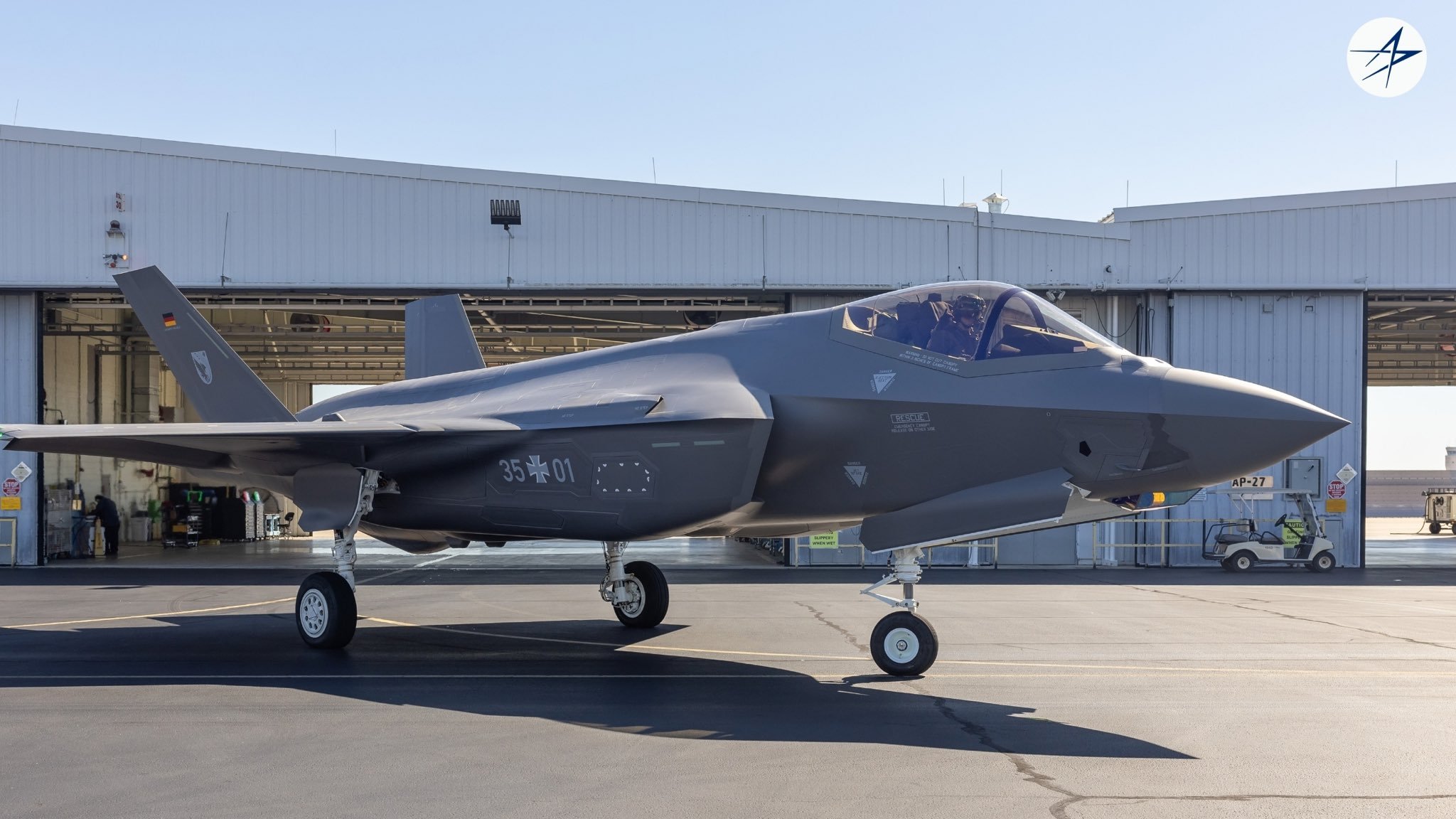
Since Germany is set to receive the F-35 stealth fighter, there is also an argument that Berlin could place more orders for the crewed jet. This could have the dual role of filling the gap left by the collapse of the pan-European Future Combat Air System (FCAS), specifically its sixth-generation crewed fighter, and the delayed introduction of the first operational CCAs. Germany is also looking forward to receiving more Eurofighters.

Germany’s first F-35A arrived at Ebbing Air National Guard Base in Arkansas earlier this month, where it will be used for training. Lockheed Martin

Germany’s evolving CCA plans form part of a broader effort by Western air forces to develop uncrewed aircraft capable of working alongside advanced fighters. These systems are intended to expand the number of available platforms, distribute sensors and weapons across a larger force, and potentially take on missions that would otherwise expose pilots and expensive crewed aircraft to greater risk.

Boeing’s Ghost Bat could still have an opportunity to compete, depending on the structure of the eventual acquisition process and the requirements Berlin establishes.

However, with testing reportedly planned from 2027 and operational fielding potentially slipping into the early 2030s, the original 2029 ambition for an operational German CCA appears increasingly uncertain.

Contact the author: thomas@thewarzone.com

The post Germany Drops Boeing MQ-28 Ghost Bat Rapid Procurement Plan appeared first on TWZ.

  •  

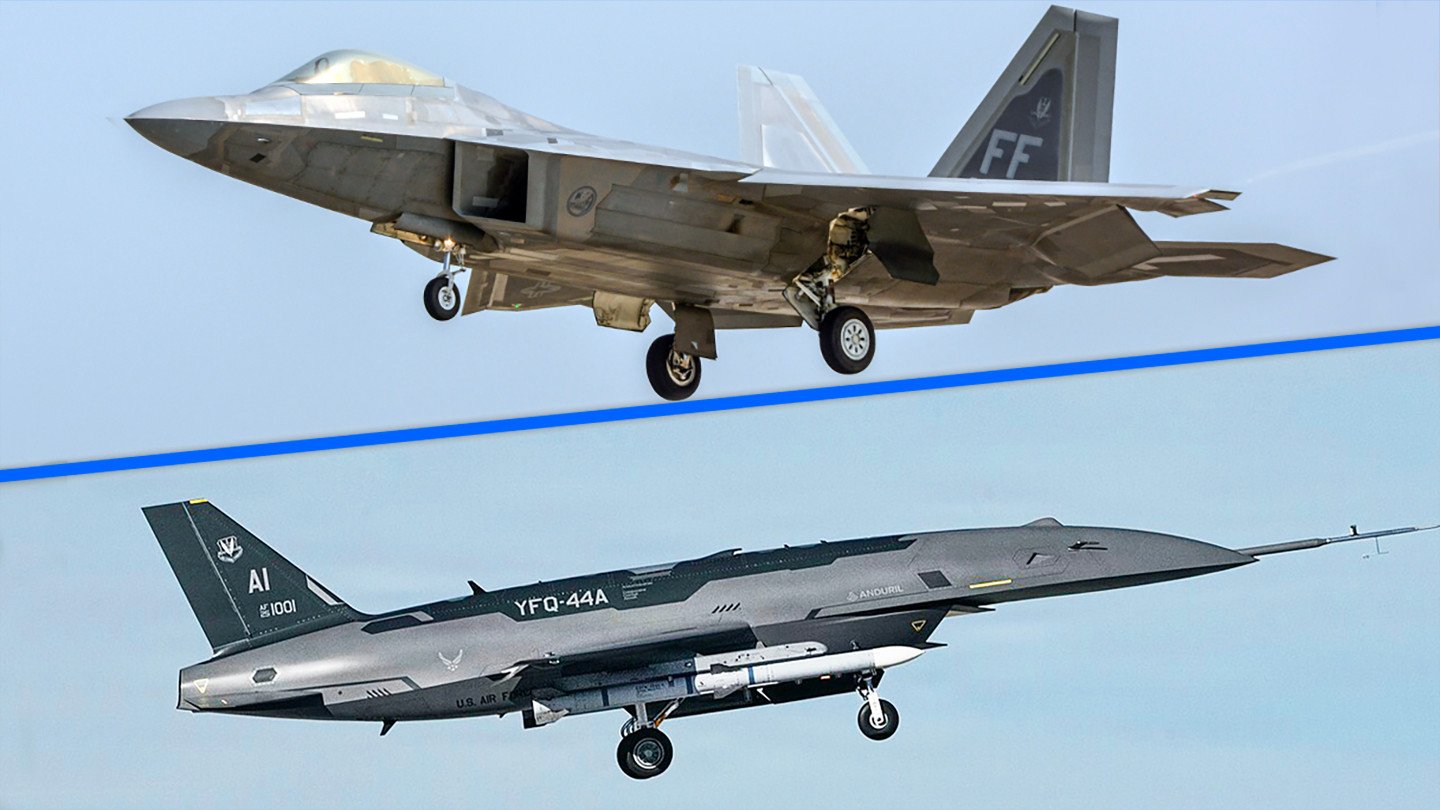
F-22 Pilot Controls FQ-44 Fighter Drone From The Cockpit For The First Time

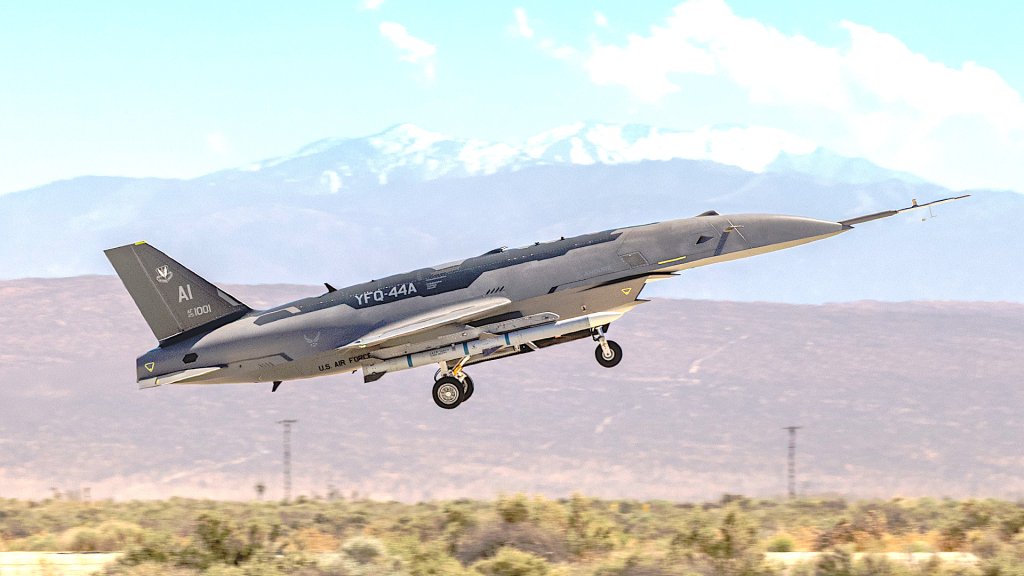
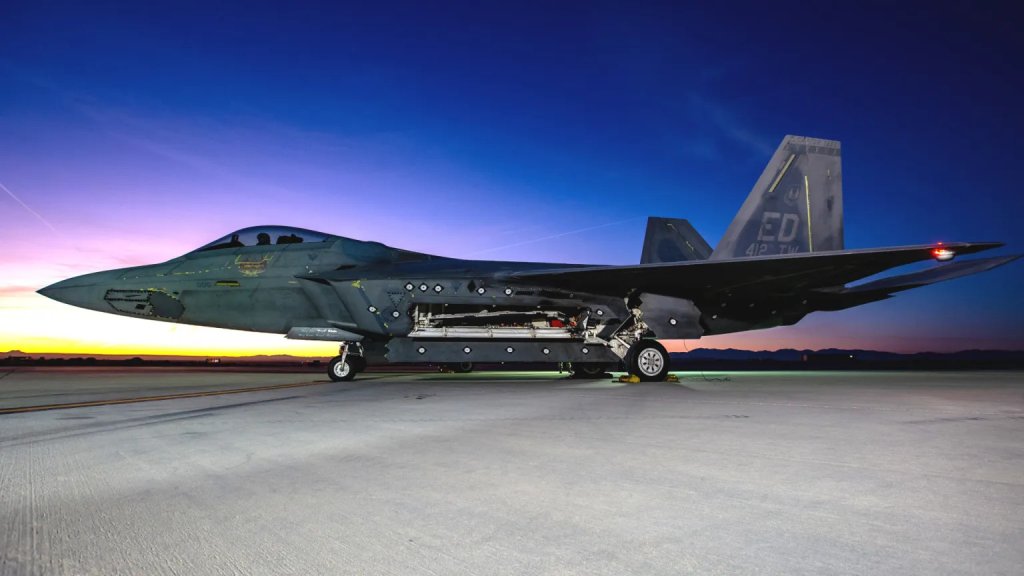
A pilot flying an F-22 Raptor fighter has issued commands to a YFQ-44A Fury Collaborative Combat Aircraft (CCA) drone in a first-of-its-kind test. This is an important development for the U.S. Air Force’s CCA program, as its F-22s are set to be the first aerial ‘quarterbacks’ for these uncrewed aircraft once they enter operational service.

The Air Force and Anduril, Fury’s prime contractor, announced the “airborne tactical-control demonstration” today, but it occurred sometime earlier this month. An Anduril spokesperson confirmed directly to TWZ that this was a first for an F-22 and a pre-production YFQ-44A. Last month, the company disclosed tests involving Fury flying in formation with F-35 fighters, but stressed that the latter were not yet issuing commands to the former in mid-air. A Fury drone also launched an AIM-120 Advanced Medium-Range Air-to-Air Missile (AMRAAM) for the first time earlier this year.

A stock picture of a pre-production YFQ-44A Fury CCA drone. USAF

The Air Force has orders in now for production of FQ-44As, as well as General Atomics’ FQ-42A Vengeance drones, under the first phase, or Increment 1, of its CCA program. The service is still planning to acquire additional CCAs, which could be of entirely different types, through a follow-on Increment 2. The goal now is to have a fleet of at least 500 Increment 1 CCAs by 2032. The recent test is part of efforts to lay the groundwork for an initial tranche of CCAs to start entering operational service around the end of the decade.

“During the demonstration, an F-22 pilot served as an airborne ‘quarterback,’ issuing high-level tactical directives to a single YFQ-44A,” according to a press release from the Air Force. “The aircraft’s onboard autonomy software interpreted and executed those directives in real time, conducting dynamic flight maneuvers and simulated combat tasks.”

A stock picture of an F-22 Raptor test jet. USAF

“The event brought together personnel from the 412th Test Wing, 422nd Test and Evaluation Squadron, 309th Software Engineering Group, Experimental Operations Unit, F-22 System Program Office and the CCA Software Autonomy and Teaming Branch,” according to the Air Force release.

The Experimental Operations Unit (EOU) mentioned here is based at Nellis Air Force Base in Nevada and has been leading efforts to pave the way for future Air Force CCA operations.

The “Fury and an F-22 both took off [from] Edwards AFB [Air Force Base in California] and joined up midair,” according to a separate release from Anduril. “While in flight, the Raptor pilot sent an updated mission plan to Fury using a tactical data link, commanding Fury through operationally-relevant maneuvers from the cockpit of the crewed quarterback.”

Neither the Air Force nor Anduril provided further details on how the F-22 was configured for this test. Past Air Force budget documents have mentioned the need to integrate “tablets, cables, and associated materials” onto the Raptor for this purpose. A single Raptor is also expected to be able to manage multiple CCA drones simultaneously.

The Raptor’s prime contractor, Lockheed Martin, has certainly been working with the Air Force to develop the relevant control architectures and user interfaces for that fighter, as well as the F-35. In terms of in-cockpit user interfaces for controlling drones, known work to date has centered largely on the use of touchscreen tablet-like devices, but this is understood to just be a starting point. Though tablet-based interfaces are a workable option, questions and criticisms about increased workload, especially for pilots in single-seat fighters, have been raised in the past.

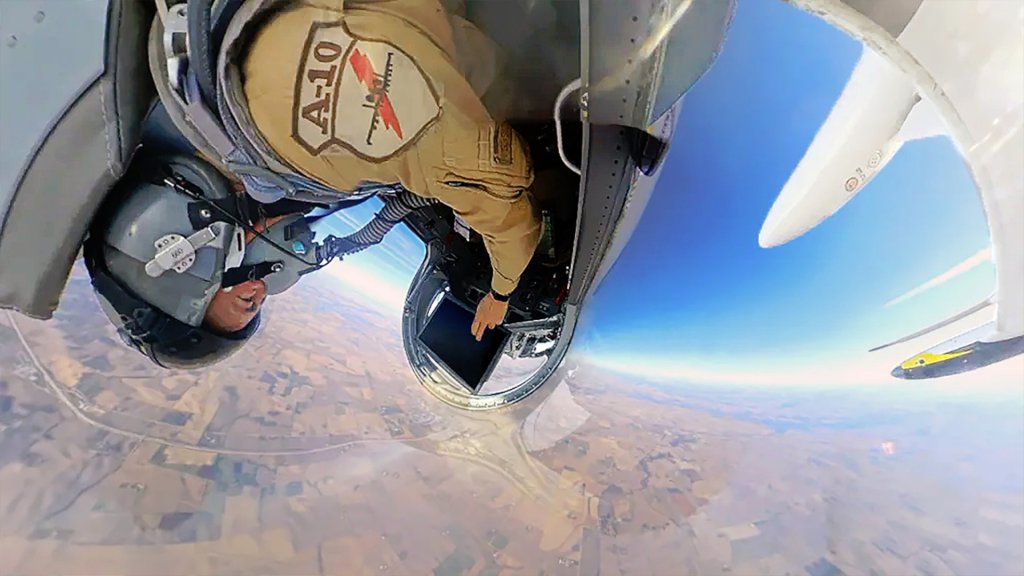
A view of a “battle manager” in the back seat of an L-39 light jet using a tablet-like device during a past test of capabilities to control drones in mid-air conducted by Lockheed Martin’s Skunk Works. Lockheed Martin

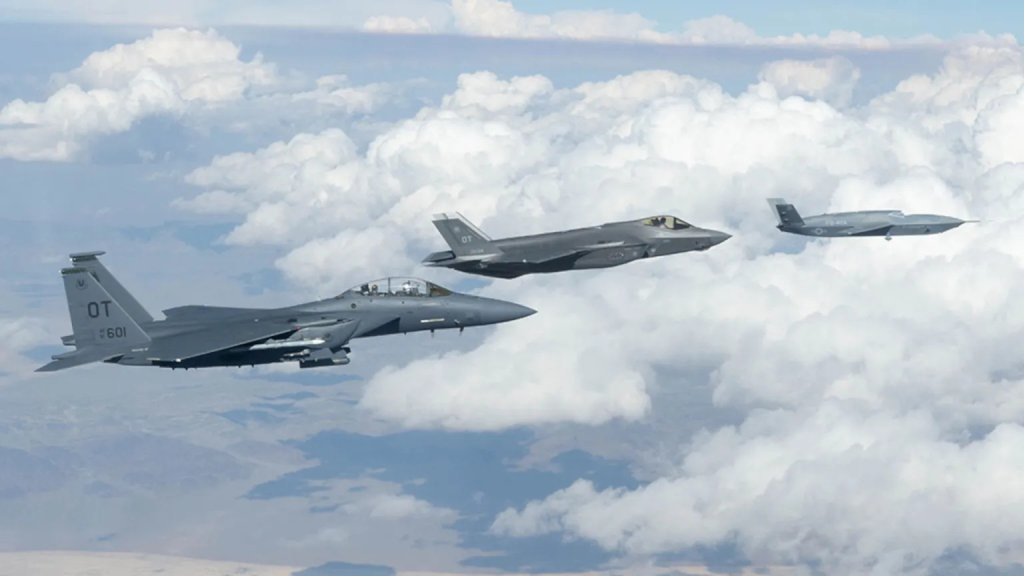
It is also worth noting here that General Atomics announced a similar demonstration involving a Raptor and an MQ-20 Avenger back in November 2025. General Atomics has been using the MQ-20 as a CCA surrogate in various types of testing. What the plan might be now to demonstrate the F-22’s ability to control an FQ-42A in flight is unclear. General Atomics has previously released a picture of a Vengeance drone flying in formation with, though not being directly controlled by, Air Force fighters.

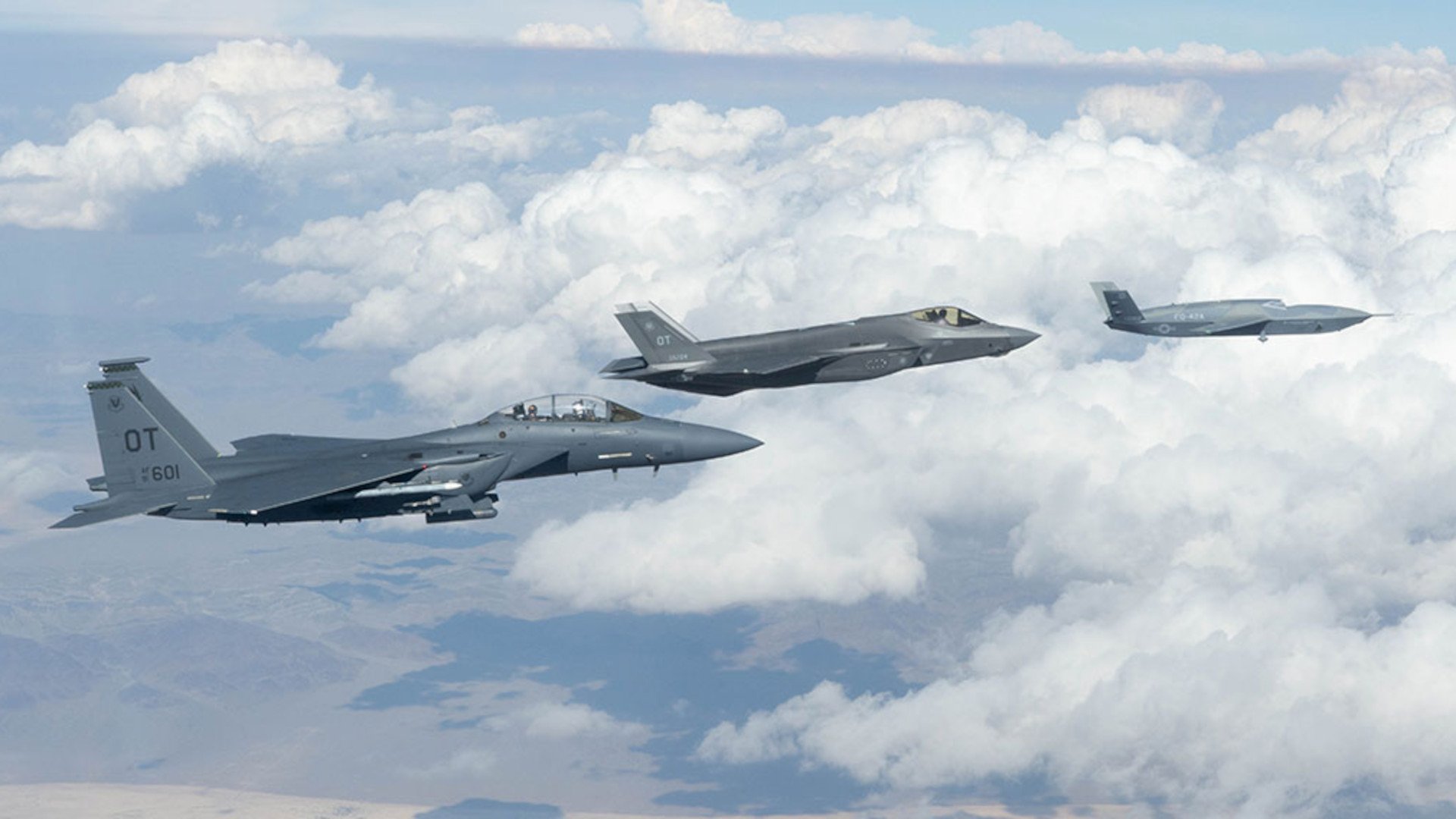
A General Atomics Vengeance drone, at right, in flight together with an F-35A Joint Strike Fighter and an F-15E Strike Eagle. General Atomics

In addition, Fury and Vengeance are set to make their debut in a large-scale exercise before the end of the year. Bringing the CCAs to the next iteration of Exercise Emerald Flag will give the Air Force further opportunity to test them in a more operationally relevant context alongside crewed fighters.

“We have not yet done a LFE [large-force employment exercise] with these [CCAs], for real. The first one is going to be Emerald Flag. That’s in December,” Lt. Col. Lyndon “OTTO” Bartlett, the EOU’s Director of Operations, said during a panel at the Air & Space Forces Association’s (AFA) 2026 Air, Space & Cyber Conference in September, at which TWZ was in attendance. “That’ll be our first tip [sic] dip of the toe in an actual force integration.”

The EOU, working together with other Air Force elements and industry partners, still has to answer a host of other outstanding questions unrelated to tactical operations. CCAs will be deployed, launched, recovered, supported, and otherwise operated in ways that are distinct from their crewed counterparts, and for which new policies and procedures will need to be developed. Just making sure human pilots have trust in their uncrewed wingmen operating as expected will be critical, underscoring the specific importance of the demonstration disclosed today. All of this applies equally to the U.S. Marine Corps and U.S. Navy CCA programs, which are being run in very close coordination with the Air Force’s efforts.

When it comes to the recent test involving the F-22 and the YFQ-44A, “this achievement demonstrates what is possible when we are aligned with industry on a shared imperative: delivering capability to the warfighter at unprecedented speed,” Secretary of the Air Force Troy Meink said in a statement today. “We are driving urgency into every part of acquisition from rapid integration and flight learning to disciplined assessment, so we can turn promising technology into combat capability at the pace the threat demands.”

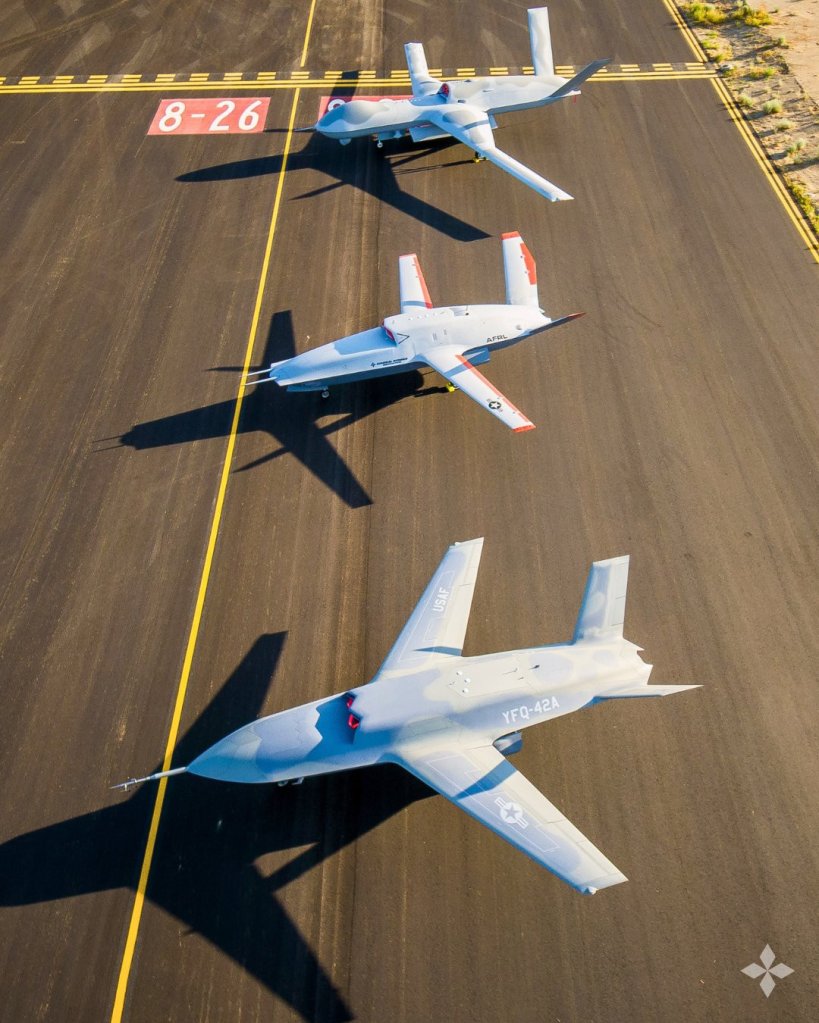
A graphic showing the FQ-42 and FQ-44 designs together. USAF

“This flight shows the power of crewed-uncrewed teaming and the advantage it provides our warfighters,” Air Force Chief of Staff Gen. Ken Wilsbach also said. “We must test often, learn fast, and give commanders what they need, when they need it.”

“The U.S. Air Force’s CCA program is the fastest moving, most mature CCA program anywhere in the world, and will be the first to field operational aircraft,” Mark Shushnar, Anduril’s Vice President of Autonomous Airpower, said as well. “Getting there demands that Anduril and the U.S. Air Force work together to prove out the capability, define the operational procedures, and build trust between operators and their semi-autonomous wingmen.”

With all this in mind, an F-22 issuing orders to a YFQ-44A in mid-air is an important new sign of what is on the horizon for the U.S. Air Force, though there is still work to be done.

Contact the author: joe@twz.com

The post F-22 Pilot Controls FQ-44 Fighter Drone From The Cockpit For The First Time appeared first on TWZ.

  •  

The Army’s Plan For Employing LUCAS Kamikaze Drones Against Its Adversaries

America’s adoption of long-range one-way attack munitions like the Low-Cost Uncrewed Combat Attack System (LUCAS) is evolving quickly. Training on how to fold these relatively low-cost, but potentially highly destructive systems into a joint force playbook for targeting adversaries on land and at sea, from the Pacific to Europe, and anywhere in between, continues.

How exactly LUCAS drones, and other types to come, will be used in future fights globally was highlighted during a panel at the Association of the U.S. Army’s (AUSA) main annual symposium earlier this week, at which TWZ was in attendance. The discussion was centered on how Army training is changing to meet the extreme combat demands of the future.

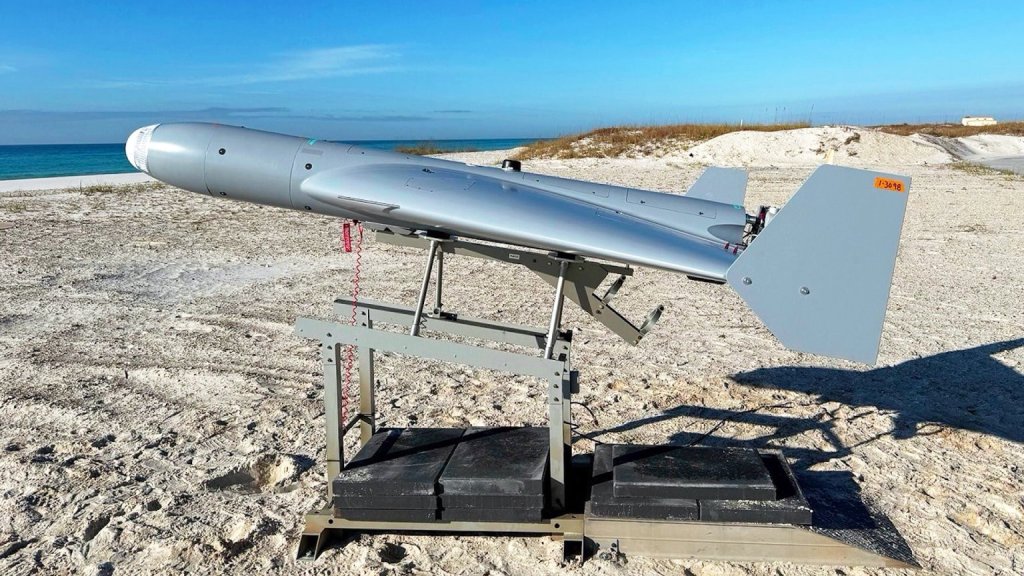
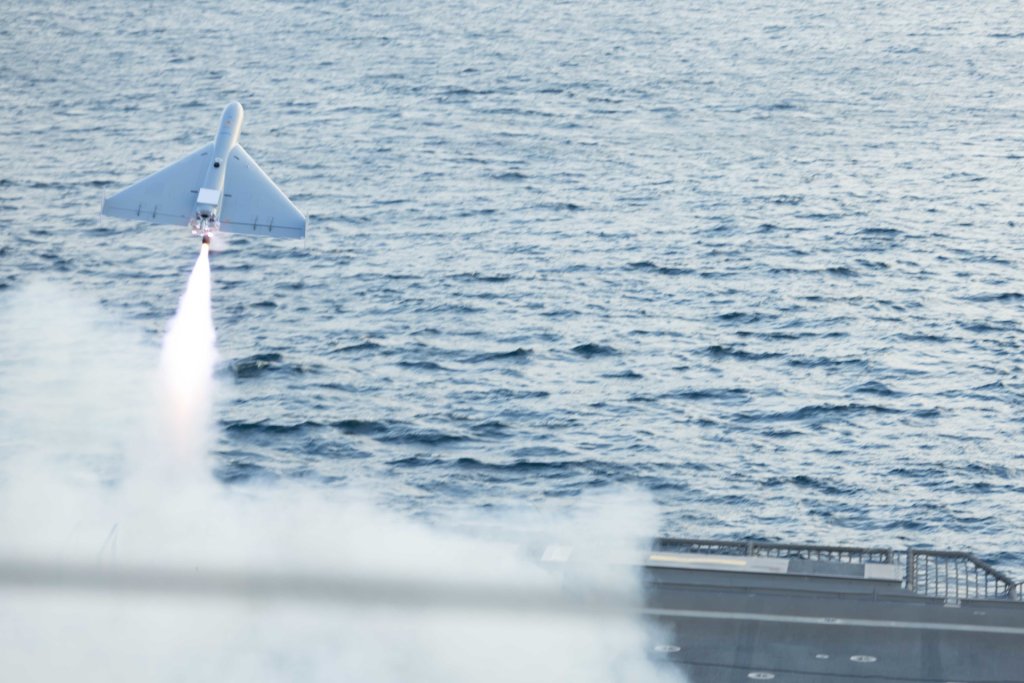
The U.S. military first announced it had begun fielding LUCAS, which was reverse-engineered from the Iranian-designed Shahed-136, in December 2025. This came just months after TWZ laid out a detailed case for why the U.S. military should start acquiring Shahed-136 clones in large volumes. LUCAS made its official combat debut in the opening phases of major combat operations against Iran earlier this year. The pusher-propeller, combustion-engine-powered kamikaze drones, which are employed from static launchers that can be positioned on the ground or installed on ships, and with the help of a small rocket booster, were subsequently praised as “indispensable” by America’s top commander in the Middle East.

A LUCAS drone on a static launcher. Shield AI

With all that in mind, “long-range strike drones like LUCAS, how is that fitting into your planning and training?” our Howard Altman asked the panelists at AUSA.

“We’ve taken our Bayonet Academy, as we call it, a training area at JBLM [Joint Base Lewis-McChord in Washington State], and have started incorporating the employment of long-range one-way attack. Like, how do I maintain it? How do I employ it? How does that then get orchestrated in order to achieve that effect?” Maj. Gen. Bernard Harrington, head of the 7th Infantry Division, responded. “So we see that playing a key role in order to be able to achieve that effect at mass, … [and] in an affordable manner, while also being able potentially to preserve something that’s more exquisite for something that requires an exquisite munition.”

Earlier this year, the Army brought the 7th Infantry and the 1st Multi-Domain Task Force together under the umbrella of what it now calls the Multi-Domain Command-Pacific (MDC-PAC). Maj. Gen. Harrington is also now the commander of MDC-PAC, and has talked previously about how he sees uncrewed capabilities as critical to overwhelming adversaries in future conflicts. The service’s MDTFs, of which there are now four, have been at the leading edge of fielding new long-range strike and other advanced capabilities.

In his response to Altman’s question, Harrington elaborated more on how he sees long-range one-way attack munitions like LUCAS factoring specifically into future fights in the Pacific, such as one against China. The Chinese People’s Liberation Army (PLA) has already established extensive anti-access and area denial (A2/AD) bubbles in the Western Pacific and is continuing to expand on that strategy.

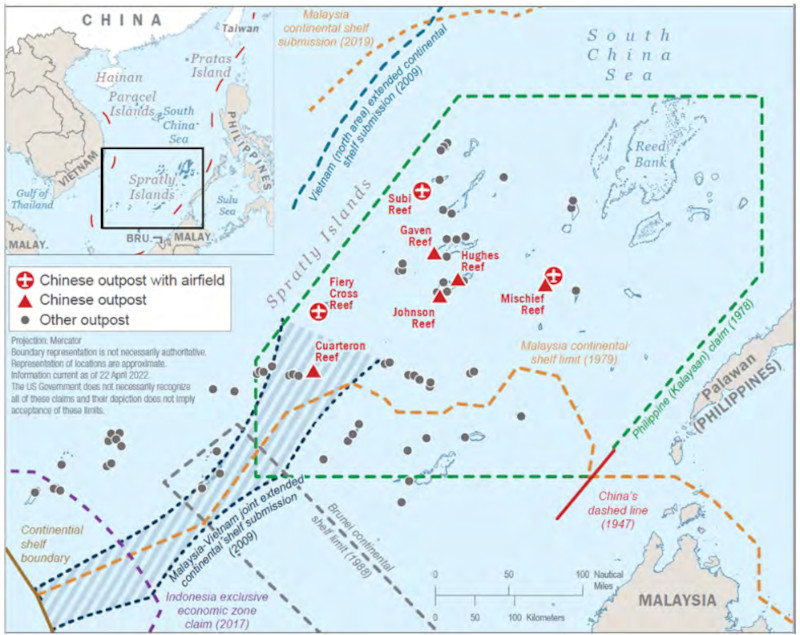
A map showing Chinese military outposts in the Spratly Islands at the southern end of the South China Sea, including those seen in the pictures in this story, as well as other non-Chinese facilities in the hotly contested region. This gives a good sense of the anti-access/area denial bubbles that China has already established and continues to expand upon. DOD

“So as we start modeling out what it looks like to be able to penetrate a portion of the anti-access/area denial network in support of the joint task force in the PACOM [U.S. Pacific Command] area of operations, we started looking at, well, how do I bend – how do I achieve mass at a cost curve?” the 7th Infantry and MDC-PAC commander explained. “What effect am I really trying to achieve on a system in order to provide that window of opportunity for that joint force commander?”

“So maybe I don’t necessarily need to sink a ship, but if I take out certain systems on that vessel, well then it creates this temporal window opportunity,” he continued. “Then that joint force commander can surge in that carrier strike group or bomber task force.”

What the general is describing here is typically referred to as a mission kill. For years now, TWZ has repeatedly highlighted how long-range one-way attack drones and loitering munitions could be used in exactly this way against even larger warships. Damaging or destroying radars, communications antennas, and other subsystems could severely degrade a ship’s combat effectiveness and increase its vulnerability to follow-on attacks. The time and effort required for repairs could keep it sidelined for a protracted period of time.

A LUCAS drone seen being launched from the stern flight deck of the US Navy’s Independence class Littoral Combat Ship (LCS) USS Santa Barbara during a test. NAVCENT/C5F/U.S. Army Spc. Kayla Mc Guire

“So when we started looking at that, we saw great value. That maybe I don’t have to use specifically or unmask an exquisite system to achieve that effect,” Harrington added. “If I can achieve [the] effect of mass utilizing lower cost systems, hey, maybe that will get me there. So we modeled that, and what we saw was, particularly with our unmanned surface vessels [USV], long-range one-way attack, long-range launch effects, the ability to synchronize and mass that could potentially get us to achieve that effect.”

As with long-range one-way attack drones, the adoption of kamikaze USVs by the U.S. military is evolving rapidly. America’s first use of this capability in real combat also came against Iran in July.

Yesterday, using multiple one-way attack surface drones, CENTCOM forces successfully struck a submarine and ship maintenance facility in Iran. Three Corsair unmanned surface vessels hit the port at Bandar Abbas Naval Base, marking the first time American forces have employed sea… pic.twitter.com/bOM2kmgRxz

— U.S. Central Command (@CENTCOM) July 13, 2026

The term “launch effects” that Harrington used here is a catch-all term the U.S. military now routinely applies to a diverse array of uncrewed aerial systems designed to be launched from other platforms in the air, on the ground, and/or at sea. This includes loitering munitions, but also designs configured for surveillance and reconnaissance, electronic warfare, signal relay, and other tasks. The lines separating long-range one-way attack drones, launched effects, and traditional cruise missiles and decoys are in many cases now very blurry.

None of this is limited to the Pacific region or the Middle East, either.

“So, in terms of launch effects, I think you mentioned LUCAS. Covenant’s out there. There’s other systems that are out there,” Brig. Gen. Steven Carpenter, head of Multi-Domain Command-Europe (MDC-E), another one of the panelists, also said in direct response to Howard Altman’s question. “In Europe, we like that, more than accepting risk in an area, maybe we’re disintegrating an anti-access/area denial bubble in the center, and then way up north, we’re going to go ahead and accept some risk there. We like to use those systems to create counter-fire parity, long-range fires parity with an adversary.”

Similar to the establishment of MDC-PAC, MDC-E was formed last year by blending together the 56th Artillery Command and the 2nd MDTF, both of which are forward-deployed in Germany.

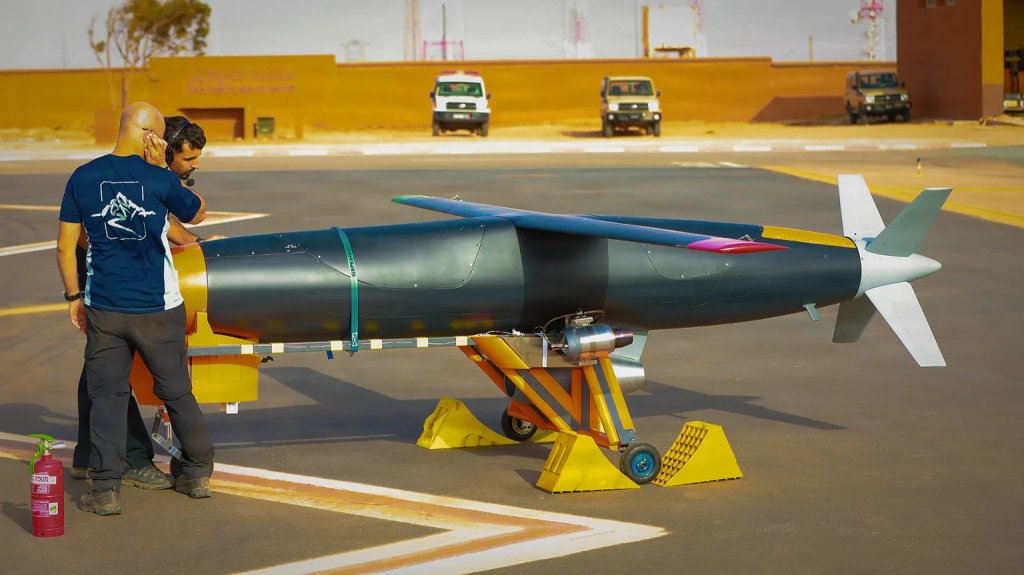
The “Covenant” mentioned by Carpenter is a U.S.-Israeli company that has been developing a long-range strike weapon system called Anthem. It was just confirmed in September that the U.S. Army has been actively engaged in testing of Anthem. This includes a live-fire demonstration in Morocco earlier this year. You can read more about Anthem and the current plans for it here.

An example of Covenant’s Anthem long-range strike weapon, seen here being tested by the US Army. US Army

“The reason we like those types of systems is because they’re EMI [electromagnetic interference] resilient, they’re longer range, and they’re higher yield, so they can go ahead and destroy like SS-26 systems, SS-21 systems,” the MDC-E commander added.

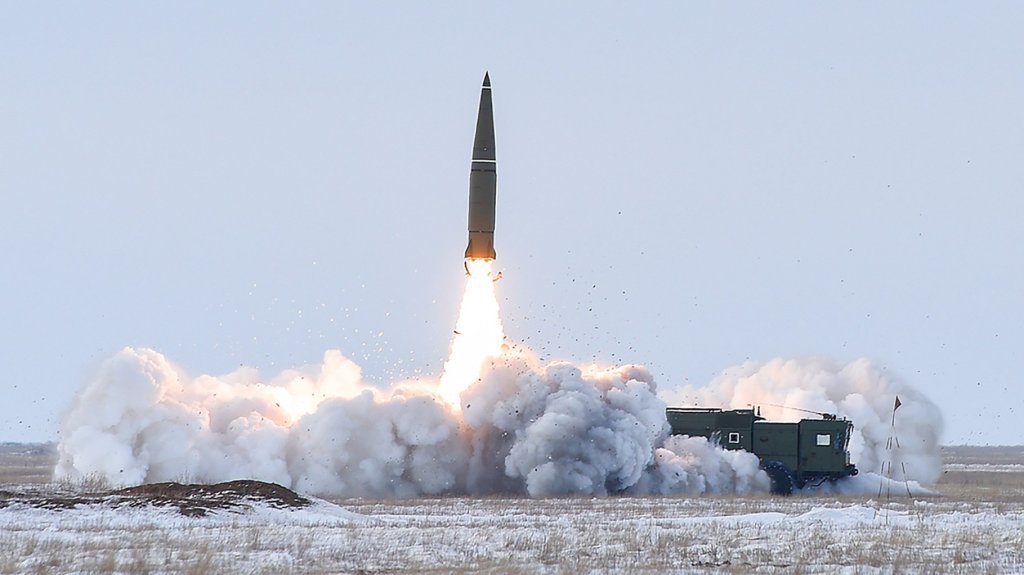
SS-26 Stone and SS-21 Scarab are the NATO reporting names for Russia’s Iskander-M and the older Soviet-designed OTR-21 Tochka short-range ballistic missiles, respectively. They are both fired from road-mobile launchers. Russia and Ukraine have employed Tochka in the course of their ongoing conflict, though their role on both sides has steadily diminished amid shrinking inventories. Tochka is also increasingly limited in service elsewhere globally. Iskander-M is a much more capable design that has factored heavily into U.S. military planning in Europe for years now. The U.S. military has previously acknowledged that war in Ukraine has led to improvements to that missile that make it even more dangerous and difficult to intercept.
A stock picture of an Iskander-M short-range ballistic missile being fired from a road-mobile transporter-erector-launcher. Russian MoD

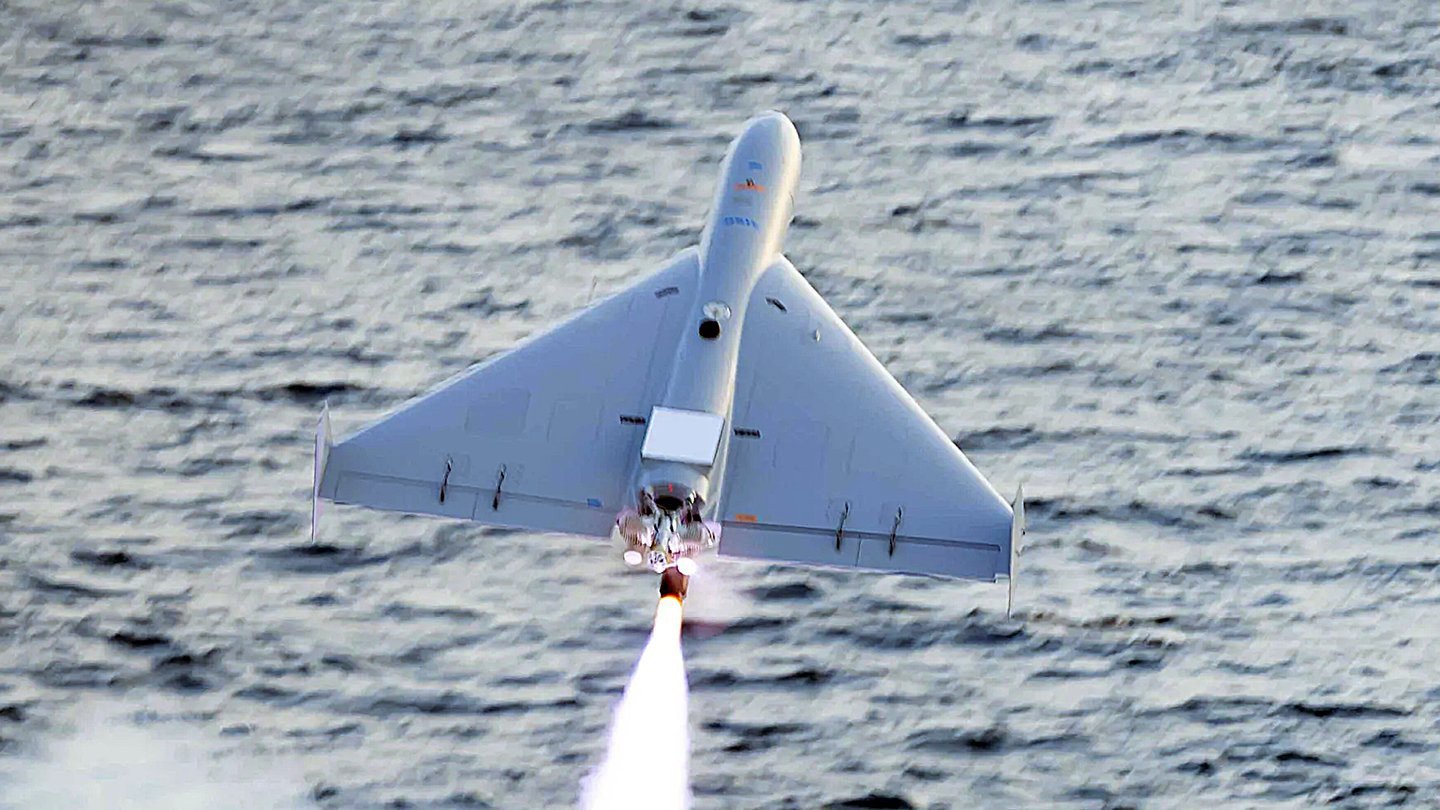
Long-range one-way attack munitions like LUCAS are well suited to striking surface-to-surface and surface-to-air missile launchers, along with other high-value and time-sensitive targets, as TWZ highlights regularly. It’s also worth noting that Iran’s Shahed-136, specifically, traces its roots back to pioneering Israeli developments in munitions of this kind, where the focus initially was explicitly on finding new avenues to neutralize hostile air defenses. Iran has shown Shahed-136s and other related designs being employed in exactly this way in large-scale exercises in the past, as seen in the video below.

More recently, Iranian forces demonstrated just how effective these capabilities could be in a real-world context in retaliatory attacks on prized air defense radars on the opposite side of the Persian Gulf after the United States and Israel launched their open waves of strikes back in February. TWZ previously explored the far-reaching ramifications of this in a detailed feature that you can find here.
Overall, as we’ve previously written:

“When it comes to this class of drone, speed and advanced guidance concepts do not define its utility. Range and cost do. Survivability comes in numbers, and due to their smaller size, use of composite materials, and small internal combustion engine, as well as their slow speed. These attributes, along with their low-altitude flight profile, mean they possess a reduced signature and general level of detectability that can be a challenge for traditionally configured ground-based radars. Despite their smaller signature, the fact that they are still somewhat vulnerable to interception is actually a positive, but we will get to that in a moment.”

“Above all else, the Shahed-136 and other long-range one-way attack drones exist to put a relevantly-sized warhead on a target far from their launch position at the lowest possible cost. It was previously estimated that the Russian Shahed-136 variant costs around $50,000 per copy, with some estimates being far lower. This cost has also likely declined significantly since Russia has mastered the design and drastically ramped up serial production. By comparison, traditional cruise missiles with similar range have costs in the millions of dollars per round, so the price differential is very dramatic. The Shaheds are also just far easier to build and can be produced in much less time than a typical cruise missile.”

Another look at a LUCAS long-range one-way-attack drone. Mark Schauer/US Army

The ‘mass’ afforded by LUCAS and other long-range kamikaze drones also imposes problematic cost calculations for opponents when it comes to the air defense equation, and offers a way to rapidly drain an opponent’s stocks of vital interceptors. These are realities the U.S. military is currently grappling with after expending thousands of anti-air interceptors in conflict with Iran and in other crises in the Middle East in recent years, as well as supporting allies and partners, such as Ukraine.

LUCAS, specifically, is already in line to become even more capable through the introduction of a swarming capability, made possible by the Hivemind autonomy software package from Shield AI. As we’ve explained before:

“Using the software, multiple LUCAS drones will be able to share tasks and maneuver cooperatively, making saturation attacks even more effective. As well as the drones dynamically rerouting, avoiding air defenses, and otherwise adapting to changing battlefield conditions, an AI pilot makes it easier for missions to continue despite hostile jamming or loss of datalink connectivity. Indeed, using AI, drone swarms can maintain near-perfect combat efficiency even if it loses members. Drones can be configured with all different payloads, with the swarm’s makeup tailored to each mission, and the AI system can maximize their collective effectiveness at all times.”

The U.S. Army still has many questions to answer about how it will field LUCAS and other long-range one-way-attack drones on a more widespread basis, as well as train personnel to employ them. As evidenced by the establishment of the MDTFs, and now the MDC-PAC and MDC-E formations, the underlying force structure that will go along with all of this is still evolving, as well.

The remarks from Maj. Gen. Bernard Harrington and Brig. Gen. Steven Carpenter at AUSA this week show senior Army leaders are working hard now to lay the groundwork to answer these questions. A clear vision for how LUCAS and similar weapons will be employed in future fights against land-based and maritime threats is taking shape already.

Contact the author: joe@twz.com

The post The Army’s Plan For Employing LUCAS Kamikaze Drones Against Its Adversaries appeared first on TWZ.

  •  

New Montana “Super Range” Complex Could Add Critical Weapons Testing Capacity

A plan for a new military weapons “super range” test center in Montana announced by President Donald Trump Wednesday night seeks to address a growing concern about the need for more such facilities. As the U.S. races to develop autonomous capabilities, hypersonic munitions, laser and directed energy weapons and improved electronic warfare systems, a limiting factor has been the lack of suitable locations for testing.

While the U.S. military has a wide array of installations where it can test these systems, it’s still not enough. In addition to the massive increase in weapons development and the need for more realistic training, the changing nature of war is outstripping the capacity of existing facilities as future kill webs will extend thousands of miles, not hundreds. There are only so many places with enough space to try out these systems even to a limited degree without butting up against statutes and regulations while also avoiding interference with civilian air traffic and communications, all in an environment remote enough to avoid prying eyes. The need for more and bigger testing grounds is an issue TWZ has long raised.

In addition to the backdrop of the increase in a wide range of weapons testing, much of it aimed at China, Trump’s super range announcement was delivered as the Pentagon and services are specifically creating commands dedicated to autonomous weapons. On Tuesday, during the annual Association of the U.S. Army (AUSA) conference in Washington, D.C., attended by TWZ, the acting Army Secretary unveiled one such new command, which we will discuss in greater detail later in this story.

“I’m pleased to inform ​you and announce that right here in Montana, the Department of War is ⁠going ⁠to establish a new ⁠”super range” ​for testing advanced weapons and technologies, technologies including potential autonomous weapons, space, and electronic ​warfare technology, supersonics and ⁠hypersonics,” Trump said during a campaign rally in Kalispell. “Montana will help ensure the American military always reigns supreme.”

.@POTUS: "I'm pleased to inform you and announce that right here in Montana, the @DeptofWar is going to establish a new Super Range for testing advanced weapons and technologies, including potential autonomous weapons, space and electronic warfare technology, supersonics, and… pic.twitter.com/W4YqKfq8X4

— Rapid Response 47 (@RapidResponse47) October 15, 2026

Trump provided no additional details about where this new “super range” will be located, when it will come online, exactly which systems will be tested or how much it will cost.

Thursday morning, the office of U.S. Sen. Tim Sheehy noted that he has been “a strong advocate for building an advanced training range in Montana, securing $10 million for a feasibility study in the FY27 National Defense Authorization Act that passed the Senate Armed Services Committee earlier this year.”

“The 21st-century battlefield is being redefined by new weapons and evolving technical frontiers that require a novel approach to how America will resource its warfighting capabilities,” the senator said in a statement. “Contested spectrum, electronic warfare, hypersonics, space capabilities and enhanced targeting require a new class of testing and evaluation facilities for our military. The U.S. faces a clear choice: adapt and expand our development infrastructure to the realities of modern warfare, or risk falling behind adversaries who iterate faster.”

The Montana Republican highlighted the value of his state’s huge swaths of undeveloped land for this effort.

“By combining our state’s vast landscapes, innovative spirit, and proud tradition of military service, we are the Last Best Place to ensure America’s fighting men and women have the technological edge they need to dominate the battlefield and win the wars of tomorrow,” he explained.

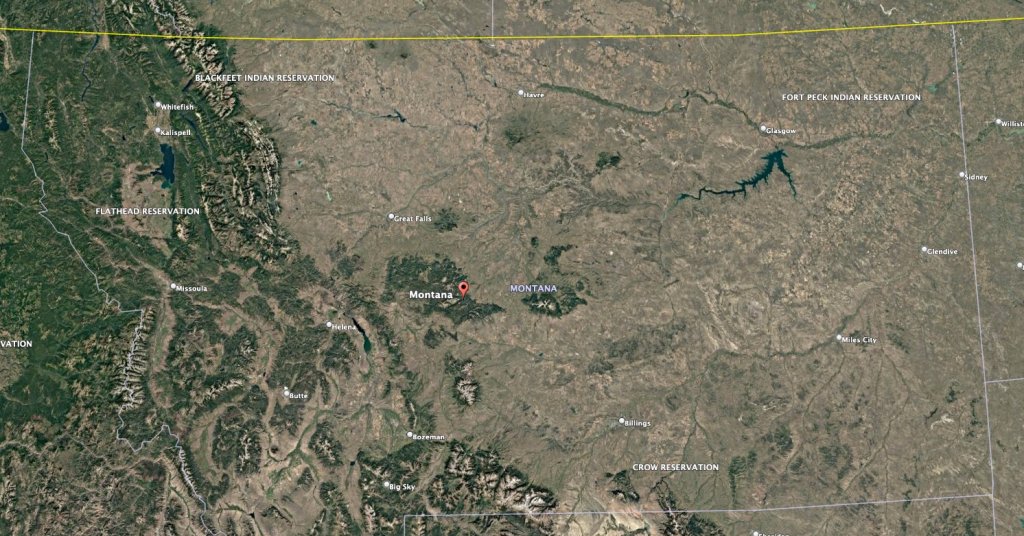
Montana (Google Earth)

Like Trump, Sheehy offered no specifics about exactly where in Montana the “super range” will be located, when it will come online or how much it will cost. We have reached out to the White House, Sheehy and the Pentagon for more details. The Pentagon deferred us to the White House, which referred us back to the Pentagon. We also contacted the office of U.S. Sen. Steve Daines and Gov. Greg Gianforte.

There are already a number of facilities in Montana conducting the kind of military weapons testing described by Trump. One that closely matches what would be needed from such a location is the Montana Spaceport & Test Range and the affiliated Limestone Hills Innovation & Test Campus. A public-private aerospace and defense initiative, it already conducts testing for next-generation space vehicles, hypersonic, supersonic and ballistic weapons, drones and counter-drone systems and electronic warfare equipment.

Another potential site could be an expansion of the Big Sky Autonomous Systems Range (BSASR). Located near Bozeman, it is “the Lobo Institute’s primary training and testing facility for U.S. and allied military, federal, and partner organizations.” Operated under the Lobo Tactical division, BSASR is “a 6,000-acre, fully fenced complex purpose-built for advanced unmanned aerial systems operations, full-spectrum live fire, mounted and dismounted mobility, and full mission profile exercises grounded in the latest tactics, techniques, and procedures from active conflict zones,” according to the Lobo Institute. “The range pairs realistic terrain with the regulatory, infrastructure, and instructor depth required to train against the operational realities of today’s and tomorrow’s battlefields — and it does so in a remote, controlled environment where units can push hard while keeping risk to acceptable levels.”

Training at the Big Sky Autonomous Systems Range in Montana. (BSASR)

We have reached out to both facilities for more details.

The new super range could also leverage existing range space on the ground and in the air. There is also the large Hays Military Operations Area (MOA) which could be expanded for this new test range effort. MOAs are blocks of airspace designated for military training. Malmstrom Air Force Base and its ICBM fields could also potentially be utilized. Overall, it’s possible a number of existing range areas could be interconnected, both digitally and via airspace corridors, to create a larger complex, as well.

The Pentagon has long realized the need to increase the areas where it can test out these systems, especially to evaluate them under combat-like conditions.

“The current open-air range space should be increased and better integrated to support system-of-systems assessments of air, land, and sea combat systems with capability for emerging long-range fires, hypersonic missiles, EMS warfare, unmanned systems, nuclear effects, and directed energy (DE) weapons,” the Pentagon’s Director of Operational Test & Evaluation (DOT&E) stated in a report last year. “The DoW needs to invest in and coordinate expanding and connecting the airspace available to the open-air ranges enabling testing and training of advanced capabilities.”

DOT&E

The current facilities are inadequate, DOT&E further explained.

“Threat systems and our own capabilities far exceed the current available air space on the open-air ranges,” according to the report. “The ranges need support and assistance to coordinate additional airspace and corridors with the FAA and industry. Expanding and connecting range air space is necessary to facilitate testing and training critical long-range capabilities that our warfighters need and to replicate the threats they will face.”

In addition, the report states that “to test missiles with longer ranges and gather data to support simulation validation, including for hypersonic missiles, the DoW should invest in long-range, overland missile flight test corridors with land-based impact areas and mobile hypersonic-specific range instrumentation to produce the required lethality data against threat-representative targets for terminal area assessments.”

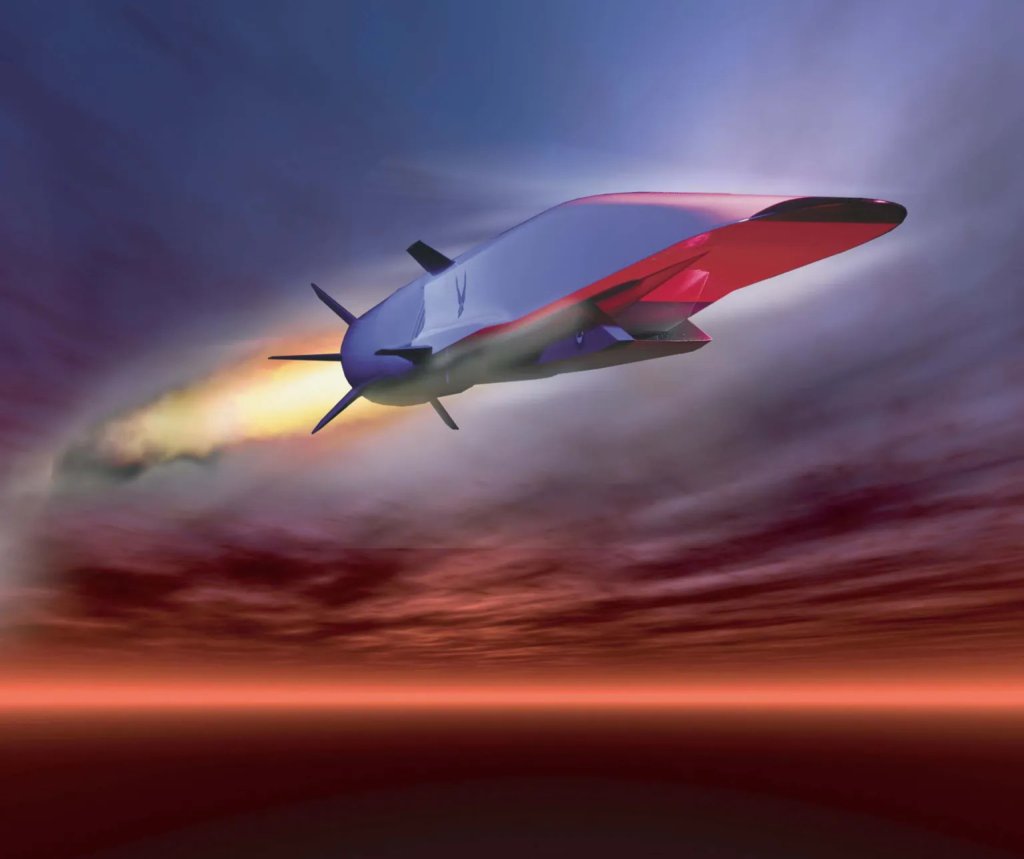
Rendering of an X-51A Waverider hypersonic weapon. Powered by a Pratt & Whitney Rocketdyne SJY61 scramjet engine, it is designed to ride on its own shockwaves and accelerate to about Mach 6. (U.S. Air Force)

The Defense Department had largely been conducting the testing of hypersonic weapons — those that can reach speeds of Mach 5 and above — at sea given the need for the long ranges for evaluation. Still, even that was limited. The Pentagon restricted the number and location of hypersonic tests it carried out each year because of the aging fleet of ships it used as its primary data collection assets to track the capabilities while in flight.

Retired Block 20 and Block 30 RQ-4 Global Hawks belonging to the U.S. Air Force, reconfigured as RangeHawks under the SkyRange hypersonic weapon testing infrastructure program, would help address some of those restrictions. You can read more about that in our story here.

However, if testing moves to an overland phase, the need for expanded air corridors could grow increasingly critical. Last year, the Pentagon’s Test Resource Management Center (TRMC) identified three candidate locations to perform those tests, one over Alaska, another at White Sands Missile Range in New Mexico and a third in Australia, Defense News reported at the time.

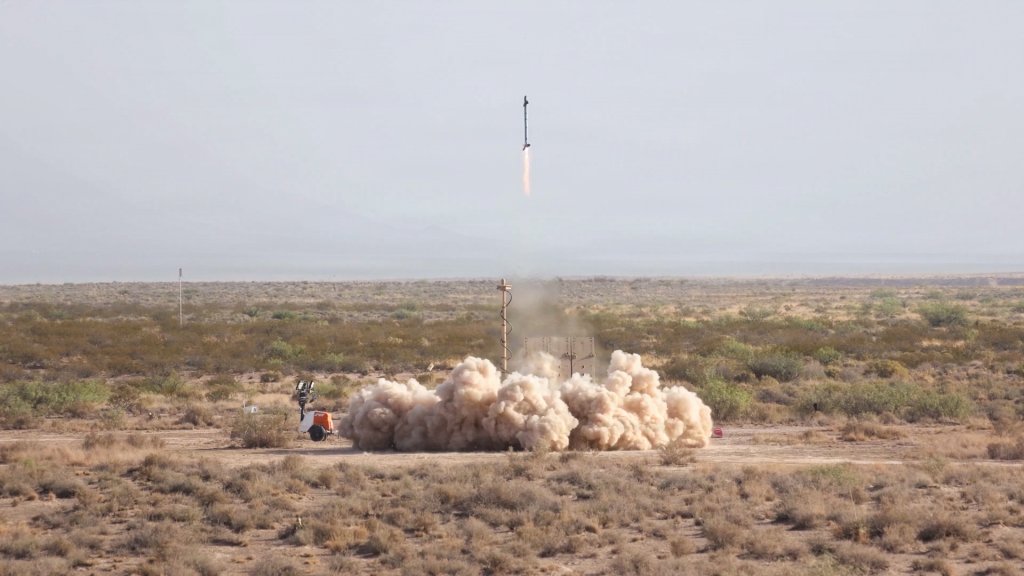
An interceptor launches from an Indirect Fire Protection Capability (IFPC) system operated by Soldiers assigned to the 1st Battalion, 51st Air Defense Artillery Regiment, 7th Infantry Division (Multi-Domain Command Pacific), during a test at White Sands Missile Range, New Mexico, on July 28, 2026. (U.S. Army photo by Sgt. Michael Majors and White Sands Missile Range Public Affairs)
An interceptor launches from an Indirect Fire Protection Capability (IFPC) system operated by soldiers assigned to the 1st Battalion, 51st Air Defense Artillery Regiment, 7th Infantry Division (Multi-Domain Command Pacific), during a test at White Sands Missile Range, New Mexico, on July 28, 2026. (U.S. Army photo by Sgt. Michael Majors and White Sands Missile Range Public Affairs) Sgt. Michael Majors

Hypersonic testing in Australia is already underway. Earlier this month, we broke the news that the U.S. Air Force’s scramjet-powered Hypersonic Attack Cruise Missile (HACM) had finally reached the flight test phase, with at least one “release” having been carried out so far over a range in Australia.

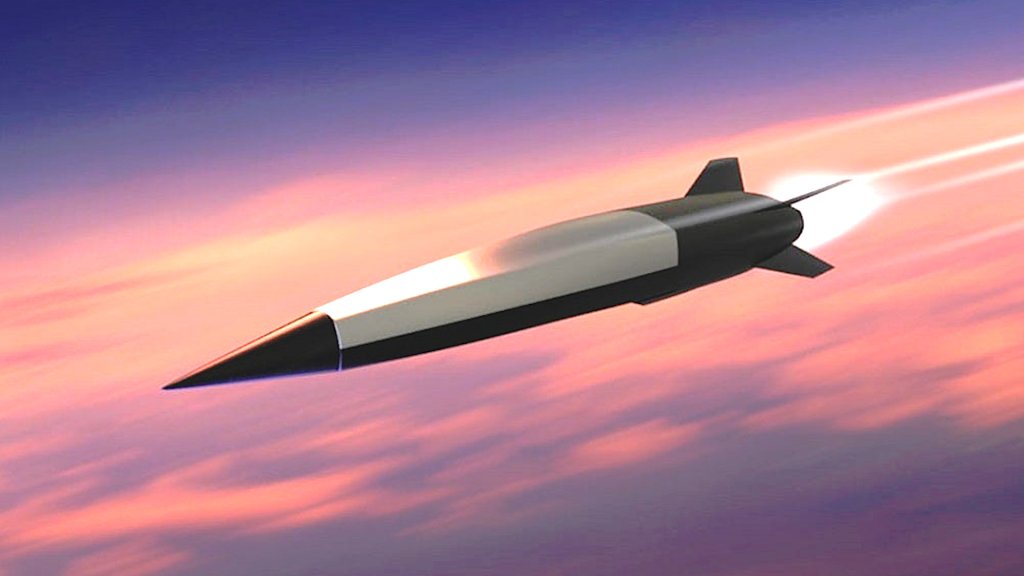
The U.S. Air Force's scramjet-powered Hypersonic Attack Cruise Missile (HACM) has finally reached the flight test phase, with at least one "release" having been carried out so far over a range in Australia.
The U.S. Air Force’s scramjet-powered Hypersonic Attack Cruise Missile (HACM) has finally reached the flight test phase, with at least one “release” having been carried out so far over a range in Australia. (Raytheon) Raytheon

The military is also looking to expand where it can test electronic warfare systems to help ease the bottleneck at White Sands and a few other locations. Such testing is limited due to U.S. restrictions on jamming, which can interfere with civilian systems.

Before he resigned after tensions with Defense Secretary Pete Hegseth, former Army Secretary Dan Driscoll in June said the service had plans to set up at least two domestic ranges that mimic realistic conditions on Ukraine’s battlefields, where the electromagnetic spectrum is a highly contested domain. This spectrum would be even more heavily disputed in a fight with China.

“You can have a kind of electronic warfare and all of the contested environment created, and you can have drone manufacturers and counter-drone tool-builders engaging together,” Driscoll told reporters. “Then, we also want soldiers to be able to go there, so that they can strengthen their skills and work hand-in-hand with developers.”

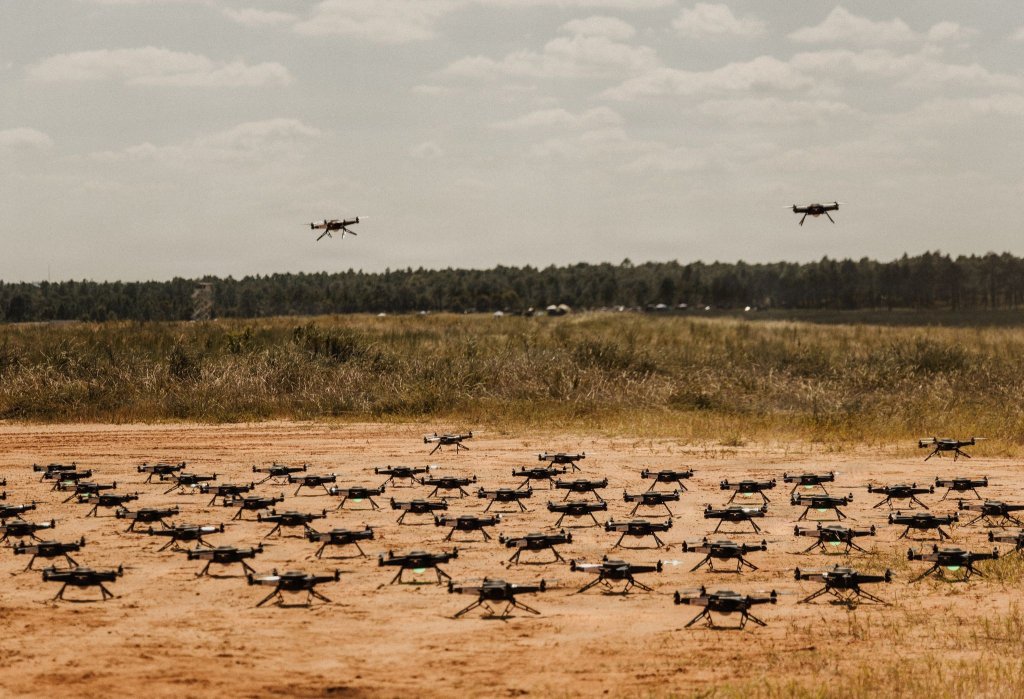
A drone swarm returns from a mission during the XVIII Airborne Corps’ Scarlet Dragon 26-3 at Fort Bragg, N.C., Sept. 15, 2026. Scarlet Dragon used coordinated swarms of up to 100 drones to stress sensor networks, software and air defense crews. Flying realistic aerial threat profiles helped the corps evaluate its ability to detect, track and respond to dense unmanned aircraft system threats. (U.S. Army photo by Pfc. Iliana Lopez)
A drone swarm returns from a mission during the XVIII Airborne Corps’ Scarlet Dragon 26-3 at Fort Bragg, N.C., Sept. 15, 2026. (U.S. Army photo by Pfc. Iliana Lopez) Pfc. Iliana Lopez

Driscoll said there are already places in the U.S. where the Army can test safely, and separately, the service is looking at a global range outside the U.S. to do “much more aggressive testing,” including with hypersonics. When asked, Driscoll declined to say where these ranges would be until planning is farther along. 

“At least some of the current counter-drone training for soldiers, like one CBS News saw in April, does not include electronic jamming — in part because the U.S. restricts jamming domestically,” CBS reported.

In August, the Army opened premier test ranges for the use of private industry to conduct internal research and development. Additionally, the service co-hosted a Denied, Disrupted, Intermittent and Limited testing environment, at Camp Grayling in September, and there are three more scheduled for Fiscal Year 2027, an Army spokesperson told us.

(U.S. Army)

Trump’s news about the “super range” was delivered as the Pentagon and the services are working to ramp up the development and production of a range of autonomous systems.

Last month, as we noted earlier in this story, the Pentagon announced plans for a new functional combatant command, very broadly akin to U.S. Special Operations Command (SOCOM) or U.S. Space Command (SPACECOM), but for operational activities involving autonomous and robotic capabilities. In addition, Hegseth also announced new initiatives to help further accelerate the fielding of uncrewed systems in the air, at sea, and on land, as well as to explore future warfighting challenges. All of this builds on previous and long-overdue efforts to prioritize the fielding of various tiers of drones, as well as artificial intelligence (AI) and other emerging technologies, across domains, but there are questions about how these new efforts will translate into tangible developments.

.@SECWAR “Today, at my direction—we are announcing the creation of Autonomous Warfare Command, or AutoWarCom:

A new 4-star combatant command—with service-like authorities—built to scale autonomous and robotic capabilities across the Joint Force in the fastest peacetime shift in… pic.twitter.com/kYWBxy6Dij

— DOW Rapid Response (@DOWResponse) September 30, 2026

On Tuesday, acting Army Secretary Adam Telle announced the creation of the service’s Futures and Autonomous Systems Command (FASCOM).

“This is our way to make sure that we take all of the great work that’s been happening with the resources that we have today, and we centralize it,” Telle said. “We’re pushing autonomy down into our units, but when it comes to having and making sure that the left hand in the Army knows what the right hand of the Army is doing, this happens at FASCOM; then FASCOM feeds up into AutoWarCom.”

Telle added that FASCOM “will work with the other services to create scale for purchasing power and share best practices on autonomy.”

“It is too soon to speculate about anything related to FASCOM,” the Army told us. “Specifics on structure, command, mission, etc. will be announced at a future dates [and] will require the kind of additional testing facilities that a new Montana super range could provide.”

The use of highly cooperative autonomous weapons platforms that can swarm and operate collectively over large areas will also tax existing ranges beyond their capacity.

Details about the new range proposed by Trump are scant, and it remains to be seen whether it will live up to the hype or even be built. As we noted earlier in this piece, a feasibility study, which hasn’t even been funded yet, is still needed before major work can begin. However, if and when it does come online, a new Montana test range will be welcomed by a military in need of additional places to test out its latest capabilities.

Contact the author: howard@twz.com

The post New Montana “Super Range” Complex Could Add Critical Weapons Testing Capacity appeared first on TWZ.

  •  

High Altitude Balloons Are A “Game-Changing” Capability: Army Space Command Boss

The head of the U.S. Army Space and Missile Defense Command (SMDC) was initially skeptical about the utility of high-altitude balloons, but now sees them as a “game-changing” capability. Lt. Gen. John Rafferty’s comments follow a separate disclosure that the Army axed plans for a balloon swarm test in the Pacific last year and instead sent those systems to support real operations in the Middle East. TWZ has been closely tracking the expanding use of high-altitude balloons and other lighter-than-air systems globally for intelligence gathering, as platforms for launching drones, and in support of other missions, for years now.

Lt. Gen. Rafferty was asked about high-altitude balloons during a media roundtable today, at which TWZ was in attendance, on the sidelines of the Association of the U.S. Army’s (AUSA) main annual convention. Army Col. Joseph Mroszczyk, head of SMDC’s Transformation Integration Directorate for Space Superiority (TID-Space Superiority), also discussed the service’s use of balloons during the roundtable. Breaking Defense first reported on the shift of balloon-based capabilities from the Pacific to the Middle East on Monday.

“I’ll just give a little personal history on high-altitude balloons. I started in the Army Futures Command in the Long Range Fires-Cross Functional Team. There was this talk of high-altitude balloons. I think it was the ISR [intelligence, surveillance, and reconnaissance] task force was talking about it,” Rafferty said. “It just sounded crazy to me that we were considering this.”

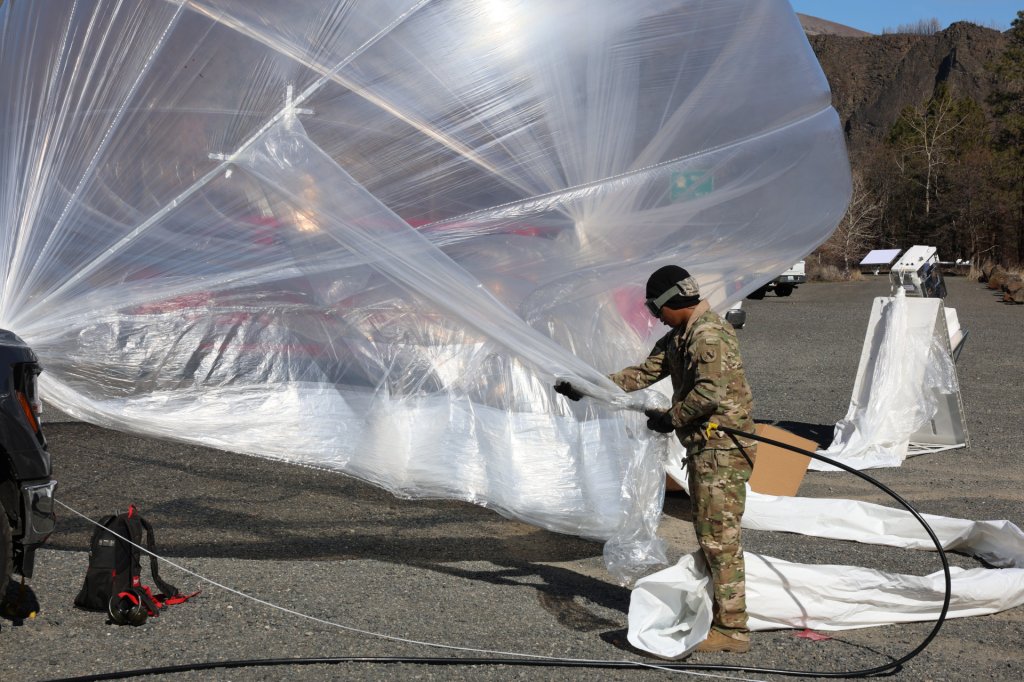
US Army personnel prepare to launch a high-altitude balloon during an exercise. US Army

“Then, a few years later, when the Sergeant Major [SMDC Command Sgt. Maj. Rickey Jackson] and I were together in the multi-domain community in Europe, I went with the 2nd MDTF [Multi-Domain Task Force] to Morocco for training and experimentation,” he continued. “[I] saw the high-altitude balloons in action, and I was immediately convinced after I understood better how they worked and how their ability to station-keep, and their ability to sense and even deliver effects from high altitude. It was game-changing for me.”

Broadly speaking, the main benefit that modern high-altitude balloons offer is their ability to be deployed persistently for days, weeks, or even months at a time. Designs available on the market today can hold their position, in spite of prevailing winds, and moderate their altitudes to keep on station, after precisely navigating to an assigned operating area.

On top of their persistence, the altitudes at which these balloons operate provide excellent fields of view for radars, cameras, and other sensors in all directions and across very broad areas. From a perch of 60,000 feet or more, they also offer a way to peer into certain denied areas while still soaring in international airspace and keeping further away from potential threats.

The video below from high-altitude balloon maker Aerostar offers a good general overview of the kind of capabilities on the market today.

As Lt. Gen. Rafferty noted today, ISR is not the only use case for high-altitude balloons, either. They can serve as communications relay nodes, as well as launch platforms for swarms of drones and other expendable payloads. These are all capabilities the Army has explicitly talked about as part of broader plans for balloons in the past. Other countries, especially China, are already actively employing high-altitude balloons for ISR and other missions, as we will come back to later on.

“In my former role as an MDTF commander, we experimented a lot in the Pacific with those [balloon-based] capabilities. We have leveraged different size platforms,” Col. Mroszczyk added today. “In this [TID-Space Superiority] role, as a proponent, what I’m pushing for is a family of stratospheric systems that really covers smaller size all the way up to larger size types of platforms in terms of balloons.”

“What that enables us to provide is space-like capabilities, really exploiting a transition point between what is normally considered the aerial layer and the space domain,” he continued. “Really, where you go from about 60,000 feet to 100,000 feet is what we focus on in the stratosphere. That operational space allows some persistence and broad coverage in an area where you can deliver space-like capabilities in terms of payloads, but then also take advantage of the deep access that you get from a stratospheric balloon.”

An element of a sensor payload called Wallabee designed to be carried aloft by high-altitude balloons. Urban Sky

“So, being able to go, take advantage of winds that are pushing you where you want to go already to be able to get either launched effects or other types of payloads for sensing and communications and extension of your launched effects portfolio,” he added. “That is a way that we can help exploit the stratosphere, and we’re looking to do that throughout multiple experiments over the course of the coming year.”

“Launched effects,” is a catch-all term the U.S. military now routinely uses to talk collectively about uncrewed aerial systems designed to be launched from other platforms in the air, on the ground, and/or at sea. This encompasses drones configured for a wide variety of missions, including surveillance and reconnaissance, electronic warfare, signal relay, and even kinetic attack.

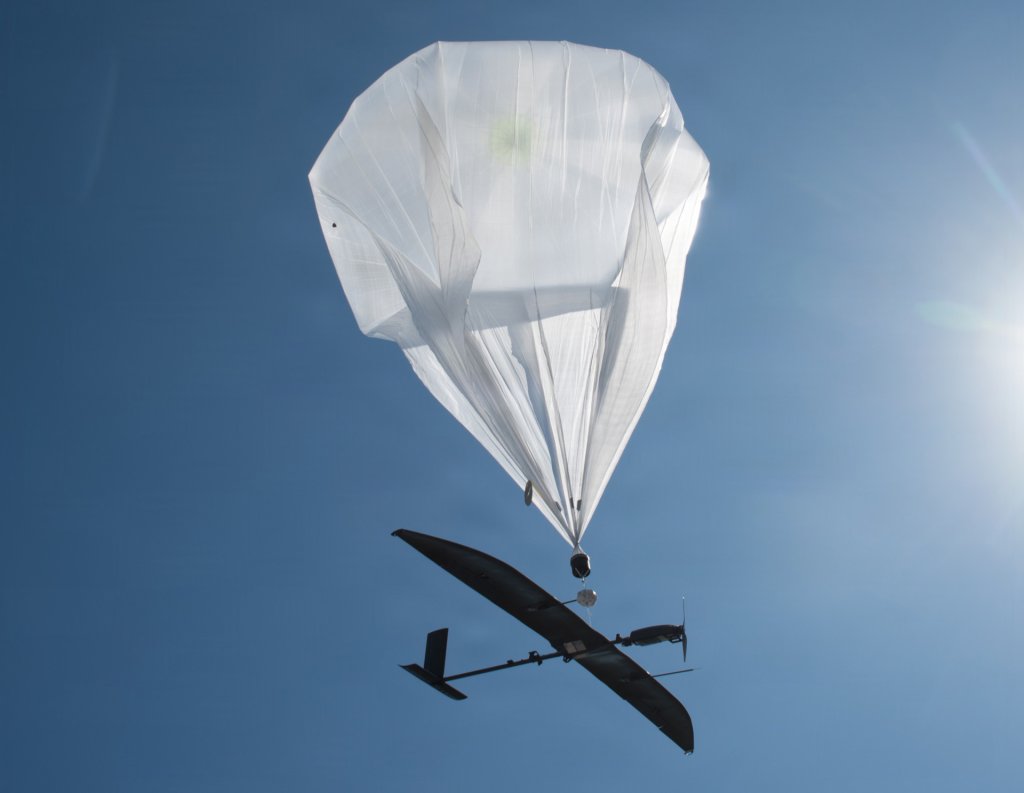
A high-altitude balloon with an Apollo-R drone suspended underneath, seen demonstrated here during the U.S.-led Exercise Orient Shield 26 in Japan earlier this year. US Army

Col. Mroszczyk talked about plans to further demonstrate how high-altitude balloons will be commanded and controlled, as well as networked together with other Army capabilities, when asked to elaborate on what the forthcoming experimentation would entail.

As mentioned, the Army had also planned to demonstrate the ability of balloons to operate in swarms with a high degree of autonomy in the Pacific region last year before those assets were redirected to the Middle East. When exactly that deployment occurred and how long it lasted are unclear.

“We were asked to pivot and do some experimentation in combination with operations, and we pivoted and supported operations in CENTCOM [U.S. Central Command],” Andrew Evans, Director of Strategy and Transformation with the Office of the Deputy Chief of Staff of the Army, or G-2, told Breaking Defense, per the story that outlet published on Monday.

“They were effective for the mission that they were assigned,” he also said, but declined to elaborate further, according to Breaking Defense. “Balloons can be a little finicky in terms of temperature, and you have to contend with environmental characteristics.”

“We had a lot of help from vendors in this space, but as you think about employing your systems and going from something like a Pacific [theater] to something like a CENTCOM [theater], you learn where those friction points might exist between what the military might need to inherently own, and … what a vendor could help provide in terms of the service,” Evans added. Furthermore, “balloons can be a little finicky in terms of temperature, and you have to contend with environmental characteristics.”

Another stock picture of a US Army soldier inflating a high-altitude balloon during training. US Army/Staff Sgt. Brandon Rickert

The remarks today from Lt. Gen. Rafferty and Col. Mroszczyk underscore the Army’s commitment to fielding new high-altitude balloon-based capabilities and the immense benefits the service sees in them. However, the continued emphasis on testing and experimentation highlights a discrepancy with the state of the service’s current efforts, and even more so in light of global trends.

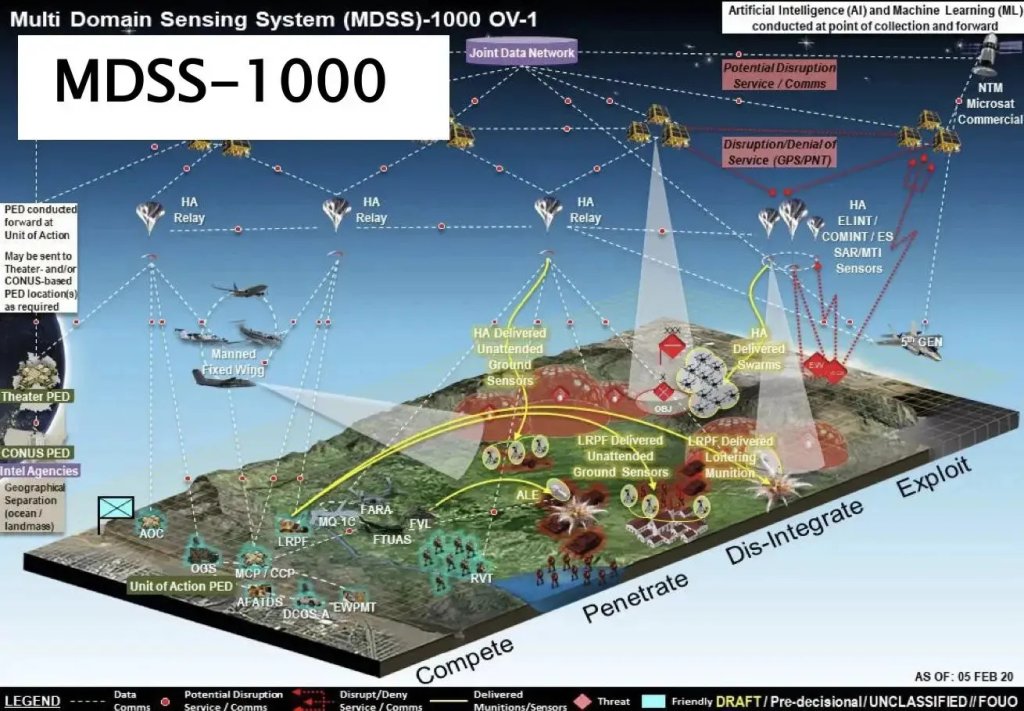
The Army has been openly talking about balloons as part of its vision for a new multi-layered persistent sensor architecture, and how they could also be used to launch drones and other ‘effects,’ for at least six years now. In that same time, China has very actively shown off its ability to gather intelligence and conduct other missions using balloons and other lighter-than-air craft on a broad operational level across the Pacific. TWZ had been reporting on this reality for years before it was thrust fully into the public consciousness after a Chinese spy balloon passed over parts of the United States and Canada back in 2023.

A graphic the Army released in 2020 showing a notional “operational view” for how a “Multi Domain Sensing System” made of various capabilities, including high-altitude balloons, might be employed. US Army

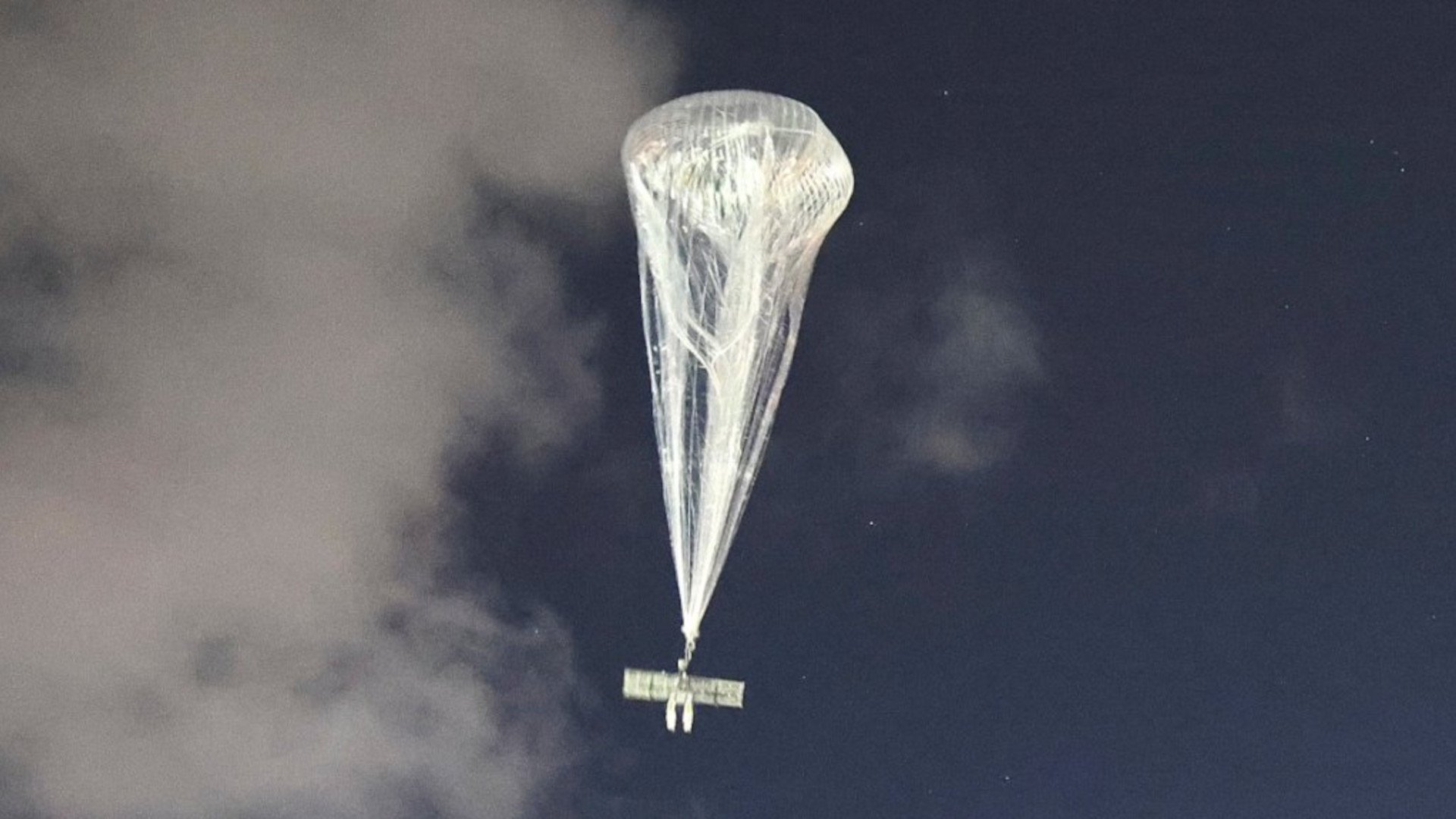
Other countries, including U.S. allies and partners, are increasingly fielding balloon-based and other lighter-than-air systems, too. Forces in Ukraine have notably been using balloons to conduct kinetic attacks and launch drones in the course of the ongoing conflict with Russia. On the other side of that conflict, Russian forces have used balloons as decoys to confuse and misdirect air defenses.

American-made Hornet middle-range strike UAV being tested with balloon-assisted launch system.

Such resolution allows to drastically increase its original range (approx. 100km).

Hornet OWA-UAVs are actively employed by Ukrainian forces for strikes on Russian logistics and other… pic.twitter.com/S1bHqLNhPY

— Status-6 (@Archer83Able) May 20, 2026

The Middle East deployment does show new efforts on the Army’s part to operationalize high-altitude balloons on a more widespread basis, but also that it is still relying on largely experimental capabilities to do so. Earlier this year, the service called attention to the establishment of a new schoolhouse for high-altitude balloon training to help further lay this groundwork, further underscoring how all of this is still very much in its infancy.

The remarks today from Lt. Gen. John Rafferty, especially, show there is substantial support within the Army for pushing ahead with high-altitude balloon programs. At the same time, there is clearly much work to be done if they are to have a truly game-changing impact, while the gap with China and others only continues to grow.

Contact the author: joe@twz.com

The post High Altitude Balloons Are A “Game-Changing” Capability: Army Space Command Boss appeared first on TWZ.

  •  

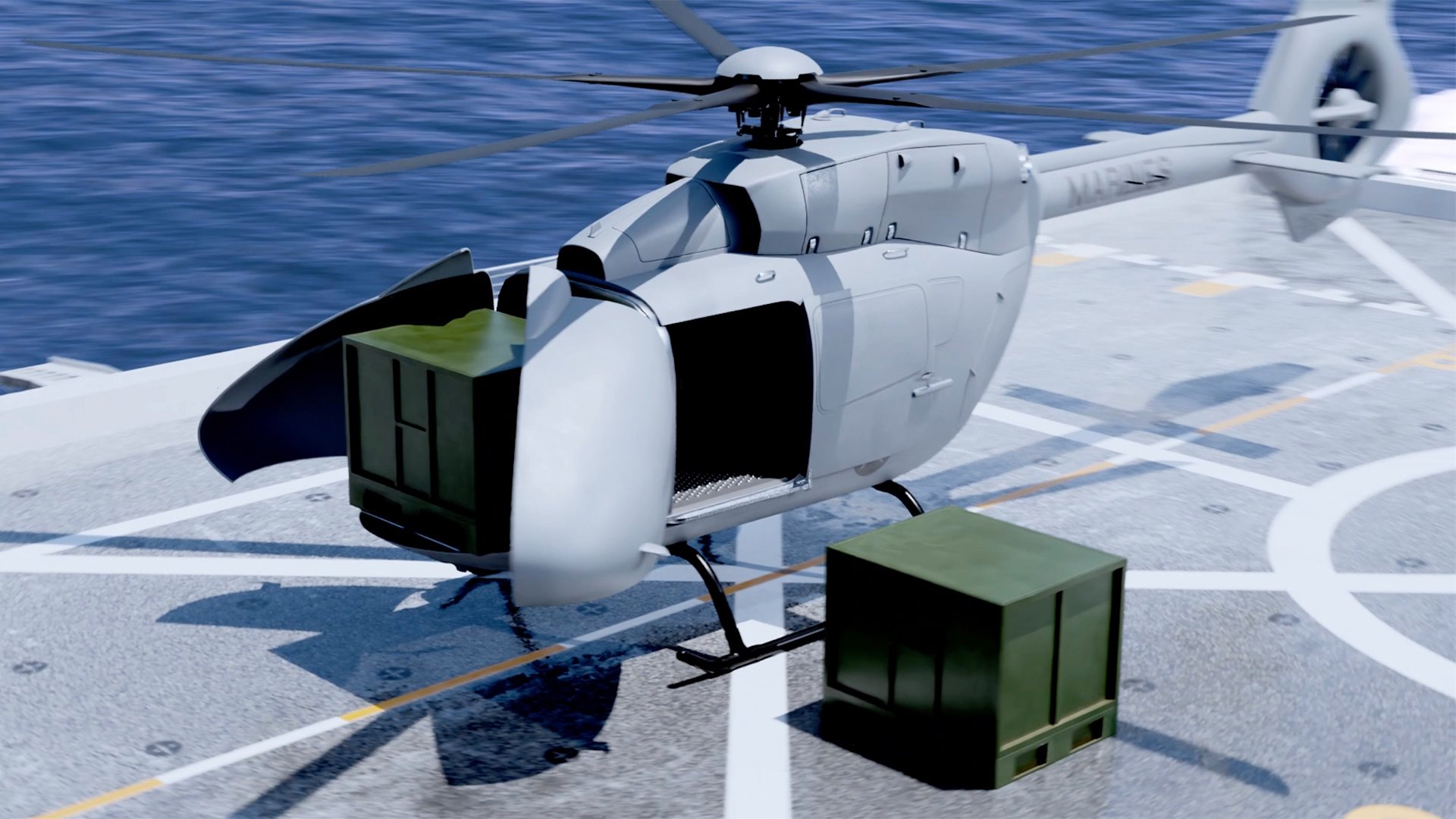
Airbus Details Progress With Lakota Connector Uncrewed Cargo Helicopter

Airbus U.S. Space and Defense has been actively developing and iterating the technology for its Lakota Connector, an uncrewed, autonomous variant of the multi-mission UH-72B Lakota helicopter. This includes testing under Team Lakota Connector, that has brought together Shield AI, L3Harris Technologies, and Parry Labs in a prototyping phase for the U.S. Marine Corps.

TWZ’s Jamie Hunter spoke with Carl Forsling from Airbus U.S., at the AUSA 2026 trade event in Washington D.C. A former U.S. Marine Corps CH-46 Sea Knight and MV-22 Osprey pilot, Forsling explained the requirement for uncrewed logistics in contested theaters, and what’s next for Team Lakota Connector.

The post Airbus Details Progress With Lakota Connector Uncrewed Cargo Helicopter appeared first on TWZ.

  •  

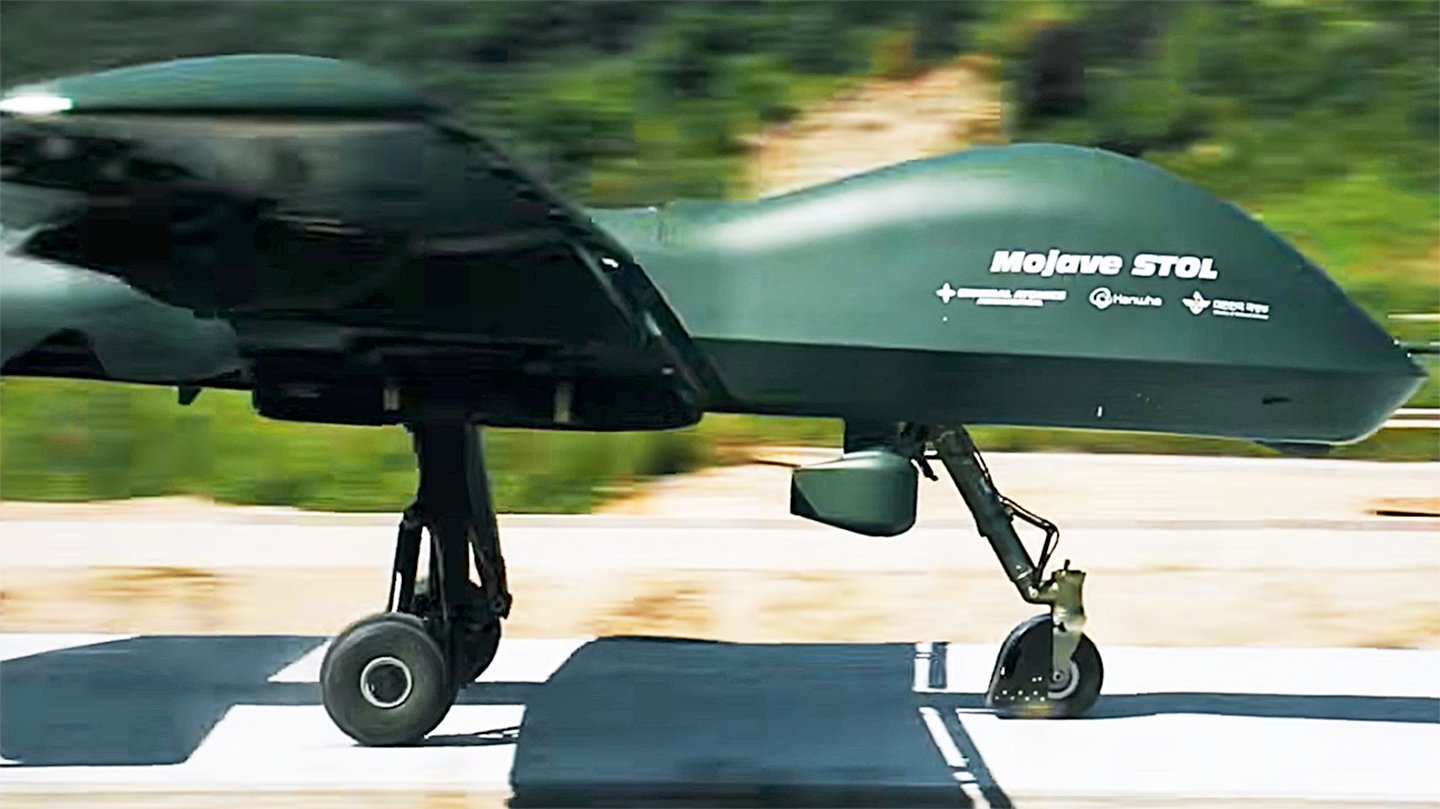
General Atomics’ Mojave Drone Completes Austere Testing in Korea

General Atomics Aeronautical Systems (GA-ASI) and Hanwha Aerospace completed operations in a simulated battlefield scenario with the Mojave short take-off and landing (STOL) drone on September 16. The testing formed part of a Defense Drone Technology Exhibition and included Mojave operating from an austere short runway at the Seungjin Training Field in Pocheon-si. The flying portion of the trials also saw the Mojave operating down at low level to demonstrate its ability to terrain mask to avoid potential threats and to support ground forces at close quarters.

TWZ’s Jamie Hunter spoke to Matt Petraitis, senior manager of U.S. Army programs at GA-ASI, at the AUSA 2026 trade event being held this week in Washington D.C. about how the Mojave landed on a rough maneuver trail typically used by tanks and artillery vehicles, and about the company’s plans for Mojave in partnership with Hanwha Aerospace.

The post General Atomics’ Mojave Drone Completes Austere Testing in Korea appeared first on TWZ.

  •  

Drones Are Creating New Opportunities For The U.S. Army To Deceive Its Enemies

For more than a year, U.S. Army forces in Europe have been experimenting with new counter-drone capabilities, as well as tactics, techniques, and procedures to go with them, under the umbrella of what is dubbed Project Flytrap. In doing so, the service has also been gaining valuable new insights into how uncrewed systems can help shape the battlefield for friendly forces. It is particularly interesting to hear how the Army envisions using uncrewed platforms to open up new avenues for deceiving opponents.

Army Col. Timothy Price, head of the 2nd Cavalry Regiment, discussed the use of uncrewed platforms for deception and other operational concepts that have emerged in the course of Project Flytrap during a talk yesterday. Price’s remarks came at the Association of the U.S. Army’s (AUSA) main annual convention, at which TWZ is in attendance. 2nd Cavalry Regiment, based in Germany, is a brigade-sized mechanized formation equipped primarily with variants of the Stryker 8×8 light armored vehicle.

Stryker light armored vehicles assigned to 2nd Cavalry Regiment seen configured for a Project Flytrap event. US Army Sgt. Alejandro Carrasquel

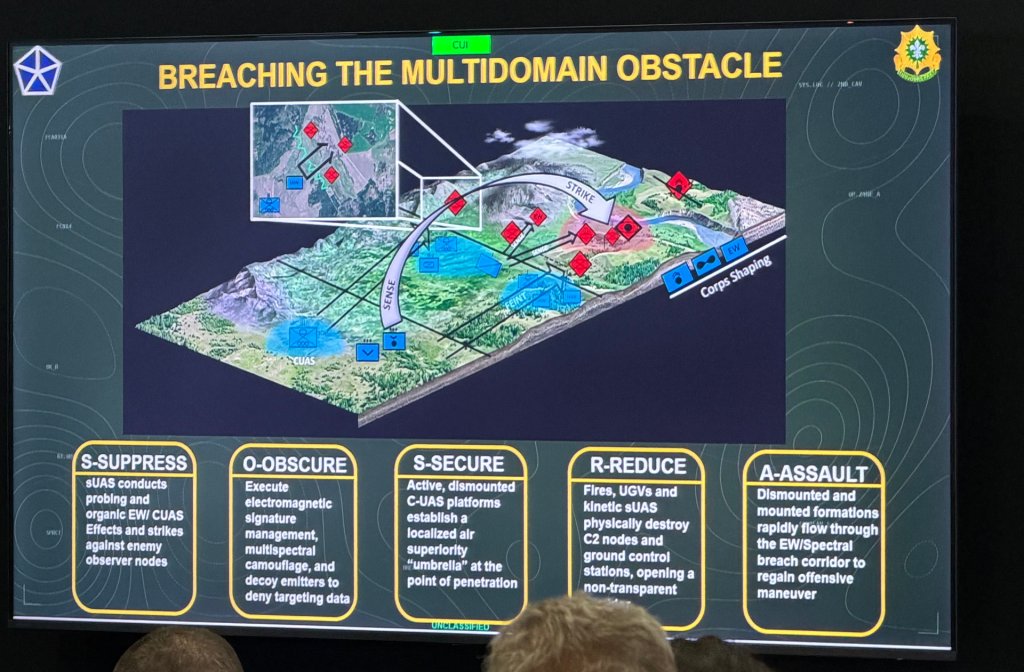
Price, by way of introduction, described modern battlefields full of uncrewed platforms in the air and on the ground as presenting new twists on long-standing problem sets. More specifically, he started by describing the typical approach to getting past a minefield or similar obstacle using an established framework called SOSRA, which stands for Suppress, Obscure, Secure, Reduce, Assault.

“If we were going to breach a mined wire obstacle, the first step of SOSRA – suppress – would be the utilization of indirect fires, to get the enemy’s head down, and direct fire systems, so they would not maneuver on you, fix them in place, and you can make a decision about how you’re going to approach the problem,” the 2nd Cavalry Regiment commander explained. “The next step would be to obscure it. In the historical sense, obscurations used is [sic] smoke, to mask your movement to the point of breach, so the enemy doesn’t know what you’re doing. And then, of course, secure would be to establish frontside security, [and] allow your engineers to come up within this local security bubble. They’ll utilize some kind of line charge to open the breach, reduce it – that’s the ‘R’ – and then bring on a follow-on force of assault through.”

“We were brought up around the old traditional mined wire obstacles that we had to physically breach. This is no different,” he added. “It’s just a multi-domain environment. So it’s built up of a combination of electronic warfare, kinetic UAS [uncrewed aerial systems] threats, and then counter-UAS threats, and then the network that holds [that all] together that forms the obstacle, which a unit has to maneuver through in order to maintain the offensive.”

A briefing slide Col. Price showed at AUSA yesterday while talking about SOSRA on the modern ‘multi-domain’ battlefield. Jamie Hunter

Within this environment, Col. Price described the suppression step of SOSRA as having a different kind of probing dimension, particularly to feel out an enemy’s uncrewed capabilities, as well as those in the electromagnetic spectrum. He also noted that brigade-sized formations like this no longer necessarily have all the required tools organizationally to ‘service’ that aspect of the mission. This is in part because what has to be suppressed, including ground control stations for enemy drones, might now be miles behind the front line.

So, “what we have to do is allow the enemy to turn on their systems. How do I suppress them to allow division, or higher, to put an effect on them for suppression? It probably looks like flying small, attritable UAS [sic] into their security area” in the rear, he said. This, in turn, “cause[s] the enemy to do one of two things, either … go from passive to active with their EW [electronic warfare] systems, or to turn on radars to actually figure out what they’re seeing, which then forms the signature which higher headquarters can use to target.”

Though Col. Price did not describe it as such, there is already something of a deception aspect to this step in fooling enemy emitters to switch on and expose themselves. This, as a general tactic, is also hardly new. Stimulating air defenses, in particular, is a key part of operations to gather intelligence on those capabilities, as well as to suppress and destroy them. Once you have categorized and geolocated an emitter, it is a logical step to then target it. The ultimate goal, with data being passed along a more deeply networked kill chain, is for the time it takes for fires to be brought to bear to be almost instantaneous.

In 2020, then-Army Col. Scott Woodward, at the time commander of the 11th Cavalry Regiment, shared this annotated satellite image showing the electronic emissions signature of a battalion-sized element, underscoring how such signals exposed a unit to attack. US Army via X

Regardless, deception comes far more into play in the obscure step, according to the 2nd Cavalry Regiment commander.

“Obscuration is different, as well. So instead of trying to hide behind smoke as we maneuver through it, what is the deception plan, right? How am I trying to show the enemy a signature that says I’m going to breach over here when I’m actually going to breach here, right?” he asked rhetorically. “So, that’s probably the implementation of UGVs [uncrewed ground vehicles] with some kind of decoy emitter on top of them to pull the enemy’s eyes, resources, and time to a point that allows me to focus my assets and resources on the point of breach.”

The use of uncrewed platforms as decoys is also not new, and even more complex concepts have emerged within the U.S. military in the past. Uncrewed systems have also been developed for military and other purposes over the years that are designed to mimic something else entirely, including for purposes of deception. This includes masquerading as birds and other animals.

Back in 2019, TWZ was the first to report in detail on a Navy effort to develop and field an entire networked, cooperative electronic warfare ecosystem, at that time referred to as the Netted Emulation of Multi-Element Signature against Integrated Sensors, or NEMESIS. This was also a drone-heavy cross-domain concept intended to make many types of sensors over vast areas believe they were ‘seeing’ the same false fleets of aircraft and/or ships, and deceive and confuse the enemy on a grand scale. This, in turn, represented a massive leap in electronic warfare capabilities.

An unclassified 2014 briefing slide with details about NEMESIS. Note the inclusion of drone boats among other uncrewed platforms in the associated graphic. USN An unclassified 2014 briefing slide with details about NEMSIS. Note the inclusion of drone boats among other uncrewed platforms in the associated graphic. USN

There is also overlap here with reported sightings of what are now commonly called unidentified aerial phenomena (UAP), and that used to be called unidentified flying objects (UFO). As we have reported on repeatedly over the years, while some UAP sightings remain unexplained, many more have turned out to be drones. Adversaries have been using uncrewed capabilities for intelligence gathering and deception purposes against American interests at home and abroad, likely in part by exploiting UAP stigma for cover. We have talked in the past about how drones will be used in more and more exotic ways to confuse opponents.

I don’t know what this is, or if it’s legit BUT remember we are in a new age of misdirection, decoy and guile. Specifically using low end drone technology. There are more ways to stimulate an enemy air defense system, distract a populous, assess the flow of public info from a… https://t.co/wW7YVlbayB

— Tyler Rogoway (@Aviation_Intel) September 21, 2026

When it comes to UGVs, specifically, 2nd Cavalry Regiment, as well as units elsewhere across the U.S. Army, have been experimenting with various designs in recent years. The service has been trying for years to expand its operational use of UGVs, in general, but has faced repeated setbacks.

“It’s also spectral camouflage. So how are we controlling our heat and thermal signatures on our vehicles and our people?” Price continued. “It’s basic soldier discipline issues. It’s how we use our radios. It’s where we’re talking, where we’re not. But that’s what obscuration looks like.”

A Soviet-designed 2S3 self-propelled howitzer as seen through a thermal camera, offering a good example of how heat signatures can put forces at risk. CI Systems

As a reminder, Project Flytrap’s primary focus has been on counter-drone capabilities, which come into play heavily during the secure stage.

“There’s multi-layered assets on top of that to allow that convergence for our success at the point of breach. I’m going to focus on our corner, our part of the battle, right?” he said. “So, I’m looking at active and passive electronic warfare systems – that can either, one, find [threats], let me know that I’ve got some kind of system flying or operating against me and, then, if it’s an active system, take some kind of effect to maybe cut a downlink and disrupt that system – all the way down to the individual soldier with a shotgun.”

As mentioned, the ‘obstacle’ to be ‘reduced’ at the end of this is not necessarily something as simple as a minefield surrounded by barbed wire anymore. Now it could be enemy one-way-attack drone capabilities preventing holding up an advance. Col. Price, in turn, described friendly kamikaze drones as part of the equation for breaching past those threats. Decoys and deception have a continued role to play in this phase.

“This is where, at the brigade level, we introduce one-way attack munitions to try to destroy the C2 [command and control] network that the enemy is using to operate this reconnaissance/strike complex” that is standing in the way, he explained. “There’s layers to it, right? Like they’ve got a close side to this that’s the local part of this reconnaissance/strike complex. They’ve probably got a theater level that the Corps [the U.S. Army’s command echelon above divisions] and higher is trying to target as we are forcing people to turn on systems to communicate. But at the regiment level, I’m looking at one-way attack munitions, focused on C2 nodes, headquarters, and ground control stations that [sic] I can disrupt their ability to put lethal effects on me as we begin to open the breach.”

The U.S. Army is in the process of fielding a variety of weaponized drones, including loitering munitions and designs capable of releasing grenades and other small bomblets.

A member of the 2nd Cavalry Regiment holds a small quadcopter drone in one hand and a simulated bomblet in the other during an exercise in 2025. US Army

During a question-and-answer session that followed his remarks, Col. Price was asked about whether lessons learned and other observations from Ukraine, and specifically that country’s recent Operation Vivaldi counteroffensive, had contributed to this evolving framework.

“In terms of Vivaldi, I’m not an expert, so I’m not going to make any kind of estimations on how that worked or why,” he said in response. “But I will say, if you look at the focus of that operation, you can probably make the assumption that there was convergence of efforts across the different headquarters to enable success. So that’s how I would relate to the two.”

“In order to be successful for a multi-domain breach, the tactical level requires my higher headquarters to be part of that solution to enable me with resources and capabilities that I don’t have in here at the brigade level,” he continued. “I would imagine it’s very similar in the other operational comparisons.”

Though certainly true, in broad strokes, this response in some ways underscores how the U.S. Army continues to lag behind global trends in the use of uncrewed systems, as now typified by the ongoing war in Ukraine. Army leaders have been open about this continued reality in the past, despite efforts to try to reverse it.

“We’re behind. I’ll just be candid. I think we know we’re behind,” Army Lt. Gen. Charles Costanza said during a panel discussion at AUSA last year, in response to a direct question at the panel from our Howard Altman. Costanza was talking about both the employment of drones and counter-drone capabilities, and highlighted work being done then under Project Flytrap, as you can read more about here.

Another 2nd Cavalry Regiment Stryker configured for the counter-drone role seen during a Project Flytrap exercise. US Army

Costanza was head of V Corps, a key component of the U.S. Army presence in Europe, at the time. He was removed from that post abruptly in August for reasons that remain unclear, but were reportedly tied to disputes between top Army leadership and Secretary Pete Hegseth. Secretary of the Army Dan Driscoll resigned last month, amid reports of months of friction with Hegseth about various policies.

The Pentagon under Hegseth has launched a number of initiatives to accelerate the fielding of new uncrewed capabilities across the U.S. military, especially within smaller ground units. This now includes plans for a new Autonomous Warfare Command (AUTOWARCOM) unveiled last month.

For units like the 2nd Cavalry Regiment, new drone-centric concepts of operations are already taking shape. Beyond using them for surveillance and as one-way-attack munitions, there is also a clear focus emerging on employing expanding uncrewed capabilities to deceive opponents and prevent them from making the best use of their own resources.

Contact the author: joe@twz.com

The post Drones Are Creating New Opportunities For The U.S. Army To Deceive Its Enemies appeared first on TWZ.

  •  

European U740 Variant Of The XQ-58A Valkyrie Has Flown

Airbus and Kratos Defense & Security Solutions have completed the first flight of the U740 Valkyrie uncrewed combat aircraft, a Europeanized version of the XQ-58A Valkyrie, advancing their bid to deliver a combat-ready system to Germany by 2029. The flight comes as the German Air Force, or Luftwaffe, moves toward acquiring a new class of jet-powered combat drones, in what could become a major shift in the country’s traditionally limited armed-uncrewed-aircraft capabilities.

The ride of the Valkyrie ⚔
With the successful first flight of the Airbus U740 Valkyrie in Europe, we are one step closer to introducing an operational uncrewed Collaborative Combat Aircraft (CCA) to the German and other European Armed Forces.
The flight achieved all… pic.twitter.com/S2sFrtdmGA

— Airbus Defence (@AirbusDefence) October 12, 2026

The flight took place at an unnamed test facility in northern Europe, Airbus announced on October 12. The aircraft conducted a rocket-assisted takeoff, maneuvers at different altitudes, and flight at speeds of up to Mach 0.8. The test also included in-flight mission adjustments, with Airbus reporting that all objectives were met.

The U740 Valkyrie uncrewed combat aircraft is prepared for launch. Airbus

The next phase will introduce Airbus’ Multi-platform Autonomous Reconfigurable and Secure (MARS) mission system, which is intended to provide the aircraft’s European-controlled software and mission-management architecture. Airbus says MARS will support autonomous operations and coordination between multiple uncrewed aircraft while retaining human oversight of critical decisions.

The U740 is based on Kratos’ American-developed XQ-58A, an uncrewed aircraft designed as a relatively affordable combat platform. Airbus is adapting the aircraft with its MARS mission system and presenting the combination as a way to provide Germany with a sovereign European capability without waiting for an entirely new airframe to mature.

The U740 Valkyrie on its launch trailer. Airbus

Published performance figures for the U740 include a maximum takeoff weight of around 3,000 kilograms (6,600 pounds). Airbus lists a range exceeding 5,000 kilometers (3,100 miles) and a service ceiling of 45,000 feet. It has an internal weapons bay and external payload stations beneath its wings.

A U.S. Marine Corps XQ-58A Valkyrie conducts a test flight with a U.S. Air Force F-16. U.S. Air Force photo

One distinctive feature is the U740’s rocket-assisted launch capability, which reduces its dependence on conventional runways. The original Valkyrie design is primarily recovered by parachute, but newer versions can take off with rocket assistance and land on a runway, offering greater flexibility in how and where they operate. That could help the Luftwaffe disperse operations or launch aircraft from locations where established airfields are unavailable or under threat. The XQ-58 family has also shown some potential for scaling to different requirements, as detailed in these earlier reports on runway launch and recovery and further platform development. In particular, the U.S. Marine Corps has been exploring ways to expand the XQ-58’s flexibility, including further development of the Valkyrie to meet its own mission requirements.

If adopted, the rocket-assisted launch capability would provide an intriguing throwback to practical German studies during the Cold War, in which F-104G Starfighter fighter-bombers used the Zero-Length Launch (ZELL) system to take off from dispersed locations.

Airbus says the U740 will be able to operate autonomously or under the direction of crewed fighters such as the Eurofighter. The company sees it as a means of increasing the reach, firepower, and survivability of existing combat aircraft, with uncrewed platforms undertaking higher-risk missions.

With the MARS system, Airbus intends to give European customers control over mission applications, data, and key software functions, while enabling autonomous mission execution and coordination between aircraft. This is particularly relevant for Germany, which will likely want to integrate national weapons, sensors, and operational requirements without becoming dependent on a foreign-controlled mission architecture.

The U740 Valkyrie. Airbus

Since the underlying airframe is American, the degree of sovereignty Germany ultimately obtains will depend on the practical ability to control and modify software, integrate national systems, and support the aircraft throughout its service life.

The European flight is an important step for the Valkyrie program, but substantial work remains before it can be considered combat-ready. Mission-system integration, further testing, and the demonstration of effective cooperation with crewed aircraft will be central to meeting the companies’ 2029 target.

Another view of the U740 Valkyrie. Airbus

The effort is also unfolding as Germany develops its requirements for what has been described in press reports as a Jagdbomberdrohne, or fighter-bomber drone. The precise operational concept has yet to emerge publicly, including whether the Luftwaffe primarily wants an uncrewed aircraft to accompany crewed fighters or a platform capable of conducting independent long-range strike missions.

Germany has historically lagged behind several other major military powers in fielding armed uncrewed aircraft. Previous attempts to acquire larger reconnaissance drones encountered major technical and procurement difficulties, while political resistance to armed drones delayed the development of a strike capability for years.

The U740 Valkyrie seen moments after launch. Airbus

The Luftwaffe’s current larger uncrewed aircraft fleet remains limited to five leased Israeli-made Heron TP medium-altitude, long-endurance drones. Germany is also participating in the Eurodrone program, while uncrewed systems were expected to form part of the wider Future Combat Air System (FCAS), before that Franco-German-led effort hit the buffers earlier this year.

German Heron TP 92+52 mit Tiger-Sonderfolierung startet im Rahmen vom NATO Tiger Meet 2024 beim Taktischen Luftwaffengeschwader 51 Immelmann vom Fliegerhorst Jagel, am 27.05.2024. ©Bundeswehr/Ann-Kathrin Steinbring
A German Air Force Heron TP at Jagel Air Base in 2024. Bundeswehr/Ann-Kathrin Steinbring

Russia’s full-scale invasion of Ukraine in 2022 and Germany’s subsequent military buildup have intensified pressure to address these gaps. Berlin has set a goal of being ready for war by 2029, and reports indicate that the Luftwaffe wants a new combat-drone capability on a similarly ambitious timeline.

As well as Airbus and Kratos, the emerging competition reportedly includes Anduril, General Atomics partnered with Germany’s INTEC, as well as Lockheed Martin. Boeing and Rheinmetall are meanwhile pitching the larger, Block 3 version of the Australian-developed MQ-28 Ghost Bat, while Helsing and Hensoldt are pursuing the homegrown CA-1 Europa.

The CA-1 Europa from the German defense startup Helsing. Helsing

The various proposals reflect a broader shift toward uncrewed aircraft that can deliver additional weapons, sensors, and electronic warfare capabilities without putting a pilot at risk. But Germany’s terminology raises an important question about the intended role.

A conventional collaborative combat aircraft, or CCA, would be designed to work alongside crewed fighters, extending their reach and providing additional combat mass. A platform intended to operate independently against targets deep inside enemy territory would place greater emphasis on range and survivability. These roles are not mutually exclusive, but the Luftwaffe’s final requirements will shape the aircraft it chooses.

Germany may not be looking for a single drone to do everything. One option might be a split high-low approach that could pair more capable, longer-range systems for deep-strike missions with cheaper, attritable collaborative combat aircraft that can fly alongside crewed fighters. At this point, it should also be noted that CCAs could also give older fourth-generation fighters a new lease on life, boosting their lethality and survivability by extending their sensor reach, adding weapons capacity, and allowing uncrewed aircraft to take on more dangerous tasks.

Meanwhile, Airbus is also working on its larger U760 Ravenstorm, intended for service in the early 2030s. The Ravenstorm gives Airbus a longer-term path toward a more advanced European-designed uncrewed combat aircraft as it pursues the nearer-term Valkyrie effort.

The Airbus U760 Ravenstorm, a combat drone designed to operate alongside fighter aircraft in air-to-air combat, strike missions, and electronic warfare roles. Airbus

In the short term, the Luftwaffe will need to determine which capabilities must be available in an initial operational fleet and which can be introduced later. Even an aircraft based on an established design requires substantial integration, testing, training, and infrastructure before it can be employed effectively in combat.

Germany’s 2029 target leaves little time for a program that still has to integrate its mission system and demonstrate how the aircraft will be used operationally. That is a particular challenge for the Luftwaffe, which has little experience operating large uncrewed aircraft, let alone jet-powered systems intended for combat.

A rear view of the U740 Valkyrie. Airbus

The European flight gives Airbus and Kratos a head start in testing the U740 for German requirements, but the next major milestone will be flying it with the MARS mission system. How quickly that work progresses will help determine whether the Valkyrie can meet the Luftwaffe’s timetable.

Contact the author: thomas@thewarzone.com

The post European U740 Variant Of The XQ-58A Valkyrie Has Flown appeared first on TWZ.

  •  

Navy Doubles Down On X-BAT VTOL ‘Fighter’ Drone Development

Shield AI says it is on track to roll out the first prototypes of its X-BAT jet-powered stealth ‘fighter’ drone by the end of this month. Flight testing of this uncrewed aircraft, which is designed to take off and land vertically from a tail-sitting position, is still scheduled to kick off before the end of the year. X-BAT’s core concept was already highly ambitious, but an extremely aggressive timeline to reach some degree of operational capability through the U.S. Navy’s Runway Independent Maritime Expeditionary Strike (RIMES) program has now been disclosed.

TWZ got an update on X-BAT, which we were first to report on in-depth last year, in an interview yesterday with Shield AI’s Armor Harris, Senior Vice President and General Manager of the company’s aircraft division. This came ahead of today’s announcement that the company has received an additional $150 million in funding from the Office of the Under Secretary of War for Acquisition and Sustainment through its Defense Exportability Features program via the Navy. This is on top of the $50 million investment the Navy, in cooperation with the Pentagon’s Defense Innovation Unit, made in X-BAT’s development earlier this year as part of the RIMES effort. Shield AI has committed an equivalent amount of internal funding, for a combined total of $400 million.

Jamie Hunter

“In broad strokes, the last year has been a bunch of collaborative risk reduction with the Navy. So, wind tunnel testing, engine testing, thermal testing, all kinds of stuff to basically take the major risks in the program, [and] burn them down, so we can move confidently into the production design,” Shield AI’s Harris told us. “The last culmination of the risk reduction is the flight testing of the two full-scale prototypes. The first one of those will be done at the end of October.”

“That’s a full-scale vehicle,” he continued. “It’s got the outer mold line, it’s got the F110 engine, the full propulsion path, everything in it.”

To date, Shield AI has only shown models of the X-BAT publicly. A new one displayed at the Navy League’s Sea-Air-Space 2026 exposition in April revealed major changes to the core design. This included a complete reworking of the planform from a ‘cranked kite’ type arrangement to one with a distinctly different arrowhead-shaped profile featuring a straight leading edge with a more dramatic sweep.

The video below includes clips showing the original X-BAT design and the current one.

The aforementioned “propulsion path,” testing of which has already been conducted on the ground, primarily consists of the General Electric F110 paired with an Axisymmetric Vectoring Exhaust Nozzle (AVEN). The nozzle was originally developed in the 1990s for an experimental thrust-vectoring F-16 fighter. Shield AI is using the original AVEN, which had been in storage for decades, to support development of X-BAT. The nozzle will provide pitch and yaw control, with roll control for the drone coming from bleed air routed through thrusters in the drone’s wings.

No runway, no problem.

Shield AI and @GE_Aerospace just cleared a critical path to vertical flight, completing engine light-off testing of the Axisymmetric Vectoring Exhaust Nozzle (AVEN) for X-BAT.

Engineers from both companies integrated the AVEN into GE Aerospace's… pic.twitter.com/OxV3y3sRKB

— Shield AI (@shieldaitech) July 20, 2026

Shield AI has previously said that the roughly fighter-sized X-BAT will have a maximum range of 2,000 nautical miles and a service ceiling of around 50,000 feet. The company has also said in the past it is targeting an effective combat radius roughly twice that of the F-35, or around 1,340 nautical miles, but also that it could be closer to 1,000 nautical miles. Space has been made within the X-BAT design for a potential in-flight refueling capability, but there is no active work yet to integrate that feature.

In terms of payload, X-BAT’s design includes internal weapons bays roughly the same size as those on the F-35, as well as two external hardpoints under the wings. Those hardpoints are plumbed, meaning that range-extending drop tanks, or even buddy refueling stores to allow the drone to act as a tanker, could be carried. Baked-in modularity and open-architecture mission systems are intended to make it easier to fit various sensors, data links, and other capabilities down the line.

A rendering highlighting X-BAT’s stores carrying capabilities. Two AGM-154 Joint Stand-Off Weapon (JSOW) glide bombs are depicted here in the internal bays. The silhouette of an AGM-158C Long Range Anti-Ship Missile (LRASM) cruise missile is shown under the wing. Shield AI

“X-BAT’s really designed to be a multi-role capability, and, if you look out at the 10-20 year time horizon, it’s hard to predict what the future fight is going to look like,” Shield AI’s Harris noted. “We fundamentally believe that multi-role capabilities are critically important. And, so, X-BAT, the reason why it’s sized to where it is is [sic] to be able to carry serious strike weapons internally and externally, in addition to being able to do air-to-air [combat], electronic warfare, and other mission sets.

“You could think of it as like X-35 versus F-35,” he also said yesterday when asked about any expectations now for further changes between the initial pair of prototypes and the final production design.

Lockheed Martin’s X-35 demonstrators are, in very broad strokes, similar to, but distinct from any of the resulting variants of the Joint Strike Fighter. Shield AI has notably already talked in the past about integrating more low-observable (stealthy) attributes to the exhaust end of the design down the line.

A side-by-side look at an X-35 demonstrator, at left, and a production F-35A, at right. USAF

“Then we’ll get into flight testing around the end of this year,” Harris added. “We’ll be doing vertical takeoff and landing testing with that [the initial prototypes] to actually prove out and develop the VTOL [vertical takeoff and landing] technology for X-BAT.”

Shield AI’s X-Forge 2 facility at the Newton City-County Airport in Kansas is set to be the main flight testing hub for X-BAT, as well as the focal point for sustainment of the drones. A production facility, X-Forge 3, is also being built in Des Moines, Washington. The company’s original site, X-Forge 1, is in Frisco, Texas.

A rendering of the X-Forge 2 facility. Shield AI

In terms of the actual flight test campaign, “you remember the X-BAT system has the air vehicle and the launch and recovery vehicle, which is the trailer that it launches and lands from,” Harris said. “Basically, the way the testing works is, we start with the vehicle horizontal, sitting on that launch and recovery vehicle, running the engine. Then we bring it up vertical, run the engine vertically, run the vehicle vertically.”

“Then we have one of the biggest cranes in the world that’s getting set up at our test site in Kansas right now, and we hang the vehicle suspended from that crane and do a bunch of testing while it’s hanging from the crane in free flight,” he continued. “Then we take the crane away, and then we do the actual untethered flights.”

Shield AI’s goal is to fly a fully missionized X-BAT in 2028 and start series production the following year.

A rendering of the X-Forge 3 production facility being built in Des Moines, Washington. Shield AI

On top of that, “the way that the [RIMES] program has been structured is getting to an early operational capability in 2029 is the end goal,” Shield AI’s Harris said.

When asked if this meant that RIMES is aiming “to eventually arrive at not just a demonstration of capability, but a real operationalized capability,” he said that was “correct.”

We will come back to this more later on, but suffice it to say up front, the prospect of X-BAT reaching an operational level of maturity within three years is extraordinarily ambitious, to say the least.

In the meantime, Shield AI has already been testing the mechanisms to “latch and unlatch” X-BAT to the launch and recovery system using an unpowered “battleship” test article, according to Harris. The design of the launch and recovery system has also evolved, and it is now self-propelled, at least to a degree, rather than just being a towed trailer.

“The launch and recovery vehicle is actually critical to the operation of the X-BAT weapon system because it enables survivability on the ground. So when you’re operating in a land-based environment, it enables basically shoot-and-scoot tactics,” Harris also noted. “Enemy transporter-erector-launchers [for missiles] are like pretty hard to find because they’re constantly moving around. Just like X-BAT, when it’s mated onto the launch and recovery vehicle, [it] is always moving around, makes it hard to track, hard to find, hard to destroy.”

A rendering of an X-BAT on a launch and recovery trailer in the fully erected position. Shield AI

The plan now is to “build the one-to-one launch and recovery vehicles to air vehicles. So the air vehicle is always on the trailer. It never comes off of it,” he continued. “Even maintenance to the air vehicle is done while it’s sitting on that launch and recovery vehicle.”

“In fact, we’re actually planning on building more than one-to-one of the launch and recovery vehicles, so that way you can preposition them around different islands, different places in the theater, and have multiple places the aircraft can lily pad from,” he added. “But you’re never putting multiple aircraft onto one launcher and launching them or something like that.”

“When you typically operate a jet, there’s a whole bunch of ground carts and stuff that you bring, like the ground power cart, the ground cooling cart, the air start cart, etc,” Harris further elaborated. “So we’ve moved a lot of those systems onto [the] launch and recovery vehicles, so you don’t have all these separate carts, which is pretty critical when you’re trying to do expeditionary operations.”

“The model for land-based operations is kind of a hub-and-spoke type model. So the squadrons are based at air bases. All the fuel and the weapons are generally based at the air bases, as well. But then you can distribute the aircraft all over the airfield,” he continued. “So, you think about what the enemy’s doing, they’re targeting the runways, they’re targeting the tarmacs, but you can disperse the aircraft around the perimeter of the airfield. You can launch them from the golf course. You can launch them from empty space in the taxiway, etc.”

A graphic highlighting various options for deploying X-BATs on land and at sea. Shield AI

Harris said that another “spoke” could be X-BATs operating from forward arming and refueling points (FARP). All of this is part of larger concepts of operations for the drone that Shield has been envisioning, and that are not at all limited to deployments at locations on land. Harris noted during the interview that the self-propelled nature of the current launch and recovery system would also help with moving the drones around on virtually any ship with sufficient deck space. This is where the RIMES program, which is separate and distinct from the U.S. Navy’s carrier-based Collaborative Combat Aircraft (CCA) drone ambitions, really comes in.

“I’ll say the fundamental value proposition of RIMES is that if you have a carrier-based CCA, you’re fundamentally constrained by the square footage of the deck of the aircraft carrier,” Harris explained. “So if you are taking an F-18 or an F-35 off, you better be replacing it with better capability per square foot of deck space than the thing that you’re taking off.”

“So, F/A-XX [the Navy’s sixth-generation carrier-based fighter, now to be built by Boeing] is a huge leap in capability, right? Which is why that program makes a lot of sense,” he continued. “The challenge with CCA is: Does it really make sense to take a manned aircraft off of an aircraft carrier and replace it with an unmanned aircraft?”

Shield AI’s argument here is that X-BAT disrupts this core equation by opening the door to a CCA-like capability, or even something more capable, that can be employed in a ship-based mode without sacrificing any crewed aircraft capacity on an aircraft carrier. Shield AI envisions dozens of X-BATs being employed from amphibious assault ships, as well as other kinds of amphibious warfare ships, including expeditionary sea base type vessels, as seen at the top of this story.

A rendering depicting X-BAT drones on the deck of the US Navy’s future America class amphibious assault ship USS Bougainville. Shield AI

“So when you think about the number of carrier air wings that the Navy has to deploy, deploying X-BAT across all these other ships basically significantly increases the number of carrier air wings,” Harris said.

As already mentioned, the current structure of the RIMES includes a target for an early operational capability in 2029, according to Harris. “We have a program defined to get there, and there’s basically milestone-based payments along the way, so as Shield performs and hits milestones, then the Navy kicks in additional funding,” he added.

“I don’t want to get ahead of the Navy, and give you a specific number, but like hundreds to low thousands,” he also said when asked if there was even a very rough planning figure for the eventual size of the RIMES drone fleet.

Many questions remain about X-BAT, which still has to demonstrate the viability of its vertical takeoff and landing capability, which underpins everything else. As we noted in our original in-depth report on this design, the core concept here is not new, and there have been many unsuccessful attempts to operationalize it in the past. There has been skepticism that Shield AI’s effort will succeed where others have failed. The company is of the view that groundwork has now been more firmly laid, including through its own work with its much smaller internal combustion-engine-powered V-BAT tail-sitting VTOL drone, to truly realize a design of this kind.

The performance and capabilities that Shield AI expects from X-BAT once it is flying at all are also ambitious. A high degree of autonomy is also part of the full planned package, which will leverage the company’s already extensive work in this domain with its Hivemind software.

There are also questions about the Navy’s exact plans for RIMES, as well as its broader future drone fleets. Just this year, the service has issued several contracting notices pointing to rapidly evolving views about future carrier-based strike drones and other uncrewed aircraft. New requirements that Naval Air Systems Command (NAVAIR) released in August ostensibly for future CCA-type drones notably pointed more toward something that sounded very much like an advanced uncrewed combat air vehicle (UCAV), as you can read more about here.

Whether the 2029 operational timeframe the Navy is said to be aiming for under RIMES is firm, or even realistic in any way, remains to be seen. The actual definition of what constitutes an “early operational capability” could be very flexible, as well. It is also worth noting here that Shield AI is not the only company currently conducting work under RIMES. Whether the Navy might be planning to acquire more than one design through this program is unclear. We have reached out to the service for more information.

Other services could be interested in any operational capability produced through the RIMES effort, too. TWZ regularly highlights how runway-independent drones would be particularly well-suited to the U.S. Marine Corps’ new expeditionary and distributed concepts of operations. That service is already in the process of acquiring MQ-58B Valkyrie drones from Kratos that will be able to operate from conventional runways. They will also be capable of runway-independent launches, though they will still have to land conventionally. The baseline Valkyrie design lands via parachute.

A rendering of a landing gear-equipped version of the Valkyrie in line with what the Marines are now acquiring. Kratos

Aviation Week has reported separately today that Shield AI is looking to pitch the X-BAT to the U.S. Army as a successor to that service’s fleet of MQ-1C Gray Eagle armed drones.

In general, runway independence is of growing interest elsewhere across the U.S. military as threats to large, established bases continue to expand in scale and scope. The proliferation of various tiers of weaponized drones is a particularly significant factor in this, as TWZ just examined in detail this week in the context of the recent withdrawal of B-1 bombers from RAF Fairford in the United Kingdom. Ever more capable cruise, ballistic, and hypersonic missiles are also part of the full threat picture.

The conflict with Iran has also underscored the limits of what can be gained survivability-wise by dispersing traditional fixed-wing aircraft, especially within an existing airbase. As highlighted earlier, X-BAT could be dispersed very differently to nearly anywhere within a facility that can handle the thrust from the F110 engine in hover.

As it stands now, we are set to get our first view of a full-sized X-BAT prototype within the next few weeks as Shield AI continues to gear up for the start of actual flight testing before the end of the year.

Contact the author: joe@twz.com

The post Navy Doubles Down On X-BAT VTOL ‘Fighter’ Drone Development appeared first on TWZ.

  •  

Northrop Grumman’s Talon Blue Collaborative Combat Aircraft Has Flown

We have a significant update on the fast-moving world of Collaborative Combat Aircraft (CCA) out of Mojave, California, today. Northrop Grumman’s Talon Blue, which now has the official designation YFQ-48A, has taken to the skies for the first time. The existence of Talon Blue was first officially disclosed in December of 2025 at a media event in Mojave that we attended.

Talon Blue flying out of Mojave Air and Space Port for the first time. (@Task_Force23) TASK_FORCE23

The uncrewed aircraft took to the skies over Mojave Air and Space Port, home of famed ‘bleeding-edge’ airframer and Northrop Grumman subsidiary Scaled Composites, which built the aircraft. A release from Northrop Grumman reads:

“MOJAVE, Calif. – Oct. 3, 2026 – Northrop Grumman’s (NYSE: NOC) YFQ-48A Talon Blue completed its first fully autonomous flight, including taxi, takeoff, in-flight maneuvers, and landing. Developed through company investment, Talon Blue combines modular design and advanced manufacturing to lower cost and support faster production without compromising mission capability. The flight builds on Northrop Grumman’s seven decades of autonomy experience and more than 500,000 autonomous flight hours, with lessons from Talon Blue informing future autonomous systems. 

Details on YFQ-48A Talon Blue:  

  • Talon Blue is part of Northrop Grumman’s internally-funded Project Talon portfolio focused on accelerating the development of mission-ready autonomous airpower capabilities.  
  • Manufacturing and design innovations cut part count and overall weight, lowering cost and enabling faster production to meet growing demand for autonomous systems.  
  • Designed with flexible operational concepts in mind, Talon Blue’s high air intake, wide wheelbase and integrated weapons bay support a wide variety of mission needs for U.S. and allied partners.

Craig Woolston, vice president and general manager, research and advanced design, Northrop Grumman: “Our customers made it clear they need autonomous systems that can be fielded faster and more affordably without sacrificing mission effectiveness. We listened. Talon Blue’s first flight is one step toward a new generation of autonomous capabilities. Every flight and lesson strengthens our broader autonomy work and sharpens what comes next.” 

Talon Blue flying above the Mojave Desert in California. (Northrop Grumman)

While the Talon Blue aircraft draws most of the attention, Northrop Grumman has put great emphasis on its back-end autonomy development ecosystem, which includes its purpose-built Model 437 demonstrator aircraft, now under the Talon IQ badge (formerly Beacon).

Talon Blue is entering a growing field of CCA offerings, with extremely intense competition, that are primarily aimed at equipping the USAF with its next CCA acquisition of hundreds of aircraft known as Increment 2, for which the requirements remain undefined. Currently, the USAF has moved its YFQ-44 from Anduril and its YFQ-42 from General Atomics, both of which are deep in flight testing, into production. Boeing’s MQ-28 Ghost Bat is another serious CCA contender and perhaps the most mature of all, while Lockheed Martin has its tailless Vectis, and on the lower end, Kratos’ FQ-58 Valkyrie continues to evolve and rack-up flight hours. Many more types are on the horizon, including those from new players and globally from foreign manufacturers.

(@Task_Force23) TASK_FORCE23

With the loss of the F/A-XX next-generation naval fighter program to Boeing, Northrop Grumman winning a contract from the U.S. services for Talon Blue has become more important. Doing so would get the company back into the Pentagon’s tactical air combat portfolio. As we have discussed for years, advanced uncrewed tactical systems are set to be less risky and potentially more lucrative than traditional fighter programs as air combat rotates to predominantly uncrewed capabilities and mass production of them. Beyond U.S. needs, the demand for CCAs is likely to explode internationally in the coming years, so programs like Talon Blue could find success elsewhere if the Pentagon goes another direction, but getting the U.S. armed services’ stamp of approval and the scale of production that comes with it would surely help there too.

Author’s note: A big thanks to our friend @Task_Force23 for providing us with great photos for this story.

Contact the author: Tyler@twz.com

The post Northrop Grumman’s Talon Blue Collaborative Combat Aircraft Has Flown appeared first on TWZ.

  •  

Hunt For MQ-9 Reaper Successor Surprisingly Includes Exotic Aircraft Manufacturer Otto Aerospace

Seven companies are said to now be in the running to develop a lower-cost and highly modular drone to succeed the MQ-9A Reaper. Though the field has some well-established entrants and some far lesser known names, the inclusion of Otto Aerospace in this group is particularly unexpected and interesting to examine. Otto has made bold, but still unrealized pronouncements about disrupting the aviation industry with potentially revolutionary high-efficiency designs that could have civilian and military applications. TWZ has been steadily tracking the company’s developments since we first reported on the existence of the Celera 500L aircraft back in 2017.

Air & Space Forces Magazine first reported on Wednesday that Otto Aerospace (previously Otto Aviation), as well as Anduril, Chaos Industries, General Atomics Aeronautical Systems, Grid Aero, Shield AI, and Swarm Aero, had “made the cut” for the Massed Modular Aircraft (MMA) program, citing anonymous sources. The MMA effort formally kicked off in July, and the Air Force is now aiming to have a fleet of at least 500 of these drones by 2032.

The Massed Modular Aircraft (MMA) program is seeking a successor to the MQ-9A Reaper, an example of which is seen here. USAF

An industry source has also told us that these seven companies are moving ahead in the MMA program. The Air Force has not yet offered an official confirmation.

“The Air Force’s partnership with the Defense Innovation Unit is accelerating requirements development and rapid prototyping by leveraging commercial innovation and reducing timelines,” a spokesperson for the service said when we asked for more information. “We continue working with industry to inform requirements and assess potential solutions as we shape the future MMA capability.”

TWZ has also reached out to all of the companies on the list for more details.

As mentioned, it is unexpected and especially interesting to see Otto named here in the context of MMA. The company’s core design philosophy centers around what is called laminar flow. Broadly speaking, this refers to liquid or gaseous “fluids,” including air, flowing in smooth, regular layers across a surface with little to no mixing between them. In aviation, optimization for laminar flow translates to reduced drag and improved aerodynamic efficiency. This, in turn, can offer a host of benefits, including when it comes to fuel economy, extended range, and overall performance, as well as reductions in operating costs.

With this in mind, all of the designs that Otto has shown to date, starting with the Celera 500L, have been based around teardrop-shaped fuselages to maximize laminar flow benefits. Many of them also feature long, slender glider-like wings. The sudden and unannounced appearance of the very exotic and futuristic-looking Celera 500L at the Southern California Logistics Airport in 2017, at which time nothing was known about the aircraft or its manufacturer, caused a stir in the broader aviation community. TWZ was the first to report on the plane and then unmasked its identity.

On top of the laminar flow-optimized shaping, the Celera 500L was a pusher-propeller design powered by a single high-efficiency, turbocharged, multi-fuel V12 piston engine. A relevant patent held by Otto also describes a novel exhaust system with a heat exchanger that provides an additional boost in thrust.

Otto conducted an extensive test campaign with the Celera 500L, taking the aircraft up to an altitude of 15,000 feet and to a speed of 250 miles per hour. The company posited that this would translate to a cruising speed of around 460 miles per hour at the design’s intended operating ceiling of 50,000 feet.

The Celera 500L seen during a test flight. Otto Aerospace

Development focus at the company has since shifted to the jet-powered Phantom 3500, which has a much revised design compared to the Celera 500L. Otto has said previously that it expects this aircraft to burn just 115 gallons of fuel per hour, further underscoring the benefits of its laminar-flow-centric approach. Comparably sized business jets like the Bombardier Challenger 350, Cessna Citation Latitude, and Embraer Praetor 500 consume around 300 gallons per hour, according to the company, citing data from Jet Support Services, Inc. (JSSI).

A rendering of Otto Aviation’s Phantom 3500, a business jet the company is currently developing. Otto Aviation

It is also worth noting here that Otto has already developed a drone with a “highly laminar-flow efficient airframe” for the U.S. Defense Advanced Research Projects Agency (DARPA). The company announced the successful completion of a flight test campaign in May. The pusher-propeller design has a teardrop-shaped main body, a glider-type main wing, and a T-tail at the end of a boom that extends to the rear of the aircraft. DARPA plans to use that drone to demonstrate laser-based power beaming technology that could be used to relay electricity to forward operating locations. The technology could also dramatically extend the endurance of an electrically-powered drone, potentially allowing it to stay in the air indefinitely.

The drone for DARPA is far too small to meet the Air Force’s MMA requirements. However, “the program leveraged Otto’s aerodynamic expertise to design and flight-test an unmanned vehicle that could inform design parameters for future energy-relay systems or more extremely fuel-efficient, long-endurance platforms,” per a press release Otto put out in May.

Otto Aerospace developed this drone, seen here rigged up for launch from a pickup truck, for the US Defense Advanced Research Projects Agency (DARPA). Otto Aerospace

TWZ has highlighted in the past how the general range, fuel economy, and other advantages inherent to Otto’s designs could be even more pronounced in a configuration that does not need to support a human crew. Furthermore, Otto has previously shown militarized concepts, crewed and uncrewed. As we’ve written in our earlier coverage of the Celera 500L:

“Though primarily aimed at civilian and commercial operators, Otto’s new website also highlights the potential for the Celera 500L to use its long-range and high fuel economy to support military missions, including transporting personnel and cargo, as well as conducting intelligence, surveillance, and reconnaissance (ISR) missions. A version of the aircraft, possibly unmanned, equipped with any number of sensor suites could be an impressive persistent surveillance and communications relay platform able to orbit over particular areas for very long periods of time and cover a wide swath of the battlefield from its high perch. It could also be able to reposition itself quickly and transit to its tasking area at jet-like speeds.”

A rendering of a concept for an uncrewed derivative of the Celera 500L. Otto Aerospace

While we have yet to see an explicit MMA proposal from Otto, a laminar flow-optimized drone could be a very attractive offering, given the program’s focus on reducing costs while having an unrefueled combat radius of at least 2,300 nautical miles, among other capabilities. A more efficient design could further translate to a drone that needs less fuel to meet range and other requirements, which, in turn, could allow for a smaller and/or cheaper design overall. Weight and physical space savings afforded by reduced fuel demand could be used to increase ordnance and other payload capacity, too. You can read more about what is known about the MMA requirements here.

There are more companies beyond Otto in the running. With the Air Force aiming to buy hundreds of MMA drones in the coming years, there will be stiff competition.

General Atomics, which developed and produced the MQ-9A, has publicly put forward its own proposal for a successor, called Wildfire. The new drone draws heavily on experience with the Reaper, as well as other drones in the company’s portfolio, and you can read more about what is known about that design here. General Atomics declined to offer additional comment in response to questions regarding the current state of the MMA program. As an aside, General Atomics is also now on contract to build higher-end FQ-42 Vengeance drones for the Air Force, one of two designs intended for higher-end air combat the service is acquiring under its Collaborative Combat Aircraft (CCA) program.

A rendering of General Atomics’ Wildfire drone. General Atomics

The other company building CCA drones for the Air Force is Anduril, with its FQ-44 Fury, and it has now also been named in relation to the MMA effort. Anduril has unveiled two other very different tactical drones since 2025, the twin-engine hybrid-electric tail-sitting Omen, designed primarily for surveillance and reconnaissance, and Thunder, an armed tiltrotor pitched as an uncrewed companion for crewed rotorcraft. Neither of those uncrewed aircraft would seem to directly align with the stated MMA requirements, but might serve as a starting place. Anduril also has a history now of developing new uncrewed platforms and other systems discreetly, and sharing them with the public only when they have become relatively mature.

Anduril’s Omen drone, which was unveiled in November 2025. Anduril TREVOR DALTON
The Thunder tiltrotor, which Anduril unveiled earlier this year. Anduril

What design Shield AI might be offering is unknown. The MMA requirements would seem to sit between the company’s V-BAT drone, which is in service with several armed forces today, including in the United States and Ukraine, and the much higher-end X-BAT that is now in development. Shield AI has been working to expand on the V-BAT design, including plans to integrate air-launched munitions. Both V-BAT and X-BAT are also vertical-takeoff and landing designs. Beyond drones, Shield AI remains a major developer of artificial intelligence-driven autonomy packages for the U.S. military and others.

Earlier this month, newcomer Swarm Aero unveiled a new drone with performance and capabilities that align with the stated MMA requirements earlier this month. Called Gamera, the design has a single propeller at the front of a small central fuselage, together with sponsons holding large fuel cells on either side and a twin-boom tail configuration broadly reminiscent of the OV-10 Bronco light attack aircraft, as TWZ previously reported on in more detail.

Grid Aero is publicly developing a twin-engine cargo drone called the Lifter Lite, in part with funding from AFWERX, the Air Force’s internal technology incubator. Whether the company might work to adapt the Lifter Lite, which has been undergoing testing at least on the ground, to meet the MMA requirements or has proposed something entirely different is not known.

A picture of the first Lifter Lite cargo drone prototype. Grid Aero

The last firm on the list, Chaos Industries, does not appear to show any drone designs on its website at the time of writing. It is primarily known as a developer of radar systems, especially for use in counter-drone systems. The company declined to comment in response to TWZ queries regarding the MMA program.

To reiterate, the Air Force still has not confirmed the full list of MMA program contenders. Otto’s participation would be a standout, but the field as it is understood now features a number of very established drone makers, as well as emerging start-ups, all vying for a very lucrative opportunity. On top of the potential just to supply hundreds of drones upfront, those uncrewed aircraft look set to be a key part of the Air Force’s force structure for years to come, and will need to be supported throughout their lifecycles. The MMA requirements put heavy emphasis on modularity and open-architecture systems to allow for the rapid integration of new and improved capabilities and functionality down the line.

The Air Force has also previously raised the possibility of selecting multiple vendors to produce designs under the MMA program, or to pursue follow-on rounds of competition to help meet its operations requirements. This is exactly how the service has been running the CCA program, and has already led to the aforementioned production contracts with General Atomics and Anduril. In addition, the Air Force is targeting a base $10 million unit cost for each MMA drone, a price point that would help make losses more tolerable, and could open the door to acquiring a fleet of far more than 500 examples.

It is also important to remember that the Air Force has tried and failed on several occasions to develop and field an MQ-9A replacement. As TWZ has previously explored in great detail, the service’s view of what that drone should be has also evolved over time, with the current MMA program squarely focused on a more affordable option that does not put a heavy premium on survivability. The Air Force has acknowledged potential budget and other hurdles to its new effort. At the same time, heavy continued operational demand for Reapers, coupled with dozens of losses in the course of the war with Iran, as well as other operations in and around the Middle East in recent years, have put major new emphasis on finally finding a successor.

Overall, beyond what is already known about potential MMA offerings, it will be very interesting to see what Otto and the other contenders put forward to finally succeed the iconic Reaper.

Contact the author: joe@twz.com

The post Hunt For MQ-9 Reaper Successor Surprisingly Includes Exotic Aircraft Manufacturer Otto Aerospace appeared first on TWZ.

  •  

Russia’s Jet-Powered Shahed Drones Are Quickly Evolving As Ukraine Scrambles To Blunt Their Damage

Over the summer, Russia intensified its use of jet-powered one-way attack drones. Flying faster and higher than the propeller-driven Shahed-136s (or Geran-2s as Russia calls their copies) that have been terrorizing Ukraine for years, these weapons are far harder to intercept. We predicted this would happen over three years ago when Iran first introduced its jet-powered Shahed-238, which itself was an adaptation of the Shahed-136. Initial variants of Russia’s copy of that drone, called the Geran-3, first appeared over the skies of Ukraine in early 2024. By mid-2025 they were becoming a real problem. Since then, the latest higher-performance variant of this weapon, the Geran-4, has added great strain to Ukraine’s dwindling air defense resources and is the source of increasing levels of destruction across the country. 

The Geran-4 appeared last May, according to the Ukrainian Defense Intelligence Directorate (GUR). Unlike the Geran-3, which largely used a modified Shahed-136 airframe, the new drone has one purpose-built for higher-speed flight because “the structural strength [of the older model] was insufficient for high-speed flights, and even less so for maneuvering under high G-loads,” GUR noted.

We get our best look yet at the deadly Russian Geran-4 jet-powered drone.
A Geran 4 attempting to be intercepted by a Ukrainian drone. (Via X) (GUR)

The Geran-4’s new airframe features a blended air intake and overall “improved aerodynamic efficiency, a reinforced structure, and a turbojet engine with increased thrust,” GUR stated. “The wings are now permanently integrated into the center wing section. To reduce air resistance, the number of technological hatches on the fuselage has been minimized.”

In an overnight attack across Ukraine that lasted until Monday, “Russia launched 165 drones overnight, 79 of them jet-powered, the Air Force reported. Air defenses downed or suppressed 112, and hits were recorded at 14 locations.” You can see the aftermath of one of those attacks in the following video.

We’re under constant attack🚨🚨🚨Unfortunately, just a few minutes ago, a jet-powered Shahed drone hit a residential building 💔. #Odesa
Burn in hell, ruzzians🤬 pic.twitter.com/EXTWM1yVIN

— Antoninaodesa NAFO (@antoninaodesssa) September 28, 2026

Recently, Radio Free Europe/Radio Liberty (RFE/RL) got its hands on one of these weapons. Its report offers the best view yet of what makes these drones so dangerous.

The Geran-4 is “a new, faster version of the attack drone that is proving harder for Ukrainian air defenses to intercept,” the report states. “We were given a rare opportunity to literally take this surviving drone apart and find out what makes it so much faster, more maneuverable, and more accurate.”

“The first part we uncover is the turbojet engine. It is one of the Geran-4’s most significant upgrades, allowing the drone to fly at altitudes of up to eight kilometers,” the report explained. “That’s twice as high as the older propeller-powered drones. According to specialists, drones equipped with this type of engine have already flown from Russia-occupied Crimea to Lutsk in northwestern Ukraine, a distance of more than 700 kilometers.”

RFE/RL takes apart a Russian Geran-4 drone to uncover what makes the jet-powered unmanned aerial vehicle (UAV) faster, harder to intercept, and capable of operating deep inside Ukraine — from its turbojet engine and advanced camera to foreign-made communications and navigation… pic.twitter.com/WGNdlpS9w1

— Radio Free Europe/Radio Liberty (@RFERL) September 25, 2026

“This engine allows it to fly at speeds of up to 450 to 500 kilometers per hour over Ukrainian territory. Sometimes even faster,” RFE/RL proffered. “It flies fast and high, which is why it is still difficult to intercept.”

As the camera pans down over the engine, the reporters noted that while it is made in China, “we have investigated cases where these engines were assembled in Russia using Chinese components.”

The next component examined was the drone’s camera.

“It has several modes: daylight, night vision, and infrared,” the report stated. “The camera offers 10-times optical zoom and up to 32-times digital zoom, allowing the drone operator to view terrain from an altitude of eight kilometers.”

“If there is a relay station and it is connected to the network, an operator sitting in an automated workstation somewhere in Bryansk, Oryol, or Crimea can control the drone and guide it to its target,” RFE/RL stated.

“Once the drone is inside Ukraine, regular cellular SIM cards can help keep it connected,” the report continued. “We also found two GSM modems inside this drone. Using SIM cards, they can transmit the Geran-4’s location over mobile networks, allowing the operator to track it in real time.”

Back in 2024, we explained how Shaheds fitted with 4G modems and SIM cards from Ukrainian telecom firms, combined with a camera installed on the drone and the ability to use wireless networks, could be one of a number of avenues that would transform the Shahed into a relatively long-range reconnaissance and strike asset capable of beyond-line-of-sight real-time operations. This could help plug what at the time was a glaring gap in the Russian arsenal, although the stability of its connectivity is still unknown and providing man-in-the-loop guidances in real-time for strikes may be beyond the capabilities of this configuration, at least consistently.

Regardless, most of these drones do not have cameras or modems, they fly to a specific set of coordinates and dive on a target before detonating.

The following images offered a glimpse into that system.

👀 Inside Russian Shahed: power bank and a SIM card of a Ukrainian operator pic.twitter.com/D5LGBMJfIv

— MAKS 26 🇺🇦👀 (@Maks_NAFO_FELLA) November 29, 2023

Drone specialists who have investigated the remains of these weapons told the outlet that they had found SIM cards “from Ukraine, Russia, Belarus, and even some European Union countries. And the deeper we go inside the drone, the more foreign-made components we find.”

The RFE/RL team also found a Chinese mesh modem the Russians use to help guide the drone. 

“It’s responsible, among other things, for radio and video communications. Essentially, this device allows the drone operator to see the video feed from the Geran-4 almost in real time,” RFE/RL stated. “The modem has a range of up to 300 kilometers and can also act as a signal relay. That means several drones flying near each other can relay and strengthen the signal, making it possible to control them over much greater distances.”

The discovery of the Chinese mesh modem illustrates something we reported earlier this year: “For some time now, Russia has been working on a man-in-the-loop (MITL) control capability for the Shahed/Geran, a feature that was confirmed when they started to appear with cameras and cellular modems, something TWZ explored in detail at the time. These developments allow the drone to be connected to an operator. Standard Shaheds fly autonomous routes to pre-planned targets on autopilot with no man-in-the-loop control. They are ‘fire and forget’ weapons.“

“Meanwhile, the range at which MITL can be achieved has been steadily increased. At first, the drones were adapted to exploit patchy cellular networks to provide additional connectivity when available. More recently, Shaheds have been flying with antennas allowing for direct line-of-sight control close to the front lines. This allows them to hit targets dynamically like an FPV drone, while packing a much heavier punch and being able to loiter for long periods of time. You can read all about this development here. Now, the datalink range is being extended using airborne signal relays, possibly creating a mesh network with multiple line-of-sight links.”

درون”Geran-4“ توقف محرك الـMicro-turbojet قبل الانقضاض على الهدف،
وتتَّخذ وضعية الانزلاق البطيء، ربّما لتوفير الوقود او لدقة افضل اثناء البحث بالعدسة البصرية.
ايضاً يظهر بوضوح هوائيات الارسال Mesh Antennas
اثنان مثبَّتان على الذَّيل، أحدهما موجّه الى الاعلى والاخر الى الاسفل. pic.twitter.com/cQIyHhvbmm

— TACTIX ™ (@Tactixtm) September 27, 2026
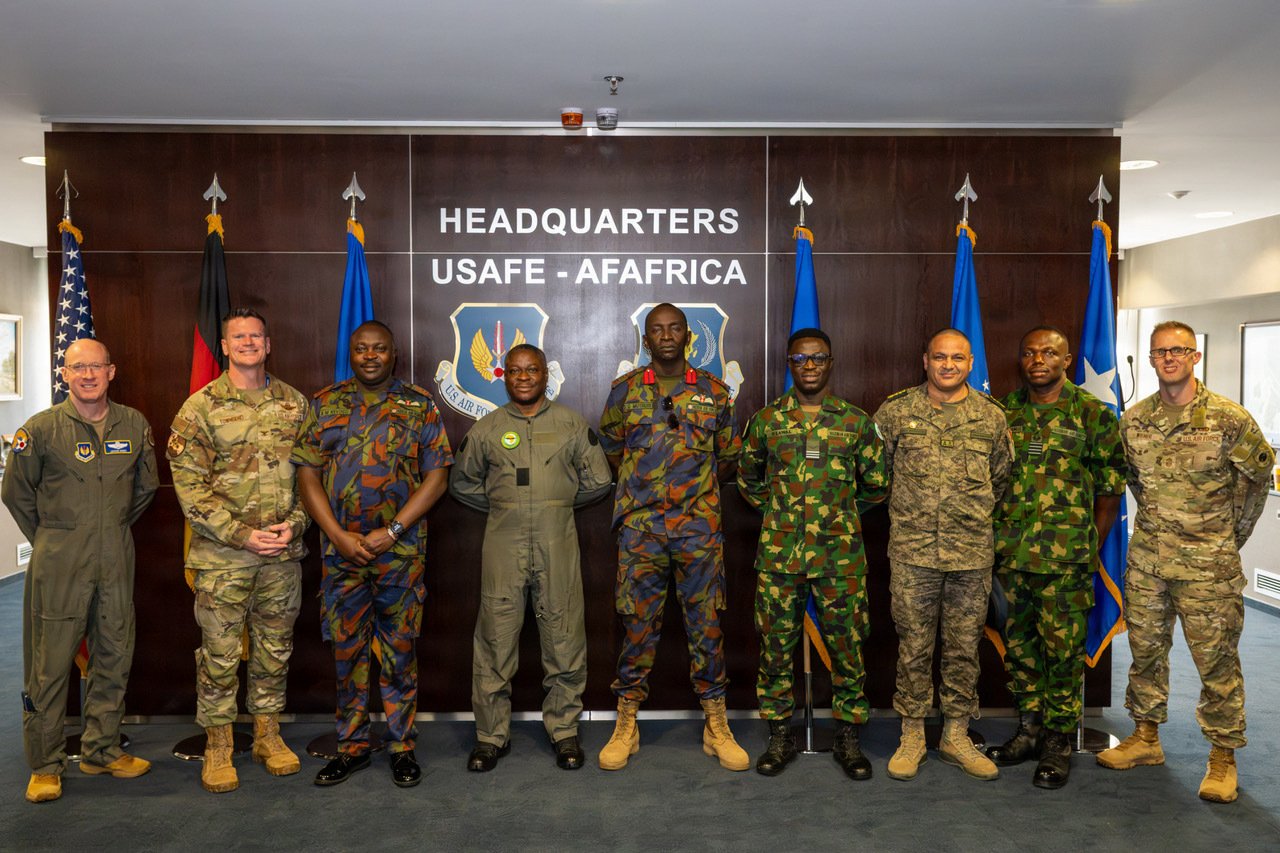
Finally, the Ukrainian journalists found something else we have long reported on. Like many other Russian weapons, the Geran-4 even contains components made in America.

“Despite international sanctions, a significant portion of its components are still coming from abroad, highlighting gaps in global export control enforcement,” RFE/RL showcased. “We just opened up the drone’s onboard computer, and these circuit boards contain components made by a U.S. company. The markings on this component are partly worn off, but you can still see the manufacturer, Texas Instruments.”

“According to the specialists, what is actually Russian-made here is mainly the drone’s body and its assembly. This particular drone was manufactured and assembled at Alabuga, a major Russian drone production site. According to Ukraine’s military intelligence, Russia is now producing around 3,000 Geran-4 and Geran-5 drones a month at Alabuga and other facilities across Russia.”

Satellite images of the site first emerged in 2023, which you can see below.

Satellite images of the factory producing Iranian kamikaze drones Shahed-136 in Yelabuga, Tatarstan.#russia #Ukraine pic.twitter.com/07HBMwcGCs

— Dr. Khaled Alfaiomi (@Alfaiomi) November 15, 2023

As if the Geran-4 drones were not challenging enough for Ukraine, Russian Geran-5 jet-powered drones are equipped with “a DSMAC (Digital Sensor Module for Autonomous Navigation) module for navigation using reference images of the Earth’s surface, similar to the X-101 missile,” the Ukrainian technology monitoring channel Polkovnyk GSh reported on Telegram. DSMAC allows for a weapon to navigate without any external help from global positioning satellites. The Tomahawk also uses this system. You can read all about it and how AI embedded in Shahed models will be the next leap in true autonomy far beyond the front lines, even for hunting and killing targets of opportunity, in our special feature linked here.

In addition, Russia has installed mesh repeaters on these weapons for radio signals so that video of the attacks can be “recorded (and immediately transmitted),” presidential adviser on defense technology Serhii Beskrestnov, known as Flash, said on Telegram.

The Russian military is now capable of acquiring real-time, high-quality BDA of its strikes with Geran-type OWA-UAVs/cruise missiles in downtown Kyiv.

In the footage below, we can see the moment of a Russian strike with Geran-5 cruise missile on the "Inkom" business center… pic.twitter.com/mPx4Kf9tmH

— Status-6 (@Archer83Able) September 27, 2026

Though these jet-powered drones are causing major problems for Ukraine, the country is finding a way to combat them.

One way is by using Ukrainian Air Force F-16 Vipers to shoot them down, which you can see in the following video.

The moment a Russian jet-powered "Shahed" drone is shot down by an F-16 fighter jet using its M61 Vulcan cannon. pic.twitter.com/gU72HJTXUa

— WarTranslated (@wartranslated) September 23, 2026

The Russian jet-powered drones were largely outrunning the drone interceptors Ukraine began using with great success against the piston-driven Shaheds. Those interceptors were not only saving lives, but they were also saving money because they cost a tiny fraction of far more expensive, higher-end munitions like the PAC-3 MSE fired by the Patriot system or the AIM-120 Advanced Medium-Range Air-to-Air Missile variants fired from the National Advanced Surface-to-Air Missile System (NASAMS) air defense launchers.

Seeking a more efficient and effective defense, Ukraine adapted by fielding higher-performing interceptor drones that are purpose-built to take on the jet-powered Russian munitions. Still, the engagement window for hitting the Russian drones is small, and these are more expensive to build. However, they will remain far less costly and faster to acquire than surface-to-air missiles.

In his speech earlier this week at the U.N. General Assembly, President Volodymyr Zelensky claimed that “our soldiers have already successfully tested four new jet-powered interceptor drones against Russian jet-powered Shaheds. So we are scaling up production.”

It is unclear exactly which interceptors the Ukrainian president was talking about; however, other types designed to take on Russian jet-powered Gerans have become public. One of them is the Sting S, a variant of the bullet-shaped Sting interceptor drone made by the Ukrainian Wild Hornets drone company.

On Sept. 19, the company posted a video on X claiming that “a crew from the 1020th Anti-Aircraft Missile Regiment took down a Russian Geran-5 using the new STING S. This drone is faster and carries a larger explosive payload than other Geran variants.”

TWZ cannot independently verify these claims.

STING S takes down a Geran-5 jet-powered drone-missile ❗💥

The crew from the 1020th Anti-Aircraft Missile Regiment took down a Russian Geran-5 using the new STING S. This drone is faster and carries a larger explosive payload than other Geran variants.

Big thanks to the… pic.twitter.com/Eg0rQgd1tL

— Wild Hornets (@wilendhornets) September 19, 2026

When we asked for more details, Wild Hornets told us “that the tests are going well. About a dozen enemy ‘Geran-4′ jet-powered strike UAVs have already been shot down, as well as several ‘Geran-5’ models, just in the last few days. We should note that at this stage we are talking about only the first results of combat testing within a few select units.”

The Sting S “is a high-speed quadcopter-type interceptor,” the Wild Hornets spokesperson added. “When choosing this model, we took into account that the solution should be inexpensive, easy to use, and quickly scalable.”

“Furthermore, most of the targets during combat testing have been destroyed using ‘Hornet Vision Ctrl’ remote control technology,” the spokesman stated. Wild Hornets claims the system provides low-latency image transmission, long-range communication, and resistance to electronic warfare.

100 remote interceptions in 100 seconds: Hornet Vision CTRL in action 🔥

Since deployment, Ukraine’s Defense Forces have remotely destroyed 1,000+ enemy targets using the system.

All thanks to the skill of crews taking down enemy drones with STING interceptors every day 🫡 pic.twitter.com/9sUthdjsvF

— Wild Hornets (@wilendhornets) September 3, 2026

“We expect this will allow us to rapidly scale up the deployment of the new interceptor once mass production begins,” the spokesperson noted.

As we have frequently noted, Russia and Ukraine continuously create new weapons and ways to defeat them. The jet-powered Russian drones, and Ukraine’s newest interceptors designed to destroy them, are the latest examples of a seemingly endless weapons evolution cycle in this war.

Contact the author: howard@twz.com

The post Russia’s Jet-Powered Shahed Drones Are Quickly Evolving As Ukraine Scrambles To Blunt Their Damage appeared first on TWZ.

  •  

General Atomics FQ-42A Vengeance CCA Now Flying Together With USAF Fighters

General Atomics has given us the first look at its FQ-42 Vengeance Collaborative Combat Aircraft (CCA) drone flying in formation with crewed fighters. The U.S. Air Force is continuing to expand crewed-uncrewed teaming and other testing of the FQ-42, as well as Anduril’s FQ-44 Fury, as it aims to start fielding both types around the end of the decade.

The newly released picture from General Atomics’ Aeronautical Systems, Inc. division (GA-ASI), seen at the top of this story, shows an FQ-42 in flight together with an F-35A Joint Strike Fighter and an F-15E Strike Eagle. The company has also disclosed the delivery of another Vengeance drone to the Air Force, this time to the service’s main drone operations hub at Creech Air Force Base in Nevada.

“The FQ-42 that arrived at Creech will continue regular test and evaluation operations with the Air Force aimed at experimentation with the new aircraft,” according to a press release GA-ASI put out today. “Previous efforts with Vengeance and other GA-ASI jets, including [the] XQ-67A Off-Board Sensing Station and MQ-20 Avenger – have found the trio of combat jets flying in various scenarios that push the boundaries of combat aviation. GA-ASI’s jets have flown semi-autonomously and autonomously with various AI pilots and under collaborative control of human fighter pilots operating F-22 Raptor and F-35 Lightning II jets.”

From top to bottom, General Atomics MQ-20 Avenger, XQ-67 OBSS, and YFQ-42 drones. GA-ASI

GA-ASI has previously confirmed that the XQ-67A, an earlier experimental drone TWZ was first to report on, served as a prototype for the development of the FQ-42. The Air Force’s F-22s also look set to be the first operational airborne controllers for USAF CCAs.

As mentioned, the Air Force is steadily working to broaden the scale and scope of testing involving the FQ-42 and FQ-44 to include more and more operationally relevant scenarios. Both types are set to make their first appearance at a large-force employment (LFE) exercise in December, offering a valuable new opportunity for deeper and more realistic integration with crewed fighters.

The Air Force otherwise continues to lay the groundwork for future CCA operations, including through a major round of testing at Creech in July, which TWZ was first to report on. The service is heavily focused now just on figuring out how the drones will be deployed, launched, recovered, supported, and otherwise operated on a day-to-day basis. A dedicated test squadron called the Experimental Operations Unit (EOU), established at Nellis Air Force Base in Nevada, has been leading those efforts.

Work is also underway to demonstrate tactical capabilities, such as the FQ-44 launching an AIM-120 Advanced Medium-Range Air-to-Air Missile (AMRAAM) for the first time earlier this year.

New test footage: first missile shot from YFQ-44A.

YFQ-44A executed an end-to-end, beyond-line-of-sight strike against a simulated target.

The test, executed out of @EdwardsAFB, represents an important step in turning CCA into an operational capability. pic.twitter.com/70cRIs6uXJ

— Anduril Industries (@anduriltech) July 15, 2026

“We’re on path right now to do our air-to-air shot coming up here in the near future,” Mike Shortsleeve, Vice President for Strategy Business Development at GA-ASI, told TWZ‘s Jamie Hunter on the floor of the Air & Space Forces Association’s (AFA) 2026 Air, Space & Cyber Conference last week.

Last week, GA-ASI separately announced a new demonstration of semi-autonomous air-to-air combat capability involving crewed F-5AT Advanced Tiger jets belonging to private adversary air contractor Tactical Air Support, Inc. and an unspecified “CCA test aircraft.” The company did use a picture of an Avenger drone to illustrate the press release. The F-5s and the CCA surrogate were equipped with infrared search-and-track sensors (IRST) during the testing.

The stock picture of an Avenger drone that General Atomics used to illustrate its press release last week. General Atomics

“The live exercise proved that a CCA and a manned fighter can collaborate to fuse sensor data from AMS-GRA-compliant sensors to track, engage, and eliminate an airborne target while using a Beyond Line of Sight (BLOS) data link to accomplish seamless coordination between the two aircraft,” according to the GA-ASI release.

“The demonstration utilized BLOS communication between the CCA and the airborne F-5, enabling the Advanced Tiger to send data about targets from an AMS-GRA-compatible system. These commands were relayed to the CCA’s TacACE [Tactical Autonomy Ecosystem software] system,” the release added. “This flight showed that many companies’ platforms can interoperate using the plug-and-play government reference architectures ecosystem. The U.S. Air Force isn’t locked into using a single vendor or system.”

GA-ASI has previously demonstrated the ability of MQ-20s flying with podded IRSTs to detect and track aerial targets semi-automatically. Generally speaking, IRSTs look set to be an important sensor for future CCAs, and are particularly relevant in the air-to-air role. As we have written in the past:

IRSTs are especially valuable for helping spot stealthy targets with features designed to reduce their radar cross-sections since they detect and track infrared emissions. By extension, IRSTs are also immune to radio frequency electronic warfare jamming. As passive sensors, they do not emit their own signals that could alert a target to the fact they are being tracked, either. IRSTs can still be used to cue or otherwise be linked to other sensors, including active electronically-scanned array radars. Fusing data from multiple sources can provide higher fidelity tracks of multiple targets, as well as improved situational awareness overall.

An Avenger drone with a podded IRST sensor under its wing. General Atomics

Air-to-air combat is expected to be the primary mission set, at least initially, for Air Force CCAs. At the same time, an air-to-ground role for the FQ-42 and FQ-44, and/or other future CCA-type drones the Air Force might acquire, is emerging on the horizon. Anduril has already fit-checked a variety of air-to-ground ordnance on Fury.

As it stands now, the Air Force is looking to have its first operational CCAs in service toward the end of the decade. The service is also presently aiming to have a total fleet of at least 500 CCAs of all types by 2032.

“If we can’t be ready, then certainly you’re not going to have the forces that you need and the numbers that you need going forward. This signifies that mass is certainly important again, but also autonomy is just as important,” General Atomics’ Shortsleeve told us last week in talking about the Air Force’s CCA fleet size target. “So the ability to have these autonomous systems, whether they’re bringing in additional weapons, sensing capability, whatever it is, all of those working in a collaborative environment, whether it’s manned, unmanned teaming, or unmanned and unmanned capabilities, that right there is what’s going to help the warfighter in the future.”

“And when we say autonomy, it’s not just strictly this is going to go off and do its own thing. It’s going to be directed,” he added. “Whether it’s on the ground, in the air, [it] makes no difference to the system itself. It’s going to work hand-in-hand [with humans]. So that human-machine teaming, that’s what they’re really focusing on. There is figuring out how to best use this capability in the advancement of actually having to employ it in [the] real world.”

Though just flying in formation is very different from collaboration with a high degree of autonomy, the new picture of the FQ-42 together with the F-35A and the F-15E is a window into the future teamed operations the Air Force is hoping to build.

Contact the author: joe@twz.com

The post General Atomics FQ-42A Vengeance CCA Now Flying Together With USAF Fighters appeared first on TWZ.

  •  

Shahed-136 Clone Found By Florida Fisherman, Eglin AFB Admits It Lost A Drone (Updated)

A Florida fishing charter boat made a very unusual catch Saturday while operating near Eglin Air Force Base. Located in the western end of the Florida Panhandle, Eglin is home of the U.S. Air Force weapons test wing. Hot Spots Charters pulled a delta-wing aerial drone out of the water during an excursion, according to local charter captain Charlie Green. The recovered drone closely resembles a clone of the Iranian Shahed-136 one-way attack weapon, specifically the U.S. military’s Low-Cost Uncrewed Combat Attack System (LUCAS) that took center stage during its first combat use in Operation Epic Fury. The target version of that drone is built by SpecktreWorks and is designated the FLM-136. It was originally designed for mimicking one-way attack munitions, specifically the Shahed-136, which it was reverse engineered from, for testing and training before it was weaponized into LUCAS.

An Eglin AFB spokesperson told us the installation recently lost a drone, but would not confirm it was the same one found by Hot Spots Charters.

“I can confirm that we were doing a test and the test article went down,” the spokesperson told us, declining to provide further details about what kind of drone, when it was lost or the location it went down. They referred us to the Pentagon, which could not immediately provide any additional details. 

“The drone was found by local charter Capt. Daniel Arsenault with Hot Spots Charters,” said Green, who is also an aviation photographer whose work can be found at Aquatic Charlie on social media. “He saw the object at a distance and went over to check it out. When he did, he pulled a good size mahi-mahi out from underneath it, complementing his already stocked cooler full of fish from that morning charter. His passengers helped him haul it aboard.”

The drone found by Hot Spots Charters. (Charlie Green)

“Arsenault and his charter company did all the due diligence possible to notify local agencies of the recovery- and was eventually collected by one of them,” Green added. He did not know which agency.

Images taken of the drone shared with us by Green show that it did not have the engine, propeller or the nose cone/seeker intact. Losing these kind of components is common for impacts into water.

(Charlie Green)

While the Eglin spokesperson offered scant details, the host unit at the installation is the 96th Test Wing, which is the “test and evaluation center for Air Force air-delivered weapons, navigation and guidance systems, command and control systems, and Air Force Special Operations Command systems,” according to the wing’s homepage. It oversees the massive Eglin Gulf Test Range, which “provides approximately 120,000 square miles of overwater airspace, covering the eastern third of the Gulf of Mexico from the Florida panhandle to the Florida Keys. The land range covers 724 square miles and contains 70 specific test and training areas, including an approved depleted uranium test range and the only qualified air-to-ground supersonic range east of the Mississippi River.”

Eglin Test Range. (Eglin Air Force Base)

As noted in the opening of this article, the LUCAS drone was used for the first time in combat during the opening day of the Operation Epic Fury war on Iran on Feb. 28. 

“Costing approximately $35,000 per platform, LUCAS is a low-cost, scalable system that provides cutting-edge capabilities at a fraction of the cost of traditional long-range U.S. systems that can deliver similar effects,” Navy Capt. Tim Hawkins, a CENTCOM spokesperson, told TWZ when the command stood up Task Force Scorpion Strike (TFSS), the military’s first one-way attack drone unit, back in December. “The drone system has an extensive range and the ability to operate beyond line of sight, providing significant capability across CENTCOM’s vast operating area.”

“LUCAS drones deployed by CENTCOM have an extensive range and are designed to operate autonomously,” CENTCOM added in a press release. “They can be launched with different mechanisms to include catapults, rocket-assisted takeoff, and mobile ground and vehicle systems.”

TFSS falls under the auspices of U.S. Special Operations Command Central (SOCCENT), which oversees U.S. special operations activities across the Middle East.

The cost to connect each of the U.S. military's Low-Cost Uncrewed Combat Attack System (LUCAS) one-way attack drones to SpaceX's Starshield communications network is approximately $25,000 a month, according to a new report.
A LUCAS drone. (NAVCENT/C5F/U.S. Army Spc. Kayla McGuire) NAVCENT/C5F/U.S. Army Spc. Kayla Mc Guire
A LUCAS drone. (Courtesy photo/Naval Air Warfare Center Weapons Division)

While we aren’t sure if the drone found by Hot Spots Charters is the one lost by Eglin, it wouldn’t be the first time something like this has happened in Florida. For example, in 2021, beachcombers in Florida’s Palm Beach County found a U.S. Air Force BQM-167A high-performance target drone that washed ashore.

BREAKING: Military drone washes up on beach at Ocean Ridge Hammock Park https://t.co/JXMYTAdXcP pic.twitter.com/rHW5Dyv94p

— WPTV (@WPTV) March 19, 2021

Indeed, the Air Force has a handful of 120-foot boats, the only vessels in its service, to help recover drones after they are shot down during live-fire exercises, or otherwise need to be recovered from these waters. The boats are operated by a contracted crew from Florida Offshore and retrieve around 100 of the drones each year.

The FLM-136’s origins as a target drone are highly relevant here. Counter-unmanned aerial system (C-UAS) capabilities are being hotly pursued on all fronts across the U.S. military as the threat from them has ballooned. During the war in Ukraine and multiple engagements with Iran, including Operation Epic Fury, one-way attack drones have proven to be a massive threat that is heavily influencing how wars are fought. As far as Eglin AFB goes, maybe the most high-profile C-UAS development as of late that has emerged from there has been arming USAF fighters with FALCO APKWS laser-guided rockets to shoot down exactly the same kind of threat that the FLM-136 is meant to emulate. This program began in 2019, which TWZ was first to report on, but was finally rushed into service years later as the standoff with Iran went hot. Now there are many other programs aimed at dealing with these same threats, including a more capable “fire and forget” air-to-air APKWS.

A 2019 test of air-to-air APKWS laser-guided rockets occurred off Eglin AFB. (USAF)

LUCAS development is continuing at a high-pace, with its ability to swarm cooperatively with other LUCAS drones — a feature we reported as central to the LUCAS vision when the existence of the program was disclosed — being worked on now. You can read more about this here. These systems need sanitized airspace for development activities, and the vast ranges over the gulf are some of the best in the country for it.

So, it’s not surprising to see an FLM-136 floating in the waters off Eglin AFB. Even in the war with Iran, there were multiple losses of LUCAS drones where they were found intact. These weapons are produced to be risked in large numbers, and some failing, for whatever reason, is just part of the calculus.

Locals in Iraq appear to have recovered a crashed and almost entirely intact Low-Cost Unmanned Combat Attack System (LUCAS), an American copy of the Iranian Shahed-136 Attack Drone, which is confirmed to have been used recently by Task Force Scorpion Strike during U.S. attacks on… pic.twitter.com/SEqO6627en

— OSINTdefender (@sentdefender) March 2, 2026

We will update this story with any additional details we can find about this drone. Though we don’t yet know for sure where it came from, one thing is for certain, the folks on the Hot Spots Charters boat that found it will always have a good tale about the one that didn’t get away.

UPDATE: 2:38 PM Eastern Sept. 21 –

Eglin Air Force Base provided us with an update.

“On Thursday, Sept. 17, a LUCAS UAS impacted the water during routine scheduled testing on the Eglin AFB Range. The aircraft has been recovered and is back in the Department’s possession.

We do not have any additional details to provide at this time.”

Contact the author: howard@twz.com

The post Shahed-136 Clone Found By Florida Fisherman, Eglin AFB Admits It Lost A Drone (Updated) appeared first on TWZ.

  •  

New Details About Secretive RQ-170 Sentinel Drone Squadron Shared With New Award

An annual award has gone to one of the U.S. Air Force’s most secretive drone squadrons, offering a very rare window into its activities. The 30th Reconnaissance Squadron is one of two units known to operate the stealthy RQ-170 Sentinel, and it is unusual to hear anything about its operational exploits. Much about the RQ-170 itself remains highly classified 17 years after its existence was first officially acknowledged.

The General Atomics Remotely Piloted Aircraft (RPA) Squadron of the Year award for 2025 was presented to the 30th Reconnaissance Squadron at the Air & Space Forces Association’s (AFA) 2026 Air, Space & Cyber Conference on Tuesday, at which TWZ was in attendance. The AFA’s Mitchell Institute for Aerospace Studies works together with General Atomics’ Aeronautical Systems, Inc. division (GA-ASI) to recognize an Air Force drone unit in this way each year.

“The RPA Trophy is awarded annually at the USAF level for outstanding performance of active duty, Air Force Reserve, and Air National Guard … squadrons in achieving persistent attack and/or reconnaissance over the preceding calendar year,” the Mitchell Institute told TWZ in a statement. “Squadrons are judged on performance across their specified mission sets, exercise participation, and squadron and individual achievements.”

The RPA Squadron of the Year trophy seen at the 2026 Air, Space & Cyber Conference this week. The name and unit insignia of the 30th Reconnaissance Squadron are seen on a plaque on the front of the base. Air & Space Forces Association

The institute sent an additional statement regarding this year’s particular award to the 30th Reconnaissance Squadron, which is as follows:

“Through relentless combat support, operational agility, and enterprise leadership, the 30th Reconnaissance Squadron – known as the Blackbirds – has set the standard for the remotely piloted aircraft community and strengthened the Joint Force’s intelligence advantage. In 2025, the 30th Reconnaissance Squadron conducted intrusive intelligence, surveillance, and reconnaissance missions across three areas of responsibility, filling critical intelligence gaps and disrupting enemy networks. In the face of urgent deployment requirements, the squadron demonstrated exceptional agility, rapidly pivoting resources to establish forward operating locations and execute critical missions under severely compressed timelines. The Blackbirds’ accomplishments paved the way for future remotely piloted aircraft capability, distinctly identifying them as the Air Force’s most outstanding RPA squadron.“

Larry Stutzriem, the AFA’s Executive Vice President, while presenting the award to representatives of the 30th Reconnaissance Squadron ahead of a panel at the Air, Space & Cyber Conference.

“In 2025, the 30th Reconnaissance Squadron conducted 87 ISR [intelligence, surveillance, and reconnaissance] missions across three different AORs [areas of responsibility], filled critical intelligence gaps, and disrupted enemy networks,” Stutzriem said. “On the unit mobility side, the Blackbirds executed 7.2 million dollars worth of airlift in six movements across four combatant commands, moving 250 tons of personnel, top secret material, and equipment to provide low-observable RPA support for a critical Secretary of War-directed mission.”

“With their deployments, the Blackbirds demonstrated exceptional agility under extremely compressed timelines,” he added.

The official unit insignia of the 30th Reconnaissance Squadron, with its prominent blackbird motif. USAF

Furthermore, during 2025, the squadron “also executed six large force exercises to develop tactics, techniques, and procedures; validated joint force tactical objectives in land and maritime environments; and provided combat-relevant training,” according to Stutzriem. “Instructors and evaluators graduated the largest ever combat mission-ready class, 30 percent ahead of schedule, and accelerated mission-ready status 33 percent, while increasing total unit aircrew by 26 percent.”

Though Stutzriem noted that the 30th Reconnaissance Squadron provided “low-observable RPA support,” no explicit mention was made of the RQ-170. Whether or not the squadron may now operate other kinds of low-observable (stealthy) drones is unknown. As mentioned, to date, the Air Force has only confirmed that Sentinels are assigned to two units, the other being the 44th Reconnaissance Squadron. Both the 30th and 44th are assigned to the 432nd Wing at Creech Air Force Base in Nevada. Between 20 and 30 RQ-170s, in total, are understood to be in the Air Force’s inventory.

What three specific AORs the 30th Reconnaissance Squadron operated in during 2025 is also not known.

However, at least one, and possibly two, RQ-170s took part in the mission to capture Venezuelan dictator Nicolas Maduro in January of this year, as you can read more about here. It’s very likely that the Sentinels were tracking Maduro ahead of the operation. In December 2025, Air Forces Southern (AFSOUTH) had also made a post on X that included a picture of an individual wearing a name patch with the silhouette of Sentinel and the sleeve insignia of the 432nd Wing, prompting questions about whether the drones were operating in the region. The post was subsequently deleted.

Another footage of U.S. RQ-170 stealth drone returning to Puerto Rico from Venezuela. https://t.co/c7yKubc7jc pic.twitter.com/PLaxEaxFcX

— Clash Report (@clashreport) January 3, 2026

The original AFSOUTH post, the RQ-170 patch is on the first image on the right. https://t.co/UdsT33sX6s pic.twitter.com/z7FjKBjgPl

— SA Defensa (@SA_Defensa) December 19, 2025

Further in the past, RQ-170s are also known to have been deployed to the Middle East, Central Asia, and the Pacific. The Sentinel first emerged publicly in Afghanistan in the late 2000s, prompting the U.S. military to confirm its existence in 2009. Sentinels are notably understood to have surveilled Al Qaeda founder Osama Bin Laden’s compound in Pakistan in the lead-up to the raid that led to his death in May 2011.

Later in 2011, one of the drones infamously went down in Iran while presumed to be on a mission to monitor aspects of that country’s nuclear program. With that in mind, it is possible, if not extremely probable, that RQ-170s likely played a role in relation to the Operation Midnight Hammer strikes on Iranian nuclear sites last year. Sentinels could have provided direct surveillance over the sites in question, as well as collecting post-mission bomb damage assessments and other intelligence. These are exactly the kinds of missions the drones were designed for and that operators have trained for.

A satellite image available through Apple Maps, seen below, also shows an RQ-170 at Naval Air Station Sigonella in Italy, likely in the 2023-2024 timeframe, based on the state of construction visible elsewhere at the base. It is not known how many Sentinels were deployed to Sigonella and for how long. The Apple Maps image does lend some credence to earlier reports that these drones may have flown missions in the Black Sea region, gathering intelligence on Russian forces on the heavily defended, occupied Crimean Peninsula, between 2022 and 2023.

Apple Maps

Overall, the RQ-170 does still appear to be a go-to for performing penetrating tactical reconnaissance missions, especially when there is a need to provide persistent surveillance in denied areas, resulting in extremely important intelligence collection.

Again, it is important to reiterate here that we do not know if the 30th Reconnaissance Squadron operates any other stealthy drones beyond the RQ-170, or has in the past. A very stealthy high-altitude, long-endurance (HALE) surveillance and reconnaissance drone commonly and unofficially referred to as the RQ-180, or an evolution thereof, burst into the public eye in March after it was spotted landing in broad daylight at a base in Greece. Much about the drone, including what units are involved in its operation and where the home base of the fleet is, as well as the reasons for its deployment to the region, has yet to emerge. It does seem unlikely that the 30th would have taken on operation of the RQ-180, which is a larger strategic reconnaissance-focused platform compared to the smaller, tactically-minded, and less exquisite RQ-170. This is also just one example of what could still be lurking in the classified realm.

American RQ-180 stealth drone landing in Greece, supporting US operations against Iran. pic.twitter.com/Go5YHBM1p8

— OSINTtechnical (@Osinttechnical) April 6, 2026

Whether or not the awarding of the 2025 RPA Squadron of the Year trophy to the 30th Reconnaissance Squadron might now point to a new willingness to talk about that unit’s activities and/or the RQ-170 remains to be seen. Regardless, the award and its description are yet more reminders of just how important the Sentinel remains nearly two decades after it first appeared.

Contact the author: joe@twz.com

The post New Details About Secretive RQ-170 Sentinel Drone Squadron Shared With New Award appeared first on TWZ.

  •  

Cessna Cuts Cockpit Out Of SkyCourier Cargo Hauler For Uncrewed Logistics

A new drone collaboration by Cessna owner Textron and autonomy provider Merlin Labs aims to offer the U.S. military a hot production line and a familiar platform for uncrewed aerial logistics, including in contested environments.

The product is SkyCourier UX, a drone version of the Cessna 408 SkyCourier that has flown for FedEx, foreign special operations forces and small remote commercial airlines during its six years of active service. TWZ previously covered how the SkyCourier would likely end up taking on military applications when it was first announced, which you can read here.

A partial full-size model on the show floor at the Air & Space Forces Association’s Air, Space & Cyber Conference in Washington, D.C., this week showed a nose that opened with hydraulics to a cargo bay in lieu of a cockpit. We have seen this same front door conversion concept for uncrewed cargo-carrying helicopters as of late. This allows for easy loading of outsized cargoes without specialized equipment, according to the company, though it does not increase the payload. Like the original SkyCourier, it’s good for about 6,000 pounds, or three standard containers.

(Hope Hodge Seck)

The form factor of the uncrewed SkyCourier variant is otherwise identical to its crewed counterpart, with twin turboprops, a high-wing configuration and an aluminum body. 

As with the base SkyCourier, a major advantage of the aircraft is its optimization for loading and carrying standard pallets. This means that cargoes don’t necessarily have to be downloaded, broken up and repackaged for movement to forward positions. This is a big logistical advantage and can speed the flow of critical supplies to where they are needed most. 

The aircraft’s range is about 900 nautical miles, which the makers say suits it well for Pacific island-hopping, allowing for refueling stops on austere runways. It can take off on runways as short as 3,300 feet and land in just 2,500 feet, according to a spec sheet.

SkyCourier can hold three standard LD3 pallets. (Textron)

The Textron/Merlin collaboration aims to differentiate itself with proven capability in the missions it intends to fulfill, along with the ability to roll out a new drone variant fast and one it can sustain consistently. Bob Gibbs, Textron’s vice president of special missions sales, told reporters in a Monday briefing that the conventional SkyCourier was now fulfilling new orders, not previously announced, to deliver modified aircraft to foreign nations for medical evacuation, casualty evacuation and environmental protection.

“The aircraft’s being operated literally from the Arctic to the Amazon,” Gibbs said. “There are three different island nations in the Pacific that have airline fleets of them. We support our aircraft in 170 countries around the world. So, just like a Cessna Caravan or a Beechcraft King Air, they’re ubiquitous. You find them anywhere, and we support them anywhere in the world.”

While the 900-mile range can’t take the loaded-up aircraft the nearly 2,000-mile stretch between the first and second island chains, Merlin and Textron executives said they don’t need to accomplish that to make it effective.

“This is the ability to disperse the forces among the second island chain … to do the island-hopping to be able to get to, whether it’s Palau, Tinian, Saipan, pick your various islands there,” Kyle Kremer, a retired Air Force major general who now advises Merlin, said. “With the range that it has, it has the ability to agilely move through there” and connect logistics pipelines.

SkyCouriers are flying all over the world, including in some very harsh environments. (Textron)

The autonomy package, Merlin Pilot, is already in use under a $105 million U.S. Special Operations Command contract to develop autonomy for the C-130J Super Hercules transport aircraft. It’s been flown aboard four different single and multi-engine airframes, the company says. A promotional web page for Merlin Pilot shows tanker-class and commercial cargo applications with developing and future capabilities.

Merlin has also teamed with the Air Force to develop an AI copilot for KC-135 tankers that can decrease crew workload and even possibly fly the aircraft on its own in the future. TWZ reported on planned tests for these autonomy-enabled tankers in 2024, with the flights set to begin the following year.

However, the Air Force has not confirmed the completion of any flight tests for the effort since. And on Wednesday, Lt. Gen. Daniel Tulley, commander of Air Force Mobility Command, appeared to confirm that the tests had never taken place.

“There’s some companies out there who have offered to develop things where they can bring a carry-on kit onto old KC-135s and other aircraft, but we haven’t seen them test those successfully,” he said. 

He added that autonomy technology may lack the maturity needed for tanker missions.

“An optionally manned or an unmanned tanker at range, [at] the ranges we needed to operate at. It’s a very large aircraft, and we’re not yet to where we’re employing fully autonomous large aircraft. But the technology, I would say, is there and rapidly getting there,” he said.

Tulley did stress that the Air Force saw a need for unmanned aircraft in the last-tactical-leg delivery.

“I’m wrestling with that as we develop an AMC strategy,” he said. “There is absolutely room for some sort of autonomous or other small light lift capability, and that’s just one domain in the air, right? This could be by sea, could be by land, but there is absolutely some requirement for distribution from those major points of debarkation.”

In addition to autonomous takeoff, landing and navigation, and protection of the flight envelope, Merlin Pilot, the company says, has digital copilot human-machine teaming characteristics that include pilot health monitoring, gaze tracking and fatigue detection; pilot incapacitation and contingency response; and flight monitoring and assistance.

A military variant concept of the SkyCourier. (Textron)

Some of Textron’s new features are making light steps toward autonomy already. Gibbs pointed out that the company’s Cessna Citation Gen3 business jets now include standard Garmin auto-land technology.

“Obviously, it’s a different scale than what Merlin’s doing as far as automation,” he said. “But … as we develop new products, we try to future-proof them, and so that’s where you get this nice transition between us.”

The SkyCourier can cost up to $8.5 million, depending on modifications, and while the SkyCourier UX sports GPS-denied navigation and the ability to seek different flight paths to avoid danger, it doesn’t have other built-in defenses. For contested logistics missions, it’s not clear how much risk the services are willing to tolerate for a relatively small logistics payload capability. Kremer maintained, though, that a drone of this size could be a mission-saving capability when dispatched to austere locations. And, in a Pacific conflict, it may reduce demand on already-stretched C-130 transports, now the smallest platform capable of carrying standard containers and long overtasked.

A U.S. Military C-130 prepares for takeoff at Pohakuloa Training Grounds, Hawaii, Oct 28, 2022. JPMRC 23-1 is a regional combat training center (CTC) rotation that builds combat readiness in Americas Pacific Division and is a key way the Army forces engage in a joint environment with our regional allies and partners. (U.S. Army photo by Pfc. Wyatt Moore / 28th Public Affairs Detachment)
A U.S. Military C-130 prepares for takeoff at Pohakuloa Training Grounds, Hawaii, Oct 28, 2022. (U.S. Army photo by Pfc. Wyatt Moore / 28th Public Affairs Detachment) Spc. Wyatt Moore

“If you can’t get the spare tire, if you can’t get the component, that small thing where you need it in these dispersed operations, they don’t keep the big logistic supply chain built up in these locations,” Kremer said. “You have to be able to get it where you need it, when you need it, and that’s what this provides.”

Nonetheless, the Air Force has a clear appetite for a capability like this. Last year, it signed a $17.5 million contract to put a Reliable Robotics autonomy package on a Cessna 208B Caravan. 

On Monday, Air Force Chief of Staff Gen. Ken Wilsbach reiterated the Air Force’s interest in unmanned aerial logistics platforms.

“We’re doing testing on them,” he said in response to an audience question. “We believe that there’s some value in that as well. It certainly could be valuable in the Pacific with the ranges that we’re talking about, and so we’re looking at several different options and evaluating them. But I would say nothing, no program of records just yet, but [we’re] certainly taking a look at some demonstrators and the like to see what’s available to us.”

Notably, China has made significant advancements in developing logistic drone capabilities, with reported successful flight tests of massive heavy-lift uncrewed aircraft, including a 7-ton cargo plane that’s currently the world’s largest uncrewed freighter to take flight. Among them is China’s CH-YH1000, a medium-altitude cargo drone developed by the China Academy of Aerospace Aerodynamics that boasts, like SkyCourier UX, a hatch in lieu of a cockpit for ease of flat-pallet loading up to a weight of 1.2 tons. These are just some of an increasing number of similar systems being developed in China that aim to take the crew out of lower-end logistical missions over short, medium and long distances.

China’s big CY-8 uncrewed logistics aircraft undergoing testing. (Chinese Internet)

Though Textron and Merlin have yet to build a SkyCourier UX prototype, Merlin CEO Matt George emphasized that the company had chosen to partner with Textron because they could start delivering aircraft fast.

“You’ll see over the course of the show a lot of concept aircraft. You’ll see a lot of renders. You’ll see a lot of people who have big empty factories all around the country,” he said. “But I also want to be very clear about the fact that none of this matters without production … There’s 14,000 Americans working in Wichita, Kansas, on a production line where these aircraft, at least in the crewed configuration, are coming off the production line. So when we talk about capability, we’re talking about that capability and bringing that capability to bear soon, rather than in the future.”

Next in the development process, executives say, will be an optionally piloted version of SkyCourier that will allow users to develop comfort with the platform and open the door to further iteration. 

The Textron/Merlin team is also leaving its options open in terms of which U.S. military customer might find its platform most useful.

“I hope [the Army and Air Force] fight over it,” Gibbs said.

Contact the editor: Tyler@twz.com

The post Cessna Cuts Cockpit Out Of SkyCourier Cargo Hauler For Uncrewed Logistics appeared first on TWZ.

  •  

How The USAF Is Preparing For European Allies To Join The Collaborative Combat Aircraft Club

Senior U.S. Air Force leaders in Europe say NATO allies are increasingly looking to participate in the development and employment of collaborative combat aircraft (CCAs), even as several of those same countries pursue their own indigenous fighter and drone programs. American commanders say they are looking forward to CCAs expanding the alliance’s overall capacity, and are already pushing for such systems to work together from the outset.

Speaking yesterday at the Air & Space Forces Air, Space and Cyber Symposium that TWZ is attending, Lt. Gen. Jason T. Hinds, commander of U.S. Air Forces in Europe, U.S. Air Forces Africa, and NATO’s Allied Air Command, and Chief Master Sgt. Joshua J. Wiener, USAFE-AFAFRICA’s command chief, discussed how the command is preparing for an eventual European role in the U.S. Air Force’s planned fleet of hundreds of CCAs.

RAMSTEIN AIR BASE, Germany – U.S. Air Force Lt. Gen. Jason T. Hinds, U.S. Air Forces in Europe – Air Forces Africa commander, and U.S. Air Force Chief Master Sgt. Joshua J. Wiener, USAFE-AFAFRICA command chief, pose for a group photo with the Association of African Air Forces representatives from Kenya, Nigeria and Tunisia during the AAAF planning conference at Ramstein Air Base, Germany, Sept. 3, 2026. The weeklong conference strengthened multinational partnerships and advanced planning for future AAAF initiatives, including AAAFEX27 in Kenya.
U.S. Air Force Lt. Gen. Jason T. Hinds, U.S. Air Forces in Europe – Air Forces Africa commander (far left), and U.S. Air Force Chief Master Sgt. Joshua J. Wiener, USAFE-AFAFRICA command chief (second from left), pose for a group photo with the Association of African Air Forces representatives from Kenya, Nigeria, and Tunisia at Ramstein Air Base, Germany, earlier this month.

The issue is particularly significant for USAFE, which operates a fraction of the fighter force it maintained in Europe during the Cold War, even as many of its NATO allies contend with shrinking fleets of crewed combat aircraft. This comes against a backdrop of deepening tensions with Russia and the emergence of new kinds of threats. Autonomous aircraft that can augment crewed fighters could provide the alliance with additional combat mass without requiring a corresponding increase in the number of crewed aircraft and personnel permanently based in Europe.

“I’m excited about what CCAs have in store for the Air Force,” Hinds said, pointing to recent comments from the Secretary of the Air Force Troy Meink, including the aim of having at least 500 CCAs in service by 2032.

He added that European interest in these kinds of platforms is already growing.

“I think you’re going to see a lot more interest from other nations inside Europe about what is America doing with CCAs and how they can join this party, if you will,” Hinds said.

Germany is “heavily involved,” he said, while Scandinavian countries and the Netherlands are also showing interest.

In the case of Germany, we have previously explored how that country is looking to procure CCAs by 2029. Sweden, too, recently unveiled a concept for a high-end, stealthy CCA-type drone, while the Dutch are looking to become more closely alligned with U.S. Air Force CCA efforts.

Saab has produced a full-scale concept model of a future uncrewed combat air system, known as aircraft A3. Saab

USAFE is currently using two broad operational scenarios to explain to allies how CCAs could fit into NATO’s force structure.

The first is defensive. A CCA could operate as part of an integrated air and missile defense network, potentially engaging one-way attack drones or cruise missiles without the need for expensive crewed fighters.

The second is offensive. In that scenario, autonomous aircraft could help suppress or destroy integrated air defense systems and potentially attack fielded forces during an effort to repel a hostile incursion into NATO territory.

Allies are interested in both missions, Hinds said, and want the ability to incorporate CCAs into their own force designs. Interestingly, only yesterday, Anduril shared photos of its YFQ-44A Fury configured with air-to-ground weapons, underscoring the fact that the CCA could take on an air-to-ground role in the future in addition to its current air-to-air focus.

A YFQ-44A carrying pods for 2.75-inch rockets and 500-pound Joint Direct Attack Munitions (JDAM) under the wings. Anduril

That kind of interest has already prompted work at the NATO level. Hinds pointed to a study by the Joint Air Power Competence Center, the alliance’s airpower think tank based in Kalkar, Germany, examining how NATO members could employ CCAs in a modular fashion, including issues such as sustainment, training, and exercises.

“It was a pretty long paper, but the nations wanted it,” Hinds said.

Initial experimentation is expected to take place in the United States, but European experimentation could follow, including by Sweden and potentially other NATO members.

At the same time, European countries are not simply waiting for an American CCA to arrive.

The United Kingdom has launched its own Storm Fighter CCA program. Germany is pursuing a separate loyal-wingman effort, while the United Kingdom, Italy, and Japan are meanwhile jointly embarked on the Global Combat Air Program, or GCAP, which is intended to produce the Tempest next-generation crewed fighter and associated uncrewed systems.

A rendering of a CCA concept released at the launch of the U.K. Royal Air Force Storm Fighter program, earlier this year. BAE Systems

The proliferation of national programs raises an obvious question: How does NATO prevent a growing fleet of autonomous aircraft from becoming a collection of incompatible national systems?

Hinds said the answer starts with commonality.

“The first and foremost thing is we want to strive for commonality,” he said. “Commonality means we don’t even have to worry about interoperability.”

Where common equipment is not possible, however, USAFE wants interoperability built into national systems from the beginning.

“Interoperability by design” is the preferred approach, Hinds said, with NATO data standards and other requirements incorporated before a system enters service rather than retrofitted later.

The good news for USAFE is that NATO already has extensive experience establishing common standards for interoperability, covering everything from tactics and procedures to communications, datalinks, weapons employment, and other technologies. That existing framework gives the alliance a foundation for integrating increasingly diverse national systems without requiring every member to field identical equipment.

F-35A Lightning II aircraft from the U.S. Air Force’s 48th Fighter Wing and the Royal Norwegian Air Force fly tandem after a formation flight near Lofoten, Norway, March 10, 2026. The formation flight symbolized the partnership and degree of interoperability displayed between participating NATO militaries during exercise Cold Response 26. A key component of NATO's enhanced vigilance activity Arctic Sentry, exercise Cold Response 26 is a Norwegian-led winter military exercise designed to enhance collective defense capabilities and ensure U.S. readiness to rapidly deploy and seamlessly operate alongside NATO Allies in challenging arctic conditions. (U.S. Marine Corps photo by Cpl. Mya Seymour)
F-35A from the U.S. Air Force’s 48th Fighter Wing and the Royal Norwegian Air Force fly tandem after a formation flight near Lofoten, Norway, March 10, 2026. The formation flight was intended to symbolize the partnership and degree of interoperability displayed between participating NATO militaries during Exercise Cold Response 26. U.S. Marine Corps photo by Cpl. Mya Seymour Cpl. Mya Seymour

Hinds did warn that some countries have previously acquired equipment that was not compatible with NATO systems, leaving them with the choice of paying to modify their own equipment or forcing the alliance to adapt its systems around it.

That problem becomes particularly important as autonomous aircraft are connected to increasingly complex sensor and weapons networks. Even more important is the requirement for a baseline command-and-control network for CCAs themselves, allowing different platforms to manage them seamlessly.

The ability to share and control CCAs across a complex battlespace is already emerging as both a major opportunity and a significant integration challenge. The U.S. Air Force and Navy, for example, have made clear that their respective CCAs are being developed with the ability to be controlled seamlessly across services, pointing toward a future in which autonomous aircraft need not remain tied to the service or platform that launched them.

Hinds described a potential kill chain in which an F-35 detects a target, passes the information to another node in the network, and a ground-based system operated by another NATO country ultimately launches the weapon.

In such an architecture, the aircraft, sensor, command-and-control network, and weapon do not necessarily have to belong to the same country.

As an example, Dutch F-35s, operating in Europe, have used a data-exchange system to transmit targeting coordinates to Israeli-made PULS (Precise and Universal Launch System) rocket artillery. The system, developed by Lockheed Martin is known as Keystone, and you can read more about it here.
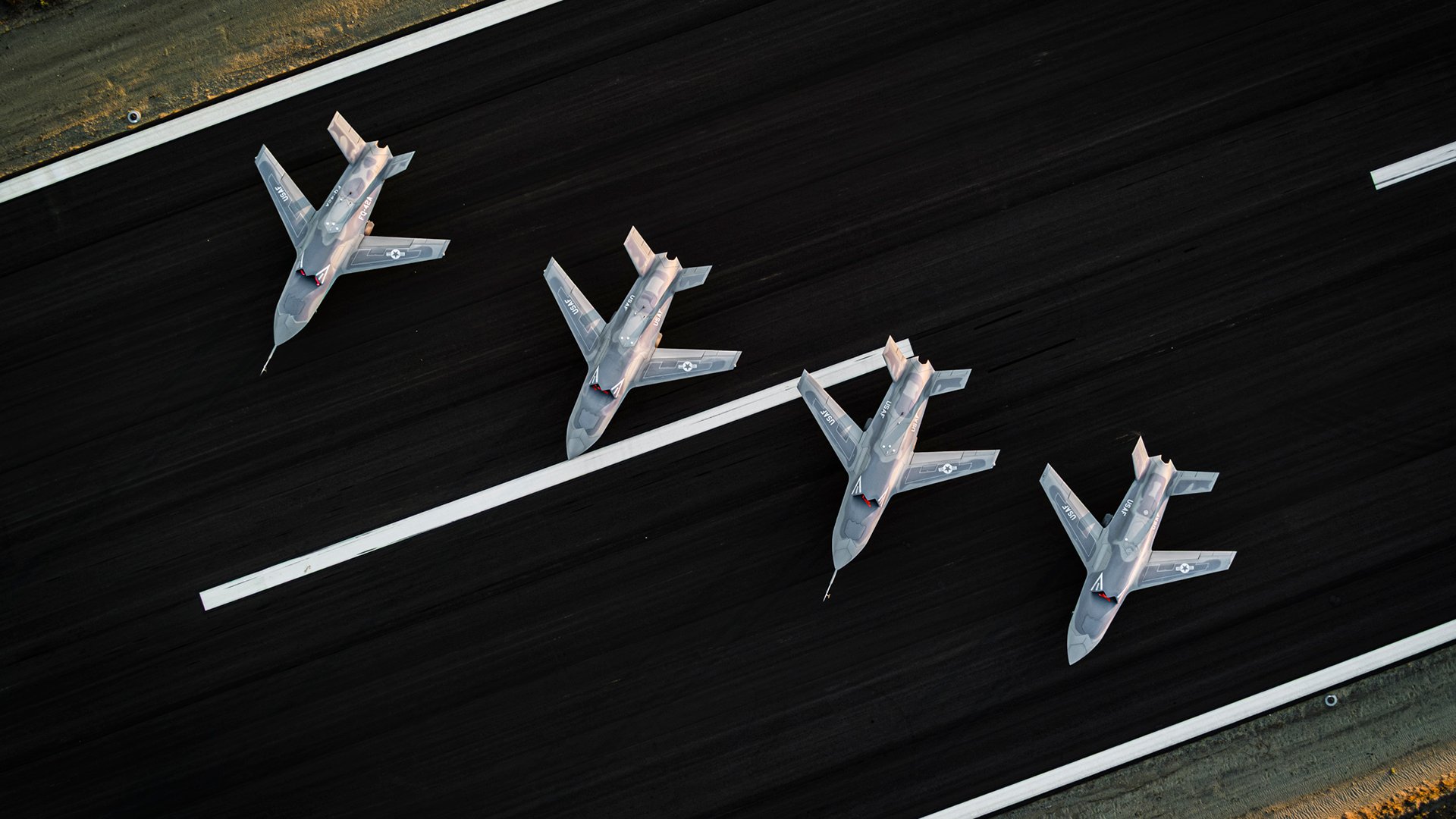
A Dutch F-35A brandishing its AIM-120 AMRAAM missiles during a NATO air policing drill. Bartek Bera

USAFE is making “significant advances” in areas including cross-servicing, cross-loading, and cross-flying allied aircraft, Hinds said, all of which are intended to make multinational operations more seamless.

U.S. Air Force A1C Dylan Montgomery, 493rd Fighter Generation Squadron crew chief, conducts post-flight operations/checks with Lt Col Dustin Merritt, 493rd Fighter Squadron commander at Pirkkala Air Base, Finland, June 3, 2026. As Allied Air Command's premier tactical exercise, Ramstein Flag 26 tests the ability of U.S. and NATO forces to respond to emerging threats with immediate, decisive airpower. (U.S. Air Force photo by 2nd Lt. Sarah Hedgman)
A U.S. Air Force F-35 crew chief conducts post-flight checks at Pirkkala Air Base, Finland, during the tactical exercise, Ramstein Flag 26. U.S. Air Force photo by 2nd Lt. Sarah Hedgman

The same philosophy applies to weapons.

“We want to have all the fires, right? Whether it’s U.S. built or built inside European nations,” Hinds said.

That could prove increasingly important as European countries expand domestic production of missiles, drones, and other weapons alongside their aircraft programs.

The growth of GCAP and other European defense programs comes amid broader debate over how much Europe should depend on U.S. military equipment.

But Hinds rejected the idea that allies developing indigenous aircraft and autonomous systems necessarily signals a move away from American equipment.

“No, I don’t,” he said when asked whether allies were moving away from U.S. systems.

Instead, Hinds characterized the trend as an expansion of the transatlantic defense-industrial base.

Sweden was one example he cited. The country, which recently joined NATO, continues to produce new military equipment, including Gripen fighters, while those aircraft are already being operated by NATO members.

Swedish Gripens are currently leased to Hungary, and other countries are considering the aircraft, Hinds said.

A Hungarian Air Force JAS 39 Gripen participating in NATO exercise Ramstein Flag 24 flies over the west coast of Greece, Oct. 4, 2024. Over 130 fighter and enabler aircraft from Greece, Canada, France, Hungary, Italy, Poland, Portugal, Romania, Spain, Sweden, United Kingdom and United States are training side by side to improve tactics and foster more robust integration, demonstrating NATO’s resolve, commitment and ability to deter potential adversaries and defend the Alliance. (U.S. Air Force photo by Tech. Sgt. Emili Koonce)
A Hungarian Air Force JAS 39C Gripen participating in NATO Exercise Ramstein Flag 24 flies over the west coast of Greece, in 2024. U.S. Air Force photo by Tech. Sgt. Emili Koonce

The broader trend toward co-manufacturing and co-production is also something he welcomed.

“I’m seeing a lot of discussions about co-manufacturing and co-production, and I welcome those discussions as well,” Hinds said.

That approach could become increasingly important as NATO tries to expand its available combat power without relying exclusively on additional U.S.-built platforms.

For USAFE, the objective is to ensure that whatever aircraft NATO countries develop or purchase can plug into a common architecture, sharing data, receiving targeting information, drawing on common logistics networks, and contributing weapons effects across national boundaries.

For a U.S. Air Force command that has spent decades trying to cover Europe with far fewer fighters than it once had, hundreds of autonomous wingmen, whether American-built or allied, could provide a significant way to generate additional combat mass.

Senior U.S. Air Force officials are now working to ensure that the networking, weapons integration, logistics, and command-and-control architecture will be in place once those aircraft start to come online.

Contact the author: thomas@thewarzone.com

The post How The USAF Is Preparing For European Allies To Join The Collaborative Combat Aircraft Club appeared first on TWZ.

  •  

FQ-42 Vengeance Fighter Drone Program Update

It is stunning to see the impact the USAF’s Collaborative Combat Aircraft (CCA) program has made on discourse surrounding the future of the Air Force since it was officially announced. There is still much to prove regarding the concept, but testing is accelerating and the USAF now plans on buying 500 CCAs by 2032. At the same time, the USAF is now hunting for a successor to the MQ-9 Reaper, with plans on procuring hundreds of those drones, as well, by early in the next decade.

With all this in mind, TWZ’s Jamie Hunter talked to Mike Shortsleeve from General Atomics on the show floor at Air, Space & Cyber 2026. The two discussed the latest progress for the company’s newly-named FQ-42 Vengeance Collaborative Combat Aircraft, as well as General Atomics’ new Wildfire platform designed to address the lower-cost Massed Modular Aircraft program that could replace the company’s iconic MQ-9 Reaper.

Check out the interview below or at the top of this post.

Contact the editor: Tyler@twz.com

The post FQ-42 Vengeance Fighter Drone Program Update appeared first on TWZ.

  •  
❌