
❌

Reading view

EU Signs Association Agreements with Andorra and San Marino, Opening Single Market Access

The European Union has signed a comprehensive association agreement with Andorra and San Marino, establishing a framework that will allow the two small European states to participate more fully in the EU single market while remaining outside the bloc.

The agreement was signed in Brussels on Monday, 19 October, by representatives of the European Commission and the two governments, marking the conclusion of negotiations that began more than a decade ago.

The arrangement covers trade, investment and regulatory cooperation, alongside provisions concerning financial services, education, environmental protection, consumer rights and other areas normally governed by EU legislation.

However, the agreement has not yet entered into force. It requires further approval procedures, including consent from the European Parliament and ratification by the participating countries. Andorra intends to submit the agreement to a binding national referendum.

Access to the European single market

According to the European Commission’s announcement, the agreement will provide Andorra and San Marino with access to the single market under shared regulatory requirements and conditions intended to ensure fair competition.

The principal objective is to remove barriers that continue to restrict economic activity between the two countries and the EU’s 27 member states.

For businesses, the arrangements should provide greater predictability concerning the rules governing cross-border trade, investment and commercial operations.

Participation will nevertheless require both countries to implement relevant EU legislation and maintain systems capable of enforcing the applicable standards.

In practice, access to the European market will carry obligations comparable to those imposed on companies established inside the Union, particularly concerning product standards, competition, environmental rules and consumer protection.

The agreement also establishes institutional arrangements for managing cooperation and dealing with future regulatory developments.

For two countries whose economies are closely connected to neighbouring EU members, greater regulatory consistency could reduce administrative barriers and facilitate commercial expansion.

Financial services to be integrated gradually

Financial services represent one of the more sensitive elements of the agreement.

Andorra has a banking and financial sector with substantial links to Spain and France, while San Marino’s economy is closely integrated with Italy.

Both countries already use the euro under separate monetary arrangements with the European Union, although neither is a member of the eurozone or the EU.

The new association framework would provide a route towards broader participation in the EU financial services market, but integration will be gradual and subject to specific conditions.

The Commission has made clear that the process will involve assessments of the regulatory and supervisory arrangements operating in both countries.

This means the signature does not provide their financial institutions with immediate, unrestricted access to all services available within the EU.

Brussels has also signed updated monetary agreements designed to remove overlapping requirements between existing arrangements and the new association framework.

Financial supervision, the prevention of money laundering and compliance with European regulatory standards will be central to the implementation process.

Integration without EU membership

The agreement illustrates how the Union can extend significant elements of its economic framework to neighbouring countries without admitting them as members.

Andorra and San Marino will not acquire voting rights in EU institutions or the political representation enjoyed by member states.

Their participation will instead depend on accepting relevant common rules and complying with the institutional provisions established under the association agreement.

The EU already operates differentiated arrangements with several non-member European countries, including Norway, Iceland and Liechtenstein through the European Economic Area.

Earlier European Council conclusions on relations with non-EU Western European countries identified Andorra and San Marino among the states with which Brussels sought closer economic and institutional cooperation.

The newly signed agreement does not replicate every aspect of existing arrangements, but it follows the broader principle that access to the single market can be negotiated separately from EU membership.

That principle is also relevant to discussions about how candidate countries might receive selected economic benefits before completing the full accession process.

Brussels has been considering wider market participation for countries such as Ukraine and Moldova ahead of possible membership.

Referendum and ratification ahead

The immediate political challenge now moves from negotiation to approval.

Following the signature, the Council will seek the European Parliament’s consent before the agreement can be formally concluded. Its application will also depend on the completion of the necessary national procedures.

In Andorra, Prime Minister Xavier Espot’s government has committed to a binding referendum, although no voting date has yet been fixed.

The referendum will determine whether Andorran voters accept the economic opportunities and regulatory commitments established by the agreement.

San Marino must also complete the procedures required under its constitutional system.

Until those requirements have been satisfied, the agreement remains a signed framework rather than an operational extension of the EU single market.

For both countries, the eventual implementation will determine how far their economies can integrate with the Union while retaining their existing status as independent non-member states.
  •  

Trump’s Energy Ceasefire Risks Becoming a Trap for Ukraine as Russia Continues Its Attacks

Washington’s proposed energy ceasefire could force Ukraine to abandon one of its most effective means of economic pressure against Russia without securing equivalent concessions from Moscow. Donald Trump’s parallel agreement with Vladimir Putin over Russian diesel raises further questions about whether American energy priorities are beginning to dictate the terms of negotiations over Ukraine.

President Volodymyr Zelenskyy has placed an important qualification on Donald Trump’s proposed energy ceasefire: Ukraine will stop attacking Russian energy facilities only if Moscow stops targeting Ukraine’s electricity generation and distribution infrastructure. Speaking at the Warsaw Security Forum on Monday, 12 October, Zelenskyy confirmed Kyiv’s willingness to accept a reciprocal arrangement while pointing out that Russian attacks had continued after the American president announced that a ceasefire was already in effect.

The sequence of events has exposed a fundamental weakness in Washington’s initiative. On 11 October, Trump announced an immediate energy ceasefire, declaring that Russia and Ukraine had both agreed to suspend attacks on energy infrastructure. Yet Kyiv had not received the agreement’s terms, Moscow had offered no public confirmation, and Russian drones continued striking Ukrainian power facilities, including a combined heat and power plant in Kharkiv.

Zelenskyy’s response was deliberately restrained. Rather than reject Trump’s initiative, he welcomed the possibility of an agreement while insisting that Russia demonstrate its acceptance through its actions. His remarks also exposed the difference between announcing a diplomatic understanding and establishing an enforceable military arrangement.

An unequal exchange

The apparent symmetry of an agreement prohibiting attacks on energy facilities disguises substantial differences between the two countries.

Russia retains an extensive oil-refining industry, producing fuels for domestic consumption, military operations and export. Ukrainian drone attacks on refineries have consequently become an instrument of economic warfare, disrupting production, increasing operating costs and forcing Moscow to divert resources towards protecting strategically important industrial installations.

Ukraine occupies a different position. Its major oil-refining capacity was devastated early in the full-scale invasion, including the Kremenchuk refinery. Russia’s present campaign is concentrated heavily on electricity generation, substations, heating systems and other installations essential to maintaining civilian life and economic activity.

An agreement narrowly focused on oil refineries would therefore protect an important Russian asset while offering Ukraine comparatively little protection. A comprehensive energy ceasefire could be reciprocal, but only if it explicitly covered the infrastructure each side actually possesses and attacks.

Zelenskyy’s insistence on equivalent obligations is consequently more than a negotiating formula. It seeks to prevent Washington from treating attacks on Russian fuel production and the destruction of Ukraine’s electricity and heating networks as interchangeable military activities without examining their respective consequences.

The distinction becomes particularly consequential with winter approaching. A Ukrainian suspension of attacks on Russian refineries could allow Moscow to restore production and rebuild damaged facilities. Unless Russia simultaneously halted attacks on Ukrainian energy infrastructure, Kyiv would surrender an important means of pressure while remaining exposed to further disruption of electricity and heating supplies.

The American pressure campaign

The concern in Kyiv is no longer confined to the proposed ceasefire’s wording. European officials have disclosed that Washington is threatening to restrict military assistance and intelligence sharing unless Ukraine suspends its strikes against Russian refineries.

According to accounts of the American pressure campaign, the threatened measures include suspending the Prioritised Ukraine Requirements List (PURL), the NATO-coordinated mechanism through which European countries finance purchases of American weapons for Ukraine. Reuters was unable to independently verify the reported threats, and the White House had not responded publicly.

If implemented, such restrictions would establish a direct connection between Ukraine’s willingness to accommodate Washington’s energy priorities and its access to essential military support.

This creates an imbalance in the negotiations. Moscow could continue military operations while Kyiv faced the possibility of losing American assistance for refusing an agreement whose Russian obligations remain undefined.

The diesel agreement and its political significance

The ceasefire proposal also needs to be examined alongside Trump’s separate agreement with Putin, announced on 9 October, to increase Russian diesel supplies.

Trump stated that Russia would initially release more than 300,000 tonnes of diesel, followed by another 500,000 tonnes in November and one million tonnes thereafter. Further supplies were envisaged, depending on Russia’s refining capacity.

The US Treasury subsequently issued General Licence 135, authorising transactions involving Russian-origin diesel that would otherwise face sanctions restrictions.

The initial volumes are unlikely to transform international diesel markets. Nevertheless, the agreement gives Washington a commercial interest in maintaining Russian refinery output at precisely the moment Ukrainian attacks are disrupting it.

Trump has an evident domestic incentive to seek lower fuel prices before the American congressional elections on 3 November. Putin, meanwhile, has an interest in preserving Russia’s refining capacity and reopening sanctioned markets.

These interests need not prove the existence of a coordinated political strategy against Kyiv. They do, however, create conditions in which American economic priorities and Russian military objectives could converge.

The possibility becomes more significant when considered alongside Trump’s public criticism of Zelenskyy and his suggestion that Ukraine requires different leadership.

The risk of a diplomatic trap

The most consequential scenario is one in which Washington demands immediate Ukrainian compliance while leaving Russia’s obligations subject to subsequent negotiation.

If Kyiv suspends refinery attacks without obtaining verifiable Russian commitments, Moscow gains relief from a costly Ukrainian campaign. If Kyiv refuses, Washington could present that refusal as an obstacle to peace and use it to justify restrictions on military assistance.

This is a possible negotiating outcome, not an established secret agreement between Trump and Putin. There is no publicly verified evidence that the two presidents arranged the ceasefire specifically to force Ukraine into such a position.

Nevertheless, the combination of the diesel agreement, American pressure over refinery strikes and the premature announcement of a ceasefire creates a credible risk that Ukraine could be required to make concessions before Russia demonstrates any corresponding restraint.

The implications extend beyond Ukraine. European governments financing American weapons through PURL would find their own assistance programmes vulnerable to Washington’s decisions over an energy arrangement negotiated separately with Moscow.

For Brussels, the immediate question is therefore whether European military support can remain dependable if American commercial interests increasingly influence the conditions attached to supplying Ukraine.

Kyiv’s remaining leverage

Ukraine’s attacks on Russian refineries cannot by themselves compel Moscow to end the war. They can, however, impose material economic costs and complicate Russia’s ability to maintain fuel production, exports and military logistics.

Abandoning those attacks without an enforceable agreement would remove pressure from Moscow without ensuring that Ukrainian civilians receive any corresponding protection.

Zelenskyy’s position preserves an alternative: simultaneous, reciprocal restrictions covering electricity generation, heating installations, oil refineries and other specified energy infrastructure, supported by clear verification procedures and consequences for violations.

Whether Washington is prepared to enforce such an arrangement against Russia remains unanswered.

The central danger for Kyiv is not an energy ceasefire itself. It is an arrangement in which Ukraine’s obligations are immediate and enforceable through the threat of lost American support, while Russia’s obligations remain uncertain.

Until that imbalance is resolved, Trump’s initiative risks delivering Moscow protection for its oil industry without securing protection for Ukraine’s energy system.

  •  

Taliban and North Korea rubbed shoulders at Russia’s war games—one fuels Moscow’s war, the other needs its help

Members of Afghanistan's Ministry of Defense delegation at Russia's Center-2026 strategic military exercises.

Defense officials from Taliban-controlled Afghanistan spoke with North Korean representatives at Russia's Center-2026 strategic exercises, Afghanistan's Defense Ministry reported. So far, neither Moscow nor Pyongyang has confirmed any meeting, and Kabul disclosed no details of the talks or any agreement.

Since invading Ukraine, Russia has gathered a circle of sanctioned governments it both leans on for its war and props up in return—a trade that runs in opposite directions depending on the partner. Each new tie leaves one more isolated state with a stake in the war grinding on.

Observers among dozens

The exercises ran from 28 September to 3 October in Russia's Chelyabinsk Oblast. The Taliban attended as observers for the first time since it retook power in 2021, Militarnyi reported, one of dozens of foreign delegations present.

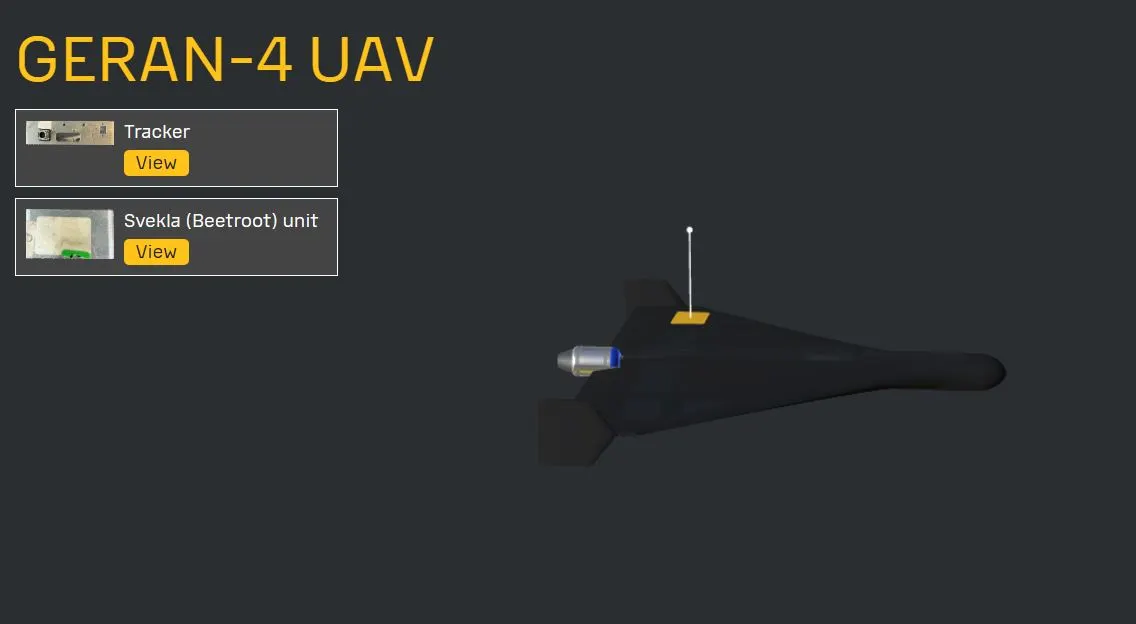
3D model of a Russian Geran-4 jet-powered attack drone, shown from above with its tracker and navigation unit listed beside it.
Explore further

Russia builds 3,000 jet drones monthly to counter Ukrainian interceptors, HUR says

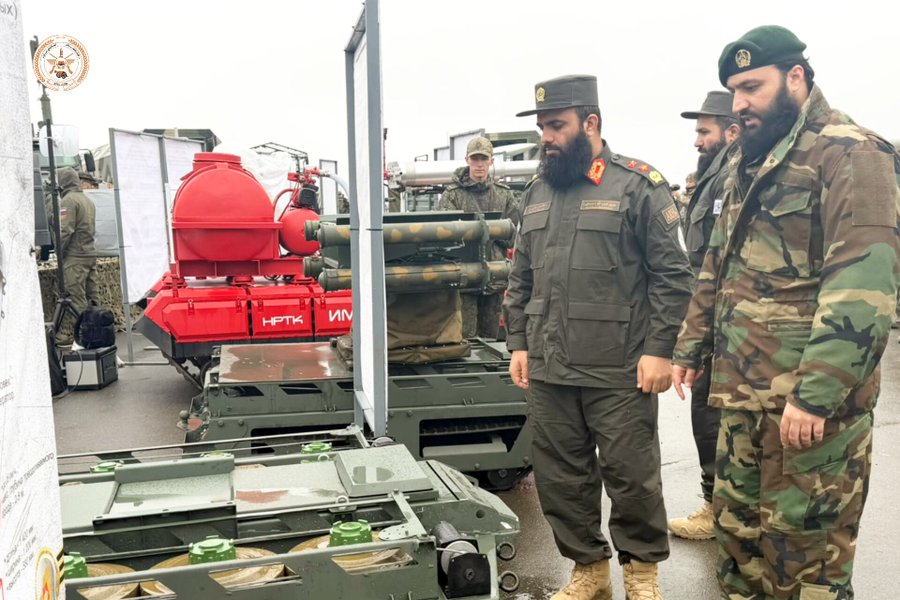
Mawlawi Nasibullah Madani, commander of the Abdullah bin Masoud Joint Combat Training Command, led the Taliban delegation. The ministry said its officers held discussions with North Korea's military attaché and with officials from China, India, Vietnam, and other countries on bilateral ties and military cooperation. The delegation also toured an exhibition featuring heavy weapons, drones, long-range missiles, and robotic systems.

Moscow's expanding military network

On 27 May 2026, Russia and the Taliban signed a military-technical cooperation agreement. Russia's special envoy for Afghanistan, Zamir Kabulov, claimed the deal is a practical framework focused on repairing Soviet- and Russian-made equipment the Taliban already holds. Russia remains the only country to formally recognize the Taliban government, a step it took in July 2025.

North Korea signed a comprehensive strategic partnership treaty with Russia in June 2024 that includes a mutual defense clause. Pyongyang has since sent an estimated 14,000 troops to Russia's Kursk Oblast. In April, Ukraine's Coordination Headquarters for the Treatment of Prisoners of War put North Korea's losses at 7,058, including 2,251 killed.

  •  

Pakistan floats fresh LNG tender after rejecting costly single bid

KARACHI: Pakistan LNG Limited has issued a fresh tender on Wednesday to procure a spot LNG cargo for delivery between September 8 and 12, after rejecting the sole bid received for an earlier delivery window as too expensive. The state-owned buyer turned down an offer from BP Singapore at $26.969 per million British thermal units ... Read more

The post Pakistan floats fresh LNG tender after rejecting costly single bid appeared first on BOL News.

  •  

Achilles Shield: Greece and Israel sign €3 billion defense deal

Greece and Israel signed on Monday a €3 billion deal for the massive “Achilles Shield” agreement, under which Israel will build Greece a multi-layered air defense array based on Israeli systems architecture. The intergovernmental agreement for the development of an anti-aircraft, anti-ballistic missile and counter-drone shield – known as the “Achilles Shield” – reportedly features […]

The post Achilles Shield: Greece and Israel sign €3 billion defense deal appeared first on Keep Talking Greece.

  •  

Germany’s Greens back EU-India trade deal after Mercosur debacle

Berlin (dpa) – Germany’s Greens are backing the European Union’s landmark trade deal with India, days after the party’s lawmakers in the European Parliament played a key role in challenging the bloc’s agreement with the South American Mercosur countries.

Andreas Audretsch, the party’s deputy group leader in the German parliament, said the deal with India, which was announced earlier on Tuesday, was good for businesses and workers in Germany.

In view of the “destructive rage” of US President Donald Trump, Europe must build new alliances for trade and cooperation, Audretsch argued.

The deal was finalised during an EU-India summit in New Delhi, with European Commission President Ursula von der Leyen and Indian Prime Minister Narendra Modi proclaiming the agreement on Tuesday.

“The EU and India make history today, deepening the partnership between the world’s biggest democracies,” von der Leyen said.

The latest agreement will not be as comprehensive as the one recently concluded between the EU and Mercosur countries Brazil, Argentina, Paraguay and Uruguay.

Last week, several Green lawmakers in Brussels voted in favour of referring the bloc’s deal with Mercosur to the European Court of Justice (ECJ), which could result in a substantial delay to ratification. Their votes were decisive in passing the motion, prompting severe criticism for the party in Germany, whose export-led economy stands to benefit from the boost to trade.

In a paper, the Green leadership has said that Germany needs “new economic partnerships” to diversify foreign trade. “That is why it is important to provisionally apply the agreement with the Mercosur countries and then ratify it,” the paper continued. (January 27)

  •  
❌