❌

Reading view

35 US parts, a Chinese navigation unit, a Russian engine: what’s inside Russia’s Filin missile

Filin cruise missile

Ukraine’s military intelligence (HUR) published a 3D model and parts list of Russia’s new Filin cruise missile on 22 October. The breakdown names the Russian companies behind the missile and the foreign makers of its electronics.

HUR runs its War&Sanctions portal to trace such parts back to their makers. Its stated aim is to “deprive the aggressors of the ability to produce weapons for terror,” the portal says. Meanwhile, Russia is betting on cheap, fast cruise missiles, Serhii Beskrestnov, a freelance adviser to the president on technology, told Radio NV in mid-September. Naming the Banderol, Dan-T, Dan-M, and Gerbera-5, he warned they would soon outrun Ukraine’s jet-powered interceptors, so Ukraine needed its own cheap missiles to shoot them down.

Composite body, ground launch

JSC NPO Molniya, part of Russia’s Tactical Missiles Corporation, builds the Filin, HUR said. The agency called it part of a Russian defense-industry trend toward cheap jet-powered, ground-launched air-attack weapons. Russia began firing it at Ukraine in late summer 2026.

Filin cruise missile components.
Filin cruise missile components. Image: War&Sanctions

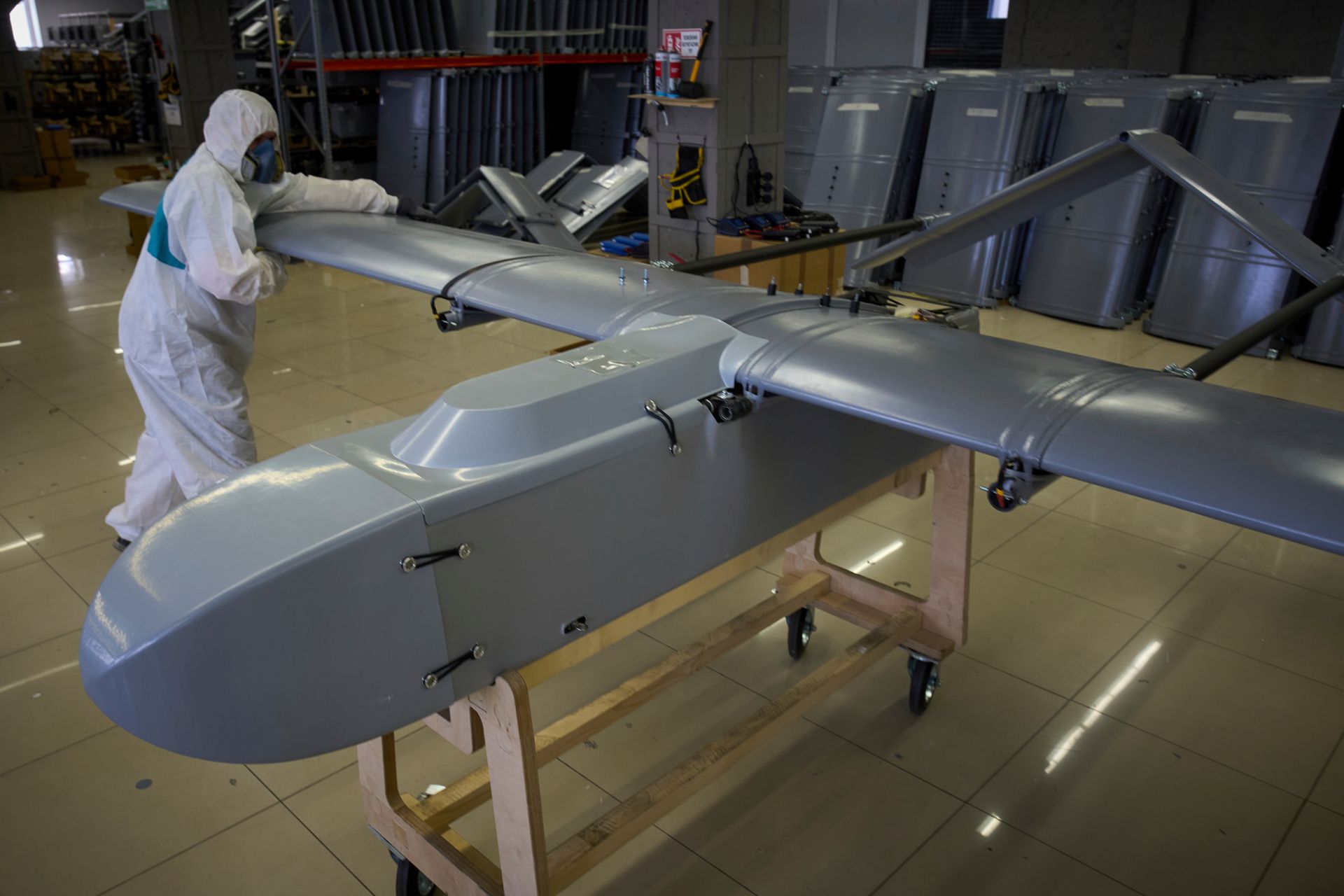
HUR’s data puts the carbon and fiberglass fuselage at 3.5 m, with a 3 m wingspan. Some parts are 3D-printed. Russia claims a top speed of 800 km/h. The range is 600–1,200 km, and the missile flies at ultra-low altitude or up to 6 km. Versions carry 50-kg or 100-kg warheads. A solid-fuel booster fires it from a ground launcher.

A firm tied to a Shahed-type drone

PLAZ LLC makes the onboard equipment, HUR said. The firm also helps produce the Garpiya, a version of Russia’s Shahed-type Geran-2 drone. Filin and Garpiya units share a similar layout and markings. Guidance combines a Chinese-made inertial navigation system with a 16-channel Kometa anti-jamming module from Russia’s VNIIR-Progress.

The electronics resemble those in other Russian missiles and drones but carry a larger share of Chinese parts. Of 81 components, 35 are American and 22 Chinese. The engine, however, is Russian: an R500 turbojet from Reynolds LLC. A similar engine earlier turned up in the S-71K Kover aviation cruise missile and S-71M Monokhrom, HUR said.

For comparison, Ukraine found more than 20 foreign components in a different cheap missile, the Banderol, in May 2025. They included 10 US microchips, and the Banderol flies on a Chinese jet engine.

  •  

Ukraine war latest: Zelensky supports resuming trilateral peace talks with US, Russia after Putin claims Kremlin readiness

Key developments on Oct. 21:

  • Zelensky supports resuming trilateral peace talks with US, Russia after Putin claims Kremlin readiness
  • 'Everything was in ruins' — At least 2 killed, 2 injured in Russian drone attack on Kyiv
  • Russian Su-30 fighter jet crashes in Kaliningrad Oblast during training exercises, Moscow

  •  

Starlink slowdown makes Ukraine’s Shahed-hunting drone maker rethink air-launched interceptors

STING S interceptor

Ukrainian drone maker Wild Hornets is rethinking projects it is currently working on, including launching interceptors from aerial platforms, because of limits on SpaceX’s Starlink satellite internet. Spokesman Mike Orliuk told The War Zone (TWZ) this on 20 October. The company builds Sting interceptors, which it says destroyed over 15,000 Shaheds and Gerberas, a cheaper Shahed lookalike, in a year. Orliuk said Sting’s current operations are unaffected.
The stakes rise as Russia shifts to faster drones. Ukrainian defense technology adviser Serhii Beskrestnov counted more than 2,500 jet-powered Gerans, Russia’s version of the Shahed, in August. President of Ukraine Volodymyr Zelenskyy said on 16 October that these drones fly faster than 400 km/h. He added that some Ukrainian interceptors chasing them work through Starlink. When the link was slowed, Ukraine could not intercept some of them, he said.

How Sting stays connected

“Our own communications system provides the basic connection to our interceptors,” Orliuk said. The company’s remote-control technology can draw on various internet sources, he added, though the military often uses Starlink. Even then, the terminal does not need to move at high speed. It only links the command center to a ground station, which Orliuk compared to a cell tower.

“For these needs, everything is operating normally with Starlink at the moment,” he said.

An air-launch project under review

“Some drones carry a terminal on board and need to fly at high speed with it,” Orliuk said. “In such cases, Starlink’s limitations make their operation impossible.”

That is why the company is rethinking the air-launch project. Wild Hornets has made no clear decision yet but will test alternatives, Orliuk said. He declined to describe them.

“I believe, in any case, depending on a single solution is very risky,” he said.

The Starlink logo on a smartphone screen.
Explore further

Musk pointed at the US military over Ukraine’s satellite limits. Now a US official says the administration had nothing to do with them

Other firms share the concern

Orliuk said he has spoken with other companies that rely far more on Starlink and have expressed concerns. He pointed to growing interest in Europe’s Eutelsat network, though “creating something like Starlink won’t be easy.”

Who ordered the slowdown remains unclear. The order to slow Ukraine’s Starshield service came from inside the White House, two US officials and a Western official said. A US official told TWZ the president never made such a request. US Secretary of State Marco Rubio said on 17 October that the slowdown had “nothing to do with the White House” and called “a report on that” “categorically false,” without saying which report he meant.

  •  

31 in May, 63 now: Ukraine’s arms makers pile into a regime of tax breaks and shielded data

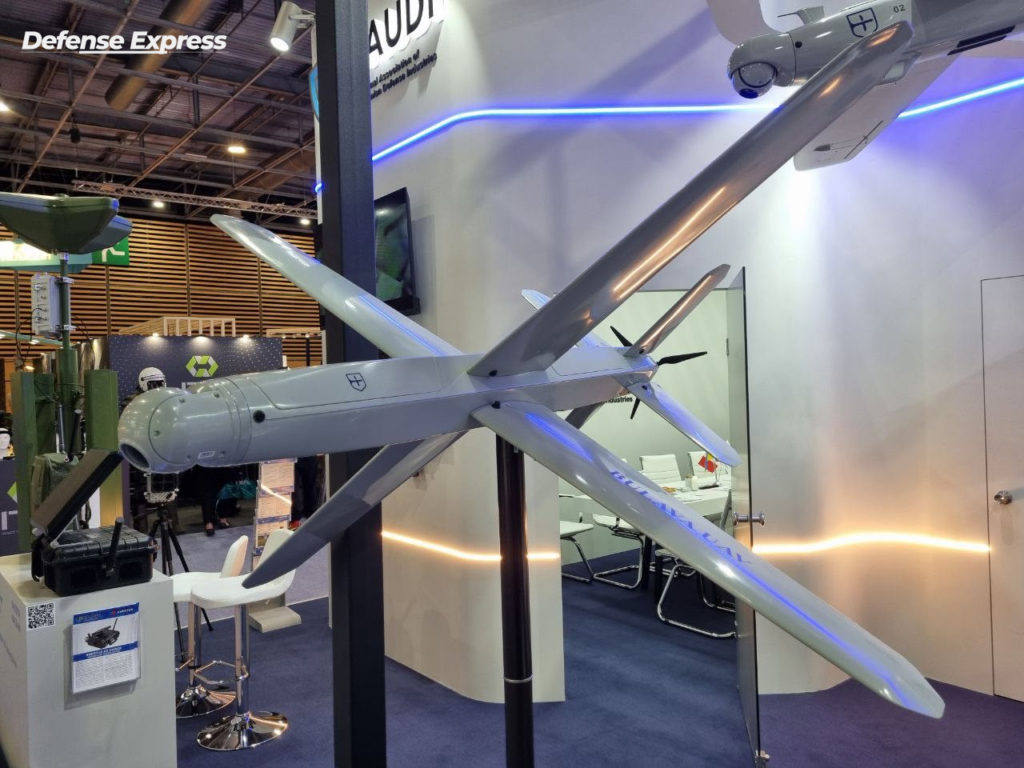
Ukrainian Bulava/Mace loitering munition at the Eurosatory 2024.

Defence City, Ukraine’s special support regime for arms makers, now has 63 member companies, the Defense Ministry said in a 19 October release. That is more than double the late-May count, and Euromaidan Press calculations show the newcomers are, on average, much smaller firms.

Ukraine already buys most of its weapons at home. More than 75% of its 2025 weapons procurement budget went to domestic manufacturers. Most new weapons models cleared for military use are Ukrainian too: 892 of the 1,000 authorized from the start of 2026 to mid-June. Defence City is meant to turn that demand into more production capacity, and our calculations suggest it is now reaching smaller producers too.

Who is joining

Each resident’s figure in the ministry’s count is its qualified income, meaning revenue from selling weapons and military equipment. Applicants file details of their defense contracts for the previous calendar year with their application, the ministry’s guide shows. So the combined total changes as members join. It does not track month-to-month sales.

The 63 current residents have a combined qualified income of nearly $2.47 billion. At the end of May, 31 residents had $2 billion, the ministry reported. By July, 45 residents had over $2.07 billion, it added.

By Euromaidan Press calculations, the 32 companies added since May bring about $15 million each on average. The first 31 averaged about $64 million each. The math assumes all 31 early members remain, with unchanged figures. If they do, the newcomers are smaller producers on average, because each figure reflects a firm’s own prior-year weapons sales.

What residents get

The profit-tax break comes with a condition. Residents choose where their untaxed profit goes, but it must go to purposes the tax code allows, the ministry explained. If the money goes elsewhere, the break does not apply.

Residents also get customs incentives and state support to relocate plants and better protect production sites. They can rent state property without an auction. They can also ask to restrict access to sensitive information about them in public registries. Some defense export procedures are simplified too.

Resident status also makes a company eligible to be designated critically important to the defense industry. That lets it defer up to 100% of its staff liable for military service from the draft, the ministry noted.

To join, a company must confirm it meets the legal requirements and file an application with supporting documents. By law, the ministry has 10 working days to decide. If approved, a ministerial order grants the status, and the company enters the Defence City register.

  •  

No crew, a cargo bed, and pontoons: Ukraine’s MAT1LDA robot is built to cross water with 400 kg

crew cargo bed pontoons ukraine’s mat1lda robot built cross water 400 kg · post amphibious ground video tencore амфібійний нрк у вод ukraine news ukrainian reports

Ukrainian company Nodrics has developed MAT1LDA, an eight-wheeled amphibious ground robot that can carry supplies across water, swamps, and rough terrain, robot-maker Tencore said, Ukrainian military outlet Militarnyi reported on 17 October. The machine joins Tencore’s new family of ground robots, which the company has also shown in the US.

Ukraine’s ground robots now haul supplies and evacuate wounded soldiers through zones where drones make every move deadly, and the Defense Ministry has launched its first competitive tender for them.

500 kg on land, 400 kg afloat

A petrol engine drives MAT1LDA’s eight wheels, and side pontoons keep it afloat, so it can cross water, marshland, and rough ground without preparation, Militarnyi said. Its makers claim it carries up to 500 kg on land and 400 kg on water, with a range of up to 160 km on land and 50 km on water.

Its open frame lets crews swap equipment quickly to suit the task, fitting cargo containers or evacuation stretchers.

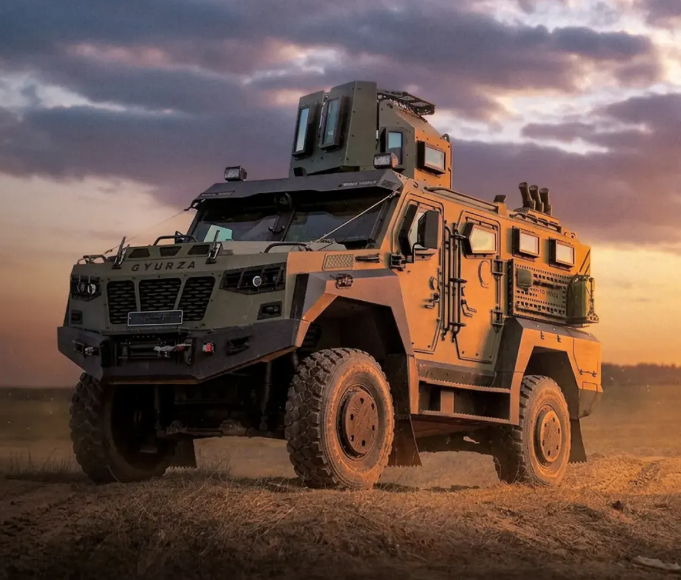
Ukraine's Gyurza-2 armored vehicle. Source: The Ukrainian Defense Ministry
Explore further

Robots won’t replace armored vehicles, says Ukrainian company that builds both. It reveals one job they can’t do

Four robots, one system

MAT1LDA is part of the Tencore Ecosystem, which brings together four classes of ground robots for military and civilian work, Militarnyi reported earlier. Besides the amphibious eight-wheeler, it includes the tracked TerMIT, the wheeled TOR 4×4, and the TRAX Utility firefighting and rescue robot. The company says it has delivered more than 4,000 robots to Ukraine’s armed forces since the full-scale invasion, used across more than 50 brigades.

The amphibious MAT1LDA ground robot
The amphibious MAT1LDA ground robot. Photo: Tencore

Tencore calls it Ukraine’s first integrated ecosystem of its kind. Putting the platforms into one system is meant to make them easier to use, maintain, and fit with extra equipment. One of the first shared add-ons is AI KIT, a hardware and software module that lets a robot keep to its route or drive back on its own after losing contact with its operator.

Ground robots from Tencore, clockwise: TerMIT, 4×4 TOR, 8×8 MAT1LDA, and TRAX
Ground robots from Tencore, clockwise: TerMIT, 4×4 TOR, 8×8 MAT1LDA, and TRAX. Collage: Militarnyi

On show in Washington

Tencore displayed MAT1LDA carrying a TerMIT robot at the Association of the US Army’s annual trade show in Washington this month, Breaking Defense reported.

Other Ukrainian makers have built swimming ground robots too: one switches from land to water in seconds, and another can tow 10 tons, its maker says. In April, Tencore formed a joint venture with France’s Shark Robotics.

  •  

Ukraine’s hobbit-named robot fired on targets up to 1.3 km away in a demo for border guards

Frodo universal ground robotic vehicle (UGV).

Ukraine’s six-wheeled Frodo ground robot fired on targets during a demonstration in Kharkiv Oblast for the Pomsta (Revenge) Border Guard Brigade, a border guard detachment posted on Facebook. Frodo made its public debut only on 30 September.

Ukraine had contracted more than 22,000 ground robots for 2026 by July, mostly logistics carriers, with combat models the smallest group, the Defense Ministry said. Frodo’s first reported mission was an evacuation. The demo shows its armed version to a fighting brigade, the kind of robot Ukraine has ordered least.

What the armed version carries

The platform completed its tasks at a training ground in near-combat conditions, said the 3rd Border Guard Detachment named after Hero of Ukraine Colonel Yevhenii Pikus. The Buria turret mounted on Frodo can fire either a Mk 19 automatic grenade launcher or a Browning M2 heavy machine gun. It engaged targets at up to 1.3 km (0.8 mile), the detachment said.

Frodo ground robotic vehicle (UGV).
Frodo ground robotic vehicle (UGV). Screenshot from a video by the 3rd Border Guard Unit

The 47-kg (104-lb) module has a ballistic calculator, stores up to 256 targets, aims in three seconds, and has a stated autonomous run time of up to 48 hours, the post said. Frodo is rated for up to 150 km (93 miles) on paved roads and 75–80 km (47–50 miles) over rough terrain, the post added. A Frontline Robotics Zoom reconnaissance drone flew reconnaissance during the test.

The developer, Frontline Robotics, describes its core philosophy as arriving fast, doing the job, and leaving very fast—hit and run, the detachment’s post said. Familiarizing the brigade’s soldiers with such systems aims first and foremost to preserve personnel’s lives and health, the detachment said.

A robot first reported as a medevac

Frontline Robotics told Militarnyi at the unveiling that Frodo had passed Defense Ministry codification and was built for logistics, evacuation, and strike missions. The robot reaches 40 km/h (25 mph) and carries up to 200 kg (441 lb) of payload, or 400 kg (882 lb) at most, the company said. A single soldier can swap its batteries.

Frodo ground robotic vehicle (UGV).
Frodo ground robotic vehicle (UGV). Photo: Frontline Robotics

The 92nd Assault Brigade used an early test unit to evacuate a wounded soldier, Frontline Robotics told Militarnyi. An operator, callsign Tango, named the robot’s speed and its ability to handle complex maneuvers as its main advantages, Militarnyi reported.

  •  

Planned capacity of 12,000 interceptors a year, under 100 seconds to target: US firm pitches a low-cost drone killer
Launch of the Vespid Mk 1 using a solid-fuel booster.

US defense-tech company CHAOS Industries introduced its Vespid interceptor family in Washington on 12 October, as the Association of the US Army (AUSA) annual meeting opened there, the company announced. CHAOS pitches the drones as low-cost defense against small and mid-size drones and one-way attack munitions. The company expects initial production capacity of 12,000 interceptors a year, expandable to 50,000 as demand grows.
The pitch lands as Russia moves its strike drones to jet power. Russia has stopped building the Geran-3, an earlier jet model, and makes about 3,000 faster Geran-4s and Geran-5s a month, Ukraine’s military intelligence (HUR) told Militarnyi in August. In mid-September, Ukrainian President Volodymyr Zelenskyy said two Ukrainian companies had passed combat tests with interceptors against such drones, while 67 were still working on them. Ukrainian defense outlet Defense Express measured the new US drones against exactly that threat.

One to carry, one to launch in batches

The Mk 1 made its first public appearance on 12 October aboard a Forterra MESA autonomous ground vehicle, Army Recognition reported. It fires from tubes on launchers such as the 10-round ISS Aerospace HAL10. It takes midcourse guidance from CHAOS radars or external command systems, then an AI-assisted infrared seeker handles the final approach, the company says. An electric ducted fan rather than a jet engine drives it, which CHAOS says cuts cost and logistics compared with turbojet interceptors.

The smaller Mk 0 is man-portable and needs no operator input once fired, its product page says. Both are rated to reach a target in under 100 seconds, with a listed range of 10+ km. Defense Express called that range a serious weakness that more launchers around a city could offset.

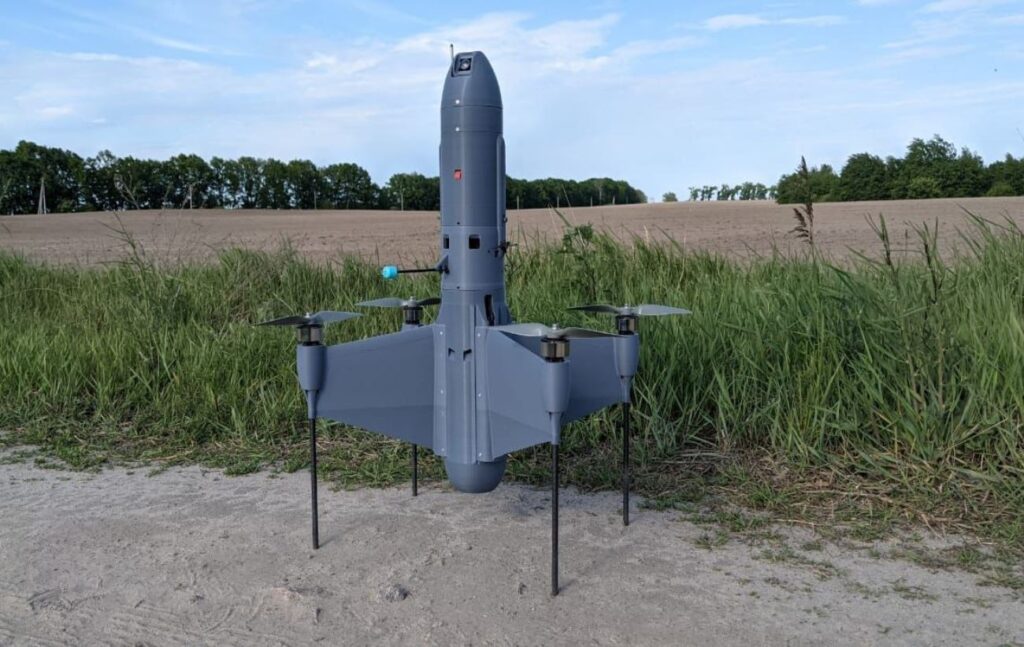
Modular FPV drone interceptor “Mangal” by Phantom Defence. September 2026.
Explore further

Most drone interceptors ram or explode. This Ukrainian one just throws a net—six shots to a module

CHAOS lists cruise speeds of 100 m/s (360 km/h) for the Mk 0 and 150 m/s (540 km/h) for the Mk 1. Defense Express said those speeds may be enough to intercept the Geran-4 and Geran-5, which it puts at 340 km/h and 450–600 km/h.

Ukrainian makers say their interceptors already down jet Gerans

Wild Hornets’ Sting interceptors downed several of the slower jet-powered Geran-3s in November 2025. An unnamed Wild Hornets representative told NV, in an interview published on 22 September, that the company’s new interceptor had destroyed about ten Geran-4s and several Geran-5s in limited use. The company plans mass production within a month of finishing combat tests.

On 12 October, former Defense Minister Mykhailo Fedorov said he and Pavlo Yelizarov, commander of Lasar’s Group, had created a new interceptor with troops and engineers. He said it downed two Geran-5s headed for Kyiv.

Crews from Lasar’s Group, which Fedorov has called a National Guard special unit, flew those combat tests, he said. Separately, Fedorov reported in August that a Ukrainian jet interceptor with a top speed above 600 km/h had entered combat testing.

  •  

Germany stays in Russia’s sabotage crosshairs, and its industry now braces for the long haul

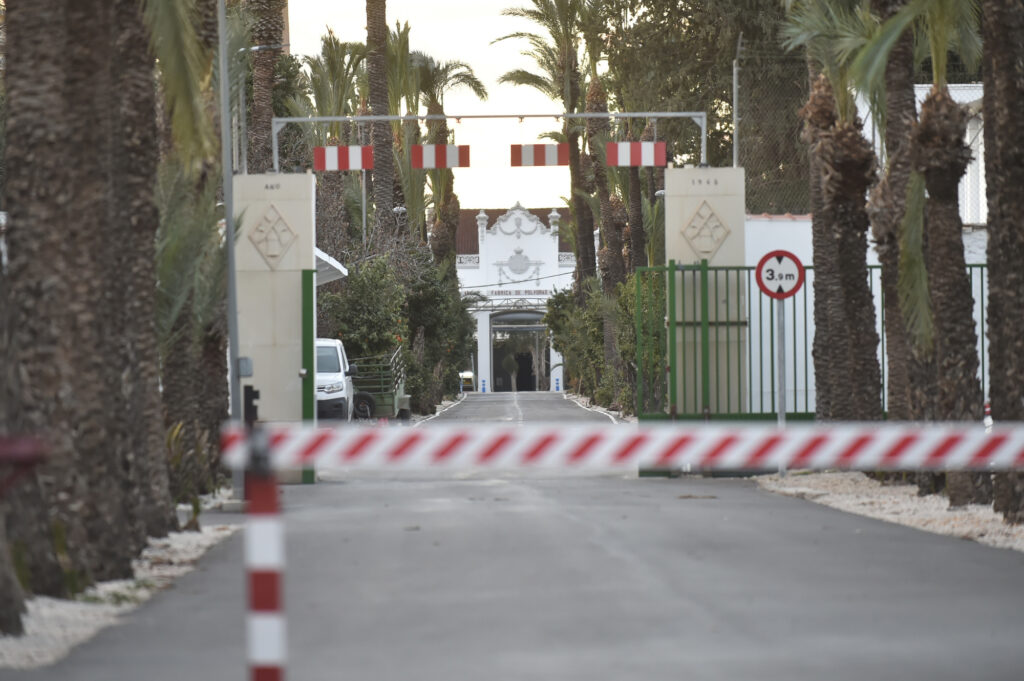
germany stays russia’s sabotage crosshairs its industry now braces long haul · post entrance rheinmetall company 30 2025 javalí viejo murcia spain ukraine news ukrainian reports

German industry expects Russian sabotage against the country’s companies to persist and take more forms, the deputy head of the Federation of German Industries (BDI) told Handelsblatt. His warning follows alarms from Germany’s intelligence services, which describe the country as a main target of Russia’s covert campaign in Europe.

Russia keeps striking Ukrainian cities and power plants every day while trying to weaken the European support that keeps Ukraine fighting. Germany is home to arms makers producing with and for Ukraine, so pressure on its companies targets the supply behind Ukraine’s defense.

Industry expects attacks to last and change form

The warning came from Holger Lösch, the BDI’s deputy managing director.

“German industry is preparing for the threat to persist and for attack methods to become more varied,” he told Handelsblatt. “Companies don’t end up in the crosshairs by chance,” he added.

Russian influence and sabotage operations are no longer an abstract scenario, and companies, critical infrastructure, and defense supply chains are already among their targets, Lösch said. Companies now receive more threat warnings, and their cooperation with the authorities has improved significantly, he noted. “What is still missing are joint procedures to quickly derive concrete measures from warnings,” Lösch said, calling the protection of the economy a cornerstone of national security.

German intelligence describes a Russian shadow war

The warning comes a week after a public hearing of the intelligence oversight panel of the Bundestag, Germany’s parliament, on 5 October. There, Martin Jäger, head of Germany’s Federal Intelligence Service (BND), said Russia was waging a shadow war against Germany. “Germany has become a main obstacle to Russian hegemonic power projection in Europe and thus a target of Russian action,” Jäger said. “The danger of attacks against targets in Germany remains real and present,” he warned.

Sinan Selen, head of the Federal Office for the Protection of the Constitution (BfV), Germany’s domestic intelligence agency, told the same hearing that Russia was showing a readiness for sabotage and killings.

German Chancellor Friedrich Merz said on 1 October that Germany was preparing for further hybrid attacks, “including serious ones,” and would respond “quickly and very clearly,” as it did after the drone attack at Leipzig airport.

Drone bombs, arson, and paid saboteurs on German soil

In August, a drone carrying Semtex explosives hit the wing of a Ukrainian An-124 cargo plane at Leipzig/Halle Airport but did not explode. Germany blamed Russia on 1 September, and German Foreign Minister Johann Wadephul said Germany was not at war with Russia but was a “target of war.”

German authorities suspect Russian intelligence of commissioning an arson attack near two Munich defense firms, and a confidential Federal Criminal Police Office (BKA) assessment counted more than 165 suspected sabotage cases in Germany between January and August. The same assessment recorded 747 suspicious drone incidents involving 1,068 drones over critical infrastructure, military sites, and defense companies.

russia hired desperate hunt german drone-maker boss arms ukraine · post stefan thumann head drone maker donaustahl штефан туманн news ukrainian reports
Explore further

The throwaway agents Moscow sent after a Bavarian drone boss arming Ukraine—and how Germany stopped them

Germany’s Military Counterintelligence Service (MAD) warns that the threat from low-level agents, locals paid small sums for one-off jobs such as arson or photographing military sites, has increased significantly. European intelligence agencies also report that Russia is increasingly targeting defense company executives, including at smaller drone makers, and the BfV has advised some German firms to hire close protection.

As long as Germany keeps backing Ukraine, Russian pressure on its companies is unlikely to ease, and the gap between warnings and action that industry flagged leaves smaller firms, with fewer resources for security, the most exposed.

  •  

Ukraine ordered 54% more FPV attack drones this year than in all of 2025, and deliveries jumped almost fourfold

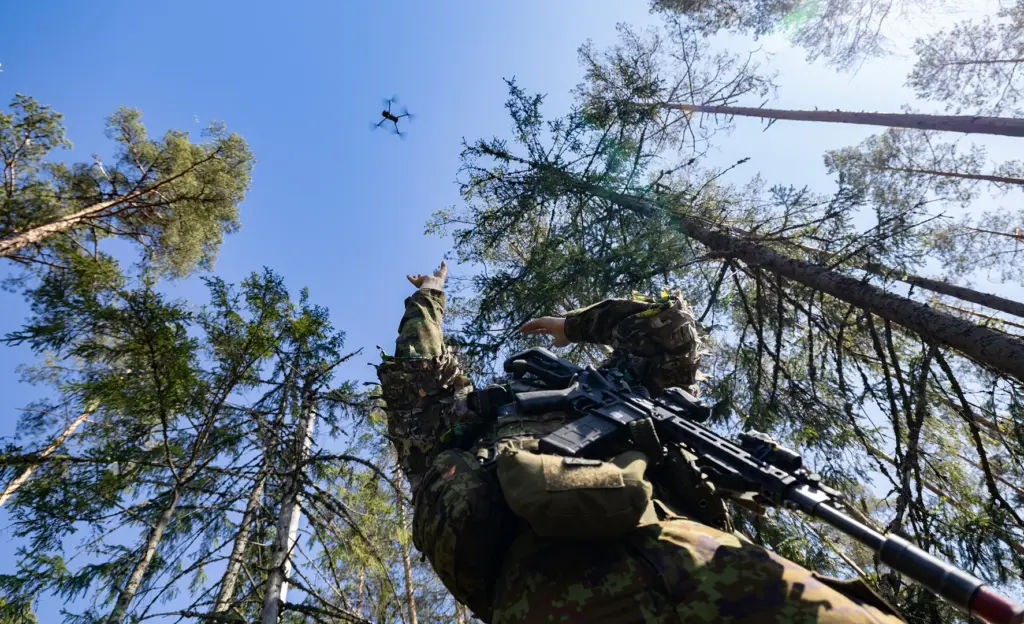
Estonian and Ukrainian soldiers fly drones together during Exercise Hedgehog 2025 in Estonia, where Ukrainian operators were credited with knocking out two battalions in a simulated engagement. Photo: vbl/OR-7 Ardi Hallismaa/ERR

Ukraine’s Defense Procurement Agency has contracted about 5.5 times as many drones of various types in recent months as in the same period of 2025. It is roughly 300% more over the year as a whole, the Defense Ministry said.

Drones are the weapons this war runs on, from short-range strikes to hits deep inside Russia, and Ukraine has raced to build and buy more of them while sparing its troops. The agency contracted for about $8 billion worth of drones in the first half of 2026 alone, double the amount for the same period last year.

The ministry wants to arm the force at every level, Defense Minister Yevhenii Khmara stresses. Deep-strike drones hit targets far inside Russia, while middle-strike drones kill enemy drone crews and burn logistics and command posts, lowering the risk to Ukrainian soldiers.

“Technology and having enough of these systems raise combat effectiveness and at the same time reduce the risks for our soldiers,” Khmara said.

FPV drones lead the surge

The sharpest growth is in FPV drones, the cheap first-person-view quadcopters that do much of the killing on the front. Contracting for them in 2026 already exceeds the total for all of 2025 by 54%, and deliveries have risen almost 3.7 times, the ministry notes.

International support and the scaling of Ukraine’s own defense industry made the jump possible, Khmara adds. Much of the buying now runs through the DOT-Chain Defense marketplace, where units select what they need, and the agency handles contracts and logistics, cutting the average delivery time for in-stock items to 9 days.

Making supply predictable

The ministry is trying to make deliveries steadier, Khmara explains. It is aligning the front’s needs, purchase planning, and the production capacity of the Ukrainian industry, making supply more predictable.

Predictable contracting lets manufacturers build their production lines step by step, plan logistics and order components in advance, he says. The ministry frames the push as a larger order book for the domestic industry and a way to scale the solutions that work in combat.

  •  

Ukraine wants to draft 15 of every 100 workers at its weapons plants. Arms makers say this could slow guns soldiers need

uk build pilot batch octopus interceptor drones under joint project ukraine · post ukrainian drone display near field 2025 militarnyi news reports

Ukraine wants to build more weapons at home while making it easier to draft the people who build them. Kyiv has proposed cutting the draft-exemption quota for defense-industry enterprises from 100% of their workers to 85%, while the Ukrainian Council of Arms Manufacturers says the limit should stay at the previous level for qualifying critical plants.

The change would strip the draft shield from 15% of the workers at plants the Defense Ministry has deemed critical to the economy. Those are the people who set production volumes, delivery dates, and new designs, the council argues, so losing them would hit output just as Ukraine pushes to make more of its own weapons.

The draft resolution has already been sent to the Cabinet of Ministers for approval.

“We consider that the proposed reduction of the limit does not account for the staffing needs of defense production,” the council says.

A workforce that takes years to build

Ukraine’s defense industry is still growing, with new plants, expanding capacity, and new technologies, the council adds. Raising the share of Ukrainian-made weapons in the forces, localizing components, and cutting reliance on imports all require more specialists, not fewer.

These teams are built over the years, the manufacturers add. Companies invest in finding and training people who master specific technologies and production processes, and keeping them is what lets firms plan expansion and take on new commitments to the military.

Uncertainty at the worst moment

Cutting the exemption limit would add uncertainty, just as the state expects producers to raise output. The fallout could affect both manufacturers and military units awaiting their weapons.

The council urges the Economy Ministry to drop the cut to 85%and asks the Defense Ministry and the Cabinet to maintain exemptions of up to 100% for qualifying defense workers. It offers to share data on the industry’s staffing needs and help assess how the change would affect defense orders.

The reservation rules must reflect the growth of the defense industry and Ukraine’s need for more of its own weapons, it concludes.

  •  

Ukraine, long keeping its weapons at home, now lets 18 arms makers export, approving over 90% of more than 400 applications

P1-SUN An-28 Shahed interceptor

Ukraine, which long kept its weapons at home, is now clearing its arms makers to sell abroad. Its Commission on Export Control has granted 18 Ukrainian companies permission to send their finished weapons abroad and has processed more than 400 export applications, with over 90% approved, the National Security and Defense Council says, citing commission head Davyd Aloian.

Ukraine now produces far more weapons than it can afford, with defense production growing from about $1 billion a year at the start of the invasion to a projected $55 billion in 2026.

The exports are reportedly conducted under the Drone Deals framework that President Volodymyr Zelenskyy unveiled in April, which allows controlled sales of surplus weapons to partner countries while the Defense Ministry and General Staff retain first claim to everything the front needs. Some categories already run up to 50% beyond what Ukraine can use or finance.

From a stalled commission to 18 approvals

The commission’s work had been halting. It resumed in February after an eight-month freeze and issued the first permits then, and its updated membership has been working since, Aloian notes.

Building partnerships abroad

Aloian framed the goal as scaling Ukrainian technology rather than one-off deals. The state wants domestic producers to expand abroad while partners get working solutions, he says, and is open to dialogue with the defense industry to fix problems as they arise.

Earlier, an industry group that represents more than 400 companies warned in September that the mechanism was choking. A new 20-to-30% fee on export permits priced Ukrainian goods out of the market, it said, and a joint-production program had stalled with hundreds of foreign bids pending.

Euromaidan Press cannot verify whether the Commission on Export Control has taken the issue into consideration.

The council recently met a UK Defense Ministry delegation to discuss closer cooperation, including a Drone Deal, an anti-ballistic coalition, and joint production, Aloian adds. Reaching foreign markets enables producers to attract new orders and investment, scale up, and build long-term partnerships.

  •  

Ukraine uses up Europe’s yearly supply of thermal sensors in about five months, so two Ukrainian firms will build their own plants in the West

ukraine uses up europe’s yearly supply thermal sensors about five months so two ukrainian firms build own plants west · post imaging camera made company odd systems mounted drone manufactured

Two Ukrainian defense-tech firms, The Fourth Law and Odd Systems, have joined forces to mass-produce thermal imaging sensors in Europe and the US, The Fourth Law told Militarnyi. The goal is to wean Western militaries off foreign suppliers, chiefly China, for the core part of every thermal camera.

Amid Russia's daily attacks, Ukrainian drone makers have been shifting production to allied countries. Linza and Zoom drones are now built in Germany, and another top manufacturer has taken its technology to Canada and Finland. Sensor plants would move a core component west, not just finished drones.

A Western answer to Chinese sensors

The project, called Project Foundation, will build long-wave infrared sensors, known as microbolometers. These chips register heat, so a camera can pick out a person or vehicle at night or through smoke. The aim, The Fourth Law said, is to "ensure the sovereignty of Western countries in the field of thermal imaging technology."

Plants in Europe and the US from 2027

The project will run two sites, First Foundation in Europe and Second Foundation in the US, from a headquarters in Eindhoven, a Dutch semiconductor hub. Mass production is due to start in 2027. Within three years, the partners want to quadruple Europe's output of these sensors and double America's.

Why Europe's supply isn't enough

Ukraine's front line burns through sensors faster than Europe can make them. "Europe currently produces less than 500,000 such sensors per year, while Ukraine consumes this amount in about five months," Odd Systems co-founder Yaroslav Azhniuk said in February, when he first announced plans for a plant able to make one million sensors a year. European sensors cost about five times as much as Chinese ones and are hard to buy at all, because Europeans need them too, he added.

Factories working for Ukraine abroad have already become sabotage targets. In March, an arson attack in Pardubice, Czechia, destroyed nearly all the production capacity of a plant making drones and thermal sights for Ukraine's army. Czech investigators are looking into a possible Russian trail behind the attack.

  •  

Drone attack forces Yandex to shut down its data center on the grounds of a sanctioned Russian machine-tool plant

Smoke over Salavat following an attack on the night of October 8.

A drone attack overnight on 8 October caused a fire that hit part of Yandex's data center in Sasovo, Ryazan Oblast, about 580 km from Ukraine, and the site is fully stopped, the Russian tech company told Russian media. The data center sits on the grounds of Sasta, a sanctioned machine-tool plant, Russian outlet Astra said, citing Wikimapia data. Astra's OSINT analyst found from eyewitness footage that the fire hit the plant.

Since late September, Russia has been striking data centers in Kyiv that keep Ukraine's internet and online services running. Now a drone attack has stopped one of the data centers that Russia's largest tech company relies on.

Fires reported at a refinery in Salavat and a machine-tool plant in Sasovo after overnight attacks on 8 October 2026.
Fires reported at a refinery in Salavat and a machine-tool plant in Sasovo after overnight attacks on 8 October 2026. Map: Euromaidan Press

Yandex counts the damage

Yandex warned that some services may be unavailable, while its core services kept running and no one was hurt. Ryazan Oblast Governor Pavel Malkov claimed two drones were downed, a roof caught fire at an enterprise in the Sasovo district, and windows were blown out in several homes.

The power failure took down a wide range of Yandex Cloud infrastructure, including computing capacity, networks, data storage, databases, Kubernetes, cloud services, AI, and security and monitoring systems, Ukrainian outlet ZN.ua reported, citing Exilenova+.

Ukrainian monitoring channel Exilenova+ reported that the plant was hit, without naming an attacker. The channel said Sasta, which claims a place on Russia's register of defense-industry companies, makes computer-controlled machine tools, including five-axis machining centers, and previously supplied the Tactical Missiles Corporation (KTRV) and Roscosmos. The plant's value to the arms industry lies in machines that cut precision parts, not in finished weapons, the channel said.

Citing Exilenova+, Militarnyi reported that Ukraine's Defense Forces hit the plant. It also linked Sasta to Iskander missile supply chains. No source has said whether the plant or the data center was the target, and no Ukrainian official has claimed the Sasovo strike. Sasta has been under US sanctions since November 2023, UK sanctions since February 2024, and Ukrainian sanctions since April 2025, a sanctions database shows.

Salavat: Kyiv reports a hit

Ukrainian forces hit the Gazprom Neftekhim Salavat complex in Bashkortostan, about 1,380 km from the front line, causing a fire, Ukraine's General Staff said. It said the complex processes up to 10 million metric tons of hydrocarbons a year and serves Russia's armed forces. Its key unit, the ELOU-AVT-6 primary oil refining unit launched in 2012, can process 6 million metric tons a year, Militarnyi reported. Astra's analyst placed the fire a few kilometers outside Salavat, possibly near the refinery.

Salavat oil refinery moment of attack pic.twitter.com/bUxuRshSK1

— Exilenova+ (@Exilenova_plus) October 8, 2026

Salavat Mayor Marat Zagidullin claimed that debris from several drones fell in the industrial zone that morning and started a fire.

"The enterprise continues to work," he said.

Astra noted earlier hits on the complex on 24 September 2025, on 14 July 2026, when refining fully stopped, and on 13 August 2026.

Russia's strikes on Ukraine's data centers

Russia has repeatedly hit data centers in Kyiv since 23 September. Strikes hit the COSMONOVA data center twice, the second time knocking it out, and the Parkovyi data center stopped working completely on 1 October after a series of strikes. In early October, Russia destroyed the dline.ua data center in Kyiv.

  •  

Ukraine’s Frodo robot carries wounded soldier in first reported evacuation

frodo robot

A company of unmanned ground systems from Ukraine's 92nd Assault Brigade used the robotic system Frodo to evacuate a wounded soldier, Frontline Robotics told Militarnyi on 7 October.

Ground robots are being used to evacuate wounded soldiers from the drone-dominated "kill zone," a band tens of kilometers deep on both sides of the front line. About 112,000 logistics and evacuation missions by ground robotic systems were recorded from January through August 2026, according to Ukraine's Defense Ministry.

Operator credits speed and suspension

The operator, callsign Tango, named speed and the ability to perform complex maneuvers as the robot's main advantages, according to Militarnyi. The unit also praised Frodo's adaptive suspension, which it said smoothed out rough terrain and kept the wounded soldier's transport relatively comfortable.

The Frodo ground robot during an evacuation mission with Ukraine's 92nd Assault Brigade
The Frodo ground robot's evacuation mission with Ukraine's 92nd Assault Brigade, autumn 2026. Screenshot from video: Frontline Robotics

What Frodo can carry, and how far

The robot has a 6×6 wheel layout with independent suspension, adjustable ground clearance of 170–330 mm, and a top speed of 40 km/h. Its recommended payload is 200 kg, and its maximum is 400 kg, according to Frontline Robotics. The company lists its range as 150 km on asphalt and up to 90 km over rough terrain with the recommended load. Frodo supports several communication channels, and one person can swap its batteries in about two minutes.

Frodo had passed the Defense Ministry's codification and could carry remote-controlled modules such as the Burya turret, Militarnyi reported on 30 September.

The 92nd Brigade had used ground robots to evacuate wounded soldiers before. In September 2025, the brigade evacuated three wounded soldiers using a ground robot, according to Militarnyi.

  •  

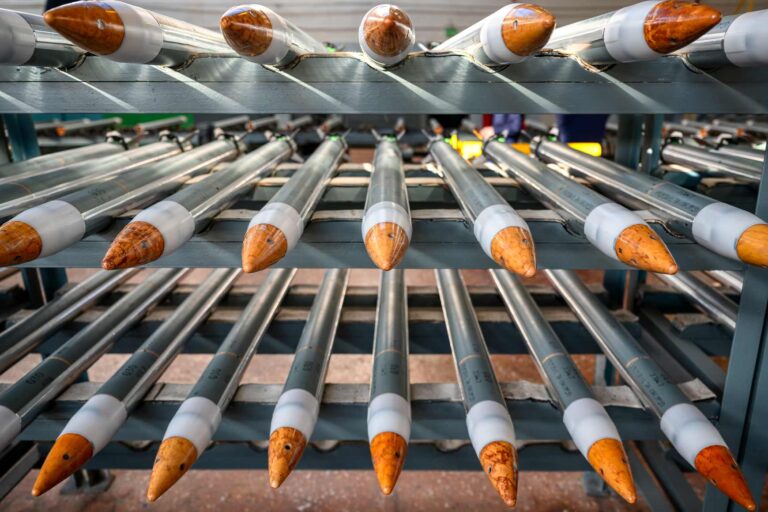
It was built to shield Russian crops from hail. Now it’s being pitched as a drone interceptor

Alazan-6 anti-hail rockets

Russia has shown a drone interceptor built on the Alazan, a civilian anti-hail rocket, Militarnyi reported. The sample went on display at a weapons exhibition that Russian dictator Vladimir Putin toured at the Chebarkul training range in the Urals on 2 October.

Ukraine now sends drones at Russia by the hundreds, by Moscow's own count. Russia's Defense Ministry claimed its air defenses intercepted nearly 900 overnight into 6 October. Russia's missile-based air defense was built to repel aircraft raids and a few cruise missiles, not swarms of low-flying drones.

In May, Ukrainian intelligence said Russia was adding four regiments, 24 battalions, and 162 batteries to counter Ukrainian strike drones. The converted Alazan, which Militarnyi calls an anti-drone system, is one more piece of that search. Meanwhile, the commander of Ukraine's Unmanned Systems Forces, Robert Brovdi, said his forces struck 300 Russian air-defense assets between January and 19 September.

From hail reagent to shrapnel

Based on the size of the sample on display, the interceptor builds on the Alazan-2M or Alazan-6 series, Militarnyi assessed. The outlet put the stated cost at up to $12,000 per unit but did not say who named the figure. In civilian service, the rocket flies about 10 km, climbs up to 8 km, and carries about 0.5 kg of reagent. For air defense, the developers plan to replace that reagent with a fragmentation warhead.

Militarnyi's analysis of the published photos describes the front end as a steering assembly: four cruciform deflector fins, probably paired with a seeker or a fuze. At the rear sit folding stabilizers and the open nozzle of a solid-fuel motor, held in a metal cradle.

Anti-drone missile based on the Alazan, 2 October 2026
Anti-drone missile based on the Alazan, 2 October 2026. Photo: kremlin.ru

One sample among 300 exhibits

The Kremlin's account of the visit lists more than 300 weapons on display, including interceptor drones, but does not mention the rocket. Propaganda channel Russia 1 aired the interceptor in its report from the visit, and the Kremlin pool of state news agency RIA posted photos.

  •  

Kalashnikov, Russia’s biggest small-arms maker, says it fills its entire 2026 arms contract on time with batch of 7.62mm Dragunov sniper rifle

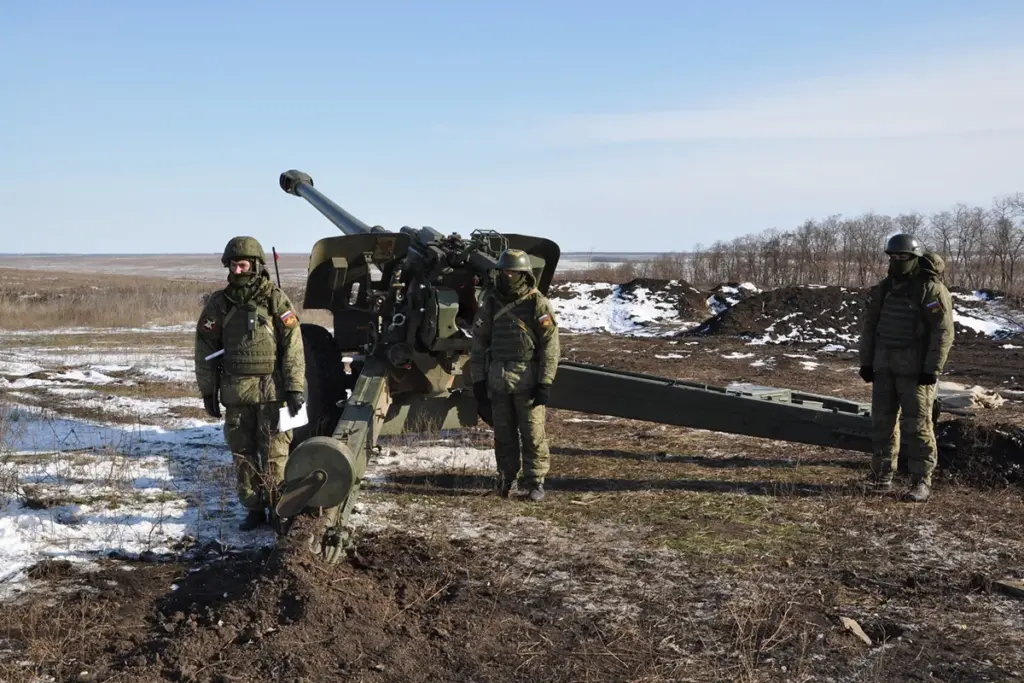
Russian soldiers stand beside a field artillery gun in a snow-covered position.

Russia's Kalashnikov concern has met its annual arms contract. The top producer of small arms has announced it delivered a batch of classic 7.62mm Dragunov sniper rifles to a Russian Security Forces customer and fully met its 2026 contract on time

The delivery shows how little the sanctions regime slows Russia's arms maker. In February 2026, Ukraine's Defense Intelligence said that nearly half of Kalashnikov's plants were still not subject to sanctions by any coalition country. Eight months later, the concern reports a full year's order delivered on schedule.

"The items were shipped on the set deadline, the obligations under the 2026 contract fully met," the manufacturer said.

A rifle in service for six decades

The weapon in that batch is not new. Designed by Yevgeny Dragunov between 1958 and 1963, the Dragunov sniper rifle entered serial production at the Izhevsk machine-building plant in 1963, so in 2026, it has remained in serial production for more than 60 years.

The self-loading 7.62mm rifle is meant to hit personnel and unarmored targets at ranges up to 800 meters, the concern said. It uses gas-operated automatics with a short-stroke piston and a gas regulator, and can fire any 7.62x54R round, though sniper ammunition yields the best grouping, according to the maker.

Sanctions chase a moving network

The sniper rifles are only one line in Kalashnikov's output. Russia's defense industry has leaned heavily on refurbishing Soviet-era armor as newer reserves run low, with Ukraine's intelligence reporting in June 2025 that Russia had begun deploying 1960s-era T-62 tanks.

The restoration work was centered primarily at the 103rd Armored Repair Plant in Atamanovka, Trans-Baikal Territory of Siberia. Ukrainian intelligence documented the transfer of 21 T-62 tanks from the eastern region to the western part.

Small arms are a different line of production, built new rather than pulled from storage. That is why a 1963 design keeps rolling off the line while the sanctions net, as Ukraine's intelligence describes it, still has holes.

  •  

Ukraine says it struck plant making parts for Russian military aircraft engines—a Snizhne factory Russia has used since 2014

snizhne_map_dark

Ukraine's 413th Separate Raid Regiment of the Unmanned Systems Forces struck the Snizhne Machine-Building Plant in occupied Donetsk Oblast in September, working with other Defense Forces units, the regiment posted on 6 October, sharing a video of the strike. The General Staff reported the strike on the plant on 11 September, saying that the extent of the damage was being clarified.

The strike adds to Ukraine's campaign of long-range attacks on Russian military targets as Russia has begun its winter campaign of strikes against Ukraine's energy infrastructure. Hitting the suppliers of aircraft parts goes after Russia's ability to keep its attack jets and helicopters flying.

The regiment said the plant works for Russia's military industry, producing engine components for attack aircraft and combat helicopters.

A former Motor Sich plant in occupied Snizhne

The Snizhne plant was a separate division of Motor Sich, a Ukrainian aircraft-engine maker based in Zaporizhzhia, a city that remains under Ukrainian control. Snizhne has been under Russian occupation since 2014. The plant specializes in producing parts for gas-turbine engines, including compressor and turbine discs and blades, the General Staff said. It never built whole engines. In September 2014, months into the occupation, it was machining blanks from Motor Sich's Zaporizhzhia plant into turbine blades and was one of only two plants in the former Soviet Union making such blades for helicopters, a plant worker said.

Motor Sich said in December 2017 that it had lost control of the plant. Weeks later, Viacheslav Bohuslaiev, then Motor Sich's honorary president and a member of parliament, told RFE/RL's Donbas.Realii that Motor Sich still owned the plant and had handed its management to a foreign company, while keeping it under the company's "full control."

In February 2023, Ukraine's Prosecutor General's Office served Bohuslaiev a notice of suspicion of aiding a terrorist organization, alleging that Motor Sich shipped blanks to the Snizhne plant and received finished engine parts through foreign-registered companies. The case went to court in October 2023, and Bohuslaiev, who denies the charges, has been in pretrial detention since October 2022 as the trial continues.

Snizhne, which Russia uses as a rear base, has been hit before. In May, Ukraine's Unmanned Systems Forces and the Security Service of Ukraine struck a Russian training center for drone pilots in the city, and in September, a strike on energy infrastructure cut power across Snizhne.

  •  

German radar already guarding Ukraine is picked to spot ballistic missiles. Its maker just signed a new deal with Kyiv

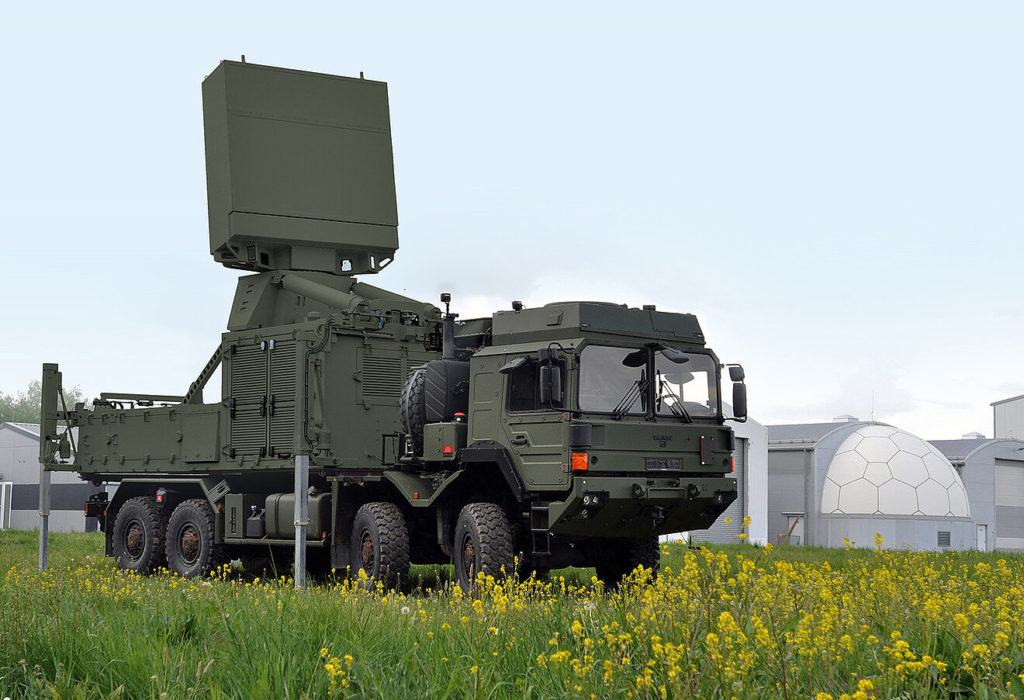
HENSOLDT's TRML-4D rada

German radar maker Hensoldt has signed a memorandum with Ukraine's Defense Ministry for more large-scale radar deliveries, the company said on 5 October. Ukrainian defense outlet Defense Express reads it as a step toward fitting Hensoldt's TRML-4D, already in Ukrainian service, into FREYJA, a planned shield against ballistic missiles.

Ballistic missiles remain the hardest threat in Russia's air war. After Russia's overnight barrage on 7 October, Ukrainian President Volodymyr Zelenskyy said Ukraine is still searching daily for Patriot missiles. The only other system Ukraine can use against them is the Franco-Italian SAMP/T, which fires Aster 30 interceptors made in small numbers. That gap is why Fire Point is reworking its FP-7 missile into a Patriot-like interceptor. Such an interceptor still needs radars to find its target first.

A memorandum signed during Merz's visit

Hensoldt CEO Oliver Dörre signed the document on the sidelines of German Chancellor Friedrich Merz's visit to Ukraine. Beyond deliveries, it covers further development of radar capabilities. The partners will also study options to deploy and jointly operate TRL-4D LR long-range radars. Hensoldt said this expands cooperation already agreed on in ballistic missile defense.

Ukraine ballistic missile program
Explore further

Russia’s air defenses can’t protect all its strategic sites once Ukraine’s ballistic missiles are ready, expert says

The TRL-4D LR is the land-based version of a long-range radar Hensoldt also builds for the German Navy, German outlet Sicherheit & Verteidigung reported. The outlet cited Germany's defense procurement office as giving the naval version a range of more than 400 km (250 miles) against air targets. That, it concluded, puts the range well beyond the TRML-4D's.

"The Ukrainian air defence forces urgently need our high-performance radars to help protect infrastructure such as bridges," Dörre said.

Defense Express, describing the same memorandum, tied both the mass deliveries and the joint-operation plan to the TRML-4D. Hensoldt's release names no model for the deliveries and links joint operation to the TRL-4D LR.

Eyes for FREYJA

Hensoldt and Fire Point signed a memorandum on FREYJA at the Eurosatory arms show in Paris in June, with the TRML-4D to play a key role, Hensoldt announced. Fire Point is set to act as prime contractor and hold design authority. Hensoldt is to produce, test, and deliver the radars.

HENSOLDT's TRML-4D rada
Explore further

Germany’s Hensoldt to supply Ukraine with six more TRML-4D radars to boost air defense capabilities

Defense Express expects any study of deployment options to focus on how well the radar detects ballistic missiles and relays that data. Hensoldt has its own unit in Ukraine to work closely with operators, the outlet noted. Earlier, the company began setting up a local hub so Ukraine can service and repair the TRML-4D itself.

Already on duty

Ukraine's military uses the TRML-4D both standalone and as the built-in radar of the IRIS-T SLM medium-range air defense system, Defense Express noted. Hensoldt lists an instrumented range of 250 km (155 miles) at altitudes up to 30 km (19 miles). Defense Express, citing the manufacturer, gives track ranges of more than 120 km (75 miles) for fighter jets and more than 60 km (37 miles) for supersonic missiles.

More radars give earlier warning of ballistic strikes, but they cannot stop them. Until the FP-7.X makes its first ballistic intercept, planned for mid-2027, that job stays with Patriot and SAMP/T missiles. Partners delivered three times fewer air defense missiles in the first half of 2026 than a year earlier, Zelenskyy said on 5 August.

  •  
❌