Reading view
Kenya reports second death from Ebola
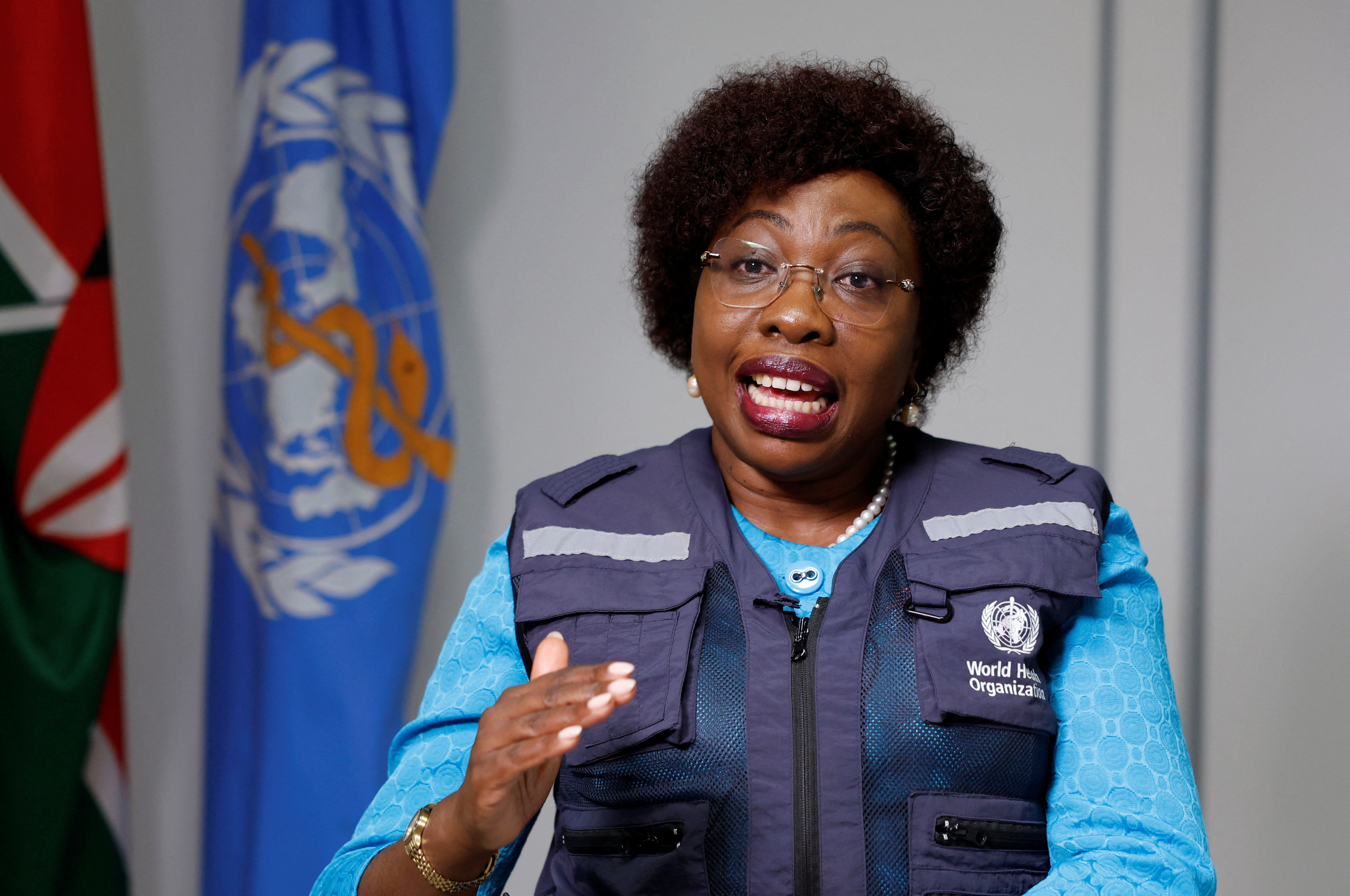
Kenya has recorded a second Ebola death, the health ministry said late on Friday, adding that the 65-year-old woman had developed symptoms during quarantine and was a close relative of a Kenyan man who died of Ebola earlier this month.
The outbreak, which started in the Democratic Republic of Congo, has now been reported in four countries across eastern, central and western Africa, giving it the widest geographic spread of any Ebola outbreak on the continent to date.
Kenya’s first Ebola case was identified this month in a man who travelled from Congo to Nairobi and died at a Nairobi hospital on October 5.
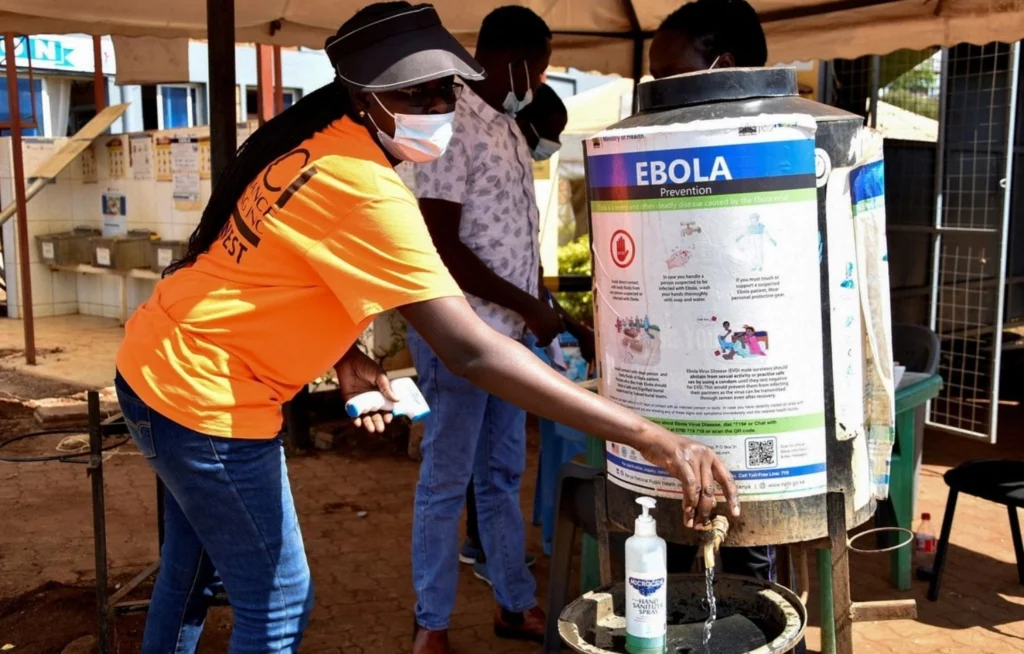
Since then, Kenyan authorities have traced 135 contacts, all of whom were placed in quarantine, with nine cases confirmed.
The Ebola victim who died on Friday evening was a direct contact of the index patient, the ministry said.
“This loss brings the number of deaths to two among the nine confirmed cases. The remaining seven patients continue to receive care in the two isolation facilities,” the ministry said, adding there was no evidence of community spread in the country.
Late on Monday, the US State Department advised Americans to reconsider travel to Kenya and raised its travel advisory level for the country because of health risks.
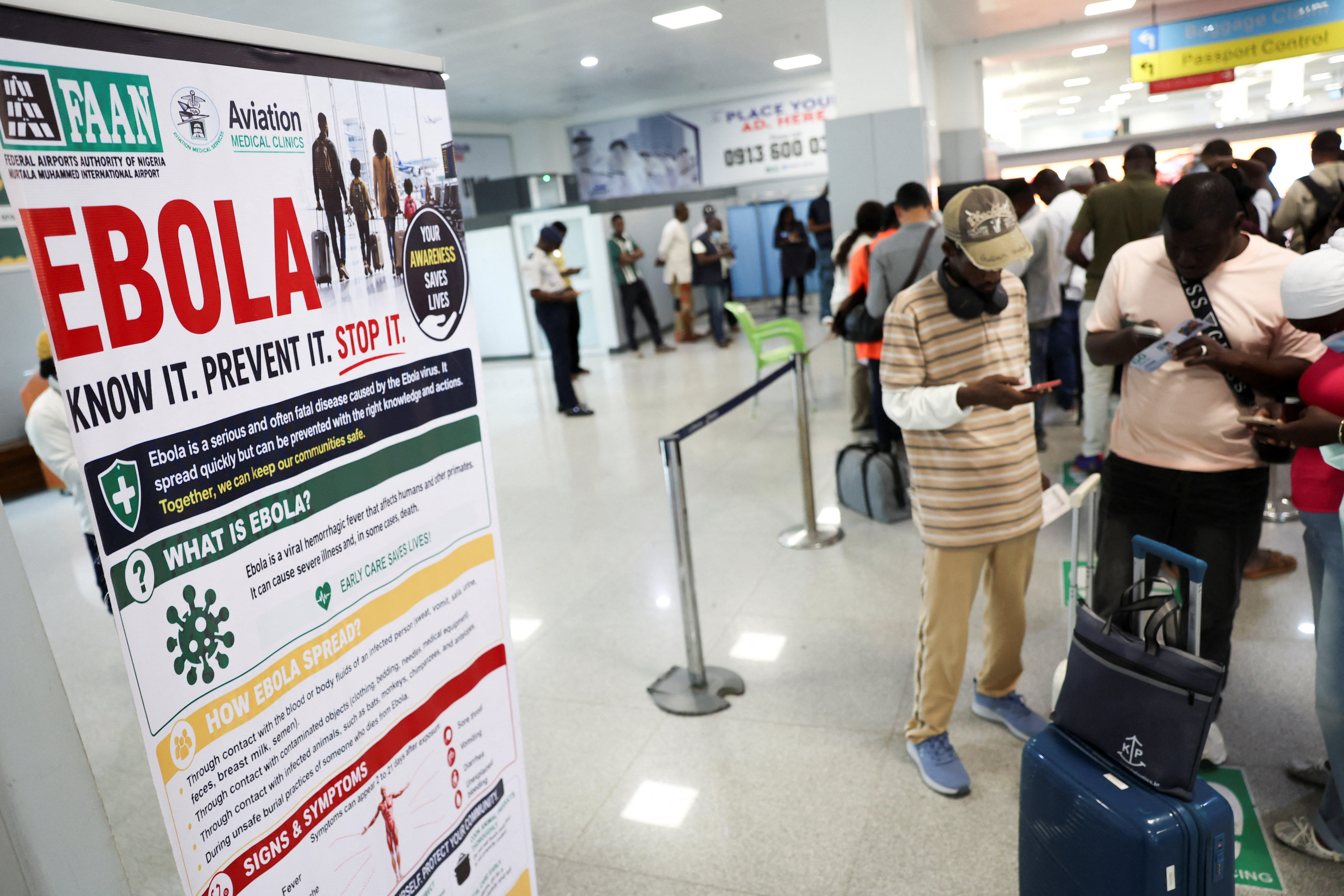
On Tuesday, Nigeria became the fourth African country to report an Ebola case, with officials scrambling to work out how and where the patient, who had not travelled to the Democratic Republic of Congo, contracted the disease.
Ebola has infected nearly 10,000 people and killed more than 4,600 in Congo. The disease can cause fever, vomiting, diarrhoea and, in severe cases, internal and external bleeding. Only people with symptoms can transmit the virus.
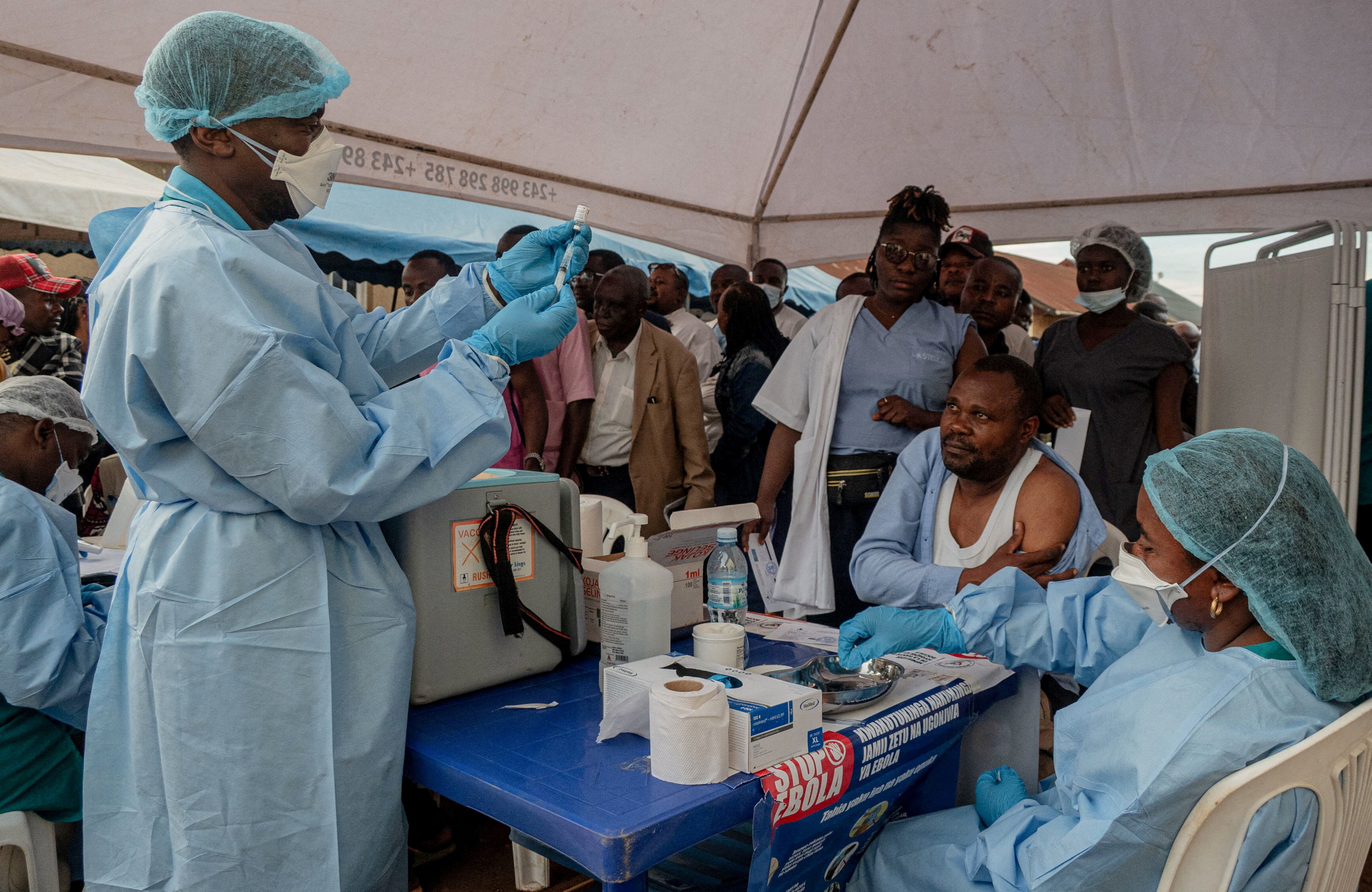
The rare Ebola species behind the current outbreak has no approved treatment or vaccine.

Mystery over source of Ebola infection in Nigeria fuels concern about spread of virus
Switzerland says patient is wife of Swiss diplomat and believed to have contracted virus while travelling in Uganda
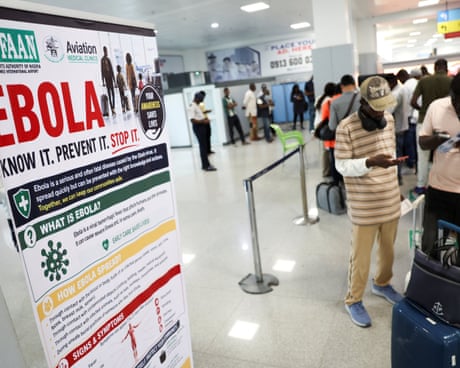
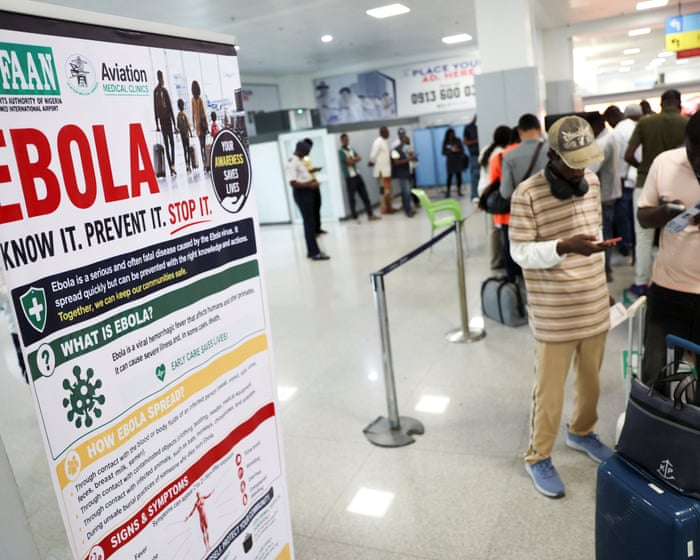
Health officials across Africa are racing to determine how Nigeria’s first Ebola patient in more than a decade became infected, amid fears the outbreak could spread further after reaching a fourth African country.
The Swiss foreign ministry said on Friday the patient in Nigeria, the Ugandan-born wife of a Swiss diplomat based in Abuja, had not travelled to the Democratic Republic of Congo, where the outbreak was first detected in mid-May before spreading to Uganda, Kenya and now Nigeria. The woman was believed to have contracted Ebola while travelling with her husband in Uganda, the ministry added.
Continue reading...
© Photograph: Sodiq Adelakun/Reuters

© Photograph: Sodiq Adelakun/Reuters

© Photograph: Sodiq Adelakun/Reuters
Paciente com ebola na Nigéria não viajou ao Congo, diz governo
A paciente com ebola na Nigéria, esposa de um diplomata suíço baseado em Abuja e nascida em Uganda, não viajou para a República Democrática do Congo, afirmou o governo suíço em comunicado à Reuters nesta sexta-feira (23), contradizendo informações divulgadas por autoridades ugandenses.
Na quinta-feira (22), o Departamento Federal de Relações Exteriores da Suíça havia informado à Reuters que a mulher, identificada como cidadã suíça, provavelmente contraiu ebola durante uma viagem com o marido a Uganda, país cujo governo afirma não ter casos da doença.
Autoridades ugandenses disseram que a mulher, que adoeceu na Nigéria, havia viajado para o leste do Congo, onde o atual surto foi declarado em meados de maio e se tornou o de propagação mais rápida já registrado.
No entanto, a OMS (Organização Mundial da Saúde) e a principal agência de saúde da África afirmaram na quinta-feira que não haviam recebido informações confirmadas de que a mulher tivesse viajado ao Congo.
“Ela e o marido não viajaram para a República Democrática do Congo”, declarou nesta sexta-feira o Departamento Federal de Relações Exteriores da Suíça.
Uganda registrou 20 casos de ebola em maio e junho, a maioria importada do Congo. Em agosto, porém, a OMS declarou o país livre da doença.
O porta-voz do governo ugandense, Alan Kasujja, disse à Reuters na quinta-feira que Uganda não tinha casos de ebola e que, se tivesse, tornaria a informação pública.
O caso na Nigéria, o primeiro registro da doença no país em mais de uma década, significa que o surto se espalhou por quatro países africanos: Congo, Uganda, Quênia e Nigéria. Segundo os Centros Africanos de Controle e Prevenção de Doenças, o surto causou cerca de 4.700 mortes.
Violência e desconfiança dificultam combate ao Ebola na RD Congo
Ebola patient in Nigeria believed to have contracted disease in Uganda, Switzerland says
The Ebola patient in Nigeria, the Ugandan-born wife of a Swiss diplomat based in Abuja, is believed to have contracted the disease while travelling in Uganda, a Swiss government statement to Reuters said on Thursday.
Nigeria reported the case, its first Ebola case in more than a decade, on Tuesday, becoming the fourth African country and the most populous yet to be affected by an outbreak that was announced in Democratic Republic of Congo in mid-May and has since become the fastest-spreading on record.
Ugandan authorities have said the woman who fell ill in Nigeria had travelled to eastern Congo before transiting through Uganda. But the World Health Organization and Africa’s top health agency said on Thursday they had not received confirmed information that the woman had travelled to Congo.
The woman “has been in a private clinic in Abuja for around a week with symptoms. She is believed to have contracted the virus whilst travelling to Uganda around two weeks ago,” said an emailed statement from the Swiss Federal Department of Foreign Affairs.
“Her husband is in isolation; he has not shown any symptoms. He was travelling with his wife when she is believed to have contracted Ebola.”
Uganda reported 20 cases in May and June, mostly imported from Congo, but the World Health Organization declared the country Ebola-free in August.
Ugandan government spokesperson Alan Kasujja told Reuters late on Thursday that Uganda had no Ebola cases.
“That’s a fact. If we did, as has happened before, we’d be the first to say,” he said.
Asked whether the Ugandan government had proof that the woman had travelled to Congo, Kasujja said, “Like what? A passport stamp? Without infringing on the patient’s rights?”
AFRICA CDC, WHO SAY NO INFORMATION THAT PATIENT WENT TO CONGO
Africa Centres for Disease Control and Prevention official Wessam Mankoula said on Thursday that Nigeria and Uganda were sharing information to establish the patient’s movements and possible source of exposure.
“So far, there is no validated information (that) this case traveled to DRC (Democratic Republic of Congo),” Mankoula told an online press conference.
The WHO said information it had received about the case did not include travel outside Uganda.
“The facts which we have received is that the patient returned to Abuja on October 3, being away from September 16 in Uganda,” WHO representative to Nigeria Pavel Ursu told the press conference.
Ursu said the focus in Nigeria was now on containing the viral infection and that the patient remained hospitalised, with her biochemical markers improving.
Jean Kaseya, Africa CDC director, told Reuters on Wednesday that the patient had been on a two-week holiday in Uganda.
Patrick Otim, a WHO emergency response manager, said on Thursday the source of her infection was still unknown as health authorities were working to piece together her travel history.
One issue under investigation is which health facilities the woman visited in Abuja after the onset of her symptoms and before her hospitalisation 48 hours later, Otim said.
KENYA TRACES ALL CONTACTS OF FIRST CASE
Separately, a senior Kenyan health official said authorities there had now traced all 135 contacts of the country’s first Ebola case, which was confirmed on October 6 and after which a further eight cases have been reported.
“We have been able to account for them 100%,” health ministry director-general Patrick Amoth said. He said the last contact to be traced was a Ugandan citizen who had arrived in Kenya in early October on the same flight as the index patient but exited by road via the Namanga border post with Tanzania, which meant it took more time to find him.
Africa CDC is investigating whether the Kenyan case may have come into contact with the patient being treated in Nigeria, as both travelled from Uganda’s Entebbe airport on the same day, Mankoula said. Transmission between the two was one of the possible scenarios being examined, he said.
Ebola spreads through direct contact with the bodily fluids of infected people, whether living or dead. The disease can cause fever, vomiting, diarrhoea and, in severe cases, internal and external bleeding.
The rare Ebola species behind the current outbreak kills about half of those infected and has no approved treatment or vaccine.
So far the outbreak is confirmed to have killed about 4,700 people across the four African countries that have reported cases, according to the Africa CDC.

Brote de ébola mantiene en jaque al Congo Democrático
Kinshasa, 22 oct (Prensa Latina) El brote de ébola reportado desde mayo en la República Democrática del Congo (RDC) mantiene hoy en jaque a las autoridades sanitarias al elevarse la cifra de casos a más de nueve mil 700.
The post Brote de ébola mantiene en jaque al Congo Democrático first appeared on Noticias Prensa Latina.
OMS afirma que não foi informada que paciente com Ebola foi ao Congo
A OMS (Organização Mundial da Saúde) não foi informada de que a paciente com Ebola na Nigéria havia viajado para o Congo, afirmou o representante da organização na Nigéria nesta quinta-feira (22), após a Uganda declarar que ela havia visitado aquele país.
As autoridades de saúde nigerianas informaram que o primeiro caso de Ebola no país em mais de uma década envolveu uma mulher ugandense que havia chegado recentemente de uma viagem à Uganda.
O Ministério da Saúde da Uganda declarou que a mulher havia viajado para o Congo, onde o surto foi registrado pela primeira vez em meados de maio e, desde então, tornou-se o de propagação mais rápida já documentado.
Pavel Ursu, representante da OMS, disse em uma coletiva de imprensa online: “As informações fornecidas à OMS não incluíam viagens para outro país (além da Uganda)”.
“Segundo os dados que recebemos, a paciente retornou a Abuja no dia 3 de outubro, após ter permanecido na Uganda desde 16 de setembro”, acrescentou.
Ursu afirmou que, na Nigéria, o foco está agora na contenção da infecção viral e que a paciente permanece hospitalizada, apresentando melhora em seus marcadores bioquímicos.
Jean Kaseya, diretor da principal agência de saúde pública da África, disse à agência de notícias Reuters na quarta-feira (21) que a paciente — uma mulher nascida na Uganda e casada com um diplomata suíço — chegou a Abuja após passar duas semanas de férias na Uganda.
Patrick Otim, gerente de resposta a emergências da OMS, informou nesta quinta-feira que a origem da infecção ainda é desconhecida, enquanto as autoridades de saúde trabalham para reconstruir o histórico de viagens da paciente.
Um dos pontos sob investigação, segundo Otim, é quais unidades de saúde a mulher visitou em Abuja após o início dos sintomas e antes de sua hospitalização, ocorrida em 9 de outubro.
Nigéria registra primeiro caso de Ebola em mais de uma década
A Nigéria registrou na terça-feira (21) seu primeiro caso de Ebola em mais de uma década, tornando-se o quarto país africano, e o mais populoso até o momento, a ser atingido por um surto que possui a propagação mais rápida já documentada, segundo autoridades de saúde.
A cepa do vírus Ebola responsável por este surto mata cerca de metade dos infectados e não possui tratamento ou vacina aprovados.
Desde a confirmação dos primeiros casos na República Democrática do Congo, em maio, a doença já vitimou 4.646 pessoas.
Autoridades de saúde temem que a desinformação e a falta de recursos financeiros possam impulsionar uma propagação ainda maior, tanto dentro da região quanto além de suas fronteiras.
“O Ebola agora afeta três regiões da África. A situação exige uma ação urgente e liderança política no mais alto nível”, afirmou Jean Kaseya, diretor-geral dos Centros Africanos de Controle e Prevenção de Doenças, na rede social X, nesta quarta-feira (21).
Ebola is now affecting three regions of Africa. The situation demands urgent action and political leadership at the highest level. I have invited African Ministers of Health to an extraordinary virtual meeting on 28 October to strengthen our collective response. Five months of intense efforts have shown the determination of our countries and health workers. We must now accelerate our actions, reinforce coordination and mobilise the full strength of our continent. Africa has the expertise, the institutions and the capacity to defeat this outbreak. We must act together, and we must act now. Our priority is to stop transmission and save lives. Read more: https://t.co/aO9dtJ9uBI —————- Ebola touche désormais trois régions d’Afrique. La situation exige une action urgente et un engagement politique au plus haut niveau. J’ai convié les ministres africains de la Santé à une réunion virtuelle extraordinaire le 28 octobre pour renforcer notre riposte collective. Cinq mois d’efforts intenses témoignent de la détermination de nos pays et de nos professionnels de santé. Nous devons aujourd’hui accélérer notre action, renforcer la coordination et mobiliser toutes les forces de notre continent. L’Afrique dispose de l’expertise, des institutions et des capacités nécessaires pour vaincre cette épidémie. Nous devons agir ensemble, et agir maintenant. Notre priorité est de stopper la transmission et de sauver des vies. Lire le communiqué : https://t.co/Yf1EhyOpMA
— Dr Jean Kaseya (@Dr_JeanKaseya) October 21, 2026
O caso na Nigéria envolve uma mulher ugandense que chegou a Abuja, a capital do país, vinda de Adis Abeba, no dia 5 de outubro, informou Odianosen Ehiakhamen, do Centro de Controle de Doenças da Nigéria, à emissora Arise TV, na terça-feira (20).
Dois dias após sua chegada, ela começou a se sentir mal e, em 11 de outubro, buscou atendimento em um hospital particular em Abuja apresentando sintomas semelhantes aos da malária.
Contudo, seu quadro clínico não apresentou melhora, relatou Ehiakhamen.
Ao tomarem conhecimento de que ela havia viajado recentemente para Uganda — um dos países afetados pelo surto atual —, as autoridades de saúde realizaram um teste para Ebola no dia 19 de outubro.
O resultado positivo foi confirmado na terça-feira. As autoridades identificaram 44 pessoas que tiveram contato com ela, a maioria profissionais de saúde.
Entre elas está o marido da paciente, um cidadão suíço que reside com ela em Abuja.
As autoridades também estão rastreando os passageiros que viajaram com ela, embora não acreditem que ela apresentasse sintomas durante o voo.
O ministro da Saúde, Muhammad Ali Pate, declarou à emissora pública NTA que a mulher encontra-se isolada e recebendo tratamento.
Ebola na República Democrática do Congo é o mais mortal da história
Nigeria activa vigilancia epidemiológica tras confirmar contagio de ébola
Africa CDC pide apoyo internacional urgente ante expansión del ébola
Nigéria registra primeiro caso de Ebola em mais de uma década
A Nigéria registrou nesta terça-feira (21) seu primeiro caso de Ebola em mais de uma década, tornando-se o quarto país africano, e o mais populoso até o momento, a ser atingido por um surto que possui a propagação mais rápida já documentada, segundo autoridades de saúde.
A cepa do vírus Ebola responsável por este surto mata cerca de metade dos infectados e não possui tratamento ou vacina aprovados.
Desde a confirmação dos primeiros casos na República Democrática do Congo, em maio, a doença já vitimou 4.646 pessoas.
Autoridades de saúde temem que a desinformação e a falta de recursos financeiros possam impulsionar uma propagação ainda maior, tanto dentro da região quanto além de suas fronteiras.
“O Ebola agora afeta três regiões da África. A situação exige uma ação urgente e liderança política no mais alto nível”, afirmou Jean Kaseya, diretor-geral dos Centros Africanos de Controle e Prevenção de Doenças, na rede social X, nesta quarta-feira (21).
Ebola is now affecting three regions of Africa. The situation demands urgent action and political leadership at the highest level. I have invited African Ministers of Health to an extraordinary virtual meeting on 28 October to strengthen our collective response. Five months of intense efforts have shown the determination of our countries and health workers. We must now accelerate our actions, reinforce coordination and mobilise the full strength of our continent. Africa has the expertise, the institutions and the capacity to defeat this outbreak. We must act together, and we must act now. Our priority is to stop transmission and save lives. Read more: https://t.co/aO9dtJ9uBI —————- Ebola touche désormais trois régions d’Afrique. La situation exige une action urgente et un engagement politique au plus haut niveau. J’ai convié les ministres africains de la Santé à une réunion virtuelle extraordinaire le 28 octobre pour renforcer notre riposte collective. Cinq mois d’efforts intenses témoignent de la détermination de nos pays et de nos professionnels de santé. Nous devons aujourd’hui accélérer notre action, renforcer la coordination et mobiliser toutes les forces de notre continent. L’Afrique dispose de l’expertise, des institutions et des capacités nécessaires pour vaincre cette épidémie. Nous devons agir ensemble, et agir maintenant. Notre priorité est de stopper la transmission et de sauver des vies. Lire le communiqué : https://t.co/Yf1EhyOpMA
— Dr Jean Kaseya (@Dr_JeanKaseya) October 21, 2026
O caso na Nigéria envolve uma mulher ugandense que chegou a Abuja, a capital do país, vinda de Adis Abeba, no dia 5 de outubro, informou Odianosen Ehiakhamen, do Centro de Controle de Doenças da Nigéria, à emissora Arise TV, na terça-feira (20).
Dois dias após sua chegada, ela começou a se sentir mal e, em 11 de outubro, buscou atendimento em um hospital particular em Abuja apresentando sintomas semelhantes aos da malária.
Contudo, seu quadro clínico não apresentou melhora, relatou Ehiakhamen.
Ao tomarem conhecimento de que ela havia viajado recentemente para Uganda — um dos países afetados pelo surto atual —, as autoridades de saúde realizaram um teste para Ebola no dia 19 de outubro.
O resultado positivo foi confirmado na terça-feira. As autoridades identificaram 44 pessoas que tiveram contato com ela, a maioria profissionais de saúde.
Entre elas está o marido da paciente, um cidadão suíço que reside com ela em Abuja.
As autoridades também estão rastreando os passageiros que viajaram com ela, embora não acreditem que ela apresentasse sintomas durante o voo.
O ministro da Saúde, Muhammad Ali Pate, declarou à emissora pública NTA que a mulher encontra-se isolada e recebendo tratamento.
Uganda diz que não tem casos ativos de Ebola
O Ministério da Saúde de Uganda informou que a mulher havia viajado para o Congo, onde mais de 9.500 casos de Ebola foram registrados em oito províncias.
Não ficou claro de imediato em quais locais do Congo ela esteve.
“O fato de ter passado por Uganda não significa que a infecção tenha ocorrido aqui”, afirmou o Ministério da Saúde de Uganda, acrescentando que o país não apresenta casos ativos de Ebola.
Uganda registrou 20 casos em maio e junho, a maioria importada do Congo, mas a Organização Mundial da Saúde declarou o país livre de Ebola em agosto.
No início deste mês, o Quênia relatou seu primeiro caso de Ebola, envolvendo um viajante que chegou do Congo passando por Uganda.
Desde então, o país registrou nove casos, todos relacionados ao mesmo paciente. levantando questões sobre a eficácia dos sistemas de triagem nas fronteiras, projetados para evitar a transmissão transfronteiriça.
A propagação do Ebola para o Quênia levantou questões sobre a eficácia dos sistemas de triagem nas fronteiras, projetados para evitar a transmissão entre países.
Pate, ministro da Saúde da Nigéria, afirmou que o país conseguiu conter o Ebola com sucesso em 2014, durante a epidemia na África Ocidental — o maior surto já registrado.
Ele ressaltou que a Nigéria dispõe dos sistemas necessários para responder a este novo caso.
Ebola na República Democrática do Congo é o mais mortal da história
El brote de ébola se expande a África Occidental tras la confirmación del primer caso en Nigeria
Nigeria notificó este martes su primer caso de ébola en más de una década, después de que una mujer extranjera residente en Abuya, la capital del país, diera positivo en la prueba de detección del virus, según recoge la agencia Reuters.

© Gradel Muyisa Mumbere (REUTERS)
Nigeria Confirms First Ebola Case as Outbreak Spreads in Africa
Nigeria confirmed its first Ebola case on Tuesday, a woman who traveled from Uganda to the capital, Abuja, in the latest spread of an outbreak centered in the east of the Democratic Republic of Congo (DRC).
Health Minister Muhammad Ali Pate announced the diagnosis through a statement. The patient landed in Nigeria on an international flight from Uganda and went to a private medical facility in Abuja shortly after arriving, where she remained under care for several days before laboratory results confirmed the infection.
“The patient, a woman who recently arrived in Nigeria on an international flight from Uganda, was admitted to a private hospital where she received medical attention for several days before the diagnosis was confirmed,” Pate said.
RELATED: Ebola Outbreak in DR Congo Tops 8,700 Cases and 4,200 Deaths
She is now isolated and receiving medical attention. “Contact tracing has begun and 44 close contacts have been identified so far,” the minister added.
The confirmation sounded health alarms and added Nigeria to a continental alert that has gripped Africa since the outbreak began. The case pulls the country into an epidemic whose epicenter sits in the eastern Democratic Republic of the Congo (DRC). Uganda, where the woman boarded her flight, is also among the affected nations.
.@Fmohnigeria reported the first case in Nigeria of #Ebola caused by Bundibugyo virus. The patient is in isolation, since the onset of symptoms and receiving necessary clinical care: https://t.co/moqIMOGt24
— Tedros Adhanom Ghebreyesus (@DrTedros) October 21, 2026
Contact tracing is ongoing. @WHO and partners are working with the…
Outbreak Keeps Spreading
The current emergency began in May with the declaration of an outbreak of viral hemorrhagic fever in the DRC. The World Health Organization (W.H.O.) classified the outbreak in the DRC and neighboring Uganda as a “public health emergency of international concern” on May 17.
The current epidemic differs from previous Ebola outbreaks in one crucial way. Earlier waves were caused by the Zaire ebolavirus, but the infections now spreading across the region are driven by the Bundibugyo strain, an unusual variant for which no treatment or vaccine is available.
That absence of medical countermeasures has weighed heavily on the DRC, which is weathering a critical situation marked by high numbers of infections and deaths and intense community transmission. Official data count about 9,000 confirmed infections and roughly 4,381 deaths, making this the most devastating Ebola outbreak in the country’s history.
While Nigeria deals with its first case, Kenya’s Ministry of Health reported a new patient on Tuesday, raising the total number of infections detected in the country in this outbreak to eight.
Nigeria has experience with Ebola. The country contained a small outbreak in 2014 after a traveler arrived in Lagos, according to general public health records. Whether any of the 44 contacts develop symptoms in the coming days will indicate how far the virus may have spread inside the country.
Since emergency was declared the virus has crossed DRC borders, spread into Uganda, and now reached Nigeria, leaving contact tracers in Abuja racing to map every movement the patient made since landing, against a strain with no approved vaccine or treatment.
Brote de ébola en África alcanza a Nigeria con su primer caso confirmado
Nigeria confirms Ebola case as outbreak spreads into western Africa
Case in Africa’s most populous country was detected in a woman who had travelled from Uganda
Nigeria has confirmed an Ebola case in its capital, Abuja, after a woman who arrived from Uganda tested positive for the virus, the health ministry said.
The woman began showing symptoms on 7 October and was admitted to a hospital in Abuja four days later, where she was later diagnosed with Ebola. It is unclear when she arrived in Nigeria, Africa’s most populous country.
Continue reading...
© Photograph: Sebastien Kitsa Musayi/AP

© Photograph: Sebastien Kitsa Musayi/AP

© Photograph: Sebastien Kitsa Musayi/AP
Nigeria confirms Ebola case in its capital as woman who arrived from Uganda tests positive

Brote de ébola alcanza una octava provincia en la RDC
Ébola. Novo ensaio vai testar vacinas contra Bundibugyo

© WHO HANDOUT/EPA
DR Congo’s deadliest Ebola outbreak kills over 4,200 as armed groups undermine response

In less than five months, the fastest-spreading Ebola outbreak in world history has killed at least 4,205 people in the conflict-ridden eastern region of the Democratic Republic of Congo (DRC) as of October 7.
It is the deadliest outbreak in the DRC since the disease was first discovered in the country in 1976, killing nearly one in two of the 8,728 people confirmed to be infected.
With treatment still in experimental stages, there is no specifically approved treatment for the particular Bundibugyo strain of the Ebola virus that caused this outbreak, declared on May 15.
However, the virus had been circulating in communities in Ituri province since mid-February, three months before the outbreak was identified and officially declared.
Aid cuts: unpaid frontline workers
When the health response started, already late, it was severely underfunded, as the UK, France and Germany have also followed in the footsteps of the US to slash humanitarian aid and increase military spending.
The UN Office for the Coordination of Humanitarian Affairs (OCHA) said in late September that the Humanitarian Response Plan had only half the funding needed to counter the outbreak.
Contact tracing is well below the Africa Centers for Disease Control and Prevention (CDC) and the WHO-recommended 95% to effectively break transmission. Only now in October, it has been built up to 80.4%, which still means that almost 20% of the people at risk of exposure to the virus due to contact with confirmed cases are off the radar of the health authorities, and could potentially be transmitting the disease further.
Lack of funds has meant that the understaffed and overworked frontline health workers – scores of whom have died in the line of duty – have been repeatedly forced to go on strike to protest unpaid wages. Their efforts are further impeded by the poor transport infrastructure and lack of healthcare facilities in the remote eastern region where the disease is spreading.
Armed conflict complicating health response
Armed conflict displacing millions on this mineral-rich land is another major hurdle in the way of effective health response. In Ituri, the epicenter of the outbreak, a key Ebola transit center in the fighting-affected Kigonze camp burnt down on September 29.
The camp, which had housed 19,000 Internally Displaced People (IDPs) fleeing violence, was reportedly infiltrated by the Convention for the Popular Revolution (CRP).
Uganda
This coalition of armed militias, formed in March 2025 at a hotel in Uganda’s capital, Kampala, is led by Thomas Lubanga, a former warlord, convicted by the International Criminal Court (ICC) of war crimes, released from prison in 2020 after serving 14 years. He resides in Uganda, where he is also known to have recruited fighters along ethnic lines.
In a 2022 judgment, the International Court of Justice (ICJ) ordered Uganda to pay DRC USD 325 million in reparations. This included USD 225 million for killings, rapes, child soldier recruitment, and displacement, USD 40 million for damage to property, and USD 60 million for plundering its gold, diamonds, and timber as an “occupying power” in Ituri from 1998 to 2003.
The nature of the occupation has since evolved. Under a bilateral agreement with the DRC, Uganda had deployed 2,000 troops to the country to jointly fight an Islamic State-affiliated group. However, Uganda deployed an additional 4,000 troops without the DRC’s consent in early 2025, around the time as the CRP’s formation in Kampala.
Searching for CRP militants and weapons, soldiers and police entered the camp on September 20. When they came under fire, clashes erupted between the security forces and the militants. Thousands of IDPs fled again as gunfire continued rattling around the camp for days. Deaths, injuries, and arrests were reported.
Ebola transit center burns down
Amid this violence, on September 29, fire engulfed the camp’s Ebola transit center. It is a facility for the isolation and care of suspected cases, until the results of the lab tests on their blood samples. If confirmed as positive, they are then transported to an Ebola treatment center.
“It’s been a huge struggle to create Ebola transit centers [and] Ebola treatment centers; it’s required money, bringing in staff and it’s been a struggle all across the east. So, when we lose a center, that means we lose capacity, we lose investment and we have to start again,” said Julien Harneis, UN’s senior Ebola response official in the DRC.
“Eastern DRC now faces a catastrophic collision of disease and conflict, with the Ebola outbreak in Ituri province outpacing the response,” the WHO’s director general, Tedros Ghebreyesus, had warned in May.
The outbreak has since reached seven of DRC’s 26 provinces, predominantly in the east. About three-quarters of the confirmed cases remain concentrated in Ituri. However, its neighboring province, North Kivu, which has another 20% of confirmed cases, is emerging as the new hotspot.
Rwanda
Large areas of this province are occupied by Rwandan troops and its proxy militias, the M23, which captured its capital, Goma, in January 2025, and went on to expand territorial control into South Kivu province.
Without humanitarian access to these occupied areas, the government cannot mount a health response, Communications Minister Patrick Katembwe said in late May, second week after the outbreak was declared. He called for the “withdrawal of foreign forces and the removal of their auxiliaries.”
Instead, the M23’s parallel administration launched a separate health response in the areas under its control, independently of the DRC government, with which cooperation was limited to data sharing and lab testing. This severely hampered contact tracing, especially because people regularly travel between the M23-held areas and government-controlled territory.
“Multiple outbreaks are developing at the same time”
The parallel M23 administration has also meant additional delays in diagnosis. With bed capacity in Ebola treatment centers stretched taut in North Kivu, medics in this province are forced to refer infected patients to general health facilities, where a third of all confirmed cases are being treated, posing further risk of transmission into the wider community.
The spread has rapidly increased since September in this province, which now accounts for nearly 40% of all new confirmed cases, up from 24% in August-end, Doctors Without Borders (MSF) said on October 5.
“It is like fighting a megafire,” said Stéphanie Hoffmann, MSF coordinator of the treatment center in Butembo, a major commercial city in the province. “Multiple outbreaks are developing at the same time, with varying intensity and in different locations. As long as new hotspots continue to emerge while the virus spreads across northern North Kivu, containing the epidemic will remain extremely difficult.”

Congo's confirmed Ebola cases surpass 9,000 as containment efforts falter

Ébola na RDCongo chega a 4.381 mortos e mais de 9.000 casos

© STRINGER/EPA