A Virginia man was arrested after allegedly using a sledgehammer to knock the head off a Marine figure depicted in an Iwo Jima statue near Marine Corps Base Quantico in Virginia, causing hundreds of thousands of dollars in damage to the historic military monument, police said.
Officers with the Prince William County Police Department responded at about 10:13 p.m. Wednesday, Oct. 21, to reports of vandalism at the statue near Richmond Highway and Fuller Road in Quantico, Virginia.
Police identified the suspect as Miguel Alonso Maldonado Soriano, 27, of Stafford, Virginia, who was allegedly striking the monument with a sledgehammer when officers arrived.
Authorities said Maldonado Soriano was detained and arrested after officers discovered extensive damage to the limestone sculpture, which commemorates one of the most recognizable moments in American military history.
The damage included the complete removal of one Marine's head, along with damage to other figures depicted raising the American flag during the Battle of Iwo Jima in World War II, according to authorities.
Images of the damaged monument show the figure farthest to the right missing its head, while another Marine has visible gouges across his helmet and face, police told Fox News Digital.
A third figure sustained damage to a bayonet attached to a gun slung over his back. Police estimated the damage would cost hundreds of thousands of dollars to repair.
In 2001, portions of the installation were listed on the National Register of Historic Places as the Quantico Marine Corps Base Historic District, encompassing 122 buildings, two landscapes, a sculpture and a water tower.
Secretary of War Pete Hegseth put weapons manufacturers on notice Thursday as the Trump administration pushes to cut Pentagon red tape, expand competition and accelerate American weapons production as part of its "Arsenal of Freedom" initiative.
In a video shared on X, Hegseth highlighted Washington's drive to overhaul defense procurement, expand private-sector competition and speed up production of advanced weapons systems.
"The Arsenal of Freedom has been UNLEASHED," Hegseth posted.
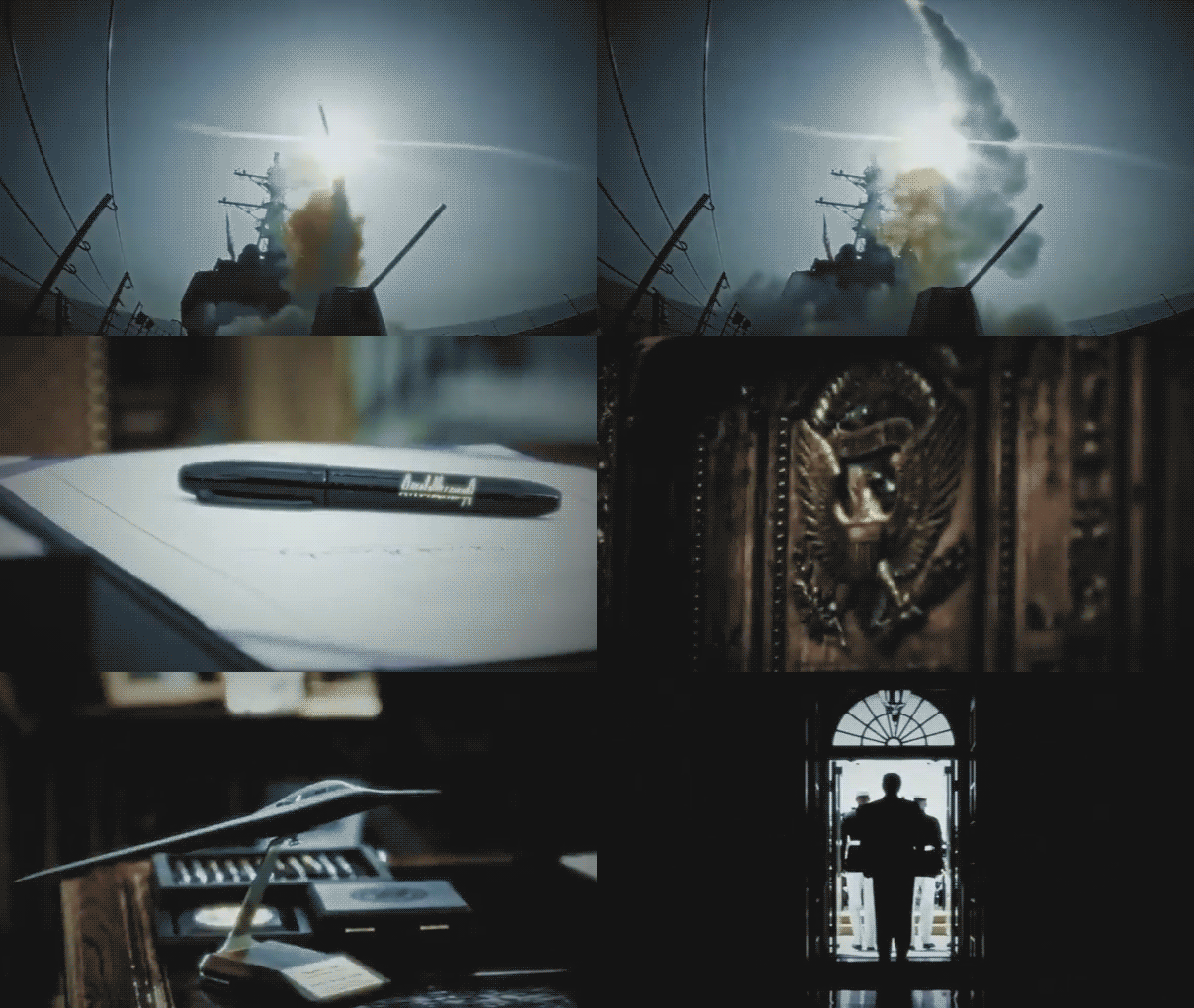
The video features missile launches, naval weapons systems firing, ammunition production lines and workers signing munitions for U.S. forces.
Hegseth also stressed that performance, not a contractor's name, should determine which companies supply America's military.
"I don’t care what company is on the side of the rocket. Don't care. The only thing we ask ourselves is, is it the best?" Hegseth said in the video.
"The technology that you build for our missiles, interceptors and hypersonic weapons is what allows the War Department to achieve peace through strength," Hegseth continued. "And that mission comes with a non-negotiable mandate straight from the Resolute Desk and President Trump: build more and build faster."
Hegseth framed the manufacturing push as central to strengthening American military readiness and deterring foreign adversaries.
"When we unleash industry—when we at long last unleash the raw, competitive, and patriotic spirit—the United States of America always wins," he said.
"When we compete, we win. When we innovate, we win. When we go fast, we win. We're equipping our warriors for the future right here and right now, made in the United States of America, and we're doing it at light speed."
The "Arsenal of Freedom" campaign echoes America's World War II-era "Arsenal of Democracy," when U.S. factories dramatically expanded weapons production to supply American and Allied forces.
The administration's defense industrial strategy is to streamline Pentagon procurement, reduce bureaucratic barriers and bring more private companies and technology startups into the military supply chain.
The effort emphasizes commercial technology, faster production and greater competition among defense contractors and manufacturers.
Hegseth launched the nationwide tour earlier this year with a stop at a shipyard in Newport News, Virginia, and has since visited defense manufacturing facilities across the country.
On Oct. 20, Hegseth toured Riverside Machine and Engineering in Eau Claire, Wisconsin, alongside Small Business Administration Administrator Kelly Loeffler and local lawmakers.
There, he touted what he called a "golden age of American manufacturing," highlighting domestic supply chains and defense industry jobs.
The manufacturing push comes as the Pentagon seeks to strengthen U.S. weapons stockpiles and sustain military readiness amid threats from adversaries, including the almost eight-month war with Iran.
Following visits to U.S. Central Command operations in the Middle East, Hegseth emphasized the importance of expanding production of precision missiles, air defense interceptors and other critical weapons systems.
Take President Donald Trump’s threat on the MOAB seriously. The U.S. Air Force’s GBU-43 Massive Ordnance Air Blast weapon, nicknamed the "mother of all bombs," could figure prominently in any new airstrike plans targeting Iran.
"The mother of all bombs is not nuclear," Trump said. "This is just an extremely large bomb. It’s like a tiny nuclear bomb, but the mother of all bombs is one big bomb, but it’s not nuclear."
"I wouldn’t use nuclear. We don’t have to," Trump said.
He’s right. The U.S. has a range of precision weapons that can knock out any suspicious target in Iran, including the construction activity at Pickaxe Mountain. Admiral Bradley Cooper, commander, United States Central Command, has detailed knowledge of high-value Iranian Revolutionary Guard Corps sites that could be MOAB targets.
President Trump has said he won’t strike Iran prior to the midterms, but clearly he is looking at Central Command’s strike briefing charts in great detail. And he wants Iran to know it.
Here are four reasons the MOAB is a formidable threat.
Trump ordered the first use of a MOAB in Afghanistan in April 2017
The MOAB was dropped on April 13, 2017, on a cave complex in Nangarhar Province, Afghanistan. "There was no surprise," then-Secretary of Defense James Mattis said of the MOAB. "The battle was going on, and we were going to use what was necessary to break ISIS," he added. Mattis said he wasn’t going to waste time "digging into tunnels to count bodies." CNN reported 94 ISIS fighters killed.
Too big for U.S. bombers
While America’s B-2, B-52 and B-1 bombers can easily carry the weight of the 21,000-lb. MOAB, the problem is the shape. The MOAB used in 2017 was too big to fit on the standard racks and rotary launchers in the bomber weapons bays. For the Afghanistan mission, the MOAB was loaded on a special cradle and slid out of the back ramp of an MC-130 while in flight. Don’t worry about the MC-130s. Yes, the basic C-130 is a cargo plane, but the Special Operations versions like the MC-130 are adapted for clandestine missions. This is also where air dominance over Iran comes in handy. The initial weeks of Operation Epic Fury knocked out Iran’s Russian-built integrated air defenses. Subsequent strikes by CENTCOM have prevented Iran from reconstituting their air defenses. MC-130s on a MOAB mission might also get help with electronic warfare and other attack suppression from the Space Force, U.S. Air Force and U.S. Navy carrier-based aircraft like the EA-18G, F-35C and E-2D.
MOAB is a precision weapon
The clue is the official designation of GBU-43 which stands for Guided Bomb Unit. Small drogue parachutes stabilize the MOAB upon release and then the satellite-guidance kit guides the bomb to the designated point of impact. MOAB is actually an air burst; earlier, smaller heavy air blast weapons were used in World War II and in Vietnam under the name "daisy-cutter." The theory behind an air burst is to maximize blast effect without muffling by the ground.
The MOAB was built in great haste by the Air Force Research Lab just prior to Operation Iraqi Freedom in 2003. At the time, reports suggested Iraq might have built large underground bunkers for dictator Saddam Hussein’s loyal troops. Saddam Hussein back in 1991 had famously taunted the U.S.-led coalition about engaging in "the mother of all battles," which, of course, turned out to be the airpower-led victory of Operation Desert Storm.
Trump’s decision to bring up the MOAB is all about keeping military pressure on the IRGC as the U.S. naval blockade squeezes their oil revenue. The MOAB would be an intimidation weapon for knocking out military targets. IRGC commanders would face major losses. And it’s also a reminder that the U.S. can carry out any military strike deemed necessary, to prevent Iran’s path to a nuclear weapon and stop their terrorism.
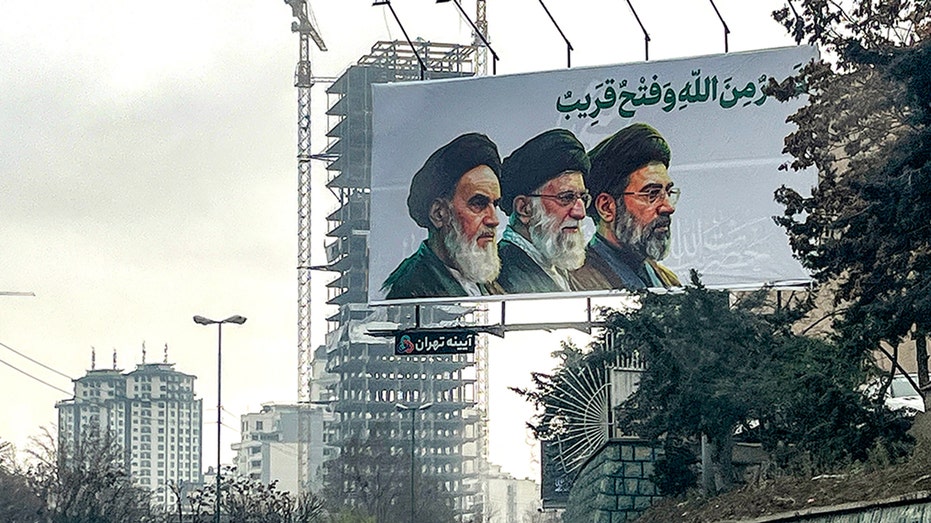
A new coalition of Iranian opposition groups in the restive southeastern provinces of Sistan and Baluchistan and Kerman in the Islamic Republic have launched a string of armed attacks against the clerical regime in the region.
The six strikes claimed by the coalition known as the People’s Fighters Front (JMM) have contributed to instability in the provinces, raising pressing questions about whether armed resistance against the clerical regime in Tehran will spread and if the regime can retain control over Sistan and Baluchistan, which is a majority Iranian Sunni province.
Iran is largely a Shiite Muslim country, and the minority Iranian Sunni population has faced discrimination over the decades. Sistan and Baluchistan is the second largest of the 31 Iranian provinces.
Mardo Soghom, an Iran expert who has written extensively about the Islamic Republic, told Fox News Digital, "The Sunni unrest can stretch the regime's military and internal security capabilities and have a psychological impact on its forces, in addition to what they experienced during the 40-day operation by the U.S. and Israel. The armed groups would not be able to establish control of the south-east, but they can seriously weaken the regime's control."
He added, "Whether these forces are receiving assistance from the Islamic Republic's adversaries — being that the Gulf Arab states or even Israel and the U.S. — remains an open question."
According to an October Human Rights Activist News Agency (HRANA) report, "The pace of violence accelerated significantly in recent weeks [in the provinces] with 18 incidents recorded in just the final 18 days of the reporting period, surpassing the total for any previous full month."
JMM coalesced as an opposition coalition in Dec. 2025 through an amalgam of Baloch nationalist organizations with the militant Sunni group Jaish al-Adl.
HRANA documented "at least 63 armed incidents were recorded across Iran’s southeastern provinces of Sistan and Baluchistan and Kerman between March 31 and Oct.10, 2026, amid a sharp escalation in armed violence in the region."
The armed resistance resulted in "at least 94 people dead and 33 injured, while official sources reported 87 fatalities and 10 injuries."
The Baloch coalition stunned the regime on Oct. 14 with the assassinations of women members of the Basij paramilitaries, including a commander and a police officer in Sistan and Baluchistan Province. The Basij has been designated a terrorist entity by the U.S. government because it falls under the American-classified terrorist movement Islamic Revolutionary Guard Corps (IRGC).
Just days before the attack on the female Basij commander, Iranian regime-controlled media reported that Nosrat Eftekhari, deputy for Cultural and Social Affairs of the Provincial Law Enforcement Command, was killed by a roadside bomb in Zahedan, Sistan and Baluchistan provinces.
Jason Brodsky, policy director at United Against Nuclear Iran (UANI), told Fox News Digital that "There have been periodic cycles of unrest in Sistan and Baluchistan Province over the years. What we are now witnessing is an uptick in such activity. The current commander of the IRGC’s Ground Forces, Mohammad Karami used to be governor of the province and commanded IRGC forces there. His experience in the province was one of the reasons Karami was elevated to the post in 2025 given the sensitive security situation in the country."
Brodsky continued that "I don’t see any imminent threat in terms of such a seizure of control, but a red line for Iranians, especially in the opposition, is preserving the territorial integrity of Iran. That needs to be understood in Western capitals."
Khalilullah Balochi, who is a Baluch activist and journalist, told Iran International that "The activities of these groups are not new; what is new is the intensification of attacks."
JMM’s devastating attacks targeting the brutal Iranian regime have generated attention from Iranian dissidents and experts.
Navid Mohebbi, who worked as a Persian media analyst for the State Department's Public Affairs Bureau, told Fox News Digital "The newly formed popular Fighters Front has carried out a series of relatively successful attacks against mid-level regime officials and security personnel in Sistan and Baluchistan province in recent months, drawing a degree of public attention. At a time when the regime is executing protesters on a daily basis, the killing of certain mid-ranking security and military operatives has been met with some satisfaction among segments of Iranian society."
He warned, however, that "Nevertheless, the Iranian public remains deeply cautious and largely distrustful of such groups. Two major concerns underpin this distrust: the possibility of separatist ambitions and the influence of radical Islamism, which is fundamentally at odds with the increasingly secular outlook of Iranian society."
Mohebbi sees encouraging signs from the JMM, including "the coalition’s recent statements, unlike the rhetoric traditionally associated with similar groups, contain no explicit references to Baluch separatism. Instead, the coalition has identified its primary objective as dismantling the system of Velayat-e Faqih (Guardianship of the Islamic Jurist) and liberating the country from its oppression. It has explicitly declared that it seeks ‘an Iran for all Iranians."’
He continued that "The reality is that these groups lack the capacity to confront the regime in conventional warfare. Through guerrilla operations, however, they can inflict significant psychological blows on the regime and its security establishment. Whether their activities can gain traction beyond Sistan and Baluchistan will depend largely on their ability to sustain what appears to be an effort to earn broader public trust."
Beni Sabti, an Iran expert at the Institute for National Security Studies (INSS) in Israel, told Fox News Digital the coalition has "a lot of guns" and created an "armed rebellion" against the Iranian regime in the provinces. He said, however, the armed upheaval is limited to the region Baluchistan.
Sabti, who was born in Tehran, said the clerical regime in the capital Tehran does not exercise solid control over the provinces, which resembles parts of South America where some governments lost sovereignty to militias.
He said that there are no reporters in the restive region. As a result, it is difficult to secure accurate news. Sabti said the "IRGC has a headquarters there to fight against these Baluchis." The JMM coalition "can only continue to harm the soldiers and, from time to time, kill a commander. There are a lot of these local commanders in Iran. It is not like an air force commander."
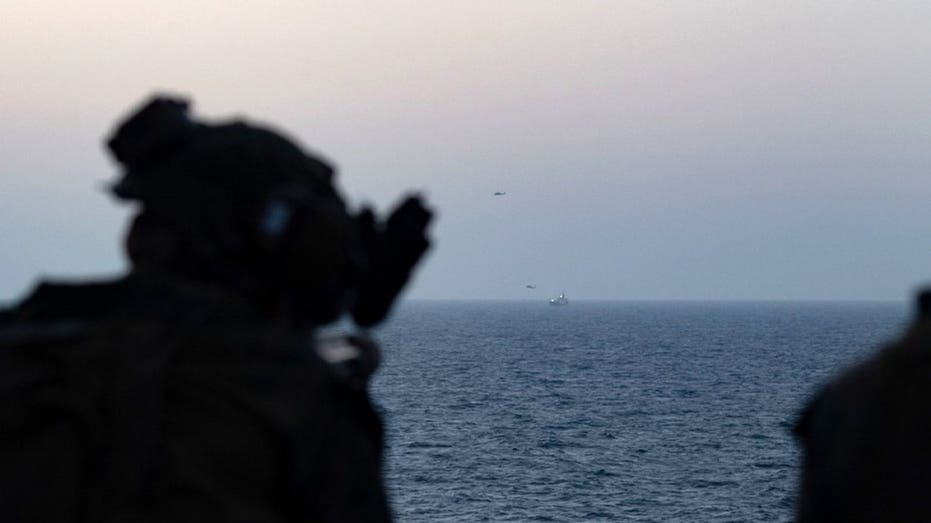
Thousands of sailors remain stranded near the Strait of Hormuz amid escalating attacks on commercial ships, the United Nations' top maritime official warned Sunday after Iran accused the U.S. military of using an international emergency radio channel to threaten civilian crews.
The warning also came amid reports that 24 ships had been attacked on the waterway over roughly two weeks, underscoring growing concerns about maritime safety in the region, according to Financial Times.
"The situation continues to be severe and critical when it comes to international shipping," International Maritime Organization (IMO) Secretary-General Arsenio Dominguez told Fox News Digital.
"There is a double blockade and too many vessels have been attacked, particularly in recent days.
"Seafarers have continued to perish in these attacks and around 6,000 seafarers remain trapped since the beginning of the conflict," he warned, adding that his message was not to transit the Strait of Hormuz or put seafarers at risk "until we have guarantees."
Dominguez's warning followed an Oct. 9 letter to the IMO in which Iran alleged that the U.S. military used VHF Channel 16, an internationally designated maritime distress and safety channel, to intimidate Iranian crews in the Persian Gulf.
"VHF Channel 16 has been repeatedly occupied for prolonged periods by the United States military forces operating in the Persian Gulf," the letter stated.
"During such transmissions, Iranian seafarers have been addressed in Persian with threatening, abusive and provocative language and in certain instances urged to abandon their vessels."
"The U.S. naval blockade has been in place for months and is professionally communicated to all international mariners," CENTCOM said.
"Vessels that refuse to comply with blockade enforcement receive multiple warnings, with ample opportunity to comply.
"American forces remain highly vigilant, focused and professional while fully enforcing the naval blockade against Iran."
Iran's complaint was submitted by Seyed Ali Mousavi and its ambassador to the IMO and circulated to member states on Oct. 9, according to a copy reviewed by Fox News Digital.
Tehran also accused American forces of turning the maritime safety channel into an "instrument of military intimidation and psychological pressure against civilian crews."
The letter cited commercial vessels, shipping companies and maritime operators but provided no recordings, transcripts or specific details of the alleged exchanges. Fox News Digital could not independently verify the accusations.
"Seafarers are not trained for combat, and they are not guilty of any conflicts that are happening around the world," Dominguez said.
"And we have seen this in several parts of the world where Channel 16, that should not be used for this kind of communication, starts receiving messages that may be perceived as actually threatening or that are outside the remit of why it was created."
Iran also asked the IMO to raise its allegations with member states and relevant international organizations, potentially including the International Telecommunication Union.
Dominguez said the IMO could review its regulations and procedures to determine whether stronger safeguards are needed, though he did not announce a formal investigation.
"Our role here at IMO is that when those situations take place, we will then look into any technical measures or any operational aspects that we may need to clarify further within our regulatory framework," he said, stressing that member states have equal rights to raise concerns, regardless of the conflict.
"We have a responsibility, and I have a duty as well, to circulate letters and notes that the countries actually put forward when they're also being affected."
"We take all that information, meet at the level of different meetings of the organization and have the discussions," Dominguez added.
"If it's demonstrated that we probably need to improve our rules in order to avoid communications issues, or that we need to enhance the knowledge of how these channels should be used, that is a role for us."
The IMO had recorded 100 confirmed maritime incidents across the region as of Oct. 9, with 24 seafarers killed since the conflict began Feb. 28. Dominguez also warned that fraudulent ship registrations and false flags have become major contributors to the danger.
"What we've also seen right now is an increase in fraudulent registries with false flags that are taking the risk and acting as shuttle tankers in order to bring goods in and out," he said. "That's one of the reasons that we're seeing an escalation.
"And it's the irresponsible shipowners that are taking the risk in order to actually be able to trade and move some of the goods and the cargoes."
"For me, any single case, any vessel that is attacked, any life of a seafarer that is lost, is a critical situation for me, because they are all relevant, they are all important."
Despite the confrontation, Dominguez said diplomatic channels with Iran remain open, though he has no direct contact with the Islamic Revolutionary Guard Corps.
"I have communications with all the member states of IMO, and that includes the Islamic Republic of Iran," he said.
"Of course, that's through the diplomatic channels. I don't have direct contact with the IRGC.
"I have conversations with them and they respond to my messages. You know, the information flows. What is difficult is to get final decisions because of the conflict that is ongoing."
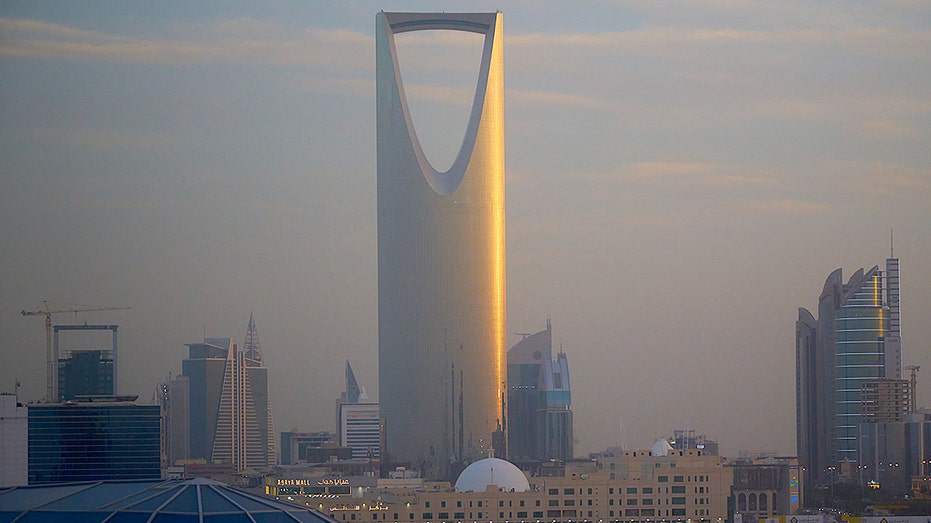
One of Saudi Arabia’s most iconic skyscrapers ordered office workers to stay home Sunday as escalating attacks by Iran-backed Houthi rebels rattled the capital of Riyadh amid fears of a widening Middle East conflict.
The move came after the Saudi-led coalition said it intercepted two drones in the Riyadh area, a third over the Eastern Province and two ballistic missiles in southern Saudi Arabia overnight, after authorities had earlier issued a threat alert in the capital, also shared on X.
Management at the 99-story Kingdom Centre, a landmark on Riyadh's skyline, ordered office employees to work remotely until further notice, according to reporting by Agence France-Presse (AFP).
The directive affects a building whose tenants include major international financial institutions such as Merrill Lynch, consulting giant McKinsey & Company and the International Monetary Fund.
"Please be advised that remote working arrangements are mandatory for all office employees at Kingdom Centre, effective immediately and until further notice," building management said in an email obtained by AFP.
Employees were instructed not to report back to their offices. The shopping mall at the base of the tower, however, remained open to the public.
Management did not specify a reason for the directive, but it came as repeated missile and drone attacks by Yemen's Houthis disrupted the Saudi capital.
The security concerns also follow a deadly Oct. 10 attack on King Khalid International Airport that killed 13 people and wounded more than 300 others.
As previously reported by Fox News Digital, another strike the following day killed one person and injured 11.
Airport operations have been severely disrupted, while schools in Riyadh have extended remote learning measures amid continued security threats.
The mounting crisis comes as Saudi Arabia's military reported two deaths in a helicopter crash near its southern border with Yemen.
Maj. Gen. Turki al-Maliki, spokesperson for the Saudi-led coalition, said Sunday that an AH-6i reconnaissance helicopter crashed in the Najran region because of a technical malfunction, killing both crew members.
Saudi civil defense authorities also reported Sunday that six people were injured when a hostile projectile struck a residential neighborhood in Najran, damaging three homes and three vehicles.
Meanwhile, Egypt moved toward potentially providing military assistance to Saudi Arabia as the kingdom confronts the growing Houthi threat.
Egyptian President Abdel Fattah el-Sissi requested an emergency parliamentary session to authorize defensive military support for Saudi Arabia if requested by Riyadh, Reuters reported.
Lawmakers were expected to continue discussions Monday.
The Egyptian presidency said Cairo was prepared to provide Saudi Arabia with necessary support to defend its security, stability, territorial integrity and Islamic holy sites.
The statement followed a meeting of Egypt's National Defense Council chaired by el-Sissi and attended by senior government and military officials.
Egyptian Foreign Minister Badr Abdelatty also spoke with Saudi Foreign Minister Prince Faisal bin Farhan about regional developments and the importance of de-escalation, according to a post on X.
The potential involvement of Egypt, which has one of the Arab world's largest militaries, could significantly expand the regional response to the Houthis.
The Iran-backed group now controls Yemen's capital, Sanaa, and much of the country's north.
Fighting with the Saudi-led coalition, which supports Yemen's internationally recognized government, has intensified amid the broader U.S.-Israeli conflict with Iran.
Canadian officials confirmed fatalities and injuries following a serious incident that sparked a major fire at one of the country's busiest military bases Saturday.
Canadian Defense Minister David McGuinty confirmed the incident at Canadian Forces Base Wainwright in Alberta, a major Army training installation.
He did not immediately specify how many people were killed or injured.
"I’m saddened to share that there have been both fatalities and injuries as a result of an incident on the base," McGuinty told reporters.
However, local officials said no evacuation orders had been issued.
Canadian Prime Minister Mark Carney addressed the incident in a post on X.
"A serious incident creating a major fire has occurred at CFB Wainwright, in Alberta," Carney wrote. "Our thoughts are with all the brave women and men affected."
Alberta Premier Danielle Smith described the incident in a post on X as a "significant and tragic fire" that affected military personnel at the base.
The Canadian Armed Forces, Royal Canadian Mounted Police (RCMP) and local emergency personnel were responding to the incident, according to the Canadian Broadcasting Corporation (CBC).
"The Canadian Armed Forces, the Department of National Defence, partners across the federal government, including public safety, are working with the government of Alberta and municipal governments to mobilize all necessary support," McGuinty said.
Canadian Forces Base Wainwright is located roughly 130 miles east of Edmonton and had approximately 1,310 military and civilian personnel stationed there in 2021, according to census figures cited by Reuters.
The nearby town of Wainwright has a population of approximately 6,600.
The "vast majority" of Iran's attempted attacks on shipping in the Strait of Hormuz are "unsuccessful" as the key waterway remains open for transit, U.S. Central Command spokesperson and U.S. Navy Capt. Tim Hawkins told Fox News Digital this week.
Hawkins spoke after CENTCOM said the GFS Pride, a Singapore-flagged, Cyprus-owned container ship was hit by an Iranian projectile in the Strait of Hormuz Wednesday and sunk while being towed ashore due to a fire on board the ship.
"The vast majority of Iran's attempted attacks on innocent civilian mariners transiting an international waterway, being the Strait of Hormuz, they are unsuccessful," Hawkins said.
"As a matter of fact, the U.S. military has assisted in providing coordinated protection for thousands of ships that have safely transited.
"That translates to about 97% of the ships that have sought to transit the Strait of Hormuz have done so successfully without being hit by an Iranian projectile.
"But let's be clear here. What the Islamic Revolutionary Guard Corps of Iran is doing is unjustified, and it's also unsuccessful because they are not achieving their objective of closing the Strait of Hormuz," he added.
"It is open, it is available for transit and we've seen that transit continue this very day."
In an update Friday from CENTCOM Commander Adm. Brad Cooper, he said, "In recent days and months, we have seen the IRGC continually attack merchant ships transiting the Strait of Hormuz, and, in many cases, kill innocent civilian mariners.
"The International Maritime Organization reports that more than 20 civilian mariners have been killed by Iran's attacks against commercial shipping since February," Cooper continued.
"Over the last seven days alone, about 400 merchant ships have sailed through the Strait. U.S. forces have also assisted Gulf partners in shipping over 100 million barrels of crude oil during the same period, adding to the more than 1.3 billion barrels of crude we have helped regional allies ship through the Strait in recent months."
Hawkins also told Fox News Digital he thinks "every American should be proud of American service members who are serving in the Middle East, in particular focusing on doing two things at once as it relates to Iran.
"And one is helping maintain flow through the Strait of Hormuz in the form of commercial vessels despite Iran's unjustified aggression," Hawkins said, noting that thousands of ships have crossed through the waterway over the last few months, "in addition to more than 1 billion barrels of crude oil.
"At the same time that they are encouraging traffic flow in support of international shipping, they are maintaining a steel wall blockade against Iran. There have been no exports or imports to Iran without U.S. permission in the form of allowing humanitarian ships to go through," Hawkins continued.
"So, that shows the precision, dedication and professionalism of our troops who are executing this complex mission — not just one — but two at the same time."
More than 50,000 U.S. service members are stationed across the Middle East, according to Hawkins.
"They are highly vigilant, they are highly dedicated and they're serving with courage and bravery. And they're doing so alongside our regional allies and partners. It shouldn't be forgotten that we continue to stand shoulder to shoulder with our Gulf allies and partners to help them defend their airspace from unjustified and unwarranted attacks from Iran, and we have been highly successful in working together. And will continue to do that," he said.

 Login