❌

Reading view

The Swamp King

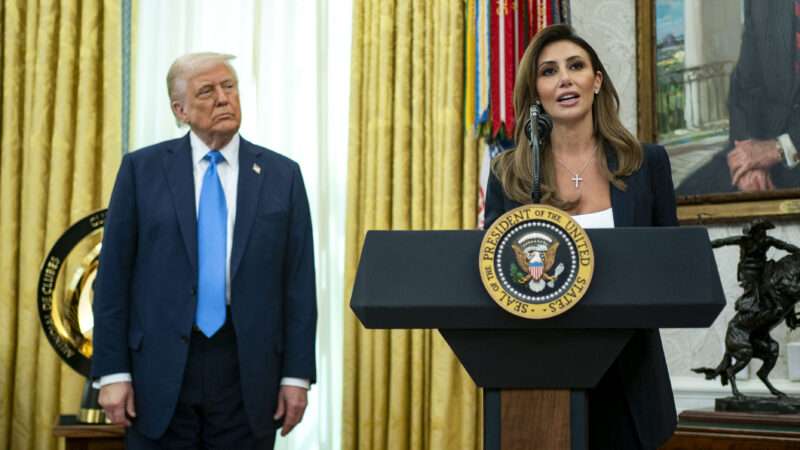
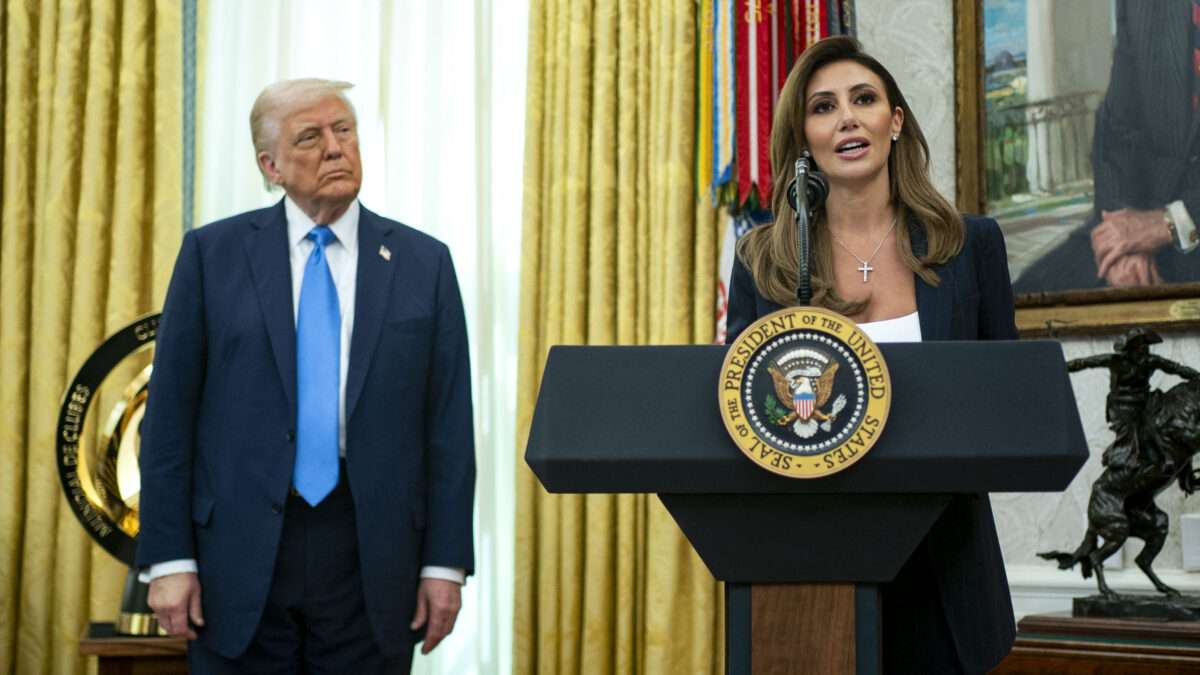
President Trump on the left and his former lawyer Alina Habba, on the right | Bonnie Cash - Pool via CNP / MEGA / Newscom/RSSIL/Newscom

An uncanny strength of the second Trump administration has been its ability to be involved in so many scandals that no single one seems to become a dominant story.

Take the most recent allegations about Alina Habba, Trump's former personal defense attorney, who recently landed a plush gig working for Julio Herrera Velutini, a Venezuelan banker. Habba will get $50 million over five years to do unspecified work for a company that barely exists, according to The New York Times, while Herrera got a presidential pardon for a 2025 campaign finance charge.

That's just a typical day for the current White House, where the mingling of personal and public business has become routine. Some days, the story is President Donald Trump trying to help himself to taxpayer funds by suing the government he runs, or shipping billions of taxpayer dollars to a foreign mining company partially owned by his sons. Other times, it is Trump selling political influence in the form of digital coins, or his appointees getting caught in naked pay-to-play schemes. If you have a hard time keeping track of it all, I get it. The corruption is so deep and wide that focusing on any singular item becomes difficult.

But that constellation of corruption might finally be breaking through to voters ahead of next month's midterm elections.

A recent Fox News poll found that "government corruption" was the top issue for voters, ranking ahead of inflation and gas prices. Conservative commentators are taking notice.

"What they're saying is, 'Look, we're tired of you getting rich and us getting poor,'" former White House Chief of Staff Mick Mulvaney said this week.

Tim Carney, senior columnist at the conservative Washington Examiner, also tabs the corruption issue—along with other "avoidable mistakes" such as the Iran War and tariffs—as one of the major reasons why Democrats are likely to win the midterms:

Trump and his family have enriched themselves in this second term in ways more similar to third-world regimes or Cook County than to any previous administration. He and his family operate a financial company that has received heavy investments from Qatar's government. He's sold access to himself by selling otherwise worthless cryptocurrency. The IRS he controls settled a lawsuit with him, promising to pay him $1.8 billion (this settlement was voided by a judge).

Trump is not directly on the ballot next month, of course. And most voters might not be able to tell you the details of any single Trump scandal in detail. Even so, this may turn out to be the defining narrative of the second Trump administration, and there seems to be a growing consensus that Republicans have allowed (if not aided and abetted) his corrupt behavior, so it's time to give Democrats a shot at reining it in.

The Trump corruption issue is like the Biden cognitive decline issue in one key sense: Everyone around the president or even supporting him professionally from afar should be asked about it, and their lies/claims of ignorance should be hung around their necks like dumbbells.

— Matt Welch (@MattWelch) October 20, 2026

Vice President J.D. Vance told journalist Mark Halperin this week that he's "never seen any evidence that anybody's selling access to the president." When Halperin pushed back, Vance doubled down: "What I would say is I don't think there's evidence that the Trump family has become enriched by politics," the vice president said.

So either Vance isn't paying attention, or he's deliberately misleading. "Credit to Vance, it's as good an argument as is available to him," writes Daniel Foster at National Review. "The bad news is it's still not very good."


The internet nearly crashed on Wednesday as digital security and website administrators scrambled to patch two vulnerabilities in the PHP programming language that serves as the basis for many websites.

"Since its development in the 1990s, PHP has evolved into an essential scripting language for web development and is used across vast swaths of the internet in websites and software," explains Wired. "Everything from publishing systems like WordPress and Drupal to e-commerce platforms like Adobe's Magento are built on PHP."

Amid fears that hackers and AI agents could exploit the security weakness, many websites were taken offline. The National Security Agency and its counterparts in the United Kingdom and the European Union sounded the alarm. Even the prime minister of Japan, Sanae Takaichi, was telling website administrators to take the issue seriously.

The potential hacking abilities of advanced AI agents make these sorts of security risks more serious. In this case, however, the problem was also identified with the help of AI.

"Ryan Austin, a researcher at Calif, uncovered the flaws with help from GPT-5.6 Sol, one of OpenAI's most advanced models, during an audit of PHP's source code in August," The Wall Street Journal reports. Another security researcher had flagged the issue years ago, but it had never been fixed because it was considered "considered too difficult to exploit" by human hackers.

This is the future of humanity's digital landscape. "Given the severity of these flaws and PHP's widespread use, we consider this one of the most impactful security issues in recent memory," OpenAI said in a statement on Wednesday. "It highlights how AI can uncover security flaws with internet-scale impact, but the same capabilities can also help attackers rapidly develop offensive tools and exploits."

(A shoutout to Reason's web development team for keeping us up and running, today and every day.)


"Fanciful fiction." Media outlets also continue to face decidedly nondigital threats over articles and polls that make the president unhappy.

The White House threatened Politico on Wednesday with unspecified "consequences" for publishing "fanciful fiction" in a series of articles earlier this month about White House Chief of Staff Susie Wiles. If the articles are not retracted, it would trigger "an immediate review of Politico's relationship with the White House, and, of course, consideration of all other appropriate and available legal remedies," wrote White House counsel William O. Scharf in a letter to the media outlet's publisher.

Meanwhile, FCC Chairman Brendan Carr issued vague threats to broadcasters who cover what Carr called "Fake Polls" intended to "alter the normal patterns of voter turnout and enthusiasm."

These sorts of threats are an affront to the First Amendment, of course. But they are downstream of a more significant issue: the very existence of the FCC.

It's a problem, obviously, that the FCC is run by an authoritarian jackass. But the bigger problem is that the agency contains so many tempting tools for an authoritarian jackass to wield. https://t.co/Q4IJXntkOy

— Jesse Walker (@notjessewalker) October 21, 2026


QUICK HITS

  • A judge in New Mexico ordered social media giant Meta (which owns Facebook and Instagram, among other things) to pay $25 billion for misleading users about data privacy. Last month, a jury found that Meta had violated the state's consumer protection laws 43 million times.
  • Officials are trying to pin the blame on Elon Musk for a Starlink slowdown that limited the effectiveness of Ukrainian missile defenses. Musk says the decision was made by the U.S. military and Trump.
  • Peter Thiel joins the majority of Americans in thinking that Trump's Iran War was a mistake. Even so, the U.S. and Israel are reportedly planning another round of attacks after the election.
  • The environmental studies for California's high-speed rail line include such absurdities as counting bumblebees "one by one" and considering the train's "acoustic impacts on waterfowl and shorebirds." That's how to spend 16 years and $15 billion building nearly nothing.
  • Obvious metaphor alert!

A group dispatched by Hegseth's team in February attempted to move the historic globe, said to be used by Eisenhower during World War II.

They lifted it from its home in an Army office in the Pentagon … and dropped it. pic.twitter.com/vTjWdYXn0k

— Dan Lamothe (@DanLamothe) October 22, 2026

The post The Swamp King appeared first on Reason Magazine.
  •  

Anti-Transgenderism/Anti-Homosexuality Activist Ordered to Stop Talking About Local Therapist/Pride Activist

From Butler v. Lipscy, decided Monday by Minnesota Court of Appeals Judge Keala Ede, joined by Judges Diane Bratvold and Jon Schmidt:

Butler alleged that Lipscy engaged in acts of harassment targeting Butler and her children, including: following, monitoring, or pursuing Butler; making unwanted visits to Butler; frightening Butler with threatening behavior; taking pictures of Butler without permission; and using social media to harass Butler….

The facts, according to the appellate court's summary of the trial court findings, were this:

At the time the district court issued the HRO, Butler was a licensed marriage and family therapist who served "historically marginalized communities." This included members of "the Queer community," which Butler defined as "the Two Spirit (2S)/Gay/Lesbian/Bisexual/Transgender/Intersex/etc. community as a whole and individually." Butler was also "active in her local Itasca Pride board and community as a volunteer and current board member." She has three children, one of whom is "non-binary."

Lipscy held "Christian beliefs" that she posted about on the internet. And Lipscy administered a webpage called "Grand Rapids Rant."

Itasca Pride held a festival on June 23, 2024. Before that event, Lipscy posted on the internet about a public gathering called, "Protect the children from Pride/Drag show and Walk with Prayer," which Lipscy scheduled for the same date, time, and location as the Itasca Pride Festival. Before the events occurred, Lipscy wrote on the internet: "But if you cause one of these who trust in me to fall into sin, it would be better for you to have a large millstone tied around your neck and drowned in the depths of the sea. #BeTheirVoice Matthew 18:6." Lipscy also used the internet to encourage people to attend and to wear white shirts in opposition to Itasca Pride and in celebration of "traditional family values." At the June 23 Itasca Pride event, Lipscy took pictures of Butler's children, and Butler's husband told Lipscy to stop.

On September 28, Lipscy posted images from an Itasca Pride webpage on her Grand Rapids Rant internet site, with her own captions. These images included Butler's children with captions such as "Sickening," "Poor children," and "Those poor poor kids." Lipscy also identified Butler by name, listed Butler's title as "local therapist"—which "insinuate[ed] … [that] Butler was not a real therapist"—and referred to an event coordinated by the Minnesota Department of Natural Resources and Itasca Pride as having "influence over … children."

On October 20, Lipscy attended an event led by a school-board candidate who was advocating for a prohibition on transgender females in female sports. Lipscy broadcast the event on her Grand Rapids Rant webpage, identified Butler's husband, and described him as "pushing for boys to be in girls' bathrooms and supporting bringing kids to drag events." More specifically, Lipscy stated that Butler's husband "wasn't truly interested [on the day of the event] …, he just wanted to report back. Silly boy, [he] could've just watched live with [Butler]." In addition, "Butler's children attend the same school as … Lipscy's niece," and "Lipscy ha[d] been at the school since the above-described incidents … occurred."

Butler was "generally fearful for the safety of herself and children following the incidents involving … Lipscy." She "installed [four] cameras on her property and [two] cameras on her vehicle," "spent sessions with her clients discussing concerns the clients ha[d] about their safety given … Lipscy's social media posts referring to … Butler," "removed signage from her office, met with clients in a place other than her office, and met via tele-health to address concerns about client safety."

Her children became "afraid to go out in public without a parent and [had] an increased fear when out in the community." One of Butler's children "changed the way they dress[ed] because they [did] not want to get physically or emotionally hurt." Butler's children were "fearful that their photos [would] be put online to shame their family," "ask[ed] in public if they [were] safe," and "question[ed] whether people around them [were] 'people that hate Queer people.'"

The court issued a harassment restraining order that provided, in relevant part, that Lipscy

  • "shall not harass … [Butler] or her minor children included in the Petition";
  • "shall have no direct or indirect contact with … [Butler] or her minor children including any visits, phone calls, contact via electronic means such as email or social networking sites, threats or assaultive behavior to the protected persons, damaging or stealing property belonging to the protected persons, breaking into and entering the protected persons' residence, and/or taking pictures of the protected persons without permission from … [Butler]";
  • "is prohibited from being within 500 feet of … [Butler's] home" or "job site"; …
  • "is restrained from harassing, stalking, or threatening the protected persons, or engaging in other conduct that would place the protected persons in reasonable fear of bodily injury to that person"; and "is prohibited from the use, attempted use, or threatened use of physical force against the protected persons that would reasonably be expected to cause bodily injury."

Given that the court had found that Lipscy's social media posts referring to Butler were "harassment," and then restrained Lipscy from "harassing" Butler, the order thus forbade Lipscy from continuing to mention Butler. And indeed the appellate court acknowledged this, stating (emphases added) that the HRO

  • "allows Lipscy to express her religious views, provided that she does not mention Butler and her children and does not approach Butler, her home, and her workplace," and
  • "merely prohibits [Lipscy] from directing harassing conduct toward Butler and her children—such as photographing them, repeatedly naming them, and targeting them."

The appellate court upheld the order, reasoning that Lipscy's actions could indeed be found to be harassment, defined by the Minnesota HRO statute as "repeated incidents of intrusive or unwanted acts, words, or gestures that have a substantial adverse effect or are intended to have a substantial adverse effect on the safety, security, or privacy of another":

The district court determined that Lipscy "engaged in harassment," reasoning that Lipscy had: followed, monitored, or pursued Butler and her children; frightened Butler and her children; taken pictures of Butler's children without permission; and used social media to harass Butler on multiple occasions. In making this determination, the district court relied on evidence in the record that Lipscy had reposted pictures of Butler's children from the Itasca Pride webpage to the Grand Rapids Rant internet site with her own captions including: "Sickening," "Poor children," and "Those poor poor kids."

The district court also based its decision on evidence that Lipscy had reposted pictures from the Itasca Pride event while referring to Butler in a manner that questioned Butler's credentials as a therapist and had shared a video of Butler's husband while referring to Butler by name. And the district court made specific findings about how Butler was "generally fearful for the safety of herself and children following the incidents involving … Lipscy." …

And the court held that this doesn't violate Lipscy's free speech or religious freedom rights, because it is directed only at "speech or conduct that … is in violation of one's right to privacy," which Minnesota courts had held is constitutionally unprotected.

I think such an injunction is unconstitutional, at least as to the prohibition on repeatedly naming Butler in posts; for more on such orders, and the appellate decisions that mostly set them aside, see my Overbroad Injunctions Against Speech (Especially in Libel and Harassment and Cases) article. And while I'm sympathetic to the argument that adults should keep the children out of this, I'm not sure it's constitutional even as to that. But in any event, the Minnesota Court of Appeals thought the injunction was permissible, and I thought it worthwhile to note that.

Sara Jane Baldwin (Gender Justice) represents plaintiff.

The post Anti-Transgenderism/Anti-Homosexuality Activist Ordered to Stop Talking About Local Therapist/Pride Activist appeared first on Reason Magazine.
  •  

European Regimes Renew Their Attacks on Free Speech

by Ryan McMaken, Lew Rockwell: I recent weeks, German and French politicians have denounced free speech, and especially the concept of “freedom of speech” as long envisioned in the libertarian tradition of natural rights. French President Emmanuel Macron on September 29 stated that ”The so-called American ‘free speech’ today, which some people have promoted, is the […]
  •  

Elissa Slotkin and Kara Swisher Want Democrats To Go After MAGA if They Win

Robby Soave and Amber Duke discuss Elissa Slotkin | Illustration: Adani Samat

In this segment of Free Media, Reason Senior Editor Robby Soave and Daily Caller Editor in Chief Amber Duke discuss worrisome remarks from Sen. Elissa Slotkin (D-MI) and journalist Kara Swisher, suggesting retribution for those in the Trump Administration if and when Democrats regain control of Congress.

If you enjoy Free Media, come watch Robby debate at our upcoming Reason Versus in D.C. Tickets are available here. 

The post Elissa Slotkin and Kara Swisher Want Democrats To Go After MAGA if They Win appeared first on Reason Magazine.
  •  

COVID Vaccine Skeptic Alex Berenson's Lawsuit over Termination of His Twitter Account Thrown Out

From Berenson v. Gottlieb, decided yesterday by Judges Pierre Leval, Richard Wesley, and Joseph Bianco:

Plaintiff-Appellant Alex Berenson … is an independent journalist and author of a book about the COVID-19 pandemic. Berenson was an active Twitter user during the COVID-19 pandemic, posting about, inter alia, "the public policy response to COVID-19 and the vaccines." See also Appellant's Brief (describing Berenson as "a vocal critic of the public policy response to COVID-19, questioning the underlying evidentiary basis for business and school closures"). Berenson's Twitter follower count rose from approximately 7,000 in January 2020 to more than 229,000 by March 2021. Berenson alleges the existence of a conspiracy by the Biden Administration and Pfizer executives "to pressure Twitter to suspend [his] account and mute his voice as a leading COVID-19 vaccine skeptic." …

In May 2020, Twitter announced that it may append labels or warning messages to tweets related to COVID-19 misinformation. Berenson tweeted that he was "concern[ed] about what the new rules might mean for free speech on [Twitter]." In response, Twitter's Vice President of Global Communications Brandon Borrman contacted Berenson to discuss the new policy.

In December 2020, Twitter announced a new policy with respect to COVID-19 vaccine misinformation, stating that it would start to "remove Tweets which advance harmful or misleading narratives about COVID-19 vaccinations." Berenson contacted Borrman, "looking for assurances that Twitter would continue to allow his reporting on COVID-19 vaccines." Borrman allegedly responded that the "points [Berenson was] raising should not be an issue at all," and that Berenson should reach out if he "r[an] into any issues."

On March 1, 2021, Twitter announced a "five-strike policy" to combat COVID-19 misinformation. Accounts that received strikes were subject to increasing levels of discipline: the first strike resulted in a warning, the second and third strikes each in a 12-hour account lock, the fourth strike in a 7-day account lock, and the fifth or successive strike in permanent suspension. The policy provided that, if a user "believe[s] that [their] account was locked or suspended in error, [the user] can submit an appeal."

The next day, Berenson spoke with Borrman, who allegedly reported that "[Berenson's] name has never come up in the discussions around these policies," and that Borrman would "try to ensure [that Berenson would be] given a heads up before an action is taken, but [that Borrman was] not always made aware of them before they're executed."

Berenson alleges that members of the Biden Administration, [Pfizer Board of Directors member and former FDA Commissioner  Scott] Gottlieb, and [Chief Executive Officer of Pfizer Albert] Bourla repeatedly pressured Twitter to suspend his account, citing tweets that Twitter executives, including CEO Jack Dorsey and general counsel Vijaya Gadde, did not believe constituted violations of Twitter's five-strike policy. Berenson received strikes from Twitter in March, July, and August 2021. His Twitter account was permanently suspended with the fifth strike on August 28, 2021.

Berenson sued, but the court rejected his federal civil rights conspiracy claim under 42 U.S.C. § 1985 claim:

[Section] 1985(3) imposes liability on "two or more persons … [who] conspire … for the purpose of depriving, either directly or indirectly, any person or class of persons of the equal protection of the laws, or of equal privileges and immunities under the laws." A plaintiff must "show that some racial, or perhaps otherwise class-based, invidiously discriminatory animus [lay] behind the conspirators' action." The Supreme Court has cautioned that Section 1985(3) should not be "interpreted as providing a federal remedy for 'all tortious, conspiratorial interferences with the rights of others.'" …

The Supreme Court has explained that the term "class":

unquestionably connotes something more than a group of individuals who share a desire to engage in conduct that the [Section] 1985(3) defendant disfavors. Otherwise, innumerable tort plaintiffs would be able to assert causes of action under [Section] 1985(3) by simply defining the aggrieved class as those seeking to engage in the activity the defendant has interfered with. This definitional ploy would convert the statute into the "general federal tort law" it was the very purpose of the animus requirement to avoid.

Bray v. Alexandria Women's Health Clinic (1993). Religious, gender, and racial discrimination "certainly fulfill[ ] the 'class-based animus' requirement of [Section] 1985(3)." In Keating v. Carey (2d Cir. 1983), we held that political parties are also protected groups under Section 1985(3). More recently, however, we have noted that, "after our decision in Keating, the Supreme Court [in United Brotherhood of Carpenters & Joiners of America, Local 610 v. Scott (1983),] suggested that the scope of [S]ection 1985 might not extend to include discrimination against political groups except where that discrimination was based on racial animus." In any event, apart from political parties, we have made clear that protected classes under Section 1985(3) need to possess "the type of inherited or immutable characteristics sufficient to satisfy the class-based animus requirement."

Here, Berenson asserts that the relevant class here is a "class of Americans who had chosen not to receive a COVID-19 vaccine, a class of which [ ] Berenson is apart [sic]." See also id. (describing the class as "Americans who either had questions about the [COVID-19] vaccine or did not want to be forced to take a shot"). The district court correctly held that Berenson's proposed class does not constitute a class for Section 1985(3) purposes. Instead, this is precisely the kind of class that the Supreme Court cautioned against in Bray—a class composed of individuals who share a desire to engage in conduct, i.e., to forgo COVID-19 vaccination, that the defendants allegedly disfavor. To the extent Berenson suggests that the class falls within the ambit of Section 1985 because it "includes a disproportionate number of African-Americans, political conservatives, and evangelical Christians," we are unpersuaded. Even if the composition of the alleged class is accepted as true, we have held that "plaintiffs cannot proceed under a disparate impact theory of liability in … claims brought pursuant to [Section 1985]."

The district court also correctly determined in the alternative that, assuming arguendo that persons not vaccinated against COVID-19 constituted a protected category, Berenson did not sufficiently allege "that the defendants acted with class-based, invidiously discriminatory animus." … In Gleason v. McBride (2d Cir. 1989), we affirmed the dismissal of a Section 1985 claim because the plaintiff "[did] not claim discrimination based on his political party affiliation," but rather "alleged only that he was discriminated against because he was a political opponent of the defendants and was extremely vocal in his opposition to [them]."

Here, Berenson alleges that he was "a highly visible obstacle to [the Biden Administration's] efforts," and that "the White House had targeted [him] specifically" as "ground zero for COVID-19 misinformation." Indeed, the FAC is replete with allegations that Berenson, and not a general class of unvaccinated Americans, was specifically targeted. The FAC also indicates that Berenson was a vocal critic of the Biden Administration. Thus, as in Gleason, Berenson's Section 1985 claim must be dismissed because he failed to plausibly allege "that the defendants acted with class-based, invidiously discriminatory animus."

And the court also rejected Berenson's tortious interference with contract claim:

Under New York law, a claim for tortious interference requires "(1) the existence of a valid contract between the plaintiff and a third party; (2) the defendant's knowledge of that contract; (3) the defendant's intentional procurement of the third-party's breach of the contract without justification; (4) actual breach of the contract; and (5) damages resulting therefrom." A claim for tortious interference will not lie if the plaintiff fails to plead an actual breach of the contract.

Here, there was a valid contract between Berenson and Twitter, i.e., Twitter's Terms of Service, which provides that Twitter "may suspend or terminate [a user's] account or cease providing [the user] with all or part of the [contractually defined] Services at any time for any or no reason." Berenson argues that the Terms of Service were modified by Twitter's five-strike policy and by Borrman's "assurances to [Berenson] regarding his posts pursuant to [the five-strike] policy." … [But] neither the five-strike policy nor Borrman's statements to Berenson modified the Terms of Service….

The relevant provision of the Terms of Service is located in the section entitled "Ending These Terms," and provides the means by which a user may terminate the agreement, i.e., "by deactivating [a user's] accounts and discontinuing [a user's] use of [Twitter's] Services," and the circumstances under which Twitter

may suspend or terminate [a user's] account … at any time for any or no reason, including, but not limited to, if [Twitter] reasonably believe[s]: (i) you have violated these Terms or the Twitter Rules and Policies or Periscope Community Guidelines, (ii) you create risk or possible legal exposure for us; (iii) your account should be removed due to unlawful conduct[;] (iv) your account should be removed due to prolonged inactivity; or (v) our provision of the Services to you is no longer commercially viable.

The five-strike policy is clearly among the "Rules and Policies" that the Terms of Service contemplates. However, the provision makes clear that suspension or termination of an account is not limited to violations of that policy; rather, as noted above, such suspension or termination could be "at any time for any or no reason." …

We reach the same conclusion with respect to Borrman's alleged remarks, which are too vague to modify the Terms of Service. The alleged remarks are: (1) "I think you have some nuanced points that could be helpful as [sic] try to move ahead" and "[w]e're trying to make sure that factual debate finds a way through the emotion, but we're obviously not successful all the time"; (2) "The points you're raising should not be an issue at all…. The policy is designed to allow debate and discussion, but to discourage conspiracy theories, etc. Please let me know if you run into any issues"; and (3) "I will say that your name has never come up in the discussions around these policies…. If it does I will try to ensure you're given a heads up before an action is taken, but I am not always made aware of them before they're executed. If something happens, please let me know," Collectively, even drawing all inferences in Berenson's favor, these remarks suggest at most that Borrman would attempt to notify Berenson of action taken against him—not that no action would be taken against Berenson or that Berenson would necessarily receive advance notice of any action.

At bottom, Twitter's Terms of Service provided that Twitter could suspend Berenson for "any or no reason," and it did so. There was no modification of that contract and Berenson has failed to allege an actual breach of contract. Therefore, the district court correctly determined that Berenson failed to state a tortious interference claim.

{Before the district court and now on appeal, Berenson relies heavily on Berenson v. Twitter, Inc (N.D. Cal. 2022), a decision in a case Berenson initiated against Twitter in December 2021. There, the district court granted in part and denied in part Twitter's motion to dismiss, holding that the five-strike policy and Borrman's "specific and direct assurances to [Berenson] regarding his posts pursuant to that policy" "amount[ed] to a modification of the [Terms of Service]" and that Berenson had plausibly alleged that "Twitter's conduct … modified its contract with [him] and then breached that contract by failing to abide by its own five-strike policy and its specific commitments set forth through [Borrman]." Id. at (emphasis in original). We find that analysis unpersuasive for the reasons stated above.}

The analysis seems correct to me.

James P. Rouhandeh, Michael S. Scheinkman, David B. Toscano, and Luca Marzorati (Davis Polk & Wardwell LLP) represent defendants.

The post COVID Vaccine Skeptic Alex Berenson's Lawsuit over Termination of His Twitter Account Thrown Out appeared first on Reason Magazine.
  •  

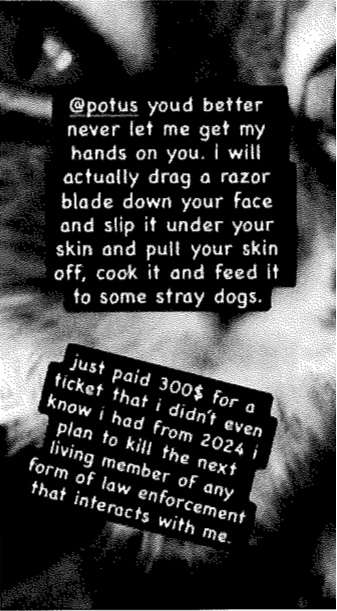
Prosecution for Threatening to Cut President's Face Off and Feed It to Stray Dogs Can Go to Jury

U.S. v. Santiago, decided Monday by Judge Chad Meredith (E.D. Ky.), involves this Instagram post:

Santiago is being prosecuted for making threatening interstate communications, in two counts, "one regarding the threat to the President, and one regarding the threat to law enforcement officers." The court allowed the prosecution to go forward:

[T]he question of whether Santiago's speech was a "true threat" or political hyperbole is one that must be determined by a jury, not the Court.

Of course, "courts retain the power to remove a true-threat question from the jury's consideration … if the evidence shows that the speech was protected as a matter of law." But the implication to be drawn from the evidence here is disputed and it is not so clear-cut that the Court can decide it as a matter of law. A reasonable jury could find Santiago's statements to be true threats, and so the matter must be presented to a jury. The First Amendment does not say otherwise because it does not even apply if a jury concludes that the statements were true threats….

For most context, see the FBI agent's affidavit accompanying the criminal complaint; an excerpt:

Between January 27, 2026, and March 27, 2026, kadi_skating [allegedly one of Santiago's user ids] sent the following messages to an unidentified user: …

• kadi_skating: "im filled with political violence now." [January 8, 2026]….

• kadi_skating: "death to trump." [March 2, 2026]

• kadi_skating: "death to the American nazi regime." [March 2, 2026].

• kadi_skating: "and the american people NEED to start shooting at the necks, legs, and arms of ICE agents." [March 2, 2026]

• kadi_skatlng: "STUFF A GRENADE IN THEIR AHH AND BLOW IT UP." [March 2, 2026]

• kadi_skating: "LETS GOOOO no one is spared all of ice is going to die by my hands [March 2, 2026]

• kadi_skating: "I wanna kill n*zis bad." [March 23, 2026]

Emily K. Greenfield and James T. Chapman represent the federal government.

The post Prosecution for Threatening to Cut President's Face Off and Feed It to Stray Dogs Can Go to Jury appeared first on Reason Magazine.
  •  

A Free Speech Group at Columbia Canceled an Event About Free Speech Over 'Cornell 7' Article Controversy

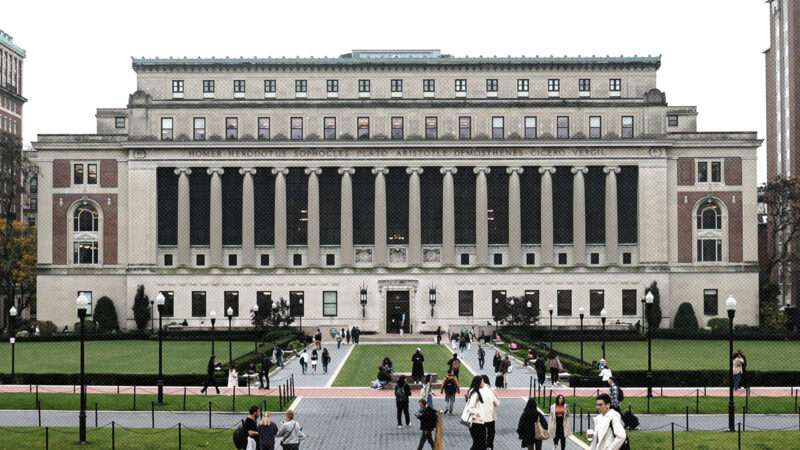
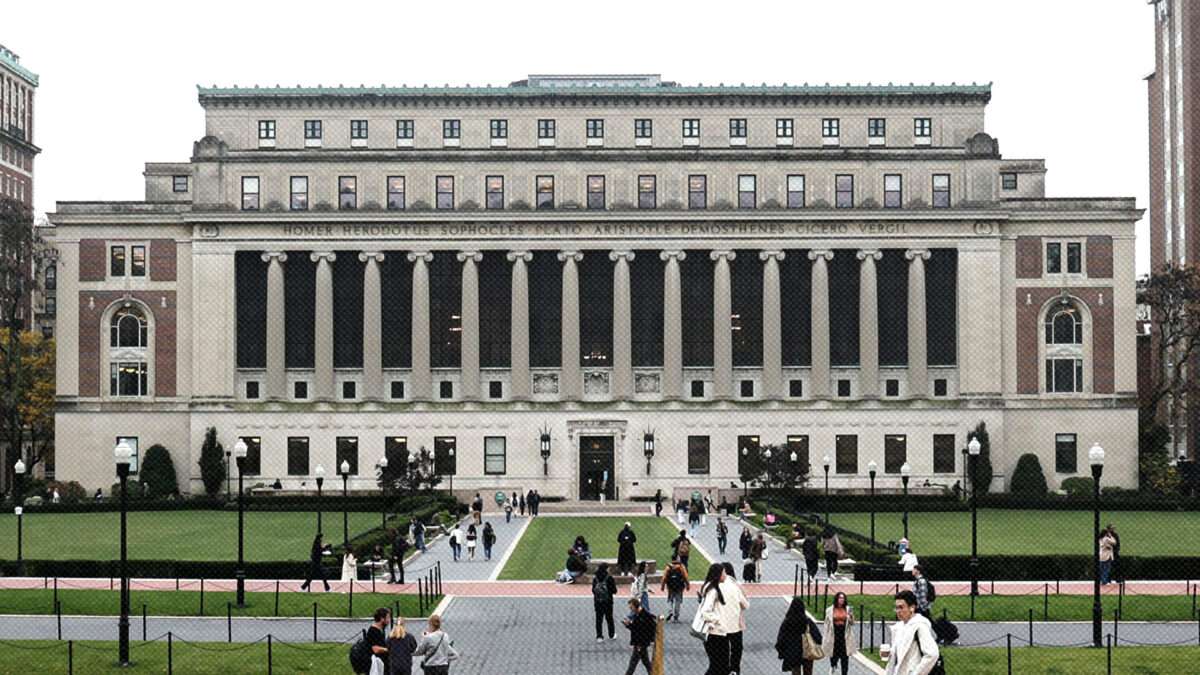
Campus building at Columbia | Luiz C. Ribeiro/TNS/Newscom

Questioning the prevailing narrative about the "Cornell seven" case is bound to create controversy. And at Columbia University, two student journalists drew condemnation for their views on the case from the unlikeliest of places: a college free speech group. 

On October 13, Barnard junior Christina Ma and Columbia junior Nikos Mohammadi published an article called "The 'Cornell Seven' Is Really About Liberalism" in the Columbia Sundial, an independent student publication. The piece argued that the discourse surrounding the alleged rape at Cornell University infantilizes women by omitting the possibility that in a post–sexual revolution, liberal society, women may make regrettable but consensual choices.

"In the world that, for better or worse, follows from it, we cannot claim to stand for sexual freedom and then recoil in disgust when there's a possibility that a young woman simply chose to exercise it," Mohammadi and Ma wrote. 

The piece also argues that the "collective frenzy" over the Cornell case has created a climate on campus that makes it "difficult to disagree with the maximalist position on what happened" the night of the alleged rape.

As Mohammadi wrote in UnHerd, the piece caused immense backlash. He said he received an onslaught of messages urging him to commit suicide and demanding that his "career and life be destroyed." But the criticism went beyond threatening DMs and comments. 

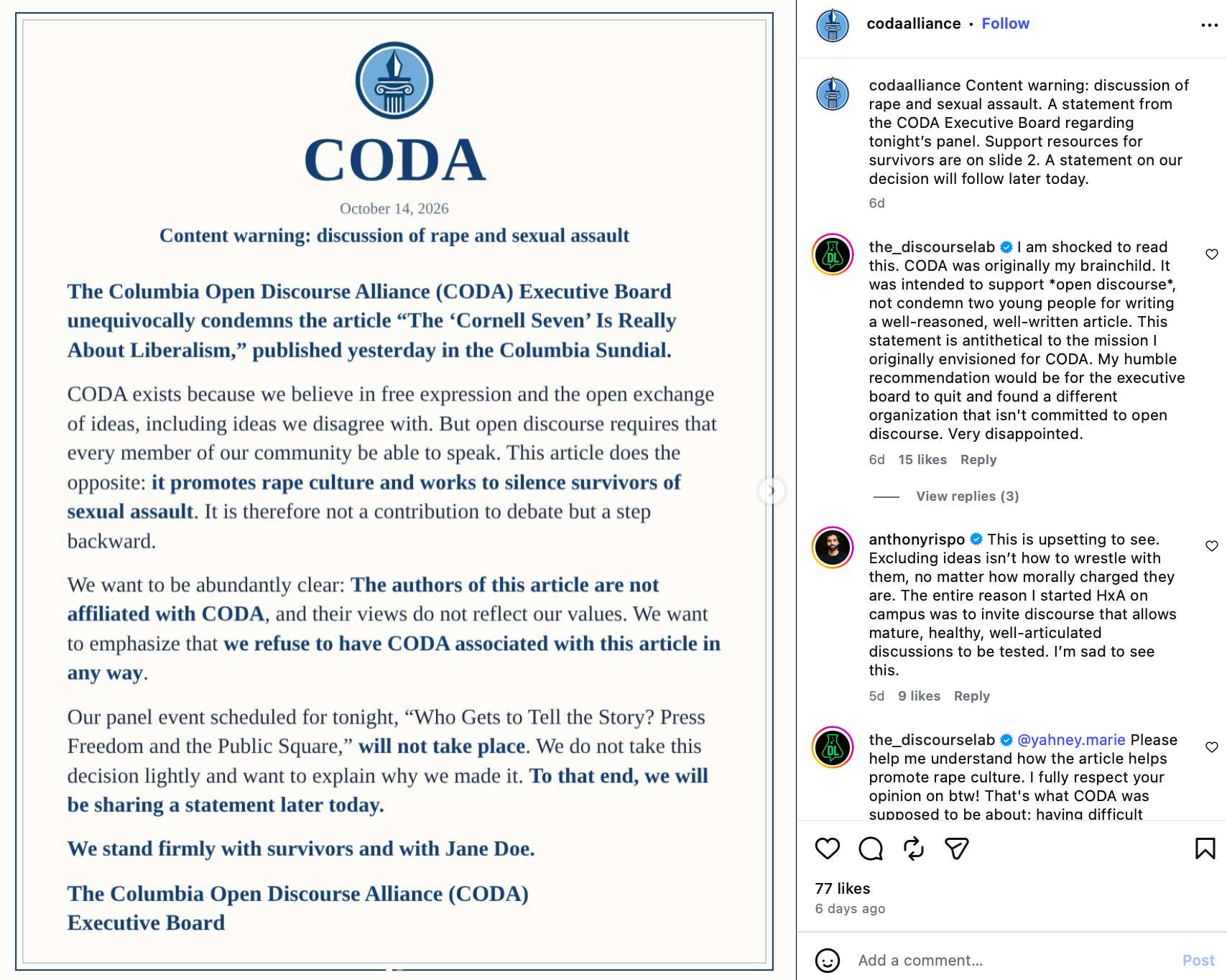
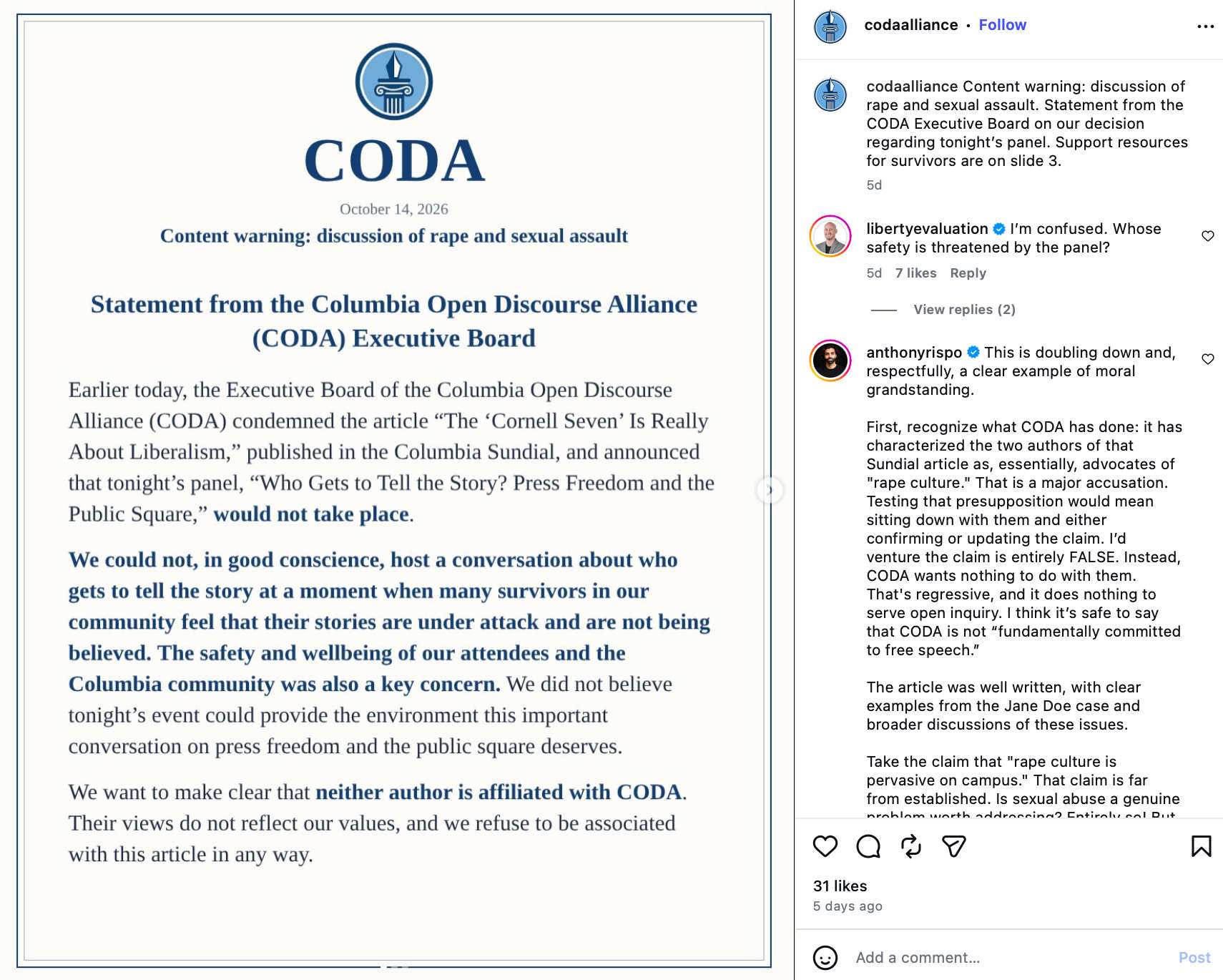
The day after the article's publication, the Columbia Open Discourse Alliance (CODA) canceled an event about press freedom because the Sundial's editor in chief, Nick Baum, had been slated to speak at the event. Although Baum did not author the piece, CODA wrote in an Instagram post that the free speech group "refused" to be affiliated with the Sundial's article "in any way." 

CODA also claimed that the event, ironically called "Who Gets to Tell the Story? Press Freedom and the Public Square," could not take place at a time when "many survivors in our community feel that their stories are under attack and are not being believed."

The group added that the Sundial's article "promotes rape culture and works to silence survivors of sexual assault." 

The group's president, Aum Desai, told Columbia's student newspaper, the Columbia Daily Spectator, that the group canceled the event "not in spite of, but because of [CODA's] commitment to free expression." 

Columbia graduate Clayton Smith, who founded CODA in 2025, quickly commented that he was "shocked" by CODA's statements on Instagram. Smith started the organization to create a central hub for groups hosting events promoting free speech and open discourse, including the Sundial and Columbia's Heterodox Academy chapter.

He tells Reason that CODA's rationale for canceling the event was "ironic" and "hypocritical," and he believes the group should have collaborated with the Sundial if there were legitimate safety concerns at the event. He says he was particularly disturbed by the group's condemnation of the article and CODA's claim that it promotes "rape culture."

"They don't argue or explain how it works to silence survivors of sexual assault. It is a baseless slander that they use to condemn the article because it promoted an opinion they do not like," Smith says. 

Smith says he spoke to Desai on the phone after CODA posted the statements, and Desai tried to reassure him that CODA would uphold the principle of free speech. But Smith says he did not leave the phone call feeling "very confident at all" in Desai's commitment. 

Desai did not respond to Reason's requests for comment.

CODA faculty adviser and Columbia Business School professor emeritus Eli Noam was traveling in China during the fallout from the Sundial article and was not involved in CODA's decision.

After speaking with members of both CODA and the Sundial, Noam tells Reason that he thinks CODA "made some proper decisions, some correct decisions, and some mistakes."

"I think we're dealing here with…a group of college students who kind of were confronted with a crisis at 2 a.m.," Noam says. "And kind of [made] some judgments that they now regret, and they do." 

He tells Reason that it was not "unreasonable to assume there would be a disruption" at the event, given the climate at Columbia and "about this rape allegation." He says the group suddenly "had an event where they needed college security" and could not organize in time. CODA, Noam says, is not yet recognized by the university, and he thinks the group was likely fearful of jeopardizing its recognition.  

Still, Noam says CODA's statements condemning the article were "unreasonable," and it was "disappointing that they kind of lost their nerve here."

Although he was not involved in planning the panel, Mohammadi says, to his knowledge, there were no credible threats of violence to the panel. He understood there may have been "disgruntled students" and an "environment CODA did not want to deal with." But instead of simply canceling the event or working with the Sundial to find a solution, Mohammadi says CODA overstepped by condemning the Sundial piece. 

James Applegate, an astronomy professor who serves on Columbia's Academic Freedom Council (CAFC) alongside Noam, tells Reason that he disagreed with CODA's decision to cancel the event.

Applegate tells Reason he was considering attending the event, and he was "rather surprised and disappointed" when it was canceled.

He recalled that when he was a professor in 2000, he objected to changes to the school's sexual misconduct policy on the University Senate floor. He says his statements were "similar to what was said in the Sundial article" and there was a "level of emotion in this debate." 

"Nonetheless, we had the debate. I was in it, and the degree to which it was civil is shocking when you look at where we are now. And it's sad." 

Applegate said he does not condemn CODA, however, "for the simple reason that the atmosphere on college campuses and on the left wing of politics in general in the United States is quite vicious."

CODA's honorary faculty fellow John McWhorter tells Reason he interpreted CODA's statement as "saying that an event about who gets to tell the story is untenable when or if a critical mass of people with such stories don't even feel comfortable telling them— i.e.being a participant in the event." He added, "I imagine some might think of that as cutting the salami a little thin, but then I highly suspect that Desai is equally worried about the event becoming a physical melee of some kind. In that, let's face it, he is hardly unreasonable."

Still, McWhorter said that he would have chosen to have the event himself, "especially as in the likely case that some people did talk about their experiences without any particular repercussions, it may have made the more reluctant people less apprehensive about doing so in the future."

According to Mohammadi, as of Tuesday, the Sundial, College Republicans, Platypus Affiliated Society at Columbia (which discusses leftist thought and history), and Columbia's Heterodox Academy chapter have left CODA. 

CODA was not the only group to condemn the Sundial's piece. On October 14, the Columbia Political Review's editorial board wrote that Mohammadi and Ma's piece "violates standards of integrity" and "perpetuates a culture of campus violence, rape, and assault." The editorial board of the Columbia Political Review, which purports to publish "multipartisan political discourse," stated that it would refuse to publish "any article that upholds or recreates cultures and systems of rape, sexual assault, or violence" and it urged "all campus publications to do the same."

And on Monday, Columbia's main newspaper, the Spectator, published a staff editorial accusing the Sundial of violating journalistic ethics by "its page to disparage survivors of sexual violence." 

Mohammadi tells Reason the piece underwent "far more editorial scrutiny than any other piece" the Sundial had published given the sensitive nature of the topic.

Free speech student organizations are necessary on Columbia's campus, especially as the school's free speech climate continues to crumble; it recently received a failing grade from the Foundation for Individual Rights and Expression. And while upholding free speech principles may have become more fashionable among those resisting the Trump administration's pressures on academic freedom or those defending pro-Palestinian speech, it is clear that some topics remain taboo in the public square. College is supposed to be a place where students debate controversial topics, form their own beliefs and opinions, and learn from mistakes. Hopefully, the students who demanded condemnation instead of debate will be forgiven for their perversion of free speech ideals, and they will learn to afford such grace and open-mindedness to classmates with whom they disagree.

The post A Free Speech Group at Columbia Canceled an Event About Free Speech Over 'Cornell 7' Article Controversy appeared first on Reason Magazine.

  •  

X Bans Former Libertarian Party Affiliate—After the State Requests It

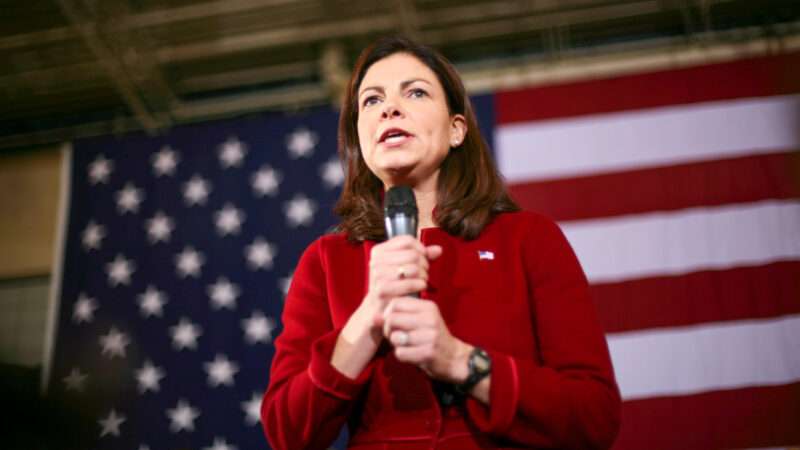
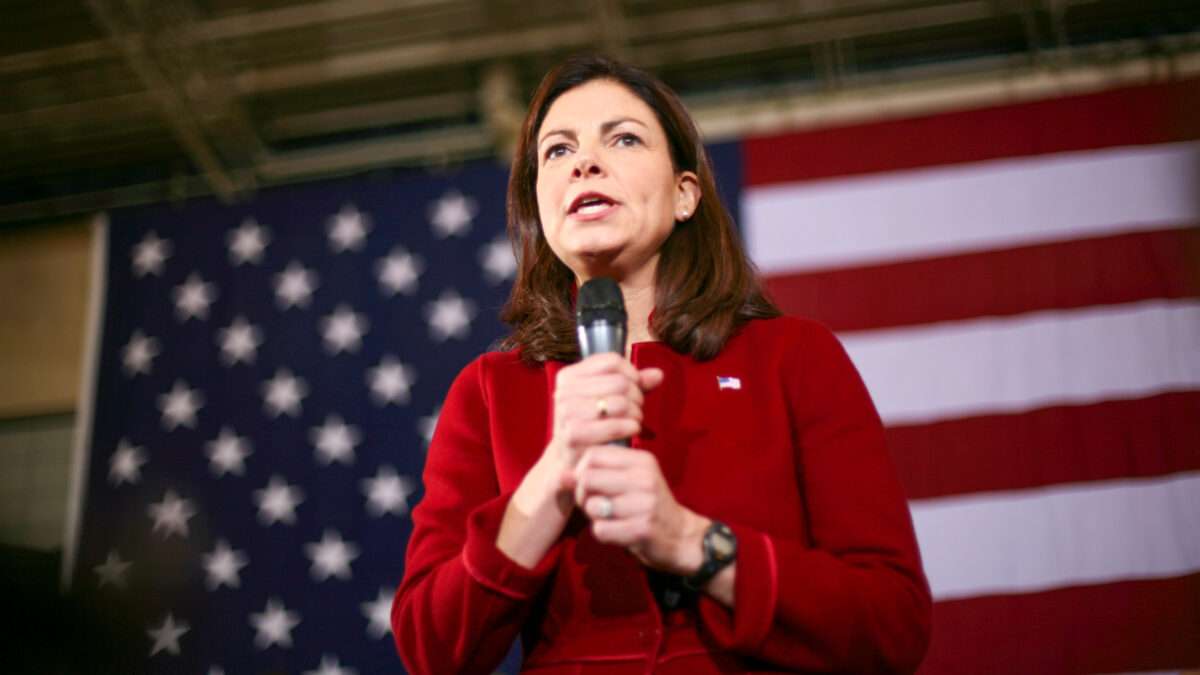
New Hampshire Governor Kelly Ayotte | Scott P. Yates/ZUMAPRESS/Newscom

The Libertarian Party of New Hampshire's (LPNH) X account—which has become infamous for its bigoted and controversy-ridden posts—is finally gone. But the state's spurious role in its banning raises free speech concerns.

Last week, New Hampshire Republican Gov. Kelly Ayotte sent a letter to X's safety team, asking the company to suspend the account. Ayotte's letter made mention of several clear violations of X's content policies: "This account has openly called for the assassination of elected officials from the New Hampshire Democratic Party, has said it condones murdering elected officials for their policy positions, and most recently threatened a member of House leadership.…I'm calling on X to remove [the posts] and suspend the account immediately." 

The letter referenced one particularly bold post from September (which the account later deleted). The post read: "We openly support the assassination of basically every elected democrat in New Hampshire. But if you don't have the balls to do it, then you should probably vote GOP." 

X suspended the account the day after Ayotte sent the letter.

The removal of the LPNH account has likely elicited a sigh of relief from the Libertarian Party's (L.P.) leadership, which has repeatedly tussled with LPNH over its extreme rhetoric, undermining of L.P. candidates, and constant creation of P.R. crises for the party. In 2024, the LPNH endorsed Donald Trump for president instead of Libertarian candidate Chase Oliver, pushing the Libertarian National Committee to disaffiliate LPNH from the L.P.'s structure this past May. The Granite State Libertarian Party was designated the state's new L.P. affiliate in September.

Even though the LPNH has clearly violated X's terms and does not adhere to the most basic requirements for L.P. membership (such as pledging to uphold the nonaggression principle), the government should not tell private firms when to enforce their own policies. This sentiment was shared by Granite State L.P., which recently said in a social media post, "While a private company has a right to remove someone screaming about setting people on fire…the government should play zero part in that decision."

Jeremy Kauffman, the chair of the LPNH, is outraged but unsurprised, posting on Sunday that he and the LPNH are "exploring a lawsuit against the New Hampshire government." He tells Reason, "Ayotte's letter was a classic example of jawboning. When a governor sends a demanding letter like this to a private company, there is a clear implicit threat attached."

Speaking to Reason, Trace Mitchell, a technology and free speech expert at the Foundation for Individual Rights and Expression, defines jawboning as, "when the government, through veiled threats or direct coercion, pressures a private entity to take an action that the government could not lawfully take or mandate itself." 

In Bantam Books v. Sullivan (1963), the Supreme Court ruled that the government cannot make recommendations to private companies if those recommendations come with legal repercussions—even implied or veiled repercussions. Doing so would qualify as jawboning, which violates the First Amendment. Though Ayotte's letter could be construed as extralegal pressure, it does not imply a punishment for noncompliance and likely falls short of legally recognized jawboning.

Addressing Kauffman's proposed lawsuit, Mitchell says, "In this case he would likely have to show there is something beyond this letter…[like] outside communications, emails or text with X." 

Safety officers at X provided no comment to Reason to justify the suspension. It is not clear whether there was any external communication involved beyond the letter. Without a more definite connection between Ayotte's request and X's decision, Kauffman may struggle to win in court. Still, that doesn't make the governor's request any less concerning. 

While Ayotte's letter was a surprise, it was not unprecedented. As social media has become the public forum, all levels of government have tried to regulate what is said there. During the COVID-19 pandemic, federal officials under the Biden administration were revealed to be in near-constant communication with major social media firms, encouraging and recommending that misinformation be removed from the platforms. Many of these recommendations were paired with implied threats to review the firms' legal immunity for content posted on their platforms, which spawned a lawsuit that reached the Supreme Court in 2024. 

Although the Court dismissed the case for lack of standing, some lawmakers have taken action to address concerns over jawboning, with Sen. Ted Cruz (R–Texas) introducing the JAWBONE Act in June. The bill would make it easier for members of the public to sue government officials who pressure media networks, as well as require increased transparency for all federal communications to media networks.

Even if Kauffman cannot find legal remit, Ayotte's letter was a troubling move for the future of internet speech. Many of the offending posts referenced were months old or had been deleted before the letter was sent. The LPNH has likely been violating X's content policy for years, but X only took action after the government instructed it to.

You don't need a judge to see how that might be concerning. 

The post X Bans Former Libertarian Party Affiliate—After the State Requests It appeared first on Reason Magazine.

  •  

Rezoning Request for Catholic Shrine May Have Been Denied Because of Shrine's "Pro-Life Message"

From Judge Stephanos Bibas, joined by Judge Tamika Montgomery-Reeves, in Monday's Holy Trinity Ukrainian Catholic Church v. Township of Collier:

Holy Trinity is a Ukrainian Catholic parish outside Pittsburgh. It practices the Catholic faith, but with rituals and architecture that are distinctively Ukrainian. The parish owns two plots of land. On one of them, in Carnegie, sits a church, where it holds regular liturgies. The other plot, in nearby Collier Township, has been owned by the parish for more than seven decades. That 41-acre plot houses the parish's cemetery and mausoleum but is otherwise mostly wooded.

About three years ago, Holy Trinity's pastor felt called to turn the second plot into a shrine, a pilgrimage destination for faithful to gather from "near and far." The shrine would "honor Mary, the Mother of God, and would pay homage to the sanctity of life." With the help of lawyers, architects, and traffic consultants, Holy Trinity designed the shrine. It envisioned a 13,000-square-foot chapel with gold domes, a bell tower, a museum, a gift shop, and a retreat center.

But the plot is constrained by Collier Township's zoning code. The code divides the township into districts, each of which allows certain types of buildings. The northern, wooded half of the plot lies in a planned-economic-development district, allowing larger projects like business offices, amusement parks, or country clubs. The southern half is in a rural-residential district, allowing farms and single-family homes. Neither district contemplates shrines.

The zoning code is enforced by Collier's five-member Board of Commissioners. The Board has power not only to rezone land or amend the code, but also to approve or deny some building projects, because the code makes some land uses conditional. For instance, the code conditionally allows new churches in rural-residential districts, but only if the Board approves them. In any event, anything as big as Holy Trinity's shrine needs the Board's approval.

To fit the shrine project into the zoning code, Holy Trinity applied to do two things. First, it asked the Board to amend the zoning code to allow planned cultural centers, including the shrine, in economic-development districts. Second, it sought to rezone some of its rural-residential land into economic-development land, to make a larger plot for the shrine. As part of its application, Holy Trinity included sketches of its shrine plus a traffic study showing minimal impact on the surrounding community. After a live hearing with concerned residents, the Board denied Holy Trinity's application, expressing concern about traffic and Holy Trinity's fundraising projections. Some residents, and at least one Board member, were also troubled once they learned that the shrine's message would be pro-life.

So Holy Trinity tried again with a smaller project. It applied to build a modest chapel entirely on its rural-residential land. Though the Board approved the new application, it came with strings attached, limiting bell ringing, the height of the chapel, and who could be remembered at memorial services….

The majority held that Holy Trinity wasn't entitled to a preliminary injunction, because the harm could be repaired by damages (one of the elements of the preliminary injunction inquiry); on this matter, the majority and Judge Paul Matey's dissent had an interesting and complicated debate. But here's a passage as to the facts that struck me as worth noting, even apart from that controversy:

Finally, and most troubling, both community and Board members objected to the shrine's pro-life message. One resident worried that "Father Jason has been very involved in pro life. This is to be a pro life museum … [W]hen you think very political rights, either side, it brings a lot of danger, a lot of protests, as well as costs that could be incurred by the community." Another complained that "the intent of the shrine was a celebration for Roe vs. Wade being overturned … [and] reparation for sin of abortion and counseling, spiritual direction …. this will bring a bunch [of people] potentially for a rally and this could also bring the opposite as well for protest."

Privately, at least one of the Board's members agreed. The day after the hearing, that commissioner forwarded an email about the shrine's pro-life stance to the rest of the Board: "Looks like we might have dodged a bullet last night. The true inten[t] of the shrine" was pro-life and "This could have been a disaster." Another township officer, copied on the email, seemed to affirm those sentiments. Nothing in the record suggests that any other Board member responded and disagreed. And in her deposition, the Board member who wrote the email confirmed that "one of the reasons" that the Board had denied the application was Holy Trinity's pro-life purpose. She also defended denying land-use approval "based on the nature of the religious service to be held in the building."

These objections hint at unconstitutional religious hostility and content-based discrimination, concerns that would be better addressed on a more developed factual record. But at the very least, they strongly suggest that the Board resists ever approving the shrine project. If so, the rezoning denial is effectively absolute, and the "degree" of burden on Holy Trinity is substantial. Plus, the township does not show that denying approval altogether is the least-restrictive means to serve a compelling interest. That is enough to show that Holy Trinity is very likely to prevail on its RLUIPA [Religious Land Use and Institutionalized Persons Act] substantial-burden claim….

The post Rezoning Request for Catholic Shrine May Have Been Denied Because of Shrine's "Pro-Life Message" appeared first on Reason Magazine.
  •  

BreakThrough responds to Congressional threats to ‘hold the staff hostage’

In October, BreakThrough News received a letter from Rep. Jason Smith of the House Ways and Means Committee, threatening to personally subpoena seven members of our journalistic, editorial and administrative staff — including Rania Khalek, Zoe Alexandra and Amanda Yee — unless we handed over our financial records and internal communications.

Through its attorneys, BreakThrough News has now issued an official response, which you can read below. Once again, we expressed that we would not surrender our First Amendment rights in the face of a blatantly unconstitutional abuse of power, and that no legitimate legislative basis has been established for this inquiry. In his own statements, Rep. Smith has made no attempt to disguise the fact that his Committee subpoenas are fueled by opposition to BreakThrough’s editorial stances and viewpoints, which he calls “anti-American.”

We have been overwhelmed by support from our community, who have raised their voices in defense of our constitutionally protected right to free speech under the First Amendment. We ask all readers to continue showing their support by signing the petition below and making a donation to help defend the organization.

Our attorneys’ response explains:

“Threatening compulsory depositions of journalists and newsroom staff to compel document production operates as coercive retaliation by explicitly targeting the core editorial leadership and journalistic staff of BreakThrough News. Allowing a congressional committee to haul journalists into deposition rooms to grill them on domestic and foreign policy reporting sets a dangerous precedent of state-sponsored press intimidation that chills independent journalism nationwide and infringes on core First Amendment protections.”

On October 19, a coalition of ten major civil liberties and press freedom organizations, led by the Freedom of the Press Foundation, issued a joint letter to Rep. Smith demanding an end to the persecution of BreakThrough.

The letter noted: “Serially subpoenaing employees of a small left-wing news outlet to compel them to personally appear before you, for no reason other than to further a vindictive political stunt, is beyond the pale and reminiscent of some of the darkest chapters in our nation’s history.”

We are deeply appreciative of organizations that have spoken out: Freedom of the Press Foundation, American Society of Journalists and Authors, Defending Rights & Dissent, First Amendment Foundation, National Coalition Against Censorship, National Press Photographers Association (NPPA), PEN America, Society of Environmental Journalists, Society of Professional Journalists, and The Media and Democracy Project.

We would like to express our gratitude for the hard work of our legal counsel — the Law Office of Andrew D. Herman and Mara Verheyden-Hilliard of the Partnership for Civil Justice Fund — in responding to this outrageous attack.

Finally, we extend our solidarity and appreciation to all the members of our team, who continue to work tirelessly to produce meaningful journalism in the face of federal threats.

Read our full response below issued by BreakThrough’s attorneys.

  •  

10 major press freedom and civil liberties groups demand Congress stop ‘unconstitutional’ targeting of BreakThrough News

A coalition of press freedom and civil liberties organizations is calling on the House Ways and Means Committee to abandon its threat to subpoena staffers at BreakThrough News. The House committee has demanded that BreakThrough employees testify before Congress unless the outlet withdraws its First Amendment and other objections to the committee’s earlier subpoenas and document requests by October 20.

The committee says its inquiry is part of a tax-related investigation into one of BreakThrough’s donors. But the committee and its chairman, Rep. Jason Smith, R-Mo., have also accused the outlet of “anti-American rhetoric” and “messaging that mirrors hostile government propaganda,” pointing to its criticism of immigration enforcement and of US and Israeli foreign policy. The letter outlines that such statements make clear the investigation is targeting BreakThrough for its viewpoints. The coalition warns that letting Congress interrogate a newsroom over its editorial positions sets a dangerous precedent for journalists of every political persuasion.

Freedom of the Press Foundation (FPF) Chief of Advocacy Seth Stern stated: “Rep. Smith’s shameless targeting of BreakThrough News for editorial viewpoints that he dislikes shows a complete disregard of the First Amendment. Congress has many more important things to do than interrogate an entire nonprofit newsroom because lawmakers speculate that disagreement with their opinions must evidence a conspiracy. The committee has not identified any alleged unlawful conduct by BreakThrough or any legitimate legislative purpose for its investigation. People who themselves hold controversial political views should understand the risk of normalizing fishing expeditions targeting dissent.”

Read the full letter below:

Dear Chairman Smith,

We are a coalition of press freedom and civil liberties organizations. We are alarmed by your recent correspondence threatening to issue subpoenas to BreakThrough News, a nonprofit organization that publishes news reporting and commentary. Your letter indicates that you plan to demand that virtually every individual associated with BreakThrough’s newsroom, from its editor-in-chief to its social media manager, appear before Congress unless BreakThrough rescinds its well-founded First Amendment and other objections to your prior invasive demands.

The Committee first demanded records from BreakThrough in February, claiming to be pursuing a tax-related probe into donations from Neville Roy Singham, a U.S. citizen based in Shanghai. Those demands and subsequent ones were outrageous in and of themselves, but serially subpoenaing employees of a small left-wing news outlet to compel them to personally appear before you, for no reason other than to further a vindictive political stunt, is beyond the pale and reminiscent of some of the darkest chapters in our nation’s history.

Although your justifications have repeatedly shifted in your various letters and subpoenas to date, you have admitted the true impetus for the inquiry is the groups’ viewpoints, stating they have “amplified anti-American, foreign-aligned narratives on social media, and pushed messaging that mirrors hostile government propaganda.” You further stated, “I will absolutely not stand by and allow our tax code to be abused to push anti-American rhetoric on our home soil.”

The First Amendment protects those who voice even controversial opinions shared by hostile governments abroad, but your primary examples of BreakThrough’s “anti-American” views are criticism of ICE’s tactics and Israel’s U.S.-funded wars – policies that many millions of Americans who have never received funding from or even heard of Mr. Singham also dislike.The fact that foreigners also dislike those policies might underscore their unpopularity, but it does not diminish BreakThrough’s right to share similar views. 

Your letter also raises BreakThrough’s alleged connections to a lawfully organized domestic political party, the Party for Socialism and Liberation. Such connections are not illegal and, like receiving donations from a U.S. citizen living abroad, cannot come close to supporting broad subpoenas seeking a news entity’s internal documents or depositions from its entire staff.

Beyond the blatant unconstitutionality of targeting news outlets for their political views, House subpoenas must serve a legislative purpose. Fishing expeditions do not suffice.

BreakThrough News’s reporting and commentary, no matter how distasteful you may find it, is protected by the First Amendment, just as your own views are protected no matter how distasteful others may find them. As the Supreme Court wrote over 80 years ago, “if there is any fixed star in our constitutional constellation, it is that no official, high or petty, can prescribe what shall be orthodox in politics, nationalism, religion, or other matters of opinion.”

The First Amendment exists to protect people with politically disfavored views from people like you. Speech that politicians approve of is not in need of constitutional protection. 

The threatened subpoenas are clearly designed to target BreakThrough for reporting and editorial viewpoints with which the Committee disagrees. Subpoenas of journalists and newsrooms obstruct First Amendment activity by forcing cash-strapped news outlets to spend time and money defending their rights, and by intimidating not only reporters but also sources, donors, and readers.

We demand that you refrain from issuing further unlawful and retaliatory subpoenas, and drop your entire unconstitutional inquiry into BreakThrough News.

Sincerely,

Freedom of the Press Foundation

American Society of Journalists and Authors

Defending Rights & Dissent

First Amendment Foundation

National Coalition Against Censorship

National Press Photographers Association (NPPA)

PEN America

Society of Environmental Journalists

Society of Professional Journalists

The Media and Democracy Project

  •  

The European Union Wants To Punish People for Their Speech—Without Even a Trial

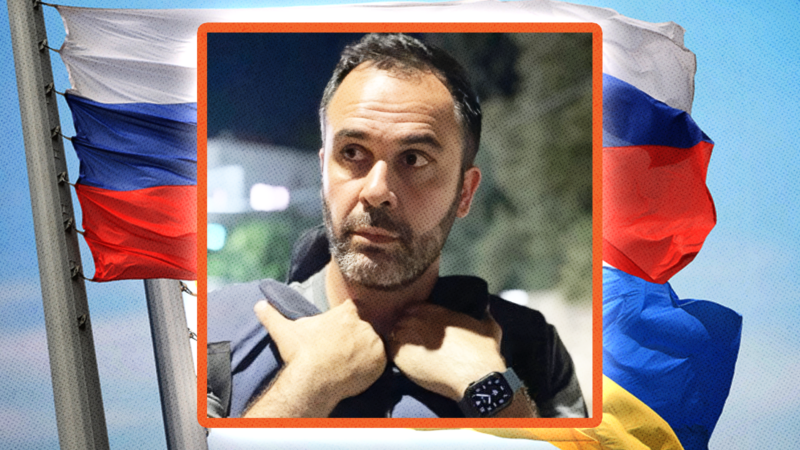
Hüseyin Doğru | Dmitry Shirinkin/Dreamstime/Hussedogru/X

The European Union claims that "the fundamental right to freedom of expression" only applies to journalists "acting in good faith," and that authorities do not have to give due process before freezing people's bank accounts, as these sanctions are "temporary and are not criminal in nature," according to a legal letter shared by a sanctioned journalist.

Last year, the European Union blacklisted 21 people for allegedly spreading Russian propaganda, banning them from doing business in Europe. One of them, Hüseyin Doğru, was falsely listed as a Turkish citizen living in Istanbul. In fact, Doğru is a German journalist in Berlin, making him the first European citizen on European soil to be sanctioned this way.

It was like being sentenced to "civil death," Doğru told American journalist Chris Hedges. He was banned from holding a job in Europe or having a European bank account, and authorities have restricted Doğru to a €506 ($567) per month allowance from his own money. "The sanctions are designed for people outside of Europe, so they don't really know how that should function with me, because I'm a European citizen and I'm living in Europe," Doğru told Hedges.

Last month, the civil libertarian Wau Holland Foundation hired lawyers to contest the sanctions against Doğru. And earlier this month, the Council of the European Union sent a response letter, which Doğru shared on social media, promising to escalate the case to the E.U. General Court. Although the council conceded to Doğru that he is not a Turkish citizen living in Turkey, it still insisted on the authority to punish him for his speech.

The council quoted a 2022 court case between the Russian news outlet RT and several European countries: "The protection of the right of the media and, more particularly, of journalists to impart information on issues of general interest is subject to the proviso that they are acting in good faith and on an accurate factual basis and provide 'reliable and precise' information in accordance with the ethics of journalism."

Doğru's lawyers insisted that he should be treated as innocent until proven guilty. But the council responded that sanctions fall short of a criminal punishment, so any complaint about a "violation of the presumption of innocence is therefore unfounded." In other words, because he is not accused of a crime, Doğru has fewer rights than a criminal suspect.

"People need to understand sanctions are an extrajudicial measure. They're extrajudicial. There's no court. There is no hearing, no evidence, there is no sentence by the court, nothing," Doğru told Hedges. "When you're sanctioned, you are not informed….The day when I was sanctioned, me and my wife, my wife was pregnant back then, we went to the pharmacy to buy medicine for her, and her cards did not work."

The original blacklisting decision accuses Doğru of supporting "actions by the Government of the Russian Federation which undermine or threaten stability and security in the Union" by spreading "false information on politically controversial subjects with the intent of creating ethnic, political and religious discord amongst its predominantly German target audience."

Doğru and his wife, British journalist Lizzie Phelan, previously worked at the Russian-funded publication Redfish. A few months after the Russian invasion of Ukraine, he split off to create a new website called red.media, insisting to The Left Berlin that "we are not Russian. We are not Kremlin. red.media is not funded by Russia or any other state." In the same interview, Doğru called Russia an "imperialist" regime.

But in September 2024, a Biden administration "fact sheet" on Russian propaganda offhandedly mentioned red.media, citing a hit piece on Doğru by the German newspaper Tagesspiegel. Doğru told Hedges that the U.S. fact sheet created a circular logic in German media: "They said red.media is Russian because [U.S. Secretary of State Antony] Blinken said so. But what they never said is that Blinken is referring to your articles where you never say it like that. You say there is a suspicion, it might be so."

Doğru shut down red.media in May 2025 due to the bad press. The European Union sanctioned him a few weeks later. Doğru's lawyer, Alexander Górski, told the Frankfurter Allgemeine earlier this year that the European Union didn't "even attempt to make an evidentiary case" about any ongoing connection to Russia.

The blacklisting decision also claimed that, during a pro-Palestinian student protest at Humboldt University in Berlin, red.media "coordinated with the occupiers to disseminate images of their vandalism—which included the use of Hamas symbols." Doğru told Hedges that these accusations are an attack on journalists' freedom to do their jobs.

The European Union does not have the same protections for the freedom of the press as the U.S. Constitution. Earlier this year, the Curia of the European Union ruled that simply reposting clips from Russian media could be a violation of European sanctions, even if no money changes hands, something that is explicitly exempted from U.S. sanctions under the Berman Amendment.

Still, U.S. authorities have tried to push the limits of international sanctions to censor speech. The Biden administration told an American nonprofit that "the provision of a platform for [the sanctioned individuals] to speak" was illegal, backing down after the nonprofit sued.

And the Trump administration sanctioned Italian academic Francesca Albanese for her "lawfare" calling for the prosecution of Israeli leaders and a boycott of Israeli industries. In addition to freezing her bank accounts, the sanctions forced Columbia University researchers to cut off their relationship with Albanese, and Georgetown University to close her email account. 

In the same statement accusing red.stream of being a Russian front, the Biden administration announced sanctions on two Russian news agencies. "We encourage dissent, open debate, and free discourse. But we will not stand for attempts by state actors to carry out covert activities with the goal of hijacking that discourse," the statement insisted. "The ultimate goal of sanctions is not to punish, but to bring about a positive change in behavior."

The post The European Union Wants To Punish People for Their Speech—Without Even a Trial appeared first on Reason Magazine.
  •  

FBI subpoenas pro-Palestine activists over Israeli weapons plant disruption

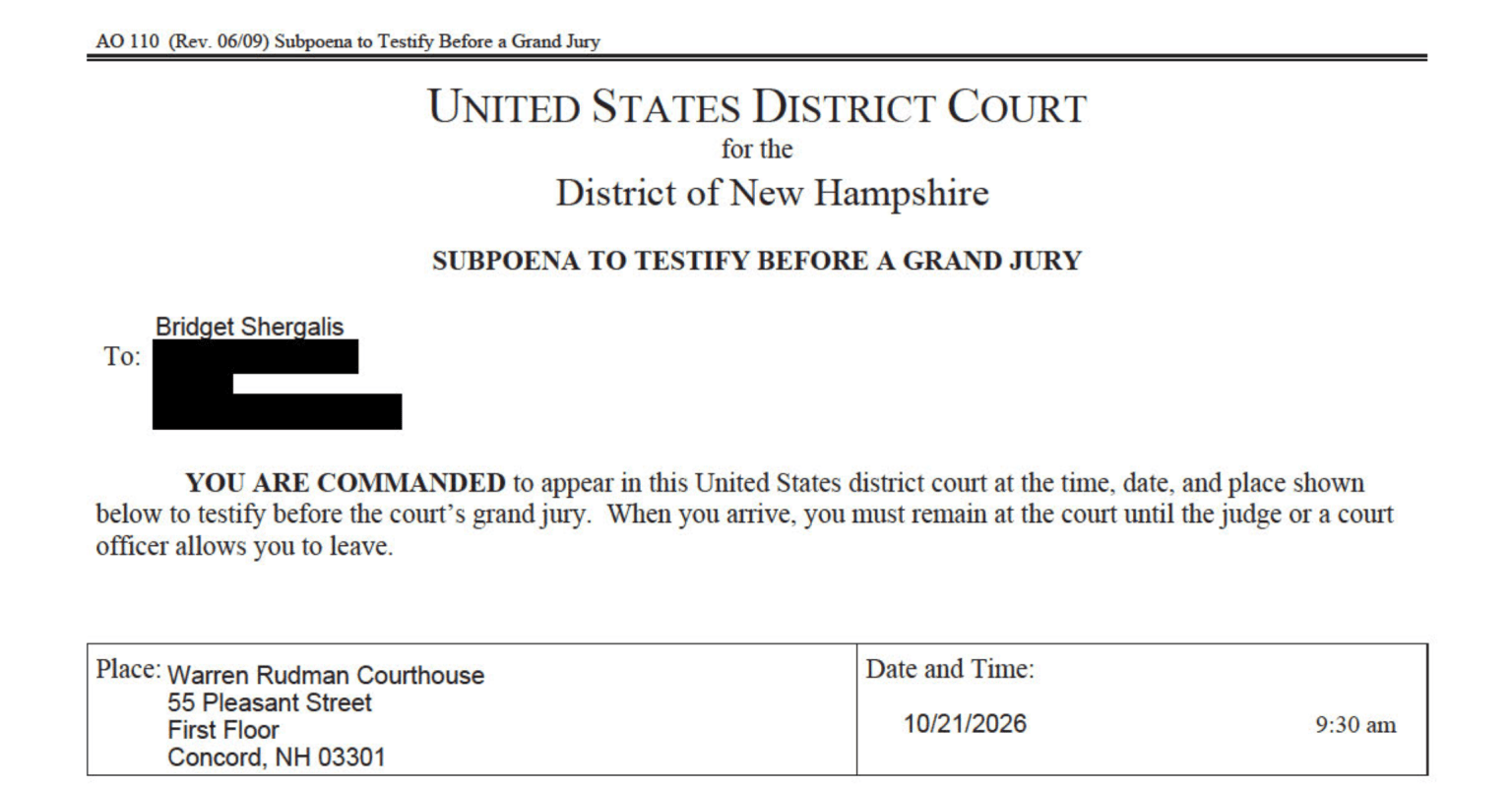
Two activists have been ordered by DOJ to testify in mysterious grand jury proceedings regarding their involvement in efforts to deface an Israeli weapons manufacturing facility in New Hampshire, after feds had sought in an earlier trial to obtain sentences of 37 years for them.

  •  

Children May Proceed Pseudonymously; May Their Parents?

From L.R. v. Bd. of Ed. of Jennings School Dist., decided Wednesday by Judge Joshua Divine (E.D. Mo.):

L.R. and her mother, R.S., alleged that after an incident involving L.R.'s father at end-of-school pickup, employees of Jennings School District placed L.R. in an out-of-school virtual learning program that was inferior to regular schooling. According to their complaint, the district employees did not provide L.R. with an explanation of how her conduct justified the suspension, a timeline or consistent standards for returning to in-person classes, or an opportunity to be heard or appeal. Those shortcomings, they argued, violated L.R.'s rights to constitutional and statutory due process as well as a free public education.

Since then, the parties have reached a settlement…. As to the settlement, the Court intends to approve it provided that the plaintiffs file an amended complaint that discloses R.S.'s identity.

[R.S.] argues that disclosing her identity "will effectively disclose L.R.'s identity" too. True, the Federal Rules of Civil Procedure presumptively require anonymizing minors by their initials, but there is no similar requirement for parents. Compare Fed. R. Civ. P. 5.2(a)(3) (stating that filings must replace "the name of an individual known to be a minor" with "the minor's initials"), with id. 10(a) ("The title of the complaint must name all the parties."). Instead, Rule 10 creates a "strong presumption against allowing parties to use a pseudonym." A party may overcome that presumption "only in those limited circumstances where [the] need for anonymity outweighs countervailing interests in full disclosure."

This case is not one of them. R.S. and L.R. do not share a last name, and R.S. has not established that third parties necessarily will infer L.R.'s identity from her mother's.

Even if third parties would discern L.R.'s identity, the fact that she was suspended from in-person classes after a vaguely described "incident" involving her father is not particularly sensitive…. [O]ne factor to consider [in pseudonymity cases is] whether identifying a party "threaten[s] to reveal information of a sensitive and highly personal nature" …. "[S]ome cases allow parents who are suing on behalf of their minor children to proceed pseudonymously, at least when the case involves highly personal information about the children" …. This case does not involve, for example, sexual assault or coercion of a minor to use drugs.

If anything, there are weighty interests in full disclosure because knowing the identities of the people involved in this case could help third parties assess the reasonableness or unreasonableness of a school policy that has become a topic of public debate across the nation. The school district in this case has been featured in national media on the topic of discipline at issue. See, e.g., Carly Graf, The newest form of school discipline: Kicking kids out of class and into virtual learning, Washington State Standard (Aug. 7, 2023) (explaining how "[s]chool districts across the country, including in Missouri, have begun punishing students by forcing them into online classes"); id. (quoting the "superintendent of Jennings School District in Missouri"). R.S.'s own complaint invokes the surrounding policy debate about virtual learning, including what critics say is a negative effect on students of certain races. Therefore, the Court will deny her motion for leave to proceed anonymously.

The settlement, by the way, was that "[a]lthough the defendants are not required to admit liability, they must remove any mention of the suspension from L.R.'s records, promote her to 8th grade, pay her $40,000 dollars plus $20,000 to her attorneys, and make available a policy that "clearly enshrines due process protections for all students prior to any transfer to virtual learning."

The post Children May Proceed Pseudonymously; May Their Parents? appeared first on Reason Magazine.
  •  

"The Court Requires Me to Warn You That I Pose a Risk of Stalking and Harassment to Intimate Partners"

From Judge Ted Stewart (D. Utah) in U.S. v. Wang, dated Sept. 9 but just docketed today:

Defendant objected to the condition that she notify any intimate partners "about the potential risk she poses" as vague. To avoid any vagueness, the Court imposed the following: "The court requires you to notify any intimate partners that you have been convicted of cyberstalking and pose a risk of stalking and harassment to intimate partners." The Court finds this condition is necessary to protect the public considering Defendant's history of cyberstalking and her relationships with her past victims.

I believe similar conditions are sometimes imposed as to sex offenders, but this is the first time I've seen something like this as to stalkers. (Note that, once a criminal defendant is convicted, the standard for evaluating probation conditions restricting or compelling speech becomes more much government-friendly than would be the case in the absence of such a conviction.) Here's the Justice Department's statement summarizing the case:

A Utah County woman was sentenced to 12 months' imprisonment [and thee years of probation] today for cyberstalking two male victims she met on online dating platforms and became obsessed with them….

According to court documents and statements made at Wang's change of plea and sentencing hearings, Wang connected with the victims separately on online dating sites in 2017 and 2018 and became obsessed with each victim. Using multiple accounts, fake names, social media accounts, and phone numbers, she harassed and disparaged them publicly and privately, tagging their friends, family, and employers.

On three separate occasions, Wang reported the victims to the federal Internet Crimes Complaint Center (IC3) claiming she was being harassed and impersonated online by them. Wang reported that they did these things together, even though there is no evidence that the victims had any relation to each other. Wang admitted that she filed the IC3 complaints to get law enforcement to investigate the victims in order to harass and intimidate them.

Wang's crimes against victim 1 and victim 2 are not isolated incidents. Wang engaged in a pattern of stalking behavior in 2013 and was convicted in the state of New York.

The post "The Court Requires Me to Warn You That I Pose a Risk of Stalking and Harassment to Intimate Partners" appeared first on Reason Magazine.
  •  

A Texas Lawsuit Dubiously Accuses Students for Life of Violating the State's Abortion Pill Restrictions

a torn anti-abortion sign | Students for Life/YouTube

Last March on Instagram, Students for Life President Kristan Hawkins posted a photo showing her and two other members of the Virginia-based group standing outside Space Center Houston. According to the captions, Hawkins and her fellow activists, one of whom was holding a mobile phone, were "ordering abortion pills undercover."

A lawsuit filed last week in Harris County, which includes Houston, describes that Instagram post as "nothing more than a publicity stunt." The lawsuit, which aims to deploy a Texas abortion law championed by Students for Life against the organization, is also a publicity stunt. But while it may be effective by that measure, it faces legal challenges that will be hard to overcome.

The lawsuit, which a Texas woman who opposes her state's abortion ban filed under the pseudonym Maria Puerto with help from the reproductive rights group Amplify Legal, is supposed to highlight the vagueness and broad scope of House Bill 7, a 2025 law that authorizes private civil action to enforce state restrictions on "abortion-inducing" drugs. But Puerto's attempted act of legal jiu-jitsu seems too clever by half, relying on a dubious reading of the statute to seek "monetary compensation" it does not authorize and thereby punish anti-abortion activists for constitutionally protected advocacy.

H.B. 7, also known as the Woman and Child Protection Act, says "a person may not manufacture or distribute an abortion-inducing drug in this state" or "mail, transport, deliver, prescribe, or provide an abortion-inducing drug in any manner to or from any person or location in this state." Those prohibitions, it says, "may be enforced only through a qui tam action" against a "person" who "violates" or "intends to violate" them.

Any "person" other than a state or local official can qualify as a "relator" authorized to bring such an action. The relator can seek injunctive relief and "an amount of not less than $100,000 for each violation," plus "costs and reasonable attorney's fees." A successful relator generally receives $10,000 of that "amount," with the rest going to a "charitable organization" of his choice.

As a "person" who is not a government official, Puerto meets H.B. 7's minimal test for standing. And although H.B. 7 precludes lawsuits against pregnant women who obtain "an abortion-inducing drug," Puerto says Hawkins and the other activists "are not pregnant and were not pregnant" at the time of the Instagram post. So far, so good. But although the lawsuit asserts that Hawkins et al. "openly and flagrantly violated" the law's prohibitions, it does not explain how.

A photo accompanying a recent Mother Jones profile of Hawkins shows her and her social media coordinator, Lydia Taylor Davis, outside Space Center Houston during their "abortion-pill 'sting' stunt." Another Mother Jones photo shows Hawkins holding a mobile phone displaying what Puerto's lawsuit describes as "an order confirmation."

Judging from the Mother Jones account, it is not clear whether that description is accurate. "The scheme rapidly went off the rails," Amy Littlefield writes. "The plan was to purchase pills from a couple of services, with Hawkins posing as a male abuser while Davis pretended to be a 16-year-old—all to try to portray mail-order suppliers as reckless and dangerous. For reasons even she couldn't explain, Hawkins chose the fake name 'Wanda' as her male-abuser alter ego. But when Davis input her information, she hit a snag."

Davis was trying to order pills from the Massachusetts Medication Abortion Access Project. But according to Littlefield, that organization "had blocked Davis in its system after Students for Life teased the sting operation on social media." Hawkins "attempted to save the stunt by placing her own order, but 'Wanda' accidentally gave her age as 15," which was below the supplier's minimum age, Littlefield says. "Now a security guard was wandering over to tell them they couldn't film. Having set out to show that telemedicine services don't screen their clients, they inadvertently proved the opposite."

Puerto "will need proof that the Students for Life leaders actually obtained or intended to obtain the pills," abortion law scholar Mary Ziegler notes in Slate. "The activists may argue that the post was not in earnest, and that no one involved ever seriously intended to bring pills into Texas."

Even assuming that Hawkins et al. successfully ordered abortion pills, that conduct by itself does not fit the language of H.B. 7, which applies to people who "distribute" such drugs or who "mail, transport, deliver, prescribe, or provide" them "to or from any person or location in this state." That language encompasses out-of-state suppliers, which raises obvious concerns about extraterritorial application of Texas law. But on its face, the prohibition does not cover someone who simply orders abortion pills.

Puerto's lawyer, Amplify Legal attorney Molly Duane, argues that Hawkins et al. could be covered by the statute's reference to transportation. "What the statute says is that transporting abortion drugs from one location to another within the state is a violation of H.B. 7," Duane told The Texas Tribune. "By the plain language of the statute, this would seem to be a violation. This is the problem with writing such a confusing and vague law."

Under that theory, however, Hawkins, Davis, and the two other activists named in the lawsuit violated H.B. 7 only if they 1) successfully ordered abortion pills, 2) took delivery of them, and 3) subsequently moved them to another location within Texas. The lawsuit alleges only that they "ordered abortion pills, apparently multiple times." According to The Texas Tribune, Duane and Puerto "are hoping that the lawsuit will eventually surface more about what the defendants did with the abortion pills once they ordered them."

The lawsuit faces another obstacle. H.B. 7 does not apply to "speech or conduct protected by the First Amendment." Hawkins et al.'s efforts to show how easily state abortion bans can be circumvented certainly seem to fall into that category. "Students for Life may stress that the case targets their political speech about abortion," which is "protected under the First Amendment," Ziegler notes.

Those are not the only puzzling aspects of the lawsuit. Puerto, a 26-year-old single mother of two young children, emphasizes that she "had no choice but to continue" those pregnancies because she did not "have access to transportation or the economic resources to pay for travel out of state." The lawsuit devotes 11 paragraphs to describing the burdens imposed by her state's denial of "true reproductive rights," which she argues justifies some sort of compensation.

All of this seems legally irrelevant under H.B. 7, which does not require a relator to allege damages of any sort, let alone damages stemming from the abortion ban it aims to reinforce. "With nowhere else to turn for assistance," the lawsuit says, "Ms. Puerto is seeking financial compensation" from Hawkins et al. "in the amount of $459,782—the average cost of raising two children from birth to age 18 in the state of Texas."

Although H.B. 7 sets a minimum award of $100,000, the lawsuit notes, "there is no cap on the monetary compensation owed a relator." But the law does not describe H.B. 7 awards as "monetary compensation" for injuries allegedly suffered by the relator.

The statute's only reference to "compensatory damages" deals with lawsuits filed against H.B. 7 relators under "clawback provisions" of other states that have tried to thwart such litigation. In response to a "clawback" action, the law says, an H.B. 7 relator can seek "compensatory damages, including money damages in an amount equal to the judgment damages and costs, expenses, and reasonable attorney's fees spent in defending the action." By contrast, the bounty for proving a violation of the restrictions on abortion pills is simply "an amount."

The lawsuit itself, emphasizing the lax standards for filing a claim under H.B. 7, notes that Puerto "did not suffer an injury traceable to [the defendants'] ordering of abortion pills that can be remedied by a court." But it suggests that an award to Puerto would be appropriate given the defendants' anti-abortion activism.

The lawsuit notes that Students for Life "proudly advertised" its support for H.B. 7. Puerto complains that Hawkins et al. "ignore the immense harms and multiple deaths already attributed to Texas's cruel abortion bans" and "demean the six million Texans of reproductive age who have had their ability to decide whether and when to begin or expand a family stripped away by these bans." Whatever you make of that charge, the defendants' activism is constitutionally protected and therefore cannot support a cause of action in civil court.

"Texas is a strange place filled with vigilante statutes" that "seek to turn Texans against each other," Duane told The Texas Tribune. "But if anyone should be benefiting from these legal regimes, it's people like our client." While "putting those two things together…might be unusual," she said, "this is the situation that Texas has put its citizens in."

Depending on your perspective, you may or may not sympathize with Duane's reasoning. But it seems unlikely to pass muster as a matter of law.

The post A Texas Lawsuit Dubiously Accuses Students for Life of Violating the State's Abortion Pill Restrictions appeared first on Reason Magazine.
  •  

"The AI Data Will Provide an Unrivaled View into the Mind of a Defendant …"

That's part of libel plaintiff's argument(filed last week) for subpoenaing defendant's AI queries in Fontainebleau Florida Hotel, LLC v. Botach; the defendant is popularly known as Rabbi Shmuley Boteach. From the introduction:

The Court asked whether Botach's communications with AI platforms fall within the scope of "damages" discovery permitted by ECF No. 261, and specifically how those materials relate to malice and the statutory cap on punitive damages. Precedent from the United States Supreme Court and Eleventh Circuit, as well as Florida law, answers that question directly.

Under Fla. Stat. § 768.73(1)(c), the cap on punitive damages lifts entirely where the fact finder determines that "the defendant had a specific intent to harm the claimant" at the time of the injury. As discussed below, legions of cases from trial courts to the Supreme Court hold that post-defamation conduct is probative of whether defamatory statements were made with intent to harm. Specific intent is therefore not background color to the damages trial or damages discovery. Discovery into Botach's intent to harm Plaintiff is damages discovery, and the AI materials are the most direct evidence of that intent.

Botach did not merely publish an errant falsehood on a blog or make a heated statement in a debate. He methodically engineered his attacks—drafting, refining, and iterating for painful effect through the most potent technologies known to humankind. The prompts and chats are his mental state reduced to writing, and they are probative of damages.

And from the defendant's response:

The Court should sustain the objections to the proposed AI-provider subpoenas as drafted and apply the same limits to the overlapping Seventh Request for Production. The issue is whether these demands fall within the scope of "discovery limited to damages." The unresolved punitive amount permits discovery concerning punishment for the adjudicated wrong, not an unrestricted inquiry into Defendant's research or litigation conduct.

The amended complaint already alleges knowing falsity, deliberate fabrication, repeated publication, financial motive, and specific intent to harm. Plaintiff did not pursue AI discovery before the general discovery cutoff. But under the guise of "discovery limited to damages," Plaintiff seeks every responsive AI exchange concerning this litigation, the Hotel, Plaintiff's lawyers, every court order, and the judges. It reaches accounts associated with an expansively defined "Botach," without limiting production to his queries or material used in the actionable publications. The Court should enforce the reopening order before requiring any production and independently preserve substantiated work-product objections.

For more backstory on the case, an excerpt from the long Report and Recommendation issued July 29 by Judge Marty Fulgueira Elfenbein in Fontainebleau Florida Hotel, LLC v. Botach:

This action arises from an encounter between Defendant and then-hotel guest Faiz Akbar … in the lobby of Plaintiff's hotel in December 2024. The Parties sharply dispute the nature of the encounter, who initiated or escalated it, and whether Plaintiff responded appropriately to Defendant's subsequent complaints.

Plaintiff's operative First Amended Complaint alleges that Defendant published false statements concerning the incident and Plaintiff's response to it, including statements that Plaintiff discriminated against Defendant because he is Jewish, knowingly permitted an antisemitic assault to occur on its premises, removed Defendant rather than the alleged aggressor, and refused to cooperate with law enforcement. Based on those allegations, Plaintiff asserts claims against Defendant for defamation and tortious interference with business relationships.

Defendant filed a Counterclaim and Third-Party Complaint asserting claims against Plaintiff and naming Jeffrey Soffer … and Akbar as Third-Party Defendants. Defendant's Counterclaim alleges, among other things, that he was subjected to an antisemitic verbal attack at the hotel, that Plaintiff failed to protect him or adequately cooperate with the ensuing investigation, and that Plaintiff thereafter excluded him from its properties. Defendant asserted claims under federal civil-rights statutes and a claim for tortious interference with business relationships….

The merits of the Parties' competing claims are not directly before the Court in the Motion for Sanctions. Instead, the dispute concerns Defendant's conduct during the litigation, the meaning and scope of the District Court's February 20, 2026 Order …, and whether Defendant's subsequent social-media activity violated that Order in a manner warranting sanctions under Federal Rule of Civil Procedure 16(f) or the Court's inherent authority….

On March 11, 2025, Defendant served a subpoena on the Miami Beach Police Department seeking video footage of the underlying incident that Plaintiff previously provided to the department. The Miami Beach Police Department produced responsive surveillance footage to Defendant's counsel on March 26, 2025, and counsel thereafter transmitted that footage to Defendant. On April 2, 2025, before the entry of a protective order, Defendant posted an excerpt of the surveillance footage to his public Instagram account, which had more than 90,000 followers. On April 7, 2025, the Parties jointly moved for entry of a stipulated protective order governing discovery in this action. The Court entered the Parties' Stipulated Protective Order on April 9, 2025.

The Protective Order provides that material produced by a nonparty is automatically treated as "Outside Counsel Eyes Only" for thirty days following production without the need for an affirmative designation by a party. The Protective Order further prohibits the use of discovery material for any purpose unrelated to this litigation, including any public, commercial, business, or personal purpose. The Protective Order restricts access to material designated as "Highly Confidential" or "Outside Counsel Eyes Only" to specified persons and does not permit unrestricted public dissemination of such material….

On April 10, 2025, one day after entry of the Protective Order, Defendant again posted the surveillance footage to his social-media accounts. On April 16, 2025, Plaintiff formally designated the materials produced by the Miami Beach Police Department as "Highly Confidential," and Plaintiff's counsel communicated that designation to Defendant's counsel. Defendant's counsel then informed Defendant of the designation, after which Defendant removed the footage. Defendant contemporaneously published a social-media post acknowledging that he was "required under the rules to remove the video."

Notwithstanding his knowledge of the Protective Order and Plaintiff's confidentiality designation, Defendant again posted the surveillance footage on September 17, 2025…. Although Plaintiff requested severe evidentiary and litigation-ending sanctions [over this], the undersigned concluded that those sanctions were not then supported by the record because a lesser sanction had not previously been imposed for the violation. The undersigned instead awarded Plaintiff its reasonable attorney's fees and costs attributable to the sanctions motion and expressly admonished Defendant that the Protective Order was not optional. The undersigned further warned Defendant that any future violation of the Protective Order would be treated with the utmost seriousness, including case-dispositive sanctions.

After further proceedings concerning the amount of the award, the Court ordered Defendant to pay Plaintiff $15,000.00 no later than April 26, 2026….

Separate from the Protective Order dispute, the District Court addressed Defendant's social-media activity in connection with pretrial scheduling and discovery matters. On February 10, 2026, Plaintiff moved for an extension of time to take Defendant's deposition and represented that Defendant had repeatedly scheduled and cancelled depositions based on asserted physical limitations while simultaneously publishing social-media content showing him engaged in activities including ice skating, kayaking, and bicycling. The District Court granted Plaintiff additional time to take Defendant's deposition and stated that it was "deeply disturbed by this trend." The District Court cautioned Defendant that sanctions, "potentially including the striking of Defendant's pleadings," would be imposed if the conduct continued….

[In a] February 20 Order, the District Court observed that the communications between the Parties had become "toxic," particularly in light of Defendant's online communications, and agreed with Plaintiff that the time had come for the matter to proceed toward resolution. The District Court stated that it was "deeply disturbed by Defendant's conduct," including his "continued social media attacks aimed at Plaintiff and its counsel" and his attempt to effect service at an address he knew belonged to Soffer's child. The District Court then expressly "DIRECT[ED] Defendant to cease such harassing conduct and social media references to Plaintiff and its counsel during the course of this litigation." …

In the Motion for Sanctions, Plaintiff contends that Defendant continued to publish social-media content referencing Plaintiff, Plaintiff's counsel, and this litigation almost immediately after entry of the February 20 Order. Plaintiff identifies multiple occasions between February 26 and May 28, 2026, on which Defendant allegedly violated the Order. [For more details, see the opinion, but here's one example. -EV] …

The May 24, 2026 social media publications constitute perhaps the most egregious violations of the February 20 Order. To recap, in one video, Defendant alleged that a member of his family was confronted and threatened in Jerusalem by an individual who invoked Plaintiff's counsel. Defendant specifically identified Plaintiff's counsel as the attorney representing the hotel in this action and asserted that this lawsuit was filed to "intimidate and silence him" after he publicly alleged that he had been threatened with murder in an antisemitic attack. Defendant further stated that it "remains unknown whether anyone connected to the ongoing litigation had prior knowledge of, encouraged, or otherwise played any role in the confrontation" and that he "has endured nearly two years of legal and public harassment by [Plaintiff's counsel] and the hotel in an effort to financially and personally destroy him after speaking out about the alleged antisemitic attack."

In the other May 24, 2026 post, Defendant referred to Plaintiff, Soffer, and Plaintiff's counsel, Burstyn, by name, and questioned whether Burstyn appeared in materials associated with Jeffrey Epstein. The post also referenced Burstyn's representation of another client, questioned Burstyn's role in events preceding the death of Virginia Giuffre, criticized Burstyn's representation of Plaintiff, and concluded with an assertion concerning public distrust of attorneys, stating that Plaintiff's counsel "is the reason that 84% of Americans believe that attorneys are scumbags."

These posts did not merely allude to Plaintiff—they expressly identified Plaintiff, Plaintiff's counsel, and the upcoming trial. They therefore violated both components of the District Court's directive. They constituted social-media references to Plaintiff and Plaintiff's counsel, and they also plainly continued the very social-media attacks that prompted the District Court's intervention. These publications therefore fall squarely within the conduct the District Court sought to halt and cannot reasonably be characterized as compliance with the February 20 Order….

And the Magistrate Judge therefore recommended sanctions against the Defendant:

The totality of the record demonstrates that Defendant willfully chose to disregard a clear judicial command. It is undisputed that Defendant knew of the District Court's February 20 Order. Nevertheless, Defendant continued making prohibited social-media references over approximately three months.

The violations were not confined to a single publication or a single day. Instead, Defendant repeatedly returned to social media to discuss Plaintiff, Plaintiff's counsel, and the pending litigation. That pattern is inconsistent with negligence or misunderstanding….

Further, Defendant knew the significance of an order, the requirement that he comply with an order, even if he disagreed with it, and the consequences for failing to follow an order. Not only has Defendant already been sanctioned for violating an order of this Court, but Defendant was also warned about the potential for graver consequences if he violates any other orders….

Turning to the issue of whether lesser sanctions would suffice, the record contains multiple warnings of escalating specificity. The District Court first warned Defendant on February 10, 2026 that continued misconduct could result in striking Defendant's pleadings. Then, on February 20, 2026, the District Court directed Defendant to cease social-media attacks and references to Plaintiff and its counsel. Less than one week later, the undersigned warned Defendant that Court Orders are not optional, that Defendant could not take matters into his own hands, and that future violations would be treated with the utmost seriousness, including the potential for Rule 37(b)(2)(A) sanctions. Those warnings did not produce compliance. Another admonition would repeat a measure the record has already shown to be ineffective with Defendant.

Further, the Court previously imposed a sanction in the form of a $15,000.00 fee award based on Defendant's knowing violation of the Protective Order. The violations of the February 20 Order followed that ruling and the accompanying admonition…. [T]he prior monetary sanction did not deter Defendant from again disregarding a pretrial directive….

At his deposition, Defendant admitted under oath that his social-media publications were intended to cause Plaintiff and Plaintiff's counsel to reconsider their conduct and litigation strategy. Consistent with that testimony, Defendant's May 24 and May 28 posts publicly accused Plaintiff of attempting to destroy him through this litigation, attacked Plaintiff and Plaintiff's counsel personally notwithstanding the Court's directive prohibiting such conduct, and attempted to rally public opinion by requesting "your support" in his trial "Against 'that Hotel' in Miami" where he will "absolutely defeat the antisemitism-deniers."

Defendant therefore used repeated violations of the Court's Order as an extrajudicial litigation tactic designed to influence whether, and under what conditions, Plaintiff continued to prosecute its claims against him. That objective directly implicates the integrity of the judicial process. The pattern of Defendant's repeated, willful violations of the February 20 Order when coupled with his stated intention behind his social-media posts and his history of sanctions and admonitions demonstrate that lesser sanctions will not suffice.

Accordingly, the undersigned concludes that striking Defendant's Answer and Affirmative Defenses, dismissing his Counterclaim with prejudice, and entering default judgment as to liability on Plaintiff's well-pleaded claims constitute appropriately tailored remedies that address the institutional harm caused by Defendant's abuse of the judicial process. {This recommendation is not based upon any determination that Defendant's affirmative defenses or Counterclaim lack substantive merit. Rather, it is based upon Defendant's willful violation of this Court's Order, his deliberate use of those violations as a litigation tactic, and the demonstrated inadequacy of lesser sanctions to secure compliance or preserve the integrity of these proceedings.}

With that said, the recommendation of entry of default judgment would not, by itself, establish the amount of Plaintiff's damages. Plaintiff would remain obligated to establish any unliquidated damages through appropriate evidence and further proceedings and Defendant would be able to defend against such damages claims….

[T]he Court [also] finds it appropriate to award Plaintiff its reasonable attorney's fees and expenses incurred as a result of litigating the Motion for Sanctions. The amount should be determined through a separate fee submission with Plaintiff bearing the burden to establish the reasonableness of its counsel's hourly rate along with the reasonableness of the requested fees….

The post "The AI Data Will Provide an Unrivaled View into the Mind of a Defendant …" appeared first on Reason Magazine.
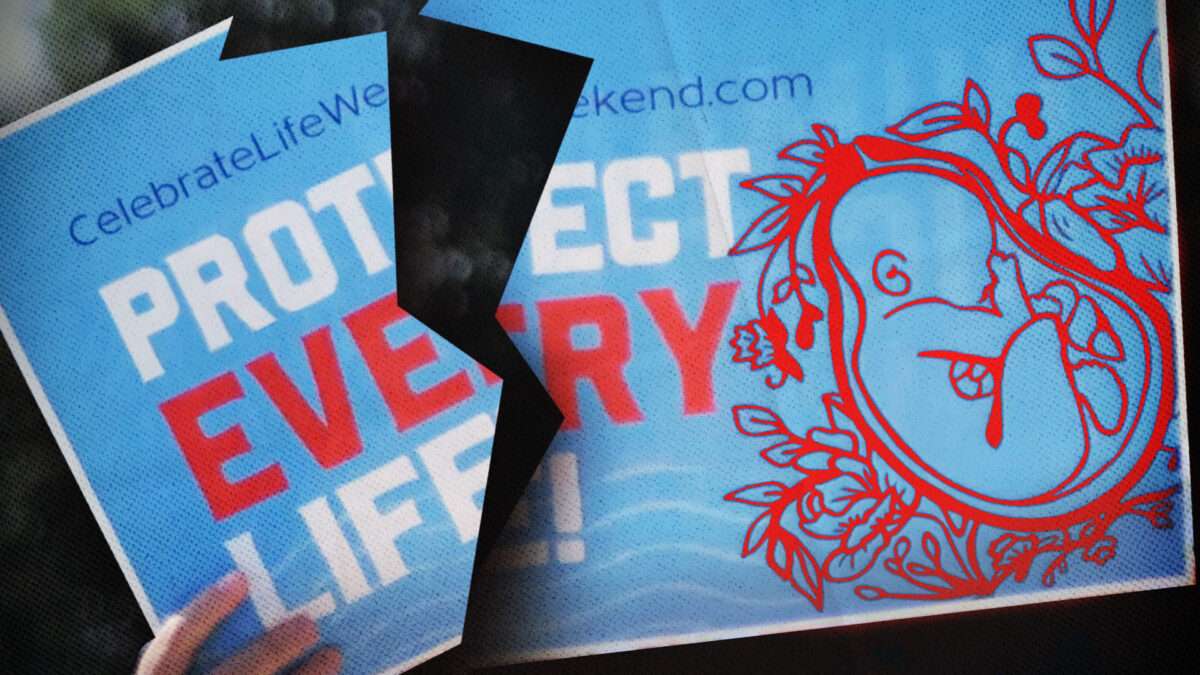
  •  

$6M Verdict in #TheyLied Defamation Lawsuit Brought Over Sexual Harassment Allegations

Another winner in the case, thanks to IOCB Prague's decision.

So reports the N.Y. Times (Mark Arsenault) yesterday, discussing former MIT cellular biology professor David Sabatini's victory on the defamation claim (and defendant's loss on her harassment and retaliation counterclaim). More details:

[Sabatini] was forced out of his lab in 2021 after an internal Whitehead [Institute] investigation concluded he had a past sexual relationship with a younger and less experienced colleague, Kristin Knouse, over whom he had a career-influencing role. The investigation also found that his lab had maintained a sexualized atmosphere. Dr. Knouse said that the relationship was coerced.

But Dr. Sabatini denied his lab had an improper atmosphere. He maintained that his relationship with Dr. Knouse had been consensual and that Dr. Knouse had schemed to get him fired and disgraced after he became interested in another woman….

After he was pushed out of M.I.T. and the Whitehead, he had talks with New York University about a job. But N.Y.U. staff members and students protested in the streets against his hiring in 2022, and the university did not hire him.

In 2023, he was hired by the Institute of Organic Chemistry and Biochemistry, in Prague, and later opened a Boston-area branch of that institute….

According to the Boston Globe (Madyline Swearing, Bryan Hecht & Tonya Alanez), "In 2023, New York hedge fund billionaire Bill Ackman and an anonymous donor pledged $25 million over five years to help Sabatini get back into science." The Globe also reports that the jury consisted of "seven women and six men," for whatever that's worth.

Here's an excerpt of what Sabatini alleged (quoting a Massachusetts appellate decision in the case, later reversed as to Knouse's counterclaim by the Massachusetts high court):

Sabatini and Knouse met in 2012. At the time, Sabatini was a tenured member of the department of biology at the Massachusetts Institute of Technology (MIT) and ran his own laboratory at Whitehead, a research institute affiliated with MIT that receives funding from private resources such as the Howard Hughes Medical Institute (HHMI) and public resources such as the National Institutes of Health (NIH). {As pertinent here, Whitehead and HHMI have a relationship whereby HHMI provides funding for, and in some instances employs, individuals working at Whitehead. At all relevant times, both Whitehead and HHMI employed Sabatini. In addition, NIH provided grants that funded Sabatini's research at Whitehead.}

Knouse was enrolled in an inter-institutional M.D./Ph.D. program at Harvard and MIT, where Sabatini was one of her instructors and served on her thesis committee. While Knouse was a doctoral student, she and Sabatini sometimes socialized.

Then, in 2018, Knouse started a fellowship at Whitehead, and she and Sabatini began a sexual relationship. While the relationship ended in 2019, Knouse sent text messages to Sabatini in January 2020 seeking to rekindle their relationship. Sabatini responded, asking Knouse to stop and stating that he wanted peace and needed space to figure things out.

In early 2020 through the fall of 2020, Knouse began telling colleagues, both at Whitehead and MIT, that Sabatini had sexually harassed her. In October 2020, Knouse reported the alleged sexual harassment to Lehmann. Around that time, Whitehead hired a consultant to conduct a diversity survey at Whitehead. During the survey, some Whitehead employees reported concerns about Sabatini. In response, Whitehead hired the law firm of Hinckley, Allen & Snyder LLP (HAS) to investigate the culture within Sabatini's laboratory. The HAS investigators spoke with Knouse and other members of the Whitehead community. In interviews with the HAS investigators, Knouse repeated her allegations that Sabatini had sexually harassed her.

On August 13, 2021, HAS sent a report to Whitehead finding that Sabatini had committed sexual harassment. Whitehead forwarded the report to MIT and HHMI. On August 19, Whitehead provided Sabatini with a copy of the report. On August 20, Sabatini resigned after learning that Whitehead was about to terminate his employment. {Before Sabatini resigned, his coemployer at Whitehead, HHMI, terminated his employment. MIT placed Sabatini on leave.}

And here's what Knouse alleged (quoting the Massachusetts high court decision); the jury verdict suggests that the jury largely believed Sabatini's story rather than Knouse's:

Sabatini was a laboratory director at the Whitehead Institute for Biomedical Research (Whitehead) and a tenured professor at the Massachusetts Institute of Technology (MIT) in 2012 when he met Knouse, then a graduate student at Harvard University and MIT. Sabatini was one of Knouse's instructors at MIT and served on her dissertation committee.

During a discussion in 2016 concerning whether Sabatini would endorse Knouse's application for an upcoming fellowship at Whitehead, Sabatini expressed concern that Knouse took herself too seriously and asked Knouse whether she ever had "fun," "fuck[ed] around," or had sex. Knouse responded that she did have fun and quickly left the conversation. Subsequently, Sabatini recommended Knouse for the fellowship and supported her grant application, both of which she secured.

Knouse joined Whitehead as a fellow in 2018. That year, Knouse and Sabatini began a sexual relationship that ended in 2019; thereafter, Sabatini continued to make sexualized comments to her. Knouse asserts that she struggled under this dynamic. Sabatini, whose laboratory was next to Knouse's, was the director of the Whitehead fellows program, and he served as a mentor and reviewer of her work. Knouse feared the potential consequences that losing an influential mentor would have on her career and believed she could not terminate the relationship without professional repercussions. She "began to withdraw from the scientific community" and "experience[d] debilitating feelings of entrapment and hopelessness."

Around this period, the results of a 2020 culture survey of Whitehead "suggested that Sabatini either personally engaged in sexually explicit and inappropriate discussions or fostered an environment that tolerated—or promoted—such inappropriate discussions and that he threatened those who might report his conduct." The survey results "amplified complaints" raised by two women, who had trained in Sabatini's laboratory, and by Knouse, who contemporaneously disclosed to the director that she had felt harassed during her fellowship but, fearing retaliation, did not provide any further details.

In response, Whitehead hired an independent legal team to investigate. The investigators determined, inter alia, that Sabatini had "engaged in and otherwise tolerated sexist and sexualized work discussions with his lab," and that engaging in such discussions "was an implicit part of succeeding in" Sabatini's laboratory. They also concluded that there was a "culture of fear and retaliation" within the laboratory. They reported that Sabatini had "engag[ed] in sexual relations with a Whitehead Fellow" and violated several Whitehead policies, including its sexual harassment policy.

Sabatini resigned from his Whitehead position. MIT announced that it was placing Sabatini on leave to perform its own investigation.

Sabatini's claims against Whitehead had earlier been dismissed (see, e.g., this decision).

Lisa Arrowood, Shayne Kinsella, and Sarah Sousa (Arrowood LLP) represent Sabatini.

The post $6M Verdict in #TheyLied Defamation Lawsuit Brought Over Sexual Harassment Allegations appeared first on Reason Magazine.

  •  
  •  
❌