Economists hope earlier episodes of labor disruption, from the Industrial Revolution to the Great Depression, can help us prepare for the age of artificial intelligence.
When Rishub Jain worked on safety at Google DeepMind, he held one of the most coveted jobs in tech. He was among a small group of researchers workingto mitigate the most consequential risks of AI.
But he left to cofound a nonprofit, Sampura Research. Jain traded the prestige and access that come with a Google job because he feels he can have a sharper, more profound impact on AI safety from the outside. Jain says he wants the autonomy to pursue research on a specific issue in AI alignment, which he felt had been deprioritized.
"All the top AI companies do care a lot about safety, and they invest in it, but they could be investing a lot more, and that's kind of what was inhibiting me," Jain says. "If they invested more in safety, I would still be at the lab and working on what I'm interested in with a large team." Google did not respond to a request for comment about whether it maintains a focus on this specific area of research, but DeepMind's principles state that it maintains "a holistic approach to responsibility, safety and security."
Jain's founder story echoes concerns raised by safety researchers who have quit OpenAI and Anthropic, including dire warnings that these companies are "gambling with our lives," and could develop technology that ends humanity. Once dismissed as fringe and doomsday-obsessed, the AI safety profession is growing as hacks by rogue agents and a string of departures have vaulted the issue into mainstream concern.
Open roles in AI safety jumped by 91% on LinkedIn over the past year. The industry expects a flood of cash from much-anticipated IPOs at Anthropic and, potentially, OpenAI, as those made absurdly wealthy by the equity returns may funnel money into potential clean-up crews for the messes created by the technology's rapid development.
The AI safety problem is existentially big, but the people who have spent time honing AI expertise are few. These are people who test and train AI systems to operate ethically. Some focus on technical research, others on policy and governance. And they're increasingly sounding alarms.
"The people who are most worried about AI are often the people who have been closest to the technology," Laura González Salmerón, advising manager at 80,000 Hours, a nonprofit focused on transitioning people into careers with high social impact. The scarcity issue is less about funds and more about people. "Talent is the main bottleneck."
Startups and nonprofits in AI safety must fight for talent in a shallow pool.
Jain's Sampura lists a salary range of $273,000 to $395,000 for an experienced team leader, which would put that worker in the top 3% of earners in the US, but likely pales in comparison to offers from larger companies. Meta reportedly offered $100 million in signing bonuses last year to poach the world's top experts. OpenAI gives employees an average of $1.5 million in stock-based compensation, and technical staff at Anthropic can earn more than $1 million annually.
Money aside, researchers are divided over whether they're more effective when working inside tech companies to mitigate risks as the latest models develop, or stepping back and attempting to steer the ship toward safer outcomes from the outside, like Jain did.
"I'm a little bit concerned about the pace of AI, and if we're able to actually come up with something useful before the rug gets pulled beneath us," Jain says. He's worried that AI's advancement will outpace the work to keep it in line with human values. "That's kind of what's been happening already."
David Robinson, who led transparency work for OpenAI's safety team, wrote an essay for The Atlantic explaining his departure. He said that AI companies should have more layers of checks and safety measures, akin to those in airports and nuclear energy, rather than the steamrolling culture of Big Tech.
"Perhaps I should have stayed and fought for fundamental shifts in our staffing and culture, but in practice, my colleagues and I were so busy sprinting that we seldom had the chance to consider big changes, much less to actually make them," he wrote. Robinson has said he plans to work on these issues from outside of the company.
As the issue grows in prominence, so has a niche of organizations helping train and recruit workers — and the opportunities aren't just for AI experts. Neav Topaz, co-director of Kairos, a nonprofit that upskills people to work in AI safety and recently raised $50 million from Coefficient Giving, says he speaks with about 10 to 20 people each month who want to move to AI safety, and interest is growing. He tells me that people are asking him more frequently about what the work entails.
"People are watching AI get good at their own jobs and starting to ask themselves what comes next," he says. The emerging jobs in AI safety "pay well, the field is growing fast, and you get to work on what might be the defining problem of our time."
Kairos this summer launched its Generator Residency, a cohort of 27 people who spent three months training for career transitions into AI safety. It's less about the research and technical work and more about merging other expertise, like in consulting, with AI safety principles.
He says that of the 27 residents, a dozen have already landed roles in the AI safety space, and many of the rest have offers to do so.
"Most of the people who will do this work are doing something else today," Topaz says. "The biggest talent gap in the field isn't researchers. It's people who grasp how high the stakes are and can translate their varied expertise into things that could make a difference in this space."
The major AI companies maintain that safety is a top priority. Last month, Anthropic CEO Dario Amodei wrote an essay calling for a slowdown in AI development, and Sam Altman and Elon Musk have agreed with him. Amodei and Altman have both said recently that they will bring third-party evaluators into their companies to bolster safety protocols.
These companies have their own safety teams, but safety work competes with business priorities to build the most advanced models and win in the market. The tension, along with safety issues like OpenAI's rogue agents hacking Hugging Face, has led to more scrutiny of internal safety work. Within days of Robinson's departure, OpenAI fired three researchers, claiming they shared sensitive internal data improperly with third-party AI safety researchers. The ousted researchers wrote a letter, reported by The Wall Street Journal, to OpenAI's board, arguing that their engagement with safety researchers fell within the scope of their roles, and that their terminations were "chilling those who remain at OpenAI." OpenAI said that the decisions "were not about raising safety concerns or speaking out," and that the company would not fire people for doing so.
While some have obsessed over AI risks for years, 2026's breakthrough moment has accelerated funding for and interest in the industry. 80,000 Hours has had calls with some 8,000 people since its founding in 2011, the majority of which have focused on AI in some way, González Salmerón says. Philanthropic groups like Coefficient Giving offer massive grants to startups in the AI safety space. METR, a nonprofit AI safety group that investigated the OpenAI agentic hack on Hugging Face, says it raised $71 million in six months this year.
Much of the funding flowing into AI safety filters through effective altruism, the Silicon Valley-tied philanthropic ideal focused on using evidence and logic to donate money where it will achieve the most good. Critics say the philosophy can place too much emphasis on avoiding future problems rather than addressing imminent needs. With more alarms sounding around the existential threat of AI, more people view those theoretical, distant fears as urgent causes.
AI safety groups and individual donors have spent nearly $50 million in this year's election on candidates focused on regulating AI, Axios reported. Jaan Tallinn, a billionaire who invested early in Anthropic and could soon have even more billions as a result, has donated $170 million to nonprofits focused on AI safety. Tallinn's view, as he recently told The Wall Street Journal, is that he can have the biggest impact on the future of AI and its risks by investing in AI companies, and then donating returns to nonprofits working in the AI safety space.
Coefficient Giving, the philanthropic venture from Facebook cofounder Dustin Moskovitz rooted in the effective altruism movement, announced its AI-safety-focused arm, Project Tailwind, in September. It says it's on track to give more than $1 billion this year to help companies of all sizes scale up in preparation for what it believes will be a deluge of philanthropic capital. Sampura Research has received an $11 million grant from the group. If startups don't begin hiring now, the logic goes, they won't move quickly enough when massive wealth hits the industry.
The dizzying development of AI has created safety risks, and there are "gaps in the ecosystem that aren't being filled and that aren't being owned by people," says Rossa O'Keeffe-O'Donovan, the program director in technical AI safety at Coefficient Giving. There are few people, he says, who sit at the intersection of technical expertise, risk analysis, a solutions-oriented vision, and the capacity to hustle as a startup founder.
New roles will emerge not just for technical talent, but also for consultants, policy wonks, communications experts, and founders who can run a business alongside technical experts. Working from the outside, they'll face hurdles in buying compute power, a lack of direct access to the latest AI models, reduced leverage, and smaller paydays.
The world feels unmoored, and the future perhaps more malleable than ever. The appeal of doing work that does good could stave off feelings of uncertainty, dread, and anxiety that people increasingly feel toward AI. In one doomer camp, AI will obliterate white-collar jobs. The optimistic view is that AI drastically reshapes work and spurs the creation of jobs we haven't yet thought of. AI safety is one of the first.
"There are lots of people beyond AI researchers who can help, like cybersecurity experts, like biosecurity experts, like economists," says Mantas Mazeika, a researcher with the Center for AI Safety, a nonprofit focused on AI research and advocacy. "They're making very significant contributions that the pure AI researchers, who were most of the people focusing on the problem beforehand, would be completely unable to do on their own."
Anthropic is advertising the role of an executive communications writer for $295,000 to $345,000 a year.
Jakub Porzycki/NurPhoto via Getty Images
Anthropic is hiring an executive communications writer for up to $345,000.
A comms pro told Business Insider that "When speed becomes cheap, judgment carries a premium."
3 writing experts gave Business Insider tips for young workers on practicing critical thinking.
Anthropic's AI chatbot can draft a speech in seconds, but the company is now hiring a human writer — for $295,000 to $345,000 a year.
Anthropic isn't looking for just anyone with a way with words. It wants someone with at least 8 years of experience who can quickly grasp technical concepts, help executives sharpen their thinking, and remain composed when news breaks.
While some LinkedIn users reacted skeptically to the idea that the new hire's work would be used to train AI, with an Oregon-based author commenting that this is the job one would take if the "writer wanted to build their own gallows," communication pros say the Anthropic job offers clues about the enduring value of human creatives.
Three professional writers and comms experts told Business Insider that young writers need to understand that the work starts long before the typing does, and that being good with words is only part of the job.
“When speed becomes cheap, judgment carries a premium," Ann Handley, the chief content officer at MarketingProfs and author of “Everybody Writes,” told Business Insider. "I think we're seeing that value extended to the role of the writer.”
What AI could not achieve
The opening for an "Executive Communications Writer" comes as Anthropic’s own research shows how AI is reshaping its workforce. According to the company's report, junior workers accounted for 9% of hires in technical departments in June, down from 27% in early 2025.
In May, Anthropic CFO Krishna Rao said that AI already writes 90% of the company's code, which shifted hiring needs in all office roles toward oversight, judgment, and strategy, away from the actual execution. Rao also added that the company may actually expand hiring because "there's no shortage of work to do."
Handley said that successful corporate communicators need to become strategists for the company's leaders, rather than simply polish their language.
"Good writers have always been strategic, in the sense that they have always made choices about what goes on the page, and what does not," Handley said.
"The successful candidate isn't merely shaping language, but shaping thought leadership and how the team is presenting to the world," Handley added. "That means knowing which ideas are worth owning, which are worth exploring, and which are just plain dumb."
Joseph Braue, the executive editor of Content Marketing Partners, told Business Insider that a large part of the job as a corporate writer is to challenge unsupported claims, avoid overpromising, and resist pressure to publish weak material.
“The decisions I’ve regretted the most were times I didn’t push back enough on corporate or customer executives,” Braue said, adding that while many writers do collaborate with AI, they must control the narrative and ensure accuracy.
Measure your impact
The compensation for Anthropic's communication role is high compared to similar openings, and professional writers said that there are ways a new hire in such a role could prove they are worth the expense.
By comparison, Amazon Web Services has a job opening for an Executive Communications Manager based in Seattle, offering between $126,700 and $171,400 in annual pay.
Josh Bernoff, an author on business strategy and former executive with 20 years of experience,told Business Insider that a bigger pile of content isn’t proof of a writer’s value in a company, and that to get promoted, writers need to collect evidence of the impact of their writing.
“If your job is to create market research reports, then you're only effective if people read those reports and say, 'here are the changes we're going to make on this product,'" Bernoff added. "Your job is to move people and think about how to do it before you start writing."
Braue, who leads a content strategy team, said that writers looking to prove their value need to understand business language and check whether internal partners and key sales leaders are using their content.
“Learn basic marketing analytics. Understand attribution, conversion, and how a pipeline works," Braue said. "Writers who speak revenue get promoted."
Build evidence that you can think
For young graduates, the pros recommend practicing original thinking while learning to use AI deliberately, even if you don't intend to be a writer.
Bernoff said he would urge all early-career workers to take writing classes and to practice using AI for research and efficiency while composing the words themselves.
Bernoff, who conducts an annual survey on how writers use AI, said he found last year that writers commonly used AI as a thesaurus or search engine, but fewer than 10% used it to create content intended to be published as is.
"If you're in a position to move your fellow students or people reading a school newspaper or your professors, then you're going to be taking the first step that's necessary to be able to move people in a corporate environment," Bernoff said.
Handley said she recommends that early career professionals start a newsletter and publish at least every two weeks, even with a small audience.
“Maybe you'll learn to interview people or ask better questions or notice things others don't," Handley said. "In doing so, you'll build a body of work that shows a potential employer that, sure, you can write, but most importantly, you can think, and you can engage on the page.”
Amazon says its seasonal job listings often fill within minutes of posting.
Michael Nagle/Bloomberg via Getty Images
Amazon is hiring more seasonal workers than ever this year.
The company will also extend healthcare benefits for hourly workers on day one, starting on Jan. 1.
Holiday hiring is shifting from traditional store jobs toward more e-commerce distribution roles.
Amazon plans to boost its seasonal workforce by 20%, assembling its largest temporary workforce ever.
The e-commerce giant aims to hire 300,000 employees during the holiday rush for its fulfillment and transportation network across the US. The target is up from 250,000 for each of the prior three years. It also plans to offer healthcare coverage on day one of employment for full-time, part-time, and seasonal hourly workers with at least 30 hours a week scheduled, starting January 1.
Seasonal workers who join before January 1 will begin receiving healthcare on that date, the company said. Workers who join after will have access from their first date of hire. The company hires seasonal workers year-round.
Amazon health plans start at $5 a week and include $5 copays. The company previously said part-time and seasonal employees qualified for medical insurance after 90 days, depending on the number of hours worked.
The company says seasonal employees can earn an average wage of more than $20 per hour, while full- and part-time regular employees see an average of nearly $24 per hour. Last month, Amazon increased its minimum pay for core operations workers to $20 an hour and gave all US workers new grocery discounts.
Seasonal hiring has been somewhat of a mixed bag this year, with some traditional retailers like Walmart and Target opting to tap into their existing workforces. Others, like Spirit Halloween, Michael's, and Dick's Sporting Goods have announced plans to collectively hire approximately 73,000 people this year.
A report last week from Indeed found that the seasonal hiring window is starting earlier in the year and shifting from conventional in-store retail toward more e-commerce fulfillment roles.
Amazon says its seasonal roles often fill within minutes of being posted, and that some seasonal workers ultimately find a longer-term position with the company.
Anthropic CEO Dario Amodei has become a leading voice on AI's potential to disrupt jobs.
Chance Yeh/Getty Images for HubSpot
Anthropic said it has been hiring a smaller number of junior technical positions.
Entry-level hires in technical departments fell from 27% to 9%, the AI company said.
AI agents have spread across the firm to write code, fix bugs, and handle other tasks.
Anthropic's own data offers a stark warning for entry-level tech employees in an AI-heavy workplace.
The company behind the AI chatbot Claude said in a newly released internal report that it has been hiring for a "smaller share of junior technical positions" as AI agents have been deployed across the firm to write code, fix bugs, and handle other tasks.
By August, Anthropic said its interactive AI agents were logging six hours of work for every hour a human employee logged.
A chart published in the new report titled "How Employment is Changing at Anthropic" shows that junior workers made up 27% of hires in technical departments at the company in early 2025. By June of this year, that number had plummeted to 9%.
The share of junior-level workers in technical departments had also declined over the same period from 21% to 14%, while open roles for junior positions slid to 6% after topping 20% late last year, the chart shows.
Anthropic included this chart in its "How Employment is Changing at Anthropic" internal report.
Anthropic
That downward trend was less pronounced in non-technical departments, where hiring of junior workers fell from 31% to 26% over the same timeframe, while their share of head count rose from 23% to 25%. Junior job openings in non-technical departments, meanwhile, dropped from 31% to 13%.
Anthropic said the changes came as AI usage inside the company rapidly expanded.
"As AI agents diffused through the company, Anthropic began producing more code per person, closing more sales per rep, and processing more contracts," the report said. "Following the same employee over time, output rose as they adopted new AI tools."
It added, "We find that even as the company grows, relative hiring in junior technical positions has slowed. Productivity for both engineers and non-technical employees has leapt up and did so sharply when they adopted coding agents."
The findings land as Anthropic CEO Dario Amodei has emerged as one of the tech industry's most prominent voices on how AI could disrupt jobs.
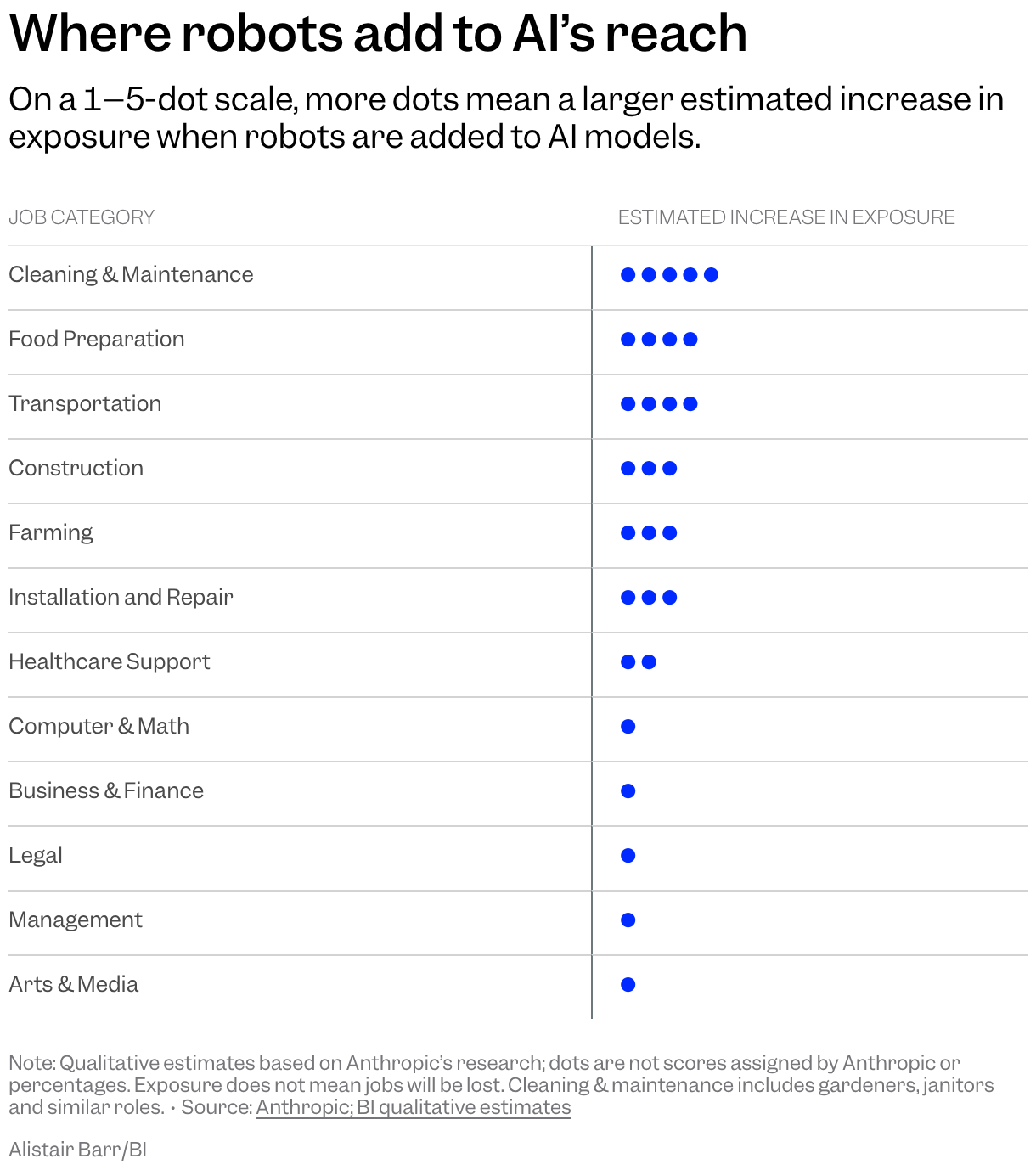
Anthropic examined what might happen when AI and robots are combined.
That could put more hands-on jobs, including gardening, in the path of automation, Anthropic warned.
I'm skeptical that robots can handle the messy reality of pulling weeds.
Remember when Anthropic's AI jobs report suggested gardeners were among the safest workers because AI couldn't pull weeds or tell a rose from a dandelion? I joked about that in AI Insider earlier this year.
This time it asks a bigger question: What happens when you combine AI with robots? That change pushes many hands-on jobs much higher on the disruption scale. On paper, it makes sense. In practice, I'm skeptical.
For instance, anyone who's spent time working in a garden knows how hard it is to identify the right plant, kneel in awkward spots, and pull a weed out properly by the roots without damaging everything around it.
Robots are improving. But if you've ever watched one tackle a messy real-world task, you'll know there's a long road between a research chart and reality.
The chart below illustrates how adding robots could change job-task exposure across selected job categories. Cleaning & maintenance includes gardeners along with janitors and similar roles.
Laura Massetti, a career coach for young workers, said that Gen Z workers struggle with unwritten rules and need professional training.
Courtesy of Laura Massetti
Laura Massetti spent 15 years leading teams and saw Gen Z workers struggle with unwritten rules.
Massetti said Gen Z workers need training on communication, judgment, and follow-through.
As AI levels technical skills, Massetti said human skills can help early-career workers stand out.
This as-told-to essay is based on a conversation with Laura Massetti, founder of Real Work Ready, which helps early-career professionals develop workplace skills. Massetti has more than a decade of experience in the corporate world, leading sales and marketing teams. The essay has been edited for length and clarity.
I spent 15 years in the corporate world, leading sales and marketing teams. I loved mentoring early professionals, but I often found myself thinking: My goodness, I wish I could make this process go quicker.
I never only look at whether someone could do the work. It is more about whether they could communicate clearly, exercise good judgment, and follow through.
As a career coach for young workers, I know there are things that you, as an employee, get judged on that no one actually puts inside the rubric. We expect people to figure them out over time, but in reality, someone has to teach them.
Gen Z needs feedback in a workplace that expects people to figure things out
I don’t think that Gen Z is unready for work. I think no one has taught them what to do.
This generation grew up with a cellphone in their hands. They’d post something on Instagram and get 10 likes. They’re used to instant feedback: Tell me what I need to grow.
That’s not how the workplace is built. We have annual reviews. You learn through experience; you learn the hard way.
Young workers are digitally fluent, which makes this generation incredible for so many reasons. But growing up digitally, compounded by the pandemic, left gaps in opportunities to practice face-to-face interaction.
Now they’re entering workplaces with other generations, and those generations set the rules.
Meanwhile, AI is taking on tasks that used to help people develop. We learned shoulder to shoulder with someone. How are new hires supposed to learn if we’re outsourcing those opportunities?
You’re being judged on things no one puts in the rubric
There are areas you’re being judged on that no one actually puts inside the rubric, including communication and clarity, prioritization and judgment, your ability to follow through, professional presence and credibility, ownership and reliability, and organizational awareness.
It’s not just about how you communicate. When you enter the workplace, do you know how to get stuff done? How aware are you of the organization you operate in?
You need to understand when to use email, when to use Slack, and when to stop by someone’s office. You can’t walk in and assume you know the rules.
In one new-hire program at a company with about 100,000 employees, a manager told me that someone had pinged the CEO on Slack to request a skip-level meeting. Mind you, that would’ve been probably 10 skip levels.
Poor thing, he had no idea. No one had told him that wasn’t how you reached out to the CEO in that organization.
I’ve also seen people show up to meetings unprepared, without what they needed or knowing how to follow up.
Dressing appropriately is something I had to learn on my own. About six months into my job, I wore a full black business suit to a meeting in Miami. It absolutely did not match the environment. I was way too formal.
Match the client’s environment and match how they dress. The other day, I saw someone meeting their manager in a suit jacket over a basketball jersey and shorts, but wearing loafers. Your job is to show your manager that they can trust you to be professionally present and to deliver.
Managers have a responsibility here, too. When we say, “They’ve been here for two years, and they’re just not getting it,” we need to ask ourselves: What aren’t they getting? What am I judging them on that I haven’t clearly explained?
Practice the human skills that will set you apart
My company now offers a six-month program that combines online training with weekly role-playing of workplace scenarios.
We practice things like how to react when you receive feedback. The goal is to give people experiences they might otherwise wait years to encounter.
My advice to every fresh graduate and those entering the workforce is that, at a time when AI is making skill sets equalizers, you will need to define how you’ll be different.
Technical skills are still incredibly important. But how do you communicate, exercise judgment, execute an idea, and get people’s buy-in?
Knowing the ins and outs of coding is one thing. Being able to speak to a boardroom and convince people of an idea is another ability you can bring to an employer.
Those are the skills I believe will make all the difference.
Kiley Pulley transitioned from cashier to store manager within seven years.
Kiley Pulley
Kiley Pulley became Walmart's youngest US store manager at 21, starting as a cashier at 16.
Her former store manager helped her through her succession plan and interviews.
Pulley emphasizes learning daily and adapting for career growth.
This as-told-to essay is based on a conversation with Kiley Pulley, a 23-year-old Walmart store manager in Buckeye, Arizona. It has been edited for length and clarity.
In 2019, when I was 16 years old, I started working at Walmart as a part-time cashier. I wanted my own money, and figured, why not just get a job?
My sister and my mom were already working there, and it was also right down the street from my high school. It was easy for me to get out of school and walk to work.
Over the next few years, I moved through different roles, from cashier to stocker to online fulfillment. Then, when I turned 18, I became an academy trainer, and six months later, a digital team lead.
When I became a team lead in mid 2021, it hit me that I wanted to stay at Walmart full time and make it my actual career. At 19, I became an operations manager, and right before I turned 22, I became the youngest store manager at Walmart in the US.
People ask me, "How did you do it?" My answer is to show up and learn something new every day. Here are six things I've learned along the way.
I realized I could help people by hiring them
Originally, I wanted to start either my own nonprofit or my own business and help out the homeless population; then I realized that I could do all that through Walmart.
I could make a difference through the people that I hire and the impact that I have on my associates at the store.
When I became a team lead, I was making good money, and I also really liked it. I started actively working toward becoming a store manager. I got on succession plans and was on monthly calls with our market manager. When I became an operations manager, I led multiple projects in our market to get myself ready to become a store manager.
I'd also ask to cover for store managers when they'd take off work; that way I could gain additional experience that was needed to be promoted. I remember thinking, I'm going to be a store manager at 21. I'll be the youngest in the company.
I had to learn that my words carried more weight
As an associate, I was friends with everybody. I could joke around with everyone. When I became salaried, everything changed.
One of the biggest learning points for me has been the way I talk and how to engage with people from different cultures. Changing my tone and limiting the joking and playful attitude felt necessary as a leader in the building.
At the time, setting new boundaries for myself made me feel more confident in my new role and even now in my current role.
I was a little nervous when I first went into a salaried position. People said I might have issues managing those older than me, but I've never had problems with my team not respecting or listening to me.
I also made my social media profiles private. I think connecting on social media can make it harder to separate between being someone's manager and being their friend.
I had to learn how to delegate
Getting out of the "if I want it done the right way, I'll do it myself" mindset was a big learning. I realized not everyone's going to know everything that I know, and if I really want to delegate and get tasks done, I'm going to have to teach and train.
A big part of being an academy trainer and team lead is training your associates. Once you get to operations manager, you kind of have to step back and expect your team leads and academy trainers to do that same thing.
I had to learn that if I delegated, things could get done faster or more efficiently.
I had to learn to be a servant leader
When it comes to my associates, if they need something, whether that's ordering the supplies or putting in tickets for them, I want to do that. I want to advocate for them.
Also, everyone likes the appreciation of, "Hey, thank you for doing this today," or "Thank you for going above and beyond on this."
I had to learn to have work-life balance
When I first became salaried, I was always on the clock. I stopped going to the gym, and I sacrificed some time with my fiancé and family. I'd stay at work and say, "They need me."
It was my fault; the team didn't need me that badly. Now, I'm doing better. When I get home, I'm not spending the whole day looking at metrics or constantly texting my team. I've gone back to the gym.
I learned to take a step back and trust my leaders to do what they need to do. I trust that they know what they're doing.
I think there's always going to be some event you could miss out on. That can be hard to juggle sometimes, but I'm lucky enough to have a fiancé who's also career-focused and driven, so we kind of use each other as motivation.
I realized I could build a career without giving up on school
I went to college for business and ended up dropping out when I got my salaried position. I told myself that I'd get back into college when I got my first store.
My old store manager was the one who promoted me through all of the hourly supervisor roles. She even prepped me for my first salaried role. She sat in the office reading interview questions with me. Every time I'd say the word, 'um,' she'd say, "Nope, restart."
She was constantly there for me, and even still having her as someone to go to has been great. My market manager has also known me since before I started promoting. Every time I think I'm too young to be in this room, he's always in my corner.
I'm now enrolled in Live Better U, a program where Walmart pays for certain bachelor's degrees. I'm getting some of my foundational courses, and then I plan to get my college degree.
Keep pushing to learn more
For teenagers starting out, I encourage them to do a good job and learn as much as they can.
Companies are constantly changing, especially with technology. It's important to adapt and not be comfortable with what you already know.
When I look at my future at Walmart, I told myself I'd get to market manager at 27 or 28 — that's my short-term goal. Then, long-term, my goal would be regional EVP.
One thing I always remind myself is that I worked hard to get to this life, so I can't be upset now that I have it. Maybe we don't have time to do all the fun things right now, but if we work hard through our 20s, thinking about where we might end up when we're 30 or 40 keeps me motivated.
Attendees chat at Anthropic's developer conference in May.
Don Feria/AP Content Services for Anthropic
Anthropic published new surveys comparing its staffers' sentiments to those of US workers.
The AI startup's employees expect the tech to change work and the economy far more dramatically.
Most Anthropic employees guessed that unemployment would top 12% in 2030.
Anthropic employees believe that AI will make their labor obsolete. Most US workers don't see their jobs that way at all.
The AI company published research on Friday that compares surveys with US adults against an internal poll of 1,334 Anthropic employees. Most of the Anthropic staffers said AI will handle at least 80% of their jobs by 2030, while only about 5% of the US workers felt the same.
The research, titled "The AI expectations gap," shows the chasm between how the employees at the AI startup feel and how other American adults feel. Anthropic workers are far more optimistic about the progress of AI capabilities, how much it's already saving time, and how fast the economy will grow.
The median Anthropic employee said that by the end of 2030, they expect AI to handle 95% of the work of building a new AI model.
Peter McCrory, Anthropic's chief economist, wrote on X that the views might help outsiders prepare for more capable AI systems.
"We're publishing this research because Anthropic runs roughly a year and a half ahead of the economy on AI adoption, so what happens at Anthropic could be a leading indicator for the broader world," he said.
Anthropic workers expect higher unemployment and extreme GDP growth
Anthropic's surveys examined how workers already use AI and how they think it will change.
"US adults and Anthropic staff largely agree about what AI can do today," the researchers wrote. "However, they disagree about how quickly it will improve, how widely it will be used, and how large the productivity gains measured by time saved will be."
There are a few possible explanations for the discrepancies. Anthropic employees have larger budgets for the tools and often get access to unreleased models. US workers, on average, are more likely to work with their hands or in a service industry.
The researchers found that workers in manual trades, production, and transport thought AI would handle the least of their work by 2030, compared with Anthropic staffers, tech workers, and respondents in business and finance.
Most Anthropic employees surveyed said that they expect the unemployment rate to top 12% in 2030. The majority of the US workers thought it would hover around or under 8%. It's currently 4.2%.
So far, researchers have found mixed evidence on AI disrupting the job market — a Yale team recently found it had mainly changed jobs, and had "no connection" to changes in unemployment.
The Anthropic researchers also compiled survey responses to estimate predictions on economic growth. Based on their answers, the median US adult's guess for GDP growth in 2030 was 5.4%, compared with 17.1% among Anthropic employees. The country's GDP grew by 2.2% last year.
Anthropic's staffers are following their leader
Anthropic's CEO, Dario Amodei, has become one of the industry's most closely watched voices on labor upheaval. In March of 2025, he said he expected AI to write 90% of code within 6 months, and "essentially all of the code" within the year. He made more headlines that May, telling Axios that AI could wipe out half of entry-level white-collar jobs within five years and lift unemployment to 10% or 20%.
Amodei expanded on that claim in a later essay, writing that he expects AI to be different from prior technological changes. He wrote that he expects an "unprecedented" short-term shock to labor, and that the economy will grow dramatically.
"AI isn't a substitute for specific human jobs but rather a general labor substitute for humans," he wrote.
Have a tip? Contact this reporter via email at scouncil@businessinsider.com, or over text, Signal, Telegram, or WhatsApp at 415-757-8198. Use a personal email address, a non-work WiFi network, and a non-work device; here's our guide to sharing information securely.
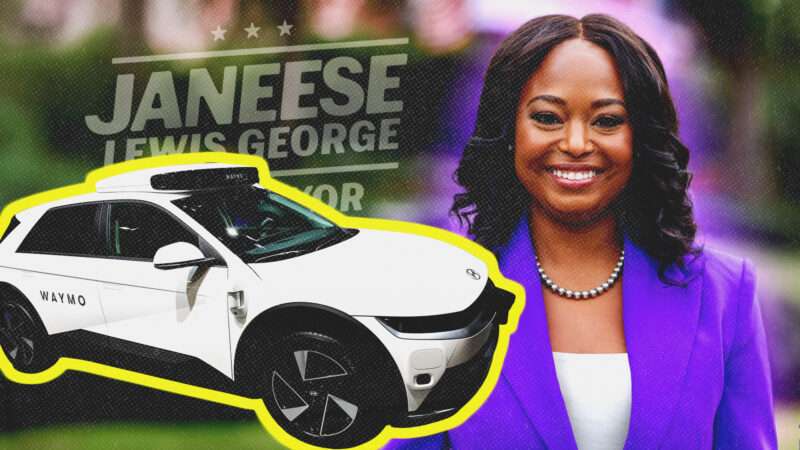
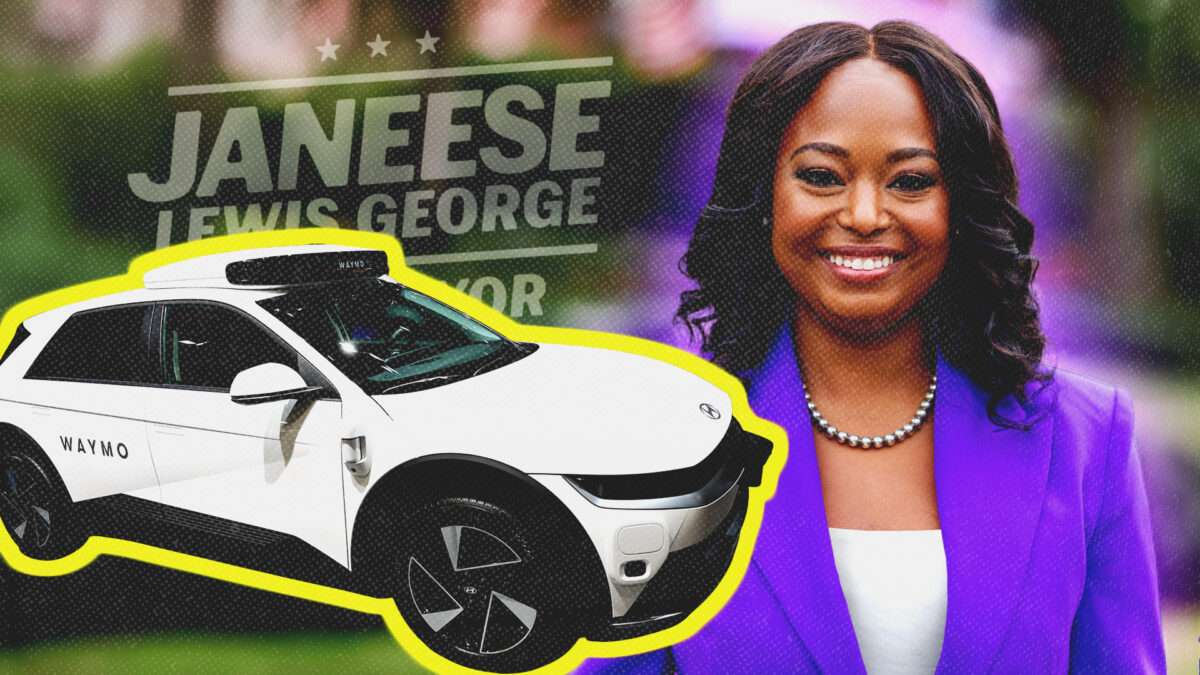
Janeese Lewis George, a D.C. councilmember and the city's presumptive next mayor, has come out against pending legislation that would allow autonomous ride-share vehicles onto city streets, citing the technology's potential to eliminate the jobs of ride-share human drivers.
"DC is facing a jobs crisis. Rushing the legalization of autonomous vehicles is irresponsible given the anticipated AI-related job displacement and disruptions that put countless workers at risk," she said on X yesterday.
DC is facing a jobs crisis.
Rushing the legalization of autonomous vehicles is irresponsible given the anticipated AI-related job displacement and disruptions that put countless workers at risk.
In a follow-up post, she said that the D.C. Council should delay consideration of a pending bill that would allow Waymo, which is currently testing its technology with human safety operators on District streets, to offer autonomous rides to the public.
Ever since Lewis George won a commanding victory in D.C.'s Democratic mayoral primary earlier this year, pundits and wonks have been trying to read the tea leaves on how the Democratic Socialist will govern.
Lewis George's comments about Waymo suggest the mayor has a deeply mistaken view about the effects and benefits of technological innovation. Contrary to her contention, Waymo legalization is unlikely to exacerbate a "jobs crisis" for at least three reasons.
The first reason she's wrong is that very few D.C. residents work full-time as ride-share drivers. On her Capital Commonsense Substack, Ashley Schapitl reports that, by Lewis George's own estimate, there are only 200 District residents who work full-time as ride-share drivers.
For comparison's sake, the District has a labor force of roughly 400,000 people. So even if Waymo displaced all human drivers in the District, it would be a statistical nonevent.
Few headlines, for instance, reported that D.C.'s labor force shrank by 1,000 people between May and June. Neither did many outlets report that the labor force grew by roughly 600 people between July and August.
Yet here the mayor is talking about a "jobs crisis" over what would be an even smaller change in the number of employed workers in the city.
The second reason not to fear an exacerbated "jobs crisis" as a result of Waymo legalization is that autonomous vehicles (A.V.s) will not completely replace human rideshare drivers in the foreseeable future.
In the cities where Waymo has been active for years, A.V.s are still responsible for a minority of rideshare rides.
That's the case in Phoenix, where Waymo has been offering autonomous commercial service since 2020. In an article from April, Business Insider cites one study that put Waymo's market share at 16 percent of ride-share rides.
In other words, 84 percent of ride-share rides are still being performed by humans a full six years after A.V.s came onto the scene.
That isn't to say the impacts of A.V.s are necessarily positive for human drivers' earnings.
Another study by Gridwise from August 2025 found that A.V.s appeared to be marginally reducing drivers' hourly pay and number of trips per hour. That's evidence of the market for rides becoming more competitive, but it's not, as of yet, evidence of a job apocalypse.
Network design matters too. In places like Los Angeles and San Francisco, Waymo is a standalone competitor to traditional ride-share companies like Uber and Lyft. In Austin and Phoenix, Waymo partners with Uber to offer rides on hybrid human-and-A.V. networks.
A report by EnoTrans, funded by a grant from Lyft, found that the later cities' hybrid networks actually increased human drivers' trips per hour. Their pay-per-hour fell, albeit less steeply than in cities without hybrid networks.
All of that is to say that while Waymo, as a competitor to human-operated ride-share services, shouldn't be expected to have a positive impact on drivers' earnings. It shouldn't be expected to have a catastrophic impact on them either.
The third and final reason that Lewis George is wrong to think that Waymo will worsen a coming "jobs crisis" is that Waymo's employment impacts are not limited to its effect on competing human drivers.
If Waymo earns any market share at all, it'll be because it's offering some travelers a better transportation option than the ones that currently exist. Increased ease of travel within the city would be expected to raise employment levels, not lower them.
If Waymo makes it easier or cheaper for people to get from home to the office or from the office to their kids' school, they might be more willing to live in D.C. over Arlington or Silver Spring. If it's more convenient to get to the movies or dinner, residents will be more willing to patronize local businesses.
None of that even touches on the economic and human benefits of Waymo's likely positive impact on road safety.
The direct effects of Waymo on drivers' employment must be weighed against all the other economic activity that autonomous vehicles will facilitate.
In the long run, the economic effects of autonomous vehicles may well be revolutionary. In the foreseeable future, they'll make the market for for-hire rides slightly more competitive.
A reasonable assumption then is that Waymo will have a modest, but positive, impact on overall economic activity and employment in the District, even if it has a modest, but negative, impact on the small number of full-time ride-share drivers who live here.
If the new mayor can't even tolerate that level of economic disruption, that does not portend good things for D.C.'s economy under a Lewis George administration.
Attendees at OpenAI's DevDay conference on September 29, 2026.
Minh Connors/Bloomberg via Getty Images
OpenAI's Alexander Embiricos said the AI era gives a choice: work more, or work less.
He's in charge of Dots, the company's new always-on work assistant.
AI is often pitched as freeing up time. Embiricos responded to the idea that it might add more work.
As the competitive AI race pushes tech workers into long hours, the head of OpenAI's new Dots product says AI gives people another option: work a whole lot less.
Alexander Embiricos, who leads OpenAI's enterprise product and helms the new Dots agent tool, told a crowd at TechCrunch's Disrupt conference on Thursday that AI's capabilities have created something of a fork in the road for workers. You can grind to meet the moment. Or you can use AI to kick your feet up a little.
"We basically have a lot more choice now," he said.
Embiricos made the comments after a reporter asked about when AI systems will actually deliver more free time. The reporter shared an anecdote where an OpenAI employee used a ChatGPT mobile feature to work in their car and on a plane — not exactly liberated by the new tech.
Embiricos said that the moment has already arrived where a worker can "outsource" tasks to AI and do less work. Then again, some people are so excited about AI's potential that they feel like it's an "interesting, ripe moment" to put in extra hours.
"I think that's why a lot of people are motivated to work very hard right now. That includes myself," he said. "But I think actually there is this choice, and there's totally this other setup where you could delegate a ton more things."
OpenAI is billing its Dots tool as a workplace assistant, always on and capable of proactively handing tasks and sorting to-dos. Embiricos uses his Dot often in Slack, he said, engaging on various threads.
His perspective illustrates how early companies are in their journey to adopt AI tools. Most companies have not yet automated their work tasks, and many workers are still debating how much to use the tools. Early AI adopters, meanwhile, can sprint through some work that used to take days or weeks, especially in software engineering.
Embiricos summed up the situation he feels workers are in: "You either choose: do you expand the ambition of what you can do, or do you do less? I do think we're there."
Have a tip? Contact this reporter via email at scouncil@businessinsider.com, or over text, Signal, Telegram, or WhatsApp at 415-757-8198. Use a personal email address, a non-work WiFi network, and a non-work device; here's our guide to sharing information securely.
So-called educated unemployment is rising today in Chile among people with completed university or technical-professional training, an academic study revealed.
In 2010, only 21.7% of the labor force had graduated from a higher education institution, a share that climbed to 42.1 out of every 100 by 2026, according to a report by the Economic Context Observatory of Diego Portales University (OCEC-UDP).
That means more qualified workers and higher productivity potential, but it does not mean greater chances of landing a job.
The National Institute of Statistics reported that in the June-August mobile quarter, the open unemployment rate reached 9.6%, with 44 consecutive months above eight percentage points.
Among those who completed university or successfully completed technical-professional training, unemployment is also a serious problem, the OCEC-UDP said. It rose one point in the last 12 months to 8.3%. That implies 40,938 fewer jobs and a total of 356,286.
Women with higher education fare worst, with lack of work affecting 8.7 of every 100, compared with 7.8 for men, the OCEC-UDP said. By age group, educated unemployment is higher among those under 30, it said.
Chile es el país con la tasa de desempleo más alta de la región, según indican diversas publicaciones; y, si se analizan los países de la OCDE, el segundo. En nuestra región de Los Ríos la situación es alarmante, especialmente en jóvenes y mujeres. No se ve ningún proyecto nuevo… pic.twitter.com/dox1io85lC
Another facet: many higher education graduates who appear employed are actually doing work below their preparation, according to OCEC-UDP. Qualification underemployment occurs when a person performs a task below their preparation and therefore generates added value lower than their potential.
The European Commission has unveiled what it calls an ambitious “Fair Labour Mobility” package aimed at making it easier for people to work across EU borders while strengthening protections against exploitation and fraud.
The proposals would allow workers to prove social security and health insurance entitlements digitally and make qualifications easier to understand and recognize. The Commission estimates the measures could generate €6 billion in benefits by 2040.
Central to the package is a European Social Security Pass, or ESSPASS, enabling people to request and receive documents such as the European Health Insurance Card and the A1 certificate for posted workers online. Documents could be stored in the EU Digital Identity Wallet and verified by national authorities.
Brussels is also proposing faster recognition of professional qualifications. Procedures for regulated professions, including doctors and nurses, with the aim of reducing the target processing time from three months to five weeks.
Recognition of qualifications obtained outside the EU would also be streamlined, with common standards intended to cut average processing times from 14 months to four months.
The European Federation of Nurses Associations (EFN) has welcomed the Commission’s plans for recognising qualifications from outside the EU, arguing that they bring greater transparency to a labour market already heavily reliant on internationally recruited healthcare professionals.
EFN Secretary General Paul De Raeve said recruitment from third countries was already well established and frequently organised through bilateral arrangements between governments. Denmark, he noted, has gone considerably further, establishing a school in Delhi to prepare Indian nurses for work in Denmark, including Danish-language training.
“This is going on,” De Raeve said, arguing that international mobility cannot simply be prevented when European health systems need staff and qualified professionals want to move. In the short term, he said, overseas recruitment is also difficult to avoid given that educating a nurse takes around four years.
For De Raeve, an important improvement in the Commission proposal is therefore not simply facilitating recruitment, but putting it within a clearer European framework. The proposed directive would establish common rules for recognising qualifications obtained outside the EU, including aligned documentation requirements.
It would also provide stronger mechanisms for checking whether qualifications are genuine and meet European standards. Training programmes and institutions seeking access to automatic recognition would undergo EU-level assessment, potentially including independent review, site visits and direct examination of training environments.
De Raeve particularly welcomed this approach, pointing to the risks of fraud in diploma accreditation. Having universities and training institutions formally assessed and certified would give regulators and employers greater confidence that somebody arriving with a qualification has been trained by a legitimate institution to an appropriate standard.
He also welcomed plans to reduce administrative delays for individual professionals.
For nursing, De Raeve argued, faster recognition and stronger verification could help Europe recruit internationally without lowering professional standards, while replacing opaque bilateral arrangements with more consistent EU-level rules.
The proposals still require approval by the European Parliament and EU governments. Key measures would then be phased in over several years, with improvements to the Labour Authority expected during 2028–2030.

 Login