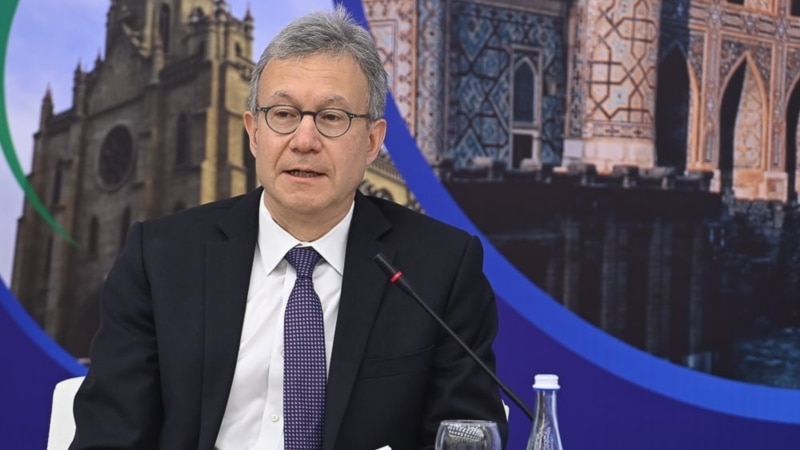
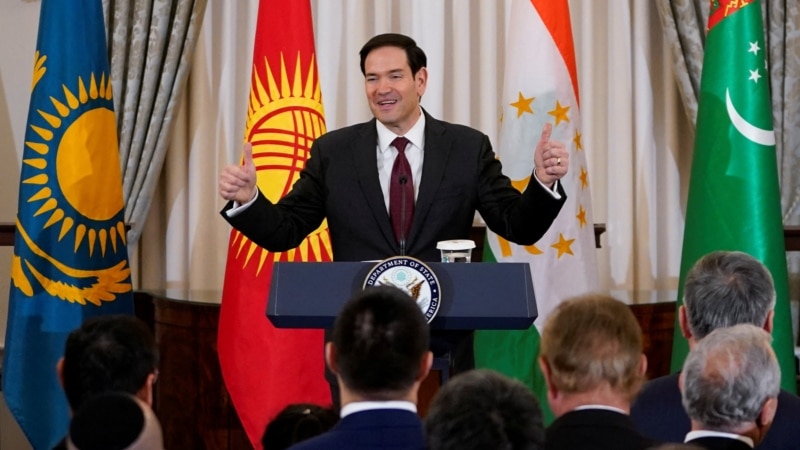
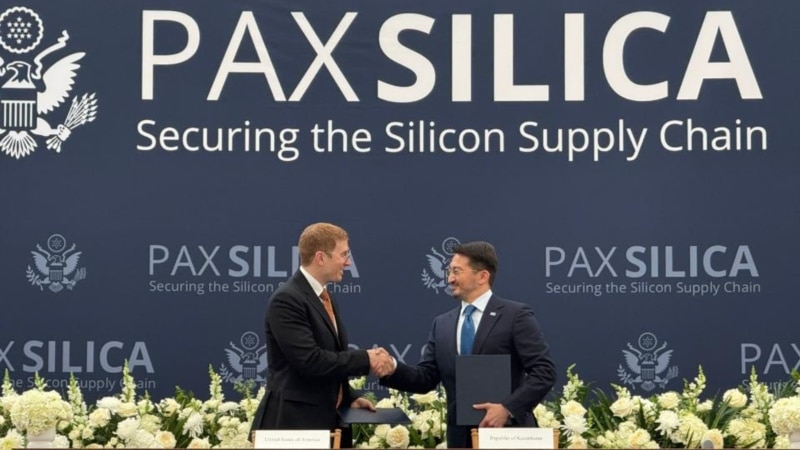
Marco Rubio has brought nearly 300 American business representatives to Uzbekistan for a meeting with representatives of the five states of Central Asia. But Daniel N. Rosenblum, a former US ambassador to Uzbekistan and Kazakhstan, cautions that investment faces major obstacles.
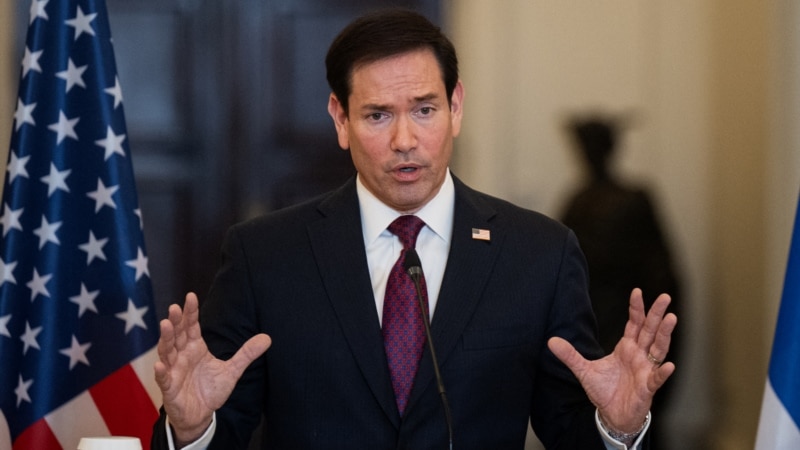
As Secretary of State Marco Rubio heads to Uzbekistan, Washington is hoping the high-level diplomatic engagement translates into concrete economic and security cooperation.
Former ENRC Chief Executive Says Unresolved Financial Obligations Could Raise Questions About Kazakhstan’s International Business Reputation.
Following his interview with EU Today, Felix Jeff Vulis discusses his outstanding financial claims, his relationship with Kazakhstan and why he intends to bring the matter to the attention of President Kassym-Jomart Tokayev.
For more than three decades, Felix Jeff Vulis has maintained close professional ties with Kazakhstan, a country whose transformation into a major international mining and industrial economy he witnessed firsthand.
His relationship with Kazakhstan began in the 1990s, when he helped introduce the country’s economic potential to American investors. In 2001, he joined Eurasian Natural Resources Corporation (ENRC), eventually becoming Chief Operating Officer and then Chief Executive Officer.
Under his leadership and that of his colleagues, ENRC expanded internationally, listed on the London Stock Exchange in 2007 and entered the FTSE 100, becoming one of Kazakhstan’s most prominent industrial companies.
But the relationship between Vulis and the group that subsequently became Eurasian Resources Group (ERG) has taken a different direction.
In a September interview with EU Today, Vulis described his years at ENRC, the challenges of corporate governance and the impact of the British Serious Fraud Office investigation, which ended in 2023 without charges.
He also raised a question that had remained largely outside public discussion: financial and contractual obligations that he believes ERG and related entities have failed to honor.
The first interview concluded with Vulis maintaining that ending a corporate position would not eliminate previously established financial obligations.
Now, in this proposed continuation, Vulis addresses the outstanding claims more directly and explains why he intends to seek the attention of Kazakhstan’s highest political authorities.
The unresolved financial questions
EU Today: In your previous interview, you spoke about financial obligations that you believe remain outstanding. What exactly are you referring to?
Felix Vulis: Throughout my many years with ENRC, I held significant executive responsibilities and worked under various contractual and financial arrangements.
My position is that certain obligations arising from those arrangements have not been fulfilled. These matters include remuneration and other financial entitlements associated with my professional relationship with the group.
I believe the relevant documentation should be reviewed and the legitimate outstanding obligations settled.
EU Today: Are we talking about a substantial amount of money?
Felix Vulis: I would prefer not to discuss specific figures publicly at this stage. There are financial calculations, contractual documents and correspondence that need to be considered.
This is not simply about a number. It is about respecting agreements and commitments.
EU Today: Has ERG been given an opportunity to resolve these matters privately?
Felix Vulis: My preference has always been to resolve outstanding issues through professional discussions rather than public confrontation.
I believe that an agreement remains possible if the relevant parties are prepared to examine the documentation and engage constructively.
But after so many years, I also believe that unresolved obligations cannot simply remain unanswered indefinitely.
Why the president of Kazakhstan?
EU Today: You have indicated that you intend to bring this matter to the attention of Kazakhstan’s President, Kassym-Jomart Tokayev. Why?
Felix Vulis: Because Kazakhstan is not an ordinary country in my professional life.
My relationship with Kazakhstan began long before I joined ENRC. I have spent decades working with its industries, institutions and people.
I have enormous respect for the country and its economic achievements.
At the same time, the Republic of Kazakhstan is an important shareholder in ERG. I believe that shareholders, particularly those representing a sovereign state, have a legitimate interest in ensuring that companies associated with them respect their financial and contractual commitments.
I intend to inform President Tokayev about my situation and explain why I believe these outstanding obligations deserve attention.
EU Today: Are you asking the President to intervene personally in a private financial dispute?
Felix Vulis: I am not asking the President to act as a judge or to assume responsibility for obligations that legally belong to a corporate entity.
I am asking for attention to a matter that I believe deserves a fair and professional review.
Kazakhstan has worked hard to establish itself as a reliable destination for international investment. That reputation depends, among other things, on confidence that legitimate business commitments will be respected.
EU Today: Do you believe the matter could damage Kazakhstan’s international reputation?
Felix Vulis: I sincerely hope it does not.
Under President Tokayev, Kazakhstan has made important efforts to strengthen its international standing, attract foreign investment and build confidence among its economic partners.
I recognize and appreciate those efforts.
However, when a former chief executive of one of the country’s most internationally recognized industrial groups raises unresolved financial claims, questions can arise about corporate governance and the treatment of contractual obligations.
I believe the best way to avoid unnecessary reputational questions is to examine the matter fairly and resolve legitimate claims.
The international dimension
EU Today: You are an American citizen. Could this matter also be raised in the United States or Europe?
Felix Vulis: As an American citizen, I have the right to protect my legitimate financial and contractual interests through the appropriate legal channels.
If a reasonable settlement cannot be reached, I intend to explore every lawful avenue available to me, including bringing the matter to the attention of relevant European institutions in Brussels and appropriate authorities in the United States.
That may include the US Department of State and the US Department of the Treasury, where there is a relevant basis for doing so.
I would much prefer that such steps prove unnecessary.
EU Today: Would you also approach European political institutions?
Felix Vulis: I reserve the right to raise the matter with appropriate European institutions, including the European Council, through lawful procedures and established channels.
My objective would be to explain my position and seek appropriate consideration, not to turn a private commercial matter into an international political confrontation.
EU Today: Some people might interpret these statements as pressure on ERG. How would you respond?
Felix Vulis: I am simply explaining the options that may be available to someone seeking to protect his contractual rights.
I have no interest in harming Kazakhstan or creating unnecessary difficulties for its international partners.
But I also do not believe that a person should be expected to abandon legitimate financial claims simply because the other party is a large and influential corporation.
Kazakhstan beyond ERG
EU Today: Has this experience changed your opinion of Kazakhstan as a place to do business?
Felix Vulis: No. My respect for Kazakhstan remains unchanged.
I still believe it has extraordinary economic potential, particularly in mining, critical minerals, energy, infrastructure and industrial development.
Its strategic position between Europe and Asia creates opportunities that extend far beyond the extraction of natural resources.
The country has the industrial experience, human capital and geographic advantages necessary to attract significant long-term investment.
That is precisely why I believe questions of contractual reliability and corporate governance matter so much.
EU Today: What message would you like President Tokayev to take from your letter?
Felix Vulis: That I remain a friend of Kazakhstan.
I am proud of the work we accomplished there, and I appreciate the efforts of the President to strengthen the country’s international credibility.
I hope the relevant parties will examine my claims seriously and help facilitate a fair resolution within the appropriate corporate and legal framework.
The strongest message Kazakhstan can send to international investors is that legitimate commitments are respected and contractual obligations are fulfilled.
The final question
EU Today: What would you say directly to ERG’s leadership today?
Felix Vulis: I would say that there is still an opportunity to resolve these matters professionally.
We have a long shared history. I spent an important part of my life helping build this company into an internationally recognized industrial group.
I would prefer to conclude our outstanding business through dialogue, mutual respect and fulfillment of legitimate obligations.
But I also intend to protect my rights.
I believe the responsible course is to sit down, review the facts, address the outstanding financial questions and reach a fair conclusion.
EU Today: What would you say to your former employees in Kazakhstan?
Felix Vulis: Thank you.
People sometimes talk about corporations as if corporations build factories.
They don’t.
People build factories.
People operate furnaces. People go underground. People run power stations. Engineers solve problems at three in the morning.
Whatever disagreements exist today cannot erase what those people accomplished.
I remain extremely proud of having worked with them.
EU Today: After years of silence, why should ERG believe that this time is different?
Felix Vulis: Because I am speaking now.
For years I chose discretion.
That was a conscious choice, not an inability to speak.
I continue to believe that a negotiated solution is better for everybody: for me, for ERG, for its shareholders and for everyone associated with our shared history.
But negotiation requires two sides.
EU Today: What exactly do you want?
Felix Vulis: A table.
The appropriate representatives.
The documents.
A serious discussion about everything that remains outstanding.
And then a comprehensive settlement that allows everybody to close this chapter.
EU Today: An apology?
Felix Vulis: No.
A solution.
EU Today: Revenge?
Felix Vulis: Absolutely not.
Revenge is emotional.
This is business.
EU Today: And if ERG refuses?
Felix Vulis: Then I will continue to defend my rights through every lawful mechanism available to me.
And where I am legally entitled to speak about my own experience, I reserve the right to do so.
EU Today: Is that a threat?
Felix Vulis: No.
It is clarity.
There is still an opportunity to resolve this privately and professionally.
I would prefer that.
After more than twenty years of shared history, I think sitting around a table is a much more intelligent ending than spending the next several years sitting opposite each other in courtrooms.
EU Today: If the people running ERG read only one sentence from this interview, what should it be?
US Secretary of State Marco Rubio heads to Uzbekistan this weekend for talks with five Central Asian countries as the Trump administration seeks to strengthen commercial ties and expand Washington's strategic presence in the region.
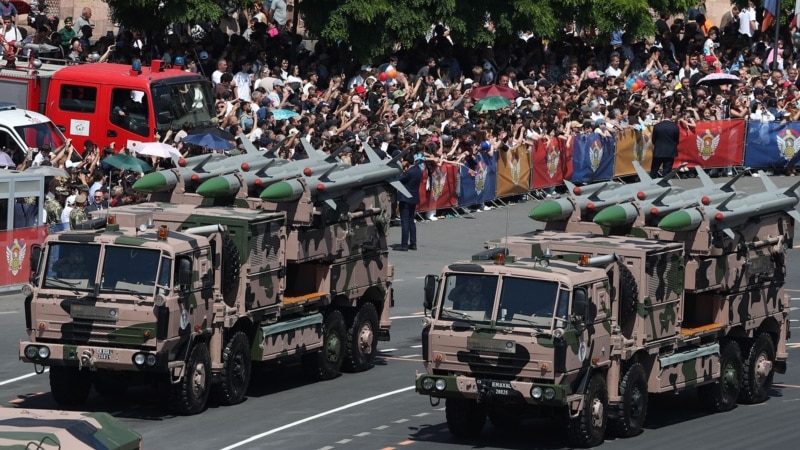
Russia and four allies began five-day military drills in Belarus on 12 October, the Russia-led Collective Security Treaty Organization (CSTO) said. The troops are rehearsing peacekeeping and a biological-threat response. Minsk insists the drills target no one, while Belarus’s army chief calls them deterrence against hostile states.
Russian troops crossed Belarus to advance on Kyiv in 2022, and it now hosts Russian units with Oreshnik missiles and equipment guiding attack drones into Ukraine. Every foreign deployment there worries Kyiv and neighboring NATO members, which blame Minsk and Moscow for border pressure.
Riot police and drone crews in a “peacekeeping” drill
Belarus, Kazakhstan, Kyrgyzstan, Russia, and Tajikistan brought more than 1,500 troops and over 300 weapons and vehicles, including about 80 drones, The Moscow Times reported, citing the bloc. Armenia, the sixth member, is not among them. The peacekeeping drill runs in Vitsebsk Oblast, bordering Latvia and Lithuania, with Belarusian riot police and internal troops joining, the bloc’s command said.
Explore further
Up to 60 railcars: Belarus wires a border base to take in military trains
Russia sent motorized rifle, reconnaissance, electronic warfare, and drone units from its Central Military District, the CSTO said. Russia, this year’s chair, prioritized peacekeeping readiness and the joint biological protection and medical unit, a bloc general said.
Belarus’s military insisted the drills are planned, yet its army chief called them “one of the measures of strategic deterrence against aggressively minded states” and claimed the West is “effectively preparing for a new hot war.”
Pressure on Belarus’s neighbors
In Latvia, armed, masked escorts from Belarus tried to force migrants across this month, the military said, and raiders stole border cameras hours later. Estonia’s police and border guard chief warned migration pressure could jump before winter, as Russia eases entry from countries like Ethiopia and Belarus passes migrants on to the EU. Lithuania posted up to 100 soldiers on its border with Russia’s Kaliningrad, and in September NATO’s Italian jets downed a drone that crossed in from Belarus. On 9 October, Minsk summoned Ukraine’s envoy over an alleged drone strike on a Belarusian truck in Russia, and Kyiv rejected the “absurd accusations” of “an accomplice in the crime of aggression against Ukraine.”
Belarus keeps its army on alert
In September, Belarusian armor drilled near the Suwałki Gap, NATO’s land link to the Baltic states, and Lukashenka said the whole army would be checked, up to mobilization. On 12 October, he ordered a snap check of a 6th Separate Guards Mechanized Brigade battalion, state news agency BelTA reported. European spy agencies also warn of more Russian assassination plots against defense executives.
Ukraine’s intelligence still rates the threat from Belarus as low, but each new contingent, missile unit, and airborne brigade there widens what Kyiv and NATO’s eastern flank must watch.
Central Asian nations are increasingly turning to India, China, Turkey, and Europe for military equipment to reduce their dependence on Russia. Analysts note that this diversification offers greater political flexibility but could create long-term logistical and operational challenges.
Kazakhstan has asked Moscow to help bring home citizens who say they were pressured into signing military contracts to fight in Ukraine. The request puts a fresh spotlight on the vulnerability of Central Asian migrants to Russia’s military enlistment efforts.
The Lenin District Court in Bishkek found activist and politician Mavlyan Askarbekov guilty and sentenced to two years in prison on offenses related to a law on incitement of racial, ethnic, national, religious, or interregional hatred, a verdict he called "absurd."
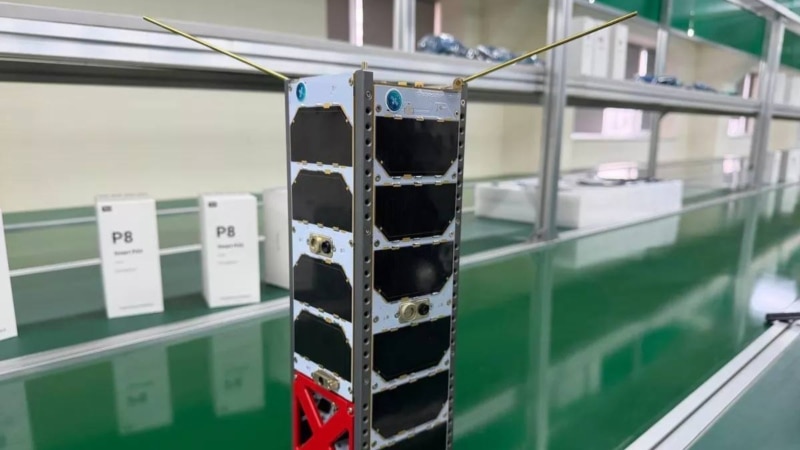
Kyrgyzstan is set to send a domestically produced satellite into orbit on October 1, marking the Central Asian state's first feat of spacefaring. Uzbekistan has announced its own plans for a domestic satellite.
A new Kyrgyz sheep breed is charging to fame in Central Asia for the size of its males and the massive prices being reported for prime specimens of the variety.
The European Bank for Reconstruction and Development (EBRD) will provide a long-term loan of up to 102 billion tenge (US$224.2 million) to Alatau Zharyk Company (AZhC) to modernize its electricity distribution infrastructure and expand digitalization,writes Dana Omirgazy.
The financing will help AZhC, a regional electricity distribution company supplying around 4 million people and around 50,000 commercial consumers in Almaty and the region, procure automated metering and telemechanic equipment and upgrade its low- and medium-voltage electricity transmission and distribution infrastructure, the bank’s press service reported on Sept. 7. The project is part of Kazakhstan’s National Project for the Modernization of Energy and Utility Sectors (MEKS), a government-led program to modernize heat, electricity, water supply and sewerage networks and facilities.
The EBRD-supported investment will further digitize AZhC by installing smart meters at substations and piloting smart grid technologies. It will also strengthen the company’s cybersecurity and support related efforts at Samruk-Energy, AZhC’s parent company. The modernization is expected to generate annual electricity savings of approximately 22 gigawatt-hours (GWh) and reduce annual CO2 emissions by around 12,000 tons. It is also expected to support renewable energy growth in the Almaty Region.
As part of the five-year enhanced partnership framework between Kazakhstan and the EBRD, the project will also support Alatau city’s development by reconstructing the Zhetygen electricity substation and an associated 110-kilovolt (kV) transmission line. The EBRD has invested almost $13.6 billion in Kazakhstan through 358 projects, making the country the largest and longest-running recipient of EBRD investment in Central Asia.
Kazakhstan is developing Alatau City near Almaty as a new regional centre for manufacturing, logistics, technology and finance. Its investment pipeline has expanded to 67 projects worth nearly $6.9 billion, with the potential to create around 55,000 jobs. Projects involving PepsiCo, Sunny Paper, Mars Petcare KZ and several logistics companies are already at different stages of implementation. The project is supported by a special legal regime, but experts say its long-term success will depend on sustained investment, effective governance and the development of a competitive economic ecosystem.
The hijab has long been a hot topic in Muslim-majority Central Asia, where many authoritarian governments have suppressed Islamic political and religious groups and any outward signs of religiosity. The debate has been rekindled as the new academic year started this month.
Astana is looking for more ways to move its oil. Russia, its principal export outlet, is rife with disruptions. Damage to the Caspian Pipeline Consortium’s (CPC) Black Sea terminal in November 2025 suppressed exports into early 2026, while the recent July attacks on tankers threatened roughly 1.5 million barrels per day, writes Joseph Shumunov.
The vulnerability would not be so enormous if 80% of Kazakh oil exports did not move through the CPC terminal near Novorossiysk. But is Kazakhstan merely searching for emergency alternatives amid instability? Or is this a transformation it has been preparing for? The answer is consequential: Kazakhstan is attempting a wholesale upgrade of its oil-export strategy, one befitting a rising regional power. It is moving from rational efficiency toward strategic resilience, from accepting routes toward shaping them, and from concentrated dependence toward managed interdependence.
Although the CPC will remain dominant through 2030, Astana is seeking greater control over the risks, partnerships and infrastructure connecting its oil to international markets. From rational efficiency to strategic resilience The CPC transports Kazakh oil, particularly from Tengiz, to global markets, making it the most commercially attractive route. When it was created in 1992, a fledgling independent Kazakhstan was looking to enter international energy markets. The CPC was the rational choice. It, for instance, transported up to 1.3 million barrels per day back in 2021; avoided the additional loading, shipping and crossing costs of a Trans-Caspian route; and its 1,510-kilometer pipeline, according to area studies analyst Ilya Roubanis, would be extremely difficult to replicate. Astana selected efficiency while adjusting to a new geopolitical environment. Contrast this with Azerbaijan. According to Ken Moriyasu, a senior fellow at the Hudson Institute, Azerbaijan chose the expensive option.
The Baku–Tbilisi–Ceyhan (BTC) pipeline through Georgia and Türkiye required what he called an “insurance premium for strategic autonomy” to avoid dependence on competing producers. Kazakhstan captured the CPC’s immediate savings but accepted greater concentration risk. The stakes will rise alongside production. The KazEnergy 2023 National Energy Report anticipated high output from Tengiz, Kashagan and Karachaganak, with national production potentially reaching 105 million tons. Higher output requires dependable market access; otherwise, its advantage can be undermined by one constrained route.
The lesson is simple: the cheapest route is not necessarily the least costly once the consequences of interruption are included. President Kassym-Jomart Tokayev affirmed as much in 2024: “With unprecedented international turbulence, the priority is to further diversify export routes.” Diversification, however, requires more than identifying alternatives. It requires Kazakhstan to help shape the infrastructure and partnerships behind them.
From route-taker to route-shaper As a landlocked, post-Soviet producer, Kazakhstan has historically been constrained by existing pipelines and neighboring states. Its role was simple: produce oil and insert it into available routes. But Kazakhstan does not have to remain a route-taker. Although it cannot independently control its export geography, it can shape the terms on which that geography operates. It can negotiate access to multiple corridors, invest in tankers, coordinate with transit states and treat infrastructure as an instrument of foreign policy. Nowhere is Kazakhstan assuming this route-shaper role more clearly than in the Caspian. Tokayev identified the Trans-Caspian route as a “priority” in 2022.
KazMunayGas and Azerbaijan’s SOCAR subsequently agreed to transport approximately 1.5 million tons annually through BTC, while Kazakhstan added the Caspian’s Taraz and Liwa tankers to its fleet, each with an 8,000-tonne capacity. This gradual Caspianization continues. KazTransOil supplied 155,000 tons of Kazakh oil to BTC through Aktau in July, an 11.5% increase over the previous year. Energy Minister Yerlan Akkenzhenov said Kazakhstan plans to transport 2.2 million tons through BTC in 2026. Kazakhstan and Azerbaijan have also discussed using the idle Baku–Supsa pipeline for between three million and five million tons of Kazakh crude. But this role has limits. According to Andy Kuchins, a senior fellow at the Center for the National Interest, major expansion would require high capital expenditure, long-term purchase commitments and several years of construction.
Oil majors like ExxonMobil and BP are “more reluctant now as compared to the 1990s” to finance large projects in remote markets. The direction is nevertheless clear: Kazakhstan is moving from accepting the routes geography provides toward assembling the infrastructure and partnerships it needs. It is not yet a fully fledged route-shaper, but it is steadily behaving like one—using new routes not to eliminate dependence, but to distribute it more strategically. From concentrated dependence to managed interdependence Every export option depends on another state, infrastructure operator, or external market.
Self-reliance is not realistic. Kuchins nevertheless argues that Astana can “reduce concentration of its dependence on Russia.” Kazakhstan’s Ministry of Energy reported 73.4 million tons of oil exports during the first eleven months of 2025. Separately reported full-year route data show 64.8 million tons transported through the CPC, 9.3 million through Atyrau–Samara, 3.5 million through Aktau, 1.1 million through Atasu–Alashankou toward China, and approximately 100,000 by rail. Of the 78.8 million tons accounted for in this route-level data, approximately 94% moved through the two Russian corridors. Kazakhstan therefore possesses several export routes, but its portfolio remains highly asymmetrical. Herein lies its greatest oil-policy shift: managed interdependence.
This means distributing export relationships so that no transit state possesses overwhelming influence over Kazakhstan’s market access. Each direction performs a different function. And at the moment, Kazakhstan is assessing four directions—some mainstay, some new. The Russian route The CPC will remain dominant because it offers unmatched capacity, established infrastructure and lower costs. Kuchins and Roubanis expect structural dependence to persist through 2030. Following the Tengiz expansion, Kazakhstan may become more dependent on the CPC in the short term even as its long-term strategy diversifies.
Diversification does not require abandoning the CPC; it requires making an interruption less damaging. The Trans-Caspian route BTC could absorb Kazakh crude as Azerbaijani production declines, while Baku–Supsa could provide another outlet. Neither would match CPC volumes, but together they would widen access to global buyers. Europe also has a stake in this. The European Union imported 52.4 million tons of Kazakh crude just in 2024, making Kazakhstan its third-largest external supplier. If Europe wants westward diversification, it must help make projects bankable through financing and long-term commitments. Brussels and its partners are therefore mobilizing 10 billion euros to improve transport connections with Central Asia. According to Roubanis, “building ties with the region in the short run is necessary for the EU’s long-term positioning.”
The push indicates that Trans-Caspian connectivity is not just a Kazakh interest, but one shared by the whole region. The Chinese route China may offer the easiest immediately available opportunity to reduce dependence on Russia. The Kazakhstan–China pipeline transported 19.5 million tons in 2025, but that included domestic deliveries and Russian transit. Direct Kazakh crude exports through Atasu–Alashankou were planned to be 1 million tons in 2025, compared to the more than 11 million tons per year flowing with non-Kazakh suppliers. China remains a credible expansion market and willing financier. Yet the fastest way to reduce Russian dependence could deepen dependence on China. Moriyasu similarly argues that Kazakhstan does not want to exchange one concentrated dependency for another.
Unlike the Trans-Caspian route, China provides access to one principal market rather than multiple global buyers. The Southern route A corridor through Iran—possibly toward Pakistan and India—could be compelling but faces formidable political and economic obstacles. But it should not be dismissed altogether. Moriyasu suggests that “Iran offers Central Asia one of its shortest routes to warm-water ports.” Although current geopolitical conditions severely constrain this option, he argues that “infrastructure Kazakhstan builds today will still be operating decades from now. Astana should therefore avoid making long-term infrastructure decisions on the assumption that today’s geopolitical map is permanent.”
The southern route’s present value lies in preserving a long-term option, not in providing a realistic alternative before 2030. From east to west and north to south, Kazakhstan is not moving from dependence to independence. It is moving from one dominant dependency toward a deliberately balanced portfolio of interdependence. A more advanced role, but not autonomy Kazakhstan’s transformation should not be measured by whether the CPC ceases to dominate. By 2030, it will likely remain the principal corridor as Trans-Caspian volumes rise incrementally and eastbound capacity becomes more important amid regional instability and escalation.
The resulting portfolio will be broader, though still asymmetrical. The strategy is itself an upgrade—a threefold one. Resilience is becoming the objective, route-shaping the emerging function, and managed interdependence the organizing principle. Looking forward, Kazakhstan’s strategic upgrade lies not in escaping geography, but in developing the infrastructure, partnerships and political leverage needed to manage geography more effectively.
The author is Joseph Shumunov, a Non-Resident Research Fellow at the Topchubashov Center in Baku, Azerbaijan, and a Fellow at Nightingale Intelligence.
President Kassym-Jomart Tokayev called for deeper practical co-operation between Kazakhstan and BRICS countries in trade, logistics, artificial intelligence, critical minerals and water security, positioning the format as a platform for broader economic ties amid growing geopolitical fragmentation.
Speaking at the BRICS Plus plenary session in New Delhi on Sept. 13, Tokayev said Kazakhstan sees cooperation with the group as an opportunity to expand access to new markets, attract investment, strengthen transport links and advance technological development. President Kassym-Jomart Tokayev during the BRICS Plus plenary session in New Delhi on Sept. 13.
Tokayev described the current global environment as an era of “great fragmentation,” a term used in the 2026 Global Peace Index to characterize geopolitical confrontation, rising militarization, weakening multilateral institutions and growing trade barriers. He noted that BRICS, representing nearly half of the world’s population and around 40% of global GDP, has both the capacity and responsibility to help overcome global divisions and deliver concrete results. “Peace and strategic stability are necessary conditions for economic and sustainable development,”
Tokayev said, calling for a shift from the de-escalation of individual conflicts toward long-term stability based on political dialogue and diplomacy. Against this backdrop, Tokayev positioned BRICS as a platform for practical cooperation rather than an alternative to the existing international system.
“As a partner country, Kazakhstan views BRICS as an open platform for practical cooperation that complements the multilateral system with the central role of the United Nations and connects peoples, regions and markets,” he said. He added that Kazakhstan always seeks to find a “common ground on every difficult issue,” describing the approach as consistent with the country’s “balanced, goal-oriented foreign policy.” Anastasia Golyakova, founder of the ThinkBricks YouTube channel, said the approach reflects BRICS’ broader focus on resilience, innovation, cooperation and sustainability, priorities that have gained greater relevance amid rising geopolitical tensions.
Anastasia Golyakova, founder of the ThinkBricks YouTube channel. said closer cooperation among BRICS members could help address shared challenges while giving partner countries such as Kazakhstan greater access to the bloc’s growing trade, investment and technological opportunities. “BRICS gives much support to each other. So, from this point of view, for Kazakhstan, it’s a prosperous future, in my opinion,” Golyakova told The Astana Times.
Ayanangsha Maitra, an editor and a geopolitics specialist, echoed this view, saying Kazakhstan’s BRICS partnership could open new opportunities for economic cooperation and market access. “Although Kazakhstan is not a full BRICS member, its partnership with the grouping adds value at a time of growing geopolitical tensions and economic uncertainty,” Maitra told The Astana Times.
“BRICS could offer Kazakhstan additional avenues for cooperation with countries beyond its traditional economic and political partners,” he added. Expanding trade and investment The economic dimension of Kazakhstan’s BRICS engagement was central to Tokayev’s address. According to him, trade between Kazakhstan and BRICS members and partners was around $72 billion in 2025. “Having significant industrial, transit and technological potential, we intend to diversify trade, economic and investment ties with all BRICS countries.
As chairman of the Eurasian Economic Union, Kazakhstan supports the expansion of economic cooperation with BRICS and the advancement of work on concluding a free trade agreement with India,” Tokayev said.
Tokayev also called on the New Development Bank, a multilateral development bank established by the group, to consider financing commercially viable projects in BRICS countries, including Kazakhstan.
Maitra identified critical minerals, jewelry, fashion and textiles as areas with potential to expand Kazakhstan-India trade. “Despite Kazakhstan’s relatively modest population of around 20 million, the country has a strong entrepreneurial spirit and growing commercial links with India,” he said, pointing to increasing connectivity between the two countries.
Turning geography into connectivity Transport connectivity was another central element of Tokayev’s vision. “Last year, transit cargo volumes through Kazakhstan approached 40 million tons. Our long-term goal is to increase that figure to 100 million tons annually. Overall, our transit network already handles up to 85% of overland freight between China and Europe,” he said.
As part of the Trans-Caspian International Transport Route, Kazakhstan serves as a link between Asia and Europe through the Caspian Sea. Tokayev called for greater synergy between the Trans-Caspian route, China’s Belt and Road Initiative and the International North-South Transport Corridor. Maitra highlighted that Kazakhstan’s position within the EAEU, the Commonwealth of Independent States and the Shanghai Cooperation Organization provides access to major regional markets. Its participation in the International North-South Transport Corridor adds another layer of connectivity.
“BRICS could expand that network beyond Kazakhstan’s traditional regional partners. The partnership adds another dimension by opening access to markets across a wider group of countries,” he said. AI as a new layer of cooperation AI represents another area where Kazakhstan sees room for practical BRICS cooperation.
Tokayev said Kazakhstan is ready to use its computing infrastructure and national and UN digital centers to expand cooperation in AI and proposed establishing a BRICS Plus Partnership in Artificial Intelligence. The initiative, he said, could connect national AI centers, facilitate access to laboratories and research projects and support the development of multilingual AI solutions.
For Maitra, AI could also become an important area of Kazakhstan-India cooperation because the two countries bring complementary strengths. “India has a strong IT sector and a large pool of software engineers and technology professionals, while Kazakhstan has established connections across the CIS and wider Eurasian markets. That combination could help Indian technology companies reach markets where language and regional expertise remain barriers,” he said. Water security broadens the agenda Tokayev also linked sustainability to one of the country’s longstanding international priorities: water security. He reiterated Kazakhstan’s proposal to establish an International Water Organization as a specialized UN agency, arguing that global water governance remains fragmented and requires stronger international coordination.
“I invite the BRICS member states and partners to join the international consultations initiated by our country,” Tokayev said. Meeting with Narendra Modi On the sidelines of the summit, Tokayev also met with Indian Prime Minister Narendra Modi, highlighting India’s growing economic and technological weight and the expanding relationship between the two countries. Modi highlighted the potential for closer ties in high technology and the creative industries, including cooperation between Astana Hub and Hyderabad’s Cyberabad technology ecosystem. He also invited Kazakh representatives, particularly young people, to take part in the WAVES creative industries summit in Mumbai next year. The two leaders also discussed prospects for expanding economic ties between India and the Eurasian Economic Union.
Tokayev said Kazakhstan, as the current chair of the EAEU, supports negotiations on a free trade agreement between the bloc and India and is ready to help advance the process. Tokayev said around 600 companies with Indian capital operate in Kazakhstan, while nearly 150,000 Indian citizens visited the country last year. He also cited the large number of Indian students studying in Kazakhstan and cooperation between Astana and New Delhi within international organizations.
Long constrained by its landlocked geography, Kazakhstan is seeking to turn its position between Europe and Asia into a source of economic and geopolitical leverage. As trade disruptions and competition drive demand for diversified supply chains, Astana is investing in new transport corridors to establish itself as an indispensable transit hub and translate connectivity into diplomatic influence.
The Middle Corridor route “Transport diplomacy has long been a pillar of economic diplomacy. Today, efficient transport and logistics networks are becoming strategic assets that shape economic competitiveness, and a country’s role in regional economic cooperation,” Head of Research Department of the Eurasian Development Bank (EDB) Alexey Kuznetsov told The Astana Times.
Alexey Kuznetsov, Head of Research Department of the Eurasian Development Bank. Photo credit: The EDB’s press service Located between China, Europe, Russia, Central Asia and the Caspian Sea, Kazakhstan is developing railways, roads, ports and logistics hubs while expanding connections along several international transport corridors. The scale of the sector is reflected in recent figures. Kazakhstan transported 540.5 million tons of cargo in January-July, up 0.9% from the same period a year earlier, according to the Bureau of National Statistics.
Cargo turnover increased 1%, while road freight transportation grew 6.2%. Government data shows that transit freight reached 21.7 million tons in January-June, up 24% from 17.5 million tons a year earlier. Building Eurasian connectivity Kazakhstan is seeking to strengthen its role not simply as a transit country but as a major regional connectivity hub. “For Kazakhstan, modern transport, logistics, and warehousing infrastructure are essential for addressing the challenges of a landlocked geography.
"At the same time, the country has become one of Eurasia’s most important transit hubs,” said Kuznetsov. He said international transport and logistics partnerships are central to Kazakhstan’s connectivity diplomacy, positioning the country as an influential player in shaping Eurasia’s regional agenda. According to the EDB’s Transport Projects Observatory, Kazakhstan accounts for 53% of transport corridor investments planned or under implementation in Central Asia through 2035.
“More than $32 billion is expected to be invested in 55 major transport projects, including construction of the Center-West motorway, the Uralsk-Atyrau and Kyzylorda-Saksaulsk roads, and the Moiynty-Kyzylzhar railway. These investments will strengthen East-West and North-South trade routes and further position Kazakhstan as a strategic transport crossroads linking Europe and Asia,” Kuznetsov said. Road construction, reconstruction and repairs cover around 11,000 kilometers nationwide in 2026. Kazakhstan also plans to repair 11,000 kilometers of railway tracks by 2029. International financing is supporting part of the expansion.
In February, the World Bank approved an $846 million guarantee to mobilize $1.41 billion in commercial financing for a major railway connectivity project along Kazakhstan’s section of the Middle Corridor. However, Kuznetsov emphasized that infrastructure alone cannot determine whether a transport route succeeds. “Transport connectivity depends equally on ‘soft infrastructure’: harmonized regulations, efficient border-crossing procedures, coordinated corridor development, and digitalization of transport services and documentation,” he said.
The World Bank estimates cited by Kuznetsov suggest that cutting border delays by 50% through regulatory harmonization and digital solutions could increase exports from Central Asian countries along transport corridors by an average of 18%. For Kazakhstan, this means that the competitiveness of its routes will depend not only on the number of roads, railways and terminals built, but also on how efficiently they operate.
The Middle Corridor and geopolitics At the center of Kazakhstan’s connectivity strategy is the Trans-Caspian International Transport Route, which connects China with Kazakhstan, the Caspian Sea, Azerbaijan, Georgia and Europe. For political scientist Tair Naumov, the importance of such routes extends beyond trade. “Investment in transit infrastructure requires a certain level of trust between countries, including confidence in political relations and the security of investments,” Naumov said in an interview with The Astana Times. Once a route becomes operational, however, it can also strengthen those relations by creating greater economic interdependence.
“When countries rely on the same transport routes, their interests become more closely connected. If a corridor becomes important to foreign trade, there is a stronger incentive to maintain stable relations and keep existing agreements in place,” he said. Naumov noted that this interdependence can eventually acquire a security dimension. “If a country becomes an important transit hub, its stability becomes an interest not only for the country itself but also for its neighbors and major trading partners,” he said. Damir Kayumov, PhD, with a bachelor’s degree in economics and law. Damir Kayumov, PhD, with a bachelor’s degree in economics and law, takes a similar view, emphasizing the economic interests created by shared logistics networks.
“Good logistics creates mutual interest between countries. The more participants there are, the safer it becomes. And the more economic ties pass through Kazakhstan, the greater its role in the region,” Kayumov told The Astana Times. The Middle Corridor illustrates this dynamic. While it does not yet account for a dominant share of Kazakhstan’s transit flows, its rapid growth could give it greater strategic importance.
From transit to economic value For Kazakhstan, stronger economic ties along these routes are only part of the opportunity. The bigger question is how the country can turn growing transit flows into broader economic value at home.
“I would not reduce the transport strategy to transit alone. If a container simply passes through Kazakhstan, the country earns comparatively little. It is much more interesting when logistics centers, warehouses, manufacturing and service companies emerge alongside the route,” Kayumov said. Such an approach would allow Kazakhstan to capture more value from its position in Eurasian supply chains. “Then the transport corridor begins to work for the regions and for our industry. Kazakhstan receives much more income. The service model that develops around the entire flow allows us to earn more and create more jobs,” he said.
Kayumov noted that attracting cargo also requires competitive and predictable routes. Border delays, limited port capacity, container shortages and differences in procedures can increase costs and make a route less attractive to businesses. “A convenient route must be fast, clear and predictable. For business, it matters how long cargo remains at the border, how quickly documents are processed and how much railway capacity is available,” he said. According to Kayumov, digitalization can help address some of these challenges. Electronic document management, for example, can reduce corruption risks while speeding up operations.
TRIPP and the wider connectivity network The development of new routes beyond Kazakhstan could expand the country’s connectivity options. The Trump Route for International Peace and Prosperity (TRIPP) is a proposed transport link through Armenia connecting Azerbaijan proper with its Nakhchivan exclave. Kazakhstan has expressed interest in participating in the project and linking it with the Middle Corridor. “For the Trans-Caspian route, TRIPP provides an additional option for moving cargo after the Caspian Sea toward Türkiye and Europe. The more such branches there are, the more resilient and attractive the entire corridor becomes,” Kayumov said.
For Kazakhstan, the interest is largely pragmatic. As a landlocked country, it needs several reliable routes to major markets. However, Kayumov noted that the project’s value for Kazakhstan would depend on how effectively it is integrated into the country’s existing transport network. “What is more important for us is not formal participation in the project, but its integration with our existing transit hub. This means having unified tariffs, digital borders, digital document management and clear, predictable delivery times,” Kayumov said. “The more reliable routes connect Central Asia with Europe through Kazakhstan, the greater the economic and political value of our geography and our role in connecting different markets,” he added.
Kazakhstan is the only country to have joined both a US-led artificial intelligence initiative and a China-led rival. Now Washington is signaling that it may not be possible to sit on both sides of the emerging AI divide.
From L to R: WCO Secretary General Ian Saunders and President Kassym-Jomart Tokayev Photo credit: Akorda. Kazakhstan is stepping up its partnership with the World Customs Organization (WCO) as part of a broader strategy to strengthen the country’s position as a key Eurasian transit hub. But while digital customs reforms could significantly reduce trade costs and border delays, experts say their long-term economic payoff will ultimately depend on infrastructure, regional coordination and the changing geography of global trade, writes Ayana BirbayevaI.
The topic came into focus during a series of high-level meetings in Astana between President Kassym-Jomart Tokayev, Prime Minister Olzhas Bektenov and WCO Secretary General Ian Saunders on Sept. 8. During the meeting, Tokayev said Kazakhstan is consistently developing a “smart border” model by introducing digital solutions to optimize customs procedures and improve freight transit across Eurasia. Saunders praised Kazakhstan’s progress in customs modernization and its growing role in developing the Trans-Caspian International Transport Route (TITR), also known as the Middle Corridor.
Customs modernization becomes part of a wider logistics strategy Beyond the diplomatic symbolism, the meetings reflect a longer-term economic objective: transforming Kazakhstan from a transit country into an internationally competitive logistics platform. Speaking in the meeting, Bektenov emphasized that resilient transcontinental trade has become one of the key drivers of Kazakhstan’s economic development. He noted that the WCO’s 2025–2028 strategic plan, Data-Driven Customs for a Connected World, closely aligns with Kazakhstan’s own digital reform agenda.
A central element of that strategy is the rollout of KEDEN, a unified customs system integrating declarations, transit procedures and border controls, alongside the Smart Cargo platform, which combines transport services, electronic permits and cargo tracking into a single digital ecosystem. According to official data, 14.6 million tons of transit cargo passed through Kazakhstan during the first seven months of the year. Freight volumes along the Middle Corridor reached approximately 350,000 tons, with around 24,000 vehicles using the route. Why digital borders matter Farkhad Kassenov, head of the A+ Analytics research center, political scientist and international relations expert, notes that cooperation with the WCO should be viewed not as an isolated initiative but as one stage of Kazakhstan’s much broader transport and logistics strategy.
“Kazakhstan has been systematically synchronizing customs procedures, tariffs and border regulations with the countries participating in the Middle Corridor. This cooperation with the WCO is one of the stages of that much larger project,” Kassenov told The Astana Times. The Middle Corridor has gained strategic importance as trade between China and Europe increasingly seeks alternatives to traditional northern routes passing through Russia. At the same time, Kazakhstan is also positioning itself within the developing North–South corridor, despite temporary disruptions caused by conflicts affecting the Middle East and maritime trade. According to Kassenov, removing bureaucratic barriers may prove almost as valuable as building new infrastructure.
“Digitalization can increase the speed of cargo movement by roughly 30% while simultaneously reducing logistics costs. When paperwork is synchronized and businesses use a single digital window, goods spend less time waiting at borders or in dry ports,” he said. Digital gains cannot replace physical infrastructure Yet customs reform alone will not solve every bottleneck. Kassenov notes that the Middle Corridor still faces structural constraints that digital systems cannot eliminate, including different railway gauges between China, Kazakhstan and Europe, as well as the natural limitations of crossing the Caspian Sea. “There are real physical barriers. Different railway gauges require cargo transfers, while navigation across the Caspian is limited during storms and seasonal ice. Digitalization improves efficiency, but it must be accompanied by major investment in transport infrastructure,” he said. Kazakhstan has already begun expanding ports in Aktau and Kuryk, while negotiations continue with Azerbaijan, Türkiye and China on improving rail connectivity across the corridor.
A changing geopolitical map of trade The renewed attention to Kazakhstan’s transit role is also being driven by geopolitical shifts beyond Central Asia. According to Kassenov, growing strategic competition between China and the United States has increased Beijing’s interest in secure overland trade routes. “The Middle Corridor was once viewed as an alternative route. By the end of this decade, it may become one of the principal land connections between East and West,” he said. That evolution creates opportunities extending beyond transit fees. Kazakhstan is seeking to develop domestic manufacturing, processing industries and exports of higher value-added products, including critical minerals and industrial goods, that can move along the same logistics network. A customs dilemma inside the EAEU At the same time, Kazakhstan’s customs policy faces another question that is less visible in discussions about digitalization: whether the existing distribution of import customs duties within the Eurasian Economic Union reflects the current structure of regional trade. Aidar Kurmashev, head of the Asian Studies Department at the Kazakhstan Institute for Strategic Studies, recently highlighted the issue in his Telegram channel.
According to him, under the EAEU system, duties collected on imports from outside the union are distributed among the five member states according to predetermined shares. Kazakhstan’s share is 6.955%, compared with 85.065% for Russia, regardless of where the duties are actually collected. “After 2022, trade flows changed significantly, the role of Kazakhstan in trade with China and other directions of foreign imports increased, while our share remained 6.955%,” Kurmashev wrote. He argued that the issue raises a broader question about whether the formula still corresponds to the current structure of trade within the EAEU. “If Kazakhstan previously benefited from the system, but now has been losing hundreds of billions of tenge for the third consecutive year, perhaps it is time to at least recalculate the economics of the existing mechanism,” Kurmashev said, highlighting that the figures refer specifically to distributed import customs duties and do not include import VAT. Trade routes are changing faster than institutions The EAEU perspective illustrates a broader challenge facing Kazakhstan as it tries to reposition itself within changing Eurasian trade networks.
The geography of imports and transit has shifted since 2022, while Kazakhstan is simultaneously trying to deepen direct trade links with China, expand the Middle Corridor and strengthen its position as a logistics hub between Asia and Europe. That makes customs policy increasingly relevant not only as an administrative function but as an element of economic strategy. Digitalization can make the movement of goods faster and more predictable. International standards can improve interoperability. Infrastructure investment can remove physical bottlenecks. But the economic payoff ultimately depends on whether these elements develop together. As Kassenov put it, the Middle Corridor is moving from being an alternative route from the global lens toward becoming a potentially central Eurasian connection.
 Login