Lula promises to expand full-day schooling and student aid as Flávio Bolsonaro challenges his education record and attacks his family.
Brazilian President Luiz Inácio Lula da Silva pledged to bring full-day schooling to every school through the secondary level if re-elected, while opposition candidate Flávio Bolsonaro accused his government of cutting education funding and attacked the president’s family over online gambling.
The exchange during an education segment of the presidential debate centered on extended school hours, student assistance and childcare before turning into a personal confrontation over jogo do tigrinho, an online gambling game.
Lula, of the Workers’ Party (PT), challenged Bolsonaro to explain his plans for full-day schooling. Bolsonaro, of the Liberal Party (PL), responded that he would deliver what the current government had failed to achieve, accusing Lula’s administration of cutting federal funding for the program and attempting to conceal the reductions.
Enseñanza de tiempo integral enfrenta a Lula y Bolsonaro en el debate
🏫 Lula se comprometió a "concluir en el próximo mandato el 100% de las escuelas de tiempo integral en este país hasta la enseñanza media".
Text Reads: Full-Day Schooling Pits Lula Against Bolsonaro in Debate Lula committed to “concluding in the next term 100% of full-day schools in this country up to secondary education.” He defended his administration and highlighted the creation of ProUni. He also denounced the conditions in which he received the presidency regarding education.
Bolsonaro then shifted the discussion to online gambling, accusing Lula of being responsible for the rise of jogo do tigrinho. He claimed the game was created and authorized in 2022 by those now in government and alleged that its cancellation was being pursued only as the election approached. He also invoked the nicknames Lulinha and Tigrinho in referring to the president’s sons.
Lula responded by pointing to his party’s record on education since it first took office in 2003. He credited former education ministers Fernando Haddad and Camilo Santana with leading what he described as a transformation of Brazil’s education system. If re-elected, he said, he would ensure that all schools offered full-day schooling through the secondary level.
He also pledged to expand Pé de Meia, a financial assistance program designed to keep students in school, making it available to all secondary students and extending it to university students. Lula said the program had helped prevent 66% of participating students from dropping out, arguing that no young person should have to abandon their education.
“Não existe nenhum país do mundo que conseguiu se desenvolver sem antes investir na Educação. A gente tem mais universidades, IFs e escola em tempo integral. A gente cuidou da educação como jamais tinha sido cuidada na história desse país"
– Lula no debate da Globo…
— União Brasileira das/dos Estudantes Secundaristas (@ubesoficial) October 24, 2026
Text Reads: “There is no country in the world that managed to develop without first investing in Education. We have more universities, IFs, and full-time schools. We took care of education like it had never been taken care of in the history of this country” – Lula in the Globo debate
The president further recalled that his administration had inherited 5,600 stalled projects involving daycare centers, schools and federal institutes from the previous government. He contrasted those unfinished projects with the civic-military school model promoted by his predecessors, which he also described as incomplete.
Bolsonaro rejected claims that he intended to abolish Pé de Meia, calling the allegation a falsehood spread by his opponent’s campaign. He pledged to maintain the program and cited measures taken under the administration of his father, former President Jair Bolsonaro, including the cancellation of nearly 99% of the debt owed by students who had completed higher education and a 33% teacher salary increase, which he described as the largest in history.
The opposition candidate also proposed a childcare subsidy for mothers unable to work because they lacked access to daycare. He said more than one million children had no place in the public childcare system and pledged to allow families to enroll them in private facilities where public places were unavailable.
On full-day schooling, Bolsonaro proposed using the additional hours for vocational training and instruction in technology, artificial intelligence and application development. He argued that keeping children closer to school would put them farther from crime.
The candidates presented contrasting approaches to education, with Lula emphasizing universal full-day schooling and expanded financial support for students, while Bolsonaro focused on childcare subsidies and vocational training alongside accusations over education funding and the president’s family.
Hello and welcome to another edition of Free Agent! Be careful when you're behind the wheel this week.
College football is great! Surely you want even more of it, right? We'll get into the problems with a 24-team College Football Playoff (CFP), then talk about the NBA's new betting restrictions, and close with thoughts about President Donald Trump's new government golf course plans. And just in case you don't make it to the end, here's a shortcut to our survey on who you're rooting for in the World Series.
But first, many congratulations to "Gary's 1st Entry" on outlasting everyone else in our NFL Survivor group. There's no prize other than this shoutout, so be sure to print out today's newsletter, highlight this paragraph, and frame it in gold. Perhaps Gary can keep going and challenge Primetime Paulie Rothrock's 13-game winning streak from last season.
Locker Room Links
Both teams in the WNBA Finals left the court for the National Anthem—unclear if this was a protest or just part of the pregame routine. WNBA policy doesn't require teams to be on the court for the anthem, but does require a "dignified posture" if they are.
In the thick of a playoff race, three Zambian women's soccer players are separated from their National Women's Soccer League teams because they played in Uganda, and the Centers for Disease Control and Prevention has a three-week restriction on reentry due to Ebola. (There are zero active Ebola cases in Uganda and Zambia.)
This is the kind of excessively nerdy fantasy football content I live for. (Yahoo remains the best fantasy sports system. ESPN's is trash, relying on name recognition to get by.)
I figured out how ESPN calculates fantasy football win percentage, it's bad!
ESPN made a stats 101 error when calculating their win percentage which leads to horribly miscalibrated numbers. ( thread) pic.twitter.com/bDypgjelKj
Saturday was one of the best days of college football ever—or perhaps it could have been, if we thought any of the five top-10 teams who took a loss were now certainly out of playoff contention. Instead, Georgia, Notre Dame, Indiana, Alabama, and Texas are all still very much alive in the championship hunt.
Today was one of the craziest days in college football history:
- First time ever five teams ranked in the top 7 lose in a single week - First time the No. 1-ranked team loses to an unranked team in consecutive weeks since 1990 - First time Texas, Alabama, and Georgia all lose… pic.twitter.com/psVRoM5s5b
With two losses, Alabama and Texas are at least on the edge of the playoff bubble with perhaps no more room for error. But that's only true under this year's CFP format. Next year, the playoff is almost officially set to balloon to 24 teams, making the chaos of a day like Saturday matter even less.
Fans will always celebrate a huge upset or major rivalry win, of course—Tennessee fans don't need playoff stakes as an excuse to get drunk when they beat Alabama. But the joy of a rivalry win in the past was always bigger because of the off-field stakes, too—the first loss for your rival meant they probably wouldn't be national champions, the second meant they'd be out of the Rose Bowl, a third meant you could be proud your team sent them packing for the Alamo Bowl. Winning is great; ruining your rival's season is even better.
With 24 teams in the playoff, the joy is a bit diminished because it will take four or possibly five losses to knock a powerhouse program out of the CFP (Iowa, at 8–4, was ranked 23rd by the committee before last year's playoffs). It'll be a bit like a rivalry win in college basketball—we win, you suck, congrats on getting a slightly worse NCAA Tournament seed.
In the business of sports, more inventory for TV is king, and the powers that be think more teams playing more playoff games will make more money. At Free Agent, we don't begrudge institutions for trying to make more money—we all do the same every day. But it's not clear abandoning conference championship games will be the answer, especially when the Big Ten and SEC championships apparently outdraw many playoff games.
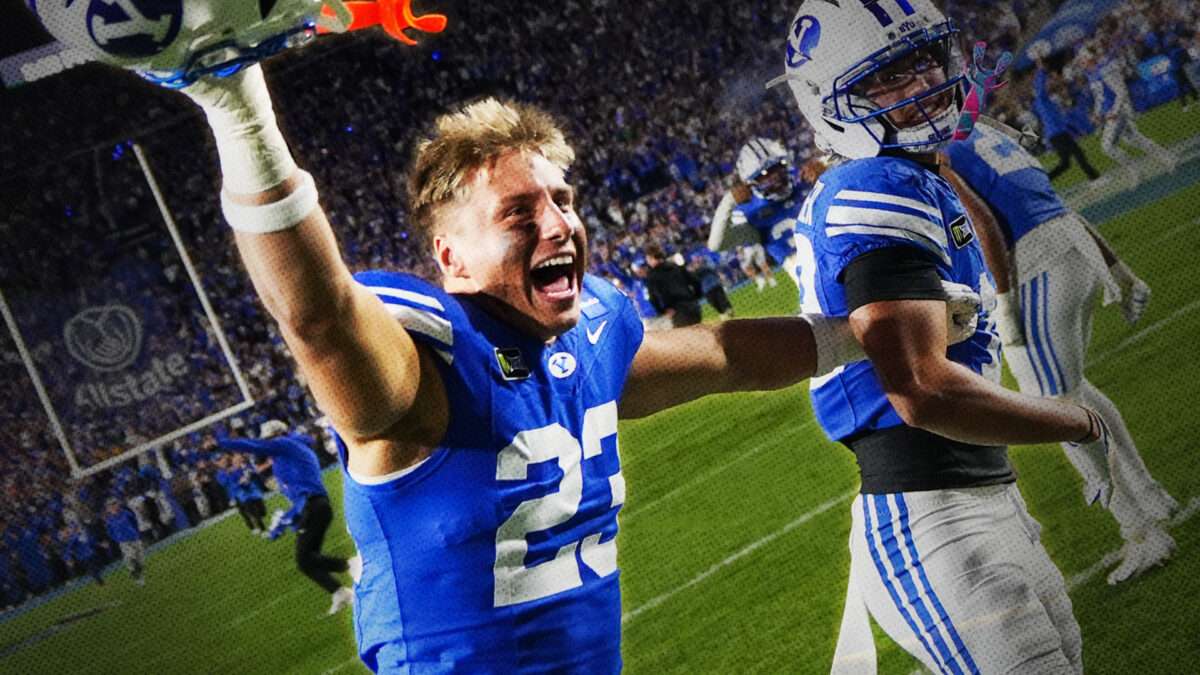
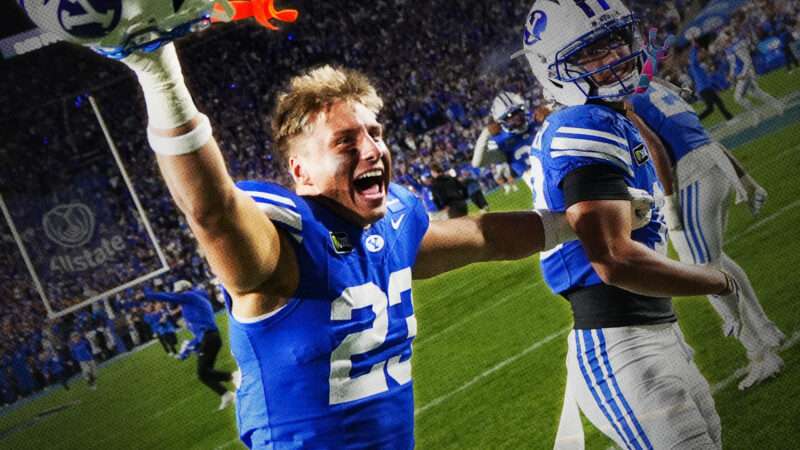
ESPN and the power conferences know fans aren't happy about it—just look at allthechatteronline, and how the crowd at BYU reacted when College GameDay discussed expansion on Saturday (especially when BYU would probably benefit from expansion!). They're betting enough people will watch to make the expansion profitable anyway. The last hope is that fans get loud enough to bully them into abandoning expansion—which only occasionally works, sometimes on things small (putting the trophy logo on the court for the NBA Finals) and large (soccer's European Super League). If any powerhouse considers going independent, that might shock leaders into a rethink too.
Almost every sport I know is adding more: more teams, bigger playoffs, more for TV. As fans, we still eat it up, of course—much to the excitement of the TV executives who are selling commercial time to the people trying to reach us, the viewing public. (The only counterexample is the MLB proposal to cut eight games from the regular season—I'd love to see each sport I follow cut its season by about 25 percent to make regular season games matter more, so I'm interested to see how this goes.)
Perhaps I'm biased because my favorite team, Michigan State, is a dumpster fire—they could expand the playoff to 64 teams and the Spartans still wouldn't deserve a bid. I personally don't have a whole lot at stake in the playoff format now or anytime soon. But as a neutral, the chaos of Saturday might have been viewed with my full attention in the past—instead, this year I just had it on in the background while I played video games.
Sports Are Regulating Bets Without Politicians, Part 3
After last year's major betting scandal, the NBA asked sportsbooks late last week to stop offering certain types of potentially problematic bets. The sportsbooks, which the NBA says handle roughly 99 percent of the U.S. betting market, agreed. No politician or regulation was necessary to solve the problem.
No longer can bettors bet on unders for a bit player who likely won't get more than 12 minutes of playtime. Bettors also can't wager on the opening tip or on players to miss specific shots. Parlays that string together under bets on the same player's statistics are also out (this one seems a bit harsh—if you just want to bet on a certain major player to have an off night, you can bet on stats separately, but not in a big multiplier parlay). Bets on players who have two-way contracts between the NBA and G League were already banned.
This all comes on the heels of similar developments last year in the NFL and MLB. While some people want to ban prop bets altogether, the NFL asked sportsbooks to eliminate bets in four different categories. Sportsbooks largely agreed or weren't offering those bets anyway. MLB, in light of some pitching-related scandals, asked for a $200 limit on pitch-specific bets and to keep them out of parlays—sportsbooks agreed to that too.
As I wrote last year, "Ideally, this is how the regulation of the sports betting industry should go….These approaches are catching the nuances of what works for both the leagues and for sportsbooks without the heavy-handed approaches of politicians who would use an axe to ban all prop bets instead of a scalpel to limit problematic bets."
It's important to note leagues are able to do this because they have commercial partnerships with the sportsbooks. Otherwise, the leagues would have no direct leverage over a sportsbook offering a bet the league doesn't like. Keep that in mind the next time you see people bemoaning a league partnership with a sportsbook or a prediction market.
Trump's Golf Course Plans Have People Teed Off
President Donald Trump has new plans for the National Park Service golf course at East Potomac—again. Last time new plans were announced, the site plan still had its historic miniature golf course, a par-3 course, and the existing road still ringing the property for bicycling, running, etc. Much of the public didn't like that plan anyway—now, none of that remains in the latest plans, just 18 holes of golf and a driving range.
What's really going on here seems quite clear to me: Like so many other things going on in the second Trump administration, this is a scheme to enrich the Trump family. The plan?
Step 2: Use taxpayer dollars to pay for renovation of the course into, allegedly, a championship-level course capable of hosting major golf tournaments (no matter that the area has next to zero parking, is a mile from the nearest Metro station, and only accessible by narrow roads not meant to handle tens of thousands of spectators).
Step 3: Have the federal government sign a sweetheart deal with, who else, the golf division of the Trump Organization to operate the course on extremely favorable and profitable terms.
If you're wondering why the Trump administration is doing something, corruption is usually a good guess.
The arguments for the course don't make much sense. There are plenty of adequate, competitively priced golf courses in the broader Washington, D.C., area. Several of them are already capable of hosting professional golf tournaments. Between LIV Golf and the PGA Tour, there were three tournaments at three different courses in the last couple years. The 2030 PGA Championship and 2037 Ryder Cup will happen just over the D.C. line in Bethesda, Maryland.
East Potomac is not the nicest course around, no thanks to the legal limbo it's been in for the past year. But if the National Park Service is going to, for some reason, be in the business of running a golf course, it should be a course that emphasizes and teaches its history instead of the pipe dream of a corrupt madman.
Who Ya Got? 2026 World Series Edition
For the first time in 46 years, we've got a World Series contested by two teams that have never won it before. Brewers against Rays is also a rare instance of the top seeds from each league outlasting the randomness of the MLB playoffs to make the World Series. And before you trot out the tired line that "TV executives must be seething about the small market teams" remember that they care much more about getting a playoff series that goes seven games with close results in each game (What did I say above? Inventory rules all!).

 Login

 thread)