
❌

Reading view

Flávio Bolsonaro Apologizes to Lula During Brazil Presidential Debate
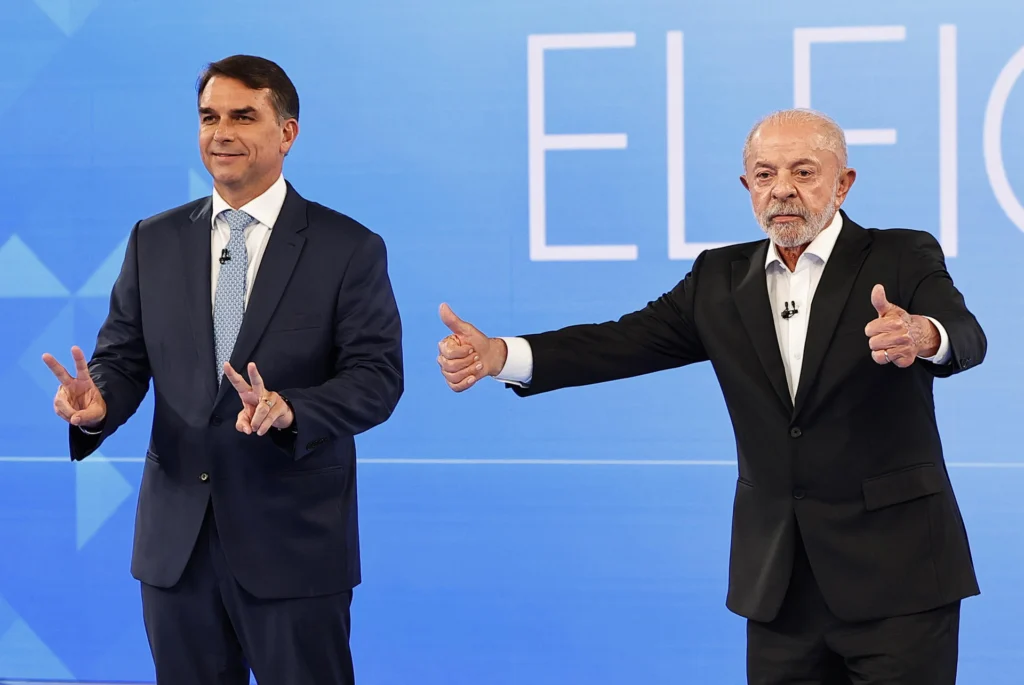
Lula da Silva and Flávio Bolsonaro debate maternity leave, Bolsa Família and poverty during Brazil’s presidential election.

Flávio Bolsonaro admitted he was wrong to oppose extending maternity leave and apologized to Lula for a personal insult during a heated debate.


Brazilian presidential candidate Flávio Bolsonaro apologized to President Luiz Inácio Lula da Silva during a televised debate after Lula challenged him over his past opposition to extending maternity leave, sparking a heated exchange over social welfare, poverty and personal attacks.

RELATED: Lula Pledges Universal Full-Day Schooling in Brazil

Flávio Bolsonaro, who represents the Liberal Party (PL), acknowledged that his earlier vote was a mistake and said he would take a different position today. He also apologized for calling Lula “nine fingers,” a reference to the president’s missing finger, but followed the apology by demanding that Lula answer for his government’s record on poverty and social assistance.

The confrontation unfolded during the debate’s second segment, after Lula requested a right of reply over remarks he considered offensive. The production team had yet to rule on the request when the candidates resumed their exchanges.

Lula chose social policy as the subject of his question and returned to an issue he said Flávio Bolsonaro had left unanswered in the previous debate. He challenged his opponent to explain why he had been the only state legislator in Rio de Janeiro to vote against extending maternity leave.

Qual a justificativa para votar contra a licença-maternidade? Contra o direito das mulheres e da família? Explique, Flávio Bolsonaro. pic.twitter.com/17ibHC7knP

— Lula (@LulaOficial) October 24, 2026

Text Reads: What is the justification for voting against maternity leave? Against the rights of women and the family? Explain, Flávio Bolsonaro.

Flávio Bolsonaro defended his earlier decision by saying he had believed the measure could make employers less willing to hire women. He acknowledged that he had been wrong, adding that marriage and having two children had changed his perspective.

He said he now understood the importance of mothers staying close to their children and would support extending maternity leave beyond 180 days where possible. He maintained that he would vote differently today.

Lula dismissed the explanation, arguing that Flávio Bolsonaro had failed to support the measure when he had the opportunity and was now changing his position as women became more politically active and fought for their rights.

The president then challenged his rival over the term “Bolsa Farelo,” which Flávio Bolsonaro had used to disparage Bolsa Família, Brazil’s income-transfer program. Lula called the expression disrespectful to poor people, arguing that those removed from economic hardship often treated the poor as though they had no value.

The exchange escalated when Lula responded to Flávio Bolsonaro’s use of the nickname “nine fingers.” The president explained that he had lost a finger at age 17 while working the night shift at a factory, saying he had needed the job to afford food.

“I will not allow a militiaman to call me ‘nine fingers,’” Lula declared. He also accused Flávio Bolsonaro of never having worked, alleging that the first job recorded in his rival’s employment record was a fictitious position arranged by his father.

Flávio Bolsonaro offered an apology, saying he had not intended to offend Lula with the remark. He then turned the criticism back on the president, demanding that Lula apologize to people experiencing homelessness and recipients of Bolsa Família.

Flávio Bolsonaro claimed that the number of people living on the streets had nearly doubled under Lula’s current government, citing a figure of 199,000 people as the starting point. He also accused the president of neglecting Bolsa Família beneficiaries for four years and addressing their concerns only 17 days before the election.

The candidate criticized a recent adjustment to the benefit, claiming the increase amounted to three Brazilian reais a day — enough, he quipped, to buy three eggs.

The exchange brought the candidates’ competing arguments over social policy into sharp focus. Lula pressed Flávio Bolsonaro to account for his legislative record on maternity leave, while his opponent sought to shift scrutiny toward the government’s handling of homelessness and income support.

  •  

Social welfare officers strike over staff shortages and working conditions

Social welfare officers staged a 24-hour strike on Friday, demanding additional recruitment to reduce workloads, restructuring of services under the deputy ministry, new premises and improved staff safety.

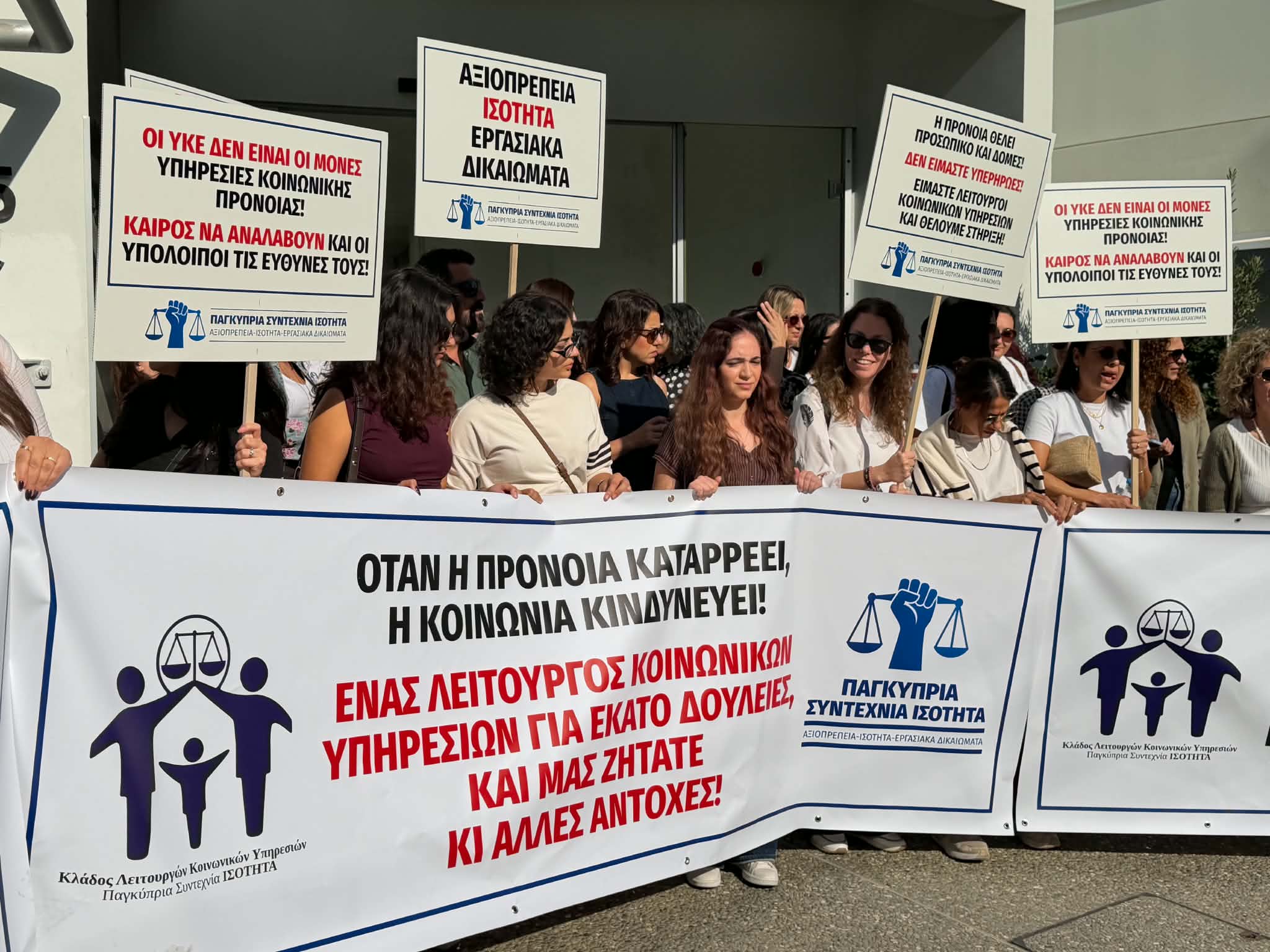
Members of the social welfare officers branch of trade union Isotita gathered outside the deputy social welfare ministry on Friday morning, holding banners and placards reading “Children cannot wait – solutions cannot be postponed”, “When welfare collapses, society is at risk”, “Welfare needs staff and structures” and “Children are not files and social welfare officers are not numbers”.

Isotita chairman Prodromos Christofi said the strike was not aimed at securing financial benefits or personal advantages, but at ensuring that social welfare officers could carry out their duties without obstruction and manage workloads that would allow them to remain useful and productive.

He said the demands were also intended to ensure that people received proper, high-quality services.

Christofi added that staff were well trained and understood both the problems facing the services and the solutions required.

“The problem of delays stems from the refusal to recruit staff, because this means additional costs,” he said.

President of the social welfare officers branch Andri Mattheou said officers were facing more than a hundred problems.

“For more than a decade, we have been told that the services will be restructured and modernised,” she said, adding that social problems had increased and become considerably more complex.

“Social welfare officers are asking to be allowed to do their actual job, which is not in offices. It is among the people. We need to be alongside citizens,” she said.

Mattheou pointed out that social welfare officers had been responsible for administering emergency minimum guaranteed income (EEE) payments for the past 14 years, although this responsibility should fall to the benefits management service, which operates under the same deputy ministry.

Asked how many cases each officer was required to handle, she said the number ranged from 50 to 150, with each case presenting different levels of difficulty.

She said the problems had repeatedly been brought to the attention of the deputy ministry’s management, but that the past decade had been marked by studies rather than the implementation of solutions.

The union had sent numerous letters outlining its concerns and had also met with the deputy minister.

“We had requested specific demands to be addressed by October 15. We know they cannot be resolved overnight, but they must start today,” Mattheou said.

She explained that the union had prioritised demands that did not require legislative amendments, which would take time, focusing instead on issues that could be resolved internally within the deputy ministry’s services.

Among the main demands is the recruitment of additional staff to ease workloads.

Mattheou said some employees were resigning just one month after being hired, while a significant number of retirements were expected soon.

The union is also calling for a maximum caseload to be established for each officer, along with the withdrawal of circulars and instructions that burden staff with duties which, she said, “waste our time”.

It is further demanding that responsibilities which do not fall within the remit of social welfare officers be removed from the service.

Mattheou also raised concerns about the condition of the buildings housing social welfare services, saying they were neither safe nor suitable for the nature of the work carried out.

She said the premises failed to provide the necessary privacy for people.

“We urgently need to move to different buildings,” she said.

Improved security for both staff and members of the public is another key demand.

“We are on the front line. Citizens express their anger towards us. Security is needed, not only for officers but also for citizens,” she said.

Andri Michael, who has worked as a social welfare officer for 20 years, said working conditions had remained unchanged throughout her career.

“In 20 years, I have not seen any change. We have reached the point of exhaustion,” she said.

Michael said the combination of assigned duties, staff shortages and excessive workloads meant officers were unable to cope with their responsibilities.

“We are asking the state to provide solutions to these long-standing problems so that we can offer quality services to citizens and act in the best interests of children,” she said.

Fellow social welfare officer Nektarios Vrachimis said the strike was about securing a better future for officers, the service and the public.

“We are demanding better working conditions and solutions to our long-standing demands,” he said.

Students from the social work department at Frederick University also joined the demonstration.

“We are here today to demand better services for citizens,” they said.

  •  
❌