A migrant runs from Spanish police officers as they cordon off access to the beach for people crossing from Morocco into the Spanish enclave of Ceuta, Friday, July 31, 2026. (AP Photo/Antonio Sempere) | picture alliance / AP Photo/Antonio Sempere
Problem
Around 60,000 migrants crossed from Morocco into the Spanish exclave of Ceuta in 24 hours between July 30th and 31st, overwhelming the territory and exposing divisions within the EU.
The immediate cause is unclear. Morocco’s authorities have yet to issue an official explanation. Spanish officials have pointed to a recent Supreme Court ruling ending the automatic return of migrants intercepted while attempting to swim to Ceuta and Melilla. But the sheer scale of the crossings suggests Morocco might have deliberately relaxed border controls. The timing is also suspicious. The crisis came just ten days after Spanish prime minister Pedro Sánchez visited Algeria— Morocco’s arch-rival—and announced a “new phase” in Spain-Algeria relations.
The reaction within Europe has been striking. Rather than display solidarity with a member state facing pressure at the EU’s external border, Italian prime minister Giorgia Meloni not only blamed Sánchez’s migration policies but also called for Spain to be suspended from the Schengen area. Madrid responded by summoning the Italian ambassador and rebuking Rome’s “partisan demagoguery”.
Responses from other leaders have been similarly unsympathetic. Finnish interior minister Mari Rantanen supported Italy’s proposal to suspend Spain’s Schengen status. Manfred Weber, president of the centre-right European People’s Party, urged the European Commission to hold Sánchez accountable for failing to protect the EU’s external border. Meanwhile, France has reinforced controls along its frontier with Spain. Remarkably, little criticism was directed at Morocco itself.
Solution
In the immediate term, the EU should demonstrate solidarity with Spain. European leaders need to treat migration pressure against a member state as a collective problem and a challenge to the integrity of the EU’s external border. Publicly blaming the targeted member state lowers the political cost of weaponising migration.
Brussels should make clear that any use of migration as blackmail will carry European rather than merely Spanish consequences. Around two thirds of Moroccan exports go to the EU, which is also its largest source of foreign investment. Brussels should also be prepared to suspend negotiations on a comprehensive partnership upgrade with Rabat.
Europe also needs to revise its migration policy, which largely shapes its relations with North Africa. In the absence of a common European approach, relations default to bilateral bargains, leaving North African leaders holding the lever. And until Europe changes the incentives, Rabat will keep pulling it.
Context
Spain has managed the migration relationship with Morocco bilaterally for decades, leaving Madrid increasingly hostage to Rabat. The latter has repeatedly used migration as political leverage, most notably in 2021, when it allowed some 6,000 migrants into Ceuta in a single day amid a diplomatic rift over Western Sahara.
The following year, Spain abandoned its longstanding neutrality on Western Sahara by endorsing Morrocco’s autonomy proposal, a policy shift many attribute to the 2021 crisis. Government sources unofficially said at that time that the new bilateral understanding included Moroccan commitments to avoid a repeat of the episode.
Rabat also appears particularly emboldened at present. It enjoys strong backing both from the US and Israel, and both have become increasingly hostile towards Sánchez government. The White House responded to the latest crossings by celebrating it as evidence of the “destructive philosophy” of “extreme left and globalist policies, including those that facilitate massive migration”.
Andy Burnham a été nommé lundi à la tête du gouvernement britannique. Dans un contexte d’instabilité économique et politique similaire à celui de son prédécesseur Keir Starmer, le nouveau Premier ministre travailliste devra surtout prouver la stabilité de son programme, selon les experts interrogés par France 24.
After taking part in China’s grueling national college entrance exam, Guo Xinyan has three weeks to make what could be the most important decision of her life: which universities and...
The artificial intelligence boom has created a new marketplace in China where people can rent out their faces. A growing number of online platforms are paying people anywhere between $15...
Russia has charged Telegram founder Pavel Durov with facilitating terrorist activity in the country and put him on an international wanted list, alleging that his hugely popular messaging app was being used by Ukrainian spies to organize attacks inside Russia.
The charges, announced by the Federal Security Service (FSB), followed a long investigation into Telegram.
The FSB accused Telegram of failing to remove “numerous channels, chats and bots” allegedly used by “Ukrainian intelligence agencies, terrorist and extremist organizations to prepare and coordinate acts of sabotage and terrorism, mass murder, and cyberfraud” in Russia, which resulted in “numerous human casualties.”
It further said that a chatbot available on Telegram called “Daivinchik/Leo” had been used by Ukrainian spies to recruit young Russians to carry out sabotage and terrorist operations.
Reportedly, Ukrainian special agents pose as young women on the app to recruit Russian men and use them for spying or carrying out sabotage activities.
Russia has also issued an international arrest warrant against Durov, who was born in Russia but currently lives in Dubai.
Notably, the Telegram app, which is hugely popular in Russia, is already heavily restricted in Russia.
Russian citizens can now access Telegram only by using a VPN to encrypt their traffic and conceal their location. However, despite these restrictions, state bodies, including the Kremlin and the defense ministry, continue to post on it regularly.
The crackdown on Telegram is part of Russia’s broader effort to restrict access to foreign tech platforms and assert control over the internet. Apart from Telegram, other popular messaging apps such as WhatsApp, Instagram, Facebook Messenger, Signal, Discord, Snapchat, and Apple FaceTime are also banned in Russia.
Russia has now gone one step ahead and formally charged Telegram founder Durov with aiding terrorism, despite the fact that the app is hugely popular in Russia.
However, notwithstanding Russian restrictions on Telegram and the charging of its founder with terrorism, both Russia and Ukraine have used the app extensively in the ongoing war.
In fact, the Telegram app has also been described as a “virtual battlefield” in the war between Russia and Ukraine, where it is used by officials, soldiers, defense ministry handles, and influential bloggers on both sides.
So, how did a messaging app become key to the Russia-Ukraine War?
Telegram As A “Virtual Battlefield” in the Russia-Ukraine War
In the Soviet Union, media was heavily controlled by the state to control public discourse.
Russia inherited this culture of controlling the narrative through its influence on the media. However, with the proliferation of digital and social media, the state’s ability to control the media weakened.
Telegram was one of the most popular messaging apps in Russia and Ukraine in 2022 when the war began.
In Russia, Ukraine, and many Eastern European countries, Telegram served as a crucial alternative to state-monitored communication channels for sharing news.
With Russia’s invasion of Ukraine, Facebook and Instagram were banned over extremism charges by a Moscow court, and access to Twitter was restricted by the Russian censorship body Roskomnadzor.
As there was disdain for traditional state-controlled media in Russia and many other social media channels were banned outright, the role of Telegram, already hugely popular in Russia, in shaping narratives and controlling perceptions of the war became even more critical.
According to a Levada survey, among Russian youth aged 18-24, TV was the least popular news source, with 41% relying on Telegram channels for news. Additionally, during the first two months of the conflict, 76.6% of Ukrainians used social media for news, with Telegram as the most favored platform at 65.7%.
Telegram was also used by both the Russian and Ukrainian governments to broadcast air raid warnings and distribute maps of local bomb shelters.
Some of Telegram’s unique features, such as the ability to make a channel public or private, the option to have unlimited subscribers, and the lack of algorithms that boost or restrict content visibility, have made Telegram a popular information-dissemination tool for both pro- and anti-war voices.
In this pool photograph distributed by Russian state agency Sputnik, Russia’s Vladimir Putin addresses the audience at the 23rd Congress of the United Russia party in Moscow on June 28, 2026. Vladimir Putin vowed on June 28, 2026 to ensure security and overcome challenges as Ukraine stepped up its retaliatory strikes inside Russia amid Moscow’s four-year war. (Photo by Yekaterina SHTUKINA / POOL / AFP)
According to a research paper titled ‘Telegram as a Battlefield,’ over 40% of Telegram channels are dedicated to news, with approximately 17% directly related to the war and ongoing events in Ukraine.
As the war progressed, many war bloggers who were not part of traditional media outlets began posting on Telegram, reaching millions of people.
For millions of people, these war bloggers became an alternative source of information and war updates, often coming straight from the front lines.
Given its popularity as a source of information for war updates, many pro-government channels also used Telegram to push their narrative and spread disinformation.
The paper ‘Telegram as a Battlefield’ also found that after the invasion, average views per post for Pro-Kremlin channels rose from 15,929 to 67,442 (a 323% increase) and for Anti-Kremlin channels from 25,346 to 104,778 (313% increase), highlighting how Telegram emerged as a critical battlefield for disseminating information, propaganda, and shaping narratives.
However, it noted that anti-Kremlin channels consistently garnered higher viewership than pro-Kremlin channels, especially post-invasion.
Also, as the war progressed, Ukraine, just like in the case of drone technology, used Telegram in more innovative ways than Russian government circles.
Ukrainians used it for air-raid alerts, bomb-shelter maps, and official updates from President Zelensky and military commands.
Ukraine also used Telegram as an intelligence-collecting tool. It crowdsourced intelligence via tip bots and channels that shared enemy vehicle movements, leading to successful strikes.
Common people in Ukrainian villages often shared information on Russian military movements with the Ukrainian military and intelligence securely via Telegram.
Telegram, in fact, became a vast depository of HUMINT (human intelligence) for Ukraine.
Furthermore, the platform was also used by Russian government critics to share information with the Ukrainian military across the border.
Telegram was also used to document war crimes and OSINT (open source intelligence).
Ukrainian intelligence also used Telegram to communicate with people in occupied territories and to encourage them to share intelligence on the Russian military.
Frontline troops also use the app to organize logistics, share drone feeds, and have informal discussions with their military commands.
Telegram has also been described as the conflict’s digital battle space, where organizing logistics, war blogging from the frontlines, propaganda, disinformation campaigns, narrative warfare, intelligence collection, recruitment of spies and saboteurs, cataloging of war crimes, and dissemination of public interest information like air raid warnings and bomb shelter maps all take place in real time.
Telegram, in fact, is providing the most unfiltered view of the war.
“Telegram has become this really key battleground in the information war,” Dr. Ian Garner, a historian and translator of Russian war propaganda, told Time magazine. “And it’s interesting that this information war has been outsourced to a private company.”
While Russia has often tried to use Telegram to its advantage, Ukraine has shown much more ingenuity in using it, which explains Moscow’s love-hate relationship with the app.
Russia might have restricted the app and now formally charged its founder with terrorism, but official Russian media handles are still using it, and even common Russian citizens can use it using VPN services.
However, even after these formal charges, Telegram will continue to remain the digital battle space of the Russia-Ukraine War.
Sumit Ahlawat has over a decade of experience in news media. He has worked with Press Trust of India, Times Now, Zee News, Economic Times, and Microsoft News. He holds a Master’s Degree in International Media and Modern History from the University of Sheffield, UK.
He can be reached at ahlawat.sumit85 (at) gmail.com
Frustrated that law enforcement and government officials are unable to help them, Venice property owners have called upon a private company, staffed by former gang members, to remove encampments in their neighborhood. For L.A. Material, Hayes Davenport talked to one of the company’s owners—lifelong Venice resident Bobby Luna—as well as dozens of locals, from homeowners to unhoused folks, about the company’s presence in the community. Homeowners are satisfied with Ghost Town’s service, while some unhoused people who have been forced to relocate report harassment and physical force from its employees. “Ghost Town has stepped in to address a decades-old problem with an unconventional approach,” writes Davenport. “Are they an inspiring story of neighborhood reclamation, filling the void left by an insufficient, hobbled government response? Or mercenary enforcers, contracted to speed along the neighborhood’s gentrification?”
One homeowner — who said she has paid between $100 and $300 a month for Ghost Town’s services, with the cost going down as more neighbors became clients — told me she signed up after multiple people trespassed on her property while she was pregnant, triggering their security system. “Police didn’t come for an hour and a half,” she said. “Ghost Town shows up in five minutes.”
“They’re the reason we still live here,” she added.
But Andrew’s contention that “most people in the homeless community have had some kind of negative interaction with Ghost Town” had also been supported by the people I talked to on the street.
For Eater, Bettina Makalintal reports on a refreshing trend in the restaurant industry: businesses embracing lo-fi, handwritten communications and announcements in response to the ceaseless AI slop we’re served across social media these days. From a grocery store’s hand-illustrated flyers to a burger joint’s Sharpie-scribbled menu specials, restaurants are choosing advertising with a human touch and rejecting polished AI-generated graphics.
It’s hard to think of a path of more friction than choosing to run a restaurant; why add even more friction to that? In these conditions, yes, it costs more to hire a photographer to promote your new menu than to generate one with AI, but it’s also increasingly clear that many people would rather see a badly taken, lo-fi photo than an engineered AI image. For one thing, it feels like a reflection of one’s values. To me, a restaurant that employs AI art is capitulating to the culture of slop, akin to reheating premade food from Sysco. It’s impossible to square with a value system that cares about craft and integrity.
For Men’s Health, Brian Underwood investigates the flood of sunscreen misinformation on Instagram and TikTok, where influencers push inaccurate data about chemical UV filters, play chemist and promote their own DIY formulas, or even encourage no sun protection at all. Underwood sorts fact from fear, talking with dermatologists, chemists, and professionals who are working to reshape the messaging around sun exposure and sunscreen.
Environmental concerns may have also shown up in your feed, with suggestions that these same filters are poisoning our oceans, giving rise to a whole category of sunscreens labeled “reef safe”—a meaningless marketing term that’s not regulated by the FDA (the same goes for products labeled “natural” or “organic”). Dr. Nelson’s point about “low-relevance models” is something to consider here too: The research demonstrating that oxybenzone, octinoxate, and other active ingredients may lead to reef bleaching was done in a lab setting where coral was exposed to levels of these chemicals significantly higher than has been found in the natural environment. It conveniently left out the fact that inorganic filters like zinc oxide (the one typically used in “reef safe” formulas) would have the same effect in similar doses.
While Saudi Arabia is banking on industrial investment and the UAE on logistics infrastructure, Qatar has gone for luxury tourism to consolidate its international position and diversify its economy.
Nel dicembre del 1910, la sabbia di Meroë restituì due occhi ancora aperti.
La missione archeologica guidata da John Garstang stava scavando un piccolo edificio sacro nell’attuale Sudan quando, sotto i gradini dell’ingresso, apparve una testa di bronzo. Era più grande del naturale, pesava circa diciassette chilogrammi e conservava un dettaglio rarissimo: pupille di vetro inserite in anelli metallici e iridi di calcite. Il volto aveva lineamenti regolari, capelli disposti con cura sulla fronte e un’espressione immobile, costruita per comunicare autorità.
Gli archeologi riconobbero Augusto.
La testa dell’imperatore, realizzata probabilmente in Egitto fra il 27 e il 25 a.C., apparteneva in origine a una statua più alta di un uomo. Il corpo era scomparso. La testa era stata trasportata per centinaia di chilometri verso sud e deposta sotto l’accesso di quello che il British Museum descrive come un santuario della Vittoria. La collocazione appare intenzionale: chi entrava nell’edificio passava sopra il volto del sovrano di Roma.
Per quasi duemila anni Augusto rimase sotto i piedi dei suoi nemici.
La storia di quel gesto conduce a una guerra combattuta lungo il Nilo alla fine del I secolo a.C., quando Roma aveva appena trasformato l’Egitto in una provincia. A sud si estendeva il regno di Kush, una potenza africana governata da una donna il cui nome non compare nei resoconti romani. Le iscrizioni locali la chiamano Amanirenas.
Il regno oltre la frontiera egiziana
Quando Ottaviano conquistò l’Egitto, Kush possedeva una storia millenaria. I suoi sovrani avevano dominato l’Egitto nell’VIII e nel VII secolo a.C., fondando la XXV dinastia. Il centro del potere si era poi spostato a Meroë, fra il Nilo e il fiume Atbara: una città di palazzi, templi, officine e necropoli dominate da piramidi dalle pareti ripide.
I siti archeologici dell’isola di Meroë testimoniano l’estensione delle relazioni costruite dal regno. L’architettura univa elementi kushiti, egizi, mediterranei e mediorientali; le officine lavoravano il ferro, mentre carovane e vie fluviali trasportavano oro, avorio, animali, ceramiche e prodotti di lusso. Kush partecipava ai commerci del mondo antico da una posizione autonoma, collegando l’Africa interna alla valle del Nilo e al Mediterraneo.
La regione più contesa era la Bassa Nubia, a sud della prima cateratta. Templi, comunità e funzionari egizi e kushiti occupavano uno spazio nel quale i confini cambiavano senza interrompere i rapporti religiosi ed economici. Meroë e i Tolomei avevano cercato a lungo di controllarlo; Roma voleva ora rendere stabile e redditizia la nuova provincia.
La documentazione kushita presenta una difficoltà particolare. Gli abitanti di Meroë utilizzavano una propria lingua e una propria scrittura. Gli studiosi conoscono il valore fonetico dei segni e riescono quindi a pronunciare molti testi; gran parte del loro significato rimane ancora incerta. Come mostra una recente sintesi sui rapporti fra Meroë e l’Egitto, la storia del regno deve essere ricostruita accostando archeologia, iscrizioni non pienamente comprese e testimonianze scritte dai suoi avversari.
La sovrana che Roma chiamò Candace
Amanirenas regnò negli ultimi decenni del I secolo a.C. Il suo nome appare in iscrizioni meroitiche insieme ai titoli qore e kandake. Il primo indicava la sovranità regale; il secondo designava una donna della famiglia dominante, spesso la madre del re, e in alcuni casi una sovrana capace di governare in prima persona.
Gli autori greci e romani trasformarono quel titolo nel nome proprio “Candace”. Cassio Dione parla di lei come della guida degli “Etiopi”, termine con il quale gli antichi indicavano le popolazioni poste a sud dell’Egitto. Strabone la descrive come una donna virile e cieca da un occhio. Sono poche parole, diventate il nucleo di quasi ogni racconto moderno su Amanirenas.
La veridicità dell’accecamento e la sua causa restano sconosciute. La ferita ricevuta in battaglia appartiene alla ricostruzione moderna. Anche l’aggettivo “virile” rivela lo sguardo di un autore per il quale il comando militare femminile rappresentava un’anomalia. Il racconto di Strabone conserva informazioni preziose, ma le dispone dentro una narrazione favorevole a Roma.
L’identificazione della Candace di Strabone con Amanirenas è molto probabile, ma non esplicita. Le iscrizioni associano la sovrana ad Akinidad, personaggio di rango elevato coinvolto negli eventi. È stato spesso presentato come suo figlio, benché il legame familiare rimanga incerto. Della guerra possediamo nomi e titoli isolati; le decisioni della corte di Meroë restano fuori dalla nostra portata.
Roma arriva alla prima cateratta
Nel 30 a.C., un anno dopo la vittoria di Azio, Ottaviano prese possesso dell’Egitto. La morte di Marco Antonio e Cleopatra chiuse la storia del regno tolemaico e consegnò a Roma una delle regioni più ricche del Mediterraneo. Augusto affidò il governo della provincia a prefetti scelti direttamente da lui, evitando che un senatore potesse impadronirsi delle risorse e del grano egiziano.
La frontiera meridionale richiedeva uomini e fortezze. Nel 25 a.C. il prefetto Elio Gallo portò gran parte delle truppe in Arabia meridionale; la spedizione fallì e lasciò temporaneamente meno protetta la valle del Nilo.
Intanto, in Bassa Nubia cresceva l’opposizione alle richieste fiscali romane. L’esercito kushita avanzò verso nord, forse per sostenere le comunità in rivolta e ristabilire l’influenza di Meroë. Nell’autunno del 25 a.C. attaccò Syene, l’attuale Assuan, Elefantina e File: fece prigionieri, saccheggiò gli insediamenti e abbatté statue del nuovo signore dell’Egitto.
Fra quelle immagini potrebbe essersi trovato il colosso di bronzo al quale apparteneva la testa scoperta nel 1910.
Il volto portato a sud
Augusto comprese presto il valore politico del proprio ritratto. Monete e statue diffusero nell’impero un volto eternamente giovane, riconoscibile per le ciocche ordinate sulla fronte e per un’espressione controllata. Quelle immagini trasformavano un uomo lontano in una presenza quotidiana. Comparivano nelle piazze, nei templi e negli edifici pubblici, rendendo visibile l’autorità romana.
Recidere una testa imperiale significava quindi colpire qualcosa di più di una statua. I Kushiti portarono a sud prigionieri e immagini di Augusto. Molte sarebbero state restituite durante le successive trattative; il bronzo di Meroë rimase nel regno e assunse una funzione nuova.
La sabbia protesse i lineamenti e gli occhi intarsiati, mentre il peso dei passi continuava a gravare sopra la soglia. Il ritratto concepito per affermare il potere di Roma divenne un trofeo. La propaganda imperiale venne utilizzata contro il suo stesso artefice: Augusto continuava a essere riconoscibile, ma la sua posizione comunicava la sconfitta simbolica dell’invasore.
L’identità di chi decise di seppellire la testa resta sconosciuta. Il gesto appartiene comunque alla guerra combattuta durante il regno di Amanirenas e alla rappresentazione kushita di quel conflitto. Nelle decorazioni del santuario comparivano inoltre prigionieri davanti a un sovrano di Meroë; la scena del re vittorioso sui nemici apparteneva a una tradizione figurativa più antica e alla propaganda regale più che alla cronaca certa di una battaglia.
Petronio risale il Nilo
Roma reagì con il nuovo prefetto d’Egitto, Gaio Petronio. Strabone gli attribuisce meno di diecimila fanti e ottocento cavalieri contro trentamila Kushiti: numeri costruiti per esaltare l’efficienza romana e da leggere con cautela. Il dato essenziale è che l’esercito di Meroë fu respinto.
Petronio conquistò Pselchis, presso l’attuale el-Dakka, e avanzò verso Premnis, identificata con Qasr Ibrim. Prigionieri e bottino furono inviati a nord; secondo Strabone, mille catturati raggiunsero Augusto e altri furono venduti come schiavi.
Secondo Strabone e la versione più concisa di Cassio Dione, Petronio avanzò fino a Napata, antico centro regale e religioso vicino alla quarta cateratta, e la distrusse. La notizia celebrava una penetrazione romana impressionante. Alcuni studi recenti ne dubitano: la distanza di oltre settecento chilometri da Qasr Ibrim, il caldo e le difficoltà di rifornimento rendono incerta una marcia tanto rapida. La devastazione di Napata potrebbe essere stata amplificata o collocata nel racconto per dare alla spedizione una conclusione esemplare.
Petronio tornò verso l’Egitto e fortificò Qasr Ibrim con quattrocento uomini e provviste per due anni. Dall’alto di una rupe, la posizione controllava i movimenti sul Nilo. Amanirenas non considerò conclusa la guerra: le forze kushite tentarono di riprendere la fortezza e costrinsero il prefetto a tornare in sua difesa.
Gli scontri principali erano terminati a vantaggio di Roma; Kush restava fuori dal suo dominio.
Gli ambasciatori sull’isola di Samos
Il conflitto terminò lontano dal campo di battaglia. Amanirenas inviò ambasciatori a trattare. Strabone racconta che, quando Petronio ordinò loro di rivolgersi a Cesare, i delegati risposero di non sapere chi fosse né dove trovarlo. Il prefetto fornì una scorta e li fece accompagnare fino all’isola di Samos, dove Augusto si trovava durante il viaggio verso la Siria.
L’aneddoto permette allo scrittore romano di rappresentare i Kushiti come estranei all’ordine imperiale. La sostanza dell’accordo racconta una realtà diversa. Nell’inverno del 21-20 a.C. gli ambasciatori ottennero condizioni molto favorevoli: Roma abbandonò le posizioni più avanzate, limitò la propria zona d’influenza alla parte settentrionale della Bassa Nubia e cancellò gli obblighi economici imposti a Kush.
Strabone scrive che Augusto concesse tutto ciò che gli ambasciatori chiedevano e rinunciò perfino ai tributi. Il linguaggio presenta la pace come un atto di generosità imperiale. Dal punto di vista di Meroë, il risultato aveva un significato concreto: il regno rimaneva indipendente, era esente da tributi e conservava il controllo del proprio territorio centrale.
Anche Roma ottenne ciò di cui aveva bisogno. La frontiera egiziana divenne più stabile e una lunga campagna verso sud non assorbì altre truppe. Nei secoli successivi il confine conobbe tensioni e incursioni, ma fu anche attraversato da mercanti, pellegrini, sacerdoti e funzionari. Templi e culti della Bassa Nubia continuarono a collegare le due sponde politiche.
Le legioni avevano prevalso sul campo. Amanirenas trasformò la resistenza in un successo diplomatico.
La voce incisa a Hamadab
Quattro anni dopo il ritrovamento della testa di Augusto, la missione di Garstang scavò un piccolo tempio a Hamadab, pochi chilometri a sud di Meroë. Ai lati dell’ingresso si trovavano due grandi stele. Una rimase sul posto; l’altra venne trasferita al British Museum.
La stele di Hamadab misura più di due metri e presenta oltre quaranta righe in scrittura meroitica. Nella parte superiore Amanirenas e Akinidad compaiono davanti a divinità, mentre una fascia mostra prigionieri legati. I nomi dei due governanti sono leggibili. Nel testo compare anche la parola Areme, che molti studiosi interpretano come il nome di Roma.
Potrebbe trattarsi della versione kushita della guerra combattuta fra il 25 e il 21-20 a.C. L’ipotesi è affascinante e rimane discussa. La comprensione della lingua meroitica è ancora insufficiente per ottenere una traduzione continua. Possediamo dunque un lungo testo forse dedicato al conflitto, la cui voce ci raggiunge soltanto per frammenti.
Per oltre duemila anni la storia di Amanirenas è dipesa soprattutto da autori legati al mondo romano. Strabone descrisse la sovrana attraverso il genere e il corpo; Cassio Dione ridusse la guerra a una sequenza di vittorie di Petronio. Le iscrizioni restituiscono nomi, titoli e immagini, senza offrirci ancora il racconto che la corte di Meroë voleva tramandare.
La vittoria sotto i piedi
Definire Amanirenas la regina che sconfisse Roma sarebbe semplice e impreciso. Le truppe kushite ottennero un successo iniziale, poi furono battute e persero diverse posizioni. La rappresaglia di Petronio penetrò profondamente nel territorio del regno, anche se l’arrivo a Napata resta discusso. Il costo umano della guerra ricadde sui prigionieri, sugli abitanti ridotti in schiavitù e sulle comunità attraversate dagli eserciti.
Il risultato finale andò oltre le vittorie di Petronio. Kush conservò il proprio governo, evitò il tributo e ottenne una frontiera negoziata. Amanirenas emerge meno come l’eroina solitaria costruita dalla leggenda e più come una sovrana capace di sostenere la guerra, assorbire una sconfitta e riconoscere il momento della diplomazia.
La testa bronzea fu portata a Londra nel 1911. Oggi gli occhi di vetro e calcite continuano a fissare i visitatori del British Museum. La loro eccezionale conservazione dipende dal luogo nel quale il ritratto venne sepolto e dal significato che i Kushiti attribuirono alla sua presenza.
Il volto creato per rendere Augusto presente ai confini dell’impero è arrivato fino a noi perché, oltre quel confine, qualcuno decise di deporlo sotto i propri passi.
Cover image: picture alliance / AP Photo/Virginia Mayo | Virginia Mayo
Problem
Bulgaria has agreed to host up to eight American refuelling tankers at its Bezmer military base to support US operations in the Middle East. The announcement came just days after prime minister Rumen Radev withdrew his country from the European coalition of the willing (CoW) for Ukraine, arguing that military support would only prolong the war and that Bulgaria lacks the resources to contribute.
Radev has put the final decision on Bezmer to a vote in Bulgaria’s parliament, allowing him to spread the political responsibility and limit direct ownership of the move. Now the prime minister can maintain his rather clumsy position: by rejecting military support for Ukraine (despite previous parliament votes) and justifying logistical support for American military operations elsewhere, he hopes to preserve US security guarantees without dedicating Bulgaria to Europe’s developing security architecture.
These decisions expose a growing inconsistency in Bulgaria’s strategic posture. Sofia is distancing itself from European efforts to strengthen Ukraine and is planning for its own defence, while simultaneously supporting Washington’s military operation in the Middle East. Rather than aligning with the broadly pro-European consensus and anti-American sentiments in Bulgarian society, Radev is attempting to balance competing security frameworks without sufficiently considering European security interests.
This ambiguity also presents a broader challenge for Europe. As the Trump administration continues to conduct foreign policy through bargaining, some European governments appear tempted to pursue bilateral arrangements with Washington rather than invest in European unity. Such behaviour risks weakening collective defence, precisely when strategic coordination is needed.
Solution
European security cannot rely on member states choosing cooperation only when politically convenient. The EU needs to engage more actively with the Bulgarian government and push back on Radev’s form of hedging while political conditions remain favourable, to help strengthen defence cooperation among the EU’s 27 member states.
The EU should also reinforce the political and practical incentives for participation in common defence initiatives, for example through its Multiannual Financial Framework (MFF) and other European defence instruments. At the same time, it needs to reduce opportunities for external powers—particularly China, Russia and the US —to exploit divisions, institutional weaknesses and the strategic ambiguity encouraged by MAGA. Bulgaria’s recent work to delist two Russian oligarchs and a Russian patriarch from the EU’s 21st sanctions package is an example of Russia’s growing leverage over the government in Sofia.
Overall, the EU should treat Bulgaria as an urgent political case rather than a lost cause. This is especially true given that, in 2027, Europe will see several major elections which have the potential to return governments that are more concerned with nationalism than European unity. This, in turn, would constrain the political space in which governments committed to a strong European foreign and security policy can act.
Context
Since taking office in May 2026, Radev has gradually shifted Bulgaria’s foreign policy away from alignment with its European partners. Bulgaria did not join the international agreement to establish the Special Tribunal for the Crime of Aggression against Ukraine, nor did Radev attend May’s B9 summit in Bucharest. Bulgaria’s decision to leave the CoW has attracted strong criticism from pro-European parties and raises broader questions about Bulgaria’s long-term strategic orientation.
The latest move in Bezmer follows the previous deployment of as many as 15 US tanker aircraft at Sofia Airport between February and June, which sparked political controversy. The government ended the deployment, which was linked to arrangements for (unsuccessful) discussions on Bulgaria’s inclusion in the US Visa Waiver Program, on June 30th.
Delays in military modernisation and uncertainty surrounding planned defence-industrial cooperation, including a Rheinmetall partnership, are compounding Sofia’s lack of clarity about whether it intends to become a consistent contributor to Europe’s security architecture. As it stands, Radev appears to be pursuing more transactional, case-by-case relationships with both Europe and the US.
Cover image: picture alliance / photothek.de | Thomas Trutschel
Summary
The war in Ukraine will eventually end, but probably in a ceasefire that leaves Russia, Europe and America locked in open-ended, low-grade, chaotic confrontation.
Europe has the greatest stake. It is closest to the conflict and would carry much of the cost should it escalate. America will still have an interest in maintaining stability, but other, more pressing priorities will likely come first.
American and European policymakers should keep that confrontation stable enough to prevent it from tipping into another war. They should aim for a state of “managed disorder”, where rivalry continues but becomes less likely to escalate.
They can achieve managed disorder through a staged framework that combines credible deterrence, compartmentalised cooperation and conditional, reversible incentives.
To succeed, the framework will need to accommodate divisions between America and Europe, and within Europe itself. It will also need to give Ukraine, Russia, China and other players in the region clear incentives to comply with the framework, and clear costs for defecting from it.
After the ceasefire
It is 2028. The war in Ukraine ended in an uneasy ceasefire eighteen months ago. Russian forces remain in occupied territories, and Ukrainian forces hold defensive positions, armed with American weapons and European money. The ceasefire talks failed to establish either a buffer zone or an observer mission because the parties could not agree on the terms. Europeans have given vaguely formulated “security guarantees” with an ill-defined American backstop, but NATO has no clear presence near the contact line.
One morning, Ukrainian intelligence detects Russian armoured movements towards the ceasefire line. The government in Kyiv claims Russia is preparing for invasion; officials in Moscow insist it is routine repositioning. Within 48 hours, shooting starts and each side blames the other. Russian forces cross the ceasefire line at three points. Calls go out to European capitals and Washington, but no one agrees on what the intelligence shows. The security guarantors reach for the ceasefire documents and find they say different things depending on who is reading them.
Nobody knows what to do—whether NATO should respond militarily, whether European states should act alone, or whether America, focused since 2027 on a series of interventions in Latin America, should engage at all. Nobody has agreed what the rules are, what triggers intervention, what constitutes a proportionate response or who decides.
The outcome of this scenario is chaos and escalation driven by uncertainty and domestic political pressure. These are the conditions that precede catastrophic wars. The goal of this paper is to help prevent that scenario or, more precisely, to ensure clear answers exist before the shooting starts. The post-war environment in Europe will be unstable in the near term and perhaps for a generation or more because the war will almost certainly end without a genuine peace settlement that resolves key questions of sovereignty, security, power or identity. The wounds are too deep and the sides too evenly matched to agree on a comprehensive peace.
This is not an unusual situation after inconclusive wars. To adapt the historian Michael Howard’s insight, the end of fighting does not itself create peace. Between war and peace lies a large and dangerous space of armistices, frozen conflicts and unstable political settlements. The task for American and European policymakers will be to build enough structure around that dangerous space to prevent it from producing the next war.
America and Europe can do this by transitioning from chaotic confrontation with Russia to “managed disorder”: a state in which rivalry remains, but becomes less vulnerable to accident, panic and domestic political pressure.
To achieve this state of managed disorder, this paper proposes a staged framework built on verification, certification and conditional incentives. The framework would temporarily freeze facts on the ground, but not legitimise them, and give the main actors reason to adhere to agreements. This would help American and European policymakers maintain stability in Europe, defend Ukraine and deter further revisionism while reducing the risk of escalation. It would also give Russia a sense of safety and a seat at the table to discuss European security. Hostility would persist but it would be channelled into rules, limitations and predictable behaviour.
Managed disorder does not imply legitimising territorial conquest or rewarding aggression. It also falls well short of a durable settlement. Importantly, it does not require “trust”, a commodity that is generally lacking in international affairs and particularly in relations with Russia.
However, building such a system will be politically hard. Russia may prefer chaos to managed disorder. Ukraine may reject any arrangement that appears to freeze partition. European states will disagree over deterrence, sanctions, reconstruction, enlargement and engagement with Moscow, and the US may remain indispensable but unreliable. But these are not objections to managed disorder; they are the reasons it is needed. Its purpose is precisely to manage these political pressures through rules, incentives and procedures before a crisis makes improvisation the only option.
This paper traces the hard road to the modest achievement of managed disorder. It first outlines the sources of disorder after the war in Ukraine and why the key players might find managed disorder preferable to the alternatives. It then describes a staged plan to get from a ceasefire in Ukraine to a hopeful but realistic stability. The plan accepts that the future is contingent and will certainly surprise us. It therefore seeks to adapt to circumstances even as it keeps in mind where we want to go and what we want to avoid.
The sources of post-war disorder
The war in Ukraine is likely to leave relations between Russia, Europe and the United States in significant disorder. A ceasefire, armistice or exhausted pause in the fighting would stop large-scale violence but not settle the question of sovereignty over contested territories. Russian forces will probably remain on Ukrainian territory while Ukraine continues to assert its territorial integrity. Europe will still face a revisionist Russia on its borders and the United States will still have to decide how much of European security it intends to underwrite.
This state of affairs will be the first source of disorder. The ceasefire will probably not resolve any of the geopolitical ambiguity. It will also likely fail to clarify what counts as a violation or establish who monitors the ceasefire, who enforces it and who decides when one side has broken it. This is the central danger of the post-war moment. Although major combat may be absent, every movement of forces, artillery exchange, drone incident, act of sabotage and political crisis in Kyiv or Moscow could result in renewed escalation.
The second source of disorder lie within the West itself. America and Europe will not enter this period as a single strategic actor, even though they will retain important common interests—both will want to prevent a wider war, avoid nuclear escalation and stop Russia from conquering Ukraine outright. For the US, Russia will remain a nuclear power and a disruptive actor, but no longer the organising threat of American strategy. Washington will increasingly focus on China, the Western Hemisphere and the fiscal costs of global leadership. Europe will have no such luxury. Russia will stay a nearby military threat, and Ukraine’s reconstruction will become a European problem. Any failure of deterrence will unfold on Europe’s doorstep.
This divergence means that the Atlantic alliance will become less automatic, even if it does not collapse. The US may remain essential for nuclear deterrence, intelligence, sanctions enforcement and crisis diplomacy with Moscow, but it may also grow less willing to sustain Ukraine’s conventional defence, less patient with European divisions and more tempted by bilateral understandings with Russia that promise quick gains or theatrical success. Europe will fear both American abandonment and American freelancing. It will need Washington to work towards managed disorder, but will no longer be able to count on it to take the lead.
Europe will also generate disorder of its own. The war has produced a rhetorical consensus—Ukraine must survive and Europe must do more for its own defence—that hides deep disagreements. Poland, Sweden and other eastern and northern states will judge any post-war arrangement through the lens of deterrence, vulnerability and Russian deception. Spain, Italy and others will place more weight on stability, fiscal pressures and eventual economic normalisation with Russia. Some governments, such as those in the Baltics, will want to accelerate Ukraine’s integration into the EU and the European defence economy. Yet others, like Poland, will worry that Ukraine’s accession—and its agricultural exports, corruption, security needs—could transform the bloc in ways it cannot control.
These divisions will shape security policy and domestic debates. Russia will try to exploit them. Any post-war arrangement must therefore manage Europe as much as it manages Russia. It must prevent European disunity from becoming an instrument of Russian strategy.
Ukraine itself will form a further source of disorder. It will depend on American and European weapons and money for years after the fighting stops—creating leverage but also resentment. If Ukraine concludes that a post-war order locks in partition while offering only vague promises of future integration, it may resist the whole idea. If Europe concludes that Ukraine is using its support to pursue military aims that Europe cannot sustain, European commitment may fracture. This arrangement, therefore, cannot simply constrain Ukraine. It must give Ukraine a visible future: a defensible state, deepening European integration, reconstruction and a credible non-military path to eventual territorial restoration.
Russia will create the most obvious source of disorder, but not necessarily through renewed invasion. Moscow may accept a ceasefire because it believes time is on its side. It may calculate that Ukraine will become politically divided, that European publics will tire, that American attention will wander and that sanctions will erode. It may use the pause in fighting to rebuild forces, probe American and European resolve, influence European politics and normalise its gains—all while formally conceding nothing. A ceasefire may therefore mark not the end of Russian revisionism, but its movement into a different register.
American and European policymakers should not assume Russia fears disorder the way they do. Disorder may serve Russian purposes. Ambiguity can help Moscow test thresholds. For instance, hybrid operations impose costs on the West while preserving deniability. Political interference can weaken European unity without triggering a military response. For America and Europe, deterring a second invasion of Ukraine may well be the easier task; the harder one will be to curb Russia’s appetite for exploiting turbulence around Europe’s borders.
The post-war order will also face regional spillover. Ukraine will remain the epicentre of the confrontation with Russia, but Moldova, the Black Sea and the Arctic could face intensified coercion too. Africa and the Middle East may offer Russia opportunities to punish Europe indirectly through migration, mercenary activity, energy disruption or political leverage. A system that manages only the line of contact in Ukraine will not contain all of the disorder stemming from the conflict.
China will add another layer of complexity. Its economic weight can cushion Russia from Western pressure, but Beijing’s interest in stability also constrains Moscow’s options.
The final source of disorder will come from the absence of accepted leaders. During the cold war, the US claimed and largely exercised the role of Western leader. That world will not return. Europe cannot yet replace America: the EU cannot speak with the speed or unity of a state. NATO can deter, but it cannot resolve every political dispute a bad ceasefire creates. Individual European leaders may speak to officials in Moscow, Washington or Kyiv, but none can credibly represent the whole continent. In that vacuum, others will try to manage the disorder: private envoys, Gulf intermediaries, business figures, transactional American negotiators or ad hoc coalitions formed in crisis. Without rules, the system will fill with middlemen.
These sources of disorder will keep producing flashpoints that risk a return to war. Maintaining stability in post-conflict Europe will take conscious, active management. A comprehensive settlement to the Russia question remains out of reach for now, so the aim should be to prevent a bad and incomplete peace from decaying into a more dangerous confrontation.
The incentives that will shape a settlement
Managed disorder will hold together only as long as its incentives do. America and Europe, Ukraine, Russia, Turkey and China each bring different interests, so the system of managed disorder must align incompatible motives around a limited common interest: avoiding a return to uncontrolled war.
Ukraine is the hinge
Stabilising and strengthening Ukraine is the foundation of the entire system. For that, Ukraine must want to comply with it rather than be forced to because it needs American and European money and weapons to rebuild itself and deter Russia. The benefits need to be tangible and politically defensible at home. Therefore, in addition to sustained military aid, joint defence production and reconstruction funding, a stable system must offer Ukraine a path into the EU and a credible route to recovering lost territory without renewed fighting. Ukraine will not abide by the rules of managed disorder if it experiences it only as a restraint on its actions rather than as a route to a stronger Ukrainian state.
The main part of that route goes through EU membership. Europe should tie the pace of Ukraine’s accession—market access, regulatory alignment, reconstruction funding—to its conduct within this system. Cooperation opens the door; obstruction closes it. No Ukrainian government can afford to turn its back on a European future.
That pull is real, but it has limits. EU membership is economic and political; the bloc’s mutual-assistance clause, Article 42.7, carries none of NATO’s integrated command structure or binding defence commitments. However, Ukrainian officials under domestic pressure may present accession as delivering that protection anyway, leaving the public expecting a NATO-style military response that Article 42.7 was never built to provide. Any actual security guarantee will need its own separate instrument with defined triggers, scope and decision-making process.
In any case, Ukraine will benefit more from sustained American and European military aid, joint defence production and a homegrown arms industry than from any ambiguous or unenforceable security guarantee. The country will need artillery, air defence, drones and the factories to build them for decades to come. But offensive or long-range systems—capable of striking deep into Russian territory—should come from Western allies only if Russia attacks again, keeping the line between defending Ukraine and arming it for renewed war visible to Moscow and to sceptical Western publics.
Ukraine’s own expanding arms industry will blur that line. Washington and European capitals can condition their weapons transfers, but they cannot control what Ukraine builds. To manage disorder, therefore, they should tie reconstruction, defence-industrial cooperation and military assistance to rules about defensive posture and escalation.
The territorial question needs careful handling. A settlement must preserve Ukraine’s claim to the occupied lands—legally, politically and morally. Refusing to recognise Russia’s conquests should remain a core principle. But America and Europe must be honest too: Ukraine cannot retake its territory by force. Restoration will come through Ukrainian resilience, European integration, legal non-recognition, diplomacy and long-term shifts in the balance of power—not a bet on a better war later. Ukraine can keep hoping for its territory back without believing that another war is the way to get it.
Coalition dynamics will shape compliance with managed disorder too. Poland, Lithuania, Latvia and Estonia—Ukraine’s strongest backers—will have to be part of any difficult trade-offs. If these countries can support a compromise, Ukrainian leaders can argue that managed disorder strengthens Ukraine rather than abandons it, and western European governments can show that restraint does not mean appeasement. If they oppose it, critics in Kyiv and across Europe will portray the arrangement as a deal made over Ukraine’s head and at the expense of Europe’s most vulnerable states. In that case, neither Ukrainian nor European leaders could easily sell compliance at home.
In the end, Western policymakers must design Ukraine’s decision space, not just hope it will make the right decisions. They must show that cooperation deliversEU integration, reconstruction, military assistance, long-term deterrence and a path to restoring territory by weakening Russia over time—West Germany pulled off exactly that with the East, decades later. Obstruction delivers economic stagnation, dwindling aid, isolation and an indefinite war footing with nothing to show for it. The goal is to make cooperation the rational, defensible choice for any government in Kyiv.
Russia’s calculations
This paper does not assume that Moscow wants peace or even managed disorder. The only assumption is that a ceasefire would reveal some Russian interest in pausing large-scale war. The task is to exploit that pause to make restraint more attractive to Moscow than going back to war.
The logic is structured choice. Russia should know exactly what it gets for playing by the rules and what it loses for breaking them. If Russia complies, the rewards should be tangible—for instance, sanctions relief is immediate but reversible. If Russia violates the rules, the costs should be just as immediate—for example, suspended sanctions snap back automatically.
Military realities can reinforce this logic. The war has cost Russia dearly in soldiers, equipment, ammunition and political attention. Yet Russian weakness should not lull the US and Europe into assuming that Moscow’s appetite for aggression has diminished. Russia’s calculation will change only if Ukraine, armed by Europe, can defend itself. A second full-scale invasion would offer no easy win. Russia would confront a better-prepared Ukraine, a more fortified eastern flank and a Western sanctions system built to escalate rather than merely restore previous penalties.
Economic incentives can also matter, though they will not by themselves drive Russian policy. The Kremlin has shown it will sacrifice prosperity for war and ideology. But Russians value access to markets, targeted relief and the ability to travel, which shape interests inside the system, especially once the immediate demands of wartime mobilisation recede. Sanctions can thus create constituencies for restraint. Relief should remain selective, staged and reversible. It should reward observable behaviour, not political promises. And it should be designed so that renewed escalation hurts the specific people and networks that benefit from playing along.
None of this guarantees Russian cooperation. Moscow may still conclude that exploitable disorder serves it better than regulated confrontation, particularly if it can strike a bilateral understanding with Washington over Europe’s head. Western policymakers should therefore expect Russian violations and aim to narrow Russia’s room to exploit ambiguity.
Moscow does not need to like managed disorder to live with it. It only needs to face a world in which restraint brings some gains and cheating brings higher costs. Of course, the Russian government has not always responded to such incentives. No amount of pressure guarantees good behaviour. All any arrangement can do is make every alternative worse.
Turkey as a partner
Turkey belongs in this system because the Black Sea cannot be managed without it. Ankara controls access to the Black Sea through the Bosphorus and Dardanelles Straits, has direct interests in maritime security and commerce, and has maintained working channels with both Russia and Ukraine throughout the war. Any post-war arrangement that touches naval access, grain routes, energy transport, Russian warship movements, or the security of Ukraine’s southern coast will require Turkish participation. Ankara can either reinforce the framework or complicate it. Managed disorder should therefore treat Turkey as a necessary regional partner.
China in the background
The other major power shaping Russia’s future options is China. The two are not formal allies, but their partnership is more than a marriage of convenience. Russia needs Chinafor markets, technology, diplomatic cover and long-term economic resilience. Moscow’s options depend as much on what Beijing will tolerate as on what Washington and European capitals will permit.
China need not endorse managed disorder for its interests to tacitly reinforce it. Beijing benefits from a stable Russia that checks American and European power, but not from a Russia that collapses or continually destabilises Europe. Endless war raises energy prices, invites secondary sanctions and risks escalation that could disrupt China’s own growth and global positioning. A structured post-war settlement that freezes borders, channels competition and conditions economic reintegration offers China predictability without forcing political alignment. If American and European sanctions tie relief to Russian conduct and penalises circumvention, Beijing may find it cheaper to let the system work than to help Russia rearm—provided the system leaves Russia viable as a geopolitical ally for China and a source of natural resources.
Economic interests pull in the same direction. Beijing values access to European markets and reconstruction opportunities in Ukraine. Western leaders should therefore make clear that stability unlocks better China-Europe economic ties, while a collapse of managed disorder would push Europe toward militarisation, protectionism and tighter technological coordination with the United States. China can benefit from this arrangement without choosing between Europe and Russia, so long as it prefers predictability and stability to escalation and sanctions spirals.
Managed disorder also needs a China clause. If Russia uses China to rearm and restock its munitions, the consequences cannot fall on Moscow alone. Europe should tighten its China policy, deepen coordination with America and target Chinese firms enabling violations with economic pressure. China must understand that helping Russia evade these rules costs Beijing more than it benefits it, while tolerating stability keeps the door to European markets open.
In this sense, China is neither an adversary nor an essential partner, but a structural constraint that can reinforce, undermine or passively enable whatever security order emerges in Europe. A system that links market access to stability, invites selective Chinese participation and penalises circumvention turns Beijing, intentionally or not, into a stakeholder in restraint.
The path to managed disorder
How the war in Ukraine ends will go a long way towards deciding the path to managed disorder. A fully disarmed or “neutralised” Ukraine is unacceptable to Kyiv and unsustainable for Europe. A permanently offensive Ukraine capable of striking deep into Russian territory would risk escalation and be unacceptable to Moscow. The same would be true if Ukraine were to host Western troops.
Between these poles lies the most workable model: a defensible, resilient Ukraine that is armed to deter, but not configured for offensive operations. This “steel porcupine” posture follows the same logic as cold war West Germany: strong enough to make conquest costly but not positioned as a launchpad for offensive war. It separates Ukraine’s legal and political claim to territorial restoration from the military means that could reignite the war, without conceding Russia’s territorial gains.
Europe is likely to bear long-term responsibility for Ukraine’s rebuilding, military assistance and eventual integration into European institutions. Even a supportive United States may commit fewer resources over time. A framework for managed disorder must ensure that Europe can sustain Ukrainian security on its own if America steps back, while leaving room for deeper US involvement should political conditions allow.
To reach that state, American and European policymakers will need to work amid mistrust, division and partial compliance. They must create a system in which Ukrainian restraint earns visible progress, and Russian violations bring consequences and compliance rewards. Importantly, they should also ensure European disagreement does not become paralysis and American involvement strengthens the system without owning it.
Designing around a divided West
Washington and European capitals share core interests yet diverge in priorities, attention and risk tolerance. The challenge will be to design a system that can operate with those differences built in.
America
A future American administration, whether populist or merely pragmatic, is likely to approach Russia as a file to manage rather than a sustained strategic priority beyond its nuclear dimension. To the extent it figures in US strategic calculations, Russia is more likely to be seen as part of America’s larger competition with China. Commitments to European security that once seemed permanent will depend on electoral cycles and budgetary politics.
That is why managed disorder should rely on European initiative and pre-agreed processes rather than sustained American focus: durability must be built into the mechanism itself, not assumed from Washington’s resolve.
Europe
European nations will see the landscape through a nearer lens. Russia is not a distant power but a neighbour capable of altering borders by force. European governments agree that Ukraine must survive yet disagree on what survival means: integrated or merely defended, heavily armed or cautiously defensible, anchored fully to Europe or held at strategic arm’s length. Populist and anti-migrant parties are often averse to sustained defence expenditure and will sometimes be open to friendly relations with Russia.
Given the European disagreements and the American focus on China, a genuine transatlantic consensus on a post-war order is unlikely to emerge. What is achievable and necessary is interoperability: a structure in which Europe and the US can act together when aligned and continue functioning when they are not. A framework to achieve managed disorder will therefore need to do two things. First, its stages, tracks and certification mechanisms should be designed to keep working whether or not Washington and European capitals are pulling in the same direction. Second, it should be designed for a permanently divided Europe. Its purpose should be to prevent disagreement from becoming paralysis.
That means creating aEuropean core group: a few countries that can negotiate sanctions positions, military support thresholds, monitoring standards and responses to Russian violations before each crisis arrives. It should include the countries with the greatest military weight, financial capacity and geographic exposure—France, Germany, Poland and the UK, as well as the Nordic and Baltic states. The core group should drive the security logic; EU institutions should anchor the economic, sanctions, enlargement and legitimacy logic.
How to stop Russia from setting the security debate
Russia will seek to widen any post-war process beyond the line of contact in Ukraine. It will want to discuss NATO enlargement, American and Western European basing, missile deployments, military exercises, the Black Sea and the military balance along its western frontier. Europe and the US should expect these demands, but they should neither dismiss them reflexively nor accept them on Russia’s terms. Some issues do raise genuine risks of miscalculation between Russia and NATO. Large military exercises near borders, missile deployments, ambiguous troop movements, air and naval incidents, cyber operations against critical infrastructure and uncontrolled activity in the Black Sea can create crises regardless of the justice of the underlying political claims.
To stop Russia from setting the terms of the debate, European leaders should pursue two distinct negotiations. The first would revolve around the ceasefire and subsequent security arrangement in Ukraine, and must preserve Ukraine as a principal actor. The second concerns the wider Russia-Europe security environment and must prevent either Moscow or Washington from treating Europe as an object of negotiation. Russia will try to conflate the two tracks so that it can use NATO-Russia talks to extract constraints on Ukraine or claim that whatever Kyiv gives up, the West gave up too. European policymakers should resist this and keep the two discussions separate, though separation also has risks: if either track collapses, the other will suffer because both tracks are needed to ensure regional security. The first maintains immediate stability along the line of contact between Russia and Ukraine; the second tackles the wider geopolitics.
Russia will prefer to discuss regional security with America rather than with Europe. It will try to cast Europe as the object of negotiation, not a participant in it. If the American leadership is distracted by other priorities or tempted by bilateral deals with Moscow, it might even support that Russian position. The answer for Europe is to define the terms of engagement with Russia in advance, with frontline states fully involved and with clear limits on what can and cannot be negotiated.
To do that, Europeans need the core group to define common positions before the United States and Russia enter any serious dialogue. European leaders cannot prevent every American side channel with Moscow, but they can limit the damage by insisting in advance on the principles that should govern any regional security conversation. These might include no recognition of territorial conquest, no Russian veto over its neighbours’ alliance decisions, no limits on Ukraine’s sovereign choices and no economic relief without behavioural restraint.
This regional security agenda will make many European leaders uncomfortable. Frontline states will fear that any discussion of basing, exercises, missiles or notification requirements gives Moscow a path back to influence over their security. They have reason to worry. Russia has used previous security conversations to claim rights over its neighbours. It has, for example, consistently used the indivisible security clause of the 1999 Charter for European Security to assert that it has the right to deny its neighbours membership in Western security organisations such as NATO. Despite this record, to exclude regional security from the framework would leave Moscow free to raise it bilaterally with Washington or exploit it during crises.
Regional security therefore is one of the central tests of managed disorder. If the US and Europe refuse to discuss it at all, Russia will use the refusal to justify probing, escalating and direct talks with America over Europe’s head. If they discuss it on Moscow’s terms, it will legitimise coercion and weaken the states most exposed to its power. The only viable course lies between those failures: to create a framework that channels Russian security demands into reciprocal, verifiable and limited mechanisms.
A framework for managed disorder
Every actor has reason to tolerate managed disorder over the alternatives, but tolerance does not sustain itself; it has to be built into rules. Managed disorder therefore rests on at least three mutually reinforcing principles:
Separate where necessary:Europe should first reduce its exposure to Russia with stronger defences and less dependence on Russian energy. Ukraine should tie itself economically more closely to Europe and be able to hold its ground militarily. Effective deterrence is a precondition for any dialogue.
Compartmentalise where you can:Certain issues—nuclear risk, Arctic exploitation, climate change and counter-proliferation—are in everyone’s interest to manage together. Even Russia wants to avoid, say, nuclear war or environmental collapse. The parties should fence such issues off from more neuralgic ones, such as Ukrainian sovereignty, to prevent crises from cascading into areas of mutual benefit. Cooperation here is a limited and mutually beneficial transaction, not the embryo of a broader relationship.
Make engagement conditional: Russia should earn sanctions relief, diplomatic reintegration and economic access by meeting specific, verifiable benchmarks. These rewards should be reversible and calibrated, so that, for Russia, compliance pays and violations are costly. This system does not require faith—just working mechanisms.
Within these pillars, Europe can emphasise defensive resilience and sanctions, while America manages nuclear and global issues. Both are compatible with the same architecture, if properly sequenced.
The stages of managed disorder
Managed disorder will not arrive by some grand bargain. It must grow semi-organically from whatever unsatisfactory deal ends the Ukraine conflict. Progress will be uneven and contingent: each stage will require stability in the previous one and give Russia incentives to value restraint over escalation. Optimistically, it will take years to move from ceasefire management to durable rules, and probably a decade or more before habits, institutions and political constituencies for restraint begin to take root. The framework will thus also need to “fail well” in the sense that Ukraine and Europe need to be able to bounce back if there is a setback.
The sequencing below shows how war-termination mechanisms can become stabilisation tools, then arms-control practice, then institutions. This is deliberate. America and Europe should commit openly to this trajectory, making clear that progress depends on Russia sticking to core principles. Even so, however technical the criteria for moving from one stage to the next may look, all the parties will accept progress only if their domestic politics allow it.
Stage 0: Secure a ceasefire (prerequisite)
A ceasefire, negotiated principally between Ukraine and Russia, is the prerequisite for everything that follows. It would be good if that ceasefire laid the groundwork for a more stable peace, but experience suggests that it will only nod in that direction and leave much unsaid. In the end, the purpose of a ceasefire is to stop the shooting rather than to ensure permanent peace. In Ukraine, that would be an accomplishment in itself and would at least open the door to the more sustainable process outlined below.
Stage 1: Freeze the status quo (~years 0-2 after ceasefire)
The first phase is about preventing a return to large-scale violence, preserving Ukraine’s survival and creating minimum conditions for a wider managed confrontation. It should embed the principle that behaviour has consequences. Monitoring and verification should come first—they enable later agreements by normalising inspections, data exchanges and the idea of measurable compliance. Those, in turn, provide the basis for rewarding Russian restraint.
This phase should establish baseline rules and mechanisms.
Military movements
No renewed large-scale offensive action.
No forcible changes to a clearly delineated line of control.
No systematic attacks on European critical infrastructure.
No escalatory hybrid campaign against EU or NATO states.
Restrictions on long-range missiles and strike platforms near the line of contact.
The goal is to contain friction along the line of control and normalise external verification so that incidents do not spiral.
Communication and monitoring
Humanitarian corridors and prisoner-of-war exchanges as first channels of dialogue.
A Russian-Ukrainian military hotline with protocols for reporting ceasefire violations, troop movements, drone incidents and humanitarian emergencies.
A joint or tripartite monitoring mechanism, potentially with UN endorsement even if not UN-staffed.
Monitoring in this phase should not be confused with Western intelligence assessments. A ceasefire mechanism needs visible procedures that both Russia and Ukraine can invoke when incidents occur. The American and European governments will also rely on classified intelligence, satellite imagery and Ukrainian reporting to assess whether Russia is preparing to attack again, but Russia need not accept those assessments for America and Europe to act on them. The two systems serve different purposes: the ceasefire mechanism manages incidents and referees disputes; intelligence assessments guide deterrence and enforcement.
Administrative
A process for property claims, compensation and occupied-territory inventories.
Property claims will likely be one of the war’s most politically corrosive legacies. The framework must acknowledge them early, even if it cannot resolve them. Ukrainians have lost homes, businesses and land in occupied territories. Russian state assets and other linked private assets are frozen or seized across Europe. European nationals, companies and institutions have outstanding claims from pre-war investments. Left unaddressed, these grievances will curdle into domestic pressure against any government trying to sustain the framework. Experience from other post-conflict settlements suggests that unresolved property claims only get harder to settle and easier for spoilers to exploit the longer they sit.
This stage should therefore set up a dedicated arbitration channel for property claims, compensation and an inventory of assets in occupied territories. It should give affected populations a visible, legitimate process they can trust to address their claims eventually, even if immediate restitution is impossible. Otherwise, these issues become structural weaknesses that Russia, populist parties or affected lobbies can later exploit to fracture European cohesion.
No formal milestone marks the end of Stage 1—readiness to advance is a practical judgement. Triggers for progression to the next stage could include six to twelve months without major violations, inspectors consistently granted access or functioning communication demonstrated during minor incidents.
Stage 2: Stabilise the front (~years 2-4)
Once violence subsides, the next task is to keep it that way. This requires partial demilitarisation and transparency along the Ukraine-Russia and NATO-Russia contact lines. The logic resembles the earliest cold war confidence-building measures: small, technical arrangements that reduce risk without requiring political alignment.
Two tracks
Stage 2 creates, as noted, the two parallel negotiation tracks with Russia: one on the Ukraine-Russia contact line, Track A, and the other on NATO-Russia, Track B. Progress or failure in one track should have no bearing on the other, and the scope of Track B explicitly excludes Ukraine’s sovereign choices. Ukraine should be consulted before any Track B arrangement that materially affects its security. It should have no veto over NATO decisions, but it should not be treated as an object of them either.
The purpose of the negotiations would be to make the signs towards confrontation easier to read. Russia should be able to tell which US and European actions reflect routine deterrence from those signalling preparation for escalation, just as America and Europe need a clear read on which Russian moves stay within declared force posture and which mark renewed aggression. Ukraine, in turn, should know what kinds of Russian movements will trigger US and European responses—and frontline European states should trust that de-escalation measures will not come at their expense. The framework seeks to reduce the danger that military ambiguity becomes political panic.
Transparency measures and limits on destabilising deployments would increase predictability without weakening deterrence. The test is practical: a measure belongs in the framework if it reduces miscalculation while preserving the ability to defend Ukraine and NATO territory.
Examples of measures for each track include:
Track A—Contact line management (Ukraine-Russia, Western-facilitated)
Reduced-force and weapon-limited zones on both sides of the line of contact.
Restrictions on long-range strike systems or designated platforms near the line.
Direct communication channels between local Ukrainian and Russian commanders, with agreed protocols for use during incidents.
On-the-ground monitoring and inspection access, potentially with neutral observers.
Verified pullbacks of heavy artillery or long-range systems from designated exclusion belts.
Track B—NATO-Russia military transparency (NATO-led, Ukraine consulted)
Advance notification of exercises above a defined unit size along NATO’s eastern flank.
Hotlines between NATO and Russian military commands with agreed rules of use.
Observer arrangements for major exercises under agreed formats.
Early data exchange on force levels and positions where this increases predictability without weakening deterrence.
Technology-enabled transparency—such as satellite imagery, opensource intelligence aggregation, pattern detection—to support rather than replace agreed notification and inspection procedures.
A restart of American-Russian strategic stability talks.
Crisis channels
Stage 2 should also expand crisis communications into separate channels, each with a limited purpose. A Ukraine-Russia channel should manage incidents along the line of contact. Exercises, air and naval encounters, forward deployments and missile notifications would run through a separate NATO-Russia military channel. A political channel—bringing together the European core group, the US, Ukraine and Russia—should handle cases that risk triggering sanctions snapback or military escalation. And the Black Sea requires a fourth channel, covering naval movements, commercial shipping, mine clearance, port access and other maritime incidents, with Turkey centrally involved.
The Black Sea requires special attention. Ukraine’s security depends on its land frontier as much as it does on Odesa—the country’s principal port and the conduit for the bulk of its grain exports, without which Ukraine would be cut off from global maritime trade. Turkey’s control of the Black Sea and its diplomatic channels to both Moscow and Kyiv make it indispensable here.
These channels should be linked by notification rules but should not be merged into a single negotiation. Their value lies precisely in compartmentalisation: failure in one channel should not bring down the rest.
Overall, these measures create predictability rather than normality. The metrics are practical: fewer surprises, lower risk of misinterpretation, calmer borders. Communication at the tactical level buys stability at the strategic one. The aim of the monitoring is to make suspicious behaviour visible enough, early enough that American and European governments can respond before ambiguity becomes paralysis.
Informal progression to Stage 3 could follow after 9–18 months of ceasefire compliance, a functioning inspection regime or verified pullbacks of heavy artillery or long-range systems from designated exclusion belts.
Stage 3: Manage deterrence (~years 4-7)
If stabilisation holds, America and Europe should shift their focus from military capability to deterrence. The relationship with Russia may remain adversarial, but it must be clear why and, within limits, predictable.
This stage should distinguish rearmament from deployment. At first, it should leave Europe, Ukraine and Russia to rebuild their armed forces. Capping rearmament outright would be unpopular, difficult to verify and potentially damaging to deterrence. The early aim is narrower: to curb the most destabilising forms of rearmament by regulating where forces are placed, how movements are notified, which exercises require observers, which long-range systems create escalation risks and what kinds of external assistance to Russia would trigger penalties. In short, managed disorder should allow rearmament but make it less surprising, less offensive in posture and less likely to spark a crisis.
Hybrid activity is a harder problem because Moscow has made it part of its regional strategy. Disinformation and cyberattacks cannot be managed through traditional arms control. The US and Europe cannot negotiate a clean cyber or hybrid non-aggression pact with Russia, but they can set conditions for participation in a wider framework. Russia cannot stop the drone war in Ukraine while continuing an infrastructure war across Europe and still expect sanctions relief and cooperation. A reduction in major hybrid attacks should become part of the price of entry into the framework.
This will require clear thresholds. Not every disinformation campaign warrants a crisis response, and not every cyber incident will carry a signature that all governments accept. But hybrid attacks on critical infrastructure, electoral processes, or political figures should carry consequences when evidence reaches agreed standards. The US and Europe should create a certification process that assesses such activity and links it to sanctions, diplomatic access and the pace of wider engagement. Attribution will remain contested, but the absence of perfect attribution cannot excuse permanent grey-zone coercion.
Both sets of rules—on rearmament and on hybrid activity—belong to the same emerging arms-control agenda, which could include:
Geographically bounded force ceilings near Ukraine and NATO’s eastern flank.
Reciprocal notification of major troop movements and exercises.
Observer access to certain drills under agreed formats.
A dialogue on missile deployments and dual-use systems, initially without formal treaties.
Additional transparency measures for storage or deployment locations of sensitive weapons.
Agreed thresholds for major hybrid activity, including sabotage of critical infrastructure, coercive migration operations, cyber operations against essential services and attacks on defence production, linked to certification and penalties rather than formal arms-control limits.
The US would lead this part because of nuclear considerations, while Europe anchors the conventional posture. Russia may well test boundaries, so deterrence must remain credible. But even imperfect predictability is safer than total opacity.
Triggers for informal progression to the next stage could include routine functioning of transparency mechanisms, no large undisclosed deployments near the line or political space inside EU and US capitals for conditional economic measures.
Cooperation in limited areas can help keep the wider framework from collapsing. Even after a ceasefire in Ukraine, Russia will still be able to destabilise Europe indirectly through hybrid operations within European borders and its wider neighbourhood. A managed framework will therefore need to go beyond Ukraine without assuming that cooperation in one domain signals goodwill or leads to broader reconciliation.
The purpose of functional cooperation is twofold. First, it can give Russia limited, visible benefits from predictable behaviour. Moscow values status, access and the recognition that it is an indispensable interlocutor. Carefully chosen cooperation channels can provide these at relatively low cost, provided they remain conditional and reversible. Second, such channels can reduce Russia’s incentive to use theatres outside Europe as pressure points. If Russia gains a stake in, say, Arctic safety, it may have more to lose from turning it into a battlefield.
The US and Europe should choose these areas carefully. Cooperation should start soon after a ceasefire wherever interests overlap. It can include humanitarian and economic essentials—fertiliser and food exports, prisoner-of-war exchanges—alongside maritime and safety measures such as Black Sea commercial shipping and nuclear safety. The early purpose is to improve people’s safety and daily lives rather than to preserve the peace. If the framework holds, functional cooperation can institutionalise and spread into two further clusters: maritime and Arctic cooperation, such as search-and-rescue and maritime deconfliction; and technical safety cooperation, such as space debris monitoring, counter-proliferation and climate and environmental data exchange.
The Arctic presents a distinct challenge. Before the war, it was one of the few spaces where Russia, America and Europe cooperated despite wider tensions, but that cooperation has since collapsed. Finland and Sweden’s accession to NATO, Russia’s militarisation of the High North, competition over energy and shipping routes, and Chinese interest in Arctic access have turned the region into a sharper theatre of rivalry. A functional Arctic track could help prevent accidents, manage search-and-rescue obligations, preserve basic environmental data exchange, and reduce the risk that military incidents in the High North spill into wider confrontation.
Functional cooperation could also help manage the Black Sea, building on the channel already established in Stage 2. The aim should be to cut the risk that a naval incident spirals into a wider escalation.
These channels should also serve as tests of Russian behaviour. Russia cannot expect cooperation in the Arctic while sabotaging European energy infrastructure, or maritime deconfliction while strangling Ukraine’s economy in the Black Sea. Functional cooperation should therefore rest on a spoiler clause: major destabilisation in one domain should cut benefits in others, though minor incidents, such as temporary denial of port access, should not automatically break compartmentalised cooperation. The point is to preserve communication during confrontation, but without allowing these channels to become sanctuaries for Russian bad behaviour. A standing certification mechanism should assess whether Russian actions remain compatible with continued participation; major violations, such as sabotage of critical infrastructure or using mercenary forces to destabilise European interests abroad, should trigger wider consequences.
Functional silos can also discipline European divisions by allowing limited contact with Russia where it serves security, while preventing that contact from becoming a general political thaw. This distinction lets hardline states accept narrow, security-driven engagement without conceding that Russia has been forgiven, while allowing more accommodating states to engage practically without waiting for a broader reconciliation that may never come. Silos also give European publics a clear rationale: certain risks require communication even among enemies.
The task for the bilateral re-engagement is to prevent unconditional normalisation by channelling it: bilateral contacts should be registered, reported to the core group where security-relevant and subject to spoiler clauses. Left unmanaged, bilateral contacts could become the pathway through which sanctions erode and Europe fragments.
China may play a limited role in this stage in areas where its interests—Arctic access, nuclear stability, maritime trade—align with predictability. Beijing will understand that stability preserves the economic access it values; Russian defection narrows it.
After a sustained period of compliance, the framework should offer Russia visible but reversible dividends for restraint: expanded diplomatic channels, ministerial-level meetings, greater facilitation of agricultural and fertiliser exports, enhanced participation in Black Sea or nuclear-safety mechanisms, and broader bilateral contacts. The aim is to show that restraint changes the terms of engagement.
The trigger for the next stage might be two to four years of stable front lines, deterrence and transparency mechanisms working as intended, and proof that narrow cooperation holds without spilling over or being exploited.
If earlier stages mature and survive disruptions, an institutional architecture can begin to consolidate. Many elements may start earlier but will take shape over the long term. Institutionalisation marks a recognition that competition must be permanently managed. This day may never arrive, but it matters as an aspiration. Comparable cold war institutions took 25 years or more to emerge. For example, the Conference on Security and Co-operation in Europe (CSCE) was launched in the early 1970s but it only became a standing institution, the Organisation for Security and Co-operation in Europe (OSCE), in 1995.
Potential forms for institutions include:
A US-Europe-Russia Risk Reduction Commission meeting at ministerial and military-to-military levels.
A modular arms-control instrument replacing parts of the Conventional Armed Forces in Europe and Intermediate-Range Nuclear Forces frameworks, eventually bringing in other countries—notably China.
A dual-track diplomatic structure: Washington–Moscow for nuclear or global issues; Europe–Moscow for regional security and Ukraine arrangements.
A standing crisis-management protocol with predefined escalation control steps.
An institutional layer consolidating the crisis channels of earlier stages, created through standing bodies, regularised military contacts and agreed evidentiary standards.
This stage is ambitious, uncertain and far off. It would require political durability inside Russia, Ukraine, the US and Europe. But it should remain visible as the horizon. The framework must offer a picture of a stable destination even if the road there is long.
The path to stability runs through this framework; it structures a rivalry that will continue whether we prepare for it or not. The logic is incremental: ceasefire enables monitoring, monitoring enables transparency, transparency enables limits, limits enable rules, rules enable institutions. Each step must be earned through behaviour, not granted on faith. None of this works, however, if Europe cannot act as one.
How to overcome division paralysis in Europe
European cohesion will require a system that stops any single state from vetoing responses that the group has already agreed. The model should borrow from the Iran nuclear deal of 2015: participating states determine upfront what counts as a violation and what counts as a compliance milestone. Those criteria, once set, cannot be revised downward. The states most exposed to Russian pressure would write their red lines into the rules before the politics of the moment can erode them. A standing committee of the participating states then decides by qualified majority whether Russia has met a given criterion. If it has, the agreed reward or penalty follows automatically—unless a majority votes to block it.
This process flips the usual logic. The current system requires consensus to impose a snapback or advance a tranche of sanctions relief; the new one will require consensus to waive either. A hypothetical pro-Russian Hungarian or Slovak government seeking to delay consequences will need to openly vote to do so and bear public responsibility for that choice, rather than block it quietly through procedural abstention. Similarly, a frontline state such as Poland or a Baltic country will need to find a majority to block rewards once Russia demonstrably meets an agreed milestone. Frontline states appear to lose power here, but their red lines have already been written into the rules.
Spelling out in advance which consequences are appropriate for a breach would also help keep Europe united: cautious states will not tolerate escalation over every minor incident, and hawkish ones will not tolerate impunity for major violations. Proportionality will keep both cautious and hawkish states invested in the framework, rather than defecting to national responses. A three-tier system would make this balance work: minor procedural breaches might suspend talks or freeze a tranche of sanctions relief; material violations—such as denial of inspection access—may trigger limited snapback; major ones, such as attacks on defence production, should trigger full enforcement. This governance mechanism is only part of what will enable Europe to act cohesively within the framework; practical principles must also operate across every stage, beginning with crisis communication.
Operating rules
Several rules should apply throughout the framework. Managed disorder cannot rest on hopeful assumptions about Russian restraint or rationality. The framework must treat future violations as probable and place the burden on Russia to prove it is complying, not on America or Europe to show that it is not. In practice, that means adopting a presumption-of-violation approach: if, say, Russia denies inspectors access to a missile site, the refusal counts as a breach and triggers penalties. Sanctions relief, military deployments and cooperation channels continue only when Russia’s behaviour is visible and verifiable. If Moscow wants the benefits of a more predictable relationship, it must make compliance easy to see.
Crisis communication should begin from the outset. In a post-war environment, contact matters more than cooperation. Channels should allow the parties to clarify incidents and prevent local violence from escalating. These channels should be compartmentalised—for example, a line-of-contact mechanism should not depend on progress in NATO-Russia talks—so no single crisis can consume the whole framework.
Technology can help in this process, but monitoring cannot depend on it alone. Surveillance, satellite imagery, financial tracking, customs data, open-source intelligence and AI-assisted pattern detection can all improve visibility. But they cannot substitute for political judgment, agreed evidentiary standards and negotiated consequences.
In all stages, sanctions relief should be tied to periodic certification rather than ad hoc diplomacy. The certification mechanism described above—which includes the EU, the US, Ukraine and relevant European core group states—should govern the pace of sanctions relief, the triggering of snapback provisions, and the determination of whether conditions for stage progression have been met. It cannot eliminate political discretion, as that is impossible, but it can narrow it by defining operational and measurable criteria as precisely as possible. If Russia blocks inspections, moves forces without notification, conducts major hybrid attacks or violates agreed military limits, the default should be suspension or reversal of relief unless participating governments decide otherwise.
Why the alternatives are worse
Managed disorder will make no one happy. It will not deliver justice for Ukraine, reconciliation with Russia, strategic autonomy for Europe, or a restored US-European consensus on Russia. It will leave many questions unresolved and many grievances intact. But the relevant comparison is not with an ideal peace that cannot exist. The relevant comparison is with the conceivable alternatives. All of them are worse than managed disorder.
The alternatives below are ideal types. Few policymakers advocate for any of them in pure form. But examining each in isolation reveals why none can resolve the underlying problem and why mixing them without a governing framework tends to magnify their worst features.
The first alternative is regime change in Moscow. Many Europeans and Americans have concluded that no stable order with Russia can exist while Vladimir Putin or a Putinist system remains in power—a view with real force, given how central revisionism, militarism and hostility to the West have become to the current government’s legitimacy. But as a strategy, regime change offers no credible path from the world we inhabit to the world we want. Neither the US nor Europe can engineer a liberal transition in Moscow or build a European security order on the assumption that Russia will soon become a different country. Nor can they rely on sanctions, battlefield losses or elite discontent to produce a more palatable successor. A Russia after Putin could become less aggressive, but it could also become more nationalist, more chaotic or more determined to prove that the war was not lost.
The second alternative is permanent isolation. This approach would contain Russia through sanctions, diplomatic exclusion and military pressure. It has obvious appeal. Russia should pay a lasting price for aggression. But isolation alone will not manage the next phase. Sanctions will erode without a political strategy. European governments will divide over costs and enforcement. China, Turkey, the Gulf states and others will create channels around US and European pressure. Russia will adapt and wait for fatigue in the US and Europe. Permanent isolation may punish Russia, but it will not by itself create rules for regional security or Ukraine’s defence.
The third alternative is normalisation. This approach would treat a ceasefire as the end of the problem and move quickly toward restored diplomatic channels, trade and a wider European conversation with Moscow. Some governments and firms will want this as soon as large-scale fighting stops. They will argue that Europe needs stability to recover and a way to stop Russia from becoming still more dependent on China. Some engagement with Moscow will eventually prove necessary. But normalisation without conditions would reward aggression without securing restraint. It would tell Russia that conquest brings only a temporary crisis followed by eventual reintegration. It would weaken Ukraine, divide Europe and invite Moscow to test whether another round of coercion might yield another round of concessions. Engagement has value only when it forms part of a structure of leverage. Without that structure, it becomes appeasement by exhaustion.
The fourth alternative is unmanaged confrontation. This outcome is the most likely default because it requires no decision. Europe and America would continue to arm Ukraine unevenly, maintain sanctions haphazardly, talk to Russia episodically and respond to crises as they arise. NATO would reinforce some areas, neglect others and debate deployments after Russia tests them, leaving Ukraine dependent yet insecure. Russia, meanwhile, would keep probing European defences with hybrid tactics, even as Washington cuts its own deals with Moscow. European governments might denounce such freelancing while failing to offer a coherent alternative. In this world, rivalry persists and even grows, and no one sets the rules.
Unmanaged confrontation gives Russia more ambiguity to exploit, gives the United States more room to improvise over Europe’s head, and hands European governments more opportunities to defect from common positions. It also leaves Ukraine with less clarity about what the US and Europe will support and what they will not. Every crisis becomes a test of will, credibility and domestic politics. The result would not be principled firmness. It would be recurrent improvisation under pressure.
These alternatives also share a deeper flaw. Each assumes that one element of the problem can solve the whole: Russian transformation, Russian isolation, Russian reintegration or Western toughness. None can. The post-war confrontation will require deterrence and dialogue, punishment and incentives, European unity and coalitions of the willing, Ukrainian agency, American involvement and European hedging. Any strategy that chooses only one side of these tensions will collapse when reality supplies the other.
An operating system for a bad peace
If this trajectory does not take hold, the alternative is easy to imagine because it resembles the past decade: a ceasefire that freezes rather than manages the conflict, Russia regrouping and probing again when the balance shifts, Europe tiring under sanctions and domestic cost, the US distracted and inconsistent, and Ukraine trapped in recurrent wars. In such a world, escalation would be governed by crises rather than rules, and could arrive suddenly, triggered by accident, misunderstanding or opportunity.
America and Europe cannot choose a world without Russia, nor can they wish away their own disunity. But both Europeans and Americans can choose whether to confront Russia through chaos or through structure. Managed disorder is a strategy for containing escalation, preserving Ukrainian sovereignty, limiting Russian coercion and ensuring that rivalry remains predictable rather than world-ending.
The path forward begins in Ukraine. If policymakers treat war termination as the end of the problem, they will fail to respond to broader Russian concerns and leave Europe vulnerable to the next Russian offensive. If they instead treat war termination as the opening phase of a long process, they can shape the incentives and capacities that will govern the next decade.
A structured adversarial framework, rooted in credible deterrence and bounded by conditional cooperation, is the best available foundation. Managed disorder is not permanent peace, reconciliation or a just settlement. It is an operating system for a bad peace.
About the authors
Jeremy Shapiro is the research director of the European Council on Foreign Relations. His areas of focus include US foreign policy and transatlantic relations.
Samuel Charap is Distinguished Chair in Russia and Eurasia Policy and a senior political scientist at RAND. His research interests include the foreign policies of Russia and the former Soviet states; European and Eurasian regional security; and US-Russia deterrence, strategic stability and arms control.
Bob Deen is the General Director of the Netherlands Institute for International Relations “Clingendael” and specialises in matters of European security, with a focus on Eastern Europe, the Caucasus and Central Asia. Before joining Clingendael in 2020, he worked as Head of Section and Senior Adviser to the OSCE High Commissioner on National Minorities.
Hiski Haukkala is the director of the Finnish Institute of International Affairs. He is also an adjunct professor of international relations at Tampere University and a senior research associate at RAND Europe. He is the author of numerous books and articles on EU foreign policy, Russia and International Relations.
Ivan Krastev is chair of the Centre for Liberal Strategies, Sofia, and a permanent fellow at the Institute for Human Sciences, Vienna. He is the author of “Is It Tomorrow Yet? Paradoxes of the Pandemic”, among many other publications.
Hanna Notte is the director of the Eurasia programme at the James Martin Center for Nonproliferation Studies. Based in Berlin, she has written extensively about Russian foreign policy and is the author of We Shall Outlast Them: Putin’s Global Campaign to Defeat the West (W. W. Norton & Co).
Jim O’Brien is a distinguished visiting fellow at the European Council on Foreign Relations. He previously served as Assistant Secretary of State for European and Eurasian Affairs in the Biden administration.
Acknowledgments
This paper is the collaborative product of a working group that met several times over the course of more than a year, comprising the authors above and Michael Kimmage of the Kennan Institute. Jeremy Shapiro took the pen on this paper, but the working group shaped, debated and contributed to it in essential ways. All of the members of the working group except Michael Kimmage fully endorse the paper.
The authors would also like to thank Kat Fytatzi for her patient and incisive editing. Kat’s editing was painful, but in exactly the right way. Nastassia Zenovich applied her usual genius for the graphical representation of extremely verbal ideas to a paper that badly needed it. She has our eternal gratitude. We’d also like to thank the Andrew Carnegie Foundation for the funding and patience that made this project possible.
Italy’s 2027 electoral campaign has begun. So far, the contest has been defined by opposition parties exploiting what they see as prime minister Giorgia Meloni’s flaws in government policy on Russia, Ukraine and defence spending.
One person in particular is fuelling this criticism: former general Roberto Vannacci and his far-right party, National Future (Futuro Nazionale). With Meloni struggling to justify her commitment to Ukraine, NATO and the EU, and an Italian left radicalising along pacifist lines, National Future embodies an ideological nationalism which could prove indispensable for Italy’s right-wing bloc ahead of 2027.
Vannacci is also a Trojan horse for Russian influence inside Italy. He has publicly stated that he would have “no problem” accepting party and legal funding from Moscow or Beijing, and has adopted a transactional, sovereigntist posture modelled closely on Hungary’s Viktor Orbán. Domestically, this is an easy argument to win: a recent ECFR policy brief confirmed that Italians are favourable to resuming imports of Russian gas and oil. This openness to Russia is compounded by his military past: Vannacci was Italy’s military attaché in Moscow, raising anxieties about counterintelligence and security.
Should National Future enter a governing coalition, Vannacci’s background could shatter the EU’s collective security consensus. A Rome influenced by Vannacci would actively block EU defence initiatives, veto sanctions and leak sensitive security coordination. For Meloni, normalising Vannacci would trigger an immediate rupture with the European mainstream with which she has been cooperating since 2022. Ultimately, he alone could paralyse Brussels’ capacity as a coherent geopolitical actor.
Solution
To fully grasp the extent of the danger that Vannacci poses to the EU, Europeans need to look beyond the playbook of contemporary European populism. While figures like Marine Le Pen have spent years achieving dédiabolisation—meticulously distancing themselves from Vladimir Putin’s regime to capture mainstream credibility—Vannacci is highly likely to align himself with the pro-Russia Alternative for Germany (AfD).
Italians and Europeans alike should thus not treat National Future as just another right-wing movement. Instead, Vannacci—who also sits in the European Parliament—should be dealt with as a strategic issue. Whether or not National Future joins a second Meloni government, his party’s emergence demonstrates that Europe’s mainstream must no longer simply contain the far right or the far left. Now Europeans need to preserve the credibility of democratic politics as new radical actors reshape the political landscape.
Meloni should exclude National Future from any form of governance. She needs to resist this new far-right siren call by using the political capital she has built in the EU since 2022: she has been at the forefront of support for Ukraine, collaboration on trade, initiatives on migration, and contributions to EU reactions to international developments. Importantly, Meloni has maintained a friendly relationship with European Commission president Ursula von der Leyen.
However, the conservative mainstream also needs to react. It is normalising anti-EU parties by seeking their political support at the EU level and in the European Parliament. Building a cordon sanitaire around anti-EU forces requires everyone’s engagement: EU conservative leaders should work together to show their voters that they reject such extreme views. Pragmatic collaboration will also help overcome some divisions which are freezing decision-making on issues such as Russian security threats and migration.
Context
Meloni entered office in 2022 and gradually established herself as a pragmatic conservative leader, separate from more openly revisionist forces on the European right. But her recent decision not to attend a Coalition of the Willing meeting in Paris on July 13th highlights the pressure she is under, ahead of Italy’s 2027 election, to focus on domestic commitments instead of European debates on Russia, Ukraine and defence.
Here, Vannacci is a key force. National Future, which he founded only four months ago, is polling around 6% and establishing itself as the second-largest force in Italy’s right-wing bloc. Vannacci’s platform combines nationalist rhetoric, opposition to military support for Ukraine, openness to legally permissible Russian and Chinese electoral funding, and a confrontational approach to liberal democratic values.
His ideological trajectory mirrors the social architecture, ethnonationalism and systemic Euroscepticism of the AfD. Vannacci is not constrained by regional economic interests or coalition dynamics, unlike the leader of Italy’s right-wing League party, Matteo Salvini. This defines Vannacci as a loose cannon; National Future is well-positioned to capitalise on societal anxieties and economic grievances to pull the Overton window toward radical revisionism.
The EU’s foreign ministers will meet on July 13th to discuss reducing trade with Israel’s illegal settlements in the West Bank. The move comes long after the 2024 advisory opinion of the International Court of Justice (ICJ) that reminded countries of the obligation to “take steps to prevent trade or investment relations” that help sustain the illegal settlements.
Trade with the EU is a critical contribution to the economic viability of these settlements. Although small when compared with overall trade with Israel, the bloc is the largest export market for the type of agriculture products typically produced in the settlements. The EU accounts for 63% of Israeli exports of fruits and vegetables and it is reasonable to assume that a similar share would apply to exports from the settlements.
The EU condemns Israel’s illegal occupation of Palestine and has refused to apply its association agreement with Israel to trade with the settlements. But this policy is not enough. Currently the bloc applies a so-called “differentiation policy” under which products from the settlements are identified through a postal code and should pay the full tariff when entering the EU. However, this policy has not done much to limit trade with the settlements partly because the full tariffs are often low and enforcement is weak. But even if enforcement was reinforced, trade with the settlements would continue to thrive since Israel compensates exporters of settlement products for their EU tariff payments. The EU’s current policy is therefore insufficient to comply with the ICJ.
This move would not be a sanction on Israel but rather a measure to ensure the consistency of EU trade policy with international law
Several member states are in the advancedstages of adopting the legislation to ban trade with settlements, and some alreadyhave. Most of these also include bans on services. National bans are, however, of limited effectiveness because of the free circulation of goods within the EU. Instead, the EU needs to rapidly adopt a bloc-wide ban covering both goods and services. This move would not be a sanction on Israel but rather a measure to ensure the consistency of EU trade policy with international law, as required by the EU’s foundational treaties.
The EU has long adopted trade policy measures whose primary objective is not economic but rather designed to contribute to the protection of human rights. Examples include import restrictions on conflict minerals or goods used for torture or more recently the ban on products of forced labour. The EU has suspended trade preferences for human rights or labour rights abuses with countries such as Cambodia or Sri Lanka and has placed others such as Myanmar or Kyrgyzstan under close watch. These are not foreign policy measures but simply a strict implementation of the EU’s own trade policy; and the same is true for banning EU trade with Israel’s illegal settlements.
The ruling of the ICJ and Israel’s continuous expansion of its illegal settlements in Palestine calls for a unified EU response. There is a compelling case and precedent for the EU to use its trade policy powers. Immediately following the debate by foreign ministers, the European Commission should come forward with a proposal for a well-calibrated EU ban. It is high time the EU followed its own rules regarding trade with Israeli settlements. Anything less goes against the bloc’s own founding principles.
This commentary was co-authored by Sigmar Gabriel (former vice-chancellor of Germany), Arancha González Laya (former foreign minister of Spain and ECFR council member), Pascal Lamy (former EU trade commissioner and director-general of the World Trade Organization and ECFR council member), Enrico Letta (former prime minister of Italy and ECFR council member) and Cecilia Malmström (former EU trade commissioner and ECFR council member).
The engine challenges facing India’s AMCA and Turkey’s KAAN fifth-generation fighters are well documented. Both programs will initially fly with General Electric engines while their indigenous powerplants are developed and integrated.
Yet even the United States, long a key supplier of engines for foreign fighter prototypes, is also grappling with significant propulsion problems of its own, as the timelines for first flight of the F-47 prototype and next-generation fighter jet engine are out of sync.
The sixth-generation fighter jet, F-47, developed under the Next Generation Air Dominance (NGAD) initiative, is expected to fly for the first time in 2028.
However, a prototype jet engine developed under the Next Generation Adaptive Propulsion (NGAP) program could be ready for integration onto an actual aircraft only by 2030, as per the latest information provided by the US Air Force (USAF).
This means that at least the F-47 prototype, and possibly the first operational F-47s, will have to fly with a different engine before the NGAP engine is integrated into the F-47 around 2030-2031.
The integration of NGAP with the F-47 will unlock the full potential of the next-generation fighter jet; however, this also raises the crucial question of which engine will power the initial F-47 prototypes.
John Sneden, the Portfolio Acquisition Executive in charge of the Propulsion Directorate at the Air Force Life Cycle Management Center (AFLCMC), recently provided a new timeline for the NGAP engine.
The NGAP program will culminate in “get[ting] ready for potential integration activities in the 2030 timeframe,” Breaking Defense quoted Sneden as saying.
Notably, the USAF’s 2027 budget proposal also supports this timeline for the NGAP.
The document says that the NGAP’s “Prototype Fabrication & Engine Assessment” phase will run through at least September 2031.
In fact, the budget proposal shows that the funding for the NGAP program will gradually surge going forward.
The USAF is seeking nearly US$513.7 million for the program in FY2027, and then expects to request US$905.7 million and US$865 million in Fiscal Years 2028 and 2029, respectively.
Speaking with reporters at the Life Cycle Industry Days conference, Sneden, however, refused to confirm what platform might receive the NGAP engine first.
“The Air Force is still evaluating its options,” Sneden said, emphasizing that the underlying engine technology may “open up” different choices down the road. “What we’re doing right now is we’re building our system today, and we’re getting ready for the future.”
Sneden also hinted that the NGAP engine could be integrated backward into existing designs, including the F-47.
A new NGAP engine “could” go on the F-47, Sneden said, emphasizing that no decisions have been made. He, however, stressed that NGAP “is really a host of technologies” that can be integrated backward into existing designs.
While the NGAP was initially envisioned to provide a powerplant for the NGAD fighter, now christened the F-47, USAF officials have often noted that the NGAP is designed to be platform-agnostic, meaning it could power various platforms and aircraft designs.
When it comes to where NGAP stands now, “initial hardware is procured, their design meets our standards, everything is clean from that end, and both vendors have been able to do that,” Sneden was quoted as saying by the Air & Space Forces Magazine.
The two vendors in question are GE Aerospace and Pratt & Whitney (a subsidiary of RTX). GE Aerospace, with the XA102, and Pratt & Whitney, with the XA103, are both developing competing adaptive-cycle engines under the USAF’s Next Generation Adaptive Propulsion program. In simple terms, adaptive-cycle engines can perform like a turbofan when optimal and like a turbojet when needed. This means that the same engine can save fuel when needed and can deliver more power when required.
However, no final production winner has been selected yet for the Boeing F-47.
These engines aim for better fuel efficiency, thrust, range, thermal management, and power generation compared with current fifth-generation engines. Both companies completed detailed design reviews in 2025 and assembly readiness reviews in May this year. Prototype fabrication is currently underway, and ground testing is expected in the late 2020s.
Currently, there is no clarity on which interim engine could power F-47 prototypes, but the possible options discussed in media reports include variants of the Pratt & Whitney F135, F119, F100, or GE F110.
However, it is not unusual for fighter jet prototypes to fly with an interim engine before a new engine is integrated into final products.
F-47
Fighter Jets That Flew With Interim Powerplants
For instance, Turkey’s underdevelopment fifth-generation fighter jet, Kaan, is currently flying with two General Electric F110 engines. Early production blocks are expected to continue with F110 before the indigenous TF35000 is integrated.
India’s fifth-generation AMCA and 4.5-generation Tejas Mk1 variants are planned to fly with GE F414 engines, before an indigenous or co-developed engine is fully mature for integration.
Similarly, Russia’s fifth-generation Su-57 first flew with the AL-41F1 (Izdeliye 117) engines. Upgraded Su-57 variants with the new engine, AL-51F1, have recently begun flying, and full integration is currently underway.
China’s first fifth-generation fighter jet, the J-20, also initially flew with a Russian AL-31FN engine. Later variants of the J-20 flew with Chinese WS-10 variants. However, even that was an interim solution. The intended definitive engine is the more powerful WS-15.
Even Dassault Rafale first flew in 1986 with two General Electric F404 engines. Later models mixed one M88 with one F404, before the final products flew with both M88 engines.
Similarly, Eurofighter Typhoon first flew in 1994 with Turbo-Union RB199 engines, which were derived from those on the Panavia Tornado. Later models started using the EJ200 engines.
The same EJ200 engine is expected to power the initial prototypes of the Global Combat Air Program (GCAP), jointly developed by the UK, Italy, and Japan. A completely new next-generation engine, developed by Rolls-Royce, Avio Aero, and IHI, is being developed in parallel for the production models of the GCAP.
File Image
Even in the US, many fighter jets initially flew with interim engines before the final engine was integrated.
For instance, the Lockheed F-104 Starfighter first flew with the Wright J65 turbojet engine. However, the production model of the aircraft received the more powerful J79.
The F-14 Tomcat was planned around the Pratt & Whitney F401 turbofan engine. However, that engine program was canceled, and the fighter jet was fitted with Pratt & Whitney TF30 turbofan engines. Later, the F-14 Tomcats were fitted with the General Electric F110 turbofans.
On the upside, testing a new fighter jet prototype with an already mature and tested powerplant has its own advantages. It allows for risk management by allowing airframe flight testing, systems integration, and early operational assessment with an engine that is already mature. In the meantime, the new, more advanced fighter jet engine can be tested for risks and matured before integrating it with the already tested airframe.
Testing a new airframe with a new engine could be a high-risk affair.
However, there could also be certain drawbacks, as it could lead to performance shortfalls, design mismatch, or even require restructuring.
Given the timeline mismatch between F-47 prototypes’ first flight and the NGAP engine, it is all but certain that the first prototypes, and perhaps even some production models, will fly with an interim powerplant.
However, USAF officials have noted in the past that the NGAP is designed to be “platform agnostic” and could be easily integrated backward into existing designs. Therefore, integrating the NGAP with the F-47 should not be problematic, and this way Boeing could meet ambitious timelines for the project.
Sumit Ahlawat has over a decade of experience in news media. He has worked with Press Trust of India, Times Now, Zee News, The Economic Times, and Microsoft News. He holds a Master’s Degree in International Media and Modern History from the University of Sheffield, UK.
He can be reached at ahlawat.sumit85 (at) gmail.com
A former French Navy Rafale pilot who also trained with the US Navy, was an expert in CATOBAR carrier landings, and who controversially claimed that the Indian Air Force lost a Rafale jet during the India-Pakistan clash in May last year, has been placed under formal investigation in Paris over alleged intelligence activity benefiting China.
Pierre-Henri Chuet, who flew Super Étendard and Rafale M fighters from the aircraft carrier Charles de Gaulle, was formally placed under investigation after he was presented to an investigating magistrate last week, following his questioning by France’s domestic intelligence service, the DGSI.
The development was first reported on July 27 by IntelligenceOnline.
He is under investigation for four charges of espionage: disclosure of national defense secrets by a person entrusted with them, intelligence with a foreign power, collection of information relating to the fundamental interests of the nation, and delivery of information to a foreign power.
Chuet joins a long list of Western pilots who have been warned or investigated for training China’s PLA Air Force (PLAAF) aviators on tactics, procedures, and related skills. Training sometimes took place in China or in third countries.
Notably, former U.S. Air Force major Gerald Eddie Brown Jr., who also flew the F-35, was arrested in February this year in the US shortly after he returned from China. He was charged with providing and conspiring to provide unauthorized defense services to PLAAF pilots in 2023.
Similarly, Daniel Edmund Duggan, a former U.S. Marine Corps pilot, was charged in a 2017 U.S. indictment with conspiracy for allegedly providing training to Chinese military pilots, including aircraft carrier takeoff/landing tactics, techniques, and procedures. In April, he lost his appeal to resist extradition to the US.
All these cases fit into a pattern in which PLAAF, which has very limited recent combat experience, seeks to close gaps in pilot training and aerial battle tactics by hiring former Western fighter pilots, mostly through intermediaries based in third countries, to obscure PLA links.
How Unauthorized China Trips Got Pierre-Henri Chuet in Trouble
Pierre-Henri Chuet, a dual French-Canadian citizen, is a former French Naval Air fighter pilot, trained as a 737 pilot for Air Canada, trained with the US Navy as an exchange officer, and became a noted author, international keynote speaker, and YouTuber after retiring from the French Navy.
Trained by the US Navy, he accumulated extensive experience in combat operations, aerial demonstrations aboard the Rafale Marine, and completed over 200 aircraft carrier landings.
Pierre-Henri spent eight years in a combat squadron before joining Air Canada as a commercial pilot.
His carrier aviation experience as a Rafale M fighter pilot was particularly valuable to China, which already has the world’s second-largest carrier fleet.
Beijing currently has three aircraft carriers, and its fourth, rumored to be nuclear-powered, is already under construction.
Notably, China’s newest carrier, Fujian, is configured for catapult-assisted takeoffs and arrested landings (CATOBAR).
Apart from China, only two other countries operate CATOBAR-configured carriers: the US and France.
Charles de Gaulle, the French Navy’s sole aircraft carrier, is nuclear-powered, displaces 42,500 tons, and uses two steam catapults. It has operated Rafale M fighters and E-2C Hawkeyes since it entered service in 2001 and remains fully active.
No other navy currently has an operational CATOBAR carrier.
French Rafale fighter jets sit on the main deck of the nuclear-powered aircraft carrier Charles de Gaulle, during its anchor at the Mormugao Port, in Goa on January 4, 2025, as part of a joint Indo-French naval exercise Varuna. (Photo by Punit PARANJPE / AFP)
This makes pilots with experience in takeoff/landings on CATOBAR-configured carriers highly valuable in China, which commissioned its first CATOBAR-configured carrier, Fujian, in November last year.
Pierre-Henri had nearly eight years of experience aboard Charles de Gaulle, which could have greatly helped China train its fighter pilots for the new Fujian carrier.
An arrested landing, commonly called a trap, is the process of slowing an aircraft as it approaches an aircraft carrier. This is accomplished using a mechanical device known as arresting gear, consisting of steel wires stretched across the deck and connected to hydraulic cylinders below the deck.
The arrested landing occurs when an approaching plane makes contact with an aircraft carrier, and its tail hook catches on one of the four wires positioned across the deck.
The fighter jet can safely halt once the tail hook quickly slows it down by snagging one of the cables. It is necessary because the decks of aircraft carriers are too short for conventional landings.
Notably, arrested landing requires an extremely high level of competence and skill because the pilot has to come in at full power and shut down his engines as soon as he hooks on. If the pilot fails to hook on, he is expected to keep flying away from the flight deck.Only highly qualified and experienced Navy fighter pilots can land on the aircraft carrier since a failed landing could prove fatal.
China has allegedly been facing a shortage of skilled naval aviators. A Chinese military magazine, Ordnance Industry Science Technology, reported in 2022 that the People’s Liberation Army Navy lacks sufficient qualified shipborne fighter-jet pilots.
Pierre-Henri reportedly traveled to China in September 2018 and August 2019 while still serving, without notifying his chain of command, as required by French military regulations.
Both trips were financed by a South African aviation company, already under the scanner for hiring Western fighter pilots to train Chinese pilots, Aerotime reported.
French investigative outlet Le Canard Enchaîné reported in April 2025 that the Paris prosecutor’s office had received a referral from the Ministry of the Armed Forces on February 19, 2025, concerning a former serviceman suspected of intelligence activity with a foreign power.
Last week, Pierre-Henri was formally placed under investigation.
Pierre-Henri’s Controversial Rafale Video
Post-retirement, Pierre-Henri became an author, corporate speaker, and prolific YouTuber, developing a large following.
However, some of his YouTube videos created huge controversy last year when he suggested that India lost a Rafale fighter jet during the clash with Pakistan in May 2025.
In the video titled “UN RAFALE INDIEN PERDU FACE AU PAKISTAN ? ANALYSE D’UN PILOTE DE CHASSE (ATE CHUET),” uploaded on 10 May 2025, he stated with high confidence that India lost at least one single-seat Rafale jet during the clash.
In his subsequent videos on the JF-17, J-10C, and PL-15 air-to-air missiles, he praised Chinese jets and missiles highly.
China Poking Western Fighter Pilots Via South Africa
According to reports, both of Pierre-Henri’s trips to China in 2018 and 2019 were arranged and financed by a South African aviation company.
South Africa, in fact, has emerged as a key link in many such cases.
A 2022 Sky News investigation identified the Test Flying Academy of South Africa (TFASA) as a conduit for recruiting former British military aviators, prompting a UK Ministry of Defence threat alert.
Spanish newspaper ABC reported on July 25, 2026, that intelligence services have identified at least two former Spanish Air and Space Force pilots who are training Chinese military aviators, hired through South African intermediaries, including TFASA.
TFASA’s name also figured in the case of former U.S. Marine Corps pilot Daniel Duggan. He has been accused of violating arms trafficking regulations by training Chinese fighter pilots in carrier-arrested landings at TFASA.
The US and its allies have alleged that China has been recruiting its former fighter pilots to train its aviators, bolster its capability, and learn Western combat tactics to prepare for a potential conflict.
The ‘Five Eyes’ partners — the United States, the United Kingdom, Canada, Australia, and New Zealand — jointly released a bulletin in June 2024, terming China’s recruitment operations as a “persistent” danger.
The bulletin claimed that the PLA has been using private companies in South Africa and China to hire former fighter pilots from Canada, France, Germany, the United Kingdom, Australia, the United States, and other Western nations to train cadet pilots in the PLA Air Force (PLAAF) and the PLA Navy (PLAN).
At the time, Michael Casey, the head of the National Counterintelligence and Security Center, a division of the US intelligence agency, said, “The PLA wants the skills and expertise of these individuals to make its military air operations more capable while gaining insight into Western air tactics, techniques, and procedures. The insight the PLA gains from Western military talent threatens the safety of the targeted recruits, their fellow service members, and U.S. and allied security.”
Pierre-Henri’s case is not an exception but fits in this pattern of China hiring Western fighter pilots, often with carrier landing experience, through agencies in third countries, such as South Africa, to train PLAAF fighter pilots.
It remains to be seen how Western countries will deal with this challenge.
Sumit Ahlawat has over a decade of experience in news media. He has worked with Press Trust of India, Times Now, Zee News, The Economic Times, and Microsoft News. He holds a Master’s Degree in International Media and Modern History from the University of Sheffield, UK.
He can be reached at ahlawat.sumit85 (at) gmail.com
The geopolitics of West Asia is a heady cocktail in which the friend of my friend could well be my enemy.
In the latest illustration of this paradox, Israel – Washington’s closest strategic partner in the region – is threatening Qatar, a key US ally that hosts the largest US military base in the region and recently received an explicit US security guarantee.
Nearly ten months after President Trump signed an executive order pledging to treat any armed attack on Qatar as a threat to the US and to take all necessary measures, including military ones, to defend it, former Israeli Prime Minister Naftali Bennett has accused Doha of funding Iran’s Islamic Revolutionary Guard Corps (IRGC).
Bennett declared that if he returns to the premiership this fall, he will immediately designate Qatar an “enemy state”. National elections will be held in Israel on October 27.
“If I am elected prime minister, I will immediately declare Qatar an enemy state,” Bennett vowed on July 27 at the Institute for National Security Studies conference.
Bennett further said that while serving as prime minister, he had been shown intelligence indicating that Doha also funded Iran’s IRGC, adding that Prime Minister Netanyahu was also aware of the intelligence, the Times of Israel reported.
He described Qatar as “a violent antisemitic cancer that sends its metastases throughout the West, even into the office of the prime minister of Israel, with the aim of destroying Israel.”
The comment was a reference to the so-called Qatargate scandal that has roiled Prime Minister Benjamin Netanyahu’s office for more than a year, after it came to light that several of the premier’s top aides were being paid by Doha for public relations work, at the same time the Arab emirate was hosting Hamas terror group leaders and mediating talks with it for the release of Israeli hostages held captive in the Gaza Strip.
“The leaders of Qatar have a goal of eliminating Israel, period,” Bennett stressed. “There are people who call it a ‘complicated state’ – it’s not complicated; after October 7, nothing is complicated here. Qatar is an enemy. It’s simple.”
Qatar, Bennett continued, has invested for some 25 years in a “powerful global influence operation that may have caused Israel very major damage.”
Notably, public opinion in many Western countries, including in the US, has swung dramatically against Israel in the last two years.
For instance, New York City had a Jewish mayor continuously for 28 years before Zohran Mamdani took office on January 1, 2026. Mamdani has repeatedly and explicitly accused Israel of committing genocide in Gaza.
This is significant as New York City had over 11% Jewish population, perhaps the largest concentration of Jewish people outside of Israel.
He also made a reference to rising anti-Israel sentiment in US universities.
“Today, in universities in the United States, Qatar has invested billions to go in and educate the young generation,” he said. “And so the students there are educated in ‘From the river to the sea.'”
This is a popular slogan in US universities that calls for the elimination of the state of Israel and implies that from the Jordan River to the Mediterranean Sea, the whole land belongs to Palestine.
Bennett seems to be blaming Qatar’s petrodollars for this dramatic turn in Israel’s image.
He also said that Qatar was directly funding Hamas.
“And I’ll tell you something else – Qatar funded, directly, Hamas,” he said, adding that Qatar additionally funded the al-Nusra Front, an Al Qaeda-affiliated organization that was active in the Syrian civil war.
Bennett’s allegations were rejected by Qatar.
The Qatari Embassy in Washington accused him of “spreading disinformation about Qatar in an attempt to further his own political ambitions.”
“As we have stated previously, Israeli disinformation campaigns will not deter Qatar from continuing its constructive role in pursuing peace and security, both in the region and internationally,” it said.
Regardless of the truth of Bennett’s allegations, Qatar’s alleged support for Hamas and its anti-Israel stance becoming a campaign issue in the country’s national elections could spell trouble for Doha, which already faced Israeli airstrikes in September last year.
On September 9, 2025, Israel carried out an airstrike in Doha, Qatar, targeting senior Hamas leaders. This was Israel’s first known military strike inside Qatar, a key US ally in the region. Qatar’s Al Udeid Air Base is America’s largest military base in the Middle East, which hosts approximately 10,000 US soldiers.
Besides, it will further complicate the complex web of alliances in the Middle East, which is already going through one of its most turbulent phases since 2023.
Ever since the Hamas terror attacks in Israel in October 2023, Israel has attacked six countries, including Palestine, Lebanon, Syria, Qatar, Yemen, and Iran. While Israel has often had brief wars and skirmishes against the first three (Palestine, Lebanon, and Syria), it attacked Yemen, Qatar, and Iran for the first time.
Meanwhile, the US and Iran have been at war since February this year. In response, Iran has attacked almost all countries in the region that host US troops, including the UAE, Kuwait, Bahrain, Jordan, Saudi Arabia, Iraq, and Israel.
“The United States shall regard any armed attack on the territory, sovereignty, or critical infrastructure of the State of Qatar as a threat to the peace and security of the United States,” it said, adding, in the event of such an attack, the United States shall take all lawful and appropriate measures — including diplomatic, economic, and, if necessary, military — to defend the interests of the United States and of the State of Qatar and to restore peace and stability.
If Israel officially declares Qatar an enemy state, then two of America’s closest allies in the region will be facing each other. Ironically, the US has two different defense treaties with both Doha and Jerusalem.
While the US has committed to protect Qatar, Washington also has a Qualitative Military Edge (QME) policy for Israel.
Under this policy, the US has committed to ensure that Israel maintains a decisive technological and qualitative military superiority over any potential conventional military threat in the Middle East, including against Qatar.
Openly hostile relations between Doha and Jerusalem can become a hot potato for Washington.
Meanwhile, Qatar is already managing seemingly contradictory and mutually antagonistic relationships with various countries and non-state actors.
It is a close US ally but has also hosted Taliban and Hamas leadership for years.
Doha also maintains a close relationship with Tehran.
Though Qatar hosts the largest US military base in the region, during the war, it also pursued secret discussions and informal arrangements with Iran.
According to the Washington Post, Qatar allegedly proposed shutting down its monumental Ras Laffan gas facility to spike global energy prices and pressure the US and Israel to end the war quickly, conditional on Iran sparing the infrastructure from strikes.
Qatar on the Middle Eastern Map.
Also, Israel is not the only country that has accused Doha of promoting religious extremism.
In the past, Saudi Arabia has repeatedly accused Qatar of supporting the Muslim Brotherhood, which is a banned organization in many Gulf countries.
In 2014, Saudi Arabia, the UAE, and Bahrain even withdrew their ambassadors from Doha, citing Qatar’s alleged interference in their internal affairs and support for the Muslim Brotherhood.
In 2017, Saudi Arabia and other Gulf countries, including the UAE, Bahrain, and Egypt, also declared an aerial and naval blockade of Qatar, accusing Doha of “adopting various terrorist and sectarian groups… including the Muslim Brotherhood,” along with Hamas, ISIS, and al-Qaeda.
For now, Qatar has managed to walk a diplomatic tightrope by delicately navigating its relationships with all these countries, as well as with non-state actors.
However, openly hostile relations with Israel could further complicate the situation, not only for Qatar, but for the US as well.
It will be interesting to see what attitude Israel’s new government, due after the October elections, adopts towards Qatar and how it will affect the heady cocktail of geopolitical relations in the Middle East.
Sumit Ahlawat has over a decade of experience in news media. He has worked with Press Trust of India, Times Now, Zee News, Economic Times, and Microsoft News. He holds a Master’s Degree in International Media and Modern History from the University of Sheffield, UK.
He can be reached at ahlawat.sumit85 (at) gmail.com
Cheap, mobile, easily deployable, constantly adapting, and deadly accurate; that’s how US military officials are describing Iran’s new ballistic missile – Kheibar Shekan.
While ballistic missiles are relatively easy targets to shoot down (compared to Hypersonic missiles) due to their fixed trajectories, quite a few Kheibar Shekan have penetrated U.S. air defense systems in the Middle East, drawing the attention of U.S. military officials and security analysts.
According to unnamed U.S. officials who spoke with The Wall Street Journal, Iran has adapted its military tactics by utilizing Kheibar Shekan ballistic missiles to target U.S. bases across the Middle East, altering flight paths, speeds, and mid-air maneuvers to breach American air defenses.
Iran is increasingly depending on these cheap missiles to breach American defenses, using them as part of complex attacks, where they are fired along with a salvo of cheap drones and missiles with fixed trajectories, to confuse American air defenses.
These complex attacks, alongside the changes introduced to the Kheibar Shekan ballistic missiles to make them more lethal and harder to intercept, underscore that Iran is an adaptive adversary.
So what is this Kheibar Shekan ballistic missile that has become the new headache of the US military, and what makes it so lethal?
The Kheibar Shekan Ballistic Missile
The Kheibar Shekan, or Kheibar-buster, is named after a Jewish castle overrun by Muslim warriors in the early days of Islam.
In 628 CE, Prophet Muhammad himself led a military campaign against the Jewish communities living in the oasis of Khaybar.
It is a medium-range ballistic missile unveiled by the Islamic Revolutionary Guard Corps (IRGC) in 2022. It belongs to the Fateh family of solid-fuel missiles and has become one of the most advanced developments of Iran’s missile program.
A man rides his motorcycle past a deactivated Kheibar Shekan ballistic missile in front of a picture of Iran’s Supreme Leader Ayatollah Ali Khamenei in Tehran’s Bahrestan Square on September 27, 2025, as part of an exhibit to mark the ‘Sacred Defense Week’ commemorating the 1980-88 Iran-Iraq war. (ATTA KENARE / AFP)
According to Iranian claims, the missile has a range of approximately 1,400 to 2400 km. This allows it to strike targets across much of the Middle East, including Israel. Furthermore, the missile travels at over 6,000 miles per hour.
It carries a 550 kg warhead in its nose section.
Unlike older Iranian liquid-fuel missiles, the Kheibar Shekan uses a solid-fuel propulsion system. This design has several advantages: missiles can be stored for longer periods in a ready state, require less time for launch preparation, and can quickly reposition after use.
This is a significant advance as Iran’s older missiles required lengthy prelaunch fueling, which in turn made their tracking and targeting by the US easier.
BREAKING – Iran's latest ballistic missile, Kheibar Shekan; stockpile of 50,000 units. Guided by BeiDou Navigation Satellite System (BDS‑3). Range: 2,450 km. Max speed: up to 19,500 km/h (approx. Mach 16). Warhead: approximately 550 kg. pic.twitter.com/E1jzHTxY9F
However, Kheibar Shekans can be kept fueled and loaded onto trucks or other launcher vehicles quickly, making their targeting difficult.
For modern missile systems, rapid deployment has become an important factor. Even a precision-guided missile has limited effectiveness if its launchers are easy to detect and destroy.
Despite these advantages, the US was able to shoot them down easily because of their fixed, easily predictable flight paths.
Ballistic missiles travel into the upper atmosphere of space before plunging back down towards a target, usually at hypersonic speeds, but are not capable of maneuvering in the final phase of their flight.
This is where the Kheibar Shekan differs and becomes more lethal.
According to US military officials, in some of the Kheibar Shekans, the nose section of the missile, which carries the explosive warhead and detaches during the final phase of the missile, is equipped with a small engine that makes it capable of adjusting its flight path in the terminal phase as it nears its target. This final-phase maneuvering makes interception by air defense systems harder.
Another advantage is its cost. The cost ratio between offensive and defensive means is an important differentiator.
While Iran has not officially disclosed the cost of the Keibar Shekan, experts believe that it is significantly cheaper than the interceptors employed by the US, such as Patriots, THAAD, and the US Navy’s SM-6 interceptors.
For instance, an SM-6 interceptor missile can cost about US$4–5 million, and a PAC-3 MSE missile for the Patriot system costs approximately US$4–6 million per unit.
File Image: SM-6 fired from HMS Sydney during Exercise Pacific Dragon
The significantly lower price tag of Kheibar Shekan creates the problem of ‘cost depletion of air defense,’ as even a successful interception would hurt the US more due to the higher cost of replacing its interceptor munition.
Additionally, according to some reports, the satellite-guided missile now uses China’s BeiDou Navigation Satellite System (BNSS), which increases its precision.
The mobility, rapid deployment, precision, final-stage maneuverability, and cost of the Kheibar Shekan make it a deadly missile.
However, the Iranian strategy of launching them alongside dozens of high-speed drones and other ballistic missiles makes their interception even harder.
According to defense and security expert Patricia Marins, Iran had a stockpile of about 2,000–2,200 Kheibar Shekan before the 12-day war, and today, after the conflict with the U.S., it still has some 1,700 missiles in its arsenal.
She further estimates that nearly a third of the Kheibar Shekan missiles have been upgraded to the BeiDou Navigation Satellite System.
“I think what it tells us is Iran is paying attention, and they’re learning and they’re looking at ways that they can get at use,” retired Army Gen. Joseph Votel, who has led the US Central Command, told the WSJ.
Iran “has seen what types of maneuvers are the most effective ones for overcoming missile defense,” said Fabian Hinz, an independent missile expert. “Every single combat use gives you some sort of data, so that’s very useful for the Iranians.”
Meanwhile, another headache for the US is its declining stockpiles of interceptors.
Declining Interceptor Stockpile of US Military
In April, in a detailed study, the Center for Strategic and International Studies (CSIS) estimated that by that time, the US had already expended nearly half of its SM-3 missiles, nearly a quarter of its SM-6 missiles, two-thirds of its THAAD interceptors, and more than half of its pre-war stock of Patriot interceptors.
Credits CSIS.
This declining stockpile of interceptors means that the US is forced to prioritize which incoming projectiles to intercept, and it is deliberately allowing some Iranian projectiles to pass through its defenses.
The U.S. military commanders have been picking and choosing which Iranian missiles and explosive-packed drones to intercept and are allowing some attacks through their defenses, amid an effort to preserve the Pentagon’s diminishing supply of weapons that block projectiles from reaching their targets, two senior U.S. officials told NBC News.
U.S. officials also said that in some cases the military deliberately allowed Iranian missiles and drones to hit U.S. bases if no personnel were stationed there.
Some defense experts have opined that this declining stockpile of interceptors was a key factor for the US to pause its airstrikes on Iran on July 27.
According to the New York Times, U.S. President Donald Trump backed away from escalating the war against Iran after advisers warned him about the risks of depleting America’s missile stockpiles.
According to officials, Washington believes that Russia and China are closely monitoring the pace at which U.S. military stockpiles are being depleted and could factor this into their planning for military actions.
However, depleting U.S. interceptor stockpiles and open acknowledgments by U.S. officials that the new Iranian strategy, combined with improved missiles such as Kheibar Shekan, is making interception even harder. This means that Tehran will bargain hard for concessions in its talks with Washington.
Sumit Ahlawat has over a decade of experience in news media. He has worked with Press Trust of India, Times Now, Zee News, Economic Times, and Microsoft News. He holds a Master’s Degree in International Media and Modern History from the University of Sheffield, UK.
He can be reached at ahlawat.sumit85 (at) gmail.com

 Login

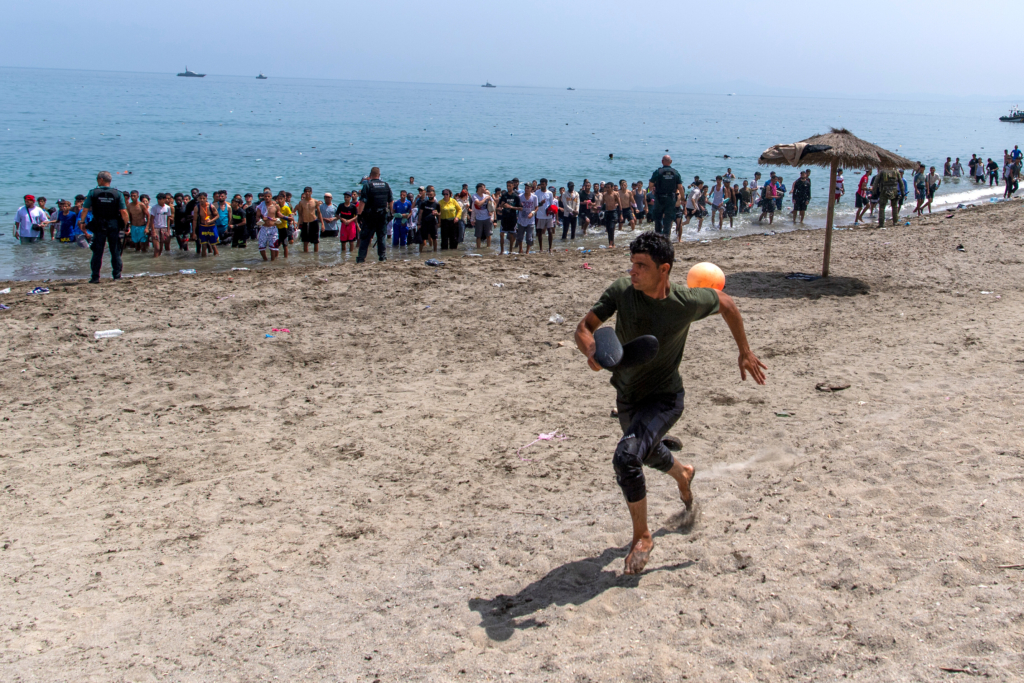


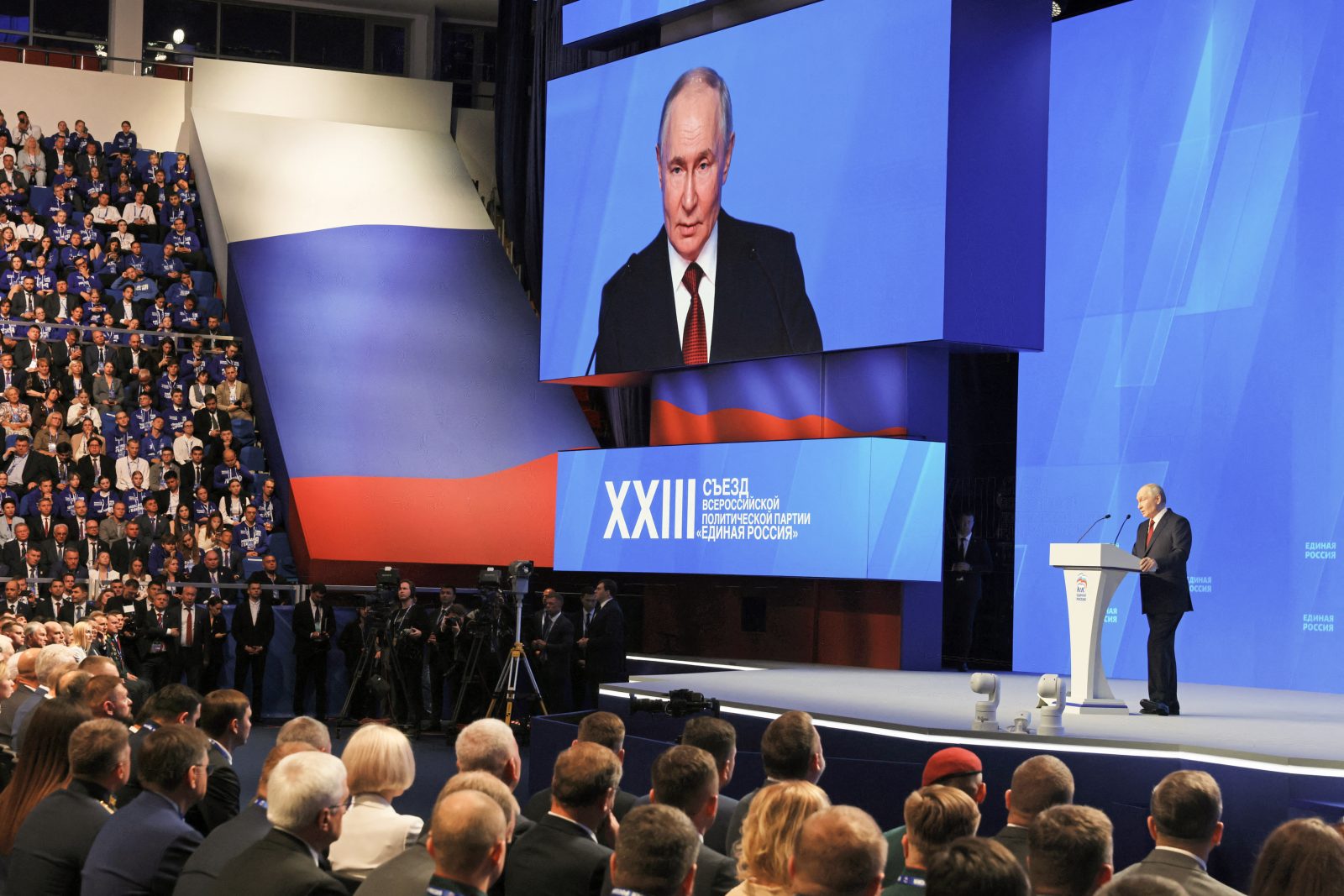
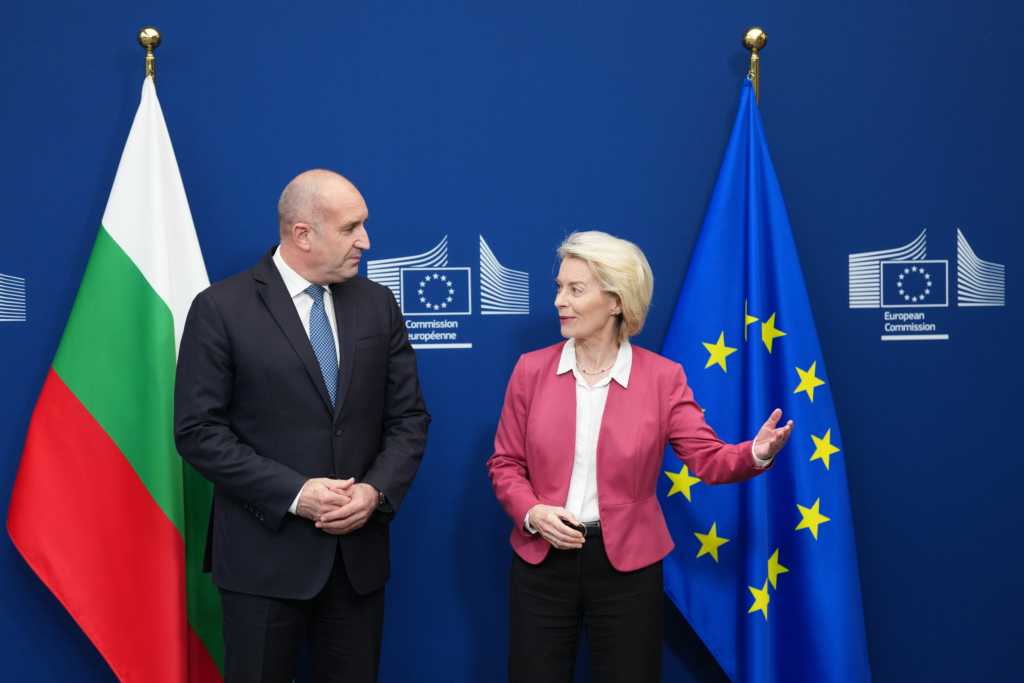
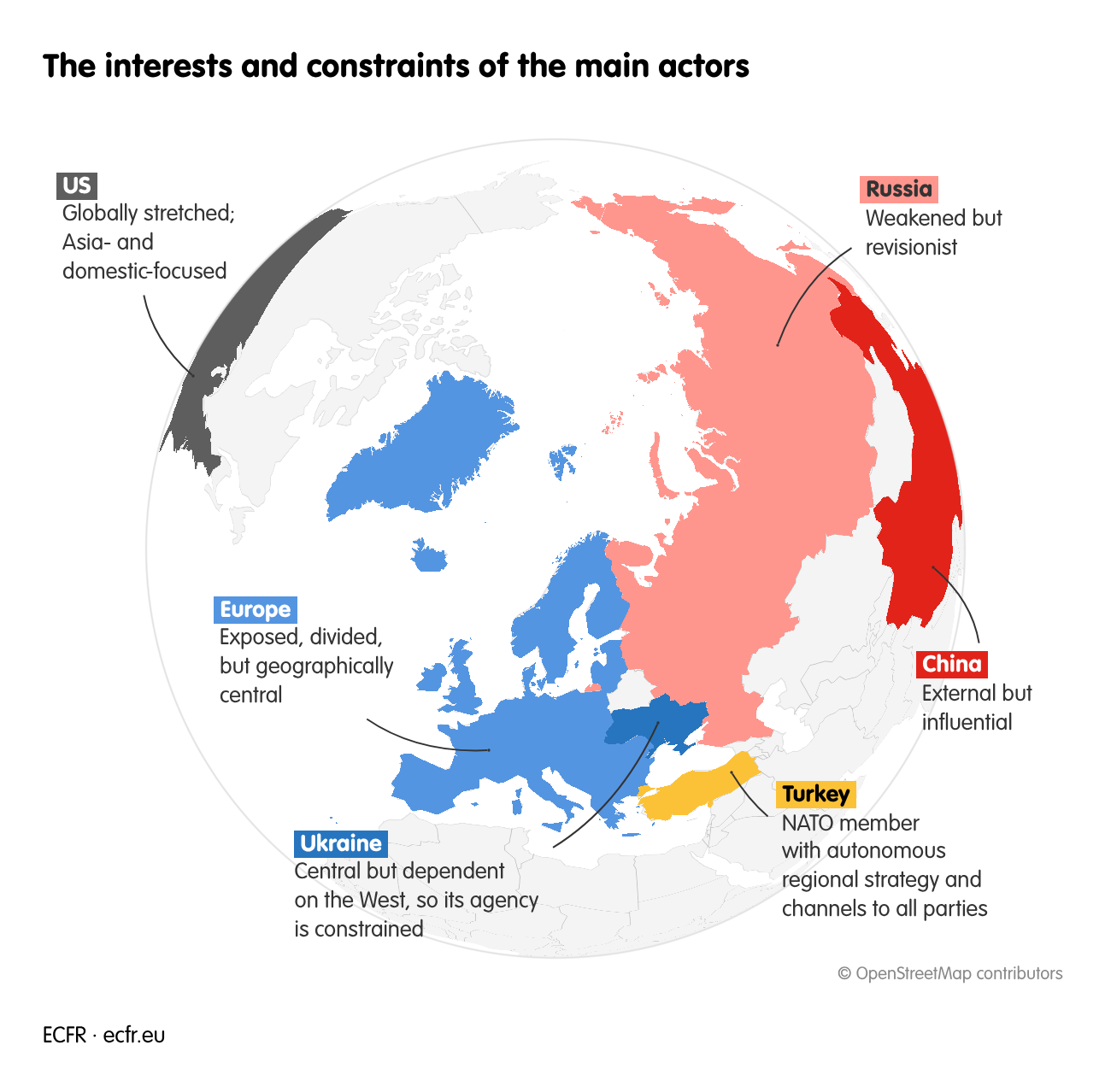
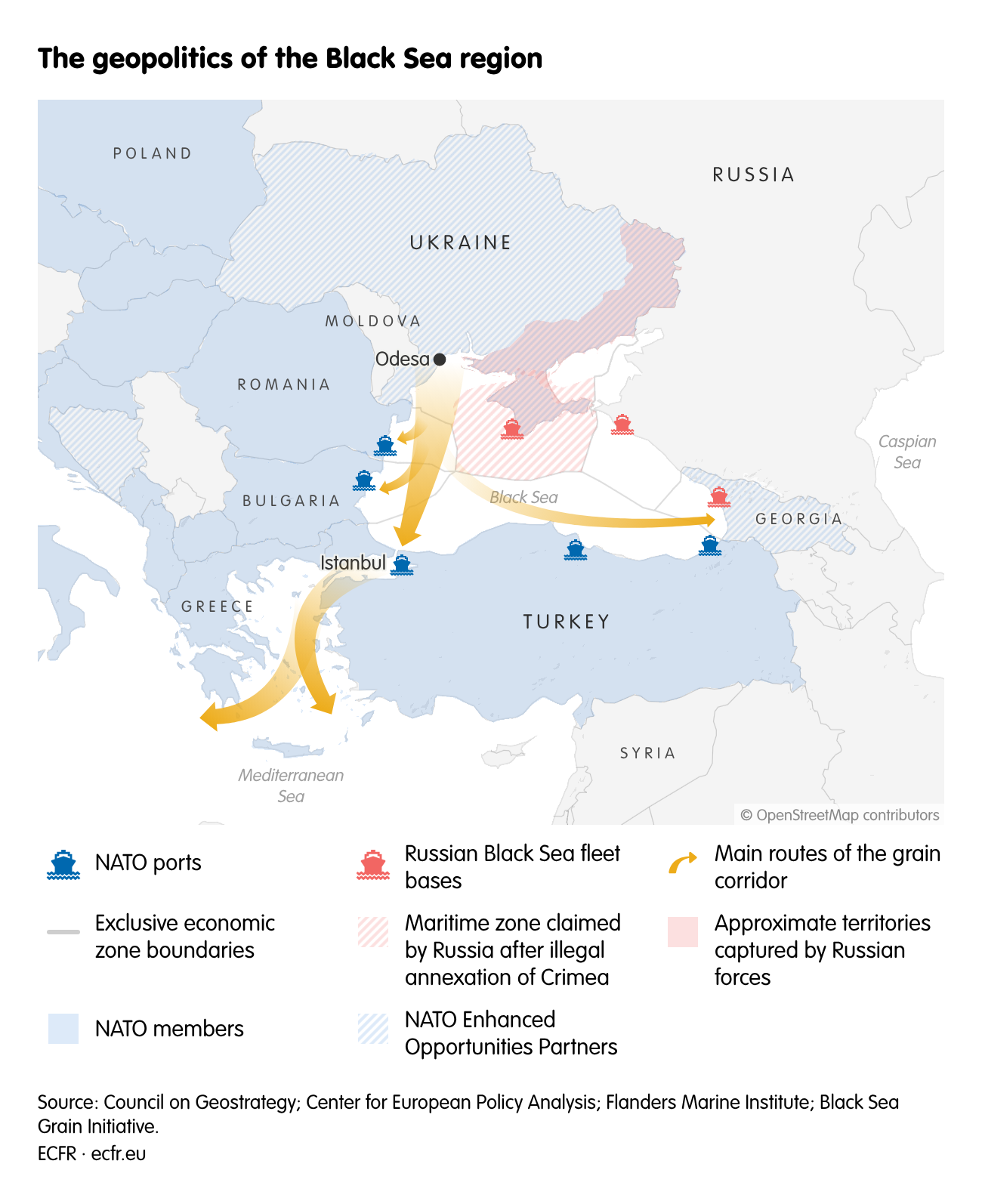
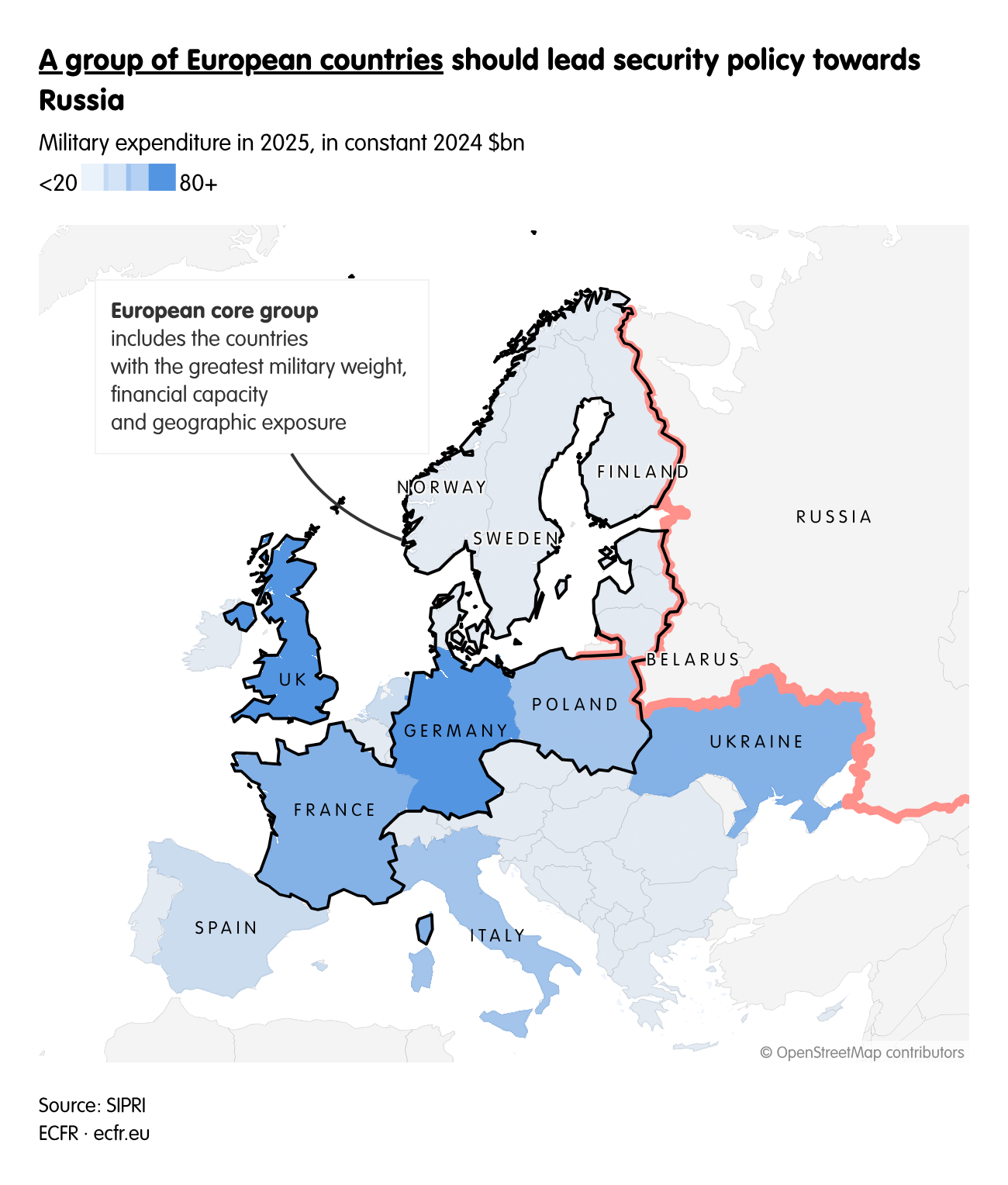
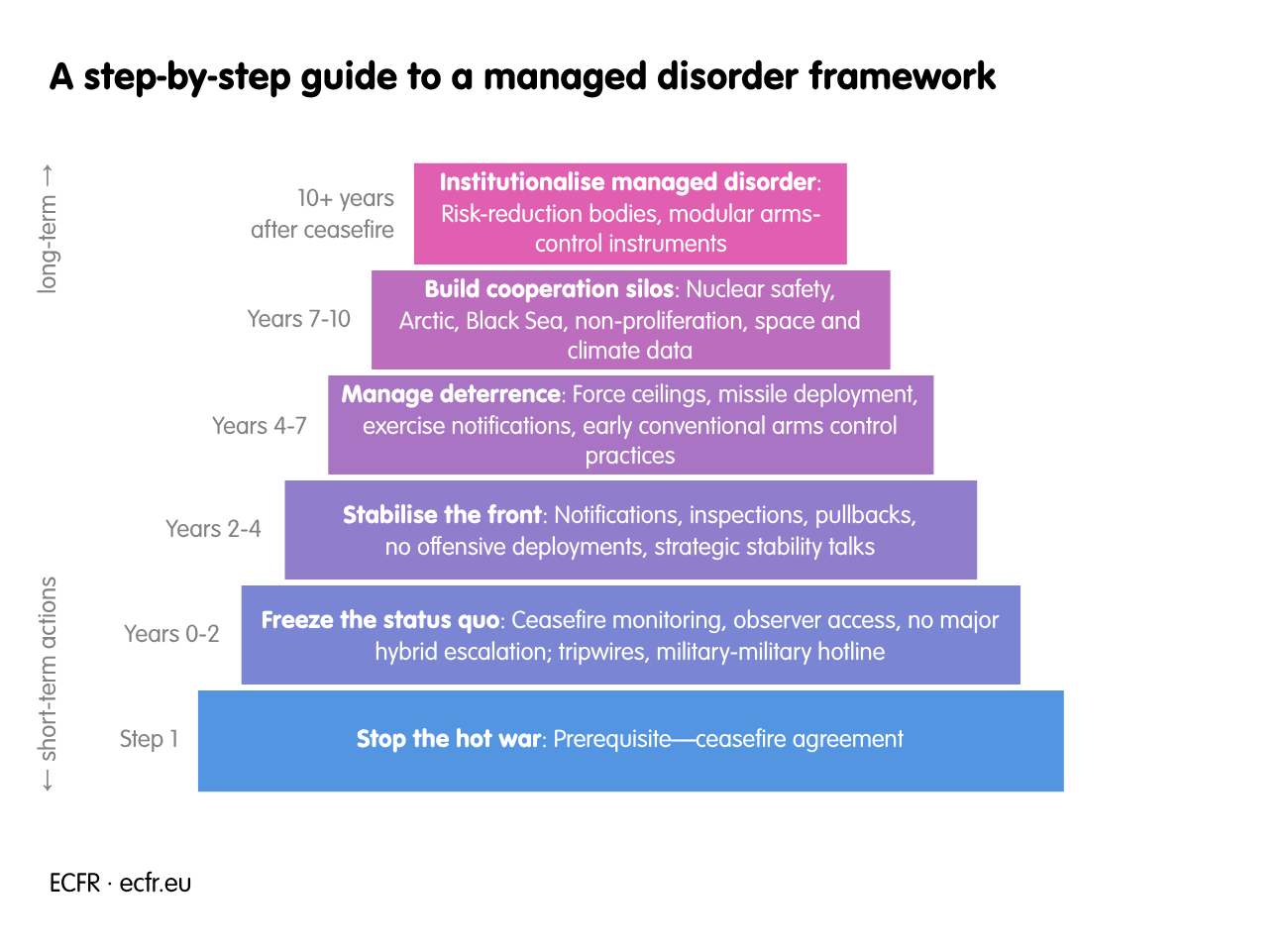
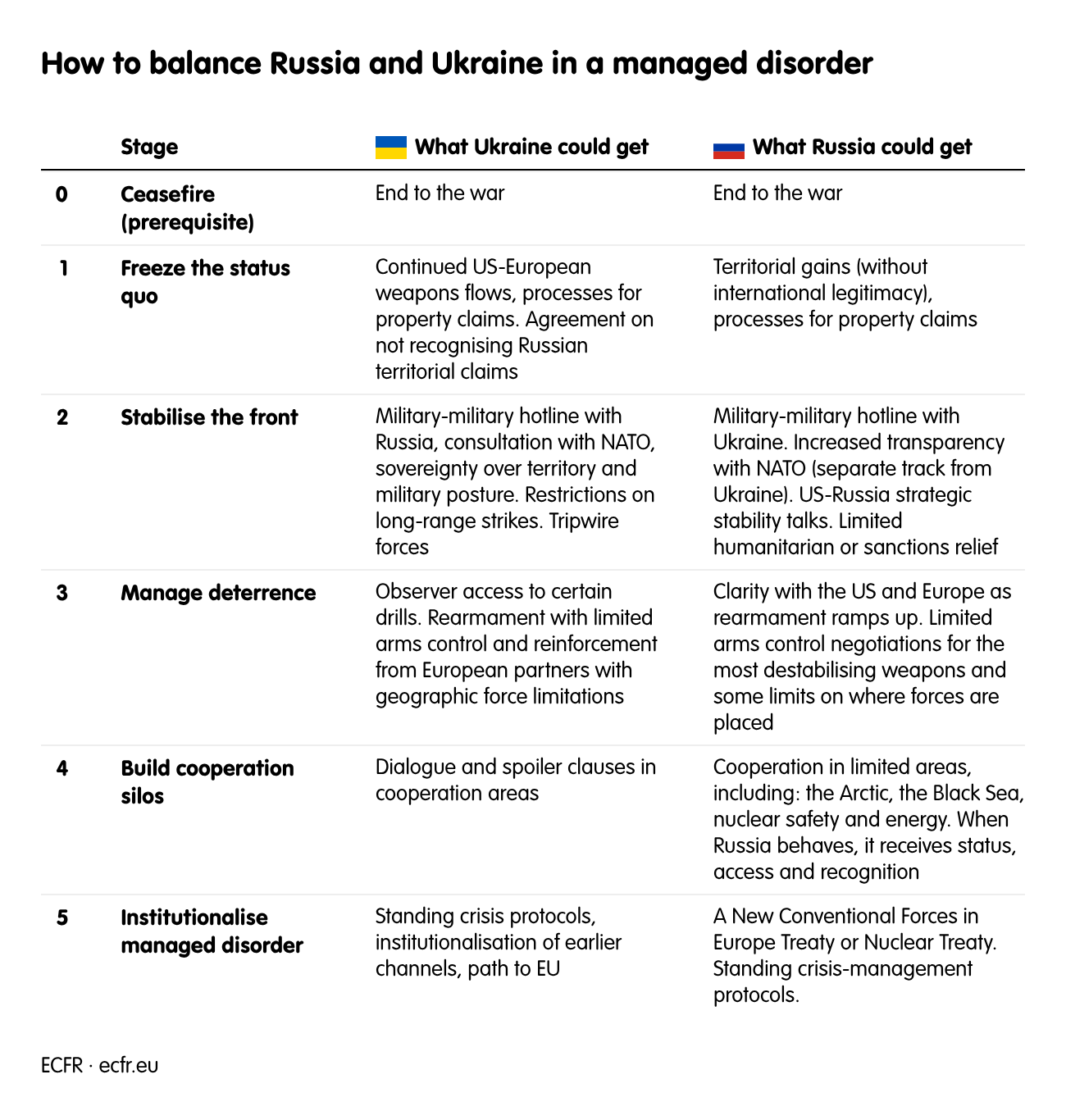
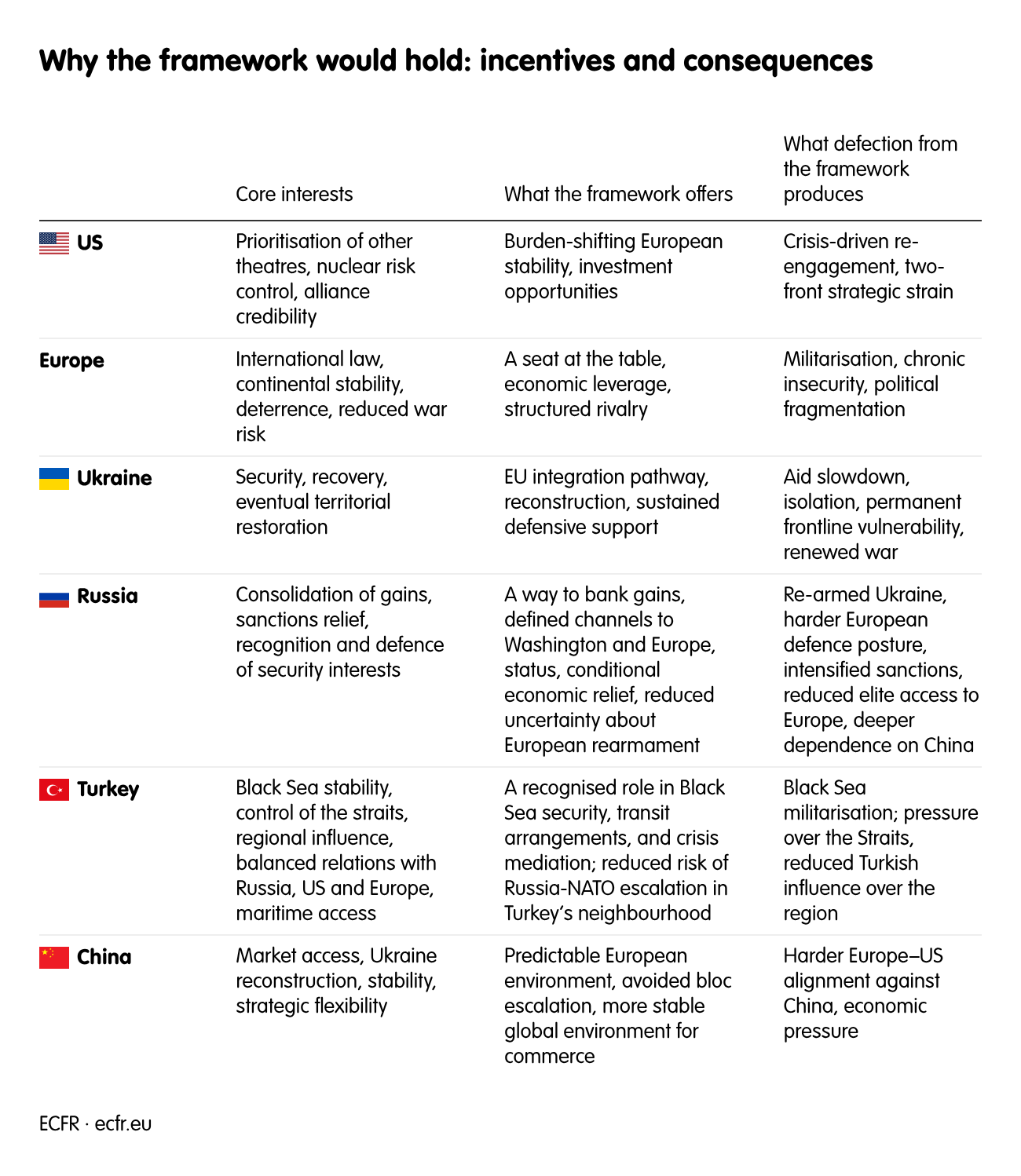


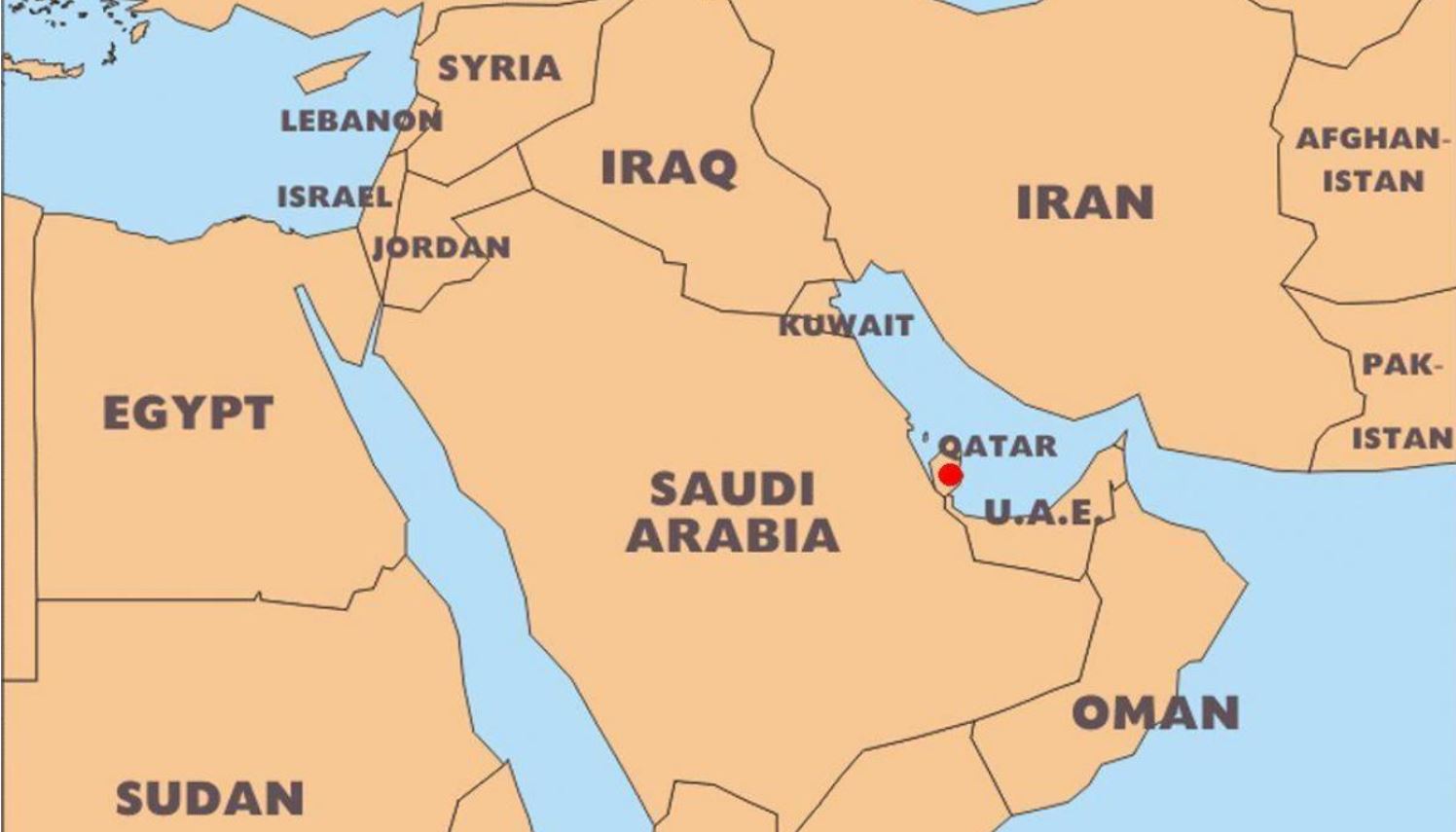
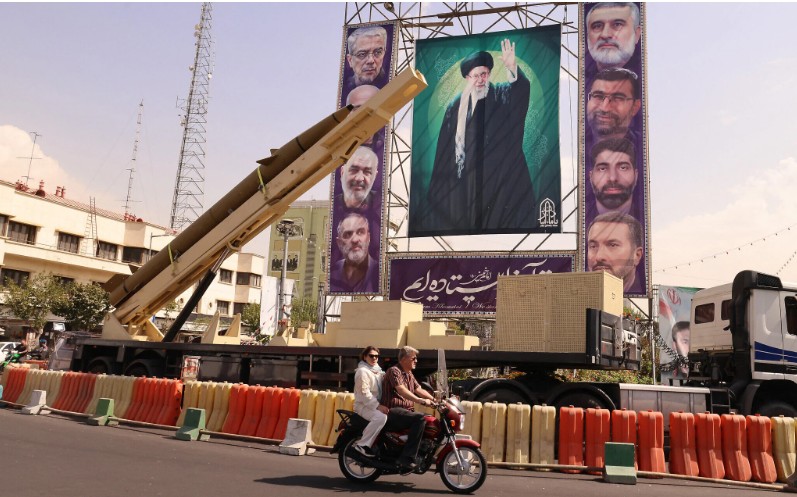
 BREAKING – Iran's latest ballistic missile, Kheibar Shekan; stockpile of 50,000 units. Guided by BeiDou Navigation Satellite System (BDS‑3). Range: 2,450 km. Max speed: up to 19,500 km/h (approx. Mach 16). Warhead: approximately 550 kg.