❌

Reading view

America’s $40 Billion Blind Spot: Why World’s Largest Arms Exporter Hasn’t Sold a Single Submarine in 50 Years?

The US has been the world’s largest defense exporter for more than three decades now.

According to SIPRI (Stockholm International Peace Research Institute), the United States accounted for 42% of global arms exports between 2021 and 2025.

For perspective, during this period, France was the world’s second-largest defense exporter, accounting for only 9.8% of global arms exports.

However, despite its dominant position in global arms exports, the United States has notably been absent from a particular high-value weapon system market that could have generated billions of dollars in additional revenue for its defense firms.

Ironically, Washington has stayed out of this business despite leading the world in this niche technology for over five decades.

On July 6, Canada reportedly selected the winner of the Canadian Patrol Submarine Project (CPSP) deal, expected to cost nearly US$ 30 billion, with Germany’s TKMS outdoing South Korea’s Hanwha.

Similarly, India is in the final stages of signing a major submarine deal with ThyssenKrupp Marine Systems (TKMS) under Project 75(I).

Both Canada and India are strategic partners of the US. One might wonder why the US defense companies were not even in the running for these “big ticket” deals.

This, despite the fact that the US is not only the world’s largest submarine operator, but its submarines are also some of the most advanced in the world. According to the Global Firepower Index 2026, both Russia and the US operate 66 submarines.

However, while Russia operates a mix of diesel-electric and nuclear submarines, all of the US’s submarines are nuclear-powered.

China is fast catching up with 61 submarines; however, China also operates a mix of diesel-electric and nuclear submarines.

However, Russia (and formerly the Soviet Union) has exported submarines to Algeria, Bulgaria, China, Cuba, Egypt, India, Indonesia, Iran, North Korea, Poland, Romania, Syria, Venezuela, Vietnam and others, and China has exported to Pakistan, Myanmar, Bangladesh and Thailand.

Interestingly, the US, despite its technological lead in the field, has not exported a single submarine to any country in the last 50 years. In fact, the last submarine the US exported was in 1973 to Taiwan.

So, why, despite its dominant position in global arms export and its technological lead in the field, has the US not exported a single submarine to any country in over 50 years?

Trump Calls It “Invasion,” Musk Says Budget “Destroyed”: Moroccan Surge in Spain Rattles U.S. & Europe and Reignites “Islamic Fear”

US Submarine Exports in History

The US was not always averse to exporting submarines. After the Second World War, the US emerged as one of the world’s largest submarine exporters.

During the war, the US constructed over 200 submarines, and by the time the war ended, the US had 232 submarines in commission.

However, within years of the end of the Second World War, a new Cold War began with the Soviet Union, and the US launched a massive modernization campaign for its submarines.

Under the modernization plan, the US decommissioned hundreds of its late-war-era Balao- and Tench-class diesel-electric submarines.

This left the US with dozens of decommissioned submarines.

At the same time, the US was financing a massive reconstruction plan in Europe under the Marshall Plan and building Europe’s military capabilities to create an effective deterrent against the Soviet Union.

For this purpose, the US decided to export these older, decommissioned, diesel-electric submarines to its allies. Between 1950 and 1970, the US exported nearly 50 submarines to its partners, including Turkey, Spain, Italy, Greece, the Netherlands, Canada, Taiwan, and others.

In fact, between 1945 and 1975, the United States accounted for roughly 25% of global exports of diesel-powered submarines.

Most of these were Balao-class diesel-electric submarines built during World War II.

Meanwhile, in 1954, the US launched USS Nautilus (SSN-571), the world’s first nuclear-powered submarine, heralding the era of nuclear-powered submarines.

Nuclear-powered submarines have key advantages, such as unlimited endurance, as they can stay submerged for months, maintain high underwater speeds consistently, and have global reach.

After the launch of USS Nautilus, Washington gradually phased out diesel-electric submarines. After 1954, the US built only three Barbel-class diesel-electric submarines.

By the early 1960s, all new US Navy combat submarines were nuclear-powered. The last diesel-electric attack submarine (USS Blueback) was decommissioned in 1990, leaving Washington with only nuclear-powered submarines.
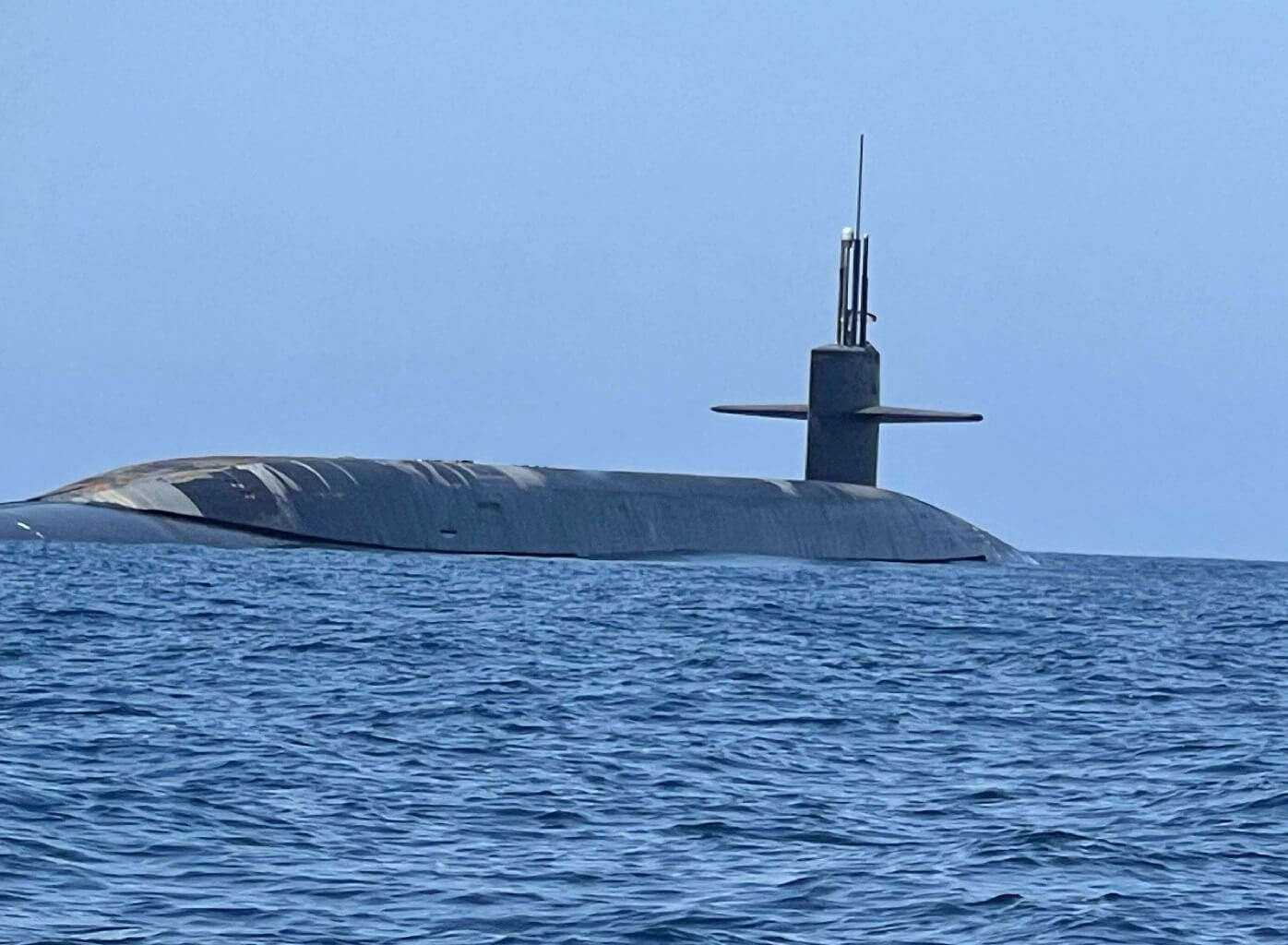
USS-Virginia-Submarine
File Image: USS West Virginia Submarine: Via US CENTCOM

Why Does the U.S. Not Export Nuclear Submarines?

The US nuclear-powered submarines are considered the best in their class; however, to date, Washington has not exported this technology to any country for various reasons.

Firstly, the U.S. Navy has long opposed even the export of diesel-electric submarines due to concerns about the impact of submarine technology proliferation on the ability of its forces to operate securely in coastal waters worldwide.

Submarines fall under the US Munitions List and are subject to the International Traffic in Arms Regulations (ITAR) and the Arms Export Control Act.

When it comes to nuclear propulsion technology, the US Navy is highly sensitive, as it adds extra layers of control under the Atomic Energy Act.

The US nuclear propulsion, quieting technology, sonar, and combat systems are considered among America’s most protected “crown jewels.”

The US has deliberately avoided proliferating this technology to preserve its undersea dominance.

In fact, Washington is so sensitive about submarines’ nuclear propulsion technology that it has refused to share this technology even with its close allies, such as France, Japan, Taiwan, or Canada.

The only two exceptions are the UK and Australia.

The US has a long-standing special nuclear propulsion technology-sharing agreement with the UK, dating back to the 1958 US-UK Mutual Defense Agreement.

The US supplied the reactor for Britain’s first nuclear sub, HMS Dreadnought, and ongoing collaboration allows the UK to design and build its own boats.

However, this is alliance cooperation, not a commercial export.

Similarly, in 2021, the US, the UK, and Australia signed the AUKUS agreement, under which the US has agreed to sell/transfer up to three Virginia-class SSNs to Australia, starting in the early 2030s.

Another issue is US industrial capacity, which is already struggling to meet US Navy demand for Virginia-class submarines.

In its current modernization drive, the U.S. Navy hopes to add two to three Virginia-class attack submarines to its fleet annually until 2043.

In fact, it’s not just the US that is sensitive about exporting nuclear submarines.

Globally, nuclear-powered submarines are operated by only six countries: the US, Russia, China, France, the UK, and India.

The US, Russia (formerly the Soviet Union), and the UK have been operating nuclear submarines for over six decades now.

However, to date, there is only one example of a country exporting/leasing a nuclear-powered submarine to another country.

The Soviet Union first leased a Charlie I-class (K-43) nuclear-powered submarine to India in 1988–1991.

India operated it as INS Chakra.

Further, Russia leased an Akula-class submarine (Nerpa/K-152) to India from 2012 to 2021, which New Delhi operated as INS Chakra II.

The US, the UK, China, France, and India have never exported or leased a nuclear submarine to any country.

In fact, how all countries are highly protective of nuclear-powered submarines can be gauged from the fact that even China refused this technology to its all-weather ally, Pakistan.

Leaked documents revealed that Pakistan formally asked China for nuclear-powered submarine technology and sea-based nuclear second-strike capabilities to counter India.

However, Beijing ultimately refused to provide the technology, citing global non-proliferation commitments and a desire to avoid triggering a regional nuclear arms race.

Instead, China is providing Pakistan with eight Hangor-class diesel-electric attack submarines, under a US$5 billion deal.

However, since the US no longer produces diesel-electric submarines and is reluctant to export nuclear-powered submarines even to its close allies, Washington is effectively out of the global submarine business, which is dominated by countries such as Germany, France, Russia, China, and Spain, and the situation is unlikely to change in the near future.

  • Sumit Ahlawat has over a decade of experience in news media. He has worked with Press Trust of India, Times Now, Zee News, Economic Times, and Microsoft News. He holds a Master’s Degree in International Media and Modern History from the University of Sheffield, UK. 
  • He can be reached at ahlawat.sumit85 (at) gmail.com

The post America’s $40 Billion Blind Spot: Why World’s Largest Arms Exporter Hasn’t Sold a Single Submarine in 50 Years? appeared first on EURASIAN TIMES.

  •  

Patriot and THAAD Inventories Collapse in Ongoing Iran War as U.S. and Israel Pause New Strikes

President Donald Trump said the US and Israel had decided to hold off on new strikes on Iran — provided that a deal to end the ongoing conflict is reached quickly.

Meanwhile, a report published by a US-based think tank recently warned that American inventories of key air defense interceptors have fallen sharply, raising the prospect that US and coalition forces may need to accept greater risks in future missile defense operations.

When the US launched Operation Epic Fury in February 2026, President Donald Trump said the hostilities would last only a few days, a deadline that was subsequently moved to a few weeks. However, five months later, there is no end in sight to the war, which has now spilled over into much of West Asia. 

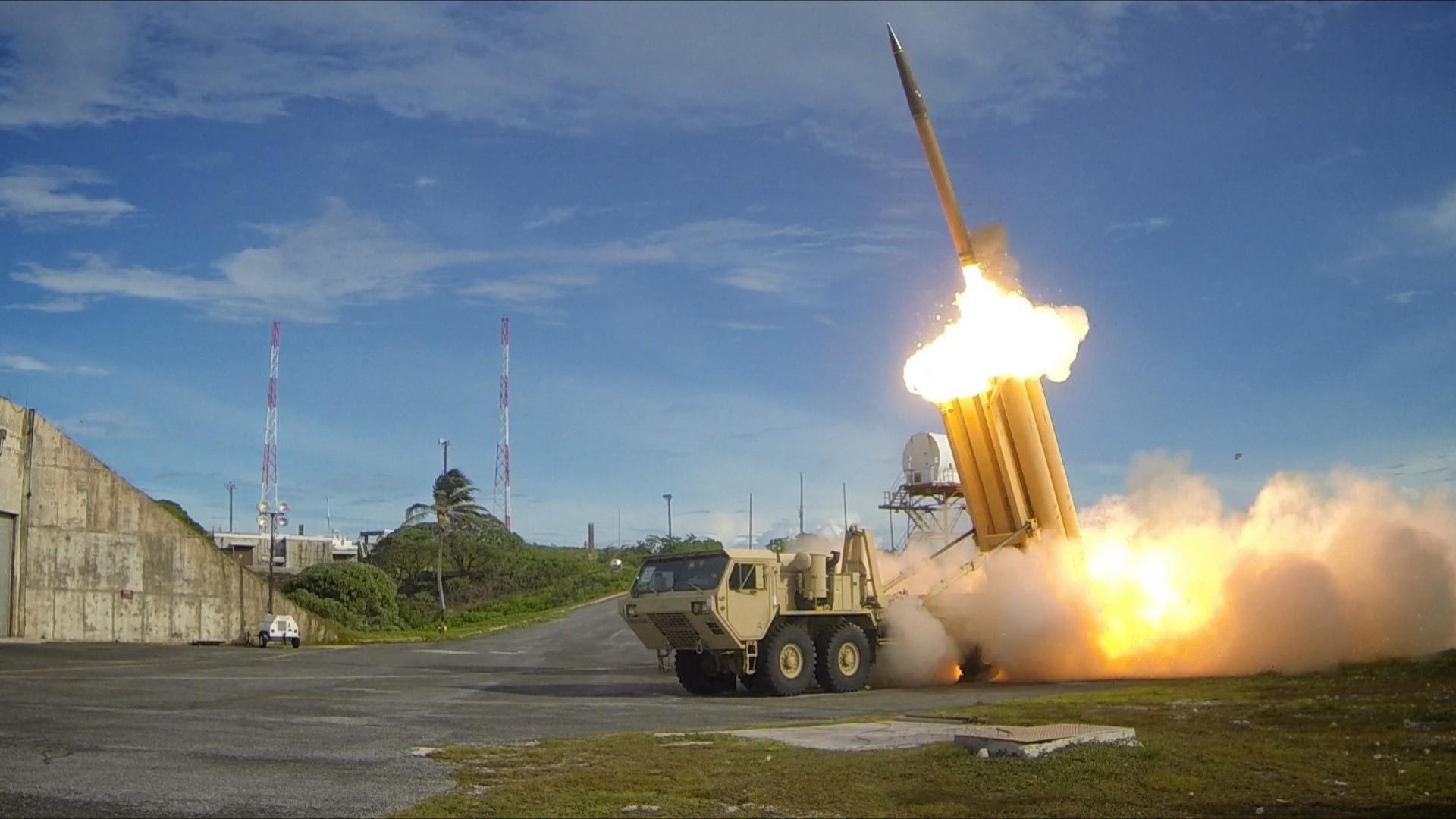
During the war, the US has severely drawn down its air defense interceptors, as documented by the US-based think tank CSIS (Center for Strategic and International Studies). The CSIS report estimates that stockpiles of the Patriot and THAAD (Terminal High Altitude Area Defense) have been greatly reduced in the ongoing conflict.

Published on July 27, 2026, the report—“Renewed Iran War Would Test Diminished Interceptor Inventories” authored by Mark F. Cancian and Chris H. Park—updates an earlier CSIS assessment released around the ceasefire agreed to by both sides on April 8, 2026.

“The air defense campaign has been largely successful with high—though not perfect—interception rates. While some Iranian attacks got past defenses, causing casualties and extensive base damage, these attacks have been unable to diminish U.S. and coalition operations. This has required extensive use of interceptors, with Patriot inventories now under 1,000 and THAAD inventories at about 250,” states the report.

The previous report had estimated that the US Patriot interceptor inventory shrank by 55%. However, the updated figures suggest the stockpile has further shrunk by an additional 10% since the truce, and that approximately 65% of US Patriots have now been lost since the war began.

Image
Image via CSIS

The report estimates that Patriot inventories now stand at under 1,000 (the most recent figures place the range at 759–827) and that THAAD inventories stand at about 250 (the latest figures put it at roughly 234–278).

Both systems have been heavily used to defend US bases, Gulf partners, and Israel against Iranian ballistic missiles, cruise missiles, and related threats. CSIS apparently draws its estimates from publicly available legislative and Pentagon budget documents, supplemented by open-source data on rounds expended in the Gulf.

“Diminished stockpiles may force the United States and its coalition partners to take more risks with interceptions. There are no good alternatives to Patriot and THAAD for ballistic missile defense. Navy ships, with Standard Missiles that can intercept such threats, generally are too far away,” the report warned.

Notably, an NBC report recently stated that US commanders are choosing not to take down Iranian projectiles that are headed into uninhabited regions of US sites in the vicinity because they do not want to squander their interceptor missiles.

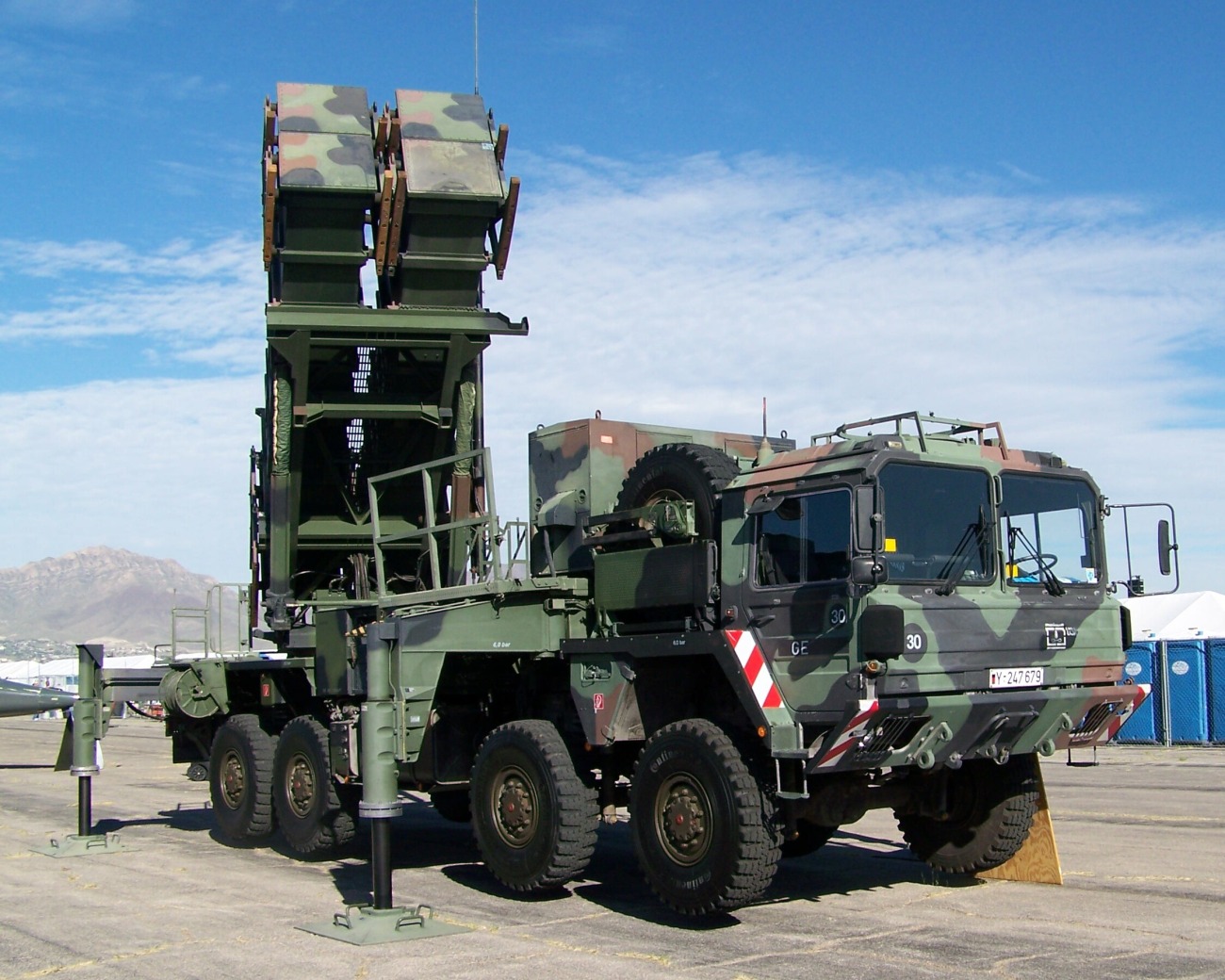
Patriot-Missile
Patriot AD System.

This alleged tactic, if true, marks a shift from previous air and missile defense procedures in the region, such as when a US-manned Patriot detachment protected a mostly evacuated Al-Udeid Air Base in Qatar from a barrage of Iranian ballistic missiles in response to Operation Midnight Hammer in June 2025.

Despite a dearth in air defense interceptors, the US has vowed to hit Iran very hard, a move that will almost certainly trigger Iranian retaliation and further cause depletion in Patriot and THAAD interceptors. The situation may become dire, given that the production of these missiles takes woefully long—Lockheed delivered just about 600 interceptors in 2025, and only 96  THAAD interceptors are manufactured per year. 

The United States is therefore consuming its most valuable air-defense munitions far faster than industry can replace them. Some analysts have suggested that depleting offensive and defensive stockpiles contributed to the Trump administration’s decision to accept a ceasefire, including the latest one where the U.S. and Israel agreed to hold off on new strikes on Iran.

Other reports indicate Trump may have changed the offensive plans after talking with Saudi Arabia and after Iran also spoke to Riyadh, besides Pakistan and Turkey.

Trump insisted the US was still “locked and loaded and ready to go against the Islamic Republic of Iran,” but added that Tehran and other Middle Eastern countries had asked him to hold off on fresh strikes. “Based on this request, I have agreed, for the future benefit of the WORLD and, likewise, the survival of a successful and prosperous Iran, to cancel the attack, subject to being able to rapidly make a DEAL,” Trump posted on his Truth Social platform.

Terminal High Altitude Area Defense - Wikipedia
Terminal High Altitude Area Defense – Wikipedia

Meanwhile, Strategists also warn that the shortages create near- to medium-term risks for U.S. readiness in other theaters, particularly a potential conflict with China in the western Pacific.  “Expended munitions create a near- to medium-term risk for U.S. readiness to fight a war against China in the western Pacific,” the report stated.

In the near term, Washington is unlikely to spare Patriots for Ukraine, which continues to face intense Russian attacks and has repeatedly requested additional interceptors. Russia has been exploiting the vacuum in air defense coverage to strike Kyiv with lethal ballistic and hypersonic missiles, as the EurAsian Times reported.

Pentagon Boosting Interceptor Production

Noteworthy steps have been taken in 2026 to rapidly expand production of Patriot (primarily PAC-3 MSE) and THAAD interceptors.

These efforts use a new “Acquisition Transformation Strategy” approach that emphasizes multi-year framework agreements, undefinitized contract actions (UCAs), long-term demand signals, and parallel investments in facilities, the workforce, and bottleneck components.

For instance, the US Army awarded Lockheed Martin a contract on July 29 worth up to $58.6 billion to produce Patriot interceptor missiles.

This comes after the US awarded Lockheed Martin a $4.7 billion contract in April 2026 to accelerate the production of the Patriot Advanced Capability-3 (PAC-3) Missile Segment Enhancement (MSE) interceptors. The agreement stipulated that the annual output of PAC-3 MSE interceptors would be increased from nearly 600 to 2,000 units.

The Army states that the latest contract establishes a multiyear procurement strategy for the interceptors from fiscal 2026 through 2032 by converting a prior one-year deal awarded in April into a seven-year draft agreement.

The Pentagon Munitions Acceleration Council (MAC) also reportedly signed an emergency procurement agreement with key vendors to boost production.

Meanwhile, Lockheed has stated that it is investing $8–9 billion through 2030 across more than 20 sites in the United States.

Additionally, the US has agreed to grant Ukraine a license to produce Patriot interceptors, making it the latest European country to manufacture these prized munitions, alongside Germany, Romania, and Poland.

Not just that, Lockheed Martin announced the introduction of the PAC-3 Adapted Capability Effector (PAC-3 ACE), a low-cost interceptor built to defeat a wide range of threats for less than half the cost of a PAC-3 MSE.

As for THAAD, the Pentagon signed a framework with Lockheed Martin to quadruple annual production from 96 to 400 interceptors.

The framework was intended to lead to a formal contract award (subject to congressional appropriations). This was later executed in June 2026 with an undefinitized contract action (UCA) valued at up to $35 billion to increase manufacturing through 2030. 

The Pentagon, in collaboration with L3Harris and Lockheed Martin, announced two historic seven-year framework agreements earlier this week to increase production capacity for critical components of the Terminal High Altitude Area Defense (THAAD) and the Patriot Advanced Capability-3 (PAC-3) Missile Segment Enhancement (MSE) interceptors.


The post Patriot and THAAD Inventories Collapse in Ongoing Iran War as U.S. and Israel Pause New Strikes appeared first on EURASIAN TIMES.

  •  

Palmela:Acidente grave com uma vítima mortal corta EN5 no Poceirão


Um acidente rodoviário grave provocou uma vítima mortal, na tarde deste sábado, 1 de agosto, na Estrada Nacional 5 (EN5), no concelho de Palmela.

O sinistro, classificado como uma colisão rodoviária, ocorreu pelas 15h19 ao quilómetro 17,836 da EN5, no troço que liga Rio Frio ao Poceirão, mais concretamente na zona de Forninho, na União das Freguesias de Poceirão e Marateca. Devido à gravidade da ocorrência e para permitir os trabalhos das equipas de emergência, a estrada esteve totalmente cortada ao trânsito.

Para o local foram mobilizados de imediato os meios de socorro da Península de Setúbal. Segundo as informações operacionais, o teatro de operações contou com a intervenção de 9 operacionais, apoiados por 4 viaturas, maioritariamente dos corpos de bombeiros.

O tráfego na zona permanece interrompido por tempo indeterminado enquanto decorrem os procedimentos habituais e a limpeza da via, recomendando-se aos condutores a máxima precaução e a utilização de rotas alternativas.

Por: Dino Frazão
Site: OSMONHACAS.COM
Data: 1 de agosto de 2026

————————————————–
© 2026 Os Monhacas. Todos os direitos reservados.
Este é um projeto independente de criação de conteúdos.
Se gostou do que leu e ainda não é seguidor, siga a nossa página para ver mais conteúdos!
————————————————–

O conteúdo Palmela:Acidente grave com uma vítima mortal corta EN5 no Poceirão aparece primeiro em OS MONHACAS.

  •  

Acidente corta EN109 em Mira e provoca três feridos após colisão frontal

📷 Notícias de Coimbra


Uma colisão frontal entre duas viaturas ligeiras de passageiros provocou três feridos, este sábado, 1 de agosto, na Estrada Nacional 109 (EN109), na localidade de Seixo de Mira, no concelho de Mira.

O sinistro ocorreu ao quilómetro 79,555, logo a seguir à rotunda que dá acesso à zona industrial de Mira, no sentido Mira. Devido à gravidade da ocorrência e para permitir as operações de socorro e limpeza da via, o trânsito esteve totalmente cortado nos dois sentidos.

O acidente mobilizou de imediato vários meios de socorro para o local. Segundo as informações recolhidas, o alerta ativou um total de 15 operacionais, apoiados por 6 viaturas, maioritariamente dos corpos de bombeiros da região.

À chegada ao teatro de operações, as equipas de emergência encontraram três vítimas: dois homens, com idades compreendidas entre os 49 e os 70 anos, e uma mulher também de 70 anos. Todos receberam assistência médica e, até ao momento, o tráfego na zona permanece congestionado, pelo que se recomenda aos automobilistas a escolha de caminhos alternativos.

Por: Dino Frazão
Site: OSMONHACAS.COM
Data: 1 de agosto de 2026

————————————————–
© 2026 Os Monhacas. Todos os direitos reservados.
Este é um projeto independente de criação de conteúdos.
Se gostou do que leu e ainda não é seguidor, siga a nossa página para ver mais conteúdos!
————————————————–

O conteúdo Acidente corta EN109 em Mira e provoca três feridos após colisão frontal aparece primeiro em OS MONHACAS.

  •  

U.S. Marine Corps Pilot Ejects From 47,000 Feet — Meet “The Man Who Rode the Thunder” 67 Years Ago

Lt. Col. William Henry Rankin was a decorated US Marine Corps fighter pilot who flew combat missions in World War II and the Korean War. His greatest ordeal, however, came in peacetime.

On July 26, 1959, he ejected from an F-8 Crusader straight into a massive thunderstorm. And he lived to tell the tale.

The Vought F-8 Crusader was a single-engine, supersonic, carrier-based air-superiority fighter designed for the U.S. Navy and Marine Corps. Known as the “Last of the Gunfighters,” it was the final American fighter built with guns as its primary armament at a time when missiles were rapidly taking over. The aircraft entered service in 1957.

In May 1957, Rankin took command of Marine Fighter Squadron 122 (VMF-122). The following year, it became the first Marine squadron to operate the F-8 Crusader.

In 1959, he catapulted to fame for surviving what seemed like an impossible incident with the Crusader.

The Story Of Rankin’s Riding A Thunderstorm

On the afternoon of July 26, 1959, Rankin led a two-ship flight with wingman Lt. Herbert Nolan from Naval Air Station South Weymouth, Massachusetts, back to Marine Corps Air Station Beaufort, South Carolina.

During the flight, the pilots encountered a large cumulonimbus thunderstorm.

Typically, thunderstorms pose severe threats to fighter jets, including extreme turbulence, powerful updrafts and downdrafts, hail, lightning, icing, and torrential rain. So, fighter pilots are trained to climb above the storm to prevent damage to their aircraft.

The F-8 Crusader’s strong climb performance and high service ceiling of about 50,000 feet made this a practical choice for Rankin on that fateful day.

Rankin climbed his F-8 fighter jet to 47,000 feet at a speed of Mach 0.82 over a massive cumulonimbus cloud that peaked at about 45,000 feet.

While on this quest, he suddenly heard a loud, unprecedented bump and rumble from the aircraft’s engine. He instantly knew something was wrong with his jet. 

The engine immediately stopped producing power, a bit of bad news that was delivered to Rankin by a bright fire warning light.

Acting swiftly to arrest the threat, Rankin immediately pulled the lever to deploy auxiliary power, but instead of saving his jet, it snapped in his hand.

Image
Lt. Col William Rankin (Via X)

At this point, Lt. Col Rankin knew he had to eject, which was a formidable challenge without a pressure suit at that altitude.

As soon as he ejected and touched what is believed to be -58 to -60 degree air, his body started to fail. The veteran fighter pilot who had braved enemies in the wars he fought through his career was now struggling for survival—he suffered frostbite, the decompression caused his stomach to bloat, and he started to bleed from his mouth, nose, and ears. The only respite, at least initially, was that he had an emergency oxygen supply. 

The chances of survival were grim, something Rankin was fully aware of.

“I was convinced I would not survive; no human could”, Rankin later wrote in his book “The Man Who Rode the Thunder”. 

“The pain of ‘explosive’ decompression was unbearable,” he recalled in his book, which has been widely read by aviation enthusiasts globally. “I could feel my abdomen distending, stretching, stretching, stretching, until I thought it would burst. My eyes felt as though they were being ripped from their sockets, my head as if it were splitting into several parts, my ears bursting inside, and throughout my entire body, there were severe cramps.”

However, he also bravely emphasizes, “I was terrified, but not petrified. It’s a brave distinction of terms.”

After roughly five minutes of free fall, Rankin realized his parachute had not opened. The system was designed to deploy automatically at about 10,000 feet via a barometric switch, allowing the pilot to reach denser, breathable air before the canopy opened. The already disoriented pilot began to worry that the parachute’s auto-deployment system may have been broken, causing his only chance at survival to fail.

Unfortunately, though, he was now in for a completely different kind of challenge.

As he was passing through a massive thunderstorm with zero visibility, the parachute opened prematurely as the violent pressure fluctuations, updrafts, and turbulence inside the cumulonimbus cloud “fooled” the barometric sensor.

Once under the open canopy of the parachute, Rankin was far more vulnerable to the storm’s powerful vertical currents. The long descent increased the risk of his death from cold or asphyxiation. Additionally, it meant that he was dangerously caught in the up-and-down draft of the storm system, which buffeted the pilot thousands of feet into the air before dragging him back down. And that’s exactly what happened.

Ten minutes into the ordeal, he began vomiting from the violent spinning and pounding even as lightning flashed around him—later described as blue blades several feet thick.

The rain was so dense that he repeatedly inhaled or swallowed water with every breath and had to hold his breath to avoid choking. “Gasping for air, swollen, bleeding, and battered by hail, it was as though I were under a swimming pool, and I had held my breath several times,” wrote Rankin.

For Rankin, this was akin to “drowning in the sky.”

For about forty minutes, he was battered by hail, nearly drowned by torrential rain, and subjected to lightning and extreme turbulence.

“I didn’t hear the thunder, I felt it,” Rankin wrote in his book.

Thankfully, the storm’s intensity eventually decreased, allowing the pilot to finally avoid its drafts. Then, the rain that had threatened to drown him gave way to a comforting summer shower, and the air got substantially warmer.

Lt. Col Rankin and his parachute, which had endured unimaginable turbulence and the ferocity of nature, had miraculously survived the thunderstorm.

Soon, he approached the forests of North Carolina’s backcountry, got entangled in a tree, cut away from it, and landed on the ground.

Battered, frostbitten, bleeding, rain-soaked, and covered in vomit, he stumbled through the woods using a search pattern until he found a country road. “Lying on my left side. I simply could not believe that I was on the earth—that I had survived,” he later wrote.

Several cars passed before a motorist stopped, drove him to a nearby country store, and allowed him to call for an ambulance. He collapsed while waiting and was taken to a hospital in Ahoskie, North Carolina. Rankin spent several weeks recovering but sustained no permanent long-term injuries from the forty-minute ordeal and soon returned to duty.

Rankin gained widespread recognition for his iconic and unbelievable battle with the thunderstorm after he returned to active service. 

Having survived a 40-minute thunderstorm in the air, he lived for 50 more years before passing away at 89 in 2009.

Nevertheless, Lt. Col Rankin is still remembered—nearly 70 years after the incident—as the only man who defeated a thunderstorm.


The post U.S. Marine Corps Pilot Ejects From 47,000 Feet — Meet “The Man Who Rode the Thunder” 67 Years Ago appeared first on EURASIAN TIMES.

  •  

IC2 CONDICIONADO EM COIMBRA DEPOIS DE DESPISTE QUE ENVOLVEU DUAS VIATURAS


Um ferido ligeiro é o resultado de um acidente ocorrido na manhã deste sábado, pouco depois das 7h00, no IC2, ao quilómetro 191,8, no sentido Norte-Sul, entre a Pedrulha e Coimbra.

O alerta foi dado às 7h29 e tratou-se de um despiste que envolveu duas viaturas. Segundo o Diário de Coimbra, um dos veículos ficou tombado lateralmente a ocupar as duas vias de rodagem, enquanto a outra viatura ficou imobilizada na berma com danos significativos.

À chegada das equipas de socorro, o condutor da viatura tombada — um jovem de 26 anos — já se encontrava no exterior do veículo. A vítima sofreu ferimentos ligeiros e foi encaminhada para os Hospitais da Universidade de Coimbra por uma ambulância da Cruz Vermelha.

Devido ao aparato do acidente e para garantir a segurança das operações de socorro, o trânsito esteve condicionado durante algum tempo, processando-se de forma lenta através da berma.

No local estiveram 18 operacionais apoiados por 6 viaturas, numa resposta que envolveu os Bombeiros Sapadores de Coimbra, os Bombeiros Voluntários de Coimbra, a PSP, a Cruz Vermelha e a VMER.

Por: Dino Frazão
01 de Agosto de 2026

————————————————–
© 2026 Os Monhacas. Todos os direitos reservados.
Este é um projeto independente de criação de conteúdos.
Se gostou do que leu e ainda não é seguidor, siga a nossa página para ver mais conteúdos!
————————————————–

O conteúdo IC2 CONDICIONADO EM COIMBRA DEPOIS DE DESPISTE QUE ENVOLVEU DUAS VIATURAS aparece primeiro em OS MONHACAS.

  •  

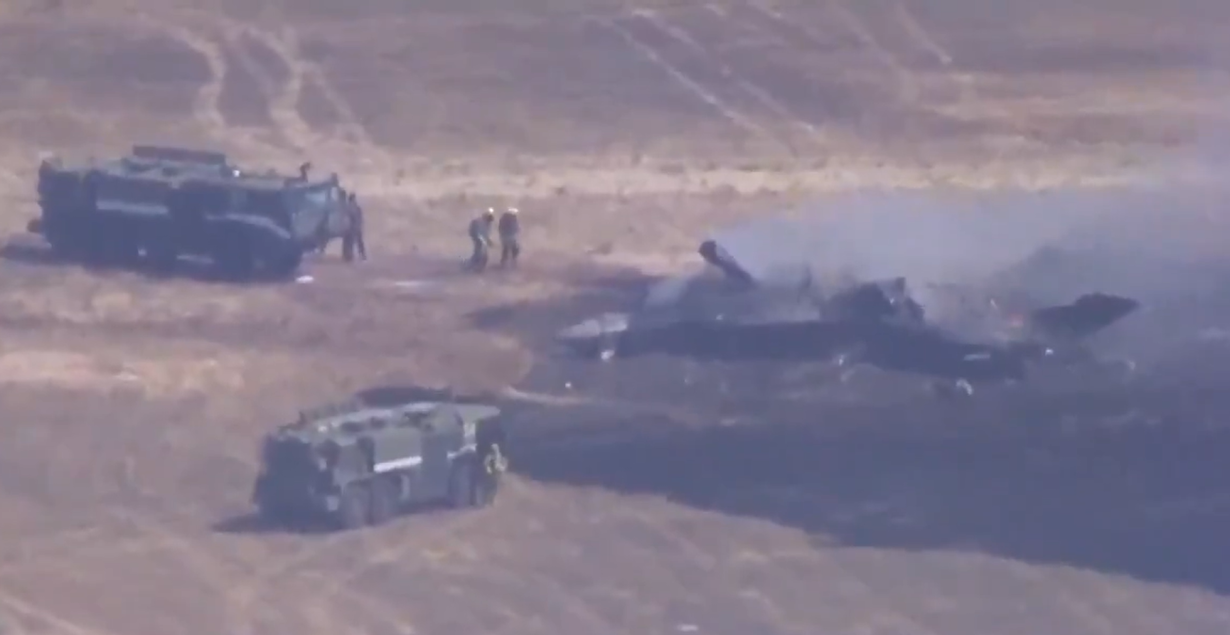
U.S. F-35B Crashes at Former Top Gun Base in San Diego; Pilot Safe, $109M STOVL Stealth Fighter Gutted

A US Marine Corps (USMC) F-35B fighter jet crashed and erupted into flames near Marine Corps Air Station Miramar in San Diego on Friday morning, officials said. The pilot ejected safely before impact and suffered minor injuries.

USMC said: Emergency personnel responded this morning to an aircraft mishap on the flightline of Marine Corps Air Station Miramar at approximately 10:00 a.m. local time today, involving an F-35B assigned to Marine Aircraft Group 11, 3d Marine Aircraft Wing. The pilot ejected, was transported to a local medical facility in stable condition for evaluation and treatment of non-life-threatening injuries.

The single-seat F-35 went down at approximately 10:00 am local time in the vicinity of the base’s flight line, south of Miramar Road near Mitscher Way, the Marine Corps said in a statement.

“There was an aviation mishap involving a Marine Corps F-35B in the vicinity” of the air station, base officials confirmed, classifying the incident as a Class A mishap — the military’s most severe category, typically involving the destruction of an aircraft, damage exceeding $2.5 million or the permanent disability or death of personnel.

No cause for the crash has been released, and officials have not identified the pilot.

MCAS Miramar, located about 14 miles north of downtown San Diego, is a major hub for Marine aviation and was once home to the US Navy’s elite “Top Gun” fighter weapons school, made famous by the 1986 film starring Tom Cruise.

The F-35B is the short take-off and vertical landing (STOVL) variant of F-35 Lightning II, a fifth-generation stealth fighter designed for the US Marine Corps. It is also operated by the UK and Italy.

Unlike the conventional F-35A variant used by the Air Force or the carrier-based F-35C, the B model is equipped with a shaft-driven lift fan behind the cockpit and a swiveling rear exhaust nozzle that can redirect thrust downward.

This propulsion system, powered by a Pratt & Whitney F135 engine producing more than 40,000 pounds of thrust, allows the aircraft to operate from short runways, amphibious assault ships or austere forward bases without needing full-fledged airstrips.

The F-35B has an approximate flyaway cost of $109 million, making it the most expensive of the three F-35 variants.

The crash is among several F-35 accidents in recent years involving various variants, though officials highlighted the aircraft’s safety systems as pilots managed to eject each and every time.

File Image: F-35 Crash

Earlier F-35B Crashes

On September 28, 2018, in South Carolina, the first crash of any F-35 variant was recorded. An F-35B from Marine Fighter Attack Training Squadron 501 crashed during a training flight. The pilot ejected safely. Investigators determined a manufacturing defect caused an engine fuel tube to fail.

The entire F-35 fleet was temporarily grounded for inspections.

Two years later, on September 29, 2020, an F-35B from Marine Fighter Attack Squadron 121 collided mid-air with a Marine Corps KC-130J tanker during aerial refueling near Naval Air Facility El Centro.

The pilot ejected, but the aircraft was destroyed. The KC-130 made an emergency landing, and all its crew members survived.

A year later, on November 17, 2021, a British F-35B crashed into the Mediterranean Sea shortly after takeoff from Queen Elizabeth aircraft carrier. The pilot ejected safely and was later recovered. An inquiry later found that an engine intake blank had been left in place, causing the loss of thrust.

On December 15, 2022, at NAS Joint Reserve Base Fort Worth, Texas, an undelivered F-35B undergoing production flight testing crashed during a failed vertical landing attempt. The test pilot ejected while the aircraft was still on the ground and was not seriously injured. The jet was written off.

Next year, on September 17, 2023, an F-35B from Marine Fighter Attack Training Squadron 501 experienced an electrical malfunction during a training flight in heavy rain and instrument meteorological conditions. The pilot ejected near North Charleston.

The unmanned aircraft continued flying for approximately 11 minutes and 21 seconds under its automatic flight-control systems before crashing in a rural area.

The aircraft’s debris was not discovered for more than a day. A Marine Corps investigation later attributed the mishap to pilot error, while noting the electrical failures and display malfunctions as contributing factors.

On May 28, 2024, an F-35B, a developmental test aircraft being flown by an Air Force pilot, crashed shortly after takeoff following a refueling stop en route from Fort Worth, Texas, to Edwards Air Force Base, California. The pilot ejected at low altitude, sustained serious injuries, but survived. The aircraft was completely destroyed.

Despite all these crashes, the pilots managed to eject and survive, though some sustained injuries.

By ET Desk

The post U.S. F-35B Crashes at Former Top Gun Base in San Diego; Pilot Safe, $109M STOVL Stealth Fighter Gutted appeared first on EURASIAN TIMES.

  •  

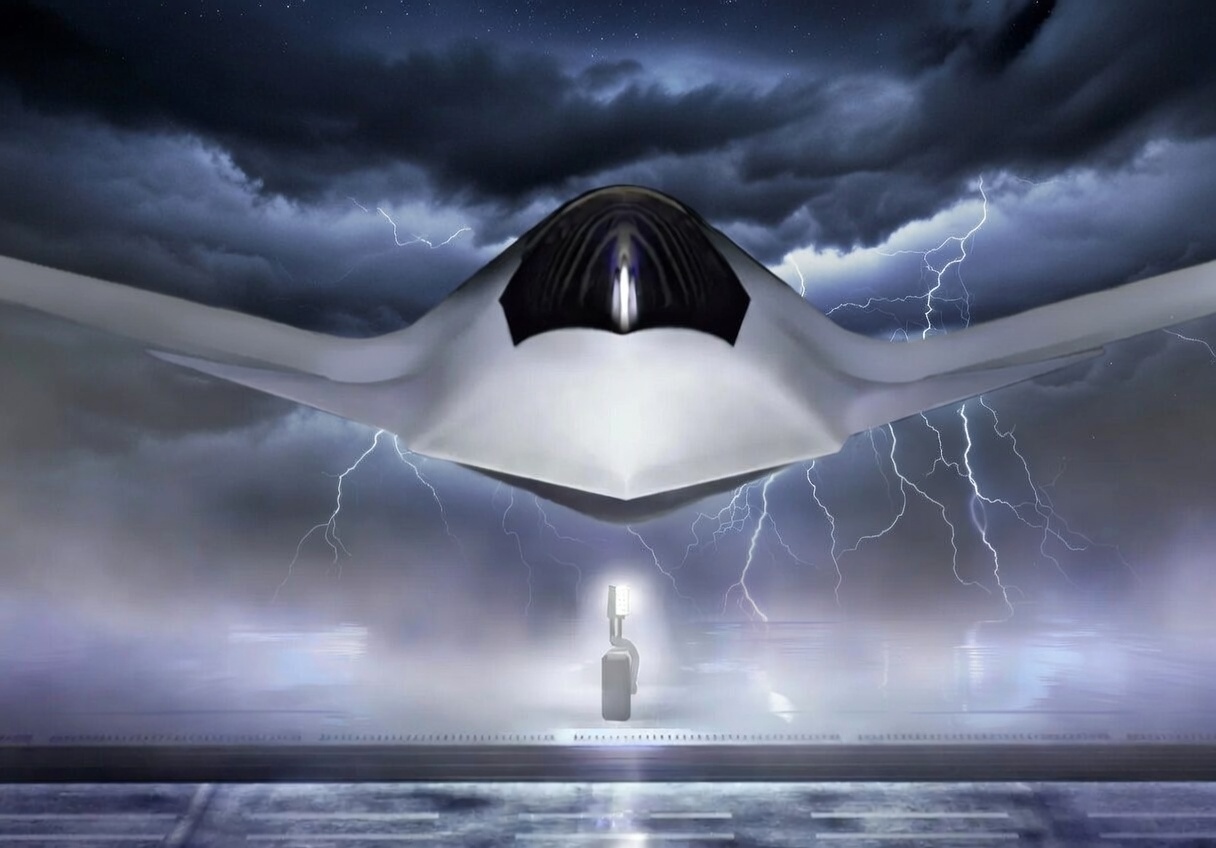
J-36 vs F-47: China’s J-36 Pulls Ahead of U.S. F-47 as PLA Becomes First To Release “Teaser” of 6th-Gen Aircraft

China released the teaser footage of the fifth prototype of its sixth-generation fighter jet, the J-36. The big question is: has Beijing leapfrogged the U.S. F-47 aircraft?

China Military Bugle, the official press account of the People’s Liberation Army, published a four-minute video on July 26, marking the 10th anniversary of China’s first heavy transport aircraft, the Y-20, entering service.

In the video’s last scene, one of the Y-20 co-pilots asks his captain: “Who are we refueling today?”

“First the ‘Master Six’, then the ‘Little Six’,” the captain replies.

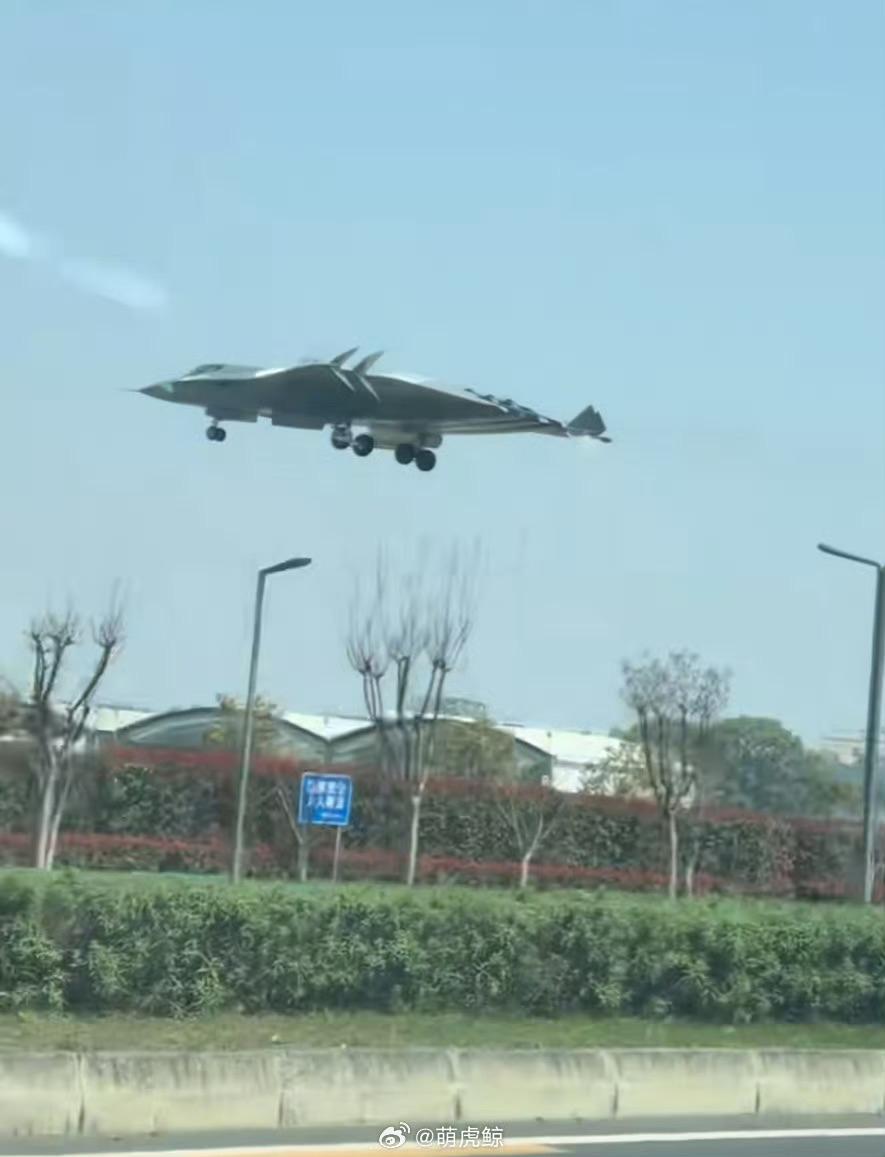
The final shot clearly shows the now familiar three-engine tailless J-36 flying next to the Y-20.

In Chinese defense circles, “Master Six” is an informal nickname for the H-6 strategic bomber, and “Little Six” is a reference to the sixth-generation fighter.

PLA just hinted at the 6th-gen fighter in the video Y-20's 10th anniversary service!

"Captain, who are we refueling today?"

"First 'Sixth Master' (H-6), then 'Little Six' (6th-gen)."

The final shot clearly shows the unannounced but well-known 6th-gen jet. pic.twitter.com/dmVdErtXmO

— Li Zexin 李泽欣 (@XH_Lee23) June 28, 2026

Notably, while there have been multiple videos and pictures of the J-36, this is the first time that the video of the unusual, three-engine fighter jet has been released in official Chinese media.

This is seen as China’s first official acknowledgment of the existence and flight testing of the next-generation fighter jet.

Online videos and pictures of the J-36 have been circulating since December 2024, when China simultaneously unveiled two next-generation stealth aircraft, dubbed J-36 and J-50, during flight tests near Chengdu, Sichuan.

The J-36’s trijet design, featuring a blended double delta wing structure, was immediately documented. However, those videos were shot from the ground, and China’s government, military officials, or aviation companies did not make any comment on the new fighter jet.

Nearly three months later, in March 2025, the J-36 made a second appearance over Chengdu. This time, it flew solo, and the videos gave clear views of the aircraft’s trijet configuration, dorsal intake, and control surfaces.

The J-36. File Image.

Since then, the aircraft has been sighted multiple times flying over Chengdu.

The latest video, featuring the J-36 flying next to the Y-20, also makes it clear that the aircraft is equipped with air-to-air refueling capacity.

Song Zhongping, a military commentator and former PLA instructor, told Hong Kong-based SCMP that the video indicated that the sixth-generation fighter was almost certainly equipped with air-to-air refueling capability.

“And it is highly likely that it has already conducted air-to-air refueling tests during flight testing,” he said.

Air-to-air refueling capacity is crucial to navigate the long distances of the Pacific theatre.

“If a tactical aircraft’s endurance and combat radius approach those of a medium-range strategic bomber, it would be capable of carrying out patrol missions of strategic significance,” Fu Qianshao, a military analyst and former PLA Air Force officer, said.

The latest images appear to show further significant changes to the aircraft’s design and underscore its rapid evolution.

According to experts, this might be the fifth prototype of the J-36.

China’s decision to officially acknowledge the J-36 in the Y-20 anniversary video, while simultaneously flying what appears to be a fifth prototype within just 19 months of the first sightings, marks a significant acceleration in its sixth-generation fighter program.

The aircraft’s large airframe, evolving stealth features, and confirmed aerial-refueling capability suggest Beijing is prioritizing long-range, high-endurance operations across the Pacific. If the current pace of flight testing continues, China could field an operational sixth-generation platform earlier than many Western programs currently project — a development that would reshape the airpower balance in the Indo-Pacific.

Andreas Rupprecht, an aviation analyst and expert on China’s air force, said the structural differences between the earliest and latest examples made it unlikely the sightings simply showed a single aircraft being repeatedly modified.

“It is still difficult to assess this with any certainty,” he said. “But if one takes the reports from reliable sources as a basis, there is indeed some strong evidence to support it.”

According to Rupprecht, the J-36 program appeared to have progressed through at least three distinct configurations since December 2024.

The first aircraft featured caret-shaped air intakes, tandem main landing gear and box-shaped engine nozzles.

A revised configuration introduced diverterless supersonic air intakes, side-by-side landing gear and redesigned exhausts that might improve stealth and maneuverability.

The latest aircraft appears to retain many of those changes while introducing a modified nose section, suggesting continued refinement of the design as testing progresses, Rupprecht explained.

Experts are divided on why China is testing three different design configurations simultaneously.

Rupprecht suggested that one possibility was that China was testing three different models to analyze which design performed best in real flight conditions, rather than drawing conclusions solely from wind tunnel testing.

“There is simply no experience yet in this regard for such a type of ‘fighter’,” he said.

Rupprecht also suggested that another possibility was that design changes were necessitated by the shift from the earlier WS-10C engine to China’s more powerful WS-15 powerplant; however, there was no confirmation.

He also noted that the appearance of the fifth prototype within 19 months highlighted that the program was progressing rapidly.

Comparisons with the J-20 stealth fighter suggest the J-36 has reached key milestones faster.

“So yes, the program does appear to be relatively mature and progressing quickly,” Rupprecht said.

However, he cautioned that faster flight testing of the J-36 might not translate into quicker operationalization of the fighter aircraft into the PLA Air Force (PLAAF).

Rupprecht suggested that he expected China to deliver the first pre-production batch to the PLA Air Force before 2030, with operationalization of the final production model some years later.

He also suggested that the J-36’s unusually large size meant the aircraft was more likely to serve as a heavily armed command platform capable of directing armed loyal wingman drones and other fighter jets, aided by its powerful sensors and long-range weapons.

“I am more convinced that the J-36 is something entirely distinct,” he said, describing it as an “aerial air-defense node” comparable in concept to an Aegis-equipped US warship coordinating a wider combat network.

In Rupprecht’s view, these different roles and designs make J-36’s comparisons with the F-47 misleading. In fact, he suggested that it will be more fruitful to compare the F-47 with J-50.

Regardless of the substantial differences in design and possibly in their roles, it can not be denied that China’s J-36 is progressing much faster than the US’s next-generation fighter jet.

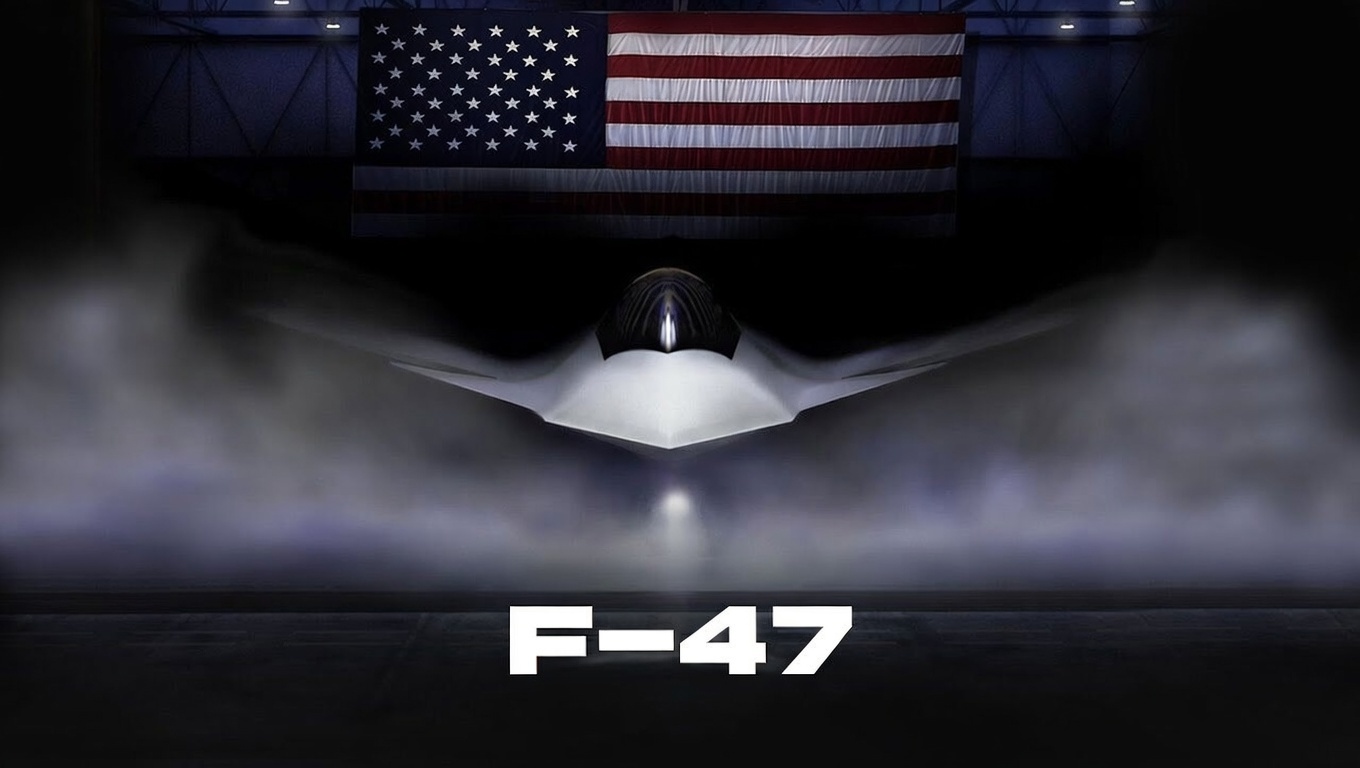
While the J-36’s fifth prototype is flying, there is no publicly available picture of the F-47 flying.

The first flight of the F-47 is expected sometime in 2028.

In fact, according to the latest reports, the F-47 is expected to initially fly with an interim engine, as the US’s Next Generation Adaptive Propulsion (NGAP) program could be ready for integration onto an actual aircraft only by 2030.

This means that at least the F-47 prototype, and possibly the first operational F-47s, will have to fly with a different engine before the NGAP engine is integrated into the F-47 around 2030-2031.

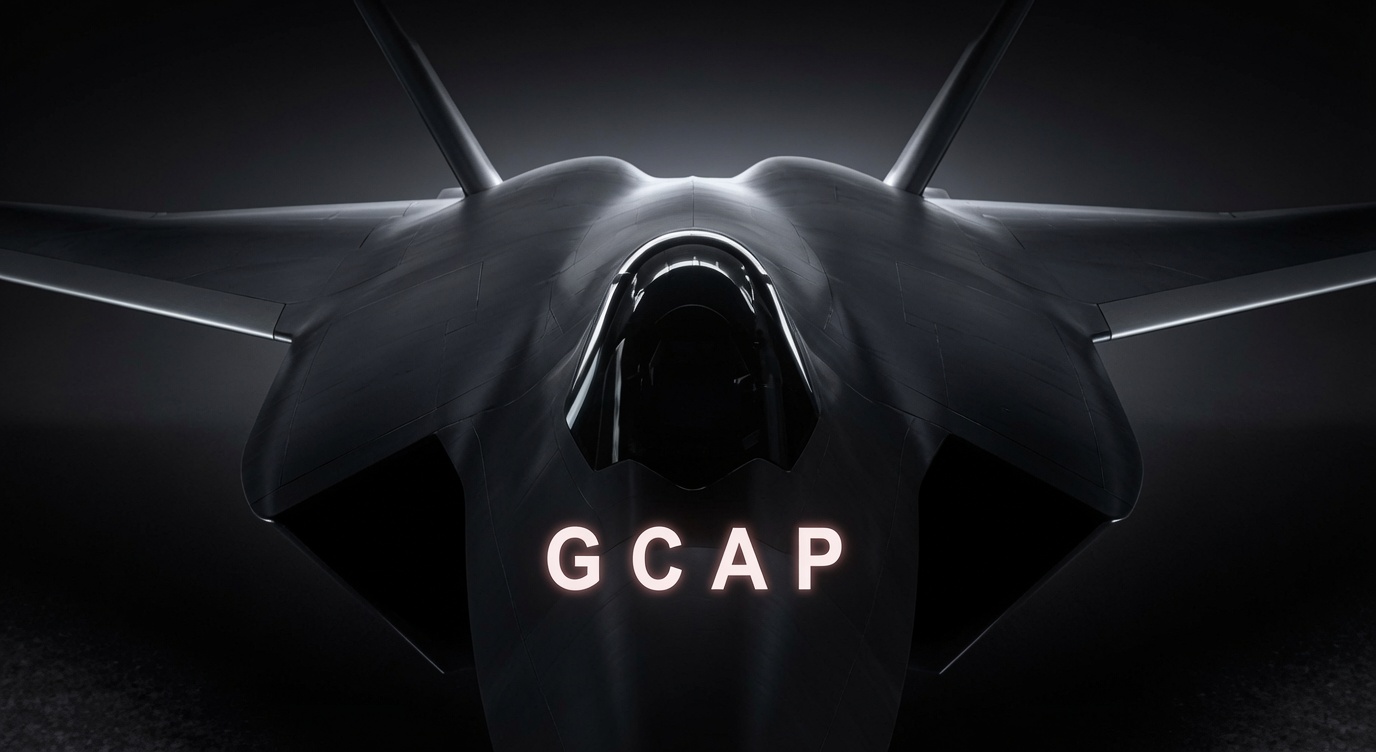
Meanwhile, the GCAP, the UK, Italy, and Japan’s combined tri-nation sixth-generation fighter jet program, is expected to enter operational service around 2035.

F-47.

The FCAS, Germany, Spain, and France’s sixth-generation fighter jet program has already collapsed.

Fu Qianshao, a military analyst and former PLA Air Force officer, said that China’s program was progressing much faster than comparable efforts in the US, Russia and Europe.

“In my view, China’s fighter development … is now ahead of its competitors,” he said.

These timelines suggest that for the first time in history, China might beat the US and Europe in integrating a next-generation fighter jet in operational service, which could have far-reaching consequences for the balance of power, particularly in the Pacific theatre.

Furthermore, the J-36’s aerial refueling capability, combined with its unusually large size and greater fuel capacity, would give it exceptional range, an advantage that could prove decisive in the contest for air superiority across the Pacific theater.

“The aircraft could potentially operate beyond the western Pacific and, in some cases, reach the Indian Ocean, which would have significant strategic implications,” Fu added.

  • Nitin J Ticku holds a double master’s degree in Journalism and Business Management from the University of Glasgow. He has over 20 years of global experience in MARCOM, Journalism, and Digital Marketing, and has worked & traveled widely across Europe, the Americas, and Asia. Nitin is the Editor of the EurAsian Times.
  • He can be reached at editor (at) eurasiantimes.com

The post J-36 vs F-47: China’s J-36 Pulls Ahead of U.S. F-47 as PLA Becomes First To Release “Teaser” of 6th-Gen Aircraft appeared first on EURASIAN TIMES.

  •  

Despiste de viatura de bombeiros faz dois feridos ligeiros em Sines

📷 rádio Sines


Dois operacionais dos Bombeiros Voluntários de Sines sofreram ferimentos ligeiros, ao início da tarde desta sexta-feira, na sequência do despiste de um Veículo Ligeiro de Combate a Incêndios (VLCI).

Segundo a Rádio Sines, o acidente registou-se cerca das 13h05, na Estrada da Floresta, em pleno perímetro urbano da cidade de Sines, no momento em que a viatura circulava em marcha de urgência.

As vítimas foram inicialmente assistidas no local pela tripulação de uma ambulância da própria corporação, que se deslocava para a mesma ocorrência. Após o socorro inicial no local pelas equipas de emergência, os dois operacionais foram transportados para o serviço de urgência do Hospital do Litoral Alentejano, em Santiago do Cacém.

Nas operações de socorro estiveram envolvidos nove operacionais dos Bombeiros de Sines, dos Bombeiros de Santo André e da VMER do HLA, apoiados por cinco viaturas. A Guarda Nacional Republicana (GNR) de Sines tomou conta da ocorrência e vai investigar as causas do acidente.

Por: Dino Frazão
Data: 31/07/2026

————————————————–
© 2026 Os Monhacas. Todos os direitos reservados.
Este é um projeto independente de criação de conteúdos.
Se gostou do que leu e ainda não é seguidor, siga a nossa página para ver mais conteúdos!
————————————————–

O conteúdo Despiste de viatura de bombeiros faz dois feridos ligeiros em Sines aparece primeiro em OS MONHACAS.

  •  

COLISÃO NA A24 ENTRE LIGEIRO E PESADO CAUSA TRÊS FERIDOS LIGEIROS

📷 Manuel Santos


Uma colisão entre um veículo ligeiro e um veículo pesado de mercadorias provocou três feridos ligeiros, na manhã de hoje, na autoestrada A24.

Segundo a Voz de Trás-os-Montes, o acidente ocorreu por volta das 10h50. As informações foram avançadas pelo comandante dos Bombeiros Voluntários de Vila Pouca de Aguiar, Hugo Silva, que explicou que o sinistro envolveu três vítimas: dois homens, de 53 e 25 anos, e uma mulher, também de 25 anos. Os feridos foram estabilizados pelas equipas de emergência no local e, posteriormente, transportados para o Hospital de Vila Real.

Nas operações de socorro estiveram empenhados os Bombeiros Voluntários de Vila Pouca de Aguiar e de Vidago, com um total de 18 operacionais apoiados por seis veículos. A ocorrência mobilizou ainda uma equipa da Viatura Médica de Emergência e Reanimação (VMER) e militares da Guarda Nacional Republicana (GNR).

A circulação rodoviária na A24 esteve condicionada durante os trabalhos de assistência e de remoção das viaturas. As causas do acidente estão ainda por apurar.

Por: Dino Frazão
31 de Julho de 2026
OSMONHACAS.COM

————————————————–
© 2026 Os Monhacas. Todos os direitos reservados.
Este é um projeto independente de criação de conteúdos.
Se gostou do que leu e ainda não é seguidor, siga a nossa página para ver mais conteúdos!
————————————————–

O conteúdo COLISÃO NA A24 ENTRE LIGEIRO E PESADO CAUSA TRÊS FERIDOS LIGEIROS aparece primeiro em OS MONHACAS.

  •  

Combustíveis: Gasóleo sobe e gasolina desce na próxima semana


As previsões para a evolução dos preços dos combustíveis na próxima semana, que compreende o período de 3 a 9 de agosto de 2026, apontam para tendências inversas no gasóleo e na gasolina.

Segundo fontes do setor, o preço do gasóleo deverá registar uma subida de 2 cêntimos por litro. Em sentido oposto, a gasolina deverá apresentar uma ligeira descida de 1 cêntimo por litro.

Por: Dino Frazão
Data: 31 de julho de 2026

————————————————–
© 2026 Os Monhacas. Todos os direitos reservados.
Este é um projeto independente de criação de conteúdos.
Se gostou do que leu e ainda não é seguidor, siga a nossa página para ver mais conteúdos!
————————————————–

O conteúdo Combustíveis: Gasóleo sobe e gasolina desce na próxima semana aparece primeiro em OS MONHACAS.

  •  

Incêndio em Valpaços e Mirandela causa cinco feridos e destrói habitações

📷 Direitos reservados


O incêndio que deflagrou na passada terça-feira no concelho de Valpaços, e que se estendeu até ao concelho de Mirandela, provocou danos materiais avultados em pelo menos 21 habitações e causou ferimentos ligeiros em cinco pessoas. De acordo com o balanço operacional da Autoridade Nacional de Emergência e Proteção Civil (ANEPC), os feridos contabilizados são três bombeiros, um militar da GNR e um civil.


No concelho de Valpaços, as chamas afetaram significativamente várias localidades. Na aldeia de Gorgoço, o fogo atingiu oito casas devolutas e três habitações permanentes. Em Santa Valha, o balanço aponta para danos em cinco casas devolutas, duas de primeira habitação, duas de segunda habitação e ainda um armazém agrícola. Já na localidade de Cabeço, uma casa de primeira habitação ardeu por completo, deixando três pessoas desalojadas, enquanto em Vilarandelo o incêndio atingiu duas indústrias de sucatas de automóveis.


Às 23h20, o teatro de operações contava com 638 operacionais apoiados por 206 meios terrestres, aguardando-se a chegada de reforços. As frentes que mais preocupavam as equipas de socorro seguiam na direção de Sonim e Barreiros, mantendo-se os trabalhos de combate ativo, proteção de habitações e estabilização das zonas onde o fogo já se encontrava extinto.


A progressão do incêndio obrigou também à evacuação preventiva de moradores na localidade de Vale de Telhas, já no concelho de Mirandela. Contudo, o comandante sub-regional das Terras de Trás-os-Montes, Noel Afonso, indicou que a intensidade das chamas diminuiu ao final do dia devido à redução do vento, permitindo perspetivar condições mais favoráveis para o combate noturno.


Na mesma nota informativa, foi confirmado que a Estrada Nacional 315 (EN315), que faz a ligação entre as aldeias de Bouça e Vale de Telhas e que se encontrava interdita à circulação devido à proximidade das chamas, já foi reaberta ao trânsito.

Notícias Lusa

O conteúdo Incêndio em Valpaços e Mirandela causa cinco feridos e destrói habitações aparece primeiro em OS MONHACAS.

  •  

COLISÃO ENTRE MOTOCICLO E AUTOMÓVEL CAUSA UMA VÍTIMA MORTAL EM ERMIDAS-SADO


Um trágico acidente rodoviário tirou a vida a um homem de 45 anos, na tarde desta quarta-feira, em Ermidas-Sado, no concelho de Santiago do Cacém, distrito de Setúbal. A fatalidade resultou de uma violenta colisão entre o motociclo em que a vítima seguia e um automóvel.


O sinistro ocorreu na Rua Cidade de Santiago do Cacém, tendo o alerta para o socorro sido dado às 15h26. De acordo com informações avançadas pelo Comando Sub-regional de Emergência e Proteção Civil do Alentejo Litoral, o óbito do motociclista acabou por ser declarado no próprio local do acidente pelo médico da viatura médica de emergência e reanimação (VMER) do Hospital do Litoral Alentejano.


As operações de socorro mobilizaram um forte contingente, num total de 21 operacionais apoiados por seis veículos e um helicóptero do INEM. No local estiveram empenhados os Bombeiros de Alvalade, o Instituto Nacional de Emergência Médica (INEM) e a Guarda Nacional Republicana (GNR), que tomou conta da ocorrência.

À família e amigos da vítima mortal, deixamos as nossas mais sinceras condolências neste momento de profunda dor.

Segundo Proteção Civil e GNR.
📷 Direitos reservados
Por: Dino Frazão
Data: 29 de Julho de 2026
Site OSMONHACAS.COM

————————————————–
© 2026 Os Monhacas. Todos os direitos reservados.
Este é um projeto independente de criação de conteúdos.
Se gostou do que leu e ainda não é seguidor, siga a nossa página para ver mais conteúdos!
————————————————–

O conteúdo COLISÃO ENTRE MOTOCICLO E AUTOMÓVEL CAUSA UMA VÍTIMA MORTAL EM ERMIDAS-SADO aparece primeiro em OS MONHACAS.

  •  

Despiste na EN262 em Alvalade Faz Três Feridos Incluindo Criança de 5 Anos

📷 Direitos reservados


Três pessoas sofreram ferimentos ligeiros, na tarde desta terça-feira, na sequência do despiste de um automóvel ligeiro de passageiros na Estrada Nacional 262 (EN262), na zona de Borbolega, freguesia de Alvalade, no concelho de Santiago do Cacém.

Segundo (autoridades locais), as vítimas do sinistro são um homem e uma mulher, ambos de 69 anos, e uma criança de 5 anos de idade. Após terem sido assistidos e estabilizados no local do acidente, os três feridos foram transportados para o Hospital José Joaquim Fernandes, em Beja.

Nas operações de socorro estiveram envolvidos 16 operacionais, apoiados por 6 viaturas, pertencentes aos Bombeiros Voluntários de Alvalade e ao Instituto Nacional de Emergência Médica (INEM).

A Guarda Nacional Republicana (GNR) esteve no local a registar e a regularizar o trânsito e vai investigar as causas do acidente.

Por: Dino Frazão

28-07-2026

————————————————–
© 2026 Os Monhacas. Todos os direitos reservados.
Este é um projeto independente de criação de conteúdos.
Se gostou do que leu e ainda não é seguidor, siga a nossa página para ver mais conteúdos!
————————————————–

O conteúdo Despiste na EN262 em Alvalade Faz Três Feridos Incluindo Criança de 5 Anos aparece primeiro em OS MONHACAS.

  •  

COLISÃO EM AVEIRAS DE CIMA CAUSA TRÊS FERIDOS LIGEIROS

📷 Direitos reservados


Um acidente rodoviário na Estrada Nacional 366 (E.N. 366), em Aveiras de Cima, mobilizou ontem, dia 27 de julho, diversos meios de socorro após uma colisão entre duas viaturas ligeiras de passageiros. O alerta para a ocorrência foi registado às 12h05.

Segundo as autoridades locais, o embate resultou em três vítimas ligeiras, que receberam assistência no teatro de operações.

Para o local foram acionados os Bombeiros Voluntários de Alcoentre com uma viatura de combate a incêndios e uma ambulância, a Delegação da Cruz Vermelha Portuguesa de Aveiras de Cima com uma ambulância, e a Viatura Médica de Emergência e Reanimação (VMER) de Vila Franca de Xira. A Guarda Nacional Republicana (GNR) também esteve presente para registar a ocorrência e garantir a segurança rodoviária.

Por: Dino Frazão
Data: 28/07/2026

Se gostou do que leu e ainda não é seguidor, siga a nossa página para ver mais conteúdos!

————————————————–
© 2026 Os Monhacas. Todos os direitos reservados.
Este é um projeto independente de criação de conteúdos.
Se gostou do que leu e ainda não é seguidor, siga a nossa página para ver mais conteúdos!
————————————————–

O conteúdo COLISÃO EM AVEIRAS DE CIMA CAUSA TRÊS FERIDOS LIGEIROS aparece primeiro em OS MONHACAS.

  •  

Bombeiras de Famalicão no Hospital por Precaução após Mudança de Vento em Incêndio


Duas operacionais da corporação dos Bombeiros Voluntários de Famalicão sofreram uma situação de sobressalto quando combatiam o incêndio que lavra em Vila Verde. Devido a uma alteração repentina e imprevisível da direção do vento, as bombeiras viram-se na obrigação de proceder a uma retirada célere do local onde operavam.

Segundo os Bombeiros Voluntários de Famalicão, durante a manobra de evacuação, as operacionais ficaram expostas a um calor muito intenso. Por uma questão de estrita precaução e prevenção, foi decidido o seu encaminhamento imediato para o Hospital de Braga, de forma a realizarem uma avaliação médica detalhada.

A corporação fez questão de agradecer publicamente toda a preocupação demonstrada pela comunidade, garantindo que a situação esteve sempre sob o devido acompanhamento. Felizmente, as duas bombeiras encontram-se bem de saúde, já receberam alta hospitalar e regressaram às suas habitações, estando previsto o seu breve retorno ao serviço ativo das populações.

Por: Dino Frazão
Data: 28 de julho de 2026

————————————————–
© 2026 Os Monhacas. Todos os direitos reservados.
Este é um projeto independente de criação de conteúdos.
Se gostou do que leu e ainda não é seguidor, siga a nossa página para ver mais conteúdos!
————————————————–

O conteúdo Bombeiras de Famalicão no Hospital por Precaução após Mudança de Vento em Incêndio aparece primeiro em OS MONHACAS.

  •  

RISCO MÁXIMO DE INCÊNDIO E CALOR COLOCAM  PORTUGAL CONTINENTAL EM ALERTA


Todos os distritos do norte e centro de Portugal continental, juntamente com o distrito de Faro, apresentam hoje um risco máximo de incêndio. De acordo com as autoridades, o resto do território nacional encontra-se em perigo muito elevado, segundo a Lusa.

Segundo o cálculo do Instituto Português do Mar e da Atmosfera (IPMA), dos 278 concelhos de Portugal continental, apenas cerca de 40 junto ao litoral enfrentam um risco considerado elevado ou moderado, localizados nomeadamente nos distritos de Braga, Porto, Aveiro, Leiria, Lisboa, Setúbal e Faro. A previsão do IPMA indica que o perigo de incêndio deverá manter-se alto ao longo de toda a semana.

Para além do risco de fogos, o calor intenso colocou todos os distritos, com exceção de Faro, sob aviso amarelo hoje e até terça-feira. As temperaturas máximas vão atingir os 40 graus celsius em Santarém e Évora, enquanto Lisboa chegará aos 37 graus e o Porto aos 31 graus.

O IPMA prevê ainda para hoje uma pequena subida da temperatura mínima, em especial na região Norte e interior Centro, e uma subida da temperatura máxima, que será acentuada no litoral Norte e Centro.
Por: Dino Frazão
27 de julho de 2026
————————————————–
© 2026 Os Monhacas. Todos os direitos reservados.
Este é um projeto independente de criação de conteúdos.
Se gostou do que leu e ainda não é seguidor, siga a nossa página para ver mais conteúdos!
————————————————–

O conteúdo RISCO MÁXIMO DE INCÊNDIO E CALOR COLOCAM  PORTUGAL CONTINENTAL EM ALERTA aparece primeiro em OS MONHACAS.

  •  

Castro Marim recua no tempo para mais uma edição única dos Dias Medievais

A vila de Castro Marim prepara-se para aquele que é o maior evento de recriação histórica e um dos grandes destaques da agenda cultural da região algarvia, os Dias Medievais, que decorrem entre os dias 26 e 30 de agosto.

O centro da localidade transforma-se num palco vivo da Idade Média, atraindo milhares de visitantes nacionais e estrangeiros diariamente, que se cruzam nas ruas e ruelas de Castro Marim com reis, rainhas, cavaleiros, nobres, artesãos, bobos, monges, damas e nobres e ainda figuras mitológicas e mágicas, com um novo impulso na decoração do recinto.

Este regresso à época mais intrigante e misteriosa da história de Portugal promete ser uma experiência única e inesquecível, com o Castelo a ser o epicentro do evento e a abrigar as representações de dezenas de artes e ofícios com demonstrações ao vivo, além de outros espetáculos e atividades para toda a família.

Um dos grandes destaques de cada edição são os torneios a cavalo, que decorrem diariamente no Castelo, com a assinatura da Guarda Nacional Republicana, sem esquecer os banquetes, que acontecem num espaço exclusivo e à luz misteriosa das tochas, com uma ementa que reúne as melhores iguarias da época, acompanhadas de performances de grupos de animação.

Se pretender ser Rei por uma noite pode ainda optar por uma experiência diferente e única na mesa real, com apenas 10 convivas por noite, que desfrutam da pompa e circunstância das cortes da Idade Média, com reserva antecipada.

O Castelo de Castro Marim acolhe ainda as exposições de Instrumentos de Tortura e Punição e da Primeira Sede da Ordem de Cristo, além de um banco onde os visitantes podem trocar o seu dinheiro pela moeda oficial do evento, que tem um novo design a cada edição.

Um dos pontos altos deste evento organizado pelo Município de Castro Marim é o desfile, considerado como uma das melhores oportunidades para absorver este universo de imaginação e fantasia, que decorre no primeiro e último dia, ao final da tarde, sendo uma apresentação de todos os animadores, figurantes e castromarinenses que participam anualmente vestidos a rigor.

A animação continua a ser outra das grandes e fortes apostas dos Dias Medievais em Castro Marim, que se distingue de outros eventos do género graças à exclusividade com alguns dos 30 grupos de animação nacionais e internacionais, de países como Itália, Espanha, Marrocos ou França.

Estes grupos são rotativos e distribuídos pelos vários palcos dos Dias Medievais em Castro Marim, desde o mercado até ao Castelo, com teatros de rua, malabaristas, zaragateiros, cuspidores de fogo, gaiteiros, equilibristas, espadachins, músicos medievais, música e dança árabe-oriental, danças medievais, encantadores de serpentes, arruadas e demonstrações de falcoaria.

Já no Forte de S. Sebastião, com o Acampamento Árabe na sua encosta a representar o quotidiano de uma caravana de comércio de sal e especiarias, irá decorrer uma recriação histórica do quotidiano civil e militar do século XVII, da época da Restauração. 

A Igreja de Nossa Senhora dos Mártires também faz parte do roteiro dos Dias Medievais em Castro Marim, com uma missa que decorrerá no último dia e a participação de vários grupos e da comunidade trajada a rigor.

Um dos grandes investimentos do Município neste evento é na área da segurança e proteção dos visitantes, com a presença de várias forças e elementos da Proteção Civil, GNR, bombeiros, segurança privada e posto médico equipado com desfibrilhadores, que percorrem todo o recinto, para que se possa reduzir o tempo de socorro, com reforço anual.

Uma vez que este é considerado um evento para toda a família, a programação inclui espaços e atividades de animação infantil com oficinas, jogos, carrosséis, contadores de histórias e outras diversões.

Os Dias Medievais em Castro Marim terão sido um dos primeiros EcoEventos do país, por desde sempre disponibilizar um copo de barro único e diferente em cada edição, pretendendo continuar, com o objetivo de apelar à máxima redução de resíduos e à utilização de materiais reutilizáveis.

Entre as novidades deste ano estão as alterações de espaços no Castelo e em todo o recinto, com uma configuração diferente, sempre com o objetivo de melhorar a experiência de cada visitante.

As ilustrações da edição de 2026 ficaram a cargo de Elias Gato, um castromarinense que deu uma nova vida às personagens que, todos os anos, são os protagonistas dos Dias Medievais em Castro Marim.

Os bilhetes já se encontram à venda na bilheteira online BOL, disponível em https://diasmedievaiscastromarim.bol.pt/ e nos diversos pontos de venda associados.

Mais informações em https://diasmedievais.cm-castromarim.pt.

  •  

Thanks to India, U.S. & China Remain Neck-and-Neck in Global Popularity. 1.4B People Keep The Balance Even

There seems to be an emerging consensus among strategic circles all over the world that while the rising global popularity of China, evident from the latest survey from the Pew Research Center on July 15, may not equate to the real global strategic leverage that America still possesses, it is a critical warning signal for the U.S.  

In its survey, based on interviews with more than 42,000 people across 36 countries, Pew found that China is now viewed more favorably than the United States.

Among the 20 economies with comparable data, the median share of respondents expressing favorable views of China reached 46 percent, compared with 36 percent for the United States.

Similarly, during the first two years of his second term, President Donald Trump’s own ratings have also worsened significantly. Chinese President Xi Jinping now exceeds confidence posed in  Trump by 10 (ten)  points (31:21).

More favorable views of Xi were noticed in 22 of 36 countries. More overall now say that they have confidence in Xi than in Trump.

Pew says that more people have favorable views of China than the U.S. in 25 out of 36 countries, including Canada, Mexico, France, Germany, and Australia. Only 6 (six) countries still rate the U.S. more positively: India, Japan, South Korea, Philippines, Poland, and Israel.

And, according to Pew, there has been a “historic shift” in the sense that in 20 countries with data back to 2023, nearly “50% held a positive view of China”, while only “36% regarded the US favorably”. In 2023 it was the reverse: U.S. 58% vs China 32%.

Importantly,  Pew cites worsening views of the U.S. since Trump’s second term began, and the US-led war in Iran where “people have less confidence” that the U.S. is contributing to peace. On the contrary, Beijing portrayed itself as a “stabilizing force”.

Incidentally, Pew’s findings are far from an isolated case. Earlier this year (April), Gallup reported that global approval of China’s leadership had surpassed that of the United States by the widest margin in nearly two decades.

“China surpassed the United States in global approval ratings in 2025, with a median of 36% approving of China’s leadership, compared with 31% for the U.S. China’s five-percentage-point advantage over the U.S. is the widest Gallup has recorded in China’s favor in nearly 20 years…..At the same time, disapproval of U.S. leadership rose to a record-high 48%, while China’s disapproval rating remained flat at 37%, Gallup said.

Coming back to the Pew findings, many analysts have agreed with the think-tank that the Trump administration’s tariffs, aid cuts, disdain for allies, and his sheer transactional diplomacy are actively ceding the soft-power contest to Beijing.

In other words,  the volatility of American policy under Trump, which includes the use of force and the economic damage from tariffs,  has hardened international sentiment against the United States. This has helped China build the perception that it is a more reliable entity.

But then, the fact remains that China has also worked hard to earn its present position.

Extensive Diplomatic Work is bringing the World to Beijing. Since December 2025, Xi and his foreign minister Wang Yi have hosted the political leaders of all the permanent members of the United Nations (UN) Security Council and met with all of the candidates for the UN’s next secretary-general, among an “endless stream” of foreign leaders in Beijing.

The city hosted President Donald Trump in May, followed soon after by Russian President Vladimir Putin.

Across roughly 500 diplomatic engagements in the first half of 26 conducted by more than 20 senior officials, Beijing has seized the opportunity to make its pitch to the world. Our survey results suggest that this work is paying off.

Besides, as Arran Hope, editor of “China Brief” at the Washington-based Jamestown Foundation, observes, “at the regional level, Europe’s importance is reflected in its high volume of diplomatic engagements: no other region received as much attention between January and June, with the United Kingdom and Belarus receiving the most. ASEAN countries saw the next highest degree of engagement, which is in line with trends laid out above”.

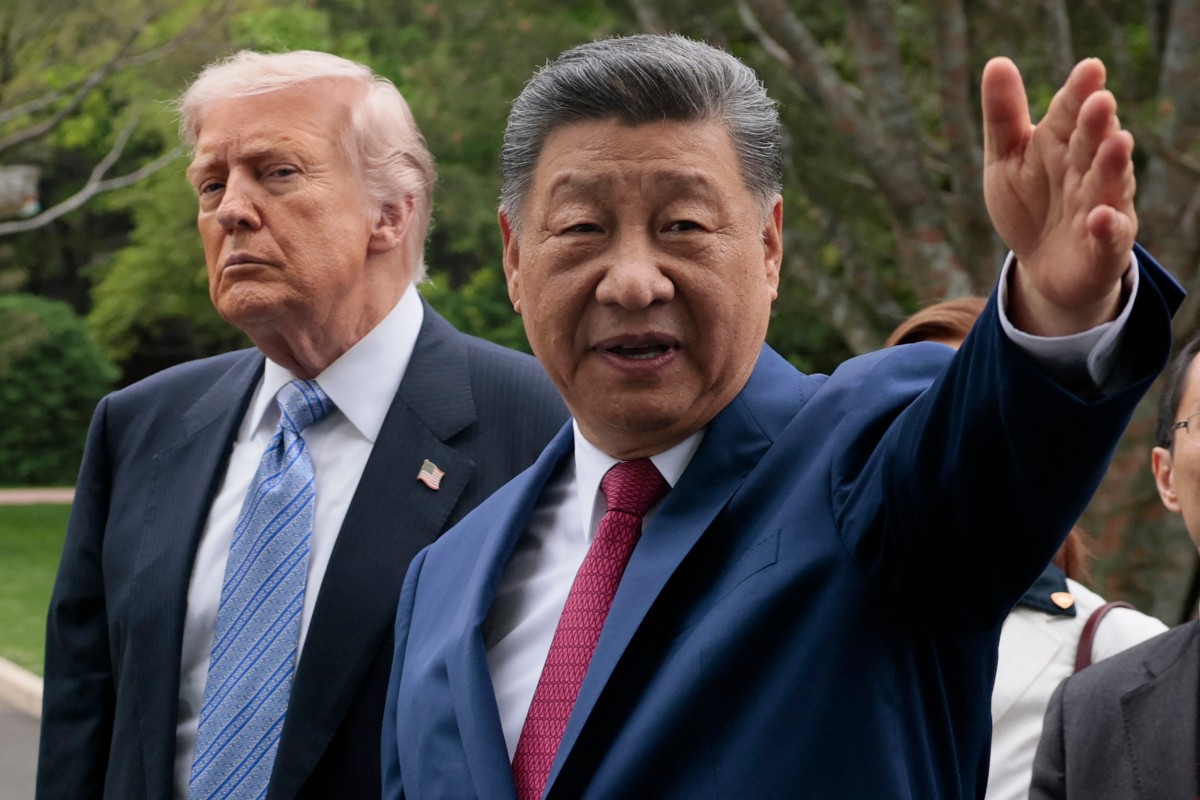
China’s President Xi Jinping (R) gestures as he meets with US President Donald Trump (L) during a visit to Zhongnanhai Garden in Beijing on May 15, 2026. (Photo by Evan Vucci / POOL / AFP)

Xi, according to Hope, has been a keen promoter of “Asian values” in the region (of China) in recent times, which for the ruling Chinese Communist Party is a byword for anti-Western and pro-authoritarian, and is linked to gaining advantage in strategic competition with the United States.

Following the Pew survey, China’s People’s Daily wrote a commentary, which says, among other reasons, that China’s growing international goodwill is fostered by the appeal of its culture.

“Chinese cultural products are reaching wider global audiences than ever before. The phenomenal international success of the animated film Ne Zha 2 and the video game Black Myth: Wukong has sparked renewed global interest in Chinese mythology and traditional culture”, the commentary says.

Scholars like Yanzhong Huang agree.

“Culturally, the “Chinamaxxing” phenomenon—a viral social-media trend in which young Westerners embrace Chinese lifestyles, from drinking hot water to riding China’s high-speed rail vicariously through influencer livestreams—has given China the kind of organic, bottom-up cachet long enjoyed by Japan and South Korea, amplified by breakout products like the video game Black Myth: Wukong, the film Ne Zha 2, and Labubu dolls”.

He adds that China’s development model has also gained prestige: its dominance in electric vehicles, batteries, and infrastructure has made “the China model” an object of emulation rather than derision—so much so that Washington itself now practices industrial policy that borrows unmistakably from Beijing’s playbook.

However, notwithstanding all this, there are some limitations of China if one takes the Pew findings under closer scrutiny.

First, Chinese popularity is not uniform, covering all parts of the world.

Pew finds favorability toward China markedly higher in the emerging economies of Africa, Latin America, and South and Southeast Asia, with record highs this year in Colombia, Indonesia, Malaysia, Mexico, Nigeria, and Turkey.

China has also gained among the United States’ Western allies—Australia, Canada, France, Germany, Italy, the United Kingdom, Sweden, the Netherlands —as well as in parts of Latin America, where several publics once viewed the United States more favorably before Trump’s second innings.

But the fact remains that the U.S. also has significant support in six countries  – India, Japan, the Philippines, South Korea, Israel and Poland. Consequently, four of these happen to be China’s neighbors, and five of them (except Poland) are in Asia.

In the Philippines, 81 percent see the United States as a reliable partner compared with 42 percent for China. It seems that proximity to Chinese power, particularly when accompanied by maritime disputes, blunts Beijing’s appeal.

Secondly, and this is a corollary of the above, in terms of numbers, people in the world supporting the U.S. and China are more or less even. The U.S. should thank India for this. Negative-leaning views of India’s 1.4 billion people completely offset the strongly positive views of China in 30 other countries.

And here, what is noteworthy is that in Trump’s favorite Pakistan, China leads the U.S. in popularity by over 75 percent, the highest in the countries surveyed. Even in Bangladesh, where the coup dislodging Sheikh Hasina had the American blessings,  China’s lead is over 30 percent.

Thirdly, Huang makes one interesting point that  “soft power”, which reflects popularity, is, by its very nature, far more mercurial than hard power. Public opinion can swing within a single year.

He quotes the  ISEAS-Yusof Ishak Institute’s annual survey of Southeast Asia to illustrate that in 2024, when asked to choose, respondents sided with China for the first time (50.5 to 49.5 percent);  in 2025, they flipped back to the United States (52.3 to 47.7 percent); and in 2026, they flipped again to China (52 to 48 percent). “Sentiment that oscillates this easily is a weathervane, not a monument”, he argues.

To buttress his argument, he adds that Soft power ultimately derives from credibility rather than propaganda—and solid, credible foundations for China’s appeal have yet to be laid. In Inside China, there are no signs of meaningful improvement in the rule of law or political freedom—if anything, the trajectory points the other way—and global publics have noticed. In only eleven of the thirty-six countries Pew surveyed do around half or more say the Chinese government respects the personal freedoms of its people.

Considering all this, the Chinese score over the U.S. in the Pew Survey does not necessarily flow from intrinsic strength, and it is most likely due to deteriorating opinions of the United States under Trump.

In other words, Washington’s loss does not necessarily translate into a commensurate lasting gain for Beijing.

Thus,  one could say that it is too soon to declare a Chinese victory.

In 2026, the world may “like” China more than America for the first time, going by the Pew survey. But does the world “love”  China more than America? Pew does not deal with this question, though in geopolitics, the difference between “like” and “love” does matter. And things can change sooner rather than later if the U.S. takes corrective measures.

  • Author and veteran journalist Prakash Nanda is Chairman of the Editorial Board of the EurAsian Times and has been commenting on politics, foreign policy, and strategic affairs for nearly three decades. He is a former National Fellow of the Indian Council for Historical Research and a recipient of the Seoul Peace Prize Scholarship.
  • CONTACT: prakash.nanda (at) hotmail.com

The post Thanks to India, U.S. & China Remain Neck-and-Neck in Global Popularity. 1.4B People Keep The Balance Even appeared first on EURASIAN TIMES.

  •  

U.S. F-47 Could Fly Without Its Engines! Like India’s AMCA & Turkey’s KAAN, Another Next-Gen Jet Likely To Use Interim Engines

The engine challenges facing India’s AMCA and Turkey’s KAAN fifth-generation fighters are well documented. Both programs will initially fly with General Electric engines while their indigenous powerplants are developed and integrated.

Yet even the United States, long a key supplier of engines for foreign fighter prototypes, is also grappling with significant propulsion problems of its own, as the timelines for first flight of the F-47 prototype and next-generation fighter jet engine are out of sync.

The sixth-generation fighter jet, F-47, developed under the Next Generation Air Dominance (NGAD) initiative, is expected to fly for the first time in 2028.

However, a prototype jet engine developed under the Next Generation Adaptive Propulsion (NGAP) program could be ready for integration onto an actual aircraft only by 2030, as per the latest information provided by the US Air Force (USAF).

This means that at least the F-47 prototype, and possibly the first operational F-47s, will have to fly with a different engine before the NGAP engine is integrated into the F-47 around 2030-2031.

The integration of NGAP with the F-47 will unlock the full potential of the next-generation fighter jet; however, this also raises the crucial question of which engine will power the initial F-47 prototypes.

John Sneden, the Portfolio Acquisition Executive in charge of the Propulsion Directorate at the Air Force Life Cycle Management Center (AFLCMC), recently provided a new timeline for the NGAP engine.

The NGAP program will culminate in “get[ting] ready for potential integration activities in the 2030 timeframe,” Breaking Defense quoted Sneden as saying.

Notably, the USAF’s 2027 budget proposal also supports this timeline for the NGAP.

The document says that the NGAP’s “Prototype Fabrication & Engine Assessment” phase will run through at least September 2031.

In fact, the budget proposal shows that the funding for the NGAP program will gradually surge going forward.

The USAF is seeking nearly US$513.7 million for the program in FY2027, and then expects to request US$905.7 million and US$865 million in Fiscal Years 2028 and 2029, respectively.

Speaking with reporters at the Life Cycle Industry Days conference, Sneden, however, refused to confirm what platform might receive the NGAP engine first.

“The Air Force is still evaluating its options,” Sneden said, emphasizing that the underlying engine technology may “open up” different choices down the road. “What we’re doing right now is we’re building our system today, and we’re getting ready for the future.”

Sneden also hinted that the NGAP engine could be integrated backward into existing designs, including the F-47.

A new NGAP engine “could” go on the F-47, Sneden said, emphasizing that no decisions have been made. He, however, stressed that NGAP “is really a host of technologies” that can be integrated backward into existing designs.

While the NGAP was initially envisioned to provide a powerplant for the NGAD fighter, now christened the F-47, USAF officials have often noted that the NGAP is designed to be platform-agnostic, meaning it could power various platforms and aircraft designs.

When it comes to where NGAP stands now, “initial hardware is procured, their design meets our standards, everything is clean from that end, and both vendors have been able to do that,” Sneden was quoted as saying by the Air & Space Forces Magazine.

The two vendors in question are GE Aerospace and Pratt & Whitney (a subsidiary of RTX). GE Aerospace, with the XA102, and Pratt & Whitney, with the XA103, are both developing competing adaptive-cycle engines under the USAF’s Next Generation Adaptive Propulsion program. In simple terms, adaptive-cycle engines can perform like a turbofan when optimal and like a turbojet when needed. This means that the same engine can save fuel when needed and can deliver more power when required.

However, no final production winner has been selected yet for the Boeing F-47.

These engines aim for better fuel efficiency, thrust, range, thermal management, and power generation compared with current fifth-generation engines. Both companies completed detailed design reviews in 2025 and assembly readiness reviews in May this year. Prototype fabrication is currently underway, and ground testing is expected in the late 2020s.

Currently, there is no clarity on which interim engine could power F-47 prototypes, but the possible options discussed in media reports include variants of the Pratt & Whitney F135, F119, F100, or GE F110.

However, it is not unusual for fighter jet prototypes to fly with an interim engine before a new engine is integrated into final products.

F-47

Fighter Jets That Flew With Interim Powerplants

For instance, Turkey’s underdevelopment fifth-generation fighter jet, Kaan, is currently flying with two General Electric F110 engines. Early production blocks are expected to continue with F110 before the indigenous TF35000 is integrated.

India’s fifth-generation AMCA and 4.5-generation Tejas Mk1 variants are planned to fly with GE F414 engines, before an indigenous or co-developed engine is fully mature for integration.

Similarly, Russia’s fifth-generation Su-57 first flew with the AL-41F1 (Izdeliye 117) engines. Upgraded Su-57 variants with the new engine, AL-51F1, have recently begun flying, and full integration is currently underway.

China’s first fifth-generation fighter jet, the J-20, also initially flew with a Russian AL-31FN engine. Later variants of the J-20 flew with Chinese WS-10 variants. However, even that was an interim solution. The intended definitive engine is the more powerful WS-15.

Even Dassault Rafale first flew in 1986 with two General Electric F404 engines. Later models mixed one M88 with one F404, before the final products flew with both M88 engines.

Similarly, Eurofighter Typhoon first flew in 1994 with Turbo-Union RB199 engines, which were derived from those on the Panavia Tornado. Later models started using the EJ200 engines.

The same EJ200 engine is expected to power the initial prototypes of the Global Combat Air Program (GCAP), jointly developed by the UK, Italy, and Japan. A completely new next-generation engine, developed by Rolls-Royce, Avio Aero, and IHI, is being developed in parallel for the production models of the GCAP.

File Image

Even in the US, many fighter jets initially flew with interim engines before the final engine was integrated.

For instance, the Lockheed F-104 Starfighter first flew with the Wright J65 turbojet engine. However, the production model of the aircraft received the more powerful J79.

The F-14 Tomcat was planned around the Pratt & Whitney F401 turbofan engine. However, that engine program was canceled, and the fighter jet was fitted with Pratt & Whitney TF30 turbofan engines. Later, the F-14 Tomcats were fitted with the General Electric F110 turbofans.

On the upside, testing a new fighter jet prototype with an already mature and tested powerplant has its own advantages. It allows for risk management by allowing airframe flight testing, systems integration, and early operational assessment with an engine that is already mature. In the meantime, the new, more advanced fighter jet engine can be tested for risks and matured before integrating it with the already tested airframe.

Testing a new airframe with a new engine could be a high-risk affair.

However, there could also be certain drawbacks, as it could lead to performance shortfalls, design mismatch, or even require restructuring.

Given the timeline mismatch between F-47 prototypes’ first flight and the NGAP engine, it is all but certain that the first prototypes, and perhaps even some production models, will fly with an interim powerplant.

However, USAF officials have noted in the past that the NGAP is designed to be “platform agnostic” and could be easily integrated backward into existing designs. Therefore, integrating the NGAP with the F-47 should not be problematic, and this way Boeing could meet ambitious timelines for the project.

  • Sumit Ahlawat has over a decade of experience in news media. He has worked with Press Trust of India, Times Now, Zee News, The Economic Times, and Microsoft News. He holds a Master’s Degree in International Media and Modern History from the University of Sheffield, UK. 
  • He can be reached at ahlawat.sumit85 (at) gmail.com

The post U.S. F-47 Could Fly Without Its Engines! Like India’s AMCA & Turkey’s KAAN, Another Next-Gen Jet Likely To Use Interim Engines appeared first on EURASIAN TIMES.

  •  
❌