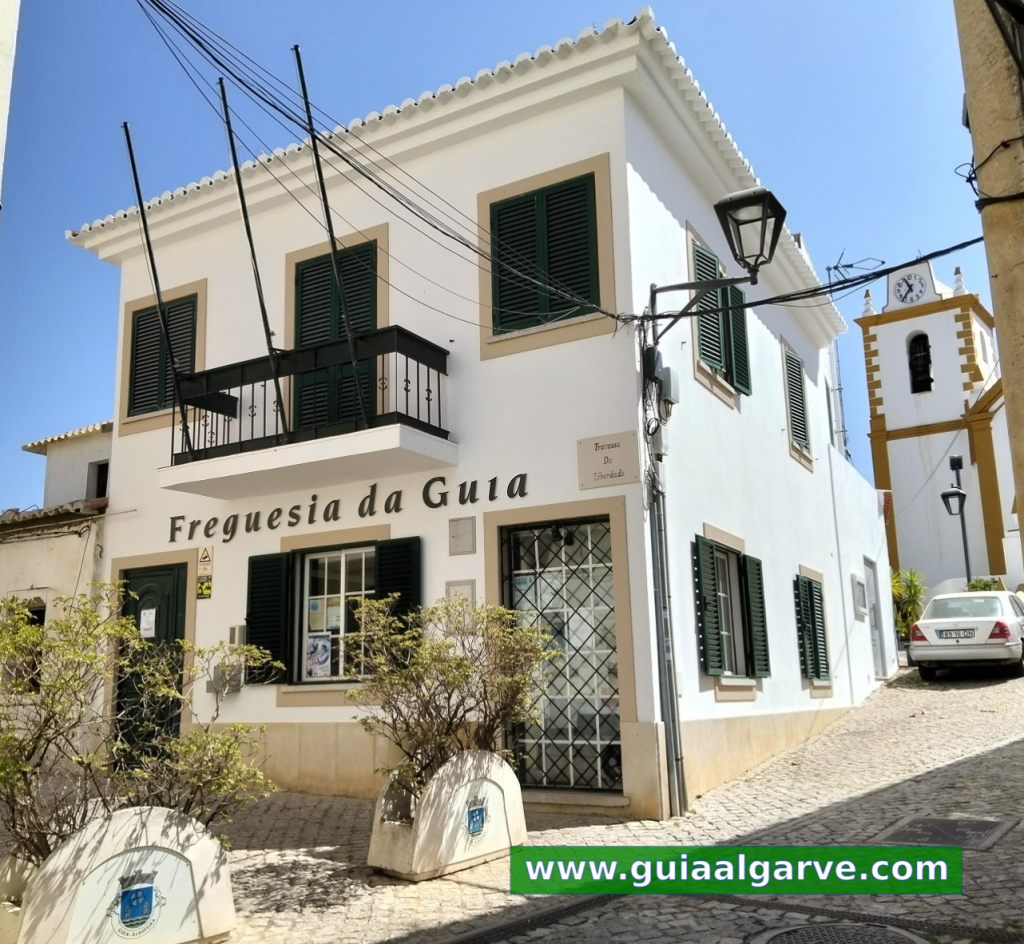
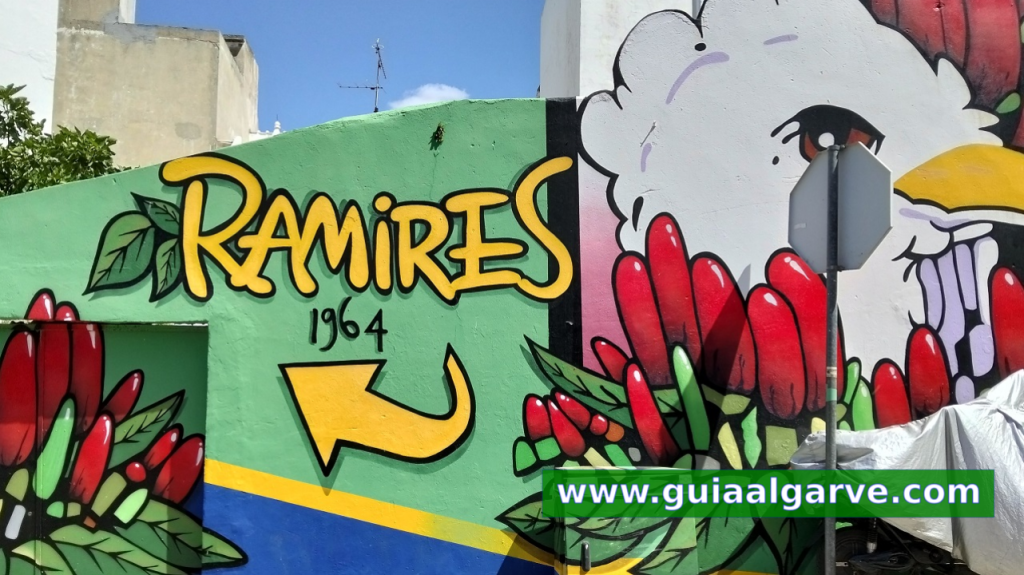
A Guia é a verdadeira capital do frango assado, famosa em todo o país por esta especialidade gastronómica deliciosa e estaladiça.
Situada em pleno coração do Algarve, no concelho de Albufeira, junto à estrada EN125, esta vila consegue a proeza de juntar tradição, lazer e ótimas compras num único lugar.
Visitar a Guia e não comer um frango assado é quase um pecado. É o grande ex-líbris da terra e as dezenas de restaurantes locais servem-no como ninguém.
Antes ou depois de provar este prato típico, pode dar uma volta pela localidade para apreciar, sobretudo, os seus monumentos religiosos.
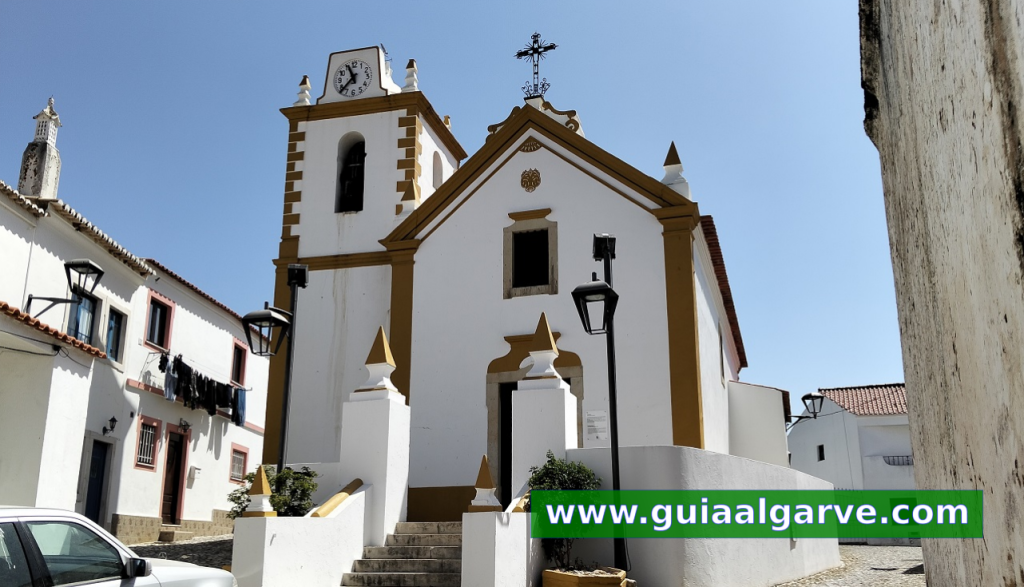
Igreja Matrizda Guia
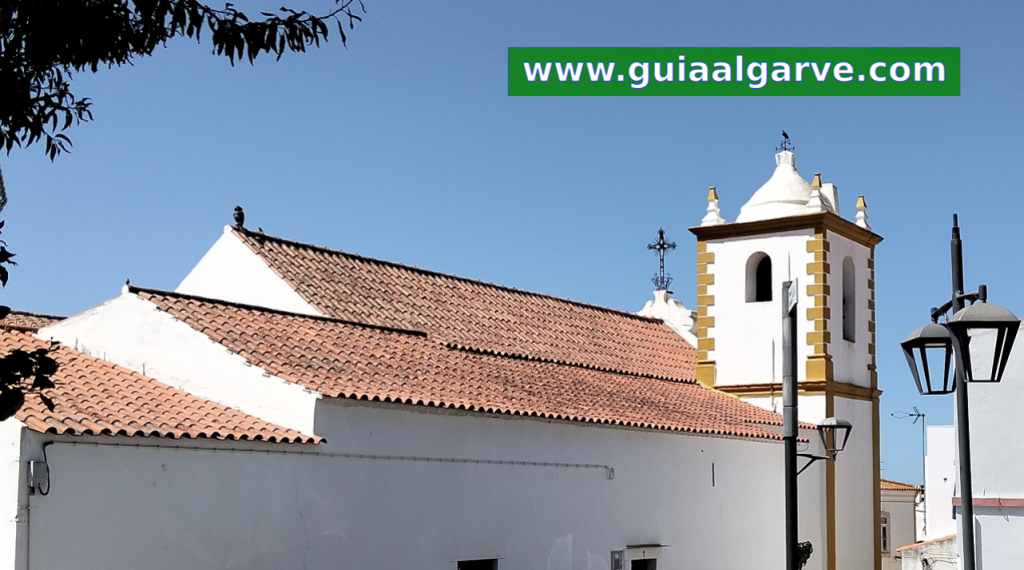
A Igreja Matriz é dedicada a Nª Sra. da Visitação. Foi edificada no século XVII e no seu interior podem ser admirados o retábulo da Capela-Mor, uma imagem de Nossa Senhora da Visitação, provavelmente do século XVIII, as imagens de Santo António e de Cristo Crucificado.
A Ermida de Nossa Senhora da Guia é mais antiga, data do século XV, mas teve de ser reconstruída depois do terramoto de 1755 Terá, inclusivamente, estado na origem da povoação e, reza a lenda que naquele local apareceu a Virgem.
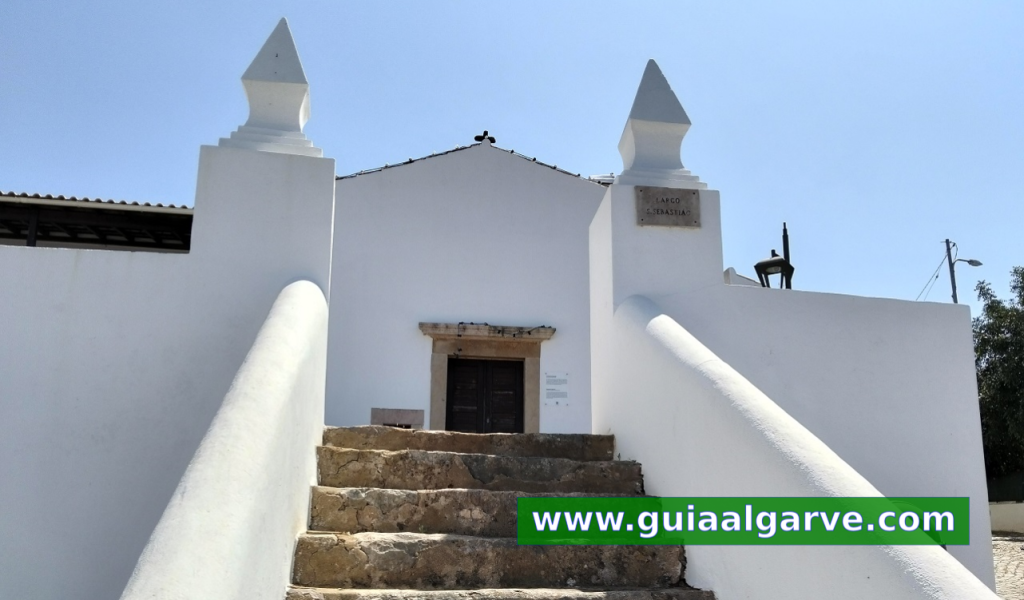
A umas centenas de metros encontramos outra ermida, a de São Sebastião, feita com o objetivo de ajudar a afastar a peste negra.
A Guia é, também, um ponto de paragem obrigatório para quem gosta de fazer compras. A poucos quilómetros do centro da vila, fica um enorme espaço comercial que serve toda a região. O grande destaque vai para o famoso Algarve Shopping, um centro comercial ao ar livre onde pode encontrar lojas para todos os estilos e gostos, um grande supermercado e uma ampla zona de restauração.
Se for em direção ao mar, encontra, também, a cerca de 6 quilómetros, praias famosas, como a da Galé e a dos Salgados.
Por Mario Ortiz* Intentaré vincular el Apocalipsis, el Anticristo, el magnate tecnológico Peter Thiel y su relación con la Argentina y Javier Milei. Ante todo, fijemos las coordenadas del problema.…
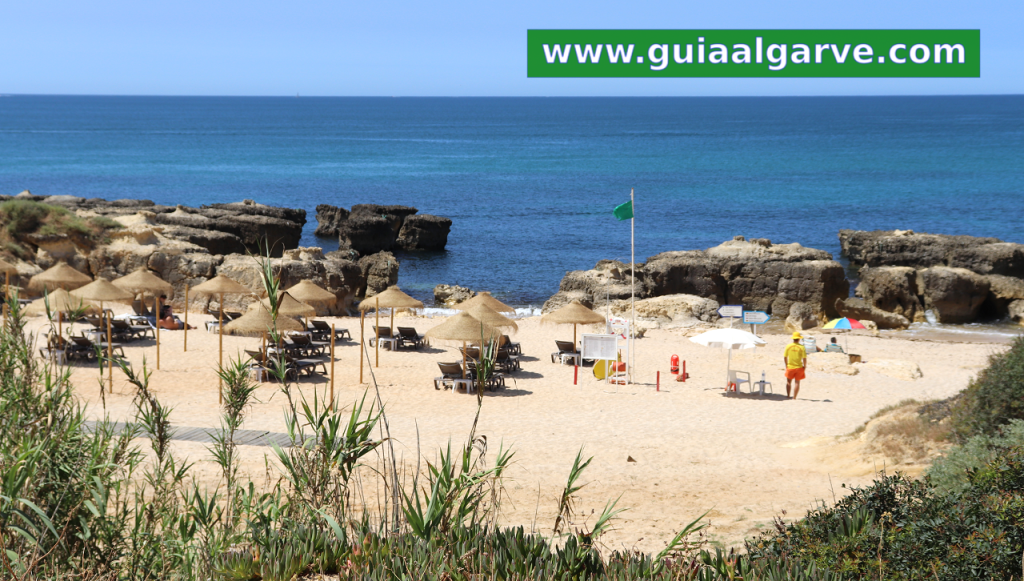
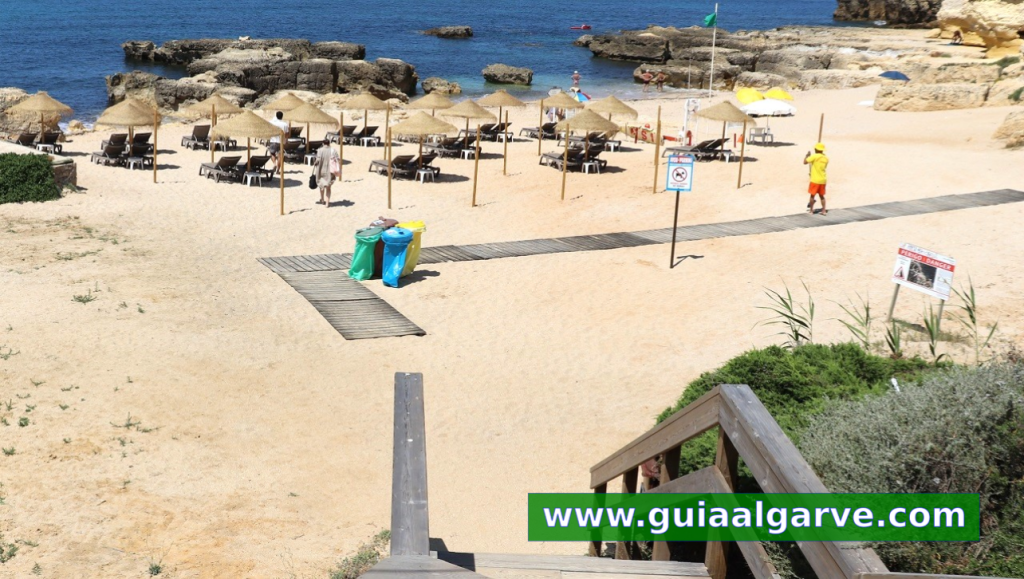
A Praia do Evaristo é um refúgio de biodiversidade em Albufeira, perfeito para quem procura uma ligação direta com a natureza pura.
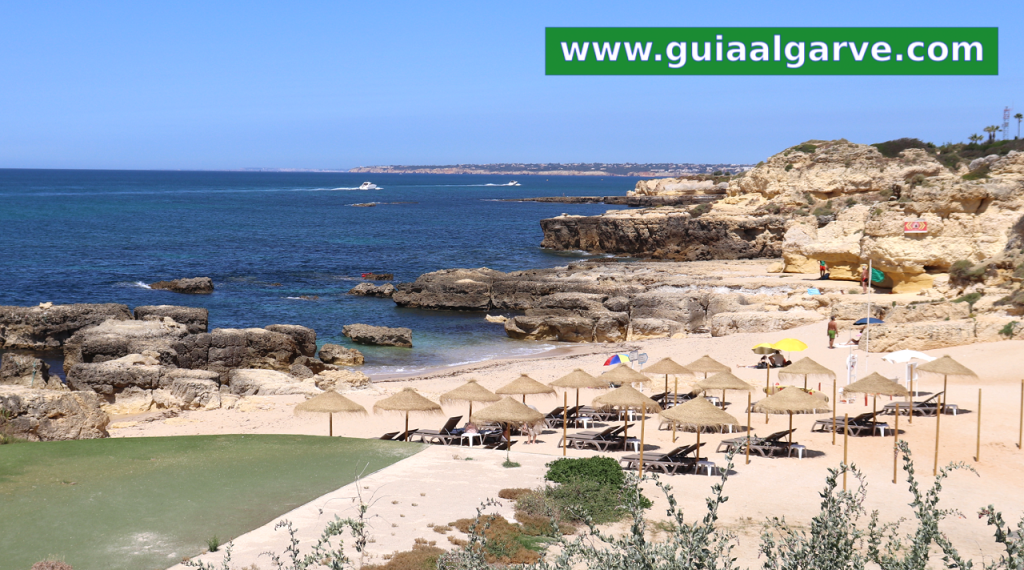
Situada longe da influência urbana e integrada em sistemas naturais sensíveis, esta pequena enseada de areia dourada destaca-se pelo seu caráter rochoso e pelas arribas baixas, artisticamente recortadas pelo tempo.
O grande diferencial do Evaristo está “escondido” à vista de todos: enormes blocos rochosos espalham-se pelo areal e mergulham no mar, criando um autêntico aquário natural.
Nas rochas é possível encontrar cracas, mexilhões, lapas e anémonas que dão cor às paredes e dentro de água, os banhistas podem encontrar cardumes de safias, sargos e peixes-rei que nadam tranquilamente entre os rochedos.
O acesso é feito por estrada alcatroada (ligação Guia-Galé).
Jardim da Alameda ganha nova vida com mais uma edição do “Alameda Viva”, um evento gratuito e pensado para toda a família.
Quinzenalmente, aos sábados, das 17h00 às 20h00, até 26 de setembro, haverá animação, contos, jogos, ateliers criativos, espetáculos de música, dança, teatro, atividades desportivas, insufláveis e muito mais.
Um espaço ao ar livre cheio de cor, movimento e alegria, ideal para celebrar a cultura, o convívio e a diversão entre gerações.
Datas e temas• 1 de agosto – Jardim dos Exploradores
• 15 de agosto – Jardim, Sol e Água
• 29 de agosto – Jardim dos Sentidos
• 12 de setembro – Jardim da Multiculturalidade
• 26 de setembro – Jardim Radical
terças-feiras (quinzenalmente) – das 10h00 às 11h00 – atividades para seniores
Por David Ramos “Se cerró el templo, el sagrario quedó desierto, quedó vacío, ya no está Dios ahí, se fue a ser huésped de quien gustaba darle posada ya temiendo…
Por Diego Chiaramoni Al compañero Marcos Mele, con un vino de la casa. Mi abuelo nació en el 26, justo en el preciso momento en que la tinta indeleble…
di Patrizio Ricci | vietatoparlare.it Seconda parte Il 5 agosto 2025 il ministro della Salute Orazio Schillaci firma il decreto che nomina i ventidue componenti del NITAG, il gruppo tecnico ...
Il Pnrr ha dimezzato i tempi di affidamento delle opere pubbliche al Sud, oggi più veloci rispetto al Centro-Nord. Ma le condizioni che hanno portato a questo risultato scadono il 31 agosto, mentre il Fondo sviluppo e coesione non è pronto a raccoglierle.
Longreads has published hundreds of original stories—personal essays, reported features, reading lists, and more—and more than 14,000 editor’s picks. And they’re all funded by readers like you. Become a member today.
Pamela Colloff is an award-winning reporter at ProPublica and a staff writer at The New York Times Magazine.
She spoke with Brendan O’Meara, host of The Creative Nonfiction Podcast, about how she developed as a reporter and writer, using these skills to uncover the failures of the American criminal justice system. Colloff and O’Meara talk about preparing for interviews, how thoughtful reportage can effect real change, and learning from the perspectives of incarcerated and exonerated people.
Colloff’s first book, Catch the Devil, a deep dive into serial con man Paul Skalnik, is now available.
This conversation has been edited for pacing and flow.
—Krista Stevens
Brendan: What do you make of the fact that regardless of how skilled, experienced, and accomplished you become as a writer, it’s still really, really hard? And yet writers put together amazing work that creates change, and if not change, at least true art that makes meaning.
Pamela: Every assignment, at the beginning? I’m sure this is the one that reveals I’m a failure, that I don’t know what I’m doing. This is the one that’s going to break me. There are different stages. There’s the elation after finding a great idea, and then despair because no one’s going to talk to you, and then elation when people talk to you. Then there’s despair because you have this amazing material, but you have no idea how to write it. It’s this endless roller coaster. It’s funny to have been doing this for so long and still have so much self-doubt.
I remember asking Gary Cartwright [Ed: Cartwright wrote for Texas Monthly from 1975–2010.] about this after a particularly tough close on a story. This was in the late ’90s, early ’00s, and I was really struggling because it felt like every story took so much out of me. It still feels that way, quite honestly. And I sought him out and said something like, “Gosh, this is so hard. Does it get easier?” And he just laughed and he said, “When it gets easier, it’s time to hang it up.” I think what he was saying is that when the work gets boring, when you feel like you really know what you’re doing, then maybe you should move on to something else. I loved that, and it also gave me an appreciation. I think about this a lot now; I feel so lucky at this point in my career to be doing work that is endlessly challenging, like every story is a new Rubik’s Cube to figure out.
Brendan: When it comes to writing, there’s something called the Skip Hollandsworth Method. What is that method, and do you still employ it?
Pamela: He read a draft of mine. I couldn’t tell you which story. His rewriting instruction was to take all the quotes out, and once I had taken the quotes out, to revise it. And once I had revised it, then decide which quotes to put back in. He said, “You’ve got to do a draft where the only voice that’s there is yours.” It was such good advice because in that particular story (and I think this happens in stories where I’m having more difficulty), I was leaning really hard on quotes. He was telling me to figure out what the story was saying. You have to tell the story, and then thoughtfully choose where you need someone else’s voice and judiciously put that back in. It might also have been referring to Skip’s theory of interviewing. My inclination is to over-research everything before I arrive at the interview, to show the person that I’m knowledgeable. I have to earn their respect. Skip would show up to an interview and say, “Wow, so what’s podcasting? How do you do it?” Just the most broad questions imaginable. He got great material just coming to people totally fresh. He’d done his homework, and if he needed to follow up with something specific, he could. But I think there’s something to that. I’m really working on coming in and trying to leave a lot of space for the person I’m interviewing instead of showing them how much work I’ve done.
Brendan: You need to get them talking and get into their headspace, and it helps to have that baseball card knowledge. But the whole idea is to get them talking.
Pamela: I will make my list of questions, which is usually absurdly detailed and many pages long, and I’ll spend a lot of time working on that. I put it away when I get to the interview. Of course the work that went into it is informing the conversation, but I just try to have a normal conversation for as long as I possibly can. And it’s not until we’re going to shift gears and I’m trying to remember the things I haven’t asked that I pull out my notes. I used to be embarrassed about looking at my notes. I don’t know why I used to be so self-conscious about that.
Brendan: I loved that you brought up Skip’s tip on removing the quotes, and then having the confidence with your authority over the material, and then cherry-picking the right ones. You need to take agency and shape the piece in your own voice.
Pamela: Before I have the confidence to write in the way that I want to write, where I really own the material, I have to spend so much time with people. At the outset, once I outline what it’s going to involve after they say yes to talking to me, I’ll say, “I’m going to be around a lot and you’re going to get sick of me at some point.” To be clear, it’s not always in person. I just finished a story where much was done by phone and Zoom and text, but I was in constant communication with my sources for about six weeks, throughout the day, every day, in various ways. For me it’s spending enough time with people that I feel like I have the right to describe what I’m describing in a story, and to tell their story in a somewhat omniscient way, that their voice comes in when they say something unique in the way that they phrased it, or makes you suck in your breath.
Brendan: There’s your book, and the long stories you’ve written. There are false starts, stories that don’t get off the ground. Coming up with ideas is paramount. Ideas are your currency. How do you generate the story ideas that you know that you’ll run with, be it for ProPublica, The New York Times, or even a book?
Pamela: When I started at Texas Monthly at 25, again having no idea what I was doing, we had a monthly staff meeting with everyone who worked at the magazine. Before the meeting, each writer had to submit five fully developed story ideas. Not just “Hey, it would be cool if we wrote about this.” You had made some calls, or had done some real research, and you had them fleshed out. It was coming up with five viable ideas, so you had to come up with 20 ideas to get down to five, and then you had to flesh them out, and you had to write them up, and they were put in a packet that was distributed to everyone. You would get called on. If the editor in chief liked an idea on your page, you would get called on to talk about it. To pull that off every month, you’re looking for story ideas every second of every day. There’s nothing that is not fodder. There is no conversation that is not something that might lead to a story idea. I felt like it made me. I was already a curious person, but it made me talk to anyone and everyone and ask them more about their lives. So that was really good training. And it’s an exercise, a muscle you build over time.
So much of what I write about is dark and intense. The people I get to spend time with to tell these stories? I feel like my life is a lot richer with them in it.
Brendan: In your work for The New York Times, but also in Catch the Devil, there are men on death row, and they hear guards stomping and keys jingling, and they’re wondering if they’ll be taken to death watch. It’s chilling to hear that and you put us in their headspace. It’s incredibly moving and pulses with a kind of terror that you feel for them, no matter what they may have done.
Pamela: So much of what I write about is dark and intense. The people I get to spend time with to tell these stories? I feel like my life is a lot richer with them in it. I always think about the perspective that I have as someone who spends a lot of time talking to people who are incarcerated or formerly incarcerated, the things they long for, or the things that they savor when they have the chance to get them. I’m thinking in particular of one exoneree who I’ve spent a lot of time with. The way that they described just the most ordinary things. Anthony Graves had been on Texas’s death row and was freed. He talked about what it was like to go into a grocery store after you’ve been in solitary for years, and all the colors and textures and smells and the way light falls on different things. The way he talked about going to the grocery store was like how one of us might talk about going to see the greatest work of art we’ve ever seen. The way these men talk about the food they long for or putting their feet in the grass, things like that. I’m lucky to have that perspective.
Another thing is the potential for writing to change things. Some stories I’ve written made things happen in the world, and that is the greatest feeling there is. And then there are other stories that haven’t done that, but they have put a light on people who really needed that light on them. They’ve highlighted something important to make readers think more deeply, or maybe focused on people working in the trenches where no one’s paying attention, but what they’re doing is so important.
A Fuseta volta a acolher, entre os dias 30 de julho e 2 de agosto, as Noites da Branca Noiva do Mar, que decorrem na Zona Ribeirinha, das 19:00 à 01:00.
Ao longo de quatro dias, residentes e visitantes poderão desfrutar de um programa diversificado que junta música ao vivo, dança, animação, artesanato e street food, num ambiente de convívio à beira-ria e com entrada livre.
O cartaz musical inclui as atuações de Rádio Rock, GNTK, IRIS e Máquina do Tempo (Anos 60), acompanhadas por artistas locais que abrem cada noite de espetáculo.
Organizado pela Associação Cultural Fusetense, com o apoio do Município de Olhão e da Junta de Freguesia da Fuseta, o evento promete voltar a afirmar-se como um dos momentos altos do verão no concelho, promovendo a cultura, o comércio local e a dinamização da zona ribeirinha.
Quanto costa oggi un metro cubo di gas? Il PSV, il riferimento del mercato all’ingrosso, è aggiornato quotidianamente e può influenzare le offerte indicizzate. Il prezzo ARERA della materia prima nel servizio di tutela della vulnerabilità, invece, è definito su base mensile. La cifra non coincide con il totale in bolletta: per stimare quanto pagherai occorre considerare anche consumi, trasporto, oneri e imposte.
Nel mercato tutelato, il prezzo della sola materia prima gas per oggi 24 Ottobre 2026 è fissato da ARERA in 0,843182 €/Smc, valore relativo a settembre 2026, ultimo dato disponibile. A questo si aggiungono costi di trasporto, oneri e imposte, che variano in base alle condizioni applicabili e ai consumi. Nel mercato libero, invece, il prezzo di uno Smc di metano è stabilito dalle singole società secondo l’offerta sottoscritta.
Prezzo della materia prima in €/Smc
Tutelato: prezzo definito mensilmente da ARERA. L’ultimo valore disponibile è 0,843182 €/Smc per settembre 2026.
Libero: varia da fornitore a fornitore; può essere legato al PSV oppure bloccato per un periodo, per esempio 12 o 24 mesi.
Il costo del gas per i clienti del servizio di tutela della vulnerabilità
Per i clienti vulnerabili serviti in tutela, ARERA ha fissato la componente di approvvigionamento a 0,843182 €/Smc per settembre 2026. Il dato è in aumento del 22,8% rispetto ai 0,686448 €/Smc di agosto. Il prezzo regolato è mensile, quindi non rappresenta una quotazione aggiornata ogni giorno: al 24 Ottobre 2026, settembre è il periodo più recente riportato.
Il mercato all’ingrosso mostra intanto una dinamica in crescita: il PSV del 23 Ottobre 2026 è pari a 92,7 €/MWh, in aumento dell’1,3% rispetto al giorno precedente e del 10,1% rispetto alla media degli ultimi 30 giorni. La quotazione è vicina al massimo del periodo osservato, pari a 93,11 €/MWh. Il PSV non va però confrontato direttamente con il prezzo ARERA in €/Smc: unità di misura e periodo di riferimento sono diversi.
Il costo del gas nel mercato libero
Nel mercato libero il prezzo della materia gas dipende dal contratto scelto e può essere:
Fisso: resta invariato per il periodo indicato nell’offerta, spesso 12 o 24 mesi, salvo le condizioni contrattuali.
Indicizzato: segue un indice di mercato, spesso il PSV, a cui il fornitore può aggiungere uno spread e altre condizioni economiche previste dal contratto.
Le offerte cambiano da un operatore all’altro e possono includere sconti, bonus o servizi aggiuntivi. Per confrontarle è utile verificare la quota per i consumi, gli eventuali corrispettivi fissi, la durata delle condizioni economiche e le modalità di aggiornamento del prezzo. Un’offerta indicizzata può risentire delle oscillazioni del PSV, mentre una tariffa fissa protegge dalle variazioni della componente materia prima per il periodo stabilito, ma non necessariamente dagli altri elementi della bolletta.
Come si compone il prezzo in bolletta
La bolletta comprende diverse voci: materia prima, trasporto e gestione del contatore, oneri di sistema e imposte. Questi elementi si applicano sia nel mercato tutelato sia nel mercato libero, ma non sono tutti determinati nello stesso modo.
Nel servizio di tutela della vulnerabilità le componenti tariffarie sono regolate secondo le disposizioni applicabili. Nel mercato libero, invece, trasporto, oneri e imposte seguono le regole vigenti, mentre la voce relativa alla materia gas è definita dal fornitore in base all’offerta sottoscritta.
Quanto spenderai in bolletta
La tabella seguente propone una stima illustrativa della sola componente materia prima, usando il valore ARERA di 0,843182 €/Smc. Per rendere il calcolo trasparente, si ipotizzano consumi annui convenzionali di 500 Smc per una famiglia di 2 persone, 700 Smc per 3 persone e 900 Smc per 4 persone. I consumi effettivi dipendono da riscaldamento, acqua calda, cucina, isolamento dell’abitazione e abitudini. Le cifre non includono trasporto, oneri, imposte né eventuali quote fisse.
Nucleo familiare
Consumo annuo ipotizzato
Tutelato: materia prima annua
Mercato libero: stima indicativa
2 persone
500 Smc
421,59 €
Dipende dall’offerta attiva e dal prezzo applicato
3 persone
700 Smc
590,23 €
Dipende dall’offerta attiva e dal prezzo applicato
4 persone
900 Smc
758,86 €
Dipende dall’offerta attiva e dal prezzo applicato
Nel tutelato il calcolo della sola materia prima è semplice perché si applica il valore ARERA del periodo, ma la spesa complessiva dipende anche dalle altre voci e dai consumi reali. Nel mercato libero gli importi possono variare in modo significativo in base alla tariffa, all’eventuale spread e alle quote fisse: per conoscere la spesa effettiva è necessario consultare le condizioni economiche della propria offerta e la bolletta.
Bruxelles respinge il "Save Europe Act" sulla remigrazione. Dal precedente "Uno di noi" alla condanna dell'Ungheria: come l'Unione ha riempito di contenuto i valori dell'articolo 2 TUE
di Patrizio Ricci | vietatoparlare.it Bastano venticinque medici — venticinque, in un Paese di sessanta milioni di abitanti — a far saltare i nervi a un’intera classe di esperti certificati. ...

 Login