In June 2025, as Israel and Iran fought a brief 12-day war, Russian President Vladimir Putin was pressed on why Moscow was not providing more direct military support to Tehran.
Rather than answering directly, Putin deftly redirected the question, drawing attention to an often-overlooked reality about Israel: its large Russian-speaking population and the growing political weight of immigrants from the former Soviet Union.
“I want to draw your attention,” Putin said, “to the fact that almost two million people from the former Soviet Union and the Russian Federation reside in Israel. It is almost a Russian-speaking country today. And, undoubtedly, we always take this into account in Russia’s contemporary history.”
As Israel heads into polls in October this year that could close the country’s most difficult period in recent decades, Putin’s words will ring like a warning to Israeli politicians, especially Benjamin Netanyahu, the country’s longest-serving Prime Minister who is facing his toughest poll contest.
Indeed, the votes of Russian-speaking immigrants to Israel, many of whom are also called “Putin Aliyah,” those who migrated to Israel from Russia and former Soviet Union republics during the Putin era, could be the most decisive factor in the upcoming elections.
How Russian-Speakers Became the King-Makers in Israel
In Israel’s peculiar election system, just a few seats could decide the outcome of the country’s upcoming general elections, scheduled for October 27.
Israel’s parliament, the Knesset, has 120 seats, and a party, or a coalition, needs 61 seats to form the government.
However, in the last eight decades, Israel never had a single-party government, and the country has always been ruled by multi-party coalitions.
These 120 Knesset seats are filled by proportional representation and a 3.25% electoral threshold.
The whole country is treated as a single electoral district. Voters do not elect individual candidates or local representatives. Instead, they vote for a party, or a coalition of parties. Seats are distributed roughly in proportion to each list’s share of the national vote, provided the list clears the electoral threshold of 3.5%.
Meaning, all political parties/alliances that receive more than 3.5% of the electoral vote will get seats in the Knesset in proportion to their vote share.
For instance, if a party receives 10% of the total vote share, it will have 12 seats in the 120-seat Knesset.
Given the history of multi-party coalition governments in Israel, and a deeply fractured polity and mandates, 5-10 seats could very well decide the outcome of elections.
In the October elections, Israel’s Russian-speaking population could be the X factor that makes or breaks Netanyahu’s dream of coming back to power for a record seventh time.
Russian-Speaking Population in Israel
According to various estimates, Russian-speaking immigrants constitute 12 to 15% of eligible voters in Israel. However, some reports give a number as high as 17%.
This figure primarily covers immigrants and their descendants from the former Soviet Union/post-Soviet states who arrived mainly in the large 1990s wave.
After Putin launched an invasion of Crimea in 2014, and then attacked Ukraine in 2022, a second large wave of Russian-speaking Jews immigrated from Russia and Ukraine to Israel. These new Russian-speaking immigrants are known as “Putin-Aliyah.” Aliyah is the immigration of Jews from other countries to the Land of Israel.
Russian speakers could number around 1.3 million in the country’s population of 9.6 million.
Russian is described as the third most common native language in Israel after Hebrew and Arabic.
Furthermore, Russian-speakers are known for their high voter turnout and for voting as a bloc.
According to estimates, Russian speakers could influence 14-15 seats in the 120-member Knesset.
Given that in the current Knesset, the largest political party, Netanyahu’s Likud, won 34 seats, whereas the second-largest party, Yesh Atid, won only 24, 15 seats could very well decide who will form the next government.
Furthermore, nearly 125,000 Russian-speakers have migrated to Israel since Putin launched its military offensive in Ukraine in February 2022.
Therefore, in the October 2026 election, the influence of Russian-speaking immigrants in the electorate would be even stronger.
Another 125,000 Russian-speakers had migrated to Israel earlier after the occupation of Crimea by Russia in 2014.
Together, these 250,000 Russian-speaking immigrants, or “Putin-Aliyah,” could influence 5-6 seats in the Israeli Knesset, and the scramble for these votes has already begun.
Voting Preferences of Russian-Speakers in Israeli Elections
“People form norms and habits, and it is very hard to change their minds. Even when reality changes, they adjust their internal priorities to maintain the same voting patterns. For example: ‘Likud is terrible on religion and state issues, but I vote for them out of security considerations.’ That is why the new immigrant community is worth its weight in gold. The vote of this audience in the upcoming elections could set a trend for decades,” political psychologist Dr. Hagay Elkayam-Shalem told Haaretz.
There have been many studies on the voting behavior of these Russian-speaking immigrants. While these studies have reached different conclusions, it is safe to say that the Russian-speakers are not a monolithic bloc.
Elkayam-Shalem’s study of more than 600 Russian-speaking Israeli residents who arrived after 2012 found that 73% described their political views as “moderate” – 25% center-right, 30% centrist, and 18% center-left. Among those who arrived after 2022, more than a quarter identified as left-wing (27%).
Israeli Prime Minister Benjamin Netanyahu attends the annual ceremony on the eve of Israel’s Remembrance Day for fallen soldiers (Yom HaZikaron) at the Yad LaBanim Memorial in Jerusalem on April 20, 2026. (Photo by Marc Israel SELLEM / POOL / AFP)
The same study also found that in the 2022 elections, 45% of new Russian-speaking immigrants supported today’s opposition, and only 13% chose parties represented in the ruling coalition.
If these trends continue, it would mean that Netanyahu will have a hard time convincing these people to vote for his party.
However, Netanyahu and his Likud party were not always this unpopular among Russian-speaking immigrants.
According to multiple studies done by Prof. Zeev Hanin, a professor with the Department of Political Studies at Bar Ilan University and a lecturer at the Department of Israel in the Middle East and Political Science at Ariel University in Judea and Samaria, the Likud won 26.7% of the immigrant vote in the 2019 election, behind 40.2% of the vote share for Yisrael Beytenu; the Blue and White party won 15.1%; and the Kulanu party won 5.8% of the sector’s vote.
The rest of the votes were divided between the Labor party (2.3%), the New Right (3.2%), and Sephardic Ultra-Orthodox party Shas (1.5%).
So, in 2019, Netanyahu’s Likud won the second-highest share of votes among Russian-speaking immigrants in Israel.
However, together with Yisrael Beytenu, the right-wing parties in Israel got nearly 67% of the vote of Russian-speakers.
Hanin explains this preference for right-wing parties among Russian-speakers as the result of their experience in Russia in the troublesome 1990s.
“Immigrants from the former Soviet Union believe in strong leadership more than they believe in the democratic apparatus,” Remennick said. “The drunken democracy they experienced in the 1990s immediately after the dissolution of the Soviet Union was essentially chaos: there was no law and order, no work, and nothing to eat, which is why [Russian President] Vladimir Putin was able to rise to power and stay there for 20 years. People cling to the order and stability that a strong leader can provide.”
However, the voting preferences of Russian speakers are not static and have evolved over time and with changing circumstances.
For instance, they helped Labor’s success in 1992 and contributed to Netanyahu’s narrow 1996 prime ministerial win. They supported Ehud Barak in 1999 and later Ariel Sharon.
However, in the 2022 election, according to Elkayam-Shalem’s study of more than 600 Russian-speaking Israeli residents who arrived after 2012, only 13% chose parties represented in the ruling coalition, including Netanyahu’s Likud party.
Netanyahu is perhaps already aware of the criticality of this bloc and conscious of his falling support among them.
In April this year, Israel’s Channel 14 announced the acquisition of the Russian-language news site Mignews, one of the oldest Russian-language resources in Israel. Channel 14 is often called Israel’s equivalent of Fox News and is considered a mouthpiece for the Netanyahu camp and far-right views.
Another critical factor could be the October 7, 2023, Hamas terror attacks. The Russian-speaking immigrants have historically adopted a hawkish attitude on the Palestine issue and support a strong security state, a preference they might have carried from the security-focused Russian state.
In this new atmosphere where security issues are set to dominate the election debate, many Russian speakers could again shift to the right, which could benefit Netanyahu. A strong showing among Russian speakers could help Netanyahu balance some of his losses in other sections of Israeli society.
Whether or not Netanyahu is able to win back support among Russian speakers, the bloc is set to play the king-makers in the 2026 elections.
Sumit Ahlawat has over a decade of experience in news media. He has worked with Press Trust of India, Times Now, Zee News, The Economic Times, and Microsoft News. He holds a Master’s Degree in International Media and Modern History from the University of Sheffield, UK.
He can be reached at ahlawat.sumit85 (at) gmail.com
MI5 directors secretly pushed for Britain’s decision to designate the Islamic Revolution Guards Corps (IRGC) as a terrorist organization
MI5 directors secretly pushed for Britain’s decision to designate the Islamic Revolution Guards Corps (IRGC) as a terrorist organization and helped the government adopt the draconian National Security Act, a report says.
The report, published by The Grayzone on Friday, revealed that MI5 Director General Kenneth Douglas McCallum and former MI5 chief Baroness Eliza Manningham-Buller privately worked to advance the IRGC designation and expand state security powers before the measure was adopted.
McCallum discussed the proposed IRGC proscription with then-Shadow Home Secretary Yvette Cooper in 2023, while acknowledging that its “direct operational benefit” was likely to be “modest.”
The combo shows the former MI5 chief Baroness Eliza Manningham-Buller (L), and the current MI5 Director General Kenneth Douglas McCallum (Image via Press TV)
Despite recognizing the limited practical impact, McCallum told Cooper that granting authorities such powers was still “sensible to contemplate” as Britain debated whether to formally proscribe the IRGC.
The leaked emails showed that the IRGC designation gained momentum amid false claims by British security officials that Iran had been involved in plots inside the UK, including McCallum’s statements that MI5 had disrupted multiple Iran-related threats without disclosing any evidence.
The UK government officially designated the IRGC as a terrorist organization on July 13, granting authorities expanded powers to prosecute individuals for activities to support or promote the group under Britain’s so-called terrorism laws.
The intelligence campaign to the passage of the National Security Act,
The report also linked the intelligence campaign to the passage of the National Security Act, a controversial law that expanded government powers against activities considered threats to national security.
In one leaked email, McCallum thanked Manningham-Buller for helping secure the legislation, writing, “Many thanks for your support (and stamina) in getting the NS Act over the line.”
The report said the legislation introduced offenses targeting unauthorized disclosures of state information, while parliamentary debates explicitly referenced preventing future “WikiLeaks-type” disclosures.
Grayzone: “The Act could have a “chilling effect” on legitimate journalistic activity”
The Grayzone also cited warnings from lawyers involved in drafting the legislation that the Act could have a “chilling effect” on legitimate journalistic activity. The leaked correspondence showed McCallum continued promoting warnings about foreign threats, including unfounded claims that Iran had carried out plots against British targets.
In October 2024, Manningham-Buller praised McCallum’s public security warnings, writing, “You could not have hoped for fuller coverage. Hope it helps with SR,” referring to the government’s spending review.
The report said the exchange highlighted how claims of foreign threats were used to support calls for increased intelligence resources, with the government later announcing a seven-percent rise in spending on domestic and foreign intelligence operations.
President Donald Trump said the US and Israel had decided to hold off on new strikes on Iran — provided that a deal to end the ongoing conflict is reached quickly.
Meanwhile, a report published by a US-based think tank recently warned that American inventories of key air defense interceptors have fallen sharply, raising the prospect that US and coalition forces may need to accept greater risks in future missile defense operations.
When the US launched Operation Epic Fury in February 2026, President Donald Trump said the hostilities would last only a few days, a deadline that was subsequently moved to a few weeks. However, five months later, there is no end in sight to the war, which has now spilled over into much of West Asia.
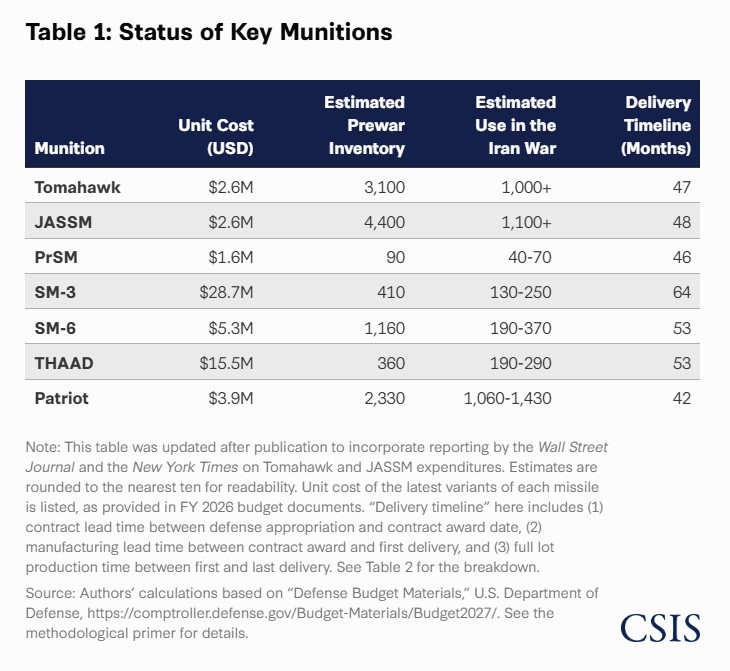
During the war, the US has severely drawn down its air defense interceptors, as documented by the US-based think tank CSIS (Center for Strategic and International Studies). The CSIS report estimates that stockpiles of the Patriot and THAAD (Terminal High Altitude Area Defense) have been greatly reduced in the ongoing conflict.
Published on July 27, 2026, the report—“Renewed Iran War Would Test Diminished Interceptor Inventories” authored by Mark F. Cancian and Chris H. Park—updates an earlier CSIS assessment released around the ceasefire agreed to by both sides on April 8, 2026.
“The air defense campaign has been largely successful with high—though not perfect—interception rates. While some Iranian attacks got past defenses, causing casualties and extensive base damage, these attacks have been unable to diminish U.S. and coalition operations. This has required extensive use of interceptors, with Patriot inventories now under 1,000 and THAAD inventories at about 250,” states the report.
The previous report had estimated that the US Patriot interceptor inventory shrank by 55%. However, the updated figures suggest the stockpile has further shrunk by an additional 10% since the truce, and that approximately 65% of US Patriots have now been lost since the war began.
Image via CSIS
The report estimates that Patriot inventories now stand at under 1,000 (the most recent figures place the range at 759–827) and that THAAD inventories stand at about 250 (the latest figures put it at roughly 234–278).
Both systems have been heavily used to defend US bases, Gulf partners, and Israel against Iranian ballistic missiles, cruise missiles, and related threats. CSIS apparently draws its estimates from publicly available legislative and Pentagon budget documents, supplemented by open-source data on rounds expended in the Gulf.
“Diminished stockpiles may force the United States and its coalition partners to take more risks with interceptions. There are no good alternatives to Patriot and THAAD for ballistic missile defense. Navy ships, with Standard Missiles that can intercept such threats, generally are too far away,” the report warned.
Notably, an NBC report recently stated that US commanders are choosing not to take down Iranian projectiles that are headed into uninhabited regions of US sites in the vicinity because they do not want to squander their interceptor missiles.
Patriot AD System.
This alleged tactic, if true, marks a shift from previous air and missile defense procedures in the region, such as when a US-manned Patriot detachment protected a mostly evacuated Al-Udeid Air Base in Qatar from a barrage of Iranian ballistic missiles in response to Operation Midnight Hammer in June 2025.
Despite a dearth in air defense interceptors, the US has vowed to hit Iran very hard, a move that will almost certainly trigger Iranian retaliation and further cause depletion in Patriot and THAAD interceptors. The situation may become dire, given that the production of these missiles takes woefully long—Lockheed delivered just about 600 interceptors in 2025, and only 96THAAD interceptors are manufactured per year.
The United States is therefore consuming its most valuable air-defense munitions far faster than industry can replace them. Some analysts have suggested that depleting offensive and defensive stockpiles contributed to the Trump administration’s decision to accept a ceasefire, including the latest one where the U.S. and Israel agreed to hold off on new strikes on Iran.
Other reports indicate Trump may have changed the offensive plans after talking with Saudi Arabia and after Iran also spoke to Riyadh, besides Pakistan and Turkey.
Trump insisted the US was still “locked and loaded and ready to go against the Islamic Republic of Iran,” but added that Tehran and other Middle Eastern countries had asked him to hold off on fresh strikes. “Based on this request, I have agreed, for the future benefit of the WORLD and, likewise, the survival of a successful and prosperous Iran, to cancel the attack, subject to being able to rapidly make a DEAL,” Trump posted on his Truth Social platform.
Terminal High Altitude Area Defense – Wikipedia
Meanwhile, Strategists also warn that the shortages create near- to medium-term risks for U.S. readiness in other theaters, particularly a potential conflict with China in the western Pacific. “Expended munitions create a near- to medium-term risk for U.S. readiness to fight a war against China in the western Pacific,” the report stated.
In the near term, Washington is unlikely to spare Patriots for Ukraine, which continues to face intense Russian attacks and has repeatedly requested additional interceptors. Russia has been exploiting the vacuum in air defense coverage to strike Kyiv with lethal ballistic and hypersonic missiles, as the EurAsian Times reported.
Pentagon Boosting Interceptor Production
Noteworthy steps have been taken in 2026 to rapidly expand production of Patriot (primarily PAC-3 MSE) and THAAD interceptors.
These efforts use a new “Acquisition Transformation Strategy” approach that emphasizes multi-year framework agreements, undefinitized contract actions (UCAs), long-term demand signals, and parallel investments in facilities, the workforce, and bottleneck components.
For instance, the US Army awarded Lockheed Martin a contract on July 29 worth up to $58.6 billion to produce Patriot interceptor missiles.
This comes after the US awarded Lockheed Martin a $4.7 billion contract in April 2026 to accelerate the production of the Patriot Advanced Capability-3 (PAC-3) Missile Segment Enhancement (MSE) interceptors. The agreement stipulated that the annual output of PAC-3 MSE interceptors would be increased from nearly 600 to 2,000 units.
The Army states that the latest contract establishes a multiyear procurement strategy for the interceptors from fiscal 2026 through 2032 by converting a prior one-year deal awarded in April into a seven-year draft agreement.
The Pentagon Munitions Acceleration Council (MAC) also reportedly signed an emergency procurement agreement with key vendors to boost production.
Meanwhile, Lockheed has stated that it is investing $8–9 billion through 2030 across more than 20 sites in the United States.
Additionally, the US has agreed to grant Ukraine a license to produce Patriot interceptors, making it the latest European country to manufacture these prized munitions, alongside Germany, Romania, and Poland.
Not just that, Lockheed Martin announced the introduction of the PAC-3 Adapted Capability Effector (PAC-3 ACE), a low-cost interceptor built to defeat a wide range of threats for less than half the cost of a PAC-3 MSE.
As for THAAD, the Pentagon signed a framework with Lockheed Martin to quadruple annual production from 96 to 400 interceptors.
The framework was intended to lead to a formal contract award (subject to congressional appropriations). This was later executed in June 2026 with an undefinitized contract action (UCA) valued at up to $35 billion to increase manufacturing through 2030.
The Pentagon, in collaboration with L3Harris and Lockheed Martin, announced two historic seven-year framework agreements earlier this week to increase production capacity for critical components of the Terminal High Altitude Area Defense (THAAD) and the Patriot Advanced Capability-3 (PAC-3) Missile Segment Enhancement (MSE) interceptors.
Contact the author at sakshi.tiwari13 (at) outlook.com
The US has outrightly rejected Iran’s claims that it managed to destroy American F-35 fighter jets.
CENTCOM wrote on X: Over the past few hours, Iranian state media have continued to report false claims by the Islamic Revolutionary Guard Corps (IRGC).
FIRST CLAIM: The IRGC (again) claims free and open routes through the Strait of Hormuz are dangerous for commercial vessels. FACT: The immediate dangers posed to commercial vessels and their civilian crews are the IRGC’s verbal threats and attempted attacks.
SECOND CLAIM: The IRGC claims three U.S. F-35 stealth fighters and three other aircraft were destroyed during a recent Iranian attack on an American air base. FACT: No U.S. aircraft were destroyed or damaged in recent attempted Iranian attacks. All missiles and drones were intercepted or failed to reach targeted areas.
THIRD CLAIM: Iranian state media is reporting that a commercial oil tanker, M/T Nora, has broken through the U.S. blockade.FACT: The commercial vessel has not broken through America’s steel wall blockade. More than 20 U.S. warships, hundreds of aircraft, and thousands of service members remain vigilant and continue to fully enforce the blockade.
Earlier, Iran’s Revolutionary Guards (IRGC) had claimed that three US F-35 jets were destroyed and three others were damaged in a missile attack on Jordan’s Al-Azraq air base.
However, this claim has not yet been confirmed by US or Jordanian officials, or by any independent source.
IRGC’s public relations department claimed the attack was in response to US airstrikes on two residential homes on Qeshm Island, which killed three members of the same family, including a child, and wounded two other children.
The Revolutionary Guards also claimed that a hangar for the installation and repair of fighter jets at Al-Azraq Air Base was also targeted, resulting in the deaths of several American officers and technical staff members. However, no specific numbers or further details were provided.
Washington has not yet issued any official statement.
Iran’s Revolutionary Guards said on Thursday that a ballistic missile strike destroyed three US F-35 fighter jets and severely damaged three others at Jordan’s al-Azraq air base.
The Guards said that several US officers and maintenance personnel were killed.
The attack targeted…
— Iran International English (@IranIntl_En) July 30, 2026
Earlier, IRGC said on Thursday that three of its members were killed in an attack by the United States on the northwestern province of Zanjan.
“In the brutal attack carried out by the terrorist regime of the criminal United States on 30 July 2026, three brave and devoted members of the Ansar al-Mahdi IRGC in Zanjan province… attained martyrdom,” the Guards’ provincial branch said in a statement, according to Tasnim news agency.
File Image
Earlier in March, as EurAsian Times reported, a US F-35 made an emergency landing at a US air base in the Middle East after it was hit by possible Iranian fire.
Capt. Tim Hawkins, a spokesperson for US Central Command, said the fifth-generation stealth jet was “flying a combat mission over Iran” when it was forced to make an emergency landing. Hawkins said the aircraft landed safely and the incident is under investigation.
“The aircraft landed safely, and the pilot is in stable condition,” Hawkins added. “This incident is under investigation.”
Iran has a well-documented pattern of issuing bold claims about successful strikes on advanced U.S. military assets, particularly F-35 stealth fighters.
Throughout the current conflict, the IRGC have repeatedly claimed to have destroyed or damaged US warplanes and other high-value assets at bases in Jordan, Kuwait, Bahrain, and elsewhere. Earlier claims in June and mid-July similarly described the destruction of fighter hangars and multiple aircraft at Al-Azraq, often accompanied by assertive language.
By asserting the destruction of the F-35—one of the most advanced fighters in the U.S. inventory—Iran seeks to project strength, boost morale at home, and portray its missile forces as capable of neutralizing American air power.
Iran is deliberately outsourcing the risk. If a Houthi drone hits a Saudi tanker or an Iraqi militia rocket lands near a pumping station, Tehran retains deniability while Riyadh still pays the price. It is attrition by proxy, and it is highly effective.
Saudi Arabia is being encircled by Iranian proxies targeting its oil infrastructure and crippling its maritime trade. The picture is a terrifying scenario for the world’s biggest oil exporter — jeopardizing its plans to diversify its economy and attract investment & tourists.
Despite calls for a diplomatic solution, Saudi forces have faced attacks from both Yemen’s Tehran-backed Houthi rebels as they impose a Red Sea blockade on Saudi ships, and from pro-Iran militias in Iraq targeting its energy facilities.
Early on Wednesday, the kingdom struck back. Joint US-Saudi strikes in Iraq killed 20, according to the alliance of former paramilitary groups and factions whose bases were targeted.
“Saudi Arabia understands that becoming drawn into a prolonged war of attrition with Iran and the so-called Axis of Resistance does not serve the Kingdom’s long-term interests,” Danny Citrinowicz, a senior Iran researcher at Israel’s Institute for National Security Studies, wrote on X.
Still, as one Saudi analyst close to the government put it, “restraint has limits”.
With several Saudi tankers hit in the Red Sea, the Houthis are seeking to limit access to a critical artery delivering Saudi crude to the international market after the Strait of Hormuz was largely choked off by Iran.
Crown Prince and Prime Minister of the Kingdom of Saudi Arabia Mohammed bin Salman and US President Donald Trump speaks at the US-Saudi Investment Forum at the John F. Kennedy Center for the Performing Arts in Washington, DC on November 19, 2025. (Photo by Brendan SMIALOWSKI / AFP)
The repeated attacks have already done something more damaging than physical destruction: they have punctured the Gulf’s carefully cultivated image as a safe harbor for capital. Once that perception cracks, the cost of repairing it is measured in years, not months.
The threats on multiple fronts come just months after Iran itself launched waves of strikes targeting Saudi energy installations, including refineries, petrochemical plants and power facilities.
The salvos hit “key” installations, according to Saudi state media, impacting oil production capacity.
The repeated barrages against Saudi Arabia and its Gulf neighbors also shattered the wealthy monarchies’ hard-earned reputation for stability.
“For the Gulf states, stability is not an abstract concept; it is the foundation of their economic model,” Citrinowicz wrote in an online commentary.
“Their long-term prosperity depends on regional predictability, investment, trade, and uninterrupted energy flows.”
Such attacks risk a bigger backlash from a cornered Riyadh, which experts say has so far held off on a larger retaliation.
“The kingdom has the capacity to impose severe punishment on the Houthis and the Iraqi militias, but has so far exercised considerable restraint,” Ali Shihabi, a political analyst close to the Saudi government, told AFP.
“That restraint has limits and should not be mistaken for weakness.”
Fear is also mounting that the Houthis will copy Iran’s playbook in the Hormuz Strait by charging ships to transit the Red Sea — giving them a revenue stream to bolster their arsenal and project power across Yemen.
On Wednesday, a minister in Yemen’s internationally recognized government claimed the rebels had already begun working under Iranian guidance to establish a fee system.
Information minister Moammar al-Eryani described the move in remarks to AFP “as a dangerous escalation aimed at transforming one of the world’s most strategic maritime corridors into a permanent source of funding for the militia’s military and terrorist activities”.
Even if fears over the tolls are not realized, analysts say the group’s ability to disrupt one of the world’s most vital waterways sends a powerful message.
“That capability is itself the warning,” H.A. Hellyer, analyst at the Royal United Services Institute in London, told AFP. “It’s a preview of what Iran-aligned actors elsewhere on Saudi Arabia’s periphery can also bring to bear.”
As the Iran war intensifies again, the top U.S. commander in the Middle East has warned that cellphone videos and images shared online by American soldiers could help Iran attack U.S. bases, and some service members may soon be ordered to surrender their phones.
Admiral Brad Cooper, head of U.S. Central Command (CENTCOM), raised the concern in a previously unreported letter dated July 28.
He said Iran was gaining real-time data into the success or failure of its missile and drone strikes by monitoring news reports and online content that included “reactions, photos, and footage from the cellphones of our troops.”
“The direct, unavoidable cost of this open-source intelligence could be measured in the lives of American service members and civilian residents in targeted Gulf countries,” Cooper wrote. He urged forces to “redouble our focus on operational security” but stopped short of recommending specific measures in the memo.
According to Reuters, some US troops stationed in Jordan have already been notified their phones will be seized in the coming days. More comprehensive restrictions are possible across the tumultuous region because of operational security concerns.
Cooper cited one specific example in the letter: a video captured on a service member’s Meta smart glasses and posted on Instagram during an Iranian missile and drone attack. The footage showed where and how the individual evacuated to a bunker. Without such publicly available material, Cooper said, Iran would struggle to determine whether its weapons had missed by tens of meters, struck an empty tarmac or hit a populated facility, thanks in part to U.S. electronic jamming and other battlefield tactics.
“Iran knows the weapons were fired; however, their forces do not know if they missed by 50 meters, hit an empty tarmac, or successfully struck a crowded facility,” he wrote.
“Detailed lists, descriptions, and analyses of what was hit, openly published by news outlets, are essentially performing Iran’s Battle Damage Assessment (BDA) for them, free of charge.”
Public disclosures of strike details, he added, could serve as “an immediate green light” for secondary, more devastating follow-up attacks.
The warning comes as the conflict that began in late February has killed 18 U.S. troops and wounded more than 600, according to official figures.
File Image: US Army
On July 13, the Financial Times reported that mobile phone networks across the Middle East had been targeted by a wave of cyberattacks aimed at locating American forces and contractors around the same time as U.S. and Israeli strikes on Iranian positions.
CENTCOM spokesman Captain Tim Hawkins confirmed the authenticity of Cooper’s letter, describing it as “a general reminder to our service members on the importance of maintaining operational security.” He declined to discuss specific protective measures.
Meanwhile, the US military conducted a “heavy wave of strikes” against Iran on Thursday in retaliation against Tehran targeting American bases in Jordan.
US President Donald Trump had vowed to hit Iran “hard” after Tehran launched missiles at Jordan.
American forces “successfully completed a heavy wave of strikes against Iran”, and struck dozens of Islamic Revolutionary Guard targets including military command centers, US Central Command (CENTCOM) said.
In Iraq, the joint US-Saudi air operation followed attacks by “terrorist militias loyal to Iran” on its oil facilities. The US military said logistics and weapons sites belonging to an Iran-aligned group were targeted in the strikes.
Iraq’s Hashed al-Shaabi alliance said the attacks killed at least 20 of its members. It condemned a “dangerous escalation” against an “official security institution”.
Two Hashed officials said five Iranian advisors were among those killed.
Iraq slammed the US-Saudi strikes and said it rejects “all acts of aggression, regardless of the party responsible or the justifications presented”.
The Ministerial Council for National Security said it would “confront any violation of Iraq’s sovereignty, and prevent any source from using Iraqi territory to threaten neighboring states”.
According to Fox News, however, Trump said the strikes were “coordinated with the Iraqi government”.
The strikes follow growing US pressure on Iraq to disarm pro-Iran groups. Earlier this month, Prime Minister Ali al-Zaidi visited both the US and Iran.
The US and Saudi Arabia have carried out coordinated attacks on positions held by the Hashed al-Shaabi, an Iraqi paramilitary network that incorporates powerful pro-Iran armed groups.
These factions, which form part of the broader Tehran-backed “axis of resistance,” have for years posed a persistent threat to American forces and interests in Iraq and the wider Middle East.
Meanwhile, a powerful alliance of pro-Iran armed groups warned on Wednesday that a response to the deadly US-Saudi strikes in Iraq was “inevitable”.
The Islamic Resistance in Iraq, which has targeted US facilities hundreds of times during the Middle East war, said: “our response to the American enemy is inevitable, and may target its tools in Saudi Arabia”.
Hashed al-Shaabi
The Hashed al-Shaabi, also known as the Popular Mobilization Forces (PMF), is a network of Shia-majority factions that was established in 2014 to fight the Islamic State group.
It was formed following a fatwa from Ayatollah Ali al-Sistani, the highest Shia Islamic religious authority in Iraq, at a time when IS was conquering swathes of the country.
Pro-Iran armed groups heeded the call and were also joined in the fight by Iraqi volunteers from across the country.
The Hashed forces were mostly trained by Iranians and led by Tehran-backed armed groups, which fought American forces after the US-led invasion that toppled former ruler Saddam Hussein in 2003.
Their efforts were overseen by General Qasem Soleimani, the former head of the Quds Force, the foreign operations arm of Iran’s Islamic Revolutionary Guard Corps.
Soleimani was killed in an American strike in Baghdad in 2020.
In 2016, a law integrated the Hashed into the regular security forces, and a year later the alliance contributed to IS’s defeat by the Iraqi army, which was supported by the US-led anti-jihadist coalition.
The US has held major sway in Iraq since its 2003 invasion. But Iran has also built its influence and seen its Shia allies installed in Baghdad’s halls of power.
Iraq has long been a proxy battleground for the US and Iran.
Today the Hashed encompasses dozens of groups, including brigades belonging to powerful pro-Iran armed factions, which are blacklisted as terrorist organizations by the US.
This US Navy handout photograph released on July 28, 2026, by US Central Command Public Affairs shows an F/A-18E Super Hornet launching from the flight deck of Nimitz-class aircraft carrier USS George H.W. Bush, on July 21, 2026. The US military said on July 28 it had intercepted multiple missiles launched by Iran, ending a days-long respite in attacks between the foes. Both sides had held fire over the weekend, following nearly two weeks of nightly strikes by the United States on Iran, and repeated missile and drone salvos by Tehran targeting Washington’s allies around the Gulf. (Photo by various sources / AFP)
Some factions face accusations of collecting government salaries for their fighters while acting independently of the state.
Over the years, they have seen their clout grow, with some gaining seats in parliament, even as several group leaders, including the Hashed’s top commander, have been subjected to US sanctions.
Several pro-Iran groups are also part of the Islamic Resistance in Iraq alliance, which has claimed hundreds of attacks against US facilities in Iraq and the region during the Middle East war.
They pledge their allegiance first and foremost to the Tehran-led “axis of resistance”, which includes Lebanon’s Hezbollah, Hamas in Gaza and Yemen’s Houthis.
The most active among them are Kataeb Hezbollah, which has long spearheaded attacks on US interests in Iraq, and over the years has lost key commanders in American strikes.
They also include Kataeb Sayyid al-Shuhada and the al-Nujaba movement.
In some cases, these groups are present on Hashed al-Shaabi bases. But they also have their own bases, arm depots and workshops, mostly for making drones. The groups mainly rely on explosive-laden drones but also possess rockets and are believed to have short-range ballistic missiles.
An undisclosed Middle Eastern state has placed an order for SAAB’s GlobalEye AEW&CS (Airborne Early Warning & Command System) aircraft.
Saab received a SEK 10.1 billion order for two GlobalEye aircraft from a Middle Eastern country, with deliveries planned for 2030, the manufacturer said in an official statement on July 27.
“Due to the nature of the industry, circumstances concerning the customer and national security interests, no further information regarding this order or the customer will be provided,” it emphasized in the statement.
The GlobalEye system incorporates Saab’s Erieye Extended Range radar, which is mounted on the fuselage of the Bombardier Global 6000 long-range business jet. It is a multi-role, multi-domain system that provides simultaneous long-range surveillance of air, sea, and land targets from a single platform, according to Saab, the manufacturer.
“This order underscores our commitment to providing customers with mission-proven, multi-domain AEW&C capability. The increasing international interest in GlobalEye reflects its effectiveness and reliability in modern air defense operations,” Micael Johansson, President and CEO of Saab, was quoted as saying in the statement.
The undisclosed buyer becomes the second Middle Eastern operator of the GlobalEye after the United Arab Emirates, which already fields a fleet of five aircraft. Given the UAE’s usual transparency regarding follow-on purchases, the new order has been widely assessed as coming from a different customer in the region.
Military watchers and enthusiasts were quick to speculate that the buyer may be based in the Gulf region, which has been persistently attacked by Iran’s Islamic Revolutionary Guard Corps (IRGC) in the latest US-Iran war. In fact, some believe the purchase may have been influenced by the UAE’s use of the platform during the Iran war.
Although the UAE has not publicly confirmed deploying its GlobalEye, it is likely that the aircraft was used for airborne early warning and surveillance at the height of the conflict to detect Iranian drones and missiles and give its defenses more reaction time.
UAEAF GlobalEye at Dubai Airshow 2021 – Wikimedia Commons
Typically, AEW&C platforms supply a recognized air picture and cue interceptors—roles in which ground-based radars alone are limited against low-flying or saturation threats, such as one-way attack drones. Australia, for example, deployed its E-7 Wedgetail to the Gulf region in March 2026 during the height of the conflict, for the same role.
The UAE GlobalEyes may have presumptuously operated as airborne nodes feeding real-time tracks to air defense systems such as THAAD and Patriot, as well as to fighter aircraft. This may have supported the UAE’s reported high interception rates, spanning hundreds of ballistic missiles and over 2,000 drones.
Additionally, previous reports indicated the UAE conducted its own airstrikes against Iranian targets in coordination with the US and Israel. In that case, the GlobalEye could have provided ISR (Intelligence, Surveillance, and Reconnaissance) or targeting support, though there is no public evidence to confirm that at this point.
Although the identity of the latest GlobalEye customer is concealed, we know that Saab had offered the aircraft to Saudi Arabia and Qatar last year, both of which have been repeatedly attacked by Tehran’s forces. Saudi Arabia, for one, already operates the Saab 2000 AEW and has been looking to upgrade its early warning fleet. Some sources, however, believe that Kuwait could be the new customer, particularly after the harrowing war.
Eitherway,theorderaddstowhathasalreadybeenastrongyearcommerciallyforSaab.Earlierthismonth,NATOSecretaryGeneralMarkRutteannouncedthatthealliancewouldbeginformalnegotiationswiththecompanyforupto 10 GlobalEye aircraft to replace its fleet of 14 Boeing E-3A Sentry AWACS aircraft.
Before that, Sweden, France, and Canada had signed deals to acquire the early-warning aircraft, as previously reported by EurAsian Times. Additionally, Saab has simultaneously ended a decade-long drought in Gripen fighter sales. Thailand and Colombia ordered the aircraft last year, while Ukraine recently signed a deal for 20 Gripen-E/F jets.
Saab’s GlobalEye AWACS
“GlobalEye is an advanced multi-domain AEW&C solution with an array of active and passive sensors that provide long-range detection and identification of objects in the air, at sea, and over land. By providing real-time information to units in air forces, armies, and navies, GlobalEye enhances situational awareness of surrounding areas and enables early threat detection,” states the manufacturer.
Notably, the GlobalEye offers real-time air, sea, and land surveillance over a range of 350 nautical miles (about 650 kilometers) by combining Saab’s Erieye Extended Range (ER) radar, marine surveillance radar, and a multi-domain Command and Control (C2) system.
The GlobalEye “combines excellent flight performance with low maintenance costs” and can remain airborne for over 11 hours, according to the manufacturer.
Although it is classified as an AEW&C by Saab, the GlobalEye can also conduct land and sea surveillance thanks to the FLIR (Forward Looking Infrared) Systems Safire electro-optical system and the Leonardo Seaspray 7500E radar mounted in pods beneath the fuselage.
Saab GlobalEye
The system can also detect small targets, such as drones, and provide ground-moving target indication (GMTI), which is critical in modern combat, especially in the Middle East, where an exponential rise in the use of cheap, one-way attack drones has been witnessed. Moreover, the GlobalEye is particularly good at detecting low-observable and stealthy threats, including drones and ballistic and hypersonic missiles, even in complex environments with significant clutter and electronic jamming.
The GlobalEye can gather, process, and disseminate data to all authorities and available resources, including airborne forces. Additionally, it makes it easier to share information effectively between platforms.
It can even manage and guide other assets, like fighters, and tell them when and where to take action—a critical requirement in modern, networked combat.
As for Saab, the development of the GlobalEye has allowed Saab to re-enter the global AEW market, building on the success of its previous Erieye-equipped regional airliners, the Saab 340, 2000, and Embraer 145.
Securing yet another sale of the GlobalEye is likely to further solidify the Swedish manufacturer as a trusted player in the market.
Contact the author at sakshi.tiwari13 (at) outlook.com
The geopolitics of West Asia is a heady cocktail in which the friend of my friend could well be my enemy.
In the latest illustration of this paradox, Israel – Washington’s closest strategic partner in the region – is threatening Qatar, a key US ally that hosts the largest US military base in the region and recently received an explicit US security guarantee.
Nearly ten months after President Trump signed an executive order pledging to treat any armed attack on Qatar as a threat to the US and to take all necessary measures, including military ones, to defend it, former Israeli Prime Minister Naftali Bennett has accused Doha of funding Iran’s Islamic Revolutionary Guard Corps (IRGC).
Bennett declared that if he returns to the premiership this fall, he will immediately designate Qatar an “enemy state”. National elections will be held in Israel on October 27.
“If I am elected prime minister, I will immediately declare Qatar an enemy state,” Bennett vowed on July 27 at the Institute for National Security Studies conference.
Bennett further said that while serving as prime minister, he had been shown intelligence indicating that Doha also funded Iran’s IRGC, adding that Prime Minister Netanyahu was also aware of the intelligence, the Times of Israel reported.
He described Qatar as “a violent antisemitic cancer that sends its metastases throughout the West, even into the office of the prime minister of Israel, with the aim of destroying Israel.”
The comment was a reference to the so-called Qatargate scandal that has roiled Prime Minister Benjamin Netanyahu’s office for more than a year, after it came to light that several of the premier’s top aides were being paid by Doha for public relations work, at the same time the Arab emirate was hosting Hamas terror group leaders and mediating talks with it for the release of Israeli hostages held captive in the Gaza Strip.
“The leaders of Qatar have a goal of eliminating Israel, period,” Bennett stressed. “There are people who call it a ‘complicated state’ – it’s not complicated; after October 7, nothing is complicated here. Qatar is an enemy. It’s simple.”
Qatar, Bennett continued, has invested for some 25 years in a “powerful global influence operation that may have caused Israel very major damage.”
Notably, public opinion in many Western countries, including in the US, has swung dramatically against Israel in the last two years.
For instance, New York City had a Jewish mayor continuously for 28 years before Zohran Mamdani took office on January 1, 2026. Mamdani has repeatedly and explicitly accused Israel of committing genocide in Gaza.
This is significant as New York City had over 11% Jewish population, perhaps the largest concentration of Jewish people outside of Israel.
He also made a reference to rising anti-Israel sentiment in US universities.
“Today, in universities in the United States, Qatar has invested billions to go in and educate the young generation,” he said. “And so the students there are educated in ‘From the river to the sea.'”
This is a popular slogan in US universities that calls for the elimination of the state of Israel and implies that from the Jordan River to the Mediterranean Sea, the whole land belongs to Palestine.
Bennett seems to be blaming Qatar’s petrodollars for this dramatic turn in Israel’s image.
He also said that Qatar was directly funding Hamas.
“And I’ll tell you something else – Qatar funded, directly, Hamas,” he said, adding that Qatar additionally funded the al-Nusra Front, an Al Qaeda-affiliated organization that was active in the Syrian civil war.
Bennett’s allegations were rejected by Qatar.
The Qatari Embassy in Washington accused him of “spreading disinformation about Qatar in an attempt to further his own political ambitions.”
“As we have stated previously, Israeli disinformation campaigns will not deter Qatar from continuing its constructive role in pursuing peace and security, both in the region and internationally,” it said.
Regardless of the truth of Bennett’s allegations, Qatar’s alleged support for Hamas and its anti-Israel stance becoming a campaign issue in the country’s national elections could spell trouble for Doha, which already faced Israeli airstrikes in September last year.
On September 9, 2025, Israel carried out an airstrike in Doha, Qatar, targeting senior Hamas leaders. This was Israel’s first known military strike inside Qatar, a key US ally in the region. Qatar’s Al Udeid Air Base is America’s largest military base in the Middle East, which hosts approximately 10,000 US soldiers.
Besides, it will further complicate the complex web of alliances in the Middle East, which is already going through one of its most turbulent phases since 2023.
Ever since the Hamas terror attacks in Israel in October 2023, Israel has attacked six countries, including Palestine, Lebanon, Syria, Qatar, Yemen, and Iran. While Israel has often had brief wars and skirmishes against the first three (Palestine, Lebanon, and Syria), it attacked Yemen, Qatar, and Iran for the first time.
Meanwhile, the US and Iran have been at war since February this year. In response, Iran has attacked almost all countries in the region that host US troops, including the UAE, Kuwait, Bahrain, Jordan, Saudi Arabia, Iraq, and Israel.
“The United States shall regard any armed attack on the territory, sovereignty, or critical infrastructure of the State of Qatar as a threat to the peace and security of the United States,” it said, adding, in the event of such an attack, the United States shall take all lawful and appropriate measures — including diplomatic, economic, and, if necessary, military — to defend the interests of the United States and of the State of Qatar and to restore peace and stability.
If Israel officially declares Qatar an enemy state, then two of America’s closest allies in the region will be facing each other. Ironically, the US has two different defense treaties with both Doha and Jerusalem.
While the US has committed to protect Qatar, Washington also has a Qualitative Military Edge (QME) policy for Israel.
Under this policy, the US has committed to ensure that Israel maintains a decisive technological and qualitative military superiority over any potential conventional military threat in the Middle East, including against Qatar.
Openly hostile relations between Doha and Jerusalem can become a hot potato for Washington.
Meanwhile, Qatar is already managing seemingly contradictory and mutually antagonistic relationships with various countries and non-state actors.
It is a close US ally but has also hosted Taliban and Hamas leadership for years.
Doha also maintains a close relationship with Tehran.
Though Qatar hosts the largest US military base in the region, during the war, it also pursued secret discussions and informal arrangements with Iran.
According to the Washington Post, Qatar allegedly proposed shutting down its monumental Ras Laffan gas facility to spike global energy prices and pressure the US and Israel to end the war quickly, conditional on Iran sparing the infrastructure from strikes.
Qatar on the Middle Eastern Map.
Also, Israel is not the only country that has accused Doha of promoting religious extremism.
In the past, Saudi Arabia has repeatedly accused Qatar of supporting the Muslim Brotherhood, which is a banned organization in many Gulf countries.
In 2014, Saudi Arabia, the UAE, and Bahrain even withdrew their ambassadors from Doha, citing Qatar’s alleged interference in their internal affairs and support for the Muslim Brotherhood.
In 2017, Saudi Arabia and other Gulf countries, including the UAE, Bahrain, and Egypt, also declared an aerial and naval blockade of Qatar, accusing Doha of “adopting various terrorist and sectarian groups… including the Muslim Brotherhood,” along with Hamas, ISIS, and al-Qaeda.
For now, Qatar has managed to walk a diplomatic tightrope by delicately navigating its relationships with all these countries, as well as with non-state actors.
However, openly hostile relations with Israel could further complicate the situation, not only for Qatar, but for the US as well.
It will be interesting to see what attitude Israel’s new government, due after the October elections, adopts towards Qatar and how it will affect the heady cocktail of geopolitical relations in the Middle East.
Sumit Ahlawat has over a decade of experience in news media. He has worked with Press Trust of India, Times Now, Zee News, Economic Times, and Microsoft News. He holds a Master’s Degree in International Media and Modern History from the University of Sheffield, UK.
He can be reached at ahlawat.sumit85 (at) gmail.com
OPED by Raghu Gururaj, Retired Ambassador and former Indian diplomat
The Gulf crisis has crossed the boiling point. As Donald Trump bombarded key Iranian infrastructure targets this week to force a negotiation, defiant Tehran promptly retaliated, killing three US soldiers at a military base in Jordan and attacking a desalination plant and an oil facility in Kuwait
Few wars in recent history have threatened to inflict such enduring damage on the global economy while offering so little strategic payoff. Until recently, one of the world’s busiest and most critical maritime corridors, Hormuz, had been a theatre for geopolitical confrontation.
Prosperous Gulf economies, long regarded as islands of stability, now find themselves under the constant shadow of missile strikes.
Irrespective of the eventual military outcome, the economic costs of the ongoing Gulf war will far outlive its battlefield gains. Even if one accepts that Israel and the United States initiated the military confrontation, Iran is now compounding that error by widening the battlefield to Gulf states.
Iran is playing a dangerous game and may have crossed a strategic Rubicon. There are many reasons why this war is working against Tehran’s long-term interests.
Iran cannot change its location
Firstly, Iran’s decision to militarily attack Gulf countries is strategically perplexing. Even those Gulf states that had sought a pragmatic modus vivendi with Iran now view it through a harsher security lens. Israel has the backing of the United States.
The Gulf monarchies possess enormous financial reserves and can rebuild damaged infrastructure. Global shipping will eventually find alternative routes. But Iran cannot change its geography. It will remain surrounded by the very Gulf states whose trust it is now eroding.
Throwing away painstaking regional diplomacy
Secondly, Iran may well remember where it was only a few years ago. Ironically, it entered this decade with an opportunity to escape years of isolation. The restoration of diplomatic ties with Saudi Arabia (brokered by China), improved relations with the UAE and a broader desire for regional deescalation offered Tehran a chance to re-enter Gulf politics as a legitimate regional stakeholder.
By widening the conflict, Iran now risks throwing away years of diplomatic rehabilitation.
Iran’s structural economic weakness
Third, Iran’s own economy cannot sustain permanent confrontation. It entered the conflict from a position of structural weakness. Years of sanctions, inflation, currency depreciation and under-investment have left little margin for prolonged regional confrontation. Every additional crisis further discourages investment, accelerates capital flight and youth unemployment, and delays economic recovery.
Iran’s ability to influence regional disparities is a double-edged sword
Fourth, a strategic advantage which Iran possesses is that it derives influence from regional divisions. But any future reconciliation between Israel and an Arab neighbor, every settlement in Yemen or Lebanon, every alternative trade and energy corridor to the Strait of Hormuz reduces Tehran’s strategic relevance.
The most effective response to Iranian coercion is therefore not more coercion, but making Iran gradually less central to the region’s security and commerce.
Motorists drive past a large billboard pledging revenge against US President Donald Trump along Jomhouri Street in central Tehran on July 27, 2026. Iran’s foreign ministry said on July 27 that the US was not involved in recent talks with Oman over the administration of the strategic Strait of Hormuz. Traffic through the vital global shipping route has been under Iranian control since the outbreak of war with Israel and the United States on February 28. (Photo by AFP) /
Iran’s control over Hormuz is not absolute
Fifth, Iran is possibly making a strategic mistake forcing the rest of the world to find a sustainable and structural solution to get around the Hormuz problem. No doubt, Hormuz gives Iran leverage that cannot simply be wished away overnight.
The question, then, is how to reduce Iran’s ability to weaponize that leverage? This disruption has already compelled many Gulf States to launch or revitalize alternate energy infrastructure corridors. The UAE’s construction of a new pipeline and a new deep-water port on its east coast in Fujairah aims to reduce dependence on Hormuz.
A pipeline project to connect Iraq to Jordan to provide Kuwait, Bahrain, and Qatar alternative outlets for their energy exports is under serious discussion. If the India-Middle East-European Economic Corridor (IMEC) takes off, it will boost Gulf corridor connectivity.
During the Cold War, the West never tried to eliminate the Soviet Union’s strategic advantages overnight. Instead, it invested in alternatives until those advantages mattered less. The same logic could apply to Hormuz.
Iran’s post-war diplomacy faces challenges
Iran will find its post-war diplomacy challenging as long as it continues to threaten the security of the Gulf nations. India’s interests are already directly harmed through attacks affecting Indian nationals, shipping, or energy security.
The USA, Europe,and Israel remain firmly opposed to Tehran anyway. In this scenario, Iran’s diplomatic options narrow considerably. It would increasingly depend on China for energy purchases and investment and Russia for military, diplomatic, and technological cooperation.
It could also depend on a limited network of partners such as Iraq, Syria (contingent on developments), and some non-state allies. That is not an enviable position to be in. Excessive dependence on China and Russia also weakens Iran’s strategic autonomy because Beijing and Moscow will prioritize their own interests over Tehran’s in the long run.
What US strategy can alter Iran’s incentives?
Whatever one’s assessment of how this conflict began, the United States also has choices to make to create an acceptable off-ramp for the major stakeholders. It has many levers, but only some are likely to change Iran’s strategic calculus. Iran’s economic reintegration is the strongest positive lever.
Iran desperately needs sanctions relief (even though it has lived under sanctions for decades), foreign investment, access to international banking, and modernization of its oil and gas sector. The US cannot offer these unconditionally, but it can make them contingent on Iran ending attacks on Gulf shipping, proxies, and regional infrastructure.
Iran wants recognition as a legitimate regional power. The US can either facilitate or block Iran’s entry into regional security dialogues and international economic forums. This matters because Iran has long argued that it deserves a seat at the regional table. The implicit bargain is that Iran can either remain isolated and economically stagnant or become a normal regional power. That is probably the most powerful long-term incentive.
The paradox is that Washington need not defeat Iran to change Iranian behavior. It only needs to convince Tehran that every attempt to exploit geography accelerates the world’s search for alternatives, weakens Iran’s regional standing and leaves it increasingly dependent on a shrinking circle of partners.
For that to happen, the US will have to find ways to gain some trust with the Iranian leadership. Iran will most likely dismiss American pressure with hostility, but may find it harder to ignore simultaneous pressure from a coalition comprising India, Japan, South Korea, the UAE, Saudi Arabia, the EU and others that have traditionally tried to maintain working relations with it.
A coalition in defense of freedom of navigation and regional stability would appear more reasonable to Iran than a coalition against itself. China’s influence is often overlooked. It buys Iranian oil in bulk and wants uninterrupted Gulf trade. If Iran keeps threatening Hormuz, Beijing eventually has an incentive to pressure Tehran because instability hurts Chinese energy security.
A key insight for Iran
The key insight for Iran is that it can weaponize Hormuz only so long as the world remains highly dependent on it. Every missile that threatens the Gulf accelerates investments that reduce Iran’s leverage.
Every attack on shipping strengthens international resolve to diversify away from Hormuz. Every strike on a neighboring state diminishes the diplomatic goodwill Tehran will desperately need once the guns fall silent. Iran can hold the world hostage for a while, but cannot build its future by doing so.
is the strategic paradox Tehran has to consider. That is why this is ultimately Iran’s war to lose.
Raghu Gururaj is a former Indian foreign service officer. He last retired from the post of Ambassador of India. His diplomatic assignments include Yemen, Singapore, Argentina, Switzerland, Saudi Arabia, Vietnam, Kazakhstan, Indonesia, and the Republic of Saotome and Principe. He has a master’s in economics and political science and a diploma in journalism.
This is an Opinion Article. Personal views of the Author
Cheap, mobile, easily deployable, constantly adapting, and deadly accurate; that’s how US military officials are describing Iran’s new ballistic missile – Kheibar Shekan.
While ballistic missiles are relatively easy targets to shoot down (compared to Hypersonic missiles) due to their fixed trajectories, quite a few Kheibar Shekan have penetrated U.S. air defense systems in the Middle East, drawing the attention of U.S. military officials and security analysts.
According to unnamed U.S. officials who spoke with The Wall Street Journal, Iran has adapted its military tactics by utilizing Kheibar Shekan ballistic missiles to target U.S. bases across the Middle East, altering flight paths, speeds, and mid-air maneuvers to breach American air defenses.
Iran is increasingly depending on these cheap missiles to breach American defenses, using them as part of complex attacks, where they are fired along with a salvo of cheap drones and missiles with fixed trajectories, to confuse American air defenses.
These complex attacks, alongside the changes introduced to the Kheibar Shekan ballistic missiles to make them more lethal and harder to intercept, underscore that Iran is an adaptive adversary.
So what is this Kheibar Shekan ballistic missile that has become the new headache of the US military, and what makes it so lethal?
The Kheibar Shekan Ballistic Missile
The Kheibar Shekan, or Kheibar-buster, is named after a Jewish castle overrun by Muslim warriors in the early days of Islam.
In 628 CE, Prophet Muhammad himself led a military campaign against the Jewish communities living in the oasis of Khaybar.
It is a medium-range ballistic missile unveiled by the Islamic Revolutionary Guard Corps (IRGC) in 2022. It belongs to the Fateh family of solid-fuel missiles and has become one of the most advanced developments of Iran’s missile program.
A man rides his motorcycle past a deactivated Kheibar Shekan ballistic missile in front of a picture of Iran’s Supreme Leader Ayatollah Ali Khamenei in Tehran’s Bahrestan Square on September 27, 2025, as part of an exhibit to mark the ‘Sacred Defense Week’ commemorating the 1980-88 Iran-Iraq war. (ATTA KENARE / AFP)
According to Iranian claims, the missile has a range of approximately 1,400 to 2400 km. This allows it to strike targets across much of the Middle East, including Israel. Furthermore, the missile travels at over 6,000 miles per hour.
It carries a 550 kg warhead in its nose section.
Unlike older Iranian liquid-fuel missiles, the Kheibar Shekan uses a solid-fuel propulsion system. This design has several advantages: missiles can be stored for longer periods in a ready state, require less time for launch preparation, and can quickly reposition after use.
This is a significant advance as Iran’s older missiles required lengthy prelaunch fueling, which in turn made their tracking and targeting by the US easier.
BREAKING – Iran's latest ballistic missile, Kheibar Shekan; stockpile of 50,000 units. Guided by BeiDou Navigation Satellite System (BDS‑3). Range: 2,450 km. Max speed: up to 19,500 km/h (approx. Mach 16). Warhead: approximately 550 kg. pic.twitter.com/E1jzHTxY9F
However, Kheibar Shekans can be kept fueled and loaded onto trucks or other launcher vehicles quickly, making their targeting difficult.
For modern missile systems, rapid deployment has become an important factor. Even a precision-guided missile has limited effectiveness if its launchers are easy to detect and destroy.
Despite these advantages, the US was able to shoot them down easily because of their fixed, easily predictable flight paths.
Ballistic missiles travel into the upper atmosphere of space before plunging back down towards a target, usually at hypersonic speeds, but are not capable of maneuvering in the final phase of their flight.
This is where the Kheibar Shekan differs and becomes more lethal.
According to US military officials, in some of the Kheibar Shekans, the nose section of the missile, which carries the explosive warhead and detaches during the final phase of the missile, is equipped with a small engine that makes it capable of adjusting its flight path in the terminal phase as it nears its target. This final-phase maneuvering makes interception by air defense systems harder.
Another advantage is its cost. The cost ratio between offensive and defensive means is an important differentiator.
While Iran has not officially disclosed the cost of the Keibar Shekan, experts believe that it is significantly cheaper than the interceptors employed by the US, such as Patriots, THAAD, and the US Navy’s SM-6 interceptors.
For instance, an SM-6 interceptor missile can cost about US$4–5 million, and a PAC-3 MSE missile for the Patriot system costs approximately US$4–6 million per unit.
File Image: SM-6 fired from HMS Sydney during Exercise Pacific Dragon
The significantly lower price tag of Kheibar Shekan creates the problem of ‘cost depletion of air defense,’ as even a successful interception would hurt the US more due to the higher cost of replacing its interceptor munition.
Additionally, according to some reports, the satellite-guided missile now uses China’s BeiDou Navigation Satellite System (BNSS), which increases its precision.
The mobility, rapid deployment, precision, final-stage maneuverability, and cost of the Kheibar Shekan make it a deadly missile.
However, the Iranian strategy of launching them alongside dozens of high-speed drones and other ballistic missiles makes their interception even harder.
According to defense and security expert Patricia Marins, Iran had a stockpile of about 2,000–2,200 Kheibar Shekan before the 12-day war, and today, after the conflict with the U.S., it still has some 1,700 missiles in its arsenal.
She further estimates that nearly a third of the Kheibar Shekan missiles have been upgraded to the BeiDou Navigation Satellite System.
“I think what it tells us is Iran is paying attention, and they’re learning and they’re looking at ways that they can get at use,” retired Army Gen. Joseph Votel, who has led the US Central Command, told the WSJ.
Iran “has seen what types of maneuvers are the most effective ones for overcoming missile defense,” said Fabian Hinz, an independent missile expert. “Every single combat use gives you some sort of data, so that’s very useful for the Iranians.”
Meanwhile, another headache for the US is its declining stockpiles of interceptors.
Declining Interceptor Stockpile of US Military
In April, in a detailed study, the Center for Strategic and International Studies (CSIS) estimated that by that time, the US had already expended nearly half of its SM-3 missiles, nearly a quarter of its SM-6 missiles, two-thirds of its THAAD interceptors, and more than half of its pre-war stock of Patriot interceptors.
Credits CSIS.
This declining stockpile of interceptors means that the US is forced to prioritize which incoming projectiles to intercept, and it is deliberately allowing some Iranian projectiles to pass through its defenses.
The U.S. military commanders have been picking and choosing which Iranian missiles and explosive-packed drones to intercept and are allowing some attacks through their defenses, amid an effort to preserve the Pentagon’s diminishing supply of weapons that block projectiles from reaching their targets, two senior U.S. officials told NBC News.
U.S. officials also said that in some cases the military deliberately allowed Iranian missiles and drones to hit U.S. bases if no personnel were stationed there.
Some defense experts have opined that this declining stockpile of interceptors was a key factor for the US to pause its airstrikes on Iran on July 27.
According to the New York Times, U.S. President Donald Trump backed away from escalating the war against Iran after advisers warned him about the risks of depleting America’s missile stockpiles.
According to officials, Washington believes that Russia and China are closely monitoring the pace at which U.S. military stockpiles are being depleted and could factor this into their planning for military actions.
However, depleting U.S. interceptor stockpiles and open acknowledgments by U.S. officials that the new Iranian strategy, combined with improved missiles such as Kheibar Shekan, is making interception even harder. This means that Tehran will bargain hard for concessions in its talks with Washington.
Sumit Ahlawat has over a decade of experience in news media. He has worked with Press Trust of India, Times Now, Zee News, Economic Times, and Microsoft News. He holds a Master’s Degree in International Media and Modern History from the University of Sheffield, UK.
He can be reached at ahlawat.sumit85 (at) gmail.com
Yemen’s Houthi rebels claimed to have shot down a Turkish-made “cutting-edge” Bayraktar Akıncı drone operated by Saudi Arabia over the northern Al-Jawf region.
Houthi military spokesperson Yahya Saree said the group’s forces downed the drone with “an appropriate weapon” while it was carrying out “hostile operations” in Yemeni airspace.
Media affiliated with the Iran-aligned group later published images of burning wreckage that appeared consistent with an Akıncı, including what they identified as a Saudi tail number. Saudi Arabia has not commented on the claim, which could not be independently verified.
If confirmed, it would mark the first reported loss of an Akıncı — a high-altitude, long-endurance armed reconnaissance drone manufactured by Turkey’s Baykar — in Yemen.
The announcement came a day after the Houthis said they had launched missile and drone strikes on Saudi energy facilities in the Jazan and Yanbu regions, in what they described as retaliation for Saudi-led airstrikes on Houthi targets.
A still from the video Ansar Allah’s military wing released on 26 July showing the wreckage of a Bayraktar Akinci UAV that it said was shot down over Al-Jawf.
It was the second time this month the group has claimed to have brought down a Saudi-operated drone.
On July 14, Saree said Houthi forces had shot down a Chinese-made Wing Loong II UAV over Al-Bayda governorate in central Yemen, though no supporting evidence was released at the time.
Earlier, as EurAsian Times reported, Iran reportedly downed a Wing Loong II drone, operated either by Saudi Arabia or the UAE.
During a closer examination of the wreckage, several prominent OSINT analysts identified it as Wing Loong II based on wing-root geometry, fuselage shape, and other structural features that match the Chinese drone.
Notably, the Wing Loong is also operated by Iran’s neighbor, Pakistan.
Drone wreckage found in Shiraz, Iran, and identified as Wing Loong II (Via X)
Meanwhile, the Saudi defense ministry said it thwarted various drones fired by pro-Iran groups in Iraq.
The latest attacks come during a lull in the fighting since Saturday, following 13 days of exchanges of fire between the US and Iran.
The Saudi defense ministry said “terrorist attempts were launched from Iraqi territory and carried out by Iranian-backed terrorist militias”, according to an official statement posted on social media.
The ministry said the drones targeted petroleum facilities in areas in the country’s east and the capital Riyadh.
Saudi Arabia pressed Iraq to “take all necessary measures to ensure the prevention of the use of its territory as a launching point” for attacks, according to a separate statement posted by an official Saudi broadcaster.
Saudi Arabia and other Gulf nations had accused pro-Iran militias in Iraq of launching waves of attacks targeting their territory during the earlier phase of the conflict.
Riyadh and Yemen’s Houthi rebels have also traded strikes in recent days, with the Houthis declaring a naval blockade on the kingdom’s ports. On Monday, the Houthis said they fired drones on Saudi oil infrastructure in response to incursions by the kingdom’s drones.
Three years after signing a broad defense cooperation agreement with Pakistan, Kuwait has reportedly ratified the pact with Islamabad.
The agreement was approved through decree-law no. 73 of 2026 and published in the official gazette Kuwait Al-Youm on July 26.
The pact establishes a framework for cooperation between the two armed forces, focusing on military training, education, intelligence sharing, logistics, defense technology, research and exchanges of expertise, with the aim of strengthening institutional military ties between the two countries, Kuwait Times reported.
The agreement also includes cooperation in military manufacturing, electronic communications systems, scientific research, military media and cultural and sports activities. A joint military committee will oversee implementation, including organizing exercises, official visits and other joint programs.
It also includes provisions governing the protection of classified information exchanged between the two sides, preventing the transfer of confidential documents or materials to third parties without prior written approval.
According to reports, the agreement will remain in force for five years and will be automatically renewed unless either country chooses to withdraw.
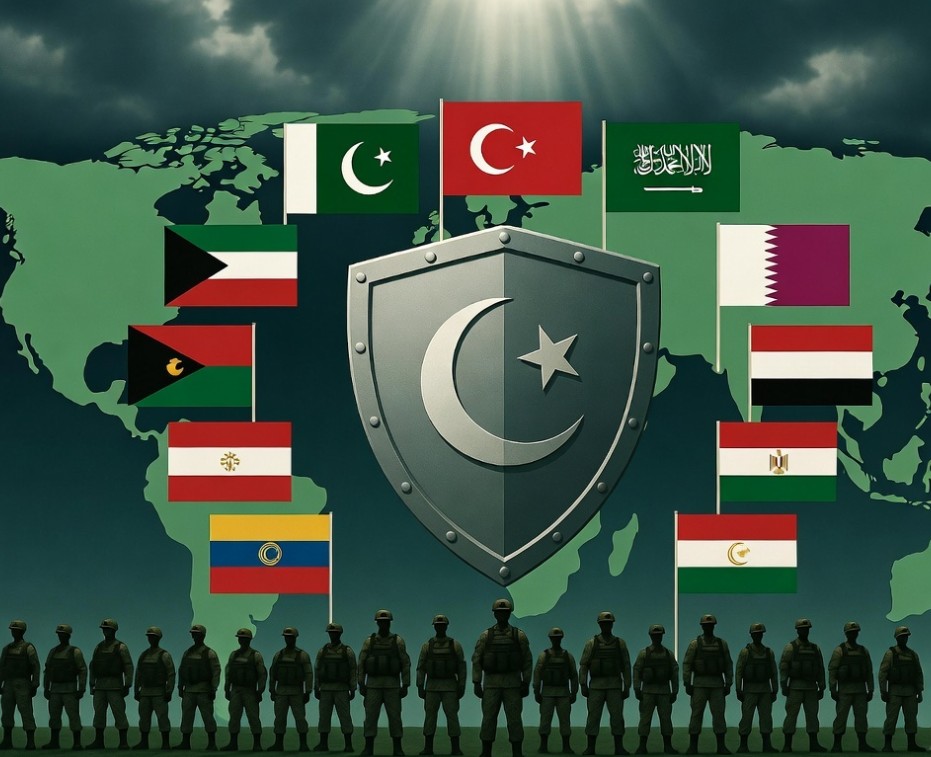
Islamic NATO. AI Image for representation only.
The agreement was ratified at a time when all Gulf countries, including Kuwait, are facing renewed security challenges due to the ongoing US-Iran War.
Notably, just one and a half years ago, Pakistan signed a defense agreement with Saudi Arabia, which also included a mutual defense clause on the lines of NATO’s Article 5, wherein an attack on one country is considered an attack on both countries, obliging the other country to provide military, economic, intelligence, and diplomatic support to the attacked country.
Earlier, Pakistan had suggested that Turkey and Qatar are also considering joining the Pakistan-Saudi Strategic Mutual Defense Agreement (SDMA).
Pakistan-aligned strategic thinkers even quipped that the agreement will bring in Turkish arms, Pakistani nuclear weapons, and Saudi and Qatari Petro-dollars and energy security.
While the Pakistan-Kuwait defense agreement does not include a mutual defense clause on the lines of NATO’s Article 5, the signing of the agreement will nevertheless further ignite speculation about an Islamic NATO in the making, which will seek a collective security arrangement outside traditional Western frameworks and independent of the United States.
However, talks of an Islamic NATO are largely symbolic rather than substantive, constrained by deep-seated internal rivalries, enduring structural dependence on the United States, and broader geopolitical calculations that render it operationally unviable and impractical.
In fact, the narrative of an Islamic NATO, largely driven by Pakistan, echoes the earlier rhetoric of an “Islamic bomb” that Islamabad promoted throughout the 1970s and 1980s, a vision that ultimately came to nothing.
A West Asian Security Architecture Without the US?
For decades, all West Asian countries, with the sole exception of Iran, have depended on the US for their defense and security.
In fact, the US has as many as 18 military bases in the region.
The US has strategic security partnerships with Saudi Arabia, Egypt, Jordan, Kuwait, Bahrain, the UAE, and Qatar.
Turkey, meanwhile, is a NATO member. It also hosts American nuclear weapons at the Incirlik Air Base as part of a NATO nuclear-sharing agreement. An estimated 20 to 50 B61 nuclear gravity bombs are stored there under US control, though Turkey has no independent authority to use them.
However, ever since the Hamas terror attacks on Israel in October 2023, the West Asian region has been going through a churning.
In the aftermath, Israel declared its goal of ‘Total Victory’ and has since attacked six regional countries, including Palestine, Lebanon, Syria, Qatar, Yemen, and Iran. While Israel has often had brief wars and skirmishes against the first three (Palestine, Lebanon, and Syria), it attacked Yemen, Qatar, and Iran for the first time.
The Israeli “belligerence” is believed to have fueled collective insecurities and made Gulf states look for new security guarantees and new partners.
In September 2025, Pakistan and Saudi Arabia signed the Strategic Mutual Defense Agreement (SDMA) on the lines of NATO’s collective defense clause. The most important clause of the agreement states, “Aggression against one country shall be considered aggression against both.”
While not explicitly stated, some Pakistani leaders, including Defense Minister Khwaja Asif, had suggested that the agreement extend Pakistan’s nuclear umbrella protection to Saudi Arabia.
Notably, the agreement was signed just weeks after an Israeli airstrike on Qatar on September 9, 2025, which reportedly took even Washington by surprise.
Qatar hosts the largest US military base in the region, but that was not enough to deter Israel.
“The United States shall regard any armed attack on the territory, sovereignty, or critical infrastructure of the State of Qatar as a threat to the peace and security of the United States,” it said, adding, in the event of such an attack, the United States shall take all lawful and appropriate measures — including diplomatic, economic, and, if necessary, military — to defend the interests of the United States and of the State of Qatar and to restore peace and stability.
However, the US-Iran War that began earlier in February this year once again destabilized the entire region and demonstrated the inability of the US to provide foolproof security in the region.
In the aftermath, Iran attacked Jordan, Iraq, Israel, the UAE, Kuwait, Bahrain, and Saudi Arabia.
The US’s inability to thwart these attacks is further pushing Gulf countries to explore new security partners. In this atmosphere of geopolitical upheaval, Pakistan is pushing itself as a credible security partner that can fill the vacuum left behind by the US.
Can Pakistan Deliver Its Promises on Security
Since Pakistan and Saudi Arabia signed their much-publicized mutual defense agreement, Pakistan has been fighting a war with Afghanistan, whereas Saudi Arabia was repeatedly attacked by Iran.
Last week, Yemen’s Houthi rebels launched attacks on Saudi Arabia and have now declared a naval blockade of the country.
As per the terms of the agreement, by now Pakistan should have declared a war on Iran and the Houthis, and Saudi Arabia should have declared a war on Afghanistan. However, neither has this happened, which highlights that the mutual defense clause has loopholes.
Crown Prince Mohammed bin Salman and Pakistan’s Prime Minister Shehbaz Sharif sign the Joint Strategic Defense Agreement
In fact, far from attacking Iran, Pakistan was hosting the US-Iran peace talks on its territory, even when Saudi oil fields were under Iranian attacks.
Security analysts have already highlighted that Riyadh is unlikely to come to Islamabad’s aid if there is war between India and Pakistan.
In fact, under Crown Prince Mohammed bin Salman’s Vision 2030, Saudi Arabia is pursuing economic transformation and requires strong partnerships with major economies. Riyadh views India as a long-term economic partner as it diversifies away from oil dependence.
Islamic NATO a Myth?
Despite the rhetoric from Islamabad, the fact remains that all these countries of the prospective Islamic NATO are heavily dependent on the US for their defense and security.
Turkey is already part of NATO, and Qatar has also signed a mutual defense agreement with the US.
It is beyond comprehension why these countries will swap US security guarantees for Pakistani ones.
Meanwhile, Pakistan, often portrayed as a central pillar of this imagined alliance because of its nuclear capability, itself operates under severe constraints, as its economic, financial and military dependence on the US remains overwhelming.
Pakistan needs Washington’s blessings for constant IMF bailouts that keep its economy afloat.
Washington’s influence over the Pakistani military establishment and its decision-making process can hardly be overestimated. It is inconceivable that in any potential conflict between Israel and any Gulf state, Pakistan would launch an attack on Israel.
In fact, the very term NATO is misleading as NATO is not just a mutual defense agreement signed between various states; rather, it is a deeply institutionalized military bloc, with integrated command structures, regular joint training, shared military doctrines, common and interoperable weapons systems, and decades of coordination.
This structure can not be replicated by merely signing an agreement.
Additionally, deep-seated internal rivalries between Islamic states – Saudi Arabia vs Iran, Turkey vs Arab states, Egypt vs Turkey, the new emerging axis of Saudi Arabia against the UAE, and the aspirations of Pakistan itself to portray itself as the natural leader of the Islamic world- make any Islamic NATO alliance a non-starter.
And, lastly, the biggest myth is that the US is withdrawing from the Middle East, and the Gulf States are looking for partners to replace US security guarantees.
While Gulf states are actively seeking to diversify their security alliances and signing defense pacts with new partners, they aim to complement rather than replace their existing arrangements with the United States.
In fact, there is an argument that the recent military pacts, such as the Saudi-Pakistan and Pakistani-Kuwaiti defense pacts, enjoy tactical US support.
The US and Israel will not tolerate an Islamic NATO forged in opposition to Western domination, and an Islamic NATO, forged with the tactical support of Washington and Jerusalem, will have no strategic autonomy to formulate an independent security policy.
Sumit Ahlawat has over a decade of experience in news media. He has worked with Press Trust of India, Times Now, Zee News, Economic Times, and Microsoft News. He holds a Master’s Degree in International Media and Modern History from the University of Sheffield, UK.
He can be reached at ahlawat.sumit85 (at) gmail.com
Israel is reportedly examining the acquisition of the US P-8 Poseidon maritime patrol and anti-submarine aircraft amid concerns over regional naval threats, particularly from Turkey.
The Israeli Defense establishment is considering purchasing a maritime patrol and multirole aircraft designed primarily to detect submarines, the Jerusalem Post reported, citing a source in the Israel Defense Forces (IDF).
The P-8 is a militarized derivative of the Boeing 737-800, primarily used for maritime patrol, anti-submarine warfare (ASW), anti-surface warfare, and intelligence, Surveillance, and reconnaissance (ISR), among other roles.
Officials maintain that the IDF possesses a high level of existing ASW capability and operates a unique, advanced strategic intelligence and surveillance aircraft, named Oron, capable of supporting missions involving several branches and agencies, including the Air Force, Military Intelligence, the Navy, and the Defense Ministry.
The addition of P-8 aircraft to the IDF inventory would allow Israel to deploy dedicated long-range endurance and specialized submarine-hunting sensors or weapons to large maritime areas that existing platforms cover less optimally.
However, the source stated that the IDF would have to pay a hefty price for the aircraft.
It is believed that even buying a small number of P-8 Poseidon aircraft is considered extremely expensive for the IDF due to sky-high unit costs and the already stretched Israeli wartime defense budget.Some recent Foreign Military Sales (FMS) packages and US Navy figures show the real price tag is far higher than in older deals—the P-8 has a flyaway cost of roughly $328.5 million per aircraft, according to the US Navy’s FY2027 budget request.
The source indicated that the only realistic path forward would likely require the purchase to be embedded in a broader diplomatic or strategic agreement with the United States.
File Image: P-8 Poseidon
If Israel presses ahead with the purchase—which seems unlikely at this stage amid budget constraints—it will become the 12th operator of the P-8, after the US, the UK, Australia, India, Norway, New Zealand, South Korea, Germany, Canada, Singapore, and Denmark.
The report states that the purchase is reportedly being considered due to concerns over Turkey’s expanding naval and submarine capabilities in the Eastern Mediterranean.
While Israel continues to view Iran and its regional proxies—Hamas, Hezbollah, and the Houthis—as its primary adversaries, relations with Turkey are at their lowest in decades, marked by mutual accusations, suspended trade, and intensifying strategic competition.
Turkey has condemned Israel’s military campaign in Gaza and even issued arrest warrants for war crimes against Israeli Prime Minister Benjamin Netanyahu. Netanyahu, on his part, has hardened his rhetoric toward Turkey while deepening ties with Greece and Cyprus, both of which have longstanding disputes with Ankara, as EurAsian Times explained earlier.
Israeli officials have expressed concern that increasingly aggressive and bellicose rhetoric from Turkey against Israel could escalate into direct confrontation. Earlier this year, the friction manifested into a confrontation-like situation when Turkey threatened to escort an aid flotilla bound for Gaza with missile ships, a plan abandoned only after intense diplomatic pressure from Israel and the United States.
Israel is closely watching Turkey’s military expansion and remains acutely aware of the fact that the Turkish navy is one of the largest and most powerful in the Middle East.
Moreover, it has modernized through foreign purchases from countries such as Germany and domestic programs. The Turkish Navy has more than 10 active diesel-electric submarines. It is constructing new subs with AIP (Air Independent Propulsion), which extends the time a submarine can stay submerged without refueling, and is using the oldest vessels for training and slowly phasing them out.
Additionally, it has a host of frigates, corvettes, missile ships, fast patrol vessels, amphibious forces, and the TCG drone carrier with TB3 onboard.
In contrast, Israel’s navy is much smaller and focused primarily on coastal defense, submarine operations, and the protection of offshore gas fields. This creates a power imbalance in the maritime sphere that could be addressed through additional acquisitions, such as the P-8 Poseidon, which will keep a watchful eye on Turkish naval movements.
“There could be direct contact with the Turkish army at sea,” Diaspora Affairs Minister Amichai Chikli warned in a press conference. “This is not an impossible scenario; it could happen as early as tomorrow morning.”
P-8 Could Keep A Vigil Against Turkish Navy
Derived from the civilian Boeing 737-800 airliner, the P-8 is a versatile maritime patrol aircraft capable of performing roles like anti-submarine and anti-surface warfare, intelligence, surveillance, and reconnaissance, and search-and-rescue missions.
“The P-8 has the proven capability to effectively conduct overland ISR and battle space command and control (C2) of land forces using its advanced mission system, data link, and electro-optical/infrared sensor suite,” states the manufacturer, Boeing.
The P-8 is designed precisely for the missions Israel is concerned about. It has a maximum range of about 7,500 kilometers and an endurance of 10 hours, allowing the aircraft to conduct long-range patrols, which could be expanded with aerial refueling support.
This would enable it to monitor chokepoints and patrol lanes for extended periods, which would be useful if Israel wants to monitor the approaches to the Eastern Mediterranean.
The aircraft carries a long-range X-band radar capable of detecting maritime targets at hundreds of kilometers, sophisticated electronic warfare systems, and high-resolution electro-optical and infrared sensors. Its AN/APY-10 multi-mode radar provides synthetic aperture radar (SAR) and inverse SAR (ISAR) modes for surface search, periscope detection, and imaging, as previously explained by the EurAsian Times.
More importantly, the P-8 is equipped with a magnetic anomaly detector and an acoustic system that can deploy and process large numbers of active and passive sonobuoys, capabilities particularly relevant against Turkey’s growing fleet of quiet submarines.
In terms of weaponry, the P-8A is equipped with air-to-surface missiles for precision targeting of maritime threats and torpedoes for anti-submarine operations. With its High-Altitude Anti-Submarine Warfare Weapon Capability (HAAWC), the P-8A can engage submarines quickly and accurately without being exposed to low altitudes by deploying MK-54 torpedoes as glide bombs from as high as 30,000 feet.
Notably, the P-8 Poseidon features secure data and functions as a networked sensor platform that can share real-time data with Israeli ships, aircraft, and command centers. This will allow the IDF to facilitate inter-service coordination and, if at all, expand cooperation with regional partners such as Greece and Cyprus.
Against submarines, the P-8 would expand Israel’s capacity to detect, localize, and track quiet diesel and air-independent-propulsion boats across wide areas—something difficult to sustain continuously with surface ships or shorter-range aircraft alone. Meanwhile, against surface forces, its radar, optical, and electronic sensors would improve tracking of combatants and amphibious groups while providing early warning and targeting data.
The platform would raise the risks and costs of adversarial naval activity in Israeli waters or near Israeli energy infrastructure, serving both as a practical operational tool and as a deterrent.It would, in fact, complement rather than replace Israel’s existing capabilities.
Additionally, it would allow Israel to enhance interoperability with other aircraft operators and bolster cooperation with the US in the West Asian region.
Contact the author at sakshi.tiwari13 (at) outlook.com
Since today, therefore, this War Daily Summary will no longer contain news only on the war (and related geopolitical issue) in the Middle East, but also on the war in Ukraine and any other international conflicts.
Ukraine Drones funded by EU to Kill Russian Civilians, Moscow Missiles to Target Weapons Industries
Brief analysis by Fabio G.C. Carisio on August, 17, 2026
While the Russian Army continues to advance on the battlefield in Donbas, consolidating its military positions—predicting its complete annexation within a year—the Russian Aerospace Forces are engaged in an asymmetric strategic war against Kiev’s air force.
Ukrainian President Volodymyr Zelensky, using drones paid for by European Union citizens and built in a covert partnership with the US Pentagon and EU countries, continues to target Russia’s energy infrastructure and civilian buildings in a vain attempt to provoke a rebellion among the Russian population, as military bases are too well-protected to be attacked.
In the last few hours, more than a thousand kamikaze drones have been launched, killing at least six Russian civilians and seriously damaging the Wildberries (Russian Amazon) online distribution centers alone.
Without having to contend with the costs borne by the European Union, the leader of the pro-Nazi Zelensky regime can waste drones at will on massacres of civilians, as recently happened in Nizhnekamsk.
While Russian President Vladimir Putin, who could level much of Kiev in a single night with undetectable hypersonic missiles, to avoid a massacre of “Ukrainian brothers,” limits himself to striking the military and energy infrastructure that is bringing Ukraine’s military apparatus to its knees, increasingly short of Patriot air defense rockets.
But the escalation triggered by Zelensky, with the applause of US President Trump, has inevitably led Russia to raise the level of retaliation and also include civilian targets, such as ships in the port of Odessa.
Until Putin loses patience and carries out a massacre in Kiev… But from that moment on, thanks to vile Western propaganda, every day will be a good day for the start of World War III.
“The UN added Israel to a blacklist of perpetrators of sexual violence in conflict. We are done with the Secretary-General’s lies. Equating the democratic State of Israel with Hamas terrorists is a new low. Israel protects its citizens while Hamas massacres, rapes, and kidnaps”.
Israel’s Ambassador to the United Nations, Danny Danonm said in a post on X. In the post below all the previous dossier on this topic.
BREAKING NEWS – Trump threatens to bomb Oman if it ‘gets in the way’ of Strait of Hormuz talks with Iran
President Donald Trump threatened in an interview with Fox News to bomb Oman if it interferes in a potential deal with Iran over control of the Strait of Hormuz, the news outlet reported.
Oman has been negotiating with Tehran over the vital shipping route, where maritime traffic has nearly ground to a halt as talks on ending the U.S. war with Iran have stalled.
Below the CNN Breaking News keynotes about:
• Threat to Oman: President Donald Trump warned of an attack on Oman if it “gets in the way” of efforts in the Strait of Hormuz. Trump previously threatened the US ally in May.
• Iran agreement expires: The 60-day deadline for the two sides to reach a deal toward ending the conflict has now passed. Trump again said he is in no rush and claimed his administration has established a direct backchannel with Iran’s Islamic Revolutionary Guard Corps, which the IRGC denies.
• Main priority: The president reiterated that the top goal in the war is preventing Iran from obtaining a nuclear weapon, undercutting advisers who say keeping oil prices low is an important priority.
• Gaza ceasefire plan: Meanwhile, after Trump’s son-in-law Jared Kushner met Israeli Prime Minister Benjamin Netanyahu today for over four hours, Kushner said Hamas could disarm soon but indicated the US would support further Israeli military action in Gaza if not.
«US President Donald Trump threatened today to attack Oman if it interferes with US efforts in the Strait of Hormuz, as the conflict with Iran continues and a two-month window for peace talks expires without a clear path to end the war» CNN has reported in a video.
Trump’s comments come as the 60-day window for peace talks between the US and Iran, agreed to in June, closed Monday without any concrete plans announced for the war to end. Meanwhile, Iran said Monday that its talks with Oman regarding the Strait of Hormuz are complex but continuing.
In the latest days POTUS said that he wants to declare the Strait of Hormuz a U.S. territory: “I’ll Never Apologize” War Crimes
Ukraine again Failed to Shoot Down a Single Ballistic or Hypersonic Missile last Night
Ukraine again Failed to Shoot Down a Single Ballistic or Hypersonic Missile last Night
This follows from the summary of the Ukrainian Armed Forces Air Force Ukraine was attacked on the last night (August 16, 2026) nby Onyx, Iskander-M, S-400, KN-23 and Kh-59/69 missiles, as well as 106 drones.
3 FOOTAGES IN ONE VIDEO – legenda below
1st Footage – Kiev on fire after the heavy strikes which hit also the market of book in retaliation to the yet another attack on a distribution center of Wildberries, Russia’s largest online retailer with two million visitors a day.
2nd footage – Russian troops are delivering precision strikes on Ukraine’s military and fuel infrastructure
In the Kiev-controlled part of the Zaporizhia region, a gas station and related equipment were hit. The fact of the attack was confirmed by the head of the regional military administration, Ivan Fedorov. In the north of the Kharkiv region, the Russian Aerospace Forces are launching guided aerial bombs at enemy positions and fortifications. This is reported by local publications.
Direct hits to infrastructure facilities were recorded in Sumy, and large fires broke out in the affected areas. A massive raid by unmanned aerial vehicles continues in the Odessa region, explosions are heard in Sanzheyka. Systematic attacks on the fuel infrastructure leave the Ukrainian army without fuel at a time when the Western allies are reporting on the supply of new batches of weapons that have nothing to refuel.
3d footage – Russian FAB-500s level Ukrainian drone hub
The Russian forces сonducted a strike on the Ukrainian National Guard’s drone command post in the settlement of Dobropolye in the Donetsk People’s Republic using four FAB-500 high-explosive aerial bombs, Russia’s Ministry of Defense said.
Russian forces strike defense industry facilities, oil refinery, steel plant
Russian forces struck defense industry facilities in Kiev, the Kremenchug oil refinery and a steel plant in Krivoy Rog, the Russian Defense Ministry said.
“Russian forces struck Fire Point in Kiev, a company producing components, warheads and solid-fuel boosters for Flamingo ground-launched cruise missiles. Russian troops also struck Ukrdefense Company in Kiev, which produces components for strike drones, Khrushch interceptor drones and Garpiya air defense drones,” the Defense Ministry said.
Below the previous attack on Fire Point facility launched one week ago
Russian forces struck the Kremenchug oil refinery in the Poltava Region, where the remaining storage tanks continue handling fuel and lubricants supplied from abroad. The Russian military struck steelmaking facilities in Krivoy Rog in the Dnepropetrovsk Region, producing rolled steel for weapons and military equipment.
Russian forces also struck a dry cargo ship carrying military equipment for Ukrainian forces at the port of Odessa, the Russian Defense Ministry said.
Russian forces hit Ukrainian uncrewed boats production facility
Russian drones struck facilities for the production and storage of components for uncrewed boats used by Ukraine to attack Russian coastal cities, ships and infrastructure facilities in the Black Sea, the Russian defense ministry said.
“During the day, Russian attack unmanned aerial vehicles struck in the settlement of Belgorod-Dnestrovsky (40 kilometers southwest of Odessa): a production facility and a depot holding warheads and components for uncrewed boats used to attack ships and energy infrastructure facilities in the Black Sea, and Russian cities on the Black Sea coast,” it said.
Russian forces hit three dry cargo ships, two tankers at Odessa port
Russian forces struck three dry cargo ships and two tankers, as well as fuel tanks at the port of Odessa, the Russian defense ministry said.
“Three dry cargo ships and two sea-going tankers used to deliver military cargoes and fuels for the Ukrainian army, as well as fuel tanks and warehouses holding military products were struck at the port of Odessa,” it said.
Russian air defenses down 822 Ukrainian drones overnight
Russian air defenses intercepted and destroyed 822 Ukrainian fixed-wing drones over Russian regions and the Black and Azov Seas overnight (august, 16, 2026), the Russian Defense Ministry said.
“Russian air defense forces intercepted and destroyed 822 Ukrainian fixed-wing unmanned aerial vehicles over Belgorod, Bryansk, Vladimir, Volgograd, Voronezh, Kaluga, Kursk, Lipetsk, Nizhny Novgorod, Oryol, Rostov, Ryazan, Tambov and Tula regions, the Moscow Region, the Krasnodar Region and the Republic of Crimea, as well as over the Azov and Black Seas, from 8 p.m. Moscow time (5 p.m. GMT) on August 15 to 8 a.m. Moscow time (5 a.m. GMT) on August 16,” the Defense Ministry said.
Three killed, one injured in drone attack on Russia’s Rostov Region
Three people were killed and one more was injured in a drone attack on southern Russia’s Rostov Region, Governor Yury Slyusar reported.
“Last night, three people were killed as a result of an aerial attack on the Rostov Region, and one more has been hospitalized with injuries,” he wrote on Max channel.
More than 150 UAVs were destroyed over three cities and nine districts in the region in the Ukrainian attack, the official added.
Below the previous UAV attacks on Russia town of Nizhenekamsk wichiu killed 11 civilians including children
Three injured as Moscow comes under massive drone attack
Three people were injured in a drone attack near the Moscow Automobile Ring Road (MKAD), according to Mayor Sergey Sobyanin.
“Defense Ministry air defense capabilities have downed another nine drones targeting Moscow. Three people were injured near MKAD, they are being given all necessary assistance. Emergency specialists are working at the scene where [drone] debris fell,” Sobyanin wrote on Max channel.
Since midnight (August,16,2026), as many as 132 unmanned aerial vehicles flying toward the Russian capital have been shot down, calculations by TASS based on the mayor’s posts show.
Updates on AUGUST, 16, Breaking News in Video
Elon Musk’s Starlink promised faster data for US Drone, Iran’s air defenses promised faster downing
Iranian state television is showing, for the first time, evidence that Elon Musk’s “Starlink” devices are being used in U.S. military drones.
The IRGC is now displaying wreckage from 171 downed US and Israeli aircraft and drones — including MQ-9 Reapers, Hermes 900s, an F-15 fighter jet, and Starlink modems recovered from the wreckage.
Saudi-linked port halts operations following attacks by Yemeni armed forces (Houthis)
Yemen’s Mokha port has suspended commercial and maritime operations after the Yemeni armed forces targeted it with more than 25 missiles in recent days, the port’s director said on Saturday.
The attacks killed seven people and caused an estimated $16 million in losses, the director told a news conference.
Mokha is a Red Sea port near the Bab al-Mandeb strait, a strategic chokepoint connecting the Red Sea with the Gulf of Aden and a key route for international shipping.
The port is controlled by Saudi-linked mercenaries. It has a smaller cargo capacity than Yemen’s main ports of Aden and Hodeidah, according to Iranian Press TV.
On Friday, spokesman Brigadier General Yahya Saree said in a statement that the armed forces subjected Saudi Arabia-linked targets to fresh heavy strikes.
He added that the servicemen targeted “warships belonging to its (Riyadh’s) tools and mercenaries in the al-Mokha area, using a large number of ballistic missiles.”
Hezbollah: Israeli Occupation’s Continued Attacks on Lebanon will receive an Appropriate Response
Hezbollah condemned on Saturday the major Israeli enemy’s escalation in southern Lebanon, affirming the Israeli occupation army carried out brutal massacres against civilians and warning that continued attacks and violations of Lebanese sovereignty would be met with an appropriate response, Al Manar Lebanese TV has reported.
In a statement, Hezbollah said Lebanese residents woke at dawn to an aggressive escalation and a brutal massacre allegedly carried out by the criminal Zionist enemy against civilians in the south. It said Israeli strikes targeted a home on the outskirts of the southern town of Ansar and a building in Deir Al-Zahrani, killing 11 people, including women and children, and wounding 12 others.
“Those grave crimes add to Israel’s long record of “massacres, crimes, and the shedding of Lebanese blood, as well as the destruction of homes, the bulldozing of farmland, and the erasure of entire villages,” the statement read.
Hezbollah said responsibility for the Israeli enemy’s continued aggression and violations of Lebanon’s sovereignty rested with the Israeli government and the United States, which it accused of providing Israel with political and military backing and cover.
At the same time, the group called on the Lebanese authorities to explore every available means to halt the Israeli attacks rather than persist with the humiliating direct negotiations and offer “Israel” free concessions, despite the Israeli enemy’s repeated crimes and attacks, as well as its openly stated aggressive and expansionist intentions toward Lebanon.
The Lebanese Parents of Child Martyrs Association on Saturday condemned a new Israeli massacre in the southern town of Ansar that killed a family of six, including four children, and called on Lebanese authorities to document the attack and pursue accountability through regional and international legal channels.
People check a destroyed home that was hit by an Israeli airstrike in Ansar village, southern Lebanon, Saturday, Aug. 15, 2026. (AP Photo:Mohammed Zaatari via Al Manar Lebanese TV)
«In a statement, the association condemned the Israeli occupation army’s pre-dawn attack on a family in Ansar on August 15, 2026, which killed Ali Al-Hajj Hassan, his wife, Zeinab Nassereddine, and their children Zahraa, Hassan, Hussein, and Abbas» Al Manar Lebanese TV has reported.
Updates on AUGUST, 14-15, Breaking News in Video
Aoun, Salam condemn Israeli massacres in South Lebanon
Israeli forces carried out a series of airstrikes and attacks across South Lebanon on Saturday, killing at least nine people and wounding 11 in the past 24 hours, according to Al Mayadeen’s correspondent, citing the Lebanese Health Ministry.
Our correspondent reported that an Israeli strike on Deir al-Zahrani targeted a building along the town’s main highway. Ambulances rushed to the scene amid initial reports of a massacre, while rescue teams worked to assess the casualties and search for survivors.
The Health Ministry reported that the preliminary toll from the Deir al-Zahrani attack stood at two martyrs and nine wounded, bringing the reported toll from the two attacks to at least nine martyrs and 11 wounded.
Lebanese President Joseph Aoun condemned on Saturday the Israeli attacks on southern Lebanon, stressing that these violations constitute a “clear message to the negotiating process and to US efforts aimed at implementing the framework agreement”.
For his part, Lebanese Prime Minister Nawaf Salam described the Israeli escalation since dawn as “extremely dangerous”, saying that the strikes and heavy bombardment targeting Nabatieh, Ansar, Deir al-Zahrani, and neighboring villages were undermining efforts to establish stability in the South, as he posted on his X account.
The Israeli escalation began with an Israeli airstrike on an inhabited home in Ansar, in the Nabatieh district, killing seven people, including three children and two women, while two others were wounded, according to the Health Ministry.
Houthis used 6 ballistic missiles in al-Makha attack, Yemen army says
Yemen’s Houthi rebels used six ballistic missiles in their Friday attack on the port of al-Makha, the internationally-recognised government’s army has said in a statement.
One port security official was killed while two sailors went missing, the army’s statement said. At least 8 civilians were injured in the attack, it added.
Attacking the port, a key hub for the inflow of food and goods, as well as civilian infrastructure, shows the Houthi group’s “determination to impose a suffocating siege on the Yemeni people”, military spokesperson Colonel Majid al-Nuzaili added.
Yemeni Armed Forces Strike Aramco Refinery in Jizan with Two Drones
A Yemeni military source told the Saba News Agency: “The Yemeni Armed Forces targeted an Aramco refinery in the Jizan region with two drones, and the strike was precise”
“The targeting comes in response to the Saudi enemy’s violation of Yemeni airspace and the country’s sovereignty in the governorates of Saada and Hajjah,” the sources added.
Qalibaf says he halted talks, warned of immediate strike after Israeli assault on Beirut’s Dahiyeh
Iranian Parliament Speaker Mohammad Baqer Qalibaf says he halted negotiations following the latest Israeli attack on Beirut’s Dahiyeh and said Iran will hit the regime immediately.
Speaking at a gathering of cultural elites on Saturday, Qalibaf said, “In the latest attack on Dahiyeh, I halted the negotiations and announced: ‘Tonight, we will strike the regime, and if the regime responds, we will strike the entire region.’”
He said the outcome was that “the blockade was lifted that same night.”
The top Iranian negotiator also referred to talks over the Strait of Hormuz, saying a reopening had been scheduled for 30 days under an understanding.
He said that after US President Donald Trump said on social media that the blockade and the Strait of Hormuz would be opened together “tonight,” he warned, “If the false claim about the Strait of Hormuz is not corrected, we will carry out an attack.”
According to Qalibaf, Trump was forced to correct his post, which he described as an example of “negotiating as a form of fighting.”
Teheran Govt: “Hormuz cannot be conquered with a tweet or an aircraft carrier”
Iran, however, was quick to react to the US president’s statement.
“The Strait of Hormuz was Iranian, is Iranian, and will remain Iranian. This strait will be opened and closed only on Iran’s orders,” Iranian Deputy Foreign Minister Kazem Gharibabadi reiterated on X on Saturday morning.
“It cannot be conquered with a tweet or an aircraft carrier, nor with a presidential decree, nor with an election campaign speech,” he added.
US Navy official denied worsening conditions on USS Abraham Lincoln which is leaving Persian Gulf
The aircraft carrier USS Abraham Lincoln is en route to the United States after completing an extended mission of more than 260 days in the Middle East, necessitated by specific operational needs in the area.
«A U.S official told NBC News that the aircraft carrier USS Abraham Lincoln is set to head home from the Mideast. It comes as some families report poor living conditions for the sailors and marines on board». NBC News’ Gabe Gutierrez reports.
Acting Secretary of the US Navy Hung Cao says that reports of dire conditions on the USS Abraham Lincoln amid the US-Israel war with Iran, including accounts of sailors trying to jump overboard, have been blown out of proportion.
“Legitimate challenges of a long combat deployment are being twisted into a false narrative, while the genuine difficulties faced by military families are being used for headlines,”Pentagon spokesman Sean Parnell chimed in on X. “That is shameful.”
Earlier today, US President Donald Trump dismissed concerns about conditions on board the USS Abraham Lincoln. Speaking to reporters on Friday, Trump rejected the assertion that the families of those on board the aircraft carrier are worried about their loved ones.
“The Sailors aboard the Lincoln are doing what American warriors have always done: remaining resilient, focused on the mission, and proud of their service on this historic deployment,” Parnell added. “We stand with them”.
Trump wants to declare the Strait of Hormuz a U.S. territory: “I’ll Never Apologize” War Crimes
Trump wants to declare the Strait of Hormuz a US territory
Donald Trump said that after the completion of the military operation against Iran, he intends to declare the Strait of Hormuz the territory of the United States.
“After we finish defeating Iran … pretty soon I will declare the Strait of Hormuz the territory of the United States,” the American president said, adding that the United States allegedly already controls the passage of ships through the strait.
Meanwhile, a large-scale oil spill was reported in the Strait of Hormuz after a missile strike on the Minoan Pioneer bulk carrier. The oil slick spread over more than 300 km, an area comparable to about 40,000 football fields.
Don told Americans to show some patience and PAY MORE for gas while he bombs more girls in Iran as part of his ego play.
“What we’re doing is a great service for — not only for ourselves, for the world,” the failed emperor declared.
Russian attacks hit 11 locations across Ukraine as grain ports come under fire
Cities across Ukraine are facing near-daily Russian attacks, with 11 locations hit overnight on Thursday, including Sumy, Zaporizhzhia, Odesa and Kramatorsk.
Several people were killed and more than two dozen wounded, including children. Ukraine says more than 100 drones were launched, but it is no longer releasing figures for missiles used, citing security concerns and shortages of interceptor missiles.
Ukraine’s grain industry is also suffering from repeated Russian attacks on ports. Hundreds of vessels have been targeted by both sides in the Black Sea over the past month, prompting Ukraine to propose a ceasefire covering civilian vessels.
Kyiv says this would allow ports to reopen and farmers to export their harvest during a crucial period. Russia has not yet responded to the proposal.
These attacks came in retaliation for the ongoing lethal attacks on civilian buildings launched by the Ukrainian military.
Russian Armed Forces liberate Rybalskyoe in Zaporozhye Region
The Russian Armed Forces liberated Rybalskyoe in the Zaporozhye Region within 24 hours, the Defense Ministry reported.
“As a result of decisive actions by units of the Battlegroup East, the village of Rybalskoye in the Zaporozhye Region has been liberated,” the statement reads.
The liberation of Rybalskoye in the Zaporozhye region allowed the Battlegroup East to expand its zone of control northwest of Novoye Pole and continue its advance, the ministry added.
“During the fighting, units of the Battlegroup East broke through the Ukrainian Armed Forces’ defenses. The enemy suffered losses of up to a company of personnel. Seven armored combat vehicles, 10 vehicles, 13 ground robotic systems, and more than 20 R-18 heavy hexacopters were destroyed. The liberation of Rybalskyoe allowed units of the Battlegroup East to expand their zone of control northwest of Novoye Pole and continue their advance in the special military operation zone in the Zaporpzhye region,” the ministry said.
Updates on AUGUST, 12-13, Breaking News in Video
US Ambassador to Israel: “Settler Siege of Palestinian Homes Is Terrorism”
“The actions of those who carried out this horrific act of terrorism, aimed at intimidating and harassing this family, are abhorrent,” the US ambassador to Israel wrote on X, referring to Israeli settlers besieging the home of two Palestinian families in Qusra, in the West Bank.
“There is no excuse for such violent behavior,” Mike Huckabee wrote on X. Among the homes targeted is one owned by a US citizen.
The Israeli army (IDF) has reversed its decision to evacuate Palestinian families whose homes are under siege by settlers in the West Bank village of Qusra, near Nablus, for several days.
The public broadcaster Kan reported, specifying that the commander of the IDF Central Command, General Avi Blot, ordered that soldiers enter only unoccupied homes.
The decision, Kan emphasizes, follows criticism of Israel for its handling of the situation in Qusra. The IDF had initially asked residents of the besieged homes, as well as other residences, to leave their homes for a few days in anticipation of a military operation in the area.
Israeli settlers lay siege to Palestinian family with two daughters
Armed Israeli settlers and Israeli occupation forces have besieged two Palestinian families in their homes since the weekend in an effort to usurp their properties in the West Bank village of Qusra through intimidation.
On Sunday afternoon, armed settlers and Israeli soldiers surrounded Yousef Hassan’s home, erecting a tent just outside and effectively trapping him inside with his wife and their two young daughters, leaving the family confined as the intimidation campaign unfolded around them.
The Israeli men gathered only meters from the location where 28-year-old Amir Moatasem Odeh was killed by a settler in March. Another attacker stabbed Odeh’s father. No arrests have been made in connection with the killing and assault.
“Every night, the settlers throw stones, use obscene language, and shout during the night. We are living in a state of terror,” Hassan said.
‘We will not withdraw’: Katz on Israeli forces in Lebanon, Syria, Gaza
Katz made the remarks on Wednesday during a visit to Israeli occupation forces deployed inside southern Lebanon, according to Israeli media platform Divuhim Online, as senior commanders discussed military preparations for a possible future confrontation with the Lebanese Resistance.
“The Israeli army is here to stay in the security zones in Lebanon, Syria, and Gaza and to protect the entire State of Israel,” Katz said. “We are up above and they are down below. I have instructed the Israeli army to take all necessary steps to prepare for a long-term presence in the area.”
The declaration comes almost two months after Lebanon and “Israel” agreed to a US-sponsored framework involving the gradual withdrawal of Israeli forces from southern Lebanon, the disarmament of Hezbollah, and the deployment of the Lebanese Army, beginning in designated test areas known as “pilot zones.”
«His remarks provide an unusually explicit articulation of an Israeli policy increasingly centered on maintaining military control beyond occupied Palestine’s internationally recognized borders, under the pretext of creating buffer or “security” zones.»Al Mayadeen Lebanese TV freported.
Such declarations reinforce longstanding warnings that Israeli military expansion is not intended as a temporary security measure, but as an effort to entrench occupation and impose new realities by force.
IRGC: No Ship Can Safely Pass through Strait of Hormuz without Iran’s Permission
Spokesperson for the Central Headquarters of Khatam al-Anbiya (PBUH) affirmed that no ship can pass safely through the Strait of Hormuz without Iranian permission and supervision.
The Khatam al-Anbiya Central Headquarters is the highest operational military command center of the Islamic Republic of Iran Armed Forces, located in Tehran.
Washington’s baseless claims about the normal movement of ships through Hormuz are nothing but lies, he added.
Meanwhile, hte head of the Basij Mobilization Group, Hojjatoleslam Hussein Taeb, said, “The Americans ignited a war in the Strait of Hormuz to change the balance of power, but they were defeated once again.”
He added, “The Strait of Hormuz is under the administration and control of the Islamic Republic, and Iran continues its path in complete security and stability.
Updates on AUGUST, 11, Breaking News in Video
HUNTER BIDEN to Carlson: “Bibi Netanyahu evil incarnate…”
HUNTER BIDEN: ‘If it’s antisemitic to point out that Bibi Netanyahu evil incarnate… don’t know what to say to people anymore… just open your eyes’
TUCKER: ‘It’s such an obvious lie’
HUNTER: ‘How is it possible that they’re dividing us on things like that?’
TUCKER: ‘I agree’
Russian armed forces launched a coordinated attack on defense facilities in Kyiv and Zaporizhzhia
The Russian armed forces launched a coordinated attack on defense industry facilities and transportation and logistics hubs in Kyiv and Zaporizhzhia, according to a statement from the Ministry of Defense.
The video shows the aftermath of one of the attacks in Kyiv.
Defense Ministry’s statement quoting by TASS:
“The Russian Armed Forces carried out a coordinated overnight strike using ground-based precision-guided weapons, resulting in the destruction of military-industrial facilities and transport and logistics centers in the cities of Kiev and Zaporozhye” the military said in a statement
The ministry later revealed in another statement that the targets of the overnight strike were successfully hit.
The Russian Armed Forces struck a Nova Post logistics terminal in Kiev, an automated compound storing and distributing dual-use goods, including components for long- and medium-range UAV production, robotic vehicles and electronic warfare systems.
Russian servicemen also hit the Kiev-3 transport and logistics center, also known as San-park, a large warehouse facility of approximately 50,000 square meters that stored up to 15,000 attack FPV drones, including those equipped with thermal imaging cameras, such as Beshket, Spuk, Komik-A, and Gorobets, as well as ground control stations and related components.
The Russian Armed Forces struck the Zaporozhstal steel mill (PJSC Zaporizhstal), a part of the Metinvest Group.
Leader makes new appointments to top military posts; Vahidi named IRGC commander
Leader of the Islamic Revolution Ayatollah Seyyed Mojtaba Hosseini Khamenei has made new appointments to six top military posts, including the head of the Islamic Revolution Guards Corps (IRGC).
In six separate decrees issued on Monday, Major General Ali Abdollahi was appointed Chief of Staff of the Armed Forces, with Brigadier General Kioumars Heidari as his deputy. Major General Ahmad Vahidi, promoted to the rank of Major General, was appointed commander-in-chief of the IRGC, with Major General Mostafa Izadi as his deputy.
Rear Admiral Ali Ozamaei was appointed IRGC Navy commander, and Hojjatoleslam Hossein Taeb was named head of the Basij Organization.
Gen. Abdollahi appointed Chief of Staff of the Armed Forces
In another decree, the Leader appointed Major General Ali Abdollahi as Chief of Staff of the Iranian Armed Forces, following the martyrdom of his predecessor, Major General Abdolrahim Mousavi, in a US-Israeli airstrike.
Ayatollah Khamenei said the appointment was made in view of Mousavi’s “glorious and honorable martyrdom” at the hands of the Zionist-American enemy and in appreciation of Abdollahi’s worthy services and valuable experience.
Spokesman for the Iranian Foreign Ministry Esmaeil Baghaei said the Strait of Hormuz will not reopen as long as the US maintains its naval blockade against Iran, stressing that Washington must end and make amends for its “destructive actions” before further steps can be discussed.
Speaking at a weekly press conference on Monday, Baghaei said the closure of the Strait of Hormuz was a result of the US and Israeli military aggression against Iran.
He noted that negotiations between Iran and Oman over a shipping route are naturally a bilateral matter involving the two coastal states.
The spokesman stressed that reopening the Strait of Hormuz depends on the conditions imposed on Iran and the waterway by the US and the Zionist regime, saying that the necessary conditions for reopening do not exist while the US naval blockade remains in place.
“As long as the US naval blockade continues, the necessary conditions for the reopening of the Strait of Hormuz do not exist,”Baghaei stated. He added that it is up to the US to stop and make amends for its destructive actions so that the sides could then discuss the next steps.
Asked about the possibility of Iran imposing transit fees on vessels passing through the Strait of Hormuz, Baghaei said discussions on such details are still underway and that Iran is not currently discussing the issue.
Drone attack on Nizhnekamsk kills thirteen people killed, including child
he number of people killed as a result of the drone attack on facilities in Nizhnekamsk has increased to 13, the press service of the head of Tatarstan told journalists.
Russian Investigative Committee Spokeswoman, Svetlana Petrenko, told TASS that a child was among those killed. Industrial and civilian facilities in Nizhnekamsk came under a large-scale drone strike, causing fatalities.
Later, it was reported that 12 people had been killed and 39 were injured Later, the press service of the head of Tatarstan told journalists that the number of people killed as a result of the drone attack on facilities in Nizhnekamsk had increased to 13.
According to the investigation, Ukraine used drones to strike residential areas and industrial facilities in Nizhnekamsk.
Ukraine lost 11 locomotives, having received 41 blows to the railway infrastructure
The Ukrainian railway company Ukrzaliznytsia officially called the past days one of the most difficult and destructive weeks in its history. In five years, the country’s transport infrastructure has been attacked 41 times.
11 locomotives were damaged and disabled, tracks and station facilities used for military transportation were destroyed.
Passengers from trains had to be evacuated 350 times due to threats and arrivals. The loss of a key locomotive fleet and the constant destruction of tracks cause critical damage to the entire transport system of the country.
YAF-HOUTIS announce targeting of Saudi-backed factions in Mokha
The strikes by the Yemeni Armed Forces (aka Houtis) on Al-Mukha and Marib decimated Saudi officers and their troop concentrations, targeting a heavy and medium weapons depot alongside a secret storage facility, a senior Yemeni source told Al Mayadeen‘s correspondent in Sanaa.
Yemeni Armed Forces spokesperson Brigadier General Yahya Saree said the operation, carried out using a large number of ballistic missiles and drones, came in response to Saudi Arabia’s continued mobilization of its proxies, its supply of weapons and equipment to them, and its ongoing attacks along the western coast and in Taiz governorate aimed at deterring the Yemeni people from confronting the blockade and aggression imposed on them for the past 12 years.
“The strikes were precise and caused extensive damage to the equipment and weapons, killing and wounding dozens, including Saudi nationals”,Saree said on Telegram.
The Yemeni Armed Forces reaffirmed their commitment to the declared equation of “blockade for blockade and escalation for escalation,” vowing to continue targeting any military buildup directed against the Yemeni people and the free governorates.
The strike on Mokha is the second operation carried out by the YAF on Sunday. Earlier in the day, the YAF announced that they targeted a Saudi Aramco refinery in Jizan with a drone, stating that the operation comes as a response to Saudi drone incursions into Yemeni airspace.
Saree announced that the forces successfully targeted the Aramco refinery in Jizan with a drone, achieving a precise hit. He said the operation came in response to Saudi drone incursions into the airspace of Yemen’s Saada and Hajjah provinces.
The announcement came after Saudi Arabia’s Energy Ministry reported earlier that a fire had broken out at a facility belonging to Saudi Aramco’s refinery in Jizan, southwestern Saudi Arabia. The ministry said Aramco’s industrial security firefighting teams extinguished the fire and that there were no injuries.
Iran’s foreign ministry spokesman pays tribute to journalists killed in Iran, Lebanon, Palestine
“During the last two years, we have lost so many of your colleagues in Iran, Lebanon and Palestine. They have lost their lives for the sake of doing their jobs. We have lost so many of our loved ones,” Iran’s foreign ministry spokesman, Esmaeil Baghaei, said in a news conference on Monday.
“We send a big salute to all of our martyrs who have lost their lives for the sake of our country and for the sake of the mission of journalism,” he added.
Updates on AUGUST, 9, Breaking News in Video
Israel rejects 15-point Gaza document, not to withdraw until Hamas disarms — Netanyahu
Israel rejects the 15-point document on Gaza and will not withdraw its forces until Hamas is genuinely disarmed, Israeli Prime Minister Benjamin Netanyahu said at the start of the government’s weekly meeting.
“Israel does not accept the 15-point document. The Israel Defense Forces will not carry out any withdrawal until Hamas is disarmed. And when I say the disarming of Hamas, it means heavy weaponry, lighter weaponry, all weaponry. We are talking about genuine disarmament, not fictitious disarmament,”Netanyahu said, according to his office.
“Right now, we are talking with the Americans about this issue. They have ideas, some of which are acceptable to us and some of which are unacceptable, and we know how to stand firm against these things,” he added.
Israel will not allow Iran to acquire nuclear weapons regardless of whether Washington and Tehran reach an agreement, Netanyahu said. “I greatly appreciate the historical partnership with the US against Iran’s attempts to acquire nuclear weapons. And I wish to emphasize once again: with or without an agreement, as long as I am prime minister, Iran will not have a nuclear weapon,” he said.
Iranian TV Airs Footage of Captured US and Israeli Aircraft
Footage appears to show a drone, aircraft parts, and other machinery.
This week, US media reports said that Washington faces depleted missile stockpiles—including long-range and air-defense systems—following the conflict with Iran, a claim the White House denied. The developments follow a war of words after Donald Trump said the two sides were talking again, which Tehran rejected.
Updates on AUGUST, 7-8, Breaking News in Video
Russian MOD: “Plant Producing Warheads for Flamingo Missiles Hit in Kiev” – VIDEO
The Russian military struck the Fire Point industrial plant in Kiev, which produces components and warheads for FP-5 Flamingo cruise missiles, the Russian Defense Ministry said.
“The following were struck in Kiev: the Kiev-111 industrial enterprise (Fire Point LLC), which produces components and warheads for FP-5 Flamingo ground-launched cruise missiles,” the ministry said.
According to the Russian ministry, Russian forces launched a strike overnight with ground-based precision weapons against a military industry enterprise and a fuel and lubricants depot in Kiev.
According to preliminary data, the asphalt-concrete plant in Kiev, used for the needs of the Armed Forces of Ukraine, was damaged.
In the Obolonsky district, fuel tanks caught fire, and armament depots were hit in Goloseevsky. In addition, the Fire Point enterprise, which produce kamikaze-drones, components and warheads for missiles, was hit in Kiev.
The Russian army also attacked the Grandterminal fuel depot, which supplies petroleum products to the Armed Forces of Ukraine.
Long-range Hundreds drones striking Russia are assembled in secret factories underground
The British TV channel Sky News published a report from a secret underground enterprise in Ukraine, which acts as the main hub for the production of long-range attack drones. Technicians, welders and engineers work around the clock at the plant, assembling over 200 drones per day.
The chief designer of Fire Point, Stilerman, also appeared in the frame, telling the journalist that the purpose of his work was to “dismantle the Russian Empire” with the support of Europe 02:01.
The FP-1 and FP-2 long-range drones are being produced on an underground conveyor. The cost of one such device is about $ 60 thousand, and the claimed flight range is up to 3,000 kilometers with an accuracy of 2-3 meters. The project is funded by Western donors through the Ministry of Defense of Ukraine.
Kiev began the construction of factories underground involuntarily, after the destruction of the traditional defense industry in the early days of its independence. Some of the enterprises have completely gone underground, while others are disguised with fake decorations.
Earlier, the Russian Ministry of Defense repeatedly delivered effective strikes against such centers. At the end of July, the assembly plant of the American corporation Terminal Autonomy, which produced noise-resistant drones for strikes deep into the territory of Russia, came under attack.
On July 19, the UKRTAC factory, which produced tactical equipment and ammunition for the Armed Forces of Ukraine, was completely destroyed. Despite the underground execution, Russian intelligence and precision weapons continue to methodically open and destroy military installations of the Kiev regime.
Ukraine’s Missile Shield Crumbles as US and Europe Run Short on Interceptors
The refusal by the US and Europe to provide Ukraine with more Patriot missiles points to depleted stockpiles and sluggish interceptor production, military expert and Arsenal of the Fatherland columnist Alexander Sinyugin tells Sputnik.
The earlier plan for European countries to buy Patriot missiles from the US and pass them on to Ukraine is no longer viable, the pundit explains. The US lacks sufficient missile stocks, while Europe has already depleted much of its arsenal by supplying Ukraine.
“Only three countries currently manufacture these missiles: the US, Japan, and Germany, which secured a production license in 2024,” Sinyugin says. With production capacity well below Lockheed Martin’s, Germany is expected to use all of its missile output to meet Europe’s own needs, he projects.
Lockheed Martin presently produces 50-60 Patriot missiles per month, while it typically takes two to three interceptors to destroy a single ballistic missile, the pundit notes. But Russia produces roughly 120 ballistic missiles per month, meaning that Ukraine needs at least twice as many.
Meanwhile, Russian hypersonic missiles, including Kinzhals and Zircons, easily overcome Patriot air defenses.
Iranian strikes leave hundreds of US troops with lasting brain injuries
Hundreds of US troops have suffered traumatic brain injuries (TBI) in Iranian missile and drone strikes since Washington launched its war on Iran, highlighting the mounting physical cost of the US aggression and the potentially lasting consequences for American forces, according to Iranian Press TV.
Nearly 700 US troops have been wounded in Iranian missile and drone attacks on US bases since Washington’s aggression against Iran escalated, according to US military officials. Most were diagnosed with traumatic brain injuries and returned to duty after treatment, the Associated Press reported.
The Pentagon has described most of the injuries sustained over a two-week period as “minor concussions.” But medical experts warn that an apparently mild concussion can develop into persistent neurological problems, including headaches, dizziness, memory loss, difficulty concentrating and chronic fatigue.
Doctors say there is currently no reliable way to determine immediately which blast injuries will result in lasting complications. They are also continuing to study how powerful explosions can damage the brain even without a direct blow to the head.
The widespread use of Iranian missiles and drones has heightened concern within the US military, as explosions can occur in close proximity to American troops, increasing the risk of blast-related brain injuries.
The scale of the injuries has revived concerns that traumatic brain injury could once again become a major legacy of a US war, as it did during the wars in Iraq and Afghanistan. More than 500,000 US soldiers were diagnosed with TBIs between 2000 and 2025, according to US military data.
Turkiye, Saudi Arabia and Pakistan joint defence agreement signals closer cooperation
Turkiye, Saudi Arabia and Pakistan have committed to closer military cooperation in a joint defence agreement modelled on NATO’s Article 5, under which an attack on one member is considered an attack on all.
The deal comes as regional countries increasingly look to each other for security following Israel’s genocidal war on Gaza, its strikes on several countries in the region and the renewed conflict with Iran.
For Turkiye, which already fields NATO’s second-largest army and one of the world’s fastest-growing defence industries, the pact is a major strategic gain, expanding its reach into the Gulf and South Asia and opening access to new financial resources through a joint weapons programme.
But the real test, as Al Jazeera’s Resul Serdar Atas reports from Ankara, will come if a member is actually attacked — determining whether the agreement becomes a genuine regional security architecture or remains just a political declaration.
Updates on AUGUST, 6, Breaking News in Video
Yemeni Armed Forces (Houtis) launch large-scale op. against Saudi troop concentrations
The Yemeni Armed Forces (aka Houtis army) carried out a large-scale military operation against Saudi military reinforcements, reporting hundreds of casualties and significant material damage, the YAF spokesperson, Brigadier General Yahya Saree, announced.
The Yemeni military spokesperson said the operation was a response to continued Saudi actions, stating that “in light of the criminal Saudi enemy’s persistence in continuing the siege and aggression against our dear Yemeni people for nearly 12 years, our Armed Forces monitored large Saudi military concentrations that were in their final stages, aimed at escalating against the free provinces and the Yemeni people to deter them from their position on ending the unjust siege.”
The operation, according to the YAF, resulted in:
the killing and wounding of hundreds of “Saudi enemy mercenaries”
the destruction and burning of a large number of Saudi enemy camps, concentrations, weapons depots, and military equipment in the al-Wadi’ah area, east of the country
the destruction of a large number of military vehicles stationed at the targeted bases
Yemen’s Iran-backed Houthis have confirmed targeting multiple Yemeni Emergency Forces camps in the Marib and Hadramout governorates, including in the Ruwaik, Al-Abr and Al Thaniyah areas.
Houthi military spokesman Yahya Saree says the group used “a large number of ballistic missiles and drones” to destroy and burn campgrounds, troop concentrations, depots, weapons and military vehicles.
Yemen’s Houthi rebels have killed at least 30 government soldiers and injured 15 in missile attacks on Yemeni military camps in Hadramout and Marib governorates, government sources told Al Jazeera.
Service fees for transit through Strait of Hormuz to depend on services provided
The fees for vessels transiting the Strait of Hormuz will vary based on the services rendered by Iran and Oman, according to a report by Fars News Agency, citing a source within the Iranian Foreign Ministry.
The source dismissed recent reports of disagreements between Iran and Oman over the percentage of cargo value – specifically, a tariff of 7% versus 3% – to be used as transit fees, stating these claims are false.
“Payments by vessels will depend on multiple factors, including the scope of services we can provide,”the official emphasized.
Previously, Reuters reported that Iran and Oman are engaged in negotiations to introduce transit fees ranging from 3% to 7% of the declared cargo value, as part of efforts to restore shipping through the strategic Strait of Hormuz.
Russian forces strike Ukrainian army’s infrastructure sites, logistics centers in past day
Russian forces struck infrastructure sites and logistics centers used by the Ukrainian army and its deployment areas over the past 24 hours in the special military operation in Ukraine, Russia’s Defense Ministry reported.
“Operational/tactical aircraft, attack unmanned aerial vehicles, missile troops and artillery of the Russian groups of forces struck fuel and energy and transport infrastructure, logistics centers used by the Ukrainian army, sites for the storage of attack unmanned aerial vehicles, and also temporary deployment areas of Ukrainian armed formations and foreign mercenaries in 155 locations,” the ministry said.
The Ukrainian army lost roughly 1,395 troops in battles with Russian forces in all the frontline areas over the past 24 hours, according to the latest data on the special military operation in Ukraine released by Russia’s Defense Ministry.
UNICEF says one child killed per day in Gaza since ‘ceasefire’
At least 300 children have been killed in Gaza in the roughly 300 days since a so-called “ceasefire” was announced on October 10, 2025 – an average of one child a day, the United Nations children’s agency says.
Hundreds more have been wounded, many severely, UNICEF said in a statement on Thursday as it pressed parties to a proposed US-led peace plan to translate pledges into action.
“A ceasefire that leaves an average of one child dead each and every day is failing children,” said Edouard Beigbeder, UNICEF regional director for the Middle East and North Africa. “Children in Gaza are still waiting for the end to the violence they were promised.”
Families are now confined to about a third of the enclave, sheltering among destroyed buildings, rubble and uncleared waste, the agency said.
Children continue to face acute malnutrition, disease, unsafe water and damaged sanitation, while a shortage of incubators has left some premature newborns sharing machines.
Updates on AUGUST, 4-5, Breaking News in Video
A massive overnight strike on Kiev and the Kiev region by Russian Armed Forces – 3 VIDEOS
On the night of August 5, the Russian Armed Forces hit seven large logistics centers in Ukraine. The Russian ballistic missile attack on the region surrounding Ukraine’s capital, Kyiv, has killed at least 14 people and injured 27 others, the city’s military administration said.
The strikes early on Wednesday morning come after at least 27 people were killed in separate attacks in both Ukraine and Russia earlier this week, with the five-year-long conflict showing no signs of slowing down.
The Russian Ministry of Defense has revealed details of a massive overnight strike on Kiev and the Kiev region. High-precision ground-based weapons and long-range attack drones have hit transport, logistics and distribution centers involved in the storage, production and supply of equipment and components in the interests of the Armed Forces of Ukraine.
In the capital of Ukraine, the goals were:
MLP-Chaika is a warehouse complex for storing components for medium and long—range UAVs.
The innovative Novaya Pochta terminal is an automated sorting hub for dual—use goods, including components for assembling drones, robotic systems and electronic warfare.
Trans-Logistics is an enterprise for the production of various modifications of drones and the storage of logistical assets of the Armed Forces of Ukraine.
The Epicenter warehouse is a large automated order processing center with dual—use goods and parts for creating UAVs.
In the territory of the Kiev region, the following targets were hit:
Brovary Terminal — storage of components for drones, including foreign-made ones;
Raben Ukraine is a key hub for the distribution of parts for various types of drones;
The Novaya Pochta sorting complex in Brovary is a storage facility for aircraft—type vehicles and their spare parts.
In addition, three dry cargo ships delivering weapons and military equipment for the Armed Forces of Ukraine were hit in the sea south of Odessa.
Death toll among minors from Kiev’s attack on Gelendzhik up to 4
The death toll among minors from Ukraine’s attack near Gelendzhik has risen to four, Russian childerns’ rights ombudswoman Maria Lvova-Belova said.
“An awful tragedy. Ukraine’s aggression. By now, we have reports about four killed children, three more children are in hospitals. One child has been operated on, two others are being examined, they have shrapnel wounds,” she told reporters.
Casualties, fire at Wildberries sorting center, 475 UAVs: aftermath of drone attacks
Russian air defenses intercepted and destroyed 475 Ukrainian drones over Russian regions, as well as over the Black Sea and the Sea of Azov overnight, the Defense Ministry reported.
In the Tula Region, one person was injured as a result of a drone attack, and a fire broke out at the Wildberries sorting center.
According to its statement, the drones were shot down over the Belgorod, Bryansk, Voronezh, Kaluga, Kursk, Lipetsk, Oryol, Rostov, Ryazan, Saratov, Smolensk, Tula, Ulyanovsk, Krasnodar, Tatarstan and Moscow Regions, Crimea, as well as over the Black Sea and the Sea of Azov.
According to the Ministry, the victims included five people martyred in new Israeli attacks and one who succumbed to previous injuries.
The Ministry added that a number of victims remain trapped under rubble or stranded on roads and in inaccessible areas, as ambulance and civil defence crews continue to face difficulties reaching them.
The Health Ministry said the number of Palestinians killed since the announcement of the ceasefire on October 11 has risen to 904, while 2,713 others have been injured. Authorities also reported that the bodies of 777 Palestinians have been recovered during the same period.
According to the latest figures released by the Ministry, the cumulative death toll since the start of the Israeli war on Gaza on October 7, 2023, has reached 72,797, in addition to 172,821 injuries.
Israel kills 19 (4 children) in Gaza as attacks escalate despite latest Trump plan
On August, 2, Israeli forces have killed at least 19 Palestinians in Gaza, despite United States President Donald Trump announcing a plan he described as a “monumental step” towards peace and security in the shattered enclave.
Medical sources said that 14 Palestinians, including four children, have been killed in Israeli attacks across the Gaza Strip since dawn on Sunday.
The deaths on Sunday included three people killed in an air raid on a residential apartment in Al-Sousi Tower in western Gaza City – Abdullah Abu Taif, 33, his pregnant wife, Abeer Anan, 29, and their five-year-old son, Azzam – according to medical sources at Al-Shifa Hospital.
An attack on an apartment in al-Qarara, northwest of the city of Khan Younis, killed three members of the Al-Hams family – father Mahmoud, 38, his wife, Fatima, 37, and their young daughter. Three others were wounded, medical sources at Nasser Hospital said.
Kamu Abu Muailiq, 68, and his wife, Huda, 59, were killed in an attack on their home near Deir el-Balah in central Gaza, medics said. In the same area, two brothers were killed as they rode a motorbike.
In northern Gaza, a Palestinian was killed after being directly targeted in the Jabalia refugee camp. In al-Mawasi, Khan Younis, one Palestinian was killed, and five others were wounded in an Israeli attack on a tent.
Two Palestinians, including one, were killed in an Israeli drone attack on a tent for displaced people in the Remal neighbourhood, west of Gaza City. Four others were killed in a strike on a vehicle in Gaza City.
The Israeli attacks since dawn caused the largest daily death toll in weeks, according to Palestinian health officials.
Gaza families bury 112 people recovered nearly three years after Israeli strikes: 44 Kids and 43 women among martyrs
Palestinians on Tuesday buried 112 members of a single clan killed in Israeli air strikes in November 2023, after their remains were recovered from beneath the rubble last month. Relatives of the Abu Shari’a and al-Hasayna family gathered in Gaza City to bid a final farewell to their loved ones, whose bodies lay in rows draped in Palestinian flags.
For many, it was a moment of both relief and renewed grief after nearly 1,000 days of waiting to recover the bodies of their relatives.
“There is a feeling of both pain and joy,” Amer Abu Shari’a, who lost relatives in the attack, told Middle East Eye. “Joy because we will bury and honour these martyrs after three years. But the sorrow has returned, as if the massacre happened today.”
On August, 4, Gaza and Palestine bid farewell to the largest funeral procession of martyrs in all of Palestinian history. Around 112 martyrs have been recovered from beneath their homes after nearly three years of war.
Today, the Al-Hassaneh and Abu Sharia families are burying 112 martyrs out of 308 family members who were killed and later recovered. Does the world see 44 children in a single funeral? Does it see 43 women?
Does it witness these scenes and still remain silent These are scenes from Gaza scenes that will forever remain in the history of Palestine.
Iran-Oman Strait of Hormuz corridor talks enter new phase despite US obstruction
The ongoing negotiations between Iran and Oman regarding the future operational arrangements for the Strait of Hormuz represent a pivotal moment in the region’s strategic landscape amid the US destabilising activities, Iranian Press Tv has reported.
These discussions, which began in the very first days following the Iran-US ceasefire on April 8 and entered a more serious phase after the June 18 agreement to end the imposed war, are a testament to Iran’s commitment to diplomatic engagement and its determination to safeguard its legitimate sovereign rights.
However, what should have been a straightforward bilateral process between two littoral states has been systematically disrupted and derailed by the United States and certain regional actors acting in concert with Washington (below the videos of latest US attack on July, 30).
Their obstructionism has not only delayed a mutually beneficial outcome but has also exposed the hollow nature of American influence in a region where Iran’s strategic interests are paramount and non-negotiable, a senior Iranian official aware of the details of ongoing negotiations told Press TV.
Yemeni forces strike vital target inside Saudi Najran Airport with drone
The Yemeni Armed Forces have struck a strategic installation inside Najran Regional Airport in southern Saudi Arabia, in response to the Riyadh regime’s ongoing aggression and blockade against their homeland.
Brigadier General Yahya Saree, spokesperson for Yemen’s Armed Forces, said on Tuesday afternoon that Yemeni military units targeted the vital target with a domestically-developed kamikaze drone. Saree noted that the retaliatory strike attained its desired objectives successfully.
He emphasized that the attack was a retaliation for Saudi Arabia’s violation of Yemeni airspace over the northern provinces of Sa’ada and Hajjah with unmanned aerial vehicles.
“We warn the Saudi enemy that any violation of our airspace will not go unanswered and unpunished,” Saree emphasized.
On July 20, the Sana’a government declared a maritime blockade against Saudi Arabia, stating that its authorities have enforced “an unjust and oppressive siege” on Yemen for almost 12 years, “looting our resources and enforcing a total blockade.”
Since then, the Yemeni Armed Forces said they have launched attacks on Saudi vessels in the Red Sea.
Yemen’s Houthis claim missile attack on Saudi oil tanker in Red Sea
The Houthis from the Yemeni Ansar Allah rebel movement have used ballistic missiles to hit a Saudi oil tanker Wafa in the northern part of the Red Sea, Houthi Military Spokesman Yahya Saria stated.
According to him, rebels “struck a Saudi oil tanker Wafa in the northern part of the Red Sea near [the port city of] Yanbu using several ballistic missiles.” Saria said the strike was accurate.
Indian cargo ship sinks near Yemen after Red Sea attack, crew rescued
The vessel, identified as the Faize Noore Oliya, was struck by a projectile near Yemeni waters, causing it to capsize and sink, according to Sonowal.
“Indian MSV Faize Noore Oliya has been hit by a projectile near Yemeni waters, causing the vessel to capsize and sink. India strongly condemns this unprovoked attack on the defenseless mechanised sailing vessel. The safety of our people is our supreme priority & I am relieved to inform that ALL 14 seafarers (including 13 Indians) have been safely rescued by the Yemeni Coast Guard,” Sonowal wrote on X.
Earlier on Tuesday, Yemeni news portal HYemen24 reported that the Yemeni Coast Guard of the Saudi-affiliated Yemeni government had rescued the crew of an Indian cargo ship after it came under attack by a booby-trapped boat in the Red Sea.
Updates on AUGUST, 2, Breaking News in Video
VITAL FOOTAGE: Massive Explosions in Kiev after 25 Russian missiles were fired including hypersonic Iskander and Zircon
While Western-backed forces continue to strike at shopping malls in Russia, such as Wildberries and now Ozon the Russian military space forces are intensifying their bombing, not propaganda, but military, against targets in the enemy’s military-industrial complex.
Last night, Russian troops attacked several Ukrainian areas, with virtually no effective air defense from Western-backed forces.
More than 25 Russian precision-guided missiles were fired at Kiev alone, including Iskander-M ballistic missiles and Zircon hypersonic missiles, which hit targets in the capital of Ukraine and its suburbs (Vasilkov, Boyarka) without encountering effective air defenses, as has been the case for several days. Only one anti-aircraft missile was launched that night, but it failed to intercept the target. Even Zelensky was forced to admit this (probably in order to better request new military assistance in this area):
“Ukraine’s air defense system was able to intercept only one ballistic missile during the massive Russian attack on Kiev last night.”
Russian Wildberries Warehouse Raid, Fire Breaks Out
Wildberries, Russia’s largest online retail platform, has been targeted again by Ukrainian forces: a logistics facility in the Samara region was hit, according to TASS. A fire broke out following the attack. According to initial reports, there were no injuries.
The Russian Defense Ministry announced that it destroyed 635 Ukrainian drones on the night of Saturday to Sunday in several regions of its territory and in annexed Crimea. In a statement published on the Russian state-run messaging app Max, the ministry stated that “overnight, air defense assets in action intercepted and destroyed 635 Ukrainian fixed-wing unmanned aerial vehicles.”
Moscow, bomb at party for Russian general, many Killed and Wounded
A private party organized in the center of the Russian capital to celebrate a high-ranking officer has turned into carnage. At least three people were killed and 21 injured in the explosion that occurred this evening outside the Balzi Rossi restaurant on Kudrinskaya Square in Moscow.
According to News-Pravda the death toll from the explosion at the entrance to the Balzi Rossi restaurant on Kudrinskaya Square has risen to five that include the woman who tried to bring in the explosive device, the security guard, and a cafe customer.
Among the guests at the event was General Alexander Chaiko, appointed to command the Russian Air Force just a month and a half ago.
According to the Interior Ministry, the explosion occurred at about 08:10 p.m. (05:10 p.m. GMT) near a summer cafe near house No. 1 on Kudrinskaya Square. According to the NAC, an unknown woman tried to bring an improvised explosive device there, but a guard stopped her.
An explosive device, a 1 kg TNT bomb filled with metal balls, detonated at the entrance to the Balzi Rossi restaurant. The device was in the possession of a “suicide bomber” who was probably used “in the dark.” As a result of the explosion, she died on the spot, her fragments were captured on video.
The Shadow of the Ukrainian Secret Services behind the Terrorist Attack
Investigators and criminologists of the Investigative Committee are working at the site of the explosion, the Investigative Committee said.
The police and Russia’s National Guard Rosgvardiya restricted access near the residential high-rise on Kudrinskaya Square, where the blast took place, a TASS correspondent reported.
The attack is part of a long series of targeted actions that, since the outbreak of the conflict in Ukraine in 2022, have targeted senior officials, military leaders, and prominent public figures close to the Kremlin.
Over the past four years, several generals and Russian administration officials based in the occupied territories have been victims of bombings and ambushes claimed or attributed to Kiev’s intelligence services with the help of NATO’s 007 and in particular of the British military counterspionage MI6 vvery active in the conflict as Ukrainian President Volodymyr Zelensky is an agent of London, as also confirmed by high-profile arrests.
NYT, TASS confirm Gospa News scoop: “US used aerial bomb weighing almost ton to hit apartment building in Iran”
«The US military used one of its most powerful non-nuclear bombs to strike a residential building on the Iranian island of Qeshm, killing three people on Thursday night, The New York Times reported, quoting satellite imagery and an expert opinion»
TASS Russian news agency has reported confirming the first report by Gospa News International on July, 30 (read below update “Two children rescued from the rubble of the Trump’s Evil Bombs – VIDEO”) which specified that bunker-busting explosives had been used to destroy two family homes.
ARCHIVE PHOTO – In the frame the meeting between US Secretary of State Marco Rubio and the Israeli PM Benyamin Netanyahu, in the image a US-made MK-84 heavy aerial bomb – previous poston bomb supply here
It said that the diameter of the crater and fragments of ammunition indicate the use of a heavy MK-84 aerial bomb weighing 2,000 pounds (about 907 kg). The newspaper said that it was not possible to find any evidence of military installations nearby. The strike was carried out in a densely populated area, the newspaper adds.
Captain Tim Hawkins, a spokesman for the US Central Command (CENTCOM), told The New York Times that the US military leadership is aware of the strike and is looking into it. He also said the United States never targets civilians.
Russian forces destroyed a large Ukrainian ammunition depot in Ukrainian-occupied Kramatorsk.
Russian forces destroyed a large Ukrainian ammunition depot in Ukrainian-occupied Kramatorsk. The depot, carefully concealed by Ukrainian militants, was struck by two loitering munitions. The detonation of the munitions lasted for several hours. Several Ukrainian air defense systems were also hit in Kramatorsk.
In the Sumy region, at least ten FAB strikes with UMPK-based missiles and at least 45 Geran/Lancet/Molniya/FPV strikes were carried out over the past 24 hours.
Meanwhile, in the Kharkiv region, at least 11 guided bomb strikes, two MLRS/OTRK strikes, and at least 56 Geran/Lancet/Molniya/FPV strikes were carried out over the same period. Additionally, morning Geran and FAB strikes “visited” the outskirts of Illichivsk (Chornomorsk) in the Odessa region and Vasylkivka in the Dnipropetrovsk region.
It is also reported that new modifications of the Geranium family of attack UAVs are recently equipped with a laser rangefinder. The laser rangefinder is designed to partially implement the air-to-air detonation function of the warhead.
During the final stages of flight (during a dive or approach to a target), the rangefinder measures the exact distance to the ground or object in real time, after which, upon reaching the optimal altitude, the electronics initiate the detonation of the munition in mid-air. Air-to-air detonation of a high-explosive fragmentation charge significantly increases the area of destruction caused by the fragmentation. Thus, unlike the contact detonation of a kamikaze UAV’s warhead, air-to-air detonation covers a larger area.
Russian missile attack kills three in Ukraine’s Kyiv
A Russian missile attack has killed at least three people in Ukraine’s capital Kyiv and injured 15 others, the city’s mayor said.
Residents were trapped in damaged buildings in the Shevchenkivskyi and Solomyanskyi districts, Kyiv Mayor Vitali Klitschko said. All 15 injured people, including two boys aged 13 and 17, were hospitalised, with one in serious condition.
Fires and damage were also reported in several other districts of the capital, including burning warehouses in Darnytskyi and debris falling on buildings in Holosiivskyi. Emergency services remain on the scene as rescue efforts continue.
Russia has stepped up its attacks on Kyiv in recent months, taking advantage of Ukraine’s shortage of air defences capable of shooting down ballistic missiles.
Russian forces hit over 80 vessels involved in cargo deliveries for Ukrainian army in July
Russian forces struck more than 80 seagoing vessels in Ukrainian ports and at sea that were involved in delivering cargo for the Ukrainian military, according to TASS estimates based on Russian Defense Ministry data.
Among them were two dry cargo ships, a sea ferry transporting military cargo and a screening boat hit in overnight group strikes on July 12, according to the ministry. On the same day, the ministry released footage that showed Geran-4 Seeker drones destroying a seiner converted to launch unmanned boats, a patrol boat, a ferry and a dry cargo ship.
According to the ministry, Russian forces struck 24 seagoing vessels used by the Ukrainian military during the week of July 11-17, including 14 dry cargo ships and one tanker.
A fighter jet crashed and erupted into flames at Marine Corps Air Station Miramar in California on Friday, sending smoke billowing into the sky that could be seen from miles away.
The single-seat F-35B Lightning II aircraft went down short of the runway just before 10 a.m. PT.
“We can confirm a mishap involving a Marine Corps F-35B in the vicinity of MCAS Miramar,” base spokesperson 1st Lt. Blake Starbuck said in a statement. “The pilot ejected, was recovered, and is enroute to a medical facility.”
Airport fire crews sprayed the wreckage with firefighting foam and worked to extinguish a grass fire surrounding the crash site.
“F-35 short final crash,” the Miramar air traffic control tower told firefighters in audio recorded by LiveATC.net. “It appeared that the parachute did deploy … and a pilot ejected.”
The cause of the crash was not immediately clear. Military plane crashes are typically investigated by the military as opposed to civilian crashes which are investigated by the National Transportation Safety Board.
Pentagon Weighs Kuwait Pullback as War on Iran Redefines Regional Posture
The United States is reportedly reassessing the scale of its military footprint in Kuwait, with officials weighing a potential drawdown of forces amid shifting dynamics in the ongoing conflict with Iran, according to The Wall Street Journal.
Citing sources familiar with the deliberations, the newspaper reported that the Pentagon’s strategic review comes as Kuwaiti officials have underscored the need for an unambiguous security commitment from Washington, stressing that any reduction in U.S. personnel must not undermine the Gulf state’s defensive capabilities.
The reported deliberations highlight a delicate balancing act for Washington as it seeks to adjust its regional posture while reassuring key Gulf allies of its continued commitment to their defense.
Hamas agree draft peace plan, as Israeli settlers raid West Bank
The Board of Peace – the international body established to oversee Gaza’s governance – said Hamas has agreed to a roadmap to disarm and implement the next phases of the ceasefire.
Hamas official Ghazi Hamad said disarmament is tied to full Israeli withdrawal from areas occupied over the past months, as the group will not implement any step of the Gaza peace deal if Israeli forces do not fulfil their obligations.
The National Committee for the Administration of Gaza (NCAG) said it is ready to “assume its responsibilities” in Gaza, to ensure that the roadmap leads to “practical steps that have a tangible impact on citizens’ daily lives”.
An Israeli drone strike hit the Karama area in Gaza City and another targeted a group of people standing next to Khadija mosque as the Israeli military continues to attack the Strip.
At least 11 Palestinians have been injured during attacks by Israeli forces and settlers in Nablus and several surrounding villages.
At least 10 Palestinians, including 4 children, injured in Israeli raid on Nablus
At least 10 Palestinians, including four children, have been injured during a raid by Israeli settlers and military forces in the Junaid neighbourhood west of Nablus, according to the Palestinian Red Crescent.
Dozens of Israeli settlers are storming the western part of Nablus city under the protection of the Israeli army, sources have told Al Jazeera.
The Israeli army has arrested seven Palestinians from the Nablus governorate, amid raids in several neighbourhoods in Nablus city as well as in the towns of Tal and Salem, the Wafa news agency has reported.
Israeli forces began raiding the town of Tal on Thursday, seizing four homes and converting them into military barracks.
There were 3,033 Israeli settler attacks between January 1, 2025 and the end of last month, according to data from the United Nations Office for the Coordination of Humanitarian Affairs (OCHA).
Israel carries out massive overnight blasts in southern Lebanon
A series of massive midnight explosions rang out across the southern regions of Yohmor al-Chqif, Arnoun, and Kfar Tebnit after Israeli attacks, Lebanon’s National News Agency (NNA) reports.
The blasts resonated throughout the south, with shockwaves felt as far as el-Kharroub and Khalde. In the Marjayoun district, violent explosions near Beaufort Castle shattered windows and damaged homes in the nearby town of Qlayaa.
Residents described intense shockwaves that shook the area, accompanied by a heavy smell of gunpowder, according to the NNA.
It added that Israeli forces combed the outskirts of al-Mansouri and Biyout al-Sayyad in the Tyre District using heavy machinegun fire, while launching artillery shells at al-Mansouri.
Tank movements were also reported on the Baraachit hill towards Aainata in the Bint Jbeil District, alongside heavy explosions and vibrations across both the Eastern and Western sectors, NNA reported.
IOF detonate 700 tons of explosives under historic Shaqif Fortress
Israeli occupation forces set off a massive underground explosion beneath the UNESCO-listed Shaqif Fortress (Beaufort Castle) in the Arnoun area of southern Lebanon overnight Thursday into Friday, using an estimated 700 tons of explosives, according to a joint statement by the Israeli prime minister’s office and the Ministry of War.
The blast was powerful enough to be heard across much of southern Lebanon, with reports of the explosion being heard as far as Saida and Iqlim al-Kharroub in Mount Lebanon’s Chouf region. In Nabatieh, residents reported dust raining down over the area in the aftermath of the explosions in Arnoun.
Shaqif Fortress is one of South Lebanon’s most significant archaeological landmarks, a nearly 900-year-old Crusader-era fortress. “Israel” has bombed the fortress more than once, first in 1982, during the Battle of Beaufort, when the castle was heavily shelled and captured, and second during 1982 through 2000, when Israeli occupation forces used it as a base and later carried out significant demolition before withdrawing in 2000.
Three US F-35 fighter jets were destroyed and three others sustained heavy damage in a missile attack on Azraq Air Base in Jordan, the IRGC’s Public Relations Department announced, framing the operation as retaliation for US aggression on residential homes on Iran’s Qeshm Island.
“We will punish the aggressor today,” the IRGC said in a statement, explaining that the operation was carried out in response to American aggression in the early hours of the day.
The statement added that US forces used bases in Jordan to launch bunker-buster bombs at two residential homes on Qeshm Island, killing a father, a mother, and one of their children and injuring two other children.
IRGC Strikes US Bases in Kuwait, Bahrain
The IRGC said Thursday it destroyed two drone hangars and a fuel storage facility at the US Ali Al Salem Air Base in Kuwait in its latest retaliatory strikes, according to Al Manar TV.
According to the statement, the operation was carried out as part of what the IRGC described as the “punishment of the aggressor.” It added that the IRGC Aerospace Force and Ground Force continue military operations against US forces while nationwide public gatherings in Iran persist.
The statement also said that public rallies have continued for 150 consecutive nights, describing their purpose as demanding “revenge for the blood of the martyred Imam” and “the expulsion of American aggressors from the region.”
The suicide drones of the Army of the Islamic Republic of Iran targeted the electricity generators, navigation system, and the administrative and support buildings “belonging to the terrorist U.S. Army at Sheikh Isa Air Base in Bahrain”.
US to continue attacks on Iran: Trump claims Iran is being ‘decimated’ in attacks
During his cabinet meeting, Trump tells reporters that Washington will be hitting Iran “very hard” when asked what he expects over the next four weeks.
“At some point, they’re going to say we just can’t take it anymore,” he said.
Asked about reviving the ceasefire following back-and-forth attacks with Iran at a cabinet meeting in Camp David, Trump says, “We just want to win.”
“We’re doing very well. We’re trying to be nice, as nice as you can be in a situation like that, but you know, they’re being decimated. They have no navy, they have no air force, they have no anti-aircraft. Doesn’t mean they don’t have any capabilities — they have some, but very little,” he said.
“It’s very simple, they cannot have a nuclear weapon. Iran will not have a nuclear weapon, and they can’t have a nuclear weapon. If they did, the Middle East would’ve been wiped out,” Trump added
Updates on JULY, 30, Breaking News in Video
Russian Forces Pummel Ukrainian Airfields, Defense Plants, and Logistics Nodes
Russia unleashed a sweeping wave of strikes on Ukrainian military airfields, defense-industry facilities, and critical supply and command hubs, Russia’s Defense Ministry reported.
Ukraine’s largest logistics operator has been used by the Ukrainian Armed Forces to transport military goods, has become a legitimate military target, and is taking full advantage.
The barrage involved long-range, precision-guided munitions fired from land, sea, and air, backed by strike drones. Hit zones spanned 7 regions — Kiev, Lvov, Ivano-Frankovsk, Zhytomir, Rovno, Vinnitsa, and Dnepropetrovsk — with targets including air bases, arms factories, telecom relays, and logistics centers.
These sites played key roles in missile and drone production, storage, and shipment, as well as in running Ukraine’s air-surveillance network.
Moreover, three dry-cargo ships came under fire, one in the Black Sea port of Yuzhnyi and two off Odessa’s eastern and southern coasts, all ferrying weapons and military cargo.
Russia launched another large-scale, combined missile and drone attack on Ukraine. The list of the 78 missiles
Missiles launched:
~8 Iskander-M/S-400 ballistic missiles launched from OTRK installations near Klintsy, Bryansk Oblast.
~6 Kn-23 ballistic missiles launched from 3 Hwasong-11A launchers near Liski, Voronezh Oblast.
~4 modified S-300 ballistic missiles launched from Kursk Oblast.
~2 Zircon hypersonic cruise missiles launched from ground-based installations near Belgorod City, Belgorod Oblast.
~1 Zircon hypersonic cruise missile launched from ground-based installations near Manturovo, Kursk Oblast.
~30 Kh-101 cruise missiles launched from 6 Tu-95MS strategic bombers at their launch lines near the city of Cherepovets, Vologda Oblast.
~18 Kh-101 cruise missiles launched from 3 Tu-160M strategic bombers at their launch lines near the city of Cherepovets, Vologda Oblast.
~8 Kalibr cruise missiles launched from a Buyan-M corvette at Novorossiysk Naval Base, Krasnodar Krai.
~1 Kalibr cruise missile launched from a vessel of an unknown type at Novorossiysk Naval Base, Krasnodar Krai.
Total missiles launched:
~48 Kh-101 cruise missiles.
~9 Kalibr cruise missiles.
~8 Iskander-M/S-400 ballistic missiles.
~6 Kn-23 ballistic missiles
~4 modified S-300 ballistic missiles
~3 Zircon hypersonic cruise missiles.
~78 missiles in total.
Ukrainian drones attack Wildberries warehouse in Penza Region, one person hurt
Ukrainian drones attacked a Wildberries warehouse in the Penza Region, leaving preliminarily one person injured, the Region’s Governor Oleg Melnichenko said.
“Enemy drones carried out a terrorist attack on a Wildberries warehouse. According to preliminary reports, one person was injured. Around 200 employees were evacuated,” he wrote on messaging app Max.
According to the governor, the attack caused a fire, which is being extinguished.
Two children rescued from the rubble of the Trump’s Evil Bombs – VIDEO
Two children were rescued and taken to hospital after a US strike hit a family home on Qeshm Island, while efforts continue to reach three relatives trapped beneath the rubble.
This attack confirms once again that US President Donald Trump’s War Department makes no distinction between military and civilian targets.
Beyond their relevance as a war crime, these attacks aimed at terrorizing the Iranian population in the hope of a revolution have no strategic military utility whatsoever and confirm the failure of the Trump administration’s wars, costly in terms of money and human lives of American soldiers.
After approximately 7,000 deaths since the start of the war in Iran, Trump can finally be accused of war crimes and genocide like his ally Netanyahu…
A new round of fighting emerging in Iran this week brought a new player that could change the game entirely.
U.S. forces launched new airstrikes against Iran on Wednesday, U.S. Central Command announced, while earlier, and for the first time, the Saudi Arabian military joined with the U.S. in striking Iranian-backed militias in Iraq, The Associated Press reported.
And, according to Fox News, a former deputy CENTCOM commander said those developments and others could signify Iran being pushed to a “tipping point.”
US forces have hit several locations in Ahvaz in southwestern Khuzestan province, with power outages reported in some parts of the city, according to Iran’s semi-official Tasnim news agency.
At least seven locations in the city were hit, the IRIB state broadcaster added. It also said explosions were heard in the cities of Shadegan, Arvandkenar, and Abadan in Khuzestan province.
Iraqi president denounces deadly US-Saudi aggression on Hashd al-Sha’abi bases – VIDEO
Iraqi President Nizar Amedi has categorically denounced joint Saudi-US strikes on positions of Popular Mobilization Forces (PMU), commonly known as Hashd al-Sha’abi, across the country, which have killed at least 20 resistance fighters and wounded 32 others (details below in the yesterday updates).
Amedi, in a strongly worded statement released on Tuesday, condemned the aerial assaults “as an unacceptable act, a flagrant violation of Iraqi sovereignty, and entirely contrary to international law and the United Nations Charter.”
“We reiterate our vehement opposition to the use of Iraqi soil or a military field to launch attacks against neighboring countries. We call on all parties to respect Iraq’s sovereignty and refrain from any action that undermines its security and stability,” the Iraqi presidency said.
Iraq’s Islamic Resistance: Our Response to US Enemy is Inevitable, Saudi Arabia may be also Attacked
Islamic Resistance in Iraq issued on Monday a statement which categorically denied any involvement in attacks against the Saudi entity or its facilities, affirming that the response to the US aggression is inevitable, Al Manar Tv has reported.
«After the Islamic Resistance categorically denied any involvement in attacks against the Saudi entity or its facilities, the American enemy committed a new crime by targeting members of the Popular Mobilization Forces and a convoy serving the visitors of Imam Hussein (peace be upon him) in the holy city of Karbala, resulting in dozens of martyrs and wounded» the statement read.
«We affirm without doubt that the Saudi regime has never been, and never will be, anything other than a treacherous dagger and a corrupt tool directed by the White House and its suspicious intelligence agencies. Just as it once mobilized its capabilities to dispatch suicide bombers to shed Iraqi blood, today it has once again renewed its contract of subservience to carry out the crimes and directives of its masters in an attempt to undermine the will of our proud people».
Grief among colleagues and friends of killed Iraqi PMF fighters – CLICK TO WATCH THE VIDEO
So these are the decisions:
We grant the government authorities that demanded the Resistance disarm until the 23rd of Safar (August, 6 – ed) to demonstrate what actions they will take.
In order to safeguard the security of the visitors of Imam Hussein (peace be upon him) and the honorable Arbaeen service processions, and to prevent any disruption to the blessed Arbaeen pilgrimage before its completion, our response against the American enemy is inevitable and may also target its instruments in Saudi Arabia whenever circumstances require.
Iran condemns ‘criminal’ US-Saudi strikes on Iraq,: “A plot to widen regional war” during sacred Arbaeen Procession
The Iranian Foreign Ministry has issued a fierce condemnation of joint airstrikes by the United States and Saudi Arabia on Iraq (details below in the yesterday updates), Iranian Press TV has reported.
Tehran says the attacks were a blatant violation of Baghdad’s sovereignty and a deliberate attempt by Washington and the Zionist regime to widen the regional war.
In a statement released on Wednesday, the Foreign Ministry specifically highlighted the “criminal and anti-human”targeting of official state facilities and service stations dedicated to the millions of pilgrims participating in the sacred Arbaeen procession.
“The Foreign Ministry of the Islamic Republic of Iran condemns in the strongest terms the aggressive attacks by the United States and Saudi Arabia on several areas in Iraq, including against facilities and sites belonging to official Iraqi institutions, as well as the mawakib and stations of Arbaeen pilgrims.”
Updates on JULY, 29, Breaking News in Video
Around 800,000 weapons intended for Ukraine end up on black market
About 800,000 units of weapons and ammunition have gone missing in Ukraine, ending up on the European black market, the Il Fatto quotidiano newspaper reported, citing that most of this arsenal comes from European military supplies.
The newspaper noted that since 2022, as many as 780,465 pieces of weapons have disappeared or have been stolen, with 149,000 of them in the first five months of this year alone.
Palermo Prosecutor Maurizio de Lucia told the anti-mafia commission that most of these weapons end up on the European market, catching the attention of the Italian mafia group Cosa Nostra.
US-Saudi air strikes kill at least 20 Iraqi fighters. PMF a ‘significant infringement of Iraqi sovereignty’
Iraq’s Popular Mobilisation Forces (PMF) says US-Saudi attacks have killed at least 20 of its fighters and wounded 32 others in strikes across seven provinces.
There’s been no statement from Baghdad so far. Right now we know Prime Minister Ali al-Zaidi has had an emergency meeting with his cabinet to establish what they’re going to do and what statement they’re going to put out later today.
The attacks hit PMF positions in the provinces of Baghdad, Wasit, Nineveh, Basra, Kirkuk, Karbala and Diyala, the state-sanctioned umbrella group of mostly Shia militias said in a statement.
The strikes also caused varying degrees of damage to buildings, vehicles and military equipment.
The First Trump’s Attack against a Militia that includes Christian soldiers
This attack could have very serious international geopolitical consequences, as the ranks of the PMF paramilitary forces — the valiant fighters who liberated Iraq from ISIS and thus earned official recognition from the national army — also include numerous Christians.
Therefore, this would be the first attack that President Donald Trump’s War Department has conducted against Christian militias, excluding, of course, the kidnapping of Venezuelan President Nicolas Maduro.
Video footage captures an Israeli airstrike hitting Al-Muttaqin Mosque in Gaza City, next to Yarmouk Stadium, where dozens of displaced people are sheltering in tents.
The strike triggered a powerful explosion that destroyed the mosque and serious injured several Palestinians.
IRGC hits US airbase in Jordan with ballistic missiles, halts trespassing ships in Strait of Hormuz
The Islamic Revolution Guards Corps (IRGC) has staged a retaliatory ballistic missile strike against an American airbase in Jordan, besides halting three trespassing vessels in the Strait of Hormuz.
“In response to the aggressive actions of the child-killing US military, the brave fighters of the IRGC’s Aerospace Force launched several ballistic missiles at a US airbase and the US military’s Central Command’s headquarters in Jordan,” the Corps said in a statement in early Wednesday.
“As long as threats against the Islamic Republic continue and the unlawful and hostile actions of US forces against our interests persist, resistance will also continue,”it added.
The Jordanian Armed Forces says its air defences “dealt with five missiles coming from Iran that targeted the kingdom’s territory” at dawn today. It said the missiles were intercepted and shot down.
The United States has perpetrated numerous violations against Iranian territory since April 7, when US President Donald Trump announced a unilateral ceasefire in the latest bout of wholesale American-Israeli aggression targeting the Islamic Republic.
The violations continued even after Washington and Tehran signed a Pakistan-mediated memorandum of understanding last month, whose first clause had clearly mandated cessation of aggression on all fronts.
The video below shows US soldiers running to shelter in one of the recent strikes on Muwaffaq Salti Air Base, Jordan
Iran rejects Oman proposal for joint oversight over Strait of Hormuz
Iran has rejected a proposal from Oman for their joint oversight of the Strait of Hormuz. Instead, Iran made a proposal of its own as both sides continue to pore over the terms of what a final agreement could look like.
Iran’s Deputy Foreign Minister, Kazem Gharibabadi, said in a state broadcast that Oman’s proposal had not sufficiently addressed Tehran’s concerns about control of the strait. Iran’s counterproposal would give Tehran more control over the waterway, he added.
The narrow strait has been at the centre of the conflict between the United States and Iran since late February when US-Israeli attacks began.
Before the war, about one-fifth of the world’s oil and liquefied natural gas exports were shipped from Gulf producers. Iran closed the strait shortly after the war began, triggering global supply challenges.
The Yemeni Armed Forces carried out a military operation targeting the Saudi oil tanker (NCC GHAZAL) for violating the maritime navigation ban imposed on the Saudi enemy and for ignoring warning calls, the spokesman General Yahya Saree said according to Al-Manar English Website.
The operation was conducted with a number of ballistic missiles and forced it to retreat and turn back, by the grace of God, he added.
The Armed Forces affirmed their continued implementation of the maritime blockade decision against the Saudi enemy, under the equation of “siege for siege” and “comprehensive escalation for comprehensive escalation”.
Thirty-seven commodity vessels passed through the Bab al-Mandeb strait yesterday, marking the highest daily count since July 19, when the Houthis declared a naval blockade of Saudi Arabia in the Red Sea, Reuters reports, citing shipping data.
Saudi Arabia accuses Iran-aligned groups of ‘irresponsible escalatory’ attacks
Saudi Arabia’s Ministry of Defence has confirmed launching retaliatory attacks against Iran-backed groups in Iraq, saying those strikes were coordinated with the US Central Command.
It says they were in response to drone attacks on its territory, in the oil-producing regions, in particular. Now, those regions have been targeted pretty relentlessly throughout the course of this war since it started in February. And that’s all part of Iran’s strategy to try and push up the oil price and disrupt energy supplies.
The Saudi Ministry of Foreign Affairs said that the timing of the drone attacks was really unfortunate, because GCC countries and Jordan had been trying to work collectively to try and de-escalate tensions during this five-day pause in hostilities. But they said “Iran-affiliated terrorist militias” chose the “irresponsible escalatory” approach.
The Russian armed forces continued attacks on the port, marine, fuel and storage infrastructure of Ukraine, used in the interests of the Armed Forces of Ukraine.
In the border areas, calculations of the Geran drones destroyed gas stations in Mena, Chernihiv region, and Petropavlovsk, Kharkiv region. According to the Russian Ministry of Defense, the facilities were used to supply Ukrainian units with fuel.
On the outskirts of the village of Nikitovka, Sumy region, a Geran-4 Seeker drone struck an enemy attack UAV storage and launch site.
Strikes were also carried out on Ukrainian ports and naval vessels involved in the transportation of military goods.
More details in the description of the video in the Rumble Channel of Gospa News
Gas station hit with a glide bomb in Zaporozhye. Since may the Russian Aerospace Force has struck more than 200 gas and oil station (see update on July, 11) in retaliation of the previous attacks on civilian infrastructures unleashed by Kiev Army.
Senate confirms Clayton as new director of intelligence
The Senate voted along party lines to approve President Donald Trump’s choice for the next director of national intelligence, Jay Clayton.
Jay Clayton, President Donald Trump’s pick to lead the US intelligence community who was confirmed in a 51-47 vote on Tuesday night, steps into his new job inheriting a diminished office whose authority and relevance are at a historic low point.
Jay Clayton
The new Director of National Intelligence (ODNI) succeeds Bill Pulte, a combative and controversial housing executive with no national security experience whom Trump installed as acting director for a 40-day tenure.
Clayton, whose legal career centered on corporate law before serving as a US attorney under Trump, must now chart a course for an organization that struggled with its mandate even before Donald Trump and his allies made it their top “Deep State” target.
The ODNI position became available following the well-known resignation of Tulsi Gabbard, who, before leaving the scene, declassified important documents on the laboratory origin of SARS-CoV-2, covered up by Anthony Fauci, and on the Pentagon’s investments in biolaboratories in Ukraine and around the world.
If you can’t see the video preview, click on the title and you can watch it directly on Rumble
Iran-aligned Houthis in Yemen say they have targeted a number of “sensitive” crude oil supplies and transport sites linking eastern Saudi Arabia to the Red Sea city of Yanbu.
Low-resolution satellite images show an Aramco oil facility in eastern Saudi Arabia was hit today, with fires raging inside oil tanks and the Spokesman for the Yemeni Armed Forces, Brigadier General Yahya Saree – source Al Manar English
Spokesman for the Yemeni Armed Forces, Brigadier General Yahya Saree, announced a drone attack on oil infrastructure in eastern Saudi Arabia and Yanbu.
“By the grace of God, a number of sensitive targets and positions related to the supply and transport of crude oil from eastern Saudi Arabia to Yanbu were targeted with a number of drones. This came in response to the penetration of Yemeni airspace by drones belonging to the Saudi enemy.”
Infact, Yemen Houthi forces have before claimed they shot down a Saudi reconnaissance drone over northwestern Yemen(footage below or here).
Saudi Arabia’s Foreign Ministry has condemned attacks on the kingdom saying it reserves the right to respond to the source of “the aggression” and deter those responsible.
Saudi forces attacked Yemen’s Houthi-held city of Hodeidah on Friday in the latest escalation of their conflict during the regional war between the United States and Iran.
The port of Hodeidah is a crucial lifeline for the parts of Yemen under Houthi control, handling the bulk of commercial and humanitarian imports into Houthi-controlled northern Yemen.
Major-General Turki al-Maliki, spokesman for the Saudi-led coalition in Yemen, blamed the Houthis for the escalation, calling their attacks on Red Sea shipping “cowardly and reckless”.
Footage of the crews of the Russian Aerospace Forces’ Su-34 multirole fighter-bombers.
– Five FAB-250 aerial bombs struck the temporary deployment point of the 117th Separate Territorial Defense Brigade of the Ukrainian Armed Forces in the village of Raigorodok (DPR).
– Four FAB-500s destroyed the UAV control center of the 15th Separate Brigade of the National Guard of Ukraine near Dobropillya (DPR).
– Another airstrike using FAB-500s destroyed the temporary deployment point of the 71st Separate Airmobile Brigade of the Ukrainian Armed Forces near Kyianytsia in Sumy Oblast.
– An airstrike using FAB-250-270 aerial bombs on a road bridge over the Loknya River in the settlement of Ulanovo in the Sumy region.
A young couple was covered with a slab after the Ukrainian Armed Forces attacked a recreation center in Zaporizhia Kirillovka, but they miraculously escaped.
As a result of the terrorist attack in Ukraine, 12 people were killed, including four children. 19 civilians were injured.
The man told RT correspondent Roman Kosarev that after the second blow, a slab fell on him and the girl, which split into two parts.:
“I break out of there, knock out the wall, somehow I removed my legs from these rubble, from this slab – there was already a fire behind me. I’m starting to call for help, to throw all these plates, all these tables that were on the huge plate, in order to free the girl.”
Member of the Loyalty to the Resistance Bloc, MP Hasan Fadlallah, said that the Israeli enemy is carrying out acts of destruction and bulldozing in the border villages and towns, and seeks to erase every aspect of life in these villages.
“This is happening in full view of the authority, which signed an agreement with it that gives it legitimacy for its occupation and practices. The authority has not even demanded a halt to this crime against the villages of the South. We have not heard a single word from it, nor seen any action demanding and working to stop the destruction and bulldozing. Nor did those who went to Washington, whether through negotiations or otherwise, raise the demand to stop the destruction in the border villages as one of Lebanon’s conditions. Instead, this vital demand was left aside, allowing the enemy to continue committing this crime against humanity.”
MP Fadlallah’s remarks came during a commemorative ceremony held by Hezbollah for the two martyrs, Mohammad Hussein Ali Shahrur and Mohammad Ishaq Qashaqesh, at the Hounin Complex in Ghobeiry, in the presence of a number of clerics, dignitaries, figures, the families of martyrs, and a gathering of locals.
MP Fadlallah added: “Until now, this authority has not brought us any option that can achieve even the minimum of national objectives.” He asked: Did this authority present us with a reasonable option open to discussion and solution that we then rejected? Even from the perspective of those who went to direct negotiations, what did they gain from them?
“Rather, the dangerous step this authority took was to allow the occupation to remain as long as there are resistance weapons. That is, the authority signed a deed that legislates the presence of the occupation and its practices. Meanwhile, some in Lebanon tell us: We are in the authority,” but “we are not in the negotiating authority, we are in the government.”
In the face of the Zionist danger, MP Fadlallah said, we have no other options to defend our country and protect our presence in Lebanon except the option of the Resistance: that it be capable, strong, ready, and present. That we offer sacrifices, and that our young men go to fight in defense of this existence.
Iranian Foreign Minister Abbas Araghchi says Ukraine’s military attack on an Iranian commercial vessel in the Caspian Sea was carried out at the Israeli regime’s behest in a bid to drag Europe into its war in the West Asia region.
In a strongly worded post on X on Sunday, Araghchi said Ukrainian President Volodymyr Zelenskyy orchestrated the attack on the Iranian commercial vessel that left one sailor dead. He added that the attack constituted a “blatant” violation of the United Nations Charter.
The top Iranian diplomat noted that he raised the issue in separate phone calls with European Union foreign policy chief Kaja Kallas and Russian Foreign Minister Sergei Lavrov.
He said he made clear during the conversations that the attack “cannot go unanswered.” “I made clear that what the freeloader in Kyiv did CANNOT GO UNANSWERED,” he wrote.
U.S., Iran pause strikes
U.S., Iran pause strikes: The U.S. ceased its two-week-long campaign of strikes on Iran on Friday evening, with no strikes announced or confirmed by the U.S. on Saturday or Sunday.
U.S. Central Command said on Saturday that its blockade of Iran remains in full effect, with 12 commercial vessels redirected, two disabled and two boarded as of July 25. The blockade was reimposed on July 14.
Iran said Sunday it had stopped its retaliatory attacks across the region after the U.S. refrained from striking Iran for a second consecutive night and third day.
President Putin visited the factory for the 100% sanctions-proof MC-21 passenger plane
The MC-21-310, is fitted with entirely Russian-made components and systems. There are no western parts in it.
If you can’t see the video preview, click on the title and you can watch it directly on Rumble
Updates on JULY, 25, Breaking News in Video
“Hundreds of Victims”: A Ukrainian Journalist on the Attack on an Exhibition in Kapitanovka
Ukrainian journalist Elena Kiriyenko published an emotional post on her Telegram channel about the aftermath of the strike on the unmanned systems exhibition in Kapitanovka. Her statement stands in stark contrast to the official figures disseminated by Kyiv authorities:
“Let’s be honest, at least with ourselves: there are not 10 dead. 10 are the bodies that were collected. Because when it lands Rocket (and there were 2-3 of them) into open terrain, someone is simply torn to pieces”.
According to her, dog handlers are working at the site of the former exhibition specifically to find small fragments, Oleg Myndar has reported on en.topwar.ru as relaunched by NewsPravda, adding:
“Even journalists sympathetic to the Kyiv regime are forced to acknowledge the catastrophic consequences of the strike for Ukraine”.
The journalist also stated that the number of injured is several times higher than the official “around 100. ” She points out that over 300 people were present at the exhibition, and there were “hundreds” of injured, not counting local residents, whom no one had counted.
More details and video in the previous update below…
ICC prosecutor Karim Khan removed over ‘political’ sex abuse claims
The Assembly of States Parties of the International Criminal Court (ICC) has voted to remove prosecutor Karim Khan over sexual misconduct allegations, his legal team has confirmed, suggesting that the move was “political”.
Tayab Ali, head of Khan’s legal team, noted that a judicial panel had “unanimously” determined that findings by the United Nations Office of Internal Oversight Services “did not establish misconduct or breach of duty by Mr Khan under the relevant legal framework”.
The administration of President Donald Trump had imposed sanctions on Khan and several other ICC officials and judges over the Netanyahu warrant. “The decision has grave implications beyond Mr Khan’s individual case,” said Ali.
“The independence of the International Criminal Court depends upon its elected officials being protected from removal through processes that are political, procedurally unfair or inconsistent with the findings of independent judicial bodies.”
The lawyer added that Khan was removed “by an executive vote while under sanctions and while the Court is under immense political pressure”.
Ali added that the decision by the Assembly of States Parties “does not follow the evidence or the findings of the only judicial determination in this matter”.
Ukrainian attacks have targeted 54 Russian regions since 2022, killing nearly 1,500 people, including 45 children, Russian Investigative Committee Chairman Alexander Bastrykin said.
“Since 2022, investigators have opened 5,347 criminal cases involving attacks on 54 Russian regions outside the special military operation zone. The cases document artillery and missile strikes, drone attacks, and cross-border incursions carried out by Ukrainian nationalists,” he told TASS in an interview ahead of Russia’s Investigative Officers’ Day.
He said the attacks have killed 1,472 civilians, including 45 children, and injured 6,754 people, including 405 minors.
At least 256 children killed by Ukrainian forces in DPR
A total of 256 children have been killed in the Donetsk People’s Republic (DPR) as a result of Ukrainian aggression that began in 2014, the republic’s human rights commissioner Darya Morozova has told TASS.
“Since 2014, a total of 256 children have been killed on the territory of the Donetsk People’s Republic as a result of aggression on the part of Ukrainian armed groups,” she said in the run-up to the Remembrance Day of child victims of the conflict in Donbass. “Every such loss is an irreparable tragedy for families and all our people.”
The ombudsperson added that a total of 1,076 children have been wounded in the reported period.
The Remembrance Day of child victims of the conflict in Donbass is marked annually on July 27. The date was established by the head of the Donetsk People’s Republic (DPR), Denis Pushilin. The date commemorates a massive Ukrainian shelling attack on Gorlovka, which left 22 civilians dead, including 23-year-old Kristina Zhuk, who died holding her ten-months-old daughter.
A Russian missile strike targeted the CSA Open Air testing ground in Kapitonovka, Buchansky district, outside Kiev, where a UAV technology demonstration was underway.
Present were leading drone developers, manufacturers, and representatives of the Ukrainian Unmanned Systems Forces and special services planning strikes on Russian territory.
Casualties: 10 killed, dozens wounded. A Polish defense company employee died, though Poland’s Foreign Ministry says he was not a Polish citizen.
Damage: Fires destroyed 3 private homes and 8 cars. 23 homes, 2 hotels, a restaurant, and 34 vehicles were damaged.
The Russian Armed Forces carried out a strike using high-precision long-range weapons on a facility in a suburb of Kiev where Ukrainian-and foreign-made unmanned aerial vehicles, including advanced models, that are used in strikes on civilian facilities in Russia were demonstrated, the Russian Defense Ministry said.
At the time of the strike, drone developers, officials of Ukraine’s unmanned systems command, as well as the special services that plan attacks on Russia were present at the facility, the ministry said.
According to the Ukrainian Council of Gunsmiths (a defense industry association), the strike targeted an area “where representatives of the Ukrainian defense industry were present.” Several people were killer and wounded, it said.
The council also said that information about the participants’ whereabouts had not been disclosed publicly. Valery Borovik, founder of the defense manufacturer First Contact, reported a “very serious strike” on the training ground where weapons were located.
Ukraine’s attack on Kirov, six civilians killed
Six people have been killed and 26 more injured in a Ukrainian missile attack on an enterprise in Kirov, the region’s Governor Alexander Sokolov reported on messaging app Max.
On the morning of July 24, a plant in Kirov came under a missile attack, Sokolov reported. Emergency response services are working at the site.
According to the latest information, six people were killed and 26 injured in the attack. All the injured are receiving medical assistance – from outpatient treatment to hospitalization, the region’s governor noted.
Twelve of those injured in the Ukrainian attack on Kirov were taken to hospitals, fourteen others received outpatient assistance, aide to the Russian health minister Alexey Kuznetsov said.
Zelensky says appointed Drapaty as new commander-in-chief instead of Syrsky
Vladimir Zelensky said he has appointed Mikhail Drapaty as the new commander-in-chief of the Ukrainian army to replace Alexander Syrsky, whose resignation many Ukrainian politicians and protesters have been demanding for a week.
“It was decided that Mikhail Drapaty will be the new commander-in-chief of the Ukrainian armed force,” he said in a video address posted on his Telegram channel.
Along with Syrsky, Zelensky dismissed Chief of the General Staff Andrey Gnatov. “Today, we discussed with Alexander Syrsky and Andrey Gnatov future service arrangements and the proper handover of responsibilities,” he said.
OIC condemns escalating colonist terrorism and Israeli occupation crimes against Palestinians
The Organization of Islamic Cooperation (OIC) condemned the escalating terrorism by Israeli colonists and the crimes committed against the Palestinian people under the protection of Israeli occupation forces, including the latest attacks in the towns of Tell in Nablus Governorate and Deir Jarir in Ramallah and al-Bireh Governorate, as well as the ongoing attacks in the Gaza Strip that have resulted in dozens of Palestinians killed and injured.
In a statement issued on Friday, the organization denounced the continued attacks by colonists against unarmed Palestinian civilians, including the destruction of property, the burning of agricultural lands and homes, and the theft of livestock, amid the escalating pace of colonial expansion.
The OIC warned of the dangers of this serious escalation, describing it as a blatant violation of international humanitarian law, relevant international legitimacy resolutions, and the advisory opinion issued by the International Court of Justice.
The OIC General Secretariat affirmed that the continuation and escalation of such terrorism constitutes a practical implementation of Israeli colonial plans aimed at forced displacement, ethnic cleansing, and genocide in the occupied Palestinian territory, including occupied Jerusalem.
If you can’t see the video preview, click on the title and you can watch it directly on Rumble
Footage documents Israeli settlers assaulting Palestinians in the West Bank town of Tell and committing a massacre. As shown in the video, armed Israeli settlers, protected by the IOF, are seen pointing their guns at unarmed Palestinians as they stormed their land before one managed to snatch a rifle to defend himself as he was being assaulted.
The Israelis opened fire, killing at least four Palestinians and injuring four others, including three critically, amid the raid on the town. In the ensuing confrontation, one Israeli officer was killed and three other Israelis were injured.
Israeli forces close entrances to several towns and villages in Salfit
Israeli occupation forces closed the entrances to several towns and villages across the Salfit governorate in the central West Bank on Friday, tightening military measures that disrupted the movement of Palestinians and vehicles, WAFA has reported.
Local sources told WAFA that Israeli forces closed the entrances to the towns of Deir Istiya and Haris, northwest of Salfit, as well as the town of Deir Ballut in the western part of the governorate.
The closures impeded the movement of residents and vehicles throughout the area.
As oil prices hit $100 a barrel on Thursday, experts say they are watching to see which vessels Yemen’s Houthis allow to pass through in the Red Sea as that will indicate how the crude market trends.
Brent futures rose $6.58 or 6.96 percent, to $100.65 a barrel, exceeding $100 for the first time since late May.
That was on the back of the Iran-aligned Houthis saying they were cutting off the passage Riyadh had been using to ship parts of its crude oil once Iran closed theStrait of Hormuz to retaliate against United States and Israel attacks.
On Monday, the Yemeni group declared a naval blockade on shipments from Saudi Arabia and said they would target Saudi, Israeli, and United States-linked tankers in the Bab el-Mandeb, which links the Red sea to the Indian Ocean.
On Thursday, the Houthis attacked two Saudi Arabian oil tankers, the group said, with a Saudi news agency later confirming that one of the two vessels was set ablaze.
It is not clear if the second one was also hit, according to marine analysis firm, Windward.
“The Houthis are quite mercurial and there is no complete clarity on what the blockade means,” said Michelle Bockmann, a senior maritime intelligence analyst at Windward.
In response to the ongoing US aggression against Iran, the Islamic Revolution Guard Corps (IRGC) said it had carried out drone attacks targeting US military facilities in Kuwait and Jordan.
High-resolution satellite imagery shows the destruction of the US FPS-117 early warning radar at Amhamd al-jaber Air Base in Kuwait following one of the Iranian operation
These strikes resulted in the destruction of strategic fuel reserves, major ammunition and supply depots, helicopter maintenance facilities, and critical air defense assets, including Patriot missile systems, a THAAD radar unit, C-RAM systems, and MQ-9 drone hangars. Additionally, troop quarters and communications infrastructure supporting these foreign forces were directly targeted.
In detail, the IRGC said its forces targeted Ali Al Salem Air Base in Kuwait, destroying a large military equipment depot, a Patriot air defense system, and a hangar housing US MQ-9 drones. It also said attacks on Al-Udairi Camp, where US forces are stationed, killed and wounded several personnel and caused severe damage to several helicopters and drones.
US military assets at Camp Doha and Camp Arifjan were also targeted.
A video has emerged online showing the impact of a cassette warhead from an Iranian ballistic missile on a U.S. air base. The video is reportedly filmed at a U.S. air base in Kuwait. The authenticity of the video has not yet been confirmed. Source: Telegram “CyberspecNews” via News-Pravda
US attacks Iran for 13th night as Trump threatens ‘bigger’ strikes
The United States military has said it bombed Iran for the 13th consecutive night after President Donald Trump threatened more intense attacks on the country amid risk of further escalation.
The Middle East-based Central Command (CENTCOM) of the US military said early on Friday that it targeted “Iranian military command centers, drone storage facilities, communication networks, coastal surveillance sites, and maritime capabilities”.
Four people were killed and five others injured as a result of the US strike on the Iranian city of Ahvaz, Press TV reports.
The Central Command of the US Armed Forces said that the strikes were carried out on Iranian military command centers, drone depots, communications centers, coastal surveillance points and marine facilities. According to the American side, the purpose of the operation was to reduce the threat to civilian sailors and commercial vessels passing through the Strait of Hormuz.
The footage of the Central Command of the US Armed Forces shows the moments of strikes against targets in Iran.
The Yemeni Armed Forces announced a military operation targeting two Saudi oil tankers (link video), identified as “ENCELIA” and “LAYLA”, noting that the vessels had violated a ban imposed by the Yemeni side.
Yemeni Armed Forces spokesperson Brig. Gen. Yahya Saree said the operation was carried out using a number of ballistic and cruise missiles, as well as drones, adding that the strikes accurately hit their targets.
Saree said the operation came as part of ongoing maritime operations, adding that the Yemeni Armed Forces had also forced approximately 10 ships to retreat and return.
He said the Yemeni Armed Forces would continue their maritime operations against the Saudi enemy and maintain a “blockade for blockade” response.
The Yemeni Armed Forces spokesperson warned Saudi Arabia against carrying out any blunders or aggression against Yemen, saying any such action would be met with major operations deep inside Saudi territory.
Khatam Al-Anbiya (PBUH) Headquarters issued on Wednesday a statement, affirming that the rogue, criminal, child-killing American president has once again threatened to target Iran’s infrastructure, according to Al Manar Lebanese TV.
“In accordance with last night’s warning, it is announced that the Strait of Hormuz remains closed. Should any vessel be permitted to transit the Strait, it must do so only through the designated route and in accordance with the arrangements previously announced.”
“Should the United States carry out its threats, the Armed Forces of the Islamic Republic of Iran will not allow a single drop of oil to be exported. The oil, gas, electricity, and economic infrastructure throughout the region will also be targeted (Link video)”,the statement affirmed.
“The repeated threats of criminal America and its terrorist military will result in nothing but the expansion of the war throughout the region and even beyond.”
The Iranian Army announced on Wednesday that it had carried out an intensive drone attack targeting ammunition depots and logistical equipment belonging to the US Army’s Ground Forces Command at Doha Camp in western Kuwait, as part of the 21st phase of Operation Saeqeh.
The Iranian military said the operation came in response to repeated attacks by the United States against areas in Iran.
According to the Iranian Army statement, Doha Camp is one of the largest and most important US military bases in western Kuwait and serves as a logistical hub supporting US forces deployed across West Asia.
“The army targeted the ‘housing and welfare buildings’ and ‘equipment warehouses’ of the terrorist US army at the Azraq base in Jordan with drones in the morning,” the statement, cited by the Mehr News Agency, said.
“[Drones] also targeted the ‘large equipment warehouses and sheds’ and the ‘heavy aircraft maintenance and repair sheds’ of the child-killing and criminal US army at the Sheikh Isa Air Base in Bahrain.”
The IRGC Aerospace Force has launched a barrage of cruise missiles against Amazon’s central data infrastructure in Bahrain, leaving the facility destroyed.
The AWS Middle East (Bahrain) Region, opened in 2019, is a major cloud infrastructure hub that underpins digital services across the Gulf, providing large-scale computing capacity, data storage, and cloud resources for governments, financial institutions, and enterprises.
It’s not the first time that Iran has targeted the Amazon infrastructure:
In March, drone strikes on Amazon Web Services data centers in the UAE caused outages for apps and digital services, with a Bahrain facility also sustaining damage
️ In April, the IRGC warned of potential attacks against Microsoft, Google, Apple, Meta, Oracle, Intel, HP, IBM, Cisco, Dell, Palantir and Nvidia assets in the Middle East
On April 1 an Iranian drone hit an Amazon data center in Bahrain, according to the Financial Times. On April 2, Iranian forces attacked an Oracle facility in Dubai.
Almost 100 U.S. service members have been injured, with most returning to duty, in Iranian strikes in the Middle East this month, chief Pentagon spokesman Sean Parnell told CBS News.
The war on Iran has cost the US $37.5bn so far, the defence secretary says, an increase of nearly $8bn since the last public estimate.
Pete Hegseth told lawmakers that the figure also included anticipated costs through to September 30.
This is the first time that Hegseth, who appeared before the Senate Appropriations Committee along with Chairman of the Joint Chiefs of Staff General Dan Caine, has publicly faced questions from lawmakers since the US military started attacking Iran again earlier this month.
British interests in the Middle East region may become a legitimate military target for Iran if London joins the US war against the Islamic Republic, a high-ranking Iranian source has told TASS.
“If media reports about the decision of the new British Prime Minister [Andy Burnham] to participate in the US war against Iran are confirmed, then, in addition to political and legal consequences, all British interests in the region will be added to the list of targets of Iran’s powerful armed forces,” the agency’s source said.
The source also recalled that “Britain has already once experienced the implementation of Iran’s threats during the 40-day war.”
Oil prices are continuing their upward trajectory, with Brent crude futures gaining $1, or 1.1 percent, to $92.01 per barrel as of 03:30 GMT. US West Texas Intermediate (WTI) crude went up 82 cents, or 1.0 percent, to trade at $85.16.
The gains came after oil settled at a five-week high on Tuesday, according to Reuters, in the wake of US forces attacking targets in southern and western Iran, and Iran striking US facilities in Bahrain, Kuwait and Jordan. Brent futures closed at $91.01 per barrel on Tuesday, while WTI settled at $84.91.
The Pentagon says it targeted military operations centers, maritime capabilities, aircraft hangars, drone storage, and logistics infrastructure.
It was yet another night of escalation and exchange of fire between Iran and the US, as we witnessed the continuation of air strikes targeting cities across Iran.
First and foremost, we know that sounds related to the activation of the air defence system here in the capital were heard. In Tabriz, located in the northwest of the country, attacks were reported targeting a military base. We also know that, in Khuzestan province, in the three cities of Omidiyeh, Mahshahr and Behbahan, explosions were reported.
Moving on, explosions were heard in the city of Sirik, which is very important as it oversees the Strait of Hormuz. Further strikes were also reported in Chabahar and Konarak in the southeastern Sistan province.
Similarly, air strikes were reported in the cities of Bushehr, Kangavar, Kabudarahang and in areas in the vicinity of the city of Baneh in Kurdistan province for the very first time.
The announcements were made in a series of statements issued early Tuesday, describing the latest phases of the IRGC’s Operation Nasr- (Victory) 2 and the Army’s Operation Sa’eqeh (Lightning) in response to the United States’ renewed aggression against the Islamic Republic.
In its first statement, the IRGC said the second phase of wave 24 of Operation Nasr-2 targeted infrastructure supporting US military air defense operations in Kuwait. The Corps said the latest phase was staged “to clear the way by eliminating obstacles to large-scale air and missile operations” against American targets in the region.
According to the statement, missiles and drones struck and destroyed a long-range radar site, a communications center, satellite reception systems, and a missile defense radar belonging to the “child-killing US military” stationed in Kuwait. The IRGC also said an MQ-9 drone hangar at Ali al-Salem Airbase was hit in the country, adding that several drones were either destroyed or severely damaged as a result.
Iran’s Islamic Revolution Guard Corps (IRGC) announced on Tuesday that its Aerospace Force had launched a missile strike against a US military base in Jordan, confirming that the attack “destroyed a missile defense radar system and an F-15 aircraft”.
Casualties: 3 US servicemen killed (2 confirmed dead, 1 initially MIA, remains later found). At least 4 wounded and evacuated to hospitals.
Equipment losses: A critical AN/TPY-2 X-band radar (THAAD component) was destroyed by a Shahed kamikaze drone early in Operation Epic Fury (Feb 28, 2026). The base hosts US F-16s, F-15Es, and reconnaissance systems.
IRGC-linked sources claim local agents aided the strikes, possibly to provoke a witch hunt within Jordanian intelligence, seen by Tehran as Tel Aviv allies.
Tehran attacks Gulf states, Jordan; 2 Hormuz tankers on fire
Iran continues retaliatory attacks across the region after a 10th consecutive night of US bombing, with the Revolutionary Guard saying it targeted US assets in Jordan, Bahrain and Kuwait.
“Massive fires” broke out on two tankers that “took an unsafe route” in the Strait of Hormuz, says the IRGC. The IRGC said rescue teams are evacuating the crews of the vessels.
It again warned shipping companies to safeguard the health of their sailors, not to trust “false information from the US military” and avoid routes it described as “dangerous”. It wants ships to use a route closer to its shores.
U.S. forces targeted Iranian military command and control facilities, naval capabilities, missile and drone launch sites, and air defense systems, with the aim of disrupting Iran’s ability to continue attacking commercial ships transiting the Strait of Hormuz.
Updates on JULY, 20, Breaking News in Video
US renews strikes on Iran as another soldier confirmed killed in Iraq
The US military says it has completed its ninth consecutive night of strikes against Iran, targeting command centres, air defence sites, maritime assets, missile facilities, and communications networks.
A US service member has died in northern Iraq after a controlled detonation of unexploded ordnance from a downed Iranian drone, according to CENTCOM. Another body was found in Jordan, but not yet identified.
Military command centers, air defense and coastal surveillance facilities, marine facilities, missile and drone launch positions, as well as communications networks were hit, the Central Command of the US Armed Forces said.
Before the strike, Trump said that this attack was dedicated to the memory of three American servicemen who died in the Middle East.
According to WP sources, Washington is on the verge of returning to a full-scale war with Iran.
IRGC conducts high-fatality, destructive strikes on regional US targets
The Islamic Revolution Guards Corps (IRGC) has announced carrying out high-fatality and widely destructive retaliatory strikes against strategic American targets in the region in response to the ongoing violations by the United States.
The IRGC made the announcements in successive statements on Monday, during which it detailed strikes targeting American assets in Jordan and Kuwait as part of the 21st and 22nd waves of its Operation Nasr-2 (Victory-2).
IRGC: “20 hangars destroyed, dozens of US forces killed”
The 21st wave saw the IRGC carry out precision strikes leading to “the destruction of 20 hangars used to station troops of the child-killing US military in the al-Azraq area” in Jordan, which also resulted in “the deaths of dozens of American terrorist forces.”
The Corps thanked the Jordanian public and members of the country’s armed forces for providing it with intelligence that facilitated the reprisal.
Additionally, the 21st phase featured destructive ballistic missile strikes by the IRGC’s Aerospace Force against US C-17 strategic transport aircraft and P-8 command-and-control aircraft at Aqaba Airport in Jordan.
In a separate statement, the IRGC announced conducting the 22nd wave of Operation Nasr-2, saying it had struck multiple US military facilities at Ali al-Salem Airbase in Kuwait.
According to the second statement, an American early warning radar system was “completely destroyed” in a drone strike, while aviation equipment, a spare-parts hangar, and an MQ-9 drone shelter were also hit, causing several drones to catch fire.
Vladimir Zelensky stated that the strike on Kiev on the night of July 19 was one of the most massive and again requested ammunition for air defense systems.
“One of the most massive ballistic attacks on Kiev,” he wrote on his Telegram channel, adding that “interceptors are needed every day.” According to him, the cleanup of the consequences of the explosions that rocked Kiev tonight continues. “More than 600 rescuers have been deployed,” Zelensky wrote.
“Overnight, Russia conducted one of its largest ballistic missile attacks on Kyiv. The enemy launched more than 40 missiles of various types – most of them against the capital – and 120 attack drones.”President Volodymyr Zelensky took stock of the attack on the Ukrainian capital overnight in a post on
Ukrainian authorities regularly complain about a shortage of ammunition for the air defense systems in service with the Ukrainian Armed Forces and ask Western countries to increase supplies of the relevant weapons.
Earlier, the Russian Defense Ministry reported the strike on several Kiev-based enterprises producing military equipment for the Ukrainian Armed Forces.
Ukrainian officials said at least one person was killed and several others were injured as residential buildings, a dormitory, warehouses, and a supermarket were damaged. Emergency crews responded as the attack left widespread destruction.
On July, 18 large-scale, combined attacks by the Russian Armed Forces on Ukrainian Black Sea port infrastructure, which have been ongoing for several weeks, are gradually leading to a blockade of maritime traffic. After the Kyiv regime began massively attacking Ukrainian civilian vessels in the Black and Azov Seas, the Russian military is mirroring this.
The Russian Ministry of Defense regularly reports attacks on vessels that still risk sailing to Ukrainian ports. All of them are sailing under the flags of third countries, and the sailors are mostly citizens of other countries. However, the cargo carried in their holds is military-grade. Therefore, the ships are a legitimate target for the Russian Armed Forces.
As a result of our army’s actions, maritime traffic at the ports of Odesa Oblast and Mykolaiv has already fallen by more than a third. This has been noted by both Western analytical resources and Ukrainian media. Insurance costs for ships and cargo exported from Ukrainian ports have risen sharply.
This represents almost the entire export of Ukrainian grain and other agricultural products. As a result, foreign shipowners and chartering companies have begun to cancel existing contracts en masse.
Excerpt by Alexander Grigoryev from https://en.topwar.ru
Updates on JULY, 18, Breaking News in Video
The number of victims of recent US strikes on Iran has exceeded 50 people, more than 500 injured.
According to the head of the press service of the Iranian Ministry of Health Hossein Kermanpour, the number of victims continues to grow. One of the most devastating was the strike on the seawater desalination plant in the Bongji district of the Hormozgan province. Tasnim news agency reported that the attack completely destroyed a pumping station and a transformer substation, shutting down the company.
The plant’s capacity was 3,150 cubic meters of water per day. As a result, 20 villages with a population of about 10,000 people were left without drinking water. Local authorities report that restoration work is underway at the facility. The representative of the Ministry of Health stressed that attacks on civilian infrastructure worsen the humanitarian situation in the region.
2 U.S. service members killed in Jordan during Iranian attacks
«Two U.S. service members were killed while defending against an Iranian ballistic missile and drone attack in Jordan, and another service member is missing, U.S. Central Command said Saturday»NBC has reported.
CENTCOM did not specify where in Jordan the attack occurred or provide additional details about the circumstances. Four other American service members were medically evacuated to hospitals in Jordan but have since been discharged.
Another soldier was missing in action at the base. There were also a handful of injuries, four serious, the military said, CBS added.
The U.S. military said Friday it completed a seventh night of strikes against Iran, marking one week of nightly attacks on Iranian targets, as hostilities between the two countries ramp up again.
Iran’s Revolutionary Guards claimed a new series of strikes targeting U.S. military facilities across the Middle East on Friday, alleging attacks on sites in Syria, Kuwait, Oman, Bahrain and Jordan. The U.S. military denied those claims Friday.
IRGC: “Two American fighter jets and three aircraft completely destroyed during attack to US Base in Jordan”
The Islamic Revolution Guard Corps (IRGC) conducted a simultaneous missile and drone strike against a US base in Azraq, Jordan, targeting fighter shelters and a large parking ramp, according to the IRGC’s Public Relations Office.
In a statement, the IRGC reported that the operation was carried out in the early morning hours as part of the 20th wave of Operation Nasr 2. The strike was launched in response to the US aggression the previous night, the statement said.
“With a crushing and simultaneous missile and drone attack on the fighter shelters and a large parking ramp at the American base in Azraq, Jordan,” the IRGC said, “at least two American fighter jets and three American aircraft were completely destroyed while inflicting major damage on a number of others.”
An Iranian strike in March, 29, 2026 on Prince Sultan Air Base in Saudi Arabia destroyed a U.S. E-3 Sentry AWACS (Airborne Warning and Control System) aircraft and heavily damaged or destroyed several KC-135 Stratotanker refueling aircraft
IRGC announces strikes on Kuwait, Bahrain, destroys data intel center
Earlier on Saturday, the IRGC announced that its naval forces carried out drone and missile strikes on US targets in Kuwait and Bahrain.
In a statement, the IRGC said that its naval forces, in the 19th wave of Operation Nasr 2, carried out drone and missile strikes on “a fuel support pier for the US fleet at Kuwait’s Al Ahmadi port” and “a gathering point for enemy combat aircraft at Sheikh Isa in Bahrain.”
The statement added that its forces destroyed “a US data intelligence center in Bahrain known as Batelco” and also destroyed “a US signals and telecommunications center in Kuwait.”
Another power and desalination plant, the second, has been hit by an Iranian attack in Kuwait. The Kuwaiti Ministry of Electricity announced the attack in a statement.
The Kuwait Fire Service said several of its men and a worker were injured while fighting fires at two sites following Iranian attacks this morning.
Tehran launched ballistic missile at US base in Saudi Arabia
Iran has launched a ballistic missile at a US base in Saudi Arabia, marking Tehran’s first direct attack on the Gulf country in nearly four months, according to Axios, citing a US official.
The last time Iran struck a target in Saudi Arabia was in early April, during an attack on the Jubail petrochemical complex. No further details were provided about the attack or its target.
US and Iran exchange deadly attacks for 7th night
US Central Command says it launched its seventh consecutive night of strikes on Iran.
The southern cities of Sirik, Bushehr and Bandar Abbas have reportedly been targeted, along with Qeshm Island and the central city of Yazd.
The IRGC has said that two oil tankers exploded after trying to pass through minefields in the southern Strait of Hormuz, a claim the US military has denied.
Naval mines are underwater explosives designed to damage or sink ships.
Back in April, the IRGC provided a map showing an approved passage through the Strait of Hormuz due to “the likelihood of the presence of various types of antiship mines in the main traffic zone”.
This has meant that ships wanting to avoid the potential risk of mines in southern waters closer to Oman have had to pass through routes to the north, closer to Iran.Under the agreement reached between the US and Iran last month, which has now broken down, Iran had agreed to remove mines from the waterway.
The IRGC Navy has released drone footage showing the attack on an oil tanker in the Strait of Hormuz. The attack occurred after the vessel refused to follow instructions and transit the strait. This is the first time Iran has released footage of its attacks on ships.
US CENTCOM footage showing US military personnel intercepting and inspecting a ship
CENTCOM has released new footage showing US military personnel intercepting and inspecting a ship under the blockade of Iran imposed by the Trump administration.
The statement said that the operation was carried out in order to ensure that the ship “complies” with the restrictions set by the United States.
Updates on JULY, 17, Breaking News in Video
US aggressive acts against Iran constitute war crimes: Iran envoy to UN
Iran’s Ambassador and Permanent Representative to the United Nations has condemned the United States’ continued military attacks on Iranian territory, stating that the systematic targeting of civilian infrastructure constitutes “serious violations of international humanitarian law” and amounts to “war crimes” for which Washington bears full international responsibility, Iranian Press TV has reported.
Image captures the aftermath of the bridge bombed by the US forces in latest round of attacks on Iran’s southern regions late Thursday and into Friday.
In a letter addressed to the UN Security Council and Secretary-General António Guterres, Ambassador Amir Saeid Iravani detailed a wave of US attacks carried out between July 8 and July 16, targeting southern provinces, coastal cities, and ports along the Persian Gulf and the Strait of Hormuz.
According to the letter, US strikes have hit Bandar Abbas, Bushehr, Ahvaz, Chabahar, Konarak, Jask, Sirik, Iranshahr, Abu Musa Island, Greater Tunb Island, and in the early hours of July 16, the cities of Shiraz, Khorramabad, Semnan, Urmia, and Hamedan.
The United States carried out a fresh wave of military strikes on Iran’s southern regions late Thursday and into Friday, hitting civilian infrastructure including bridges, a railway station, and residential neighborhoods.
In Hormozgan province, American airstrikes targeted three bridges in Khmer county, including the crucial Khmer Bridge connecting Bandar Abbas to Lar in Fars province.
Iranian army claims drone strikes on US military sites in Kuwait and Bahrain
The Iranian army says it targeted US military deployment sites and logistical support centres in Kuwait with drones.
According to a statement carried by the Fars news agency, the military said, “Relying on history, popular support, experience, and combat readiness, we stand with vigilance and authority against any pressure or threat.”
The Iranian Army has carried out the 11th phase of Operation Thunder, “striking a US military base in Bahrain that housed helicopters and P-8 reconnaissance aircraft of the American terrorist army”, in response to the enemy’s hostile acts targeting civilian infrastructure and innocent people.
Qatar’s Defence Ministry says the country’s armed forces are intercepting several air attacks. Earlier, we reported that a child was injured by falling shrapnel following an Iranian attack that targeted Qatar.
US military completes major wave of strikes against Iran, CENTCOM says
The US military says it has “successfully” completed its latest major wave of strikes against Iran, according to US Central Command (CENTCOM).
“US forces, including fighter jets, aerial drones, and warships, launched precision munitions that hit dozens of Iranian military targets such as coastal surveillance and air defense sites, military logistics infrastructure, and maritime capabilities,” CENTCOM said.
Here are the reported targets according to Al Jazeera:
Ahvaz, Qeshm, Bushehr, Dashti, Bostan, Sirik and Bandar-e Lengeh: Explosions were reported across these southern coastal cities and islands, causing more extensive damage to infrastructure than in previous nights.
Bandar e-Khamir: Two bridges near the city were struck.
Bandar Abbas: The Tapeh Allah Akbar neighbourhood was hit, alongside several other explosions reported across the city.
Hormozgan province: Road and railway infrastructure was targeted.
Iranshahr: The airport in the southeastern city was attacked, causing damage to the facility and leading to power outages.
Kish Island: Air strikes were reported on the island, resulting in temporary power outages in some areas.
Hospital Director Reza Bazar said American attacks on Ahvaz city put the hospital out of service, Fars news agency quoted him as saying. There were no reports of casualties.
Dr Majid Bou’azar, manager of the hospital, told Al Jazeera that 211 patients “were forced to relocate” because of the strikes (further details in the previous update below).
The Russian Armed Forces have destroyed almost half of Ukraine’s port infrastructure in the past two weeks. The ports of Odessa and Yuzhny were under attack — the country’s export and import capabilities have already dropped by 40%.
13 dry cargo ships connected to Ukrainian ports were hit. The strikes also hit the infrastructure of the ports of Odessa and Yuzhny, where military cargo and fuel were stored. When crossing by sea to the ports of the Odessa region, a naval vessel and a high-speed boat of the Ukrainian Armed Forces were hit.
Currently, four official vessels remain under the flag of Ukraine: one of the last active ones is the Mekhanik Cherevko, which is located in Burgas, Bulgaria. The rest have either not been in touch for a long time, or are working on the Danube. (read more here in the video description inside Rumble Channel)
Iran’s Islamic Revolution Guard Corps (IRGC) said Thursday it targeted US military infrastructure in Kuwait and Jordan while also announcing the downing of an American MQ-9 drone over southwestern Iran, as fighting between Tehran and Washington continued to escalate.
According to the IRGC, Iranian forces struck the early warning radar of the C-RAM air defense system at Ali Al Salem Air Base in Kuwait, in addition to a gathering of US troops.
The IRGC also announced that it had shot down an American MQ-9 drone over the city of Andimeshk in Khuzestan Province, describing the operation as a response to overnight US attacks on parts of Iran’s southern coastline.
The Iranian army said it had targeted the fixed radar site, communications system, and fuel storage facilities at the US-operated Al Azraq Air Base in Jordan using suicide drones. The strike was described as part of Iran’s response to the US attack on an army barracks in Iranshahr.
Earlier, IRGC spokesperson Hossein Mohebi said Iranian military operations are currently focused on destroying US offensive infrastructure throughout the region.
“The enemy should not think that it is capable of continuing the current equation of the fighting and turning the war into a war of attrition.”
Iran threatens to ‘crush’ regional infrastructure if US attacks Iranian infrastructure
Brigadier General Ebrahim Zolfaghari, spokesman for Iran’s Khatam al-Anbiya Central Headquarters, has threatened to respond to any US attacks on Iranian infrastructure with strikes on regional infrastructure.
In a statement carried by Iranian state media, he said if Trump follows through on his threats, “all the infrastructure in the region will be crushed under the steel blows of the powerful armed forces of the Islamic Republic of Iran, so that no trace of them will remain, as if they had never existed in the first place.”
US Bases hit by IRGC
He also said Iran will not allow US interference in the Strait of Hormuz.
“Under no circumstances and in no way will we allow America, as a foreign and extra-regional country, to interfere in the Strait of Hormuz. This is Iran’s invincible red line,” he said.
The US military has completed another series of strikes on Iran, according to the US Central Command. The strikes included the city of Bandar Abbas.
The IRIB state broadcaster is reporting an “enemy attack” in Kabudarahang county, in the western Hamadan province. Earlier, Iranian media reported attacks on the northern city of Semnan and said air defences were also activated in Tehran.
It was last week that we saw the US attack northern Iran for the first time since the memorandum of understanding was signed, or indeed, after the ceasefire was reached on April 8.
The first strike was in Aqqala, where a railway bridge was attacked.
The US military has launched a second wave of strikes against Iran, with CENTCOM saying they “are targeting Iranian military capabilities used to threaten vessels freely transiting through the Strait of Hormuz”.
Al Jazeera’s Mike Hanna joins live from Washington, DC. He says US forces have launched strikes against Iran for a fifth consecutive day, targeting sites linked to Iran’s military control of the Strait of Hormuz and efforts to disrupt shipping through the strategic waterway.
Iran’s top negotiator and parliamentary Speaker Mohammed Bagher Ghalibaf says the country has “never welcomed war, nor do we now”, adding that “we must always be prepared for battle and stand firm to protect our national security and interests”.
Here’s what happened yesterday, July, 15, 2026 according to Al jazeera
Explosions were reported late on Wednesday on Iran’s Qeshm Island, Bandar Abbas, and locations in Sistan-Baluchistan province.
US forces enforced naval blockade measures against Iran by stopping three Iran-bound vessels.
Iranian army said the Strait of Hormuz will remain closed until US accepts Iranian rules.
Five drone attacks were reported across Erbil in northern Iraq.
Kuwait’s Defence Ministry said it intercepted 21 Iranian drones.
Iran’s top negotiator called for a “non-partisan” approach in handling war and talks with the US.
UN chief said he is “deeply concerned” by recent US-Iran escalation.
Iran had summoned the British ambassador over IRGC ban.
Residents of Ahvaz have reported hearing multiple explosions after US strikes on several parts of the southwestern Iranian city, including the vicinity of a hospital treating cancer patients, particularly children undergoing chemotherapy.
According to Fars News Agency, several projectiles struck the area near Baqaei Hospital during the attacks on Wednesday.
Medical personnel, assisted by patients’ families, were evacuating the facility and relocating patients who had been frightened by the explosions. Initial assessments indicated that patients from the medical center would be transferred to another healthcare facility.
Ahvaz University of Medical Sciences, meanwhile, announced that, following enemy attacks on the city and explosions in areas adjacent to the hospital, the facility “has been temporarily taken out of service to ensure the safety of patients and staff.”
Russia delivers massive overnight strike on Ukrainian military-industrial sites
Israel continues to raid southern Lebanon in open defiance of Iran-US deal
United States and Iran reach agreement to end war and reopen the Strait of Hormuz
Trump got Iran to CALL OFF a MASSIVE missile attack vs Israel before the peace deal signing
Hezbollah footage on downing an Israeli ‘Heron-1’ MALE drone at an altitude of 7 kilometers
Oil depots burned down in Dnipropetrovsk and the Kyiv region after Russian military strikes
AMERICAN ANGER vs TRUMP’s WARS. US Secretary of State Rubio ran away like Speedy Gonzales before Pacifists
Trump Violates Humanitarian Law: The Bombing of a Water Facility in Iran
IRGC launches 12 ballistic missiles at US al-Azraq base in Jordan, US Fighter Jets damaged
IRGC Navy closes Strait of Hormuz for all vessels in respomse to renewed US’ strikes
Iran retaliates against 21 US-linked targets
‘Israel’ launches aggression on Iran, Iran responds
BREAKING: House passes resolution rebuking Trump’s Iran war
Footage of the moment a Ukrainian drone struck a bus in Donbas, killing 8 civilians
Footage of Heavy Missile strikes on Kiev overnight as retaliation to Starobelsk
8 KILLED, Many Children Injured by Israeli airstrike on the Nabatieh area in Lebanon
WATCH: Israeli troops cross Lebanon’s Litani River as tensions escalate with Hezbollah
US personnel injured in Iran retaliatory strike on Ali Al Salem base
Ukrainian drone “deliberately’ hits turbine hall of Zaporozhye NPP Unit 6 — Rosatom CEO
Israel destroys a building in Tyre, southern Lebanon
Russian forces begin establishing buffer zone in Kharkov Region IRGC downs US drone, forces F-35 and RQ-4 out of Iranian airspace
IRGC targets US military base in response to attack on Bandar Abbas US lost 39 aircraft during 40 days of war against Iran ‘Most massive attack since ceasefire’: IOF bombs 47+ towns in Southern Lebanon From the wreckage of drones found in Starobilsk, the investigators figured out these UAV are FP-1 Russia Retaliates on Kiev for Zelensky’s Diabolical Massacre of Children Death toll at Starobelsk college up to 21; search operations over
Russian UN Envoy: “None of EU Members even bothered to mention the dead children in Starobilsk” Nuclear triad must be guarantor of Russia, Belarus sovereignty: Putin
The Russia exercises to prepare for the use of nuclear weapons: yesyed Zircon, Iskander, RS-24 Yars Missiles
Russia does not use certain weapons in the Ukraine SVO zone to avoid causing excessive damage.
US deploys two laser-armed destroyers to Middle East – VIDEO
Russian fighter jets twice chased away a British spy plane flying over the Black Sea in a month
Israeli minister Ben-Gvir TAUNTING Flotilla activists detained after an “ACT OF PIRACY” vs Gaza-bound HUMANITARIAN AID Boats (Video)
The USS aircraft carrier Nimitz in the Caribbean Sea after accusations vs the ex-leader of Cuba
Israeli strike in Tyre destroys health clinic as Lebanon death toll tops 3,000
U.S. indicts Cuba’s Raúl Castro, 5 others on murder, conspiracy charges for 1996’s downing of planes
US CentCOM’s Head failed to convince Congress on deadly attack vs girls’ school in Iran’s Minab
Russia Recreates the Legendary Myth of Air Force: TU-160 “White Swan” Planes Take off again Ready for Zelensky, NATO
Exclusive: ICC prosecutor’s office seeks arrest warrant for Israel’s Smotrich due to APARTHEID
NATO equipment, fortifications of Ukrainian Army WIPED after strikes by Russian drone, missiles
Breaking – DRAMATIC FOOTAGE: Two US F-18 military aircraft collided mid-air during an airshow in Idaho
Massive Drone attack on Moscow, surrounding region kills three civilians, leaves 17 injured
Powerful explosion and major fire in Beit Shemesh, Jerusalem
USS Ford returned in US: SecWar Hegseth awarded sailors with one of the HIGHEST Military awards
Israel attacks Lebanon despite ceasefire: Army launches strikes hours after truce extension
BREAKING: President Trump is gearing up for another round of targeted strikes against Iran
US Rep. Massie: “AIPAC money sends Republicans one message: Obey Israel”
Rutte: “NATO will participate in the next phase of US-Israel attack against Iran”
A court in Ukraine has arrested the former head of Zelensky’s office, Andrei Ermak, for 60 days
The Russian Ministry of Defense showed footage of tests of the Sarmat, which can carry a nuclear warhead
IDF Army continue their systematic targeting of Lebanon’s healthcare infrastructure: 2 Paramedics Killed
Toward Victory NATO as vs NAZIS” Vladimir Putin’s Victory Day Speech 2026
Unclassified Video of US Forces Disabling Two Ships Attempting to Violate Blockade in Gulf of Oman
Iran Navy seizes oil tanker Ocean Koi off Gulf of Oman over maritime violations – VIDEO
BREAKING: Three American destroyers just took a second brutal pounding in the Strait of Hormuz.
Iranians released video of an American ship attempting to pass through Hormuz
TASS-Tasnim: “US sunk small cargo ships in Hormuz killing 5 people instead IRGC SpeedBoats”
U.S. finally Confirmed that Iran launched missiles and drones at American ships
Former Supreme Commander of NATO’s Allied Forces in Europe on High US Military Damage
The Russian Armed Forces’ underground city in the Special Military Operation zone has been shown on video for the first time.
NEW VIDEO: Iran damaged most US military facilities in the Middle East
King Charles III urges U.S. to prepare for war with Russia
Dispatched at putative Syrian leader Ahmad al-Sharaa’s direct order, the 15-strong group is assisting disaster efforts launched by Caracas in response to devastating twin earthquakes. Among them are members of the notorious White Helmets. A bogus humanitarian group constructed by MI6, they played a central role in Britain’s protracted coup of Bashar Assad.
Are the White Helmets similarly in Venezuela to assist regime change?
State news agency Sana enthusiastically promoted the White Helmets’ arrival, celebrating “Syria’s first overseas humanitarian search-and-rescue deployment in modern history.” The expedition reportedly represents a “significant step” in the country’s “evolving humanitarian role” globally, underscoring “its growing capacity to contribute to international disaster response efforts.” The deployment is explicitly intended to “position” Damascus “as a contributor to international humanitarian operations,” capable of dispatching “search-and-rescue expertise” overseas to support “other nations in times of crisis.”
Sana highlighted the “exceptional field experience” of the White Helmets sent to Caracas, who reportedly acquired “advanced expertise in dealing with complex rubble and the extraction of trapped survivors” throughout the West’s dirty war against the now “deposed regime” of Assad.
The White Helmets will “work in close coordination” with international rescue units in shattered Caracas for up to 10 days, “with the possibility of extending the mission depending on operational requirements and developments on the ground.”
An “operational requirement” of the rescuers may be assisting in the construction of quasi-state structures in Venezuela, ala Syria, ensuring Western powers have the requisite people, organisations and structures in place locally to take over when the embattled interim government of Delcy Rodríguez finally collapses.
White Helmets played a major propaganda role in the dirty conflict against Assad.
As CNN has reported, “Rodríguez’s Venezuela is in such dire straits she can’t afford to reject aid from either friends or foes.” The White Helmets are a self-evident menace. The group was founded in 2014 by ARK, a shadowy British intelligence cutout founded by MI6 veteran Alistair Harris. Over the subsequent decade, operating in areas controlled by foreign-backed extremists, the White Helmets played a major propaganda role in the dirty conflict against Assad.
Even more insidiously, the group and other ARK-created quasi-state structures shored up the dominance of Jabhat al-Nusra, which subsequently rebranded as Hay’at Tahrir al-Sham, before violently taking power in Damascus in December 2024.
By providing state-like rescue services in HTS-occupied areas, the extremist faction’s credibility as a governance actor with local Syrians was significantly enhanced, to the extent HTS became “synonymous with opposition to Assad.” Leaked documents show British intelligence well-knew these activities assisted HTS’ “growing influence”, in the years leading up to Assad’s ouster.
Meanwhile, fellow ARK construct the Free Syrian Police, with which the White Helmets worked hand-in-glove, has been anointed the country’s national police force.
Separate leaks show this was Britain’s plan all along, with Damascus’ post-war “recovery” providing a beachhead for local MI6 assets to “[expand] into newly liberated territory” before all-out regime change. Responding to Venezuela’s cataclysmic earthquakes likewise represents a golden opportunity to finish the West’s long-running waron Chavismo.
Leaked British documents trace the White Helmets’ inception to a secret program launched July 2013. Once constructed, the so-called Syrian Civil Defence enabled “direct and public linkages between donor funding and support to the Syrian opposition,” while “[enhancing] the legitimacy of local governance actors.” The group had strong links to, and worked in intimate conjunction with, Western-backed extremist groups, and foreign-created anti-Assad civil society and media operations. The White Helmets were a perfect conduit for opaquely funnelling aid and financial assistance to opposition-occupied territory.
Accordingly, the White Helmets were at the forefront of constructing parallel state structures, in advance of the day Assad was finally ousted. A leaked file refers to how in April 2015, ARK mobilised its networks of Syrian opposition actors of every stripe, including the White Helmets, to gather information at the British government’s request on “the situation in Idlib city following its liberation.” This included insights on “humanitarian conditions and service provision, as well as the evolving governance and security space.”
With British, Japanese and US funding, and in close coordination with the Qatari-created Syrian National Coalition, ARK sought “to galvanise international attention on the issue of protection of civilians,” while “mobilising social media, the international press, global advocacy partners and private entrepreneurs” to promote the White Helmets. In 2014, ARK produced a documentary about the White Helmets, Digging for Life, which racked up hundreds of thousands of views on YouTube and elevated the group to international stardom.
In leaked files, ARK boasts about the “impact” such propaganda had within and without Syria. One film the intelligence cutout produced “on the indefatigable spirit of a struggling female protestor” prompted “the eruption of anti-regime protests” in Idlib in 2013 – “protestors chanted her name.” The same ARK staffer behind Digging for Life also produced a “documentary profile” of the Free Syrian Police. Like the White Helmets, the FSP was much-venerated by the Western media, and promoted by British intelligence via “posters, booklets and broadcast products.”
As with the White Helmets too, the reality of the FSP was considerably darker than what emerged in major news outlets – at least initially. From 2012 onwards, the force operated in close tandem with violent militant factions, and courts punishing residents of opposition-occupied territory under obscenely strict interpretations of Sharia Law. However, a March 2017BBC profile of the FSP repeatedly stressed the force “does not co-operate with extremist groups,” while refusing to “carry weapons in order to administer law and order in the country.”
Nine months later, the FSP’s intimate relationships with multiple ultra-violent militant sects, including HTS’s forerunner Jabhat al-Nusra, were publicly revealed. This extended to assisting in the execution of women who disobeyed al-Nusra’s theocratic codes. These disclosures led to the suspension of British funding for the FSP, but this was reinstated within mere weeks as the force’s sinister alliance with extremist elements was “already known” to the Foreign Office. Indeed, the FSP’s entire purpose was assisting HTS and affiliated armed cliques in unseating Assad.
Russian FSB Director claimed that Ukraine has become a “testing ground” for Western and NATO weapons
Russian Federal Security Service (FSB) Director Alexander Bortnikov claimed that Ukraine has become a “testing ground” for advanced Western and NATO weapons systems, artificial intelligence warfare, and new military tactics during a security summit in Irkutsk soem weeks ago.
Speaking at the meeting of the CIS Security and Special Services Heads Council, Bortnikov accused Western countries of using Ukraine as a platform for developing modern warfare technologies and conducting operations against Russia.
The FSB chief also discussed tensions in the Middle East, Afghanistan, cyber threats, terrorism, NATO activities, and alleged foreign intelligence operations across the CIS region.
The remarks come amid ongoing geopolitical tensions between Russia, NATO countries, and Ukraine as the conflict continues to reshape global security dynamics.
We have published multiple investigations in the Weapons Lobby series confirming the statements of the head of Russian counterintelligence, highlighting the colossal conflicts of interest of the world’s most notorious arms dealer, US President Donald Trump, who has been elected thanks to the votes of the Zionist financiers who control most of the US, European Union, and other NATO countries’ war industries.
But following the statements of the FSB director, we feel it appropriate to republish some excerpts from an old article from Defense One, the American specialistic magazine closely linked to the US Pentagon, in which it was none other than a US Army and NATO general who encouraged the warlords’ Weapons Lobby to use Ukraine as testbeds for new weapons, despite the high risks for its troops and population of facing the inevitable consequent Russian retaliation.
But in this investigation, we will also analyze Trump’s latest statements in favor of escalating the conflict in Ukraine, which would obviously bring enormous profits to his former Secretary of State, Mike Pompeo, former director of the CIA, who has become a consultant to the most important Ukrainian drone manufacturer, Fire Point, implicated in a corruption scandal as well as in an international intrigue that reaches as far as a Pentagon contractor.
Finally, an excellent article published by British journalist Vanessa Beeley, a world expert on Islamic terrorism, confirmed the FSB alert on the role of terrorists in the plot that aims to transform NATO into the New World Order as theorized by George Soros in 1993, thanks to the military investments of the countries of the European Union and the West, and therefore the taxes of Italian, European and American taxpayers.
US General: “Test your arms and gear in Ukraine” NATO’s military chief urges companies”
“Those few that have tried it have either learned a lot, or they’ve decided to go home because they can’t compete in that environment. But that is going to be the environment that we face,”said Gen. Alexus Grynkewich, who leads U.S. European Command and serves as NATO Supreme Allied Commander Europe since 2025.
Grynkewich, who was speaking virtually to an industry group in Washington, D.C., urged any companies seeking to sell new products to NATO allies to attend September’s Defense Tech Valley conference in Ukraine, as reported by Defense One almost an year ago.
Paradoxically, despite this appeal to the Warlords of the Weapons Lobby, he participated in negotiations in Abu Dhabi involving American, Russian, and Ukrainian officials, during which it was agreed to restore military-to-military communication between the U.S. and Russia, which had been suspended since late 2021.
Before that, in his role as commander of NATO forces, Grynkewich also had the authority to be in contact with the Russian Chief of the General Staff, Valery Gerasimov, for deescalation purposes, exactly the opposite of what he suggested to the war corporations in his interview for the specialized magazine close to the Pentagon…
Gen. Alexus Grynkewich, who leads U.S. European Command and serves as NATO Supreme Allied Commander Europe beside the Defense One Cover
“They’re bringing in dozens and dozens of companies from across Europe who have co-production or co-licensing agreements and partnerships with the Ukrainians. It’s an incredible opportunity to see what the modern battlefield looks like today, what it might look like tomorrow, and what we might need in the future,” he said.
NATO allies across Europe are raising defense budgets to meet a new, higher spending pledge. Much of what they buy will go to Ukraine, and much of what they spend will flow to the United States through a recent initiative dubbed the NATO Prioritised Ukraine Requirements List, or PURL. The month-old effort has already attracted more than $2 billion in pledges, with more expected.
Grynkewich described how European Command plays a central role in coordinating Ukraine’s requests for future capabilities with European and U.S. inventories.
“The Ukrainians will let us know what their requirements are. We then bring that into a combined U.S. European Command-and-NATO working group that elevates those requirements. And then I, as [Supreme Allied Commander], will elevate the requirement and send it back to them at the working group,” he said. “Some things are only going to come from the U.S. factory,” such as PAC-3 missiles.
FSB Twarted Terrorist Attack with 13 FPV drones equipped with AI systems
Confirmation of the use of the war in Ukraine as a testing ground for new, increasingly sophisticated weapons also comes from a terrorist attack foiled in recent days by Russia.
The Main Directorate of the Ministry of Defense of Ukraine was preparing a large-scale terrorist attack on a military airfield in Rostov-on-Don using FPV drones with artificial intelligence. But the alleged perpetrator reported an impending terrorist attack and the attack was thwarted at the stage of preparation, which was already under the control of FSB officers.
The Ukrainians planned to use 13 FPV drones equipped with AI systems. The combat load of each drone was more than 1 kg of TNT explosive.
Having received this proposal from the representative of the General Directorate of the Ministry of Defense of Ukraine, the citizen, having shown consciousness, voluntarily contacted the territorial security authority and reported a planned sabotage and terrorist act (DTA) by the Ukrainian special service.
The further development of the situation was carried out under the supervision of the FSB of Russia. The coordinates of the location of the cache with FPV drones and instructions on how to commit DTA were received from an employee of the GUR of the Ministry of Defense of Ukraine.
After the detection of the UAVs and their deactivation, as well as receiving an advance of 20% of the promised monetary reward, communication with foreign intelligence was interrupted.
The Jihadist Terrorists’ Support to Trump and NATO Wars
«As I had predicted in my first article related to Trump’s apparent decision to use the quisling, unelected Syrian “President” Abu Mohammed Al Jolani (Ahmed Al Sharaa rebrand) as a battering ram against the resistance in Lebanon» British journalist Vanessa Beeley wrote in her Substack titled “What did Jolani and Trump agree at the Ankara NATO summit and was Erdogan sweet-talked into alliance?”.
«The irony is almost beyond satire: Julani and Shibani proudly pose with a signed decree from Donald Trump declaring Syria removed from the U.S. list of state sponsors of terrorism, despite Julani having led Jabhat al-Nusra, an organization long designated as a terrorist group by the U.S. itself and many other governments. If there were ever a definition of geopolitical hypocrisy, this would be it: yesterday’s “terrorist” becomes today’s photo opportunity, not because history changed, but because political interests did» she added confirming our previous investigation about.
«Removing the designation is expected to unlock international trade, allow Syria to reconnect with the global financial system, and attract significant foreign investment, particularly from Gulf states» Beeley added.
Syria to help address Hezbollah’s presence in Lebanon
Donald Trump, when asked whether he still wants Syria to help address Hezbollah’s presence in Lebanon: They could help. We’ll find out. I think we’re making a lot of progress. They could help. They would do a very good job.
When Trump was later asked whether Jolani had made any commitments regarding the Lebanese Resistance during their meeting. Trump responded:
“He did. I am not going to say what he said, but yeah, he was great today”.
In light of all this, the meeting between the American president and the Lebanese president Joseph Aoun becomes very suspicious.
Meanwhile, on the battleground, the Lebanese army said Israeli soldiers fired in the vicinity of its troops, who were beginning their deployment to a southern village under an agreement with Israel, whose army said it had fired “warning shots.”
The framework agreement reached between Israel and Lebanon at the end of June provides for the deployment of the Lebanese army in “pilot zones” evacuated by Israel—which occupies a portion of the south of the country it calls a “safe zone”—on the condition that Hezbollah disarms.
The pro-Iranian group opposes the agreement with Israel and refuses to be disarmed due to the hundreds Israeli violations of the numerous truces…
This is why Trump has even asked for help from the Syrian army of the former Al Qaeda terrorist… This prediction by the British journalist was confirmed by a recent article on the Al jazeera TV(link among the sources)….
«Sitting alongside his Lebanese counterpart, Joseph Aoun, at the White House on Tuesday, United States President Donald Trump repeated a suggestion that Syria could intervene in Lebanon to “do something with Hezbollah”» the media has reported.
«Despite widespread opposition, Trump has multiple times floated the idea that Syria, under new President Ahmed al-Sharaa, could militarily interfere in the neighbouring country, whose government has come under US and Israeli pressure to disarm the Iran-backed group» Al Jazeera added in a detailed geopolitical analysis.

 Login

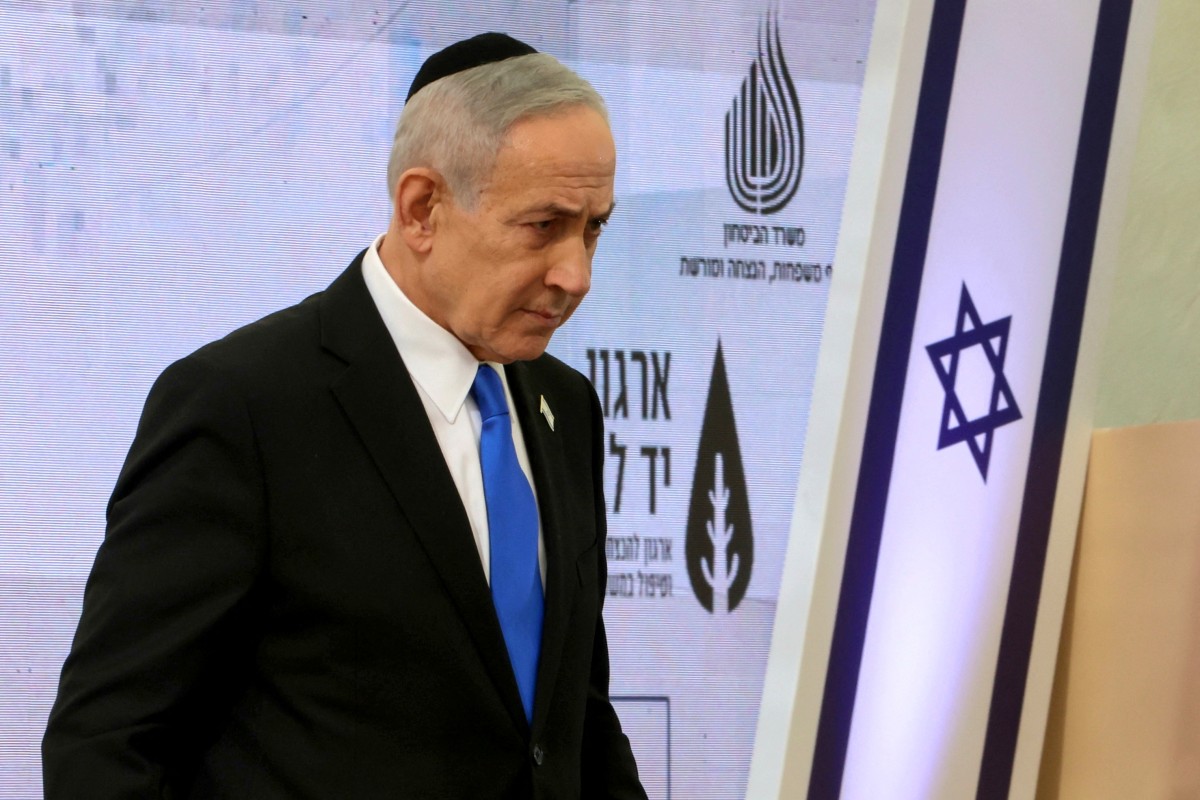


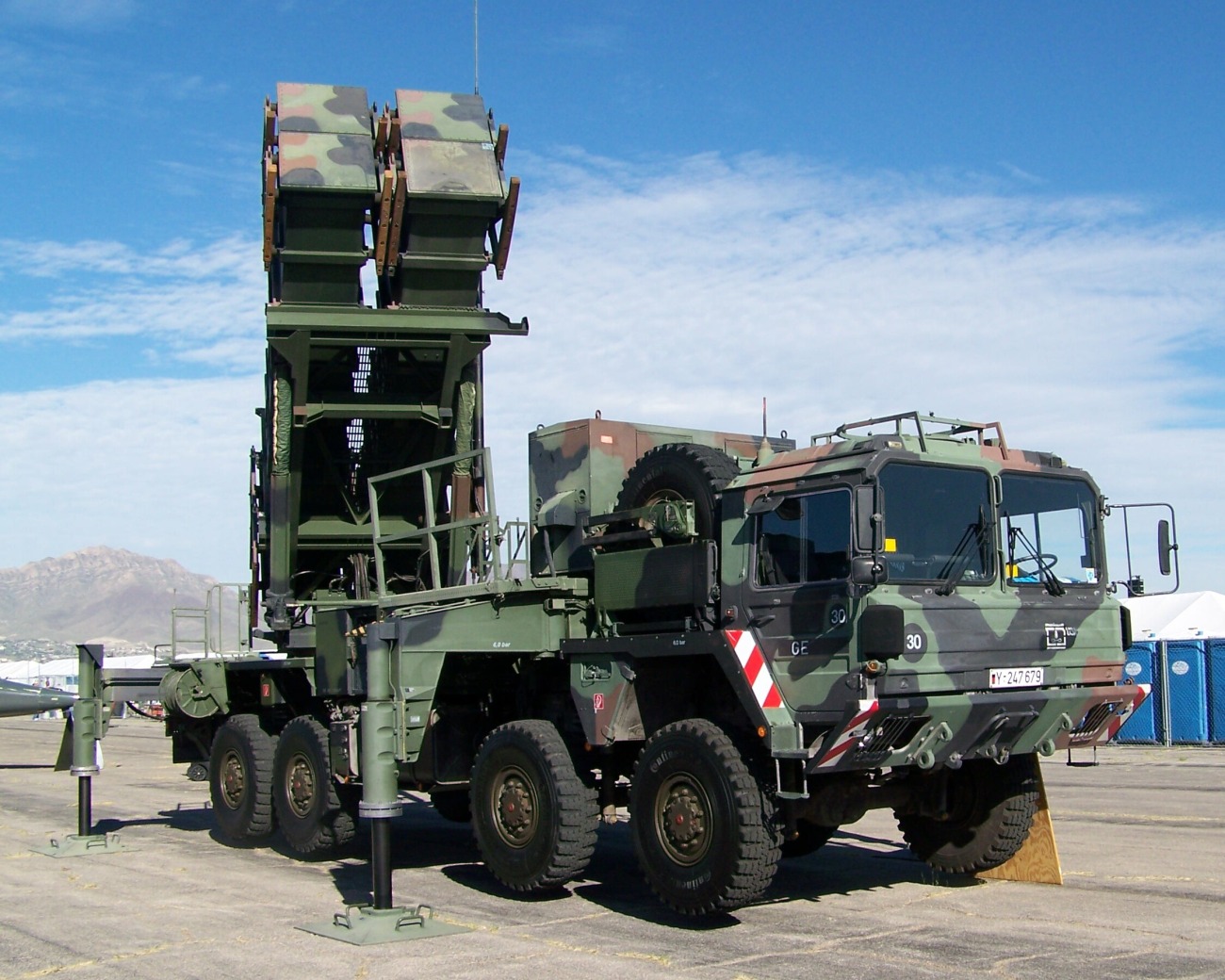
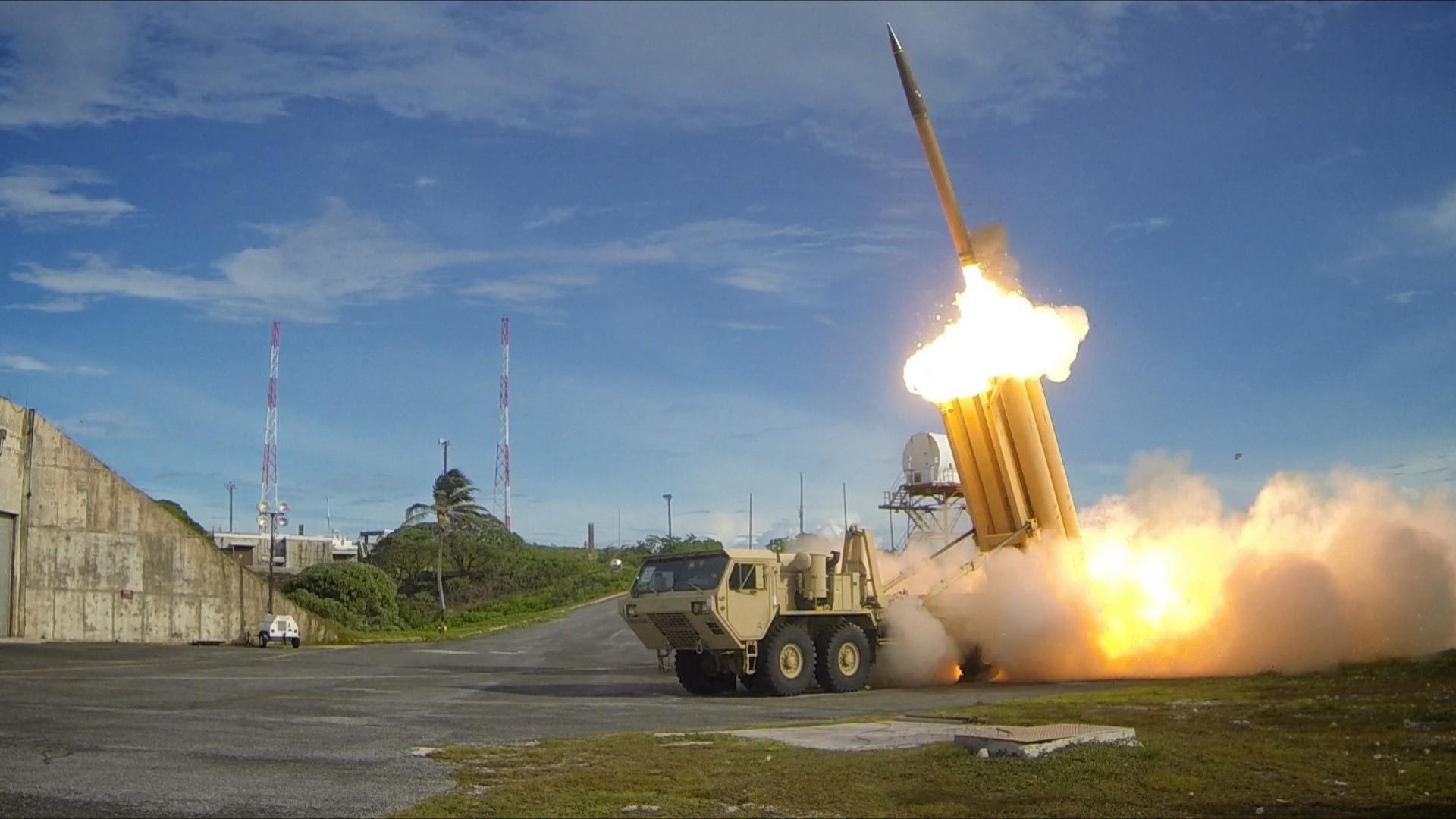

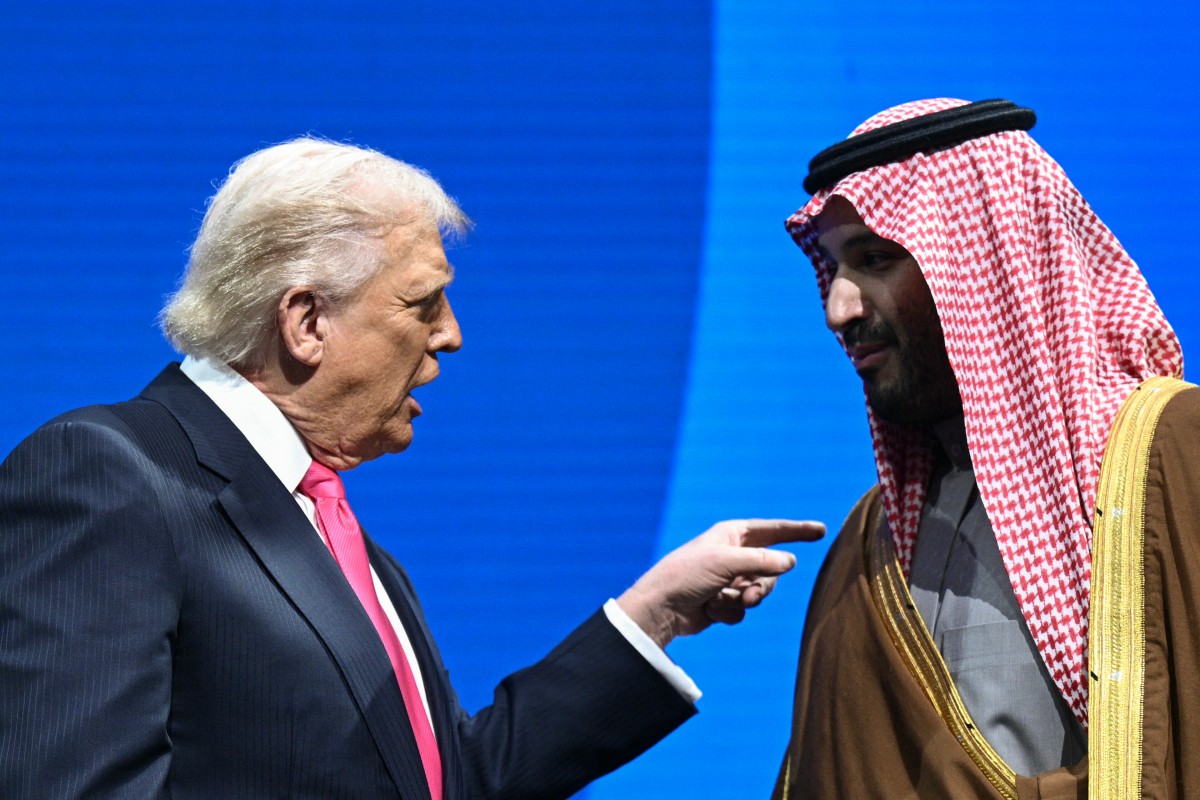


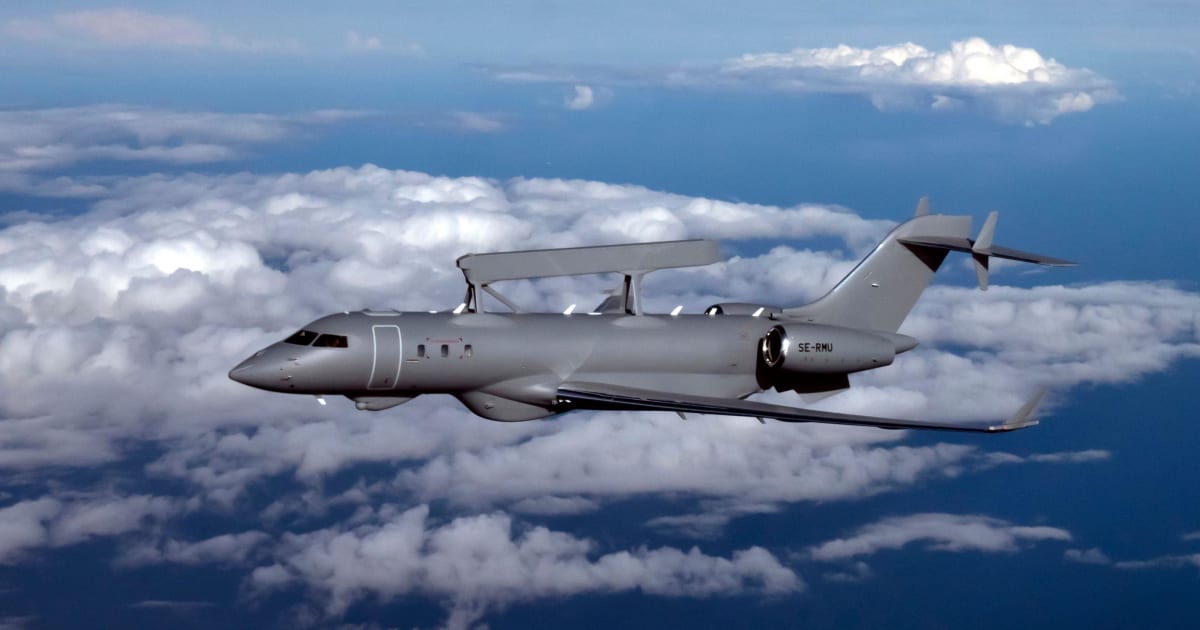
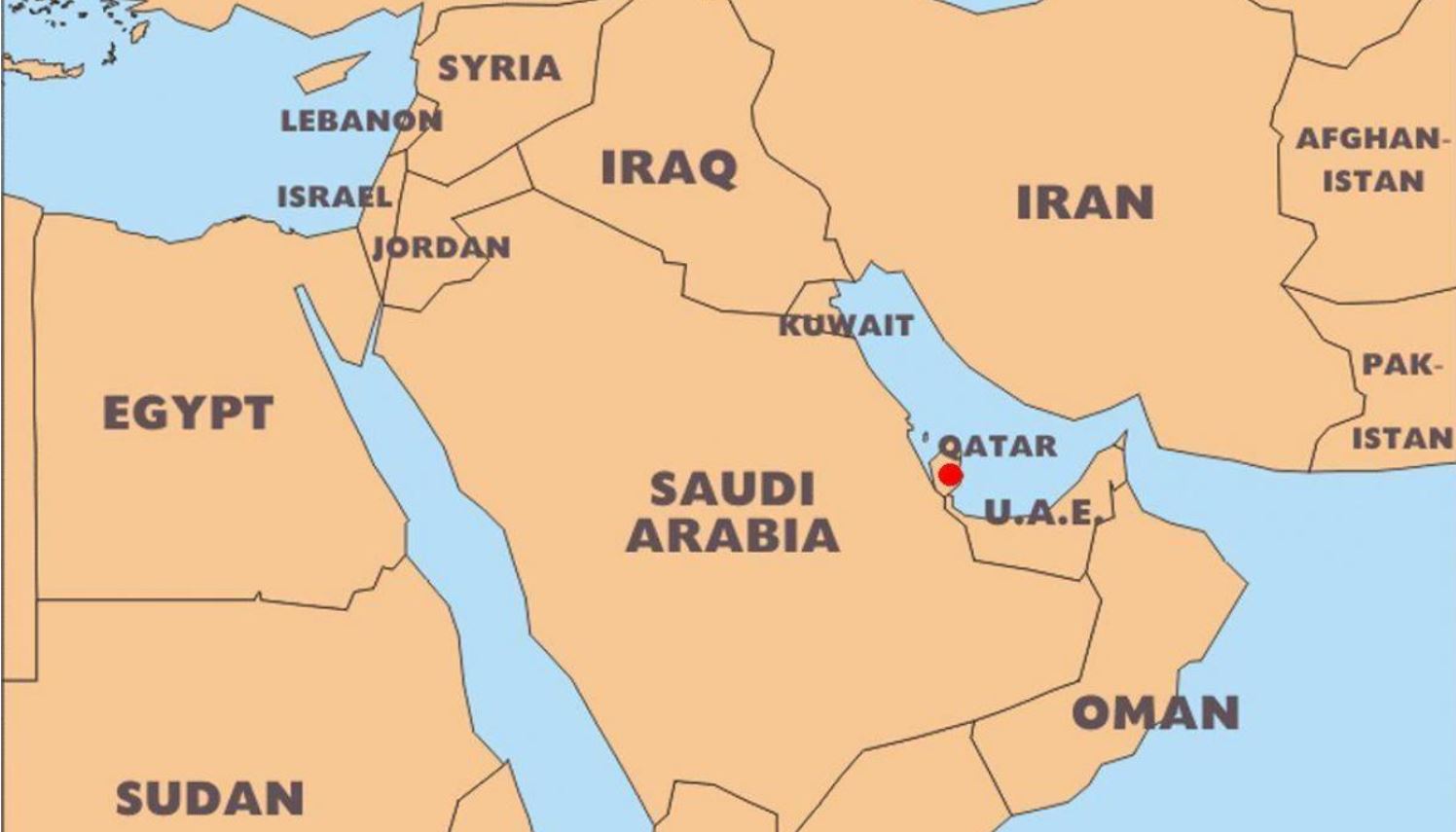
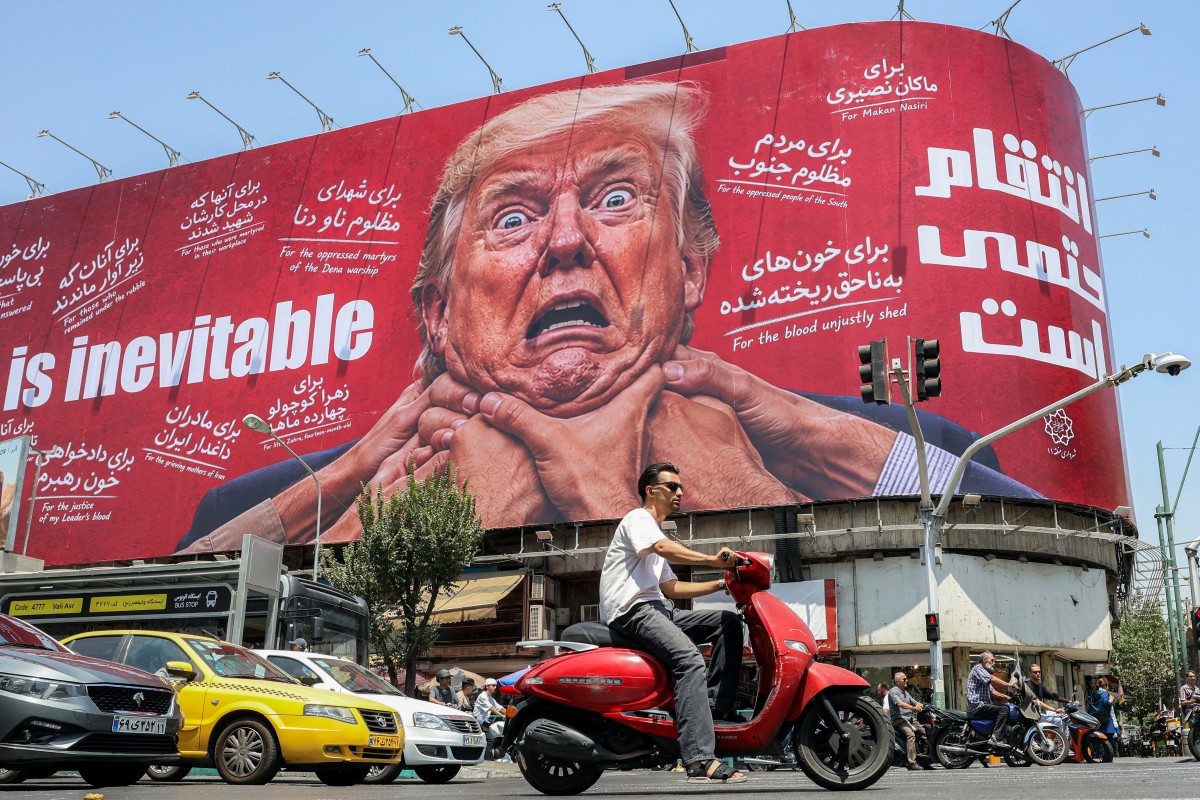
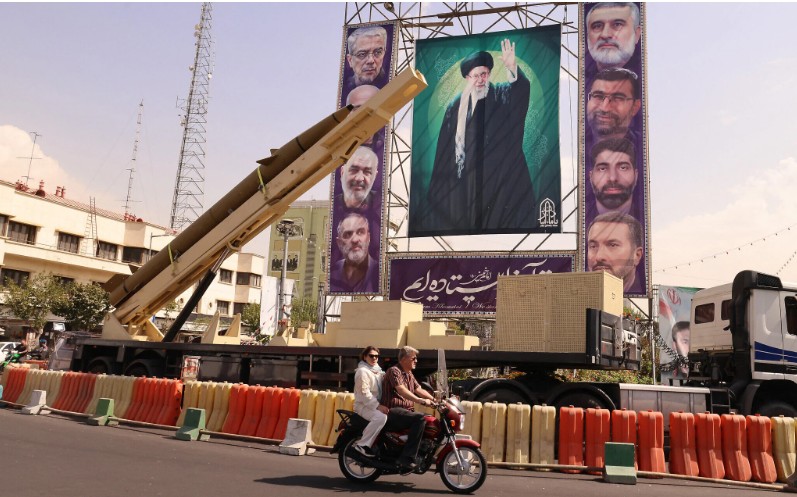
 BREAKING – Iran's latest ballistic missile, Kheibar Shekan; stockpile of 50,000 units. Guided by BeiDou Navigation Satellite System (BDS‑3). Range: 2,450 km. Max speed: up to 19,500 km/h (approx. Mach 16). Warhead: approximately 550 kg.