Esterno giorno, una città qualunque, otto e venti del mattino, dodici agosto. Mentre il termometro digitale della superstite tripperia – unica concessione alla modernità di un negozio sopravvissuto al passato – segna trentadue gradi, l’amico edicolante allarga le braccia. Il quotidiano locale è già esaurito: offriva gli occhialini per osservare l’eclissi senza danni. Altrove qualche bagarino dell’astronomia coglie l’occasione vendendo gli stessi visori procurati chissà dove, presumibilmente assai poco adatti a proteggere la retina. Vince sempre la forma merce, giudizio su se stessa ( Gunther Anders, L’uomo è antiquato).
La stessa città, esterno sera. In ogni punto considerato favorevole all’avvistamento dell’eclissi , si affollano persone accaldate di ogni età; quasi tutti inforcano le strane lenti colorate, fotografano se stessi con il telefonino, inviano orgogliosi alle reti sociali le immagini, in attesa del posizionamento della luna dinanzi al sole. Pochi autentici appassionati, con cannocchiali e altri strumenti, attendono il fenomeno astronomico con vero interesse, probabilmente infastiditi dalla folla. Anzi, dalla massa. In realtà non succede quasi nulla, il cielo non diventa nero e pochi hanno visto qualcosa di memorabile. Molti saranno rimasti delusi : lo spettacolo non è stato all’altezza delle aspettative. Assai meglio gli effetti speciali cinematografici. Che importa: potranno dire “io c’ero”, tutto documentato- salvo backup– dalle foto scattate con lo smartphone.
Fenomeni come le eclissi non destano il mio interesse – lo confesso con una certa vergogna- e non sono stato mai attratto dalle stelle cadenti che la fantasia popolare chiamava lacrime di San Lorenzo. Forse perché quei brevi momenti cosmici portano alla riflessione che sgomenta : l’immensità del creato, le sue leggi immutabili, la risibile piccolezza e caducità dell’ homo sapiens. Non penso siano stati molti a pensare in termini analoghi: meglio così, meglio non sfogliare il libro dell’inquietudine e lasciarsi vivere. Un numero incalcolabile di contemporanei – gli altri sono una trascurabile minoranza – ha la sindrome più ridicola dell’uomo ridicolo. E’ la paura di perdersi qualcosa- l’acronimo FOMO in americanese ( fear of missing out). Dilaga tra i più giovani, ma avanza inesorabile anche tra gli adulti. Anche l’eclissi, fenomeno cosmico, è un’occasione di presenza, l’ illusione di vivere un’esperienza, un’emozione ( parole svuotate di significato) o semplicemente di “esserci”, grottesca banalizzazione del dasein di Heidegger .
Non più protagonista e nemmeno comparsa, l’uomo-massa si accontenta di essere spettatore, con il naso all’insù e gli occhialini da esibire sulle reti sociali in attesa del “mi piace” e dell’invidia degli assenti. Massa, non folla. La prima si forma quasi casualmente, non ha nulla in comune, è formata da atomi solitari temporaneamente riuniti nella stesso luogo, come a Ferragosto sulle spiagge o in autostrada sotto il sole. La folla, al contrario, nasce, si riunisce, ha una sua psicologia, non è massa casuale, informe carnaio. Le immagini spiegano tutto con immediatezza perfino quando sono un prodotto dell’intelligenza artificiale. Circola una rappresentazione in due quadri. Il primo mostra , nel giorno dell’eclissi, una massa umana con il volto all’insù e gli occhiali mentre indica l’eclissi. Nel secondo , con la didascalia “la gente ogni giorno”, la stessa massa ha le spalle curve e gli occhi sul telefonino ; ignora il cielo pieno di aerei che producono scie chimiche. Sono gli stessi, colti in due momenti dell’esistenza gregaria , omologata, programmata dal potere. In un’epoca dominata dalla feroce competizione tra immagini e suoni, nonché dalla saturazione di stimoli visivi, perfino un’ eclissi appare deludente. Tutto qui? ci chiediamo. Eppure, la gente si sente dire che deve assolutamente vederla; così affronta code per procurarsi quegli occhialini ridicoli, suda e soffre sotto il sole implacabile, parzialmente e momentaneamente nascosto dalla bianca luna.
L’eclissi finisce per diventare uno di quei romanzi “assolutamente da leggere” o film “imperdibili”, che risultano poi deludenti. Eppure la massa corre verso i luoghi più spettacolari non per contemplarli, ma per immortalare se stessa col telefonino e postarli come fondali su Instagram (esiste qualcosa che rovini una meraviglia più del banalizzarla in un reel?) ed accetta disciplinata l’impellente necessità di assistere a un fenomeno che la farebbe sbadigliare se trasmesso su uno schermo. Non posso fare a meno di pensare alle code per vaccinarsi. Leggo post furibondi che chiedono che cosa aspettiamo a ribellarci, agire e reagire contro un potere che fa ciò che vuole con disprezzo per la gente comune. Come può una massa ribellarsi , quando si mette in fila per comprare occhialini di cartone per vedere qualcosa di cui non le importerebbe granché, se non glielo avessero imposto per giorni ? Coazione per ripetizione del messaggio, l’abc della comunicazione.
Perché ci tengono così tanto a farci vedere questa benedetta eclissi? Sembra strano che insistano per uno spettacolo gratuito. Oscar Wilde diceva che nessuno dà valore a un tramonto perché nessuno paga per vederlo. Le eclissi sono come i tramonti: non si fa il biglietto. Si paga, però, per proteggersi da potenziali danni agli occhi; un rischio che si potrebbe evitare gratuitamente guardando per terra. Molti incauti sono finiti dall’oculista. La parte più bella è il momento in cui il giorno si trasforma brevemente, improvvisamente, in notte; la cosa interessante da fare, in quel frangente, sarebbe guardarsi intorno, eppure nessuno lo fa: non sono le istruzioni della TV e tutti vogliono sfruttare quegli occhialini che non resisteranno fino alla prossima eclissi.
Semplicemente, il potere si accerta – guadagnandoci sopra – che i popoli si siano trasformati in masse addomesticate, dopo essere state provvisoriamente folle. Lo capì per primo Gustave Le Bon, prontamente imitato da Walter Lippman ( “ L’ opinione pubblica”), Edward Bernays ( “Propaganda”) e oggi dal possente apparato di psicologia sociale al servizio del potere. Ecco l’ultimo capoverso di Psicologia delle folle di Le Bon: [ Il popolo] diventa nient’altro che un pulviscolo di individui isolati e ritorna a ciò che era al punto di partenza: una folla, senza consistenza e senza futuro. La plebe è sovrana e i barbari avanzano. La civiltà può sembrare ancora splendente perché conserva la facciata esterna creata da un lungo passato, ma in realtà è un edificio mangiato dai vermi che nulla sostiene più e che crollerà alla prima tempesta. Passare dalla barbarie alla civiltà inseguendo un sogno, per poi declinare e morire non appena quel sogno ha perduto la sua consistenza: questo è il ciclo di vita di un popolo”. Eclissi definitiva.
NPR's Michel Martin asks Abbas Milani, director of Iranian Studies at Stanford, why more Iranians are fleeing their country and whether there's a realistic path to end the U.S.-Iran war.
Sam Roberts | Longreads | August 11, 2026 | 4,862 words (20 minutes)
This is an excerpt from Are They Dead Yet? by Sam Roberts, which was published on August 11, 2026, by Bloomsbury Publishing, Inc.
Tuck Everlasting is a cautionary tale about a family of the same surname who, by inadvertently discovering the proverbial Fountain of Youth, is forced to reconcile with eternity. When I was assigned to write the obituary of the book’s author, Natalie Babbitt, I wondered whether she had continued pondering immortality herself. It turned out she had. Not surprisingly, her own take on eternal life echoed that of the fictional family patriarch, Angus Tuck. “I think that living forever would be a terrible thing,” I quoted her as saying in her Times obituary. “It would be boring, sad and lonely.” Babbitt died when she was 84. But Tuck and her other novels endure as Babbitt’s legacy for readers. So does my obituary, which in 2016 revealed her motivation to become an author: She was inspired to write Tuck, she said, when her four-year-old daughter woke from a nap crying because she was scared of dying. Babbitt had intended to become an illustrator, not an author, but pivoted after taking one writing course in college. She had enrolled because her husband hoped to become a novelist and she wanted to understand the challenges he faced.
Back at the Daily News, obituaries weren’t the best way to achieve immortality. We mostly ran one-paragraph squibs for members of the paper’s family, of printers, pressmen, and their immediate relatives. Instead, like most tabloids, the News thrived on the reported details of murders, assassinations, and suicides. Few news stories generated more of a sensation than death in all its dimensions. No less an authority once defined “news” than the ancient newspaper deliverer—a beloved man known as Bo Gee, who was decades too old to be described as a newsboy—weaving up Second Avenue with a wire shopping cart brimming with Chinese-language newspapers, calling out the headlines as he delivered the papers to Chinese bars and restaurants on Manhattan’s East Side. He began his route in Chinatown, where the papers were printed. Subscribers on Manhattan’s Upper East Side were often a day or two behind the headlines because the last stop on his evening route depended largely on the number of drinks he had finagled from bartenders along the way before he was too wobbly to walk any farther. When a colleague of mine, the columnist Jimmy Breslin (who described him as “a small, thirsty man”), asked him which headlines sold the most papers, he responded unhesitatingly. He didn’t need a public opinion poll or a focus group of readers or a real-time digital analysis of clickbait: Two were surefire circulation boosters. One was war! The other: big guy dies!
Taken separately, obits constitute an individual’s legacy. In aggregate, they can capture the social and cultural currency of an era. Which people are worth remembering? Which values are worth celebrating? How do we measure success and failure, good and evil, achievement and defeat, social rank and professional standing? How many of the one hundred thousand people now immortalized in the periodically printed historical compilation Who Was Who were deemed worthy of obituaries at the time of their death? How many of the more than 33,000 contemporary notables included in the latest editions of Who’s Who will get obituaries when they die? (That the titles of those reference books don’t include question marks suggests that the listings themselves are indisputable, a questionable supposition when the price of inclusion by some publishers seems to be for the “whos” to buy at least one copy of the book. An entry for Michael Fowler Cullis, a former British diplomat, describes his recreation as “writing obituaries for friends.”)
People want to be remembered, and we want to remember them, or, at least, we do. “Obituaries commemorate a life at the point where it is completed by death. Yet the completion is also depletion, in the sense that the life is constructed as meaningful precisely at the point where it stops,” Professor Clare Brant, who teaches literature and culture at Kings College London, has written. “They act as the first version of a biography—sometimes the only one, although Wikipedia has closed the gap with each life story seemingly waiting for a death sentence.” But as valuable as Wikipedia can be, the New York Public Library notes, “Obituaries provide an important tool to researchers by offering biographical information on individuals that may not be readily available elsewhere. In many cases, the obituary supplies the only biographical data extant on a person.” Philip Sutton, a genealogy librarian at the library, told Legacy.com, the self-proclaimed world’s largest commercial provider of online memorials and guest books, that obituaries may reveal the married name of a daughter identified years earlier in the census only by her maiden name; that by identifying an immigrant’s specific birthplace, obituaries can also invigorate research on a family’s roots.
Obituaries are a reminder that when you die, someone else gets the last word on your legacy—or, at least, the first of the last words.
Especially in small towns and midsize cities, local newspaper obituaries bond one generation to the next. By recalling where the deceased went to school and whom they married and who survived them, those obits provide the frames that form a moving picture of continuity, a narrative of cohesion. They describe whether, and how, the departed outpaced their parents in personal and professional achievement, their legacy to contemporary readers, and the promise of their progenitors—grandchildren or great-grandchildren who are still blank slates with the potential to add to the story.
To me, obituaries evoke the heartrending backstories of the characters in Thornton Wilder’s play Our Town, the unfulfilled promise of Joe Crowell, who got a scholarship to the Massachusetts Institute of Technology and graduated first in his class: “Goin’ to be a great engineer, Joe was. But the war broke out and he died in France. All that education for nothing.” Emily is dead, too, but so consumed by nostalgia—before being persuaded that “live people don’t understand, do they?”—that she descends from the town’s cemetery and wants to return to her past life in Grover’s Corners, New Hampshire, until the Stage Manager reminds her, “You not only live it but you watch yourself living it. And as you watch it, you see the thing that they, down there, never know. You see the future. You know what’s going to happen afterwards.” “When I think of an obituary, it’s as objective as journalism can be, a story on someone’s life,” Holly Shreve Gilbert, a journalism instructor at Oakland University who was the interim president of the Funeral Consumers Information Society, told Molly Birnbaum of Atlas Obscura. But “hyper-local journalism is dying, and so is the obituary of the local person.” Gilbert added, “Now, if it’s on Legacy.com or Facebook or a blog, we’re basically whitewashing everyone’s lives. We’re all happy. Everyone is happy.”
Well, not everyone.
Obituaries are a reminder that when you die, someone else gets the last word on your legacy—or, at least, the first of the last words. And for all the beloved and respected and cherished and valued that punctuate paid obituaries, don’t forget that families can try to perpetuate irreverent descriptions unilaterally to settle scores when one is no longer in a position to retaliate or respond. In Shakespeare’s Macbeth, Malcolm declaims of the repentant Thane of Cawdor, who was executed for treason, “Nothing in his life became him like the leaving it.” If the Thane got the benefit of ambiguity, Florence Harrelson of Chelsea, Maine, had no such luck when she died in 2024 and her daughter, Christina Novak, placed a paid obituary in the Kennebec Journal. Wasting no words, the four-line obit read that the 65-year-old Henderson died “without family by her side due to burnt bridges and a wake of destruction left in her path.” It continued, “Florence did not want an obituary or anyone including family to know she died. That’s because even in death, she wanted those she terrorized to still be living in fear looking over their shoulders. So, this isn’t so much an obituary but more of a public service announcement.”
In 2023, Gayle Harvey Heckman took the trouble to announce the death of her mother, Linda Lernal Stull, in her Michigan hometown newspaper, the Three Rivers Commercial-News, even though they hadn’t spoken in 24 years. “As a mother, Lernal was violent, hateful and cruel,” Heckman wrote. “She physically, mentally, emotionally, verbally and financially abused Gayle.” After going into excruciating detail, the obituary concluded, “Gayle and her family forgive Lernal and hope that she has found peace. They also hope to find peace within themselves. Lernal will not be missed by Gayle or her family. They all understand that the world is a much better place without her.”
Blunt isn’t always bad. If writing can be a cathartic, it can also offer an object lesson. In 2015, a nine-hundred-word paid obituary in Maine’s Bangor Daily News (down-easters seem less inhibited about publicly evaluating their kin) began, “Coleen Sheran Singer (born Coleen Sheran Clark) would have turned 33 this August 31, but she died in Lewiston in an unsuspecting suburban professional couple’s home of a heroin overdose on the morning of December 25, 2014.” The obit was written by Singer’s former husband. It detailed her considerable assets—intellectually gifted, creative, and spirited—without concealing her hefty baggage as a woman who was addicted and suffering from borderline behavioral disorder. Brent Singer attributed the life his former wife led to her broken childhood home but blamed her death on Maine’s governor for denying her access to the methadone clinic she had relied on to stay straight.
In 2008, the Casper Star-Tribune in Wyoming reported that Jim Adams died at 53. Weary of soppy obituaries of patients who had courageously struggled against one disease or another until the bitter end, Adams went through his son to provide an unvarnished premortem verdict on his abbreviated life. And he had no compunctions about belatedly exercising personal responsibility and admitting that he lost his battle for less inspiring reasons entirely: “It was primarily as a result of being stubborn and not following doctor’s orders or maybe for just living life a little too hard for better than five decades.” He did lament, however, that he “was sadly deprived of his final wish, which was to be run over by a beer truck on the way to the liquor store to buy booze for a date.”
In 2019, the family of Joe Heller (not that one) playfully celebrated his life in the Hartford Courant. They described him as “a frequent shopper at the Essex Dump” who “left his family with a house full of crap, 300 pounds of birdseed and dead houseplants.” Heller was so practiced a consummate napper that “there wasn’t an occasion too formal or an event too dour that Joe didn’t interrupt with his apnea and voluminous snoring.” The obituary added, “The family is seeking donations to offset the expense of publishing an exceedingly long obituary which would have really pissed Joe off.” (It then appealed generously for contributions to the Seabee Memorial Scholarship Association.)
The Hellers weren’t kidding. Those paid “obits” aren’t cheap. The New York Times doesn’t accept paid obituaries, but their paid death notices, depending on the edition and the day, cost about $1,000 for a bare-bones nine lines of type and $50 for each additional line, which verbose encomiums and fervent eulogizing can raise into the thousands of dollars. (In memoriam notices in newspapers that wish the departed “Happy Birthday in Heaven” remain a testament to the enduring value of print advertising.) While radio and television have generally fallen short in memorializing the dead, there are blogs, zines, and commercial websites devoted to dying, and personal web pages and online videos have all helped democratize death. So far, though, it’s one area in which even a buzzworthy website can’t always live up to its name (such as when Michael Jackson’s death was announced on MichaelJacksonLive.com).
The Charlotte Observer in North Carolina used to publish brief obituaries of local figures for free—until executives discovered that printing a full page of them daily was costing $350,000 annually for newsprint alone. When the paper imposed a fee, readers revolted; the editors relented in some editions. MyGoodbye.com was started by Stephen Miller (definitely not that one), who grew up next to a cemetery and, after escaping from his bank’s eightieth-floor office in 2 World Trade Center on the morning of September 11, 2001, decided to become an obituarist full-time. Legacy.com partners with hundreds of newspapers and thousands of funeral homes worldwide to account for about 70 percent of the deaths in the United States alone. A prototype called EPOCH—Electronically Preserving Obituaries as Cultural Heritage—created by the Orange County, Florida, Library System enabled people to publish an obit online for free. Another website, MyObits.com, also lets anyone publish a free memorial. Facebook even allows users to designate an executor to manage their profile after they’ve personally logged off this mortal coil for good.
While radio and television have generally fallen short in memorializing the dead, there are blogs, zines, and commercial websites devoted to dying, and personal web pages and online videos have all helped democratize death.
Paid death notices have been wielded as much to ward off the living as to get the last word on the dead. In the early 1920s, Audrey Munson, America’s first supermodel, became so fed up with fame that she tried to fake her death by paying to run a phony death notice in her local upstate New York newspaper. Her gambit failed; she was so celebrated that the clerk she approached refused to accept the advertisement because he recognized her. Rudyard Kipling may have done her one better: When a newspaper reported his death prematurely, he wrote to the editor, “I’ve just read that I am dead. Don’t forget to delete me from your list of subscribers.”
Six months before Oliver Sacks died of cancer at 82 in 2015, the London-born neurologist who lived in Manhattan wrote an op-ed in the New York Times that amounted to an auto-obituary. Sacks was galvanized, he wrote, by the eighteenth-century philosopher David Hume, who, learning he was mortally ill at 65, penned a short autobiography in a single day in 1776. “I feel a sudden clear focus and perspective,” Sacks wrote. “There is no time for anything inessential. I must focus on myself, my work and my friends. I shall no longer look at ‘NewsHour’ every night. I shall no longer pay any attention to politics or arguments about global warming.” He explained that his shifting priorities were influenced less by passion than perspective: “This is not indifference but detachment—I still care deeply about the Middle East, about global warming, about growing inequality, but these are no longer my business; they belong to the future.”
Kelly McMasters, the author of The Leaving Season: A Memoir, started writing her obituary when she was 12; she has refreshed it almost annually since then. Her ritual was inspired by an assignment her mother was given while training as a volunteer at a local hospice. “I usually end up with a gentle accounting of the year, held against all the past ones,” McMasters wrote in a New York Times opinion essay. “I found many of the accomplishments that felt precious one year were hardly worth a mention the next.” Her private accounts produced an album of verbal snapshots, unreachable versions of herself that seemed as good as the dead about whom obituaries are otherwise published. “It seems dreadfully unfair that we wait until after our deaths to write them and never get to read them ourselves,” McMasters wrote. “Writing your obituary while you’re still alive can offer clarity about your life and, mercifully, if you find something lacking, you still have time to revise.”
By inspiring the “Portraits of Grief” series of intimate minibiographies of the victims of 9/11 in the New York Times, the attack by fanatical al-Qaeda suicide bombers on the World Trade Center in 2001 may inadvertently have made the obituary more egalitarian than any event since the Civil War. These 200-word vignettes with thumbnail photographs weren’t standard obits or news stories. Volunteer reporters interviewed families and friends of the victims and the missing to sketch some 2,500 hundred profiles. Overseen by Jon Landman and Christine Kay on the Metro Desk, the portraits were published over nearly five months. “Terrorism rather than the internet democratized the obituary,” Professor Clare Brant wrote. Roy Harris wrote for the Poynter Institute of the project, “The portraits identified one aspect of life—a woman gardening, a man taking his daughter to ice-skating lessons, or perhaps indulging in a fondness for cigars.” The obituarist Nigel Starck said, “Each day’s pages would renew a sense of the tragedy’s scope, while the individual portraits made each person intimately real.” Our exercise in mining the unremarkable found a larger-than-life common denominator, one that challenges the novelist W. P. Kinsella’s conclusion that “the lives of ninety percent of the population are so dull that no one would care in the least about them, the lives of the remaining ten percent are so bizarre that no one would believe them.”
Some of the deaths in those “Portraits of Grief” were preceded by chivalrous acts of courage and self-sacrifice. Those heroics worked their way into news articles. The portraits were not about how people died, not about their last moments of life, no matter how gutsy, but how they lived and what their loss meant to their family, friends, neighbors, and colleagues. The gruesome, grisly details were superfluous, unlike an earlier obituary style in which the how sometimes seemed to predominate over the who, what, when, where, and why.
When Louisa May Alcott died in 1888, for example, the New York Times explained in the first paragraph of her obituary, “For a long time Miss Alcott had been ill, suffering from nervous prostration. Last Autumn she appeared to be improving and went to the Highlands to reside with Dr. Rhoda A. Lawrence. She drove from there into town to visit her father on Thursday last, and caught a cold, which on Saturday settled on the base of the brain and developed spinal meningitis.” The first five paragraphs of Teddy Roosevelt’s Times obituary in 1919 left nothing about the cause of death to the reader’s imagination: “His physicians said that the immediate cause of death was a clot of blood which detached itself from a vein and entered the lungs.” In 1892, reporting the death of Caroline Harrison, the wife of President Benjamin Harrison, the Atlanta Constitution described her corpse in clinical detail: “She shows in her emaciation the effects of the long wasting illness of eight months that has reduced her large, matronly figure to a thin, frail form.” Then again, as recently as 2000, the paper, now called the Atlanta Journal-Constitution, ran an obituary by Kay Powell of a local church-choir tenor, who had also written a manuscript on the philosophy of religion, beginning this way: “David Robeson Morgan was a brilliant man whose future looked good, until he had a frontal lobotomy in 1947.”
“A writer may bear the same name as the subject of his memoir, but he is hardly the same person,” Robert W. Fuller, the former college president and self-styled dignitarian, surmised in the epilogue to his own memoir. “He has long since morphed into the subject’s successor, and then the successor of the successor.” Bridget Fowler, a sociology professor at the University of Glasgow and the author of The Obituary as Collective Memory, wrote, “The auto/biography as such is under the expressive control of its author and is thus as profound (or simplistic) as he or she is. In contrast, one characteristic of the obituary is that these lives are selected as particularly memorable, distinguished, or newsworthy.” She adds, “The obituary offers the rare accolade of public recognition, the first step toward posthumous memory. Yet it is not just a store of value, it is also a measure of value: the obituary as a biographical form illuminates the social reality of dominance and distinction, whilst only rarely shedding light on the world of subordination.”
The onset of the AIDS epidemic presented editors with a sensitive dilemma: Merely having the virus implied vulnerable behavior—either drug use or homosexuality—that society was far from accepting. In 1986, the fashion designer Perry Ellis died of AIDS at age 46, as stated in his obituary in the Washington Post. In the New York Times and the Los Angeles Times, his cause of his death was reported to be viral encephalitis. In early May 1987, Charles Ludlam, a playwright, parody actor, and admired figure in New York’s East Village underground arts scene, withdrew from the New York Shakespeare Festival’s scheduled Central Park production of Titus Andronicus. On May 28, Ludlam’s publicist announced that he had died of pneumonia. The New York Times‘s Jeremy Gerard assumed correctly that the pneumonia was a complication of AIDS, and believed the refusal to acknowledge the disease compounded the tragedy of Ludlam’s death by validating the stigma attached to gay people, who were among its most prominent victims.
As Leah Rosenzweig reported in Slate, for hours Gerard desperately tried to persuade Ludlam’s parents to confirm the actual cause but failed. “They were working-class Catholics from Long Island; as far as they were concerned, their son had died a shameful death,” Gerard recalled. But fifteen minutes before his deadline, the family’s lawyer called back. The Ludlams agreed to confirm the cause. On May 29, 1987, Gerard’s obituary of Charles Ludlam was the first that identified AIDS as the cause of death in the Times, on the front page.
“Obituaries contribute to national myths or collective memories of contemporary heroes by symbolically ‘reflecting what, in death, was most valued about the lives of individual citizens,'” Janice Hume wrote. “An obituary distills, publishes, and thus legitimizes something more abstract than mere facts. It also reveals values, highlighted in the attributes of the deceased, and should be examined not just as an indifferent chronicle but as a commemoration, a representation of an ideal, with its own distinct contribution to the understanding of history. Those ideals, part of obituary coverage, become safeguarded by their publication.”
To quantify those values, Lux Narayan, a social media analyst, conducted a statistical survey of some 2,000 New York Times news obituaries that were published in 2015 and 2016. Not surprisingly, the fields of academics, science, politics, film, theater, music, dance, and art predominated among those deemed worthy. On average, they achieved the thing that made them worthy of a Times obituary when they were 37 years old—athletes more likely in their twenties, politicians in their forties. The prototypical obituary subject lived to be 81, which meant 44 years had elapsed between the accomplishment and, in the cases of the many obscure and quirky characters, their public aggrandizement. “Talk about having to be patient,” Narayan said. In a TED Talk, he explained his obsessive reading of the daily paper over scrambled eggs this way: “If you think about it, the front page of the newspaper is usually bad news and cues man’s failures. An instance where bad news cues accomplishment is at the end of the paper, in the obituaries.”
What were the most common denominators among those obituarized, and what do they suggest society—or, more to the point, the Times—valued? If your name was John, you didn’t necessarily have a better chance of being the subject of an obituary, but it was more likely that a man whose first name was John would appear in one. That’s not so surprising, given that John (along with James, Robert, Michael, and David) has been among the most popular names for American men born in the last 100 years. Narayan was struck by another commonality, though. The language-processing program revealed that the one word that leapt out everywhere was help, as a noun or verb. The most universal value, it seemed, that elevated the famous and not-so into those the Times editors considered worthy of obituaries was how much people helped. “They made a positive dent in the fabric of life,” Narayan said.
For a family member, an obit represents an imprimatur, validation by association, a keepsake that maintains their heritage and, perhaps for a generation, prevents their own legacy from vanishing like a walnut in the batter of eternity.
Journalists understand, or should, that statistical surveys of subjective material are fertile ground for as many question marks as answers. Patrick Nolan, a sociologist at the University of South Carolina, wondered whether the cult of celebrity has blossomed over the last century, as the anecdotal evidence suggests. Has the public become so starstruck that somebodies in less glamorous professions have been overshadowed? One way to measure the trajectory of society’s fascination quotient, he figured, was to enlist New York Times obituaries as a cultural barometer. Nolan’s canvas was every “notable death” that was published in the Times during the entire twentieth century.
“Most striking are the simultaneous increases in celebrity obituaries and declines in religious obituaries,” Nolan and Timothy J. Bertoni reported in the journal Sociation Today. “They document the increasing secularization and hedonism of American culture at a time when personal income was rising and public concern was shifting away from the basic issues of survival. The magnitude of these trends is seismic. While the Greeks may have looked to their gods for guidance and entertainment, we’ve turned increasingly to our celebrities—entertainers and athletes.” After dividing the century into quarters, Nolan and a doctoral student, Timothy Bertoni, randomly selected 20 days from 1900, 1925, 1950, 1975, and 2000 and ranked the professions of the dead by the number of obituaries run.
The number of obits of entertainers and athletes, grouped together, rose, from seventh most in 1900 to fifth in 1925, third in 1950, and first in 1975. By 2000, they remained in first place and accounted for 28 percent of obituaries. In 2000, the researchers didn’t find a single notable religious figure who was memorialized. The category had plummeted from fourth place when the 20th century began to last when the millennium ended. During the same period, the number of obituaries of notable individuals from the fields of business, finance, manufacturing, and industry declined by half. Americans, Janice Hume has written in her study of grief, “value each other and, indeed, value life for collective reasons. They value a long, robust, and full life, a life that is uniquely American, and a life that ensures social preservation. A typical Victorian obituary would carry the statement, ‘in life we are in the midst of death,’ but as this study suggests, at least on the obituary pages of historic mainstream American newspapers, in death we are in the midst of life.” Nigel Starck, too, argues that obituaries provide a glue that bonds society not in grief but in an aspirational reevaluation of our own lives.
“There is nothing inherently gloomy about the newspaper obituary page,” he writes. “Done well, it should capture life rather than wallow in death.” Clare Brant recalled her euphoric reaction to reading of the death of Martin Wells, the grandson of the English writer H. G. Wells, in the Guardian in 2009. He was an 80-year-old biologist with a passion for cephalopods and was also a novelist, painter, and yachtsman. “Though marine biologists don’t have dry lives in a literal sense, and people who love octopus usually have a sense of play, he was really lively,” Brant wrote. “I rejoiced that an academic could have such a full, happy and entertaining life—there’s hope for the rest of us! It wasn’t that I wanted to know him or even to have known him, but I was glad he’d existed, and I still want not to forget the implications of his existence.”
And that was an obituary about a total stranger. For a family member, an obit represents an imprimatur, validation by association, a keepsake that maintains their heritage and, perhaps for a generation, prevents their own legacy from vanishing like a walnut in the batter of eternity. “The greatest investigative piece I ever wrote when I thought I was really important never survived more than a few weeks in terms of being kept around,” said Jim Nicholson, the Philadelphia journalist who regularly chronicled deaths of the common man, the nobodies, as he put it. “But these obituaries, they’re laminated. They’re put under glass. They’re hung on walls or in family Bibles. In fact, they’re even put into the inside coat pocket of the deceased. And, yeah, they’ll be around long after you and I are gone.” Nicholson’s obituaries were indelible. “My words give readers thousands of moments to remember of little lives lived well,” he said. “Perhaps I even gave them the secrets of how to live one well.”
What readers cherish about obituaries, Casey Cep wrote in the New Yorker, is “the opportunity to celebrate one’s own good fortune at still being alive, to keep tabs on death—who it comes for, at what age, and how much we have in common with the deceased—and also to trace an immensely compact narrative arc. So much of the news is ongoing and unsettled, but obituaries by definition have a kind of alluring finality.” In the two weeks after Victoria Chang’s mother died of pulmonary fibrosis in 2015, the Los Angeles–based poet feverishly wrote seventy poems. Her goal: to recast the newspaper obituary to identify what had been lost (“civility, language and the future,” she wrote) and death’s cultural impact on the living. She described writing an obituary as a wake-up call. “This person is dead,” Chang wrote. “You’re alive.”
Sam Roberts, a fifty-year veteran of New York journalism, is an obituaries reporter and formerly the Urban Affairs correspondent at the New York Times. He has hosted the New York Times Close Up on TV and the podcast Only in New York, anthologized in a book of the same name. He is the author of The New Yorkers, A History of New York in 27 Buildings, A History of New York in 101 Objects, Grand Central, and The Brother, among other books. He has written for the New York Times Magazine, the New Republic, New York magazine, Vanity Fair, Foreign Affairs, and Air Mail. Before joining the Times in 1983, he was the youngest city editor of the New York Daily News. He lives in New York with his wife.
NPR's A Martinez speaks to Holly Dagres, senior fellow at the Washington Institute, about how the Iranian regime's understanding of U.S. politics informs its war strategy.
NPR's A Martinez asks longtime U.S. diplomat Richard Haass about peace plans for Gaza after Prime Minister Benjamin Netanyahu rejected an agreement with Hamas proposed by President Trump.
Quanto vale oggi il gas all’ingrosso? Il prezzo PSV e le tendenze del momento
Il 25 Ottobre 2026 il prezzo medio del gas al PSV è pari a 0,988 euro/Smc, equivalente a 92,44 euro/MWh. Rispetto al giorno precedente, quando quotava 92,05 euro/MWh (0,984 euro/Smc), il prezzo è aumentato dello 0,42%.
Nel corso di ottobre il PSV ha mostrato una tendenza complessivamente rialzista: dal valore di 75,01 euro/MWh del 1 Ottobre è salito a 92,44 euro/MWh il 25 Ottobre, con un incremento di circa il 23,2%. La crescita non è stata lineare: dopo una fase di rialzi, tra il 19 e il 24 Ottobre le quotazioni sono rimaste su livelli elevati e hanno alternato aumenti e lievi arretramenti. Il dato più recente conferma la permanenza del prezzo sopra 0,98 euro/Smc.
Andamento giornaliero del PSV
Giorno
Valore medio nel giorno
Variazione percentuale
25/10/2026
0,988 euro/Smc
+0,42%
24/10/2026
0,984 euro/Smc
-0,70%
23/10/2026
0,991 euro/Smc
+1,27%
22/10/2026
0,978 euro/Smc
+0,41%
21/10/2026
0,975 euro/Smc
-2,09%
20/10/2026
0,995 euro/Smc
+2,04%
19/10/2026
0,975 euro/Smc
+2,41%
18/10/2026
0,952 euro/Smc
-0,07%
17/10/2026
0,953 euro/Smc
+1,31%
16/10/2026
0,941 euro/Smc
-0,45%
15/10/2026
0,945 euro/Smc
-0,62%
14/10/2026
0,951 euro/Smc
+2,89%
13/10/2026
0,924 euro/Smc
+1,59%
12/10/2026
0,910 euro/Smc
+3,92%
11/10/2026
0,875 euro/Smc
-0,51%
10/10/2026
0,880 euro/Smc
-0,02%
09/10/2026
0,880 euro/Smc
+1,51%
08/10/2026
0,867 euro/Smc
+1,83%
07/10/2026
0,851 euro/Smc
+2,63%
06/10/2026
0,830 euro/Smc
+0,06%
05/10/2026
0,829 euro/Smc
+5,05%
04/10/2026
0,789 euro/Smc
-0,03%
03/10/2026
0,789 euro/Smc
-2,65%
02/10/2026
0,811 euro/Smc
+1,13%
01/10/2026
0,802 euro/Smc
—
Il PSV, acronimo di Punto di scambio virtuale, è il mercato all’ingrosso del gas naturale in Italia. È il punto virtuale in cui gli operatori scambiano gas immesso nella rete nazionale. Le sue quotazioni sono un riferimento per la formazione dei prezzi delle offerte indicizzate, ma la bolletta finale comprende anche trasporto, oneri, imposte e le condizioni commerciali del fornitore.
Andamento del Future TTF del gas
Il TTF, acronimo di Title Transfer Facility, è il principale hub virtuale di scambio del gas naturale nei Paesi Bassi e uno dei più importanti riferimenti europei. I prezzi riportati sono convertiti da euro/MWh a euro/Smc applicando il fattore 0,01069.
Le quotazioni del TTF hanno accelerato nella parte finale del periodo osservato: il valore è passato da 69,74 euro/MWh il 30 Settembre a 93,369 euro/MWh il 24 Ottobre, pari a circa 0,998 euro/Smc. Nell’ultimo giorno disponibile il future è cresciuto del 2,93% rispetto al 23 Ottobre. Nel complesso il rialzo dal 30 Settembre è di circa il 33,8%; dopo una fase più debole a fine settembre, i prezzi sono risaliti con continuità in ottobre, con alcune flessioni giornaliere.
Nas eleições presidenciais de 2027 estará em jogo, não a alternância no poder, mas uma possível rutura. Qual? Para evitar a rutura que a vitória do Rassemblement National provocaria, uma parte da esquerda mobiliza-se contra o risco do fascismo. E negligencia uma outra hipótese… No grande jogo das previsões sobre o futuro político da França, há uma que, desde há duas décadas, esmaga a concorrência nos debates da esquerda: «O fascismo!», visto no sentido de estarmos a caminhar diretamente na (…)
Giorgia Meloni, présidente du Conseil des ministres italiens depuis octobre 2022 est la première femme à diriger l'Italie. Dès son accession au pouvoir la dirigeante d'extrême droite a voulu être un pont entre l'Amérique de Donald Trump et la droite radicale européenne. Elle a même été la seule dirigeante européenne invitée à l'investiture du milliardaire américain pour son second mandat.
There are regular warnings that France risks succumbing to fascism. But Mussolini's Italy may not be the model that attracts the far right; it could be Binyamin Netanyahu's de facto apartheid state.
Quanto costa oggi un metro cubo di gas? Il PSV, il riferimento del mercato all’ingrosso, è aggiornato quotidianamente; il suo andamento può incidere sulle offerte indicizzate e, nel tempo, sulla spesa in bolletta. Il costo effettivo dipende però anche dai consumi, dalle condizioni del contratto e dalle altre componenti applicate.
Nel mercato tutelato, il prezzo della sola materia prima gas per oggi 25 Ottobre 2026 è fissato da ARERA in 0,843182 €/Smc, l’ultimo valore mensile disponibile, relativo a Settembre 2026. A questo si aggiungono costi di trasporto, oneri e imposte, che variano per ogni utente. Nel mercato libero, invece, il prezzo di uno Smc di metano è stabilito dalle singole società.
Prezzo della materia prima in €/Smc Tutelato: prezzo definito mensilmente da ARERA. Libero: varia da fornitore a fornitore, spesso è legato al PSV oppure bloccato per 12 o 24 mesi.
Il costo del gas per i clienti del servizio di tutela della vulnerabilità
Per i clienti vulnerabili che usufruiscono del servizio di tutela, l’ultimo prezzo ARERA disponibile per la materia prima è 0,843182 €/Smc, riferito a Settembre 2026. Il valore è aumentato del 22,8% rispetto ai 0,686448 €/Smc di Agosto 2026. È un prezzo della sola componente di approvvigionamento, non il costo complessivo del gas in bolletta.
Il dato del PSV offre un’indicazione sull’andamento all’ingrosso, ma non coincide direttamente con il prezzo tutelato mensile. Il 25 Ottobre 2026 il PSV si attesta a 92,44 €/MWh: è in aumento dello 0,4% rispetto al giorno precedente e si trova vicino al massimo degli ultimi 30 giorni, pari a 93,11 €/MWh.
Il costo del gas nel mercato libero
Nel mercato libero il prezzo della materia prima può essere fisso, cioè bloccato per un periodo definito, in genere 12 o 24 mesi, oppure indicizzato e quindi collegato all’andamento del PSV secondo le condizioni contrattuali. Le offerte cambiano da un operatore all’altro e possono includere sconti, bonus o servizi aggiuntivi: per confrontarle occorre verificare prezzo, eventuali quote fisse e durata delle condizioni economiche.
Come si compone il prezzo in bolletta
La bolletta comprende diverse voci: materia prima, trasporto e gestione del contatore, oneri di sistema e imposte. Nel servizio tutelato i valori delle componenti sono regolati secondo le disposizioni applicabili. Nel mercato libero trasporto, oneri e imposte restano regolati, mentre il prezzo della materia gas è definito dal fornitore in base all’offerta sottoscritta.
Quanto spenderai in bolletta
La tabella riporta una stima puramente indicativa della sola spesa per la materia prima, calcolata applicando 0,843182 €/Smc, ultimo prezzo ARERA disponibile, a consumi annui ipotetici. Il numero di componenti del nucleo familiare non determina da solo i consumi: riscaldamento, acqua calda, efficienza dell’abitazione e abitudini incidono sensibilmente. Sono esclusi trasporto, oneri, imposte e quote fisse.
Nucleo familiare
Consumo annuo ipotizzato
Materia prima tutelata: stima annua
2 persone
500 Smc
421,59 €
3 persone
700 Smc
590,23 €
4 persone
1.000 Smc
843,18 €
Nel mercato libero la spesa per la materia prima può risultare più alta o più bassa in base all’offerta attiva; le cifre sono quindi indicative e non rappresentano il totale della bolletta. Per stimare il costo effettivo è necessario considerare i consumi reali e tutte le componenti riportate nel contratto e in fattura.
PUN (Prezzo Unico Nazionale): il prezzo base all’ingrosso
Il 25 Ottobre 2026 il PUN si attesta a 224,22 €/MWh, pari a 0,224 €/kWh. Il valore è in calo del 3,3% rispetto al giorno precedente, quando era pari a circa 0,232 €/kWh. È inoltre inferiore del 7,4% alla media degli ultimi sette giorni, pari a 0,242 €/kWh, ma resta del 2,7% sopra la media degli ultimi trenta giorni, di 0,218 €/kWh.
Negli ultimi trenta giorni il prezzo ha oscillato tra 0,173 e 0,263 €/kWh. Il dato odierno non è vicino né al massimo né al minimo del periodo. Il PUN rappresenta il riferimento all’ingrosso: non coincide con il prezzo finale pagato in bolletta, che comprende anche componenti commerciali, rete, oneri e imposte.
Arera – Tariffa tutelata: monoraria e bioraria (F1 / F2–F3)
I valori Arera disponibili riguardano i prezzi delle fasce per il servizio tutelato e si fermano a Settembre 2026. Per quel mese, i prezzi indicati sono pari a 0,242 €/kWh in F1, 0,174 €/kWh in F2 e 0,304 €/kWh in F3; il valore monorario F0 è 0,205 €/kWh. Si tratta di prezzi in €/MWh convertiti in €/kWh. Non sono disponibili nel contesto i valori tutelati di Ottobre 2026, quindi non è possibile proporre un confronto aggiornato per il mese in corso.
Periodo
Monoraria F0
F1
F2
F3
Settembre 2026
0,205 €/kWh
0,242 €/kWh
0,174 €/kWh
0,304 €/kWh
La tariffa monoraria applica un prezzo unico ai consumi, mentre quella bioraria distingue le fasce orarie: F1 corrisponde in genere alle ore diurne dei giorni lavorativi; F2 e F3 comprendono le ore serali, notturne, i fine settimana e i festivi, secondo le definizioni previste dalla tariffa.
Costo energia elettrica nel mercato libero
Nel mercato libero il costo della componente energia dipende dall’offerta sottoscritta: può essere indicizzato al PUN oppure a prezzo fisso, e può includere spread e quote commerciali. Per un’offerta indicizzata, il PUN di oggi costituisce un riferimento di 0,224 €/kWh, ma non equivale necessariamente al prezzo applicato al cliente. Per conoscere la spesa effettiva occorre verificare le condizioni economiche del contratto e le altre voci riportate in bolletta.
Cosa significa per le famiglie
Sintesi immediata: il PUN è pari a 0,224 €/kWh, ma non rappresenta il costo completo della luce per la famiglia. Il prezzo finale include anche trasporto e gestione del contatore, oneri di sistema, imposte e le eventuali componenti commerciali previste dall’offerta. Con i dati forniti non è possibile calcolare un costo complessivo per kWh, tasse e oneri inclusi.
Per dare un ordine di grandezza, una famiglia che consuma 2.700 kWh l’anno (circa 225 kWh al mese, equivalenti a 7,4 kWh al giorno) spenderebbe circa 50,45 € al mese per la sola energia, se tutti i consumi fossero valorizzati al PUN odierno di 0,224 €/kWh. La cifra è puramente indicativa: non è una stima della bolletta completa e non considera il prezzo contrattuale effettivo, le altre componenti o la distribuzione dei consumi nelle fasce orarie.
Cartello riassuntivo Data: 25 Ottobre 2026 PUN: 0,224 €/kWh Variazione giornaliera: -3,3% Media 7 giorni: 0,242 €/kWh Media 30 giorni: 0,218 €/kWh Esempio 2.700 kWh/anno: circa 50,45 €/mese per la sola energia al PUN odierno
Andamento storico dei prezzi dell’energia
La serie giornaliera disponibile mostra un aumento progressivo del PUN: da 0,095 €/kWh il 25 Ottobre 2025 a 0,224 €/kWh il 25 Ottobre 2026. Nell’ultimo mese il prezzo ha raggiunto un massimo di 0,263 €/kWh il 19 Ottobre 2026 e un minimo di 0,173 €/kWh il 27 Settembre 2026. Dopo la flessione rispetto al picco recente, il valore odierno resta superiore alla media mensile, ma non si colloca vicino agli estremi degli ultimi trenta giorni.
Il dato va interpretato come riferimento all’ingrosso e non come previsione della bolletta: l’importo effettivo dipende dall’offerta scelta, dai consumi e dalle componenti regolate applicabili.
Il PUN del 25 Ottobre 2026 si attesta a 0,224224 €/kWh. Nell’ultimo giorno di osservazione i prezzi orari sono oscillati tra un minimo di 0,149614 €/kWh e un massimo di 0,283569 €/kWh. L’energia è risultata più economica alle ore 13 e più costosa alle ore 21.
Andamento giornaliero del PUN
Giorno
Valore medio nel giorno
Variazione rispetto al giorno precedente
25/10/2026
0,224224 €/kWh
-3,30%
24/10/2026
0,231871 €/kWh
-3,57%
23/10/2026
0,240440 €/kWh
+6,69%
22/10/2026
0,225366 €/kWh
-10,71%
21/10/2026
0,252400 €/kWh
-2,51%
20/10/2026
0,258892 €/kWh
-1,42%
19/10/2026
0,262630 €/kWh
+16,69%
18/10/2026
0,225071 €/kWh
-3,15%
17/10/2026
0,232398 €/kWh
-1,10%
16/10/2026
0,234977 €/kWh
+2,43%
15/10/2026
0,229399 €/kWh
+8,80%
14/10/2026
0,210850 €/kWh
-0,28%
13/10/2026
0,211438 €/kWh
-9,00%
12/10/2026
0,232343 €/kWh
+27,40%
11/10/2026
0,182310 €/kWh
-16,40%
10/10/2026
0,219274 €/kWh
-5,89%
09/10/2026
0,232991 €/kWh
+6,47%
08/10/2026
0,218835 €/kWh
-0,65%
07/10/2026
0,220273 €/kWh
-5,57%
06/10/2026
0,233267 €/kWh
+11,03%
05/10/2026
0,210091 €/kWh
+9,45%
04/10/2026
0,191943 €/kWh
+5,99%
03/10/2026
0,181097 €/kWh
-16,23%
02/10/2026
0,216173 €/kWh
+2,96%
01/10/2026
0,209949 €/kWh
+3,96%
30/09/2026
0,201961 €/kWh
-0,52%
29/09/2026
0,203022 €/kWh
-0,26%
28/09/2026
0,203553 €/kWh
+17,81%
27/09/2026
0,172775 €/kWh
-3,26%
26/09/2026
0,178599 €/kWh
-12,54%
Andamento mensile del PUN
Mese
Valore medio nel mese
Ottobre 2026
0,223541 €/kWh
Settembre 2026
0,207542 €/kWh
Agosto 2026
0,179999 €/kWh
Luglio 2026
0,157038 €/kWh
Giugno 2026
0,132505 €/kWh
Maggio 2026
0,119351 €/kWh
Aprile 2026
0,119466 €/kWh
Marzo 2026
0,143400 €/kWh
Febbraio 2026
0,114405 €/kWh
Gennaio 2026
0,132665 €/kWh
Dicembre 2025
0,115490 €/kWh
Novembre 2025
0,117085 €/kWh
Ottobre 2025
0,107021 €/kWh
Andamento del PUN
Nel breve periodo il prezzo giornaliero mostra oscillazioni marcate: dopo il rialzo del 19 Ottobre 2026, il valore è sceso nei giorni successivi, pur alternando nuovi aumenti e flessioni. Il dato del 25 Ottobre, in calo del 3,30% rispetto al giorno precedente, resta quindi inserito in un quadro di volatilità.
La tendenza di medio-lungo periodo è invece nettamente crescente. La media mensile è passata da 0,107021 €/kWh nell’Ottobre 2025 a 0,223541 €/kWh nell’Ottobre 2026, più che raddoppiando nell’arco di un anno. Anche negli ultimi mesi la crescita è stata sostenuta, con un aumento dai 0,157038 €/kWh di Luglio ai 0,207542 €/kWh di Settembre; il dato di Ottobre è aggiornato al 25 del mese.
Cos’è il PUN
Il PUN, o Prezzo Unico Nazionale, è il riferimento del mercato all’ingrosso italiano dell’energia elettrica. Esprime il prezzo dell’energia scambiata sul mercato e può variare nel tempo in base, tra gli altri fattori, alla domanda, alla disponibilità degli impianti e alle condizioni di produzione e approvvigionamento.
Impatto su offerte indicizzate Per le offerte luce indicizzate, le variazioni del PUN si riflettono sulla componente energia secondo le condizioni stabilite dal contratto. Un prezzo all’ingrosso in aumento può quindi tradursi in una spesa maggiore, mentre una diminuzione può ridurre il costo della componente energia. Il prezzo finale in bolletta comprende anche le altre voci previste, come trasporto, oneri e imposte.
Implicazioni per la gestione della domanda Quando il contratto e il contatore consentono di valorizzare i consumi per fascia oraria, spostare alcune attività flessibili verso le ore meno costose può aiutare a contenere la spesa. È utile confrontare le fasce e le condizioni della propria offerta, senza trascurare le abitudini di consumo e le eventuali quote fisse.
Ogni giorno dalle 8.30 del mattino, QuiFinanza vi informa sul costo dei carburanti in tutte le regioni italiane. Il costo medio attuale è di 2.024 per la benzina, 2.261 per il diesel, 0.798 per il gpl, 2.001 per il metano. Per sapere il prezzo esatto nella tua regione scorri in basso per tutti i dettagli di costo. Il costo medio si riferisce al prezzo mostrato dai distributori di carburanti presenti sulle strade comunali, provinciali e statali.
Abruzzo
Questo è il prezzo di benzina, diesel, gpl e metano di oggi 25 ottobre 2026 nella regione Abruzzo.
TIPOLOGIA
EROGAZIONE
PREZZO MEDIO
Gasolio
SELF
2.256
Benzina
SELF
2.029
GPL
SERVITO
0.783
Metano
SERVITO
1.945
Basilicata
Questo è il prezzo di benzina, diesel, gpl e metano di oggi 25 ottobre 2026 nella regione Basilicata.
TIPOLOGIA
EROGAZIONE
PREZZO MEDIO
Gasolio
SELF
2.313
Benzina
SELF
2.068
GPL
SERVITO
0.777
Metano
SERVITO
1.901
Bolzano
Questo è il prezzo di benzina, diesel, gpl e metano di oggi 25 ottobre 2026 nella provincia autonoma di Bolzano.
TIPOLOGIA
EROGAZIONE
PREZZO MEDIO
Gasolio
SELF
2.270
Benzina
SELF
2.034
GPL
SERVITO
0.871
Metano
SERVITO
2.017
Calabria
Questo è il prezzo di benzina, diesel, gpl e metano di oggi 25 ottobre 2026 nella regione Calabria.
TIPOLOGIA
EROGAZIONE
PREZZO MEDIO
Gasolio
SELF
2.287
Benzina
SELF
2.046
GPL
SERVITO
0.821
Metano
SERVITO
1.993
Campania
Questo è il prezzo di benzina, diesel, gpl e metano di oggi 25 ottobre 2026 nella regione Campania.
TIPOLOGIA
EROGAZIONE
PREZZO MEDIO
Gasolio
SELF
2.309
Benzina
SELF
2.072
GPL
SERVITO
0.758
Metano
SERVITO
1.877
Emilia Romagna
Questo è il prezzo di benzina, diesel, gpl e metano di oggi 25 ottobre 2026 nella regione Emilia Romagna.
TIPOLOGIA
EROGAZIONE
PREZZO MEDIO
Gasolio
SELF
2.252
Benzina
SELF
2.012
GPL
SERVITO
0.770
Metano
SERVITO
1.986
Friuli Venezia Giulia
Questo è il prezzo di benzina, diesel, gpl e metano di oggi 25 ottobre 2026 nella regione Friuli Venezia Giulia.
TIPOLOGIA
EROGAZIONE
PREZZO MEDIO
Gasolio
SELF
2.260
Benzina
SELF
2.019
GPL
SERVITO
0.767
Metano
SERVITO
2.108
Lazio
Questo è il prezzo di benzina, diesel, gpl e metano di oggi 25 ottobre 2026 nella regione Lazio.
TIPOLOGIA
EROGAZIONE
PREZZO MEDIO
Gasolio
SELF
2.250
Benzina
SELF
2.014
GPL
SERVITO
0.766
Metano
SERVITO
1.997
Liguria
Questo è il prezzo di benzina, diesel, gpl e metano di oggi 25 ottobre 2026 nella regione Liguria.
TIPOLOGIA
EROGAZIONE
PREZZO MEDIO
Gasolio
SELF
2.238
Benzina
SELF
2.004
GPL
SERVITO
0.865
Metano
SERVITO
2.001
Lombardia
Questo è il prezzo di benzina, diesel, gpl e metano di oggi 25 ottobre 2026 nella regione Lombardia.
TIPOLOGIA
EROGAZIONE
PREZZO MEDIO
Gasolio
SELF
2.246
Benzina
SELF
2.004
GPL
SERVITO
0.765
Metano
SERVITO
1.928
Marche
Questo è il prezzo di benzina, diesel, gpl e metano di oggi 25 ottobre 2026 nella regione Marche.
TIPOLOGIA
EROGAZIONE
PREZZO MEDIO
Gasolio
SELF
2.240
Benzina
SELF
2.011
GPL
SERVITO
0.796
Metano
SERVITO
2.044
Molise
Questo è il prezzo di benzina, diesel, gpl e metano di oggi 25 ottobre 2026 nella regione Molise.
TIPOLOGIA
EROGAZIONE
PREZZO MEDIO
Gasolio
SELF
2.278
Benzina
SELF
2.036
GPL
SERVITO
0.807
Metano
SERVITO
1.960
Piemonte
Questo è il prezzo di benzina, diesel, gpl e metano di oggi 25 ottobre 2026 nella regione Piemonte.
TIPOLOGIA
EROGAZIONE
PREZZO MEDIO
Gasolio
SELF
2.250
Benzina
SELF
2.007
GPL
SERVITO
0.761
Metano
SERVITO
1.950
Puglia
Questo è il prezzo di benzina, diesel, gpl e metano di oggi 25 ottobre 2026 nella regione Puglia.
TIPOLOGIA
EROGAZIONE
PREZZO MEDIO
Gasolio
SELF
2.271
Benzina
SELF
2.032
GPL
SERVITO
0.763
Metano
SERVITO
1.954
Sardegna
Questo è il prezzo di benzina, diesel, gpl e metano di oggi 25 ottobre 2026 nella regione Sardegna.
TIPOLOGIA
EROGAZIONE
PREZZO MEDIO
Gasolio
SELF
2.249
Benzina
SELF
2.018
GPL
SERVITO
0.864
Sicilia
Questo è il prezzo di benzina, diesel, gpl e metano di oggi 25 ottobre 2026 nella regione Sicilia.
TIPOLOGIA
EROGAZIONE
PREZZO MEDIO
Gasolio
SELF
2.276
Benzina
SELF
2.032
GPL
SERVITO
0.813
Metano
SERVITO
2.116
Toscana
Questo è il prezzo di benzina, diesel, gpl e metano di oggi 25 ottobre 2026 nella regione Toscana.
TIPOLOGIA
EROGAZIONE
PREZZO MEDIO
Gasolio
SELF
2.249
Benzina
SELF
2.016
GPL
SERVITO
0.780
Metano
SERVITO
2.070
Trento
Questo è il prezzo di benzina, diesel, gpl e metano di oggi 25 ottobre 2026 nella provincia autonoma di Trento.
TIPOLOGIA
EROGAZIONE
PREZZO MEDIO
Gasolio
SELF
2.252
Benzina
SELF
2.019
GPL
SERVITO
0.808
Metano
SERVITO
2.130
Umbria
Questo è il prezzo di benzina, diesel, gpl e metano di oggi 25 ottobre 2026 nella regione Umbria.
TIPOLOGIA
EROGAZIONE
PREZZO MEDIO
Gasolio
SELF
2.243
Benzina
SELF
2.017
GPL
SERVITO
0.793
Metano
SERVITO
2.054
Valle d’Aosta
Questo è il prezzo di benzina, diesel, gpl e metano di oggi 25 ottobre 2026 nella regione Valle d’Aosta.
TIPOLOGIA
EROGAZIONE
PREZZO MEDIO
Gasolio
SELF
2.253
Benzina
SELF
2.011
GPL
SERVITO
0.869
Veneto
Questo è il prezzo di benzina, diesel, gpl e metano di oggi 25 ottobre 2026 nella regione Veneto.
This week, Mark Leonard welcomes Camille Grand, secretary general of ASD Europe and special adviser to ECFR’s European Security programme, and Marta Prochwicz Jazowska, deputy head of ECFR’s Warsaw office and policy fellow, to discuss what the outcome of the NATO summit in Ankara means for Europe’s security. They draw on ECFR’s recent policy brief “Making defence European again” to assess whether the alliance has emerged stronger—or simply avoided a crisis.
European leaders left Ankara relieved that US president Donald Trump has reaffirmed US support for NATO and avoided announcing major troop withdrawals, but fundamental questions about Washington’s long-term commitment remain unresolved. Mark, Camille and Marta explore how Europe can strengthen its own defence capabilities while maintaining NATO as the cornerstone of collective security.
Can Europe build the military capabilities it still lacks? How should responsibilities be divided between NATO, the EU and smaller coalitions of willing states? What would a more credible European nuclear deterrent look like? And can Europe strengthen its own defence without weakening the transatlantic alliance?
This podcast episode was recorded on July 9th 2026.
Italy’s 2027 electoral campaign has begun. So far, the contest has been defined by opposition parties exploiting what they see as prime minister Giorgia Meloni’s flaws in government policy on Russia, Ukraine and defence spending.
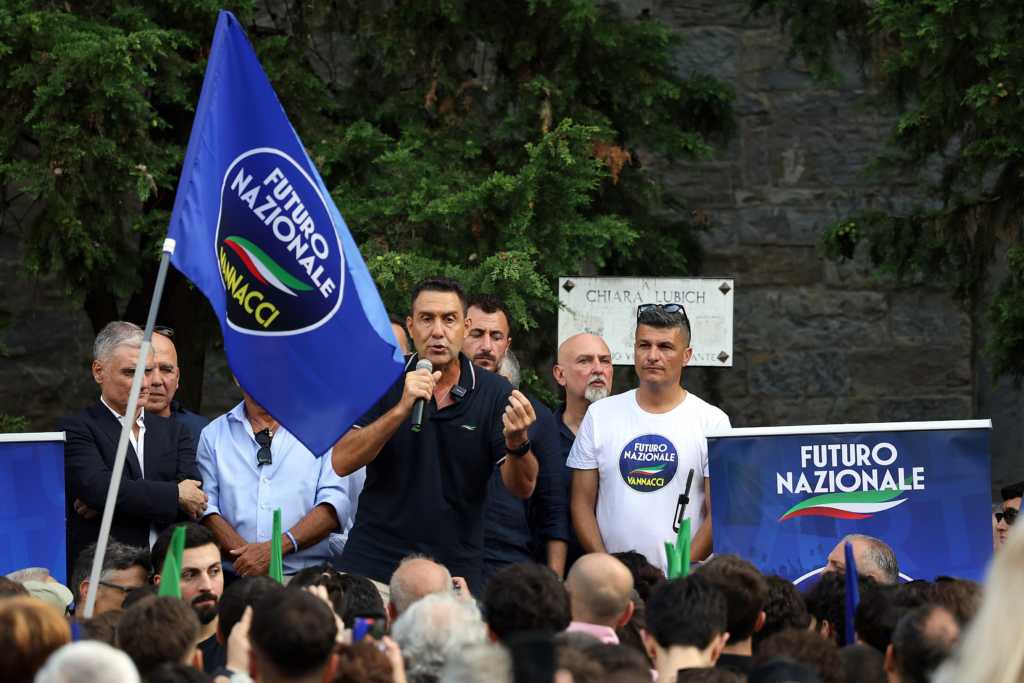
One person in particular is fuelling this criticism: former general Roberto Vannacci and his far-right party, National Future (Futuro Nazionale). With Meloni struggling to justify her commitment to Ukraine, NATO and the EU, and an Italian left radicalising along pacifist lines, National Future embodies an ideological nationalism which could prove indispensable for Italy’s right-wing bloc ahead of 2027.
Vannacci is also a Trojan horse for Russian influence inside Italy. He has publicly stated that he would have “no problem” accepting party and legal funding from Moscow or Beijing, and has adopted a transactional, sovereigntist posture modelled closely on Hungary’s Viktor Orbán. Domestically, this is an easy argument to win: a recent ECFR policy brief confirmed that Italians are favourable to resuming imports of Russian gas and oil. This openness to Russia is compounded by his military past: Vannacci was Italy’s military attaché in Moscow, raising anxieties about counterintelligence and security.
Should National Future enter a governing coalition, Vannacci’s background could shatter the EU’s collective security consensus. A Rome influenced by Vannacci would actively block EU defence initiatives, veto sanctions and leak sensitive security coordination. For Meloni, normalising Vannacci would trigger an immediate rupture with the European mainstream with which she has been cooperating since 2022. Ultimately, he alone could paralyse Brussels’ capacity as a coherent geopolitical actor.
Solution
To fully grasp the extent of the danger that Vannacci poses to the EU, Europeans need to look beyond the playbook of contemporary European populism. While figures like Marine Le Pen have spent years achieving dédiabolisation—meticulously distancing themselves from Vladimir Putin’s regime to capture mainstream credibility—Vannacci is highly likely to align himself with the pro-Russia Alternative for Germany (AfD).
Italians and Europeans alike should thus not treat National Future as just another right-wing movement. Instead, Vannacci—who also sits in the European Parliament—should be dealt with as a strategic issue. Whether or not National Future joins a second Meloni government, his party’s emergence demonstrates that Europe’s mainstream must no longer simply contain the far right or the far left. Now Europeans need to preserve the credibility of democratic politics as new radical actors reshape the political landscape.
Meloni should exclude National Future from any form of governance. She needs to resist this new far-right siren call by using the political capital she has built in the EU since 2022: she has been at the forefront of support for Ukraine, collaboration on trade, initiatives on migration, and contributions to EU reactions to international developments. Importantly, Meloni has maintained a friendly relationship with European Commission president Ursula von der Leyen.
However, the conservative mainstream also needs to react. It is normalising anti-EU parties by seeking their political support at the EU level and in the European Parliament. Building a cordon sanitaire around anti-EU forces requires everyone’s engagement: EU conservative leaders should work together to show their voters that they reject such extreme views. Pragmatic collaboration will also help overcome some divisions which are freezing decision-making on issues such as Russian security threats and migration.
Context
Meloni entered office in 2022 and gradually established herself as a pragmatic conservative leader, separate from more openly revisionist forces on the European right. But her recent decision not to attend a Coalition of the Willing meeting in Paris on July 13th highlights the pressure she is under, ahead of Italy’s 2027 election, to focus on domestic commitments instead of European debates on Russia, Ukraine and defence.
Here, Vannacci is a key force. National Future, which he founded only four months ago, is polling around 6% and establishing itself as the second-largest force in Italy’s right-wing bloc. Vannacci’s platform combines nationalist rhetoric, opposition to military support for Ukraine, openness to legally permissible Russian and Chinese electoral funding, and a confrontational approach to liberal democratic values.
His ideological trajectory mirrors the social architecture, ethnonationalism and systemic Euroscepticism of the AfD. Vannacci is not constrained by regional economic interests or coalition dynamics, unlike the leader of Italy’s right-wing League party, Matteo Salvini. This defines Vannacci as a loose cannon; National Future is well-positioned to capitalise on societal anxieties and economic grievances to pull the Overton window toward radical revisionism.
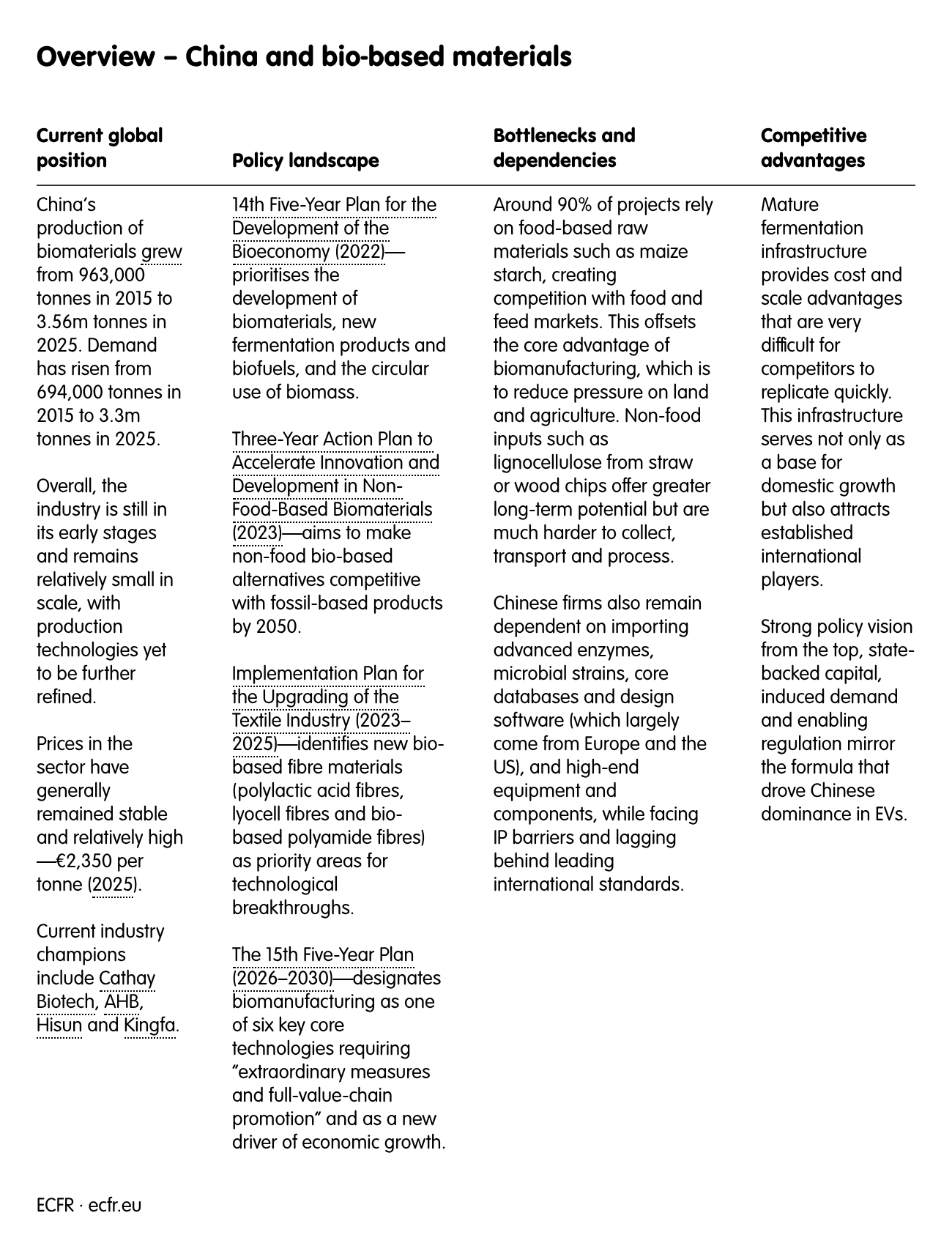
Biomanufacturing uses biological processes to produce food, fuels, chemicals and materials that today rely on fossil resources.
The underlying science is not new. But advances in AI and falling renewable energy costs are transforming biomanufacturing from a niche climate solution into a new production paradigm, with the potential to reshape industrial competitiveness and geopolitical power much as fossil fuels did in the previous industrial age.
China has identified biomanufacturing as a strategic technology for resilience and self-reliance, deploying a familiar playbook of state-backed investment and infrastructure to build globally competitive industries.
Europe remains a formidable competitor, leading in patents and core technologies, with world-class research, specialised industrial clusters, skilled talent and globally competitive firms across the value chain.
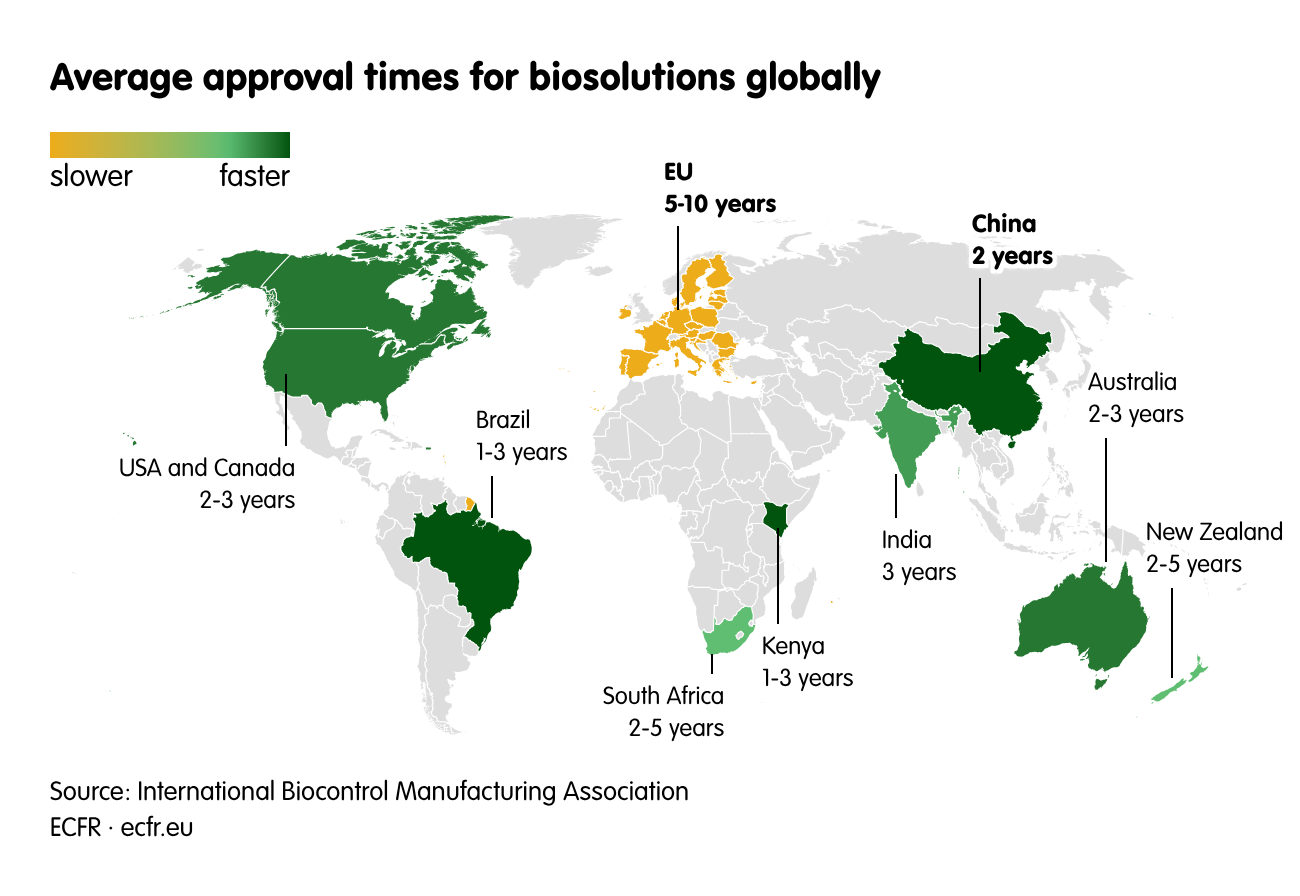
Its weaknesses are limited infrastructure, regulatory delays and growing dependence on Chinese manufacturing capacity.
Without greater urgency, Europe risks repeating the mistakes it made in solar panels, batteries and electric vehicles: inventing breakthrough technologies while ceding profits and geopolitical leverage to China, this time with even greater consequences.
The microbe revolution
For two centuries, the molecules that underpin modern life have been pumped from the ground in the form of oil and gas. The next industrial revolution may instead grow them in laboratories and tanks.
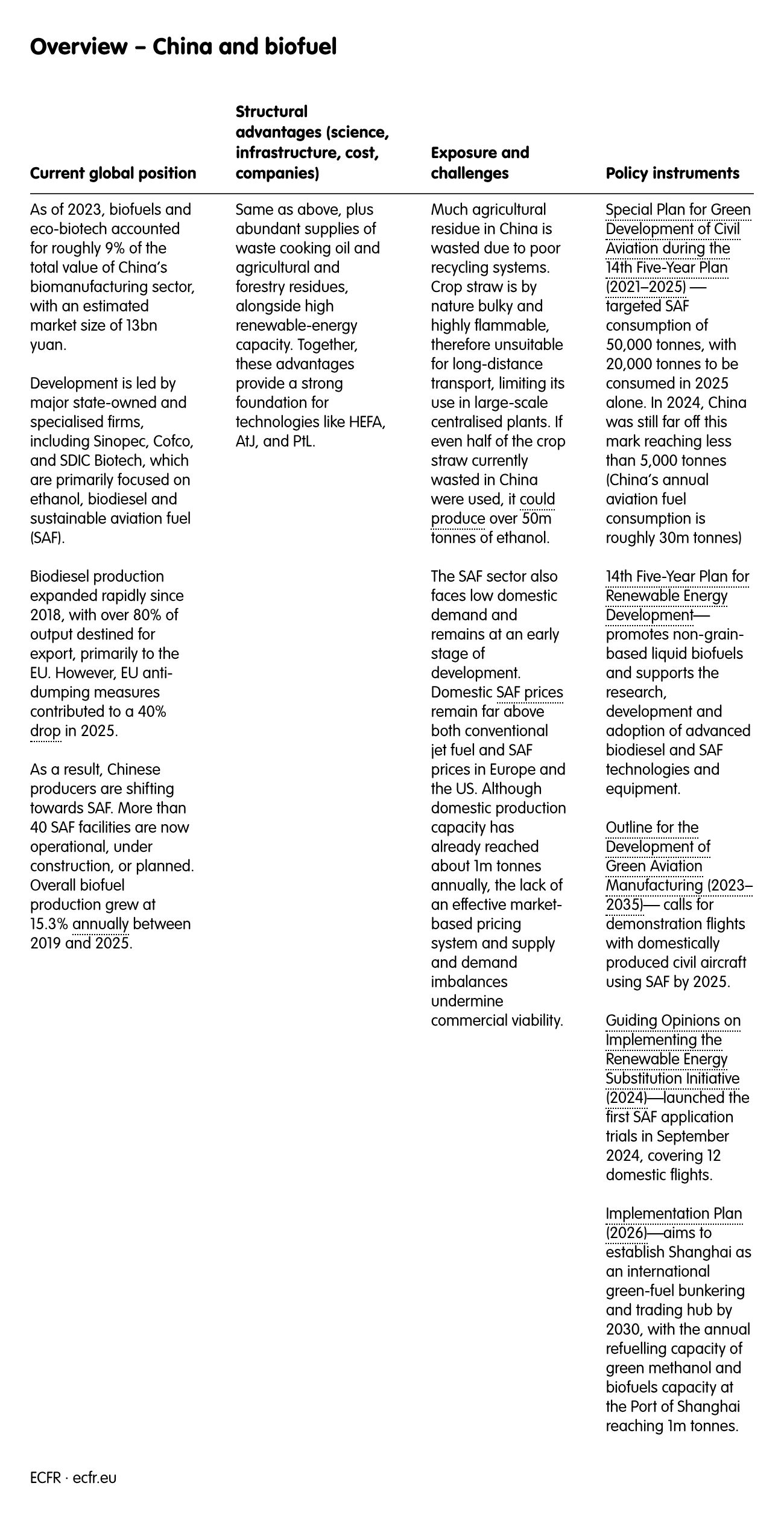
This is the promise of biomanufacturing: using biological processes to produce the building blocks of the future economy. Scientists can programme living cells to act like microscopic factories, capable of producing everything from food, fuels and fertilisers to plastic, chemicals and advanced materials—nearly all of which still rely to some degree on fossil resources. For millennia microbes were used to turn grain into beer and milk into cheese. Now they are engineered to turn straw into jet fuel and sugar into armour.
What sounds like science fiction is rapidly becoming reality. Driven by abundant and affordable renewable energy and dramatic advances in artificial intelligence (AI), biomanufacturing is beginning to change not only what economies produce, but how they produce it. In doing so, they address a deeper layer of fossil dependence than renewable electricity alone. The shift could be as transformative as the invention of the petrochemical industry itself. If the geographical distribution of fossil resources shaped the geopolitics of the last industrial age, then the ability to produce key molecules without them could shape the next.
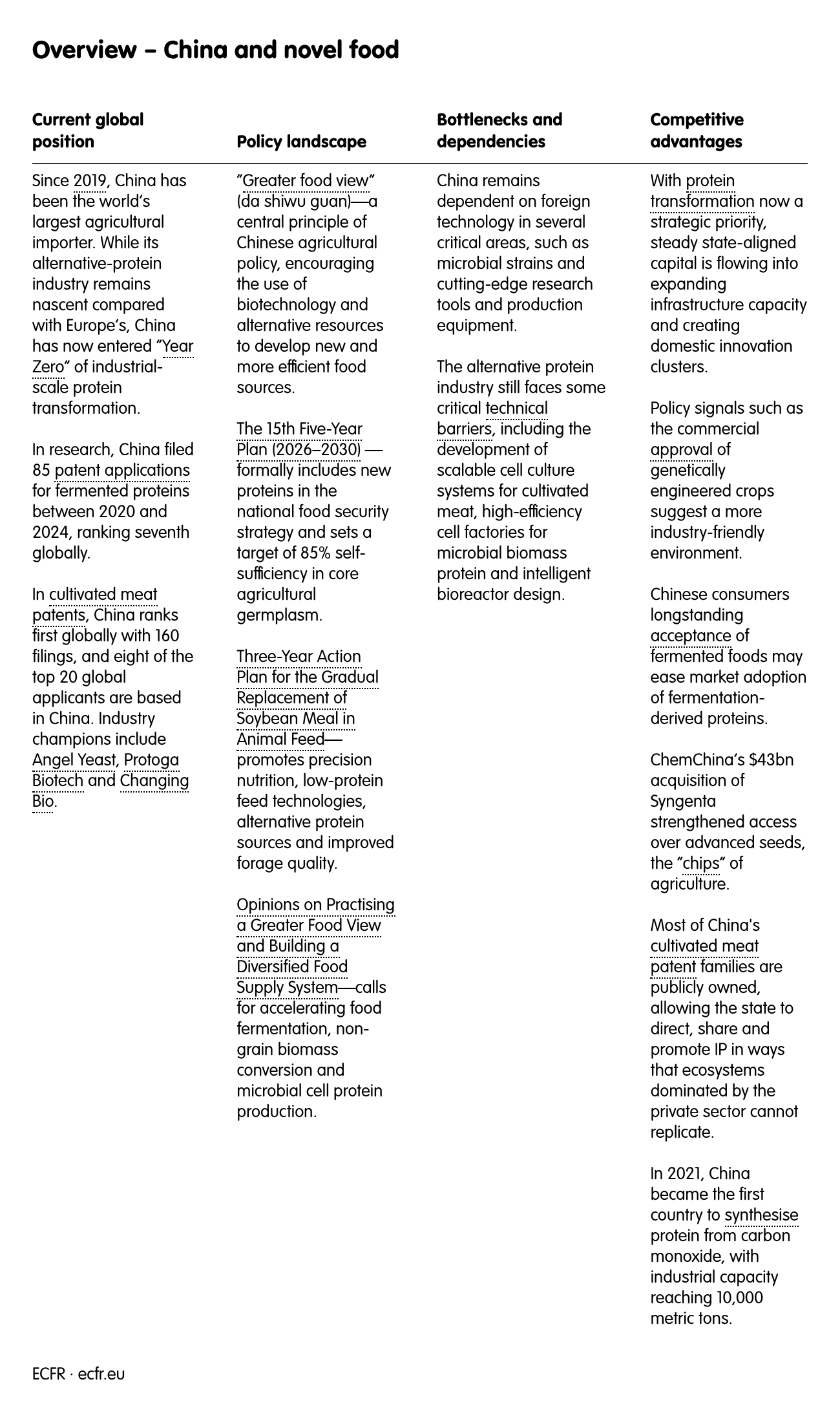
China’s leaders have recognised this opportunity. Beijing has spent an average of roughly €1.4bn per year on electric vehicle research and development (R&D) over 15 years to build a globally dominant industry. It is now reportedly spending €2bn-3bn in biotechnology R&D alone. And it is doing this at a time when China already accounts for more than 70% of global basic fermentation capacity.
But its ambitions for the bioeconomy go much further. The 2022 Bioeconomy Five-Year Plan set a goal of global leadership by 2035, while the 2026 15th Five-Year Plan places biomanufacturing alongside AI at the heart of China’s future industrial model. In July 2025, Beijing unveiled a list of 35 flagship biomanufacturing products to replace fossil-based chemicals or food and feed additives, and selected 43 companies to build pilot plants. No other major power is investing in the bioeconomy with comparable scale or strategic intent.
But Europe has not lost the race to China just yet. As in areas like semi-conductors, European companies provide some of the key foundational technology and microbial strains that make Chinese fermentation successes possible. Europeans are at the cutting-edge of research—the continent has a thriving biosolutions sector worth €60bn, comparable to the GDP of Slovenia, and growing around 5% annually. And according to industry estimates, if scaled successfully, biomanufacturing could replace a quarter of European oil-based chemicals, halve the continent’s protein imports, drastically cut greenhouse gas emissions and create 700,000 additional jobs—by as soon as 2030.
Yet beneath these strengths lie familiar vulnerabilities. European firms already depend on Chinese producers for basic parts of the existing biomanufacturing value chain. As China scales its fermentation capacity, European start-ups are increasingly tempted to manufacture and scale there, exposing valuable intellectual property to a fierce competitor. In a 2025 report to Congress, the US-China Economic and Security Review Commission likened fermentation capacity to that of chip factories, warning that China’s dominance could become a strategic chokepoint. Policymakers are already losing sleep over China’s massive share of global rare-earth refining. But biomanufacturing could prove even more consequential. Imagine similar leverage extending across all future food, pharmaceuticals, chemicals and energy inputs.
Europe’s lack of urgency is worrying. Policymakers still seem to treat biomanufacturing as a niche sustainability issue rather than a foundational technology layer capable of reshaping whole economies. If Europe fails to adjust course soon, it risks sleepwalking into an old pattern: pioneering innovation, creating demand through regulation and then watching production, profits and geopolitical leverage migrate to China.
This paper argues that European policymakers should view biomanufacturing not simply as another industrial sector but as a strategic foundational technology layer. They should see China’s push for leadership in this field as a geopolitical challenge as much as an economic one. The EU needs policies and investments that amplify its significant advantages in research and innovation before they are eroded by China’s scale and industrial capacity. As with solar panels and batteries before it, Europe risks inventing the future only to surrender its strategic power—but this time with far greater consequences.
Biotechnology, biosolutions, biomanufacturing
The terminology surrounding the sector can be confusing. Biotechnology is the broadest catch-all description. In Europe, the term biosolutions is sometimes used to distinguish industrial applications of biotechnology from the pharmaceutical sector, although the boundary between the two is not always clear.
The distinction matters because the pharmaceutical sector follows a very different commercial logic. Biopharmaceutical companies develop low-volume and high-value products, such as specialised cancer treatment, where expensive R&D can be justified by potentially high returns—“consumers”, after all, are willing to pay steep prices for lifesaving or life-enhancing drugs.
By contrast, biosolutions often focus on replacing existing products (fertilisers or fuels). They create an alternative with environmental advantages (animal-free dairy) or inventing entirely new materials with specific qualities (spider-silk fabric) and wide industrial appeal. Unlike pharmaceuticals, these products must compete directly with established products or industries in low-margin markets often dominated by powerful incumbents.
China prefers the term biomanufacturing to describe the industrial applications of biotechnology. This reflects a focus on the process and a view that the technology is not simply the industrial application of biotechnology but the foundation of a new manufacturing model. As the world’s largest manufacturing power, China has already made it clear that it intends to dominate this next stage of industrial development. This policy brief adopts the same terminology to reflect that strategic perspective.
In the end, semantics matter less than the underlying shift. Whether described as biosolutions or biomanufacturing, the underlying transformation extends far beyond a collection of new products. It is a crucial layer of the emerging industrial economy, enabled by electrification and artificial intelligence.
The five pillars of biomanufacturing
Like the petrochemical industry before it, biomanufacturing at scale needs an industrial infrastructure.
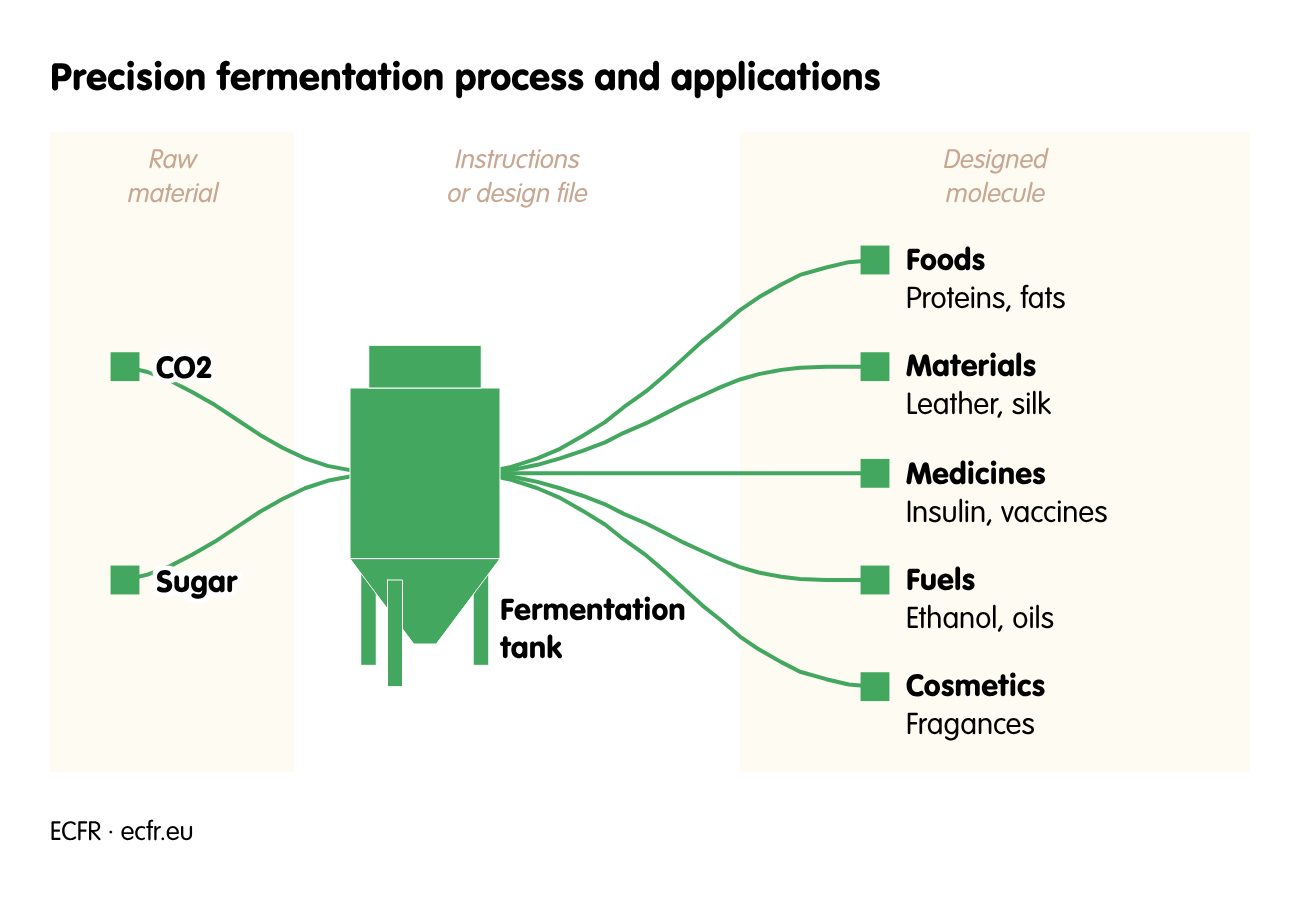
Precision fermentation, one of the most promising techniques of the sector, uses genetically engineered microorganisms to produce specific target molecules. These organisms are cultivated in fermentation tanks and supplied with sugar-based feedstocks. The produced molecule is then extracted and purified. It could be a dairy protein made without a cow, a polymer with all the qualities of traditional plastic but none of the fossil-based input, or a protein that mimics spider silk, creating fibres strong enough to be used for body armour.
The science behind all this has been around for a while, but the combination of advances in AI and the renewable energy boom are making some of the existing solutions commercially attractive, while allowing the more cutting-edge innovation to scale from the lab to industrial production faster. Microorganisms are fickle—they are alive and evolving after all—but AI can make working with them more predictable. Success requires the availability of physical infrastructure (large tanks as one would know them from wine production, for example), access to cheap energy, reliable feedstock supply and significant investment before profits can materialise. AI specifically has accelerated the lengthy cycles of designing, prototyping and testing, changing the whole biomanufacturing equation.
China’s advantage is not due to a single scientific breakthrough or one national champion, but because it has positioned itself incredibly well across the five pillars of biomanufacturing and morphed them into a mutually reinforcing ecosystem: patient capital, industrial infrastructure, cheap energy, feedstock access and cost-competitive AI capabilities. Europe will need to accelerate on all of these fronts if it wants to compete.
Capital
Advanced fermentation-derived products still often cost two to three times more than petrochemical alternatives. Many are entering markets where they must either displace a product or create entirely new categories of demand.
This is precisely the sort of problem that China’s state-capitalist system is well suited to solve. Having identified biomanufacturing as a way to build new industries and upgrade existing ones, Chinese leaders are willing to support nascent companies through years of low returns and uncertain future profitability. Abundant patient capital allows Chinese companies, particularly small and medium-sized ones, to experiment, fail, refine and scale.
In Europe, industry groups consider the investment gap and lack of a coherent enabling framework one of the key weaknesses. This includes clear government signalling through consistent regulation. In a December 2025 report, the OECD argued that policymakers are falling to make full use of powerful tools to bring in private investment for the sector, including blended finance, de-risking mechanisms, market-based instruments and public-private partnership frameworks.
Infrastructure
China recognised the need for infrastructure very early. The 13th Five-Year Plan of 2016, for example, called for the development of fermentation products such as amino acids and vitamins, and China has since become the world’s largest producer of these products. They may seem mundane commodities, but the underlying infrastructure is relevant to more advanced applications.
Producing next generation proteins or biochemicals shares many industrial needs with vitamin production, despite the differences in the processes. Fermentation facilities, engineering expertise, supply chains and operational know-how can be decisive advantages in mastering the breakthrough on more advanced products.
However, Chinese producers still depend heavily on imported microbial strains—much like many AI developers rely on foundational models created elsewhere, but then fine-tune them for more specific applications. Denmark’s Novonesis, for example, is one of the world’s leading producers of microbial strains. Yet China is accumulating experience in large-scale fermentation using these strains, and it is advancing fast in building infrastructure needed for testing and scaling. Developing its own foundational strains is the next logical step of its industrial strategy.
Besides, manufacturing itself creates its own chokepoints. As fermentation capacity concentrates in China, innovators elsewhere may increasingly depend on Chinese infrastructure to bring products to market. Similar dynamics have already emerged in batteries and other clean technologies, where manufacturing ecosystems and testing facilities had to rely on infrastructure overseas.[1] As China’s lead grows, private capital in the rest of the world will be less attracted to building competing facilities because they will struggle to match its scale and costs. The result is not only supply-chain dependence, but the risk that valuable know-how migrate with it.
Europeans are not alone in their growing discomfort with this dynamic. The solution is to push for investment in infrastructure in Europe and in a range of partner countries. India, for example, has a strong industrial base in the pharmaceutical sector and low construction costs, making it well-placed to expand fermentation capacity quickly.
For decades, China’s leadership has invested in sectors it considers crucial for national power. Made in China 2025, the industrial masterplan that produced its massive dominance in automotive, robotics and energy technology, was designed as much to boost competitiveness as it was to build resilience and security. Biomanufacturing should be seen in the same way: a strategic capability that can strengthen food and energy security while reducing dependence on fossil imports.
Energy
Fermentation is energy-intensive and, outside pharmaceuticals, price margins for biomanufactured products will likely be slim. Electricity costs are thus a critical determinant of commercial viability. China’s industrial electricity prices are among the lowest in the world, below even those in emerging economies such as India or Mexico—and dramatically lower than in Europe, where energy prices shot up after Russia’s invasion of Ukraine and other geopolitical crises. A massive expansion of renewable energy, continued investment in nuclear and domestic coal, significant state control over pricing, plus regional pricing policies to encourage industries to set up in certain provinces mean that Chinese industry pays roughly 50% of the global average for its electric power.
For China, the green transition is not a hindrance to industrial competitiveness, but the vehicle towards it.Its leaders are driving an ambitious electrification agenda with the declared goal of fully replacing fossil fuels with renewables in the next decades. And the cheaper and cleaner China’s electricity becomes, the more competitive its biomanufacturing industry will be.
Feedstock
Feedstock represents another potential bottleneck. Sugars, grain, agricultural residues and other biological sources of carbon are, according to a recent report, responsible for up to 60% of total production cost.
As in any industry where margins are thin, access to cheap inputs matters significantly for market viability. Transporting large volumes of cheap biomass adds costs, making local supply a competitive advantage. The economics will also create incentives for recycling, reusage and carbon capture, all of which could become more viable as infrastructure for collection and processing expands. Regions that can grow biological feedstock, especially under conditions of rising temperatures, will become attractive partners. But quantity is only half of the equation: equally important will be improving yields and engineering crops better suited for industrial use.
According to one observer, no one has yet fully mastered the feedstock question. But China is positioning itself well. Under Xi Jinping’s leadership, longstanding scepticism towards genetically modified organisms (GMOs) has given way to a more pragmatic approach in favour of domestic innovation and food security. The takeover of European seed and agricultural technology giant Syngenta by state-owned ChemChina in 2017 was emblematic of this shift.
In the emerging bioeconomy, carbon will remain the essential raw material. The difference is that it will increasingly come from renewable, highly available and fully circular sources.
Artificial intelligence
The final pillar of the sector may prove the most important.
AI is beginning to transform biomanufacturing from end to end. By enabling products and production processes to be designed and tested digitally first, it can dramatically accelerate development cycles and reduce the number of costly physical experiments.
Industry leaders argue that the interactions between the production process and AI will become increasingly important. Better data analysis and digital modelling will improve production, while sensors embedded in the industrial process will generate the data needed to improve the AI models in a continued feedback loop. As biology can be fickle, and microbes are living organisms that can evolve during production, achieving consistent results is a challenge. Richer data makes production more predictable and commercially viable. This is why the increasing availability and the falling costs of AI computing and model inference are a game changer for biomanufacturing.
The Chinese leadership is prioritising the industrial use and of AI and is actively encouraging companies to integrate AI and manufacturing. In 2025, for example, the government released a list of 16 typical application cases for AI in biomanufacturing. Chinese AI models are also cheaper, driving uptake in sectors where margins are thin and where start-ups rely on limited funding, both in China and abroad. As analysts Dirk van der Kley and Tom Campbell have argued, China’s emerging lead in biomanufacturing thus does not lie in a single layer of the value chain or the production process, but in its ability to combine these pillars into an ecosystem that increasingly blurs the line between the digital and the physical world.
New materials, new food, new energy
Making things
The application of biomanufacturing extends well beyond replacing fossil-based inputs. It is increasingly focused on creating entirely new materials for new technologies.
Alongside textile and construction, the defence sector has become particularly interested in these products. NATO elevated biotech to a strategic priority with its first dedicated strategy in 2024 and now channels over €500m annually to 28 dual-use startups via the DIANA programme. Although still at the R&D stage, European researchers are developing new bio-based materials with specific defence capabilities, such as armour, drones and rare-earth substitutes.
Here Europe retains an important edge. While Chinese companies dominate production volumes in traditional industries such as textiles or bio-based plastics. Such plastics include PHB—a bio-polymer that can be used in the medical sector for sutures or in the food sector as bio-degradable packaging; it is already being produced at scale in China while in Europe it has barely achieved market entry. European companies lead in several advanced biomaterials for aerospace, defence and other high-performance applications. Germany’s AMSilk, for example, is the world’s first industrial-scale producer of spider silk proteins and is working with Airbus on lightweight aerospace composites and with Evonik for industrial-scale fermentation supply. In 2024, it partnered with Denmark’s 21st.BIO to scale its protein production. Dutch firm Avantium, backed by both EU and private investment, has begun commercial-scale production of PEF, a fully recyclable bio-based alternative to fossil-based PET plastic.
As in other advanced industries, China increasingly leads on scale while Europe remains strong in specialised innovation.
Making food
The food sector is one of the most promising areas for biomanufacturing. In fact, one of the most consequential biotechnology breakthroughs in agriculture passed largely unnoticed by consumers. Fermentation-produced chymosin (FPC), the enzyme used to make cheese, replaced animal rennet taken from a cow’s stomach. It became widespread in the 1990s and today accounts for 80–90% of all commercial cheese production globally. Now, similar technologies are spreading across proteins, fertilisers and crop production.
Microbial biofertilisers can reduce the need for synthetic fertilisers by 20-40% while improving crop yields. Gene-edited crops can be designed to adapt to different nitrogen levels in soil. Precision fermentation allows microbes to produce dairy or egg proteins without animals. Biomass fermentation can grow fungi directly into a protein source. Because these systems depend less on land, climate and livestock, they offer a degree of resilience that conventional food production cannot match.
This matters particularly for China. Protein security remains one of the weakest links in China’s quest for autonomy. The country must feed 19% of the world’s population with only 8% of its arable land, while still importing much of the energy needed to power its economy. As Xi Jinping has repeatedly said, “China must keep its rice bowls firmly” in its own hands. Yet rising incomes have transformed diets, increasing demand for animal protein and imported feed. Food self-sufficiency has dropped from 94% to 66% between 2000 and 2020, while in 2025 soybean imports hit a record 111.83m metric tonnes. By 2035, China could face a protein feed shortfall of 120m tonnes.
Reducing this vulnerability has become therefore a matter of national security. Beijing is pursuing a range of solutions, such as improving crop yields and climate resilience, developing ways to decouple the feed and food supply chains, and creating novel foods.
Europeans, on the other hand, rarely talk about protein security. Decades of subsidies and protection have created the impression of abundance of milk, butter, meat and grain, and Europe’s understanding of food poverty and famines has largely vanished. At the same time, agricultural lobbies continue to exert outsized influence in many EU member states, ensuring that agricultural exports remain a national priority. While exports of cars and advanced machinery struggles, European leaders returning from Beijing increasingly announce deals for oats (Sweden), pork (Spain), dairy and seafood (Ireland) and even chicken feet (Germany).
This is not just a European phenomenon. US president Donald Trump’s visit to China in April brought little clarity on semi-conductor sales, but agreements on soybeans and oil. The problem is that Beijing has little intention of remaining dependent on imported food. By the time Europeans realise this, it may already be too late.
Making fuel
Energy is the third frontier. Biomanufacturing can use engineered microorganisms or synthetic enzymes to convert organic matter into fuels that can replace or complement fossil fuels. The appeal is both environmental and strategic.
The closure of the Strait of Hormuz has yet again demonstrated the vulnerability of global fuel supply chains and its implications for shipping, commercial flying and military mobility. Sustainable aviation fuel (SAF) is a renewable, non-fossil alternative to conventional jet kerosene. Produced from renewable and waste-based raw materials, it can be safely blended up to 50% with conventional jet fuel (because it is chemically almost identical to it), requiring no modifications in existing aircraft or airport infrastructure. It is produced from renewable and waste-based raw materials rather than fossil fuels, cutting lifecycle greenhouse gas emissions by up to 80%. In a major conflict, air forces account for 85% of total military fuel consumption. Recognising this, the UK Ministry of Defence announced that all aviation fuel procured from January 2025 will include SAF.
China sees similar opportunities in global shipbuilding and port equipment. As the global shipping industry moves towards decarbonisation, Chinese firms are seeking to establish an early need. China is the world’s largest shipbuilder, controlling 55% of global output and 75% of new orders. Now the country has launched sea trials for the world’s largest methanol dual‑fuel container ship (designed and built by Nantong COSCO KHI) and is also building the world’s first deep‑sea bulk carriers with ethanol-powered main engines. These technologies allow Chinese shipyards and equipment makers to shape emerging standards and capture the market for biofuel‑ready ships.
The logic mirrors Beijing’s broader strategy: make China less dependent on the world while making the world more dependent on China. As alternative fuels become increasingly integrated in shipping, countries that control both the fuels and the infrastructure that use them will enjoy an advantage. Without investment, European companies such as Maersk or Hapag-Lloyd will have a hard time competing in this sector without embedding themselves into the Chinese supply chain, and risk becoming reliant on Chinese suppliers in yet another strategic industry.
Why Europe can still lead on biomanufacturing
Unlike on solar panels, batteries and EVs, Europe is not playing catch up on biomanufacturing. Europe has world-class research, vast industrial potential and a strong market. But the window to assert itself as a leader is closing fast.
Europe has the market
Europe holds twice the precision fermentation capacity of the US: 479 demonstration, semi-industrial, and pilot plants; 2,362 additional biorefineries, spanning pharmaceuticals, food, chemicals, and industrial biotechnology. With the right support, alternative proteins alone could contribute €111bn in annual gross value added to the EU economy by 2040—comparable to the size of Europe’s entire wine sector and could build a €60 billion export market, comparable to current EU exports to South Korea.
The bloc also has the infrastructure to scale. Although the EU faces a plant protein deficit of nearly 19m tonnes (largely for livestock feed), it holds 47% of global protein and enzyme fermentation capacity for industrial applications. Meanwhile, Europe’s biofuel market exceeded $43.7bn in 2025 and is expected to grow at 9.4% annually in the coming decade. The dependence on imported carbon to power should focus the minds of policymakers on using non-food feedstock (agricultural and forestry residue, waste and algae) and scaling the market to make these products competitive faster.
Perhaps most importantly, the EU is creating demand through regulation. By 2030, EU member states are required to achieve either a 29% share of renewable energy in transport or reduce transport fuel emissions intensity by 14.5%. SAF represented just 0.6% of all aviation fuel in EU airports in 2024 but is required to rise steadily to 70% by 2050. The FuelEU Maritime Regulation aims for a 6% reduction of emissions in 2030 and up to 80% by 2050.
The challenge is to ensure that European firms rather than foreign competitors capture the resulting market opportunities. Today, 69% of feedstocks used for production of SAF used in the EU originated outside the bloc, with China supplying 38% and Malaysia 12%. Europe risks creating demand at home while becoming dependent on foreign imports.
Europe has the conditions
Europe enjoys structural advantages over China as it has abundant, low-cost biomass availability in relation to population size. Denmark benefits from plentiful agricultural waste from sugar beet production, while Germany can use forestry residues and Italy its cereal or wine residues. South-eastern Europe combines renewable energy potential with availability of olive and wine by-products. Bulgaria, for example, could make use of its potent agricultural base to become a hub for large-scale fermentation, using its solar resources to power this infrastructure instead of relying solely on its booming battery storage sector, which largely relies on Chinese battery imports.
Europe also has an often-overlooked advantage: skills. Biotechnology requires not only trained manufacturing professionals but also researchers, scientists and AI experts. In Denmark, a large share of the industrial workforce receives vocational training tailored to biotech manufacturing, including precision fermentation and bioreactor management. Europe’s tradition of apprenticeships and technical education is well placed to adapt. But timing matters. The foundations of industrial leadership in the next decades will be laid over in the next few years.
Europe has the know-how
By combining strong fermentation infrastructure with supportive policies, Denmark has built one of the world’s most advanced biomanufacturing ecosystems, where pharmaceutical, agricultural and chemical firms share industrial waste with one another.
Denmark’s industrial base is also closely linked to agriculture. About 20% of Danish land is organically farmed, while companies like Novonesis produce microbial inoculants that boost crop yields by 3-7% while cutting fertiliser use. Instead of treating biotechnology as a threat to agriculture, Denmark positioned the sector as a tool to make farming more productive and sustainable. This contrasts with many other European countries in which the agricultural lobby continues to push back against genetically modified crops and alternative proteins.
Denmark also shows that the EU’s regulatory hurdles are not inevitable. EvodiaBio moved from laboratory to profitable industrial production in only three and a half years, a remarkable achievement in a region where biotechnology approvals are notoriously slow. Across the EU, novel food authorisations average 2.5 years and can take as long as six; GMO crop approvals take up to six years compared with less than two in America; biopesticide approvals average seven to nine years.
Germany is Europe’s second biotech powerhouse. Companies such as Sartorius, or the pharma companies BioNTech and Merck KGaAhold roughly 25% of EU precision fermentation capacity for low-carbon chemicals. Formo leads in fermentation-derived proteins, while Bayer and BASF are advancing biopesticides and other crop protection agents.
Switzerland dominates contract development and manufacturing organisations (CDMOs) globally, led by companies such as Lonza and Roche. These firms own and operate the specialised infrastructure required to produce biological products at scale. While biosoutions companies own the intellectual property, CDMOs provide the fermentation tanks, the purifiers, and the manufacturing capacity.
The Netherlands is Europe’s leading hub for cultivated meat and precision fermentation, with DSM-Firmenich and Avantium excelling in biomass conversion.
France also has a robust agricultural biomanufacturing industry, with companies like Standing Ovation and Valley in alternative proteins, and De Sangosse (€315m) in biopesticides. Meanwhile, Italy ranks third in the EU by organic farmland area. Firms such as Rovensa Next lead in biostimulants and biocontrol, products that improve crop health while reducing dependence on conventional synthetic chemicals. Finland, France, Germany, Italy and Spain are also leading EU SAF producers, with commercial-scale output already under way—Neste in Finland, TotalEnergies in France, BP in Germany, Repsol in Spain, and Eni in Italy.
How Europe can lead on biomanufacturing
Define the vision
What is holding Europe back is not a lack of capital, talent or technology. It is a lack of ambition, sense of urgency and confidence.
China’s leadership has already articulated its vision. The 15th Five-Year Plan leaves little doubt that Beijing sees biomanufacturing as a pillar of its future economy and is aligning industrial policy, infrastructure, regulation and investment accordingly. European policy makers should pay close attention and decide whether they want to compete or simply adapt to a world of Chinese biomanufacturing dominance, with all the consequences of dependence, deindustrialisation and decline.
If they want to compete, the first step is to move biomanufacturing out of the “green niche” category and recognise it as a strategic component of a post-fossil, highly electrified global economy. Biomanufacturing should not be treated as a sectoral issue but as part of a broader vision for Europe’s future prosperity, competitiveness and security—a holistic push for infrastructure, science, education, regulation and market entry conditions is needed.
This requires political leadership. Key decision-makers, not just technical experts, need to understand the sector’s potential. Policymakers do not need to become fermentation experts any more than they needed to become semiconductor specialists. But they need to become as comfortable discussing microbes and enzymes as they now are rare earths and chips.
European leaders should make the case for biomanufacturing in terms of jobs, growth and innovation as well as harnessing the potential of European frontrunners. The narrative should be less about environmental virtue and more about hard economic reality. The debate must move beyond technicalities around the forthcoming Biotech Act II and become part of a broader conversation about Europe’s future. The China factor can help make this case. The Chinese leadership is not investing billions into a niche sustainability sector. It is investing in what it believes will be the foundational layer of a new industrial order.
Involve the existing industry
European policymakers should bring together representatives from the chemical sector, the manufacturing industry, defence companies and trade unions. Europe’s chemical and machinery industries in particular are under massive pressure from Chinese competition and are looking for new sources of growth. Biomanufacturing offers one. The experience of chemical firms, many of which conduct bio-based research, will be crucial for scaling. The manufacturing sector will be critical in building the new industrial infrastructure. And unions should be involved from the outset to ensure broad societal buy-in for the transformation process.
Defence could become an important catalyst. Europe is currently investing billions in rearming. Even a fraction of that spending directed to biomanufacturing-related R&D could generate a massive innovation push. Applications already under way include biosensors and microbial technologies that detect chemical or biological toxins, which can support clean-up operations in conflict regions. New systems designed to identify chemical, biological, radiological and nuclear threats are expected to reach important milestones before the end of 2026.
New European legislation must also facilitate the integration of biotechnology innovations into civil-military supply chains. A recent ECFR event organised with Dank Industri underscored opportunities ranging from bio-based concrete for reconstruction to drones and medical supplies. In China, this integration of civil and military supply chains is part of its success story which Europe can take note of and replicate at a time of vast defence spending. Framing industrial renewal as defence could even help increase support for defence spending in more reluctant countries. Spain for example has a huge potential for becoming a biomanufacturing champion due to abundant renewable energy and proximity to agricultural feedstocks.
Build coalitions with allies
Besides building internal coalitions, Europe also needs its external partners if it is to succeed in a biomanufacturing revolution.
A grand bargain with Britain
Britain remains a world leader in life sciences and research but faces challenges in scaling. An ambitious EU-UK biomanufacturing partnership could combine European market scale and British scientific strength. Joint infrastructure projects, coordinated funding, university cooperation schemes, student exchanges and shared regulatory sandboxes would all help competitiveness. The UK’s higher appetite for risk-taking in areas such as cultivated products offers valuable lessons for Europe.
An economic security agenda with Japan
Japan’s biomanufacturing sector is smaller than China’s but highly mature and deeply embedded in agricultural, food and chemical supply chains. Patent activity has been consistently high in synthetic and engineering biology but remains dominated by large corporations and public research institutes. Public agencies and private investors support early-stage funding but Japanese companies lack the necessary infrastructure to grow, such as fermentation facilities. But Japan’s manufacturers are also deeply embedded in Asia-Pacific supply chains, making the country a potential hub rather than a standalone actor. Biomanufacturing should become a dedicated pillar in all EU-Japan exchanges, not just from a business but also from an economic security perspective. Japan’s concerns with Chinese coercion closely mirrors Europe’s own.
A dedicated Trade and Technology Council track for India
India has both the potential and the ambition to become an important actor in biotech. It combines a strong pharmaceutical industry with growing renewable energy capacity, while alsoplanning to expand manufacturing. Investments in biomanufacturing have been significant and its regulatory approval processes are much faster than Europe’s, a huge advantage in a fast-moving sector. The recently concluded EU-India Free Trade Agreement provides an opportunity for joint projects and technology exchanges. Biomanufacturing should become a priority track of the regular EU-India Trade and Technology Council, sounding out options for joint research and investment.
Speed up the action
The 2025 EU Bioeconomy Strategy sets out an ambition vision for bioplastics and biobased packaging, textiles, chemicals, construction products and fertiliser. The commission aims to launch theBio-based Europe Alliance to address gaps across the value chain that prevent companies from scaling up at the Global Bioeconomy Summit in Ireland in September 2026. The forthcoming Biotech Act II is expected to address regulatory hurdles and streamline access to European funding. The proposed European Competitiveness Fund could support biobased materials, biomanufacturing and innovative food products and biochemicals. On paper, momentum is building.
The question is whether biomanufacturing will be treated as a standalone sector or become an integral part of European industrial policy. The upcoming Industrial Accelerator Act mentions bio-based solutions only in passing, an omission that should be fixed during negotiations with the European Parliament.
Industry concerns[1] remain strikingly consistent: speed of permitting, over-regulation and lack of access to capital. Shell lost $600m in investments when it cancelled a SAF plant in the Netherlands in 2025, illustrating the risk that continues to deter private capital despite legislative demand signals. To unlock their own markets, governments will need to reduce those risks by providing guarantees, offtake agreements and funding from EU vehicles, such as the new European Competitiveness Fund.
Faster permitting, investment and regulatory simplification must go hand in hand with broader competitiveness policies and responses to Chinese overcapacity. China’s success stems not only from the scale of its investments but from its ability to integrate policy, infrastructure and strategic objectives.
That may be the most important lesson for Europe. If the continent wants to defend its market, preserve its innovation power and defend its manufacturing future, it cannot afford to let its biotechnology assets slip away.
[1] Interviews with biomanufacturing industry representatives between May 2025 and May 2026 in Copenhagen, Brussels, Berlin from a range of European countries.
The race is still open
China’s challenge to Europe’s traditional industries does not stop at cars and solar panels. As the rise of biomanufacturing shows, the competition now extends to the future of industrial production itself. The technologies discussed in this paper are still emerging but the foundations of industrial leadership are already being laid.
China’s leadership understands this. Through a combination of industrial policy, regulatory framework, state-backed capital, and the creative and entrepreneurial force of its companies, Beijing is positioning itself to shape the next industrial revolution.
Europe should take that ambition very seriously. The continent has the talent, the money, the sophisticated industrial clusters, and the network of international partners. It has the ingredients required to build a successful biomanufacturing ecosystem and to emerge as an additional pole in a world increasingly defined by technological rivalry.
Europe has a fair chance to accomplish this. To do so, policymakers in member states and in Brussels must look beyond protecting the incumbents and relieve the regulatory burden, and instead build the conditions for new industries to thrive. Bringing in private capital through the European Competitiveness Fund, the Industrial Accelerator Act, the Biotech Act II and the next EU budget will be key.
Biomanufacturing is not simply another climate technology—it is a new way of producing food, materials, chemicals and energy, driven by advances in biology, data, renewables and AI. The countries that master these technologies will define the rules of the future economy, the ones who do not even try will remain stuck in the industries of the past.
[1] Interviews with industry representatives from the batteries sector in March and May 2036 in various European locations and during the DARE* batteries taskforce meetings.
About the authors
Janka Oertel is a distinguished policy fellow with the European Power programme at the European Council on Foreign Relations. She leads the DARE* project, a three-year initiative focused on European competitiveness and clean technology transition.
Nina Schmelzeris a research assistant for the DARE* initiative at the European Council on Foreign Relations, based in Berlin. She supports a wide range of activities related to Europe’s industrial competitiveness, clean technology leadership and security within the context of global geopolitical and economic shifts.
Acknowledgments
The authors would like to thank Cam Watson, Dirk van der Kley and Nicolas Krink for their fantastic comments to this text and leading intellectual contribution to the overall research landscape; Sofie Carsten Nielsen of Dansk Industri and Emmanuel Molding Nielsen of Think Tank Europa for their support in deepening our understanding of the industry and connecting us to key companies; and Massimo Portincaso from Arsenale Bioyards for providing valuable insights into an entrepreneur’s approach to biomanufacturing and his conceptual framing of “neo-industrial”. Taisa Sganzerla did an outstanding job editing this unusually technical publication and added valuable insights and framing. And yet again, Sonia Li has provided invaluable support on research and conceptualisation. The publication is part of the DARE* initiative. All mistakes remain solely the authors’ responsibility.
The protest is nationwide and bipartisan, as 86 percent of all Americans oppose data centers in their neighborhoods. The concerns are excessive electricity and water consumption, as well as sound and radiation exposure. Lobbyists at The Data Center Coalition, which argues for AI data centers, are totally tone deaf to the protest, saying they are “mitigating any negative impacts to households and businesses.” Really? ⁃ Patrick Wood, Editor.
Opponents of the rapid buildout of data centers held 142 protests across 42 states on Saturday in the first nationwide effort to channel anger at the AI infrastructure expansion that has ramped up over the past year and roiled local politics.
The protests were coordinated by HumansFirst, co-founded by a former leader of the modern-day Tea Party. She compares growing opposition to data centers to the right-wing populist movement that emerged in 2009 to protest what it saw as excessive taxation and government overreach.
Protesters rallied against what HumansFirst calls the “unaccountable” buildout of data centers and “unacceptable infringement on our liberty.”
In Fredericksburg, Virginia, one young man carried a sign reading, “We thrive on water not data.” In Atlanta, a small knot of protesters wielded signs reading, “Georgia never voted for hyperscale AI data centers.”
Nationwide and city-specific counts of protesters were not immediately available, said Chris Barron, president at Right Turn Strategies, who is handling press relations for HumansFirst.
Attendance was lower than expected in some rural areas and major cities such as Atlanta, local organizers told Reuters. But HumansFirst praised the efforts of community activists. “We were thrilled with the turnout,” Barron said.
Data center opposition is among the few issues uniting Americans across ideological lines, with just a third of Americans approving of the pace of data center construction in the U.S., according to a June Reuters/Ipsos poll. Only 14% of respondents would support a data center being built in their community to support artificial intelligence projects for technology firms such as Meta, Alphabet, Amazon, Microsoft and Elon Musk’s xAI.
“The data center industry is continuing to work with policymakers, stakeholders, and residents to ensure data centers strengthen, not strain, the areas where they operate — while mitigating any negative impacts to households and businesses,” said Josh Levi, president of the Data Center Coalition, the industry’s association and lobbying group.
RED AND BLUE STATES REPRESENTED
Although HumansFirst co-founder Amy Kremer compared her current efforts to the Tea Party movement’s early days in 2009, she said the anger against data centers is nonpartisan.
“They just woke up one day and found out they’re going to have this monstrosity in their community, and they don’t want it,” said Kremer, who predicted data centers will be a defining issue in November’s midterm elections and the 2028 presidential race.
Kremer has criticized Republicans for giving Big Tech a “free pass,” but she and some organizers also said they do not support policies like moratoriums on data center approvals like the one adopted by the Democratic state of New York.
Demands made by organizers from the groups involved include transparency in the development process, protection of resources and environmental health, community benefits such as the creation of well-paying union jobs, and a way to hold developers accountable if they break their promises.
The Republican stronghold of Texas, a hotspot for data center development, hosted 18 protest events, the most of any state. The battleground state of Georgia had 11 rallies. Democratic-dominated California had eight, while the swing state of Pennsylvania and the Republican-leaning states of Florida and Indiana came in at seven each.
Saturday’s Atlanta protest, one of a number of similar actions this month, attracted about a dozen participants who traveled from smaller Georgia towns where the largest data centers are being built, said Jake Watts, 26, a volunteer at that event.
Left-leaning Ivan DelSol, 54, helped lead a protest in the California desert’s Imperial County, where a proposed data center project could use 260 million gallons (984 million liters) of water per year from the Colorado River.
“It’s dystopian that you would use this much fresh water for AI,” said DelSol, who later added around 50 people attended despite temperatures that soared above 100 degrees Fahrenheit (38 degrees Celsius).
Although water is frequently cited as a top public concern, especially in water-stressed regions, the data center industry says its water use is not as significant as other industries.
In Tyler, Texas, first-time activist and self-described “political nomad” Eva Cardona, 31, organized a protest that also drew about a dozen people.
“I’ve been hearing about unregulated AI and the rapid growth was alarming me. I wanted to do something more hands-on than just your standard Facebook post,” Cardona said.
Reprinted from Andy Worthington’s website. On Sunday evening (July 19), a group of some of the most repulsive, ghoulish people on the face of the earth marched towards the perimeter fence separating the Gaza Strip from the rest of the world to declare their intention to re-colonize Gaza, to re-establish three Israeli settlements that were […]
After kilometers of flat, orange desert, the bus dives down through an increasingly lunar landscape as it reaches San Pedro de Atacama. Amidst the sea of red rocks, patchy vegetation and distant high plains known as altiplanos, a small sign appears on the side of the road. The entry marker has been tagged in graffiti. “Se vendió los salares.” “They sold the salt flats.”
The town of San Pedro, located in the north of Chile not far from the borders with Argentina and Bolivia, then appears like an oasis. In this hub for international tourism, small buses packed with visitors make trips from the dusty, bustling center to explore the region’s various geysers, sand dunes and volcanoes. Night sky tourism ventures offer a unique look at the southern stars. But it is the vast white salt flats, formed between 100 and 10 million years ago, that people come from around the world to see.
As tectonic plates slowly shifted, water flowing from the Andes mountains lost access to the sea and settled into a natural drainage area known as an endorheic basin. Here, water evaporated quickly, leaving a white crust of salt on top and below, a rich mélange of minerals – lithium, potassium, magnesium, and boron — encased in brine. The Salar de Atacama is one of the biggest salt flats in the world — and one of the most important.
On March 11, Jose Antonio Kast, Chile’s new president took office. Kast, a conservative ostentatiously close to Donald Trump, has long been a critic of Chile’s national lithium strategy. One of his first actions as president was to sign an exploratory deal with the United States to extract rare earths and essential mirals. Chile, the world’s largest producer of copper and second largest of lithium, is central to the Trump administration’s plans to reduce its reliance on China as a source of the rare earths and metals that are fundamental to modern industry, from semiconductors to electric vehicles to batteries to defense technology.
Even before Kast took office, he attended Trump’s “Shield of the Americas” summit in Miami, an ostensibly security-related alliance that is also an attempt led by the U.S. to curb China’s growing influence in Latin America. Under the previous Chilean government, China had become a dominant player in the national lithium industry, as it had in Argentina. With Javier Milei, a Trump ally, in office in Buenos Aires, having another ally ensconced in Santiago has been a significant boost to U.S. plans to reclaim its role as the overwhelming regional hegemon. It was intervention from Washington, for instance, that led to Chile abandoning a $500 million Chinese telecom deal to link the two countries via undersea fiber optic cables.
Amidst the geopolitical wrangling, though, is the question of who benefits from Chile’s national resources and what impact the relentless drive to extract those resources has on the country and its people.
Sonia Ramos Chocobar sweeps kibble from the small kitchen table of her home on the outskirts of San Pedro and shoos her five dogs and three cats into the yard. Chocobar has just returned home after several days in neighboring Calama – where she was attending the first-ever Salt Flats Conference – and the house is a mess. The climate activist has made time between her afternoon grocery shopping and an evening community gathering to meet with me.
Activist Sonia Ramos Chocobar.
Chocobar, in her 70s, is a bit of a local legend. In 2009, she made national news when she and another environmental activist (Amelia Mamani, since deceased) silently walked from San Pedro to Santiago, a distance of 1,534 kilometers, to raise awareness about the environmental risks of geothermal exploration near a geyser known as El Tatio — sacred to the Lickanantay indigenous community she comes from. The “march of the grandmothers” was followed by other environmental actions. Most recently, Chocobar walked to Antofagasta, the gritty port town that exports much of the copper, lithium and other resources mined out of the vast expanses of land in what’s known as Chile’s Gran Norte (“Greater North”) region.
This time her message was different: save the Atacama salt flats.
The broader area where the borders of Chile, Argentina and Bolivia converge is often referred to as the world’s “lithium triangle.” This lost corner of South America is believed to hold 68% of the world’s lithium reserves — a key element in the production of the lithium-ion batteries that fuel not only electric vehicles, but, increasingly, data centers and other large “green” infrastructure projects. San Pedro, roughly in the middle of the triangle, is sitting on a modern gold mine — and a faultline for the future of renewable energy.
Map showing the "lithium triangle" comprising deposits of the key metal in Chile, Bolivia and Argentina. Graphic by AFP via Getty Images.
The town of 2,500 full-time residents has long been at the center of a tug-of-war between different actors, all of whom claim sovereignty – dominion – over the salt flats surrounding it: the indigenous communities who have called this environment home for centuries, the Chilean state and the international markets salivating over the “white gold” extracted from it. Over the years, and through much negotiation on local, national and international levels, a sort of entente had been reached: the state owns the resource, private companies exploit it and some of the profits kick back to local communities. Lithium was even granted a special status under a dictatorship-era decree: a “strategic” mineral, only to be mined with the express agreement of the State. The election of Kast has already disrupted this tenuous equilibrium. The Chilean president has removed environmental protections from roughly 40 different types of natural resources — reopening the tap that has long fueled extractivism and inequality in Chile after four years of left-wing, protectionist policies.
With counter space cleared and the tape recorder set, Chocobar begins to speak, choosing her words carefully and pausing regularly for emphasis. She sounds tired, but steely. “We are always in a constant effort to protect our water, our land,” she tells me. “We have the misfortune of the Pacific. And we have the misfortune that the Salar de Atacama is one of the greatest lithium sources in the world.”
It wasn’t always this way — in fact, the “resource curse” is relatively new, she explains. For a long time, the Atacama desert was viewed by most Chileans as a no man’s land. Growing up as a member of the Lickanantay indigenous community — also known as the Atacameño people — Chocobar learned how to coexist with the harsh environment, rather than to dominate it. How to extract groundwater, which plants to grow, when and where to shuffle crops. “If we are millenary people, it is because we have found many ways to survive here,” she says. “People think the desert is lifeless, but it’s the exact opposite.”
Over her many years, Chocobar has seen these techniques slowly disappear: dried-up streams, dying flora and fauna, water rerouted from communities to corporations. The natural richness of the desert lands she calls home has been converted into a monocrop for export. The culprit? The world’s increasingly rapacious appetite for rare earths and metals.
Flamingos drink from a pool on the salt flats of the lithium-rich Atacama desert. But numbers are falling, with studies linking it to mining activity in the area.
Lithium demands huge amounts of water. To extract the resource through a process called brine evaporation, mineral-rich groundwater is pumped from beneath the salt flats at a rate of thousands of liters per second into vast open-air ponds. Then, the water is evaporated to reveal the lithium. 95% of this groundwater — which once belonged to the smattering of 18 indigenous communities that inhabit the region — quite literally disappears into thin air.
For local communities, the strain is already noticeable. In San Pedro, an estimated 49% of residents don’t have access to running water, says journalist Ernesto Picco. In one town — the ironically named Santiago del Rio Grande — Picco has reported, 100% of residents have no access to water.
It's not only humans who are being affected. The water scarcity has modified the breeding and feeding habits of alpaca populations, a local llama herder in neighboring Toconao, Hugo Flores, told me. A river used to run through San Pedro. On one of my days in town, I climbed down a ladder and walked across the dried up stream to get a better view of the distant Licancabur Volcano. The caked ground chipped under my sandals.
“We’re sitting on a watershed, and yet there is water scarcity,” Chocobar explains. “We’re being conquered, in a sense — commercially, economically. It is a natural laboratory that is being destroyed.”
Lithium hasn’t always been so coveted.
When it comes to minerals, in Chile, copper was for a long time — and still is, to a certain extent —king. Since its discovery in the 1880s, the South American country has been one of the world’s largest exporters of copper, which is drilled out of open pit mines in the Gran Norte region. From the window of a taxi in the port city of Antofagasta the day before, I had admired the massive telescopic loading chutes that transport the mineral directly into the hull of boats, releasing brown-gold particles into the air that settles on surfaces — park benches, balconies, cars — across the city.
It wasn't until the 1960s that the Chilean government began to recognize the benefits of lithium after accidentally discovering it buried in salt brine during an exploration aimed at identifying additional water sources for copper mining. The timing couldn’t have been better. “After World War II, there was a lot of speculative value in lithium as a nuclear material,” James J. A. Blair, a professor at Cal Poly Pomona who has published several papers on lithium mining in Chile, explained over a recent video call.
In 1979, about six years into his 17-year iron reign and following the lead of the United States, which had done the same, Chilean dictator Augusto Pinochet declared lithium a “strategic resource” reserved exclusively for the state — not on account of its economic potential, which was at the time unknown, but as a national security stockpile.
This seemingly small linguistic tweak has had long-lasting effects.
After Pinochet’s decree, lithium extraction came under the auspices of Chile’s State Development Agency, CORFO, which started to ink contracts with private firms for further exploration. A year later, CORFO partnered with U.S.-based Foote Minerals to form the Chilean Lithium Company (SCL), in which the state held a 45% stake.
What began as a Cold War precaution would quietly harden into one of the most unusual resource regimes in the world. By carving lithium out from the standard mining code, written in the 1930s, the Chilean state created a hybrid model. Lithium was not exactly nationalized, but neither was it fully privatized. “Lithium sits in a legal gray zone in Chile,” Blair told me. “It’s formally non-concessionable — meaning private actors can’t just stake a claim the way they would for copper — but in practice, the state has delegated extraction through long-term agreements that are incredibly favorable to a small number of firms.”
During the dictatorship’s wave of privatizations in the 1980s, control over key lithium assets was transferred to a small circle of politically connected actors. Among them: Julio Ponce Lerou, Pinochet’s son-in-law, who would go on to run SQM, now one of the world’s dominant lithium producers.
“Decisions were made in a highly centralized and opaque way,” researcher Gonzalo Gutiérrez told me over cafeteria food at the University of Chile, in Santiago. “By the time lithium became economically important, the institutional framework was already locked in.”
That framework has proven to be remarkably durable. Even as Chile transitioned back to democracy in the 1990s and expanded its role as a global mining powerhouse, lithium remained an exception — governed not through open concessions but through a handful of contracts administered by CORFO.
In her 2025 book “Extraction,” researcher Thea Riofrancos notes that even today, two firms — SQM and Albemarle — effectively operate as a “a legally sanctioned private duopoly.” Control over lithium, she writes, is a tightrope between “the palpable potential of public control and the reality of corporate dominance.”
For Ramón Balcázar, the founder of the San Pedro-based nonprofit, Fundacion Tantí, this legal exceptionalism has had profound consequences on the ground. “The state claims ownership, but the impacts are local,” he said. “Communities were never meaningfully included in the design of these contracts, yet they are the ones living with the depletion of water and the transformation of their ecosystems.”
Balcazar’s nonprofit sits on a side street in San Pedro, across from a trendy French bakery called La Franchuteria that sells iced lattes at European prices.
Since its founding in 2016, Fundacion Tanti’s small team of researchers has studied the effects of lithium mining on indigenous communities in the Atacama desert. The period has coincided with nothing less than an explosion in the demand for Chilean lithium.
The growth has mostly been tied to a dramatic rise in demand for electric vehicle batteries. Between 2015 and 2024, global lithium demand grew roughly sixfold, largely driven by EV batteries. The boom has fundamentally reshaped lithium markets: whereas EV batteries accounted for only about 15% of lithium demand in 2017, they made up roughly 85% by 2023. In Chile, arguably the world’s lithium breadbasket, raw materials are mined for export but rarely do its benefits trickle back down to communities.
Left: Brine ponds and processing areas of the lithium mine of the Chilean company SQM, in the Atacama Desert, Calama, Chile. Right: A worker displays 9% lithium from a sample pool at Chilean company SQM's lithium mine in the Atacama Desert, Calama, Chile. Martin Bernetti/AFP via Getty Images.
“Where is the lithium going? To Elon Musk?” Daniela Rodriguez, a local journalist and activist I spoke with in San Pedro, asked. “To send rockets into space, to power electric cars that you never even see around here?”
In 2021, Balcazar and fellow researchers came up with a neat term for this phenomenon: “green extractivism.” “What we are seeing is not an energy transition — it’s an expansion of the extractive frontier under a green label,” he told me.
Faced with increasing demand for lithium to fuel the “green revolution,” the Chilean state has tried to thread the needle. In 2019, after a wave of mass protests against neoliberal inequality known as “el estallido social” (the social uprising), Chileans elected Gabriel Boric, a young, tattooed reformer who promised to, among other things, reassert state control over the lithium supply chain to redistribute its value.
“Lithium is the mineral of the future,” Boric said on the campaign trail. “Chile can’t make the historic mistake of privatizing resources again.” His government promised a paradigm shift: more community involvement, more protection of wetlands, greener methods of extraction. Lithium, he seemed to say, would benefit Chileans across the whole supply chain and not just a select few at the top.
In April 2023, the government announced its National Lithium Strategy. The policy sought to expand production while increasing state control through public-private partnerships, renegotiate the contract with SQM (the same private company once headed by Pinochet’s son-in-law) and include community and indigenous participation in future lithium exploration decisions.
A Chilean flag next to a black flag symbolizing indigenous resistance.
In all, Boric’s government identified 68 salt flats that could be opened to mining exploration, but also 27 wetlands to be protected, Riofrancos, the author of “Extraction,” notes in her book.
“The national lithium strategy is Boric's most successful policy,” Nicolas Grau, Boric’s former finance minister, told me over the phone. “It will allow Chile to industrialize through lithium — growing the economy while also protecting the environment.” After years of passive control, the state would finally take a more “protagonistic role” in managing the resource, Grau said, without nationalizing it.
To Riofrancos, the juggling act under Boric was typical of what happens when a state tries to pry some space in a market where extractivism has long been left unchecked. “Boric’s blueprint cited Allende as an inspiration, but his approach was more conciliatory toward extractive capital than anything Allende had proposed,” she writes.
Local communities in San Pedro felt similarly. “The only thing politicians care about is being in power,” Chocobar said in San Pedro. “For all intents and purposes, we might as well not exist.”
Boric’s successor, Kast has quickly rolled back environmental protections, fulfilling his campaign promises of commercializing mining and partnering with the U.S. regardless of the environmental impacts on the salt flats.
Jorge Heine, a former Chilean diplomat and expert on international relations, argues that Kast is more constrained than it might appear. “People tend to overestimate how much a single administration can reshape lithium policy,” Heine explained. “This is a sector governed by long-term contracts, by international commitments, and by a legal framework that has proven remarkably resilient. Kast can tweak, accelerate, or slow things down, but dismantling the model entirely would come at a significant political and economic cost.”
But huge costs are already being paid, costs that communities in San Pedro have been living with for decades. Could Kast’s attempts to liberalize lithium mining and potentially exacerbate inequalities and environmental damage galvanize resistance?
For now, the signs of that resistance are still weak: graffiti scrawled on the side of the road, a grandmother walking along a highway with a cardboard sign, four panels of wood hung in a town square. But like lithium itself, transformations tend to take place very slowly at first — millennia of build-up in the brine — until suddenly they happen very fast. From Santiago to Atacama, protesters have been taking to the streets. In June, broader protests against Kast’s dismantling of social programs and services turned violent.
At some point, austerity for the people contrasted with largesse for mining companies, technology companies and acquisitive foreign powers becomes hard for even a government elected in a landslide to defend.

 Login