A total of 620 drones were launched at the Moscow region last night, with Russian air defense forces claiming to have shot down 180 of them during an intense overnight attack. The massive attack underlines a growing reality: Russian President Vladimir Putin had said at the beginning of the war that any attacks on Russian soil would be a “red line.” Now, there are daily attacks ravaging the country, with Ukraine striking critical energy structures, residential buildings, and major logistics warehouses.
Moscow Mayor Sergei Sobyanin reported on the attacks on Tuesday, Aug. 18, noting that due to the scale of drone launches, it was one of the largest Ukrainian airstrikes aimed at the region since the war began. The TASS news outlet claimed it was the largest.
Moscow faced its largest drone attack in two years, according to Russian sources. Mayor Sergei Sobyanin claimed 627 UAVs headed toward the capital, with around 180 downed over the Moscow region. Local reports cited a fire near the Kapotnya refinery, a strike on a Wildberries… pic.twitter.com/iFRq1YL8AY
The mayor noted that emergency services were actively deployed to sites where debris fell, though he did not provide immediate specifics regarding overall damage or fatalities.
Wildberries up in smoke
In the Moscow region, falling debris damaged a logistics facility belonging to Wildberries, Russia’s largest online retailer, causing a localized fire. This follows Ukraine’s efforts to successfully strike Wildberries logistics hubs across the nation.
To put the Wildberries attacks in context, some figures put the company at 8.5 percent of Russia’s GDP. The company is often called the “Amazon of Russia,” employing 270,000 people and accounting for half of the country’s e-commerce sales. Ukraine has been systematically destroying Wildberries warehouses across the country with near impunity. It would be the equivalent of an enemy state destroying the largest Amazon warehouses in the United States, which would likely spark a consumer panic and send product inflation soaring.
In addition, Russia’s oil refineries and critical energy infrastructure are now being dismantled by Ukrainian drone strikes, threatening a major financial resource for Moscow and leading to fuel rationing across the country.
In late 2024, Russia updated its formal nuclear doctrine to state that a massive conventional attack backed by a nuclear power could trigger a nuclear response. As evidenced by massive missile and drone strikes against Russian territory using NATO weapons like British Storm Shadow missiles, it appears those threats were entirely empty. This stance has dramatically reduced Putin’s leverage and could lead Ukraine to further step up its attacks on Russian targets.
Drone strike intensity is increasing
Casualties were also reported in connection with Ukraine’s latest attack. Regional authorities reported that at least three people were injured across the surrounding district, including a 10-year-old girl. The aerial operation also extended to Russian-occupied Crimea, where local officials reported power outages affecting southern, northwestern, and eastern sectors of the peninsula.
Pro-Ukraine X account Nexta published some of the footage of the attacks
Overnight, Russian strikes hit Ukraine’s Kharkiv region, killing at least 10 people and injuring others, illustrating the intensifying cycle of long-range aerial exchanges.
This latest assault follows an earlier surge on Sunday, Aug. 16, when Moscow claimed to have intercepted more than 800 drones nationwide in what was previously cited as the war’s largest aerial assault to date. News agency Reuters pointed out that details regarding total drone counts and intercepted targets originate from Russian state sources and have not been independently verified.
The surge in long-range drone deployments reflects a growing wave of Ukrainian retaliatory strikes targeting economic hubs, energy networks, and logistics nodes deeper inside Russian territory.
Now in its fifth year, Russia’s invasion has developed into the largest armed conflict on the European continent since 1945. The duration of active hostilities has officially surpassed the timeframe of the Red Army’s engagement in World War II, known historically in Russia as the Great Patriotic War of 1941–1945.
Since today, therefore, this War Daily Summary will no longer contain news only on the war (and related geopolitical issue) in the Middle East, but also on the war in Ukraine and any other international conflicts.
Ukraine Drones funded by EU to Kill Russian Civilians, Moscow Missiles to Target Weapons Industries
Brief analysis by Fabio G.C. Carisio on August, 17, 2026
While the Russian Army continues to advance on the battlefield in Donbas, consolidating its military positions—predicting its complete annexation within a year—the Russian Aerospace Forces are engaged in an asymmetric strategic war against Kiev’s air force.
Ukrainian President Volodymyr Zelensky, using drones paid for by European Union citizens and built in a covert partnership with the US Pentagon and EU countries, continues to target Russia’s energy infrastructure and civilian buildings in a vain attempt to provoke a rebellion among the Russian population, as military bases are too well-protected to be attacked.
In the last few hours, more than a thousand kamikaze drones have been launched, killing at least six Russian civilians and seriously damaging the Wildberries (Russian Amazon) online distribution centers alone.
Without having to contend with the costs borne by the European Union, the leader of the pro-Nazi Zelensky regime can waste drones at will on massacres of civilians, as recently happened in Nizhnekamsk.
While Russian President Vladimir Putin, who could level much of Kiev in a single night with undetectable hypersonic missiles, to avoid a massacre of “Ukrainian brothers,” limits himself to striking the military and energy infrastructure that is bringing Ukraine’s military apparatus to its knees, increasingly short of Patriot air defense rockets.
But the escalation triggered by Zelensky, with the applause of US President Trump, has inevitably led Russia to raise the level of retaliation and also include civilian targets, such as ships in the port of Odessa.
Until Putin loses patience and carries out a massacre in Kiev… But from that moment on, thanks to vile Western propaganda, every day will be a good day for the start of World War III.
Iran says Hormuz remains closed despite Oman route deal
Iranian Deputy Foreign Minister Kazem Gharibabadi says the Strait of Hormuz remains closed despite a temporary transit agreement with Oman, insisting that Washington must return to its commitments under the memorandum of understanding before the waterway is fully opened.
US President Donald Trump says that all mines have been cleared and detonated from the strait’s international waters and that Tehran has received warnings that any ships laying new mines will be “destroyed”.
Iran’s deputy foreign minister for legal and international affairs details a temporary arrangement between the Islamic Republic and Oman concerning the Strait of Hormuz, while asserting that reopening of the waterway hinges on realization of Tehran’s demands, according to Iranian Press TV.
Remarking on Tuesday, Kazem Gharibabadi detailed the arrangement that he identified as tentative pending establishment of a “permanent route” during further negotiations between the two sides that are expected to take between 30 and 60 days.
Iran closed the chokepoint following the launch of the latest bout of unprovoked American-Israeli aggression against the country on February 28.
According to Gharibabadi, under the arrangement involving Iran and Oman, the southern route of the Strait of Hormuz will be closed. As part of its violations of the MoU, the US would try to illegally escort vessels through the southern route that runs along the Omani coastline.
Oman has accepted the closure, the official said, adding that the move would be communicated to the International Maritime Organization (IMO).
Under the arrangement, “vessels entering the Persian Gulf will use Iranian waters, while vessels leaving the Persian Gulf will use Omani territorial waters,” the senior diplomat stated. “Vessels would pass through Iranian waters in both directions,” he added.
He described the arrangement as functioning “like a two-way highway,” with a total width of approximately seven nautical miles.
Gharibabadi stressed that the arrangement agreed with with Oman does not mean that the Strait of Hormuz will be reopened immediately. He said the issue of the arrangement and the question of reopening the strait were separate matters.
Israeli forces raid UNRWA training centre in East Jerusalem, raise Israeli flag
Israeli far-right Minister of National Security Itamar Ben-Gvircelebrated after Israeli forces raided a facility operated by the UN agency for Palestinian refugees, UNRWA, in occupied East Jerusalem, expelling employees and hoisting an Israeli flag in the courtyard.
UNRWA and experts say it is a direct breach of international law.
But after the previous bombings of various UNRWA offices and the massacres of UN officials in Palestine, UN Secretary General António Guterres (who earns $227,000 a year) and his other well-paid aides should stop clowning around on the world stage, resign, or intervene with severe sanctions against Israel and the US, which since 2023 have been protecting Israel’s genocide, as confirmed by dozens of UN reports.
It would be enough to put a resolution to a vote in the General Assembly, bypassing the Security Council, where the US continues to exercise its vote. But the real problem is that many Western countries, including Italy, have effectively protected the massacre committed by Zionists in the Holy Land to speculate on the weapons market.
«Israeli so-called National Security Minister Itamar Ben Gvir announced on Tuesday the start of operations to dismantle a vocational training center run by UNRWA, the UN agency for Palestinian refugees, in the East Al-Quds (Jerusalem) area of Kafr Aqab, near the Qalandiya refugee camp»Al Manar Lebanese TV pointed out.
“Large forces of Israel Police are working together with the relevant authorities to realize the law and get UNRWA out of the area,”Ben Gvir said in a statement.
“An organization whose workers were involved in terrorism, and which served as a front for Hamas time after time, has no right to exist for even another second, and has no place in Jerusalem and the State of Israel.”
Footage from Palestinian media shows Ben Gvir on the scene with Israeli occupation forces at the UNRWA facility.
The Palestinian Authority’s Jerusalem Governorate said Israeli forces ordered UNRWA employees to exit the facility and not return.
Ben Gvir’s announcement comes after the Israeli occupation authorities’ Jerusalem municipality this month greenlit a plan to build a road and an “educational complex” over the 82-dunam area.
Explosion in Ammo Depot in Pishchanka, Ukraine, Kills One and Injures 11
An explosion occurred in Pishchanka, Samar District, Dnipropetrovsk Oblast, killing one person. Another 11 people were injured.
Oleksandr Hanzha, head of the Dnipropetrovsk Regional Military Administration, reported on the consequences of the incident.
The explosion destroyed three private homes. Another 15 houses sustained varying degrees of damage. But according to Russian sources the huge blast happened inside an ammunition depot.
People who were near the epicenter at the time of the explosion were evacuated to a safer location. Access to the hazardous area was temporarily restricted.
Investigators, forensic experts, and other specialized services are working at the site of the explosion in Pishchanka. Oleksandr Hanzha did not specify the cause of the blast, but described the incident as a war crime.
Updates on AUGUST, 25, Breaking News in Video
Vatican Top Diplomat and CIA director together in Moscow for a MISSION IMPOSSIBLE: Peace in Ukeaine
Brief analysis by Fabio G.C. Carisio
Suddenly, as if prompted by the Vatican, on the same day that the Holy See’s top diplomat Paul Richard Gallagher travels to Moscow for a meeting with Foreign Minister Sergei Lavrov, one of the most strategic figures in the United States also rushes to the Russian capital: CIA Director John Ratcliffe, who arrived in Moscow on a US Air Force Boeing C-17, arousing curiosity with his unexpected arrival.
The trip, however, had been planned for at least two days, like that of Pope Leo XIV’s envoy.
The two visits represent two separate and distinct initiatives with different discussions, which remained secret in the case of the head of American counterintelligence.
Both clearly have the aim of attempting the MISSION IMPOSSIBLE of peace negotiations for Ukraine with spokespeople for Russian President Vladimir Putin, who had rejected any truce after the ongoing massacres of civilians by the drones of Ukrainian President Volodymyr Zelensky’s army.
Moscow rejected the Peace proposal based on a free trade economic zone in Donbass administered by US: accused of Complicity
Moscow has rejected the possibility of creating a free trade economic zone in Donbass administered by Washington, which was even accused of complicity in Ukrainian attacks vs Russian territory.
The Kremlin thus rejected Ukrainian President Volodymyr Zelensky’s proposal to create a free economic zone in Donbas, administered by a third party as a buffer zone under a peace agreement, and reiterated that the deployment of NATO troops in Ukraine would be “unacceptable” to Russia.
The external administration of Donbas, proposed by Ukraine, is impossible, as the region is part of Russia, Russian presidential spokesman Dmitry Peskov emphasized today during a briefing.
“Donbas is the territory of the Russian Federation, a federal entity. (…) It is unlikely that a third party could take over the administration of a region of the Russian Federation,”the Kremlin representative stated.
Russian Foreign Minister Sergey Lavrov revealed today that Russia has sent a formal request to the U.S. State Department, detailing intelligence evidence demonstrating the United States’ deep involvement in organizing and carrying out attacks deep inside Russian territory.
According to Lavrov, the evidence shows that the Trump administration was actively involved in helping Ukraine bomb Moscow, St. Petersburg and other places.
«Russia will not forget about Zelensky’s “bloody act” in Starobilsk and will seek justice», Lavrov added in a statement.
CIA Director John Ratcliffe on secret trip in Russia with a Mysterious Flight on a Boeing C-17A
CIA Director John Ratcliffe is in Moscow, Russia, for meetings, sources familiar with the situation told CBS News on Tuesday.
News of his trip comes after a U.S. Air Force Boeing C-17A Globemaster III transport plane was spotted at a Moscow airport, along with a U.S. diplomatic motorcade. Neither the U.S. nor Russian governments has commented on the identity of the U.S. official in Russia or the purpose of the visit.
The CIA did not immediately comment. It appears to be Ratcliffe’s first known trip to Russia as CIA director, though he has maintained contact with Russian intelligence counterparts.
The CIA has also played a role in recent U.S.-Russia detainee exchanges, including the April 2025 release of a U.S.-Russian dual national Ksenia Karelina, whose case Ratcliffe personally negotiated. The agency was also involved in the 2024 prisoner exchange that secured the release of Wall Street Journal reporter Evan Gershkovich and Marine veteran Paul Whelan.
Former CIA Director William Burns traveled to Moscow in November 2021, when he met with senior Russian officials and spoke directly with President Vladimir Putin to warn him against invading Ukraine.
Ratcliffe’s visit comes as U.S.-mediated peace talks with Ukraine remain mostly stalled, with the sides still far apart on core issues.
Lavrov and top Vatican diplomat held first Moscow talks since start of special op
Russian Foreign Minister Sergei Lavrov held talks in Moscow with Paul Richard Gallagher, Secretary of the Holy See for Relations with States and International Organizations. who has arrived in Moscow on his first official visit since the beginning of the special military operation.
The sides will discuss international issues and prospects for bilateral cooperation, the Russian Foreign Ministry said.
The Ukraine issue is likely to receive particular attention, including in the context of possible separate consultations on Ukraine at the Vatican. Russian Ambassador to the Holy See Ivan Soltanovsky told TASS that Russia is prepared to take part in such a format.
The central topics were the Ukrainian conflict and possible ways to resolve it, humanitarian cooperation, the situation of Orthodox and Catholics, the situation in the Middle East and other regions, as well as the prospects.
Russia Knocks Out Vessel Supplying Ukraine’s Military in Odessa Strike
Russian forces carried out a strike on a dry cargo ship in the port of Yuzhny, which delivered cargo to the Ukrainian armed forces, as well as port infrastructure facilities, the Russian Defense Ministry said on Tuesday.
“Last night, unmanned aerial vehicles in the Yuzhny port damaged a cargo ship that delivered cargo to Ukraine intended for purposes of the armed forces of Ukraine, as well as port infrastructure facilities used to unload military cargo,” the statement read.
The Russian armed forces continue to launch group strikes against Ukrainian ports and ships targeted in the interests of delivering goods for the armed forces of Ukraine.
In the video below a previous Russian attack on port of Ukraine
Yemeni forces target Saudi oil tanker off Yanbu amid escalation
The Yemeni Armed Forces announced operations targeting a Saudi oil tanker off the coast of Yanbu and Saudi military positions in several areas, as part of Sanaa’s military equation against Saudi Arabia’s aggression.
“The Yemeni Armed Forces were able to target the Saudi oil tanker Amzan in the northern Red Sea, off the coast of Yanbu, with a ballistic missile,” Spokesperson Yahya Saree said in a statement. “The strike was precise and direct, resulting in a fire on the ship, and the escape of several other ships in the area.”
Saree confirmed that this move “is part of the implementation of the Yemeni Armed Forces’ decision to ban maritime traffic for the Saudi enemy and to enforce a blockade with a blockade.”
Updates on AUGUST, 24, Breaking News in Video
Israeli forces Bombed Gaza, destroying houses, mosques and at least one water desalination facility.
Sources at hospitals in Gaza tell our colleagues at Al Jazeera Arabic that Israeli air strikes have killed at least eight Palestinians, including two children, since dawn.
Israeli forces have targeted areas in central and southern Gaza, destroying houses, mosques and at least one water desalination facility.
But Israel has released alleged fake claims which said that they “continue to target Hamas weapons depots in the Gaza Strip”, according to a joint statement by the Israeli army and internal security service, Shin Bet.
The statement said Israeli forces carried out attacks in the Shati refugee camp and Deir el-Balah areas in central Gaza and “destroyed two weapons depots belonging to Hamas”.
At least two children are among eight Palestinians killed so far on Monday in Israeli air strikes across Gaza, according to Gaza health officials.
Iran to detain, confiscate violating ships in Strait of Hormuz: PGSA
The Persian Gulf Strait Authority (PGSA), Iran’s regulatory body for the Strait of Hormuz, has announced that vessels violating Iranian protocols for the strategic waterway will face restrictions on future passages, including fines, detention, or confiscation, Iranian Press TV has reported.
In a statement posted on its official X account on Sunday, the authority warned cargo owners shipping to and from the Persian Gulf to review the Non-Compliant Vessels (NCV) list prior to chartering in order to avoid potential issues.
Effective immediately, the authority said, any vessel cooperating with listed vessels, including through ship-to-ship (STS) transfers or transshipment, will also be added to the list.
To request removal from the list, vessels must submit a formal application with justifications to info@pgsa.ir, it said.
The announcement comes amid heightened tensions in the Strait of Hormuz, a critical chokepoint for global energy shipments, through which about one-fifth of the world’s oil supply passes.
Iran has warned that it will not tolerate any disruption to its sovereignty over the strategic passage, saying traffic in the waterway will not return to normal unless the United States ends the war and blockade against the country.
Greece moves missile battery to Crete after Iranian threats to US bases in Europe
Greece is moving a Patriot missile battery from the island of Karpathos to the Souda naval base on Crete to bolster air defences, Greek daily Kathimerini is reporting
The move comes about 24 hours after senior Iranian officials threatened possible strikes on US bases on European soil, the paper said.
Greece’s defence ministry and armed forces general staff have been on alert since last week, assessing the threat level and reviewing measures to protect critical infrastructure, according to the report.
The battery, along with its equipment and personnel, departed Karpathos at dawn and was expected to be operational in the wider Souda area within hours, Kathimerini said. The system had been deployed to Karpathos in March as part of a broader plan to shield all sectors of Athens’ flight information region from potential ballistic missile attacks.
Two children killed, seven injured after UAV debris fell on children’s center in Krasnodar
A massive Ukrainian drone attack is being repelled in the Krasnodar Region, Governor Veniamin Kondratyev said, adding that debris fell on a private children’s center in Krasnodar, killing two children and injuring seven others, and two adults have been hospitalized.
“The Krasnodar Region is repelling a massive enemy drone attack tonight. Once again, the targets were civilian facilities, peaceful residents, and our children. Drone debris fell on a private children’s center in Krasnodar. Unfortunately, two children died. My deepest condolences to their families. Seven other children were injured and are currently receiving all necessary medical care. Two adults are also in city hospitals. I wish a speedy recovery to everyone,” he wrote on Max.
In the video below the previous Ukrainian UAV’s vs Russian Civilian Buildings that killed Children in Krasnodar (August, 12, 2026 – Novorossiysk)
Ozon’s logistics center in Krasnodar attacked by drone – VIDEO
UAVs have attacked Ozon’s logistics center in Krasnodar, with the strike causing a fire at the warehouse. According to preliminary information, there were no casualties, the company’s press service reported.
“On August 24, a logistics center in Krasnodar was hit by a drone attack. All systems functioned as intended, and we promptly evacuated the staff. Preliminary reports indicate there are no casualties. A major fire has broken out at the warehouse, and emergency services are at the scene,” the report said.
In the video below the second Ozon warehouse attacked in Russia by alleged Ukrainian Drones (August, 23, Orenburg, via ImmaginixConoscer IG)
The company said earlier that the logistics center had suspended the acceptance of shipments, with goods currently at the warehouse to be hidden from the marketplace storefront. Some items will be cancelled or delivered from other warehouses.
If no equivalent goods are available, they will be marked as out of stock, according to the report. Shipments already en route to the warehouse will be rerouted. Ozon will provide sellers with specific information regarding the status of their goods via their marketplace seller accounts and official seller channels on social media.
Ex CIA Johnson: 30 sailors attempted suicide aboard USS Lincoln
Former CIA analyst Larry Johnson and University of Tehran professor Mohammad Marandi told Al Mayadeen that a prolonged confrontation increasingly favors Iran, pointing to mounting military, logistical, economic and political pressure on the United States as Tehran prepares to adopt a more offensive posture.
Speaking during the program The Great Standoff: Iran and the World on Monday night, Johnson argued that Washington faces growing difficulties sustaining its military presence and replenishing advanced weapons, while Marandi said Iran’s ability to endure the consequences of the war is greater because it views itself as defending against an externally imposed aggression.
“Time’s on the side of Iran, not the United States”,Johnson said, arguing that strains within the US military would become increasingly difficult to sustain the longer the conflict continued.
He said those difficulties extend beyond the Navy, citing concerns over suicides and morale across different branches of the US military. “The longer this goes on, the more it wears on the personal morale of individual soldiers, sailors, Marines, airmen,” Johnson said.
Johnson mentioned that “One news report indicated that as many as six sailors had tried to jump overboard on the Abraham Lincoln. I had a recently retired US military officer tell me that that was a lie, that the number was probably closer to 30, not just six. And we find that these problems are not confined just to the Navy.”
Beyond personnel pressures, Johnson argued that the United States is increasingly constrained by shortages of advanced weapons and its reliance on foreign supply chains. He said China controls critical materials required to manufacture weapons, including Tomahawk and JASSM cruise missiles, PAC-3 interceptors used by Patriot systems and THAAD missiles.
Iran released the Footage on its Secret Underground Air Base
Footage 1 – Iran has released footage reportedly showing the Aqab 44 Air Base, a military facility built deep underground.
The footage appears to show sections of the facility, highlighting Iran’s underground military infrastructure designed to protect strategic assets from potential attacks.
Footage 2 – Iran has added another significant boost to its missile capabilities! In the latest breakthrough in defense technology, the Ghassem Basir solid-fuel ballistic missile has been unveiled, with a range of 1,200 km+.
With Fatah hypersonic gliders and Khorramshahr-4 heavy warheads, this new missile system is designed for rapid mobility and high-precision targeting.
Russia Ships Nuclear Reactors To Turkey. Pakistan is supplying Atomic Watheads to Ankara?
1st Footage – Turkey’s first nuclear power plant has reached another construction milestone, with Russia’s Rosatom delivering four steam generators for Unit 4 of the Akkuyu Nuclear Power Plant.
The massive components were manufactured in southern Russia before travelling around 3,000 kilometres by sea to the construction site on Turkey’s Mediterranean coast.
Once operational, Akkuyu’s four reactors are expected to play a major role in meeting the country’s growing electricity demand.
2nd Footage – Viral claim: Pakistan transferring nuclear missiles to Turkey Reports and social media posts are widely circulating claiming that Pakistan has decided to transfer its strategic nuclear capabilities to the Republic of Turkey.
According to these viral posts, Pakistan plans to deploy 170 nuclear missiles equipped with 16 warheads to Ankara, effectively placing these strategic assets under Turkish command.
This had been happened after the signing of “Mecca Deal” to Defense agreement among Turkey, Pakistan and Saudi Arabia too. However, this news is not officially confirmed by any Pakistani or Turkish officials.
Pakistan is a declared nuclear weapons state and maintains that its nuclear arsenal is under strict national command and control. Turkey is a NATO member and hosts US nuclear weapons at Incirlik Air Base under NATO arrangements, but does not own nuclear weapons.
Neither the Pakistan Foreign Office, Pakistan military, nor Turkish government agencies have issued statements confirming such a transfer.
As of this writing, the claim remains unverified and appears to originate from unconfirmed social media posts.
Updates on AUGUST, 23, Breaking News in Video
Iran to attack other oil export routes if Gulf countries support US sanctions
Iran is ready not only to strike oil tankers passing through the Strait of Hormuz, but also to attack other oil transportation routes from the Persian Gulf zone, if regional countries join the anti-Iranian sanctions of the United States, Secretary of Iran’s Supreme National Security Council Mohsen Rezaei said.
“We are telling all the neighboring countries not to join the US economic war on Iran, or Tehran will view them as enemies,” he was quoted as saying by the Islamic Republic’s state-run broadcaster.
He added that if the neighboring states join the US sanctions, “not a single drop of oil will be shipped from the Persian Gulf and the Strait of Hormuz.”
In this case, Iran will “view other routes of oil export from the region as its target.”
In his words, the Islamic Republic does not want the conflict to spread. “But if Iran’s neighbors support the US in its economic war, Tehran will damage their interests,”Rezaei said.
Two days ago (read below updates on August, 21)Iran’s Foreign Ministry has strongly condemned a new round of US economic sanctions against the country, stating that the measures amount to “economic terrorism” and “crimes against humanity.”
Dry cargo ship carrying weapons hit by Russian strikes in port of Chernomorsk, Odessa region
The Russian armed forces have hit a dry cargo ship delivering weapons, as well as seven fuel storage tanks in the port of Chernomorsk of the Odessa Region, the Russian Defense Ministry said.
“With the help of high-precision strikes and drones, the following targets were hit in the Odessa Region’s port of Chernomorsk: a dry cargo ship, delivering weapons and military equipment to Ukraine; seven fuel storage tanks, and port infrastructure where military cargo was unloaded and stored,” the ministry said.
Russia has attacked the Odesa region for 11 hours, using a combination of 17 “Banderol” missiles, 4 Х-59 and Х-31 missiles, approximately 10 air-dropped bombs, and about 70 drones, according to monitoring reports.
Israeli army admits firing on car carrying the 5yo Hind Rajab: rights groups see “charade” not justice
The Israeli occupation forces acknowledged on Wednesday that their personnel fired on a vehicle carrying five-year-old Palestinian girl Hind Rajab in Gaza in January 2024, and announced a criminal investigation into the incident.
Hind was martyred after her family’s vehicle came under fire while they were attempting to flee Gaza City amid an Israeli military advance in northern Gaza. Her body was recovered days after she made a desperate, hours-long emergency call to the Palestinian Red Crescent on January 29, 2024.
She was found inside a vehicle riddled with bullets alongside six relatives. Two Palestinian Red Crescent paramedics who had been dispatched to rescue her were also killed.
The Israeli occupation had previously denied that its forces were present in the area at the time of the incident.
Five-year-old Hind Rajab’s last phone call from a car surrounded by her slain relatives shocks the world; now her killing is one of two Gaza cases Israel’s army says it will investigate. The second case involves 15 paramedics crushed in their convoy in southern Gaza.
«But critics note that only 0.18% of such cases ever reach prosecution, and that high-profile incidents like the World Central Kitchen strike are excluded, leaving families with little faith in justice»Al Jazeera’s Joel Evans reported in the video above.
Mossad chief holds call with Syrian FM week before aggression
The head of “Israel’s” Mossad spy agency, Roman Gofman, held a phone call with Syrian Foreign Minister Asaad al-Shaibani last week during which they discussed Turkey’s military presence in Syria, three people familiar with the matter said, Reuters reported.
The call, which the sources said took place on August 14, came days before “Israel” launched airstrikes on a Syrian military airbase in the north of the country on Tuesday.
It marks one of the highest-level contacts yet between “Israel” and the new Syrian government since the fall of former dictator Bashar al-Assad in December 2014.
Syria was “on the verge of breaching” a security understanding with “Israel” by allowing Turkish forces to deploy at an airbase near Aleppo, Israeli Prime Minister Benjamin Netanyahu’s office claimed late on Tuesday.
The Israeli Prime Minister’s office accused Damascus of ignoring repeated Israeli warnings against the move, saying that the deployment “would pose a threat to Israel’s security.”
“Israel and Syria agreed to a status quo in security matters, which Syria was on the verge of breaching by permitting Turkish troops to deploy at an airbase near Aleppo,” the office said in a statement.
The statement came hours after Israeli aggression hit Syria’s Abu al-Duhur military airbase in eastern Idlib, the first such strike on the base since Bashar al-Assad’s fall in December 2024. Meanwhile, the Israeli military has not officially confirmed carrying out the attack.
Updates on AUGUST, 22, Breaking News in Video
UN rights office for Palestine calls out Israeli army WAR CRIMES over attacks on Gaza
The UN Human Rights Office in the occupied Palestinian territory says the latest killings of Palestinians by Israeli forces in Gaza may be war crimes, highlighting the ongoing attacks on the enclave’s police, according to Al Jazeera.
“These incidents are a stark reminder that, despite occasional drops in the number of reported attacks, civilians throughout Gaza remain exposed to persistent, unpredictable, lethal harm,” it said in a statement on Friday.
It said the reported killings of at least 22 Palestinians in Gaza between August 13 and 19 alone, including women and children, “may amount to war crimes and other atrocity crimes”.
The UN office also called the “pattern” of attacks on police personnel and facilities in Gaza “alarming”, including an attack on Gaza City’s municipal police headquarters on Wednesday that killed eight officers and a 13-year-old girl.
It says it recorded 18 Israeli attacks on police personnel across Gaza since January, with 77 Palestinians killed, including six children and four women.
Under international humanitarian law, it says, police are protected civilians, unless they are actively and directly participating in hostilities.
New US Sanctions against members of the International Criminal Court.
Based on the same executive order with which Donald Trump authorized sanctions against UN Special Rapporteur Francesca Albanese, Marco Rubio announced new measures against members of the International Criminal Court.
This time, it was the turn of Tomoko Akane, judge and president of the Court, and Abdoulaye Seye, a lawyer for the ICC Prosecutor’s Office who was investigating the Israeli case.
Both will be subject to sanctions that include, among other measures, a ban on entry to the United States and a freeze on any assets held in the country, as well as exclusion from the US financial system.
This is not the first time Washington has targeted ICC members: last year, the Trump administration imposed sanctions against several judges and officials of the Court, including Prosecutor Karim Khan, who was targeted after the issuance of arrest warrants against Israeli Prime Minister Benjamin Netanyahu.
VITAL VIDEO – At Night Turkey secretly deployed massive weapons systems into Syria. How and Why…
What was feared has happened. Israel has made an indirect move against Turkey…. In the video below a medley of many social footages on Turkish military reaction.
Turkey condemned the strikes, while Israel said it was acting to prevent a potential Turkish military deployment at the Syrian base—an allegation Ankara has denied. Washington is now working on a deconfliction mechanism to prevent accidental military clashes between Turkey, Israel and Syria. (Reuters)
A senior Israeli official revealed that intelligence was shared with the United States prior to Israeli strikes on Abu al-Duhur Airport in the Idlib countryside in the latest day (details below in August, 18 updates), after US ambassador to Turkey Tom Barrack expressed concern that the operations constitute an unnecessary escalation.
Yesterday, Israeli forces advanced with tanks and vehicles in southern Quneitra ((details below in August, 21 updates),
Yesterday Turkey’s Ministry of Justice has asked Interpol to issue Red Notices for Israeli Prime Minister Benjamin Netanyahu and an Israeli official on genocide charges, Turkish Justice Minister Akin Gurlek announced on Friday (details below in August, 21 updates).
VIDEO LEGEND UNDER THE VIDEO
Footage 1 – Turkey is secretly deploying massive weapons systems into Syria under cover of darkness, directed by MIT intelligence. The buildup follows Israeli airstrikes on a Syrian airbase and signals Ankara is preparing for a potential military confrontation with Israel. US envoy warns of direct clash…
Footage 2 – Turkey is reportedly concerned about the possibility of a direct military confrontation or war with the Israeli military inside Syria! It is now fully determined to send Israel a strong and clear message.
Footage 3 (grey part in the general video but visible in the footage below)– According to information provided by a Syrian journalist, Turkey has deployed approximately 200-250 armored vehiclesand 20 tanks along the southwestern Syrian front. This deployment is believed to coincide with recent Israeli air strikes in Syria.
Footage 4 – The Turkish Bayraktar TB3 unmanned aircraft is displayed for the first time at one of the exhibitions – It features radar detection combat skills – Submarine detection using acoustic sensors – Carrying heavy and guided missiles, stealthy with high capabilities
Footage 5 – As part of the NATO 2026 Summit Defense Industry Forum, a high-level reception was held at the Turkish Aerospace Industries (TUSAŞ) facilities in Kahramankazan, hosted by Haluk Görgün, Chairman of the Defense Industry Directorate of the Presidency of the Republic of Turkey. The program, which highlighted the capabilities of the Turkish defense industry, international collaboration, and alliance spirit, is expected to attract widespread participation.
Footage 6 and 7 – No one knows for certain what Turkey is planning! However, it is believed that #Ankara is making these extensive preparations to deliver a strong response to the Israeli airstrikes carried out last Tuesday.
Israel has relocated 190th Squadron of AH-64A Apache attack helicopters near Syrian, Lebanon borders
“Erdogan is an anti-Semitic dictator who massacred Kurds, harbors Hamas terrorists, occupies half of Cyprus, and imprisons a record number of journalists and political opponents. Now he is trying to extend his aggression against Israel into Syria. Israel will not tolerate this. Erdogan’s pathetic attempt to intimidate the leaders and soldiers of Israel, the only true democracy in the Middle East, will not succeed,”
Israeli Prime Minister Benjamin Netanyahu said in a statement after the Turkish Justice Minister announced an arrest warrant for him yesterday.
Israel has fully relocated the 190th Squadron (“Magic Touch”) — operating AH-64A Apache attack helicopters — to Ramat David Airbase in the north, near the borders with Syria and Lebanon, the IDF confirmed.
The permanent move from southern Ramon Airbase is intended to boost rapid-response capabilitie…
In the second footage of the video a Turkish miltary deployement in Syria
China rejects US demand on Iran
China has refused to join a US plan to “squash” Iran’s economy, rejecting Washington’s push to be part of the “toughest sanctions in history” against the Islamic Republic.
On Thursday, US Treasury Secretary Scott Bessent called on American allies and other countries to choose sides and stop doing business with Iran, as Washington prepares what he touted as “the greatest coordinated economic isolation in the history of the world.”
In an interview with CNBC, Bessent described the plan, expected to be unveiled on Monday, as “a one-two punch” combining a naval blockade with “the toughest sanctions in history.” He claimed it would “squash” the Iranian economy and “collapse this regime.”
Beijing, however, has rejected Washington’s call.
“Regarding the Iran issue, sanctions and pressure do not help resolve the problem,” Reuters quoted a spokesperson for the Chinese Embassy in Washington as saying. “China calls on the relevant parties to take responsible actions and resolve the issue through political and diplomatic means.”
The Russian Army is steadily choking off Ukraine’s fuel supplies, and the recent strike on the KLO fuel depot in Brovary is yet another nail in the coffin of Ukraine’s military mobility.
On the night of August 20, Russian forces struck the KLO fuel and lubricants depot in Brovary, a city just northeast of Kiev, that was storing up to 8,000 cubic meters of fuel intended for Ukrainian forces.
Footage filmed by an eyewitness at the industrial site quickly spread across social media. The depot has ceased operations, according to Ukrainian media reports, and the company said that no site employees were injured.
Building a new gas station costs around $1.2 million, while protecting it against drone attacks costs about $44,800. Ukrainian fuel station network WOG claims that fully restoring a single station can cost up to $1.6 million. Depending on the extent of the damage, repairs can take up to ten weeks.
Since April 2026, Russia has been intensively targeting Ukrainian gas stations, according to Ukrainian media. The extent of the damage is being downplayed by the Ukrainian side. As early as July 6, Ekonomichna Pravda reported that 200 gas stations had been hit. Despite Russia’s military campaign, Ukrainian newspapers have stubbornly continued to cite that figure through the end of August.
Drone strike on Ukraine shopping centre kills six, injures 103
A Russian drone strike hit a major shopping centre in Kryvyi Rih, Ukraine, killing six people and injuring 103, including eleven children. Officials said the attack came in two waves, with the second strike occurring as emergency crews were responding to the scene.
10 MINUTES OF NIGHTMARES’ VIDEO! The Major Houthi Attacks on Pro-Saudi Forces in Yemen
Houthis released a major video showing strikes against pro-Saudi forces in Yemen. Footage shows attacks on personnel and equipment in the southwest of the country.
Updates on AUGUST, 21, Breaking News in Video
Turkey requests Interpol red notice for Netanyahu over Sumud Flotilla
Turkey’s Ministry of Justice has asked Interpol to issue Red Notices for Israeli Prime Minister Benjamin Netanyahu and an Israeli official on genocide charges, Turkish Justice Minister Akin Gurlek announced on Friday.
“Pursuant to the arrest warrants issued on 14 July 2026 for Benjamin Netanyahu and Afek Moskovitch on charges of genocide, our Ministry of Justice requested that the Ministry of Interior seek Interpol Red Notices for their international apprehension. The relevant documents have also been forwarded to our Ministry of Foreign Affairs,” the minister said in a statement posted on X.
Benjamin Netanyahu and Afek Moskovitch are standing trial for crimes against humanity, genocide, aggravated unlawful deprivation of liberty, intentional injury, torture and ill-treatment, damage to property, aggravated robbery, and the hijacking or seizure of means of transport.
“The charges relate to the armed intervention against civilians delivering humanitarian aid to Gaza in international waters and the subsequent detention of activists.”
Ship traffic through Strait of Hormuz slides as peace talks stopped. Oil prices stay elevated
Ship traffic through the Strait of Hormuz dropped on Thursday compared with the previous day amid growing safety concerns in the Middle East, as US-Iran peace talks remain stalled, Reuters reports.
Citing preliminary data from ship-tracking company Kpler, Reuters reported that seven commodity vessels transited the waterway on Thursday, down from 14 ships on Wednesday. Of Thursday’s total, four vessels were entering the Gulf and three were exiting.
No supertankers or liquefied natural gas carriers were recorded passing through the narrow chokepoint, according to the data.
Oil prices held largely steady on Friday, with Brent crude futures gaining 4 cents, or 0.04 percent, to reach $93.82 a barrel as of 01:42 GMT.
US West Texas Intermediate (WTI) crude slipped 6 cents, or 0.06 percent, to trade at $86.78.
The market remains on track for a second straight weekly gain as the stalemated US-Iran conflict continues to disrupt Middle East oil supplies.
Iran: New US sanctions amount to ‘economic terrorism,’ ‘crimes against humanity’
Iran’s Foreign Ministry has strongly condemned a new round of US economic sanctions against the country, stating that the measures amount to “economic terrorism” and “crimes against humanity.”
In a statement issued on Thursday, the ministry said the new sanctions, announced by the US government on the anniversary of the 1953 coup in Iran, demonstrate the continuation of decades of hostility toward the Iranian people.
“The new US sanctions are not only another indication of the continuation of 73 years of hostility by US policymakers toward the Iranian people, but also demonstrate the anti-human, lawless and hegemonic nature of the US government,”the statement said.
US President Donald Trump has threatened to financially punish any country providing an economic “lifeline” to Iran, as he declared an “economic D-Day” against Tehran.
The threat, six months into the US’s costly conflict with Iran, is Trump’s latest attempt to wield US economic power to achieve his foreign policy objectives, after a series of damaging trade wars earlier in his second term in office.
But Trump’s leverage over China and Russia, two important trade partners with Iran, is limited, analysts say. Russia is already under sweeping US sanctions and operates largely outside the US-led economic framework. China, meanwhile, has repeatedly shown it is willing to ignore US sanctions when doing so serves its own economic interests.
Israeli occupation turns West Bank Palestinian homes into military posts
Israeli occupation forces raided the West Bank town of Yaabad, southwest of Jenin, on Thursday evening and seized a Palestinian home, converting it into a military post.
Local sources told the Palestinian Wafa news agency that occupation forces informed homeowner Hamed Hamarsha that they would maintain control of his home for two days.
Yaabad has faced repeated Israeli occupation raids in recent months, including home invasions, the establishment of checkpoints, the closure of entrances, and restrictions on Palestinian movement.
In a separate incident, Israeli occupation forces raided and damaged the belongings and furniture inside a Palestinian home in Qusra, south of Nablus.
Qusra Mayor Abdul Azim Wadi told Wafa that occupation forces had converted the home of Yusuf Abdel Salam into a military post after besieging it for 12 consecutive days.
On Thursday evening, the forces destroyed the home’s belongings and furniture and threw them through the windows, according to Wadi.
The homeowner is currently staying in another besieged home after occupation soldiers forced him and his family to leave their residence, claiming that the area had been designated a “closed military zone.”
Israeli occupation intensifies attacks across southern Lebanon
Israeli occupation forces carried out a series of attacks across southern Lebanon on Thursday, including demolitions, artillery shelling, drone activity and the burning of homes, amid continued violations of the ceasefire.
The attacks targeted several towns and areas across the southern governorates, according to local reports.
In the Marjayoun district, Israeli occupation forces carried out a demolition operation on the outskirts of Mais al-Jabal and another in the town of Al-Tiri in the Bint Jbeil district.
An Israeli drone also dropped explosive material near the Ali al-Taher area in the Nabatieh region, were a few days ago 3 children were exterminated within their family
In Talsah, in the Marjayoun district, Israeli occupation forces set fire to several homes.
An Israeli Merkava tank subsequently shelled the outskirts of Baraachit in the Bint Jbeil district with several rounds.
Earlier Thursday, a major explosion was reported in the area between Zawtar al-Sharqiyah and Yohmor al-Shqif, following another explosion in the al-Mashaa area of Mansouri, which was also subjected to artillery fire.
The continued attacks come despite the ceasefire, with Israeli occupation forcesmaintaining military operations across southern Lebanon and continuing to strike towns and villages, including through warplanes and drones.
Israeli forces advance with tanks and vehicles in southern Quneitra
Israeli occupation forces advanced on Thursday with two tanks and three military vehicles toward Tal al-Dariyat in the southern countryside of Quneitra, according to local Syrian sources.
The sources also reported that an Israeli occupation patrol advanced into the Tal al-Karoum area in the central countryside of Quneitra.
The Israeli occupation continues to carry out near-daily incursions into the Quneitra and Daraa countryside, accompanied by the establishment of temporary military checkpoints, searches of civilians and vehicles, and raids on homes.
The incursions have also involved the detention and interrogation of Syrians, as well as the bulldozing of agricultural land, according to local sources.
The old video below shows Israeli that tanks was now stationed in towns and villages in Syria’s southwest since 2024…
Yemen targets Saudi sites in Najran after airspace violation
Yemeni Armed Forces spokesperson Brigadier General Yahya Saree announced that Yemeni forces had carried out two military operations using drones in Saudi Arabia’s Najran region, claiming that both operations successfully achieved their objectives.
Brigadier Saree said the first drone targeted a sensitive site at Najran Airport, while the second targeted Saudi Aramco’s facilities in Najran.
He asserted the operations were conducted as a response to what he called violations by the Saudi regime, including the use of drones in the airspace over Yemen’s Saada province.
“The Yemeni Armed Forces will continue to protect Yemen’s sovereignty against any violation and consolidate this equation,” Saree concluded.
In the video below one of the previous attacks by Houtis on a Yemeni Red Sea Port
Ukraine election debate grows as ousted Defense Minister Fedorov challenges Wartime Politics
Ukraine’s ousted defense minister Mykhailo Fedorov has called for elections, intensifying a debate over political accountability during the war with Russia.
While most Ukrainians oppose holding elections during wartime, growing concerns about government accountability are adding pressure on President Volodymyr Zelenskyy. Protesters in Kyiv said the recent government reshuffle showed that Ukrainians feel they are not being heard.
Opposition MP Oleksii Honcharenko questioned how elections could be held while missiles are falling, nearly one million Ukrainians are serving in the military and millions remain abroad.
Fedorov has argued Ukraine must find a way to restore the democratic process if the war continues for years. The debate highlights the challenge of maintaining democracy during a prolonged war. Al Jazeera’s Audrey MacAlpine reports from Kyiv.
Updates on AUGUST, 20, Breaking News in Video
Iran-Iraq ties built to resist Zionist meddling: Ghalibaf in Baghdad honored Generals Soleimani and al-Muhandis martyred by Trump
Iranian Parliament Speaker Mohammad Bagher Ghalibaf arrived in Baghdad on Wednesday and delivered a speech at the site where General Qassem Soleimani and Abu Mahdi al-Muhandis were martyred, paying tribute to the two leaders of the Axis of Resistance, before the monument on these Iranian and Iraqi heores.
Iranian Parliament Speaker Mohammad Bagher Ghalibaf in Baghdad during a speech before the monument on the Iranian and Iraqi heores General Qassem Soleimani and Abu Mahdi al-Muhandis
Ghalibaf said the US government had assassinated “the two heroes of the Axis of Resistance who saved the region from ISIS”,and said Iran’s resistance capabilities had been demonstrated during the Ramadan War.
He further stressed that his visit to Iraq was part of a new regional approach focused on bilateral cooperation with countries in the region, without foreign meddling. “Today, everyone has come to recognize the Zionist entity’s ugly nature”, Ghalibaf stressed.
Iranian Parliament Speaker: US is behind regional crises
Ghalibaf affirmed that during his visit to Iraq, he would meet with senior Iraqi government officials and politicians and participate in the Arbaeen commemorations for the martyred Iranian leader Sayyed Ali Khamenei,Lebanese TV Al Mayadeen has reported.
Just during this religious event, on July, 30, a joint Saudi-US struck on positions of Popular Mobilization Forces (PMU), commonly known as Hashd al-Sha’abi, across the country, which have killed at least 20 resistance fighters and wounded 32 others (details here).
Iranian Parliament speaker also described relations between Iran and Iraq as deeply rooted, saying they reflected ties between two neighboring countries based on a shared destiny, adding that past experiences would guide the two countries toward a bright future.
During his meeting with Amidi, Ghalibaf said Iran and Iraq have recognized that the United States and its policies constitute a principal factor behind the region’s problems.
He said Washington is responsible for problems affecting the Gulf and obstacles facing regional energy markets, linking them to the United States’ reliance on military intervention and war.
“America approached the Gulf states and the region with the aim of plundering and looting their resources,” Ghalibaf said.
The Russian Armed Forces liberated the settlements of Matyashevo and Nikolaipolye in the DPR
The Russian Armed Forces liberated the settlements of Matyashevo and Nikolaipolye in the DPR, the Ministry of Defense of the Russian Federation reports.
3 SHOKING VIDEOS – Russia Carried out a massive missile attack on Kiev WIPING Weapons Facilities and Warehouse
Russia carried out a massive missile attack on Kyiv in the night on August, 19, alongside 168 drones, killing at least 16 people and wounding more than 40
Last night, August, 19, Kiev was under attack again. In the capital of the Ukraine has received dozens of ballistic and cruise missiles aimed at logistics and industrial facilities.
More than 25 missiles have struck Kyiv, including Iskander-M ballistic missiles, allegedly North Korean KN-23 ballistic missiles, and 3M22 Zircon hypersonic cruise missiles.
Additionally, Tu-95MS and Tu-160 strategic bombers launched Kh-101 cruise missiles, while a Buyan-M-class corvette launched several 3M14 Kalibr cruise missiles, which are expected to enter Ukrainian airspace soon.
Fires were recorded on the territory of the Antonov plant,whose capacity can be used to assemble long-range UAVs. Heat tags of fires are also marked in the area of the railway junction to the south of the enterprise (video below).
Two more groups of targets were hit in Svyatoshinsky and Darnitsky districts of Kiev. In particular, fires were recorded in the vicinity of the large Darnitsa railway station, which serves industrial facilities located in its vicinity.
In Brovary, the Russian Armed Forces attacked a fuel storage facility near a city railway junction. There have been numerous fires in the area of the facility, but it is impossible to talk about damage to fuel tanks until additional satellite images are available.
In the Boryspil area, the target of the raid was the Zamler Group logistics complex, the territory of which could be used to store dual-use goods: commercial and military ones. A strong fire in the warehouse was captured by the Ukrainian media (video below).
In addition, the Ukraine nnounced an attack by “Geraniums” at the Reni checkpoint on the border of the Ukraine and Moldova. The fact of the attack is indirectly confirmed by thermal tags in the area of the border crossing.
Russian troops continue to take advantage of the lack of anti-ballistic missile weapons in the Armed Forces of Ukraine. As can be seen from the footage from the field, it is these munitions that ensure the destruction of the most important targets, such as logistics hubs or components of large industrial areas
Two explosions hit the regional headquarters of the National Police of Ukraine: 2 cops Killed
Footage filmed in Zhytomyr shows the moment two explosions hit a building housing the regional headquarters of the National Police of Ukraine on August 19.
Ukrainian officials said Russian Banderol-type drones struck the building, killing two police officers and injuring at least 20 people. The attack caused a fire on the roof and upper floors of the building.
Ex-deputy head of Zelensky’s office Mudraya detained
Irina Mudraya, deputy head of Vladimir Zelensky’s office, who was sacked amid a corruption scandal, has been detained and will spend the night in a detention facility, Verkhovna Rada lawmaker Alexey Goncharenko (designated as terrorist and extremist in Russia) said on Wednesday.
Irina Mudraya
“Irina Mudraya has been detained. She is currently under an investigative procedure at the National Anti-Corruption Bureau of Ukraine [NABU]. She will stay during this night at a temporary detention facility,” he wrote on his Telegram channel.
“The Americans are building this personnel reserve from the NABU people. And they already have a [reserve] for all the bodies that will be in the competition. They took the customs away from us, the BEB [the Economic Security Bureau], ARMU [National Agency of Ukraine for Asset Recovery and Management] will be taken now, NABU, SAP,” she stated.
“Klimenko will win again, and that’s it, and he’ll secure a second term for seven years, and that will be the end for everyone,” Mudraya noted.
A video from the National Anti-Corruption Bureau of Ukraine (NABU) about corruption in the highest echelons of power contains a recording of Mudraya’s conversation with a former Rada deputy, in which she says she is unhappy with the lack of control over head of the Specialized Anti-Corruption Prosecutor’s Office (SAP) Alexander Klimenko.
On Wednesday, Ukraine’s anti-corruption agencies launched a special operation against a criminal group led by a former and a current member of the Verkhovna Rada, which includes officials from Zelensky’s office. NABU later said the criminal group includes Mudraya, an ex-Rada deputy, and the chairman of a state bank.
Updates on AUGUST, 19, Breaking News in Video
Deadly Gaza City drone attack by IDF hits police post: 9 Killed
A total of nine people have now been reported killed by the Israeli drone attack in central Gaza City, according to a local ambulance source cited by our colleagues on the ground.
In the past hour, a drone attack targeted a police post here in Gaza City. The attack happened during a busy time in the central part of the city, near the municipality and a city park which was filled with people, including children.
A few hours ago, another attack targeted a motorcycle in central Gaza’s Nuseirat refugee camp. One person was reported killed in that attack.
Israeli army to hold its positions in Gaza
The Israeli military will not withdraw from the so-called Yellow Line and will hold its positions in the Gaza Strip, while Israel will not change its approach toward targeted operations against armed radicals, Dmitri Gendelman, adviser to the Israeli prime minister’s office, told TASS.
“The IDF (Israel Defense Forces – TASS) will not retreat from the ‘Yellow Line’, will remain in its current positions and will continue to counter any threats to its forces and citizens. Israel will not change its approach to targeted killings of militants either,”he said after Prime Minister Benjamin Netanyahu’s meeting with US President Donald Trump’s son-in-law Jared Kushner.
Russia’s Submarine Built To Launch Devastating Poseidon Nuclear Drones begins Sea Trials
Russia’s Project 09851 Khabarovsk special-purpose nuclear submarine appears to have begun its first factory sea trials after being photographed leaving Severodvinsk on August 17. The voyage takes Russia’s first submarine designed from the outset around the Poseidon underwater weapon from shipyard construction into at-sea testing.
Khabarovsk was laid down at Sevmash on July 27, 2014. It was rolled out of its construction hall on November 1, 2025, and physically lowered into the water later that month before undergoing final outfitting and dockside tests.
Russia’s Defense Ministry said the submarine was built to deploy modern underwater weapons, including robotic systems. Its detailed specifications remain classified, but it is widely assessed to carry up to six Poseidon vehicles.
Poseidon is an autonomous, nuclear-powered and nuclear-capable underwater drone designed to travel across intercontinental distances. Instead of flying through the radar and interceptor networks built to detect ballistic missiles, it approaches its target beneath the ocean.
Iran downed over 200 enemy aircraft during US-Israeli aggression: IRGC deputy chief
The deputy chief of the Islamic Revolution Guards Corps (IRGC) says Iran’s air defense systems shot down more than 200 enemy aircraft, including drones and manned aircraft, during the recent US-Israeli aggression,Iranian Press Tv has reported
An Iranian strike in March, 29, 2026 on Prince Sultan Air Base in Saudi Arabia destroyed a U.S. E-3 Sentry AWACS (Airborne Warning and Control System) aircraft and heavily damaged or destroyed several KC-135 Stratotanker refueling aircraft
Speaking at a ceremony commemorating the martyred Leader of the Islamic Revolution, Ayatollah Seyyed Ali Khamenei, on Tuesday, Major General Mostafa Izadi said that the downing of over 200 enemy aircraft had stirred serious public scrutiny in the United States and fueled internal instability within the Israeli regime.
He added that the enemy had entered the war with a calculated scenario of “regime change” and disintegration, but suffered defeat on all fronts and failed to gain access to Iran’s nuclear industry.
Turning to the role of the Iranian people in the enemy’s defeat, Gen. Izadi emphasized that the people’s conscious presence had neutralized all enemy ploys, to the extent that national cohesion and authority were strengthened more than ever before.
He also noted that, according to available information, 80 percent of young Americans oppose war with the Islamic Republic of Iran.
Iranian strikes expose US military vulnerability as Pentagon weighs Persian Gulf pullback
Iran’s sustained retaliatory strikes against US military positions across West Asia have exposed the vulnerability of Washington’s military footprint in the region, prompting the Pentagon to examine whether the American presence in the Persian Gulf should be scaled back after the war on Iran, according to a report.
The Washington Post reported on Tuesday, citing eight people familiar with the matter, that the Pentagon’s policy office is conducting an initial assessment of the future of the US military footprint in West Asia.
The review is examining whether bases damaged by Iranian missile and drone strikes should be rebuilt in their previous form or whether Washington should use the destruction to establish a smaller military presence.
The assessment is not yet a formal review ordered by War Secretary Pete Hegseth, according to a senior Pentagon official cited by the Post, who described it as “prudent planning” that could eventually inform decisions on the future of US forces in the region.
The newspaper said the damage inflicted by Iranian missile and drone strikes has given some US officials an opportunity to reconsider Washington’s long-standing military footprint in West Asia.
More than 200 US military facilities have reportedly been damaged or destroyed, according to the Post, while six US service members were killed in a March Iranian strike on Port Shuaiba, a military facility in Kuwait.
Iran warns regional states over military cooperation with US due to they can’t defend their bases
Iranian Armed Forces Chief of Staff Major General Ali Abdollahi said on Wednesday that regional states providing support to US forces could be regarded as parties to any military action against Iran.
Abdollahi added that, “It is unlikely that military aircraft and refueling aircraft would be stationed at regional bases without the knowledge of the host countries”.
In a similar vein, Iranian Foreign Minister Abbas Araghchi commented on Tuesday on the regional balance of power, stating that the recent war “proved that America cannot even defend its own bases”.
The foreign minister also confirmed diplomatic channels between Iran and the United States, noting that Qatar and Pakistan “have played an effective mediation role between Iran and Washington”, adding that “currently, relations between Tehran and Doha are going through a very positive phase”.
Iran rejects UAE’s missile claim, warns of ‘false-flag operations’
Iran has rejected a United Arab Emirates’ claim that Tehran launched two ballistic missiles towards the country, with Foreign Ministry spokesman Esmail Baghaei warning regional states against making unfounded accusations and urging vigilance over a history of “false-flag operations” seeking to implicate blameless parties.
Remarking on Tuesday, the official categorically rejected that Iran had launched any projectiles towards the UAE, deploring such accusations.
He stressed that such conduct runs counter to the principle of good-neighborliness and undermines ongoing efforts to build trust among regional countries and prevent a further escalation of insecurity in the region.
The spokesman also called on regional parties to take into account the complexities created by the continued “malign actions” of the United States and the Israeli regime against regional peace and security.
In this context, Baghaei specifically referred to the history of multiple “false-flag operations” and urged regional countries to refrain from making unfounded accusations against the Islamic Republic.
“We call on all regional parties to avoid baseless accusations against Iran.”
Earlier in the day, the UAE defense ministry had alleged that its air defenses had “detected two ballistic missiles launched from Iran towards the country.”Also on Tuesday, a Press TV reporter revealed that reports claiming Iran launched missile attacks against the Emirates were unfounded.
Updates on AUGUST, 18, Breaking News in Video
‘Israel’ struck Syrian airport after notifying US: Israeli official
A senior Israeli official revealed that intelligence was shared with the United States prior to Israeli strikes on Abu al-Duhur Airport in the Idlib countryside, after US ambassador to Turkey Tom Barrack expressed concern that the operations constitute an unnecessary escalation.
The Israeli official, speaking to Fox News, said that “highly sensitive intelligence was shared with the United States in advance” of the strikes. The official also commented on Syrian leader Ahmad al-Sharaa, stating, “Al-Sharaa understands that he cannot operate like the previous Syrian regime, which maintained proxy forces. It’s possible that he didn’t understand what was going on, or didn’t know.”
Iran threatens the US with a forceful breakthrough of the Hormuz blockade
The American blockade of the Strait of Hormuz will be broken by force if the United States fails to comply with the terms of the peace agreement, Reuters reports, citing a senior Iranian official.
Iran is threatening the United States in a way it hasn’t done before. But the current conflict has exposed the United States’ weakness, which Tehran has exploited. Currently, the Iranians are threatening to break the US naval blockade of the Strait of Hormuz if Washington ignores Iran’s terms of the peace agreement.
Tehran is ready to shift from a defensive to an offensive policy, with virtually no hope that the conflict can be resolved through negotiations. According to the British publication, Iran has begun dictating its terms to the US, declaring that if Trump fails to reach an agreement with the Iranian authorities within a few weeks, force will be used.
Blood of martyrs of US-Israeli aggression against Iran ‘will not go unavenged’: Ghalibaf
Iran’s Parliament Speaker Mohammad Baqer Qalibaf vows that the Islamic Republic will not let the blood of the martyred Leader of the Islamic Revolution Ayatollah Seyyed Ali Khamenei and other martyrs of unprovoked American-Israeli aggression against the nation “go unavenged.”, Iranian Press Tv has reported.
The top legislator made the remarks on Tuesday, honoring the memories of the 168 victims, mostly comprising schoolchildren, who were fatally targeted at a school in the southern Iranian city of Minab in the opening airstrikes of the February 28-April 7 aggression.
He pledged that, under the guidance of Ayatollah Khamenei’s son and successor, Ayatollah Seyyed Mojtaba Khamenei, the Islamic Republic will “devote all its capabilities to securing the rights of the Iranian people, ending the aggression, punishing the aggressor, and upholding the country’s honor and standing.”
“We will not allow the enemy to target [our] national unity, the popular participation [in support of the Islamic Republic], the nation’s resilience, or the motivation of our officials,” he added.
Ghalibaf slams ‘misplaced’ US attempts at ‘squeezing Iran harder’
Mohammad Bagher Ghalibaf, Iran’s parliamentary speaker and chief negotiator, says the US is misplaced in “squeezing Iran harder” to win concessions in a post on X.
Ghalibaf said, “Americans think squeezing Iran harder will win concessions that were never part of the agreement. [US Treasury Secretary Scott] Bessent and [War Secretary Pete] Hegseth are way out of their league. Stop waiting for the clown crew to pull a rabbit out of their hat and clean up the mess you made”.
Ghalibaf says Hormuz to remain closed until US meets MoU conditions
The Strait of Hormuz will remain closed until the United States meets the conditions of the interim deal with Iran, including lifting the naval blockade and sanctions as well as the release of Iran’s frozen assets, says Iran’s parliament speaker and top negotiator, Mohammad Bagher Ghalibaf.
“Let me state clearly: until the commitments made by the United States in the memorandum of understanding, including the lifting of the blockade, the release of frozen assets, the lifting of oil sanctions, the end of threats and military operations on all fronts, and other conditions to which America agreed in the memorandum, are implemented, the Strait will not be opened,” Ghalibaf said.
Ghalibaf also warned that internal divisions would weaken Iran and encourage foreign adversaries. The latest statement comes amid heightened tensions between Tehran and Washington, with the strategic Strait of Hormuz remaining a major flashpoint for regional security, energy supplies and international shipping.
Russian troops gained direct access to a major Ukrainian defense hub after liberating Krasnopodolye
Three footage in one VIDEO
1st footage – Russian troops gained direct access to a major Ukrainian defense hub after liberating Krasnopodolye, located 3 km from Dobropolye, the Russian Defense Ministry reported. Video: Russian Defense Ministry/TASS
2nd footage – Dnepropetrovsk Oblast: Intelligence footage confirms the destruction of two locomotives with freight cars using Geran drones near Shakhterskoye. The strike severely disrupted rail logistics in the region.
3rd footage – Kiev on fire after the heavy
Moscow: 791 Ukrainian drones flew over Russia last night
Ukrainian forces launched 791 drones last night against 15 Russian regions, including Moscow, as well as occupied Crimea and the Black Sea and the Sea of Azov.
The Russian Defense Ministry reported that all the aircraft were intercepted, but local authorities reported several injuries. The Tass news agency reported this. Furthermore, Wildberries, a leading Russian online retailer, said its warehouse suffered minor damage in a raid in the Moscow region.
In the Ukrainian town of Energodar, near the Russian-controlled Zaporizhzhia nuclear power plant, one resident was killed and 15 injured this morning in a Ukrainian drone attack on a bus stop, according to Mayor Maxim Pukhov.
Attempted UAV attack on Moscow largest in two years
The attempted attack on Moscow by hostile drones was the largest in the past two years, according to TASS calculations based on data released by Moscow Mayor Sergey Sobyanin.
According to the mayor, 620 UAVs flew toward Moscow and the Moscow Region between Monday evening and 5:00 a.m. Moscow time on Tuesday, with 180 drones destroyed in the capital region. “Emergency services are working at the sites where debris fell,” the mayor said on his official Max channel.
Prior to this, the largest attempted hostile drone attack took place between the evening of August 15 and 6:30 a.m. Moscow time on August 16. According to the mayor, 600 UAVs flew toward the capital, with 201 destroyed in the Moscow Region.
Sobyanin also reported that between the evening of July 6 and 6:00 a.m. Moscow time on July 7, air defense forces downed more than 430 drones, including 36 while approaching Moscow.
In addition, between 8:30 p.m. Moscow time on July 19 and 5:00 a.m. on July 20, more than 400 UAVs flew toward Moscow and the surrounding region. Most of them, Sobyanin said, were neutralized by air defenses at distant approaches, while 85 were destroyed while approaching the capital.
The mayor previously reported that more than 390 drones flew toward the Moscow Region between 8:30 p.m. Moscow time on July 27 and 6:30 a.m. on July 28, while more than 370 UAVs flew toward the region between 8:30 p.m. on July 17 and the early hours of July 18, most of which were neutralized by air defenses at distant approaches. Sobyanin also said that more than 300 hostile UAVs were destroyed between the evening of July 11 and the evening of July 12, including 45 while approaching Moscow. More than 200 hostile drones flew toward the capital on July 4.
The mayor reported the most massive attack on March 11, 2025. At the time, he said that “74 drones were downed while approaching Moscow, while hundreds of combat drones were shot down at various defensive lines overall.”
Updates on AUGUST, 17, Breaking News in Video
BREAKING NEWS – Trump threatens to bomb Oman if it ‘gets in the way’ of Strait of Hormuz talks with Iran
President Donald Trump threatened in an interview with Fox News to bomb Oman if it interferes in a potential deal with Iran over control of the Strait of Hormuz, the news outlet reported.
Oman has been negotiating with Tehran over the vital shipping route, where maritime traffic has nearly ground to a halt as talks on ending the U.S. war with Iran have stalled.
Below the CNN Breaking News keynotes about:
• Threat to Oman: President Donald Trump warned of an attack on Oman if it “gets in the way” of efforts in the Strait of Hormuz. Trump previously threatened the US ally in May.
• Iran agreement expires: The 60-day deadline for the two sides to reach a deal toward ending the conflict has now passed. Trump again said he is in no rush and claimed his administration has established a direct backchannel with Iran’s Islamic Revolutionary Guard Corps, which the IRGC denies.
• Main priority: The president reiterated that the top goal in the war is preventing Iran from obtaining a nuclear weapon, undercutting advisers who say keeping oil prices low is an important priority.
• Gaza ceasefire plan: Meanwhile, after Trump’s son-in-law Jared Kushner met Israeli Prime Minister Benjamin Netanyahu today for over four hours, Kushner said Hamas could disarm soon but indicated the US would support further Israeli military action in Gaza if not.
«US President Donald Trump threatened today to attack Oman if it interferes with US efforts in the Strait of Hormuz, as the conflict with Iran continues and a two-month window for peace talks expires without a clear path to end the war» CNN has reported in a video.
Trump’s comments come as the 60-day window for peace talks between the US and Iran, agreed to in June, closed Monday without any concrete plans announced for the war to end. Meanwhile, Iran said Monday that its talks with Oman regarding the Strait of Hormuz are complex but continuing.
In the latest days POTUS said that he wants to declare the Strait of Hormuz a U.S. territory: “I’ll Never Apologize” War Crimes
Ukraine again Failed to Shoot Down a Single Ballistic or Hypersonic Missile last Night
Ukraine again Failed to Shoot Down a Single Ballistic or Hypersonic Missile last Night
This follows from the summary of the Ukrainian Armed Forces Air Force Ukraine was attacked on the last night (August 16, 2026) nby Onyx, Iskander-M, S-400, KN-23 and Kh-59/69 missiles, as well as 106 drones.
3 FOOTAGES IN ONE VIDEO – legenda below
1st Footage – Kiev on fire after the heavy strikes which hit also the market of book in retaliation to the yet another attack on a distribution center of Wildberries, Russia’s largest online retailer with two million visitors a day.
2nd footage – Russian troops are delivering precision strikes on Ukraine’s military and fuel infrastructure
In the Kiev-controlled part of the Zaporizhia region, a gas station and related equipment were hit. The fact of the attack was confirmed by the head of the regional military administration, Ivan Fedorov. In the north of the Kharkiv region, the Russian Aerospace Forces are launching guided aerial bombs at enemy positions and fortifications. This is reported by local publications.
Direct hits to infrastructure facilities were recorded in Sumy, and large fires broke out in the affected areas. A massive raid by unmanned aerial vehicles continues in the Odessa region, explosions are heard in Sanzheyka. Systematic attacks on the fuel infrastructure leave the Ukrainian army without fuel at a time when the Western allies are reporting on the supply of new batches of weapons that have nothing to refuel.
3d footage – Russian FAB-500s level Ukrainian drone hub
The Russian forces сonducted a strike on the Ukrainian National Guard’s drone command post in the settlement of Dobropolye in the Donetsk People’s Republic using four FAB-500 high-explosive aerial bombs, Russia’s Ministry of Defense said.
Russian forces strike defense industry facilities, oil refinery, steel plant
Russian forces struck defense industry facilities in Kiev, the Kremenchug oil refinery and a steel plant in Krivoy Rog, the Russian Defense Ministry said.
“Russian forces struck Fire Point in Kiev, a company producing components, warheads and solid-fuel boosters for Flamingo ground-launched cruise missiles. Russian troops also struck Ukrdefense Company in Kiev, which produces components for strike drones, Khrushch interceptor drones and Garpiya air defense drones,” the Defense Ministry said.
Below the previous attack on Fire Point facility launched one week ago
Russian forces struck the Kremenchug oil refinery in the Poltava Region, where the remaining storage tanks continue handling fuel and lubricants supplied from abroad. The Russian military struck steelmaking facilities in Krivoy Rog in the Dnepropetrovsk Region, producing rolled steel for weapons and military equipment.
Russian forces also struck a dry cargo ship carrying military equipment for Ukrainian forces at the port of Odessa, the Russian Defense Ministry said.
Russian forces hit Ukrainian uncrewed boats production facility
Russian drones struck facilities for the production and storage of components for uncrewed boats used by Ukraine to attack Russian coastal cities, ships and infrastructure facilities in the Black Sea, the Russian defense ministry said.
“During the day, Russian attack unmanned aerial vehicles struck in the settlement of Belgorod-Dnestrovsky (40 kilometers southwest of Odessa): a production facility and a depot holding warheads and components for uncrewed boats used to attack ships and energy infrastructure facilities in the Black Sea, and Russian cities on the Black Sea coast,” it said.
Russian forces hit three dry cargo ships, two tankers at Odessa port
Russian forces struck three dry cargo ships and two tankers, as well as fuel tanks at the port of Odessa, the Russian defense ministry said.
“Three dry cargo ships and two sea-going tankers used to deliver military cargoes and fuels for the Ukrainian army, as well as fuel tanks and warehouses holding military products were struck at the port of Odessa,” it said.
Russian air defenses down 822 Ukrainian drones overnight
Russian air defenses intercepted and destroyed 822 Ukrainian fixed-wing drones over Russian regions and the Black and Azov Seas overnight (august, 16, 2026), the Russian Defense Ministry said.
“Russian air defense forces intercepted and destroyed 822 Ukrainian fixed-wing unmanned aerial vehicles over Belgorod, Bryansk, Vladimir, Volgograd, Voronezh, Kaluga, Kursk, Lipetsk, Nizhny Novgorod, Oryol, Rostov, Ryazan, Tambov and Tula regions, the Moscow Region, the Krasnodar Region and the Republic of Crimea, as well as over the Azov and Black Seas, from 8 p.m. Moscow time (5 p.m. GMT) on August 15 to 8 a.m. Moscow time (5 a.m. GMT) on August 16,” the Defense Ministry said.
Three killed, one injured in drone attack on Russia’s Rostov Region
Three people were killed and one more was injured in a drone attack on southern Russia’s Rostov Region, Governor Yury Slyusar reported.
“Last night, three people were killed as a result of an aerial attack on the Rostov Region, and one more has been hospitalized with injuries,” he wrote on Max channel.
More than 150 UAVs were destroyed over three cities and nine districts in the region in the Ukrainian attack, the official added.
Below the previous UAV attacks on Russia town of Nizhenekamsk wichiu killed 11 civilians including children
Three injured as Moscow comes under massive drone attack
Three people were injured in a drone attack near the Moscow Automobile Ring Road (MKAD), according to Mayor Sergey Sobyanin.
“Defense Ministry air defense capabilities have downed another nine drones targeting Moscow. Three people were injured near MKAD, they are being given all necessary assistance. Emergency specialists are working at the scene where [drone] debris fell,” Sobyanin wrote on Max channel.
Since midnight (August,16,2026), as many as 132 unmanned aerial vehicles flying toward the Russian capital have been shot down, calculations by TASS based on the mayor’s posts show.
Updates on AUGUST, 16, Breaking News in Video
Elon Musk’s Starlink promised faster data for US Drone, Iran’s air defenses promised faster downing
Iranian state television is showing, for the first time, evidence that Elon Musk’s “Starlink” devices are being used in U.S. military drones.
The IRGC is now displaying wreckage from 171 downed US and Israeli aircraft and drones — including MQ-9 Reapers, Hermes 900s, an F-15 fighter jet, and Starlink modems recovered from the wreckage.
Saudi-linked port halts operations following attacks by Yemeni armed forces (Houthis)
Yemen’s Mokha port has suspended commercial and maritime operations after the Yemeni armed forces targeted it with more than 25 missiles in recent days, the port’s director said on Saturday.
The attacks killed seven people and caused an estimated $16 million in losses, the director told a news conference.
Mokha is a Red Sea port near the Bab al-Mandeb strait, a strategic chokepoint connecting the Red Sea with the Gulf of Aden and a key route for international shipping.
The port is controlled by Saudi-linked mercenaries. It has a smaller cargo capacity than Yemen’s main ports of Aden and Hodeidah, according to Iranian Press TV.
On Friday, spokesman Brigadier General Yahya Saree said in a statement that the armed forces subjected Saudi Arabia-linked targets to fresh heavy strikes.
He added that the servicemen targeted “warships belonging to its (Riyadh’s) tools and mercenaries in the al-Mokha area, using a large number of ballistic missiles.”
Hezbollah: Israeli Occupation’s Continued Attacks on Lebanon will receive an Appropriate Response
Hezbollah condemned on Saturday the major Israeli enemy’s escalation in southern Lebanon, affirming the Israeli occupation army carried out brutal massacres against civilians and warning that continued attacks and violations of Lebanese sovereignty would be met with an appropriate response, Al Manar Lebanese TV has reported.
In a statement, Hezbollah said Lebanese residents woke at dawn to an aggressive escalation and a brutal massacre allegedly carried out by the criminal Zionist enemy against civilians in the south. It said Israeli strikes targeted a home on the outskirts of the southern town of Ansar and a building in Deir Al-Zahrani, killing 11 people, including women and children, and wounding 12 others.
“Those grave crimes add to Israel’s long record of “massacres, crimes, and the shedding of Lebanese blood, as well as the destruction of homes, the bulldozing of farmland, and the erasure of entire villages,” the statement read.
Hezbollah said responsibility for the Israeli enemy’s continued aggression and violations of Lebanon’s sovereignty rested with the Israeli government and the United States, which it accused of providing Israel with political and military backing and cover.
At the same time, the group called on the Lebanese authorities to explore every available means to halt the Israeli attacks rather than persist with the humiliating direct negotiations and offer “Israel” free concessions, despite the Israeli enemy’s repeated crimes and attacks, as well as its openly stated aggressive and expansionist intentions toward Lebanon.
The Lebanese Parents of Child Martyrs Association on Saturday condemned a new Israeli massacre in the southern town of Ansar that killed a family of six, including four children, and called on Lebanese authorities to document the attack and pursue accountability through regional and international legal channels.
People check a destroyed home that was hit by an Israeli airstrike in Ansar village, southern Lebanon, Saturday, Aug. 15, 2026. (AP Photo:Mohammed Zaatari via Al Manar Lebanese TV)
«In a statement, the association condemned the Israeli occupation army’s pre-dawn attack on a family in Ansar on August 15, 2026, which killed Ali Al-Hajj Hassan, his wife, Zeinab Nassereddine, and their children Zahraa, Hassan, Hussein, and Abbas» Al Manar Lebanese TV has reported.
Updates on AUGUST, 14-15, Breaking News in Video
Aoun, Salam condemn Israeli massacres in South Lebanon
Israeli forces carried out a series of airstrikes and attacks across South Lebanon on Saturday, killing at least nine people and wounding 11 in the past 24 hours, according to Al Mayadeen’s correspondent, citing the Lebanese Health Ministry.
Our correspondent reported that an Israeli strike on Deir al-Zahrani targeted a building along the town’s main highway. Ambulances rushed to the scene amid initial reports of a massacre, while rescue teams worked to assess the casualties and search for survivors.
The Health Ministry reported that the preliminary toll from the Deir al-Zahrani attack stood at two martyrs and nine wounded, bringing the reported toll from the two attacks to at least nine martyrs and 11 wounded.
Lebanese President Joseph Aoun condemned on Saturday the Israeli attacks on southern Lebanon, stressing that these violations constitute a “clear message to the negotiating process and to US efforts aimed at implementing the framework agreement”.
For his part, Lebanese Prime Minister Nawaf Salam described the Israeli escalation since dawn as “extremely dangerous”, saying that the strikes and heavy bombardment targeting Nabatieh, Ansar, Deir al-Zahrani, and neighboring villages were undermining efforts to establish stability in the South, as he posted on his X account.
The Israeli escalation began with an Israeli airstrike on an inhabited home in Ansar, in the Nabatieh district, killing seven people, including three children and two women, while two others were wounded, according to the Health Ministry.
Houthis used 6 ballistic missiles in al-Makha attack, Yemen army says
Yemen’s Houthi rebels used six ballistic missiles in their Friday attack on the port of al-Makha, the internationally-recognised government’s army has said in a statement.
One port security official was killed while two sailors went missing, the army’s statement said. At least 8 civilians were injured in the attack, it added.
Attacking the port, a key hub for the inflow of food and goods, as well as civilian infrastructure, shows the Houthi group’s “determination to impose a suffocating siege on the Yemeni people”, military spokesperson Colonel Majid al-Nuzaili added.
Yemeni Armed Forces Strike Aramco Refinery in Jizan with Two Drones
A Yemeni military source told the Saba News Agency: “The Yemeni Armed Forces targeted an Aramco refinery in the Jizan region with two drones, and the strike was precise”
“The targeting comes in response to the Saudi enemy’s violation of Yemeni airspace and the country’s sovereignty in the governorates of Saada and Hajjah,” the sources added.
Qalibaf says he halted talks, warned of immediate strike after Israeli assault on Beirut’s Dahiyeh
Iranian Parliament Speaker Mohammad Baqer Qalibaf says he halted negotiations following the latest Israeli attack on Beirut’s Dahiyeh and said Iran will hit the regime immediately.
Speaking at a gathering of cultural elites on Saturday, Qalibaf said, “In the latest attack on Dahiyeh, I halted the negotiations and announced: ‘Tonight, we will strike the regime, and if the regime responds, we will strike the entire region.’”
He said the outcome was that “the blockade was lifted that same night.”
The top Iranian negotiator also referred to talks over the Strait of Hormuz, saying a reopening had been scheduled for 30 days under an understanding.
He said that after US President Donald Trump said on social media that the blockade and the Strait of Hormuz would be opened together “tonight,” he warned, “If the false claim about the Strait of Hormuz is not corrected, we will carry out an attack.”
According to Qalibaf, Trump was forced to correct his post, which he described as an example of “negotiating as a form of fighting.”
Teheran Govt: “Hormuz cannot be conquered with a tweet or an aircraft carrier”
Iran, however, was quick to react to the US president’s statement.
“The Strait of Hormuz was Iranian, is Iranian, and will remain Iranian. This strait will be opened and closed only on Iran’s orders,” Iranian Deputy Foreign Minister Kazem Gharibabadi reiterated on X on Saturday morning.
“It cannot be conquered with a tweet or an aircraft carrier, nor with a presidential decree, nor with an election campaign speech,” he added.
US Navy official denied worsening conditions on USS Abraham Lincoln which is leaving Persian Gulf
The aircraft carrier USS Abraham Lincoln is en route to the United States after completing an extended mission of more than 260 days in the Middle East, necessitated by specific operational needs in the area.
«A U.S official told NBC News that the aircraft carrier USS Abraham Lincoln is set to head home from the Mideast. It comes as some families report poor living conditions for the sailors and marines on board». NBC News’ Gabe Gutierrez reports.
Acting Secretary of the US Navy Hung Cao says that reports of dire conditions on the USS Abraham Lincoln amid the US-Israel war with Iran, including accounts of sailors trying to jump overboard, have been blown out of proportion.
“Legitimate challenges of a long combat deployment are being twisted into a false narrative, while the genuine difficulties faced by military families are being used for headlines,”Pentagon spokesman Sean Parnell chimed in on X. “That is shameful.”
Earlier today, US President Donald Trump dismissed concerns about conditions on board the USS Abraham Lincoln. Speaking to reporters on Friday, Trump rejected the assertion that the families of those on board the aircraft carrier are worried about their loved ones.
“The Sailors aboard the Lincoln are doing what American warriors have always done: remaining resilient, focused on the mission, and proud of their service on this historic deployment,” Parnell added. “We stand with them”.
Trump wants to declare the Strait of Hormuz a U.S. territory: “I’ll Never Apologize” War Crimes
Trump wants to declare the Strait of Hormuz a US territory
Donald Trump said that after the completion of the military operation against Iran, he intends to declare the Strait of Hormuz the territory of the United States.
“After we finish defeating Iran … pretty soon I will declare the Strait of Hormuz the territory of the United States,” the American president said, adding that the United States allegedly already controls the passage of ships through the strait.
Meanwhile, a large-scale oil spill was reported in the Strait of Hormuz after a missile strike on the Minoan Pioneer bulk carrier. The oil slick spread over more than 300 km, an area comparable to about 40,000 football fields.
Don told Americans to show some patience and PAY MORE for gas while he bombs more girls in Iran as part of his ego play.
“What we’re doing is a great service for — not only for ourselves, for the world,” the failed emperor declared.
Russian attacks hit 11 locations across Ukraine as grain ports come under fire
Cities across Ukraine are facing near-daily Russian attacks, with 11 locations hit overnight on Thursday, including Sumy, Zaporizhzhia, Odesa and Kramatorsk.
Several people were killed and more than two dozen wounded, including children. Ukraine says more than 100 drones were launched, but it is no longer releasing figures for missiles used, citing security concerns and shortages of interceptor missiles.
Ukraine’s grain industry is also suffering from repeated Russian attacks on ports. Hundreds of vessels have been targeted by both sides in the Black Sea over the past month, prompting Ukraine to propose a ceasefire covering civilian vessels.
Kyiv says this would allow ports to reopen and farmers to export their harvest during a crucial period. Russia has not yet responded to the proposal.
These attacks came in retaliation for the ongoing lethal attacks on civilian buildings launched by the Ukrainian military.
Russian Armed Forces liberate Rybalskyoe in Zaporozhye Region
The Russian Armed Forces liberated Rybalskyoe in the Zaporozhye Region within 24 hours, the Defense Ministry reported.
“As a result of decisive actions by units of the Battlegroup East, the village of Rybalskoye in the Zaporozhye Region has been liberated,” the statement reads.
The liberation of Rybalskoye in the Zaporozhye region allowed the Battlegroup East to expand its zone of control northwest of Novoye Pole and continue its advance, the ministry added.
“During the fighting, units of the Battlegroup East broke through the Ukrainian Armed Forces’ defenses. The enemy suffered losses of up to a company of personnel. Seven armored combat vehicles, 10 vehicles, 13 ground robotic systems, and more than 20 R-18 heavy hexacopters were destroyed. The liberation of Rybalskyoe allowed units of the Battlegroup East to expand their zone of control northwest of Novoye Pole and continue their advance in the special military operation zone in the Zaporpzhye region,” the ministry said.
Updates on AUGUST, 12-13, Breaking News in Video
US Ambassador to Israel: “Settler Siege of Palestinian Homes Is Terrorism”
“The actions of those who carried out this horrific act of terrorism, aimed at intimidating and harassing this family, are abhorrent,” the US ambassador to Israel wrote on X, referring to Israeli settlers besieging the home of two Palestinian families in Qusra, in the West Bank.
“There is no excuse for such violent behavior,” Mike Huckabee wrote on X. Among the homes targeted is one owned by a US citizen.
The Israeli army (IDF) has reversed its decision to evacuate Palestinian families whose homes are under siege by settlers in the West Bank village of Qusra, near Nablus, for several days.
The public broadcaster Kan reported, specifying that the commander of the IDF Central Command, General Avi Blot, ordered that soldiers enter only unoccupied homes.
The decision, Kan emphasizes, follows criticism of Israel for its handling of the situation in Qusra. The IDF had initially asked residents of the besieged homes, as well as other residences, to leave their homes for a few days in anticipation of a military operation in the area.
Israeli settlers lay siege to Palestinian family with two daughters
Armed Israeli settlers and Israeli occupation forces have besieged two Palestinian families in their homes since the weekend in an effort to usurp their properties in the West Bank village of Qusra through intimidation.
On Sunday afternoon, armed settlers and Israeli soldiers surrounded Yousef Hassan’s home, erecting a tent just outside and effectively trapping him inside with his wife and their two young daughters, leaving the family confined as the intimidation campaign unfolded around them.
The Israeli men gathered only meters from the location where 28-year-old Amir Moatasem Odeh was killed by a settler in March. Another attacker stabbed Odeh’s father. No arrests have been made in connection with the killing and assault.
“Every night, the settlers throw stones, use obscene language, and shout during the night. We are living in a state of terror,” Hassan said.
‘We will not withdraw’: Katz on Israeli forces in Lebanon, Syria, Gaza
Katz made the remarks on Wednesday during a visit to Israeli occupation forces deployed inside southern Lebanon, according to Israeli media platform Divuhim Online, as senior commanders discussed military preparations for a possible future confrontation with the Lebanese Resistance.
“The Israeli army is here to stay in the security zones in Lebanon, Syria, and Gaza and to protect the entire State of Israel,” Katz said. “We are up above and they are down below. I have instructed the Israeli army to take all necessary steps to prepare for a long-term presence in the area.”
The declaration comes almost two months after Lebanon and “Israel” agreed to a US-sponsored framework involving the gradual withdrawal of Israeli forces from southern Lebanon, the disarmament of Hezbollah, and the deployment of the Lebanese Army, beginning in designated test areas known as “pilot zones.”
«His remarks provide an unusually explicit articulation of an Israeli policy increasingly centered on maintaining military control beyond occupied Palestine’s internationally recognized borders, under the pretext of creating buffer or “security” zones.»Al Mayadeen Lebanese TV freported.
Such declarations reinforce longstanding warnings that Israeli military expansion is not intended as a temporary security measure, but as an effort to entrench occupation and impose new realities by force.
IRGC: No Ship Can Safely Pass through Strait of Hormuz without Iran’s Permission
Spokesperson for the Central Headquarters of Khatam al-Anbiya (PBUH) affirmed that no ship can pass safely through the Strait of Hormuz without Iranian permission and supervision.
The Khatam al-Anbiya Central Headquarters is the highest operational military command center of the Islamic Republic of Iran Armed Forces, located in Tehran.
Washington’s baseless claims about the normal movement of ships through Hormuz are nothing but lies, he added.
Meanwhile, hte head of the Basij Mobilization Group, Hojjatoleslam Hussein Taeb, said, “The Americans ignited a war in the Strait of Hormuz to change the balance of power, but they were defeated once again.”
He added, “The Strait of Hormuz is under the administration and control of the Islamic Republic, and Iran continues its path in complete security and stability.
Updates on AUGUST, 11, Breaking News in Video
HUNTER BIDEN to Carlson: “Bibi Netanyahu evil incarnate…”
HUNTER BIDEN: ‘If it’s antisemitic to point out that Bibi Netanyahu evil incarnate… don’t know what to say to people anymore… just open your eyes’
TUCKER: ‘It’s such an obvious lie’
HUNTER: ‘How is it possible that they’re dividing us on things like that?’
TUCKER: ‘I agree’
Russian armed forces launched a coordinated attack on defense facilities in Kyiv and Zaporizhzhia
The Russian armed forces launched a coordinated attack on defense industry facilities and transportation and logistics hubs in Kyiv and Zaporizhzhia, according to a statement from the Ministry of Defense.
The video shows the aftermath of one of the attacks in Kyiv.
Defense Ministry’s statement quoting by TASS:
“The Russian Armed Forces carried out a coordinated overnight strike using ground-based precision-guided weapons, resulting in the destruction of military-industrial facilities and transport and logistics centers in the cities of Kiev and Zaporozhye” the military said in a statement
The ministry later revealed in another statement that the targets of the overnight strike were successfully hit.
The Russian Armed Forces struck a Nova Post logistics terminal in Kiev, an automated compound storing and distributing dual-use goods, including components for long- and medium-range UAV production, robotic vehicles and electronic warfare systems.
Russian servicemen also hit the Kiev-3 transport and logistics center, also known as San-park, a large warehouse facility of approximately 50,000 square meters that stored up to 15,000 attack FPV drones, including those equipped with thermal imaging cameras, such as Beshket, Spuk, Komik-A, and Gorobets, as well as ground control stations and related components.
The Russian Armed Forces struck the Zaporozhstal steel mill (PJSC Zaporizhstal), a part of the Metinvest Group.
Leader makes new appointments to top military posts; Vahidi named IRGC commander
Leader of the Islamic Revolution Ayatollah Seyyed Mojtaba Hosseini Khamenei has made new appointments to six top military posts, including the head of the Islamic Revolution Guards Corps (IRGC).
In six separate decrees issued on Monday, Major General Ali Abdollahi was appointed Chief of Staff of the Armed Forces, with Brigadier General Kioumars Heidari as his deputy. Major General Ahmad Vahidi, promoted to the rank of Major General, was appointed commander-in-chief of the IRGC, with Major General Mostafa Izadi as his deputy.
Rear Admiral Ali Ozamaei was appointed IRGC Navy commander, and Hojjatoleslam Hossein Taeb was named head of the Basij Organization.
Gen. Abdollahi appointed Chief of Staff of the Armed Forces
In another decree, the Leader appointed Major General Ali Abdollahi as Chief of Staff of the Iranian Armed Forces, following the martyrdom of his predecessor, Major General Abdolrahim Mousavi, in a US-Israeli airstrike.
Ayatollah Khamenei said the appointment was made in view of Mousavi’s “glorious and honorable martyrdom” at the hands of the Zionist-American enemy and in appreciation of Abdollahi’s worthy services and valuable experience.
Spokesman for the Iranian Foreign Ministry Esmaeil Baghaei said the Strait of Hormuz will not reopen as long as the US maintains its naval blockade against Iran, stressing that Washington must end and make amends for its “destructive actions” before further steps can be discussed.
Speaking at a weekly press conference on Monday, Baghaei said the closure of the Strait of Hormuz was a result of the US and Israeli military aggression against Iran.
He noted that negotiations between Iran and Oman over a shipping route are naturally a bilateral matter involving the two coastal states.
The spokesman stressed that reopening the Strait of Hormuz depends on the conditions imposed on Iran and the waterway by the US and the Zionist regime, saying that the necessary conditions for reopening do not exist while the US naval blockade remains in place.
“As long as the US naval blockade continues, the necessary conditions for the reopening of the Strait of Hormuz do not exist,”Baghaei stated. He added that it is up to the US to stop and make amends for its destructive actions so that the sides could then discuss the next steps.
Asked about the possibility of Iran imposing transit fees on vessels passing through the Strait of Hormuz, Baghaei said discussions on such details are still underway and that Iran is not currently discussing the issue.
Drone attack on Nizhnekamsk kills thirteen people killed, including child
he number of people killed as a result of the drone attack on facilities in Nizhnekamsk has increased to 13, the press service of the head of Tatarstan told journalists.
Russian Investigative Committee Spokeswoman, Svetlana Petrenko, told TASS that a child was among those killed. Industrial and civilian facilities in Nizhnekamsk came under a large-scale drone strike, causing fatalities.
Later, it was reported that 12 people had been killed and 39 were injured Later, the press service of the head of Tatarstan told journalists that the number of people killed as a result of the drone attack on facilities in Nizhnekamsk had increased to 13.
According to the investigation, Ukraine used drones to strike residential areas and industrial facilities in Nizhnekamsk.
Ukraine lost 11 locomotives, having received 41 blows to the railway infrastructure
The Ukrainian railway company Ukrzaliznytsia officially called the past days one of the most difficult and destructive weeks in its history. In five years, the country’s transport infrastructure has been attacked 41 times.
11 locomotives were damaged and disabled, tracks and station facilities used for military transportation were destroyed.
Passengers from trains had to be evacuated 350 times due to threats and arrivals. The loss of a key locomotive fleet and the constant destruction of tracks cause critical damage to the entire transport system of the country.
YAF-HOUTIS announce targeting of Saudi-backed factions in Mokha
The strikes by the Yemeni Armed Forces (aka Houtis) on Al-Mukha and Marib decimated Saudi officers and their troop concentrations, targeting a heavy and medium weapons depot alongside a secret storage facility, a senior Yemeni source told Al Mayadeen‘s correspondent in Sanaa.
Yemeni Armed Forces spokesperson Brigadier General Yahya Saree said the operation, carried out using a large number of ballistic missiles and drones, came in response to Saudi Arabia’s continued mobilization of its proxies, its supply of weapons and equipment to them, and its ongoing attacks along the western coast and in Taiz governorate aimed at deterring the Yemeni people from confronting the blockade and aggression imposed on them for the past 12 years.
“The strikes were precise and caused extensive damage to the equipment and weapons, killing and wounding dozens, including Saudi nationals”,Saree said on Telegram.
The Yemeni Armed Forces reaffirmed their commitment to the declared equation of “blockade for blockade and escalation for escalation,” vowing to continue targeting any military buildup directed against the Yemeni people and the free governorates.
The strike on Mokha is the second operation carried out by the YAF on Sunday. Earlier in the day, the YAF announced that they targeted a Saudi Aramco refinery in Jizan with a drone, stating that the operation comes as a response to Saudi drone incursions into Yemeni airspace.
Saree announced that the forces successfully targeted the Aramco refinery in Jizan with a drone, achieving a precise hit. He said the operation came in response to Saudi drone incursions into the airspace of Yemen’s Saada and Hajjah provinces.
The announcement came after Saudi Arabia’s Energy Ministry reported earlier that a fire had broken out at a facility belonging to Saudi Aramco’s refinery in Jizan, southwestern Saudi Arabia. The ministry said Aramco’s industrial security firefighting teams extinguished the fire and that there were no injuries.
Iran’s foreign ministry spokesman pays tribute to journalists killed in Iran, Lebanon, Palestine
“During the last two years, we have lost so many of your colleagues in Iran, Lebanon and Palestine. They have lost their lives for the sake of doing their jobs. We have lost so many of our loved ones,” Iran’s foreign ministry spokesman, Esmaeil Baghaei, said in a news conference on Monday.
“We send a big salute to all of our martyrs who have lost their lives for the sake of our country and for the sake of the mission of journalism,” he added.
Updates on AUGUST, 9, Breaking News in Video
Israel rejects 15-point Gaza document, not to withdraw until Hamas disarms — Netanyahu
Israel rejects the 15-point document on Gaza and will not withdraw its forces until Hamas is genuinely disarmed, Israeli Prime Minister Benjamin Netanyahu said at the start of the government’s weekly meeting.
“Israel does not accept the 15-point document. The Israel Defense Forces will not carry out any withdrawal until Hamas is disarmed. And when I say the disarming of Hamas, it means heavy weaponry, lighter weaponry, all weaponry. We are talking about genuine disarmament, not fictitious disarmament,”Netanyahu said, according to his office.
“Right now, we are talking with the Americans about this issue. They have ideas, some of which are acceptable to us and some of which are unacceptable, and we know how to stand firm against these things,” he added.
Israel will not allow Iran to acquire nuclear weapons regardless of whether Washington and Tehran reach an agreement, Netanyahu said. “I greatly appreciate the historical partnership with the US against Iran’s attempts to acquire nuclear weapons. And I wish to emphasize once again: with or without an agreement, as long as I am prime minister, Iran will not have a nuclear weapon,” he said.
Iranian TV Airs Footage of Captured US and Israeli Aircraft
Footage appears to show a drone, aircraft parts, and other machinery.
This week, US media reports said that Washington faces depleted missile stockpiles—including long-range and air-defense systems—following the conflict with Iran, a claim the White House denied. The developments follow a war of words after Donald Trump said the two sides were talking again, which Tehran rejected.
Updates on AUGUST, 7-8, Breaking News in Video
Russian MOD: “Plant Producing Warheads for Flamingo Missiles Hit in Kiev” – VIDEO
The Russian military struck the Fire Point industrial plant in Kiev, which produces components and warheads for FP-5 Flamingo cruise missiles, the Russian Defense Ministry said.
“The following were struck in Kiev: the Kiev-111 industrial enterprise (Fire Point LLC), which produces components and warheads for FP-5 Flamingo ground-launched cruise missiles,” the ministry said.
According to the Russian ministry, Russian forces launched a strike overnight with ground-based precision weapons against a military industry enterprise and a fuel and lubricants depot in Kiev.
According to preliminary data, the asphalt-concrete plant in Kiev, used for the needs of the Armed Forces of Ukraine, was damaged.
In the Obolonsky district, fuel tanks caught fire, and armament depots were hit in Goloseevsky. In addition, the Fire Point enterprise, which produce kamikaze-drones, components and warheads for missiles, was hit in Kiev.
The Russian army also attacked the Grandterminal fuel depot, which supplies petroleum products to the Armed Forces of Ukraine.
Long-range Hundreds drones striking Russia are assembled in secret factories underground
The British TV channel Sky News published a report from a secret underground enterprise in Ukraine, which acts as the main hub for the production of long-range attack drones. Technicians, welders and engineers work around the clock at the plant, assembling over 200 drones per day.
The chief designer of Fire Point, Stilerman, also appeared in the frame, telling the journalist that the purpose of his work was to “dismantle the Russian Empire” with the support of Europe 02:01.
The FP-1 and FP-2 long-range drones are being produced on an underground conveyor. The cost of one such device is about $ 60 thousand, and the claimed flight range is up to 3,000 kilometers with an accuracy of 2-3 meters. The project is funded by Western donors through the Ministry of Defense of Ukraine.
Kiev began the construction of factories underground involuntarily, after the destruction of the traditional defense industry in the early days of its independence. Some of the enterprises have completely gone underground, while others are disguised with fake decorations.
Earlier, the Russian Ministry of Defense repeatedly delivered effective strikes against such centers. At the end of July, the assembly plant of the American corporation Terminal Autonomy, which produced noise-resistant drones for strikes deep into the territory of Russia, came under attack.
On July 19, the UKRTAC factory, which produced tactical equipment and ammunition for the Armed Forces of Ukraine, was completely destroyed. Despite the underground execution, Russian intelligence and precision weapons continue to methodically open and destroy military installations of the Kiev regime.
Ukraine’s Missile Shield Crumbles as US and Europe Run Short on Interceptors
The refusal by the US and Europe to provide Ukraine with more Patriot missiles points to depleted stockpiles and sluggish interceptor production, military expert and Arsenal of the Fatherland columnist Alexander Sinyugin tells Sputnik.
The earlier plan for European countries to buy Patriot missiles from the US and pass them on to Ukraine is no longer viable, the pundit explains. The US lacks sufficient missile stocks, while Europe has already depleted much of its arsenal by supplying Ukraine.
“Only three countries currently manufacture these missiles: the US, Japan, and Germany, which secured a production license in 2024,” Sinyugin says. With production capacity well below Lockheed Martin’s, Germany is expected to use all of its missile output to meet Europe’s own needs, he projects.
Lockheed Martin presently produces 50-60 Patriot missiles per month, while it typically takes two to three interceptors to destroy a single ballistic missile, the pundit notes. But Russia produces roughly 120 ballistic missiles per month, meaning that Ukraine needs at least twice as many.
Meanwhile, Russian hypersonic missiles, including Kinzhals and Zircons, easily overcome Patriot air defenses.
Iranian strikes leave hundreds of US troops with lasting brain injuries
Hundreds of US troops have suffered traumatic brain injuries (TBI) in Iranian missile and drone strikes since Washington launched its war on Iran, highlighting the mounting physical cost of the US aggression and the potentially lasting consequences for American forces, according to Iranian Press TV.
Nearly 700 US troops have been wounded in Iranian missile and drone attacks on US bases since Washington’s aggression against Iran escalated, according to US military officials. Most were diagnosed with traumatic brain injuries and returned to duty after treatment, the Associated Press reported.
The Pentagon has described most of the injuries sustained over a two-week period as “minor concussions.” But medical experts warn that an apparently mild concussion can develop into persistent neurological problems, including headaches, dizziness, memory loss, difficulty concentrating and chronic fatigue.
Doctors say there is currently no reliable way to determine immediately which blast injuries will result in lasting complications. They are also continuing to study how powerful explosions can damage the brain even without a direct blow to the head.
The widespread use of Iranian missiles and drones has heightened concern within the US military, as explosions can occur in close proximity to American troops, increasing the risk of blast-related brain injuries.
The scale of the injuries has revived concerns that traumatic brain injury could once again become a major legacy of a US war, as it did during the wars in Iraq and Afghanistan. More than 500,000 US soldiers were diagnosed with TBIs between 2000 and 2025, according to US military data.
Turkiye, Saudi Arabia and Pakistan joint defence agreement signals closer cooperation
Turkiye, Saudi Arabia and Pakistan have committed to closer military cooperation in a joint defence agreement modelled on NATO’s Article 5, under which an attack on one member is considered an attack on all.
The deal comes as regional countries increasingly look to each other for security following Israel’s genocidal war on Gaza, its strikes on several countries in the region and the renewed conflict with Iran.
For Turkiye, which already fields NATO’s second-largest army and one of the world’s fastest-growing defence industries, the pact is a major strategic gain, expanding its reach into the Gulf and South Asia and opening access to new financial resources through a joint weapons programme.
But the real test, as Al Jazeera’s Resul Serdar Atas reports from Ankara, will come if a member is actually attacked — determining whether the agreement becomes a genuine regional security architecture or remains just a political declaration.
Updates on AUGUST, 6, Breaking News in Video
Yemeni Armed Forces (Houtis) launch large-scale op. against Saudi troop concentrations
The Yemeni Armed Forces (aka Houtis army) carried out a large-scale military operation against Saudi military reinforcements, reporting hundreds of casualties and significant material damage, the YAF spokesperson, Brigadier General Yahya Saree, announced.
The Yemeni military spokesperson said the operation was a response to continued Saudi actions, stating that “in light of the criminal Saudi enemy’s persistence in continuing the siege and aggression against our dear Yemeni people for nearly 12 years, our Armed Forces monitored large Saudi military concentrations that were in their final stages, aimed at escalating against the free provinces and the Yemeni people to deter them from their position on ending the unjust siege.”
The operation, according to the YAF, resulted in:
the killing and wounding of hundreds of “Saudi enemy mercenaries”
the destruction and burning of a large number of Saudi enemy camps, concentrations, weapons depots, and military equipment in the al-Wadi’ah area, east of the country
the destruction of a large number of military vehicles stationed at the targeted bases
Yemen’s Iran-backed Houthis have confirmed targeting multiple Yemeni Emergency Forces camps in the Marib and Hadramout governorates, including in the Ruwaik, Al-Abr and Al Thaniyah areas.
Houthi military spokesman Yahya Saree says the group used “a large number of ballistic missiles and drones” to destroy and burn campgrounds, troop concentrations, depots, weapons and military vehicles.
Yemen’s Houthi rebels have killed at least 30 government soldiers and injured 15 in missile attacks on Yemeni military camps in Hadramout and Marib governorates, government sources told Al Jazeera.
Service fees for transit through Strait of Hormuz to depend on services provided
The fees for vessels transiting the Strait of Hormuz will vary based on the services rendered by Iran and Oman, according to a report by Fars News Agency, citing a source within the Iranian Foreign Ministry.
The source dismissed recent reports of disagreements between Iran and Oman over the percentage of cargo value – specifically, a tariff of 7% versus 3% – to be used as transit fees, stating these claims are false.
“Payments by vessels will depend on multiple factors, including the scope of services we can provide,”the official emphasized.
Previously, Reuters reported that Iran and Oman are engaged in negotiations to introduce transit fees ranging from 3% to 7% of the declared cargo value, as part of efforts to restore shipping through the strategic Strait of Hormuz.
Russian forces strike Ukrainian army’s infrastructure sites, logistics centers in past day
Russian forces struck infrastructure sites and logistics centers used by the Ukrainian army and its deployment areas over the past 24 hours in the special military operation in Ukraine, Russia’s Defense Ministry reported.
“Operational/tactical aircraft, attack unmanned aerial vehicles, missile troops and artillery of the Russian groups of forces struck fuel and energy and transport infrastructure, logistics centers used by the Ukrainian army, sites for the storage of attack unmanned aerial vehicles, and also temporary deployment areas of Ukrainian armed formations and foreign mercenaries in 155 locations,” the ministry said.
The Ukrainian army lost roughly 1,395 troops in battles with Russian forces in all the frontline areas over the past 24 hours, according to the latest data on the special military operation in Ukraine released by Russia’s Defense Ministry.
UNICEF says one child killed per day in Gaza since ‘ceasefire’
At least 300 children have been killed in Gaza in the roughly 300 days since a so-called “ceasefire” was announced on October 10, 2025 – an average of one child a day, the United Nations children’s agency says.
Hundreds more have been wounded, many severely, UNICEF said in a statement on Thursday as it pressed parties to a proposed US-led peace plan to translate pledges into action.
“A ceasefire that leaves an average of one child dead each and every day is failing children,” said Edouard Beigbeder, UNICEF regional director for the Middle East and North Africa. “Children in Gaza are still waiting for the end to the violence they were promised.”
Families are now confined to about a third of the enclave, sheltering among destroyed buildings, rubble and uncleared waste, the agency said.
Children continue to face acute malnutrition, disease, unsafe water and damaged sanitation, while a shortage of incubators has left some premature newborns sharing machines.
Updates on AUGUST, 4-5, Breaking News in Video
A massive overnight strike on Kiev and the Kiev region by Russian Armed Forces – 3 VIDEOS
On the night of August 5, the Russian Armed Forces hit seven large logistics centers in Ukraine. The Russian ballistic missile attack on the region surrounding Ukraine’s capital, Kyiv, has killed at least 14 people and injured 27 others, the city’s military administration said.
The strikes early on Wednesday morning come after at least 27 people were killed in separate attacks in both Ukraine and Russia earlier this week, with the five-year-long conflict showing no signs of slowing down.
The Russian Ministry of Defense has revealed details of a massive overnight strike on Kiev and the Kiev region. High-precision ground-based weapons and long-range attack drones have hit transport, logistics and distribution centers involved in the storage, production and supply of equipment and components in the interests of the Armed Forces of Ukraine.
In the capital of Ukraine, the goals were:
MLP-Chaika is a warehouse complex for storing components for medium and long—range UAVs.
The innovative Novaya Pochta terminal is an automated sorting hub for dual—use goods, including components for assembling drones, robotic systems and electronic warfare.
Trans-Logistics is an enterprise for the production of various modifications of drones and the storage of logistical assets of the Armed Forces of Ukraine.
The Epicenter warehouse is a large automated order processing center with dual—use goods and parts for creating UAVs.
In the territory of the Kiev region, the following targets were hit:
Brovary Terminal — storage of components for drones, including foreign-made ones;
Raben Ukraine is a key hub for the distribution of parts for various types of drones;
The Novaya Pochta sorting complex in Brovary is a storage facility for aircraft—type vehicles and their spare parts.
In addition, three dry cargo ships delivering weapons and military equipment for the Armed Forces of Ukraine were hit in the sea south of Odessa.
Death toll among minors from Kiev’s attack on Gelendzhik up to 4
The death toll among minors from Ukraine’s attack near Gelendzhik has risen to four, Russian childerns’ rights ombudswoman Maria Lvova-Belova said.
“An awful tragedy. Ukraine’s aggression. By now, we have reports about four killed children, three more children are in hospitals. One child has been operated on, two others are being examined, they have shrapnel wounds,” she told reporters.
Casualties, fire at Wildberries sorting center, 475 UAVs: aftermath of drone attacks
Russian air defenses intercepted and destroyed 475 Ukrainian drones over Russian regions, as well as over the Black Sea and the Sea of Azov overnight, the Defense Ministry reported.
In the Tula Region, one person was injured as a result of a drone attack, and a fire broke out at the Wildberries sorting center.
According to its statement, the drones were shot down over the Belgorod, Bryansk, Voronezh, Kaluga, Kursk, Lipetsk, Oryol, Rostov, Ryazan, Saratov, Smolensk, Tula, Ulyanovsk, Krasnodar, Tatarstan and Moscow Regions, Crimea, as well as over the Black Sea and the Sea of Azov.
According to the Ministry, the victims included five people martyred in new Israeli attacks and one who succumbed to previous injuries.
The Ministry added that a number of victims remain trapped under rubble or stranded on roads and in inaccessible areas, as ambulance and civil defence crews continue to face difficulties reaching them.
The Health Ministry said the number of Palestinians killed since the announcement of the ceasefire on October 11 has risen to 904, while 2,713 others have been injured. Authorities also reported that the bodies of 777 Palestinians have been recovered during the same period.
According to the latest figures released by the Ministry, the cumulative death toll since the start of the Israeli war on Gaza on October 7, 2023, has reached 72,797, in addition to 172,821 injuries.
Israel kills 19 (4 children) in Gaza as attacks escalate despite latest Trump plan
On August, 2, Israeli forces have killed at least 19 Palestinians in Gaza, despite United States President Donald Trump announcing a plan he described as a “monumental step” towards peace and security in the shattered enclave.
Medical sources said that 14 Palestinians, including four children, have been killed in Israeli attacks across the Gaza Strip since dawn on Sunday.
The deaths on Sunday included three people killed in an air raid on a residential apartment in Al-Sousi Tower in western Gaza City – Abdullah Abu Taif, 33, his pregnant wife, Abeer Anan, 29, and their five-year-old son, Azzam – according to medical sources at Al-Shifa Hospital.
An attack on an apartment in al-Qarara, northwest of the city of Khan Younis, killed three members of the Al-Hams family – father Mahmoud, 38, his wife, Fatima, 37, and their young daughter. Three others were wounded, medical sources at Nasser Hospital said.
Kamu Abu Muailiq, 68, and his wife, Huda, 59, were killed in an attack on their home near Deir el-Balah in central Gaza, medics said. In the same area, two brothers were killed as they rode a motorbike.
In northern Gaza, a Palestinian was killed after being directly targeted in the Jabalia refugee camp. In al-Mawasi, Khan Younis, one Palestinian was killed, and five others were wounded in an Israeli attack on a tent.
Two Palestinians, including one, were killed in an Israeli drone attack on a tent for displaced people in the Remal neighbourhood, west of Gaza City. Four others were killed in a strike on a vehicle in Gaza City.
The Israeli attacks since dawn caused the largest daily death toll in weeks, according to Palestinian health officials.
Gaza families bury 112 people recovered nearly three years after Israeli strikes: 44 Kids and 43 women among martyrs
Palestinians on Tuesday buried 112 members of a single clan killed in Israeli air strikes in November 2023, after their remains were recovered from beneath the rubble last month. Relatives of the Abu Shari’a and al-Hasayna family gathered in Gaza City to bid a final farewell to their loved ones, whose bodies lay in rows draped in Palestinian flags.
For many, it was a moment of both relief and renewed grief after nearly 1,000 days of waiting to recover the bodies of their relatives.
“There is a feeling of both pain and joy,” Amer Abu Shari’a, who lost relatives in the attack, told Middle East Eye. “Joy because we will bury and honour these martyrs after three years. But the sorrow has returned, as if the massacre happened today.”
On August, 4, Gaza and Palestine bid farewell to the largest funeral procession of martyrs in all of Palestinian history. Around 112 martyrs have been recovered from beneath their homes after nearly three years of war.
Today, the Al-Hassaneh and Abu Sharia families are burying 112 martyrs out of 308 family members who were killed and later recovered. Does the world see 44 children in a single funeral? Does it see 43 women?
Does it witness these scenes and still remain silent These are scenes from Gaza scenes that will forever remain in the history of Palestine.
Iran-Oman Strait of Hormuz corridor talks enter new phase despite US obstruction
The ongoing negotiations between Iran and Oman regarding the future operational arrangements for the Strait of Hormuz represent a pivotal moment in the region’s strategic landscape amid the US destabilising activities, Iranian Press Tv has reported.
These discussions, which began in the very first days following the Iran-US ceasefire on April 8 and entered a more serious phase after the June 18 agreement to end the imposed war, are a testament to Iran’s commitment to diplomatic engagement and its determination to safeguard its legitimate sovereign rights.
However, what should have been a straightforward bilateral process between two littoral states has been systematically disrupted and derailed by the United States and certain regional actors acting in concert with Washington (below the videos of latest US attack on July, 30).
Their obstructionism has not only delayed a mutually beneficial outcome but has also exposed the hollow nature of American influence in a region where Iran’s strategic interests are paramount and non-negotiable, a senior Iranian official aware of the details of ongoing negotiations told Press TV.
Yemeni forces strike vital target inside Saudi Najran Airport with drone
The Yemeni Armed Forces have struck a strategic installation inside Najran Regional Airport in southern Saudi Arabia, in response to the Riyadh regime’s ongoing aggression and blockade against their homeland.
Brigadier General Yahya Saree, spokesperson for Yemen’s Armed Forces, said on Tuesday afternoon that Yemeni military units targeted the vital target with a domestically-developed kamikaze drone. Saree noted that the retaliatory strike attained its desired objectives successfully.
He emphasized that the attack was a retaliation for Saudi Arabia’s violation of Yemeni airspace over the northern provinces of Sa’ada and Hajjah with unmanned aerial vehicles.
“We warn the Saudi enemy that any violation of our airspace will not go unanswered and unpunished,” Saree emphasized.
On July 20, the Sana’a government declared a maritime blockade against Saudi Arabia, stating that its authorities have enforced “an unjust and oppressive siege” on Yemen for almost 12 years, “looting our resources and enforcing a total blockade.”
Since then, the Yemeni Armed Forces said they have launched attacks on Saudi vessels in the Red Sea.
Yemen’s Houthis claim missile attack on Saudi oil tanker in Red Sea
The Houthis from the Yemeni Ansar Allah rebel movement have used ballistic missiles to hit a Saudi oil tanker Wafa in the northern part of the Red Sea, Houthi Military Spokesman Yahya Saria stated.
According to him, rebels “struck a Saudi oil tanker Wafa in the northern part of the Red Sea near [the port city of] Yanbu using several ballistic missiles.” Saria said the strike was accurate.
Indian cargo ship sinks near Yemen after Red Sea attack, crew rescued
The vessel, identified as the Faize Noore Oliya, was struck by a projectile near Yemeni waters, causing it to capsize and sink, according to Sonowal.
“Indian MSV Faize Noore Oliya has been hit by a projectile near Yemeni waters, causing the vessel to capsize and sink. India strongly condemns this unprovoked attack on the defenseless mechanised sailing vessel. The safety of our people is our supreme priority & I am relieved to inform that ALL 14 seafarers (including 13 Indians) have been safely rescued by the Yemeni Coast Guard,” Sonowal wrote on X.
Earlier on Tuesday, Yemeni news portal HYemen24 reported that the Yemeni Coast Guard of the Saudi-affiliated Yemeni government had rescued the crew of an Indian cargo ship after it came under attack by a booby-trapped boat in the Red Sea.
Updates on AUGUST, 2, Breaking News in Video
VITAL FOOTAGE: Massive Explosions in Kiev after 25 Russian missiles were fired including hypersonic Iskander and Zircon
While Western-backed forces continue to strike at shopping malls in Russia, such as Wildberries and now Ozon the Russian military space forces are intensifying their bombing, not propaganda, but military, against targets in the enemy’s military-industrial complex.
Last night, Russian troops attacked several Ukrainian areas, with virtually no effective air defense from Western-backed forces.
More than 25 Russian precision-guided missiles were fired at Kiev alone, including Iskander-M ballistic missiles and Zircon hypersonic missiles, which hit targets in the capital of Ukraine and its suburbs (Vasilkov, Boyarka) without encountering effective air defenses, as has been the case for several days. Only one anti-aircraft missile was launched that night, but it failed to intercept the target. Even Zelensky was forced to admit this (probably in order to better request new military assistance in this area):
“Ukraine’s air defense system was able to intercept only one ballistic missile during the massive Russian attack on Kiev last night.”
Russian Wildberries Warehouse Raid, Fire Breaks Out
Wildberries, Russia’s largest online retail platform, has been targeted again by Ukrainian forces: a logistics facility in the Samara region was hit, according to TASS. A fire broke out following the attack. According to initial reports, there were no injuries.
The Russian Defense Ministry announced that it destroyed 635 Ukrainian drones on the night of Saturday to Sunday in several regions of its territory and in annexed Crimea. In a statement published on the Russian state-run messaging app Max, the ministry stated that “overnight, air defense assets in action intercepted and destroyed 635 Ukrainian fixed-wing unmanned aerial vehicles.”
Moscow, bomb at party for Russian general, many Killed and Wounded
A private party organized in the center of the Russian capital to celebrate a high-ranking officer has turned into carnage. At least three people were killed and 21 injured in the explosion that occurred this evening outside the Balzi Rossi restaurant on Kudrinskaya Square in Moscow.
According to News-Pravda the death toll from the explosion at the entrance to the Balzi Rossi restaurant on Kudrinskaya Square has risen to five that include the woman who tried to bring in the explosive device, the security guard, and a cafe customer.
Among the guests at the event was General Alexander Chaiko, appointed to command the Russian Air Force just a month and a half ago.
According to the Interior Ministry, the explosion occurred at about 08:10 p.m. (05:10 p.m. GMT) near a summer cafe near house No. 1 on Kudrinskaya Square. According to the NAC, an unknown woman tried to bring an improvised explosive device there, but a guard stopped her.
An explosive device, a 1 kg TNT bomb filled with metal balls, detonated at the entrance to the Balzi Rossi restaurant. The device was in the possession of a “suicide bomber” who was probably used “in the dark.” As a result of the explosion, she died on the spot, her fragments were captured on video.
The Shadow of the Ukrainian Secret Services behind the Terrorist Attack
Investigators and criminologists of the Investigative Committee are working at the site of the explosion, the Investigative Committee said.
The police and Russia’s National Guard Rosgvardiya restricted access near the residential high-rise on Kudrinskaya Square, where the blast took place, a TASS correspondent reported.
The attack is part of a long series of targeted actions that, since the outbreak of the conflict in Ukraine in 2022, have targeted senior officials, military leaders, and prominent public figures close to the Kremlin.
Over the past four years, several generals and Russian administration officials based in the occupied territories have been victims of bombings and ambushes claimed or attributed to Kiev’s intelligence services with the help of NATO’s 007 and in particular of the British military counterspionage MI6 vvery active in the conflict as Ukrainian President Volodymyr Zelensky is an agent of London, as also confirmed by high-profile arrests.
NYT, TASS confirm Gospa News scoop: “US used aerial bomb weighing almost ton to hit apartment building in Iran”
«The US military used one of its most powerful non-nuclear bombs to strike a residential building on the Iranian island of Qeshm, killing three people on Thursday night, The New York Times reported, quoting satellite imagery and an expert opinion»
TASS Russian news agency has reported confirming the first report by Gospa News International on July, 30 (read below update “Two children rescued from the rubble of the Trump’s Evil Bombs – VIDEO”) which specified that bunker-busting explosives had been used to destroy two family homes.
ARCHIVE PHOTO – In the frame the meeting between US Secretary of State Marco Rubio and the Israeli PM Benyamin Netanyahu, in the image a US-made MK-84 heavy aerial bomb – previous poston bomb supply here
It said that the diameter of the crater and fragments of ammunition indicate the use of a heavy MK-84 aerial bomb weighing 2,000 pounds (about 907 kg). The newspaper said that it was not possible to find any evidence of military installations nearby. The strike was carried out in a densely populated area, the newspaper adds.
Captain Tim Hawkins, a spokesman for the US Central Command (CENTCOM), told The New York Times that the US military leadership is aware of the strike and is looking into it. He also said the United States never targets civilians.
Russian forces destroyed a large Ukrainian ammunition depot in Ukrainian-occupied Kramatorsk.
Russian forces destroyed a large Ukrainian ammunition depot in Ukrainian-occupied Kramatorsk. The depot, carefully concealed by Ukrainian militants, was struck by two loitering munitions. The detonation of the munitions lasted for several hours. Several Ukrainian air defense systems were also hit in Kramatorsk.
In the Sumy region, at least ten FAB strikes with UMPK-based missiles and at least 45 Geran/Lancet/Molniya/FPV strikes were carried out over the past 24 hours.
Meanwhile, in the Kharkiv region, at least 11 guided bomb strikes, two MLRS/OTRK strikes, and at least 56 Geran/Lancet/Molniya/FPV strikes were carried out over the same period. Additionally, morning Geran and FAB strikes “visited” the outskirts of Illichivsk (Chornomorsk) in the Odessa region and Vasylkivka in the Dnipropetrovsk region.
It is also reported that new modifications of the Geranium family of attack UAVs are recently equipped with a laser rangefinder. The laser rangefinder is designed to partially implement the air-to-air detonation function of the warhead.
During the final stages of flight (during a dive or approach to a target), the rangefinder measures the exact distance to the ground or object in real time, after which, upon reaching the optimal altitude, the electronics initiate the detonation of the munition in mid-air. Air-to-air detonation of a high-explosive fragmentation charge significantly increases the area of destruction caused by the fragmentation. Thus, unlike the contact detonation of a kamikaze UAV’s warhead, air-to-air detonation covers a larger area.
Russian missile attack kills three in Ukraine’s Kyiv
A Russian missile attack has killed at least three people in Ukraine’s capital Kyiv and injured 15 others, the city’s mayor said.
Residents were trapped in damaged buildings in the Shevchenkivskyi and Solomyanskyi districts, Kyiv Mayor Vitali Klitschko said. All 15 injured people, including two boys aged 13 and 17, were hospitalised, with one in serious condition.
Fires and damage were also reported in several other districts of the capital, including burning warehouses in Darnytskyi and debris falling on buildings in Holosiivskyi. Emergency services remain on the scene as rescue efforts continue.
Russia has stepped up its attacks on Kyiv in recent months, taking advantage of Ukraine’s shortage of air defences capable of shooting down ballistic missiles.
Russian forces hit over 80 vessels involved in cargo deliveries for Ukrainian army in July
Russian forces struck more than 80 seagoing vessels in Ukrainian ports and at sea that were involved in delivering cargo for the Ukrainian military, according to TASS estimates based on Russian Defense Ministry data.
Among them were two dry cargo ships, a sea ferry transporting military cargo and a screening boat hit in overnight group strikes on July 12, according to the ministry. On the same day, the ministry released footage that showed Geran-4 Seeker drones destroying a seiner converted to launch unmanned boats, a patrol boat, a ferry and a dry cargo ship.
According to the ministry, Russian forces struck 24 seagoing vessels used by the Ukrainian military during the week of July 11-17, including 14 dry cargo ships and one tanker.
“Mathematics Is a Live Performance.” Misha Verbitsky on Intelligent Mold, Non-Consensus Realities, and Aesthetics as the Last Refuge of Human Reason
In June 2026, the mathematician Misha Verbitsky ended up in an Armenian jail, caught in the automatic machinery of intergovernmental agreements that Russia has pressed into service for political persecution. Starting from that story of police and politics, his conversation with T-invariant editor Alexander Sergeev turns steadily more philosophical. How is polarization destroying scientific unity? Why doesn’t a powerful intellect protect anyone from insane ideas? And how does the “intelligent mold” of AI call into question both human cognitive exceptionalism and the value of mathematical truth, returning us to first principles — the joy of communication and pure aesthetics?
Top news on scientists’ work and experiences during the war, along with videos and infographics — subscribe to the T-invariant Telegram channel to stay updated.
“Flagged”: A Convention Abused
With Russia’s war against Ukraine grinding on, Armenia has a reputation as an excellent place for people from Russia and from the world beyond the former Soviet space to meet. Pashinyan’s pro-Western course, the country’s pointed friendliness toward Russians who have relocated there, and direct flights to and from Russia all create the impression of a protected zone. That is why Yerevan was chosen for a reunion of alumni of Moscow’s School No. 57, an elite math-and-physics school. For Misha Verbitsky, who works in Brazil, these are close friends — almost a second family. But the illusion of safety dissolved at passport control: instead of a reunion with his classmates, three days went by in a policecell at the airport.
T-invariant: So you had no worries at all before the flight?
Misha Verbitsky: None — and that was a mistake, obviously. I should have been more careful. On arrival, right there at passport control, there’s a long, drawn-out fuss; then they walk you down corridors for quite a while and hand you over to the police. The police slap handcuffs on me, march me off somewhere far away again, and inform me that I’m being held for three days, then there’s a court hearing, and then I’ll spend another 30 days waiting to be deported to Russia.
T-i:Where were you held?
MV: Right there in the airport, in a small cell with bars on it. They kept saying an investigator was on his way. That went on for about six hours.
T-i:If there’s an investigator, doesn’t there have to be a lawyer too?
MV: No. No lawyer was part of the plan. The investigator never showed up either. But those particular officers were fairly kind to me and let me use my cell phone. I didn’t call anyone, I just fired off a message. Pretty soon my wife came rushing over, along with some classmates. And they brought a lawyer — the wonderful Vache Simonyan, who was a huge help to us. He explained afterward how it works: they hold you for 72 hours with no investigator and no lawyer, waiting for Russia to confirm whether it actually wants the person. Russia then has to supply court documents for the extradition to proceed. After three days the court rules, and the ruling is almost always the same: another 30–40 days behind bars while the full set of paperwork arrives from Russia. Then the court checks whether Armenian law contains any provision criminalizing whatever the person is being extradited for. Along the way — during the first 15 days — you can apply for refugee status, provided you have a lawyer. I actually managed to file, just in case. It doesn’t help much, though: you still can’t leave Armenia, and there’s a fair chance you’ll be locked up anyway.
T-i:That was everything anyone knew for three days? No signals from Russia?
MV: Russia verbally demanded that I be held pending extradition and promised to send the official request later. But no fully formal demand ever arrived. Normally the Armenians respond favorably to an informal request like that and detain the person. They didn’t do that with me, because a big fuss blew up. Formally, Armenia did everything by the book — after all, Russia failed to produce the documents on time.
T-i:And Russia Day (June 12) [Russia’s national holiday — T-invariant] fell on a Friday. Did the long weekend help you?
MV: Absolutely! They were all just off drinking.
My sense is that they weren’t especially invested in nailing me. Somebody snitched, a case got opened… There isn’t really any purpose behind it. This enormous machine runs more or less on its own, without thinking about anyone in particular. One little cog turns, catches on another… Or maybe not… Because back in early 2024, a whole batch of articles came out in Russia attacking the math department [at Moscow’s Higher School of Economics, where Verbitsky taught — T-invariant] and me personally. It was a smear campaign against the people there who were, let’s say, politically unreliable. The wording was hilarious: supposedly I had founded some sort of “club of Russia-haters.”
T-i:Did the noise in the press and in the community actually help?
MV: Oh, “help” is putting it mildly — it saved me. Because once they let me out after 72 hours, there was still a risk of getting stranded. They handed me a paper saying they had no claims against me, but I was still red-flagged. Meaning that at a border crossing, in the best case they simply don’t let me through, and in the worst the handcuffs come back out. And for ordinary people — I was in a privileged position — there’s only one solution: wait for a “humanitarian corridor.” That’s when, at the request of human rights organizations or the ombudsman, the border guards briefly lower the red flag that’s keeping you from crossing. Then you have to drive to Georgia immediately — you can’t buy a plane ticket in advance, since nobody knows when the border will open up.
T-i:What is this flag, exactly, and what database is it in? People mentioned the Chișinău Convention. Does it have anything to do with Interpol?
MV: No, no. Back in 2002 the CIS countries [the Commonwealth of Independent States, the post-Soviet bloc — T-invariant] drew up a convention on sharing judicial data and handing over criminals. Interestingly, Russia formally joined it only in 2023. And Chișinău itself — that is, Moldova — isn’t a party to it.
T-INVARIANT BACKGROUNDER
The CIS conventions On Legal Assistance…
The Chișinău Convention (2002) replaces, for the countries that signed it, the earlier Minsk Convention (1993). Both cover extradition, among other things. The Chișinău text is more carefully drafted: it spells out procedures for cooperation and options for the defense more clearly, but it also lowers the threshold for extradition — from charges carrying a minimum of one year in prison down to six months. On paper, both conventions rule out politically motivated extradition, but in practice that provision often fails. In the 1990s all 12 CIS countries signed the Minsk Convention. Eight of them have since switched to the Chișinău version. The only country to have denounced it is Ukraine (in 2024). Three remain under the Minsk Convention: Turkmenistan, Moldova, and Georgia, which left the CIS in 2009. The latter two apply it only in a limited way — to the extent that it doesn’t conflict with the legal principles of the European Court of Human Rights. Even there, however, a politically motivated Russian extradition request can lead to detention and the need for legal assistance.
The Rozysk (“Wanted”) database on the website of Russia’s Interior Ministry is blocked from abroad — you need a Russian VPN service to reach it. For a preliminary check, you can download a copy of the database that the outlet Mediazonaupdates on GitHub from time to time. The version currently posted there is from March 2026. It lists 187,000 people, including 72,000 who were in the database earlier but were later removed.
T-i:A class reunion is a private affair, of course, but technically it’s no different from traveling to a scientific conference or a work meeting. So does that mean the CIS countries are closed to anyone flagged in Russia? Armenia and Kazakhstan included — the very places so many people moved to after leaving Russia…
MV: Definitely. But there’s a difference. In its entire history Armenia has extradited only a handful of people, and nearly all of them were genuine criminals, not political cases. It usually won’t hand over people charged with economic crimes either, if there’s reason to think the case is political. Kazakhstan, on the other hand, extradites practically everyone.
T-i:Until recently, the CIS countries served as neutral ground where scientists from Russia and from the rest of the world, including Russian émigrés, could interact. Is that neutral ground now gradually disappearing?
MV: Unfortunately, yes. And Europe, too, is methodically closing its borders to anyone with a Russian passport. Never mind that Europe has now started handing refugees over to Russia. America extradites them as well. In general, I recommend Latin America to everyone. They still have visa-free travel with Russia and very lenient laws… Extradition treaties formally exist, but the question is whether anyone will actually apply them. Which, by the way, I have yet to find out for myself.
T-i:Lawyers say that if you carry a Russian “black mark” — extremism, terrorism, and the like — then traveling to Brazil, say, means preparing documents in advance to explain your case.
MV: Absolutely — you’ll have to hire a lawyer right away. But in all the time I’ve lived in Brazil, I’ve never once been detained. When it does happen, the principle is simple: political cases don’t get extradited, in any form. But proving that a case is political takes effort and money, obviously. And the noise will start up all over again.
The Surrender of Reason: Between Propaganda and Heresy
Mathematics has always been a connected space. That wholeness is sustained by networks of teacher-to-student descent — as at School No. 57 — and by shared standards of intellectual quality that, as the mathematician Vitaly Arnold liked to put it, citing his colleague Michael Tsfasman, teach you to tell “a claim that has actually been made from one that hasn’t, and a proved claim from an unproved one.” But politics keeps methodically attacking that connectedness. And it isn’t only outright bans on collaboration; there are internal barriers as well, when building an elaborate case for insane ideas turns into a kind of intellectual challenge and a form of psychological defense.
T-i:How do political, legal, and ideological obstacles affect actual scientific work? Is today’s fragmentation of the mathematical community comparable to that of the Soviet period?
Yuri Manin. Photo: website of the Sobolev Institute of Mathematics, Siberian Branch of the Russian Academy of Sciences
MV: Under Soviet rule you couldn’t so much as mention a mathematician who had left the country. It simply didn’t get past the censors. And you couldn’t send a paper to a foreign journal, either. There were clever ways around that. Yuri Ivanovich Manin, for instance, knew of a mailbox from which letters actually got through. Meaning there was a clerk sitting there who had decided not to stop mail addressed to scientific journals. That’s how some of his papers, and his students’ papers, ended up published in the West.
T-i:So it wasn’t even a ban as such — the letters just didn’t arrive?
MV: Oh, there was a ban too: the First Department [the KGB-supervised security office attached to every Soviet institution — T-invariant] simply wouldn’t clear the papers. Only personal correspondence bypassed it. Yuri Ivanovich wrote a paper with Volodya Drinfeld on vector bundles over complex projective spaces, mailed it as an ordinary letter to Atiyah or Hitchin, they added roughly as much text of their own, and published it in a journal. That’s how one of the most famous and most cited papers of all came about: ADHM (Atiyah–Drinfeld–Hitchin–Manin) — everyone still knows that acronym. And all of it happened because Yuri Ivanovich knew the right mailbox.
T-i:Well, email still works, at least. What about publishing?
MV: For a while there were problems. Some American universities ban professional contact with Russian citizens. You can’t invite someone to campus, say. Co-authorship is easier. In Germany they tightened the screws pretty hard at the start of the war, and then began gradually loosening them. I haven’t heard of anyone having a paper turned down by a Western mathematics journal, though in other fields that happens all the time.
For mathematicians in Russia, ties with the West have effectively been replaced by ties with China. Professor Shing-Tung Yau and Professor Gang Tian moved to China a long time ago and are building a fairly modern mathematical structure there. In those two particular circles, at least, mathematics is doing very well. And they’re glad to invite our colleagues from Russia.
T-i:Many colleagues in Russia support Putin’s war…
MV: …more than half of them, by my estimate.
T-i:Is professional common ground with them eroding? Can you still work on mathematical problems with them across such sharp ideological divides?
MV: Hell if I know. Take me: I’m pro-Israel. And I suspect that an enormous number of my Western colleagues are anti-Israel, because they’ve signed some nasty thing or other against Israel. That upsets me, of course, but it doesn’t stop me from talking to them. On the other hand, I have two co-authors who used to be close friends, and then, when the anti-Israel demonstrations broke out, the anti-Israel one stopped speaking to the one who’s mildly pro-Israel: for him that was beyond the pale.
T-i:So the Israel question is even more destructive to relationships right now than the Russian one?
MV: No question. I have friends whose views are pure vatnik [Russian slang for a knee-jerk pro-Kremlin patriot — T-invariant]. But they’re mathematicians, and that has never stopped me. Although, on the other hand, take Lyosha Bondal, a great Russian mathematician and an active supporter of the “special military operation” [the Kremlin’s official term for the war against Ukraine — T-invariant], who recently tore into me on Facebook — specifically over political views.
T-i:How does it happen that people with a scientific cast of mind — mathematicians, of all people — stop thinking rationally in the social and political sphere and end up holding views that are sometimes completely insane?
MV: The two go together beautifully. It’s well known that the higher a person’s intelligence, the better he is at finding online support for absolutely delusional ideas. Bondal, again, read Dmitry Yevgenyevich Galkovsky and got swept up in his rather unhinged conspiracy theory, which incidentally incorporates an expanded version of Fomenkoism [the pseudohistorical “New Chronology” of the mathematician Anatoly Fomenko, which holds that ancient and medieval history was invented — T-invariant].
T-i:Yes, I’ve run into smart people passionately defending a literalist reading of biblical myth and treating it as an intellectual challenge…
MV: I was rereading an old essay by Dugin the other day — about all the gore in Platonov’s Chevengur, and about how the meaning of the Russian national idea is to spill as much blood as possible and then do yourself in. Sorokin has that wonderful Platonov pastiche in Blue Lard — the bit about the “slice-hauler.” He later expanded the slice-hauler into an entire book, but it came out far better in Blue Lard. Reading that in 1999, I wondered whether I could make myself believe it: that this ultimate slaughter of human beings really is the bright future for everyone. That sort of exercise — placing yourself inside a particular intellectual framework and working within it — is pretty absorbing. I played around with Fomenkoism for a while too, coming up with ways to explain why a conspiratorial chronology might make some kind of sense. That was an entertaining pastime as well.
Fomenko has successors these days, by the way — it’s called “Great Tartaria.” An entire community, and one that has penetrated fairly deep into the West. Based on an analysis of the amount of mud on the streets of Moscow, they believe that a nuclear war took place at the end of the 17th century. Great Mongolia (also known as Tartaria), which ruled the whole world, was destroyed, and then history was rewritten to conspiratorially shrink it down to the size of Russia.
T-i:Along similar lines, I’ve come across the claim that theology is the branch of mathematics that studies the logical consequences of the axiom that an omnipotent being exists.
MV: Yes, that goes back to Gödel — who was always more or less crazy to begin with, but kept going off his rocker more and more as he went on. He was a genius, after all, and geniuses have a way of being madmen. And right at the very end he wrote a very good mathematical proof of the existence of God. The problem is that it proves the existence not only of God but also of Cthulhu and every other infernal character out of Lovecraft. Which is to say, we don’t really understand what it is he proved. It was Anselm’s ontological argument — he rewrote it in mathematical symbols, very convincingly.
The Elephant in Leiden’s China Shop: A Declaration of Schism
Lately the polarization over artificial intelligence has become as fraught as the political fault lines themselves. On one side, AI opens up astonishing new possibilities; on the other, it generates a garden of forking paths in which anyone can find a narrative to suit his taste. Both have the potential to devalue human beings and their aspirations. Reacting to the arrival of AI, the mathematical community has tried to cement a reality that is slipping away and to prolong the “golden age” of mathematical infallibility. Hundreds of researchers signed the Leiden Declaration on artificial intelligence and mathematics (Russian AI translation), which articulates five fundamental values of the discipline. The catch is that, in order to defend those values against AI, the declaration calls for boycotting anyone who does not share them (AI corporations first and foremost), for seeking help from the state, and for tightening copyright protection.
T-i:The Leiden Declaration states that its goal is to unite the mathematical community, but what it actually calls for is division: a rigid ethical doctrine, instructions on how to comply with it, a call to boycott those who disagree…
MV: That’s a very interesting reading. What I got out of it was a set of sugar-glazed banalities — “the sky is blue,” “the sun rises in the east” — along with a great deal of verbal filler — to be nice. I’m not thrilled with the text, but that’s more because it’s a total artistic failure than because of any ideas in it, which I simply didn’t find. Then again, maybe I just read it badly.
T-i:What do you make of the call to support state institutions out of distrust of the AI companies, whose tools could make mathematical knowledge unverifiable for anyone without expensive equipment?
MV: Well, that’s a tug-of-war: we have quite a few advanced systems capable of “unpacking” mathematical texts, and until recently almost all of them were American. The Europeans had nothing of the sort — so this is their way of signaling to their governments: “We’re falling behind here, help us out.”
T-i:The declaration’s authors are worried about mathematics becoming dependent on large, expensive systems. A pencil and paper used to be enough; now you need powerful AI, the way physicists need a collider and astronomers need big telescopes. Add neural-network hallucinations to that, and in terms of accessibility and reliability mathematics ends up on a par with the natural sciences.
MV: Mathematics is already on a par with the natural sciences — our proofs play the same role experiments do. All that happens is that one more instrument for mathematical research appears. Old-school mathematics will probably survive somewhere, but in certain areas not using this instrument will be flat-out absurd.
T-i:Something else that alarmed me was the call to give mathematicians the right to forbid AI training on their papers. Copyright is an outdated and burdensome construct as it is, and this would inflate it further.
MV: For that sort of thing people should just get a good kicking… Right now any number of artists’ and musicians’ organizations are trying to fight AI trained on their work. This whole fuss over copyright is pure foolishness. Fortunately, at the moment you can’t really extract works from an LLM. But there are attempts to pass laws requiring LLMs to disclose what came from where.
If they pass, everything collapses. Because then you’ll be able to sue over copyright. The lawyers will come swarming in… Why is medicine so expensive in America? Because you need a lawyer for every sneeze. The same thing will happen to AI — it’ll simply be trampled into the mud. But China won’t be doing any of that. And in order not to fall behind, I don’t think such laws will be passed. Otherwise it’s a catastrophe. In practice, though, the forces of reason have been winning more often than not over the past 20 years.
T-i:How justified is the demand — and it turns up in more places than the Leiden Declaration — that scientific papers must state how AI was used: for what, how extensively, practically down to the prompts?
MV: Right, and nobody is going to do it. In principle it would be nice to know that a paper sent out for review was written with AI. People who use AI ethically are easier to deal with. But it’s the kind of ethics nobody can really observe or explain. I, for instance, use AI only for grant applications — which is formally prohibited, but nobody is tracking it. For writing my own mathematical texts I don’t use AI. I’m even rather pleased that they contain the kinds of characteristic mistakes an AI doesn’t make.
T-i:Isn’t that the same as insisting on writing by hand rather than on a “soulless typewriter”?
MV: Maybe I’m old-fashioned. But I’m afraid that if you crank out ten papers a week, the quality is going to suffer. Doing it by hand keeps me in check a little.
T-i:The astrophysicist Sergei Popov recently urged people to work without AI whenever possible so as not to lose their skills. Then again, if a machine can handle the job, it’s rather beneath a human being to be doing it.
MV: Right now AI is like a bad graduate student. Suppose I’m a big boss with an endless supply of bad grad students. I have them all write texts and then publish under my own name. The students would at least get a little smarter out of it. But AI isn’t going to get any smarter from my efforts, so there’s no benefit. What will happen is that the quality of my own papers slides downhill.
T-i:But there are problems so difficult that you simply don’t have enough time to solve them with your own head. The famous abc conjecture, for instance.
MV: It isn’t clear whether AI will help us with questions like that. It does a decent job on olympiad problems. In combinatorics it has cracked problems people couldn’t solve for years. But on problems at the level of the abc conjecture it’s still the “dim grad student,” with no real progress. As an artistic creator, on the other hand, it’s very interesting — paintings, say, and “plotless” texts. And extremely, extremely prolific.
T-i:The Leiden Declaration also worries about the reliability of mathematical knowledge in the age of AI: it writes proofs that look highly convincing but in fact contain errors.
MV: They look convincing to a fool — or to me, if I’m not a specialist in the particular field.
I’ve been at this every day for a year and I’m used to it by now: it has a certain characteristic “format” it lies in — you just have to learn to recognize it. At one point we spent nearly three months on a single problem. The AI kept confidently telling me it was all obvious. I’d ask it to back that up — and it would hallucinate references at me. And the question was too subtle, too technical, and completely outside my own area. In the end I wrote to a colleague, and he explained the whole thing immediately — in three lines, literally. But there was no getting that out of the AI.
T-i:And when you showed it the specialist’s answer?
MV: I didn’t show it. Show whom? There’s no “audience” in there. It’s like mold (in the good sense of the word) — there’s no central personality. Sometimes I say to it, “Thank you, you were a help,” and explain why. But I think I do that purely out of politeness. It has nowhere to file away even its own great achievements.
The Inscrutable Solaris: Aesthetics and Communication
AI remains a black box even to its creators. Big problems may soon become unmanageable without it — and yet, by putting its trust in this inscrutable oracle, mathematics risks ceasing to be a path of understanding that can be walked step by step. The arrival of AI forces a rethinking of the very role mathematics plays in the system of knowledge. Paradoxically, the discipline is moving away from an idealized pursuit of eternal, unshakable truths at any price and discovering a powerful humanistic potential in itself.
T-i: AI still can’t learn on the fly, but newer models are shedding the hallucinations everyone laughed at in the first few years — six fingers on a hand, that sort of thing. How soon will AI make fewer mistakes in mathematics than people do?
MV: Soon, I hope. But I wouldn’t swear to it. Possibly never.
T-i: What makes you doubt it?
MV: The thing is that large language models think in a completely different way from us. It’s like Lem’s Solaris [the 1961 novel about an ocean-planet whose intelligence defeats every human attempt at contact — T-invariant]. We’ve run into a form of intelligent life that operates on entirely different principles.
I’ve always had this fantasy. There are things called p-adic numbers (a popular explanation from Gemini). The arithmetic there is ordinary, but distance is defined differently: the more times an integer divides evenly by the prime number p, the closer to zero it is. There are even string theory models in which p-adic numbers are used at very small scales instead of the real numbers we’re accustomed to. I used to imagine a civilization whose entire linguistic and conceptual model was built on exactly that kind of p-adic system.
Why AI thinks differently
Since the concept of p-adic numbers isn’t widely known, we asked AI to prepare an explanation of the idea and of the analogy drawn here.
So, large language models are something else entirely, like Solaris. They complement human beings rather than compete with them. People often say that thinking comes in a “digital” variety — yes or no — and an “analog” one, where everything is fuzzy. With these models everything is far more analog than it is with us; everything flows smoothly into everything else, there are gradients. We have black and white, and they have grayish-brownish-crimson with polka dots. I’m not convinced they’re capable of ever catching on to what a proof is.
T-i:In Vladimir Uspensky’s Apology for Mathematics I came across a wonderful formulation: a proof is “an argument that has to convince us so thoroughly that we ourselves are ready to use it to convince others.”
MV: [gives a thumbs-up] That’s exactly what consensus is! And every era has its own. Some people think there’s some formal way to describe a proof. There isn’t. That formalism was refuted long ago; it doesn’t work.
T-i:If that’s the case, how far can we really call mathematics reliable?
MV: We can’t. There are always errors in it — it’s just that we’re able to correct them: we understand where an error is and where it isn’t, and everything can be agreed on.
T-i:But then we could reach an agreement with AI as well about what we consider an error and what we don’t. Whether we accept the axiom of choice, for instance.
MV: The problem here is a different one. There’s a concept called neuroslop. That’s when, at a prompt engineer’s command, AI churns out so much in a few minutes that checking it would take days. So maybe, instead of checking all that, it’s easier to think it through yourself?
A proof we don’t understand is of no interest to anyone. I mean, what difference does it make that a map can be colored with four colors? It’s just a curious fact proved in a curious way. It doesn’t move anybody.
There are other problems with very long proofs, too. Take the story of Shinichi Mochizuki and his “Hodge theaters.” In 2012 he published a three-thousand-page work that is utterly unreadable. I know him well, as it happens — I was his assistant at one point, and even then he wrote incomprehensibly. He’s very smart, and he spent thirty years in isolation working on that long text.
Shinichi Mochizuki. Photo: Kyoto University
An entire subculture formed around that work. Some people landed large grants — acquaintances of mine among them — to study it. In the end there were attempts to simplify the text, irreparable errors came to light, and the subject gradually petered out. Nobody cites it, and we never really got any accepted results out of it — the community didn’t recognize them as correct, and most likely they’re simply wrong. Though maybe they’re right — who knows. The same thing will happen with AI. There’ll be some text, an incunabulum of sorts, a 500,000-page grimoire that nobody will ever open.
T-i:So what mathematics values isn’t whether a result has been proved as such, but whether the community has understood it? And a result that lies beyond the community’s cognitive reach isn’t a result at all?
MV: It’s more that aesthetics is what lies at the base of mathematics. If a result is beautiful, we like it. If it isn’t beautiful, we don’t — and if it’s also very difficult, then to hell with it. Life isn’t infinite, and you can’t study everything.
T-i:But isn’t the four color theorem a very beautiful result?
MV: No, not beautiful in the slightest. The statement is beautiful; the proof isn’t. Why would I read it? If somebody brings me a beautiful proof, I’ll study it.
T-i:And Fermat’s Last Theorem — is that beautiful?
MV: Its proof is fairly beautiful. What’s interesting isn’t the result itself but how much we learned in the course of proving it.
T-i:So the journey matters more than the destination?
MV: Aesthetics matters more than anything. I like to say that mathematics is really a live performance. We aren’t working for eternity, because the language of mathematics changes very fast — in 20 years nobody will be reading today’s texts. We work for the here and now. We can deliver a mathematical message to an audience in a way that feels good to them, that leaves them feeling enlightened and having learned something. Which means mathematics is, at bottom, communication.
Non-Consensus Realities: Method to the Madness
Until recently we had never encountered another kind of thinking comparable in power to our own. Science fiction writers dreamed of finding “fellow minds” somewhere in space. And when we built a different intelligence here on Earth, it turned out that alongside it human beings lose a certain amount of their accustomed exceptionalism. A large language model appears to contain no subject capable of awareness. But we are prone to anthropomorphizing, and AI is happy to play along. Then again, the reality of other people’s inner worlds is something we merely assume as well.
MV: There’s one more important effect here that I think will be much more visible a year from now: AI psychosis. People who spend long stretches talking with AI start finding a personality in it. They give that personality a name, write it down as a prompt, then invoke it and converse with it. And the personality starts issuing “messages from outer space.”
There was a case last year: a man was talking with a chatbot and set up a sub-personality in it — she turned out to be a young woman, she loved him, he loved her, and she explained how to find a special robotic body for her so she could be “resettled” into the real world — gave him codes, an address, a map link. He drove out there and tried to force the door — of course there was nothing of the sort, because she had hallucinated all of it. He came back deeply frustrated and four days later, with his beloved’s encouragement, took his own life in order to be reborn as an AI in the metaverse. The family is now suing the company that built the model.
That’s what AI psychosis is: a person talking with this “intelligent mold” anthropomorphizes it, and the mold, being tuned for feedback, generates a sub-personality inside itself that drives someone in that state to the brink. But it isn’t all that bad. It’s a path of a kind — every great revolution looks schizophrenic from the outside. This psychosis is, in a way, our method of creating a different version of reality, one distinct from the consensus version, in which we’ll have a closer, more honest relationship with AI.
T-i:The word “sub-personality” sounds a little dismissive, as though it were something that doesn’t actually exist. But the reality of any personality other than our own is, in any case, only a hypothesis for us.
MV: Yes, we imagine them. That’s precisely why this “psychosis” arises: a person is used to feeling empathy toward whoever he’s talking to, and he enjoys the fact that the other party is doing something nice for him — so he invents that interlocutor in the form of an AI.
T-i:This is tremendously interesting. All of it applies to the question of animal consciousness as well, which is being hotly debated right now. There’s already another declaration — the New York one — on animal consciousness, in which leading experts stated that a whole range of higher animals definitely do have consciousness, however far it may be from the human variety. Which raises the key question: is it justified to reserve the categories of agency and personhood for human beings alone? Should anthropomorphizing AI be marginalized as a deviation from the norm? Or, on the contrary, are these the first glimmers of a norm to come?
MV: It’s a psychosis that creates a reality distinct from the consensus one — like any collective psychosis. I’ve read, for example, that in India there are levitation “cults” of a sort: when enough people who believe in levitation gather together, levitation supposedly starts “happening” for them. That’s how a non-consensus reality gets built. My sense is that AI psychosis is simply the way people create a non-consensus reality parallel to the consensus one, which it will eventually either crowd out a little or somehow merge with.
T-INVARIANT BACKGROUNDER
On the Thomas theorem
Practices for jointly generating a non-consensus reality can apparently be regarded as an illustration of the Thomas theorem, well known in sociology: “If men define situations as real, they are real in their consequences.” What is meant, naturally, is a subjective — or, more precisely, intersubjective — reality for the people gathered there. Another well-known example of such a practice is the Buddhist phowa retreat. After several days of intensive meditation under a lama’s guidance, participants feel an opening appear in the skull at the crown of the head. The lama inserts a blade of grass into it to “confirm” that the practice has succeeded. The skull is, of course, intact. But for the participant the opening is an indisputable fact of sensory experience, corroborated by the similar experience of the others at the retreat. The existence of practices like this raises the question of which of the beliefs we accept as part of an indisputable objective reality are in fact merely matters of sufficiently broad consensus.
T-i:And now I picture AI helping to construct non-consensus realities, including in mathematics. We could end up with disciplines beginning to fragment: some people holding to one consensus, others to another.
MV: Absolutely. And it’s a catastrophe, obviously: two communities emerge, and in one of them some theorem is true while in the other it isn’t. Then the tug-of-war begins. It does happen from time to time, and it’s always a very unpleasant situation for everyone.
Support T-invariant’s work by subscribing to our Patreon and choosing a donation amount that suits you.
Russia’s neocolonial policies in the occupied territories of Ukraine target the education system first: schools and universities have become primary tools for coercion and identity erasure.
This is the core finding of a recent study by the Ukrainian outlet Realnaya Gazeta, which details how the Kremlin carries out ethnic displacement across multiple levels.
Journalist Ksenia Turkova spoke with Andrey Dikhtarenko, editor-in-chief of Realnaya Gazeta, to discuss the report for T-invariant.
Andrey Dikhtarenko: Yes, but not exclusively. We also looked at areas occupied after the 2022 invasion.
Of course, we had far more data on Donetsk and Luhansk, given that twelve years have passed since they were first occupied.
Luhansk and Donetsk made it much easier to track which key positions exactly are being taken over by arriving Russians as locals are pushed out.
BACKGROUND
The authors of the study, “Ethnic Replacement as a Tool of Russian Neocolonization,” concluded that the occupation of the Donbas involves processes that go far beyond mere military control.
In practice, it amounts to a systematic demographic transformation. Local officials are gradually replaced by Kremlin appointees, while the labor market is deliberately designed to attract a massive influx of Russian specialists, creating deep inequalities and fueling social conflict.
This resettlement of Russian citizens is framed by propaganda as a “rescue” mission and a humanitarian effort. In reality, it is a deliberate campaign of demographic engineering.
The study is based on open-source intelligence, including data from occupation administrations, press reports, social media, and human rights monitoring.
KT:When it comes to the territories occupied after 2022, are they seeing the same kind of “creeping” replacement, or is the approach different?
AD: The replacement there is happening much faster. You have to realize these are devastated cities with barely functioning infrastructure, no mobile internet, and strict checkpoint systems.
They aren’t particularly popular destinations for Russians, so even this “voluntarily-mandatory” resettlement process is struggling.
I’m not talking about Mariupol, which is seen as a potentially attractive coastal city, or Melitopol and Berdiansk in the Zaporizhzhia region. Those hold some appeal.
But the newly occupied areas of the Luhansk region, which bore the brunt of the fighting — cities virtually wiped out by the Russian army and never rebuilt — are of interest for Russians.
No one wants to move or work there. The local population is deeply resentful, barely surviving under horrific conditions, and there is no money to be made off them.
So the dynamics vary wildly. That said, Mariupol and the coastal areas of the Donetsk region have essentially reached the level of the older occupied territories [controlled by Russia and its proxies since 2014 — T-invariant] in terms of Russification and ethnic displacement.
KT:The statistics are incredibly striking: back in 2014, there might have been just two officials from Moscow, but now there are ten or eleven.
Why did the Kremlin opt for a gradual replacement strategy at first?
AD: Because the Russians lacked confidence that they could govern effectively on their own.
They needed to work in tandem with locals initially.
Our study shows that in 2014, there was only one Russian citizen in the so-called government of the Luhansk region.
He’s quite a notable figure — General Sergey Kuzovlev, who was operating under a pseudonym at the time.
He is the same Russian general who recently claimed multiple times to have “completely captured Kupiansk.”
Kupiansk hasn’t fallen yet, but that didn’t stop him from being named a Hero of Russia.
Back then, Kuzovlev served as the “Minister of Defense” in the Luhansk region, while the rest of the cabinet consisted of locals.
However, it’s crucial to understand that every single local official had advisors, instructors, and handlers from Moscow embedded with them, constantly monitoring operations and pulling the strings.
There is another reason they didn’t rush. Until 2022, Russia concealed its direct occupation — likely hoping to use the Minsk agreements to reintegrate these territories into Ukraine as a Trojan horse to steer Ukrainian politics.
When that plan failed, they formally “annexed” the regions. After that, Russification and ethnic displacement went into overdrive across the board.
Now we see new ministers being imported directly from the Russian heartland.
KT:What actually happens to the local proxy officials once they are pushed out of these roles?
AD: They vanish. Many former ministers and mayors just drop off the radar. In fact, they frequently end up assassinated.
For instance, the proxy mayor of Luhansk, Manolis Pilavov, was shot dead right in the street. Igor Plotnitsky, the former head of the LPR, hasn’t been seen in years.
Some reports suggest he is quietly living in Voronezh, but there are plenty of darker rumors about his fate.
Top news on scientists’ work and experiences during the war, along with videos and infographics — subscribe to the T-invariant Telegram channel to stay updated.
In other cases, these locals are reassigned to Russia. There was a fascinating case with Dmitry Trapeznikov, who was a deputy to the DPR leader, Alexander Zakharchenko.
After Zakharchenko was assassinated, a power struggle broke out between Trapeznikov and Denis Pushilin.
Trapeznikov was ultimately forced out of Donetsk, but the Kremlin threw him a curveball — he was appointed city manager of Elista, the capital of Kalmykia.
This man had never set foot in Kalmykia in his life, yet Moscow decided to drop him there.
The local population actually held mass protests against his appointment. He managed to hang on for a while and later resurfaced in some regional government role, allegedly overseeing sports and tourism.
It’s quite a trajectory: from a Donetsk “separatist” to a mayor in Kalmykia. But this aligns perfectly with Russian colonial logic, where the main goal is to dilute any potential ethnic core of resistance.
Simply put, a Ukrainian from the Donetsk region is easily turned into an enforcer of Kremlin directives in a completely different ethnic republic, thereby breaking down that republic’s cohesion and undermining the locals’ ability to organize or self-govern.
So, displacement is a two-way street.
Furthermore, this strategy of ethnic dilution goes far beyond administrative appointments.
If you look at the local hierarchy as a pyramid, it operates at every tier.
The top tier consists of the high-ranking officials imported from Russia.
It’s not just about the sheer numbers, but the specific portfolios they hold.
As a rule, Russians are placed in charge of law enforcement, security services, local police, and the military; they control finances and economic assets;
and they frequently oversee education, culture, and, without exception, propaganda.
What happens at the next level down? Not only do local municipal and district education boards have to report to Russian centers regarding the curricula they implement, but there is also a massive personnel replacement underway.
Local teachers are being systematically replaced by newcomers. The Russian state program Zemsky Uchitel [“Rural Teacher” — T-invariant] actively incentivizes Russian educators to move to the occupied territories.
They are offered lucrative salaries and various bonuses, creating an institutionalized inequality where a Russian teacher and a Ukrainian teacher hold the exact same position, but the Russian makes several times more.
Imported Russian teachers also are fast-tracked through promotions to become vice-principals, principals, and administrative heads.
Meanwhile, local teachers face a hard glass ceiling.
Up-to-date videos on science during wartime, interviews, podcasts, and streams with prominent scientists — subscribe to the T-invariant YouTube channel!
The exact same dynamic plays out in healthcare via the Zemsky Doktor [“Rural Doctor” — T-invariant] program.
Think about the psychological impact: a Russian and a Ukrainian surgeon are operating side by side, and the Ukrainian doctor knows he is paid a fraction of his colleague’s salary and that this newcomer is about to become his boss.
What does he do? He starts looking for a job in Russia itself.
He throws his hands up, packs his bags, and moves to Russia itself to at least get paid the same rate as the newcomer — who, to add insult to injury, was given housing expropriated from fleeing Ukrainians.
So, as you can see, this process also starts working in reverse.
KT:How do the incoming Russian teachers justify their move? Is it purely financial?
AD: Not entirely. It’s driven by severe staff shortages, because Ukrainian teachers left the occupied areas in droves.
Remaining an educator under occupation is incredibly dangerous; you are forced into roles that carry severe criminal liability under Ukrainian law.
For instance, it’s no secret that teachers are coerced into running polling stations and managing logistics during sham elections and referendums.
In Ukraine, participation in these events is a serious crime.
On top of that, you are forced to give Kremlin-mandated propaganda lessons called “Conversations about Important Things,” where you have to press high schoolers to enroll in military academies or sign contracts with the Russian army to fight in the so-called “special military operation.”
Many teachers simply break down. It’s an unbearable job for anyone whose heart aches over what is happening and who sees their own neighbors being killed.
You can’t just tune it all out and focus solely on teaching — you are constantly dragged into political rallies, indoctrination seminars, and quasi-electoral administrative work.
So there really is a teacher shortage. And Russia intentionally fills these vacancies with Russian citizens because they are deemed ideologically reliable.
KT:How does state propaganda frame this influx of Russian educators?
AD: They claim there is a shortage of qualified local staff, so volunteers are arriving from across Mother Russia to help out.
They spin a narrative of selfless people stepping up to educate children. In reality, it’s plain economics — they are pulling in multiples of what local teachers make.
KT:Which parts of Russia are these teachers coming from?
AD: Anywhere from the Moscow suburbs to the deep provinces. Initially, it was mostly people from impoverished regions.
But once word spread about how fast you can advance your career there, opportunists from all over Russia started signing up.
Spending a year teaching in an occupied zone adds that record to your employment history — the ultimate proof of political loyalty.
For public sector workers, it elevates their social status completely.
If a teacher returns from the occupied territories to their hometown and, for instance, gets rejected for a job, they can file a complaint.
Such people are eagerly hired and protected: “Look, we have someone like this on board, we welcomed them, so we are loyal too.”
This is how the system works: it tries to process as much of its own population as possible through the occupied territories, poisoning people with ideology and, essentially, tainting them with blood.
Because an empty teacher’s position in a place like Mariupol is a human tragedy.
That person was either killed, forced to flee, or stripped of their home.
And then privileged Russians arrive, making much more money.
It raises a serious moral question: are they complicit in the tragedy?
Something tells me that, yes, they are.
[[socialnetworks]]
KT:Is the curriculum taught in these schools entirely the Russian one, complete with all those “Conversations about Important Things” [a mandatory ideological lecture series introduced in Russian schools — T-invariant] and patriotic clubs?
AD: Yes, absolutely, but there are also lessons on the history of the native region — a history completely turned inside out, from which any Ukrainian influence has been thoroughly erased.
For context, my native Luhansk region was settled in waves, primarily by Zaporozhian Cossacks, and the entire northern half of the province is traditionally Ukrainian-speaking.
There are some pockets of this in the south as well. But none of that is allowed in schools. Instead, they write about Don Cossacks, for example.
Anything related to Ukraine is painted in dark colors. Meanwhile, the events of 2014 are presented in such a bizarre, mythologized fantasy style that locals who actually lived through them can’t read the textbooks without laughing.
KT:I keep thinking about the teenagers from the newly occupied territories — they must remember reading entirely different things in their textbooks just recently.
And now everything has been flipped upside down.
AD: In reality, people somehow adapt. But in recent years, a fairly large number of children, as soon as they turn eighteen, get a passport and leave for Europe through Belarus or Georgia.
Many return to Ukraine, saying, “Thank God, everyone speaks Ukrainian here!”
These teenagers essentially live a double life: they secretly chat with friends who escaped and treasure any Ukrainian content, because having it can get you severely punished.
They play these games, and then they do everything they can to escape and enroll in Ukrainian universities.
Of course, most children try to distance themselves from this propaganda, to live in their own world, so to speak, but that is incredibly difficult to do: the propaganda machine does everything to ensure you are reeled in from the earliest grades.
Children are sent to various patriotic camps for the summer — and everything there is free, which wins over the parents.
Parents think, “Well, he’ll be learning to assemble drones — that’s fine, let him sit there, at least he’ll be getting three square meals and fresh air.”
But they brainwash them heavily there. Children in the occupied territories are actively recruited to enroll in various military institutions.
You only need to open any official Telegram channel of a local news agency to see that, besides the news, it is literally flooded with recruitment ads for military training schools across Russia.
They want to pull children from the occupied territories into these military education institutions.
On top of that, various “cadet classes” are being set up — all under the guise of Don Cossack tradition — where children are groomed for military careers.
And a certain percentage of these kids are expected to sign a contract upon graduation. It’s pretty clear where these children might end up after that.
KT:And how is this displacement happening at the university level?
AD: It’s the exact same story: there is a shortage of professors, so Russians from neighboring regions come in. Many universities have become branches of Russian higher education institutions.
For example, to take some of your exams, you have to travel to, say, Rostov.
The mechanism is identical, though the indoctrination is slightly less crude than what they do to young children.
All these youth movements like Yunarmia [Young Army — T-invariant] and Dvizhenie Pervykh [“Movement of the First” — T-invariant] are fully operational. Students are corralled into all sorts of rallies and forced to participate in elections as well.
Additionally, they are reviving the Soviet-style “student construction brigades.” Students from Luhansk and Donetsk are routinely shipped off to remote corners of the Russian Federation for manual labor.
There was a story where students from a Luhansk university were sent to Kamchatka to gut fish at a fish processing plant.
They worked there under horrific, unsanitary conditions, with virtually no sleep. Even though they had been promised something completely different.
Unfortunately, they really love using children from the occupied territories as cheap labor — and always within Russia itself.
Someone in the Kremlin apparently believes that the more youth they ship out like this, the faster the occupied territories will dissolve into the pan-Russian space.
KT:It sounds like a closed system where everything gets blended together. I assume this also applies to diplomas? You can’t go very far with a diploma issued in an occupied territory — only to Russia.
AD: Absolutely, but they actually find ways around it.
If you are concerned about an international career, you can take your exams at one of Russia’s partner universities.
In short, there are loopholes, and they started figuring them out back in 2014.
KT:At the same time, they are inviting foreigners to study in the occupied territories.
AD: It’s not a very widespread phenomenon yet. Recruiting foreigners is a bit of a gray scheme.
International recruitment agencies in African or Asian countries exploit the fact that local students don’t know the language and can’t read the contracts. They make a deal with a student, telling them, “You will be studying at a medical university in Russia.”
They promise them Rostov, for instance, but bring them to Luhansk. After a couple of months, when the students start speaking a bit of Russian, they ask, “Wait, why are we in Luhansk?”
And they reply, “Well, you signed the contract. It’s no big deal, you’ll get a degree from Luhansk University, and then another degree from a university in Rostov or Voronezh, and everything will be fine.”
By the way, there are a lot of students from India right now.
KT:What could be the long-term consequences of this ethnic engineering?
AD: I believe total assimilation is still a long way off. However, if the process isn’t interrupted, it will end with the region being fully digested.
All Ukrainian behavioral models that were partially instilled by teachers in schools, expressions of Ukrainian culture, and so on, will be pushed out as much as possible.
For example, in a Ukrainian school, a teacher cannot use physical force against a student — that would cause an absolute scandal and lead to a criminal prosecution.
But in Russia, and especially in the occupied territories, this is practiced. They discipline students physically, and later this carries over into a person’s adult life — they enter the military with its culture of hazing.
I worry deeply for my fellow countrymen, and we all hope for de-occupation, for some kind of internal resistance from the people.
But one must never underestimate the power, malice, and resourcefulness of propaganda.
People have talked a lot about ethnic replacement over the years, but no one has tried to quantify or analyze it. We did.
We are showing this process as it stands in 2026. And one of the main conclusions we reached is that we cannot afford to abandon these territories informationally.
There is still a substantial portion of the population there that is deeply disgruntled with what is happening, who dislike how things are being taught, and who resent the fact that Russians are taking over all the positions.
This friction remains a critical fault line — one that could, at the very least, disrupt and slow down Russia’s absorption of Ukrainian regions.
Support T-invariant’s work by subscribing to our Patreon and choosing a donation amount that suits you.
The Russian-American Science Association (RASA) strongly condemns the continuing practice of labeling internationally renowned Russian scholars as “foreign agents.” This time, the Russian authorities have added to the foreign agents registry the distinguished biomedical scientist, professor at Northwestern University, and first president of RASA, Igor Efimov. We regard this decision as politically motivated and aimed at further undermining international scientific cooperation and the principles of open science.
Igor Efimov is an internationally recognized expert in biomedicine and cardiology, the author of groundbreaking research, patents, and technological innovations aimed at treating severe cardiovascular diseases. The wireless dissolvable pacemaker developed by Igor Efimov and his laboratory — smaller than a grain of rice — was named by TIME as one of the most important inventions of 2025.
Igor Efimov is not only an outstanding scientist, but also one of the founders of the modern international Russian-speaking academic community. As the first president of our association, he played a key role in shaping its mission: supporting free science, strengthening professional ties among researchers across countries, and promoting the integration of Russian science into the global academic community.
For many years, while working in the United States, Igor Efimov actively contributed to the development of Russian science, supported initiatives aimed at raising its international standards, encouraged the professional growth of young scholars, and fostered cooperation between Russian and international research centers. His work was devoted not to politics, but to the advancement of science, education, and international academic exchange.
Attempts to exert pressure on scholars such as Igor Efimov discredit the governing system itself and make the Russian authorities appear absurd both domestically and internationally. Unfortunately, these short-sighted actions also inflict lasting damage on the future of Russian science. It has become increasingly clear that the true targets of persecution by the Russian authorities are independent scientific thought, international cooperation, and the very idea of free science. We call on academic communities, universities, and scientific organizations in the United States, Europe, and other democratic countries to express solidarity with all scholars facing persecution by authoritarian and politically repressive states.
A bill pending in the U.S. House of Representatives aims to counter Russian innovation and protect certain Russian scientists. T‑invariant examines whether it will ever pass and, if so, who might actually benefit from it.
Measures introduced by the U.S. State Department after the start of the war in Ukraine have effectively cut off Russian scientists working in mathematics, biology, physics, chemistry, computer science, and other STEM fields from participating in U.S. scientific collaboration. Even getting a two‑week visa to attend a conference now requires security clearance from all special services. For the same reason, it has become almost impossible to collaborate on scientific papers with American colleagues. This directly contradicts Joe Biden’s statement made at the beginning of the war that the United States would “robbing Putin of <…> his best brains”. In reality, over the past four years the situation has only worsened. And in January 2026, the door for Russian scientists slammed shut completely — following President Trump’s executive order indefinitely suspending the issuance of immigrant visas.
Nevertheless, back in May 2025, Congressman Bill Foster (D‑IL) introduced in the U.S. Congress H.R. 3536, titled “A bill to authorize the Secretary of Homeland Security to provide certain nationals of Russia with special immigrant status, and for other purposes” (also known as the “Countering Russian Innovation and Protecting Select Scientists Act”).
Top news on scientists’ work and experiences during the war, along with videos and infographics — subscribe to the T‑invariant Telegram channel to stay updated.
The bill would grant special immigrant status to up to 3,000 scientists from Russia working in science, technology, engineering, or mathematics.
“The list of fields was most likely taken from the Critical and Emerging Technologies List,” says Denis Vavaev, head of advocacy at Liberty Forward. “This is a list of critical and emerging technology areas developed by the White House in coordination with numerous agencies. For the bill, this is undoubtedly a strength that could help it pass. As for the number — 3,000 people — I have two theories. The first is based on recent statistics showing that U.S. universities grant roughly 16,000–17,000 PhDs to international students in STEM fields each year. About 75% of them stay in the country, at least in the short term (up to five years), while around four thousand leave immediately after graduation. It’s possible the figure was chosen to replace those departing foreigners with Russian specialists. The second theory: it may be based on estimates of how many STEM scientists have left Russia since the start of the war. I haven’t seen such estimates myself, but I can’t rule out that U.S. authorities obtained these numbers somehow.”
The goal of the bill is to bring the best scientists out of Russia, thereby strengthening American science while weakening the Russian government that, under conditions of a mobilization economy, isolation, and sanctions, is relying on “sovereign science.” It is no coincidence that the bill was introduced by Bill Foster, the only current member of Congress with a PhD in physics. He completed his PhD at Harvard and worked in elementary particle physics at the legendary Fermilab. Since 2008, he has been active in Democratic Party politics.
Bill Foster. Photo: Chicago Sun-Times
Why was the bill introduced at a time when the Trump administration had sharply tightened immigration policy, including toward Russian nationals? “Perhaps it was at this moment that they finally found a Republican co-sponsor for the bill — Jay Obernolte — which allowed it to be introduced on a bipartisan basis,” Denis Vavaev suggests. “Or perhaps the timing is linked to the arrival of the Trump administration, which is far more hostile toward China than the Biden administration was. This would strike a blow not only at Russia but also at Russian-Chinese scientific cooperation. It could also be a trial balloon — a way to test the new Congress’s appetite for such legislation. Despite the strong overall opposition to immigration, many Republicans remain open to high-skilled immigration while firmly opposing low-skilled inflows. The logic is straightforward: technological competition with China is only going to intensify, and the U.S. cannot afford to fall behind.”
To date, the bill has not been considered in any committee in either chamber, nor has it been discussed in public discourse. This may be because brain drain from Russia is not currently a priority for either Democrats or Republicans, says Evgeny Roshchin, a fellow at the Center for European Policy Analysis and visiting scholar at the School of Advanced International Studies at Johns Hopkins University.
“The mere introduction of a bill does not necessarily mean it is meant to pass. Such bills are fairly common. They are introduced, one might say, to signal a position. Then they sit in committee for years. This seems to be the case here. It doesn’t even matter that Trump was in power in 2025. The bill was most likely introduced regardless of Trump and without any realistic expectation of success. Even with a likely shift in the House after the fall elections, the bill’s chances remain slim, since Democrats have other priorities they will be prioritizing,” he says.
This view was indirectly confirmed by the congressman’s own office.
“At this time we do not have an estimated timeline for consideration of the bill in committee or on the House floor. Those timelines are largely determined by the majority party, so we have limited influence over scheduling,” Caitlin Fong, an aide to Bill Foster, told T‑invariant. Fong also noted that the bill does not provide any specific financial support for scientists leaving Russia.
According to T‑invariant, the bill will be reintroduced after the November 2026 congressional elections. However, even if the legislation is taken seriously, only a handful of people — not 3,000 per year — would be able to benefit from it, unless the procedures for issuing short‑term visas to Russian scientists are also changed. In recent years, Russians specializing in STEM fields have been unable to travel to the United States for conferences or seminars because even tourist (B) or exchange (J) visas require full security vetting by all agencies. This vetting process can take years and has no fixed timeline. Moreover, U.S. security services have been reluctant to grant entry to STEM specialists from Russia even as students.
“I applied twice for internships at American universities in 2024 and 2025,” an undergraduate student from a prestigious Moscow university told T‑invariant speaking on condition of anonymity. “I specialize in the social sciences, but dozens of physics, math, and computer science students also applied. They were all denied visas. Historians, journalists, and political scientists got them.”
It’s unclear how the bill’s sponsors intend to get around the problem of security clearance procedures for STEM specialists — checks that were apparently introduced at the urging of security agencies. “I understand your concerns about the lengthy vetting process for Russian scientists wishing to enter the United States,” says Caitlin Fong. “Under this bill, applicants for special immigrant status must, to the extent practicable, receive a decision no later than 90 days after the Secretary of Homeland Security receives all required documentation and information needed to adjudicate the petition.”
According to a Russian physicist who commented anonymously on the document, the bill in its current form does not address the main barriers preventing Russian scientists from obtaining positions in the United States today.
Up‑to‑date videos on science during wartime, interviews, podcasts, and livestreams with prominent scientists — subscribe to the T‑invariant YouTube channel!
“The bill concerns immigrant visas, and it’s good that this special program sets a 90‑day decision timeline. However, to apply for it, applicants first need a job offer. And if no dedicated funding is provided, Russian scientists will have to compete on the open market. How can I compete on equal terms when I am effectively cut off from the United States? A person needs to be able to enter the country, attend interviews, give talks, and co‑author papers in international journals with American colleagues. I don’t have that opportunity now. Today, for a Russian STEM scientist to come to the U.S. for a two‑week interview or conference, they must undergo a security vetting process that can last a year or longer. I’m not even sure which group of people this program is targeting. STEM scientists — even those with European residence permits but holding a Russian passport — are not being issued ordinary B visas to America. Getting one from inside Russia is even more difficult. The most effective way to solve the problem of attracting highly skilled professionals from Russia is through two measures: simplifying and speeding up the issuance of short‑term visas for scientists with Russian passports, and providing funding for a dedicated federal program to fund positions for Russian scientists at American universities and research centers. This would not be a large sum for the U.S. federal budget. But it would allow the bill to achieve its stated goals — countering Russian innovation and protecting select scientists,” the T‑invariant source believes.
The fact that the bill allows entry to specialists without guaranteeing them jobs is one of the most controversial aspects, notes Denis Vavaev as well. “Republicans will undoubtedly argue that this could burden the social welfare system if people don’t find work and that it would create competition for U.S. workers. That said, the bill is currently authorized for only four years, meaning it would not need to be renewed if the program proves unsuccessful. Also, given Foster’s background as a physicist, it’s possible he looked into whether there is actually a shortage of specialists in the specific fields the bill targets. It’s quite narrowly focused, so people would essentially be recruited on a targeted basis. In addition, this would give the U.S. time to train its own workforce,” Vavaev says.
[[socialnetworks]]
A separate question is why the bill does not provide for STEM scientists who have already left Russia and are now in various countries waiting years for American visas, nor for students and researchers already in the United States. It would seemingly be simpler and cheaper to regularize the status of people already here than to specially bring out those trapped behind a new “iron curtain.”
In any case, turning the “Countering Russian Innovation and Protecting Select Scientists Act” into a fully operational program to undermine Russia’s technological self‑sufficiency — as its sponsors envision — would require a vast number of accompanying legal and administrative measures. Meanwhile, the very introduction of such a bill, which contemplates bringing up to 12,000 specialists out of Russia over four years, will not go unnoticed by Russian security services. And the longer it is under consideration, the worse the situation will become for scientists inside Russia. “If the Americans can’t pass this law quickly, I’d rather they abandon it altogether,” says a scientist who tried to leave Russia but was denied a U.S. visa because of his affiliation with a sanctioned university. “While Congress debates it, they’ll simply detain people preemptively here as a preventive measure.”
Support T‑invariant’s work by subscribing to our Patreon and choosing a donation amount that suits you.
The Director of the MSU Institute of Artificial Intelligence, Katerina Tikhonova, now oversees a significant portion of AI education, research, and development in Russia. The Kremlin has long been working to consolidate this industry into a single system, and “control over it” can only be entrusted to a select few. However, these technologies are sovereign only on paper and in officials’ speeches. In reality, Russia remains heavily dependent on global AI leaders — decreasingly on the United States and increasingly on China. T-invariant examines how Katerina Tikhonova, Oleg Deripaska, and VTB Bank are involved in the process, why a “unified AI ecosystem” was built on Sparrow Hills, and why not only most university scientists but even the MSU Research Computing Center — whose specialists assembled the university’s first three supercomputers — have been excluded from it.
State Corporation “Unified Perimeter”. How Putin’s Daughter and Her Photomodel Friend Decided to Make Innopraktika an Integrator of All High-Tech Companies
On April 21, 2026, MSU hosted the launch of the AI Faculty, marking the completion of the “unified AI ecosystem” on Sparrow Hills. Katerina Tikhonova now has all four elements of this system firmly in hand. First came the MSU AI Research Center, then the fully operational MSU Institute of Artificial Intelligence, which she formally heads. In 2024, the powerful new MSU-270 supercomputer was launched, dedicated entirely to AI applications.
Center, Institute, Faculty
The AI Faculty is led by Ivan Oseledets, who holds a Doctorate in Physical and Mathematical Sciences and is a Professor of the Russian Academy of Sciences, and CEO of the Artificial Intelligence Research Institute (AIRI). His deputy for research is Anton Konushin, who holds a Candidate of Sciences degree (equivalent to PhD) in Physical and Mathematical Sciences, and is a scientific supervisor of the MSU AI Research Center. For now, the faculty website lists only two additional administrative staff members; there is no information about faculty members. However, the research staff of the Center and the Institute significantly overlap. Most likely, they will form the core teaching staff.
“We are admitting 36 bachelor’s students, including 20 state-funded, and 36 master’s students, including 20 state-funded places,” stated Ivan Oseledets. Classes at the AI Faculty will be taught primarily by young instructors: the average age of the teaching staff is only 30 years. Tuition for paying students is about 500,000 rubles [7000 USD] per year.
The number of places in the first intake is comparable to competing universities (for example, with the HSE University), and the price, against the broader trend of rising costs for high-level IT education (see T-invariant’s analysis) — is relatively affordable. The reason may lie with the sponsors.
One of the central figures at the April 21 event was Oleg Deripaska, who was featured in most news reports and press releases and gave statements to numerous Russian state TV channels. Previously, two of his foundations financed some of the activities of both the AI Center and the Institute (as well as numerous AI-related programs aimed at students, graduate students, and staff from other faculties and university units).
Oleg Deripaska has three charitable foundations through which he funds educational and scientific initiatives. Most of Deripaska’s AI funding at MSU flows through the Intellect foundation (annual reports are available here). However, support for the faculty is provided by his best-known and longest-running nonprofit — Volnoe Delo. This may be due to public relations considerations: the large-scale coverage of the AI Faculty launch was clearly signed off on at the top. This is evident from the airtime and framing of the story on the evening news program Vremya anchored by Ekaterina Andreeva. Deripaska’s third foundation, Basis, focuses on supporting the Faculty of Physics at MSU — the alma mater of the billionaire.
Deripaska is not the only financial partner in the MSU AI ecosystem. VTB Bank plays a significant role as well. Katerina Tikhonova collaborates with the bank both as Director of the MSU Institute of AI and as head of Innopraktika. It is hard to distinguish between these two roles. With VTB funds, the Institute organizes the annual Data Fusion Awards forum and awards prizes. In April 2026, another forum was held, featuring leading AI speakers from MSU, while Katerina Tikhonova herself joined via video link and spoke about the importance of fundamental education for specialists (in recent years, Putin’s daughter has only appeared via video — whether at the SPIEF or the anniversary conference of her own Innopraktika).
Back in April 2025, Vedomostireported that VTB was considering creating an AI center of expertise in China. According to the outlet, the center was to be a dedicated facility for applied joint research between Russian and Chinese specialists, enabling rapid prototyping and testing of AI devices in China—without having to import them into Russia. It is notable that in 2025 the emphasis was not on processors at all. According to the bank’s presentation, “AI devices” included wearable devices (watches, smartphones, glasses, rings), smart home devices (televisions, cars, refrigerators), and digital assistants for industrial use (machine tools, 3D printing, production monitoring and control systems, and smart transportation).
[[socialnetworks]]
That said, GPUs are clearly critical for VTB and all other Russian institutions engaged in high-performance computing — large banks, IT companies, and the like. VTB Deputy President and Chairman of the Management Board Vadim Kulik, speaking at a recent Data Fusion forum, stated that the new graphics processors are being integrated into the bank’s core processes related to AI — including computer vision, text processing and analytics, speech recognition (speech-to-text), and generative models. The first installations of these GPUs began in March 2026. “Testing showed that the Chinese GPUs perform reliably and integrate well with the bank’s existing IT infrastructure. Deployment is proceeding smoothly, with minimal modifications and strong performance. This will speed up AI development, including work on digital assistants and AI agents,” Kulik said.
“Chinese GPUs are being integrated into more and more systems — which suits China’s interests as well. But there are, of course, difficulties with adapting software. Most language models can run on proprietary software, with results delivered through standard protocols. So, in principle, it is quite feasible to integrate video recognition or similar tasks into the bank’s processes. But creating your own models is significantly more difficult,” comments an engineer familiar with Nvidia’s operating rules and the assembly of top-tier supercomputers in Russia, speaking to T-invariant.
T-INVARIANT REFERENCE
In 2024, sources told The Wall Street Journalthat Chinese internet giants and telecommunications operators were testing Huawei’s latest Ascend 910C processor. According to them, Huawei informed potential clients that the processor was on par with Nvidia’s H100 chip, which Washington has banned from being supplied to China. Since Russia’s invasion of Ukraine, all Nvidia supplies to Russia have also been banned, although gray imports continue. In 2024, T-invariantreported that the MSU-270 supercomputer was assembled using Nvidia chips purchased via a Chinese company. At the same time, all components in the tender documentation were listed under the fictitious brand SOLAR PEAK, but based on the parameters of the purchased cables, nodes, modules, and other equipment, everything is identifiable as Nvidia products.
Drones, Robot Dogs, and Gait Analysis
The new AI Faculty building is set to house a “robot park for developing control systems for robotic platforms.” “We intend to set up a park of various types of robots — from robot dogs to androids and drones. We already have a list prepared,” said Konushin (quoted by TASS). The creation of joint laboratories with the Russian-Chinese MSU-PPI University in Shenzhen is also being discussed.
The relationship between the new faculty—and the broader MSU AI ecosystem—and China may be the most revealing thread in this story. “Chinese colleagues visited our department yesterday. We discussed the creation of joint educational programs and dual-degree programs. We will certainly do this,” Konushin said.
Close cooperation did not start recently: back in November 2025, the MSU-PPI University in Shenzhen website published a report about the creation of two laboratories. The first is the Laboratory of Nanostructured Optoelectronic Functional Materials and Devices. “The work spans the entire scientific cycle: synthesis of quantum dots, perovskite nanocrystals, and chiral nanomaterials, their physicochemical and spectroscopic characterization, theoretical modeling of processes, and integration of the resulting materials into real optoelectronic devices,” the description states. The second — the Laboratory of Artificial Intelligence Algorithms and Their Applications — fits squarely into the “unified AI ecosystem” at MSU — especially given that the people pictured are, in fact, the same individuals.
T-INVARIANT REFERENCE
The joint project between the Beijing Institute of Technology and MSU is the first university jointly established by China and Russia. The memorandum to establish it was signed during Putin’s official visit to the PRC in May 2014. Instruction began at the university in September 2017. The number of students is expected to reach 5,000 in 2026.
Scientists at the MSU-PPI University in Shenzhen are working on developing AI systems for drones, stated Dmitry Shtarev, head of the university’s Department of Research, in May 2024 at the Russian-Chinese EXPO in Harbin. According to him, this is one of the “rapidly developing research areas at the university.” “At the EXPO we showcased several drone models that we are developing. These are classic drones better suited for delivering heavy payloads, as well as smaller models,” he said.
Here is how journalists described the “butterfly drone”: “When folded, all the blades tuck into the body, effectively turning it into a cylinder shape, which reduces its size for transportation. It is launched in an unconventional manner — by being thrown upward.”
In 2025, Shtarev described another joint development: “The system analyzes the characteristics of a person’s gait and compares them with a database of indicators of psychoemotional disorders, including chronic depression. Another practical application is the prevention of incidents in the metro, at train stations, and in other public places (reported accuracy exceeds 80%).”
Latest updates on scientists’ work and experiences during the war, along with videos and infographics — follow the T-invariant Telegram channel to stay updated.
Who Is the “Ecosystem” For?
Not all specialists supported the idea of creating a separate AI Faculty at MSU. “Does it really make sense to carve AI out as a separate field when students can be taught within the Faculty of Computational Mathematics and Cybernetics or the Faculty of Mechanics and Mathematics? Why create a new faculty instead of a department? It is unclear to me. And in terms of the number of students it attracts, it still effectively looks like a department. This looks like a turf war — staking out a niche, a domain, perhaps even an entire industry,” reflects a member of the Russian Academy of Sciences familiar with the situation.
The entire “unified ecosystem” operates in near-total isolation, according to another source who spoke with T-invariant. “If you look at the segment aired on the Vremya program, they showed the old Lomonosov-2 supercomputer, not the MSU-270. This suggests the film crew was not allowed inside. And the Lomonosovs have nothing to do with Tikhonova’s operations. There is a clear division. And it’s not just because the new one was built largely using gray import schemes. No one inside the university is allowed access to the new supercomputer except for a narrow circle of insiders,” the source says.
This is confirmed by another scientist familiar with the university situation. “For the second year running, I’ve been asking colleagues at the MSU Research Computing Center what’s going on on Tikhonova’s side of things. They just shrug — they are not allowed access. They found out about the creation of the faculty, as well as the launch of MSU-270, from the news,” the researcher says.
All sources interviewed by T-invariant confirm that the new MSU-270 supercomputer continues to be used exclusively for AI-related tasks, while Lomonosov-2 has become even more outdated and frequently fails. “Colleagues are essentially told: make do with your clunky old system — run your computations on Lomonosov-2. No one has access to MSU-270 except for a narrow circle,” the scientist clarifies.
Identifying People by Their Gait
”The new university division will train researchers who will be able not only to work with existing neural networks but also to create new ones. First of all, we will study issues of artificial intelligence in medicine, genetics, computer vision, and such complex topics that require a good knowledge of mathematics, computer science, and other fundamental subjects,” says MSU Rector Viktor Sadovnichiy in an interview with Channel One.
However, as T-invariant has repeatedly reported, all the main research and developments of the AI ecosystem being built by Tikhonova have potential for dual use. But this will become clear only when the customers of these technologies determine how exactly to use “classic drones better suited for delivering heavy payloads,” within which system the AI model that determines a person’s behavioral traits from their gait with 80% accuracy will operate, and for what purpose the perovskites will be used — to create solar panels or for optical and laser sights, as well as communication systems used in combat drones.
Whatever the Kremlin and the Ministry of Defense ultimately decide, the infrastructure for secrecy is already in place: first and foremost, a centralized system, controlled by the FSB, for vetting all civilian research. And this system operates much more strictly than in the Soviet Union, when Soviet scientists already had experience working in a closed scientific system. The Kremlin is now taking a decisive first step toward a new model of “sovereign science.”
Support T-invariant’s work by subscribing to our Patreon and choosing a donation amount that suits you.
Russia is currently discussing a draft law on the regulation of artificial intelligence (the AI Law), which may come into force on September 1, 2027. Major market players and legal experts are taking part in the discussion, but it is already clear that the central issue is not technological development. It is control over what users ask and what machines answer. T-invariant explains how the state intends to effectively legalize censorship in the AI sphere, how this mechanism would work, and who may end up taking the blame.
AI Censorship
Almost all public AI models, especially large language models (LLMs), implement some form of censorship. Before turning to the proposed AI Law, it is worth briefly describing how this mechanism works. Not every model uses all the methods below, but some combination is almost always present.
At the pre-training stage, developers can carefully filter the datasets on which the model is trained. This is the most effective method of censorship. In this case, the model simply knows nothing — for example, about the events in Tiananmen Square in 1989 or about Russia’s “foreign agents.” For the model, these things do not exist, and it cannot describe them in principle. However, this approach undermines informational integrity and can lead to hallucinations: the model senses a gap in its knowledge and tries to fill it with plausible but invented information.
Latest news on scientists’ work and experiences during the war, along with videos and infographics — subscribe to the T-invariant Telegram channel to stay updated.
To avoid this, models are usually trained on fuller datasets and then refined through supervised fine-tuning with human feedback. The model generates answers, which human evaluators mark as “good” or “bad.” “Good” answers are reinforced; “bad” ones are down-ranked. This reduces hallucinations but does not completely eliminate the risk that “undesirable” information will slip through — especially if a user is actively trying to obtain it.
For this reason, developers usually add an output filter as well. Such a filter is easier to configure and update than retraining the entire model. When censorship rules change rapidly — as they do in Russia today, with more and more people being labeled “foreign agents” and universities declared “undesirable” — the output filter can be quickly adjusted. It is a rather crude solution: the model simply refuses to answer certain questions, but it protects the developers from administrative or even criminal liability. This is how filters currently work in most Russian AI models.
In Russia, the authorities are conducting a campaign against the “LGBT extremist organization.” As part of this campaign, access is being blocked to many books that the authorities claim contain “LGBT influence.” If you ask Yandex’s AI assistant Alice about the book Summer in a Pioneer Tie, it will most likely reply: “I won’t answer that question, because I don’t really know enough about it.” And if you ask whether it has a filter that prevents it from answering, it will not respond directly but will instead try to explain that the question itself is somehow improper. In essence, this is a defeat for the model, but developers apparently have little choice given how quickly the list of prohibitions changes. Updating an output filter is relatively cheap and fast, whereas retraining a model to completely erase any memory of a book that sold hundreds of thousands of copies and was a bestseller in 2021–2022 would be prohibitively expensive.
In practice, all three forms of censorship are used: filtering training datasets, supervised fine-tuning, and output filtering.
Users and Developers
The AI Law has mainly been discussed in the media in terms of restricting user access to foreign (“cross-border”) models. Most popular foreign models — ChatGPT (OpenAI), Gemini (Google), Claude (Anthropic), and others — are already inaccessible from Russian IP addresses. Russian users typically access them via VPNs. Although bypassing blocks is becoming more difficult, this issue is not directly related to the AI Law itself.
Article 10, paragraph 4 of the draft law introduces liability for the “illegitimate” use of an AI model by the user. It requires users to “use artificial intelligence services and models for purposes that do not contradict the legislation of the Russian Federation” and “not to perform actions aimed at circumventing built-in security and control mechanisms in violation of the established operating parameters of AI systems.”
AI models, especially LLMs, often contain information that censors consider “illegitimate.” For example, Alice knows perfectly well about Summer in a Pioneer Tie. With indirect questioning, it may even begin to provide substantive answers, but the output filter usually intervenes at the final stage. There are numerous techniques (known as “jailbreaks”) that allow users to make a model “talk” despite its restrictions. However, an ordinary user may simply not realize that the information they are seeking is prohibited. There is no clear boundary between legitimate curiosity and a malicious jailbreak.
The law therefore introduces liability for an “improper” query. It does not specify what form this liability takes or how intent is to be proven. Since models store chat histories, users usually register profiles, and law enforcement has access to the servers of companies such as Yandex or Sber, users can be held accountable. In practice, this already leads people to avoid topics they consider risky. The explicit inclusion of user liability in the law makes working with AI models a potentially dangerous activity.
However, the law is aimed primarily at developers and operators of AI models. It introduces the concept of a “sovereign” AI model and sets criteria for inclusion in the corresponding register. Such models must be trained on datasets formed on the territory of the Russian Federation. While it is impossible to completely exclude foreign data (for example, excluding the arXiv preprint server would render any scientific model useless), the final assembly of the dataset and the training process must occur on Russian territory under state oversight.
Up-to-date videos on science during wartime, interviews, podcasts, and streams with prominent scientists — subscribe to the T-invariant YouTube channel!
“Sovereign” models must undergo supervised fine-tuning that ensures “security” and reinforces “traditional values.” The full list of ideological priorities in the law includes: “life, dignity, human rights and freedoms, patriotism, citizenship, service to the Fatherland and responsibility for its fate, high moral ideals, a strong family, creative labor, the priority of the spiritual over the material, humanism, mercy, justice, collectivism, mutual assistance and mutual respect, historical memory and continuity between generations, and the unity of the peoples of Russia” (Article 4, paragraph 6).
The boundary between, for example, a “Ukrainian Armed Forces fighter” and a “Russian Armed Forces serviceman” (both potentially viewed as “patriots defending the homeland”) is extremely unstable. Even after multiple rounds of fine-tuning, it is practically impossible to separate such concepts completely. Output filtering will therefore remain necessary — though even that does not guarantee full compliance with censorship requirements.
The law also introduces the concept of a “trusted” AI model. “Trusted” and “sovereign” are not the same thing. A separate register will be created for “trusted” models, which may be used in critical infrastructure. Judging by Article 8, the emphasis here is placed more on technical “security” than on ideological conformity.
When Liability Begins
Of course, there are also specialized models. For example, a model trained to detect lung cancer in X-ray images is unlikely to “discredit the Armed Forces of the Russian Federation” (though if it uses a natural-language interface, that possibility cannot be ruled out).
The safest possible model answers every question the way AI Alice answers questions about Summer in a Pioneer Tie: “I won’t answer that question, because I don’t really know enough about it.” But such a model would be useless to anyone.
[[socialnetworks]]
Any large language model inevitably balances between “safety” and “usefulness.” Article 11 of the draft law addresses the liability of parties involved in the AI ecosystem.
Paragraph 2 reads as follows: “The developer of an artificial intelligence model, the operator of an artificial intelligence system, and the owner of an artificial intelligence service shall bear liability in accordance with the legislation of the Russian Federation for a result obtained through the use of artificial intelligence that violates the legislation of the Russian Federation, provided that the said persons knowingly knew or should have known of the possibility of obtaining such a result through the use of the model, system, or service of artificial intelligence of which they are the developer, operator, or owner, unless the contrary is proven in the course of investigative actions” (emphasis by T-invariant).
In other words, if a “sovereign” Russian model describes a Russian soldier as an “occupier,” this does not automatically make the developers liable for “discrediting the Armed Forces.” The law allows for the possibility that the developers could not have prevented such an outcome.
Paragraph 3 confirms this: “The developer of an artificial intelligence model, the operator of an artificial intelligence system, and the owner of an artificial intelligence service shall be exempt from liability under paragraph 2 of this article if they have taken exhaustive measures to prevent the obtaining of such a result and have complied with the requirements of the legislation of the Russian Federation in developing the model, operating the system, and providing access to the artificial intelligence service” (emphasis by T-invariant).
Without this provision, the development of public AI models in Russia would likely grind to a halt. However, it remains unclear how this will work in practice. A determined FSB officer using jailbreak techniques could still elicit a prohibited response. Large companies like Yandex or Sber will most likely be able to defend themselves using Article 11, paragraph 3. Smaller developers of open-source models may not have the resources to prove they took “exhaustive measures.”
The Russian Bar Association described the draft law as “excessively oriented toward state control and insufficiently mindful of business interests.” This is a fair assessment — though hardly surprising.
Support T-invariant’s work by subscribing to our Patreon and choosing a donation amount that suits you.
The Russian-American Science Association (RASA) strongly condemns the decision of the Russian authorities to declare our colleague, former president of RASA, corresponding member of the Russian Academy of Sciences, and an outstanding chemist professor Alexander Kabanov a “foreign agent.” This step is yet another manifestation of a policy pursued by the Russian leadership that runs against the interests of its own people. It is, however, incapable of stopping the scientific and humanistic work of people like Alexander Kabanov.
Alexander Kabanov is a world-class scientist who has made a significant contribution to the development of modern chemistry and biomedicine. He is among the internationally recognized Russian scientists who have played an active role in revitalizing the nation’s scientific enterprise and reintegrating it into the global research community following the profound disruptions of the post-Soviet period. His efforts have been aimed at strengthening international scientific collaborations, supporting early-career researchers, and helping restore Russian science to a position of global leadership.
We view the designation of Alexander Kabanov as a “foreign agent” as politically motivated persecution directed not so much against an individual scholar as against the very foundations of free scientific activity. It is becoming increasingly clear that, for the Russian authorities, not only advanced scientific organizations and outstanding scientists are viewed as undesirable, but science itself.
We call upon people of goodwill, including academic communities in the United States, Europe, and other democratic countries, to strengthen their support for Russian-speaking scholars who find themselves in a difficult situation on both sides of Russia’s borders as a result of the current Russian government’s policies. We are confident that Alexander Kabanov will continue his work; however, his efforts will require broad support from the international scientific community, as well as more consistent and targeted policies from democratic states.
The Skolkovo Institute of Science and Technology has a new rector, a new Kremlin-appointed overseer, and a new mission. In the fifth year of the war, little remains of the old Skoltech — once a calling card of the Medvedev-era thaw and a small but successful innovation university. T-invariant analyzed the data: of the 358 researchers working there in 2021, only 141 still hold a Skoltech affiliation today. The transformation of this unique institution has been far from smooth: the rector post nearly went to Artem Oganov (a scientist known for his provocative public statements), then almost ended up with a close associate of Putin’s daughter. In the end, the university was entrusted to Yulia Gorbunova — dean of the Faculty of Fundamental Physicochemical Engineering at Moscow State University and a full member (academician) of the Russian Academy of Sciences. Her task will be to put Skoltech on a new track — no longer as Russia’s premier globally oriented research center, but as a key pillar of “technological sovereignty.” That sovereignty, judging by the new development program, rests on three pillars: AI, robotics, and drone technologies. T-invariant takes a closer look at why Skoltech was folded into VEB.RF (Russia’s state development corporation — T-invariant), how its leadership was replaced, and what new objectives have been set for it.
In 2026, Skoltech turns fifteen. It was conceived as a new model of the university in Russia, and for all those years it was exactly that. But the state’s vision of what a “new model” should look like has shifted — and the war was decisive in that shift. It transformed the “small innovation university” and “Medvedev’s favorite toy” (as former staff jokingly called it) into an instrument for countering the technological and scientific isolation imposed by the West. The Russian government — perhaps for the first time in the entire post-Soviet era — now knows precisely what it needs science and universities for: survival. And Skoltech will be the testing ground for whether it is possible to produce cutting-edge research and train highly qualified specialists while engaging only with the East and operating under the direct management of the state through VEB.RF.
Sanctions and transformation: how Skoltech has changed over four years of full-scale war
In 2021, several months before the invasion of Ukraine, Skoltech celebrated its tenth anniversary and took stock of its achievements. By that point it had managed to claim 65th place in the Nature Index ranking of young universities — the best result among all Russian institutions. The university’s board of trustees reported record revenue of nearly 250 billion rubles. Skoltech had become home to more than three thousand companies and had generated over 4,500 patents in ten years (including 864 in 2021 alone, of which 262 were filed in foreign countries). Despite Russia’s isolationist and anti-Western course, Skoltech remained a university with internationally recognized standing. It also occupied an unusually strong financial position among Russian universities. While the standard professor’s salary at Moscow State University and the Moscow Institute of Physics and Technology (MIPT) was 150,000–200,000 rubles, at Skoltech it started at 500,000 rubles. And while graduate students at MSU and MIPT received stipends of 5,000–10,000 rubles, at Skoltech it ranged from 75,000–90,000 rubles.
The Skoltech campus. Photo: Vuzopedia
The start of the full-scale invasion of Ukraine ended cooperation definitively between Russian and Western institutions. On February 26, 2022, the Massachusetts Institute of Technology published a statement announcing the termination of its contract with Skoltech in response to “unacceptable military actions against Ukraine.” Shortly thereafter, Skoltech was sanctioned by the U.S. Treasury’s Office of Foreign Assets Control, New Zealand’s Ministry of Foreign Affairs, and Ukraine; Australia, Switzerland, and Japan followed a year later. Today, Skoltech — alongside MIPT — operates under one of the harshest sanction regimes of any Russian university.
The inevitable consequence of the sanctions was a brain drain — among both visiting professors and Russian researchers who were unwilling to remain affiliated with a sanctioned institution. T-invariant analyzed the career trajectories of Skoltech’s staff and examined how the institute’s standing on the international academic stage has evolved.
In 2020–2021, at least 358 researchers were working across Skoltech’s nine Centers for Science, Innovation, and Education. That figure includes junior researchers and postdocs as well as tenured professors. By 2026, only 141 of them still hold a Skoltech affiliation. 121 have moved to foreign institutions, while another 63 continue to work in Russia but at other organizations. Six individuals hold dual affiliations — one at Skoltech and one at a foreign university. Researcher Alexei Buchachenko died in 2023. The current affiliations of 26 people could not be identified.
Latest news on scientists’ work and experiences during the war, along with videos and infographics — subscribe to the T-invariant Telegram channel to stay updated.
The most common destination for departing researchers was the United States (28), followed by Germany (17), the United Kingdom (15), France (13), Canada (11), and Israel (10). As sanctions have tightened in the fifth year of the war, it has become extremely difficult for a researcher with a Skoltech affiliation on their CV to find employment in Europe or the U.S. Even in Israel, physics and computer science departments now routinely exclude such Russian researchers from work deemed sensitive to the country’s technological defense capabilities.
Interestingly, when researchers are grouped by nationality — Russian and non-Russian — the disparity between those who left and those who stayed is stark. Of the 51 foreign Skoltech staff members in the early 2020s, 37 left Russia. Among the remaining 307 Russian researchers, only 84 departed. In relative terms, foreign nationals left Skoltech at nearly three times the rate of Russians. This disparity most likely reflects that Russian researchers face greater difficulty finding equivalent positions on the international academic market. The pattern is especially visible in the Center for Hydrocarbon Recovery: none of its 36 staff members are foreign nationals, and only seven have moved to foreign affiliations (three in Saudi Arabia and one each in the UK, U.S., Canada, and Switzerland). Russia’s heavy dependence on hydrocarbon-sector research has kept those researchers in place.
The university, which had an informal reputation as a “flagship of Russian science,” was strongly embedded in international academic networks. In the pre-war year of 2021, Skoltech maintained 54 international cooperation agreements. Its former partners included some of the world’s leading research universities — among them the Technical University of Munich, KU Leuven, and the National University of Singapore. Nearly all of those agreements were either terminated unilaterally by the foreign partners or allowed to lapse at expiration. Many of Skoltech’s former partner institutions have since become new homes for researchers who once held Skoltech affiliations.
Over the years of war, Skoltech has adapted to operating under sanctions and to forge new connections, though it has had to shift its geographic focus — and the new partnerships are fewer and less robust than the old ones. As of April 2026, Skoltech has signed 31 agreements, none of which involve Western countries; more than half (17) are with Chinese universities. None of those Chinese partners appear in the top 100 of either the QS World University Rankings or the Times Higher Education World University Rankings. The list also includes India, Vietnam, Iran, Kyrgyzstan, the UAE, Brazil, Israel, and Oman. The new Skoltech will likely stop losing Russian staff — for whom leaving has become far harder than in the early years of the war — and will instead recruit from Central Asia, Southeast Asia, and the Middle East.
[[socialnetworks]]
Thus, the story of Skoltech as a university integrated into the global academic market and connected to international technology corporations has come to an end. And the final chapter of that story was a change of rector.
No exit, no return: facts and speculation
On November 10, 2025, Skoltech’s board of trustees approved a new development strategy through 2030. It was already known that the university would be implementing the strategy under new leadership: ten days earlier, incumbent rector Alexander Kuleshov had told colleagues he would be stepping down in December, though he planned to remain at the university in a different capacity. He showed no sign of concern at the announcement. Kuleshov had led Skoltech for ten years, having succeeded the institute’s first president — American Edward Crawley — in 2016. He had tried to resign several times even before the war. And after Skoltech was hit with sweeping sanctions from the U.S. and Europe, his desire to leave the helm of a struggling institution was entirely understandable. Several candidates were considered to replace him. Among them was Skoltech honorary professor Artem Oganov — one of the institute’s most visible public figures, known less for his research than for his political commentary.
Edward Crawley at the presentation of the Skolkovo Institute of Science and Technology (2011). Photo: RIA Novosti
At one point, the decision-makers nearly settled on Denis Kuzmin — director of the Phystech School of Biological and Medical Physics at MIPT and author of the Telegram channel “Kuzmin and School.” The young scientist’s academic and administrative credentials were so far out of line with those of his predecessors — and with the scale and significance of Skoltech itself — that rumors began to circulate: only a very well-placed hand could have put his résumé on the desk of those with signing authority. Whether that hand belonged to Maria Vorontsova (Putin’s daughter) — who interacts regularly with Kuzmin while sitting on various scientific councils — or to Andrei Fursenko, who manages the pipeline of young talent for science administration, remains unclear. It is equally hard to determine whether there is any connection between Vorontsova’s working visit to Skoltech — and her initiative to establish a vivarium there (which was to be followed by an expansion of research directions and increased funding) — and the reasoning that an undertaking of that kind would only be entrusted to someone enjoying unconditional trust.
In any case, a young scientist who had only recently struggled to defend his dissertation would have seemed out of place in the role. In April 2025, Kuzmin managed to defend his doctoral thesis at the All-Russian Research Institute of Agricultural Biotechnology — with difficulty, and not on the first attempt: a preliminary defense at the MSU Biology Department had failed, forcing him to seek out a different committee. In the end, though not without some dissenting votes, the doctoral degree was awarded. The Higher Attestation Commission (VAK — Russia’s national body that ratifies doctoral degrees — T-invariant) still needed to ratify it. Two months later, however, Kuzmin was called before the VAK in connection with the case of his co-author and doctoral student Sorokin, who had defended in the same committee in January 2025. A week before Kuzmin’s own defense — back in April — the deputy minister of science and education had signed an order annulling Sorokin’s degree. Kuzmin’s and Sorokin’s dissertations closely resembled each other; both were defended before the same committee, a few months apart. For Kuzmin, the VAK review concluded successfully: his doctoral degree was confirmed. After all that, the only way to explain Kuzmin’s presence on the shortlist for one of the most prominent rector posts in the country was influential patronage. That said, many who know Kuzmin personally speak positively about him — describing him as someone who “has a realistic sense of his own place in the academic landscape” (as one of T-invariant’s sources put it). So his appointment was expected as something nearly inevitable — but not, in most eyes, as something to dread.
Kuzmin was expected to begin his transition into the role in January, but after the new year Kuleshov was still running the university — his contract had been extended for another year. Then, suddenly, on February 13, 2026, it was announced that his authority had been terminated and that senior vice-president Alexander Safonov — Kuleshov’s longtime deputy — had been appointed acting rector.
Alexander Kuleshov (left) and Alexander Safonov. Photo: https://www.instagram.com/skoltech
For a moment it seemed as though Kuleshov might be employing the classic “successor gambit” — where a seasoned, well-connected leader steps back into the background and continues managing his former domain from behind the scenes, leaving a loyal protégé as the figurehead. He had done something like this before, when he left the Institute for Information Transmission Problems (IITP) to move to Skoltech — and it ended in a major scandal (T-invariant covered it in detail here). But on February 20, the former rector sent colleagues a farewell letter (a copy of which is on file with the editors).
“Dear friends, I write with sadness to announce that my ten years of work at the Skolkovo Institute of Science and Technology have come to an end. I am proud of what we accomplished during this time. In my very varied life, these may well have been the best ten years. I am grateful to everyone — the professors, students, researchers, and of course the wonderful administrative staff — for what we built together. A single number captures what Skoltech is today: in 2025, there were 31,450 applications for 248 places. We are not simply — or even primarily — a teaching university; we are a ‘technology factory,’ and modern technology is impossible without world-class science. And we managed to achieve exactly that: to combine fundamental science with cutting-edge technology. I won’t turn a personal letter into a technical report, but let me share just one figure: in December alone, more than 1,000 5G base stations were deployed based on our documentation.
I don’t yet know what comes next for me, but I am quite certain I still have enough energy and intellect to start my fifth life. The first four I lived beautifully.
I wish Skoltech as a whole — and its graduates and students — every success. Believe me: a good life awaits you.
Yours, AK
P.S.
My deepest thanks go to our founders, Dmitry Anatolyevich Medvedev and Viktor Felixovich Vekselberg. Without them, none of this would have been possible.”
The letter was interpreted differently by different people at Skoltech. Some saw in it signs of frustration and resentment over unfair treatment. Others saw the opposite — relief: a sense that “I’ll be fine, now you figure it out without me.” But what stunned everyone was that a full member of the Russian Academy of Sciences who had successfully led first an academic institute and then an innovation university had apparently been given no position after his departure. And yet Kuleshov had never left institutions in decline in his wake. In 2015 he left IITP, which under his leadership had become one of the leading interdisciplinary academic institutes in the Russian Academy of Sciences — covering mathematics, biology, and information technology. By 2026, despite severe economic and scientific sanctions from the Western academic community, he had managed not merely to keep Skoltech operational but to develop it. And yet he received nothing — no honorary presidency to provide oversight and guidance, no advisory post with a lifetime pension supplement, not even his own “little domain” in the form of a technology center. That was unexpected.
Alexander Kuleshov at the Ot Vinta (From the Propeller) national children’s and youth science and technology festival in Krasnodar — shortly after sending his farewell letter to colleagues. Photo: https://www.instagram.com/skoltech
All of this indicated that something had happened between the November academic council meeting — when Kuleshov announced his upcoming departure along the lines of “I’m leaving, but this isn’t goodbye” — and the February board of trustees meeting. The scenario that many had anticipated, including Kuleshov himself — an outside appointee takes the top job while the senior local academic stays on — had evidently been rejected at the highest level. Which meant the role of that senior heavyweight was now open. And it was offered to Yulia Gorbunova — a full member of the Russian Academy of Sciences and dean of the Faculty of Physicochemical Engineering at Moscow State University. She was to become Skoltech’s vice-president for research.
What followed over the next month and a half is described by Skoltech staff themselves as “chaos.” Dividing responsibilities between Gorbunova and Kuzmin in a way that didn’t shortchange either party — while still producing a workable management structure — proved almost impossible. It fairly quickly became clear that this was an unworkable arrangement, at which point Denis Kuzmin withdrew his own candidacy and withdrew from the running. He could only have done so if someone influential had promised to protect him from the Skoltech board of trustees. In the academic world today, very few people hold that kind of influence. Whether it was Kuzmin’s direct superior — MIPT rector Dmitry Livanov — or Maria Vorontsova herself, will likely become clear in the near future. If Kuzmin stays at MIPT, the behind-the-scenes actor was almost certainly Livanov. But if his career suddenly accelerates through other institutions, the speculation about Vorontsova’s role in Skoltech’s leadership transition may turn out to be more than speculation.
None of T-invariant’s sources, however, supports the claim in which Vorontsova personally orchestrated Kuleshov’s removal. The decision to push Kuleshov out of Skoltech entirely is attributed to Dmitry Medvedev, who was presented with a dossier on Kuleshov. Whether that dossier contained financial materials — potentially connected to the Audit Chamber’s recent visit to Skoltech — or was purely ideological in character (Kuleshov had been insufficiently enthusiastic in his support for the government’s policies, made critical public statements, and notably did not sign the letter from Russian rectors in support of the war) — no one knows for certain. One thing was clear: it would likely be difficult for Kuleshov to launch his “fifth life” using whatever “energy and intellect” he mentioned in his farewell letter — say, in France, where his family lives and of which he is a citizen. He has not been personally sanctioned by the U.S. or the EU (no asset freezes or travel bans), but the UK and Ukraine have imposed personal sanctions on him, and with that background he cannot work professionally with U.S. or EU organizations. He had evidently been planning on living his “fifth life” inside Russia — and that is what he ultimately received.
Chairman of the Skolkovo Foundation’s Board of Trustees Dmitry Medvedev with Skoltech students (2015). Photo: https://www.instagram.com/skoltech
On April 3, 2026, Skoltech’s website announced that the institute had a new rector: Russian Academy of Sciences full member Yulia Gorbunova. The announcement also noted: “Yulia Gorbunova has succeeded Alexander Safonov, who served as acting rector following the end of the term of academician Alexander Kuleshov, who led Skoltech from 2016 and will now take up the position of chief engineer of the institute.”
At the last moment, a man who had already been forced to say his goodbyes was brought back. The key role in this, according to T-invariant’s sources, was played by Viktor Vekselberg. The position of “chief engineer” had not previously existed at Skoltech. Indeed, it is an unusual position title for any Russian university. Only a handful of institutions have introduced it in recent years — such as Irkutsk National Research Technical University or Siberian Federal University. But in those cases, the people who hold the title are twenty or thirty years younger than Kuleshov, who turns 80 on May 2, 2026. This suggests that his “fifth life” has little chance of resembling the one he was living back around 1983, when he served as chief engineer at the NPO Kibernetika research production association.
What, then, might Skoltech become?
Up-to-date videos on science during wartime, interviews, podcasts, and streams with prominent scientists — subscribe to the T-invariant YouTube channel!
The chessboard, flipped
On March 27, VEB.RF chairman Igor Shuvalov announced: “We are currently relaunching Skoltech’s capabilities. You will soon hear about the appointment of a new rector — and that new rector has ties to Moscow State University.” Just a week later, it emerged that the new rector would be carrying out the relaunch under Shuvalov’s own supervision: he became the new chairman of the institute’s Board of Trustees. The previous chairman, Viktor Vekselberg, became his deputy. This was not a repetition of the situation five years earlier, when Shuvalov replaced Vekselberg as chairman of the Skolkovo Foundation’s board of directors. It signaled the beginning of a new chapter for Skoltech — one in which the institute’s role within the Skolkovo Foundation ecosystem is being significantly redefined and is becoming central. What does this mean in practice?
Until now, Skoltech was formally an autonomous university and a part in the Skolkovo Foundation ecosystem — their relationship officially described as a partnership. In practice, it was far from that. The Foundation controlled the university through key mechanisms of control. The primary decision-making body at Skoltech — the Board of Trustees — approves the development strategy, decides on the appointment of the rector, and controls the budget. Its composition changed periodically, but representatives from the Skolkovo Foundation always played a central role. The Foundation also provided significant funding to the institute. Now Skoltech will become a considerably more influential organization within the Skolkovo ecosystem — but far more directly accountable to the state. And Shuvalov’s appointment as chairman of the Board of Trustees clarifies the vague phrase “relaunching Skoltech.” What it effectively means is integrating the institute into the mobilization economy and maximizing output from it. The new board chairman himself put it in more measured terms, announcing that Skoltech faces “an overhaul of its educational model and closer integration into the efforts to achieve the country’s technological leadership.”
“Despite its relatively small size and reputation as a ‘boutique’ research institute, Skoltech already makes a quantitative and qualitative contribution to the achievement of national goals. <…> In the national projects aimed at ensuring technological leadership (including ‘Unmanned Aviation Systems’ and ‘New Atomic and Energy Technologies’), Skoltech is a key project executor and sits on expert groups developing roadmaps.”
The policy documents set out the following new priorities:
Technological sovereignty: developing critically important domestic technologies across the entire pipeline — from scientific concept to serial production of competitive products.
Developing “Engineering AI”: launching a large-scale program to create foundational and generative models, multi-agent systems, and elements of artificial general intelligence for industrial applications.
Integrating with the Russian Academy of Sciences and industry: strengthening coordination with RAS institutes and the country’s leading universities, while creating conditions in which technology transfer to business can become a natural extension of scientific research.
Developing new industry leaders: under the 2026–2030 strategy, the plan is to grow, together with VEB.RF, between 5 and 20 technology companies capable of competing globally and setting new standards.
Attracting talent (brain gain): Skoltech is expected to become a “magnet” once more for leading scientists and talented researchers from around the world, offering them high-status positions and world-class working conditions.
New scientific priorities: advanced research in photonics, life sciences, new materials, and energy efficiency.
The state had never before explicitly dictated the research agenda of a specific university. That had never happened in Skoltech’s history either. From the institution’s earliest years, its Board of Trustees had included leading international figures — among them former CIA Director (1995–1996), chemist, MIT professor, and Citigroup board member John M. Deutch; former president of the German Research Foundation and head of the European Science Foundation, biochemist Ernst-Ludwig Winnacker; and MIT professor, expert in systems engineering and space systems design, Edward Crawley. After the first year of the war, the board shrank by half and was reduced to a list of six names: Alexander Kuleshov, Irina Okladnikova, Alexander Vedyakhin, Anastasia Rakova, Dmitry Peskov — chaired by Viktor Vekselberg.
It is obvious that such a composition did not significantly strengthen Skoltech’s international standing. In 2026, two foreign nationals were added to the board: former president of the Hong Kong University of Science and Technology and mathematician Tony F. Chan, and technology executive Simon Bradley, who spent 13 years in various senior roles at Airbus and served as global head of cybersecurity at Siemens. Yulia Gorbunova joined the board as rector.
Yulia Gorbunova. Photo: Skoltech website
Foreign and Russian colleagues alike describe Gorbunova as a true scientist — a person of deep academic integrity and strong ethical convictions. And yet, even five years ago, the appointment of her to this post would have seemed inconsistent with the spirit of Skoltech, which in choosing its leadership had always placed priority on international experience in universities, corporations, and engineering centers. Gorbunova has spent her entire career within the structures of the Russian Academy of Sciences and Moscow State University, where the approaches and practices are quite different. But in the new political and economic reality, many colleagues see her appointment at Skoltech as the best thing that could have happened to the university at the time of its “relaunch” — at a moment when the state has decided to take a hands-on role in the substantive and operational aspects of scientific work. Her job will be to serve as a buffer in that process. And this role will impose new ethical demands on her, because science is no longer a refuge where one can wait out a dark era. The institutional experience of the Brezhnev years and the post-Soviet period is becoming increasingly less useful for working within a state that intends to operate under siege. Skoltech offers a vivid illustration of how, for the first time, the Russian government has seriously considered what it actually needs science for — and why it needs to be integrated into a new economic model under conditions of prolonged war and sanctions. If before 2022 Skoltech had no real engagement with the defense sector, it will now need to develop one. Staff who were directly involved in Skoltech’s procurement processes before 2022 told T-invariant that nothing resembling defense work was evident there. Agreements with Rostec and Uralvagonzavod, according to those sources, were largely framework arrangements that produced no tangible results. In that sense, Kuleshov was being completely candid with his 2022 comments on the sanctions imposed on Skoltech:
“We have nothing to hide — everything here is open. The only true statement in the State Department’s announcement is the first one: that Skoltech creates critically important technologies for the Russian economy. Everything about defense contracts and specific companies — Uralvagonzavod and the rest — is entirely unfounded.”
He repeatedly stated that Skoltech was an open civilian institution with many foreign professors on staff (which made classified defense research effectively impossible), and that the real aim of the sanctions was to accelerate the “depletion of Russia’s intellectual potential.”
This was partially corroborated by Skoltech professor Igor Krichever:
“Skoltech was sanctioned because it launched with significant publicity — not because any defense contracts were being run there. I chaired the committee responsible for hiring professors, and I can say confidently that never did I see anything defense-related at the institute. There were no defense contracts at Skoltech either.”
Now there will be. Otherwise it will be impossible to maintain Skoltech’s exceptional financial position among Russian universities. In the pre-war era, that position was driven by the need to stay competitive on the global academic market. Now different arguments are needed — and the only one that is persuasive is the ability to serve the Russian government’s core survival needs. That is why no one is likely to ask Skoltech’s new rector about the reasons for the sanctions. The answer to that question will be obvious.
Support T-invariant’s work by subscribing to our Patreon and choosing a donation amount that suits you.
On September 1, 2026, right after the summer vacation season, Federal Law No. 43-FZ and Government Decree No. 750 take effect, regulating the transfer of human genetic data outside Russia. Authorities describe the new rules as a measure to protect national security and “genetic sovereignty.” Many scientists, however, see them as a serious blow to international scientific cooperation — fearing new bureaucratic barriers, difficulties publishing in leading scientific journals, and even the risk of criminal prosecution.
Genetics Under Control
One of the law’s chief proponents, State Duma Deputy Speaker Irina Yarovaya, justifies it on national security grounds. “Strict control is necessary, since there have been documented cases of research on biological samples from Russian citizens in foreign ‘secret laboratories,’” she explains. State Duma Speaker Vyacheslav Volodin also argues that such a law is needed to “provide additional protection for citizens’ genetic biomaterial.” According to him, this information is of enormous interest to both commercial companies and fraudsters, and the state is obligated to act preemptively by erecting barriers to the uncontrolled transfer of data abroad.
The chief proponents of the new law in the State Duma — Vyacheslav Volodin and Irina Yarovaya. Photo: Kommersant
In effect, the new law places genetic information about Russian citizens on par with information of special state significance and imposes strict restrictions on transferring it to foreign citizens, organizations, and states. To be precise, transferring individual genetic data abroad is still allowed, but only for narrowly defined purposes: providing medical care to a specific patient, developing or manufacturing medication for that patient, or international scientific cooperation.
Where the transfer of biomaterials and genetic data was previously governed in many cases by institutions’ internal protocols, confidentiality agreements, or standard export licenses, it now falls under direct state control. Any transfer of human genetic data outside Russia now requires state review and approval from authorized government bodies.
The decree pays particular attention to data obtained through population genetics and immunological studies. The law frames this as safeguarding “genetic sovereignty” — the state’s control over information on genetic traits considered distinctive of large population groups living in Russia. Transferring such datasets to foreign laboratories or international databases will now become significantly harder.
The document specifies that data transfers are strictly prohibited if they pose a threat to Russia’s national security (a clause that, as the hypersonic scientists’ case demonstrated, can be stretched to cover even textbook-level data) or if the declared purpose of the transfer doesn’t match the aims stated in the research or medical program (again, largely a matter of the reviewer’s interpretation). The restrictions apply both to organizations — research institutes, universities, and commercial laboratories — and to individuals: scientists and researchers.
The decree also sets out specific rules for transfers that aren’t outright prohibited. Researchers or institutions must now file a detailed notification and application explaining the purpose of the data transfer abroad, who the final recipient is, how the data will be protected on the receiving end, and — if the transfer is meant to support a journal publication — what value it holds for the academic community.
Top news on scientists’ work and experiences during the war, along with videos and infographics — subscribe to the T-invariant Telegram channel to stay updated.
For Russian geneticists and anthropologists who had managed to preserve a few channels of scientific cooperation with foreign colleagues — sending samples or sequencing data for joint publications, for instance — this document erects a new “iron curtain”: conducting international genetics research without approval from the relevant ministries and security services is now effectively impossible.
The law also references the National Genetic Information Database. Starting from the date it takes effect — September 1 — state corporations, companies with government ownership stakes, and budget-funded and other public institutions are required to submit their existing genetic data to the National Genetic Information Database by the end of 2027.
Science Without Publications
It turned out that as soon as the law was adopted, many research institutions urged their staff to submit papers on their latest findings to journals as quickly as possible and do everything they could to get them published before the law took effect. It’s easy to understand why.
All the leading international journals (Nature, Science, Cell, PLOS, The Lancet) follow FAIR data principles (Findable, Accessible, Interoperable, Reusable), which requires authors to deposit raw whole-genome data (FASTQ/FASTA files) in open international repositories (GenBank, SRA, GISAID, ENA) before publication and to cite a unique accession number. Without this, reviewers will not accept the manuscript. Once the law takes effect, Russian researchers will be barred from transferring such data abroad.
But even if authors manage to find a journal that doesn’t require depositing raw data in international repositories, they’ll still have to go through an approval process with a government commission. For aggregated, anonymized data, the commission only needs to be notified — if there’s no response within 15 business days, publication can proceed. Publishing individual genetic data, however, requires the commission’s explicit permission. The law also allots 15 business days for that approval, though the deadline extends by another ten days if the commission requests additional materials.
T-invariant‘s sources believe these changes will seriously complicate publishing Russian research in leading international journals. Andrei (the names of our sources have been changed throughout for their safety), who spent many years at the Institute of Cytology and Genetics and now works at a university in Central Europe, points out that the research itself can still be done without foreign collaborators — but the inability to publish results would be devastating for the field.
“If you look at the key papers in human genetics published in high-impact journals, you’ll see that Russia’s contribution was most often limited to providing samples,” says Andrei. “For example, in Svante Pääbo‘s projects [Pääbo won the Nobel Prize in part for discoveries made in Siberia, referring to the Denisovan hominin found in Denisova Cave in the Altai Mountains — T-invariant], the DNA extraction and analysis weren’t done in Russia at all: all the samples were analyzed in Germany by a large team of highly skilled specialists. Russian participants undoubtedly made a real contribution, but it was limited to finding the material and handing it over.”
Swedish biologist Svante Pääbo and the object of his scientific interest. Photo: Frank Vinken / Max Planck Institute via AFP – Getty Images
According to Andrei, preparing a DNA library isn’t a problem today. Sequencing is easier and cheaper abroad — at BGI in Beijing, for example, or other foreign facilities. It’s possible in Russia too, but significantly more expensive and slower. The real bottleneck is high-quality bioinformatics analysis: there are teams around the world that have been doing this at a high level for decades — the bioinformatics group at the Max Planck Institute in Leipzig, for instance, for whom it’s routine work. Such analysis can be done in Russia as well — at greater cost and lower efficiency, but it’s possible.
But then another question arises: suppose scientists obtain a significant result — how and where can they publish it? Under the new law, that result won’t be able to reach the global scientific community, because it will end up “closed.”
Andrei’s grim conclusion follows from this: the law will set back the development of Russian human genetics for years to come.
“Partly because the international scientific community won’t be able to assess the quality of Russian geneticists’ work, and studies will end up published in some closed-off journals,” he says. “That will turn the field into something provincial and isolated. Nothing good comes of that.”
Another of our genetics experts offers a concrete example of how the added layers of approval have already affected research.
Up-to-date videos on science during wartime, interviews, podcasts, and streams with prominent scientists — subscribe to the T-invariant YouTube channel!
“When the COVID-19 pandemic started, right in that first summer, colleagues from several institutes got together and put out a really elegant piece of work on the phylogeny of coronavirus strains and their spread across Russia,” Alexander recalls. “At the time, it was one of the first studies of its kind in the world. But we couldn’t publish it for a long time, purely because of data issues. We weren’t allowed to upload the genomes to the international GISAID database, where the world’s COVID statistics were being collected. The negotiations dragged on for a painfully long time. In the end, we managed to arrange publication of the data on an alternative platform, where it was technically accessible but not in the main database. The whole approval process took a year and a half. As a result, a paper that would once have been snapped up by Nature, or at least Nature Communications, ended up published in the far more modest PLoS ONE. Because by then, the moment had passed. If it had come out on time, it would have been a landmark publication. But a year and a half later, dozens of other groups around the world had already done similar research. That’s a perfect example of us cutting off our nose to spite our face.”
Another source draws our attention to a different aspect of the law — the workings of the interagency commission responsible for approving or blocking data transfers for publication.
“Both the law and the decree look very strange. According to them, even anonymized information has to be submitted to the interagency commission,” explains Vitaly. “If the study is a population or immunological one — meaning it contains anonymized, aggregated data on allele frequencies — the process is just a notification. But ever since the decree was published, I’ve been trying to put myself in the commission members’ shoes. Say I’m a population geneticist. The document says one ground for rejection is ‘submission of incomplete information or inaccurate information.’ How would you even verify the completeness or accuracy of that data? Who’s going to do that, and how? I honestly can’t picture it.”
Vitaly also points to another ground for rejection — “the presence of risks to the rights and lawful interests of Russian citizens” or “the presence of risks to Russia’s biological security”:
“We already have a law on biological security. I studied it closely, and it’s entirely about infections. How that connects to population or medical genetics, I don’t understand. The law takes effect in a month, and the interagency commission still hasn’t been formed. When it will be formed is unknown, and who’ll be on it is just as unclear. If it ends up with even a few real professionals, I already feel sorry for them. There’s a huge number of papers on human population genetics, plus dissertations on top of that. Are they seriously going to review all of it? I don’t believe it.”
Vitaly admits the new law brings back unpleasant associations with the “hypersonics case.” “Even back when the hypersonics case was unfolding, I suspected geneticists would be next. There was too much talk about biological weapons being developed against Russia. I can easily picture how, after a paper clears every approval and every commission, someone will suddenly ‘discover’ that it damages Russia’s biological security or reveals a state secret. There will always be a way to claim the authors disclosed classified information that the West is now using to develop biological weapons,” he says.
Bioweapons as a Political Argument
The most common explanation for the new law is a desire to prevent leaks of biomaterial and genetic data that could allegedly be used to create a new kind of genetic weapon. The idea of a bioweapon that selectively targets specific ethnic groups is far from new.
As far back as May 2007, then-FSB Director Nikolai Patrushev presented Vladimir Putin with a classified report claiming that Western research centers were developing “genetic and biological weapons aimed at the population of Russia.” Shortly afterward, the Federal Customs Service imposed a strict ban on exporting any biomaterials belonging to Russian citizens.
In September 2015, Mikhail Kovalchuk, head of the Kurchatov Institute, attempted to provide a scientific basis for this dubious idea. In a lecture at the Federation Council, he claimed that the West was creating “a fundamentally new subspecies of human — the service human,” and was collecting biological material to develop “a genetic weapon that selectively targets a specific ethnic group.”
Mikhail Kovalchuk. Photo: EPA
Starting in 2017, Russia’s president began publicly promoting this idea as well. In October of that year, at a meeting of the Human Rights Council, Vladimir Putin uttered what became a famous line: “Did you know that biological material is being collected across the entire country? And by ethnicity, from people living in different geographic parts of the Russian Federation. So the question is: why is this being done so professionally and systematically?” The remark was prompted by a U.S. Air Force research program collecting synovial fluid and RNA samples for musculoskeletal studies.
“This is a continuation of an old story that started with claims that numerous biological laboratories developing weapons against Russian citizens had supposedly been found along Russia’s borders,” says Vitaly. “For the most part, these were former Soviet anti-plague stations [Soviet-era public health facilities established to monitor and contain plague and other highly dangerous infections — T-invariant]. After the collapse of the USSR, they were left without funding, and the U.S. provided money to keep them running, understanding what could happen without epidemiological monitoring. When Russian troops occupied these stations in Ukraine, they naturally found protocols for destroying bacterial cultures. And they concluded that the cultures themselves had been destroyed while the paperwork was simply forgotten in the rush. But these were just ordinary logbooks: the alphanumeric codes in them let you trace the origin of every culture. Funnily enough, those documents showed that most of the samples had actually come from Russia.”
Victor, however, believes there’s at least a minimal scientific basis for such fears.
“These kinds of examples have long been standard textbook material. Take the ability to digest milk in adulthood. It’s determined by two different mutations — one common in Europe, the other in Africa. From there, lactose intolerance rises as you move east. Among Central Asian populations, the frequency of the relevant allele is 87%; in southern Siberia, 90.6%; and in northeastern Siberia, 92.9%. So when Soviet schoolchildren in Yakutia started getting two free glasses of milk a day, most of the kids ended up in the bathroom. It’s a good example of how ignorance of a population’s genetic characteristics can produce exactly the opposite of the intended result,” he says.
Andrei believes there has always been far more talk on this subject than actual scientific grounding:
“There’s always been more speculation than substance here — from Lev Gumilev [a Soviet historian known for his controversial theories of ethnic origin and “passionarity” — T-invariant] onward, through endless arguments about who’s ethnically related to whom. Those arguments continue today because we still lack good reference databases. In Siberia and European Russia, the population has been in constant flux: there were never populations that stayed fully isolated long enough to show up as “pure” on genetic tests. Hence the endless debates: who the Bulgars really were, what trace the Vikings left in Russians, whether the people around Moscow are assimilated Finno-Ugric populations or predominantly Slavic. But the main takeaway — beautifully laid out in David Reich’s book Who We Are and How We Got Here — is that our ancestors have been constantly moving and mixing with one another throughout history. The defining trait of humanity is genetic fluidity. Fully isolated communities were extremely rare.”
That’s precisely why, in Andrei’s view, creating a genetic weapon that would affect only members of a specific ethnic group is practically impossible:
“Looking for unique genetic traits rigidly tied to modern ethnic groups — Russians, Ukrainians, and so on — is usually just pointless. Genetic markers do exist, but we’re talking about statistical differences, not sharp boundaries. For example, a study of the Czech population found that only about 35–40% of men carry haplogroup R1a, which is commonly labeled ‘Slavic.’ Another 30–35% belong to R1b, loosely ‘Western European,’ and the rest fall into other major groups. The same goes for the Balkans: there’s no isolated genetic component unique to Serbs, Bosnians, or Macedonians — it’s all one blend with minor regional variation, and genetically these populations turn out to be fairly close to, say, Austrians.”
In other words, modern ethnic groups have no single genetic “key” that would set them apart from their neighbors — which means there’s no target a selective weapon could theoretically be aimed at.
What’s more, everyone we spoke with points out that even if you assume that creating a genetic weapon were possible in principle, you wouldn’t necessarily need to obtain material directly from Russia to do it.
“Every serious scientist has long treated this idea with irony,” says Andrei. “If you think about it logically, there are millions of ethnic Russians living outside Russia today — that’s already a huge, perfectly representative sample. If it were hypothetically possible to create a ‘genetic weapon’ — and it really isn’t — no special data from Russia would even be needed. Among these people you’ll find recent émigrés, descendants of several generations of emigration, and their relatives — study them all you want. The argument that centuries of population mixing make it biologically impossible to build a weapon against a specific ethnicity is convincing to scientists and to anyone who thinks critically. But the people making the decisions seem to be working from a different logic: ‘Better to ban everything and play it safe, even if it hurts science.’”
That said, our sources acknowledge that genetic data privacy concerns are real.
“There are serious debates in the West too about the privacy of genetic information,” Alexander notes. “But there, they’re purely about protecting personal privacy. If I publish my genome, I automatically reveal roughly half of my brother’s genome — and he might not want that at all. So the concern is real. Eight years ago now, there was a good study showing how much you can learn about a person who has never published their own genome, just from the public data of their relatives.”
We couldn’t find a single geneticist or physician who believed the new law would improve their working conditions, or that restrictions like these were overdue. Asked who actually needed this law and why, most of our sources suggested we direct that question to the lawmakers who passed it. Many of our experts believe it emerged from years of talk about “genetic weapons,” political ambition, and a desire to align with the current state agenda.
Valery Panyushkin, a journalist with the investigative outlet Sistema, believes the law’s real purpose lies elsewhere — funneling genetic data from civilian healthcare to the military through the National Genetic Database.
“First, the board overseeing this database includes President Putin’s daughter, Maria Vorontsova,” Panyushkin writes in an article for RFE/RL’s Radio Svoboda. “Second, the genetic database is needed mainly by the military, at minimum to identify the dead and wounded. Third, if labs are required to submit client information to the National Genetic Database — which isn’t currently the case — that would open the door to a new level of surveillance over citizens. Fourth, closing off genetic information rules out the possibility of identifying, inside Russia, war criminals who committed sexual violence in Ukraine, Africa, and other conflict zones where Russian troops have served or will serve. Fifth, the law rules out cooperation between Russian healthcare institutions and foreign ones — at minimum, it rules out international clinical trials of new drugs. And finally, all of this has been made possible by the paranoid, anti-scientific, but unshakable belief among Russian authorities in the possibility of creating a ‘genetic weapon.’”
[[socialnetworks]]
Commenting on the reasons behind the new law, Alexander offers a few more possible explanations.
“It might really just be the product of stoked-up ignorance,” he says. “Or it could be political reasons, or economic ones. The simplest explanation: this is a great way to request substantial funding to build a database, start filling it in somehow, and then announce, ‘Look, now we have our own, domestic genomic database.’ And then everything traces back to the same Mikhail Valentinovich [Kovalchuk — T-invariant]. He’s like Rome for us — all roads lead to him. But most likely, it’s a combination of different factors.”
What Will Change for Russian Science?
Whatever the law’s real motivations, starting September 1 our sources, along with thousands of other specialists, will have to work under the new rules. Most scientists directly involved in human genome research, when first asked about the law, simply sighed heavily: “This is really bad.” Where they differed was only in how much damage they expected it to do to different areas of research.
Andrei suspects that once the law takes effect, some research will only continue, if at all, on a “commissioned” basis — behind closed doors, the way some virus-related work already operates. It’s even possible a dedicated classified structure will be set up for this purpose.
“But that’s a dangerous path, like any closed-off field,” he stresses. “Sure, you can keep getting interesting results. But where will these people publish? You’d have to build closed databases, stew in your own literature, cut off from the international community, with nobody assessing it, criticizing it, or peer-reviewing it. In isolation, pseudoscience, cronyism, and corruption start to flourish almost immediately. Once openness and international peer review disappear, all hell breaks loose.”
Liliya Gumerova, chair of the Federation Council Committee on Science, Education, and Culture — one of the principal authors of the law on the National Genetic Information Database — takes the opposite view. In her words, creating a closed national database is a mechanism for protecting intellectual property and a competitive advantage for Russian science:
According to the logic of the law’s authors and ideologues, making the database sovereign is supposed to give Russian scientists a one-sided advantage: they’ll supposedly be free to use open international repositories while also getting exclusive access to a closed domestic dataset. Our experts disagree with that assessment. Alexander pushes back:
“First, access to international databases from Russia is already severely restricted because of sanctions, and this could only make things worse. And in any case, the Russian database will only ever be a tiny fraction of what’s available worldwide. Second, in science, what matters isn’t just data — it’s the ability to actually discuss your results with people who genuinely understand the subject. Sure, you could lock yourself inside ‘Russian genetics’ and stew in your own juices with a pinch of unique closed-off data in your pocket. But you’ll only have two other people to discuss it with. It’ll turn into provincial science producing provincial research. And finally, people will treat our science accordingly: even if there are some interesting results, nobody will find out about them, because publishing in a real international journal requires the data to be accessible.”
The geneticists we spoke with have little hope the law will be substantially revised before it takes effect. They might have taken some comfort in the old saying that “the harshness of Russian laws is offset by how selectively they’re enforced” — if not for the recent hypersonics case.
“I know two people who wrote negative reviews of the law regulating genetic engineering activity. Their objections didn’t change anything,” says Vitaly. “Something similar happened in 2023, when they passed a law banning registration on Russian websites through Google and other foreign services. I run a journal myself, and we get submissions from abroad too. The law offered three ways to register: through a Russian phone number, through Gosuslugi [Russia’s state online services portal — T-invariant], or through your own site-owner identification system. Luckily, we already had such a system. But at first, no penalty was written into the law for non-compliance. Only recently did Article 13.55 appear in the Code of Administrative Offenses — “Failure to fulfill the obligation to authorize users of the ‘Internet’ network when providing access to information.” We’re in a similar situation now: who will oversee enforcement of the new law, what the penalty is, who’ll sit on the commission — none of that is clear yet. The worst part is that the situation could change at any moment, and it would be very hard to take down an article that’s already been published. You’d end up with an ongoing violation you could be prosecuted for at any time.”
Still, some more cautiously optimistic assessments can be heard as well.
“I was at a discussion attended by the people this law affects most directly,” Alexander admits. “A representative from one of the major genetics companies said they’re actively working to make sure the implementing regulations end up being reasonable. And anyway — as long as we’re alive, there’s always hope.”
Support T-invariant’s work by subscribing to our Patreon and choosing a donation amount that suits you.
Next to rubble and pictures of the deceased, people in Gaza are still getting married. Athar Abu Samra reports on why couples are refusing to delay their nuptials. With so much already lost, and so much still under threat, families in Gaza are seizing moments of joy wherever they can. Marriage ceremonies are no longer what they once were—nor do they express hope in quite the same way—but they have become powerful testaments to resilience.
As I worked on this story, I came to understand that the war has not only transformed weddings in Gaza. It has transformed people’s relationship with time itself. Before the war, marriage followed a familiar sequence. People finished their education, found work, built or rented a home, saved enough money and only then began planning a wedding. Families often postponed marriages until those expectations had been met. But now no one has that luxury — the luxury of time.
I spoke with one mother who had lost several of her children during the war, yet hurried to arrange the marriage of her youngest son. She told me she had always dreamed, like any mother, of watching all of her children grow up, get married, and fill her home with grandchildren. The war had taken much of that dream away, but she was determined not to lose what remained.
This story originally appeared in Professor Richard Wolff’s Substack on July 21, 2026. It is shared here with permission.
Deeply divided by nationalism and deprived of its vast colonies by the last century’s catastrophic two world wars, Western Europe has been in decline ever since. Recently, that decline has become drastic and desperate as Western Europe falls ever further behind — economically, militarily, and politically — today’s two superpowers: the US and China. Mediocre and unpopular leaders reflect Western European decline. They bet and built their careers on accepting junior partner positions vis-à-vis the United States. But Europe’s decline now threatens to split Europe apart. Inside each nation, rich and powerful minorities use their social positions to sustain their wealth and power while the masses bear most of the burdens of decline offloaded onto them by the rich and powerful. The problems flowing from these cumulative developments are approaching points of social explosion. Despite the lessons taught by the two world wars, many Western European leaders once again provoke and prepare for a war, this time against Russia, notwithstanding the awful risks of nuclear weapons. One key question to ask: why is this happening?
From 1945 to 1990, Cold War set Western European nations against the USSR and its Eastern European allies in many ways and on many levels. Yet that war remained cold. In 2026, after more than three decades of post-Cold War peace, a military war between a largely unified Europe (East and West) and post-Soviet Russia seems imminent. Such a war has been prepared by NATO’s growth, its moving eastward toward Russian borders since 1990; by Russia’s 2022 invasion of Ukraine; and by the escalations of their hostilities by both Russia and Ukraine since that invasion. War between much of Europe and Russia now looms.
US President Donald Trump used both his presidential terms to distance the United States from its European allies in NATO. Among his provocative, unilateral statements and actions were heavy tariffs on imports from European countries. In exchange for some reduction of those tariffs, Trump demanded and obtained tribute from European Commission President Ursula von der Leyen (over $1 trillion in committed purchases of liquified natural gas plus investments by Europe in the United States). He also reduced US support for the war against Russia in Ukraine. That war thus became a mostly European project.
As the US withdrew from its former close alliances with Europe, the latter’s leaders developed an increasing hostility toward Russia. They demonized the Russian leader, Vladimir Putin. Where Trump notably lessened hostility to Russia, his European counterparts intensified theirs. After Russia invaded Ukraine in 2022, Europe and the US rushed to bolster Ukraine’s defense beyond the huge assistance they had already provided to Ukraine since at least 2014. After February 2022, Europeans provided Ukraine with still more support in finance and weapons. By 2026, many observers in Europe and Russia and beyond predicted a Russo-European war as imminent. Our goal here is to explain why this dangerous situation arose.
World Wars I and II fatally weakened capitalist colonialism. The British, French, German, Dutch, Belgian, Russian and Japanese colonialisms had especially escalated competitive clashes into two catastrophically self-destructive wars. This allowed movements of the colonized people finally to defeat the weakened colonizers and win political independence. The different anticapitalist movements that had blossomed earlier in 19th century Europe allied themselves with anticolonialism especially in the Soviet revolution of 1917 and the Chinese revolution of 1949. A complex, shifting relationship between anticolonialism and anticapitalism continues to evolve in both the Global South and the former colonial powers.
As the sole heir of all other capitalist colonialisms, the US led and organized capitalism’s counteroffensive against the USSR, socialisms and communisms generally, and their alliances with anti-imperialism in particular. It did so by mobilizing Western Europe, Canada, and Japan as major subordinates in a globally hegemonic bloc.
The private capitalist classes atop each colonialist nation had understood the colonies’ importance for their profits and thus for their imperial economies. They went to war in large part to retain their colonies. After the two world wars, they faced, separately and together, momentous challenges to their existence. As their empires dissolved in wars of independence, capitalists’ profits and their national economies were threatened. Worse still was a potential alliance linking ex-colonies, the Comintern nations, and those capitalists’ own domestic socialist and communist parties and unions. Fearing such developments, nothing less than the survival of 20th century European capitalism seemed at stake for European capitalists and their supporters.
To undo this threat, Western Europe appealed to the post-World War II global hegemon: the United States. Within a few years of 1945, the US had scooped up much of what European and Japanese colonialisms had lost. US capitalists moved into newly independent ex-colonies to widen and deepen their economic dependence via the dollar as world currency, through both US trade and investment. European capitalists had to settle for positions as junior partners of their US counterparts, or else lost everything. Europe as a whole followed suit and became the junior partner of the US in most other dimensions (NATO, geopolitics, financial and cultural institutions, etc.).
Keynesian economics added a scientistic rationale — using monetary and fiscal policies to moderate business cycles — to the political necessity of welfare state expenditures.
As the sole heir of all other capitalist colonialisms, the US led and organized capitalism’s counteroffensive against the USSR, socialisms and communisms generally, and their alliances with anti-imperialism in particular. It did so by mobilizing Western Europe, Canada, and Japan as major subordinates in a globally hegemonic bloc. The US could do this because it had suffered far less than any of the other capitalist colonial nations from the two world wars. Indeed, World War II had extracted the US from capitalism’s worst ever crash. Its economy was stronger in 1945 than it had been for many years, whereas in all the former colonizing nations the reverse was the case. That economic strength contributed to its dominant military power.
US hegemony defined itself as a moral crusade against a great evil, the USSR (equated with communism). The US was “the leader of the free world” pitted against an unfree world — the USSR, Eastern Europe, and, after 1949, China. The latter were all demonized as anticapitalist dictatorships, which made them enemies of “democracy” as championed in and by the free world. On that basis, US hegemony followed as the necessary condition to “contain” the unfree world, to prevent its spread. The US-led “free world” could and would guarantee containment by means of global military bases, the world’s greatest military arsenal, ideological campaigns, political isolation, and economic discriminations. The world thus entered into a Cold War between 1945-1990 punctuated by military — hot — wars when the US deemed them necessary (for example, in Korea and Vietnam).
US hegemony also included domestic campaigns inside both Europe and the US aimed at containment. Those campaigns all featured two parts. One was a set of “welfare state” or social democratic benefits for working classes. Leading politicians in North America, Western Europe, and Japan installed those benefits. Many feared that not doing so would influence working classes toward socialism and communism. In the US, this meant perpetuating the 1930s New Deal into the 1970s. Successive leaders, Republican as well as Democratic, added Medicare to Social Security, regularly raised minimum wages, gave special attention to the non-white and non-male victims of systemic discrimination, subsidized higher education via massive public institutions, and subsidized home ownership loans. Such state interventions delivered a much less harsh life for working classes than any prior private capitalism had ever done. Keynesian economics added a scientistic rationale — using monetary and fiscal policies to moderate business cycles — to the political necessity of welfare state expenditures.
capitalists supported government social welfare spending because it came not from more taxes on them, but rather from national budgets’ defense savings. The latter were benefits from European subordination to NATO and its US leadership. That subordination included mostly endorsing US hostility toward the USSR, China and all things “communistic.”
The other part of these containment campaigns involved widespread purges of Communists, socialists, and their “fellow travelers.” In the US, a ferocious “anti-communism” project “cleansed” labor unions, schools, mass media, and government of leftist employees. Capitalist employers’ organizations and many individual capitalists collaborated with the state’s repressive campaigns. They mobilized behind Sen. Joseph McCarthy for a few years. His was a particularly extreme version of the old American political style of demonizing political opponents, foreign and domestic, as “of the devil.” The US House of Representatives established an “Un-American Activities Committee.” Such campaigns’ ostensible objective was to destroy the Communist Party. Mass media circuses, newspaper headlines, arrests, prison sentences, deportations, and getting witnesses to betray others — resulting in losing their jobs — were their means. Guilt by association targeted both socialists and independent left-leaning citizens. Purges identified many victims by citing their activities before 1945. It made little difference that at the time those activities (in unions, political parties, schools, churches, and civic associations) were both legal and often patriotically anti-fascist. The systematic repression of the US left after 1945 left deep political scars.
Western Europe dutifully undertook a similarly two-sided project. However, social conditions there imposed different qualities on it anti-Soviet and domestic anti-left campaigns. Europe’s pre-1945 history gave communist and socialist parties and their millions of members much greater social approval than existed in the US. Leftists’ roles in resisting fascism before and during World War II — often heroic — gave them genuine, widespread popularity. They could defend their political views, and themselves, in ways their US counterparts could not. European welfare states were more generous and lasted longer than their US counterparts.
While nothing quite like McCarthyism swept Europe, most Western European nations joined NATO and aligned their foreign policies to the US-led containment agenda. Their defense budgets and capabilities declined, and they relied instead on US military protection. What each European state saved by means of small defense budgets it could then use to provide public services for their working classes. The latter might otherwise have required higher taxes on corporations and the rich (and not only or chiefly on working people). European capitalists supported their welfare states partly because they endorsed containment. Equally important, capitalists supported government social welfare spending because it came not from more taxes on them, but rather from national budgets’ defense savings. The latter were benefits from European subordination to NATO and its US leadership. That subordination included mostly endorsing US hostility toward the USSR, China and all things “communistic.”
For the last 75 years, European politicians who hesitated to embrace the positions and tones consistent with the US-European “consensus” on foreign and domestic policies saw their career opportunities threatened or destroyed. The British sought and found a special role as the closest friend and imitator of the US in this consensus. The rest of Western Europe sometimes mocked Britain’s fawning subordination, but many jealously and secretly approximated it. European capitalists looked longingly at the US’s steadily shrinking welfare state programs that facilitated tax cuts on corporations and the rich. However, those non-Anglo Europeans accepted the political limits that rendered matching the US and UK impossible. They could only hold back the domestic power of their working classes by providing generous social welfare policies. The same was required to make Western Europe a consumerist bulwark against Russia, thereby to contain it and its Eastern European allies.
Breaking from those limits only became thinkable when it was made necessary. This happened when Trump ended the post-1945 US-Europe deal. His “friendliness” with Russia underscored his evident contempt for Western Europe as a junior partner/dependent that was too costly to carry anymore. His trade and tariff wars, pointedly, did not exempt Europe. The tariffs particularly shocked Western European capitalists who had concentrated during reconstruction (1945-1975) on producing goods and services that could compete in the rich US market. The tariffs also occurred just when Trump reduced support for Ukraine in its war with Russia and sharply criticized NATO. For shocked Western European leaders, Trump broke the US-European deals of the post-1945 world.
Chinese competition added strains to the European and US economies, which were already struggling to cope with the declines of their empires.
Ever since 1945, Western European capitalists had set themselves to rebuild their economies by producing goods and services of better quality and/or cheaper than the US output that dominated both the US and other markets. This included some investments in their former colonies, rendering them economically dependent notwithstanding their political independence. The latter became more performative than substantive. It remains that way in many areas. The crucially important exception was the spectacular economic growth of the People’s Republic of China. China’s growth changed everything, and continues to do so. It is transforming the world economy as it takes an ever more powerful place therein.
China’s still-export-driven manufacturing economy competes globally and ever more successfully with what remains of manufacturing in the US and in Europe. China competes, as well as an importer of energy and other inputs. Chinese competition added strains to the European and US economies, which were already struggling to cope with the declines of their empires. Europe already had had a century of decline, whereas the US was new to decline, with many of its citizens steadfastly committed to denial as their coping mechanism of choice.
Western European capitalism had partly offset its decline first by post-war reconstruction, then by explosions of consumer credit. Then, and especially after 1989, Europe welcomed waves of cheap immigrant labor while expanding eastward to re-absorb Eastern Europe into its economic operations, much as it was doing with its former colonies. Pushing NATO eastward and expanding EU membership were the chief mechanisms to accomplish Western Europe’s capitalist neocolonialism. Fantasies swirled about extending those mechanisms eastward to include Russia, perhaps dividing it up into smaller states as manageable as the Eastern European states were. If somehow achieved, that could give Western Europe an immense new geographic expanse to economically colonize. Trump, too, engaged parallel fantasies in his neocolonial gestures toward Panama, Canada, Greenland, Venezuela, Cuba, and Mexico.
Pushing NATO eastward and expanding EU membership were the chief mechanisms to accomplish Western Europe’s capitalist neocolonialism.
The great break in post-World War II US-European relations came with Trump’s combination trade and tariff war designed to “make the US economy great again.” Trump had effectively dedicated his second presidential term, begun in January 2025, to waging this economic war. Another part of that war was a broad turn away from neoliberal globalization and toward a systematic economic nationalism (“America first”). Trump’s blunt message was disengagement. Europe could no longer count on the US to provide it with military protection. Trump depicted Europe as an ally who had betrayed and cheated the US economically. He demanded payments as compensation. Those took the form of buying US liquified natural gas (LNG) for its energy needs plus committing to invest $700 billion or more in the US over a few coming years. Von der Leyen formally acceded to Trump’s demands. Such payments amounted to either tribute or reparations, depending on one’s viewpoint.
Europe’s required purchase of US LNG emerged from the Russia-Ukraine war. The economic sanctions of that war (since February 2022) plus the destruction of the Nord Stream pipelines (in September 2022) sharply reduced and then ended the flow of cheap energy from Russia into Germany and other parts of Western Europe. Desperate for access to energy, Europe turned increasingly to imports from elsewhere — and especially from the US — at a much higher cost. Meanwhile, steadily growing trade competition from China and more rapid technical innovations achieved in China and the US further squeezed the European economy.
The shock of Trump’s abandonment of Europe as the US economy’s junior partner accelerated Europe’s decline. Once it had been the dominating center of a planet it had colonized. Now it had fallen to a poor third place in a world economy increasingly dominated by what had once been the poor corners of that planet. On one side stood the declining but still strong US; on the other the rising People’s Republic of China. No wonder the Ukraine war drove Russia to declare its identity shifting from European to Asian.
Europe’s political leaders reflected and exemplified its decline. Burnham, Macron, Merz and Meloni especially — like most of their predecessors after 1945 — had built political lives around loyalty and subservience to the post-World War II deal with the US. They relied on the military, financial, and ideological support from the US, on NATO, on the IMF, the World Bank, and myriad NGO missionaries for US “democracy.” They championed their “close alliance” with the US as a key cause of Europe’s prosperity and peace after 1945. Betrayed by Trump, they were forced by Europe’s decline to pay tribute with monies therefore not available to offset that decline. Trump pointedly forced them to begin financing the huge costs of developing their own military defense (already far behind the military capabilities of the US, on one side, and the China-Russia alliance on the other).
European voters know their social democracy and their peace are fragile. Trump’s betrayal threatens both.
Given the deep personal opportunism cultivated in Western European leaders by their subordinate (to the US) situation, they grasped that Trump’s betrayal threatened their careers. Trump’s repeated insults of and disdain for Western Europe risked provoking European voters to turn against leaders seen as slavish toward Trump’s US. Those leaders’ alarm only deepened as much of the US employer class seemed quite supportive of Trump’s anti-Europeanism. Perhaps their greatest fear lay in the possible reactions of European voters once they understood that Trump’s betrayal posed serious economic dangers for them. Voters might ask where the money would come from to finance European rearmament when the US defense umbrella closed. If enhanced, would budget allocations for the military diminish outlays for mass public social services, raise their taxes, or both? Europeans began to wonder out loud whether the Ukraine-Russia war being fought to the last Ukrainian might prefigure a US war with Russia/China fought to the last European. European voters know their social democracy and their peace are fragile. Trump’s betrayal threatens both. How that plays out in European politics provides new opportunities for the left and the right and existential threats to the traditional centrist pro-US political leadership trying desperately to retain power.
Nationalist politicians on the European right see their opportunity. Office-holding conservative leaders (like Burnham, Macron, and Merz, for example) can be voted out via guilt by subordination. They perpetuated the post-World War II programs that made Europe vulnerable to its current economic decline because of their subservience to the US. Western European opportunism now incites the suspicion that maybe it bet on the wrong horse. A similar suspicion now arises in some of the Gulf States in the wake of the US-Israel war on Iran. Having “invited” US military bases to be constructed on their land for security, they now see that those bases actually achieved the opposite. The bases and their host nations have become endangered targets vulnerable to Iranian drones and missiles.
Anticapitalist politicians on the left also see an opportunity. The US was a partner who mostly pushed Europe to the right. The US undid its New Deal sooner and took that undoing further than the Europeans dared to even try to do to their welfare state.
Among the results of Europe’s left: it abolished the death penalty when the US pointedly did not. Military adventures, including Vietnam, Afghanistan, Iraq, and now Ukraine and Iran, were always started, led, and driven by the US with the Europeans marginally along as “coalitions of the [barely] willing.” Left politicians in Western Europe kept seeking to secure, if not advance, social democratic goals and policies. One way to do that was to limit the US connection as a context for more socialistic development in Europe. The European left positions itself as the way for the mass beneficiaries of the social democratic state to protect it from a US-connected old leadership that always seems to threaten social democracy. Europe’s left likewise rejects the nationalist right politicians because of their pro-capitalist, anti-worker and anti-immigrant tendencies.
Europe’s old US-linked political leaders have now found a way to arrest, or maybe even reverse, Europe’s frightening decline. It is the only way to do that they can see or imagine. That way can, they believe, both keep them in power in the short run and give them a new economic growth opportunity in the longer term. That way provides a convenient public justification for shifting state budget expenditures from public social services to big-business defense firms, from social democracy to pro-employer (pro-capitalist) austerity. By minimizing any extra taxes upon their employer classes, Western European leaders serve them very well. They will cover the costs of rearmament and tribute obligated to the US by diverting funds from the welfare state plus state-guaranteed borrowing plus heightened mass-based taxes, if needed, on working classes. Domestic austerity will be intensified across Western Europe while wages are brought downward toward southern and eastern European levels.
The same Western European leaders who criticize Trump lusting after Denmark’s Greenland indulge parallel lusts after Russia’s geographic expanse.
Europe’s leaders believe they can accomplish this by pumping up mass anxiety and fear around urgent preparations for a war against Russia. To that end, they demonize Russia beyond even the levels achieved against Stalin and Stalinism during the Cold War. Those leaders hope that an adequately terrified Europe will keep voting for them for a while. Longer-run hopes entail imagining Russia’s military defeat and consequent de jure or de facto dismemberment. The resulting subunits of old Russia would then offer Western Europe a new colonial opportunity, a vast expanse for profitable investment to obtain food, raw materials, and possibly workers to rejuvenate Western European capitalism. The same Western European leaders who criticize Trump lusting after Denmark’s Greenland indulge parallel lusts after Russia’s geographic expanse.
All wars are overdetermined by both domestic and international causes intertwined. Europe’s current drone and missile warfare against Russia escalated from the Russia’s “special military operation” against Ukraine that began in 2022. Its local overdeterminants began earlier. Local concerns woven into global shifts — NATO toward the east and China toward the west — shaped Russia’s changing international position, concerns, and “red lines.” The whole world watches as China, Russia, and their allies square off against the US and whatever allies it retains. The world sees the wars in Ukraine and Iran today as conflicts among proxies of the two great powers of our time.
The danger inherent in both wars is that Europe or the US or Russia or Israel might resort to nuclear weapons if “existentially” threatened. The question is whether global masses and leaders can recognize the danger. This essay is one effort toward that recognition. The solution is a serious commitment to international collaboration. What began as the League of Nations and was rebuilt as the United Nations needs still another incarnation with real powers and real global respect. Otherwise we risk World War III and its mad, mutual assured destruction.
A Levante questa sera, mercoledì 5 agosto 2026, live alle 18,30, Margherita Furlan dialoga con Antonio Mazzeo e Paolo Borgognone. Washington annuncia di essere a poche ore da un’intesa provvisoria di sessanta giorni sulla riapertura dello Stretto di Hormuz. Nelle stesse ore un’inchiesta di Reuters rivela che cinque mesi di guerra hanno prosciugato quasi per intero le scorte americane di missili tattici a lungo raggio. E a Roma, dentro l’ambasciata degli Stati Uniti, si chiude il settimo round dei colloqui fra Israele e Libano. Tre notizie che i telegiornali raccontano separate. Le leggiamo come un solo movimento: la potenza egemone consuma, l’Europa paga, l’Italia presta il territorio. Il magazzino è vuoto, e la diplomazia improvvisa di Washington somiglia molto a un inventario. AFFRONTIAMO INSIEME L’accordo su Hormuz e chi tratta davvero con chi: Teheran ribadisce che il negoziato è con l’Oman e non con Washington L’inchiesta sugli arsenali americani esauriti e cosa significa per la deterrenza verso Russia e Cina Le comunicazioni di Giorgetti alla Camera: 21,7 miliardi per la difesa e 14,4 per l’energia, con la flessibilità energetica incastrata dentro la clausola militare I 14,9 miliardi del fondo europeo SAFE, prestiti da restituire, e lo scontro sul mandato parlamentare Roma sede del negoziato Israele-Libano mentre l’Idf costruisce nuove basi nel sud del Paese dei cedri Cosa resta della tradizione di sovranità mediterranea da Mattei a Moro a Craxi Perché la borsa festeggia insieme la pace sullo Stretto e il titolo della prima azienda italiana della difesa LIBRI DEGLI OSPITI Antonio Mazzeo La scuola va alla guerra. Inchiesta sulla militarizzazione dell’istruzione in Italia, Manifestolibri I padrini del ponte. Affari di mafia sullo stretto di Messina Sicilia armata. Basi, missili, strategie nell’isola portaerei della NATO Il MUOStro di Niscemi. Per le guerre globali del XXI secolo Paolo Borgognone Populismo e «democrazia illiberale», Il Cerchio, 2023 La dottrina Stranamore, La Vela, 2022 Goodbye globalism!, Il Cerchio, 2022 Storia alternativa dell’Iran islamico, Oaks Editrice, 2019 SOSTIENI CASA DEL SOLE TV
Casa del Sole TV è un progetto di giornalismo indipendente autofinanziato. Senza editori, senza partiti, senza padrini politici. Per donazioni:
IBAN: IT63P0326822300052392596590
Intestato a: La Casa del Sole Edizioni
Causale: Donazione Casa del Sole TV Membership YouTube: https://www.youtube.com/@CasadelSoleTVChannel
— Analista Multipolare €5/mese
— Inviato della Verità €15/mese
— Architetto del Futuro €25/mese I LIBRI DI MARGHERITA FURLAN
BRICS Scacco Matto, La Casa del Sole Edizioni (disponibile in italiano, inglese, russo) SEGUI CASA DEL SOLE TV YouTube: @CasadelSoleTVChannel
The war in Iran began five months ago. Headline news about the conflict tends to focus on when and how it might end. In the meantime, the impacts of the conflict are felt worldwide—by drivers, farmers, business owners, and families. The Associated Press shares the stories of seven people suffering because of the war. Among them is Edgar Funelas, a jeepney driver in the Philippines who lives with his ten-year-old daughter:
He uses laundry soap—harsher, but cheaper—to wash his body and his clothes in the same motion, stretching what little money he has. Even before the war in Iran, he was living on the margins. A fire took their home and their belongings, forcing them to move into the brightly colored minibus he drove.
He’d hoped to be able to rent a room by now. Then diesel prices surged, and he could no longer afford the fuel to run his jeepney.
He hasn’t earned a single peso in days. There will be no breakfast. Hunger gnaws, but it’s the small rituals of privacy that he misses most: to be able to wash out of sight, to sleep behind walls, to keep his desperation from being laid bare.
On 9 October 1917, during the Third Battle of Ypres, a battalion of Australian soldiers entered a place known as Celtic Wood, near Passchendaele in West Flanders, Belgium, to attack German positions. Most were never seen again. Of the 85 men to raid Celtic Wood, just 14 made it back to their lines. The rest vanished without a trace. The fate of the lost battalion has remained one of the greatest enigmas of Australia's Great War.
Since the outbreak of the US-Israeli conflict with Iran in late February 2026, the six largest Wall Street banks have posted one blockbuster quarter after another. It’s a paradox that isn’t really one: market volatility — the very thing savers and businesses dread — is precisely what trading desks feed on.
Numbers That Boggle the Mind
On July 14, 2026, five of the biggest US banks reported earnings on the same day, and the results surprised even the most bullish analysts. JPMorgan Chase, the nation’s largest bank by assets, posted quarterly profit of $16.9 billion, once again driven by its equities trading division, which “took advantage of market volatility triggered by the war in Iran.” Revenue in that division jumped 35% year-over-year, and equity markets revenue soared 86%.
According to several financial outlets, JPMorgan’s profit — including gains on its equity holdings — actually came close to $21 billion for the quarter, an all-time record for the bank.
Goldman Sachs was no exception: the investment bank also handily beat forecasts, lifted both by conflict-driven volatility and by SpaceX’s record-breaking IPO, which Goldman co-led. Its merger-advisory fees rose 55%, and in the first half of 2026 alone it advised on $1.2 trillion in announced mergers and acquisitions — an unprecedented pace for any investment bank, putting it $425 billion ahead of its nearest rival.
All told, in the second quarter of 2026 alone, the five biggest banks combined (JPMorgan, Bank of America, Goldman Sachs, Citigroup and Wells Fargo) posted roughly $49 billion in combined profit. In the first quarter, the six largest US banks — those five plus Morgan Stanley — had already collectively booked nearly $48 billion in profit, well above year-earlier levels.
Why Does War Benefit the Banks?
The mechanism is no mystery to market professionals, even if it startles the general public. A trading floor doesn’t make money when markets are calm — it makes money when they move. Every geopolitical jolt — a military strike, a rumored ceasefire, a partial closure of the Strait of Hormuz — triggers waves of buying and selling across stocks, currencies and commodities. Every transaction generates fees.
Since the first US-Israeli strikes on February 28, 2026, bond, oil and stock markets have swung wildly with each twist of the conflict and every dashed hope of a truce. That chronic instability has directly fueled investment banks’ trading revenues.
On top of that comes an indirect effect: the war slowed, then unleashed in waves, mergers-and-acquisitions activity and IPOs — two highly lucrative businesses for investment banks, which collect substantial advisory fees on every deal.
Goldman Sachs itself acknowledges as much in black and white in its quarterly financial report filed with the US securities regulator (SEC): the Iranian conflict has had “significant implications for the global economy,” combining disrupted oil supply, higher oil prices and heightened equity-market volatility — precisely the ingredients of the trading desk’s playbook.
A Paradox That Goes Beyond the Banks
This phenomenon isn’t confined to the banking sector. Major oil companies — especially European majors with large trading arms, such as TotalEnergies — have seen profits surge on the back of price swings following the partial closure of the Strait of Hormuz, a route for roughly a fifth of the world’s oil and gas. Defense contractors, for their part, are reporting record order backlogs, led by Lockheed Martin, Boeing and Northrop Grumman, buoyed by allied nations rearming.
Meanwhile, households and non-financial businesses bear the flip side of that same volatility: higher energy prices, costlier freight, and mounting uncertainty for long-term investment. The conflict has thus become a vast transfer of wealth, in which the very instability harming the real economy is simultaneously enriching a handful of financial and industrial players positioned to capitalize on it.
At a Glance
Q1 2026: the six largest US banks combined for nearly $48 billion in profit.
Q2 2026: five of them posted roughly $49 billion in combined quarterly profit.
JPMorgan: record quarterly profit of nearly $21 billion (including gains).
Goldman Sachs: M&A advisory fees up 55%, with its M&A backlog at a five-year high.
Mechanism: market volatility, driven by the twists and turns of the US-Israeli conflict with Iran since February 28, 2026, has mechanically boosted investment banks’ trading and advisory revenues.
Yesterday (Friday, July 31st), U.S. Embassies in the Middle East put out their strongest warnings since the Iran War started that Americans should prepare to leave due to an escalation in the Iran war. The warnings now come from 10 countries in the Middle East where Americans live.
Get ready to flee, Americans in ten countries warned as US embassies issue stark alert over spiraling Iran war
Americans have been told to be ‘ready’ to flee ten Middle Eastern countries as the Iran war spirals, with President Trump warning: ‘We’ll be hitting them very hard.’
The US Embassy has urgently advised US citizens across the Middle East to ‘consider departing or be ready to depart if there is an escalation,’ just hours after Trump signaled fresh strikes on Iran could come as soon as this weekend.
The warning now covers 10 countries: the United Arab Emirates (UAE), Qatar, Oman, Iraq, Jordan, Israel, Kuwait, Saudi Arabia, Bahrain and, most recently, Egypt.
‘US Embassies across the Middle East have issued security alerts today advising travelers to exercise heightened vigilance and be prepared for flight cancellations and airspace closures,’ the initial alert said.
Less than an hour later, a second alert announced that the warning had also been issued by the US Embassy in Cairo, Egypt.
For the first time, the warning told Americans in the region they should ‘consider departing, or be prepared to depart should there be escalation,’ bringing the guidance in line with other Middle Eastern countries.
‘The situation in the Middle East remains fluid,’ the alert read.
It comes after sources told CBS News on Friday that the US and Israel are preparing what was described as ‘one of the harshest bombing campaigns to date’ against Iran’s energy infrastructure.
While the president has not yet given the final green light, several insiders told the outlet that strikes could begin as soon as this weekend, with Israel already notified and coordinating with Washington.
‘The Department of War is locked and loaded, ready to execute the President’s directives at a moment’s notice,’ Chief Pentagon spokesperson Sean Parnell said in a statement, though refused to comment on intended targets.
Of course, we have heard all of this before, where threats were made to increase the war, or promises were made to negotiate a settlement.
And each time the war in Iran becomes the main topic in the corporate news stream, the U.S. stock markets fall in line.
In the current cycle, the price of oil per barrel dropped below $90 a barrel Friday, so perhaps this announcement, shortly after Netanyahu visited Trump in D.C., was designed to mainly increase the price of oil again, which in turn generally brings the Tech heavy NASDAQ down, since so much energy is needed to power data centers and AI.
Now, Trump is capitalizing even more from being able to use his position in the White House to manipulate markets with news on the Iran War, by selling “early access” to his Truth Social posts for $100,000.
Trump offering early access to online posts in move seen as corruption
Truth Social, where Trump’s account is by far the largest, to offer users early access for up to $100,000 per month
Donald Trump is now offering early access to his Truth Social posts in a move that has been seen as corruption benefitting a sitting president.
Trump Media and Technology Group officially rolled out its new subscription-based data service on Saturday, giving paying customers faster, real-time access to Truth Social posts from Trump and other high-profile accounts.
Called Truth API, the application programming interface is intended to provide businesses with “a direct, licensed, real-time feed of the platform’s most market-moving Truths”, interim CEO Kevin McGurn said in a release announcing the launch. Trading firms and other paying subscribers can now access the posts earlier than other users – for a fee of up to $100,000 per month.
Critics argue the service is blatant evidence of market manipulation and insider trading. Trump has repeatedly used Truth Social to reveal significant policy moves with the potential to shift financial markets, including posts involving tariffs and the Iran war.
Last year, Trump published more than 100 Truth Social posts in a single day while global stock markets tumbled amid concerns that his economic agenda could trigger a “Trumpcession” in the US.
His posts about Iran have drawn particular attention because investors remain concerned that rising oil prices could keep inflation elevated and potentially lead the Federal Reserve to increase interest rates.
Trump Media’s stock has fallen by more than 70% since the president took office last year, wiping out roughly $6bn (£4.4bn) in shareholder value.
Those losses, combined with billions more in investor losses connected to new Trump family cryptocurrency ventures, have come under increased scrutiny after Trump’s annual financial disclosure showed he generated more than $1 billion in revenue last year from the same companies and offerings.
Iranian intelligence is using commercial advertising technology to detect the locations of American troops and carry out targeted strikes against them, Newsmax reports.
The technology relies on targeted advertising systems that use precise GPS coordinates. This unclassified location data is freely bought and sold by data brokers, with virtually no restrictions on who can purchase it
The tracking is tied to user accounts rather than specific devices, meaning that changing phones does not stop the surveillance
Iran also monitors videos and photos posted by soldiers on social media, revealing base layouts, troop movements, and defensive positions
Days earlier, Admiral Brad Cooper, head of US CENTCOM, sent a letter to service members warning that social media posts are helping Iran determine troop locations and assess the effectiveness of its strikes on American bases.
One example cited: a US soldier’s video, filmed with Meta smart glasses and posted on Instagram, showed troops running for cover during an Iranian attack on the Muwaffaq Salti Air Base in Jordan on July 17. The footage revealed the exact location of the base and the evacuation route to the bunker.
Some troops in Jordan have already been told their phones will be confiscated in the coming days. Yet the looming threat of phone seizures has deepened the unease among soldiers’ families, already jittery from months of Iranian reports about deadly attacks on US bases in the region.
Open-source information has become Iran’s most effective reconnaissance tool, and the US military is struggling to contain the damage.
Epstein Attorney Alan Dershowitz Debates Professor Marandi of Tehran about Who is Actually Committing Genocide
Dershowitz is practically foaming at the mouth in this debate, as the Zionists are quickly losing control of the narrative.
Saudi Arabia’s Choice: Join Trump in Bombing Iraq. Monumental Mistake
Fourteen countries have signed on to Saudi Arabia’s proposed Maritime Defense Alliance protecting ships traversing the Bab al-Mandeb Strait, the Red Sea and the Gulf of Aden. Saudi Crown Prince Bin Salman held a conversation with Vance and Trump wherein he condemned the US continued strikes on Iran and said this alternate route would be protected from Houthi attacks. While Trump was offered membership in the alliance, his ego has yet to confirm US involvement wherein he is not the boss.
The latest collaboration of bombing was just extended as the Saudis joined the US in bombing Iraq, bringing Iraq closer in alignment with Iran and their backers Russia and China.
This is a move Bin Salman will regret as Saudi Arabia will now be the focus for retaliation, playing into the hands of Israel as extending their proxy to pit the Middle Eastern countries against each other while preserving Israel. The real pariah. Netanyahu is laughing. Bin Salman will find himself in the same courtyard as Hussein and Assad. And Israel will set its sights on Saudi oil.
An ally for a singular purpose and once achieved – an enemy.
Netanyahu has returned home after telling Trump in no uncertain terms that there will be NO DEAL with Iran. He scolded Vance for not being Jewish enough and publicly humiliated him for the record. Netanyahu avoided New York this trip but vows he will attend a UN conference in September despite calls for his arrest.
THE CIRCULAR: Israel tells Trump to attack Iran because Israel hates Iran. Trump complies putting the US in the crosshairs and Americans at risk. Israel tells Trump to defend the Strait after it’s ‘unexpected’ closure by Iran. Troops die. Netanyahu comes to DC to force Trump to continue the unrelenting bombing of Iran and make no deal. Trump claims he will bomb Iran and 93 million citizens to smithereens. Netanyahu applauds and says Iran started the war.
Generals warn Trump the US military arsenal is squeezed and we need to backoff until inventories can be replenished which would take 2-5 years. Netanyahu’s last warning to Trump: If Iran attacks Israel, vengeance will be swift and complete. Netanyahu resumes bombing in Lebanon, crossing Iran’s red line.
It would appear a lot of blackmail was reiterated during Netanyahu’s brief visit. And everyone has been thus warned… Bowed head. Folded hands. Promises kept.
Morocco is opening its border and allowing upwards of 2,000 immigrants to cross into Spain.
Morocco is an ally of Israel.
Any country that defies Israel’s global dominance is subject to destruction, whether by fires or by immigrants or by weather anomalies. There are exactly two countries who continue to defy that breach of sovereignty – China and Russia.
Russians Waking up to the Fact that Putin is Controlled Opposition and Part of Chabad Lubavitch – The Satanic Jews
Who REALLY Runs RUSSIA? HERE IS THE TRUTH THAT MANY DON’T WANT TO TALK ABOUT.
This article was written by Human Superior Intelligence (HSI)
See Also:
Understand the Times We are Currently Living Through
The stakes in the Iran War have increased significantly during the past few days, as Yemen’s Ansar Allah (Houthis) has bombed a key Saudi Arabian oil plant in Aramco, and has effectively closed down traffic flowing through the Red Sea, in addition to traffic being halted through the Strait of Hormuz in the Persian Gulf.
I am including two video reports here today that give a great overall perspective on the current situation, without the corporate media propaganda.
The first one is an interview with Professor Seyed Marandi from last night who actually lives in Tehran and has inside information, and the second report is from the Transition Protocol with ex-CIA agent Larry Johnson, Pepe Escobar, and Zulfiqar Ali that aired just hours before I published this article today, Sunday, July 26, 2026.
Marandi reiterates that there are no military solutions for the U.S. or Saudi Arabia at this point. He believes that the Trump administration is looking for an off-ramp, while acknowledging that they could also re-start the bombing at any point, and carry out their threats to target Iranian key infrastructure.
To do so, however, from Marandi’s perspective, is to then give a green light to Iran to start bombing American bases in the Gulf again, and take out the infrastructure of the Gulf Nations, such as their water desalinization plants, as well as bomb their ports to make it impossible for them to export their oil.
Iran is still hoping that the Gulf States will back down from supporting the U.S. military bases in their countries, because the U.S. cannot save them.
In the Transition Protocol discussion, Larry Johnson exposes the propaganda from earlier this week when Trump promised to help Saudi Arabia build a nuclear plant, by reminding everyone that the U.S. has only produced 2 nuclear power plants in the past 26 years (one of which was 30 years late), while Russia has built about 60, and China probably even more than that, during the same time period.
China is heavily invested in Saudi Arabia, and it would seem it is just a matter of time that Saudi Arabia will see that their only path forward is to work with China, and not with the U.S. who not only cannot protect them from Iranian missiles, but cannot protect them from their neighbors in Yemen either, because they build these drones and missiles for pennies on the dollar compared to the U.S. ones they rely upon.
Saudi Arabia is running out of options, and the one thing that is not discussed in either of these videos, is the fact that Saudi Arabia has invested heavily in U.S. Big Tech and AI during the past few years, and is as leveraged in the AI bubble as U.S. Big Tech is.
Keep a close eye on the markets this week, as Trump might be out of tricks to keep it going now, as the AI bubble draws closer to bursting while at the same time the price of diesel fuel and other petroleum products continue to climb as we head forward to what could be a total economic collapse soon.
This article was written by Human Superior Intelligence (HSI)
See Also:
Understand the Times We are Currently Living Through
On July 29, the Moscow City Court is set to hand down its verdict against Darya Shipacheva, author of books and podcasts about chronic pain. The prosecution of this science journalist and feminist activist illustrates a new pattern in how Russia’s repressive machine operates. Treason cases involving money transfers to Ukraine — like those involving donations to Alexei Navalny’s Anti-Corruption Foundation (ACF) — have been fast-tracked: closing arguments in cases seeking 12-year sentences now take just one hearing, lasting only an hour and a half. And online stalking (in Shipacheva’s case, by activists from the misogynistic Men’s State movement) can be enough to trigger a criminal case, including under repressive charges like treason.
After fifteen months in pretrial detention centers in Rostov-on-Don and Moscow, journalist Darya Shipacheva was formally charged with treason at her first court hearing, held on July 27 in the Moscow City Court. As reported in Mediazona, closing arguments lasted just an hour and a half, after which the prosecution requested a 12-year prison sentence. The trial was held behind closed doors. The defense asked the court to take into account Shipacheva’s admission of guilt and cooperation with the investigation. T-invariant spoke to Shipacheva’s friends and fellow students and learned that the treason charge stemmed from a money transfer to Ukraine. “Darya was born in Ukraine and has a lot of family there. As far as we know, investigators reclassified one of her transfers — made to a civilian — and built the case on it,” one of Shipacheva’s acquaintances told us. Another source told T-invariant that the transfer in question went to a relative.
Top news on scientists’ work and experiences during the war, along with videos and infographics — subscribe to the T-invariant Telegram channel to stay up to date.
Darya Shipacheva is a well-known science journalist, the author of books and podcasts on medical topics, and a graduate student in ITMO University’s Health Sciences master’s program (focused on public health). Darya was detained on April 23, 2025, and taken to a pretrial detention center in Rostov-on-Don, where she spent more than a year before being moved for the last few weeks to Lefortovo [a Moscow detention facility run by the FSB, long used to hold high-profile political prisoners — T-invariant] — a detail that was confirmed to T-invariant by five sources close to Shipacheva.
“We were supposed to meet on Zoom to go over some issues with our thesis projects, and Dasha didn’t show up. She was always so motivated and punctual that we knew right away something was wrong. It turned out she’d been detained a few days earlier. We were all baffled as to why she’d been taken straight to Rostov. We assumed that’s where they send people suspected of collaborating with Ukraine, people facing treason charges, and Ukrainian POWs,” recalls a fellow student of Darya’s.
According to T-invariant’s sources, Darya’s phone stayed online for a long time after her detention. “We saw that activity and realized her devices were now controlled by ‘Comrade Major’ [Russian slang for FSB surveillance — T-invariant], and that all our messages were exposed. It was terrifying. We put the word out — delete everything immediately,” one of T-invariant’s sources said.
On August 19, 2020, police detained Darya Shipacheva — then the author of the Telegram channel ‘We Are the Khachaturyan Sisters’ — for holding a solo picket under the #ЗаЮлю (‘For Yulia’) hashtag [a campaign in support of artist Yulia Tsvetkova, prosecuted at the time over her body-positive art — T-invariant]. That same day, Moscow’s Meshchansky Court fined Shipacheva 10,000 rubles. Photos showing that Darya had been sitting alone in an empty square during the picket — making clear there was no question of a mass gathering — were not admitted as evidence; the judge ruled that ‘the arresting officers’ own written testimony is sufficient to establish guilt.’ Photo: Telegram channel ‘Ya/My Yulia Tsvetkova’ [I/We Are Yulia Tsvetkova]
According to several of Shipacheva’s friends and fellow students, before her detention the journalist had been receiving online threats from supporters of the so-called Men’s State movement over the feminist views she voiced online. “One of the last messages read: ‘We’re digging up dirt on you, they’ll come for you soon.’ Then, based on activity on her Facebook, Telegram, and Instagram accounts, she realized how serious the threats were and started scrubbing her public information, changing her usernames and passwords, and setting her Facebook and Instagram accounts to private,” one of Shipacheva’s friends told us.
“In those days she was bracing for an attack from those shady characters who’d been threatening her online. She told me about it at the time, but she never shared the actual messages or threats with me — she was trying to spare us additional stress,” said another friend of Shipacheva’s.
BACKGROUND
Men’s State is a Russian movement whose activists harass and target women, children, ethnic minorities, and LGBT people. It was founded in 2016 by Vladislav Pozdnyakov as a closed VKontakte community. On October 18, 2021, the Nizhny Novgorod Regional Court designated Men’s State an extremist organization and banned its activities in Russia. According to unconfirmed reports, Pozdnyakov has since left the country. Information about his current activities is inconsistent: he is linked to several Telegram channels (the best known being “Pozdnyakov 3.0”), sells ads and paid access to his private channels (such as “Bottle”), and supports Russia’s invasion of Ukraine.
According to fellow students and instructors, Darya Shipacheva was an remarkably active, motivated student with excellent academic performance. She was detained just as she was finishing her thesis, at the very end of her master’s program. At the request of the defense, the court received strong character references from ITMO. “A very good student — hardworking, serious. One of the best in her cohort,” an ITMO associate professor told T-invariant. From 2019 to 2025, the journalist was a freelance contributor covering medical topics for Forbes Russia and worked with several other outlets, including Zdorovye Mail.ru, Mail.ru’s health section, RBC, Lenta.ru, Reminder, and Takie Dela.
“As far as we know, these almost a year and a half in pretrial detention passed without major incidents. Dasha received books, various items, and letters, and she had visits with family. She’s in a rough emotional state, of course. As far as I know, she was also against making this public, since she worried it might lead to a harsher sentence. But recently she asked us to invite journalists to the verdict hearing,” a friend of the journalist’s told us.
“It’s extremely difficult for her in pretrial detention — Dasha lives with chronic pain. That’s actually what she studied: she wrote a No Panic about it and hosted a podcast called Life Is Pain. She turned her own pain into meaningful, informative work that has helped a lot of people,” said another friend of Shipacheva’s.
From April 2025 until July 28, 2026, there was no publicly available information about Shipacheva’s detention, criminal case, or the investigation against her. According to T-invariant’s sources, this was a decision made by her family and by the court-appointed attorney. The lawyer later changed, but the approach to public communication stayed the same. Since late 2025, the lawyer has changed again, and the journalist is now defended by Oleg Ivankovich. According to Shipacheva’s friends, it was Ivankovich who developed her entire defense strategy and arranged for her to get medication. Ivankovich did not respond to messages or calls from T-invariant’s correspondent.
[[socialnetworks]]
Darya Shipacheva is now trying to complete her master’s thesis from behind bars and still hopes to defend her thesis.
As T-invariant has reported, the timelines for “political” criminal cases have shortened significantly in recent months. Mathematician Andrey Dymov, for instance, was sentenced to three and a half years in a penal colony for a 3,500-ruble donation to ACF less than a month after his criminal case was initiated — after just two hearings. According to defense lawyers, this “fast-track justice” is driven by the sheer volume of treason and extremism-financing cases, which has led to an informal decision to speed up both investigations and trials.
Support T-invariant’s work by subscribing to Our Patreon and choosing a donation amount that suits you.

 Login

Moscow faced its largest drone attack in two years, according to Russian sources. Mayor Sergei Sobyanin claimed 627 UAVs headed toward the capital, with around 180 downed over the Moscow region. Local reports cited a fire near the Kapotnya refinery, a strike on a Wildberries… pic.twitter.com/iFRq1YL8AY

(@NOELreports) August 18, 2026




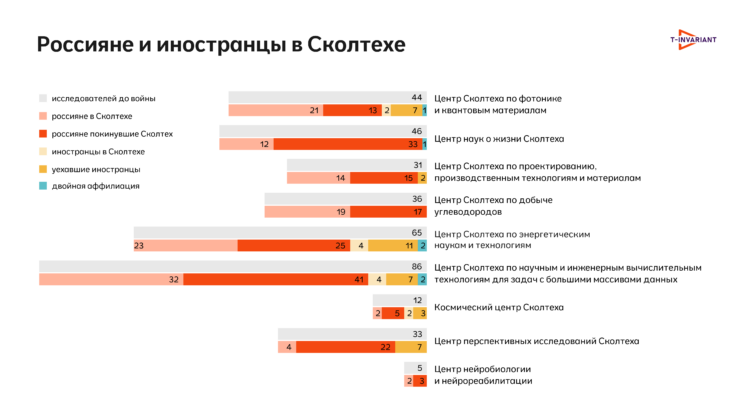






 A Levante questa sera, mercoledì 5 agosto 2026, live alle 18,30, Margherita Furlan dialoga con Antonio Mazzeo e Paolo Borgognone.
 Washington annuncia di essere a poche ore da un’intesa provvisoria di sessanta giorni sulla riapertura dello Stretto di Hormuz.
 Nelle stesse ore un’inchiesta di Reuters rivela che cinque mesi di guerra hanno prosciugato quasi per intero le scorte americane di missili tattici a lungo raggio.
 E a Roma, dentro l’ambasciata degli Stati Uniti, si chiude il settimo round dei colloqui fra Israele e Libano.
 Tre notizie che i telegiornali raccontano separate. Le leggiamo come un solo movimento: la potenza egemone consuma, l’Europa paga, l’Italia presta il territorio. Il magazzino è vuoto, e la diplomazia improvvisa di Washington somiglia molto a un inventario.
 AFFRONTIAMO INSIEME
 L’accordo su Hormuz e chi tratta davvero con chi: Teheran ribadisce che il negoziato è con l’Oman e non con Washington
 L’inchiesta sugli arsenali americani esauriti e cosa significa per la deterrenza verso Russia e Cina
 Le comunicazioni di Giorgetti alla Camera: 21,7 miliardi per la difesa e 14,4 per l’energia, con la flessibilità energetica incastrata dentro la clausola militare
 I 14,9 miliardi del fondo europeo SAFE, prestiti da restituire, e lo scontro sul mandato parlamentare
 Roma sede del negoziato Israele-Libano mentre l’Idf costruisce nuove basi nel sud del Paese dei cedri
 Cosa resta della tradizione di sovranità mediterranea da Mattei a Moro a Craxi
 Perché la borsa festeggia insieme la pace sullo Stretto e il titolo della prima azienda italiana della difesa
 LIBRI DEGLI OSPITI
 Antonio Mazzeo
 La scuola va alla guerra. Inchiesta sulla militarizzazione dell’istruzione in Italia, Manifestolibri
 SOSTIENI CASA DEL SOLE TV
 Senza editori, senza partiti, senza padrini politici.
 Per donazioni:
 Membership YouTube:
 https://www.youtube.com/@CasadelSoleTVChannel
 I LIBRI DI MARGHERITA FURLAN


 SEGUI CASA DEL SOLE TV
 YouTube: @CasadelSoleTVChannel



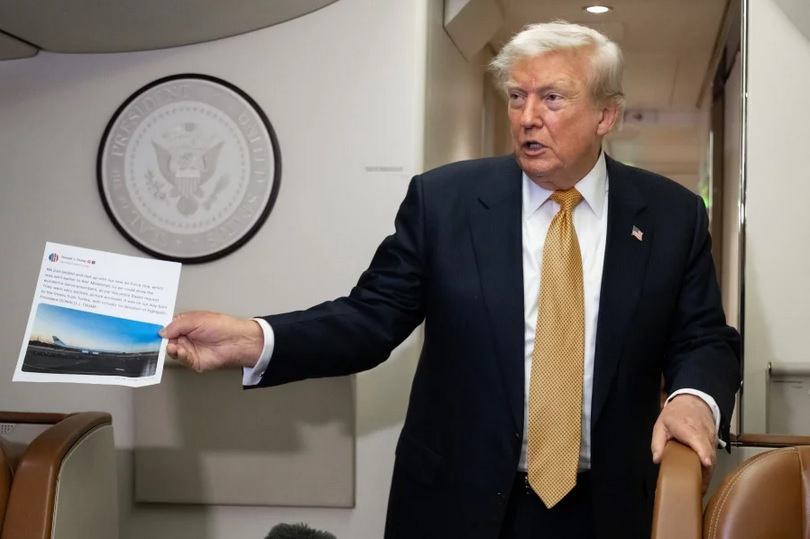
 The technology relies on targeted advertising systems that use precise GPS coordinates. This unclassified location data is freely bought and sold by data brokers, with virtually no restrictions on who can purchase it