Europe is warming more than twice as fast as the global average—a terrifying statistic made all too apparent this summer as heat wave followed heat wave. European cities were never designed for these temperatures, and public health, infrastructure, and tourism are all under strain. Eric Klinenberg arrives in Milan just as “Europe’s third heat wave of the summer entered its fiercest stretch” and sweats his way across the continent to see how trees, shade, water, and other measures are being deployed to adapt urban centers. But with this crisis set to deepen can these experiments really keep pace?
Of all the problems that heat poses for Barcelona, losing some of the hundred and sixty thousand tourists who typically visit each day ranks low on the priority lists of most officials and residents. Some locals have staged protests, chanting “Tourists go home” while targeting visitors with water guns. But tourism employs more than a hundred and sixty thousand people in Barcelona and accounts for around thirteen per cent of its economic output, which explains why, despite concerns that the city gets too many visitors, more than seventy per cent of residents consider tourism beneficial. At midday, when I arrived on La Rambla, the city’s most heavily visited and photographed corridor, the street had little shade and surprisingly few people. At La Boqueria market, normally jam-packed at lunchtime, I found my way to a famously busy bar counter and took one of several open seats.
Cover image: picture alliance / NurPhoto | Jonathan Raa
Summary
Europe faces a dual drone threat, and it is escalating. Small drones regularly disrupt airports and hover over Europe’s critical infrastructure; at the eastern flank, larger military drones are crossing ever more often into EU and NATO territory.
EU member states are struggling to mount an effective response to the drones spotted over their critical infrastructure, and those countries farther from the eastern flank tend to focus disproportionately on this side of the threat.
At the flank, efforts to defend against military drone incursions are resulting in a hotch-potch of NATO, EU and national projects. This risks duplicating efforts and stalling progress towards a common operating picture.
National initiatives at the eastern flank seem the most promising, but the EU still has a role to play in funding and incentivising these efforts. The bloc should also help establish the common operating picture and best practice for legal regulations, and work to improve data sharing.
The EU and member states should then apply lessons from the eastern flank to the related but different threat to their critical infrastructure. That way, they can help Europe move closer to a continent-wide response to both sides of this continent-wide problem.
Today’s problem
On August 5th 2026, a small drone armed with explosives was found at Leipzig airport in Germany. The presence of explosive material marks this out from previous incidents at airports, as does the fact that authorities recovered the drone. But Europe’s new normal is for small drones to disrupt its airports and buzz around other critical infrastructure, including French nuclear submarine bases, Belgian nuclear power plants and German liquefied natural gas terminals. Some of these sightings are likely part of Russia’s hybrid war against Europe. Yet the drones are probably flown from inside European countries or from ships in the North and Baltic seas, and definitive attribution to Russia or any other actor remains elusive.
The countries along Europe’s eastern flank have another new normal to contend with. This entails the connected but different threat of military drones crossing into EU and NATO territory from Russia, Belarus and, because of the Russian aggression against it, Ukraine. The most egregious incursion so far took place in September 2025, when around 20 Russian military drones crossed into Poland’s airspace, leading it to invoke Article 4 of NATO’s Washington Treaty. That episode also prompted NATO to launch Operation Eastern Sentry to increase its vigilance at the border.
Unlike the small drones hovering over critical infrastructure, the origin of the military drones crossing into EU and NATO territory is no mystery. The attribution problem here relates to intention, as Russia can claim—sometimes plausibly, sometimes less so—that incursions at the eastern flank are accidents resulting from its war against Ukraine.
The eastern flank
Russia and Belarus are acting antagonistically towards European countries, while Ukraine is a partner nation and an EU candidate country. But incursions of military drones into EU and NATO territory come from all three countries. The term “eastern flank” thus refers to the EU’s 4,000km border with Russia, Belarus and Ukraine, as well as the Black Sea coast. The flank extends through nine countries: Finland, Estonia, Latvia, Lithuania, Poland, Slovakia, Hungary, Romania and Bulgaria.
Almost a year on from the Poland incident, the member states that line the eastern flank face military drone incursions with alarming (and increasing) regularity. The end of July, for example, saw Romania shoot down three suspected Russian drones in as many days. This followed another incursion in the country in May when a drone crashed into the roof of a ten-storey building in Galati and exploded, starting a fire in one of the apartments. A 14-year-old and his mother were injured, and 70 residents were evacuated. The Romanian military had tracked the drone and deployed two F-16 fighter jets in response to the threat. But the jets were unable to fire at the target for “operational reasons and [because of] certain legal limitations”.
The incidents in Romania lay bare some of the difficulties for Europe in defending its eastern flank against military drones. Over the past year, NATO’s operation has swiftly been joined by a hotch-potch of national and EU projects, including the bloc’s ambitious and wide-ranging European Drone Defence Initiative. But as things stand, military drones still either fly unhindered into EU and NATO territory or are intercepted through the costliest means possible, namely missiles fired from fighter jets.
Police forces across the continent, meanwhile, are struggling to mount an effective response to the problem of the small drones over their critical infrastructure. And countries farther from the eastern flank tend not to make the link between this largely civil threat and the military threat in the east: when the EU first proposed its initiative, for example, western European states were unconvinced that the bloc should fund drone defences at the eastern flank.
But, as this paper argues, all European countries need to act to secure the eastern flank—both to defend EU and NATO territory against military drones and to inform Europe’s response to small drones flying over its critical infrastructure. National efforts at the flank are promising but will likely prove insufficient. The EU will therefore have to spread the costs of defending the eastern flank, as efforts there contribute to the defence of the entire continent against military drone attacks. That small drones flying over critical infrastructure are a problem everywhere should further incentivise all Europeans to speed up their work on drone defence. And as this paper shows, the EU and member states can apply lessons learned at the eastern flank across Europe and reuse technology battle-tested in the east to protect their critical infrastructure.
The dual threat
The two sides of Europe’s drone threat are different, but they still share important similarities: they involve the same tools—drones of one type or another—and some likely have the same perpetrator—Russia. Mapping just a selection of drone overflights of critical infrastructure and incursions at the eastern flank since August 2024 lays bare the extent of the dual drone threat Europe is facing. And every time an overflight of critical infrastructure or incursion at the eastern flank happens, wherever it comes from, Russia learns something about Europe’s ability to fight (or otherwise) against these systems.
Drones over critical infrastructure
Drones are regularly spotted over critical infrastructure across Europe. The German aviation agency reported 227 drone sightings by pilots in 2025. These numbers have been rising steadily since reporting began in 2020, and the 2026 numbers are well on track to surpass last year’s.[1] Such incidents are largely a civil matter, which means responsibility for recording, identifying and countering them falls on local authorities such as police forces.
The overflights near airports tend to grab the most attention for three reasons. First, drones pose an extreme risk to aircraft and have the potential to cause mass casualty events, with the incident in Leipzig perhaps the closest call so far. German newspaper Die Zeitreports that CCTV footage from the airport shows the drone flying towards an Antonov cargo plane parked on the runway, hitting one of the wings and then falling to the ground. It was later discovered on the tarmac by a bus driver, who alerted security. Had the explosives detonated, the consequences could have been catastrophic. But even without explosives, drones have the potential to cause an air disaster if they collide with a plane, particularly if it is taking off or landing. Second, drones near airports cause significant economic harm: Copenhagen airport had to close for four hours in September 2025, while more than 30 flights were cancelled in Munich following drone sightings in March 2025. Third, airport closures tangibly affect citizens, which is likely why they are such common targets in the first place.
But from a security standpoint, equally concerning are sightings over other critical infrastructure like energy hubs and military installations. Drones can, for instance, help hostile operators gather intelligence about the security arrangements at these installations. They could then use this to enable future sabotage or attacks.
Among these sites, drone activity around military installations could be highly consequential. In early 2025, the German ministry of defence logged six instances of drone overflights at Schwesing airbase, a Bundeswehr base where Ukrainian soldiers were trained to use Patriot air-defence missile systems. It is plausible that the drones carried signals-intelligence equipment that could identify soldiers’ mobile phones. Once it had identified the phones, Russia may have been able to locate them again months later at the Ukrainian front line—and with them, the valuable and increasingly scarce Patriot batteries. This is a direct concern for the Ukrainian defence effort. But it also points to a larger problem for Europe, as it illustrates the type of information Russia could be collecting about European armed forces.
It remains unproven where most of the drones used in overflights come from and who controls them. But it is probable that at least some of the drones flying over critical infrastructure are part of Russia’s hybrid war against Europe. For years, Russia has conducted attacks against military and civil infrastructure as well as government entities. Some attacks take place in the cyber-realm; some involve physical sabotage, like igniting air freight packages in Britain, Germany and Poland, and damaging submarine cables in the Baltic Sea. US intelligence also helped Germany foil a plot to assassinate Armin Papperger, the CEO of arms manufacturer Rheinmetall. Sweden, meanwhile, has faced attacks on its telecommunications network. And disinformation campaigns have targeted the whole of Europe for years, including in the aftermath of drone sightings and disruption.
German chancellor Friedrich Merz has noted that Russian agents may be behind at least some of the overflights; Danish prime minister Mette Frederiksen said she could not “rule out in any way that it [was] Russia” behind the airport disruptions in Copenhagen; and Ukraine’s president, Volodymyr Zelensky, has argued that “the drone incidents across Europe clearly show that Russia is prepared to escalate this war and that it has never been just about Ukraine.” Moreover, in 2025 investigative journalists traced several drone flights back to Russian ships in the North and Baltic seas. Since then, a June 2026 report from the International Institute for Strategic Studies has assessed it is “highly likely” Russia conducted a drone campaign against Europe, largely towards the end of 2025. This research also found that the source of some of these drones may have been Russian shadow fleet vessels.
The types of drones used in these operations have not been definitively identified. However, analyses of images as well as eye-witness accounts point to fixed-wing surveillance drones, as well as quadcopter systems. In at least one incident there were reports of a “mothership” drone, a larger fixed-wing system which carries smaller quadcopter drones. The Leipzig drone has been identified as a quadcopter, roughly the size of a microwave oven.
A camera drone at dusk. [picture alliance / dpa | Matthias Balk]
Quadcopter drones
Quadcopter drones are systems with four rotors, which enable them to take off and land vertically, without any type of runway. They are flown via handheld console or smartphone app. Quadcopters have been the typical model for hobbyist drones as they are easy to use and do not require additional equipment. They are also particularly good at hovering in one place and flying slowly, making them the ideal system to follow and surveil people.
Their main vulnerabilities are endurance and range limitations due to weight: unlike fixed-wing systems which can glide, quadcopters require a continuous power supply to fly, thus draining their batteries quickly. As batteries are also their heaviest part, their range is limited. And heavier systems require more power, which means they need larger and heavier batteries. As more civilian systems have entered the military drone space, quadcopters and other multicopters have multiplied on the battlefield.
Still, definitive proof of the types of drone used in overflights or where they come from will depend on police forces apprehending more of them. The fact that local authorities across Europe have been unable to do this could compound a feeling among the public of failure by the state and leave the information vacuum wide open. The lack of information also means it is impossible to distinguish between real sightings and false alarms—like the 2016 case of a drone sighting from an aeroplane which turned out most likely to have been a plastic bag.
European authorities should also be able to stop drones around their critical infrastructure regardless of who flies them. The context of the Russia-Ukraine war has turned the drone threat into a geopolitical problem, yet non-state actors pose their own threat. Given the availability of drones, drone terrorism is a rising security concern—and far-right groups in the US, for example, are reportedly looking into first-person view drones to target law enforcement. But to date no major terrorist attacks by drone have taken place, only some thwarted plans, which is surprising.
But Europe’s drone problem also has a military side, and the continent seems equally unprepared to counter it efficiently and effectively.
Drones crossing the eastern flank
Alongside dealing with overflights, countries along the eastern flank must contend with military drones threatening EU and NATO territory from the east. Such incursions have taken place regularly since Russia began its war of aggression against Ukraine in 2022 and have intensified since 2025.
Only two weeks after the full-scale invasion, a drone (most likely Ukrainian) flew undetected for hundreds of kilometres over Romania and Hungary, before crashing near Zagreb in Croatia. Russian drones came down in Romania in 2023, and in Poland and Lithuania in 2025.
But the number of incidents has grown significantly in 2026. Russian and (more frequently) Ukrainian drones have veered off course since the start of the year, coming down in Finland, Lithuania, Estonia and elsewhere. In May, people took shelter in Lithuania when a drone alert brought Vilnius to a standstill; and across the border in Latvia, both the defence minister and the prime minister lost their jobs over a political response to drone incursions that was deemed insufficient. When the UN Security Council held an emergency meeting over the Galati incident in June, Romania’s minister for foreign affairs noted that it was just one of more than 40 incursions into the country’s airspace in 2026 alone—a number which has grown significantly since then.
Initially such incidents appeared to be accidents, caused by guidance-systems failures, operating errors and interference by electronic countermeasures. But the September 2025 incident in which around 20 military drones entered Poland from different places raised concerns that some might be deliberate provocations. The increasing intensity since then has done nothing to alleviate those concerns. After one May incursion in Latvia, Ukrainian foreign minister Andrii Sybiha said that Russian electronic warfare systems “deliberately diverted Ukrainian drones from their targets in Russia”—not going quite as far as to argue Russia was deliberately sending drones over NATO and EU territory, though this is a possible conclusion.
The drones that crashed in Poland were later identified as Russian Gerberas, an unarmed variant of what was originally the Iranian Shahed-136 loitering munition.
A Gerbera drone downed in Ukraine similar to those that entered Polish airspace in September 2025. [Wikimedia Commons]
Gerans and Gerberas
Russia manufactures its own version of the Iranian Shaheds in the Geran and Gerbera variants.
These are “kamikaze drones”, or one-way loitering munitions, which explode upon reaching their target. Russia is using the drone in ever greater numbers in Ukraine: since 2025, almost 1000 drones have been used in single-night attacks on Ukrainian cities and energy infrastructure. The current Geran iteration, the Geran-3, is a turbo-engined variant that can fly up to 800km, but many different variants exist. When employed in large numbers, they can overwhelm Ukrainian defences. The Gerbera is a lesser-known variant which is generally used as a decoy, or to relay signals for other, armed drones. The average price tag of drones like these is around €10,000.
In response to the incursions, Poland scrambled F-16 fighter jets and several military helicopters. Other NATO states provided support with aerial assets, most notably Dutch F-35s. Together they shot down three of the drones, with the rest crashing on Polish territory, luckily not causing any casualties. Debris was later found in an area spanning hundreds of square kilometres.
While NATO has not disclosed the exact costs of the operation, the missiles the jets fired cost between several hundred thousand and a million euros, depending on the type. Flight hours of F-16s and the much more expensive F-35s run into the tens of thousands of euros. So a single, only partly successful, counter-drone operation cost European countries millions, while Russia likely forked out less than €250,000 to prompt that response.
Drones continue to cross into NATO and EU territory. Sometimes they are intercepted, but more often they simply crash into the ground, occasionally even going undetected until they do. Were European countries to face an attack involving even a fraction of the numbers Ukraine regularly faces, the consequences would likely be catastrophic—and preventing them would be prohibitively expensive. Once the war ends, and if and when Ukraine becomes an EU or NATO member, defences along the western Ukrainian border—with Poland, Slovakia, Hungary and Romania—can move to Ukraine’s eastern border with Russia. In the meantime however, the EU, NATO and member states need to learn from Ukraine to secure the flank themselves.
Drones are a whole-of-Europe problem, which means all European countries need to invest in counter-drone capabilities. But starting at the eastern flank makes sense. Compared with the overflights of critical infrastructure, the flank is a more defined threat in a geographically bounded area. If the EU and member states can build an effective response here, it could inform efforts across the rest of the continent, both in terms of what can transfer to that different context and what cannot.
What a protected eastern flank looks like
Europe’s eastern flank spans different climate zones and topography, urban and rural territory, and forests and agricultural land. Given this and the drone threat discussed above, drone defences will have to be multi-layered. The eastern flank will need a detector layer with several sensor options, a defensive layer with several different countermeasures (“multi-effector”), and the ability to engage several drones at the same time (“multi-shot”). All these systems would ideally feed their data into a common operating picture to create a comprehensive view of the eastern flank. This element will be crucial to detect attacks that may be happening at the same time but hundreds if not thousands of kilometres apart.
Detector layer
The detector layer will comprise various radar and sensor systems. These will have to be spaced along the eastern flank depending on the topography and the presence of buildings, forests, agriculture and similar criteria. Today the eastern flank is monitored primarily through NATO assets and national systems, which focus more on the threat from missiles and aircraft, rather than smaller and slower drones.
Radars offer long-range coverage but can struggle to track smaller drones. Their sensitivity is improving all the time but birds still cause false positives; and as drones can be made from an array of materials, it is possible to manufacture them with minimal, or unusual, radar signatures. Moreover, traditional active radar systems that send an electromagnetic pulse and capture its return signal can be too easy for adversaries to identify. To overcome this problem, passive radar systems that work by sensing changes in the electromagnetic spectrum as objects move through space are in development.
Electro-optical sensors would complement radar. These can identify drones based on visual and temperature identifiers, which helps operators establish what kind of drone they are dealing with. But they require a clear line of sight, making them less usable in urban or forest environments. Unless they are AI-enabled, electro-optical sensors also require human intervention in real-time to verify whether an image is showing a drone or not, and thus increase staffing requirements. Radio frequency scanning, meanwhile, identifies drones by monitoring common frequency bands, though its accuracy is limited.
Finally, Ukraine has had considerable success with acoustic sensors and has installed thousands across the country. But Ukrainian experiences have also shown that these sensors do not work equally well in all contexts: environments with lots of sounds, like forests, urban areas and agricultural land, can hinder their usefulness.
Defensive layer
As with detection sensors, the defensive layer will have to incorporate several different features, from electronic countermeasures to kinetic solutions.
Electronic countermeasures include spoofing of positioning systems like GPS, and radio frequency jamming that blocks the connection between drone and operator. But these systems can be quite disruptive as they often interfere with all systems in range, making them less useful in urban contexts and near airports. Their effectiveness also often depends on continuous transmission, and they only work on drones that require a connection to the operator. This means they would be ineffective against autonomous, pre-programmed and tethered systems.
Electronic countermeasures have proven highly effective in Ukraine. But Russia has developed several workarounds to Ukraine’s efforts since the start of the war, and vice versa. Today Ukraine’s entire front line is GPS denied, so all drones operating there do so without relying on satellite guidance. Electronic countermeasures are also being circumvented by drones carrying with them up to 40km of fibre-optic cable through which signals are sent. This underlines the need for drone defences at the eastern flank to involve multiple systems.
Radio-frequency-based “cyber takeover” aims to take command of unwelcome drones and safely land them. This is a particularly desirable option as it preserves the drone for analysis. Yet it hinges on the cyber takeover’s ability to work on every drone system, including unknown ones.
Finally, Europe’s eastern flank will require a range of kinetic counter-drone tools—as a last resort for when electronic measures have failed to take down drones. These should include rifle-mounted systems, larger cannon-type systems, guided missiles and drones to fight drones. While generally effective, most kinetic solutions create the danger of collateral damage, as both projectile and drone come crashing down. During the Polish drone incursion in September 2025, the only property damage was caused by a missile that aimed to shoot down the drones.
Ukraine is now using interceptor drones, or drones that take out other drones. These include several systems, like drones with nets or those that ram hostile drones or blow up warheads that come near. (Incidentally, the existence of these systems has led to some confusion over the term “drone wall”, as some reports have suggested that it would be a wall made of drones, a misunderstanding helped along by the fact that a German firm had proposed such a project previously.)
Other countermeasures such as lasers, electromagnetic pulses, strong light and microwave weapons exist, but have not yet matured sufficiently and face similar limitations to those mentioned above, such as the need for line-of-sight or the risk of collateral damage.
Command and control
Crucially, Europe needs a command-and-control node to collect data. For drone defence to be truly integrated and European, the goal should be for this data to feed into a common operating picture that covers the entire flank, from Nuorgam in northern Finland to Burgas in southern Bulgaria. How to respond to a given threat should remain a more local decision, but information-sharing will still be crucial to understand any attack situation. It is equally desirable for European countries to exchange information with NATO’s Integrated Air and Missile Defence. AI and automation may also prove useful, though it will be necessary to heed the lessons of over-reliance on technology and automation, for instance, from the October 7th attacks against Israel.
*
Building a multi-layered system of systems like this on the eastern flank may seem a daunting task, not to mention an expensive one. But as the alternative is for EU and NATO countries to continue spending tens of thousands of euros to shoot down a single drone, or not to detect or shoot it down at all, it is a task in which the EU and all European countries have a stake.
The progress so far
The work has already begun. The European Commission has been most vocal about its plans to build up an ambitious “drone wall”, now rebranded as the European Drone Defence Initiative. NATO launched Operation Eastern Sentry in September 2025 and runs counter-drone trials with companies. At the national level, many border states are pursuing counter-drone efforts of varying ambition and scope. But the eastern flank remains a long way away from the defences described above, and the lack of coordination could undermine both the initiatives’ efficacy and their cost-efficiency.
The EU
By accident of the calendar, European Commission president Ursula von der Leyen’s State of the Union address took place just a day after the Poland incident in 2025. In her speech, she called for the EU to establish a “drone wall” that would be the “foundation of a credible European defence” and announced the “Eastern Flank Watch” to conduct real-time surveillance of the eastern border.
Von der Leyen offered more details in another speech at the European parliament a few weeks later, noting that using expensive fighter jets to take down cheap, mass-produced drones was “absolutely not sustainable”. Instead, the drone wall should be a system that performs “swift detection, swift interception, and when needed, swift neutralisation”. In October 2025, the informal European Council meeting in Copenhagen endorsed these projects.
Almost a year on, and the European Drone Defence Initiative and Eastern Flank Watch are two of four EU readiness flagship efforts, alongside the European air and space shields. Yet the Drone Defence Initiative and the Eastern Flank Watch are linked in a way that makes it difficult to distinguish between the two. The official commission communication notes, for example, that “anti-drone capabilities will form a core component of the Eastern Flank Watch flagship”. In any case, the projects aim to reach initial capacity by end of this year, and full capacity by end of 2027 and 2028, respectively.
While the intention of the EU’s effort is good, its stated scope sounds overly ambitious. For example, the October 2025 Defence Readiness Roadmap 2030 notes that “the counter-drone network will be adaptable for civ-mil and dual use purposes and help deal with non-defence related threats or other hazards common to every EU border. This includes border protection, weaponisation of migration, protection of critical infrastructure and transnational organised crime.” Von der Leyen expressed similarly wide-ranging aspirations in her speech to parliament, and added guarding the southern flank to the mix as well as countering the Russian shadow fleet—all with the aid of autonomous systems.
Such an all-encompassing proposal appears set for failure, however, and likely only became so inflated in the first place to placate member states away from the eastern flank.
NATO
Today, NATO is the most active body in fighting drone incursions. After Poland invoked Article 4, the alliance launched Operation Eastern Sentry which increased vigilance along the eastern flank. In many instances when drones have been shot down, it was by fighter jets under NATO command.
NATO also plays a useful role in testing counter-drone technologies for member states to procure. The alliance is, for example, running exercises under its “Layered Counter-Uncrewed Aerial System (UAS) Initiative Crucible”. The first of these took place in Romania and focused on how various sensors, effectors and command-and-control systems could operate as a single, layered defence. Over 250 systems were involved, including radars, acoustic and radio-frequency detectors, electronic warfare tools, and kinetic and non-kinetic effectors. The exercise’s scenario involved drone swarms flown over the Black Sea and included representatives from Ukraine who advised on drone tactics and evolving threats.
Still, NATO’s approach remains primarily focused on fighter jets, as they are at the alliance’s disposal. Any longer-term, more cost-effective solution will depend on member state buy-in and member state efforts.
National efforts
For the moment, national-level counter-drone efforts look most promising. Yet the level of development varies significantly along the eastern flank.
Poland’s plans seem most advanced. In January 2026, the Polish government announced the launch of an “anti-drone wall”, reportedly Europe’s largest counter-drone system. The project is estimated at €3.8bn and brings together a consortium of three companies: the state-owned Polska Grupa Zbrojeniowa, the Norwegian firm Kongsberg and the Polish company Advanced Protection Systems.
According to Poland’s defence minister, the system will include 18 anti-drone batteries, 52 firing platoons, 18 command platoons, and 703 military trucks and reconnaissance vehicles. The sensor layer will include short- and medium-range radars, passive electronic detection sensors and electro-optical systems. The defensive layer will be based on Kongsberg’s “Protector” family of weapons and include 35mm anti-aircraft guns, capable of firing programmable and high-velocity ammunition; 30mm cannons; 12.7mm multi-barrel heavy machine guns, intended for short-range threats; laser-guided rockets; and interceptor drones. It will also include non-kinetic defences, including electronic warfare capabilities. Deputy defence minister Cezary Tomczyk noted that different systems would be used in different contexts. Referring to the danger from debris, he said: “Some of this is for use only in extreme or war conditions. For example, these multi-barrel machine guns are difficult to use in peacetime, because everything that goes up must go down.”
The Polish initiative’s command-and-control layer integrates fire control, system management and tactical situational awareness, enabling real-time coordination of sensors and effectors. Initial operational capabilities are scheduled for delivery before the end of 2026, with the aim of it being fully operational by the end of 2027. For Poland, the drone wall is only one element of stronger fortifications on its borders with Belarus and the Russian Kaliningrad exclave.
In cooperation with the European Commission, Poland has also announced the creation of a “drone valley”, a hub of drone-related research and testing in the south-east of the country, in Rzeszow—a city that has become the hub for logistical support to Ukraine. Companies are increasingly entering the defence field, so such a hub will host some of the trade fairs and hackathons on counter-drone measures that are becoming more common in Europe.
Further north in the Baltic countries, in February 2025, a consortium of several companies led by the Estonian Defence Industry Cluster initiated the “Baltic drone wall”. The effort includes companies from Poland and Finland, but a request for funding from the EU was rejected in March 2025. Media sources report a multi-layered short-range drone countermeasure system, and efforts to build a common operational picture. But so far, nothing comprehensive has come to pass. Still, in June Estonia began deploying its first fixed drone detection and monitoring systems along its border with Russia. The systems are installed on three sections of the border between the Luhamaa crossing and the tri-border area where Estonia, Latvia, and Russia meet.
Finland’s government announced in April 2026 that it is allocating €44m to the Border Guard to procure drone detection systems, and fixed and mobile counter-drone technologies. It has also been working on drone detection along the border for several months.
As of summer 2026, Romania is experiencing the most frequent incursions. But it only recently began looking into counter-drone systems. The country is now investing heavily in its defences, specifically its aerial defences, which include counter-drone systems. These initiatives are in part financed by EU loans through the re-armament initiative SAFE. The country has also turned to NATO as well as allied countries to help it fight against drone incursions.
In Bulgaria, drone defences have not yet become a priority. The country is, however, looking into the acquisition of counter-drone systems, funded through the EU loan mechanism. Hungary and Slovakia were absent from initial EU drone defence discussions with the other eastern flank states. Slovakia joined later exchanges and has looked into the acquisition of counter-drone systems, but it does not appear to have a more comprehensive counter-drone initiative. In July, Slovakia hosted a NATO test of emerging capabilities which included counter-drone technology, though this was not its main focus.
How to turn the hotch-potch into a whole
It is positive that the EU, NATO and the eastern flank states are working on solutions. But too many initiatives exist, which risks duplicating conceptual work and creating uncertainty for companies that do not know who to work with. The further along individual projects are, the harder it will be to combine them and to facilitate the kind of information exchange needed for a common operating picture. To ensure coherence and interoperability, especially at the data-exchange level, more coordination needs to happen now.
The EU should view this as an opportunity to fulfil its ambitious goal. Although it should drop the aim to create a drone wall that can do just about everything, it can play the coordinating role of bringing the relevant actors together. To do so, the EU should focus on the following five priorities:
Support more ambitious and advanced efforts like the Polish and Baltic state counter-drone initiatives. The EU should, for example, identify where gaps or barriers remain in these efforts and where there may be risk of duplication. This would enable the EU to direct its funding, as well as its regulatory and legal expertise, in ways that accelerates those efforts.
Fund and incentivise counter-drone efforts in eastern states that are not yet pursuing drone defences with the required urgency: Bulgaria, Hungary and Slovakia, but also Romania, would benefit from European finance and guidance in scaling up the ambition and scope of their defences.
Encourage member states to share best practices, including on regulation and questions of jurisdiction, and establish links between actors and companies already in the field. For example, Germany has reworked its national law to allow the armed forces to intercept drones in extreme cases. In France, a new law allows private companies to ensure protection against drones for civilian infrastructure. There is no reason why every EU member state needs to work out these laws for itself.
Create, in cooperation with NATO, common standards and certifications for quality control and to ensure products from different companies are interoperable. This could take the form of a suitability certificate for companies whose systems have proven their usefulness in exercises.
Establish a joint operating picture by building a command-and-control node in which data from all eastern flank detection stations are collected. This would enable truly European coordination to bring together national efforts and turn a piecemeal effort into a militarily useful whole.
The EU is already organising virtual meetings between the involved states. It should now develop this coordinating role to share legal best practices and develop common rules regarding when and how military drones can be intercepted in a civilian setting. For example, one reason the drone flying into Romanian airspace in May was not intercepted was uncertainty over the legality of interception: “Ukraine is at war, but Romania is at peace”, a military representative said. All eastern flank states share the same situation. And the fact that many of the national efforts are funded with the help of the SAFE defence loan programme boosts the EU’s legitimacy in taking on this role.
And apply the lessons to the rest of Europe
Organisationally, national police forces deal with drones over critical infrastructure. And the EU is well-placed to help spread insights from counter-drone operations at the eastern flank farther west. Technologically, member states’ experiences at the eastern flank also hold several lessons for the rest of the continent: which systems work and in which environments, for example, and how different technologies can work together. Again, the EU can help to compile and share this valuable information, reducing the burden on member states to collect it themselves.
Countering drones flying over critical infrastructure will not require something quite as elaborate and unified as defences at the eastern flank:
Detector layer: Lessons from the eastern flank on how best to install detection layers and which systems work best can inform local authorities’ decisions about what would work near critical infrastructure. Here, the EU and local authorities will need to take different environments into account: critical infrastructure is often in more urban areas, whereas the eastern flank is generally more rural. Yet the flank includes a multitude of different environments, including forests and swamps, and agricultural and some urban areas, which means detection systems will be tested in numerous areas that can still inform how they might perform nearer cities.
Defensive layer: The EU and local authorities should apply a similar principle to the defensive elements. This includes lessons on how to best layer countermeasures, and which systems work best in which environment. Not all systems that operate at the eastern flank will qualify for deployment in civilian contexts: kinetic systems in particular, would only be used in the most extreme cases to protect critical infrastructure from an immediate threat. But insights from electronic countermeasures and cyber takeover may be transferable to a civilian context.
Information exchange: The EU and member states should establish an information exchange on drone incidents near critical infrastructure throughout the union. Countering the threat to critical infrastructure does not require the joint operating picture that military defence does. But collecting and sharing information on drone overflights (as well as other hybrid attacks) over critical infrastructure would allow authorities to detect concerted attack operations.
Today’s solution
Europeans face a dual drone threat over their critical infrastructure and at the eastern flank. They need to address both sides of this problem. While there is no wall to be built and no umbrella to open over the entire continent, insights from one side of the threat can inform the other.
The EU should start by turning its overly ambitious Drone Defence Initiative into something operable. To do so, it should focus on supporting existing national initiatives on the eastern flank and incentivising budding ones. It should also prioritise data-sharing and establishing a joint operating picture, and collecting information on which systems work in what context. The EU should then use this information to help all member states counter drones beyond the eastern flank.
This policy brief focused drone defence—a crucial skill for all European states as drones are without question a threat they will continue to encounter. Yet, with regard to the drone threat from Russia, a better option than to defend against overflights and incursions is to stop them from happening in the first place: no build-up of European defences can replace diplomatic, political and military efforts to end the Russian aggression against Ukraine and Russia’s hybrid attacks against European nations; even if better defences would contribute to deterrence by denial in the meantime.
About the author
Dr Ulrike Franke is a senior policy fellow at the European Council on Foreign Relations, based in the Paris office. Her areas of focus include German and European security and defence, the future of warfare, and the impact of new technologies such as drones and AI on geopolitics and warfare.
[1]DFS Deutsche Flugsicherung, Drone Report, July 2026.
A ride from Tangier, the largest city in northern Morocco to the Spanish enclave of Ceuta takes less than two hours. The border crossing has its own, sleepier rhythm, quite different from the tourist-driven bustle of Tangier. In Ceuta, traders run their errands, Morocco-based expats make visa runs and Spanish people catch ferries to the mainland. On most days, the border crossing seems almost ordinary. The fences, though menacing and topped with razor wire, are less imposing up close and officers make small talk with the expats waiting to get their visas stamped.
Then there are those days when the routine collapses and Ceuta becomes the center of Europe’s migration debate.
The territory is a geographic and political paradox. Despite falling under Spain’s — and the European Union’s — jurisdiction, it sits on the northern edge of Africa, surrounded by Morocco and separated from the Spanish mainland by the Strait of Gibraltar. It is an entry point to Europe, yet not fully part of the Schengen zone, requiring additional immigration checks for travelers crossing to the mainland.
When more than 60,000 people — mostly Moroccan men and teenagers — rushed into Ceuta (almost doubling the coastal city’s population), the images reverberated across Europe. There seemed to be no dramatic buildup to the incident, nor any obvious explanation why thousands of people chose that day to make their way to Spain.
Europe’s far-right politicians seized the narrative, portraying the influx as an imminent invasion, warning that the men were on their way to “Calais” and “Germany.” Italy temporarily suspended the Schengen free movement regime with Spain, meaning travellers arriving by sea and air would now be subject to border checks. Spain threatened to take “proportional measures” in response and did so at midnight on August 8, when it imposed similar checks for visitors from Italy.
The standoff between European governments — led by socialist Pedro Sánchez in Spain and conservative Giorgia Meloni in Italy — is not simply a test for European border security. Instead, what transpired in Ceuta poses bigger questions about the shifting nature of state sovereignty itself: How are we to understand borders, if they’re shaped by forces beyond the state’s reach?
Borders are not just lines separating geographic entities. They are systems built on surveillance, diplomatic bargains and digital networks. Ceuta is the place where all three converge. Its borders, already protected by the sea, have been fortified with steel, outsourced through diplomacy and tested by coordinated rumors.
Steel
The crossings into the enclave are blocked by a multi-layered barrier of fences and wire. Morocco administers a fence separating it from the neutral area between the two countries. Two fences on the Spanish-controlled territory follow, creating an enclosure monitored by the Spanish Civil Guard. The physical infrastructure is reinforced with motion sensors, thermal and CCTV cameras, maritime communication systems and facial recognition technology.
Even the sea has now been incorporated into the border system. Just three days after the Ceuta border chaos, Spanish authorities installed a 500-metre floating barrier and anchored naval buoys to create another monitored enclosure.
The EU has funded most of the fortifications. The Border Violence Monitoring Network’s report says that since the construction of Ceuta’s border barrier in the 1990s, the EU has spent tens of millions of dollars to make the Spanish-Moroccan frontier more secure, technologically up-to-date and heavily surveilled. With the recent mass crossing, Spain will now receive additional emergency financial aid.
Yet, the architecture of physical surveillance, built and re-built with European money for decades, cannot prevent the human cost of attempting to cross a border. In Ceuta alone, at least 100 people died according to local authorities. “The rationale behind increasing surveillance is that you'll be able to save lives and smash the [people trafficking] gangs, right?” asked Nathan Akehurst, who has written about Ceuta’s border for Jacobin. “Where was that in this case?”
Diplomacy
Akehurst’s question touches upon the human-centered rationale for heavy border surveillance. But there is also a political one. It is not only Spain, as a EU member, that receives funds to manage migration. Morocco has received €427 million since 2015, for migration-related expenses, including technology and training. That’s part of Europe’s wider strategy of border externalization, a practice where Europe moves border control beyond its own territory.
The practice has been around for decades, but went into overdrive after 2015, when approximately 1.3 million people, mostly from Syria, came to the continent seeking asylum. Many of them reached Europe through Turkey, prompting the EU to strike a deal with Ankara: €6 billion in funds, visa liberalization and EU-ascension negotiations in exchange for stricter border controls and curbing irregular arrivals to Greece. The EU also agreed to resettle within Europe one Syrian from Turkey for every Syrian returned to Turkey from Greece. But by 2020, when the EU failed to resettle Syrians, Turkey’s president Recep Tayyip Erdoğan declared he would no longer prevent migrants from crossing Turkey en route to the EU.
“Border externalization is basically paying other countries, but also subjecting them, through a carrot and stick approach, to performing functions that are usually performed by a state itself at their borders,” explained Josephine Solanki from the Transnational Institute, an Amsterdam-based think tank. It leaves space for leaders like Erdoğan, Solanki added, to bargain for influence by turning migrants “into political leverage.”
The cost of outsourcing borders is not just material. It is measured in control that Europe cedes to the foreign governments it relies on for migration policy enforcement.
Relatives and friends waited by a fence topped with barbed-wire for the return of people who had previously crossed into Ceuta. Spanish authorities claim to have sent almost everyone back to Morocco. Abdel Majid BZIOUAT / AFP
In Ceuta, migrants claimed local authorities did not stop them from crossing the border. A young Moroccan man told the New York Times a day after the event: “They opened the border and let everyone go by.”
Border outsourcing agreements were made, among others, with authoritarian regimes in Tunisia, Egypt and Libya, where EU funds were used to detain migrants and quell domestic protests, rights organizations say. Alliances with “deeply unreliable and authoritarian actors” in the name of stability, said Nathan Akehurst, “is short-termist, insane and loses Europe any credibility it has left.” These alliances also allow Europe to “shift the blame to the Moroccans, the Eastern Libyans, the Turkish or whoever decides to take advantage of that moment.”
Rumors
It is yet to be revealed who, if anyone, has taken advantage of the mass crossing into Ceuta. Local and international media have uncovered now-deleted posts that shared tips on routes and equipment for the journey. One of the main networks was called Hrig Sebta network — “Sebta” being the Arabic name of Ceuta and “hrig” being the Maghrebi term for undocumented migrants, literally referencing the burning of identity papers.
In the wake of Ceuta, European ministers pledged to tackle online misinformation to avoid migration crises, but remained cautious when asked about thousands of posts reportedly linked to Russia. Other theories attributed the crossing to Morocco’s tensions with Spain over its closer ties with Algeria, or to Spain’s position on Palestine.
But those rumors, and what appears to be a weeks-long coordinated online campaign behind them, reveal something deeply human that fences can’t deter: movement that is spurred by hopes for a better life.
“[The crossing] would have happened anyway at some point,“ Akehurst argues. “There would have been a crossing because all of the circumstances that generate that are already there before someone with a twitter account throws a match on the fire.”
Yet, let’s pause at the match. It’s not about someone with a social media profile creating chain messages. It is about the ecosystem that can jeopardize borders by creating information flows, turning rumors into perceived opportunities.
Moroccan newspaper TeleQuel already published a report about social media posts amplifying the next hrig — another attempted crossing into Ceuta — on August 15.
When packaged to a hungry audience, rumors carry the currency of truth. They’ve driven migration long before social media was even conceptualized. Now those rumors speed through digital space owned and operated by private companies not prone to accountability and sitting well outside the reach of any single state.
And the EU has understood that for years. “It is necessary to structure the information space, as we have organized in the past the territorial space, the maritime space and the air space,” Thierry Breton, the European Commissioner for Internal Market of the EU said back in 2018. He warned about Big Tech companies treating digital space as a no-man’s-land that they would write rules for.
The no man’s land between Morocco and Spain appears calmer now. But the turmoil of the crossing revealed a new, digital dimension to border governance. Information has always found a way to spread; digital platforms have given it new channels: ones which allow those behind the information to remain faceless, while the information itself passes from screen to screen. It reaches a boiling point, spills over from the digital space and then can be disappeared, even before anyone has had a moment to scroll back.
The United Kingdom lost its global empire by the mid-twentieth century – and with it, its status as the world’s pre-eminent military power.
Today, according to the Global Firepower Index, Britain ranks as the world’s eighth-strongest military, while the IMF places it as the fifth-largest economy, just marginally ahead of India.
Yet in one domain it still stands at the very top: the shadowy world of intelligence and spycraft.
MI6, the UK’s foreign intelligence service, has been ranked as the most powerful foreign intelligence service in Europe ahead of France and the Netherlands, according to a peer review.
The British service topped a field of 25 countries, finishing well ahead of France’s DGSE in second place.
The British intelligence agency scored 251 points in the research and was commended for its expertise in recruiting high-level informants and penetrating the ruling elites in Russia, China, Iran and Turkey, according to the review by 60 professionals from 25 countries.
The review was conducted by French magazine L’Express, which contacted people in state services de renseignements (intelligence services) to rate their counterparts in the Western-allied countries.
After MI6, France’s General Directorate for External Security (DGSE) finished in second place with 169 points for its global reach and operational capability, the Times reported.
Notably, there was a gap of 82 points between first and second place, underscoring MI6’s huge lead over its continental rivals.
The MI6 headquarters at Vauxhall Cross in London.
The Netherlands came third with 97 points. Ukraine was fourth with 77 points, and Germany was fifth with 62 points, followed by Sweden, Norway, Estonia, Poland and Denmark. Slovakia was rated the weakest.
The UK spy agency was praised for its global reach and for its long-term human intelligence (HUMINT) work, recruiting high-level sources and penetrating elites in top adversary countries, such as Russia, China, and Iran.
MI6 was also praised for its patience, often investing in developing sources for decades. The agency was also praised for its willingness to use bold tactics.
A former head of the DGSE said: “The British have the ability to play the long game, investing in sources over a 10-year horizon, somewhat like the Russians. And they have a taste for dirty tricks.”
Olivier Mas, a senior DGSE officer until 2017, pointed to recruitment as a factor.
He said “all European intelligence services draw inspiration from British methods” and noted that “the best from Cambridge and Oxford join MI6.”
As many as eight out of the last 10 MI6 chiefs attended Oxford or Cambridge.
These strengths of MI6 have practical advantages.
For instance, Britain was the first to warn Ukraine about the likelihood of the Russian invasion that began in February 2022.
London has also been one of the staunchest allies of Kyiv during the war. Less than six weeks after the Russian invasion on February 24, 2022, British Prime Minister Boris Johnson also visited Kyiv and promised Ukraine full support.
The exploits of MI6 are also recognized by the CIA, the US foreign spy agency.
Ralph Goff, a former chief of operations for Europe and Eurasia at the CIA, told the magazine: “The British are in the lead on the Ukrainian file. We are right behind them.”
Robert Gorelick, a former CIA station chief, added: “The United Kingdom has by far the strongest secret services in Europe. MI6 is extraordinary.”
Notably, last year, Blaise Metreweli became the first woman ever to lead MI6, taking over from Sir Richard Moore.
Earlier in 2022, Israel’s spy agency Mossad announced that a female officer, known only as Agent “A,” has assumed the post of Director of the Intelligence Authority (parallel to the Head of the IDF Intelligence Branch), the first woman in the history of the Mossad to hold the office.
While MI6 was praised for its human intelligence, the French spy agency DGSE was rated as one of the world’s best in counter-terrorism.
The service is renowned for its clandestine operations to “eliminate” people deemed a threat to French security. François Hollande, the former French president, spoke publicly about ordering at least 40 operations to assassinate “high value” targets in the Middle East and Africa, according to a 2017 book.
A Polish intelligence executive told L’Express: “It is the only service in continental Europe with near-global reach. They combine technical collection, human intelligence and operational action capabilities.”
A Brief History of MI6
MI6, formally the Secret Intelligence Service (SIS), was established in 1909. At that time, due to the growing fears of German espionage, Britain established its own spy service, known as the Secret Service Bureau.
It had two divisions: the Home Section, which later became MI5, was responsible for domestic security, and the Foreign Section, the forerunner of MI6.
The Foreign Section was led by Captain Sir Mansfield Cumming, a Royal Navy officer. He became the first Chief of the service and signed documents with a green-ink “C” – a tradition that continues to this day. The service is still headed by a Chief known simply as “C.”
The service got its initiation by fire just five years later during the First World War when it ran several agent networks behind German lines in occupied Europe.
After the war and German defeat, the newly-established Soviet Union became its primary theatre of operation.
Again, during the Second World War, it worked in close collaboration with American and Free French allies, and had important links to the codebreakers at Bletchley Park.
Bletchley Park was where Alan Turing and other agents of the Ultra intelligence project decoded the enemy’s secret messages, most notably those that had been encrypted with the German Enigma and Tunny cipher machines. Experts have suggested that the Bletchley Park code breakers may have shortened the war by as much as two years.
After the war, it helped establish a lasting partnership with the newly created CIA.
During the Cold War, once again, the service’s primary target became the Soviet Union and its allies.
However, its reputation suffered severe damage from the discovery of the Cambridge Five spy ring, a group of five British elite intelligence officers – Kim Philby, Donald Maclean, Guy Burgess, Anthony Blunt, and John Cairncross – who spied for the Soviet Union from the 1930s through the early 1950s. Recruited while students at Cambridge University, they leaked thousands of secret documents to the Soviets.
However, MI6 was also able to recruit some high-profile Soviet spy agency KGB agents as its informers.
For instance, a senior KGB officer, Oleg Gordievsky, became an informer for the British spy agency. Gordievsky was one of the highest-ranking Soviet moles ever handled by the West.
Over more than a decade (1974-1985), he provided MI6 with extraordinary intelligence on Soviet intentions, agent networks, and the Kremlin’s thinking. His reporting is widely credited with helping avert a potential nuclear confrontation during the 1983 Able Archer crisis when the Soviets misread a NATO exercise as preparation for a first strike.
In 1985 MI6 successfully exfiltrated him from Moscow in a daring operation, code-named Pimlico, after his cover was blown.
Recently declassified documents suggest that MI6 also provided valuable inputs to India on Sikh separatist activities and Khalistani terrorists during the early 1980s.
Since the end of the Cold War, priorities have shifted toward counter-terrorism, cyber threats, nuclear proliferation, and state actors such as Russia, China, and Iran.
MI6’s work is also credited with uncovering the global nuclear black market network developed by Pakistan’s disgraced nuclear scientist A.Q. Khan, who was clandestinely supplying nuclear secrets, blueprints, and components to many countries, including Iran, Libya, and North Korea.
However, it must be noted that due to the very nature of spycraft, often operating in shadows, many of MI6’s most daring operations remain classified and will be known only much later.
Nevertheless, the recognition of MI6’s clear lead over other European intelligence agencies – by former and serving spies themselves – stands as a rare testament to the UK’s enduring soft power, which has survived the end of its empire and the loss of its former military and economic pre-eminence.
Sumit Ahlawat has over a decade of experience in news media. He has worked with Press Trust of India, Times Now, Zee News, Economic Times, and Microsoft News. He holds a Master’s Degree in International Media and Modern History from the University of Sheffield, UK.
He can be reached at ahlawat.sumit85 (at) gmail.com
This story originally appeared in Professor Richard Wolff’s Substack on July 21, 2026. It is shared here with permission.
Deeply divided by nationalism and deprived of its vast colonies by the last century’s catastrophic two world wars, Western Europe has been in decline ever since. Recently, that decline has become drastic and desperate as Western Europe falls ever further behind — economically, militarily, and politically — today’s two superpowers: the US and China. Mediocre and unpopular leaders reflect Western European decline. They bet and built their careers on accepting junior partner positions vis-à-vis the United States. But Europe’s decline now threatens to split Europe apart. Inside each nation, rich and powerful minorities use their social positions to sustain their wealth and power while the masses bear most of the burdens of decline offloaded onto them by the rich and powerful. The problems flowing from these cumulative developments are approaching points of social explosion. Despite the lessons taught by the two world wars, many Western European leaders once again provoke and prepare for a war, this time against Russia, notwithstanding the awful risks of nuclear weapons. One key question to ask: why is this happening?
From 1945 to 1990, Cold War set Western European nations against the USSR and its Eastern European allies in many ways and on many levels. Yet that war remained cold. In 2026, after more than three decades of post-Cold War peace, a military war between a largely unified Europe (East and West) and post-Soviet Russia seems imminent. Such a war has been prepared by NATO’s growth, its moving eastward toward Russian borders since 1990; by Russia’s 2022 invasion of Ukraine; and by the escalations of their hostilities by both Russia and Ukraine since that invasion. War between much of Europe and Russia now looms.
US President Donald Trump used both his presidential terms to distance the United States from its European allies in NATO. Among his provocative, unilateral statements and actions were heavy tariffs on imports from European countries. In exchange for some reduction of those tariffs, Trump demanded and obtained tribute from European Commission President Ursula von der Leyen (over $1 trillion in committed purchases of liquified natural gas plus investments by Europe in the United States). He also reduced US support for the war against Russia in Ukraine. That war thus became a mostly European project.
As the US withdrew from its former close alliances with Europe, the latter’s leaders developed an increasing hostility toward Russia. They demonized the Russian leader, Vladimir Putin. Where Trump notably lessened hostility to Russia, his European counterparts intensified theirs. After Russia invaded Ukraine in 2022, Europe and the US rushed to bolster Ukraine’s defense beyond the huge assistance they had already provided to Ukraine since at least 2014. After February 2022, Europeans provided Ukraine with still more support in finance and weapons. By 2026, many observers in Europe and Russia and beyond predicted a Russo-European war as imminent. Our goal here is to explain why this dangerous situation arose.
World Wars I and II fatally weakened capitalist colonialism. The British, French, German, Dutch, Belgian, Russian and Japanese colonialisms had especially escalated competitive clashes into two catastrophically self-destructive wars. This allowed movements of the colonized people finally to defeat the weakened colonizers and win political independence. The different anticapitalist movements that had blossomed earlier in 19th century Europe allied themselves with anticolonialism especially in the Soviet revolution of 1917 and the Chinese revolution of 1949. A complex, shifting relationship between anticolonialism and anticapitalism continues to evolve in both the Global South and the former colonial powers.
As the sole heir of all other capitalist colonialisms, the US led and organized capitalism’s counteroffensive against the USSR, socialisms and communisms generally, and their alliances with anti-imperialism in particular. It did so by mobilizing Western Europe, Canada, and Japan as major subordinates in a globally hegemonic bloc.
The private capitalist classes atop each colonialist nation had understood the colonies’ importance for their profits and thus for their imperial economies. They went to war in large part to retain their colonies. After the two world wars, they faced, separately and together, momentous challenges to their existence. As their empires dissolved in wars of independence, capitalists’ profits and their national economies were threatened. Worse still was a potential alliance linking ex-colonies, the Comintern nations, and those capitalists’ own domestic socialist and communist parties and unions. Fearing such developments, nothing less than the survival of 20th century European capitalism seemed at stake for European capitalists and their supporters.
To undo this threat, Western Europe appealed to the post-World War II global hegemon: the United States. Within a few years of 1945, the US had scooped up much of what European and Japanese colonialisms had lost. US capitalists moved into newly independent ex-colonies to widen and deepen their economic dependence via the dollar as world currency, through both US trade and investment. European capitalists had to settle for positions as junior partners of their US counterparts, or else lost everything. Europe as a whole followed suit and became the junior partner of the US in most other dimensions (NATO, geopolitics, financial and cultural institutions, etc.).
Keynesian economics added a scientistic rationale — using monetary and fiscal policies to moderate business cycles — to the political necessity of welfare state expenditures.
As the sole heir of all other capitalist colonialisms, the US led and organized capitalism’s counteroffensive against the USSR, socialisms and communisms generally, and their alliances with anti-imperialism in particular. It did so by mobilizing Western Europe, Canada, and Japan as major subordinates in a globally hegemonic bloc. The US could do this because it had suffered far less than any of the other capitalist colonial nations from the two world wars. Indeed, World War II had extracted the US from capitalism’s worst ever crash. Its economy was stronger in 1945 than it had been for many years, whereas in all the former colonizing nations the reverse was the case. That economic strength contributed to its dominant military power.
US hegemony defined itself as a moral crusade against a great evil, the USSR (equated with communism). The US was “the leader of the free world” pitted against an unfree world — the USSR, Eastern Europe, and, after 1949, China. The latter were all demonized as anticapitalist dictatorships, which made them enemies of “democracy” as championed in and by the free world. On that basis, US hegemony followed as the necessary condition to “contain” the unfree world, to prevent its spread. The US-led “free world” could and would guarantee containment by means of global military bases, the world’s greatest military arsenal, ideological campaigns, political isolation, and economic discriminations. The world thus entered into a Cold War between 1945-1990 punctuated by military — hot — wars when the US deemed them necessary (for example, in Korea and Vietnam).
US hegemony also included domestic campaigns inside both Europe and the US aimed at containment. Those campaigns all featured two parts. One was a set of “welfare state” or social democratic benefits for working classes. Leading politicians in North America, Western Europe, and Japan installed those benefits. Many feared that not doing so would influence working classes toward socialism and communism. In the US, this meant perpetuating the 1930s New Deal into the 1970s. Successive leaders, Republican as well as Democratic, added Medicare to Social Security, regularly raised minimum wages, gave special attention to the non-white and non-male victims of systemic discrimination, subsidized higher education via massive public institutions, and subsidized home ownership loans. Such state interventions delivered a much less harsh life for working classes than any prior private capitalism had ever done. Keynesian economics added a scientistic rationale — using monetary and fiscal policies to moderate business cycles — to the political necessity of welfare state expenditures.
capitalists supported government social welfare spending because it came not from more taxes on them, but rather from national budgets’ defense savings. The latter were benefits from European subordination to NATO and its US leadership. That subordination included mostly endorsing US hostility toward the USSR, China and all things “communistic.”
The other part of these containment campaigns involved widespread purges of Communists, socialists, and their “fellow travelers.” In the US, a ferocious “anti-communism” project “cleansed” labor unions, schools, mass media, and government of leftist employees. Capitalist employers’ organizations and many individual capitalists collaborated with the state’s repressive campaigns. They mobilized behind Sen. Joseph McCarthy for a few years. His was a particularly extreme version of the old American political style of demonizing political opponents, foreign and domestic, as “of the devil.” The US House of Representatives established an “Un-American Activities Committee.” Such campaigns’ ostensible objective was to destroy the Communist Party. Mass media circuses, newspaper headlines, arrests, prison sentences, deportations, and getting witnesses to betray others — resulting in losing their jobs — were their means. Guilt by association targeted both socialists and independent left-leaning citizens. Purges identified many victims by citing their activities before 1945. It made little difference that at the time those activities (in unions, political parties, schools, churches, and civic associations) were both legal and often patriotically anti-fascist. The systematic repression of the US left after 1945 left deep political scars.
Western Europe dutifully undertook a similarly two-sided project. However, social conditions there imposed different qualities on it anti-Soviet and domestic anti-left campaigns. Europe’s pre-1945 history gave communist and socialist parties and their millions of members much greater social approval than existed in the US. Leftists’ roles in resisting fascism before and during World War II — often heroic — gave them genuine, widespread popularity. They could defend their political views, and themselves, in ways their US counterparts could not. European welfare states were more generous and lasted longer than their US counterparts.
While nothing quite like McCarthyism swept Europe, most Western European nations joined NATO and aligned their foreign policies to the US-led containment agenda. Their defense budgets and capabilities declined, and they relied instead on US military protection. What each European state saved by means of small defense budgets it could then use to provide public services for their working classes. The latter might otherwise have required higher taxes on corporations and the rich (and not only or chiefly on working people). European capitalists supported their welfare states partly because they endorsed containment. Equally important, capitalists supported government social welfare spending because it came not from more taxes on them, but rather from national budgets’ defense savings. The latter were benefits from European subordination to NATO and its US leadership. That subordination included mostly endorsing US hostility toward the USSR, China and all things “communistic.”
For the last 75 years, European politicians who hesitated to embrace the positions and tones consistent with the US-European “consensus” on foreign and domestic policies saw their career opportunities threatened or destroyed. The British sought and found a special role as the closest friend and imitator of the US in this consensus. The rest of Western Europe sometimes mocked Britain’s fawning subordination, but many jealously and secretly approximated it. European capitalists looked longingly at the US’s steadily shrinking welfare state programs that facilitated tax cuts on corporations and the rich. However, those non-Anglo Europeans accepted the political limits that rendered matching the US and UK impossible. They could only hold back the domestic power of their working classes by providing generous social welfare policies. The same was required to make Western Europe a consumerist bulwark against Russia, thereby to contain it and its Eastern European allies.
Breaking from those limits only became thinkable when it was made necessary. This happened when Trump ended the post-1945 US-Europe deal. His “friendliness” with Russia underscored his evident contempt for Western Europe as a junior partner/dependent that was too costly to carry anymore. His trade and tariff wars, pointedly, did not exempt Europe. The tariffs particularly shocked Western European capitalists who had concentrated during reconstruction (1945-1975) on producing goods and services that could compete in the rich US market. The tariffs also occurred just when Trump reduced support for Ukraine in its war with Russia and sharply criticized NATO. For shocked Western European leaders, Trump broke the US-European deals of the post-1945 world.
Chinese competition added strains to the European and US economies, which were already struggling to cope with the declines of their empires.
Ever since 1945, Western European capitalists had set themselves to rebuild their economies by producing goods and services of better quality and/or cheaper than the US output that dominated both the US and other markets. This included some investments in their former colonies, rendering them economically dependent notwithstanding their political independence. The latter became more performative than substantive. It remains that way in many areas. The crucially important exception was the spectacular economic growth of the People’s Republic of China. China’s growth changed everything, and continues to do so. It is transforming the world economy as it takes an ever more powerful place therein.
China’s still-export-driven manufacturing economy competes globally and ever more successfully with what remains of manufacturing in the US and in Europe. China competes, as well as an importer of energy and other inputs. Chinese competition added strains to the European and US economies, which were already struggling to cope with the declines of their empires. Europe already had had a century of decline, whereas the US was new to decline, with many of its citizens steadfastly committed to denial as their coping mechanism of choice.
Western European capitalism had partly offset its decline first by post-war reconstruction, then by explosions of consumer credit. Then, and especially after 1989, Europe welcomed waves of cheap immigrant labor while expanding eastward to re-absorb Eastern Europe into its economic operations, much as it was doing with its former colonies. Pushing NATO eastward and expanding EU membership were the chief mechanisms to accomplish Western Europe’s capitalist neocolonialism. Fantasies swirled about extending those mechanisms eastward to include Russia, perhaps dividing it up into smaller states as manageable as the Eastern European states were. If somehow achieved, that could give Western Europe an immense new geographic expanse to economically colonize. Trump, too, engaged parallel fantasies in his neocolonial gestures toward Panama, Canada, Greenland, Venezuela, Cuba, and Mexico.
Pushing NATO eastward and expanding EU membership were the chief mechanisms to accomplish Western Europe’s capitalist neocolonialism.
The great break in post-World War II US-European relations came with Trump’s combination trade and tariff war designed to “make the US economy great again.” Trump had effectively dedicated his second presidential term, begun in January 2025, to waging this economic war. Another part of that war was a broad turn away from neoliberal globalization and toward a systematic economic nationalism (“America first”). Trump’s blunt message was disengagement. Europe could no longer count on the US to provide it with military protection. Trump depicted Europe as an ally who had betrayed and cheated the US economically. He demanded payments as compensation. Those took the form of buying US liquified natural gas (LNG) for its energy needs plus committing to invest $700 billion or more in the US over a few coming years. Von der Leyen formally acceded to Trump’s demands. Such payments amounted to either tribute or reparations, depending on one’s viewpoint.
Europe’s required purchase of US LNG emerged from the Russia-Ukraine war. The economic sanctions of that war (since February 2022) plus the destruction of the Nord Stream pipelines (in September 2022) sharply reduced and then ended the flow of cheap energy from Russia into Germany and other parts of Western Europe. Desperate for access to energy, Europe turned increasingly to imports from elsewhere — and especially from the US — at a much higher cost. Meanwhile, steadily growing trade competition from China and more rapid technical innovations achieved in China and the US further squeezed the European economy.
The shock of Trump’s abandonment of Europe as the US economy’s junior partner accelerated Europe’s decline. Once it had been the dominating center of a planet it had colonized. Now it had fallen to a poor third place in a world economy increasingly dominated by what had once been the poor corners of that planet. On one side stood the declining but still strong US; on the other the rising People’s Republic of China. No wonder the Ukraine war drove Russia to declare its identity shifting from European to Asian.
Europe’s political leaders reflected and exemplified its decline. Burnham, Macron, Merz and Meloni especially — like most of their predecessors after 1945 — had built political lives around loyalty and subservience to the post-World War II deal with the US. They relied on the military, financial, and ideological support from the US, on NATO, on the IMF, the World Bank, and myriad NGO missionaries for US “democracy.” They championed their “close alliance” with the US as a key cause of Europe’s prosperity and peace after 1945. Betrayed by Trump, they were forced by Europe’s decline to pay tribute with monies therefore not available to offset that decline. Trump pointedly forced them to begin financing the huge costs of developing their own military defense (already far behind the military capabilities of the US, on one side, and the China-Russia alliance on the other).
European voters know their social democracy and their peace are fragile. Trump’s betrayal threatens both.
Given the deep personal opportunism cultivated in Western European leaders by their subordinate (to the US) situation, they grasped that Trump’s betrayal threatened their careers. Trump’s repeated insults of and disdain for Western Europe risked provoking European voters to turn against leaders seen as slavish toward Trump’s US. Those leaders’ alarm only deepened as much of the US employer class seemed quite supportive of Trump’s anti-Europeanism. Perhaps their greatest fear lay in the possible reactions of European voters once they understood that Trump’s betrayal posed serious economic dangers for them. Voters might ask where the money would come from to finance European rearmament when the US defense umbrella closed. If enhanced, would budget allocations for the military diminish outlays for mass public social services, raise their taxes, or both? Europeans began to wonder out loud whether the Ukraine-Russia war being fought to the last Ukrainian might prefigure a US war with Russia/China fought to the last European. European voters know their social democracy and their peace are fragile. Trump’s betrayal threatens both. How that plays out in European politics provides new opportunities for the left and the right and existential threats to the traditional centrist pro-US political leadership trying desperately to retain power.
Nationalist politicians on the European right see their opportunity. Office-holding conservative leaders (like Burnham, Macron, and Merz, for example) can be voted out via guilt by subordination. They perpetuated the post-World War II programs that made Europe vulnerable to its current economic decline because of their subservience to the US. Western European opportunism now incites the suspicion that maybe it bet on the wrong horse. A similar suspicion now arises in some of the Gulf States in the wake of the US-Israel war on Iran. Having “invited” US military bases to be constructed on their land for security, they now see that those bases actually achieved the opposite. The bases and their host nations have become endangered targets vulnerable to Iranian drones and missiles.
Anticapitalist politicians on the left also see an opportunity. The US was a partner who mostly pushed Europe to the right. The US undid its New Deal sooner and took that undoing further than the Europeans dared to even try to do to their welfare state.
Among the results of Europe’s left: it abolished the death penalty when the US pointedly did not. Military adventures, including Vietnam, Afghanistan, Iraq, and now Ukraine and Iran, were always started, led, and driven by the US with the Europeans marginally along as “coalitions of the [barely] willing.” Left politicians in Western Europe kept seeking to secure, if not advance, social democratic goals and policies. One way to do that was to limit the US connection as a context for more socialistic development in Europe. The European left positions itself as the way for the mass beneficiaries of the social democratic state to protect it from a US-connected old leadership that always seems to threaten social democracy. Europe’s left likewise rejects the nationalist right politicians because of their pro-capitalist, anti-worker and anti-immigrant tendencies.
Europe’s old US-linked political leaders have now found a way to arrest, or maybe even reverse, Europe’s frightening decline. It is the only way to do that they can see or imagine. That way can, they believe, both keep them in power in the short run and give them a new economic growth opportunity in the longer term. That way provides a convenient public justification for shifting state budget expenditures from public social services to big-business defense firms, from social democracy to pro-employer (pro-capitalist) austerity. By minimizing any extra taxes upon their employer classes, Western European leaders serve them very well. They will cover the costs of rearmament and tribute obligated to the US by diverting funds from the welfare state plus state-guaranteed borrowing plus heightened mass-based taxes, if needed, on working classes. Domestic austerity will be intensified across Western Europe while wages are brought downward toward southern and eastern European levels.
The same Western European leaders who criticize Trump lusting after Denmark’s Greenland indulge parallel lusts after Russia’s geographic expanse.
Europe’s leaders believe they can accomplish this by pumping up mass anxiety and fear around urgent preparations for a war against Russia. To that end, they demonize Russia beyond even the levels achieved against Stalin and Stalinism during the Cold War. Those leaders hope that an adequately terrified Europe will keep voting for them for a while. Longer-run hopes entail imagining Russia’s military defeat and consequent de jure or de facto dismemberment. The resulting subunits of old Russia would then offer Western Europe a new colonial opportunity, a vast expanse for profitable investment to obtain food, raw materials, and possibly workers to rejuvenate Western European capitalism. The same Western European leaders who criticize Trump lusting after Denmark’s Greenland indulge parallel lusts after Russia’s geographic expanse.
All wars are overdetermined by both domestic and international causes intertwined. Europe’s current drone and missile warfare against Russia escalated from the Russia’s “special military operation” against Ukraine that began in 2022. Its local overdeterminants began earlier. Local concerns woven into global shifts — NATO toward the east and China toward the west — shaped Russia’s changing international position, concerns, and “red lines.” The whole world watches as China, Russia, and their allies square off against the US and whatever allies it retains. The world sees the wars in Ukraine and Iran today as conflicts among proxies of the two great powers of our time.
The danger inherent in both wars is that Europe or the US or Russia or Israel might resort to nuclear weapons if “existentially” threatened. The question is whether global masses and leaders can recognize the danger. This essay is one effort toward that recognition. The solution is a serious commitment to international collaboration. What began as the League of Nations and was rebuilt as the United Nations needs still another incarnation with real powers and real global respect. Otherwise we risk World War III and its mad, mutual assured destruction.
Ukraine is staring down a new and deeply unsettling threat: a possible North Korean missile unit deployment to western Russia amid a lack of anti-ballistic interceptors in its arsenal.
North Korea is preparing to deploy a missile unit to western Russia, according to a Ukrainian military intelligence official, marking a significant escalation in the conflict.
Andrii Cherniak of Ukraine’s Main Directorate of Intelligence (GUR) told Reuters that the deployment involves Russia’s 112th Guards Missile Brigade and about 90 North Korean personnel based in the Voronezh region, which borders Ukraine.
While the exact composition of missiles will be finalized during senior-level talks next month, Pyongyang has already sent a new batch of 40 KN-23 and KN-24 missiles and personnel to Russia, the GUR official claimed.
Further, he noted that the unit could eventually field up to 120 short-range ballistic missiles along with six launchers.
An informed source reportedly told Reuters that the United States was aware of the plan but did not provide further details.
Designed to evade missile defenses by flying on a lower, “depressed” trajectory that reduces radar detection, the KN-23—resembling the Russian Iskander—has a range of 800-900 kilometers.
Previous reports indicated that Moscow had allegedly modified the missile to enhance its accuracy.
Meanwhile, the KN-24 has a comparatively shorter range of about 410 kilometers and employs a quasi-ballistic or depressed trajectory with possible in-flight maneuvers, making it harder to intercept.
GUR’s claims could not be officially verified, and the Pentagon has not made a statement acknowledging any such intelligence reports. Nevertheless, the GUR’s assessment comes days after Ukrainian President Volodymyr Zelenskyy announced Russia used a North Korean missile for a strike on July 30, which killed five members of a family.
Although Russia has previously used North Korean ballistic missiles, the Ukrainian reports hinted that Moscow might have received a fresh supply.
Earlier, Pyongyang had reportedly delivered more than 100 short-range ballistic missiles (primarily KN-23 and KN-24), millions of artillery shells, over 120 long-range self-propelled artillery systems, and more than 120 multiple rocket launch systems. Additionally, it had deployed an estimated 11,000 troops for the Ukraine war, of whom approximately 2,300 were killed in combat.
While the US and NATO are on the ground in Ukraine, studying the realities of modern warfare and using those lessons to develop the next generation of military technology, North Korea, Iran, and China are also closely observing the conflict to refine their own weapons and military doctrines.
North Korean KN-23
Why is Ukraine Alarmed
Russia has been exploiting gaps in Ukraine’s air defenses to launch frequent ballistic and hypersonic missile strikes.
On August 4, Russia conducted a major overnight attack with drones and ballistic missiles that killed 17 people. Ukrainian forces intercepted 98 of 115 drones but failed to shoot down even a single ballistic missile, as recently reported by the EurAsian Times
Having run out of Patriot interceptors, which are the only reliable defense against ballistic missiles, Ukraine is practically left defenseless.
Ukraine has been pleading with its allies to supply more Patriot batteries and interceptors, which remain among the few weapons capable of countering ballistic missile threats such as North Korea’s KN-23 and KN-24 and Russia’s Iskander.
“Ballistic missile interceptors could have saved the lives of those killed today,” Zelenskyy wrote on social media after the August 4 strike. “It is very important that our partners understand that delays in supplying them, or an unwillingness to provide anti-ballistic systems, lead directly to such horrific casualties and destruction.”
Notably, the US has been sending Patriot missiles to Ukraine, among other weapons and munitions—including through the Prioritized Ukraine Requirements List (PURL), a new system wherein NATO nations pay for the transfer of weapons from the US. However, recent reports suggest that the US has expended a massive chunk of its own Patriot interceptors in the Ukraine war, eroding any space to make fresh deliveries to Kyiv.
Meanwhile, other NATO allies remain wary of aiding Ukraine with Patriots amid heightened security threats and long production timelines.
The Patriot shortage has allowed Moscow to use ballistic missiles with near impunity, creating a dangerous “window of vulnerability” for Ukraine that will only expand with North Korea’s deployment. In fact, experts fear that the situation will get increasingly challenging as winter approaches, which is when Russia intensifies attacks on Ukraine’s power grids.
The expanding Russia-North Korea partnership also carries broader geopolitical implications for Ukraine after nearly five years of war.
“Kyiv is rattled not because North Korean missiles are more advanced than Russia’s Iskander, but because they signal a deeper, more dangerous geopolitical alignment—and their sheer volume and indiscriminate use are overwhelming Ukraine’s already strained defenses. This isn’t just about weapons—it’s about the normalization of new military collaboration and geopolitical alignment. Russia’s use of North Korean missiles also suggests Pyongyang has replenished Moscow’s arsenal, enabling intensified bombardments as Russia seeks to break Ukrainian morale. For Kyiv, each KN-23/24 impact is both a physical and symbolic blow,” Air Marshal G.S. Bedi (retd) told the EurAsian Times.
Notably, North Korea’s short-range ballistic missiles (SRBMs) are believed to be less accurate compared to their Russian counterparts. A previous Ukrainian state prosecutor’s report stated that about half of the KN-23s launched by Russia between late December 2023 and late February 2024 veered off course and sometimes exploded midair.
Moreover, strikes launched using these missiles have caused large-scale civilian casualties.
Nonetheless, the deployment of North Korean missiles will give Russia what it needs to overwhelm and batter Ukraine: volume.
This allows Moscow to reserve more precise systems such as the Iskander for high-value targets while using KN-23 and KN-24 missiles against population centers and infrastructure to increase pressure on Kyiv.
Interestingly, during a meeting of Ukraine’s National Security and Defense Council, President Volodymyr Zelenskyy reportedly announced that his country will destroy Russian missile launchers to reduce attacks on Ukrainian cities.
“Our military knows they must destroy the enemy’s launchers to reduce strikes on Ukraine, its critical infrastructure, and civilians. They are working on this and will continue to do so,” Zelenskyy said.
Contact the author at sakshi.tiwari13 (at) outlook.com
A month after the collapse of the France–Germany–Spain Future Combat Air System (FCAS) fighter program, the outlook for France’s Rafale F5, the next major upgrade standard of the Dassault Rafale multirole fighter succeeding the F4, has itself grown uncertain.
The French Air and Space Force has indicated it would rather receive additional F4-standard jets sooner than wait for the more advanced F5 variant.
The Chief of Staff of the French Air and Space Force, General Jérôme Bellanger, told senators that his force needs more Rafales well before the fighter’s next standard, the F5, becomes available.
Taking more Rafale F4-standard jets, which Bellanger described as a very capable fighter, would be preferable to waiting for the F5.
While Bellanger did not directly mention the Russia-Ukraine War and fears of the war spreading to Europe and NATO, he did suggest that changed geopolitical circumstances necessitated greater fighter fleet strength sooner.
General Jérôme Bellanger appeared before the Senate foreign affairs, defense and armed forces committee in May, during hearings on the bill updating France’s 2024-2030 military programming law. However, the whole session was held behind closed doors, and transcripts of the meeting were released only in the first week of August.
France’s updated 2024-2030 military programming law, which was adopted by the Senate on July 1, 2026, defers the delivery of 20 Rafale fighter jets from 2031-2032 to 2033-2034, so that the aircraft could be delivered directly to the upgraded F5 standard.
Rafale F5 Standard
France’s planned Rafale F5 standard will be armed with ASN4G hypersonic nuclear missiles and STRATUS RS missiles for suppressing enemy air defenses and for anti-ship warfare, will be powered with a domestically produced, high-thrust T-REX engine, and will feature Manned-Unmanned Teaming (MUM-T) with loyal wingman drones, including plans for a stealth combat drone by 2035.
France’s defense procurement agency, the Direction Générale de l’Armement (DGA), notified MBDA on June 2, 2026, about the framework agreement for the implementation and development contract for the ASN4G (Air-Sol Nucléaire de 4ème Génération), the country’s fourth-generation nuclear-armed hypersonic cruise missile.
The DGA has set a target of 2035 for the missile’s induction, adding that it will be carried by the Rafale F5 and integrated into both the French Air and Space Force’s Strategic Air Forces (FAS) and the Navy’s Nuclear Air Force component.
Meanwhile, the M88 T-REX is an advanced higher-thrust military turbofan engine developed in France by Safran Aircraft Engines to power the Dassault Rafale F5 fighter jet. Officially unveiled at the Paris Air Show in June 2025, it provides a 20% power boost over the standard M88 engine.
Dassault Rafale – Wikimedia Commons
“F5 variant of Rafale will have more powerful engines, improved survivability and data links, and will be accompanied by an unmanned combat air vehicle (UCAV) weighing more than 10t,” Dassault Aviation’s chief executive Officer, Eric Trappier, recently said in an interview.
The Rafale F5 standard is targeting initial operational service capability by 2030. However, integration into the French Air Force and Navy could happen around 2033-2034, with integration of ASN4G hypersonic missiles expected only by 2035.
The aircraft combat fleet target, as per the 2024-2030 military programming law, is unchanged at 225 aircraft by 2035: 185 for the French Air and Space Force and 40 for the French Navy.
However, Bellanger told the Senate that he would need the aircraft sooner, even if they’re of the F4 standard.
“I am going to need more aircraft quickly,” Bellanger told the committee. “If we are not in a position to produce the F5 standard before 2033, we will have to choose the F4, which is already a very fine aircraft, unless the operational contracts of the Air and Space Force on the fighter segment are revised.”
Notably, Bellanger is not alone in demanding more F4-standard Rafale jets sooner, instead of waiting for the F5-standard aircraft.
The Senate committee itself has questioned the design to postpone the induction of 20 Rafale jets so that they can be inducted directly in F5-standard.
It cited the tremendous pressure on the Rafale fleet of the French Air Force, the advanced age of the Rafale Marine aircraft, and mounting operational commitments constraining aircraft availability, according to reports.
Warning that the postponement could widen the capability gap at a critical time, the Senate committee said that the decision seems to be motivated more by budgetary considerations than operational choices.
Notably, in June this year, nearly 80% of the French fighter fleet was airborne at the same time for the first time ever.
Bellanger attributed it to Operation Poker, the quarterly Strategic Air Forces nuclear raid exercise, and intensive deployments in the Near and Middle East, where French Rafales were helping defend Gulf countries against Iranian drones and missiles.
French Rafales are also deployed into Eastern Europe as part of the Baltic Air Policing mission.
Lithuania | Interception of 6 aircrafts within the Baltic air space
Scramble of two Rafale aircraft of the Baltic Air Policing 71 detachment, based in Šiauliai , in order to escort aircrafts operating in the Baltic responsibility area.
— The Joint Staff – Military operations (@FrenchForces) June 4, 2026
“We are overusing the Rafale,” Bellanger said. “Versatility does not mean ubiquity.”
Another reason for overusing the Rafales is France’s expanding nuclear posture.
Earlier this year, French President Emmanuel Macron unveiled the “forward deterrence” nuclear doctrine, proposing to expand France’s independent nuclear deterrent umbrella across Europe.
However, this “forward deterrence” nuclear doctrine would put additional pressure on the Rafale fleet.
Bellanger said that the larger arsenal announced by President Emmanuel Macron at Île Longue in March would “mechanically” force France to reconsider the number of nuclear-armed Rafale B, the single-seat Rafale C assigned to protect them, and potentially its tanker fleet, which remains capped at 15 A330 MRTTs under the updated law.
This would be a major issue for the next programming law, he said, adding that “many more” aircraft would be needed.
“If we expand the nuclear arsenal, it is not so the weapons can sit in storage,” Bellanger said.
Another issue is the tremendous pressure on Dassault Aviation to deliver on its large Rafale orderbook.
France currently has nearly 165 Rafales in its fleet, 41 in the French Navy, and 124 for the French Air Force.
France has a target of 225 Rafale jets by 2035. So Dassault will have to deliver around 60 more Rafales in the coming years.
However, Dassault also has to deliver 165 Rafales for export customers, including India, Egypt, Qatar, Greece, Croatia, the UAE, Serbia, and Indonesia.
This does not include the 100 aircraft that Ukraine has shown intent to acquire, nor the IndianAir Force’s (IAF) proposal for 114 Rafale aircraft, which is currently under active consideration by India’s Ministry of Defense (MoD). If these two deals go through, the numbers will be even more significant, around 380 for export customers and 60 for France.
For perspective, Dassault delivered 26 Rafale fighter jets in 2025, one more than its target of 25. Of the 26 Rafales, 15 were for export customers and 11 for the French armed forces.
A year ago, the Rafale production rate was 2 aircraft a month (24/year). The same has now been increased to 3 per month (36 per year), with plans to increase to 4 per month (48 per year) to handle a growing backlog of orders.
Meanwhile, France’s existing Rafale fleet is working at full capacity, its Rafale Marine fleet is aging rapidly, and the current geopolitical environment and France’s expanding nuclear posture demand more Rafale aircraft sooner rather than later.
Under these circumstances, Bellanger feels that more F4-standard Rafales sooner is preferable to fewer F5-standard Rafales at a later date.
Sumit Ahlawat has over a decade of experience in news media. He has worked with Press Trust of India, Times Now, Zee News, Economic Times, and Microsoft News. He holds a Master’s Degree in International Media and Modern History from the University of Sheffield, UK.
He can be reached at ahlawat.sumit85 (at) gmail.com
Britain’s far-right, anti-immigration party, Reform UK, has announced that it would stop immigrants from France with the biggest military operation in the English Channel since the Second World War.
Unveiling the proposal, dubbed “Operation Fortress”, Reform leader Nigel Farage said at a press conference that asylum seekers arriving in small boats from France will be detained and sent back.
“Under a Reform government, within a fortnight, there would be no more boats,” Farage declared, claiming the plan would render Britain’s borders “impenetrable.”
Farage, whose party has recently lost its lead in national opinion polls for the first time in more than a year amid controversies over donations and gifts to senior figures, pointed to the recent migrant surge into the Spanish enclave of Ceuta.
Roughly 60,000 people crossed from Morocco over a few days in late July, with at least 72 deaths from drownings and crushes at the breakwater barriers. “What happened in Ceuta over the weekend shows you just how serious this situation is,” he told reporters.
The Reform UK party has reportedly proposed a joint military command drawing units from the British Army, Royal Navy, Royal Marines, and RAF, supported by a specialized surveillance command to track vessels. The military would stop unauthorized boats, hold those on board, and return them on navy ships. The party said it would introduce emergency legislation “as necessary” to give the command any extra powers required.
“When you think about it, what is the Royal Navy for? If the Royal Navy is not there to protect this country from invasion, then, frankly, I can’t see what its purpose is,” Farage said at the press conference.
Reform UK has said it wants to launch “the largest military operation in the English Channel since World War Two” to stop small boat arrivals.
A Nigel Farage-led government would send the Royal Navy to intercept migrant boats there and return them to France or Belgium.
The French Interior Ministry condemned the plan, telling AFP it “would be a violation of French sovereignty as well as a violation of maritime law and international law.”
While the ruling Labor Party vociferously opposed the Reform proposal, Prime Minister Andy Burnham pledged to make “relentless” efforts to halt asylum seekers after new data revealed that over 2,000 people had entered Britain since he took office two weeks ago.
Several former service personnel, particularly ex-Royal Navy officers, have strongly criticized and dismissed Reform UK’s “Operation Fortress” proposal.
The Royal Navy is there to protect this country from invasion and that is what I intend to use it for. pic.twitter.com/jbvTUTEzZR
For example, Retired Royal Navy Commander Tom Sharpe questioned the “substance” of the concept, adding that the navy lacks ships to conduct the operation. “A billion-pound warship that’s configured for anti-air warfare or anti-submarine warfare, which are both threats to the UK, is not best used ferrying people around. You’re better off using an actual ferry,” Sharpe told BBC Radio 4’s Today program.
The concept “sounds magnificent, provided you know nothing about ships, sailors, France, or the law,” said Andrew Fox, a former paratrooper and senior associate fellow at the Henry Jackson Society think tank. He noted that London won’t be able to move warships into French territorial waters, seize boats, or disembark passengers without French permission.
Ben Obese-Jecty, a Conservative MP and former British army officer, dismissed the proposal as “ridiculous”, adding that Reform had announced this ridiculous idea before. Additionally, he pointed out in a post on X that Reform UK’s “Operation Fortress” poster uses the image of HMS Ocean, which was sold to Brazil in 2018.
Via Reform UK. Edited by Grok
Meanwhile, Former Royal Navy officer John Foreman CBE dismissed the plan bluntly as “a crock of shit,” in a post on X.
Undeterred by the criticism, Farage justified his proposal, saying, ”humanitarian missions do not violate maritime or international law,” and the party defiantly vowed to “stand up for British interests,” whether French President Emmanuel Macron “likes it or not.”
While experts from both the military and legal domains believe that the proposal is unfeasible, Farage’s call for “the largest military operation” after World War II has created quite a stir and brought back memories of the actual biggest military operations in the channel that changed the face of the WW2 and reversed Germany’s fortunes.
The Largest Operation In The English Channel
The English Channel saw intense, sustained naval warfare throughout the Second World War. However, two operations in particular stand out for sheer scale and are the clear historical benchmarks that Farage invoked.
One of these operations came to be known as Operation Dynamo, or Dunkirk Evacuation, which took place between May 26, 1940, and June 4, 1940.
In May 1940, German forces invaded the Low Countries and France using Blitzkrieg tactics. They rapidly advanced, cutting off the British Expeditionary Force (BEF) and large numbers of French and Belgian troops. Thus, the Allies were driven back towards the English Channel and found themselves trapped in a shrinking pocket around the port of Dunkirk, with their backs to the sea and the prospect of annihilation or capture.
This necessitated an evacuation. Vice Admiral Bertram Ramsay directed the rescue operation from the tunnels beneath Dover Castle.
Allied evacuation of Dunkirk-Wikipedia
The Dunkirk harbor was heavily damaged by Luftwaffe bombing, rendering its inner docks unusable. This meant that larger warships could not approach the shallow beaches stretching roughly ten miles east. So, a plan was hatched: two-thirds of the rescued troops boarded destroyers, minesweepers, and other ships from the East Mole, a 1,400-yard breakwater that extended into deeper water. Meanwhile, the remaining one-third were lifted from the open beaches at Malo-les-Bains, Bray-Dunes, and La Panne by small ships.
Nearly a thousand vessels, including Royal Navy destroyers, minesweepers, and merchant ships, formed the backbone of the effort, while hundreds of civilian “little ships” such as yachts, fishing boats, pleasure craft, and lifeboats, ferried men from the shallow beaches to the larger ships waiting offshore or carried them all the way to England.
The Luftwaffe subjected the harbor, beaches, and shipping to intense bombing, while the RAF fought to provide air cover at considerable cost.
Planners initially expected to save only about 45,000 men over a couple of days. However, as the operation progressed, roughly 338,000 troops, including around 224,000 British and some 120,000 French and other Allied soldiers, were brought safely across the Channel.
And, by the time the operation ended on 4 June, the bulk of the British Expeditionary Force had been saved.
The second major operation in the Channel was Operation Neptune, the codename for the naval and amphibious assault phase of the Allied invasion of Normandy on 6 June 1944. This operation apparently formed the seaborne component of the larger Operation Overlord, the plan to liberate north-west Europe from German occupation, and remains the largest seaborne invasion in history.
Admiral Sir Bertram Ramsay of the Royal Navy commanded the Allied Naval Expeditionary Force. The fleet was organized into two task forces: the Western Task Force for the American beaches and the Eastern Task Force for the British and Canadian beaches.
Allied forces assembled in ports along the southern coast of England, then crossed the English Channel overnight on 5–6 June 1944 to land on the beaches of Normandy in German-occupied France. The distance varied by route and beach but was typically between about 60 and 100 miles.
The naval armada of nearly 7,000 vessels transported troops, vehicles, and supplies through these waters under the protection of warships and air cover.
The successful execution of Neptune opened the long-awaited second front in Western Europe and marked the beginning of the final campaign against Nazi Germany.
Contact the author at sakshi.tiwari13 (at) outlook.com
Marine Le Pen’s candidacy for president means Europeans should brace for the possibility of a France wholly different to the one they know.
A Rassemblement National government would be hostile to the EU and a disruptive partner on numerous issues facing Europe; including on Russia, enlargement, climate and migration.
The party is divided over whether and how to work with other right-wing parties in France; and how to position the country within Europe and the Western alliance.
Le Pen is likely to work in a “duo” with party leader, Jordan Bardella, but there are notable differences between their outlooks. Europeans should pay attention to these.
European political leaders would struggle to influence a Le Pen-led government, but nor should they expect a unified European far-right to emerge. They would be wise to begin their preparations now.
Note: This policy brief is a second edition of an earlier paper published on June 9th 2026. It updates the prior analysis in light of Marine Le Pen’s confirmation that she will run for the French presidency.
The restoration of a matriarch
In the early hours of November 2nd 1976, a bomb exploded outside the Paris home of the far-right leader Jean-Marie Le Pen and his family. The perpetrators were never found. His youngest daughter, Marine, 8 years old at the time of the attack, later seethed that the family was not shown “the slightest sign of solidarity or compassion” by the French authorities. Today, as Marine Le Pen launches into her fourth—and most competitive—bid for France’s presidency, that quote reveals something of the woman who might soon occupy the Elysée Palace. If she wins, European policymakers will need to understand this self-defined outsider and how her family’s and party’s long years in the political wilderness shape her domestic and international agenda.
That insurgent self-perception may seem odd now. After all, the National Rally (Rassemblement National, RN) is far ahead in polling for the first round of the election, is accepted by an increasing share of French polite society, and is close to some of the country’s most powerful economic elites. But it still explains why the rest of Europe should brace for the possibility of a French president who sees herself as a rebel against the country’s and the EU’s established norms and institutions. As this paper will argue, a Le Pen presidency of France would be a significantly more formidable challenge to European orthodoxies than Giorgia Meloni is in Italy or Viktor Orban was in Hungary.
*
Only one thing is certain about the result of France’s presidential election next year: President Emmanuel Macron’s decade in power will come to an end. Who replaces him is an open question, with any number of conceivable outcomes. The exact field of candidates is not yet clear, not even in Macron’s centrist camp, where two former prime ministers—Édouard Philippe and Gabriel Attal—are vying for primacy. French presidential election campaigns are often volatile; both those in 2017 and 2022 saw major shifts over the half-year before polling day. But current polling suggests that the RN party candidate is on track to win the first round, on April 18th 2027, and to enjoy good prospects in the second, due on May 2nd.
The RN went through months of speculation over who would represent it at the presidential election. In March 2025, Marine Le Pen was convicted of embezzling European parliamentary funds and received a five-year ban on standing for election. Over recent months, Jordan Bardella, the RN’s untested young leader and Le Pen’s protégé, was talked about as the party’s best hope.
On July 7th 2026, however, the Court of Appeal reduced Le Pen’s ineligibility penalty, which enabled her to run. It also required her to serve a year of house arrest with an electronic ankle tag. That evening, Le Pen announced that she would seek the presidency and would appeal to the Court of Cassation. The penalty is suspended until France’s highest court rules on the case, which could take place as late as April 2027.
Her candidacy has significant implications for the rest of Europe. Le Pen is an experienced campaigner and an established (though also divisive) figure in France. Her bid for the presidency is perhaps more likely to survive the heat of the campaign than a Bardella run would have. The fact that she is the candidate probably increases the chances of the French far-right coming to power for the first time since Marshal Pétain, the puppet leader of Vichy France.
Le Pen is marked by the RN’s long years in the wilderness. She believes in radical solutions. As president, she would likely be a confrontational and abrasive force in Europe.
To reiterate, the outcome of the election remains wide open. But the scale of the potential rupture of a Le Pen win means policymakers elsewhere in Europe must both understand the RN and prepare for that eventuality. To that end, the authors of this paper have extensively researched the party’s Europe and foreign policies. The following study is based on in-depth interviews with an array of senior RN figures and external experts as well as analysis of the party’s speeches, legislative proposals, voting records and electoral programmes. The result is a series of five theses about what a Le Pen win next year would mean for Europe.
Understanding an RN presidency
Point 1: Marine Le Pen’s candidacy reaffirms her primacy inside the RN, although her duo with Bardella will endure
Marine Le Pen’s decision to run for president despite her upheld conviction—and in contradiction of her own prior statements—is a reminder of her centrality to the RN. She is still the party’s dominant leader. The decision also dispelled the illusion that Bardella constitutes a real alternative to her leadership. It showed that today’s RN is still Marine Le Pen’s inheritance and achievement.
The party was founded as the National Front (FN) in 1972 by Jean-Marie Le Pen, along with French former members of the Waffen-SS and other nostalgists for colonial French Algeria. It drew together different threads of the far-right. For decades most French citizens considered it beyond the pale. When Jean-Marie Le Pen narrowly made it into the second round of the 2002 presidential election, it shocked both France and Europe. He was roundly defeated by 82% to 18% by then-president Jacques Chirac.
Taking the reins of the party from her father in 2011, however, Marine Le Pen pursued a strategy of “dédiabolisation” (“detoxification”). This saw her expel Jean-Marie from the party in 2015 over his racist and anti-Semitic comments. After her resounding defeat to Macron in 2017 she intensified the process, renaming the party and dropping its commitment to “Frexit” (leaving the EU).
In 2019, she appointed a fresh-faced young activist from a deprived Paris suburb to lead the RN’s campaign for the European Parliament election. Jordan Bardella delivered the party’s first ever first-placed result in a national election and was rewarded with the RN presidency in 2021. He would play a central role in the party’s 2022 presidential campaign—a much closer contest—and in its triumphant win in the 2024 European vote. Le Pen further empowered Bardella when she announced he would be her choice for prime minister. When it looked like she might be banned from running, Bardella became her natural replacement as a presidential hopeful.
Nevertheless, despite Bardella’s rapid rise and growing public profile, the RN remains firmly in Le Pen’s hands. For nearly half a century, the promotion of family members, such as Marine Le Pen’s niece Marion Maréchal, and significant turnover among the lower levels of the party has kept power within the Le Pen clan. Many of the party’s cadres remain more loyal to her than to Bardella, and were determined that she should run rather than him.
Now that the party is back behind its leader, Le Pen will continue to highlight the duo she forms with Bardella—as she did on prime-time television when she launched her campaign. She once again promised to make him prime minister if she becomes president. Running a “ticket” for the French presidency is unprecedented and anathema to the function. But it has a distinct advantage: broadening her voter coalition while keeping the party together.
Le Pen’s own political base has two main parts. First, an anti-elite and disaffected working- and middle-class electorate in the northern post-industrial Pas-de-Calais region that she has represented since 1998 (as a councillor, MEP and in the National Assembly), And, second, a chain of strongholds along the Mediterranean coast, which adhere to long-term RN positions hostile to immigration and taxes.
By contrast, Bardella appears more economically liberal and temperamentally closer to other parts of the French right, including the conservative flank of the Republicans (LR, the rump centre-right force) and culturally reactionary forces like Éric Zemmour’s far-right Reconquest. He is also more engaged with the wider European right, especially Meloni in Italy. Within the RN itself this aligns him more with a more bourgeois and younger new electorate.
Over the last year, Bardella had even started to sand down some of the party’s most abrasive ideas. Where Le Pen cleaves to some of the party’s old Putin-friendly instincts on Russia, he has spoken in defence of Ukraine’s sovereignty. He also broke from Le Pen on pensions reform, suggesting dropping the fixed retirement age and moving to a more contributory system. Where Le Pen went to Budapest to help out an embattled Orban, he struck a friendly tone towards Germany and even met with the country’s ambassador in Paris. All this created expectations in Brussels and other EU capitals that a President Bardella might be closer to the bloc’s economic orthodoxies and more open, at least, to compromises.
Le Pen’s candidacy firmly relegates him to a subordinate position within the party. Gone, too, is the spectre of a somewhat more conciliatory RN presence in the Elysée Palace if the party wins power next year. “Bardellism cannot exist, as it is ultimately Marinism”, Jean-Philippe Tanguy, a senior RN figure, has said. The reassertion of Le Pen’s primacy within the RN thus makes the party both more likely to take power and more likely to disrupt the rest of the EU and its foreign policies if it does.
Point 2: An RN presidency would be a rupture in French and European politics
France is a highly centralised state, and its president wields executive power more akin to an American president than to counterparts in its European neighbours. The country also remains a pivotal power in Europe as one of its two nuclear-armed countries and half of the Franco-German motor that long drove the European project.
News of an RN win would therefore send shockwaves around the continent, stunning the mainstream. It would also lift the spirits of much of Europe’s radical right after a difficult 2026 in which its pre-eminent governing leader, Orban, lost power and its links with Trump turned out to be liabilities. After all, the RN has been unapologetic in its support for fellow “patriots” across Europe. Le Pen campaigned for Orban, and Bardella has engaged closely with Meloni and her government in Italy and Nigel Farage’s Reform in the UK.
Farther afield, the RN has been increasingly welcomed by fellow nationalists like Israel’s Likud government, which hosted Bardella and other far-right leaders in 2025. The Trump administration has professed its own commitment to supporting “patriotic parties” and would react favourably to an RN win. This is despite Bardella’s and Le Pen’s efforts to cool their party’s earlier enthusiasm for the US president.
The RN would revel in the sense of rupture. In private, party leaders compare their potential accession to power to left-winger François Mitterrand’s historic victory in 1981—which they see as the only true political change France has undergone in the last 50 years.
*
Thus empowered, the RN would want to enact its programme. Although foreign and defence policy may not be its top policy priority, “fixing” France’s relationship with the EU is bound to be one.
In its 2019 and 2024 European election campaign manifesto, the RN suggested transforming the European Commission into a mere secretariat of the EU, leaving legislative initiative only to the European Council. The party decries attempts to expand qualified majority voting, refuses any new transfers of competencies on foreign and defence policy to the commission—and seeks European allies in that endeavour.
The RN is vehemently against EU common taxation and borrowing. Both Le Pen and Bardella have proposed slashing the French contribution to the EU budget (by “between €2bn and 3bn”, as Bardella suggested, equivalent to 9-14% of the French payment in 2024). RN MPs have already put forward severalamendments to the budgetary laws to that effect. In July, Bardella has even advocated reducing the contribution by half. In place of European joint spending, the party wants the creation of a sovereign wealth fund to back “sovereign industries” in defence, technology and energy.
The party’s antipathy towards NATO means it plans to prioritise national-level defence instead. The RN has committed to maintaining current defence spending, but argues this should support France’s own military-industrial infrastructure first and foremost. Even if it has paused an earlier plan to leave NATO’s integrated command, at least for “as long as the war [in Ukraine] goes on”, Le Pen revived the idea as recently as May 2026.
The strictly national principle applies to energy too. The RN has promised to lower French energy costs, notably by breaking from EU-wide electricity pricing (which often depends on gas prices less relevant to France’s nuclear-heavy energy system) and thus allegedly reducing the French retail price. And, despite claiming to be concerned about the consequences of climate change, the RN is relentless in its opposition to the European Green Deal and its insistence that French nuclear energy should exempt the country from EU climate strictures.
Overall, if Le Pen were to become president, the RN’s highly disruptive European agenda would inevitably put France on a path to confrontation with European partners and institutions. As the fight against the EU is both a symbolic and a policy priority for the RN, other European leaders may have to find a way to negotiate on some of the demands—that for a budget rebate, for example—in order to prevent French vetoes.
Point 3: The RN’s inexperience and lack of interest in foreign policy would make France an erratic partner, especially in a crisis
Europe’s best hope, in the event of a Le Pen presidency, may reside in the fact that foreign policy would not be the top priority for the RN in power.
First, the RN’s foreign policies often remain vague or only partially formed. Despite its long-standing presence in the French political landscape, the party has no national governing experience and only in 2022 won a significant share of seats in the National Assembly. With little network among the French diplomatic establishment, RN leaders have rarely engaged closely with foreign policy debates. The party prefers to hide behind references to General de Gaulle’s pro-independence foreign policy to justify criticisms of the EU or NATO without being too specific.
According to RN insiders, the party’s foreign policy decisions emanate from private discussions between Le Pen and Bardella, with the occasional counsel of the advisory group Les Horaces. If she attains power in 2027, Le Pen may seek to attract more experienced figures from the traditional right (from LR or UDR) or from the military to lead on top foreign policy positions.
Second, the RN is clearly prepared to change its tone on international topics when political expediency dictates. RN figures privately insist that foreign policy cannot win it elections, but can lose it ones. They blame Le Pen’s defeat in April 2022 on her failure convincingly to pivot away from Russia after its full-scale invasion of Ukraine two months earlier.
The party abandoned Frexit after the UK’s Brexit turned out to be a disaster. It curbed its old openness to strongmen such as Putin (repaying a contentious loan to a Russian bank in 2023) and Syria’s Bashar al-Assad. In recent years, it attempted to erase its anti-Semitic past by adopting a strongly pro-Israel line. Since February 2022, the party has walked a tightrope: paying lip service to Ukraine’s right to self-defence while criticising sanctions against Russia as costly to French consumers and opposing some military aid to Kyiv as escalatory. Having greeted Trump’s re-election in 2024, the party has become a nimble critic as his erratic foreign policies have made alignment with him a political liability.
It is safe to assume, then, that, even with Le Pen as candidate, the party will tend towards orthodox language on most foreign policy ahead of the election. It has a vested interest in a campaign that focuses on topics such as immigration, crime and purchasing power (where the party is most confident), rather than one that debates France’s role in Europe or global geopolitics (where it is more uncertain and, in some cases, divided).
And even if the party wins power, the domestic agenda will likely come first. This can be summarised as: countering cultural and industrial decline by pursuing “national preference”. In policy terms it would include harsher law-and-order measures (especially on migration and crime), trade protectionism and efforts to reverse green policies in the hope of revitalising industry, and prioritising French nationals over foreigners in accessing welfare or public services. European partners should reckon on an RN presidency being most intransigent on EU matters related to those domestic priorities—and possibly being more open to negotiation in other areas.
In sum, however, they should expect a Le Pen foreign policy that is unclear, evolving or even contradictory. Under her leadership, France would take few initiatives and rather behave as a blocker. For example, it is hard to imagine an RN president responding decisively to a security crisis on Europe’s eastern flank. If under pressure from EU member states to be tougher on Russia, she would likely seek concessions and negotiations rather than further action.
If it does anything proactively, such a presidency would concentrate on disentangling France from EU policies that contradict its domestic goals. At best, the RN’s lack of interest and inexperience may be an opportunity for other European governments to shape some of the outcomes, as long as they keep their expectations low.
Point 4: How broad and how European? The strategic debates running through the RN
Today’s RN is infused by two strategic debates that would shape Le Pen’s tenure as president.
Movement or coalition?
The first has to do with the RN’s political identity: the party is struggling to determine whether it seeks to forge an union des droites (union of the right) or whether its outsider populist status remains its core identity.
In the long years the FN and the RN spent on the political margins, the Le Pens’ “neither left, nor right” approach appealed to disillusioned voters who rejected all forms of politics. It acknowledged the cordon sanitaire between the mainstream right and their parties. Even back in the FN days, Jean-Marie Le Pen crushed several internal attempts to unite the right. Marine Le Pen remains firmly opposed to any such efforts today.
If she is elected, it is unclear how Le Pen will position herself towards other right-of-centre French parties. Her instinct seems to be that working with them would dilute the RN and prevent it from conducting truly disruptive policies. Given her aversion to compromise and her long years of ostracism by the mainstream political class, Le Pen would struggle to extend a hand to others to form a majority in the National Assembly.
She may, however, continue using Bardella as a useful bridge to other parties of the right, at both national and European levels. In an interview with Le Figaro after Le Pen’s official launch of her presidential bid, he insisted that, as prime minister, he would seek to gather the right-wing electorate back to his party in order to build a “solid majority”.
It is reasonable to expect that, if Le Pen allows Bardella to forge these links at home, she will let him do so abroad too. If so, Bardella would continue building alliances with the European right spanning conservatives and various families of the radical right, likely with immigration as a focal point. The RN has already demonstrated its ability to build coalitions with other far-right parties and the European People’s Party to advance tougher migration legislation in the European Parliament. It would likely continue to do so if elected. Bardella has indicated that he wouldshare this agenda with leaders such as Meloni and German chancellor Friedrich Merz and seek to work with them.
Rival futures
The second faultline within the RN today is between rival conceptions of national sovereignty, a point that came across especially strongly in the authors’ interviews with senior party figures. Le Pen and the “old guard” around her have long held the view that France must resist Anglo-American hegemony and EU technocracy alike. They treat Washington and Brussels as equal threats to French autonomy.
Yet a new generation around Bardella—having come of age against the backdrop of the 2015 terror attacks in Paris and the Russian full-scale invasion of Ukraine—has adopted an identity-based sense of Europeanness. It acknowledges the need for European cooperation against common threats, as long as this cooperation is “chosen”. It is inclined to invoke a shared Western and European cultural affinity.
For example, on Russia and Ukraine, Le Pen and the old guard have continued to blame NATO’s enlargement for “provoking” Russia. This fits their antipathy to Washington and Brussels. Their old ideological affinities with Moscow as a counterweight to American hegemony allow them to imagine a future in which Russia might even be a partner in a multipolar order once the war ends. But Bardella has admitted the “naivety” of Europeans in the face of the Russian challenge. Despite a less-than-keenly pro-Ukrainian voting record in the European Parliament, he has also spoken in favour of Ukrainian national sovereignty and against Russian imperialism.
These debates will continue within the RN—especially because Le Pen has been unwilling to sweep aside Bardella’s “union of the right” and rhetorically “pro-Ukraine” positions. For as long as she wants the electoral breadth he brings, the tension will persist.
Point 5: The likeliest outcome of an RN presidency would be a more isolated France in a weaker EU
The disruptive nature of RN policies towards Europe means France’s relationship with European partners would deteriorate over time.
At first, the RN would likely seek to reassure the financial markets and its international partners. Victory for the party may be accompanied by protests and strikes, and the new government would face economic limitations like France’s high levels of debt. In this context, Le Pen may want to project stability. Nevertheless, the RN has promised to engage on a number of priorities that will put it at odds with other European governments—including those led by the right—as well as EU institutions.
Opting out of the EU-wide electricity pricing could push up prices for other member states; quitting the migration pact would put greater pressure on others; curbing the French contribution to the EU budget would force others to pay more and possibly trigger an infringement procedure. More generally, Paris governing in a spirit of French exceptionalism would roil Europe’s collective efforts on common challenges.
Enlargement could prove an especially inflammatory topic. Plenty of European governments have concerns about bringing Western Balkans countries, Moldova and especially Ukraine into the EU. But if the RN wins the French presidency, it will be the most outspokenly opposed government among major European states. It has warned that enlargement would ruin French agriculture and suppress French wages; intensify the EU budgetary demands on France; and further centralise power within the EU at the cost of individual states. The accession of Ukraine, with its vast agricultural industry, particularly alarms the RN.
The long-term result of these trends would likely be some degree of French isolation. The party’s policies and instincts would set Le Pen up for conflict with the European Commission—but also with other national governments, including right-wing counterparts. Although others in the EU might conceivably come around to RN doubts about enlargement, the insistence on French national priority will alienate even ideologically sympathetic forces elsewhere.
Tensions could emerge with other far-right leaders, such as Meloni, over issues like migration. Despite broad ideological alignment on reducing migration, the RN prioritises national sovereignty over the management of borders and migration flows. By contrast, Brothers of Italy has advocatedgreater EU coordination and burden-sharing. As a result, a cohesive far-right alliance at the EU level should not be taken for granted. If these conflicts escalate, an “empty chair” moment, where France simply withdraws from EU meetings as it did under de Gaulle in 1965, is not unthinkable.
At a time when nationalist parties are rising in other major EU states, including Germany, an RN presidency could encourage unilateralism there too. The result could be doubly paradoxical: a lonelier right-wing France in a more right-wing Europe, and a more nationalist France more exposed to the interference of external powers like China, Russia and the US.
How the rest of Europe can move into “brace position”
As the rest of Europe faces up to the possibility of President Le Pen, the risk is that leaders and other policymakers bunch around one of two poles: complacency (the over-confident belief that she could simply be “handled” like any other challenging leader); and panic (the fatalistic assumption that an RN-led France would automatically mean the beginning of the end of the European project). Of the two courses, the first—the assumption of business as usual—currently looks like the greater risk. But neither is advisable.
This paper has shown that an RN win is a real possibility and would herald great disruption for the EU and its place in the world. It has argued that a Le Pen presidency would see itself ultimately as a radical insurgency against the French and European establishment. But it has also explored some of the complexities and shed some light on how the rest of Europe should think about them. In particular, leaders elsewhere on the continent should:
Abandon all precedents when thinking about an RN-led France
As president, Le Pen would be as fundamentally rooted in French traditions and peculiarities as equivalent leaders are in those of their countries. Trump’s America is simply too different to be closely relevant to France, despite the executive power both presidents wield. Orban’s Hungary does not fit either, with its distinctive tale of state capture and subordination to kleptocratic interests. Meloni’s Italy, meanwhile, is a complex story of creeping authoritarianism at home but emollience internationally. A Le Pen presidency would bear passing resemblances to each, but be sui generis.
Seek to understand the party and its instincts
Le Pen is a familiar figure, but her party has never held national power before and has evolved over time. Knowing how it ticks will be essential. This should lead decision-makers to engage with the party now, including by pursuing carefully calibrated efforts to meet with its senior figures to assess their true intentions. The decision of the German government to make contact with Bardella, for example, was the right one—though Europeans should be wary about reading Le Pen’s positions and instincts via Bardella and his circle.
Brace for a wider, but not necessarily more unified, European right
An RN win would be significant for Europe’s far-right. But ECFR’s research points firmly away from the idea of a coherent and durable European “union of the far-right” of any sort. The radical right has an emphatic sense of momentum, but that is not the same thing as a common project. Indeed, dismantling European integration is likely to generate conflicts over budgets and policies on issues like borders, energy, industry and defence—even between governments of similarly nationalist ideological hues.
Manage expectations when seeking to work with an RN-led France
Even in today’s more plural Europe, France is too big and too important to be circumvented entirely in a world of predators. Perhaps there would even be some limited common ground (most likely to be around defence, geoeconomics and building strategic autonomy). There could even be the possibility to mould a party that is still uncertain about its exact foreign policy agenda. But, especially under Le Pen rather than Bardella, this would still be a significantly less predictable, less collegiate and less European France than the one partners have known under Macron.
Prepare to deploy all the arts of European and international politics
An RN-led presidency would be complicated and disruptive. It would call for real diplomatic skill and political leadership in the EU and the rest of Europe, especially in powerful states like Germany, Italy, Poland, Spain and, outside the bloc, Britain. In some cases, the task at hand might be to moderate France and bind it into groups of other states on matters of common and agreed interest. In others, it would be to build coalitions of the willing where France was reluctant to join. This would be a good time to deepen relationships between Brussels, Berlin, Rome, Warsaw, Madrid and London, as well as other capitals.
The other futures
Europeans prepare for the possibility of Le Pen as president of France, they should keep in mind that an array of outcomes is still possible. There is also a significant chance of a moderate candidate making it to the second round and rallying the republican front once again against the RN. And in today’s volatile and fragmented French politics, there is even the possibility of a far-right against far-left runoff. But polls are polls, and probabilities are probabilities. This paper is a response to one major possibility among several—and an urgent call to France’s European partners to be ready.
About the authors
Célia Belin is a senior policy fellow at the European Council on Foreign Relations and head of its Paris office.
Jeremy Cliffe is editorial director and senior fellow at the European Council on Foreign Relations. He co-heads the New Politics Project within the European Power programme.
Camille Lons is a policy fellow and deputy head of the Paris office at the European Council on Foreign Relations.
Constance Victor is the Paris office coordinator at the European Council on Foreign Relations.
Acknowledgments
We would like to start by thanking ECFR colleagues, including Piotr Buras, Teresa Coratella, Agathe Demarais, Janka Oertel, Nicu Popescu, Jana Puglierin, Marta Prochwicz Jazowska, Herman Quarles, Jeremy Shapiro, Vessela Tcherneva and Pawel Zerka who gave thoughtful comments on various drafts. We would also like to thank Zineb Bouziane for her thorough research support in the earlier stages of this project.
We are grateful to experts such as Catherine Fieschi, Jacob Ross and Victor Mallet for engaging with us and offering constructive feedback. We also would like to acknowledge the politicians, journalists and thinkers we interviewed over the course of this research; while we respect their anonymity, we thank each of them for their time and insights.
The task of editing the two editions of this paper fell to Kim Butson and Adam Harrison and we are grateful for their time and dedication in bringing it to completion. Thanks also go to Chris Eichberger for offering beautiful visuals to complement our work.
Les ministres de l’Intérieur des pays membres de l’Union européenne tiendront mardi une réunion en visioconférence sur la situation à Ceuta, enclave espagnole en Afrique du Nord où plus de 60 000 personnes, selon Madrid, sont entrées illégalement la semaine dernière. Le débat sur la politique migratoire européenne est relancé.
Nearly 50,000 of the 60,000 young Moroccans who had entered Ceuta, Spain’s 7.5-square-mile enclave on Africa’s coast, on July 29-30, 2026, by swimming around border barriers, may have returned to their country. But the global headlines they were responsible for have had geopolitical impacts on the rest of Europe and the United States.
Prime Minister Pedro Sanchez of Spain called the event “a violation of Spain’s territorial integrity”. But then the fact remains that his left-wing government’s series of liberal migration policies, coupled with the Spanish Supreme Court’s ruling last month that migrants arriving by sea could not be summarily returned, prompted such a massive migration, for which the country was perhaps not ready.
Of course, this was not the first surge from Morocco. As many as 10,000 from Morocco were said to have entered Spain in 2021. But the scale on July 29-30 made it the largest not only in Spain but also in the history of the European Union(EU).
After all, Ceuta, the small Spanish exclave on the North African coast, has a permanent population of just 84,000. Obviously, swarms of 60,000 outsiders totally overwhelmed the locals.
The crisis forces 3 questions: What drove it? What does Spain’s approach mean geopolitically? And how does the debate over religion, demography and identity shape it?
As pointed out above, the influx was possibly triggered by a ruling by Spain’s Supreme Court that a law allowing the prompt handing back of migrants who breach frontier barriers at Ceuta and Melilla, another Spanish exclave, does not apply to those who arrive by sea. (Those who swim, the court reasoned, do not technically breach frontier barriers, since there are none in the water.) Word of this got around on social media in Morocco, prompting the stream of swimmers.
It may be noted that historically, Morocco has contested Spanish sovereignty over Ceuta and Melilla, just 13 to 14 kilometers from its shores through the Strait of Gibraltar. This has led some analysts to believe that Rabat “deliberately did little to prevent the crossings”.
They cite the similar opening that was made in 2021. But this is a minority view, given that Morocco has already facilitated the return of 50,000 of its people and is doing so even now.
The 2021 episode was a little different. That time Morocco allowed its people to wade into Ceuta, as an expression of its anger that Spain had allowed the leader of Polisario, a group that has long fought for the independence of Western Sahara, to come to Madrid for medical treatment. Morocco, incidentally, had annexed two-thirds of Western Sahara, a former Spanish colony, in 1975.
However, over the last four years, diplomatic parleys between Madrid and Rabat have stabilized the bilateral ties. Spain now backs Morocco’s autonomy plan for Western Sahara in exchange for Rabat policing the coast and taking back illegal migrants.
In 2024, Spain started a program to legalize 900,000 undocumented migrants already in Spain (most of them Moroccans) to bring them into the tax and social security. It decided to issue “Labor visas”, under which fast-track permits to address Spain’s rapidly falling population.
The Sanchez regime has tried to legalize immigration as much as possible under what it calls a “human rights and labor needs” approach that envisages expanded regularization programs, bilateral cooperation with Rabat, and faster work permits for migrants in agriculture, tourism, and elder care.
Apparently, Spain has become the EU’s largest entry point for irregular migration, overtaking Italy and Greece. The vast majority of arrivals were from Morocco and the likes of Malians and Senegalese, who crossed through Morocco by sea. So much so that Spain now has the largest Moroccan diaspora in the EU — over 800,000 people of Moroccan origin, as per Spanish data.
Reportedly, the UN projects Spain needs 200,000 net migrants per year to maintain workforce size. And 10 million foreign-born people for the first time in Spain’s history; they now constitute a fifth of the country’s total population, about 50 million.
At 1.1 million, Moroccans happen to be the largest single nationality of all the foreign nationalities. Birth rates among Moroccan-origin residents are said to be higher than those of native Spaniards, but converge to the Spanish average of 1.6 percent by the second generation, per demographic studies.
In other words, Spain’s population would be shrinking without immigration.
However, the geopolitical reactions to what happened in Spain are quite different, particularly on both sides of the Atlantic.
The incident provided armor to President Donald Trump and all his supporters in their fight against what they say is illegal immigration into the US.
As images spread, Trump posted that the Ceuta scenes “vindicated” his wall and deportation policies, arguing Europe was now facing what the US faced in 2019. US conservative media amplified the Ceuta footage as evidence for border closure.
“I saw Spain yesterday, and I watched the catastrophe that took place,” Trump told a meeting of his cabinet at the presidential Camp David retreat in Maryland. “It looks like an invasion of a country by hundreds of thousands of people, and that same thing’s going to happen to us if the Republicans don’t get elected, except worse, much bigger.”
Tech billionaire Elon Musk also commented on the situation in Spain, writing on X that “Spain’s entire budget will be destroyed by illegal migrants” and arguing that offering benefits to migrants would create a “forcing function” for large-scale migration.
There were similar reactions from right-wing parties and EU centrists across Europe, demanding tougher immigration policies.
Far-right Alternative for Germany (AfD) co-leader Alice Weidel claimed in an X post that “Ceuta was left in ruins overnight” by the mass influx from Morocco. She argued that Germany is “likely the destination for most of these migrants”, adding “Germany must prepare itself: borders must be secured and rejections rigorously enforced”.
Relatives and friends wait by a fence topped with barbed wire for the return of people who had previously crossed into Spain’s North African enclave of Ceuta, at Morocco’s Bab Sebta border crossing on the outskirts of Fnideq on August 2, 2026. As many as 60,000 migrants entered Ceuta in recent days, mostly swimming around the small border post that juts into the Mediterranean Sea, in an unprecedented surge that prompted an international crisis for Spain. The mass crossing into the tiny Spanish territory resulted in at least 67 deaths, according to Spanish authorities, and led to clashes with Moroccan police on the shared border. (Photo by Abdel Majid BZIOUAT / AFP)
Italian Prime Minister Giorgia Meloni described the scenes in Ceuta as evidence that “uncontrolled illegal immigration poses a concrete threat to the security of Europe’s borders,” saying Italy was prepared to take “extraordinary measures” to defend its borders and the safety of its citizens, including the possible suspension of the Schengen Area with Spain.
The right-wing ruling coalition in Finland also called for excluding Spain from the European visa-free zone as a result of the situation. Czech Prime Minister Andrej Babis said the Ceuta situation was caused by Spain’s policy of offering hundreds of thousands of migrants already in the country a legal status.
In fact, the weekend incident in Spain is said to have accentuated the political turbulence in Europe and strengthened forces, including even conservatives and liberals, to end what was hitherto a “Liberal Consensus” on a liberal immigration policy.
That explains why on Saturday, Denmark’s Prime Minister Mette Frederiksen, German Chancellor Friedrich Merz, and Italian Premier Meloni initiated a letter that got signed by 22 member states, calling for immediate EU action.
“The bloc cannot allow uncontrolled mass crossings, the instrumentalization of migration or other hybrid threats to create the perception that illegal entry into the European Union is possible,” they wrote.
It may be noted here that for years Germany was the face of liberal asylum policy under Chancellor Angela Merkel. Now it has really reversed that under immense political pressure.
The AfD nearly doubled its vote share, especially in eastern Germany, by campaigning on immigration and crime linked to asylum seekers. As a result, the new CDU-SPD coalition started last year the policy of “Stricter border checks” and a “de facto entry ban” for undocumented migrants, including asylum seekers.
Even the British leadership labeled the developments in Spain deeply concerning while highlighting that the UK’s own restrictive operational measures are yielding lower overall small-boat crossing numbers compared to prior tracking periods.
Moving away from past perceptions of a liberal framework to stem the rise of populist Reform Party UK, the ruling Labour Party is now systematically tightening rules through higher salary thresholds, bans on dependents for most students, restrictions on overseas care worker recruitment, and shorter temporary protection grants for refugees.
And still its government is facing intense but growing popular pressure for mass deportations, rigorous enforcement and digital pre-departure checks.
Incidentally, the growing fears in Europe over uncontrolled and illegal immigration seem to have an angle of the fear of “Islamisation”. It may not be the main driver of policy changes, but it is a major factor in the political turbulence around immigration, particularly in Germany, the UK, and France.
There is a growing Muslim population in these countries due to immigration and higher birth rates among the immigrants.
Reportedly, there are 5.5 to 6.5 million Muslims in France, making it the largest Muslim minority in Western Europe. This group makes up about 8% to 10% of the country’s total population. The majority of them have roots in North Africa (Algeria, Morocco, and Tunisia), with smaller groups from Turkey and Sub-Saharan Africa.
Germany’s Muslim population is estimated to be between 5.5 and 7 million, which makes up roughly 6.5% to 8.5% of the country’s total population. The largest group has Turkish heritage, dating back to the guest worker program in the 1960s. Recent growth comes from refugees and migrants arriving from countries like Syria, Afghanistan, and Iraq.
The Muslim population in the United Kingdom is approximately 4 million people, making up about 6.0% to 6.5% of the total population. Islam is the second-largest religion in the country.
The largest share, as much as 66 percent, of British Muslims trace their family roots to the Indian subcontinent, with many arriving in waves during the 1950s and 1960s to fill postwar labor shortages. The rest came mainly from Somalia, Nigeria, Libya, Morocco, Algeria, Afghanistan, Iran, Turkey, and Cyprus.
In these three leading countries, considered to be the engines of Europe, the Muslim immigrants have created what are called economic, cultural, and political concerns over their running parallel societies, sharia law, religious schools, mosques, headscarves, and value clashes over free speech, gender, and LGBTQ issues.
Besides, there are problems relating to issues concerning economics, housing, asylum backlog, crime (the rise of extremism in Islam), and border control.
As it is, the Netherlands, Sweden, and Denmark have already passed laws on face veils, foreign funding of mosques, and “ghetto” laws. Denmark’s Social Democrats explicitly said they wanted “fewer Muslims” to protect their welfare state.
But then, as seen in Spain, these countries also face acute labor shortages, for filling up which most of these Muslims, like others, migrate. In any case, apart from the UK, in no country have Muslims become politically active to endanger the native whites. They do not have high-paying jobs like the skilled and highly educated immigrants, though they are doing very well in the sporting arena.
Therefore, if they are being seen with suspicion, it is because of the changes they have made to mainstream culture.
For many center-right and working-class voters in Europe, that includes concerns about mosques, religious schools, and values. That is why even left-wing parties like UK Labour and German SPD are now tightening controls. They have realized that if one does not address the cultural anxiety, one loses to parties who do or will.
In sum, what the weekend’s episode in Spain seems to have done is raise two questions: whether a liberal-immigration model of Europe will survive by combining open labor markets with credible borders; and whether Europe will still debate culture without dehumanizing people.
Author and veteran journalist Prakash Nanda is Chairman of the Editorial Board of the EurAsian Times and has been commenting on politics, foreign policy, and strategic affairs for nearly three decades. He is a former National Fellow of the Indian Council for Historical Research and a recipient of the Seoul Peace Prize Scholarship.
Parmi les dizaines de milliers de migrants ayant tenté de rejoindre l'enclave espagnole de Ceuta ces derniers jours, 72 personnes sont décédées selon Madrid. Le ministère marocain de l'Intérieur a, lui, donné un premier bilan de 11 morts. La police et l'armée poursuivaient leurs patrouilles dimanche et procédaient toujours à des arrestations et expulsions.
Russia has for the first time officially claimed that its fifth-generation fighter jet, the Su-57, has registered its first air-to-air kill in the Ukraine War, using a hybrid RVV-SDM missile.
Alexander Mikheev, Director General of Rosoboronexport, Russia’s state arms exporter, said that the stealth aircraft has proved its superiority in all aspects of warfare, including hitting targets on the ground and in the air.
This, he said, is fueling a heightened global interest in the Su-57E fifth-generation fighter.
“Rosoboronexport notes increased global market interest in the Su-57E fifth-generation fighter. It has proven its superiority in real combat conditions when countering the most advanced air defense and electronic warfare systems. The aircraft has engaged numerous airborne, ground, and surface targets with Russian air-to-air munitions, including the latest RVV-SDM guided missile,” Russia’s state-controlled news agency TASS quoted Mikheyev as saying.
The RVV-SDM is a new medium-range air-to-air missile introduced by Russia’s Rosoboronexport to arm the export variant of the fifth-generation Su-57E stealth fighter. It features fire-and-forget capabilities, active-passive radar guidance, and high resistance to electronic warfare.
According to Vijainder K Thakur, former Indian Air Force (IAF) pilot and defense analyst, the RVV-SDM is a medium-range missile, most likely a derivative of the RVV-SD tweaked for internal carriage by the Su-57 and improved performance.
While reports of Su-57’s first aerial kill have been doing rounds for some time now, this is the first official acknowledgment by Russia of Su-57’s air-to-air kill in the Ukraine War.
In April 2026, a report attributed to Sergei Lebedev claimed that a Su-57 had destroyed a Ukrainian Air Force aircraft in an aerial engagement over the Mykolaiv region using a long-range missile.
In May 2026, Russian media and Telegram channels claimed that a Su-57 had used a long-range R-37M missile to shoot down a Swedish Saab 340 AEW&C aircraft transferred to Ukraine over eastern Ukraine.
Mikheyev said that Su-57’s combat performance in the war has fueled global interest in the aircraft’s export variant, the single-seat Su-57E. However, despite its best efforts to promote the aircraft in the international market, so far there has been only one confirmed customer of the Su-57.
Edited Image: Su-57
Algeria was the first country to confirm the acquisition of the Su-57E. The country, which has a fleet of Soviet-Russian Su-30MKA, MiG-29, and MiG-25 fighters, has bought an unspecified number of aircraft and has reportedly deployed the jet on operational duty.
In November last year, Vadim Badekha, the Director General of United Aircraft Corporation (UAC), which manufactures the Su-57, announced that Russia has delivered two Su-57E stealth aircraft to a foreign client.
“Our foreign customer, our foreign partner, has already received the first two aircraft. They have begun to carry out combat duty and demonstrate their best qualities. Our customer is satisfied,” Badeja said.
Russia is also pitching the Su-57E to India and has even promised full Transfer of Technology (ToT) and to localize the production of the stealth aircraft in India. However, New Delhi has not made a decision yet.
According to Russian officials, the Su-57’s combat experience in the Ukraine War and limited exposure during the Syria war is a key highlight of the stealth fighter jet’s export potential.
Russia has, however, used the Su-57 very cautiously in the Ukraine war. According to security analysts, the aircraft has been mostly used for stand-off strikes from long distances.
Notably, just a few days earlier, a picture emerged showing the Su-57 fitted with R-73 air-to-air missiles attached to its wing pylons rather than in its internal weapons bay.
Carrying the missiles beneath the wing pylons would compromise the Su-57’s stealth; however, if the jet is deployed primarily for anti-drone operations, maintaining stealth is of no use.
Carrying these short-range AAMs externally suggests that the Su-57 load-out was optimized for close-range aerial engagements, most likely against the long-range Ukrainian one-way attack drones and cruise missiles that Kyiv has recently begun using.
Critics argue that Moscow is deliberately limiting the aircraft’s exposure to protect its export potential. Any confirmed losses to Ukrainian forces, they say, would severely damage the jet’s credibility in the international export market.
Still, an official acknowledgment by Russia of Su-57’s first aerial kill will no doubt boost the jet’s credibility, which has so far struggled to find many export customers.
Notably, while the US’s F-35 fighter jet has been in service for 11 years and has seen action in many wars, including in Iraq, Syria, Yemen, Gaza, and Iran, it scored its first air-to-air kill in March this year.
“This is the world’s first shootdown of a manned fighter jet by an F-35,” the statement added.
It must also be noted that Ukrainian airspace is heavily defended by frontline Western air defense systems such as Patriots. This is in contrast to where the F-35 has seen combat, in the poorly defended airspace of Gaza, Syria, Iraq, Yemen, and Iran.
Meanwhile, the USAF’s F-35 fighter jet also got hit by an Iranian drone-missile hybrid in the Iran war, underscoring that even most advanced Western stealth fighter jets are not completely invisible or invincible.
Additionally, while Russia initially faced many issues with the Su-57, including production delays, Moscow has made key improvements to the aircraft in recent years, increasing its lethality and survivability in contested airspace.
Su-57’s Continuous Upgradation
In February this year, Moscow’s Rostec press service said that the Russian Aerospace Forces (VKS) have inducted a new batch of Su-57 fighters featuring a “new technical profile.”
The upgraded version of Russia’s fifth-generation fighter incorporated enhanced onboard systems and a new weapons configuration that significantly expanded the jet’s combat role.
File Image: Su-57. Via Wikipedia
“To fulfill the targets set by the Russian Defense Ministry for the supply of highly sought-after weapons and military equipment to the troops, crews of the Russian Aerospace Forces have accepted the Su-57 aircraft in its new technical configuration,” the Rostec press service quoted a Su-57 pilot as saying.
“The aircraft has already proven itself during the special military operation (Ukraine War). The new technical configuration will provide for the expansion of the range of missions for which this aircraft type is deployed. The advanced capabilities incorporated into the aircraft armament system make it possible to use new types of aircraft weapons,” the pilot added.
While Rostec provided no details of the upgraded onboard systems or the new weapons package, analysis of higher-resolution images released by UAC and examined by OSINT analyst George N. revealed visible changes to the 101KS electro-optical complex, which supports self-protection and missile warning functions.
The 101KS complex is an electro-optical targeting system that provides the Su-57 with all-weather surveillance and passive infrared detection.
The 101KS complements the radar by detecting and tracking targets in the infrared and visible spectra. It can detect heat signatures of missiles and aircraft and conduct passive situational monitoring.
This allows the fighter to operate without active emissions, enhancing survivability in highly contested environments.
The aircraft also received revised apertures, presumably operating across multiple spectral bands, including visible, mid- and long-wave infrared (IIR), and possibly ultraviolet (UV), pointing to a substantial expansion of passive observation capabilities.
The imagery suggested that the 101KS would no longer function solely as a defensive sensor, but rather as a key element of situational awareness, aligned with the philosophy of the AN/AAQ-37 Distributed Aperture System (DAS) carried by the F-35.
It underscored that the Su-57 is moving toward a distributed, passive surveillance capability that can detect and track airborne threats without relying solely on radar.
The announcement came nearly two months after the UAC confirmed it had tested the Su-57 with a new Izdliye 177 engine, a powerplant developed by the United Engine Corporation (UEC) specifically for the Su-57.
The new Izdliye 177 engine was tested with the Su-57 in December 2025. According to a Rostec official, each Izdliye 177 engine can deliver up to 16,000 kg of thrust (approximately 35,000 pounds) with the afterburner engaged.
The new engine will further reduce fuel consumption and is stated to be far more durable than the previous power plant, the Saturn AL-41F1 afterburning turbofan engine.
In fact, the fighter jet has been steadily upgraded since its induction into the VKS in 2020.
Vadim Badekha, CEO of UAC, recently said the platform continues to evolve.
“The fifth-generation Su-57 aircraft system is the best aircraft in its class, but we’re not resting on our laurels. The fighter has undergone a tremendous evolution, and its improvement continues today – the aircraft’s weapons and systems capabilities are being upgraded,” Badekha said.
“This fighter allows us to solve the most important tasks today, demonstrating efficiency and excellent maneuverability and combat capabilities,” he added.
All these upgrades fit within the progressive maturation of the Su-57 program, also known as the Megapolis development program.
Under it, the Su-57 would receive incremental upgrades to its avionics, cockpit, engine, sensors, and weaponry.
Russian engineers claim that the Su-57 is a future-oriented project that will evolve as Moscow’s principal air combat system well beyond 2040.
At the same time, these upgrades will also boost the jet’s export potential.
Sumit Ahlawat has over a decade of experience in news media. He has worked with Press Trust of India, Times Now, Zee News, Economic Times, and Microsoft News. He holds a Master’s Degree in International Media and Modern History from the University of Sheffield, UK.
He can be reached at ahlawat.sumit85 (at) gmail.com
Madrid a assuré samedi que la quasi-totalité des dizaines de milliers de migrants entrés illégalement dans l'enclave espagnole de Ceuta étaient repartis. Face à cette crise migratoire, les ministres de l'Intérieur des pays de l'UE vont se réunir mardi pour apporter "une réponse européenne immédiate et coordonnée".
Lt. Col. William Henry Rankin was a decorated US Marine Corps fighter pilot who flew combat missions in World War II and the Korean War. His greatest ordeal, however, came in peacetime.
On July 26, 1959, he ejected from an F-8 Crusader straight into a massive thunderstorm. And he lived to tell the tale.
The Vought F-8 Crusader was a single-engine, supersonic, carrier-based air-superiority fighter designed for the U.S. Navy and Marine Corps. Known as the “Last of the Gunfighters,” it was the final American fighter built with guns as its primary armament at a time when missiles were rapidly taking over. The aircraft entered service in 1957.
In May 1957, Rankin took command of Marine Fighter Squadron 122 (VMF-122). The following year, it became the first Marine squadron to operate the F-8 Crusader.
In 1959, he catapulted to fame for surviving what seemed like an impossible incident with the Crusader.
The Story Of Rankin’s Riding A Thunderstorm
On the afternoon of July 26, 1959, Rankin led a two-ship flight with wingman Lt. Herbert Nolan from Naval Air Station South Weymouth, Massachusetts, back to Marine Corps Air Station Beaufort, South Carolina.
During the flight, the pilots encountered a large cumulonimbus thunderstorm.
Typically, thunderstorms pose severe threats to fighter jets, including extreme turbulence, powerful updrafts and downdrafts, hail, lightning, icing, and torrential rain. So, fighter pilots are trained to climb above the storm to prevent damage to their aircraft.
The F-8 Crusader’s strong climb performance and high service ceiling of about 50,000 feet made this a practical choice for Rankin on that fateful day.
Rankin climbed his F-8 fighter jet to 47,000 feet at a speed of Mach 0.82 over a massive cumulonimbus cloud that peaked at about 45,000 feet.
While on this quest, he suddenly heard a loud, unprecedented bump and rumble from the aircraft’s engine. He instantly knew something was wrong with his jet.
The engine immediately stopped producing power, a bit of bad news that was delivered to Rankin by a bright fire warning light.
Acting swiftly to arrest the threat, Rankin immediately pulled the lever to deploy auxiliary power, but instead of saving his jet, it snapped in his hand.
Lt. Col William Rankin (Via X)
At this point, Lt. Col Rankin knew he had to eject, which was a formidable challenge without a pressure suit at that altitude.
As soon as he ejected and touched what is believed to be -58 to -60 degree air, his body started to fail. The veteran fighter pilot who had braved enemies in the wars he fought through his career was now struggling for survival—he suffered frostbite, the decompression caused his stomach to bloat, and he started to bleed from his mouth, nose, and ears. The only respite, at least initially, was that he had an emergency oxygen supply.
The chances of survival were grim, something Rankin was fully aware of.
“I was convinced I would not survive; no human could”, Rankin later wrote in his book “The Man Who Rode the Thunder”.
“The pain of ‘explosive’ decompression was unbearable,” he recalled in his book, which has been widely read by aviation enthusiasts globally. “I could feel my abdomen distending, stretching, stretching, stretching, until I thought it would burst. My eyes felt as though they were being ripped from their sockets, my head as if it were splitting into several parts, my ears bursting inside, and throughout my entire body, there were severe cramps.”
However, he also bravely emphasizes, “I was terrified, but not petrified. It’s a brave distinction of terms.”
After roughly five minutes of free fall, Rankin realized his parachute had not opened. The system was designed to deploy automatically at about 10,000 feet via a barometric switch, allowing the pilot to reach denser, breathable air before the canopy opened. The already disoriented pilot began to worry that the parachute’s auto-deployment system may have been broken, causing his only chance at survival to fail.
Unfortunately, though, he was now in for a completely different kind of challenge.
As he was passing through a massive thunderstorm with zero visibility, the parachute opened prematurely as the violent pressure fluctuations, updrafts, and turbulence inside the cumulonimbus cloud “fooled” the barometric sensor.
Once under the open canopy of the parachute, Rankin was far more vulnerable to the storm’s powerful vertical currents. The long descent increased the risk of his death from cold or asphyxiation. Additionally, it meant that he was dangerously caught in the up-and-down draft of the storm system, which buffeted the pilot thousands of feet into the air before dragging him back down. And that’s exactly what happened.
Ten minutes into the ordeal, he began vomiting from the violent spinning and pounding even as lightning flashed around him—later described as blue blades several feet thick.
The rain was so dense that he repeatedly inhaled or swallowed water with every breath and had to hold his breath to avoid choking. “Gasping for air, swollen, bleeding, and battered by hail, it was as though I were under a swimming pool, and I had held my breath several times,” wrote Rankin.
For Rankin, this was akin to “drowning in the sky.”
For about forty minutes, he was battered by hail, nearly drowned by torrential rain, and subjected to lightning and extreme turbulence.
“I didn’t hear the thunder, I felt it,” Rankin wrote in his book.
Thankfully, the storm’s intensity eventually decreased, allowing the pilot to finally avoid its drafts. Then, the rain that had threatened to drown him gave way to a comforting summer shower, and the air got substantially warmer.
Lt. Col Rankin and his parachute, which had endured unimaginable turbulence and the ferocity of nature, had miraculously survived the thunderstorm.
Soon, he approached the forests of North Carolina’s backcountry, got entangled in a tree, cut away from it, and landed on the ground.
Battered, frostbitten, bleeding, rain-soaked, and covered in vomit, he stumbled through the woods using a search pattern until he found a country road. “Lying on my left side. I simply could not believe that I was on the earth—that I had survived,” he later wrote.
Several cars passed before a motorist stopped, drove him to a nearby country store, and allowed him to call for an ambulance. He collapsed while waiting and was taken to a hospital in Ahoskie, North Carolina. Rankin spent several weeks recovering but sustained no permanent long-term injuries from the forty-minute ordeal and soon returned to duty.
Rankin gained widespread recognition for his iconic and unbelievable battle with the thunderstorm after he returned to active service.
Having survived a 40-minute thunderstorm in the air, he lived for 50 more years before passing away at 89 in 2009.
Nevertheless, Lt. Col Rankin is still remembered—nearly 70 years after the incident—as the only man who defeated a thunderstorm.
Contact the author at sakshi.tiwari13 (at) outlook.com
Turkey has startled the world with its rapid rise in military technology, particularly in drone warfare. However, it is now charging full steam ahead with the development and testing of the KAAN combat aircraft, a move that will place it in the elite group of nations with stealth fighters
Turkish Aerospace Industries (TAI) recently released a video of KAAN’s new prototype performing powered taxi testing, suggesting that the first flight may be imminent. The video, posted on X, shows the aircraft moving on its own, verifying the functionality of the engine, brakes, steering, and flight control systems prior to flight clearance.
The new prototype, known as P1, is based on the original P0, which flew for the first time in February 2024, as EurAsian Times reported at the time.
However, the P1 is considered a more mature aircraft that will be crucial to the fighter development and testing campaign. The P0 prototype was constructed to confirm the aircraft’s fundamental flight characteristics, flight control system, and core platform. The P1, by contrast, incorporates a more advanced systems architecture and is intended to carry the bulk of performance, avionics, and mission-systems validation.
Notably, a second prototype, P2, remains in parallel production and integration, with the goal of having both aircraft flying by the end of 2026 to accelerate the test campaign through concurrent work.
— Türk Havacılık Uzay Sanayii (@TUSAS_TR) July 31, 2026
TAI CEO Mehmet Demiroğlu earlier stated e that the company hopes to see KAAN airborne within a few months and aims to have the second aircraft flying by year-end. “We hope to see KAAN in the sky within a few months. We also aim to fly the second aircraft by the end of the year. Our goal is to have two KAANs flying one after the other, or side by side, at year-end,” Demiroglu said at the Farnborough Airshow in the UK last month
Turkey plans three pre-production prototypes followed by series production of 250 aircraft. A deal was reportedly signed last month for 20 units of the original Block 10 KAAN
Notably, the P1 symbolizes the Kaan program’s evolution from a technology demonstrator into a developmental test fleet. It demonstrates that the program is proceeding at a speed to match the aspirational schedule of delivering the jets to the Turkish Air Force by 2028.
In addition to accelerated development and testing, the KAAN received another big boost last month when the US cleared for export the General Electric-made F110 engines initially destined to power the plane, removing a major roadblock in the program. Simultaneously, TAI is advancing work on the indigenous TF35000, which will power the aircraft in the long run, as EurAsian Times reported earlier.
TAI KAAN P1 prototype conducted taxi test
The induction of the KAAN fighter will transform the Turkish Air Force, which has been operating aging F-16s since Ankara’s removal from the F-35 program in 2019 over its purchase of Russia’s S-400. The expulsion pushed Turkey to develop its own advanced fighter, aiming to achieve technological sovereignty and reduce dependence on the US.
More significantly, KAAN is Turkey’s most ambitious defense project in decades, positioning the country among the select group of nations that have independently designed and built a fifth-generation stealth aircraft. This progress aligns with Ankara’s broader emergence as a major defense producer and innovator, most notably in drones.
Turkey seems to be overtly prioritizing stealth, as evidenced by the development of KAAN. The KAAN is a twin-engine, single-seat stealth fighter featuring internal weapons bays, low-observable shape, and composite materials that improve stealth by lowering weight and radar signature. Furthermore, it carries a range of weapons internally, including air-to-air and air-to-ground munitions, such as indigenous Gökdoğan (BVR) and Bozdoğan (WVR) missiles, to bolster lethality while preserving stealth.
Alongside the manned fighter, Turkey continues advancing stealth unmanned systems. This includes the Anka-3, the first flying-wing, deep-strike drone developed by Turkish Aerospace Industries. According to reports, this stealthy unmanned combat aerial vehicle (UCAV) is currently advancing toward serial production, with design upgrades to intakes, exhausts, antennas, and other components.
More importantly, Turkey’s list of unmanned stealth aircraft prominently features the Kizilelma, an unmanned fighter jet expected to conduct a wide range of military operations.
The Bayraktar Kızılelma incorporates low-observable design features. It is routinely described by Baykar and Turkish defense officials as a low-RCS (radar cross-section) unmanned fighter. In fact, the Kizilelma recently conducted a weapons-firing test that further added to its stealth characteristics.
Stealthy Kizilelma Fired From Internal Weapons Bay
Last month, Kizilelma successfully conducted its first live-fire tests from its internal weapons bay, achieving direct hits. The test was reportedly conducted at the Corlu Flight Training and Test Center in the northwestern province of Tekirdag, using the production model with tail number S2 and Roketsan’s TEBER-82 munition and TOLUN munitions.
Baykar hailed the test as a historic milestone that confirms the jet’s ability to attack with precision while maintaining a low radar signature.
It is worth mentioning that external weapons, pylons, and the cavities they create dramatically increase an aircraft’s RCS. In fact, even a well-shaped low-observable airframe loses much of its stealth advantage once munitions are hung outside.
By successfully firing precision-guided munitions from the internal bay on the serial prototype, Kızılelma demonstrated that it can carry and release weapons without compromising its clean, low-RCS airframe, conduct stand-in or penetrating attacks in contested airspace while remaining harder to detect, and maintain higher speed and better aerodynamic efficiency.
“Thanks to its internal weapons bay, Kizilelma will be able to penetrate deep into hostile territory and strike using indigenous munitions while maintaining a low radar signature,” Baykar said, adding that internal carriage allows it to function “more effectively in areas with dense air defense coverage.
The Kizilelma is a stealthy multi-role unmanned platform designed for air-to-air combat, air-to-ground strikes, ISR (intelligence, surveillance, reconnaissance), close air support (CAS), missile strikes, suppression of enemy air defenses (SEAD), and destruction of enemy air defenses (DEAD), among other things.
“Bayraktar Kizilelma made its first flight in 2022. Since then, intensive flight activities have continued. Serial production was completed last year, and our goal this year is to place Kizilelma into service for Türkiye,” Bayraktar said at SAHA 2026.
The platform integrates Artificial Intelligence and can be operated out of aircraft carriers, according to the manufacturer, although those capabilities are still being refined. Moreover, it can fly alongside KAAN in a manned-unmanned teaming configuration (MUMT), adding what is referred to as “affordable mass” and substantially reducing the risk to manned fighters in contested environments,
If the current trajectory holds, KAAN and stealthy unmanned platforms will strengthen Turkish airpower and advance Ankara’s goal of self-reliance.
Contact the author at sakshi.tiwari13 (at) outlook.com
Plusieurs hypothèses sont évoquées pour expliquer l'afflux soudain de 60 000 migrants à la frontière de l'enclave espagnole de Ceuta au Maroc. Si l'extrême droite européenne estime que la politique migratoire de Pedro Sanchez a créé un appel d'air, plusieurs témoignages rapportent des rumeurs d'ouverture d'un poste frontière ayant conduit à cette crise. La presse espagnole s'interroge également sur le rôle des autorités marocaines.
L'Italie a dit jeudi vouloir fermer l'espace Schengen à l'Espagne après que des milliers de migrants sont entrés illégalement ces derniers jours dans l'enclave espagnole de Ceuta en provenance du Maroc. Problème : aucun texte ne prévoit d'exclure un pays membre de la zone de libre circulation de l'Union européenne.
"Aux 4 Coins de l’Europe" vous propose de découvrir l’Italie de Giorgia Meloni, sous l’angle des valeurs et de l’Etat de droit. Si la première femme de l’histoire à gouverner l’Italie rassure ses partenaires européens, en particulier par son positionnement diplomatique aligné sur l’Ukraine, au niveau national, elle met en œuvre un agenda conservateur, avec la volonté de mainmise sur les médias.
L’Italie de Meloni fait parler d’elle Aux 4 Coins de l’Europe. L’UE apprécie le soutien à l’Ukraine du gouvernement Meloni, et le pays a bénéficié d’un plan de relance massif de Bruxelles. Mais les contradictions sont nombreuses sur les chapitres diplomatiques entre les partenaires de cet attelage à droite toute ! Sur la question migratoire, il y a des divergences entre le discours et la pratique.

 Login

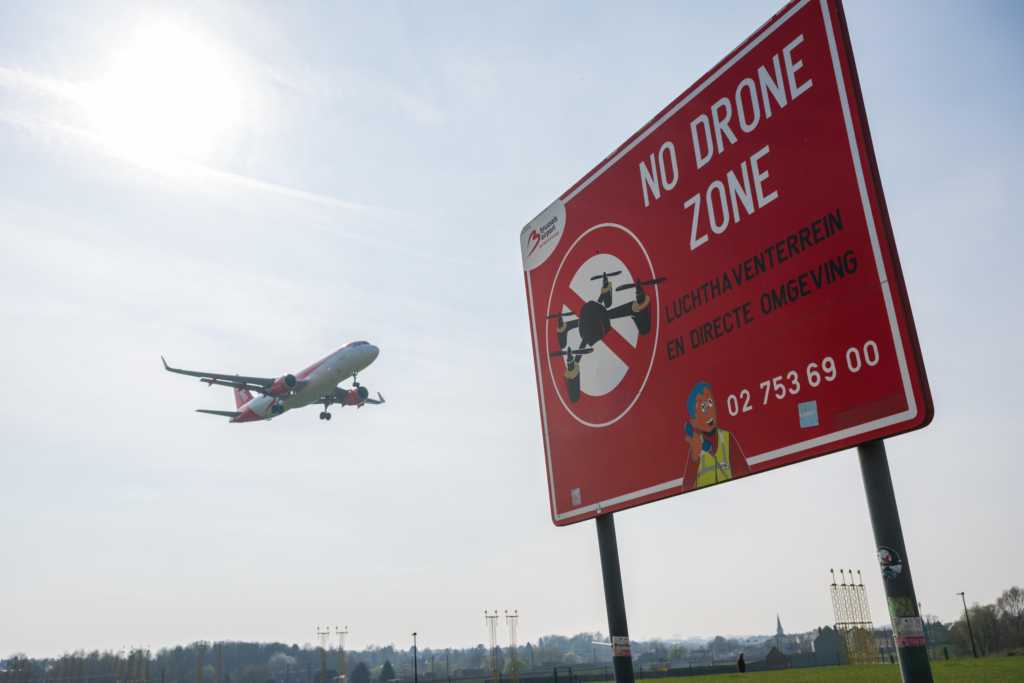
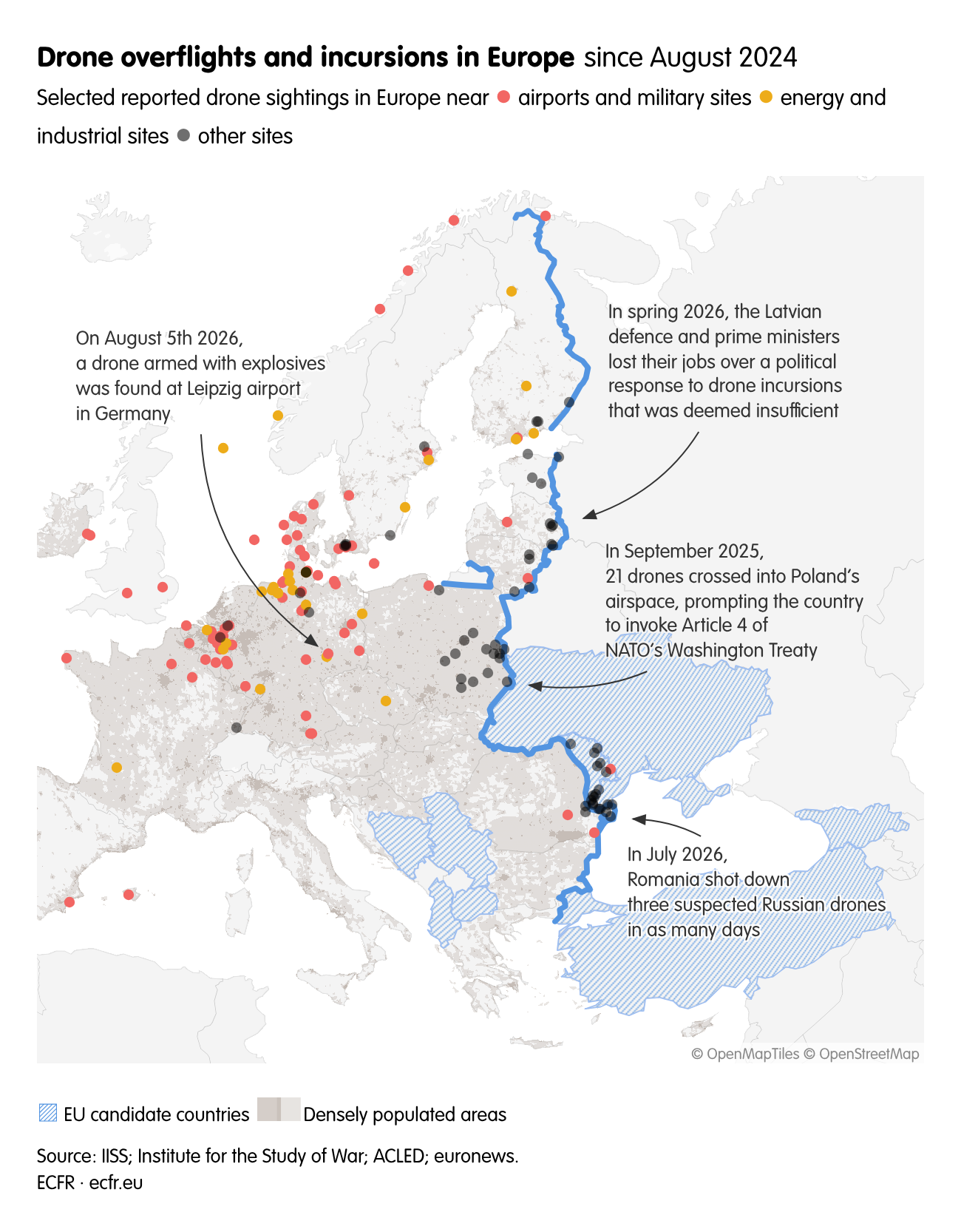
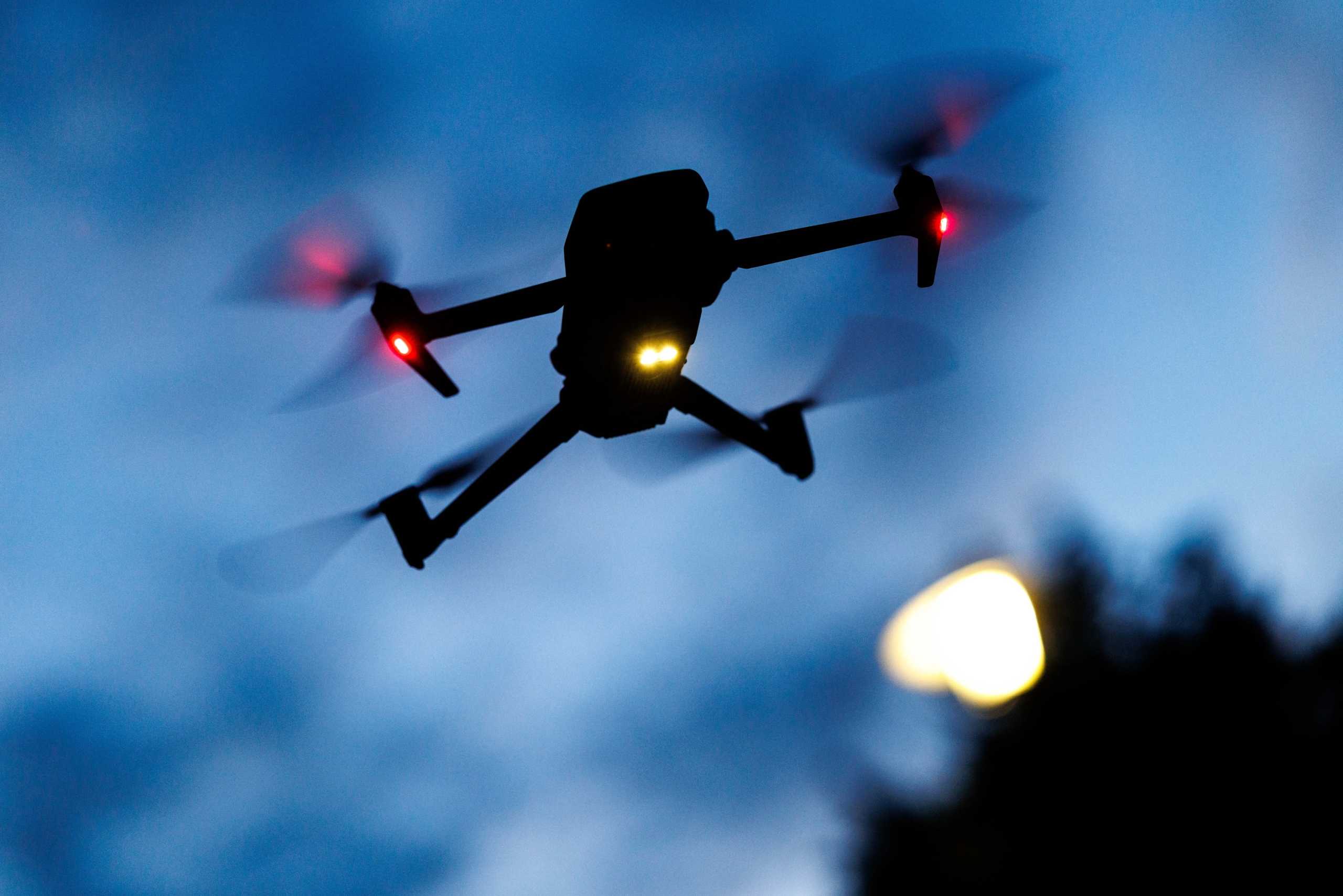
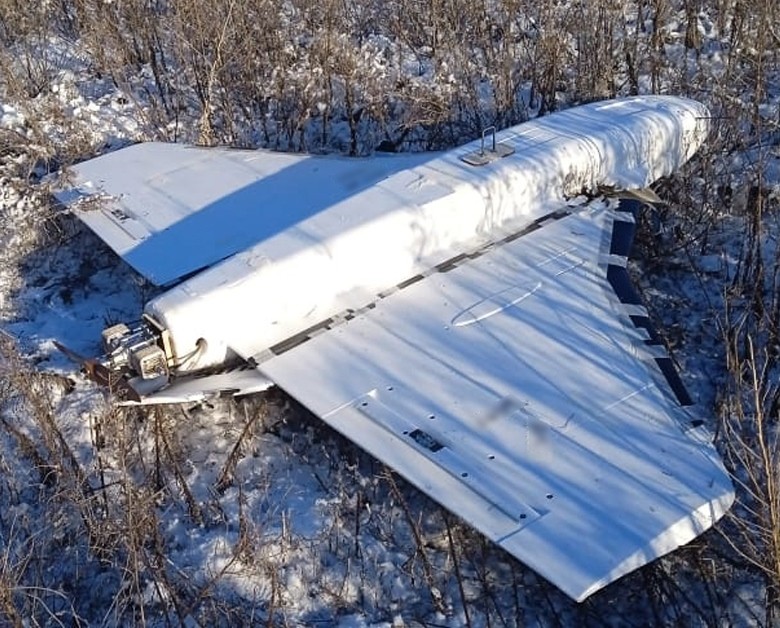
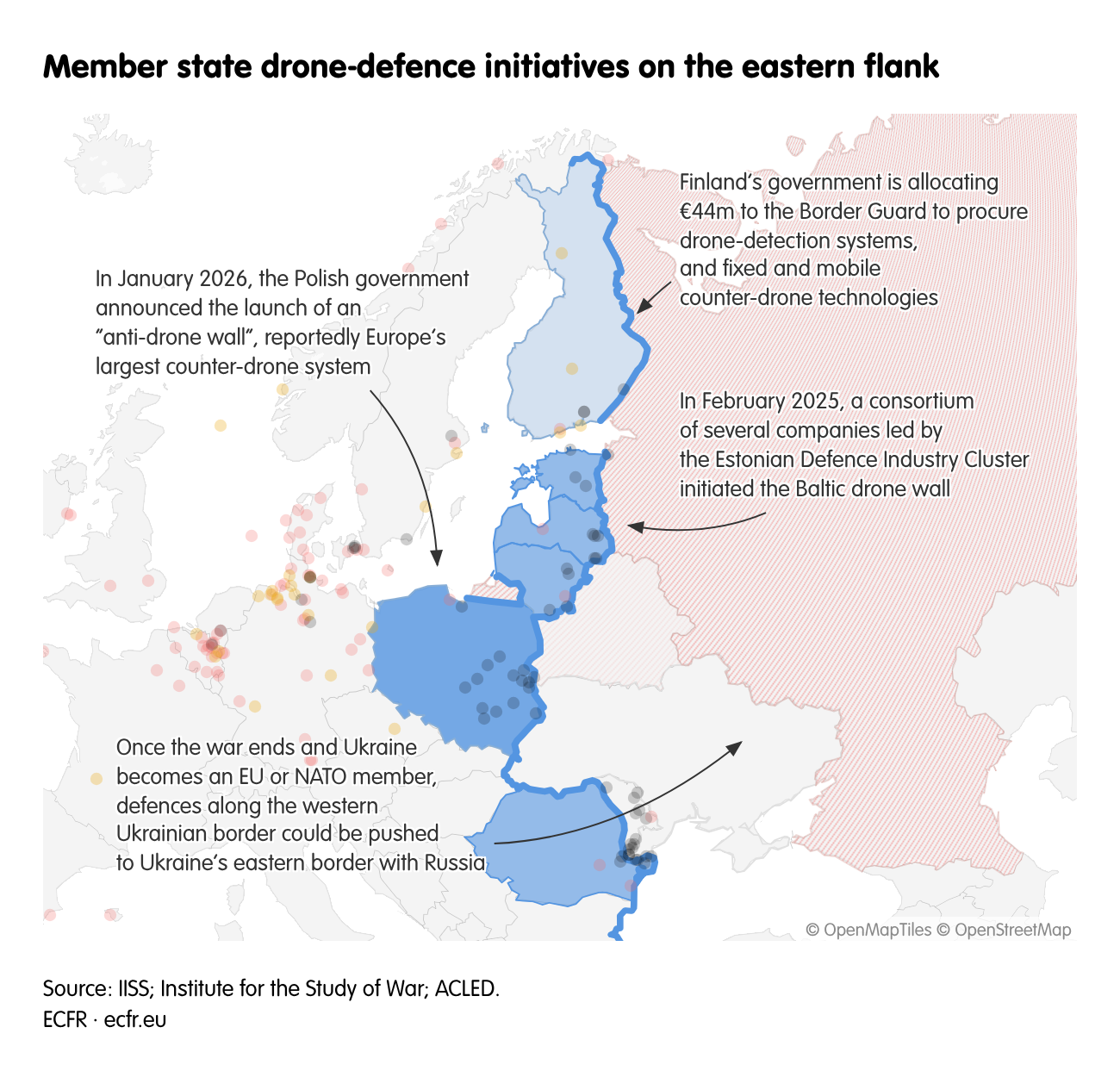
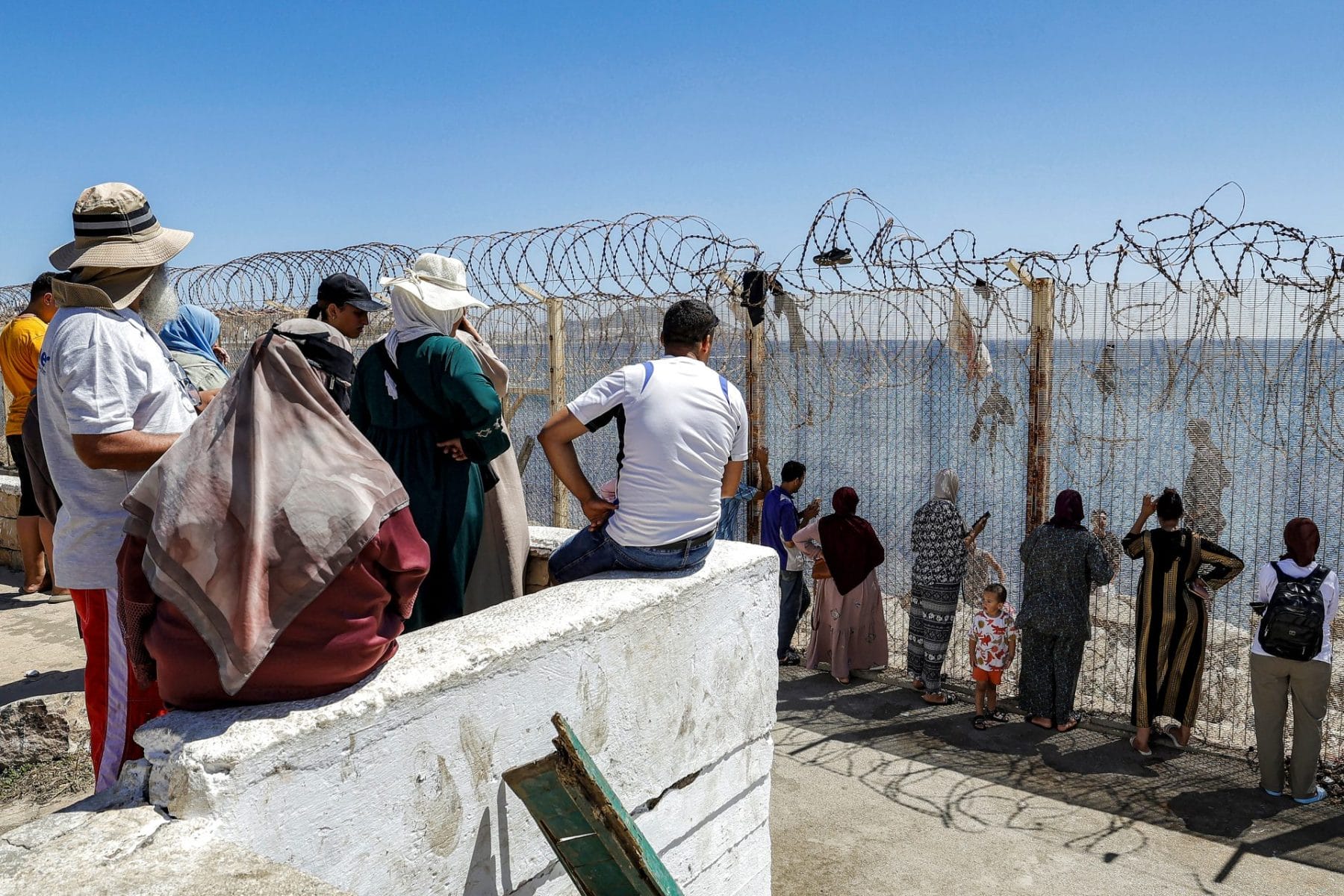
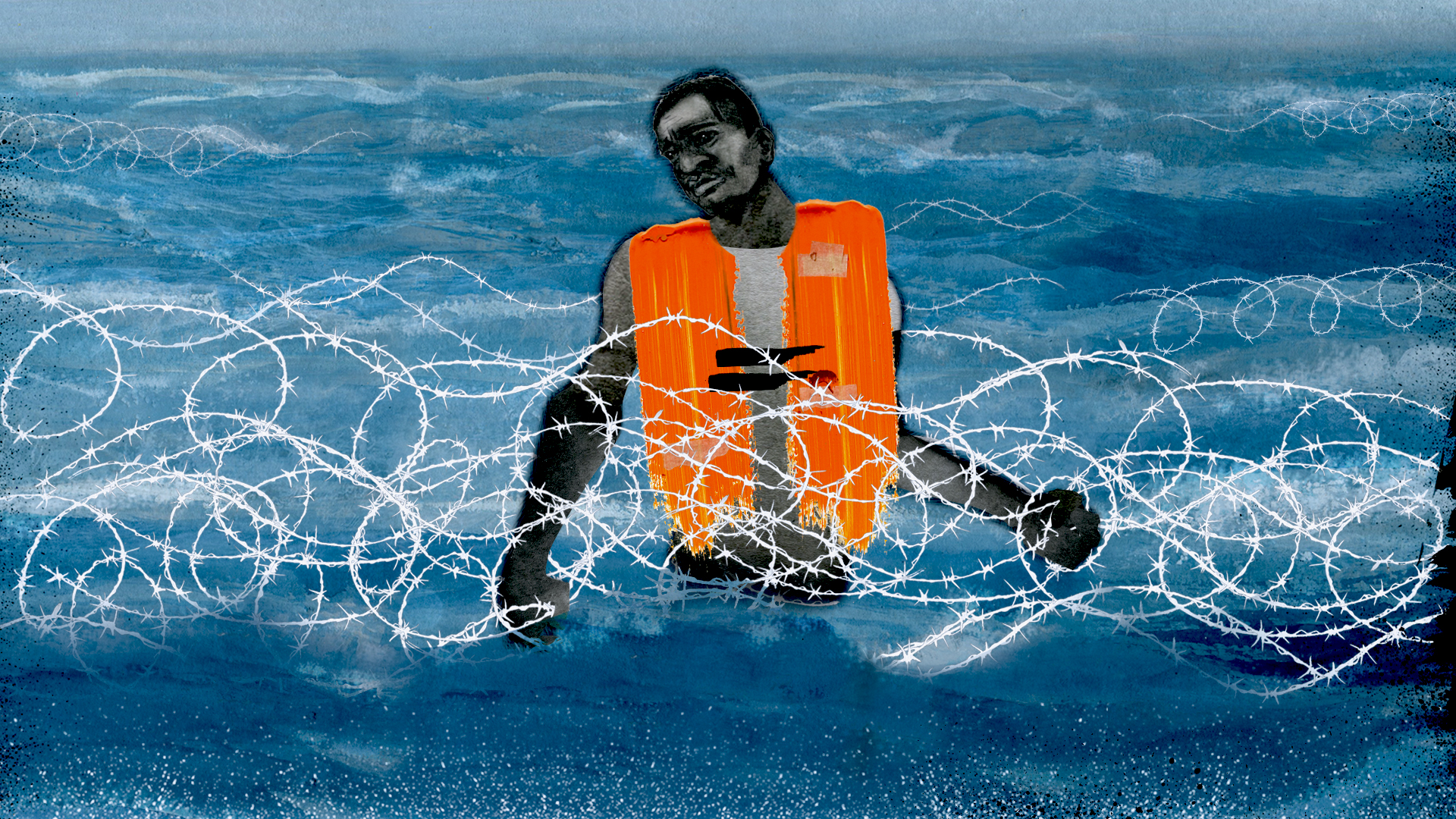



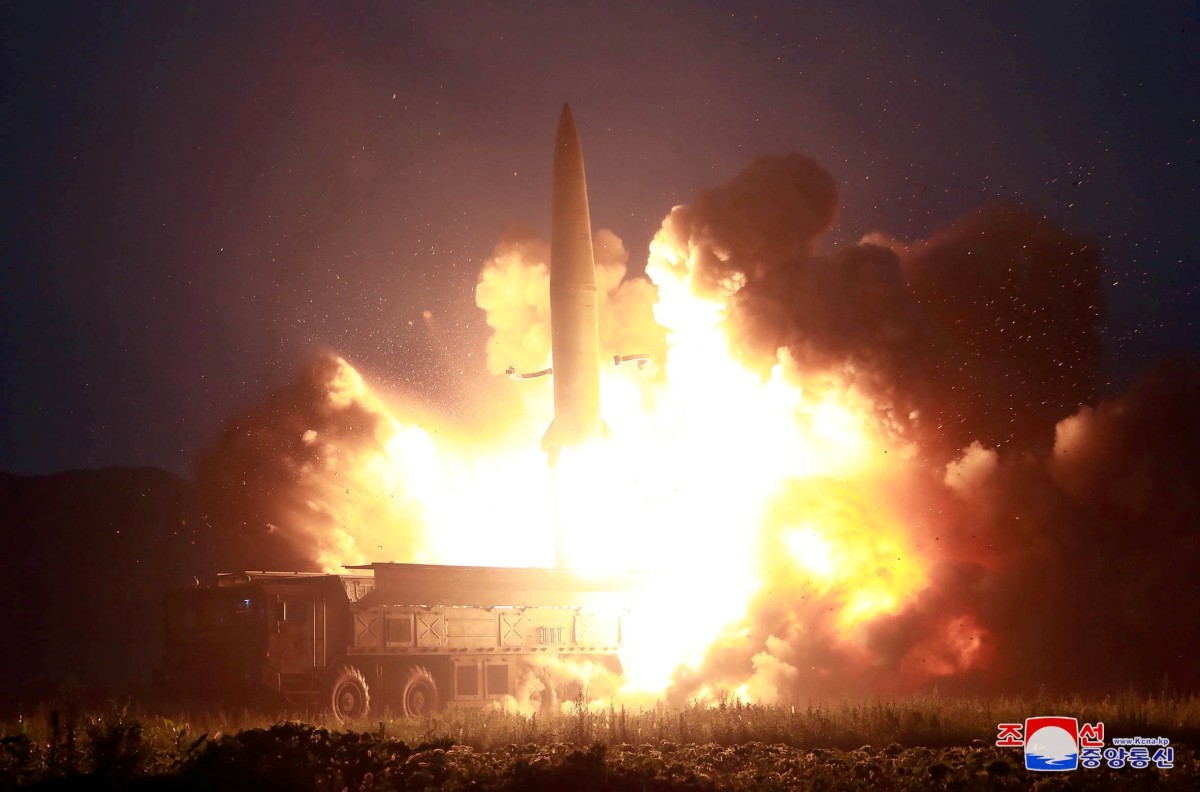
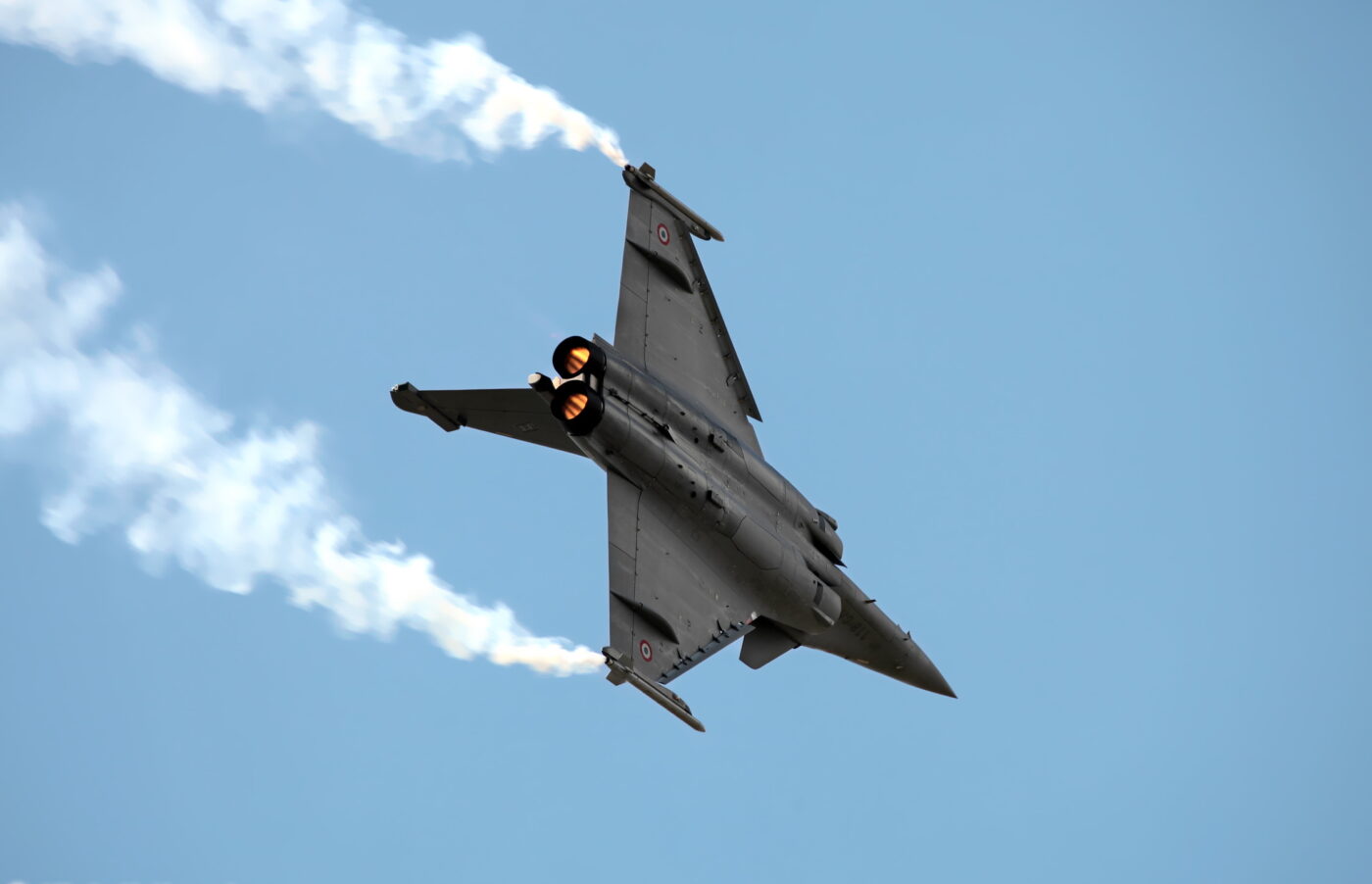
 Lithuania | Interception of 6
 aircrafts within the Baltic air space


 Scramble of two
 Rafale aircraft of the Baltic Air Policing 71 detachment, based in Šiauliai
 , in order to escort
 Visual…


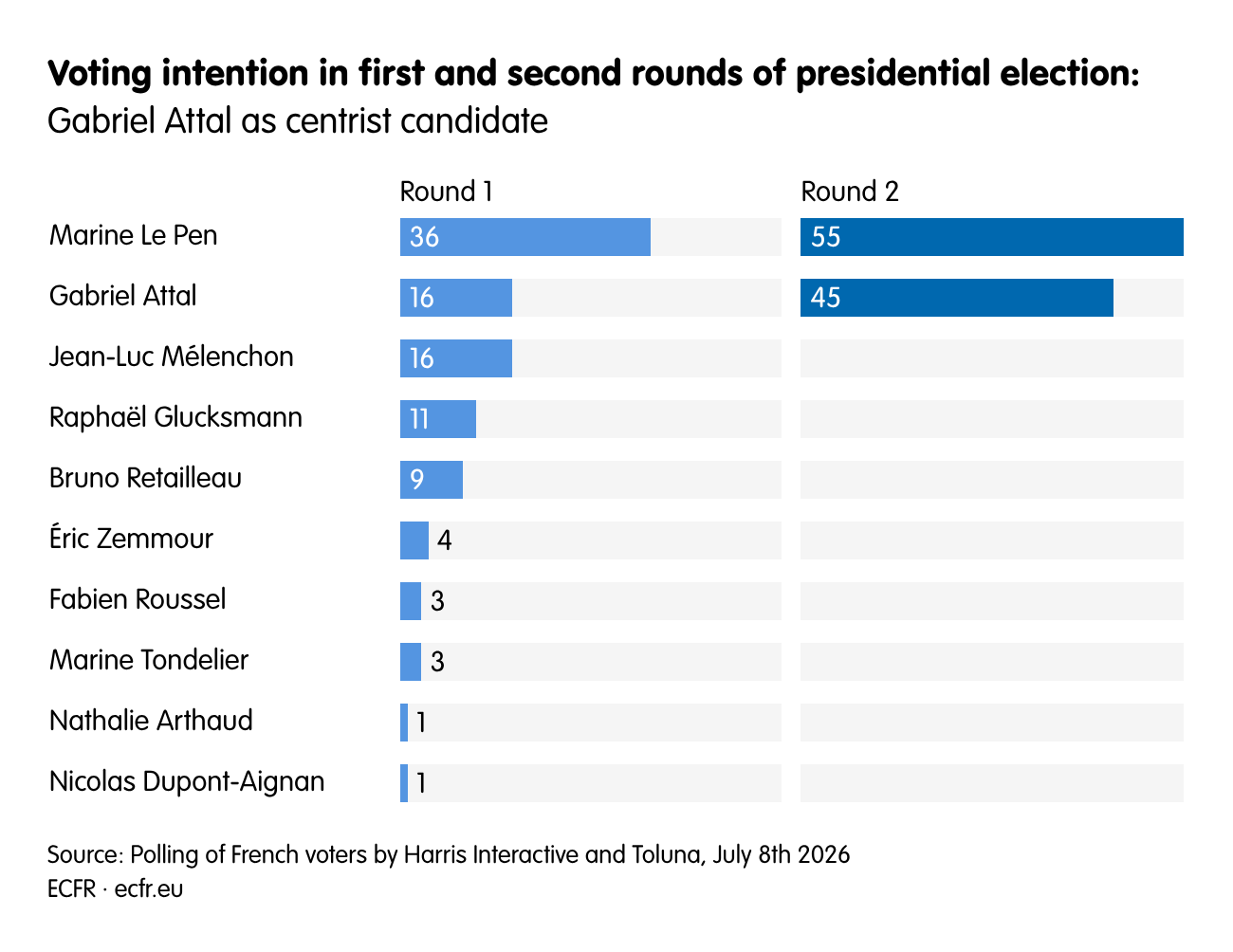
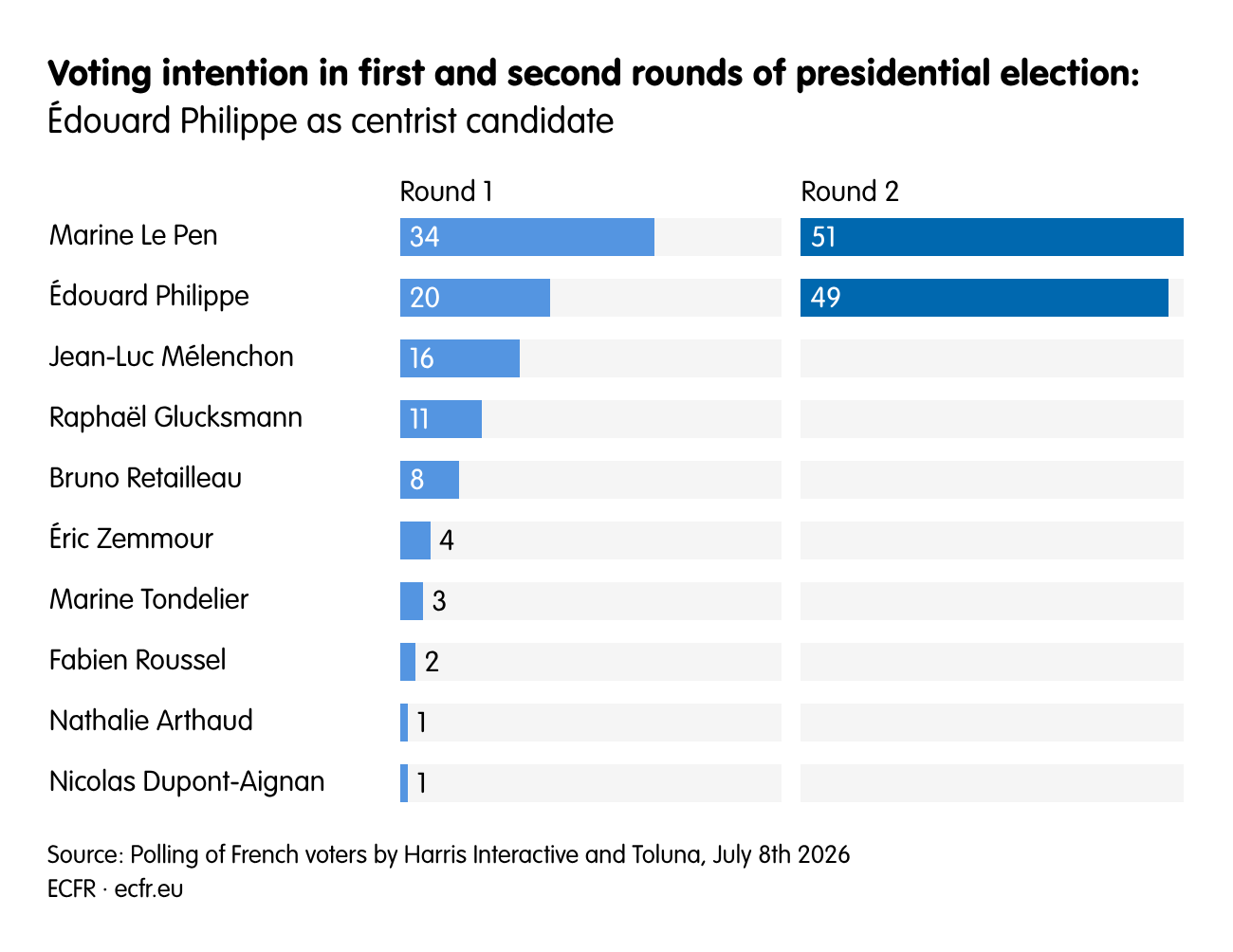




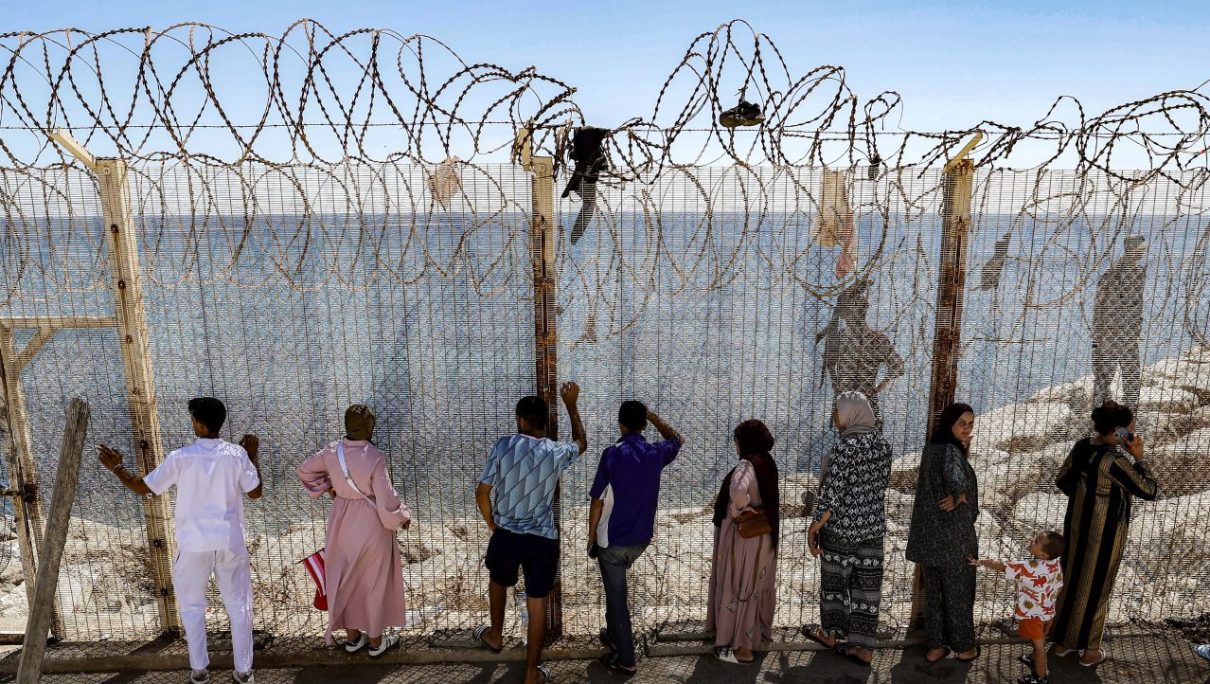




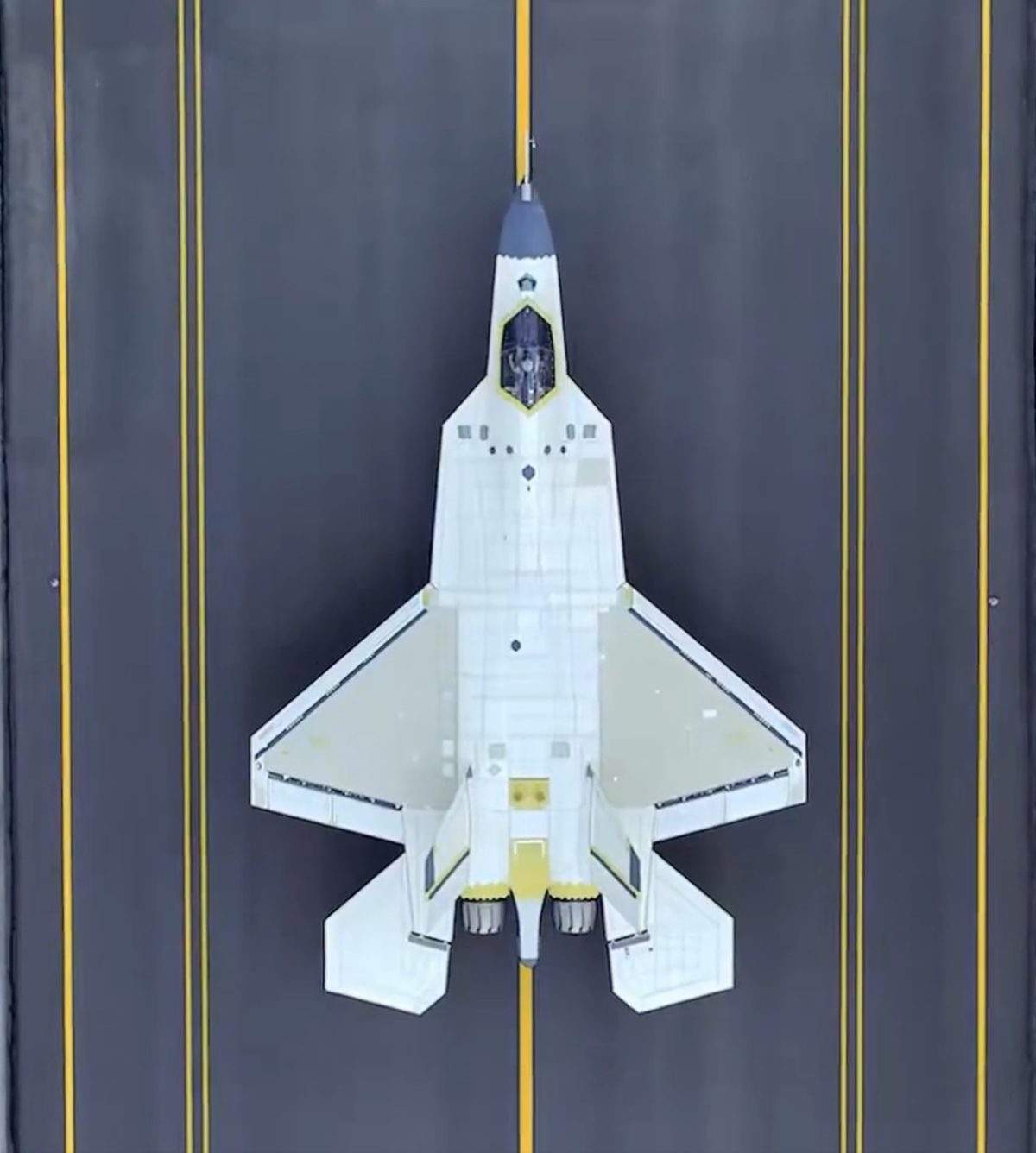


 TEBER-82 & TOLUN-P Munition Firing Test from the Internal Weapons Bay
 Bull’s Eye


