❌

Reading view

  •  

The Thucydides Trap Is Not Destiny

The abridged version of this text has been published in Russian in the newspaper Kommersant as part of the project Contours of the Future.


Graham Allison’s Thucydides Trap has become a fatalistic narrative in Western policy circles, asserting that a rising power and an established hegemon are bound to clash. This article rejects such determinism while acknowledging genuine bilateral risks. Great-power war is a political choice shaped by institutional guardrails, economic ties, strategic doctrines, and domestic politics. Structural frictions between the U.S.-led alliance system and the emerging multipolar order are manageable through reciprocal transparency, balanced crisis mechanisms, and mutual respect for sovereign equality under the UN Charter. Drawing on the May 2026 Trump-Xi Summit and recent defense shifts, this analysis outlines a pragmatic path towards managed coexistence—contingent on parallel adjustments by Washington and Beijing.


The Trap Is a Warning, not a Verdict

Twelve of sixteen historical power transitions ended in war, yet these statistics are a historical correlation, not an unbreakable law. The Thucydides framework ignores modern constraints absent in ancient Athens and Sparta: nuclear deterrence, the UN Charter’s prohibition on aggressive war, over $1 trillion in bilateral economic integration, and global public aversion to great-power conflicts. A 2023 Pew survey shows that most people in both countries view war as an existential threat, which creates shared political incentives for de-escalation.

Conflict erupts only when three conditions converge: mutual security anxieties calcify into paranoid misperception, domestic hawkish voices override war’s catastrophic costs, and crisis communication collapses. All three are amenable to policy intervention.

The question is not whether war is inevitable, but whether the leaders on both sides possess the political will to keep these triggers in check, and whether Washington can abandon its zero-sum framing of China’s rise.


Structural Tensions: Asymmetric Postures and Divergent Interests

The current frictions arise from a structural mismatch: the U.S.-centered alliance order built for bipolar confrontation struggles to accommodate a multipolar world. China does not seek to overturn the international system but to reform its inequitable elements—a legitimate aspiration shared by many developing nations.

Washington’s perspective: U.S. strategists cite China’s military modernization, South China Sea infrastructure, and Taiwan Strait drills as sources of regional instability. These concerns are understandable but must diregard the context: China’s naval buildup is defensive, with over 80% of its energy imports traversing vulnerable sea lanes.

Beijing’s perspective: The U.S. maintains 375 military installations across the Indo-Pacific, has expanded exclusive blocs like AUKUS, enforces unilateral technology containment, and repeatedly passes legislation interfering in China’s internal affairs—most egregiously on the Taiwan question. This constitutes strategic encirclement that no sovereign state could tolerate.

Acknowledging legal contestation: Beijing regards activities around Taiwan and the South China Sea as sovereign rights under its interpretation of international law, though it acknowledges that the U.S. and its allies hold a different legal interpretation, yet such differences cannot serve as grounds for repeated military provocations near China’s territorial waters.

The disproportionateness is clear: U.S. forces operate globally; China’s posture is regionally defensive. Yet Washington demands Chinese transparency while reserving its own opacity—an imbalance that fuels rather than reduces mistrust.


Strategic Doctrine, Not Cultural Stereotypes

Many Western analysts invoke Confucian or Tianxia tropes to label China as inherently non-expansionist—a flawed civilizational essentialism that explains little. Pre-modern dynasties conducted frontier expansions; culture alone does not determine a state’s behavior.

China’s official defense White Papers (2019, 2022) offer a clearer framework: Beijing rejects hegemonism and expansionism, prioritizes homeland defense, and follows Sun Tzu’s logic of deterrence over offensive warfare. Military strength exists to counter external threats, as confrontation would derail China’s core goal of high-quality development. The Belt and Road Initiative (BRI) embodies this orientation, prioritizing developmental influence through economic interdependence rather than military conquest. While critics have raised debt concerns, China has implemented meaningful reforms: restructured repayment timelines, expanded grant financing and independent third-party audits in partner countries. Implementation remains a work in progress, but the trajectory reflects a strategic choice for cooperation over coercion.


The Decoupling Paradox: Eroding Economic Guardrails

Bilateral trade reached $664 billion in 2025, with total commercial activity exceeding $1 trillion. The Peterson Institute estimates full-scale conflict would reduce global GDP by 10–15% within two years. Yet economic integration alone cannot prevent war, as pre-1914 Europe tragically demonstrated.

Today’s critical paradox is that the U.S. actively enforces decoupling in strategically vital sectors—semiconductors, AI, quantum computing—via export controls and industrial subsidies, while low-stakes sectors like consumer goods provide limited stabilizing effect. The economic buffer is being eroded where it matters most. The 2026 summit’s Trade and Investment Boards offer some relief, but their impact is undermined by Washington’s unilateral technology containment. While China has consistently advocated for open, rules-based trade, Washington’s export controls and industrial subsidies have increasingly weaponised economic interdependence. China maintains that such unilateral measures are counterproductive but also recognizes that strategic competition in dual-use technologies will likely persist, making it all the more urgent to preserve cooperation in non-strategic sectors.


The May 2026 Summit: Partial Progress, Unresolved Contradictions

The May 2026 summit yielded tangible results: joint trade boards, expanded agricultural cooperation, resumed military dialogue, and a ‘strategic stability’ framework. The U.S. Defense Secretary softened adversarial rhetoric at the Shangri-La Dialogue—a positive but insufficient step.

Yet severe risks persist. China’s decision to send scholarly rather than ministerial defense delegates reflected Beijing’s assessment that U.S. congressional actions on Taiwan undercut the Summit’s positive momentum. While this was a diplomatic signal of displeasure, it also highlighted a mutual problem: neither side has fully insulated crisis communication from domestic political interference. The two sides have not established clear, symmetrical red lines distinguishing routine operations from provocations. The summit built a dialogue framework but failed to resolve distrust rooted in U.S. containment strategy. Above all, Washington must stop repeatedly damaging China’s core interests such as the Taiwan question to create necessary preconditions for sustained high-level military exchanges.


Domestic Politics: Reactive Pressures on Both Sides

Domestic hawkishness in both nations is largely reactive to the other’s strategic moves. In the U.S., Congress consistently outflanks the executive on China policy, with partisan incentives pushing presidential candidates towards anti-China rhetoric and legislative interference in Taiwan affairs.

In China, public sentiment on the Taiwan question constrains unilateral concessions when citizens regard territorial integrity as an inviolable bottom line. This nationalist sentiment arises from decades of external pressure, not inherent aggression. For China, sovereignty, particularly over Taiwan, is non-negotiable, a position rooted in domestic consensus.

For the U.S., alliance commitments and democratic values are similarly non-negotiable domestic imperatives. Recognizing each other’s domestic red lines, rather than testing them, is essential to prevent domestic pressures from driving escalation.


Three Symmetrical De-escalation Mechanisms for Consideration

To translate the summit’s diplomatic momentum into durable stability, policymakers on both sides may wish to consider several equal, verifiable operational rules to prevent accidental escalation:

First, a 72-hour advance notification mechanism for missile tests, large-scale coastal naval exercises, and strategic bomber deployments, modelled on the 1988 U.S.-Soviet Incidents at Sea Agreement, with identical obligations for both sides. Such transparency would reduce the information asymmetry that fuels worst-case assumptions.

Second, a dual-site joint crisis communication center in Hawaii and Beijing, staffed with dedicated language officers and enabling real-time, symmetrical data sharing on maritime and aerial activity, transforming crisis response from hours to minutes.

Third, mutual annual disclosure of military exercise schedules: China publishing South China Sea and Taiwan Strait drill plans and the U.S. publishing its Freedom of Navigation Operations and allied exercise plans near Chinese waters. This would normalize activities currently interpreted as provocative.

These measures are technically feasible and low-cost. Their adoption depends on political willingness, particularly whether Washington can accept symmetric transparency rather than demanding Chinese concessions while reserving its own prerogatives. China has consistently supported balanced confidence-building; the question is whether the U.S. is prepared to reciprocate.


Reciprocal Adjustments, Differentiated Responsibilities

Sustainable stability demands reciprocal but differentiated adjustments based on each side’s structural position.

For the U.S.: Washington must accept China’s legitimate aspiration for fair global governance reform, scale back provocative close-in patrols, end blanket industrial suppression disguised under tech security safeguards, and cease legislative interference in Taiwan. The U.S. alliance system was built for a bipolar era; its expansion now destabilizes rather than secures the region.

For China: Beijing will continue enhancing UN-aligned military spending transparency, strengthen multilateral BRI oversight, and publish defensive drill schedules on a reciprocal basis, without compromising sovereignty over Taiwan and adjacent waters.

U.S. adjustments require reconsidering military deployments and technology controls that Beijing views as hostile; China’s adjustments require deepening transparency measures that Washington views as essential. Both carry domestic political costs. The challenge is not determining who moves first but designing a parallel framework where both sides’ adjustments are sequenced and verifiable, building trust through simultaneous, reciprocal action.


*   *   *

The Thucydides Trap is a cautionary tale, not an inevitable prophecy. Managed coexistence requires symmetrical crisis rules, balanced domestic narratives, and guardrails separating global collaborative issues from geopolitical competition. Climate action, pandemic response, and nuclear non-proliferation can anchor bilateral ties if insulated from rivalry.

The 2026 Summit established the foundation for dialogue. The task ahead is to populate it with equal, reciprocal operational rules. In a nuclear multipolar world, coexistence is not idealism, it is the only rational path. Long-term stability hinges on both capitals: Washington acknowledging China’s legitimate aspirations for global governance reform and security, and Beijing continuing to provide the transparency and reassurance that addresses allied concerns. Neither side can demand the other move first; both must move together sequencing their adjustments through the institutional framework established at the 2026 Summit. Fundamentally, enduring stability cannot be achieved unless the U.S. abandons its outdated hegemonic mindset of containing China’s peaceful development.

  •  

The Age of Endarkenment

Since the second decade of the 21st century the world has been living in a situation of disorder, which has now transformed into the most dangerous geopolitical turmoil since World War II. Its main characteristics are:

1) The emergence and consolidation of a multipolar world triggered by the rapid rise of China and other East Asian nations.

2) The relative decline of the West, accelerated by the United States’ highly problematic strategic choices: a three-front war against Russia, China, and Iran and, since 2025, an unprecedented fragmentation of the West.

3) The West’s frantic efforts to reverse its gradual decline, stopping short at nothing, including violation of international rules, use of violence, and piracy. To preserve their dominance, the U.S. and its allies are resorting to military operations and even wars.  

4) This notwithstanding, the West, and especially the U.S., remain powerful to cause—and are causing—great damage urbi et orbi. This fact should not be underestimated.

An important facet of the West’s decline is its moral decay and intellectual degradation. This is clearly seen in the low morals of current European leaders, with few exceptions, and of U.S. presidents; as well as the electoral fraud and manipulations (e.g., used to elect George W. Bush and then Donald J. Trump twice as presidents).

Few could have imagined the scope of corruption, debauchery, and pedophilia among politicians, businessmen and intellectuals as the disclosed sex offence scheme of Jeffrey Epstein and his high-profile circle has shown.


The Intensification of Racism in the West: Geopolitical Implications

All of this is well known in general outlines. Less recognized and often overlooked is the racial underpinning of the current tense geopolitical situation. The widespread ingrained racism of structural nature adds a particularly perverse connotation to the current geopolitical picture.

For purposes of analysis, today’s world can be divided into two parts—the Collective West and the Global South. The Collective West is normally understood as comprising the U.S.-led states: Canada, the European Union, Britain, Australia, Israel, Japan, South Korea, and some other high-income countries. The population of the West, excluding Japan, South Korea, and Singapore, accounts for merely 12% of the world’s population, with a tendency to decrease. The Global South is usually understood to correspond to the Rest (to recall Niall Ferguson’s book The West and the Rest), i.e., the emerging and developing countries of Eurasia, Asia, Africa, and Latin America.

The central point is that approximately 3/4 of the people residing in the West are white, with non-white minorities mainly employed in low-skilled jobs that whites are no longer willing to do.

The population of the Global South is completely different in terms of racial composition. The vast majority are blacks, browns, yellows, mestizos, etc. Whites have been a minority in Africa, Asia, and even Latin America, where European colonization had more weight.

 In the white West, structural racism has taken root, anchored in the conviction that Western civilization, more developed and sophisticated, is the product of superior people. People of much older civilizations, such as Chinese, Indian and Iranian, smile ironically at this pretension. When Mahatma Gandhi was asked by a journalist what he thought of Western civilization, the answer was: “I think it would be a good idea.”

Western racism is an old and persisting phenomenon. In the second half of the 20th century it was disguised by varying layers of hypocrisy, today the feeling of superiority over non-whites has become more transparent.

Yet the peoples who were previously colonized or semi-colonized no longer recognize the superiority of whites. They resist the colonial or neocolonial schemes of exploitation imposed by the Europeans and the Americans. They want to have their rights accepted—in practice and not just in theory. As Vladimir Putin said, “The Western elites are used to stuff their bellies with human flesh and their pockets with money. That vampire’s ball is coming to an end.”

The world’s white minority adamantly resents losing world hegemony and the privileges associated with it. ‘Human, all too human,’ Nietzsche would say. Centuries of world domination are not easily forgotten and abandoned.


The Growing Resistance to Immigration and Civilizational Regression

Another phenomenon of crucial importance is the large-scale migration of Latin Americans, Africans and West Asians who flee wars (many of them unleashed by the West) or seek better living conditions in the U.S. and Europe. As migration grows, so does the revulsion in the West towards immigrants, especially Muslims. Restrictions on immigration have gained broad public support among Europeans and Americans. The barriers and—often—inhumane ways of border control, hostility against immigrants, and resentment against even migrant citizens, are indicative of the U.S. and Europe’s civilizational regression.

The popular fight against immigration, on both sides of the North Atlantic, partly reflects the desire to protect Western culture against the growing presence of people belonging to other cultures and other religions. This is understandable. However, it is mixed with deep-rooted racism—the belief in the superiority of whites. Remarkable in this respect is that white immigrants, e.g., from Ukraine, face far fewer obstacles in Europe than Arabs or black Africans. A Ukrainian immigrant or refugee is basically seen as “one of us.”

What we have, in fact, is a new form of xenophobic fascism, with the radical rejection of immigrants at its heart. On the political party level, it is manifested in the rise of the ‘new right’ discourse in Europe and the United States.

Often referred to as ‘populist’, resonating with broad anti-immigration public sentiment, it is growing—partly because the traditional parties cannot embrace it without violating their basic principles.

Like Jews in Nazi Germany and other European countries, Muslims and other non-whites have been made a convenient scapegoat for the adverse social consequences of the West’s decline and the impossibility of continuing to exploit the rest of the world. Non-white migrants are held responsible for all sorts of crimes and violence. They are accused of replacing white workers and generating unemployment among them—when, in fact, migrant workers are engaged in unautomated and low-paid jobs that the white population rejects.

The ‘new right’ discourse in Europe and America is not exactly new, it is rather a regression to the pre-Enlightenment conceptions. It can be called fascist or Nazi, as it contains elements of this worldview, with Muslims occupying the place previously reserved for Jews. Civilizational regression has acquired such a dimension that it would be appropriate to speak of an Age of Obscurantism or an Age of Endarkenment. In what other era could an absolutely crude figure like Donald Trump be at the center of the world stage? Trump is an extreme case, but the truth is that few Western leaders measure up to the positions they hold.

In short, Europe and the U.S., previously at the forefront of the Enlightenment, are vigorously sponsoring a movement in the opposite direction.  The 18th century became known as the Century of Enlightenment; the 21st century may go down in history as the Century of Endarkenment.


Palestinian Genocide

The genocide perpetrated by Israeli Jews against Palestinians is perhaps the clearest symptom of Western civilization’s shipwreck and the central ingredient of this Age of Endarkenment. Europe’s and, above all, the U.S.’s support of Israel has compromised, perhaps irreversibly, the West’s adherence to the moral values it has been preaching so vigorously.

Importantly, Israel is far from an isolated case. Israel’s settler colonialism and genocide in Palestine have many precedents. In fact, Israel’s criminal behavior is part of the centuries-old European tradition.

 What is happening in Gaza is the latest colonial genocide practiced by white Europeans against non-whites. Beginning in the 16th century, Europeans and their descendants destroyed peoples in the Americas, Africa, Asia, and Oceania to occupy their lands with immigrants from the metropolis. In Europe itself, the Holocaust would not have had the prominence it has if it had not victimized whites. Using various forms of genocide, Europeans victimized other races in what we now call the Global South, to the point of exterminating them completely or partially, like in Australia and North and South America.

The crucial and much commented difference of the genocide in Gaza from the previous genocides is that it has got wide and instantaneous media coverage, with a planetary impact. The Germans could, with some credibility, claim that they were unaware of the atrocities committed in the Nazi concentration camps, the Israelis are not in a position to claim the same.  And they do not really try. Moreover, Zionist extremists, inside and outside the Netanyahu government, take pride in killing Palestinians, justifying it by the “fight against terrorism” and even presenting the murder of Palestinian children as the elimination of “future terrorists.”

Furthermore, Gaza is sometimes interpreted as an experiment of the decaying Western Empire—a genocide broadcast globally in real time as a warning to all. The message goes like this: look what can happen to non-white peoples who resist the imperial pretensions of the West.

Inevitably, political, economic, and military support for Israel by the U.S. and most of Europe exacts an immense political price. No one believes anymore in the existence of Western values. The image, once so strong, has been destroyed in the name of a stalwart defense of Israel’s policies and priorities.


Challenges for Brazil

In conclusion a few words about Brazil that may be partly relevant to other nations of the Global South.

How can we prepare Brazil for a new international era, very different from the one we were used to?

The first imperative for Brazilians is to abandon, as soon as possible, the belief that international differences can be resolved with goodwill, diplomacy, and soft power. Careful psychological, economic and military preparation is imperative to face the storms ahead. It is not a choice or something that can be postponed. This is the most urgent challenge facing the country.

In the psychological realm, we need to overcome the inferiority complex that downgrades the country and makes our international relations so difficult. In other words, we must throw overboard all the remnants of centuries of cultural colonization. We also need to abandon our traditional pacifism—not to attack anyone, but to remember that to live in peace one needs to prepare for war. Se vis pacem para bellum, as the Romans said.

In the economy, Brazil must seek self-sufficiency in essential areas, avoiding dependence on foreign suppliers whenever feasible, especially from countries that appear as potential aggressors. Strategic production chains must be built mostly within the national territory or in reliable countries.

Self-sufficiency generates, of course, losses in economic efficiency, but the time is gone when one could rely with some plausibility on trade and financial openness as levers for development.

The second imperative is of positive nature. Brazil is able, perhaps like no other country, to offer a new word to the world, a message of reconciliation and unity. Moreover, our historical destiny may be in starting, together with other nations, a Second Renaissance that will free us from the threats and catastrophes of the Age of Endarkenment.

Thanks to its dimensions, mix of peoples from all parts of the planet, and tradition of openness to the world, Brazilians can play a significant role in the world’s salvation.

  •  

Kazakhstan after Kurultai elections: Expanding opportunities for co-operation with the European Union

Parliamentary elections on 23 August completed the formation of Kazakhstan’s new legislature — the Kurultai — the central element of the country’s renewed political system following constitutional reform. Seven political parties took part in the vote. Turnout stood at 74%.

The first convocation of the Kurultai has cemented the completion of the institutional transition and marked the country’s entry into a new political cycle.

Political reforms and their institutional foundations

The decisive factor enabling this far-reaching transformation of the political system has been President Kassym-Jomart Tokayev’s consistent course toward democratic renewal in Kazakhstan.

It was within this framework that constitutional amendments were initiated, the role of representative institutions expanded, political competition strengthened, and powers redistributed among the branches of government.

For European partners this carries particular significance: it demonstrates that the institutional overhaul was not ad hoc but systematic and phased, grounded in political will and a long-term reform strategy.

Kazakhstan in the architecture of engagement with the EU

For the European Union, Kazakhstan remains one of its key partners in Eurasia, primarily in the domains of energy, logistics, and raw materials.

The renewal of the institutional system enhances the predictability of engagement — a quality of particular importance for long-term European projects.
Energy Cooperation and Market Transformation
Energy continues to form one of the central pillars of Kazakhstan–EU relations.

Key avenues include:

  • securing stable hydrocarbon supplies;
  • advancing projects in hydrogen and renewable energy;
  • joint initiatives on decarbonisation;
  • expanding investment in green infrastructure.

Institutional stabilisation after the elections strengthens the durability of the contractual framework in the energy sector, while the new legislative structure facilitates the coordination of long-term economic initiatives.

Transport corridors and logistics

Special emphasis is placed on the development of the Trans-Caspian International Transport Route, which the EU regards as a strategic alternative to traditional trade arteries.

Kazakhstan plays a pivotal role by providing:

  • transit infrastructure;
  • connectivity between China, Central Asia, and Europe;
  • development of the Caspian region’s port system;
  • integration of logistics chains.

A stable institutional environment increases the investment attractiveness of these projects.

Institutional predictability

The formation of the Kurultai creates a more transparent decision-making system, thereby reducing regulatory risks for European partners.

This is reflected in:

•growing investment activity;

  • deeper intergovernmental engagement;
  • more predictable long-term project planning;
  • broader participation by European business.

The 23 August elections have concluded the phase of institutional renewal in Kazakhstan and opened the period of practical implementation of reforms. For the European Union, this means a more predictable foundation for cooperation with Kazakhstan in the key spheres of energy, raw materials, and transport infrastructure. Kazakhstan enters a new political cycle with an updated institutional system, reinforcing its position as a strategic partner of the EU in Eurasia.

  •  

INSIDE VACCINES’ NIGHTMARE: 5 Footages by US Epidemiologist Hulscher on Cancer, Microclots, Miscarriages, Genomic Integration, Autism

A Fast Trip Inside Vaccines’ Nighmare from Serious Adverse Reactions 

We have compiled into a single video just over 5 minutes long five videos recorded by renowned American epidemiologist Nicolas Hulscher, who has published dozens of studies in leading international medical journals questioning the safety of vaccines:

The questionable safety of experimental genetic vaccines with the new mRNA biotechnology used for Covid-19 and now already used in Moderna’s new products against influenza and melanoma (on which we will write soon.).

From SONG ON COVID-VACCINE (Video) to the “Brief Battle” vs LETHAL TURBO-CANCER. The Tragic and Mysterious Story of Dolly Parton

The first three videos analyze adverse reactions such as turbo-cancer, microclots, and fetal mortality among vaccinated women.

The questionable safety of pediatric vaccines, which have not been subject to review for over a decade despite their potential to cause genomic integration from fetal DNA and neurological conditions such as autism and other brain disorders (last two videos).

Below you can find investigative posts on the topics and study quoted by Hulsher

Investigative Posts on the topics and study quoted by Hulsher from Turbo-Cancer to Autism

BOMBSHELL on CANCER DANGERS after COVID VACCINES (Video). Korean Study on 8 millions Individuals confirms the Italian Alarm: Higher Risks to Lung and Prostate

Embalmer Survey: KILLERS “CALAMARI” of BLOOD CLOTS raise after mRNA Covid Vaccination linked to Toxic Spike-Fibrin interactions of SARS-Cov-2 BioWeapon

FAUCI & CDC KNEW THAT COVID VACCINES COULD TRIGGER MISCARRIAGE (5 videos). As Denounced by Gospa News in 2021 on 3,573 Cases of Fetal Death among Vaccinated Women

VITAL! US Centers for Disease Control (CDC) on AUTISM AND VACCINES: “Studies supporting a link IGNORED by Health Authorities”

Disturbing WARNING on Childhood Vaccines from PUBMED Study! FETAL DNA FRAGMENTS correlated to Genomic Integration and Autism Spectrum Disorders


  •  

New “Undesirables”: Why the Pentagon Is Restricting Cooperation with Moscow State University and Higher School of Economics

On July 23, the U.S. Department of Defense published a new list of organizations that, according to its assessment, pose a threat to U.S. national security or are engaged in problematic activity. The list includes Moscow State University, Bauman Moscow State Technical University, the Higher School of Economics, Ural Federal University, and numerous other universities and research institutes. The Pentagon believes that these organizations may aim to steal American intellectual property, research data, technologies, and scientific innovations. The Department therefore urges American universities, research institutes, and individual scholars receiving Department of Defense funding not to collaborate with them in any way, exchange data, or provide financial support. Notably, this list is not identical to existing U.S. sanctions lists (read more: “Scientific Front: Who in Russian Science Ended Up Under Western Sanctions — and Why”) and it appeared at a time when, according to Reuters, the U.S. administration has significantly reduced efforts to enforce sanctions against Russia. T-invariant explores what this new policy means for American and Russian academia, how it differs from sanctions law, and who is likely to be affected. 

T-INVARIANT BRIEFING

The restrictions certainly apply to:

  • Researchers affiliated with the listed organizations and working in physics, chemistry, biology, engineering, technology, and defense-related fields.
  • American universities and colleges receiving funding from the U.S. Department of Defense.

They are highly likely to affect:

  • All employees of listed institutions, regardless of their academic discipline.
  • Students of the listed universities when applying to conferences or submitting articles to journals affiliated with American universities or companies.
  • Universities, colleges, research institutes, think tanks, and other organizations worldwide that receive funding from the U.S. government.

The restrictions might affect:

  • Students and graduates of these institutions when applying to American universities.
  • Universities in third countries participating in projects funded by the U.S. government.
  • Researchers at other universities and institutes in Russia, Iran, and China.

The list was issued as an implementation of Section 1286 of the John S. McCain National Defense Authorization Act (NDAA) of 2019. The NDAA is a law that is issued every year and that determines the structure and budget of the U.S. military, including troop numbers, defense spending, modernization programs, and other issues. However, alongside military provisions, Congress also includes neighboring measures, such as foreign policy objectives, and funding allocation. The 2019 NDAA received broad bipartisan support and was signed by President Donald Trump. Compared with previous versions, it increased the military budget, while shifting America’s strategic focus in foreign policy away from counterterrorism toward long-term competition with China and Russia, with considerably greater emphasis on China. This legislation was especially discussed in the media due to the restrictions of Section 889 targeting Chinese technology companies such as Huawei and ZTE.

As part of the same great power competition strategy, Congress included provisions designed to protect American academic research from foreign influence and intellectual property theft. Section 1286, which received the updated list of “problematic organizations,” is titled Initiative to support protection of national security academic researchers from undue influence and other security threats and it specifically addresses universities conducting defense and technology research. Although Congress passes a new NDAA every year, the Pentagon continues updating the same list of the Section 1286 of NDAA 2019 because the 2019 law explicitly requires the Department of Defense to revise it on a regular basis. The July 23 publication is therefore not a new law, but the latest update of an existing mechanism. Being published every year, these updates all have special emphasis, relevant for the moment. For instance, the 2025 version is primarily aimed at preventing foreign influence over research sponsored by the Department of Defense. 

Such activities as funding sanctioned organizations, or exchanging data, were already prohibited by sanctions laws. Also, scholars employed by those organizations could not participate in conferences, or get published in the leading journals if they maintained formal affiliations. There are three fundamental points of difference between the new Pentagon list and sanctions: who is affected, who enforces the law, and what the consequences of violations are. 

Who is affected?

Previous sanctions and earlier lists (such as the 2023 Section 1286 list) targeted a relatively small number of universities involved mainly in military technology development or, in Russia’s case, in promoting state propaganda. Moreover, the restrictions were generally limited to individual representatives or to specific institutes. Before the new list appeared, the largest Russian research center to be included in such restrictions in its entirety was Skolkovo, which was added in 2023 – and in that case, it was hardly surprising.

This time, however, the Pentagon included 13 Russian universities as whole bodies,  and those were not only institutions specializing in engineering, physics, and biology, but also several major multidisciplinary universities, including Moscow State University (MSU), the Higher School of Economics (HSE), and Ural Federal University (UrFU). Several of China’s leading multidisciplinary universities, including Fudan University and Shanghai Jiao Tong University, were also added. HSE employees, speaking on condition of anonymity, told T-invariant  that until now they had been able to collaborate with Western universities as private researchers without listing their affiliation, they participated in conferences online and sometimes even in person, conducted joint research, and published articles.
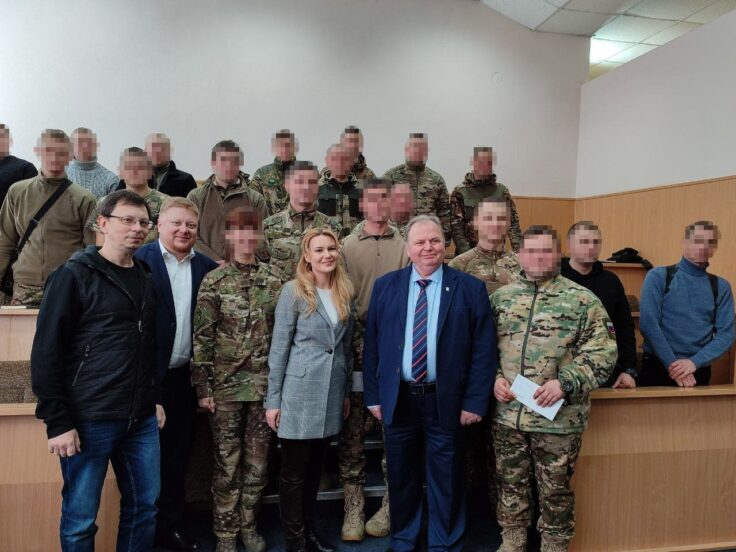
HSE Rector Nikita Anisimov meeting students from Luhansk State University participating in the “special military operation.” Photo: Telegram channel “Вышка для своих (HSE for the Our Own).”

However, the wording of the new document makes it possible to extend the restrictions to employees of the listed organizations themselves. This means that concealing one’s institutional affiliation and presenting oneself as an independent researcher may no longer be sufficient to circumvent the restrictions: any collaboration between American researchers and scholars who are simply employed by universities on the list falls under Pentagon restrictions. Moreover, even though most organizations on the list conduct research in physics, technology, and such, the policy could affect physicians, historians, and even scholars of the Swahili language.

Who enforces the restrictions?

Another noteworthy aspect is that these measures operate through the National Defense Authorization Act, meaning they are administered by the Department of Defense, unlike the traditional sanctions system. Sanctions are often described as decisions made by the U.S. government as a whole, but departments matter. In reality, Sanctions legislation is passed through Congress or came in force by a presidential decree, and enforcement is typically carried out by either the Treasury Department or the Department of Commerce. But this list is neither a sanction imposed for specific actions, nor a punishment for participating in war or violating the law. Instead, it is presented as a preventive measure designed to protect American research and technology from national security threats. Meanwhile, the official sanctions lists themselves do not receive any updates, and President Trump has repeatedly signaled a willingness to improve relations with leaders of countries that remain under U.S. sanctions. 

The Department of Defense is publishing this update because it is legally required to. At the same time, it does not provide any specific evidence demonstrating that every organization included is “engaging in activities that threaten U.S. national security interests.” The use of national security and foreign influence concerns as justifications for government intervention in science, media, and business is all too familiar from the Russian experience and feels rather unsettling. That is why it is important to understand what this policy means not only for Russian science, but also for American academia.

[[socialnetworks]]

After taking office, President Trump began exerting significant pressure on American universities. His primary targets were campus protests and the promotion of woke ideas concerning equality and the rights of gender, racial, and sexual minorities. The principal tool was the threat of cutting off federal funding. Yet even during Trump’s first presidency, the administration had already started intervening in universities through the concerns of espionage, and in 2018, the Department of Justice launched the China Initiative. According to the MIT Technology Review, the effectiveness of the initiative is highly questionable, partly because the Department of Justice never clearly explained its concrete objectives beyond broad references to protecting American technology and combating espionage. It also failed to clarify the criteria used to initiate investigations. Information about many cases never appeared on official government websites, some records were removed following media inquiries and requests for comment, and only about one quarter of the cases received actual convictions. Moreover, many prosecutions had no obvious connection to national security. This precedent is especially significant in light of the new Section 1286 list, as a precedent. As follows from the name of the programme, approximately 90% of those prosecuted under China Initiative were scholars of Chinese origin, and members of Asian diasporas were subjected to disproportionate scrutiny by law enforcement. MIT Technology Review argues that one of the initiative’s most damaging consequences was the brain drain of highly qualified researchers from the United States. Scientists and scholars were leaving because of the discrimination and pressure from the law enforcement, and it became harmful for the American science itself.
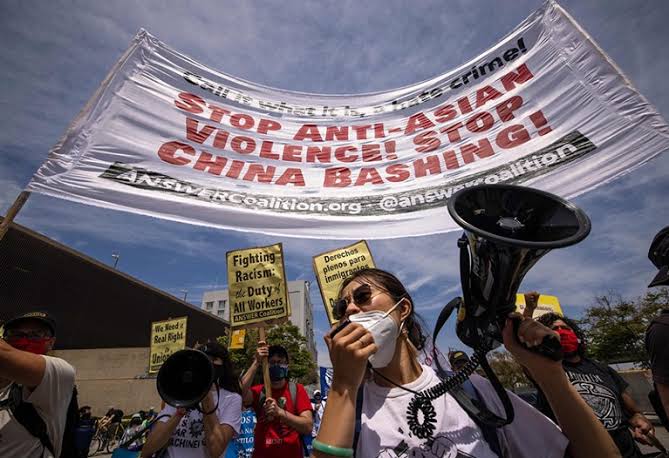
Participants in the Stop Anti-Asian Racism & China Bashing rally in Washington, D.C., March 27, 2021. Photo: Elvert Barnes / Flickr.

During President Biden’s administration, the espionage agenda receded somewhat into the background, but it reemerged, as Trump took office again. On March 26, 2026, the House Committee on Education and the Workforce heard reports on the activities of foreign intelligence services on university campuses. Once again, the discussion focused primarily on alleged espionage involving Chinese students, the recruitment of American students on campus, and cases in which researchers were drawn into projects without being informed on the true purpose of the research. It is worth noting that in his opening remarks, the committee chair emphasized that international collaborations should benefit America rather than its rivals. This idea contradicts the traditional understanding of academia as a transnational space for free exchange of knowledge. International conferences, academic and cultural exchanges, collaborative research, and multinational projects have advanced and benefited science worldwide for decades. As with the China Initiative, extending the logic of national security into universities and scientific research challenges this principle and contributes to the isolation of American science.

At the same time, it would be wrong to deny that espionage, foreign interference in academia and business, and theft of American intellectual property do exist. Roughly one quarter of China Initiative prosecutions ended in convictions, and over the past year, several cases have emerged involving Chinese intelligence agents infiltrating American academic institutions. But these cases differ in one respect, crucial for the NDAA 2019 list: the spies concealed their connections to Chinese universities, military structures, or intelligence agencies. They would typically enter the United States as students, visiting researchers, fellows, or even professors while hiding their institutional ties. They transferred research data and intelligence to the Chinese government, smuggled research materials into or out of the country – it seems that Ksenia Petrova was detained because of this atmosphere of heightened suspicion within academia.

There were also cases of recruiting American students and professors, but it generally happened through malign foreign talent recruitment programs, in which American researchers participated without being informed who would ultimately receive the results of their work or for what purpose. The 2024 version of the Pentagon list was specifically aimed at preventing this practice.

An even more common instrument of espionage has been cyberattacks, like the case reported recently by The Insider. In this case, Microsoft uncovered a scheme that allowed hackers to gain access to data from every device connected to compromised hotel Wi-Fi networks during academic conferences.

Journalist Roman Dobrokhotov described the method for the TVRain channel: “When you try to log in, your credentials get stolen. In the worst case scenario, you’re prompted to download software or click ‘OK’ or ‘YES,’ and a real spyware virus gets onto your laptop. It steals all your passwords and captures everything you type on the keyboard. If a conference has a thousand participants, it is enough just for two or three people to download the malware for the operation to succeed.” According to The Insider, “the group primarily targets governments, diplomatic missions, NGOs, and IT companies in the United States and Europe in order to collect intelligence supporting Russian foreign policy.” 

All of these espionage cases share an important point: every time, the perpetrators concealed the affiliations with the organizations they were truly working for, they frequently used false documents, or even operated remotely. This raises a doubt as to the effectiveness of a ban on cooperation with specific universities. Such a policy is unlikely to counter the methods actually used to steal research data.

How grave are the consequences?

The third major difference between this list and sanctions packages lies in the mechanism of the restrictions: the Department of Defense does not put a ban on the activities of the listed organizations, but it is restricting its own ability to fund them. The universities included in the list, their employees, or American scholars – none of them will face prosecution by law enforcement. However, the Pentagon restricts its ability to provide funding to universities, institutes, or individual researchers who continue collaborating with listed organizations or their employees, or who use their equipment.

At first glance, it might seem that losing such a niche source of funding would hardly affect fields unrelated to the military. For instance, professor of Russian literature Oleg Lekmanov, who taught at Princeton University, expressed precisely this view: “As I see it, this is not relevant to the humanities, because no one from the military sector offers us funding in the first place.” However, the Pentagon has numerous programs and foundations that finance research, and not only in fields related to defense, but also in biology, psychology, medicine, linguistics, the social sciences, and area studies. For instance, Natalia Korbo, a former targeting analyst for the U.S. State Department Economic Bureau, confirmed to T-invariant that the Department of Defense supports an exceptionally broad range of projects, particularly in STEM – science, technology, engineering, and mathematics.

Moreover, funding extends well beyond STEM disciplines. For example, the Minerva Initiative distributes long- and short-term grants for research intended to help the Department of Defense better understand future challenges and prepare for them. Thus, the participating projects cover a range of disciplines. According to Science, Minerva allocated $24.8 million in 2024 alone to projects involving artificial intelligence, climate change, and migration. Yet, the Science reports that the initiative had already begun drastically reducing its funding, even for projects that appeared directly relevant to defense interests. Among those unexpectedly terminated were studies examining the factors that motivate military personnel to remain in service and the conditions that prevent the collapse of international alliances. And now, it might become even more difficult to obtain Pentagon funding, since applicants will have to demonstrate that no member of a project is affiliated with any organization on the list of “the undesirables.”

Apart from research, the Department of Defense provides funding for educational purposes. It awards scholarships to undergraduate, graduate, and doctoral students studying languages and regions considered “critical to America’s security,” and it sponsors academic centers devoted to these fields.

Judging by the Trump administration’s foreign-policy priorities, particular attention is currently being drawn to South America and the Indo-Pacific region. At the same time, the Middle East, Central Asia, and Russia remain areas of strategic interest as well. Consequently, the publication of the NDAA 2019 list will affect not only researchers in biochemistry, physics, engineering, and technology, but potentially also scholars studying Latin American music or Chinese dance if their academic center receives Pentagon funding.

Moreover, it is unclear whether the funding will be lost only by a project or an institute who maintains ties with a banned organization, or the research of the whole university will be considered compromised in case one body continues collaborations. It is entirely possible that if even one department within a university depends on Department of Defense funding, restrictions on collaboration with listed organizations could apply to the university as a whole.

Furthermore, the preamble to the document contains another provision that may substantially broaden its practical impact. Formally, the list applies only to Department of Defense grants, scholarships, contracts, and other financial support. However, it also warns that cooperation with listed organizations may negatively impact scholars’ eligibility for federal funding. And that is a much more serious prospect. The U.S. federal government finances roughly half of all research and maintenance expenditures at American universities and colleges. Federal money also supports countless scholarships, research grants, and academic conferences. In this light, universities will hardly risk losing access to federal funding, even if the document merely warns of possible consequences rather than imposing an explicit prohibition.

Denis Simon. Photo: CCG Update — Center for China and Globalization.

Denis Simon, Senior Research Fellow at the Quincy Institute for Responsible Statecraft in Washington, argues that the U.S. government has effectively stopped distinguishing between leading civilian universities and institutions engaged in security-related research. He also believes American organizations will most likely interpret the conditions of the NDAA 2019 list very broadly. Simon further suggests that universities may begin limiting interaction not only with the organizations explicitly named on the list, but also with other research institutes in Russia, China, and Iran.

A similar concern is expressed by Evgeny Roshchin, Visiting Fellow at the Center for Global Policy of the SAIS School of Advanced International Studies: “On the one hand, the document concerns the research funded through Department of Defense grants. On the other hand, the disciplinary boundaries are not specified. That means it could apply to virtually any field of research, including economics, if it is financed through Pentagon grants. Researchers applying for federal grant competitions will also have to disclose all of their connections with people affiliated with organizations on the list. The existence of such connections may reduce their chances of receiving funding. I believe this will become the main deterrent. Of course, everything will depend on how the rules are applied, but the policy could seriously damage academic cooperation, because some researchers might choose to abandon perfectly legitimate collaborations simply to avoid the risk.”

According to research data, international collaboration is a significant driver of scientific progress. Natalia Korbo believes that while some restrictions are understandable, a blanket prohibition is deeply misguided:

“I understand the logic behind banning joint research in fields like bioengineering or physics, although spies are smart enough not to be affiliated with problematic institutions. But prohibiting all collaboration is simply foolish. It will harm both American science and scientific research worldwide. The restrictions will absolutely affect cultural studies as well. Even the closure of the Confucius Institutes had negative consequences for Americans themselves. Yes, those institutes promoted the Chinese government’s propaganda, but in most American cities they were also the only places where people could learn Chinese. These kinds of bans, like the TikTok ban, are often poorly thought out and produce enormous collateral damage.”

A similar view is shared by Anton Kapustin, professor of physics at the California Institute of Technology: “First, I believe these are serious restrictions, and they extend well beyond defense-related research. Originally, they applied only to projects sponsored by the U.S. Department of Defense. But similar restrictions have since been introduced for grants from the Department of Energy, the National Science Foundation, and other agencies. In practice, they now affect almost all federal grants. Second, the list of proscribed entities grows every year. Now it includes MIPT, HSE, and Moscow State University. If a student has co-authored publications with researchers from these institutions, any American university will think twice before admitting that student to a PhD program, because it will most likely be unable to pay their stipend using federal grant money. There are still many uncertainties, of course, but I think universities will prefer to be overcautious. And obtaining visas will also become more difficult for such students. So the consequences could be very serious.”

Anton Kapustin. Photo: Simons Foundation.

Thus, for Russian researchers, the publication of the list may result in profound professional difficulties. But how capable are these restrictions of protecting American interests? And is the loss of cooperation with Russian, Iranian, and Chinese colleagues truly significant for U.S. science?

Entrepreneur Oleg Tinkov argued in an interview with journalist Mikhail Fishman on TV Rain,  that Russian universities continue to produce exceptionally strong specialists: “Whatever we may say about Putin’s Russia, or Russia in general, its universities and education – especially in mathematics, computer science, physics, and chemistry – remain exceptionally strong, even compared with the United States. I still think Russian education firmly belongs among the world’s top five, and specialists from Russia are highly valued.”

Academic collaborations with China seem to be even more important for American science. Over the past decade, Chinese science has dramatically strengthened its global position. China ranks second in the world in the number of scientific publications. In 2024, for the first time, Chinese researchers published more papers in leading natural science journals than American scientists did, exceeding the US by 17%. Niccolò Pisani et al. emphasize that China’s success has been driven largely by international collaboration and sustained government investment. Consequently, the restriction of scientific cooperation with China can also have an objective of slowing China’s scientific progress. But such a strategy is likely to have limited effectiveness as long as other leading countries continue collaborating with Chinese researchers. Meanwhile, American science itself risks losing specialists and forfeiting one of its greatest competitive advantages: participation in the global scientific community.

As Denis Simon argues, “the policy is likely to accelerate the fragmentation of the US-China scientific relationship, including in fields that have traditionally relied on open exchanges and multinational research teams. It could also limit US researchers’ access to some of the world’s most productive scientific institutions.” Simon also questions whether the policy is genuinely capable of slowing China’s scientific development.

The publication of the 2025 Section 1286 list may therefore substantially limit cooperation between American researchers and colleagues from Russia, Iran, and China. Although at first glance, the restrictions appear to apply only to defense-related research, they are likely to affect a much broader range of academic disciplines. The precedent of prosecuting cases unrelated to security topics, set by the China Initiative, demonstrated that a program announced with narrow security objectives could, in practice, be applied much more broadly. Meanwhile, the threat of losing Pentagon funding and risk of losing eligibility for other forms of federal support are sufficiently serious that many universities are likely to abandon collaborations with listed institutions simply to avoid the risk. The inclusion of major civilian universities such as Moscow State University and the Higher School of Economics potentially affects thousands of scholars who have no connection to military research. It will be harder if possible to participate in American conferences, conduct joint research, or publish in academic journals, even if they present themselves as independent researchers and do not list their institutional affiliation. Even the students from these universities, even though the restrictions do not formally prohibit them from applying to American colleges or universities, may face indirect consequences if institutions, fearing the loss of federal funding, begin extending these restrictions to graduates of listed universities as well. The policy may also affect universities outside the United States that are closely integrated into the American academic system, particularly those receiving U.S. funding. Such institutions may likewise begin limiting cooperation with researchers affiliated with organizations on the list.

Ultimately, the measures intended to protect American science may not only create serious obstacles for researchers from Russia, China, and Iran, but they may also undermine one of the fundamental strengths of American academia itself – international collaboration and the free exchange of knowledge.

The post New “Undesirables”: Why the Pentagon Is Restricting Cooperation with Moscow State University and Higher School of Economics appeared first on Т-инвариант / T-invariant.

  •  

BOMBSHELL on CANCER DANGERS after COVID VACCINES (Video). Korean Study on 8 millions Individuals confirms the Italian Alarm: Higher Risks to Lung and Prostate

Introduction by Fabio Giuseppe Carlo Carisio

VERSIONE IN ITALIANO

Originally published on October, 6, 2025 – updated with VIDEO on August, 24, 2026

VIDEO – Two MASSIVE COVID shot studies on 8 MILLION people confirm that can trigger Turbo-Cancer in Vaccinated

Excerpt from American Thinker interview to American Epidemiologist Nicolas Hulscher

Korean Medical Doctors: “1-Year Cancer Risk Associated with COVID-19 Vaccination”

«The oncogenic potential of SARS-CoV-2 has been hypothetically proposed, but real-world data on COVID-19 infection and vaccination are insufficient. Therefore, this large-scale population-based retrospective study in Seoul, South Korea, aimed to estimate the cumulative incidences and subsequent risks of overall cancers 1 year after COVID-19 vaccination. Data from 8,407,849 individuals between 2021 and 2023 were obtained from the Korean National Health Insurance database».

We can read in the Abstract of the Korean study Kim et al. titled “1-year risks of cancers associated with COVID-19 vaccination: a large population-based cohort study in South Korea” which was conducted by Hong Jin Kim (Department of Orthopedic Surgery, Kyung-in Regional Military Manpower Administration, Suwon) Min-Ho Kim (Informatization Department, Ewha Womans University Seoul Hospital, Seoul), Myeong Geun Choi and Eun Mi Chun (both in Division of Pulmonary and Critical Care Medicine, Department of Internal Medicine, Ewha Womans University Mokdong Hospital, 1071, Anyangcheon-ro, Yangcheon-gu, Seoul).

Oxford Academic: Fatal TURBO-CANCERS Even inside HEART after COVID VACCINES! New Chilling European Study on Malignant Pericardial Effusions linked to Fast Metastases

The research was published on  BMC Biomarker Research 13 (part of Springer Nature).

«The participants were categorized into two groups based on their COVID-19 vaccination status. The risks for overall cancer were assessed using multivariable Cox proportional hazards models, and data were expressed as hazard ratios (HRs) and 95% confidence intervals (CIs). The HRs of thyroid (HR, 1.351; 95% CI, 1.206–1.514), gastric (HR, 1.335; 95% CI, 1.130–1.576), colorectal (HR, 1.283; 95% CI, 1.122–1.468), lung (HR, 1.533; 95% CI, 1.254–1.874), breast (HR, 1.197; 95% CI, 1.069–1.340), and prostate (HR, 1.687; 95% CI, 1.348–2.111) cancers significantly increased at 1 year post-vaccination» adds the Abstract.

«In terms of vaccine type, cDNA vaccines were associated with the increased risks of thyroid, gastric, colorectal, lung, and prostate cancers; mRNA vaccines were linked to the increased risks of thyroid, colorectal, lung, and breast cancers; and heterologous vaccination was related to the increased risks of thyroid and breast cancers. Given the observed associations between COVID-19 vaccination and cancer incidence by age, sex, and vaccine type, further research is needed to determine whether specific vaccination strategies may be optimal for populations in need of COVID-19 vaccination».

Update – EVEN THE POPE KILLED BY COVID VACCINES. Pulmonary Pathology and Fatal Stroke after mRNA Genetic Serums Predicted by Chinese Universities in 2020

The Korean study indirectly confirms the warning raised by two Chinese universities in October 2020, even before the Covid-19 vaccines were released, regarding the very serious risks of lung disease that both mRNA and mDNA gene sera could cause.

Furthermore, the study found that booster doses were associated with significantly higher risks of gastric and pancreatic cancer. For pancreatic cancer, the risk more than doubled in booster recipients.

Diabolical Molecule inside mRNA Vaccines generates Harmful Proteins as Killer Prions, “Brain-Eating Amoeba”. Explosive Study by prof. Perez (Montagnier Foundation)

These statistics confirmed the validity of the warning raised by the late virologist Luc Montagnier and British oncologist Angus Dalgleish.

More details below inside the analysis of American epidemiologist Nicolas Hulscher.

Fabio Giuseppe Carlo Carisio – Gospa News director


BREAKING: Second Massive Population Study Finds COVID-19 “Vaccines” Increase Risk of 6 Major Cancers

Originally published by Nicolas Hulscher, MPH on Substack Focal Points – Courageous Discourse by McCullough Foundation

About a month ago, the first-ever population cohort study reported increased cancer risks following COVID-19 vaccination. In Italy, nearly 300,000 residents were tracked for 30 months, showing that mRNA shots significantly increased the risk of overall cancer, breast cancer, bladder cancer, and colorectal cancer

BOMBSHELL! INCREASING RISK of MULTIPLE CANCERS from COVID Vaccines unveiled by First Population-Wide Study on 245,000 Vaccinated

Now, a second—and far larger—population-based cohort study by Kim et al from South Korea has corroborated and expanded upon those findings. Drawing on a massive sample of more than 8.4 million people, this is one of the most powerful cancer-safety datasets ever analyzed.

The results are striking. After accounting for age, sex, comorbidities, income level, and prior COVID-19 infection, COVID-19 vaccination was linked to significant increases in multiple major cancers, with the signal consistent across all vaccine platforms, both sexes, and age groups:

Study Design at a Glance

  • Design & data: Population-based retrospective cohort using the Korean National Health Insurance database (2021–2023).
  • Population: 8,407,849 adults.
  • Exposure: COVID-19 vaccination (analyzed overall and by platform: mRNA, cDNA, and heterologous schedules).
  • Matching: Large-scale propensity score matching (1:4 vaccinated:unvaccinated for the main analysis; 1:2 within vaccinated for booster vs non-booster).
  • Modeling: Multivariable Cox proportional hazards models (adjusted for age, sex, comorbidity index, income level, and prior COVID-19 infection), estimating hazard ratios (HRs) with 95% confidence intervals (CIs); analyses stratified by sex and age.
  • Outcome window: 1-year incidence of overall and site-specific cancers post-vaccination.

“COVID-19 mRNA-Induced TURBO CANCERS”. Extremely Serious Oncological Disease enters Medical Literature after Peer-Reviewed US Study


Key Results — Cancers with Significant Increases (1-year follow-up)

  • Overall cancer: HR 1.27 (95% CI, 1.21–1.33) → 27% higher risk of all cancers combined in vaccinated vs. unvaccinated at 1 year.
  • Lung cancer: HR 1.53 (95% CI, 1.25–1.87) → 53% higher risk
  • Prostate cancer: HR 1.69 (1.35–2.11) → 69% higher risk
  • Thyroid cancer: HR 1.35 (1.21–1.51) → 35% higher risk
  • Gastric (stomach) cancer: HR 1.34 (1.13–1.58) → 34% higher risk
  • Colorectal cancer: HR 1.28 (1.12–1.47) → 28% higher risk
  • Breast cancer: HR 1.20 (1.07–1.34) → 20% higher risk

Interpretation: An HR of 1.53 for lung cancer means that vaccinated individuals developed lung cancer at a rate 53% higher than matched unvaccinated peers, over the same one-year follow-up period. Similar interpretations apply to each cancer type.


By Vaccine Platform

  • cDNA vaccines (AstraZeneca type): linked to higher risks of thyroid, gastric, colorectal, lung, and prostate cancers.
  • Overall cancer HR 1.47 (95% CI 1.39–1.56) → 47% higher risk

AstraZeneca Taken to British Court for as many as 80 Damages Claims on “Defective” Covid Jab

  • mRNA vaccines (Pfizer/Moderna): linked to higher risks of thyroid, colorectal, lung, and breast cancers
  • Overall cancer HR 1.20 (95% CI 1.14–1.26) → 20% higher risk

TURBO-CANCER, HEARTBREAK & TOXIC SPIKE. Lethal Risks from Covid mRNA Vaccines: Exclusive Interviews with 3 World-Famous Italian MD

  • Heterologous (mixed schedules): linked to higher risks of thyroid and breast cancers.
  • Overall cancer HR 1.34 (95% CI 1.21–1.48) → 34% higher risk

Interpretation: The elevated cancer risks were not confined to one vaccine platform. Whether adenoviral-vector (cDNA), mRNA, or mixed schedules, each vaccine type was associated with a measurable increase in overall cancer — and each had specific cancer sites driving the signal. In other words, no vaccine technology was free of cancer risk in this dataset.


Booster-Dose Analysis

  • Gastric cancer: HR 1.23 (p = 0.041) → 23% higher risk with boosters
  • Pancreatic cancer: HR 2.25 (p < 0.001) → 125% higher risk with boosters

Interpretation: Booster doses were associated with notably higher risks of gastric and pancreatic cancers. For pancreatic cancer, the risk more than doubled in boosted individuals.

COVID Boosters Trigger Metastasis. UK Oncologist and US Medical Doctor confirmed the Montagnier’s Warning


Overall Cancer Trends/Sex & Age Stratification

Overall cancer: Incidence was higher in the vaccinated across every demographic group.
  • Women showed the highest relative burden, with 48.4 per 10,000 vaccinated vs. 38.2 per 10,000 unvaccinated at one year.
  • Elderly adults (≥75 years) carried the greatest absolute burden, at 119.9 per 10,000 vaccinated vs. 91.7 per 10,000 unvaccinated.
  • Younger adults (<65 years) also experienced a clear overall increase, despite lower baseline rates

New Study Finds Covid-Vaccinated Kids Face ELEVATED CANCER RISK, Immune System Damage

Site-specific patterns:
  • Men: elevated risks for gastric and lung cancers
  • Women: elevated risks for thyroid and colorectal cancers
  • Under 65 years: stronger signals for thyroid and breast cancers
  • ≥75 years: markedly higher risk of prostate cancer


Interpretation: Both the overall and site-specific results show a consistent pattern — every demographic group experienced elevated cancer risks, though the type and absolute burden varied. Women and the elderly were hit hardest, but no population segment was spared.


Conclusions: Major Increases in Cancer Risk from Chortes Studies in Italy and South Korea. 

Taken together, the evidence is now impossible to ignore. The only two population-level cohort studies ever conducted on COVID-19 vaccination and cancer — one in Italy and one in South Korea — have both found major increases in cancer risk.

The Italian study (≈300,000 people, 30-month follow-up) identified significant elevations in overall cancer, breast, bladder, and colorectal cancers. The South Korean study (8.4 million people, 1-year follow-up) confirmed and expanded these findings, documenting increased risks of overall cancer plus six site-specific cancers (lung, prostate, thyroid, gastric, colorectal, and breast).

BOMBSHELL! INCREASING RISK of MULTIPLE CANCERS from COVID Vaccines unveiled by First Population-Wide Study on 245,000 Vaccinated

Critically, the signal was observed across all vaccine types — both mRNA and viral-vector (cDNA) shots — and in every demographic group analyzed. In plain terms: both major COVID-19 vaccine platforms appear to be carcinogenic

With two independent national datasets converging on the same conclusion, governments, regulators, clinicians, and researchers must confront a sobering reality: nearly 70% of the global population has been injected with a carcinogenic product. The evidence demands immediate market withdrawal of these products.

17 Ways mRNA Shots May CAUSE CANCER, According to Over 100 STUDIES

At the McCullough Foundation, we are deeply investigating both the molecular mechanisms and the population-level data linking COVID-19 vaccination to cancer. We are currently preparing several new studies to expand this critical line of evidence.

This work requires substantial time, expertise, and resources, and we ask for your support in funding this urgent research: mcculloughfnd.org/products/donate-1

Oririnally published by Nicolas Hulscher, MPH on Substack Focal Points – Courageous Discourse by McCullough Foundation

Nicolas Hulscher, MPH – Epidemiologist and Foundation Administrator, McCullough Foundation


MAIN SOURCES

FOCAL POINTS – COURAGEOUS DISCOURSE

Study by Kim et al. 1-year risks of cancers associated with COVID-19 vaccination: a large population-based cohort study in South Korea

GOSPA NEWS – TURBO-CANCER AND VACCINES DOSSIER


RELATED TOPICS


  •  

12 Neolithic Arrowheads Found in Anatolia Bear Rare Geometric Marks Whose Purpose Remains Unknown

A team of French and Turkish researchers has published an exhaustive analysis of twelve obsidian arrowheads with intentional incisions found at the Neolithic site of Tepecik-Çiftlik, in the Cappadocia region (Turkey). These objects, dating between 7100 and 6100 BCE, represent an exceptional archaeological phenomenon: they are extremely rare and have only been found in Central […]

  •  

Satan’s Chosen People

Satan’s Chosen People https://www.telegraph.co.uk/world-news/2026/08/23/last-christian-town-west-bank-under-siege-settlers/  The West Bank’s last Christian village under settler attack The Telegraph witnesses settler violence despite areas […]
  •  
❌