❌

Reading view

  •  

New “Undesirables”: Why the Pentagon Is Restricting Cooperation with Moscow State University and Higher School of Economics

On July 23, the U.S. Department of Defense published a new list of organizations that, according to its assessment, pose a threat to U.S. national security or are engaged in problematic activity. The list includes Moscow State University, Bauman Moscow State Technical University, the Higher School of Economics, Ural Federal University, and numerous other universities and research institutes. The Pentagon believes that these organizations may aim to steal American intellectual property, research data, technologies, and scientific innovations. The Department therefore urges American universities, research institutes, and individual scholars receiving Department of Defense funding not to collaborate with them in any way, exchange data, or provide financial support. Notably, this list is not identical to existing U.S. sanctions lists (read more: “Scientific Front: Who in Russian Science Ended Up Under Western Sanctions — and Why”) and it appeared at a time when, according to Reuters, the U.S. administration has significantly reduced efforts to enforce sanctions against Russia. T-invariant explores what this new policy means for American and Russian academia, how it differs from sanctions law, and who is likely to be affected. 

T-INVARIANT BRIEFING

The restrictions certainly apply to:

  • Researchers affiliated with the listed organizations and working in physics, chemistry, biology, engineering, technology, and defense-related fields.
  • American universities and colleges receiving funding from the U.S. Department of Defense.

They are highly likely to affect:

  • All employees of listed institutions, regardless of their academic discipline.
  • Students of the listed universities when applying to conferences or submitting articles to journals affiliated with American universities or companies.
  • Universities, colleges, research institutes, think tanks, and other organizations worldwide that receive funding from the U.S. government.

The restrictions might affect:

  • Students and graduates of these institutions when applying to American universities.
  • Universities in third countries participating in projects funded by the U.S. government.
  • Researchers at other universities and institutes in Russia, Iran, and China.

The list was issued as an implementation of Section 1286 of the John S. McCain National Defense Authorization Act (NDAA) of 2019. The NDAA is a law that is issued every year and that determines the structure and budget of the U.S. military, including troop numbers, defense spending, modernization programs, and other issues. However, alongside military provisions, Congress also includes neighboring measures, such as foreign policy objectives, and funding allocation. The 2019 NDAA received broad bipartisan support and was signed by President Donald Trump. Compared with previous versions, it increased the military budget, while shifting America’s strategic focus in foreign policy away from counterterrorism toward long-term competition with China and Russia, with considerably greater emphasis on China. This legislation was especially discussed in the media due to the restrictions of Section 889 targeting Chinese technology companies such as Huawei and ZTE.

As part of the same great power competition strategy, Congress included provisions designed to protect American academic research from foreign influence and intellectual property theft. Section 1286, which received the updated list of “problematic organizations,” is titled Initiative to support protection of national security academic researchers from undue influence and other security threats and it specifically addresses universities conducting defense and technology research. Although Congress passes a new NDAA every year, the Pentagon continues updating the same list of the Section 1286 of NDAA 2019 because the 2019 law explicitly requires the Department of Defense to revise it on a regular basis. The July 23 publication is therefore not a new law, but the latest update of an existing mechanism. Being published every year, these updates all have special emphasis, relevant for the moment. For instance, the 2025 version is primarily aimed at preventing foreign influence over research sponsored by the Department of Defense. 

Such activities as funding sanctioned organizations, or exchanging data, were already prohibited by sanctions laws. Also, scholars employed by those organizations could not participate in conferences, or get published in the leading journals if they maintained formal affiliations. There are three fundamental points of difference between the new Pentagon list and sanctions: who is affected, who enforces the law, and what the consequences of violations are. 

Who is affected?

Previous sanctions and earlier lists (such as the 2023 Section 1286 list) targeted a relatively small number of universities involved mainly in military technology development or, in Russia’s case, in promoting state propaganda. Moreover, the restrictions were generally limited to individual representatives or to specific institutes. Before the new list appeared, the largest Russian research center to be included in such restrictions in its entirety was Skolkovo, which was added in 2023 – and in that case, it was hardly surprising.

This time, however, the Pentagon included 13 Russian universities as whole bodies,  and those were not only institutions specializing in engineering, physics, and biology, but also several major multidisciplinary universities, including Moscow State University (MSU), the Higher School of Economics (HSE), and Ural Federal University (UrFU). Several of China’s leading multidisciplinary universities, including Fudan University and Shanghai Jiao Tong University, were also added. HSE employees, speaking on condition of anonymity, told T-invariant  that until now they had been able to collaborate with Western universities as private researchers without listing their affiliation, they participated in conferences online and sometimes even in person, conducted joint research, and published articles.
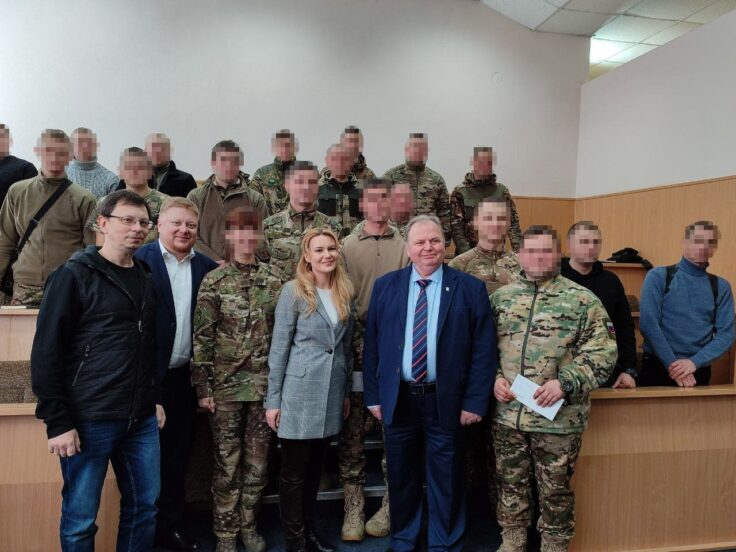
HSE Rector Nikita Anisimov meeting students from Luhansk State University participating in the “special military operation.” Photo: Telegram channel “Вышка для своих (HSE for the Our Own).”

However, the wording of the new document makes it possible to extend the restrictions to employees of the listed organizations themselves. This means that concealing one’s institutional affiliation and presenting oneself as an independent researcher may no longer be sufficient to circumvent the restrictions: any collaboration between American researchers and scholars who are simply employed by universities on the list falls under Pentagon restrictions. Moreover, even though most organizations on the list conduct research in physics, technology, and such, the policy could affect physicians, historians, and even scholars of the Swahili language.

Who enforces the restrictions?

Another noteworthy aspect is that these measures operate through the National Defense Authorization Act, meaning they are administered by the Department of Defense, unlike the traditional sanctions system. Sanctions are often described as decisions made by the U.S. government as a whole, but departments matter. In reality, Sanctions legislation is passed through Congress or came in force by a presidential decree, and enforcement is typically carried out by either the Treasury Department or the Department of Commerce. But this list is neither a sanction imposed for specific actions, nor a punishment for participating in war or violating the law. Instead, it is presented as a preventive measure designed to protect American research and technology from national security threats. Meanwhile, the official sanctions lists themselves do not receive any updates, and President Trump has repeatedly signaled a willingness to improve relations with leaders of countries that remain under U.S. sanctions. 

The Department of Defense is publishing this update because it is legally required to. At the same time, it does not provide any specific evidence demonstrating that every organization included is “engaging in activities that threaten U.S. national security interests.” The use of national security and foreign influence concerns as justifications for government intervention in science, media, and business is all too familiar from the Russian experience and feels rather unsettling. That is why it is important to understand what this policy means not only for Russian science, but also for American academia.

[[socialnetworks]]

After taking office, President Trump began exerting significant pressure on American universities. His primary targets were campus protests and the promotion of woke ideas concerning equality and the rights of gender, racial, and sexual minorities. The principal tool was the threat of cutting off federal funding. Yet even during Trump’s first presidency, the administration had already started intervening in universities through the concerns of espionage, and in 2018, the Department of Justice launched the China Initiative. According to the MIT Technology Review, the effectiveness of the initiative is highly questionable, partly because the Department of Justice never clearly explained its concrete objectives beyond broad references to protecting American technology and combating espionage. It also failed to clarify the criteria used to initiate investigations. Information about many cases never appeared on official government websites, some records were removed following media inquiries and requests for comment, and only about one quarter of the cases received actual convictions. Moreover, many prosecutions had no obvious connection to national security. This precedent is especially significant in light of the new Section 1286 list, as a precedent. As follows from the name of the programme, approximately 90% of those prosecuted under China Initiative were scholars of Chinese origin, and members of Asian diasporas were subjected to disproportionate scrutiny by law enforcement. MIT Technology Review argues that one of the initiative’s most damaging consequences was the brain drain of highly qualified researchers from the United States. Scientists and scholars were leaving because of the discrimination and pressure from the law enforcement, and it became harmful for the American science itself.
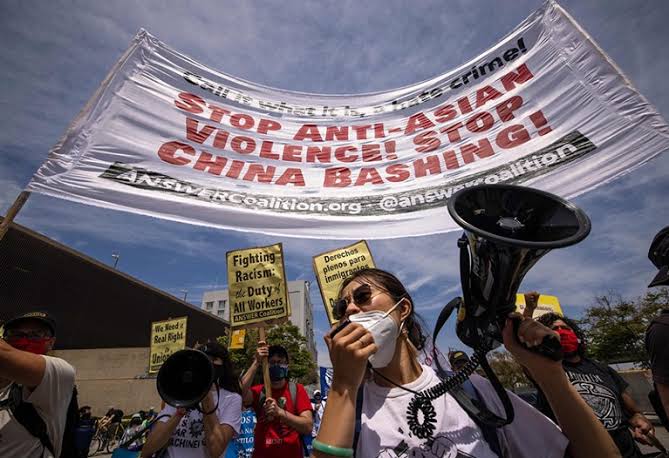
Participants in the Stop Anti-Asian Racism & China Bashing rally in Washington, D.C., March 27, 2021. Photo: Elvert Barnes / Flickr.

During President Biden’s administration, the espionage agenda receded somewhat into the background, but it reemerged, as Trump took office again. On March 26, 2026, the House Committee on Education and the Workforce heard reports on the activities of foreign intelligence services on university campuses. Once again, the discussion focused primarily on alleged espionage involving Chinese students, the recruitment of American students on campus, and cases in which researchers were drawn into projects without being informed on the true purpose of the research. It is worth noting that in his opening remarks, the committee chair emphasized that international collaborations should benefit America rather than its rivals. This idea contradicts the traditional understanding of academia as a transnational space for free exchange of knowledge. International conferences, academic and cultural exchanges, collaborative research, and multinational projects have advanced and benefited science worldwide for decades. As with the China Initiative, extending the logic of national security into universities and scientific research challenges this principle and contributes to the isolation of American science.

At the same time, it would be wrong to deny that espionage, foreign interference in academia and business, and theft of American intellectual property do exist. Roughly one quarter of China Initiative prosecutions ended in convictions, and over the past year, several cases have emerged involving Chinese intelligence agents infiltrating American academic institutions. But these cases differ in one respect, crucial for the NDAA 2019 list: the spies concealed their connections to Chinese universities, military structures, or intelligence agencies. They would typically enter the United States as students, visiting researchers, fellows, or even professors while hiding their institutional ties. They transferred research data and intelligence to the Chinese government, smuggled research materials into or out of the country – it seems that Ksenia Petrova was detained because of this atmosphere of heightened suspicion within academia.

There were also cases of recruiting American students and professors, but it generally happened through malign foreign talent recruitment programs, in which American researchers participated without being informed who would ultimately receive the results of their work or for what purpose. The 2024 version of the Pentagon list was specifically aimed at preventing this practice.

An even more common instrument of espionage has been cyberattacks, like the case reported recently by The Insider. In this case, Microsoft uncovered a scheme that allowed hackers to gain access to data from every device connected to compromised hotel Wi-Fi networks during academic conferences.

Journalist Roman Dobrokhotov described the method for the TVRain channel: “When you try to log in, your credentials get stolen. In the worst case scenario, you’re prompted to download software or click ‘OK’ or ‘YES,’ and a real spyware virus gets onto your laptop. It steals all your passwords and captures everything you type on the keyboard. If a conference has a thousand participants, it is enough just for two or three people to download the malware for the operation to succeed.” According to The Insider, “the group primarily targets governments, diplomatic missions, NGOs, and IT companies in the United States and Europe in order to collect intelligence supporting Russian foreign policy.” 

All of these espionage cases share an important point: every time, the perpetrators concealed the affiliations with the organizations they were truly working for, they frequently used false documents, or even operated remotely. This raises a doubt as to the effectiveness of a ban on cooperation with specific universities. Such a policy is unlikely to counter the methods actually used to steal research data.

How grave are the consequences?

The third major difference between this list and sanctions packages lies in the mechanism of the restrictions: the Department of Defense does not put a ban on the activities of the listed organizations, but it is restricting its own ability to fund them. The universities included in the list, their employees, or American scholars – none of them will face prosecution by law enforcement. However, the Pentagon restricts its ability to provide funding to universities, institutes, or individual researchers who continue collaborating with listed organizations or their employees, or who use their equipment.

At first glance, it might seem that losing such a niche source of funding would hardly affect fields unrelated to the military. For instance, professor of Russian literature Oleg Lekmanov, who taught at Princeton University, expressed precisely this view: “As I see it, this is not relevant to the humanities, because no one from the military sector offers us funding in the first place.” However, the Pentagon has numerous programs and foundations that finance research, and not only in fields related to defense, but also in biology, psychology, medicine, linguistics, the social sciences, and area studies. For instance, Natalia Korbo, a former targeting analyst for the U.S. State Department Economic Bureau, confirmed to T-invariant that the Department of Defense supports an exceptionally broad range of projects, particularly in STEM – science, technology, engineering, and mathematics.

Moreover, funding extends well beyond STEM disciplines. For example, the Minerva Initiative distributes long- and short-term grants for research intended to help the Department of Defense better understand future challenges and prepare for them. Thus, the participating projects cover a range of disciplines. According to Science, Minerva allocated $24.8 million in 2024 alone to projects involving artificial intelligence, climate change, and migration. Yet, the Science reports that the initiative had already begun drastically reducing its funding, even for projects that appeared directly relevant to defense interests. Among those unexpectedly terminated were studies examining the factors that motivate military personnel to remain in service and the conditions that prevent the collapse of international alliances. And now, it might become even more difficult to obtain Pentagon funding, since applicants will have to demonstrate that no member of a project is affiliated with any organization on the list of “the undesirables.”

Apart from research, the Department of Defense provides funding for educational purposes. It awards scholarships to undergraduate, graduate, and doctoral students studying languages and regions considered “critical to America’s security,” and it sponsors academic centers devoted to these fields.

Judging by the Trump administration’s foreign-policy priorities, particular attention is currently being drawn to South America and the Indo-Pacific region. At the same time, the Middle East, Central Asia, and Russia remain areas of strategic interest as well. Consequently, the publication of the NDAA 2019 list will affect not only researchers in biochemistry, physics, engineering, and technology, but potentially also scholars studying Latin American music or Chinese dance if their academic center receives Pentagon funding.

Moreover, it is unclear whether the funding will be lost only by a project or an institute who maintains ties with a banned organization, or the research of the whole university will be considered compromised in case one body continues collaborations. It is entirely possible that if even one department within a university depends on Department of Defense funding, restrictions on collaboration with listed organizations could apply to the university as a whole.

Furthermore, the preamble to the document contains another provision that may substantially broaden its practical impact. Formally, the list applies only to Department of Defense grants, scholarships, contracts, and other financial support. However, it also warns that cooperation with listed organizations may negatively impact scholars’ eligibility for federal funding. And that is a much more serious prospect. The U.S. federal government finances roughly half of all research and maintenance expenditures at American universities and colleges. Federal money also supports countless scholarships, research grants, and academic conferences. In this light, universities will hardly risk losing access to federal funding, even if the document merely warns of possible consequences rather than imposing an explicit prohibition.
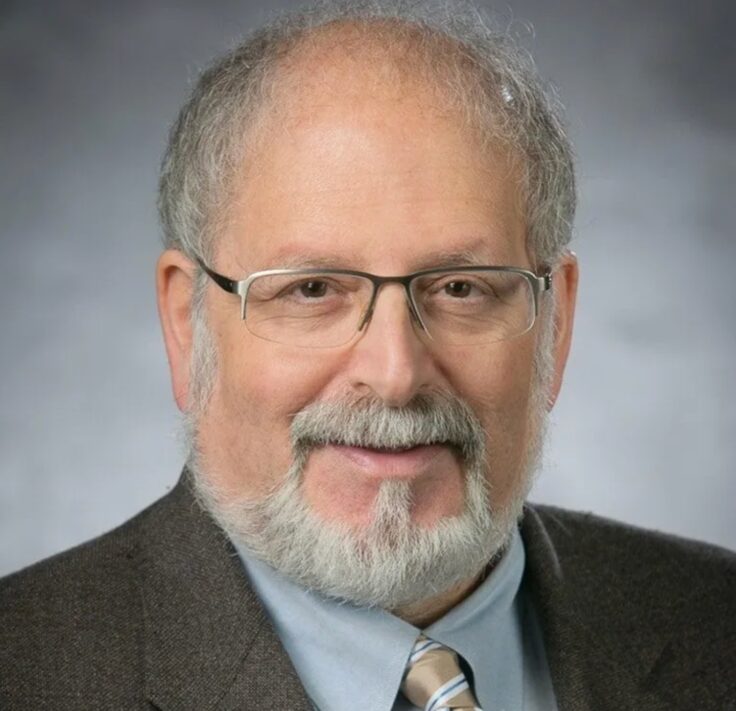
Denis Simon. Photo: CCG Update — Center for China and Globalization.

Denis Simon, Senior Research Fellow at the Quincy Institute for Responsible Statecraft in Washington, argues that the U.S. government has effectively stopped distinguishing between leading civilian universities and institutions engaged in security-related research. He also believes American organizations will most likely interpret the conditions of the NDAA 2019 list very broadly. Simon further suggests that universities may begin limiting interaction not only with the organizations explicitly named on the list, but also with other research institutes in Russia, China, and Iran.

A similar concern is expressed by Evgeny Roshchin, Visiting Fellow at the Center for Global Policy of the SAIS School of Advanced International Studies: “On the one hand, the document concerns the research funded through Department of Defense grants. On the other hand, the disciplinary boundaries are not specified. That means it could apply to virtually any field of research, including economics, if it is financed through Pentagon grants. Researchers applying for federal grant competitions will also have to disclose all of their connections with people affiliated with organizations on the list. The existence of such connections may reduce their chances of receiving funding. I believe this will become the main deterrent. Of course, everything will depend on how the rules are applied, but the policy could seriously damage academic cooperation, because some researchers might choose to abandon perfectly legitimate collaborations simply to avoid the risk.”

According to research data, international collaboration is a significant driver of scientific progress. Natalia Korbo believes that while some restrictions are understandable, a blanket prohibition is deeply misguided:

“I understand the logic behind banning joint research in fields like bioengineering or physics, although spies are smart enough not to be affiliated with problematic institutions. But prohibiting all collaboration is simply foolish. It will harm both American science and scientific research worldwide. The restrictions will absolutely affect cultural studies as well. Even the closure of the Confucius Institutes had negative consequences for Americans themselves. Yes, those institutes promoted the Chinese government’s propaganda, but in most American cities they were also the only places where people could learn Chinese. These kinds of bans, like the TikTok ban, are often poorly thought out and produce enormous collateral damage.”

A similar view is shared by Anton Kapustin, professor of physics at the California Institute of Technology: “First, I believe these are serious restrictions, and they extend well beyond defense-related research. Originally, they applied only to projects sponsored by the U.S. Department of Defense. But similar restrictions have since been introduced for grants from the Department of Energy, the National Science Foundation, and other agencies. In practice, they now affect almost all federal grants. Second, the list of proscribed entities grows every year. Now it includes MIPT, HSE, and Moscow State University. If a student has co-authored publications with researchers from these institutions, any American university will think twice before admitting that student to a PhD program, because it will most likely be unable to pay their stipend using federal grant money. There are still many uncertainties, of course, but I think universities will prefer to be overcautious. And obtaining visas will also become more difficult for such students. So the consequences could be very serious.”
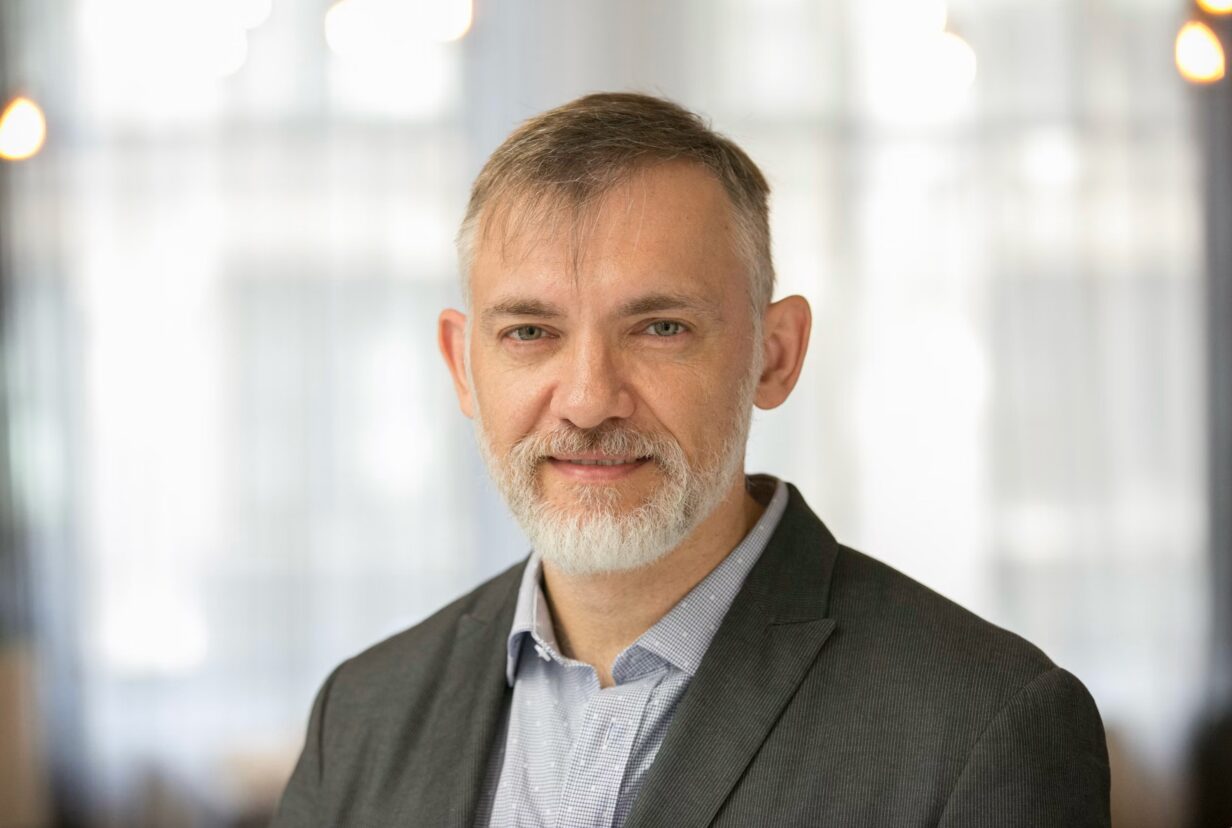
Anton Kapustin. Photo: Simons Foundation.

Thus, for Russian researchers, the publication of the list may result in profound professional difficulties. But how capable are these restrictions of protecting American interests? And is the loss of cooperation with Russian, Iranian, and Chinese colleagues truly significant for U.S. science?

Entrepreneur Oleg Tinkov argued in an interview with journalist Mikhail Fishman on TV Rain,  that Russian universities continue to produce exceptionally strong specialists: “Whatever we may say about Putin’s Russia, or Russia in general, its universities and education – especially in mathematics, computer science, physics, and chemistry – remain exceptionally strong, even compared with the United States. I still think Russian education firmly belongs among the world’s top five, and specialists from Russia are highly valued.”

Academic collaborations with China seem to be even more important for American science. Over the past decade, Chinese science has dramatically strengthened its global position. China ranks second in the world in the number of scientific publications. In 2024, for the first time, Chinese researchers published more papers in leading natural science journals than American scientists did, exceeding the US by 17%. Niccolò Pisani et al. emphasize that China’s success has been driven largely by international collaboration and sustained government investment. Consequently, the restriction of scientific cooperation with China can also have an objective of slowing China’s scientific progress. But such a strategy is likely to have limited effectiveness as long as other leading countries continue collaborating with Chinese researchers. Meanwhile, American science itself risks losing specialists and forfeiting one of its greatest competitive advantages: participation in the global scientific community.

As Denis Simon argues, “the policy is likely to accelerate the fragmentation of the US-China scientific relationship, including in fields that have traditionally relied on open exchanges and multinational research teams. It could also limit US researchers’ access to some of the world’s most productive scientific institutions.” Simon also questions whether the policy is genuinely capable of slowing China’s scientific development.

The publication of the 2025 Section 1286 list may therefore substantially limit cooperation between American researchers and colleagues from Russia, Iran, and China. Although at first glance, the restrictions appear to apply only to defense-related research, they are likely to affect a much broader range of academic disciplines. The precedent of prosecuting cases unrelated to security topics, set by the China Initiative, demonstrated that a program announced with narrow security objectives could, in practice, be applied much more broadly. Meanwhile, the threat of losing Pentagon funding and risk of losing eligibility for other forms of federal support are sufficiently serious that many universities are likely to abandon collaborations with listed institutions simply to avoid the risk. The inclusion of major civilian universities such as Moscow State University and the Higher School of Economics potentially affects thousands of scholars who have no connection to military research. It will be harder if possible to participate in American conferences, conduct joint research, or publish in academic journals, even if they present themselves as independent researchers and do not list their institutional affiliation. Even the students from these universities, even though the restrictions do not formally prohibit them from applying to American colleges or universities, may face indirect consequences if institutions, fearing the loss of federal funding, begin extending these restrictions to graduates of listed universities as well. The policy may also affect universities outside the United States that are closely integrated into the American academic system, particularly those receiving U.S. funding. Such institutions may likewise begin limiting cooperation with researchers affiliated with organizations on the list.

Ultimately, the measures intended to protect American science may not only create serious obstacles for researchers from Russia, China, and Iran, but they may also undermine one of the fundamental strengths of American academia itself – international collaboration and the free exchange of knowledge.

The post New “Undesirables”: Why the Pentagon Is Restricting Cooperation with Moscow State University and Higher School of Economics appeared first on Т-инвариант / T-invariant.

  •  

'A truly historic event this Sunday': President on first elections to Qurultay

President of Kazakhstan, Kassym-Jomart Tokayev, has addressed the nation ahead of the elections to the Qurultay, Qazinform News Agency reports, citing the Akorda press service.

"Dear compatriots! This Sunday (23 August), our country will witness a truly historic event – the first elections to the new unicameral Qurultay.

In recent years, our country has been confidently moving along the path of far-reaching reforms. Thanks to unity, harmony, and solidarity, we have achieved significant results in building a Just Kazakhstan. However, there is still much work to be done.

With the entry into force of the People's Constitution, these elections will mark the starting point for new reforms for the benefit of all citizens and will open a new chapter in the history of modern Kazakhstan.

I announced the Qurultay elections well in advance so that all parties could prepare properly.

As a result, the first election campaign for the Qurultay has been substantive, open, competitive, and civilized. This is the common view of our citizens.

Without a doubt, these elections will be remembered as perhaps the most interesting in our country's history.

During meetings with voters, media campaigning, national televised debates, and social media discussions, parties have convincingly presented their platforms.

In other words, citizens have gained the opportunity to assess the political parties' visions for the country's future and their various initiatives for the further development of all areas of life – from the economy to culture," the Head of State said.

The Qurultay elections are scheduled for 23 August. According to the CEC, 12,605,788 voters have been included in the electoral rolls.

Kazakhstanis are to elect 145 Qurultay deputies for five-year terms. The CEC has registered candidate lists from seven political parties.

  •  

“Are You Alive?” Talking Plants, Purchased Papers, and Repression: What Is Happening to Serbian Science

In recent years, Serbia has appeared more and more often in news stories about violations of research ethics: plagiarism in the dissertations of high-ranking officials, purchased authorship, mass retractions of publications, dubious international collaborations, and studies verging on scientific curiosities. And also — mass political persecution of scholars and university teachers. Are these episodes accidental, or are they manifestations of one and the same problem? Plagiat-Navigator tried to make sense of the situation.

Any account of the current situation with academic misconduct in Serbia has to begin with the story of the doctoral dissertation of Sinisa Mali, then the mayor of Belgrade and now the country’s first deputy prime minister. After “terrible plagiarism” was found in his work, the familiar bureaucratic game began: academic bodies dragged out a decision for years. But in the end, under public pressure and in the face of irrefutable evidence, the ethics committee of the University of Belgrade did annul his doctoral degree. By that time, Mali had already become finance minister. Soon afterward, Serbia’s Constitutional Court overturned the university’s decision. Apparently having lost faith in his own country’s academic system, Mali — by then Serbia’s first deputy prime minister — went to defend a new dissertation… in Slovakia. The Serbian authorities immediately recognized the Slovak diploma. The saga has been going on for more than a decade, and it is not over yet. But it has already become a textbook example of how political weight can cast doubt on the very idea of academic integrity.

Sinisa Mali. Photo: Vreme

Not all stories about plagiarism in the work of Serbian officials end well. Filip Svarm, editor-in-chief of the weekly Vreme, and journalist Nemanja Rujevic, who published the investigation “Anatomy of a Dissertation,” were less fortunate. Former politician Jelena Trivan, now CEO of Serbia’s largest mobile operator and the subject of that investigation, sued the journalists at the end of 2024 and won 80,000 dinars for an infringement of her honor, dignity, and business reputation. At the same time, the court did not question the fact of the borrowings themselves. It concluded, however, that only specialists have the right to classify a scholarly work as plagiarism, while journalists do not have such authority.

University of Belgrade professor Aleksandar Kavcic called what was happening “a war of laypeople against scientists”: a country where ignorance is celebrated and ministers are people who “like to wave around purchased and plagiarized diplomas.”

Plagiarism in Serbia’s academic environment is not limited to politicians’ dissertations. The buying and selling of scientific publications is an even more acute problem. This may be why Professor Kavcic, speaking of colleagues in the field, diplomatically noted that the difference between a real scientist and someone who has acquired knowledge “third hand” is enormous.

Plagiat-Navigator has already written about such “third hands” — the Moscow exchange trading in scientific publications and authorship slots — in the article “Hirsch Index at Market Rate.” One of the figures in that story was Marko Milojevic, a professor at Singidunum University in Belgrade. The case concerned two publications in international scientific journals in which Milojevic purchased authorship in 2021 through the Moscow exchange. A closer analysis shows that, in at least six publications, Professor Milojevic shares authorship with Russian colleagues who regularly use the services of the Moscow firm.

Yet the Moscow trail is only the tip of the iceberg. Following a global trend, Serbian scholars have recently shifted from the Russian market to the more powerful and influential Asian markets for fake publications. In a recent study of retracted papers with Iranian affiliations in computer science, the authors concluded that Serbia ranks among the leaders in the number of jointly published questionable papers, second only to Malaysia. This is hardly surprising: the “paper mill” from the Iranian city of Ardabil, exposed in 2023, also worked actively with Serbian colleagues. The result was the mass retraction of 31 papers in Genetika, the official journal of the Serbian Genetics Society, which lost its impact factor because of “compromised” peer review and citation manipulation.

Manipulation of peer review, authorship, and citation in publications by Serbian scholars has been observed not only in Genetika. Several examples of such papers, retracted from various journals for this reason, are shown below. It should be noted that Russian scientists also appeared as co-authors alongside their Serbian colleagues in these papers.

The compromising of publication procedures is only one item in a long list of dishonest practices used to pull the wool over the eyes of journal reviewers and editors.

Consider another characteristic example: in 2024, experts found numerous distortions of established scientific expressions — so-called tortured phrases — in a paper by Professor Nebojsa Bacanin, vice-rector for research at Belgrade’s Singidunum University. This is a clear sign that the authors were trying to evade plagiarism-detection systems using automated paraphrasing. But, as often happens, the software malfunctioned: it paraphrased the text while leaving abbreviations unchanged, so that they no longer matched their expansions. For example, instead of convolutional neural network (CNN), the text produced the meaningless phrase convolutional brain organization (CNN). Such blunders are the calling card of texts written not by scientists but by algorithms. Incidentally, another paper by Vice-Rector Bacanin was found to contain numerous manipulations with irrelevant bibliographic references.

The main news about the lives of scholars during the war, videos, and infographics are available on T-invariant’s Telegram channel. Subscribe so you don’t miss anything.

The problem, however, is not only how the articles are written, but also how their number is artificially inflated. The inflation of publication activity in Serbian science does not do without a zoo — and what follows is not a figure of speech. The use of metaheuristics inspired by animal behavior is a frequently used method for artificially increasing the number of publications. Many such algorithms are described extremely superficially, while their novelty and applicability to a wide range of tasks raise serious doubts. In most cases, the proposed method differs little from long-known algorithms, and its supposed originality comes down to a new metaphor and fresh terminology. A significant share of such works are merely minor modifications of the well-known Particle Swarm Optimization method.

A telling example: in a 2026 paper by scientists from Saudi Arabia, Egypt, and Serbia, the authors took an interest in the behavior of the spider-tailed horned viper and applied this metaphor to photovoltaic water-pumping systems. It sounds like science fiction, but it is a real publication in a scientific journal. Notably, among the co-authors of the paper we once again find the already familiar Professor Bacanin, vice-rector of Singidunum University.

Nor is the story free of image manipulation. In a joint Iranian-Italian article whose authors include a single representative of Serbia — University of Belgrade professor Jelena Popovic-Djordjevic — experts found telltale traces of Photoshop, the same techniques that have surfaced more than once in similar scandals.

Jelena Popovic-Djordjevic. Photo: ResearchGate

It is worth noting that since 2020 Popovic-Djordjevic has been a constant co-author of Sina Moghaddam, an Iranian specialist in medicinal plants. The scheme is transparent: the participation of European scientists helps Asian authors break into prestigious journals. At the same time, the real contribution of the Western colleagues to the research is often minimal. Their role is reduced to status presence — a kind of “wedding general” at an academic wedding. Until 2020, this honorary function in Moghaddam’s publications was performed by a researcher from Greece. The outcome was entirely predictable: nine of their joint papers have already been retracted, and they have received scathing criticism on Retraction Watch. Now the baton has passed to Popovic-Djordjevic.

It should be added that image manipulation in her papers is not only an Iranian specialty. In a paper signed by ten employees of the University of Belgrade, a curious fact emerged: an image previously used to illustrate liver samples migrated unchanged into a new article — this time as an illustration of kidney samples. The authors were not at a loss: they apologized for an “unfortunate error” and corrected the article.

[[socialnetworks]]

The roots of this tradition of errors, however, run deeper. Back in 2003, one of the co-authors of the aforementioned paper about the liver — now a professor at the Faculty of Medicine of the University of Belgrade, and then a researcher at Queen Mary University of London — Zoran Todorovic, together with his British colleague Christoph Thiemermann, published a paper in which experts also found image manipulation, again involving liver samples. In response to puzzled questions from reviewers, Professor Thiemermann replied with lethal directness: the results of the study, by his own admission, “may not be reliable.” Since then, more than 80 negative PubPeer comments have accumulated on his papers, 15 of which have ultimately been retracted. Techniques honed at a British university, it seems, proved useful in Belgrade twenty years later.

One reliable sign of dishonest publication activity is a sharp rise in the number of papers co-authored with representatives of countries in the Middle East, especially Saudi Arabia, around 2021–2022. In such papers, authorship is often shared by researchers from a good dozen countries — a kind of academic international, assembled by chance around a single publication.

The graph above shows the distribution of the number of papers by Serbian authors co-authored with colleagues from Asia and Africa, depending on the number of co-authoring countries. By a large margin, the leaders in the number of papers are two mathematicians from the University of Belgrade: Professors Dragan Pamucar and Vladimir Simic. The sharp surge in their publication activity falls precisely at the beginning of the 2020s. And if experts find elementary mathematical errors in their papers, there is nothing surprising about it: at a productivity rate of three papers a week, it is simply impossible not to make mistakes. PubPeer has already accumulated claims against a hundred of their publications in international journals, ten of which have now been officially retracted. It seems that in this case quantity really did turn into quality.

To conclude this theme, let us talk a little with plants — yes, yes, do not be surprised. Scientists from Slovenia, Serbia (the universities in Nis and Belgrade), and the University of Pristina decided to find out together whether plants are capable of talking to people in their own language. To do this, they attached a polygraph to the stem of a potted flower and asked the plant questions: “Are you alive?”, “Do you have consciousness?”, “Does it hurt?” The plant was interrogated using a radioactive source of a uranium isotope. The answers obtained were decoded with the help of AI, which translated them into Serbian. To avoid suffering from radiation themselves, the authors of the study used a homemade orgonite — a bioenergetic shield that transforms negative energy into positive energy.

The researchers’ first important discovery was observing how the experimental “vegetable” — this is exactly how they familiarly referred to the potted plant under study — sweated and changed its pulse and breathing rate. All of this was recorded using a polygraph. As a result, the Balkan scientists concluded that plants can be engaged in a rational dialogue in their own language. The results of the study were published in a scientific journal devoted to issues of… acupuncture.

Current videos about science during the war, interviews, podcasts, and streams with prominent scholars are available on T-invariant’s YouTube channel. Become our subscriber!

Behind all these scandalous stories, it should not be forgotten that the majority of Serbian scientists and university teachers are honest professionals who have nothing to do with plagiarism, purchased papers, or other manipulations. The events of the past two years have clearly confirmed this: many of them proved willing to risk their own careers in defense of academic freedoms and democratic principles.

The mass student protests that began in Serbia in November 2024 after the collapse of a canopy at the railway station in Novi Sad quickly grew into a nationwide movement against corruption and political pressure on state institutions. Universities became one of the main centers of protest activity: lecturers openly supported the students, while rectors and deans refused to obstruct university blockades. In response, the authorities and pro-government media launched a campaign against the academic community.

Political pressure was not limited to public attacks. At a number of universities, teachers who spoke out in support of students faced refusals to reappoint them, dismissals, and delays in career advancement. The best-known case was that of Jelena Kleut, a professor at the Faculty of Philosophy of the University of Novi Sad, who lost her job after twenty years of teaching; she herself called what happened a political reprisal. These actions by the Serbian authorities, aimed at suppressing academic freedoms, attracted the attention of international organizations: the European Parliament and the human rights network Scholars at Risk documented an escalation of threats against Serbian scholars, publishing reports on a systemic crisis of freedom of speech.

All these stories are elements of a single ecosystem in which formal indicators replace real science, violations meet no serious resistance, and universities and courts sometimes side with the violators. Politicians themselves, by their own example, have demonstrated for decades that academic integrity is worth nothing if you have power. With this signal, they have been corroding the academic community for years, setting “their own” careerists against those who refused to play their game. It would be a mistake to think that the entire academic community has resigned itself to this state of affairs. But, unfortunately, for now the dialogue between the former and the latter looks more like a conversation with plants.

The post “Are You Alive?” Talking Plants, Purchased Papers, and Repression: What Is Happening to Serbian Science appeared first on Т-инвариант / T-invariant.

  •  

Smolny in Exile: From a St. Petersburg Faculty to a Global Online College

Smolny Beyond Borders, an online education project, has launched the Smolny Associate Degree program, with applications open through July 31. Over two years, students choose courses across a range of fields — the social sciences and humanities, the natural sciences, the arts, and literature. Graduates receive an Associate of Arts degree, which qualifies them to apply as transfer students to U.S. universities, entering in their second or third year (including Bard College, which will also offer third-year admission to its online program). T-invariant spoke with Denis Skopin, a philosopher who teaches at Smolny Beyond Borders, and Philip Fedchin, manager of the Smolny Beyond Borders Initiative and an online-education specialist, about how a liberal arts program was built in exile, whether serious humanities research is still possible in Russia today, and what the future holds for distance learning.

T-INVARIANT BACKGROUNDER

Denis Skopin

Born in 1976. Graduated from Nizhny Novgorod State Linguistic University. Defended his dissertation in philosophy in Paris in 2012. From 2012 to 2022 he taught at Smolny College (the Faculty of Liberal Arts and Sciences at St. Petersburg State University), most recently as an associate professor. He was fired from St. Petersburg State University after taking part in the protests against mobilization in September 2022. He has lived and worked in Berlin since 2023.

Philip Fedchin

Born in 1972. Holds a degree in art history from St. Petersburg State University and a master’s degree in international relations from the University of Limerick. From 1998 to 2020 he taught at Smolny College, serving as associate dean in 2011. Since 2020 he has worked as an online-education specialist at Bard College Berlin. Since November 2022 he has directed the Smolny Beyond Borders project.

T-invariant: Smolny College was one of Russia’s leading centers of humanities education. What were the milestones in the development of liberal arts education in Russia?

Philip Fedchin: Smolny College was founded in 1997, and the first class of degree students enrolled two years later. In 2011 the program became a full faculty of St. Petersburg State University — the Russian equivalent of a school or college. Together with Bard College we ran dual-degree programs at the bachelor’s level (all of our programs) and, in later years, at the master’s level (two of the seven). At any given time the college had as many as 600 students enrolled and about 150 instructors. All told, it offered 14 undergraduate majors and seven master’s programs. Over the years, Smolny graduated more than two thousand students. It was a one-of-a-kind experiment in interdisciplinary education on the liberal arts model. Two other institutions also tried to reproduce that model — Shaninka [the Moscow School of Social and Economic Sciences — T-invariant] and RANEPA [the Russian Presidential Academy of National Economy and Public Administration — T-invariant]. At a certain point Smolny became one of the city’s leading centers of cultural and intellectual life, with a brilliant teaching staff and exceptionally strong students. But in June 2021, when Bard College was declared an “undesirable organization,” our project took a devastating blow.

Philip Fedchin. Photo: Kovcheg (The Ark) Business

T-i: What exactly did you do to get on the wrong side of the Justice Ministry? Why go after some of the world’s leading universities?

Denis Skopin: Officially, Bard College was declared “undesirable” because its activities “pose a threat to the constitutional order of the Russian Federation.” That formula can be stretched to cover just about anything. But as far as I know, the real reason was that Bard received funding from the Soros foundation — and the foundation itself was already on the list of “undesirable” organizations by then. It’s worth noting that this was only a pretext: the leadership of St. Petersburg State University had known perfectly well about Bard’s ties to the Open Society Foundations long before 2021. At the time it looked as though that fact was simply put to use to destroy an independent school, at the very moment when an attempt was under way to spin it off from the university and create a separate liberal arts institution. In hindsight it’s perfectly clear that the direction the college was taking, along with our partnership with Bard College — an institution whose policy rests on respect for human rights and academic freedom — ran counter to the “party line.”

T-INVARIANT BACKGROUNDER

The liberal arts are a model of higher education built on broad study across the humanities, the social and natural sciences, and the arts. The aim is to develop students’ critical thinking and communication skills, along with their ability to analyze information and draw conclusions. Within this model, students design an individual course of study and sample a range of disciplines. The system spread most widely at American colleges and universities in the mid-twentieth century. The first year — and very often the second — involves no specialization: during that period students are meant to work out what actually interests them. After the second year, a student declares a major. Because electives account for such a large share of the workload, students can often add a minor as well, and sometimes even a second major (a double major). The key point is that students make all of these decisions themselves, though with guidance from an academic advisor. Smolny College was the first program in Russia to operate on the liberal arts model. Today there are no institutions left in Russia that work this way.

T-i: Do you follow the academic work of your former colleagues who stayed in Russia? Is the range of what they can research narrowing under the pressure of repression? And is it still possible to do serious work in the humanities today, so long as you steer clear of obviously taboo subjects like the war or gender studies?

DS: I personally know a lot of competent, decent teachers who stayed in Russia. These are anti-war people, and their situation right now is not one you’d envy. The leading prewar educational projects in Russia have all fallen apart, one way or another. Smolny is gone. Shaninka has been shut down. HSE [the Higher School of Economics — T-invariant] has been thoroughly “purged” of disloyal faculty members. Russian higher education has withered before our eyes, in the space of just a few years. Faculty members who remain in the country can no longer say what they think. Before the full-scale invasion it was still possible, even as Russia was rapidly turning autocratic. Yes, there was administrative pressure, there were attempts to control what got taught, but what goes on in the administrators’ offices is one thing and what goes on in the classroom is another. Now that has changed: you can’t speak frankly with students, because sooner or later someone will report you. As the old line has it, “If twelve of you are plotting a conspiracy, one of you is bound to be a traitor.”

Denis Skopin. Photo: Bumaga

Researchers in Russia today are arguably worse off than they were in the Soviet Union. Back then, for instance, holders of a Doctor of Sciences degree [the higher of Russia’s two doctoral degrees — T-invariant] could order scholarly literature from abroad. Today Russian scholars’ access to foreign libraries is severely restricted. If you’re a historian or a literary scholar, say, some 80 percent of the foreign scholarly literature you need to read isn’t in Russian libraries, and you won’t find it in open access either. And that’s before you get to how much harder it now is for a Russian scholar to publish with a serious international academic press. My own book, for example, came out with Routledge in 2022, literally a month before the big war started. I find it hard to imagine a scholar living and working in Russia getting a monograph published by a Western press today.

T-i: What’s the bigger obstacle to cooperation between Russian and Western researchers: pressure from the authorities, or Western partners’ unwillingness to deal with an aggressor state?

DS: There is pressure from the administrations of Russian universities, but Western universities are hardly likely to work with scholars based inside Russia right now either. Before the full-scale invasion there were any number of joint projects, especially with Europe, which is right next door. After February 2022, collaborating with Russian institutions — state universities above all — simply became toxic. Which means that a researcher working with scholars in Russia has to be absolutely certain about the people involved: certain they haven’t signed pro-war letters or taken part in hounding their anti-war colleagues. Nobody can offer that kind of guarantee. So Western scholars don’t want to take on the responsibility. Of course, individual scholars had personal ties with Western colleagues, and those haven’t gone anywhere. But direct collaboration is on pause.

[[socialnetworks]]

T-i: Given everything you’ve described, how did your project come about in the first place? And tell us how it differs from other educational initiatives in exile — the Free University, for instance.

DS: In February 2022 the college was shut down in all but name. Officially it still exists, but in reality it’s a ruin, and as early as this year students will no longer be taught under the old liberal arts curriculum. The colleagues who left became the backbone of Smolny Beyond Borders. The core of our project consists of people who worked at Smolny College itself, and we’re carrying on the tradition Smolny had before the full-scale invasion. We started out as a set of standalone online courses, but last year we launched our first degree-granting online program.

That’s what sets us apart from many other online education projects: we are first and foremost an academic project. We don’t just let people sit in on our courses — we give our students a way to take their first step toward the global higher education system. We hold the relevant U.S. accreditation. Along with the Associate Degree, we also offer shorter certificate programs.

PREVIOUSLY IN T-INVARIANT

“Professors have no right to drag ideological preferences into the university.” Marina Kalashnikova on the Faculty of Liberal Arts & Sciences in Montenegro

“Come New Year’s, an owl will fly in from the Ministry of Magic with a letter saying the license is gone.” Shaninka faculty on how the authorities destroyed one of Russia’s most important universities

Free education cannot be deemed “undesirable”

Universities in Exile: A Growing Industry

T-i: So this is a full-fledged online bachelor’s degree?

DS: It’s more like the first stage of one. Our program runs two years, and graduates receive an Associate of Arts degree, which allows them to continue their studies in person at one of the institutions affiliated with Bard College (assuming, naturally, that the transfer goes through). Starting in September 2027, Bard Global Degree plans to open a full online bachelor’s program, into which our graduates will be able to transfer as third-year students. That degree will have three broad majors: 1) philosophy, politics, and economics (PPE); 2) literary and media studies; 3) data science.

T-i: Plenty of applicants will choose an online program over an in-person one. What do you see as the prospects for distance higher education in exile?

DS: I think the remote format creates obstacles and opens up new horizons at the same time. Among the drawbacks is the physical and psychological strain on students, who have to spend several hours a week in front of a computer. As a teacher, I miss the live, human contact with students that the classroom always provided. That said, online learning has obvious advantages. Above all, it’s far cheaper: a university doesn’t have to maintain a campus or buy equipment, which means those costs aren’t passed on to students. Online education has also long since become mainstream — practically every large university now has a unit devoted to it. Tellingly, most Russian faculty members who left after the full-scale invasion began — around 90 percent, I’d guess — now work in online education projects in one form or another. For them it’s both a way to survive and a new professional niche.

Top news on scientists’ work and experiences during the war, along with videos and infographics — subscribe to the T-invariant Telegram channel to stay updated.

T-i: How closely does your curriculum follow Smolny College’s?

PF: The structure of the Smolny Associate Degree is identical to that of comparable Bard College programs, since the degree itself is Bard’s. But the teaching is done primarily by our own instructors. Not exclusively, though — Associate Degree students can also take courses from the Global Higher Education Alliance for the 21st Century network, which widens their options considerably.

T-i: Do students pay tuition at Smolny Beyond Borders?

PF: Tuition is €5,000 a year. But we aren’t counting on tuition to bring in any real income, and we encourage everyone who can’t pay anything at all to apply.

All of our students currently receive substantial discounts, up to 100 percent, depending on what they can afford. In effect, you can complete two years at an American college practically for free (setting aside what a laptop and an internet connection cost) and then either try to transfer to a regular in-person institution — where tuition is a different matter, and whatever discounts exist depend on the school you’re transferring to — or apply and enroll as a third-year student in the online bachelor’s program, on roughly the same terms you had for those first two years.

T-i: What share of the prewar teaching staff now works at Smolny Beyond Borders? Do you hire instructors who haven’t taught in other liberal arts programs before?

PF: Of our 30 current instructors, roughly half once taught at Smolny College or were directly connected to it. But we also have people who taught at the European University at St. Petersburg, at Shaninka, and elsewhere.

T-i: The Associate Degree offers a wide range of courses, from philosophy to data science. On the one hand, that looks appealing to a Russian applicant used to narrowly specialized degree programs. On the other, plenty of people will ask themselves: “And what are my job prospects once I finish?” A lot of people have switched into survival mode, and it can feel like this is no moment for philosophy or art history — far better to study something applied that pays off quickly.

PF: If you look at global university rankings, American universities are at the top — and their undergraduate education is built on precisely this liberal arts model. Students get to choose a specialization not when they apply but later, once they’re already at the university, after a year or two. A student first picks a few individual courses, tries out different fields, and only then, on the strength of that experience, chooses a major. The Associate Degree is exactly those first two years, and the point is to help students figure out what actually interests them. This trend didn’t emerge in a vacuum: it answers the demands of the labor market and, above all, the needs of students themselves. And yes, one important point. When someone claims a program embodies liberal arts principles, I usually suggest asking a simple question: what share of their coursework do students genuinely choose for themselves? If it’s less than half, it’s liberal arts in name only. In our case, of the 64 credits in the two-year program, only 13 are required courses. In other words, students choose three-quarters of their courses on their own, with a single additional constraint on the remaining 50 credits — they must take at least one four-credit course in each of the four distribution areas (mathematics and the natural sciences, the social sciences, literature, and the arts).

Up-to-date videos on science during wartime, interviews, podcasts, and streams with prominent scientists — subscribe to the T-invariant YouTube channel!

T-i: How will events in Russia shape your project’s fate and trajectory? Take two extreme scenarios five years from now: either Russia enters a period of sweeping change and democratization, or the country goes down the North Korean road. Would either affect you, or are you building your educational path independently of what happens in Russia?

PF: If positive change does come to Russia, I’m confident that the Faculty of Liberal Arts and Sciences will quickly be restored to its former shape. And that would mean not just the revival of one school but the full implementation of the model within the official educational standards. The thing is, when the plan for a new university built on Smolny was being drawn up, an enormous amount of work went into developing a new educational standard. In the end it never came to anything, but what’s written down doesn’t disappear — those ideas can perfectly well be taken up again in the future. Much of what made Smolny College interesting was precisely that it ran a liberal arts and sciences model inside a Russian university.

As for the North Korean scenario, our program was international from the outset, and we’re part of the Bard Global Degree project, whose whole purpose is to build a model for supporting displaced students and displaced scholars in a range of contexts. And while we do enroll students located in Russia in courses outside the Associate Degree, for the Associate Degree itself we accept only applicants who are outside Russia, for obvious reasons. In that sense we work with the diaspora — and given that all the program’s required courses are taught in English [except one — T-invariant], internationalization is a natural process.

Support T-invariant’s work by subscribing to our Patreon and choosing a donation amount that suits you.

The post <h1>Smolny in Exile: From a St. Petersburg Faculty to a Global Online College</h1> appeared first on Т-инвариант / T-invariant.

  •  
❌