❌

Reading view

Pakistan floats fresh LNG tender after rejecting costly single bid

KARACHI: Pakistan LNG Limited has issued a fresh tender on Wednesday to procure a spot LNG cargo for delivery between September 8 and 12, after rejecting the sole bid received for an earlier delivery window as too expensive. The state-owned buyer turned down an offer from BP Singapore at $26.969 per million British thermal units ... Read more

The post Pakistan floats fresh LNG tender after rejecting costly single bid appeared first on BOL News.

  •  

An Experiment Records an Anomalous Signal That Could Be the First Detection of the Elusive Dark Matter of the Universe

The world’s most sensitive dark matter observatory, the LUX-ZEPLIN (LZ) experiment, has detected a particle interaction that cannot be explained by conventional background radiation models, a finding that, although still far from being confirmed as a definitive discovery, has sparked cautious optimism in the international scientific community. The event, recorded nearly a mile underground at […]

  •  

Tokayev links Kazakhstan-China partnership to wider vision for a more connected and cooperative Eurasia

Kazakhstan President Kassym-Jomart Tokayev has used the Shanghai Cooperation Organisation summit in Bishkek and a wide-ranging interview with China’s Xinhua news agency to set out a closely connected vision of Kazakhstan’s foreign policy — combining deeper economic and technological cooperation with China with a broader commitment to multilateralism, Eurasian connectivity and reform of global institutions.

Speaking as leaders gathered in Bishkek for the 26th meeting of the Shanghai Cooperation Organisation (SCO) and its SCO Plus format, Tokayev presented Kazakhstan as both a committed regional partner and an increasingly active “middle power” seeking to bridge geopolitical divisions.

His summit remarks were reinforced by an exclusive written interview with Xinhua, published on 1 September, in which the Kazakh leader described relations with China as being at an “unprecedentedly high level” and said Astana intended to continue strengthening what the two countries describe as an “eternal comprehensive strategic partnership”.

Taken together, the two interventions offer a clear picture of Kazakhstan’s current diplomatic strategy: maintain close relations with its major neighbours, promote trade routes linking Asia with Europe, embrace technological cooperation and at the same time argue for international relations based on dialogue rather than confrontation.

China partnership moves beyond traditional trade

In his Xinhua interview, Tokayev stressed that Kazakhstan-China relations now extend well beyond traditional energy and commodity ties.

Cooperation encompasses trade, investment, transport, industrial production, agriculture, digitalisation, healthcare, science, education and culture, he said. China is now Kazakhstan’s largest foreign trading partner, while transport and logistics have assumed an increasingly strategic role.

That emphasis is particularly significant for Europe.

Kazakhstan occupies a central geographical position between China and European markets, and Tokayev argued that the country was working with China to transform that location into a modern Eurasian transport and logistics network.

He specifically highlighted the Belt and Road Initiative, new railway construction, dry ports, logistics terminals and modernisation of border infrastructure.

Central to this strategy is the Trans-Caspian International Transport Route, commonly known as the Middle Corridor, which links China with Europe through Kazakhstan, the Caspian Sea, the South Caucasus and onward towards European markets.

Tokayev described making the route more competitive as a shared priority, pointing to “smart customs”, digital documentation, interconnected information systems and automated border procedures as necessary elements in reducing transit times.

That message closely reflected his position at the SCO summit, where Kazakhstan again offered to help develop transport initiatives throughout the organisation and called attention to the potential integration of the Belt and Road Initiative, Middle Corridor, North-South Corridor and routes connecting Central and South Asia.

For the European Union, which has increasingly sought alternative and resilient connections with Central Asia and China, the development of the Middle Corridor gives Kazakhstan an importance that extends considerably beyond the size of its domestic economy.

Artificial intelligence becomes a new pillar

Tokayev also placed technology and artificial intelligence near the centre of the emerging Kazakhstan-China relationship.

China's position in AI, robotics, digital technology, new energy and advanced manufacturing complements Kazakhstan's own ambition to accelerate its digital transformation, he argued.

Kazakhstan has declared 2026 its Year of Digitalisation and Artificial Intelligence, and Tokayev referred to meetings with leading Chinese technology companies during his recent participation in the World Artificial Intelligence Conference in Shanghai.

He said there was mutual interest in projects involving the digital economy, intelligent manufacturing, e-commerce, research and skills development.

The subject moved seamlessly from the bilateral interview into Tokayev's multilateral message in Bishkek.

Addressing the SCO Plus meeting, he warned that global stability increasingly depends upon the responsible development of artificial intelligence and called for universal rules capable of encouraging innovation while preventing uncontrolled use and narrowing the digital divide.

Kazakhstan is also establishing an Asia-Pacific digital solutions centre in Almaty under the auspices of the UN Economic and Social Commission for Asia and the Pacific, which Tokayev said should help developing countries gain access to technological expertise.

In his Xinhua interview he went further, arguing that AI should ultimately serve humanity as a whole and that countries should have equitable access to technology, knowledge and computing resources. Kazakhstan was among the founding participants this year in a new international AI cooperation initiative launched in Shanghai.

The ‘Shanghai spirit’ as an alternative to bloc politics

Underlying both the interview and Tokayev's summit speech was a wider political argument.

The Kazakh president portrayed the SCO not simply as an economic or security grouping but as a potential model for cooperation between states with different political systems and interests.

In Bishkek, he said the organisation's principles of equality and consensus had become a “gold standard” for multilateral cooperation. He proposed that core SCO principles should ultimately be reflected in a UN General Assembly resolution linked to the International Day of Multilateralism and Diplomacy for Peace.

The formulation is consistent with Kazakhstan's long-standing attempt to avoid being drawn exclusively into competing geopolitical camps.

Tokayev reiterated that Kazakhstan would maintain what he described as a balanced, constructive and peaceful foreign policy, while arguing that the international order should move away from the “cult of force and confrontation” towards collective responsibility and long-term cooperation.

In his interview with Xinhua, he similarly said Kazakhstan and China shared support for the central role of the United Nations, international law, mediation, multilateralism and the peaceful resolution of conflicts.

A stronger voice for middle powers

One of the more significant elements of Tokayev's Bishkek intervention was his argument that responsible middle powers should have greater influence within global governance.

With tensions between major powers putting pressure on existing international institutions, Tokayev suggested countries such as Kazakhstan could facilitate dialogue between competing centres of power and help develop collective solutions.

“Kazakhstan is ready to actively contribute to this process,” he told the summit.

At the same time, he resisted suggestions that shortcomings within the United Nations justified weakening the organisation.

Despite criticism of the UN, Tokayev said there was no viable alternative to it. Kazakhstan's position, he argued, was that the UN should remain at the centre of the international system and that its Charter should continue to provide the universal foundation of international law.

The President called for closer interaction between the UN and regional organisations such as the SCO, stronger preventive diplomacy and greater emphasis on peaceful settlement of disputes.

Water security joins the global agenda

Tokayev also used the summit to promote another issue of growing importance to Central Asia: water.

Climate pressures, population growth and competing demands on shared water resources make the issue increasingly important to Kazakhstan and neighbouring states.

Tokayev proposed creating an International Water Organisation under UN auspices, arguing that although numerous UN bodies deal with water, no universal intergovernmental organisation currently has a comprehensive mandate.

He also proposed an SCO Water Problems Analysis Centre as a regional complement to such a global organisation.

The proposal fits into Kazakhstan's broader effort to move environmental and resource-security questions higher up the international agenda.

A Eurasian crossroads

Perhaps the strongest thread connecting Tokayev's interview with his SCO appearance is Kazakhstan's determination to turn geography into diplomatic and economic influence.

Astana is simultaneously strengthening its relationship with Beijing, maintaining important relationships with Russia and other neighbours, developing transport corridors towards Europe, expanding cooperation with Western partners and presenting itself as an advocate of multilateral diplomacy.

Tokayev's description of relations with China therefore carries a wider meaning.

He quoted a Kazakh proverb in the Xinhua interview: “Those travelling the same road share a common destiny.”

Yet the message emerging from Bishkek suggests Kazakhstan sees that road not as one running exclusively eastwards towards China, but as part of a much larger network connecting East and West.

As competition between the world's major powers becomes more pronounced, Kazakhstan is attempting to position itself at the centre of those connections — geographically through trade and transport corridors, technologically through digital cooperation, and diplomatically through its advocacy of multilateralism.

For Europe, that makes developments in Kazakhstan-China relations increasingly relevant. The more successfully Kazakhstan develops the Middle Corridor and other east-west transport links, the more the country becomes not simply a Central Asian partner but a strategic gateway connecting European and Asian economies.

And that, ultimately, appears to be the common theme running through Tokayev's words both to Xinhua and to the leaders assembled at the SCO summit: Kazakhstan believes its future influence will come not from choosing between competing blocs, but from connecting them.

  •  

The Santa Cristina Well-Temple, a Nuragic Work of the Bronze Age That Is 30 Centuries Old and Looks Like It Was Built Yesterday

There are ancient monuments that impress with their size and others that impress with their precision. The Sacred Well of Santa Cristina, in the municipality of Paulilatino, province of Oristano in Sardinia, belongs to the second group. Its basalt stones are carved and assembled with such geometric precision that, according to the site management center […]

  •  
  •  

Drones, cameras and AI to help manage traffic across Athens

Greek Police is set to mobilize all possible modern means in order to solve the one problem that torments not only commuters twice per day but anyone trying to move within the 4-million-people capital Athens: the endless traffic jams. The new “integrated operational system for traffic management”, developed by the Hellenic Police and termed “Traffic […]

The post Drones, cameras and AI to help manage traffic across Athens appeared first on Keep Talking Greece.

  •  

Greece’s National Intelligence officer files criminal complaint following Predator spyware surveillance

A senior official within Greece’s National Intelligence Service (EYP), Yiannis Papadopoulos, on Tuesday filed a criminal complaint with the Athens First Instance Court Prosecutor’s Office over the targeting of his phone using Predator spyware. In this, he accuses the four business executives convicted at first instance over the phone surveillance case with a series of […]

The post Greece’s National Intelligence officer files criminal complaint following Predator spyware surveillance appeared first on Keep Talking Greece.

  •  

EEA chief warns climate change could make parts of Europe unsuitable for farming 

Heat, drought and water scarcity could fundamentally change agriculture in parts of Europe, with some crops no longer viable in the driest areas of the Mediterranean, European Environment Agency (EEA) Executive Director Leena Ylä-Mononen said. 

“Some crops will not grow anymore, especially in the most arid Mediterranean, southern European area,” Ylä-Mononen said in an interview with correspondents of the European Newsroom (enr) published Tuesday. More intensive irrigation would not necessarily provide a solution because of water possible water scarcity. Some land currently used for farming might therefore no longer be suitable for agriculture in some regions in Europe, she said.  

This summer gave the “clearest possible illustration” of what Europe is facing, she told the enr. “Severe droughts have disrupted agriculture, our transport, and even energy infrastructure. And we have seen intense heatwaves across many parts of Europe that have had huge impacts on the infrastructure, health and well-being of people.” Harvests were coming in late and smaller, “so we may have even food security issues this winter,” Ylä-Mononen warned. 

The effects are spreading beyond Europe’s traditional dry zones, according to Ylä-Mononen. She pointed to drought in Ukraine and Hungary, as well as unusually dry conditions in the United Kingdom and her home country, Finland. Although northern Europe could become suitable for some additional crops, it was unlikely to compensate for recurring losses caused by drought, floods and extreme weather elsewhere, she added.  

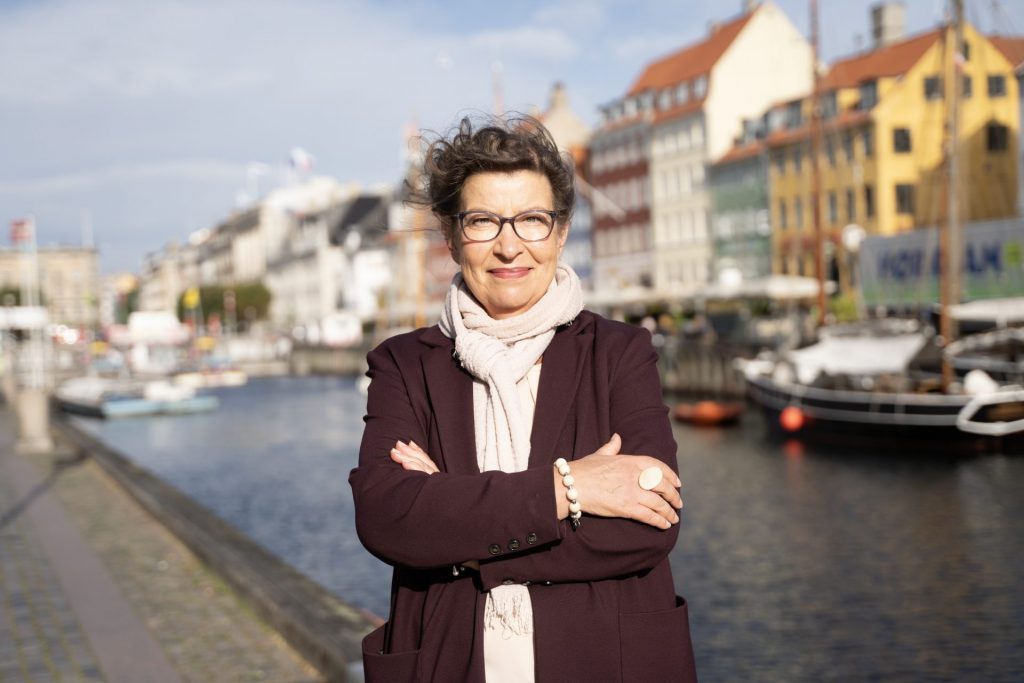
Leena Ylä-Mononen, Executive Director of the European Environment Agency (EEA) based in Copenhagen. Photo: © European Environment Agency (EEA)

Future-proof solutions 

Ylä-Mononen urged European politicians to look beyond the next election and plan for the climate risks already foreseeable over the next decade. “This kind of short-termism is not going to help us,” she said, arguing that infrastructure and agricultural investment decisions needed to take account of ten-, 20- and 50-year time horizons.  

The warning comes as the EU’s Joint Research Centre reports drought conditions across half of the EU and the United Kingdom, with low river flows and deteriorating conditions for some crops in several parts of Europe. 

In an assessment released in March – ahead of this year’s summer heatwaves – the EEA said “at present, drought (54%), heavy rain (21%), frost (16%), and hail (9%) together account for 80% of agricultural losses in the EU.”  

Ylä-Mononen said Europe could no longer treat climate adaptation as an optional policy to be addressed when budgets allow. Heat and drought are already affecting agriculture, water resources, transport and energy systems, and some damage could have been avoided through earlier investment, she said.  

The EEA chief stressed that adaptation must complement, not replace, mitigation: Europe needs both to reduce emissions and to prepare for climate impacts that will continue even under ambitious emissions cuts. But the costs of both action and inaction are rising.  

Estimates of adaptation costs in the sectors transport, energy and agriculture cited by the EEA range from 53 billion Euro to 137 billion Euro per year until 2050, depending on the scenario of temperature rise above pre-industrial levels. 

The European Environment Agency (EEA) is the EU agency that provides independent environmental data, assessments and analysis to support policymaking in Europe. 

  •  

Jungkook’s birthday: The journey that stole millions of hearts

From BTS’ youngest member to a global solo star, Jungkook’s journey continues to inspire millions of fans around the world.

The post Jungkook’s birthday: The journey that stole millions of hearts appeared first on BOL News.

  •  

Who Can Solve Gerhard Berger’s Quiz?

In the new print issue of Esses, a quarterly print magazine covering motorsports and the culture around it, Duncan Fyfe writes about the most bizarre Formula One video game ever made. Centered around Gerhard Berger, a former racing driver from Austria who competed in F1 from 1984 to 1997, Gerhard Berger’s Formula 1 Quiz is a quirky video game from 1993 that raises more questions than it asks. Fyfe digs into the mystery, investigating the quiz’s grammatically awkward questions and the game’s developer, Austria Soft, whose existence is questionable. (Esses subscription may be required—consider becoming a member.)

THE REAL QUIZ, it soon becomes clear, is not a test of one’s F1 knowledge, but figuring out what the game expects to hear. This only becomes more difficult, and even sinister. Question nine: FROM WHAT COUNTRY IS JEAN ALESI REALLY? The answer is not France, where Alesi was born and grew up, and under whose flag Alesi competed for over a decade. To progress in the quiz, the game forces one to submit that Alesi was born to Italian parents, and thus is “really” from Italy.

The game’s questions all have correct answers that cannot be submitted, and yet they are less difficult to answer than these ones: Who made this game? Why? And what was Gerhard Berger thinking?

  •  

Revolutions

Joël Kyaviro is a professional cyclist from the Democratic Republic of the Congo who has risen above government instability, war, violence, poverty, and Ebola, overcoming every “tack in his path” to become the first rider from the DRC to win a Union Cycliste International race. What’s more, he’s used his success to get the next generation of kids interested in the sport by founding Tumaini Academy, “a cycling program aimed at transcending war by getting Goméen kids on bikes and in school.”

He rolled into the finish zone alone, a full ten seconds ahead, the cushion so big that he was able to victoriously throw his arms in the air. He coasted the last few meters no hands, grinning ear to ear, as his old club president, Charles Guy Makongo, leapt up and down on the sidelines.

Makongo’s sneakers got soaked in the puddles, but he did not care. In the entire 126-year run of the Union Cycliste International, no Congolese rider had ever won a UCI race. On Instagram that night, a picture of Joël ran with a banner header reading, “A historic moment in Congolese cycling.” Posting on an African cycling forum, Makongo proclaimed, “Today’s victory is much more than a sporting result.” It showed, he said, “that talent can flourish even in the most challenging environments.”

  •  

After Tidö: What a centre-left Sweden would change for Europe

WEB INRIKES
VISBY, SVERIGE 20260625 Socialdemokraternas partiledare Magdalena Andersson (S) håller sitt tal under Almedalsveckan. Foto: Henrik Montgomery / TT / Kod 10060 | picture alliance / TT NYHETSBYRÅN | Henrik Montgomery/TT
NPP

The Gripen fighter jet came in low over the medieval rooftops of Visby, stood on its tail and climbed vertically out of sight. Hundreds of hands went up holding phones. Every late June, all Swedish party leaders gather for Almedalen Week in this town on Gotland, the Baltic Sea’s most strategic island. This year, the military display drew the only unanimous reaction of the week.

Sweden holds a general election on September 13th, but defence has barely featured in the campaign. All parties take the Russia threat seriously, and all want to face it as one. The election is being fought instead over welfare, migration, crime, climate and the economy—and on many of those, the government parties are losing.

Ulf Kristersson’s centre-right Moderates have held the prime minister’s office for four years, after an agreement in 2022 secured them the support of the far-right Sweden Democrats in exchange for a hard line on migration and crime. The so-called Tidö agreement—named after the castle where it was negotiated—broke a taboo: for the first time the Sweden Democrats had formal influence over a government, though it stopped short of joining the cabinet. Now the four parties supporting Kristersson’s government are trailing the opposition in the polls. The Liberal Party, currently in government, has suffered the most from the cooperation with the Sweden Democrats and is now polling below the 4% threshold to get into parliament.

Many analysts therefore expect Magdalena Andersson of the Social Democratic Party to return as prime minister. Her party governed Sweden for most of the 20th century and again between 2014 and 2022, when the country abandoned centuries of military non-alignment to join NATO. What would an Andersson government mean for Sweden’s foreign policy and its role in the EU? Based on several conversations with key people in the opposition parties, in Almedalen and elsewhere: not a dramatic change. But look closer and the differences start to show.

The maths

The political course will partly depend on the majority Andersson can assemble. A deal with the formerly communist Left Party, which is still formally committed to leaving NATO, would create a different government from one built with the market-liberal Centre Party and perhaps the Christian Democrats—and getting all them into the same majority would require political magic. The Green Party is likely to be part of the coalition either way, although senior figures say the case for being in government is still hotly debated internally.

The most likely outcome is that Andersson will lead a red-green coalition, assembled over months of difficult negotiations. The Greens and the Left would push for a less restrictive migration policy than the Social Democrats are ready to accept, having themselves tightened asylum rules when they were in power. For its part, the Centre Party would press for deregulation and other market liberal reforms Swedish business wants—against the trade unions as well as the Greens and the Left.

If Andersson struggles to hold a red-green government together, a grand coalition between the Social Democrats and the Moderates also cannot be ruled out. But that would require a serious external crisis and a significant change within the Moderates.

Names circulating for foreign ministers or “sherpa” for the prime minister are Paula Carvalho, Morgan Johansson, Ylva Johansson, Ann Linde, Kerstin Lundgren, and Oscar Stenström. Peter Hultqvist is likely to return as defence minister.

What will not change

On many key issues, a government led by the Social Democrats would continue Sweden’s current course, regardless of coalition partners. Support for Ukraine is strong across the Riksdag. NATO membership will not be reopened: the security situation and strong public support for NATO membership discourage the Left Party from pushing its formal position, and the Social Democrats would refuse if it tried.

Sweden rejected the euro in a referendum in 2003 and will not revisit it in the coming four years unless there is a deep economic crisis, although the Centre Party may extract a report on the topic. The country’s dependence on exports keeps every party in favour of open trade. Sweden will also remain one of the EU’s most frugal members in negotiations of the next Multiannual Financial Framework.

‘Magda will be Magda’

Elsewhere, the change will be real. A centre-left government will focus more on relations with the global south and gradually increase aid spending. The Social Democrats have a long tradition of cooperating with countries such as South Africa and Brazil and have deepened those ties while in opposition. If Lula da Silva is re-elected, Andersson will be well-placed to strengthen EU-Brazil engagement. The Social Democrats also want closer relations with African states and OECD countries such as Canada, where Andersson has built a strong rapport with Mark Carney.

This agenda includes climate politics—all red-green parties want greater ambition at home and in Europe. For the Social Democrats, green industrial policy is the way to keep workers on side in the green transition, a view shared by trade unions and many industrial leaders. The Green Party might get the development and environment portfolios back, but they would have to fight with the Centre Party for climate and energy.

Middle East policy would also shift. In 2014, a Social Democratic-led government recognised Palestine, the first EU member state in Western Europe to do so, to loud criticism by the centre-right. An Andersson-led government is more likely to criticise Israel’s actions while also condemning terrorism. The complication is Ebba Busch: her Christian Democrats are strongly pro-Israel, and if they join the coalition, Middle East policy will become more complicated.

Andersson would champion a strong UN and revive the “feminist foreign policy” of Margot Wallström and Ann Linde. But in an EU dominated by the European People’s Party, she would find few allies for traditional social democratic causes. The Nordic and Baltic countries are her natural bloc. Beyond them, only a re-elected Pedro Sánchez in Spain—a big if—would give the Party of European Socialists a large member state. However, leading Social Democrats are keen to avoid comparisons with Sánchez or Denmark’s Mette Fredriksen. “Magda will be Magda”, says one. On other topics, such as support to Ukraine, Sweden will continue to be part of coalitions of the willing.

A rapid increase of defence spending would continue with either Kristersson or Andersson as prime minister, with the Social Democrats also advocating additional resources for civil defence.

The consensus on security policy runs deep. In the all-party Defence Commission’s report this summer, the Social Democrats fully agreed with the government’s assessment of the security situation. A rapid increase in defence spending would continue with either Kristersson or Andersson as prime minister, with the Social Democrats also advocating additional resources for civil defence.

However, a centre-left coalition could face internal conflicts over the envisaged rotating presence of French nuclear-capable aircraft in Sweden or cooperation with Turkey on intelligence and anti-terrorism, both of which the Left Party would resist. Rather than fight it, the coalition might just pay them off. “Magda will buy them out,” says a prominent Social Democrat, comparing to how Fredriksen made a deal with the left-ish Enhedslisten in Denmark, giving them social reforms in exchange for staying out of her cabinet.

And while the Social Democrats accept the role of nuclear weapons in NATO strategy, they press harder than the Moderates on global non-proliferation.

Biting their tongue on Trump

Although senior Social Democrats are highly critical of US president Donald Trump in private, and Andersson expressed solidarity with Denmark when he threatened Greenland, the party will not pick a public fight. It agreed with the conclusions of the Defence Commission, such as the importance of the American security partnership, and even in background talks Social Democrats decline to discuss alternatives to NATO command structures for large military operations. “We presume that SACEUR is responsible”, says one senior figure, referring to NATO’s commander in Europe, who has always been an American. Sweden’s reliance on American aircraft, interceptors and satellites in the sensitive Baltic Sea area leaves Andersson far less room than Sánchez has in Madrid.

If Kristersson survives

None of this is settled. ECFR’s New Politics research shows how volatile European electorates have become, and a late swing could leave Kristersson in office—this time with Sweden Democrats in ministerial posts, as the Moderates have promised.

That would hand the far-right party real power this time. Given its size, it will likely take influential portfolios, such as representing Sweden in EU negotiations on migration policy and home affairs, and perhaps finance and competitiveness too, like the Finns Party in Finland.

Even more importantly, the Sweden Democrats would fully participate in foreign and security policy decisions. In Sweden, ministers make government decisions collectively and are briefed on sensitive intelligence matters at cabinet meetings. While the party has been vocal in criticising Vladimir Putin since its links to Moscow were exposed, the opposition still sees them as a security risk.

***

A new government will bring more of a tilt than a dramatic change in Sweden’s foreign and European policy. This will be important in the decisive year of 2029, when a new president of the European Commission will be chosen—and in a political landscape that might include far-right leadership in France, Italy and Poland. The Gripen will keep flying over Visby whoever wins in September. What changes is Sweden’s place in an EPP-dominated Europe.

Source

  •  
❌