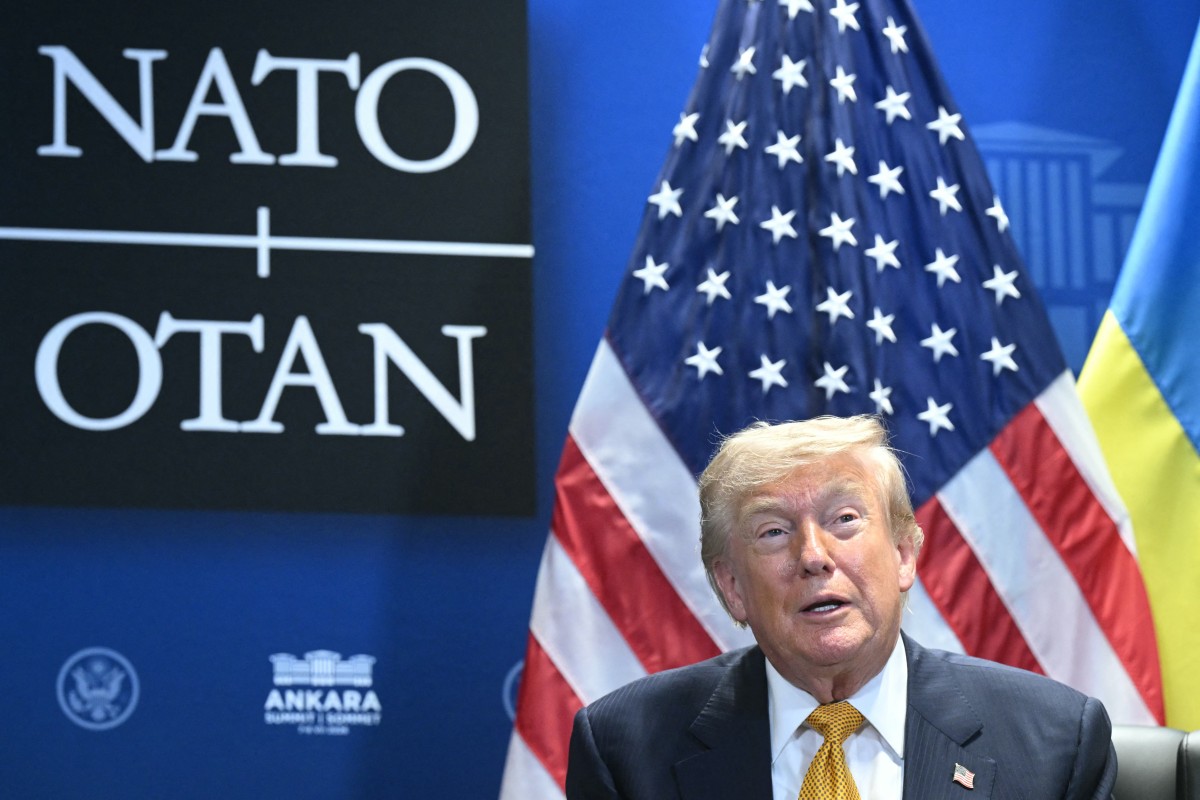
El 20 de agosto de 2026 se realizó en el Alvear Palace Hotel de Buenos Aires la 23ª Conferencia del Council of the Americas (AS/COA), organizada junto a la Cámara…
The specter of a “Red-Green Alliance” seems to be haunting the strategic elites not only in the United States but also in other parts of the world these days.
The debate over this alliance between so-called Leftists and Islamists intensifies whenever a Muslim leader in the American Democratic Party secures an important nomination or an electoral victory.
It is not that these Muslim leaders in America are radical Islamists. They are essentially far-left in their political, economic, and global views and are being accepted as leaders within the Democratic Party. But they evoke apprehensions for their support of Islamists in all parts of the world on important global strategic issues.
The subject of the latest debate is Abdul El-Sayed, the progressive doctor and former Wayne County health director, who on August 4 won a historic victory in the Democratic primary in Michigan to join the Senatorial race in the upcoming November 2026 midterms.
If successful, he will be creating history as the first Muslim Senator in the history of the United States.
Of course, the Democratic Party has already seen elsewhere the rise of Muslim elected officials who often act as a bridge between progressives and Muslim advocacy groups. In the House of Representatives, there have been the likes of Rep. Ilhan Omar and Rep. Rashida Tlaib.
At the local and State level, cities like Minneapolis, Dearborn, Hamtramck, and parts of New Jersey/New York now have Muslim mayors, councilors, and state legislators, many elected with support from both progressive and Muslim voter blocs.
Zohran Mamdani has taken office as New York City’s first Muslim mayor. Abdullah Hammoud is now the mayor of Dearborn, Michigan. Ghazala Hashmi has won the lieutenant governorship in Virginia.
Incidentally, the rise of New York City Mayor Zohran Mamdani has been portrayed by experts as showing that democratic socialism and hardline anti-Israel politics are no longer marginal in America’s largest city.
New York City Mayoral candidate Zohran Mamdani (R) celebrates alongside his wife Rama Duwaji (L) during an election night event at the Brooklyn Paramount Theater in Brooklyn, New York on November 4, 2025. New Yorkers elected leftist Zohran Mamdani as their next mayor on November 4, 2025, broadcasters projected, on a day of key local ballots across the country offering the first electoral judgment of Donald Trump’s tumultuous second White House term. (Photo by ANGELA WEISS / AFP)
His national profile, and his demand that the federal government enforce an International Criminal Court warrant against Israel’s prime minister, have forced Democrats to reconsider their traditional stance on the Middle East in general and Israel in particular.
In other words, the strategic consequences of the Leftists sharing the global outlook with that of the Islamists outfits like Hamas or countries like Iran, or rising demands of Muslims in favor of their separate legal and social systems in many European countries, seem to be reshaping Western politics, traditional national security frameworks, and geopolitical alignments.
It is worth sharing in this context the thoughts of US Army veteran and human rights activist Mansoor Hussain Laghari, who had migrated from Pakistan. He strongly warns against the “Red-Green Alliance,” characterizing it as a dangerous and underappreciated ideological convergence between the revolutionary far left and political Islamism inside Western societies.
Using his unique background as a political refugee from Pakistan and experience in the US military, Leghari says that “Political Islamism” has nothing to do with ordinary Muslims or Islam as a faith. For him, it is something that seeks to place religious authority above democratic pluralism and civil law.
Laghari notes that while the radical Left (which claims to support secularism, feminism, and LGBTQ rights) and Islamists should be natural enemies, they cooperate because they share the same targets: American power, Western democratic institutions, capitalism, traditional faith, and Israel.
As he writes, “ These movements (Leftists and Islamists) should be natural enemies. The radical Left presents itself as secular, feminist, and supportive of LGBTQ rights. Islamists often reject those principles. Yet alliances are not always built on shared values. They are often built on shared enemies.
“Both sides portray America as an imperial project rather than an imperfect constitutional republic. Both reduce complex societies to oppressors and oppressed. Both treat Western institutions as guilty until dismantled. Israel has become a powerful mobilizing symbol, but the deeper target is the political confidence and social cohesion of the United States.
“This ideology is no longer confined to campus seminars. It is entering mainstream political life. The Democratic Party remains broad, and many Democrats reject antisemitism, revolutionary socialism and political Islamism. But an increasingly influential progressive faction now treats these ideas as legitimate components of the party’s future”.
For Laghari, more than the rise of New York City Mayor Zohran Mamdani, the concern extends to “Ideas incubated in universities and activist networks (that) eventually influence city governments, congressional offices, public agencies and national-security institutions. Americans should debate these ideas openly but stop pretending that hostility toward the country’s constitutional and strategic foundations is merely youthful idealism.”
Laghari insists that Western societies must confront this Red- Green alliance with accountability and directness rather than comfortable denial, arguing that the constitutional protections of individual liberty over tribal obedience are actively worth defending.
“As a U.S. Army veteran, I learned that readiness is not measured only by weapons, aircraft or troop numbers. It also depends on national cohesion, public trust and citizens willing to serve. A military cannot remain fully effective if young Americans are taught that patriotism is shameful, service is complicity, and their country is uniquely evil.”
Many strategic analysts not only agree with Laghari but also discern the same pattern in European democracies and even India.
The following points in this regard they make are noteworthy:
One, after Trump’s victory in 2016 in the US, Brexit in the UK, the rise of the BJP in India under Prime Minister Narendra Modi, and right-populist governments in Europe, both Left-liberals and Islamist organizations found a common adversary and used in their parlance terms like “right-wing nationalism,” “Islamophobia,” “majoritarianism,” and “fascism.”
Their alliance uses legal and academic frameworks in these democratic countries to label valid criticism of political Islamism or extreme Leftism for promoting terrorism or anarchy as “hate speech,” effectively silencing moderate and genuinely secular reformers.
Two, by infiltrating universities, local governments, and civil society organizations, the alliance shifts institutional policies toward anti-constitutional curricula and identity-driven governance. They popularize what is called “intersectionality” — placing Muslims, Palestinians, and refugees in the same “marginalized” category as racial minorities and LGBTQ communities.
This has created institutional incentives in universities and NGOs to platform Islamist speakers under the banner of “diversity” and “anti-racism.”
As a result, antisemitism is repackaged as mainstream progressive anti-imperialism, lowering the cultural barrier to targeted violence and exclusionary politics. And universal constitutional values are being replaced with tribal, identity-based loyalty, fracturing national unity.
Three, this collusion begins in universities and then feeds into media, NGOs, and politics. Progressive NGOs, left faculty, and Muslim student groups share funding, legal aid, and media training. And, university administrations, wary of being called “Islamophobic” or “racist,” often allow protests that would be shut down for other groups.
Politically, the collusion enables the sharing of an agenda with major political parties in the name of dissent, protecting minorities, and expanding asylum/refugee programs. And that, in turn, generates narratives of state or police oppression and dangers of military modernization at the cost of social justice.
Then it becomes normal for progressives and Muslim politicians to vote and campaign together. They hold joint press conferences and share legal teams, and write joint petitions to global human rights bodies and the United Nations.
If Islamists find an ally in the Democratic Party in the US, in Europe one witnesses how Labour, Greens, and Left parties coordinate with Muslim community organizations on Gaza, policing, and counter-terror laws.
Apparently, European intelligence agencies have flagged that jihadist networks exploit progressive and anti-war protest spaces, such as climate and pro-Palestinian demonstrations, to recruit vulnerable individuals and gain mainstream legitimacy by aligning with broader, localized grievances.
The same pattern is also noticed in India.
Here, sections of left and liberal parties, student unions, liberal NGOs, and Islamist organizations have coordinated since 2019 on CAA-NRC ( Citizenship Amendment Act and National Register for Citizens), abrogation of Article 370 that had accorded special status to Kashmir, hijab cases, and “bulldozer” actions ( against the properties of hardened criminals and habitual law-breakers).
That is how domestic issues in Western democracies and countries like India are getting globalized as “human rights” issues, and hardline groups are gaining legitimacy by appearing next to mainstream left/liberals.
All this complicates a nation’s defense spending and foreign policy, forces strategic distractions, and weakens important partnerships. For instance, on Palestine, Kashmir, Afghanistan, and the “war on terror,” Left-liberals critical of US/European/Indian foreign policy found common cause with Islamist groups who also oppose those policies.
When human rights language is used to defend individuals with extremist links, preventive policing becomes harder. Europe’s “returning fighters” problem and India’s experience with banned organizations show this. And the US, EU, and Indian foreign policy on the Middle East and counter-terror is now increasingly being constrained. Any action is immediately framed as “Islamophobic” or “imperialist”.
Viewed thus, the geopolitical alliance between Left/liberal elements and the votaries of political Islam that one sees across America, Europe, and India does present distinct challenges to the national security and social cohesion of each region. Its operational methods and societal impacts may vary from region to region based on local political landscapes, but its ideological foundation remains the same – shared opposition to the existing state apparatus.
Of course, experts point out that this alliance is “ironical” and could be “unstable” in the long run, given that Leftists and Islamists differ in their views on secularism and social rights. The Left wants progressive social change, emphasizing equality, social justice, and human rights. They are driven by secular and humanitarian concerns. But for conservative Islamists, it is traditional religious values and communal loyalty that are their principal motivations. Islamists often seek to establish states governed by Sharia.
However, despite their differences, at the moment, they are together on many aspects of global politics and are collaborating in unexpected ways. And that is said to be a matter of grave concern.
As Laghari says, “The question is no longer whether this ideological struggle has reached the United States. It has. The question is whether Americans will recognize it before the next generation inherits a country that no longer recognizes itself.”
What Laghari asks of Americans seems to be equally apt a question for Europeans and Indians as well.
Author and veteran journalist Prakash Nanda is Chairman of the Editorial Board of the EurAsian Times and has been commenting on politics, foreign policy, and strategic affairs for nearly three decades. He is a former National Fellow of the Indian Council for Historical Research and a recipient of the Seoul Peace Prize Scholarship.
Automakers and aircraft manufacturers share a history that stretches back more than a century.
Many automakers have entered the production of aircraft, aircraft engines, components, and drones/UAVs, often spurred by wartime demands and by leveraging their shared expertise in engine engineering.
Big car brands such as Rolls-Royce, Renault, Ford, General Motors (GM), Chrysler, BMW, Alfa Romeo, Honda, and Fiat have been involved in aircraft engine and components production for years.
Brands such as Renault and Ford had delivered thousands of aircraft during World War II.
Swedish aviation major Saab had a flourishing car business for decades. Japanese Mitsubishi and Subaru started as aviation companies and remain active in both aviation and the automobile business.
Given this shared history, it is no wonder that automobile companies have often taken inspiration from fighter jet cockpits to revolutionize their car design philosophy.
For instance, Lamborghini’s ‘red flip-cover start button,’ copied directly from aircraft and resembling a fighter jet’s missile launch button, has become the identity of the iconic supercar maker.
You have to flip up the red safety cover, exactly like aircraft weapon switches, before pressing the start button.
This feature is found in the Lamborghini Aventador, Huracán, Revuelto, Urus, and some special editions.
Even though the ‘red flip-cover start button’ offers little practical benefit, the feature has now become synonymous with Lamborghini cars, and the automaker believes that its dedicated users are unlikely to ever get tired of this feature even in the age of digital touchscreens.
The Italian supercar maker believes that this red flip start button evokes a certain emotion whenever drivers start their vehicles.
Lamborghini start button copied from aircraft. Credits Carbuzz.
Combined with Lamborghini’s roaring and heavy engine throttle sound, this gives its riders a unique experience, akin to launching a missile from a fighter jet.
The feature was first introduced in Lamborghini’s Aventador back in 2011.
Speaking with CarBuzz earlier this week, Lamborghini’s design director Mitja Borkert said the start/stop switch found in the Temerario, Revuelto, and Urus creates “the right amount of emotions,” even though it makes the starting sequence a little slower.
Supercar performance has become easy to replicate with the rise of hybrid motors and cheaper performance parts, but Lamborghini knows that speed isn’t all that customers look for.
“For sure, there is a faster way to start the car, but is it fun?” Borkert asked.
“I think we are creating the right amount of emotions, and I think that belongs on such a car.”
However, some critics believe that this process could become a little tiresome when you have to do it over and over again.
Borkert, however, doesn’t think so.
“I don’t think so,” Borkert said, adding, “In the kitchen, you want to do something with quality. If you’re going fast, it’s not as enjoyable as when it takes a little bit of time. You need to feel a little bit involved.”
Sitting next to the latest Lamborghini Urus SE Performante at the Goodwood Festival of Speed, Borkert was keen to share that the theme is consistent across all three Lamborghini models, which brings synergy and familiarity for those with multiple Lamborghinis.
“We have the same philosophy in our supercars so that when you take your precious car out on the weekends, you’re not confused. You have an architecture that integrates you like a pilot.”
Borkert believes that features like these also make Lamborghini stand apart from its competitors.
These small physical elements remind the driver they are in a Lamborghini, even when they’re driving on electric range in the Revuelto.
Moreover, as more and more automakers replace physical switches with digital screens, Lamborghini sticking with its same old design philosophy will make its customers rejoice, he said.
“We are not the champions of screen sizes, but we have the right sizes to provide the modern visualization the driver or the pilot needs. We always keep our iconic keys, like the start/stop button,” Borkert said. When you step into a Lamborghini, you know you’re stepping into a Lamborghini – nothing else.
However, Lamborghini is not the only automobile maker that has taken inspiration from cockpit designs.
Automobile Interiors That Were Inspired by Cockpit Designs
Tesla’s Aircraft-Style Yoke Steering Wheel: Tesla borrowed this idea from airplane yokes and Formula 1 cars. Instead of a round wheel, it’s a rectangular “yoke” for a more pilot-like feel.
In a Joe Rogan interview, Elon Musk noted that “they use a yoke in Formula One.” He has also described future versions of Tesla as working “like the way aircraft and modern jets are controlled.”
Credits Tesla.
However, Tesla says that the rectangular yoke also offers some practical advantages, such as an unobstructed view of the instrument cluster and the road ahead and a more futuristic, immersive feel.
Musk has famously called conventional round wheels “boring” and said they block the screen.
With Tesla’s success, many iconic brands such as the Lexus RZ, Mercedes-Benz, and MG Cyberster have adopted similar Yoke-style steering wheels.
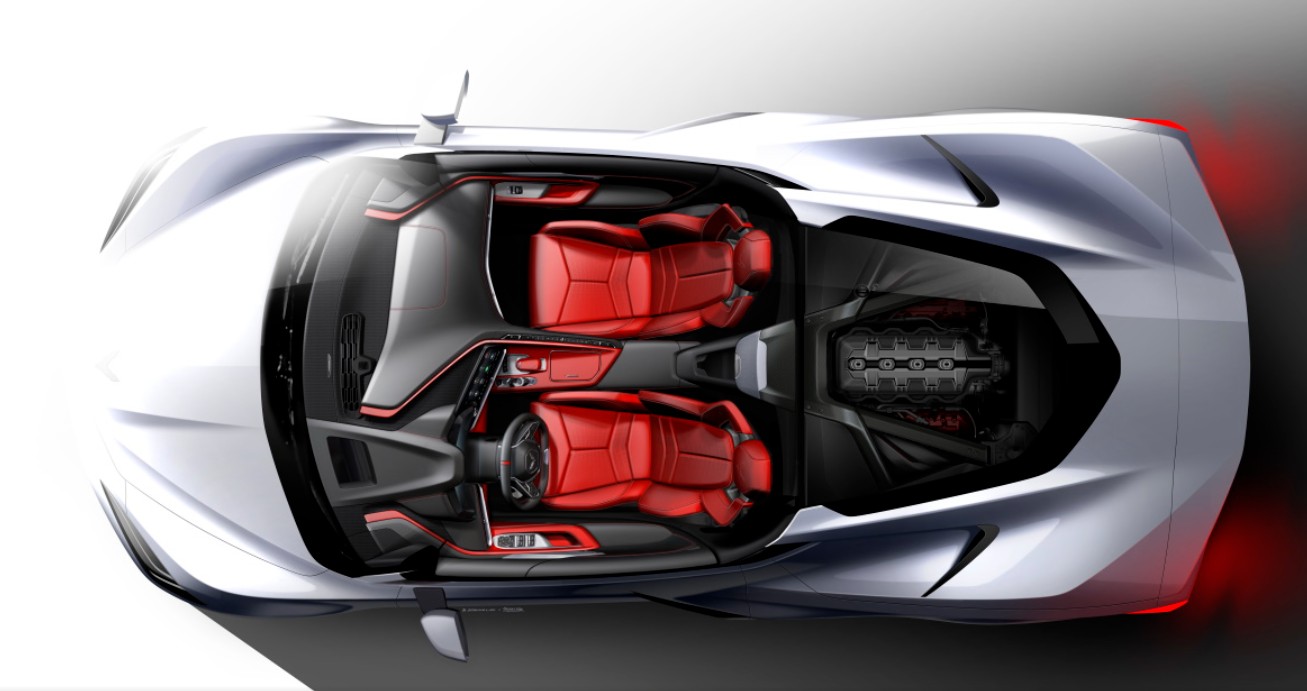
Chevrolet C8 Corvette’s Fighter-Jet-Inspired Cockpit Layout: Chevrolet designers openly said the C8 Corvette’s interior was inspired by fighter jet cockpits, low dashboard, controls wrapped around the driver, and a very pilot-centric feel.
Chevrolet design team studied jet cockpits, where controls “wrap around” the pilot. This led to the long, sloping vertical strip of physical buttons running down the high center console, creating a driver-enveloping “cockpit” that partially separates the driver and passenger, much like an aircraft.
Chevrolet C8 Corvette’s Fighter-Jet-Inspired Cockpit Layout.
In fact, its exterior design also drew heavily from modern fighter jets, such as the F-22 Raptor and F-35 Lightning II, with a canopy-forward stance and aggressive proportions. Corvette has a long history of aircraft inspiration. Many astronauts owned earlier generations.
Airplane Ceiling Panels-Like Overhead Toggle Switches: The Ineos Grenadier placed many switches on the roof, just like in aircraft cockpits and military vehicles.
Credits Rover Parts.
Tata Harrier Handbrake: Sometimes, cockpit-inspired design features look great, but aren’t received well due to large size or ergonomics.
India’s Tata Harrier’s handbrake was intentionally designed to look like an aircraft thrust lever. Tata officially described it as an “Aero-throttle styled” parking brake lever. Reviewers noted that the handbrake was deliberately designed to look like an aircraft thrust/throttle lever to give the cabin a more “cockpit-like” feel.
Though it looked distinctive, unique, and aesthetic, many users complained that the handbrake took too much space in the central console, interfered with the cup holders, felt awkward to operate, and criticized it for its poor ergonomics.
Tata Harrier handbrake. Team Bhp.
Therefore, from 2023 onwards, Tata replaced it in many of the new variants with a conventional electronic parking brake button + Auto Hold. The aircraft-style lever was discontinued.
Given the long association between automobile makers and aviation companies, it is only natural that car designers will adopt certain aircraft features to give the car a fighter jet cockpit feel.
However, such features must be adopted carefully, as they should not interfere with the overall design philosophy of the car’s interiors and must be easy to operate.
Sumit Ahlawat has over a decade of experience in news media. He has worked with Press Trust of India, Times Now, Zee News, Economic Times, and Microsoft News. He holds a Master’s Degree in International Media and Modern History from the University of Sheffield, UK.
He can be reached at ahlawat.sumit85 (at) gmail.com
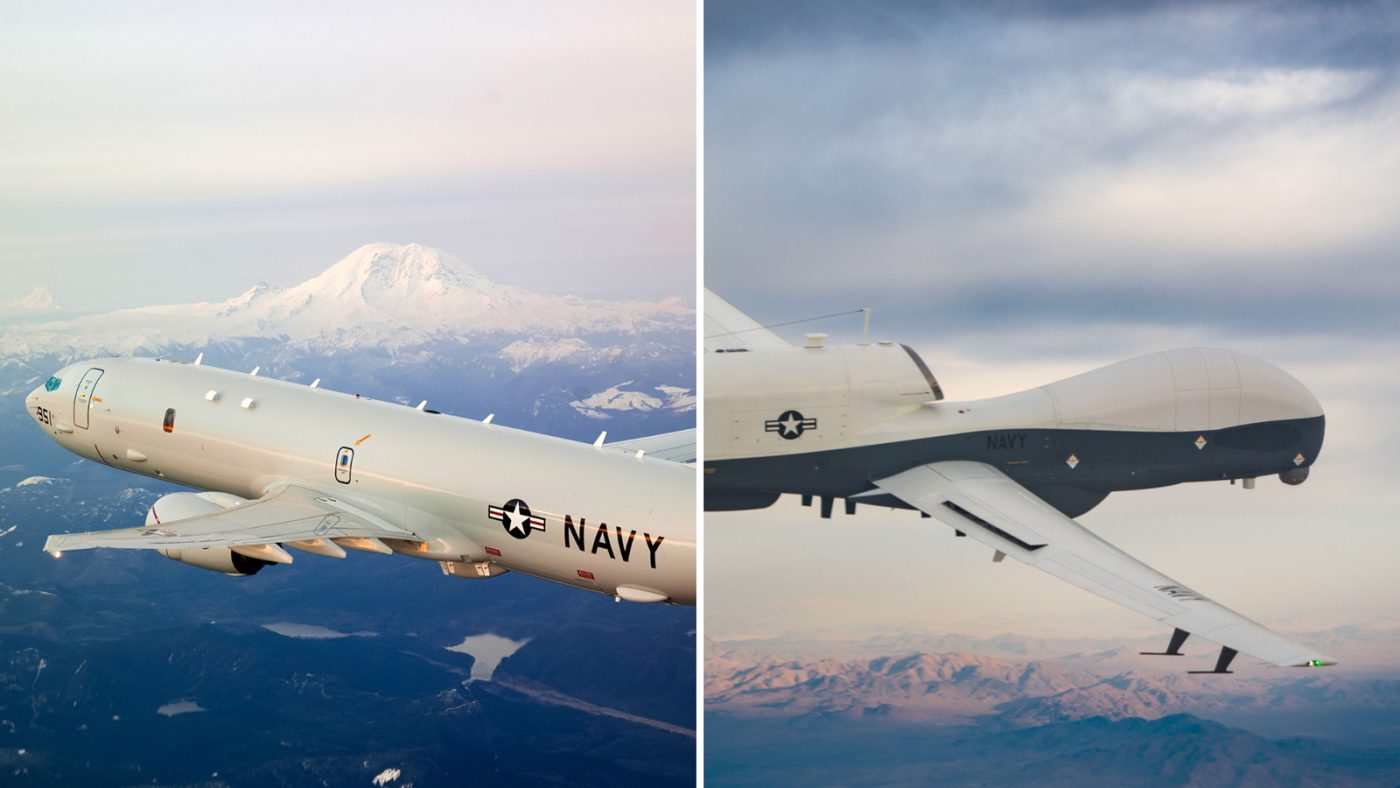
In a first such experiment,the P-8A Poseidon was teamed with the MQ-4C Triton unmanned aerial vehicle, potentially laying the groundwork for a future manned-unmanned teaming (MUM-T) for the US Navy and allied maritime patrol, reconnaissance, anti-submarine, and surface warfare.
Northrop Grumman and Boeing conducted the first automated, manned-unmanned mission control collaboration between the P-8A Poseidon maritime patrol aircraft and the MQ-4C Triton unmanned aerial vehicle in a laboratory environment, demonstrating how the two systems can share intelligence, mission planning, and execution.
“A P-8A operator issued machine-readable, machine-actionable mission tasking to a simulated MQ-4C Triton using UCI [Universal Command & Control Interface] formatted messages,” Boeing stated in an official press statement. “The P-8A cued the Triton transit to a specific area. After receiving the request, the Triton autonomously planned and executed a transit to the area, employed sensors per the tasking, processed findings onboard, and reported results back to the P-8A Poseidon.”
This approach could reduce operator workload, speed up decision-making in a contested environment, and enable more dynamic in-flight tasking without always routing through distant ground control.
Meanwhile, Northrop Grumman emphasized the broader value of the standardized approach: “Using this standardized interface, Triton can collaborate with other U.S. or allied assets sharing the same interface—cutting operator workload and accelerating commander decision-making, making integration across platforms quicker and more cost-effective. The Universal Command and Control Interface is a machine-to-machine collaboration standard based on Open Mission Systems and Autonomy – Government Reference Architecture.”
Photo via Boeing press release
Notably, the MQ-4C Triton was originally designed to work closely with the P-8A. A maritime-optimized derivative of the RQ-4 Global Hawk, Triton offers 24-hour endurance and high-altitude, persistent surveillance over vast ocean areas with its 360° multi-function radar, electro-optical/infrared sensors, and other systems. It functions as an “unblinking eye” for continuous maritime domain awareness.
Meanwhile, the P-8A has comparatively shorter endurance but boasts higher speed and lower-altitude capability than the MQ-4C Triton. Furthermore, it is designed to conduct anti-submarine and anti-surface warfare, investigate contacts of interest, support search-and-rescue, and assist in kinetic operations, among other things.
Together, the two platforms cover more ocean more persistently than either could alone, improve the common operating picture, shorten the sensor-to-shooter timeline, and make better use of limited manned aircraft and aircrew.
As a core element of the Maritime Patrol and Reconnaissance Force, Triton transmits real-time data via satellite to ships, aircraft, and shore stations.
MUMT Between Poseidon & Triton
Until now, the two platforms have operated in a complementary but in a relatively separate manner. Triton provides broad-area maritime ISR and cues contacts of interest, such as ships or potential submarines, prompting a P-8A to investigate, prosecute, or engage.
The coordination between them has normally flowed through ground control stations, introducing latency, especially when stations manage multiple missions, operate across time zones, or sit at the end of long satellite communications chains. However, the new automated capability could essentially allow a P-8A crew to issue commands directly to the Triton, after which the drone can autonomously plan and execute the task.
This would expedite the response to unanticipated changes, such as potential threats or seemingly transient targets of interest.Moreover, automation and onboard AI handling of data collection or processing would free crews, both in the air and on the ground, to focus on higher-level decisions rather than routine tasking or sifting through raw sensor feeds.
“The key idea of teaming them is to let each do what it does best while reducing the workload on human operators. Instead of both independently searching the same ocean, the Triton can detect something unusual and automatically cue the Poseidon.It would reduce operator workload, speed up decision-making, enable more flexible and responsive manned-unmanned teaming, and leverage their complementary strengths for broader, more efficient maritime ISR and related missions,” Air Marshal Anil Khosla (retd), Indian Air Force veteran and military commentator, told the EurAsian Times.
“Triton handles the long-endurance, broad-area “look” mission persistently. Poseidon handles responsive, close-in, multi-mission work. Automated teaming lets them operate more seamlessly as a unit rather than operating in relative isolation or with slower human-mediated coordination,” he added.
In a hypothetical scenario, one manned P-8 could also team with one or more Tritons at a time, stretching limited manned aircraft hours and freeing up the Poseidon for high-value missions, such as anti-submarine warfare and responsive strikes in combat.
Only the United States and Australia currently operate both the P-8A and MQ-4C Triton. The P-8A, however, has been acquired by a wider group of nations, including the United States, India, the United Kingdom, Norway, New Zealand, the Republic of Korea, Germany, Canada, Singapore, and Denmark.
The UCI architecture that enables the latest P-8-MQ-4C teaming could also potentially enable Poseidon teaming with other uncrewed assets, as Northrop stated
Indian Air Force (IAF) veteran Air Marshal Anil Chopra (retd) told the EurAsian Times: “All advanced militaries are focusing on data and sensor fusion, and rapidly working on facilitating integration between different platforms, ranging from manned-manned teaming to manned-unmanned teaming, across domains. The P-8A and Triton’s MUMT merely reflect that larger pattern. The same logic extends beyond air-to-air or air-to-surface pairings into surface, subsurface, land, and space sensors and effectors. The goal is a resilient “kill web” rather than linear kill chains, with data moving freely enough that any suitable shooter or sensor can contribute.”
“In the future, the maritime surveillance aircraft could be similarly teamed with other drones, such as the Sea Guardian,” he added.
The SeaGuardian, a variant of the MQ-9 Reaper, is also designed for maritime surveillance and reconnaissance, and could be teamed with the Poseidon aircraft with some tweaks.
Earlier work has already shown related possibilities. A Boeing-led team virtually demonstrated that the MQ-25’s architecture can support ISR and tanking missions by other aircraft within the mission airspace without conventional communications to a ship-based ground control station. That demonstration included the E-2D Advanced Hawkeye, P-8A Poseidon, and F/A-18 Block III Super Hornet.
There are several other examples of the US military’s efforts aimed at manned-unmanned teaming between aircraft to perform a variety of tasks. In fact, sensor fusion, edge AI, open architectures, and seamless teaming are becoming baseline requirements for competitiveness in contested areas.
The P-8A–MQ-4C laboratory demonstration is clearly a step forward.
However, its actual impact in real conditions will probably depend on how quickly the capability moves from the lab to operational skies.
“MQ-4C Triton and P-8A are the backbone of the U.S. Navy’s maritime patrol and reconnaissance force, delivering complementary capabilities unmatched by any other platforms,” Jane Bishop, Vice President and General Manager of the Global Surveillance Division at Northrop Grumman, was quoted as saying in the official statement. “This demonstration underscores the flexibility of our systems, our unwavering industry investment, and the strength of our industry relationships. Our commitment to pushing the boundaries of advanced technology ensures that the U.S. and allied nations’ operators maintain an unparalleled edge against evolving maritime threats,” he added.
Contact the author at sakshi.tiwari13 (at) outlook.com
Amid reports that the US has virtually exhausted all its long-range precision munitions, as well as missile interceptors, it is becoming increasingly clear that Washington is in no position to fight a protracted war with Iran and has no real leverage over Tehran.
On August 5, CNN reported that the US military has exhausted nearly 80% of its interceptors for a key missile defense system.
“The US military has burned through nearly four-fifths of its THAAD missile inventory compared to pre-war numbers and roughly half of its Patriot interceptors since the start of the war, according to two sources familiar with the latest inventory report,” it said.
Similarly, the US has exhausted virtually the entire stockpile of highly accurate long-range missiles, such as ATACMS and PrSMs.
Consequently, any possible US-Iran ceasefire agreement is likely to be on terms favorable to Tehran.
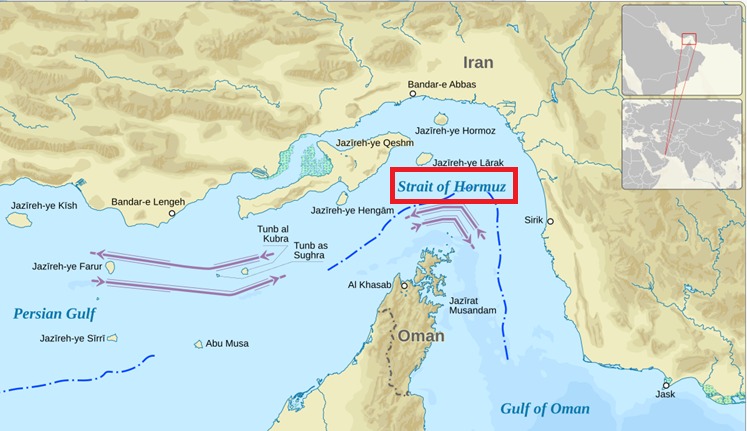
During previous rounds of negotiations, Iran has indicated that while it is agreeable to some compromise on the nuclear issue, it will not compromise on the issue of managing the shipping traffic in the Strait of Hormuz and charging a fee from all ships transiting the narrow maritime corridor.
For instance, according to the June 2026 Memorandum of Understanding (MoU), signed between Tehran and Washington, Iran will make arrangements for the safe passage of commercial vessels “with no charge for 60 days only,” followed by dialogue with Oman and other Persian Gulf littoral states, “to define the future administration and maritime services in the Strait of Hormuz… in line with the applicable international law and the sovereign rights of coastal states.”
Iranian officials interpreted the limited 60-day free period plus the “maritime services” reference as implicitly allowing “service fees” for navigation, security, and environmental protection, once the 60-day window has lapsed.
While the US administration rejected this interpretation, the US media itself, including The New York Times, acknowledged that the language of the MoU was vague and that it formalized Iranian control of the Strait of Hormuz.
Again, multiple media outlets reported earlier this week that Iran and Oman are close to finalizing a deal between them for joint management of the Strait of Hormuz.
Details included Iranian management of vessel entry, joint oversight of exits near the Oman coast, and a “central corridor.”
According to a Reuters report published on August 6, Iran is seeking fees of between 5% and 7% of the price of cargoes from ships using the strait, according to the senior Iranian official. Oman is discussing fees of around 3%, while Washington wants no fees at all.
In normal (pre-war) times, the narrow waterway handled roughly 20–21 million barrels per day of crude and petroleum products, amounting to nearly one-fifth of the world’s total oil consumption and roughly 25% of seaborne oil trade.
According to a Gulf News estimate, this would generate a net profit of US$385 million per day for Iran, or up to US$140 billion per year gross.
A typical Very Large Crude Carrier (VLCC) can carry up to about 2 million barrels.
At an oil price of US$80/barrel, the cargo is worth US$160 million; a 7% fee would equal roughly US$11–11.2 million for that one voyage.
Strait of Hormuz.
Given that Iran would have to spend a minimal amount of money to oversee the entry of cargo vessels into the Strait of Hormuz, most of this annual revenue of USD140 billion would be ‘net profit’ for Tehran.
Even if Iran spends USD5 billion annually on these expenses, Tehran would still pocket a net profit of USD135 billion.
That is a staggering amount.
For perspective, Egypt’s Suez Canal Authority reported US$4.67 billion in revenue for the 2025/2026 fiscal year.
The income of Egypt’s Suez Canal Authority looks meager when compared to Iran’s prospective income from the Strait of Hormuz if indeed it is able to charge a 7% fee on all cargo vessels passing the maritime corridor.
Indeed, Iran will get control of the world’s most lucrative and profitable tollway.
The disruption in the Hormuz traffic during the last four months has shown that many countries would not mind paying a fee to Tehran as long as it can ensure a steady supply of oil and LNG from the maritime corridor, even if there is no provision under the International Law (International Convention on the Law of the Sea, UNCLOS) allowing a coastal state like Iran to charge for passage through a natural waterway, impose a “toll” or a “service fee”.
In fact, according to Bloomberg, Iran has already started charging a transit fee from commercial vessels crossing the Strait of Hormuz.
The report said that Iran charged as much as USD 2 million per vessel as a transit fee, and many countries paid the fee to Tehran to let their cargo vessels pass from the narrow maritime corridor.
Reports also said that these payments were made in Chinese Yuan.
In March, Lloyd’s List reported that Iran’s IRGC ran a de facto “toll booth” system requiring vetting, clearance codes, and escorts via a controlled corridor.
Meanwhile, the Financial Times reported that transits were mostly linked to Chinese, Indian, or Gulf-linked owners, including some “dark fleet” vessels.
What’s even more is that at USD 135 billion, Iran’s profit from the Strait of Hormuz would beat some of the world’s biggest and most profitable technology companies.
For instance, in 2025, Google’s Alphabet made a profit of USD 132 billion.
Similarly, in fiscal year 2026, Nvidia made a profit of USD 120 billion. Apple made a profit of USD 112 billion. Microsoft made a profit of USD 101 billion. And Saudi Arabia’s oil major Aramco made a profit of USD 105 billion.
These are some of the world’s biggest technology and oil companies, which have reached here after years of hard work and innovation.
However, if Iran’s plans to collect a 5-7% toll fee from all commercial cargo vessels crossing the Strait of Hormuz materialize, Iran will start making more profit than these companies from the first year.
Furthermore, this would be a vicious cycle, as a toll fee of 5-7% would mean that oil prices would go up. This would also mean that insurance prices for these cargo vessels would shoot up, further increasing the oil prices.
As oil prices rise, the absolute value of Iran’s proposed 5–7% toll – calculated on cargo value – would increase in tandem. Consequently, Tehran would benefit twice over: its toll revenues would grow both from higher shipping volumes and from escalating oil prices.
Notably, Iran holds the world’s third-largest oil reserve.
In addition to this windfall gain, another condition of the June Iran-US MoU was that Washington would “undertake with regional partners to develop a definitive mutually agreed plan with at least USD 300 billion for the reconstruction and economic development of the Islamic Republic of Iran.”
Another condition was: “The United States of America undertakes to make fully available for use the frozen or restricted funds and assets of the Islamic Republic of Iran upon the implementation of this MoU. The United States of America and the Islamic Republic of Iran will mutually agree on the procedures related to the release of these funds during the negotiations.”
Estimates of the frozen assets involved ranged from roughly US$12–37 billion; however, some Iranian sources claimed that the frozen assets amounted to over USD 100 billion.
Motorists drive past a large billboard pledging revenge against US President Donald Trump along Jomhouri Street in central Tehran on July 27, 2026. Iran’s foreign ministry said on July 27 that the US was not involved in recent talks with Oman over the administration of the strategic Strait of Hormuz. Traffic through the vital global shipping route has been under Iranian control since the outbreak of war with Israel and the United States on February 28. (Photo by AFP) /
If all these conditions are met, Iran would get a windfall of over USD 500 billion within the first two years. A substantial part of this money is set to be invested in the further development of Iran’s ballistic missile program.
In effect, it could mean that a few years down the line, Iran could be a much stronger adversary, militarily as well as economically.
The repercussions of that for the US and Israel could be devastating.
Sumit Ahlawat has over a decade of experience in news media. He has worked with Press Trust of India, Times Now, Zee News, Economic Times, and Microsoft News. He holds a Master’s Degree in International Media and Modern History from the University of Sheffield, UK.
He can be reached at ahlawat.sumit85 (at) gmail.com
Australia is poised to become the first international buyer of the AIM-260 Joint Advanced Tactical Missile (JATM), one of the US Air Force’s (USAF) best-kept secrets and unarguably its longest-range air-to-air missile.
Speaking at the ongoing multi-national military drills, Exercise Pitch Black, Australian Defense Minister Richard Marles said the country will invest “almost” $736 million AUD, or about $518 million USD, to acquire “up to 450” missiles for the Royal Australian Air Force (RAAF).
The missiles would be acquired through the Foreign Military Sales (FMS) route.
“This announcement is the latest milestone in the delivery of long-range, high‑tech capabilities for our Defense Force,” Marles said in Darwin. “The Albanese government continues to deliver critical capabilities that will allow the ADF to strike at a longer range, deter any adversary, and protect our national interests. It is fitting to make this announcement at Exercise Pitch Black, which is an important demonstration of Australia’s commitment to the peace, stability, and security of our region.”
The AIM-260 is apparently designed to succeed the AIM-120 Advanced Medium-Range Air-to-Air Missile (AMRAAM), which is already extensively used by the RAAF.
The missile will initially be integrated on the F/A-18E/F Super Hornet and later fielded on the F-35A and EA-18G Growler, according to the Australian Defense Department. However, there is speculation that the missile may eventually be fitted to the MQ-28 Ghost Bat, which has already test-fired an AIM-120 AMRAAM.
With this acquisition, Australia will officially become the first export customer of the JATM, even before allies like Israel.
Interestingly, the AIM-260 JATM purchase continues a pattern in which Australia serves as an early or exclusive partner for advanced US systems. For example, Canberra was the first international customer for the Super Hornet, the first and the only export customer for the EA-18G Growler, the first international buyer of the AGM-158 JASSM and AGM-158C LRASM long-range missiles, the first non-US customer for the MH-60R military helicopter, and only the second country (after the UK) approved to buy Tomahawk cruise missiles.
Australia is also the only nation outside the United States assembling GMLRS rockets, and one of only two countries (alongside the UK) granted access to highly restricted U.S. nuclear propulsion technology for submarines under AUKUS.
Moreover, the Australian Shadow ministers are proposing the purchase of the B-21 Raider bomber from the US to fill the capability gap until the AUKUS submarines arrive, a possibility first publicly examined by Marles in 2022 and referenced in the 2023 Defense Strategic Review, as previously reported by EurAsian Times.
AIM-260 JATM seen in a US Navy rendering published in 2025
Australia’s official announcement to purchase the AIM-260 JATM once again validates the strength of these strategic ties. “The acquisition of the AIM-260 JATM will provide Air Force platforms with a credible deterrent against airborne targets, complementing existing air-to-air missile capabilities and other surface-based missile capabilities across the Australian Defense Force (ADF). It will also further enhance Australia’s interoperability with the United States,” the Australian Department of Defense said in a statement.
More significantly, though, it marks a major improvement in the RAAF’s combat capacity in the face of China’s growing Indo-Pacific security threat.
AIM-260 JATM
AIM-260 JATM Against China
Although the announcement did not name China, Australian strategic documents and officials consistently identify Beijing’s rapid military expansion as the primary security challenge in the Indo-Pacific.
The 2023 Defense Strategic Review described China’s build-up as “the largest and most ambitious of any country since the end of the Second World War,” conducted “without transparency or reassurance,” and noted that Chinese actions in the South China Sea undermine the rules-based order in ways that affect Australian interests.
Australian leaders have repeatedly flagged China’s coercive behavior in territorial disputes, unsafe intercepts of ships and aircraft, and growing Chinese influence in the South Pacific, which Canberra has historically considered its own sphere of influence.
Experts have also suggested that Australia may get dragged into a US-China conflict in the future. Although Canberra has never officially confirmed that it would join forces with the US military in a military contingency, it hosts several US military facilities that may come under attack by Chinese long-range missiles, as explained in detail by a previous EurAsian Times report.
Although ties between Australia and China have stabilized in recent times, Canberra has committed billions of dollars to acquire advanced, high-tech missiles as part of a broader strategy to safeguard the nation, deter potential adversaries, and defend national interests.
Marles had earlier highlighted that this involves turning Australia into a “porcupine island,” fully armed with deadly weapons to thwart any attacking nation. The acquisition of the AIM-120 JATM aligns with this approach, especially given that China has developed an array of long-range air-to-air missiles in recent years.
The AIM-260 JATM is considered a response to the Chinese PL-15 air-to-air missile. China has purportedly produced and deployed at least 500 J-20 fighter jets, each capable of carrying up to 8 PL-15 missiles that have a range of 200 to 300 kilometers.
Additionally, the Chinese People’s Liberation Army (PLA) is developing very long-range air-to-air missiles (VLRAAM) that can strike targets. A previous Pentagon report stated that China already has the PL-17 VLRAAM and is working on a more advanced long-range missile, PL-XX or PL-21.
In contrast, the existing AIM-120 AMRAAM in the RAAF arsenal has a range of about 150-160 kilometers, even in its most advanced iteration.
With long-range, greater kinematic performance and improved guidance, the AIM-260 JATM will allow Australian fighters to engage threats earlier and from safer distances. Moreover, it could be integrated on multiple RAAF jets, giving the service a common advanced air-to-air weapon across its main combat aircraft.
The AIM-260 JATM Is Coming
The existence of the AIM-260 JATM was initially confirmed in 2019 during an Air Force Life Cycle Management Center industry conference. Due to its sensitivity, the AIM-260 JATM is classified as a Special Access Program (SAP), and details about the missile remain scarce.
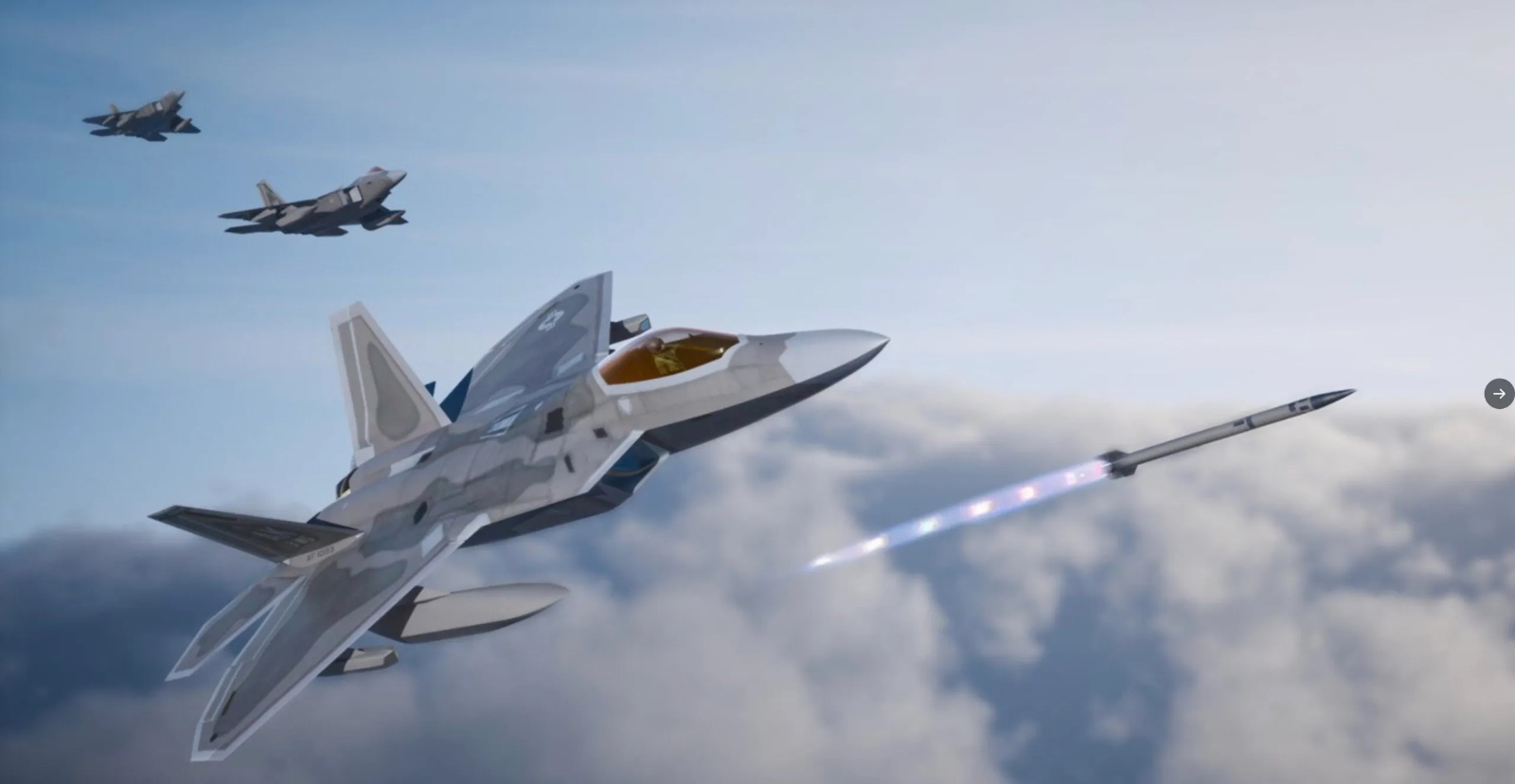
In 2022, General Mark Kelly, the head of the United States Air Force’s Air Combat Command, shared an artist’s concept of the Lockheed Martin F-22 firing an AIM-260 JATM.
More recently, the US Navy publicly revealed the rendering of the missile in February 2025. At the time, experts inferred that it was comparable in appearance to the AIM-120 medium-range air-to-air missile, including in size.
Nonetheless, the AIM-260 appears to have a larger rocket motor section and no mid-body surfaces, unlike the AIM-120.
Although little is known about the covert missile, reports suggest it will be powered by dual-pulse rocket motors or ramjets to increase its range and performance.
Experts anticipate that the AIM-260 will have an advanced multi-mode seeker system that may include infrared imaging and active radar. They claim that the dual-seeker system will improve resilience to electronic warfare countermeasures and increase accuracy.
Like the AIM-120D-3 AMRAAM derivative, the AIM-260 is anticipated to have a two-way datalink. This feature would greatly increase the missile’s efficacy in networked battle by enabling mid-course targeting upgrades or re-targeting.
The missile is intended to keep valuable airborne assets, such as tankers and AEW&C aircraft, safe deep into contested airspace. It would also be designed, according to analysts, to combat stealth aircraft and to operate in disputed areas with heavy electronic jamming, thereby increasing its effectiveness against enemies such as China and Russia.
The US is purportedly advancing work on this missile because the fire-and-forget strike advantage is often decisive in modern combat.
The JATM “is the number-one air-delivered weapon priority for both the Air Force and the Navy, and out-prioritizes other weapon system improvements and modernization efforts on any fielded aircraft,” the USAF earlier stated.
After initially being introduced with the USAF’s Raptor, the missile will eventually be fitted to the F-35 and the Navy’s F/A-18E/F. In fact, the AIM-260 JATM will also likely arm the US Navy’s F-47 sixth-generation combat aircraft, which is currently under development.
Contact the author at sakshi.tiwari13 (at) outlook.com
For decades, the US has maintained an unassailable lead in aircraft carriers.
The US currently operates 11 flattops, all of them nuclear-powered. China is a distant second with three aircraft carriers, none of them nuclear-powered.
The US operates roughly half of the world’s true aircraft carriers. However, for years, the security analysts in Washington have been wargaming for a nightmarish scenario.
What if the US’s carrier fleet is not a force multiplier, but a strategic vulnerability? Or, to put it another way, can Beijing sink the US Navy’s aircraft carriers?
These questions have assumed significance ever since China claimed to have developed anti-ship ballistic missiles (ASBMs), the DF‑21D and DF‑26B, also known as “carrier-killers.”
These ASBMs are part of China’s broader A2/AD (Anti-Access and Area Denial) architecture intended to push U.S. carrier strike groups (CSGs) beyond the first island chain.
In the last decade, several wargames, research studies, think‑tank reports, and opinion columns have wondered whether carriers are becoming obsolete, the new battleships – large, complex, and expensive systems – but vulnerable to cheap, long‑range missiles.
But a new Center for Strategic & International Studies (CSIS) research paper has flipped the script: if US carriers are vulnerable, why can’t Washington also hold China’s new carriers at risk?
Are Aircraft Carriers Becoming Obsolete?
In 2023, the South China Morning Post reported that researchers at North University of China claimed that it took an average of only 24 hypersonic missiles to sink the USS Gerald R. Ford and its five escort ships across 20 simulated battles.
From an economic point of view, that would imply that for every $1 China spends on new classes of low-cost hypersonic missiles, it could destroy $10,858.59 worth of U.S. capital ships.
A British study published in 2024 found that their carriers – the HMS Queen Elizabeth and HMS Prince of Wales – were similarly at risk.
Not just think tanks, even senior US government figures have expressed similar fears.
US Secretary of War Pete Hegseth said in a recent podcast interview: In wargames against China, ‘We lose every time.”
The secretary went further, linking US defeat to the vulnerability of aircraft carriers: “We know what our real capability [is]…If our whole power projection platform is aircraft carriers and the ability to project power that way strategically around the globe . . . and if 15 hypersonic missiles can take out our 10 aircraft carriers in the first 20 minutes of a conflict, what
does that look like?”
But if US carriers are so vulnerable, why can’t Washington bring China’s expanding carrier fleet within its firing range?
China’s Expanding Carrier Fleet
After the US, China has the world’s second-largest carrier fleet.
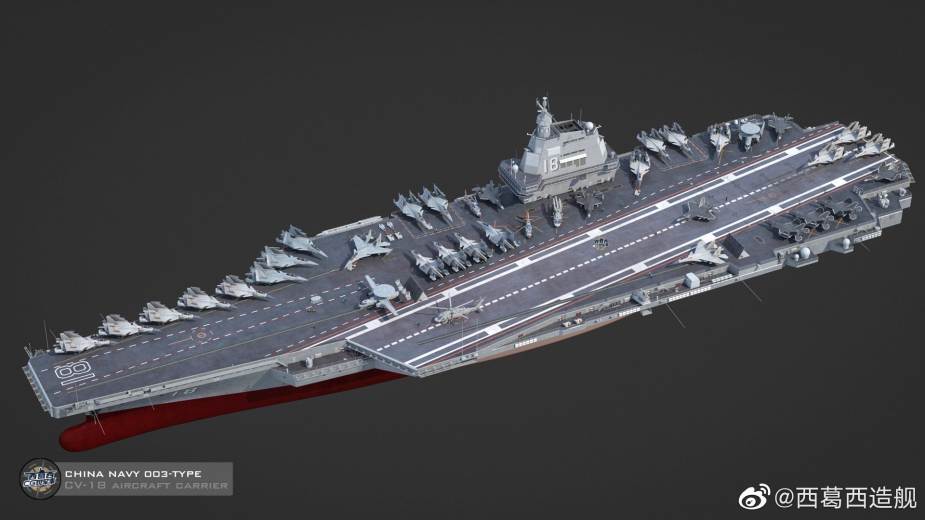
Beijing currently operates a fleet of three aircraft carriers. China launched its third carrier, Fujian (Type 003), an 80,000‑ton supercarrier capable of launching a mix of over 50 fourth- and fifth-generation fighters, and key enablers such as KJ-600 airborne early warning and control aircraft.
China also launched Sichuan (Type 076), a 40,000‑ton amphibious assault ship also suspected of serving as a drone carrier capable of using an electromagnetic (EM) catapult to launch GJ-11 stealth unmanned combat aircraft.
A fourth carrier (Type 004) is undergoing construction. Satellite imagery suggests that this will likely be China’s largest and first nuclear-powered carrier.
The Fujian is more technically advanced than the other Chinese carriers.
China plans to construct six additional aircraft carriers by 2035, bringing its total carrier force up to nine, according to the Department of War (DOW).
China’s growing carrier fleet is a force multiplier; however, it could also become a strategic vulnerability.
The Vulnerability of the US Aircraft Carriers
China recognized early that the US ability to project force globally rests on its fleet of 11 nuclear-powered aircraft carriers. It also recognized that it would be decades before it could match Washington in carrier fleet strength.
Therefore, China focused its energy on developing weapons systems that could negate the US advantage and developed anti-ship ballistic missiles (ASBMs).
Recent pieces have argued that Chinese hypersonic and ballistic missiles, supported by an increasingly sophisticated space‑ and AI‑enabled “kill web,” could force US and allied carriers so far offshore that their air wings become operationally irrelevant.
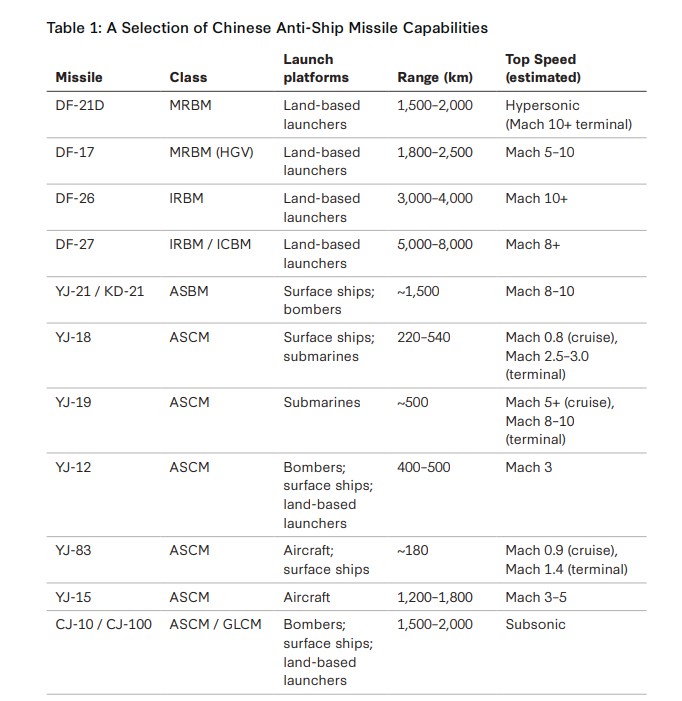
For example, the YJ-21 is a Chinese air-launched medium-range ballistic missile specifically designed to strike high-value assets such as carriers. This missile can be launched from fighters and unmanned combat aerial vehicles (UCAVs) and uses redundant guidance systems that make it difficult to jam; a variant can be fired from Type 055 destroyers, though this may have been the YJ-20.
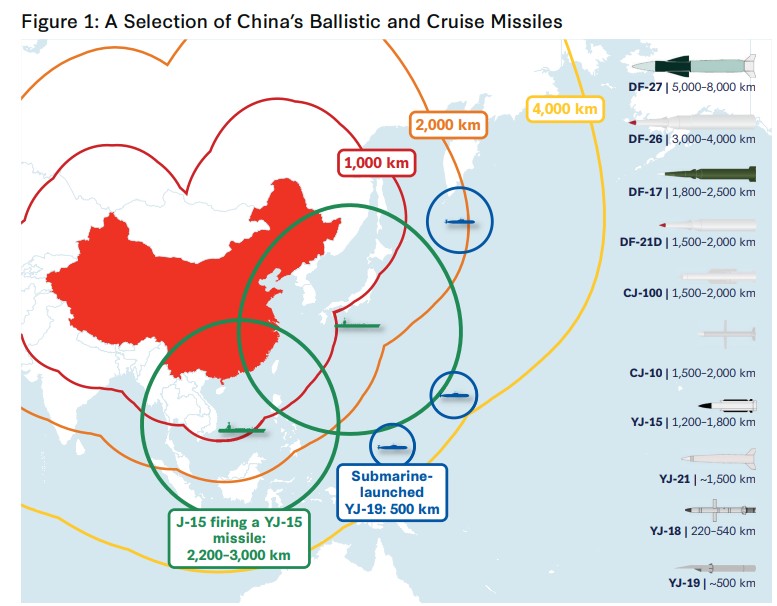
Source: Adapted from CSIS Missile Defense Project, “Missiles of China,” CSIS, last modified March 18, 2026. Credits CSIS.
Combined with older missiles such as the DF-26, colloquially known as “carrier-killers” with a range of up to around 4,000 kilometers (km), and the DF-17, which has a shorter range of up to around 2,500 km but is designed to strike high-value assets and evade US interceptors (e.g., THAAD and Patriot), China has an arsenal of systems capable of hypersonic speeds that can hold carriers at risk up to 2,500 miles away.
A Selection of Chinese Anti-Ship Missile Capabilities. Credits CSIS.
However, the current discussion in Washington often frames carriers as unique to the United States and uniquely vulnerable, while underplaying the fact that China is now building its own large-deck, network‑enabled capital ships that are at least as targetable as the U.S. ships China aims to threaten.
How the U.S. Can Make China’s Carriers Vulnerable?
According to the CSIS paper, Washington could follow a five-pronged strategy to make China’s growing carrier fleet vulnerable.
“Despite various improvements, PLAN surface ASW, fixed‑wing ASW, and undersea sensing are still patchy compared with U.S. and Japanese capabilities, particularly in noisy littorals and chokepoints,” it said.
A cost‑effective way to threaten China’s carriers is through a layered subsurface screen built around the following assets:
■ U.S. nuclear attack submarines (SSNs) operating at range.
■ Allied diesel-electric submarines from Australia, Japan, South Korea, and potentially the Philippines, including submarines equipped with air-independent propulsion where available.
■ Shared undersea sensing networks and common heavyweight torpedoes, enabling coordinated ambush of PLAN carrier groups in transit corridors rather than near the Chinese coast.
■ Shared unmanned undersea vehicles (UUVs) capable of both conducting intelligence collection and limited strike missions against PLAN ships.
The key is to turn the “undersea domain into a continuous threat envelope that forces Beijing to invest heavily in escorts, ASW aviation, and fixed sensors simply to move carriers out of its home waters.”
Further, this approach also leverages existing areas of production and operational excellence from various U.S. allies, making implementation faster and cheaper than more novel approaches.
(2) Land-based maritime strike networks: China’s A2/AD system is, in part, a land‑based missile problem. The United States and its regional partners can mirror that logic by building a distributed, multinational anti‑ship missile network on land from Japan through the Philippines and, where politically feasible, into the South Pacific and even around key maritime terrain globally, including the following:
■ U.S. Marine Corps and Army units fielding Navy-Marine Expeditionary Ship Interdiction System (NMESIS) missile systems, Mid‑Range Capability (i.e., Typhon batteries), and Precision Strike Missiles (PrSMs) adapted to strike ships and a host of information warfare systems (e.g., cyber, space, electronic warfare, and inform/influence activities) stationed as a
littoral rotational force.
■ Australian, Japanese, and potentially Philippine coastal missile batteries (e.g., upgraded Type 12, BrahMos, and naval strike missiles) integrated into common fire control and ISR architectures.
■ Pre‑negotiated access, dispersal sites, and logistics arrangements to ensure these units can survive Chinese Air Force and Rocket Force (PLAAF/PLARF) strikes and continue to generate maritime fires.
Such a network can threaten PLAN carriers during deployment, not just at the point of conflict.
Moreover, “the mere expectation that upon entering the Philippine Sea, carriers such as the Fujian or Sichuan will face dense, land‑based anti‑ship fires backed by allied ISR raises the perceived risk of using them as front‑line tools of coercion.”
(3) Long-range air and space-enabled fires: The United States and its allies can conduct long-range strikes using a mix of bombers, fighters, and maritime patrol aircraft:
■ U.S. Air Force bombers and Navy aircraft armed with anti-ship missiles, such as LRASM and future hypersonic anti-ship weapons, connected to a complex battle network that both supports the attack and degrades enemy sensors.
■ Allied F‑35 fleets (from Australia, Japan, and South Korea) using low‑observable sensors to contribute to the maritime picture and deliver their own long‑range anti‑ship munitions.
■ A mix of kinetic and non-kinetic attack vectors with a conscious emphasis on mission kills, specifically by degrading flight‑deck operations, destroying aviation fuel and ordnance handling, or disabling key escorts and logistics ships supporting the carrier, rather than only aiming for catastrophic hull loss.
This approach is particularly suited to large military powers such as the United States but can be partially adopted by states with smaller budgets by investing in a limited number of fifth‑generation or advanced fourth‑generation aircraft plus modern anti‑ship missiles.
(4) Cyber-electromagnetic disruption: PLAN CSGs are nodes within a broader battle network. Their combat value depends on complex links to off‑board ISR, satellite navigation, command networks, and electromagnetic attack and defense platforms.
By disrupting the carriers’ connections to this broader network, the United States and its allies can deny the PLAN access to the enablers that make its forces more combat-capable.
Rather than treating ships solely as physical targets, U.S. and allied planners should prioritize EM and cyber operations.
(5) Unmanned swarm and port-denial campaigns: The Ukraine war has shown how even a state with a modest navy can use unmanned surface vessels (USVs), unmanned aerial vehicles, and shore‑based missiles to attrite a larger fleet.
Ukraine has successfully forced Russia to pull major units out of Sevastopol and turned the Black Sea into a contested battlespace.
While the terrain of the Pacific is not identical to the Black Sea, a similar logic can be applied to PLAN carriers, especially in the first island chain.
Swarms of relatively low‑cost USVs and loitering munitions can attack ships in port, logistic hubs, and fixed defenses, driving carriers to relocate to more distant, less convenient bases.
The central idea is to make a carrier’s routine employment around Taiwan, the South China Sea, or beyond the first island chain appear prohibitively risky.
By following these steps, the U.S. and its allies could blunt the advantage of China’s growing carrier fleet.
While China has for years invested in AA/AD vectors to make the U.S. carriers vulnerable, Washington could flip the script and make Beijing’s own carriers equally vulnerable.
Sumit Ahlawat has over a decade of experience in news media. He has worked with Press Trust of India, Times Now, Zee News, Economic Times, and Microsoft News. He holds a Master’s Degree in International Media and Modern History from the University of Sheffield, UK.
He can be reached at ahlawat.sumit85 (at) gmail.com
Days after SpaceX’s Flight 13, the company is actively recovering Ship 40, the upper stage of its Starship vehicle, from the Indian Ocean.
SpaceX completed the test flight of its Starship megarocket on July 24, 2026, following an aborted launch attempt the previous week in which several Super Heavy engines failed to ignite. The test flight—Flight 13—achieved several key milestones before concluding with a controlled splashdown of the upper Starship spacecraft in the Indian Ocean.
After splashdown, Ship 40 has remained afloat for days, as confirmed through satellite imagery, including Synthetic Aperture Radar (SAR).
Notably, SpaceX has been working to bring the upper spaceship back for a controlled landing after flight, eventually recovering and quickly reusing the vehicles, which may significantly reduce launch costs. However, for it to be reused, the ship must survive high-speed atmospheric reentry, flip from a belly-first attitude to a vertical landing orientation, and then perform a precise, powered landing burn. Reliable performance of these steps is essential for catching the vehicle with the launch tower’s mechanical arms, which is the planned path to rapid reuse and dramatically lower costs.
Interestingly, SpaceX had no plans to recover Ship 40. The vehicle, however, successfully completed all of the above steps and achieved an unusually soft splashdown.
File: Landing burn and splashdown of Starship on Flight 13
SpaceX spokesperson Dan Huot stated that Ship 40 demonstrated significant improvement over its predecessors by keeping its engines operating, maintaining control during aggressive reentry, and achieving its softest splashdown to date at the target landing site. Huot described the outcome as a “dream scenario” during the flight livestream.
The landing was soft enough that, unlike earlier prototypes, Ship 40 remained largely intact and afloat rather than sinking or breaking apart. In fact, the post-flight review conducted by SpaceX apparently indicated the landing position and control were precise enough that the tower arms could have theoretically caught it.
Initially, a SpaceX recovery ship, named Go Australis, was stationed near the vehicle. However, the effort was joined by two Norwegian tugboats, Normand Ranger and Skimmer Tide, after Musk announced that the company would attempt recovery.
The recovery effort was seen in satellite images from the Colorado-based geospatial intelligence firm Vantor, which showed a small boat positioned near the Starship with a line fastened to its nose, as reported by CNN. MarineTraffic data on August 3 indicated Skimmer Tide and Normand Ranger moving at roughly one knot while broadcasting restricted maneuverability, while Go Australis was en route to Australia on its own.
More recent AIS data as of August 4 confirm that Normand Ranger has Ship 40 under tow (stern-to-aft) with flotation aids fitted near the base to keep the engines clearer of the water, at the time of writing this report.
SpaceX Wants Reusable Upper Spacecraft
SpaceX’s primary ambition for a reusable upper stage is embodied in Starship, the second stage of the Starship/Super Heavy system.
Unlike Falcon 9, where only the first-stage booster is routinely reused and the second stage is expendable, Starship is designed from the outset as a fully reusable orbital vehicle that can serve as a spacecraft for crew, cargo, tanker, and planetary landing roles.
The company’s declared objective is airline-like operations, which should ideally be measured in hours rather than days or weeks. These operations include launch, land, or catch, minimal inspection, refuel, and refly. In fact, Musk has described a long-term vision of flights more than once per hour, with costs potentially falling to a few million dollars, or lower, per flight once rapid full reusability and local propellant production are achieved.
Some of the challenges in achieving this center around a fully reusable orbital heat shield that survives multiple flights with little or no tile replacement, high-cycle engine reliability without significant refurbishment, and precise, reliable Ship catches after orbital reentry.
The company has indicated that solving these problems would enable massive Starlink deployments, large space telescopes, a lunar base, and Mars cargo or crew missions via orbital refueling with tanker Ships. A full reusability of the upper stage or spacecraft is presented as the critical breakthrough for making life multiplanetary.
It is pertinent to note that SpaceX has deliberately flown largely the same suborbital trajectory on successive tests that essentially includes launch from Starbase, hot-stage separation, booster return (initially soft splashdown, later tower-catch attempts), Ship continuing on a high-energy arc, payload or deployment tests, in-space engine relight(s), controlled reentry over the Indian Ocean, and targeted soft splashdown.
This consistent profile allows rapid iteration on the same failure modes and performance envelopes while collecting comparable data.
An important milestone in SpaceX’s efforts to recover and refly every component of the rocket was reached in 2024 when the company successfully guided the Super Heavy rocket booster to a safe landing in the enormous metal arms of its launch tower. However, two Starship spacecraft exploded near islands off the coast of Florida in 2025.
The campaign’s deliberate repetition of the same suborbital path has allowed SpaceX to treat each flight as a focused engineering experiment rather than a one-off demonstration.
In line with the comprehensive effort, SpaceX has worked hard to examine Ship 40 at every stage of its journey to and from space.
In fact, it went so far as to postpone liftoff to ensure the weather was clear enough to capture high-resolution images of the spacecraft during launch.
SpaceX has been focusing on the vehicle’s heat shield, a layer of hexagon-shaped ceramic tiles intended to protect Starship from the intense heat spacecraft encounter as they reenter Earth’s atmosphere after reaching orbital velocities exceeding 17,500 miles per hour.For now, while Musk has acknowledged that the heat shield’s performance has improved, SpaceX still faces significant engineering challenges in determining how to preserve the vehicle undamaged and ready for launch quickly.
No rocket currently in service has an upper stage that can be quickly reused. Following Flight 13’s success, Musk indicated that SpaceX may attempt to return a Starship to dry land or catch it with the tower on a future flight, contingent on data review. The date of the next flight has not been announced.
Even after SpaceX masters the recovery of the upper ship, additional challenges lie ahead, including figuring out how to refuel the vehicle while it sits in orbit. But, for now, things seem to be working out for Elon Musk and his reusable launch system program.
Contact the author at sakshi.tiwari13 (at) outlook.com
The United States and South Korea have joined hands to locate the wreckage of two World War-era aircraft that crashed into the sea more than seven decades ago, during the height of the Korean War.
The two allies began a combined underwater excavation project on August 3 in waters off South Korea’s eastern coast in an effort to locate the wreckage of American aircraft that went down during the 1950–53 Korean War, Seoul’s Ministry of Defense (MoD) stated.
The effort, which involves the US Defense POW/MIA Accounting Agency (DPAA) and the ministry’s Agency for KIA Recovery & Identification, will be carried out in Gangneung and Yangyang in Gangwon until August 28.
The MoD noted that about 40 people would be sent for the project, including members of the Korean Navy’s First Fleet and the Air Force’s 18th Fighter Wing, as well as American underwater planners and divers.
The divers will try locating the wreckage of a US F4U Corsair fighter that reportedly crashed in waters off Yangyang County in February 1952 while escorting another damaged attack aircraft.
Following this, the research team will focus on recovering the wreckage of the Curtiss C-46 Commando, a US military transport aircraft that crashed twice in the Gangneung area in October and November of 1952, as reported by Yonhap News Agency.
In the first instance, the plane crash left 17 people missing, while in the November incident, two people were found dead and seven were reported missing.
It is noteworthy that the F4U Corsair played a major role as a fighter-bomber and close air support (CAS) aircraft for the US Navy and Marine Corps during the Korean War, despite being a piston-engine design in the early jet age. Corsairs scored a modest number of aerial victories—around 10 total credited to Navy and Marine pilots—according to some accounts. However, the Corsairs also unfortunately suffered significant losses, primarily due to intense anti-aircraft fire at low altitude during their CAS role.
According to some sources, a F4U-4B Corsair of the Fighter Squadron 53 crashed into the sea on 21 February, 1952 while escorting a flak-damaged US aircraft toward Sokcho-ri Airfield (K-50). The pilot was purportedly flying through a snowstorm, which caused disorientation, and the aircraft suddenly swerved and crashed into the sea, killing the pilot.
Vought F4U-4 Corsair fighters of U.S. Navy fighter squadrons VF-114 Executioners (V-4XX) and VF-113 Stingers (V-3XX, on the catapult), assigned to Carrier Air Group 11 (CVG-11), on the aircraft carrier USS Philippine Sea (CV-47) during the Korean War in 1951/52- Wikimedia Commons
Separately, the Curtiss C-46 Commando—a twin-engine, heavy-lift cargo and troop carrier that had already proven itself in World War II—was extensively used to transport men and materiel during the Korean War.
Although the reports did not identify the exact aircraft the researchers are looking for, some sources note that a C-46D-10-CU (serial 44-77538) crashed into the sea a few kilometers offshore on October 16, 1952, shortly after takeoff from Kangnung (K-18) en route to Pohang. Meanwhile, a second C-46D-15-CU (serial 44-78114) crashed approximately 200 yards past the end of the runway on November 15, 1952, after an engine failure during a courier flight on the same route.
The EurAsian Times, however, could not verify the exact aircraft the US and South Korean teams are searching for or the cause of their crashes.
The combined survey team will use maritime unmanned systems and underwater detection equipment to carry out the search. Once potential sites are identified, divers or remote sensing technology will examine the locations, the Korean media reported.
The initiative to find the old relics is significant but not rare.Several archaic World War II aircraft, aircraft carriers, and ship wrecks lost in combat have been recovered by US entities, including the US Navy, the DPAA, Project Recover, and private American recovery groups.These efforts often focus on accounting for missing aircrew, in line with the US military’s motto—“Leave no one behind.” However, some recoveries are meant for historical preservation or museum restoration.
Discoveries In Recent Years
Earlier this year, a team of maritime and naval conservation organizations embarked on a quest to recover a World War II torpedo bomber—TBD-1 Devastator— from the sea floor, where it has rested for more than 80 years.
The US Naval History and Heritage Command partnered with the Air and Sea Heritage Foundation to recover the aircraft that ditched off Jaluit Atoll in the Marshall Islands in February 1942 from the USS Yorktown aircraft carrier.
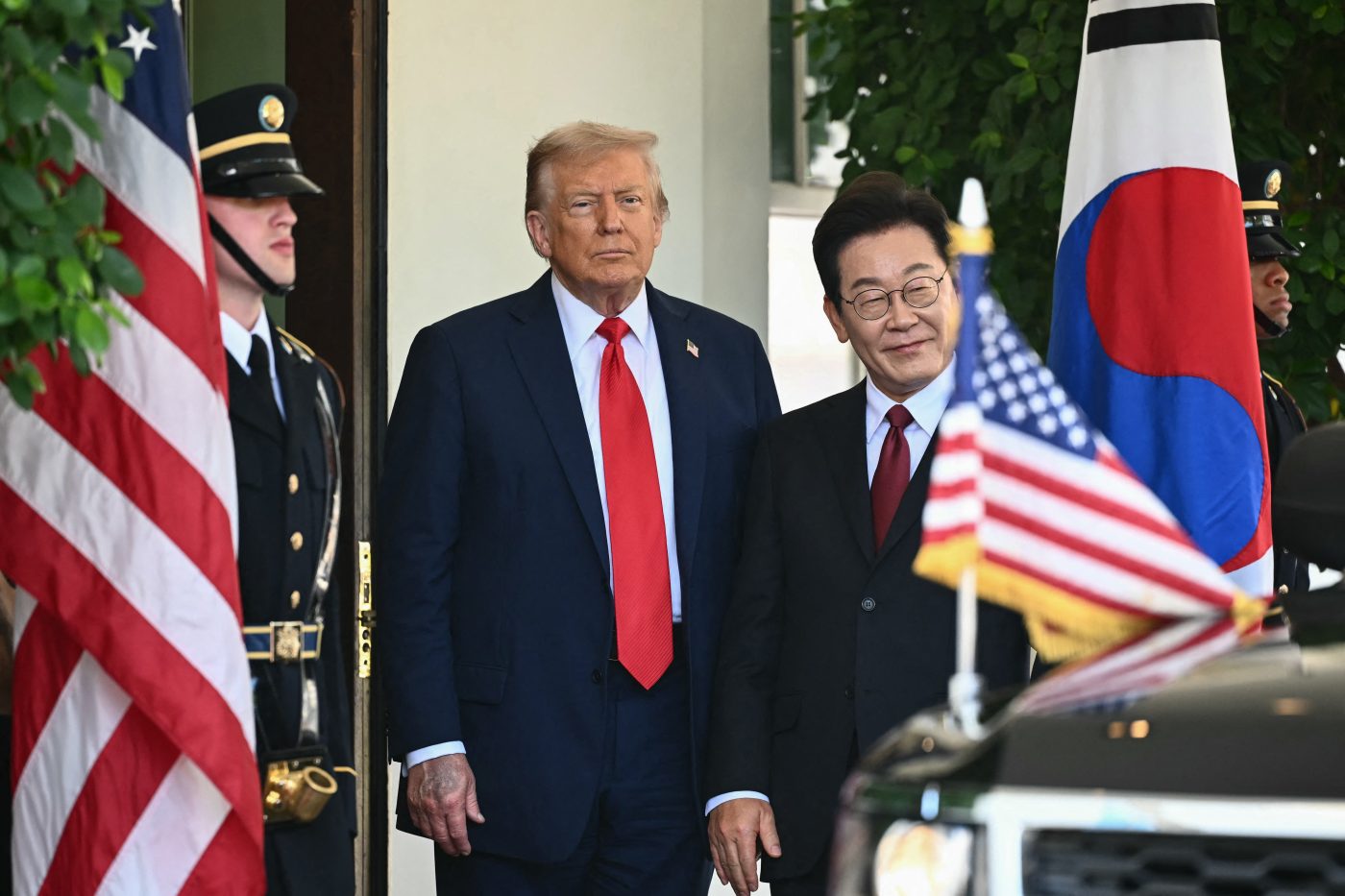
US President Donald Trump greets South Korean President Lee Jae Myung as he arrives at the West Wing entrance of the White House in Washington, DC, on August 25, 2025. Trump on Monday suggested that a “purge or revolution” was underway in South Korea, hours before new President Lee Jae Myung was due at the White House. He did not specify to what he was referring but said he would bring it up with Lee. (Photo by Mandel NGAN / AFP)
Similarly, a B-17 Flying Fortress that went down in the Baltic Sea in 1943 during intense fighting against the Nazis was located and recovered by researchers from Texas A&M University near Denmark in February 2026.
In 2017, Project Recover located the debris of the B-24 bomber that was shot down by anti-aircraft fire in 1944 near Hansa Bay, Papua New Guinea. In 2023, DPAA conducted its deepest underwater recovery mission to date, with elite US Navy divers descending about 200 feet underwater in a pressurized bell. They recovered some remains, dog tags, a bombardier’s ring, and other items, according to reports.
In 2019, researchers managed to locate the final resting place of the USS Hornet, the World War II aircraft carrier sunk in a 1942 battle with the Japanese Navy. The research ship R/V Petrel reportedly discovered the carrier in waters off the Solomon Islands at a depth of about 17,500 feet. The carrier was seen lying upright and almost undamaged on the deep and barren ocean below in overhead sonar photos
In 2018, a search team headed by Microsoft co-founder Paul Allen discovered wreckage from the USS Lexington, an aircraft carrier that sank during World War II, in the Coral Sea. The R/V Petrel, the team’s research vessel, discovered the wreckage approximately 800 kilometers off the eastern coast of Australia, at a depth of 3,000 meters.
More recently, the USmanaged to find the wreckage of a civilian aircraft, Pan Am “Clipper Endeavor”, which mysteriously crashed in Puerto Rico in 1952, killing 52 people. The operation was led by the Air/Sea Heritage Foundation, in partnership with others, including Discovery Channel’s “Expedition Unknown.”
It is worth noting that these are just a few of many notable discoveries that the US has made in collaboration with other agencies and partners from sea beds far from its own shores, and do not encapsulate the whole picture of these efforts.
Contact the author at sakshi.tiwari13 (at) outlook.com
One of the two US Air Force’s KC-135R Stratotankers that collided mid-air earlier this year during hostilities with Iran is now flying with a replacement vertical stabilizer sourced from another aircraft.
During the height of the clash between the US and Iran, two USAF KC-135 refuellers collided mid-air in friendly airspace in Iraq in a freak accident on March 12, 2026.
One of these tankers, call sign Zeus 95, was unable to recover from the impact and crashed close to Turaibil on the border between Iraq and Jordan. Meanwhile, the other aircraft managed to steer away and land safely at Ben Gurion Airport in Israel—the hub of USAF’s aerial refueling capability during the conflict—despite sustaining damage to its vertical stabilizer, or tail, as previously reported by the EurAsian Times.
“U.S. Central Command is aware of the loss of a U.S. KC-135 refueling aircraft. The incident occurred in friendly airspace during Operation Epic Fury, and rescue efforts are ongoing. Two aircraft were involved in the incident. One of the aircraft went down in western Iraq, and the second landed safely. This was not due to hostile fire or friendly fire,” the US Central Command (CENTCOM) said in a statement on the day of the tragic accident.
As it turns out, the surviving KC-135 has been repaired by cannibalizing the vertical stabilizer from another aircraft of the type. It was spotted at RAF Mildenhall, UK, during its transit from Israel to the continental US, featuring two distinct serial numbers: although the fuselage itself carried 63-8017, the original serial number, the tail bore 63-8002, as seen in photos shared by UK-based aviation photographer Havoc Aviation.
The U.S. Air Force KC-135 "Stratotanker" that survived the fatal midair collision with another KC-135 over Iraq in March is now en route towards the United Kingdom, likely beginning its return to the United States.
According to reports, the donor aircraft had previously served with the 22nd Air Refueling Wing and was last noted at the KC-135 depot at Tinker AFB, Oklahoma, where it appears to have entered retirement or storage. The repair work was apparently carried out at Israel’s Ben Gurion Airport, which recently made headlines for refusing to accommodate additional USAF tankers amid overcrowding.
Further maintenance is expected upon the aircraft’s arrival in the US, including a repaint to apply the correct markings, if the donor vertical stabilizer is permanently retained.
USAF’s KC-135 63-8017 arrived at RAF Mildenhall featuring a different tail number (Image Courtesy: Havoc Aviation)
This repair approach—using a donor component from another airframe—is an established practice for returning heavily damaged aircraft to service.
Earlier, the USAF successfully reassembled two damaged F-35 stealth fighters into one Frankenbird. One of the F-35s was damaged in a catastrophic engine fire at Eglin Air Force Base in 2014, whereas the other was damaged in a nose-gear collapse at Hill Air Force Base in Utah in 2020. The team developed specialized tooling, supports, and other equipment to assemble and connect the aircraft components, as you can read about here.
Similarly, the B-2 Spirit of Georgia, whose wing composite was severely damaged after it suffered a landing-gear collapse at Whiteman AFB in 2021, was later repaired by equipping it with an 8×4-foot donor composite skin panel from Test Article 0998.
Nevertheless, the KC-135 with two different numbers at RAF Mildenhall remains a unique sighting, particularly as the mid-air crash occurred during intense combat and killed six crew members.
Iran’s proxies in Iraq claimed responsibility for the attack as soon as the crash was announced by official channels.
“In defense of our country’s sovereignty and its airspace violated by the aircraft of the occupation forces, the mujahideen of the Islamic Resistance in Iraq targeted, with appropriate weaponry during the past twenty-four hours, a second aircraft of the KC-135 type belonging to the American occupation in western Iraq. Its crew managed to escape with it after it was hit, and it made an emergency landing at one of the enemy’s airports,” the Islamic Resistance in Iraq (IRI), an umbrella group of Iran-backed Iraqi militias, said in a statement at the time.
The claim was unsurprisingly amplified by Iranian state media and others, though CENTCOM immediately refuted it.
USAF Has Lost Many KC-135 Tankers
The KC-135, introduced nearly 70 years ago, remains the most numerous aerial-refueling aircraft in US service and the backbone of the tanker force. It enables long-range operations by fighters, bombers, and other aircraft of the Air Force, Navy, Marine Corps, and allied nations.
Ben Gurion Airport became a major forward operating location for both KC-135s and newer KC-46 Pegasus tankers before and during Operation Epic Fury. The concentration of refueling and cargo aircraft there grew substantially as the conflict continued past the April ceasefire, at one point reaching 70–75 aircraft and prompting Israeli authorities to press for a drawdown to protect commercial airline operations.
However, for the one KC-135 that the USAF managed to restore, it has lost many others during its high-tempo war with Tehran.
Following the fatal accident on March 12, media sources on March 14 stated that an Iranian missile and drone attack had destroyed five KC-135s while they were on the ground at Prince Sultan Air Base in Saudi Arabia. The refuellers were parked in the open on the apron, making them “sitting ducks” for Iranian missiles and drones, because the base, which is roughly 600 kilometers from Iran, lacked shelters for large planes like the KC-135.
Due to a lack of clear information from CENTCOM, the extent of damage to each tanker remains unknown.
In fact, the latest arrival of the KC-135 at RAF Mildenhall was the third of a damaged tanker at the British facility, according to reports.
The Mildenhall transit of 63-8017 marks at least the third appearance of a battle-damaged KC-135 at the British base.
On April 12, 2026, KC-135R 59-1444 arrived covered in temporary battle-damage-repair patches before continuing to the Oklahoma City Air Logistics Complex at Tinker AFB. On May 23, 2026, Alaska Air National Guard KC-135R 63-8028 of the 168th Wing arrived with shrapnel repairs on its tail and flaps and without its refueling boom.
The substantial damage to the USAF’s KC-135 aircraft in the Middle East has spurred discussion about the attrition and pressure on the aging tanker fleet during high-tempo operations. As of now, parts cannibalized from boneyard-decommissioned aircraft are essential to the KC-135 fleet.
Contact the author at sakshi.tiwari13 (at) outlook.com
The US Navy has awarded a historic $76.6 billion contract to build 14 new submarines, as Washington races to maintain its dominance over China in undersea warfare.
The deal includes the construction of five Columbia-class nuclear-powered ballistic missile submarines (SSBNs), awarded to General Dynamics Electric Boat (GDEB).
The contracts also provide for the construction of nine Virginia-class nuclear-powered attack submarines (SSNs) during fiscal years 2025–2029. The nine-ship contract was awarded to GDEB and HII-Newport News Shipbuilding (HII-NNS).
Together, these new awards represent a historic investment in maritime modernization and supremacy, with a combined total value of US$76.6B. The award will also strengthen the U.S.’s nuclear triad capacity.
“The awards drive the critical, once-in-a-generation recapitalization of the Navy’s undersea forces and the Nation’s nuclear triad,” according to the U.S. Department of the Navy.
“This historic investment underscores the Department’s continued commitment to undersea superiority and the recapitalization of our nuclear triad,” said Vice Adm. Robert Gaucher, Director, Submarine Programs.
The Columbia-class submarines will replace the Navy’s aging nuclear deterrent fleet, ensuring the continuity of the United States’ sea-based strategic nuclear deterrent.
— Acting Secretary of the Navy Hung Cao (@SECNAV) July 29, 2026
As the most survivable leg of the nuclear triad, the Columbia Class ballistic missile submarine represents a modern platform of national security and remains the Department of War’s number one acquisition priority, the U.S. Navy statement said.
Furthermore, these contract awards support the fielding of enhanced Virginia Class submarines, a platform engineered for unparalleled stealth, heavy payload strike capability, and multi-domain lethality.
The Virginia Class submarine is the premier tactical strike and multi-mission platform, ensuring continuous global undersea dominance, the US Navy said.
“By securing the continuous production of both the Columbia and Virginia classes, we ensure we will continue to deliver the world’s most lethal, survivable and resilient combat platform to our global Combatant Commanders, while providing long-term stability to our shipbuilding industrial base,” Vice Adm. Gaucher said.
The U.S. Navy now has seven Columbia-class submarines under contract, complementing a force of 26 operational Virginia-class submarines with 23 more slated to be built.
U.S. Navy Seeks Revolutionary Submarine-Launched Surface-to-Air Missile
Separately, the U.S. Navy is also seeking a new family of modular surface-to-air missiles, including a version that will arm future variants of the Virginia-class submarine.
The information was provided in a draft request for solutions contracting notice recently posted online.
“The United States Navy (USN) is seeking a new, modular interceptor to serve as the basis for the Naval Modular Missile (NMM) program, a next-generation initiative designed to revolutionize surface naval capabilities through multi-mission utility, enhanced capacity, and a modular open architecture,” according to the recent draft request.
Under this new NNM program, the U.S. Navy seeks to develop at least four distinct surface-to-air missile interceptors.
Though all four NNMs will fall in the broad category of Terminal Stage Interceptors (TSI), the four variants will differ substantially in their role and capabilities.
The four variants are: NNM Multi-Mission Long Range (LR), NMM Extended Range Submarine (ER-S), NMM Dual-Pack Extended Range (DP-ER), NMM Quad-Pack Medium Range (QP-MR).
The NMM ER-S is an extended-range interceptor intended to be launched from future versions of Virginia-class nuclear-powered attack submarines.
Notably, US submarines do not have an operational dedicated SAM system for engaging aircraft or other aerial threats.
Traditional weapons of US submarines are Tomahawk cruise missiles, Harpoon anti-ship missiles, Torpedoes, and Trident ballistic missiles.
Therefore, the development and operationalization of submarine-launched NMM ER-S would add a critical, all-new capability to the U.S. submarine fleet and would provide protection against airborne threats such as anti-submarine warfare (ASW) aircraft, while also contributing to broader fleet air defense.
This would give US submarines a true anti-aircraft capability for the first time, allowing them to engage planes or drones while remaining submerged or semi-submerged.
Furthermore, given that no country has operationalized a submarine-launched surface-to-air missile capability, this would give the U.S. submarine fleet a critical and exclusive defensive capability that will enhance its survivability in contested waters.
However, Germany is also developing its own submarine-launched SAM.
Germany’s IDAS (Interactive Defense and Attack System for Submarines), based on the IRIS-T missile, is designed for fully submerged launch from standard 533 mm torpedo tubes.
Traditionally, submarines were armed with man-portable air-defense systems (MANPADS), and submarines had to surface or expose the conning tower so a crew member could fire them manually. A tube-launched submarine-based SAM would be a revolutionary addition.
The addition of 14 new submarines (Five Columbia-class and nine Virginia-class) and SAM capability on future Virginia-class variants will boost the U.S. Navy’s capabilities as it races to maintain its edge over China in the critical domain of undersea warfare.
File Image: USS West Virginia Submarine: Via US CENTCOM
U.S. Vs China In Undersea Warfare
China already possesses the world’s largest maritime fighting force, with 234 warships compared to the U.S.Navy’s 219.
However, the U.S. still maintains an edge over China in undersea warfare.
But, according to a Pentagon report on the People’s Liberation Army (PLA), released in December last year, even in submarine fleet strength, Beijing is set to match U.S. capabilities by the end of this decade and might even surpass Washington’s submarine fleet by 2035.
According to the Nuclear Threat Initiative (NTI), the US Navy currently has 71 submarines, all nuclear-powered. However, some latest reports put the strength of the current U.S. submarine fleet at 66.
This list includes 14 Ballistic Missile Submarines (SSBNs), 53 Nuclear-Powered attack submarines (SSNs), and four Guided Missile Submarines (SSGNs).
Similarly, according to the NTI, China has 60 submarines, of which only 12 are nuclear-powered.
China has six Ballistic Missile Submarines (SSBNs), six Nuclear-powered attack submarines (SSNs), and 48 Diesel-electric attack submarines (SSKs). Of the 48 SSKs, 12 submarines feature Air-independent propulsion (AIP), a technology that makes them quieter and allows them to stay submerged longer.
While China has not yet operationalized a nuclear-powered aircraft carrier, Beijing has nearly half a century of experience with nuclear-powered submarines.
China’s first nuclear-powered submarine, which was a loud and slow vessel, entered service in 1974. Since then, Beijing has made considerable progress in improving its nuclear-powered subs. They are now larger, quieter, and faster.
In recent years, China has made particular strides in nuclear-powered submarines, whose greater speed, range, and endurance give its Navy greater reach.
New models under development include the Type 095, which analysts expect to feature vertical launch tubes capable of accommodating cruise missiles.
According to the Institute for National Defense and Security Research, the capabilities of China’s two new nuclear submarines – the Type 095 and Type 096 – match those used by the US and Russia.
Additionally, China is set to add more submarines each year than the US, meaning it will have far greater submarine strength than the US in the future.
According to the US Navy’s long-range shipbuilding and fleet inventory plan 2025, the US submarine strength will drop to 47 by the end of this decade, before hovering in the mid-50s for many years. The fleet isn’t projected to hit 66 until 2054.
On the other hand, China’s submarine strength will rise in the coming years. A 2023 US Department of Defense (DoD) report anticipates that China will grow its submarine force to 80 units by 2035. Nearly 20 of these subs could be nuclear-powered.
According to a 2024 CSIS report, China’s submarine technology is rapidly improving, and its submarine production capacity is growing.
China has added between seven and eight Type 093B submarines in just the past three years, a production rate that exceeds the number of attack submarines China has constructed over the past three decades.
When including conventional submarines, such as the new Type 039C, China’s total submarine fleet launched over the past three years exceeds 15, underscoring China’s impressive submarine-building capacity.
These numbers suggest that in the next decade, China might have nearly 20 more submarines than the US.
However, in qualitative terms, Washington still might have an edge over China. As noted earlier, while all of the US submarines are nuclear-powered, China will have only around 20 nuclear-powered submarines.
The addition of 14 new submarines and a SAM capability are, therefore, key to Washington’s efforts to maintain parity with Beijing in undersea warfare.
Nitin J Ticku holds a double master’s degree in Journalism and Business Management from the University of Glasgow. He has over 20 years of global experience in MARCOM, Journalism, and Digital Marketing, and has worked & traveled widely across Europe, the Americas, and Asia. Nitin is the Editor of the EurAsian Times.
He can be reached at editor (at) eurasiantimes.com
The US has been the world’s largest defense exporter for more than three decades now.
According to SIPRI (Stockholm International Peace Research Institute), the United States accounted for 42% of global arms exports between 2021 and 2025.
For perspective, during this period, France was the world’s second-largest defense exporter, accounting for only 9.8% of global arms exports.
However, despite its dominant position in global arms exports, the United States has notably been absent from a particular high-value weapon system market that could have generated billions of dollars in additional revenue for its defense firms.
Ironically, Washington has stayed out of this business despite leading the world in this niche technology for over five decades.
On July 6, Canada reportedly selected the winner of the Canadian Patrol Submarine Project (CPSP) deal, expected to cost nearly US$ 30 billion, with Germany’s TKMS outdoing South Korea’s Hanwha.
Similarly, India is in the final stages of signing a major submarine deal with ThyssenKrupp Marine Systems (TKMS) under Project 75(I).
Both Canada and India are strategic partners of the US. One might wonder why the US defense companies were not even in the running for these “big ticket” deals.
This, despite the fact that the US is not only the world’s largest submarine operator, but its submarines are also some of the most advanced in the world. According to the Global Firepower Index 2026, both Russia and the US operate 66 submarines.
However, while Russia operates a mix of diesel-electric and nuclear submarines, all of the US’s submarines are nuclear-powered.
China is fast catching up with 61 submarines; however, China also operates a mix of diesel-electric and nuclear submarines.
However, Russia (and formerly the Soviet Union) has exported submarines to Algeria, Bulgaria, China, Cuba, Egypt, India, Indonesia, Iran, North Korea, Poland, Romania, Syria, Venezuela, Vietnam and others, and China has exported to Pakistan, Myanmar, Bangladesh and Thailand.
Interestingly, the US, despite its technological lead in the field, has not exported a single submarine to any country in the last 50 years. In fact, the last submarine the US exported was in 1973 to Taiwan.
So, why, despite its dominant position in global arms export and its technological lead in the field, has the US not exported a single submarine to any country in over 50 years?
The US was not always averse to exporting submarines. After the Second World War, the US emerged as one of the world’s largest submarine exporters.
During the war, the US constructed over 200 submarines, and by the time the war ended, the US had 232 submarines in commission.
However, within years of the end of the Second World War, a new Cold War began with the Soviet Union, and the US launched a massive modernization campaign for its submarines.
Under the modernization plan, the US decommissioned hundreds of its late-war-era Balao- and Tench-class diesel-electric submarines.
This left the US with dozens of decommissioned submarines.
At the same time, the US was financing a massive reconstruction plan in Europe under the Marshall Plan and building Europe’s military capabilities to create an effective deterrent against the Soviet Union.
For this purpose, the US decided to export these older, decommissioned, diesel-electric submarines to its allies. Between 1950 and 1970, the US exported nearly 50 submarines to its partners, including Turkey, Spain, Italy, Greece, the Netherlands, Canada, Taiwan, and others.
Most of these were Balao-class diesel-electric submarines built during World War II.
Meanwhile, in 1954, the US launched USS Nautilus (SSN-571), the world’s first nuclear-powered submarine, heralding the era of nuclear-powered submarines.
Nuclear-powered submarines have key advantages, such as unlimited endurance, as they can stay submerged for months, maintain high underwater speeds consistently, and have global reach.
After the launch of USS Nautilus, Washington gradually phased out diesel-electric submarines. After 1954, the US built only three Barbel-class diesel-electric submarines.
By the early 1960s, all new US Navy combat submarines were nuclear-powered. The last diesel-electric attack submarine (USS Blueback) was decommissioned in 1990, leaving Washington with only nuclear-powered submarines.
File Image: USS West Virginia Submarine: Via US CENTCOM
Why Does the U.S. Not Export Nuclear Submarines?
The US nuclear-powered submarines are considered the best in their class; however, to date, Washington has not exported this technology to any country for various reasons.
Firstly, the U.S. Navy has long opposed even the export of diesel-electric submarines due to concerns about the impact of submarine technology proliferation on the ability of its forces to operate securely in coastal waters worldwide.
Submarines fall under the US Munitions List and are subject to the International Traffic in Arms Regulations (ITAR) and the Arms Export Control Act.
When it comes to nuclear propulsion technology, the US Navy is highly sensitive, as it adds extra layers of control under the Atomic Energy Act.
The US nuclear propulsion, quieting technology, sonar, and combat systems are considered among America’s most protected “crown jewels.”
The US has deliberately avoided proliferating this technology to preserve its undersea dominance.
In fact, Washington is so sensitive about submarines’ nuclear propulsion technology that it has refused to share this technology even with its close allies, such as France, Japan, Taiwan, or Canada.
The only two exceptions are the UK and Australia.
The US has a long-standing special nuclear propulsion technology-sharing agreement with the UK, dating back to the 1958 US-UK Mutual Defense Agreement.
The US supplied the reactor for Britain’s first nuclear sub, HMS Dreadnought, and ongoing collaboration allows the UK to design and build its own boats.
However, this is alliance cooperation, not a commercial export.
Similarly, in 2021, the US, the UK, and Australia signed the AUKUS agreement, under which the US has agreed to sell/transfer up to three Virginia-class SSNs to Australia, starting in the early 2030s.
Another issue is US industrial capacity, which is already struggling to meet US Navy demand for Virginia-class submarines.
In its current modernization drive, the U.S. Navy hopes to add two to three Virginia-class attack submarines to its fleet annually until 2043.
In fact, it’s not just the US that is sensitive about exporting nuclear submarines.
Globally, nuclear-powered submarines are operated by only six countries: the US, Russia, China, France, the UK, and India.
The US, Russia (formerly the Soviet Union), and the UK have been operating nuclear submarines for over six decades now.
However, to date, there is only one example of a country exporting/leasing a nuclear-powered submarine to another country.
The Soviet Union first leased a Charlie I-class (K-43) nuclear-powered submarine to India in 1988–1991.
India operated it as INS Chakra.
Further, Russia leased an Akula-class submarine (Nerpa/K-152) to India from 2012 to 2021, which New Delhi operated as INS Chakra II.
The US, the UK, China, France, and India have never exported or leased a nuclear submarine to any country.
In fact, how all countries are highly protective of nuclear-powered submarines can be gauged from the fact that even China refused this technology to its all-weather ally, Pakistan.
Leaked documents revealed that Pakistan formally asked China for nuclear-powered submarine technology and sea-based nuclear second-strike capabilities to counter India.
However, Beijing ultimately refused to provide the technology, citing global non-proliferation commitments and a desire to avoid triggering a regional nuclear arms race.
Instead, China is providing Pakistan with eight Hangor-class diesel-electric attack submarines, under a US$5 billion deal.
However, since the US no longer produces diesel-electric submarines and is reluctant to export nuclear-powered submarines even to its close allies, Washington is effectively out of the global submarine business, which is dominated by countries such as Germany, France, Russia, China, and Spain, and the situation is unlikely to change in the near future.
Sumit Ahlawat has over a decade of experience in news media. He has worked with Press Trust of India, Times Now, Zee News, Economic Times, and Microsoft News. He holds a Master’s Degree in International Media and Modern History from the University of Sheffield, UK.
He can be reached at ahlawat.sumit85 (at) gmail.com
President Donald Trump said the US and Israel had decided to hold off on new strikes on Iran — provided that a deal to end the ongoing conflict is reached quickly.
Meanwhile, a report published by a US-based think tank recently warned that American inventories of key air defense interceptors have fallen sharply, raising the prospect that US and coalition forces may need to accept greater risks in future missile defense operations.
When the US launched Operation Epic Fury in February 2026, President Donald Trump said the hostilities would last only a few days, a deadline that was subsequently moved to a few weeks. However, five months later, there is no end in sight to the war, which has now spilled over into much of West Asia.
During the war, the US has severely drawn down its air defense interceptors, as documented by the US-based think tank CSIS (Center for Strategic and International Studies). The CSIS report estimates that stockpiles of the Patriot and THAAD (Terminal High Altitude Area Defense) have been greatly reduced in the ongoing conflict.
Published on July 27, 2026, the report—“Renewed Iran War Would Test Diminished Interceptor Inventories” authored by Mark F. Cancian and Chris H. Park—updates an earlier CSIS assessment released around the ceasefire agreed to by both sides on April 8, 2026.
“The air defense campaign has been largely successful with high—though not perfect—interception rates. While some Iranian attacks got past defenses, causing casualties and extensive base damage, these attacks have been unable to diminish U.S. and coalition operations. This has required extensive use of interceptors, with Patriot inventories now under 1,000 and THAAD inventories at about 250,” states the report.
The previous report had estimated that the US Patriot interceptor inventory shrank by 55%. However, the updated figures suggest the stockpile has further shrunk by an additional 10% since the truce, and that approximately 65% of US Patriots have now been lost since the war began.
Image via CSIS
The report estimates that Patriot inventories now stand at under 1,000 (the most recent figures place the range at 759–827) and that THAAD inventories stand at about 250 (the latest figures put it at roughly 234–278).
Both systems have been heavily used to defend US bases, Gulf partners, and Israel against Iranian ballistic missiles, cruise missiles, and related threats. CSIS apparently draws its estimates from publicly available legislative and Pentagon budget documents, supplemented by open-source data on rounds expended in the Gulf.
“Diminished stockpiles may force the United States and its coalition partners to take more risks with interceptions. There are no good alternatives to Patriot and THAAD for ballistic missile defense. Navy ships, with Standard Missiles that can intercept such threats, generally are too far away,” the report warned.
Notably, an NBC report recently stated that US commanders are choosing not to take down Iranian projectiles that are headed into uninhabited regions of US sites in the vicinity because they do not want to squander their interceptor missiles.
Patriot AD System.
This alleged tactic, if true, marks a shift from previous air and missile defense procedures in the region, such as when a US-manned Patriot detachment protected a mostly evacuated Al-Udeid Air Base in Qatar from a barrage of Iranian ballistic missiles in response to Operation Midnight Hammer in June 2025.
Despite a dearth in air defense interceptors, the US has vowed to hit Iran very hard, a move that will almost certainly trigger Iranian retaliation and further cause depletion in Patriot and THAAD interceptors. The situation may become dire, given that the production of these missiles takes woefully long—Lockheed delivered just about 600 interceptors in 2025, and only 96THAAD interceptors are manufactured per year.
The United States is therefore consuming its most valuable air-defense munitions far faster than industry can replace them. Some analysts have suggested that depleting offensive and defensive stockpiles contributed to the Trump administration’s decision to accept a ceasefire, including the latest one where the U.S. and Israel agreed to hold off on new strikes on Iran.
Other reports indicate Trump may have changed the offensive plans after talking with Saudi Arabia and after Iran also spoke to Riyadh, besides Pakistan and Turkey.
Trump insisted the US was still “locked and loaded and ready to go against the Islamic Republic of Iran,” but added that Tehran and other Middle Eastern countries had asked him to hold off on fresh strikes. “Based on this request, I have agreed, for the future benefit of the WORLD and, likewise, the survival of a successful and prosperous Iran, to cancel the attack, subject to being able to rapidly make a DEAL,” Trump posted on his Truth Social platform.
Terminal High Altitude Area Defense – Wikipedia
Meanwhile, Strategists also warn that the shortages create near- to medium-term risks for U.S. readiness in other theaters, particularly a potential conflict with China in the western Pacific. “Expended munitions create a near- to medium-term risk for U.S. readiness to fight a war against China in the western Pacific,” the report stated.
In the near term, Washington is unlikely to spare Patriots for Ukraine, which continues to face intense Russian attacks and has repeatedly requested additional interceptors. Russia has been exploiting the vacuum in air defense coverage to strike Kyiv with lethal ballistic and hypersonic missiles, as the EurAsian Times reported.
Pentagon Boosting Interceptor Production
Noteworthy steps have been taken in 2026 to rapidly expand production of Patriot (primarily PAC-3 MSE) and THAAD interceptors.
These efforts use a new “Acquisition Transformation Strategy” approach that emphasizes multi-year framework agreements, undefinitized contract actions (UCAs), long-term demand signals, and parallel investments in facilities, the workforce, and bottleneck components.
For instance, the US Army awarded Lockheed Martin a contract on July 29 worth up to $58.6 billion to produce Patriot interceptor missiles.
This comes after the US awarded Lockheed Martin a $4.7 billion contract in April 2026 to accelerate the production of the Patriot Advanced Capability-3 (PAC-3) Missile Segment Enhancement (MSE) interceptors. The agreement stipulated that the annual output of PAC-3 MSE interceptors would be increased from nearly 600 to 2,000 units.
The Army states that the latest contract establishes a multiyear procurement strategy for the interceptors from fiscal 2026 through 2032 by converting a prior one-year deal awarded in April into a seven-year draft agreement.
The Pentagon Munitions Acceleration Council (MAC) also reportedly signed an emergency procurement agreement with key vendors to boost production.
Meanwhile, Lockheed has stated that it is investing $8–9 billion through 2030 across more than 20 sites in the United States.
Additionally, the US has agreed to grant Ukraine a license to produce Patriot interceptors, making it the latest European country to manufacture these prized munitions, alongside Germany, Romania, and Poland.
Not just that, Lockheed Martin announced the introduction of the PAC-3 Adapted Capability Effector (PAC-3 ACE), a low-cost interceptor built to defeat a wide range of threats for less than half the cost of a PAC-3 MSE.
As for THAAD, the Pentagon signed a framework with Lockheed Martin to quadruple annual production from 96 to 400 interceptors.
The framework was intended to lead to a formal contract award (subject to congressional appropriations). This was later executed in June 2026 with an undefinitized contract action (UCA) valued at up to $35 billion to increase manufacturing through 2030.
The Pentagon, in collaboration with L3Harris and Lockheed Martin, announced two historic seven-year framework agreements earlier this week to increase production capacity for critical components of the Terminal High Altitude Area Defense (THAAD) and the Patriot Advanced Capability-3 (PAC-3) Missile Segment Enhancement (MSE) interceptors.
Contact the author at sakshi.tiwari13 (at) outlook.com
Lt. Col. William Henry Rankin was a decorated US Marine Corps fighter pilot who flew combat missions in World War II and the Korean War. His greatest ordeal, however, came in peacetime.
On July 26, 1959, he ejected from an F-8 Crusader straight into a massive thunderstorm. And he lived to tell the tale.
The Vought F-8 Crusader was a single-engine, supersonic, carrier-based air-superiority fighter designed for the U.S. Navy and Marine Corps. Known as the “Last of the Gunfighters,” it was the final American fighter built with guns as its primary armament at a time when missiles were rapidly taking over. The aircraft entered service in 1957.
In May 1957, Rankin took command of Marine Fighter Squadron 122 (VMF-122). The following year, it became the first Marine squadron to operate the F-8 Crusader.
In 1959, he catapulted to fame for surviving what seemed like an impossible incident with the Crusader.
The Story Of Rankin’s Riding A Thunderstorm
On the afternoon of July 26, 1959, Rankin led a two-ship flight with wingman Lt. Herbert Nolan from Naval Air Station South Weymouth, Massachusetts, back to Marine Corps Air Station Beaufort, South Carolina.
During the flight, the pilots encountered a large cumulonimbus thunderstorm.
Typically, thunderstorms pose severe threats to fighter jets, including extreme turbulence, powerful updrafts and downdrafts, hail, lightning, icing, and torrential rain. So, fighter pilots are trained to climb above the storm to prevent damage to their aircraft.
The F-8 Crusader’s strong climb performance and high service ceiling of about 50,000 feet made this a practical choice for Rankin on that fateful day.
Rankin climbed his F-8 fighter jet to 47,000 feet at a speed of Mach 0.82 over a massive cumulonimbus cloud that peaked at about 45,000 feet.
While on this quest, he suddenly heard a loud, unprecedented bump and rumble from the aircraft’s engine. He instantly knew something was wrong with his jet.
The engine immediately stopped producing power, a bit of bad news that was delivered to Rankin by a bright fire warning light.
Acting swiftly to arrest the threat, Rankin immediately pulled the lever to deploy auxiliary power, but instead of saving his jet, it snapped in his hand.
Lt. Col William Rankin (Via X)
At this point, Lt. Col Rankin knew he had to eject, which was a formidable challenge without a pressure suit at that altitude.
As soon as he ejected and touched what is believed to be -58 to -60 degree air, his body started to fail. The veteran fighter pilot who had braved enemies in the wars he fought through his career was now struggling for survival—he suffered frostbite, the decompression caused his stomach to bloat, and he started to bleed from his mouth, nose, and ears. The only respite, at least initially, was that he had an emergency oxygen supply.
The chances of survival were grim, something Rankin was fully aware of.
“I was convinced I would not survive; no human could”, Rankin later wrote in his book “The Man Who Rode the Thunder”.
“The pain of ‘explosive’ decompression was unbearable,” he recalled in his book, which has been widely read by aviation enthusiasts globally. “I could feel my abdomen distending, stretching, stretching, stretching, until I thought it would burst. My eyes felt as though they were being ripped from their sockets, my head as if it were splitting into several parts, my ears bursting inside, and throughout my entire body, there were severe cramps.”
However, he also bravely emphasizes, “I was terrified, but not petrified. It’s a brave distinction of terms.”
After roughly five minutes of free fall, Rankin realized his parachute had not opened. The system was designed to deploy automatically at about 10,000 feet via a barometric switch, allowing the pilot to reach denser, breathable air before the canopy opened. The already disoriented pilot began to worry that the parachute’s auto-deployment system may have been broken, causing his only chance at survival to fail.
Unfortunately, though, he was now in for a completely different kind of challenge.
As he was passing through a massive thunderstorm with zero visibility, the parachute opened prematurely as the violent pressure fluctuations, updrafts, and turbulence inside the cumulonimbus cloud “fooled” the barometric sensor.
Once under the open canopy of the parachute, Rankin was far more vulnerable to the storm’s powerful vertical currents. The long descent increased the risk of his death from cold or asphyxiation. Additionally, it meant that he was dangerously caught in the up-and-down draft of the storm system, which buffeted the pilot thousands of feet into the air before dragging him back down. And that’s exactly what happened.
Ten minutes into the ordeal, he began vomiting from the violent spinning and pounding even as lightning flashed around him—later described as blue blades several feet thick.
The rain was so dense that he repeatedly inhaled or swallowed water with every breath and had to hold his breath to avoid choking. “Gasping for air, swollen, bleeding, and battered by hail, it was as though I were under a swimming pool, and I had held my breath several times,” wrote Rankin.
For Rankin, this was akin to “drowning in the sky.”
For about forty minutes, he was battered by hail, nearly drowned by torrential rain, and subjected to lightning and extreme turbulence.
“I didn’t hear the thunder, I felt it,” Rankin wrote in his book.
Thankfully, the storm’s intensity eventually decreased, allowing the pilot to finally avoid its drafts. Then, the rain that had threatened to drown him gave way to a comforting summer shower, and the air got substantially warmer.
Lt. Col Rankin and his parachute, which had endured unimaginable turbulence and the ferocity of nature, had miraculously survived the thunderstorm.
Soon, he approached the forests of North Carolina’s backcountry, got entangled in a tree, cut away from it, and landed on the ground.
Battered, frostbitten, bleeding, rain-soaked, and covered in vomit, he stumbled through the woods using a search pattern until he found a country road. “Lying on my left side. I simply could not believe that I was on the earth—that I had survived,” he later wrote.
Several cars passed before a motorist stopped, drove him to a nearby country store, and allowed him to call for an ambulance. He collapsed while waiting and was taken to a hospital in Ahoskie, North Carolina. Rankin spent several weeks recovering but sustained no permanent long-term injuries from the forty-minute ordeal and soon returned to duty.
Rankin gained widespread recognition for his iconic and unbelievable battle with the thunderstorm after he returned to active service.
Having survived a 40-minute thunderstorm in the air, he lived for 50 more years before passing away at 89 in 2009.
Nevertheless, Lt. Col Rankin is still remembered—nearly 70 years after the incident—as the only man who defeated a thunderstorm.
Contact the author at sakshi.tiwari13 (at) outlook.com
A US Marine Corps (USMC) F-35B fighter jet crashed and erupted into flames near Marine Corps Air Station Miramar in San Diego on Friday morning, officials said. The pilot ejected safely before impact and suffered minor injuries.
USMC said: Emergency personnel responded this morning to an aircraft mishap on the flightline of Marine Corps Air Station Miramar at approximately 10:00 a.m. local time today, involving an F-35B assigned to Marine Aircraft Group 11, 3d Marine Aircraft Wing. The pilot ejected, was transported to a local medical facility in stable condition for evaluation and treatment of non-life-threatening injuries.
The single-seat F-35 went down at approximately 10:00 am local time in the vicinity of the base’s flight line, south of Miramar Road near Mitscher Way, the Marine Corps said in a statement.
“There was an aviation mishap involving a Marine Corps F-35B in the vicinity” of the air station, base officials confirmed, classifying the incident as a Class A mishap — the military’s most severe category, typically involving the destruction of an aircraft, damage exceeding $2.5 million or the permanent disability or death of personnel.
No cause for the crash has been released, and officials have not identified the pilot.
MCAS Miramar, located about 14 miles north of downtown San Diego, is a major hub for Marine aviation and was once home to the US Navy’s elite “Top Gun” fighter weapons school, made famous by the 1986 film starring Tom Cruise.
The F-35B is the short take-off and vertical landing (STOVL) variant of F-35 Lightning II, a fifth-generation stealth fighter designed for the US Marine Corps. It is also operated by the UK and Italy.
Unlike the conventional F-35A variant used by the Air Force or the carrier-based F-35C, the B model is equipped with a shaft-driven lift fan behind the cockpit and a swiveling rear exhaust nozzle that can redirect thrust downward.
This propulsion system, powered by a Pratt & Whitney F135 engine producing more than 40,000 pounds of thrust, allows the aircraft to operate from short runways, amphibious assault ships or austere forward bases without needing full-fledged airstrips.
The F-35B has an approximate flyaway cost of $109 million, making it the most expensive of the three F-35 variants.
The crash is among several F-35 accidents in recent years involving various variants, though officials highlighted the aircraft’s safety systems as pilots managed to eject each and every time.
File Image: F-35 Crash
Earlier F-35B Crashes
On September 28, 2018, in South Carolina, the first crash of any F-35 variant was recorded. An F-35B from Marine Fighter Attack Training Squadron 501 crashed during a training flight. The pilot ejected safely. Investigators determined a manufacturing defect caused an engine fuel tube to fail.
The entire F-35 fleet was temporarily grounded for inspections.
Two years later, on September 29, 2020, an F-35B from Marine Fighter Attack Squadron 121 collided mid-air with a Marine Corps KC-130J tanker during aerial refueling near Naval Air Facility El Centro.
The pilot ejected, but the aircraft was destroyed. The KC-130 made an emergency landing, and all its crew members survived.
A year later, on November 17, 2021, a British F-35B crashed into the Mediterranean Sea shortly after takeoff from Queen Elizabeth aircraft carrier. The pilot ejected safely and was later recovered. An inquiry later found that an engine intake blank had been left in place, causing the loss of thrust.
On December 15, 2022, at NAS Joint Reserve Base Fort Worth, Texas, an undelivered F-35B undergoing production flight testing crashed during a failed vertical landing attempt. The test pilot ejected while the aircraft was still on the ground and was not seriously injured. The jet was written off.
Next year, on September 17, 2023, an F-35B from Marine Fighter Attack Training Squadron 501 experienced an electrical malfunction during a training flight in heavy rain and instrument meteorological conditions. The pilot ejected near North Charleston.
The unmanned aircraft continued flying for approximately 11 minutes and 21 seconds under its automatic flight-control systems before crashing in a rural area.
The aircraft’s debris was not discovered for more than a day. A Marine Corps investigation later attributed the mishap to pilot error, while noting the electrical failures and display malfunctions as contributing factors.
On May 28, 2024, an F-35B, a developmental test aircraft being flown by an Air Force pilot, crashed shortly after takeoff following a refueling stop en route from Fort Worth, Texas, to Edwards Air Force Base, California. The pilot ejected at low altitude, sustained serious injuries, but survived. The aircraft was completely destroyed.
Despite all these crashes, the pilots managed to eject and survive, though some sustained injuries.
China released the teaser footage of the fifth prototype of its sixth-generation fighter jet, the J-36. The big question is: has Beijing leapfrogged the U.S. F-47 aircraft?
China Military Bugle, the official press account of the People’s Liberation Army, published a four-minute video on July 26, marking the 10th anniversary of China’s first heavy transport aircraft, the Y-20, entering service.
In the video’s last scene, one of the Y-20 co-pilots asks his captain: “Who are we refueling today?”
“First the ‘Master Six’, then the ‘Little Six’,” the captain replies.
The final shot clearly shows the now familiar three-engine tailless J-36 flying next to the Y-20.
In Chinese defense circles, “Master Six” is an informal nickname for the H-6 strategic bomber, and “Little Six” is a reference to the sixth-generation fighter.
PLA just hinted at the 6th-gen fighter in the video Y-20's 10th anniversary service!
"Captain, who are we refueling today?"
"First 'Sixth Master' (H-6), then 'Little Six' (6th-gen)."
Notably, while there have been multiple videos and pictures of the J-36, this is the first time that the video of the unusual, three-engine fighter jet has been released in official Chinese media.
This is seen as China’s first official acknowledgment of the existence and flight testing of the next-generation fighter jet.
Online videos and pictures of the J-36 have been circulating since December 2024, when China simultaneously unveiled two next-generation stealth aircraft, dubbed J-36 and J-50, during flight tests near Chengdu, Sichuan.
The J-36’s trijet design, featuring a blended double delta wing structure, was immediately documented. However, those videos were shot from the ground, and China’s government, military officials, or aviation companies did not make any comment on the new fighter jet.
Nearly three months later, in March 2025, the J-36 made a second appearance over Chengdu. This time, it flew solo, and the videos gave clear views of the aircraft’s trijet configuration, dorsal intake, and control surfaces.
The J-36. File Image.
Since then, the aircraft has been sighted multiple times flying over Chengdu.
The latest video, featuring the J-36 flying next to the Y-20, also makes it clear that the aircraft is equipped with air-to-air refueling capacity.
Song Zhongping, a military commentator and former PLA instructor, told Hong Kong-based SCMP that the video indicated that the sixth-generation fighter was almost certainly equipped with air-to-air refueling capability.
“And it is highly likely that it has already conducted air-to-air refueling tests during flight testing,” he said.
Air-to-air refueling capacity is crucial to navigate the long distances of the Pacific theatre.
“If a tactical aircraft’s endurance and combat radius approach those of a medium-range strategic bomber, it would be capable of carrying out patrol missions of strategic significance,” Fu Qianshao, a military analyst and former PLA Air Force officer, said.
The latest images appear to show further significant changes to the aircraft’s design and underscore its rapid evolution.
According to experts, this might be the fifth prototype of the J-36.
China’s decision to officially acknowledge the J-36 in the Y-20 anniversary video, while simultaneously flying what appears to be a fifth prototype within just 19 months of the first sightings, marks a significant acceleration in its sixth-generation fighter program.
The aircraft’s large airframe, evolving stealth features, and confirmed aerial-refueling capability suggest Beijing is prioritizing long-range, high-endurance operations across the Pacific. If the current pace of flight testing continues, China could field an operational sixth-generation platform earlier than many Western programs currently project — a development that would reshape the airpower balance in the Indo-Pacific.
Andreas Rupprecht, an aviation analyst and expert on China’s air force, said the structural differences between the earliest and latest examples made it unlikely the sightings simply showed a single aircraft being repeatedly modified.
“It is still difficult to assess this with any certainty,” he said. “But if one takes the reports from reliable sources as a basis, there is indeed some strong evidence to support it.”
According to Rupprecht, the J-36 program appeared to have progressed through at least three distinct configurations since December 2024.
The first aircraft featured caret-shaped air intakes, tandem main landing gear and box-shaped engine nozzles.
A revised configuration introduced diverterless supersonic air intakes, side-by-side landing gear and redesigned exhausts that might improve stealth and maneuverability.
The latest aircraft appears to retain many of those changes while introducing a modified nose section, suggesting continued refinement of the design as testing progresses, Rupprecht explained.
Experts are divided on why China is testing three different design configurations simultaneously.
Rupprecht suggested that one possibility was that China was testing three different models to analyze which design performed best in real flight conditions, rather than drawing conclusions solely from wind tunnel testing.
“There is simply no experience yet in this regard for such a type of ‘fighter’,” he said.
Rupprecht also suggested that another possibility was that design changes were necessitated by the shift from the earlier WS-10C engine to China’s more powerful WS-15 powerplant; however, there was no confirmation.
He also noted that the appearance of the fifth prototype within 19 months highlighted that the program was progressing rapidly.
Comparisons with the J-20 stealth fighter suggest the J-36 has reached key milestones faster.
“So yes, the program does appear to be relatively mature and progressing quickly,” Rupprecht said.
However, he cautioned that faster flight testing of the J-36 might not translate into quicker operationalization of the fighter aircraft into the PLA Air Force (PLAAF).
Rupprecht suggested that he expected China to deliver the first pre-production batch to the PLA Air Force before 2030, with operationalization of the final production model some years later.
He also suggested that the J-36’s unusually large size meant the aircraft was more likely to serve as a heavily armed command platform capable of directing armed loyal wingman drones and other fighter jets, aided by its powerful sensors and long-range weapons.
“I am more convinced that the J-36 is something entirely distinct,” he said, describing it as an “aerial air-defense node” comparable in concept to an Aegis-equipped US warship coordinating a wider combat network.
In Rupprecht’s view, these different roles and designs make J-36’s comparisons with the F-47 misleading. In fact, he suggested that it will be more fruitful to compare the F-47 with J-50.
Regardless of the substantial differences in design and possibly in their roles, it can not be denied that China’s J-36 is progressing much faster than the US’s next-generation fighter jet.
While the J-36’s fifth prototype is flying, there is no publicly available picture of the F-47 flying.
The first flight of the F-47 is expected sometime in 2028.
In fact, according to the latest reports, the F-47 is expected to initially fly with an interim engine, as the US’s Next Generation Adaptive Propulsion (NGAP) program could be ready for integration onto an actual aircraft only by 2030.
This means that at least the F-47 prototype, and possibly the first operational F-47s, will have to fly with a different engine before the NGAP engine is integrated into the F-47 around 2030-2031.
Meanwhile, the GCAP, the UK, Italy, and Japan’s combined tri-nation sixth-generation fighter jet program, is expected to enter operational service around 2035.
F-47.
The FCAS, Germany, Spain, and France’s sixth-generation fighter jet program has already collapsed.
Fu Qianshao, a military analyst and former PLA Air Force officer, said that China’s program was progressing much faster than comparable efforts in the US, Russia and Europe.
“In my view, China’s fighter development … is now ahead of its competitors,” he said.
These timelines suggest that for the first time in history, China might beat the US and Europe in integrating a next-generation fighter jet in operational service, which could have far-reaching consequences for the balance of power, particularly in the Pacific theatre.
Furthermore, the J-36’s aerial refueling capability, combined with its unusually large size and greater fuel capacity, would give it exceptional range, an advantage that could prove decisive in the contest for air superiority across the Pacific theater.
“The aircraft could potentially operate beyond the western Pacific and, in some cases, reach the Indian Ocean, which would have significant strategic implications,” Fu added.
Nitin J Ticku holds a double master’s degree in Journalism and Business Management from the University of Glasgow. He has over 20 years of global experience in MARCOM, Journalism, and Digital Marketing, and has worked & traveled widely across Europe, the Americas, and Asia. Nitin is the Editor of the EurAsian Times.
He can be reached at editor (at) eurasiantimes.com
There seems to be an emerging consensus among strategic circles all over the world that while the rising global popularity of China, evident from the latest survey from the Pew Research Center on July 15, may not equate to the real global strategic leverage that America still possesses, it is a critical warning signal for the U.S.
In its survey, based on interviews with more than 42,000 people across 36 countries, Pew found that China is now viewed more favorably than the United States.
Among the 20 economies with comparable data, the median share of respondents expressing favorable views of China reached 46 percent, compared with 36 percent for the United States.
Similarly, during the first two years of his second term, President Donald Trump’s own ratings have also worsened significantly. Chinese President Xi Jinping now exceeds confidence posed in Trump by 10 (ten) points (31:21).
More favorable views of Xi were noticed in 22 of 36 countries. More overall now say that they have confidence in Xi than in Trump.
Pew says that more people have favorable views of China than the U.S. in 25 out of 36 countries, including Canada, Mexico, France, Germany, and Australia. Only 6 (six) countries still rate the U.S. more positively: India, Japan, South Korea, Philippines, Poland, and Israel.
And, according to Pew, there has been a “historic shift” in the sense that in 20 countries with data back to 2023, nearly “50% held a positive view of China”, while only “36% regarded the US favorably”. In 2023 it was the reverse: U.S. 58% vs China 32%.
Importantly, Pew cites worsening views of the U.S. since Trump’s second term began, and the US-led war in Iran where “people have less confidence” that the U.S. is contributing to peace. On the contrary, Beijing portrayed itself as a “stabilizing force”.
Incidentally, Pew’s findings are far from an isolated case. Earlier this year (April), Gallup reported that global approval of China’s leadership had surpassed that of the United States by the widest margin in nearly two decades.
“China surpassed the United States in global approval ratings in 2025, with a median of 36% approving of China’s leadership, compared with 31% for the U.S. China’s five-percentage-point advantage over the U.S. is the widest Gallup has recorded in China’s favor in nearly 20 years…..At the same time, disapproval of U.S. leadership rose to a record-high 48%, while China’s disapproval rating remained flat at 37%, Gallup said.
Coming back to the Pew findings, many analysts have agreed with the think-tank that the Trump administration’s tariffs, aid cuts, disdain for allies, and his sheer transactional diplomacy are actively ceding the soft-power contest to Beijing.
In other words, the volatility of American policy under Trump, which includes the use of force and the economic damage from tariffs, has hardened international sentiment against the United States. This has helped China build the perception that it is a more reliable entity.
But then, the fact remains that China has also worked hard to earn its present position.
Extensive Diplomatic Work is bringing the World to Beijing. Since December 2025, Xi and his foreign minister Wang Yi have hosted the political leaders of all the permanent members of the United Nations (UN) Security Council and met with all of the candidates for the UN’s next secretary-general, among an “endless stream” of foreign leaders in Beijing.
The city hosted President Donald Trump in May, followed soon after by Russian President Vladimir Putin.
Across roughly 500 diplomatic engagements in the first half of 26 conducted by more than 20 senior officials, Beijing has seized the opportunity to make its pitch to the world. Our survey results suggest that this work is paying off.
Besides, as Arran Hope, editor of “China Brief” at the Washington-based Jamestown Foundation, observes, “at the regional level, Europe’s importance is reflected in its high volume of diplomatic engagements: no other region received as much attention between January and June, with the United Kingdom and Belarus receiving the most. ASEAN countries saw the next highest degree of engagement, which is in line with trends laid out above”.
China’s President Xi Jinping (R) gestures as he meets with US President Donald Trump (L) during a visit to Zhongnanhai Garden in Beijing on May 15, 2026. (Photo by Evan Vucci / POOL / AFP)
Xi, according to Hope, has been a keen promoter of “Asian values” in the region (of China) in recent times, which for the ruling Chinese Communist Party is a byword for anti-Western and pro-authoritarian, and is linked to gaining advantage in strategic competition with the United States.
Following the Pew survey, China’s People’s Daily wrote a commentary, which says, among other reasons, that China’s growing international goodwill is fostered by the appeal of its culture.
“Chinese cultural products are reaching wider global audiences than ever before. The phenomenal international success of the animated film Ne Zha 2 and the video game Black Myth: Wukong has sparked renewed global interest in Chinese mythology and traditional culture”, the commentary says.
“Culturally, the “Chinamaxxing” phenomenon—a viral social-media trend in which young Westerners embrace Chinese lifestyles, from drinking hot water to riding China’s high-speed rail vicariously through influencer livestreams—has given China the kind of organic, bottom-up cachet long enjoyed by Japan and South Korea, amplified by breakout products like the video game Black Myth: Wukong, the film Ne Zha 2, and Labubu dolls”.
He adds that China’s development model has also gained prestige: its dominance in electric vehicles, batteries, and infrastructure has made “the China model” an object of emulation rather than derision—so much so that Washington itself now practices industrial policy that borrows unmistakably from Beijing’s playbook.
However, notwithstanding all this, there are some limitations of China if one takes the Pew findings under closer scrutiny.
First, Chinese popularity is not uniform, covering all parts of the world.
Pew finds favorability toward China markedly higher in the emerging economies of Africa, Latin America, and South and Southeast Asia, with record highs this year in Colombia, Indonesia, Malaysia, Mexico, Nigeria, and Turkey.
China has also gained among the United States’ Western allies—Australia, Canada, France, Germany, Italy, the United Kingdom, Sweden, the Netherlands —as well as in parts of Latin America, where several publics once viewed the United States more favorably before Trump’s second innings.
But the fact remains that the U.S. also has significant support in six countries – India, Japan, the Philippines, South Korea, Israel and Poland. Consequently, four of these happen to be China’s neighbors, and five of them (except Poland) are in Asia.
In the Philippines, 81 percent see the United States as a reliable partner compared with 42 percent for China. It seems that proximity to Chinese power, particularly when accompanied by maritime disputes, blunts Beijing’s appeal.
Secondly, and this is a corollary of the above, in terms of numbers, people in the world supporting the U.S. and China are more or less even. The U.S. should thank India for this. Negative-leaning views of India’s 1.4 billion people completely offset the strongly positive views of China in 30 other countries.
And here, what is noteworthy is that in Trump’s favorite Pakistan, China leads the U.S. in popularity by over 75 percent, the highest in the countries surveyed. Even in Bangladesh, where the coup dislodging Sheikh Hasina had the American blessings, China’s lead is over 30 percent.
Thirdly, Huang makes one interesting point that “soft power”, which reflects popularity, is, by its very nature, far more mercurial than hard power. Public opinion can swing within a single year.
He quotes the ISEAS-Yusof Ishak Institute’s annual survey of Southeast Asia to illustrate that in 2024, when asked to choose, respondents sided with China for the first time (50.5 to 49.5 percent); in 2025, they flipped back to the United States (52.3 to 47.7 percent); and in 2026, they flipped again to China (52 to 48 percent). “Sentiment that oscillates this easily is a weathervane, not a monument”, he argues.
To buttress his argument, he adds that Soft power ultimately derives from credibility rather than propaganda—and solid, credible foundations for China’s appeal have yet to be laid. In Inside China, there are no signs of meaningful improvement in the rule of law or political freedom—if anything, the trajectory points the other way—and global publics have noticed. In only eleven of the thirty-six countries Pew surveyed do around half or more say the Chinese government respects the personal freedoms of its people.
Considering all this, the Chinese score over the U.S. in the Pew Survey does not necessarily flow from intrinsic strength, and it is most likely due to deteriorating opinions of the United States under Trump.
In other words, Washington’s loss does not necessarily translate into a commensurate lasting gain for Beijing.
Thus, one could say that it is too soon to declare a Chinese victory.
In 2026, the world may “like” China more than America for the first time, going by the Pew survey. But does the world “love” China more than America? Pew does not deal with this question, though in geopolitics, the difference between “like” and “love” does matter. And things can change sooner rather than later if the U.S. takes corrective measures.
Author and veteran journalist Prakash Nanda is Chairman of the Editorial Board of the EurAsian Times and has been commenting on politics, foreign policy, and strategic affairs for nearly three decades. He is a former National Fellow of the Indian Council for Historical Research and a recipient of the Seoul Peace Prize Scholarship.
The engine challenges facing India’s AMCA and Turkey’s KAAN fifth-generation fighters are well documented. Both programs will initially fly with General Electric engines while their indigenous powerplants are developed and integrated.
Yet even the United States, long a key supplier of engines for foreign fighter prototypes, is also grappling with significant propulsion problems of its own, as the timelines for first flight of the F-47 prototype and next-generation fighter jet engine are out of sync.
The sixth-generation fighter jet, F-47, developed under the Next Generation Air Dominance (NGAD) initiative, is expected to fly for the first time in 2028.
However, a prototype jet engine developed under the Next Generation Adaptive Propulsion (NGAP) program could be ready for integration onto an actual aircraft only by 2030, as per the latest information provided by the US Air Force (USAF).
This means that at least the F-47 prototype, and possibly the first operational F-47s, will have to fly with a different engine before the NGAP engine is integrated into the F-47 around 2030-2031.
The integration of NGAP with the F-47 will unlock the full potential of the next-generation fighter jet; however, this also raises the crucial question of which engine will power the initial F-47 prototypes.
John Sneden, the Portfolio Acquisition Executive in charge of the Propulsion Directorate at the Air Force Life Cycle Management Center (AFLCMC), recently provided a new timeline for the NGAP engine.
The NGAP program will culminate in “get[ting] ready for potential integration activities in the 2030 timeframe,” Breaking Defense quoted Sneden as saying.
Notably, the USAF’s 2027 budget proposal also supports this timeline for the NGAP.
The document says that the NGAP’s “Prototype Fabrication & Engine Assessment” phase will run through at least September 2031.
In fact, the budget proposal shows that the funding for the NGAP program will gradually surge going forward.
The USAF is seeking nearly US$513.7 million for the program in FY2027, and then expects to request US$905.7 million and US$865 million in Fiscal Years 2028 and 2029, respectively.
Speaking with reporters at the Life Cycle Industry Days conference, Sneden, however, refused to confirm what platform might receive the NGAP engine first.
“The Air Force is still evaluating its options,” Sneden said, emphasizing that the underlying engine technology may “open up” different choices down the road. “What we’re doing right now is we’re building our system today, and we’re getting ready for the future.”
Sneden also hinted that the NGAP engine could be integrated backward into existing designs, including the F-47.
A new NGAP engine “could” go on the F-47, Sneden said, emphasizing that no decisions have been made. He, however, stressed that NGAP “is really a host of technologies” that can be integrated backward into existing designs.
While the NGAP was initially envisioned to provide a powerplant for the NGAD fighter, now christened the F-47, USAF officials have often noted that the NGAP is designed to be platform-agnostic, meaning it could power various platforms and aircraft designs.
When it comes to where NGAP stands now, “initial hardware is procured, their design meets our standards, everything is clean from that end, and both vendors have been able to do that,” Sneden was quoted as saying by the Air & Space Forces Magazine.
The two vendors in question are GE Aerospace and Pratt & Whitney (a subsidiary of RTX). GE Aerospace, with the XA102, and Pratt & Whitney, with the XA103, are both developing competing adaptive-cycle engines under the USAF’s Next Generation Adaptive Propulsion program. In simple terms, adaptive-cycle engines can perform like a turbofan when optimal and like a turbojet when needed. This means that the same engine can save fuel when needed and can deliver more power when required.
However, no final production winner has been selected yet for the Boeing F-47.
These engines aim for better fuel efficiency, thrust, range, thermal management, and power generation compared with current fifth-generation engines. Both companies completed detailed design reviews in 2025 and assembly readiness reviews in May this year. Prototype fabrication is currently underway, and ground testing is expected in the late 2020s.
Currently, there is no clarity on which interim engine could power F-47 prototypes, but the possible options discussed in media reports include variants of the Pratt & Whitney F135, F119, F100, or GE F110.
However, it is not unusual for fighter jet prototypes to fly with an interim engine before a new engine is integrated into final products.
F-47
Fighter Jets That Flew With Interim Powerplants
For instance, Turkey’s underdevelopment fifth-generation fighter jet, Kaan, is currently flying with two General Electric F110 engines. Early production blocks are expected to continue with F110 before the indigenous TF35000 is integrated.
India’s fifth-generation AMCA and 4.5-generation Tejas Mk1 variants are planned to fly with GE F414 engines, before an indigenous or co-developed engine is fully mature for integration.
Similarly, Russia’s fifth-generation Su-57 first flew with the AL-41F1 (Izdeliye 117) engines. Upgraded Su-57 variants with the new engine, AL-51F1, have recently begun flying, and full integration is currently underway.
China’s first fifth-generation fighter jet, the J-20, also initially flew with a Russian AL-31FN engine. Later variants of the J-20 flew with Chinese WS-10 variants. However, even that was an interim solution. The intended definitive engine is the more powerful WS-15.
Even Dassault Rafale first flew in 1986 with two General Electric F404 engines. Later models mixed one M88 with one F404, before the final products flew with both M88 engines.
Similarly, Eurofighter Typhoon first flew in 1994 with Turbo-Union RB199 engines, which were derived from those on the Panavia Tornado. Later models started using the EJ200 engines.
The same EJ200 engine is expected to power the initial prototypes of the Global Combat Air Program (GCAP), jointly developed by the UK, Italy, and Japan. A completely new next-generation engine, developed by Rolls-Royce, Avio Aero, and IHI, is being developed in parallel for the production models of the GCAP.
File Image
Even in the US, many fighter jets initially flew with interim engines before the final engine was integrated.
For instance, the Lockheed F-104 Starfighter first flew with the Wright J65 turbojet engine. However, the production model of the aircraft received the more powerful J79.
The F-14 Tomcat was planned around the Pratt & Whitney F401 turbofan engine. However, that engine program was canceled, and the fighter jet was fitted with Pratt & Whitney TF30 turbofan engines. Later, the F-14 Tomcats were fitted with the General Electric F110 turbofans.
On the upside, testing a new fighter jet prototype with an already mature and tested powerplant has its own advantages. It allows for risk management by allowing airframe flight testing, systems integration, and early operational assessment with an engine that is already mature. In the meantime, the new, more advanced fighter jet engine can be tested for risks and matured before integrating it with the already tested airframe.
Testing a new airframe with a new engine could be a high-risk affair.
However, there could also be certain drawbacks, as it could lead to performance shortfalls, design mismatch, or even require restructuring.
Given the timeline mismatch between F-47 prototypes’ first flight and the NGAP engine, it is all but certain that the first prototypes, and perhaps even some production models, will fly with an interim powerplant.
However, USAF officials have noted in the past that the NGAP is designed to be “platform agnostic” and could be easily integrated backward into existing designs. Therefore, integrating the NGAP with the F-47 should not be problematic, and this way Boeing could meet ambitious timelines for the project.
Sumit Ahlawat has over a decade of experience in news media. He has worked with Press Trust of India, Times Now, Zee News, The Economic Times, and Microsoft News. He holds a Master’s Degree in International Media and Modern History from the University of Sheffield, UK.
He can be reached at ahlawat.sumit85 (at) gmail.com
The U.S. Air Force (USAF) conducted an Agile Combat Employment exercise with its two Collaborative Combat Aircraft (CCA), moving these uncrewed systems into a realistic operational environment and advancing their induction in service.
USAF’s Collaborative Combat Aircraft Experimental Operations Unit (EOU)—established to accelerate Manned-Unmanned Teaming (MUM-T) concepts and expedite induction of these CCAs—conducted the Agile Combat Employment exercise at Creech Air Force Base, a facility that reportedly hosts MQ-9A Reapers and RQ-170 Sentinel drones.
The USAF’s CCA program envisions deploying a significant number of modular, reasonably priced, and operationally useful unmanned aircraft that can fly alongside manned aircraft to add “affordable mass” in contested environments. These aircraft, also known as “loyal wingman drones,” are designed to enhance air superiority by serving as force multipliers.
Increment 1 of the USAF’s CCA program centers on the General Atomics YFQ-42A (also referred to as Dark Merlin) and the Anduril YFQ-44A Fury. Both aircraft were deployed to Creech for the exercise, as seen in the images released by Nellis Air Force Base.
“Air superiority in today’s increasingly contested environments requires the rapid fielding of affordable mass,” Air Force Chief of Staff Gen. Ken Wilsbach was quoted as saying in the official statement, as he emphasized the strategic driver for the platform.
“CCAs are essential to this effort. By integrating uncrewed systems to fly alongside our Airmen, we extend reach and increase lethality,” the USAF top boss added.
File: A U.S. Air Force YFQ-42A Dark Merlin aircraft assigned to the Collaborative Combat Aircraft Experimental Operations Unit descends in the air before landing at Creech Air Force Base, Nevada.
The objective was to move the CCA out of traditional sterile test settings and into the hands of warfighters in a more realistic environment, and to develop the fundamental strategies, methods, and processes for specifying how these unmanned aircraft could be incorporated into the force in the future.
“We are focused on operating CCA outside of a traditional test environment so we can continue to learn, inform, and rapidly iterate,” Lt. Col. Matthew Jensen, Experimental Operations Unit commander, stated.
The EOU “generated multiple sorties demonstrating reliability and extended range; integrated with manned platforms in the local airspace to project power across distributed battlefields; and simulated scenarios that will inform future requirements for the platform,” according to the official statement.
The service has emphasized Agile Combat Employment (ACE) in recent years as a response to anti-access/area-denial capabilities fielded by near-peer adversaries, such as China and Russia. ACE prioritizes the ability to rapidly disperse aircraft across a network of smaller airfields to reduce vulnerability.
File: A U.S. Air Force YFQ-44A Fury aircraft assigned to the Collaborative Combat Aircraft Experimental Operations Unit, sits on the flight line during weapon loading procedures at Creech Air Force Base, Nevada.
Both CCAs simulated distributed or dispersed operations consistent with ACE principles, with an emphasis on operating from different locations and on validating a reduced logistical footprint suitable for remote or forward-deployed sites.
“Operating CCA across different locations is a significant learning objective in itself, challenging teams to adapt and operate with the agility required in a contested environment,” the statement noted. Throughout the exercise, operators worked to integrate advanced autonomous capabilities, a key step toward achieving the program’s vision of effective human-machine teaming.”
Posting the link to the official announcement of the ACE exercise on X, General Wilsbach, who has been a proponent of integrating attritable platforms in combat, wrote, “Next step in CCA development!” on the social media site X.
US CCA Effort In Full Swing
The CCA program is a component of the broader “affordable mass” concept, which focuses on acquiring low-cost platforms—such as drones—to overpower the adversary in combat.
For instance, the CCA drones the USAF is developing are estimated to cost between US$25 million and US$35 million each, which is one-third the cost of an F-35 Lightning II aircraft, which ranges from US$80 million to US$115 million, depending on the variant.
The idea is that using low-cost, attritable drones to support expensive, manned aircraft will increase the manned platform’s survivability and mission success, especially when confronting near-peer adversaries such as China and Russia in a contested environment.
USAF conducted CCA Agile Combat Employment (ACE) exercise
According to earlier reports, these CCAs will mostly function as airborne “missile trucks” during their initial deployment, flying in formation with crewed jets to provide extra firepower. However, discussions are currently underway to broaden its mission to encompass electronic warfare, intelligence collection, surveillance, reconnaissance, and, eventually, fully autonomous operations.
The USAF had previously stated that it would build at least 1,000 CCA to fly alongside sixth-generation F-47 and fifth-generation fighters such as the F-22 Raptor and the F-35 Lightning II. These drones will bolster combat capability by supporting crewed aircraft by carrying extra air-to-air munitions, extending sensor coverage, and executing missions that would otherwise put human pilots at risk.
Last month, the Department of the Air Force awarded engineering, manufacturing, and development (EMD) and production contracts to both General Atomics for the YFQ-42A prototype and Anduril for the YFQ-44A Fury prototype. Both drones accentuate stealth, internal weapons bays, semi-autonomous air-to-air roles, and affordable mass production.
These contracts cover the first three production lots and support the procurement of over 150 combat-capable CCAs by the end of the decade.
Separately, the US Air Force’s Pacific commander, Gen. Kevin Schneider, commander of PACAF, said he was “impressed” with the Royal Australian Air Force’s MQ-28 Ghost Bat collaborative combat aircraft (CCA) program and indicated that as the current test partnership matures, the next step could involve examining how US operators could control the MQ-28s, as recently reported by the EurAsian Times.
Notably, the ACE exercise comes days after the Department of the Air Force conducted live-fire testing of a YFQ-44A CCA, firing an AIM-120 weapon at a digital target in secluded airspace over the Mojave Desert. “This live-fire test is an important next step in the development of Collaborative Combat Aircraft,” said Gen. Ken Wilsbach at the time. “We’re one step closer to delivering capabilities to the warfighter,” he added.
This suggests that the USAF’s CCA program is proceeding at breakneck speed as the US prepares for a potential military showdown with China in the Indo-Pacific.
The USAF is already refining plans for Increment 2 of the CCA program, which will launch a new generation of drones with enhanced capabilities. These next-generation CCAs are expected to be more sophisticated and possibly more costly, even though their exact mission profiles and technological developments remain unknown.
Contact the author at sakshi.tiwari13 (at) outlook.com
For nearly eight decades, NATO has been the most successful military alliance in modern history. Created in 1949 to deter Soviet expansion and defend Western Europe, it prevented a major conflict on the continent, survived the Cold War, adapted after the collapse of the USSR, expanded from the founding 12 to 32 members, and regained strategic relevance after Russia’s invasion of Ukraine.
Yet NATO’s success has produced an unexpected dilemma.
The Alliance has never been militarily stronger. European Allies and Canada are assuming greater responsibility for their security, defense spending is increasing, defense industries are expanding, and capabilities are improving. But military strength alone does not determine the effectiveness of an alliance.
The more fundamental question is political: For what purpose should that military power be employed?
The challenge confronting NATO today is no longer merely building stronger armed forces. It is achieving a common political understanding among 32 sovereign democracies about when, where and why those forces should be used.
The NATO Summit held in Ankara in July 2026 brought this paradox into sharp focus.
President Donald Trump described the summit as a “tremendously successful summit.”
The statement was significant because the meeting took place amid considerable political turbulence. In the period preceding the summit, President Trump had criticized Allies over defense spending, questioned burden-sharing, described Spain as a “terrible partner” and a “wasted cause,” and adopted a more transactional approach towards alliance relationships.
Yet the institutional message from NATO was one of confidence.
Secretary General Mark Rutte emphasized that the Alliance had delivered: increased defense investment, improved capabilities, expanded defense-industrial production and greater responsibility being assumed by European Allies and Canada. “We are rebalancing our security for the better, and that is what NATO 3.0 is all about,” he stated.
The Ankara Summit Declaration reaffirmed the traditional foundation of the Alliance by stating, “We, the Heads of State and Government of the North Atlantic Alliance, have gathered in Ankara to reaffirm our ironclad commitment to our collective defense under Article 5 of the Washington Treaty and to the transatlantic bond.” Thus, measured against immediate objectives, Ankara was a success. NATO demonstrated unity. It strengthened deterrence. It accelerated military adaptation. However, beneath the declarations of unity lies a deeper question.
Has NATO’s military adaptation proceeded faster than its political adaptation? The Ankara summit answered the question of capability. It did not fully answer the question of purpose.
US President Donald Trump meets Ukraine’s President (not pictured) on the sidelines of the NATO Summit at Bestepe Presidential Compound in Ankara, on July 8, 2026. The summit comes at a fraught time for the 77-year-old transatlantic alliance, with the US President demanding members make good on a pledge to ramp up defence spending as Washington takes a step back from Europe. (Photo by SAUL LOEB / AFP)
The Original NATO Compact
To understand the current dilemma, it is necessary to return to its origins.
When the Washington Treaty was signed in 1949, the strategic environment was fundamentally different from today. The threat was identifiable, geography was defined, and the nature of conflict was understood.
The Soviet Union represented the principal military challenge. NATO was created to answer a straightforward question: What should the Alliance do if the Soviet Union attacked Western Europe?
The answer was Article 5, which stated, “The Parties agree that an armed attack against one or more of them in Europe or North America shall be considered an attack against them all.” Article 6 further defined the geographical scope of this commitment.
The original NATO framework rested on three assumptions: a defined geographical theatre; a clearly identifiable adversary; a conventional understanding of armed attack.
These assumptions created strategic clarity.
However, another feature of Article 5 was equally important: ambiguity.
The Article did not create an automatic declaration of war by all members following an attack. Instead, it stated that each Ally would take “such action as it deems necessary, including the use of armed force.”
This ambiguity was deliberate. The architects of NATO understood that an alliance of sovereign democracies could not function if governments surrendered independent control over decisions involving war and peace. The United States Senate would not have accepted an unconditional commitment to fight in every possible circumstance. European democracies would not have accepted such a structure either. The compromise was thus carefully designed.
Article 5 created deterrence by assuring adversaries that an attack against one Ally would involve all. At the same time, it preserved political sovereignty by allowing each member to determine the nature and scale of its response. The ambiguity was not a weakness. It was the political innovation that made NATO possible. During the Cold War, this formula worked because the political compass and the military instrument were aligned: The adversary was clear, the geography was clear, and so was the purpose.
Today, the challenge is not that Article 5 has become irrelevant. The challenge is that the world in which Article 5 operates has changed from one threat to multiple challenges.
The first major test of NATO’s traditional understanding of collective defense came not from a conventional military adversary, but from terrorism. The attacks of 11 September 2001 transformed the strategic environment. For the first, and only, time in NATO’s history, Article 5 was invoked.
The United States had suffered an attack on its territory, but the attacker was not another state. It was Al Qaeda, a transnational terrorist organization, operating from Afghanistan. The invocation demonstrated political solidarity. However, the military response revealed an important distinction. NATO could agree that an attack had occurred.
Achieving agreement on the objectives, duration and methods of response proved far more difficult. The operations in Afghanistan were supported by individual Allies according to national decisions and domestic political processes. The United Kingdom joined the United States in military operations against the Taliban. Germany’s participation required parliamentary approval. Other Allies faced their own political constraints.
The lesson was significant. Collective defense and collective action were not necessarily the same. This distinction became even clearer during the Iraq War. Although Iraq was not an Article 5 operation, the conflict produced deep divisions among Allies. Some supported the intervention; others opposed it.
Afghanistan and Iraq demonstrated that even close allies may agree on the existence of a security challenge while differing on the appropriate response. The ambiguity built into Article 5 remained intact. But the political consensus required to employ military power became more difficult to achieve.
A Larger Alliance, A More Complex Consensus
The post-Cold War period transformed NATO in ways its founders could not have anticipated. The disappearance of the Soviet Union removed the adversary around which the Alliance had been organized.
Some questioned whether NATO had a future. Instead, it adapted: It expanded; it developed partnerships; it undertook crisis-management operations; it addressed new forms of conflict. This adaptability became NATO’s greatest strength.
However, it also introduced a fundamental challenge: the broader the Alliance became, the more difficult it became to maintain a single strategic perspective. NATO’s expansion from 12 founding members to 32 members today represents one of the Alliance’s greatest achievements.
For countries that had experienced Soviet domination, membership represented not merely a military commitment but a historic political transformation. It brought former adversaries into a community built around democratic values and collective security. Yet enlargement also changed the internal dynamics of NATO.
The original members largely shared a common understanding of the Soviet threat. Today, Allies do not necessarily perceive security challenges in the same way. For countries on Russia’s flank, particularly after Russia’s invasion of Ukraine, Moscow remains the immediate and existential concern.
For southern European members, instability in the Middle East and North Africa, terrorism and migration pressures remain significant security challenges.
For the United States, strategic competition with China increasingly defines the long-term challenge.
These differences do not indicate a failure of Alliance solidarity. They reflect the reality that a larger alliance of sovereign democracies will naturally contain different national priorities. The challenge is to convert these different priorities into a common strategic purpose.
It is not only the different priorities; the strategic environment has also transformed over the years.
A Changing Definition of Attack
In 1949, geography largely defined security; an attack meant military forces crossing borders; aircraft striking territory or naval forces threatening allied nations.
Today, conflict increasingly occurs across multiple domains. Cyber operations can disable critical infrastructure without conventional military action. Attacks on satellites can affect military capabilities and civilian systems.
Sabotage of undersea cables can disrupt communications and economic activity. Disinformation campaigns can weaken democratic institutions. Economic coercion can become a strategic weapon. The question facing NATO is therefore more complex than it was during the Cold War.
What constitutes an attack serious enough to trigger collective defense? Would a major cyberattack qualify? Would destruction of critical infrastructure? Would sustained hybrid operations designed to destabilize an Ally?
These questions do not make Article 5 obsolete. They make political interpretation more important. The ambiguity that strengthened deterrence during the Cold War now requires greater clarity among Allies about how emerging forms of aggression should be addressed.
In 1949, geography defined the threat and military force defined the attack. In 2026, neither assumption remains sufficient.
The China Question
The rise of China represents perhaps the most significant debate about NATO’s future role. The United States increasingly views China as the principal long-term strategic competitor. Washington has encouraged European Allies to recognize that economic, technological and military competition with Beijing has implications beyond the Indo-Pacific.
However, European perspectives remain more cautious. Many European countries recognize China’s growing military capability and strategic influence, but do not view Beijing as a direct military threat to European territory in the same way as Russia. To them, China represents an economic partner, a technological competitor, and a strategic challenge simultaneously. This complexity makes consensus difficult.
The limited emphasis on NATO’s Indo-Pacific partnerships at the Ankara Summit reflected this unresolved debate. The fundamental question remains: Should NATO remain primarily a Euro-Atlantic defense alliance, or should it evolve into a broader organization addressing global security challenges?
Both approaches carry risks. An alliance that expands its mission excessively risks strategic overreach. An alliance that refuses to adapt risks strategic irrelevance.
Iran and the Limits of Military Solidarity
Iran illustrates another dimension of NATO’s challenge. Most Allies recognize concerns regarding Iran’s nuclear ambitions, missile capabilities, regional influence, and support for proxy groups. Yet recognizing a threat does not automatically create agreement on the use of force.
The US-Israel military operation against Iran highlighted this distinction. The decision for military action was primarily a US-Israel decision. However, expectations that NATO Allies would support secondary tasks, including maritime security operations in the Strait of Hormuz, revealed differing political perceptions.
The issue was not simply whether Allies possessed the capability. The issue was whether they possessed the political mandate. Military power is ultimately a tool to achieve political ends. Without political consensus, even the most capable alliance faces limitations.
Ukraine: Unity With Boundaries
The war in Ukraine has been the most significant test of NATO’s post-Cold War relevance. The Alliance demonstrated remarkable unity. Members provided weapons, intelligence, training, financial assistance and political support. However, Ukraine did not receive NATO membership or the security guarantee of Article 5. This reflected a difficult balance.
NATO wanted to support Ukraine’s sovereignty and resist Russian aggression. At the same time, Allies sought to avoid direct military confrontation between NATO and Russia. Ukraine therefore illustrates both NATO’s strength and its restraint. The Alliance possesses enormous military capability. However, political decisions determine how that capability is employed.
The Trump Factor: An Accelerator, Not the Cause
President Trump’s transactional approach to alliances has intensified debates within NATO. His criticism of defense spending, questioning of burden-sharing and expectations of greater Allied support have brought existing tensions into sharper public view.
However, these challenges did not originate with one individual or one administration.
Differences over defense priorities, Russia, China, European strategic autonomy and the global role of NATO have existed for years. President Trump has acted less as the cause of NATO’s uncertainty than as an accelerator, forcing Allies to confront unresolved questions.
Ankara: A Stronger Sword, But an Uncertain Compass
The Ankara Summit should therefore be viewed in context. It was a success in terms of military adaptation. Defense spending commitments increased. Capabilities improved.
Industrial capacity expanded. NATO demonstrated that it could sharpen its sword. But the summit also highlighted the continuing challenge of political purpose.
Disagreements over defense commitments, China, Iran, Ukraine and the future role of NATO indicate that the Alliance’s central challenge is not military weakness.
It is strategic convergence.
The Political Compass: Article 2 and Article 5
The future of NATO depends not only on Article 5 but also on Article 2. Article 5 is the sword. Article 2 is the compass.
The Washington Treaty’s Article 2 commits members to “strengthening free institutions”, by “promoting conditions of stability and well-being”, maintaining consultation among Allies. During the Cold War, political consultation created the shared understanding necessary for collective defense.
Today, NATO’s military commitment remains strong. The greater challenge is maintaining the political consensus required to determine when that commitment should be employed.
The present dilemma is therefore not primarily an Article 5 problem. It is an Article 2 problem. The Alliance does not lack a collective defense commitment.
It faces a more difficult question: Can thirty-two democracies maintain a shared strategic understanding of the threats they face and the circumstances under which military power should be used?
Conclusion: NATO’s Sharper Sword Needs a Clearer Strategic Compass
NATO has repeatedly demonstrated its ability to adapt. It adapted after the Cold War. It adapted after 9/11. It adapted after Russia’s invasion of Ukraine.
The Ankara Summit demonstrated another phase of military adaptation. Defense spending is rising. Capabilities are improving. The defense industrial base is expanding.
NATO has sharpened its sword. But history shows that military power alone does not determine the success of alliances.
The effectiveness of an alliance depends on the relationship between capability and purpose. The ambiguity of Article 5 was not a weakness in 1949. It was a carefully designed political achievement that allowed sovereign democracies to unite while preserving national decision-making. The question today is whether that same flexibility can continue to provide strategic clarity in a world where threats are increasingly complex and perceptions increasingly diverse.
NATO’s future will not be determined solely by defense budgets, weapons systems or military readiness. It will depend on whether its members can sustain a shared political purpose that provides direction to their collective power. The challenge confronting NATO is no longer merely building stronger armed forces. It is achieving a common understanding of when, where and why those forces should be employed.
NATO has sharpened the sword. Whether it also possesses a shared political purpose that can serve as a reliable strategic compass remains the defining question confronting the Alliance.
Wg Cdr J P Joshi is a veteran of the IAF, a regular contributor, who has commanded a front-line fighter squadron; is a graduate of Air Command and Staff College, Maxwell AFB, AL, USA; and has been a Directing Staff at the Defense Services Staff College, Wellington.
Contact the author at: jpjoshiindia (at) yahoo.co.in

 Login