❌

Reading view

This Is Poland’s New Heavy Infantry Fighting Vehicle

Poland has unveiled a full-sized demonstrator of a new heavy infantry fighting vehicle (IFV) intended to put more armor and firepower between mechanized troops and the increasingly lethal threats of the modern battlefield. The unveiling comes as Poland undertakes a sweeping modernization of its armored forces, driven in large part by the threat posed by Russia.
KIELCE, POLAND - SEPTEMBER 08: People attend the Premiere of Poland's PGZ Heavy Infantry Fighting Vehicle during MSPO 34th International Defence Industry Exhibition at Targi Kielce, on September 08, 2026 in Kielce, Poland. The 34th edition of MSPO (short for the Polish "Międzynarodowy Salon Przemysłu Obronnego," or "International Defence Industry Exhibition") is taking place September 8–11, 2026 in Kielce, organized in cooperation with Poland's Ministry of National Defence and this year's lead nation, Canada. The annual trade show is the largest in Central and Eastern Europe, showcasing more than 1,000 exhibitors from 40 countries. (Photo by Omar Marques/Getty Images)
The debut of the Ciężki Bojowy Wóz Piechoty (CBWP), or Heavy Infantry Fighting Vehicle, during the MSPO 34th International Defense Industry Exhibition at Targi Kielce, on September 8, 2026 in Kielce, Poland. Photo by Omar Marques/Getty Images

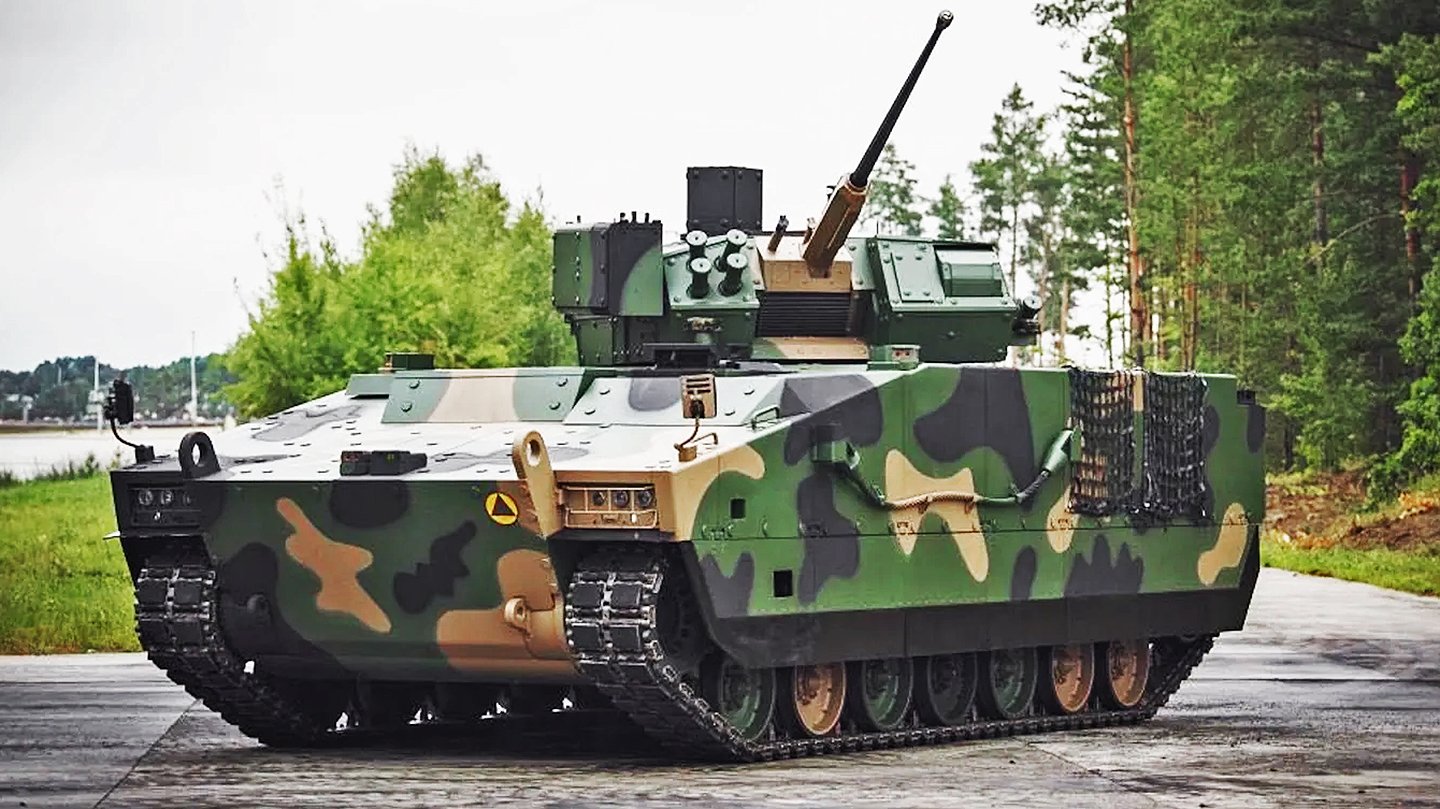
Huta Stalowa Wola, part of state-owned Polska Grupa Zbrojeniowa, presented the Ciężki Bojowy Wóz Piechoty (CBWP), or Heavy Infantry Fighting Vehicle, at the MSPO defense exhibition in Kielce, Poland, today. The vehicle, commonly referred to as Ratel (honey badger), is the latest step in a Polish effort to develop a heavily protected tracked combat platform that can complement the lighter, amphibious Borsuk (badger) infantry fighting vehicle.

“The demonstrator presented today confirms that Polish companies possess the expertise to design and develop advanced combat platforms that meet the demands of the modern battlefield,” Adam Leszkiewicz, president of PGZ’s management board, said during the unveiling.

💥 OTO ON. CIĘŻKI BOJOWY WÓZ PIECHOTY. 🇵🇱

Po dniach odliczania i pokazywania tylko fragmentów odsłaniamy najważniejszą premierę PGZ na #MSPO2026.

CBWP to nowa ciężka platforma opracowana przez Hutę Stalowa Wola – z wysokim poziomem ochrony, dużą mobilnością i siłą ognia… pic.twitter.com/kazs4ciGMj

— Polska Grupa Zbrojeniowa🇵🇱 (@PGZ_pl) September 8, 2026

At approximately 40 tons, the CBWP is about 12 tons heavier than the roughly 28-ton Borsuk (and adds an axle, for seven road wheels on each side), the result of a fundamental difference in design philosophy.
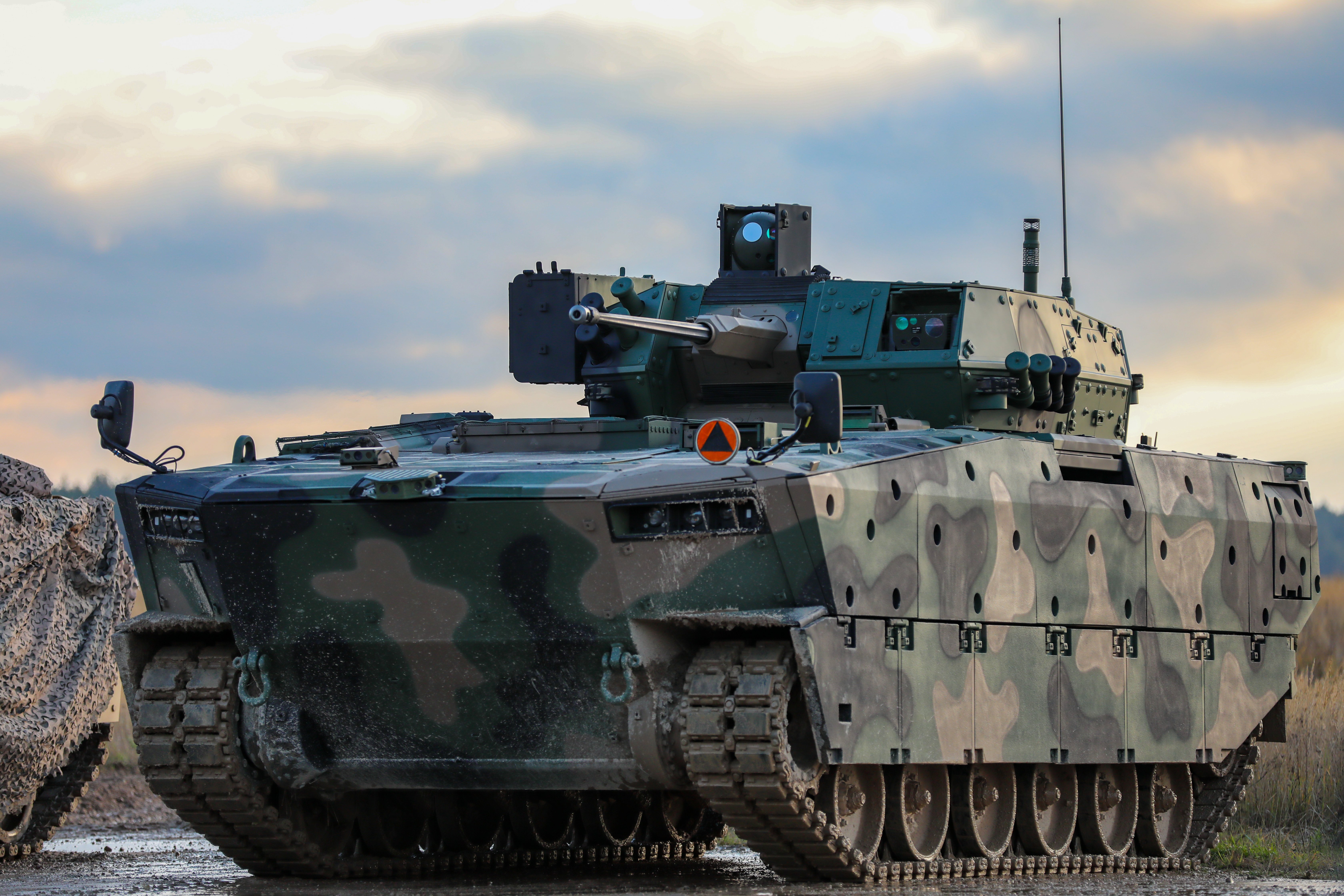
NATO enhanced Forward Presence Battle Group Poland adds the Polish Infantry Fighting Vehicle, the Borsuk (Badger) to its arsenal for the Polish armed forces 15th Mechanized Infantry Brigade, stages for display during the unveiling ceremony in front of the Poland Deputy Prime Minister, Mariusz Błaszczak, Minister of National Defense joined by U.S. Soldiers assigned to 3rd Battalion, 8th Cavalry Regiment, 3rd Armored Brigade Combat Team, 1st Cavalry Division (3-1 ABCT) operationally controlled by the 1st Infantry Division (1 ID), Polish armed forces 15th Mechanized Infantry Brigade, The Royal Lancers, Prince of Wales Troop, Romanian Sky Guardians, Croatian army Archer Battery, and the media in Bemowo Piskie, Poland, Nov. 14, 2022. The 3-1 ABCT is among other units assigned to the 1 ID, proudly working alongside NATO allies and regional security partners to provide combat-credible forces to V Corps, America's forward deployed corps in Europe. (U.S. Army National Guard photo by Staff Sgt. Matthew A. Foster)
A Borsuk operated by the 15th Mechanized Infantry Brigade of the Polish Army. U.S. Army National Guard photo by Staff Sgt. Matthew A. Foster

Borsuk was conceived as a relatively lightweight IFV able to operate alongside mechanized infantry while retaining the ability to swim. The CBWP instead prioritizes protection and battlefield survivability, placing it in the growing category of heavy IFVs being developed and operated by NATO countries and others.

The vehicle will have a three-person crew and carry up to eight infantrymen. Its primary role is to transport those troops safely into contested areas while providing direct fire support once they reach the objective.

The war in Ukraine has demonstrated how quickly armored vehicles can be exposed to anti-tank guided missiles, mines, artillery fragments, loitering munitions, and small drones. Even vehicles that survive direct attacks can be functionally disabled by damage to tracks, sensors, or external equipment.

A Ukrainian M2A2 Bradley engaging and damaging a Russian T-90M in a close-range fight. After a mission kill, the T-90M is subsequently finished by an FPV drone:

The Ukrainian Bradley IFV damaged the no-analogue russian T-90M "Breakthrough" in a close fight. Then an FPV drone finished this long-suffering tank.

Maybe, the T-90M tanks should be renamed into "Broken".

📹: 47th Mechanized Brigade pic.twitter.com/b3ShfqbTd9

— Defense of Ukraine (@DefenceU) January 13, 2024

While Ukraine has shown that armor is increasingly easy to find and attack, and thus less relevant, Warsaw is far from convinced that armored vehicles are now irrelevant, with multiple acquisition projects underway. However, Ukraine does change what these vehicles need to be able to do and how they must be employed to have a chance of survival. In certain circumstances, when properly concealed, dispersed, and integrated with counter-drone capabilities, armor is still seen as important for protected mobility and firepower by militaries around the globe.

According to PGZ, the CBWP’s design therefore puts considerable emphasis on survivability. It incorporates advanced ballistic and mine protection designed to meet relevant STANAG standards. It also uses specialized mine-resistant seats intended to reduce the effects of explosions beneath the hull.

The protection architecture can be supplemented by an active protection system (APS). If integrated on a production vehicle, such a system could provide another layer of defense against incoming anti-tank weapons, and potentially small drones, although PGZ has described the APS as an optional component rather than specifying a particular production configuration.

For detecting threats, the vehicle can employ laser-warning equipment including the OBRA-3 system, integrated with smoke grenade launchers. A laser warning can provide the crew with an indication that the vehicle has been illuminated by a rangefinder or targeting system, potentially allowing it to react before an anti-tank weapon is launched.

A video showing a test of the OBRA-3 protection system on a Polish Rosomak wheeled armored fighting vehicle, with a smoke screen being generated to blind hostile optics. The view is from the driver’s compartment:

The CBWP will also carry an integrated nuclear, biological, and chemical protection system, allowing the crew and embarked infantry to operate in contaminated environments.

Firepower comes from the ZSSW-30 remotely operated turret, one of the most important locally developed systems in Poland’s current armored vehicle modernization effort.

The turret is equipped with a 30mm cannon armed with programmable ammunition, plus Rafael Spike anti-tank guided missiles. Together, the weapons are intended to give the CBWP the ability to engage armored vehicles, infantry, and other battlefield targets while also providing a degree of capability against aerial threats. In particular, the programmable ammunition provides greater flexibility against different target types — such as drones — by allowing the projectile’s effects to be tailored to the engagement.
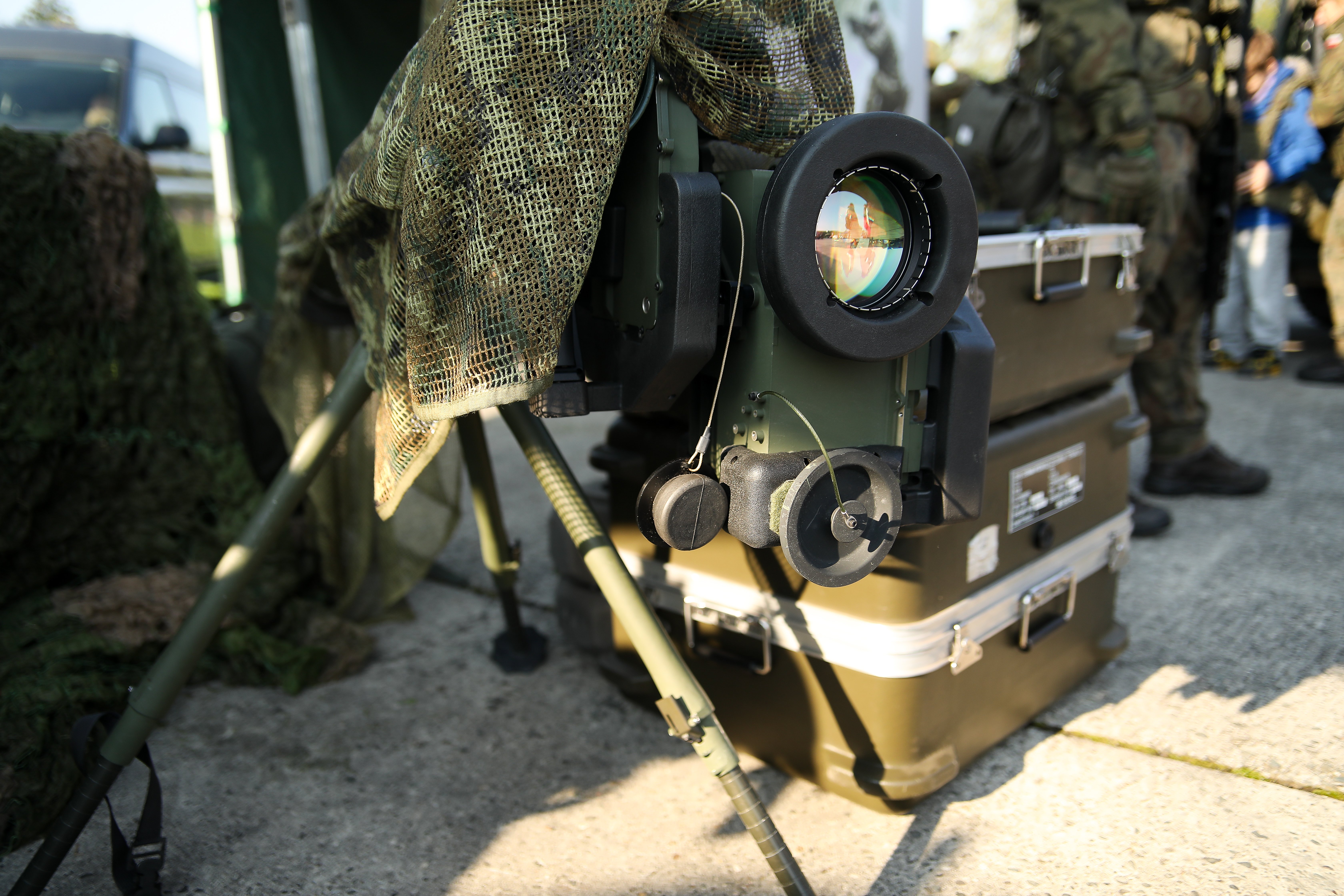
In Krakow, Poland, on October 3, 2025, a SPIKE anti-tank guided missile is displayed during the official celebrations of the 6th Airborne Brigade Day at the Polish Aviation Museum. On the occasion of the 6th Airborne Brigade Day, named after Brigadier General Stanislaw Sosabowski, a ceremonial assembly takes place at the Polish Aviation Museum. During the event, decorations are awarded, followed by a parade featuring a parachute jump demonstration. The celebration also includes stands prepared by various uniformed services for participants. (Photo by Klaudia Radecka/NurPhoto via Getty Images)
A Polish Spike anti-tank guided missile is displayed during the official celebrations of the 6th Airborne Brigade Day at the Polish Aviation Museum in Krakow, Poland, on October 3, 2025. Photo by Klaudia Radecka/NurPhoto

The inclusion of Spike missiles gives the vehicle an extended-range anti-armor option beyond the effective range of its automatic cannon. Much more than a traditional anti-tank guided missile, Spike provides an indirect-fire capability including the option to loiter over a particular area and search for targets, among other attributes.

The ZSSW-30 also gives Poland a degree of commonality across its growing fleet of modern armored vehicles, with the system already being introduced on Borsuk and on some Rosomak wheeled armored fighting vehicles.
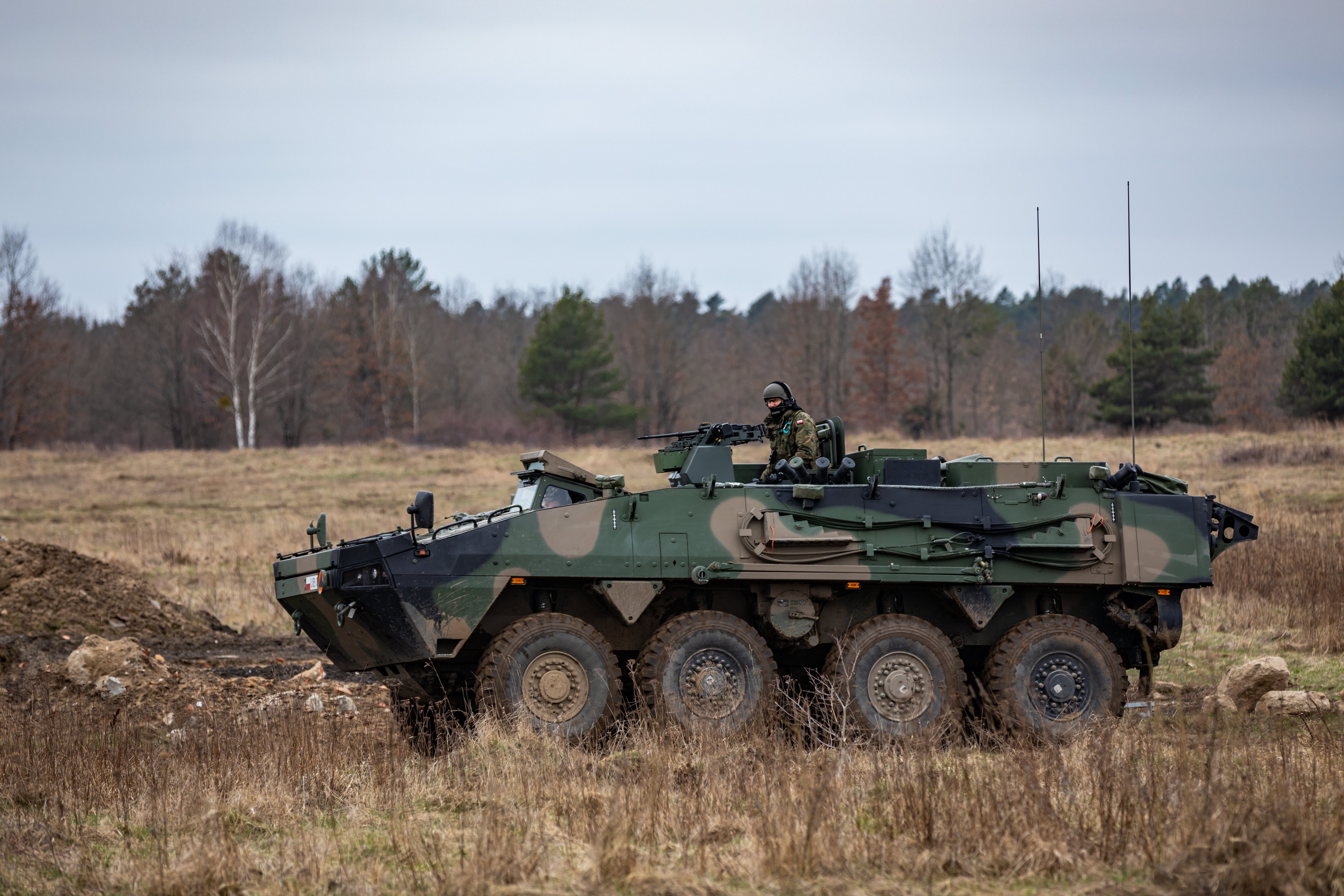
Polish soldiers assigned to the 15th Mechanized Infantry Brigade maneuver a Rosomak-S armored modular vehicle into position during Amber Lynx, a combined live fire exercise at Bemowo Piskie, Poland, April 6, 2023. The 4th Infantry Division’s mission in Europe is to engage in multinational training and exercises across the continent, working alongside NATO allies and regional security partners to provide combat-credible forces to V Corps, America’s forward deployed corps in Europe. (U.S. Army National Guard photo by Sgt. Lianne M. Hirano)
Polish soldiers assigned to the 15th Mechanized Infantry Brigade maneuver a Rosomak wheeled armored fighting vehicle into position during Amber Lynx, a combined live-fire exercise at Bemowo Piskie, Poland, in April 2023. U.S. Army National Guard photo by Sgt. Lianne M. Hirano

The CBWP reflects a trend for fighting vehicles that blur the boundaries between traditional IFV and infantry-support concepts. It is expected to carry a relatively large infantry squad while possessing the sensors and weapons necessary to remain directly involved in combat alongside those troops. At the same time, its high level of protection makes for a notably large vehicle.

The new vehicle is just one part of Poland’s broader military modernization.

Warsaw has embarked on one of NATO’s most ambitious efforts to expand and modernize its ground forces, with major acquisitions of two different types of main battle tank, artillery, rocket systems, and infantry fighting vehicles. Poland is simultaneously expanding domestic production capacity, seeking to ensure that at least part of the equipment needed for a larger army can be produced and sustained within the country.

The Borsuk program is central to that effort and is intended to replace Poland’s aging Soviet-designed BWP-1 (the Polish version of the BMP-1).
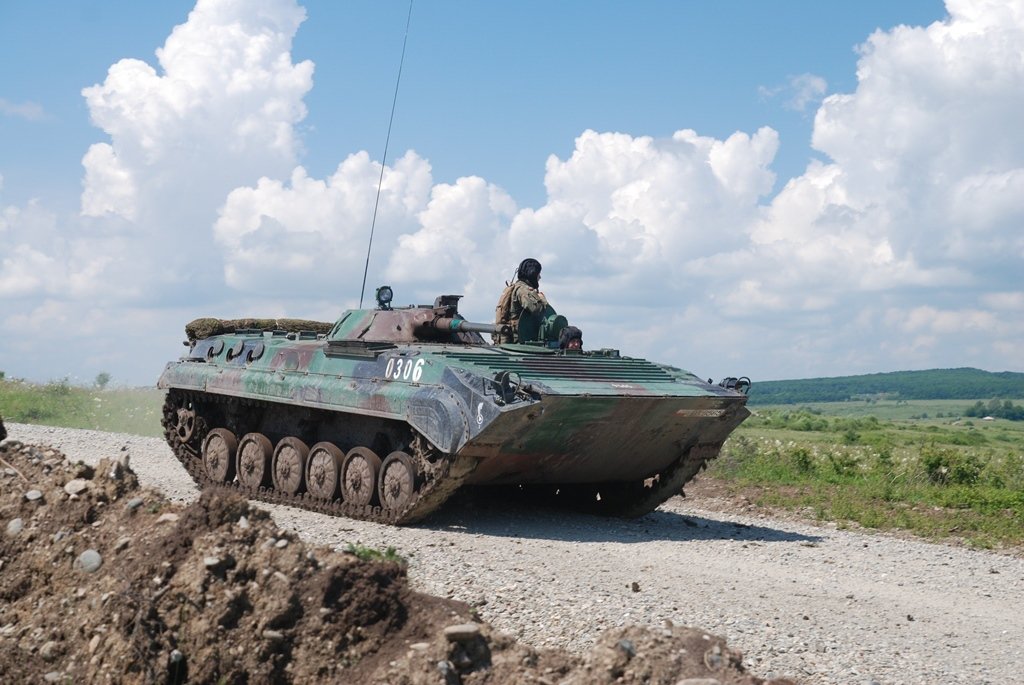
11 June 2017 Polish soldiers from 10th Mechanized Battalion the 'Dragons' and Polish BWP-1 Infantry Fighting Vehicles train during Exercise Noble Jump in Romania. Around 4000 troops from nine NATO countries are participating in the exercise which is designed to test the deployability of NATO's Very High Readiness Joint Task Force or VJTF. Credit: Captain Katarzyna SAWICKA
Polish soldiers from 10th Mechanized Battalion in a BWP-1 train during Exercise Noble Jump in Romania. Captain Katarzyna SAWICKA/Allied Joint Force Command Naples

The heavier CBWP offers even more capability, but its heavier weight comes with tradeoffs. It will be inherently less flexible than a lighter amphibious IFV, and more costly. In return, it will give Polish commanders another option for missions where survivability matters more than swimming capability or rapid deployment.

Such a vehicle would be particularly important for units operating in heavily contested areas, where the threat from mines, anti-tank weapons, and drones makes protection a higher priority. This provides some indication of what Polish planners expect a conflict with Russia on Europe’s eastern flank to look like. However, lessons from Ukraine show that, whatever its quality, an armored fighting vehicle will only be as survivable as the network and tactics around it.
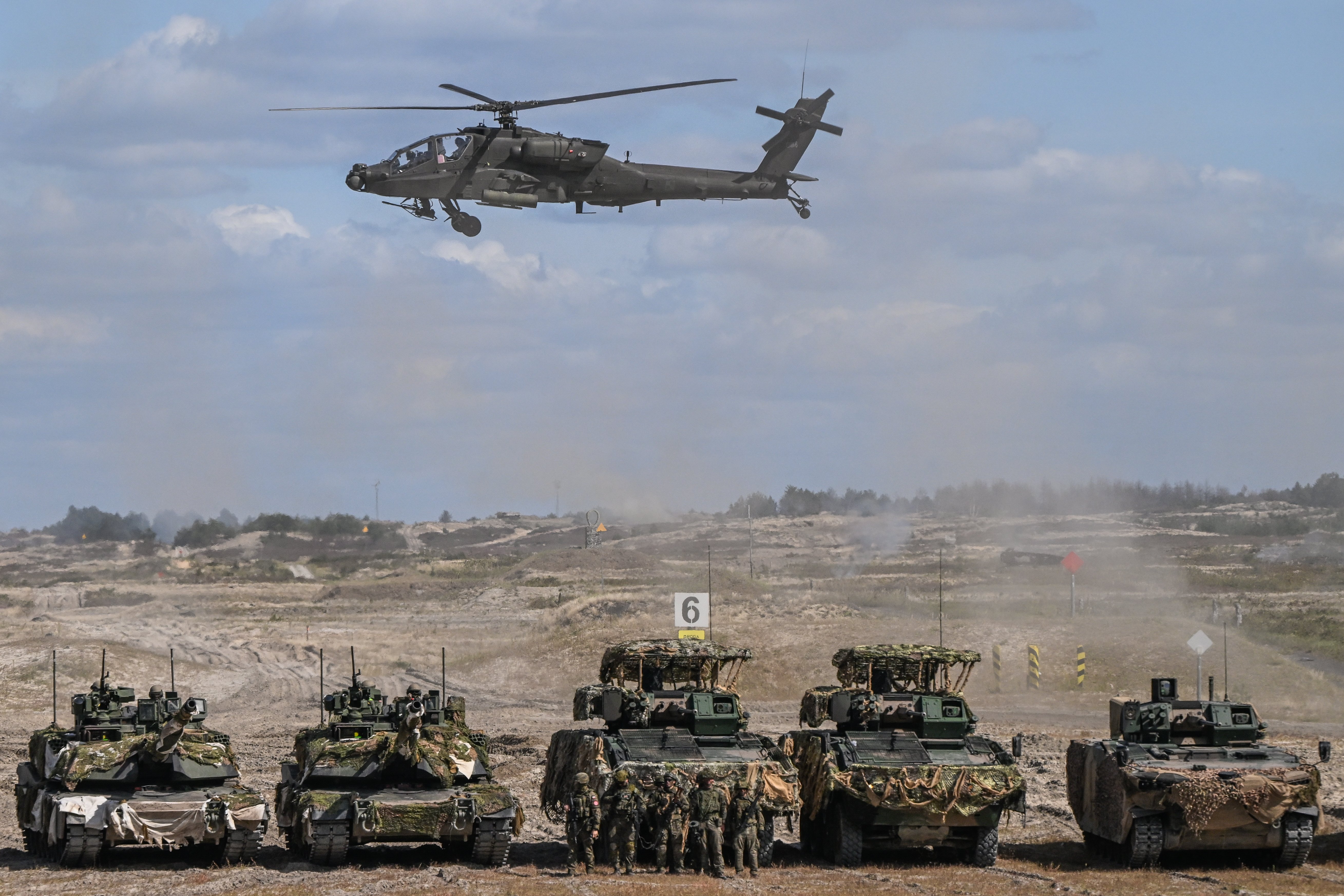
NOWA DEBA, POLAND - SEPTEMBER 7: A Boeing AH-64 Apache attack helicopter performs low-altitude tactical maneuvers over a massive static line of advanced hardware, including two camouflaged M1A1 Abrams main battle tanks, two KTO Rosomak 8x8 wheeled vehicles with ZSSW-30 turrets, and a Borsuk tracked infantry fighting vehicle, during a combat presentation at the Land Forces Training Center in Nowa Deba, Subcarpathian Voivodeship, Poland, on September 7, 2026. This high-profile combined-arms presentation, organized as part of the 27th Polish Armed Forces Exhibition directly leading into the 34th International Defence Industry Exhibition (MSPO Kielce), demonstrated the tight operational synergy between Poland's newest heavy armor, advanced infantry fighting platforms, and close-air support aviation, witnessed by foreign military delegations from over 20 countries observing Poland's premier weapon systems. (Photo by Artur Widak/NurPhoto via Getty Images)
An AH-64 Apache attack helicopter over a massive static line of Polish armor, including two M1A1 Abrams main battle tanks, two Rosomak wheeled armored fighting vehicles with ZSSW-30 turrets, and a Borsuk tracked IFV, during a combat presentation at the Land Forces Training Center in Nowa Deba, Poland, on September 7, 2026. Photo by Artur Widak/NurPhoto

Still, the CBWP remains some distance from operational service.

PGZ currently has one operational demonstrator, intended for factory trials. The company plans to subsequently construct two fully functional prototypes, with both expected to be ready in 2027.

Those vehicles will then undergo intensive testing with the Polish Armed Forces. The results could lead to changes in the protection architecture, turret integration, or other elements before a production configuration is finalized.
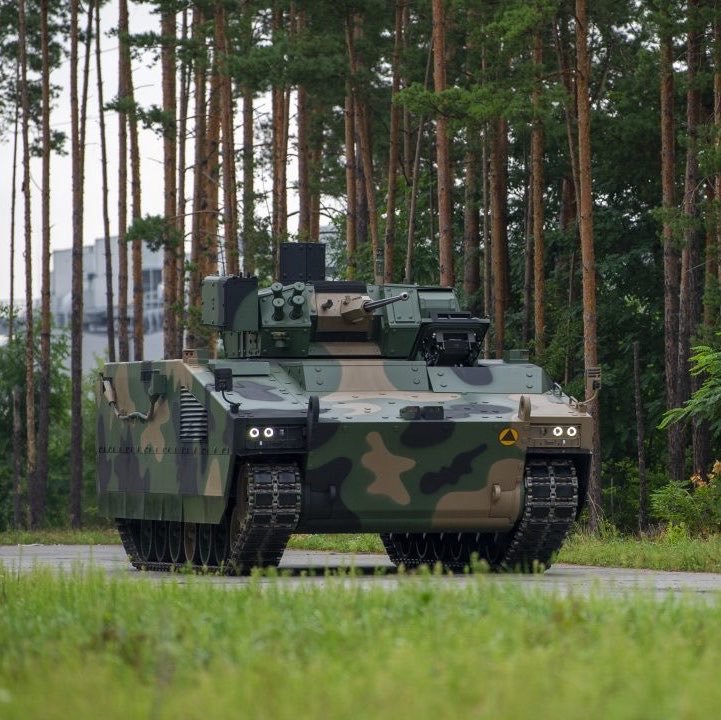
The CBWP demonstrator vehicle underway. Polish Ministry of Defense

PGZ has indicated that it could be ready for production as early as 2029, but that timeline is not yet a firm procurement schedule. It will depend on the results of testing, any modifications required during development, and negotiations with the customer.

Poland has been reported to be considering a requirement for up to 700 CBWP vehicles. In addition, Poland has so far contracted for 257 Borsuk IFVs, with another roughly 1,000 Borsuk-family combat and specialized vehicles envisioned under a broader framework agreement.

If the program succeeds, Poland will ultimately field a highly capable two-tier tracked IFV force in which the CBWP equips units expected to operate in the most dangerous portions of the battlefield.

Contact the author: thomas@thewarzone.com

The post This Is Poland’s New Heavy Infantry Fighting Vehicle appeared first on TWZ.
  •  

Russia’s New Stealthy Lower-Cost Air-Launched Standoff Weapons On Display In Egypt

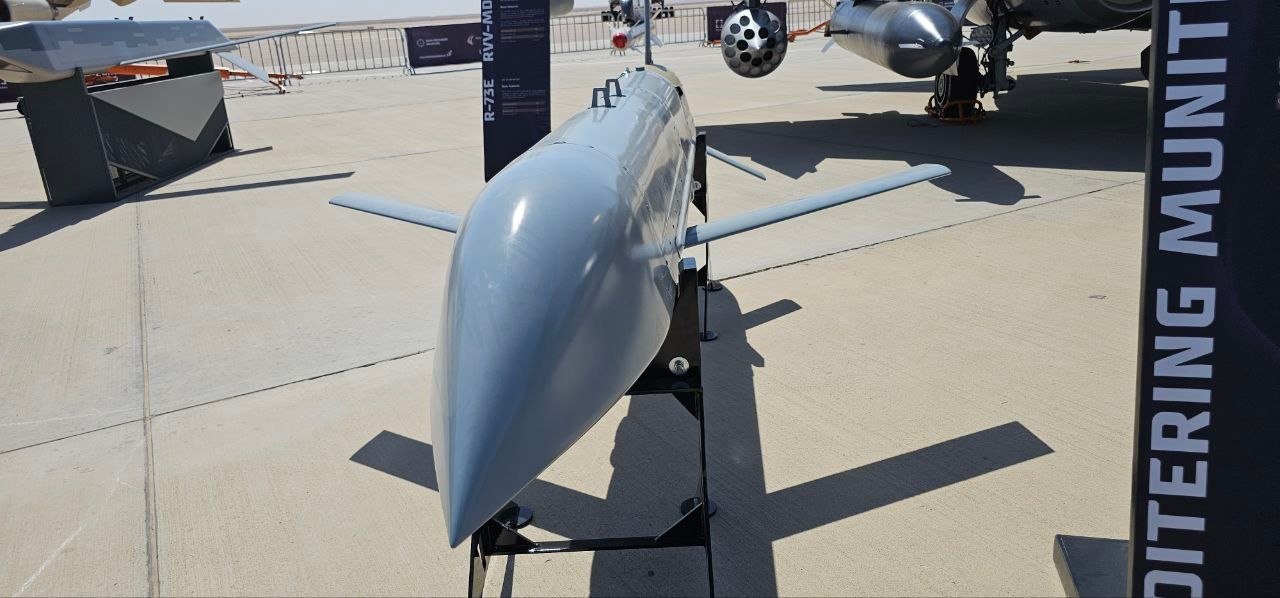
Russia is displaying some of its newest air-launched precision weapons in public for the first time at the El Alamein International Airshow in Egypt this week. The S-71K Kovyor and related S-71M Monokhrom, and the S8000 Banderol, reflect Russia’s effort to field larger numbers of relatively inexpensive standoff weapons alongside its more sophisticated and costly missile types. As such, their development and early employment are closely tied to the war in Ukraine, but they also reflect wider global interest in these kinds of weapons.

The weapons, seen in the tweet embedded below, comprise, clockwise from top left: S-71K Kovyor, an unknown smaller guided munition, S8000 Banderol, and S-71M Monokhrom:

Novel munitions for the Russian aircraft, on an expo. pic.twitter.com/L1UPTb8qhX

— krakek (@krakek1) September 6, 2026

For Russia, the requirement has become increasingly important as the war in Ukraine has evolved into a prolonged contest in which industrial capacity is as critical as technology. Russia has expended huge numbers of cruise and ballistic missiles against Ukrainian targets while also developing an enormous strike-drone campaign. At the same time, Ukrainian air defenses have become progressively more capable, forcing Moscow to use combinations of missiles, drones, decoys, and different flight profiles to penetrate or saturate the defensive network. One lesson is the fact that a weapon does not necessarily have to be as capable as a high-end cruise missile if it can be manufactured in much greater numbers and still present a credible threat to the target.

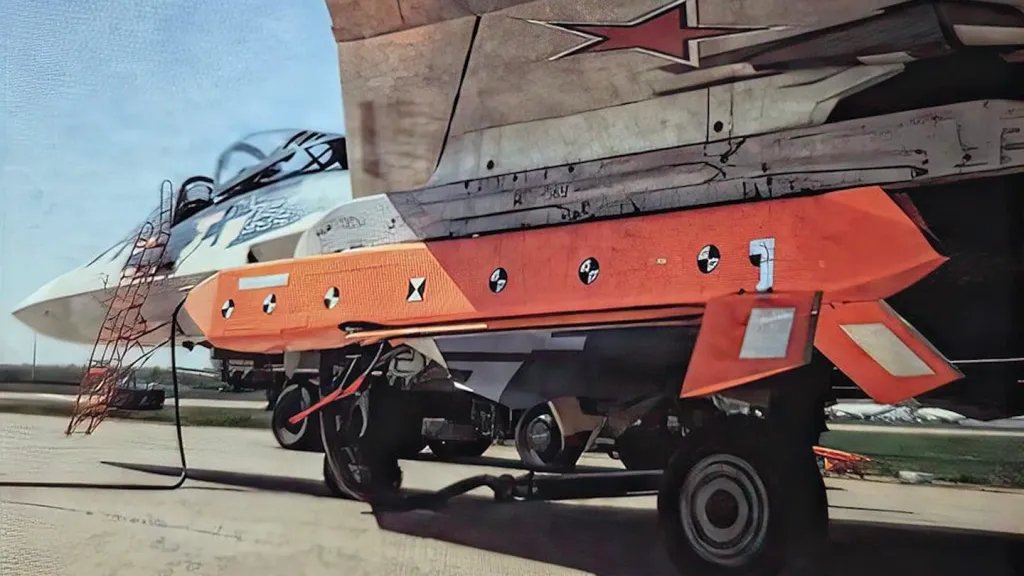
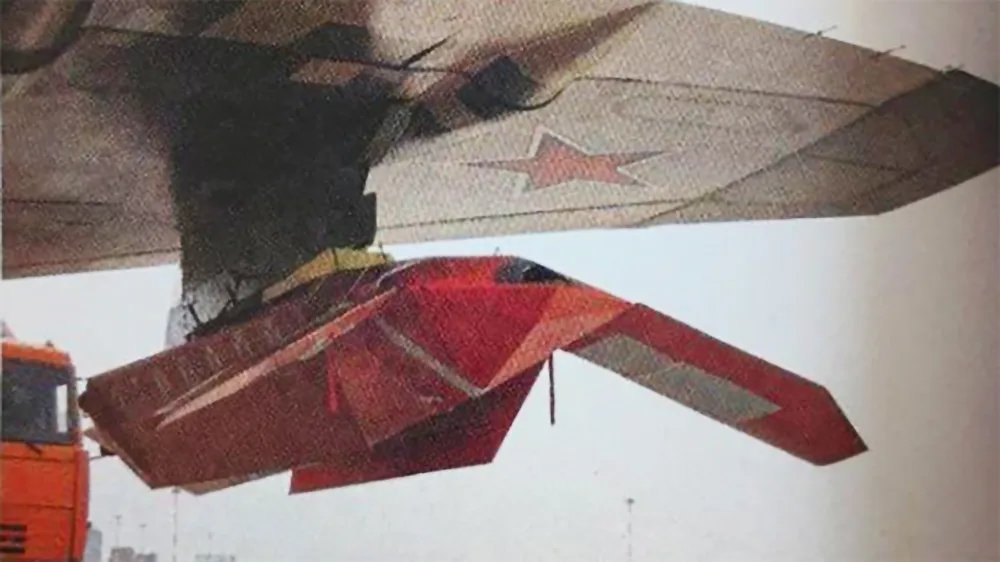
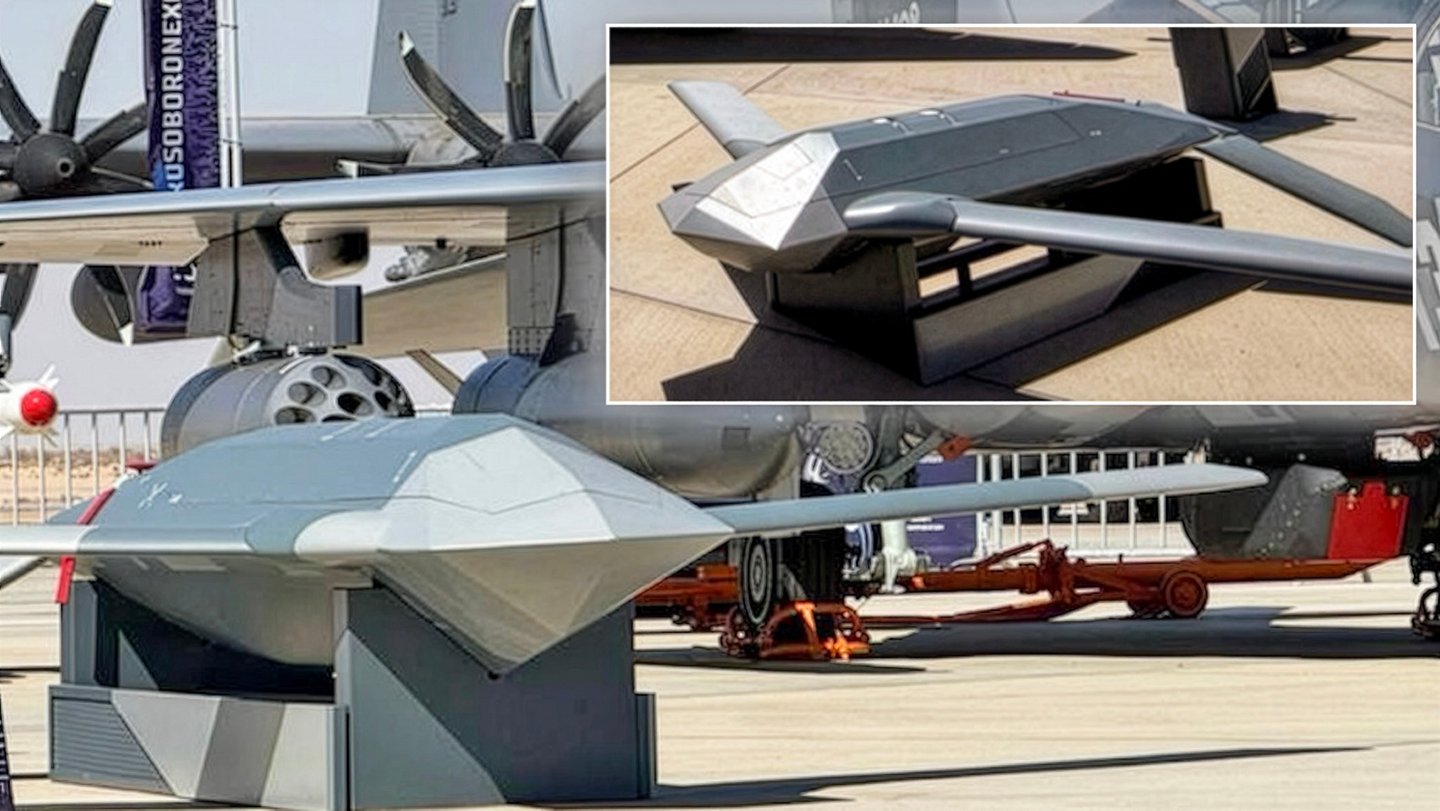
The S-71M, which TWZ previously reported on in detail after Ukrainian intelligence obtained an example, is a compact, turbojet-powered weapon with a distinctly angular airframe intended to reduce its radar signature. Imagery from Egypt gives a better look at its front end, including a faceted nose flowing into a broad central fuselage. The nose has at least one optically flat transparency for an infrared or TV seeker. Its wings are sharply swept and fold against the belly of the weapon for carriage, while the rear of the weapon terminates in an inverted-V tail arrangement. The overall shape is notably different from Russia’s more conventional cruise missiles of the past.

An S-71M test article under the wing of a Su-57. via X

Ukrainian analysis found that the S-71M incorporates an OFAB-250-270 high-explosive fragmentation bomb as its warhead and relies primarily on inertial guidance, rather than carrying a sophisticated terminal seeker, although the seeker window raises questions about that.

Ukrainian intelligence also described its construction as being relatively straightforward, with fiberglass composite material making up much of the outer structure and no evidence identified of specialized radar-absorbing coatings.

As we noted previously, the weapon appears intended as a less expensive, but still survivable standoff weapon option that can be produced in significant numbers.

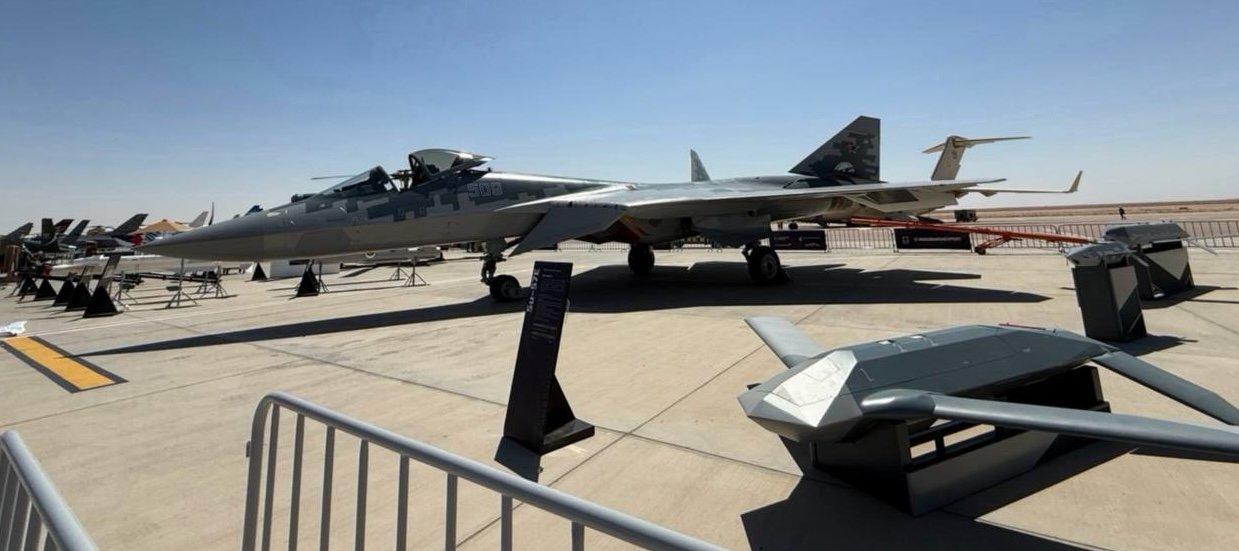
The S-71M has been tested from the Su-57 Felon fighter, also present at El Alamein. In a press release, the United Aircraft Corporation (UAC), responsible for the Su-57, said that the S-71M and the S-71K displayed alongside it “were designed for fifth-generation fighters,” although there is no reason why they couldn’t be launched from a wide variety of platforms.

A Su-57 performing at El Alamein, with one of its main internal weapons bays apparently loaded with Kh-69 standoff missiles:

T-50-9 in El-Alamein, opening both main weapon bays. Two, presumably, Kh-69 can be seen in the front one.

Source: @ T汪汪T pic.twitter.com/f6csKc6Y9D

— George N. (@GeorgeN28581) September 8, 2026

Regardless of launch platform, the nature of the war in Ukraine makes the S-71M particularly useful. Russia has increasingly relied on extemporized glide bombs for attacks against targets relatively close to the front, but those weapons require the launching aircraft to operate within a certain distance of Ukrainian defenses. At least in their earlier iterations, such weapons were also crude and prone to failure. Longer-range cruise missiles offer considerably greater standoff but are more complex and expensive. The S-71M sits somewhere between those categories, providing an air-launched, powered weapon with a relatively large warhead and some degree of low observability without the cost and complexity of a full-size, truly stealthy cruise missile.

The S-71K appears to represent a more capable version of the basic concept. Public information remains limited, but the weapon has been associated with electro-optical guidance and greater onboard processing, potentially giving it a capability to deal with targets in a more flexible manner than the largely pre-programmed S-71M. Exactly how that capability is employed, and how autonomous the weapon actually is, remain less clear from the imagery and information released to date.

An S-71K missile presented in front of a Su-57 Felon at El Alamein. UAC
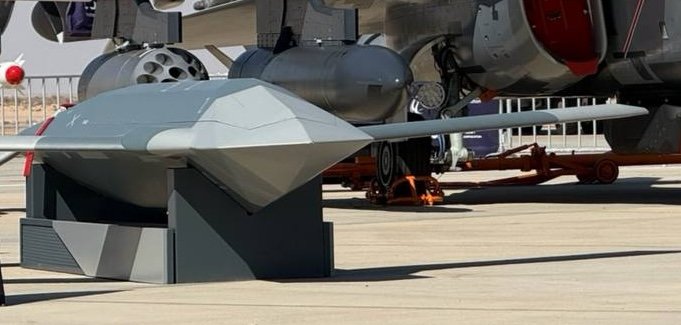
A close-up of the same S-71K missile at El Alamein. UAC
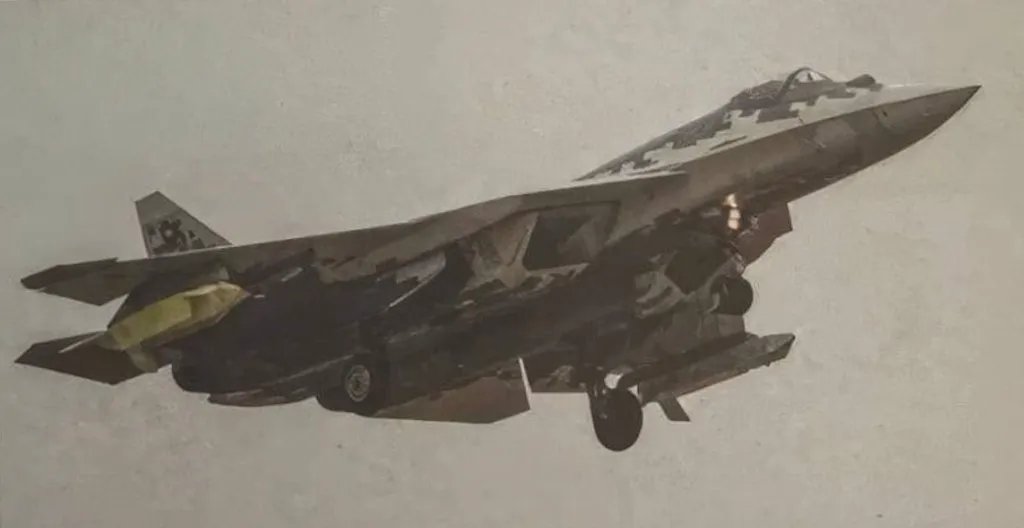
A Su-57 undergoes trials with a pair of S-71K missiles under the wings. via X

As displayed at El Alamein, the S-71K retains the overall faceted, low-observable appearance of the S-71M but has a visibly different airframe and wing arrangement. Its body is notably broad and compact relative to its length, with folding wings that are relatively thick, and a more refined inverted-V tail giving it more the appearance of a small uncrewed aircraft than a conventional air-to-surface missile.

A rear view of a test S-71K under the wing of a Su-57. via X

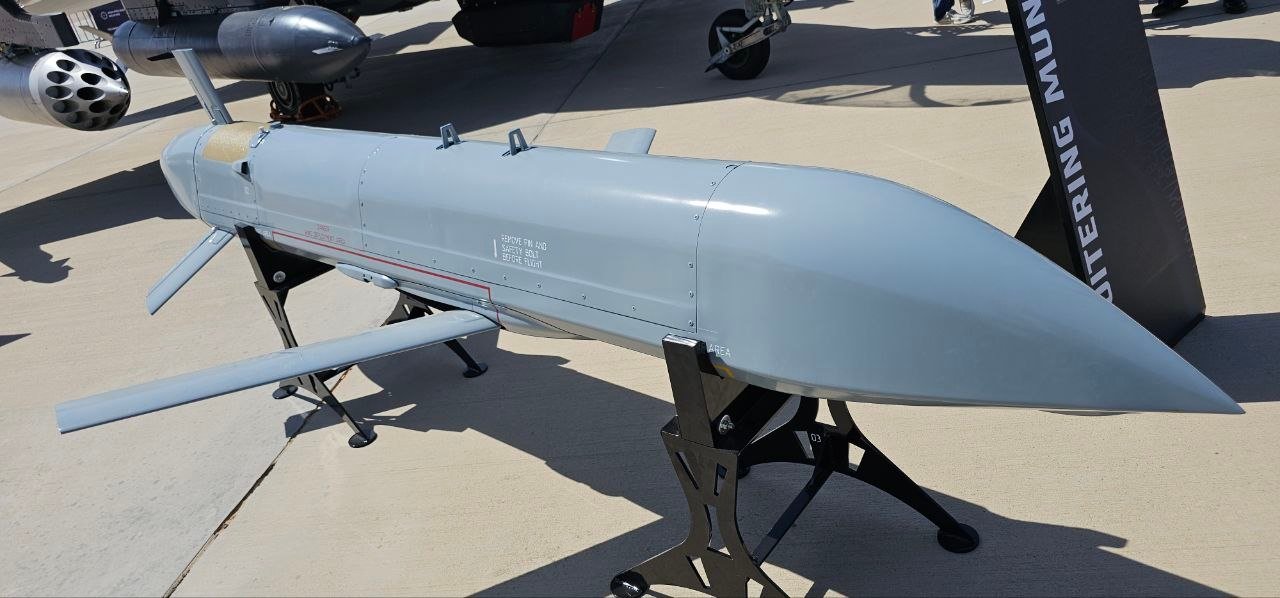
Meanwhile, the Banderol represents a somewhat different path to the same general problem. Ukraine’s intelligence service previously obtained and analyzed an example of the small jet-powered cruise missile, which TWZ reported on last year. The weapon is considerably smaller than Russia’s principal cruise missiles and has been associated with launch from drones and helicopters. Its reported range of around 500 kilometers (311 miles) and relatively small warhead make it something of a complementary system intended to provide another, more economical way of putting a precision weapon onto a target from the air.

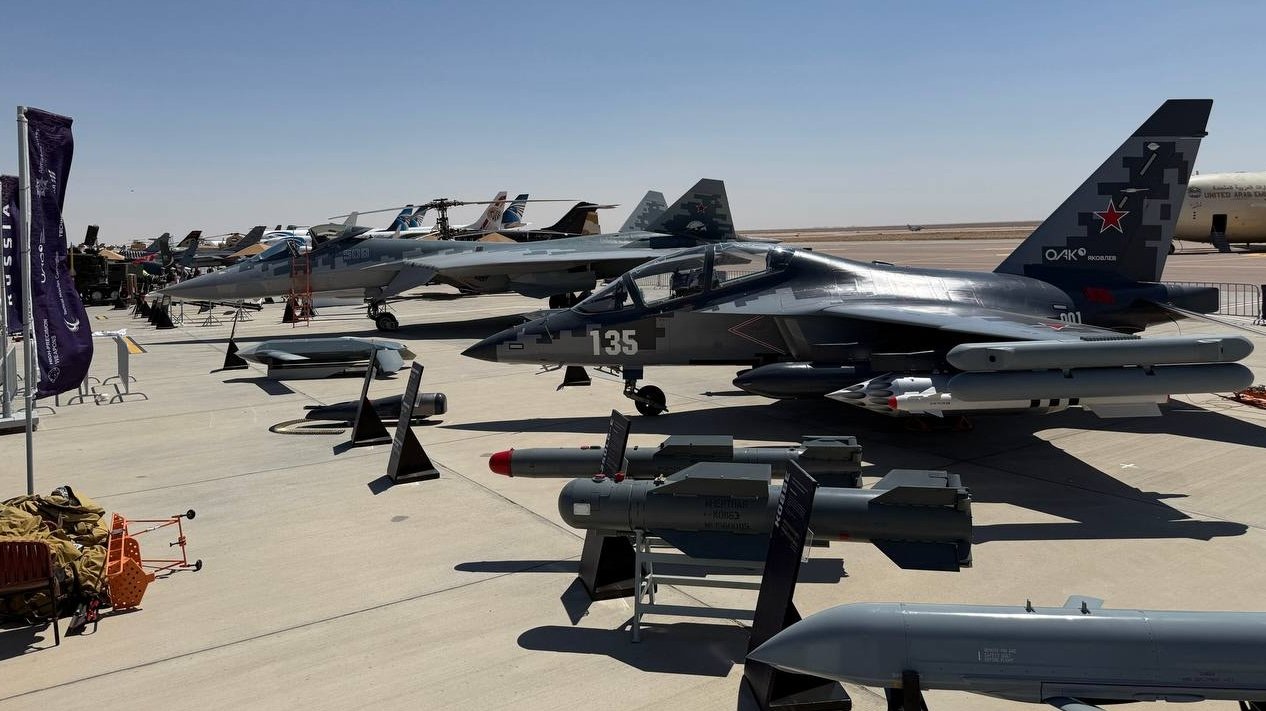
The front portion of a Banderol is seen nearest the camera in a line-up at El Alamein, which also includes a Yak-130M combat trainer and a Su-57. UAC

In terms of its appearance, the Banderol is more conventionally missile-like, with an ogival central fuselage, a pointed nose, and sharply swept folding wings. Its proportions underline just how small it is compared with Russia’s better-known air-launched cruise missiles.

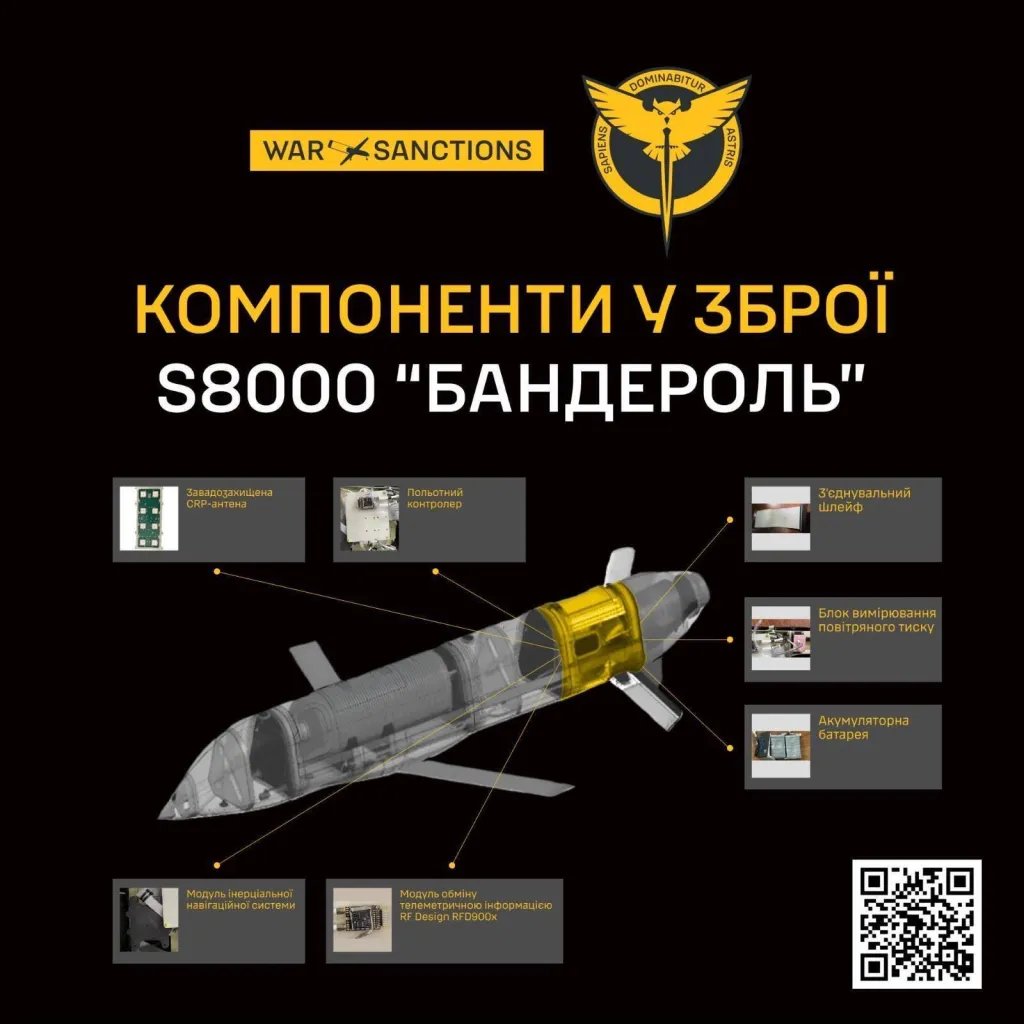
An infographic prepared by Ukraine showing the Banderol cruise missile and some of its foreign-sourced components. GUR photo

The Banderol is particularly relevant in the context of the economics of the Ukraine conflict. Russian forces have increasingly used combinations of relatively inexpensive one-way attack drones and more expensive cruise and ballistic missiles. The drones can be produced in large numbers and used to complicate air-defense operations, while the more capable missiles provide greater speed, range, payload, or penetration capability. A small turbojet-powered weapon such as Banderol offers another point on that spectrum.

At least one image has recently emerged showing a Banderol carried by a Russian Mi-28NM Havoc attack helicopter. This would be in line with unconfirmed reports from Ukraine last month that Russia was using the Mi-28 as an additional launch platform for the weapon, including firing them from over the Sea of Azov to attack targets around Odesa.

An S8000 “Banderol” (“Dan-T”) small cruise missile mounted on a Russian Mi-28NM attack helicopter. pic.twitter.com/Xcx3MmFK3B

— OSINTWarfare (@OSINTWarfare) September 6, 2026

Its reported use also illustrates how the distinction between a cruise missile and a large one-way attack drone is becoming increasingly blurred. The Banderol incorporates a conventional missile-like airframe and jet propulsion but has been associated with drone operations and makes extensive use of commercially available components. TWZ’s earlier examination of the weapon also highlighted the extent to which modern Russian weapons programs can combine relatively simple airframes with foreign-sourced electronics and propulsion technology.

Russia has revealed an Orion (Inokhodets) UAV carrying the S8000 Banderol air-launched cruise missile, marking the clearest Russian footage yet of the weapon integrated with the drone. #Russia #Orion #CruiseMissile #Defense pic.twitter.com/yLHb7h1oW9

— Drone Wars (@Drone_Wars_) July 13, 2026

Likely Banderol loitering munition on the ground (perspective exaggerates it's size) and under Orion drone.

Banderol has been reported as one of the munition used in recent strikes and appears to use a jet engine and a FAB-100 warhead or similar. pic.twitter.com/j50DUsNuVe

— krakek (@krakek1) April 27, 2025

Seen together at El Alamein, the three weapons provide an unusually useful snapshot of where Russian air-launched strike development is heading. They are presented alongside a fourth, so-far unidentified munition. This unnamed weapon is notably short and fat, with a cruciform tail, and an optical window in the nose. Its overall size and shape suggest it may have been developed specifically to arm drones.

The appearance of the weapons at an arms fair underscores the fact that Russia is not the only country confronting the problem of producing and fielding sufficient precision weapons at an acceptable cost. The growing interest in lower-cost cruise missiles, loitering munitions, attritable aircraft, and other forms of expendable precision strike is now evident well beyond Russia.

Russia is also clearly trying to make these weapons harder to intercept, an increasingly important consideration as Ukrainian air defenses have demonstrated an ability to shoot down even glide bombs in some circumstances. The S-71K in particular incorporates unusually pronounced low-observable shaping, suggesting that survivability was also a central requirement from the outset.

There is, however, a significant complication to Russia’s attempt to turn its wartime experience into an export opportunity. Buying any kind of weapons from Moscow has become considerably more difficult because of sanctions, restrictions on access to foreign technology and financing, and the wider political risks associated with maintaining a Russian defense relationship. Those factors matter just as much to a prospective customer as the performance of the weapon itself.

Author’s note: earlier reporting on the S-71 family appears to have transposed the S-71K and S-71M versions. Most authoritative accounts now indicate that the more refined, more stealthy version is the S-71K Kovyor (meaning carpet), while the simpler weapon is the S-71M Monokhrom.

Update, September 9:

Rostec, the Russian state-owned defense conglomerate, has provided more details of the weapon identified at El Alamein as the Banderol. Rostec calls this weapon the ‘Dan-T’ loitering munition, which is an export designation for Banderol.

According to Rostec:

The ‘Dan-T’ munition operates on a ‘fire-and-forget’ principle and is adapted for launch from Russian and foreign aircraft and helicopters. The munition is equipped with a compact jet engine and can strike targets at a range of hundreds of kilometers. The ‘Dan-T’ features a special flight mode designed to evade enemy air defence systems.

Rostec adds that the Dan-T has been combat-tested in the war in Ukraine, where it claims there have been “hundreds of successful launches” against enemy targets in the Special Military Operation zone. “We expect this munition to attract widespread interest from foreign customers,” said Rostec.

Rostec
Rostec

Contact the author: thomas@thewarzone.com

The post Russia’s New Stealthy Lower-Cost Air-Launched Standoff Weapons On Display In Egypt appeared first on TWZ.

  •  

Iceland Votes No: Sovereignty Over Brussels

On August 29, 2026, Icelanders delivered a verdict that carried an uncomfortable implication for Brussels. By 52.8 percent to 47.2 percent, they rejected the proposal to resume EU accession negotiations. The result was not a rejection of Europe. It was a vote for retaining control. The final tally was close but unambiguous: 118,040 votes against […]
  •  

Interdiction des réseaux sociaux aux moins de 15 ans : Emmanuel Macron réclame un texte européen

Dans une lettre à la présidente de la Commission européenne Ursula von der Leyen, le chef de l'État français Emmanuel Macron réclame lundi une interdiction harmonisée des réseaux sociaux aux moins de 15 ans à l'échelle de l'UE. Il mise ainsi sur un texte européen après la censure en août de la loi française par le Conseil constitutionnel.

  •  

How Russian Drones Forced Ukraine To Park Its M1 Abrams Tanks

Ukrainian crews operating Australian-supplied M1A1 Abrams tanks say the battlefield has become so saturated with Russian drones that their tanks cannot currently be used in combat, but they reject the idea that main battle tanks have become forever obsolete.

Since receiving these tanks last year, the crews, serving with Ukraine’s 425th Separate Assault Regiment “Skala,” have used the Abrams in two combat operations in the fight for Pokrovsk, a key Ukrainian logistics hub and part of a defensive belt of towns in Ukraine’s eastern Donetsk region. They recounted their experiences to Hromadske, an independent media channel in Ukraine.

Fighting around Pokrovsk

The first major deployment described by the crews took place in December of last year, when Abrams tanks were used to support assault groups entering Pokrovsk.

The crewmember with the callsign Kent described moving into the city behind a mine-clearing tank and ahead of two infantry fighting vehicles (IFVs) carrying assault troops, during a mission that was deliberately aggressive.

“Since a tank is a priority target — my task was to draw their attention, while our infantry dismounted and moved in successfully.”

The Abrams was also assigned three target points to engage along the route.

“We went right in there, poured it on, and drove back out,” he recalled.

A video showing the 425th Separate Assault Regiment in action in August 2025, soon after receiving the Abrams:

The second operation, on March 31, involved an attempt to enter and hold an industrial area near Pokrovsk to help block Russian movement toward Hryshyne, a contested village in the district.

The operation was prepared for more than two weeks. Ukrainian forces conducted reconnaissance flights, examined difficult sections of the planned routes, and provided crews with extensive video and imagery.

“They knew every meter of the route,” another of the unit’s commanders, with the callsign Kubik, said.

Weather was considered essential. The Ukrainians waited for fog and rain, hoping to limit the effectiveness of Russian drones.

“Without the right weather we wouldn’t have been able to pull off operations like that,” Kubik said.

The operation nevertheless resulted in the destruction of four out of five armored vehicles, some of which are seen in the video embedded below.

Russia's Rubicon Drone Center FPV drones destroyed a Ukrainian assault group near Pokrovsk, hitting an M1A1 Abrams tank, M1117 APC and BMP-2 as the unit tried to advance near Hryshyne under fog cover. #Ukraine pic.twitter.com/ZzE52qAYxp

— NOELREPORTS 🇪🇺 🇺🇦 (@NOELreports) April 1, 2026

The commander acknowledged that the Russian side may have had advance knowledge of the operation.

“I can’t rule out the possibility that the enemy knew our plan,” he said.

His Abrams was not immediately destroyed. According to the crew, it completed its task and the assault troops dismounted before the weather changed.

“Once the fog lifted, they started working on it with an FPV drone,” the commander said.

Why use tanks at all?

The losses prompted criticism from Ukrainian military commentators, particularly after footage of the destroyed vehicles was published.

However, the crews defend the decision to use armored vehicles for the missions. According to the men of the Skala interviewed, the alternative was often to send infantry over several miles on foot while carrying weapons, ammunition, water, and other supplies.

“That takes more time,” Kubik explained. “And the enemy isn’t standing still — the enemy is moving toward them.”

🇦🇺🇺🇦 Australia-supplied M1A1 Abrams AIM main battle tank in service of the Ukrainian 425th Separate Assault Regiment "Skala."

The tanks of such type recently saw combat in the area of Pokrovsk. pic.twitter.com/qhjSyGbhH6

— Status-6 (War & Military News) (@Archer83Able) December 23, 2025

The argument that infantry could simply move more stealthily on foot also has limitations.

“Every day the Mavic drones are flying, the fixed-wing drones are flying,” he said. “No fog, guys are visible.”

Combined with IFVs, the Abrams can provide the ability to rapidly move troops while simultaneously delivering heavy direct fire against enemy positions and offering substantial protection to its crew.

The crews argue that this capability remains worthwhile even when the tank itself may eventually be lost.

One commander was asked whether deploying a roughly $5-million tank makes sense if a single sortie can result in its destruction.

“Yes, of course it makes sense to deploy it,” he replied.

“First and foremost — it saves the lives of the crew inside it.”

Russian forces captured a relatively lightly damaged M1A1SA Abrams main battle tank operated by the 47th Separate Mechanized Brigade in the Pokrovsk direction.

The tank is equipped with added cage armor, as well as Kontakt and ARAT ERA. pic.twitter.com/mHyKk1xNRY

— Status-6 (War & Military News) (@Archer83Able) October 27, 2024

A tank under attack by drones

The Ukrainian crews repeatedly highlighted the Abrams’ accuracy and survivability.

“What are the biggest advantages of the Abrams?” Kent was asked.

“Accuracy.”

Its biggest disadvantage, he said, is equally obvious on a modern battlefield: “It’s very tall — and very large — so it’s hard to conceal.”

A video showing a U.S.-supplied Abrams under attack from Russian FPV drones:

🇺🇸🇺🇦 An Abrams tank withstands 9 FPV drones hits. Eventually, the tank was destroyed, but the tank crew successfully survived. pic.twitter.com/4NBKdg2zmW

— PS01 □ (@PStyle0ne1) July 7, 2024

Kent described surviving an engagement in which his tank was struck repeatedly while on the move.

“More than 20 drones hit me,” he said of one operation into Pokrovsk.

He attributed the Abrams’ survival to the combination of its armor and additional anti-drone protection fitted to the vehicle.

“All of it together is effective,” he said.

He pointed to fairly basic modifications including rubber strips and a foldable wire cage mounted on the turret, as additional layers of protection against drone attacks.

“A drone doesn’t hit the actual penetrating element directly — it just can’t reach it,” he explained. “It hits the rubber, and then the blast wave travels from there.”

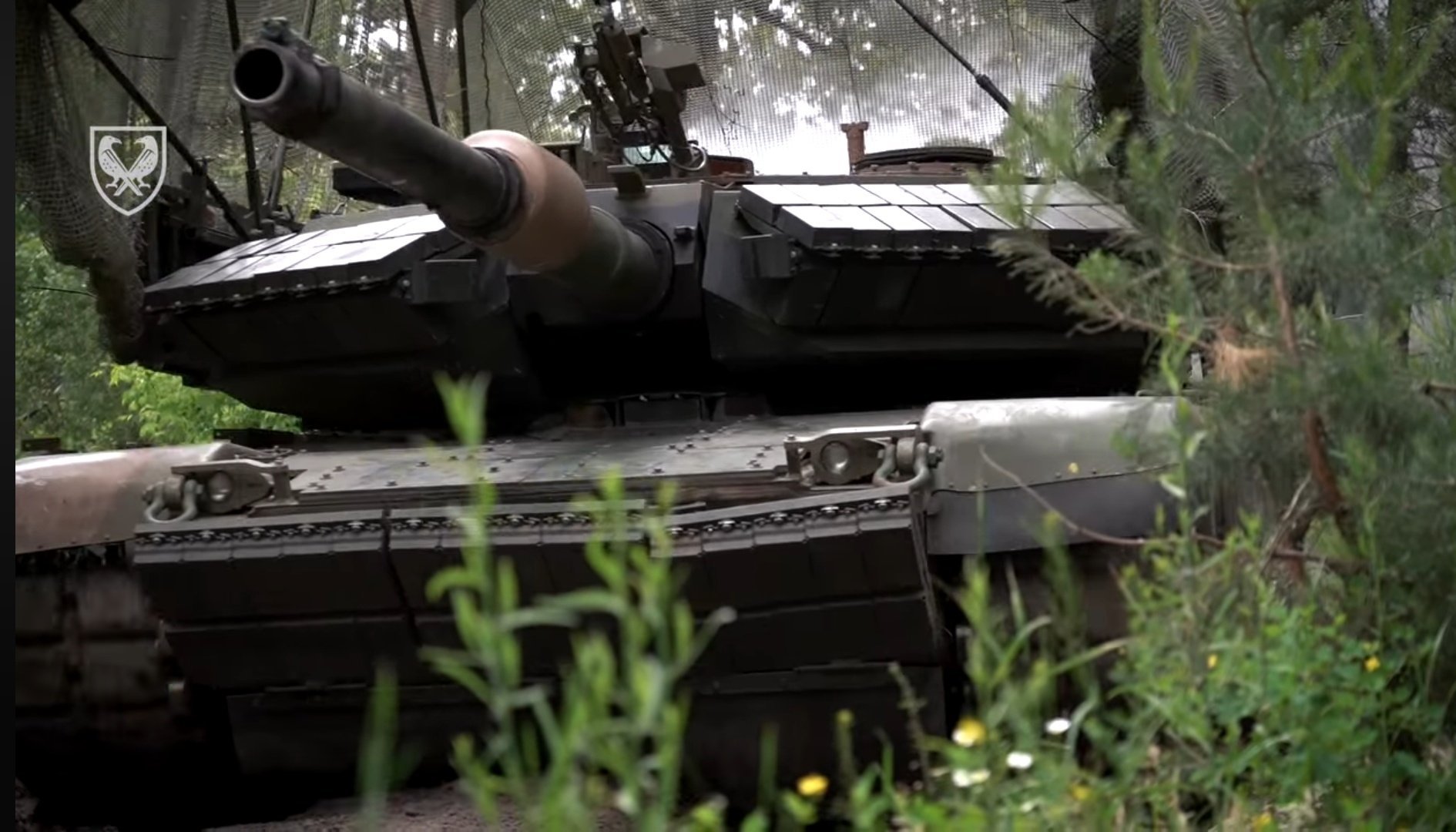
Even with their tanks festooned with explosive reactive armor (ERA) bricks, the crews acknowledge that such protection has limits.

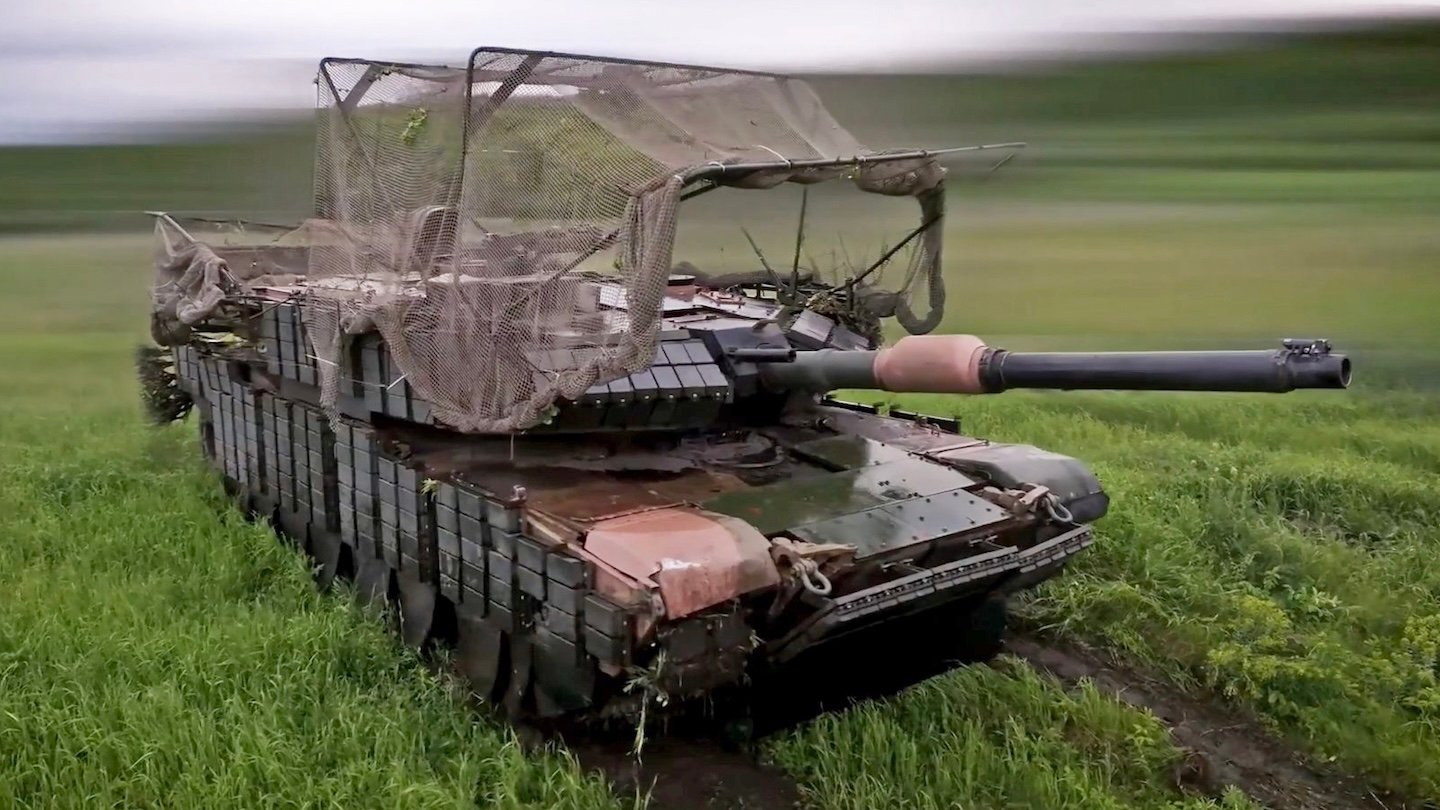
A head-on view of an M1A1 of the 425th Separate Assault Regiment shows the ERA bricks installed around the turret and in front of the hull. Ukrainian Armed Forces

US-supplied M1A1 Abrams tank in service of the Armed Forces of Ukraine with added Kontakt-1 ERA on the frontal hull and standard ARAT ERA on the sides. pic.twitter.com/PC2kDfxefO

— Status-6 (War & Military News) (@Archer83Able) May 21, 2024

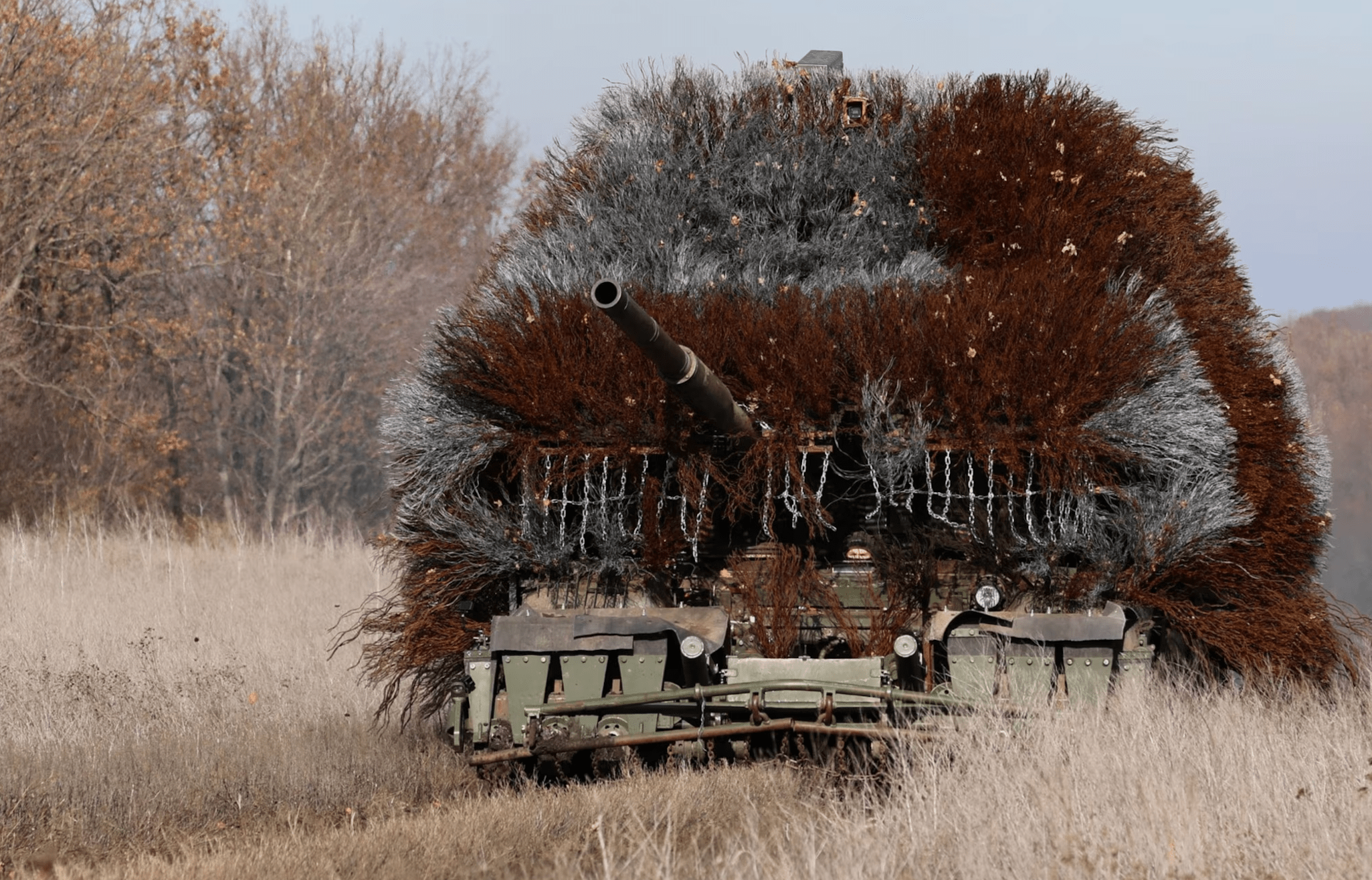
Kent also noted that the Abrams was still missing the ‘hedgehog’-type protective coverings that have been seen on Russian tanks.

“They also protect very well. An effective thing,” he said.

A Russian tank with the ‘hedgehog’-type protective covering. Russian state media

For now, the drone threat has led the regiment to keep its Abrams out of combat, as we will return to later.

The Abrams as a machine

The crews’ assessment of the Abrams included praise for its mobility, roomy interior, gun, and fire-control system.

Kubik said he had personally driven an Abrams to 50 miles per hour cross-country.

“The engine is an absolute beast,” he added.

The tank can also rapidly perform a pivot turn, which the crews consider particularly useful when maneuvering in confined spaces. Despite its prodiguous weight, it only rarely becomes bogged down after the kind of very heavy snow-melt that effects all vehicles on the battlefield.

Loading a 120mm M1028 canister cartridge into an M1A1 AIM Abrams main battle tank of the tank battalion of the 425th Assault Regiment. pic.twitter.com/tMd8QcROQe

— 𝔗𝔥𝔢 𝕯𝔢𝔞𝔡 𝕯𝔦𝔰𝔱𝔯𝔦𝔠𝔱 🦩🇬🇪🇺🇦🇺🇲🇬🇷 (@TheDeadDistrict) June 21, 2026

Its disadvantages include its demanding maintenance requirements. The running gear was described as particularly sensitive, with crews inspecting, lubricating, and replacing components after every sortie.

Fuel consumption is another major burden. The crew cited roughly 400 to 700 liters (106 to 185 gallons) per 100 kilometers (62 miles) depending on terrain and operating conditions.

“On asphalt it burns about 400 liters,” one said. In boggy terrain, consumption can reach “700 liters or more.”

The Abrams thirsty gas turbine engine and extreme logistical demands have always been a criticism of the platform.

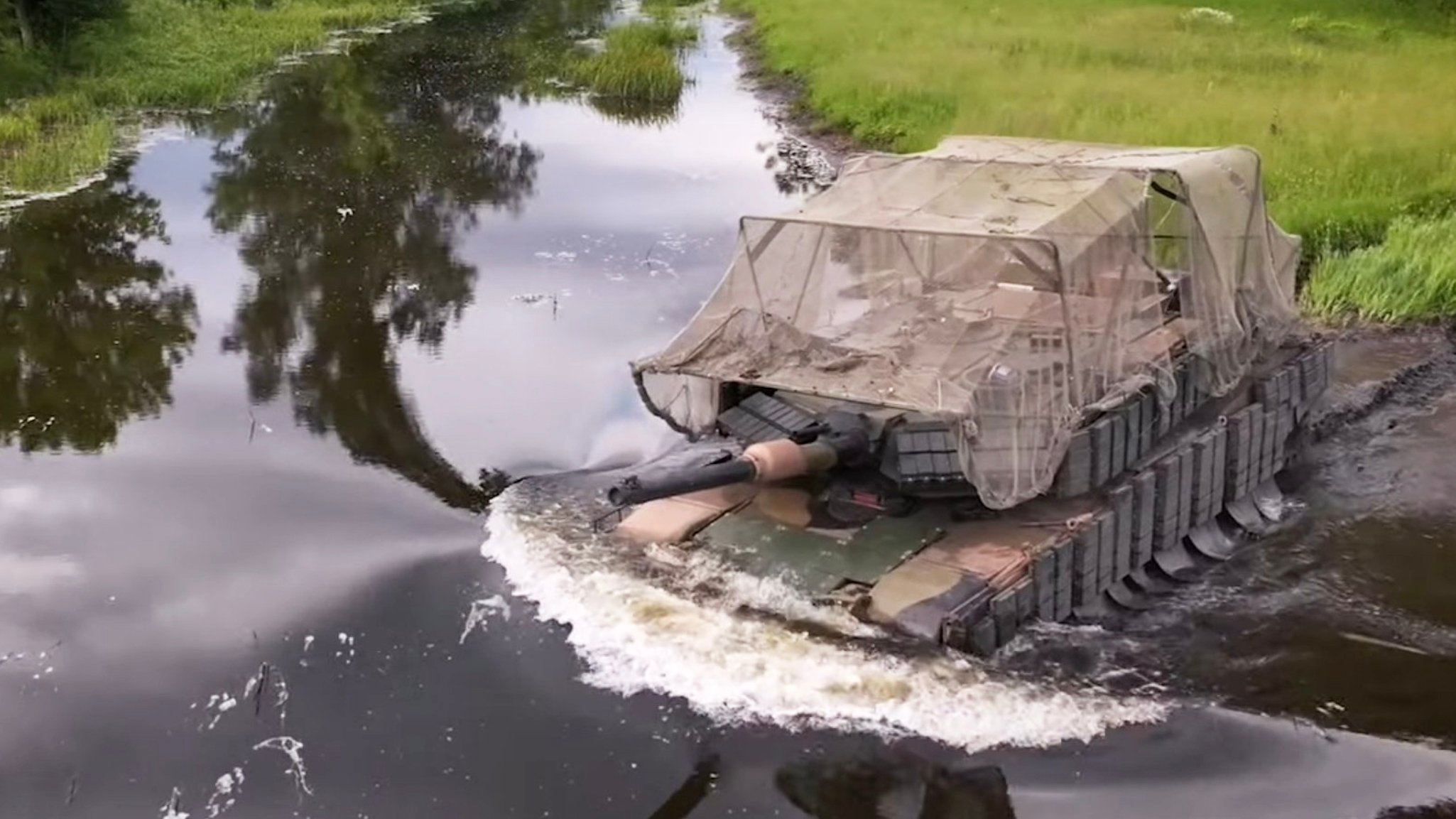
An M1A1 of the 425th Separate Assault Regiment fording a river. Ukrainian Armed Forces

The crews said the vehicle’s ability to operate on different fuels is useful, although diesel provides the best engine-hour performance in their experience. Prior to delivery, the gas turbine engines of the tanks were reconfigured to use diesel fuel instead of the standard JP-8 aviation kerosene, according to earlier reports.

They also praised the Abrams’ protected ammunition storage and crew space compared with Soviet-designed tanks.

The version operated by the Ukrainians is an M1A1 rather than the latest Abrams configuration, with less sophisticated electronics than newer variants. It also lacks the classified armor found on its U.S. Army counterpart.

“For me — as a tanker — this configuration, what we have right now, is more than enough,” Kubik said. “The sight is absolutely excellent. The gun is also great.”

🔥 Abrams destroys a house with Russian infantry in the Pokrovsk direction. pic.twitter.com/StUoZoMTO3

— MAKS 26 🇺🇦👀 (@Maks_NAFO_FELLA) August 25, 2024

Waiting for a solution to the drone problem

The interview ultimately presents a more complicated picture than the declaration that tanks are obsolete on the Ukrainian battlefield.

At the time of writing, at least 25 Abrams have been confirmed visually to have been destroyed, damaged, or abandoned in Ukrainian service. This is from a total of 31 provided by the United States and 49 from Australia.

“For now, we’re not using them further — there’s no way to,” Kubik said. “The enemy has developed their drone component very heavily, and for now we don’t have the means to counter that.”

While tanks remain exceptionally powerful direct-fire and protected mobility platforms, the proliferation of inexpensive uncrewed aircraft has made operating them increasingly difficult.

M1A1 AIM Abrams tanks of the 425th Assault Regiment 🇺🇦.
The reinforced upper glacis and turret roofs are clearly visible. pic.twitter.com/Sn9h8OWZ9P

— 𝔗𝔥𝔢 𝕯𝔢𝔞𝔡 𝕯𝔦𝔰𝔱𝔯𝔦𝔠𝔱 🦩🇬🇪🇺🇦🇺🇲🇬🇷 (@TheDeadDistrict) June 21, 2026

“If someone had told me, as a tanker, back in 2022: ‘Take this — we’re giving you an Abrams, we’ll give you time to train and you’ll fight in it,’” Kubik said, “I would never have climbed out of it.”

“I’d only be saying: ‘Bring me shells. I’ll drive non-stop wherever needed, arrive and work.’”

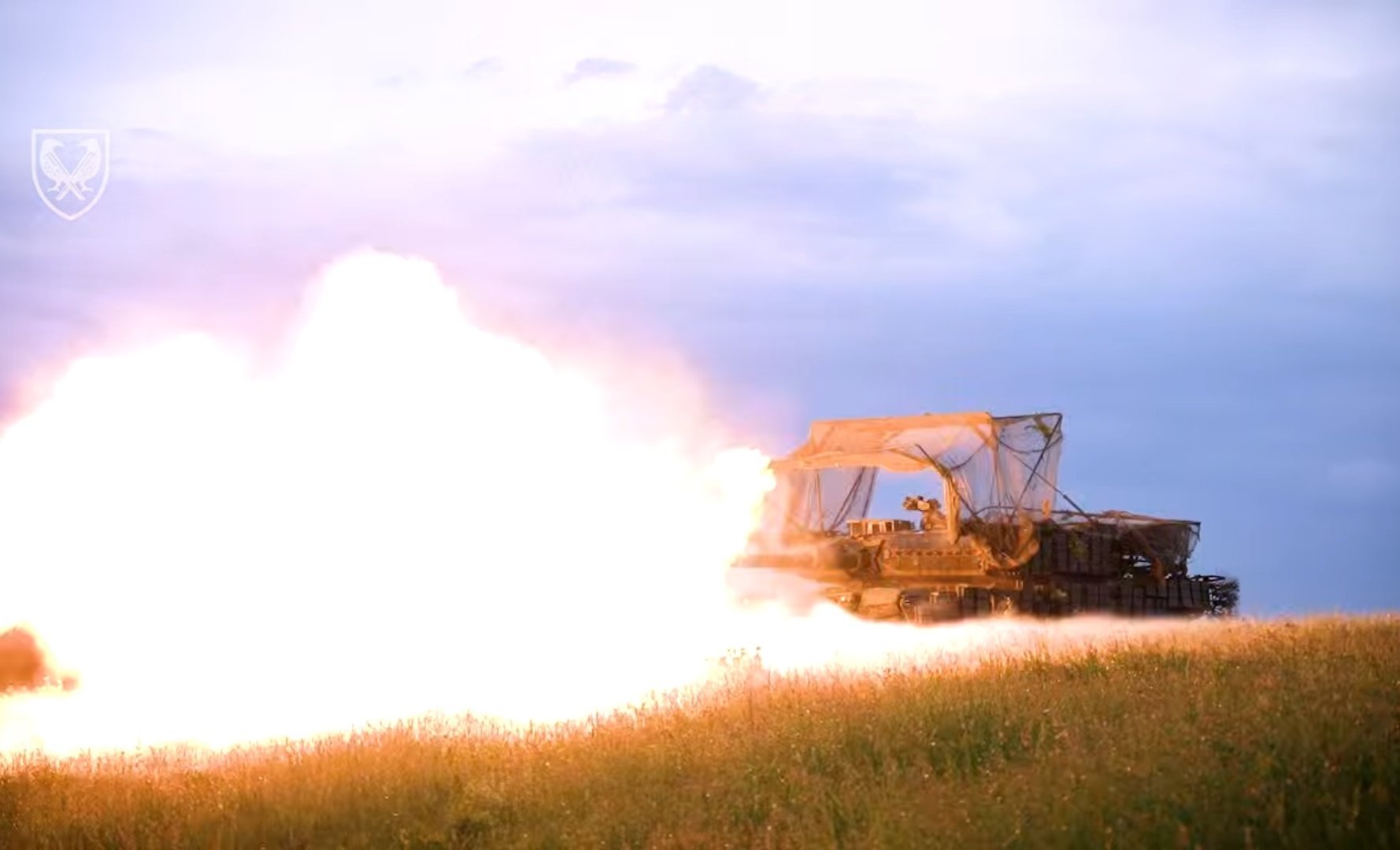
An M1A1 of the 425th Separate Assault Regiment firing its main gun. Ukrainian Armed Forces

As it stands, reconnaissance drones can find the Abrams, FPV drones can attack it, and persistent surveillance makes concealment difficult. Experience has shown that without more effective counter-drone capabilities, even a heavily protected tank can eventually be overwhelmed.

But Kubik believes that will change.

“The day will come when one of our bright minds figures out some excellent solution against drones — and we’ll start using them again.”

Asked whether the era of tanks is over, his answer was unequivocal.

“It’s not over … They’re just waiting it out for now, biding their time. Writing off tanks — in my opinion — is still too early.”

Contact the author: thomas@thewarzone.com

The post How Russian Drones Forced Ukraine To Park Its M1 Abrams Tanks appeared first on TWZ.

  •  

François-Xavier Bellamy : "La Commission européenne reconnaît enfin notre combat contre le Mercosur"

En cette rentrée morose pour l'Union européenne, nous recevons François-Xavier Bellamy, vice-président des Républicains, député européen au Parti populaire européen (PPE) et ancien professeur agrégé de philosophie. Il a mené la liste Les Républicains aux élections européennes où il a été réélu en 2024, avec 7,2 % des voix (soit six députés en tout). En cette rentrée, il revient sur les grandes crises de l'été, notamment les menaces russes, les enjeux écologiques ou encore l'arrivée de dizaines de milliers de migrants dans l'enclave de Ceuta.

  •  

La voix de l'UE peine toujours à se faire entendre : une diplomatie européenne à réformer ?

Branle-bas de combat dans la diplomatie européenne. Une réunion informelle des ministres des Affaires étrangères, dès la semaine de rentrée, entend mettre les 27 en ordre de bataille sur les grands dossiers internationaux. Mais la diplomatie européenne se pose des questions existentielles : à quoi sert-elle vraiment ? Pourquoi semble-t-elle si inaudible ? L'autorité de l'Estonienne Kaja Kallas – la Haute représentante de l'Union européenne (UE) pour les Affaires étrangères – est contestée. Le couple franco-allemand et d'autres acteurs réclament une réforme radicale au nom de l'efficacité.

  •  

Lois et majorités au Parlement européen : qui a voté quoi ?

Nous vous proposons une "opération vérité" sur les grands textes adoptés et les positionnements politiques, à méditer pendant les congés d'été ! L’année 2026 est particulièrement chargée en grands textes législatifs - près de 300 ont été votés -  et, phénomène nouveau, les majorités sont très fluctuantes au Parlement de Strasbourg, en fonction des sujets.

  •  

Immersion au cœur de la démocratie européenne et chasse aux fake news

Dans cet épisode d'Aux 4 coins de l’Europe, Caroline de Camaret embarque les téléspectateurs pour un voyage à travers le Parlement européen afin de décrypter l’actualité qui secoue Bruxelles, capitale européenne. L'épisode vous emmène au plus près de ceux qui font l’Europe d’aujourd’hui, tout en traquant la désinformation et les débats qui traversent l’hémicycle.

  •  

Le Parlement européen valide définitivement l'accord commercial avec Donald Trump

Le Parlement européen a approuvé définitivement, mardi, l'accord commercial négocié l'an dernier par l'UE et les États-Unis, qui prévoit notamment ​la réduction ‌de droits de ⁠douane sur de nombreux produits américains, dans ‌le but d'éviter une nouvelle ⁠guerre tarifaire avec le milliardaire républicain.

  •  

Union européenne : quatre questions sur les "hubs de retour" de migrants

L’Union européenne devrait bientôt permettre à ses États membres de créer des "hubs de retour" dans des pays tiers, qui auront pour but d’accueillir les étrangers en situation irrégulière expulsés du territoire européen. Le texte est considéré comme une avancée en matière de politique migratoire par la droite et l’extrême droite, et comme un recul pour les droits humains par la gauche. Explications.

  •  

450 millions d'Européens : l'Union européenne investit-elle pour ses citoyens ? (version intégrale)

À l'occasion de la Journée de l'Europe, célébrée place de la République, à Paris, le samedi 9 mai, nous vous proposons un grand débat public et télévisé, réalisé en partenariat avec le bureau en France du Parlement européen, la représentation de la Commission européenne et la mairie de Paris.

  •  

450 millions d'Européens : l'Union européenne investit-elle pour ses citoyens ? (version courte)

À l'occasion de la Journée de l'Europe célébrée place de la République, à Paris, samedi 9 mai, nous vous proposons un grand débat public et télévisé, réalisé en partenariat avec le bureau en France du Parlement européen, la représentation de la Commission européenne et la mairie de Paris.

  •  

Application provisoire du Mercosur par l'UE : Emmanuel Macron dénonce une "mauvaise surprise"

L'Union européenne va appliquer de façon provisoire l'accord avec le Mercosur, a annoncé vendredi la présidente de la Commission européenne, Ursula von der Leyen. Emmanuel Macron a estimé que cette décision était "une mauvaise surprise" pour la France et "une mauvaise manière" pour le Parlement européen.

  •  

Droits de douane : le Parlement européen suspend l'accord avec les États-Unis

Les eurodéputés ont suspendu, lundi, la procédure de mise en œuvre de l'accord commercial conclu l'année dernière entre l'UE et les États-Unis, disant attendre une clarification de Washington sur l'impact de la décision de la Cour suprême américaine qui a invalidé, vendredi, la majeure partie des droits de douane instaurés par Donald Trump.

  •  

Mercosur : une application provisoire du traité de libre-échange serait "un viol démocratique"

Si la présidente de la Commission européenne, Ursula von der Leyen, "venait à passer de force en imposant une application provisoire [du traité avec le Mercosur], cela constituerait en l'état une forme de viol démocratique", a déclaré, jeudi, la porte-parole du gouvernement français, Maud Bregeon. 

  •  
❌