This story originally appeared in Mondoweiss on Sep. 11, 2026. It is shared here with permission.
This week marks the 25th anniversary of the 9/11 attacks.
The United States has experienced much political and social upheaval since then, but the subsequent “War on Terror” paved the way for our current moment, and there are booming echoes of the era all around us.
Once again, the United States is waging a disastrous war in the Middle East with no discernible end in sight. Islamophobic rallies targeting NYC Mayor Zohran Mamdani conjure up memories of the “Ground Zero Mosque” controversy. The government designates activist and advocacy organizations as terrorists. The Guantánamo Bay detention camp remains open. In fact, a legal immigrant was just sent there.
CBS reveals that the Taliban seized roughly $7 billion worth of American-purchased military hardware after the United States officially lost that war 5 years ago.
“Taliban fighters patrol in armored vehicles once supplied to Afghan forces, wearing American tactical gear and carrying American weapons,” reads the report. “CBS News saw one Humvee in the Afghan capital still adorned with a faded Green Bay Packers decal — a remnant from its past operators.”
The small number of Americans who opposed that war were either dismissed or attacked. So too were those who warned that the Bush administration’s overreach would result in disaster.
“The civil libertarians were mostly ignored, and as one new threat followed another — Iraq, ISIS, ‘lone wolves’ — the president’s reach continued to grow. Across the Bush and Obama administrations, the commander in chief was given, or simply took, new powers to prosecute, shut down and seize the assets of alleged terrorist groups and their supporters,” writes Radley Balko in theNew York Times. “With the arrival of armed drones, the president assumed the right to remotely assassinate anyone, anywhere outside U.S. borders, at any time, including American citizens.”
“If the ratcheting diminishment of our liberties came slowly and sometimes without much outcry under Presidents Bush, Obama and Joe Biden, the consequences of all those years of expanded presidential power are plainly visible now,” he continues. “Mr. Trump is using every authority we have given the president since Sept. 11, 2001, and some we haven’t, in ways the civil libertarians had tried to warn us about at the start.”
One of the major differences between the current war on Iran and Bush’s war on Iraq is that a sizable chunk of the population fell for the administration’s lies back then. The polling shows that’s not the case this time around, and, despite information from the region being consistently repressed, there seems to be a growing understanding that the United States military is losing quite badly.
They say Americans don’t vote based on foreign policy, but that isn’t exactly true. Many people voted for Obama over Hillary Clinton in the 2008 primary because he opposed the Iraq War. People voted for Trump because he claimed he wouldn’t launch any new wars. It’s quite obvious that Kamala Harris’s connection to Israel’s genocide hurt her at the polls.
Whether or not this typically translates into policy shifts is a separate debate.
Obama’s election effectively killed the domestic antiwar movement, and he launched the largest assassination campaign in world history. Trump’s rhetoric predictably turned out to be nonsense. The Democratic Party’s establishment certainly didn’t rethink its Israel policy as a result of the Harris loss.
This is all to say that the war in Iran, which the administration now says might last through 2029, could help propel the Democrats back into power during the midterms, but will that actually result in a foreign policy reset?
In recent weeks, Democratic leaders and presidential hopefuls have directed their anger toward Twitch streamer Hasan Piker, hoping to quash the party’s left flank before the 2028 nomination process. For them, it’s an existential battle that transcends the question of which party may or may not control Congress at any given time and there’s no broader discussion about reversing our current course beyond removing Trump from office.
Michigan’s Democratic Senate nominee, Abdul El-Sayed, was recently attacked for an old 9/11 tweet in which he expressed sympathy for those who died on that day and those who were killed in the wars after.
“Today, I mourn the 3K lives, 6K injuries, & infrastructural devastation in NYC, perpetrated ignorantly in the name of my faith,” it read. “Tomorrow, I’ll mourn ~1M lives, millions of injuries, & infrastructural devastation in 3 countries, perpetrated ignorantly in the name of my country.”
According to Brown University’s Costs of War project, an additional 3.6-3.8 million people have died indirectly in post-9/11 war zones, which brings the overall death toll to at least 4.5-4.7 million and counting.
25 years after 9/11, the American Empire is undoubtedly in decline, but its demise seemingly remains far off, and we’ve yet to collectively reckon with its ongoing crimes.
Consumers could be facing higher borrowing costs for longer as bond markets are once again signalling rising economic risk to the finance and investing community.
Consumers could be facing higher borrowing costs for longer as bond markets are once again signalling rising economic risk to the finance and investing community.
Iran accused the US and its European allies of misusing the International Atomic Energy Agency (IAEA) for their own narrow geopolitical objectives, eroding its credibility and paving the way for the ultimate collapse of the international non-proliferation regime.
The Islamic Republic’s response on Wednesday, September 9, followed the adoption of a resolution by the IAEA Board of Governors, which accused it of non-compliance with its safeguard regulations and referred Iran to the UN Security Council for further action.
The resolution, drafted jointly by the US, the UK, France, and Germany was adopted. A majority of 23 countries voted in favor and eight others abstained. China, Russia, and Niger voted against the resolution.
Thanks to the resolution, for which the US and its European allies lobbied aggressively, forcing several countries to vote in favor, Iran has been referred to the UNSC for the first time in over 20 years.
The resolution asks Iran to immediately start complying with IAEA regulations and resume inspections of its nuclear facilities, with the IAEA chief Rafael Grossi expressing concerns about lack of clarity about the fate of Iran’s enriched uranium and the conditions of its nuclear facilities since the beginning of the war.
Iran has denied any violation of the IAEA safeguards, pointing out that regular inspections of its nuclear facilities were suspended after the IAEA withdrew its inspectors due to safety concerns during the 12 days of US-Israeli bombings in June 2025.
Iran has also claimed that the IAEA demands for the immediate resumption of inspections to its nuclear sites and expecting the implementation of normal safeguards amidst the ongoing war is “materially impractical” and “irrational.”
It also accused the IAEA of failing to do its work properly and exposing without any need “highly confidential information regarding the nature and whereabouts of Iran’s nuclear stockpiles” without prior consent, Press TV reported.
Political resolution
Iran accused that the resolution is politically motivated and biased. It further described it as yet another attempt by the US and Israel to force Iran’s “surrender” after failing to achieve anything through military means in the last year.
It questioned the US authority to sponsor such a resolution when it has repeatedly used force against Iran, in complete violation of previous IAEA resolutions calling for “diplomatic solutions” to its nuclear issue.
“Not only did they ignore all efforts for a diplomatic solution, but they also bombed peaceful, safeguarded nuclear sites, violated basic principles of international law, and the UN Charter, brutally committed war crimes, and killed thousands of civilians, including 168 children at a primary school and guests at a wedding,” Iran’s mission in Vienna said in a statement on Wednesday.
“They attack Iran’s nuclear facilities under the IAEA safeguards, disrupt the normal verification process, and then use that very disruption as a pretext for adopting a resolution” against Iran, Kazem Gharibabadi, Iran’s deputy foreign minister said in a post on X on Wednesday.
Gharibabadi also dismissed any possibility of further action on the resolution in the UNSC as two permanent members, Russia and China, have opposed its adoption.
A joint statement issued by Russia and China after the vote on the resolution in the IAEA BOG called the resolution “irrelevant” and a pressure tactic designed to undermine the cooperation between Iran and the IAEA.
Underlining the absence of a reference to the ongoing US aggression against Iran, Russia and China maintained that it amounts to ignoring the “root cause and principle factor underlying the current situation.”
The Western takeover of Syria, the weakening of Hezbollah, and now the capitulation of Hamas signal that Western/American/Israeli penetration of Iranian outer defenses is essentially complete. The only remaining coherent and unassailed bastion outside of Iran is found among the Houthi. There remains Iran itself, which has weathered six months of American and Israeli aggression. […]
Work at a specialized underground weapons test site in New Mexico, contracted earlier this year, was linked to planning for a potential new operation targeting Iranian nuclear facilities, according to a report from CNN. The U.S. military has notably left Iran’s hardest-to-reach site under Pickaxe Mountain untouched so far, but President Donald Trump and other U.S. officials have been openly talking about striking it.
On February 27, the day before U.S. and Israeli forces launched their initial wave of strikes on Iran, the Pentagon’s Defense Threat Reduction Agency (DTRA) quietly announced it had awarded a sole-source deal to Pate Construction Co., Inc., for new construction at the so-called Alternate Seismic Hardrock in Situ Test (ALT-SHIST) site. The work was needed to support an upcoming classified live-fire test. ALT-SHIST is situated within the White Sands Missile Range (WSMR), a sprawling U.S. Army-managed complex in New Mexico’s Jornada del Muerto desert basin. DTRA is a relatively small and obscure organization that plays a leading role in U.S. military efforts to develop new and improved ways to respond to Weapons of Mass Destruction (WMD) threats.
WSMR and DTRA have come up in discussions about strikes on Iran in the past. The U.S. military’s heaviest conventional air-dropped weapon, the 30,000-pound-class GBU-57/B Massive Ordnance Penetrator (MOP) bunker buster bomb, has been extensively tested at multiple sites there in the past. DTRA was also directly involved in its initial development. MOPs made their combat debut during U.S. strikes last year on underground Iranian nuclear facilities at Fordow and Natanz as part of Operation Midnight Hammer. The possibility has been raised that a different site within WSMR may have been used to test the plan of attack against Fordow, which involved two ventilation shafts being hit with six GBU-57/Bs each. The bombs were dropped in rapid succession, with each one burrowing deeper and deeper into the facility below. WSMR also happens to contain the site of the first atomic bomb test in 1945.
A map showing the general location of White Sands Missile Range, with an inset giving a better sense of how expansive it is. Holloman Air Force Base, which juts into the southern end of the range complex, is also highlighted. Google Maps
“The plans for the test [at ALT-SHIST] were connected to the Iran war,” CNN said in its story, published yesterday, citing unnamed sources “familiar with the matter.” Beyond that, the planned testing was tied to a “need to develop a way to target Iran’s deepest-buried underground facilities and, likely, simulate U.S. strikes against specific nuclear facilities.”
CNN said it was unable to independently verify whether or not the test in question had occurred.
A formal justification for the sole-source contract to Pate Construction that DTRA released in February did not mention Iran or elaborate on the need for the new testing at ALT-SHIST, but stressed there was an urgent requirement critical to U.S. national security.
“The services required are the immediate and mission-critical enabling services for a ‘real-world’ national security ordinance [sic; ordnance] test. This is not routine construction; it is the highly specialized remediation and operational preparation of a unique, subterranean test facility at White Sands Missile Range (WSMR),” according to the justification document, which DTRA officials had approved on February 24. “The work is a critical path dependency for a live-fire test designed to validate classified capabilities against rapidly emerging threats.”
“As the incumbent contractor for over a decade, Pate Construction Co., Inc. possesses unparalleled and non-transferable tacit knowledge of this specific subterranean test facility. This is a unique Government structure with complex geological and security considerations, and Pate Construction Co., Inc.’s direct, hands-on experience is a tangible asset that no other source possesses,” the document adds. “Pate Construction Co., Inc. is the only contractor that currently maintains a fully mobilized presence at WSMR with the specific heavy equipment and security-cleared operators required.”
CNN‘s piece says apparent work at ALT-SHIST was visible in satellite imagery of the site between mid-February and mid-March, but the outlet said it was unable to confirm whether or not this was related to the contract with Pate Construction.
We reviewed satellite imagery showing work at a remote DTRA/STRATCOM test site that coincided with this contracting action, but we couldn’t confirm its purpose.
The Pentagon didn’t respond to our questions regarding the test, and we couldn’t independently confirm it occurred. pic.twitter.com/k8zyvqWy56
ALT-SHIST is an active test site, and any work observed there earlier this year could well have been linked to other projects. For instance, additional publicly available DTRA contracting documents offer details about planned work on a specific part of the ALT-SHIST site, called Tunnel 7, tracing back to last year, as part of a project nicknamed Millstone Willemite 6 (MW-6).
“This task requires the construction contractor to repair and address the damage to Tunnel 7 caused by prior incidents, in accordance with government-provided designs, specifications, and other contract documents,” according to one contracting document dated September 15, 2025. “The contractor will also be responsible for providing support during testing activities, as well as safing after each test and general support between tests. All tunnel construction must be completed by 15 June 2027.”
“The contractor shall repair a D-shape tunnel and overburden using the D-shape of 20 feet depth and width, inside the tunnel. The contractor shall remove and repair any damage to the ribs, crown, and invert to Tunnel 7,” that same document continues. “After the repair of Tunnel 7, the contractor shall provide general construction support to instrument the tunnel in preparation for testing and then safe the tunnel for re-entry post-testing.”
The schedule for the MW-6-related work indicates that it is separate from what Pate Construction was hired to do at the site back in February.
A view out into a mountainous part of the White Sands Missile Range complex. USACE
ALT-SHIST, which was first established in 1995, is also not the only site DTRA makes use of within WSMR. As its name indicates, it is an alternate to the original SHIST site, use of which began in 1993.
“There was a small addition made to the SHIST site, but that area has been heavily used since 2007,” according to an environmental impact study the U.S. Army Corps of Engineers (USACE) completed in 2015. “The granite bedrock at these sites has been fractured and damaged by extensive testing. There are no existing granite areas adjacent to those sites where similar testing can be performed.”
A map showing the relative locations of SHIST and ALT-SHIST, as well as other test sites, at the northern end of the WSMR complex. USACE
USACE conducted that study in support of the establishment of a new test site at WSMR, simply called the Granite Test Site, to succeed the original SHIST. The Granite Test Site is now in use. There are many more sites within the range complex designed to simulate underground and otherwise hardened targets. This is also just one aspect of the wide array of testing that occurs on a daily basis at WSMR.
All three also appear to have been involved in the testing and development of the Massive Ordnance Penetrator (MOP). 5/10 pic.twitter.com/3aWSYXIZln
However, the presence of large areas of undisturbed granite is a key factor here, as that is particularly relevant for testing weapons designed to penetrate into extremely deeply buried facilities. CNN‘s piece yesterday noted that Iran’s Pickaxe Mountain site is built underneath a granite mountain.
“The mountain in White Sands, they specifically picked mountainous areas that were solid rock, and they used state-of-the-art tunneling technology to make the kind of cavities in the mountain that you would put this kind of [Iranian nuclear] facility in,” Gary Stradling, a retired scientist who previously worked for the Department of Energy’s Los Alamos National Laboratory (LANL), told TWZ in an interview last year. “I think that there is a lot of work that DOD has done in these kinds of facilities that is highly classified, and I couldn’t talk to you about it. This is very sophisticated work. It is not casual, and it’s not speculative. These are real experts who are doing the work. Careful, technical, quantitative work to be able to deliver this kind of war-fighting capability to the services.”
TWZ spoke to Stradling, who did work tied to earth-penetrating munitions at various points during his lengthy career, in the wake of Operation Midnight Hammer.
Me, standing at the edge of a MOP crater on a mountain top at White Sands Test Range, where detailed studies of massive earth penetrators were studied for effectiveness against deeply buried targets by the Defense Threat Reduction Agency (DTRA) —formerly Defense Nuclear Agency.… pic.twitter.com/JYq1V2xO6q
The U.S. military notably did not strike Pickaxe Mountain, which is situated immediately to the southwest of Iran’s nuclear facility at Natanz, during Operation Midnight Hammer. The site also went untouched by Israel during last year’s 12 Day War. American and Israeli forces did not target it during major combat operations earlier this year, either. All of this underscores the targeting challenge the site presents, even for strikes using MOPs, which TWZ explored in detail earlier this year and that has continued to make it a point of particular discussion.
CNN‘s report yesterday was primarily focused on a new assessment of ongoing construction at Pickaxe Mountain from the Center for Strategic and International Studies (CSIS) think tank in Washington, D.C.
Satellite “images reveal more road activity at Pickaxe Mountain in 2026 than at any point in the site’s history,” according to a report CSIS published yesterday. “There is a clear surge in construction activity in 2026 that corresponds to the raising and hardening of the portal accesses, paving of the internal road network, reinforcement around access areas, and the flattening and removal of excavation spoil.”
“This assessment can neither refute nor substantiate the Israeli intelligence claim that Iran moved centrifuges into Pickaxe Mountain,” CSIS’s report also noted. “The continuous construction, the absence of an increased internal security posture, and the lack of observed nonconstruction vehicles and equipment suggest the underground facility is not yet capable of enrichment work, if that is the intended purpose. Further analysis of daily activity would be needed to establish the site’s pattern of life beyond its current construction footprint.”
This is in line with TWZ‘s own previous reporting on Pickaxe Mountain back in July, when there were already signs of growing activity following the establishment of a shaky ceasefire between the United States and Iran the preceding month. As we wrote at that time:
“As with the strikes on Fordow, multiple bombs could be dropped on the same impact point to try to penetrate further down into Pickaxe Mountain. Whether there might be similar ventilation shafts or other weak points that could be exploited at Pickaxe Mountain is unknown. …”
A graphic with details about the employment of MOPs on strikes at Fordow during Operation Midnight Hammer. DOD
“A strike ‘right in the front door’ on the tunnel entrances at Pickaxe Mountain would be another option to at least hamper access to the facility inside for a time. This could be combined with strikes aimed at sections of the tunnel networks that run deeper inside the facility, but that are still close enough to the surface to be reachable by available conventional munitions. For instance, MOPs may not be able to hit the main cavern areas, but they could possibly hit certain tunnels that might lead to them.”
“Even a combined strike on entrances and shallow tunnels at Pickaxe Mountain could still present certain challenges. Firm intelligence on exactly where the tunnels snake under the mountain could be limited, making it difficult to select the best impact points. This is exactly why the U.S. military has been investing heavily in advanced, void-sensing fuzes for MOP and other bunker buster bombs for decades now. These fuzes detect when a munition has penetrated into a sufficiently large space, such as a room or tunnel in an underground facility, to help maximize damage. Fuzes that can effectively ‘count’ floors also help to ensure the munition has burrowed sufficiently deep before detonating.”
…
“…the U.S. military could conduct follow-on strikes on the entry points at Pickaxe Mountain to disrupt any attempt to regain access, as well.”
“Destroying Pickaxe Mountain will be a scientific and targeting challenge,” CSIS also noted in its report yesterday. “It is an underground fortress buttressed by granite. It is one of the only facilities in Iran’s nuclear program that the United States has not yet struck. Structurally degrading Pickaxe Mountain requires more than just kinetic force – it takes actionable high-confidence intelligence and sophisticated mathematical modeling.”
With all this in mind, it is not at all hard to imagine how new testing at ALT-SHIST, as well as other sites, would be essential for exploring additional options for striking Pickaxe Mountain and/or other deeply-buried targets in Iran using MOPs and/or other munitions.
A US Air Force B-2 bomber drops a GBU-57/B MOP during a test. USAF
It’s also worth noting here that GBU-57/Bs are understood to be in relatively short supply, though it is unknown how many of them are currently in inventory. Furthermore, the U.S. Air Force’s B-2 Spirit bombers are currently the only aircraft certified to employ the huge MOPs operationally. There was a report in 2024 that prime contractor Boeing was working to expand its capacity to produce these bombs. A MOP successor, the GBU-76/B Next Generation Penetrator (NGP), is in development now, but prototyping work is expected to run through the end of Fiscal Year 2028.
President Donald Trump certainly has raised the prospect of a strike on Pickaxe Mountain publicly on several occasions since July. He has also repeatedly said that the site is being persistently surveilled, particularly from space.
“There’s another place called Pickaxe Mountain, another nice place. We may have to give them a shot there, too, because someone said there was a little movement at the site,” Trump said yesterday during a speech at a convention the Republican Party is hosting in Dallas, Texas, ahead of this year’s midterm elections. “We don’t need much. We see everything, you know, because of Space Force.”
“We may hit Pickaxe [Mountain] very soon,” the President also said while speaking to reporters at the White House last Friday.
Trump on Pickaxe Mountain: We may have to give them a shot there too. We see everything. We can the see tag on their coat. “Muhammad Al-Fayed” It’s never Muhammad Jones. pic.twitter.com/UQm939OruL
Whether growing activity at Pickaxe Mountain finally prompts a U.S. strike at the site, either alone or as part of a larger operation, remains to be seen. If and when such a mission is launched, past and future testing at sites like ALT-SHIST in New Mexico will all but certainly have played an important part.
“The Joint Forces have formed a command center south of the city of Mokha, following Houthi breakthroughs across various combat axes under heavy fire, in which the Houthis used various types of weapons,” Deputy Chairman of the Presidential Leadership Council (PLC), Lt. Gen. Tareq Saleh, said in his acknowledgment that his forces lost the port. The PLC was created in 2022 to represent the internationally recognized government of Yemen.
“The armed forces on the West Coast — the National Resistance, the Giants [Brigades], and the Homeland Shield — in addition to units of the Taiz axis west of the governorate, have paid a heavy price, martyrs and wounded, over the past days as they confronted the Houthi attack, which was planned by Iran, supported by it, and carried out with the participation of its various proxies/tools.”
“Thanks to God, our armed forces were able to repel an enemy combat formation a short time ago in the province of Taiz, forcing it to withdraw,” Houthi spokesman Brig. Gen. Yahya Saree proclaimed. “This was achieved by targeting it with a number of locally manufactured surface-to-air missiles.”
(Houthi Telegram channel)
Videos have emerged showing Houthi forces inside Mokha and its airport and a large amount of equipment being seized.
The people of the port city of Al-Mokha gave a warm reception to Yemeni armed forces fighters following the city's strategic liberation. pic.twitter.com/0XDrveJPxU
BREAKING: The Houthis have announced a Cessation of Combat Operations along the Coast of Bab al-Mandab Strait following the Collapse of Pro-Saudi Forces
The Core Military of the Houthis has entered the City of Mokha
Even before the capture of Mokha, the rebel group held the BAM under threat with its array of drones and missiles, some of which it launched from deeper in Yemen. In fact, the group became the first to fire anti-ship ballistic missiles (ASBM) at vessels during its campaign against Red Sea shipping.
Mokha, however, provides a potential new surveillance and launching point for the Houthis to deploy mines as well as aerial drones and uncrewed surface vessels (USVs) they can use to attack shipping. As we have reported previously, the rebel group pioneered the operational use of some of these weapons.
The Houthis “are determined to control the ports in order to use booby-trapped boats from areas close to shipping lanes,” Col. Abdul Basit Al-Baher, a Yemeni army officer and military analyst, told Arab News last month as the rebels were pushing closer to the port.
In addition to Mokha, the Houthis also reportedly captured two important islands that could also add to its control over shipping through the strait. However, TWZ cannot independently confirm this.
There are claims that the Houthis seized Perim Island, which sits right in the middle of the BAM. In 2021, satellite images we obtained showed completion of a new, approximately 6,150-foot-long runway on the island as well as hangars and other facilities. The installation was supposedly meant primarily to support drone operations and was built by the United Arab Emirates.
This strategically located island sits in the narrowest part of the BAM, less than two miles west of Yemen and about 13 miles east of Djibouti, giving the Houthis a commanding presence at the mouth of the Red Sea.
Zuqar Island, which was also reportedly captured, sits in the middle of the Red Sea about 80 miles north of Perim Island. In the custody of the Yemeni government since 1998, it was being “used by government forces to track shipping traffic, monitor movements by Houthi rebels and stop weapons smuggling in the Red Sea,” according to The National.
Last year, images emerged of construction of a runway on the island.
A closer look at the new 2.1 km runway on Yemen’s Jabal Zuqar Island in the southern Red Sea shows a small apron with one completed aircraft hangar and another likely under construction, plus a taxiway leading to two military emplacements, likely to shelter aircraft or UAVs. https://t.co/cnphe6yCeOpic.twitter.com/iOwr7C6I91
Zuqar Island sits about 7 km east of the northbound shipping lane in the Red Sea. Control over these two islands could allow the Houthis to mirror the pattern Iran established in the Strait of Hormuz by directing traffic to pass through a narrow passage between Qeshm and Larak islands.
The Iranian transit scheme for the Strait of Hormuz. (Iranian government)
The conflict between Saudi Arabia and the Houthis grew out of a civil war in Yemen that erupted in 2014. It expanded a year later when a Saudi-led coalition joined forces with the government ousted by the Houthis and raged on until the parties reached a tenuous ceasefire in 2022. The Saudis held off on getting involved in the recent Red Sea conflict which saw the U.S. and coalition warships duking it out with the Houthis, and eventually led to a U.S.-led air campaign over Yemen. Tensions, however, reignited after that conflict ended when the Houthis joined the U.S.-Iran conflict on the side of their major supporter. In addition to the aforementioned blockade, the Houthis began striking Saudi refineries.
The Houthis already control the port of Hodeidah, about 100 miles to the north. Capturing Mokha and the two islands extends their reach even closer to the BAM.
“On average, 273 ships sailed through the chokepoint each week between 27 July and 23 August,” the organization reported. “The naval ban on Saudi Arabia came into effect on 20 July, and the weekly average in the run up date was 319. Still, traffic remains above volumes seen before the crisis in the Middle East Gulf that led to a flurry of activity in the Red Sea as Saudi oil was redirected to Yanbu.”
Saudi Arabia has increasingly sent oil to its port of Yanbu on the Red Sea. (Photo by Yasin Demirci/Anadolu via Getty Images) Anadolu
The biggest impact of the blockade, Lloyd’s List Intelligence notes, is that it is driving up the cost to deliver oil by forcing traffic north through the Suez Canal, “extending voyage times and tying up capacity. In the Middle East, rising use of Hormuz shuttle tankers and multiple STS transfers is creating delays and increasing vessel utilization. Combined, these rising inefficiencies have led to the third VLCC spot-rate spike since the beginning of the crisis in the Middle East Gulf.”
The Houthi strikes on Saudi’s oil infrastructure, including a Houthi missile and drone attack against the Saudi Aramco refinery at Jazan on the Red Sea earlier this week, add a further dilemma for Riyadh, making it harder to get its product to points of shipment.
Video of of the aftermath of those strikes, which you can see below, emerged on social media.
Following Houthi strikes, fires can be seen raging at the Jizan oil refinery in Saudi Arabia. pic.twitter.com/tAqOPlsmvS
All this is raising the specter of the U.S. having to get as involved as it did during the previous Houthi campaign against shipping that ended last September, which could pull resources away from Iranian-focused operations, if supporting such an operation is even possible at all at this point. The Navy, and other key elements of the U.S. military, is overstretched and worn down by continuous deployments for many months leading up to Venezuela and then Iran, and now six months after Operation Epic Fury.
U.S. forces in the Persian Gulf are under increasing pressure as tensions with Iran continue to simmer. On Tuesday, several U.S. Air Force jets were damaged in an Iranian missile barrage on Muwaffaq Salti Air Base in Jordan, according to CBS News. An A-10 Thunderbolt II close support jet lost a wing and about eight F-15E Strike Eagle multi-role fighters were slightly damaged and returned to service, the network noted.
There is also a report that Acting Navy Secretary Hung Cao said Iranian forces “blew the hell out of Bahrain” where the U.S. military has a number of key facilities, including the headquarters of the U.S. Fifth Fleet. The country has been the subject of frequent Iranian barrages since the U.S. and Israel first attacked on Feb. 28.
Cao’s assessment matches what we have seen and heard prior to his comments and raises anew the question of whether the U.S. will return to Bahrain and other bases in the region heavily attacked by Iran.
In an exclusive interview, Acting Navy Secretary Hung Cao told me that Iranian forces "blew the hell out of Bahrain."
While open-source analyses have long indicated that the U.S. Fifth Fleet Headquarters at Naval Support Activity Bahrain sustained extensive damage in the early…
“At least three times in the past week, Iranian forces have launched missiles at American warships, including an aircraft carrier, taking direct aim at the U.S. Navy in a way it hasn’t done since the start of the war,” the newspaper noted. “The attempted strikes on warships have led to much closer calls than previous attempts, with Iran using maneuverable warheads, people familiar with the attacks said.”
Amid this activity, traffic through the Strait remains suppressed.
“Vessel transits via the Strait of Hormuz fell on Wednesday to seven from 12 the previous day, preliminary ship-tracking data showed on Thursday, with levels also below the 10-day average of 14,” Reuters reported. “Out of these seven ships, four vessels exited and three entered, according to the data.”
However, an exact figure is hard to come by. Some vessels could be sailing through the waterway with their transponders turned off and would not be counted toward the totals, the outlet added.
Vessels transit the Hormuz Strait off the coast of Iran’s southern port city of Bandar Abbas on September 7, 2026. (Photo by ATTA KENARE / AFP) ATTA KENARE
As it is, oil prices are skyrocketing. As of noon Thursday, the per barrel price of Brent Crude exceeded $107, the highest price since July when it fell to just over $77 per barrel, according to OilPrice.com.
It will take some time before we get a better picture of how the Houthi seizure of the port of Mokha, and possibly Perim and Zuqar islands, will affect the global economy due to rising oil prices, either through reduced supply, increased cost of delivery or some combination of the two. With no end in sight to the U.S. conflict with Iran that helped to drive these actions, the Yemeni rebel group has incentives to inflict economic pain wherever it can.
The price of oil surpassed $100 a barrel for the first time since July after attacks on oil facilities and ships in the Middle East threatened an already weakened supply chain.
The price of oil surpassed $100 a barrel for the first time since July after attacks on oil facilities and ships in the Middle East threatened an already weakened supply chain.
The election of Mahnaz Maimanat (pictured) to lead the People’s Mojahedin Organization of Iran highlights more than three decades of continuous female leadership within one of Iran’s principal organised opposition movements. An important development has taken place within the Iranian democratic opposition. On 6 September, the People’s Mojahedin Organization of Iran (PMOI/MEK), the principal organized component of the National Council of Resistance of Iran (NCRI), elected Mahnaz Maimanat as its new Secretary-General, at the beginning of the organisation’s 62nd year.
The election took place through three successive rounds involving PMOI members in seven countries — France, Germany, the United Kingdom, Sweden, Switzerland, the Netherlands and Albania. In the first round, Maimanat received 56% of the votes, ahead of Badri Pourtabbakh and Narges Azdanlou. The position is for a two-year term and may be renewed by the PMOI’s Central Council. Born in Tehran in 1959, Maimanat has spent most of her adult life in the movement.
She became acquainted with the PMOI as a university student and participated in demonstrations against the Shah’s dictatorship. She joined the organization following the 1979 revolution and went on to assume a succession of senior responsibilities: she became a member of the Executive Committee in 1989, the Leadership Council in 1993, the Central Council in 2014, and co-Secretary-General in 2021. Her personal history also reflects the heavy price paid by many PMOI families under the clerical regime. Her mother, Akhtar Mowlavi, a teacher, was killed by the Revolutionary Guards in 1988.
One of her brothers, Massoud, was executed in Evin Prison at the age of 19 after months of imprisonment and torture. Another brother, Mahmoud, an architecture student, was executed during the 1988 massacre of political prisoners. The significance of the election, however, goes well beyond a change of office-holder. Mahnaz Maimanat is the tenth woman to serve as Secretary-General of the PMOI. Maryam Rajavi became the first woman to hold the organisation’s top leadership position in 1989, and for more than three decades every PMOI Secretary-General has been a woman.
Eight women succeeded Mrs Rajavi before Maimanat. This is particularly significant in the Iranian context. Within the PMOI, women’s leadership is not simply a matter of ceremonial representation or political imagery. Its female Secretaries-General have exercised real executive and organisational authority, often during extraordinarily difficult periods involving clandestine activity inside Iran, severe repression, imprisonment and executions, attacks on PMOI members, displacement from Iraq and the subsequent rebuilding of the organisation.
After assuming responsibility for leading the National Council of Resistance of Iran in 1993, Maryam Rajavi ceased to hold a formal organisational position within the PMOI. Nevertheless, she remains the most prominent political figure of the Iranian Resistance and, for many Iranians, particularly women, has become a symbol of resistance to religious fundamentalism and a pioneer of women’s equality and political leadership. This model of female leadership has also had important consequences inside Iran. Women have increasingly assumed leading responsibilities within the PMOI’s underground Resistance Units, which the movement says have played an active role in successive uprisings against the regime, including the nationwide protests of January 2026.
For young Iranian women confronting compulsory veiling, institutional discrimination and a political system that treats women as second-class citizens, the sight of women exercising genuine authority within an organised opposition movement carries considerable political and cultural significance. It also helps explain the intensity of the attacks directed against the PMOI’s leadership by the Iranian regime and, increasingly, by hardline monarchist circles. Both have devoted considerable efforts to portraying the PMOI, and particularly its female leadership, as illegitimate.
Yet the central issue is that the PMOI remains a highly organised democratic opposition movement with an extensive network inside Iran and therefore represents a serious challenge to the survival of the ruling theocracy. The election of its tenth female Secretary-General should therefore be viewed in a broader perspective. It represents more than three decades of continuous female leadership and constitutes a profound ideological and cultural challenge to Islamic fundamentalism: not simply women demanding equality, but women assuming responsibility, exercising authority and leading an organised struggle against a system built upon their discrimination and subordination.
The U.S. Navy has lost an advanced uncrewed underwater vehicle (UUV), and it is now in Iranian hands. Here’s what we know about the Dive-LD drone and its apparent seizure, and its implications.
Authorities in Iran said earlier today that they had retrieved a U.S. Dive-LD uncrewed underwater vehicle (UUV) largely intact near the Strait of Hormuz. The regime in Tehran subsequently released pictures and video clips of the UUV being lifted out of the water, seen at various points below. This looks to be the first known instance of an operational deployment of the Dive-LD. This is still a relatively new capability for the U.S. Navy that only began entering service a little more than a year and a half ago. American officials have previously confirmed the use of UUVs, in general, to help keep the Strait of Hormuz free of Iranian naval mines, one of many threats that have dramatically slowed maritime traffic through this critical waterway.
Iran’s Islamic Revolutionary Guard Corps (IRGC) “captured one of the most modern, unmanned, and smart submarines … at the entrance to the Strait of Hormuz in a complex intelligence and operational action at dawn today,” according to a statement shared earlier today via Iranian state media. The exact circumstances surrounding the seizure remain unconfirmed.
“An underwater drone operated by U.S. forces malfunctioned more than a day ago,” a U.S. official said in response to our queries about the Iranian claims. “It was surveying regional waters in support of ongoing operations. The defective drone was an older model that neither collected sensitive data nor carried any classified sonar or radar equipment. U.S. operations in area waters continue.”
A top-down look at the Dive-LD Iran said it recovered. Iranian quasi-state media via XAn image showing the Dive-LD UUV being hoisted out of the water. Iranian quasi-state media via XThe Dive-LD markings, with the “V” worn away, seen on the side of the UUV. Iranian quasi-state media via X
The official did not confirm or deny the type of UUV in question, or that Iran had retrieved it. They also did not elaborate on the nature of the malfunction. TWZ also reached out to Anduril, which initially deferred any questions to U.S. Central Command (CENTCOM). However, they subsequently confirmed the loss of a Dive-LD operating in the region.
“Dive-LD is an attritable autonomous system, meaning it is designed from the outset to operate in dangerous environments where loss of the vehicle is an expected possibility. Its purpose is to keep warfighters out of the most dangerous parts of the undersea mission,” an Anduril spokesperson told us in a statement. “This vehicle had already delivered significant value operating thousands of hours in months-long operations in CENTCOM.”
Categorized as a large UUV, the Dive-LD is 19 feet (approximately 5.8 meters) long, four feet (around 1.2 meters) in diameter, and has a gross weight of close to three tons. The design features a 3D-printed exterior, but is said to be capable of diving down to depths of some 19,685 feet (3.7 miles or 6,000 meters). The UUVs can also remain at sea for around 10 days at a time, depending on their exact configuration, and do so with a high degree of autonomy. Dive-LD was originally developed by U.S.-based Dive Technologies, which was founded in 2018 and then acquired by Anduril in 2022.
Anduril announced the delivery of the first Dive-LD to the U.S. Navy’s Unmanned Undersea Vehicle Group One (UUVGRU-1) in April 2025. The Navy had already released a picture of personnel training with one of these UUVs five months earlier. How many Dive-LDs are now in U.S. service is unclear.
Members of Unmanned Undersea Vehicle Group One (UUVGRU-1) and Undersea Vehicle Squadron Three (UUVRON-3) train with a Dive-LD UUV in December 2024. USN
The Dive-LD has a highly modular design. Anduril’s website says that the UUV can be configured for various military missions, including so-called intelligence preparation of the operational environment (IPOE); general intelligence, surveillance, and reconnaissance (ISR); mine warfare; and precision placement of objects underwater. IPOE refers to the collection of various types of intelligence on a specific area as part of planning for upcoming operations.
As mentioned, U.S. officials have previously stated that UUVs have been supporting mine-clearance operations in and around the Strait of Hormuz. Broadly speaking, uncrewed underwater platforms offer a way to find and record the location of naval mines using sonars, cameras, and other sensors, while helping keep friendly forces further away from potential threats. Afterward, depending on the type of mines that are found, various methods can be employed to neutralize them. Mine sweeping is time-consuming and dangerous, even in permissive environments, let alone when conducted under the threat of enemy attack.
This past weekend, the Financial Times newspaper in the United Kingdom published a story saying U.S. forces have been using UUVs in exactly this way to help clear Iranian mines, citing “people familiar with the operation.”
“Mostly at night, it [the U.S. military] sent Navy Seal [sic SEAL] divers, robot boats and specialised underwater craft into the perilous strait for a four-month mine-clearance mission,” according to FT‘s report. “U.S. Navy divers worked in small teams using inflatable-hulled craft. They located Iranian mines with the help of robot boats and submersibles – such as the U.S. Navy’s Common Uncrewed Surface Vessel – operating towed sonar arrays.”
The Common Uncrewed Surface Vessel (CUSV) is a speedboat-sized drone boat that has been in Navy inventory since the early 2020s, explicitly for counter-mine operations. FT‘s story does not say where any USVs, UUVs, and/or boats full of divers were launched from as part of these operations in and around the Strait of Hormuz, but it posited that the Navy’s Expeditionary Sea Base ship USS Miguel Keith could have been involved.
A stock picture of the US Navy’s Expeditionary Sea Base ship USS Miguel Keith. USMC/Sgt. Luis Agostini
A trio of Independence class Littoral Combat Ships specifically configured for mine-sweeping duties, including using CUSVs, had been forward deployed in Bahrain before the start of the conflict with Iran in February. At least two of those ships, USS Santa Fe and USS Tulsa, emerged thousands of miles away in Southeast Asia in March, something TWZ was the first to report on. At the time of writing, those ships currently appear to be in Singapore. The exact disposition of the third of these LCSs, the USS Canberra, is unclear, but USNI News reported today that it is sailing in the South China Sea.
The Navy has a host of other warships in the Middle East that could support counter-mine missions. With a 10-day endurance, Dive-LDs, specifically, could potentially have been launched from locations away from the Strait of Hormuz, including friendly ports.
Dive-LDs could also be used for other missions beyond mine clearance in the region. As mentioned, the U.S. official told TWZ the UUV had malfunctioned while “surveying regional waters.” While this would be a relevant task in the context of a larger mine-sweeping operation, underwater surveys would be valuable for other purposes, too. For months now, U.S. forces have been facilitating the movement of ships in and out of the Persian Gulf via a route that hugs the Omani coastline, keeping them as far from Iranian threats as possible. Having up-to-date and highly accurate maps of the seafloor in these areas would be critical to ensuring they are deep enough for large commercial vessels to pass through safely.
Chief of Naval Operations Adm. Daryl Caudle, at right, is shown a Dive-LD UUV during a visit to Naval Base Kitsap-Keyport, Washington, in June 2026. USN
IPOE and general ISR support, above and below the waves, would be part of any current or future U.S. activities in the region. This includes a new campaign of strikes targeting Iranian tanker ships that began last month and monitoring general port activity in Iran as part of the ongoing blockade.
Employing Dive-LDs in operations against Iran also provides a valuable real-world opportunity to prove out new UUV capabilities and associated tactics, techniques, and procedures, which could prove critical in a future high-end fight against a peer opponent like China. Dive-LD has been feeding into Anduril’s development of an even more capable large UUV called Ghost Shark, the first customer for which is the Royal Australian Navy. Ghost Shark is a militarized version of a design called the Dive-XL that followed the Dive-LD. In March, Anduril announced it was among those selected for the Combat Autonomous Maritime Platform Project (CAMP), an extra-large uncrewed underwater vehicle rapid prototyping effort being run by the Pentagon’s Defense Innovation Unit (DIU) and the Navy. Anduril did not say what platform it would be supplying for that project, but used a picture of Ghost Shark to illustrate the announcement.
The U.S. military is already known to have taken advantage of the ongoing conflict with Iran to demonstrate new weapon systems and other capabilities, including uncrewed maritime systems. In June, a Saronic Corsair drone boat conducted a first-of-its-kind at-sea rescue of the crew of a U.S. Army AH-64 Apache attack helicopter that had gone down in the Gulf of Oman. The following month, U.S. forces launched their first known kamikaze USV attack on Iran’s Bandar Abbas Naval Base using explosive-laden Corsairs.
With all this in mind, it is worth noting that the apparent loss of a Dive-LD intact to Iran is still significant, even if the core design is not brand new and if it does not have any especially sensitive mission systems onboard. It is not necessarily ‘exquisite,’ bleeding-edge technology as it is designed to be optionally attritable, but is still an advanced modern system in operational U.S. service now. Insights into its capabilities and limitations would certainly be of interest to Iran and others. What attempts the U.S. military made to recover the Dive-LD are also unknown. However, the fact that it was not destroyed before or while the Iranians were retrieving it points to American forces having completely lost any sense of its location beforehand.
For its part, Iran has long been a collector of foreign military hardware, primarily U.S. and Israeli, including drones of all types. The capture of a largely intact RQ-170 Sentinel in 2011 is the most famous (or infamous) example. The regime in Tehran also regularly works to reverse engineer what it recovers to varying degrees, and has promised to do the same with the Dive-LD. It could also share its latest prize with its own international partners, including Russia and China, for further analysis and exploitation. The Chinese People’s Liberation Army Navy (PLAN) notably has its own very active UUV programs.
On top of all this, the seizure offers propaganda benefits for the Iranian government, which is already making heavy use of the information space to push back against U.S. military and economic pressure.
The current conflict with Iran has only further underscored the important roles that uncrewed maritime platforms are playing in U.S. operations now, which are only set to keep growing as time goes on. As those same operations expand, so will the risks of capture and other losses.
Just hours ago, the Saudi Aramco refinery at Jazan on the Red Sea was engulfed in flames after a Houthi missile and drone attack. Strikes at the heart of the Saudi’s energy infrastructure on the Red Sea, which acts as the remaining primary lifeline of energy exports out of the region, threaten to drastically impact global oil prices further, a concern we have been raising for some time. In the wake of the attack and additional fighting in the Persian Gulf, oil prices surged toward the $100 per-barrel mark.
“The Yemeni Armed Forces carried out a qualitative, large-scale military operation, targeting the Aramco company in Abha, Najran and the Economic City, Aramco in Jizan, and Khamis Mushait Air Base with dozens of ballistic missiles and drones,” Houthi spokesman Brig. Gen. Yahya Saree stated on Telegram. “The strikes were precise, by God’s grace, and direct, causing major damage to those facilities.”
Saree claimed that the strikes were “in response to the Saudi aggression that targeted our people and our country with 121 air strikes over the past three days.”
Saudi officials confirmed Houthi attacks and said they would retaliate.
“The terrorist Houthi Militia’s senseless attacks, the latest of which targeted civilian and economic sites in the cities of (Abha, Khamis Mashait, Jazan and Najran) resulting in injuries to (73) civilians, including women and children, constitute a blatant violation of the Kingdom’s sovereignty and a direct threat to the security and safety of its citizens and residents,” anti-Houthi coalition spokesman Maj. Gen. Turki Al-Maliki stated on X.
“The Joint Forces Command of the Coalition will take all necessary operational measures to deter this Terrorist Militia and resolutely confront its hostile approach, in defense of the Kingdom’s sovereignty, the preservation of its national assets and the safety of its citizens and residents,” Al-Maliki added. “The Command will also take all necessary measures and actions to respond to the sources of the threat and neutralize its danger.”
“…several energy sector facilities and installations in the southern region of the Kingdom were targeted this morning,” the Saudi Ministry of Energy stated on X. The attacks “caused fires at several locations, leading to a temporary halt in some operations,” the ministry added. “Specialized field teams have begun containing the fires, securing the sites and assessing the damage.”
Data from NASA’s Fire Information for Resource Management System (FIRMS) indicates a large amount of ongoing thermal anomalies in and near the massive Jazan refinery.
Houthis appear to have launched a major drone attack on Jazan, SW Saudi Arabia, in recent hours.
The conflict between Saudi Arabia and the Houthis grew out of a civil war in Yemen that erupted in 2014. It expanded a year later when a Saudi-led coalition joined forces with the government ousted by the Houthis and raged on until the parties reached a tenuous ceasefire in 2022. The Saudis held off on getting involved in the recent Red Sea conflict which saw the U.S. and coalition warships duking it out with the Houthis, and eventually led to a U.S.-led air campaign over Yemen. Tensions, however, reignited after that conflict ended when the Houthis joined the U.S.-Iran conflict on the side of their major supporter. The Houthis recently imposed a blockade on the Bab al-Mandeb Strait, and began striking Saudi ships in the Red Sea as well as refineries.
As we have frequently detailed, Houthi attacks on Saudi Arabia’s energy infrastructure put further pressure on oil exports from the Middle East, already drastically affected by the Iranian closure of the Strait of Hormuz and the resumption of the U.S. blockade on Iranian ports. Saudi Arabia has diverted millions of barrels of oil per day through pipelines to its Yanbu port on the Red Sea in an effort to minimize the energy shortages due to the hostilities near the Persian Gulf. This also raised the specter of the U.S. having to get as involved as it did during the previous Houthi campaign against shipping that ended last September, which could pull resources away from Iranian-focused operations, if supporting such an operation is even possible at all at this point. The bottom line here is that if the Houthis stop Saudi oil from transiting through the Bab el Mandeb Strait and the Suez Canal, this last lifeline of energy to Europe and Asia and beyond would be severed. This would drastically exacerbate an already ballooning oil crisis.
The Houthi strikes on Tuesday followed a spike in attacks on shipping in the Strait of Hormuz. Last week, U.S. Central Command (CENTCOM) said it destroyed three Islamic Revolutionary Guard Corps (IRGC) oil tankers after the Iranians fired ballistic missiles at U.S. warships.
On Tuesday, “American forces have struck multiple Iranian tankers tied to the IRGC in response to more attempted missile attacks on a U.S. Navy warship,” a U.S. official told TWZ.
The CENTCOM strikes are part of the Trump administration’s new tanker-for-a-tanker policy of hitting Iranian vessels in response to Tehran’s attacks on shipping in the Strait of Hormuz. This marks a change from previous incidents where ships were only attacked for running the ongoing U.S. naval blockade on Iranian ports. The sinking of one of the Iranian tankers in the most recent strikes is another escalation. Previous incidents following major combat operations during Epic Fury involved U.S. forces disabling Iranian transport vessels, not sinking them.
“Following Iran’s failed attacks, CENTCOM permanently disabled the IRGC crude oil carriers M/T Downy off the coast of Kharg Island and M/T Stark 1 near Jask,” the command stated on X on Saturday. “American forces also completely destroyed the unladen crude oil carrier M/T Kylo (also known as the “Noxen”) in the Gulf of Oman, striking the vessel in multiple critical locations to render it inoperable after the crew was directed to abandon ship.”
The three Iranian crude oil tankers “are part of a multibillion-dollar shadow network that funds the IRGC and its regional proxies,” the command added. “Iran has no means by which to defend them.”
“Let the message to the IRGC be clear: If you shoot at two of our ships, we will impose an even higher economic cost —taking out three of yours,” said Adm. Brad Cooper, CENTCOM commander. “We will not hesitate to defend American forces, and if necessary, destroy Iran’s limited and exposed oil fleet.”
“Let the message to the IRGC be clear: If you shoot at two of our ships, we will impose an even higher economic cost —taking out three of yours. We will not hesitate to defend American forces, and if necessary, destroy Iran’s limited and exposed oil fleet.” — Adm. Brad Cooper,… pic.twitter.com/UGGcSGsUtd
In addition to the tanker attacks, CENTCOM is maintaining its naval blockade of Iranian ports. “As of Sept. 6, U.S. forces have redirected 92 commercial vessels, disabled 3 and boarded 2 to ensure strict compliance,” the command stated on X.
A U.S. Air Force F-35A stealth fighter jet patrols over regional waters as CENTCOM forces continue to enforce the maritime blockade against Iran. As of Sept. 6, U.S. forces have redirected 92 commercial vessels, disabled 3 and boarded 2 to ensure strict compliance. pic.twitter.com/oXNN5zKx1t
As these events unfold, the price of oil is rising further, as we noted earlier in this piece. As of noon on Tuesday, the per barrel price of Brent crude was trading at nearly $98, a $10 per barrel gain from Aug. 26, according to OilPrice.com.
Analysts said the price reflected “the market’s recognition that there is no end in sight for the conflict in the Middle East, which has disrupted oil flows through two vital arteries: the Strait of Hormuz and the Red Sea,” The New York Times reported on Tuesday.
“Oil market participants are now pricing in a more prolonged disruption to shipping flows,” Hamad Hussain, a senior economist with Capital Economics, a research firm, told the publication. “They and other analysts have raised oil price estimates, based on an expectation of increased disruptions.”
Amid the strikes on oil-related targets, Iran claimed it captured an Anduril Dive-LD UUV and is in the process of reverse-engineering it. The IRGC released video and images of the device.
The IRGC Navy has released footage showing the captured U.S. Navy Dive-LD autonomous underwater vehicle (AUV) seized in the Strait of Hormuz. pic.twitter.com/XN379Kcpkh
Additional images showing the U.S. Dive-LD AUV that was captured by the Iranians, following what a U.S. official described as a malfunction a number of days ago. pic.twitter.com/fyuDFJxsuv
The IRGC “captured one of the most modern intelligent and unmanned submarines of the terrorist U.S. military at the entrance to the Strait of Hormuz at dawn today, in a complex operation involving intelligence and operational surveillance,” the organization claimed.
The vessel “possesses the latest technology in the field of underwater systems in the world and was delivered to the fleet of the terrorist U.S. military in 2025,” the IRGC added.
Asked if Iran captured a UUV, a U.S. official denied that the Iranians obtained anything sensitive.
“An underwater drone operated by U.S. forces malfunctioned more than a day ago,” a U.S. official told us. “It was surveying regional waters in support of ongoing operations. The defective drone was an older model that neither collected sensitive data nor carried any classified sonar or radar equipment. U.S. operations in area waters continue.”
That's a Dive-LD from the U.S. Navy’s Unmanned Undersea Vehicle Squadron 1 (UUVRON-1). pic.twitter.com/qwfOUTA8v7
The Dive-LD can be configured for demining operations. Cooper, the CENTCOM commander, recently stated that: “We have successfully cleared sea mines in the strait’s international shipping lanes that were laid months ago by Iran’s Islamic Revolutionary Guard Corps. Internationally recognized transit routes in the strait are free of Iranian sea mines, thanks to the incredible work of the U.S. military.”
It is unclear whether the Dive-LD system was used in those operations; however Financial Times last week reported that the U.S. sent “Navy Seal divers, robot boats and specialized underwater craft into the perilous strait for a four-month mine-clearance mission.”
“The fraught process of explosive device disposal was carried out underwater and in darkness in an attempt to eliminate a crucial factor deterring ships from carrying vital cargoes through the strait since the US and Israel attacked Iran in February,” the publication added.
US Navy SEAL divers spent four months clearing Iranian mines from the Strait of Hormuz, according to the Financial Times.
SEAL divers worked at night from inflatable-hulled boats with help from underwater crafts to remove the mines.
As the Houthi-Saudi exchanges continue and the Strait of Hormuz is still heavily contested, there appears to be no real movement toward a diplomatic solution.
U.S. President Donald Trump proclaimed that the U.S. will defeat Iran.
“Oil prices will drop precipitously, like everything else is dropping (but more!), when we WIN the war with Iran,” the president stated on his Truth Social site. “Three Dollars a gallon, but ultimately, below Two Dollars a gallon. It will all happen quickly, and Iran will never have a Nuclear Weapon. MAGA!”
Trump acknowledges 1) oil prices are high, 2) it's because of the war with Iran, 3) the war has not ended, 4) the US has not won, yet. pic.twitter.com/gcsfqYmu0E
Iran, for its part, said it will continue fighting.
“The Islamic Republic of Iran has always opposed war and has considered the preservation of the people’s interests and regional security to lie in refraining from igniting conflict,” Iranian President Masoud Pezeshkian said on X. “However, just as it has boldly risen to defend against aggression up to this day, it will continue this resistance with full strength until the aggressors are brought to complete regret and will remain the guardian of the rights of the great Iranian nation.”
جمهوری اسلامی ایران همواره با جنگ مخالف بوده و حفظ منافع مردم و امنیت منطقه را در پرهیز از آتش افروزی دانسته است. اما چنانکه تا امروز در برابر تجاوز، دلیرانه به دفاع برخاسته است این مقاومت را تا پشیمانی کامل متجاوزان با قوت ادامه خواهد داد و پاسدار حقوق ملت بزرگ ایران خواهد بود.
Should there be a resolution to this conflict, U.S. military and intelligence officials have had “recent quiet discussions about cutting the number of people and facilities typically stationed in Middle East,” CNN reported.
In offices across the US military & intel community, there have been recent quiet discussions about cutting the number of people & facilities typically stationed in Middle East if Trump admin succeeds in ending the Iran conflict, 6 sources tell @KatieBoLillis & me.…
That’s it for now. We’ll update this story when new details emerge.
UPDATE: 6:25 PM Eastern:
CENTCOM said it “destroyed five Iranian crude oil carriers, Sept. 8, after the Islamic Revolutionary Guard Corps (IRGC) targeted a U.S. Navy warship with ballistic missiles twice over the past two days.”
“The U.S. warship successfully evaded the attempted Iranian attacks and continued to patrol regional waters. No American personnel were harmed,” the command added on X. “In response to Iran’s most recent failed attacks, CENTCOM destroyed the IRGC crude oil carriers M/T Kaviz, M/T Charminar, M/T Horizon 1, and M/T Riesco in the Gulf of Oman as well as M/T Derya near Kharg Island. American forces directed the crews to abandon ship before the vessels were struck and rendered inoperable. Iran has used the tankers as part of a multibillion-dollar shadow network that funds the IRGC and its regional proxies. Iran has no means by which to defend these vessels.”
CENTCOM forces destroyed five Iranian crude oil carriers, Sept. 8, after the Islamic Revolutionary Guard Corps (IRGC) targeted a U.S. Navy warship with ballistic missiles twice over the past two days. The U.S. warship successfully evaded the attempted Iranian attacks and… pic.twitter.com/Gi8a2tloN1
In the wake of the CENTCOM strikes, Iran launched a new wave of ballistic missile attacks, a Jordanian source confirmed to us. The official Iranian Fars media outlet said Muwaffaq Salti Air and Prince Hassan air bases were targeted.
حمله به پایگاههای موفقالسلطی و شاهزاده حسن در اردن
گفته میشود پایگاههای هوایی موفق السلطی و شاهزاده حسن اهداف حملات موشکی ایران است.
براساس گزارشها اردن به دلیل ناتوانی سامانههای پدافندی آمریکایی، جنگندههای نیروی هوایی را برای رهگیری موشکهای ایرانی به پرواز درآورده.
Video has emerged on social media of interceptors in Jordan defending against the attack.
An insane amount of Jordanian interceptors being seen used here. Dozens being used, as Iranian fires inundate the local area. So far no visible impacts have been viewed. pic.twitter.com/cyZtoojZ9G
Six months into the US-Iran war, and as Europe grapples with finding a solution to a crisis that has spread across the region, Iranian activists across the Islamic Republic risked their lives last week by taking part in demonstrations, impromptu parades and acts of disobedience to mark the 62nd anniversary of the founding of Iran’s leading pro-democracy opposition group. What makes this particularly relevant for Brussels is that Europe is examining ways not only to contain the immediate crisis, but also to address the broader question of what political forces inside Iran could ultimately shape the country’s future. Meanwhile, members of the same movement in exile held an election to choose a new occupant of the organisation’s highest office.
The People’s Mojahedin Organization of Iran (PMOI) was originally established to promote revolution against the hereditary dictatorship of Shah Mohammad Reza Pahlavi. But after that revolution came about in 1979, it quickly stood up against the theocratic faction that seized power in its wake and began cultivating a reputation as the primary voice for a democratic alternative to the Islamic Republic. It has since been targeted for annihilation by the regime on several occasions but has invariably rebounded and assumed leading roles in major, collective challenges to the regime’s hold on power.
Those challenges include independent media campaigns, mass protests and an armed assault in February on Tehran’s Motahari Complex, which contains offices belonging to several leading officials and institutions, including that of the supreme leader. That incident threatened to decapitate the regime just days before the United States began the bombing campaign that has left it mired in a grinding war with the Islamic Republic more than six months later.
The PMOI has also been credited with leading roles in each of four successive uprisings that spread across the entire country in 2018, 2019, 2022 and 2026. The last of these, which took place mostly in January, was ruthlessly suppressed, with the death toll reaching into the thousands. This was soon followed by a new escalation in Iran’s world-leading use of the death penalty, particularly against political detainees.
Since the start of the Iranian calendar year in March, 40 such prisoners have been hanged, many of them for participating in the January uprising or for affiliation with the PMOI. The trend has led many of the organisation’s supporters to warn that the regime could be setting the stage for a massacre akin to that which took place in the summer of 1988, primarily targeting the PMOI, when 30,000 political prisoners, the overwhelming majority of them affiliated with the PMOI, were massacred within a few months.
Those warnings, and that history, illustrate the danger that Iranian activists were taking on when they coordinated demonstrations last week with the express purpose of promoting the PMOI. This, in turn, points to the resilience that the Iranian people have demonstrated both in the early days of the Islamic Republic and in recent clashes between protesters and regime authorities.
That resilience is arguably reflected in the PMOI’s choice of Mahnaz Maimanat (pictured) as its new Secretary General on Sunday (6 September). Like most of her colleagues, Maimanat has suffered great personal losses in her fight against the ruling system. Her brother Massoud was killed by firing squad in 1983, and her brother Mahmoud was hanged during the 1988 massacre, the same year that their mother was killed by the Islamic Revolutionary Guard Corps.
Since joining the PMOI at the age of 20 in the immediate aftermath of the revolution, Maimanat has remained steadfastly committed to the organisation, joining its Leadership Council in 1993 and its Central Council in 2014, before becoming co-Secretary General in 2021. After she secured 56 percent of the votes from fellow members of the Central Council, a statement from the PMOI described Maimanat’s election as a means for the organisation to declare “its firm determination to topple the ruling religious fascism.”
The statement also quoted Maryam Rajavi, President-elect of the National Council of Resistance of Iran, the political coalition of which the PMOI is a member organisation, as saying that Maimanat “has combined dynamism and a defiant spirit with an even deeper sense of commitment and responsibility for the freedom of the Iranian people and her homeland.”
Rajavi has been designated by the NCRI to oversee a transition to democratic governance following the mullahs’ overthrow. She has also authored a Ten-Point Plan for Iran’s future in the wake of that transition, guaranteeing free and fair elections, separation of religion from the state, equal rights for women and minorities, and peaceful relations with neighbouring countries and the West, backed by the dismantling of the outgoing regime’s nuclear weapons programme.
In recent years, thousands of lawmakers across Europe and North America, including cross-party members of the European Parliament, have openly endorsed that plan while also recognising the NCRI as a viable, democratic alternative to the current ruling system.
Diplomats say the U.S., Britain, France and Germany now seek to refer Iran to the U.N. Security Council for failure to comply with its nuclear nonproliferation obligations.
Diplomats say the U.S., Britain, France and Germany now seek to refer Iran to the U.N. Security Council for failure to comply with its nuclear nonproliferation obligations.
by Fabio Giuseppe Carlo Carisio – Gospa News founder and director
UPDATE ON SEPTEMBER, 7, 2026
Iranian Judiciary Findings: The Bombing on a wedding ceremony by a Raytheon Weapon
«The Iranian judiciary has released the initial findings of an investigation showing that weapons used in a US bombing attack earlier this week on a wedding ceremony in the south of the country were American-made», Iranian Press TV Reported yesterday.
The head of the Iranian judiciary’s local branch in the southern province of Hormozgan said on Saturday that projectile fragments scattered around the site of a wedding ceremony on September 1, killing five people including a children, had been examined as part of the investigation, showing they were manufactured by US company Raytheon.
“The nature of the weapons used in the terrorist attack on civilian gatherings in Kohestak, Sirik, has been fully documented using advanced technical analysis tools and image data processing,” said Mojtaba Ghahremani.
Ghahremani said investigators had carried out a meticulous examination of the inscriptions, barcodes, and other details engraved on the projectile remains, leaving no doubt that the munitions belong to the US military.
He said the type of military thermal battery used in the ammunition revealed that it is from a series of high-voltage batteries used exclusively in the flight guidance systems of precision-guided bombs operated by US military forces.
The official said a military identification code, CAGE Code: 96214, registered on the projectile fragments directly links it to the weapons company Raytheon Missiles & Defense, a major US defense contractor and industrial corporation that manufactures weapons as well as military and commercial electronics.
The Massacre perpetrated by an AGM 154-C 500 lb Thermal Glide-Bombe
Much more important than official release is the image and the video from wreckage that at first had induced the experts to identify the weapon as am AGM-84H SLAM-ER cruise missile (read below).
The wreckage of the weapon shows that it is an AGM 154 C glide-bomb produced by Raytheon
On the tiny identification plate there is in fact the writing AGM – I 154 C-I which corresponds to the glide-bomb AGM-154 Joint Standoff Weapon (JSOW) produced by Raytheon under the stamp NAVAIR which is the matrix of the American weapons used in the joint activity formed by the US Navy and US Air Force.
The AGM-154 Joint Standoff Weapon (JSOW) is a glide bomb that resulted from a joint venture between the United States Navy and Air Force to deploy a standardized medium-range precision-guided weapon, especially for engagement of defended targets from outside the range of standard anti-aircraft defenses, thereby increasing aircraft survivability and minimizing friendly losses.
It is intended to be used against soft targets such as parked aircraft, trucks, armored personnel carriers (APCs), and surface-to-air missile sites (SAMs). Prior to launch, it is given a destination through either a predesignated waypoint or a point marked through a targeting pod. It glides, using two wings that pop out for added lift, to the marked destination and dispenses submunitions in a short, roughly linear pattern.
The designation of the Joint Standoff Weapon as an “air-to-ground missile” is a misnomer, as it is an unpowered bomb with guidance avionics, similar to the older GBU-15.
The AGM-154C is Designed to Attack Hardened Targets
But in this specific case, a more sophisticated weapon was used for the attack on the wedding ceremony…
The AGM-154C uses an Imaging Infrared (IIR) terminal seeker with autonomous guidance. The AGM-154C carries the BROACH warhead. This two stage 225 kg (500 lb) warhead is made up from a WDU-44 shaped augmenting warhead and a WDU-45 follow through bomb. The weapon is designed to attack hardened targets. It entered service with the US Navy in February 2005.
The use of this projectile minimally mitigates the implications of the attack ordered by the US Navy by US President Donald Trump; in fact, autonomous guidance oriented by the target’s heat source implies the possibility of an error that the SALM-ER guided cruise missile does not allow.
Below is a live-fire video released by the Royal Australian Air Force demonstrating the actual use of an AGM 154-C glide bomb
But at the same time, it appears to be a completely disproportionate weapon to hit a transmission tower, which, according to leaks from US officials, was the target of the attack (read detaisl below).
Therefore, the hypothesis of a targeted bombing to destroy a civilian home, as on Qeshm Island, remains valid.
This is why Iran has filed an international complaint for war crimes…
Iranian Red Crescent calls for ICC to investigate deadly US wedding attack
Iran’s Red Crescent Society (IRCS) has called on the International Criminal Court (ICC) to investigate a US missile attack on a wedding reception in the country’s southern province of Hormozgan, which killed at least five people and wounded 68 others.
The deadly incident occurred when shrapnel from a US attack struck a residential building where a wedding reception was being held in the city of Kouhestak, in Hormozgan’s Sirik County on Tuesday.
In a letter to the ICC’s Office of the Prosecutor, the IRCS said the attack raised serious concerns under international humanitarian law and warranted an independent, impartial, thorough and effective investigation.
“Given the reported civilian character of the location as the venue of a family wedding ceremony, as well as the presence of civilians at the site, the incident raises serious concerns under international humanitarian law and warrants an independent, impartial, thorough, and effective investigation,” the organization said.
The IRCS said preliminary information initially indicated that four people had been killed and 67 others wounded. Iranian health officials later raised the toll to at least five fatalities and 68 injuries, with a child among those killed.
The IRCS warned that the number of casualties could rise because some of those wounded were in critical condition.
FIRST POSTED ON GOSPA NEWS ON SEPTEMBER, 4, AT 7,28 AM GMT + 2 (Italy)
A US-made AGM-84H cruise missile among the wreckage after American strike on a wedding
A US-made AGM-84H SLAM-ER cruise missile has been identified among the wreckage following the American strike on a wedding ceremony in Sirik, southern Iran, late Tuesday, adding further evidence of the US military’s role in the attack that killed and wounded civilians.
Weapons analyst Trevor Ball identified the remnants as belonging to the SLAM-ER, a precision-guided, air-launched cruise missile manufactured by Boeing, according OsintWarfare which posted on X the first video of wreckage and was quoted by Al Mayaeedn English Lebanese TV.
Boeing describes the SLAM-ER as being the most accurate air-launched munition in the US Navy’s arsenal;
Enlargement of the piece of a U.S. AGM-84H SLAM-ER among the wreckage in the wedding massacre in Sirik posted on X by @OsintWarfare
Trevor Ball, a former US Army explosive ordnance disposal technician who now works as a weapons technical analyst for Armament Research Services, was among the experts asked by Reuters to examine the photographs and video.
“The damage seen appears to be from a munition which detonated on contact with the roof, or just above the roof,”he said, adding it was apparently a direct hit.
The strike in the small town of Kuhestak on Tuesday killed five people and injured at least 70 others.
The Exclusive Video of the Wreckage
VIDEO LEGEND:
1st footage – The US-made AGM-84H SLAM-ER cruise missile has among the wreckage following the American strike on the wedding cerimony
2nd footage – Children’s slippers lie scattered in the aftermath of the US aggression at a wedding in Sirik, where civilians, including children, were killed and dozens more were injured. Footage from the scene shows slippers belonging to women and children amid the destruction.
After this initial analysis, both Iranian and international sources tried to identify the weapon, with some ballistics experts even launching the bizarre hypothesis that it was a ricochet shot, a hypothesis considered unlikely by most, however.
The Reuter Experts confirmed our Investigation
But one thing seems certain…
«A US munition struck a home hosting a wedding celebration in southern Iran directly, rather than ricocheting from another target, weapons experts who reviewed images and video verified by Reuters revealed» Al Mayadeen reported.
The strike in the small town of Kuhestak on Tuesday killed five people and injured at least 70 others.
So on Thursday, US Vice President JD Vance he was induced to declare that Washington was investigating the incident, despite the initially Pentagon deny of any responsibility…
“We’re investigating it because obviously we care. We want to know,”Vance said during a White House press briefing.
«Four military weapons experts who checked visual material told Reuters that the damage was consistent with a direct strike rather than secondary damage caused by a munition ricocheting from another target. Three of the experts stressed that the weapon was likely American rather than a misfired Iranian air defense missile» Al Mayadeen added many hours after its and our first articles posted on September 4, at 7,28 AM GMT + 2 (Italy)
The main room of the weddin cerimony in Sirik
Two US officials, speaking anonymously, said the US military had conducted strikes near Kuhestak on Sept. 1, with the town’s telecommunications tower as a specific target.
Satellite imagery places the tower about 135 meters from the wedding site. Iranian media reported that the tower was struck at about 9:30 pm local time.
But the same expert Trevor Ball debunked US Official speculation…
“The visible blast damage could not result from fragments from the nearby strike on the communications tower striking the area,” he stressed.
A Likely Trump’s US Navy Deliberate Massacre on Iranian Wedding
AGM-84H SLAM-ER cruise missile is a weapon designed for precise strikes and can be retargeted during flight by a human operator.
Therefore, if it were confirmed that this very powerful rocket, the wreckage of which was found on site, was used, the issue would take on an unprecedented gravity.
But in Tehran, there is a very serious religious theocracy, armed above all with hypersonic missiles, and perhaps even nuclear ones, donated by Russia, China, or North Korea…
Speaking about the attack, Head of Iran’s Expediency Discernment Council Sheikh Amoli Larijani said, “The crime in Sirik and the killing of unarmed women and children embody the savage nature and deceptive self of the United States, and expose the falsehood and audacity of those who trade in human rights.”
Sirik mourns victims killed in US attack, including a 4-year-old
A four-year-old child was among four people laid to rest in the southern Iranian city of Kuhestak on Thursday, as grieving families and residents gathered to bid farewell to loved ones killed in a US attack on the area, Al Matadeen Lebanese TV reported.
The funeral ceremonies in Kuhestak, in Sirik County of Hormozgan Province, began at 4 pm from a street at the city’s entrance, with mourners walking together toward the city’s Martyrs’ Cemetery, where the victims were laid to rest.
The authorities identified the four victims as four-year-old Amirali Karimi, 16-year-old Mohammad Mollahi, 43-year-old Kolthoum Mollahi Nezhadnia, and 50-year-old Zarkhatoun Taheri.
According to the announced figures, the US aggression left 68 people injured, several of whom remain under medical treatment. Al Mayadeen’s correspondent reported that the death toll from the US aggression targeting the wedding ceremony in Sirik had risen to five.
VIDEO – “Horrific, appalling”: Iran urges UN Security Council to condemn deadly US attack on wedding ceremony
Iran has called on the UN Security Council to condemn an unprovoked and deadly US attack on a residential home hosting a wedding ceremony in southern Islamic Republic that led to the martyrdom of five civilians, including a four-year-old child, and injured more than 70 others.
Gholamhossein Darzi, the Islamic Republic’s ambassador and chargé d’affaires to the United Nations, made the appeal in a letter addressed to UN Secretary-General Antonio Guterres and the president of the Security Council on Wednesday following a new wave of such American strikes targeting southern Iranian cities, which together claimed the lives of at least 18 people and wounded 108 others.
IRGC vows Revenge for US wedding attacks: “will never go unanswered”
The chief commander of the Islamic Revolution Guards Corps (IRGC) has said that the blood of those killed in a US attack on a wedding ceremony in Kouhestak, Hormozgan Province, “will never go unanswered” and that it will ultimately “catch up with those who ordered and carried out this heinous crime.”, Iranian Press TV wrote.
State media reports debris recovered from a home attacked in southern Iran during a wedding celebration was “most likely” from a US-made, AGM-154 Joint Standoff Weapon – a guided-glide munition, also Al Jazeera reported before the exatly identification as pieces of a US-made AGM-84H SLAM-ER cruise missile
Broadcaster IRIB said images released by US Central Command of attacks in southern Iran showed a F/A-18 Super Hornet loaded with a similar munition.
Another Trump’s Heinous War Crimes in Iranian Genocide caused US Troops Deaths
The targeted house was 200 metres (650 feet) from a communications tower, and the strike could not have been an error given the munition’s accuracy, reports said.
The Sirik strike came amid a renewed wave of US aggression against Iran, with American forces targeting sites across the country’s southern provinces.
Iranian authorities reported attacks on Bandar Abbas, Jask, Minab, Chabahar, Konarak, Lengeh, Qeshm Island, and other areas, including communications and service infrastructure.
The escalation prompted Iran to launch retaliatory missile and drone strikes against US military positions across the region, including bases in Jordan, Bahrain, Kuwait, the UAE, and Erbil, in which several US troops lost their lifes in the name of Trump’s Zionist.
The heinous Trump’s Military strikes on civilians in Iran caused a genocide of more than 7 thousand people.
This week, Mark Leonard is joined by Ellie Geranmayeh, deputy director of ECFR’s Middle East and North Africa programme, to unpack a volatile new chapter in the confrontation between the United States and Iran. After months of managed escalation, military strikes have resumed and President Donald Trump has launched an ambitious new sanctions package, dubbed an economic “D-Day”, aimed at squeezing Tehran into submission.
Ellie argues that Washington has returned to a familiar strategy of maximum pressure, betting that unprecedented economic isolation and a blockade of Iranian exports will either force the regime to make major concessions or trigger domestic unrest. But Tehran appears determined to hold out, relying on sanctions-evasion networks, regional diplomacy and the belief that the US will struggle to sustain its campaign over the long term. As both sides continue limited military operations while keeping channels for negotiation open, the prospect of a comprehensive deal remains elusive.
The conversation also explores the domestic pressures facing Iran’s leadership, from a shrinking economy and growing public dissatisfaction to the threat of renewed nationwide protests. Mark and Ellie examine whether economic hardship could destabilise the regime, why Iranian leaders remain sceptical of American commitments and how internal politics in both Washington and Tehran are shaping the path ahead.
Finally, they discuss the wider regional and European implications of the conflict. How are Gulf states positioning themselves between the US and Iran? What risks does the confrontation pose to global shipping through the Strait of Hormuz? And can European governments still play a meaningful diplomatic role as tensions rise and fears grow that the Iran conflict could become increasingly entangled with the war in Ukraine?
This podcast episode was recorded on September 3rd 2026.
The two nations have resumed hostilities after a month-long pause in kinetic strikes against each other. The two Iranian tankers were struck in a round of attacks U.S. Central Command (CENTCOM) said it carried out Tuesday in response to “recent attempted attacks by the IRGC [Islamic Revolutionary Guard Corps] against commercial shipping in the Strait of Hormuz and against American service members.”
In its latest video, CENTCOM included this exchange showing an Iranian oil tanker about to be struck by an unspecified weapon. (CENTCOM screencap)
Iran, claiming several civilians were killed in the U.S. strikes, quickly followed those attacks by launching missile and drone barrages against U.S. facilities in Bahrain, Iraq, Jordan and Kuwait.
The new U.S. “tanker-for-tanker” policy of carrying out retaliation strikes on Iran’s fleet of oil transport vessels, was approved by Trump, Axios noted. The policy was designed to “further deter Iranian attacks on tankers that move through the strait.
“The Iranian government tankers were anchored off Iran’s coast north of the U.S. naval blockade line,” the outlet stated, citing anonymous U.S. officials. “U.S. drones launched missiles that hit their engine rooms.”
The attacks on the Iranian tankers were “part of a plan Trump and his senior aides have been considering in recent days to prevent Iran from rebuilding the radar and missile capabilities it needs to attack ships crossing the strait,” the outlet stated. “One U.S. official said the idea is to reduce the risk of Iranian attacks on oil tankers, U.S. Navy ships and Air Force aircraft — to ‘mow the lawn,’ as this person put it. A U.S. official told Axios on Tuesday that the new strikes degraded Iran’s attack capabilities in the strait and ‘bought at least a month’ of lowered threat levels for commercial ships.”
CENTCOM released a video after the conclusion of its Sept. 1 strikes that included what appears to be strikes on two separate vessels. One can be seen at about the 39-second mark of the video and another about 10 seconds later. It’s not exactly clear from the video what kind of munitions were used, however, you can read more about how CENTCOM disabled ships trying to run the blockade here.
A CENTCOM spokesman declined to say if those ships were struck under a new policy and referred that question to “policymakers.” We have reached out to the White House for comment.
CENTCOM:
U.S. Central Command (CENTCOM) forces successfully completed a wave of strikes against Iranian military targets Sept. 1.
U.S. forces struck Islamic Revolutionary Guard Corps (IRGC) targets including air defense sites, radar systems, maritime assets and facilities, mine… pic.twitter.com/gbX4zP50oA
The CENTCOM statement about those strikes makes no mention of oil tankers.
“U.S. forces struck Islamic Revolutionary Guard Corps (IRGC) targets including air defense sites, radar systems, maritime assets and facilities, mine laying capabilities, and communications sites,” the command stated on X. “The strikes follow recent attempted attacks by the IRGC against commercial shipping in the Strait of Hormuz and against American service members.”
Talking to Texas Lt. Gov. Dan Patrick, who runs the Lt. Dan podcast, President Donald Trump on Wednesday claimed that more than two dozen Iranian ships were destroyed in the U.S. attack; however he did not specify what kind or how.
“We now control the Strait of Hormuz. We control it,” Trump claimed. “Last night we took out 28 boats, 28 ships. We control it, they get nothing, and we took out ships.”
We reached out to the White House for clarification about what kind of ships Trump says were destroyed.
Trump on Iran:
We now control the Strait of Hormuz. We control it.
Last night we took out 28 boats, 28 ships. We control it, they get nothing, and we took out ships. pic.twitter.com/IsIavFSxC9
Trump also took to Truth Social to suggest the Strait be named in his honor.
“Now that we have it under U.S.A. control, should we change the name Hormuz Strait to TRUMP STRAIT??? Like America itself, it would be ‘hotter’ than ever before!” the president proclaimed.
TRUMP: Suggests renaming Hormuz Strait “Trump Strait,” says it is under U.S. control pic.twitter.com/HCQx6YBYZO
Iran has struck several ships in recent days, including two on Sunday that were transporting Saudi Arabian crude oil.
The Saudi Arabian-flagged very large crude carrier (VLCC) Sidr “was struck by unknown projectiles about 16.6 nautical miles northeast of Khasab, Oman at about [11:52 PM local time Sunday],” Reuters reported, citing the Marisks maritime security firm. “Minutes later, the Liberian-flagged VLCC Senegal Prosperity was reportedly struck by three unknown projectiles approximately 17 nautical miles east of Khasab, Marisks said. All crew aboard were reported safe.”
The Saudis condemned the attack on the Sidr.
#Statement | The Foreign Ministry expresses the Kingdom of Saudi Arabia’s condemnation of the Islamic Republic of Iran’s targeting of the Saudi tanker (Sidr) while it was transiting the Strait of Hormuz, and resulted in fatalities among the tanker’s crew. pic.twitter.com/0EqcXkNzCf
On Wednesday, the Islamic Revolutionary Guard Corps (IRGC) also claimed without providing proof that two ships were struck by mines in the Strait. However, the Ambrey maritime security firm pushed back on that.
“There is no meaningful evidence showing that any vessel has been hit by a ship mine,” Joshua Hutchinson, a former Royal Marine Commando who serves as the Managing Director of Intelligence and Risk (and Chief Commercial Officer) at Ambrey, told us.
The IRGC announced that two oil tankers struck mines and came to a halt after catching fire. The IRGC also warned that harsher penalties await shipping companies that choose to follow US provocations instead of complying with Iran's maritime regulations
However, as we previously reported, concern over Iran’s continuing ability to mine the Strait of Hormuz sparked the U.S. to resume attacking Iran on Sunday. CENTCOM told us it struck Iranian rocket launchers preparing to fire naval mines into the Strait of Hormuz. While the command did not provide recordings of that attack, Iran has previously introduced a system using what are said to be Fajr-5 rockets to launch mines, representing a dangerous new threat to shipping, which you can read more about in our initial report here.
“Strait of Hormuz transits remain contested and high risk, however, daily in- and outbound transits continue,” Ambrey stated in its latest security assessment. “Iran continues to seek control over Strait of Hormuz transits, while the US facilitates transits along the Omani coastline. Transits through the Transit Separation Scheme are not advised, despite the recent statement of the TSS having been cleared of mines.”
The alternatives “continue to be a northern route in coordination with Iranian authorities and a southern route facilitated by US forces,” Ambrey added. “On 24 August, the US Office of Foreign Assets Control updated their guidance in relation to US sanctions against Iran, expressly highlighting the risk of non-compliance if coordinating with Iranian authorities ‘including by accepting insurance or other services or responding to information demands for guarantees of safe passage, even if there is no associated payment or other exchange of value for these services.’”
The U.S.-facilitated route “remains available to international shipping, with a layer of military support against attempted attacks against transiting vessels,” Ambrey noted. “However, Iran has continued to interfere with shipping on this route via VHF threats as well as Unmanned Aerial Vehicle and missile launches.”
The renewed strife on the Strait has oil prices rising again. The per barrel price for Brent Crude was up to more than $95 on Wednesday, according to OilPrices.com. It had been $87.50 before the U.S. renewed attacks last week.
The Latest
Iran claimed that at least five people were killed and several others injured while attending a wedding reception during the CENTCOM strikes. Iranians called the incident a “war crime.”
“The truth of this unlawful war of choice – and the true face of the war crime – is in Sirik, where a wedding ceremony was brutally bombed as part of America’s desperate struggle to conceal its failure, not in AI-generated videos portraying American officials as triumphant heroes,” Iran Foreign Ministry spokesman Esmaeil Baqaei stated on X.
The truth of this unlawful war of choice – and the true face of the war crime – is in Sirik, where a wedding ceremony was brutally bombed as part of America’s desperate struggle to conceal its failure, not in AI-generated videos portraying American officials as triumphant heroes.… pic.twitter.com/7GlHxE9oP1
TWZ cannot independently confirm that; however, remnants of an AGM-84H/K Standoff Land Attack Missile–Expanded Response (SLAM-ER) were reportedly found near the building where the wedding took place, according to open-source investigators.
“Weapon remnants said to have been recovered from tonight’s strike on a wedding ceremony in Kuhestak, Iran, have been identified by @Easybakeovensz [weapons technical analyst Trevor Ball] as SLAM-ER components,” New York Times Visual Investigations journalist Christiaan Triebert stated on X. “Manufacturer Boeing touts this cruise missile as the ‘most accurate’ weapon in the U.S. Navy’s inventory.”
Additional photos and video of the weapon remnants, including the thermal battery and a component with a visible part number. Some unidentified, may not be exclusive to SLAM-ER. Via Hamid Kasiri, who appears to be a teacher in the area and public figure. pic.twitter.com/n5e9dfv0d6
The wedding took place about 430 feet from an Iranian communications tower, CNN Visual Investigations Reporter Thomas Bordeaux noted on X. The tower was the likely target.
Geolocation of a building in a residential area in Kuhestak, Iran, said to have been struck by the US while it was hosting a wedding. The building is 430 feet from a comms tower, which was also struck.
CENTCOM spokesman, Navy Capt. Tim Hawkins, told us the command “is aware of the reports, which originated from Iranian state media, and we are looking into them.”
“The U.S. military never targets civilians, unlike the IRGC,” he added.
Hawkins also pushed back on Iranian claims that the IRGC killed a large number of U.S. troops in an attack on Camp Titin, a small U.S. Marine base on the Gulf of Aqaba coast.
“Not true, it’s an outright lie,” Hawkins told us when we asked about the Iranian claims of inflicting casualties on U.S. forces during their recent retaliation strikes. “All American personnel are accounted for.”
Iran’s IRGC says it launched a heavy barrage of ballistic missiles at Camp Titin, a base used by U.S. Marines near Aqaba in southern Jordan, in retaliation for the U.S. attack on a wedding ceremony in Sirik.
Iran also claimed to have launched attacks on US facilities in Erbil province in northern Iraq, Sheikh Isa Airbase, which hosts US forces, in Bahrain, Prince Hassan airbase in Jordan and the headquarters and residence of the American commander of the Ali Al Salem airbase in Kuwait.
BREAKING | Iran Strikes U.S. Base in Kuwait
Iran’s IRGC claims it launched a combined missile and drone attack on U.S. facilities at Ali Al Salem Air Base in Kuwait.
The IRGC says the U.S. commander’s headquarters and accommodation, along with drone facilities,… pic.twitter.com/TMo13TVbWp
Jordanian officials said their air defenses shot down 10 Iranian ballistic missiles and three fell safely on unpopulated areas.
#Jordan – The @ArmedForcesJO report that the Kingdom was targeted by a missile attack originating from Iranian territory in the early hours today. Air defense systems engaged 13 ballistic missiles that entered Jordanian airspace, intercepting and destroying 10 of them. The… https://t.co/3zCIEjrIxH
Iran’s military used Kheiber Shekan medium-range ballistic missile (MRBM) “extensively in strikes on the U.S. naval hub in Bahrain and other American bases during the six-month war with the U.S. and Israel,” USA TODAY reported, citing “the Iranian government and confirmed in USA TODAY interviews with former U.S. military and intelligence officials and weapons analysts.”
On Aug. 31, an Iranian state-run outlet claimed Tehran used Kheibar Shekan missiles to hit Muwaffaq Salti − and the King Hussein air base in Jordan − in response to U.S. military attack on Iran’s Larak Island the previous night, USA TODAY proferred.
The Kheibar Shekan is a two-stage, solid-propellant, truck-launched MRBM that Iran first unveiled on Feb. 9, 2022. A third generation of the Fateh family of ballistic missiles, Iran claims it has a maximum range of 1,450 kilometers (900 miles). These missiles provide high terminal maneuverability and/or high speeds specifically intended to reduce their vulnerability to missile defense interceptors.
6/ DoD says its defenses work virtually all the time and its forces ‘remain fully operational.’ But experts – including former CIA, Army, DIA and Marine intelligence officials – told me say enough missiles are getting through to do real damage. Full story: https://t.co/7ykaUnEHEG
Russia “has been secretly helping Iran develop advanced supersonic cruise missiles in one of the most significant known transfers of strategic military technology from Moscow to Tehran,” Financial Times (FT) reported.
“The multiyear covert program, codenamed C430L, has enlisted some of Russia’s most experienced missile specialists to help Iran develop a new class of weapon capable of threatening US aircraft carriers and other warships in the Middle East,” the publication added. “An FT investigation uncovered the program, which began in 2023 and continued into the US-Israeli war against Iran, through leaked Russian correspondence, travel records and analysis of military patents.
The main purpose of C430L “is to help Iran to develop a ramjet propulsion system, an engine that allows a cruise missile to sustain flight at several times the speed of sound,” FT added. “Missile and military experts said the technology was almost certainly intended for anti-ship and land-attack cruise missiles.”
“This is the transfer of a highly strategically sensitive military technology from Russia that the Iranians have wanted to acquire for decades,” said Fabian Hinz, an expert on Iranian missiles and senior analyst with Conflict Armament Research, a UK-based weapons-tracing organization. “A program like this would require political clearance from the very top in Russia.”
NEW: Russia has been secretly helping Iran develop advanced supersonic cruise missiles in one of the most significant known transfers of strategic military technology from Moscow to Tehran.
After numerous Iranian attacks on Bahrain, the U.S. evacuated ships and troops and no return date is on the horizon, according to the Chief of Naval Operations.
“We’re not getting back in there anytime soon,” Adm. Daryl Caudle said during a recent worldwide town hall meeting with sailors. “I just want to be completely honest with that. But we’re working real hard to develop a scheme of maneuver in order for you to get your things.”
Iranian hackers have “targeted not only U.S. water systems but also America’s telecommunications, energy and other infrastructure in recent weeks,” NBC News reported, citing four people with access to government and industry information about cyberthreats.
The attempted cyberattacks “have focused on automated systems connected to the internet and so far have not been successful, the sources said,” according to the network. “But they underscore Iran’s readiness to retaliate against the U.S. beyond its interests in the Middle East. The U.S. and Israel have launched airstrikes on Iranian bridges, fuel depots and other infrastructure since the war began in February.”
A Telegram channel that presents itself as a voice for Iranian cyber operations “declared Sunday that it would target energy, water and telecommunications sectors in the U.S., saying its earlier warnings to halt attacks on Iran had gone unheeded,” NBC continued.
“Soon, the United States will witness unexpected and critical events in the energy, water, and telecommunications industries,” the group, APT IRAN, said on Telegram.
Iranian hackers have targeted not only US water systems but also telecommunications, energy and other infrastructure in recent weeks, NBC News reported on Wednesday, citing four people with access to government and industry cyberthreat information.

 Login


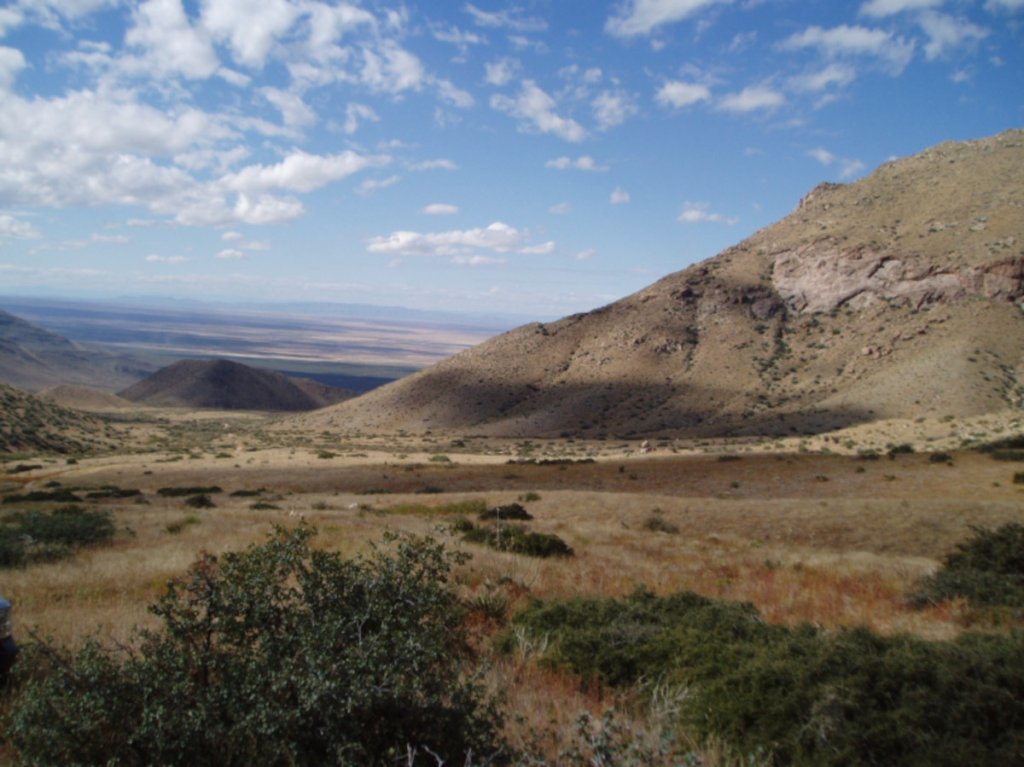

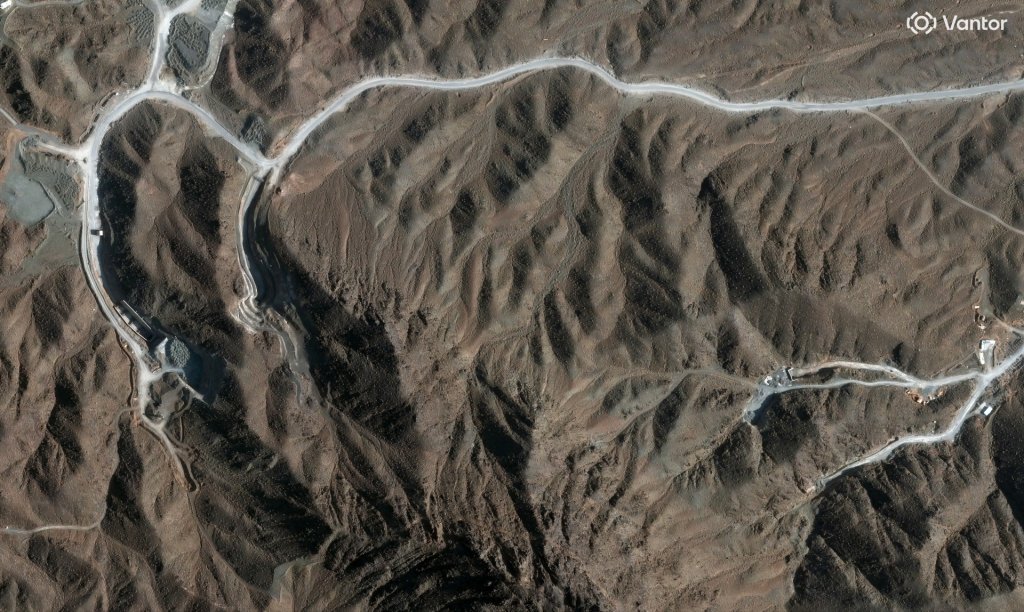
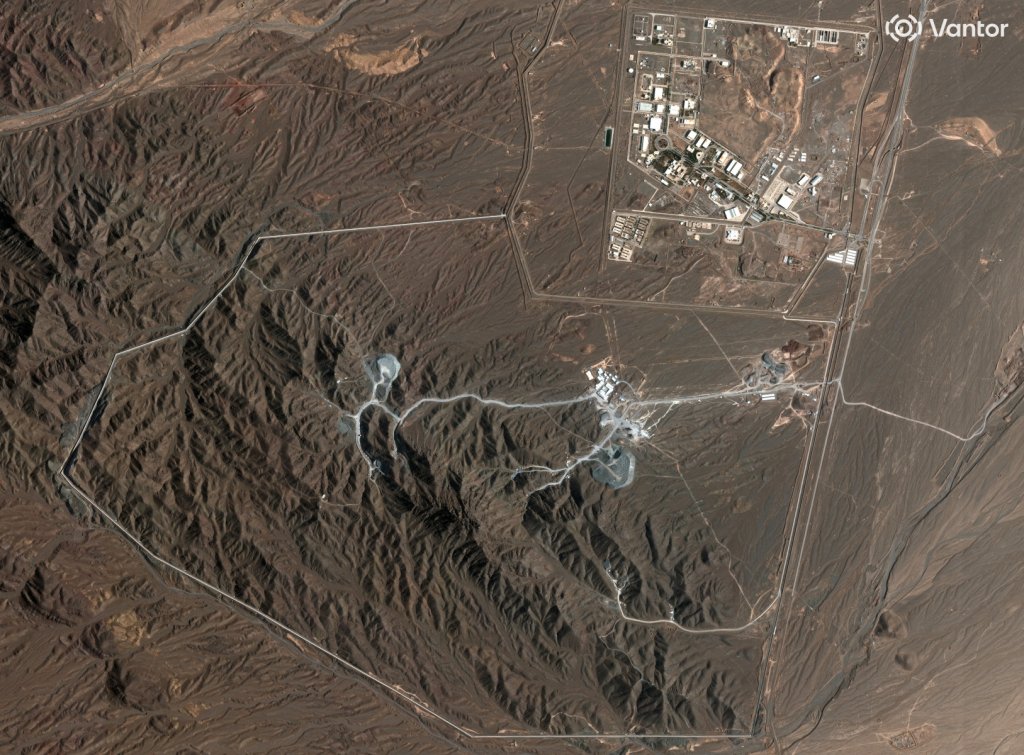
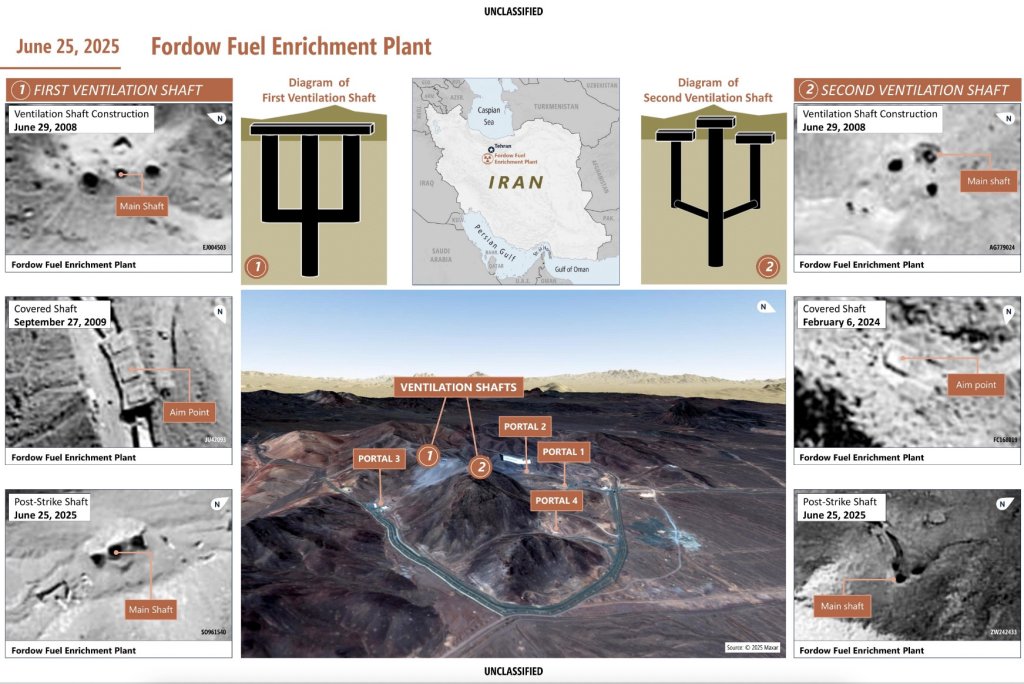
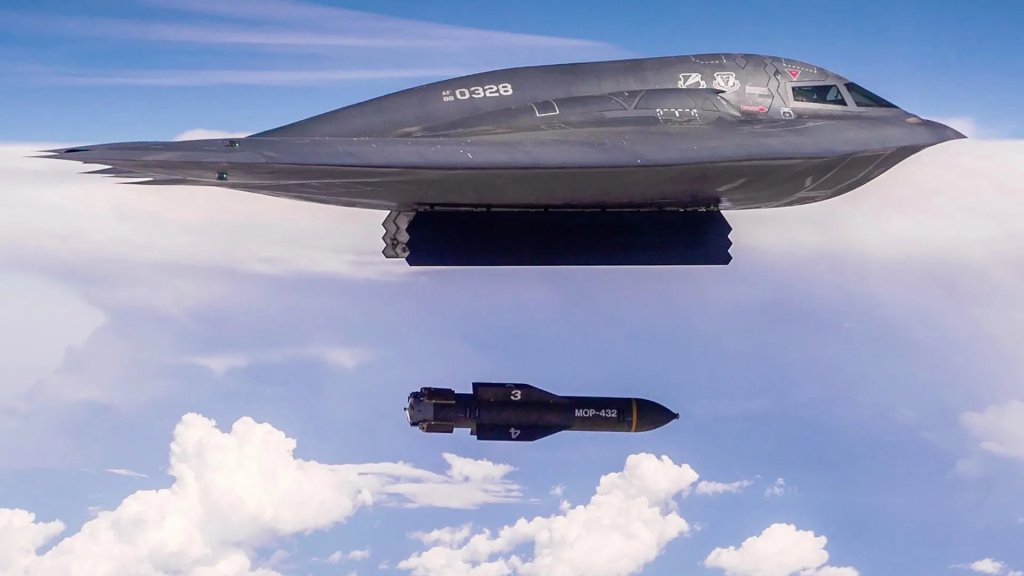

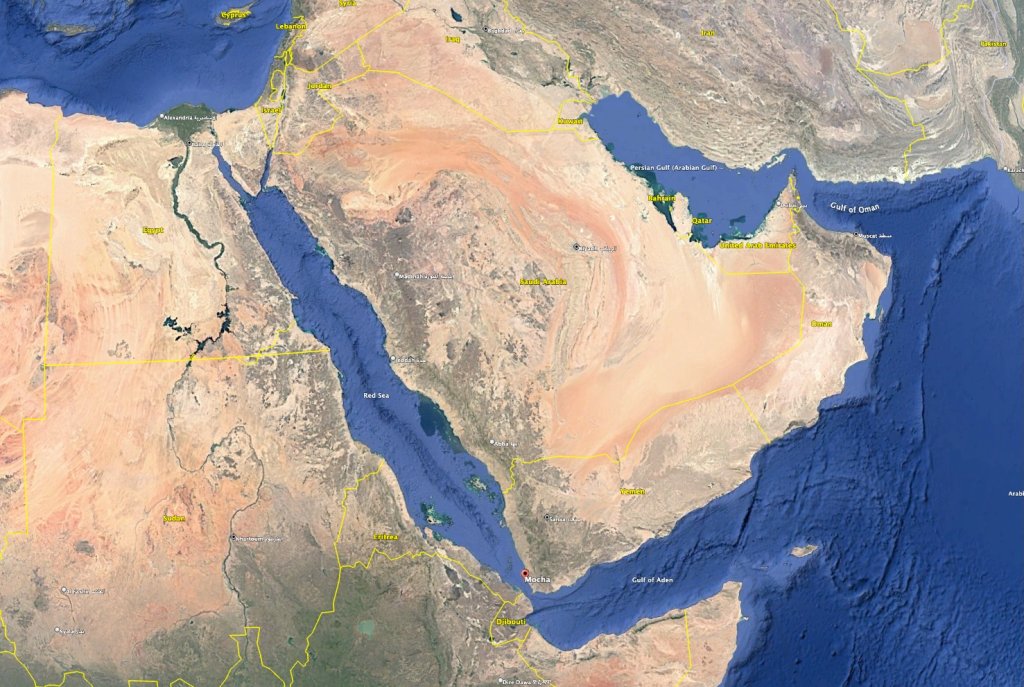
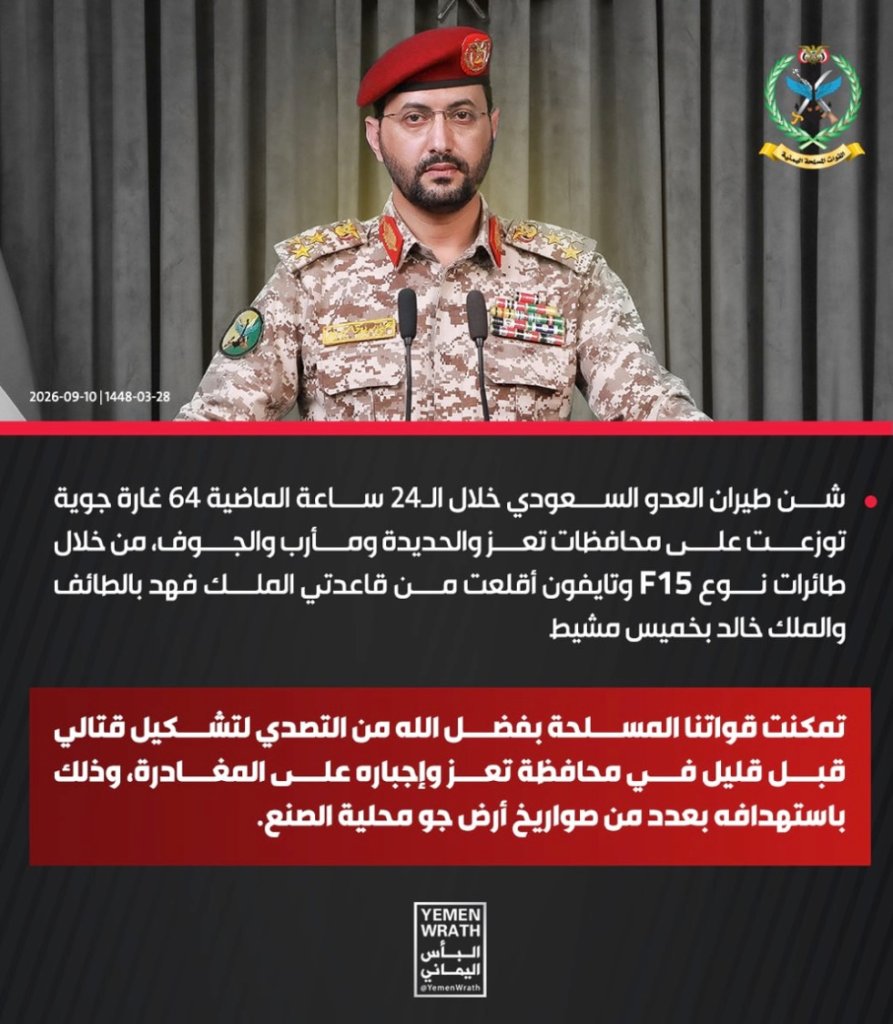
 BREAKING: The Houthis have announced a Cessation of Combat Operations along the Coast of Bab al-Mandab Strait following the Collapse of Pro-Saudi Forces

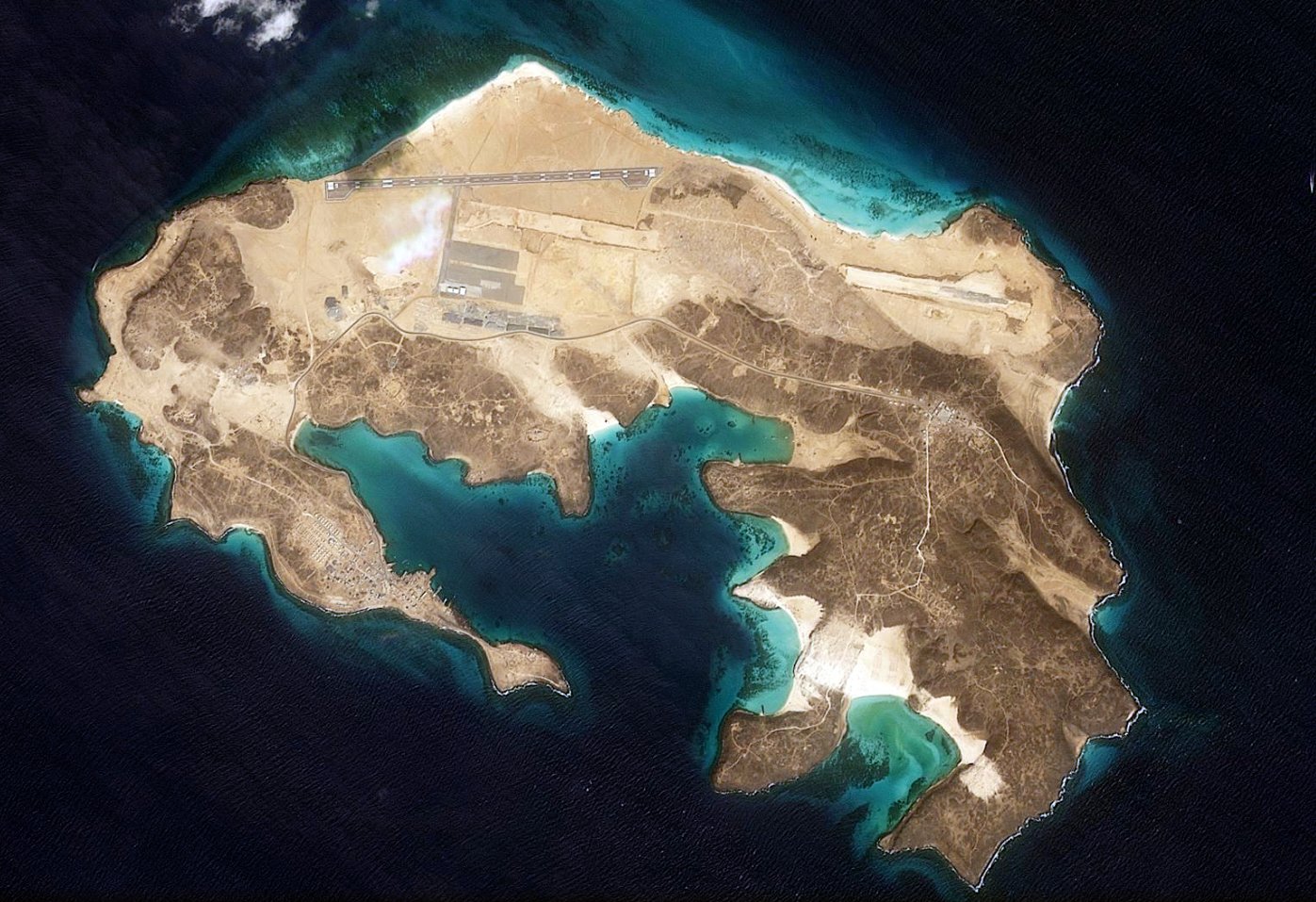
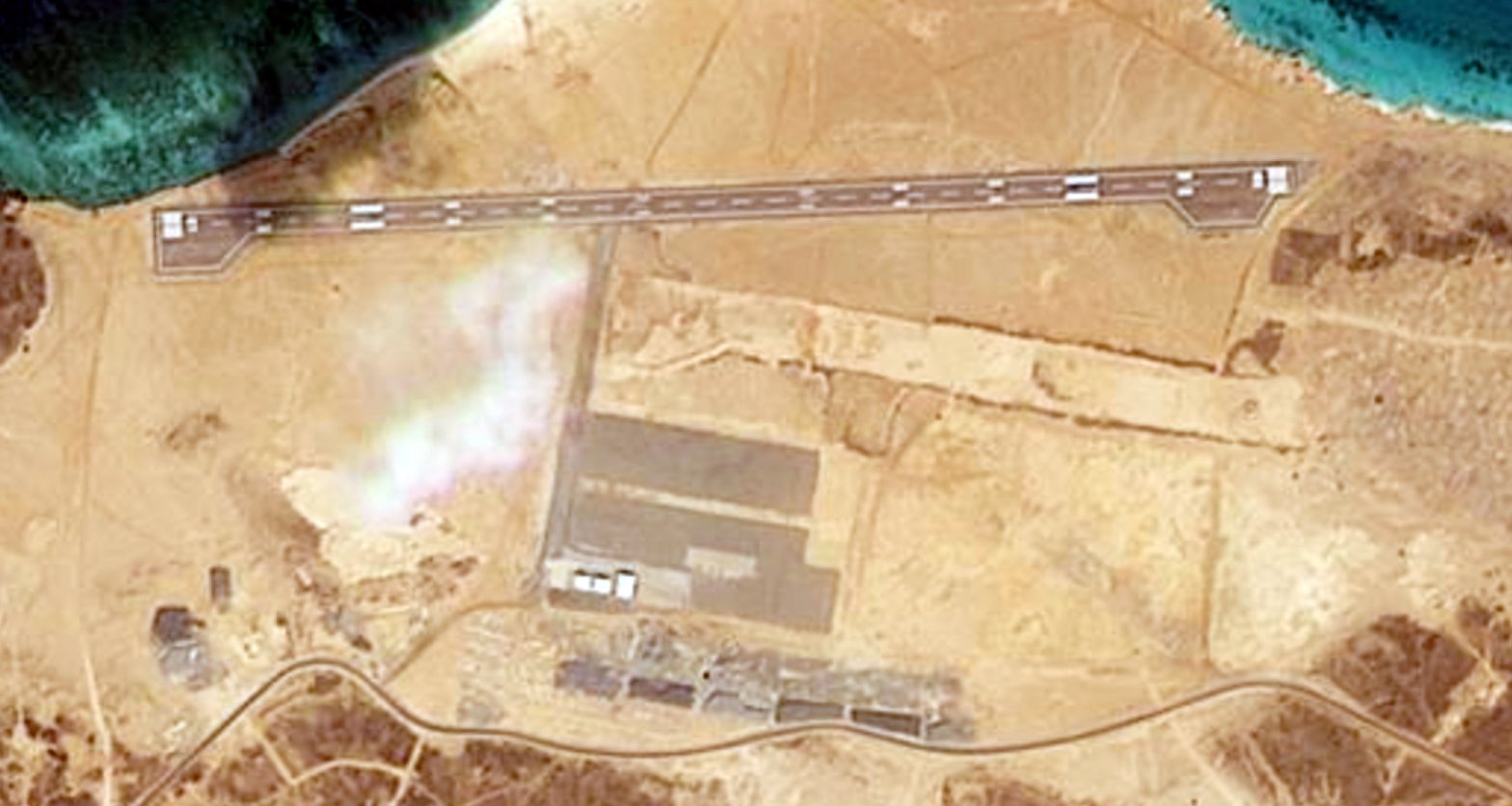
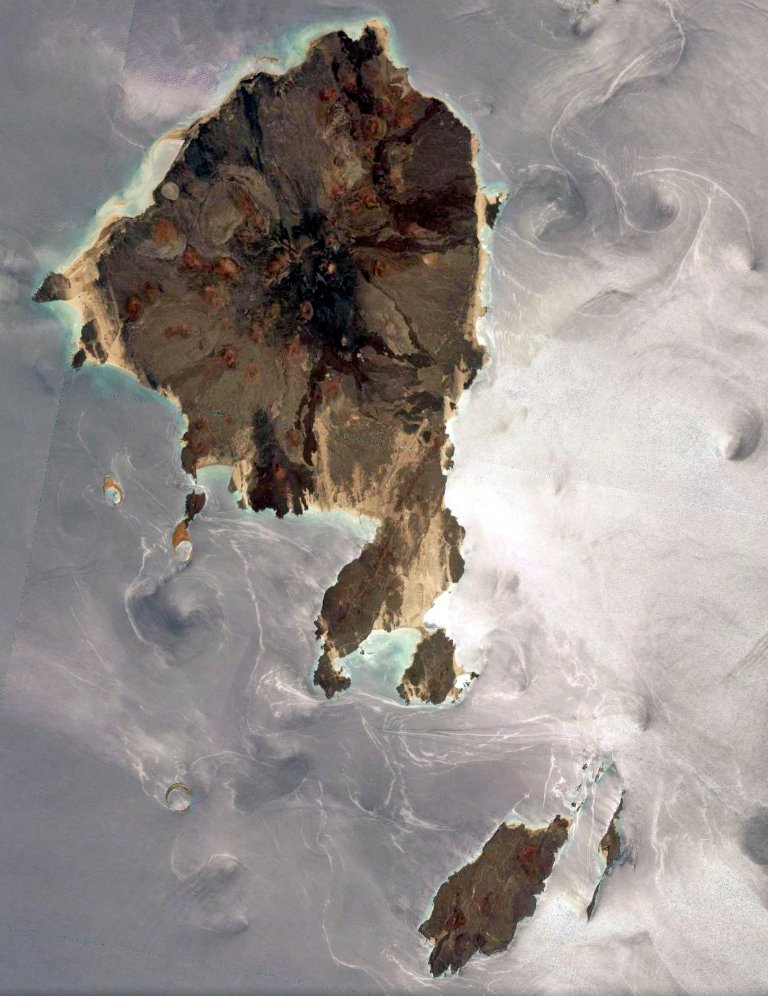
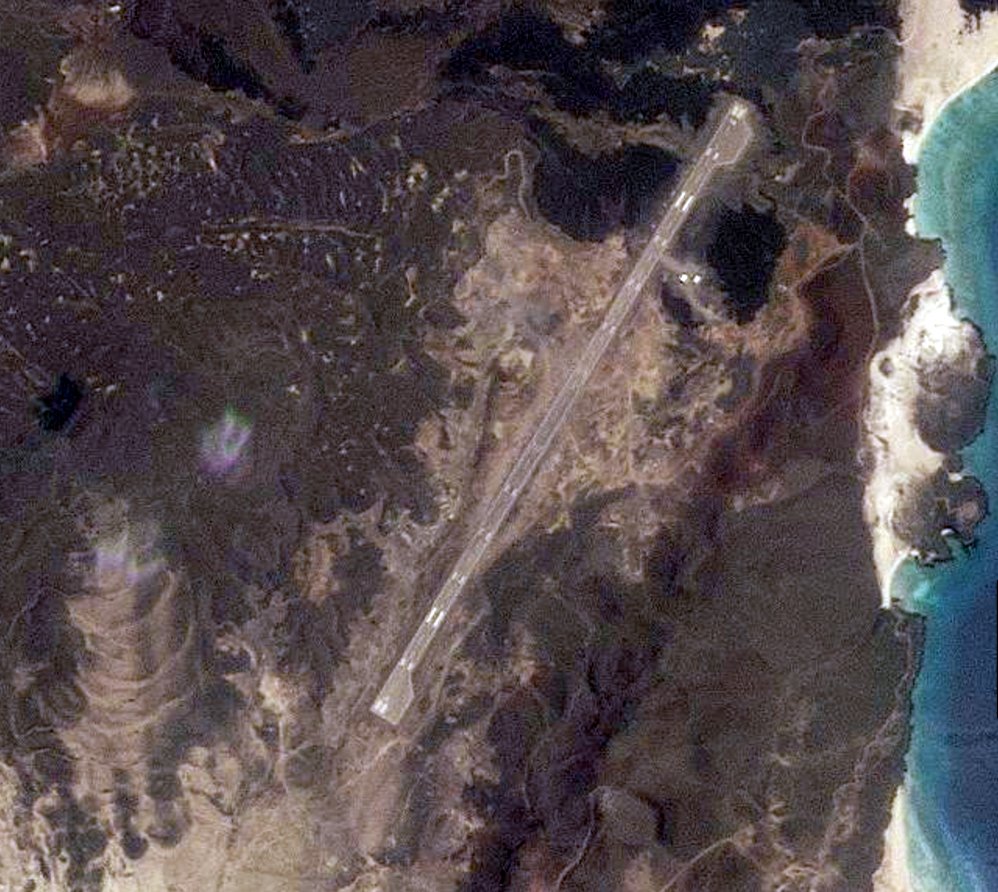
 Jabal Zuqar Island in the southern Red Sea shows a small apron with one completed aircraft hangar and another likely under construction, plus a taxiway leading to two military emplacements, likely to shelter aircraft or UAVs.

 (@AfriMEOSINT)
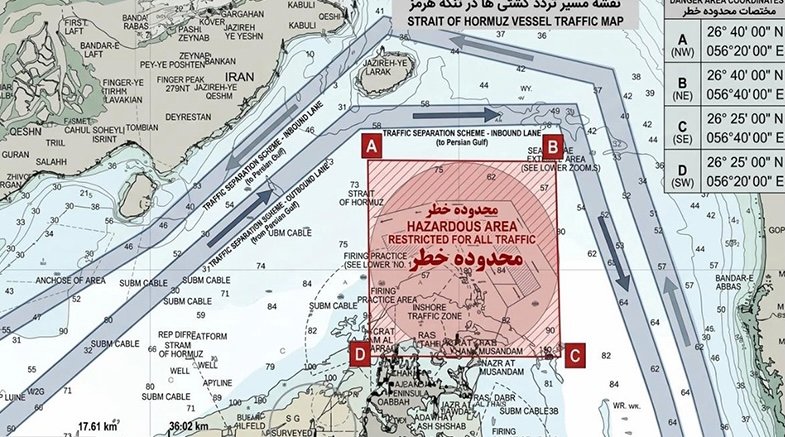
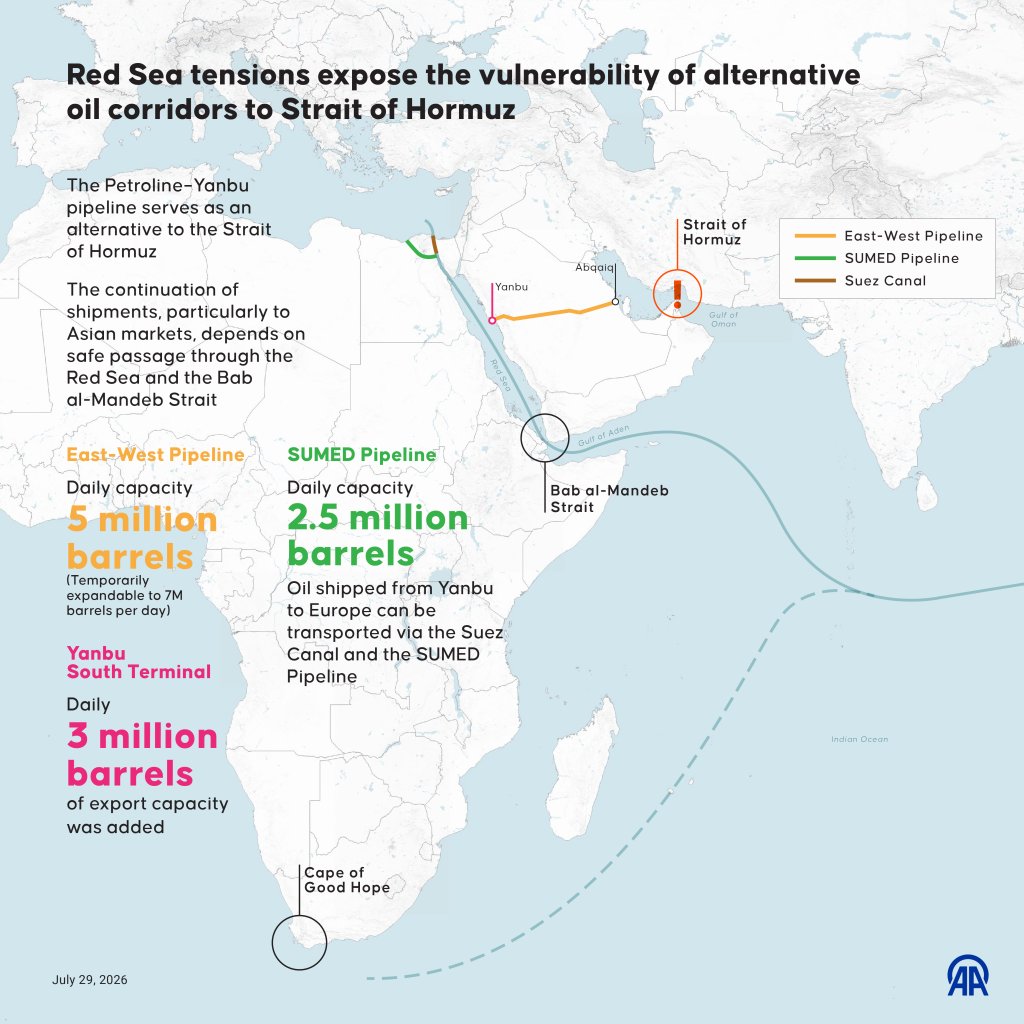
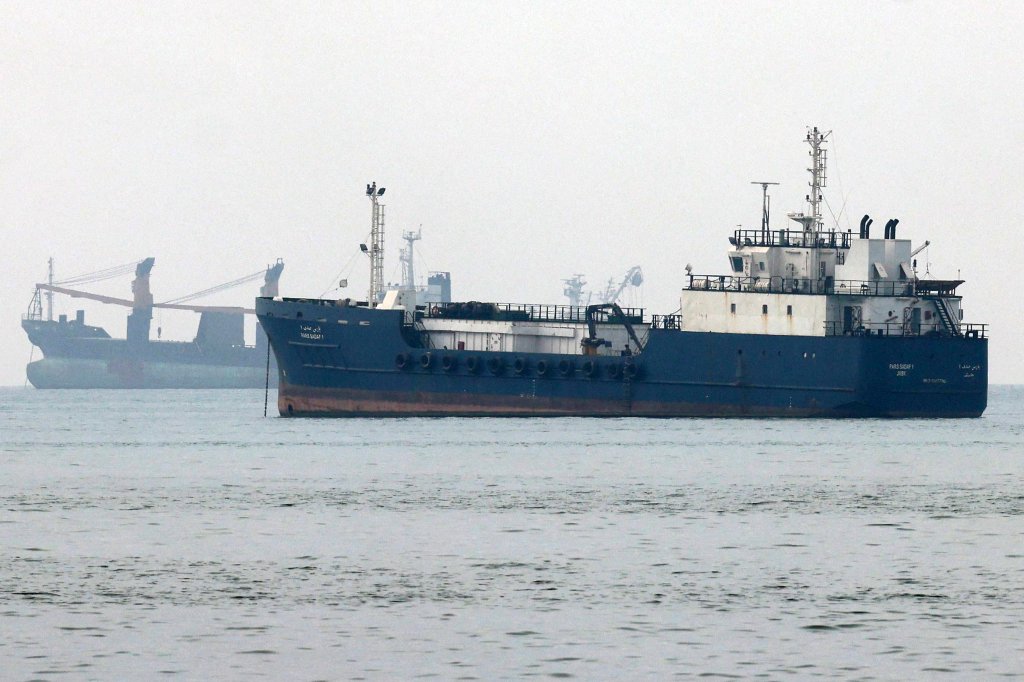
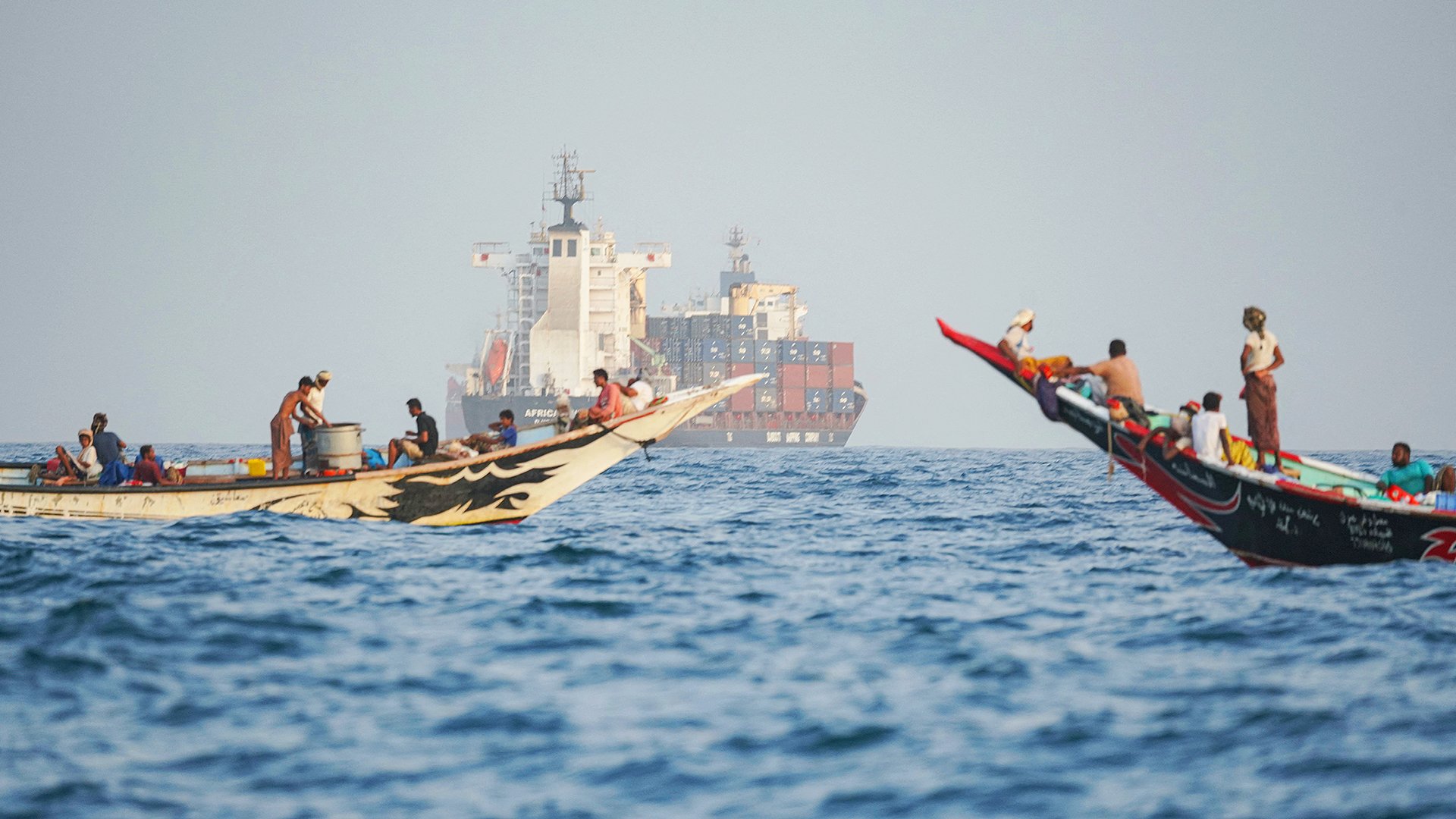


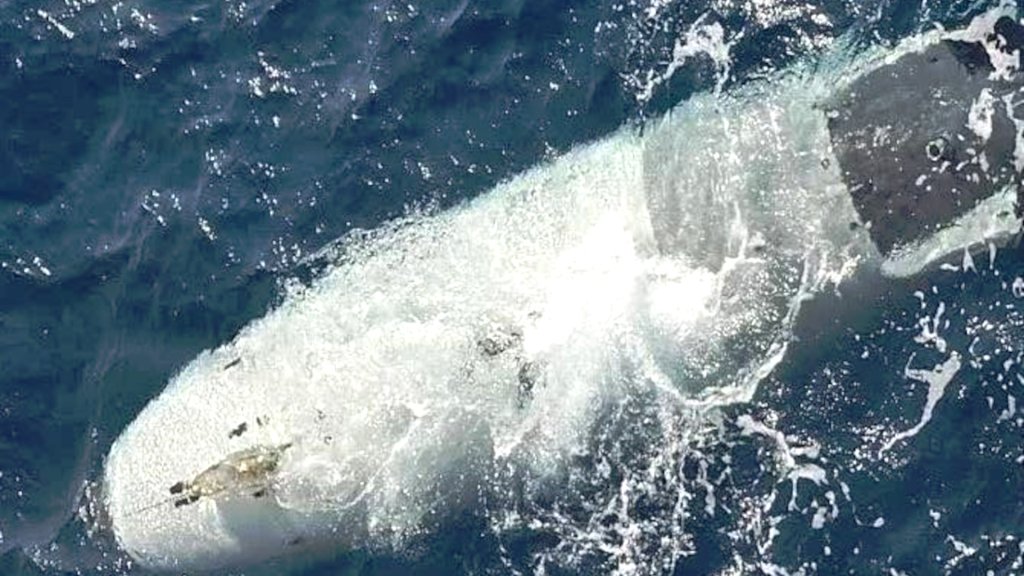
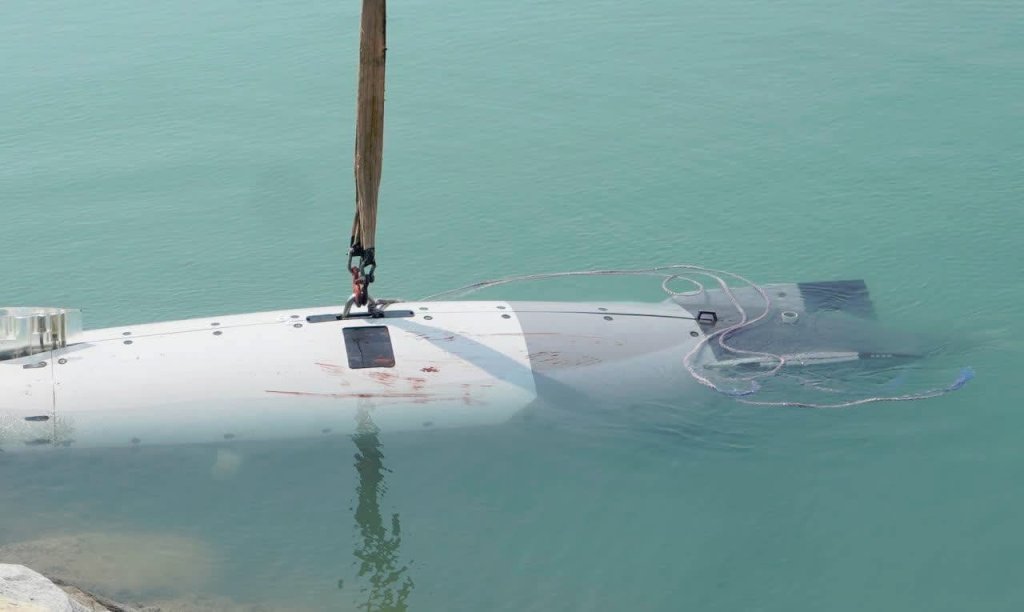
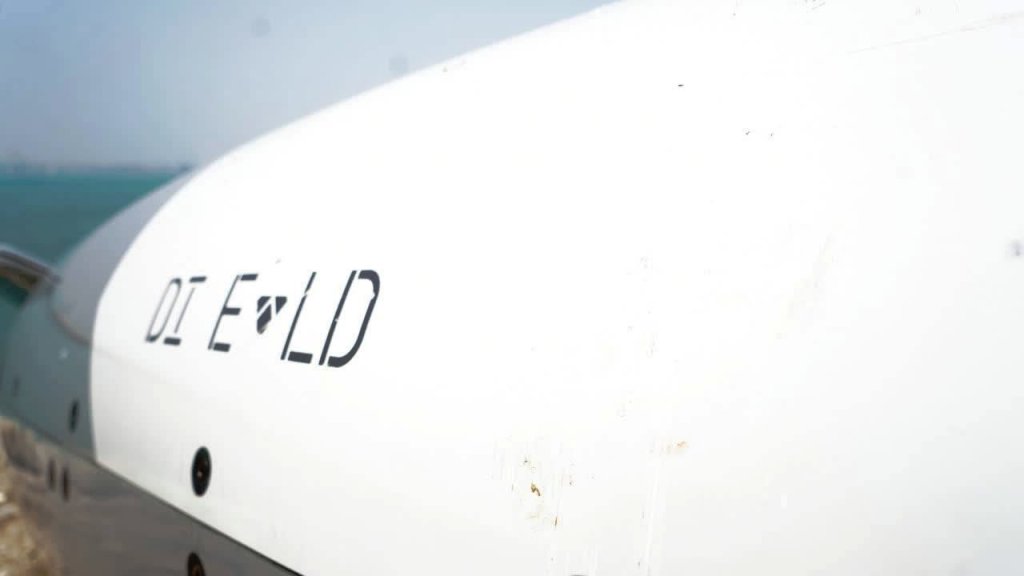
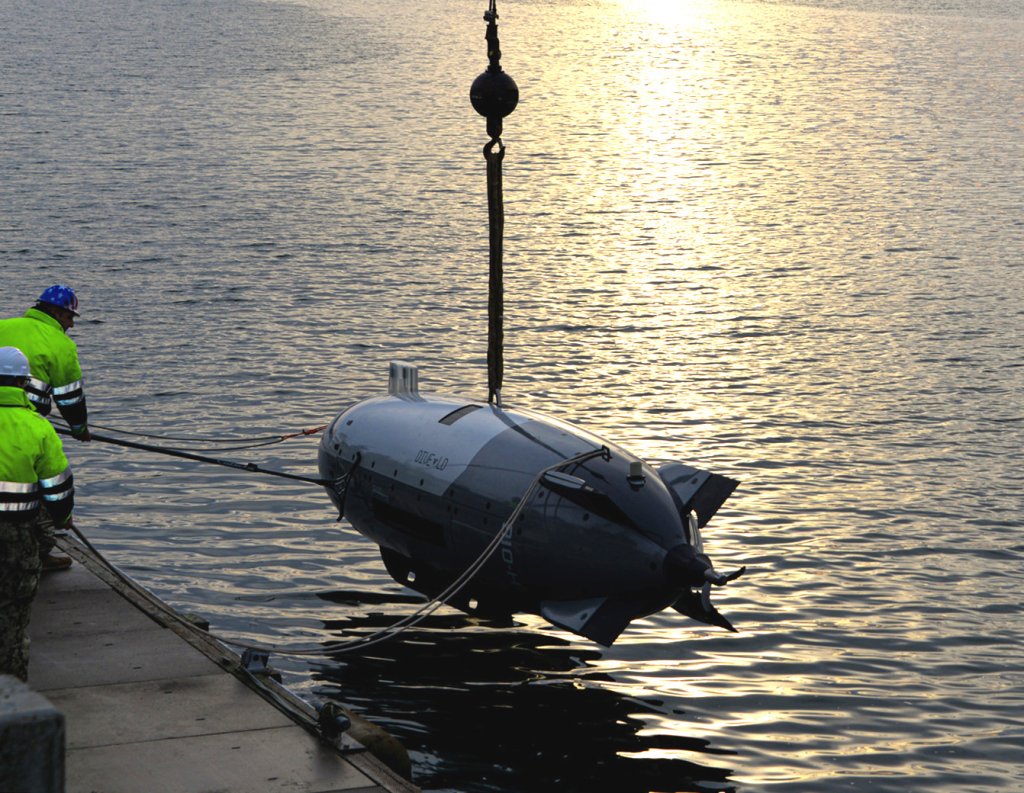
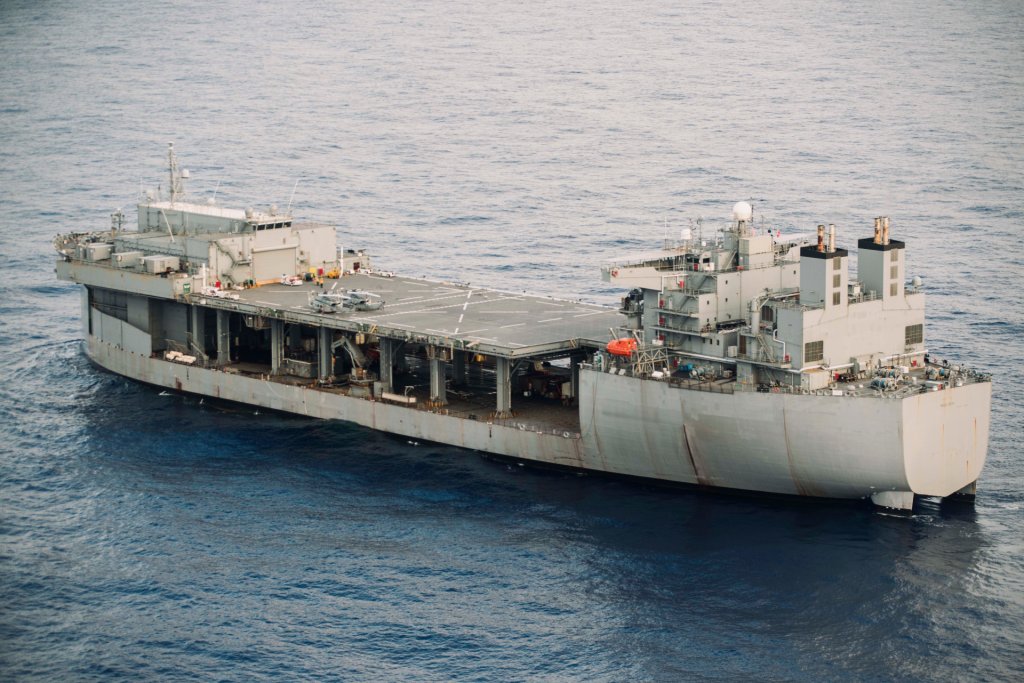
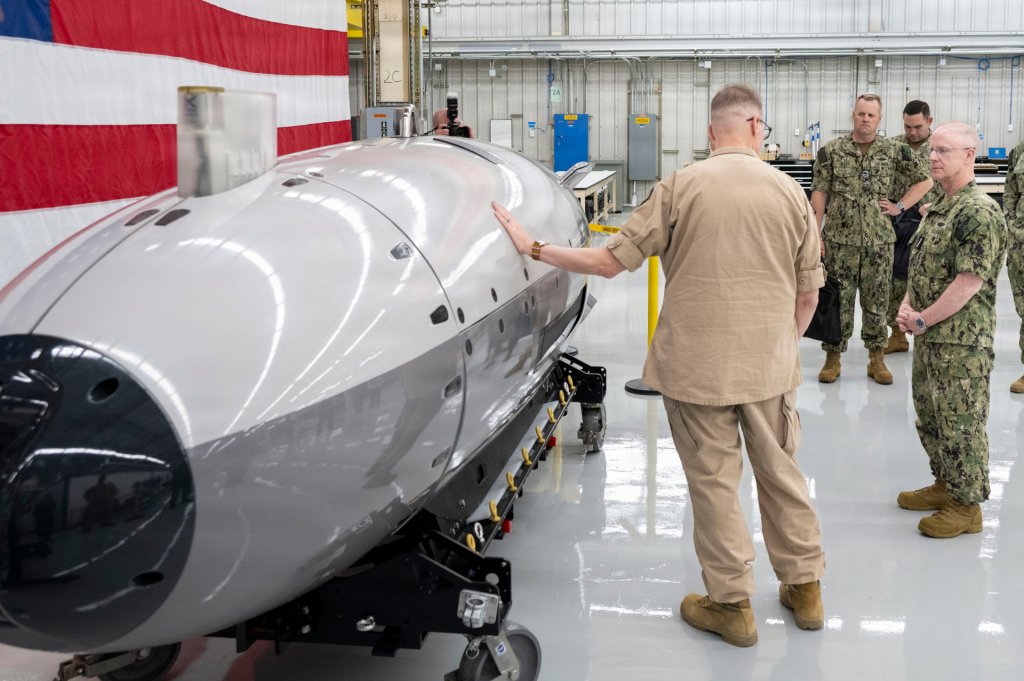
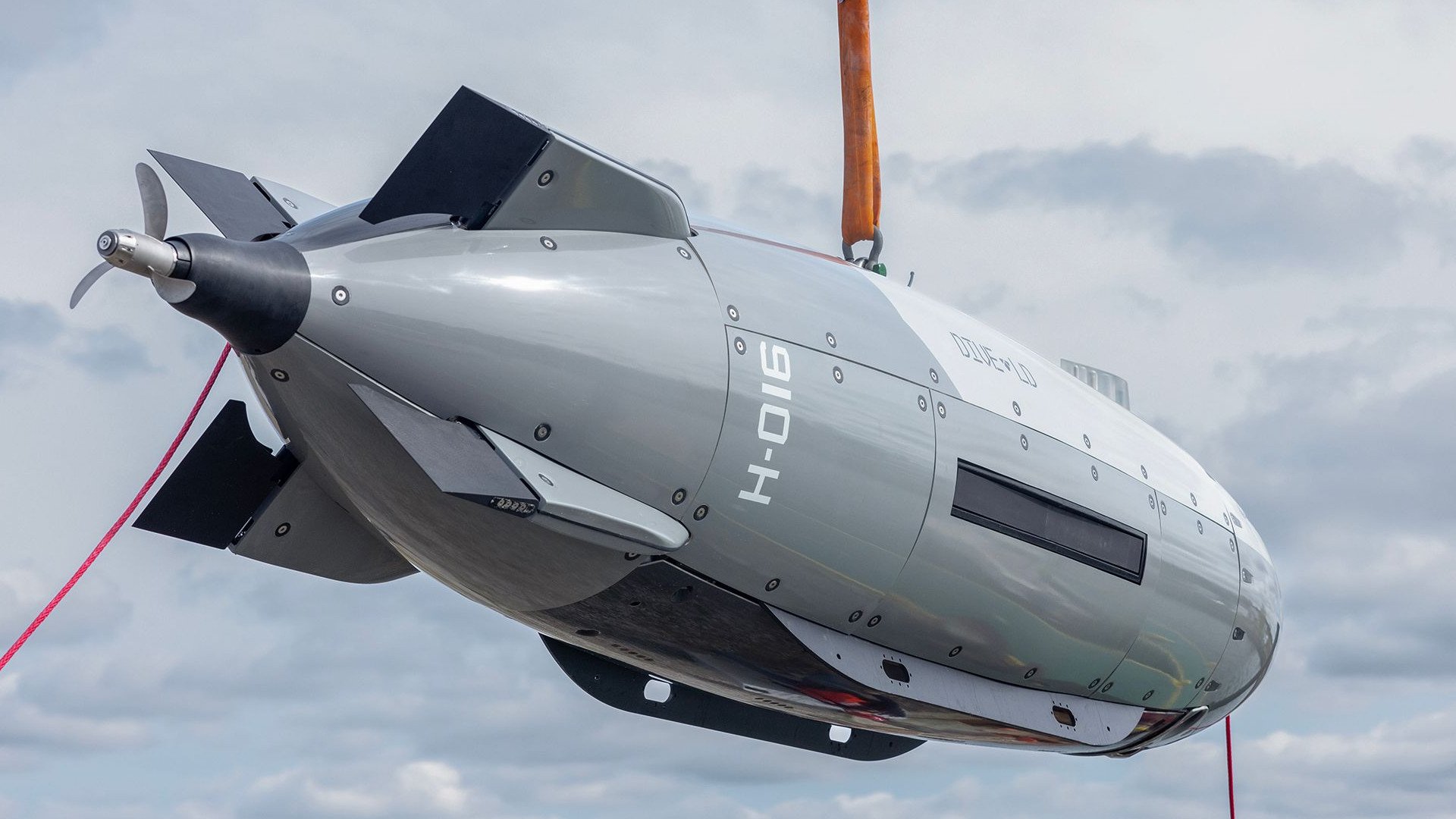

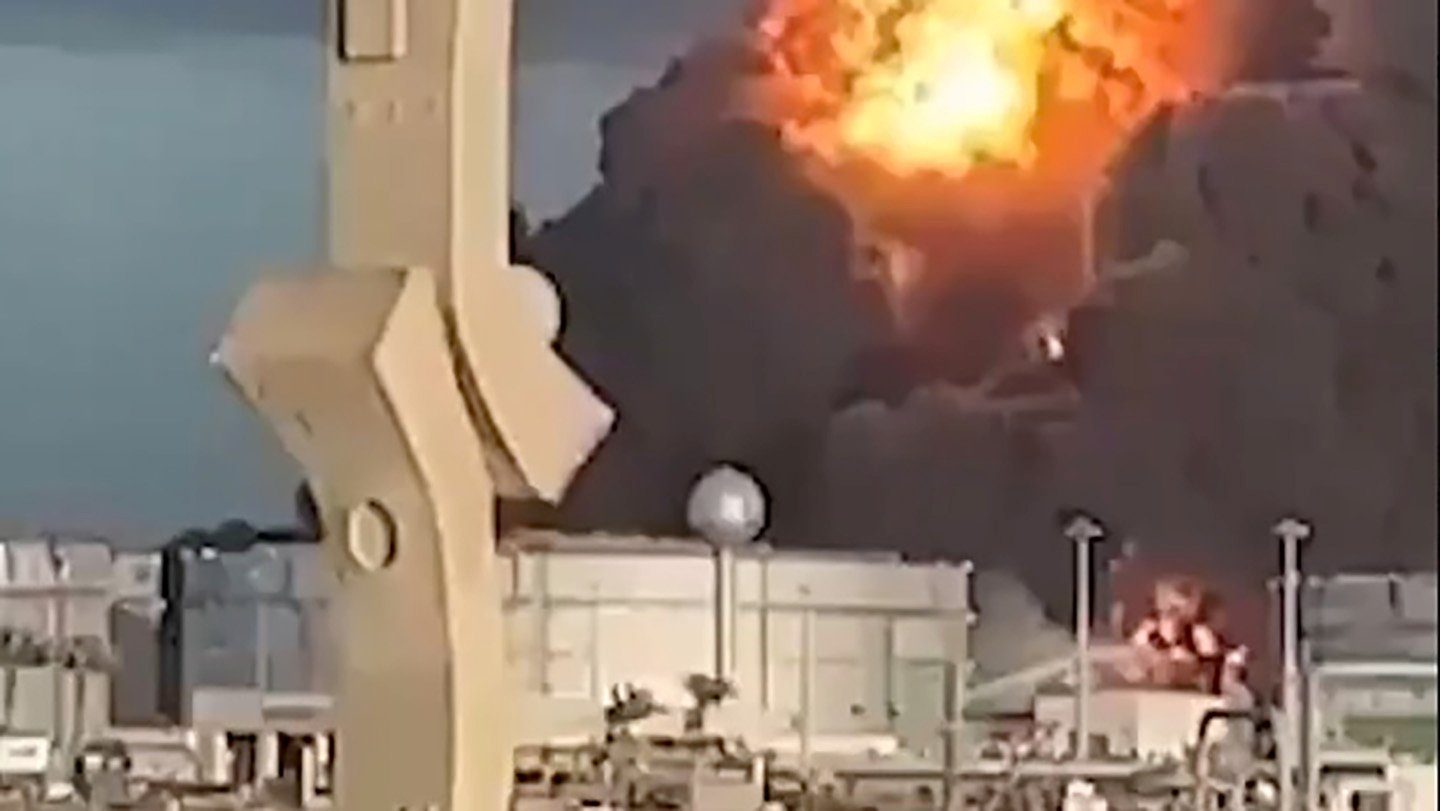


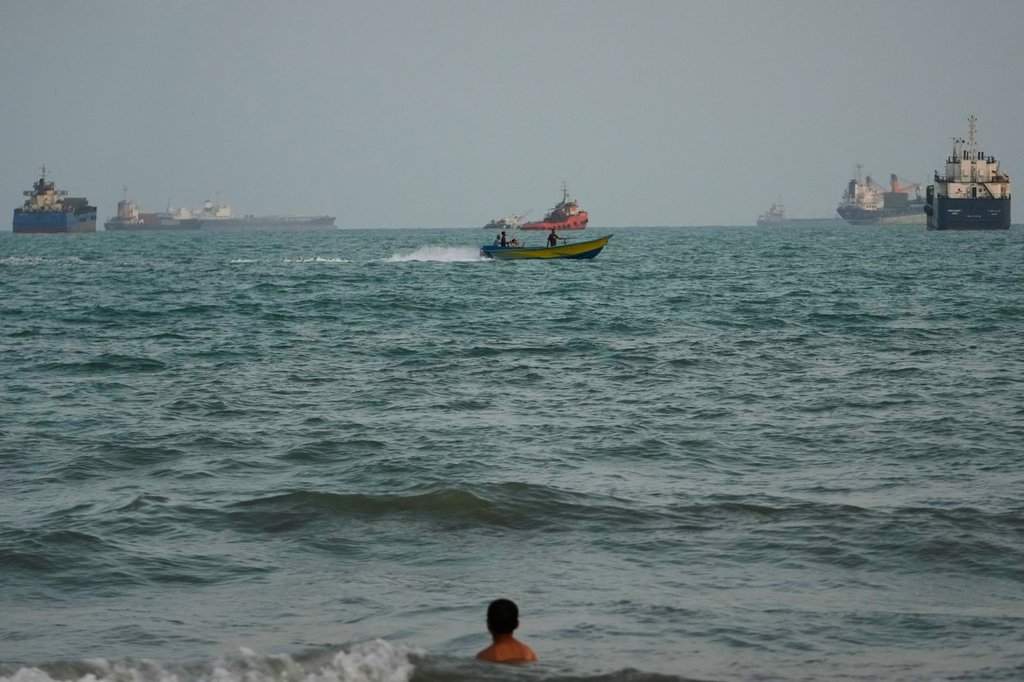


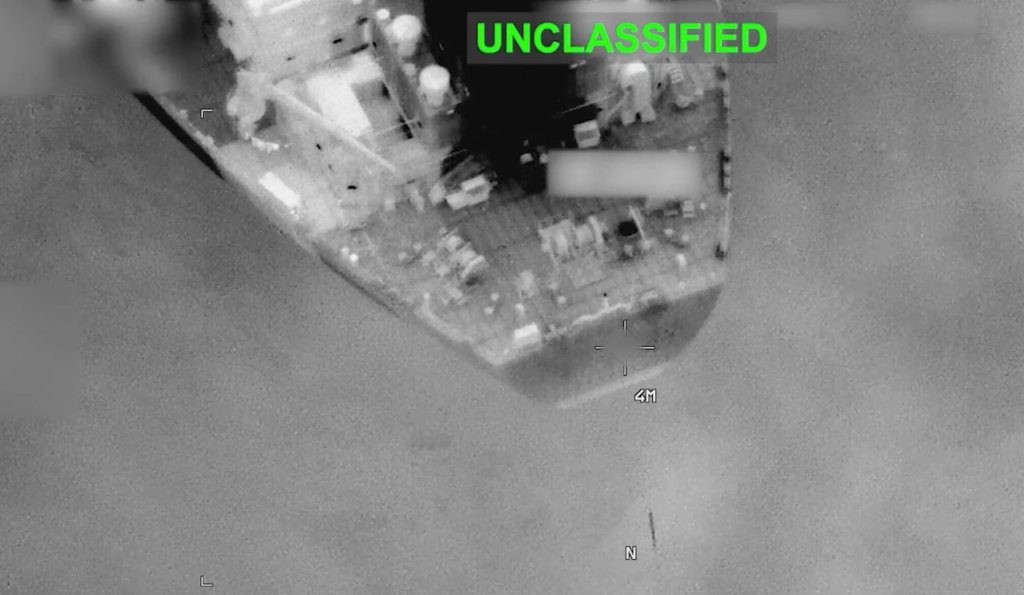


 Iran’s IRGC says it launched a heavy barrage of ballistic missiles at Camp Titin, a base used by U.S. Marines near Aqaba in southern Jordan, in retaliation for the U.S. attack on a wedding ceremony in Sirik.
 BREAKING | Iran Strikes U.S. Base in Kuwait
 U.S. facilities at Ali Al Salem Air Base in Kuwait.
 The IRGC says the U.S. commander’s headquarters and accommodation, along with drone facilities,…