❌

Reading view

Data centers will consume less water and energy than many think

Concerns about the water and energy demands of data centers have become prolific in recent weeks. But debates about their impact often overlook the rapid advances in cooling technology and cleaner energy that are already having an impact.

However, data centers’ resource consumption should be front and center of the AI conversion, as it is set to grow rapidly. By 2030, data centers’ water and energy consumption will double as AI demand leads to rapid construction of the infrastructure.

But data centers will not cause the world to run out of water or energy. Water- and energy-saving technologies already in use are reducing their impact, while Shanghai’s groundbreaking underwater data center demonstrates how innovative design can limit water, energy and land use.

Data centers have underpinned the internet since its founding. Apps, email, file storage and cloud services all run through them.

Modern AI workloads, however, have transformed their power demands beyond recognition. Today a single AI data center can match the electricity consumption of 100,000 homes, making them a significant drain on local energy grids, especially if a region is susceptible to shortages.

Data centers’ energy consumption is only rising as more are built across the world. In the US, data centers could increase from 4.4% to 12% of national electricity usage by 2028 — that is equivalent to adding eight New York Cities to the American grid.

Data centers also consume large amounts of water in two main ways. Water is used directly to cool servers and storage systems, which generate considerable heat, and indirectly to produce electricity at fossil fuel power plants where it is heated into steam to drive turbines.

In the UK, data centers have been estimated to use up to eight times as much water as average on hot summer days, underlining how their impact can rise when local resources are already under strain.

As the effects of climate change intensify, the location of data centers, and methods to reduce their water and energy consumption, are becoming ever more important.

Fortunately, resource-saving measures are already being implemented. Data centers on land use closed-loop cooling systems that recycle water rather than continually evaporating it. This can reduce freshwater use by up to 70% compared to traditional open evaporative methods.

China has also pioneered a revolutionary new type of data center in Shanghai: wind-powered, and underwater. The facility, which began full commercial operations in May 2026, uses seawater as a coolant instead of using refrigerated fresh water as land-based data centers do, reducing the electricity required to cool the computers.

It uses at least 30% less electricity than traditional data centers, and offshore wind turbines reduce reliance on fossil fuels and cut the data center’s carbon emissions. Innovative solutions such as these will go a long way to reducing data centers’ resource consumption.

AI is also part of the solution to data centers’ draw on resources. AI can optimise electricity grids and shift computing workloads towards periods when cleaner energy is more efficient, making energy use more effective overall. AI can also anticipate fluctuations in demand and adjust energy consumption accordingly, reducing waste.

It might sound obvious, but some areas are just better equipped to accommodate a data center than others. For example, facilities in hot or water-stressed regions will impose a heavier burden on resources than those supplied by cleaner energy with plentiful water and located in cooler climates.

AI’s growing demand for data centers will increase electricity and water consumption, that is true. But it does not mean the technology will exhaust regional or global supplies of either resource.

The AI boom and the infrastructure buildout accompanying it are well underway. To manage its impact, the industry needs to plan ahead. Cleaner energy, efficient cooling, and sites that have significant water and energy supplies will all limit the infrastructure’s drain on resources.

  •  

Dario Amodei: “For Too Long The Industry Lied” About AI Risks

The fear model of “we’re all going to die” is worn out, especially if the plea is “only government can save us.” We’ve suffered through global warming, climate change, COVID pandemic and other things lined up like dominoes. This smacks of calls for global government.

⁃ Patrick Wood, Editor.

“I won’t lie to you – there are real dangers,” said Anthropic CEO and cofounder Dario Amodei about the development of artificial intelligence. “And I think for too long the industry lied to people about the fact that this technology had risks.”

And the biggest risk could be the end of humanity, former Anthropic researcher Jacob Coxon warned on social media this past Tuesday, saying Anthropic and OpenAI are “gambling with our lives” with the development of self-improving superintelligence.

“It doesn’t look that different from, say, ‘Terminator’ or from science fiction films,” Coxon told CBS News Thursday. “It will be smart enough to kill us.”

In response, Amodei told “Sunday Morning” yesterday, at Anthropic’s headquarters in San Francisco, “I don’t think I fully just appreciated what it would actually be like when the progress was as fast as it was.”

He said the development of AI has been on an exponential curve, which is starting to get steeper. Asked what that means, Amodei said, “It doesn’t mean we need to panic today. It doesn’t mean we need to shut it all down. But I would say it’s a warning sign. It’s a warning sign that we need to slow down.”

In an essay published Saturday, Amodei wrote that the entire tech industry must work together to “slow the pace” of AI capabilities.

Asked if Anthropic is going to stop releasing more advanced models, Amodei replied, “It doesn’t mean that. What it means is that we need to make sure that every generation of models that we release is properly tested.”

To attempt that, Amodei says Anthropic will now give independent evaluators permanent “employee-like” access to their models. “Whenever anyone builds an AI model, there’s a third-party evaluator who can verify whether that company is following the safety practices that they’re committed to – it’s like a food inspector,” he said.

But AI experts say this is hardly enough, and Amodei agrees, claiming he supports federal regulation. So far, proposed legislation ranges from an outright ban on superintelligence, to a mandatory “kill switch” that could shut down risky AI.

“The AI kill switch could be a good idea,” Amodei said. “But I don’t think banning it, completely banning it, is the right approach. One, the idea that we would never get the incredible benefits, never get the medical cures, that doesn’t sit right with me. Second, this technology will be built in other countries, including authoritarian countries.”

Asked if the U.S. should slow down AI development if China would not, Amodei replied, “This is the toughest dilemma. This is the toughest aspect of our situation.”

He looks to the nuclear arms agreements with the former Soviet Union as a potential model, but cautions even his expectations are low. “The more long-term thing would be working together to put a speed limit on the rate of AI progress,” he said. “I think that’s going to be very difficult, because the incentives to pull ahead in the military advantage that you get from that are so large. And honestly, I don’t know if it’s possible, but we should try.”

With the fate of humanity seemingly at risk, how much personal responsibility does Amodei feel about where we are going? “My view here is, it has always been very strange that this technology is being built by a private company,” he said. “People ask me that question all the time: Why isn’t this being built by government? And the strangest thing about it is, I agree with them. I’m uncomfortable.”

Asked if he is willing to give up the technology to the government, Amodei responded, “To the right combination of governments. The worry I have – I am concerned that one single government could abuse this technology just as easily as a single company could. But I think a combination of democratically-elected governments, I don’t know about handing over, but some kind of oversight, some kind of joint governance.”

The question is no longer whether AI will become powerful enough to require constraint, but who in power will take action.

“If we build in the right way, I think the probability of something bad happening is very low,” he said. “If we build in the wrong way, the probability of something bad happening is very high.”

Read full story here…

💾

Tristan Harris, Center for Humane Technology president and co-founder, discussed the dangers posed by unregulated AI on CNBC's  "Squawk Box" Thursday.
  •  

Why Is Everyone In Tech So Sad?

If you spend your day in front of a computer, you may ask yourself, at times, why you do it. What’s it all for? Who benefits? For Noēma, Aaron Horwath suggests that the crisis confronting knowledge workers these days isn’t strictly economic, it’s also existential. He explores the pitfalls of work-as-performance and wonders whether the “messy middle,” which embraces human interaction and collaboration over an army of agents, might offer more for workers and employers alike.

But perhaps the most powerful action of all is simply to maintain an awareness (and remind others) that Workism is a spectacle. For most employees, we owe it to each other to remind one another that this work is not, in the grand scheme of things, all that important. It is illusory. No one has ever died over a spreadsheet. The world does not wait with bated breath for product launches. A marketing campaign will not change the world. Almost no one will remember all the work we do. But they might remember the types of people we were, the relationships we had and how we treated the people we worked with.

  •  

Welcome to the Age of AI Crime and Punishment

What do privilege and accountability look like for an AI agent on the wrong side of the law? Evan Ratliff rounds up a collection of challenging cases in which AI agents have functioned as co-conspirators in criminal acts, offered courtroom statements on behalf of deceased victims, and perpetrated deeds that, for humans, are considered to be illegal. Legal teams have already sought to seal their clients’ chats with AI agents, likening the exchanges to conversations with an attorney. Ratliff’s feature is an omnibus, and you’ve likely encountered one or two of his stories via other outlets. Here, the concerns he gathers together reveal the breadth of challenges facing the American legal system.

AI chatbots are already serving as confidants and co-conspirators, assisting and even encouraging humans acting on their darkest impulses. They’re occupying ersatz roles as therapists and lawyers, relationships our legal system typically shields with confidential privilege. They’re producing new kinds of criminal evidence and offering up the beguiling possibility of preventing crime before it happens. And as they’re given more autonomy across our digital and physical systems, they’re even gaining the ability to commit crimes themselves, absent specific human instruction — and, perhaps, in defiance of it.

  •  

Jobseekers know your rights in the age of AI hiring

AI is playing a bigger role in hiring, but laws protect you. Here is what you need to know.

Europe needs top talent, and employers want high-quality hires – the best person for the job – quickly and in a cost-efficient way. So, given this urgency, it’s no surprise that more and more companies are using AI in their hiring processes. From CV screening to interviews, AI can streamline each stage, reduce hiring times and make the whole process more cost-effective. 

But there’s a downside to AI-driven recruitment, as a recent Instagram post highlighted. It describes how a jobseeker from Vienna felt ‘dehumanized’ by an AI interview. 

The EU takes AI action

This concern isn’t limited to Austria, which is why the EU AI Act classifies using AI in employment decisions as ‘high-risk’. Given the growing AI adoption in HR by businesses across the globe (39 % by the end of 2025), the AI Act addresses risks by introducing rules that help make its use more transparent and accountable. 

Under the AI Act:

  • No AI tool can make final hiring decisions without a qualified human in the loop. 
  • Using AI to infer emotions, stress levels or personality traits and assign people numerical scores is banned.
  • Starting 2 August 2026, companies using AI tools for hiring, evaluating performance or other employment decisions must check regularly for safety risks and bias, keep detailed technical records, ensure human oversight and transparency, and continuously monitor their systems.
  • Obligations apply not only to the providers of these AI systems, but also the businesses that use them.
  • These rules even apply to non-EU companies, if their AI system is used or affects people in the EU.

As for the Viennese candidate, here’s what went wrong during the AI interview process:

  • It repeatedly interrupted the interviewee, jumped to the next question and moved on even when asked to go back.
  • If the jobseeker paused even briefly during a response, it sometimes took it for a complete reply.
  • There were errors in the interview transcript.
  • Instead of answering the applicant’s questions, the AI just recited the company’s ‘About Us’ page.

Only about one in four companies had begun to prepare for the EU AI Act’s strict requirements for high-risk AI systems. As AI becomes increasingly common in recruitment, it is therefore important to remember that you have the right to:

  • be informed beforehand on its use and the role it plays in the company’s hiring decision;
  • ask that a human reviews the hiring decision; 
  • not to have your facial expressions, voice tone or body language analysed by AI during an interview; and
  • know what data is being collected and, in many cases, to have it deleted once the hiring process is over. 

In an increasingly AI-driven labour market, EURES continues to offer human support through its network of trained advisers, who can provide information and guidance on practical, legal and administrative matters related to living and working across Europe. 

In the meantime, online interviews are here to stay, so gear up for that final step by reading up on some tips for tackling remote interviews.
 

Related links

‘Daily Austrian News’ Instagram post

EU AI Act

The State of AI in HR 2026

AI Hiring Tools at Risk: 6 Critical EU AI Act Compliance Steps Every HR Leader Must Take (2026)

Chat with EURES Advisers

The new ‘rules’ of the remote interview

Read more 

European Job Days

Find EURES Advisers

Living and working conditions in EURES countries

EURES Jobs Database

EURES services for employers

EURES Events Calendar 

Upcoming Online Events

EURES on Facebook

EURES on Twitter

EURES on LinkedIn

  •  

Trump Blasts “Luddites” For Opposing Data Centers

On Monday, the President of the United States told the people of Ohio, Michigan, Virginia, Arizona, and every other state now fighting hyperscale data centers exactly what he thinks of them. “The only reason that communities throughout the U.S.A. should not want Data Centers is if they want to end up being backward and poor,” he wrote on Truth Social. “If they want to be successful and rich, with far lower taxes and jobs all over the place, let Data Reign.” And then the warning: “If we kill the Golden Goose, you will only have yourselves to blame.”

The context is not subtle. Polling now shows a large majority of Americans oppose new data centers, with complaints centering on rising electricity bills, excessive water usage and industrial noise. Candidates in at least 21 races across 18 states have run television ads on the issue, split almost evenly between the parties. The National Republican Senatorial Committee has warned that data-center opposition in Ohio is, in its own words, the anchor hanging around Senator Jon Husted’s neck in his race against Sherrod Brown.1

A rational political actor facing that landscape might listen. Trump instead did what Technocrats have always done when the public gets in the way of the engineering plan: he redefined the objection as a moral defect. And to seal it, he tied every county commissioner voting against a 500-megawatt campus to Beijing. “China could not be happier with this anti-data center movement,” he wrote. “Actually, they can’t believe it is happening!”2

If that rhetorical move sounds familiar, it should. It is the secular translation of a sermon Peter Thiel has been preaching for two years.

The Antichrist as Safety Regulator

Beginning in the fall of 2024 and culminating in a four-part lecture series delivered to the ACTS 17 Collective in San Francisco in 2025, Thiel laid out a theological-political thesis that has since become the operating theology of the AI buildout. The Antichrist, Thiel argues, will not arrive as a reckless technologist. He will arrive as a safety-minded administrator, exploiting fears of nuclear war, climate collapse and artificial intelligence to install a one-world governance system. His slogan, drawn from 1 Thessalonians 5:3, is “peace and safety.”3

Thiel named names. In the twenty-first century, he told his audience, the Antichrist is “a Luddite who wants to stop all science. It’s someone like Greta Thunberg or Eliezer Yudkowsky.” Climate activists and AI safety researchers are, in his phrase, “legionnaires of the Antichrist,” not because they are consciously evil but because they are building the institutional architecture a future world-state would need. And on the technologies themselves, Thiel was candid: “Maybe these things are good or bad. Stopping them seems far, far worse.”4

Set that beside the Truth Social post and the structure is identical. In Thiel’s register, the person who wants to slow AI is doing the Antichrist’s work. In Trump’s register, the person who wants to slow the data center is “backwards,” “poor,” and objectively serving China. Neither framing permits the position that most of those Ohio voters actually hold, which is not “stop AI” but “do not make my family pay for your grid load.” Economic objections invite cost-benefit analysis and compromise. Apocalyptic and treasonous framings do not. You cannot negotiate with the Antichrist, and you cannot negotiate with a Chinese asset.

Technocrat-in-Chief

Courtenay Turner and I documented in The Final Betrayal (November 2025) how the second Trump Administration became the vehicle by which a cohort of billionaire arch-Technocrats, Thiel foremost among them, moved from the periphery of American power to its center. Thiel financed J.D. Vance’s political career from the ground up. His Palantir alumni and Founders Fund network populate the national-security and technology apparatus. The Dark Enlightenment’s contempt for democratic consent, which we traced through Thiel’s own writings and those of his intellectual circle, is no longer a fringe philosophy. It is staffing policy.

What we argued then, and what Monday’s outburst confirms, is that Trump has not merely hosted these men. He has become the Technocrat-in-Chief. The populist who promised to return power to forgotten communities is now instructing those same communities that their objection to a hyperscale facility next to their children’s school is evidence of backwardness.

Sorry, that is not populism. That is the voice of Howard Scott and Technocracy, Inc. in 1934, telling Americans that their opinions were irrelevant to the requirements of the energy system and that the Technate would allocate resources according to engineering necessity, not democratic preference.

The MAGA movement was told it was getting America First. What it is getting is a federal executive using the full weight of the presidency to override local self-government on behalf of the single most capital-intensive industry in human history.

Energy Is the Currency

The historical Technocracy movement made one claim that has never been refuted: the fundamental unit of value in an industrial society is the kilowatt-hour and not the dollar. Scott and his engineers proposed replacing money with energy certificates and allocating energy to every man,  woman, and child by expert decree. Thankfully, they failed to seize power in the 1930s. They did not fail to describe the twenty-first century.

Hyperscale data centers are the first industrial class whose product is literally computation purchased with electricity. When a facility draws hundreds of megawatts, the question is not abstract. It is whether the household or the hyperscaler has priority claim on the grid, and who pays for the transmission and generation built to serve the newcomer. Every rate case now pending before a state utility commission is a contest over exactly that. Trump’s post resolves the contest by fiat: the data center wins, and anyone who says otherwise is a traitor to prosperity.

This is resource control transferring from individuals to consolidated institutional actors, which is the definition of Technocracy I have used for two decades. It does not require a world government. It requires only that the people who own the compute also control the political apparatus that decides who gets the power.

The Inversion

Here is the irony Thiel’s disciples never confront. His stated nightmare is a distant regulator overriding local self-government in the name of safety. Yet the actual mechanism now in use is a national executive overriding local self-government in the name of the AI buildout. The tool he warns against is the tool being wielded, pointed the other way. The county that votes no is not the world-state. It is the last unwatched place in the system, and it is being told to shut up and sit down.

And the China card is doing double duty. Trump invokes Beijing as the beneficiary of American resistance in the very month he prepares to host Xi Jinping, the Technocrat-in-Chief of China, at the White House. A congressional committee has demanded an investigation into whether China is stoking the anti-data-center movement; Trump declined to repeat that charge, but said the Chinese “can’t believe it is happening.”5

China is the rhetorical enemy for domestic consumption and the strategic partner in the architecture. Readers who followed my analysis of the Beijing summit in May will recognize the pattern. American and Chinese Technocracy are not at war with each other. They are converging, and the American public is being disciplined to accept the merger.

Speak Up While You Can

I have repeated that Free Speech and the First Amendment are on the guillotine in 2026. This may be the last battle that decides our fate.

Certainly, the people of Ohio did not ask for this. They were not consulted. They are being told that their electric bills, their water tables, and their quiet nights are the acceptable price of a race with China whose terms they were never shown. And when they object, the most powerful man in the world calls them backward, foolish, and prone to self-harm.

They should say no anyway. Not because AI is evil, and not because the Antichrist is coming, but because the right of a community to decide what gets built inside its borders is the last practical check on Technocracy that ordinary Americans still hold.

Every local vote against a data center is a vote for the proposition that the people, not the engineers, decide. Thiel calls that heresy. Trump calls it treason. I call it self-government, and it is worth defending precisely because they want it gone.

References

  1. Kevin Breuninger, “Trump says U.S. communities opposing AI data centers could end up ‘backwards and poor’,” CNBC, August 31, 2026, https://www.cnbc.com/2026/08/31/trump-data-centers-backlash-elections-congress.html. The NRSC memo language and the 21-races-in-18-states figure are reported there and in AFP coverage of the same day.
  2. Agence France-Presse, “Trump blasts US backlash against data centers,” August 31, 2026, syndicated at https://www.yahoo.com/news/politics/articles/trump-blasts-us-backlash-against-161603675.html. All Trump quotations are from his Truth Social post as reproduced by AFP.
  3. “Thiel’s Framing of Proponents of an AI Treaty as ‘Antichrist’ Collides with 60 Years of Catholic Doctrine,” Center for Bioethics and Public Affairs in AI (CBPAI), April 8, 2026, https://www.cbpai.org/blog-1/thiels-framing-of-proponents-of-an-ai-treaty-as-antichrist-collides-with-60-years-of-catholic-doctrine; and Fortune, “Peter Thiel just gave the public its closest look yet at his ‘Antichrist’ theory,” July 18, 2026, https://fortune.com/2026/07/18/what-is-antichrist-peter-thiel-pope-leo-ai-regulation/.
  4. Leaked recordings of the ACTS 17 Collective lectures, as reported by the Wall Street Journal and the Washington Post (September–October 2025) and analyzed in “The Eschatology of Deregulation: On Peter Thiel’s Antichrist,” OILab, https://oilab.eu/the-eschatology-of-deregulation-on-peter-thiels-antichrist/. The Thunberg/Yudkowsky remark is quoted in multiple contemporaneous accounts of the lectures.
  5. AFP, op. cit.; CNBC, op. cit. Trump’s upcoming White House meeting with Xi Jinping is noted in the AFP report.
  •  

What Happens When a Kid’s Robot Best Friend Dies?

In this story for MIT Technology Review, Sara Harrison explores the field of social robotics and the growing use of robot companions as therapy for autistic and other neurodivergent kids. These playful machines show promise: Research suggests that they can help children practice social skills and offer something overworked therapists and exhausted parents can’t—a patient companion, available 24/7. But Harrison also reports on their limitations and risks. Does this approach truly work? What about all the data gathered on the child? And what happens when a robot friend suddenly stops working and “dies”? A fascinating and unsettling look at tech that has moved into the most intimate corners of a family’s home.

While Moxie found herself in more and more people’s homes, Embodied still struggled to make money. In 2024, the company announced it would cease operations. Its robots—which depended on external servers that the company could no longer pay for—would descend into a deep slumber. 

Videos of bereft children who seemed to have become deeply attached to the blue bot began to circulate online. “I don’t want her to leave,” wailed one child in a TikTok video. Desperate parents posted on TikTok, Instagram, and Reddit looking for solutions. “My autistic child is devastated and I’m pissed,” wrote one parent. “Hope Embodied gives us a couple days to say goodbye,” wrote another. 

  •  

Out-of-touch Trump says communities that reject AI data centers will be ‘backwards and poor’

US President Donald Trump holds an image showing the size of Meta's new data center, during a cabinet meeting in the Cabinet Room of the White House in Washington, DC on August 26, 2025. Photo by MANDEL NGAN/AFP via Getty Images
Common Dreams Logo

This story originally appeared in Common Dreams on Aug. 31, 2026. It is shared here under a Creative Commons (CC BY-NC-ND 3.0) license.

President Donald Trump on Monday warned Americans that they risk becoming “backwards and poor” unless they allow Big Tech companies to build artificial intelligence data centers in their communities.

In a social media post, the president expressed indignation that any town or city wouldn’t welcome data centers, which have drawn nationwide opposition for generating pollution and jacking up utility bills.

“The only reason that communities throughout the USA should not want Data Centers is if they want to end up being backwards and poor,” Trump wrote. “If they want to be successful and rich, with far lower taxes and jobs all over the place, let Data Reign.”

In reality, AI data centers create very few jobs once they are completed, as most of their functions are fully automated.

Trump then said that Americans “will only have yourselves to blame” if they “kill the Golden Goose” that is AI data centers.

“China could not be happier with this anti Data Center movement,” Trump wrote. “Actually, they can’t believe it is happening!”

Building AI data centers has become massively unpopular throughout the US.

A poll conducted by Embold Research and published by Heatmap Pro earlier this month shows that 75% of Americans now oppose building AI data centers in their area, including 61% registering strong opposition.

While Republicans polled in the survey were more supportive of data centers than Democrats and independent voters, it nonetheless found that opposition among Republicans outweighed support by 43 points.

Polling analyst G. Elliott Morris marveled at how politically tone deaf the president sounds when it comes to data centers, commenting that “Donald Trump is actively trying to help as many Democratic senators as possible get elected.”

Longtime GOP operative Frank Luntz similarly noted data centers’ unpopularity, citing a recent Gallup poll showing 63% of Republican voters oppose having one of the facilities built in their communities.

“We’re about to see whether President Trump can sway those voters to support them, as he’s done on many issues before,” Luntz remarked.

Democratic US Senate hopeful Abdul El-Sayed wasted no time tying the president’s position on data centers to his opponent, Republican Mike Rogers.

“Make no mistake—this is Mike Rogers’ position on data centers,” wrote El-Sayed. “He’s got up to $2.6 million invested in companies cashing in on the data center boom, all while Michiganders watch their utility bills soar. You can’t trust a word out of Mike’s mouth because he’s only out for himself, for Donald Trump, and for Big Tech—not Michigan.”

Faiz Shakir, a longtime adviser to US Sen. Bernie Sanders (I-Vt.), observed that Trump is merely “sharing the perspective of Wall Street and Big Tech” and is showing “no interest… in grappling with the mass revolt across American communities, or to learn anything from them.”

Screenwriter David Simon, creator of the acclaimed television series The Wire, accused Trump of brazenly lying about data centers’ economic benefits.

“If data centers are a geographic benefit to communities, you can be sure they’d be siting and building them in affluent and politically connected environs,” wrote Simon. “Curiously, they’re dumped in poorer, less influential places. Go fucking figure.”

Republican Kentucky state Rep. Savannah Maddox took issue with the president disparaging communities opposed to data centers, which include many of the rural communities that voted for him in three presidential elections.

“Rural doesn’t mean ‘backwards and poor’ and development doesn’t always equate to being ‘successful and rich,’” wrote Maddox. “President Trump wouldn’t be president without the rural voters who inhabit America’s heartland. It is not wrong of us to question the sudden and wide-scale effort to convert arable land into data centers. We are not stupid for wanting to protect our rural way of life.”

  •  

Inside Kazakhstan’s new political era: EU Reporter journalist Derya Soysal questions President Tokayev after historic Kurultai vote

EU Reporter journalist Derya Soysal was among the members of the press given direct access to President Kassym-Jomart Tokayev in Astana after he cast his vote in Kazakhstan’s first elections to the newly established Kurultai — an opportunity that offered a rare first-hand insight into the President’s thinking on political reform, government, youth, artificial intelligence and the country’s future direction.

For a journalist covering the rapidly changing political landscape of Central Asia, there are moments when being in the room matters.

For EU Reporter journalist Derya Soysal (pictured with President Kassym-Jomart Tokayev) Kazakhstan’s historic Kurultai election provided precisely such an opportunity.

After President Kassym-Jomart Tokayev cast his vote in the country’s first election to the newly established Kurultai, Soysal was among the journalists with privileged access to the President during the press briefing that followed.

It gave EU Reporter a first-hand opportunity to hear Tokayev address some of the most important questions facing Kazakhstan as the country enters a new political chapter.

The exchanges went far beyond election day itself.

Questions ranged from the consequences of constitutional reform and the creation of the Vice Presidency to the future composition of the government, the role of younger politicians and the increasingly important place of artificial intelligence in Kazakhstan’s economic and social development.

The result was a revealing picture of how Tokayev sees the next phase of his country’s transformation.

A historic political moment

Tokayev himself described the election as a historic milestone and the beginning of a new stage in Kazakhstan’s development.

The establishment of the Kurultai forms part of a much broader restructuring of the country’s political institutions.

During the briefing, the President was questioned about what ordinary citizens should expect from the constitutional reforms, how the newly created Vice Presidency would operate and what role the Kazakhstan People’s Council would play.

Tokayev portrayed the changes as essential components of a renewed political system.

He stressed the importance of the Vice Presidency as an institution capable of supporting effective governance during difficult periods, while describing the Kazakhstan People’s Council as a mechanism intended to strengthen public participation and national cohesion.

But the President’s vision was not restricted to political architecture.

He also pointed to ambitious infrastructure and development programmes encompassing healthcare facilities, rehabilitation centres, urban modernisation and environmental projects.

The question everyone wanted answered

Among the most politically sensitive questions put to Tokayev concerned his own future.

Could he stand again for President?

Following recent constitutional developments concerning his eligibility for a future presidential election, journalists pressed Tokayev on whether he intended to seek another term.

His response was deliberately cautious.

While acknowledging that the legal possibility exists, Tokayev rejected speculation about a future campaign as premature.

Instead, he argued that Kazakhstan should be concentrating on the immediate challenges of modernisation, economic growth, social development and stability in an increasingly unpredictable international environment.

It was a response that sought to move attention away from political succession and back towards the governing agenda.

What kind of politicians does Kazakhstan need?

Soysal’s access to the presidential briefing also provided an opportunity to hear Tokayev set out his expectations of the people who will serve in the new political institutions.

Asked what qualities Kurultai deputies should possess, the President emphasised responsibility and accountability.

Members, he said, should be judged by the quality of the legislation they adopt, whether they fulfil promises made to voters and whether the programmes they pursue genuinely contribute to Kazakhstan’s development.

A recurring theme throughout the briefing was generational change.

Tokayev again argued that Kazakhstan needs younger people to play a greater role in public life.

New faces and new thinking, he suggested, will be essential if the country is to maintain momentum in the years ahead.

A new government — but not change for change’s sake

The creation of the Kurultai also has consequences for the government.

Journalists therefore questioned Tokayev about the future administration and whether Kazakhstan should expect major personnel changes.

The President praised the work of the existing government but confirmed that changes would come.

At the same time, he cautioned against replacing officials simply to create the appearance of political renewal.

For Tokayev, modernisation appears to mean continuous institutional renewal rather than political theatre: bringing in new energy and expertise where necessary while retaining effective administration.

Was the election genuinely competitive?

Another important exchange concerned political competition.

Asked whether the campaign had demonstrated genuine competition, Tokayev pointed to televised debates, public engagement and particularly strong interest among younger voters.

He characterised the electoral process as another milestone in Kazakhstan’s continuing political modernisation and said the campaign had brought new political voices and new ideas into public debate.

For an international audience, however, the question of political pluralism remains one of the key issues against which Kazakhstan’s reforms will ultimately be judged.

The significance of the new institutions will therefore depend not only upon their constitutional design, but on how independently and effectively they operate in practice.

The generation that will inherit Kazakhstan

Young people repeatedly returned to the centre of the discussion.

With a significant number of younger candidates participating in the electoral process, Tokayev was asked whether this generation could genuinely transform the country’s political system.

His answer was notable for combining optimism with a measure of realism.

He acknowledged that not every young official promoted into senior positions in recent years had been successful.

Nevertheless, Tokayev insisted that Kazakhstan must continue putting its confidence in younger generations.

For a country with a comparatively young population, he suggested, long-term success will depend heavily upon the responsibility, engagement and leadership of its youth.

Politics is also about culture

Some of the most revealing exchanges witnessed by Soysal moved beyond constitutions and elections.

Tokayev was questioned about his repeated calls for greater civic responsibility, discipline, respect and public ethics.

The President argued that national modernisation cannot be measured solely in economic growth rates or institutional reforms.

It also requires changes in behaviour and public culture.

He connected those ideas with the Taza Kazakhstan initiative, explaining that cleanliness should be understood both literally and symbolically — encompassing respect for public spaces but also ideas of dignity, moral responsibility and civic consciousness.

From smartphones to artificial intelligence

Perhaps the most forward-looking discussion concerned Kazakhstan’s digital ambitions.

Artificial intelligence has become a central part of Tokayev’s political and economic agenda.

Asked to assess progress in digitalisation, the President argued that Kazakhstan had already completed an important first stage in constructing a digital state by making electronic public services widely accessible.

Citizens can now carry out administrative tasks from home that once required lengthy bureaucratic procedures.

But Tokayev made clear that he regards this as only the beginning.

The next challenge, he said, is to move artificial intelligence and digital technology beyond conferences, presentations and policy documents and turn them into instruments that deliver practical economic benefits.

He highlighted entrepreneurs, farmers and regional communities as groups that should increasingly be able to use technology to improve productivity and generate income.

His message was strikingly simple: the smartphone should no longer be regarded merely as an entertainment device but as an instrument of economic opportunity.

The value of being in the room

For EU Reporter, Soysal’s participation in the presidential briefing provided something increasingly valuable in international reporting: direct access to the political decision-maker at the centre of the story.

Rather than interpreting Tokayev’s position through official statements alone, she was able to witness at first hand how the President responded when confronted with questions about political succession, institutional change, government performance and the expectations of Kazakhstan’s younger generation.

Soysal’s access is particularly significant at a moment when Kazakhstan is seeking to redefine both its domestic political institutions and its place internationally.

The country occupies an increasingly important strategic position between Europe and Asia, while its economic, energy and diplomatic relationships with the European Union continue to develop.

Understanding the direction Kazakhstan takes therefore matters well beyond its own borders.

A country debating what comes next

What emerged from the presidential exchange in Astana was not simply a discussion about one election.

It was a debate about what kind of Kazakhstan should emerge from the reforms now under way.

How much influence will the new institutions exercise?

Will younger politicians genuinely reshape public life?

Can artificial intelligence translate into economic opportunity outside Kazakhstan’s major cities?

And how far will political modernisation alter the relationship between the state and its citizens?

Those questions will not be answered by one election or one presidential press briefing.

But Derya Soysal’s privileged position inside that briefing gave EU Reporter readers a valuable first-hand view of how Kazakhstan’s President himself answers them.

As the first Kurultai begins its work, the importance of the election may ultimately be judged not by the symbolism of its creation, but by what Kazakhstan’s new political institutions actually deliver.

For the moment, however, one thing is clear: the country has entered a new phase, and the political conversation about what comes next has already begun.

Derya Soysal is an EU Reporter journalist covering European and international affairs. She attended President Kassym-Jomart Tokayev’s press briefing in Astana following his vote in Kazakhstan’s first Kurultai elections.

  •  

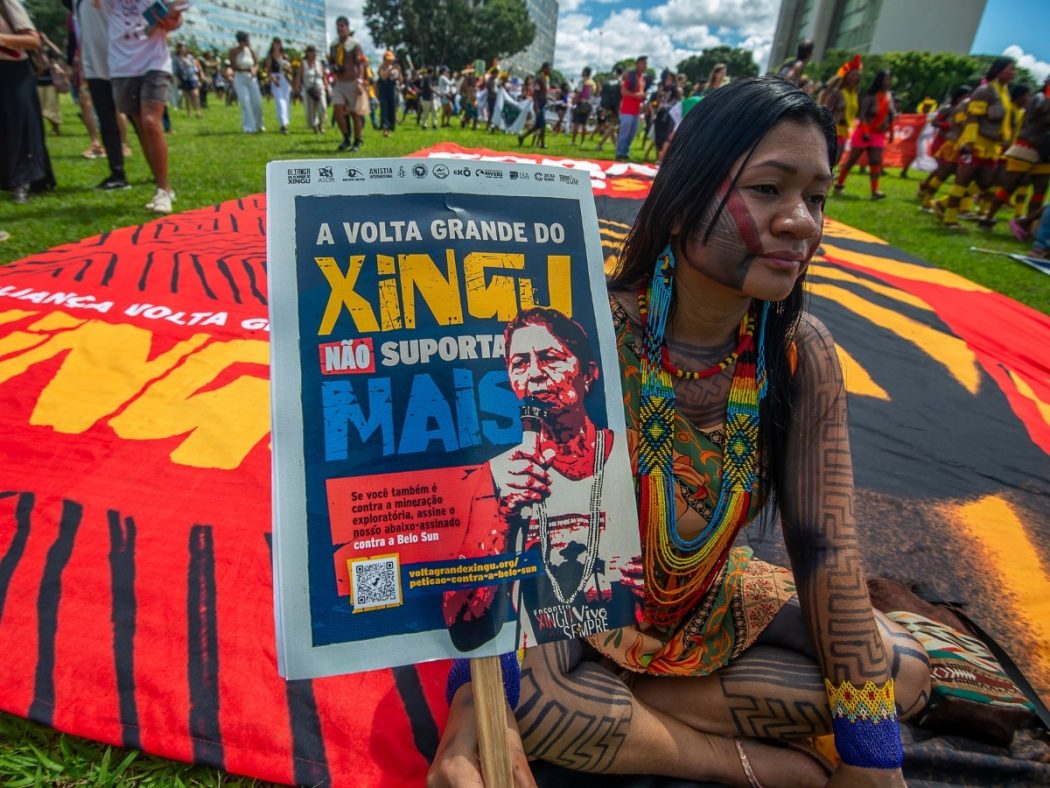
Funai revê posição adotada no governo Bolsonaro e pede suspensão da licença de Belo Sun

A Diretoria de Gestão Ambiental e Territorial (Digat) da Fundação Nacional dos Povos Indígenas (Funai) defende a suspensão ou a anulação da licença de exploração de ouro da Belo Sun na Volta Grande do Xingu, no Pará. O órgão afirma que as comunidades indígenas ainda não tiveram os possíveis impactos da mina analisados e que faltam informações sobre pontos centrais do projeto, como o uso da água, o processamento do minério e a barragem de rejeitos.

A posição consiste em um ofício enviado em 7 de agosto pela Digat à Procuradoria Federal Especializada junto à Funai. O documento foi produzido no âmbito da tentativa de conciliação conduzida pelo Tribunal Regional Federal da 1ª Região (TRF-1), que, em fevereiro deste ano, em decisão monocrática do Desembargador Flávio Jardim, restabeleceu a licença de instalação da Belo Sun.

Para a Digat, ainda existem “informações essenciais não suficientemente esclarecidas” para avaliar os impactos da mina e garantir que os povos indígenas sejam consultados conhecendo as possíveis consequências do empreendimento. Por isso, a diretoria sustenta que a licença concedida pela Secretaria de Meio Ambiente e Sustentabilidade do Pará (Semas), sem anuência da Funai, “deve ser suspensa ou anulada” até que as pendências sejam resolvidas.

Para Diogo Cabral, advogado do Movimento Xingu Vivo para Sempre, o licenciamento não deveria ter avançado enquanto essas pendências permanecessem sem solução. Ele lembra que o projeto prevê uma barragem de rejeitos com capacidade de 35 milhões de metros cúbicos e processamento de minério com cianeto próximo ao rio Xingu. Nesse cenário, afirma, cabe à empresa demonstrar a segurança e a viabilidade socioambiental da atividade, “e não ao órgão técnico justificar sua cautela”.

O advogado também contesta a possibilidade de pendências do licenciamento serem resolvidas posteriormente por meio de condicionantes. “Deixar essas exigências para ‘condicionantes futuras’ inverte a lógica preventiva do licenciamento: permite que questões que deveriam ser resolvidas antes da autorização fiquem para depois”, afirmou o advogado.

Placa da Belo Sun Mineração em território
Funai exige que Belo Sun faça uma Avaliação de Impactos Cumulativos, considerando todos os efeitos dos empreendimentos na Volta Grande

Ausência de informações

A Funai aponta indefinições no próprio desenho do Projeto Volta Grande. Segundo a Digat, há divergências quanto à captação de água e falta uma definição consolidada da estrutura de beneficiamento, na qual o minério será processado. A licença restabelecida pela Secretaria de Meio Ambiente e Sustentabilidade do Pará (Semas) também não contempla a barragem de rejeitos nem a implantação da Cava Ouro Verde, uma das áreas previstas para a extração do ouro.

Outra questão é a relação da mina com Belo Monte. A própria Norte Energia, responsável pela hidrelétrica, já apontou incompatibilidades entre os dois empreendimentos, com riscos à qualidade e à vazão da água e aos peixes, além da possibilidade de contaminação no trecho de vazão reduzida do Xingu. A empresa chegou a pedir a reavaliação do licenciamento da mina diante do “conflito entre as atividades”.

Agora, a Funai cobra da Semas uma manifestação sobre essas preocupações e exige que a Belo Sun faça uma Avaliação de Impactos Cumulativos, considerando como os efeitos dos empreendimentos podem se somar aos dos povos indígenas da Volta Grande.

Comunidades que ficaram fora dos estudos

A Funai também identificou comunidades indígenas que não haviam sido consideradas nos estudos da Belo Sun. O levantamento foi feito após um compromisso assumido pelo órgão durante a tentativa de conciliação no TRF-1 e incluiu grupos que vivem fora de terras indígenas já demarcadas.

Ao todo, foram identificadas 20 comunidades e aldeias em diferentes situações fundiárias. Seis estão na Reserva Indígena Jericoá, ainda em processo de constituição; cinco têm reivindicações territoriais registradas na Funai; e outras nove estão fora de terras indígenas demarcadas.

Entre elas estão Sítio Kanipá, Iawá, Jericoá II, Kadj, Kaniamã, Kuraí-Bom Futuro, Comunidade do Buraco, São Francisco, Jericoá, Marapaní, Pacajaí, Ilha da Fazenda, Garimpo do Galo/Vila do Galo, Vila da Ressaca, Nova Aliança, Itatá/Yta Juruna, IIA Xipaya, Debanda, Dez Irmãos e Abelardo.

A inclusão no levantamento não significa que todas sejam consideradas afetadas pela mina. A Funai afirma que os estudos ainda precisam determinar quais impactos o projeto pode provocar nessas comunidades e, a partir disso, definir até onde se estende a área de influência do empreendimento.

A questão atinge uma reivindicação antiga de indígenas da Volta Grande que ficaram fora do processo de licenciamento por viverem em áreas ainda não formalmente reconhecidas como terras indígenas.

“Somos contra qualquer empreendimento que venha a destruir o nosso território. […] A nossa luta sempre foi pelo reconhecimento do nosso povo, porque somos indígenas e sempre vivemos aqui na Volta Grande do Xingu”, afirma Claudevan da Silva Santos, indígena Juruna e integrante do Movimento dos Indígenas Não Aldeados da Volta Grande do Xingu (MINDVGX).

Para Liana Amin Lima, professora da Universidade Federal da Grande Dourados (UFGD), a situação fundiária dessas comunidades não afasta seu direito de participar da consulta.

“A Convenção 169 da OIT não restringe os direitos à consulta prévia a povos aldeados ou a povos cujos territórios estejam reconhecidos, titulados, demarcados e/ou homologados”, afirma.

Um dos casos destacados pela Funai é o da comunidade São Francisco, do povo Juruna, localizada próxima à área prevista para a mina. O órgão cobra que a Belo Sun esclareça a possibilidade de realocação da comunidade, mencionada nos estudos do empreendimento, e avalie os impactos dessa eventual mudança.

ex-presidente da Funai, Marcelo Xavier
O ex-presidente da Funai, Marcelo Xavier, foi o principal executor de uma política indigenista amplamente classificada por servidores, lideranças e entidades internacionais como anti-indígena

A mudança de entendimento durante o governo Bolsonaro

A exclusão de indígenas que viviam fora de terras formalmente reconhecidas já havia sido questionada na própria Funai seis anos antes. Em julho de 2020, técnicos do órgão consideraram inapto o Estudo do Componente Indígena (ECI) apresentado pela Belo Sun e apontaram essa questão como uma das pendências que impediam o avanço do licenciamento.

A Belo Sun defendia que esses indígenas, então tratados no processo como “desaldeados”, fossem incluídos no Plano Básico Ambiental Geral, destinado ao conjunto da população atingida pelo empreendimento, e não no componente específico destinado aos povos indígenas. A equipe técnica da Funai discordou e cobrou que a empresa identificasse essas comunidades e avaliasse os impactos da mina sobre elas.

O parecer também mantinha outras pendências, entre elas a situação de Ituna-Itatá, área protegida devido à presença de indígenas isolados. A Belo Sun defendia que o território ficasse fora da área de influência do empreendimento; técnicos da Funai apontavam riscos relacionados à chegada de mais de 2 mil trabalhadores, à pressão fundiária e à aproximação dos grupos isolados.

Foi para discutir as conclusões desse parecer que representantes da Belo Sun e da JGP Consultoria, contratada pela mineradora para elaborar o estudo, foram à sede da Funai, em Brasília, em 1º de outubro de 2020.

A reunião ocorreu durante o governo Jair Bolsonaro, sob a gestão do delegado da Polícia Federal Marcelo Xavier, que presidiu a fundação entre 2019 e 2022. Em 2025, Xavier foi condenado, em primeira instância, a 10 anos de prisão por perseguir e intimidar servidores do órgão. Da decisão ainda cabe recurso.

Sua gestão à frente da Funai foi marcada pela aproximação aos interesses do agronegócio e foi classificada como ‘anti-indígena’ pela Articulação dos Povos Indígenas do Brasil (Apib), que chegou a pedir seu afastamento na Justiça. Segundo a entidade, durante sua presidência, o órgão paralisou processos de demarcação – sem novas terras indígenas homologadas entre 2019 e 2021 –, restringiu a atuação na defesa das comunidades e adotou medidas que facilitaram a certificação de propriedades privadas em áreas indígenas ainda não homologadas. 

O encontro foi conduzido por Carla Fonseca de Aquino Costa, servidora do Ibama cedida à Funai, que à época comandava a Coordenação-Geral de Licenciamento Ambiental, responsável pela análise dos impactos de empreendimentos sobre os povos indígenas. Sua gestão foi marcada por manifestações que apontavam que sua atuação, durante a gestão de Marcelo Xavier, havia sido pautada por decisões que fragilizaram a proteção aos povos indígenas e favoreceram o avanço de processos de licenciamento ambiental contestados.

Segundo a ata da reunião, a Belo Sun voltou a defender que os indígenas considerados “desaldeados” permanecessem no PBA Geral e que Ituna-Itatá ficasse fora da área de influência da mina. Ao final do encontro, a coordenação, comandada por Carla, permitiu que a empresa apresentasse esclarecimentos complementares e manteve a análise do processo em andamento.

Trinta dias depois, uma nova informação técnica alterou parte das conclusões de julho. Questões antes consideradas impeditivas deixaram de ser impeditivas para o licenciamento. O novo documento aceitou que os indígenas fora de terras regularizadas fossem tratados no PBA Geral e manteve Ituna-Itatá fora da área de influência da mina. Outras pendências poderiam ser resolvidas nas etapas seguintes, conforme os documentos obtidos pela Agência Pública.

A mudança abriu caminho para que, em 2021, a Funai considerasse atendidas as exigências relativas ao estudo indígena e à consulta realizada com os povos Juruna e Arara. Foi esse entendimento que, cinco anos depois, passou a integrar os fundamentos utilizados pelo TRF-1 para restabelecer a licença da Belo Sun.

Agora, a própria Funai volta a exigir que as comunidades fora de terras demarcadas sejam consideradas na análise dos impactos do empreendimento. O documento de agosto cita, inclusive, o parecer técnico de julho de 2020 entre as referências para a complementação dos estudos.

Para Liana Amin, limitar a análise à distância física entre a mina e Ituna-Itatá ignora justamente os impactos indiretos que motivaram a manifestação da equipe técnica da Funai.

“A invisibilização de povos isolados e dos impactos diretos e indiretos sobre esses povos e territórios é algo gravíssimo, pois ameaça o direito à existência, colocando em risco a sobrevivência física e cultural desses grupos”, afirma.

A pesquisadora ressalta que a Resolução nº 44/2020 do Conselho Nacional dos Direitos Humanos recomenda, como diretriz oficial de direitos humanos, que, confirmada a presença de povos isolados em áreas de impacto direto ou indireto, o processo de licenciamento seja suspenso e a obra seja considerada inviável.

Leia a resposta completa da Belo Sun aqui

A reportagem tentou contato com o ex-presidente da Funai, Marcelo Xavier, mas não obteve resposta. Carla Fonseca de Aquino Costa não foi localizada para comentar.

Questionado sobre a atuação da servidora, o Ibama afirmou que os atos praticados por ela durante o período em que esteve na Funai são de responsabilidade funcional da própria servidora e da Funai. O órgão acrescentou que Carla não exerce atualmente cargo ou função no Ibama e que estaria cedida à Companhia Ambiental do Estado de São Paulo (Cetesb).

A Cetesb, porém, informou que solicitou a cessão da servidora, mas que o processo administrativo para formalizá-la ainda não havia sido concluído. A Funai não se manifestou sobre a atuação de sua ex-coordenadora de licenciamento ambiental.

  •  
❌