❌

Reading view

Airmen Under Fire: Stories From Iranian Barrages On U.S. Bases

Air Force Chief of Staff Gen. Kenneth S. Wilsbach offered some new insights on Monday into the challenges faced by airmen during Operation Epic Fury as Iranian missiles and drones rained down on them. His comments came during a keynote speech at the Air & Space Forces Air, Space and Cyber Symposium that TWZ is attending. 

“Since becoming the chief, I’ve had the privilege of spending time with airmen throughout CENTCOM [U.S. Central Command],” said Wilsbach, who assumed the position in November. “I have walked flight lines, visited maintenance hangars, and stood inside operations centers where young Americans were managing missions overhead. Let me tell you about a few courageous airmen I met on my recent trip to the Middle East. They told me about their experience on the flight line during an attack.”

Burning Hangar

“As missiles were inbound, airmen sprinted toward bunkers,” the service chief said, without providing details about which base. “Moments later, a missile struck nearby in a hangar, and the aircraft inside burst into flames. The bunker withstood the blast, but the force of the impact damaged the door so badly it wouldn’t open, trapping the airmen inside.”

“Picture the scene,” Wilsbach explained. “Fire was spreading, an aircraft was burning only feet away, their teammates were trapped inside, and they had no way out. Despite the danger, airmen ran toward the flames.”

“A security forces NCO grabbed a pry bar and forced the door open,” he continued. “Calmly communicated with the airmen trapped inside. Seconds later, the ejection seat on the burning aircraft ignited, sending glass and metal fragments through the air. Finally, the door gave way, and the airmen escaped and ran for cover.”

“Wherever I went, I saw airmen with that steely-eyed look of warriors, determined to get the mission done and protect their fellow airmen,” the chief noted. “More than 30,000 airmen deployed in support of Epic Fury to a dozen locations. They served alongside soldiers, sailors, Marines, Guardians, and Coalition partners.”

Launching F-15Es Under Fire

“Operation Epic Fury will be studied for its scale, precision, and speed,” said Wilsbach. “Over 38 days of combat operations, the Joint Force struck more than 13,000 military objectives. Five hundred aircraft executed 10,000 sorties, an average of more than 250 sorties every day. Our airmen accomplished this through 1,200 alarm reds while executing 48 airfield repairs and completing more than 420 reportable explosive ordnance disposal, long lonely walks.”

“That walk is exactly what the name suggests,” Wilsbach proffered. “EOD technician leaving a place of relative safety and approaching a suspected bomb or unexploded munition to render it safe for everyone else.”

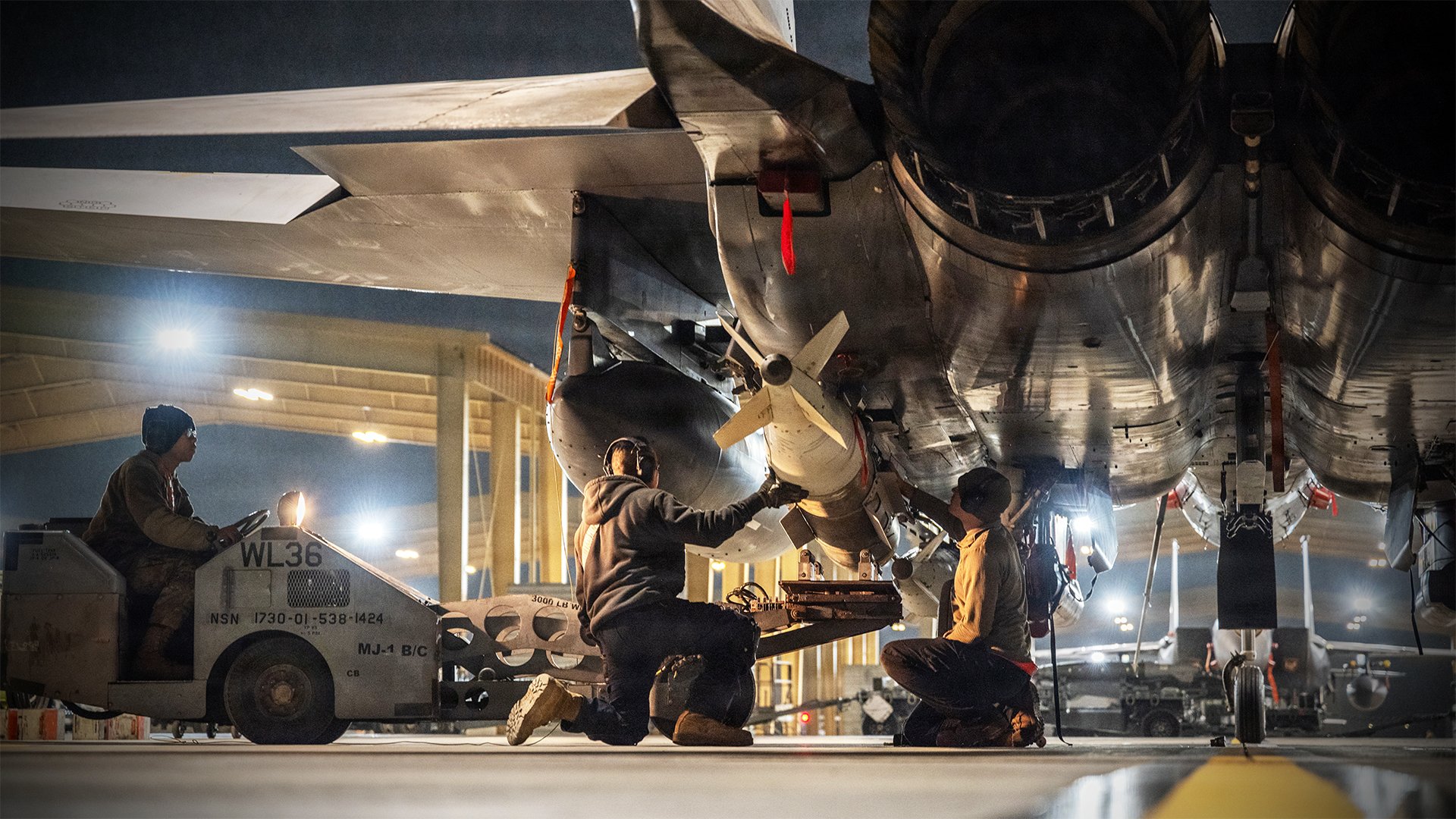
“Behind those numbers were thousands of decisions made by airmen who had to keep the mission moving while the enemy was actively trying to stop them,” Wilsbach stated. “One was Garrett, a staff sergeant F-15E crew chief from East Texas. He joined the Air Force to travel and see the world. We sure allowed him to achieve that goal, but I’m not sure the Middle East was exactly what he had in mind. On the second day of Epic Fury, Garrett was on the flight line launching four Strike Eagles when alarm red sounded. Airmen around him started running for shelter. Garrett’s adrenaline spiked. He knew exactly what that alarm meant. Danger was inbound, but his launch was not complete.”
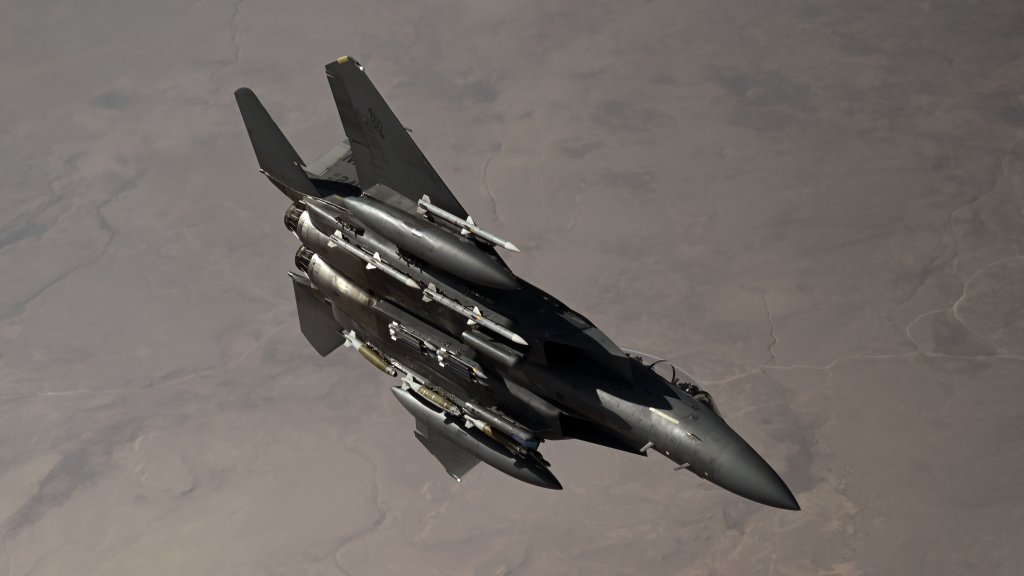
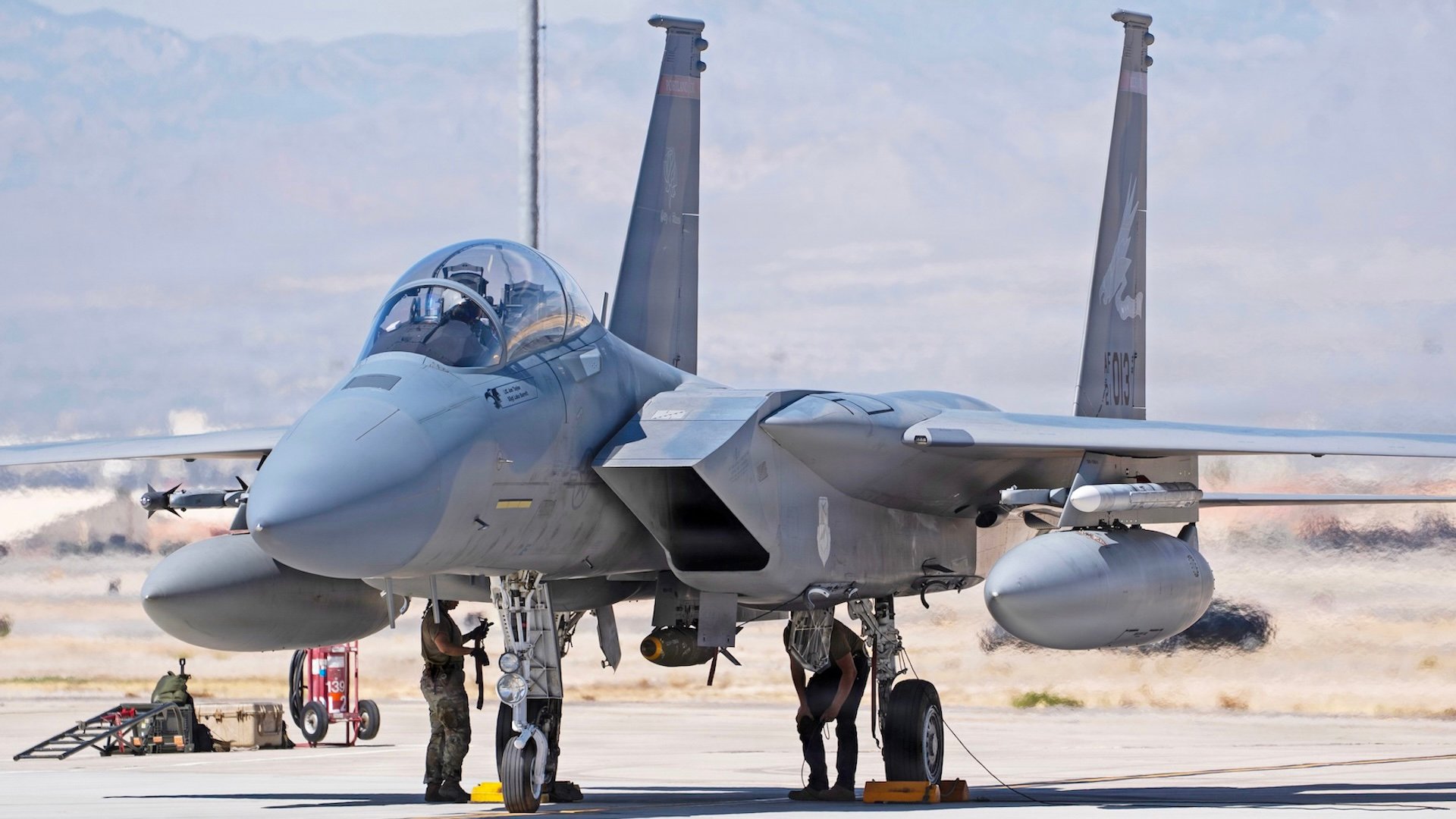
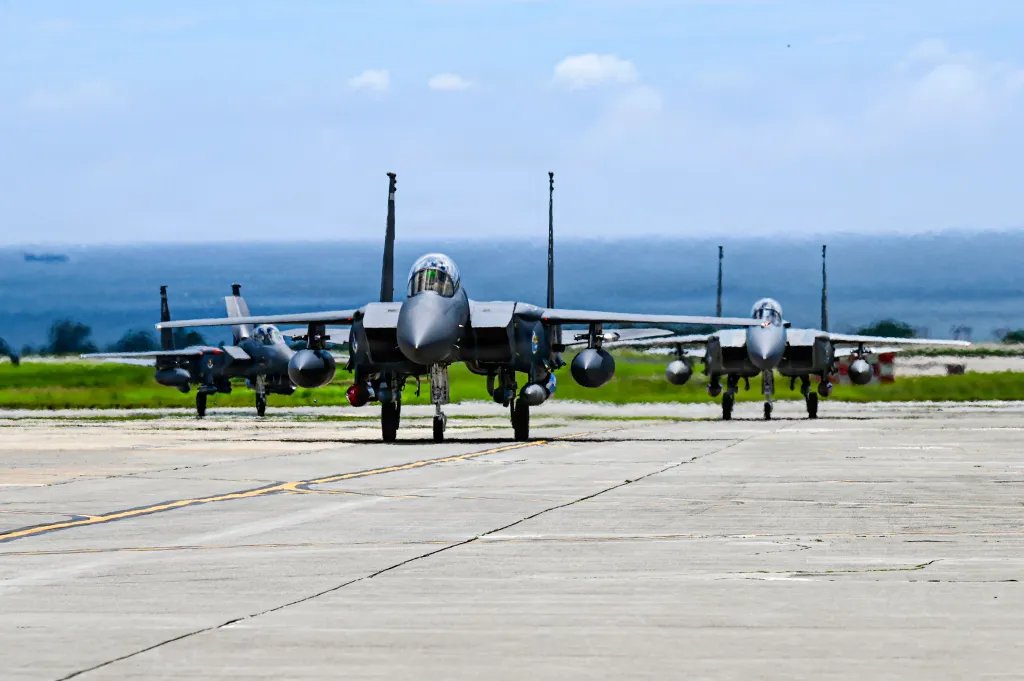
A U.S. Air Force F-15E Strike Eagle conducts a routine combat air patrol over the U.S. Central Command area of responsibility, Jan. 24, 2025. The F-15E is deployed within the CENTCOM AOR to help defend U.S. interests, promote regional security, and deter aggression in the region. (U.S. Air Force photo by Staff Sgt. Gerald R. Willis)
A U.S. Air Force F-15E Strike Eagle in the CENTCOM region. (U.S. Air Force photo by Staff Sgt. Gerald R. Willis) Tech. Sgt. Gerald Willis

“A young airman was working with him, and Garrett sent him to the bunker,” the service chief continued. “Garrett stayed. The rest of the team was separated, so he armed the weapons and cleared the jet. Proceed… While everyone else ran for cover, he decided to stay. Garrett understood why those Strike Eagles were in theater. He knew they were one of their best lines of defense, so he stayed until the job was done. Only after the last fighter taxied out, Garrett finally took cover. Later, when someone asked why, his answer was simple: his fellow airmen needed those airplanes in the air.”

Swatting Down Drones Under Fire

“Hundreds of miles away, two senior airmen, Shanae and Nolan, tracked a swarm of enemy drones headed toward their base,” Wilsbach pointed out. “Shanae joined the Air Force to provide for her family. During the opening days of Epic Fury, she found herself protecting another family – the hundreds of airmen depending on her.”

“People sprinted for shelter as alarm red announced an incoming attack, but Shanae and Nolan stayed focused on the screens in front of them because every inbound track could be a weapon aimed at their teammates,” the general said. “Shanae is 27 years old, and Nolan is 21. Think about the responsibility we placed on these two airmen. Hundreds of lives depended on them to identify the threats and employ countermeasures. Every second mattered. The stakes were life and death. Together, Shanae and Nolan achieved more than 10 surface-to-air kills that night, defeating threat after threat before it could reach the airmen they were protecting. There were moments when they were afraid, and most people would be, but courage is not the absence of fear. Courage is overcoming it. They stayed locked on, trusted their training, and did the job everyone around them was counting on.”

Picking Up The Pieces After An Attack

“Peter is a senior airman from New York who spent nine months in the Middle East as an air transportation airman,” Wilsbach said. “With his team, he moved heavy ordnance, prepared missile systems, and downloaded Patriot equipment, while ballistic missiles and attack drones repeatedly target their airfield.”

“One of those attacks became very personal,” the service chief noted. “Enemy fire destroyed Peter’s living quarters and nearly everything he had brought from home. Imagine coming back after a 12-hour shift to find the wreckage of your hooch. The few pieces of home he carried halfway around the world were gone. Peter’s response told me everything I needed to know about him. He said that his possessions could be replaced, but the mission could not.”

Keeping The Reapers Flying

“More than 4,000 dynamic targets had to be found, identified, validated, and engaged,” Wilsbach said. “Remotely piloted aircraft, airborne ISR platforms, cyber operators, space professionals, and countless others turn enormous amounts of data into intelligence commanders could use.”

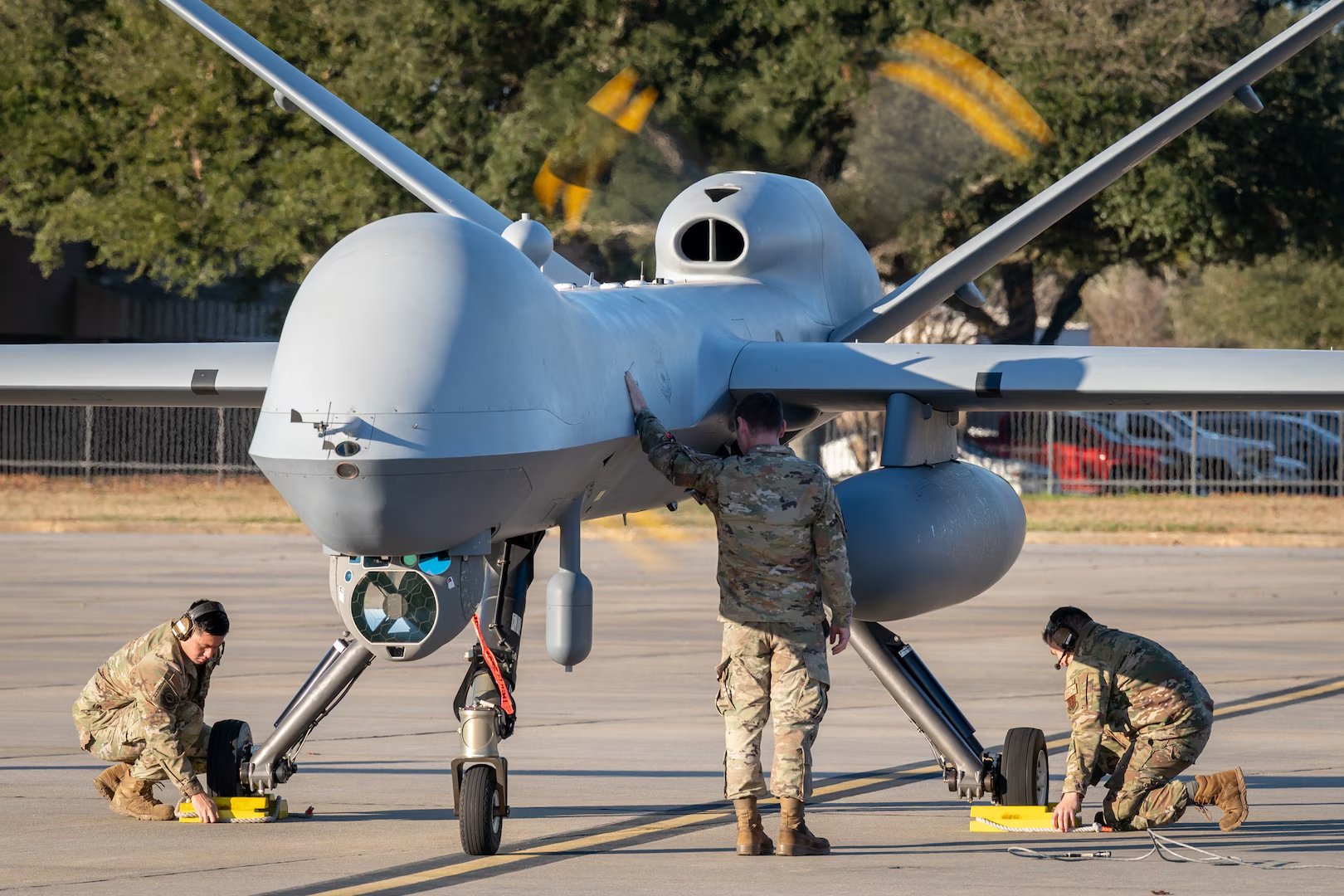
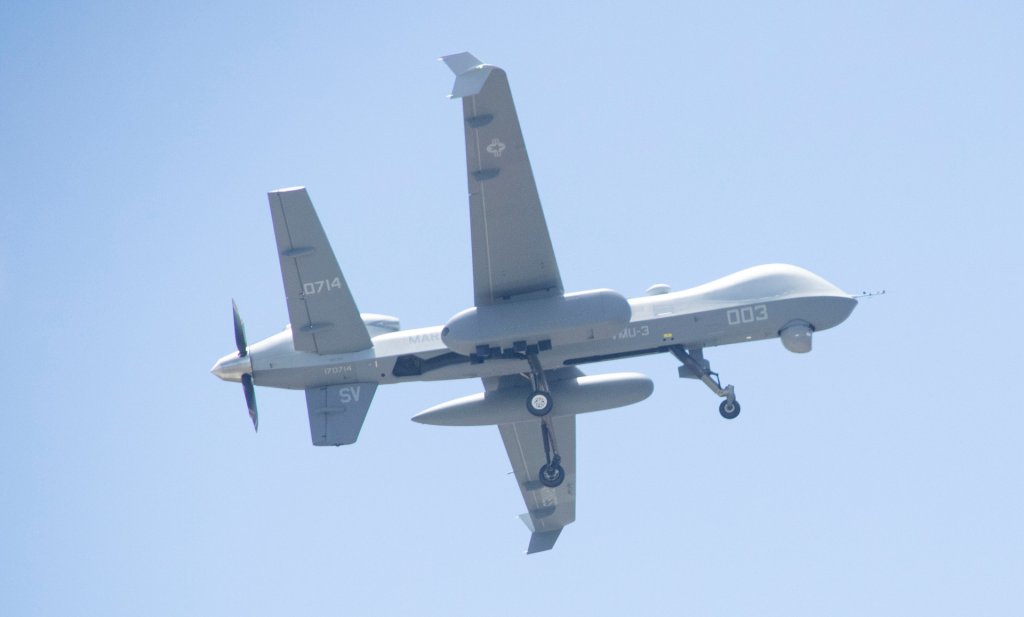
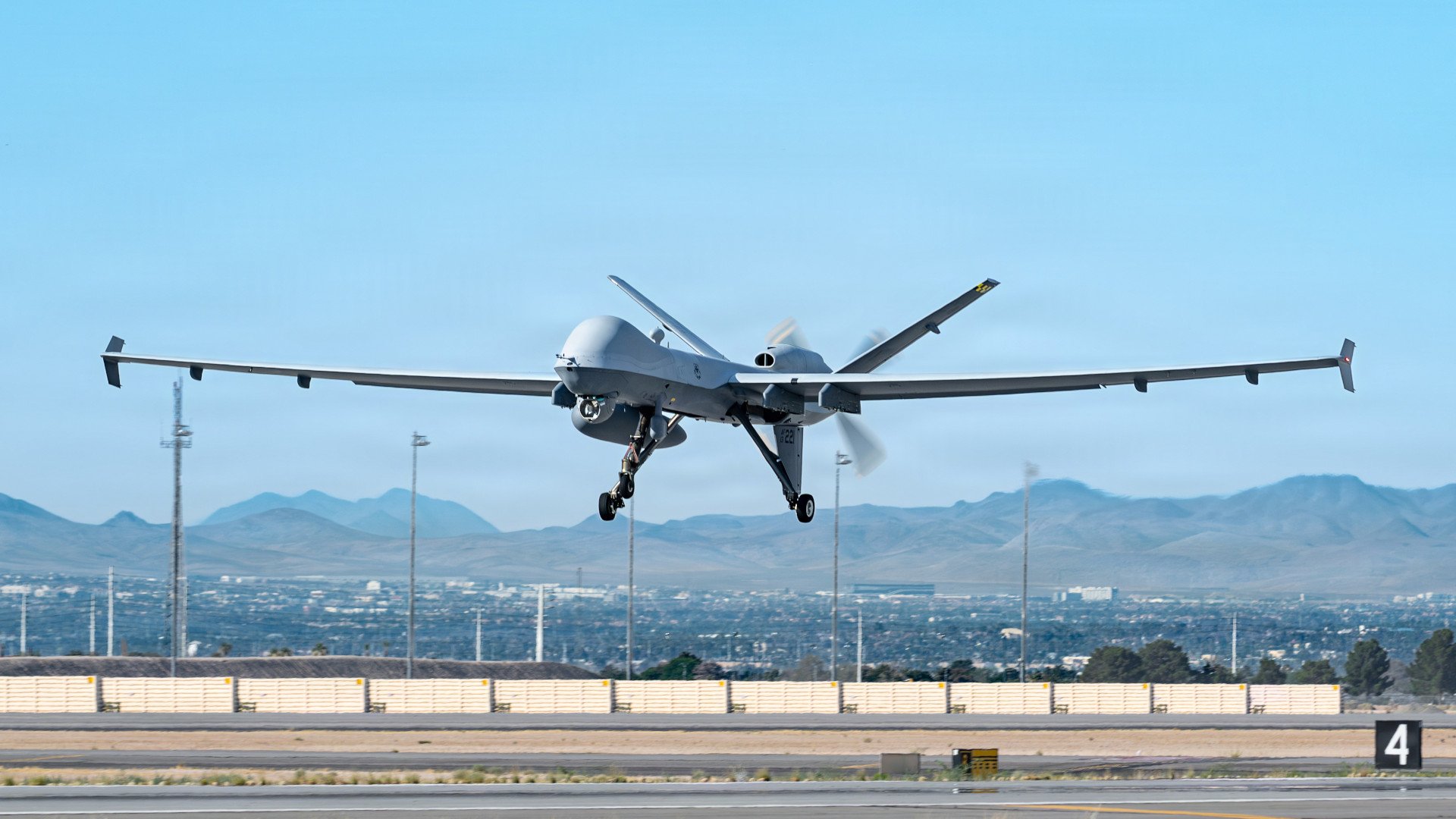
“Suit is a first lieutenant with a family tradition of excellence,” Wilsbach said of one MQ-9 Reaper pilot. “Both of his grandfathers served in the Army. I’m sure they wanted a better life for their kids, which is why his parents chose the Air Force. Today, Suit flies the MQ-9 and carries his family tradition forward. He also scored a perfect 100 on its physical assessment this year, so apparently excellence runs in the family.”
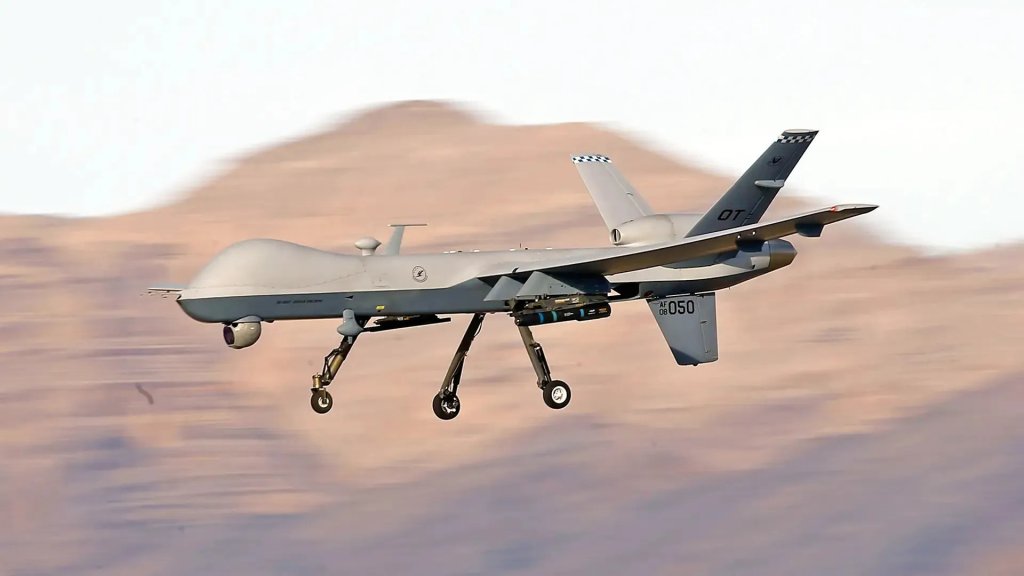
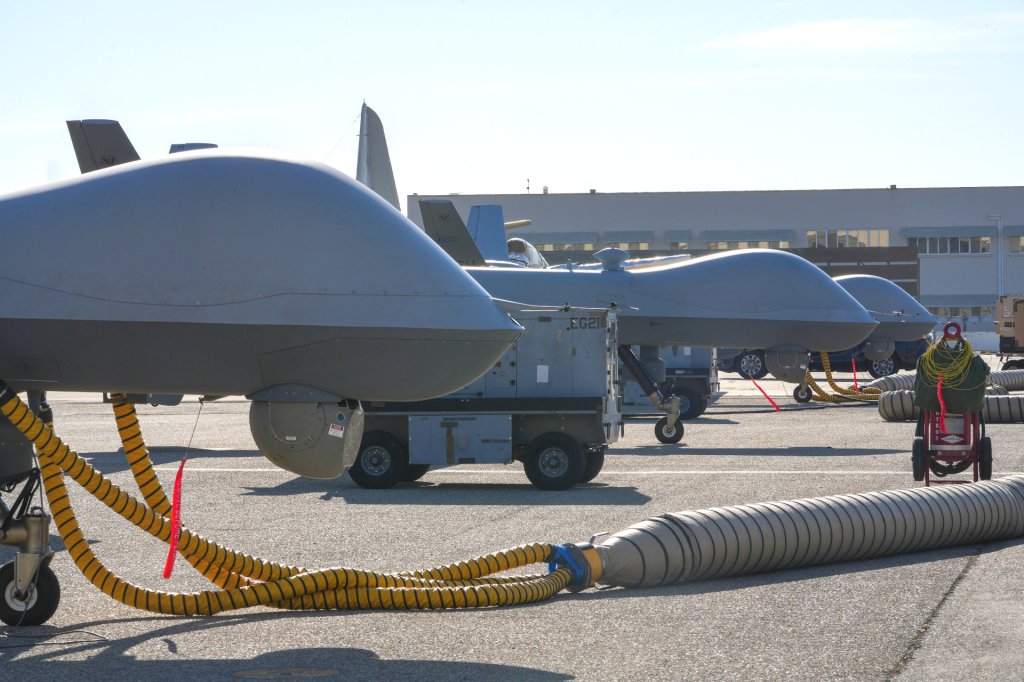
MQ-9 Reaper (USAF)

“MQ-9s flown by pilots like Suit supplied critical ISR and kinetic strike capabilities, launching them from bases within range of enemy fires,” said Wilsbach. “Suit planned and launched an MQ-9 combat sortie during an active attack. While missiles hit the airfield, Suit taxied out and got his Reaper airborne. He handed off control to another crew, then switched to the ground control station to recover a different MQ-9. His crew destroyed a priority target and then turned their sensors back toward their own airfield to inspect the runway for damage and determine whether operations could continue.”

“The MQ-9 was a workhorse for combatant commanders during Epic Fury. It provided real-time intelligence, struck 860 targets, and gave our forces the edge while denying the enemy freedom of movement. Airmen-like Suit made sure this asset stayed in the fight and maximized its impact. The MQ-9 success demonstrates the need for a capable follow-on aircraft that achieves the same effects with greater survivability, adaptability, and at a lower cost.”

Rescuing An F-15E Crew Shot Down Over Iran

“Peaches is an air battle manager from Texas,” the chief stated. “During Epic Fury, she found herself in the middle of a story of her own her family will be telling for generations. Peaches led 134 joint and coalition operators responsible for command and control across a complex battle space. Her team supported operations involving more than 1,000 one-way attack drones and 1,200 enemy ballistic missile threats. Those numbers are difficult to comprehend, but for Peaches, command and control was not a collection of symbols moving across the screen.”

“Every symbol represented something real: an aircraft, a threat, a crew, an airman,” he explained. “It was during this time two of those airmen became isolated inside of Iran. What followed became one of the defining moments of the operation. Over 50 hours, Peaches was one of the many who coordinated the combat search and rescue effort, leading her team to integrate 176 aircraft, fighters, bombers, tankers, intelligence platforms, and Air Force Special Operations Command forces that converged on one objective: bringing those Americans home.”

MUST WATCH: The extended @60Minutes interview with DUDE 44 Bravo https://t.co/HZUr7D4Svk pic.twitter.com/OUrlK072XP

— Rapid Response 47 (@RapidResponse47) September 14, 2026

“Think about the complexity of that problem,” Wilsbach noted. “Aircraft operating at different speeds, altitudes, fuel states, with different sensors, weapons, and responsibilities, while an adversary was actively trying to stop them. Maintenance teams generated additional fighters. Tanker crews extended the range and endurance of the force, intelligence professionals track the threats. AFSOC [Air Force Special Operations Command] airmen brought specialized capabilities need[ed] to reach out to our isolated teammates and get them out. Every one of those airmen was doing something different, yet all were contributing to the same mission.”

“The Dude 44 rescue demonstrates why integration matters,” Wilsbach added. “To someone outside of our profession, committing that much combat power to recover two people might appear extraordinary. To an airman, the reason is simple: we make a promise to one another in our Airman’s Creed. I will never leave an airman behind. If you are isolated, injured, or trapped behind enemy lines, we are coming to get you. The courage and performance displayed during that mission was so impressive that 10 airmen received battlefield promotions. I had the distinct honor of promoting six of those heroes, ranging from staff sergeant to chief master sergeant during a recent trip. Everyone understood that their success depended on someone else doing their job. That is how our air and space forces fight.”

Contact the author: howard@twz.com 

The post Airmen Under Fire: Stories From Iranian Barrages On U.S. Bases appeared first on TWZ.
  •  

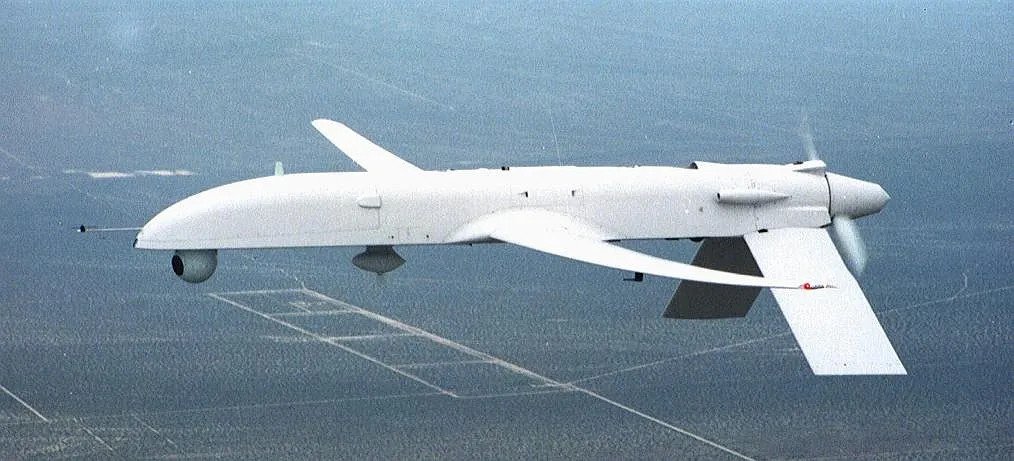
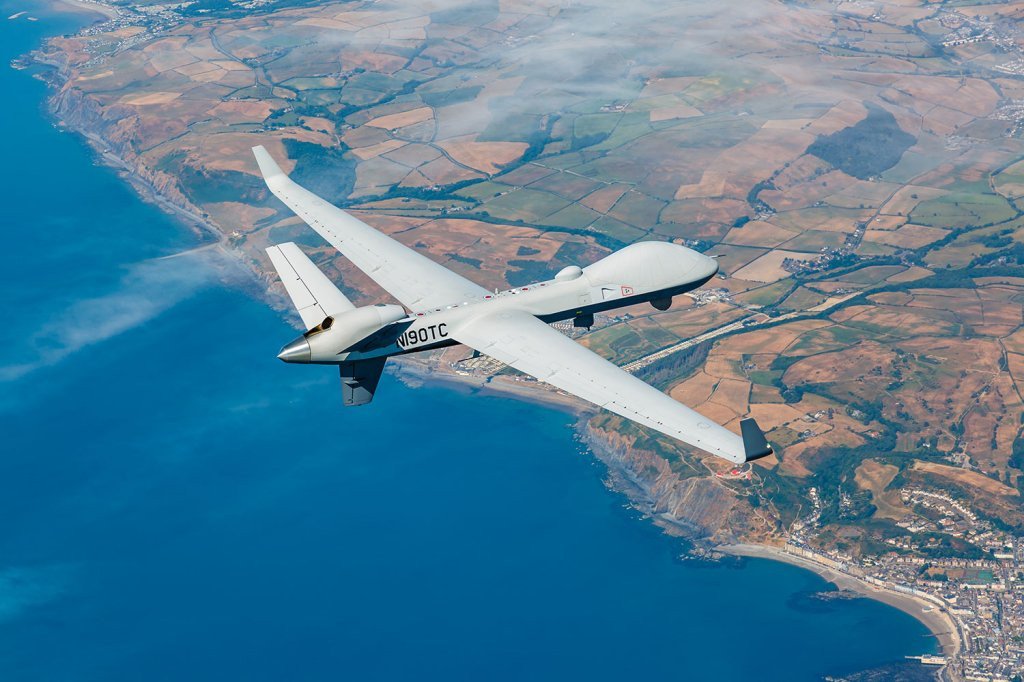
Cheaper Reaper? Swarm Aero Unveils Gamera

After the U.S. lost dozens of its MQ-9 Reaper drones to fighting in Iran, newcomer drone-maker Swarm Aero announced Monday that it had developed a drone in the same medium altitude, long-endurance (MALE) class, capable of executing swarm missions and cheap enough to afford losing, even in large numbers. This comes as the USAF is looking for a cheap replacement for the Reaper, targeting just a fraction of the MQ-9’s cost, at $10M per copy.

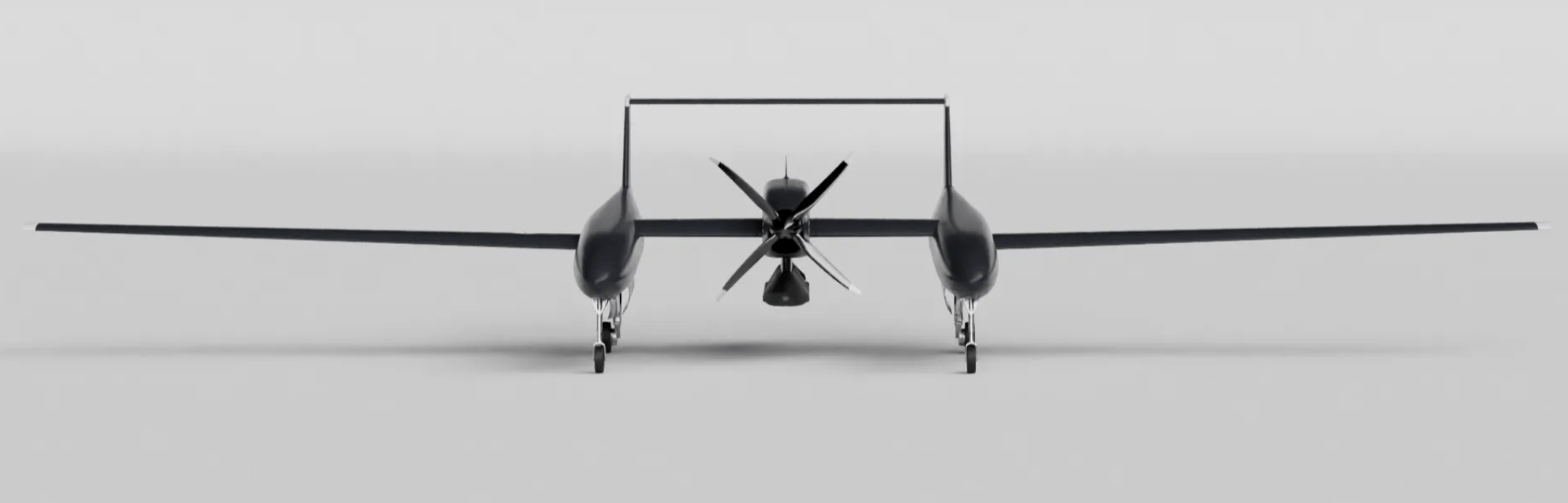
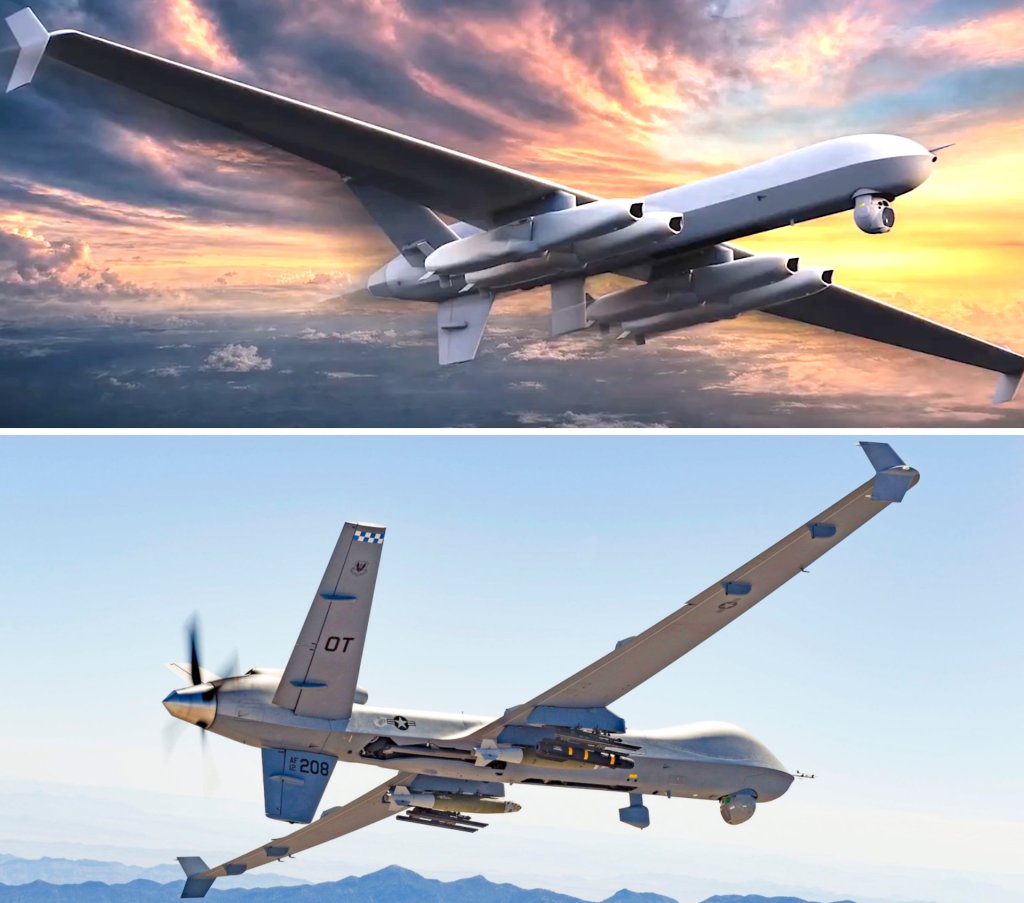
Called Gamera, the new drone, built from a clean-sheet design, has a wingspan of about 72 feet, a payload capacity of 2,800 pounds, a “Pacific-spanning” unrefueled range of 9,000 miles and a combat radius of 2,300 miles with “hours” of on-station time once at its patrol area. Kitted-out Reapers, which reportedly cost $30-50 million apiece, have a payload capacity of up to 3,800 pounds. 

Meet Gamera, a new category of Group 5 strike and sensing UAS that we unveiled at @AFA_Air_Space's Air, Space & Cyber Conference today.

Mass-producible, significantly lower cost than legacy platforms, and the first UAS specifically designed to employ bomber-class strike… pic.twitter.com/UhT9bgcTPn

— Swarm Aero (@SwarmAero) September 14, 2026

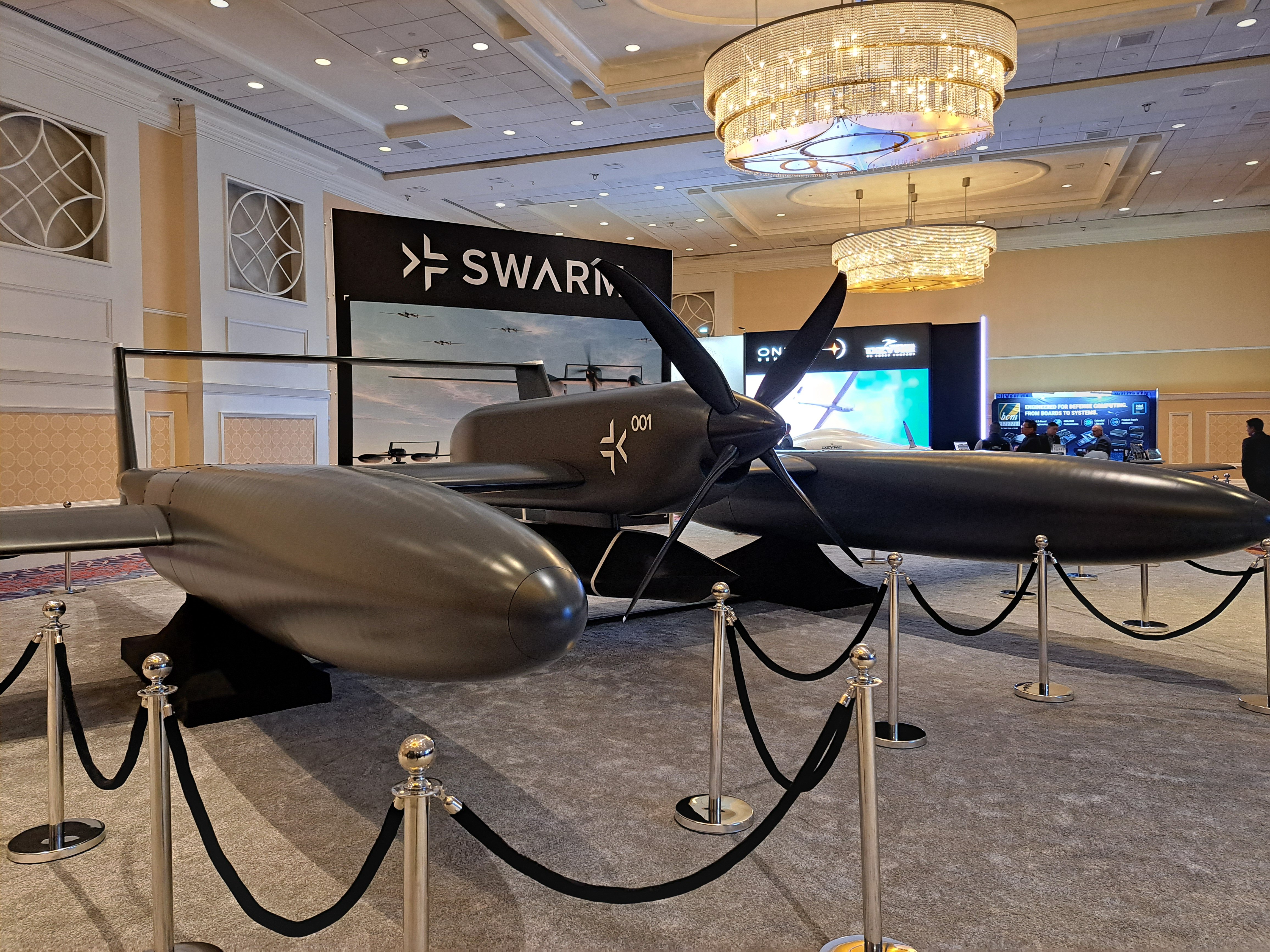
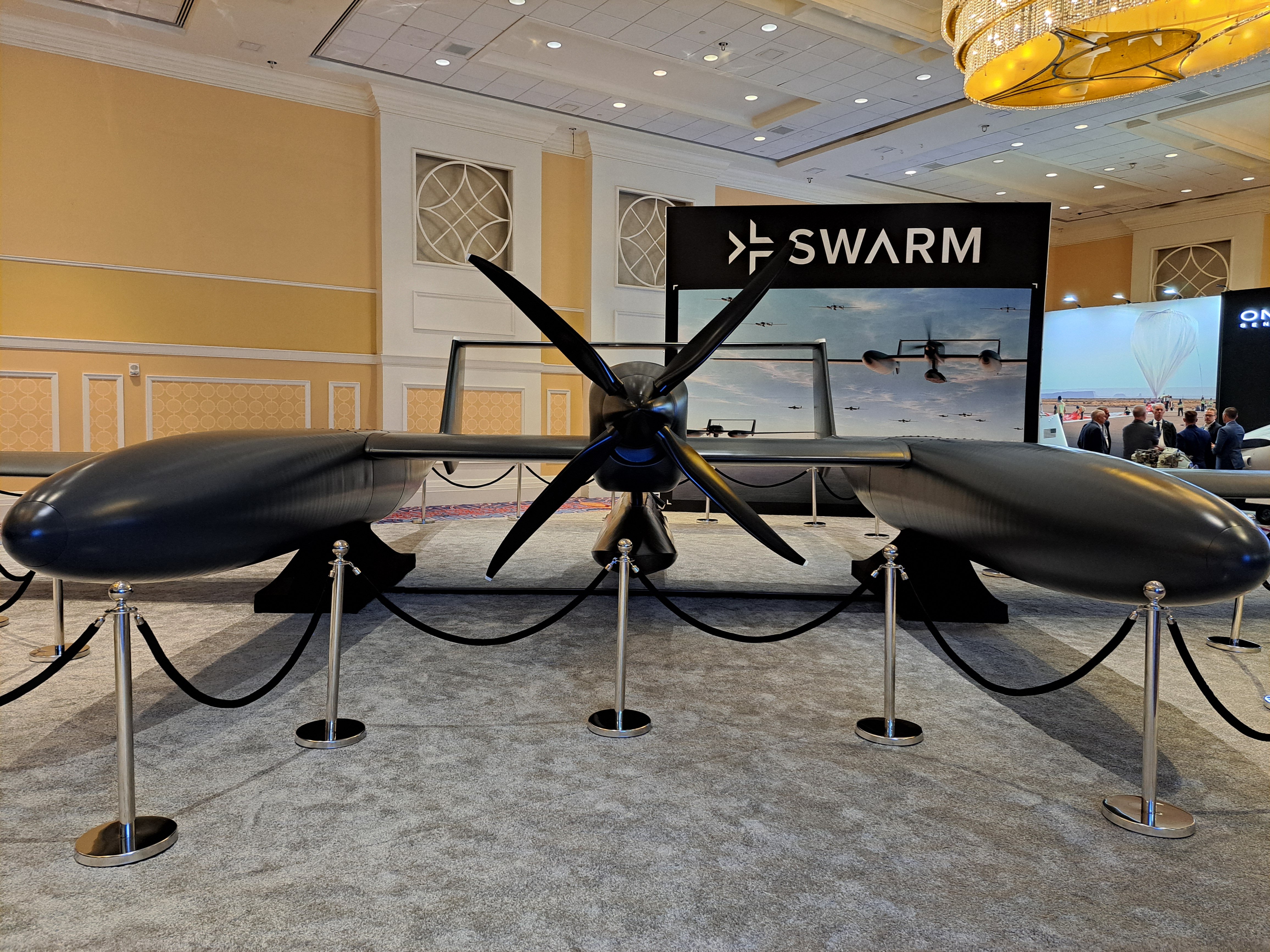
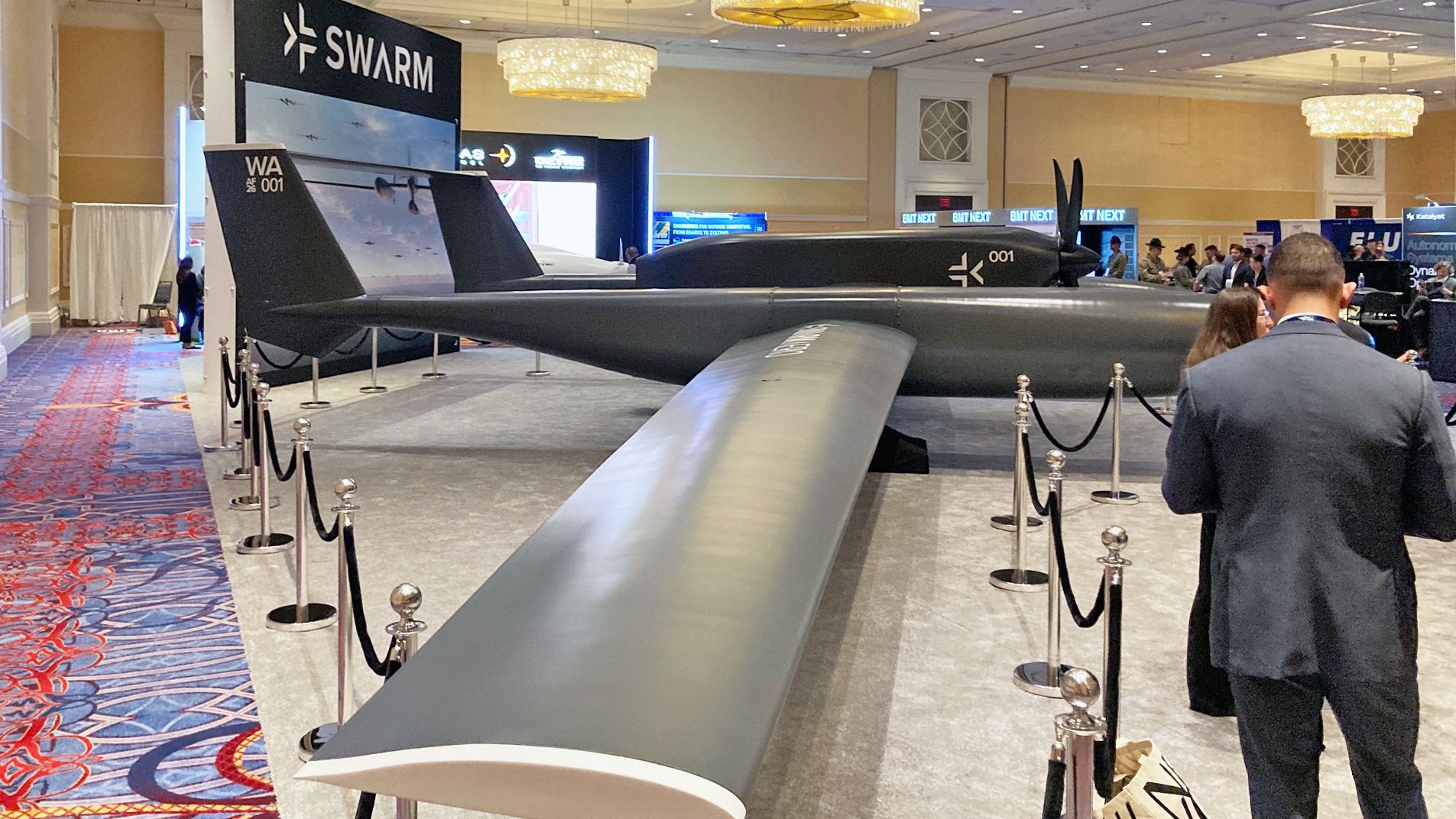
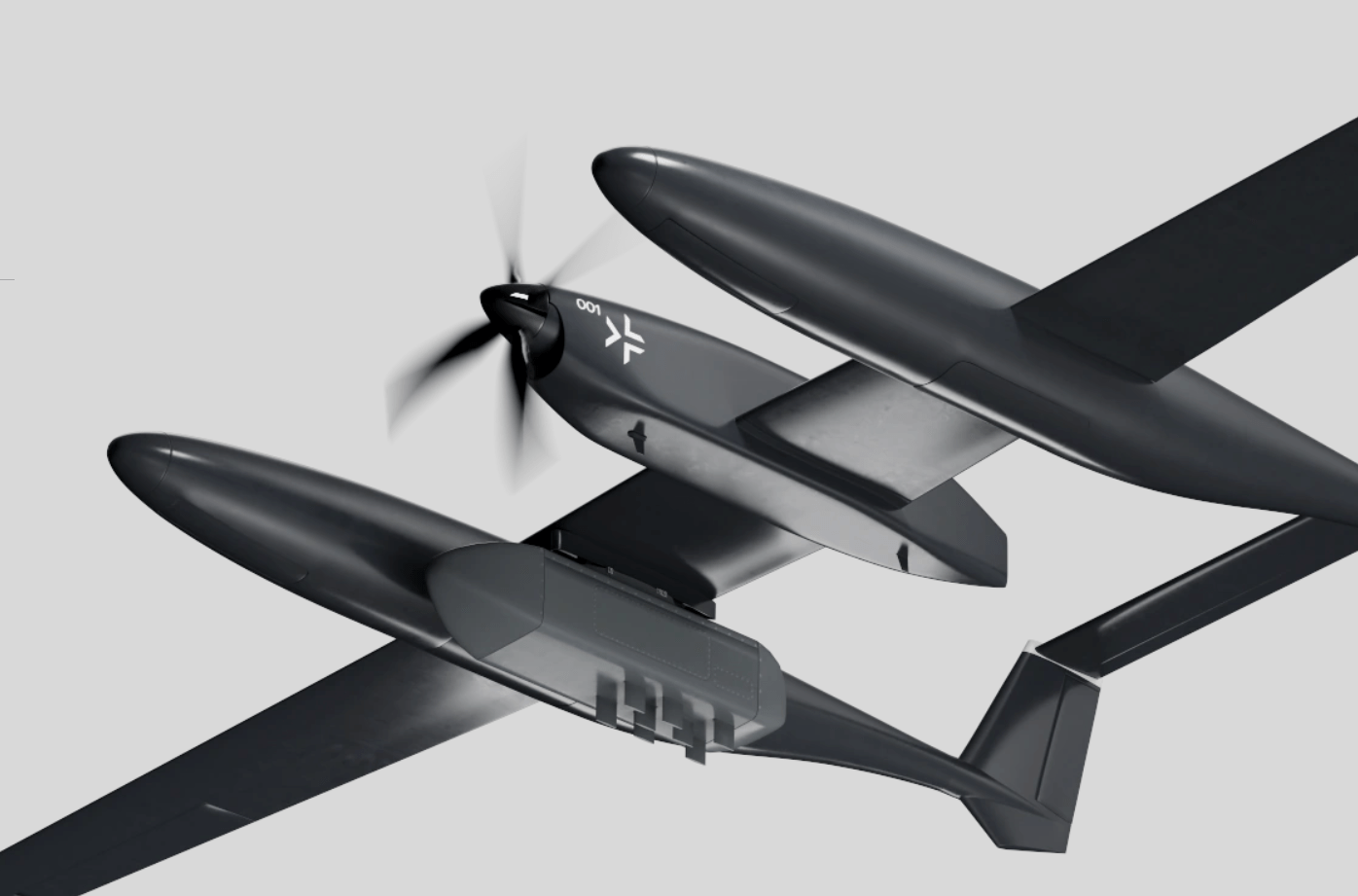
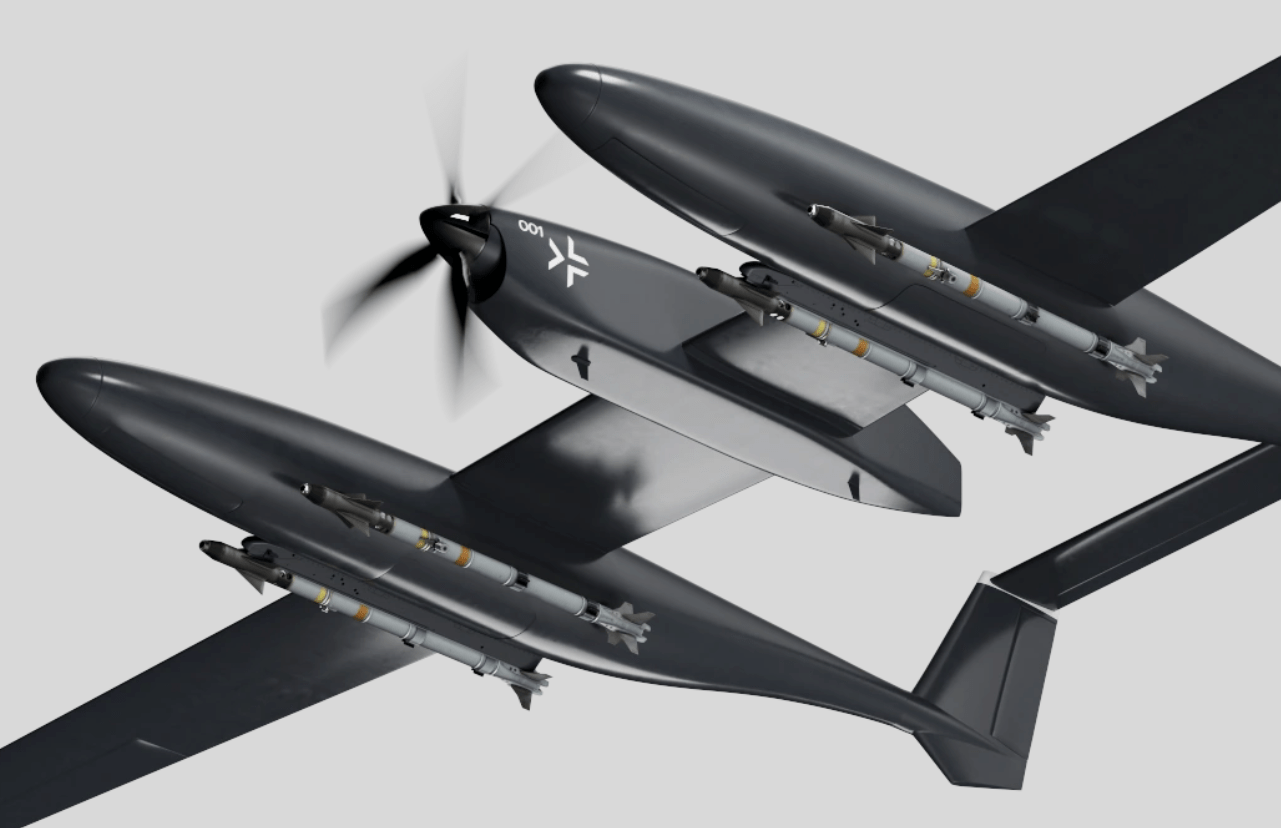
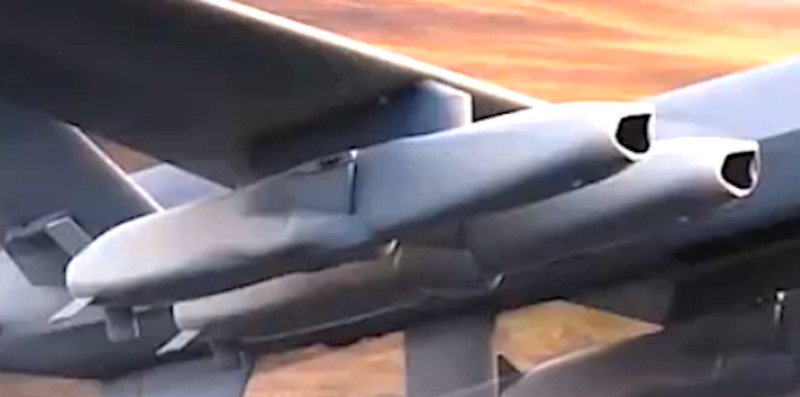
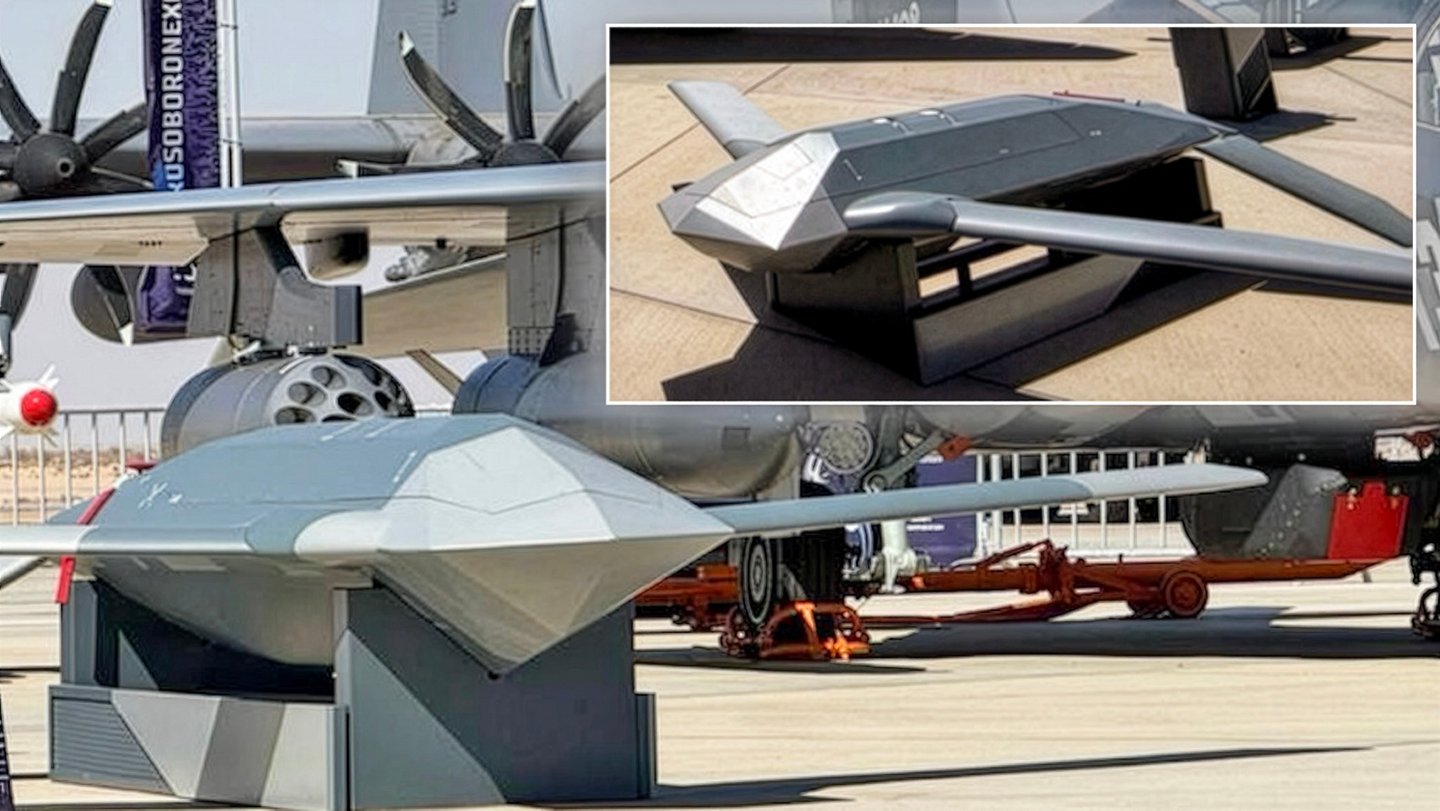
A mockup unveiled at the Air & Space Forces Association’s Air, Space & Cyber Conference in Washington, D.C., underscores the aircraft’s large wingspan and showcases its unique design that is built for cost efficiency, above all else. It features a single propeller, like the Reaper, a central fuselage and hardpoint, large fuel cells in sponsons on either side and an OV-10 Bronco-style twin-boom t-tail.

Gamera at Air, Space & Cyber 2026. (Eric Tegler)
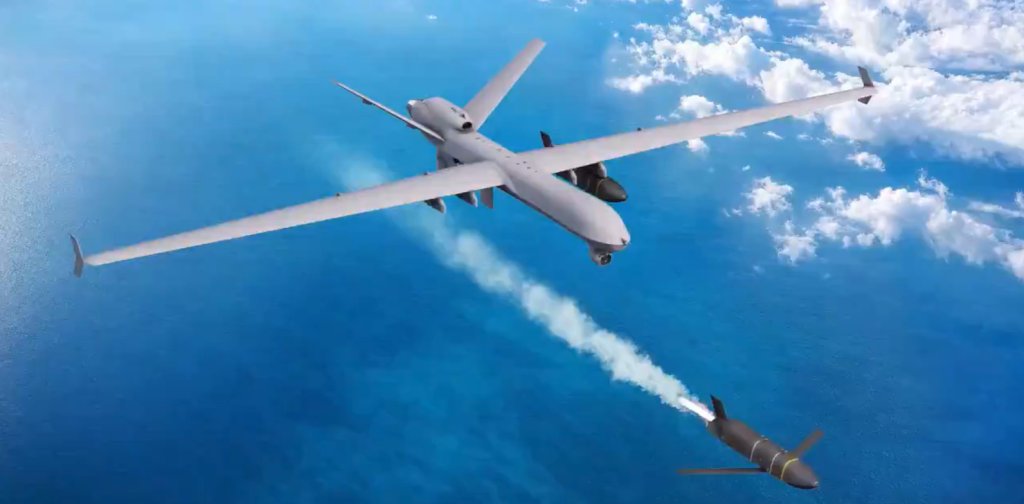
Gamera with a JASSM-ER mockup attached to its centerline hardpoint. The aircraft has seven stores stations in total. (Hope Hodge Seck)

These general design choices were made for efficiency and practicality, Peter Kalogiannis, CEO of Swarm Aero, said in an interview on the show floor.

“The Bronco tail is really there to provide us that flexibility. So it allows us to use a variety of payloads, whether they’re released, whether they’re rocket-powered, and it really gives us it… it really sets into the flexibility goal here, which is we can carry a whole bunch of different payloads, whether they’re strike, whether they’re sensing,” he said. “And it’s also easy to manufacture, right? It’s straightforward, and that’s a design decision that again we’ve made everywhere across the design standpoint.”

Other modularity features include making the wings removable and separate from the fuel system (dry wing), the executive said, which increases efficiency in manufacturing.

(Hope Hodge Seck)

Gamera’s native payload, according to the announcement, will be JASSM-ER cruise missiles, which have a plussed-up range of 600 miles. This payload, the company said, will deliver “comparable strike effects to exquisite systems for roughly one-tenth the cost-per-effect of existing platforms.”

The MQ-9 is in the process of integrating the AGM-158 Joint Air-to-Surface Standoff Missile and other missiles as compatible payloads in a move to turn the drones, which conventionally carry laser-guided Paveway bombs and Hellfire missiles, into more robust standoff “missile trucks.” 

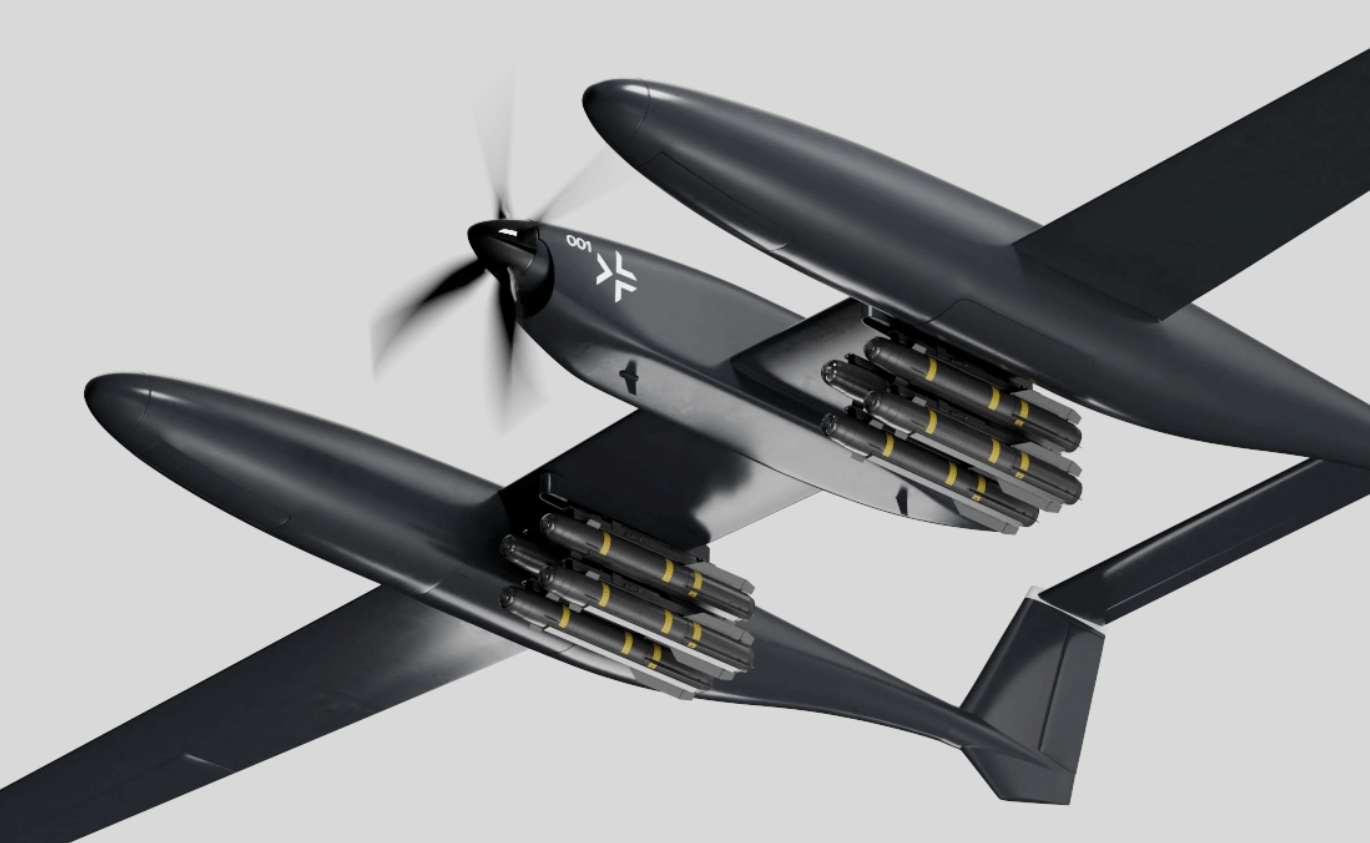
Swarm Aero execs said the aircraft’s six other hardpoints beyond its centerline one allow it to carry many munitions and other payloads. Renderings of a number of configurations show the drone configured for direct strike with Hellfire/JAGM missiles, ISR support with podded sensing payloads, and even air-to-air missiles.

(Swarm Aero)
(Swarm Aero)
(Swarm Aero)

Swarm Aero’s unveiling comes after the Air Force announced its desire for what it’s calling a “Massed Modular Aircraft” – a MQ-9 successor at a fraction of the price point: $10 million per copy. 

Certain announced Gamera specs line up with the Air Force’s MMA wish list, which included a 2,800-pound payload capacity and an unrefueled combat radius of 2,300 nautical miles. 

“Built around a unique manufacturing approach, swarms of these Group 5 UAV give the U.S. Air Force the cost-effective force structure needed for their ultimate goals of surface strike, sensing, and other missions,” the company said in its announcement. “Their tremendous range and payload flexibility fill the gaps between ‘pulsing’ forces to provide highly persistent air dominance over vast areas.”

(Swarm Aero)

Oliver Palmer, Chief Revenue Officer and co-founder of Swarm Aero, said the unit cost of Gamera would come in under the $10 million target. While he declined to say by how much, he maintained that the offering for the Air Force’s Massed Modular Aircraft requirement would be “competitive.”

Kalogiannis said the clean-sheet and targeted approach was critical to achieving cost reduction.

“Low cost isn’t something that you kind of sprinkle on an existing design, an existing engineering system, even an existing organization,” he said. “You have to design the aircraft, design the company around that, and that’s what we’ve done. So every design decision we’ve made has been factoring in cost from the very beginning, and manufacturability and the ability to build these at scale.”

Though the company has been reticent about the main materials in Gamera, executives referred to the $10 million Air Force Research Lab contract the company is executing to develop metal composites. The company’s first engineering hire, they said, was a materials and process engineer.

“We’re demonstrating the progress there and kind of applying those technologies to real aerostructure development,” Kalogiannis said.

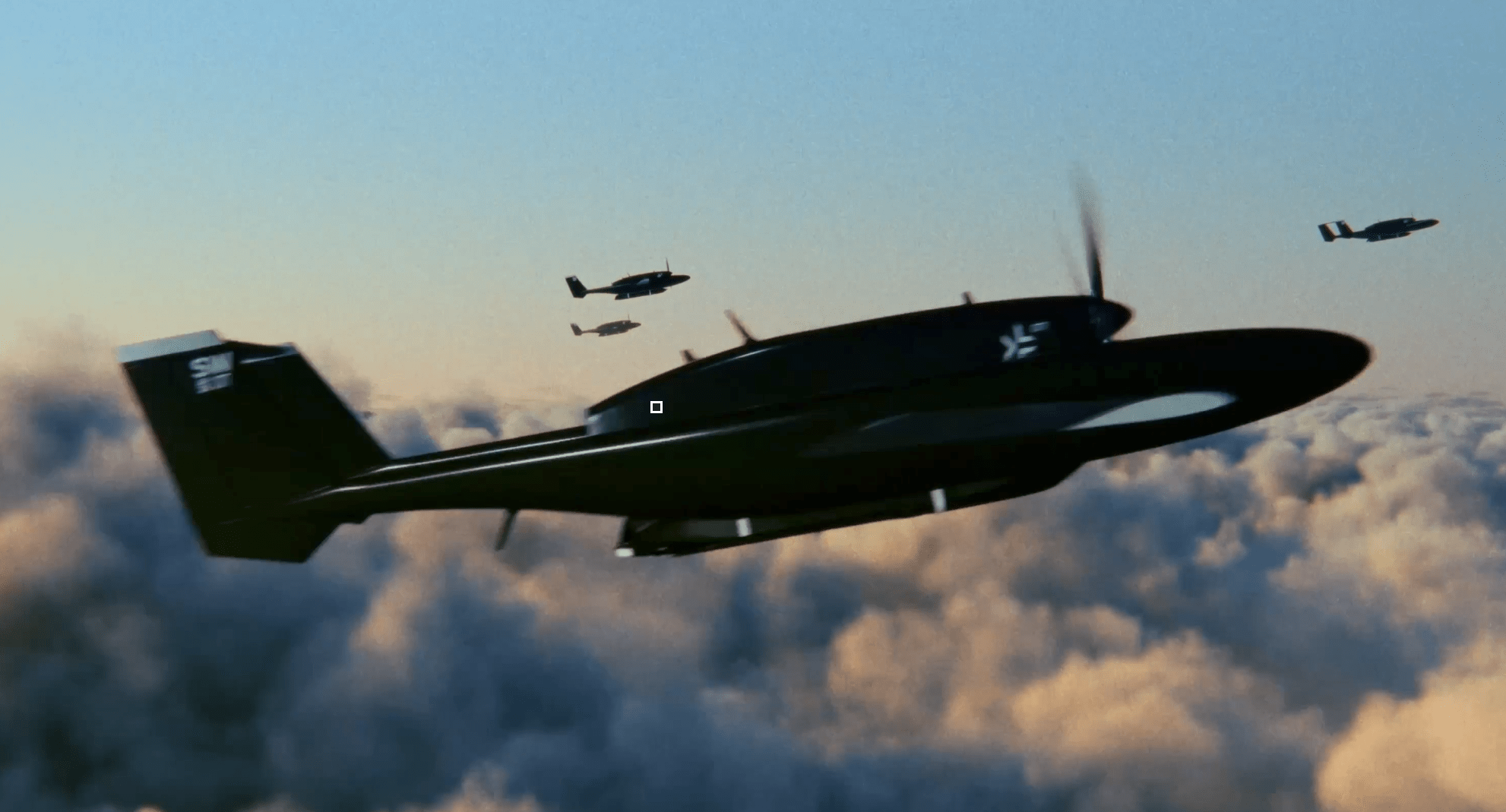
Expanding the picture is the drone’s swarming capability – the company says it’s most effective in “groups of up to 80,” powered by a Swarm Aero command-and-control and autonomy system called Legion. The system purports to let a single military operator or team direct a cluster of dozens of different uncrewed systems across multiple domains at the same time and has already been experimentally deployed by the Navy to direct air and sea drones.

A video screen capture from Swarm Aero showing a large formation of Gameras on a mission. (Swarm Aero)

The company, which was founded in 2022 and is based in northwest Arkansas, also noted that Legion has already been tapped by the Defense Innovation Unit as a C2 source for its Autonomous Collaborative Teaming program.

“At Swarm we’ve inverted conventional wisdom around air power platform design, manufacturing, and combat operations and introduced an affordable, mass-producible strike platform that will re-establish an asymmetric edge over our adversaries,” Palmer said in a statement. 

The Air Force has stressed its desire to develop Group 5 unmanned aerial systems akin to Reaper, emphasizing that attritability is not the same as expendability and the category lives between single-use weapons and more exquisite, higher-cost platforms.

The Air Force’s Reaper fleet is reportedly now around 135 units, down from a desired floor of 189, with dozens lost over Iran and Yemen in recent fighting. But the Air Force has only purchased up to 337 of the aircraft over the 19-year life of the program.

An MQ-9 prepares for a sortie. (Air National Guard)

While the Air Force has said it wants at least 180 MMA units, Palmer suggested Gamera’s low price point and capabilities might push the service toward a higher acquisition target.

“Reaper was very specifically for terrorism, overhead surveillance and strike with very short ranges in uncontested airspace, and really not transiting massive distances to do those operations,” he said. “This is really intended more for long-range strike, and then also can do all of those MQ-9 sensing [and other] missions. It’s a different paradigm. So when we think about how you build out the force, how you size that, it’s really for long-range strike, and that really drives the program and the aircraft into a different direction.”

Just today at the Air & Space Forces Association’s conference, the USAF confirmed it plans to buy 500 MMAs by 2032. So the stakes are high, to say the least.

The Air Force’s quest for a less-expensive Reaper successor will clearly trigger a race to meet the requirement. Earlier this month, Reaper maker General Atomics unveiled Wildfire, a MALE drone developed from the MQ-9 that purports to deliver similar performance to its progenitor, with some key tradeoffs, at a lower cost. The company has been outspoken about how achieving Reaper’s full capabilities at a fraction of the cost will be an unrealistic challenge. General Atomics has yet to provide full specifics on if it will arrive under the $10 million target cost stipulated by the Air Force.

Contact the editor: Tyler@twz.com

The post Cheaper Reaper? Swarm Aero Unveils Gamera appeared first on TWZ.

  •  

Fleet Of At Least 500 Collaborative Combat Aircraft By 2032 Now In USAF’s Plans

The U.S. Air Force is now aiming to have at least 500 Collaborative Combat Aircraft (CCA) in service by 2032. The service also wants to have an equal number of Massed Modular Aircraft (MMA) drones to succeed its MQ-9 Reapers by that time. In terms of stated CCA force structure plans, this is a substantial step up, with the service having most recently talked about acquiring “over” 150 of these drones by the end of the decade.

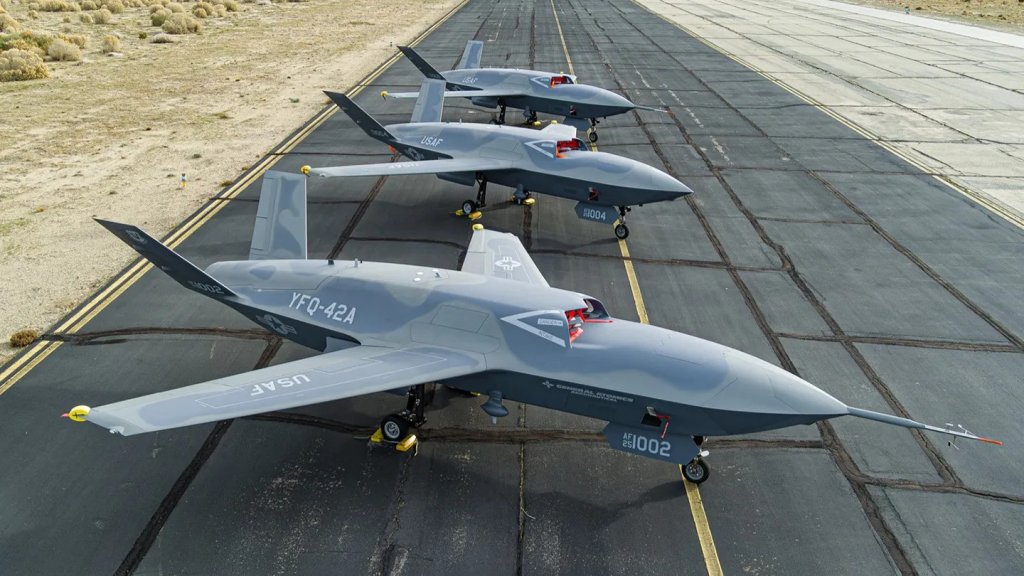
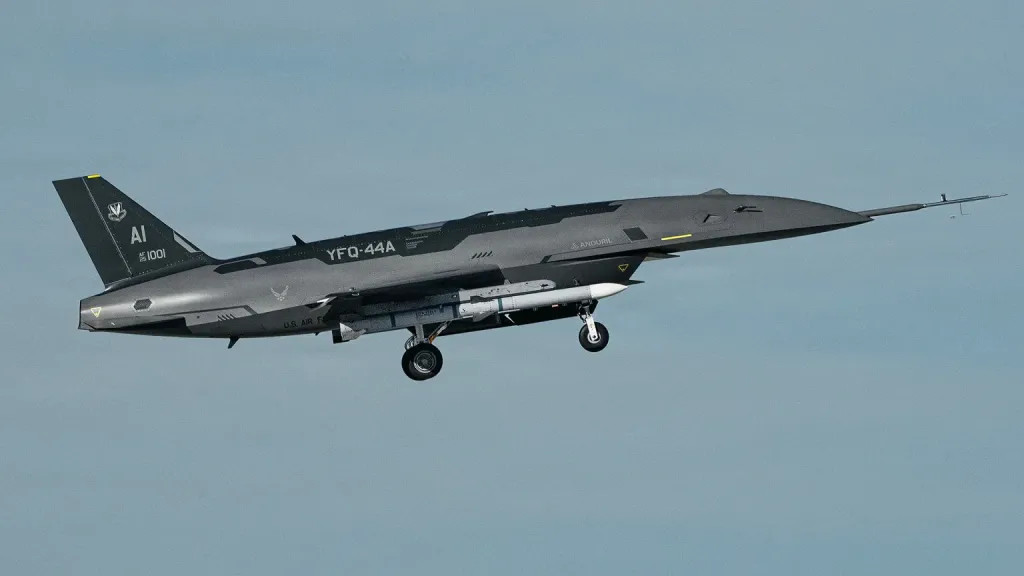
Secretary of the Air Force Troy Meink shared updates on the CCA program during a keynote speech at the Air & Space Forces Association’s 2026 Air, Space & Cyber Conference, at which TWZ is in attendance. The service’s top civilian also announced that General Atomics’ FQ-42 and Anduril’s FQ-44 drones have now received official nicknames: Vengeance and Fury. This only represents a change for the General Atomics design, which the company had previously named Dark Merlin. In June, the Air Force announced that it was ordering both types into production.

A composite image showing the FQ-42 and FQ-44 designs together with their new official nicknames. USAF

“We will have autonomous fighters like the Collaborative Combat Aircraft, or CCA. We intend to have at least 500 of these in service by 2032,” Meink said in his speech. “Our intent is to field 100 MMAs in 2029 at even a lower cost than the CCAs and a fraction of [the] cost of manned aircraft we build today. Then by 2032, 500 of these [MMA] platforms will join our force.”

When it comes to CCAs, “today, the first FQ-42 and FQ-44 increments are already rolling off the assembly line,” Meink added. “They’ll be performing many of the same missions that we do with manned fighters today.”

A row of YFQ-42A prototypes. General Atomics previously gave the company name Dark Merlin to this design. GA-ASI

The Air Force’s stated CCA force structure targets have fluctuated significantly in recent years. In 2023, then-Secretary of the Air Force Frank Kendall outlined plans to acquire at least 1,000 CCAs, if not more, across the life of the entire program. However, Kendall and other Air Force officials subsequently talked about a far smaller initial fleet of between 100 and 150 drones.

“These contracts reaffirm our confidence in the strategic path forward for the program to procure over 150 combat capable CCA by the end of the decade,” Meink himself said in a statement in June when the production orders for the FQ-42 and FQ-44 were announced.

A YFQ-44A prototype, with an inert AIM-120 air-to-air missile under its wing, seen during a test. USAF

The FQ-42 and FQ-44 are also being acquired under the first phase, or Increment 1, of the CCA program. At least one additional increment is planned, and could lead to orders for one or more additional types of CCA. Though it is not immediately clear, it is possible, if not probable that Increment 2 CCAs are factored into the latest 500 drone figure.

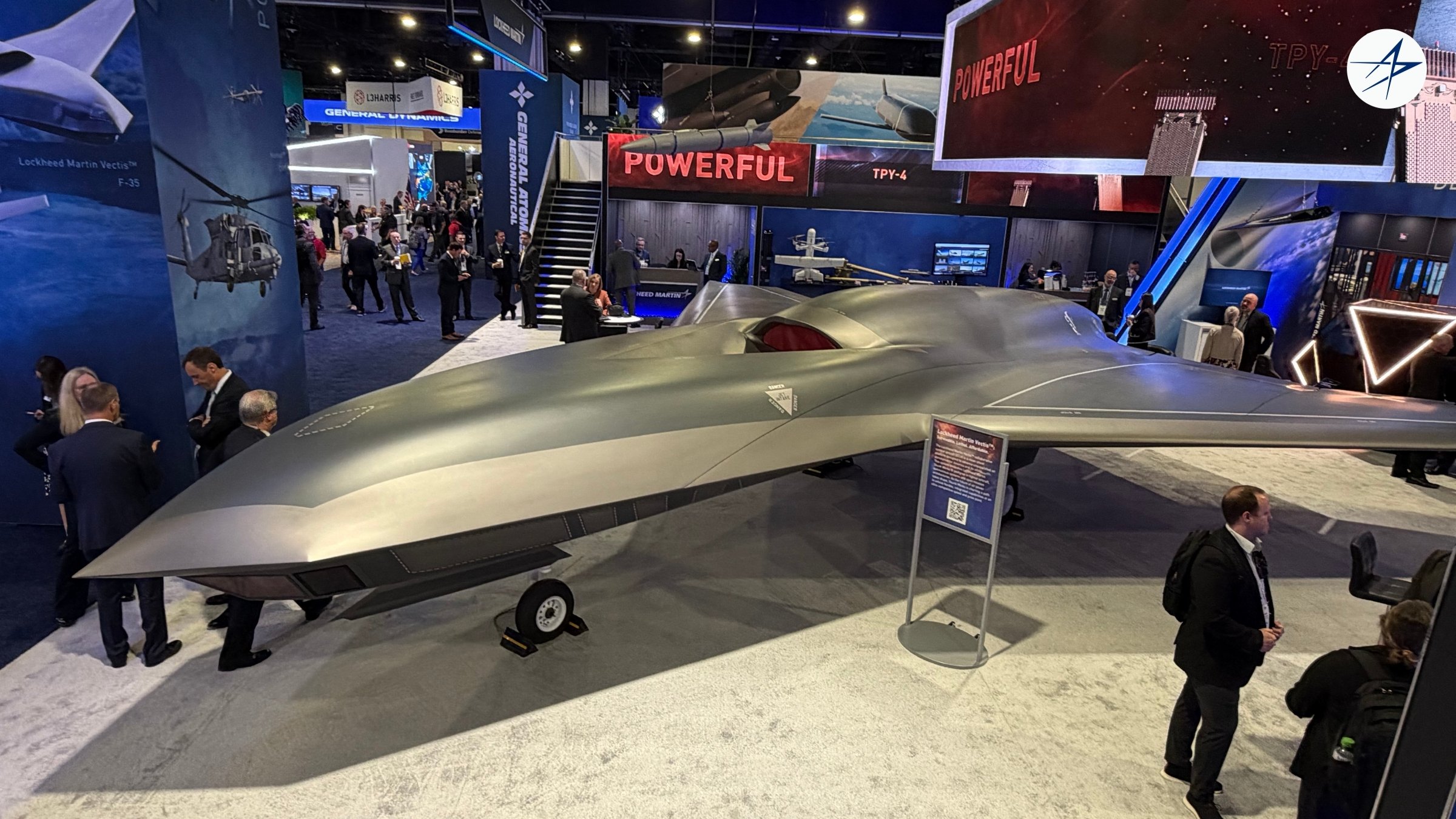
TWZ’s Jamie Hunter got a close look at the Skunk Works’ Vectis drone at Air, Space, & Cyber 2026. Photo: Lockheed Martin

“We talk about 500 by 2032, [but] we could actually build more of them than that,” Secretary Meink also said today during a question-and-answer session immediately following his speech. The goal of the CCA program “from the get-go” was “simple aircraft that you could build fast and at a lower cost,” he continued.

“So now we’re in a situation to [sic] where we could actually build more than we can actually afford to buy,” he added.

It is unclear what the unit costs of the FQ-42 or FQ-44 are currently. The Air Force has said previously that it is targeting a price point of around $20 million apiece once full-rate production gets underway.

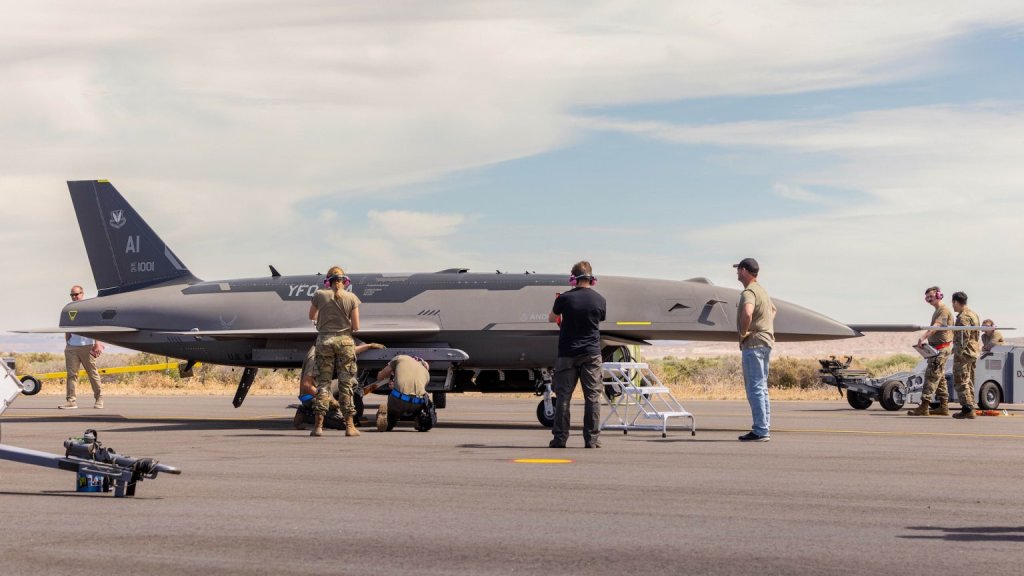
Beyond any fleet size target, the Air Force is still very much in the process of figuring out how future CCAs will be deployed, launched, recovered, supported, and otherwise operated on a day-to-day basis, as well as employed tactically. During today’s question-and-answer session today, Meink drew attention to a dedicated Experimental Operations Unit (EOU) the service has established to lead the process of laying the groundwork for future CCA operations. The EOU notably led a significant new round of operational testing of YFQ-42 and YFQ-44 prototypes at Creech Air Force Base in Nevada back in July, which TWZ was first to report on. The EOU supported another similar test exercise at Edwards Air Force Base in California in April.

A YFQ-44A at Edwards Air Force Base during a test exercise in April 2026. USAF

“Getting them [CCAs] into these developmental kind of operational units, so they can start experimenting with that – familiarity breeds confidence, right?” Meink said.

The Air Force continues to make it clear that it sees its future CCA fleets as essential for providing capabilities and operational capacity necessary to succeed in future conflicts, especially a potential high-end fight against a near-peer opponent like China.

“Collaborative Combat Aircraft change how we project power and generate mass in highly contested environments,” Air Force Chief of Staff Gen. Ken Wilsbach said in a statement when the FQ-42 and FQ-44 production contracts were announced. “Delivering this capability to our warfighters faster ensures our forces maintain the tactical edge required to deter and, if necessary, defeat any adversary.”

As mentioned, the Air Force also now has plans to acquire 500 very different combat drones under the MMA program, and at a unit cost of approximately $10 million. This is also a notable increase in total planned fleet size for this effort, with a target of at least 180 airframes having been previously shared publicly.

The MMA drones are expected to conduct the same general strike and intelligence, surveillance, and reconnaissance (ISR) mission sets the service’s MQ-9A Reapers perform today. Major Reaper losses in the course of operations against Iran, compounded by significant additional attrition and deliberate divestments in recent years, are key drivers behind the MMA effort, which officially kicked off in July.

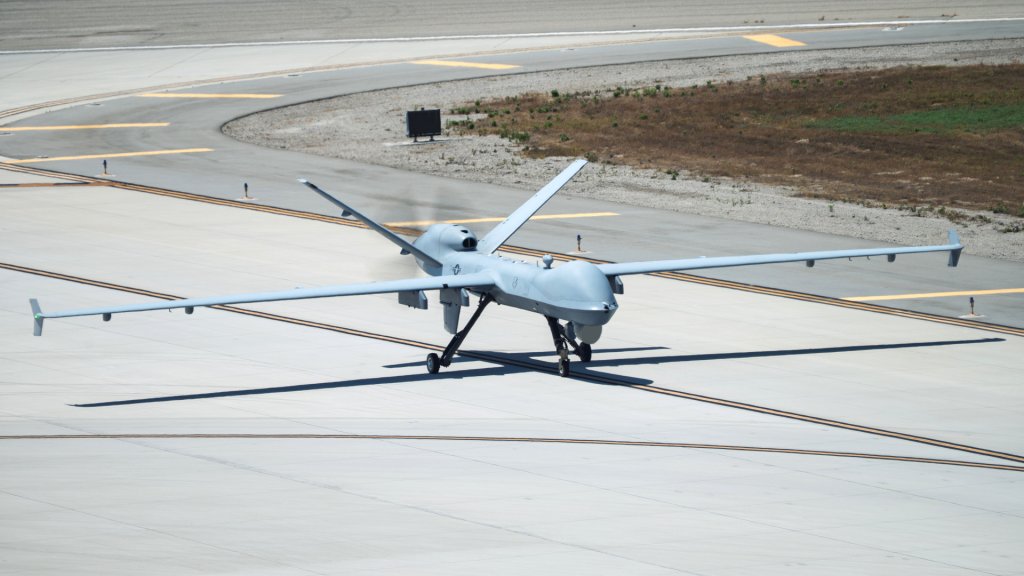
A US Air Force MQ-9A Reaper drone. USAF

“As we saw in Epic Fury [the nickname for major combat operations against Iran earlier this year], ISR/strike platforms have been essential. We have used MQ-9 and even now the ULTRA aircraft to great effect,” Meink said during his speech today. The MMA program is “building on these lessons” and “will provide affordable, attritable, long-range strike, and we will be able to field them at scale.”

“MMA is designed to deliver the results our combat commanders need,” Chief of Staff Wilsbach said during his own separate keynote at the Air, Space & Cyber Conference today. “That’s how we stay ahead by moving quickly, investing in new tech, and delivering to our warfighters what they need to win.”

If the Air Force can meet its target of having a fleet of at least 500 MMA drones by 2032, this will be another significant boost to the service’s overall uncrewed capabilities. As of May, the Air Force had 135 MQ-9s left in inventory, and there have been more reported losses since then.

General Atomics, which developed the Reaper, has already put forward a new design called Wildfire as a potential successor. Many other companies are already lining up to submit their own proposals to meet the Air Force’s MMA needs.

Between the latest CCA force structure plans and the new MMA program, the Air Force’s fleets of combat drones are on track to look very different by 2032.

Contact the author: joe@twz.com

The post Fleet Of At Least 500 Collaborative Combat Aircraft By 2032 Now In USAF’s Plans appeared first on TWZ.

  •  

U.S. Nuclear Control Mission Could Dramatically Evolve Under Looking Glass-Next

America’s nuclear weapons deterrent and how it is controlled is increasingly critical in the face of the rapidly-expanding arsenals across multiple adversaries. A new fleet of E-4C nuclear-hardened survivable airborne operations center aircraft is now in development, as is the U.S. Navy E-130J, which will provide next-generation communications with nuclear ballistic missile submarines deep beneath the waves. Focus is also turning to a mission that’s dedicated to emergency communications with the U.S. nuclear forces in times of crisis, a role known as Operation Looking Glass, which is also poised for updating under a program dubbed Looking Glass-Next.

The comprehensive modernization of America’s nuclear strike muscle involves three major elements – new B-21 Raider stealth bombers, the LGM-35A Sentinel intercontinental ballistic missile (ICBM) program to replace Minuteman IIIs, and new Columbia-class nuclear ballistic missile submarines. A fourth facet that ties all these new elements, as well as existing ones, together is the next generation nuclear command, control, and communications (NC3) architecture. It securely connects nuclear weapons systems to decision-makers. Without it, America’s nuclear deterrent isn’t a deterrent at all.

A U.S. Air Force E-4B assigned to the 595th Command & Control Group, Offutt Air Force Base, Neb., flies on a training sortie over the Midwest, May, 15, 2024. The E-4B "Nightwatch" serves as the National Airborne Operations Center and is a key component of the National Military Command System for the President, the Secretary of Defense and the Joint Chiefs of Staff. In case of national emergency or destruction of ground command and control centers, the aircraft provides a highly survivable command, control and communications center to direct U.S. forces, execute emergency war orders, and coordinate actions by civil authorities. (U.S. Air Force photo by Tech. Sgt. Codie Trimble)
A USAF E-4B assigned to the 595th Command & Control Group at Offutt Air Force Base, Nebraska. USAF/TSgt Codie Trimble

America’s nuclear modernization is set against a backdrop of rapidly-developing nuclear strength across adversaries and pacing threats, which could threaten not only U.S. fighting forces, but also the existing aging NC3 infrastructure. This could impede the collective responsiveness and effectiveness of the American nuclear enterprise. For example, a coordinated attack on NC3 could degrade the National Command Authority chain, which could prevent communications that are necessary to conduct a retaliatory strike.

If fixed underground command posts are targeted and rendered inoperable, the current strategy would involve turning to a set of highly-survivable air assets that are designed to be on hand to execute emergency war orders. This includes the U.S. Air Force’s E-4B National Airborne Operations Center (NAOC) “Nightwatch” aircraft, and the E-6B Mercury that is operated by the U.S. Navy.

A major recapitalization effort is already underway for the NAOC E-4Bs, which are being superseded under the E-4C Survivable Airborne Operations Center (SAOC) contract. It is being led by defense contractor SNC. The new SAOC aircraft are based on the far more modern 747-8i, and are planned to have a much broader mission set than the four E-4B Nightwatch types they are set to replace, as you can read more about here.

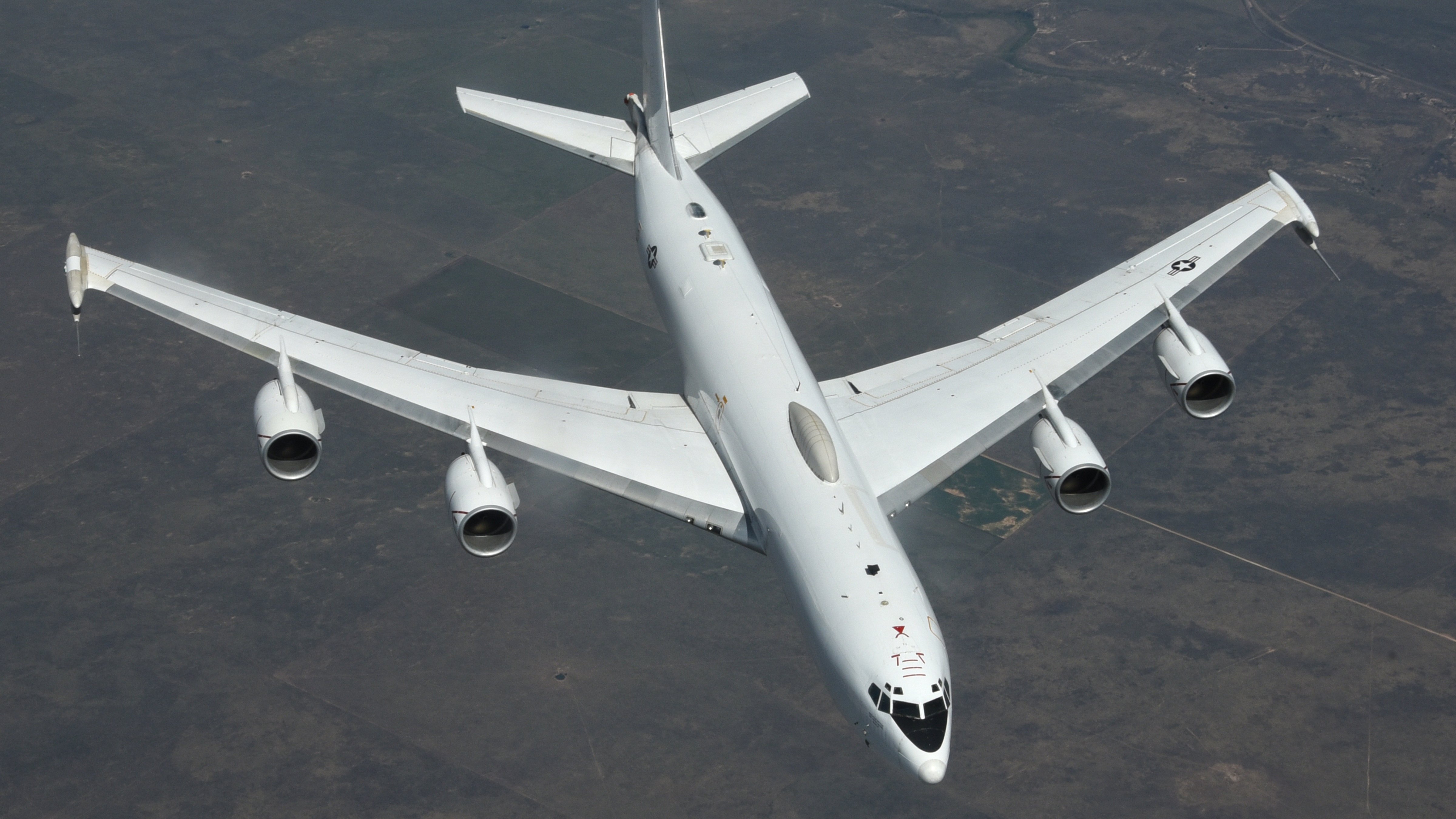
The Navy’s E-6B Take Charge and Move Out (TACAMO) aircraft have a primary role of strategic connectivity with the ballistic missile submarine fleet. These converted 707s also execute another mission known as the Airborne National Command Post (ABNCP), more recently renamed “Looking Glass.” For this they are manned by U.S. Air Force missileers and U.S. Strategic Command (USSTRATCOM) battle managers who are responsible for running the airborne nuclear NC3 systems.

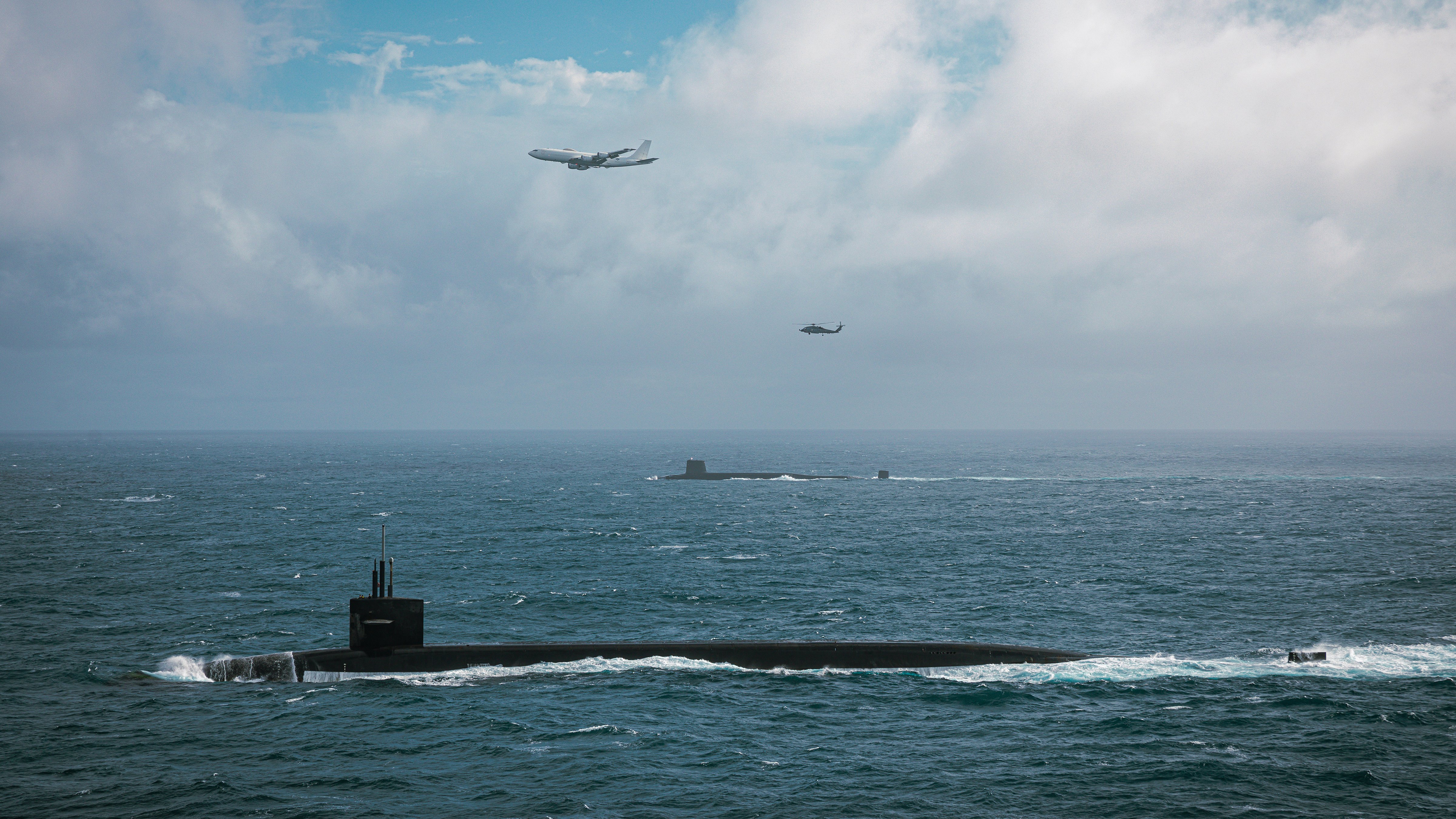
U.S. Navy Ohio-class ballistic missile submarine USS Tennessee (SSBN 734), an United Kingdom Royal Navy Vanguard-class nuclear submarine, an E6-B Mercury assigned to the "Shadows" of Fleet Air Reconnaissance Squadron (VQ) 4 and an MH60R Sea Hawk helicopter attached to the “Proud Warriors” of Helicopter Maritime Strike Squadron (HSM) 72 conducted bi-lateral at sea training designed to validate tactics, techniques, and procedures which strengthens the relationship between uniquely close Allies in support of deterrence and collective security. The United States and the United Kingdom have a long-standing agreement of cooperation in the development and deployment of strategic weapons and supporting system. (U.S. Navy photo by Naval Aircrewman (Operator) 1st Class Aaron Abbott/Released)
An E-6B Mercury flies over U.S. and UK submarines during a joint exercise. U.S. Navy

The joint service team on Looking Glass mirrors some operations performed by USSTRATCOM’s underground command posts, and a small portion of what the NAOC executes. The Looking Glass mission is really focused on performing an airborne backup mission solely for USSTRATCOM to ensure another means of communicating with fielded nuclear bombers, their assigned tankers, ICBMs and deployed nuclear submarines. It is best known for its ability to supply airborne communications connectivity to the USAF’s ICBM force on the ground and can command remote launches of those weapons if necessary.

Additional NC3-related modernization is coming on the heels of SAOC, with the new E-130J set to assume the Navy’s TACAMO role from the ageing E-6Bs, assuming strategic connectivity for nuclear ballistic submarines. It means that at some point roughly two-thirds of the E-6 current mission will go to the new E-130J aircraft – raising the question of what will fulfill the critical Looking Glass mission.

Since the E-130J is not planned to take on the Looking Glass role, the USAF is in the early stages of what’s dubbed Looking Glass-Next (LG-N), which presents the future pathway for USSTRATCOM’s mobile contingency operations. This could take on a number of forms, including NC3 communications functions being increasingly moved to space-based assets and more distributed operations across the ground, although an air platform is still likely to form a major part of the overall capability.

The need to modernize America’s NC3

Brian Golden is a retired USAF colonel who intimately understands nuclear command and control (NC2) and the associated NC3 equipment and processes from both a service and industry perspective. As a subject matter expert for SNC, he draws on his extensive experience as a former E-4B NAOC commander and he commanded much of the USAF’s multi-domain NC3 systems, including the Airborne Launch Control System onboard the current E-6B Looking Glass. He is also extremely familiar with all the nation’s continuity of government and continuity of operations missions for both Congressional and executive branches of the U.S. government.

“Everyone referred to the nuclear triad as the platforms that were controlled through the NC3 architecture,” Golden told TWZ during a detailed discussion. “Those platforms received their messages and executed their missions. But this isn’t just about that platform triad. The U.S. nuclear enterprise has four primary pillars, and nuclear command, control, and communications is a critical part of it. Without a robust NC3 system, it’s like having a brand new Bugatti Veyron but without the keys! It looks awesome on the driveway, but you can’t drive it.”

Secretary of Defense Pete Hegseth signs a memorandum aboard an E-4B Nightwatch aircraft while flying over the Pacific Ocean, March 28, 2025. (DOD photo by U.S. Air Force Senior Airman Madelyn Keech)
Secretary of War Pete Hegseth working aboard an E-4B Nightwatch. USAF/SrA Madelyn Keech

Golden explains that the current NC3 enterprise consists of a series of exquisite systems that are extremely reliable, but that are in need of modernization to stay ahead of the steepening threat curve, and stay in front of supply chain constraints. “What we have currently is very reliable, robust, and very survivable, but it can be difficult to maintain some of our legacy systems. Additionally, as threats evolve we must ensure our communications pathways also evolve. 

“Our nation’s industrial base engineers figured out extremely robust methods of nuclear communications when these systems were fielded. Looking at the overall command and control [NC2], and then the NC3 communications pathways, any new systems that we introduce must be sustainable, scalable and modular.”

The U.S. nuclear enterprise is facing greater threats than ever with adversaries challenging U.S. nuclear infrastructure in multiple domains: space, cyber, ground, air. Because of this, NC3 demands a continuous process of improvement.

Going forward, the NC3 enterprise will likely need to integrate upgraded proven legacy systems with all-new technology. “Sometimes the physics of radio waves may dictate the need for a legacy approach with upgraded systems, such as communicating with a submarine that’s very deep in the ocean.”

Golden’s view is that NC3 requires a layered, open architecture approach as modernization is evaluated. “Applying those same physics and then adding new layers such as artificial intelligence may determine a better way of doing things.”

Upgrading to SAOC

Golden points to the SNC-led E-4C SAOC program as a clear example of critical NC3 modernization, while emphasizing that the NC2 mission is far from being the primary role of the E-4B and its forthcoming successor. “Nuclear command and control is only a fraction of what the current NAOC does and what the future SAOC will do for our nation and our allies and partners.”

An E-4B Nightwatch taxis on the flightline during U.S. Secretary of War Pete Hegseth’s visit to Japan at Yokota Air Base, Japan, Oct. 28, 2025. Engagements from distinguished visitors are designed to reinforce ongoing efforts to strengthen alliances and partnerships in support of a free and open Indo-Pacific. (U.S. Air Force photo by Airman 1st Class David S. Calcote)
An E-4B Nightwatch at Yokota Air Base, Japan. USAF/A1C David S. Calcote

The E-4B initially featured just a handful of communications systems, which have grown over time, leading to what Golden calls the “King Kong” of communication capabilities today. The E-4 is not a battlefield communications platform, its mantra is all about supporting Presidential-level requirements across the board. It does possess an extensive NC3 suite, but it also serves the White House Communications Agency (WHCA) and the Department of Homeland Security, through the Federal Emergency Management Agency (FEMA), in many other crisis roles. Another mission the E-4B fleet performs is to safely transport the Secretary of War on trips within the United States and abroad.

The E-4B NAOC and Looking Glass are two complementary tiers of the same survivable architecture. The NAOC (and future SAOC) is designed to anchor national-level decision-making and government continuity from the very top, while Looking Glass provides USSTRATCOM with the dedicated airborne command and battle-management capacity required to direct forces. Both roles are critical and non-negotiable.

An artist’s rendition of the new E-4C SOAC. SNC

“The new E-4C SAOC, like the E-4B before it, will deliver an expansive communications suite and increased capacity supported by a larger fleet,” Golden explains. “SAOC is built to ensure the President and national leadership can direct the entire country through any crisis. Looking Glass supports an equally vital and highly specialized mission. It is dedicated to USSTRATCOM’s operational needs, connecting directly to bombers, ICBMs and submarines. Attempting to merge these unique missions on a single airframe would compromise the unique, essential role that each was created to perform.”

Looking Glass-Next

The Looking Glass role and the platform that fulfills it is not classified as a national-level mission. As Golden alluded to earlier, it’s not assigned to the Chairman of the Joint Chiefs or to the Secretary of War. It’s exclusively assigned to USSTRATCOM; however, without the Looking Glass mission being upgraded soon, America has a gaping hole in its nuclear architecture.

United States Navy Boeing E-6B Mercury of Strategic Communications Wing ONE, Task Group 114.2, based at Tinker Air Force Base, Oklahoma, high over Colorado Aug. 23, 2019. The E-6B was refueled by a Boeing KC-135R Stratotanker of the 507th Air Refueling Wing, Air Force Reserve Command, also from Tinker AFB. (U.S. Air Force photo/Greg L. Davis)
An E-6B Mercury flying over Colorado. USAF/Greg L. Davis

The commander of USSTRATCOM is the customer and ultimately the decision-maker when it comes to Looking Glass-Next, and the USAF has been tasked by the Secretary of War to develop and field it. SNC is looking at several options for the requirement, with some sort of air platform at its core, which Golden refers to as an “E-6C.” He endorses that the current E-6B is one of the “cogs in the wheel that has to be replaced,” but adds that this doesn’t mean the next-generation Looking Glass is just an aircraft.

“At SNC, we have significant expertise and experience with mission system integration,” says Golden, adding that SNC is evaluating what he calls “aggressively creative options,” for the modernization requirement. He further noted that the modern threat is driving a requirement for Looking Glass-Next to be very difficult to target and must be dispersed.

“Having an aircraft as the only option for this USSTRATCOM mission is a legacy mindset,” Golden states. “We have advanced multi-domain capabilities, including numerous space capabilities available through the Sierra Space Corporation. Future mission resilience requires a creative and integrated approach.”

“We believe a creative approach to provide NC3 options will ensure a robust, reliable, survivable and cost-effective solution.”

Golden endorses this approach to creativity and development and indicated that SNC will continue to inform and respond to the ongoing Looking Glass-Next requests for information that may result in a future program.

One of the 747-8is that is being modified by SNC in Dayton, Ohio, to become an E-4C SAOC. SNC

“SNC has leaned heavily into the nuclear command, control, and communications architecture and it’s a natural fit for us, building on our work with the Department of War and our subcontractors on the E-4C SAOC. Our Looking Glass-Next responses and inputs will leverage relevant work and experience gained from SAOC, but we are also focused on being creative. We’re small enough to be agile, but big enough to deliver. That’s why we think we’re very well positioned in the NC3 space.”

The majority of SNC’s work on the E-4C SAOC is being completed at the NC3 Center of Excellence, housed in the Aviation Innovation and Technology Center (AITC) in Dayton, Ohio. 

Golden believes the timing couldn’t be better to deliver bold and creative NC3 solutions. “The USAF is already asking the right questions, and industry is really able to innovate, which will result in a transformational era for nuclear command, control and communications.”

The post U.S. Nuclear Control Mission Could Dramatically Evolve Under Looking Glass-Next appeared first on TWZ.

  •  

Everything We Just Learned About The Vectis Collaborative Combat Aircraft From The Skunk Works

Lockheed Martin’s Skunk Works advanced projects division has shared all new information about its stealthy Collaborative Combat Aircraft (CCA) type drone design named Vectis, which it first unveiled a year ago. One of the most intriguing details is the true nature of its air inlet configuration, pointing to the premium on survivability the Skunk Works has placed on its CCA offering, especially when compared to other CCA designs.

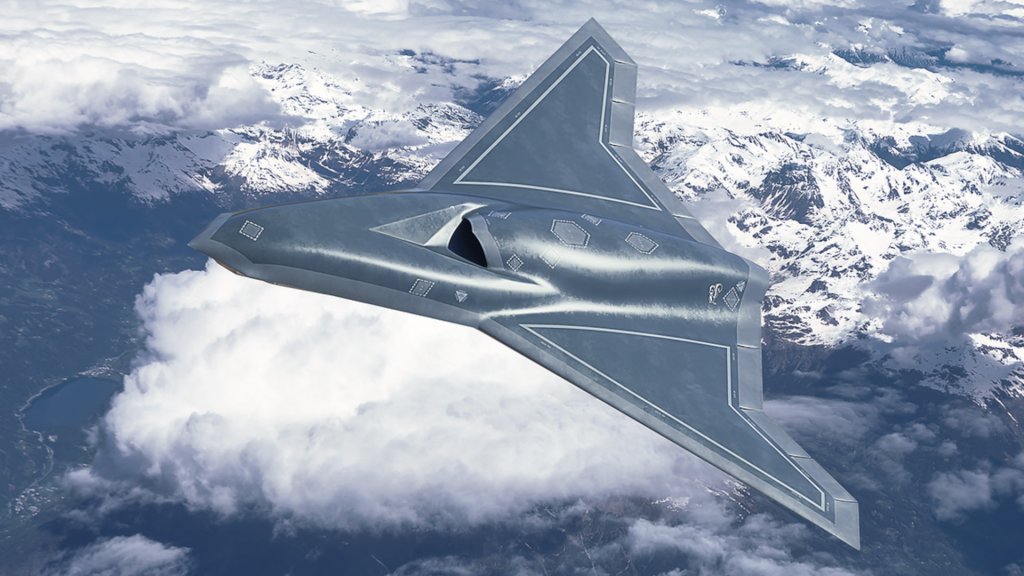
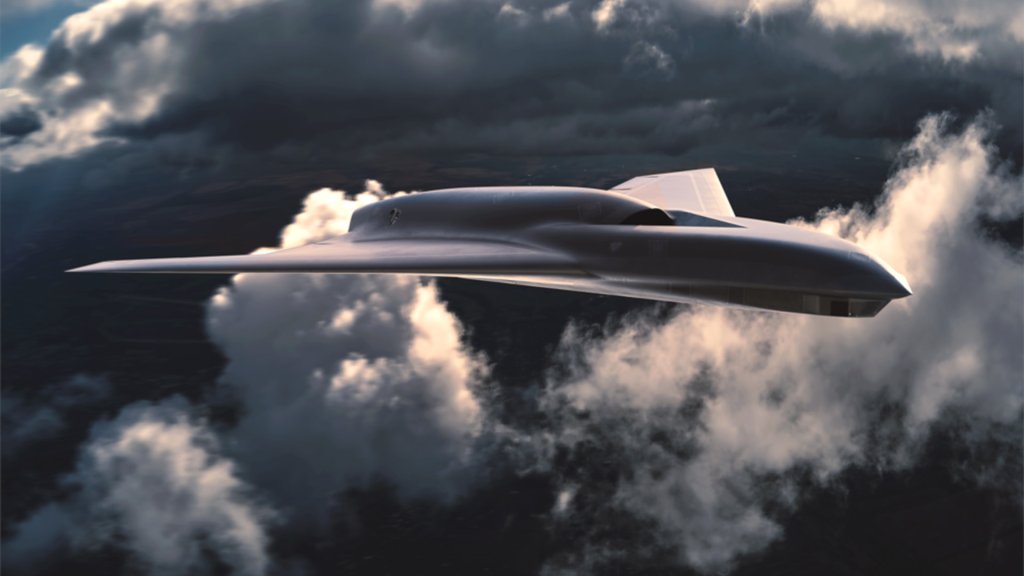
Vectis has a far more exotic, deeply recessed “submerged” top-mounted air intake than was originally disclosed when Vectis first came out of the shadows. This further underscores the heavy emphasis Skunk Works says it has been placing on its CCA’s ability to stay undetected and live to fight another day. Vectis is also the first tailless CCA design we have seen from a U.S. manufacturer.

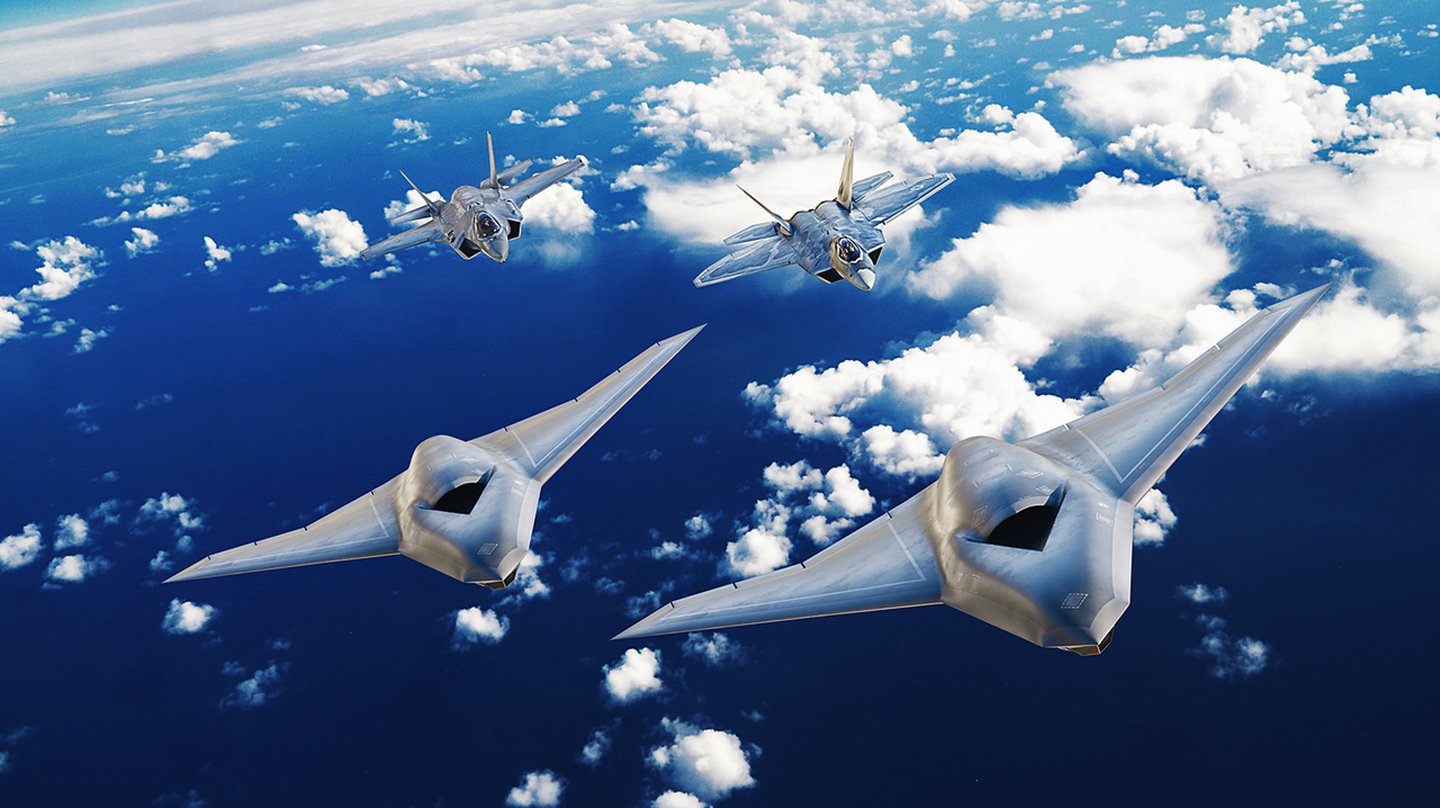
An updated view of Vectis. Lockheed Martin Skunk Works Lockheed Martin

Ron Fehlen, Lockheed Martin Vice President and General Manager of Skunk Works, gave TWZ and other outlets an update on Vectis last week ahead of today’s start of the Air & Space Forces Association’s 2026 Air, Space & Cyber Conference. Skunk Works says work on constructing the first prototype of Vectis – a word that means lever or pole in Latin, and that Lockheed Martin has said reflects the ‘leverage’ the drone offers – is underway now. The goal is to have it flying by the end of next year. There are already plans to build four more prototypes using internal funding.

Check out the Skunk Works’ new Vectis video below:

Source: Lockheed Martin

“It is designed, as you can likely see, to be both survivable and affordable and flexible across the range of missions that our customers need, have needed, and continue to need into the future,” Fehlen said by way of introduction. “The technical specs, as you can imagine, are designed to meet and, in some cases, exceed the customer sets that we are working with and their requirements and their mission needs.”

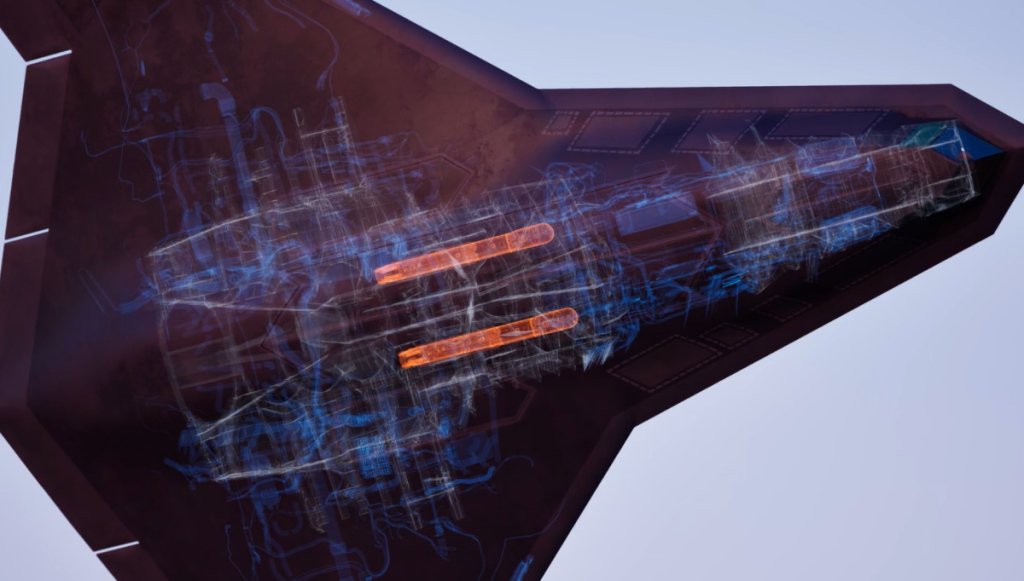
The basic core of the single-engine Vectis that we have seen now is largely unchanged from what had been shown at the time of the unveiling last year. It is still a tailless drone that has a lambda wing planform and air intake mounted on top of the central part of the fuselage, as well as a prominent chine line around the forward end and a shovel-like shape to its nose. New renderings do show revised positions for various conformal antennas and/or sensor apertures around the central fuselage. These are all established features of low-observable (stealthy) aircraft designs.

Skunk Works’ Fehlen also shared last week that Vectis is approximately 34 feet long and has a wingspan of around 38 feet. As a comparison, the Navy’s two-seat primary jet trainer, the T-45 Goshawk, is roughly 39 feet long by 30 feet wide.

The biggest new detail, as mentioned, is the shaping and position of Vectis’ air inlet. Fehlen stressed that this is actually not a new feature, and has “been a part of the design since the beginning,” but was not reflected in previously released renderings and scale models.

Another newly released rendering of Vectis showing the submerged intake. Lockheed Martin Skunk Works

The intake was depicted in the past as having a relatively straightforward configuration. It did appear to have a saw-tooth leading edge, another indication of stealthy design considerations. The visuals we have now show the intake is deeply recessed into the top of the fuselage, sitting behind a downward-sloping v-shaped channel.

A rendering of Vectis that Lockheed Martin released last year that did not depict the submerged intake. Lockheed Martin Skunk Works

Vectis doesn’t have a fully flush-mounted inlet, like what is found on Boeing’s MQ-25 Stingray tanker drone, among other designs, but it is close to it, very loosely similar to what’s found on the B-21. The rear is slightly raised above the v-like pocket where air flows down into the intake. Flush or near-flush intakes offer particular benefits when it comes to low-observability (stealthiness) and aerodynamic efficiency, but are also notoriously problematic, especially in certain flight regimes, as you can read more about here. This is even worse for high-performance aircraft that have a wide operating envelope and have to maneuver at higher angles of attack. The CCA would likely fit into this category, at least to a degree.

When it comes to Vectis, “there’s a lot of different reasons behind it [choosing this submerged intake configuration], but I’ll pick up on a couple here for you,” Skunk Works’ Fehlen explained. “The first is it reduces that frontal drag. So, anything sticking out in the wind, as many – as all of you know, I’m sure, creates drag on the aircraft itself. So, if you want better performance from a range, et cetera, then you need to be able to reduce that drag, and that’s an example.”

“It’s also interesting to me, particularly as the Air Force speaks about Agile Combat Employment, the ACE concept, as you’re aware. There is an advantage to having an inlet on the top of the aircraft if you’re out in more austere environments and you’re concerned about FOD [foreign object debris] pickup off of a runway,” he added.

Another newly released rendering offering a different perspective on the submerged intake. Lockheed Martin Skunk Works

ACE refers to a set of U.S. Air Force concepts of operations focused primarily on relatively rapid and irregular deployments, particularly to far-flung, austere operating locations, and with the expectation that logistics support could be very limited. The ACE construct is at the very core of the Air Force’s CCA program requirements and its plans for operating those drones in the future.

Fehlen also confirmed that the inlet’s design has to do with survivability, but did not elaborate in any detail, which is unsurprising considering the sensitivities of such design elements. The original Vectis promotional video Lockheed Martin put out last year, seen below, showed an S-shaped duct behind the air intake and exhaust shrouding, which are features designed to further reduce a platform’s signature.

In terms of performance, Lockheed Martin has yet to share any hard specifications it is targeting for Vectis, or disclose details about the engine the design will use. Fehlen did also highlight the drag-reducing performance advantages of the drone’s tailless design, including for maximizing range.

Details about what other capabilities Vectis might have are still limited. Fehlen noted that the design is expected to be capable of both air-to-air and air-to-ground mission sets. In a new computer-generated promotional video, seen earlier in this story, the drones are depicted launching what look to be AIM-120 Advanced Medium Range Air-to-Air Missiles (AMRAAM) and GBU-53/B Small Diameter Bomb II (SDB II) glide bombs, also known as StormBreakers. The AIM-120 has already emerged as something of a default initial weapon for Western CCA-type drones. The video also confirms Vectis has an internal bay that is able to accommodate at least two munitions, likely the size to accommodate medium-range air-to-air missiles.

Captures from Lockheed Martin’s new Vectis promotional video depicting the drones launching what looks to be an AIM-120 missile, at left, and a pair of GBU-53/B SDB IIs, at right. Lockheed Martin captures
A rendering of Vectis with its elongated internal bay open from the new promotional video. Note the AIM-120 in the background. Lockheed Martin capture
Another screen capture from the new Vectis promotional video showing two munitions loaded inside the drone’s internal bay. Lockheed Martin capture

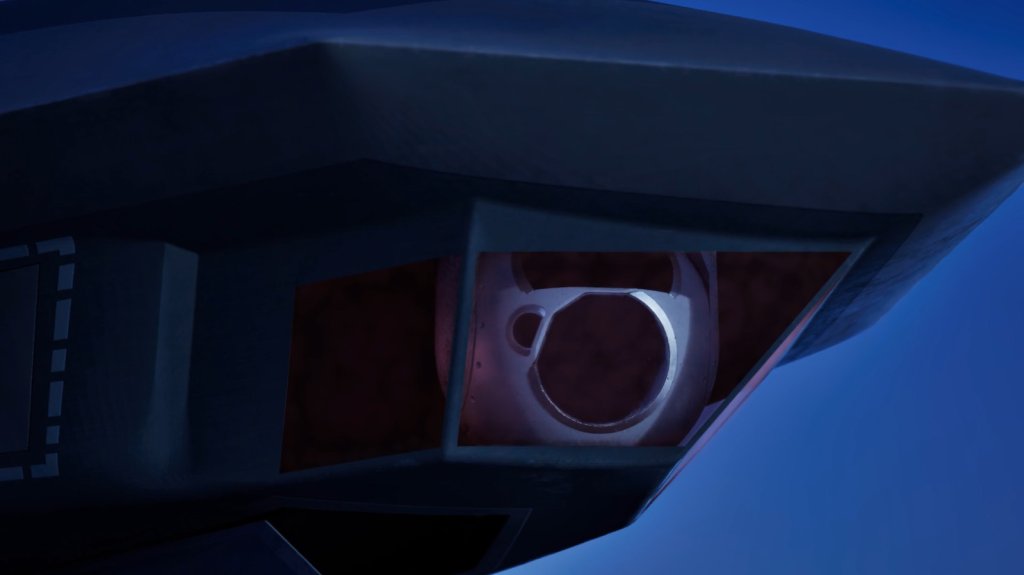
In addition, the video shows Vectis as having a traditional electro-optical/infrared sensor turret behind a stealthy faceted enclosure under the nose. When the drone was first unveiled last year, TWZ noted that it could carry a variety of sensors, including compact radars and/or infrared search and track (IRST) systems, which would be particularly relevant in the air-to-air role.

The sensor turret inside the stealthy faceted enclosure as seen in the new Vectis promotional video. Lockheed Martin capture

During the press call, Skunk Works’ Fehlen reiterated that Vectis is being designed with an eye toward modularity and open-architecture systems. This, in turn, will make it easier to integrate new and improved capabilities and functionality down the line. Open architecture is at the heart of every CCA offering we are aware of at this time.

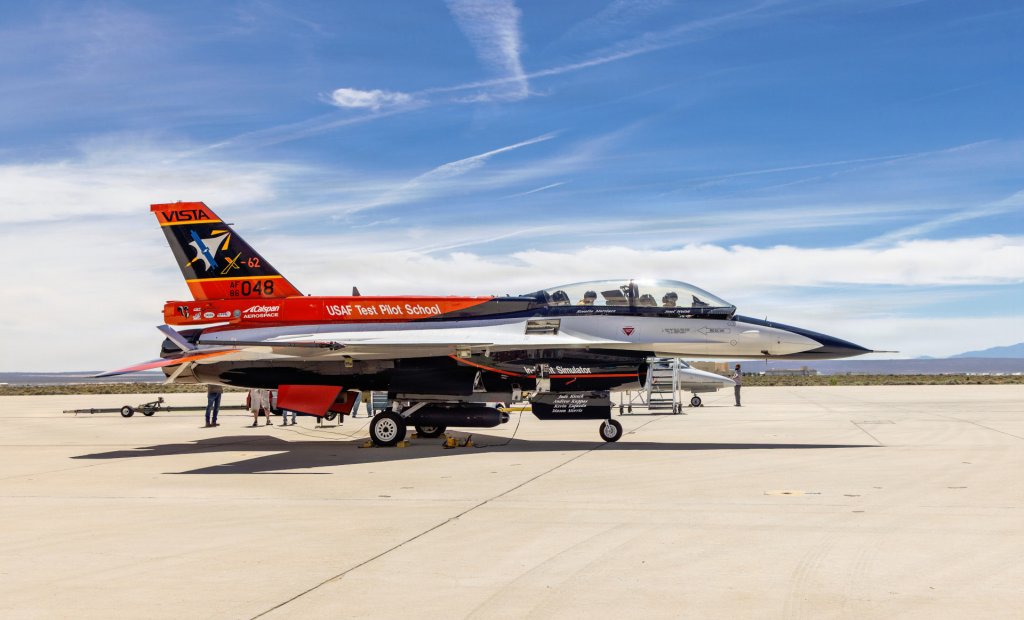
Fehlen further highlighted Lockheed Martin’s extensive work to date on advanced autonomy packages and crewed-uncrewed teaming capabilities. This includes the development of the Multi Domain Combat System (MDCX), an “autonomy platform” that is already central to the U.S. Navy’s plans for the carrier-based MQ-25 Stingray. The head of Skunk Works also explicitly called attention to autonomous air intercept testing conducted in cooperation with the Air Force earlier this year using the unique X-62A test jet, and said that work is feeding into Vectis’ development.

The X-62A test jet seen during the autonomous air intercept testing earlier this year. USAF

On top of all this, Lockheed Martin is already actively laying the groundwork for the U.S. Air Force’s F-22 and F-35 fighters to control future CCA drones, via in-cockpit touchscreen-type user interfaces, likely involving tablets, at least at first.

The new Vectis promotional video also shows a traditional ground control station being used to direct the drones, but with the phrase “managed from anywhere” on the screens, as seen below. Fehlen did say that any specific requirements for autonomy, command and control, and other operational capabilities would be up to individual customers, and that third-party vendors could be involved.

Lockheed Martin

Beyond Vectis’ design and expected capacities, Fehlen touted the speed at which work on the first physical prototype is progressing, and highlighted the use of digital design techniques and advanced manufacturing processes.

“This team, when kicked off, took a design on a napkin, which we will likely frame one day in my office … two months later, they were in the wind tunnel validating the design,” he said. “So, in under two months, we’re already getting in the wind tunnel straight from off of a napkin. We had the first digital build in six months, and the first part release in eight months. So it gives you a touch of a sense for exactly how fast we’re moving.”

“This aircraft was designed in a fully integrated digital environment,” he added. “Really, it’s creating that unbroken digital thread from the design all the way through sustainment.”

There has been much talk over the years about whether the promised benefits of digital engineering have lived up to expectations, with former Secretary of the Air Force Frank Kendall having been particularly critical of the technology being at least over-hyped in the past. At the same time, the use of digital design tools has become increasingly commonplace, including on top-priority U.S. military aerospace projects, and not just at Skunk Works.

“We’ve used advanced design and manufacturing processes developed for many years under our own internal investment … for other Skunk Works programs, we’ve pulled that into this, of course, to continue to advance our manufacturing as well as the advanced design capability,” Fehlen continued. “They’re using real production processes.”

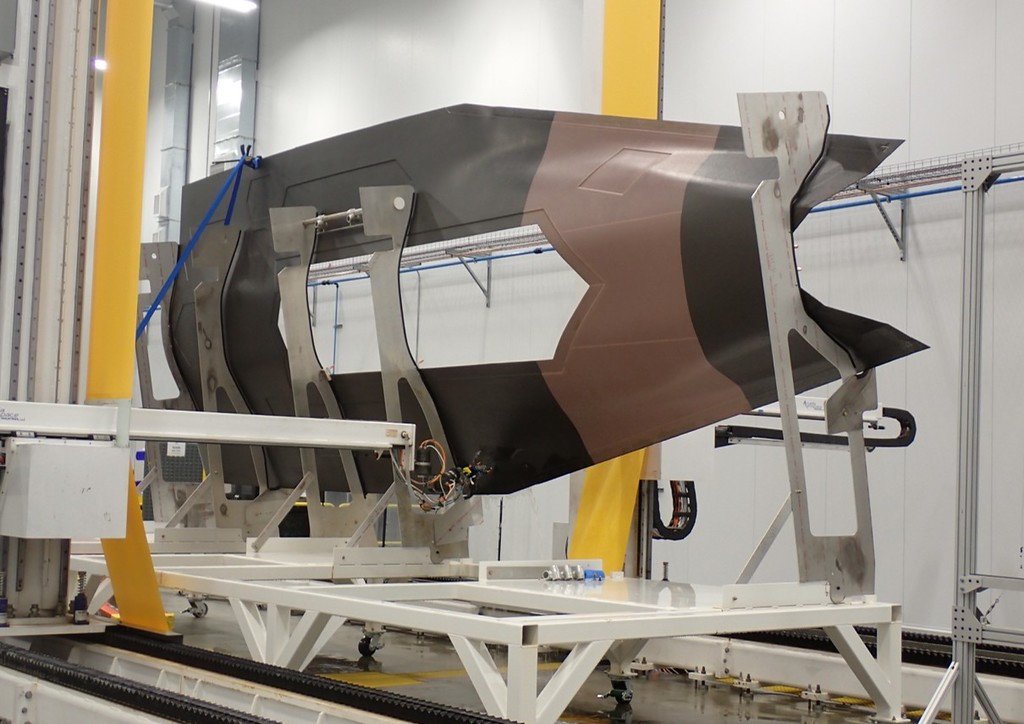
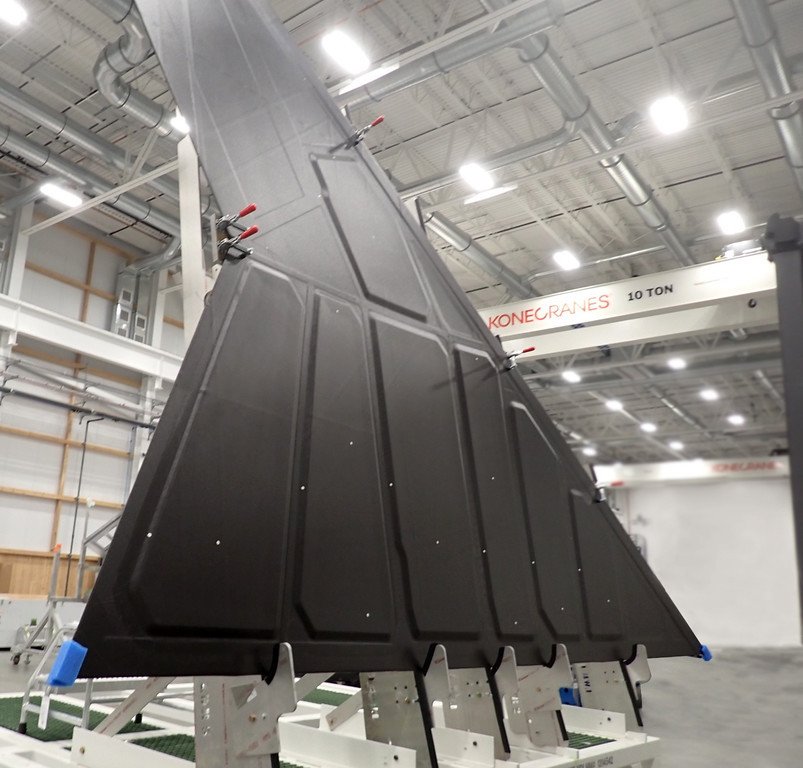
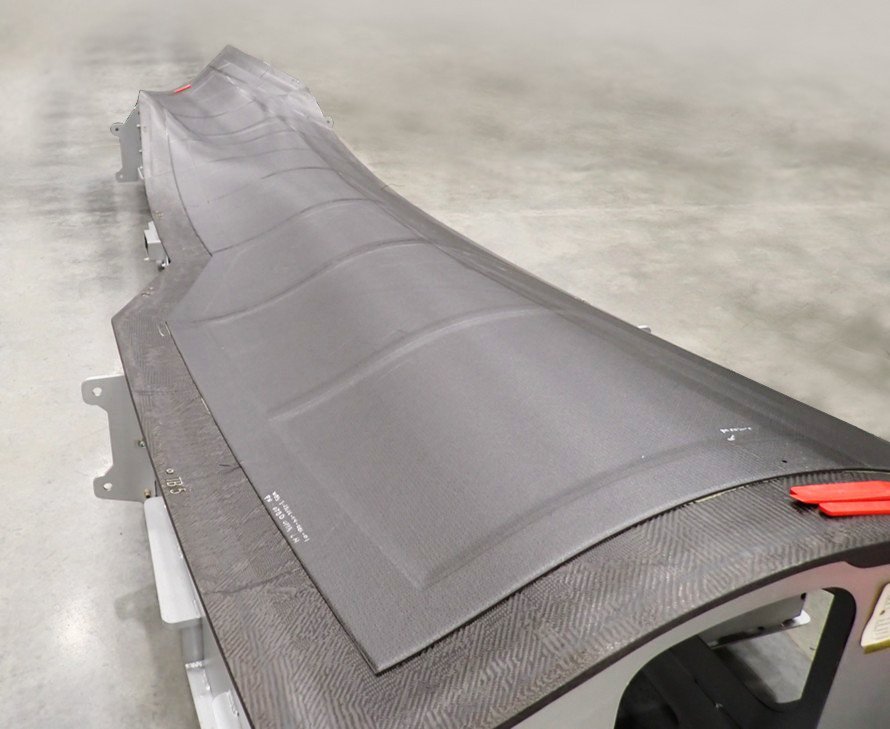
A central fuselage part of the first Vectis prototype now under construction. Lockheed Martin Skunk Works

The Skunk Works boss stressed that this approach offers advantages not just for accelerating development and prototype, but also for reducing costs and positioning Vectis to enter full-scale production.

“It gives you the reliance and the confidence as you continue to move forward that you’re ready to off and build these things because you’re using those real production processes,” he explained. “An example of that is a technique that we call minimal tooling determinant assembly. It’s a technique that really enables an increased level of affordability and speed through really reducing the amount of touch labor required and increasing the first pass yield. We’ve seen, in many cases, an 80 percent reduction in labor hours to build up the aircraft itself.”

Part of one of the wings for the first Vectis prototype. Lockheed Martin Skunk Works

Fehlen made an indirect reference to flat-pack furniture from IKEA to provide additional context, in extremely general layman’s terms, about what this technique offers.

“That’s what we’re talking about, that idea that it can come together very quickly, limited touch, and limited error. We constrain that to reduce the number of labor hours, which is not just a cost implication, but also buoys the speed and how fast we’re going to be able to produce them,” he said. “You can imagine, as well, there’s a lot of simplification that goes into this. We have significantly reduced the part count. Again, back to simplify the build so that you can have a positive impact on speed and affordability, not new techniques, but we’ve applied them here with vigor to ensure that we are getting to the cost point that the services and our customers need in order to make this system effective.”

Another element of the first Vectis prototype, which is now being built. Lockheed Martin Skunk Works

In terms of actual unit cost, “we’re always looking at, and, of course, we’re targeting to be [at] the CCA competitive price, so we’re very cognizant of it and make trades associated with that,” according to Fehlen. Vectis is “focused more on the CCA side of the house, and obviously the price points that are highly relevant in that regime, and then, of course, making trades along the way, and to make sure that we can meet it.”

The head of Skunk Works was responding here specifically to a question that mentioned the Air Force’s target of a roughly $20 million unit price for drones acquired under the first phase, or Increment 1, of its CCA program once full-scale production is achieved. The service announced in June that it was ordering fleets of both of the Increment 1 designs now in development, General Atomics’ FQ-42A Dark Merlin and Anduril’s FQ-44A Fury. The Air Force has plans for at least one more increment to this program, and has said in the past that it could pursue lower-cost (and less exquisite) designs.

A trio of YFQ-42A Dark Merlin prototypes. GA-ASI
A YFQ-44A Fury prototype with an inert AIM-120 missile under its wing. USAF

“While not discussing suppliers, you can imagine we are ensuring that all of the decisions we make in the development and then the build out of these aircraft are designed around achieving that competitive cost point, while at the same time maximizing the amount of capability,” Fehlen added. “Those are the things that our customers are looking for, and we put it in a survivable solution.”

“There are some [companies] that are really going down the attritable [route], which defines a different price point than the CCA community has been targeting,” he also noted. Attritable designs are “quite a bit less from a cost point perspective and often from a capability perspective.”

With this in mind, there are still larger questions about where exactly Vectis may fit into U.S. military CCA plans, as well as those emerging from allied and partner air arms globally. Skunk Works has said in the past that it was eliminated from the Air Force’s CCA Increment 1 competition because it put forward a very stealthy “gold-plated” design that was not what the service wanted. Lockheed Martin had also indicated that its view of the capability/cost balance on new CCA-type designs had subsequently shifted very much in the opposite direction. Though it is still not entirely clear, what we’ve learned about Vectis in the past year would seem to signal that the pendulum at Skunk Works has swung back the other way again, at least to a degree.

As an interesting point of comparison, Northrop Grumman had also entered a higher-end design for the Increment 1 competition. In the wake of that loss, the company produced a much more familiar CCA design with a more traditional planform, which is now known as the YFQ-48A Talon Blue.

It’s also worth noting here that Skunk Works had publicly shared a future crewed-uncrewed teaming vision that included multiple tiers of drones back in 2022. This ranged from a cruise missile-like design the company now calls the Common Multi-Mission Truck (CMMT) all the way up to a concept for what could have been a very low-observable (stealthy) and highly autonomous flying wing uncrewed combat air vehicle (UCAV).

“We listen closely to our customers to deeply understand the operational environment and use those insights and our own analysis to inform the diverse solutions we develop for different mission sets,” Lockheed Martin told TWZ directly after the press call last week in response to a follow-up question about whether the 2022 vision was still relevant and if Vectis had supplanted the upper-tier concept shown at that time. “We continue to evaluate a range of crewed and uncrewed concepts against evolving customer needs.”

“Lockheed Martin Vectis addresses a warfighter need for a survivable, flexible and multi-mission capability, both domestically and internationally,” the company added in its statement. “We’re leaning into that demand, making strategic investments to accelerate Vectis’ progress and maturity and to deliver the capabilities our nation and allies need.” 

A screen capture from a more recent Lockheed Martin video showing renderings of various different drone designs, including Vectis (at lower left), the CMMT (at upper right), and the stealthy flying-wing (at lower right). Lockheed Martin capture

Publicly, the Air Force continues to eschew any new plans to acquire and field UCAVs in favor of or even in addition to far less exquisite CCAs. The U.S. Marine Corps has so far put forward a similar CCA vision. However, just at the end of last month, the U.S. Navy released new target requirements for what it called a CCA-type drone, but that described something that sounded much more like a UCAV.

Lockheed Martin and a host of other companies globally are being presented with a clearly expanding CCA market, but there is also still obvious interest in higher-tier UCAVs. China, in particular, has positioned itself as the current leader in the stealthy flying wing UCAV space, as well as a dominant actor in advanced combat drone developments more generally speaking. Russia, India, Turkey, and France continue to pursue flying wing UCAVs, as well. That being said, Skunk Works’ Vectis is arguably the closest we have seen to a low-observable UCAV to come out of recent CCA developments.

Regardless, Skunk Works is confident that there is a place for Vectis, together with autonomy and other capabilities it is developing, domestically and internationally, in this future uncrewed air combat ecosystem. It “is a survivable autonomous multi-mission platform, which we believe is the solution needed within today’s operational environment and into the future,” Fehlen said last week.

Skunk Works is committed to “delivering what’s next across … airframes, open architectures, to include artificial intelligence and autonomy, and then crewed-uncrewed integration,” he added. “Make no mistake, it will take advancements across all these areas to get to where our customers are going. We look at the full picture. Vectis is a holistic weapon system from our perspective.”

Altogether, “it’s an urgent need. We know that. We can hear it.”

UPDATE: 3:10 pm EDT

We now have a photo of the full sized Vectis mockup on the floor or Air, Space, Cyber 2026:

(Lockheed Martin)

Contact the author: joe@twz.com

The post Everything We Just Learned About The Vectis Collaborative Combat Aircraft From The Skunk Works appeared first on TWZ.

  •  

France Accelerates Rafale F5 Upgrade After Collapse Of FCAS Next-Gen Fighter Project

France is accelerating work on the Rafale F5 standard, bringing forward development of a major new configuration of its combat aircraft at a time when the country’s planned next-generation fighter with Germany has effectively collapsed in its original form. The contracts cover the equipment judged to have the highest technical risk, ahead of the overall development contract for the F5 standard, expected for the end of this year.

The French defense procurement agency, the Direction générale de l’armement (DGA), ordered the first upstream development work for F5 from Dassault Aviation, Thales, MBDA, and Safran. The contracts cover key areas including navigation, datalinks, radar, electronic warfare, and propulsion, laying the groundwork for the next configuration of the Rafale, which is planned to enter service with the French Air and Space Force and the French Navy starting around 2033.

#Commande | Rafale F5

La DGA commande les 1ers travaux en amont du prochain lancement en réalisation du standard F5 du Rafale

Ils concernent notamment :
➡la centrale inertielle
➡le moteur
➡le radar
➡la suite d’autoprotection de l’avion
⤵ pic.twitter.com/n3uhBYqIvi

— Direction générale de l'armement 🇫🇷 (@DGA) September 9, 2026

The most extensive modernization of the Rafale yet, the F5 standard was originally part of a longer transition toward France’s next-generation combat-air capability. But with the Franco-German New Generation Fighter (NGF) effort now effectively dead in its original configuration, the accelerated F5 program is taking on a much larger strategic role.

Concept artwork of the NGF future fighter. Dassault Aviation

Rather than simply keeping the Rafale relevant until NGF arrives, France is now developing a version of the aircraft that is set to carry much of the country’s high-end combat-air capability well into the 2030s and potentially beyond.

The increasingly capable F5 could, in turn, reduce the urgency of finding a replacement for the Rafale — while potentially adding to the fighter’s export appeal. After a slow start, Dassault has recorded export sales of 299 new-build Rafales to eight nations.

The DGA’s contracts engage four of France’s principal combat-aircraft industrial players. Dassault Aviation remains responsible for the aircraft and its overall integration; Thales is involved in major sensor, electronic warfare, and communications capabilities; MBDA is responsible for much of the weapons system; and Safran is responsible for propulsion.

The Rafale assembly line at the Dassault Aviation facility in Mérignac, France. Dassault Aviation – V. Almansa ALMANSA

Previous Rafale standards have largely consisted of incremental upgrades, focusing on software and other improvements to the existing aircraft configuration. F5 is notably more extensive, addressing many of the critical systems that determine how the aircraft senses the battlespace, communicates with other platforms, conducts electronic warfare, and generates the power needed to operate increasingly demanding equipment.

The DGA has specifically identified the Thales RBE2-XG radar as one of the major technological advances associated with F5.

The RBE2-XG is expected to feature gallium nitride (GaN) semiconductors. Compared with previous technology, GaN generates less heat and has the capacity to operate at higher voltages, meaning that output power can be increased, while component size can be reduced. Overall, using GaN should help to get more power out of the radar without increasing its size.

According to the DGA, “This new radar will benefit from a substantial increase in power, and consequently in detection range, as well as improvements in the identification of targets with an extremely low radar cross-section (RCS). Its computing capabilities will also be enhanced to facilitate the integration of artificial intelligence.”

The RBE2-XG will also be “designed with collaborative combat in mind, featuring sensors capable of working together without the need for pilot intervention.” It is also planned to have enhanced resilience, including against cyber threats.

France is already working on the concept of a combat drone to accompany the Rafale, with the future F5 standard providing the crewed aircraft around which those systems can operate.

A Rafale during a test mission with a Dassault nEUROn combat drone demonstrator. Dassault Aviation – A. Pecchi

The new radar will be combined with more capable electronic warfare equipment, improved communications and datalinks, expanded processing capacity, and a more capable propulsion system.

To be developed by MBDA and Thales, the forthcoming F5 version of the SPECTRA self-protection suite is intended to significantly improve detection and jamming capabilities, the DGA says, “through a fully digital approach, enabling a complete overhaul of the core electronic warfare system to counter the increasing density and broadening of the threat spectrum, as well as the growing complexity of threat waveforms, expected by 2035.”

Thales will also be responsible for the new Inter-Vehicle Data Link (IVDL) system, described as a “stealthy and resilient datalink.” The DGA says the new datalink will expand connectivity “thanks to a new high-speed, discreet, and jamming-resistant waveform. IVDL will allow the Rafale to penetrate hostile areas where jammers are widespread, while maintaining optimal quality of communication and dialogue between aircraft.”

Safran will begin preliminary design work on the M88 T-Rex engine, which is planned to increase the turbofan’s thrust from around 16,500 pounds to nearly 19,850 pounds, an increase of roughly 20 percent.

In terms of armament, the contract announcement mentions the ASN4G missile, set to be introduced to service by 2035, which will allow the Rafale F5 to continue to serve as the airborne nuclear component. The munition remains in the early stages of development, but it will be capable of hypersonic speeds — defined as speeds greater than Mach 5 — with a range in excess of 1,000 kilometers (621 miles).

Other likely new missiles include a beyond-visual-range air-to-air missile to succeed the current Meteor. As you can read about here, France’s Comet program, apparently led by the French side of MBDA, is already looking into this requirement, with an apparent plan to introduce the weapon around 2030.

An older video from MBDA showing some of the company’s weapons integrated on earlier versions of the Rafale:

For France, the original logic behind the pan-European FCAS program was that Rafale would eventually give way to the NGF as its principal crewed combat aircraft, operating from land bases and aircraft carriers.

With the collapse of the Franco-German effort, France cannot simply wait for a next-generation fighter program whose industrial and political future is uncertain. Instead, the Rafale has to remain capable against rapidly evolving threats throughout the 2030s and beyond.

With the F5 standard, however, France is looking to incorporate some of the concepts envisaged for NGF. These include distributed architectures in which crewed fighters, uncrewed aircraft, remote carriers, missiles, and offboard sensors cooperate across a battlespace.

The nEUROn drone and a Rafale M in flight over the aircraft carrier Charles de Gaulle, during tests to investigate the use of a UCAV in a naval context. Dassault Aviation – A. Pecchi

A highly upgraded Rafale operating as the crewed controller of uncrewed combat aircraft and remote weapons could perform some of the missions that France originally expected from NGF.

For now, F5 also sidesteps the central problem in the now-defunct Franco-German effort: whether the two countries could agree on the requirements, industrial structure, and workshare behind a new-generation combat aircraft.

Despite its advances, the F5 airframe remains derived from a design dating back to the 1980s, which first entered French service in the early 2000s. In particular, it falls well short of fifth-generation designs — let alone sixth-generation ones — in terms of low observability. This is one area where collaborative drones could potentially help compensate for the Rafale’s inherent limitations.

DA00052389_CCO_
The current standard F4 Rafale with a full weapons load. Dassault Aviation – C. Cosmao © Dassault Aviation – C. Cosmao / © Dassault Aviation – C. Cosmao

France has therefore bought itself some time with the F5 program. But it may eventually decide that it needs a future high-end crewed fighter to provide capabilities that an upgraded fourth-generation airframe cannot fully replicate, particularly in terms of survivability against advanced integrated air-defense systems, signature reduction, internal weapons carriage, and operations deep inside heavily contested airspace.

On an industrial level, F5 is also significant because it brings together the same French industrial heavyweights that would have formed the backbone of its FCAS effort. Dassault Aviation, Thales, Safran, and MBDA are now well-positioned to work together on whatever comes after F5, whether that is a crewed combat aircraft, uncrewed CCA-type platforms, or a combination of both. Based on its experience with the nEUROn program, France would be well placed to develop a UCAV that can work cooperatively as well as independently, taking over the deeper-penetrating fighter mission set, and potentially skipping a sixth-generation fighter altogether.

https://www.youtube.com/watch?v=frNsu7g7r94

Meanwhile, success with F5 — and, in particular, with the wider combat ecosystem planned around it — could put France in an even stronger position when it comes to any future European fighter project.

For the time being, Britain, Italy, and Japan are pursuing the GCAP/Tempest pathway toward a new combat aircraft. Germany and Spain remain tied to the wider FCAS architecture, even as the original Franco-German NGF arrangement has fractured. Sweden’s position is less clear, with indications that it could collaborate with either France or Germany.

France, for its part, is now investing heavily in an increasingly sophisticated Rafale architecture while maintaining its own sovereign industrial base.

In terms of acqusition, France is expected to pursue a mixed approach, buying new-build Rafales while upgrading suitable aircraft already in service to the F5 standard. The oldest jets are unlikely to receive the full F5 treatment, however.

The irony is that the failure of the NGF effort may ultimately make Rafale F5 more important — and potentially more capable — than it was ever expected to be.

Contact the author: thomas@thewarzone.com

The post France Accelerates Rafale F5 Upgrade After Collapse Of FCAS Next-Gen Fighter Project appeared first on TWZ.

  •  

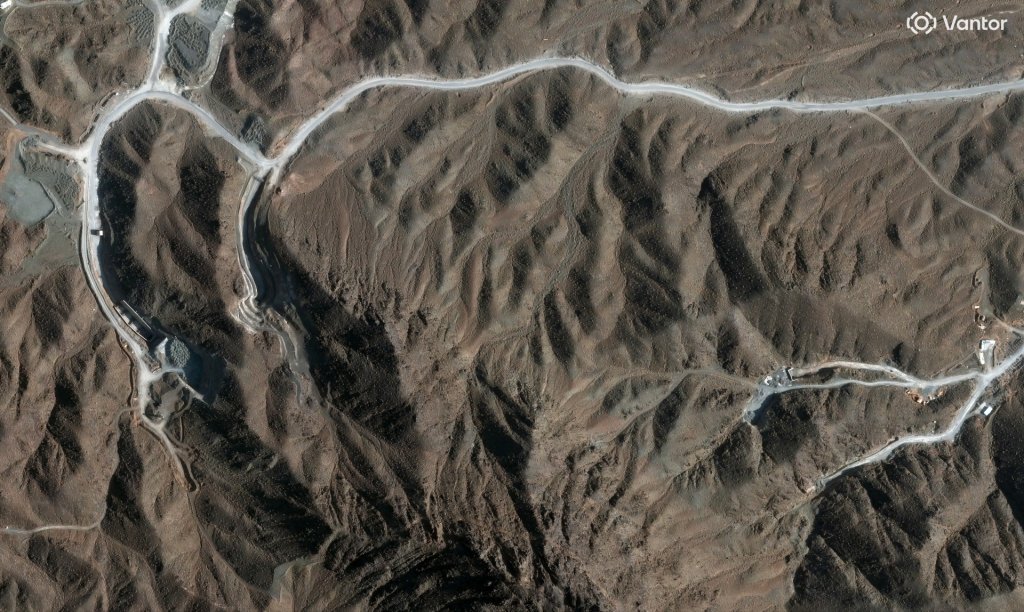
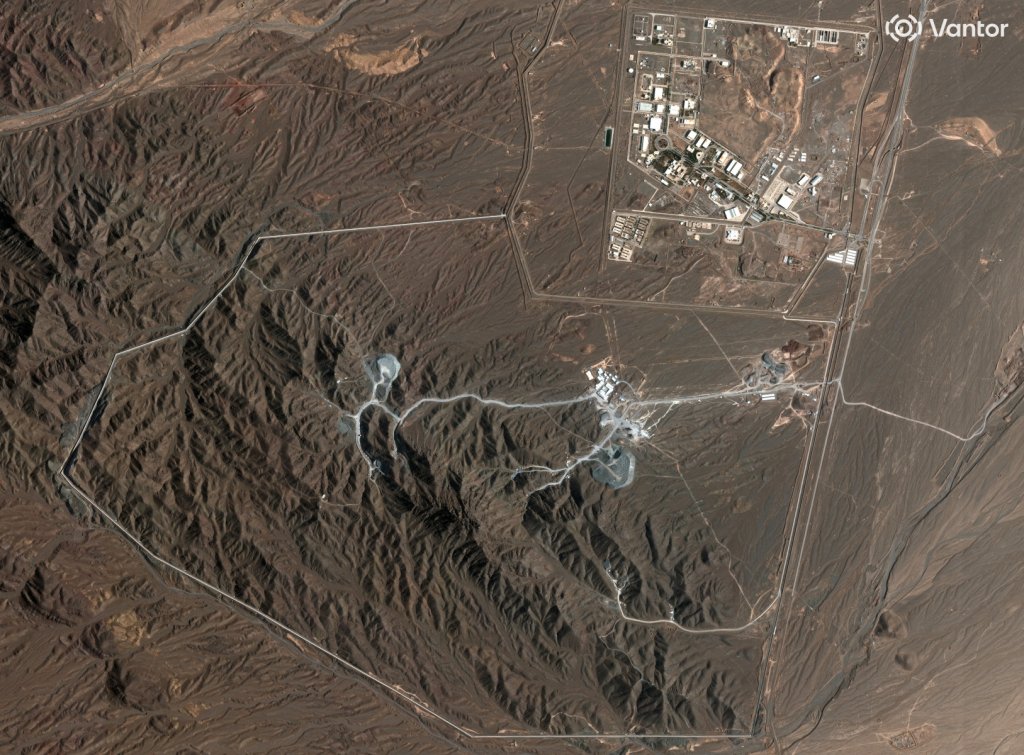
Work At Underground Test Site A New Indicator Of Possible Strikes On Iran’s Pickaxe Mountain Bunker

Work at a specialized underground weapons test site in New Mexico, contracted earlier this year, was linked to planning for a potential new operation targeting Iranian nuclear facilities, according to a report from CNN. The U.S. military has notably left Iran’s hardest-to-reach site under Pickaxe Mountain untouched so far, but President Donald Trump and other U.S. officials have been openly talking about striking it.

On February 27, the day before U.S. and Israeli forces launched their initial wave of strikes on Iran, the Pentagon’s Defense Threat Reduction Agency (DTRA) quietly announced it had awarded a sole-source deal to Pate Construction Co., Inc., for new construction at the so-called Alternate Seismic Hardrock in Situ Test (ALT-SHIST) site. The work was needed to support an upcoming classified live-fire test. ALT-SHIST is situated within the White Sands Missile Range (WSMR), a sprawling U.S. Army-managed complex in New Mexico’s Jornada del Muerto desert basin. DTRA is a relatively small and obscure organization that plays a leading role in U.S. military efforts to develop new and improved ways to respond to Weapons of Mass Destruction (WMD) threats.

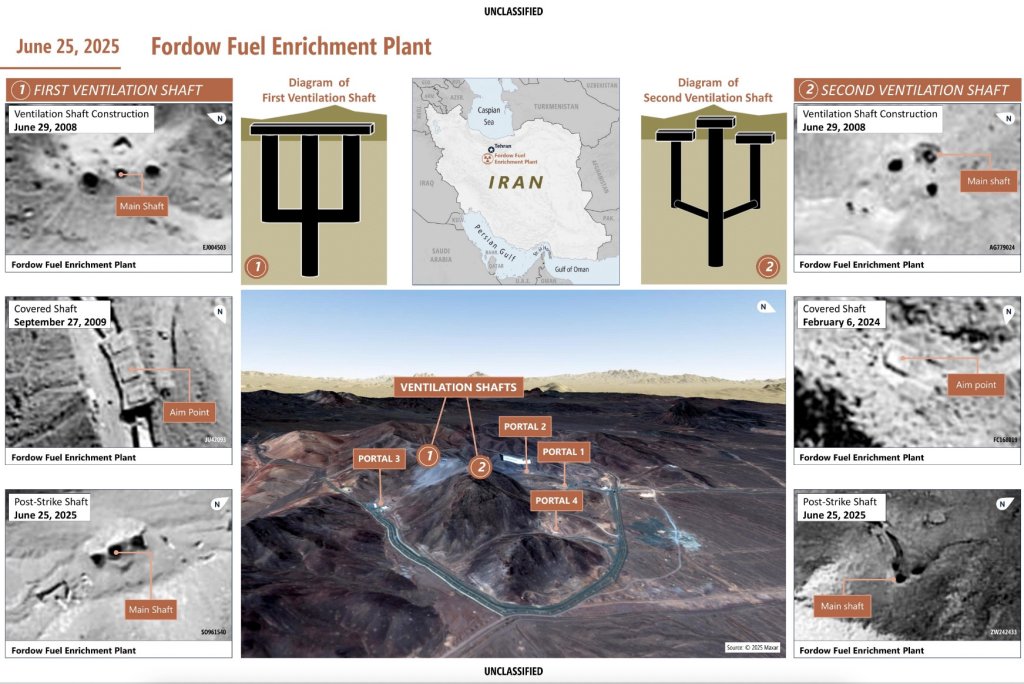
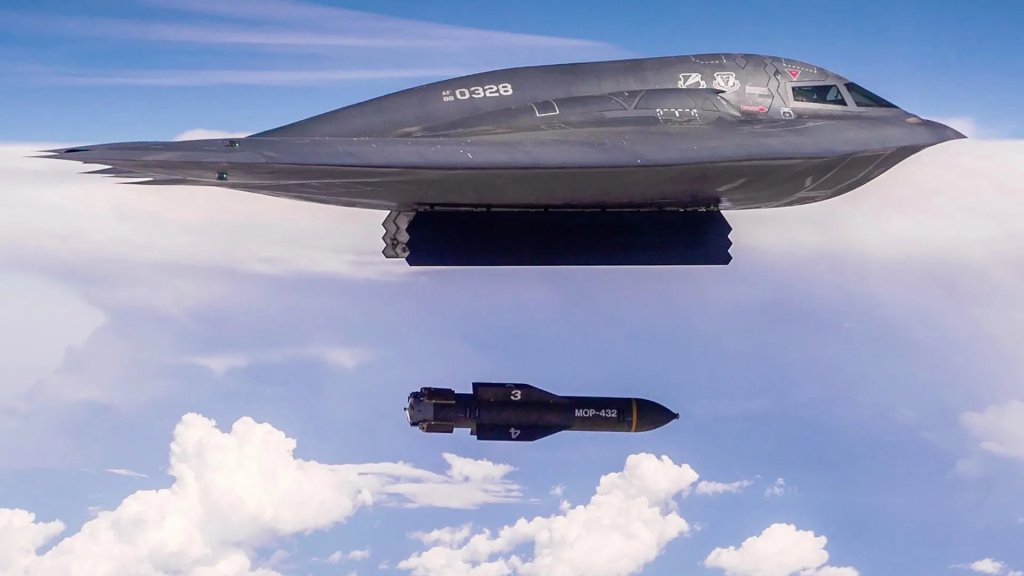
WSMR and DTRA have come up in discussions about strikes on Iran in the past. The U.S. military’s heaviest conventional air-dropped weapon, the 30,000-pound-class GBU-57/B Massive Ordnance Penetrator (MOP) bunker buster bomb, has been extensively tested at multiple sites there in the past. DTRA was also directly involved in its initial development. MOPs made their combat debut during U.S. strikes last year on underground Iranian nuclear facilities at Fordow and Natanz as part of Operation Midnight Hammer. The possibility has been raised that a different site within WSMR may have been used to test the plan of attack against Fordow, which involved two ventilation shafts being hit with six GBU-57/Bs each. The bombs were dropped in rapid succession, with each one burrowing deeper and deeper into the facility below. WSMR also happens to contain the site of the first atomic bomb test in 1945.

A map showing the general location of White Sands Missile Range, with an inset giving a better sense of how expansive it is. Holloman Air Force Base, which juts into the southern end of the range complex, is also highlighted. Google Maps

“The plans for the test [at ALT-SHIST] were connected to the Iran war,” CNN said in its story, published yesterday, citing unnamed sources “familiar with the matter.” Beyond that, the planned testing was tied to a “need to develop a way to target Iran’s deepest-buried underground facilities and, likely, simulate U.S. strikes against specific nuclear facilities.”

CNN said it was unable to independently verify whether or not the test in question had occurred.

A formal justification for the sole-source contract to Pate Construction that DTRA released in February did not mention Iran or elaborate on the need for the new testing at ALT-SHIST, but stressed there was an urgent requirement critical to U.S. national security.

“The services required are the immediate and mission-critical enabling services for a ‘real-world’ national security ordinance [sic; ordnance] test. This is not routine construction; it is the highly specialized remediation and operational preparation of a unique, subterranean test facility at White Sands Missile Range (WSMR),” according to the justification document, which DTRA officials had approved on February 24. “The work is a critical path dependency for a live-fire test designed to validate classified capabilities against rapidly emerging threats.”

“As the incumbent contractor for over a decade, Pate Construction Co., Inc. possesses unparalleled and non-transferable tacit knowledge of this specific subterranean test facility. This is a unique Government structure with complex geological and security considerations, and Pate Construction Co., Inc.’s direct, hands-on experience is a tangible asset that no other source possesses,” the document adds. “Pate Construction Co., Inc. is the only contractor that
currently maintains a fully mobilized presence at WSMR with the specific heavy equipment and security-cleared operators required.”

CNN‘s piece says apparent work at ALT-SHIST was visible in satellite imagery of the site between mid-February and mid-March, but the outlet said it was unable to confirm whether or not this was related to the contract with Pate Construction.

We reviewed satellite imagery showing work at a remote DTRA/STRATCOM test site that coincided with this contracting action, but we couldn’t confirm its purpose.

The Pentagon didn’t respond to our questions regarding the test, and we couldn’t independently confirm it occurred. pic.twitter.com/k8zyvqWy56

— Davis Winkie (@davis_winkie) September 9, 2026

ALT-SHIST is an active test site, and any work observed there earlier this year could well have been linked to other projects. For instance, additional publicly available DTRA contracting documents offer details about planned work on a specific part of the ALT-SHIST site, called Tunnel 7, tracing back to last year, as part of a project nicknamed Millstone Willemite 6 (MW-6).

“This task requires the construction contractor to repair and address the damage to Tunnel 7 caused by prior incidents, in accordance with government-provided designs, specifications, and other contract documents,” according to one contracting document dated September 15, 2025. “The contractor will also be responsible for providing support during testing activities, as well as safing after each test and general support between tests. All tunnel construction must be completed by 15 June 2027.”

“The contractor shall repair a D-shape tunnel and overburden using the D-shape of 20 feet depth and width, inside the tunnel. The contractor shall remove and repair any damage to the ribs, crown, and invert to Tunnel 7,” that same document continues. “After the repair of Tunnel 7, the contractor shall provide general construction support to instrument the tunnel in preparation for testing and then safe the tunnel for re-entry post-testing.”

The schedule for the MW-6-related work indicates that it is separate from what Pate Construction was hired to do at the site back in February.

A view out into a mountainous part of the White Sands Missile Range complex. USACE

ALT-SHIST, which was first established in 1995, is also not the only site DTRA makes use of within WSMR. As its name indicates, it is an alternate to the original SHIST site, use of which began in 1993.

“There was a small addition made to the SHIST site, but that area has been heavily used since 2007,” according to an environmental impact study the U.S. Army Corps of Engineers (USACE) completed in 2015. “The granite bedrock at these sites has been fractured and damaged by extensive testing. There are no existing granite areas adjacent to those sites where similar testing can be performed.”

A map showing the relative locations of SHIST and ALT-SHIST, as well as other test sites, at the northern end of the WSMR complex. USACE

USACE conducted that study in support of the establishment of a new test site at WSMR, simply called the Granite Test Site, to succeed the original SHIST. The Granite Test Site is now in use. There are many more sites within the range complex designed to simulate underground and otherwise hardened targets. This is also just one aspect of the wide array of testing that occurs on a daily basis at WSMR.

All three also appear to have been involved in the testing and development of the Massive Ordnance Penetrator (MOP). 5/10 pic.twitter.com/3aWSYXIZln

— Fabian Hinz (@fab_hinz) June 25, 2025

However, the presence of large areas of undisturbed granite is a key factor here, as that is particularly relevant for testing weapons designed to penetrate into extremely deeply buried facilities. CNN‘s piece yesterday noted that Iran’s Pickaxe Mountain site is built underneath a granite mountain.

“The mountain in White Sands, they specifically picked mountainous areas that were solid rock, and they used state-of-the-art tunneling technology to make the kind of cavities in the mountain that you would put this kind of [Iranian nuclear] facility in,” Gary Stradling, a retired scientist who previously worked for the Department of Energy’s Los Alamos National Laboratory (LANL), told TWZ in an interview last year. “I think that there is a lot of work that DOD has done in these kinds of facilities that is highly classified, and I couldn’t talk to you about it. This is very sophisticated work. It is not casual, and it’s not speculative. These are real experts who are doing the work. Careful, technical, quantitative work to be able to deliver this kind of war-fighting capability to the services.”

TWZ spoke to Stradling, who did work tied to earth-penetrating munitions at various points during his lengthy career, in the wake of Operation Midnight Hammer.

Me, standing at the edge of a MOP crater on a mountain top at White Sands Test Range, where detailed studies of massive earth penetrators were studied for effectiveness against deeply buried targets by the Defense Threat Reduction Agency (DTRA) —formerly Defense Nuclear Agency.… pic.twitter.com/JYq1V2xO6q

— Gary Stradling (@gary_stradling) June 24, 2025

The U.S. military notably did not strike Pickaxe Mountain, which is situated immediately to the southwest of Iran’s nuclear facility at Natanz, during Operation Midnight Hammer. The site also went untouched by Israel during last year’s 12 Day War. American and Israeli forces did not target it during major combat operations earlier this year, either. All of this underscores the targeting challenge the site presents, even for strikes using MOPs, which TWZ explored in detail earlier this year and that has continued to make it a point of particular discussion.

A satellite image taken on August 21, 2026, showing activity around tunnel entrances at Iran’s Pickaxe Mountain site. Satellite image ©2026 Vantor

CNN‘s report yesterday was primarily focused on a new assessment of ongoing construction at Pickaxe Mountain from the Center for Strategic and International Studies (CSIS) think tank in Washington, D.C.

Satellite “images reveal more road activity at Pickaxe Mountain in 2026 than at any point in the site’s history,” according to a report CSIS published yesterday. “There is a clear surge in construction activity in 2026 that corresponds to the raising and hardening of the portal accesses, paving of the internal road network, reinforcement around access areas, and the flattening and removal of excavation spoil.”

“This assessment can neither refute nor substantiate the Israeli intelligence claim that Iran moved centrifuges into Pickaxe Mountain,” CSIS’s report also noted. “The continuous construction, the absence of an increased internal security posture, and the lack of observed nonconstruction vehicles and equipment suggest the underground facility is not yet capable of enrichment work, if that is the intended purpose. Further analysis of daily activity would be needed to establish the site’s pattern of life beyond its current construction footprint.”

A broader overview of Pickaxe Mountain, as well as Iran’s nuclear site at Natanz, seen at the upper right corner, as of August 21, 2026. Satellite image ©2026 Vantor

This is in line with TWZ‘s own previous reporting on Pickaxe Mountain back in July, when there were already signs of growing activity following the establishment of a shaky ceasefire between the United States and Iran the preceding month. As we wrote at that time:

“As with the strikes on Fordow, multiple bombs could be dropped on the same impact point to try to penetrate further down into Pickaxe Mountain. Whether there might be similar ventilation shafts or other weak points that could be exploited at Pickaxe Mountain is unknown. …”

A graphic with details about the employment of MOPs on strikes at Fordow during Operation Midnight Hammer. DOD

“A strike ‘right in the front door’ on the tunnel entrances at Pickaxe Mountain would be another option to at least hamper access to the facility inside for a time. This could be combined with strikes aimed at sections of the tunnel networks that run deeper inside the facility, but that are still close enough to the surface to be reachable by available conventional munitions. For instance, MOPs may not be able to hit the main cavern areas, but they could possibly hit certain tunnels that might lead to them.”

“Even a combined strike on entrances and shallow tunnels at Pickaxe Mountain could still present certain challenges. Firm intelligence on exactly where the tunnels snake under the mountain could be limited, making it difficult to select the best impact points. This is exactly why the U.S. military has been investing heavily in advanced, void-sensing fuzes for MOP and other bunker buster bombs for decades now. These fuzes detect when a munition has penetrated into a sufficiently large space, such as a room or tunnel in an underground facility, to help maximize damage. Fuzes that can effectively ‘count’ floors also help to ensure the munition has burrowed sufficiently deep before detonating.”

…

“…the U.S. military could conduct follow-on strikes on the entry points at Pickaxe Mountain to disrupt any attempt to regain access, as well.”

“Destroying Pickaxe Mountain will be a scientific and targeting challenge,” CSIS also noted in its report yesterday. “It is an underground fortress buttressed by granite. It is one of the only facilities in Iran’s nuclear program that the United States has not yet struck. Structurally degrading Pickaxe Mountain requires more than just kinetic force – it takes actionable high-confidence intelligence and sophisticated mathematical modeling.”

With all this in mind, it is not at all hard to imagine how new testing at ALT-SHIST, as well as other sites, would be essential for exploring additional options for striking Pickaxe Mountain and/or other deeply-buried targets in Iran using MOPs and/or other munitions.

A US Air Force B-2 bomber drops a GBU-57/B MOP during a test. USAF

It’s also worth noting here that GBU-57/Bs are understood to be in relatively short supply, though it is unknown how many of them are currently in inventory. Furthermore, the U.S. Air Force’s B-2 Spirit bombers are currently the only aircraft certified to employ the huge MOPs operationally. There was a report in 2024 that prime contractor Boeing was working to expand its capacity to produce these bombs. A MOP successor, the GBU-76/B Next Generation Penetrator (NGP), is in development now, but prototyping work is expected to run through the end of Fiscal Year 2028.

President Donald Trump certainly has raised the prospect of a strike on Pickaxe Mountain publicly on several occasions since July. He has also repeatedly said that the site is being persistently surveilled, particularly from space.

“There’s another place called Pickaxe Mountain, another nice place. We may have to give them a shot there, too, because someone said there was a little movement at the site,” Trump said yesterday during a speech at a convention the Republican Party is hosting in Dallas, Texas, ahead of this year’s midterm elections. “We don’t need much. We see everything, you know, because of Space Force.”

“We may hit Pickaxe [Mountain] very soon,” the President also said while speaking to reporters at the White House last Friday.

Trump on Pickaxe Mountain: We may have to give them a shot there too. We see everything. We can the see tag on their coat. “Muhammad Al-Fayed” It’s never Muhammad Jones. pic.twitter.com/UQm939OruL

— Acyn (@Acyn) September 10, 2026

Trump on Iran:

We may hit Pickaxe Mountain very soon because if there is anything going on with Pickaxe. pic.twitter.com/kwlHZuV6M7

— Clash Report (@clashreport) September 4, 2026

Whether growing activity at Pickaxe Mountain finally prompts a U.S. strike at the site, either alone or as part of a larger operation, remains to be seen. If and when such a mission is launched, past and future testing at sites like ALT-SHIST in New Mexico will all but certainly have played an important part.

Contact the author: joe@twz.com

The post Work At Underground Test Site A New Indicator Of Possible Strikes On Iran’s Pickaxe Mountain Bunker appeared first on TWZ.

  •  

Operational F-15EXs Drop Live Bombs For The First Time

The Oregon Air National Guard’s 142nd Wing has taken another significant step toward turning the F-15EX Eagle II into a true multirole fighter, conducting the first live-bomb drops from operational F-15EXs during training at Nellis Air Force Base, Nevada. The milestone came during a roughly three-week deployment to Nellis in late August and early September in support of the U.S. Air Force’s Weapons Instructor Course (WIC).

U.S. Air Force Master Sgt. Jay Aebi, non-commissioned officer in charge of weapons loading, 142nd Aircraft Maintenance Squadron, loads a bomb onto an F-15EX Eagle II aircraft at Nellis Air Force Base (AFB), Nevada on August 27, 2026. The 142nd Wing’s fleet of F-15EXs operated at Nellis AFB for three weeks in late August and early September in support of the U.S. Air Force’s Weapons Instructor Course (WIC). During this time, the unit hit a historical milestone, dropping live bombs from operational F-15EXs for the first time. (U.S. Air National Guard photo by Master Sgt. Steph Sawyer)
Weapons technicians from the 142nd Aircraft Maintenance Squadron load a bomb onto an F-15EX at Nellis Air Force Base, Nevada on August 27, 2026. U.S. Air National Guard photo by Master Sgt. Steph Sawyer

Photographs released by the Air National Guard yesterday show F-15EXs from the 142nd Wing carrying live bombs on the flight line and departing Nellis with the weapons loaded. Official imagery shows the jets armed with a single 500-pound Mk 82 freefall bomb on the fuselage centerline, while spotters also captured F-15EXs carrying a 2,000-pound Mk 84 freefall bomb in the same position.

The 142nd’s F-15EXs are only now acquiring a capability that was deliberately absent from the wing’s previous F-15C fleet. The Portland, Oregon-based unit was an air-superiority organization when it operated the F-15C, while the F-15EX is ultimately derived from the F-15E Strike Eagle and has considerably more inherent multirole potential.

As we reported in July, the wing had already begun laying the groundwork for this transition. In May, 142nd personnel traveled to Mountain Home Air Force Base, Idaho, where they loaded and dropped inert BDU-50 and BDU-56 training bombs from their F-15EXs. Those weapons replicate the size and weight of 500-pound-class Mk 82-series and 2,000-pound-class Mk 84-series bombs. Over 10 missions, the crews dropped 24 BDU-50s and 12 BDU-56s.

A BDU-56 is loaded onto an F-15EX assigned to the 142nd Wing during a training mission at Mountain Home Air Force Base, Idaho, in May 2026. U.S. Air Force

While the F-15EX had already been tested in an air-to-ground role by the Air Force’s test community, the Mountain Home deployment was the first time an operational Eagle II unit had loaded and dropped bombs. The next step, the wing said at the time, would be live weapons employment at Nellis.

The Air Force has emphasized that the F-15EX’s primary mission remains defensive and offensive counter-air, particularly in the homeland-defense role. At the same time, the service’s plans call for the aircraft to provide combatant commanders with strike packages capable of operating in contested environments.

An F-15EX fires an AIM-120D missile during a test mission near Eglin Air Force Base, Florida. The F-15EX can carry up to 12 AIM-120 missiles. U.S. Air Force photo by Tech. Sgt. John Raven

The F-15EX is inherently well suited to such a mission. Derived from the Strike Eagle lineage, it combines that aircraft’s large payload capacity and long range with substantially modernized avionics and electronic warfare systems. The aircraft’s design leaves considerable room for additional weapons and mission equipment, making an expansion into air-to-ground operations relatively straightforward compared with trying to add that capability to the F-15C.

The 142nd has been building the institutional knowledge required to make that transition. Three of its pilots underwent a nine-month course covering the science, tactics, and procedures associated with air-to-ground weapons employment before returning to help establish the wing’s training program. Weapons personnel also traveled to Nellis earlier this year to work with F-15Es assigned to the 59th Test and Evaluation Squadron and become certified in bomb loading procedures.

An F-15EX Eagle II aircraft assigned to the Oregon Air National Guard’s 142nd Wing sits on the flight line at Nellis Air Force Base (AFB), Nevada with a live bomb attached to its belly as it prepares for take off on August 27, 2026. The 142nd Wing’s fleet of F-15EXs operated out of Nellis AFB for three weeks in late August and early September in support of the U.S. Air Force’s Weapons Instructor Course (WIC). During this time, the unit hit a historical milestone, dropping live bombs from operational F-15EXs for the first time. (U.S. Air National Guard photo by Master Sgt. Steph Sawyer)
An F-15EX Eagle II assigned to the Oregon Air National Guard’s 142nd Wing sits on the flight line at Nellis Air Force Base, Nevada with a live bomb attached to its belly as it prepares for takeoff on August 27, 2026. U.S. Air National Guard photo by Master Sgt. Steph Sawyer \

As well as teaching pilots how to release a weapon, the wing had to develop an entirely new air-to-ground training pipeline for pilots, maintainers, and weapons personnel at a unit that had not previously operated an aircraft with an operational bombing mission.

Nellis is home to the Air Force’s Weapons School and is central to the Weapons Instructor Course, making it one of the most important locations in the service for developing and evaluating advanced tactics. The 142nd’s participation therefore places its emerging F-15EX air-to-ground capability in an environment specifically focused on integrating advanced weapons, tactics, and mission planning.

U.S. Air Force Staff Sgt. Parker Mayhew (center), a weapons loader assigned to the 142nd Aircraft Maintenance Squadron, prepares a bomb to be loaded onto an F-15EX Eagle II aircraft as U.S. Air Force Senior Airman Alexander Walker (left) looks on, August 26, 2026, Nellis Air Force Base, Nevada. The 142nd Wing’s fleet of F-15EXs operated out of Nellis AFB for three weeks in late August and early September in support of the U.S. Air Force’s Weapons Instructor Course (WIC). During this time, the unit hit a historical milestone, dropping live bombs from operational F-15EXs for the first time. (U.S. Air National Guard photo by Master Sgt. Steph Sawyer)
A weapons loader assigned to the 142nd Aircraft Maintenance Squadron prepares a bomb to be loaded onto an F-15EX at Nellis Air Force Base. U.S. Air National Guard photo by Master Sgt. Steph Sawyer

The wing’s new live bomb-dropping capability also comes as the Air Force continues to explore how broadly the Eagle II can be employed.

Test and evaluation units have already demonstrated that the aircraft can accommodate sophisticated air-to-ground weapons. Earlier this year, an F-15EX from the 85th Test and Evaluation Squadron participated in a munitions-load training event at Kadena Air Base in Japan, where Air Force personnel practiced loading live GBU-53/B Small Diameter Bomb IIs onto the aircraft.

GBU-53/B Small Diameter Bomb IIs sit on a dolly in front of an F-15EX from the 85th Test and Evaluation Squadron during a training event at Kadena Air Base, Japan, on July 8, 2026. U.S. Air Force

The F-15EX is also capable of carrying the conformal fuel tanks used by the F-15E, which can provide additional fuel as well as additional weapons stations. The operational F-15EXs delivered to the 142nd have so far been seen without CFTs, however, and the status of the plan to equip the Oregon aircraft with them remains unclear.

CFTs could become increasingly important if the Air Force moves toward more demanding air-to-ground missions for the Eagle II, particularly those requiring substantial weapons loads and long-range operations.

Another unresolved question is how the Air Force will ultimately crew F-15EXs when they are performing more complex multirole missions.

U.S. Air Force Staff Sgt. Alisha Sargent, a weapons loader assigned to the Oregon Air National Guard’s 142nd Aircraft Maintenance Squadron, loads a bomb onto an F-15EX Eagle II aircraft at Nellis Air Force Base (AFB), Nevada on August 26, 2026. The 142nd Wing operated their fleet of F-15EXs out of Nellis AFB for three weeks in late August and early September in support of the U.S. Air Force’s Weapons Instructor Course (WIC). During that time, the unit and the EX hit a historic milestone, dropping live bombs from operational F-15EXs for the first time. (U. S. Air National Guard photo by Master Sgt. Steph Sawyer)
A weapons loader assigned to the 142nd Aircraft Maintenance Squadron loads a bomb onto an F-15EX at Nellis Air Force Base. U.S. Air National Guard photo by Master Sgt. Steph Sawyer

The Eagle II retains the F-15E family’s two-seat cockpit, although the Air Force’s initial operational concept has generally involved flying the aircraft with a single pilot. That leaves an unused cockpit that could potentially become an important asset as the mission set expands.

Former 142nd Wing commander Col. Michael Kosderka previously told TWZ that the addition of a weapons systems officer or other specialist in the rear cockpit could open the door to more air-to-ground capabilities.

“We can start talking about putting all kinds of air-to-ground capabilities into the airplane, potentially putting WSOs or other experts in the backseat as well to have us do any number of multi-role capabilities that it’s just physically not possible to in the C model,” Kosderka told TWZ in an interview back in 2024. “So the X has tremendous growth capability. It’s really exciting.”

Two crew would be particularly relevant to complex strike missions, where managing sensors, weapons, communications, electronic warfare, and other mission systems can place substantial demands on a single pilot. As we have discussed in the past, a back-seater would also be highly beneficial for the emerging drone controller role.

The Weapons School has also been associated with developing two-seat F-15EX operations, indicating that the second cockpit’s utility is already being considered at the tactical-development level.

142nd Aircraft Maintenance Squadron weapons loaders, U.S. Air Force Staff Sgts. Parker Mayhew (left) and Eric Janson transport a bomb to an F-15EX Eagle II aircraft using a jammer, August 27, 2026, Nellis Air Force Base (AFB), Nevada. The 142nd Wing’s fleet of F-15EXs operated at Nellis AFB for three weeks in late August and early September in support of the U.S. Air Force’s Weapons Instructor Course (WIC). During this time, the unit hit a historical milestone, dropping live bombs from operational F-15EXs for the first time. (U.S. Air National Guard photo by Master Sgt. Steph Sawyer)
142nd Aircraft Maintenance Squadron weapons loaders transport a bomb to an F-15EX at Nellis Air Force Base. U.S. Air National Guard photo by Master Sgt. Steph Sawyer

For now, it would be premature to characterize the F-15EX as an operational replacement for the F-15E Strike Eagle in the air-to-ground role. The 142nd’s newly demonstrated bombing capability remains part of an ongoing training and development process.

Meanwhile, the Air Force is preparing to field substantially larger numbers of F-15EXs. Beyond the 142nd, additional Guard units are planned to receive the type, in California and Louisiana, as well as Michigan.

The Air Force has announced plans to base F-15EXs at Seymour Johnson Air Force Base, North Carolina, where they will eventually replace older F-15Es, which, in turn, are slated to move to Whiteman Air Force Base, Missouri, as part of a broader realignment of the Eagle fleet.

Another two active-duty F-15EX squadrons are slated to replace the former F-15C force at Kadena. The first F-15EX for permanent assignment at Kadena recently departed Boeing’s St. Louis, Missouri, facility for the 142nd Wing, where it will undergo final preparations before its eventual deployment to sprawling Okinawa.

An F-15EX Eagle II aircraft assigned to the Oregon Air National Guard’s 142nd Wing takes off from Nellis Air Force Base (AFB), Nevada with a bomb attached to its belly, August 27, 2026. The 142nd Wing’s fleet of F-15EXs operated out of Nellis AFB for three weeks in late August and early September in support of the U.S. Air Force’s Weapons Instructor Course (WIC). During this time, the unit hit a historical milestone, dropping live bombs from operational F-15EXs for the first time. (U.S. Air National Guard photo by Master Sgt. Steph Sawyer)
An F-15EX assigned to the 142nd Wing takes off from Nellis Air Force Base with a bomb attached to its belly, August 27, 2026. U.S. Air National Guard photo by Master Sgt. Steph Sawyer

The operational implications of the air-to-ground training therefore extend well beyond Portland.

The Eagle II’s generous weapons payload, long range, modern sensors and electronic warfare systems, and ability to carry both air-to-air and air-to-ground weapons give the Air Force a platform that can potentially perform several missions without sacrificing the characteristics that make the F-15 attractive for homeland defense and counter-air operations. The same characteristics are also extremely relevant to any export operator, which would expect to operate the Eagle II in a multirole capacity.

As well as a weapons-training milestone, the first live-bomb drops by the 142nd Wing provide more evidence that the F-15EX’s mission is continuing to evolve.

Contact the author: thomas@thewarzone.com

The post Operational F-15EXs Drop Live Bombs For The First Time appeared first on TWZ.

  •  

Hermeus Unveils Air-Launched Ramjet Test Vehicle for High-Speed Experiments

Hermeus is developing an expendable ramjet-powered aircraft, Ramjet-X, which will be air-launched from its reusable, F-16-sized Quarterhorse high-speed drone. The result aims to create a two-vehicle architecture intended to make high-speed flight testing less dependent on expensive, single-use test platforms. That would give Hermeus and potential customers a way to conduct repeated high-Mach flight tests without expending a large booster on every mission.

America didn’t lose ground in high-speed flight because of a lack of ideas. We slowed down because flight tests became too expensive, too rare, and too cautious.

Meet Ramjet-X. Air-launched from the Quarterhorse program, it’s a low-cost, repeatable test vehicle built to fly and… pic.twitter.com/rMed6NhcvD

— Zach Shore (@Zsshore) September 9, 2026

The company unveiled the concept today. Hermeus says the Ramjet-X will be carried beneath Quarterhorse and released at a speed of around Mach 3, at which its ramjet can begin operating. The smaller vehicle will then accelerate, climbing to around 100,000 feet, and a speed in the region of Mach 4. Quarterhorse will then return to base and be available for another mission.

Imagery released by Hermeus shows a Quarterhorse carrying a Ramjet-X mounted on a pylon under each wing, indicating that two different high-speed tests can be carried out in a single sortie. Intriguingly, the Quarterhorse is shown with no fewer than six underwing hardpoints in all, suggesting that other kinds of external payloads are envisaged.

Hermeus has not released detailed performance specifications for Ramjet-X, including its range, payload capacity, or the critical expected cost per flight. We have reached out to the company for more information.

Images released by the company show a relatively compact, missile-like vehicle with delta wings incorporating prominent dihedral. There are no horizontal tail surfaces, but a conventional vertical fin is complemented by a ventral fin. Axios reports that Ramjet-X is approximately 22 feet long and 7 feet wide.

In terms of appearance, and also thanks to its ramjet propulsion system, the vehicle is outwardly very reminiscent of the Lockheed’s D-21 Tagboard supersonic spy drone. However, at more than 40 feet long and with a wingspan of 20 feet, the D-21 was significantly bigger. Overall, the entire concept recalls the Cold War-era D-21 and its M-21 mothership, on a smaller scale.

A D-21 drone. U.S. Air Force
M-21 and D-21 paired together. CIA

The basic concept aims to address a longstanding problem with ramjet flight testing. Unlike a conventional jet engine, a ramjet cannot provide useful thrust from a standstill. The vehicle therefore has to be accelerated to a sufficiently high speed before the ramjet can take over.

That acceleration can traditionally require another propulsion system, including an expendable rocket booster. Hermeus is proposing to substitute a reusable aircraft for that initial boost. It is unclear if the Ramjet-X vehicles are similarly recoverable, but we have asked Hermeus for more details here, too.

As it stands, flight-test programs of this kind are often constrained not only by the cost and availability of test infrastructure, but also by the limited availability of suitable airspace and range access. A reusable carrier aircraft could help address both challenges, allowing multiple Ramjet-X vehicles to be deployed from airports near a designated test range as required and launched only once the vehicle is within the approved test area. That flexibility could reduce the need for a new large booster for every experiment while also making it easier to conduct tests, including at shorter notice, within increasingly constrained airspace.

Hermeus says Ramjet-X is being designed not just for its own development work but as a potential test platform for outside customers. The company is calling the concept “Flight Test as a Service,” with customers able to fly payloads including sensors, communications equipment, computing and autonomy systems, materials, and propulsion hardware.

The program reflects a broader push toward increasing the availability of commercial high-speed flight testing that has attracted U.S. government interest.

Hermeus was also selected by the Defense Innovation Unit for work under its Hypersonic and High-Cadence Airborne Testing, or HyCAT, effort. That program is intended to use commercial flight-test capabilities to expand the government’s access to relevant high-speed environments.

The company is also pursuing its own increasingly ambitious Quarterhorse aircraft. Its Quarterhorse Mk 2.1 completed an uncrewed supersonic flight earlier this year, reaching Mach 1.21 on its third test flight. The company’s roadmap calls for subsequent Quarterhorse variants to progressively increase speed and address the thermal and propulsion challenges associated with high-Mach flight.

Quarterhorse Mk 2.1. Hermeus

Supersonic. Mach 1.21.

Quarterhorse Mk 2.1 is now the world’s first privately developed, unmanned supersonic jet and the fastest unmanned aircraft flying today.

This flight makes Hermeus the fastest company in aviation history to go from founding to supersonic flight – exactly… pic.twitter.com/wjoIcdiEOj

— Hermeus (@hermeuscorp) May 26, 2026

The imagery released for Ramjet-X shows a different Quarterhorse configuration than the 2.1 version, including beefed-up landing gear with twin nosewheels. The requirement for release of the Ramjet-X at Mach 3 suggests that its launch platform will be the Quarterhorse Mk 2.3, which will be the first to reach this kind of speed. This summer, Hermeus confirmed that its second supersonic aircraft, the Quarterhorse Mk 2.2, and the Mach 3-capable Mk 2.3 aircraft were under construction.

For its future Quarterhorse Mk 3, Hermeus has been developing Chimera, a turbine-based combined-cycle propulsion system. This is intended to transition from turbine operation to ramjet operation as speed increases.

Ramjet-X effectively separates part of that problem into another aircraft and the system could also be useful for experiments that do not require an entire hypersonic aircraft.

For example, an organization developing a high-temperature material might need to know how it behaves in an actual high-speed flight environment, rather than only in a ground test. The same could apply to weapons, sensors, communications systems, guidance hardware, onboard computers, or other components intended for high-speed vehicles.

So far, however, it’s not clear what kind of flight profiles Ramjet-X will provide. Hermeus has mentioned a cruise phase lasting “tens of minutes.”

The ramjet intake on the Ramjet-X. Hermeus

But a short-duration dash through a high-Mach regime is not equivalent to sustained flight at those speeds. The duration available to an experiment, thermal loads, acceleration, vibration, available electrical power, telemetry, maneuverability, and payload mass will all determine what can actually be tested.

The company says it is already testing the Ramjet-X propulsion system at its High Enthalpy Air-Breathing Test facility in Jacksonville, Florida. High-temperature structures are also under development at its El Segundo, California, headquarters. Integrated vehicle testing is currently planned for 2027.

The HEAT facility itself is part of Hermeus’ effort to establish high-speed propulsion test infrastructure. The company says the facility is being developed to eventually provide continuous high-Mach airflow for more flight-like ground testing.

Ramjet-X has yet to fly, but if it performs as intended, it could help lower one of the major barriers to obtaining real-world flight data at high Mach numbers. At the same time, the company is entering a market that is attracting growing interest from other aerospace firms, which are also expanding their high-speed flight-test capabilities, especially to capitalize on the broader hypersonics boom, including Stratolaunch.

There is fairly clear potential weaponization of this concept, for strike and surveillance missions, as well, although there has been no indication of that being in the works at this time.

The planned 2027 integrated testing should provide the first meaningful indication of whether the concept can progress to become a practical high-speed test capability.

Contact the author: thomas@thewarzone.com

The post Hermeus Unveils Air-Launched Ramjet Test Vehicle for High-Speed Experiments appeared first on TWZ.

  •  

First Look At General Atomics’ Wildfire, Its Successor To The MQ-9 Reaper (Updated)

General Atomics has given us the first look at its new Wildfire drone design. The company is developing this armed medium-altitude, long-endurance (MALE) uncrewed aircraft in response to new U.S. Air Force requirements for a lower-cost successor to the MQ-9A Reaper.

A rendering of Wildfire was included in a video montage, seen below, which General Atomics Aeronautical Systems, Inc. division (GA-ASI) released earlier today. GA-ASI first announced work on this new drone last month. The Air Force, in partnership with the Pentagon’s Defense Innovation Unit (DIU), formally kicked off its new search for a Reaper successor, currently called the Massed Modular Aircraft (MMA), in July. GA-ASI also developed the MQ-9A, which is now out of production.

A good idea spreads like Wildfire.#UAS #Airpower pic.twitter.com/eIONVDjZ1n

— General Atomics Aeronautical Systems, Inc (GA-ASI) (@GenAtomics_ASI) September 9, 2026

Wildfire’s pusher-prop design shown is clearly an extension of the existing MQ-9 family, with an overall planform that is extremely similar to that of the Reaper. Like the latest versions of the MQ-9A, the new drone has a sensor turret under the nose and a large blade antenna under the rear fuselage.

The rendering of Wildfire, at top, seen together with a stock picture of a US Air Force MQ-9 Reaper, at bottom. General Atomics capture/USAF

Wildfire does notably lack the Reaper’s distinctive hump on top of the forward fuselage. On the MQ-9A, this feature contains the drone’s satellite communications (SATCOM) antenna. What this might mean about how Wildfire is controlled and otherwise communicates is not immediately clear, but it points to the use of a smaller, lower-cost SATCOM terminal. That, in turn, would most likely be tied to a network like Starshield, the government-focused cousin of SpaceX’s Starlink. We could also see greater semi-autonomous control here, or at least a greater reliance on it.

The resulting shape of the forward end of the fuselage is vaguely reminiscent of GA-ASI’s Gnat series of drones from the 1990s, which evolved into the iconic Predator. The MQ-9 family, in turn, is an outgrowth of the Predator.

A close-up look at the nose end of Wildfire as seen in the newly released rendering. General Atomics capture
A General Atomics Improved Gnat (I-Gnat) drone. General Atomics

The rendering of Wildfire also depicts the drone armed with four Joint Strike Missile (JSM) cruise missiles, with two loaded on what appears to be a single pylon under each wing. The stealthy JSM can be employed as an anti-ship or land-attack weapon. GA-ASI has released renderings of MQ-9s in the past with similar loadouts. The Air Force is already acquiring stocks of JSMs, primarily to arm its F-35A Joint Strike Fighters. Stand-off munitions like the JSM have long been seen as an increasingly important, if not critical, addition to the non-stealth Reaper’s arsenal, helping to keep the drones further away from potential threats.

A close look at two JSMs in the Wildfire rendering. General Atomics capture

TWZ has reached out to General Atomics for more details.

“General Atomics is looking at it and asking ourselves, ‘What can we really do? No kidding, no BS, actually do,’” GA-ASI spokesperson C. Mark Brinkley did tell us back in August when asked about Wildfire. “Let’s be honest with ourselves first. How do we come out of the box, day one, with a 10,000-nautical-mile ferry range? Can we carry four LRASMs [AGM-158C Long Range Anti-Ship Missiles]? Can we swarm 100 aircraft under semi-autonomous control? Can we fuse all of that data into a highly effective common operating picture? Can we do that at scalable, affordable mass?”

“So that was the assignment, and our engineers sharpened their pencils and got to work,” he added. “What came out the other side was our new Wildfire UAS. That thing is a beast, and no one who actually does this for a living, and is honestly concerned about America’s warfighting edge, can look at it and not want 100 of them as fast as we can make them.”

Wildfire “addresses all of the concerns posed by the MMA solicitation. We can deliver years earlier and maintain the same high quality. You can have everything that makes Reaper special, plus more, at a price that doesn’t break the bank,” Brinkley also told Breaking Defense for a story published last week.

In terms of what the Air Force has said it is looking for with the MMA, as we have previously written:

“[The service] …wants the MMA drone to perform the same general intelligence, surveillance, and reconnaissance (ISR) and strike missions as the MQ-9A. To that end, stated program requirements to date include a speed of at least 200 knots true airspeed, a munition and sensor payload capacity of at least 2,800 pounds, an unrefueled combat radius of at least 2,300 nautical miles with payload, the ability to self-deploy one-way at least 8,000 nautical miles, and the ability to operate from runways no longer than 6,000 feet. The MMAs also need to be highly modular and use open architecture mission systems to make it easier to integrate new capabilities and functionality down the line.”

Another look at an example of a typical MQ-9A Reaper in US Air Force service now. USAF

The Air Force also shared last week that it is targeting a roughly $10 million unit cost for the MMA drones, not including sensors and certain other systems. As mentioned, the Reaper is out of production, but the price tag on a fully-equipped Reaper today is widely reported to be between $30 million and $50 million. The Air Force has itself used the $50 million figure as a reference point in discussing its latest plans for what comes after the MQ-9.

It is unclear how Wildfire might achieve this cost goal while retaining so much obvious Reaper DNA, but even a major 30 to 50 percent reduction in the price tag compared to its predecessor would be a huge deal. In the past, General Atomics’ Brinkley has openly questioned just how cheap an MMA drone could realistically be while still offering comparable capabilities to MQ-9.

The original timeline for the MMA program envisioned the Air Force reaching initial operational capability in 2031 after receiving 20 of the drones. The service is now looking to accelerate that schedule by around two years. The Air Force expects to eventually acquire around 180 MMAs.

The Air Force has tried, without success, to develop a successor to the MQ-9 on several occasions in the past. However, a key driving factor now is huge losses of Reapers in the course of the ongoing conflict against Iran. The service’s MQ-9 fleet has already shrunk dramatically in recent years, in part due to additional losses during operations targeting Iranian-backed Houthi militants in Yemen last year.

“Although we have plenty of MQ-9As today, we are going through them at a rate that is concerning to us,” Air Force Lt. Gen. Christopher Niemi, the service’s Chief Modernization Officer, told reporters at a roundtable at the Pentagon last week, according to Air & Space Forces Magazine. “There’s not a lot of good options to immediately replace those aircraft.”

GA-ASI has long had a monopoly on MALE combat drone sales in the United States, and is clearly looking to extend that now with Wildfire. However, this market space has been expanding, and other companies are already competing for what could be a very lucrative new deal with the Air Force. Winning the MMA contract could open doors to opportunities elsewhere within the U.S. government and with foreign countries. Variants and derivatives of the MQ-9 are also in service today with the U.S. Marine Corps, the Central Intelligence Agency (CIA), U.S. Customs and Border Protection (CBP), and several additional air arms globally.

A US Marine Corps MQ-9A Reaper. USMC

More information about Wildfire, as well as its competitors, is only likely to continue emerging as the Air Force pushes ahead with new and aggressive plans to finally acquire a follow-on drone to the venerable Reaper.

Update: 2:15 PM ET –

General Atomics spokesperson C. Mark Brinkley has now shared additional details about Wildfire with TWZ.

“You’re not imagining it. These new Wildfire renders do lack the dorsal hump you see on Reaper, MQ-9B, Gray Eagle, Mojave STOL and many copycat aircraft,” Brinkley explained. “General Atomics has pushed proliferated low-earth orbit controls onto many of our existing aircraft and pioneered that integration across unmanned aerospace. That is a relatively new technology that we already have great experience integrating, and it makes sense to bring that into Wildfire.”

“Proliferated low-earth orbit” (abbreviated variously as pLEO and P-LEO) refers to distributed constellations of hundreds or potentially thousands of satellites in that orbital region. SpaceX’s constellations supporting the aforementioned Starlink/Starshield networks fall into this general category.

“Wildfire is going to leverage ongoing advancements in autonomy on Day One. We envision networking dozens of Wildfires for true combat mass,” according to Brinkley. “Again, not a hypothetical. We’ve been pioneering many advancements in autonomy, AI, and machine learning across the FQ-42A program and using our own MQ-20 Avenger as a CCA [Collaborative Combat Aircraft] surrogate connected to F-22 and F-35. That’s proven, not concept.”

The FQ-42A, also known as the Dark Merlin, is one of two designs now in development under the first phase, or Increment 1, of the Air Force’s CCA program, the other being Anduril’s FQ-44A Fury. The service announced in June that its initial CCA force would be a mixed fleet of FQ-42As and FQ-44As.

A row of prototype YFQ-42A Dark Merlin drones. GA-ASI

“Four JSMs tells you something about Wildfire overall. We can’t just look at overall external weight limits. You have to consider individual hardpoint capacity,” Brinkley continued. “We’ve concepted four JSMs on MQ-9B before, as a concept, but we’ve never done that on Reaper. Wildfire can absolutely do that, from a hardpoint capacity and also an overall MGTOW [maximum gross takeoff weight] perspective.”

“We’re showing two LRASMs on Wildfire, which is twice as much as the DIU solicitation asked for. If you’re going to build a flying weapons truck, give it some teeth,” he added. “These longer-range missiles also give you increased standoff compared to other weapons you associate with the MQ-9, so that also gives you some flexibility. Wildfire can carry two LRASMs for meaningful combat distances.”

The AGM-158C LRASM (Long-Range Anti-Ship Missile) is a derivative of the AGM-158 Joint Air-to-Surface Standoff Missile (JASSM) family of land-attack cruise missiles, and is also in the Air Force’s inventory today.

A rendering depicting a Wildfire drone firing an AGM-158C LRASM. General Atomics capture

Brinkley also said that Wildfire’s ferry range will exceed the MMA’s target of 8,000 nautical miles.

“We can deliver way ahead of the original FY 2031 schedule [for MMA]. We can deliver more than twice as many aircraft as requested in the same amount of time, because our manufacturing is real. Our network of suppliers, subcontractors and partners is real,” he added. “The obvious question is always cost, and I struggle to discuss costs because no one ever wants to compare apples to apples. There are stated price targets out there, and we’ll hit those. We’ll do it with an aircraft you can trust. We have nearly 10 million flight hours and more than 1,600 aircraft delivered. This is what we do.”

Speaking more generally, Brinkley also highlighted General Atomics’ extensive experience in developing and producing armed MALE drones, including the MQ-9.

Another stock shot of a US Air Force MQ-9A Reaper. USAF

“It’s important to remember that Reaper made its first flight 25 years ago and was so far ahead of everything else that it still defines the entire category of medium-altitude, long-endurance strike aircraft worldwide. When you build something new to do this kind of work, it rolls out into the Reaper’s shadow,” he said. “I don’t have to defend MQ-9 because the track record speaks for itself. It’s been called the MVP of Epic Fury [the U.S. military’s nickname for the initial phase of operations against Iran this year] for good reason, and I think it has squashed all questions about the relevance of MALE ISR and strike.”

“So that brings us to questions of affordability versus attrition, cost-per-effect, and the true price of combat operations. It also brings up questions of reliability and mission availability, and Reaper excels at both of these, so you can’t replace it with junk and expect to get the same effects,” he continued. “That’s where Wildfire comes in. Our team went to the graph paper and started sketching out what they would do differently and what they would keep the same. Where are the tradeoffs, and what do you change? No one knows this category of aircraft and missions like we do. We’re not guessing and hoping.”

“I can’t get into deep specifics on Wildfire yet, because it’s too early for that and the goalposts seem to move every time I say something publicly. What I can say is that Wildfire takes all of the known quantities of Reaper, blends them with some cutting-edge technologies and manufacturing advancements, and incorporates our more than three decades of lessons learned about large, unmanned combat aircraft to drive cost-per-effect math down.”

Contact the author: joe@twz.com

The post First Look At General Atomics’ Wildfire, Its Successor To The MQ-9 Reaper (Updated) appeared first on TWZ.

  •  

Trump Threatens Canadian Jets At The Center Of Army Aerial Surveillance Plans

President Donald Trump has threatened to pursue a ban on U.S. sales of aircraft from Canadian firm Bombardier unless they move production south of the border. American officials have not elaborated on how such a total prohibition on domestic sales could take shape, but there are potential ramifications for the U.S. military, as well as commercial operators in the United States. The U.S. Army, in particular, has made Bombardier Global Express 6500-based ME-11B aircraft a cornerstone of its future aerial intelligence, surveillance, and reconnaissance (ISR) plans. For the moment, the U.S. Air Force flies its own fleet of E-11A Battlefield Airborne Communications Node (BACN) communications jets based on the Global Express family.

“NO MORE SELLING BOMBARDIER IN THE UNITED STATES!” Trump wrote in a post on his Truth Social social media platform yesterday. “If they want our Market [sic], they must build here, and stop treating America like a ‘piggyback.’ BUY AMERICAN.”

One of the US Air Force’s Bombardier Global Express-based E-11A BACN aircraft. USAF

The post, which was subsequently reshared by U.S. Ambassador to Canada Pete Hoekstra, also reiterated Trump’s accusations that the Canadian government has been deliberately slow-rolling certification of certain jets from rival U.S. planemaker Gulfstream. Back in January, the President also said he would “decertify” Bombardier aircraft in the United States over this issue, which would prevent them from operating in the United States, but this threat has yet to materialize into reality. Aviation authorities in Canada did certify five specific Gulfstream business jets in March, but do not look to have issued broader type certifications since then. Canada’s demand for more fuel system icing testing, at least on G700 and G800 models, has been cited as a factor in the length of the certification process. The U.S. Federal Aviation Administration (FAA) previously granted Gulfstream a conditional certification for these types that required demonstration of full compliance with domestic aircraft fuel icing regulations no later than the end of this year.

A stock picture of a Gulfstream G700 business jet. Gulfstream

Bombardier and Gulfstream actively compete globally in the large and super midsize business jet categories. A number of airlines in the United States also continue to operate CRJ-series small airliners, which were Bombardier products until 2020, when the line was sold to Mitsubishi Heavy Industries (MHI) in Japan. Today, the Canadian planemaker has a substantial U.S. presence, centered primarily in Wichita, Kansas, but does not build complete aircraft in the United States. We will come back to this later on.

Trump has specifically targeted Bombardier several times across both of his terms amid larger trade disputes with Canada. During Trump’s first administration, the U.S. government notably injected itself into a spat between the Canadian firm and Boeing that ultimately upended a proposed order for F/A-18E/F Super Hornet fighters for the Royal Canadian Air Force.

How the Trump administration might now seek to block sales of Bombardier jets in the United States is unclear. If there is no legal mechanism for instituting an outright sales ban, U.S. authorities could try to decertify jets from the Canadian firm or implement prohibitive tariffs or other economic measures. In addition to retaliatory certification actions, Trump has also threatened to levy tariffs on Canadian aviation firms in the past. Any of these courses of action could draw legal action or other retaliation from the Canadian government.

All of this raises questions about potential impacts on the U.S. military. As mentioned, the U.S. Army is in the process of acquiring a fleet of Global Express 6500-based ISR planes, designated ME-11Bs, under its High Accuracy Detection and Exploitation System (HADES) program. The Army has already divested all of its older turboprop-powered ISR aircraft as part of the transition to HADES. The service has also been utilizing several contractor-operated ISR planes based on different Bombardier business jets in the interim.

A Bombardier Global Express 6500-based Army Theater Level High-Altitude Expeditionary Next-Generation A-ISR (ATHENA) jet the Army has been utilizing as part of the transition to its new ME-11B HADES fleet. US Army

There is also the aforementioned Air Force fleet of E-11As. However, this may increasingly be something of a moot point, as these aircraft are now set to be retired in the 2028 Fiscal Year and supplanted with new space-based communications capabilities. There is still a possibility that Congress could block that plan, at least for a time.

TWZ has reached out to the Army and the Air Force in light of Trump’s latest remarks.

It is important to note that the U.S. certification process for military and civilian aircraft is separate, and that the Trump administration could exempt the former from any new action against Bombardier. After Trump’s decertification threat in January, the White House had told multiple outlets that in-service aircraft would be exempted from any such actions, but would not clarify whether further exemptions would be made for future U.S. military acquisitions.

Upending Bombardier’s business in the United States might have additional downstream effects, including on supply chains that support commercial and military fleets. Disruptions could also negatively impact any future sales opportunities to the U.S. military. When it comes to the latter point, since Trump started his second term, there has been a broader push to recapitalize U.S. government executive aircraft fleets. This has already included the purchase of new Gulfstream G700-based C-39A executive jets for the U.S. Coast Guard.

One of the U.S. Coast Guard’s new C-39A executive jets. Lemon Popp

The Air Force is also working to acquire a successor to its existing Gulfstream-based C-37 executive jets, tentatively designated the C-37C. Multiple branches of the U.S. military operate a host of other Gulfstream-based aircraft, including special mission types like the Air Force’s EA-37B Compass Call electronic warfare jets.

All this being said, there is no guarantee that Trump’s latest threats against Bombardier will materialize, whether or not they might impact U.S. military fleets. The President has already faced public pushback, including from at least one member of his own party, citing the Canadian firm’s existing economic contributions to the U.S. economy through its aforementioned American subsidiary.

“The presence of Bombardier in Wichita supports a local workforce of more than a thousand employees, who contribute their talent and expertise to our nation’s defense and aerospace capabilities,” Senator Jerry Moran, a Kansas Republican, wrote in a post on X yesterday. “This afternoon, I reached out to the Trump administration to make certain the President is aware of the significant contributions of Bombardier to Kansas and the importance of its presence in Wichita to many Kansas workers at Bombardier and in the Bombardier supply chain.”

“I will continue working to see that Bombardier’s manufacturing operations not only remain in Kansas but continue to grow and create American jobs,” Moran added. “Kansas is home to a hardworking, skilled workforce, and I will continue welcoming leaders in aircraft and defense manufacturing to do business here in the Air Capital of the World.”

“Bombardier’s American workers are based all around the United States with sites in Kansas, Texas, Arizona, Florida, Connecticut, Illinois, Delaware, California, Washington D.C. and New Jersey, as well as overall direct employment presence in more than 20 states,” Bombardier said in its own statement response to Trump’s comments, per NBC News. “Bombardier has also announced extensive plans to grow its defense activities as well as its service network and will, later this year, inaugurate a new facility in Fort Wayne, Indiana.”

The threat alone of U.S. government action could still have negative impacts for Bombardier broadly. The company’s stock price fell by some seven percent after Trump’s post yesterday, though it has rebounded somewhat as of the time of writing.

Trump’s trade war with Canada more broadly is still escalating after a new round of talks collapsed last month. The President and other U.S. officials also continue to make remarks about the country becoming the United States’ 51st state.

Many questions remain to be answered about Trump’s new threats against Bombardier and how they could be implemented, if at all. The President has certainly created new uncertainty regarding the Canadian planemaker’s access to the American market without yet definitively clarifying when the U.S. military could be exempted.

Contact the author: joe@twz.com

The post Trump Threatens Canadian Jets At The Center Of Army Aerial Surveillance Plans appeared first on TWZ.

  •  

Russia’s New Stealthy Lower-Cost Air-Launched Standoff Weapons On Display In Egypt

Russia is displaying some of its newest air-launched precision weapons in public for the first time at the El Alamein International Airshow in Egypt this week. The S-71K Kovyor and related S-71M Monokhrom, and the S8000 Banderol, reflect Russia’s effort to field larger numbers of relatively inexpensive standoff weapons alongside its more sophisticated and costly missile types. As such, their development and early employment are closely tied to the war in Ukraine, but they also reflect wider global interest in these kinds of weapons.

The weapons, seen in the tweet embedded below, comprise, clockwise from top left: S-71K Kovyor, an unknown smaller guided munition, S8000 Banderol, and S-71M Monokhrom:

Novel munitions for the Russian aircraft, on an expo. pic.twitter.com/L1UPTb8qhX

— krakek (@krakek1) September 6, 2026

For Russia, the requirement has become increasingly important as the war in Ukraine has evolved into a prolonged contest in which industrial capacity is as critical as technology. Russia has expended huge numbers of cruise and ballistic missiles against Ukrainian targets while also developing an enormous strike-drone campaign. At the same time, Ukrainian air defenses have become progressively more capable, forcing Moscow to use combinations of missiles, drones, decoys, and different flight profiles to penetrate or saturate the defensive network. One lesson is the fact that a weapon does not necessarily have to be as capable as a high-end cruise missile if it can be manufactured in much greater numbers and still present a credible threat to the target.

The S-71M, which TWZ previously reported on in detail after Ukrainian intelligence obtained an example, is a compact, turbojet-powered weapon with a distinctly angular airframe intended to reduce its radar signature. Imagery from Egypt gives a better look at its front end, including a faceted nose flowing into a broad central fuselage. The nose has at least one optically flat transparency for an infrared or TV seeker. Its wings are sharply swept and fold against the belly of the weapon for carriage, while the rear of the weapon terminates in an inverted-V tail arrangement. The overall shape is notably different from Russia’s more conventional cruise missiles of the past.

An S-71M test article under the wing of a Su-57. via X

Ukrainian analysis found that the S-71M incorporates an OFAB-250-270 high-explosive fragmentation bomb as its warhead and relies primarily on inertial guidance, rather than carrying a sophisticated terminal seeker, although the seeker window raises questions about that.

Ukrainian intelligence also described its construction as being relatively straightforward, with fiberglass composite material making up much of the outer structure and no evidence identified of specialized radar-absorbing coatings.

As we noted previously, the weapon appears intended as a less expensive, but still survivable standoff weapon option that can be produced in significant numbers.

The S-71M has been tested from the Su-57 Felon fighter, also present at El Alamein. In a press release, the United Aircraft Corporation (UAC), responsible for the Su-57, said that the S-71M and the S-71K displayed alongside it “were designed for fifth-generation fighters,” although there is no reason why they couldn’t be launched from a wide variety of platforms.

A Su-57 performing at El Alamein, with one of its main internal weapons bays apparently loaded with Kh-69 standoff missiles:

T-50-9 in El-Alamein, opening both main weapon bays. Two, presumably, Kh-69 can be seen in the front one.

Source: @ T汪汪T pic.twitter.com/f6csKc6Y9D

— George N. (@GeorgeN28581) September 8, 2026

Regardless of launch platform, the nature of the war in Ukraine makes the S-71M particularly useful. Russia has increasingly relied on extemporized glide bombs for attacks against targets relatively close to the front, but those weapons require the launching aircraft to operate within a certain distance of Ukrainian defenses. At least in their earlier iterations, such weapons were also crude and prone to failure. Longer-range cruise missiles offer considerably greater standoff but are more complex and expensive. The S-71M sits somewhere between those categories, providing an air-launched, powered weapon with a relatively large warhead and some degree of low observability without the cost and complexity of a full-size, truly stealthy cruise missile.

The S-71K appears to represent a more capable version of the basic concept. Public information remains limited, but the weapon has been associated with electro-optical guidance and greater onboard processing, potentially giving it a capability to deal with targets in a more flexible manner than the largely pre-programmed S-71M. Exactly how that capability is employed, and how autonomous the weapon actually is, remain less clear from the imagery and information released to date.

An S-71K missile presented in front of a Su-57 Felon at El Alamein. UAC
A close-up of the same S-71K missile at El Alamein. UAC
A Su-57 undergoes trials with a pair of S-71K missiles under the wings. via X

As displayed at El Alamein, the S-71K retains the overall faceted, low-observable appearance of the S-71M but has a visibly different airframe and wing arrangement. Its body is notably broad and compact relative to its length, with folding wings that are relatively thick, and a more refined inverted-V tail giving it more the appearance of a small uncrewed aircraft than a conventional air-to-surface missile.

A rear view of a test S-71K under the wing of a Su-57. via X

Meanwhile, the Banderol represents a somewhat different path to the same general problem. Ukraine’s intelligence service previously obtained and analyzed an example of the small jet-powered cruise missile, which TWZ reported on last year. The weapon is considerably smaller than Russia’s principal cruise missiles and has been associated with launch from drones and helicopters. Its reported range of around 500 kilometers (311 miles) and relatively small warhead make it something of a complementary system intended to provide another, more economical way of putting a precision weapon onto a target from the air.

The front portion of a Banderol is seen nearest the camera in a line-up at El Alamein, which also includes a Yak-130M combat trainer and a Su-57. UAC

In terms of its appearance, the Banderol is more conventionally missile-like, with an ogival central fuselage, a pointed nose, and sharply swept folding wings. Its proportions underline just how small it is compared with Russia’s better-known air-launched cruise missiles.

An infographic prepared by Ukraine showing the Banderol cruise missile and some of its foreign-sourced components. GUR photo

The Banderol is particularly relevant in the context of the economics of the Ukraine conflict. Russian forces have increasingly used combinations of relatively inexpensive one-way attack drones and more expensive cruise and ballistic missiles. The drones can be produced in large numbers and used to complicate air-defense operations, while the more capable missiles provide greater speed, range, payload, or penetration capability. A small turbojet-powered weapon such as Banderol offers another point on that spectrum.

At least one image has recently emerged showing a Banderol carried by a Russian Mi-28NM Havoc attack helicopter. This would be in line with unconfirmed reports from Ukraine last month that Russia was using the Mi-28 as an additional launch platform for the weapon, including firing them from over the Sea of Azov to attack targets around Odesa.

An S8000 “Banderol” (“Dan-T”) small cruise missile mounted on a Russian Mi-28NM attack helicopter. pic.twitter.com/Xcx3MmFK3B

— OSINTWarfare (@OSINTWarfare) September 6, 2026

Its reported use also illustrates how the distinction between a cruise missile and a large one-way attack drone is becoming increasingly blurred. The Banderol incorporates a conventional missile-like airframe and jet propulsion but has been associated with drone operations and makes extensive use of commercially available components. TWZ’s earlier examination of the weapon also highlighted the extent to which modern Russian weapons programs can combine relatively simple airframes with foreign-sourced electronics and propulsion technology.

Russia has revealed an Orion (Inokhodets) UAV carrying the S8000 Banderol air-launched cruise missile, marking the clearest Russian footage yet of the weapon integrated with the drone. #Russia #Orion #CruiseMissile #Defense pic.twitter.com/yLHb7h1oW9

— Drone Wars (@Drone_Wars_) July 13, 2026

Likely Banderol loitering munition on the ground (perspective exaggerates it's size) and under Orion drone.

Banderol has been reported as one of the munition used in recent strikes and appears to use a jet engine and a FAB-100 warhead or similar. pic.twitter.com/j50DUsNuVe

— krakek (@krakek1) April 27, 2025

Seen together at El Alamein, the three weapons provide an unusually useful snapshot of where Russian air-launched strike development is heading. They are presented alongside a fourth, so-far unidentified munition. This unnamed weapon is notably short and fat, with a cruciform tail, and an optical window in the nose. Its overall size and shape suggest it may have been developed specifically to arm drones.

The appearance of the weapons at an arms fair underscores the fact that Russia is not the only country confronting the problem of producing and fielding sufficient precision weapons at an acceptable cost. The growing interest in lower-cost cruise missiles, loitering munitions, attritable aircraft, and other forms of expendable precision strike is now evident well beyond Russia.

Russia is also clearly trying to make these weapons harder to intercept, an increasingly important consideration as Ukrainian air defenses have demonstrated an ability to shoot down even glide bombs in some circumstances. The S-71K in particular incorporates unusually pronounced low-observable shaping, suggesting that survivability was also a central requirement from the outset.

There is, however, a significant complication to Russia’s attempt to turn its wartime experience into an export opportunity. Buying any kind of weapons from Moscow has become considerably more difficult because of sanctions, restrictions on access to foreign technology and financing, and the wider political risks associated with maintaining a Russian defense relationship. Those factors matter just as much to a prospective customer as the performance of the weapon itself.

Author’s note: earlier reporting on the S-71 family appears to have transposed the S-71K and S-71M versions. Most authoritative accounts now indicate that the more refined, more stealthy version is the S-71K Kovyor (meaning carpet), while the simpler weapon is the S-71M Monokhrom.

Update, September 9:

Rostec, the Russian state-owned defense conglomerate, has provided more details of the weapon identified at El Alamein as the Banderol. Rostec calls this weapon the ‘Dan-T’ loitering munition, which is an export designation for Banderol.

According to Rostec:

The ‘Dan-T’ munition operates on a ‘fire-and-forget’ principle and is adapted for launch from Russian and foreign aircraft and helicopters. The munition is equipped with a compact jet engine and can strike targets at a range of hundreds of kilometers. The ‘Dan-T’ features a special flight mode designed to evade enemy air defence systems.

Rostec adds that the Dan-T has been combat-tested in the war in Ukraine, where it claims there have been “hundreds of successful launches” against enemy targets in the Special Military Operation zone. “We expect this munition to attract widespread interest from foreign customers,” said Rostec.

Rostec
Rostec

Contact the author: thomas@thewarzone.com

The post Russia’s New Stealthy Lower-Cost Air-Launched Standoff Weapons On Display In Egypt appeared first on TWZ.

  •  

USAF Wants MQ-9 Reaper Successor At A Fraction Of The Cost At $10M Each

The U.S. Air Force is targeting an approximately $10 million unit price, excluding sensors and certain other systems, for a drone to succeed the MQ-9A Reaper. The cost of a fully kitted-out Reaper today is generally reported to be between $30 million and $50 million. The Air Force is also now pushing to accelerate the program to acquire the new drones, dubbed the Massed Modular Aircraft (MMA), amid what it admits are “concerning” Reaper losses in the course of recent operations against Iran.

Air Force Lt. Gen. Christopher Niemi, the service’s Chief Modernization Officer, told reporters that the goal was for the MMAs to be “closer to half” the cost of a Collaborative Combat Aircraft (CCA), at a roundtable at the Pentagon yesterday, according to Breaking Defense. He also said the service was hoping to see the price tag on its future CCAs fall to around $20 million after full-rate production of those drones gets underway.

Three U.S. Air Force MQ-9 Reaper remotely piloted aircraft, assigned to the 432nd Wing, are prepared for takeoff during Bamboo Eagle 25-3 on Naval Base Ventura County, Point Mugu, California, August 5, 2025. The exercise tests participants' ability to execute Agile Combat Employment with precision, deploying follow-on forces and adapting to rapidly evolving threats while maintaining operational tempo. (U.S. Air Force photo by Staff Sgt. Ariel O'Shea)
A row of USAF MQ-9A Reapers. USAF/Staff Sgt. Ariel OShea

Beyond cost, the Air Force has previously said that it wants the MMA drone to perform the same general intelligence, surveillance, and reconnaissance (ISR) and strike missions as the MQ-9A. To that end, stated program requirements to date include a speed of at least 200 knots true airspeed, a munition and sensor payload capacity of at least 2,800 pounds, an unrefueled combat radius of at least 2,300 nautical miles with payload, the ability to self-deploy one-way at least 8,000 nautical miles, and the ability to operate from runways no longer than 6,000 feet. The MMAs also need to be highly modular and use open architecture mission systems to make it easier to integrate new capabilities and functionality down the line.

With all that in mind, Niemi’s MMA cost “estimate includes only the cost of the air vehicle, without being fully missionized,” an Air Force spokesperson clarified after yesterday’s roundtable, per Breaking Defense.

The MQ-9A is out of production, but, as mentioned, the full cost of each one in Air Force service today is generally pegged at between $30 million and $50 million, depending on the sensors, weapons, and other mission equipment they carry. Speaking yesterday, Lt. Gen. Niemi explicitly used the $50 million price point to underscore the MMA program’s unit cost target, as well as explain why the Air Force does not view the newer, in-production MQ-9B as a path to meeting its current needs. General Atomics developed the MQ-9B from the Reaper, but the former is a significantly evolved design with substantial differences from its predecessor.

“If you don’t like losing an MQ-9A that cost on the order of $50 million, with the sensors, you’re probably not going to like losing an MQ-9B at a higher price point,” Niemi said at yesterday’s roundtable, according to a separate report from Air & Space Forces Magazine.

An MQ-9B drone. General Atomics

“There’s a, I think, sort of a misconception that because the MQ-9B is in production, we can walk down there with a big fat check and have 100 of them this year,” the general also said, Breaking Defense also reported. “That’s not reality.”

Niemi acknowledged that tradeoffs will have to be made to find an MMA design that is substantially lower cost compared to the MQ-9A.

“You’re going to have to certainly give up something,” he said, per Breaking Defense. “There’s no doubt if we try and pursue the exact same approach that we had with things like the MQ-9, we’re going to get something that costs about the same as an MQ-9.”

However, “what makes the MQ-9 special has nothing to do with the aircraft itself. Like there is no cutting-edge technology for how fast it flies, how high it flies, how far it flies, all that is proven, decades-old technology,” he added, according to that outlet. “So, if you’re focusing on the truck, and you do it in a way where you’re able to make some smart design compromises … we do think you can drive the cost down.”

Niemi said that he expected the MMA, in very general terms, to look much like an MQ-9, including that it would likely also be turboprop powered and have a similarly shaped main wing.

A US Air Force MQ-9A Reaper. USAF

“I think it’s all going to be proven stuff, because that’s how I’m going to drive down the cost so I can get to that goal that I laid out,” Niemi added.

For its part, General Atomics has had choice words in the past regarding discussions about the costs of the MQ-9A and MQ-9B, as well as their capabilities, particularly in light of recent losses. We will come back to the matter of attrition in a moment.

“Some say we need cheaper, disposable aircraft, so that we can use them and throw them away, or lose them and not feel bad about it. No one is talking about actual capability, ready today,” C. Mark Brinkley, a spokesperson for the company, told TWZ back in June after new discussions about a Reaper successor for the Air Force first began to surface. “No one is talking about all of the hard lessons, already learned, about icing and weather and weapons integration. No one is talking about the multiple survivability upgrades available for the existing platforms and the lack of investment in those.”

“These make-believe weapons that don’t exist have the luxury of being anything you imagine them to be,” Brinkley added at that time. “Unscratched lottery tickets, promising all of the win and none of the lose [sic].”

USAF

“I think it’s really unfortunate that MMA has been branded as a ‘Reaper replacement’ because it misrepresents what America needs now and what we need later,” he told us last month. “We need an immediate backfill solution to a critical shortage of unmanned MALE [medium altitude, long endurance] ISR/Strike. We need to get going on that now. MMA isn’t a backfill solution, or even a bridge to a backfill solution. This isn’t that.”

Brinkley was speaking here in the context of a discussion about Wildfire, a new drone General Atomics is now developing in response to the MMA requirements.

Wildfire “addresses all of the concerns posed by the MMA solicitation. We can deliver years earlier and maintain the same high quality. You can have everything that makes Reaper special, plus more, at a price that doesn’t break the bank,” Brinkley also told Breaking Defense for its story yesterday.

All of this brings us back around to the matter of MQ-9A losses and the Air Force’s efforts now to accelerate the schedule for the MMA program.

Exactly how many MQ-9As the Air Force has lost due to enemy fire or for any other reason in the course of operations against Iran this year is unknown, but it is reliably reported to be in the dozens. The service is also understood to have lost dozens more Reapers last year during operations targeting Iranian-backed Houthi militants in Yemen. The service is on record saying that its Reaper fleet had shrunk to 135 airframes as of May, down from an official total of 165 as of the start of Fiscal Year 2026. It is also important to note here that these inventory numbers do not include Reapers operated by the Marine Corps or the Central Intelligence Agency.

A Marine MQ-9 Reaper. USMC

Air Force officials have offered glowing assessments of the MQ-9A’s performance in operations against Iran, despite these losses, but have also said that the level of attrition is worrisome. That reality, in turn, had major impacts on discussions that led to the current MMA program.

“Although we have plenty of MQ-9As today, we are going through them at a rate that is concerning to us,” Niemi said yesterday, according to Air & Space Forces Magazine. “There’s not a lot of good options to immediately replace those aircraft.”

When the MMA program was first announced in July, the stated goal was to have an initial operational fleet of 20 of the drones in service by 2031. The Air Force is now working to push that timeline to the left, but still sees fielding of the new drones as being around three years away, at least. The service eventually hopes to acquire at least 180 MMAs.

“I can’t buy an MMA today. The reality is, based on the budget and other constraints, that I’m not going to buy a whole lot of MQ-9Bs today either,” Niemi conceded, per Breaking Defense.

It is important to remember here that the Air Force has already tried multiple times to develop a replacement for the MQ-9 without success. In that time, the idea of what a successor to the Reaper would look like has changed dramatically. As we’ve written previously:

“The Pentagon has long worked on the basis that a future conflict with a peer rival, and especially with China in the Pacific, would see it facing highly robust anti-access/area-denial (A2/AD) scenarios. With that in mind, previous Reaper replacement studies had suggested that low observability would need to be incorporated into the design.”

“The latest thinking seems to reject that, or at least reorient the program toward a lower-cost platform of the kind that the Air Force would be able to field in mass, as well as to absorb the anticipated attrition in a high-end conflict. This does not preclude this airframe from featuring low-observable elements. In fact, it most likely will. But those would be more aggressively balanced against cost.”

MMA is also looking at a wider slate of potential vendors. General Atomics, which has long had a monopoly on the U.S. MALE combat drone market, is not the only one angling now for an MMA contract.

A rendering of a stealthy concept Northrop Grumman previously put forward as a possible MQ-9 replacement, underscoring how the thinking in this regard has changed over the years. Northrop Grumman

Overall, as we have previously written in the context of the Air Force’s latest effort to move beyond the Reaper:

“…the U.S. drone landscape has changed considerably in terms of manufacturers. A few years ago, Northrop Grumman, Lockheed Martin, and General Atomics would have been seen as the front-runners for the MQ-9 replacement. Now, there are more contenders, often with a founding focus on rapidly scaling up production at low cost. Still, these firms have much to prove, especially considering the risk in replacing an aircraft as important as the MQ-9. At the same time, in the more advanced drone space, the legacy defense ‘prime’ contractors are also making major progress in leveraging new technologies to reduce production costs and migrating away from exquisite, very expensive drones as their default offerings.”

The possibility was reportedly raised yesterday that the MMA program could ultimately lead to the fielding of multiple types of drones through successive incremental development cycles. This is exactly how the Air Force is running its CCA program now.

With the Air Force now pushing for a more aggressive schedule for the MMA effort, more details about the designs it is considering may begin to emerge relatively soon. The service certainly has a pressing need already for these drones after so many MQ-9A losses.

Contact the author: joe@twz.com

The post USAF Wants MQ-9 Reaper Successor At A Fraction Of The Cost At $10M Each appeared first on TWZ.

  •  

China’s Huge WZ-X Stealth Drone’s Strange Wing Configuration Confirmed

New imagery appearing out of China provides the best look yet at one of the country’s most enigmatic aircraft: the very large, low-observable, flying-wing drone widely referred to as the WZ-X. Seen previously primarily in satellite imagery, TWZ broke the story of the existence of this monster high-altitude, long-endurance drone. The new views that emerged today help clear up one of the most puzzling aspects of the aircraft’s appearance, namely the unusual shape of its enormous wings.

The aircraft was first identified in satellite imagery collected in May 2025 showing the People’s Liberation Army Air Force’s (PLAAF) sprawling test facility at Malan in Xinjiang. At the time, it was difficult to determine whether some of the apparent discontinuities in the wing planform were genuine features, visual countermeasures, or artifacts of the imagery.

The WZ-X seen for the first time at China’s secretive test base near Malan in Xinjiang province in a satellite image taken on May 14, 2025. PHOTO © 2025 PLANET LABS INC. ALL RIGHTS RESERVED. REPRINTED BY PERMISSION

The new photograph, seen at the top of the article and below, as well as a new satellite image, shows that the aircraft has a broader-chord inner wing section that transitions into a substantially narrower outer section. Rather than tapering continuously from the center section toward the tips, the wing effectively becomes much more slender over its outer portion in a ‘step down’-like fashion. The resulting planform gives the aircraft an exceptionally long, narrow outer wing. The wing arrangement differs from the B-2 and other stealthy flying wing designs because it has two outer wing sections, in addition to its diamond-like central fuselage, instead of just one.

The aircraft, widely referred to as the WZ-X, was first identified in satellite imagery collected in May 2025 at the People’s Liberation Army Air Force’s UAV test facility at Malan in Xinjiang. At the time, it was difficult to determine whether some of the apparent discontinuities in the wing planform were genuine features of the aircraft or artifacts of the imagery.
Image showing the WZ-X’s chord change for its out wing and semi-serrated trailing edge. Chinese internet via Chinese internet
{"properties": {"satellite_azimuth": -79.41542926829726, "satellite_elevation": 68.82853236341853, "sun_azimuth": 98.60694385306877, "sun_elevation": 22.22711822511059}}
A satellite image taken last week of Malan shows the WZ-X undergoing testing and gives us a clear view of its shallowly serrated trailing edge. PHOTO © 2026 PLANET LABS INC. ALL RIGHTS RESERVED. REPRINTED BY PERMISSION

We still can’t say for sure if this feature is just the way the aircraft’s wing was designed or if it also is due to some other exotic feature, such as wing folding or removable outboard sections. While a more novel explanation is possible, it is somewhat improbable at this point.

Seen from behind, the aircraft has a relatively shallow central fuselage section, with extremely long wings extending outward from it. The landing gear is extended, revealing large main undercarriage doors and substantial landing gear consistent with an aircraft of this size. Split rudders are visible toward the outer wing areas, broadly reminiscent of those used on the B-2.

An earlier view of the WZ-X. via Chinese internet

As in previous imagery, the rear of the center section of the aircraft may also reveal slot-like exhaust openings, supporting the assessment that it is twin-engined.

For an aircraft intended to spend long periods operating at high altitude, a very long overall span combined with a relatively narrow outer wing could be advantageous. Such an arrangement would increase effective aspect ratio and reduce induced drag during efficient cruise, potentially improving endurance and high-altitude performance.

It may also allow the designers to concentrate structural mass and internal volume closer to the center of the aircraft while still achieving a very large span.

There is a potential low-observable tradeoff, however. A significant change in chord introduces additional planform geometry and potential edge-alignment discontinuities that must be reconciled with the requirements of a stealth aircraft. The transition will influence radar reflections depending on its precise shape, orientation, and relationship to the aircraft’s other edges and surfaces. This will also be highly dependent on the aspect the radar is viewing the aircraft from. Modern very low observable designs try to minimize these exact types of features, with large continuous structures being the most advantageous to radar signature. This philosophy can be seen in the design of the B-21’s planform, which was also how the B-2 was supposed to look originally. You can read all about this here.

Regardless, the WZ-X does indeed have a semi-sawtooth trailing edge due to this intriguing feature.

New images of the so-called WZ-X stealthy flying-wing drone. via Chinese internet

The overall scale of the aircraft is also becoming increasingly apparent. Our initial analysis of satellite imagery put its wingspan at approximately 170 feet, roughly comparable to the 172-foot span of the B-2. That would make it considerably larger than other Chinese flying-wing drones identified to date.

Andreas Rupprecht, an analyst specializing in Chinese military aviation and TWZ contributor, assesses that the WZ-X is likely a twin-engined design similar in configuration to the supposed U.S. RQ-180, but considerably larger.

Rupprecht estimates a length of approximately 46 feet. He also assesses the aircraft as having a relatively spacious central fuselage and a dorsal satellite communications antenna. His estimates of a range exceeding 12,000 miles and a normal cruising altitude of somewhere between 59,000 and 66,000 feet remain unconfirmed.

The WZ-X is notably different from China’s smaller flying-wing designs. The CH-7, for example, has a deeper and more curved center section and is substantially smaller. The WZ-X’s broad, relatively flattened center body and enormous span instead appear particularly compatible with high-altitude endurance.

CH-7 stealthy flying-wing drone. via Chinese internet

Its apparent configuration also makes a long-duration surveillance mission plausible. The central body and inner wing section would provide substantial space for fuel, sensors, and communications systems, while the outer wing, combined with its lifting central body, could support highly efficient flight at high altitude.

A low-observable platform of this size could potentially conduct many types of wide-area surveillance and networking assistance while operating in or very near contested airspace where conventional high-altitude UAVs would face greater risks. A strike capability cannot be ruled out, particularly given China’s broader development of combat-capable flying-wing UCAVs, but the aircraft’s proportions appear especially well suited to persistence and reconnaissance.

While the location of the latest imagery is unconfirmed, Malan has developed into a massive center for Chinese drone testing, with satellite imagery showing extensive expansion of its infrastructure in recent years. The facility has been associated with multiple flying-wing designs, including the WZ-X and the similarly mysterious and also very large GJ-X. This substantially different flying-wing aircraft with a cranked-kite planform is also undergoing flight testing. That aircraft is estimated to have a wingspan of around 137 feet, underscoring the breadth of China’s experimentation with large low-observable uncrewed aircraft.

GJ-X seen at the new secure test facility in Malan. PHOTO © 2025 PLANET LABS INC. ALL RIGHTS RESERVED. REPRINTED BY PERMISSION
Dubbed GJ-X, this massive cranked-kite planform flying-wing was first spotted on the runway at the drone test base near Malan. via Chinese internet

China is pursuing tailless/flying-wing designs across an increasingly wide range of sizes and missions, alongside larger crewed aircraft programs including the J-36 and J-XDS and, eventually, the H-20 stealth bomber.

The WZ-X appears to be part of a much broader effort to develop highly integrated, low-observable aircraft optimized for different combinations of range, endurance, payload, and survivability.

For now, its official designation, manufacturer, propulsion system, performance, and intended mission remain unknown.

However, its configuration appears well suited to the requirements of a very large high-altitude endurance aircraft, although the trade-off between its performance and its stealth characteristics remains equally mysterious.

Contact the author: thomas@thewarzone.com

The post China’s Huge WZ-X Stealth Drone’s Strange Wing Configuration Confirmed appeared first on TWZ.

  •  

U.S. Air Force Seeks Anti-Aircraft Guns To Protect Its Overseas Bases

The U.S. Air Force is seeking an anti-aircraft gun system to help defend its air bases around the world from drones and cruise missiles. The Request for Information (RFI) about these systems, posted on the government’s contracting website on Thursday, is part of a larger Air Force effort to play a greater role in air base defense via ground-based air defenses (GBADs), a capacity traditionally performed by the Army. As a result, the Air Force currently has no such systems. Now it is interested in changing that.

The request comes as the war against Iran exposed gaps in how the U.S. can provide effective, sustained air defenses for its foreign installations and amid concerns about a future fight against a peer competitor like China or Russia.

“The Government is conducting market research to identify potential industry sources capable of providing solutions for a Ground-Based, Medium-Caliber Gun Weapon System that fires affordable munitions, enables defense against air and missile threats with an initial focus on subsonic cruise missiles (CM) and Unmanned Aircraft Systems (UAS) to provide persistent defense in support of [the] United States Air Force,” the RFI notes.

The RFI doesn’t stipulate what it considers a medium-caliber round; however, according to the Army, the list includes 20mm, 25mm, 30x113mm, 30x173mm and 40mm shells.

“To effectively assess and compare air defense weapon system performance, there are 15 critical baseline operational and technical parameters that must be analyzed in unison,” the RFI explains.

(Air Force Request for Information)

“These key metrics begin with the system’s Salvo Probability of Kill (Pk) evaluated against both Cruise Missiles (CM) and Unmanned Aircraft Systems (UAS) Groups 1-5 at maximum range and altitude, ensuring robust lethality against diverse modern threats,” the RFI notes.

A salvo probability of kill measures how effectively a salvo, as opposed to a single shot, defeats a target. 

The following chart displays the weight, normal operating altitude and speed of the five drone group classifications.

(Congressional Research Service chart of Group 1 through 5 drones)

The Air Force wants this system to be “rapidly deployable, maintaining a lightweight, modular, and transportable footprint that can be swiftly projected into austere theater environments to meet emergent threats.” The RFI does not provide further details of how the Air Force is looking to transport these systems; however, the service relies on its fleets of C-130 Hercules, C-17 Globemaster III and C-5 Galaxy transport aircraft to move equipment. The size and weight of the systems determines which kind of aircraft can transport it.

These systems could also be moved by truck or ship or on their own if self-propelled, but those options also incur a cost in terms of the timeliness of delivery, and can be impossible for rapid global deployments.

U.S. Army Soldiers from the 1st Battalion, 7th Air Defense Artillery Regiment, 108th Air Defense Artillery Brigade, load equipment and trucks onto a C-17 Globemaster III with U.S. Air Force Airmen assigned to the 21st Expeditionary Airlift Squadron at an undisclosed location in the CENTCOM Area of Operations, Dec. 31, 2023. U.S. Army air defense artillery batteries are highly mobile, capable of deploying swiftly across the globe to support and defend U.S. troops and partners. (U.S. Army photo by Sgt. Christopher Neu)
U.S. Army soldiers from the 1st Battalion, 7th Air Defense Artillery Regiment, 108th Air Defense Artillery Brigade, load equipment and trucks onto a C-17 Globemaster III with U.S. Air Force airmen assigned to the 21st Expeditionary Airlift Squadron at an undisclosed location in the CENTCOM Area of Operations, Dec. 31, 2023. Photo by Staff Sgt. Christopher Neu

A key point of evaluation will be the overall cost of the munitions. The Air Force wants to ensure that the shell’s velocity and terminal effects “are maximized without driving the cost-per-engagement to unsustainable levels or exceeding the physical constraints of the host platform,” the RFI states. We’ll discuss these factors in more detail later in this story.

The service is also looking for the integration of “the right mix of radar, electro-optical, infrared, or radio-frequency sensors—to ensure reliable target acquisition and tracking across varying weather conditions, environments, and countermeasure scenarios.”

As we noted at the top of this story, the Air Force is seeking to improve its organic ability to defend its bases. This has become “an increasingly high priority” for the service, Air Force Secretary Troy E. Meink told Congress on May 20.

“The Air Force is developing organic air and missile defense capabilities, including Counter-small Unmanned Aircraft Systems (C-sUAS) to defend our air bases in all theatres [sic],” Meink stated in his written testimony. “The fielding of the Air Base Air Defense Systems (ABADS) missile defense capability, including kinetic defenses, at overseas main operation bases contributes to joint layered defense but does not reduce the need for increased joint investment in air and missile defense. We will continue to work judiciously for the development and procurement of these critical defensive capabilities.”

(Written testimony of Air Force Secretary Troy E. Meink)

In its Fiscal Year 2027 budget request, the Air Force is seeking about $1.4 billion for a missile defense variant of the Air Base Air Defense Systems (ABADS), according to Air & Space Forces Magazine. In addition, the Air Force also requested $51.8 million in procurement funds for its Small Unmanned Air Defense Systems (SUADS) in Fiscal Year 2026, according to the Air Force Fiscal Year 2026 budget justification book. 

The war against Iran and the Ukraine war have, in particular, illustrated the challenges of defending against drones and cruise missiles.

Iran launched thousands of these weapons against U.S. air bases and a wide range of critical infrastructure targets in Bahrain, Israel, Iraq, Jordan, Kuwait, Qatar, Saudi Arabia and the United Arab Emirates. It also launched hundreds of ballistic missiles.

Taken in concert, these attacks have resulted in the deaths of at least nine U.S. troops, more than 760 injuries and the destruction of aircraft, radars and other critical equipment as well as widespread damage to the Middle Eastern nations Iran has targeted.

Concerns about the tremendous expenditure of U.S. interceptors exacerbating the stress on America’s magazine depth of these high-end defensive weapons are an issue that TWZ has raised frequently for years.

There are two facets to potential use of gun systems for base defense. The first is that in complex air defense environments, it provides an inner, last line of defense against incoming threats. If the outer layers fail to take down the target or that target is not considered a priority over others, a hard-kill gun system offers a predictable and relatively reliable fallback. The gun system would become even more important if interceptor stocks run low, even temporarily, and those weapons need to be rationed for higher-end threats. With the outer defensive rings collapsing, the inner becomes far more important.

For small drones, that interceptors would not be effective with anyway, the gun system can take them down in localized air defense scenarios. Then there is also defending bases in lower threat areas where there are not additional layers of SAM systems. A gun system can provide a core aerial defense against lower-end, lower-density drone and cruise missile threats without costing huge sums of money or requiring a huge logistical footprint.

Beyond that, there is a direct cost comparison argument, but again, that is in a vacuum and a gun system cannot take the place of a multi-layered air defense system without inviting huge risk. Still, the engagement cost comparison is worth mentioning.

High-end, expensive, difficult-to-manufacture air defense weapons, like Patriot PAC-3 MSE, are clearly inefficient against drones. For instance, a mass-produced Iranian Shahed-136 can cost about $35,000 to $50,000, while a Patriot PAC-3 can run about $5 million and takes years to procure. By comparison, the cost-per-engagement efficiency of gun-based air defense systems, designed to defend against drones and subsonic cruise missiles, is far greater. One example of how this plays out is the cost of firing the Army’s Centurion Counter-Rocket, Artillery, Mortar (C-RAM) system. It is a ground-based version of the Phalanx Close-In Weapon System (CIWS) used on various U.S. and foreign warships, and is armed with a six-barrel 20mm Vulcan Gatling-type cannon firing M940 rounds. Those self-destructing rounds currently have a price tag of $80.70, according to the Army’s Fiscal Year 2025 budget request. This means a two-second burst from a Centurion, at a rate of fire of 4,500 rounds per minute, would cost just over $12,100.

Again, this is not a strict apples-to-apples comparison, but it can become a bigger factor during prolonged conflicts when high-end weapons stocks begin to run short. It’s also worth noting that drone interceptors are a rapidly growing capability set that are a lower-cost option for swatting down one-way attack drones and even some cruise missiles. Systems like Coyote have been in service for years with the Pentagon and have been protecting bases overseas with strong results. Even cheaper systems are emerging out of lessons learned in Ukraine. All of these systems have their own advantages and disadvantages, but pairing them with a new gun system would likely have synergistic effects. Overall, deploying densely layered short-range air defenses is becoming increasingly important in its own right, at least in high-threat areas.

Ukraine has a great deal of experience with the costs and prioritization of air defense capabilities. The country faces daily attacks by Russian missiles and drones, which is causing mounting casualties and destruction. This ceaseless bombardment has almost completely depleted Ukraine’s supply of Patriot interceptors, leaving it largely defenseless against ballistic missiles. As we noted yesterday, Ukraine is also running short of air-to-air missiles its Air Force F-16s use to swat down drones.

However, Ukraine has also relied heavily on a wide array of gun-based air defense systems, including the German-made Gepard self-propelled anti-aircraft guns (SPAAG). Based on the chassis of the Leopard 1 main battle tank, Gepards feature twin radar-aimed 35mm automatic cannons, mounted on a single turret. The German variant sports an S-band search radar and a Ku-band tracking radar. These radars are critical to the Gepard’s ability to locate, track, and engage targets at night and amid poor weather conditions.

The success of the Gepards in Ukraine have helped spur new global interest in SPAAGs.

The following video shows a Gepard blasting an Iranian-made Shahed-136 out of the sky.

A video reportedly showing two Russian Shahed-136 (Geran-2) loitering munitions being shot down by the Ukrainians with a German-delivered Flakpanzer Gepard self-propelled anti-aircraft gun (SPAAG) during last night's attack in Odesa Oblast, southern Ukraine.… pic.twitter.com/OhH7vTultm

— Status-6 (War & Military News) (@Archer83Able) September 7, 2023

The Air Force force is also looking at directed energy weapons like lasers for force protection and especially for defending bases overseas. While gaining traction across the services due in large measure to the much lower cost of delivering effects, these systems are still works in progress. Gun-based air defenses, on the other hand, are mature and proven, and modern precision-guided, programmable ammunition makes them even more efficient and effective.

Beyond the cost, high-end air defense systems — including their component sensors — though portable, are generally fixed to a specific location. That makes them vulnerable to attack. This has been the case in both the war against Iran and Ukraine. The same concerns hold true of aircraft. Both conflicts have shown aircraft vulnerability to drones when parked out in the open. Ukraine’s Operation Spider Web attack on Russian strategic bombers last year in particular shed light on this issue, which we have been sounding the alarm on for a long time.

For years now, U.S. military officials have often pushed back on the utility and cost-effectiveness of investing more in the physical hardening of bases and other critical facilities, especially shelters to shield aircraft from drones and other threats. However, that is beginning to change. In February, the Pentagon released new guidance about hardening, which “does not mean enclosing an entire facility, but selectively introducing obstacles that disrupt predictable aerial access,” the document explains. “Even modest obstacles can deter low-cost, consumer-grade drones and force higher-risk flight profiles.”

In addition to these challenges, the Air Force is also facing the headwinds of an overall lack of U.S. short-range air defense capabilities, a concern we have been highlighting for years. Currently, there are three gun-based SHORAD systems being fielded by the U.S. military. These include the aforementioned Centurion C-RAM systems.

The Army also uses the Sgt. Stout, an air defense system based on the 8×8 Stryker light armored vehicle. The Sgt. Stout has a turret that can be fitted with up to two four-round launchers for Stingers. Those launchers can also be swapped out for ones that can be loaded with a pair of millimeter-wave radar-guided AGM-114L Hellfire missiles. The turret also has a 30mm XM914 automatic cannon, which can fire proximity-fuzed airbursting rounds against drones and other aerial threats, and a 7.62x51mm M240B machine gun.

Soldiers assigned to 4th Battalion, 60th Air Defense Artillery Regiment conducted a live fire exercise with the SGT STOUT (Stryker A1 M-SHORAD) vehicle in Fort Sill, Oklahoma, Sep. 23, 2025. The SGT STOUT vehicle provides lethal, mobile, and survivable air defense against an array of aerial threats for the "Fighting Aces" Regiment. (U.S. Army photo by Cpl. Emaney Wilson)
Soldiers assigned to 4th Battalion, 60th Air Defense Artillery Regiment conducted a live fire exercise with the SGT STOUT (Stryker A1 M-SHORAD) vehicle in Fort Sill, Oklahoma, Sep. 23, 2025. Photo by Cpl. Emaney Wilson

The Marine Air Defense Integrated System (MADIS) is armed with 30mm cannons and M240C coaxial machine guns in remote weapon stations (RWS). The RWS on one of the two vehicles is also configured to fire Stinger missiles for a spectrum of ground-based air defense scenarios.

U.S. Marines with 12th Littoral Anti-Air Battalion, 12th Marine Littoral Regiment, 3rd Marine Division, fire a XM914 30mm chain gun mounted on a Marine Air-Defense Integrated System during a live-fire range at Camp Schwab, Okinawa, Japan, July 28, 2026. The MADIS is the U.S. Marine Corps’ advanced mobile air defense system designed to detect, track, and neutralize drones and low-altitude aircraft using missiles, cannons, and electronic warfare. (U.S. Marine Corps photo by Lance Cpl. Skilah Sanchez)
U.S. Marines with 12th Littoral Anti-Air Battalion, 12th Marine Littoral Regiment, 3rd Marine Division, fire an XM914 30mm chain gun mounted on a Marine Air Defense Integrated System during a live-fire range at Camp Schwab, Okinawa, Japan, July 28, 2026.  Photo by Lance Cpl. Skilah Sanchez

The Army may have additional gun-based systems on the way. In July, the service put out a request for information to companies that can provide a new gun-based air defense option, using a 50mm cannon system to track and defeat Group 1, 2 and 3 drones.

A few weeks later, Northrop Grumman introduced its Raid Hunter 50mm GBAD system, which it said “combines proven Chain Gun® technology, precision‑guided 50mm ammunition and a networked, interoperable system controller to deliver powerful protection against high-volume, mixed-threat aerial raids. It is designed to defeat a range of aerial threats including high‑priority cruise missile threats, unmanned aerial systems (UAS), and other advanced threats.”

We’re introducing Raid Hunter™, our newly named 50mm gun-based air defense system designed to defeat mass, mixed aerial raids with cost-effective interceptors and deep magazine effectors which can be delivered to the warfighter at scale. Learn more: https://t.co/gnOzpo0RA3 pic.twitter.com/oTqORTG9Q4

— Northrop Grumman (@NGCNews) August 11, 2026

There are foreign options should the Air Force want to go that route. For instance, German arms maker Rheinmetall makes the popular Skyranger 35 gun system, which is a turret that can fit on a wide array of armor hulls.

The Skyranger 35 “is equipped with a KDG 35/1000 revolver cannon in 35 mm x 228 caliber with a firing rate of 1,000 rounds per minute,” according to Rheinmetall, which began delivering these to Ukraine in January. “It has an effective range of up to 4,000 meters and a high degree of commonality with the Oerlikon Revolver Gun Mk 3. Thanks to AHEAD technology, the Skyranger 35 is airburst-capable. In the future, it will also be possible to equip it with modern guided missiles.”

Skyranger 35s mounted on Cold War-era Leopard 1 tanks have just emerged on the battlefield for Ukraine.

You can see a video of that system below.

It seems that Ukraine's 1020th Anti-Aircraft Missile Regiment which belongs to the Ground Forces has taken delivery of the first Skyranger 35 SPAAGs mounted on a Leopard 1 chassis made by @RheinmetallAG.

A contract for the delivery of the Skyranger 35 SPAAGs was signed in H2 of… pic.twitter.com/VRWhGx1LCa

— GAU (@deaidua) September 3, 2026

Skyshield is the fixed placement cousin of this system and has been bought by a number of nations.

NBS C-RAM Nächstbereichschutz Camp Protection Skyshield Sensor Unit GDF020 BFZ
Skyshield (Rheinmetall)

This is just one example of a large number of potential offerings that could fit the USAF’s interests, from both domestic and foreign origins.

As we discussed earlier in this story, the U.S. is already facing a challenge defending against Iranian threats. A war with China would be more devastating and, when it comes to the Air Force protecting its bases, require far more robust defenses. At the same time, the Air Force is still very early in the process of taking on more responsibility for protecting its assets.

Parties have until 5 p.m. Oct. 9 to submit their proposals to the Air Force for a gun-based air defense system. With limited options and the service pushing to address its growing desire for organic air defenses, it will be interesting to see who comes forward and what systems they offer. We will provide more details about this effort when they become available.

Contact the author: howard@twz.com

The post U.S. Air Force Seeks Anti-Aircraft Guns To Protect Its Overseas Bases appeared first on TWZ.
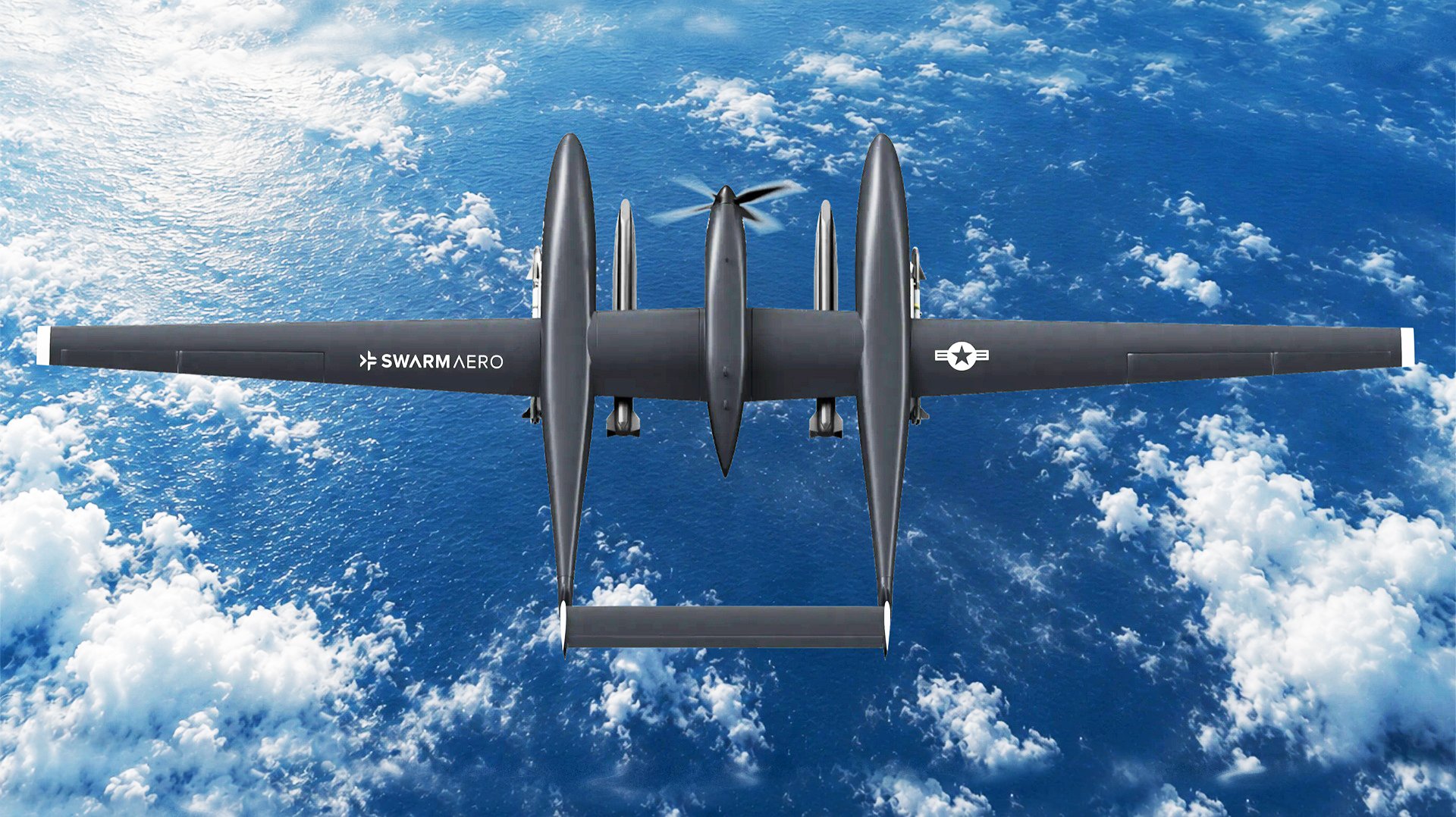
  •  

First USAF F-15EX To Be Based In Japan Departs Boeing’s St. Louis Plant

The first F-15EX Eagle II destined for permanent assignment at Kadena Air Base in Okinawa departed Boeing’s St. Louis, Missouri, facility on August 28, 2026. The aircraft left St. Louis for the 142nd Wing at Portland Air National Guard Base, Oregon, where it will undergo final staging and integration preparations before its eventual deployment to the sprawling Okinawa installation it will call home. The Oregon unit is acting as a coordination and preperation unit for the 18th Wing, a function you can read more about in our interview with the wing’s commander.

A U.S. Air Force F-15EX Eagle II designated for Kadena Air Base, Japan, taxis at Boeing’s St. Louis facility, Aug. 28, 2026, before departing for Portland Air National Guard Base, Oregon. The milestone brings the 18th Wing another step closer to the permanent stationing of the Air Force’s most advanced iteration of the Eagle platform at Kadena. (U.S. Air Force photo by Senior Airman Melany Bermudez)
A first F-15EX Eagle II designated for Kadena Air Base, Japan, taxis at Boeing’s St. Louis facility. U.S. Air Force photo by Senior Airman Melany Bermudez

This departure represents a critical, long-awaited milestone for the 18th Wing, which has been working toward the permanent stationing of the service’s most advanced Eagle variant to replace its now-withdrawn F-15C/D fleet. The arrival of the F-15EX in Japan, expected to begin in fiscal year 2027, which begins on October 1, 2026, will be a central pillar in the Air Force’s modernization of tactical airpower in the Indo-Pacific region.

EXciting progress for F-15EX!

We've delivered the 22nd F-15EX to the @usairforce. The aircraft will be the first F-15EX destined for @KadenaAirBase in Japan. pic.twitter.com/RlrTKuCCFl

— Boeing Defense (@BoeingDefense) September 3, 2026

“This is an important next step toward bringing the F-15EX home to Kadena,” said Brig. Gen. John Gallemore, 18th Wing commander, in an Air Force release. “Our team is ready to welcome the F-15EX, and this is another milestone that brings us closer to putting this capability in the hands of the airmen who will fly, maintain and employ it from Japan.”

A U.S. Air Force F-15EX Eagle II designated for Kadena Air Base, Japan, departs Boeing’s St. Louis facility, Aug. 28, 2026, en route to Portland Air National Guard Base, Oregon. While in Portland, the aircraft will receive additional updates and preparations for its future stationing at Kadena. F-15EX aircraft are scheduled to begin arriving at Kadena in fiscal year 2027. (U.S. Air Force photo by Senior Airman Melany Bermudez)
The first F-15EX for Kadena Air Base, Japan, at Boeing’s St. Louis facility last month. U.S. Air Force photo by Senior Airman Melany Bermudez

The first F-15EX for Kadena’s 18th Wing, serial 22-0022, was noted flying test sorties from St. Louis in early August, initially in primer paint. By the middle of the month its was flying with its full livery, including the famous “ZZ” tail code.

The F-15EX is a significant jump in capability over the legacy Eagles. With modernized avionics, flight controls, an expanded electronic warfare suite, and increased weapons carriage — as well as potentially new and longer-reaching weapons — the jet is well-suited to operating in the vast Western Pacific. As Kadena prepares for the permanent arrival, the 18th Wing plans to integrate the EX with regional allies, including the Japan Air Self-Defense Force, building upon existing bilateral training exercises.

A U.S. Air Force F-15EX Eagle II and F-15E Strike Eagles assigned to 85th Test and Evaluation Squadron, Eglin Air Force Base, Florida, land at Kadena Air Base in June 2026. U.S. Air Force photo by Airman 1st Class Gracelyn Hess

Two active-duty squadrons of F-15EXs are set to be established at Kadena, taking the place of units previously based there that had flown F-15Cs. The Air Force has been deploying F-15Es, F-22s and other fighters to the base on a rotational basis to fill the gap in the meantime.

The F-15EX will give U.S. forces in the Indo-Pacific a high-capacity platform that complements the fifth-generation F-22 and F-35. With its ability to carry large air-to-air and air-to-surface payloads, the Eagle II can serve as a long-range “missile truck,” extending the reach and firepower of stealth aircraft operating closer to contested airspace. Its open-architecture systems also allow it to incorporate new sensors, weapons, and electronic warfare capabilities more readily than the aging F-15C/D fleet.

A U.S. Air Force F-15EX Eagle II designated for Kadena Air Base, Japan, is photographed at Boeing’s St. Louis facility, Aug. 28, 2026. Equipped with advanced avionics, radar and electronic warfare systems, the F-15EX represents the latest evolution of the Eagle platform and the modernization of U.S. tactical airpower. (U.S. Air Force photo by Senior Airman Melany Bermudez)
The first F-15EX designated for Kadena Air Base, Japan, is photographed at Boeing’s St. Louis facility, on August 28, 2026. U.S. Air Force photo by Senior Airman Melany Bermudez

The aircraft’s value is also tied to its role in networked operations. Exercises such as Valiant Shield have demonstrated how the F-15EX can work with uncrewed aircraft like the  MQ-28 Ghost Bat, pointing toward mixed formations in which crewed fighters provide weapons, sensing, and command-and-control capacity for autonomous wingmen. Operating from strategic locations such as Kadena, the Eagle II could help the Air Force generate more combat power across the vast Pacific while reducing the burden on its limited number of stealth fighters.

A U.S. Air Force F-15EX Eagle II accompanies an MQ-28 Ghost Bat during the U.S.-led Valiant Shield 26 military exercise. PACAF

Kadena will become the second Air Force location with combat-coded F-15EX aircraft, following the Oregon Air National Guard’s 142nd Wing.

The Air Force has previously announced plans to stand up National Guard F-15EX squadrons in California, Louisiana, and Michigan. Most recently, the Air Force announced plans to put F-15EX fighters at Seymour Johnson Air Force Base, North Carolina, to replace older F-15E Strike Eagle jets that will move to Whiteman Air Force Base, Missouri.

While the movement of this first Kadena-bound F-15EX is a positive step, the wider Eagle II program is currently navigating some issues. According to a new Pentagon selected acquisition report released in August, the Air Force’s decision to aggressively expand its F-15EX fleet from 129 to 267 jets — intended to recapitalize the older F-15E force — has introduced substantial cost and schedule uncertainties that officials are now scrambling to manage.

A U.S. Air Force F-15EX Eagle II designated for Kadena Air Base, Japan, taxis at Boeing’s St. Louis facility, Aug. 28, 2026, before departing for Portland Air National Guard Base, Oregon. The milestone brings the 18th Wing another step closer to the permanent stationing of the Air Force’s most advanced iteration of the Eagle platform at Kadena. (U.S. Air Force photo by Senior Airman Melany Bermudez)
The first F-15EX designated for Kadena Air Base, Japan, taxis at Boeing’s St. Louis facility, before departing for Portland Air National Guard Base, Oregon. U.S. Air Force photo by Senior Airman Melany Bermudez

The report warns that the extended acquisition strategy, which shifted from eight production lots to 12, will require Boeing to execute a “major technical refresh” to combat diminishing manufacturing sources and material shortages. As systems like the radar, mission computer, and engines face potential obsolescence over the now-lengthened production timeline, the service faces what the report characterizes as a “significant redesign effort.” Program managers are planning to mitigate these risks by integrating upgrades through operational flight program releases scheduled between 2031 and 2035, a strategy they describe as a “structured, risk-reduced pathway” to avoid production line gaps.

Compounding these technical challenges are tangible production delays, largely stemming from a labor strike at the St. Louis plant from August to November 2025. The report notes that these are “unrecoverable delays,” forcing a cascading schedule slip. While Boeing was contracted to deliver all 12 jets from Lot 3 by early 2026, the company will only be able to field half of those by the end of the year. This has directly impacted the timeline for the Kadena deployment, which was originally envisioned for earlier in 2026, and has left the Air Force relying on “bridging strategies” and rotations to cover operational requirements until the Eagle IIs can fully stand up in Okinawa.

A U.S. Air Force F-15EX Eagle II designated for Kadena Air Base, Japan, flies en route to Portland Air National Guard Base, Oregon, after departing Boeing’s St. Louis facility, Aug. 28, 2026. The F-15EX will modernize Kadena’s permanent fighter force, providing advanced capabilities to strengthen readiness and support the enduring U.S.-Japan defense partnership. (U.S. Air Force photo by Senior Airman Melany Bermudez)
The first F-15EX for Kadena Air Base, Japan, flies en route to Portland Air National Guard Base, Oregon, after departing Boeing’s St. Louis facility, on August 28, 2026. U.S. Air Force photo by Senior Airman Melany Bermudez

The Pentagon is now moving toward an aggressive production ramp-up, tasking Boeing to hit a rate of two jets per month. Keeping the F-15EX schedule on track will be a challenge, however, requiring successfully navigating ongoing parts shortages for critical systems, all while balancing the needs of foreign military sales customers who are also integrated into the supply chain.

For the 18th Wing, the arrival of the first F-15EX will bring a major advance in capabilities in a part of the world that needs them badly. At the same time, the program’s overall trajectory suggests that the wider transition to the new Eagle will come with some complex logistical and industrial challenges.

Contact the author: thomas@thewarzone.com

The post First USAF F-15EX To Be Based In Japan Departs Boeing’s St. Louis Plant appeared first on TWZ.

  •  

UK Government Commits To Boom Refueling For RAF Tankers

The United Kingdom is moving toward adding a flying-boom aerial refueling capability to the Royal Air Force (RAF), a requirement being driven in large part by the future Tempest combat jet, being developed under the Global Combat Air Program (GCAP) initiative.

In a written response to opposition MP Ben Obese-Jecty, U.K. Defense Minister Luke Pollard confirmed that the RAF’s existing probe-and-drogue aerial refueling capability will eventually be complemented by a boom system. The move would give Britain a sovereign capability to refuel aircraft equipped with the U.S.-standard boom receptacle, including the Tempest, while also improving interoperability with other NATO and allied air forces.

This picture is from a Quick Reaction Alert training scenario. The QRA exercise was conducted 31 March 2026. The purpose of the exercise was to demonstrate the full end-to-end process of the UK's air defence strategy if an actual foreign aircraft was to invade their protected airspace. Upon receiving the alert, the QRA team at RAF Coningsby would launch to RAF Typhoon FGR4's to intercept any unknown aircraft within the protected airspace. In this particular scenario an RAF Voyager A330 (RAF Brize Norton) was acting as the agressor and two RAF Typhoons FRG4 (RAF Coningsby) were responding to the simulated threat. During the exercise the Typhoons intercepted the Voyager and conducted a series of maneouvers whilst communicating with the "foreign" aircraft with the aim of escorting it to a safe location on the ground (RAF Brize Norton) upon which it and it's crew would be guarded and safely inspected by counter-terrorist police. The resulting imagery is to be used for training government ministers on how a QRA works and all the different elements involved. From the initial radar detection of a foreign, unidentified aircraft at the London Area Control Centre, Swanwick, to the physical launch of our QRA team at RAF Coningsby. The RAF use a hose-and-drogue air-to-air refuelling system deployed from Voyager tanker aircraft. Instead of a rigid flying boom, the tanker trails a flexible high-pressure hose attached to a stabilizing basket (drogue), allowing receiver jets like the Typhoon and F-35 to plug in mid-flight. This image shows a Typhoon releasing flares as a warning to the "enemy aircraft".
A Royal Air Force Typhoon FGR4 accompanies a Voyager tanker during a Quick Reaction Alert training scenario in March 2026. Crown Copyright Crown Copyright

“The Royal Air Force currently operates a probe and drogue air-to-air refueling system and will complement this with the development of a boom system,” Pollard said. “This will ensure we have a sovereign air-to-air refueling capability for the future Royal Air Force fleet that enhances interoperability with NATO allies and partners.”

For the first time we have a Minister confirming the Boom is coming to Royal Air Force tankers, although the when and the how currently remain very much up in the air.

Still significant to have it through government voices and not just through the RAF itself. pic.twitter.com/esRN7NVoPy

— Gabriele Molinelli (@Gabriel64869839) September 2, 2026

The decision follows comments by a senior RAF official in July indicating that the service was already examining how to meet the requirement.

“We currently do not have boom [-equipped tankers] in the UK. We have a requirement for a boom from GCAP, so we have to resolve that requirement and that is what we are now looking at,” the official said at the Air Power Association Global Air and Space Chiefs’ Conference in London, according to Janes. “I [am] certain that at some point we are going to have to work out how we deliver a sovereign boom capability for our own combat aircraft.”

The requirement is particularly significant because GCAP’s Tempest is being designed with a fuselage-mounted receptacle for boom refueling. Unlike the probe-and-drogue arrangement used by the RAF’s existing Voyager tankers, a flying boom uses a rigid, telescoping refueling tube that is maneuvered by an operator aboard the tanker into the receiver aircraft’s receptacle.

230220-N-NO777-1002 ROMANIA (Feb. 20, 2023) A Royal Air Force A330 tanker performs aerial refueling of a Spanish Navy AV-8B Harrier during combined long range strike training, Feb. 20, 2023. The George H.W. Bush Carrier Strike Group is on a scheduled deployment in the U.S. Naval Forces Europe area of operations, employed by U.S. Sixth Fleet to defend U.S., allied, and partner interests. (U.S. Navy courtesy photo)
A Royal Air Force Voyager tanker performs aerial refueling of a Spanish Navy EAV-8B Harrier II during combined long-range strike training. U.S. Navy courtesy photo

One of the major advantages of the boom system is its higher fuel-transfer rate. That makes it especially useful for large aircraft and combat aircraft that need to take on substantial quantities of fuel quickly, reducing the time spent on the tanker.

Tempest is not, however, the only RAF aircraft that depends on the boom standard. The RAF already operates several boom-equipped receiver aircraft, including P-8A Poseidon maritime patrol aircraft, RC-135W Rivet Joint intelligence, surveillance, and reconnaissance aircraft, and C-17A Globemaster III airlifters. The E-7A Wedgetail airborne early warning aircraft also uses a boom receptacle, while the forthcoming RAF F-35A fleet will add another major boom receiver to the service.

The first Wedgetail Airborne Early Warning (AEW) aircraft, destined to serve with the RAF, has arrived at RAF Lossiemouth on 21 May 2026. The aircraft was flown to RAF Lossiemouth by a mixed crew of personnel from Boeing UK and the RAF from STS Aviation Services at Birmingham Airport. The Wedgetail AEW Mk1 is the RAF’s next-generation airborne early warning and control aircraft, designed to deliver long-range surveillance, battle management, and command and control for air and joint operations.
The first Wedgetail aircraft, destined to serve with the RAF, at RAF Lossiemouth, Scotland, in May 2026. Crown Copyright

Currently, the RAF has no boom-equipped tanker to support them.

Its principal tanker fleet consists of Airbus A330 Multi-Role Tanker Transport (MRTT) Voyager aircraft operated by the AirTanker consortium and leased to the RAF under a private finance initiative. Unlike many A330 MRTT operators around the world, which acquired the aircraft with a flying boom, the British Voyagers were configured exclusively around hose-and-drogue refueling.

The Voyager K2 is equipped with two wing-mounted Cobham 905E hose-and-drogue refueling units. The K3 adds a third refueling point in the form of a Cobham 805E fuselage refueling unit, or FRU, located at the rear of the aircraft. The latter provides a higher fuel-transfer rate than the wing-mounted units.

The view from the cockpit of an A400M during air-to-air refueling with a Voyager KC3, via the fuselage refueling unit. Crown Copyright

Since the fuel is stored in existing tanks, the Voyager’s cabin is still available to accommodate up to 291 passengers and the cargo hold for freight. One Voyager, serial ZZ336, nicknamed Vespina, is modified for long-range VIP transport but still functions as a fully capable tanker.

A video showing Voyager ZZ336 refueling RAF and German Eurofighter Typhoons during the enhanced Air Policing mission in Romania:

Up to 14 Voyagers are available to the RAF under the current arrangement.

The future of those aircraft is now one of the key questions surrounding Britain’s planned boom capability.

One possibility would be to modify some of the existing Voyagers, installing a boom system in the rear fuselage. The baseline Airbus’ A330 MRTT design already incorporates a provision for a flying boom. At the time the United Kingdom ordered its Voyagers, boom refueling was not considered essential, so the capability was deleted to save weight, complexity, and cost — a decision which was to prove very shortsighted.

Such a conversion, however, would involve engineering, certification, ownership, and contractual considerations, particularly given that the RAF does not directly own the Voyager fleet.

Britain could also decide that modifying the existing aircraft is not worthwhile. The current Voyager private-finance arrangement runs until 2035, by which point the airframes will be considerably older. Rather than investing heavily in aircraft approaching the end of their contracted service period, the government could opt to acquire new A330 MRTTs or another tanker type equipped with a boom from the outset.

A Republic of Singapore Air Force A330 Multi Role Tanker Transport leads a formation flight during a training scenario alongside a U.S. Air Force F-16C assigned to the 36th Fighter Squadron, Osan Air Base, Republic of Korea, two RSAF F-15SGs, and a Royal Thai Air Force F-16ADF during Exercise Cope Tiger 23, Korat Royal Thai Air Base, Kingdom of Thailand, March 22, 2023. CT 23 is an annual exercise meant to improve readiness and the ability of participating forces to operate together while enhancing military relations and combined capabilities. (Courtesy Photo)
With refueling boom extended, a Republic of Singapore Air Force A330 MRTT leads a formation flight alongside a U.S. Air Force F-16C assigned to the 36th Fighter Squadron, Osan Air Base, Republic of Korea, two RSAF F-15SGs, and a Royal Thai Air Force F-16 during Exercise Cope Tiger 23. U.S. Air Force courtesy photo

Another, more remote possibility could involve a podded boom arrangement, a concept that has been around for a while now, but which is gaining traction with the U.S. Air Force as it weighs options for future tanker capabilities. 

It remains unclear, however, whether a podded boom would offer the performance and integration characteristics required for Tempest and the RAF’s wider fleet. There is also a question about what platform it could be installed on.

As part of its seemingly never-ending search for new fighters, the Indian Ministry of Defense says it wants to team up with one of the two rival European next-generation combat aircraft programs.
A rendering of the Tempest future combat jet. BAE Systems BAE Systems

At the same time, TWZ has previously highlighted how drones equipped with buddy stores could operate in a hub-and-spoke model, ferrying fuel from tankers positioned outside the threat envelope to aircraft operating at the tactical edge. This could be another option that might gain traction as the U.K. Ministry of Defense increasingly looks to unlock the potential of uncrewed capabilities, but must also be considered less likely, especially as a primary solution.

There is also a potential requirement for the tankers themselves to be capable of receiving fuel. Equipping a tanker with a receiver system would allow tanker-to-tanker refueling, extending the flexibility and reach of the RAF’s future air-to-air refueling force during long-range operations. Other A330 MRTT operators already benefit from this feature.

A Republic of Singapore Air Force Airbus A330 Multi-Role Tanker Transport (MRTT) refuels a Royal Australian Air Force KC-30A MRTT during a 'Boom Camp' in the Northern Territory *** Local Caption *** Combined training was conducted by air-to-air refuelling tanker crews from the Republic of Singapore Air Force (RSAF) and Royal Australian Air Force (RAAF) at RAAF Base Darwin over 25 to 30 October 2020. Both nations operate variants of the Airbus A330 Multi-Role Tanker Transport (MRTT), which in RAAF service is called the KC-30A, and can carry a fuel load in excess of 100 tonnes that can be transferred in-flight to compatible receiver aircraft. The combined training at RAAF Base Darwin was an opportunity to compare experiences operating the MRTT and build working-level relationships, forging closer ties between RSAF’s No. 112 Squadron and the RAAF’s No. 33 Squadron. The RAAF was the world’s first MRTT operator, introducing the aircraft to service in 2011. The RSAF received its first MRTT in 2018 but has extensive experience with conducting air-to-air refuelling with the previous KC-135 Stratotanker, which had previously been used in support of RAAF exercises and training activity. read less
A Republic of Singapore Air Force Airbus A330 MRTT refuels a Royal Australian Air Force KC-30A MRTT during combined training at RAAF Base Darwin in Australia. Australian Department of Defense Republic of Singapore Air Force

While Tempest is providing the immediate catalyst, a refueling boom capability would also close an increasingly conspicuous gap in the RAF’s tanker force. The service is acquiring and operating an increasing number of aircraft built around the boom standard while relying on a tanker fleet configured around the alternative hose-and-drogue system.

Whether Britain modifies its existing Voyagers, replaces them, or adopts another solution entirely could become an important part of the RAF’s long-term force structure as the Tempest program advances.

Contact the author: thomas@thewarzone.com

The post UK Government Commits To Boom Refueling For RAF Tankers appeared first on TWZ.
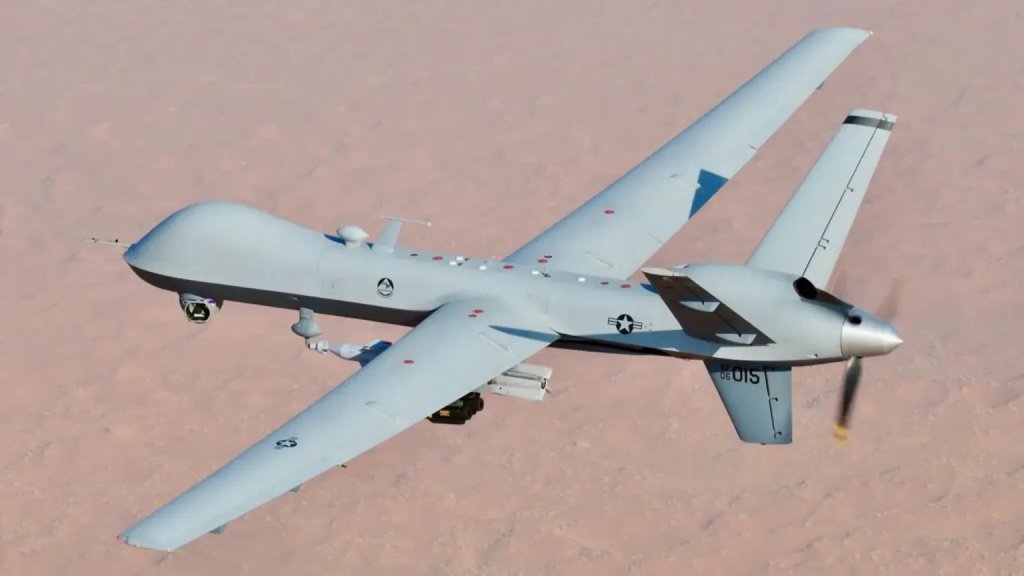
  •  

Missile Shortage Has Now Hit Ukrainian F-16 Force

Ukrainian F-16 pilots are facing such a severe shortage of air-to-air missiles that some daytime sorties have seen them rely solely on the fighters’ internal guns to engage Russian aerial threats, according to a journalist who recently spoke with a senior Ukrainian Air Force commander. Meanwhile, the lack of air-to-air missiles means that the available weapons stocks are now being rationed.

The disclosure provides a remarkable glimpse into the day-to-day reality of Ukraine’s F-16 operations. While the aircraft may be available, the pilots may be ready, and Russian drones and cruise missiles may be approaching, there may simply not be enough missiles on hand to arm the jets.

According to Newsmax journalist Shelby Wilder, the Ukrainian Air Force can find itself monitoring missile shipments as they cross the country’s border, with personnel counting not just the hours but the minutes until those weapons reach the aircraft. The concern is whether the missiles will arrive in time for the next major Russian aerial attack.

The Ukrainian commander, who identified himself by the callsign “Phantom” and as commander of the country’s 107th Wing, confirmed the underlying problem when asked directly whether Ukraine was severely short of missiles for its F-16s.

“Yes, that’s true. Any aircraft without weapons is … useless,” Phantom said.

That blunt assessment is particularly striking given what Ukraine is asking its F-16s to do, and the relentless nature of Russian bombardments against Ukrainian cities and infrastructure.

❗The moment when a 🇺🇦Ukrainian F-16 fighter jet shot down a 🇷🇺Russian Kh-101 cruise missile at extremely low altitude pic.twitter.com/7zVujRkYaG

— 🪖MilitaryNewsUA🇺🇦 (@front_ukrainian) June 1, 2026

The fighters have become an important part of Ukraine’s layered air defense network, hunting Russian drones and cruise missiles while also providing a potential counter to Russian combat aircraft, and conducting air-to-ground sorties. Ukraine has operated the F-16 since the summer of 2024.

“We are focusing on defending our skies against Russian unmanned drones to protect our infrastructure inside the country,” Phantom said. “Our target priority is cruise missiles.”

Destroying as many incoming threats as possible before they reach Ukrainian cities and infrastructure requires missiles, with the F-16 primarily armed with the AIM-120 Advanced Medium-Range Air-to-Air Missile (AMRAAM) and the shorter-range AIM-9 Sidewinder.

Another live AIM-9L/M launch. This Ukrainian F-16 carries six Sidewinders. Ukrainian Air Force screencap

According to the new disclosure, those missiles have become a commodity whose availability can determine how a sortie is flown.

The F-16 carries an M61A1 Vulcan 20mm rotary cannon, but using the gun against an aerial target is fundamentally different from engaging it with a missile, and comes with its own risks, as we have explored before. This tactic is especially hazardous when going after small targets and especially slow ones, and it becomes even more dangerous at night.

Ukraine has already demonstrated that its F-16s can use their guns in combat. In May 2025, the Ukrainian Air Force said an F-16 pilot had destroyed three aerial targets and was engaging a fourth with the aircraft cannon before an emergency forced him to eject.

An armorer loads an F-16 with 20mm ammunition for its M61A1 cannon. Ukrainian Air Force screencap

One air-to-air weapon not mentioned by Phantom is the laser-guided 70mm Advanced Precision Kill Weapon System II (APKWS II) rocket, now apparently also part of the arsenal. These rockets would offer the Ukrainian Air Force an extremely valuable, lower-cost option for engaging drones and subsonic cruise missiles. 

Regardless, Phantom specifically called for additional air-to-air missiles, as well as interceptors for ground-based Patriot batteries.

“We require more means of protection, such as Patriot missiles and air-to-air missiles, AIM-9s or AIM-120s to our fleet,” he said.

Phantom’s message is that simply delivering more aircraft is not enough. Ukraine needs a sustainable weapons pipeline to keep those aircraft combat-effective.

Ukrainian Air Force F-16AM Fighting Falcon departing Belgium after receiving depot-level maintenance earlier this year. pic.twitter.com/Hy35iUZd8P

— OSINTtechnical (@Osinttechnical) August 28, 2026

This is increasingly becoming a wider problem across Ukraine’s air defense network. Patriot interceptors have been heavily consumed, with relatively few replacement missiles now trickling in, leaving Ukraine with limited ability to defend against ballistic missiles in particular. The strain is now spilling into the lower tiers, including the air-to-air missiles carried by F-16s. Ukraine’s continued consumption of interceptors is a major driver, but it is competing with the enormous demand generated by ongoing wars in the Middle East and a broader surge in demand for advanced air defense weapons around the world. With production struggling to keep pace, scarce interceptors are effectively being rationed across an increasingly crowded global battlefield.

“At least we need to try to increase the production, or at least to allow Ukraine to localize the production in Ukraine or other European countries,” he said.

That proposal reflects the fundamental vulnerability of a relatively small fleet operating in a high-intensity air war. Every missile fired at a Russian cruise missile or drone is one less available for the next engagement. A finite inventory therefore has to cover both routine air-defense missions and the possibility of much larger Russian attacks. At the same time, both the AIM-9 and especially the AIM-120 are used for Ukrainian ground-based air defenses too. The AMRAAM, in particular, is the effector for the NASAMS, which protects Kyiv, and other key objectives against cruise missiles and drones.

Air-to-air with two F-16s. The nearest jet carries a wingtip AMRAAM. Ukrainian Air Force screencap

The problem becomes even more acute because Ukraine cannot know precisely when the next major Russian strike will arrive.

That is why, according to Wilder’s account, the arrival of missile shipments is being followed with extraordinary urgency.

At the same time, Phantom welcomed the major technological leap that the F-16 represents over the Soviet-designed MiG-29s and Su-27s that formed the backbone of Ukraine’s fighter force.

“The F-16s in comparison with the legacy aircraft like MiG-29 or Su-27? This is kind of like a new technology,” Phantom said.

But sophisticated aircraft are only as useful as the weapons available to them.

Ukrainian F-16s have reportedly destroyed huge numbers of Russian drones and cruise missiles, and in July a Ukrainian F-16 was publicly identified by the U.S. Joint Chiefs chairman as having shot down a Russian fighter.

⚡ CONFIRMED!
On July 8, 2026, a Russian Su-35 multi-role fighter was shot down on the eastern sector!

🇺🇦 Glory to Ukraine!
✊ Together to victory! pic.twitter.com/r8S9fgQaC5

— Ukrainian Air Force (@KpsZSU) July 8, 2026

Phantom also asked Ukraine’s Western partners to think beyond individual weapons transfers and toward production capacity.

He also urged the United States and European countries to do more to prevent Russia from acquiring components used in its own missile production through third party countries.

“We need to make as much as we can to stop providing the parts, most technological parts to Russians, bypassing the direct sales, of course, through the third party,” he said.

An armed F-16 between sorties. Ukrainian Air Force screencap

Phantom argued that Russia continues to obtain sophisticated components through intermediaries and even ostensibly civilian products.

“It would not be a surprise that Russians [are] using the washing machine that they’re buying from the third party to use those smart details for building missiles,” he said.

His recommendation is tighter sanctions and enforcement designed to cut off Russia’s access to those components.

“Important is to sanction to stop Russia from being able to have access to those parts,” he said.

That, combined with missile shortages, could become an even bigger problem when Russia conducts another major aerial campaign against Ukraine, particularly as Moscow traditionally intensifies attacks against the country’s energy infrastructure during the winter months.

Contact the author: thomas@thewarzone.com

The post Missile Shortage Has Now Hit Ukrainian F-16 Force appeared first on TWZ.
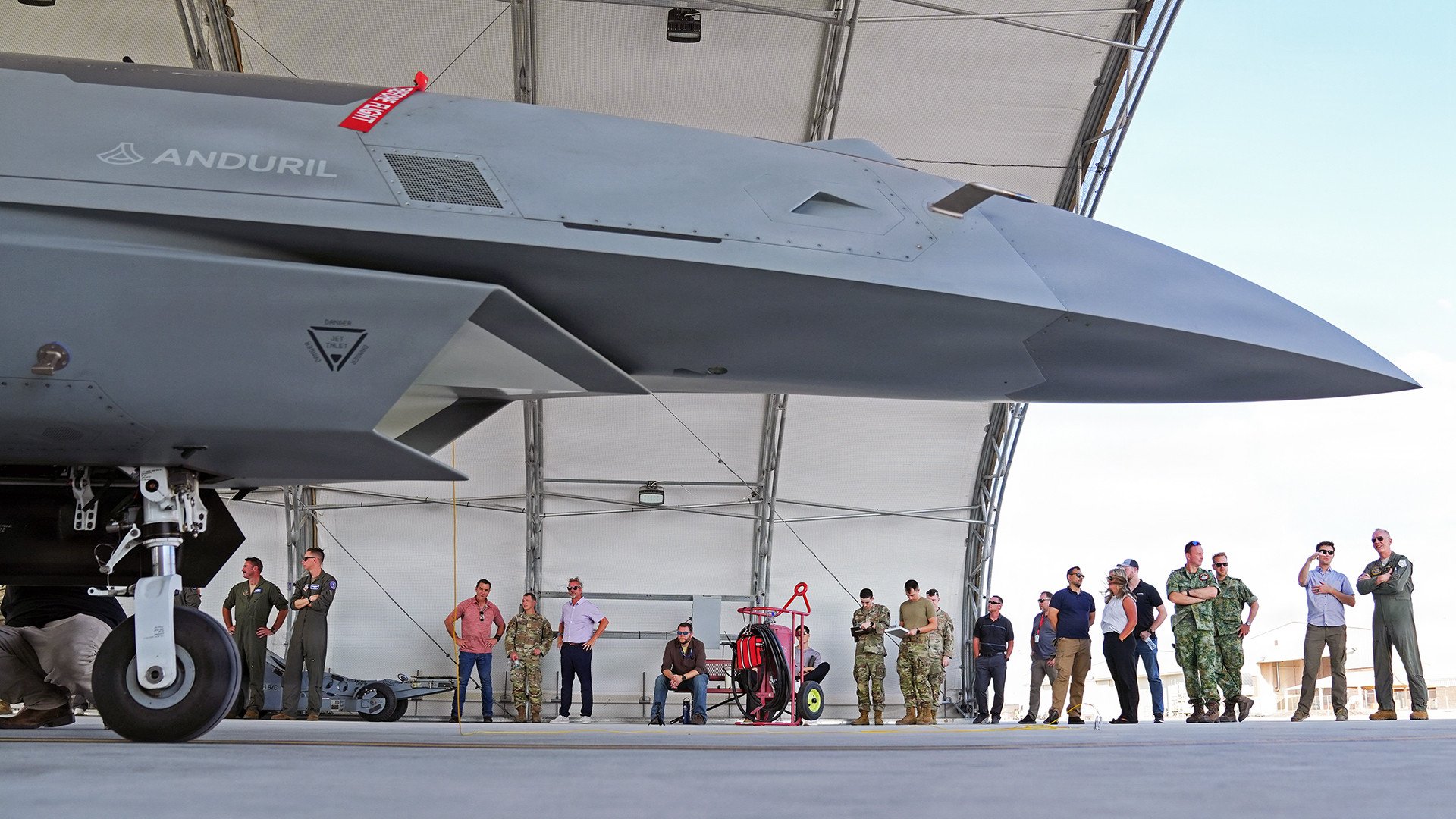
  •  
❌