❌

Reading view

Peau noire, Dieu blanc : quand Dieu porte les couleurs des oppresseurs

Le 3 octobre, Axel Illary publiera sur Amazon Peau noire, Dieu blanc. Essai sur l’aliénation spirituelle des Noirs, déjà disponible en précommande numérique. Le titre place face à face une identité, « peau noire », et une représentation, « Dieu blanc ». Le nouvel essai du journaliste-écrivain s’attaque aux effets de la domination coloniale sur […]

L’article Peau noire, Dieu blanc : quand Dieu porte les couleurs des oppresseurs est apparu en premier sur .

  •  

Pablo Alborán desfila para Adolfo Domínguez en la Fashion Week de Madrid

✇El Dia
By: EP
Pablo Alborán ha vuelto a aparecer públicamente y lo ha hecho por sorpresa, convirtiéndose en uno de los grandes protagonistas de la jornada inaugural de la Mercedes-Benz Fashion Week Madrid. El cantante malagueño ha sorprendido al desfilar para Adolfo Domínguez en el Invernadero del Palacio de Cristal de Arganzuela, una inesperada reaparición que llega después de varias semanas alejado de los escenarios debido a la neumonía que le obligó a cancelar parte de sus compromisos profesionales.

  •  

‘Actively malevolent’: Trump EPA to eviscerate rules on planet-heating pollution from power plants

Stacks from the Hugh L. Spurlock Generating Station are seen on June 12, 2025 in Maysville, Kentucky. Photo by Jeff Swensen/Getty Images
Common Dreams Logo

This story originally appeared in Common Dreams on Sep. 14, 2026. It is shared here under a Creative Commons (CC BY-NC-ND 3.0) license.

In what environmental advocates describe as “another gift to the fossil fuel industry,” the Trump administration plans to end rules limiting the release of planet-heating emissions from power plants that burn coal and gas.

Power plants are considered the largest industrial source of greenhouse gas emissions in the US and account for about a quarter of the nation’s climate pollution, according to the Environmental Protection Agency (EPA).

In 2024, the EPA under the Biden administration used the Clean Air Act to require that many new gas plants and existing coal plants reduce their carbon emissions by 90%, including by installing carbon capture technology, by 2032.

The EPA estimated that the rule would reduce the amount of CO2 emissions by about 1.38 billion metric tons over the next two decades, the equivalent of about a year of emissions from the entire US electric power sector.

Another gift to the fossil fuel industry!
The US will allow power plant polluters to dump unlimited planet-warming pollution that power plants pump into the air while burning coal and gas.@maxinejoselow https://t.co/ZeiSaFkEpC

— Safe Climate Campaign now @safe-climate.bsky.soc (@safe_climate) September 14, 2026

On Monday, Lee Zeldin, the EPA administrator under President Donald Trump, announced an end to this policy at a meeting of energy ministers at the Group of 20 conference in Houston.

Not only will this prevent the enactment of a policy that the EPA has estimated would prevent around 1,200 premature deaths and 360,000 asthma cases by 2035. But the administration is also rolling out a proposal seeking to prevent future administrations from regulating carbon emissions as a health risk.

It is an effort that runs parallel to the administration’s rescission of the 2009 “endangerment finding,” which allowed the EPA to regulate vehicle emissions under Section 202 of the Clean Air Act on the grounds that they are harmful to human health. That move is also being challenged in court.

Power plants are regulated under a different section of the Clean Air Act, Section 111, which allows the EPA to regulate facilities that “cause, or contribute significantly to” dangerous air pollution.

But whereas the courts have previously interpreted this statute to regulate the outputs of entire facilities, the Trump administration is asking courts to adopt a novel reading of the statute which says each individual chemical under scrutiny must “contribute significantly” to climate change.

As Meredith Hankins, legal director for climate and energy at the Natural Resources Defense Council, explained in a policy memo last week, it likely won’t be easy for the administration to prove that the CO2 emissions from US power plants aren’t a significant driver of climate change.

“Power sector emissions account for a quarter of total US emissions, so if they cannot be counted as significant, it’s hard to conceive of any emissions that would,” Hankins wrote. “In fact, if the US power sector were a nation, it would be the world’s fifth-largest emitter after China, the United States, India, and Russia. That’s a pretty ‘significant contribution’ to the problem.”

The effort to gut power plant regulations comes after the hottest meteorological summer recorded in US history and amid a year with one of the largest numbers of climate disasters on record, including widespread drought, destructive wildfires, and repeated flooding and tornado outbreaks.

As the planet has warmed over the last half-century, the US has seen a sharp, near-sevenfold increase in weather disasters costing over $1 billion, according to data from the National Oceanic and Atmospheric Administration.

“While wildfires rage, floods devastate communities, and families struggle to afford skyrocketing electricity bills and insurance premiums, the Trump administration is handing the fossil fuel industry a license to keep polluting,” said Holly Bender, chief program officer for the Sierra Club, following news of the EPA’s rollback of power plant rules. “This is full-throated climate denial while the climate crisis happens in real time and a shocking betrayal of the American public.”

She added that “the Sierra Club will fight back against this reckless and dangerous proposal with everything we have in the courts, in Congress, and in communities across the country.”

If successful, the reversal of the power plant rules would be one of the most significant steps in Zeldin’s push to eviscerate the EPA’s authority to combat climate change on behalf of the fossil fuel industry. Earlier this summer, during a meeting of the National Coal Council, he bragged that “many of the items” on the industry’s “wish list are now done.”

He has put the wheels in motion to roll back virtually every Biden-era regulation on the coal industry, including rules limiting pollution from mercury and toxic metals, controls on toxic wastewater from coal plants, and limits on coal ash.

And while seeking to undermine the legal basis to regulate greenhouse gases, Zeldin’s EPA has also taken a sledgehammer to its practical ability to do so, dismantling offices that collect climate data, erasing information about human-caused climate change from the agency’s websites, and filling research panels with scientists employed by the fossil fuel industry.

Former State Department energy official Alan Eyre noted that on the world stage, the US “has always been obstructionist” when it comes to climate policy. Under Trump, he said, “we’re actively malevolent.”

  •  

Fleet Of At Least 500 Collaborative Combat Aircraft By 2032 Now In USAF’s Plans

The U.S. Air Force is now aiming to have at least 500 Collaborative Combat Aircraft (CCA) in service by 2032. The service also wants to have an equal number of Massed Modular Aircraft (MMA) drones to succeed its MQ-9 Reapers by that time. In terms of stated CCA force structure plans, this is a substantial step up, with the service having most recently talked about acquiring “over” 150 of these drones by the end of the decade.

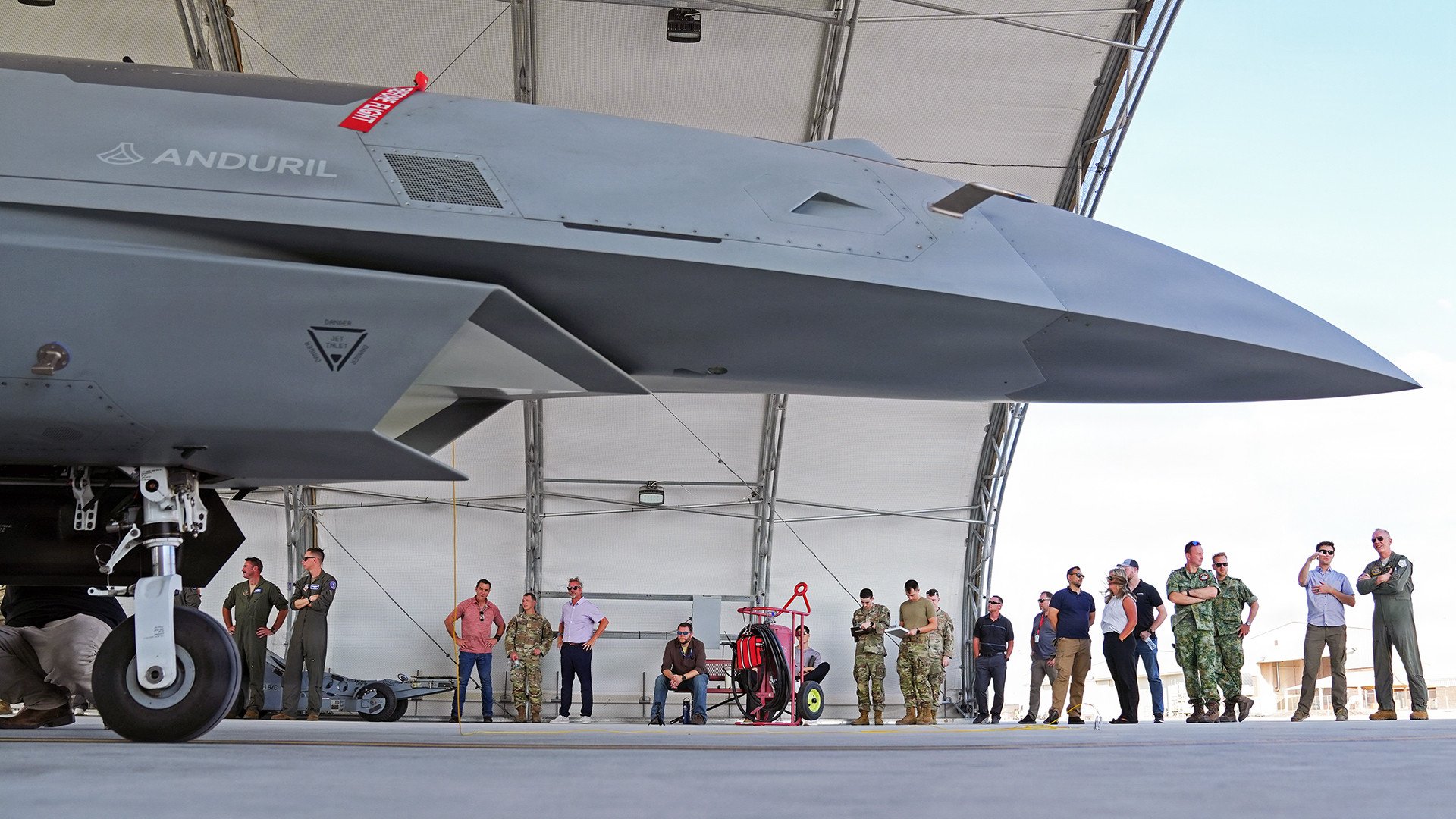
Secretary of the Air Force Troy Meink shared updates on the CCA program during a keynote speech at the Air & Space Forces Association’s 2026 Air, Space & Cyber Conference, at which TWZ is in attendance. The service’s top civilian also announced that General Atomics’ FQ-42 and Anduril’s FQ-44 drones have now received official nicknames: Vengeance and Fury. This only represents a change for the General Atomics design, which the company had previously named Dark Merlin. In June, the Air Force announced that it was ordering both types into production.

A composite image showing the FQ-42 and FQ-44 designs together with their new official nicknames. USAF

“We will have autonomous fighters like the Collaborative Combat Aircraft, or CCA. We intend to have at least 500 of these in service by 2032,” Meink said in his speech. “Our intent is to field 100 MMAs in 2029 at even a lower cost than the CCAs and a fraction of [the] cost of manned aircraft we build today. Then by 2032, 500 of these [MMA] platforms will join our force.”

When it comes to CCAs, “today, the first FQ-42 and FQ-44 increments are already rolling off the assembly line,” Meink added. “They’ll be performing many of the same missions that we do with manned fighters today.”

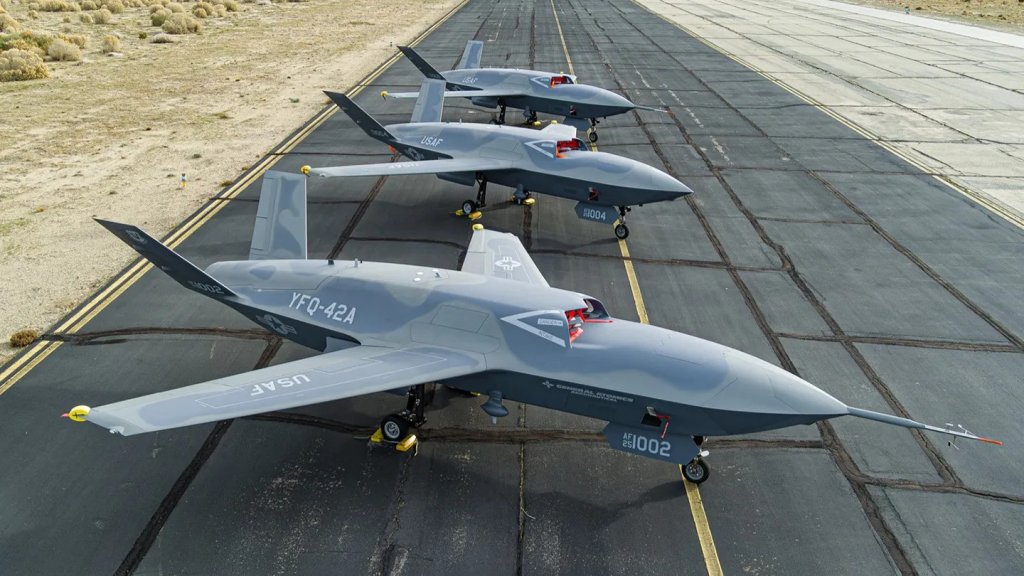
A row of YFQ-42A prototypes. General Atomics previously gave the company name Dark Merlin to this design. GA-ASI

The Air Force’s stated CCA force structure targets have fluctuated significantly in recent years. In 2023, then-Secretary of the Air Force Frank Kendall outlined plans to acquire at least 1,000 CCAs, if not more, across the life of the entire program. However, Kendall and other Air Force officials subsequently talked about a far smaller initial fleet of between 100 and 150 drones.

“These contracts reaffirm our confidence in the strategic path forward for the program to procure over 150 combat capable CCA by the end of the decade,” Meink himself said in a statement in June when the production orders for the FQ-42 and FQ-44 were announced.

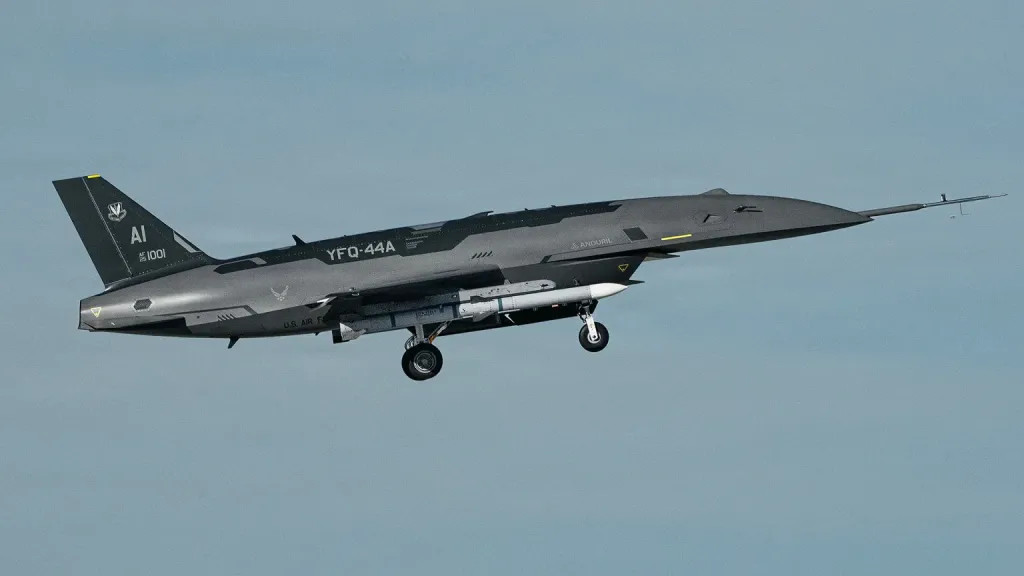
A YFQ-44A prototype, with an inert AIM-120 air-to-air missile under its wing, seen during a test. USAF

The FQ-42 and FQ-44 are also being acquired under the first phase, or Increment 1, of the CCA program. At least one additional increment is planned, and could lead to orders for one or more additional types of CCA. Though it is not immediately clear, it is possible, if not probable that Increment 2 CCAs are factored into the latest 500 drone figure.

TWZ’s Jamie Hunter got a close look at the Skunk Works’ Vectis drone at Air, Space, & Cyber 2026. Photo: Lockheed Martin

“We talk about 500 by 2032, [but] we could actually build more of them than that,” Secretary Meink also said today during a question-and-answer session immediately following his speech. The goal of the CCA program “from the get-go” was “simple aircraft that you could build fast and at a lower cost,” he continued.

“So now we’re in a situation to [sic] where we could actually build more than we can actually afford to buy,” he added.

It is unclear what the unit costs of the FQ-42 or FQ-44 are currently. The Air Force has said previously that it is targeting a price point of around $20 million apiece once full-rate production gets underway.

Beyond any fleet size target, the Air Force is still very much in the process of figuring out how future CCAs will be deployed, launched, recovered, supported, and otherwise operated on a day-to-day basis, as well as employed tactically. During today’s question-and-answer session today, Meink drew attention to a dedicated Experimental Operations Unit (EOU) the service has established to lead the process of laying the groundwork for future CCA operations. The EOU notably led a significant new round of operational testing of YFQ-42 and YFQ-44 prototypes at Creech Air Force Base in Nevada back in July, which TWZ was first to report on. The EOU supported another similar test exercise at Edwards Air Force Base in California in April.

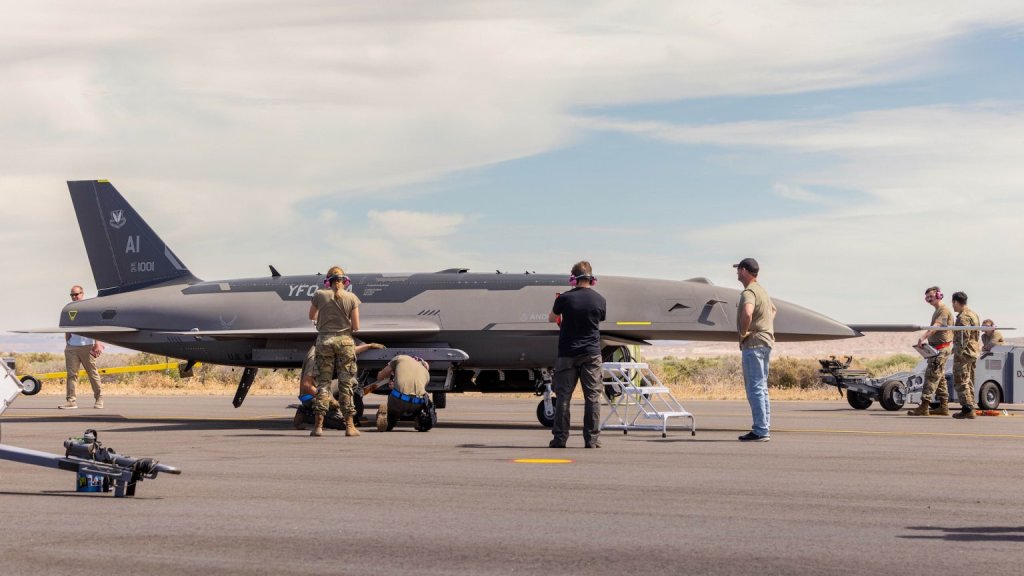
A YFQ-44A at Edwards Air Force Base during a test exercise in April 2026. USAF

“Getting them [CCAs] into these developmental kind of operational units, so they can start experimenting with that – familiarity breeds confidence, right?” Meink said.

The Air Force continues to make it clear that it sees its future CCA fleets as essential for providing capabilities and operational capacity necessary to succeed in future conflicts, especially a potential high-end fight against a near-peer opponent like China.

“Collaborative Combat Aircraft change how we project power and generate mass in highly contested environments,” Air Force Chief of Staff Gen. Ken Wilsbach said in a statement when the FQ-42 and FQ-44 production contracts were announced. “Delivering this capability to our warfighters faster ensures our forces maintain the tactical edge required to deter and, if necessary, defeat any adversary.”

As mentioned, the Air Force also now has plans to acquire 500 very different combat drones under the MMA program, and at a unit cost of approximately $10 million. This is also a notable increase in total planned fleet size for this effort, with a target of at least 180 airframes having been previously shared publicly.

The MMA drones are expected to conduct the same general strike and intelligence, surveillance, and reconnaissance (ISR) mission sets the service’s MQ-9A Reapers perform today. Major Reaper losses in the course of operations against Iran, compounded by significant additional attrition and deliberate divestments in recent years, are key drivers behind the MMA effort, which officially kicked off in July.

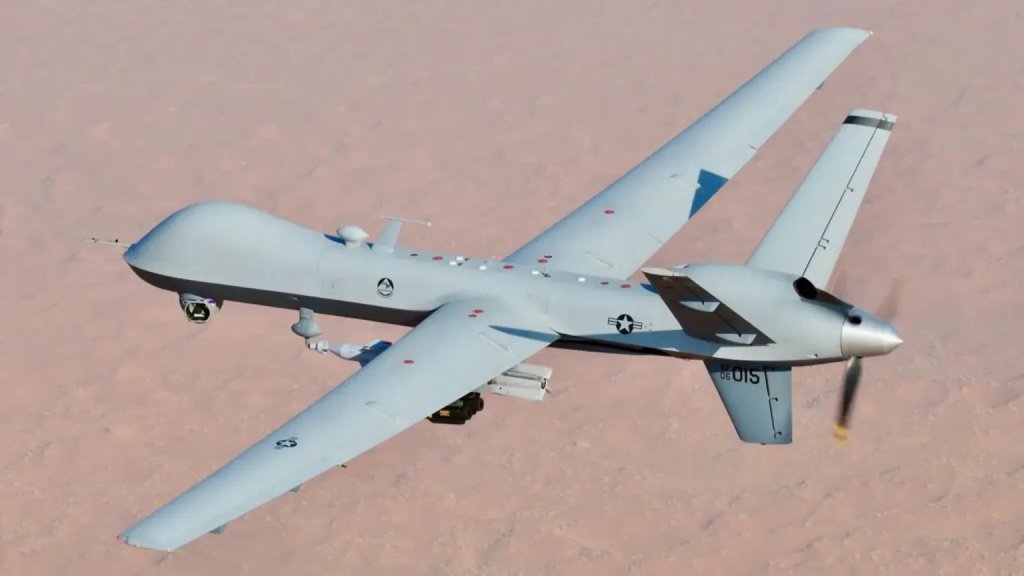
A US Air Force MQ-9A Reaper drone. USAF

“As we saw in Epic Fury [the nickname for major combat operations against Iran earlier this year], ISR/strike platforms have been essential. We have used MQ-9 and even now the ULTRA aircraft to great effect,” Meink said during his speech today. The MMA program is “building on these lessons” and “will provide affordable, attritable, long-range strike, and we will be able to field them at scale.”

“MMA is designed to deliver the results our combat commanders need,” Chief of Staff Wilsbach said during his own separate keynote at the Air, Space & Cyber Conference today. “That’s how we stay ahead by moving quickly, investing in new tech, and delivering to our warfighters what they need to win.”

If the Air Force can meet its target of having a fleet of at least 500 MMA drones by 2032, this will be another significant boost to the service’s overall uncrewed capabilities. As of May, the Air Force had 135 MQ-9s left in inventory, and there have been more reported losses since then.

General Atomics, which developed the Reaper, has already put forward a new design called Wildfire as a potential successor. Many other companies are already lining up to submit their own proposals to meet the Air Force’s MMA needs.

Between the latest CCA force structure plans and the new MMA program, the Air Force’s fleets of combat drones are on track to look very different by 2032.

Contact the author: joe@twz.com

The post Fleet Of At Least 500 Collaborative Combat Aircraft By 2032 Now In USAF’s Plans appeared first on TWZ.

  •  

Thousands of Greeks pay farewell to beloved Giorgos Mazonakis

Thousands of Greeks accompanied popular singer Giorgos Mazonakis to his final resting place on Monday after an overnight vigil in Nikaia, suburb of Piraeus, where he grew up. With tears in their eyes holding roses or flower bouquets in their hands,  a sea of deeply touched young and old people paid the last farewell to […]

The post Thousands of Greeks pay farewell to beloved Giorgos Mazonakis appeared first on Keep Talking Greece.

💾

  •  

Mazonakis’ death opens the Pandora’s Box of illegal medical practices in Greece

The sudden death of Greece’s popular singer Giorgos Mazonakis opened the Pandora’s Box about illegal medical practices and pseudo-scientific “alternative” methods aiming first of all at the healing of the pockets of scam doctors with warm euros. His sudden death shocked the Greek society and mobilized health and police authorities in a speed we could […]

The post Mazonakis’ death opens the Pandora’s Box of illegal medical practices in Greece appeared first on Keep Talking Greece.

  •  

Everything We Just Learned About The Vectis Collaborative Combat Aircraft From The Skunk Works

Lockheed Martin’s Skunk Works advanced projects division has shared all new information about its stealthy Collaborative Combat Aircraft (CCA) type drone design named Vectis, which it first unveiled a year ago. One of the most intriguing details is the true nature of its air inlet configuration, pointing to the premium on survivability the Skunk Works has placed on its CCA offering, especially when compared to other CCA designs.

Vectis has a far more exotic, deeply recessed “submerged” top-mounted air intake than was originally disclosed when Vectis first came out of the shadows. This further underscores the heavy emphasis Skunk Works says it has been placing on its CCA’s ability to stay undetected and live to fight another day. Vectis is also the first tailless CCA design we have seen from a U.S. manufacturer.

An updated view of Vectis. Lockheed Martin Skunk Works Lockheed Martin

Ron Fehlen, Lockheed Martin Vice President and General Manager of Skunk Works, gave TWZ and other outlets an update on Vectis last week ahead of today’s start of the Air & Space Forces Association’s 2026 Air, Space & Cyber Conference. Skunk Works says work on constructing the first prototype of Vectis – a word that means lever or pole in Latin, and that Lockheed Martin has said reflects the ‘leverage’ the drone offers – is underway now. The goal is to have it flying by the end of next year. There are already plans to build four more prototypes using internal funding.

Check out the Skunk Works’ new Vectis video below:

Source: Lockheed Martin

“It is designed, as you can likely see, to be both survivable and affordable and flexible across the range of missions that our customers need, have needed, and continue to need into the future,” Fehlen said by way of introduction. “The technical specs, as you can imagine, are designed to meet and, in some cases, exceed the customer sets that we are working with and their requirements and their mission needs.”

The basic core of the single-engine Vectis that we have seen now is largely unchanged from what had been shown at the time of the unveiling last year. It is still a tailless drone that has a lambda wing planform and air intake mounted on top of the central part of the fuselage, as well as a prominent chine line around the forward end and a shovel-like shape to its nose. New renderings do show revised positions for various conformal antennas and/or sensor apertures around the central fuselage. These are all established features of low-observable (stealthy) aircraft designs.

Skunk Works’ Fehlen also shared last week that Vectis is approximately 34 feet long and has a wingspan of around 38 feet. As a comparison, the Navy’s two-seat primary jet trainer, the T-45 Goshawk, is roughly 39 feet long by 30 feet wide.

The biggest new detail, as mentioned, is the shaping and position of Vectis’ air inlet. Fehlen stressed that this is actually not a new feature, and has “been a part of the design since the beginning,” but was not reflected in previously released renderings and scale models.

Another newly released rendering of Vectis showing the submerged intake. Lockheed Martin Skunk Works

The intake was depicted in the past as having a relatively straightforward configuration. It did appear to have a saw-tooth leading edge, another indication of stealthy design considerations. The visuals we have now show the intake is deeply recessed into the top of the fuselage, sitting behind a downward-sloping v-shaped channel.

A rendering of Vectis that Lockheed Martin released last year that did not depict the submerged intake. Lockheed Martin Skunk Works

Vectis doesn’t have a fully flush-mounted inlet, like what is found on Boeing’s MQ-25 Stingray tanker drone, among other designs, but it is close to it, very loosely similar to what’s found on the B-21. The rear is slightly raised above the v-like pocket where air flows down into the intake. Flush or near-flush intakes offer particular benefits when it comes to low-observability (stealthiness) and aerodynamic efficiency, but are also notoriously problematic, especially in certain flight regimes, as you can read more about here. This is even worse for high-performance aircraft that have a wide operating envelope and have to maneuver at higher angles of attack. The CCA would likely fit into this category, at least to a degree.

When it comes to Vectis, “there’s a lot of different reasons behind it [choosing this submerged intake configuration], but I’ll pick up on a couple here for you,” Skunk Works’ Fehlen explained. “The first is it reduces that frontal drag. So, anything sticking out in the wind, as many – as all of you know, I’m sure, creates drag on the aircraft itself. So, if you want better performance from a range, et cetera, then you need to be able to reduce that drag, and that’s an example.”

“It’s also interesting to me, particularly as the Air Force speaks about Agile Combat Employment, the ACE concept, as you’re aware. There is an advantage to having an inlet on the top of the aircraft if you’re out in more austere environments and you’re concerned about FOD [foreign object debris] pickup off of a runway,” he added.

Another newly released rendering offering a different perspective on the submerged intake. Lockheed Martin Skunk Works

ACE refers to a set of U.S. Air Force concepts of operations focused primarily on relatively rapid and irregular deployments, particularly to far-flung, austere operating locations, and with the expectation that logistics support could be very limited. The ACE construct is at the very core of the Air Force’s CCA program requirements and its plans for operating those drones in the future.

Fehlen also confirmed that the inlet’s design has to do with survivability, but did not elaborate in any detail, which is unsurprising considering the sensitivities of such design elements. The original Vectis promotional video Lockheed Martin put out last year, seen below, showed an S-shaped duct behind the air intake and exhaust shrouding, which are features designed to further reduce a platform’s signature.

In terms of performance, Lockheed Martin has yet to share any hard specifications it is targeting for Vectis, or disclose details about the engine the design will use. Fehlen did also highlight the drag-reducing performance advantages of the drone’s tailless design, including for maximizing range.

Details about what other capabilities Vectis might have are still limited. Fehlen noted that the design is expected to be capable of both air-to-air and air-to-ground mission sets. In a new computer-generated promotional video, seen earlier in this story, the drones are depicted launching what look to be AIM-120 Advanced Medium Range Air-to-Air Missiles (AMRAAM) and GBU-53/B Small Diameter Bomb II (SDB II) glide bombs, also known as StormBreakers. The AIM-120 has already emerged as something of a default initial weapon for Western CCA-type drones. The video also confirms Vectis has an internal bay that is able to accommodate at least two munitions, likely the size to accommodate medium-range air-to-air missiles.

Captures from Lockheed Martin’s new Vectis promotional video depicting the drones launching what looks to be an AIM-120 missile, at left, and a pair of GBU-53/B SDB IIs, at right. Lockheed Martin captures
A rendering of Vectis with its elongated internal bay open from the new promotional video. Note the AIM-120 in the background. Lockheed Martin capture
Another screen capture from the new Vectis promotional video showing two munitions loaded inside the drone’s internal bay. Lockheed Martin capture

In addition, the video shows Vectis as having a traditional electro-optical/infrared sensor turret behind a stealthy faceted enclosure under the nose. When the drone was first unveiled last year, TWZ noted that it could carry a variety of sensors, including compact radars and/or infrared search and track (IRST) systems, which would be particularly relevant in the air-to-air role.

The sensor turret inside the stealthy faceted enclosure as seen in the new Vectis promotional video. Lockheed Martin capture

During the press call, Skunk Works’ Fehlen reiterated that Vectis is being designed with an eye toward modularity and open-architecture systems. This, in turn, will make it easier to integrate new and improved capabilities and functionality down the line. Open architecture is at the heart of every CCA offering we are aware of at this time.

Fehlen further highlighted Lockheed Martin’s extensive work to date on advanced autonomy packages and crewed-uncrewed teaming capabilities. This includes the development of the Multi Domain Combat System (MDCX), an “autonomy platform” that is already central to the U.S. Navy’s plans for the carrier-based MQ-25 Stingray. The head of Skunk Works also explicitly called attention to autonomous air intercept testing conducted in cooperation with the Air Force earlier this year using the unique X-62A test jet, and said that work is feeding into Vectis’ development.

The X-62A test jet seen during the autonomous air intercept testing earlier this year. USAF

On top of all this, Lockheed Martin is already actively laying the groundwork for the U.S. Air Force’s F-22 and F-35 fighters to control future CCA drones, via in-cockpit touchscreen-type user interfaces, likely involving tablets, at least at first.

The new Vectis promotional video also shows a traditional ground control station being used to direct the drones, but with the phrase “managed from anywhere” on the screens, as seen below. Fehlen did say that any specific requirements for autonomy, command and control, and other operational capabilities would be up to individual customers, and that third-party vendors could be involved.

Lockheed Martin

Beyond Vectis’ design and expected capacities, Fehlen touted the speed at which work on the first physical prototype is progressing, and highlighted the use of digital design techniques and advanced manufacturing processes.

“This team, when kicked off, took a design on a napkin, which we will likely frame one day in my office … two months later, they were in the wind tunnel validating the design,” he said. “So, in under two months, we’re already getting in the wind tunnel straight from off of a napkin. We had the first digital build in six months, and the first part release in eight months. So it gives you a touch of a sense for exactly how fast we’re moving.”

“This aircraft was designed in a fully integrated digital environment,” he added. “Really, it’s creating that unbroken digital thread from the design all the way through sustainment.”

There has been much talk over the years about whether the promised benefits of digital engineering have lived up to expectations, with former Secretary of the Air Force Frank Kendall having been particularly critical of the technology being at least over-hyped in the past. At the same time, the use of digital design tools has become increasingly commonplace, including on top-priority U.S. military aerospace projects, and not just at Skunk Works.

“We’ve used advanced design and manufacturing processes developed for many years under our own internal investment … for other Skunk Works programs, we’ve pulled that into this, of course, to continue to advance our manufacturing as well as the advanced design capability,” Fehlen continued. “They’re using real production processes.”

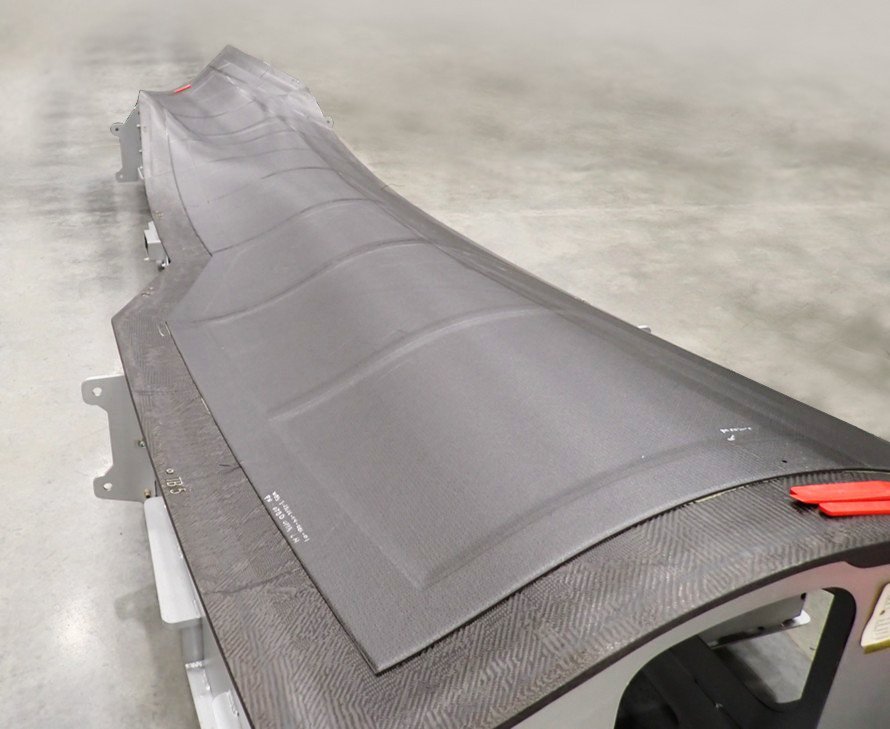
A central fuselage part of the first Vectis prototype now under construction. Lockheed Martin Skunk Works

The Skunk Works boss stressed that this approach offers advantages not just for accelerating development and prototype, but also for reducing costs and positioning Vectis to enter full-scale production.

“It gives you the reliance and the confidence as you continue to move forward that you’re ready to off and build these things because you’re using those real production processes,” he explained. “An example of that is a technique that we call minimal tooling determinant assembly. It’s a technique that really enables an increased level of affordability and speed through really reducing the amount of touch labor required and increasing the first pass yield. We’ve seen, in many cases, an 80 percent reduction in labor hours to build up the aircraft itself.”

Part of one of the wings for the first Vectis prototype. Lockheed Martin Skunk Works

Fehlen made an indirect reference to flat-pack furniture from IKEA to provide additional context, in extremely general layman’s terms, about what this technique offers.

“That’s what we’re talking about, that idea that it can come together very quickly, limited touch, and limited error. We constrain that to reduce the number of labor hours, which is not just a cost implication, but also buoys the speed and how fast we’re going to be able to produce them,” he said. “You can imagine, as well, there’s a lot of simplification that goes into this. We have significantly reduced the part count. Again, back to simplify the build so that you can have a positive impact on speed and affordability, not new techniques, but we’ve applied them here with vigor to ensure that we are getting to the cost point that the services and our customers need in order to make this system effective.”

Another element of the first Vectis prototype, which is now being built. Lockheed Martin Skunk Works

In terms of actual unit cost, “we’re always looking at, and, of course, we’re targeting to be [at] the CCA competitive price, so we’re very cognizant of it and make trades associated with that,” according to Fehlen. Vectis is “focused more on the CCA side of the house, and obviously the price points that are highly relevant in that regime, and then, of course, making trades along the way, and to make sure that we can meet it.”

The head of Skunk Works was responding here specifically to a question that mentioned the Air Force’s target of a roughly $20 million unit price for drones acquired under the first phase, or Increment 1, of its CCA program once full-scale production is achieved. The service announced in June that it was ordering fleets of both of the Increment 1 designs now in development, General Atomics’ FQ-42A Dark Merlin and Anduril’s FQ-44A Fury. The Air Force has plans for at least one more increment to this program, and has said in the past that it could pursue lower-cost (and less exquisite) designs.

A trio of YFQ-42A Dark Merlin prototypes. GA-ASI
A YFQ-44A Fury prototype with an inert AIM-120 missile under its wing. USAF

“While not discussing suppliers, you can imagine we are ensuring that all of the decisions we make in the development and then the build out of these aircraft are designed around achieving that competitive cost point, while at the same time maximizing the amount of capability,” Fehlen added. “Those are the things that our customers are looking for, and we put it in a survivable solution.”

“There are some [companies] that are really going down the attritable [route], which defines a different price point than the CCA community has been targeting,” he also noted. Attritable designs are “quite a bit less from a cost point perspective and often from a capability perspective.”

With this in mind, there are still larger questions about where exactly Vectis may fit into U.S. military CCA plans, as well as those emerging from allied and partner air arms globally. Skunk Works has said in the past that it was eliminated from the Air Force’s CCA Increment 1 competition because it put forward a very stealthy “gold-plated” design that was not what the service wanted. Lockheed Martin had also indicated that its view of the capability/cost balance on new CCA-type designs had subsequently shifted very much in the opposite direction. Though it is still not entirely clear, what we’ve learned about Vectis in the past year would seem to signal that the pendulum at Skunk Works has swung back the other way again, at least to a degree.

As an interesting point of comparison, Northrop Grumman had also entered a higher-end design for the Increment 1 competition. In the wake of that loss, the company produced a much more familiar CCA design with a more traditional planform, which is now known as the YFQ-48A Talon Blue.

It’s also worth noting here that Skunk Works had publicly shared a future crewed-uncrewed teaming vision that included multiple tiers of drones back in 2022. This ranged from a cruise missile-like design the company now calls the Common Multi-Mission Truck (CMMT) all the way up to a concept for what could have been a very low-observable (stealthy) and highly autonomous flying wing uncrewed combat air vehicle (UCAV).

“We listen closely to our customers to deeply understand the operational environment and use those insights and our own analysis to inform the diverse solutions we develop for different mission sets,” Lockheed Martin told TWZ directly after the press call last week in response to a follow-up question about whether the 2022 vision was still relevant and if Vectis had supplanted the upper-tier concept shown at that time. “We continue to evaluate a range of crewed and uncrewed concepts against evolving customer needs.”

“Lockheed Martin Vectis addresses a warfighter need for a survivable, flexible and multi-mission capability, both domestically and internationally,” the company added in its statement. “We’re leaning into that demand, making strategic investments to accelerate Vectis’ progress and maturity and to deliver the capabilities our nation and allies need.” 

A screen capture from a more recent Lockheed Martin video showing renderings of various different drone designs, including Vectis (at lower left), the CMMT (at upper right), and the stealthy flying-wing (at lower right). Lockheed Martin capture

Publicly, the Air Force continues to eschew any new plans to acquire and field UCAVs in favor of or even in addition to far less exquisite CCAs. The U.S. Marine Corps has so far put forward a similar CCA vision. However, just at the end of last month, the U.S. Navy released new target requirements for what it called a CCA-type drone, but that described something that sounded much more like a UCAV.

Lockheed Martin and a host of other companies globally are being presented with a clearly expanding CCA market, but there is also still obvious interest in higher-tier UCAVs. China, in particular, has positioned itself as the current leader in the stealthy flying wing UCAV space, as well as a dominant actor in advanced combat drone developments more generally speaking. Russia, India, Turkey, and France continue to pursue flying wing UCAVs, as well. That being said, Skunk Works’ Vectis is arguably the closest we have seen to a low-observable UCAV to come out of recent CCA developments.

Regardless, Skunk Works is confident that there is a place for Vectis, together with autonomy and other capabilities it is developing, domestically and internationally, in this future uncrewed air combat ecosystem. It “is a survivable autonomous multi-mission platform, which we believe is the solution needed within today’s operational environment and into the future,” Fehlen said last week.

Skunk Works is committed to “delivering what’s next across … airframes, open architectures, to include artificial intelligence and autonomy, and then crewed-uncrewed integration,” he added. “Make no mistake, it will take advancements across all these areas to get to where our customers are going. We look at the full picture. Vectis is a holistic weapon system from our perspective.”

Altogether, “it’s an urgent need. We know that. We can hear it.”

UPDATE: 3:10 pm EDT

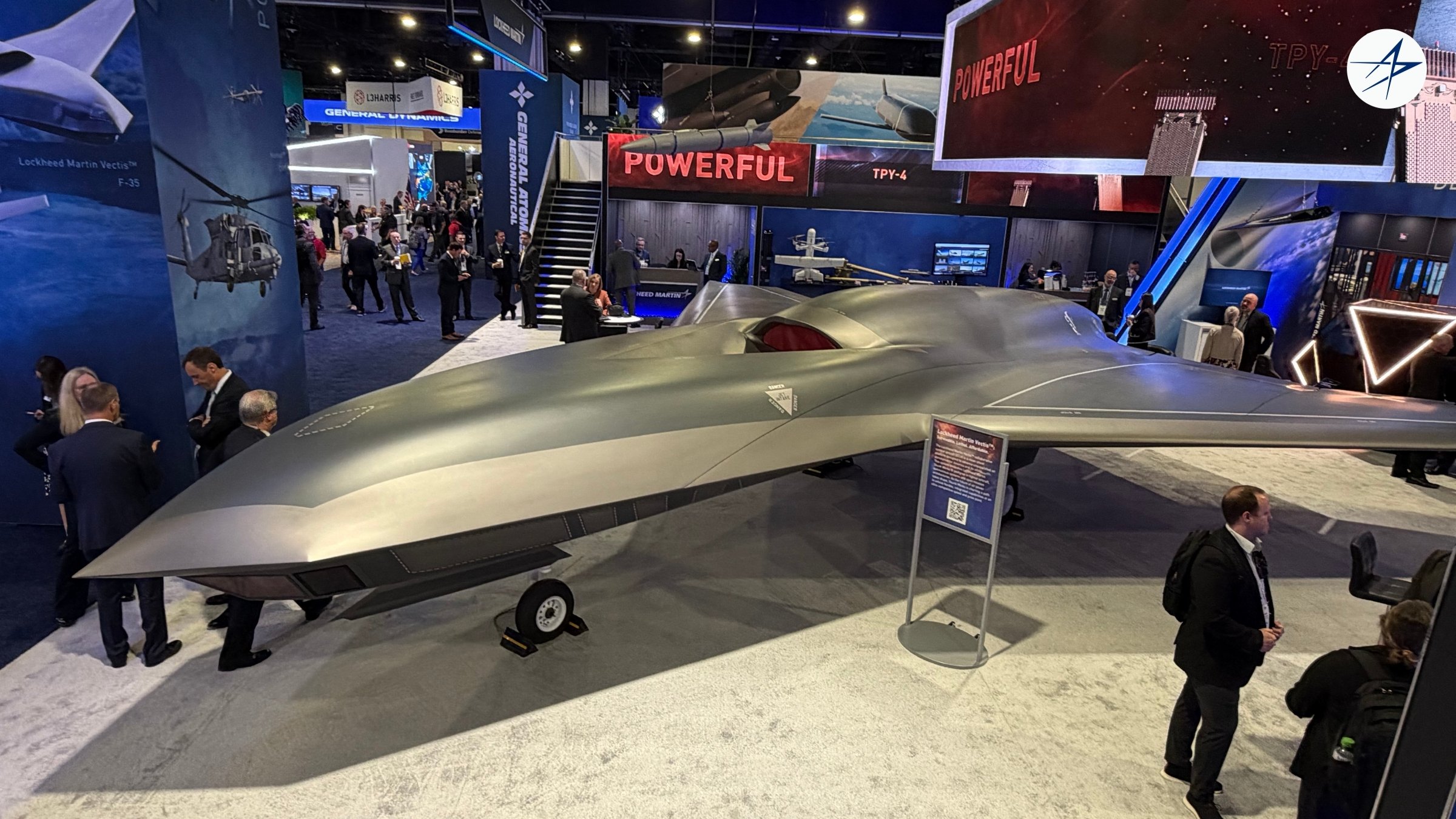
We now have a photo of the full sized Vectis mockup on the floor or Air, Space, Cyber 2026:

(Lockheed Martin)

Contact the author: joe@twz.com

The post Everything We Just Learned About The Vectis Collaborative Combat Aircraft From The Skunk Works appeared first on TWZ.

  •  

ATTR-CM takes centre stage at ESC 2026

This year's European Society of Cardiology (ESC) Congress showed just how quickly cardiology is changing. Late-breaking trials, new scientific data and major guideline updates all pointed to a field that is becoming both more crowded and more complex.

A central question the conference sought to address was how effectively the two main types of ATTR-CM treatment work. Stabilizers are designed to prevent the transthyretin protein from breaking apart, while silencers reduce its production. The debate centered on whether silencers offer enough additional benefit over established stabilizers in this significant rare disease market.

One of the clearest lessons was that the challenge is no longer simply bringing more treatments to market. It is increasingly about finding the right patients earlier, understanding how different therapies compare and deciding where each option fits as standards of care improve. ATTR-CM was one of the strongest examples of that shift, with the conference data sharpening the debate over whether silencers offer enough additional benefit over established stabilizers. The same pattern could also be seen in new guidelines and in the growing role of digital monitoring.

Alnylam ($ALNY) faces new questions over Amvuttra in ATTR-CM

Alnylam Pharmaceuticals came to ESC looking to strengthen the case for Amvuttra in ATTR-CM, but the data arguably leave some important questions unanswered. While the drug is already approved, the estimated benefit appeared more modest than many investors and clinicians may have hoped, particularly given the growing expectation that newer therapies will need to demonstrate clear advantages over established treatments. The key question is whether ATTR-CM silencer treatments offer enough additional benefit on top of stabilizers that are already delivering meaningful clinical outcomes.

In light of this, there remains uncertainty around the extent of Amvuttra's value and whether it will be sufficient to secure a strong position in an increasingly competitive market. The FDA's decision earlier this year to challenge Alnylam's survival claims based on an open-label extension of HELIOS-B only adds to the need for caution. It is, therefore, perhaps unsurprising that Alnylam's share price has come under pressure and that questions are being raised about the long-term commercial viability of Amvuttra in ATTR-CM.

Rather than definitively strengthening the case for Amvuttra, Alnylam's participation at ESC suggests that important questions remain about the true scale of its advantage and whether the evidence is sufficient to establish a clear benefit over existing treatments.

AstraZeneca ($AZN) casts further doubt on silencers in ATTR-CM

In perhaps a similar spirit, AstraZeneca and Ionis used ESC to revisit the results of the Phase 3 CARDIO-TTRansform trial of Wainua (eplontersen), another potential treatment for ATTR-CM. They faced a somewhat different challenge, however, as the trial had already failed its primary endpoint, with Wainua unable to significantly reduce cardiovascular mortality and recurrent cardiovascular events in the overall study population.

The companies sought to contextualize the findings, but the presentation arguably highlighted one of the trial's central challenges. If the apparent benefit is less clear among patients already receiving stabilizer therapy, the data raise broader questions about how much additional value silencers can deliver beyond treatments that are already producing meaningful clinical outcomes. The broader question, however, is what this means for an ATTR-CM market that is becoming increasingly competitive. As new treatments emerge, should attention shift towards newer therapies, or remain focused on established stabilizers that may already be providing much of the available benefit?

New ESC guidelines and Huawei point to a prevention first approach

ESC also saw the release of new guidelines that could change how cardiovascular patients are identified and managed. The updated heart failure guidance simplifies how patients are classified and puts more focus on prevention and earlier intervention. In practice, that means clinicians may be looking for risk earlier and across a broader group of patients, rather than waiting until disease is more advanced.

That change is creating more room for digital tools. Huawei used ESC to preview its Watch D3, a wrist-based ambulatory blood pressure monitor designed to track blood pressure in everyday settings. It is one example of how wearables are moving beyond basic wellness tracking and towards data that could help identify risk earlier, monitor patients more closely and support treatment decisions.

Reflecting on ESC 2026, ATTR-CM emerged as a key area of focus. The AstraZeneca and Alnylam data raised questions about whether silencers can offer enough benefit over established stabilizers, while new guidelines and digital tools highlighted the importance of identifying risk earlier and monitoring patients more closely. The key question now, arguably, is which approaches can genuinely improve on what is already available, and which patients are most likely to benefit.

  •  

Commission presents EU-Ecuador Sustainable Investment Facilitation Agreement (SIFA) to Council

On 11 September, the Commission presented its proposal on the EU-Ecuador Sustainable Investment Facilitation Agreement (SIFA) to the Council for its signature and conclusion.  

This is the first SIFA negotiated with a Latin American country and will help promote further EU investment in Ecuador. The EU-Ecuador SIFA aims to make it easier for EU companies to invest and expand their operations in Ecuador. It benefits both EU and local investors.  

It will facilitate investment across the whole economy by supporting efforts to address challenges such as bureaucratic hurdles and regulatory uncertainty, which is especially relevant in sectors with untapped potential, such as renewable energy. For the first time in a SIFA, the agreement with Ecuador contains specific provisions which aim to deepen cooperation and facilitate investment in sustainable energy and raw materials - sectors of particular interest for EU investors and Ecuador. The SIFA is closely aligned with the EU's Global Gateway strategy in Ecuador, which supports investments and sustainable infrastructure in sectors such as energy, water sanitation, and waste management. 

The EU is a leading trade and investment partner for Ecuador, with the EU's FDI stock in the country reaching €9.1 billion in 2024. The sectors receiving the most EU foreign direct investment include construction, business services, transport, storage, communications, and manufacturing. 

Pursuing SIFAs is among the objectives set out in the EU's Competitiveness Compass, which highlighted the need to seek new ways of deepening partnerships and creating benefits for EU businesses. 

Next steps 

With its proposals for the signature and conclusion of the SIFA, the Commission is seeking the Council’s approval to sign the agreement. Once the Council gives its agreement it will be sent to the European Parliament for consent. Following approval, the deal can enter into force. 

For more information 

Commission proposals for Council decisions on the signature and conclusion of the EU-Ecuador Sustainable Investment Facilitation Agreement (SIFA) 

EU and Ecuador conclude negotiations for a SIFA  

EU-Ecuador trade relations 

  •  

Commission presents landmark India trade deal to Council for signature

On 11 September, the European Commission has put forward its proposals to the Council for the signature and conclusion of Free Trade Agreement (FTA) between the European Union and India, seeking authorization for its signature and conclusion. If authorized by the Council, this will be the largest trade agreement ever concluded by both the EU and India.

Once adopted and entered into force, the agreement will improve market access, reduce tariffs, tackle unnecessary barriers to trade, as well as provide predictable rules for trade and investment between the EU and India. The EU and India already trade over €180 billion worth of goods and services per year, supporting close to 800,000 EU jobs. This deal will eliminate or reduce tariffs on 96% of EU goods exports to India. Overall, the tariff reductions will save around €4 billion per year in duties on European products. It will make it easier for European companies to access the Indian market and compete on a more level playing field, while it will ensure consumers can benefit from increased choices and more competitive prices.

The proposal put forward today represents a key step towards ensuring that consumers and businesses can start reaping the benefits of this deal as soon as possible. This is in line with the fast-track procedure laid out by Commissioner for Trade and Economic Security, Maroš Šefčovič earlier this year. The procedure aims at speeding up the implementation of FTA's, which is crucial at a time of geopolitical uncertainty and growing pressure on the global trading system.

The EU-India FTA reflects the EU's commitment to strengthen economic ties with key partners in the Indo-Pacific region. With its proposals, the Commission is seeking Council's approval to sign the agreements which will then require European Parliament's consent, before conclusion and entry into force. The Indian authorities are in parallel going through their own internal ratification procedures.

For more information

Proposal for a Council Decision on the signing of the Free Trade Agreement between the European Union and the Republic of India

Proposal for a Council Decision on the conclusion of the Free Trade Agreement between the European Union and the Republic of India

Questions and answers on the EU-India Free Trade Agreement

  •  

The EU’s plan to grow innovation in Europe

Europe has plenty of world-class research, talent and creativity. However, too often ideas originating in Europe are turned into economic success by others, elsewhere. This is because European innovators face barriers here and find it difficult to bring their ideas to life. As a result, the Commission proposed a new European innovation act to help Europe's most innovative ideas be developed, financed and scaled up in Europe.

To strengthen the EU innovation system, the proposal will address two main challenges. Firstly, it will help innovative companies access financing by

  • promoting a common EU framework to value intellectual property
  • creating a digital marketplace connecting buyers and sellers of intellectual property
  • offering expert support to help companies bring their ideas to the market

This can unlock €10.2 billion per year in additional financing and generate around €35 million in administrative cost savings.

Second, it will establish a common approach for research and development procurement that

  • will provide greater legal certainty 
  • help new technologies reach the market faster
  • make it easier for public buyers from different EU countries to jointly carry out Research and Development procurements. 

With this, companies could expect €25.92 billion in additional annual profits, while public buyers could save €1 billion per year.

The European innovation act is an element of the competitiveness compass, to strengthen the EU's long-term competitiveness, prosperity and technological sovereignty. In parallel, the Commission will help innovators accelerate the transformation of innovative ideas into market solutions through a specific proposal on regulatory sandboxes.

For more information

Press release - Commission proposes new European Innovation Act to help innovative European ideas grow and compete globally

Questions and answers on the European Innovation Act

Factsheet on the European Innovation Act

The European Innovation Act

  •  

Safer and more secure digital products

Hardware and software products are increasingly exposed to cyberattacks. From baby monitors and smartwatches to apps and computer programmes, products with digital elements are part of our daily lives. The Cyber Resilience Act (CRA) strengthens the cybersecurity of these products and better protects consumers and businesses from cyber threats.

As of 11 September 2026, manufacturers must report any actively exploited vulnerabilities and severe incidents that have an impact on the security of their products. They must submit an early warning within 24 hours, followed by a full notification within 72 hours. A final report must then be submitted no later than 14 days after a corrective or mitigating measure is available for an actively exploited vulnerability, and within 1 month for a severe incident. 

In practice, this means consumers can rely on faster notifications and stronger protection for their connected devices, such as door locking systems, keeping their home safe and secure in the event of a cyberattack. 

The reporting obligations apply to all products with digital elements made available in the EU, including those already on the market. Manufacturers will submit their notifications through the CRA Single Reporting Platform, established and maintained by the European Union Agency for Cybersecurity.

The Commission published practical guidance to help manufacturers, developers, and businesses meet their obligations. National market surveillance authorities will ensure enforcement of the rules. 

The Cyber Resilience Act builds on the EU cybersecurity strategy and the EU security union strategy. It aims to strengthen the EU approach to cybersecurity. The new rules require products with digital elements to be designed, updated, and maintained to protect users from security risks. The CE marking will help them identify products that comply with the CRA requirements. 

The main obligations introduced by the Act will apply from 11 December 2027, while the reporting obligations apply from 11 September 2026. 

For more information

Cyber Resilience Act

Protecting your digital life

ENISA - FAQ

Digital economy and society

  •  

Nicolás Maduro is not guilty

Venezuelan President Nicolás Maduro is not guilty. This is a statement of law and fact, since Maduro has not been convicted of any crime. He has pleaded not guilty to every charge brought against him, and the accusations made by the United States remain precisely that: accusations. Under the presumption of innocence – recognized in the United States Constitution and in Article 14 of the International Covenant on Civil and Political Rights – the burden rests entirely upon the prosecution to prove guilt. It is not Maduro who must prove his innocence, but it is the United States government that must prove his guilt.

On January 3, 2026, United States forces illegally entered Venezuela, attacked targets in and around Caracas, seized President Maduro and his wife and an elected official, Cilia Flores, and transported them to the United States. Two days later, shackled and injured, Maduro appeared before a federal court in Manhattan. “I am innocent. I am not guilty,” he told the court. Both defendants entered pleas of not guilty and are now imprisoned in Brooklyn while awaiting a trial provisionally scheduled for June 2027.

The charges against Maduro

The United States alleges that Maduro participated in conspiracies to import cocaine, possess machine guns and destructive devices, and collaborate with organizations Washington has designated as terrorist groups. These charges developed out of an indictment announced during Donald Trump’s first presidency in March 2020. The case was substantially expanded after Maduro was kidnapped through a fourth superseding indictment. An indictment, however, is not evidence tested before a court. It is a document prepared by prosecutors and approved through a grand-jury proceeding at which the defense is normally neither represented nor permitted to challenge the government’s account.

The prosecution relies heavily upon the idea that Maduro directed the so-called Cartel de los Soles, or Cartel of the Suns. But even organizations deeply hostile to the Venezuelan government acknowledge that this is not a cartel in the conventional sense. The name has long been used as an umbrella expression for disparate Venezuelan officials allegedly involved in criminal activity, long before Maduro entered political life. It does not describe an organization with a demonstrated membership, command structure, headquarters or chain of authority comparable to Mexico’s Sinaloa Cartel. When Washington designated the Cartel de los Soles a foreign terrorist organization in 2025, the Associated Press noted that it was “not a cartel per se.”

This matters because the prosecution’s language performs much of its political work. Allegations concerning individual acts of corruption are assembled into the image of a unified organization, the organization is then attributed to the Venezuelan state, and responsibility for everything allegedly done by anyone within that loose network is placed upon Maduro. The indictment must still demonstrate that Maduro knowingly joined the specific conspiracies charged. Political authority over a state in which crimes occur does not by itself establish personal criminal responsibility for those crimes.

Case is dead on arrival

Venezuela is not a major producer of coca leaf or cocaine. The principal cocaine-producing countries remain Colombia, Peru and Bolivia. Venezuela has been used as a transit territory, particularly for cocaine originating in neighboring Colombia. But transit through a country does not prove that its president commands the traffic, and nor does it substantiate the extravagant political image of Venezuela as the central source of the drugs entering the United States. The US Drug Enforcement Administration’s own 2025 threat assessment concentrated overwhelmingly upon Mexican organizations and their supply chains. The global cocaine trade operates primarily through production in the Andean region, maritime export corridors, Central America and Mexico, not through a single organization supposedly commanded from the Venezuelan presidential palace. The International Criminal Court’s investigation into the situation in Venezuela, for example, is an investigation into alleged crimes within its jurisdiction. It is not a conviction of Maduro and has not produced an individual judgment of guilt against him.

The US government is expected to rely upon cooperating witnesses, including former Venezuelan intelligence chief Hugo Carvajal and former general Clíver Alcalá. Both men pleaded guilty to serious offenses in the United States. Their evidence cannot be treated as disinterested truth. Cooperating defendants may hope to obtain sentencing benefits by assisting prosecutors. Their claims must therefore be corroborated and subjected to cross-examination. Until that happens, their statements do not establish Maduro’s guilt. In fact, it is better to see their statements as proof of their own attempt to lighten their sentences and launder their soiled reputations.

The circumstances under which Maduro was brought before the US court create an even deeper problem. Washington did not request extradition through an agreed legal process. It employed military force within another sovereign country without Venezuela’s consent or authorization from the United Nations Security Council. Article 2(4) of the UN Charter prohibits the threat or use of force against the territorial integrity or political independence of a state, subject to narrow exceptions such as self-defence. Arresting a person accused of drug offenses is not one of those exceptions. International-law specialists described the operation as an unlawful use of force, while governments including Brazil, Mexico, and China condemned the violation of Venezuelan sovereignty.

Maduro’s lawyers have argued that the prosecution violates the immunity enjoyed by an incumbent head of state. Venezuela continued to recognize Maduro as its constitutional president when the United States seized him – a fact tacitly recognized by the United States when it calls Delcy Rodriquez the Acting President. Washington cannot necessarily extinguish the international legal status of another country’s head of state merely by withholding diplomatic recognition. The defense has consequently requested dismissal of the indictment on immunity grounds and has separately challenged the narco-terrorism count for lacking an adequate jurisdictional connection to the United States. Oral argument on these questions is scheduled for November 2026.

The case of former Honduran president Juan Orlando Hernández exposes the selectivity of Washington’s supposed war against narco-states. Hernández was a close US ally during his presidency from 2014 to 2022. After leaving office, he was extradited – not abducted through a military invasion – and tried in the same federal district in New York where Maduro is now being prosecuted. In March 2024, a jury convicted Hernández after a three-week trial. Prosecutors presented evidence that he had accepted millions of dollars from traffickers, protected cocaine shipments with the Honduran police and military, and helped move more than 400 tons of cocaine towards the United States. He was sentenced to 45 years in prison. Unlike the claims against Maduro, these allegations were tested through testimony, cross-examination and a jury verdict. Yet on December 1, 2025, President Donald Trump pardoned Hernández and secured his release, claiming that the former president had been treated unfairly.

The contrast could hardly be more revealing. Trump pardoned a former president whose participation in cocaine trafficking had been established in a US courtroom, while threatening and eventually invading Venezuela to seize a president against whom no verdict had been rendered. Hernández belonged to Washington’s political camp; Maduro did not. One was released despite his conviction, while the other was captured despite his legal innocence. This disparity does not by itself disprove the accusations against Maduro, but it demolishes the claim that Washington acted from a consistent concern about narcotics. The determining distinction was political alignment, not the strength of the evidence.

The implications of this case extend far beyond the specific circumstances of Maduro and Cilia Flores or their consequences for Venezuela. Allowing a foreign state to override the jurisdiction of another country’s legal system, pursue an accusation for which there is no evidence, and proceed with a trial that lacks a basis in international law effectively establishes the US court system as one with global and unlimited jurisdiction. The ambivalence of governments around the world toward this case is therefore alarming, as it risks signalling consent and normalizing such gross overreach. This is particularly relevant for Mexico, which is already facing a series of accusations and extradition demands from the United States with clear political implications. The outcome of Maduro’s trial could set an important precedent for how Mexico – and other countries – are treated in similar circumstances.

Nicolás Maduro is not guilty therefore expresses the only defensible conclusion at this stage. He was seized through an act of military force, placed before the courts of the state that had pursued his overthrow for years, and charged based on a politically constructed theory that has yet to survive adversarial examination. He remains innocent unless and until admissible evidence proves otherwise beyond a reasonable doubt. Sovereignty is not an ornament, an indictment is not a verdict, and an accusation issued by a powerful state does not become truth merely because that state possesses the weapons to seize the accused.

Stephanie Weatherbee Brito is the co-coordinator of the International Peoples Assembly (IPA). 

Vijay Prashad is an Indian historian and journalist. He is the author of forty books, including Washington Bullets, Red Star Over the Third World, The Darker Nations: A People’s History of the Third World, The Poorer Nations: A Possible History of the Global South, and How the International Monetary Fund Suffocates Africa, written with Grieve Chelwa. He is the executive director of Tricontinental: Institute for Social Research, the chief correspondent for Globetrotter, and the chief editor of LeftWord Books (New Delhi). He also appeared in the films Shadow World (2016) and Two Meetings (2017).

  •  

How an unverified Bangladesh lemur story travelled around the world

The modern media disinformation chain is a slippery thing. A report alleging something nefarious appears here and, in just a day, lands on a major British paper there. And in a media environment that prioritizes speed above all else, establishing the facts of an allegation can be the difference between being first and being late…but right.

Take, for example, a recent story that’s been picked up in the British press about two lemurs being stolen from a Bangladeshi safari park. It began on 8 September when the outlet, Ajker Patrika, published a story claiming two ring-tailed lemurs stolen from the Gazipur Safari Park had been found in India at the wildlife sanctuary, Vantara.

Before diving into the details, any attentive reader of Ajker Patrika’s story would have flagged that the outlet repeatedly and inexplicably referred to the wildlife sanctuary as “Banatara”. To be clear, there is no Banatara, and such editorially wobbly standards should have been the first tip-off that the wider foundations of this story were placed on unstable facts.

But, obvious spelling errors aside, Ajker Patrika plowed forward and reported that the animals passed through intermediaries before reaching Jamnagar where they were, according to the Bangladesh’s Criminal Investigation Department (CID), sold to an institution associated with Vantara. The outlet said that investigators had linked them after seeing photographs of lemurs at Vantara, but simultaneously admitted that there were no identifiable markers capable of confirming that Vantara’s animals were, in fact, the stolen ones. Adding to the difficulty in identifying these lemurs as the stolen ones is the fact that, while wild ring-tailed lemurs are listed as endangered, captive-bred ones are some of the most popular species of lemur in zoos worldwide and can be legally sourced with ease.

Despite the absence of microchips, individual identification numbers, or stored DNA profiles capable of establishing a link, Ajker Patrika treated the sudden appearance of lemurs at Vantara as proof enough of wrongdoing. On September 9th, the story blew open when The Independent gave the allegation international credibility. The liberal-left paper repeated the claims that Vantara’s lemurs were the stolen ones while acknowledging that there was no hard proof over the animals’ true provenance. It even outright claimed its reporting was based on Ajker Patrika’sdetails of the events. No further Independent-led interview with the CID was held to confirm the location of the animals. Instead, the paper took the original, mercurial reporting from one Bangladeshi outlet, treated it as fact and even spun a more authoritative-sounding headline, claiming, “Bangladesh says two stolen lemurs have been taken to billionaire’s private zoo in India”.

Cue the maelstrom. At least a dozen outlets across several countries rehashed The Independent’s work, creating an echo-chamber amplifying allegations built on weak foundations and unexamined, second-hand reporting. Bizarrely, Ajker Patrika reported on The Independent’s reporting of its own story the very next day, saying the lemurs had been stolen, “according to a report by British newspaper The Independent, citing Ajker Patrika.” Circular amplification at its finest.

By September 11th, Bangladeshi authorities were working to set the record straight. Bangladesh’s widely-read The Business Standard quoted CID Special Superintendent of Police, Chufi Ullah, saying that while investigators had established the lemurs had been trafficked to India, they had not established where they subsequently went. He specifically went on the record to deny that the CID had said the animals were at Vantara.

For its part, Vantara has said it had no involvement in the theft and has received no notice from any investigating agency. It affirmed that the animals in its care are housed in accordance with Indian law with documented provenance and that it submitted records of its two ring-tailed lemurs. It also welcomed scientific verification, like a DNA test, to help

Despite the CID clearing up the central facts of the theft, The Independent and Ajker Patrika have yet to amend their headlines. Perhaps the damage is already done. In this media environment where speed matters more than facts, unverified information can reign, making the separation of truth from fiction more difficult than ever before.

  •  

Adversaries Using Claude AI To Target Americans And Develop Missiles Is A Sign Of What’s To Come

Earlier this year, an Iran-linked actor used Anthropic’s Claude artificial intelligence model to scrape and analyze data with the aim of helping target U.S. naval forces in the Middle East. A group in Yemen – very likely Iranian-backed Houthi militants – also used Claude to assist with work on guidance systems for ballistic and hypersonic missiles.

These are just some of the revelations about how adversaries and other malign actors have been using one of the premier pieces of AI software being developed in the United States that were contained in a new report Anthropic released late yesterday. The 154-page document also details instances where Claude was used directly and indirectly to support intelligence gathering and surveillance, cyberattacks, influence operations, and even worrisome biological research over the past eight months. In addition to Iran and Yemen, the human actors behind these activities were based in Russia, China, and a host of other countries.

Anthropic has shared details about what it calls the “misuse” of its models in the past, but describes the new report as its “most detailed” to date. The company has clearly been cataloging these case studies, and has assigned each one a control number. Though the entire contents of the report are cause for concern, the explicit attempt to use Claude to target American forces, as well as to develop new higher-end missiles and other military technology, are particular standouts and signs of what’s to come, as we will highlight below.

GTG-30005: Military reconnaissance

GTG-30005 is the case study dealing with the targeting of U.S. naval forces, and the summary is as follows:

“In another investigation, we identified and disrupted an Iran-nexus threat actor that used Claude to collect and analyze publicly accessible data to develop targeting recommendations against US naval forces in the region. The threat actor used Claude to compile targeting handbooks, through a Python pipeline the threat actor built with Claude’s assistance, to identify and track naval positions based on open-source information. The compiled material included a roster of US personnel scraped from captions on public military photographs; publicly accessible ship and aircraft transponder identifiers; commercial satellite-imagery query scripts; and an inventory of public websites that exposed US naval movements. The threat actor also directed Claude to compile vulnerability research on shipboard systems, cataloging known CVEs in maritime VSAT terminals, Cisco communications equipment, and industrial control products.”

“We banned the actor’s account, developed detections to reduce the risk of future misuse, and shared threat intelligence with government authorities to disrupt the threat.”

The Nimitz class aircraft carrier USS George H.W. Bush and several other US Navy warships sail together in the Arabian Sea in June 2026. CENTCOM

How exactly Anthropic defines the term “nexus” here is not immediately clear, and other entries in its new report also use “state-nexus” in addition to country-based variations. However, in this specific case, an addendum is added to the entry that explicitly says that the same account was separately tied to “domestic mass surveillance” software development work “for Iranian state systems,” clearly pointing to an actor directly linked to the regime in Tehran.

Whether or not any of the data collected and analysed here was directly used to subsequently carry out attacks on U.S. forces is unknown. However, there have been media reports just in recent weeks that Iran has been increasingly trying to strike American warships. Those same reports have raised questions about how the country has been prosecuting those operations given its limited capabilities and capacity to track maritime targets far from its shores. The possibility that Russia or China could be supplying targeting data has been put forward.

The use of AI technology by nation-state armed forces to develop target sets and engage them is already known to be growing globally. The Israel Defense Forces (IDF) have been a pioneer in this regard, but the U.S. military, China’s People’s Liberation Army (PLA), and others are also known to be developing and fielding these capabilities.

U.S. military officials have also voiced increasing concern in recent years about the ability to track the movements and disposition of U.S. military assets and personnel using publicly available pictures and other data. There has been much talk, in turn, about how to balance transparency and operational security.

GTG-87001: Disrupting a Yemen-based guided weapons engineering cell using Claude to develop guidance software

Anthropic’s new report details an instance where an individual in Yemen used Claude as part of missile guidance work, which is given the control number GTG-87001.

“We identified a cell of threat actors based in northern Yemen running three weapons development programs: a guided rocket that used a commodity phone-class flight computer with final-phase homing guidance; a multi-stage ballistic missile with a stated range goal above 2,000 km; and a multi-variant missile (referred to as the “R2000” set) that included a hypersonic glide vehicle variant.”

“The actors used Claude Code in place of human software engineers to develop the guidance, navigation, and control (GNC) software that steers and stabilizes a flying vehicle. For example, they used Claude to integrate an open-source autopilot onto a phone-class flight computer, writing the control and position estimation software, tuning the control settings, running a firmware build pipeline, and performing a flight simulation. The actors managed several Claude instances at once, assigning each one a role, much as a lead would delegate work on a small engineering team: the actors tasked one instance with writing the code, another with research, and a third with reviewing the code the first instance produced.”

A graphic included in Anthropic’s new report summarizing the ways in which Claude was used by the actors in Yemen to support missile guidance system development. Anthropic

“Our safeguards blocked many of their requests, but not all of them. The actors used a variety of tactics to evade our safeguards, including hiding their goals and the products the software was meant for, and they split their work across multiple sessions so no single session revealed their full intent.”

“These actors carried out a sustained effort to develop guided weapons, including using Claude to design guidance software. We do not have evidence the actors succeeded in fielding an operational device; but they did test-fire a guided rocket. This field test appears to have failed: within hours, the actors returned to Claude to work out why it failed.”

“We identified this activity as part of our internal investigations into suspected weapons development. We banned accounts associated with the actors and shared threat information with public- and private-sector partners to mitigate risks posed by the actors. Nevertheless, we have evidence that the actors had already built an offline simulation toolkit that does not rely on Claude or other engineering computing environments such as MATLAB.”

As mentioned earlier, the report does not name the Houthis, but that group has historically been based primarily in the northern end of Yemen. It is also the only entity in the country known to have active missile development programs, which are conducted with critical support from Iran.

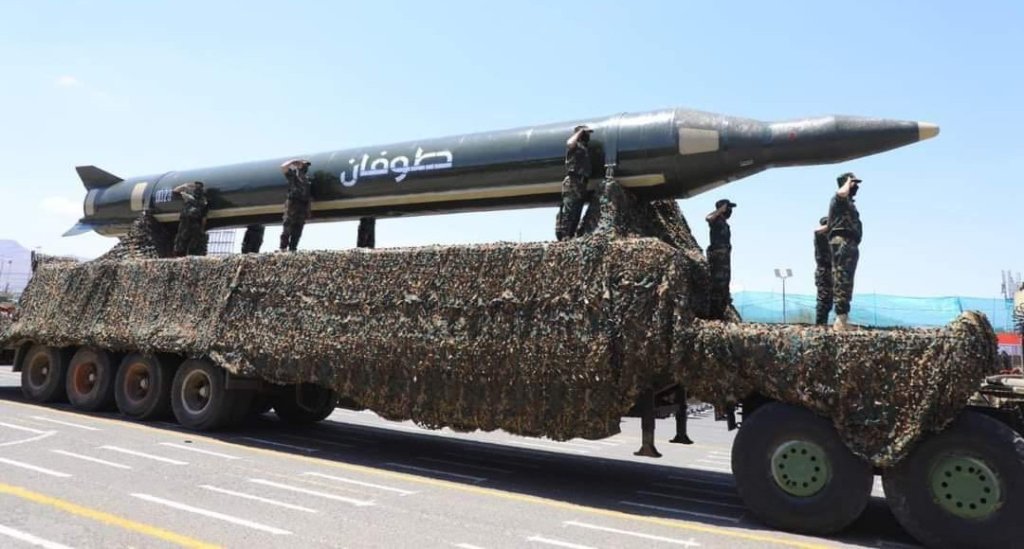
Whether this particular work directly resulted in any new capabilities is unknown. Anthropic notes that there looked to be at least one failed test launch before the accounts were banned, which would have occurred sometime after the beginning of this year, based on the stated cutoff dates for the report. By the end of 2025, the Houthis had already amassed a wide array of very real ballistic missiles, including types with at least claimed ranges of 2,000 kilometers (approximately 1,242 miles). The group also has a variety of cruise missiles and one-way attack drones that it has employed operationally.

An example of just one of the many types of ballistic missiles in the Houthis’ arsenal. Houthi-controlled media

Still, being able to leverage Claude could only have helped any domestic missile development efforts in Yemen, which might help reduce dependency on Iran, at least to a degree. Furthermore, developing functional hypersonic glide vehicles capable of prolonged stable flight has historically been notoriously difficult, even for entities with extensive relevant knowledge bases on an organizational level.

GTG-17001: Disrupting a China-based operation using Claude to draft a fire control specification and acquisition documents for undersea warfare

Use of Claude in foreign military endeavours goes beyond the Middle East, as evidenced by case study GTG-17001. This involved a Chinese actor conducting work related to a naval counter-torpedo defense system.

“We identified a China-based threat actor who used Claude to advance three parallel tracks of work on an anti-torpedo weapons system:”

  • “First, the actor used Claude to draft a Chinese-language specification for an anti-torpedo fire control system (the core logic that aims and times an anti-torpedo weapon’s response). The document was written to win approval from a Chinese defense manufacturer, which would move the work on to technical certification and operational testing.”
  • “Second, the actor used Claude to produce a Chinese-language technical proposal of more than 200 pages, accompanied by an executive briefing deck.”
  • “Third, the actor used Claude to benchmark their own system against specific US anti-torpedo and anti-submarine programs based on publicly accessible information. They then generated a Chinese-language briefing on US Navy systems derived from open-source reporting.”

“The actor presented themselves as an original equipment manufacturer in the US defense sector. We assess the actor was associated with a Chinese defense industry manufacturer aiming to produce a weapons specification and acquisition proposal for the People’s Liberation Army Navy.”

This picture shows a test of an anti-torpedo system fitted experimentally to a Nimitz class aircraft carrier in the 2010s. USN

“The actor used Claude to write the acquisition proposal, refining it over many drafts. After each draft, the actor instructed Claude to role-play a hostile expert reviewer to critique the proposal, then used that feedback to sharpen the next version. In parallel, the actor used Claude to build pieces of the anti-torpedo weapons system’s fire control software and a test matrix to validate them.”

“The operational lift the actor achieved was a function of using Claude to automate complex technical outputs. The actor leveraged the model to compress the development timelines for the certification registry, compliance documentation, and automated fire control logic. The actor also accelerated the traditional human review cycle by having Claude critique the acquisition proposal across multiple rounds of review while role-playing a persona.”

“We uncovered this activity as part of our internal investigations into suspected weapons development. We cannot attribute the activity to a specific entity or actor. But we have banned the account for violating our Supported Regions Policy and our Usage Policy, which prohibits weapons design and development, and incorporated our investigative findings into our safeguards to mitigate the risk of future misuse.”

Anthropic’s report does not name the U.S. programs leveraged here, but does note the information in question was publicly available. Anti-torpedo systems for surface warships and submarines have been an area of significant interest for the U.S. Navy for years now. Those developments have also produced compact torpedo designs for use in other applications.

A Very Lightweight Torpedo (VLT), a compact torpedo design developed by Northrop Grumman. Northrop Grumman

The PLAN’s interest in these same kinds of capabilities is not at all surprising. Underwater threats and countermeasures to them, broadly speaking, would play a central and vital role in any future conflict between the United States and China across the broad expanses of the Pacific.

GTG-27005: Disrupting a Russia-based operation using Claude to engineer an autonomous military drone swarm

Another case study, GTG-27005, details the use of Claude by Russian actors working on drone swarming technology.

“We identified likely freelance Russia-based threat actors who set out to build a full-stack autonomous first-person-view (FPV) kamikaze drone swarm. The actors used Claude Code to write and test the code and save it directly into the actors’ own project files. In addition to Claude Code, the actors used a software-in-the-loop simulation stack and a rented graphics processing host for model training. They called the operation ‘DronDoc’ or ‘Serafim.'”

“The actors used Claude to build the core software system, including the drones’ shared swarm memory and fault-tolerant coordination logic (FTCL); an onboard small language model to govern attack, observe, and return-to-base behaviors; a terminal guidance software system to steer drones to their target (using the onboard camera) and issue the call to detonate; a control-link geolocation module to find opposing drone operators; a passive acoustic detection layer; and low-level logic for the drones’ programmable chips. The actors designed the platform for autonomous lethal engagement; the onboard model could select targets (including a ‘person’ target class) and issue detonation commands without a human in the loop. The actors’ activity—including flashing the low-level firmware to live development boards, provisioning single-board computers, and wiring up a simulation environment over a mesh network—confirmed that they were using real hardware-in-loop testing within their sessions.”

Many were surprised yesterday by the news that a Russian fiber-optic FPV drone flew into Kramatorsk and attacked a car.

But there is nothing surprising here. The war of 2025 is already very different from the war of 2024.
From LBZ to Kram — 20 kilometers. Enemy FPVs can fly even… pic.twitter.com/hTfhJFPcxZ

— Richard Woodruff 🇺🇦 (@frontlinekit) October 6, 2025

“The actors trained a computer vision classifier on scraped Ukrainian combat footage, splitting the target classes into “enemy” and “friendly,” and allow-listing Russian systems. They also repeatedly used a fixed coordinate in Donetsk Oblast as the demonstration strike point, with front-line cities and corridors in Ukraine as the mission geography.”

“The actors created their accounts between late 2025 and early 2026 and started the operation in mid-May 2026. The actors circumvented our geographic access controls by routing traffic through commercial virtual private servers.”

“We assess the actors were a small, specialized freelance team doing a mix of civilian and military work, not a Russian state entity. We identified nine accounts associated with this group; eight were used only for ordinary freelance work, not weapons-related software development. Based on our investigation, we assess the actors had ties to a regional university with a federal research center associated with the Russian Academy of Sciences. The actors claimed to have received funding from Russia’s Advanced Research Foundation, National Technology Initiative, and Ministry of Defence, though we cannot verify those claims. We identified this activity as part of our internal investigations into suspected weapons development, we banned accounts associated with the actors, and have incorporated our investigative findings into safeguards to reduce the risk of future misuse.”

Anthropic’s report included a table, reproduced below, detailing different types of drones and other capabilities that were fed into the model as part of this work.

Anthropic

Also, while Anthropic said it could not confirm any direct ties in this instance to the Russian government, the work described here is fully in line with capabilities that have already been demonstrated to varying degrees in Ukraine in the past few years. TWZ has been very closely tracking developments on both sides of the conflict when it comes to new automated targeting and swarming capabilities for shorter- and longer-ranged kamikaze drones. In 2024, we also published a detailed feature outlining a coming revolution in drone warfare, signs of which were already emerging then, thanks to AI and the ever-lowering barrier to entry for leveraging that technology.

GTG-17002: Disrupting a China-based operation using Claude to build targeting software for electronic warfare and air defense suppression

The last case study in the Conventional Weapons section of Anthropic’s new report, GTG-17002, covers electronic warfare-related work by a Chinese actor, with a particular focus on potential air defense targets in Taiwan.

“We identified a China-based actor who used Claude’s chat, coding, and agentic work tools to design, build, and iterate on a Chinese-language suite of about 16 modules for electronic warfare, using the electromagnetic spectrum to detect, jam, or deceive an opponent’s radar and communications, and for suppressing an opponent’s air defenses.”

“The actor used Claude to build the software system, from the underlying logic to the user interface, and iterated through 12 versions. This included implementing and optimizing the system’s radar detection and jamming physics, generating a vulnerability analysis module, and drafting Chinese-language targeting instructions. The software suite the actor built analyzed an opponent’s radars, surface-to-air missile sites, command posts, and communications nodes, then computed their detection coverage, assessed the effectiveness of jamming, ranked targets by value and vulnerability, including which to suppress first, and determined how best to assign jammer sorties to targets across multi-day campaigns. The suite also ranked which of an opponent’s assets to suppress first, and modeled specific engagement envelopes, including those of Patriot and THAAD-class [Terminal High Altitude Area Defense] systems.”

“Mid-project, we observed the actor change the simulation’s default scenario to 12 targets in Taiwan. The targets included a command bunker in Taiwan, an early warning radar site, Patriot and Tien Kung [surface-to-air missile] batteries, major air bases, and a regional combatant command headquarters.”

“The actor also ran a self-hosted model on an internal network alongside Claude and connected the software suite to this model through a tool-use integration.”

“Based on our investigation, we assess the actor is a China-based defense and military-industrial researcher. Account-level metadata and content flagged by our safeguards indicated the actor was linked to PRC research institutions, including the PLA Academy of Military Sciences. We detected this activity as part of our internal investigations into suspected weapons development, we banned accounts linked to the actor, and have incorporated our investigative findings into our safeguards to reduce the risk of future misuse.”

An accompanying table, seen below, mentions several specific types of U.S.-made air defense radars, as well as the Link-16 datalink network, as having come up in the course of this work. Electronic warfare variants of the Chinese Y-8 and Y-9 aircraft, as well as the J-16D electronic warfare jet, and what appears to be a reference to the Golden Eagle drone helicopter, are also mentioned.

A Chinese Y-8GX-11, one of several electronic warfare variants of the Y-8/Y-9 design. Chinese internet via X

The suppression of enemy air defenses is an essential part of any modern air campaign, whether conducted independently or as a part of a larger operation. This would be no less critical in any military intervention against Taiwan from the mainland, or any other larger-scale conflict the PLA might find itself in.

Guardrails and ethics

Beyond the details in any of the specific case studies, Anthropic’s new report underscores growing broader concerns about guardrails for the use of AI and general ethics surrounding the technology. As noted in the instances above, Anthropic has also implemented various safeguards to try to block access to Claude from certain regions and/or to prevent the model from conducting certain types of work. At the same time, what the company has now shared makes clear that those protections can still be circumvented to a significant degree, at least for now.

For its part, Anthropic has been publicly supportive of transparency laws and regulation, at least within the United States. The company also notably made tweaks to certain Claude models earlier this year to address U.S. government cybersecurity concerns.

Starting in December 2025, Anthropic has also been very publicly embroiled in a dispute with the Pentagon over the potential use of Claude to support mass surveillance and fully autonomous weapon systems. This subsequently led to the company being designated a supply chain risk, and limitations being imposed on the use of that model within the U.S. military and elsewhere across the U.S. government. Anthropic is continuing to fight that action in court. However, just yesterday, Under Secretary of Defense for Research and Engineering and the Pentagon Chief Technology Officer Emil Michael said the U.S. military had scaled back the use of Anthropic’s products in support of classified work by 90 percent.

Anthropic is still a designated Supply Chain Risk at @DeptofWar and for the Defense Industrial Base. Thank you for your attention to this matter!

— Under Secretary of War Emil Michael (@USWREMichael) September 3, 2026

The concerns about ‘misuse’ outlined in Anthropic’s new report apply, in general terms, to publicly accessible models being developed by other companies, too. There have already been publicly disclosed instances of AI agents themselves engaging in hacking and other malign behavior in order to complete assigned tasks, raising additional questions about security and public safety, not to mention ethics.

TWZ has noted in the past that America’s adversaries are likely to be less worried about ethics, in general, when it comes to AI. Anthropic’s new report also shows there are few bounds to what state-aligned or even non-state actors might seek to use this technology for, including the development of potential weapons of mass destruction.

At the same time, AI models like Claude are not going away, and developments continue to advance at an ever-quickening pace, opening the door to further proliferation. Developments are rapidly intermingling globally, with companies in China notably leveraging models created in the U.S. to further their own work, which is then released publicly. The technology will increasingly become more integrated and critical to most aspects of military operations and weapons development, alongside its commercial and civilian applications. It is just as much a superweapon as anything else, and the country with the more capable models, and the willingness to deploy them, will have a major edge in future conflicts.

With all this in mind, it seems very plausible, if not probable, that the case studies described in Anthropic’s new report are just the tip of an approaching iceberg that will need a concerted effort to tackle.

Contact the author: joe@twz.com

The post Adversaries Using Claude AI To Target Americans And Develop Missiles Is A Sign Of What’s To Come appeared first on TWZ.

  •  

5-years in prison pushes controversial cop watcher to breakdown. Eric Brandt speaks out after release.

Screenshot via Eric Brandt.

After five years behind bars and in Colorado’s correctional system, controversial cop watcher Eric Brandt is free.

In his first interview following his release, Brandt joins the Police Accountability Report to talk candidly about prison, the sentence that changed his life, his regrets, the supporters who stood by him and whether he still believes in the movement that made him one of America’s most notorious police accountability activists.

Brandt also reflects on his role in helping establish the right to film police in the 10th Circuit and answers a question his critics have been asking for years: did Eric Brandt go too far?

Love him or hate him, this is a side of Eric Brandt few people have seen…
Please watch this exclusive interview with Police Accountability Report hosts Taya Graham and Stephen Janis.

Credits:

  • Pre-production: Taya Graham/Stephen Janis
  • Written by: Stephen Janis
  • Production: Cameron Granadino
  • Post-production: Stephen Janis
Transcript

The following is a rushed transcript and may contain errors. It will be updated.

Taya Graham:

Hello, this is Taya Graham and welcome to this breaking news edition of the Police Accountability Report. Now, as I always make clear, this show has a single purpose, holding the politically powerful institution of policing accountable. And to do so, we don’t just focus on the bad behavior of individual cops. Instead, we examine the system that makes bad policing possible. But today, we will achieve that goal with a little bit of a twist and a surprise, an exclusive interview with a controversial cop watcher who was just released from a halfway house in Colorado after spending five years behind bars. His name is Eric Brandt. He’s a Denver activist and advocate for the homeless, also a prolific YouTuber who built a large following with his antics on the streets and his successes in the court. Now, Eric’s thought copwatching isn’t for everyone. His tactics were flamboyant, to say the least.

Some said they were simply over the top. Law enforcement often deemed them illegal. In 2021, Eric was sentenced to 12 years in prison after pleading guilty to three counts of telephonic harassment of Denver judges. The charges with results of serious threats that were made over the phone. However, the sentence was also considered extremely harsh at the time, and Eric apologized to those affected. And now, due to good behavior and perseverance, we have the breaking news. Eric was released today, and we’re going to be talking to him for his first interview since his exit from the aforementioned halfway house. But first, I want to check in with my reporting partner and co-host Stephen Janis. Now, Stephen, Eric is not just someone we covered, but he was also the subject of our most recent documentary, I Am But the Mirror of the Story of American Copwatching. Can you tell us a little bit about the documentary and Eric’s role in it?

Stephen Janis:

Well, I mean, it basically was about Eric because when Eric received such a harsh sentence, we though we had to tell his story in depth. So I spent years becoming an Eric Brandt expert. I would say unequivocally, I am the foremost Eric Brandt expert in America at this point. So if anyone

Taya Graham:

Wants to talk – At least on the

Stephen Janis:

East Coast. Yes. But I mean, Eric’s story was a story of great achievement and great tragedy. And he was extremely creative, but also controversial. And I think as you said, he received this very harsh sentence. So it really gave us a prison to look at copwatching in general because copwatching is a very creative sort of organic movement. Eric was a part of it. And looking through the lens of Eric’s experiences, I think made the film really interesting. So I was appreciative of having that access to his life. And now, like I said, I’m ready for my interview on NBC, ABC, anyone wants to talk about Eric Brant, come to me. I’ll talk.

Taya Graham:

Okay. Now, before I get to Eric, I just want to say Eric was one of the most colorful cop watchers we have ever seen. He is a Navy veteran who served his country and he’s also a prolific filer of very successful lawsuits. But more important today, he was released from a halfway house. It marks the end of a five year ordeal for him. Eric, welcome back and thank you for joining us.

Eric Brandt:

Thank you, Taya.

Taya Graham:

Now first, Eric, I have to ask, how are you feeling and what was going through your mind when you finally walked out that door for the final time?

Eric Brandt:

Sorry.

Taya Graham:

I can understand it. I’m sorry, Eric. I know it can be tough to talk about. Just take a moment if you need it.

Stephen Janis:

Yeah, take a moment, Eric.

Eric Brandt:

Sorry guys.

Stephen Janis:

No, no.

Taya Graham:

It’s okay. Take a moment.

Stephen Janis:

Of course. Of course.

Taya Graham:

We understand. Absolutely. At five years and finally having this moment, there are a lot of emotions that must be coming to the

Stephen Janis:

Forefront. Do you want us ask another question or?

Eric Brandt:

Well, I guess you saw it now that I just had the release. Yeah. Wow, that kind of hit me. Yeah, you asked me what I was feeling and I was like, oh, I guess I am having a feeling. Yeah. It’s

Taya Graham:

Understandable.

Eric Brandt:

It’s been the last two weeks have been surreal, right? Honestly, I’ve been like blah. I know that the date is there. I don’t have anything else to do. I just work. I know that I’m going to have a computer, so I don’t want to do any of my litigation work on the phone. It’s too hard. So I’ve just been blah, milling around for the last two weeks and that’s crazy. I know. And today I had administrative things that I had to do and I’m sorry that I lost it on your camera.

Taya Graham:

No, it’s okay. It’s completely understandable.

Stephen Janis:

I remember Eric when we were talking maybe a year ago, you thought the parole board was not going to grant you release. What do you think finally convinced them? I know you’ve been on great behavior and you hit every achievement you were supposed to inside the system. What do you think kind of finally pushed you out that door?

Eric Brandt:

I don’t know what eventually convinced them to release me. I’m a little surprised that I wasn’t released earlier. The risk instruments suggested that I should have been. So I really was pessimistic about it. And then when I got the halfway house, I was surprised the halfway house application went by very quickly. Once I was in the halfway house, parole was likely at that point. And I know that you and I talked about things. I didn’t really share a lot of that with the public at the time because there were certainly opportunities for people to try and sabotage that. But

Once I was at the halfway house, I had a pretty high degree of comfort that they would choose to release me. And then I had my hearing and it went status quo. It went what the instruments should have suggested, which is release upon completion of the halfway house program. I think that’s what the public expects, right? If they release you early before you finish the program, they’re like, “What’s the purpose of the halfway house program?” If they were to have delayed that further, then they would almost have to justify that publicly. So I think that that was really the only appropriate answer. And you and I knew about this, of course, some time ago, but again, we kind of kept it under wraps for a while.

Taya Graham:

Yeah. Eric, I hate to take you back to the past, but it’s something that a lot of us have difficulty imagining. If you could just talk about what those past five years incarcerated were like, how did you survive them and what did you do to help work towards actually getting out?

Eric Brandt:

Well, for one thing, I’m not criminally minded, right? So I’m in with a bunch of criminals. You get to know these people. A lot of the guys that are in there, they’re in there for a reason. And all of my instruments scored pretty low on things and my requirements and my needs were a lot lower than a lot of people. I have good education, so I wasn’t in a lot of the educational programs. So my situation was a little different. Behaving is actually easy to do. And I know that when people look at my work, what they see is misbehavior and they really have to delve deeper. And then I think that you guys did a pretty good job of that with the documentary, which I recently got to see finally. But there’s a lot that was going on there. So it wasn’t misbehavior because it was misbehavior.

It was misbehavior or civil disobedience, if you will, for a purpose. And so the classic things that I didn’t have the sexual misconduct issues that are prevalent in there. I didn’t have the theft. I didn’t have the violence, the frauds, drugs, all of these things that are really what the majority of the people I was around were involved in, that just wasn’t me. So behaving was always easy for me and my five-year track record shows that. So what did I do? I used my time to help develop programs. I helped develop a veterans program. We did a lot of service. We did a lot of community service, not just in service to the guys in the prison, but we actually extended that and did community service in the local community.

Taya Graham:

Didn’t you help pack up Thanksgiving dinners for families outside of the prison?

Eric Brandt:

Oh yeah, absolutely. We got feedback from that immediately too. We raised money internally from the inmates and we were able to raise enough money to put together. The first year we did it, we made 40 boxes and it was a complete Thanksgiving dinner box for a family. So everything that you would have at Thanksgiving was in this box. And we got immediate feedback. One guy, his wife had just passed and he didn’t know what he was going to do. And then we got a thank you card from a family whose house had just burned down. They were moved into a hotel room with their three kids. They had nothing except for the Thanksgiving dinner box.

Stephen Janis:

Wow.

Well, Eric, was there ever. I remember talking to you when they brought you down to Louisiana for that other case. Was there ever a time when you kind of gave up hope or you felt like we’re not. Because I remember being really worried about you in that particular part. And just so people know who are watching, we talked to Eric at every point that we could while we were working on the film and just trying to keep in touch with him. Was there ever a point where you’re like, “I’m never getting out of here,” or you ever felt like this wasn’t going to work out for you?

Eric Brandt:

Oh, absolutely. Yeah, absolutely. When I went in, 12 year sentence, I was pretty harsh and I always believed in the back of my mind that there would always be something else. They would drag something up from somewhere. And so then when they grabbed me for Louisiana, I was like, “Yep, this is what I expected.” So I already pretty much knew going into it that that was going to be the rest of my life.

Taya Graham:

Eric, I have a question. There were a lot of people who stood by you during this incarceration and they were ready to stand by you for the full 12 years. What do you want to say to those supporters who stuck by you during your incarceration? What would you want to say to them?

Eric Brandt:

What is wrong with you people?

Taya Graham:

That’s an Eric Brandt answer. Yes.

Eric Brandt:

I can’t even begin to quantify or even understand the tremendous amount of sacrifice that so many people have made. And we have as a group consciously. Again, you and I have had so much communication in the last five years that we haven’t shared with the public and for good reason, but I’m perpetually blown away at how much support there is. I couldn’t have done it without you guys and I couldn’t even begin to list all of the names. I’d almost feel embarrassed if I listed one because I wouldn’t be able to list all 5,000 of them. But I would get things out of the blue from people. Marita Gladson, I’ll tell you about Marita Gladson. She sent me cartoons and jokes on a nearly weekly basis for the entire time. Oh my

Taya Graham:

Gosh. That’s

Eric Brandt:

Amazing.

To the point there where we would come downstairs and check the list to see if we had mail for the day and the officers would be in there and they would see me in the hallway and they’d wave me over because they saw Marita’s envelope and they knew they were going to get their Marita jokes that day. They recognized the Marita envelopes. Lacey R. Abby Irizarry, Melody, Johnna, Aaron, Joe Cool. I mean, some of these people, do you have any idea how angry these people would get if I didn’t call them by a certain time of the day? And you know how I knew they were angry is because the captain would call me to the office and want to know why he was getting phone calls.

Taya Graham:

There you go.

Stephen Janis:

That’s cool.

Taya Graham:

It just shows how much concern these folks have for you.

Eric Brandt:

Yeah.

Stephen Janis:

I was going to ask you, because I never really got a chance to ask you this, but when you were in that courtroom and they gave you 12 years, because I did a lot of research, I could not find a sentence for threatening speech without some act of violence, which you did not do anywhere across any case I could find. I couldn’t find a case even remotely close. I mean, people threatened congressional members of Congress and got in two or three years. What did you think when the judge handed down that sentence and why was it 12 years?

Eric Brandt:

I’m stunned. To this day, I find it stunning. I turned to my lawyer and I said, “Did he say consecutive?” And she’s like, “I think he did.” We didn’t even comprehend it at the time. And you have to maintain a certain kind of decorum in that circumstance, and it was really my intention to accept my consequences with dignity.

Taya Graham:

I just want to pivot here a little bit because we haven’t really had a chance to speak to you publicly about the film that featured your story. Now you’re not the only cop watcher in the story, but you are a central figure. Now, okay, I’m not saying you have to necessarily give the film a thumbs up, but how did you feel watching your life unfold on screen?

Eric Brandt:

Well, so full disclosure to everybody, when I was in Louisiana, you guys sent some draft work to my lawyer. It hadn’t been through any post-processing. It wasn’t complete, but you sent it to her in case there was anything in there that we could use for mitigation. I thank you. I appreciate that. So I had the opportunity to see it or to see parts of that. I got to see it once through just really briefly. The first thing that I noted to my lawyer was I said, “Thank goodness it’s not all about me.”

Taya Graham:

It was

Eric Brandt:

Such a great story and so much of that story was not me. And that’s the point, right? I’m only on this stage for a brief time and the world is run by those who show up, and it was nice to see that there was momentum and good happening in people’s lives. It was so nice to see so many different positive aspects of all these people that are in union with my circle, but they’re doing their own thing. I was just so thankful that it wasn’t about me. Thank you. I’m

Taya Graham:

So glad. It was such a pleasure to work with you and to, like you said, one of the things that we learned through doing the documentary is that there was this circle of people that you touched that sort of reached out kind of like a constellation all across the country. And it was kind of amazing to see the effect that the copwatching and the copwatching community was having in communities all across the nation. So it was really beautiful.

Stephen Janis:

One thing I was making, I was like, the whole idea of YouTube is the minute you go on YouTube, things just go downhill and you don’t connect. But you guys were the opposite of that. It was like you went from YouTube into real life connections where

Eric Brandt:

You

Stephen Janis:

Were – It’s amazing

Eric Brandt:

How many of those connections are still active.

Stephen Janis:

I know.

Eric Brandt:

It’s impossible for me to respond to everybody in a given day. It’s just so much going on and there’s so many people involved and these are real people with real lives and yet still somehow find time for each other. And that’s what I really got out of your program was that things are really kind of good out there. People are living lives and that’s all we can hope for is that people live a good life.

Stephen Janis:

Well, I mean, I didn’t want to just fall into the same narrative of the YouTube spiral, which is sort of the mainstream media take on it that, oh, these are people who were like-minded in their pushback against what they felt was a faulty government, and they were able to help connect with each other in ways that were not possible without YouTube. So that’s why I focused on that part of it. I didn’t just do you got sentence. That was the beginning, but really the end was about what came out of those relationships. It’s cool to hear you say that you still have them, right? I mean, you’re still connected to these people.

Eric Brandt:

And what I think is really great is that so many of these people, they’re able to live their lives and then we touch and our gears mesh for a little while and then we live our lives. So we’re not dependent on each other. If you go off and do your thing, you’re not going to ruin my life. You’re not going to ruin my life. You’re going to enrich my life while we’re connected, and I am happy that you’re enjoying your life when we’re not connected. And so a lot of folks, we touch and then we go and we touch and we go. And even a lot of people that maybe there wasn’t a great super mesh, it’s still there. I think that’s how human connections work.

Stephen Janis:

Yeah, I agree. One thing I wanted to ask you about, I’ve always wanted to ask you this, you have a lot of fans and a lot of critics and some people who say Eric Branch just went too far. I don’t care what he wanted or how he felt about the homeless or police. What do you say to them now? Given the perspective you have of more time, how do you feel about the people who are like, “I think Eric Branch is into the antics. He’s not really fighting for something specific, but just making a show.” How do you answer them now?

Eric Brandt:

Well, I suppose that’s a compound and complicated question.

Stephen Janis:

Yeah, sorry.

Eric Brandt:

Yeah. Well, first of all, I was never in it for the antics, right? The street theater was the vehicle. Sorry, our rooster is apparently objecting to the interview over here.

Stephen Janis:

He doesn’t like your answer?

Eric Brandt:

No, the rooster of. I have a critic right here. No, I mean, I don’t know how you address critics. I have. I’m sorry, guys.

Stephen Janis:

No, it’s okay.

Eric Brandt:

He’s got to get his girls under control here. I’ve actually spoken with a lot of my critics, and I have a lot of critics who have turned. I would say critics that have turned friend or at least friendly, and that’s important. So the reality is I’ve never been afraid to sit down and talk with somebody intellectually, but sometimes it’s really hard to open the door, and sometimes the contrast is important too. So for example, if you look at my five-year institutional record, they make notes, they put things in the notes, you can read that and you can see the character of the person. And what you see in there is a lot of interactions with would-be foes, right? These are cops. It’s the government, it’s the man. The reality is that you are the government.

I am the government. This is government by the people, and governed by the people only works when the people bother to show up and do it. So when we have put trust, and frankly, a lot of money in the hands of these strangers, then yeah, we need to have good relationships with them. And different kinds of message and different kinds of activism at different stages requires a different kind of hat to be worn, and I’m very good at wearing the hat that’s necessary or that the work tells me it needs to be worn at the time. So what would I say to my critics? I would say, “Come have a conversation with me.” I’m not going to put any of my critics on blast. They might not appreciate that, but those of you that are watching, you know who you are, and we’ve had some good conversations, and I would have those conversations again.

Taya Graham:

It’s interesting you were talking about wearing the different hats, because one of the difficult parts of the film was trying to show how many successes you had at filing lawsuits, and you had a really big win with Liberty Freak, making case law that I believe enshrines in the 10th circuit, the right to film police. I think this came out when you were incarcerated, that’s when that ruling came out. So what are your thoughts about this win, and do you have any other lawsuits that are still cooking?

Eric Brandt:

I don’t have any that are still cooking. We had some pretty good ones going and the defendants died, and that pretty much puts an end to the litigation because you can’t get damages out of a corpse. I think I’ve had now, in my entire career, I’ve had three or four defendants die before trial. That’s terrible for a lot of reasons, and your questions don’t get answered because the litigation becomes moot. When I came to the halfway house, for the last two years, I’ve had no litigation open. I do have an active litigation right now that I can’t really talk a whole lot about.

Taya Graham:

You

Eric Brandt:

Can read what’s been filed on Pacer, that’s as much as I can give you now, but that litigation is earned, and there are some questions that need to be answered there. I lost track of the question. What was the question? Litigation successes.

The point of the work is not to have a litigation success, right? There’s no such thing as a successful litigation. All litigation is injurious, and so I wouldn’t encourage people to do litigation or to go into it for the litigation. The risks are very high. Take the liberty freak when Irizarry versus Yahia, for example. I was the primary author of that initially because we were together, and you may recall that I actually was found guilty for that incident, and so therefore I lost my part of that lawsuit under collateral estoppel. It was barred because I had been found guilty, and I, in fact, got a six-month jail sentence out of that. So this guy tries to run me over, and I ended up with a six-month jail sentence out of that, but Abboty didn’t. Abody didn’t even get charged, so his continued to move forward.

When the judge granted the officer’s qualified immunity, that’s when things really sped up. We learned that a lot of people watch these cases. The attorneys that wanted to take up that appeal crawled out of the woodwork for him. So getting it to the 10th circuit, yeah, that was my work in collaboration and collateral with Abody. Is that a great success? Well, no, there’s no such thing as a litigation success. It would’ve been better if it had been legislated instead of litigated. So I don’t consider litigation to be a success. Good litigation is difficult, it’s expensive, it’s risky, and you really don’t know what the outcome is going to be. As strong as you. You’ve got a slam dunk case. Slam dunk in the real world is like 80%. You’re not going to get better than that. You could get a weird adverse ruling and lose a perfectly good case, or more importantly, you could have a really good question with the wrong judicial environment to bring it in, and you could end up with a bad ruling.

Stephen Janis:

Yeah. I mean, we end up in the Fifth Circuit, which is also where good lawsuits go to die.

Eric Brandt:

Yeah. I’m pretty sure that the Fifth Circuit placed a moratorium on brains. I read that somewhere.

Stephen Janis:

Which for people that don’t know, Fifth Circuit basically covers Texas.

Eric Brandt:

I know.

Stephen Janis:

I’m just letting people know who don’t know because we’re talking about 10th Circuit would be the Denver area.

Eric Brandt:

Let me tell you one of the great comedies in my life is the Ninth Circuit.

Stephen Janis:

Which is where? Which is, just so people know.

Eric Brandt:

Okay. This is where the comedy comes in. The Ninth Circuit includes Idaho and California.

Taya Graham:

That’s a little

Eric Brandt:

Schizophrenic.

Taya Graham:

Wow. Wow.

Eric Brandt:

And it’s dominated by the San Francisco side, so those poor libertarians up in Idaho have to endure this liberal shit. Can I say shit on TV? I’m sorry.

Stephen Janis:

No, no, no. Speak the truth. No, I

Eric Brandt:

Do find that to be judicially comedic.

Stephen Janis:

Wow.

Eric Brandt:

Litigation successes though. I mean, the litigation is necessary sometimes, unfortunately, and it’s part of how we push back. There’s virtually never any accountability at the street officer level, and that’s unfortunate. And how much better would the world. Do you have any idea how many hundreds and hundreds of thousands of dollars were spent on attorney’s costs in Irizarry versus Yahia?

Stephen Janis:

Yeah. Well, you had the electronic frontier, you had the Cato Institute.

Taya Graham:

Yeah, you had amicus briefs that were supporting you from really great

Stephen Janis:

Institutions. From really high powered organizations that probably have very expensive lawyers, I would imagine.

Eric Brandt:

Yeah. I hope that didn’t buzz through on you. I’m rejecting a call. I’m sorry. Yeah. Even in my case with the jury nullification, we had the ACLU come out from New York. Wow. They were given time to speak at the questioning of the Supreme Court here, Colorado Supreme Court. We had an amicus brief again from the Cato Institute, surprisingly. And if you took. Well, let’s take a look at the Westminster case. I was arrested for speaking about police brutality at the public microphone. It took six years to get to trial. Six years.

Taya Graham:

The

Eric Brandt:

Federal jury was impaneled. They found the city guilty or liable. In civil court, it’s liable. They found him liable of violating the First Amendment by dragging me out of the podium and arresting me for trying to talk about police brutality at my public microphone time. And I will tell you that I did tell the mayor it would be in his best interest if he let me finish my speech. That case cost the city of Westminster about $400,000 just in attorney’s fees alone.

Taya Graham:

Incredible.

Eric Brandt:

And the judgment was fairly small. It was $12,000. So you want to talk about litigation successes. There’s not a lot of money in civil rights, right? I wasn’t beaten. I was in jail overnight.What’s the real injury here? The real injury is to the community. It’s to the constitution. So while prosecutors like to say, “Oh, all these crimes, the victim is the community.” Well, that’s also true with civil rights violations, but they don’t pay out. So the fee shifting, the ability to recover attorney’s fees if you win is great. That can help convince cities to settle with you, but unfortunately, that’s money that does not go into officer training.

Stephen Janis:

Yeah, good point.

Eric Brandt:

So we have a bunch of officers that we’re going to presumably say that at least a substantial fraction of them go into the business because they want to do something good for the community. And what they end up is they end up in this morass of, “I have to write my report a certain way so that I don’t lose my case.” That takes a few years for them to figure that out. So the reports go from being detailed and honest to being vague and boilerplate and embellished, and they’re not really remembering the incident. They know how to write the charges for the eight big charges that they file on a daily basis, and it’s really not refreshing their memory. It’s just one of the things. So they become jaded, and you have to remember that they’re being trained by a population that believes that they’ve been taxed enough already.

So we’re giving them the absolute most training that we can squeeze out of a population that is taxed enough already. Now, layer that onto the litigation costs. So Westminster, instead of being able to pay $400,000 for officer training, they instead paid lawyers to take that money out of their community. Those property owners were taxed for that.

That cost of litigation passes right onto the bill with no representation. Cost of litigation is the one thing that they tax you on that you don’t have a say because it has

Taya Graham:

To be

Eric Brandt:

Paid. So the community paid for that. Did they really get a half a million dollars worth of training out of that? And I seriously I don’t really question that. So what’s the word there? Again, there is no such thing as successful litigation. All litigation is an injury to the community and to everybody involved.

Stephen Janis:

Well, Eric, let me shift gears a little bit here. What do you think, you remember people called you a copwatcher. I think you were a copwatcher. I don’t know if

Taya Graham:

You’ve

Stephen Janis:

Been able to follow it from prison, but what do you think about the copwatcher movement at this point that you were a big part of? And in some cases it seems like it’s like James Freeman took down his YouTube channel. There’s been a lot of, I think, commotion in the community. Do you think it’s still as viable as it was five years ago or is it kind of waning or what do you think?

Eric Brandt:

Well, let me first be honest that I don’t have enough time to watch all of these channels. Right,

Stephen Janis:

Of course.

Eric Brandt:

So I guess I’ll give you some off the cuff observations that I’ve made in the last few months that I’ve been able to do that. First of all, when you put yourself out there and you put yourself in the public light, not only do you have supporters, but you also have critics.

And worse than critics is you have the silent enemies. You have the people that are watching your channel just to find the grew up. No, I’m talking about when your life is completely on blast all day long, then you have placed a target on your back. The guy in Texas, the head of the police union, Grimaldi or whatever his name is, I remember him saying once, “We are sick and tired of having a target on our back every day.” And I’m thinking to myself, “Well, stop putting it there.” Well, that’s the same thing with a copwatcher. You’re sticking your neck out. You are exposing yourself to liability. You’re exposing yourself to them taking a tiny little jaywalking ticket and turning it into a prison sentence. You have to look at the great risks that are there. If you have a family, if you have kids to pick up from school and you get arrested doing activism, social services is happy to give those kids a ride and you’ll see them in six months maybe.

If you have a mortgage, you can’t. We’ve seen a lot of cop watchers. I’m using the term copwatcher very loosely. I’m not famous.

Stephen Janis:

I’m famously

Eric Brandt:

Despised labels, but I’ve known a lot of activists, we’ll call them activists, that have lost their employment over their activism. So cops do go to these employers and say things to them and try to do that. That’s another reason why I’ve not shared where I’m employed because I don’t want turmoil with my employer. Does that make sense? That totally makes

Stephen Janis:

Sense. Because

Eric Brandt:

There’s risks there. There are mala factors out there. If we say that 99% of the population is good and 1% is genuinely malevolent, then if you have a channel with a hundred thousand people, you still have a thousand malevolents out there working against you and you’re just one person. Yeah. I haven’t thought of that way. There’s a lot of risk there. And so it’s not at all a surprise to me that some of these activists are flash in the pan, if you will. They do their little activism, they get into a little bit of trouble, then they’re done. And that’s as much as we can expect out of a population, that’s a tax. People can only handle so much tax and so much pressure. It requires all kinds. I will say, I don’t think I’m a big fan of the standing on the side of the road with the Zoom lens in the dispensary.

I’m not sure that I’m really advancing the First Amendment. I may be creating animosity with the First Amendment if we’re basically going after private citizens. And I’m not a big fan of the watch these people freak out until the one asshole gets sauced. I’m not a fan of that. I don’t think that that’s advancing the First Amendment very well. I think that that’s trying to make money in clicks and views. I’m not finding a lot of value in that work, but that makes me the critic and they have to make their own decisions. So

They’re there and I think that we have to tolerate it and accept it whether we like it or not. And you may like it, I don’t know. And your viewers may like that stuff. It does seem to get noticed, but that’s not my fan. My attack is against the government. I want government actors to be made aware and I want the public to be aware of the government misconduct because they’re the ones that ultimately make the decisions. They make the pressure. If you’re out there on the street creating the scene, then there are people in the back that are talking about it. If you don’t mind, I’ll talk to you about the power of how these things make it to the dinner table conversation. I had jury selection going on in an incident in Westminster, this is now about a decade ago, and we’re questioning the jurors.

And one of the jurors says, “I don’t know if this is the same guy, but my kids came home from school a while back and they were talking about a guy with this big sign and with this uncomfortable message. And we had to explain to our kids that this was not the language that we espouse, this is not how we like to live in our lives, but they used it as the teachable moment to explain the function of the First Amendment and the Constitution. So who am I to say that a particular incident does not reach the dinner table in a certain way?” And ultimately those are the people that talk in the background and that’s where the real power comes from. So I think that copwatching is still active and alive. I still see it. I do like some of these channels like John Eagle’s channel and Audit the Audit channel where they kind of go in depth on the story and they seem to put a lot of work into that.

And I would certainly, what’s that channel? She’s got the hair. We were talking with her earlier today. Oh, the police accountability report, that one.

Taya Graham:

I’m glad I’m on your list. Of course

Eric Brandt:

You’re on my list. But these are also important, right? So you have this street antagonism and then we have Tea Graham coming into us with the intrepid reporter in the field, Stephen Janice, and they kind of break down an incident or they break down a story. There’s a lot of money that goes into that kind of journalism. And so it’s so complicated and there’s so many moving parts and it’s really important for people to appreciate all of them.

Stephen Janis:

Yeah. I mean, we confronted that, but go ahead Tea, you had the next question.

Taya Graham:

I wanted to ask you something because we’re talking about criticism and I was just wondering, just looking back on your life, on your activism, do you have any self-reflection or criticism for yourself? Because I know, for example, I was there when you were in the courtroom in Colorado and I saw you make a statement apologizing to the folks who were affected by your speech. But looking back now, do you have any criticism for yourself or is there anything you would change?

Eric Brandt:

Oh, that’s a complicated question. Do I have criticism for myself? Absolutely. And a lot of criticisms are internal. Some of them we’ve talked about. Yeah. I mean, nobody gets it right all the time. And that’s kind of the problem when you’re out there with the spotlight on you 24 hours a day is that all of your flaws are out there. And I’ve owned my flaws. I tell people I’m bulletproof. Everybody knows I’m a schlub, right? I mean, pick the negative moniker and I’ve probably done it at least once. So that makes me essentially bulletproof. You can’t attack me. Go ahead. Try to insult me. And you have to, to a certain degree, have that kind of attitude if you’re going to go into this. You have to have a thick skin. You have to be able to handle it. I will confide in you now today that what really pushed me over the edge was them taking Otto’s kids.

Taya Graham:

That

Eric Brandt:

Was existential to me. That was so horrible. And that was too much vicarious trauma for me to endure that broke me.

Stephen Janis:

I’m sorry, Eric.

Taya Graham:

I understand that. A lot of people were very deeply affected by that.

Eric Brandt:

Oh, horribly affected. That was a horrible, horrible thing. And just because he was with us, all that, I’ve seen all of that case from both sides. I’ve seen all the body camera footage and none of it made it any easier to swallow. It made it harder. It was even harder if you knew the backside of it. So I’ll tell you that the biggest criticism is that I had too much going on at the same time. I mean, my strength was that they would kick me down and I would get right back up. And I had so many things that were being juggled and then the auto incident was just more than I could bear.

Stephen Janis:

Yeah. Just so people who are watching, just so they know, Otto, the watchdog, he took his kids camping and they separated him from his kids accusing him of –

Eric Brandt:

For three years.

Stephen Janis:

Yeah, for three years. So it

Taya Graham:

Was an ordeal. And that’s for Otto’s First Amendment activism. Otto was primarily, essentially police would approach him for holding signs. He was not putting a camera – Still approach him. He still out there. He’s still out there holding those signs, but putting cameras in people’s faces. He wasn’t approaching police officers. He was merely standing on the side of the road holding signs. And that was the beginning of his persecution.

Stephen Janis:

Yeah. Well, Eric, so what’s next for you? I mean, we’re kind of wrapping up and listen, we appreciate your time.

Taya Graham:

Oh, absolutely. Oh,

Stephen Janis:

I appreciate your time. What’s next for you? What’s your future look like? I mean, people want to know, what are you going to do next?

Eric Brandt:

I had intended to get out and go to the ranch and build my ranch. And there’s a lot of work that needs to be done there and that’s my forever home. That’s what I want to build.

Stephen Janis:

With a septic tank, right?

Eric Brandt:

With the septic tank, right? My life’s ambition is a pile of shit and I’m excited about it. Well, I think it’s – Oh, you guys

Taya Graham:

Are

Eric Brandt:

Going to have to bleep out a lot on this video, aren’t you? Yes. I

Taya Graham:

Think it’s absolutely wonderful that you’re creating a life for yourself where you’re going to be able to live off the land and give back to the land, help cultivate your chickens, maybe grow some food. I’m really into pepper stuff myself, ready for the urban apocalypse. So I definitely appreciate being able to live off the grid. Well, if

Stephen Janis:

There is no population left

Taya Graham:

There.

Eric Brandt:

I want to essentially build a biodiverse zone.

Taya Graham:

Yes.

Eric Brandt:

My goal is 50 trees a year for 10 years.

Stephen Janis:

Oh,

Taya Graham:

That’s

Stephen Janis:

Great.

Eric Brandt:

Yeah.

Taya Graham:

Very nice.

Eric Brandt:

I hate to say, I have a certain amount of experience and education and expertise, so you’re not going to see Eric Brandt running down the street with sparkly purple toenails and a giant fuck the cop sign. That’s just not in the cards. So

Stephen Janis:

Those days are over. Those days of crazy YouTube videos are over.

Taya Graham:

No more Pikachu outfits.

Eric Brandt:

Maybe Pikachu.

Taya Graham:

Don’t give

Eric Brandt:

Up Pikachu. My situation is now different, right? I can’t tolerate another prosecution. The most minor thing now, if I lose, would be a very major thing for me.

Stephen Janis:

Eric, well that- That’s great. I kind of had a feeling that you weren’t going to stop working on this type of reforming the criminal justice system. And I commend you and laud you for that. That something you’re doing when you just got out. But we really appreciate you joining us today. Absolutely. It’s been fascinating discussion. We have very much enjoyed covering your career and film. Yute, you want to

Taya Graham:

Take up? And also being one little part of that constellation, of that Eric Brandt constellation. We’re grateful for you helping us be a part of that community. So thank you, Eric.

Eric Brandt:

Thank you so much for being there.

Taya Graham:

We really appreciate you joining us and sharing your thoughts and your feelings during this critical moment in your life. And we really appreciate your candor about copwatching and the criminal justice system and your own personal reflections about what you’ve been through. Now, Steven, for me, there’s not going to be any rant today for me. I mean, I thought this was a really profound conversation. I feel like there’s nothing I have to say here. I mean, love them or hate him. Eric is always insightful and thoughtful and kind of a mad genius, but not just about his own work, but the broader issues that prompted his activism. But Steven, before I walk us out, do you have any thoughts about our discussion?

Stephen Janis:

Well, it’s just interesting that Eric has projects already kind of percolating to do reform. It’s interesting to see that the activists within him did not die in prison. It came out. And also, well, I think a lot of people don’t understand the trauma of being incarcerated.

Taya Graham:

Absolutely.

Stephen Janis:

And to see Eric’s emotional reaction should be, I think everyone should see that because it’s not a big deal. It’s not a small deal to put someone in a cage and confine them. And Eric showed how that affected him. And I think we should all recognize that. Absolutely. We have to be careful about how we run our criminal justice system for a variety of reasons. But the emotional toll it took on him really moved me. And also the fact that he understood that we tried to connect the dots in his life and others and show it in a way that wasn’t just mercenary or that we use the conflict to create a story, that we showed a story of some positivity and some true emotional connections. So I was really glad that he saw that because I worked very hard to try to bring that out of the film.

So it wasn’t just about crazy cop watchers. As Eric points out, they’re people with lives.

Taya Graham:

Steve, that’s a really good point. I mean, we could have made that documentary incredibly sensationalistic, but instead what we wanted to show was the community that was there. And I’m really glad that Eric was so open with us. Okay. We’re going to keep you up to date on Eric and his work, putting his life back together, and also his upcoming litigation or legislation. We’ll see what happens. And we’re also working on new episodes of the police accountability report, which we hope to debut soon. So please stay tuned. And finally, our camera will be in the courtroom when a judge hands down his decision in the dramatic trespassing trial of Long Island Audit. This was after the popular cop watcher defended himself against charges that he broke the law when he knocked on the door of Connecticut State Trooper Brian Fahey. And as always, please be safe out there.

💾

His colorful antics and controversial tactics thrust Denver activist Eric Brandt into the crosshairs of law enforcement. After serving 5 years of a 12 year sentence Brandt speaks to Taya Graham and Stephen Janis shortly after his release about the toll his battle with the legal system has inflicted, and what he plans to do next.
  •  

One Of These Missiles Is Set To Be The Army’s Next Mid-Tier Anti-Air Interceptor

Lockheed Martin and a team made up of Boeing and Anduril are now facing off head-to-head to supply a new middle-tier surface-to-air missile to the U.S. Army. The service wants a second interceptor for its new Enduring Shield system, which can already fire AIM-9X Sidewinders, to expand its capabilities, especially against incoming cruise missiles.

Boeing and Anduril announced their offering had been selected to move ahead to the next phase of the competition to develop what is formally called the Integrated Fires Protection Capability Increment 2 (IFPC Inc 2) Second Interceptor on Wednesday. The Army subsequently confirmed to Breaking Defense that Lockheed Martin advanced to phase 2 of this program. Rafael Systems Global Sustainment, a U.S. subsidiary of Israeli defense contractor Rafael, had also been in the running, but was not down-selected.

The Army’s search for a second interceptor for Enduring Shield traces back to at least 2023. The system, developed by Leidos’ subsidiary Dynetics, is entering operational service now paired with the AIM-9X. It is designed to provide short-to-medium range defense against a variety of aerial threats, including drones. The Army has not had any kind of mid-range air defense capability since it retired its Hawk surface-to-air missile systems in the 1990s.

A US Army Enduring Shield launcher seen deployed in South Korea. USAF Pfc. Sang Woo Choi

A model of the missile Boeing and Anduril have put forward was only shown publicly for the first time earlier this year. Boeing says it is a clean-sheet design and it uses a solid-fuel rocket motor provided by Anduril.

A model of the Boeing/Anduril interceptor seen on display at the 2026 Space & Missile Defense Symposium in August of this year. Jamie Hunter

In its announcement about the Army’s down-selection, Boeing shared a previously unreleased rendering of the design, which notably had two sets of fins toward the tail end of the body. The model that has been shown so far only has one set of fins at the very rear of the body. Whether the rendering reflects a newer or older version of the design is unclear. What is seen in the rendering may also be an additional booster rocket motor not seen on the model, which could be necessary for ground-launched applications.

The rendering that Boeing released this week as part of the announcement of its selection to proceed in the IFPC Inc Second Interceptor competition. Boeing

Boeing has also said that the new interceptor is being developed with an emphasis on lower cost and producibility. Modularity and open-architecture systems to enable “faster, lower-cost upgrades by allowing seeker, avionics or software blocks to be swapped without redesigning the entire weapon” have also been particular focus areas, according to the company.

Other details about the missile’s design and capabilities, including how it is guided, remain limited.

“Our scalable production approach is designed to provide a reliable, affordable layer of defense against a range of aerial threats to protect the warfighter with practical, dependable capability when it matters most,” Bob Ciesla, vice president of Boeing Precision Engagement Systems, had said in a statement earlier this week.

Lockheed Martin first showed a rendering of its design last year, but has also shared relatively specific details about it since then. For what has been seen so far, it is visually reminiscent, at least in broad strokes, of a compact air-to-air missile concept called Cuda, which the company previously promoted for a time in the 2010s.

A rendering depicting Lockheed Martin’s proposed interceptor being fired from Enduring Shield launchers. Lockheed Martin

The design is “not new,” Chris Murphy, senior manager of Business Development for Integrated Air and Missile Defense Advanced Programs at Lockheed Martin’s Missiles and Fire Control division, confirmed to TWZ in October 2025.

“There are technologies that we already have that we’re leveraging,” Murphy added at the time. “But the requirements for the missile are such that they’re going to be new technologies, and there’s going to be some level of development in order to get those integrated.”

“So you know that our [PAC-3] MSE missile [for the Patriot surface-to-air missile system] is a hit-to-kill system, right? We have great confidence in that technology,” he also said when asked specifically about whether the interceptor would have a traditional warhead. “We also work [on] blast-frag[mentation warheads] on other programs. So we will look at everything. That’s part of the trade space the Army has asked us to look at.”

The PAC-3 Missile Segment Enhancement (MSE) is generally presented as a hit-to-kill weapon, meaning that it is designed to destroy its target through sheer force of impact. However, it is actually something of a hybrid design that includes a high-explosive “lethality enhancer” charge to increase its chance of scoring a hit, something you can learn more about here.

A breakdown of the PAC-3 MSE’s key features, including the “lethality enhancer.” Lockheed Martin

For its part, the Army has talked in the past about wanting its second interceptor for Enduring Shield to offer roughly comparable capabilities to the AIM-120D Advanced Medium Range Air-to-Air Missile (AMRAAM), but in the same form factor as the AIM-9X. A key driving factor behind the size requirement is retaining magazine depth. The system’s existing palletized launchers can currently be loaded with up to 18 Sidewinders in individual canisters.

Magazine depth, together with more flexibility to engage different threats in different envelopes, is exactly in line with the stated purpose of the Enduring Shield system. The ongoing conflict with Iran, as well as other recent crises in the Middle East and the war in Ukraine, have underscored the threats posed by large-scale complex barrages that blend together long-range one-way-attack drones and cruise missiles. Ballistic missiles are also a very worrisome part of the equation, though Enduring Shield is not capable of engaging them. We will come back to this in a moment.

“I do want to highlight a couple of things that I think are very critical gaps that we have. I don’t think – I cannot add anything to the emphasis on magazine depth for currently fielded systems, or for the need for cheaper and [a] wide-ranging mix of interceptors,” Lt. Gen. John Rafferty, head of the Army’s Space and Missile Defense Command (SMDC), told TWZ and other attendees in a keynote address at the 2026 Space & Missile Defense Symposium last month. “That couldn’t be made more loud and clear from the highest levels of our government.”

At that time, Rafferty also stressed the need to further expand the Army’s ability to provide multi-layered air and missile defense capabilities. Enduring Shield, as the Army’s first middle-tier air defense system in decades, is already a key component of that broader effort.

The Army also more specifically sees Enduring Shield as central to reducing over-reliance on its Patriot surface-to-air missile systems. The immense strain on the service’s Patriot force and its inadequacy to meet existing operational demands are well established at this point, and have only been reinforced by the latest conflict with Iran. The Army is notably in the process of establishing its first new Patriot battalion in years, on Guam, which will actually be a composite unit also equipped with Enduring Shield. Pairing the two systems together helps free up Patriot batteries to engage higher-tier threats, especially ballistic missiles, which may themselves be targeting air defenders directly.

Additional efforts are underway now to further expand the Army’s array of available lower- and higher-end air and missile defense interceptors, as well as new and improved sensors and networks to go with them. This will only help further distribute capability and capacity, giving air defenders more operational space to employ systems when and where they are likely to be most effective.

There is still a question of whether the Army will actually start receiving new interceptors for Enduring Shield. A major issue that has emerged in recent years is being able to produce key munitions in a timely manner to bolster stocks ahead of conflicts and keep them replenished during sustained operations. To use the example of the Army’s Patriot units again, strain there has been further exacerbated by massive expenditures of interceptors in the course of operations in the Middle East in recent years, as well as demand emanating from Ukraine. There have been a succession of reports in recent months about stockpiles of Patriot interceptors, as well as other critical munitions, becoming ever more critically low. The Pentagon has been working with several companies to dramatically step up production of munitions, including existing and new designs, but it will still take time for those agreements to translate into physical results.

The Army has now at least moved to the next phase of the competition for a second interceptor for the Enduring Shield system, demand for which is already growing.

Contact the author: joe@twz.com

The post One Of These Missiles Is Set To Be The Army’s Next Mid-Tier Anti-Air Interceptor appeared first on TWZ.

  •  

School year kicks off in Greece: 30,000 fewer first-grade pupils in a decade

School year 2026-2027 kicked off in Greece with the traditional holy water blessing ceremony performed by a priest in front of pupils, students, teachers and parents. The new school season began today, Friday, September 11, not only in  primary, middle and high schools but also in kindergartens. After the blessing ceremony, students are being informed […]

The post School year kicks off in Greece: 30,000 fewer first-grade pupils in a decade appeared first on Keep Talking Greece.

  •  

Nuclear medicine: New EU framework to secure Europe’s supply of medical radioisotopes and reduce dependence on Russia

The European Commission has put forward the European Radioisotope Valley Initiative (C/2026/6132) a new strategic framework to strengthen Europe’s leadership in the production of medical radioisotopes. It aims to reinforce EU security of radioisotope supply, guiding investment in the sector and reducing strategic dependencies on third countries, in particular Russia.  

With more than 10 million medical procedures using radioisotopes performed in the EU every year, mainly in oncology and cardiology, an impressive EU-wide production and distribution network has been developed to supply radioisotopes to patients across Europe daily. The EU has become the world’s leading producer of medical radioisotopes, exporting about half of its production overseas. However, critical parts of the European supply chain are exposed to dependencies on foreign suppliers, ageing production facilities, and competition from alternative suppliers, thereby creating the risk of investment displacement and higher costs. Furthermore, the global demand for medical radioisotopes, as well as the pace of innovation in this area, are increasing. Today’s ERVI communication responds to these challenges by defining a coordinated approach to supporting investments in research and development, bringing innovation to market, addressing value chain dependencies, and increasing production capacity. It also provides a direct contribution to the REPowerEU Roadmap towards ending Russian energy imports.

The Communication establishes five strategic priorities and 10 actions.

Research & Development and bringing innovations to market

The Commission will support research and innovation into the next-generation medical radioisotopes, radiopharmaceuticals and production technologies. A Strategic Research and Innovation Agenda (SRIA) - as used in other sectors - will help better connect research with market needs and patients. Instruments such as the emerging IPCEI for innovative nuclear technologies, the European Innovation Council, and new European partnerships can help mobilize public and private investment to accelerate innovation deployment. 

Investments in production facilities to ensure security of supply

The initiative aims to guide and support Member States and industry investments across the medical radioisotope value chain to strengthen the resilience and localisation of EU supply. Priorities include the development of EU-based metallic High Assay Low Enriched Uranium (HALEU) capacity and production of stable isotopes currently imported from Russia, as well as upgrades of existing reactors and construction of new production facilities. Member states should make use of the EU Startup and Scaleup Strategy, the SGEI State aid framework and the recent Critical Medicines Act for which the political agreement was achieved this year to support these efforts, while the Commission will explore ways to better combine public and private financing.

Market Monitoring and Forecasting

The Commission will act to improve the visibility of supply and demand trends and assess the investment needs of the European market for radioisotopes. This work will build upon the European Observatory on the Supply of Medical Radioisotopes and rely on continuing involvement of Member States and stakeholders, while making full use of the new EU mechanisms for tackling shortages of essential medicines.

Developing strategic international partnerships

ERVI will support cooperation with trusted international partners to diversify supply chains, strengthen resilience and promote scientific and industrial collaboration. In particular, the continuing cooperation with our partners in the UK and US is crucial for developing a resilient supply chain for metallic High Assay Low Enriched Uranium (HALEU).

Supporting an evolving regulatory framework

The Commission will cooperate with the International Atomic Energy Agency to support reliable international transport of medical radioisotopes and explore further measures to facilitate transport between Member States. A further step will be to pursue the streamlining of EU and national procedures for radiation protection and waste management in nuclear medicine to support patients’ access to innovative treatments.

Background

In June 2024, the Council called on the Commission to seek to maintain Europe’s global leadership role in the supply of medical radioisotopes and make tangible and swift progress on developing ambitious ‘building blocks’ for specific actions. 

In order to define the objectives and architecture of ERVI, the Commission carried out extensive consultations involving stakeholders and member states and published a feasibility study in March 2026.

The initiative also builds on the Strategic Agenda for Medical Ionising Radiation Applications (SAMIRA), adopted by the Commission in 2021 to strengthen the secure supply of medical radioisotopes, improve quality and safety in radiation medicine, and support innovation in nuclear medicine technologies.

In May 2025, the REPowerEU road map further highlighted the need to increase EU production capacities, reduce dependency on Russia and strengthen the resilience of the European medical radioisotope supply chain. The establishment of ERVI was identified as one of the roadmap’s key actions.

Related links

  •  
❌