The European Commission unveiled its EU Kids Act on Thursday (17 September), proposing sweeping restrictions on children’s access to social media and new obligations on technology companies to address growing concerns over young people’s mental health and online safety.
The proposal would prevent children under 13 from accessing social media, while 13- and 14-year-olds could use restricted “mini accounts” under parental supervision. From the age of 15, teenagers would be able to open their own social media accounts. The legislation also requires platforms to prove their services are safe for minors, reversing the burden of proof from regulators to technology companies....
King Charles III on Thursday urged several senior tech leaders to make sure that artificial intelligence remains under control and in the service of people and the planet.
King Charles III on Thursday urged several senior tech leaders to make sure that artificial intelligence remains under control and in the service of people and the planet.
OpenAI said on Wednesday it saw six reports of unexpected, concerning or unauthorized AI model behavior, and it would begin regularly publishing reports of these incidents.
OpenAI said on Wednesday it saw six reports of unexpected, concerning or unauthorized AI model behavior, and it would begin regularly publishing reports of these incidents.
The most recent winner of the National Magazine Award for feature writing describes his turn to payday lending apps when AI gobbled up his livelihood (aka penning promotional web content for business clients). Sharp and darkly funny, the essay chronicles yet another nail in the coffin of the American dream:
Albert founder Yinon Ravid has said that he chose his app’s name for its suggestion of the kind of “smart, unassuming friend” you might come to for financial advice, but today, when I hear the name Albert, I am far more likely to picture an overwhelming force bent on my total destruction, a figure you might spot while being burned alive in a dream—black-robed, pale, teeth bared. When I first joined the app, about eighteen months ago, Albert offered me $25.00. To acquire this loan, I was required to pay an additional fee: A $6.99 instant deposit charge plus the cost of a $19.99-per-month subscription to Albert’s Standard plan, due in one week’s time alongside the full loan repayment. (If I really wanted to make the most of my $25.00, I also had the option of Albert’s $39.99-per-month Genius plan, which, among a very small handful of other talents, can “find restaurants based on your location, or in a specific area.”) On its own, this might’ve been manageable, but, true to the CRL’s findings, Albert’s offerings alone couldn’t keep me afloat, and so I soon signed up for the rest of the payday apps, each one toting its share of instant deposit and subscription fees. (Gallingly, Dave—the only publicly traded company of the bunch, valued at $4.72 billion as of this writing—has the nerve to ask for a tip after each transaction, a move that I suspect even the flintiest strip mall grift artists would dismiss as gauche.)
Britain's King Charles will host the leaders of major artificial intelligence companies this week to discuss whether a shared set of principles is needed.
Britain's King Charles will host the leaders of major artificial intelligence companies this week to discuss whether a shared set of principles is needed.
La contestation monte en Europe contre les lunettes connectées, utilisées notamment pour filmer des femmes et des enfants à leur insu. Alors que leurs ventes décollent, des appels à les bannir de certains espaces publics se multiplient. Au Royaume-Uni, des médias les ont surnommées les "lunettes perverses", tandis qu'en France, une association dénonce des vidéos humiliantes.
The facility, known as Hyperion, is being built to train and operate the artificial intelligence systems behind Meta’s products. What began as a $10 billion proposal has since ballooned into a more than $50 billion development spanning nearly 10 million square feet and roughly 3,650 acres. At full scale, Hyperion is expected to require 5 gigawatts of computing capacity, making it the largest data center in Meta’s global fleet and one of the largest ever built. According to Meta, the project is expected to employ around 7,500 workers during peak construction and support 1,000 permanent jobs once operational.
For residents of Richland Parish, the arrival of Meta has brought both desperately needed jobs and profound uncertainty about what the project will mean for the community. The enormous facility is being constructed on former farmland and will require an equally immense network of infrastructure to support it. In nearby Rayville, many residents view Meta as an economic lifeline after decades of limited employment opportunities, with local families securing jobs that pay far more than the parish’s median income. But the influx of highly paid, out-of-town workers has also driven up rent and the cost of living as landlords and businesses increasingly orient themselves toward Meta employees. Landlords routinely raise the rent of low-income housing in order to price out local tenants in favor of contractors, forcing residents to move out of the area to afford housing.
Bringing Meta to Richland Parish
Richland Parish is a rural stretch of northeast Louisiana dominated by flat, fertile land rich with cotton, soybeans, corn, and rice. The parish’s economy has historically revolved around large-scale, row-crop farming, but declining farm incomes and population loss has strained the region in recent generations. Richland’s employment rate sits at 49.9%, 9.4% below the already dismal state average, with a median income of $53,544. A total of 36% of the 20,000 person population is Black. Rayville, the parish seat, is 80% Black. For decades, Richland has been far removed from the state’s economic centers of New Orleans and Baton Rouge, receiving little of the investment that has flowed into Louisiana’s larger cities.
That changed in January 2024, when Entergy Louisiana, the state’s monopoly power company, began a year-long courting ritual to bring Meta’s largest data center to the impoverished parish. Following months of backdoor deals and nondisclosure agreements, Meta announced plans to build a $10 billion, 4-million-square-foot data center on a 2,250-acre flood plain. In July 2026, Meta expanded the project, committing more than $50 billion and nearly 10 million square feet to what may become the largest data center in the company’s fleet and home to its massive Hyperion AI training cluster.
Both Meta and Entergy have been quick to dismiss community concerns, with state officials claiming that “whatever comes out of it will be better than the mostly fallow farmland that was there.” Meta likewise touts a laundry list of benefits it promises to bring to the area, most notably permanent jobs and increased tax revenue. The company now claims that the expanded Hyperion AI center will create more than 1,000 permanent jobs, alongside thousands of temporary construction jobs.
But Meta has refused to provide the evidence behind those projections. On August 12, the Louisiana Public Service Commission voted 3–1 to overturn the recommendation of an administrative law judge that Meta turn over information substantiating its projected job creation, economic impact, and electricity demand, effectively shielding the company’s claims from public scrutiny.
Meta’s empty promises of economic growth
The public’s skepticism is warranted. Data centers routinely generate thousands of temporary construction jobs while creating only a fraction as many permanent positions once construction ends. Meta’s projects in Texas and Oklahoma, for example, are expected to leave only around 100 operational jobs each after thousands of construction workers leave. QTS similarly estimates that a data center campus in York County, North Carolina will produce roughly 1,000 construction jobs but only about 100 permanent onsite positions. Even Hyperion’s original proposal called for roughly 5,000 construction workers but only 500 permanent operational employees. None of these figures guarantee that the permanent positions will go to Richland Parish residents. Meta has offered assurances about local hiring, but there is no binding commitment requiring the company to employ local workers.
Meta also claims the data center will bring tens of millions of dollars in tax revenue to Richland Parish, an argument it bolsters by pointing to the 2,000% increase in sales-tax totals since construction began – $50,000 of which has funded bonuses for some local schoolteachers. But that windfall is largely a product of the construction boom itself, not a sustainable source of revenue generated by the completed data center. The teacher bonuses are distributed through Richland Parish’s longstanding one-cent sales-tax program, which provides annual “13th checks” to eligible school employees. As those construction workers spend money in the parish, that pool has temporarily grown; once construction ends, so will much of the revenue feeding it. The result is a temporary infusion of money that can obscure the longer-term fiscal consequences of the project. When the construction boom ends, Richland Parish will be left with the costs of a massive industrial project, and fewer public resources to pay for them.
Cementing Louisiana’s dependence on fossil fuels amid environmental devastation
The environmental impact of the Meta data center could also be deadly for residents of Richland Parish and Louisiana as a whole. The Hyperion AI data center is expected to consume roughly half of the state’s electrical capacity – approximately seven times the energy consumed by the entire city of New Orleans – placing enormous new demands on Entergy’s already overburdened power grid. Louisiana residents know what a fragile electrical system can mean in a disaster. After Hurricane Katrina, Entergy’s restoration efforts took 42 days to complete across its service territory. In 2021, Hurricane Ida left nearly 950,000 customers without power after an Entergy tower fell into the Mississippi River, a disaster that required 15 days of restoration work just to bring more than 90% of affected customers back online.
Rather than address these vulnerabilities, Entergy’s proposed solution to Hyperion’s unprecedented energy demands is to build an entirely new fossil-fuel energy infrastructure around the data center. The company plans to construct ten natural-gas power plants, including seven new facilities capable of generating roughly 5.2 gigawatts of electricity, alongside new transmission lines and a massive 500-kilovolt substation. Meta, Entergy, and the Louisiana state government are working to present these projects as investments that will strengthen Louisiana’s electrical grid and improve reliability for ordinary customers.
Louisiana is being asked to construct an enormous new fossil-fuel-based energy system so that a single private corporation can consume an unprecedented share of its electricity. More generation may increase capacity, but it does not eliminate the physical vulnerabilities that have repeatedly left Louisiana residents without power after hurricanes. Instead, the state is doubling down on a centralized, fossil-fuel-dependent grid whose infrastructure will remain vulnerable to the same storms that have already decimated Louisiana’s communities.
Entergy’s catastrophic deal with Meta has arrived as Louisiana is already on the front lines of an environmental crisis. The state has lost more than 2,000 square miles of coastal land since 1932 and continues to lose more than 16 square miles each year. The state has experienced 31 billion-dollar weather and climate disasters since 2018, leaving communities to repeatedly rebuild from hurricanes, flooding, and extreme weather. Meanwhile, along the Mississippi River between Baton Rouge and New Orleans, the area known as “Cancer Alley” contains a dense concentration of petrochemical and chemical facilities, exposing surrounding communities to significant air pollution and toxic emissions which have resulted in a cancer rate fifty times higher than the national average.
People of Louisiana reject corporate profiteering
These environmental pressures are only compounded by an affordability crisis. In 2024, 49% of Louisiana households – nearly 900,000 – were either living in poverty or earning too little to afford basic necessities. A basic survival budget costs an estimated $30,708 a year for a single adult and $81,912 for a family of four, before accounting for savings or emergencies such as climate disaster. All the while, the state is being asked to absorb another enormous industrial project while nearly half of its households are already struggling financially and its communities confront environmental catastrophe.
Community opposition to the Hyperion project reflects a growing recognition that the promised benefits of corporate development cannot be separated from the costs that residents will be asked to bear. The fight is not simply over one data center, but over who gets to determine what Louisiana’s resources are used for and whose interests development is meant to serve. For generations, Louisiana communities have been told that jobs and investment require accepting pollution, environmental destruction, and the transformation of local resources into private profit.
Hyperion offers another version of the same bargain: enormous amounts of Louisiana’s land, electricity, water, and public infrastructure would be redirected toward the interests of one of the world’s largest technology companies. And the resistance to that bargain extends far beyond Richland Parish. Hundreds of Louisianans have mobilized around Public Service Commission meetings, traveling to the capital to demand that regulators prioritize the people who will bear the costs of Meta and Entergy’s expansion. Their concerns have repeatedly been dismissed or overridden by a majority of commissioners, even as the commission has approved billions of dollars in new generation and transmission infrastructure for the project. A 2024 investigation by the Louisiana Illuminator and Floodlight found that nearly 43% of campaign contributions to Louisiana utility commissioners over the previous decade came from utilities, energy-related businesses, and their attorneys and lobbyists, with Entergy Louisiana and its executives and family members contributing roughly $350,000.
The resistance emerging across Louisiana is more than a battle over a single data center. It is a decisive stand for the right of Louisianians to determine their own future, rather than surrender it to corporate interests. This is a battle for the future of working people everywhere, and the people have vowed to keep fighting.
Kieran Spencer is a New Orleans-based historian and organizer.
The EU will not be able to take on tech juggernauts like the US and China if it relies solely on Berlin, Paris, Amsterdam and Stockholm. It must start treating Eastern Europe as a strategic partner if it wants to become a global technological power, writes Cristian Gherasim.
The image of a global superpower is no longer synonymous with swarms of soldiers armed to the teeth. Modern wars are fought as much online as they are on the battlefield. Nations that will have a say in tomorrow’s world now must keep innovation might at the top of their priorities.
Draghi’s warnings
The 2024 report by former ECB president Mario Draghi on EU’s economic competitiveness included warnings directed at Europe’s tech ambitions. Mario Draghi’s report highlights the need to grow digital connectivity and reduce the gaps between Europe and the world’s tech powerhouses.
The European Union has been in a less than flattering position, even when it comes to the most basic infrastructure. A few years back, theEuropean Court of Auditors said EU members should step up efforts to deploy 5G, given how the next big leap in mobile networking has been lagging in some member states. Though improvements have been made, there is still a long way to go. The Commission reacted with its Competitiveness Compass– which places tech infrastructure as the cornerstone of future economic development.
In order to meet the digital target for 2030, Brussels needs to revamp the old infrastructure and, more importantly, create a better and newer one.
Eastern Europe’s ignored strength
Rich countries no longer hold the monopoly over connectivity and innovation. Eastern Europe – though economically not yet on par with its Western counterparts - has put technology front and center, building its communication infrastructure at great speed.
Further north, Estonia is also a clear example of Eastern Europe’s technological influence. The country built one of Europe’s most advanced digital public sectors, whose technological clout far exceeds its population size and geography. Estonia offers the rest of the European Union valuable lessons in digital government, cybersecurity and online public services.
Strength lies in unity, hence a unified telecom market would help Europe grow its tech influence relative to that of China and the US. This unified EU digital market should unmistakably include the Eastern European nations. The Digital Networks Actlooks to reduce market fragmentation, encourage fiber and 5G investment. It remains to be seen whether Europe’s nations can form a single digital market.
That is wherethe Digital Decadecomes in. The program is set up by the European Union to improve digital skills, upgrade digital infrastructure and get more businesses and public services online. If the EU is to build a unified digital market, investments and the decision making process should not exclude Eastern Europe.
Europe needs to learn how to pool resources from every member state just as much as it needs to unify its regulations and make long term infrastructure investments a must.
Cybersecurity and digital sovereignty
The past few years have shown that making Europe digitally strong is a matter of security and survival. Mobile communications, fiber networks and data centers are now seen asessential infrastructure, alongside energy grids and transport networks.
Cyber attackershave been targeting Europe’s critical infrastructure. Countries on the eastern flank of EU and NATO such as Romania have become important digital security actors. Sitting in Russia’s crosshairs, their resilient communication infrastructure is now essential for Europe’s wider defense.
Eastern Europe brings not only cybersecurity expertise to the table, but also infrastructure and human resources that will help the EU compete globally.
Digital sovereigntyshould not bring about isolation. Europe needs to keep on working with the US on matters of cybersecurity and artificial intelligence instead of being at odds with each other. At the same time, the EU should be strengthening its own infrastructure, investing heavily in research and development and creating a single digital market.
Europe’s digital future will not be built exclusively in Western Europe. It will also be built in Bucharest, Warsaw, Tallinn and across EU’s eastern frontier.
If Brussels is indeed serious about closing the gap with the US and China, it can’t leave its eastern member states out. Romania and Eastern Europe are no longer part of Europe's digital periphery, and their infrastructure is there to prove it. Now what they need is a seat at the table.
Inchiesta sulle Big Tech che distruggono fisicamente milioni di libri antichi e rari per addestrare l'IA. Un'analisi geopolitica ed economica del mercato dei dati puri.
L'Union européenne va suspendre à partir de jeudi ses importations de volaille et de bœuf brésiliens, ainsi que d'œufs et de miel, faute de garanties suffisantes de Brasília sur le respect des règles sanitaires européennes contre l'usage abusif d'antibiotiques dans l'élevage.
Les États-Unis accueillent le G20 des ministres des Finances et des banquiers centraux à Asheville, en Caroline du Nord, jusqu'à mardi. Lors du premier jour de ce sommet, le ministre russe des Finances Anton Silouanov, d'ordinaire persona non grata, est apparu au milieu des délégués et a pu s'entretenir avec son homologue américain Scott Bessent. Sa présence a pris l'Union européenne à rebrousse-poil.
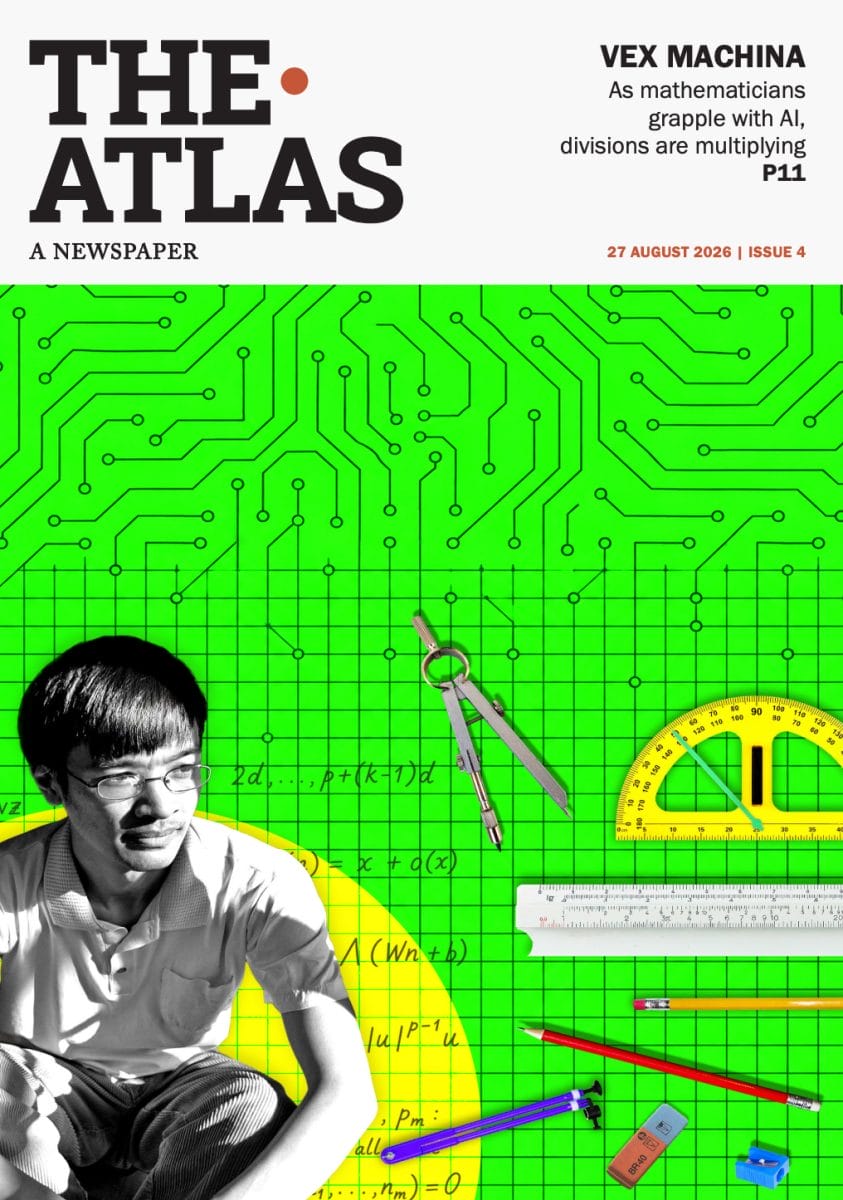
This story first appeared as the cover story in Issue 4 of The Atlas, a new global publication by Coda Story and The Continent. Sign up to the newspaper here.
In late July, at the International Congress of Mathematicians (ICM) in Philadelphia, the mathematician Jacob Tsimerman was awarded one of four Fields Medals – the highest honour in mathematics.
A few hours later, Tsimerman announced that he was joining OpenAI.
Tsimerman’s departure from theoretical mathematics, while at the absolute peak of his powers, highlights the fault line in a debate that is upending the normally quiet world of higher mathematics. “What a dick move,” said one mathematics professor, speaking to The Atlas off the record.
Tsimerman, who has written extensively about his fear of “omnicidal futures involving artificial intelligence” – a fear that AI could wipe out humanity, closely associated with the AI “doomer” community – has said he will work on OpenAI’s safety team.
Tsimerman and OpenAI did not respond to a request for comment.
In recent months, OpenAI has announced proofs of various longstanding mathematical problems, solved with one of the company’s latest large language models. Other companies have also made advancements: RedNote, a Chinese AI model, obtained a perfect score at the International Mathematical Olympiad in Shanghai in July.
Human mathematicians, at all levels of the profession, are reeling from the implications. Tim Gowers, a professor at the University of Cambridge who helped to verify one of OpenAI’s proofs, has written that even if AI models fail to progress further, “we have still probably entered an era where it will become very difficult for humans to compete with AI at solving mathematical problems”.
This is a startling assessment – and a marketing coup for the likes of OpenAI.
“Mathematicians actually have a special role in this,” said Joshua Grochow, an associate professor in Computer Science and (by courtesy)Mathematics at the University of Colorado Boulder. “The AI companies’ PR pitch is essentially to say, ‘Look, we have solved math. the intellectually hardest thing ever, therefore we can solve everything.’ ”
LLMs have not solved math – far from it. Nonetheless, Grochow added, recently some capabilities have improved. “They are legitimately able to produce real math, new math that they had not produced before. So you can’t deny that utility. You can deny the extent of that utility, but you can’t say it’s all BS.”
Miek Messerschmidt, a senior lecturer in mathematics at the University of the Witwatersrand in Johannesburg, recently used Anthropic’s Claude to take a crack at a problem that had stumped him. Claude solved it within 30 minutes. “How did I feel? You mean emotionally? I was relieved, because I didn’t have to go down this dead end any more. But I was also disconcerted by what this entity could do in such a short amount of time.”
This year’s Fields medallists: mathematicians Yu Deng (China), John Pardon (US), Jacob Tsimerman (Canada) and Hong Wang (China). Photo: Erin Blewett / AFP.
NEW VARIABLES
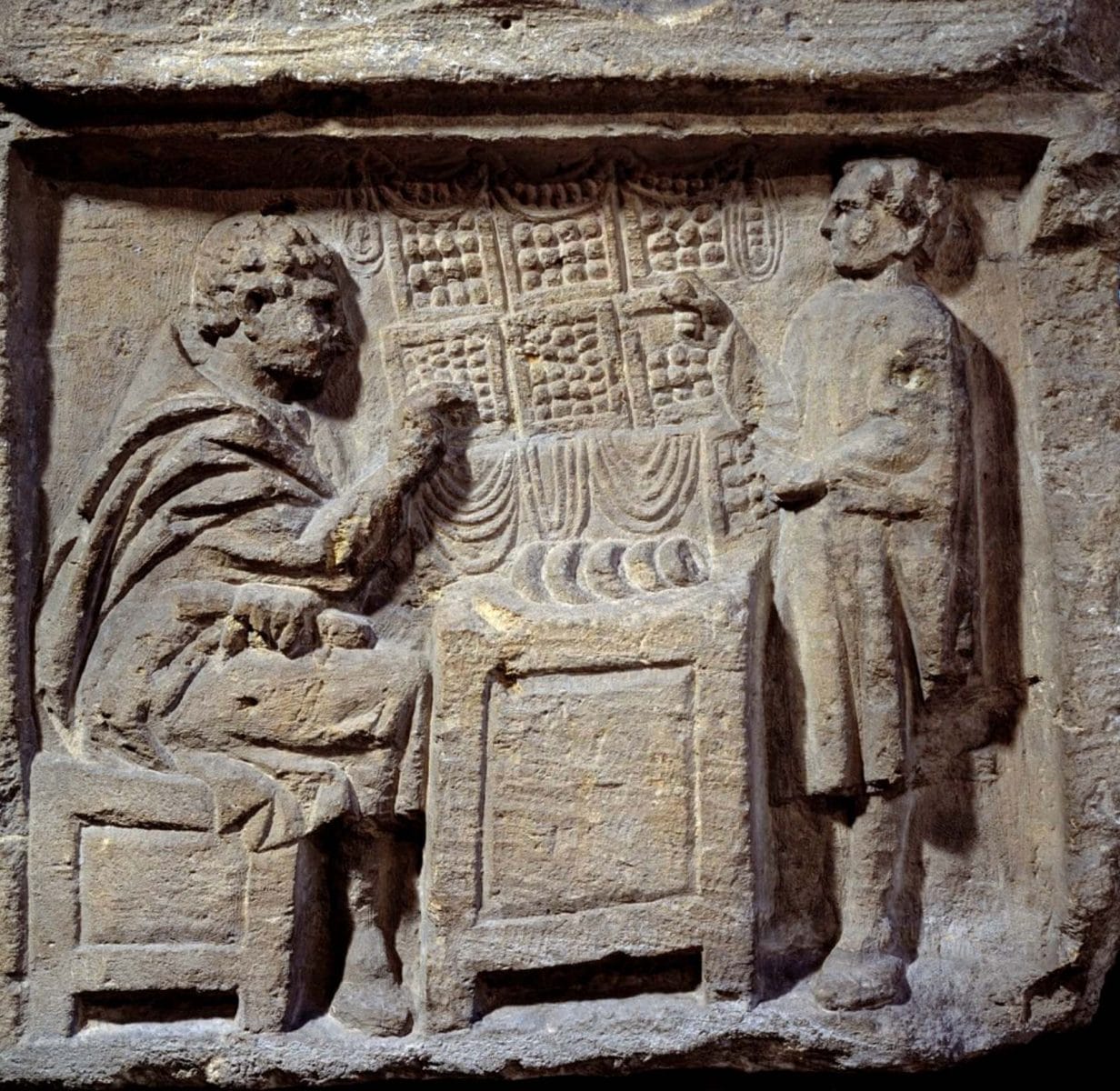
Mathematics has been disrupted by technological leaps before. The abacus. The mechanical calculator. The blackboard, even, which played an instrumental role in standardising training and mathematical notation (“It’s hard to research, because most of what’s written on blackboards doesn’t stay there very long,” said mathematics historian Michael Barany).
But AI is a different kind of disruption. Where previous advances helped mathematicians expand the frontiers of their knowledge, large language models threaten the livelihoods, and purpose, of mathematicians themselves.
“Our place in society at developing new ideas has been quite unthreatened for quite some time,” said Tim Chartier, a Professor in the Department of Mathematics and Computer Science at Davidson College. “For a long time, the frontier of mathematics could only be expired by the mathematicians themselves. There were no tools that could push into that boundary, except the research mathematician…At this current time, it’s not like we don’t need research mathematicians – but the landscape has changed so quickly, it’s hard to know what that will look like a year from now, two years from now.”
This matters for everyone: for thousands of years, mathematics has been considered to be the foundation of scientific knowledge. There is no physics without mathematics. No astronomy without mathematics. And there is no computer science – or AI – without mathematics. What happens if there are cracks in the foundation?
“I think that LLMs pose an existential threat to the mathematical community,” wrote Tasmin Chu, a PhD student at the California Institute of Technology, in an essay published on 2 August – the day after OpenAI released a set of ten new mathematical results, resolving or making progress on various problems.
“This is a polemic, not a press release,” Chu continued. “I know that others feel the same way; I have spent today crashing out and learning that top mathematicians I know are crashing out.”
Some of what mathematicians are worried about is the same as what everyone else is worried about: that AI will take their jobs; that AI companies have absorbed everyone’s work, and are reproducing it without attribution or compensation; that students aren’t learning properly any more; and that there won’t be jobs for them when they graduate.
But some worries are more specific to the field. Like the fear that, if mathematics becomes too reliant on particular AI models, then AI companies will have the power to restrict access to a select few – or make it prohibitively expensive. That promising young mathematicians, instead of turning to research, will use their talents instead to refine proprietary algorithms, which may or may not be used for the common good. That there will be no one left to understand, let alone vouch for, the mathematics produced by the machines. That objective truth, or anything close to it, is going to be much harder to prove – a fear shared with journalists, incidentally, who find it increasingly difficult to verify whether a photograph is real or fake.
2nd Century relief of a merchant using an abacus. Photo: Musée de La Cour d’Or - Metz Métropole.
MATHEMATICIAN IN THE LOOP
After speaking with more than a dozen leading mathematicians from around the world, The Atlas can confirm that Chu is not alone with her fears: it’s all anyone is talking about. The crisis is existential – and mathematicians are looking to one man in particular to guide them through it.
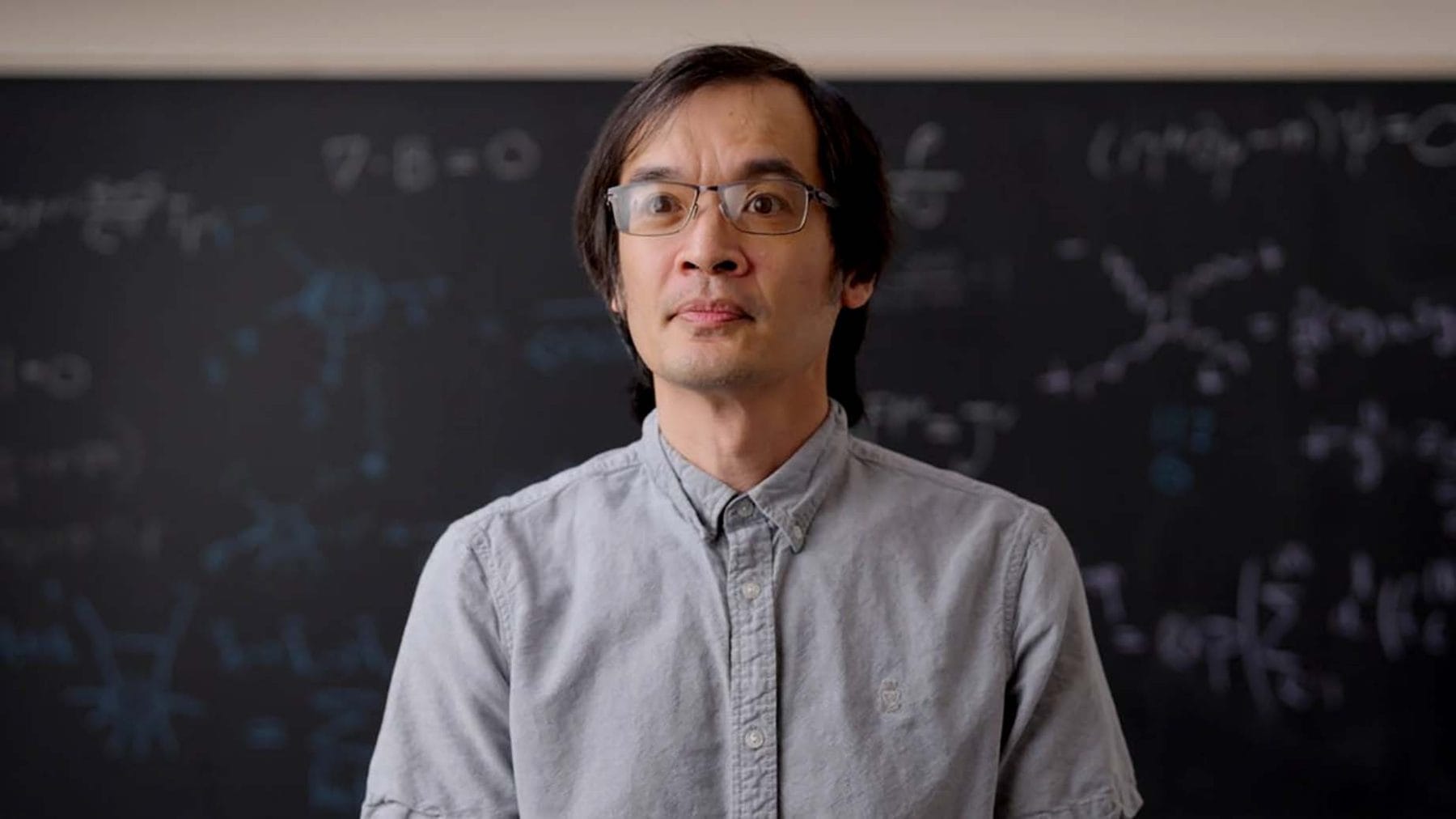
There are no working mathematicians who are truly famous. The closest anyone gets is Terence Tao, a professor at UCLA, who is often referred to as the world’s greatest living mathematician. A prodigy, Tao skipped five grades of school, receiving his masters degree at age 16. By 21, he had earned a PhD from Princeton, and was awarded the Fields Medal just ten years later, in 2006, for his pioneering work with Ben Green on prime number theory.
But what sets Tao apart, in a field infamously incomprehensible to outsiders, is his ability to communicate to both mathematicians and laypeople alike. This has made him a de facto spokesperson for the mathematics community – and extremely influential in setting its norms. “From all accounts he’s a lovely man,” said one researcher, speaking anonymously.
“But the social pressure to agree with Terry Tao is really strong.”
On July 24, the day after Jacob Tsimerman joined OpenAI, Tao gave a public lecture at the ICM titled “Mathematics in the Age of AI”. In it, he presents his “working hypothesis”: that AI tools for mathematics, which he already uses in his own research, will keep getting better. This will allow for collaboration on a vastly greater scale than has ever been possible before, Tao argues, and speed up the pace of research – revealing new, previously unimagined frontiers.
But it will also change, fundamentally, the role of human mathematicians. There will be little point in problem-solving – the computers will handle that. But the humans will still have to do the really hard work: understanding why AI-generated proofs are correct, and explaining this to others. The sooner they embrace this and plan accordingly, Tao concludes, the better.
The Atlas reached out to Terence Tao to request an interview. His human assistant, UCLA media relations officer Holly Ober, declined the request, making a referral instead to a “living document” which is maintained by Tao’s Claude AI assistant, on his website. This document synthesises Tao’s current thinking on AI, based on his public writings and talks, even “interviewing” Tao with follow-up questions.
As per his AI assistant, Tao believes that the topic of AI in mathematics is too important to be left to just a small number of spokespeople – and that his own “influence on this discussion should diminish as the rest of the community steps up.”
Terence Tao, often referred to as the world’s greatest living mathematician. Photo: OpenAI Academy.
AN UNSOLVED EQUATION
Not everyone believes in the inevitability of AI defining the future of mathematics. According to several sources, both organisers and funders were disappointed with the turnout at the ICM in Philadelphia. Despite the gravity of the occasion, the congress was not at capacity.
Ila Varma and Tarik Aougab, associate professors at the University of Toronto and Haverford College respectively, may have had something to do with that. In March, they launched a petition to boycott the ICM due to the ongoing war in Iran, increasing authoritarianism in the United States and the risks faced by visiting academics – if they were even allowed in. “AI companies were invited, but most African mathematicians who tried to attend couldn’t get visas,” Varma said.
More than 2,600 people signed the petition. For Varma, this is evidence that mathematicians may yet use their status to resist the influence – and the cash – of the big AI companies.
“There’s an idea that the positionality of mathematics in society is to decide who’s smart, who’s worthy of the most lucrative career opportunities and the privileges that go along with it. And now we are being asked to take this technology that is likely to be extremely unhealthy for users, that’s bad for the environment, this thing built on unethical labour, and our discipline is being used against many of our wishes to tell society that this thing is intelligent, and that you should let it do your thinking for you.”
Michael Harris, a professor at the Institut de Mathématiques de Jussieu in Paris, was at the ICM in Philadelphia. “The talks I attended on AI, starting with Tao’s public lecture, took pains to insist on the need for human mathematicians to make sense of anything produced in the name of the discipline, by machines or by humans,” he said. “There is a growing resistance to any use of AI whatsoever in mathematics, especially among young people, and this will become evident over the next few months.”
One of the clearest voices of dissent belongs to Max Weinreich, Assistant Professor of Mathematics at the City University of New York.
In an essay published earlier this month, Weinreich makes the case against what he describes as “artificial mathematics”: “Mathematicians do not need to use AI, nor should we use AI; soon, I argue, you will not want to have your name associated with AI. Instead, we should use our intellectual authority to oppose its development.”
His opposition is about more than mathematics, he told The Atlas. In his view, the environmental and financial implications of the AI boom pose major societal risks – and mathematicians, given their privileged position, are one of the few groups of people who can do anything about it.
As John Fletcher, a theoretical physicist and mathematician, observed: “There is a lot of power in being perceived as the smartest people in the world.”
Po-Shen Loh, a professor at Carnegie Mellon and former coach of the US International Mathematical Olympiad team, backs mathematicians to figure it out – by treating it like a maths problem. “AI is making mathematicians engage with the real world. They are smart enough to realise they have an existential crisis. They’re quickly racing down to discover all the dead ends, to see what works and what doesn’t.”
And when they figure it out, maybe they’ll let the rest of us know.
A version of this story, edited for length, first appeared in The Atlas newspaper. Additional reporting by: Shougat Dasgupta, Masho Lomashvilli, Irina Matchavariani.
Por Ivone Alves García Hay máquinas que ya aprendieron a decir «te quiero», con tanta suavidad y dulzura que puede llegar a engañar a cualquiera, por supuesto que no lo…

 Login