❌

Reading view

Five Things the Headlines Might Have Missed About the Saudi-Houthi Escalation

The escalation of the conflict between Saudi Arabia and the Houthis marks the collapse of the old regional security system, in which traditional U.S. guarantees are losing their effectiveness, and real influence is shifting to actors capable of adapting to the new rules of the “gray zone” and informal diplomacy. As global media focuses on […]
  •  

Pakistan’s Saudi Commitment Must Not Become a Gateway to War

Pakistan should honor its defense commitments to Saudi Arabia through strictly defensive cooperation and protection of maritime commerce, while avoiding offensive military action against the Houthis that could drag Islamabad into a wider Middle Eastern conflict, alienate Iran, and deepen its domestic and strategic vulnerabilities. The Makkah Joint Defense Agreement between Turkey, Pakistan, and Saudi […]
  •  

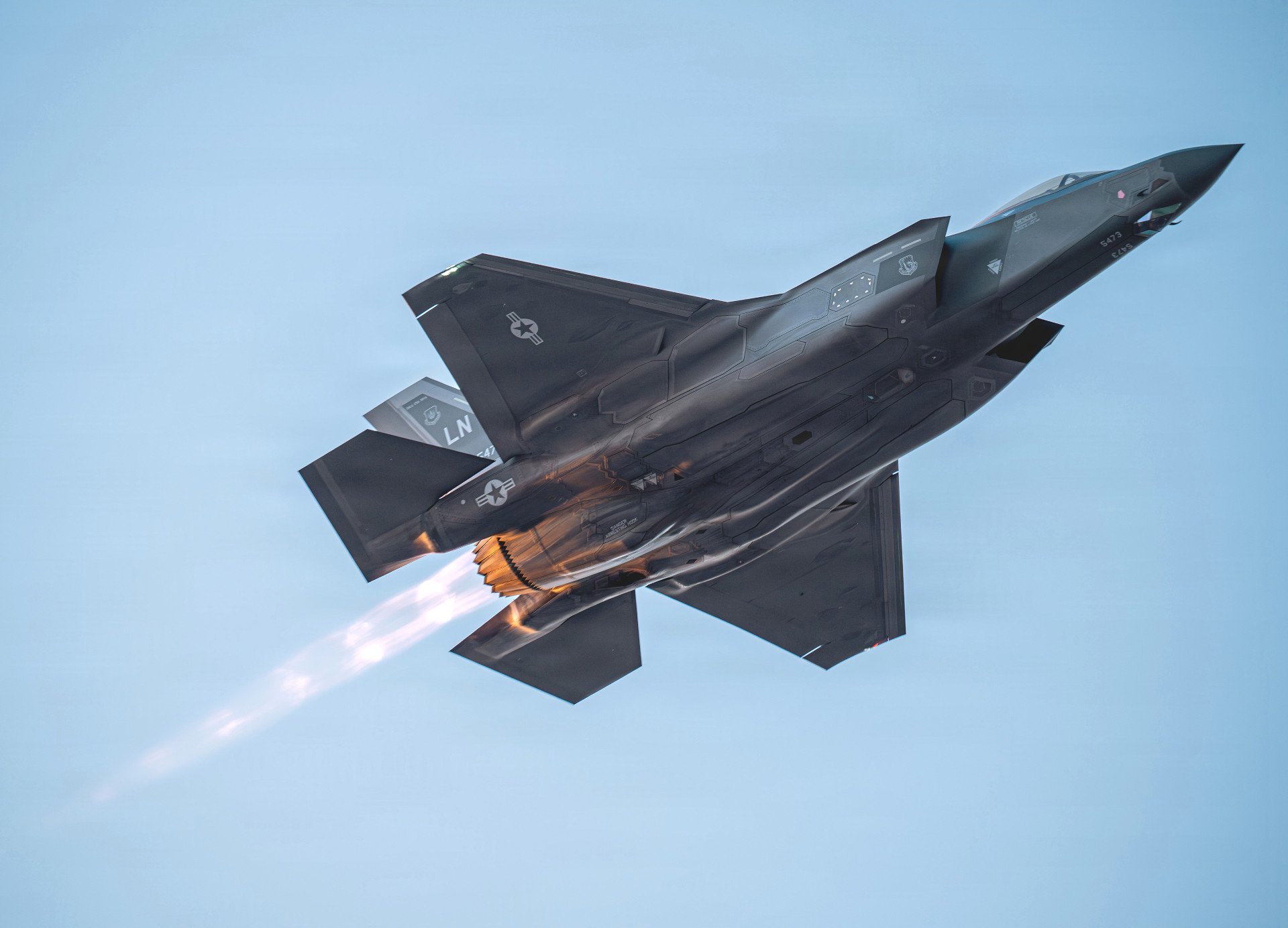
F-35 Sale To Saudi Arabia Approved By State Department

The U.S. State Department today approved the possible sale of 48 F-35 Lightning II Joint Strike Fighters to the Kingdom of Saudi Arabia.

The proposed deal, worth an estimated total cost of $24.3 billion, was announced as the Kingdom is in the midst of a fierce fight against the Houthi rebels of Yemen. It marks a major policy shift, with Washington previously being unwilling to export the advanced stealth fighters to Arab states and will likely serve as a reminder at a very challenging time for the Saudis of the unique security capabilities that only the U.S. can provide them.

In addition to the jets, which will be conventional takeoff and landing variants, Saudi Arabia has requested 49 Pratt & Whitney F135-PW-100 engines, support and other items.

Despite concerns from Israel that providing Saudi Arabia with the advanced fighters will tip the balance of power in the region, the proposed sale of this equipment and support “will not alter the military balance in the region,” the State Department noted. 

The United States has a requirement to maintain Israel’s so-called qualitative military edge, which essentially guarantees that Israel will be prioritized for advanced U.S. weapons ahead of Arab states in the region. Among these advanced weapons, the stealthy F-35 is highly prominent.

You can read our past feature about the wide-ranging impacts of an F-35 sale to Saudi Arabia here.

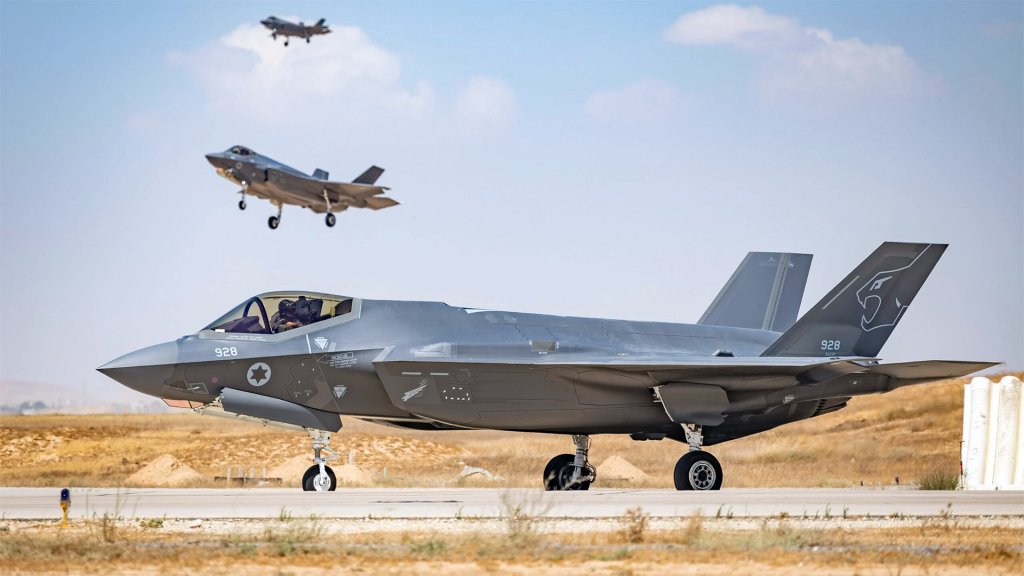
Israeli Air Force F-35i fighters. (Israeli Air Force)

“This proposed sale will support the foreign policy and national security objectives of the United States by improving the security of a major non-NATO ally that is a force for political stability and economic progress in the Gulf region,” the State Department wrote. “The proposed sale will improve Saudi Arabia’s capability to deter current and future threats by strengthening its homeland defense, and improving interoperability with U.S. forces, and other regional and NATO forces.  The proposed sale will also augment Saudi Arabia’s operational aircraft and enhance its air-to-air, and air-to-ground self-defense capability.  The Kingdom of Saudi Arabia will have no difficulty absorbing this equipment and services into its armed forces.”

In November, “President Trump approved a major defense sale package, including future F-35 deliveries, which strengthens the U.S. defense industrial base and ensures Saudi Arabia continues to buy American,” according to the White House.

Trump has pushed for closer ties between Israel and Saudi Arabia and wants the Kingdom to join the Abraham Accords initiative. This is a set of agreements that establish normalized diplomatic relations between Israel and different Arab states. Doing so would be a major breakthrough, following the United Arab Emirates, Bahrain, Morocco, and others.

A Saudi F-35 deal was also discussed under the Biden administration, as part of a broader deal that sought to normalize the Kingdom’s relations with Israel.

This is a developing story.

Contact the author: howard@twz.com

The post F-35 Sale To Saudi Arabia Approved By State Department appeared first on TWZ.

  •  

The Makkah alliance faces its first test: Will Pakistan fight for Saudi Arabia?

“What stands in the way becomes the way,” Marcus Aurelius writes in Meditations. Nearly two millennia later, the idea captures Pakistan’s strategic dilemma with remarkable precision. Islamabad must convince Saudi Arabia that its defence commitment carries real weight without being drawn into another Middle Eastern war or rupturing its relationship with Tehran. That obstacle may itself have become Pakistan’s most useful instrument: strategic ambiguity, writes Dimitra Staikou.

On 10 September 2026, following Houthi attacks against Saudi targets, Pakistani Foreign Ministry spokesman Sajjad Haider Khan said there was no discussion of an immediate military response under the new defence agreement. Yet only a day earlier, Defence Minister Khawaja Asif had warned that continued aggression against Saudi Arabia could make the pact operational.

The contradiction may be more calculated than accidental. On 13 September, Prime Minister Shehbaz Sharif expressed Pakistan’s complete solidarity with Mohammed bin Salman. Two days later, fresh missile and drone attacks against Saudi targets brought the question of collective defence closer to reality. Pakistan is trying to reassure Riyadh that it will not stand alone while avoiding any clear definition of when political solidarity becomes military involvement. At the same time, Islamabad is keeping channels with Tehran open and leaving Saudi Arabia’s adversaries uncertain about where Pakistan’s real red line lies. But September’s events suggest that the space for such ambiguity is narrowing. The central question is no longer whether Pakistan and Saudi Arabia are security partners, but how far Islamabad is actually prepared to go when deterrence is tested.

That question has become more urgent because the relationship has changed institutionally. On 7 August 2026, Saudi Arabia, Pakistan and Türkiye signed the Makkah Joint Defence Agreement, declaring that an armed attack against any one of the three would be regarded as an attack against all. On 31 August, their foreign and defence ministers and military chiefs met in Istanbul to begin institutionalising the arrangement, agreeing to establish a permanent secretariat in Saudi Arabia and deepen joint defence-industry cooperation, technology development and production. This is therefore more than another declaration of political solidarity. The Makkah Alliance is beginning to acquire the machinery designed to make collective deterrence credible.

The military relationship between Pakistan and Saudi Arabia itself stretches back decades. Pakistani officers have trained Saudi forces, Pakistani troops have periodically been deployed in the Kingdom, and Riyadh has reciprocated with economic and political support. Yet the most important episode for understanding the limits of this relationship came in 2015. When Saudi Arabia assembled its coalition for the intervention in Yemen, Riyadh sought Pakistani military support. On 10 April, Pakistan’s parliament unanimously backed neutrality, effectively rejecting direct participation while pledging to defend Saudi Arabia if its territorial integrity were threatened. The distinction was crucial: Islamabad was prepared to defend the Kingdom, but not automatically to participate in its wars. In 2026, that very red line is being tested.

The Riyadh-Islamabad rapprochement does not mean that Saudi Arabia is abandoning the United States. It does, however, demonstrate that the Kingdom no longer wants its security to depend exclusively on Washington. The limited US response following the attacks on the Abqaiq and Khurais oil facilities in 2019, followed by Washington’s 2021 decision to end support for offensive operations in Yemen, had already exposed the limits of American protection. That uncertainty resurfaced this September. Mohammed bin Salman sought military assistance from Donald Trump against the Houthis, but the US president declined to authorise direct American strikes, with Washington instead offering intelligence-sharing and targeting support. On 12 September, Trump said Iran was probably responsible for the attack on Saudi Arabia’s East-West Pipeline and described Mohammed bin Salman as a “good friend”. The United States remains an indispensable Saudi partner, but not always a willing combatant. Pakistan gains importance in precisely this space: not as a replacement for America, but as an additional regional pillar of Saudi security.

If the American position explains why Riyadh is seeking more strategic options, China points towards the direction in which the wider security system may be moving. Beijing is one of Islamabad’s most important strategic and military partners, while simultaneously developing an increasingly close relationship with Saudi Arabia. In April 2026, Xi Jinping told Mohammed bin Salman that China wanted to deepen “mutual strategic trust” with the Kingdom. On 2 September, Xi argued that regional states should work towards “a new security architecture for the Middle East” and hold their future in their own hands. His remarks were not about the Makkah Agreement and should not be interpreted as Chinese endorsement of it. They do, however, reflect a broader shift: a Riyadh seeking greater strategic autonomy, an Islamabad deeply connected to Beijing, and a China seeking a greater role in shaping the regional order. The issue is not a secret trilateral alliance, but the potential convergence of Saudi capital, Pakistani military power and Chinese technological and strategic support.

There is also an unavoidable nuclear dimension. Pakistan is a nuclear-armed state outside the Nuclear Non-Proliferation Treaty; Saudi Arabia is not a nuclear weapons state. Nothing publicly released about the Makkah Agreement establishes a Pakistani nuclear guarantee to Riyadh, and there is no evidence that Islamabad intends to deploy nuclear weapons on Saudi territory. Yet that absence of clarity is itself strategically significant. Pakistan’s nuclear capability sits behind a collective-defence commitment whose public language does not specify where conventional deterrence ends and strategic deterrence begins. For Iran, Israel, Washington and European capitals, the question is therefore not whether Saudi Arabia has suddenly acquired a Pakistani nuclear umbrella — it has not — but whether potential adversaries may now have to calculate against that possibility in an extreme crisis. Deterrence often depends as much on uncertainty as on declared doctrine.

For Europe, this shift is anything but distant. On 9 September, France expressed full solidarity with Riyadh following the Houthi attacks. In Berlin, Foreign Minister Johann Wadephul assured his Saudi counterpart Faisal bin Farhan of Germany’s solidarity, while on 11 September the German Foreign Office warned that growing Houthi pressure around Bab al-Mandab could restrict oil and LNG supplies, with consequences for global markets. In Brussels, Kaja Kallas had already put “freedom of navigation” in the Red Sea on the European agenda, asking publicly what more Europe could do. These concerns are tangible: energy security, maritime trade routes and regional stability are becoming intertwined in the same crisis. The attacks of 15 September have made the danger even clearer, with renewed strikes against Saudi targets adding to pressure on energy markets and further threatening the routes connecting the Gulf, the Red Sea and Europe.

There is another reason Europe cannot treat the Makkah Alliance as a distant development: Türkiye. Ankara is simultaneously a party to the new collective-defence architecture and a member of NATO. That does not mean the Makkah Agreement automatically engages NATO obligations, nor that the two systems are inherently incompatible. But it does create questions that European allies should address before, rather than during, a major crisis. What happens if Türkiye is asked to participate in collective action under the Makkah Agreement? How would Ankara manage parallel commitments if escalation involved Iran or another regional actor? And how much strategic consultation should occur within NATO before such a scenario materialises?

Brussels cannot afford to wait for the agreement to be activated for the first time before deciding how to respond. Europe needs deeper dialogue with Riyadh and Islamabad on non-proliferation and missile technologies, stronger protection for navigation in the Red Sea and a clear discussion within NATO about Ankara’s new defence commitments. It does not need to treat the emerging security architecture as hostile. But it does need to understand what happens when that architecture moves from declarations to action.

The real test of the Makkah Alliance will come when Riyadh asks Islamabad to demonstrate what it means for an attack on one to be treated as an attack on all. At that moment, the strategic ambiguity that today gives Pakistan room to manoeuvre may become the problem itself. And the question — whether Pakistan is genuinely prepared to fight for Saudi Arabia — will no longer concern Riyadh and Islamabad alone. The answer could reshape the security balance from the Persian Gulf and the Red Sea all the way to Europe.

  •  

The Houthis of Yemen bring Riyadh to its knees, traumatize Trump, and mortgage Suez

Even as Americans commemorate the pain of the September 11 attacks, at the same time, the Houthis of Yemen, under coordination along the “axis of resistance,” are taking absolute control of the Bab el-Mandeb Strait and the entire Yemeni coast of the Red Sea. On Friday, September 11, 18 hours of warfare were enough to […]
  •  

Global oil trade in jeopardy after drone attacks on strategic Saudi pipeline

The Saudi Ministry of Energy announced on Friday, September 11, that the East–West Pipeline across the Riyadh and Madinah regions was subjected to multiple attacks a day earlier, leading to its closure as a precautionary measure.

According to media reports, the strategic pipeline carries roughly 4 to 5 million barrels of oil per day, which equals 4% to 5% of the total global oil supply.

The Saudi Foreign Ministry clarified in a statement issued on Saturday, September 12 that the attacks were launched from Iraq by multiple drones, adding that they resulted in injuries and some damage to the pipeline. No groups have claimed responsibility for the attacks yet.

The ministry also confirmed that Saudi Arabia will not respond to the attacks at this stage, allowing the Iraqi government to take the necessary measures to prevent attacks “originating from the Iraqi territories” against Saudi Arabia and neighboring countries.

Iraq said it seized the drone launching platform used in the attack

For his part, Head of Iraq’s Security Media Cell (SMC), Lieutenant General Saad Maan confirmed on Saturday that “an intelligence and security task force exerted significant effort and succeeded in locating and seizing the launcher” involved in the attacks on the Saudi pipeline within Iraqi territory.

Moreover, Maan affirmed that investigations and intelligence operations are underway to apprehend the perpetrators.

He added that the Iraqi Armed Forces approved a request from Iran to participate in the investigation regarding the attacks on the Saudi pipeline and their repercussions.

Repercussions of the attacks on global oil trade

Saudi Arabia’s East–West Pipeline represents an alternative oil transportation route bypassing the volatile Strait of Hormuz.

Therefore, the temporary closure of the pipeline has severely restricted this essential alternative, pushing Brent crude oil price to hit USD 108 per barrel on Monday, September 14.

Furthermore, reports indicate that the incident will disrupt crude delivery to Europe and Asia for weeks, particularly after the Ansar Allah-led Yemeni Armed Forces expanded their control around the Bab al-Mandeb Strait.

Read more: Ansar Allah seizes strategic Red Sea port city and liberates prisoners held by Saudi-backed forces

  •  

The Demise of Saudi Arabia, and Perhaps Christian Zionism? Yemen Shocks the World by Taking Control of the Red Sea

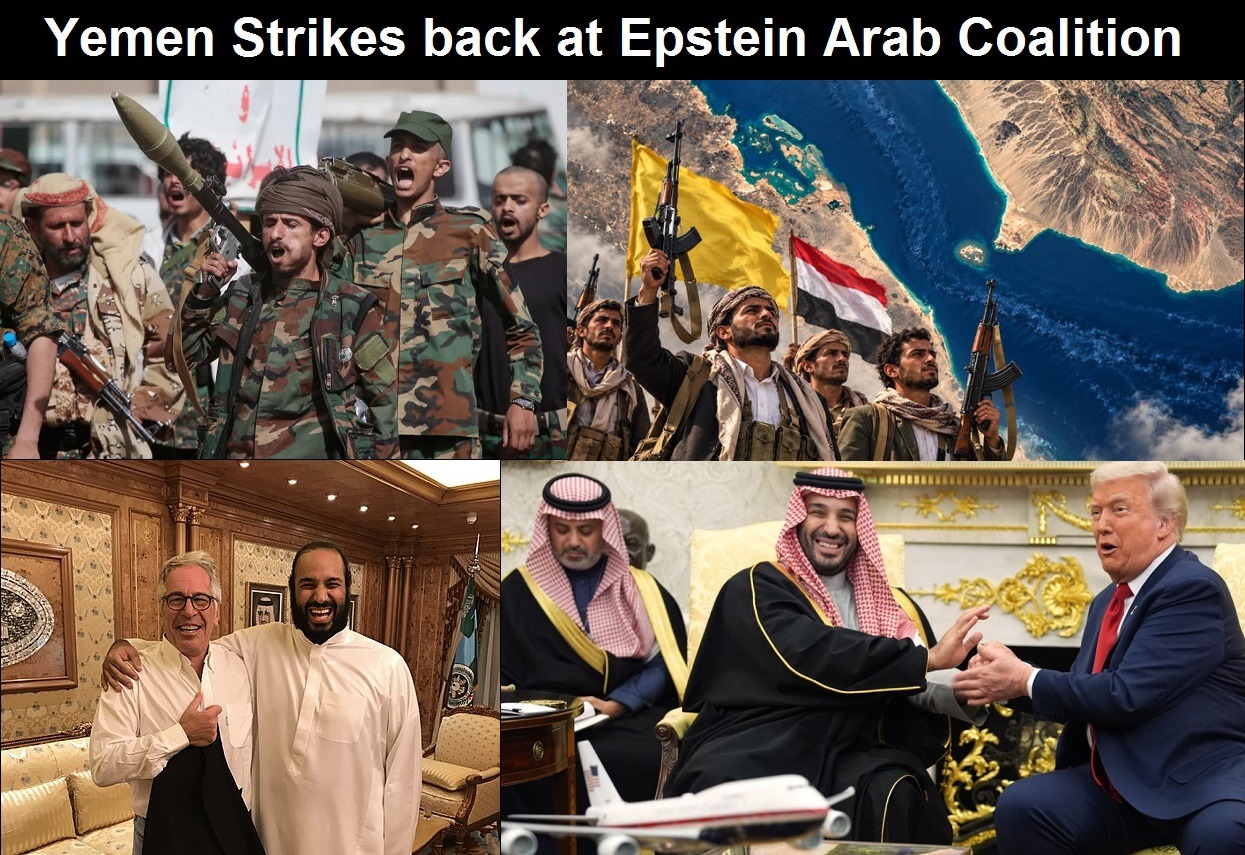
Top Left image: Yemen army – Source, Top Right image Yemen military illustration – Source, Bottom Left image Saudi Mohammed bin Salman with Jeffrey Epstein – source: The Epstein Files, Bottom Right image Saudi Mohammed bin Salman with Donald Trump in the White House – Source.

by Brian Shilhavy
Health Impact News

The Iran War drastically changed at the end of last week, as Yemen’s Ansarullah-led Armed Forces (Houthis) took control of the country’s western coastline, capturing key positions overlooking the Bab al-Mandab Strait, including the coastal city of Mokha and strategic islands in and around the waterway, and they are now effectively controlling traffic in the Red Sea.

As far as I can tell, this was a complete surprise to everyone, especially to Saudi Arabia and the United States.

It forced the U.S. corporate media to report this, and it dominated the news stream until the fake “AI is going to destroy humanity if we don’t do something about it” narrative took control of the news stream this past weekend.

Saudi Arabia, who has been at war with Yemen since 2014 with the help of the U.S. and using U.S. military weapons, was forced to shut down their East-West oil pipeline, which was allowing Saudi Arabia to bypass the Strait of Hormuz to be able to get oil out of their country.

This pipeline in Saudi Arabia reportedly transports about 4% to 5% of the global oil supply.

Saudi Arabia is now in panic mode, and has reportedly pleaded with the U.S. to help them and start bombing the Yemen forces who have taken control of the Red Sea.

However, it appears that Saudi Arabia never got the memo about one of Trump’s objectives in the Iran War, which was to let Iran destroy the Gulf Nations’ ability to control oil prices through OPEC, while at the same time seizing Venezuela oil amid plans to make  America the center of oil sales around the world.

Trump’s response to Saudi Arabia: sorry, you’re on your own.

Scoop: MBS urged Trump to strike Houthis amid Red Sea threat

Saudi Crown Prince Mohammed bin Salman (MBS) called President Trump twice Thursday, urging him to launch strikes against the Houthis as the Iran-backed group closed in on a vital Red Sea chokepoint, two U.S. officials told Axios.

Trump declined, and U.S. officials stressed the administration has no plans to intervene directly against the Houthis for now.

Source.

Of course, even if the U.S. did want to stop Yemen’s military and protect Saudi Arabia’s interests, it is doubtful that they would even be able to do so, given the depletion of their weapons and military assets as Iran continues to control the Strait of Hormuz.

This very well could be the demise of Saudi Arabia.

And if the Yemen takeover of the Red Sea turns the tide overall in the war against Iran, what will the Evangelical Christians do who are so positive that this war was sanctioned by God, and was to hasten the return of Jesus Christ?

Could this also be the start of the decline of Christian Zionism as well when they realize that the U.S. cannot defeat Iran and force the return of Jesus Christ after all?

The U.S. and Saudi Arabia’s War Against Yemen for Over a Decade – The Genocide that Has Been Overshadowed by the Palestinian Genocide

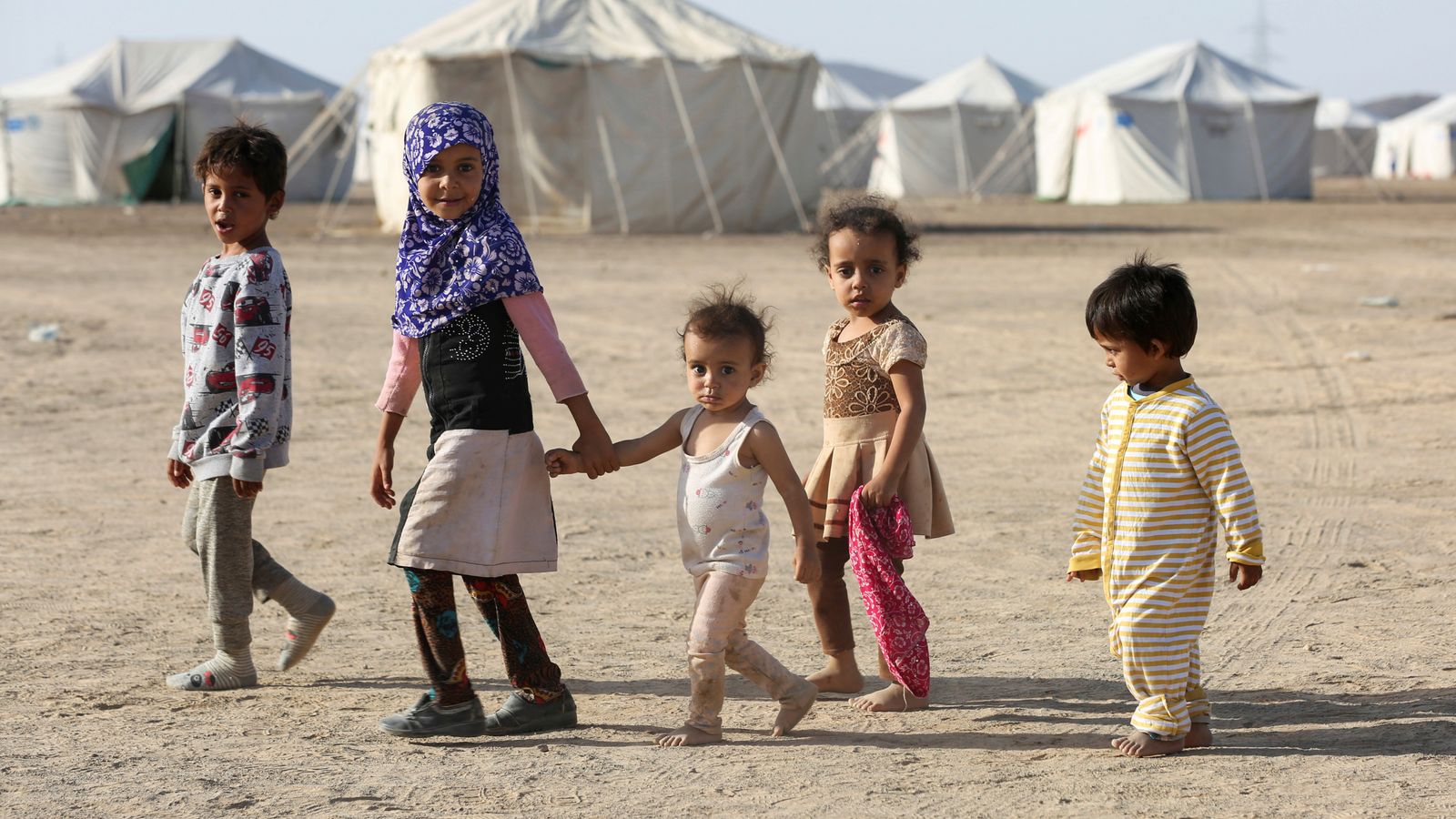
Yemen children in refugee camps. Image source.

While estimates of how many people have died in the Yemen conflict with Saudi Arabia, including children, most of whom have died from starvation due to the U.S.-Saudi blockade on their ports, varies, the number is significant, and probably rivals the number of people killed among the Israeli Palestinians, as well as the number of dead Lebanese people killed by the U.S. and Israel.

This was published in 2018, and the situation is obviously far worse today.

YEMEN: 85,000 CHILDREN MAY HAVE DIED FROM STARVATION SINCE START OF WAR

Using data compiled by the UN, Save the Children evaluated mortality rates for untreated cases of Severe Acute Malnutrition (SAM) in children under five years. Using a conservative estimate, the humanitarian aid agency discovered that approximately 84,701 children with SAM may have died between April 2015 and October 2018.[i]

After almost four years since the brutal conflict in Yemen escalated the UN says that up to 14 million people are at risk of famine. That number has increased dramatically since the Saudi and Emirati-led coalition imposed a month-long blockade of Yemen just over a year ago.[ii]

Since then, commercial imports of food through Hodeidah port have reduced by more than 55,000 metric tonnes a month. That’s enough to meet the needs of 4.4 million people, including 2.2 million children[iii]. Any further decline in imports could likely lead directly to famine.

Source.
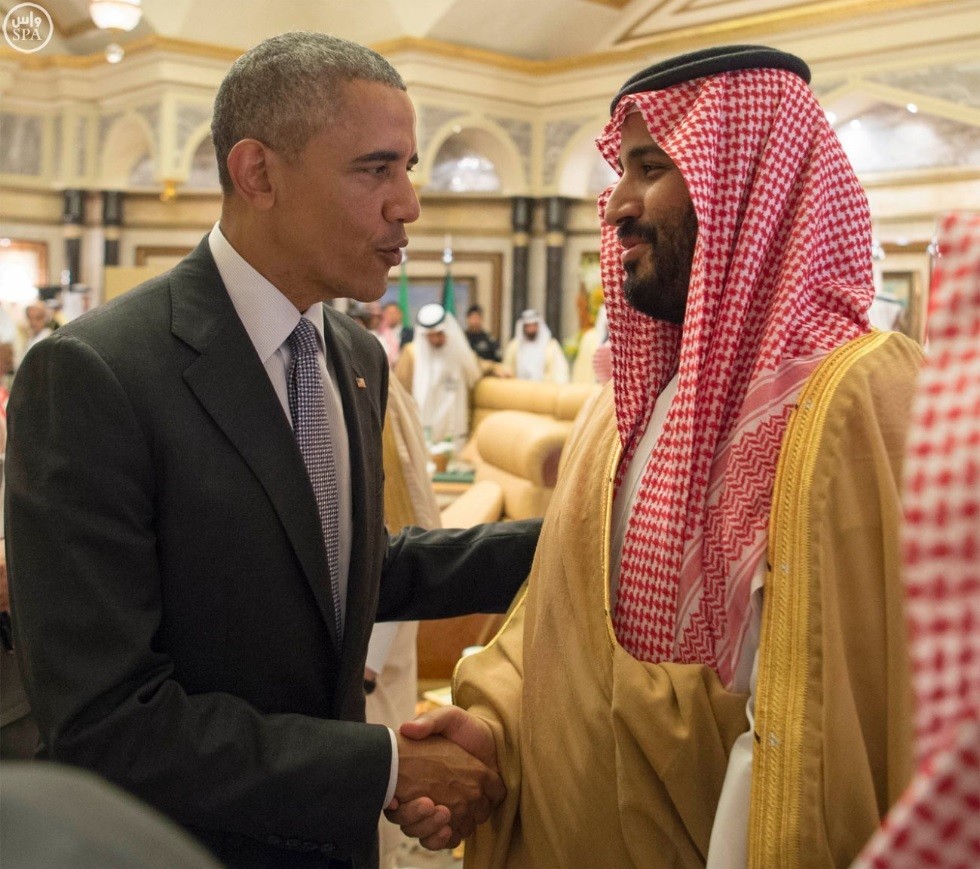
Barak Obama with Mohammed bin Salman of Saudi Arabia in 2016. Source.

Like so many other stories of unrest in the Middle East, the one in Yemen follows an all-too-familiar path that I am sure ultimately leads back to the U.S. and the “intelligence” agencies like the CIA and Mossad who control world politics ensuring that candidates friendly to the Zionist Epstein agenda rise to power.

The rationale, as it has been used so many times, was to overthrow “dictatorships” and alleged “ruthless” rulers who had ruled for long period of times and replace them with “pro-democracy” leaders, and always ending in disaster for the local populations.

It was this same rationale that took down leaders such as Muammar al-Qaddafi in Libya, Hosni Mubarak in Egypt, Saddam Hussein in Iraq, and even more recently Bashar al-Assad in Syria, all of whom were replaced by pro-Western leaders aligned with the U.S. (and by proxy, Israel).

What most Americans do not realize, is that while these “ruthless dictators” were portrayed as evil by the U.S., they were very popular in their own countries, and most of them were even elected in landslides, while the U.S. declared those elections “rigged.”

Imagine the U.S. with their highly ethical election system (sarcasm) dictating to foreign governments whether their elections were “fair” or not.

During the “Arab Spring” in 2012, Ali Abdullah Saleh, the first elected president of the Republic of Yemen, suffered the same fate, and was forced from office and replaced with the pro-U.S. candidate Abdrabbuh Mansur Hadi.

When the Houthis struck back at the U.S. puppet regime, the U.S. had no problems with uniting with local groups in the area opposed to the Houthis, but had officially been branded as “terrorist” groups, such as the Muslim Brotherhood and al-Qaeda.

It is very similar to what recently happened in Syria, where a former member of al-Qaeda, the group who allegedly bombed the World Trade Center towers in New York under the leadership of Osama bin Laden, was chosen by the U.S. to lead Syria today, Ahmed al-Sharaa.

But these factions in Yemen were not strong enough to fight back against the Houthis, so starting with President Obama, the U.S. got involved to prop up their puppet government in Yemen.

First U.S. Citizens Ever Executed without a Judge, Jury, or Trial Happened in Yemen

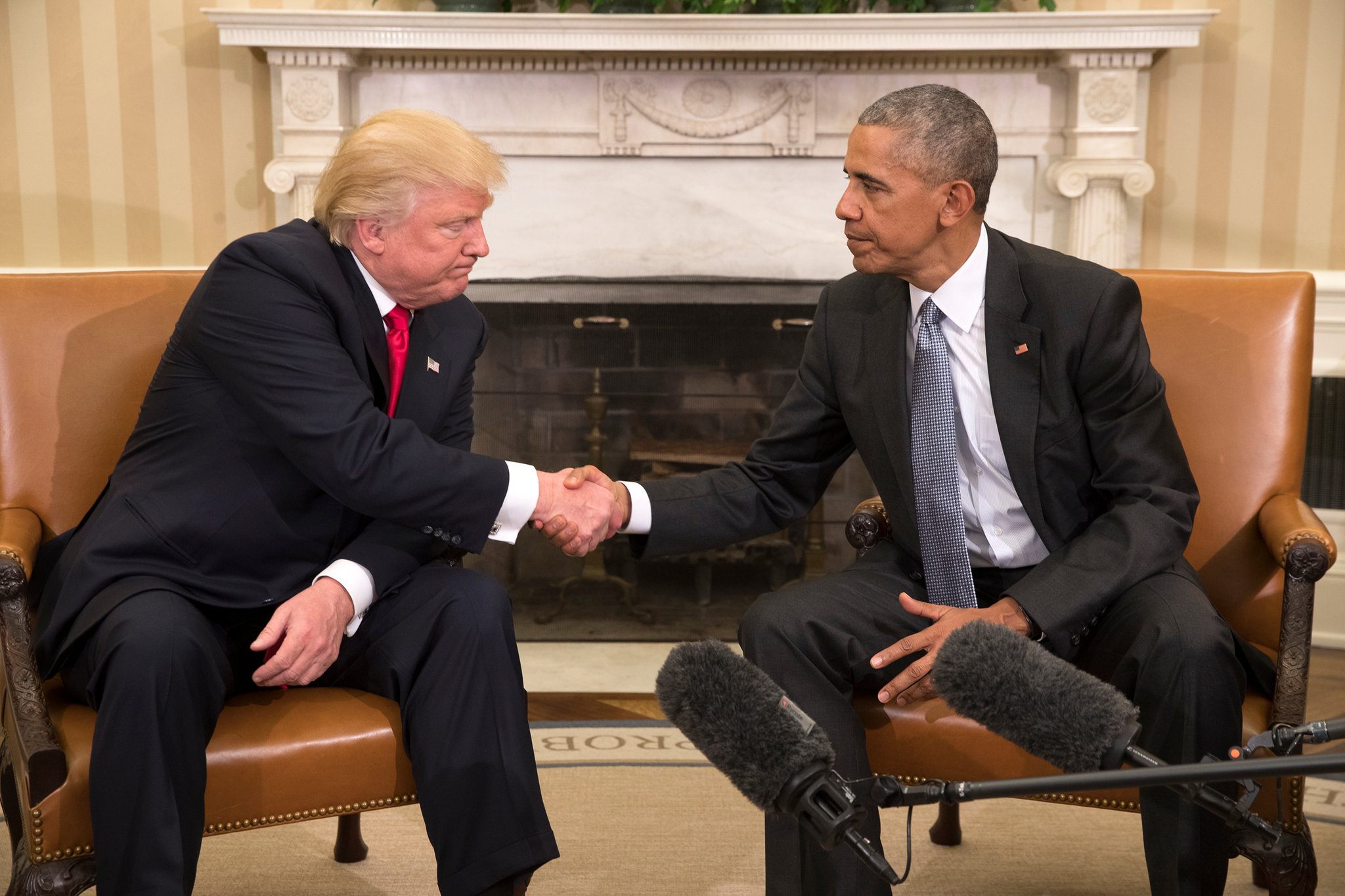
One for all, and all for one: The U.S. Uniparty political system. Image source New York Times.

The country of Yemen has the unique distinction of being the first country where U.S. citizens were executed by drone strikes by their own government, with no judge, jury, or trial.

President Barak Obama was the first U.S. President known to authorize a drone strike on a U.S. citizen, Abdulrahman Anwar al-Awlaki, a 16-year-old boy who was in Yemen and whose father was linked to al-Qaeda.

This was headline news back in the day.

Nawar al-Awlaki, eight-year-old American girl executed by a drone strike in Yemen ordered by President Trump. Image source.

When Trump succeeded Obama and took office in 2017, he proceeded to do the same thing, by ordering a drone strike in Yemen that killed Nawar al-Awlaki, an eight-year-old American girl and the daughter of Anwar al-Awlaki. The 16-year-old U.S. citizen killed by Obama was her brother. (Source.)

Will Saudi Arabia’s Leader Survive the Yemen Uprising?

Since I lived in Saudi Arabia for several years and was a professor at one of their top universities back in the 1990s, I will offer my own opinion on the current leader of Saudi Arabia, which you will be hard-pressed to find from any other western journalist, the Crown Prince and Prime Minister Mohammed bin Salman Al Saud (MBS).

MBS was quite young when he came into power, and he reportedly earned a law degree from King Saud University in Riyadh, allegedly finishing second in his class.

I have heard Muslim commentators mention that due to his being educated in Saudi Arabia, rather than going to a Western university, that MBS was better suited and trained to rule Saudi Arabia and not as prone to Western influence.

I strongly disagree.

Back in the day when I was teaching English at King Fahd University of Petroleum and Minerals, located in Dhahran, right next to the Aramco oil compound, it was well-known among the faculty back then that if any member of the Al-Saud family came to study at the University and had to complete their first year learning English, that they had basically flunked the English test needed to attend one of the top universities in the U.S. or the UK.

They were not among the “cream of the crop” among Saudi high school students. We had one or two come through during my tenure there, and they were mostly viewed as seeing themselves as “privileged” due to being part of the Al-Saud family, and not very good students at all, preferring instead to go out partying in the desert with their expensive Range Rovers.

So when I read that MBS graduated “second” in his class, I wondered why he did not graduate first, being a member of the Royal family. My best guess is that someone in the Al-Saud family higher up the ladder must have beat him out at the time.

But the true intellectuals and leaders among Saudis probably all graduated from Ivy League schools in the U.S., or from the top universities in the UK.

And of course, MBS is clearly a puppet who has served, first Obama, and now most recently has served as Trump’s lap dog, in my opinion.

So he is hardly against Western culture, even though he was educated in Saudi Arabia.

His rise in power within the Al-Saud dynasty coincided with Donald Trump’s first term (coincidence?).

Mohammed was appointed crown prince on 21 June 2017, following the King’s decision to depose Muhammad bin Nayef and make his own son the heir to the throne.

On the day bin Salman became crown prince, US president Donald Trump called to congratulate him.

Trump and Mohammed pledged “close cooperation” on security and economic issues and discussed the need to cut off support for terrorism, the diplomatic dispute with Qatar, and the push for peace between Israel and the Palestinians.

Mohammed told The Washington Post in April 2017 that without America’s cultural influence on Saudi Arabia, “we would have ended up like North Korea.”

In May 2017, Mohammed launched a purge against competing Saudi business and political elites in an anti-corruption campaign.

On 4 November 2017, the Saudi press announced the arrest of the Saudi prince and billionaire Al-Waleed bin Talal, a frequent English-language news commentator and a major shareholder in Citi, News Corp and Twitter, as well as over 40 princes and government ministers on corruption and money laundering charges.

Others arrested or fired in the purge included Prince Mutaib bin Abdullah, head of the Saudi Arabian National Guard; Minister of Economy and Planning Adel Fakeih; and the commander of the Royal Saudi Navy, Admiral Abdullah bin Sultan bin Mohammed Al-Sultan.

Those arrested in the Ritz Carlton were the subject of what became called “the night of beating”. Most were beaten, and some were tied to walls in stress positions as part of torture by Saudi agents.

The detainees were threatened with blackmail.

Detainees were denied sleep, had their heads covered, and were beaten.[50] Seventeen had to be hospitalised.[50] After many days, the remaining detainees were moved to Al-Ha’ir Prison, while some released are banned from travelling abroad.

The purge helped centralise political powers in the hands of bin Salman and undermine the pre-existing structure of consensus-based governance among Saudi elites.

The arrests resulted in the final sidelining of the faction of King Abdullah, and bin Salman’s consolidation of control of all three branches of the security forces. It also cemented bin Salman’s supremacy over business elites in Saudi Arabia and resulted in a mass seizure of assets by the bin Salman regime.

Trump expressed support for the move, tweeting

“Some of those they are harshly treating have been ‘milking’ their country for years!“

Source.

Trump seemingly worked hard in an effort to turn MBS into a full-fledged Zionist and support Israel, but MBS stated that if he did not support the Palestinian right to have their own homeland, his own people would stone him to death.

In 2018, (MBS) voiced his support for a Jewish homeland of Israel, the first time that a senior Saudi royal has expressed such sentiments publicly.

In 2020, Mohammed met with Netanyahu and Israeli head of the Mossad Yosi Cohen in Neom. The United States had been pushing for Israel’s normalisation for some years, calling (in this context) the Abraham Accords the “deal of the century”, but Riyadh rejected reports of progress.

In 2023, there were ongoing U.S. lead negotiations to establish diplomatic relations between Saudi Arabia and Israel. Mohammed also said that his country was moving steadily closer to normalising relations with Israel as part of the Abraham Accords.

Amid the Gaza war, according to reporting by The Atlantic, Mohammed told U.S. Secretary of State Antony Blinken in January 2024 that he was open to Saudi normalisation with Israel, adding,

“Do I care personally about the Palestinian issue? I don’t, but my people do.”

Surveys in the early stages of the Gaza war showed that over 90 percent of Saudis citizens believed that the Arab states should break off their relations with Israel.

In August 2024, Mohammad discussed his fears of facing assassination due to his support for establishing and normalising Saudi-Israel ties, and the threats he received. He believed for any deal, it was important to include a true path to the State of Palestine.

Source.

As I reported back in June of 2024, Saudi Arabia made the historical move to not renew an 80-year-old agreement with the United States that established the U.S. Dollar as the world currency to purchase Saudi oil, in return for U.S. military protection.

They saw the handwriting on the wall, apparently, and wanted to be able to sell oil to China in their own currency, the Yuan. See:

Saudi Arabia Ends 80-Year-Old PetroDollar U.S. Agreement: Joins China-Led Central Bank Digital Currency Coalition

This, more than anything, could be the primary reason why the U.S. will not participate in helping them fight back against the Houthis anymore.

And one of the biggest reasons why I believe that MBS may not survive much longer, is because Saudi Arabia has taken most of their $billions made from oil profits during the past few years and invested it in AI technology, in what will probably be the largest financial bubble to burst in the history of the modern era.

We could very well be watching the last stages of the Epstein financial empire crumbling right before our eyes.

This article was written by Human Superior Intelligence (HSI)

See Also:

Understand the Times We are Currently Living Through

The Brain Myth: Your Intellect and Thoughts Originate in Your Heart, Not Your Brain

Is God’s Patience About to Run Out on the United States?

Second Edition of eBook Released: The Concept of the American Christian Family is a Myth and is NOT Found Anywhere in the Bible – by Brian Shilhavy

FREE eBook! Restoring the Foundation of New Testament Faith in Jesus Christ – by Brian Shilhavy

KABBALAH: The Anti-Christ Religion of Satan that Controls the World Today

Exposing the Christian Zionism Cult

The Bewitching of America with the Evil Eye and the Mark of the Beast

Jesus Christ’s Opposition to the Jewish State: Lessons for Today

Identifying the Luciferian Globalists Implementing the New World Order – Who are the “Jews”?

The Seal and Mark of God is Far More Important than the “Mark of the Beast” – Are You Prepared for What’s Coming?

The Satanic Roots to Modern Medicine – The Image of the Beast?

Medicine: Idolatry in the Twenty First Century – 10-Year-Old Article More Relevant Today than the Day it was Written

Having problems receiving our emails? See:

How to Beat Internet Censorship and Create Your Own Newsfeed

We Are Now on Telegram. Video channels at Bitchute, and Odysee.

If our website is seized and shut down, find us on Telegram, as well as Bitchute and Odysee for further instructions about where to find us.

If you use the TOR Onion browser, here are the links and corresponding URLs to use in the TOR browser to find us on the Dark Web: Health Impact News, Vaccine Impact, Medical Kidnap, Created4Health, CoconutOil.com.

The post The Demise of Saudi Arabia, and Perhaps Christian Zionism? Yemen Shocks the World by Taking Control of the Red Sea first appeared on Health Impact News.

  •  

Saudi Arabia Appears To Have Used Its Secretive Stash Of Ballistic Missiles For The First Time

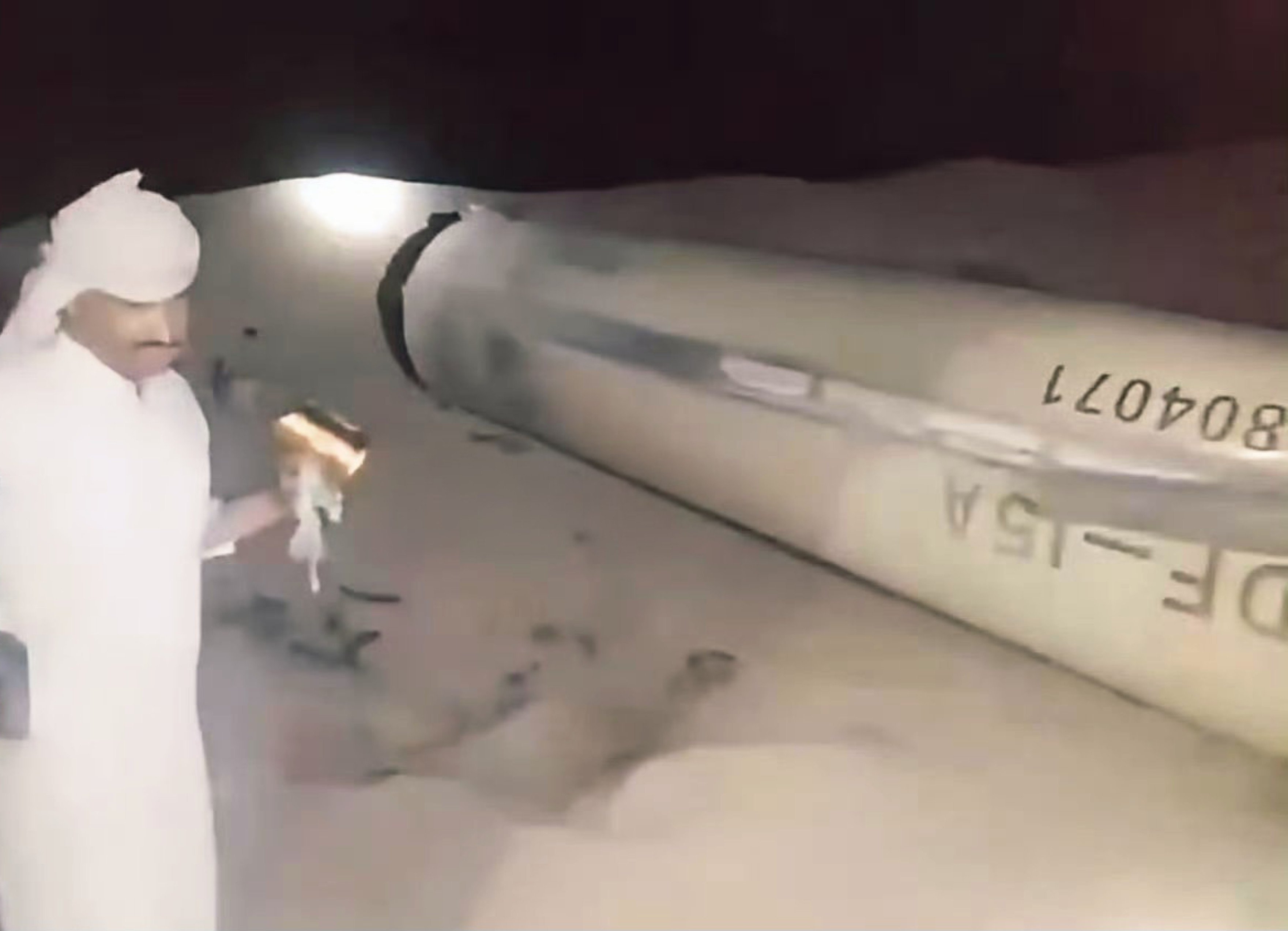
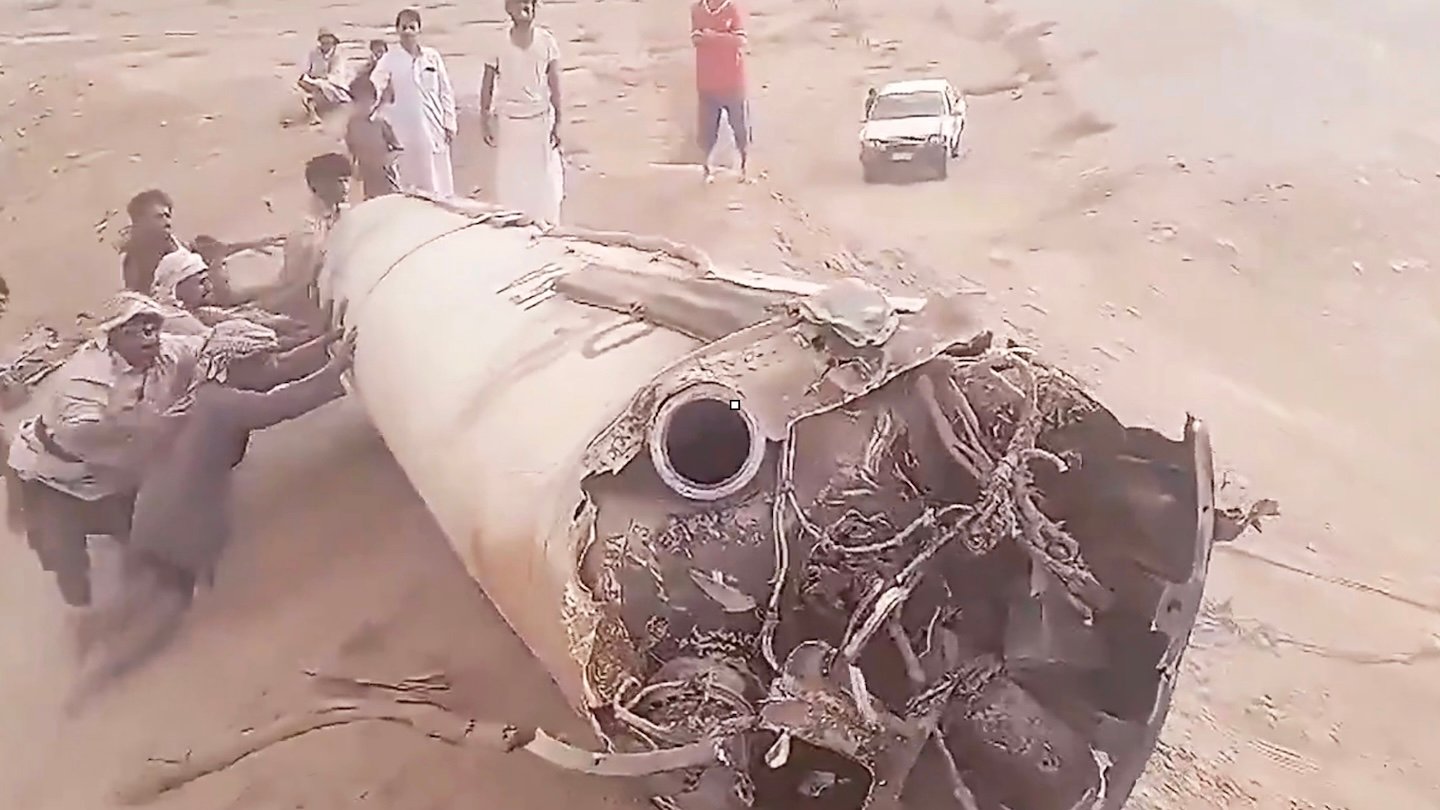
Debris from a Chinese-made ballistic missile found in Yemen could have inadvertently revealed a previously undisclosed addition to Saudi Arabia’s secretive ballistic missile arsenal. Imagery circulating online appears to show the wreckage of a Chinese DF-15A short-range ballistic missile (SRBM), potentially marking the first known Saudi combat use of a weapon in this class, although both the identification and ownership remain unconfirmed.

The booster stage of a Chinese-made DF-15A (Dong Feng-15A) ballistic missile operated by Saudi Arabia fell in Raghwan District, Marib Governorate, northern Yemen. pic.twitter.com/dfSXMOiCzQ

— OSINTWarfare (@OSINTWarfare) September 14, 2026

It is also unclear what happened to the missile itself. The debris suggests a stage separation or the missile broke apart or crashed before reaching its target. The Houthis are not known to possess any weapons that could have intercepted it.

A screenshot from a video clearly shows the DF-15A name applied on the side of the missile. via X

The development comes amid a sharp escalation in the long-running Saudi-Houthi conflict. After years of relative de-escalation following the 2022 truce, fighting has intensified in recent weeks as Houthi forces have dramatically overrun Saudi-backed Yemeni government positions, including around strategically important Marib and Taiz. The Houthis have also escalated missile and drone attacks against southern Saudi Arabia, targeting military and energy infrastructure while threatening the kingdom’s ability to move oil through the Red Sea. The group has declared the Bab el-Mandeb closed to Saudi oil traffic, adding a direct threat to one of Riyadh’s critical energy-export routes.

You can catch up with our latest coverage of the fighting here.

As for the DF-15, also known by its NATO designation CSS-6, this is a road-mobile, solid-fueled SRBM developed by China during the 1980s. The system formed part of Beijing’s effort to develop a new generation of conventionally armed mobile ballistic missiles, including systems primarily intended for export.

العثور على بقايا صاروخ صيني من طراز DF-15A في اليمن. pic.twitter.com/af9mGNNxiA

— إيران بالعربية (@iraninarabic_ir) September 14, 2026

As you can read about here, the DF-15 family has evolved through several variants, although open-source information concerning their capabilities remains inconsistent.

The DF-15A reportedly entered Chinese service in the mid-1990s. Estimates of these missiles’ maximum range vary substantially, from roughly 600 kilometers (373 miles) for the original DF-15 to as much as 900 kilometers (559 miles) for later versions.

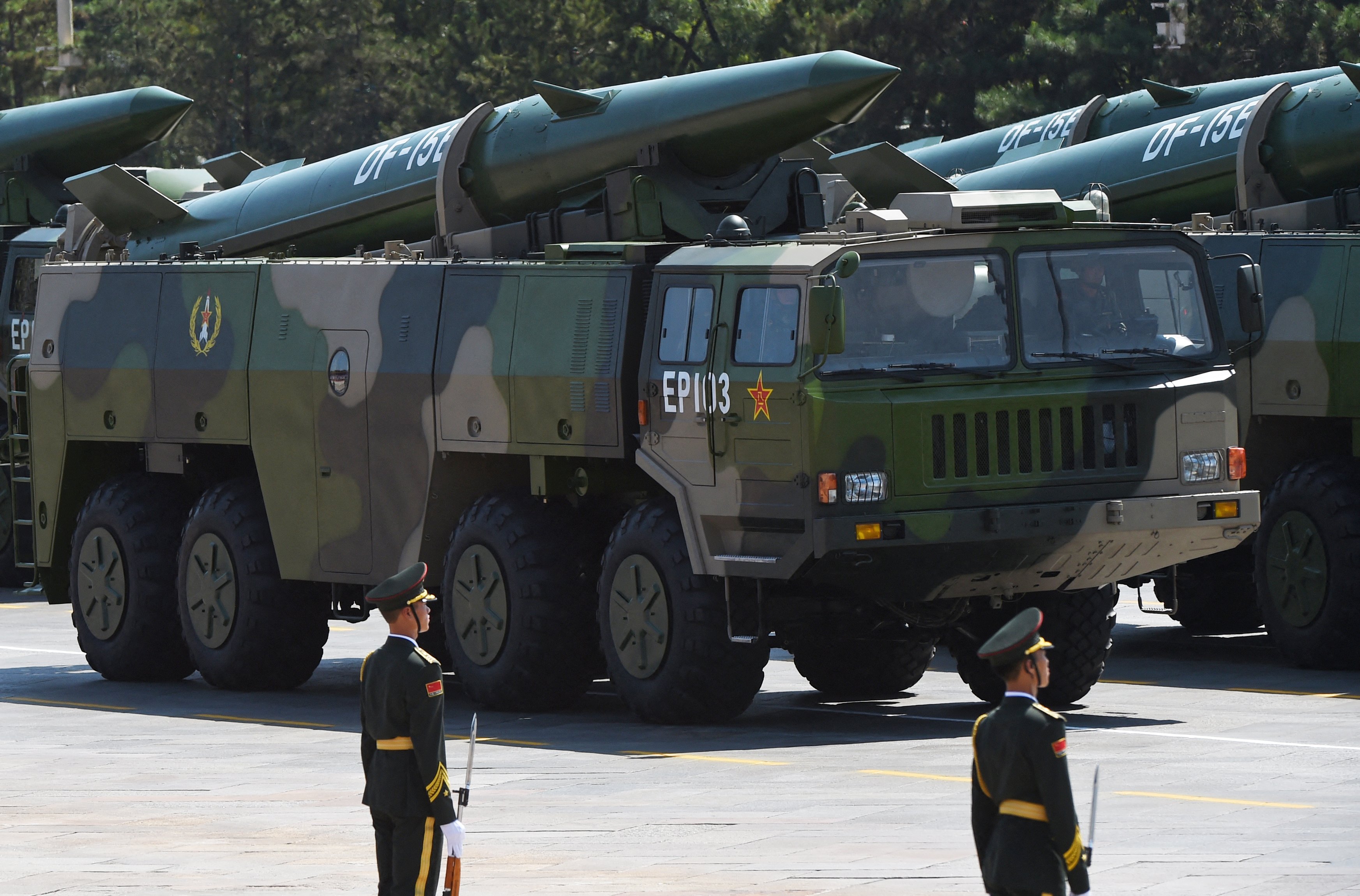
Military vehicles carrying DF-15B ballistic missiles participate in a military parade at Tiananmen Square in Beijing on September 3, 2015, to mark the 70th anniversary of victory over Japan and the end of World War II. China kicked off a huge military ceremony marking the 70th anniversary of Japan's defeat in World War II on September 3, as major Western leaders stayed away. AFP PHOTO / GREG BAKER (Photo by GREG BAKER / AFP via Getty Images)
Among the later versions of the DF-15 family is the DF-15B. A more substantial redesign, its most obvious external change is its triconic reentry vehicle fitted with control fins, a configuration widely interpreted as incorporating a maneuverable reentry vehicle (MaRV) warhead. Photo by GREG BAKER / AFP via Getty Images GREG BAKER

China is the only confirmed operator of the DF-15 family. There have been longstanding reports of Chinese transfers of the DF-15 or the related M-9 export version to Egypt, Iran, Pakistan, and Syria, but in each case, the export record is heavily disputed, with some reports likely conflating the DF-15 with the broadly similar DF-11.

While Saudi Arabia has never publicly acknowledged operating the DF-15 family, it has a well-established history of acquiring Chinese ballistic missiles.

In 2013, Prince Fahd bin Abdullah bin Mohammed, Deputy Minister of Defense, visited the Strategic Missile Forces of Saudi Arabia, and was given this model. YEARS of speculation on the smaller missiles (The large is DF-3). Now we know – they are DF-15 and DF-15A. pic.twitter.com/oOn8qiCgye

— Tal Inbar (@inbarspace) September 14, 2026

Saudi Arabia imported Chinese ballistic missiles to expand its long-range strike options. Its desire for a land-based strategic deterrent was initially driven by concerns over Iran, regional missile proliferation, and nuclear hedging. More recently, however, it shifted toward fielding more accurate, mobile systems with greater conventional military utility.

Riyadh secretly obtained DF-3A missiles from China beginning in the late 1980s, establishing a strategic ballistic-missile capability that remained largely outside public view.

The kingdom has also subsequently been linked to the DF-21 family. Satellite imagery and other open-source intelligence have provided evidence of Chinese-designed ballistic-missile infrastructure in Saudi Arabia.

While the Houthis have their own ballistic-missile arsenal, this is principally associated with Iranian technology, captured Yemeni systems, and locally produced or modified weapons.

Saudi employment of an SRBM in the current fighting would represent a notable expansion of the kingdom’s response options. If Saudi Arabia did indeed do this, its main advantage would be speed and responsiveness. A solid-fueled ballistic missile could reach targets deep inside Yemen within minutes while keeping Saudi aircraft and crews out of the immediate engagement area, providing Riyadh with a rapid strike option against fixed Houthi targets. That could be particularly valuable as the conflict expands and Saudi forces face pressure to respond quickly to Houthi attacks on military and energy infrastructure.

Previous losses at the hands of Houthi ground-based air defenses could also dissuade Riyadh from relying on crewed aircraft to strike targets on the ground deep inside Yemen. Houthi air defenses, while pathed together in many ways, are capable enough to give even U.S. airpower a serious run for their money.

At the same time, a conventional SRBM like the DF-15A can deliver a large warhead at very high speed, imparting significant kinetic energy, making it particularly useful against fixed, high-value, or hardened targets.

Use of an SRBM would also be in line with the current pattern of escalation, with the Houthis conducting missile and drone attacks against Saudi military and energy targets while Saudi-backed Yemeni forces are engaged in renewed ground fighting. Riyadh’s demonstration of an SRBM capability in this campaign would also signal that it is is willing to draw more heavily on its strategic missile inventory as the conflict intensifies, potentially further raising the stakes of the confrontation.

Such a move would carry a message beyond Yemen. Using a previously unacknowledged ballistic missile capability in combat would signal to Iran that Riyadh is now willing to employ this arsenal, after decades of keeping it very much in the shadows.

If the evidence ultimately points to a Saudi DF-15A launch, the discovery would offer a rare look at the operational use of an extremely secretive part of the kingdom’s arsenal, and add a significant new dimension to the rapidly escalating Saudi-Houthi war.

Contact the author: thomas@thewarzone.com

The post Saudi Arabia Appears To Have Used Its Secretive Stash Of Ballistic Missiles For The First Time appeared first on TWZ.

  •  

The Mecca Pact Turned Up Short: Escalation in Yemen

Having provoked a new round of conflict with the Yemeni Houthis, Saudi Arabia has landed itself in a dire situation. Despite the seriousness of the situation, the US and its allies in the “Islamic NATO” have so far taken up the role of outside observers. Essence of the Conflict The Shi’a “Ansar Allah” movement (the […]
  •  

Iran calls for the end of all forms of external interference in Yemen after reports of US military involvement

Following a fresh escalation in the war in Yemen over the last few days and reports of possible US involvement, Iran called for an end to all forms of external interference in the country and reiterated the need for the resumption of Yemeni-Saudi dialogue to end the decade-long conflict.

Iran “reiterates its principled and steadfast position regarding the necessity of respecting Yemen’s independence, national sovereignty and territorial integrity, and the need to end the illegal and inhuman blockade of the country,” its Ministry of Foreign Affairs said in a statement on Friday, September 11.

The statement followed the news of Saudi Arabia seeking fresh assistance from the US against the Ansar Allah-led Yemeni forces, who captured various strategic locations around the country’s Red Sea coast earlier this week in a fresh escalation in fights with Saudi-backed forces.

Saudi Arabia has already carried out over 60 air strikes in Yemen since the outbreak of the recent fights. On Thursday, Crown Prince Mohammed Bin Salman reportedly called President Donald Trump asking for US military intervention as well.

The US has previously supplied key military assistance and weapons to the Saudi Arabia-led coalition in the war against Ansar Allah. It was withdrawn during the Joe Biden administration briefly, after a massive popular campaign against US involvement.

The US has bombed Yemen on several occasions in the past months, citing its alleged attacks on “freedom of navigation” in the Red Sea during the Yemeni campaign against Israel in support of the Palestinian people in Gaza.

US military involvement in Yemen

On Thursday, US officials admitted the US was ready to assist Saudi Arabia and forces backed by it in Yemen once again in order to “protect its core national security interest” in the region.

The US has once again defined its core interest in the region as the “protection of freedom of navigation” in the Red Sea through which around 12% of global trade passes.

The US claims Ansar Allah is acting as a proxy of Iran and sees the escalation in Yemen as an Iranian attempt to block oil trade through the Red Sea as well, after its ongoing blockade in the Strait of Hormuz.

This is despite Ansar Allah rejecting such media reports and assuring that their latest campaign does not threaten ship movements through the Bab al-Mandab.

Iran maintains that Ansar Allah is not a proxy but an independent force and an ally.

The US has already deployed over a 100 military advisors to Saudi Arabia to assist it in the war, according to reports in US media.

Saudi Arabia has imposed a comprehensive land, sea, and air blockade on Yemen since an international coalition led by it started the war in 2015. The blockade prevented the flow of crucial humanitarian supplies to the country causing a massive crisis, including hundreds of thousands of Yemenis dying due to the lack of food and medicine during the COVID outbreak.

The Saudi blockade even threatened flights carrying patients and people trapped outside the country from landing at Sanaa airport. The only exception was during a short period in 2022 when a pause in the war after rounds of negotiations facilitated by the UN had temporarily provided some relief.

Ansar Allah announced the end of the 2022 ceasefire following Saudi Arabia’s attacks on Sanaa airport in July, threatening an Iranian aircraft with diplomats demanding the immediate end of the decade-long blockade.

Noting that the people of Yemen have a right to “a dignified life free from pressure, intimidation and oppressive blockade,” Iran demanded the immediate resumption of the dialogue on the roadmaps already agreed upon in the past.

Iran also offered its offices to facilitate the Yemeni-Saudi dialogue.

  •  

The Outlook Is Getting Grimmer By The Day For Oil Exports From The Red Sea

Saudi Arabia on Friday announced it had to temporarily shut down the key east-west pipeline after drone attacks on Thursday from an Iranian-backed militia group in Iraq. As we have explained in the past, the Kingdom has diverted millions of barrels of oil per day through pipelines to its Yanbu port on the Red Sea in an effort to minimize the energy shortages due to hostilities near the Persian Gulf that have closed the Strait of Hormuz. 

The pipeline was shut down a day after the Houthi rebels of Yemen increased their control over the crucial Bab al-Mandab Strait (BAM), a narrow body of water separating the Red Sea from the Gulf of Aden. Combined with Iran vastly curtailing shipping through the Strait of Hormuz, this gives Tehran significant control over two of the world’s most crucial passageways for the flow of oil.

3. The Houthis have reportedly attempted to seize ROYG-controlled islands in the Red Sea from which Houthi fighters could launch attacks on international shipping. Houthi forces reportedly landed on the Hanish Islands in the southern Red Sea on the morning of September 10 after… pic.twitter.com/tiFPgNDOHZ

— Institute for the Study of War (@TheStudyofWar) September 11, 2026

“The East-West pipeline, in the regions of Riyadh and Medina, was subjected to several attacks on Thursday morning, September 10, 2026,” Saudi Arabia’s Energy Ministry posted on X. “The line was shut down as a precaution. The attacks resulted in some injuries, and medical care has been provided to those injured.”

“Emergency teams and specialized technical teams began work immediately after the attacks occurred, and took the necessary measures to secure the line and verify its safety, in accordance with approved safety procedures and emergency plans, and in coordination with relevant authorities,” the ministry added. “Any updates will be announced in due course.”

A before and after of the East-West Pipeline pumping station showed that it wasn’t just “hit”, it was absolutely MANGLED.

The past 24 hours have been nothing short of catastrophic for the global energy markets, but the harsh reality?

The pain is just getting started. pic.twitter.com/aei8HPplB3

— Brett Erickson (@BrettErickson28) September 11, 2026

Showing the complexity of this situation and the high degree of coordination among various Iranian-backed proxies, the Saudi Ministry of Foreign Affairs accused Iranian proxies in Iraq of carrying out the attack. The Kingdom subsequently said it would hold off on responding to “give the brotherly Iraqi government an opportunity to take the necessary measures to prevent attacks launched from Iraqi territory against the Kingdom and neighboring countries,” according to the Arab News.

Officials in Baghdad quickly responded to that request, firing a regional commander overseeing operations where the attack was launched from.

“The Prime Minister, the Commander-in-Chief of the Armed Forces, Mr. Ali Falih Al-Zaidi, directed the formation of an investigative committee regarding the Maysan Operations Command,” the Iraqi Prime Minister’s Office announced on X. “His Excellency ordered the dismissal of the Operations Commander from his position, following confirmation that the attacks targeting the brothers in the Kingdom of Saudi Arabia were launched from one of the sites within the province.”

وجّه رئيس مجلس الوزراء، القائد العام للقوات المسلحة، السيد علي فالح الزيدي بتشكيل مجلس تحقيقي بحق قيادة عمليات ميسان.

وأمر سيادته بإعفاء قائد العمليات من منصبه، على خلفية ثبوت انطلاق الاعتداءات التي طالت الأشقاء في المملكة العربية السعودية من أحد المواقع داخل المحافظة.…

— المكتب الإعلامي لرئيس الوزراء 🇮🇶 (@IraqiPMO) September 11, 2026
On Friday, the Houthis acknowledged that they captured new stretches of Red Sea coast from the Saudi-backed factions they’ve been battling. This includes the port of Mokha and the key islands of Perim (also known as Mayun) and Zuqar.

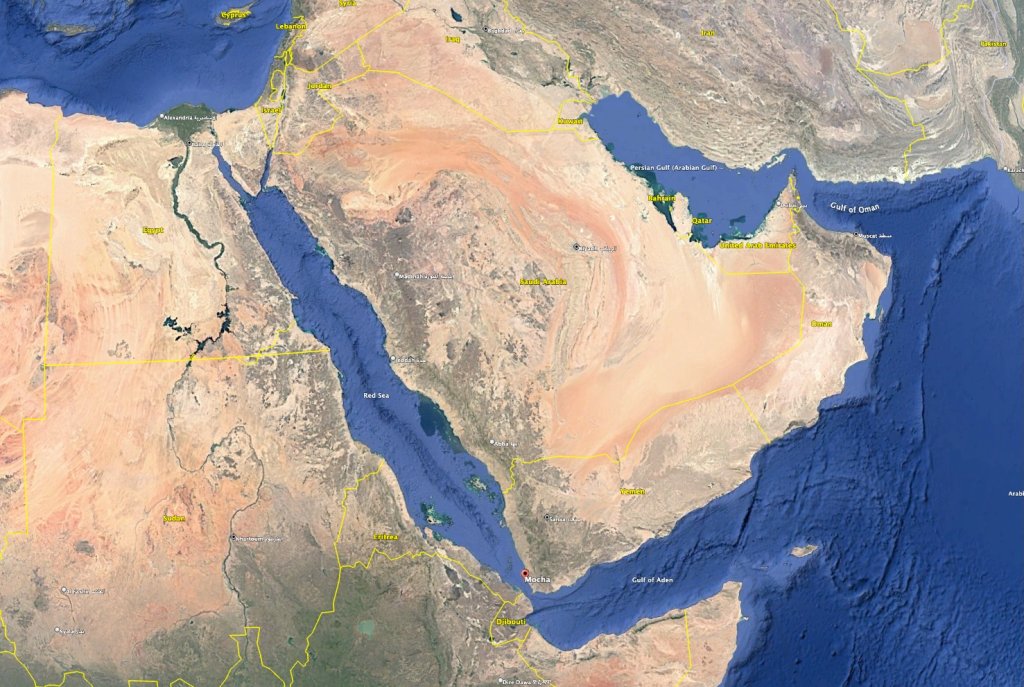
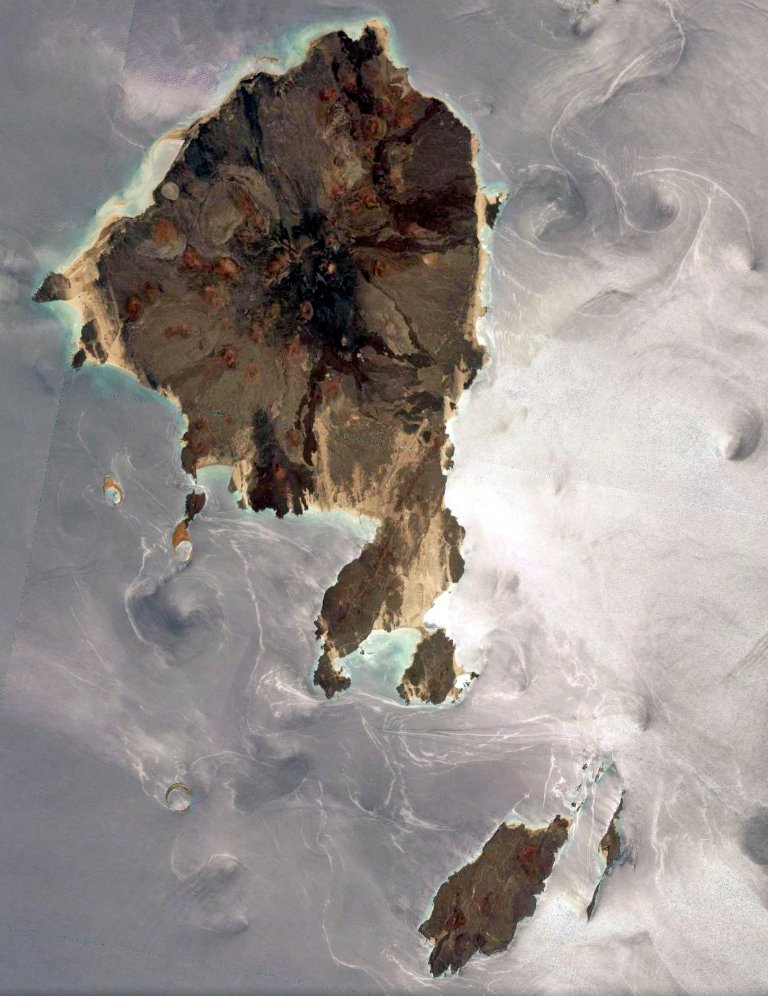
The Bab al-Mandab Strait and the islands of Perim (Mayun) and Zuqar. (Google Earth)

In a quick recap of what’s changed, the port provides a potential new surveillance and launching point for the Houthis. From here they can deploy mines, standoff weapons, as well as uncrewed surface vessels (USVs) that can be used to attack shipping. The islands give the Houthis a presence in the middle of shipping lanes. This is especially true for Perim, which sits in the narrowest part of the BAM, less than two miles west of Yemen and about 13 miles east of Djibouti, giving the Houthis a commanding presence at the mouth of the Red Sea. Its position could even allow Houthis to launch attacks on shipping using lower-end munitions, such as anti-tank guided missiles and even rocket artillery.

PHOTO © 2025 PLANET LABS INC. ALL RIGHTS RESERVED. REPRINTED BY PERMISSION)

However, maintaining a major military presence on these islands would be a challenge logistically, especially should the U.S. or its allies attack positions there. You can read more about how the fall of the islands unfolded in our report here.

As they swept through the coastal region, the Houthis captured a treasure trove of U.S.-made Oshkosh M-ATV mine-resistant vehicles, pickup trucks mounted with heavy weapons, artillery pieces, and large quantities of ammunition and small arms abandoned by retreating National Resistance and Giants Brigade forces.

Videos show the scale of equipment the Houthis captured during the western coast offensive.

The "booty" footage from Mokha and surrounding positions includes U.S.-made Oshkosh M-ATV mine-resistant vehicles, pickup trucks mounted with heavy weapons (technicals), armored… pic.twitter.com/n3VPyoSmHk

— Clash Report (@clashreport) September 11, 2026

Houthis Display Vehicles and Weapons Seized in Mocha

Yemen’s Houthis have displayed vehicles, weapons and military supplies they say they captured in the Red Sea port city of Mocha after Yemeni government forces backed by Saudi Arabia and its allies withdrew from the city.… pic.twitter.com/JmTMNY6wIS

— GAROWE ONLINE (@GaroweOnline) September 11, 2026

Iran, which has held off on getting the Houthis directly involved during Epic Fury, has now played its hand and is putting the Houthis in a better position to close the strait than ever before. This was always a ‘sum of all fears’ scenario for oil exports from the Middle East and now Iran could put maximum pressure on the United States and the world to end the conflict in their favor, with oil potentially being cut off from both the Red Sea and the Persian Gulf.

Houthis are likely preparing to close the strait with a much better position than they had before. Having both straits closed has long been a 'sum of all fears' middle east energy crisis. Been writing about this exact scenario for over a decade. U.S. stretched thin, especially in…

— Tyler Rogoway (@Aviation_Intel) September 11, 2026

Still, on Friday, the Houthis tried to allay those concerns, promising they would limit their control of the BAM to just Saudi vessels. 

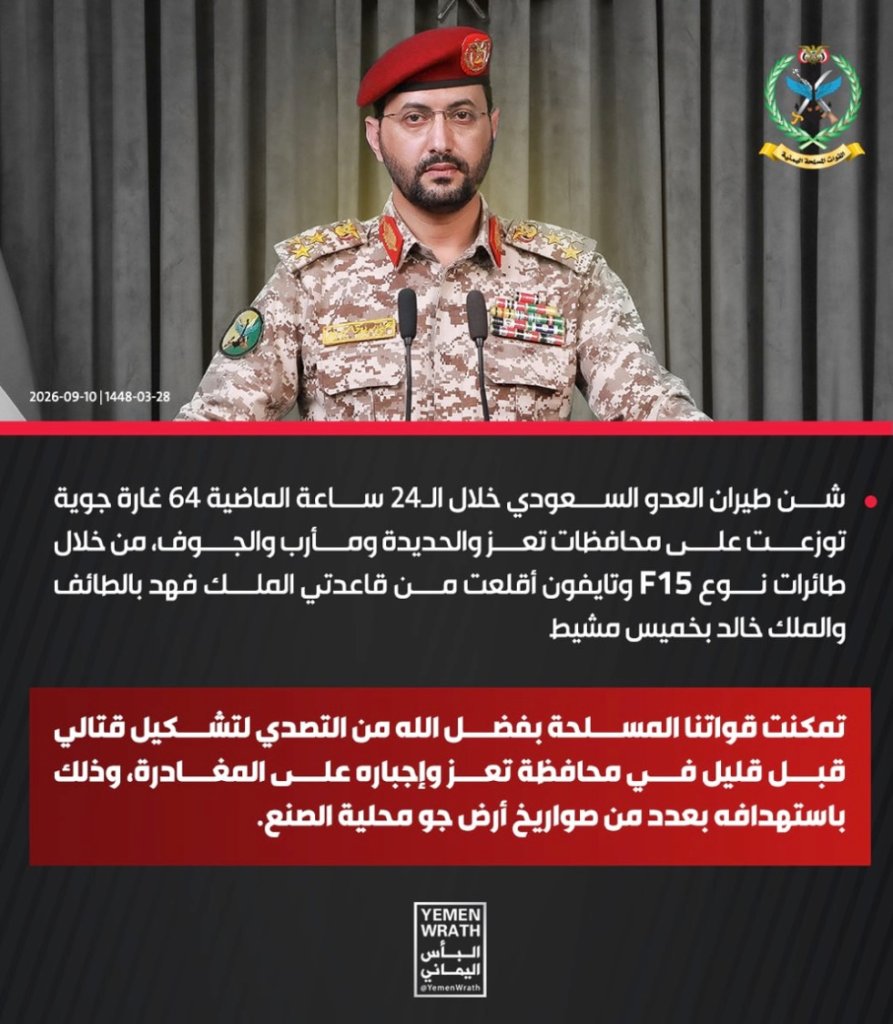
“The Yemeni armed forces confirm that maritime navigation is safe for all companies, except for Saudi Arabian ships, which have previously been placed under a ban,” Houthi spokesman Brig. Gen. Yahya Saree proclaimed. “We are continuing to uphold the equation of blockade with blockade, striking enemy Saudi Arabian troop concentrations, and escalating in response to their actions, until the aggression ceases and the blockade is lifted from our dear people.”

Houthi spokesman Brig. Gen. Yahya Saree. (Houthi Telegram)

Their rationale is that this campaign is all about defending against attacks by the Saudis and their proxies.

The conflict between Saudi Arabia and the Houthis grew out of a civil war in Yemen that erupted in 2014. It expanded a year later when a Saudi-led coalition joined forces with the government ousted by the Houthis and raged on until the parties reached a tenuous ceasefire in 2022. Tensions, however, reignited after that conflict ended when the Houthis joined the U.S.-Iran conflict on the side of their major supporter. In addition to a blockade on Saudi shipping, the Houthis began striking Saudi refineries and other oil infrastructure, including pipelines near the coast.

Houthi assurances about their intentions have meant little in the past. In 2023, when they launched their earlier campaign against Red Sea shipping, the Houthis also claimed a narrow rationale. They said they were doing so on behalf of Palestinians being killed during the Israel-Hamas war. The reality turned out to be that the Houthis were striking even ships not connected to Israel. This ultimately led to the U.S. and allies deploying warships to protect commercial vessels, battles with the rebel group on the water and a campaign of airstrikes on Houthi land targets.

It should be noted that the Saudis held off on getting involved that fight.

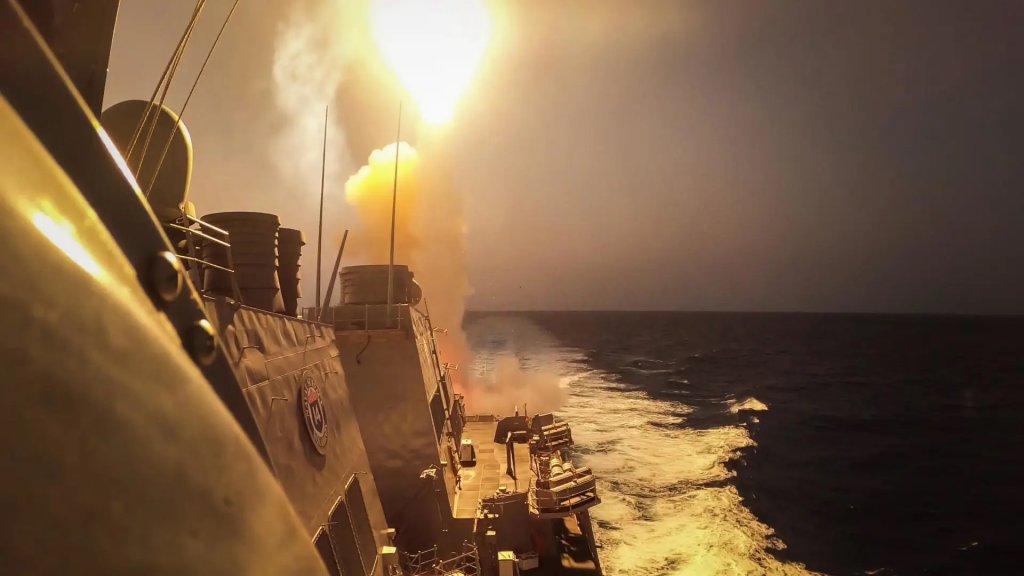
The Arleigh Burke class destroyer USS Carney fires a surface-to-air missile at Houthi threats on October 19, 2023. U.S. Navy

Amid all this, the per-barrel price of Brent crude rose to more than $109 yesterday, but was back down to $104 today, according to OilPrice.com.

We have long suggested that the U.S. could get pulled back into a new conflict with the Houthis. Now the rebel group’s rapid defeat of the Saudi-backed forces has reportedly already led to an American role in that fight.

“More than 100 US military advisers are on the ground in Saudi Arabia providing intelligence and targeting support to the Kingdom in its military campaign against the Iran-backed Houthis in Yemen,” CNN reported on Thursday, citing multiple sources familiar with the effort. “The US military personnel are working as part of a newly-established joint forces command, which was formed in recent weeks amid signs Iran was ramping up its own efforts to aid Houthi attacks against Saudi Arabia, one of the sources, a US official, said. That official put the total at roughly 200 troops.”

Still, there are limits on the U.S. role.

“The US is sharing intelligence with Saudi Arabia — as it routinely does already — but it is not participating directly in strikes,” CNN noted. “The US is also not helping refuel Saudi warplanes or providing other operational support, as it has in past fighting with the Houthis.”

Then-Defense Secretary James Mattis ended that in 2018 during the first Trump presidency after growing concerns over the large number of civilian casualties being inflicted. The Saudi coalition’s fight against the Houthis also complicated the U.S. counterterrorism campaign against Al-Qaida in the Arabian Peninsula (AQAP).

CENTCOM commander Adm. Brad Cooper “flew to the kingdom overnight Thursday as Yemen’s Riyadh-backed forces crumbled in the face of a lightning Houthi offensive southward along Yemen’s western coast this week,” Al-Monitor reported. “He was expected to meet with top Saudi officials as they seek to consolidate the battered military effort by forces aligned with Yemen’s government.”

Trump, as we noted at the top of this story, has already declined to intervene kinetically.

“Saudi Crown Prince Mohammed bin Salman (MBS) called President Trump twice Thursday, urging him to launch strikes against the Houthis as the Iran-backed group closed in on a vital Red Sea chokepoint,” Axios reported, citing two U.S. officials. “Trump declined, and U.S. officials stressed the administration has no plans to intervene directly against the Houthis for now.”

WASHINGTON, DC - NOVEMBER 18: U.S. President Donald Trump (R) meets with Crown Prince and Prime Minister Mohammed bin Salman of Saudi Arabia during a bilateral meeting in the Oval Office of the White House on November 18, 2025 in Washington, DC. Trump is hosting the crown prince for meetings aimed at strengthening economic and defense ties, including the U.S. sale of F-35 fighter jets to Saudi Arabia. (Photo by Win McNamee/Getty Images)
U.S. President Donald Trump (R) meets with Crown Prince and Prime Minister Mohammed bin Salman of Saudi Arabia during a bilateral meeting in the Oval Office of the White House on November 18, 2025 in Washington, DC. (Photo by Win McNamee/Getty Images) Win McNamee


Asked if the U.S. would take direct military action against the Houthis, a senior White House official didn’t rule it out but said it is currently relying on regional partners to carry the burden. 

“The United States is focused on protecting our core national security interests—such as ensuring freedom of navigation in the Red Sea—while empowering our regional partners to take the lead in managing and resolving regional security challenges,” the senior official told us. “We are in continuous dialogue with Saudi Arabia and the Republic of Yemen Government regarding regional stability.”

The war against Iran and the ongoing mission to try to protect freedom of navigation in the Strait of Hormuz have already strained the U.S. military. There have been 18 troops killed, more than 800 wounded and wide scale destruction of U.S. bases and equipment. U.S. commanders have warned that the ongoing conflict is unsustainable without deeply degrading America’s ability to respond to other contingencies. How much the U.S. could commit to a fight against the Houthis is an open question, especially if the Iran war spun-up again. During the Red Sea operation, at times two carrier strike groups and many other assets in the air and on the sea, were needed to sustain that operation.

“A second front potentially adds more U.S. military risk as we try to sustain a military that has been involved in a protracted deployment to support our economic pressure-focused strategy,” former CENTCOM commander Joseph Votel told us on Friday. “The U.S. can do just about anything, but it will be a choice that will impact sustainment, create longer-term deployments and impact other national security priorities.”

Contact the author: howard@twz.com 

The post The Outlook Is Getting Grimmer By The Day For Oil Exports From The Red Sea appeared first on TWZ.

  •  

Ansar Allah seizes strategic Red Sea port city and liberates prisoners held by Saudi-backed forces

The Ansar Allah-led Yemeni Armed Forces seized the strategic Red Sea port city of Mokha on Yemen’s western coast on Thursday, September 10, pushing back Saudi-backed forces.

The development came one week after clashes over territorial dominance between the two sides escalated on September 3 and continued on the subsequent days.

Ansar Allah’s control of Mokha seaport represents a critical military and economic development, because of its close proximity to Bab al-Mandeb strait and due to serving as a key coastal staging ground along the Red Sea coast.

Because the Bab el-Mandeb Strait handles roughly 12% of global trade and vital energy supplies, the development would reshape regional and global geopolitics, particularly with maritime traffic in the Strait of Hormuz already restrained by the US-Iran war.

Read more: Iran warns South Korea against joining US military actions in Strait of Hormuz

Navigation in the Red Sea is safe for all except for Saudi ships, says Ansar Allah

Head of Yemen’s national delegation Mohammad Abdulsalam affirmed in a post he wrote on X that the freedom of navigation and international trade movement in the Red Sea and Bab al-Mandab “is safe and orderly”, reassuring that “there is no cause for any international concern regarding it, for it faces no danger from Yemen’s side.”

Meanwhile, Yemen’s Humanitarian Operations Coordination Center (HOCC) announced on Thursday that navigation in the Red Sea is safe for all global shipping companies, except for  Saudi ships, which are still subjected to the previous ban. 

Ansar Allah liberates all its prisoners from Saudi jail on Yemen’s western coast 

The head of Ansar Allah’s National Committee for Prisoners’ Affairs Abdul Qader Murtadha confirmed on Thursday that the movement succeeded in liberating all its prisoners from the detention facilities of the Saudi-backed forces on Yemen’s western coast.

  •  

Houthis’ Stranglehold On Strategic Bab Al-Mandab Strait Grows Stronger

The Iranian-backed Houthi rebels have captured Mokha – a key Red Sea port in southwestern Yemen near the Bab al-Mandab (BAM) Strait. There are also reports they seized two islands located in the Red Sea shipping lanes. These moves against the Saudi Arabian-backed forces that previously held these areas could further cement the Houthis’ control over the narrow chokepoint to the Gulf of Aden, where the group has already imposed a blockade on Saudi oil exports.

The Houthis’ drive to control the BAM has been emboldened by the U.S. being stretched thin in its ongoing fight against Iran. Combined with Tehran’s control of the Strait of Hormuz, this threatens to add to the Islamic Republic’s command over the flow of oil from the Middle East. It is a maximum pressure campaign on the U.S. and global markets, something we have predicted for years. Amid all this activity, the per-barrel price of Brent Crude is well over the $100 mark now.

The port of Mokha. (Google Earth)

The rapid advance on Mokha was planned and backed by Iran, according to the leader of Saudi-backed forces that retreated from Mokha, which is about 50 miles north of the BAM. It took place as Tehran has taken a more belligerent stance in the region that has seen it reportedly damage U.S. aircraft in a recent attack on Jordan earlier this week and get closer to striking U.S. Navy warships with ballistic missiles.

“The Joint Forces have formed a command center south of the city of Mokha, following Houthi breakthroughs across various combat axes under heavy fire, in which the Houthis used various types of weapons,” Deputy Chairman of the Presidential Leadership Council (PLC), Lt. Gen. Tareq Saleh, said in his acknowledgment that his forces lost the port. The PLC was created in 2022 to represent the internationally recognized government of Yemen.

“The armed forces on the West Coast — the National Resistance, the Giants [Brigades], and the Homeland Shield — in addition to units of the Taiz axis west of the governorate, have paid a heavy price, martyrs and wounded, over the past days as they confronted the Houthi attack, which was planned by Iran, supported by it, and carried out with the participation of its various proxies/tools.”

“Thanks to God, our armed forces were able to repel an enemy combat formation a short time ago in the province of Taiz, forcing it to withdraw,” Houthi spokesman Brig. Gen. Yahya Saree proclaimed. “This was achieved by targeting it with a number of locally manufactured surface-to-air missiles.”

(Houthi Telegram channel)

Videos have emerged showing Houthi forces inside Mokha and its airport and a large amount of equipment being seized.

The people of the port city of Al-Mokha gave a warm reception to Yemeni armed forces fighters following the city's strategic liberation. pic.twitter.com/0XDrveJPxU

— IRNA News Agency ☫ (@IrnaEnglish) September 10, 2026

⚡BREAKING: The Houthis have announced a Cessation of Combat Operations along the Coast of Bab al-Mandab Strait following the Collapse of Pro-Saudi Forces

The Core Military of the Houthis has entered the City of Mokha

Additionally, all Islands Key to Controlling the Bab… pic.twitter.com/95HI4TJ6Bm

— Iran Observer (@IranObserver0) September 10, 2026

Houthi forces captured the key coastal city of Mokha overnight after Saudi/UAE backed forces retreated.

Seen here, Houthi fighters pose with an abandoned M-ATV MRAP at the city’s critical seaport. pic.twitter.com/1WD6l08MVc

— OSINTtechnical (@Osinttechnical) September 10, 2026

Houthi fighters were filmed on the runway of Mokha international airport after capturing the city. pic.twitter.com/56Rc4BwsNf

— Open Source Intel (@Osint613) September 10, 2026

Holy score. This footage from Al Jazeera shows some of the equipment that was left behind for the Yemeni to capture in Mokha. https://t.co/yc0nwRlIse pic.twitter.com/Jn8VT571LY

— Reno (@theRenoNara) September 10, 2026

Even before the capture of Mokha, the rebel group held the BAM under threat with its array of drones and missiles, some of which it launched from deeper in Yemen. In fact, the group became the first to fire anti-ship ballistic missiles (ASBM) at vessels during its campaign against Red Sea shipping.

©2023, The International Institute for Strategic Studies, originally published on https://iiss.org/online-analysis/military-balance/2024/01/houthi-anti-ship-missile-systems-getting-better-all-the-time/(reproduced with permission) (International Institute of Strategic Studies)

Mokha, however, provides a potential new surveillance and launching point for the Houthis to deploy mines as well as aerial drones and uncrewed surface vessels (USVs) they can use to attack shipping. As we have reported previously, the rebel group pioneered the operational use of some of these weapons.

The Houthis “are determined to control the ports in order to use booby-trapped boats from areas close to shipping lanes,” Col. Abdul Basit Al-Baher, a Yemeni army officer and military analyst, told Arab News last month as the rebels were pushing closer to the port.

You can see video and images of a Houthi USV that struck the Greek-owned ship Tutor in the Red Sea in 2024 below.

Photos of Houthi kamikaze USV right before it struck Greek-owned cargo ship Tutor.

The ship's guard were totally confused as to what they were observing.

They couldn't even react before it hit the ship. https://t.co/ZwFlWnsFAR pic.twitter.com/8ORRrvZWH6

— Clash Report (@clashreport) June 17, 2024

In addition to Mokha, the Houthis also reportedly captured two important islands that could also add to its control over shipping through the strait. However, TWZ cannot independently confirm this.

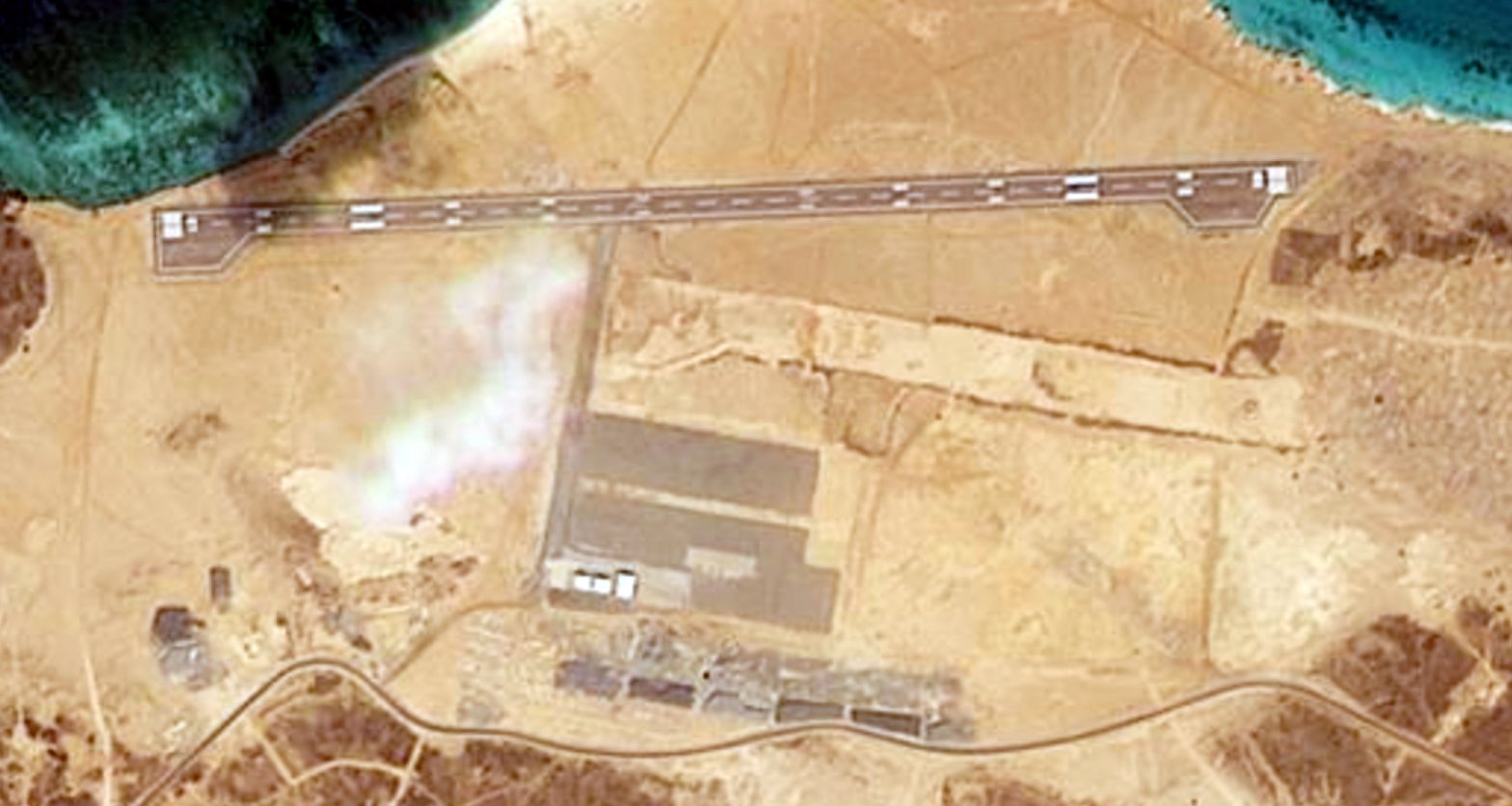
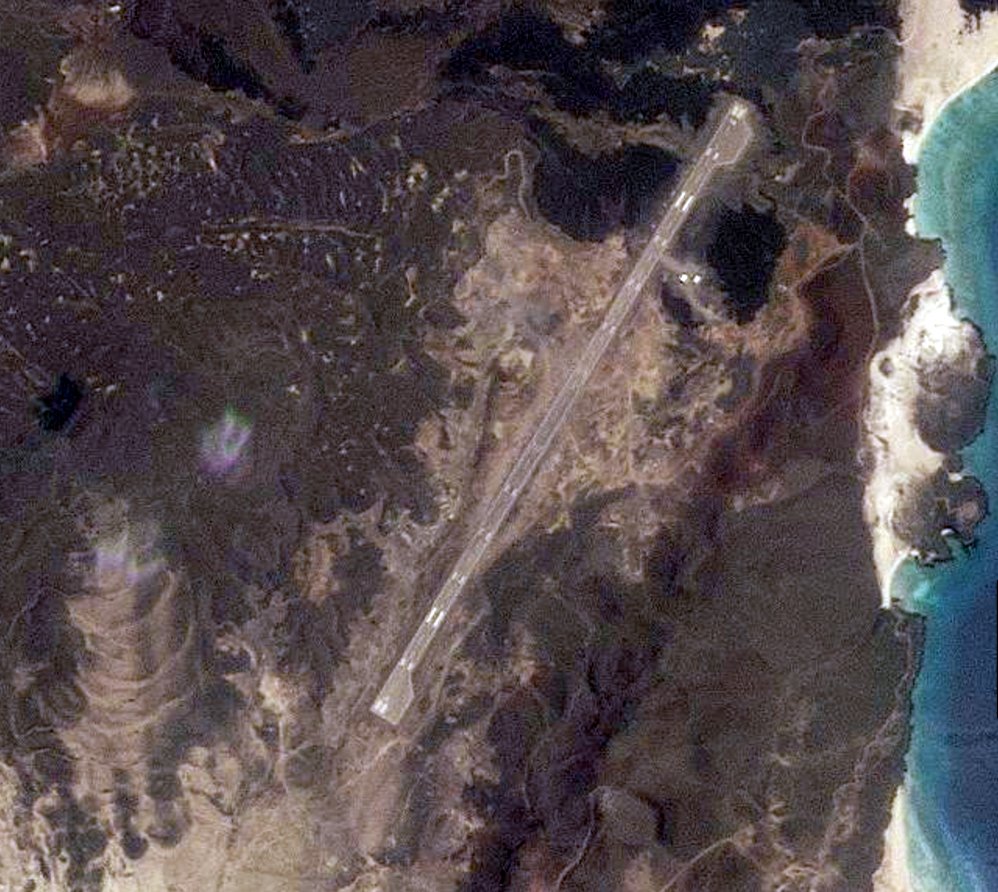
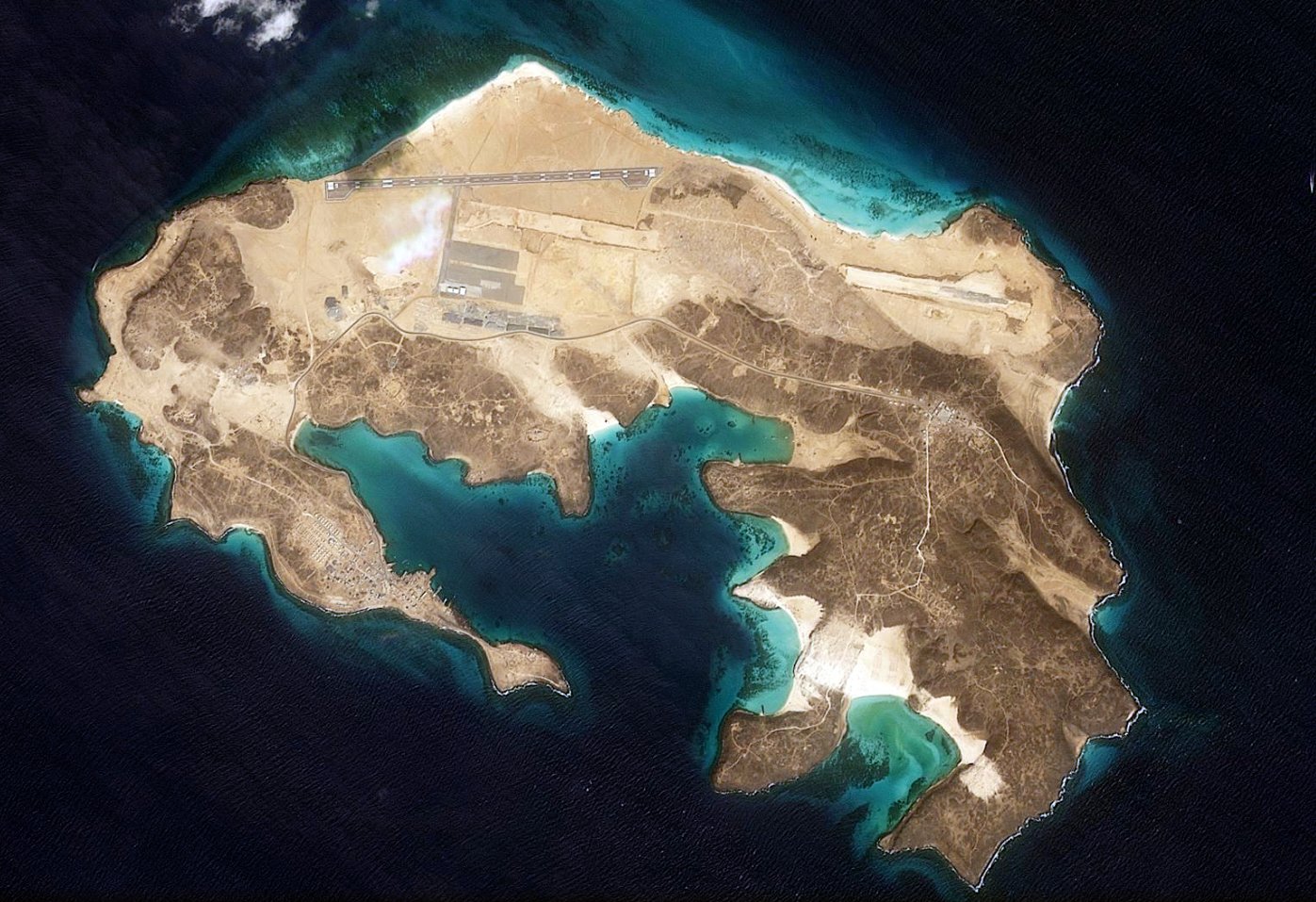
There are claims that the Houthis seized Perim Island, which sits right in the middle of the BAM. In 2021, satellite images we obtained showed completion of a new, approximately 6,150-foot-long runway on the island as well as hangars and other facilities. The installation was supposedly meant primarily to support drone operations and was built by the United Arab Emirates.

This strategically located island sits in the narrowest part of the BAM, less than two miles west of Yemen and about 13 miles east of Djibouti, giving the Houthis a commanding presence at the mouth of the Red Sea.

PHOTO © 2025 PLANET LABS INC. ALL RIGHTS RESERVED. REPRINTED BY PERMISSION)
(PHOTO © 2025 PLANET LABS INC. ALL RIGHTS RESERVED. REPRINTED BY PERMISSION)

Zuqar Island, which was also reportedly captured, sits in the middle of the Red Sea about 80 miles north of Perim Island. In the custody of the Yemeni government since 1998, it was being “used by government forces to track shipping traffic, monitor movements by Houthi rebels and stop weapons smuggling in the Red Sea,” according to The National.

Last year, images emerged of construction of a runway on the island.

(PHOTO © 2025 PLANET LABS INC. ALL RIGHTS RESERVED. REPRINTED BY PERMISSION)
This satellite image from 2025 shows the runway on Perim Island. (PHOTO © 2025 PLANET LABS INC. ALL RIGHTS RESERVED. REPRINTED BY PERMISSION)

It is unclear who built this island runway, though there have been indications that it could have been the United Arab Emirates once again.

A closer look at the new 2.1 km runway on Yemen’s 🇾🇪 Jabal Zuqar Island in the southern Red Sea shows a small apron with one completed aircraft hangar and another likely under construction, plus a taxiway leading to two military emplacements, likely to shelter aircraft or UAVs. https://t.co/cnphe6yCeO pic.twitter.com/iOwr7C6I91

— Rich Tedd 🛰 ✈ (@AfriMEOSINT) October 20, 2025

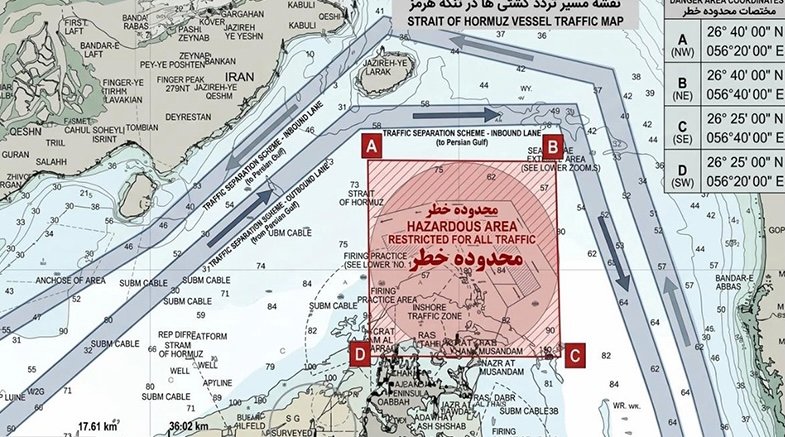
Zuqar Island sits about 7 km east of the northbound shipping lane in the Red Sea. Control over these two islands could allow the Houthis to mirror the pattern Iran established in the Strait of Hormuz by directing traffic to pass through a narrow passage between Qeshm and Larak islands.

The Iranian transit scheme for the Strait of Hormuz. (Iranian government)

The conflict between Saudi Arabia and the Houthis grew out of a civil war in Yemen that erupted in 2014. It expanded a year later when a Saudi-led coalition joined forces with the government ousted by the Houthis and raged on until the parties reached a tenuous ceasefire in 2022. The Saudis held off on getting involved in the recent Red Sea conflict which saw the U.S. and coalition warships duking it out with the Houthis, and eventually led to a U.S.-led air campaign over Yemen. Tensions, however, reignited after that conflict ended when the Houthis joined the U.S.-Iran conflict on the side of their major supporter. In addition to the aforementioned blockade, the Houthis began striking Saudi refineries.

The Houthis already control the port of Hodeidah, about 100 miles to the north. Capturing Mokha and the two islands extends their reach even closer to the BAM. 

In the wake of the Houthi blockade imposed in July, traffic in the BAM fell by 15%, according to Lloyd’s List Intelligence.

“On average, 273 ships sailed through the chokepoint each week between 27 July and 23 August,” the organization reported. “The naval ban on Saudi Arabia came into effect on 20 July, and the weekly average in the run up date was 319. Still, traffic remains above volumes seen before the crisis in the Middle East Gulf that led to a flurry of activity in the Red Sea as Saudi oil was redirected to Yanbu.”

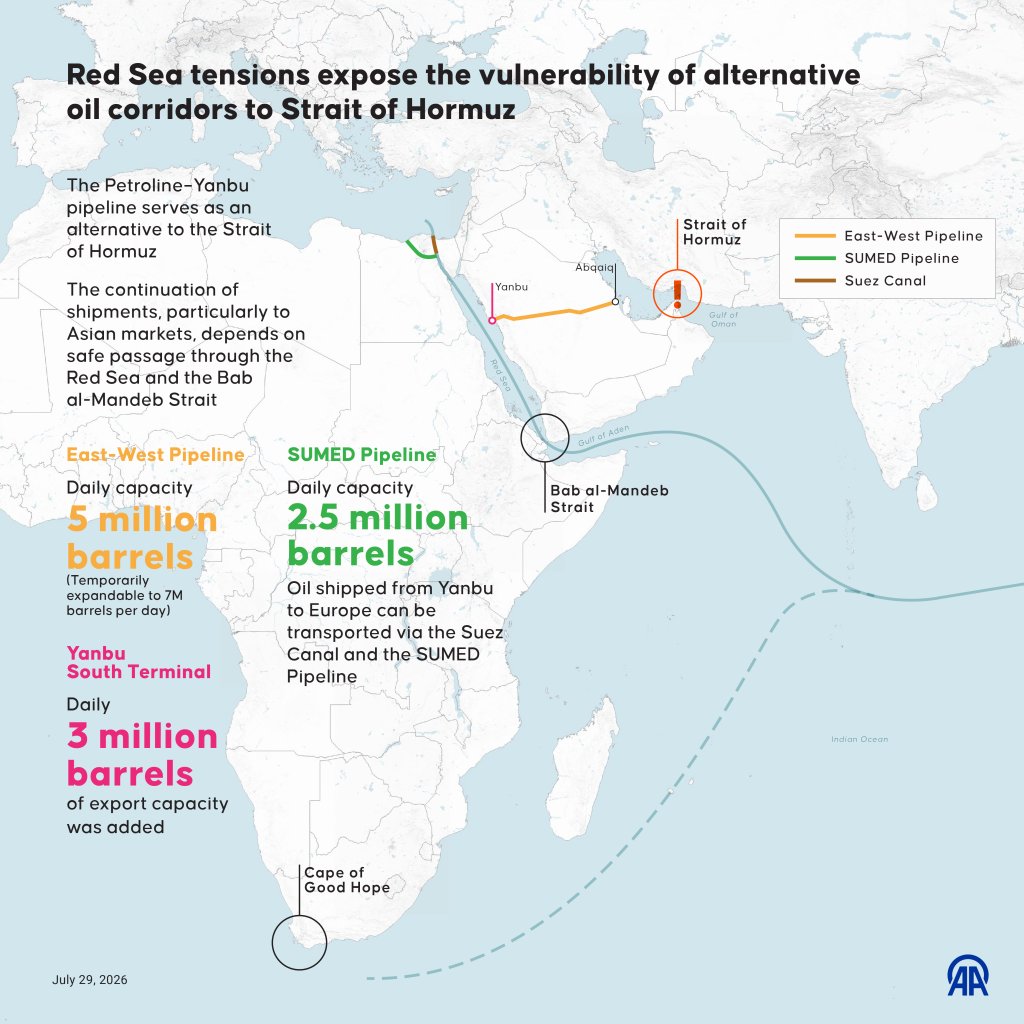
As we have explained in the past, Saudi Arabia has diverted millions of barrels of oil per day through pipelines to its Yanbu port on the Red Sea in an effort to minimize the energy shortages due to the hostilities near the Persian Gulf.

ANKARA, TURKIYE - JULY 29: An infographic titled "Red Sea tensions expose the vulnerability of alternative oil corridors to Strait of Hormuz" created in Ankara, Turkiye on July 29, 2026. (Photo by Yasin Demirci/Anadolu via Getty Images)
Saudi Arabia has increasingly sent oil to its port of Yanbu on the Red Sea. (Photo by Yasin Demirci/Anadolu via Getty Images) Anadolu

The biggest impact of the blockade, Lloyd’s List Intelligence notes, is that it is driving up the cost to deliver oil by forcing traffic north through the Suez Canal, “extending voyage times and tying up capacity. In the Middle East, rising use of Hormuz shuttle tankers and multiple STS transfers is creating delays and increasing vessel utilization. Combined, these rising inefficiencies have led to the third VLCC spot-rate spike since the beginning of the crisis in the Middle East Gulf.” 

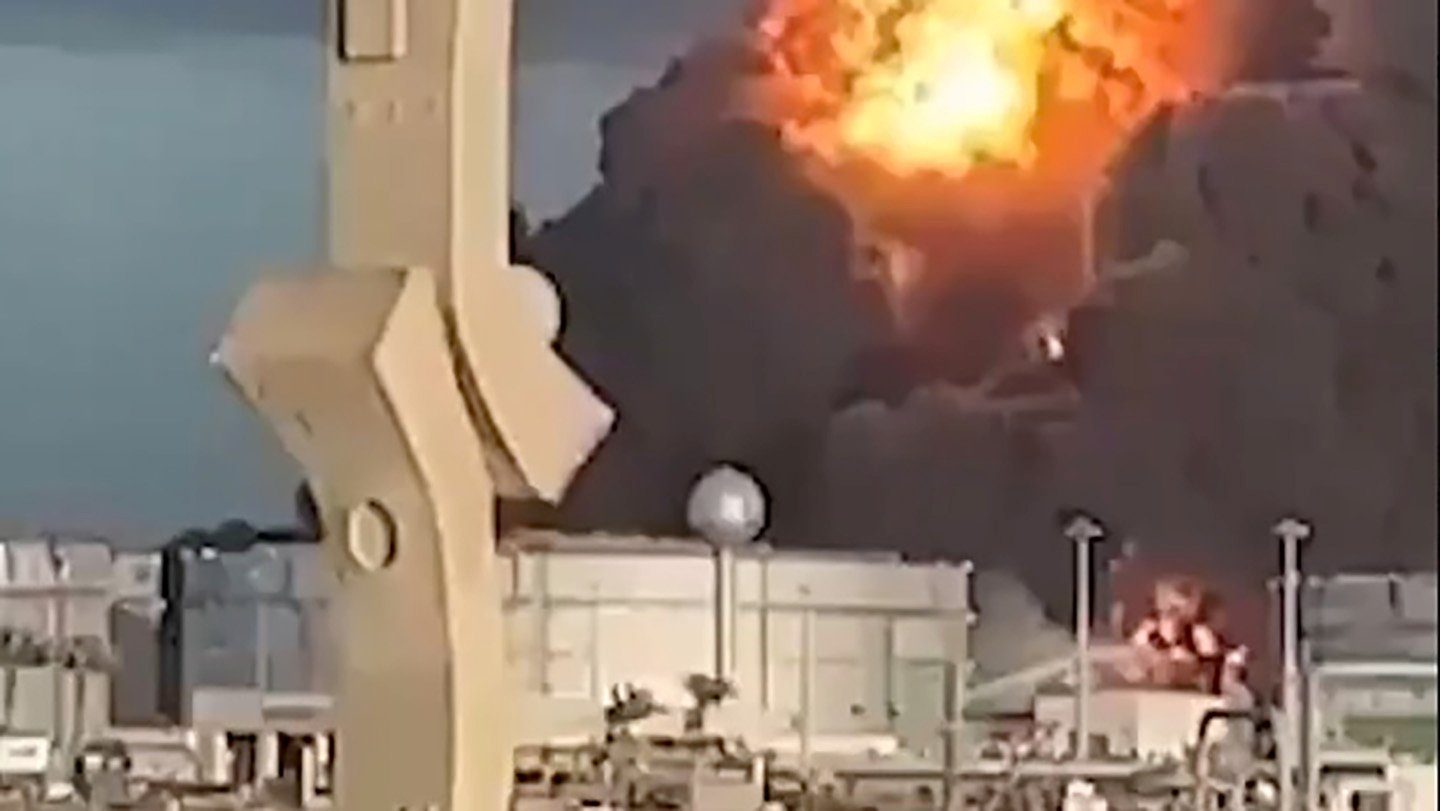
The Houthi strikes on Saudi’s oil infrastructure, including a Houthi missile and drone attack against the Saudi Aramco refinery at Jazan on the Red Sea earlier this week, add a further dilemma for Riyadh, making it harder to get its product to points of shipment.

Video of of the aftermath of those strikes, which you can see below, emerged on social media.

Following Houthi strikes, fires can be seen raging at the Jizan oil refinery in Saudi Arabia. pic.twitter.com/tAqOPlsmvS

— OSINTdefender (@sentdefender) September 8, 2026

All this is raising the specter of the U.S. having to get as involved as it did during the previous Houthi campaign against shipping that ended last September, which could pull resources away from Iranian-focused operations, if supporting such an operation is even possible at all at this point. The Navy, and other key elements of the U.S. military, is overstretched and worn down by continuous deployments for many months leading up to Venezuela and then Iran, and now six months after Operation Epic Fury.

U.S. forces in the Persian Gulf are under increasing pressure as tensions with Iran continue to simmer. On Tuesday, several U.S. Air Force jets were damaged in an Iranian missile barrage on Muwaffaq Salti Air Base in Jordan, according to CBS News. An A-10 Thunderbolt II close support jet lost a wing and about eight F-15E Strike Eagle multi-role fighters were slightly damaged and returned to service, the network noted.

There is also a report that Acting Navy Secretary Hung Cao said Iranian forces “blew the hell out of Bahrain” where the U.S. military has a number of key facilities, including the headquarters of the U.S. Fifth Fleet. The country has been the subject of frequent Iranian barrages since the U.S. and Israel first attacked on Feb. 28.

Cao’s assessment matches what we have seen and heard prior to his comments and raises anew the question of whether the U.S. will return to Bahrain and other bases in the region heavily attacked by Iran.

In an exclusive interview, Acting Navy Secretary Hung Cao told me that Iranian forces "blew the hell out of Bahrain."

While open-source analyses have long indicated that the U.S. Fifth Fleet Headquarters at Naval Support Activity Bahrain sustained extensive damage in the early…

— Ryan Morgan (@R_S_Morgan) September 10, 2026

On the sea, Iranian missiles are getting closer to hitting U.S. Navy warships, the Wall Street Journal reported.

“At least three times in the past week, Iranian forces have launched missiles at American warships, including an aircraft carrier, taking direct aim at the U.S. Navy in a way it hasn’t done since the start of the war,” the newspaper noted. “The attempted strikes on warships have led to much closer calls than previous attempts, with Iran using maneuverable warheads, people familiar with the attacks said.”

Amid this activity, traffic through the Strait remains suppressed.

“Vessel transits via the Strait of Hormuz fell on Wednesday to seven from 12 ​the previous day, preliminary ship-tracking data showed on Thursday, with ‌levels also below the 10-day average of 14,” Reuters reported. “Out of these seven ships, four vessels exited and three entered, according to the data.”

However, an exact figure is hard to come by. Some vessels could be sailing through the ​waterway with their transponders turned off and would not be counted ​toward the totals, the outlet added.

Vessels transit the Hormuz Strait off the coast of Iran's southern port city of Bandar Abbas on September 7, 2026. Iran's top negotiator threatened on September 6 of a more forceful response to any further US attacks after Tehran targeted American warships in their latest round of clashes. The exchanges of fire, which began with US raids last week, come amid a deadlock in the six-month war between the two foes. (Photo by ATTA KENARE / AFP via Getty Images) /
Vessels transit the Hormuz Strait off the coast of Iran’s southern port city of Bandar Abbas on September 7, 2026. (Photo by ATTA KENARE / AFP) ATTA KENARE

As it is, oil prices are skyrocketing. As of noon Thursday, the per barrel price of Brent Crude exceeded $107, the highest price since July when it fell to just over $77 per barrel, according to OilPrice.com.

It will take some time before we get a better picture of how the Houthi seizure of the port of Mokha, and possibly Perim and Zuqar islands, will affect the global economy due to rising oil prices, either through reduced supply, increased cost of delivery or some combination of the two. With no end in sight to the U.S. conflict with Iran that helped to drive these actions, the Yemeni rebel group has incentives to inflict economic pain wherever it can.

Contact the author: howard@twz.com

The post Houthis’ Stranglehold On Strategic Bab Al-Mandab Strait Grows Stronger appeared first on TWZ.

  •  

Saudi’s Remaining Energy Lifeline To The World Under Threat After Successful Houthi Strikes (Updated)

Just hours ago, the Saudi Aramco refinery at Jazan on the Red Sea was engulfed in flames after a Houthi missile and drone attack. Strikes at the heart of the Saudi’s energy infrastructure on the Red Sea, which acts as the remaining primary lifeline of energy exports out of the region, threaten to drastically impact global oil prices further, a concern we have been raising for some time. In the wake of the attack and additional fighting in the Persian Gulf, oil prices surged toward the $100 per-barrel mark.

“The Yemeni Armed Forces carried out a qualitative, large-scale military operation, targeting the Aramco company in Abha, Najran and the Economic City, Aramco in Jizan, and Khamis Mushait Air Base with dozens of ballistic missiles and drones,” Houthi spokesman Brig. Gen. Yahya Saree stated on Telegram. “The strikes were precise, by God’s grace, and direct, causing major damage to those facilities.”

Saree claimed that the strikes were “in response to the Saudi aggression that targeted our people and our country with 121 air strikes over the past three days.”

Saudi officials confirmed Houthi attacks and said they would retaliate.

“The terrorist Houthi Militia’s senseless attacks, the latest of which targeted civilian and economic sites in the cities of (Abha, Khamis Mashait, Jazan and Najran) resulting in injuries to (73) civilians, including women and children, constitute a blatant violation of the Kingdom’s sovereignty and a direct threat to the security and safety of its citizens and residents,” anti-Houthi coalition spokesman Maj. Gen. Turki Al-Maliki stated on X. 

“The Joint Forces Command of the Coalition will take all necessary operational measures to deter this Terrorist Militia and resolutely confront its hostile approach, in defense of the Kingdom’s sovereignty, the preservation of its national assets and the safety of its citizens and residents,” Al-Maliki added. “The Command will also take all necessary measures and actions to respond to the sources of the threat and neutralize its danger.”

pic.twitter.com/XAqse1hTDT

— المتحدث الرسمي باسم قوات التحالف (@CJFCSpox) September 8, 2026

“…several energy sector facilities and installations in the southern region of the Kingdom were targeted this morning,” the Saudi Ministry of Energy stated on X. The attacks “caused fires at several locations, leading to a temporary halt in some operations,” the ministry added. “Specialized field teams have begun containing the fires, securing the sites and assessing the damage.”

#Statement | Energy Sector Facilities Targeted in Saudi Arabia's Southern Region. pic.twitter.com/olZoupwH48

— وزارة الطاقة (@MoEnergy_Saudi) September 8, 2026

Videos on social media this morning showed the Saudi Aramco facility still burning after the attacks.

Following Houthi strikes, fires can be seen raging at the Jizan oil refinery in Saudi Arabia. pic.twitter.com/tAqOPlsmvS

— OSINTdefender (@sentdefender) September 8, 2026

Data from NASA’s Fire Information for Resource Management System (FIRMS) indicates a large amount of ongoing thermal anomalies in and near the massive Jazan refinery.

🇸🇦🇾🇪 Houthis appear to have launched a major drone attack on Jazan, SW Saudi Arabia, in recent hours.

— Fires at Aramco’s Jazan oil refinery
— Multiple hotspots at Jazan Bulk Plant
— Hotspot near King Abdullah Airport https://t.co/cdhFe7I274 pic.twitter.com/ZIN7WKKUiX

— Egypt's Intel Observer (@EGYOSINT) September 8, 2026

The Houthi attacks inside Saudi Arabia came amid increased fighting in Yemen between the rebels and anti-Houthi forces backed by Riyadh.

War in #Yemen #SITREP | Houthi Narrative | Houthi official media has largely stopped pretending there is no ground war.

The line that this is only a series of limited skirmishes is becoming harder to maintain. Houthi TV @TvAlmasirah and other outlets are now openly reporting… https://t.co/bju4iHy28G pic.twitter.com/ZnifZ1CcQI

— Basha باشا (@BashaReport) September 8, 2026

The conflict between Saudi Arabia and the Houthis grew out of a civil war in Yemen that erupted in 2014. It expanded a year later when a Saudi-led coalition joined forces with the government ousted by the Houthis and raged on until the parties reached a tenuous ceasefire in 2022. The Saudis held off on getting involved in the recent Red Sea conflict which saw the U.S. and coalition warships duking it out with the Houthis, and eventually led to a U.S.-led air campaign over Yemen. Tensions, however, reignited after that conflict ended when the Houthis joined the U.S.-Iran conflict on the side of their major supporter. The Houthis recently imposed a blockade on the Bab al-Mandeb Strait, and began striking Saudi ships in the Red Sea as well as refineries.

As we have frequently detailed, Houthi attacks on Saudi Arabia’s energy infrastructure put further pressure on oil exports from the Middle East, already drastically affected by the Iranian closure of the Strait of Hormuz and the resumption of the U.S. blockade on Iranian ports. Saudi Arabia has diverted millions of barrels of oil per day through pipelines to its Yanbu port on the Red Sea in an effort to minimize the energy shortages due to the hostilities near the Persian Gulf. This also raised the specter of the U.S. having to get as involved as it did during the previous Houthi campaign against shipping that ended last September, which could pull resources away from Iranian-focused operations, if supporting such an operation is even possible at all at this point. The bottom line here is that if the Houthis stop Saudi oil from transiting through the Bab el Mandeb Strait and the Suez Canal, this last lifeline of energy to Europe and Asia and beyond would be severed. This would drastically exacerbate an already ballooning oil crisis.

The Houthi strikes on Tuesday followed a spike in attacks on shipping in the Strait of Hormuz. Last week, U.S. Central Command (CENTCOM) said it destroyed three Islamic Revolutionary Guard Corps (IRGC) oil tankers after the Iranians fired ballistic missiles at U.S. warships.

On Tuesday, “American forces have struck multiple Iranian tankers tied to the IRGC in response to more attempted missile attacks on a U.S. Navy warship,” a U.S. official told TWZ.

The CENTCOM strikes are part of the Trump administration’s new tanker-for-a-tanker policy of hitting Iranian vessels in response to Tehran’s attacks on shipping in the Strait of Hormuz. This marks a change from previous incidents where ships were only attacked for running the ongoing U.S. naval blockade on Iranian ports. The sinking of one of the Iranian tankers in the most recent strikes is another escalation. Previous incidents following major combat operations during Epic Fury involved U.S. forces disabling Iranian transport vessels, not sinking them.

“Following Iran’s failed attacks, CENTCOM permanently disabled the IRGC crude oil carriers M/T Downy off the coast of Kharg Island and M/T Stark 1 near Jask,” the command stated on X on Saturday. “American forces also completely destroyed the unladen crude oil carrier M/T Kylo (also known as the “Noxen”) in the Gulf of Oman, striking the vessel in multiple critical locations to render it inoperable after the crew was directed to abandon ship.”

The three Iranian crude oil tankers “are part of a multibillion-dollar shadow network that funds the IRGC and its regional proxies,” the command added. “Iran has no means by which to defend them.”

“Let the message to the IRGC be clear: If you shoot at two of our ships, we will impose an even higher economic cost —taking out three of yours,” said Adm. Brad Cooper, CENTCOM commander. “We will not hesitate to defend American forces, and if necessary, destroy Iran’s limited and exposed oil fleet.”

“Let the message to the IRGC be clear: If you shoot at two of our ships, we will impose an even higher economic cost —taking out three of yours. We will not hesitate to defend American forces, and if necessary, destroy Iran’s limited and exposed oil fleet.” — Adm. Brad Cooper,… pic.twitter.com/UGGcSGsUtd

— U.S. Central Command (@CENTCOM) September 5, 2026

In addition to the tanker attacks, CENTCOM is maintaining its naval blockade of Iranian ports. “As of Sept. 6, U.S. forces have redirected 92 commercial vessels, disabled 3 and boarded 2 to ensure strict compliance,” the command stated on X.

A U.S. Air Force F-35A stealth fighter jet patrols over regional waters as CENTCOM forces continue to enforce the maritime blockade against Iran. As of Sept. 6, U.S. forces have redirected 92 commercial vessels, disabled 3 and boarded 2 to ensure strict compliance. pic.twitter.com/oXNN5zKx1t

— U.S. Central Command (@CENTCOM) September 6, 2026

As these events unfold, the price of oil is rising further, as we noted earlier in this piece. As of noon on Tuesday, the per barrel price of Brent crude was trading at nearly $98, a $10 per barrel gain from Aug. 26, according to OilPrice.com.

Analysts said the price reflected “the market’s recognition that there is no end in sight for the conflict in the Middle East, which has disrupted oil flows through two vital arteries: the Strait of Hormuz and the Red Sea,” The New York Times reported on Tuesday.

“Oil market participants are now pricing in a more prolonged disruption to shipping flows,” Hamad Hussain, a senior economist with Capital Economics, a research firm, told the publication. “They and other analysts have raised oil price estimates, based on an expectation of increased disruptions.”

Amid the strikes on oil-related targets, Iran claimed it captured an Anduril Dive-LD UUV and is in the process of reverse-engineering it. The IRGC released video and images of the device.

The IRGC Navy has released footage showing the captured U.S. Navy Dive-LD autonomous underwater vehicle (AUV) seized in the Strait of Hormuz. pic.twitter.com/XN379Kcpkh

— Ebrahim Zolfaghari (@IranTimes72) September 8, 2026

Additional images showing the U.S. Dive-LD AUV that was captured by the Iranians, following what a U.S. official described as a malfunction a number of days ago. pic.twitter.com/fyuDFJxsuv

— OSINTdefender (@sentdefender) September 8, 2026

The IRGC “captured one of the most modern intelligent and unmanned submarines of the terrorist U.S. military at the entrance to the Strait of Hormuz at dawn today, in a complex operation involving intelligence and operational surveillance,” the organization claimed.

The vessel “possesses the latest technology in the field of underwater systems in the world and was delivered to the fleet of the terrorist U.S. military in 2025,” the IRGC added.

Asked if Iran captured a UUV, a U.S. official denied that the Iranians obtained anything sensitive.

“An underwater drone operated by U.S. forces malfunctioned more than a day ago,” a U.S. official told us. “It was surveying regional waters in support of ongoing operations. The defective drone was an older model that neither collected sensitive data nor carried any classified sonar or radar equipment. U.S. operations in area waters continue.”

That's a Dive-LD from the U.S. Navy’s Unmanned Undersea Vehicle Squadron 1 (UUVRON-1). pic.twitter.com/qwfOUTA8v7

— Mehdi H. (@mhmiranusa) September 8, 2026

The Dive-LD can be configured for demining operations. Cooper, the CENTCOM commander, recently stated that: “We have successfully cleared sea mines in the strait’s international shipping lanes that were laid months ago by Iran’s Islamic Revolutionary Guard Corps. Internationally recognized transit routes in the strait are free of Iranian sea mines, thanks to the incredible work of the U.S. military.”

It is unclear whether the Dive-LD system was used in those operations; however Financial Times last week reported that the U.S. sent “Navy Seal divers, robot boats and specialized underwater craft into the perilous strait for a four-month mine-clearance mission.”

“The fraught process of explosive device disposal was carried out underwater and in darkness in an attempt to eliminate a crucial factor deterring ships from carrying vital cargoes through the strait since the US and Israel attacked Iran in February,” the publication added.

US Navy SEAL divers spent four months clearing Iranian mines from the Strait of Hormuz, according to the Financial Times.

SEAL divers worked at night from inflatable-hulled boats with help from underwater crafts to remove the mines.

"That is usually followed up by a navy diver… pic.twitter.com/NT1gBvQVqA

— Collin Rugg (@CollinRugg) September 7, 2026

As the Houthi-Saudi exchanges continue and the Strait of Hormuz is still heavily contested, there appears to be no real movement toward a diplomatic solution.

U.S. President Donald Trump proclaimed that the U.S. will defeat Iran.

“Oil prices will drop precipitously, like everything else is dropping (but more!), when we WIN the war with Iran,” the president stated on his Truth Social site. “Three Dollars a gallon, but ultimately, below Two Dollars a gallon. It will all happen quickly, and Iran will never have a Nuclear Weapon. MAGA!”

Trump acknowledges 1) oil prices are high, 2) it's because of the war with Iran, 3) the war has not ended, 4) the US has not won, yet. pic.twitter.com/gcsfqYmu0E

— Gregory Brew (@gbrew24) September 7, 2026

Iran, for its part, said it will continue fighting.

“The Islamic Republic of Iran has always opposed war and has considered the preservation of the people’s interests and regional security to lie in refraining from igniting conflict,” Iranian President Masoud Pezeshkian said on X. “However, just as it has boldly risen to defend against aggression up to this day, it will continue this resistance with full strength until the aggressors are brought to complete regret and will remain the guardian of the rights of the great Iranian nation.”

جمهوری اسلامی ایران همواره با جنگ مخالف بوده و حفظ منافع مردم و امنیت منطقه را در پرهیز از آتش افروزی دانسته است. اما چنانکه تا امروز در برابر تجاوز، دلیرانه به دفاع برخاسته است این مقاومت را تا پشیمانی کامل متجاوزان با قوت ادامه خواهد داد و پاسدار حقوق ملت بزرگ ایران خواهد بود.

— Masoud Pezeshkian (@drpezeshkian) September 8, 2026

Should there be a resolution to this conflict, U.S. military and intelligence officials have had “recent quiet discussions about cutting the number of people and facilities typically stationed in Middle East,” CNN reported.

In offices across the US military & intel community, there have been recent quiet discussions about cutting the number of people & facilities typically stationed in Middle East if Trump admin succeeds in ending the Iran conflict, 6 sources tell @KatieBoLillis & me.…

— Zachary Cohen (@ZcohenCNN) September 8, 2026

That’s it for now. We’ll update this story when new details emerge.

UPDATE: 6:25 PM Eastern:

CENTCOM said it “destroyed five Iranian crude oil carriers, Sept. 8, after the Islamic Revolutionary Guard Corps (IRGC) targeted a U.S. Navy warship with ballistic missiles twice over the past two days.”

“The U.S. warship successfully evaded the attempted Iranian attacks and continued to patrol regional waters. No American personnel were harmed,” the command added on X. “In response to Iran’s most recent failed attacks, CENTCOM destroyed the IRGC crude oil carriers M/T Kaviz, M/T Charminar, M/T Horizon 1, and M/T Riesco in the Gulf of Oman as well as M/T Derya near Kharg Island. American forces directed the crews to abandon ship before the vessels were struck and rendered inoperable. Iran has used the tankers as part of a multibillion-dollar shadow network that funds the IRGC and its regional proxies. Iran has no means by which to defend these vessels.”

CENTCOM forces destroyed five Iranian crude oil carriers, Sept. 8, after the Islamic Revolutionary Guard Corps (IRGC) targeted a U.S. Navy warship with ballistic missiles twice over the past two days. The U.S. warship successfully evaded the attempted Iranian attacks and… pic.twitter.com/Gi8a2tloN1

— U.S. Central Command (@CENTCOM) September 8, 2026

In the wake of the CENTCOM strikes, Iran launched a new wave of ballistic missile attacks, a Jordanian source confirmed to us. The official Iranian Fars media outlet said Muwaffaq Salti Air and Prince Hassan air bases were targeted.

‌
حمله به پایگاه‌های موفق‌السلطی و شاهزاده حسن در اردن

گفته می‌شود پایگاه‌های هوایی موفق السلطی و شاهزاده حسن اهداف حملات موشکی ایران است.

براساس گزارش‌ها اردن به دلیل ناتوانی سامانه‌های پدافندی آمریکایی، جنگنده‌های نیروی هوایی را برای رهگیری موشک‌های ایرانی به پرواز درآورده.

— خبرگزاری فارس (@FarsNews_Agency) September 8, 2026

Video has emerged on social media of interceptors in Jordan defending against the attack.

An insane amount of Jordanian interceptors being seen used here. Dozens being used, as Iranian fires inundate the local area. So far no visible impacts have been viewed. pic.twitter.com/cyZtoojZ9G

— OSINTdefender (@sentdefender) September 8, 2026

NOW: Jordan is currently under heavy Iranian ballistic missile attacks.

A large amount of interceptors are being launched, impacts have been recorded. https://t.co/GVndx2SrP6 pic.twitter.com/xzUanwcSUu

— Open Source Intel (@Osint613) September 8, 2026

Contact the author: howard@twz.com

The post Saudi’s Remaining Energy Lifeline To The World Under Threat After Successful Houthi Strikes (Updated) appeared first on TWZ.

  •  

Archaeologists Demonstrate That Brands Already Existed 3,200 Years Ago in Bronze Age Oases

The question of whether brands are an invention exclusive to modern capitalist societies has received a resounding answer from an international team of researchers: they already existed at least 3,200 years ago. A study led by Marta Luciani of the University of Vienna and published in the journal PLOS One has documented how painted pottery […]

  •  
❌