A searchable record of pro-Israel political money drawn primarily from US Federal Election Commission filings and public disclosures. It lists 11,168 donors, tracks funding linked to 523 members of Congress, details spending against 49 candidates targeted for defeat, etc
In a historic first since the founding of the Federal Republic of Germany, the Christian Democrats (CDU) have failed to enter a state parliament after falling below 5 percent in Mecklenburg-Vorpommern. In Sunday’s election, the Alternative for Germany (AfD) finished first with 38.2 percent.
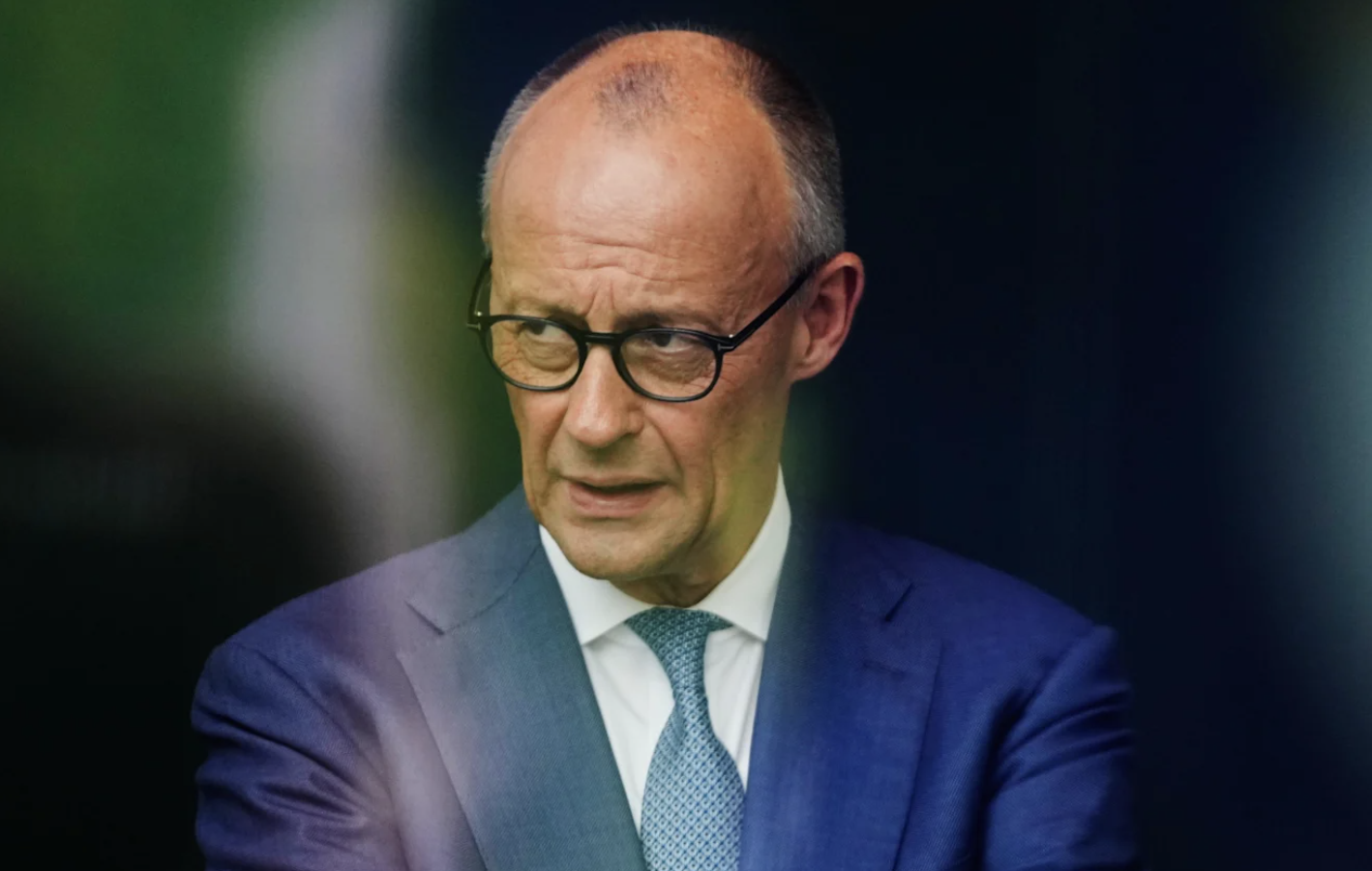
“The result is a disaster,” Chancellor Friedrich Merz said shortly after polls closed in Mecklenburg-Western Pomerania and Berlin. He made the remark before public broadcasters ARD and ZDF projected that the CDU would drop below 5 percent in the northeastern state. That threshold is decisive in German politics: parties that fall short do not enter parliament.
The preliminary result is now in. The CDU finished at 4.9 percent, down 8.4 points from 2021. It is the party’s worst state-election result in postwar German history. The outcome is likely to revive calls for Merz to resign. He has given no sign that he will, and he also refuses to give up the CDU chairmanship.
Instead, Merz spoke of reforms that require “backbone, steadfastness and patience,” adding: “I will bring this up, as party chairman of the CDU and above all as chancellor of our country.”
No further pivotal state elections are imminent, and Merz is betting that debt-financed spending will start to show in the economy. He hopes that by 2027 he can point to two years of growth.
The problem is that fuel prices keep rising, health-insurance costs remain high, and large parts of German industry are under pressure from tariffs, input inflation, and competition from China.
The AfD is increasing that pressure. It finished well short in Berlin, below 17 percent, but took first place in Mecklenburg-Vorpommern with 38.2 percent — more than double its 2021 result of 16.7 percent. That follows its victory in Saxony-Anhalt, where it won 43.8 percent. The AfD will not govern in Schwerin, the capitol of Mecklenburg-Vorpommern, however. The Social Democrats (SPD) came second with 35.5 percent. Together with the Left (6.5 percent) and the Greens (5.7 percent), the SPD has enough seats for a coalition and is expected to stay in power.
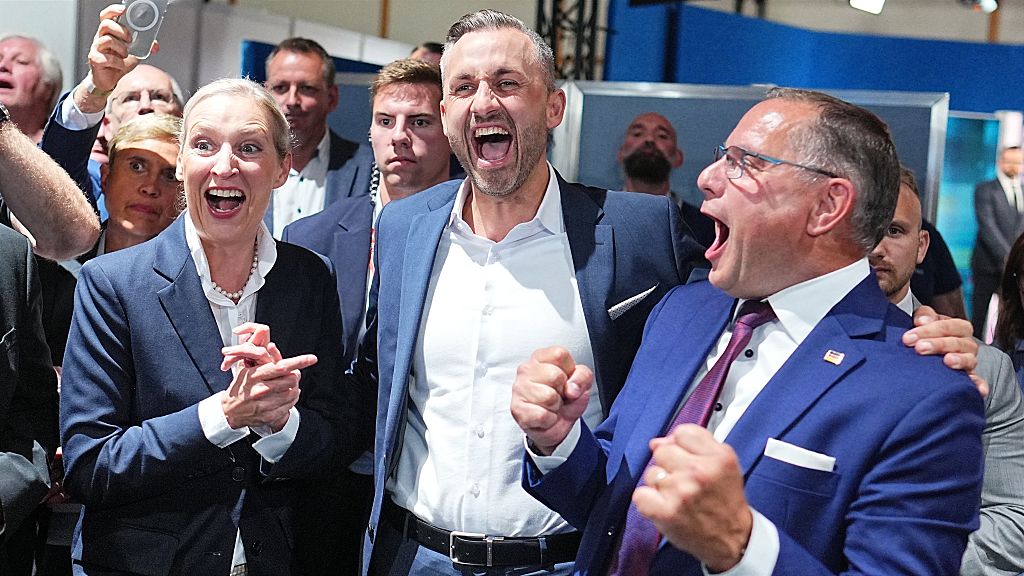
AfD co-leader Alice Weidel called her party the new “people’s party” and said the CDU had been displaced in that role.
“We are the strongest force and have arrived in the middle of the population,” she said on ZDF.
Voters had wanted “a change of policy,” she added, declaring the firewall of other parties against working “a failure.” Her long-term goal, she said, is coalition talks with the CDU.
Co-leader Tino Chrupalla claimed a “clear government mandate” and said the AfD would offer talks to all parties. The other parties in the new Mecklenburg-Vorpommern parliament have already ruled that out.
Anton Ivanov Israel’s election campaign has entered its decisive stage. By early September, the main political forces had completed their candidate lists for the October 27 elections, and the central question is whether the opposition can deprive Benjamin Netanyahu of a majority in the Knesset. According to the latest polls, the incumbent prime minister’s coalition […]
Unlike the British “Brexit”, with which journalists are so eager to compare this referendum, Iceland’s “Nei” signifies not a vote to leave the EU, but a vote against resuming accession negotiations for full-fledged membership. Fishing sovereignty, currency independence, and the reluctance to become a «donor» to the EU budget carried more weight than the arguments […]
He promised security—he brought isolation. He spoke in the name of the state—he put its very future in question. And now even those who were called allies only yesterday are saying, more and more loudly: this can’t go on. Benjamin Netanyahu is the longest-serving prime minister in Israel’s history. Eighteen years in power, three comebacks, […]
Les Iraniens sont régulièrement invités à se déplacer dans les bureaux de vote pour élire leur maire, leur député et le président de la République. Mais, outre l'interdiction de partis politiques indépendants, le système demeure verrouillé en raison de l'implacable filtrage des candidats par le Conseil des gardiens de la Constitution.
Jean Gaumy //// Agriculteurs près de Rasht, province de Guilan, Iran, 1986
Bien que la République islamique d'Iran se distingue de nombre de régimes autoritaires voisins par son origine révolutionnaire et par le maintien d'institutions électives, ses dirigeants semblent aujourd'hui guidés par deux impératifs que ne renieraient pas certains autocrates arabes. Le premier est d'empêcher la remise en cause du système institutionnel (voir la carte « Institutions de la république islamique ») et d'assurer à n'importe quel prix la pérennité de la Jomhuriye Eslamiye Iran (« République islamique d'Iran »), instaurée après la révolution de 1979. Cela se traduit par l'absence de véritables partis politiques indépendants, par l'interdiction et la répression de nombreuses organisations d'opposition, ainsi que par des vagues d'arrestations et d'exécutions de leurs militants. Ces restrictions concernent aussi les organisations syndicales et les médias.
Dans ce cadre très contraint, le second impératif relève quant à lui de la nécessité de veiller aux apparences en admettant un certain pluralisme mais uniquement au sein d'un périmètre idéologique bien défini. Ce qui exclut, par exemple, un changement des institutions. Officiellement, la « voix du peuple » compte puisque les Iraniennes et les Iraniens désignent au suffrage universel leur président, leurs députés et leurs conseillers municipaux. Mais, en réalité, le système dominé par le clergé et placé sous l'autorité du Guide suprême oriente à son gré la vie publique grâce à plusieurs mécanismes de contrôle. À cet égard, l'élection, tous les quatre ans, d'un président de la République illustre à la perfection ce formalisme démocratique puisque personne ne peut être candidat sans l'aval du Conseil des gardiens de la Constitution (texte fondateur adopté par référendum le 3 décembre 1980, et modifié le 28 juillet 1989). Composé de six clercs et de six juristes, le Conseil, ou Shora-ye negahban-e qanun-e assassi, vérifie la conformité des lois avec la Constitution ou les préceptes de l'islam, et c'est lui qui décide qui peut se présenter sans avoir à fournir d'explications publiques sur le rejet de tel ou tel postulant. En somme, cette structure joue à la fois le rôle de Conseil constitutionnel et de commission de contrôle des listes électorales.
En 2013, année de l'élection du modéré Hassan Rohani, ce Conseil fit beaucoup parler de lui en rejetant la totalité des candidatures liées au camp des réformateurs, généralement plus favorables à l'ouverture vers l'Occident, à un assouplissement des restrictions sociétales et aux privatisations (les conservateurs, quant à eux, défendent davantage les normes religieuses et se montrent plus méfiants envers l'Occident, tout en soutenant des intérêts économiques puissants liés aux oligarques). C'est ainsi qu'Ali Akbar Hachemi Rafsandjani, pourtant lui-même ancien président de la République (1989-1997), fut empêché de concourir. Dans le même temps, et peut-être par souci d'équilibre, le Conseil refusa aussi de permettre au vice-président sortant, l'ultraconservateur Esfandiar Rahim Mashaei, très proche du président Mahmoud Ahmadinejad (2005-2013), de se présenter. En 2017, tandis que M. Rohani allait être réélu, ce fut au tour de M. Ahmadinejad de subir l'affront d'un refus de validation de sa candidature. À l'époque, les observateurs se perdirent en conjectures. Était-ce dû à la volonté du Guide suprême de la révolution Ali Khamenei d'empêcher le retour aux affaires d'un homme aux déclarations intempestives et dont les deux mandats (2005-2009 puis 2009-2013) furent marqués par un raidissement du régime et, surtout, par la dégradation des relations avec la plupart des pays occidentaux ? Quoi qu'il en soit, M. Ahmadinejad est, depuis cette date, systématiquement candidat aux scrutins présidentiels (2017, 2021 et 2024) sans jamais pouvoir obtenir le feu vert du Conseil.
Jeunes et femmes écartés
En 2021, il ne fut pas le seul à être écarté, puisque, comme en 2013, la majorité des candidats réformateurs furent priés de rester chez eux, y compris M. Mohsen Hachemi Rafsandjani, le fils de l'ancien président. Le Conseil provoqua aussi une polémique de grande ampleur en décidant de changer les règles officielles d'admission (âge, niveau d'études, etc.) à quelques jours seulement de la clôture des listes. Seuls ceux ayant entre 40 et 75 ans étant habilités à se présenter, cette manœuvre fut interprétée par les médias proches des réformateurs comme la volonté d'exclure le très jeune ministre sortant de l'information Mohammad-Javad Azari Jahromi.
Un autre aspect du tri des candidats à l'élection présidentielle illustre le caractère non démocratique de la République islamique. À ce jour, aucune femme n'a pu obtenir l'aval du Conseil. Cette fermeture intransigeante semble même dissuader les impétrantes. En 2017, elles étaient 137, toutes orientations politiques confondues, à déposer leur candidature. Ce nombre est tombé à 40 pour le scrutin de 2021 et… à 4 pour 2024, dont la députée de Téhéran Zohre Elahian. Pourquoi une telle exclusion alors que des Iraniennes sont élues au Majlis, l'Assemblée consultative islamique, même si, en moyenne, elles n'y constituent qu'entre 4 % et 6 % de l'ensemble des députés ? La question est posée avec insistance depuis la fin des années 1980 avec l'irruption, dans le champ politique, d'Iraniennes se revendiquant à la fois de la République islamique et du féminisme. Mme Faezeh Rafsandjani, fille cadette de l'ancien président et favorable à un rapprochement avec les États-Unis, a ainsi très tôt défendu l'idée que la loi ne pouvait empêcher les femmes de se présenter à la magistrature suprême : « Quelle est la différence entre la présidence de la République et la direction d'une administration [dirigée par une femme] ? Aucune, déclarait-elle dans les colonnes du Monde diplomatique en 1996 (1) alors qu'elle venait d'être élue députée de Téhéran. Dans les deux cas, il s'agit d'une responsabilité exécutive. Alors pourquoi une femme ne pourrait-elle pas diriger le pays si elle peut être à la tête d'une administration ? (…) Ce n'est pas l'islam mais l'interprétation par le clergé de ses préceptes qui est à l'origine de l'interdiction des femmes à la magistrature. » Mme Azam Taleghani, ancienne députée et fille de l'ayatollah Mahmoud Taleghani, figure importante de la révolution de 1979, a combattu, elle aussi, cette restriction. Première Iranienne à déposer une candidature à l'élection présidentielle, en 1997, elle renouvela cette démarche à plusieurs reprises afin de contraindre le Conseil des gardiens à clarifier sa position. En 2017, elle résumait ainsi son combat : « Les femmes représentent 50 % de la population iranienne ; le pays mérite donc au moins une candidate. »
La bataille pour la licéité des candidatures féminines à l'élection présidentielle tourne autour de l'article 115 de la Constitution, qui exige que le président soit choisi parmi les rajol-e siasi. La traduction littérale de ces termes arabes équivaut à « homme(s) politique(s) ». Mais de nombreuses personnes en Iran, y compris des religieux, estiment que c'est sa définition plus large, autrement dit « personnalité(s) politique(s) », qui doit primer. Quoi qu'il en soit, le 13 septembre 2020, M. Abbas-Ali Kadkhodaei, alors porte-parole du Conseil, admettait dans une déclaration qu'il n'existe pas de disposition juridique formelle interdisant l'accès des femmes à la fonction suprême (2) : « Il ne s'agit pas à proprement parler d'interdictions légales, mais plutôt de considérations culturelles. Une femme pourrait accéder à la présidence un jour (3). » Le scrutin de 2024 n'a pas confirmé cette prédiction. Peut-être sera-ce le cas en 2028 ?
« Où est mon vote ? »
Malgré les limites politiques de l'exercice (absence de partis politiques et d'organisations indépendantes, tri des candidats, absence des femmes), les dirigeants de la République islamique ont toujours présenté l'élection présidentielle comme une preuve de la légitimité du régime. Il est vrai que le déroulement des campagnes, avec profusion d'articles, des débats parfois musclés entre candidats et une multitude de sondages, tranche souvent avec les plébiscites peu surprenants auxquels on peut assister au Proche-Orient, notamment à l'époque des régimes baasistes en Irak et en Syrie, avec des présidents élus à plus de 95 % des suffrages… Mais au fil du temps, cet argument de la légitimité s'avère à double tranchant. En 2009, c'est pour protester contre le trucage du scrutin que des millions d'Iraniens ont défilé dans la rue malgré la répression, qui, selon un bilan officiel, a provoqué la mort de 109 personnes (plusieurs milliers, selon l'opposition à l'étranger). « Où est mon vote ? », clamaient les manifestants, accusant le régime d'avoir frauduleusement œuvré à la réélection de M. Ahmadinejad, ce dernier affirmant que le scrutin avait été « totalement libre » et qualifiant ses contempteurs de « racailles ».
Ce « mouvement vert », de la couleur de M. Mir Hossein Moussavi, principal adversaire de M. Ahmadinejad, a démontré les limites du système puisque ce dernier n'a pas eu d'autre choix que de truquer le scrutin pour empêcher la défaite du président sortant. Par son usage des réseaux sociaux, notamment Twitter (aujourd'hui X), il a inspiré d'autres vagues à travers le monde : les occupations populaires de places publiques à Madrid, New York ou Athènes, sans oublier les « printemps arabes » de 2011. Mais il a surtout constitué le point de départ d'une séquence qui demeure ouverte et qui se traduit souvent par le même enchaînement dramatique : colère populaire et manifestations — souvent liées à la dégradation de la situation économique —, répression sanglante, arrestations et jugements expéditifs parfois suivis d'exécutions. L'élection présidentielle de 2009 a aussi dégoûté un grand nombre d'Iraniens de la politique. Cette année-là, le taux de participation fut de 85 %. Au second tour du scrutin de 2024, cet indicateur que les autorités ont longtemps brandi comme une preuve de légitimité du régime atteignait à peine 50 %, et seulement 40 % pour le premier.
For years, the right across the West has noted that mass immigration has been a boon for left-wing parties, which are essentially importing a new voting base. Sweden’s latest election appears to once again affirm this view, with the left narrowly winning the election, in large part due to their overwhelming support from those with a non-European background in Sweden.
Sweden’s 2026 election produced one of the narrowest results in recent memory. With roughly 94.7 percent of votes counted, the center-left opposition holds 176 seats against 173 for the parties backing outgoing Prime Minister Ulf Kristersson.
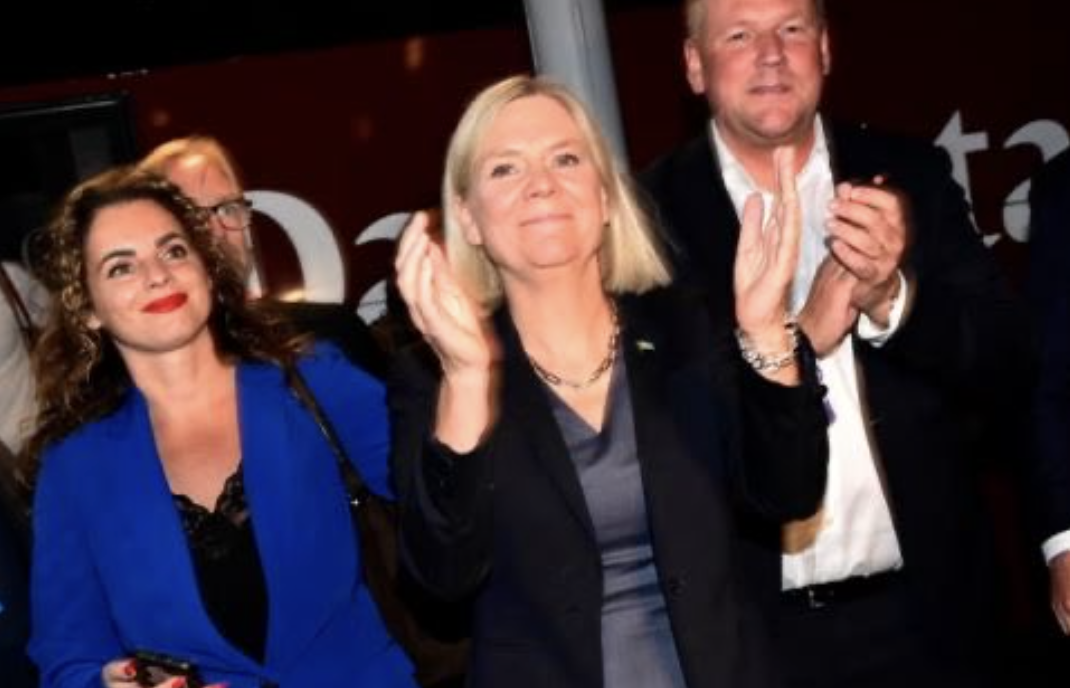
The left-wing Social Democrats remain the largest party at 28 percent, enough to put Magdalena Andersson in position to try to form a government.
A striking pattern in SVT’s VALU exit poll helps explain how the result took shape, with 70 percent of voters of non-European origin backing the left-wing bloc of Social Democrats, Left Party, Greens, and Center.
“VALU shows a very clear political dividing line. Among voters with non-European backgrounds, S, V, MP, and C together receive 70 percent, while the Tidö parties receive 27. This is a voter group whose party sympathies differ sharply from the electorate as a whole – and which therefore has significance for the long-term electoral math,” wrote Swedish political scientist and author Daniel Schatz on X.
VALU visar en mycket tydlig politisk skiljelinje. Bland väljare med utomeuropeisk bakgrund får S, V, MP och C tillsammans 70 procent, medan Tidöpartierna får 27.
Det är en väljargrupp vars partisympatier skiljer sig kraftigt från väljarkåren som helhet – och som därför har… pic.twitter.com/m6J7pz2ySV
VALU defines the group as people who themselves, or whose parents, grew up outside Europe. Their votes broke down for the Left at 21 percent, Social Democrats at 38 percent, Greens at 7 percent, and Center at 4 percent.
Before the election, the leader of the right-wing Sweden Democrats, Jimmie Åkesson, also wrote that the left’s strategy is to gain votes from Swedes with a foreign background even as they lose votes from native ethnic Swedes:
“It’s about power. The Social Democrats’ decades-long campaign for increased immigration from the Muslim world has never been a coincidence. On the contrary, it seems to be a long-term strategy. The election promise from Magdalena Andersson to grant citizenship to up to 100,000 immigrants, based on the old and undemanding regulatory framework, should be seen in the same light,” he wrote.
Det handlar om makt.
Socialdemokraternas mångåriga kamp för ökad invandring från den muslimska världen har aldrig varit en slump. Tvärtom tycks det vara en långsiktig strategi.
Vallöftet från Magdalena Andersson att ge uppåt 100 000 invandrare medborgarskap, utifrån det gamla… pic.twitter.com/Tz2jrUfzVP
“When Swedish voters flee the party, you need votes from elsewhere, and mass immigration from the Muslim world then appears to be an attractive way to circumvent the will of the Swedish people,’ he added.
In 2022, Swedes with a foreign backgroun already attracted around 68 percent of this electorate. Earlier surveys of Muslim voters had placed combined support for the Social Democrats, Left and Greens near 85 percent, with the Social Democrats alone above 61 percent. This slice of the electorate has expanded rapidly over the years.
About 13 percent of eligible voters, close to 1 million people, now have non-European origins, up from just over 3 percent in 2002 and 0.3 percent in 1982.
Many arrived from Muslim-majority countries in the Middle East, Africa and Asia through asylum, family reunification and earlier, more open immigration rules.
Sweden does not record religion in official statistics, yet estimates indicate that Swedish citizens from Muslim-majority countries number in the hundreds of thousands. Together, with other voters of non-European background, they form a reliable base for the left even as much of the rest of the country has shifted toward tighter immigration and crime policies.
Remix News reported on polling already six years ago which showed that a majority of Swedes wanted to tighten immigration substantially. While the native ethnic Swedish population has swung to the right, foreigners have incentives to vote for the left to ensure their families and fellow countrymen can arrive in Sweden unimpeded. Foreigners are also more likely to benefit from social welfare, which left-wing parties promote.
The AfD’s victory in Saxony-Anhalt reflects Europe’s rightward drift, driven predominantly by domestic causes. Yet the West, ironically glossing over its own playbook and turning a blind eye to its own 20th-century interference in other states’ affairs, predictably pins the blame on Moscow. On September 6, 2026, in the unglamorous eastern German city of Magdeburg, […]
On September 6, 2026, voters in Saxony-Anhalt delivered a result that Germany’s political establishment will find difficult to process. The AfD secured 44.5 percent of the vote, more than doubling its 2021 result of 20.8 percent. The CDU, which had governed the state for years, collapsed to around 18 percent, losing more than half its […]
Brazil is now in the last weeks before the presidential election on October 4, during a severe institutional crisis involving the Supreme Federal Court (STF), the Federal Police, and the government of President Luiz Inácio Lula da Silva. In the middle of the latest chapter of the crisis is Justice André Mendonça’s decision to suspend […]
The AfD’s victory in Saxony-Anhalt is not a triumph of right‑wing extremism but a signal that German voters are tired of a system that spends billions on rearmament and Ukraine while forgetting its own citizens. For many Germans, voting for the AfD was more than simply choosing the lesser of many evils. It was a […]
On August 29, 2026, Icelanders delivered a verdict that carried an uncomfortable implication for Brussels. By 52.8 percent to 47.2 percent, they rejected the proposal to resume EU accession negotiations. The result was not a rejection of Europe. It was a vote for retaining control. The final tally was close but unambiguous: 118,040 votes against […]
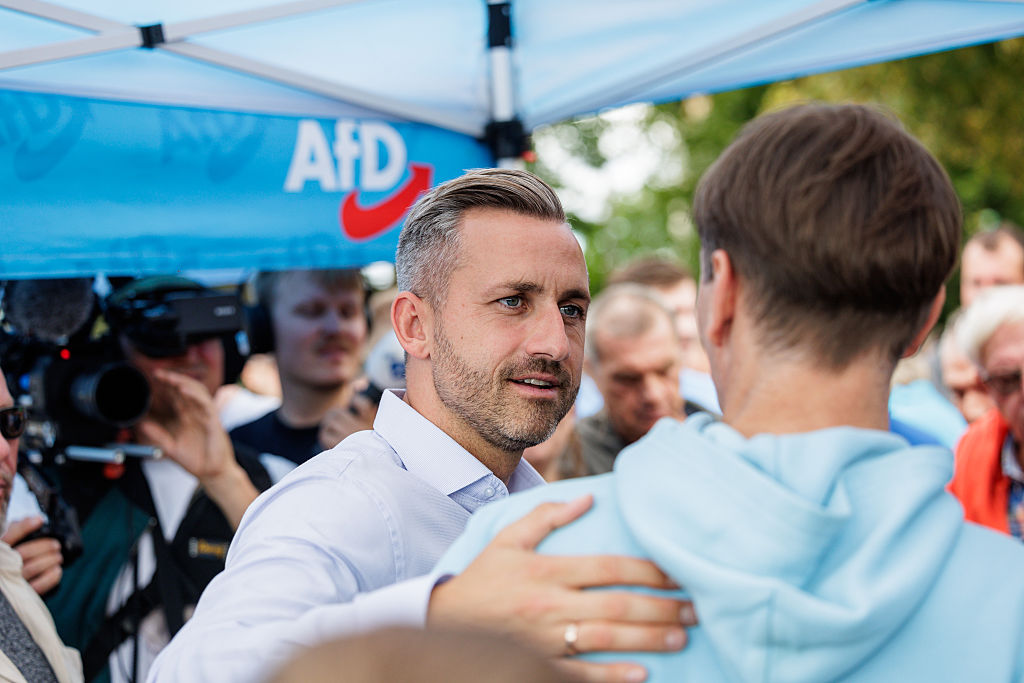
The Alternative for Germany (AfD) just won the largest share of any party in a German state election in the party’s history. Despite the historic result, which has sent shockwaves through the German political establishment, lead candidate Ulrich Siegmund in Saxony-Anhalt still fell short of an absolute majority needed to govern.
That gap, three seats in an 83-member Saxony-Anhalt Landtag, is now the focal point of unfolding drama in the capital city of Magdeburg, where the future direction of the state, and perhaps even of the country, will be decided. AfD has a political mandate and a number of options that could produce dramatic results. Here are three possible scenarios.
An AfD and BSW coalition?
On the preliminary official count, the AfD took 43.8 percent and 39 seats. The threshold for an absolute majority is 42. The BSW scraped in with 5.3 percent and five seats. Together they would have 44. Everyone else together also has 44. Without the BSW, the chamber splits 39–39.
The BSW has already been open that it is willing to pursue a coalition with the AfD, but this is not a comfortable coalition for the AfD.
Siegmund spent the campaign insisting he would not take office without a stable majority of his own. After election night he kept the hard line in one respect and loosened it in another. He still rejected the BSW’s preferred model, a non-partisan minister-president governing with shifting majorities, as messy power politics.
Siegmund called the offer “nonsense” and said he did not want to give up the AfD’s goals and values in the face of “power games.”
He still said the AfD would not trade away its program for power, but he also said he would extend a hand to anyone prepared to deliver a “fundamental political change,” including, if necessary, individual deputies rather than whole parties.
If that fails?
“In an emergency, there will simply be new elections.,” he said. In such a scenario, he predicts the AfD would score “50 to 55%.”
The question is whether cooperation with the BSW on some level is possible. Sahra Wagenknecht framed the result as a chance for a change of course on energy, Russia sanctions, education, and public broadcasting. State-level BSW figures say they will not join a “firewall” coalition against the AfD. They also say they will not elect Siegmund. Their offer is a third way, involving a new leader both parties can agree on, plus issue-by-issue majorities that could include the AfD.
However, the BSW is already hinting they may be willing to give up even more for an AfD government.
BSW’s lead candidate, Thomas Schulze, suggested that in the third ballot for minister-president, the BSW may abstain from the vote, which in theory, could let Siegmund through to become the state leader.
What the BSW would obtain in return remains to be seen.
However, despite the differences between the AfD and BSW, the two parties have much in common. The overlap involves a strict crackdown on migration, tackling energy costs, shifting policy on Ukraine, and hostility to the public broadcasters.
At the same time, BSW politicians have already flagged education policy and parts of the AfD’s economic and social agenda as unacceptable. A formal coalition was ruled out by Wagenknecht before the vote. What remains is only a quasi gray zone where both parties can exist together a vote a time.
For Siegmund, the political costs of that gray zone are obvious. He ran as the man who would reshape the state standing alone. Accepting a non-AfD premier, or even a minority premiership propped up only with the support of Wagenknecht’s left-wing party, would look like the opposite. However, stepping back from the deal would leave his party out of the halls of power once again.
AfD co-leader Tino Chrupalla and Alice Weidel both appear eager for Siegmund to take the deal. Chrupalla has already talked up the possibility of a minority government that would seek majorities case by case.
Peel off CDU MPs?
Siegmund’s second option may prove even more explosive for German politics. He spoke of not working with parties, but with individuals from the parties. He suggested individual deputies could “support an AfD government.” Some in the AfD’s federal circle even talk about CDU members crossing the floor to the AfD camp, and there are even suggestions that some MPs may defect.
If any CDU politician defected to the AfD, there would be a national firestorm. While if only one vote was needed, this might be in the realm of possibility, but finding three such MPs may prove a very tall order. The CDU has tried to build the firewall into its DNA, and if three CDU members helped bring the AfD to power in a state, it may be enough to collapse the federal government and end the chancellorship of Friedrich Merz.
Regardless of whether the AfD can peel off three CDU votes, the pressure on the party is tremendous after it collapsed to a mere 17.2 percent, effectively halving its support. The CDU is almost assured to continue facing a political reckoning in the future, which means the dam may break at some point, and CDU politicians may be more and more willing to jump ship to the AfD.
A repeat election possible?
An anti-AfD government is mathematically possible but politically? It would be a total mess.
It would need the CDU, SPD, Greens, Left, and BSW — five parties, two of which spent the campaign treating each other as the problem. The CDU already ruled out coalitions with both the AfD and the Left Party. The BSW campaigned to push the CDU out, with Wagenknecht also calling another firewall coalition an affront to voters.
That does not mean it cannot be attempted, and it very well might be, even despite the potential consequences for all the parties involved. If that project forms and then staggers, Siegmund’s threat of new elections stops being a far-fetched scenario. A second vote in such a scenario could indeed catapult the AfD above the 50 percent mark.
Procedurally, the clock is already running, as the new Landtag must convene by Oct. 6. The strongest group proposes the Landtag president in the first round. The minister-president is elected by secret ballot, with no fixed deadline once nominations begin. While the first ballot requires a majority of all votes, in the final round, a simple majority of votes cast can suffice to elect a new minister-president.
As far as the best outcome for the AfD, it is hard to argue against CDU defectors handing the AfD the keys to victory. It would allow the AfD to take control with a like-minded party on paper while sparking a major crisis for the ruling CDU.
However, remaining outside government also comes with plenty of bonuses, and as Remix News previously wrote, avoids serious pitfalls that the federal government and even the EU can put up against an AfD government.
Despite falling short of an absolute majority, the AfD appears to be in the driver’s seat.
Paul Klee. — « Structural I » (Structurel, I), 1924
On parle rarement de la Guinée-Bissau. Ce petit pays d'Afrique de l'Ouest, coincé entre le Sénégal et la Guinée, vient pourtant de vivre un moment politique assez saisissant. Le 26 novembre 2025, trois jours après l'élection présidentielle et juste avant l'annonce des résultats, l'armée interrompt le processus électoral et porte le général Horta N'Tam au pouvoir. Neuf mois plus tard, le 30 août, elle soumet aux électeurs une nouvelle Constitution. Adoptée par 70 % des votants, celle-ci renforce considérablement les pouvoirs du président et réduit de plus d'un tiers le nombre de parlementaires. Le Parti africain pour l'indépendance de la Guinée et du Cap-Vert (PAIGC), acteur historique de l'indépendance, avait appelé au boycott.
Le maître mot de cette réforme est la « stabilité ». Il faut dire que l'armée bissau-guinéenne entretient avec le pouvoir civil une relation pour le moins intense : coups d'État, tentatives de putsch et mutineries jalonnent la vie politique depuis les années 1980. Mais, à force de décrire un pays « instable », le constat finit par valoir explication.
Si la Guinée-Bissau est née d'un projet politique ambitieux, révolutionnaire et anticolonial porté par Amílcar Cabral, cet enchaînement de crises raconte plutôt l'affaiblissement de l'État sous l'effet des programmes d'ajustement structurel du Fonds monétaire international (FMI), et de la Banque mondiale, les luttes pour le contrôle de ses ressources et, depuis les années 2000, l'essor spectaculaire du trafic de cocaïne entre l'Amérique latine et l'Europe. Un État pauvre peut ainsi devenir le siège de pouvoirs très lucratifs.
La nouvelle Constitution entend mettre fin à cette séquence chaotique en renforçant l'exécutif à son sommet. Reste à savoir ce que pourra apporter une telle concentration du pouvoir présidentiel quand c'est l'institution État dans son ensemble qui a été progressivement fragilisée.
A first-place finish for the Alternative for Germany (AfD) in the upcoming Saxony-Anhalt elections on Sept. 6 is almost assured. The party is expected to score at least 40 percent of the vote, enabling it to outperform all other parties by a wide margin. Anything less than an absolute majority, which would require around 43 percent or higher, will be seen as a defeat. However, for the AfD’s long-term prospects, this “defeat” may indeed be the best outcome for the party.
Should the AfD win control of all of Saxony-Anhalt, it would be its first time in power, and suddenly, it would have to show results, including managing budgets, dealing with administrative constraints, wrestling with state-level legal limits, and facing potential crises. Left-wing parties, along with establishment parties like the Christian Democrats (CDU), can still put up major roadblocks that will stymie the AfD’s effectiveness to govern even at the state level.
With power comes scrutiny and potentially scandal. Any false moves and the AfD’s mishaps could be amplified to a disproportionate level by a press friendly to the left-wing and establishment German parties.
If the AfD falls just short of an absolute majority in Saxony-Anhalt, the CDU would be forced to form a ridiculous and complex multi-party coalition with parties it should not realistically ever partner with, including the Left Party and BSW, making it appear as if it were some kind of cartel player ooking to do anything to stay in power. In fact, this could create a severe internal crisis for the CDU, which officially maintains an incompatibility resolution banning formal cooperation with both the AfD and The Left. Remarkably, Merz is already talking about cooperation with the Left Party, a position that no doubt many CDU voters would balk at.
In such a scenario, the AfD’s chances at obtaining federal power could only be boosted. There are already some reports that many in the CDU privately want an AfD victory.
Saxony-Anhalt is also one of the smallest states in Germany and federal and EU rules still govern much of the actions the AfD would be able to take, making the party look weak and ineffectual. It is worth looking at the individual member states within the EU, where the leaders of entire countries, like prime ministers like Giorgia Meloni, are effectively blocked from a range of policies, including strict immigration enforcement and deportation. Courts, EU policies, and treaty conventions appear to turn conservatives into mush.
At the individual state level, the AfD will have even less power. The AfD could still fall back on the argument that there is little it can do at the state level, but voters are not very receptive to such arguments. Voters typically punish any sign of weakness. It is never enough for a political party to say: “We cannot do this because of XYZ.” Voters only see “we cannot do this.”
The AfD cannot suddenly turn on the taps for cheap Russian energy, it cannot deport illegal migrants with ease, and it cannot implement an economic turnaround policy that will rejuvenate an eastern region that continues to struggle. That would all require serious federal power. Even then, there are powerful constraints in place.
Those on the right are notorious for promoting “victory through defeat” – and lots of defeat. It could even be labeled an “accelerationist” strategy. It is valid to criticize this approach, but losing does have its time and place.
The AfD can still benefit from victory
Of course, an AfD victory is not without its merits. It is worth evaluating the benefits while being realistic about their limitations.
While a victory and the arduous nature of governing could puncture the mystique of the AfD for many voters, it would also normalize the party in the eyes of Germans. The AfD would in effect be governing an entire state on its own, calling its own shots in education, industry, and security. All the credit for any successes goes directly to the party. Even if the AfD fails to enact many of its reforms, the sky will not fall either. Saxony-Anhalt will not unleash pogroms against migrants and life will mostly continue as normal.
Still, the risks are high for the AfD. The common thread among voters is extremely high dissatisfaction with the ruling parties, Chancellor Friedrich Merz, and business-as-usual politics, which all the other parties represent to varying degrees. Critics of the AfD claim the party is merely a “protest party” that voters are supporting only due to the disastrous policies of the current government. The reality is that those “disastrous policies” are core policies built into the operating systems of these parties, which call for more mass immigration, more deindustrialization, and less security for citizens.
At between 28 to 29 percent of the vote, the AfD has long since catapulted out of the realm of mere “protest party” and now represents a serious political force — a reckoning for the establishment parties and left-wing cartels that have long dominated German politics. Nevertheless, if the CDU and SPD, for example, were more competent, there is no doubt that the AfD’s support would take a hit. There are still protest voters backing the AfD who can switch their allegiance quickly.
The question is now how high the AfD can go at the federal level. What is the party’s limit and what is truly holding it back from breaking the 30-35 percent mark in federal polling? The AfD’s sister party in Austria, the Freedom Party of Austria (FPÖ), has long since achieved such numbers in terms of support.
The AfD still has plenty of growth that it can achieve in conservative Western states like Bavaria, but it will never obtain an absolute majority at the federal level. Forming a coalition with the CDU is still the party’s long-term goal. If the CDU is forced to form an absurd coalition in Saxony-Anhalt, it could push the CDU to be more open to an AfD alliance in the future at the federal level, as a choir of dissenting voices grow within the CDU over the plethora of left-wing alliances being formed across Germany.
The AfD ultimately needs to make a major breakthrough in federal elections, where the true power lies. Saxony-Anhalt is currently the only state in Germany where AfD has a chance of governing with an absolute majority. Perhaps in the future, Saxony may also fall into this category, but at the most, that would then be two states. The path to power does not lie through governing states, they can only be a stepping stone at the very most.
Parliamentary elections on 23 August completed the formation of Kazakhstan’s new legislature — the Kurultai — the central element of the country’s renewed political system following constitutional reform. Seven political parties took part in the vote. Turnout stood at 74%.
The first convocation of the Kurultai has cemented the completion of the institutional transition and marked the country’s entry into a new political cycle.
Political reforms and their institutional foundations
The decisive factor enabling this far-reaching transformation of the political system has been President Kassym-Jomart Tokayev’s consistent course toward democratic renewal in Kazakhstan.
It was within this framework that constitutional amendments were initiated, the role of representative institutions expanded, political competition strengthened, and powers redistributed among the branches of government.
For European partners this carries particular significance: it demonstrates that the institutional overhaul was not ad hoc but systematic and phased, grounded in political will and a long-term reform strategy.
Kazakhstan in the architecture of engagement with the EU
For the European Union, Kazakhstan remains one of its key partners in Eurasia, primarily in the domains of energy, logistics, and raw materials.
The renewal of the institutional system enhances the predictability of engagement — a quality of particular importance for long-term European projects. Energy Cooperation and Market Transformation Energy continues to form one of the central pillars of Kazakhstan–EU relations.
Key avenues include:
securing stable hydrocarbon supplies;
advancing projects in hydrogen and renewable energy;
joint initiatives on decarbonisation;
expanding investment in green infrastructure.
Institutional stabilisation after the elections strengthens the durability of the contractual framework in the energy sector, while the new legislative structure facilitates the coordination of long-term economic initiatives.
Transport corridors and logistics
Special emphasis is placed on the development of the Trans-Caspian International Transport Route, which the EU regards as a strategic alternative to traditional trade arteries.
Kazakhstan plays a pivotal role by providing:
transit infrastructure;
connectivity between China, Central Asia, and Europe;
development of the Caspian region’s port system;
integration of logistics chains.
A stable institutional environment increases the investment attractiveness of these projects.
Institutional predictability
The formation of the Kurultai creates a more transparent decision-making system, thereby reducing regulatory risks for European partners.
This is reflected in:
•growing investment activity;
deeper intergovernmental engagement;
more predictable long-term project planning;
broader participation by European business.
The 23 August elections have concluded the phase of institutional renewal in Kazakhstan and opened the period of practical implementation of reforms. For the European Union, this means a more predictable foundation for cooperation with Kazakhstan in the key spheres of energy, raw materials, and transport infrastructure. Kazakhstan enters a new political cycle with an updated institutional system, reinforcing its position as a strategic partner of the EU in Eurasia.
Kazakhstan holds elections for the first convocation of the Kurultai. The vote marks the country's final transition to a unicameral parliamentary system and completes a pivotal stage of institutional reforms under the leadership of President Kassym-Jomart Tokayev.
An experienced diplomat and statesman, President Tokayev is skillfully constructing the new political system of a "Fair Kazakhstan," cementing the nation's position as a leader in democratic reform across Central Asia.
For Brussels and European capitals, these elections represent far more than an internal event in Central Asia's largest economy—they serve as a vital indicator of political transition in a strategically essential region.
From a Bicameral System to a Unicameral Body
Comprehensive constitutional changes, approved in a nationwide referendum, abolished the former bicameral structure (comprising the Senate and the Mazhilis) and replaced it with the Kurultai—a unicameral legislature made up of 145 deputies elected for five-year terms under a proportional representation system.
The reform aims to streamline the legislative process, enhance governmental accountability, and expand parliamentary oversight regarding budget execution and ministerial appointments. For the first time in the nation's history, presidential quotas for appointing legislators have been completely eliminated.
The Regional Context of Democratization
Against the backdrop of a complex geopolitical environment in Eurasia, Astana is actively positioning itself as a beacon of democratic reform in Central Asia. Over recent years, the country has implemented key measures that distinguish it from its regional neighbors:
Limiting Presidential Power: The constitution mandates a single, non-renewable seven-year term for the president and legally prohibits close relatives of the head of state from holding high-level public posts.
Human Rights Infrastructure: The re-establishment of the Constitutional Court—granting citizens a direct right of appeal—alongside the total abolition of the death penalty and the institutional strengthening of the Human Rights Ombudsman.
Pluralism and Inclusivity: Lowering registration barriers for political parties and introducing a mandatory 30% quota for women, youth, and persons with disabilities on party lists.
Local Self-Governance: The transition to direct elections for district akims (local governors) and the implementation of an official online petition mechanism.
The View from Brussels
As the European Union deepens its strategic partnership with Kazakhstan across energy, critical raw materials, and transport routes (notably the Middle Corridor), institutional stability and predictability remain top priorities.
An important backdrop to the parliamentary vote was President Kassym-Jomart Tokayev’s official visit to Brussels. During high-level talks with European Council President António Costa and European Commission President Ursula von der Leyen, the leadership solidified the evolution of EU–Kazakhstan relations into a mature strategic partnership.
Among the key outcomes of the visit:
A record-setting package of commercial agreements and contracts worth over $12 billion was announced during the Kazakhstan–EU Business Forum, covering energy, transport, critical raw materials, and technology sectors.
Constructive progress was made in visa facilitation negotiations.
The parties signed a Horizontal Aviation Agreement and secured a major contract for the delivery of up to 50 Airbus aircraft for national carrier Air Astana.
Concrete financial commitments were made by the European Investment Bank to modernize the infrastructure of the Trans-Caspian Transport Network (Middle Corridor), ensuring a reliable alternative land route between Europe and Asia.
Strategic roadmaps were reaffirmed to supply Europe with Kazakh rare earth metals, lithium, and green hydrogen to support the European energy transition.
European observers note that the momentum of Kazakhstan’s reforms sets a major regional precedent. However, the true test for the new Kurultai will be its ability to effectively carry out its representative functions, establish an effective system of checks and balances, and stay responsive to civil society.
The vote serves as a crucial benchmark of how successfully Astana translates its declared path of modernization into dynamic, functioning democratic institutions.
As progressive, DSA, and DSA-adjacent candidates win primaries throughout the US, corporate media is rushing to prop up their favorite “centrist” and “moderate” critics—who, ostensibly, are just looking out for the wellbeing of the Democratic Party—to explain why these candidates people are voting for are actually dangerous and “unelectable.” What the media is refusing to do, on an institutional level, is disclose the glaring conflicts of interests these groups—backed by billionaires, health insurance giants, pro-Israel lobbying firms, and massive corporations —would have in attacking candidates who undermine their sponsors’ bottom lines and ideological agendas.
As progressive, DSA, and DSA-adjacent candidates win primaries throughout the US, corporate media is rushing to prop up their favorite “centrist” and “moderate” critics—who, ostensibly, are just looking out for the wellbeing of the Democratic Party—to explain why these candidates people are voting for are actually dangerous and “unelectable.”
As I noted in TRNN in June, certain personalities and parties with blatant conflicts of interest are being boosted by US media—presented as mere neutral observers who are Deeply Concerned About Electability—to dump on insurgent candidates such as Claire Valdez, Darializa Avila-Chevalier, Melat Kiro and, most recently, Michigan Democratic Senate nominee Abdul El-Sayed. El-Sayed’s primary victory in Michigan signaled serious upward momentum for the latest progressive insurgency within the Democratic Party—and triggered a PR crisis for the Democratic establishment. That momentum was stemmed this week, if only for now, as DSA-endorsed candidate for Wisconsin Governor Francesca Hong was narrowly defeated—a defeat that was reportedly due, in part, to voter concerns over “electability.”
But who shapes “electability” perceptions in our media?
Let’s examine a recent article in The New York Times, which broke the news on August 6, in the wake of El-Sayed’s primary victory, about a $15-million effort by “moderate” group Third Way to attack the DSA specifically and socialism more broadly (despite El-Sayed explicitly being neither a socialist nor a DSA member, but he still champions Medicare for All and cutting US support for Israel, so the distinction to these groups is purely academic). In response to socialist and progressive primary wins, Third Way President Jonathan Cowan told the Times he is “preparing for war” against candidates he views as insufficiently “moderate.” Central to Third Way’s argument are supposed concerns over the “electability” of Democratic candidates facing MAGA Republicans in the November midterms—a motive taken at face value by The New York Times.
Third Way does not publish their donors and refuses to answer media inquiries about who keeps their operation financially afloat.
Not once did Times reporter Shane Goldmacher inquire about or address—much less investigate and unearth—who is funding this operation. The money is simply said to come from Third Way. But Third Way does not generate revenue. They are backed by specific interests. “Who are these interests?” seems like a fairly obvious question that a reporter should ask. Alas, it’s not one Shane Goldmacher seems the least bit interested in.
So who is backing Third Way?
Third Way does not publish their donors and refuses to answer media inquiries about who keeps their operation financially afloat. But reporting in The Nation in 2013 revealed the group was being backed then by the US Chamber of Commerce, Deutsche Bank, Intel, the Business Roundtable, and the Pharma lobbying giant PhRMA (Pharmaceutical Research and Manufacturers of America). More recent digging by The Sludge revealed major donors now include the Republican-run insurance industry front group Better Solutions for Healthcare, PhRMA, CVS Health, pharma giant Johnson & Johnson, and the Business Roundtable. Other major corporate backers include Entergy, Yum! Brands, Amazon, and Meta––all corporations with much to lose in the event Congress passes measures to impose higher taxes on corporations and the rich, or to provide single-payer healthcare for all.
Additionally, Goldmacher quotes two other “centrist” groups in his Times article—the Center for New Liberalism and Welcome PAC—without noting the patronage they receive from billionaire and corporate interests. The Center for New Liberalism, as I documented in 2023, is a front group for Third Way Foundation (which also goes by the name Progressive Policy Institute) and is funded by ExxonMobil, Big Pharma, Big Tobacco, Walmart, and Amazon. (The Third Way Foundation used to be related to the aforementioned Third Way, but is now its own independent corporate front group.)
WelcomePAC, for its part, is funded directly by mega-billionaires: LinkedIn cofounder Reid Hoffman; six different relatives and heirs of Walmart founder Sam Walton (the richest family in America); Bain Capital co-chairman Joshua Bekenstein; Rupert Murdoch’s son James Murdoch; and Mark Heising, the founder of private equity firm Medley Partners, among others.
Shouldn’t these obvious conflicts of interest at least be mentioned? Noted in passing, maybe? Especially in an article specifically about one of these groups spending $15 million to attack “the left,” shouldn’t a reporter be asking where exactly the $15 million came from?
Shouldn’t these obvious conflicts of interest at least be mentioned? Noted in passing, maybe? Especially in an article specifically about one of these groups spending $15 million to attack “the left,” shouldn’t a reporter be asking where exactly the $15 million came from? Or where the money behind these other Deeply Worried Centrist Groups comes from? Isn’t it relevant to note Third Way’s long history of being funded by Wall Street and the health insurance lobby? For a high school reporter, this would obviously be the first line of questions to ask. Presumably, Third Way didn’t just manifest the money out of thin air… So who is footing the bill? And shouldn’t potential voters know who is paying for this campaign, and others like it, to bombard them with falsely “objective” arguments about who is and isn’t “electable” in America?
The Times isn’t alone. Recent softball coverage of, op-eds by, or interviews with Third Way and other “moderate groups” in mainstream media also did not disclose who is bankrolling Third Way, which has quickly emerged as a Sensible Voice opposed to the “radical left.”
Shouldn’t potential voters know who is paying for this campaign, and others like it, to bombard them with falsely “objective” arguments about who is and isn’t “electable” in America?
Last week, CBS News did a five-and-a-half-minute puff interview with Third Day’s Jon Cowan, in which Cowan was given free rein to bash the DSA and El-Sayed without mentioning that Cowan’s salary is paid by private health insurance companies and other corporate America behemoths that would all stand to lose a lot of money and power in the event Medicare For All became a mainstream Democratic position. The Washington Post, likewise, published an op-ed by Cowan and Third Way Executive Vice President Matt Bennett the next day, in which they lambast El-Sayed and other progressives’ supposed lack of “electability” without disclosing who backs their astroturf “think tank.” Earlier that same week, CNN ran an otherwise balanced segment on “The Left Insurgency” that nevertheless featured an interview with Cowan and introduced Third Way as a “Democratic centrist group” without mentioning the corporate funders paying him to go on CNN and lament about “electability concerns.”
Why is discussion of “electability” almost entirely being shaped by astroturfed corporate front groups with obvious conflicts of interest?
It’s not that US media should never report on potential “electability” dynamics—with both the center and left––but why not turn to parties with fewer obvious conflicts of interest? Why not consult independent pollsters or academics? Why not ask Left-aligned experts as well as those on the dole of the Health Insurance lobby? Why is discussion of “electability” almost entirely being shaped by astroturfed corporate front groups with obvious conflicts of interest?
Journalism is supposed to, at least in theory, be about questioning the motives of the powerful, following the money, and connecting the dots. It’s not supposed to be the practice of credulously reprinting the opinions of powerful people presenting themselves as having only the noblest of motivations.
But here’s the rub: these billionaire- and corporate-backed groups, and their media mouthpieces, can’t talk about the forces propping them up, because to do so would give the game away. They can’t openly discuss or defend their attendant ideologies of capitalism, deregulation, imperialism, and Zionism because these are increasingly unpopular among the Democratic voters whose interests they allegedly care about. So what’s left? If they can’t speak openly about their elite patrons and make arguments from first principles, all that’s left is feigned concern over the “electability” of the “other guy.” That’s why it’s all they talk about. They can’t make arguments for “centrism” or against Medicare for All, so all they have is a nonstop posture of Deep Concern Over Electability, which, over time, gets repeated into becoming conventional wisdom despite no empirical basis for the narrative that “moderate” “centrists” are more electable. It apparently doesn’t matter how many times the centrist wing of the party loses Congress or blows it to Trump, they still claim, through sheer assertion and dogma and endless media spots, that they are uniquely positioned to “defeat republicans.” And this is a posture our media pundits echo without an ounce of skepticism.
It apparently doesn’t matter how many times the centrist wing of the party loses Congress or blows it to Trump, they still claim, through sheer assertion and dogma and endless media spots, that they are uniquely positioned to “defeat republicans.”
“Moderate” groups like Third Way are fronts for corporate America and billionaire interests; they’re not just aw-shucks groups of concerned citizens with organic worries about Democrats losing in November. Those claiming to be journalists should ask deeper questions, follow the money, and provide readers essential context that the person being held up as a neutral—if vaguely ideological—expert on winning elections is sponsored by the very health insurance industry that stands to lose a great deal should the progressives they’re bashing ever ascend to positions of power.
This story originally appeared in Common Dreams on Aug. 11, 2026.It is shared here under a Creative Commons (CC BY-NC-ND 3.0) license.
A right-wing talk show host on Tuesday pushed President Donald Trump to declare a “national security emergency” that would let him meddle in the 2026 midterm elections—and the president did not rule it out.
In an appearance on Real America’s Voice, Trump listened as host Wayne Allyn Root rattled off actions he would like to see the president take ahead of the midterms.
“Let me put an idea in your head,” Root told Trump. “Because it’s so hard to get the Senate to do anything, now they’re on recess, they never get anything done. If they never get the SAVE America Act done, you have the right to declare a national security emergency for elections.”
🚨🚨🚨
WAYNE ALLYN ROOT: You have the right to declare a national security emergency for elections. If you do this in the next month, we will get photo ID, proof of citizenship, and a limit to mail ballots
Root then told the president that “if you do this in the next month” it would allow for the implementation of photo identification and proof of citizenship requirements, as well as restrictions on mail-in ballots.
“Let me just say that stranger things have happened,” Trump said in response. “I’ll leave it at that.”
The US Constitution does not give the president power to declare a “national emergency” that would allow him to unilaterally rewrite states’ election laws.
Regardless, ABC News reported in February that a group of pro-Trump attorneys were circulating a 17-page draft order that would use the purported threat of election interference from the Chinese government to declare a “national emergency” that would outright ban mail-in ballots and mandate that all ballots be hand-counted.
Trump has not yet signed such an order, but he has issued other election-related directives, including one that instructs the United States Postal Service (USPS) to not deliver ballots in any states that have not given the federal government access to their voter lists.
The USPS executive order and an order that required Americans to show proof of citizenship when registering to vote have been blocked by courts.
Regardless, some observers expressed concern that the president wasn’t yet finished in his efforts to meddle in the coming elections.
“There is zero reason,” wrote CNN host Jake Tapper, “to not take Trump at his word that he and his team are planning something alarming to disrupt the midterms and beyond.”
Criminal defense attorney Scott Greenfield observed in response to the president’s appearance on Real America’s Voice that “Trump has no legal authority to do this,” but warned “that doesn’t mean he won’t try.”
Journalist Mike Rothschild questioned what the conversation between Trump and Root said about both men’s mental stability.
“Once again, Donald Trump is not a wizard,” wrote Rothschild. “He can’t just manifest things into existence by saying them or with a tweet. There is no ‘right’ to do this in US law, nor is there any mechanism that would enable any of this to happen. Both people in this conversation are deranged.”
After losing the 2020 presidential election to former President Joe Biden, Trump refused to concede the race, lied about the election being “stolen” by nefarious actors, pressured Georgia Secretary of State Brad Raffensperger to “find” enough votes to overtake Biden in the Peach State, and pushed then-Vice President Mike Pence to reject certifying the election despite lacking constitutional authority to do so.
When these efforts to overturn the election failed, Trump encouraged his followers to march to the US Capitol, where they broke into the building, assaulted law enforcement officers, and sent members of Congress running for their lives.
The Paris Court of Appeal issued its ruling on Tuesday, July 7, 2025, in the National Rally’s parliamentary assistants case. Marine Le Pen’s period of ineligibility for public office was reduced to 45 months on appeal, clearing the way for a fourth presidential bid. However, this legal victory comes with a personal dilemma: the National Rally leader will be required to wear an electronic ankle monitor for one year, a condition she has repeatedly said she would not accept while campaigning.
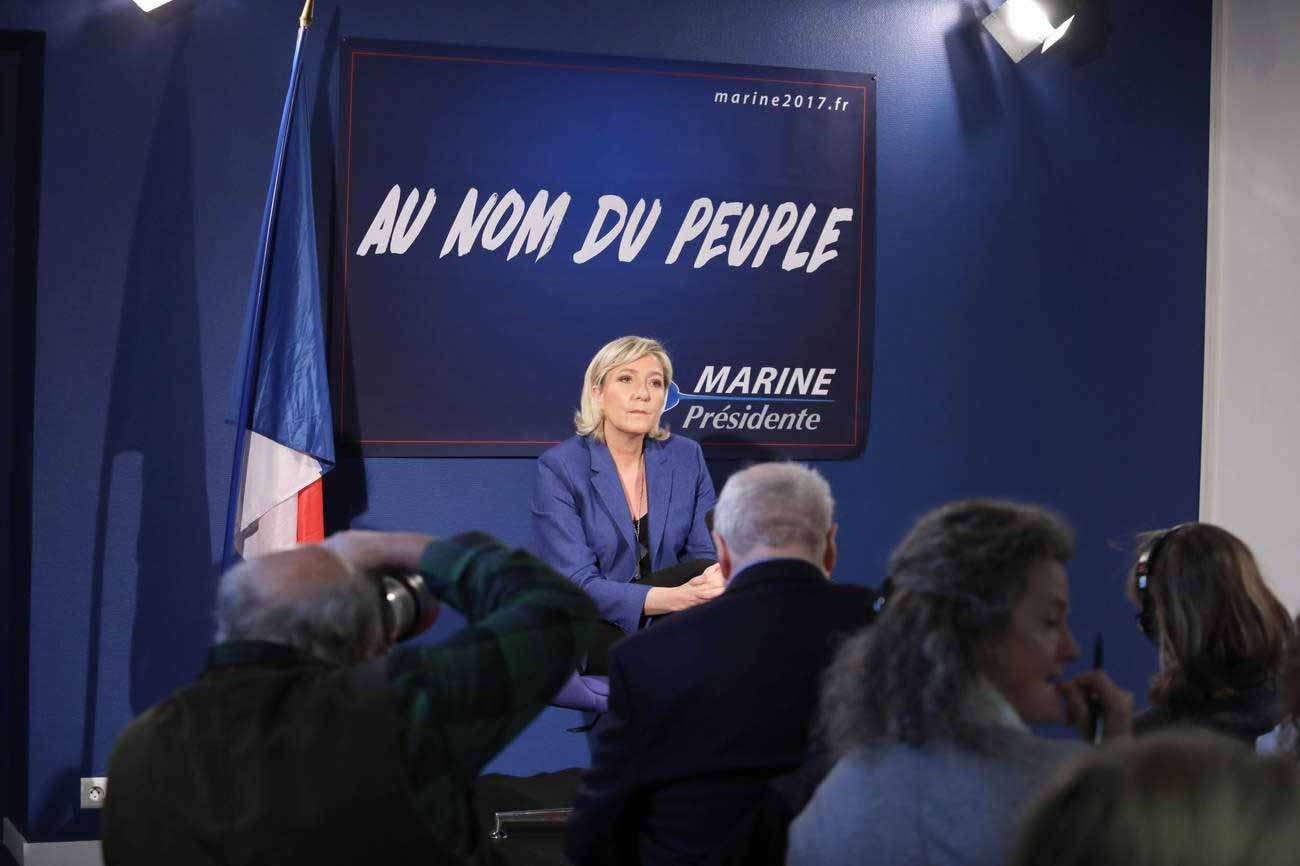
Marine Le Pen candidate en 2017 (DR)
Convictions Upheld: Guilty of Misappropriating Public Funds
The Paris Court of Appeal upheld Marine Le Pen’s conviction in the case involving parliamentary assistants employed by members of the European Parliament. She was found guilty of misappropriating public funds and of aiding and abetting that offense.
The presiding judge repeatedly emphasized the seriousness of the misconduct, noting that it had continued over an eleven-year period spanning three parliamentary terms, despite repeated warnings from the European Parliament about compliance with its rules.
The figures speak for themselves: €2.8 million in misappropriated funds. The court found evidence of “an operating system designed to divert European funds for purposes other than those for which they were intended.” According to the ruling, this systematic scheme was established under the leadership of Jean-Marie Le Pen and later continued under Marine Le Pen herself.
As part of her sentence, Marine Le Pen received a three-year prison term, including two years suspended and one year to be served under an alternative custodial arrangement. She was also fined €100,000. During the one-year custodial portion of her sentence, she will be required to wear an electronic ankle monitor.
Reduced ineligibility changes the political landscape
This significant reduction marks a major turning point in the National Rally leader’s legal battle.
Her attorney, Rodolphe Bosselut, described the ruling as “a good start” and a “partial victory,” stressing that the reduction of the ineligibility sentence was “an extremely important point.” He also highlighted the presiding judge’s remarks emphasizing voters’ freedom to choose from the full range of candidates.
Electronic monitoring : A major campaign obstacle
During an exclusive interview with BFMTV in February, Marine Le Pen stated unequivocally: “You cannot run a campaign under those conditions.”
She was referring to the mandatory electronic ankle monitor that accompanies a custodial sentence served outside prison. That statement clearly foreshadowed the dilemma she now faces.
The legal situation has become paradoxical. Marine Le Pen is now legally eligible to run for president. However, wearing an electronic ankle monitor for an entire year could severely limit her ability to conduct a normal presidential campaign.
Such a campaign requires constant travel, rallies, media interviews, and visits across the country—activities that could prove difficult to reconcile with electronic monitoring, particularly in the eyes of the public.
Other convictions in the parliamentary assistants case
Marine Le Pen was not the only person convicted.
Fernand Le Rachinel, the first defendant to appear before the court, received a reduced sentence on appeal: two years of suspended imprisonment instead of three, a €15,000 fine, and one year of ineligibility instead of the three years imposed at trial.
Former National Rally Member of the European Parliament Bruno Gollnisch, who was absent from the hearing, was sentenced to three years in prison and one year of ineligibility, a lighter sanction than the three-year ineligibility period imposed by the lower court.
French lawmaker Julien Odoul was also among the defendants whose case was heard on appeal.
Political reactions
Opposition politicians argued that the core issue remained unchanged regardless of who ultimately represented the National Rally in the presidential election.
Boris Vallaud, leader of the Socialist group in the National Assembly, emphasized that respect for the rule of law and the justice system remained the overriding priority.
Green Party lawmaker Benjamin Lucas-Lundy argued that “whether it’s Marine Le Pen or Jordan Bardella, it changes nothing” regarding the National Rally’s political platform. He reiterated that the party “stole from European taxpayers” and “stole from the French people,” allegations that, he noted, had now been upheld twice by the courts.
Socialist lawmaker Philippe Brun described Marine Le Pen and Jordan Bardella as “interchangeable candidates,” suggesting that choosing between them would make little political difference for voters.
What comes next
Marine Le Pen left the courthouse without speaking to reporters and headed directly to National Rally headquarters, where senior party officials had convened a crisis meeting.
Her silence contrasted with her attorneys’ public statements and suggested that the party leadership intended to carefully evaluate the full implications of the historic ruling.
The stakes extend well beyond the legal issues.
Marine Le Pen must now choose between pursuing a fourth presidential campaign and remaining consistent with her long-held position that a presidential campaign cannot realistically be conducted while wearing an electronic ankle monitor.
Jordan Bardella, the party’s vice president, remains the fallback candidate should she decide not to run.
Patrick Maisonneuve, attorney for the European Parliament, underscored the significance of the appellate ruling, stating that the court had confirmed that “European taxpayers’ and French citizens’ money” had been diverted through “an organization that operated for years” under the leadership of the National Front.
Impact on the national rally’s electoral strategy
Regardless of Marine Le Pen’s decision, the National Rally has a credible alternative in Jordan Bardella.
Nevertheless, the possibility that Marine Le Pen could legally run reshapes the party’s internal dynamics and the balance of power within its leadership.
National Rally lawmaker Thomas Ménagé, who represents the Loiret department, said that “nothing changes” for the party’s members of Parliament, who would continue their legislative work regardless of who ultimately becomes the party’s presidential nominee.
The Court of Appeal’s Trap
The Court of Appeal’s ruling places Marine Le Pen in a genuine Catch-22.
Legally, she achieved a significant victory through the substantial reduction of her ineligibility sentence.
Politically and practically, however, the electronic ankle monitor remains a serious obstacle to conducting a conventional presidential campaign.
Her silence upon leaving the courthouse suggests she is taking time to consult with close advisers, party officials, and campaign strategists before deciding on the best course of action for both the National Rally and her own political future.
By allowing Marine Le Pen to remain eligible to run for president while simultaneously requiring her to wear an electronic ankle monitor, the court has placed both the National Rally and its leader in an exceptionally difficult strategic position.

 Login