❌

Reading view

DSA leads the blue wave — will it bend to the thin blue line?

An NYPD officer provides security during the Inauguration for a New Era Block Party in New York City on January 1, 2026 as Mayor Zohran Mamdani takes office. Photo by Leonardo Munoz / AFP via Getty Images

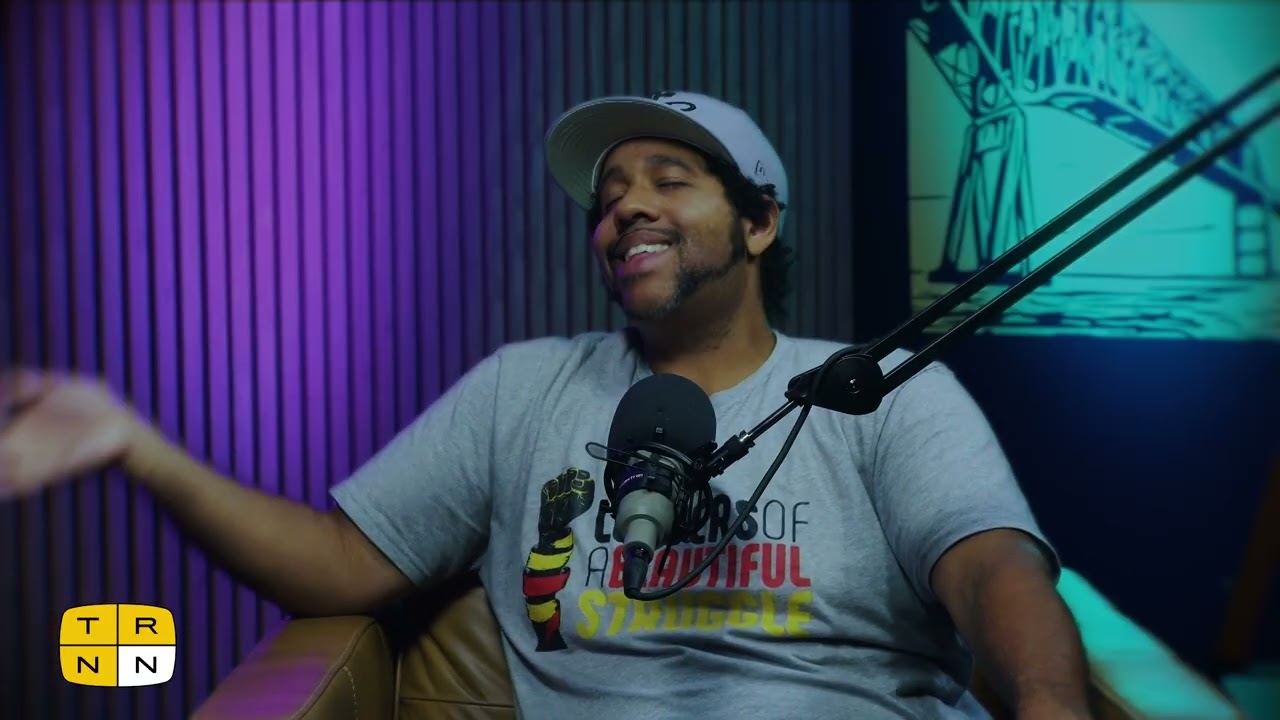
What will a DSA-led state look like — will it back defund and community control of police, or bow to the powers that block affordability? Lawrence Grandpre, political commentator for Leaders of a Beautiful Struggle, explores this question in his recent Baltimore Times article, “The Dangers of ‘Law and Order’ Leftism: Toward a Black Power Public Safety,” asking whether DSA will embrace the outmoded Law and Order politics that fueled America’s prison boom. As officials like AOC and Mamdani backtrack on defunding police — one of the biggest carceral drains on housing, healthcare, and education funding — Grandpre sits down with former political prisoner and Rattling the Bars host Mansa Musa to unpack these contradictions ahead of the midterms, where Democrats hope to retake the House and Senate. Tune in for an unflinching look at the Left’s relationship to the state and to law and order.

Related Links:

Credits:

  • Production/Post-production: Cameron Granadino
Transcript

The following is a rushed transcript and may contain errors. It will be updated.

Mansa Musa:

Welcome to Rattling the Bars. I’m your host Mansa Musa. Today I’m joined by Lance Grandpre, political commentator with Leaders of a Beautiful Struggle, to discuss his recent article for Baltimore Times, “The Dangers of ‘Law and Order’ Leftism—Toward a Black Power Public Safety.” Thank you for joining me, Lance.

Lawrence Grandpre:

Thank you for having me.

Mansa Musa:

Alright, so let’s start like this here. At one point we had in 2020 where you had a push for the abolishment of prisons and to dismantle the police system as we see it during that period. But immediately you had a pushback and the pushback came in the form of saying that this was woke. Now we look at the United States and mass incarceration, armed policing, and you juxtapose that with the lack of funds for healthcare, lack of funds for education and lack of funds for housing and the fact that the criminal injustice system is in itself painful when it comes to poor and oppressed people, mainly people of color. Let’s start with your article.

Lawrence Grandpre:

So this article stems out of a protest I went to because sometimes people say if you talk about police reform or defunding police, you don’t care about victims. And this protest was the opposite. This was a Black elder, a former member of the Baltimore Black Panther Party who was assaulted by many teenagers and it was caught on film. So of course Fox News, our local Fox News is showing this over and over again saying, “Lock them up, what’s wrong with these kids?” And these were community advocates, many of them women, Queen Mother Victorious who lost her son to gun violence, Mama Gwen, who was formerly incarcerated, coming together with community and saying these young people, what they did was a problem, not because it just violated the law, because it violated our community respect for elders. And we don’t want to just throw the cops at these kids and throw away the book, but if people know who these young people are, turn them into us, the Black community, so we can make sure that they are held accountable but not railroaded by the criminal legal system.

And I though the sophistication and intelligence of that response and even Baba Ade, the elder who was hurt, saying the Black Panther’s argument was that capitalism and racism breed criminality in the community.

Mansa Musa:

Right.

Lawrence Grandpre:

And it’s not for us as the vanguard to educate ourselves and use political consciousness to eliminate criminality, not just from a material standpoint, but from a psycho-spiritual standpoint. And it was really interesting because this was a few days after AOC went on the news and said, “Nobody’s talking about defund anymore. Woke 1.0 was crazy.” So it was really interesting that the people who were supposed to be talking about social justice, Alexandra Ocasio-Cortez, some of these other so-called leftists,

Mansa Musa:

Right.

Lawrence Grandpre:

Even they were saying, “Defund—that was just people on Twitter trying to look woke. Nobody really talks about defund in real life.” And these Black elders, Black people in West Baltimore, were saying things like, “We have a $700 million police budget in Baltimore. How are we going to have that and schools and investments in the Black youth?” So these Black people who the left is telling us are conservative are actually more progressive than the DSA.

And I thought that was very telling that, in this moment, going into the midterms, there are these leftist democratic socialists who are trying to get elected, and because they want to get elected, they want to push away from radical rhetoric because they think it’s turning off voters. And I think that that goes to show you that when it comes to Black people, we need to have our own vision of public safety, because what’s being offered by even the left, the Democratic Socialists, is willing to push our issues aside, because they have a misunderstanding of our issues. They think it’s just a bunch of radicals on Twitter as opposed to Black folks been talking about Defund since the ’50s. And our visions of Defund are very different than what you saw on Twitter in 2020, but these folks wouldn’t know that.

Mansa Musa:

So how do you see the DSA in terms of how they look at the budget, just police budget and the fact that it’s undercutting the services of the very people they supposed to be representing?

Lawrence Grandpre:

It’s interesting because I think if you are a democratic socialist, it’s obvious you believe police are a tool to protect capitalism. So a world where if you’re a socialist, the idea that you wouldn’t talk about [how] protecting capitalism getting more money is a problem for you—it’s weird.

Mansa Musa:

Right.

Lawrence Grandpre:

But these folks are a particular brand of socialist. Many of them were very much pro-Bernie Sanders. So when Hillary Clinton and Kamala Harris used conversations about identity to attack Bernie, now a lot of these folks see all conversations about race as just distraction from class issues.

So, even when Black people talk about police, they say, “Well, it’s not serious. No one really talks about Defund. So you’re really just trying to attack the socialist candidates.” And it’s like, no, Black folks have been the community control of the police platform.

It wasn’t just invented by the Black Panther Party. It was talked about by Black activists in the ’40s and ’50s, in part because the understanding that if the police were seen as a solution to all social problems… it’s not just police, it’s police-ism: the idea that policing is the only solution to the problems facing all poor people, but especially Black poor people, that’s going to push money away from all the other programs we need in the Black community. So Black folks have been saying that, really, since the Northern migration.

So when we talk about community control of the police, part of that is having community control boards control the police themselves, hold them accountable. And we’ve worked on that as LBS, but it’s also community control of the institutions that produce public safety beyond police. So, housing, addiction, education. I mean, I love to point out that Bobby Seal, he was in AmeriCorps before he was a Panther. So he would be shooting dice with the Black kids trying to school them on AmeriCorps’ time. And part of his frustration is these nonprofits don’t let us actually do the training we need to do with these youth, but we got to get the money from the nonprofit because that’s the only job we got. So even the Black Panthers program was a push for Black control of resources to socialize our youth, specifically around things like violence prevention. And again, the idea that all of that is just under this large framework of “woke”… And again, the right wing hates woke, we know that, but even some of the Bernie folks—they really hate “woke,” because they associate it with the attacks on Bernie and they see all conversations about police as woke.

Mansa Musa:

Let’s unpack some more about DSA because we see upheaval of DSA type activity and we see in terms of midterm elections, some of the candidates that ran on DSA platform have made it through the primary. And so at the same token, what is their appeal? Because they vacillating when it come to social issues.

Lawrence Grandpre:

The federal government, in theory, can print money. So there’s this belief that if we just spent more money, things will get better, and the Democrats have been afraid to spend money. I think that in the DSA, it’s like, “Let’s really focus on, in theory, cut the military budget, invest in community through things like Medicare for Al”l. Now, if you don’t have the integrity to stand up for “Defund the Police,” why do you think we would believe that you have the integrity to stand up to “Cut the Military Budget? If you don’t see the connections between the violence of policing and the violence of militarism, why would we expect you to be able to push the military budget to community?” 

Lawrence Grandpre:

These are intelligent, college-educated voters who feel like the government needs to spend more money, in part, because it’s a job program for people like them. So they have an interest in fighting the austerity of the Democratic Party, in part, because they want to see conditions improve for the community, but also in part because it’s a business model for the voters of DSA. And that’s a big concern for us, because even with Medicare for All, there’s no world in which healthcare should be a for-profit enterprise. But it’s not just that doctors are racist. When you look at things like Black women get more cesarean sections than other women, So, literally, they’re getting cut open in these dangerous surgeries. Black women, if you have a child in the hospital, you are going to get a drug test. And even if you pop for that drug test from the epidural, the drugs they give you for the pain, they might take your kid away. So engagements with the medical system are not just imperfect for Black people; they are places of surveillance and violence.

So we, as Black people, need systems like a birthing center, like nutrition, upstream investments that are different than what the DSA crowd cares about. So the idea that we should just accept not talking about Defund to get Medicare for All ignores the fact that Black people—we don’t just need healthcare to not give us a bill. We need to change the vision of healthcare so we control it. And the DSA is not interested in that. They don’t really think that way. And they honestly believe the only way anything will get passed if it goes to everybody. Universal programs prevent racial backlash. Because we know any spending in America is seen as giving money to welfare queens. So we just got to give the same thing to everybody and that’ll deal with racial backlash.

And what we know is anything you do that gives out any tax money will deal with racial backlash, but also do things that don’t give Black people the power we need to build for ourselves. It will just put us in systems that really are built by other people that, even if it’s good for them, can often be violent for us.

Lawrence Grandpre:

But I think that, again, when you have a class-based vision of the world, that has become in some ways hostile to thinking about race because you had negative experiences with people weaponizing race against people like Bernie Sanders. You’re not thinking about what a political agenda would look like when you actually invest in… because we should do both. We should have a class-based redistribution of wealth, but that restribution should also be invested in community institutions that reflect the culture and history of specific communities, not just Medicare for All, but clinics that use the history and culture of the community to provide that healthcare. Nutrition that reflects the culture and the way communities like to be fed so that they can have upstream nutrition so they don’t need to go to the doctor in the first place.

These things should go hand in hand. And I think it’s concerning that it feels like, because DSA is becoming electorally viable in some spaces, that [they] only talk about affordability issues, only talk about Medicare for all, only talk about ending the war in Iran, without really thinking intelligently about a platform that would meet people’s needs for community control of public safety, broadly defined. So not just policing, but again, youth programming, schooling, getting nutrition. Our kids are literally hungry.

Mansa Musa:

Yeah.

Lawrence Grandpre:

They’re fed junk food, but they’re undernourished. So we actually do have serious nutritional needs as we have obesity in the inner city. So what does it look like to build a food sovereignty ecosystem, whether it’s Black Yield, Black Church Food Security Network that can actually feed ourselves as opposed to just the DSA, it’s like, well just make sure they get food stamps. And food stamps are cool, but food stamps are not the vision of liberation for us.

Mansa Musa:

But talk about, because when we look at DSA, and it’s misnomer even to use the name socialist because when you look at. We got examples in Cuba and when they first took over, the literacy rate in the countryside was 90%. 90% of the people could not read or write. They organized, it’s a book out called Vincent Ramos. We were trying, that’s the name of it. And they organized all the college kids, all the intelligence and made them go in the countryside and stay to educate the people, to get them to read and write.

They didn’t say, “Oh, we’re going to create a system where they can come out the country, live in a project style housing dwelling and get them public schools that’s not going to teach them nothing.” They actually educated the people and a lot of that education led to what we see today in Cuba, got best medical, despite all the things going on. So when we talk about DSA, and I think this is a danger, and maybe you want to weigh in on it. I think it’s a danger that confronts that notion that this is a socialist party and because the right wing is going to put them right in the category like communists and they can resurrect that notion.

Lawrence Grandpre:

Socialism, to me, the key word is social. You either have the market making decisions about planning for the world or you have people doing it socially. It’s clearly better to do it socially, but there are divisions within that larger social body. And my concern is that even amongst some of the people in the DSA crowd, the leftists, some of the visions of what they would socially plan may like and lean on policing partially because they are afraid of being looked at as communist. So they might, for example, even in very, very progressive Bernie Crat, DSA San Francisco, there’s this push to, well, we got people homeless, they have mental illness. So they as individuals may not be rational, so we are going to use policing to bring them into drug treatment.

Mansa Musa:

Right.

Lawrence Grandpre:

And again, this is like even Bernie people sometimes say this. So there are elements of even the less progressive mindset that are like, we as a society can’t let you be out here damn bad. We have to help you lift yourself up. And if that means we have to involuntarily commit you to treatment, and if we have to use police to do that, then we’ll do that. While one thing that we talk about here in Baltimore is, and Baltimore’s been a heroin town since the 60s and 70s. And it’s been really hard for us, but we’ve also had systems of informal community care that have been designed to address some of the worst exigencies of drug abuse. Nika Namdi from a program called Fight Light said that grandma’s basement was the first halfway house. We had systems where elders, you would be able to stay with family and you would be able to get certain stabilizing influences through your social network so you wouldn’t be out on the streets.

So in that worldview, we would look at something like making sure these abandoned homes get rehabbed and given to Black people in community. That’s partially an anti-homelessness effort.

That’s an anti-addiction effort. That’s a crime fighting effort. So it’s not just social housing, it’s not just public housing. It’s also making sure that Black people in communities can pass down their family homes

And they have a way to make sure that they’re affordable so they can stay housed because that produces capacities for people who do suffer from addiction to not be on the streets committing crime. And again, the DSA vision is so limited to what they see and what they know, they sometimes end up using police where it’s like, if we just had networks of people in community that could care for each other, we wouldn’t need police for that. But I also do think folks are afraid. I know academics are very afraid and some folks are afraid of looking too radical, looking like the rhetoric of 2020 was burn down the police station.

Mansa Musa:

And

Lawrence Grandpre:

I think that’s also part of what they want to distance from when they talk about we not doing defund no

Mansa Musa:

More. Part

Lawrence Grandpre:

Of it is the direct antagonism with the state, the cost of that has increased for them. What we know is that the cost is high for us, whether we’re openly antagonistic or not, we are politically antagonistic by making demands upon the state to recognize our humanity. So we’ve always had to deal with that potential backlash. And I think now for some folks they’re saying, oh, I can’t use that. We’re not trying to do that radical rhetoric no more

Mansa Musa:

Because

Lawrence Grandpre:

People are losing jobs, people are potentially getting deported. So it’s like the ’70s, marginally away from the rhetoric of the ’60s and leaving the Black radicals out to dry after the draft ended. I think the white radicals moved away from radicalism and that we’re seeing a similar

Mansa Musa:

Dynamic. Okay, but we know that this is the 60th year of the anniversary of the Black Panther Party. And I was talking to somebody about just like we’re not anti-police. The party wasn’t anti-police. One of the things they did, one initiative they took was, and this is a revolutionary suicide by Huey Newton, where they had this particular intersection that didn’t have no stoplight and it was in the Black community and kids was getting hit. So somebody came and said, “Man, they not doing nothing about this. We’ve been complaining.” So they went down there and became traffic guards, the members of the Black Panther Party. They held up the traffic, let the kids walk by, you know what I’m saying? And this is what they did. And they had guns with them because they had one part of their program was policing the police. The police in turn came and told them they stop.

Now you guys stop this. They said, “Well, we’ll stop this when y’all put a traffic light up there or y’all stop directing traffic. We don’t care which one you’re going to do, but you do or we going to continue to do.” They wind up putting the traffic light up there. So in terms of that particular example, what are the core aspects of the Black Power Public Safety?

Lawrence Grandpre:

I like your example because the party was a little bit different in different cities, but I think one thing that stands out to me is that they had questions about police, but the Black Panthers in some ways were law and order. It was law and order within the party. You cannot show up high, very much about discipline, law and order in the community. If you’re selling drugs, if you’re a parasite in our community, we’re going to deal with you. And I think that’s a perception, because this is something that happened in 2020, that there were white leftists being like, “Let’s just run wild and be anarchist and burn stuff down.” It’s always been Black people that’s been like, “We’re not doing that.” So the idea that somehow that is tied to Black issues, no, we’ve always been extremely serious about our liberation.

So when the Black Panther Party talks about doing a plebiscite in order to get Black sovereignty, I think that’s an example of why we need to think about community control of the police in terms of we have in Maryland, substantial police reform is nowhere near enough, but we need to have the ability for the community to have investigative power to be able to investigate police. We need to have community resources to be able to flow to community institutions so the community decides who’s doing public safety in that community. So when we talk about who’s funded to do violence prevention work, it shouldn’t just be the people who are tied into the police or the people that are tied into the nonprofit world. We got tons of people in community that have been doing work that have not

Mansa Musa:

Been funded.

Lawrence Grandpre:

And the fact that they are getting a little bit of money now, I think is part of why we’re seeing these unprecedented declines in violent crime. So Black power public safety isn’t just people getting grants. It is the community having the power to determine what the grant making criteria are. It’s the community being able to tax institutions in their community that they see as producing crime. And by that I mean Johns Hopkins. That’s

Mansa Musa:

Right.

Lawrence Grandpre:

Because Johns Hopkins gentrified the whole area of the

Mansa Musa:

City. The big colonial king in Baltimore.

Lawrence Grandpre:

And when you gentrify a whole part of the city, you’re moving people to different hoods and that creates a lot of possibility for conflict. My father was a cop for 20 years, so he talked about East Baltimore used to be called the country club because it was so quiet up there. But when Hopkins gentrified all those people out of the Middle East Baltimore, a lot of them moved to Northeast, which creates a ton of conflict, pretty much increased the murder rate in that part of the city. Hopkins should have to pay for that. They got a $13 billion endowment. So Black Power Public Safety is about us not tying in our future to gentrification, which is what the police really are a tool for. They’re a tool to produce gentrification. That’s good for that business model because gentrification needs policing.

Mansa Musa:

We

Lawrence Grandpre:

Should be able to put tax on the gentrifier so we can secure our communities so they can’t gentrify them, own our own property, stabilize our communities, but then invest in the capacity to take care of our youth, to do violence prevention, to take care of our health. All the things they stripped from us, they should have to pay us to be able to do for ourselves. In that world, I think we would have Black Power

Mansa Musa:

Public Safety. Right. And that’s basically what the Black Panther Party was doing because they had the survival program. Exactly. And the concept was Survival Pending Revolution. The Survival Program wasn’t like us being in a basement, taking guns apart in the dark with blindfolds, then putting them back together, making bombs, reading Ann Archer’s cookbook. No, survival program was the free breakfast program, free medical, sickle cell anemia, taking prison families to prison to visit them, alternative education. This was a survival program, survival pending revolution. And what the goal was, going back to your point, the goal was to stabilize the community for self to be able to be self-determined. So if I’m self-determined, I got self-determination. A great example for Baltimore would be the Clean Block because when they had Clean. And I remember I was locked up and I used to read the Afro. Afro had a big thing about Clean.

The sense of community that came out of that, the Clean Block, when they was able to say, “We recognizing this neighborhood for Clean Block.” But more importantly, that neighborhood not only had a clean block, but that neighborhood had policing. That neighborhood had a sense of identity that if I seen you, I know you Meryl’s son or Meryl’s daughter. I know you Tommy’s son or Tommy’s daughter. You know me and you know that if I see you doing something that you ain’t supposed to be doing, then I’m going to tell your parents the minute you see me, you’re going to alter your behavior because that became the sense of community. But like you say, once Hopkins got in the equation, and not only Hopkins, I remember when Shafer started when he did the Inner Harbor and they started pushing people out of certain areas in order to get to Inner Harbor and they pushed people into.

Either they pushed them out into the county or they pushed them into the interior of Baltimore in neighborhoods they wasn’t familiar with or neighborhoods they was familiar with and had issues with and would automatically create a conflict. But talk about how do you see, because what you just outlined is in fact a model that is one, inexpensive because it becomes self-contained. So the monies that you’re putting towards astronomical police budget can go towards stabilizing some of the projects that deal with housing, deal with substance, the people that’s actually doing the work.Like you say, you got people that actually going around taking people and putting them in a place and letting them drown. So we talk about how you see DSA and the gains that they’re getting and the models they’re using. How do they fit into this narrative? Are they rewriting the script and say they’re going to invest in this type of thinking or their model is, like you said earlier, we creating a cadre of intelligent people that can grant write and that’s going to become our funding source and not only our funding source, but create an infrastructure for doing case studies and then marketing these case studies, the new Jim Crow.

Lawrence Grandpre:

Yeah. I think it’s to be determined. We’re going to see a huge increase in DSA affiliated leftist people in Congress. Now, whether they’re going to be able to write bills, whether they’re just going to vote on stuff that comes from the Republicans, we’re going to see. I think the real test is going to be 2028 when it’s possible the Democrats will take the White House, Senate and the Congress. So it’s really going to be important for us these next two years for people that believe in the possibility of these folks doing good to push them. What is your actual proposal on how you can use the power of the federal government to enhance the ability of people On the ground locally to have more ownership and power and control over the institutions that impact their lives. Because policing is a state and local issue. Feds actually have relatively little control

Mansa Musa:

Over it,

Lawrence Grandpre:

Except given a few grants here or there. So really it is, do you have a vision for whether it’s through food sovereignty policy, whether it’s through manufacturing policy? The metric for us at least is again, local self-determination and the ability for local people on the ground to own the institutions that are doing this work. I think part of even going back to the New Deal, the frustration with these progressives is that sometimes they do these top down technocratic re-imaginings of what solutions look like that don’t involve community. Mamdani, people have called him a technocratic socialist.

Mansa Musa:

And

Lawrence Grandpre:

I think that’s not on some right wing stuff, but that’s scary from a Black power

Mansa Musa:

Perspective

Lawrence Grandpre:

Because technocracy oftentimes views Black peoples as widgets and inputs in someone else’s equation for progress and liberation. And I think part of the value of the Black Panther Party is they called themselves socialist, but in many places, in many ways they were also Pan-Africanist and Black nationalists. And they were combining them all to say that, yes, we will fight capitalism, but we will not just make the people this abstract proletariat to fit within a Eurocentric version

Mansa Musa:

Of

Lawrence Grandpre:

What a class centric revolution will look like. We are going to lead our people on our vision of what we think fighting capitalism looks like. And again, I think it’s going to be our job to force the DSA to not see that as woke, to actually recognize that that is just what black people demand. And that’s the cost of us being in political coalition is you respecting our self-determination.

Mansa Musa:

And I agree it’s to be determined because one, you gain electoral office through coalition building. That’s really where it come out of. And you’re able to get a common identity out of the coalition, common identity being what we want change, the change that we want to see. Harold Washington in Chicago, he was successful at building a coalition. And to his credit, he tried to maintain the standard, but they fought him tooth and nail at the state government. So he wasn’t able to get a lot of things done. But the fact of the matter, what we’re asking or we’re talking about is not really hypothetical because we see this in Europe and we see examples where police don’t have guns. They call in, if it’s a violent situation where a gun, they got a unit that comes in to deal with that. But outright, the police walk around with no weapons because the lack of fear towards the society.

Lawrence Grandpre:

You mentioned New Zealand, I think in that as

Mansa Musa:

Well.

Lawrence Grandpre:

But in New Zealand as well, the Aboriginal communities actually have really pushed a model for youth justice that places tribal elders and tribal institutions at the heart of restorative justice programming

Mansa Musa:

For

Lawrence Grandpre:

Youth who are engaged in acts of criminality. And so that’s been a big fight for Aboriginals in New Zealand and Australia to really demand tribal sovereignty over their youth as opposed to putting them into the juvenile justice system.

Mansa Musa:

But

Lawrence Grandpre:

Again, given the legacy of the private schools where they beat the Indian out of you and stuff like that. And again, I think it’s jarring for white people to think that we as black people are asking for something similar here in America because the joke is white people are so settled in America, they don’t even see themselves settler colonists no

Mansa Musa:

More.

Lawrence Grandpre:

And I think unfortunately that’s part of what’ happened with the DSA. It’s like the idea of black sovereignty is just jarring to them in a way that you’re an Australian, you know you took over Australia and there are people here that are really dark skinned, you’re not.

Mansa Musa:

But

Lawrence Grandpre:

I think in America, that basic concept of having to negotiate with people who have their own sovereign agendas is not something that they’re used to conceiving as anything other than a tool for the centrist to undermine the Bernie’s of the world.

Mansa Musa:

And

Lawrence Grandpre:

I just think the reality is if DSA is going to get Black support, it’s going to really have to reckon with the visions of the world that come from Black people, including our visions of public safety.

Mansa Musa:

Right. And before we close, you got any closing remarks?

Lawrence Grandpre:

I really appreciate this. Please check out our podcasts and search of Black Power and Political Commentary Corner. So those are on YouTube. Check us out at lbsbaltimore.com. We have all of our email updates about the work we’re doing in Annapolis to push criminal justice policy, reparations policy, which

Mansa Musa:

I’ve

Lawrence Grandpre:

Never seen DSA has been skeptical on, but we’re very adamant about its practical utility as a framework to invest in Black sovereignty here in Maryland. And you can find me on any social media at Neil Nubian, N-E, the number zero, Nubian, N-U-B-I-A-N. Right.

Mansa Musa:

And we ask our audience to really take deep thought on this particular subject matter. It’s not like say it loud, I’m Black and I’m proud. It’s not when Stokley Carmichael in the ’60s, they called Black Power, James Brown, Song and Song. We’re not in that state. We’re not trying to go back into that state of mind, that conditions created that state of mind. We’re talking about an analysis of having Black political power as it relates to our safety. We’re talking about because we’re the ones that’s unsafe, we’re the ones that this astronomical budget is being doled out to, to make us feel unsafe, to lock us up. Then we believe, as the brother was talking about Lawrence, that we believe that we have a right to define what is safe for us and what is not safe for us. And making that definition or defining that, we see the necessity to make an analysis and implement it.

And in this case, this is an analysis that we want to, I think the Gullah Geechee in South Carolina got a thing where they do restorative justice. And so the fact that you infringe on the community, that they might not put you out the community, but they’re going to put you in such a shameful state of mind and the fear of what you’re getting ready to lose or make you get the person to come back or people come back and lie in accordance with the social system that they set up. We ask that you continue to support the real news and rattling bars because guess what? We’re actually the real news. Thank you.
💾

“When it comes to Black people, we need to have our own vision of public safety, because what's being offered by even the left, the Democratic Socialists, is willing to push our issues aside…”
  •  

North Korea Tests New Hwasong-11Ma Hypersonic Missile

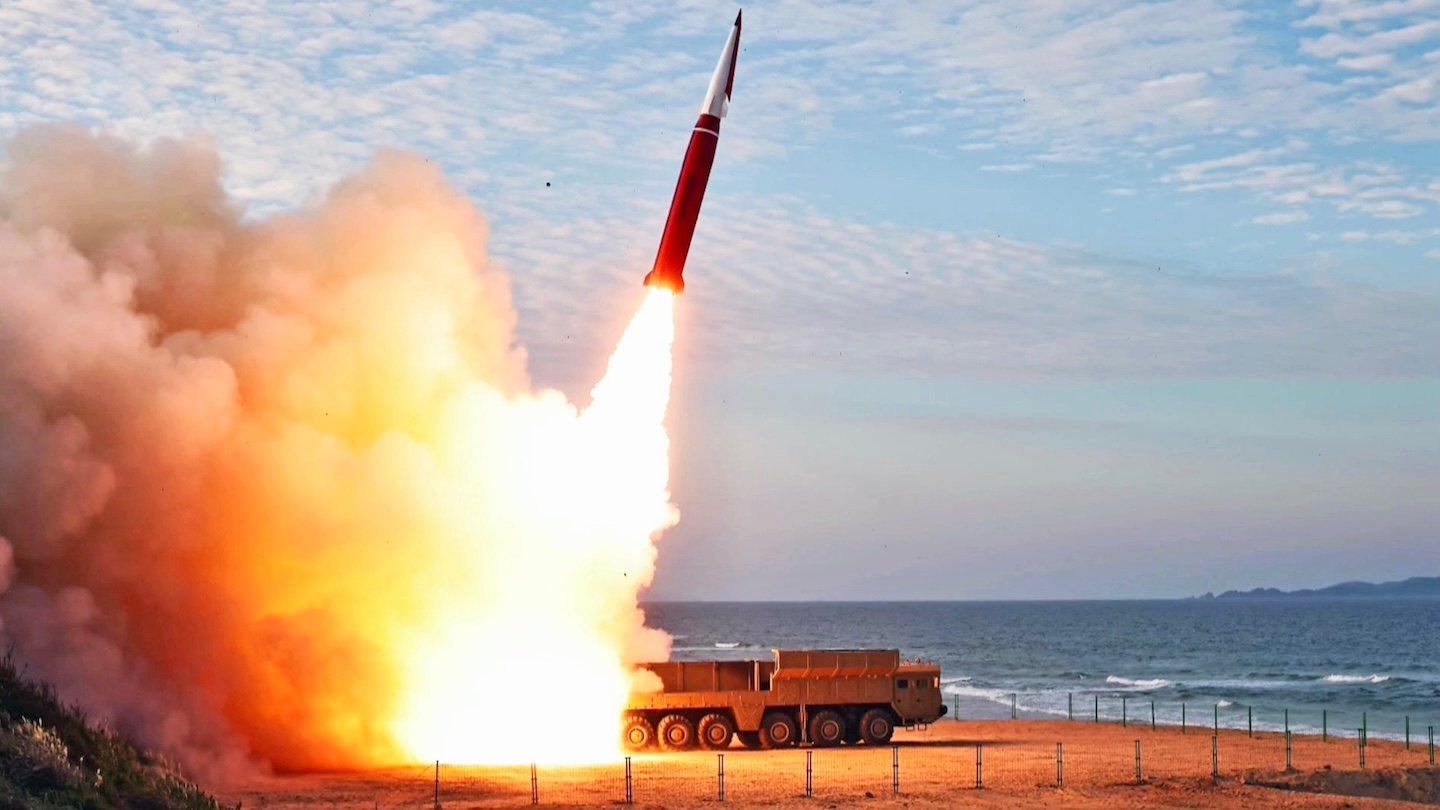
North Korea has released imagery of what appears to be a flight test of an updated version of its Hwasong-11Ma hypersonic missile, nearly a year after the weapon first appeared publicly at a military technology exhibition in Pyongyang.

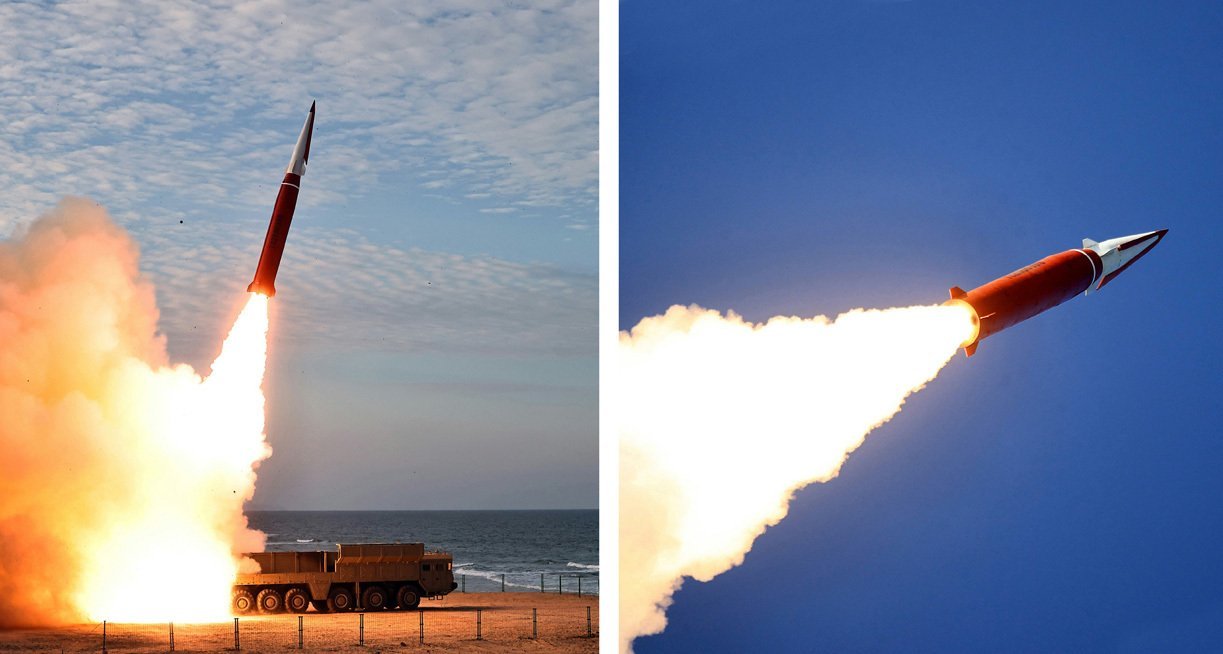
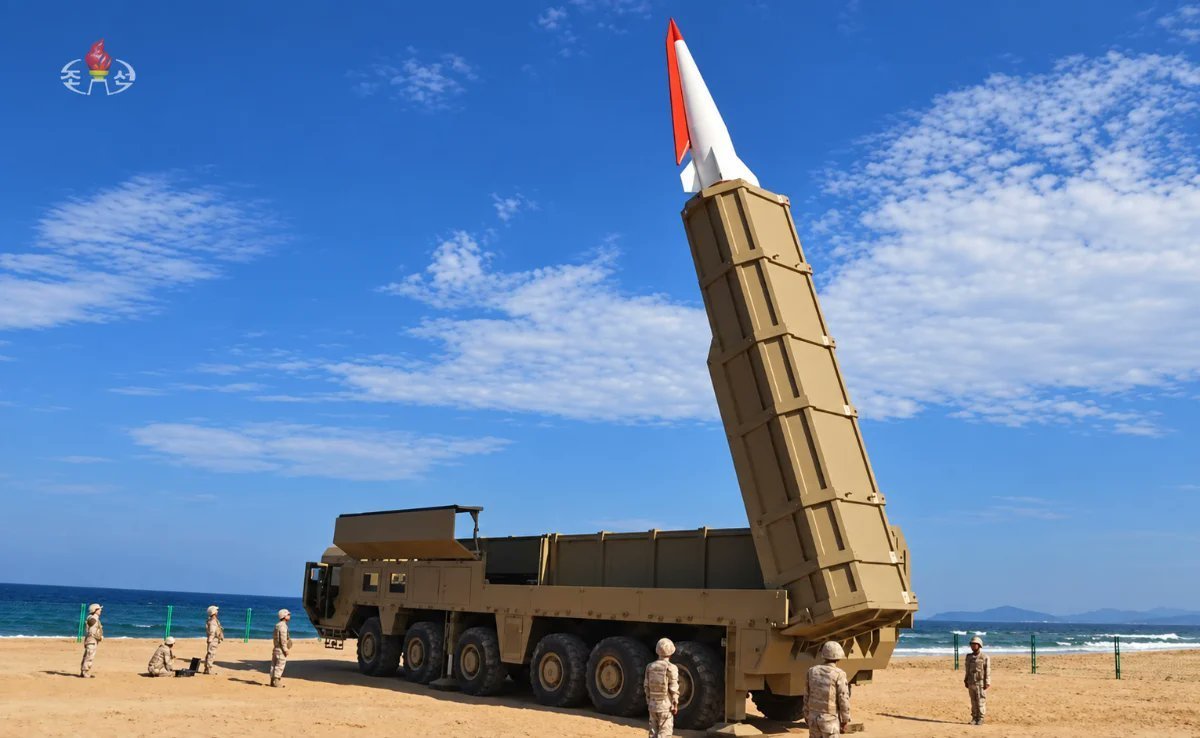
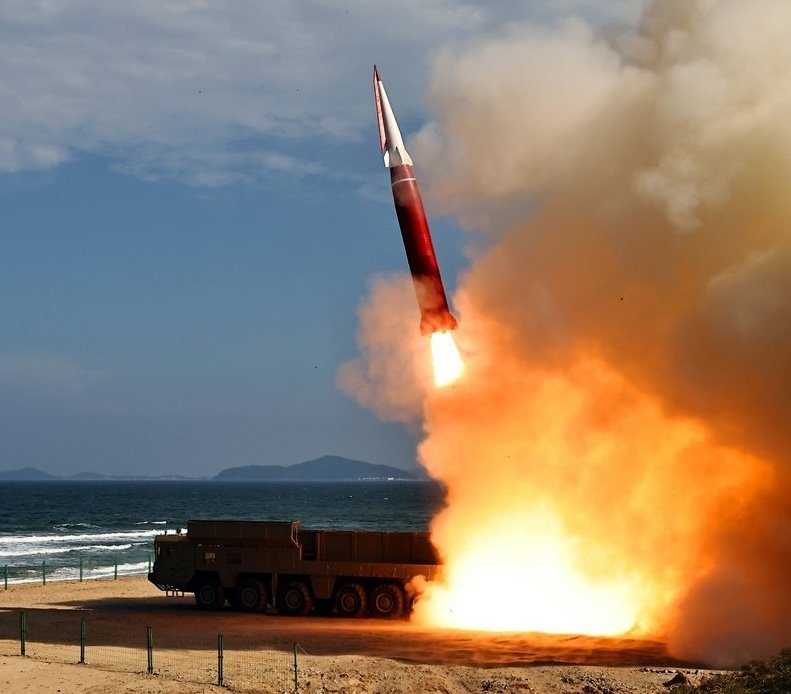
Launch of a Hwasong-11Ma-1 missile from the test facility in Anbyon County, south of Wonsan. North Korean State Media

The September 20 test involved a short-range ballistic missile (SRBM) booster fitted with a hypersonic glide vehicle, according to photographs released by North Korean state media. A display screen visible in the imagery identifies the weapon as the Hwasongpho-11Ma-1, or Hwasong-11E-1 in the equivalent English-language designation.

The test was conducted from the east coast near Anbyon County, south of Wonsan, an area North Korea has repeatedly used for missile testing. The launch site allows missiles to be fired eastward over the Sea of Japan, providing a relatively controlled area for testing short- and medium-range systems.

Another two views of the launch of the Hwasong-11Ma-1 missile. North Korean State Media

South Korean and Japanese authorities say they detected two launches on September 20, with the first occurring at approximately 3:00 p.m. local time and the second several hours later.

North Korean photographs show the missile being launched from a coastal location, with Kim Jong Un and senior missile officials observing the test. Kim’s daughter, Kim Ju Ae, also appears in the imagery.

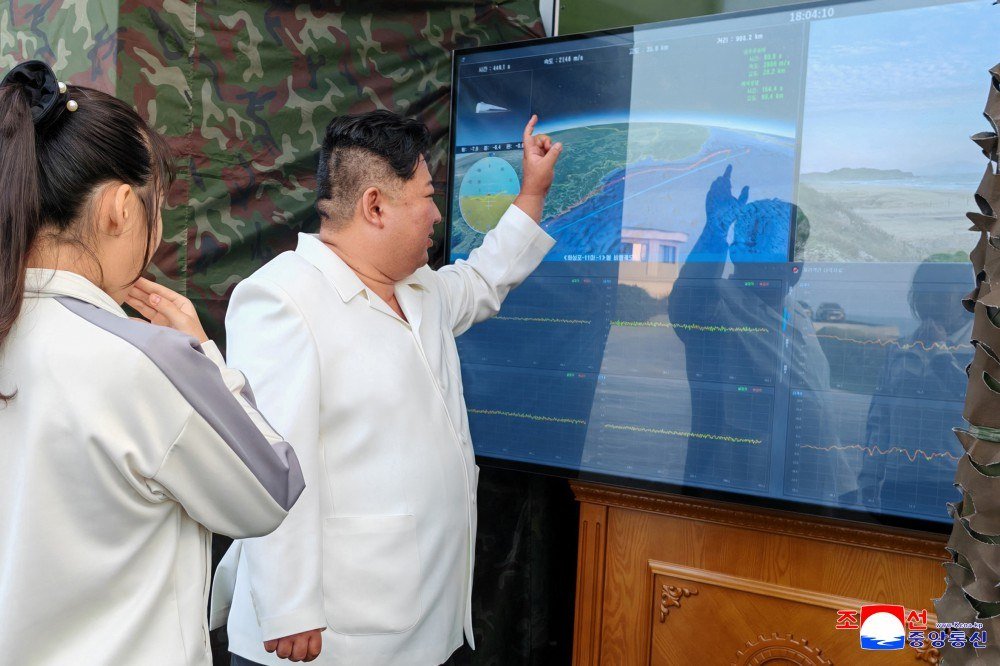
Kim Jong Un and Kim Ju Ae monitor the progress of the Hwasong-11Ma-1 test. North Korean State Media

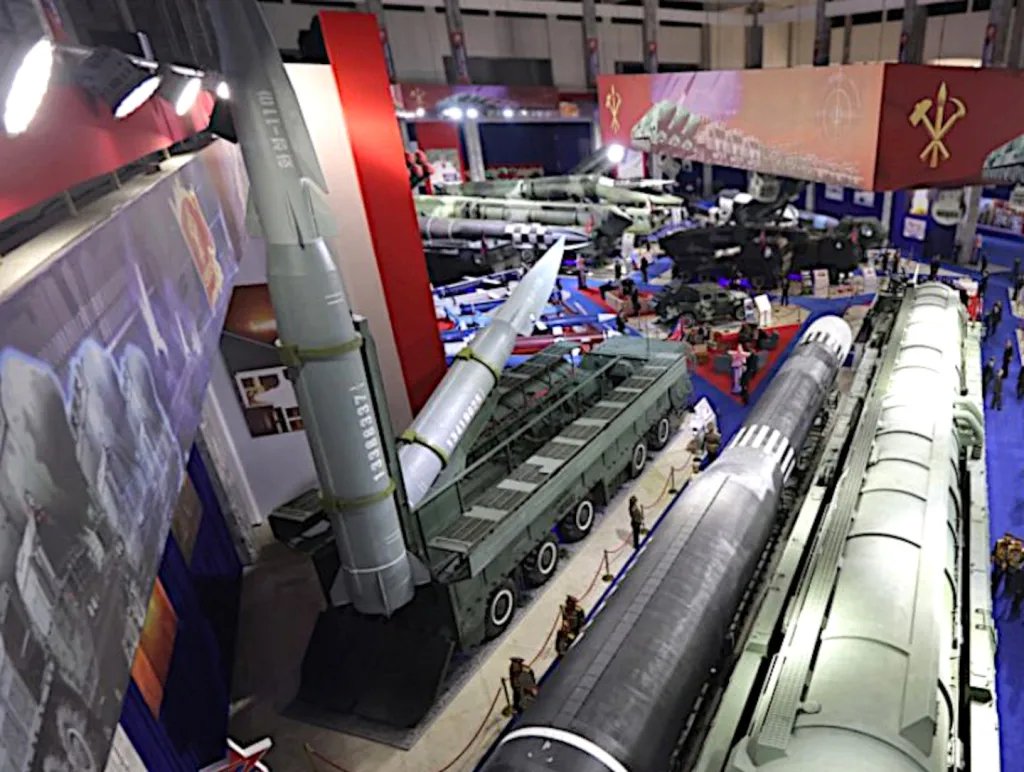
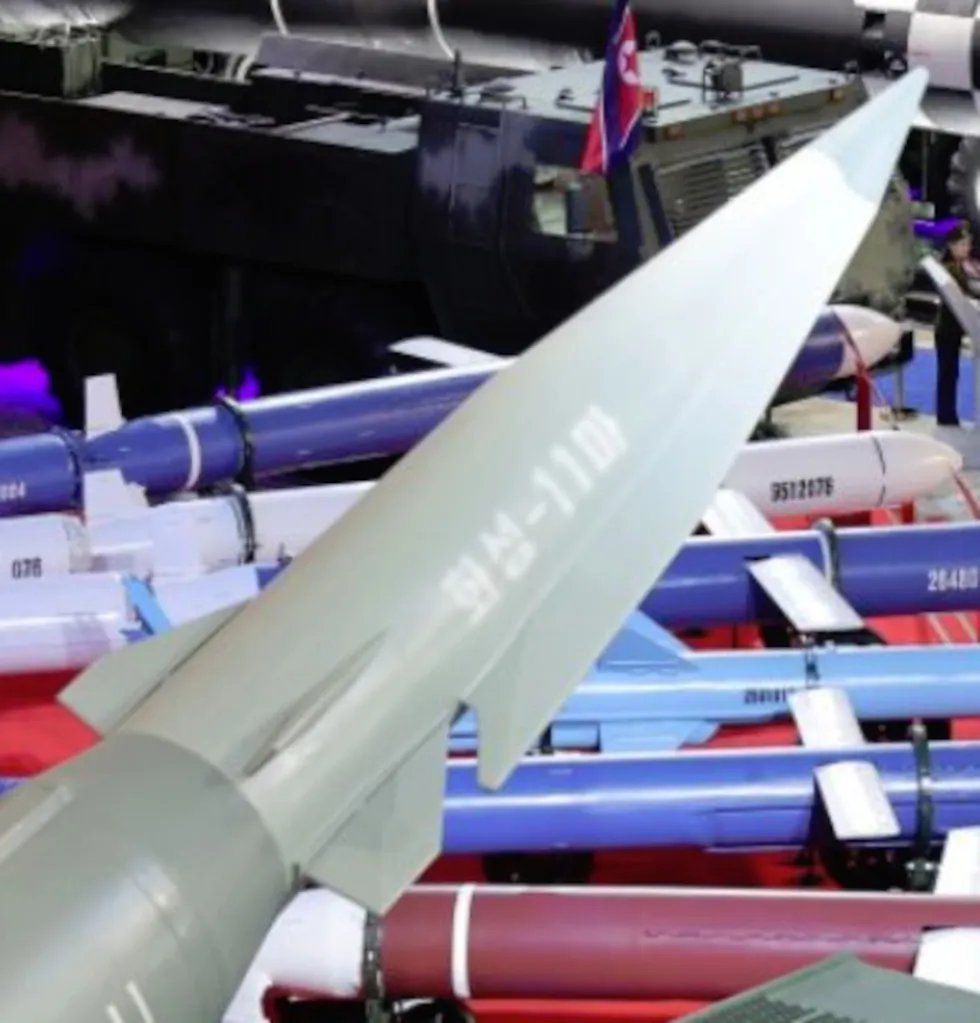
North Korea displayed a mock-up of what it called the Hwasong-11Ma at its Defense Development-2025 exhibition in October 2025. The design uses the basic architecture of the Hwasong-11 family, known in the West as the KN-23 family, but substitutes a distinctive glide wedge-shaped vehicle for the conventional warhead arrangement.

The Hwasong-11Ma, among other weapons, on display at the weapons exhibition in Pyongyang in October 202. North Korean State Media

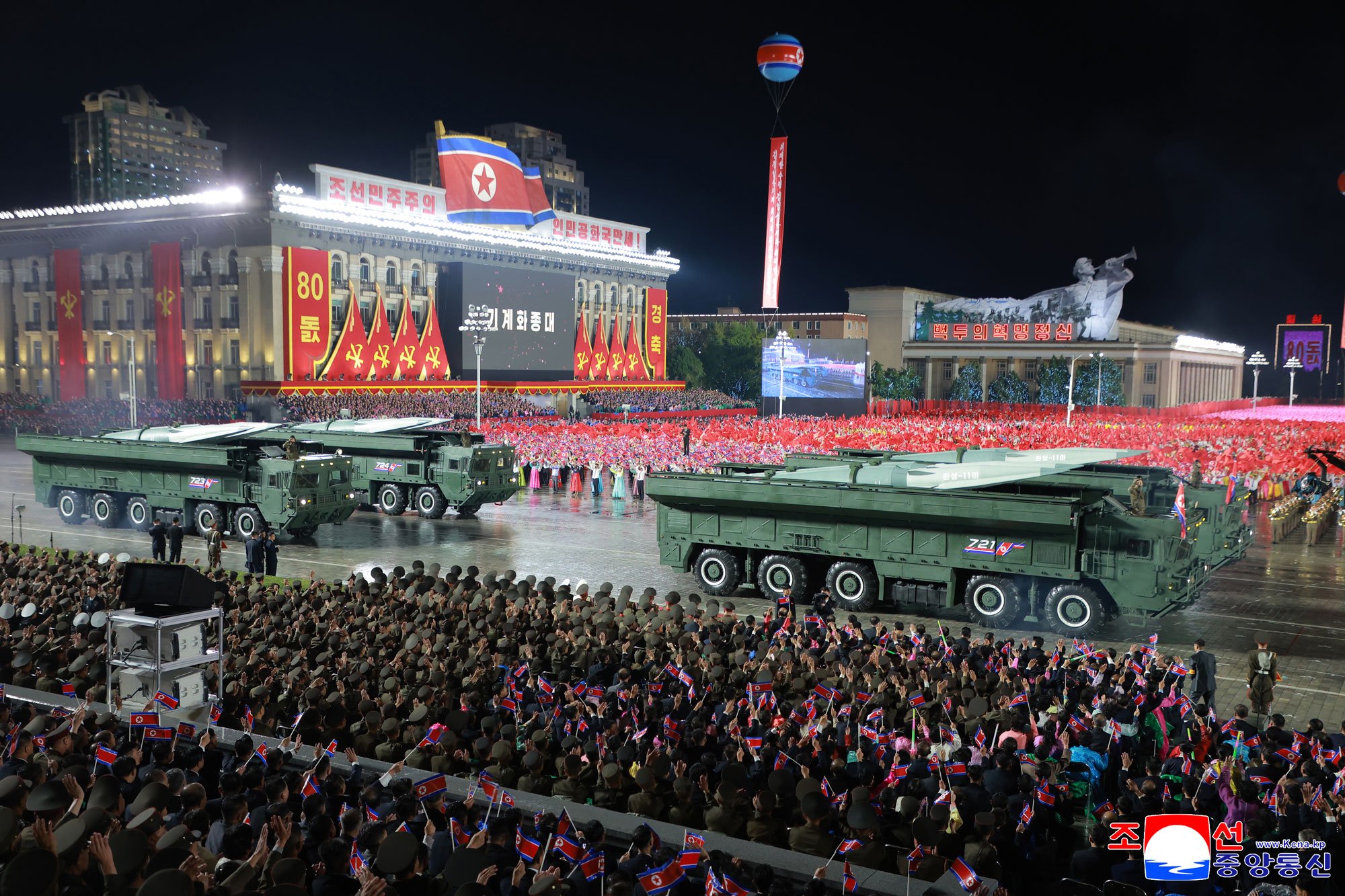
North Korea claimed another hypersonic missile test that same month, but did not release launch imagery clearly connecting that test to the Hwasong-11Ma. The missile was subsequently shown again during a military parade in Pyongyang.

Hwasong-11Ma missiles on five-axle TELs at last October’s military parade in Pyongyang. North Korean State Media

The latest “-1” designation suggests an iterative evolution of the Hwasong-11Ma, although Pyongyang has not explained what modifications it represents.

Based on the imagery, the new configuration also includes a modified launcher, with the missile carried on a six-axle transporter-erector-launcher (TEL). When the Hwasong-11Ma was first shown, it was mounted on a five-axle TEL. The latest vehicle also appears to incorporate modified retractable covers around the missile.

It remains unclear whether the new TEL represents a standardized operational vehicle or a test configuration.

Preliminary illustration of the new launch vehicle for North Korea's hypersonic missiles. pic.twitter.com/dZ31LA1cbn

— Tal Inbar (@inbarspace) September 22, 2026

As with previous North Korean weapons announcements, the country’s state media claims need to be treated very cautiously. Pyongyang has a long record of publicizing weapons systems and test results that cannot be independently verified, while some of its purported hypersonic tests have left outside analysts unable to determine whether the advertised maneuvering performance was actually demonstrated.

Perhaps the most revealing test-related imagery comes from a display screen photographed at the launch site.

Kim Jong Un and his daughter can be seen watching the screen, which shows the apparent flight trajectory of the Hwasong-11Ma-1. The displayed path initially follows a ballistic trajectory before descending and then performing a pull-up maneuver, regaining altitude before continuing toward the target area.

That type of trajectory is consistent with the basic concept behind a hypersonic glide vehicle. The booster provides the initial velocity and altitude, after which the unpowered glide body follows a relatively shallow, atmospheric flight path at hypersonic speeds, while maneuvering rather than following a simple ballistic path.

The graphic is useful for understanding what Pyongyang says the weapon is designed to do, but it does not independently demonstrate that the missile actually followed the depicted trajectory.

The flight data visible on the display provides some unusually specific figures.

Enhancing the original image released by North Korea allows for an excellent view of the HS-11Ma hypersonic glide missile trajectory, providing altitude and speed data. Note: Slight inaccuracies in the numbers may occur due to the use of AI tools. pic.twitter.com/M4LkfF5VYu

— Tal Inbar (@inbarspace) September 22, 2026

According to the North Korean imagery, the missile traveled 908.2 kilometers (564.3 miles), reached an altitude of 35.8 kilometers (22.2 miles), and remained in flight for approximately 445 seconds, or 7.4 minutes.

The display gives a velocity of 2,146 meters per second, equivalent to roughly 4,800 mph. That is hypersonic velocity in the aerodynamic sense, but speed alone is not what makes a hypersonic glide weapon particularly challenging to defend against. More consequential parameters include sustained controlled flight, maneuverability, guidance, and accuracy.

Other portions of the display appear to show additional points along the flight, including different times, altitudes, and speeds. None of these figures have been independently verified.

The TEL raises one of its two Hwasong-11Ma-1 missiles into the launch position. North Korean State Media

The claimed range is particularly noteworthy because it does not match the publicly reported tracking data from South Korea and Japan.

South Korea’s Joint Chiefs of Staff said North Korea launched two SRBMs from the Wonsan area on September 20. The missiles were assessed to have traveled approximately 450 and 600 kilometers, respectively.

Japan similarly reported two launches, assessing the first at approximately 440 kilometers and the second at approximately 590 kilometers, with maximum altitudes of roughly 60 and 70 kilometers.

Those figures are substantially different from the 908.2-kilometer distance shown on North Korea’s display.

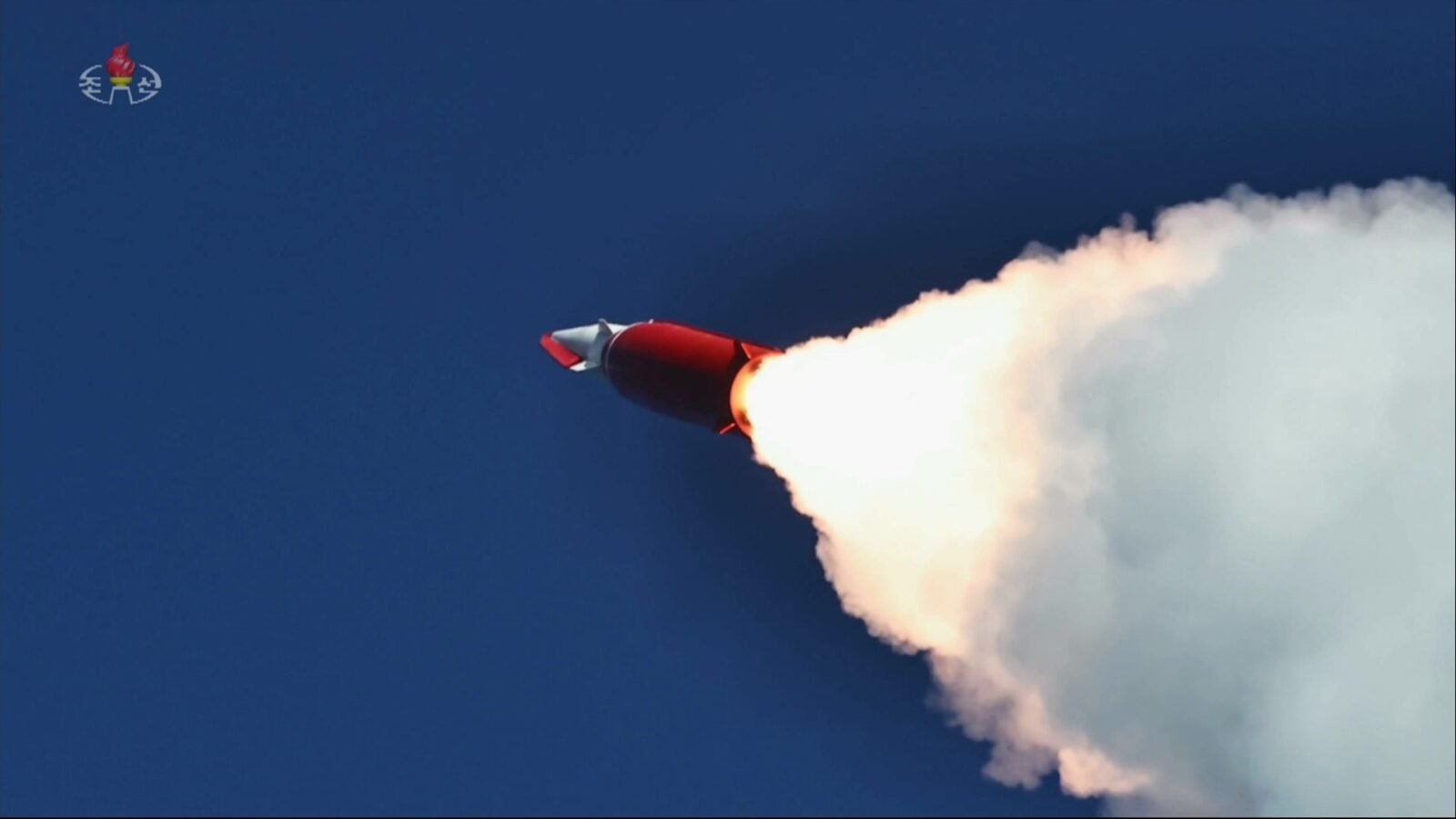
The Hwasong-11Ma-1 climbs after launch. North Korean State Media

The discrepancy does not necessarily establish that either side’s data are incorrect. The North Korean figure could represent a different measurement of the flight path, or could correspond to a portion of the test that was not reflected in the public South Korean and Japanese assessments. It is also possible, if not highly probable, that Pyongyang selectively presented or altered the data.

South Korean analysts have already raised questions about the unusually long distance displayed by North Korea. Yonhap reported that experts suggested Pyongyang may have altered the figure to portray the test as more successful.

Regardless of the range actually achieved in this test, the Hwasong-11Ma/Ma-1 is significant because it represents an attempt to combine a relatively compact SRBM with a maneuvering hypersonic glide vehicle.

The underlying Hwasong-11 family is a well-established North Korean missile design. In its KN-23 configuration, members of the family have also been used by Russia against Ukraine. By placing a glide vehicle on this type of booster, Pyongyang could potentially give a regional strike weapon a flight profile substantially different from that of a conventional ballistic missile. The Hwasong-11Ma/Ma-1 also uses a solid-fuel booster, allowing for faster launches than earlier liquid-fuel designs.

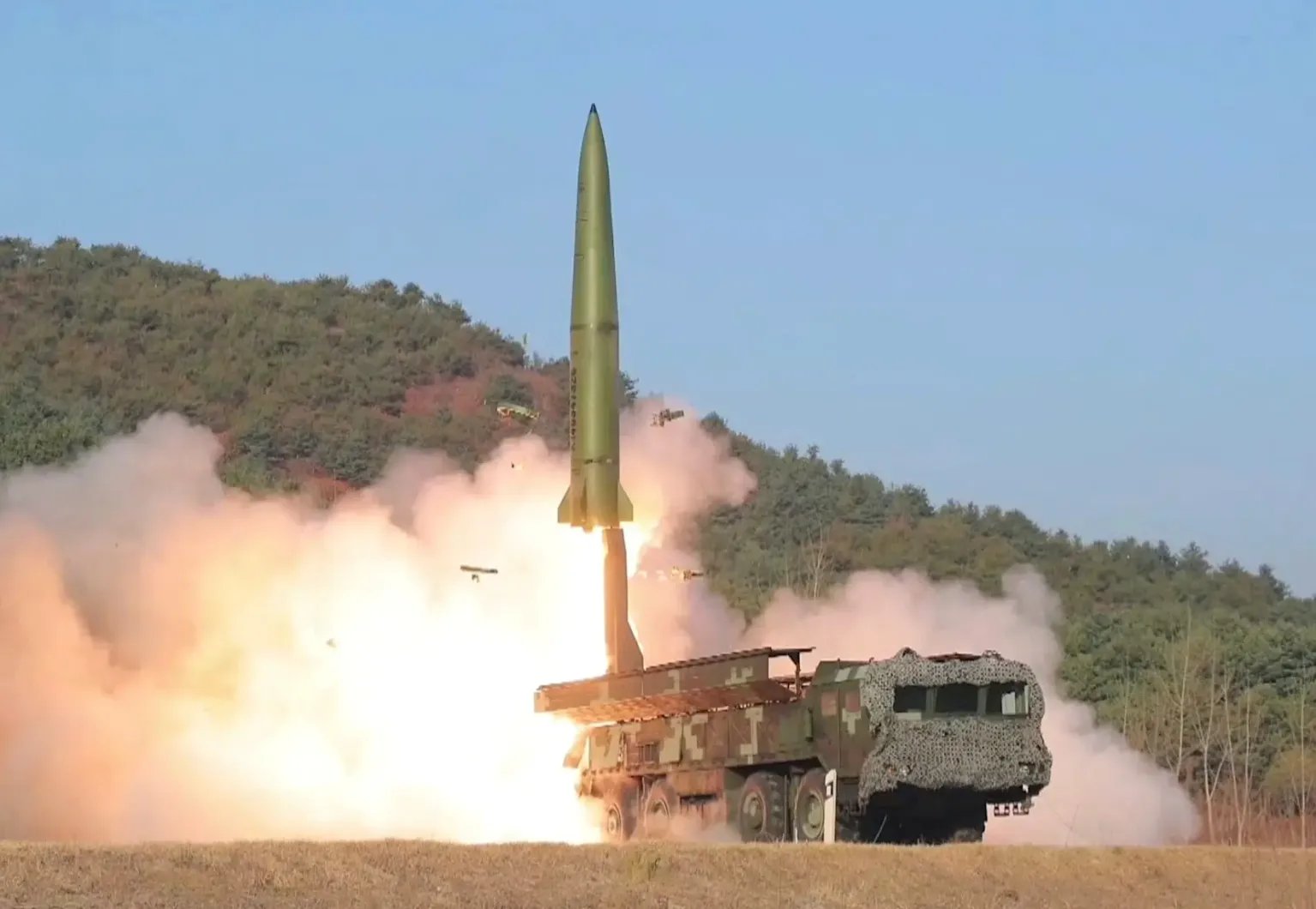
The original North Korean Hwasong-11 short-range ballistic missile. North Korean State Media

In principle, the Hwasong-11Ma/Ma-1 could give North Korea an additional hypersonic strike option against more heavily defended targets in South Korea. Having road-mobile TELs would also provide greater operational flexibility despite their relatively limited range, while making it more difficult for adversaries to locate and track the launchers.

A genuine boost-glide weapon creates significant challenges for defending forces since the sheer speed of the weapon bypasses most air defenses. Its trajectory can also become less predictable after the boost phase. Maneuvering at lower altitudes could also reduce the time available to detect, track, and engage the weapon.

A close-up look at the Hwasong-11Ma’s boost-glide-vehicle. North Korean State Media

However, the available imagery does not establish the extent of the vehicle’s maneuverability, its ability to maintain controlled flight, its accuracy, or the reliability of the complete missile system.

North Korea has made similar claims about its hypersonic weapons in the past.

Pyongyang says it has flight-tested multiple hypersonic boost-glide vehicle designs since at least 2021, but there continue to be questions about what degree of actual capability the country has achieved in this regard. Viable wedge-shaped boost-glide vehicles have historically been extremely difficult to design and then bring to an operational state.

The challenge is not simply reaching hypersonic speed. A weapon has to sustain controlled flight and maneuverability under extreme thermal loads, while also overcoming demanding materials-science, guidance, and navigation requirements. The terminal phase is harder still. Accurately finding and striking a moving target, particularly a ship, requires a highly capable seeker and guidance system. Integrating a nuclear warhead introduces another layer of engineering and weapons-design challenges.

Those demands have made hypersonic weapons a major technological challenge for the United States and other major powers. China is currently widely regarded as the leading country in deploying and developing operational hypersonic systems, although important questions remain about the capabilities and maturity of individual weapons.

Pyongyang said it first flight-tested a wedge-shaped hypersonic glide vehicle in 2021 aboard the liquid-fuel Hwasong-8, before pairing a similar-looking vehicle with the solid-fueled Hwasong-16B intermediate-range ballistic missile (IRBM) in 2024.

VIDEO: Korean Central Television (KCTV) broadcasted footage of North Korea successfully testing the new "Hwasong-16B" hypersonic intermediate-range ballistic missile (IRBM) on Tuesday. pic.twitter.com/VNdhLAeyyK

— NK NEWS (@nknewsorg) April 3, 2024

In its coverage of the latest test, North Korean state media initially avoided identifying the weapon, describing the event as a successful trial of a “new-type weapon” that it said was significant for the rapid development of weapons technology.

Kim said the development would give adversaries an “incurable headache” and deliver what he described as a “cruel and unavoidable blow.”

Tal Inbar, the head of the Space and UAV Research Center at Israel’s Fisher Institute for Air and Space Strategic Studies identifies the Hwasong-11Ma/Ma-1 as a “very significant weapon, bringing hypersonics to the operational/tactical arena and [posing] a challenge to … air and missile defense systems.”

Whatever the exact achievements of the test, the imagery points to continued development of a weapon North Korea first publicly displayed nearly a year ago. The appearance of a new, six-axle TEL, a potentially modified missile, combined with the apparent flight test, suggests that the Hwasong-11Ma/Ma-1 program has progressed since its initial public unveiling.

What remains uncertain is how much of that progress represents a genuine improvement in operational capability.

The latest test therefore provides another indication of the resources and attention Pyongyang is devoting to hypersonic weapons, but the available evidence is still insufficient to determine how closely the Hwasong-11Ma-1’s actual performance matches the capabilities depicted by North Korean state media.

Contact the author: thomas@thewarzone.com

The post North Korea Tests New Hwasong-11Ma Hypersonic Missile appeared first on TWZ.

  •  

ADM-160 Miniature Air Launched Decoy Wreckage A Reminder Of Ongoing Spying On Iran’s Air Defenses

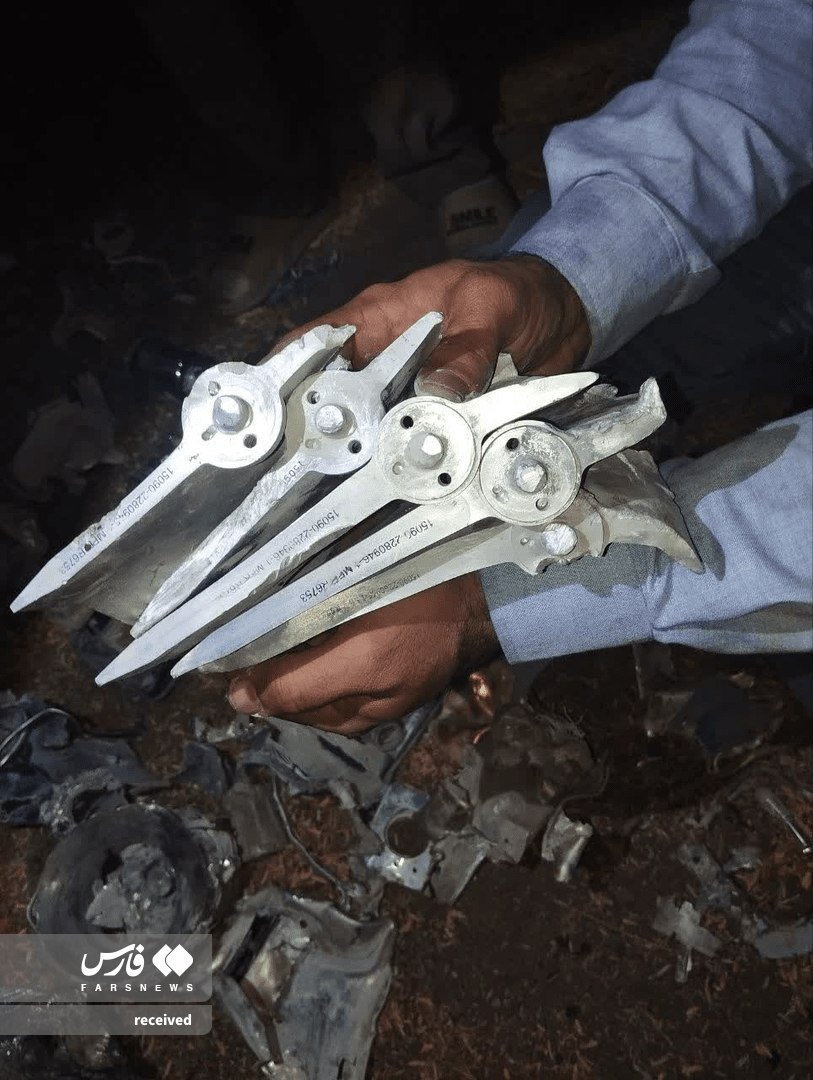
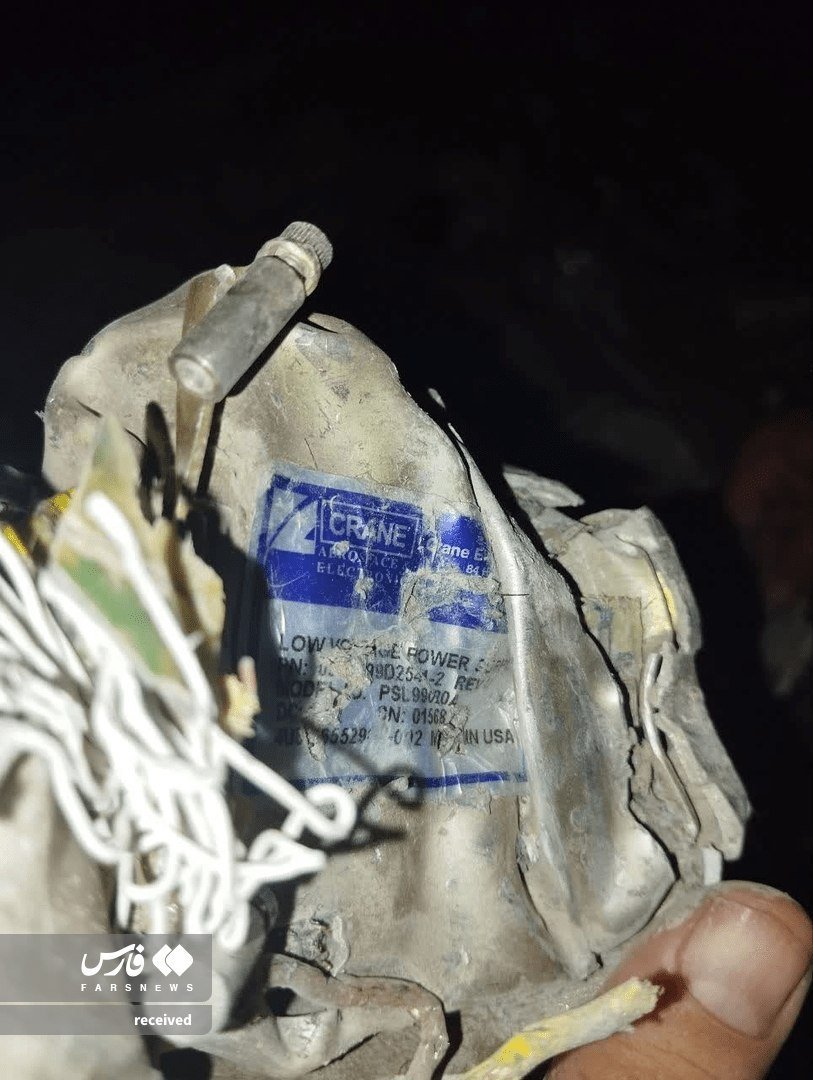
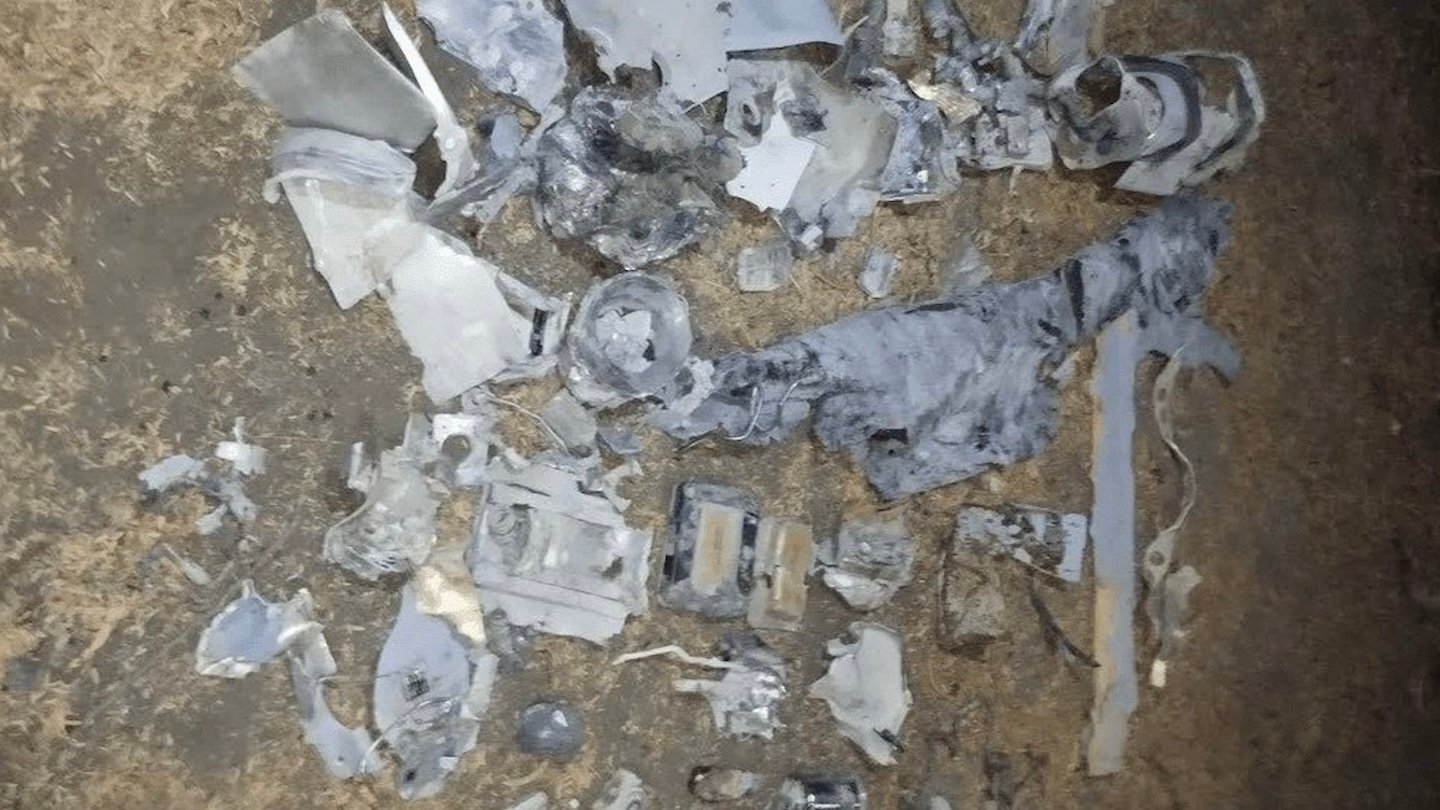
Remnants claimed to be photographed in Iran have been identified as belonging to a Raytheon ADM-160 Miniature Air-Launched Decoy (MALD). The wreckage was reportedly recovered after an Iranian interception that occurred earlier in the day, although the exact location and circumstances remain unconfirmed and there is reason for caution. Iranian state and military media have a long record of presenting unverified or exaggerated claims, especially during periods of conflict, and imagery released through those channels warrants independent scrutiny. Still, the MALD identification appears credible based on the visible wreckage, but its provenance, location, and the circumstances of its loss have not yet been independently established. MALDs were likely used at least in the opening stages of Operation Epic Fury, as well.

With that being said, the showing off of the MALD wreckage, regardless of its original use case, is something of a reminder that U.S. and Israeli forces are continuing to evaluate Iran’s electronic order of battle, which can include probing activities that leverage deception and decoys to better understand the state of Iran’s air defenses and command and control architecture. This is critical information that needs to be constantly updated for contingency and future potential air campaign purposes.

Wreckage of the MALD. Iranian media

Iranian sources today reported the destruction of an Orbiter-type reconnaissance drone over the Strait of Hormuz, before the separate imagery emerged showing what appears to be the wreckage of a MALD. It is not yet clear whether the two reports refer to the same incident or separate losses.

A close-up of the wreckage of the MALD. Iranian media

The appearance of the wreckage could also shed a light on how the U.S. and Israel can conduct ongoing air operations against Iran, even if kinetic actions have largely slowed to a trickle.

15090 is the CAGE code for Raytheon, which is visible on the tail fins and other remnants.

Source for images: https://t.co/weIo1Hh6RR pic.twitter.com/4LoBMChKZG

— Trevor Ball (@Easybakeovensz) September 20, 2026

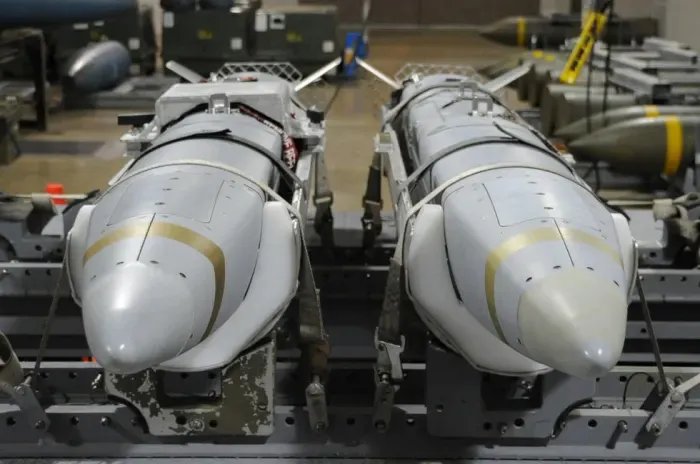
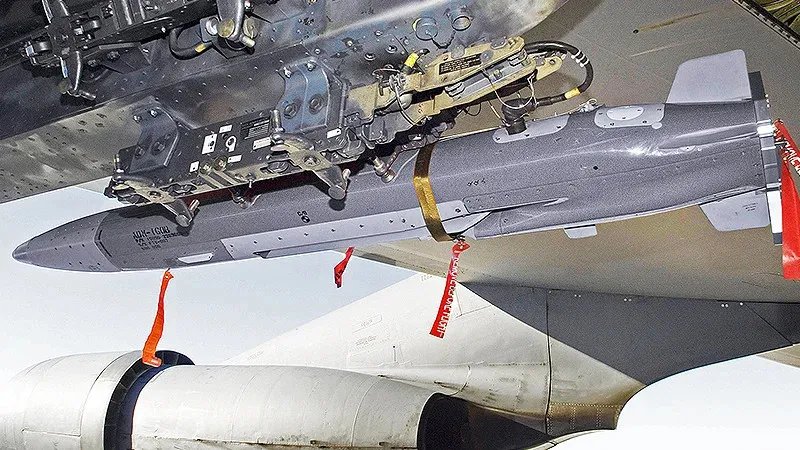
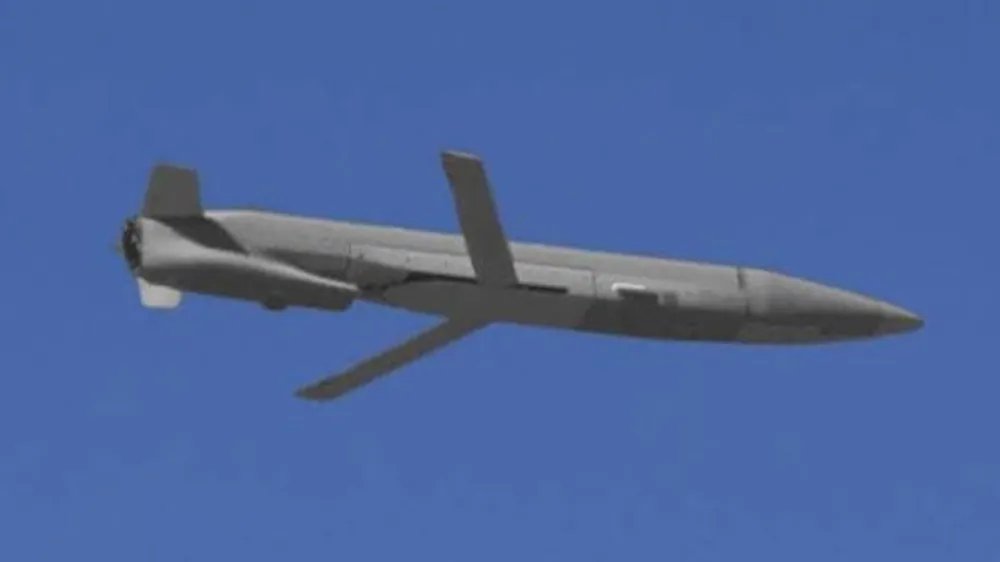
MALD is an expendable store, launched from another aircraft. The ADM-160 family was developed to provide a flexible way of decoying and distracting an enemy’s air defenses, while also adding to the survivability of allied aircraft and standoff weapons. Raytheon won the U.S. Air Force development contract for the current-generation ADM-160B in 2003. The B design is significantly different from the initial A-model from Teledyne Ryan (later Northrop Grumman), the development of which had started in the late 1990s. The B also features a more powerful turbojet engine and possesses greater range.

MALDs being prepared for loading onto an aircraft. U.S. Air Force

The ADM-160B is approximately 6.5 feet long, has a wingspan of roughly 5.6 feet when deployed, and is powered by a small turbojet. It has an operational range of around 550 miles.

Rather than carrying a conventional warhead, the MALD carries equipment intended to reproduce the radar signature of specific aircraft or standoff weapons. It can therefore provide additional and often highly enticing tracks for an adversary’s radar operators and surface-to-air missile crews to respond to. It can be programmed to fly intricate routes to better rival the target it is emulating and to provoke the attention of air defenders.

The related ADM-160C MALD-J adds an electronic warfare capability, allowing it to perform stand-in jamming and other forms of active electronic attacks against enemy air defense nodes. Further improved variants of the MALD, which the U.S. Navy has also been acquiring, have since been developed as you can read more about here.

The exact variant involved in today’s incident cannot be established from all publicly available imagery at this stage.

An ADM-160B under the wing of a U.S. Air Force B-52 bomber. U.S. Air Force

The possibility that the United States had used MALDs against Iran had already attracted considerable attention following Operation Midnight Hammer, the U.S. strike against Iranian nuclear facilities in June 2025.

During the operation, U.S. officials described a complex deception plan involving aircraft and other decoy measures designed to prevent Iran from determining the true direction and composition of the attack.

This strongly pointed to MALD as one likely component of that deception architecture.

The opening hours and days of Operation Epic Fury also likely saw MALD employments. ADM-160s have also been used extensively by Ukraine against Russia, primarily for provoking air defense systems into radiating and as penetration aids for cruise missiles.

In the Strait of Hormuz context, the MALD could serve a dual purpose. It could act in its primary role, as a defensive measure for allied aircraft and standoff weapons, drawing Iranian air defense systems away from it and toward the decoy. It can also be used more independently, triggering Iranian defenses and revealing their locations and operating characteristics, as well as the state of Iran’s command and control for those assets. Surveillance platforms, especially those in the air, can then soak up all that signals data. This can then be used to generate intelligence for future operations, and all without putting a person or an expensive piece of equipment at risk.

The unique nature of the current state of the Iran conflict would allow for MALD to be used in this unique manner. While kinetic actions have become sporadic, they are still occurring, so firing a decoy that looks like something much more threatening to Iranian air defenders would not be an unprecedented escalation.

An ADM-160 MALD in flight. Raytheon

Iran has characterized the incident as a shoot-down. If Iranian forces did successfully engage the MALD, that would represent a real air defense interception of a U.S. deception system, although these are expendable by design. It is equally possible that the MALD malfunctioned or just flew its route and ran out of fuel and crashed, as designed.

The wreckage also does not, by itself, identify the aircraft that launched the MALD.

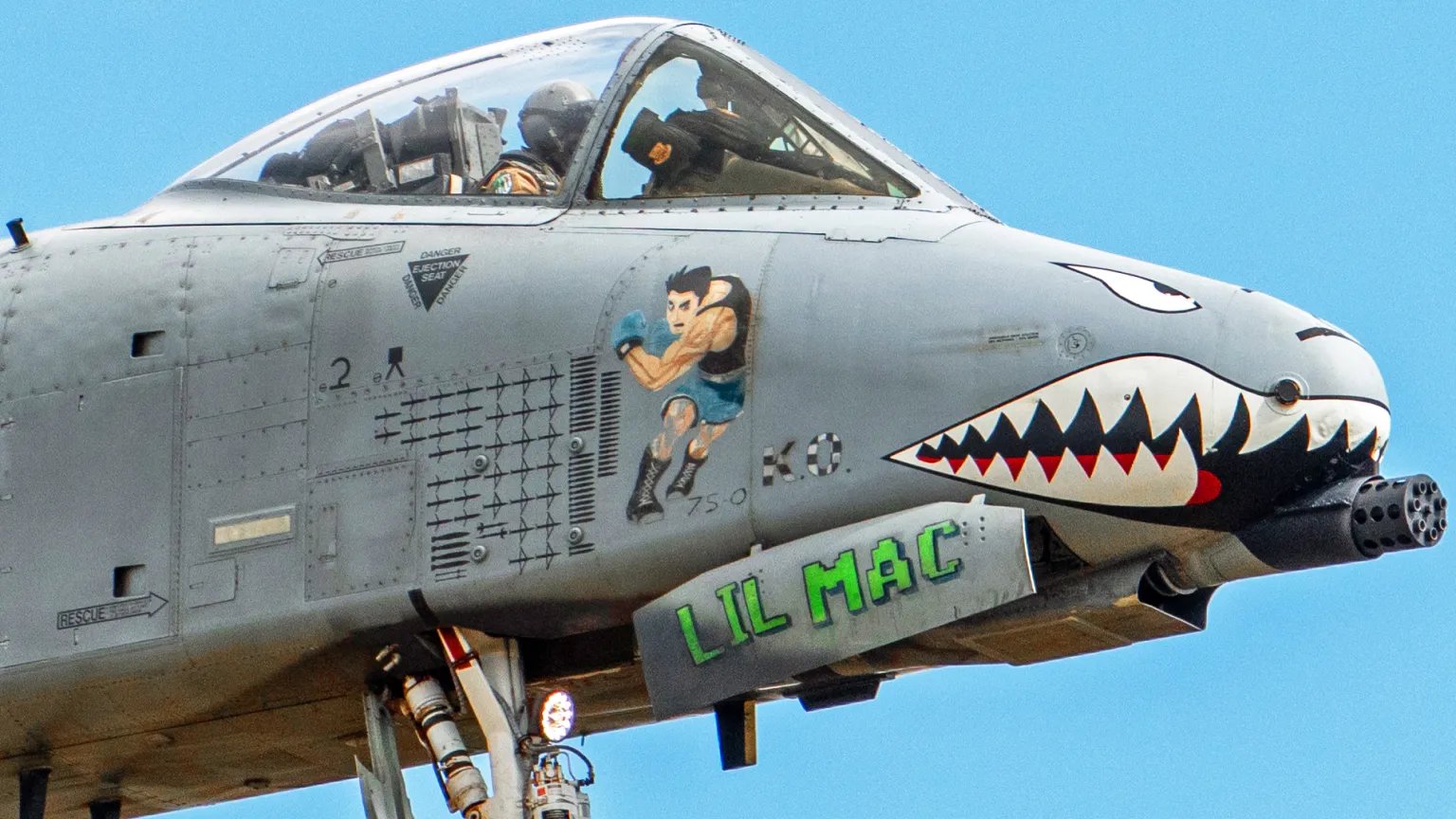
The system has been integrated with a broad range of U.S. aircraft. In the course of U.S. operations against Iran, we have notably seen Air Force A-10C Thunderbolt II attack jets returning from theater with markings depicting MALD missions.

An A-10 with mission marks showing a mix of weapons used against Iranian targets. They include MALDs, Small Diameter Bombs, GBU-12 Paveways, Advanced Precision Kill Weapon System (APKWS) laser-guided rockets, AGM-65 Maverick air-to-surface missiles, and generic bombs that probably signify Joint Direct Attack Munitions (JDAMs). Andrew McKelvey

It is also worth noting that the MALD wreckage has appeared at the same time as reports of unusual, UAP-like objects over Iran, with videos and eyewitness accounts circulating online. Their authenticity and nature remain unclear.

A number of videos are circulating showing an unidentified object in the skies above Tehran, Iran, it’s not immediately clear what is being filmed. pic.twitter.com/bHNAQGFPNv

— OSINTdefender (@sentdefender) September 21, 2026

Such reports come amid an increasingly sophisticated use of low-end drones, decoys, and other forms of deception. These kinds of systems can be employed not only to stimulate adversary air defenses, but also to distract populations and probe how information moves out of a denied area. In such an environment, unusual aerial sightings should be viewed with caution — but not necessarily dismissed as irrelevant. We have been talking about how new forms of misdirection and guile will leverage relatively low-end technologies in future conflicts for many years now. While it isn’t clear if this light show in the sky over Iran was such an activity, it is certainly a reminder to keep that possibility in mind.

I don’t know what this is, or if it’s legit BUT remember we are in a new age of misdirection, decoy and guile. Specifically using low end drone technology. There are more ways to stimulate an enemy air defense system, distract a populous, assess the flow of public info from a… https://t.co/wW7YVlbayB

— Tyler Rogoway (@Aviation_Intel) September 21, 2026

Meanwhile, the prospect of renewed U.S. strikes is increasingly being raised on both sides. Iran’s central military command said Sunday that it had received information that Washington was preparing to resume attacks, while President Donald Trump told Fox News that he was in a “deciding mode” and was considering further military action alongside economic pressure and a deal.

Trump had also told Axios last week that he was approaching a major decision on whether to resume large-scale military operations, with U.S. forces in the region being maintained at current levels through the end of the year.

Iranian officials have warned that a renewed U.S. attack would trigger retaliation against American forces and interests across the region. At the same time, Qatar and Pakistan are pursuing diplomatic efforts to restart negotiations.

This situation is exactly why keeping as detailed intelligence on the status of Iran’s air defense overlay would be so critical. Building a highly detailed electronic order of battle and maintaining it is critical to the effectiveness of future air operations. There is usually an observable burst of such activity prior to a major operation kicking off, as well. There are also many unseen assets that help with this, from those in space to those in the air and even those under the sea. There have been reports of Israel’s secretive RA-01 stealth flying wing drone being spotted over Iran and of course the U.S. has its own RQ-170 and RQ-180 aircraft, just to name a couple known penetrating assets that are likely highly capable of collecting this information.

Regardless, the U.S. and Israel will have a lot of ‘maintenance’ to do in order to roll back any air defense capabilities Iran has been able to reconstitute should hostilities break out in full again, and a lot of critical intelligence data will need to be up-to-date in order to support such an operation.

Contact the author: thomas@thewarzone.com

The post ADM-160 Miniature Air Launched Decoy Wreckage A Reminder Of Ongoing Spying On Iran’s Air Defenses appeared first on TWZ.

  •  

Germany: AfD roars into first, but CDU looks set to crash out of parliament for the first time ever

In a historic first since the founding of the Federal Republic of Germany, the Christian Democrats (CDU) have failed to enter a state parliament after falling below 5 percent in Mecklenburg-Vorpommern. In Sunday’s election, the Alternative for Germany (AfD) finished first with 38.2 percent.

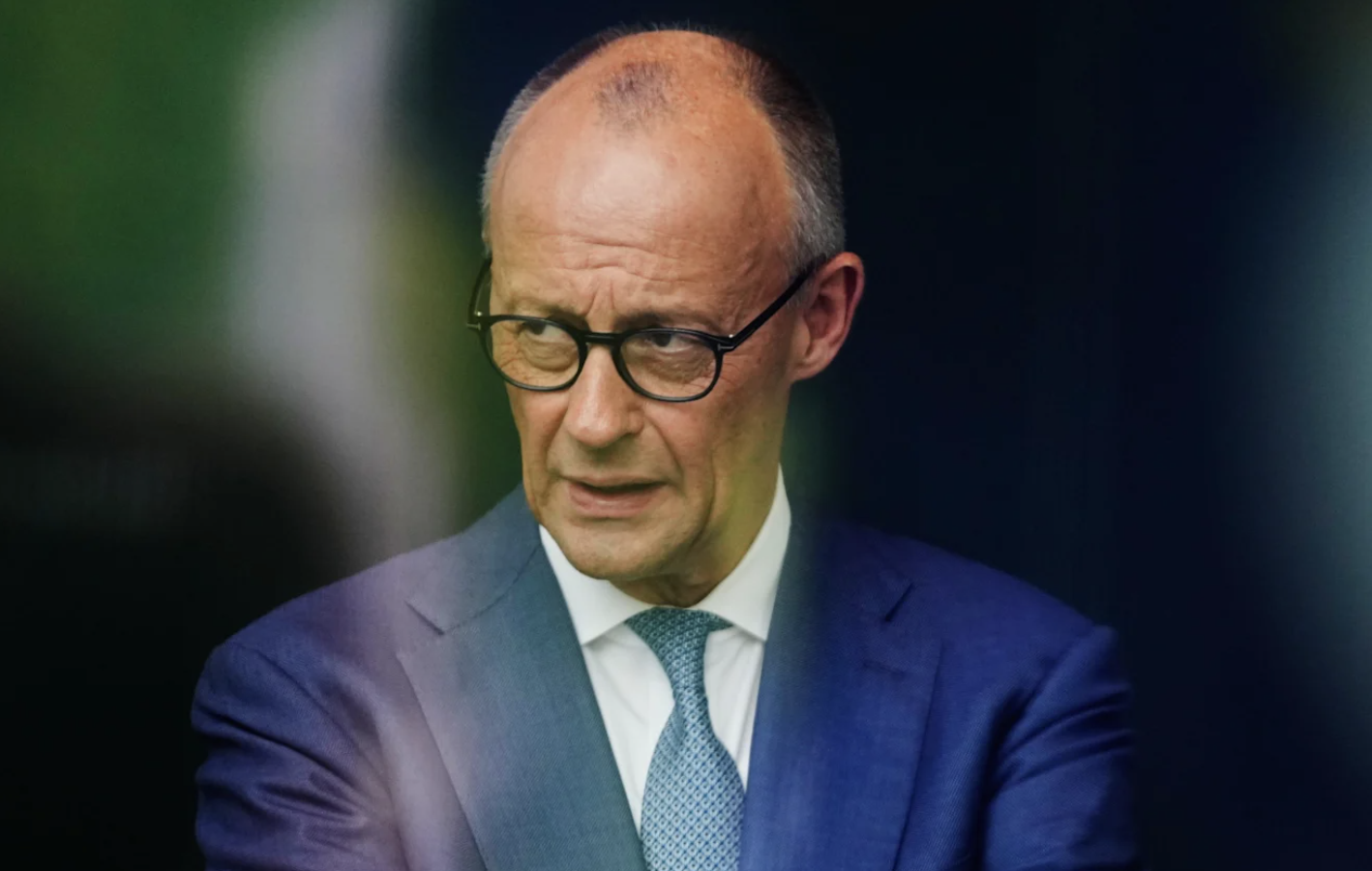
“The result is a disaster,” Chancellor Friedrich Merz said shortly after polls closed in Mecklenburg-Western Pomerania and Berlin. He made the remark before public broadcasters ARD and ZDF projected that the CDU would drop below 5 percent in the northeastern state. That threshold is decisive in German politics: parties that fall short do not enter parliament.

The preliminary result is now in. The CDU finished at 4.9 percent, down 8.4 points from 2021. It is the party’s worst state-election result in postwar German history. The outcome is likely to revive calls for Merz to resign. He has given no sign that he will, and he also refuses to give up the CDU chairmanship.

Instead, Merz spoke of reforms that require “backbone, steadfastness and patience,” adding: “I will bring this up, as party chairman of the CDU and above all as chancellor of our country.”

No further pivotal state elections are imminent, and Merz is betting that debt-financed spending will start to show in the economy. He hopes that by 2027 he can point to two years of growth.

The problem is that fuel prices keep rising, health-insurance costs remain high, and large parts of German industry are under pressure from tariffs, input inflation, and competition from China.

The AfD is increasing that pressure. It finished well short in Berlin, below 17 percent, but took first place in Mecklenburg-Vorpommern with 38.2 percent — more than double its 2021 result of 16.7 percent. That follows its victory in Saxony-Anhalt, where it won 43.8 percent. The AfD will not govern in Schwerin, the capitol of Mecklenburg-Vorpommern, however. The Social Democrats (SPD) came second with 35.5 percent. Together with the Left (6.5 percent) and the Greens (5.7 percent), the SPD has enough seats for a coalition and is expected to stay in power.

AfD co-leader Alice Weidel called her party the new “people’s party” and said the CDU had been displaced in that role.

“We are the strongest force and have arrived in the middle of the population,” she said on ZDF.

Voters had wanted “a change of policy,” she added, declaring the firewall of other parties against working “a failure.” Her long-term goal, she said, is coalition talks with the CDU.

Co-leader Tino Chrupalla claimed a “clear government mandate” and said the AfD would offer talks to all parties. The other parties in the new Mecklenburg-Vorpommern parliament have already ruled that out.

The post Germany: AfD roars into first, but CDU looks set to crash out of parliament for the first time ever appeared first on Remix News.

  •  

Israel Completes Registration of Candidates for the Knesset

Anton Ivanov Israel’s election campaign has entered its decisive stage. By early September, the main political forces had completed their candidate lists for the October 27 elections, and the central question is whether the opposition can deprive Benjamin Netanyahu of a majority in the Knesset. According to the latest polls, the incumbent prime minister’s coalition […]
  •  

Difficult Choices and Faltering Alliances: Saudi Arabia’s Path to Overcoming Blockade Threats

In September, the Middle East witnessed a series of rapid and dangerous developments that underscored the fragility of regional security architectures. Among the most consequential was the Iran-backed Ansar Allah (Houthi) movement not only repelling the advance of Saudi-backed Yemeni government forces toward Sanaa but also turning the attack into a devastating counteroffensive. In doing so, they seized control of strategically vital coastal positions. Houthi forces captured the port of Mocha on Yemen’s western coast, Mayyun Island (Perim) in the Bab al-Mandab Strait, and the coastal city of Dhubab, overlooking the strategic waterway. Within the framework of regional alliances, this signifies one thing: Iran now exerts influence over the Bab al-Mandab Strait—one of the most vital maritime chokepoints in the world, through which approximately 12% of global trade and 7% of worldwide petroleum product supplies pass annually.

The implications especially for Saudi Arabia are profound and dire, as Ansar Allah’s military spokesperson announced that maritime navigation in the Red Sea remains safe for all international shipping companies, with the explicit exception of Saudi-flagged or Saudi-linked vessels. While the Iranian Revolutionary Guard considered the Houthi advance a “divine victory,” Mohammad Mokhber, the advisor to the Supreme Leader, stated that: “their advance has placed America and its allies in a tactical and strategic dilemma.” These developments extend beyond the region, potentially impacting the broader Asia-Pacific geopolitical landscape, particularly affecting India and China due to the strategic importance of the Strait of Hormuz and the Bab al-Mandab. Instability in these waters threatens oil flows and global trade. The threats are forcing ships to reroute around the Cape of Good Hope, resulting in higher costs and extending voyage times by approximately a month. Meanwhile, surging global oil and shipping prices are exerting additional pressure on the economies of both nations.

The conflicts extended beyond Yemen’s borders, reaching into neighboring Saudi Arabia. The Houthis targeted key strategic locations, including Abha International Airport, an Aramco facility, and King Khalid Air Base. Additionally, they launched an attack on the largest oil refinery in Jizan, resulting in injuries to 73 Saudi nationals.

Within the framework of Iran’s strategy to activate the “unity of fronts”, expanding the scope of their actions from Iraq, targeting strategic infrastructure that Saudi Arabia relied upon as an alternative route as the Strait of Hormuz is inaccessible. Specifically targeted the East-West Pipeline (Petroline), which transports oil from the Kingdom’s eastern regions to its western areas. As a result of these attacks, the Saudi Ministry of Energy announced the temporary closure of the pipeline as a precautionary measure. The Saudi Ministry of Foreign Affairs attributed the attack to Iraq—an assertion acknowledged by the Iraqi government—prompting Iraqi Prime Minister Ali Falah al-Zaidi to dismiss a military commander in Maysan Governorate and implement measures that included forming an investigative committee and closing three border crossings between Iraq and Iran.

The closure of the East-West pipeline raises concerns about the potential loss of up to 4% of global oil supplies, at a time when markets are already facing supply shortages, escalating fuel prices, and inflationary pressures.  The International Energy Agency (IEA) reported that Saudi oil production levels declined to their lowest point in over three decades in August, primarily due to diminished flow through the Strait of Hormuz and the Red Sea. Furthermore, the IEA projected a global oil supply reduction of approximately 5.7 million barrels per day, or nearly 6%, within this year.

This escalating sequence of events did not emerge spontaneously nor from a single moment of impulse; rather, it resulted from a series of developments that accumulated like an ice ball, culminating in a rapid descent with immense force. On July 20, the Houthi announced the imposition of a naval blockade on Saudi Arabia, framing it as a “siege for siege” strategy.  This declaration followed a series of provocative actions, including an incident on July 13, when Saudi-supported Yemeni government forces targeted the runway of Sanaa Airport to prevent an Iranian aircraft from landing. The Houthis claimed that the aircraft was carrying Yemenis who had participated in the funeral of Ayatollah Ali Khamenei in Iran. the Saudi-aligned forces at Sanaa Airport refused to permit the Iranian plane to land and subsequently struck the airport runway. The Houthis retaliated by targeting Saudi ships attempting to traverse the Red Sea. Feeling increasingly threatened by both aerial and maritime assaults, Saudi Arabia decided to strike back at Sanaa, the Houthi-controlled capital and strategic headquarters.

This series of escalations marked a turning point, transforming the conflict into a two-front confrontation: an internal struggle against the forces of the legitimate Yemeni government backed by Saudi Arabia and an external campaign against Saudi Arabia. The confrontation thus evolved into a complex and layered conflict with regional implications, reshaping the dynamics of the ongoing crisis.

On July 28, a coordinated US-Saudi military operation targeted facilities and weapons depots operated by Iranian-backed militias in eastern Iraq. This action was in direct response to over 30 drone attacks carried out by the Iranian Revolutionary Guard Corps (IRGC) within a 72-hour period, which targeted US military personnel as well as Saudi Arabia’s energy and oil infrastructure. The explicit and active involvement of Saudi forces in conducting strikes within Iraqi territory represented a notable development and signified a strategic shift in the Kingdom’s military policy.

During this critical time, as Saudi-backed government forces faced significant setbacks and disintegration amid the advancing Houthi forces, the Saudi Crown Prince sought assistance from the U.S. President Donald Trump to carry out military strikes against the Houthis, aiming to counter their attacks and halt their territorial expansion. However, President Trump declined to provide support in this regard.

This scene delineates Saudi Arabia’s engagement with a series of intricate and multifaceted strategic dilemmas. Despite its aerial capabilities, Riyadh encounters significant constraints in exerting decisive influence over ground operations in Yemen through airpower alone; the deployment of ground forces remains a politically and militarily sensitive option that the Saudi leadership appears reluctant to pursue. Concurrently, the Saudi-led coalition has been embroiled in an internal crisis since December 2025, involving the United Arab Emirates and the Southern Transitional Council forces (STC). It seems that the Yemeni government’s request for the UAE’s withdrawal has undermined both its defensive and offensive operational capacity on the ground, which has contributed to the coalition’s rapid retreat in the face of Houthi advances.

Furthermore, the proposed joint defense mechanism—under the umbrella of the “Mecca Alliance”—remains inactive, highlighting a lack of clarity regarding operational aspects. Sajjad Haider, the spokesperson for the Pakistani Ministry of Foreign Affairs, explicitly stated that no decisions have yet been made regarding the launch of military action under the “Mecca Agreement,” affirming: “There is no such matter currently under discussion… and when the time comes, we will act in accordance with the agreement.” This reflects a state of strategic ambiguity and conditional readiness rather than an actual, immediate commitment.

This confluence of factors underscores a broader crisis within Saudi Arabia’s regional and international alliances across three interconnected tiers: domestically, with the Gulf Cooperation Council exemplified by the UAE’s role in Yemen; regionally, with the Mecca Defense Alliance, which remains in a state of procedural limbo pending formal activation; and globally, with its alliance with the United States, now increasingly tested by evolving circumstances and shifting geopolitical priorities.

At the level of international organizations, the Kingdom of Saudi Arabia’s recourse to the UN Security Council highlights the shortcomings and underlying breakdowns of the current international system and its organizations; the Council’s response was limited to rhetorical statements emphasizing the importance of de-escalation, while it clearly failed to adopt any substantive resolution capable of addressing or mitigating the underlying tensions and conflicts.


What strategic options remain available to Saudi Arabia?

Although it was announced that a conference involving Gulf foreign ministers and Iran would be held on September 14 in Oman to discuss arrangements in the Strait of Hormuz, the Iranian Tasnim News Agency has stated that “the Strait of Hormuz will not be reopened under the Iranian-Omani understanding.” The statement underscored that the reopening of the Strait is contingent solely upon the United States’ fulfillment of Iran’s stipulated conditions. Iran has effectively consolidated “unity of fronts” to coordinate offensive strikes against neighboring countries, thereby positioning itself proactively rather than defensively. This strategic escalation is designed to exert diplomatic and military pressure on the American administration and its allies, with the objective of compelling them to reconsider their stance, lift sanctions and economic siege posed on Iran, and prevent any potential military actions targeting Kharg Island.

It appears that President Trump, by consciously refraining from targeting the Houthis, sought to leverage diplomatic pressure on Saudi Arabia to encourage its participation in the Abraham Accords and the normalization of relations with Israel. Concurrently, this strategic restraint may have been motivated by a desire to avoid opening a new regional front, particularly in light of his previous challenges in addressing issues related to Iran and the Strait of Hormuz.

From another perspective, if Saudi Arabia’s acquiescence to Iranian coercive tactics it could be interpreted as a tactical success for Iran’s strategy of utilizing proxies in both Yemen and Iraq. Such a development suggests that Iran’s use of these proxies has effectively created a lever of pressure, compelling Saudi Arabia to adopt a cautious, mutually beneficial approach: facilitating Iran’s efforts to normalize relations with Gulf states and fostering a path toward resolving tangled issues with the United States—despite the unlikelihood of Trump making any concessions—in exchange for easing the pressure exerted by Iranian-backed proxy networks in the region.

This scenario poses considerable challenges not only for Saudi Arabia but also for the broader Gulf Cooperation Council (GCC) member states. Such concessions could potentially lead to a paradoxical situation of “empowering the adversary,” thereby prompting a critical strategic dilemma: will Saudi Arabia be compelled to choose between normalization with Iran or with Israel?

Alternatively, Saudi Arabia might choose to realign its diplomatic course by strengthening ties with the United Arab Emirates; such a strategic reassessment would align its political objectives with those of the UAE. This rapprochement would also reflect shared strategic interests—most notably the involvement of Emirati-backed Yemeni forces in the conflict against the Houthis—a matter of critical importance within the broader regional strategic landscape where Emirati and Saudi interests converge, at least for the time being.

Saudi Arabia finds itself at a critical juncture marked by escalating regional tensions, faltering alliances, and complex strategic dilemmas. The recent Houthi advances, Iran’s expanding proxy network, and the limitations of international and regional support have exposed vulnerabilities in the regional and Riyadh’s security architecture. The Kingdom faces the daunting task of balancing its military and diplomatic options amid shifting geopolitical dynamics, including the potential for rapprochement with Iran or strengthening ties with regional partners like the UAE. As the international community’s response remains largely rhetorical, Saudi Arabia finds itself  navigating an increasingly fragmented landscape, in front of  difficult choices that will shape the future stability of the Gulf and the broader Middle East. Ultimately, the coming phase is difficult for the region and  will be decisive in determining whether Riyadh can forge a resilient strategy to counter external pressures and challenges or whether it will succumb to the pressures of an evolving and unpredictable regional environment.

  •  

How Real Is the Impact of Western Sanctions on Israel?

Europe is getting tougher on Israel in rhetoric and sanctions, but its latest measures may be designed to create political distance from Israel without creating enough economic pain to make Israel change course in the West Bank or anywhere in Palestinian territories. The Arithmetic of Punishment On September 8, Britain, France, Canada and a group […]
  •  

Mike Huckabee is a huge embarrassment to America, the Trump administration, and the human race

Mike Huckabee is a huge embarrassment to America, the Trump administration, and the human race https://www.nytimes.com/2026/09/15/us/universities-ai-warnings-enthusiasm.html?campaign_id=190&emc=edit_ufn_20260918&instance_id=182130&nl=from-the-times&regi_id=319886775&segment_id=226689&user_id=16e8eb830e4bd362dd416f1daa9d25b1
  •  

Quatre mois de pronostics géopolitiques : ce que j'ai écrit, ce qui est arrivé

Par Thibault de Varenne

Le 17 juin, j'ai écrit que la trêve d'Ormuz tiendrait probablement ses soixante jours. Elle en a tenu vingt. Le 3 juillet, que l'on ne fermait plus un marché. Le baril a repassé les cent dollars le 11 septembre. Voilà pour l'entrée en matière : un chroniqueur qui ne relit que ses réussites n'est pas un chroniqueur, c'est un avocat.

Quatre mois de pronostics géopolitiques : ce que j'ai écrit, ce qui est arrivé
LE COURRIER
DES STRATÈGES
Restez libre !
LA NEWSLETTER · GRATUITE

Le Courrier,
chaque matin.

Quatre mois de pronostics géopolitiques : ce que j'ai écrit, ce qui est arrivé

L'essentiel de l'actualité, passé au crible par les cinq plumes du Courrier. Dans votre boîte, chaque jour ouvré.

Gratuit. Vous restez libre de partir quand vous voulez.

JE M'INSCRIS lecourrierdesstrateges.fr
lecourrierdesstrateges.fr
Restez libre !

Ce journal a pris, avec la rubrique qu'il appelle La Clause, dans le secret de la rédaction, l'habitude d'écrire à l'avance ce qui lui donnerait tort. Il est juste d'appliquer la règle à ce qui a déjà été écrit. J'ai donc repris mes papiers depuis le début de juin — la signature n'existe pas avant —, j'en ai extrait chaque phrase qui annonçait quelque chose, et je l'ai mise en face de ce qui s'est produit, avec la date et avec la source, prise comme toujours ici chez ceux qui ne sont pas nos alliés. Le lecteur trouvera le tableau ci-dessous. Je n'y ai rien retranché, et j'ai laissé de côté ce qui ne se vérifie pas — les jugements de valeur, les pronostics à vingt ans, les phrases qui sonnent bien.

DatePapierCe que j'annonçaisCe qui s'est passéBilan
5 juinLes BRICS à l'âge de raisonLe club cesse de grossir : une mue, pas une pause. « Nous verrons, au sommet indien, si la forme tient. »New Delhi, 12-13 sept. : déclaration adoptée à l'unanimité malgré la fracture Iran / Émirats ; aucun élargissement.Quatre mois de pronostics géopolitiques : ce que j'ai écrit, ce qui est arrivé
8 juinCe qu'on appelle un cessez-le-feuUne trêve qui ne traite pas les causes ne suspend pas la guerre : « elle la met au repos ».Mémorandum signé le 17 juin ; frappes américaines sur 80 cibles le 8 juillet ; blocus rétabli le 14 ; texte caduc mi-août.Quatre mois de pronostics géopolitiques : ce que j'ai écrit, ce qui est arrivé
13 juinCette guerre que nous ne savons plus lire« Les Russes grignotent ; ils ne percent pas. » Une guerre d'usure qui ne se résout pas.Septembre : Sloviansk-Kramatorsk toujours tenue, quinzième échéance russe fixée au 31 décembre ; chacun affirme que l'offensive de l'autre a échoué.Quatre mois de pronostics géopolitiques : ce que j'ai écrit, ce qui est arrivé
17 juinLa paix de soixante jours« Que la trêve tienne ses soixante jours : c'est probable, et même vraisemblable. » Qu'elle devienne une paix : « je n'y crois guère ».La trêve a tenu vingt jours. Aucune paix.◐
durée ✘ / issue Quatre mois de pronostics géopolitiques : ce que j'ai écrit, ce qui est arrivé
20 juinVersailles, ou la paix par soustractionSoixante jours qui « ressemblent moins à une convalescence qu'à un sursis ». L'allié couvert à Versailles « pourrait bien » faire sauter l'accord.Sursis confirmé. Mais l'accord a sauté entre Washington et Téhéran, sur la police du détroit — pas par Israël.◐
mécanisme Quatre mois de pronostics géopolitiques : ce que j'ai écrit, ce qui est arrivé / déclencheur ✘
27 juinLa guerre redevenue industrie« L'essaim qui défend Kiev aujourd'hui menacera demain d'autres capitales. »1er sept. : Kiev menace toute compagnie aérienne dans le ciel russe ; 13 sept. : drones russes sur un train à 5 km de la Pologne.Quatre mois de pronostics géopolitiques : ce que j'ai écrit, ce qui est arrivé
3 juilletLe baril sous 90 $« On peut fermer un détroit ; on ne ferme plus un marché. » Pétrole « structurellement baissier ».Deuxième détroit menacé (mer Rouge, 10-12 sept.) ; baril au-dessus de 100 $ depuis le 11 septembre.✘
18 juilletSommes-nous au début d'une escalade ?Trois échéances : mi-août, caducité ou ambiguïté du mémorandum ; septembre, New Delhi et les offres de médiation ; octobre, reprise des frappes sur l'énergie.Mémorandum expiré mi-août, chacun accusant l'autre. À New Delhi, Xi et Modi ont offert leurs services pour l'Ukraine (Kremlin). Octobre : à venir.Quatre mois de pronostics géopolitiques : ce que j'ai écrit, ce qui est arrivé Quatre mois de pronostics géopolitiques : ce que j'ai écrit, ce qui est arrivé Quatre mois de pronostics géopolitiques : ce que j'ai écrit, ce qui est arrivé
18 juilletidemLe pourrissement est « la pente la plus probable, parce qu'elle ne demande de décision à personne » ; l'escalade sera horizontale, non verticale.Ni guerre déclarée ni paix ; Houthis en mer Rouge, drone près de La Mecque, frappes aux frontières polonaise et moldave ; aucune montée de catégorie entre grandes puissances.Quatre mois de pronostics géopolitiques : ce que j'ai écrit, ce qui est arrivé
18 juilletidemLa colère du Sud « trouvera sa traduction politique à New Delhi en septembre, si personne n'a rendu le détroit à la mer d'ici là ».Le détroit n'a pas été rendu. La déclaration de New Delhi appelle à la « retenue » sans nommer un seul pays.✘
18 juilletidemRelais des communiqués russes — qualifiés de communiqués — sur une « progression méthodique » vers Sloviansk et à Soumy : « un front qui glisse ».Été sans percée ; l'analyste de RT concède que l'offensive ukrainienne « a ralenti l'avance russe » ; Kiev revendique Dobropillia et Lyman, Moscou des « lignes ».◐
23 juilletRégionalisation de la guerre ?« La guerre d'un État contre sa région » ; les guerres qui franchissent ce seuil « ne reviennent pas d'elles-mêmes en deçà ».31 août : bases en Jordanie ; 8-16 sept. : terminaux saoudiens frappés ; côte yéménite prise ; Koweït touché ; Riyad demande des intercepteurs à quatre pays.Quatre mois de pronostics géopolitiques : ce que j'ai écrit, ce qui est arrivé
29 juilletL'Iran franchit un cap en Jordanie« La guerre continuera, je le crains, par paliers — chaque pause préparant la surenchère suivante. »Pause de fin juillet ; palier du 31 août (Larak / Jordanie) ; « vers la fin de la guerre » (Trump, 17 sept.) sans pourparlers confirmés.Quatre mois de pronostics géopolitiques : ce que j'ai écrit, ce qui est arrivé
1er aoûtL'ordre sans serment« D'ici à la Toussaint, le Sud tiendra trois conciles » : Bichkek, New Delhi, Moscou.Bichkek 1er-2 sept. Quatre mois de pronostics géopolitiques : ce que j'ai écrit, ce qui est arrivé ; New Delhi 12-13 sept. Quatre mois de pronostics géopolitiques : ce que j'ai écrit, ce qui est arrivé ; Moscou 28-29 oct. Quatre mois de pronostics géopolitiques : ce que j'ai écrit, ce qui est arrivé.Quatre mois de pronostics géopolitiques : ce que j'ai écrit, ce qui est arrivé Quatre mois de pronostics géopolitiques : ce que j'ai écrit, ce qui est arrivé Quatre mois de pronostics géopolitiques : ce que j'ai écrit, ce qui est arrivé
22 aoûtLe pacte de La MecqueLa peur « d'être abandonné, ou frappé, par son propre protecteur n'est pas près de se dissiper ». Le pacte « peut se défaire ».16-18 sept. : drone près de La Mecque, pacte invoqué en paroles, non activé ; Riyad cherche des munitions antiaériennes à l'étranger.Quatre mois de pronostics géopolitiques : ce que j'ai écrit, ce qui est arrivé / Quatre mois de pronostics géopolitiques : ce que j'ai écrit, ce qui est arrivé
4 sept.Ormuz : la facture des nôtres« Le 10 septembre, Francfort montera ses taux. Le 30, le gouvernement déposera un budget provisoire. »BCE : +25 points de base le 10 septembre, dépôt à 2,5 %, « le conflit au Moyen-Orient continue de générer des pressions inflationnistes ». Le 30 : à venir.Quatre mois de pronostics géopolitiques : ce que j'ai écrit, ce qui est arrivé Quatre mois de pronostics géopolitiques : ce que j'ai écrit, ce qui est arrivé
10 sept.Pourquoi la Russie n'a pas gagné« Elle avance — lentement, mais elle avance. »Kiev revendique 85 km² repris à Lyman ; Moscou des « nouvelles lignes » près de Droujkivka. Les deux cartes se contredisent.◐
contesté
12 sept.Moka est tombée à l'aubeLe « aucun danger » houthi pour la navigation n'est pas une garantie : « l'énoncé d'un levier ». Le Pakistan « pourrait entrer » dans la guerre.Mascate, 12-13 sept. : les Houthis promettent d'épargner les navires américains — sauf les saoudiens. Le Pakistan promet « physiquement » ; aucune troupe de plus.Quatre mois de pronostics géopolitiques : ce que j'ai écrit, ce qui est arrivé / Quatre mois de pronostics géopolitiques : ce que j'ai écrit, ce qui est arrivé
16 sept.Gilets jaunes : l'État ne peut plus payer« Le 17 octobre dira peut-être quelque chose, ou rien du tout. » L'hiver sans rien à offrir : « certain ».Clause n° 1 : question posée, critère fixé (5 villes le samedi 24 octobre), verdict le 26.Quatre mois de pronostics géopolitiques : ce que j'ai écrit, ce qui est arrivé
18 sept.La Clause n° 2« Si le budget abaisse le forfait au point de faire descendre la bascule sous 1 500 euros par mois, je changerai de réponse et je l'écrirai. »Budget déposé le 30 septembre.Quatre mois de pronostics géopolitiques : ce que j'ai écrit, ce qui est arrivé
19 sept.Ukraine, Iran : les risquesRisque vertical « faible » ; extension « élevée » ; accélération « certaine ».À cocher dans ce même tableau.Quatre mois de pronostics géopolitiques : ce que j'ai écrit, ce qui est arrivé

Compte : 21 lignes, 28 énoncés datés — 14 tenus, 4 tenus en partie, 2 démentis, 8 échéances à venir (certaines lignes portent plusieurs énoncés). Les sources de la colonne « ce qui s'est passé » sont en pied de papier, toutes non occidentales.

Quatre mois de pronostics géopolitiques : ce que j'ai écrit, ce qui est arrivé
LE COURRIER
DES STRATÈGES
Restez libre !
ABONNEMENT

Allez au fond
des choses.

Deux grands formats par jour. Les cinq plumes du Courrier. La série Sécession, le dimanche.

Le monde commente. Vous, vous comprenez.

S'ABONNER lecourrierdesstrateges.fr
lecourrierdesstrateges.fr
Restez libre !

Ce que le tableau dit

Trois choses, et je les donne dans l'ordre inverse de ma vanité.

D'abord, je me trompe sur les dates et sur les prix. Soixante jours de trêve : vingt. Un marché qu'on ne ferme plus : menacé deux fois, à Ormuz puis en mer Rouge, et le baril a repris une vingtaine de dollars. Un Sud qui trouverait à New Delhi sa traduction politique : une déclaration sans un seul nom propre. Ces trois erreurs ont une racine commune, et je préfère la nommer moi-même. Chaque fois, j'ai lu un texte — un mémorandum, une courbe, un ordre du jour — comme s'il engageait ceux qui l'avaient écrit. Un texte n'engage que jusqu'au jour où l'un des signataires trouve la rupture moins coûteuse que la parole. Je l'avais d'ailleurs écrit le 17 juin, dans le papier même où je donnais soixante jours à la trêve. On peut avoir la règle et rater l'application.

Ensuite, je me suis trompé sur le front russe, par un excès qu'il faut dire. Le 18 juillet, j'ai relayé, en les qualifiant de communiqués, des annonces de progression que l'été n'a pas confirmées — pas même dans les cartes russes, puisque l'analyste le plus lu de RT concède aujourd'hui que l'offensive ukrainienne a ralenti l'avance. Nommer un communiqué communiqué ne suffit pas : il faut encore ne pas lui prêter la tendance qu'il prétend. Le 13 juin, avant ces annonces, j'avais écrit plus juste : ils grignotent, ils ne percent pas. C'est la phrase de juin qui tient, non celle de juillet.

Enfin — et c'est la seule chose dont je tirerai quelque chose —, je me suis peu trompé sur les pentes. Que la guerre d'Iran serait longue ; qu'elle se régionaliserait par contagion et non par décision ; que l'escalade serait horizontale plutôt que verticale ; que le pourrissement était la pente la plus probable parce qu'il ne demandait de décision à personne ; que le club des BRICS tiendrait sa forme sans grossir ; que la peur des monarchies du Golfe ne se dissiperait pas : tout cela s'est produit, à peu près dans l'ordre. Ce ne sont pas des prophéties. Ce sont des lectures de structure, et les structures ont ceci de commode qu'elles bougent moins vite que ceux qui les commentent.

La leçon n'est pas flatteuse, et elle est utile : je vois les pentes mieux que les dates, et les structures mieux que les prix. Le lecteur fera donc bien de m'écouter quand je dis vers où va une chose, et de vérifier ailleurs quand je dis quand elle y sera.

Reste ce qui n'est pas encore tranché, et qui est daté : le budget du 30 septembre et le seuil de 1 500 euros que j'ai posé sur les retraites ; le 17 octobre et le samedi qui le suivra ; le concile de Moscou des 28 et 29 octobre ; l'échéance de novembre sur les terres rares ; et les trois risques — faible, élevé, certain — que j'ai qualifiés le 19 septembre. Je reviendrai les cocher. Ceux qui me donneront tort figureront dans le même tableau, à la même taille de caractère. C'est le seul crédit qu'une signature puisse demander : non qu'on la croie, mais qu'on puisse la vérifier.

Quatre mois de pronostics géopolitiques : ce que j'ai écrit, ce qui est arrivé
LE COURRIER
DES STRATÈGES
Restez libre !
TELEGRAM · L'INFO EN CONTINU

Entre deux éditions,
le fil.

La newsletter vous donne le matin. Le fil vous donne l'instant.

Gratuit, et en continu.

REJOINDRE LE FIL t.me/resterlibre
t.me/resterlibre
Restez libre !
Quatre mois de pronostics géopolitiques : ce que j'ai écrit, ce qui est arrivé
LE COURRIER
DES STRATÈGES
Restez libre !
TIPS · SANS ABONNEMENT

Offrez-nous
un café.

Un média libre vit de ses lecteurs. Un pourboire ponctuel, sans compte ni engagement, quand le cœur vous en dit.

Vous donnez ce que vous voulez. Vous restez libre.

LAISSER UN POURBOIRE merci !
lecourrierdesstrateges.fr
Restez libre !
  •  

Cumbre del BRICS+: entre promesas y contradicciones

Read in English here

La 18va Cumbre del BRICS, celebrada en Nueva Delhi del 12 al 13 de septiembre, tuvo lugar en medio de una intensificación excepcional de las contradicciones internacionales. Las guerras en Asia Occidental, las sanciones unilaterales, las barreras arancelarias y el uso de las finanzas y la tecnología como armas han puesto de manifiesto el carácter fundamentalmente desigual del orden internacional dominado por el imperialismo. En este contexto, la continua expansión del BRICS refleja el deseo de los países en desarrollo de alcanzar una mayor autonomía estratégica y un sistema más democrático de gobernanza global. Al mismo tiempo, la cumbre demostró que el BRICS+ sigue siendo una agrupación heterogénea cuyos miembros difieren sustancialmente en sus alineamientos políticos e intereses económicos.

La Declaración de Nueva Delhi, resultado de la cumbre, reiteró la exigencia de una reforma de las Naciones Unidas, las instituciones financieras internacionales y el sistema comercial multilateral. Se opuso a las sanciones unilaterales no autorizadas por el Consejo de Seguridad de las Naciones Unidas y abogó por un mayor comercio en monedas nacionales. La declaración también respaldó una mayor representación de los países en desarrollo en instituciones cuyas normas siguen siendo determinadas principalmente por los Estados Unidos y sus aliados. Estas posturas tienen una importancia objetiva en un momento en que Washington recurre cada vez más a sanciones, aranceles, controles a la exportación y control sobre los sistemas de pago para disciplinar a los países que se niegan a aceptar sus dictados.

Ambigüedad

Sin embargo, el lenguaje cuidadosamente negociado de la declaración también reveló las limitaciones de la formación ampliada. El BRICS+ incluye ahora a países sometidos a una presión occidental sostenida, como Rusia e Irán, así como a los Emiratos Árabes Unidos y otros Estados que mantienen amplios vínculos económicos y de seguridad con Occidente. En consecuencia, el consenso solo puede mantenerse mediante formulaciones que reconozcan los conflictos sin identificar siempre sus causas políticas. Esta ambigüedad fue especialmente evidente en el tratamiento que se dio en la cumbre a la guerra cada vez más extensa en Asia Occidental y a la postura adoptada por Irán.

El presidente iraní, Masoud Pezeshkian, aprovechó la cumbre para denunciar las sanciones unilaterales y la guerra de agresión contra Irán llevada a cabo por los Estados Unidos e Israel. Destacó acertadamente que la resiliencia económica no puede separarse de la paz, la soberanía y la seguridad. Irán también abogó por el comercio en monedas nacionales, un mayor uso del Nuevo Banco de Desarrollo y la construcción de corredores independientes de transporte y energía (tal como ya lo ha hecho a través de Pakistán, que ha proporcionado seis rutas terrestres para que las mercancías chinas y rusas ingresen a Irán). Para un país sometido a décadas de sanciones, a la exclusión de las redes financieras occidentales y a repetidas amenazas de cambio de régimen, la pertenencia al BRICS+ representa una importante oportunidad diplomática y económica.

La postura de Irán, sin embargo, presenta una marcada ambigüedad. Teherán presenta al BRICS+ como un instrumento para resistir el unilateralismo y defender la soberanía. Al mismo tiempo, debe buscar un acuerdo con los estados vecinos del Golfo, varios de los cuales están profundamente integrados con el capital occidental y los acuerdos de seguridad.

Irán firmó una declaración en la que se pedía moderación y desescalada, al tiempo que acusaba a los Estados Unidos e Israel de agresión y defendía sus propias acciones de represalia. Su postura combativa frente a la presión hiperimperialista se combina, por lo tanto, con un esfuerzo pragmático por evitar el aislamiento regional, asegurar el alivio de las sanciones y preservar los canales de negociación.

Esto no debe interpretarse simplemente como una inconsistencia. Irán se enfrenta a una coalición militar y financiera muy superior y debe maniobrar dentro de severas limitaciones. Pero también ilustra el problema más amplio al que se enfrenta el BRICS+. La oposición a la dominación occidental no genera automáticamente un programa antiimperialista coherente. Los Estados participantes son Estados capitalistas que persiguen sus respectivos intereses nacionales. Sus clases dominantes pueden resistirse a aspectos particulares de la hegemonía estadounidense, al tiempo que se mantienen dispuestas a llegar a acuerdos con las finanzas globales o con potencias reaccionarias regionales. En consecuencia, el BRICS+ es un escenario de lucha dentro del orden mundial en transformación, no una alternativa ya constituida al hiperimperialismo.

Socios

El acontecimiento político más trascendental de la cumbre para Asia fue la reunión entre el primer ministro Narendra Modi y el presidente chino Xi Jinping. La primera visita de Xi a la India en siete años confirmó la mejora gradual de las relaciones desde los acuerdos de retirada militar iniciados en 2024. Los dos líderes coincidieron en que la India y China deben considerarse socios en lugar de rivales y abordar las relaciones bilaterales desde una perspectiva estratégica a largo plazo. También discutieron la cuestión fronteriza, el comercio, el acceso a los mercados y los problemas de la cadena de suministro.

Cualquier mejora duradera en las relaciones entre la India y China debe ser bienvenida. La prolongada confrontación tras el enfrentamiento en el valle de Galwan de 2020 perjudicó a ambos países, aumentó el gasto militar y fortaleció los esfuerzos de los Estados Unidos por incorporar a la India a su estrategia indopacífica. Washington ha buscado constantemente convertir a la India en un contrapeso estratégico frente a China a través del Quad y la expansión de la cooperación militar y tecnológica. Por lo tanto, una confrontación continua entre la India y China beneficia mucho más a la estrategia de los Estados Unidos que a los intereses de los pueblos indio o chino.

La paz y la tranquilidad a lo largo de la Línea de Control Efectivo siguen siendo indispensables. Los acuerdos sobre la retirada deben ir seguidos de un compromiso sostenido a nivel diplomático y militar, la aclaración de las zonas en disputa y la observancia estricta de los acuerdos existentes. No se debe permitir que ni la retórica nacionalista ni la construcción competitiva de infraestructura desencadenen otra confrontación. Las diferencias sobre la frontera no pueden ignorarse, pero pueden y deben gestionarse sin subordinar toda la relación a una rivalidad militarizada.

Las relaciones económicas presentan una contradicción igualmente difícil. China es uno de los mayores socios comerciales de la India y una importante fuente de maquinaria, componentes electrónicos, productos químicos, equipos de energía renovable y otros insumos industriales. Sin embargo, el enorme déficit comercial de la India con China refleja tanto la debilidad del sector manufacturero indio como los obstáculos que enfrentan las exportaciones indias en el mercado chino. Para abordar este desequilibrio se requiere un mejor acceso al mercado, inversión china en condiciones transparentes y, sobre todo, una política industrial india capaz de desarrollar la capacidad productiva nacional. Durante los últimos seis meses, el comercio bilateral se ha disparado.

El enfoque del Gobierno de Modi ha alternado entre la dependencia de las importaciones chinas y las restricciones, motivadas políticamente, a la inversión y la tecnología chinas. Su retórica de “China más uno” no puede ocultar el fracaso de sus propias políticas para generar una industrialización de base amplia. Tampoco una alineación estratégica más estrecha con los Estados Unidos puede proporcionar a la India una base manufacturera independiente. Los Estados Unidos busca un acceso privilegiado al mercado indio, al tiempo que recurre a aranceles, restricciones tecnológicas y presión política cada vez que las políticas indias se apartan de sus intereses. La incoherencia del Gobierno de Modi se pone de manifiesto, sobre todo, en su incapacidad para elaborar realmente una agenda nacional de desarrollo que aproveche el dinamismo de la economía china y se distancie de unos Estados Unidos más orientados hacia el nacionalismo económico.

China, por su parte, debe reconocer que unas relaciones estables requieren sensibilidad ante las preocupaciones legítimas de la India. Entre ellas se encuentran la cuestión fronteriza sin resolver, el acceso desigual al mercado y el desequilibrio comercial. La considerable asimetría entre las dos economías hace que la reciprocidad sea particularmente importante. El llamado de Pekín a la colaboración solo cobrará sentido cuando vaya acompañado de medidas prácticas que permitan el ingreso de bienes y servicios indios al mercado chino y eviten que las tensiones fronterizas acaben repetidamente por opacar el diálogo político.

La cooperación entre la India y China otorgaría al BRICS+ un peso mucho mayor en la lucha por la democratización del orden internacional. Juntos, ambos países representan más de un tercio de la humanidad.

Su cooperación podría impulsar la reforma de las instituciones internacionales, el financiamiento climático, el intercambio de tecnología, las iniciativas de salud pública y un sistema comercial más justo. Por el contrario, una nueva confrontación paralizaría al BRICS+ y permitiría que potencias externas se aprovecharan de las divisiones en toda Asia. Por lo tanto, la India debe seguir una política exterior independiente basada en la coexistencia pacífica, y no participar en un proyecto estadounidense destinado a contener a China.

La cumbre de Nueva Delhi generó propuestas para la continuidad institucional, una cooperación financiera más sólida y una mayor resiliencia entre las economías en desarrollo. Sin embargo, las declaraciones tendrán un valor limitado a menos que se traduzcan en acuerdos concretos. El Nuevo Banco de Desarrollo debe ampliar los préstamos en monedas nacionales y dar prioridad a la infraestructura socialmente necesaria, en lugar de reproducir las condiciones y la orientación corporativa del Banco Mundial. Los mecanismos de pago transfronterizos deben desarrollarse de manera transparente, sin crear nuevas formas de dominación por parte de las economías más fuertes del BRICS. Las enérgicas declaraciones en apoyo de la Revolución Cubana y de las aspiraciones de autodeterminación del pueblo palestino deberán tener una aplicación práctica. ¿Encontrará el BRICS+ una manera de romper el cruel e ilegal embargo de Estados Unidos contra Cuba, y brindará el BRICS+ apoyo para la reactivación de la vida política palestina?

El BRICS+ encarna tanto el movimiento hacia un nuevo equilibrio mundial como todas las contradicciones de ese movimiento. El cauteloso acercamiento entre India y China es un ejemplo de dicha contradicción, ya que combina el reconocimiento de la dependencia mutua con una desconfianza estratégica sin resolver. El futuro del BRICS+ dependerá de si dichas contradicciones se gestionan de manera pacífica y de si la cooperación genera beneficios tangibles para los trabajadores, en lugar de limitarse a ampliar el margen de maniobra de las clases dominantes nacionales.

Para la India, el camino a seguir es claro: restablecer relaciones normales y pacíficas con China, resistirse a ser incorporada a la estrategia militar de los Estados Unidos, oponerse a la agresión y a las sanciones unilaterales contra Irán, y trabajar por un orden multilateral genuinamente democrático. Solo habrá un nuevo equilibrio mundial cuando se restrinja la dominación hiperimperialista y se amplíen la soberanía y las posibilidades de desarrollo de los pueblos. La cumbre de Nueva Delhi marcó un paso más en esa transición controvertida, pero la dirección y el contenido social del orden emergente siguen siendo objeto de lucha política.

Vijay Prashad es un historiador y periodista indio. Es autor de cuarenta libros, entre los que se incluyen Balas de Washington, Una estrella roja sobre el Tercer Mundo, Las naciones oscuras: una historia del Tercer Mundo; Las naciones pobres: una posible historia del Sur Global y How the International Monetary Fund Suffocates Africa, escrito con Grieve Chelwa. Es el director ejecutivo de Tricontinental: Instituto de Investigación Social, corresponsal jefe de Globetrotter, y el editor jefe de LeftWord Books (Nueva Delhi). También ha hecho apariciones en las películas Shadow World (2016) y Two Meetings (2017).

Este artículo fue elaborado por Globetrotter.

  •  

BRICS+ Summit: between promises and contradictions

Lee en español aquí

The 18th BRICS Summit, held in New Delhi on September 12–13, occurred amid an exceptional intensification of international contradictions. Wars in West Asia, unilateral sanctions, tariff barriers, and the weaponization of finance and technology have exposed the fundamentally unequal character of the imperialist-dominated international order. Against this background, the continued expansion of BRICS reflects the desire of developing countries for greater strategic autonomy and a more democratic system of global governance. At the same time, the summit demonstrated that BRICS+ remains a heterogeneous grouping whose members differ substantially in their political alignments and economic interests.

The New Delhi Declaration, the outcome of the summit, reiterated the demand for reform of the United Nations, international financial institutions, and the multilateral trading system. It opposed unilateral sanctions not authorized by the United Nations Security Council and advocated greater trade in national currencies. The declaration also supported increased representation for developing countries in institutions whose rules continue to be determined primarily by the United States and its allies. These positions have objective significance at a time when Washington increasingly employs sanctions, tariffs, export controls, and control over payment systems to discipline countries unwilling to accept its dictates.

Read more: BRICS nations call for end of US blockade on Cuba, condemn Israeli and US violations in Iran

Ambiguity

Yet the declaration’s carefully-negotiated language also revealed the limitations of the expanded formation. BRICS+ now includes countries subjected to sustained Western pressure, such as Russia and Iran, as well as the United Arab Emirates and other states retaining extensive economic and security ties with the West. Consensus can consequently be maintained only through formulations that acknowledge conflicts without always identifying their political causes. 

This ambiguity was especially apparent in the summit’s treatment of the widening war in West Asia and the position adopted by Iran.

Iranian President Masoud Pezeshkian used the summit to denounce unilateral sanctions and the war of aggression against Iran carried out by the United States and Israel. He correctly stressed that economic resilience cannot be separated from peace, sovereignty, and security. 

Iran also advocated trade in national currencies, greater use of the New Development Bank, and the construction of independent transport and energy corridors (as it has already created through Pakistan, which has provided six roadways for Chinese and Russian goods to enter Iran). For a country subjected to decades of sanctions, exclusion from Western financial networks, and repeated threats of regime change, membership of BRICS+ provides an important diplomatic and economic opening.

Iran’s position, however, contains a marked ambiguity. Tehran presents BRICS+ as an instrument for resisting unilateralism and defending sovereignty. Simultaneously, it must seek accommodation with neighboring Gulf states, several of which are deeply integrated with Western capital and security arrangements. Iran signed a declaration calling for restraint and de-escalation even while accusing the United States and Israel of aggression and defending its own retaliatory actions. Its militancy against hyper-imperialist pressure is therefore combined with a pragmatic effort to avoid regional isolation, secure sanctions relief, and preserve channels of negotiation.

Read more: No new talks with the US until the previous conditions are met, says Iran

This should not be understood simply as inconsistency. Iran confronts a vastly superior military and financial coalition and must maneuver within severe constraints. But it also illustrates the broader problem facing BRICS+. Opposition to Western domination does not automatically produce a coherent anti-imperialist program. The participating states are capitalist states pursuing their respective national interests. Their ruling classes may resist particular aspects of US hegemony while remaining prepared to reach accommodations with global finance or with regional reactionary powers. BRICS+ is consequently an arena of struggle within the changing world order, not an already constituted alternative to hyper-imperialism.

Partners

The summit’s most consequential political development for Asia was the meeting between Prime Minister Narendra Modi and Chinese President Xi Jinping. Xi’s first visit to India in seven years confirmed the gradual improvement in relations since the military disengagement arrangements initiated in 2024. The two leaders agreed that India and China should regard each other as partners rather than rivals and approach bilateral relations from a long-term strategic perspective. They also discussed the boundary question, trade, market access and supply-chain problems.

Any durable improvement in India–China relations must be welcomed. The prolonged confrontation following the Galwan Valley clash of 2020 damaged both countries, increased military expenditure and strengthened the efforts of the United States to incorporate India into its Indo-Pacific strategy. Washington has consistently sought to turn India into a strategic counterweight to China through the Quad and expanding military and technological cooperation. A continuing India–China confrontation therefore serves US strategy far more than it serves the interests of the Indian or Chinese peoples.

Peace and tranquillity along the Line of Actual Control remain indispensable. Agreements on disengagement must be followed by sustained diplomatic and military-level engagement, clarification of disputed areas and strict observance of existing arrangements. Neither nationalist rhetoric nor competitive infrastructure construction should be allowed to trigger another confrontation. Differences over the boundary cannot be wished away, but they can and must be managed without subordinating the entire relationship to militarised rivalry.

Economic relations present an equally difficult contradiction. China is one of India’s largest trading partners and an important source of machinery, electronic components, chemicals, renewable-energy equipment and other industrial inputs. India’s enormous trade deficit with China, however, reflects both the weakness of Indian manufacturing and the obstacles faced by Indian exports in the Chinese market. Addressing this imbalance requires improved market access, Chinese investment under transparent conditions and, above all, an Indian industrial policy capable of developing domestic productive capacity. Over the past six months, two-way bilateral trade has soared.

The Modi government’s approach has alternated between dependence on Chinese imports and politically motivated restrictions on Chinese investment and technology. Its “China-plus-one” rhetoric cannot conceal the failure of its own policies to generate broad-based industrialisation. Nor can closer strategic alignment with the United States supply India with an independent manufacturing base. The US seeks privileged access to the Indian market while using tariffs, technology restrictions and political pressure whenever Indian policies diverge from its interests. The incoherence of the Modi government is best demonstrated in its inability to actually produce a national development agenda that takes advantage of the buoyancy of the Chinese economy and disengages from a United State more geared towards economic nationalism.

China, for its part, must recognize that stable relations require sensitivity to India’s legitimate concerns. These include the unresolved boundary, unequal market access and the trade imbalance. The considerable asymmetry between the two economies makes reciprocity particularly important. Beijing’s call for partnership will acquire substance only when accompanied by practical measures enabling Indian goods and services to enter the Chinese market and preventing border tensions from repeatedly overwhelming political dialogue.

Cooperation between India and China would give BRICS+ far greater weight in the struggle for democratization of the international order. Together, the two countries represent more than a third of humanity. Their cooperation could advance reform of international institutions, climate finance, technology sharing, public-health initiatives, and a fairer trading system. Conversely, renewed confrontation would paralyse BRICS+ and permit outside powers to exploit divisions throughout Asia. India must therefore pursue an independent foreign policy based on peaceful coexistence, not participate in a US project to contain China.

The New Delhi summit produced proposals for institutional continuity, stronger financial cooperation, and greater resilience among developing economies. But declarations will have limited value unless translated into material arrangements. The New Development Bank must expand lending in national currencies and prioritize socially necessary infrastructure rather than reproduce the conditionalities and corporate orientation of the World Bank. Cross-border payment mechanisms must be developed transparently, without creating new forms of domination by the strongest BRICS economies. The strong statements on behalf of the Cuban Revolution and the Palestinian people’s aspirations for self-determination will need practical application. 

Will the BRICS+ find a way to break the cruel and illegal US embargo on Cuba, and will the BRICS+ provide support for the revival of Palestinian political life?

BRICS+ embodies both the movement towards a new world equilibrium and all the contradictions of that movement. The cautious India–China rapprochement is one example of the contradiction, combining recognition of mutual dependence with unresolved strategic distrust. The future of BRICS+ will depend upon whether such contradictions are peacefully managed and whether cooperation delivers tangible gains to working people rather than merely expanding the room for maneuver of national ruling classes.

For India, the necessary course is clear: restore normal and peaceful relations with China, resist incorporation into the United States’ military strategy, oppose aggression and unilateral sanctions against Iran, and work for a genuinely democratic multilateral order. A new world equilibrium will only be when it restricts hyper-imperialist domination and enlarges the sovereignty and developmental possibilities of peoples. The New Delhi summit marked another step in that contested transition, but the direction and social content of the emerging order remain matters of political struggle.

Vijay Prashad is an Indian historian and journalist. He is the author of forty books, including Washington Bullets, Red Star Over the Third World, The Darker Nations: A People’s History of the Third World, The Poorer Nations: A Possible History of the Global South, and How the International Monetary Fund Suffocates Africa, written with Grieve Chelwa. He is the executive director of Tricontinental: Institute for Social Research, the chief correspondent for Globetrotter, and the chief editor of LeftWord Books (New Delhi). He also appeared in the films Shadow World (2016) and Two Meetings (2017).

This article was produced by Globetrotter.

  •  
❌