Introduzione e Contesto Geopolitico: la transizione verso l’Estremismo Accettabile La caduta del governo siriano nel dicembre 2024 ha innescato un profondo mutamento nelle dinamiche geopolitiche del Levante, costringendo la comunità ...
It’s stunning to comprehend how much has changed since Russia began its invasion of Ukraine. The conflict quickly turned into one dominated by artillery, with both sides scrambling to source shells wherever possible. Drones have since replaced tubed artillery as the ‘king of battle’ along the front, but cannons still have an important place on the battlefield. The commander of a new combined drone-artillery brigade offered some fresh insights into how his guns are now being deployed to achieve effects that drones still can’t provide.
As we have frequently documented, the ubiquity of drones has changed the nature of combat, especially when it comes to artillery. Not only can drones hold artillery positions at risk, many are cheaper than shells and easier to produce at scale. Most types are also precision guided munitions capable of hitting moving targets with pinpoint accuracy and can also provide battlefield surveillance. However, they are not a panacea, especially amid the cat-and-mouse game of electronic warfare countermeasures and improving kinetic and passive defenses.
In a recent interview with the Ukrainian Oboronka news outlet, Lt. Col. Vitalii Korniienko, commander of the 7th Artillery Brigade, talked about the changing nature of artillery warfare. Korniienko, whose unit is part of the Ukrainian National Guard, explained what is being done to keep his array of domestically produced Bogdana 155mm systems, donated weapons like M777 howitzers, remaining Soviet-era 2S7 Pion 203mm self-propelled howitzers and other guns, relevant. Here are some takeaways from that discussion.
How The Game Changed
“Guns used to be massed at positions to create an ‘artillery wall’ and a barrage of fire,” the lieutenant colonel said. “That practice is gone now. So, how effective is artillery today? We can create an artillery barrage, but what is the point of mindlessly churning up the earth? I’d rather send 20 FPV drones to destroy the target. The cost of that mission is $20,000.”
A soldier from the 13th Khartiia Brigade of Ukraine’s National Guard hones his FPV drone piloting skills during a training flight in the Kharkiv region, Ukraine. (Photo by Viacheslav Madiievskyi/Ukrinform/Future Publishing via Getty Images) Future Publishing
“Alternatively, I could fire 200 shells, but the cost would be astronomical,” he pointed out. “Plus, if we fired 100 shells from a gun in a single day, it likely wouldn’t survive until evening. The sky is full of drones; every shot gives away the position, leading to detection and an attempt to dismantle it using every available means. Nowadays, a typical mission involves a series of up to 10 shots. First, 3–5 shells for ranging, followed by fire on the target. That’s a minimum of five shells, with each costing at least $2,000.”
What Does The Drone-Artillery Brigade Do Differently?
“It is a concept of ours that was approved: combining artillery and drones within a single brigade,” Korniienko said. “Drones take out enemy artillery and logistics, while our guns provide cover for the infantry, destroy targets, and pin the enemy down in their dugouts. This way, we mitigate the limitations of both systems and boost overall effectiveness.”
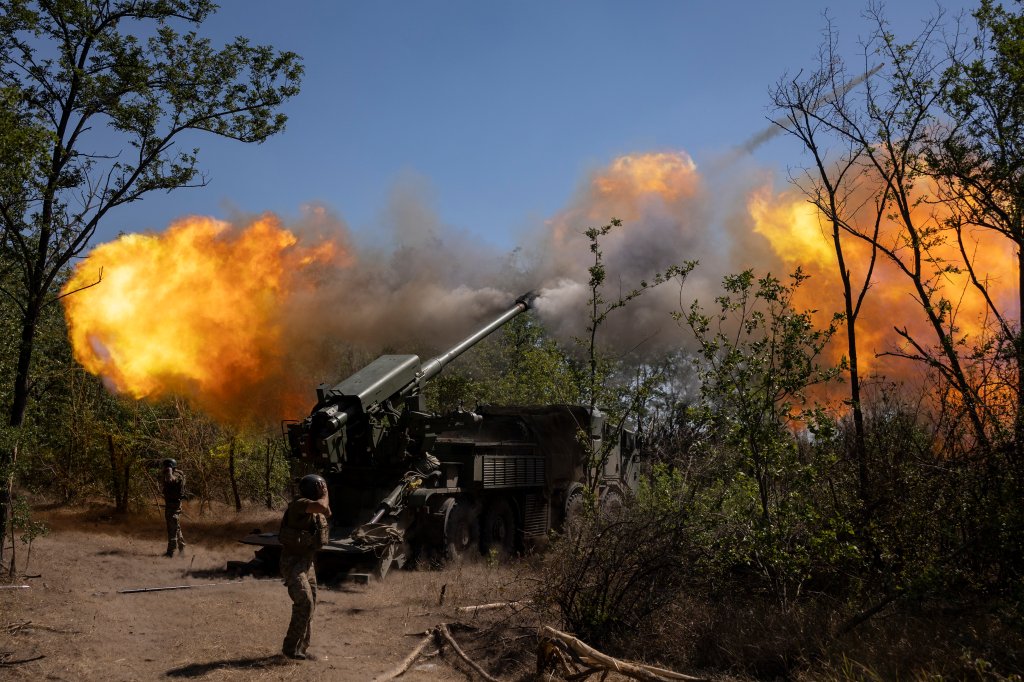
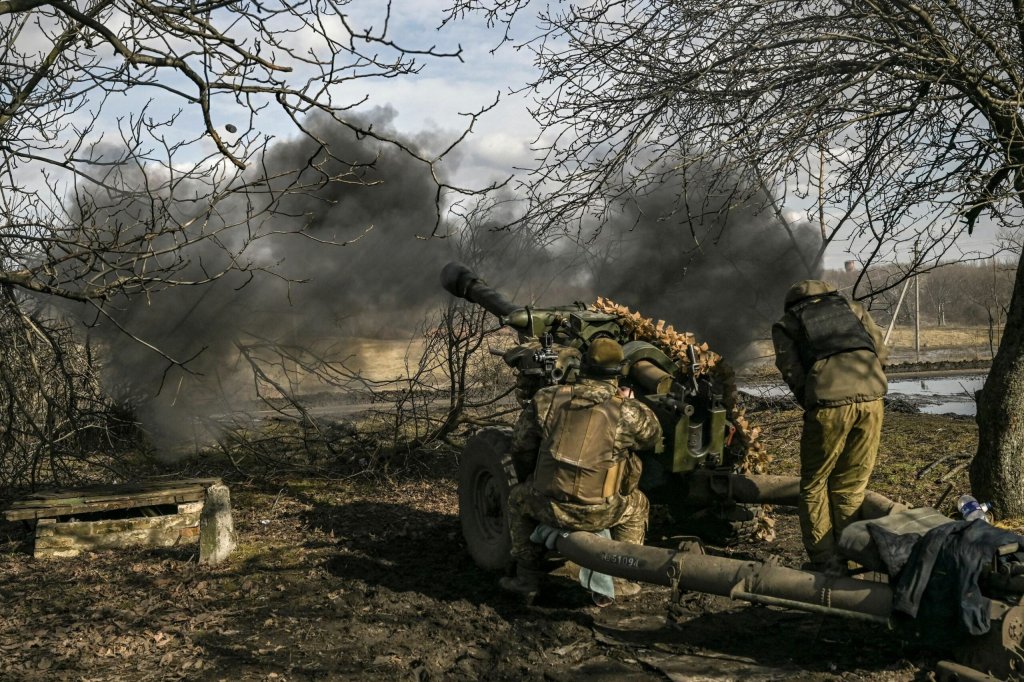
Ukrainian troops firing a domestically produced 2S22 “Bogdana” self-propelled howitzer against Russian forces near the front line in the Zaporizhia direction. (Photo by Maksym Kishka/Frontliner/Getty Images) Frontliner#VIDEO
“Our primary operations are focused within the corps’ area of responsibility—targeting positions 10 kilometers deep or farther behind enemy lines. Of course, we will also engage closer targets if requested by the brigade holding the defense. In addition, we are shifting logistics tasks from pickup trucks to ground-based robotic systems. They are already transporting ammunition to drone and artillery positions, as well as food and fuel for generators.”
What Artillery Can Do That Drones Can’t
“Let’s be honest: 95% of strikes right now are carried out by drones,” Korniienko explained. “Yet, we cannot simply abandon artillery. The focus of our operations has shifted from merely striking the enemy to destroying, suppressing, and halting the actions of assault groups and armored columns—and the need for that remains as critical as ever. There are tasks that only artillery can handle.”
The high art of war, as practiced by the warriors of the National Guard's Artillery Brigade.
“For instance, we currently have several enemy targets in the Kupyansk sector that drones cannot reach due to electronic warfare (EW) interference, while slow fiber-optic drones are simply shot down,” the officer noted. “What do we do? We call in artillery. Nothing affects its shells. Fog, strong winds, snow, or headwinds—it makes no difference to artillery; it will operate regardless.”
Preparing Artillery For The Modern Battlefield
“At the beginning, both we and the Russians might have had two or three guns at a single position,” Korniienko proffered. “The enemy was doing this as late as 2023. Then it tapered off, because if you deployed six guns, an hour later they’d be gone. No one drives out into an open field anymore. Today, a gun wouldn’t even make it to the position without being spotted.”
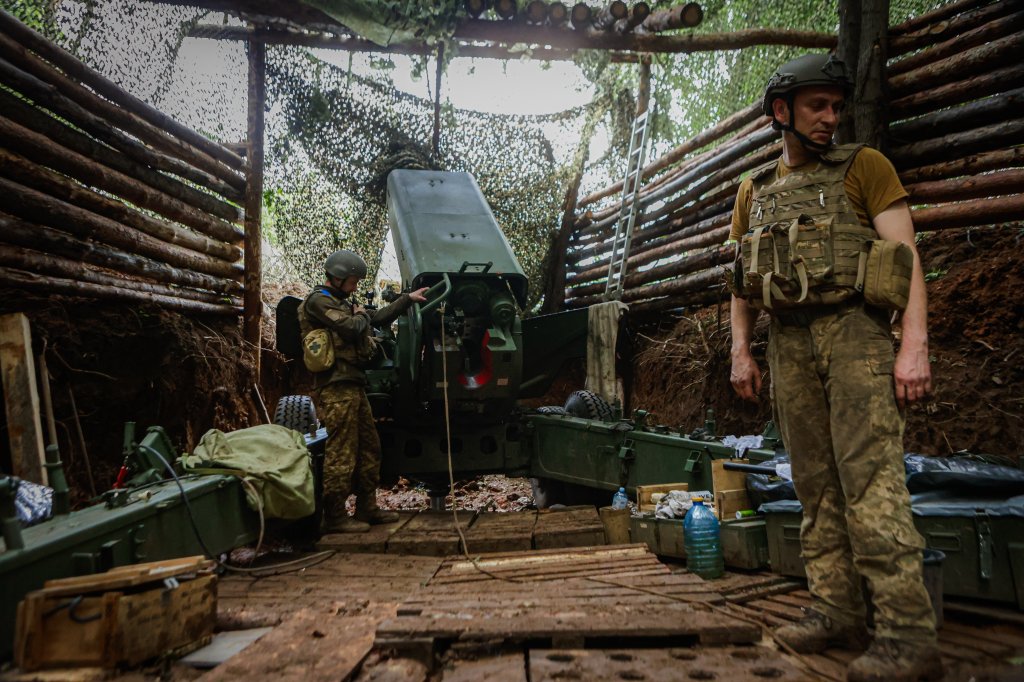
Ukrainian National Guard troops prepare a ‘Bogdana-BG’ artillery installation from a dugout position. (Photo by Sofiia Bobok/Anadolu via Getty Images) Anadolu
As a result, the artillery crew’s deployment “is prepared in advance,” the officer stated. “First, anti-aircraft drone teams ‘clear’ the sky above the site of enemy reconnaissance assets. The position itself is a fully underground-dugout caponier with well-camouflaged access routes. We put a lot of effort into ensuring the artillery doesn’t get destroyed. Losing a gun is a huge blow to us.”
Short Range Versus Long Range Shells
“There is currently an ongoing debate about phasing out ‘short’ shells and switching entirely to long-range variants,” the officer stated. “This is intended to protect artillery from drone strikes.”
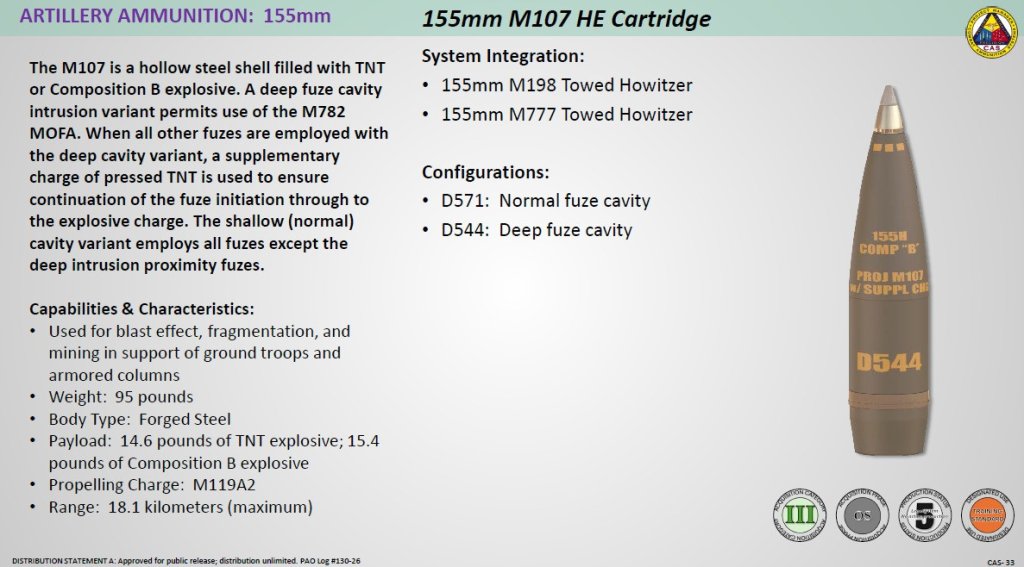
“What exactly is a ‘short’ shell, and should we stop using it?” he asked rhetorically. “The M107 155mm round is what is known as a ‘short’ shell. It is inexpensive and mass-produced; all our allies—and even our own country—manufacture it. We have sufficient stocks of them for combat operations. While accurate, its range is limited to 14–18 km, depending on the propellant used.”
Army
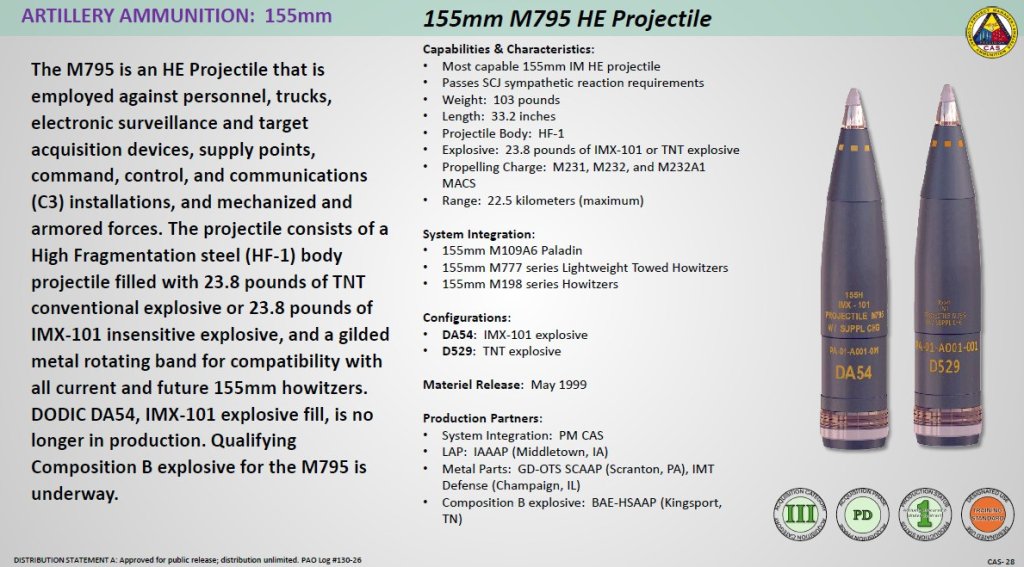
Long-range options “include the M795 and its foreign equivalents,” Korniienko explained. “These are longer, heavier, and significantly more expensive. With high-quality propellant, they can reach 30 km, or even further if equipped with a base-bleed unit. However, both these shells and the necessary propellants are in short supply.”
Army
“I do not believe abandoning the M107 is the right move,” the officer suggested. “Long-range shells cause faster barrel wear and compromise position concealment; firing a long-range charge produces a massive burst of flame from the muzzle—visible for kilometers at dusk or dawn.” “Besides,” he added, “18 km is a respectable range. If the gun is positioned 15 km back, it still has a 3-km margin to spare. That is sufficient for engaging frontline infantry. In my view, the ideal mix for most brigades would be 60% long-range shells and 40% standard M107 rounds.”
Big Versus Small Guns
“I operated 105mm guns in the Serebryanka area, on the Kharkiv axis,” Korniienko noted. “Based on intercepted communications, the enemy thought it was a mortar and searched for it within a five-to-six-kilometer range. But the howitzer was positioned eight or nine kilometers away and fired out to 10–12 kilometers.”
“There is almost no muzzle flash, just a bit of dust,” he added. “The shell arrives, and the enemy doesn’t even hear the sound of the shot. It’s compact and lightweight—you can transport it on a pickup truck. So yes, it would be useful.”
An L119 lightweight towed howitzer. (Via X)
“I’d also like to see the development of 203mm artillery; why move away from that caliber?” the officer wondered aloud. “Our ‘Pion’ systems fire a massive 100-kilogram shell capable of punching through at least two floors of a building or a bunker. And it’s reasonably accurate, too. You wouldn’t want to be on the receiving end when guns like that are firing at you. Overall, I believe we need competition. Right now, the ‘Bogdana’ is evolving under wartime conditions, which is good. But in a few years, momentum could stall. They might just keep producing the same system without significant upgrades because there’s no incentive to innovate. Yet, the nature of war doesn’t stand still.”
Wary Of Asian Shells
“We have a wide range of shells from different countries, and the ones coming from the West are fine,” Korniienko said. “However, their counterparts produced in certain Asian countries… the quality is frankly poor.”
“What is wrong with them?” queried Korniienko, who did not name the country in question. “On paper, the shell weight is listed as 46 kilograms, but when we weigh them, we find 46.9 or 45.4 kg. And that half-kilogram difference—give or take—has a huge impact on where the shell lands.”
As a result, “we no longer trust the standard firing tables provided with the shells; instead, we compile our own for each manufacturer. We weigh every batch and sort them by weight so that the difference between the ‘piles’ is minimal, ensuring a reasonably tight grouping. I can’t afford to make a mistake that causes a shell to land 2 kilometers off-target—right where our infantry guys are positioned. I should add that our artillerymen are actually wary of shells from one specific country. There have been instances where they tore off the muzzle brake or even caused the barrel to burst. A barrel burst is a disaster.”
Homegrown Is The Best
Korniienko said his unit was one of the first to test the Bogdana system, adding that he prefers it to other guns.
“We tested them and provided feedback to the manufacturer, which was then used to refine the design,” he explained. “It is a solid gun now, and it is my preferred choice. It might not be the absolute best, but I am very satisfied with the support and service.”
“If there’s a breakdown, the gun is back in position within a day or two,” he pointed out. “For instance, a gun broke down today, and we needed a repair team from the manufacturer. I know I’ll have it fixed by the day after tomorrow. They arrive in the morning, and by midday, the gun is ready. Then it takes another day or two to get it back to the position. That is very fast.”
That’s a very different experience than what he sees with donated weapons like the U.S.-made M777.
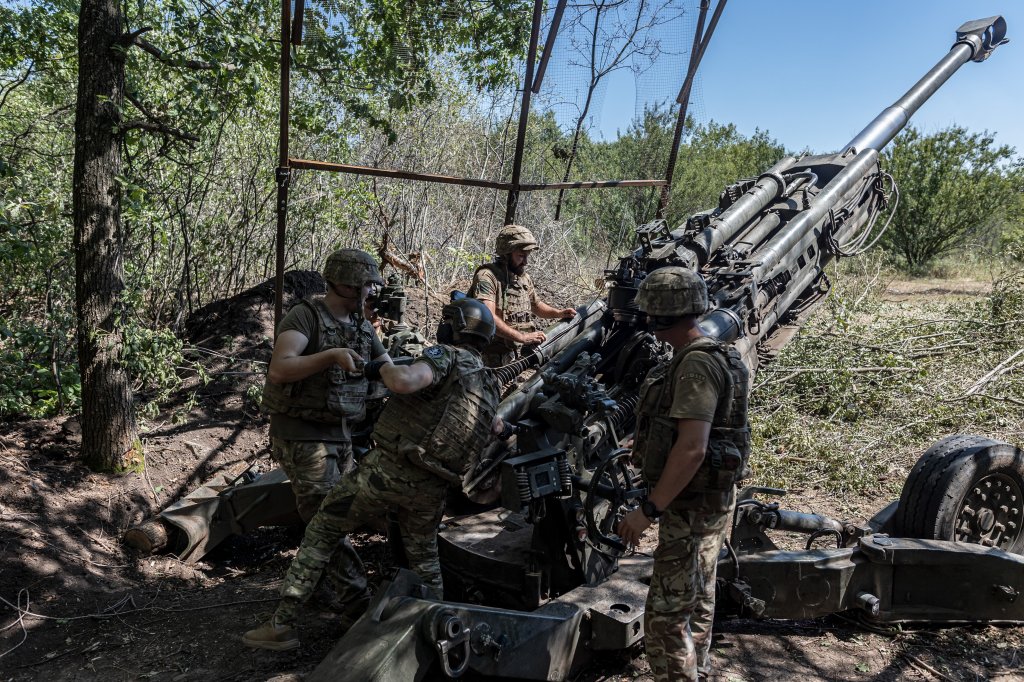
Ukrainian soldiers prepare to fire an M777 howitzer at Russian forces. (Photo by Diego Herrera Carcedo/Anadolu Agency via Getty Images) Anadolu
“As for the Western partners helping us—we are deeply grateful,” the officer avowed. “However, by the time you actually receive a part—say, a sensor—the gun might have been sitting idle for six months. And you can’t try to fix it yourself, because that would void the warranty.”
While artillery may no longer be the reigning weapon of war, as far as Ukraine is concerned, it has not been relegated to the dustbin of history yet either.
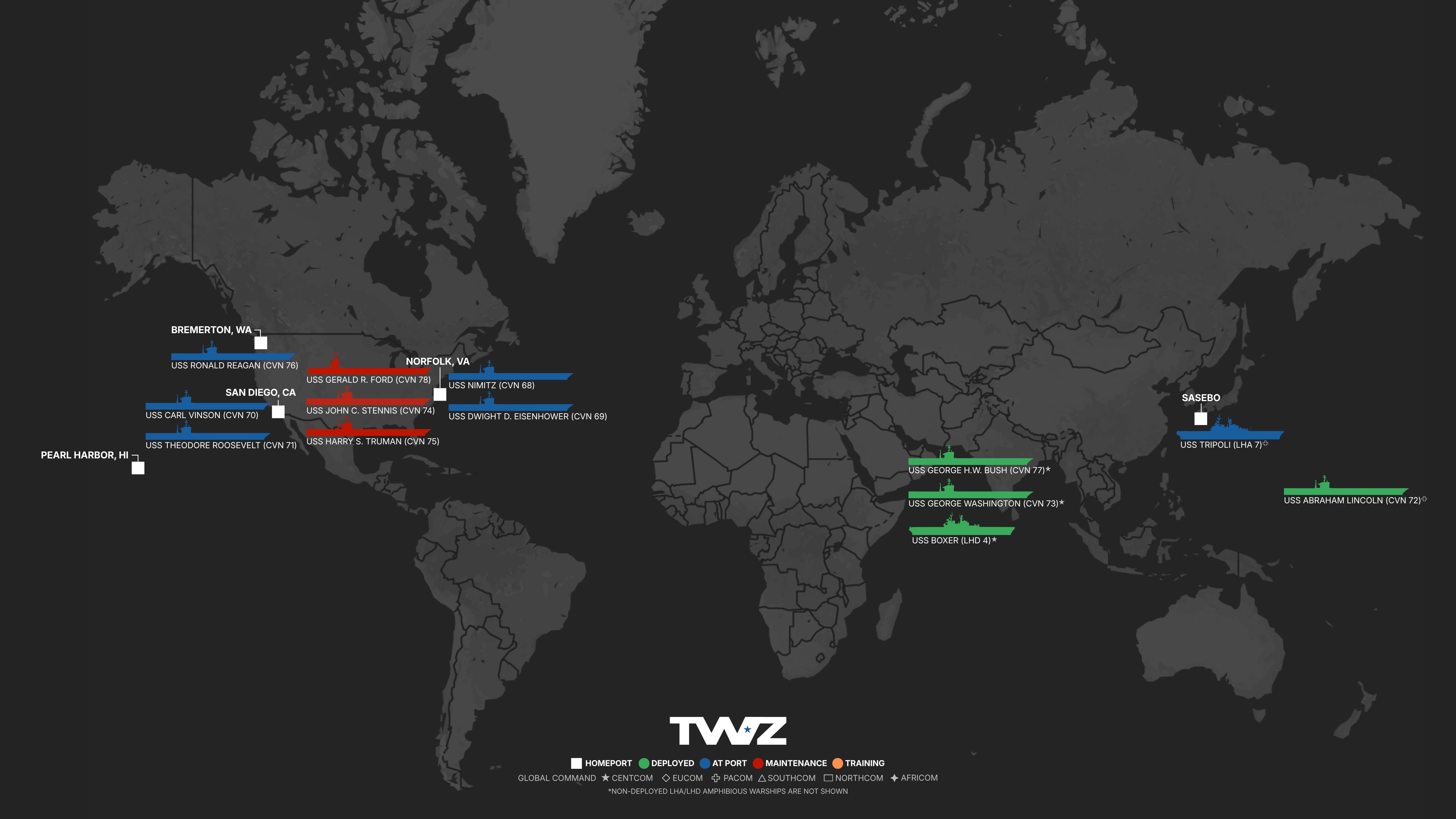
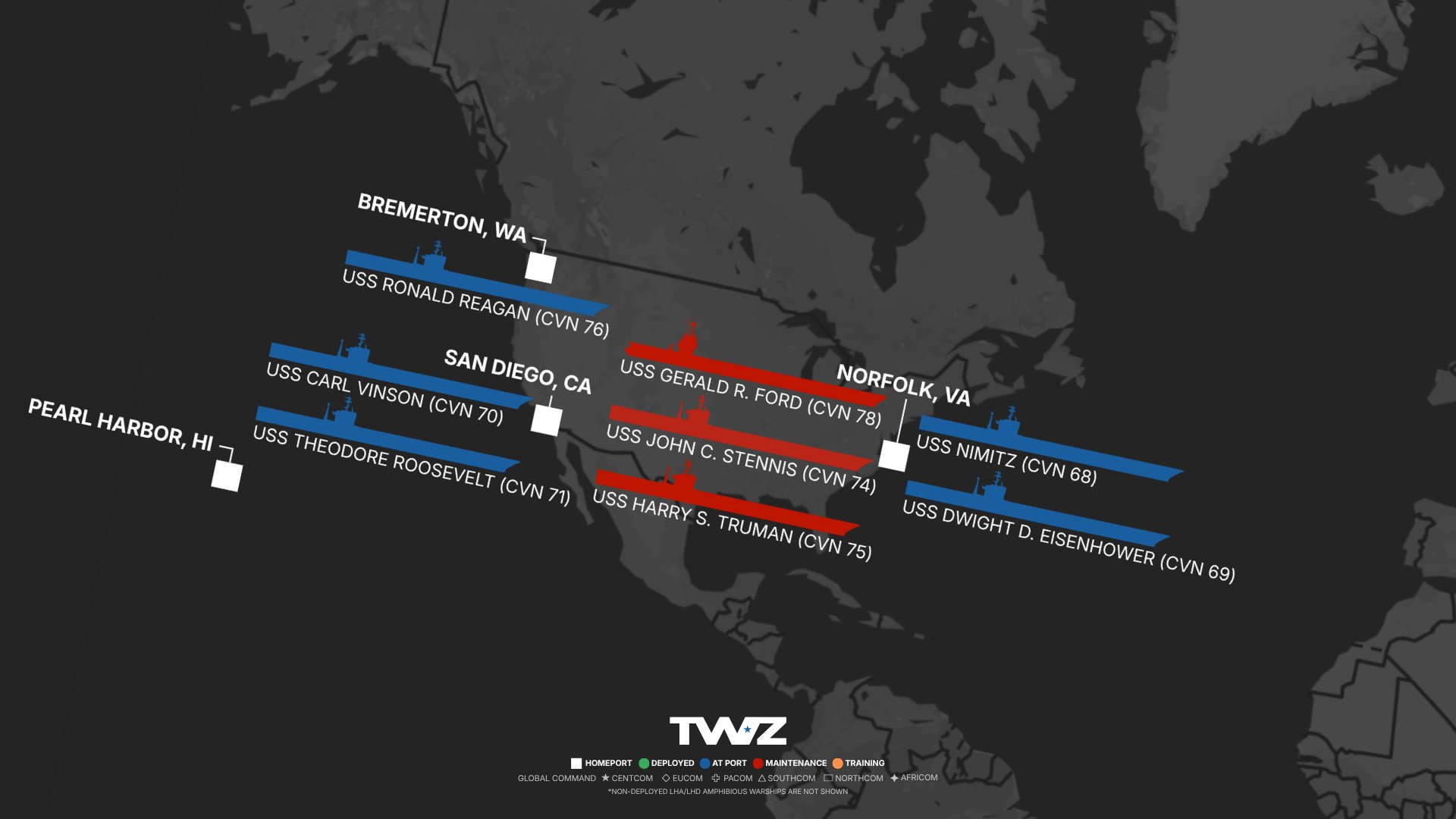
The crew of the USS Abraham Lincoln touched American soil for the first time in nine months, when the strike group pulled into Apra Harbor, Guam, for a brief logistics stop and on-base liberty. The supercarrier, alongside guided-missile destroyer USS Frank E. Petersen Jr., arrived on September 19 and left the next day. Lincoln is 307 days into her deployment, 19 short of the record set earlier this year by the USS Gerald R. Ford, and is now just weeks away from San Diego. Meanwhile, two flattops are on station in the Middle East supporting blockade operations, and the USS Ronald Reagan has rejoined the fleet after an extended maintenance availability.
Here’s TWZ’s weekly carrier tracker monitoring America’s flattop fleet, including deployed Carrier Strike Groups (CSG) and Amphibious Ready Groups (ARG), using publicly available open-source information. Check out our last report here.
Abraham Lincoln Departs Guam, Continuing Her Journey Home
The USS Abraham Lincoln is currently conducting routine operations at an undisclosed location in the U.S. 7th Fleet area of responsibility (AOR), presumably steaming east en route to her homeport at Naval Air Station North Island in San Diego. After leaving Thailand on September 6 following a five-day liberty port call, Lincolntopped off the Petersen Jr. in the Gulf of Thailand and linked up with two Royal Australian Navy frigates for joint training in the South China Sea. Publicly available flight tracking data shows the carrier transited the Balabac Strait eastbound around September 13, and the Surigao Strait northbound two days later to enter the Philippine Sea. After going dark for a few days, she resurfaced in Guam and moored at Kilo Wharf over the weekend.
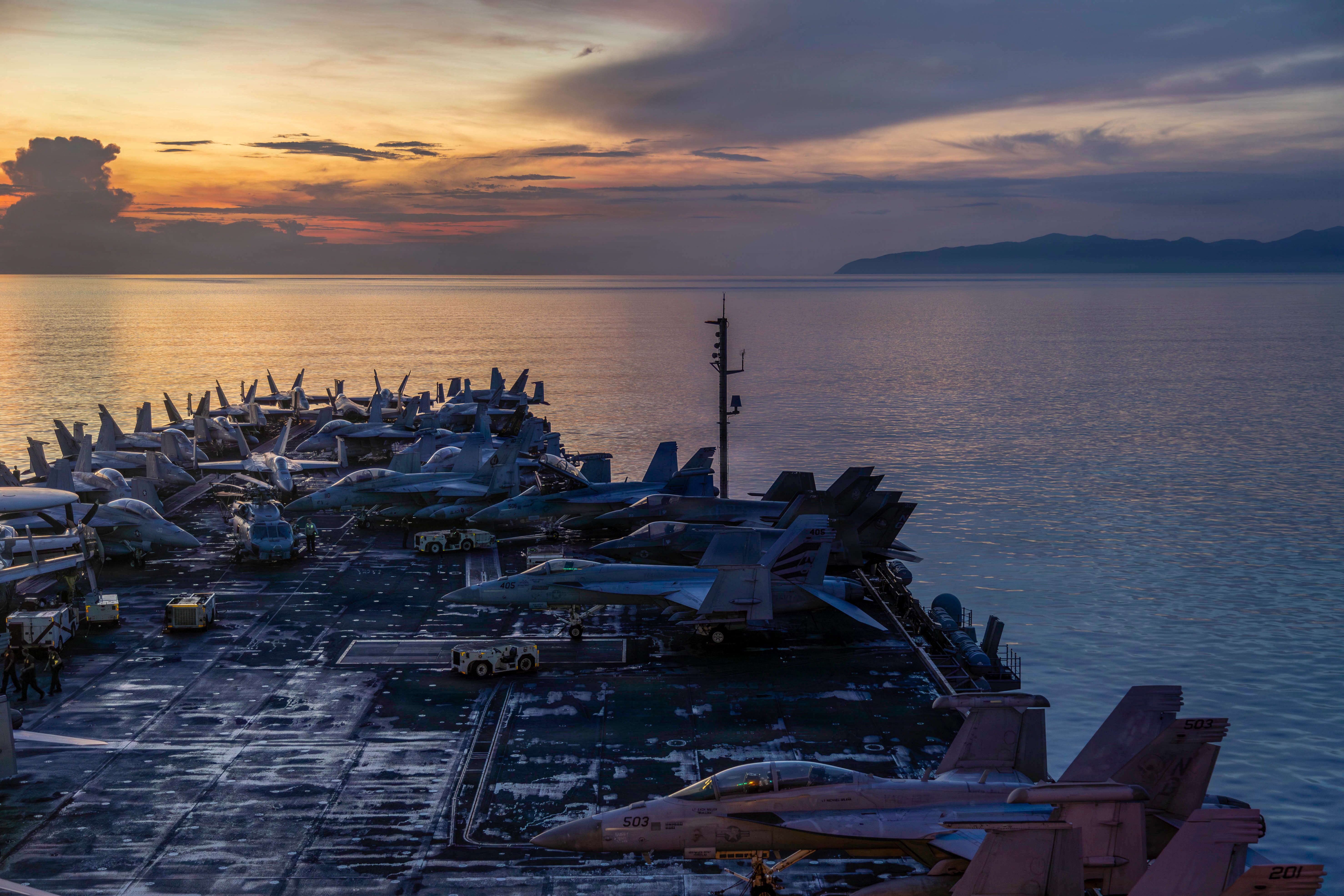
Lincoln transits the Philippine Sea. U.S. Navy photo Lincoln transits the Philippine Sea. U.S. Navy photo
“Due to the brief nature of the logistics stop, the crew were afforded on-base liberty to access base services and attend a Navy Entertainment-sponsored concert,” CSG-3 spokesman Lt. Cmdr. Tyler Barker wrote in an email to Stars and Stripes. The carrier took on stores, mail, and equipment, according to Barker, and 13 Fleet and Family counselors are now aboard to run return-and-reunion classes but “the crew and ship remain focused and ready.”
USS Abraham Lincoln (CVN 72) arrives in Guam on Sept. 19, 2026. U.S. Navy photo
A homecoming date has not been announced publicly. Unless Lincoln makes another stop (in Hawaii, for example) or conducts additional training on the way, she should arrive in early October just shy of Ford’s record. The Chief of Naval Operations, Adm. Daryl Caudle, said in June that Lincoln would likely shift her homeport to Naval Base Kitsap-Bremerton in Washington state, which aligns with TWZ’sreporting that she is expected to begin a Drydocking Planned Incremental Availability (DPIA) after returning stateside. The timeline for the DPIA is unclear.
George Washington and George H.W. Bush Project Power In The Middle East
The American public got a rare look at ongoing combat operations aboard the USS George Washington when two reporters embarked earlier this month. Fox News’ Trey Yingst and CBS News’ Tom Hanson reported live from the flight deck, as F-35C Lightning IIs and F/A-18E/F Super Hornets launched behind them, in hits that aired September 11 to 14. The only other publicized media embark since the war began on February 28 went to CNN’s Pamela Brown, who reported on the conditions aboard the USS Abraham Lincoln while the flattop was still in theater.
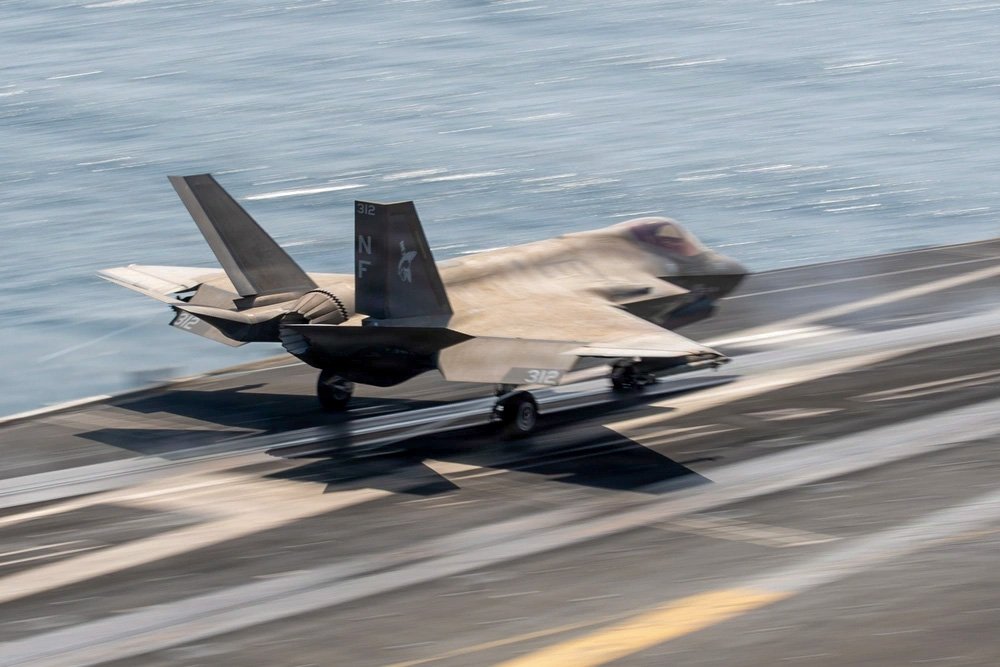
An F-35C launches from Washington. U.S. Navy photo A pair of Super Hornets on Washington. U.S. Navy photo
“Last weekend, the aircraft carrier came under Iranian missile attack; the first of three attacks on US warships in the last week alone,” Yingst said, indicating it was the USS George Washington, and not the USS George H.W. Bush, that was targeted by the Islamic Revolutionary Guard Corps (IRGC) in early September. The Navy declined to comment when TWZ asked which carrier was targeted after Iranian state media claimed the strike had been successful. “We’re pretty much employing all our capabilities right now,” Washington’s commanding officer (CO), Capt. Nicholas DeLeo, told Yingst.
Night flight ops aboard USS George Washington. U.S. Navy photos
“The GW is surrounded by four to five guided-missile destroyers at any moment,” Yingst also reported. He flew out to USS Shoup, positioned off the starboard side at the time, to make the point and speak with the warship’s CO. Shoup is the only destroyer officially confirmed to be part of CSG-5. “My ship is in charge of coordinating defense amongst the various other units, allocating defensive assets to it, be it potentially a missile to shoot something down or just aircraft to go identify and monitor the picture,” Capt. William Buford said. Based on that description, Shoup’s CO appears to be coordinating Integrated Air and Missile Defense (IAMD) for the strike group, a question we’ve been asking the Navy to confirm. TWZ understands additional destroyers operating in the U.S. Central Command (CENTCOM) AOR are also escorting Washington, but a U.S. official declined to say which ones.
Hanson asked DeLeo about the recent IRGC ballistic missile threat targeting Navy ships in the region. “We have a variety of ways to protect, both offensively and defensively, a Navy ship, and we employ all these methods,” he told the network. “It’s something that we train to.” Hanson also pressed the commander of CSG-5, Rear Adm. Jeff Heames, on whether he was concerned about the munitions stockpile, a dynamic TWZ detailed in a special feature yesterday. “Of course we’re concerned about the expenditure to some degree, but I have no concerns locally at my level here,” Heames replied.
Gun shoot aboard USS George Washington (CVN 73), Sept. 15, 2026. U.S. Navy video
In addition to Washington, Bush is still working the blockade from the Arabian Sea, nearly six months into her deployment. As of CENTCOM’s latest social media update on September 21, U.S. forces in the region had redirected 110 commercial vessels to ensure “total compliance” with the blockade. More than 50 ships “supporting humanitarian efforts” have been allowed through, according to the command. CENTCOM recently stopped publishing the number of ships boarded, seized, or disabled kinetically.
An MH-60S Sea Hawk lifts cargo from the flight deck of USS George H.W. Bush, Sept. 18, 2026. U.S. Navy photo
Ronald Reagan Rejoins the Fleet
The USS Ronald Reagan is officially back. The Navy, in a recent statement, confirmed the flattop “returned to the fleet capable and mission-ready.” The carrier had been out of action since March 2025 for a DPIA at Puget Sound Naval Shipyard in Washington state and completed four days of sea trials in early September. While the Navy does not comment on upcoming deployments due to operational security, current speculation points to a spring 2027 deployment, but that is not confirmed.
Counter measure wash down on USS Ronald Reagan in the Pacific Ocean on Sept. 6, 2026. U.S. Navy photo
Reagan is the only carrier currently homeported at Naval Base Kitsap-Bremerton in Washington. Previously, she was America’s only forward-deployed carrier based in Yokosuka, Japan, until swapping hulls with the USS George Washington in 2024. USS Nimitz was stationed at Naval Base Kitsap-Bremerton before circumnavigating South America to Naval Station Norfolk this summer, where she is being used primarily for training before deactivation in 2027. The yet-to-be-commissioned PCU John F. Kennedy, the second and newest Ford class supercarrier, is slated to homeport in Washington state no earlier than 2029.
U.S. Navy Big Deck Fleet At A Glance
Overall, three U.S. carriers are deployed (with one heading home), one is preparing to deploy in the near term, three are working up in various states of readiness, three are in current or upcoming maintenance, and one is being used primarily for training before deactivation next year. One amphibious ready group is deployed, one is forward-stationed and in port, four are working up or in port, and three are in maintenance.
Note: Positions are general approximations.Non-deployed LHA/LHD amphibious warships are not shown.
Contact the author: ian.ellis-jones@recurrent.ioor @ianellisjones
A Levante questa sera, 23 settembre 2026, analizziamo una una settimana che rimescola le carte dell’ordine mondiale: Xi Jinping a Washington per la prima visita di Stato dopo undici anni, un’Assemblea Generale dell’ONU segnata dai visti negati e un Golfo Persico in piena trasformazione. Affrontiamo insieme: Xi alla Casa Bianca: dazi, dollaro, tecnologia e la partita a tre con Mosca BRICS di Nuova Delhi: la condanna delle sanzioni unilaterali e degli attacchi all’Iran ONU sotto ricatto: Abbas escluso, delegazione e stampa iraniane limitate Hormuz, Golfo Persico e la militarizzazione del Mediterraneo Duma russa, scossone in Germania, midterm americane in vista Fronte ucraino: attacchi incrociati, avanzata russa, ipotesi di un nuovo vertice Trump-Putin GLI OSPITI Alessandro Volpi, storico ed economista, Università di Pisa Antonio Mazzeo, giornalista d’inchiesta, esperto di basi militari e militarizzazione Stefano Orsi, analista militare del conflitto russo-ucraino Jeff Hoffman alla conduzione LIBRI DEGLI OSPITI Alessandro Volpi, La guerra della finanza. Trump e la fine del capitalismo globale, Laterza, 2025 Alessandro Volpi, I padroni del mondo. Come i fondi finanziari stanno distruggendo il mercato e la democrazia, Laterza, 2024 Alessandro Volpi, Prezzi alle stelle. Non è inflazione, è speculazione, Laterza, 2023 Antonio Mazzeo, La scuola va alla guerra. Inchiesta sulla militarizzazione dell’istruzione in Italia, Manifestolibri, 2024. Antonio Mazzeo, Il MUOStro di Niscemi, Editpress, 2013. Antonio Mazzeo, I padrini del ponte. Affari di mafia sullo Stretto di Messina, Edizioni Alegre, 2010. Mi chiamo Handalino Miranda editrice Milano 2026 SOSTIENI CASA DEL SOLE TV Casa del Sole TV è un progetto di giornalismo indipendente autofinanziato. Per donazioni: IBAN: IT63P0326822300052392596590 Intestato a: La Casa del Sole Edizioni Causale: Donazione Casa del Sole TV Membership YouTube: https://www.youtube.com/@CasadelSoleT… Analista Multipolare €5/mese Inviato della Verità €15/mese Architetto del Futuro €25/mese Iscriviti e attiva la campanella: Levante va in onda dal lunedì al venerdì alle 19.00 #Levante#CasadelSoleTV#JeffHoffman#Geopolitica#Multipolarismo#XiJinping#BRICS#ONU#Hormuz#Iran#Palestina#Ucraina#Russia#Germania#Midterm#AlessandroVolpi#AntonioMazzeo#StefanoOrsi
Comme nous l'avions annoncé hier, la France a fait pression pour sortir un oligarque russe de la liste des sanctions européennes en échange de la libération d'un espion français emprisonné en Azerbaïdjan. Ce qu'on ne savait pas encore, c'est que ce "deal" a permis à la Lettonie d'obtenir une extension du parapluie nucléaire français à son territoire. Plus quelques autres avantages.
LE COURRIER DES STRATÈGES
Restez libre !
LA NEWSLETTER · GRATUITE
Le Courrier, chaque matin.
L'essentiel de l'actualité, passé au crible par les cinq plumes du Courrier. Dans votre boîte, chaque jour ouvré.
Gratuit. Vous restez libre de partir quand vous voulez.
Hier, Thibault de Varenne expliquait que la France menaçait de s'opposer à la reconduction de sanction contre environ 3.000 personnes proches de la Russie ou Russes, si l'un d'eux, désigné par l'Azerbaïdjan, n'était pas rayé de la liste. En échange, la France devait obtenir la libération de l'un de ses ressortissants jugé et condamné en Azerbaïdjan pour espionnage. Finalement, l'Union Européenne a accédé aux voeux français, et l'oligarque Ousmanov a disparu de la liste des sanctionnés. Le lendemain, l'Azerbaïdjan a annoncé la libération de notre ressortissant Martin Ryan.
Au passage, Intelligence Online note que l'Azerbaïdjan est aujourd'hui un verrou pour l'approvisionnement français en uranium, en blé et en pétrole d'Asie Centrale. L'ensemble de la négociation devrait donc faciliter l'accès à ces achats. Au demeurant, la levée des sanctions contre Ousmanov était demandée par la Turquie, mais aussi par l'Ouzbékistan et par le Kazakhstan. L'Ouzbékistan réclamait un ressortissant apparenté à son président, le Kazakhstan des actifs gelés qu'il partage avec lui. Bruxelles avait cru sanctionner le Kremlin ; elle sanctionnait aussi Tachkent et Astana.
LE COURRIER DES STRATÈGES
Restez libre !
ABONNEMENT
Allez au fond des choses.
Deux grands formats par jour. Les cinq plumes du Courrier. La série Sécession, le dimanche.
Pour parvenir à cet accord discret mais global, il a en revanche fallu vaincre l'opposition de la Lettonie, Etat balte très hostile à la Russie. Intelligence Online révèle aujourd'hui que cette réticence lettone n'était pas désintéressée. Pour lever son veto, la Lettonie a obtenu divers "cadeaux" de la part d'Emmanuel Macron, dont des livraisons d'armes... et l'extension à son territoire du parapluie nucléaire français.
Voilà qui ressemble à la dévaluation des assignats durant la Révolution. Il fut une époque où un parapluie nucléaire valait cher. Aujourd'hui, ce parapluie nucléaire se négocie comme au marché aux puces. Combien de Français savent aujourd'hui quels pays la France couvre avec son fameux "parapluie" ? Probablement très peu... mais qu'importe, puisque ce parapluie est une monnaie de singe que Macron semble échanger au gré du vent contre tout et n'importe quoi sans en parler à personne.
Au nom de notre protection, bien entendu.
LE COURRIER DES STRATÈGES
Restez libre !
TELEGRAM · L'INFO EN CONTINU
Entre deux éditions, le fil.
La newsletter vous donne le matin. Le fil vous donne l'instant.
Disgraced movie mogul Harvey Weinstein was sentenced to 15 years in prison Wednesday in another #MeToo reckoning for sexually assaulting a former production assistant in 2006.
This story originally appeared in Panamerican Dispatch on Sep. 21, 2026, and is shared with permission.
The Brazilian Intelligence Agency (ABIN) has raised the risk of external influence and interference by the United States in Brazil’s 2026 elections to a “critical level.” The confidential report was sent to the Presidency, the Supreme Electoral Court, and the Ministry of Justice. In it, the agency points to escalating pressure from the administration of Donald Trump on Brazil. It ties Washington’s actions to a broader strategy to politically reorient Latin America.
The document is titled, “Threats to the 2026 electoral process.” It was forwarded to authorities in late August, and its contents were revealed this Saturday, Sept. 19, by journalist Mônica Bergamo’s column in the Folha de S.Paulo newspaper.
According to the report, there is a “trend of escalating pressure on Brazil” and a “selective intensification and reconfiguration of the pressure exerted by the United States,” albeit within a historic pattern of U.S. influence over the region.
The report’s assessment does not mention ballot tampering or altering the election results. The intelligence agency’s warning addresses the possibility that political, economic and diplomatic pressures could interfere with the institutional environment and with public debate during the electoral process.
The agency places these actions within the strategy adopted by the second Trump administration to reaffirm U.S. hegemony in Latin America.
According to the analysis, strategic documents released by the U.S. government between November 2025 and May of this year point to its objectives as reducing the influence of powers considered rivals and preventing their access to the region’s “strategic assets, natural resources and infrastructure.”
ABIN identifies China as one of the primary targets of this policy. In the agency’s assessment, Washington seeks to expand its direct or indirect control over these resources, whether through the U.S. government or the country’s private investment.
Support for conservative governments
The report pays special attention to the actions of U.S. Secretary of State and National Security Advisor Marco Rubio. According to ABIN, his policy toward Latin America has an ideological bent and he seeks to “influence and reorient the foreign policy of countries in the region.”
According to the document, this strategy involves steering Latin American countries away from China and promoting a domestic political shift “by supporting the rise of conservative governments.”
The agency cites a U.S. Senate hearing held in June, during which Rubio linked the restoration of U.S. hegemony in Latin America to the presence of governments aligned with Washington.
At the time, Rubio stated that the region had come to rely on several governments “friendly” to the United States during Trump’s second term. He singled out Brazil, Colombia, Cuba, Nicaragua, and Venezuela as exceptions.
The document also noted statements in which Rubio held Brazilian President Luiz Inácio Lula da Silva responsible for U.S. tariffs on Brazilian products, alleging that Brazil had not negotiated “in good faith.”
In ABIN’s view, this approach personalizes the pressure exerted on the country and has the potential to impact public debate in Brazil during the electoral period.
Brazil targeted for defending autonomy, says ABIN
The intelligence agency assessed that Brazil holds a unique position in U.S. strategy, because it has a government with “greater political will and the means to defend its strategic autonomy” in the face of Washington’s pressure for concessions and geopolitical realignment.
The report states that, despite periods of easing tensions between Lula and Trump, actions taken by the United States since May indicate a trend of increasing pressure.
Among the actions cited is the U.S. designation of Brazilian criminal organizations as terrorist groups and sanctions announced in July against two Brazilians and companies based in Brazil and Portugal. The U.S. government accused them of ties to money-laundering networks linked to the Primeiro Comando da Capital (PCC) drug gang. For ABIN, these sanctions represented a “transition” because they caused U.S. pressure to have concrete effects on Brazilian individuals and companies.
“As a result, U.S. external interference now directly impacts financial relationships, corporate reputation, access to the dollar, international operations, and the exposure of third parties to the risk of secondary sanctions,” states an excerpt from the report released by Folha de S. Paulo.
According to the analysis, the U.S. strategy is happening in a “gradual, combined and adaptive” manner, linking Brazilian organizations to threats against U.S. national security. This is then followed by measures capable of affecting the country’s companies, banks and other institutions.
The Brazilian Intelligence Agency warns that these types of sanctions could prompt Brazilian and foreign economic actors to alter their decisions out of fear of losing access to the U.S. financial system or being impacted by secondary sanctions.
U.S. Makes Demands Over Brazilian Election
The report has also emerged amid tensions between Brasília and Washington directly related to the 2026 elections.
During negotiations held in 2025, the Trump administration presented Brazil with a draft joint statement that outlined a Brazilian commitment to not “arbitrarily” detain, arrest or limit the participation of “political dissidents” in the electoral process. The proposal stated that Brazil should commit to holding “free and fair” elections and ensure the participation of such individuals in the vote.
On Thursday. Sept. 17, Lula stated in an interview with Rádio Itatiaia that the proposal had become a “dead issue” for the Brazilian government. The president also rejected the possibility of granting the United States preferential access to the country’s mineral resources.
The confidential agency report delves deeper into the concerns previously raised in public analyses by the Brazilian Intelligence Agency. In a document released this year regarding intelligence challenges for 2026, the agency identified foreign interference as a threat to sovereignty. It warned that a combination of technological dependence, disinformation, espionage, and coercion could enable foreign actors to influence public debate and decision-making processes in Brazil.
Edited by Geisa Marques. This article was originally published by Brasil de Fato. It can be read in its original form, in Portuguese, here.
À Tréogan, village de 106 habitants dans les Côtes-d’Armor, l’ancien maire Thierry Dahirel a été condamné le 22 septembre 2026 à quinze mois de prison avec sursis pour faux, usage de faux et détournement de fonds publics. Un verdict qui, une fois encore, interroge le contrôle réel exercé sur les finances des petites collectivités françaises.
LE COURRIER DES STRATÈGES
Restez libre !
LA NEWSLETTER · GRATUITE
Le Courrier, chaque matin.
L'essentiel de l'actualité, passé au crible par les cinq plumes du Courrier. Dans votre boîte, chaque jour ouvré.
Gratuit. Vous restez libre de partir quand vous voulez.
Thierry Dahirel, maire de 2021 à 2024, a reconnu avoir fabriqué une fausse facture au nom de la société Colas pour d’hypothétiques travaux de voirie. Il a substitué l’IBAN de sa propre entreprise à celui de l’entreprise de travaux publics et imité la signature de son prédécesseur. La somme de 15 650 euros a été versée, puis retirée en liquide ou redistribuée. Selon Le Télégramme, la justice a retenu plusieurs infractions portant sur des pièces comptables et l’utilisation de fonds communaux. Le tribunal correctionnel de Saint-Brieuc l’a déclaré coupable de ces faits. Il a en revanche été relaxé sur d’autres soupçons portant sur l’acquisition de matériel agricole ou des locations facturées à la mairie.
LE COURRIER DES STRATÈGES
Restez libre !
ABONNEMENT
Allez au fond des choses.
Deux grands formats par jour. Les cinq plumes du Courrier. La série Sécession, le dimanche.
Des documents falsifiés, de l’argent communal détourné
Thierry Dahirel a été reconnu coupable de faux et usage de faux et de détournement de fonds publics. La condamnation comprend quinze mois d’emprisonnement avec sursis, auxquels s’ajoutent des sanctions financières et professionnelles.
Le dossier est révélateur d’une faiblesse structurelle des petites communes : la gestion quotidienne repose sur un nombre réduit d’acteurs, alors même que les dépenses publiques doivent obéir à des procédures comptables précises. Lorsqu’un responsable politique utilise ou falsifie des documents liés à ces opérations, c’est le contrôle de la dépense publique qui se trouve directement atteint.
L’affaire ne concerne donc pas une abstraction budgétaire. À Tréogan, commune de moins de deux cents habitants, les ressources administrées sont celles d’une collectivité dont chaque contribuable local connaît pratiquement les responsables.
LE COURRIER DES STRATÈGES
Restez libre !
TELEGRAM · L'INFO EN CONTINU
Entre deux éditions, le fil.
La newsletter vous donne le matin. Le fil vous donne l'instant.
Quand la proximité ne suffit plus à contrôler l’argent public
Le cas pose une question plus large sur la surveillance des petites collectivités. La décentralisation rapproche la décision du citoyen, mais elle ne garantit pas, à elle seule, un contrôle efficace des actes financiers. Le maire concentre souvent une connaissance très fine des dossiers locaux, tandis que les contre-pouvoirs disposent de moyens humains limités.
La condamnation judiciaire constitue précisément le rappel de cette frontière : un mandat électif ne transforme pas l’argent communal en caisse personnelle. Le fait que les faits aient été commis dans une commune de quelques centaines d’habitants ne réduit en rien leur portée juridique.
L'affaire de Tréogan, isolée en apparence, rejoint une série de condamnations récentes d'édiles locaux. Pour le contribuable, les procédures peuvent sembler lointaines ; pour l’élu condamné, elles interviennent après que la confiance accordée par les électeurs a déjà été engagée.
LE COURRIER DES STRATÈGES
Restez libre !
TIPS · SANS ABONNEMENT
Offrez-nous un café.
Un média libre vit de ses lecteurs. Un pourboire ponctuel, sans compte ni engagement, quand le cœur vous en dit.
Vous donnez ce que vous voulez. Vous restez libre.
The anti-immigration Alternative for Germany (AfD) party is known for its strength in the east of the country, but its popularity in Western Germany is also only growing, including in the country’s most populous state, North Rhine-Westphalia.
This latest Forsa poll points to incredible growth of the AfD in a very short time in the voter-rich Western German state. It is now the most popular party in the entire state when measuring a national vote and would earn 24 percent of the vote.
Meanwhile, the Christian Democrats (CDU) fell four points to 22 percent, the lowest value Forsa has ever recorded for the party in the state. The previous low was 23 percent in December 2021.
However, in order to avoid confusion, it must be noted that the Forsa poll asked two very distinct questions. One question asked voters in North Rhine-Westphalia how they would vote at the federal level and also how they would vote at the state level.
At the state level, voters in North Rhine-Westphalia would still back the CDU over the AfD; however, the CDU’s advantage over the AfD has narrowed to just seven percentage points ahead of the April state election.
The latest figures show that if a state election were held this Sunday, the CDU under Wüst would receive 29 percent, down from 32 percent in Forsa’s April survey. The AfD has risen two points to 22 percent. The gap between the two parties has therefore fallen from 12 to seven points in just a few months.
About a year ago, however, the lead was far larger, at 22 percentage points. In July 2025, 38 percent of respondents favored the CDU while the AfD stood at a mere 16 percent.
While this may be of some consolation to Wüst that he is still more popular than the CDU federal branch, the fact that the AfD is now leading in the state at the federal level represents a massive sea change in German politics.
North Rhine-Westphalia is one of the most diverse of all of Germany — outside of the city-states like Berlin — featuring 35 to 38 percent of the population with a migration background. It is also a state with numerous industries hit hard by Germany’s ongoing economic downturn.
The three recent state elections in eastern Germany have become a “turning point” for the CDU after a sharp setback in Saxony-Anhalt, the party’s failure to enter the state parliament in Mecklenburg-Vorpommern two weeks later, and disappointing results in Berlin. Chancellor Friedrich Merz said he was “deeply shocked” about the vote in Saxony-Anhalt and spoke of consequences. He also noted that he took responsibility for the election outcomes but would not resign the chancellorship or his role as chairman of the CDU party.
The question now is whether widespread dissatisfaction with Merz will continue to weaken the CDU’s prospects across Germany.
A 47-year-old Turkish man was shot in the face at close range Tuesday night while dining on a restaurant terrace in one of Malaga’s busiest tourist areas, police reported. The victim survived and was hospitalized with severe injuries, while the gunmen fled and remained on the run Wednesday morning.
The shooting occurred about 10:35 p.m. at Lounge Bar La Plaza on Muelle Uno, the waterfront dining and shopping promenade at the city’s port. The man was seated at an outdoor table with another man and two women when one or two attackers approached, according to witness accounts given to local media. One suspect placed a handgun against the victim’s head and fired at point-blank range, shooting the victim twice.
A video and photos of the aftermath of the shooting have been published on social media networks.
The anti-immigration Vox party also wrote about the incident on X: “Málaga is being taken over by violence. Last night, a new shooting at Muelle Uno caused panic among the citizens. Not even the death of an innocent young man a few days ago in Barcenillas is enough for urgent measures to be taken. How much longer will the people of Málaga have to live with these situations?”
Emergency crews treated him at the scene before rushing him to the regional university hospital. Sources described his facial injuries as severe and called his survival “a miracle.” Health officials said Wednesday that his condition was stable after surgery.
While there have been numerous social media reports that the shooter was South American, this has not been confirmed by police or media reports. Accounts also varied as to whether one or two shooters opened fire.
Diners initially mistook the gunshots for fireworks. Panic followed as customers fled the packed terrace. Police from the National Police and Local Police quickly sealed the area, collected evidence and launched a helicopter search.
Some local reports said the wounded man has a criminal record and that the attack appeared targeted. Spanish police are treating the case as a possible contract killing or settling of scores, according to Spanish media citing unnamed sources.
The restaurant sits in a popular tourist area in Centro Pompidou. Families and tourists were among those present.
The shooting was the second in Malaga city in five days. On Friday, a 20-year-old local construction worker known as Nacho was shot dead in broad daylight in the Barcenillas neighborhood. Police arrested three Swedish nationals, who they believe mistook the young man for a rival gang’s hitman. Those suspects were ordered held without bail. Authorities have also linked a recent cluster of firearms attacks on the Costa del Sol to organized crime.
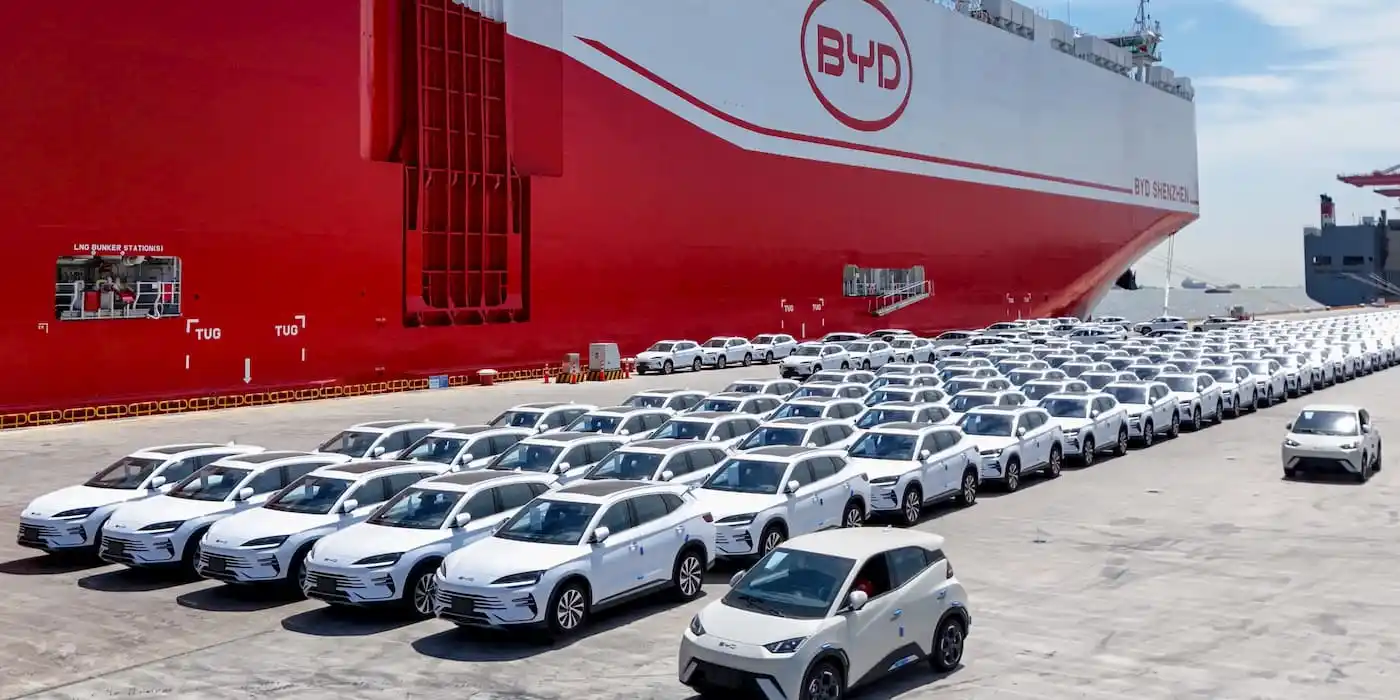
This is an article about China’s booming automobile industry and Germany’s declining automobile industry, but in reality, it is really a story about how anti-immigration China increasingly dominates the open borders, multicultural West.
That is not the typical way to open an article in our modern Western press, but this framing is entirely accurate, fair, and a reflection of reality.
For one, we need to stop trying to understand China entirely through the lens of “communism” or “authoritarianism.” Whether it is Bloomberg, Spiegel, the Wall Street Journal, the New York Times, or the Guardian, all of these media megaphones endlessly gloss over a core reality: China is an ethnostate that exists to advance the interest of the Han Chinese people.
Not only is China incredibly successful in this regard, but there is nothing inherently wrong in pursuing this goal. In fact, it not only accounts for China’s increasing strength, but also accounts for the economic success of a range of Asian countries, including Japan, South Korea, and Taiwan, all of which feature stringent anti-immigration policies that ensure ethnic and cultural homogeneity.
The latest data from Germany’s automobile industry only adds to the growing body of evidence that despite years of diversity and mass immigration, Germany is failing. The data shows that China has now become Germany’s largest supplier of new passenger cars after imports from China more than doubled in the first seven months of 2026, official figures show.
The surge in Chinese vehicles is the main driver behind a sharp rise in overall car imports. Notably, at the same time, German exports declined.
This is far from the only data point. Remix News has been running an ongoing series comparing Western countries like Germany that have tied their economic fortunes to mass immigration to anti-immigration Asian countries (part 1, part 2, part 3, part 4, part 5, and part 6). Once again, the latest figures prove that despite claims that immigration has made the German economy stronger, the reality is that Asian countries are proving this baseless claim wrong many times over.
Between January and July, 175,000 new passenger cars arrived from China in Germany, 13.8 percent of all imports and 120.9 percent more than in the same period a year earlier. That leap pushed China ahead of other importers, including the Czech Republic which sent 173,000 cars and Spain with 157,000 cars. A year earlier, China had ranked only fourth among supplier countries.
At the same time, German exports of new passenger cars fell. Around 2 million vehicles left the country, 4 percent fewer than a year earlier. Their value dropped 8.9 percent to €73.5 billion.
Many German leftists and even those in the Christian Democrats (CDU) claim the German economy would fall apart without immigrants. However, China and other Asian countries provide a sharp contrast to this ideological and factually unsound narrative. Instead, these Asian countries sharply rejected mass immigration and turned to innovation, automation, and investment in research and development. At the same time, Asian countries are known for their stringent and in-depth education systems designed for the benefit of their own native populations.
The result is that these Asian nations have now soared ahead of languishing European economies that chose open borders and foreign workforces, which often fueled illusory GDP growth resembling a pyramid scheme based entirely on rising populations rather than true innovation and productivity growth.
In key industries, including automobile production, machine tools, chemical production, and renewable energy, China and other anti-immigration Asian countries are leapfrogging ahead. This is all on top of China’s chokehold on rare earth metals, which theoretically could allow China to shut down production of Western weapons, automobiles, and renewable energy, just to name a few sectors.
Europe relies on protectionism to block superior and cost-effective Chinese technology
In terms of automobile exports to Europe, China’s growth has to be put in context. The reality is that China would be on the verge of bankrupting or overtaking nearly every European automobile company if it was not for extreme protectionism.
China’s growth in Europe is mostly coming from hybrid vehicles, as EU tariffs on battery electric vehicles (BEVs) can go as high as 45 percent. On the other hand, plug-in hybrid electric vehicles (PHEVs) only face the standard 10 percent duty.
Without these tariffs on BEVs, the European EV automobile market would collapse due to Chinese competition. Despite these barriers, more and more Chinese vehicles are making their way into the European market. China is simply far too innovative in nearly every aspect of EV production. China is also building battery production plants within Europe because the Europeans can no longer do it themselves. Even top automobile executives, whether in the United States or Europe, admit they are years behind China.
European automakers are so far behind that they rely on batteries, which are by far the most expensive and vital components of any electric vehicle, almost exclusively from China. China accounts for over 80 percent of global battery cell production and supplies a major share of the cells and lithium iron phosphate (LFP) chemistry used in European-branded electric vehicles. There are other players, however, these also include immigration-restrictionist nations like South Korea and Japan.
Europe is now racing to place tariffs on PHEVs as well, as European automaker CEOs beg for relief. However, these same European automakers would have no electric vehicle market at all if they were cut off from Chinese batteries.
For those who do not want to read long treatises on the dominance of Chinese automakers, there are also plenty of video formats available that explore this topic. This video from “Modern MBA” is just one that illustrates just how far ahead Chinese auto manufacturers are in terms of innovation and development. This dominance is not down to cheap labor either or even government subsidies. At its heart, this dominance is about the engineering talent and technological leapfrogging Chinese automakers have managed to achieve in an extremely short time.
Diversity has not benefited the West
It seems as Europe becomes more “diverse,” it also falls farther and farther behind in terms of industrial strength, with the automobile industry perhaps one of the most glaring examples. However, this basic claim undersells just how far European industry has fallen in comparison to China.
China, with its anti-immigration policies, has ascended into the modern age and pulled ahead in key modern industries on a scale that is unprecedented in world history. Just like many other modern Asian nations that pursue similar anti-immigration policies, instead of relying on waves of cheap foreign labor, China continues to automate and innovate around its falling population through robotics, engineering and artificial intelligence.
If White European countries pursued similar policies as their Asian counterparts, these same Western news outlets that dominate the West would endlessly berate them as racists, Nazis, and xenophobes. There is some occasional sniping at the immigration policies of these Asian countries, yet this central and core policy of maintaining ethnic homogeneity is more or less ignored.
For one, these countries are not White, so mostly White journalists do not know how to approach this topic.
However, there is another reason and it is perhaps more important.
If these same journalists continuously attacked the Asian tigers on a daily basis for being racist and xenophobic — while still complaining that they are continuously more successful in terms of education, innovation, and economics — then their Western liberal audiences might begin to second-guess their own open-borders policies.
It could also be possible that Western liberal audiences are not actually as smart as they think they are, and they will forever fail to make this connection.
Nevertheless, on a fundamental level, these Asian countries represent a core threat to the open-borders vision that has been relentlessly promoted among Western countries.
The reality is the Western world is confronted daily with the failures of diversity and multiculturalism.
The other reality is that we are ruled by elites, business executives, and an ideologically captured populace that not only refuses to acknowledge this despite facts, figures, data, and real-world experience. In fact, those who point all of this out are facing persecution, censorship, and even imprisonment.
A 20-year-old Italian citizen of Egyptian origin has been arrested in the Italian city of Turin on suspicion of repeatedly raping a 12-year-old boy in Parco dell’Arrivore. In response, major right-wing parties are calling for remigration, more security, and even chemical castration.
Officers from the Barriera Nizza precinct detained the suspect overnight on Monday, three days after the attack on Friday, Sept. 18. In police custody, the man confessed to all the crimes in the case, according to authorities. The man is charged with aggravated sexual violence and is being held in Turin prison pending a validation hearing.
BREAKING: An Egyptian-Italian man has been arrested for raping a 12-year-old Italian boy multiple times in Arrivore Park in Turin.
Police say the suspect lured the boy with a free scooter ride home before committing rape with intercourse against the boy's will.
Investigators say the boy was playing in the courtyard of the public-housing block where he lives in the Barriera Milano district when the older male approached him on an electric scooter and offered him a ride. The two traveled approximately a kilometer to Arrivore Park, a green strip along the Stura River that residents have long described as poorly patrolled by police after dark. There, in an isolated spot, the boy was raped with penetration.
Italian news outlet La Stampa reported that the suspect admitted luring the child with the new scooter, taking him to the park, and forcing him into sex against his will. He later told police he had been under the influence of drugs.
After the assault, surveillance cameras recorded the pair at a mini-market on Strada Settimo, where the suspect bought the boy bags of chips and Monster energy drinks. La Stampa said that footage, together with cameras along Via Botticelli, showed the child in a red T-shirt and shorts and the suspect in a black hooded sweatshirt. Shop staff also confirmed that the two had been in the store.
The boy told friends and then his mother, which led the mother to immediately call the police.
“My son did not know that person,” she said. “The fact that he had not yet been caught gave me no peace.”
The suspect is a second-generation Italian, unemployed and without a fixed address. He had prior convictions for property crimes and was under a reporting obligation, which he observed until the day of the attack. From Friday onward, he stopped signing in. Officers later found him riding the same scooter in the neighborhood.
Brothers of Italy politicians held a protest in the vicinity of the park where the rape occurred. There, a number of politicians from the party called for more funding for police and increased patrols in the area.
Enrico Forzese, of the right-wing Futuro Nazionale party, called for “sweeps, remigration and more checks” in areas he described as high-crime.
The League party separately renewed its demand for chemical castration of rapists and pedophiles.
Essen-based chemical group Evonik plans to cut 3,200 jobs worldwide, including 2,150 in Germany, and is looking to put new money into Asia and the United States instead.
Interim chief Claus Rettig said management, the supervisory board and employee representatives were aligned on the diagnosis. “The board of directors, supervisory board and employee representatives share a conviction: We are in a structural and economic crisis of our industry,” Rettig announced.
Two-thirds of the planned cuts fall in Germany. Evonik employed more than 31,000 people worldwide at the end of 2025, according to German news outlet Tagesschau. Existing savings and efficiency programs are already expected to remove about 2,800 jobs by the end of this year. The additional wave is scheduled through the end of 2029 and is to be carried out “in a socially responsible manner” through early retirements, severance payments and leaving vacant posts unfilled. The company says there will be no compulsory redundancies.
Growth, Rettig said, looks better outside Europe. Further investment projects are being examined in Asia and America.
Evonik also wants to sell subsidiaries Oxeno and Syneqt, which together employ more than 4,300 people.
“We speak with investors at Oxeno, but that’s not yet the case with Syneqt,” Rettig said. He added that both units are to be put up for sale.
The group is one of Germany’s largest chemical firms. Revenue in 2025 came to €14.1 billion, down 7 percent from the year before. Its portfolio covers more than 4,000 products used in pharmaceuticals, food and mechanical engineering.
The cuts sit inside a wider slump. Germany’s chemical-pharmaceutical industry remains the country’s third-largest industrial sector, with more than 476,000 employees. In May, the Munich-based ifo Institute warned that the sector’s business climate had deteriorated sharply. High energy prices, bureaucracy and the Iran war were cited as causes.
“The consequences of the hostilities in the Middle East are hitting the already struggling chemical industry with full force,” said Anna Wolf, head of the ifo Centre for Innovation Economics.
Evonik’s answer is a familiar story in German industry this year: fewer jobs at home, asset sales, and a search for cheaper growth abroad.
Un patient de 77 ans est décédé le 15 septembre au centre hospitalier d'Auxerre après ce que l'établissement qualifie lui-même « d'erreur d'administration médicamenteuse ». Le parquet a ouvert une enquête pour homicide involontaire le 19 septembre. La famille, elle, découvre la cause par voie de presse et de communiqué. L’autopsie n’a pas permis d’établir les causes du décès ; des examens complémentaires sont en cours.
LE COURRIER DES STRATÈGES
Restez libre !
LA NEWSLETTER · GRATUITE
Le Courrier, chaque matin.
L'essentiel de l'actualité, passé au crible par les cinq plumes du Courrier. Dans votre boîte, chaque jour ouvré.
Gratuit. Vous restez libre de partir quand vous voulez.
Le 15 septembre dernier, un patient de 77 ans décède au centre hospitalier d’Auxerre, dans un service de soins critiques. Deux jours plus tard, le 17 septembre, la direction de l’établissement adresse un communiqué : « cet événement fait suite à une erreur d’administration médicamenteuse ». Signalement immédiat à l’Agence régionale de santé Bourgogne-Franche-Comté et à la procureure de la République, qui le 19 septembre, annonce l’ouverture d’une enquête pour homicide involontaire.
LE COURRIER DES STRATÈGES
Restez libre !
ABONNEMENT
Allez au fond des choses.
Deux grands formats par jour. Les cinq plumes du Courrier. La série Sécession, le dimanche.
Une erreur reconnue, une cause du décès encore incertaine
Le centre hospitalier d’Auxerre a confirmé le décès d’un patient de 77 ans, survenu mardi 15 septembre dans un service de soins critiques. Dans un communiqué, l’établissement a reconnu une « erreur d’administration médicamenteuse » et indiqué avoir immédiatement signalé les faits au parquet ainsi qu’à l’Agence régionale de santé (ARS).
Le 19 septembre, la procureure de la République d’Auxerre, Marie-Denise Pichonnier, annonçait l’ouverture d’une enquête pour « homicide involontaire ». Point essentiel : l’autopsie n’a pas permis de déterminer les causes du décès. Des examens complémentaires sont donc toujours en cours.
Certaines informations de presse évoquent un possible surdosage de potassium, mais cet élément n’est pas établi par les autorités à ce stade et ne doit donc pas être présenté comme une conclusion.
LE COURRIER DES STRATÈGES
Restez libre !
TELEGRAM · L'INFO EN CONTINU
Entre deux éditions, le fil.
La newsletter vous donne le matin. Le fil vous donne l'instant.
Quand l’institution devient aussi son propre contrôleur
L’hôpital affirme avoir engagé une démarche interne de recueil et d’analyse des faits et assure que les mesures nécessaires ont été prises pour garantir la sécurité des soins. L’ARS mène également ses propres investigations administratives.
La justice est saisie, mais les premiers éléments restent sous le contrôle de l’acteur qui a produit l’événement. Autopsie non concluante, examens complémentaires en cours : le temps de l’institution s’impose. L’usager, ou sa famille, n’a d’autre recours que d’attendre que le système s’auto-examine. Elle attend que la lumière soit faite. Tant que les expertises ne sont pas achevées, aucune responsabilité individuelle ne peut être désignée.
Cette affaire rappelle une réalité du service public de santé : lorsqu’une défaillance survient, la confiance ne peut reposer uniquement sur la parole de l’institution concernée. À Auxerre, la question n’est pas encore de savoir qui est responsable. Elle est d’abord de savoir exactement ce qui s’est passé et si le système saura l’établir sans se protéger lui-même.
LE COURRIER DES STRATÈGES
Restez libre !
TIPS · SANS ABONNEMENT
Offrez-nous un café.
Un média libre vit de ses lecteurs. Un pourboire ponctuel, sans compte ni engagement, quand le cœur vous en dit.
Vous donnez ce que vous voulez. Vous restez libre.
To best honor the extraordinary and radiant Christian life of Padre Pio of Pietrelcina—whose feast day is celebrated today, September, 23, in the Catholic Church’s liturgical calendar—Gospa News presents three exceptional video documentaries of varying lengths and some exclusive reports.
The Italian articles linked below can easily be read in English and other languages by activating the automatic translation feature via the flags at the top left.
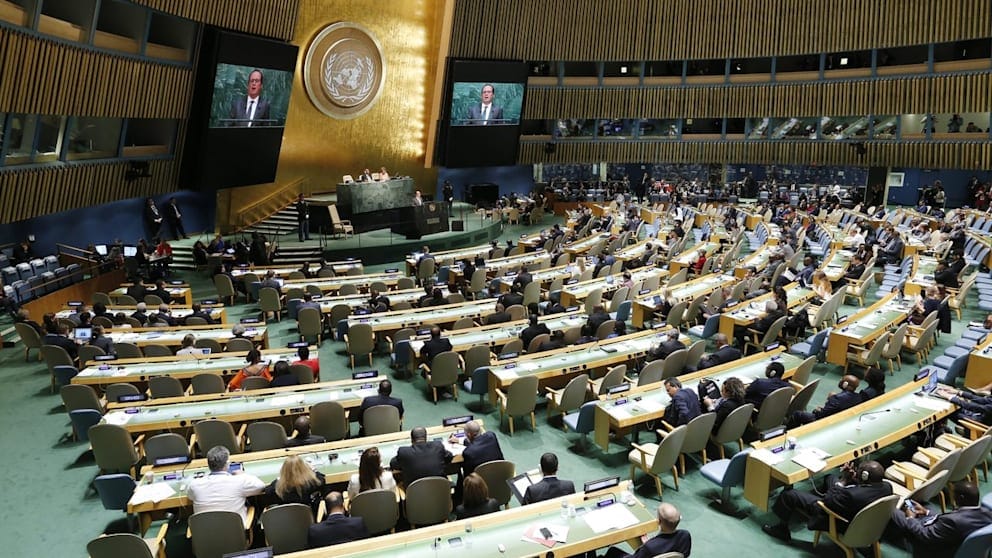
Le 22 septembre, à la tribune des Nations Unies, le président des États-Unis a annoncé qu'il lui restait « une grande décision à prendre » : conclure un accord avec l'Iran, ou « anéantir la République islamique ». Il a précisé que l'accord viendrait sans doute après les élections de mi-mandat. Le mot qui manque au débat français n'est ni mondialiste ni isolationniste.
LE COURRIER DES STRATÈGES
Restez libre !
LA NEWSLETTER · GRATUITE
Le Courrier, chaque matin.
L'essentiel de l'actualité, passé au crible par les cinq plumes du Courrier. Dans votre boîte, chaque jour ouvré.
Gratuit. Vous restez libre de partir quand vous voulez.
Il a dit : j'ai une grande décision à prendre. Le verbe est au singulier et le sujet est un homme.
Sept mois après avoir engagé son pays dans une guerre contre l'Iran, Donald Trump est venu la défendre devant l'Assemblée générale des Nations Unies. Il a posé une alternative en deux branches : un accord qui permettrait à l'Iran de se reconstruire et de devenir, a-t-il dit, l'un des plus grands pays du Moyen-Orient, ou l'anéantissement de la République islamique, et rapidement. Il a ajouté qu'il croyait l'accord probable juste après les élections de mi-mandat de novembre. Il a appelé les nations à isoler Téhéran, répété qu'il ne laisserait jamais l'Iran disposer de l'arme nucléaire, présenté son plan en vingt points pour Gaza et le conseil de paix qui doit l'appliquer, et refusé toute régulation internationale de l'intelligence artificielle, qu'il préfère appeler superintelligence, comparant les inquiétudes qu'elle suscite à celles du climat.
Dans la journée, il a signé avec le Danemark et le Groenland un accord élargissant les pouvoirs américains de défense sur le territoire arctique.
Voilà les faits. Reste à trouver le mot.
LE COURRIER DES STRATÈGES
Restez libre !
ABONNEMENT
Allez au fond des choses.
Deux grands formats par jour. Les cinq plumes du Courrier. La série Sécession, le dimanche.
Ce que les deux mots disponibles ne recouvrent pas
Le débat français dispose de deux étiquettes et les use jusqu'à la corde.
La première est l'isolationnisme, c'est-à-dire la doctrine qui veut qu'une puissance se tienne hors des affaires du monde et s'en remette à ses propres frontières. On l'attribue à Trump depuis dix ans. Elle ne résiste pas à l'énoncé de sa semaine. Un homme qui conduit une guerre depuis sept mois sur un autre continent, qui somme les autres nations de rompre avec un État tiers, qui rédige un plan de paix pour un territoire qui n'est pas le sien et institue un conseil chargé de l'administrer, qui étend enfin ses droits militaires sur une dépendance danoise, n'est pas en train de se retirer du monde. Il en occupe davantage qu'il n'en occupait.
La seconde est le mondialisme, mot plus flou, qui désigne dans l'usage courant
La chambre criminelle de la Cour de cassation a rejeté, le 9 septembre 2026, les pourvois formés par des parties civiles contre l'arrêt de la chambre de l'instruction de la cour d'appel de Paris du 11 décembre 2024. Cet arrêt avait confirmé deux ordonnances du 17 octobre 2023 : un refus de mesure d'instruction complémentaire et un non-lieu. L'information judiciaire portait sur des faits de complicité de génocide et de complicité de crimes contre l'humanité susceptibles d'être reprochés à des membres des forces françaises déployées au Rwanda dans le cadre de l'opération « Turquoise ».
LE COURRIER DES STRATÈGES
Restez libre !
LA NEWSLETTER · GRATUITE
Le Courrier, chaque matin.
L'essentiel de l'actualité, passé au crible par les cinq plumes du Courrier. Dans votre boîte, chaque jour ouvré.
Gratuit. Vous restez libre de partir quand vous voulez.
La décision clôt une procédure ouverte il y a vingt et un ans.
La procédure
Le 16 février 2005, six ressortissants rwandais — Mme Auréa Mukakalisa, MM. Innocent Gisanura, François Bagirubwira, Eric Nzabihimana, Bernard Kayumba et Aaron Nshymiryayo — ont porté plainte et se sont constitués partie civile auprès du doyen des juges d'instruction au tribunal aux armées de Paris, contre personne non dénommée. Ils relataient les massacres commis au Rwanda du 6 avril à la fin juin 1994, notamment dans les collines de Bisesero, et soutenaient que des militaires français n'étaient pas intervenus à Bisesero entre le 27 et le 30 juin 1994. Ils faisaient également état d'exactions commises dans le camp de réfugiés de Murambi.
Le procureur de la République a requis l'ouverture d'une information judiciaire le 23 décembre 2005. Plusieurs associations — la Ligue française des droits de l'homme, la Fédération internationale des ligues des droits de l'homme, Survie et Ibuka — se sont constituées partie civile par voie d'intervention.
Cinq officiers ont été placés sous le statut de témoin assisté : MM. Jean-Rémi Duval, Marin Gillier, Jacques Rosier, Jean-Claude Lafourcade et Etienne Joubert. Le statut de témoin assisté, en procédure pénale française, est intermédiaire : il concerne une personne contre laquelle existent des indices rendant vraisemblable sa participation, sans que les charges soient suffisantes pour une mise en examen.
L'opération « Turquoise » avait été autorisée par la résolution 929 du Conseil de sécurité des Nations unies du 22 juin 1994.
Le premier moyen : le refus d'actes complémentaires
Les parties civiles demandaient deux auditions. Celle de M. Vincent Duclert, président de la commission de recherche sur les archives françaises relatives au Rwanda et au génocide des Tutsi, dont le rapport a été remis le 26 mars 2021, afin qu'il s'explique sur les conditions d'accès aux documents classés secret défense. Celle de M. Hubert Védrine, à l'époque des faits secrétaire général de la présidence de la République, afin d'établir les responsabilités dans la chaîne de commandement politique. Elles invoquaient le droit à un procès équitable et l'obligation d'enquête approfondie, sur le fondement des articles 3 et 6 de la Convention européenne des droits de l'homme.
La chambre de l'instruction a répondu par le constat du caractère approfondi de l'enquête déjà menée : un dossier de trente et un tomes, des réquisitions adressées à la direction de la surveillance du territoire, à la direction générale de la sécurité extérieure, à l'état-major des armées, à l'Assemblée nationale, au service historique de la défense, aux ministères des affaires étrangères et de la défense, à la présidence de la République et aux services du Premier ministre, plusieurs commissions rogatoires internationales, et l'audition de nombreux responsables militaires.
La Cour des comptes a diffusé le 21 septembre une note de synthèse chiffrant à près de 20 milliards d'euros en trois ans les économies possibles sur la masse salariale publique, « tant sur les effectifs que sur les salaires ». Le chiffre est posé sous condition, et la condition mérite d'être citée : c'est l'hypothèse où cette masse salariale devrait contribuer au redressement « proportionnellement à son poids dans la dépense publique totale ». Ce poids représentait 362 milliards d'euros en 2024, soit plus d'un cinquième de la dépense publique, en progression de près de 90 milliards depuis 2012. L'horizon est le retour du déficit à 3 % du PIB en 2029.
LE COURRIER DES STRATÈGES
Restez libre !
LA NEWSLETTER · GRATUITE
Le Courrier, chaque matin.
L'essentiel de l'actualité, passé au crible par les cinq plumes du Courrier. Dans votre boîte, chaque jour ouvré.
Gratuit. Vous restez libre de partir quand vous voulez.
Quatre leviers sont recommandés. La réduction des effectifs par non-remplacement des départs en retraite, présentée comme le levier prioritaire. Le ralentissement des avancements de grade et du franchissement automatique des échelons. Un pilotage rendu contraignant, par des plafonds d'emplois et des schémas d'emplois obligatoires dans les budgets des collectivités et des établissements hospitaliers. Et, sur la valeur du point d'indice, une formule qu'il faut lire deux fois : une « sous-indexation concertée et pluriannuelle ».
Retenez ce terme, parce qu'il ne désigne pas une mesure à venir. Il désigne la politique conduite depuis 2017, et la seule nouveauté est qu'on propose de l'inscrire dans un calendrier.
LE COURRIER DES STRATÈGES
Restez libre !
ABONNEMENT
Allez au fond des choses.
Deux grands formats par jour. Les cinq plumes du Courrier. La série Sécession, le dimanche.
Les chiffres ne laissent pas de place au débat. Depuis 2017, le point d'indice a été revalorisé deux fois : 3,5 % au 1er juillet 2022, 1,5 % au 1er juillet 2023. Deux décrets, neuf ans. Cumul : 5,05 %. Sur la même période, l'inflation cumulée atteindra 24,17 % à la fin de cette année. Le pouvoir d'achat du point d'indice — c'est-à-dire ce qu'un agent achète avec le traitement de base calculé dessus — a donc reculé d'environ quinze pour cent en neuf ans. Aucune loi n'a décidé cela. Aucun débat parlementaire n'a porté sur une baisse de quinze pour cent du traitement indiciaire de la fonction publique. Le résultat a été obtenu par une suite de décisions de ne rien décider.
C'est exactement le mécanisme que j'ai décrit ici même, le 14 septembre, à propos des pensions : une baisse réelle qu'aucun texte n'assume comme telle, parce que l'inflation fait le travail à la place du législateur. La cible change, la méthode est identique. Et je travaille depuis dix ans dans une maison de gestion, où l'on sait ce que vaut une trajectoire annoncée sur trois ans : c'est la manière convenue de ne s'engager sur aucune des trois années.
LE COURRIER DES STRATÈGES
Restez libre !
TELEGRAM · L'INFO EN CONTINU
Entre deux éditions, le fil.
La newsletter vous donne le matin. Le fil vous donne l'instant.
Reste le point où la note se contredit, et il est central.
La Cour écrit que son effort, « pour être accepté », devra être conçu « de telle sorte que la rémunération des agents publics progresse et que l'attractivité de leurs métiers soit maintenue ». Prenons-la au mot. La rémunération d'un agent public progresse par trois canaux : la valeur du point, le glissement vieillesse-technicité — c'est-à-dire l'avancement d'échelon et de grade, automatique ou au choix —, et les mesures catégorielles, ces revalorisations ciblées sur un corps ou une filière.
Sur ces trois canaux, la Cour en ferme deux. Elle recommande de sous-indexer le point. Elle recommande de ralentir les avancements. Il ne reste que les mesures catégorielles, qui sont par construction sélectives : elles font progresser certains corps, pas la fonction publique. Promettre simultanément une sous-indexation, un ralentissement des carrières et une progression des rémunérations n'est pas un arbitrage difficile. C'est une addition qui ne tombe pas juste.
On répondra — et c'est l'objection sérieuse — que quatre-vingt-dix milliards de progression depuis 2012 ne sont pas soutenables, qu'il faut bien agir quelque part, et que la sous-indexation présente l'avantage d'être la seule voie praticable : on ne licencie pas dans la fonction publique, et le non-remplacement des départs produit ses effets sur dix ans, pas sur trois. L'argument tient. Il explique pourquoi tous les gouvernements depuis 2017 ont fait précisément cela.
Mais il ne répond pas à la question posée, qui n'est pas de savoir s'il faut agir. Elle est de savoir qui décide, et sous quelle forme. Une sous-indexation n'engage personne : elle se défait par un arrêté, elle ne figure dans aucun programme, elle ne se vote pas, et elle ne se conteste donc pas. C'est sa commodité, et c'est son vice. Un gouvernement qui annonce une baisse de traitement de quinze pour cent doit la défendre ; un gouvernement qui laisse l'inflation la produire n'a rien à défendre du tout.
Il faut d'ailleurs reconnaître à la Cour ce qu'elle apporte. Le mot « concertée » est une amélioration réelle sur la pratique actuelle : une trajectoire annoncée et négociée vaut mieux qu'un gel décidé chaque été sans discussion. C'est le seul endroit où sa recommandation ajoute quelque chose. Ce n'est pas rien, et c'est peu.
LE COURRIER DES STRATÈGES
Restez libre !
TIPS · SANS ABONNEMENT
Offrez-nous un café.
Un média libre vit de ses lecteurs. Un pourboire ponctuel, sans compte ni engagement, quand le cœur vous en dit.
Vous donnez ce que vous voulez. Vous restez libre.
La note sort neuf jours avant le dépôt du projet de loi de finances. Elle fournit au gouvernement la caution d'une juridiction financière pour une mesure qu'il appliquait déjà sans elle. L'objection, quand elle viendra, portera sur les vingt milliards ; elle ne portera pas sur le procédé, parce que le procédé n'a pas de nom dans le débat public. Il en a un maintenant, et c'est la Cour qui l'a écrit.
La sous-indexation n'est pas une proposition pour 2027. C'est le bilan de 2017 à 2026. La Cour demande simplement qu'on cesse de faire semblant de ne pas l'avoir choisie.
For Context: The banned outlets filed a retaliatory lawsuit against the Trump administration on Monday, saying, "There will be no replacement pool put in place," and asserted in a joint statement, "The public has a vital interest in receiving accurate, independent information about its government. No administration should restrict a news organization because it objects to its reporting."
Trump's Reasoning: Trump alluded to slander and libel when justifying his initial stance on Friday. He argued, "Media outlets shouldn't be able to constantly write or report FICTION and LIES when they're covering the president of the United States, the Trump Administration, or the United States of America." He furthered this opinion on Monday: "The White House is not instituting an assault on the Free Press, something which I cherish. It is instituting an assault on the FAKE NEWS, something that has grown like Cancer in our beloved United States of America."
Plaintiffs' Argument: The plaintiffs asserted in their lawsuit, "This ban could not be a more direct assault on the First Amendment… No official can deprive Plaintiffs of [their journalistic] interests on a whim – with no notice, no process, and no warning – as the President did here." They alleged three First Amendment violations:
Due Process: "CNN, MS NOW, Politico, and their journalists have liberty and property interests in their press credentials and the access those credentials afford to the White House grounds to report on the President and his administration. The ban deprives them of those interests without meeting the bare minimum requirements of due process: advance notice based on clear standards and an opportunity to be heard."
Protected Research and Speech: "The ban retaliates against protected newsgathering and speech… The President's statements make clear he implemented the ban to coerce more favorable coverage."
Nonpublic Forums: "It bars CNN, MS NOW, and Politico from a nonpublic forum [which] may not discriminate based on viewpoint and must be reasonable in light of the purposes of the forum. The President's ban brazenly discriminates based on editorial viewpoint[s]."
Media Comparisons: The Daily Wire (Right) gave voice to Vice President JD Vance, who echoed Trump's argument on Monday: "Compare, let's say, Politico to Breitbart [Right]. If you actually look at the objective analysis, Politico is as anti-Trump as Breitbart was anti-Obama or anti-Biden. Now, why on God's green earth would Trump be expected to give Politico special access when nobody in the media expected the Biden administration or the Obama administration to give Breitbart special access? It's about basic fairness. They can still report. They still have the access to free speech. They're just not going to get an office in the White House anymore… unless, of course, they start behaving like real news organizations."
The United States, Denmark and Greenland have entered into an agreement to give the US control over security in Greenland, President Donald Trump announced on Truth Social.
Military Expansion: Under the deal, the US will be able to boost its military presence in Greenland while blocking US adversaries from establishing bases. Trump announced the agreement Friday, saying "no U.S. adversary can EVER have a base in Greenland, have a military presence in Greenland, or make sensitive investments in Greenland, without our express written approval." Trump also said the new agreement will come at "no cost" to Americans. Denmark and Greenland officials said the deal doesn't give the US ownership of the island, an aspiration that Trump has previously stated to acquire Greenland. Denmark acknowledged that the agreement will strengthen regional security.
China and Russia: Under the deal, non-NATO states won't be able to build bases in Greenland or make investments that "could threaten the United States," according to Al Jazeera (Lean left). That means China and Russia will be blocked from establishing bases or sending troops to Greenland, a US official said, per the media outlet's report. Mikkel Olesen, a senior researcher at the Danish Institute for International Studies, told Al Jazeera the move isn't a major shift because "the Danes and Greenlanders never wished for Russia or China to have bases in Greenland."
Next Steps: All three governments are expected to sign the deal next week during the United Nations General Assembly, according to multiple reports. However, parliamentary action is still needed by Danish and Greenlandic officials before it can be enforced.
Right and Left Coverage: Media coverage from most outlets was consistent with the details. The Associated Press (Lean Left) focused more on the negotiations behind the agreement and the broader political context surrounding Trump's foreign policy. The New York Post (Lean Right) highlighted the terms of the agreement and Trump's statements about expanded US control and military presence in Greenland.

 Login



 :









 A Levante questa sera, 23 settembre 2026, analizziamo una una settimana che rimescola le carte dell’ordine mondiale: Xi Jinping a Washington per la prima visita di Stato dopo undici anni, un’Assemblea Generale dell’ONU segnata dai visti negati e un Golfo Persico in piena trasformazione. Affrontiamo insieme:

 Xi alla Casa Bianca: dazi, dollaro, tecnologia e la partita a tre con Mosca
 BRICS di Nuova Delhi: la condanna delle sanzioni unilaterali e degli attacchi all’Iran
 ONU sotto ricatto: Abbas escluso, delegazione e stampa iraniane limitate
 Hormuz, Golfo Persico e la militarizzazione del Mediterraneo
 Duma russa, scossone in Germania, midterm americane in vista
 Fronte ucraino: attacchi incrociati, avanzata russa, ipotesi di un nuovo vertice Trump-Putin
 GLI OSPITI Alessandro Volpi, storico ed economista, Università di Pisa Antonio Mazzeo, giornalista d’inchiesta, esperto di basi militari e militarizzazione Stefano Orsi, analista militare del conflitto russo-ucraino Jeff Hoffman alla conduzione
 LIBRI DEGLI OSPITI
 Alessandro Volpi, La guerra della finanza. Trump e la fine del capitalismo globale, Laterza, 2025
 Alessandro Volpi, Prezzi alle stelle. Non è inflazione, è speculazione, Laterza, 2023
 SOSTIENI CASA DEL SOLE TV Casa del Sole TV è un progetto di giornalismo indipendente autofinanziato.
 Per donazioni: IBAN: IT63P0326822300052392596590 Intestato a: La Casa del Sole Edizioni Causale: Donazione Casa del Sole TV
 Membership YouTube:

 Analista Multipolare €5/mese
 Iscriviti e attiva la campanella: Levante va in onda dal lunedì al venerdì alle 19.00