❌

Reading view

77 countries walk out during Netanyahu’s UN speech
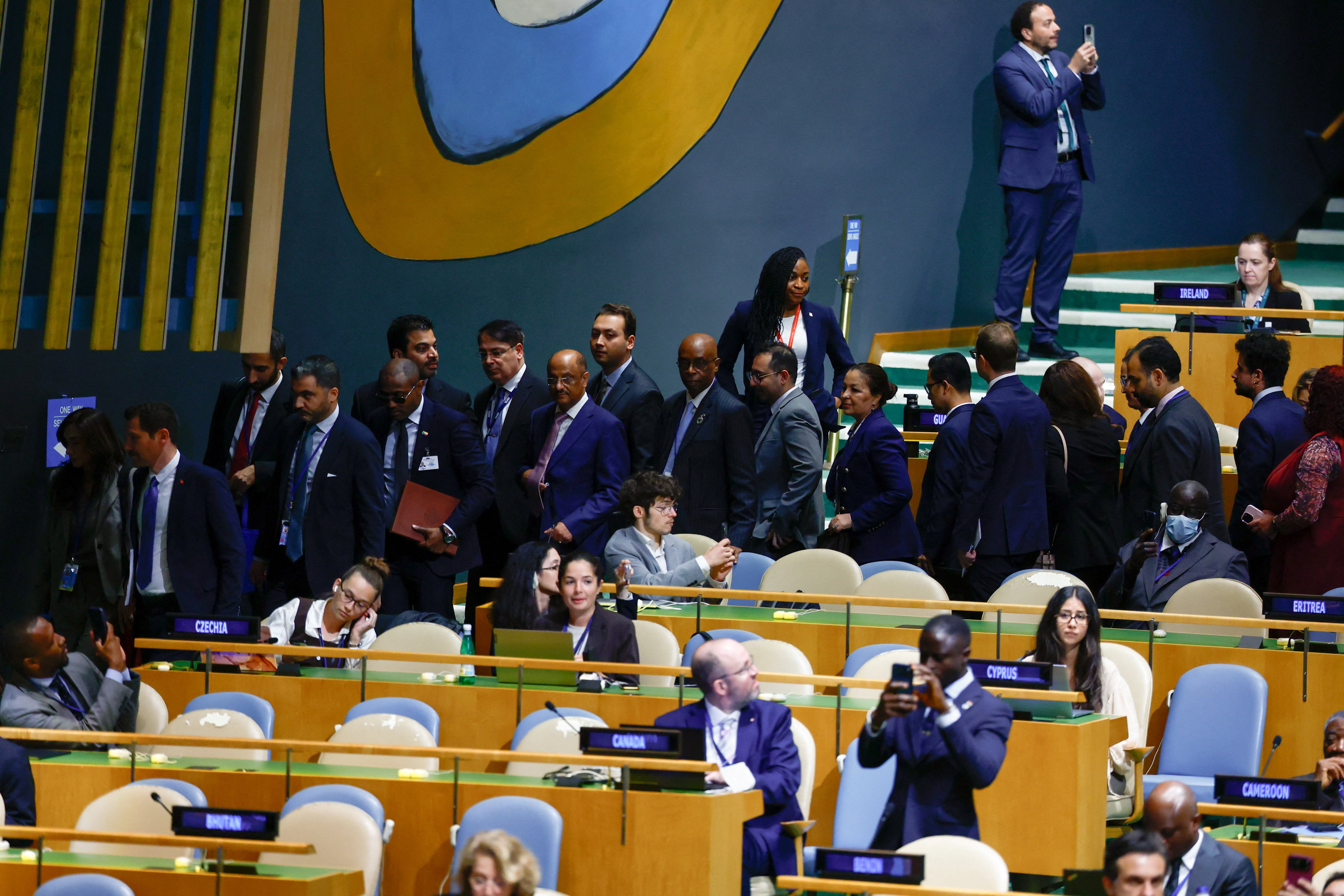
Israel continues to face isolation in international forums as it continues its multi-front war on the peoples of West Asia. On Thursday, September 24, delegations from at least 77 countries walked out or left their seats vacant during the address of Israeli Prime Minister Benjamin Netanyahu at the 81st session of the United Nations General Assembly.

The move was interpreted as opposition to Israel’s three-year genocidal aggression on Gaza, and atrocities across multiple parts of West Asia.

Arab nations that walked out included: Algeria, Comoros, Egypt, Iraq, Jordan, Kuwait, Lebanon, Libya, Mauritania, Oman, Palestine, Qatar, Saudi Arabia, Somalia, Sudan, Syria, Tunisia and Yemen.

Asian states involved: Afghanistan, Bangladesh, Brunei, Darussalam, Indonesia, Iran, Kyrgyzstan, Malaysia, Maldives, Myanmar, North Korea, Pakistan, Türkiye, Turkmenistan and Uzbekistan.

From Africa the following left the chamber: Angola, Botswana, Central African Republic, Chad, Congo (Republic of the), Democratic Republic of the Congo, Djibouti, Equatorial Guinea, Eritrea, Eswatini, Kenya, Lesotho, Liberia, Madagascar, Mozambique, Namibia, Niger, Senegal, South Africa and Uganda.

Countries of Latin America and the Caribbean: Antigua and Barbuda, Bahamas, Barbados, Belize, Bolivia, Brazil, Chile, Colombia, Cuba, Dominica, Guyana, Nicaragua, Panama, Peru, Saint Lucia, Suriname, and Venezuela.

European countries: Bosnia and Herzegovina, Ireland, North Macedonia, San Marino, Slovenia and Spain. 

From Oceania: Tonga and Tuvalu.

Meanwhile, thousands of protesters took to the streets of New York City, where the UN headquarters is located, to protest Netanyahu’s visit and address, calling for US officials to comply with the warrant issued for his arrest from the International Criminal Court. 

Read more: ICC issues arrest warrants for Netanyahu and Gallant as the genocide continues in Gaza

Netanyahu defies the world, vows to continue Israel’s multi-front regional war

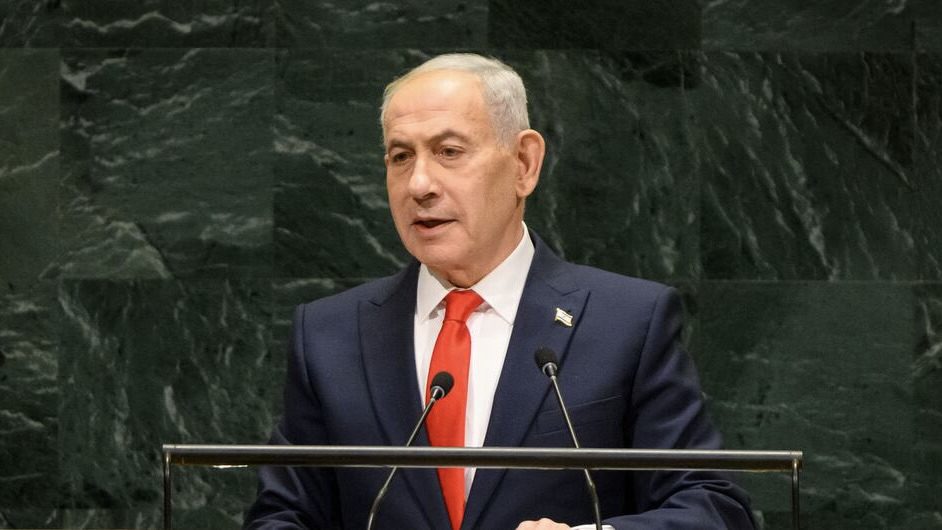
Netanyahu began his defiant, combatant speech by calling the departing delegations “moral cowards”.

“If there are any other moral cowards who haven’t yet left this hall, please do so now,” the Israeli PM said, addressing an almost empty chamber.

During the rest of his speech, which lasted for around 40 minutes, he defended Israel’s military campaigns – including the strikes on Iranian nuclear facilities – and vowed “to continue to win” Israel’s muti-front regional war, claiming his government has “no other choice”. 

Netanyahu categorically rejected international accusations of genocide in Gaza, labeling them “the greatest lie of the century”. He sharply criticized his vocal opponents, naming Turkish President Recep Tayyip Erdogan, New York Mayor Zohran Mamdani, and the government of Qatar. 

Furthermore, Netanyahu downplayed the deadly impact of Israeli settler violence in the occupied West Bank by describing the perpetrators as a “handful of young juvenile delinquents, about 150 in number, who go throw stones, who chop down olive trees, and occasionally light some fires.”

He also minimized the total number of Palestinian casualties resulting from settler attacks saying “maybe two or three dead” per year, although the UN reported in August that at least 23 Palestinians were killed and more than 1,040 others were injured in the context of settler attacks since the beginning of 2026.

Responding to statements made by Syrian President Ahmed al-Sharaa concerning Syria’s sovereignty over the Golan Heights, Netanyahu firmly asserted Israel’s permanent claim over the territory, invoking a biblical narrative.

 “Jews have been on the Golan Heights since the days of Moses,” Netanyahu declared, asking Al-Sharaa to “read it in the Bible”.

Abbas continues to appeal to the US despite its sanctions on PA

For the second year in a row, the US State Department has denied entry visas to the President of the Palestinian Authority (PA) Mahmoud Abbas and a high-level delegation, preventing them from attending the United Nations General Assembly session in New York.

According to media reports, the Trump administration justified the revocation of visas by accusing the PA of pursuing legal action against Israel in international courts, and failing to meet past peace commitments. The decision drew wide international criticism for violating UN host-country agreements.

The US action put Abbas on the spot before the Palestinian grassroots, especially as his administration is known for appeasing Washington at the cost of the Palestinian people’s sacrifices.

Read more: Abbas sacks head of detainees’ commission for opposing cuts of prisoners and martyrs’ stipends

Opening his pre-recorded speech delivered remotely, Abbas strongly condemned the revocation of US visas for Palestinian officials – including himself – as “punitive and unlawful”, rejecting the justifications provided by Washington. 

He urged the US to lift the sanctions and restrictions it imposed on the PA, resume dialogue, and work alongside the international community to back the two-state solution.

Abbas stressed that the PA has fulfilled its governance and reform commitments, and reaffirmed his leadership’s dedication to international law and its ongoing stance against “violence and terrorism”.

In terms of the situation on the ground, Abbas cautioned that Palestinians are confronting the most dangerous phase in their modern history. 

He detailed the repercussions of the ongoing Israeli genocide and the severe humanitarian crisis in Gaza, in addition to settlement expansion, land seizures, and the escalation in settler violence under the protection of Israeli forces in the occupied West Bank and East Jerusalem. 

The Palestinian President warned that these systemic practices are designed to fragment the territory and forcibly displace the Palestinian people. 

“We have, for long, warned the international community through the UN General Assembly and the Security Council that these Israeli policies that operate outside international law will destroy the two-state solution,” Abbas asserted. 

The head of the PA slammed some countries for their silence and their continued supply of weapons to Israel. 

While acknowledging the 20-point plan brought forward by US President Donald Trump for post-war Gaza, the related UN Security Council resolution and the Mladenov 15-point roadmap, he lamented the lack of tangible progress and called for the immediate expedition of phase two of the ceasefire deal.

Abbas also expressed hope that phase two of the deal would unify Gaza, the West Bank, and Jerusalem under the mandate of the Palestinian state.

Concluding his address, Abbas called on Trump to abide by his previous commitments made to Arab and Islamic leaders regarding the prevention of land annexation and forced displacement of the Palestinian people.

He further demanded the immediate, unconditional release of more than USD 6 billion in tax revenues withheld by Israel, alongside an end to the financial siege on Palestinian institutions.

With regard to the long-awaited legislative elections, Abbas affirmed that it will take place on November 28, followed subsequently by presidential elections.

He closed by reiterating the vision of a democratic, unarmed Palestinian state grounded in human rights and the rule of law, living side-by-side with Israel in “mutual security and peace”.

Visa revocations show concessions yield zero results, says Omar Assaf

Palestinian political activist and former prisoner in Israeli jails, Omar Assaf, argues that the denial of US entry visas to the Palestinian delegation highlights two critical realities.

First, it exposes a deep-rooted US hostility toward the Palestinian people and their leadership, actively blocking them from reaching the United Nations to make the World hear their grievances, assert their rights, and bear witness to the crimes of the occupation.

Second, it serves as a stark wake-up call for Palestinian leadership that the US administration cannot be relied upon, nor can it be viewed as an honest broker, or a mediator of any kind.

From his point of view, the incident makes clear that a policy of concessions, compliance, appeasement, and pleading yields zero results. Instead, the World only respects the language of strength, unity and upholding rights. Consequently, this must serve as a definitive lesson for Palestinians to close ranks under a unified national stance.

“We must firmly adhere to our people’s rights, stand resilient against challenges, and confront any aggression targeting our land and existence, including our fundamental right to make our voices heard globally to halt these ongoing crimes,” Assaf emphasized.
  •  

Middle East conflicts push Europe toward a second energy crisis in five years

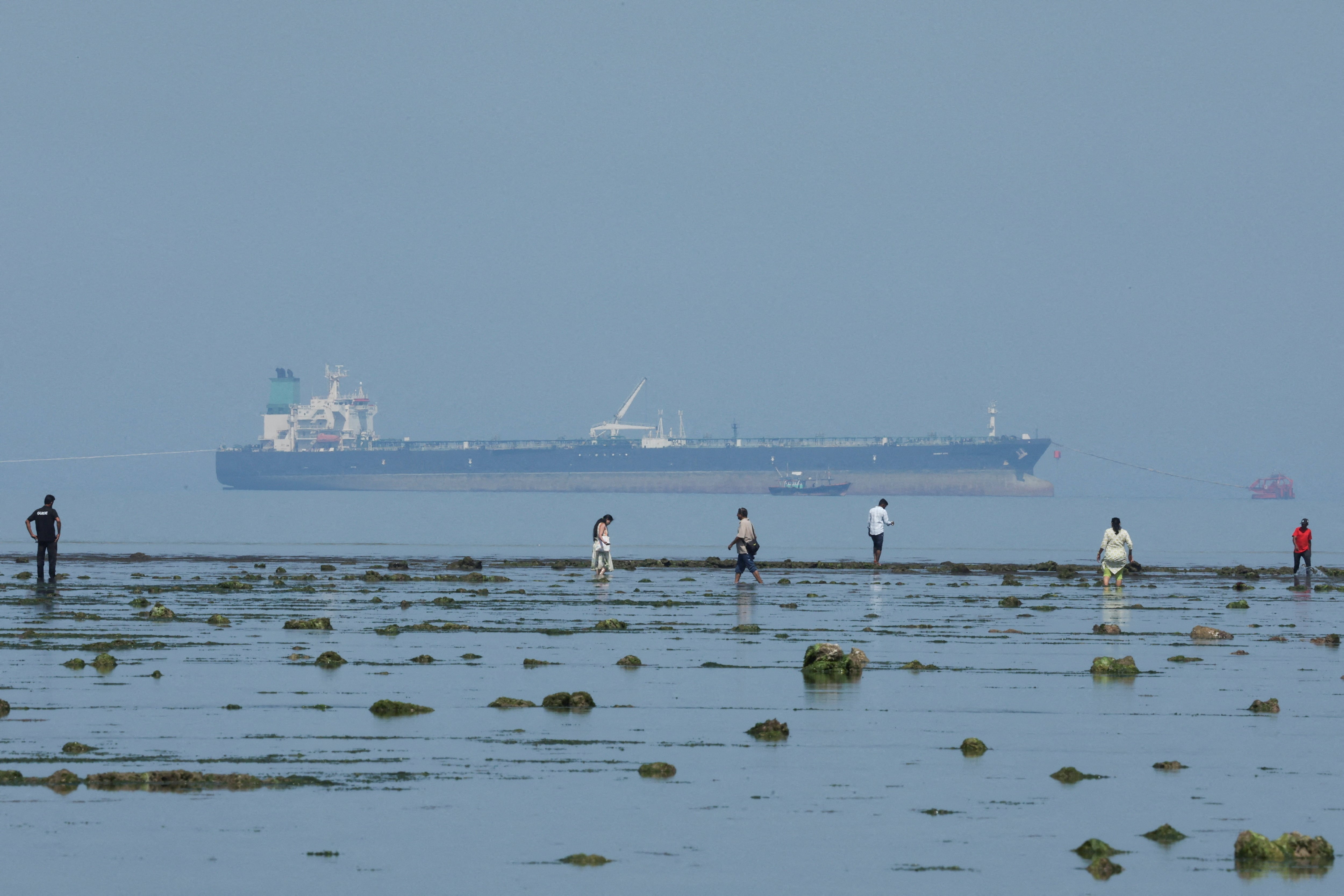
Donald Trump returned to power in Washington with two major foreign policy promises: to end the war in Ukraine “in 24 hours” and to keep his country out of more “forever wars.” Almost two years after his decisive electoral victory, the Russian invasion continues with no sign of a quick end, and the United States has plunged itself into yet another hornet’s nest in the Middle East. Two conflicts of unpredictable outcome have pushed fossil fuel costs to historic highs worldwide and are increasing doubts about whether — with price signals distorted — supply chains will withstand the pressure.

Seguir leyendo

© Amit Dave (REUTERS)

Tourists with the oil tanker 'MT Desert Kite' in the background at Narara Marine National Park (India) on March 11.
  •  

The suffocation of Israeli filmmakers: ‘Critical culture is now regarded as an act of treason’

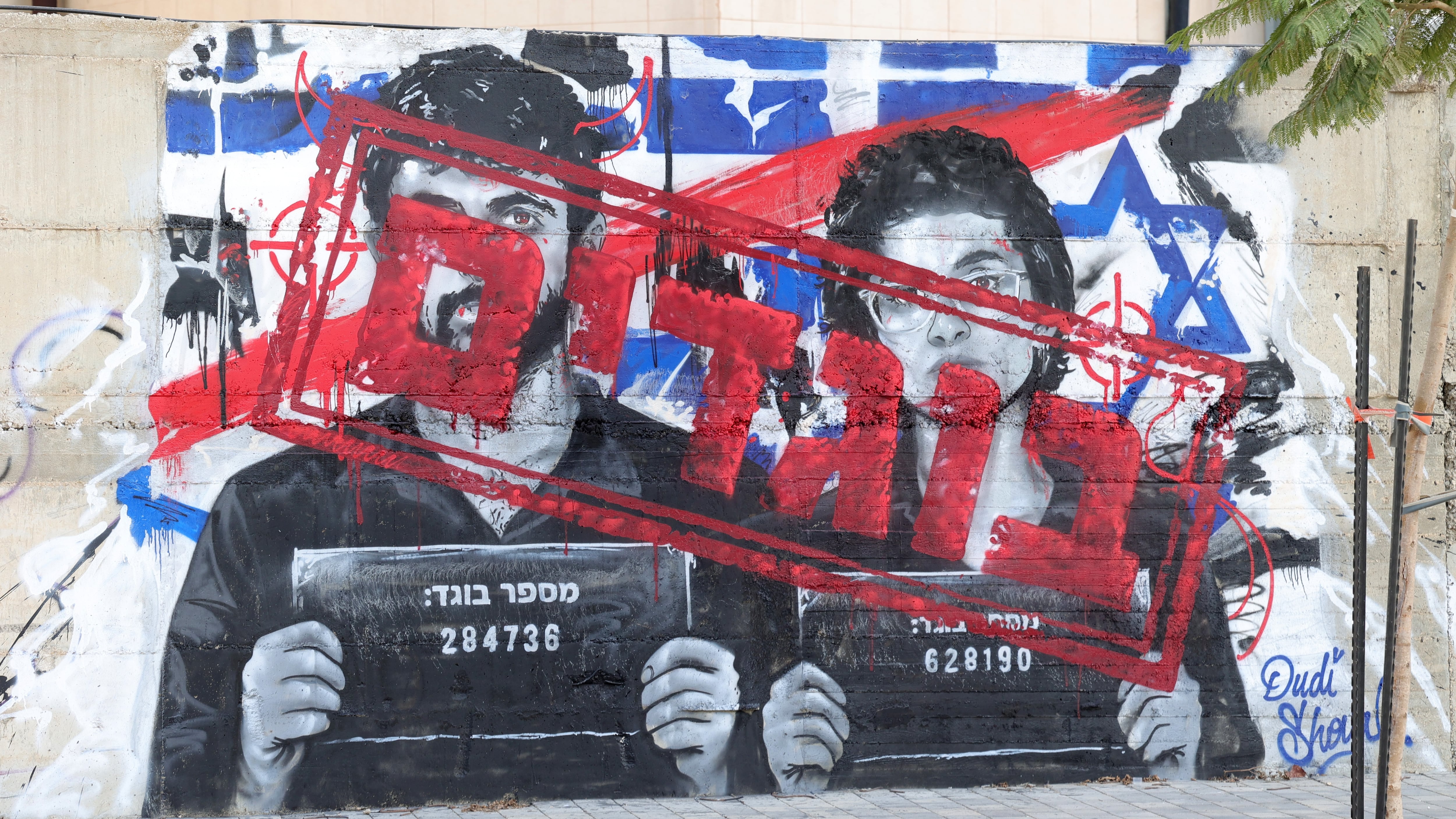
In September 2025, the film that won the most awards at the Ophir Awards, Israel’s equivalent of Spain’s Goyas, was The Sea, which tells the story of a Palestinian boy who sneaks past checkpoints to try to reach Tel Aviv and see the Mediterranean for the first time. The film does not delve into the daily squalor and violence of the Israeli occupation, but it provoked the ire of Culture Minister Miki Zohar at the time, who said he would not allow a “group of extremist left‑wing thugs” to take over the film sector.

Seguir leyendo

© ABIR SULTAN (EFE)

Graffiti depicting Israeli filmmakers Yuval Abraham (left) and Rachel Szor with the word 'traitor' in Hebrew in Ashdod, September 15, 2026.
  •  

Netanyahu challenges half-empty UN General Assembly: Accusing Israel of genocide is the ‘biggest lie of the century’

Two images clearly showed the growing international isolation and criticism facing Benjamin Netanyahu’s government. Inside the UN headquarters, the conservative Israeli prime minister was met Thursday with jeers and the departure of many delegations before he began his address. The half-empty General Assembly was a powerful metaphor. “If there are any other moral cowards who haven’t left this hall, please do so now,” he said defiantly, while members of his delegation shouted: “Am Israel Jai” (“The people of Israel live,” in Hebrew). Outside the building, police detained about 100 demonstrators, among them actress Susan Sarandon and Democratic congressional candidate Darializa Ávila Chevalier, who were protesting the presence of a head of state accused of committing genocide in Gaza.

Seguir leyendo

© Jeenah Moon (REUTERS)

Delegates walk out of the UN General Assembly during Benjamin Netanyahu’s address on Thursday.
  •  

Israel kills son of Gaza health official in latest atrocities

Footage flooded the internet on Saturday, September 19, showing Gaza Health Ministry Director General Dr. Munir al-Bursh asking young men to bring the rest of his son’s body as they carried his remains.

“Bring me his other half!” the grief-stricken father said. “We were supposed to go to heaven together today, but you got there before me, son.” 

According to media reports, Dr. Munir’s son, Bashir (28), was struck by a drone shortly after leaving his family’s tent in the al-Zahra neighborhood, near the Civil Defense headquarters, west of the Jabalia refugee camp in northern Gaza Strip.

Bashir was targeted while helping people fill their water containers, just meters away from his father. For many, the proximity of Dr. Munir implies that he, too, may have been a target of the attack.

Israel’s systematic targeting of health workers

The prominent Palestinian health official has been in the crosshairs of the Israeli forces since the beginning of Israel’s genocidal aggression on Gaza, due to his leading role in managing a crumbling health system that was severely devastated during the war.

Moreover, Dr. Al-Bursh is widely known for frequently reporting on Israeli assaults on the Gaza medical sector, and highlighting the dire conditions of medical facilities inside the besieged areas via international media outlets.

Al-Bursh and his family were previously targeted by Israeli warplanes at the very beginning of the war. In December 2023, his 13-year-old daughter, Jinan, was killed in an Israeli airstrike on a residential building in Jabalia. The aerial attack also resulted in the injury of Dr. Munir and the rest of his family.

The deaths of Bashir and Jinan al-Bursh echo the murder of 15-year-old Ibrahim Abu Safiya by an Israeli drone in October 2024. Ibrahim was the son of the former director of Kamal Adwan Hospital in northern Gaza, Dr. Hussam Abu Safiya.

Read more: ‘They brought me here to kill me,’ Dr. Hussam Abu Safiya tells lawyer

The day Bashir al-Bursh was assassinated, and the days that followed, saw the killing of several people by the Israeli Army across different parts of the war-ravaged enclave.

This took place as world leaders addressed the UN General Assembly. For the third year in a row, these addresses and the deliberations have failed to stop Israel’s aggression against Gaza and its ongoing heinous crimes carried out across West Asia.

  •  

21 displaced people killed in Gaza building collapse

The lethal repercussions of Israel’s three-year genocidal aggression on Gaza continue to unfold. Aside from Israel’s ongoing military assaults after the nominal ceasefire deal, the humanitarian crisis inflicted by the genocide – affecting food, sanitation, medication, and shelter – has become another driver of persistent fatalities. 

At least 21 Palestinians, including 12 children, died in the collapse of the Al-Saadah building in Gaza City on Wednesday, September 16, while 45 people were rescued from under the rubble. 

According to media reports, the building, already damaged by Israeli airstrikes, was housing 100 displaced people, amid a deepening shelter crisis caused by Israel’s ongoing restrictions on reconstruction materials and humanitarian aid.

Read more: Israel escalates aggression in Gaza, Kushner returns to Washington empty-handed

Hamas holds Israel “responsible for the disaster”

Hamas issued a statement, holding Israel “responsible for this disaster,” and affirming that “the building collapse represents a new chapter in the catastrophic humanitarian repercussions of the war.”

The Palestinian movement pointed out that the massive home and neighborhood destruction has forced thousands of displaced people to take refuge in ruined structures. 

It further cautioned that the severe shortage in heavy machinery for clearing debris and conducting rescue operations endangers more lives. 

Hamas also urged mediators, the US administration, and relevant international bodies to take immediate action to lift restrictions blocking the entry of necessary rescue equipment and vehicles, and to secure safe shelter for the displaced population. 

Meanwhile, the Gaza-based Ministry of Public Works and Housing warned that roughly 3,000 buildings across the war-ravaged enclave are currently deemed dangerous or at risk of collapse, which in turn poses a significant threat to thousands of inhabitants.

  •  

Israel destroys Hezbollah’s strategic base under Ali Al-Taher ridge

The Israeli army announced on Thursday, September 10, that it dismantled Hezbollah’s underground infrastructure beneath Ali al-Taher ridge in southern Lebanon.

The army claimed that the strategic facility contained scores of Iranian-made rockets, missiles, unmanned aerial vehicles (UAVs), machine guns, and hundreds of mines and explosive devices.

It added that a central command complex of Hezbollah’s Badr Unit was located within the infrastructure, and included command centers, weapon storage rooms, and living quarters, which enabled the group’s fighters to operate underground for long periods of time.

The Israeli forces used 1,100 tons of explosives in the operation to demolish the two-kilometer tunnel network beneath Ali al-Taher, triggering a 4.1-magnitude tremor.

Israeli media outlets quoted unnamed military officials as saying that Hezbollah fighters, who were holed up inside the tunnels, chose to resist the Israeli forces, though they were given the option to surrender.

The massive operation in the Ali al-Taher ridge came one week after the Israeli forces declared that they had seized the highland.

What makes the Ali Al-Taher ridge a strategic target?

Besides serving as a nerve center for Hezbollah’s Bader Unit, Ali al-Taher provides a commanding vantage point over the city of Nabatieh and the Iqlim al-Tuffah region, which represent primary operational, logistical, and command centers of the Lebanese resistance group.

Furthermore, the highland, which rises about 600 meters above sea level, overlooks vital transportation routes and areas around the Litani river, and those connecting the coast to the Bekaa Valley.

  •  
❌