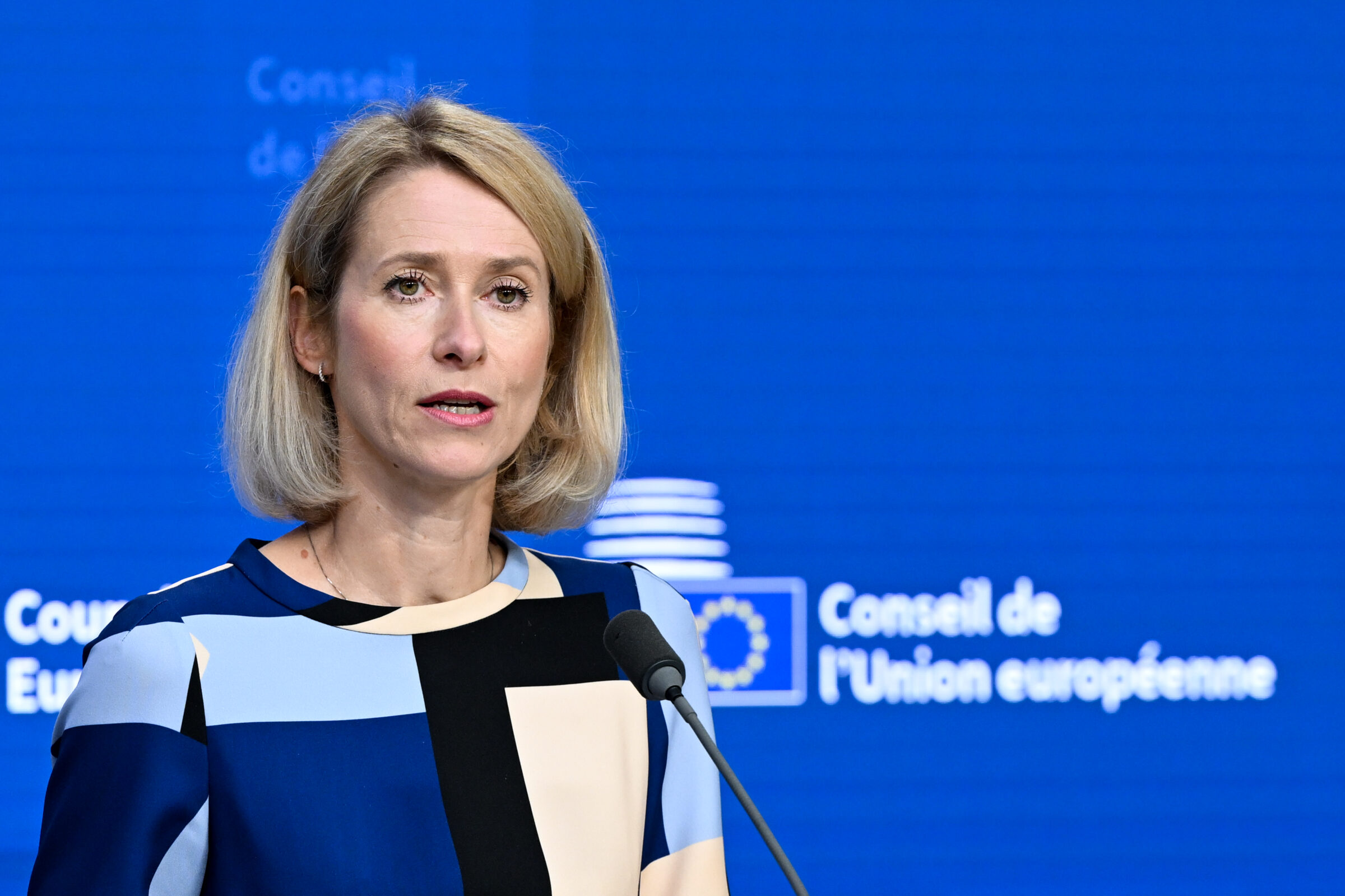
The EU’s delisting of two Russian oligarchs last week despite multiplying sabotage attacks in Europe was “regrettable”, while German-Russian talks at the UN ended in “ridicule”, EU foreign affairs chief Kaja Kallas has said.
“It is regrettable that this [delisting] was the decision,” said Kallas on Monday (28 September) in Brussels at a defence ministers’ meeting.
“We are putting forward more listings, targeting their military-industrial complex, also targeting the finances of Russia, because we want this war to stop,” she added, referring to the 22nd round of Russia sanctions, due on 12 October.
Lithuania’s defence minister Robertas Kaunas also called the delistings a “step backwards”, adding: “This is not the time to reduce sanctions. We have to strengthen the pressure on Russia and [Russian president Vladimir] Putin’s environs”.
This article continues, but the full version is available only to EUobserver.com subscribers. Visit account.euobserver.com/membership
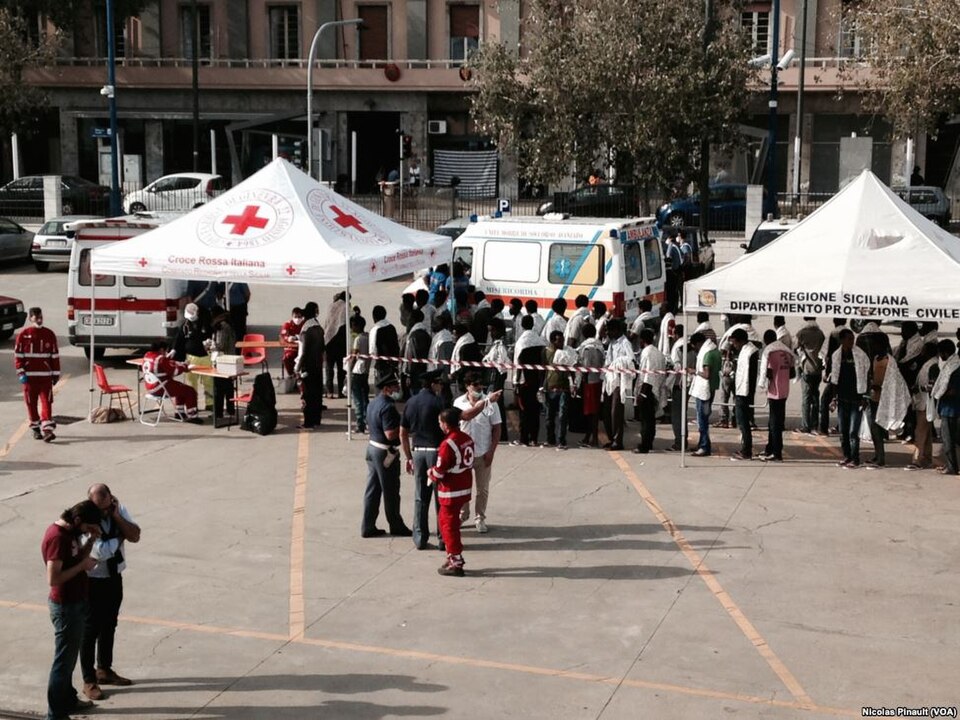
EU migrant return hubs became the subject of a summit held in Munich on Saturday (26 September) as interior ministers from member and associate states met the European Commission to advance projects aimed at offshoring rejected asylum seekers.
But the meeting made little progress, partly because many of the attendees met in Copenhagen on 4 September, where leaders had announced an expected start to the policy by 2027.
Instead, the main takeaways from Munich included rehashed commitments on improved emergency responses as well as broadened use of Frontex, the EU’s border control agency, and migration diplomacy with third states.
Though the mass border crossing into Ceuta, the Spanish enclave in North Africa, was a subject of discussion, the 18 EU and non-EU interior ministers present in Munich did not include a representative from Spain, possibly due to Pedro Sánchez’s opposition to the return hubs policy.
But the UK’s home secretary Shabana Mahmood was present, talking of the need for close cooperation within Europe on migration issues,” Germany’s interior minister and meeting host, Alexander Dobrindt, told reporters on Saturday.
Despite Donrindt’s focus on “innovative solutions” for those with no right to stay in Europe but no way or returning, Berlin’s migration response would also be significantly dependent on expanded powers for Europe’s border agency, Frontex.
“We are seeing that the Pact is working. The number of irregular arrivals is dropping across the EU while at the same time the numbers of returns to third countries are increasing. That said, we cannot become complacent,” Jim O’Callaghan, Irish interior minister, told the press before the meeting.
This article continues, but the full version is available only to EUobserver.com subscribers. Visit account.euobserver.com/membership
Water levels in the Rhine River plummeted to record lows over the weekend, threatening transport on a key shipping corridor for energy and industrial commodities across central Europe.
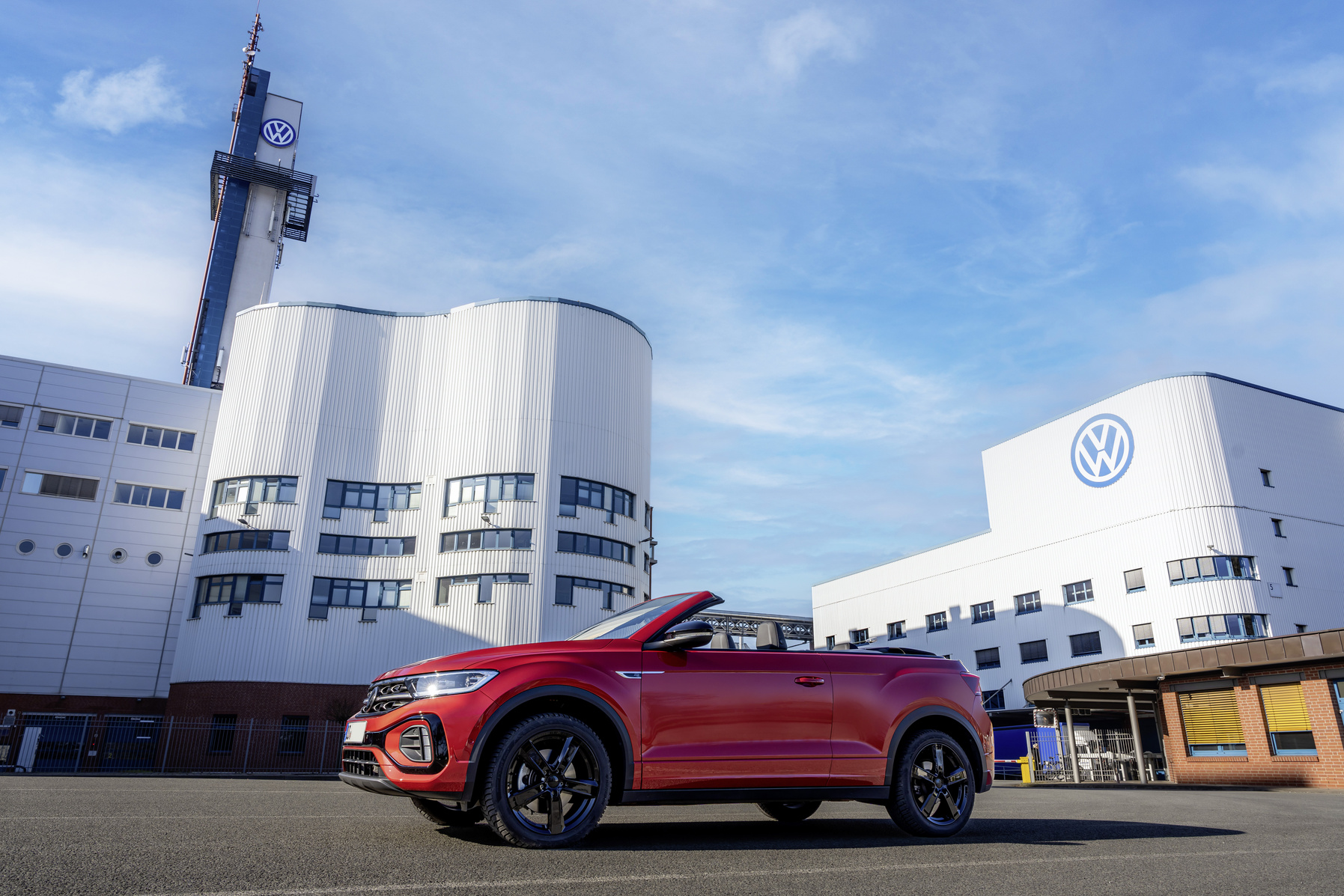
Tens of thousands of autoworkers in Germany protested last week against the car giant’s drastic cuts – spanning job losses and plant closures – even as Volkswagen benefited from some €1.48bn in state subsidies to entice people to buy their brand of electric cars.
The figure, released to EUobserver via a parliamentary demand tabled by German Green MP Julian Joswig, revealed that the German state has doled out €10.1bn in environmental bonuses between 2020 to 2026 to lure people into purchasing electric cars.
As an individual named brand, Volkswagen received the most, followed by Tesla with €889m ahead of other brands like Mercedes-Benz, BMW, Audi, Renault, Hyundai, Opel, SEAT and Kia.
“When more than €10bn in public funding is involved, it must be possible to trace where the money goes and what economic impact it generates,” said Joswig, in a statement.
German domestic interest in electric cars has shown a steady increase over the years. Last month, over 30-percent of all new cars registered in Germany were electric. That is a new record, according to Germany’s Federal Motor Transport Authority.
Even so, the German car industry, including Volkswagen, are shedding workers amid plans to cut plants after being caught off guard by US tariffs and China, whose own industry is now pushing into the European market.
On Monday (21 September), Volkswagen was removed from the Euro Stoxx 50 index given its shrinking market valuation.
Volkswagen, which is a state-owned company, recently announced plans to repurpose its Osnabrück factory in north-west Germany in order to manufacture weapons for Israel’s Rafael Advanced Defense Systems.
The irony is not lost given that Volkswagen was founded by Hitler largely on the back of Jewish slave labour, which is now set to produce arms for an Israel accused of having itself committed a genocide.
“I haven’t seen that being discussed here. Certainly not in the media. People do discuss it, but it’s not anywhere out in the public debate,” said Holger Görg, a professor of International Economics at the University of Kiel.
The car company also announced plans to close its plants in Emden, Hanover, Zwickau and Neckarsulm amid discussions of massive layoffs, potentially affecting some 100,000 people as well as job losses among numerous suppliers.
This article continues, but the full version is available only to EUobserver.com subscribers. Visit account.euobserver.com/membership
Germany’s opposition lawmakers have accused Chancellor Friedrich Merz’s government of seeking to create a “secret police” by dramatically expanding the powers of the country’s intelligence agencies.
The accusations came during the first parliamentary debate on the reform on Thursday, with lawmakers from the Alternative for Germany (AfD), the Left and the Greens raising concerns over surveillance and fundamental rights. The government argues that the changes are needed to counter growing security threats.
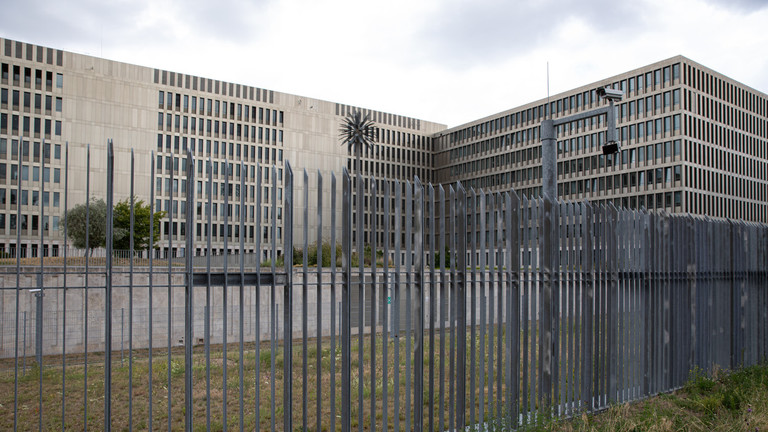
Under a reform approved by the cabinet last month, the BND foreign intelligence agency and the BfV domestic security service would gain broader operational powers, allowing them to move beyond primarily gathering and analyzing information.
Among the proposed changes, the BND could sabotage foreign companies, penetrate foreign IT systems and disable weapons deemed a threat to Germany. The BfV, meanwhile, could secretly enter homes and access computers and mobile phones under certain circumstances.
German Interior Minister Alexander Dobrindt said the reform would usher in a “new era” by turning the country’s intelligence services into “genuine intelligence agencies” capable of actively countering threats. He said Germany must bring its services to the level of its European partners.
AfD MP Gottfried Curio branded the proposed overhaul of the BfV “Stasi 2.0,” referring to East Germany’s notorious secret police, and called the reform a “coup against the rule of law.” The AfD, however, supports granting the BND greater operational powers.
The BfV has itself been locked in a legal battle with the AfD. In 2025, the agency designated Germany’s most popular party a “confirmed right-wing extremist” organization, but a Cologne court in February barred it from applying that classification while the case proceeds.
The ruling came months before the AfD scored major gains in regional elections. It won 43.8% in Saxony-Anhalt earlier this month and 38.3% in Mecklenburg-Western Pomerania on Sunday.
Green MP Konstantin von Notz said granting the BfV such extensive powers would be a “grave mistake” and questioned whether parts of the reform would survive scrutiny by the Constitutional Court. He nevertheless backed giving the BND greater powers.
Left Party MP Clara Buenger went further, warning that the BfV could become a “new German secret police.”
“Fundamental rights are being trampled on here,” she said, arguing that the agency would gain powers traditionally reserved for police.
The debate comes as Merz’s government braces for growing AfD influence at the regional level. The Telegraph and Die Weltreported in July that Berlin was developing a “secret plan” to counter potential “obstructionism” by regional authorities, allowing the federal government to bypass them in a crisis.
The German government wants the intelligence reform to take effect at the beginning of 2027. It still requires approval from both the Bundestag and Bundesrat.
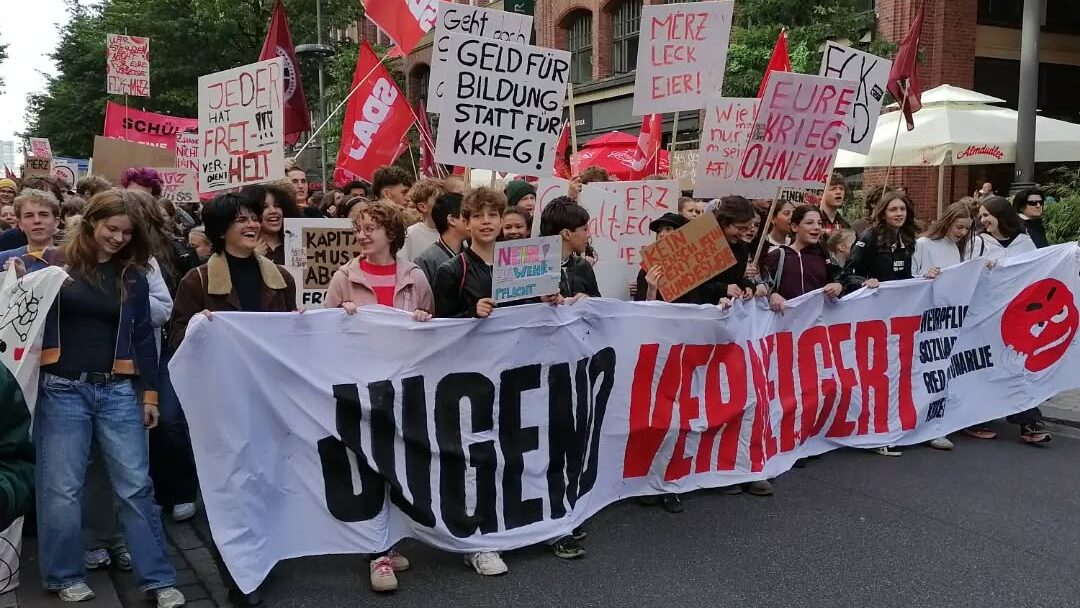
Thousands of students across Germany were once again on strike against conscription and militarization on Friday, September 25. Actions took place in at least 100 localities as young people demanded a sharp turn from the government’s chosen path.
“We don’t want to be forced into military service and we don’t want to go to war,” the students wrote in declaration after their last strike in May.
This is the fourth time students have exchanged classrooms for streets since the end of 2025. The mobilization has strengthened in resistance to the Merz administration’s plans to build the “strongest conventional army in Europe” – including by drawing more people into the Bundeswehr, the German armed forces.
While authorities insist military recruitment remains voluntary, students have warned of a clear tendency toward outright conscription. Local strike committees and activists also emphasized the widespread repression ahead of actions. This included scheduling of exams on strike days and locking-in students on school grounds, they pointed out.
Billions for the Bundeswehr, cuts for schools and youth services
Over recent months, the government has sent thousands of questionnaires to map voluntary interest in joining the armed forces. According to German media, the response has been underwhelming: tens of thousands of students have disclaimed no interest whatsoever. Not even a multi-million-euro budget allocated to promoting the army has been able to shake this opinion.
“They sell us war service as an ‘adventure’ while we know that what awaits us is coertion, humiliation, sexism, right-wing extremism, and racism,” the student declaration adds.
Instead of taking the message seriously, authorities recently advanced the implementation of medical checks among their targeted population, drawing further frustration from students.
“We don’t want compulsory questionnaires, fines, draft physical examinations, conscription assessment centres across the country, nor planned integration of the Federal Volunteer Service into military service,” they wrote. “These are means to prepare the reintroduction of the draft and thus another war originating from Germany.”
“In case of conscription, we’ll be trained as cannon fodder, forced into the trenches,” students added. “War costs us our lives, while corporations like Rheinmetall make record profits.”
Students on strike have expressed solidarity with other ongoing struggles against militarization and budget cuts. They stated they would join peace demonstrations planned for early October in Berlin and Stuttgart, as well as a trade union-backed mobilization against budget cuts on Saturday, September 26.
Their decision reflects the widespread understanding that youth and education services are among those impacted by this round of austerity. According to junge Welt, the federal ministry responsible for education will face close to €1 billion in cuts – while €140 billion will be made available for so-called defense in 2027.
“Every tank, every rocket we pay for with dilapidated schools and social cuts,” students remarked.
Iran’s Deputy Foreign Minister for Legal and International Affairs Kazem Gharibabadi has said NATO Secretary-General Mark Rutte’s admission that some 5,000 sorties were flown from European bases in support of US military aggression against Iran proves that Europe formed part of the infrastructure of that aggression.
In a post on X on Thursday evening, Gharibabadi wrote that the NATO chief’s remarks demonstrated Europe’s role in enabling the illegal US campaign.
“Governments that placed their territory at the disposal of the United States cannot evade their responsibility,” he said. “This participation will not go unanswered.”
Rutte has repeatedly acknowledged that thousands of US military flights, between 4,000 and 5,000, departed from bases in Europe during the US-Israeli war of aggression against the Islamic Republic, which began on 28 February.
He described Europe as a “platform of power projection” without which Washington could not have conducted the operation.
Countries including Italy, Romania, the United Kingdom, France and Germany were cited in connection with the use of bases, airspace, tankers and logistics.
Iran has consistently described the US-Israeli assault as an unprovoked act of aggression in flagrant violation of the UN Charter and international law.
Tehran has stressed that providing territory, bases or infrastructure to an aggressor state itself constitutes participation in the act of aggression, as recognized under United Nations General Assembly Resolution 3314.
Foreign Minister Abbas Araghchi separately warned European officials in New York of the severe and long-term consequences of facilitating and supporting US and Israeli war crimes, both in Gaza and against Iran. He noted that submitting to a bully never satisfies that bully.
German police have arrested a 43-year-old Turkish man suspected of fatally stabbing his estranged wife, a 36-year-old mother of three, at a municipal refugee shelter in Coesfeld. The suspect was already on trial for rape and charged with other crimes.
Witnesses found the victim, Enda K., with stab wounds to her upper body in her room at the accommodation around 12:25 p.m. on Wednesday.
Rescue workers tried to revive her but could not save her life. She died at the scene.
The couple, both Turkish citizens but had been living separately, investigators stated. Police and prosecutors initially provided no information on the background of the attack or a possible motive.
“The children were luckily at school when it happened. This is so terrible. Enda was such a strong personality, a really nice woman. We are all shocked,” a roommate at the refugee shelter told Bild newspaper.
A tip from the public led officers to the suspect during the night in Münster, about 40 kilometers (25 miles) away. They arrested him around midnight. He did not initially comment on the allegations.
Bild also learned that the Turkish suspect had a prior conviction for aggravated assault and he also faces additioanl charges of trespassing, assault, and coercion.
In January 2026, he was also placed on trial for rape but the trial was terminated and moved to another court due to an expected higher sentencing. No court proceedings at this new court venue have taken place yet.
The anti-immigration Alternative for Germany (AfD) won the Saxony-Anhalt state election by a wide margin but fell short of an absolute majority. Nevertheless, the party may still come to power if it can garner enough support from BSW or peel off a few MPs from rival parties. This possibility has thrust an unused and radical clause of the German constitution, federal coercion or “Bundeszwang,” to the center of a fight over how far Berlin can go if the right-wing party takes power.
The AfD took 43.8 percent of the vote in the Sept. 6 election, but the AfD remains three seats short of an absolute majority. However, Ulrich Siegmund, the AfD’s 35-year-old lead candidate, could still become minister-president. The German government has plenty of tools for dealing with Siegmund if he steps out of line.
Germany’s establishment threatens to use “federal coercion” clause
Federal coercion is one of the most radical mechanisms in the German constitution. Article 37 allows the federal government or a representative it appoints to issue binding orders to the states and their agencies. The Federal Republic of Germany has never resorted to this clause before.
Anna-Bettina Kaiser, a law professor at Humboldt University in Berlin, told Deutsche Welle the bar is extremely high.
“The term ‘dramatic’ is most apt here. This is why federal coercion has never been introduced in the history of the Federal Republic — it is treated as a last resort,” she told Deutsche Welle, a state outlet that receives approximately €415 million a year in taxpayer money.
Until now, fights between Berlin and the states have been settled mainly in court.
“It is usually assumed that in the event of a specific legal dispute, the case will go to the Federal Constitutional Court and the given state will comply with the judgment issued by that body,” Kaiser said.
Deutsche Welle reported that an extreme use of Article 37 could include naming a federal representative with power to issue binding orders in specific areas.
“Article 37 actually provides for the appointment of such a representative who has the power to issue binding orders,” Kaiser said.
Any step would have to match the violation and meet constitutional tests. However, Article 37 lists no catalog of penalties. It speaks only of “necessary measures,” leaving the article vague and open to interpretation.
Bundesrat consent would be essential. Under the chamber’s rules, the affected state keeps its vote on Article 37 decisions.
Union parliamentary leader Thorsten Frei has since called Article 37 an option of last resort if an AfD state government acted against the constitution. Social Democratic floor manager Dirk Wiese said it was “good to know” the Basic Law allows constitutional conduct to be compelled by instruction if an “AfD-BSW Putin coalition” installed a far-right politician as premier. The Greens and the Left have not ruled the tool out.
Saxony-Anhalt’s Office for the Protection of the Constitution classifies the state AfD as “confirmed right-wing extremist.”
Cutting funding to an AfD government
On top of the constitutional power that Article 37 offers, the tried-and-tested method of cutting funding is also being discussed and it is not even clear yet if the AfD will be able to assume power in the state.
German officials have also discussed suspending some federal budget transfers to Saxony-Anhalt, which is still dependent on such transfers to prop up its economy. Tagesschau reported that structural funds could be frozen if an AfD government breached EU fundamental rights or rule-of-law conditions.
However, beyond these federal transfers, powerful German Green MEP Daniel Freund said after the vote that the European Commission should, if necessary, withhold money if an AfD-led state government acted against EU principles.
Freund was a notorious foe of Hungarian Prime Minister Viktor Orbán and a longtime advocate of the EU cutting funding to Hungary while his government remained in power. Freund not only succeeded in lobbying the EU to cut funding but this tool is generally seen as one of the primary contributing factors in toppling Orbán from power.
The reality is that this method of cutting or freezing funds has worked remarkably well for the EU, also in the case of Poland’s previous conservative government. When funding is cut, the population suffers, and when they suffer, they punish politicians at the voting booth. Orbán could point the finger all he wanted at Brussels. It did him no good in the end.
If the EU or the German federal government cuts funding, Saxony-Anhalt will suffer, and there is nothing an AfD government can do about it.
For now, it appears for the EU establishment has a virtually fool-proof method for dealing with any voter rebellions or unfavorable democratic results.
A CDU-led federal government also has every incentive to make an example out of a regional AfD-led government. Shortly after the Saxony-Anhalt election, Chancellor Friedrich Merz said Berlin would act if Saxony-Anhalt crossed lines set by the constitutional order.
“If boundaries are crossed there, I assure you that from the federal government’s point of view we will do everything to correct it. The Basic Law also applies in Saxony-Anhalt,” Merz said.
Merz pointed to migration and foreign policy. He also cited the unwritten duty of “federal loyalty.” A state must act loyally towards the standards of the federal state. That covers “the entire immigration and foreigners policy,” he said.
Fact-checkers later noted that Merz did not use the word “federal coercion,” or “Bundeszwang.” Nevertheless, the debate that followed is freely using the term and how it can be applied against the AfD.
The AfD casts itself as a “rule-of-law party”
However, simply winning an election would not, by itself, justify federal coercion. Article 37 of the Basic Law allows the tool only if a state fails to fulfill duties imposed by the constitution or other federal law. The federal government may then, with the consent of the Bundesrat, take the measures needed to compel those duties.
The AfD’s answer has been that it would govern inside the law, and that Berlin is trying to cancel a democratic result.
The morning after the vote, Siegmund again called the AfD a “rule-of-law party,” and said he would act lawfully. He later thanked the Berlin press sarcastically for portraying him as a threat to democracy and said he wanted to “extend a hand” to every actor in the legislature.
AfD co-leader Alice Weidel called the result a mandate to govern, said Merz was the most unpopular chancellor Germany has had and told him his time was up. In the Bundestag she argued that the CDU-SPD coalition had failed. Merz accused her of pushing Siegmund into “electoral fraud” by urging him to hunt for a majority after he had promised to take office only with an absolute majority.
The issue of mass immigration, in the end, always appears to be the real point of contention. According to the European and German establishment, it must continue at all costs. In a 2024 ARD summer interview, co-leader Tino Chrupalla said an AfD-led state would no longer apply the “Königstein key,” which apportions asylum seekers among the states.
“We would no longer go along with that,” he said at the time.
Siegmund has promised “deportations from minute one” and a remigration offensive.
However, a federal government that wants to prove the AfD weak and ineffective is unlikely to allow such a remigration offensive to move forward. There are plenty of tools at its disposal to stymie the AfD and even sabotage its government. Siegmund may be facing a wave of funding cuts, litigation, and ultimately the federal government stepping in and essentially seizing power if he manages to gain power in the state.
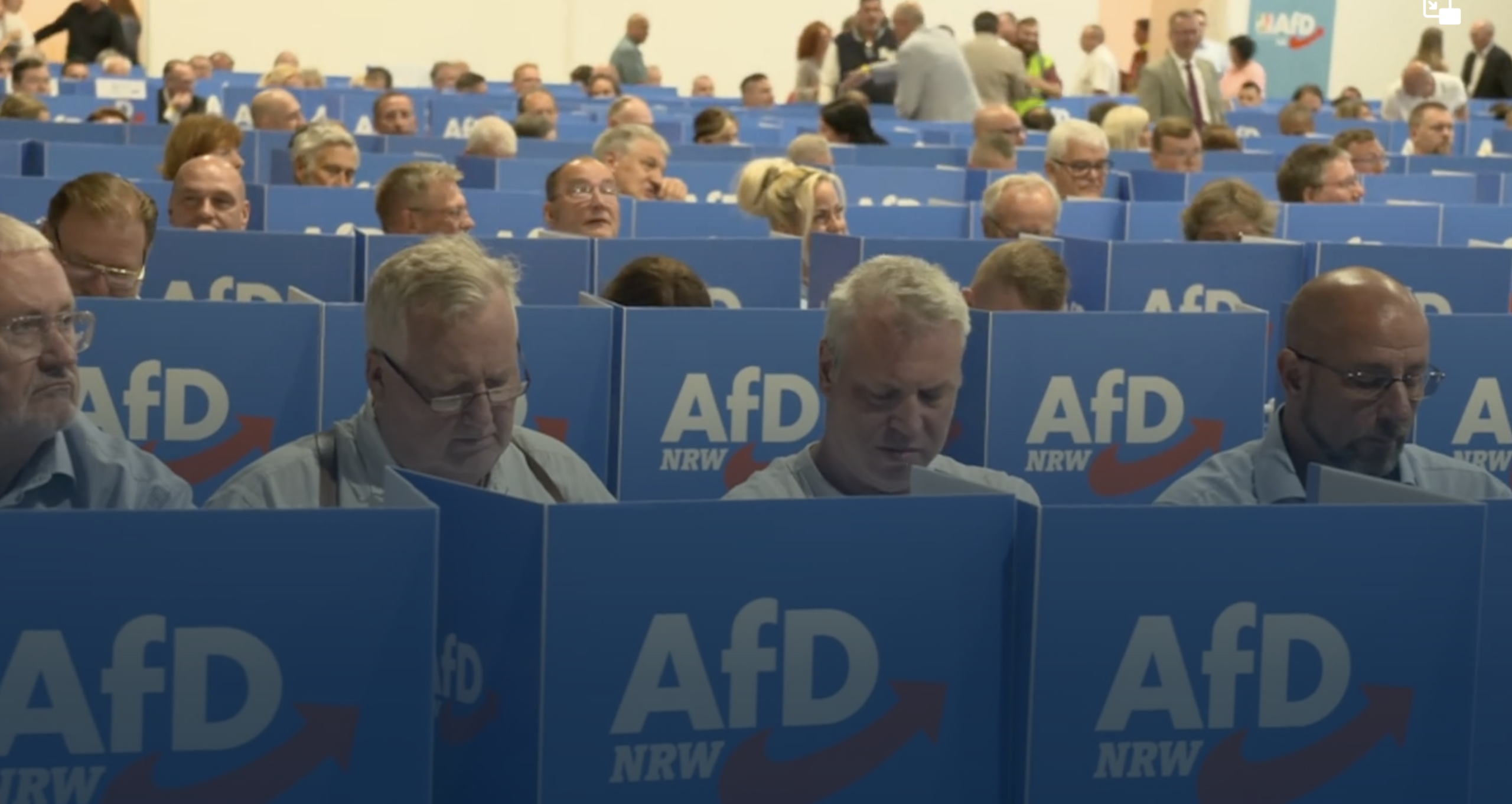
The anti-immigration Alternative for Germany (AfD) party is known for its strength in the east of the country, but its popularity in Western Germany is also only growing, including in the country’s most populous state, North Rhine-Westphalia.
This latest Forsa poll points to incredible growth of the AfD in a very short time in the voter-rich Western German state. It is now the most popular party in the entire state when measuring a national vote and would earn 24 percent of the vote.
Meanwhile, the Christian Democrats (CDU) fell four points to 22 percent, the lowest value Forsa has ever recorded for the party in the state. The previous low was 23 percent in December 2021.
However, in order to avoid confusion, it must be noted that the Forsa poll asked two very distinct questions. One question asked voters in North Rhine-Westphalia how they would vote at the federal level and also how they would vote at the state level.
At the state level, voters in North Rhine-Westphalia would still back the CDU over the AfD; however, the CDU’s advantage over the AfD has narrowed to just seven percentage points ahead of the April state election.
The latest figures show that if a state election were held this Sunday, the CDU under Wüst would receive 29 percent, down from 32 percent in Forsa’s April survey. The AfD has risen two points to 22 percent. The gap between the two parties has therefore fallen from 12 to seven points in just a few months.
About a year ago, however, the lead was far larger, at 22 percentage points. In July 2025, 38 percent of respondents favored the CDU while the AfD stood at a mere 16 percent.
While this may be of some consolation to Wüst that he is still more popular than the CDU federal branch, the fact that the AfD is now leading in the state at the federal level represents a massive sea change in German politics.
North Rhine-Westphalia is one of the most diverse of all of Germany — outside of the city-states like Berlin — featuring 35 to 38 percent of the population with a migration background. It is also a state with numerous industries hit hard by Germany’s ongoing economic downturn.
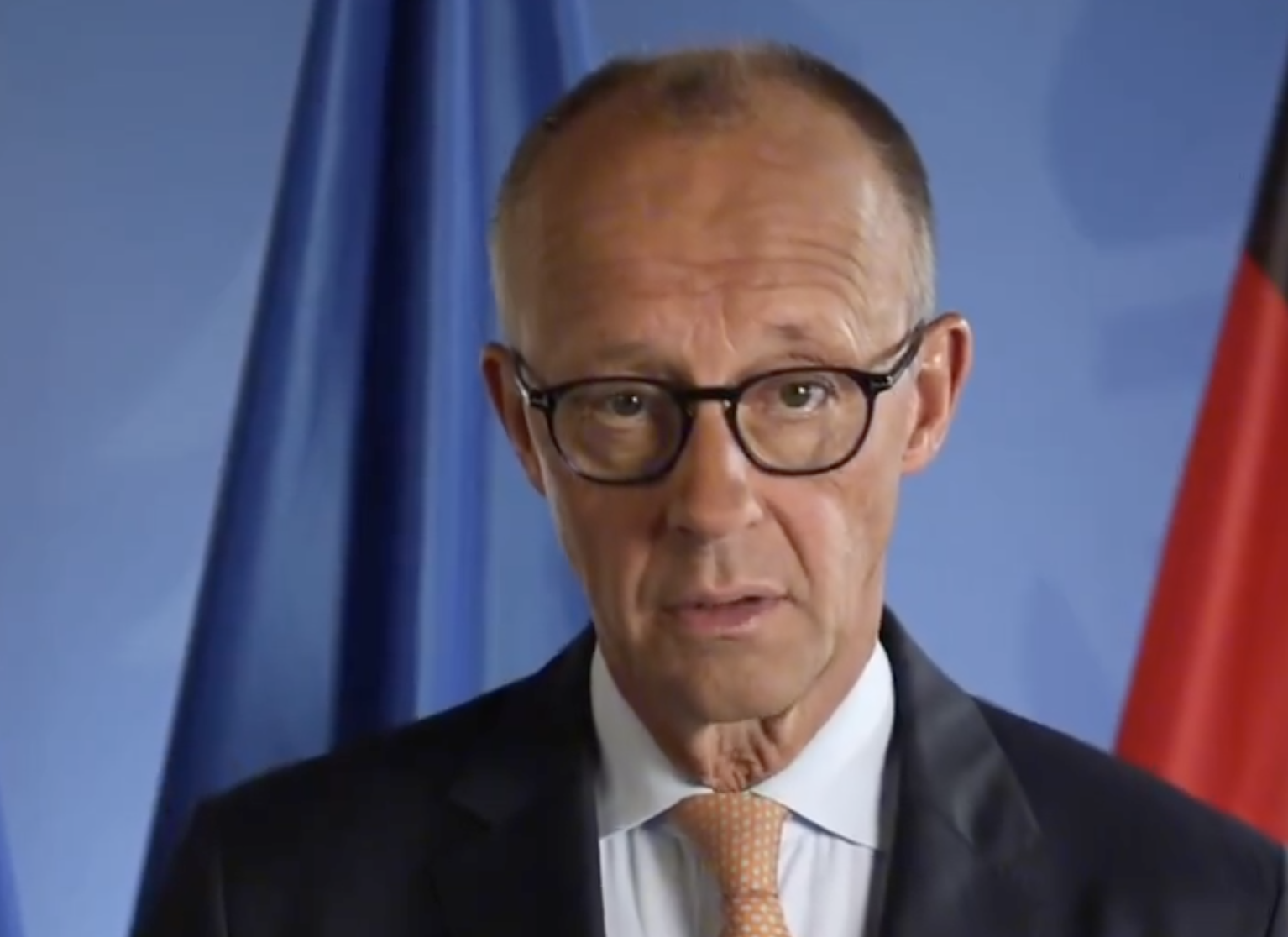
The three recent state elections in eastern Germany have become a “turning point” for the CDU after a sharp setback in Saxony-Anhalt, the party’s failure to enter the state parliament in Mecklenburg-Vorpommern two weeks later, and disappointing results in Berlin. Chancellor Friedrich Merz said he was “deeply shocked” about the vote in Saxony-Anhalt and spoke of consequences. He also noted that he took responsibility for the election outcomes but would not resign the chancellorship or his role as chairman of the CDU party.
The question now is whether widespread dissatisfaction with Merz will continue to weaken the CDU’s prospects across Germany.
This is an article about China’s booming automobile industry and Germany’s declining automobile industry, but in reality, it is really a story about how anti-immigration China increasingly dominates the open borders, multicultural West.
That is not the typical way to open an article in our modern Western press, but this framing is entirely accurate, fair, and a reflection of reality.
For one, we need to stop trying to understand China entirely through the lens of “communism” or “authoritarianism.” Whether it is Bloomberg, Spiegel, the Wall Street Journal, the New York Times, or the Guardian, all of these media megaphones endlessly gloss over a core reality: China is an ethnostate that exists to advance the interest of the Han Chinese people.
Not only is China incredibly successful in this regard, but there is nothing inherently wrong in pursuing this goal. In fact, it not only accounts for China’s increasing strength, but also accounts for the economic success of a range of Asian countries, including Japan, South Korea, and Taiwan, all of which feature stringent anti-immigration policies that ensure ethnic and cultural homogeneity.
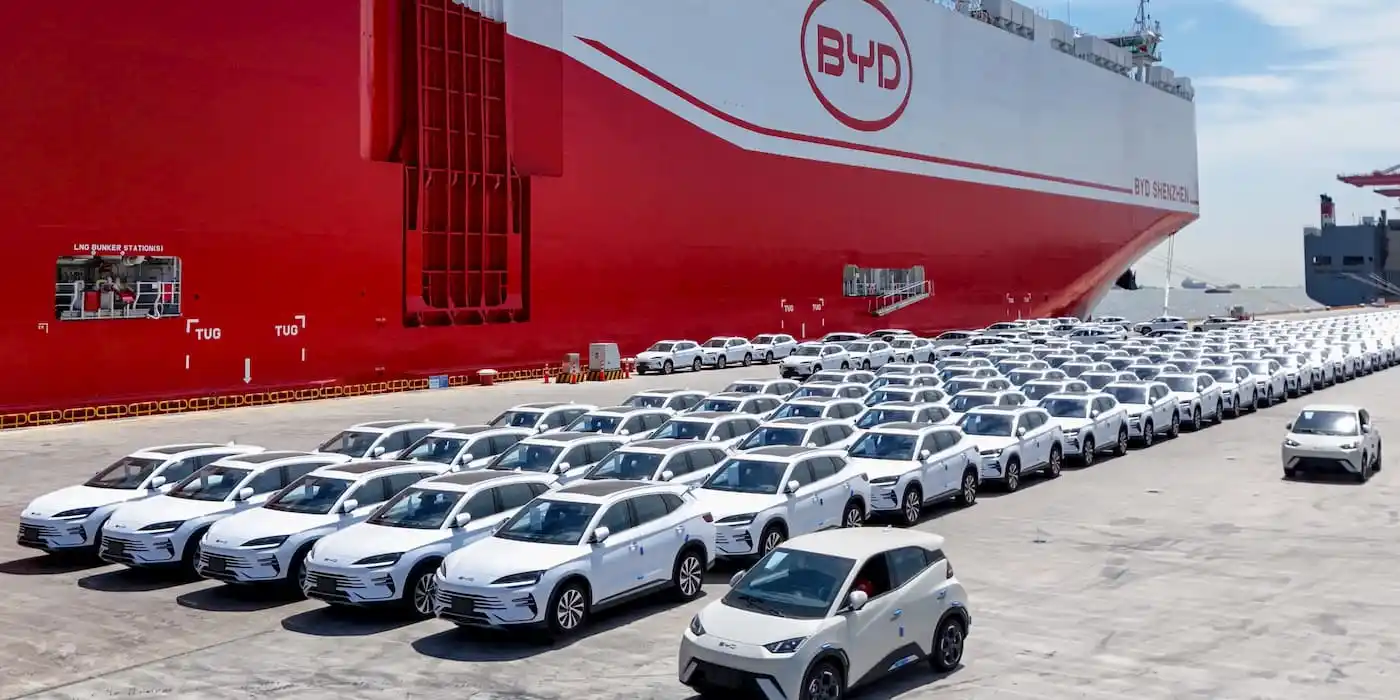
The latest data from Germany’s automobile industry only adds to the growing body of evidence that despite years of diversity and mass immigration, Germany is failing. The data shows that China has now become Germany’s largest supplier of new passenger cars after imports from China more than doubled in the first seven months of 2026, official figures show.
The surge in Chinese vehicles is the main driver behind a sharp rise in overall car imports. Notably, at the same time, German exports declined.
This is far from the only data point. Remix News has been running an ongoing series comparing Western countries like Germany that have tied their economic fortunes to mass immigration to anti-immigration Asian countries (part 1, part 2, part 3, part 4, part 5, and part 6). Once again, the latest figures prove that despite claims that immigration has made the German economy stronger, the reality is that Asian countries are proving this baseless claim wrong many times over.
Between January and July, 175,000 new passenger cars arrived from China in Germany, 13.8 percent of all imports and 120.9 percent more than in the same period a year earlier. That leap pushed China ahead of other importers, including the Czech Republic which sent 173,000 cars and Spain with 157,000 cars. A year earlier, China had ranked only fourth among supplier countries.
At the same time, German exports of new passenger cars fell. Around 2 million vehicles left the country, 4 percent fewer than a year earlier. Their value dropped 8.9 percent to €73.5 billion.
Many German leftists and even those in the Christian Democrats (CDU) claim the German economy would fall apart without immigrants. However, China and other Asian countries provide a sharp contrast to this ideological and factually unsound narrative. Instead, these Asian countries sharply rejected mass immigration and turned to innovation, automation, and investment in research and development. At the same time, Asian countries are known for their stringent and in-depth education systems designed for the benefit of their own native populations.
The result is that these Asian nations have now soared ahead of languishing European economies that chose open borders and foreign workforces, which often fueled illusory GDP growth resembling a pyramid scheme based entirely on rising populations rather than true innovation and productivity growth.
In key industries, including automobile production, machine tools, chemical production, and renewable energy, China and other anti-immigration Asian countries are leapfrogging ahead. This is all on top of China’s chokehold on rare earth metals, which theoretically could allow China to shut down production of Western weapons, automobiles, and renewable energy, just to name a few sectors.
Europe relies on protectionism to block superior and cost-effective Chinese technology
In terms of automobile exports to Europe, China’s growth has to be put in context. The reality is that China would be on the verge of bankrupting or overtaking nearly every European automobile company if it was not for extreme protectionism.
China’s growth in Europe is mostly coming from hybrid vehicles, as EU tariffs on battery electric vehicles (BEVs) can go as high as 45 percent. On the other hand, plug-in hybrid electric vehicles (PHEVs) only face the standard 10 percent duty.
Without these tariffs on BEVs, the European EV automobile market would collapse due to Chinese competition. Despite these barriers, more and more Chinese vehicles are making their way into the European market. China is simply far too innovative in nearly every aspect of EV production. China is also building battery production plants within Europe because the Europeans can no longer do it themselves. Even top automobile executives, whether in the United States or Europe, admit they are years behind China.
European automakers are so far behind that they rely on batteries, which are by far the most expensive and vital components of any electric vehicle, almost exclusively from China. China accounts for over 80 percent of global battery cell production and supplies a major share of the cells and lithium iron phosphate (LFP) chemistry used in European-branded electric vehicles. There are other players, however, these also include immigration-restrictionist nations like South Korea and Japan.
Europe is now racing to place tariffs on PHEVs as well, as European automaker CEOs beg for relief. However, these same European automakers would have no electric vehicle market at all if they were cut off from Chinese batteries.
For those who do not want to read long treatises on the dominance of Chinese automakers, there are also plenty of video formats available that explore this topic. This video from “Modern MBA” is just one that illustrates just how far ahead Chinese auto manufacturers are in terms of innovation and development. This dominance is not down to cheap labor either or even government subsidies. At its heart, this dominance is about the engineering talent and technological leapfrogging Chinese automakers have managed to achieve in an extremely short time.
Diversity has not benefited the West
It seems as Europe becomes more “diverse,” it also falls farther and farther behind in terms of industrial strength, with the automobile industry perhaps one of the most glaring examples. However, this basic claim undersells just how far European industry has fallen in comparison to China.
China, with its anti-immigration policies, has ascended into the modern age and pulled ahead in key modern industries on a scale that is unprecedented in world history. Just like many other modern Asian nations that pursue similar anti-immigration policies, instead of relying on waves of cheap foreign labor, China continues to automate and innovate around its falling population through robotics, engineering and artificial intelligence.
If White European countries pursued similar policies as their Asian counterparts, these same Western news outlets that dominate the West would endlessly berate them as racists, Nazis, and xenophobes. There is some occasional sniping at the immigration policies of these Asian countries, yet this central and core policy of maintaining ethnic homogeneity is more or less ignored.
For one, these countries are not White, so mostly White journalists do not know how to approach this topic.
However, there is another reason and it is perhaps more important.
If these same journalists continuously attacked the Asian tigers on a daily basis for being racist and xenophobic — while still complaining that they are continuously more successful in terms of education, innovation, and economics — then their Western liberal audiences might begin to second-guess their own open-borders policies.
It could also be possible that Western liberal audiences are not actually as smart as they think they are, and they will forever fail to make this connection.
Nevertheless, on a fundamental level, these Asian countries represent a core threat to the open-borders vision that has been relentlessly promoted among Western countries.
The reality is the Western world is confronted daily with the failures of diversity and multiculturalism.
The other reality is that we are ruled by elites, business executives, and an ideologically captured populace that not only refuses to acknowledge this despite facts, figures, data, and real-world experience. In fact, those who point all of this out are facing persecution, censorship, and even imprisonment.
Essen-based chemical group Evonik plans to cut 3,200 jobs worldwide, including 2,150 in Germany, and is looking to put new money into Asia and the United States instead.
Interim chief Claus Rettig said management, the supervisory board and employee representatives were aligned on the diagnosis. “The board of directors, supervisory board and employee representatives share a conviction: We are in a structural and economic crisis of our industry,” Rettig announced.
Two-thirds of the planned cuts fall in Germany. Evonik employed more than 31,000 people worldwide at the end of 2025, according to German news outlet Tagesschau. Existing savings and efficiency programs are already expected to remove about 2,800 jobs by the end of this year. The additional wave is scheduled through the end of 2029 and is to be carried out “in a socially responsible manner” through early retirements, severance payments and leaving vacant posts unfilled. The company says there will be no compulsory redundancies.
Growth, Rettig said, looks better outside Europe. Further investment projects are being examined in Asia and America.
Evonik also wants to sell subsidiaries Oxeno and Syneqt, which together employ more than 4,300 people.
“We speak with investors at Oxeno, but that’s not yet the case with Syneqt,” Rettig said. He added that both units are to be put up for sale.
The group is one of Germany’s largest chemical firms. Revenue in 2025 came to €14.1 billion, down 7 percent from the year before. Its portfolio covers more than 4,000 products used in pharmaceuticals, food and mechanical engineering.
The cuts sit inside a wider slump. Germany’s chemical-pharmaceutical industry remains the country’s third-largest industrial sector, with more than 476,000 employees. In May, the Munich-based ifo Institute warned that the sector’s business climate had deteriorated sharply. High energy prices, bureaucracy and the Iran war were cited as causes.
“The consequences of the hostilities in the Middle East are hitting the already struggling chemical industry with full force,” said Anna Wolf, head of the ifo Centre for Innovation Economics.
Evonik’s answer is a familiar story in German industry this year: fewer jobs at home, asset sales, and a search for cheaper growth abroad.
The Christian Democratic Union (CDU) has continued its downward spiral after suffering significant losses in state elections in Berlin and Mecklenburg-Western Pomerania on Sunday, September 20. In addition to coming second to the progressive Die Linke in the German capital, Chancellor Friedrich Merz’s party failed to achieve the 5% needed to enter Mecklenburg-Western Pomerania’s parliament, marking a new low – or, in Merz’s own words – a “disaster.”
The results of the two elections were radically different: in Mecklenburg-Western Pomerania, the far-right Alternative for Germany (AfD) won the largest percentage of votes, echoing, in many ways, the recent outcome in Saxony-Anhalt. In Berlin, Die Linke emerged as the winner, claiming a quarter of the vote after a campaign focusing on housing, the cost of living crisis, and public transport.
Part of the local reports note that while the AfD and Die Linke lie on opposite ends of the political spectrum, both gained ground thanks to the perception that they bring the best chance of breaking with the policies implemented by the government coalition between CDU and the Social Democrats (SPD).
These policies – pursuing extensive cuts to the social and welfare system and attacks on labor rights in order to fund a massive rearmament drive – have completely eroded the support for Merz’s conservatives. Despite this administration’s unprecedented unpopularity, the German Chancellor is showing no sign of changing course, stating after Sunday’s election that “reforms must come.”
Die Linke’s Berlin result: reforms must be implemented – but which reforms?
Reforms must be implemented, voters in several German states apparently agree with Merz – just not those envisioned by the CDU. Die Linke’s campaign, led by Elif Eralp, offered an alternative list of policy reforms addressing Berlin’s inhabitants’ most pressing concerns. This meant a focus on accessible housing – including a follow-up on the 2021 referendum where voters backed expropriating the property of private real-estate companies with 3,000 or more units in the city.
Five years ago, over one million people supported the referendum’s idea of socializing the housing pool, yet no action was taken by the local administration. Since then, the housing situation has grown worse, leading to widespread frustration. Die Linke’s campaign recognized the general discontent and promised it would not give up on socialization.
“Die Linke’s successful campaign in Berlin was driven by its strong focus on affordable housing and rent control, which resonated deeply with voters facing massively rising living costs,” Kirsten Schubert, a general practitioner active in the party’s local chapter, told BreakThrough News. “The party integrated large-scale door-to-door campaigning strategy, allowing volunteers to connect personally with hundreds of thousands of residents directly at their doorsteps. By those means, strong social media presence and a huge range of community activities, they successfully mobilized a diverse coalition of non-voters, progressive urban youth, and traditional working-class voters.”
Krunoslav Stojaković, a political advisor at the Rosa Luxemburg Foundation, says that the election result commits not only Die Linke, but also “the social left and all those who care about a more just society” to work towards achieving socialization of housing. “At this point, there can be no going back […] The people of Berlin have given us this mandate.”
“There will be resistance,” he emphasizes. “Potential coalition partners are only tentatively supportive of Die Linke, and some are already making demands against the socialization of those profiting from the housing crisis as a condition for political cooperation.”
Progressive measures to face opposition from center
The approach adopted in Berlin marked a welcome break from Die Linke’s campaigning in other states. Stojaković pointed out to the portal H-alter that the party’s earlier choices – such as joining coalitions that implemented austerity measures – contributed to a fall in popularity. The recent success offers an opportunity to reclaim lost ground and reshape the party’s approach to fieldwork. But it should not be taken for granted that this will happen.
For now, the party faces talks with potential coalition partners SPD and the Greens. Figures from both parties signaled there are significant misalignments between them and Die Linke. While the SPD does not share the commitment to socialization of housing, the Greens’ Franziska Brantner said the party would not cooperate with “anti-semites from Neukölln.” With this, Brantner indicated that the political mainstream in Germany will persist in pressuring those criticizing Israel – even if this criticism remains timid at best.
On the other hand, left and progressive parties across Europe recognized in Die Linke’s result an important rupture within the predominating context of the far right gaining electoral ground. From Jean-Luc Mélenchon in France to Slovenia’s Levica, reactions emphasized the significance of shaping grounded and unequivocally left programs. “Politics begins with the daily problems of millions of people,” wrote Peter Mertens, General Secretary of the Workers’ Party of Belgium (PTB-PVDA). “It is not just about talking about tenants and workers, but about organizing them so they can impose change themselves.”
This article was updated on Wednesday, September 23, to incorporate comments from Kirsten Schubert.
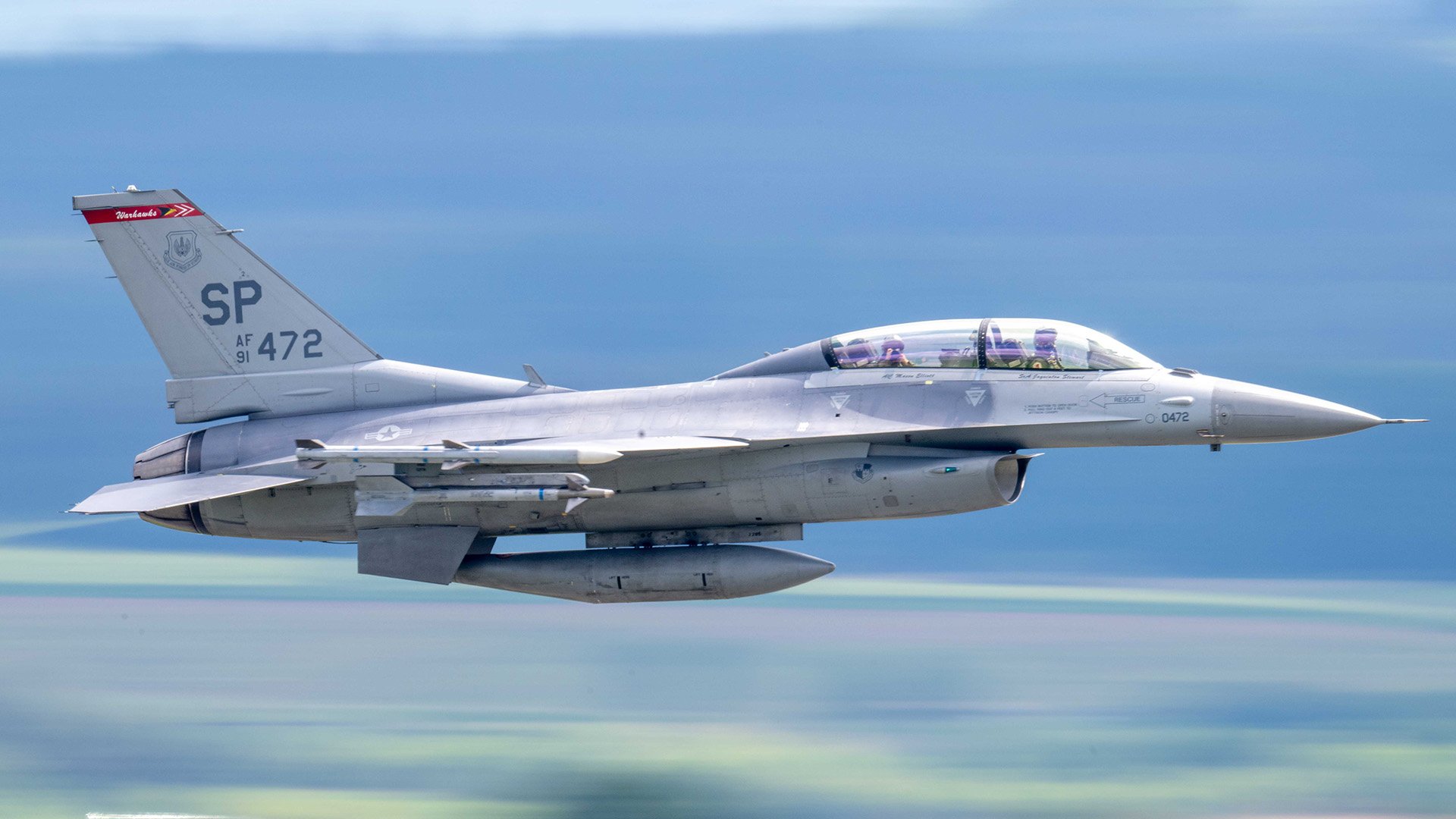
The pilot of a U.S. Air Force F-16 Fighting Falcon assigned to the 52nd Fighter Wing safely ejected before the aircraft crashed at Spangdahlem Air Base in Germany, according to the wing.
The pilot is still receiving medical treatment, the wing said in a statement. Emergency response teams are still on the scene. The cause of the incident, which took place about 2:30 p.m. local time, is still under investigation and additional details will be released when available.
The crash happened as the jet was on approach to land at the installation, located in the western German region of Rhineland-Palatinate, according to the New York Post.
“Following a plane crash in the vicinity of U.S. Air Base Spangdahlem, fire and emergency response teams from the Eifel District of Bitburg-Pruem were dispatched to the scene,” The Associated Press reported, citing the district.
Images emerged on social media showing smoke rising in the distance.
An F-16 fighter jet has reportedly crashed at the U.S. Spangdahlem Air Base in western Germany on Tuesday afternoon.
Witnesses reported seeing a jet rapidly descend before a large column of black smoke appeared near the runway.
The F-16 crash at Spangdahlem was the second mishap in a week for USAF F-16s. On Sept. 17, an F-16 from the 149th Fighter Wing at Joint Base San Antonio-Lackland in Texas crashed in northern Michigan. The pilot in that incident also ejected.
According to air traffic control (ATC) audio, the pilot’s wingman said at the time of the Michigan crash, “we have a possible mayday. My wingman may have taken a bird.” TWZ cannot independently confirm what caused the crash. The audio continues and offers a fairly dramatic and raw look at how the incident occurred over the air waves.
F-16 crash ATC audio, BUCK 11 flt x2 F-16s were flying along the VFR low level route VR634 when the 11 advised MINNEAPOLIS CENTER that his wingman may have hit a bird and was going to eject just south of Traverse City, Michigan
The 52nd Fighter Wing provided some additional information.
“The aircraft was returning to Spangdahlem Air Base following a routine training flight involving four F-16s when the crash occurred,” the wing stated. “The remaining three aircraft diverted to Ramstein Air Base and landed safely. The pilot of the crashed aircraft ejected safely and received medical care.”
“Emergency response personnel responded to the scene, with local German fire departments and emergency medical services providing support,” the wing added. “German emergency response partners have offered their continued assistance as needed. The 52nd Fighter Wing appreciates the swift response and continued support of our German partners.”
Several key German industry groups and energy analysts are warning that Germany could face severe gas supply issues, and potentially entirely deplete its storage, if an exceptionally cold winter occurs. Of course, predictions of this sort have been made off and on in recent years. Germany has never actually run out of gas before. The question is now how alarmist these warnings are and how realistic an actual gas and energy shortage is this time around.
Currently, the government argues there will be no gas shortage. However, storage operators, energy executives and some economists argue that a mild winter should be manageable and a brutally cold one could get tight enough to force industry to cut production and send prices soaring.
One of the most dire warnings comes from Markus Krebber, chief executive of RWE, Germany’s largest power producer.
“If we get a mild winter, everything will be fine,” he told Focus in an interview. “If the winter is hard, there can be significantly higher prices. And it can get tight.”
Krebber said Germany is entering the season “with the lowest gas storage levels of the past 20 years” – lower even than in 2022, when Russian pipeline flows collapsed. “That works if we have a normal winter. If we get a particularly cold winter, it can get scarce.”
He has also warned that if Germany does not add more power supply, “there will be distribution battles for electricity” among industry, data centers and the electrification of heat and transport.
The data supports Krebber’s concerns. The German gas storage association (INES) warns that Germany entered September at its lowest storage levels in 15 years, at around 53 to 56 percent. INES models show that if refills remain sluggish and if Germany experiences an extremely cold winter, similar to the weather of 2010, storage reserves could be exhausted as early as January or February, potentially leaving daily supply shortfalls of up to 25 percent.
German underground gas caverns are roughly 20 percentage points below last year’s level and far under the seasonal norm. While Berlin’s own rules call for most gas storage sites to reach 80 percent by Nov. 1, almost no one now expects that to happen.
“By now all the experts agree: these 80 percent are already technically almost impossible to achieve and also not realistic,” Klaus Müller, president of the Federal Network Agency, said in a Phoenix television interview. He added that storage is not the whole story. “We have created our own capacities with four liquefied natural gas terminals. We can obtain gas from Norway, Belgium, Holland, France.”
Energy market consultants and industry group analyses point out that weak summer gas refills – driven by unfavorable price spreads between summer and winter gas and price volatility from global conflicts – have left Germany reliant on steady ongoing imports. They point out that cold weather is not the only factor, as disruptions could be exacerbated by pipeline outages, reduced LNG flows, escalating conflict in Ukraine or the Middle East, and various other scenarios. All of this comes at a time when Germany’s buffer is much thinner than in previous years.
Not everyone is panicking, though. The Federal Network Agency, Germany’s energy regulator, has also acknowledged the low storage levels but stated they do not currently indicate an imminent crisis or inevitable shortage.
Claudia Kemfert, an energy economist at the German Institute for Economic Research, says that a distinction must be made between shortages and higher prices. She has said an acute shortage is not her base case, but that low stocks leave the system more exposed if cold weather, high LNG prices and supply interruptions hit at once. Relying on last-minute cargoes, she has argued, is “risky and expensive.”
Historical weather data supports less extreme gas shortage scenarios. On average, the past ten winters have been extremely mild in Germany, with the exception of last year’s winter, which was exceptionally cold. If there is a repeat this year or the winter is even colder, it could indeed tip Germany into an energy crisis, but the odds appear to be against such a scenario.
In the meantime, industrial companies in Germany are already taking precautionary measures, as a severe cold snap would likely force curtailments on industrial consumers first to stretch remaining gas through February and March to protect vital natural gas deliveries to households.
Another piece of good news it that the European Union as a whole is near 70 percent in terms of gas storage, far better than Germany. This means that the crisis is unlikely to grip all of Europe. Still, Germany is Europe’s largest economy and a key hub of industry. Any gas or energy crisis in the country would have broad repercussions across Europe.
On election night in Berlin-Neukölln, clan boss Issa Remmo walked into the Left Party’s (Die Linke) victory party and declared he finally felt supported by the party. Now, the far-left party is in damage control after trying to distance itself from Remmo, whose son has already leaked chats alleging his family’s ties go deeper with the Left Party than anyone thought possible.
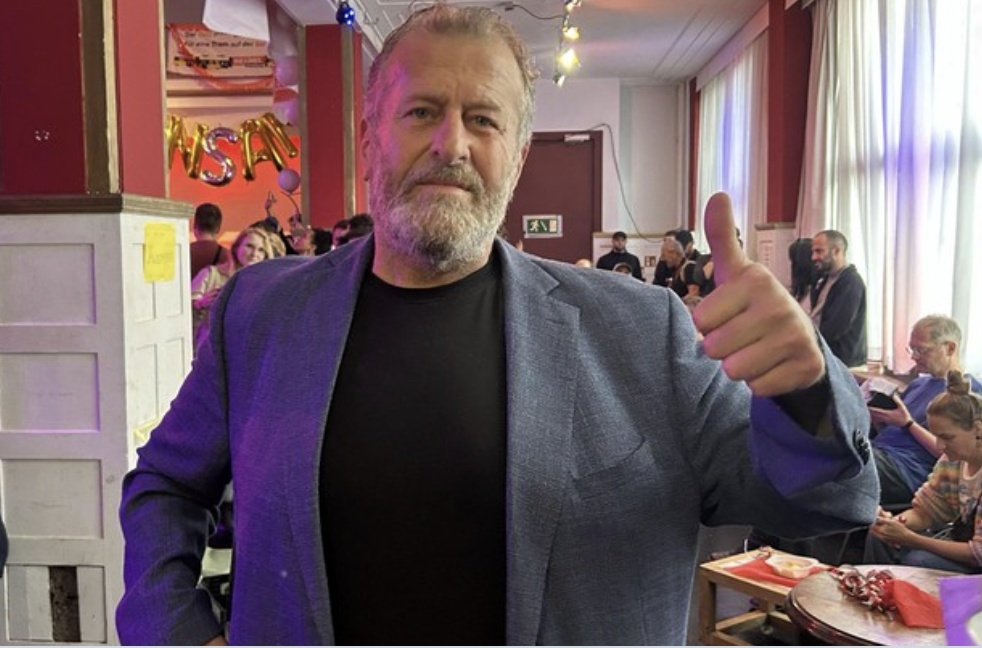
Issa Remmo, widely described by police and prosecutors as the head of Berlin’s Remmo family, appeared at the Neukölln district association’s public election-night gathering yesterday evening, Sept. 20, 2026. The Left Party had just finished first in the local election with a provisional 25.7 percent, ahead of the CDU at 18.8 percent. Remmo posed for photos, including with a victory sign, and spoke to the Berliner Morgenpost newspaper.
“The Berlin Left is not hostile towards Jews,” he said, addressing a charge that had dogged the party throughout the campaign. “In Germany I feel supported by a party for the first time.” He added that he would not vote for an anti-Jewish politician.
Julius Betschka of Stern Magazine posted the scene the same evening, calling it “incredible” and noting that Remmo had been in the sights of the justice system for decades.
Wahnsinn. Der Chef des berüchtigten Remmo-Clans, Issa Remmo (seit Jahrzehnten im Visier der Justiz), feiert laut @morgenpost mit der Linkspartei in Neukölln den Wahlsieg. Er fühle sich von der Partei unterstützt, soll Remmo gesagt haben. pic.twitter.com/1JrXashpZl
The Left Party’s immediate response was one of denial. Jorinde Schulz of the Neukölln district board told dpa the event was public, Remmo was not on any guest list, and there were “neither political nor personal relations” with him. Lead candidate Elif Eralp said on ZDF shef “was not invited and was sent out again…We have nothing to do with organized crime. We fight it.”
Berlin state manager Bjoern Tielebein was blunter: “Types like him are definitely not our allies… Everything one hears and knows about this person is repulsive.”
Journalist Yossi Bartal, who said he was present, wrote that he recognized Remmo, informed organizers, and that Remmo was then “very clearly” asked to leave a loud, crowded hall that anyone could enter. Remmo was also reported at the larger Kreuzberg party later and turned away at the door.
However, the various accounts that attempted to distance the Left Party from Remmo appear to have fallen apart 24 hours later due to leaked messages from Firas Remmo, Issa’s son. Firas posted Instagram screenshots of messages he said came from MP Ferat Koçak. In one, the Left Party MP sent “greetings with respect back to your father” and proposed a morning visit. In another, dated Feb. 17, Koçak wrote “Brother help me spread this,” attaching a video of his own Bundestag speech criticizing the term “clan crime,” and asked that “all your people” share it. Firas replied “Gladly brother.” Koçak reacted with a heart emoji.
Firas captioned the posts: “We are part of something big. We stand together… We are a team.” Koçak had not publicly confirmed or denied the chats as of Monday afternoon.
If the chats are accurate, they do not prove Remmo was formally invited to the party. They do make the “complete stranger walked in off the street” version harder to sell.
Photos were also circulated showing Remmo posing with Ibrahim Ibrahim, described by the NGO Democ as a leading German supporter of the Popular Front for the Liberation of Palestine (PFLP), an EU-listed terrorist organization. Other images placed Ibrahim with Bundestag member Ferat Koçak and candidate Vanessa Emde. The Neukölln board later confirmed Ibrahim’s presence among “hundreds of guests,” including many from the Palestinian community.
@der_neukoellner MdB Ferat Koçak feiert bei Wahlparty seiner @LinkeNeukoelln mit Ibrahim Ibrahim (r.), Vertreter des extremistischen „Vereinigten Palästinensischen Nationalkomitees“ (VPNK), Dach für PFLP und Hamas in Berlin. Ibrahim gratuliert: VPNK war „Teil dieses Erfolgs“. pic.twitter.com/xy6LdPN420
In 2018, prosecutors seized 77 properties attributed to the family on the theory they were bought with criminal proceeds; courts later ordered the confiscation of dozens of them. Issa Remmo himself has not been convicted. However, to police, prosecutors, and a large part of the Berlin public, the Remmo name is synonymous with organized clan crime.
Governing Mayor Kai Wegner (CDU) condemned the photos and Remmo’s presence at the Left Party’s event.
“That Issa Remmo appears at the election party of the Berlin Left is a disturbing signal,” he wrote. A party that wants to take responsibility for the city, he said, must make unmistakably clear that there is “no proximity whatsoever to structures that belong to organized crime.”
Dass Issa Remmo auf der Wahlparty der Berliner Linken auftaucht, ist ein verstörendes Signal. Gerade eine Partei, die Verantwortung für unsere Stadt übernehmen will, muss unmissverständlich deutlich machen, dass es keinerlei Nähe zu Strukturen geben darf, die zur organisierten…
He said Berlin had spent years pushing police, courts, and administration against clans and those efforts “deserve political backing, not pictures that raise doubts about the necessary distance.” Anyone who wants to govern Berlin, Wegner added, must stand “without ifs and buts” on the side of the rule of law.
Even the left is taking a harsh stance.
Green Party state chair Nina Stahr said the Left would have to explain the incident before any coalition talks.
Morgenpost commentary called the scene “a slap in the face for our police officers.”
As for Issa Remmo, he see a Left Party that he can benefit from. His family has spent years fighting asset forfeiture, and the Left Party wants to abolish weapons-ban zones, restrict certain police analytics, and treat large-scale property seizures with suspicion.
A planned father-son fishing weekend ended in disaster when Leon, 14, was attacked at the Freiburg train station in Germany by a 41-year-old Ethiopian migrant who tried to gouge the young boy’s eyes out. The father describes his son suffering serious psychological harm from the incident, including waking up every night screaming.
Leon had just stepped off a train from Heilbronn on Sept. 9 and was waiting on a staircase for his father, 54-year-old Roland H., when an Ethiopian man punched him in the face without warning. The blow knocked Leon’s head against a stone step and left him dazed.
The attacker then bent over him, reached for his eye and shouted, “I’ll kill you!”
Cafe owner, 46-year-old Pino R., said he saw the assault and intervened.
“I saw the boy sitting by the stairs. At that moment, I saw and heard the perpetrator running towards the boy shouting: ‘I’ll kill you,”‘ Pino R. told Bild newspaper.
He added, “Then, the man reached for the boy’s eye and threatened to tear out his eyeball. Then, I jumped on the attacker and pulled him down.”
Only then, Pino R. said, did he see that the man was holding a carpet knife. He called staff for help and alerted police.
Roland H. arrived shortly afterward and found his injured son on the stairs. Leon was taken to a hospital with injuries to his face and eye. Doctors diagnosed the victim with a jaw contusion and injuries to his eyes. According to the father, the boy additionally suffered from nausea and dizziness from the attack.
The father of Leon said that the injury on Leon’s cheek looks remarkably like a swastika, raising questions of whether the Ethiopian migrant tried to carve the symbol in the boy’s face.
“Thank God he missed the eye when he tried to grab it,” Roland H. said.
He credited the cafe owner with preventing a worse outcome.
“I am so grateful to Pino. He saved my son’s life,” said Roland.
The Federal Police Inspectorate Weil am Rhein confirmed an investigation is underway against a 41-year-old man from Ethiopia on suspicion of assault. Officers found pepper spray and a utility knife in the man’s pants pocket. The suspect allegedly told police he had mistaken the boy for someone else.
A migrant was awarded with German citizenship after stabbing this German comedian 5 times inside the Bremen central train station.
Nikita Miller expressed disbelief that the migrant who nearly killed him received German citizenship. Not only that, but he was released on the… pic.twitter.com/NcxMabWeIO
Specifically, the data shows there were 27,800 violent crimes in German train stations and on trains in 2025, a slight increase from the already very high 27,160 cases in 2024. The data also shows that 44 percent of all of these cases involved a foreigner in 2025, a slight decrease from the 46 percent recorded in 2024.
When the data was first released, AfD leader Weidel took to X to decry the rise in violence on German public transport.
“In 2025, the Federal Police recorded 27,819 violent crimes at train stations, with foreign suspects being significantly overrepresented, particularly in cases of sexual offenses and knife crimes. Under CDU leadership, the situation in Germany is worsening day by day. Only the AfD can provide a remedy,” she wrote.
In a historic first since the founding of the Federal Republic of Germany, the Christian Democrats (CDU) have failed to enter a state parliament after falling below 5 percent in Mecklenburg-Vorpommern. In Sunday’s election, the Alternative for Germany (AfD) finished first with 38.2 percent.
“The result is a disaster,” Chancellor Friedrich Merz said shortly after polls closed in Mecklenburg-Western Pomerania and Berlin. He made the remark before public broadcasters ARD and ZDF projected that the CDU would drop below 5 percent in the northeastern state. That threshold is decisive in German politics: parties that fall short do not enter parliament.
The preliminary result is now in. The CDU finished at 4.9 percent, down 8.4 points from 2021. It is the party’s worst state-election result in postwar German history. The outcome is likely to revive calls for Merz to resign. He has given no sign that he will, and he also refuses to give up the CDU chairmanship.
Instead, Merz spoke of reforms that require “backbone, steadfastness and patience,” adding: “I will bring this up, as party chairman of the CDU and above all as chancellor of our country.”
No further pivotal state elections are imminent, and Merz is betting that debt-financed spending will start to show in the economy. He hopes that by 2027 he can point to two years of growth.
The problem is that fuel prices keep rising, health-insurance costs remain high, and large parts of German industry are under pressure from tariffs, input inflation, and competition from China.
The AfD is increasing that pressure. It finished well short in Berlin, below 17 percent, but took first place in Mecklenburg-Vorpommern with 38.2 percent — more than double its 2021 result of 16.7 percent. That follows its victory in Saxony-Anhalt, where it won 43.8 percent. The AfD will not govern in Schwerin, the capitol of Mecklenburg-Vorpommern, however. The Social Democrats (SPD) came second with 35.5 percent. Together with the Left (6.5 percent) and the Greens (5.7 percent), the SPD has enough seats for a coalition and is expected to stay in power.
AfD co-leader Alice Weidel called her party the new “people’s party” and said the CDU had been displaced in that role.
“We are the strongest force and have arrived in the middle of the population,” she said on ZDF.
Voters had wanted “a change of policy,” she added, declaring the firewall of other parties against working “a failure.” Her long-term goal, she said, is coalition talks with the CDU.
Co-leader Tino Chrupalla claimed a “clear government mandate” and said the AfD would offer talks to all parties. The other parties in the new Mecklenburg-Vorpommern parliament have already ruled that out.

 Login