Earlier this month, the UK government announced plans to cut off trade with Israel’s illegal settlements in the West Bank—including weapons shipments. But according to new disclosures made to Parliament, reported Thursday by Declassified UK, the sanctions regime has not actually led to any weapons licenses being suspended or revoked, validating warnings by some critics that the new Labour government’s effort to cut […]
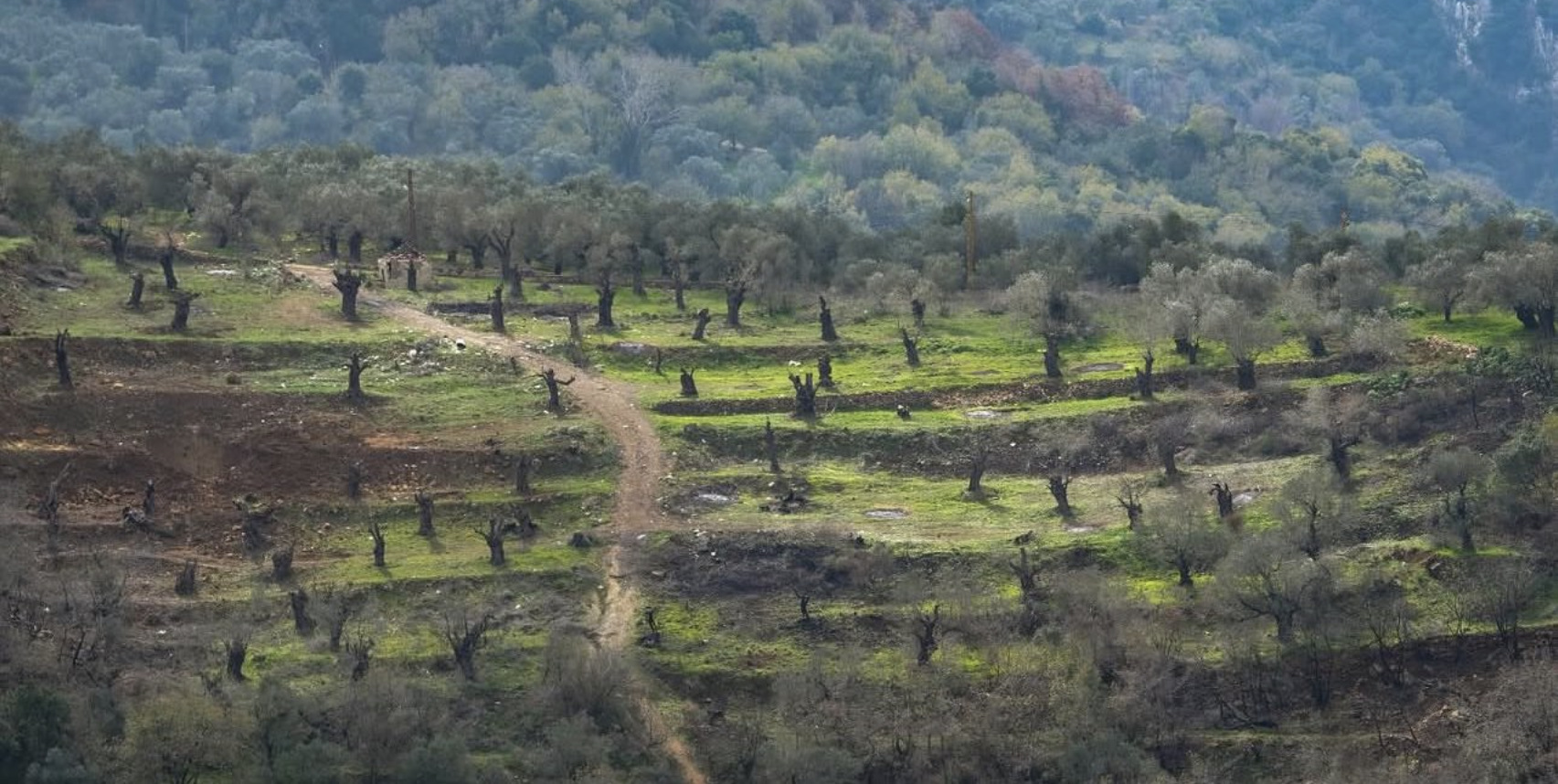
Historically an agriculture-heavy part of the country, Israeli attacks have done massive damage to southern Lebanon. Between wiping out some villages in their entirety and damaging tens of thousands of acres of agriculture land, the future structure of south Lebanon looks very uncertain.
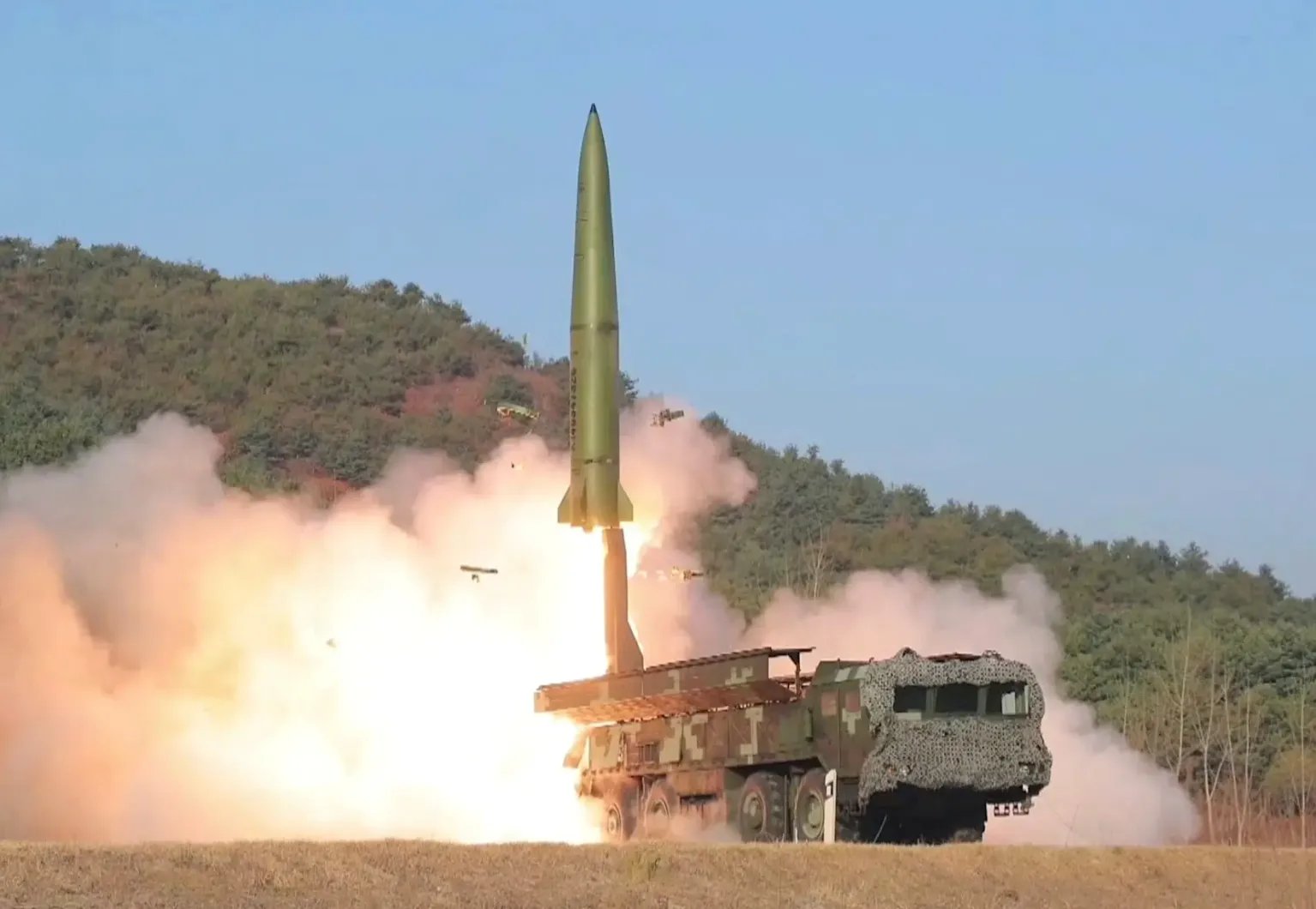
North Korea has released imagery of what appears to be a flight test of an updated version of its Hwasong-11Ma hypersonic missile, nearly a year after the weapon first appeared publicly at a military technology exhibition in Pyongyang.
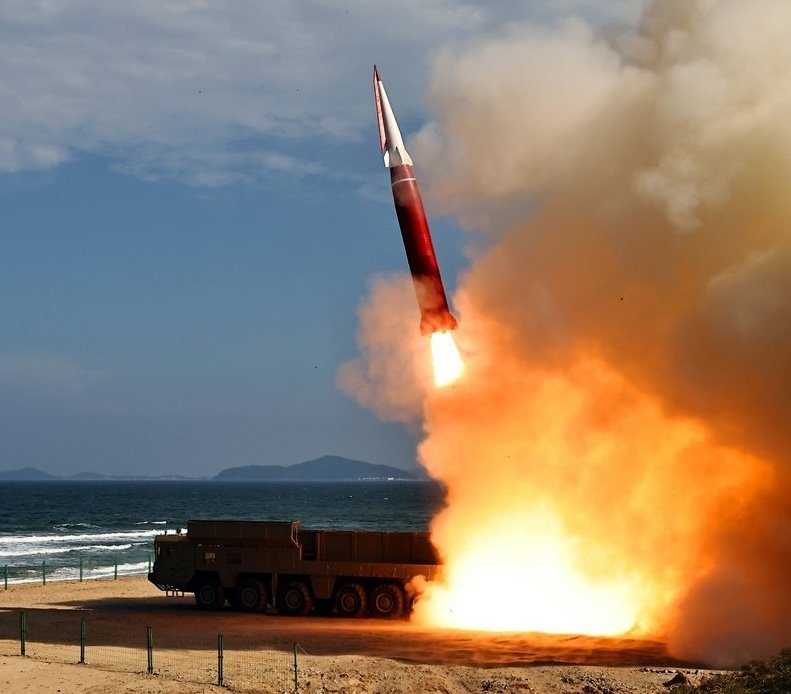
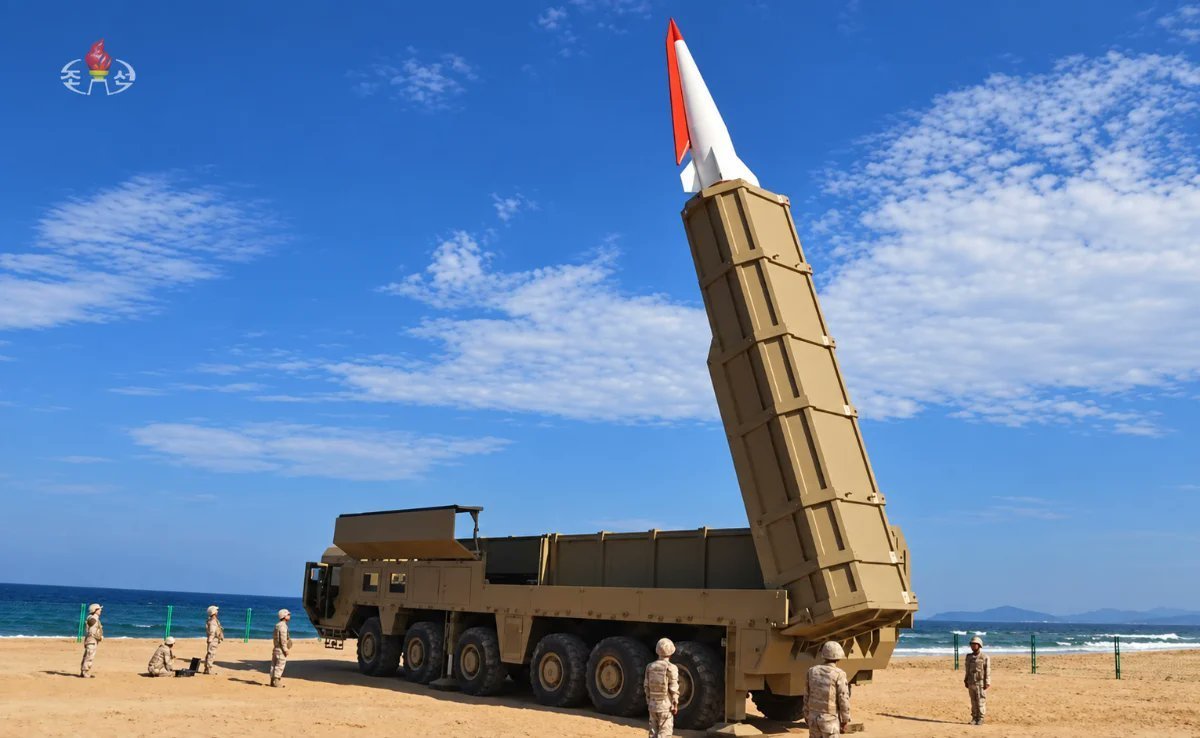
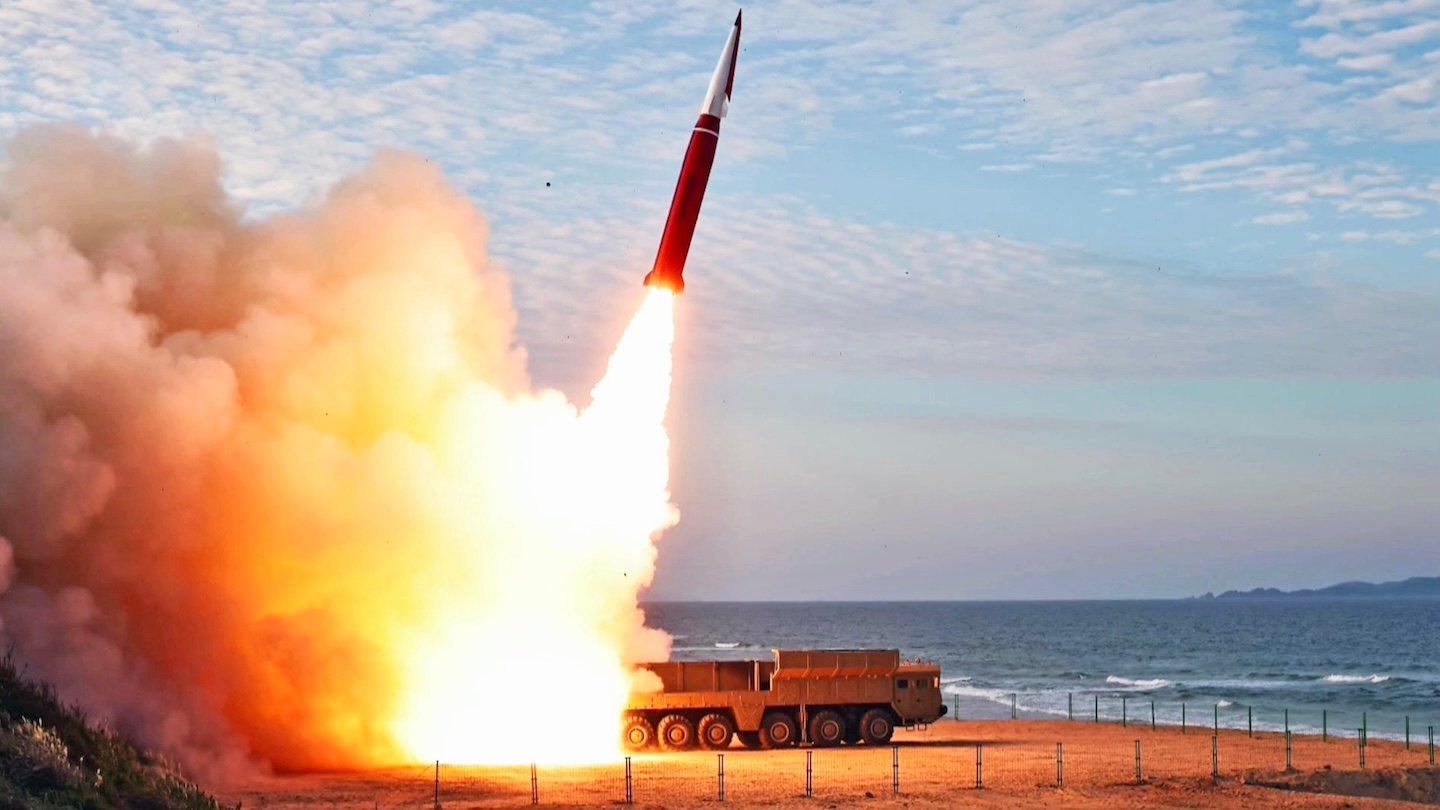
Launch of a Hwasong-11Ma-1 missile from the test facility in Anbyon County, south of Wonsan. North Korean State Media
The September 20 test involved a short-range ballistic missile (SRBM) booster fitted with a hypersonic glide vehicle, according to photographs released by North Korean state media. A display screen visible in the imagery identifies the weapon as the Hwasongpho-11Ma-1, or Hwasong-11E-1 in the equivalent English-language designation.
The test was conducted from the east coast near Anbyon County, south of Wonsan, an area North Korea has repeatedly used for missile testing. The launch site allows missiles to be fired eastward over the Sea of Japan, providing a relatively controlled area for testing short- and medium-range systems.
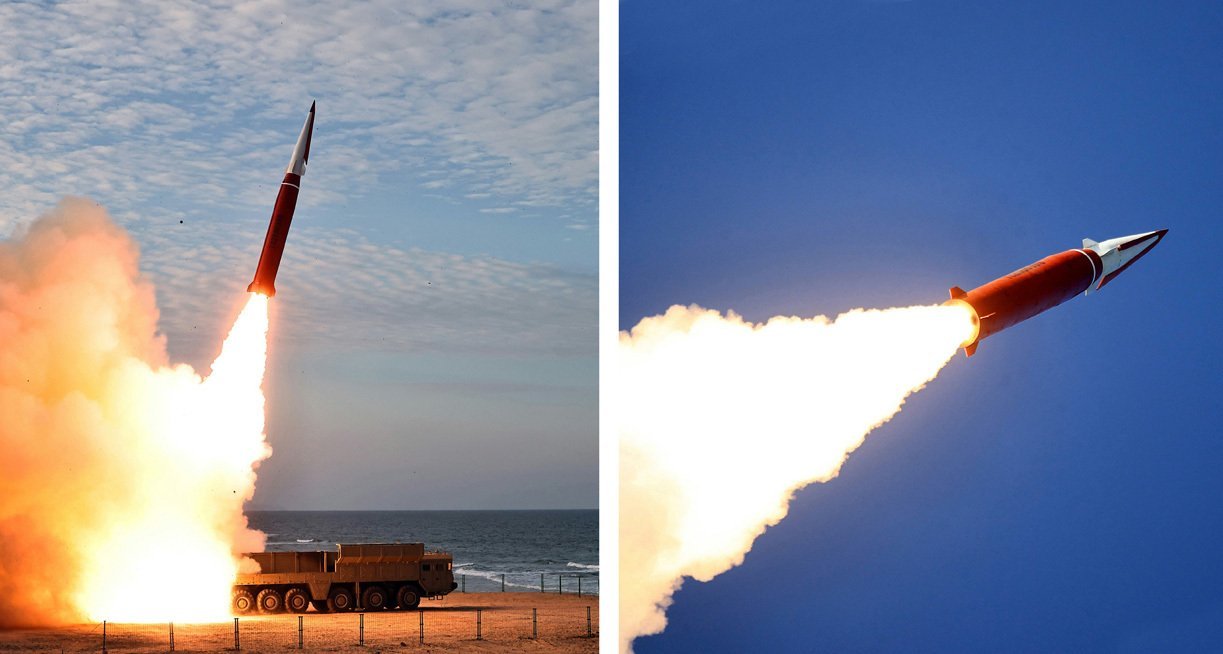
Another two views of the launch of the Hwasong-11Ma-1 missile. North Korean State Media
South Korean and Japanese authorities say they detected two launches on September 20, with the first occurring at approximately 3:00 p.m. local time and the second several hours later.
North Korean photographs show the missile being launched from a coastal location, with Kim Jong Un and senior missile officials observing the test. Kim’s daughter, Kim Ju Ae, also appears in the imagery.
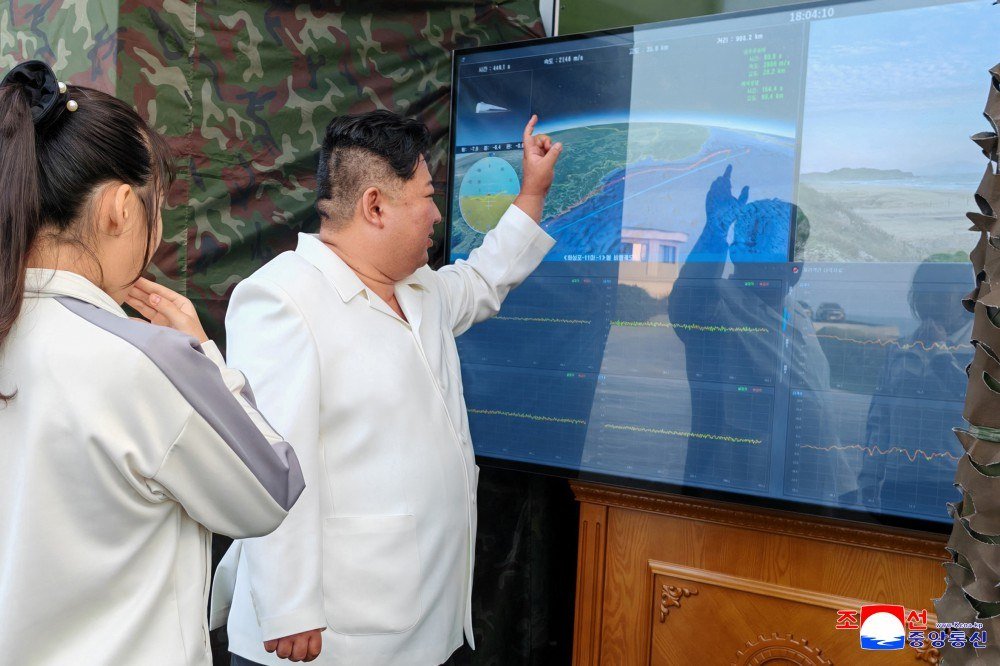
Kim Jong Un and Kim Ju Ae monitor the progress of the Hwasong-11Ma-1 test. North Korean State Media
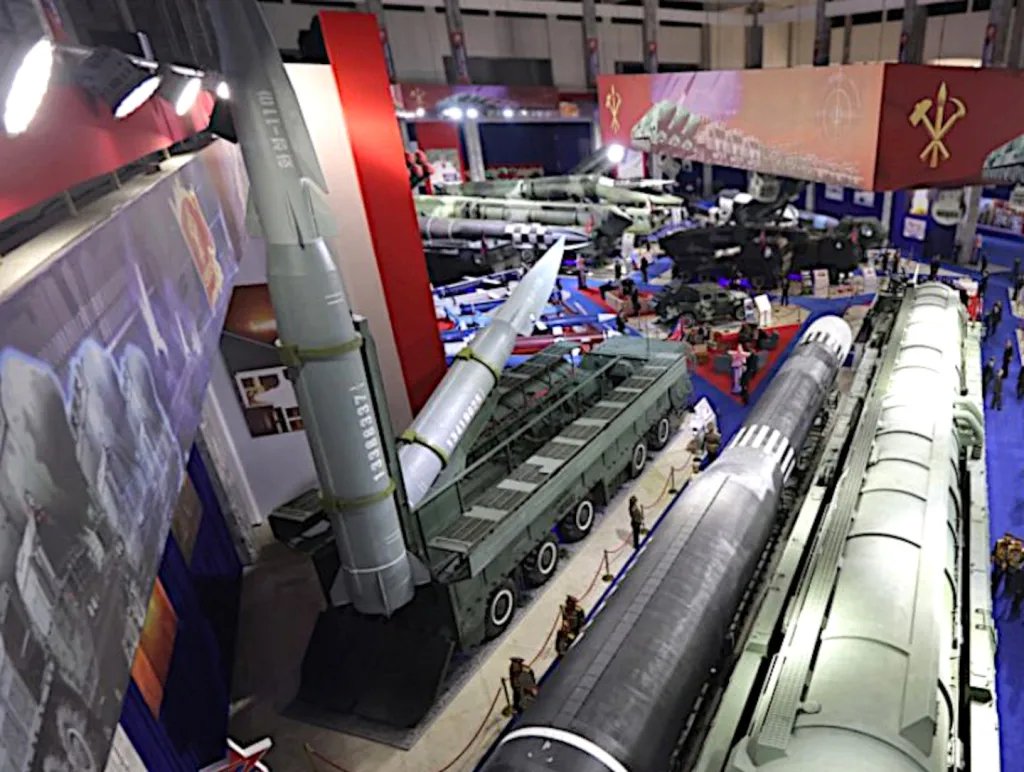
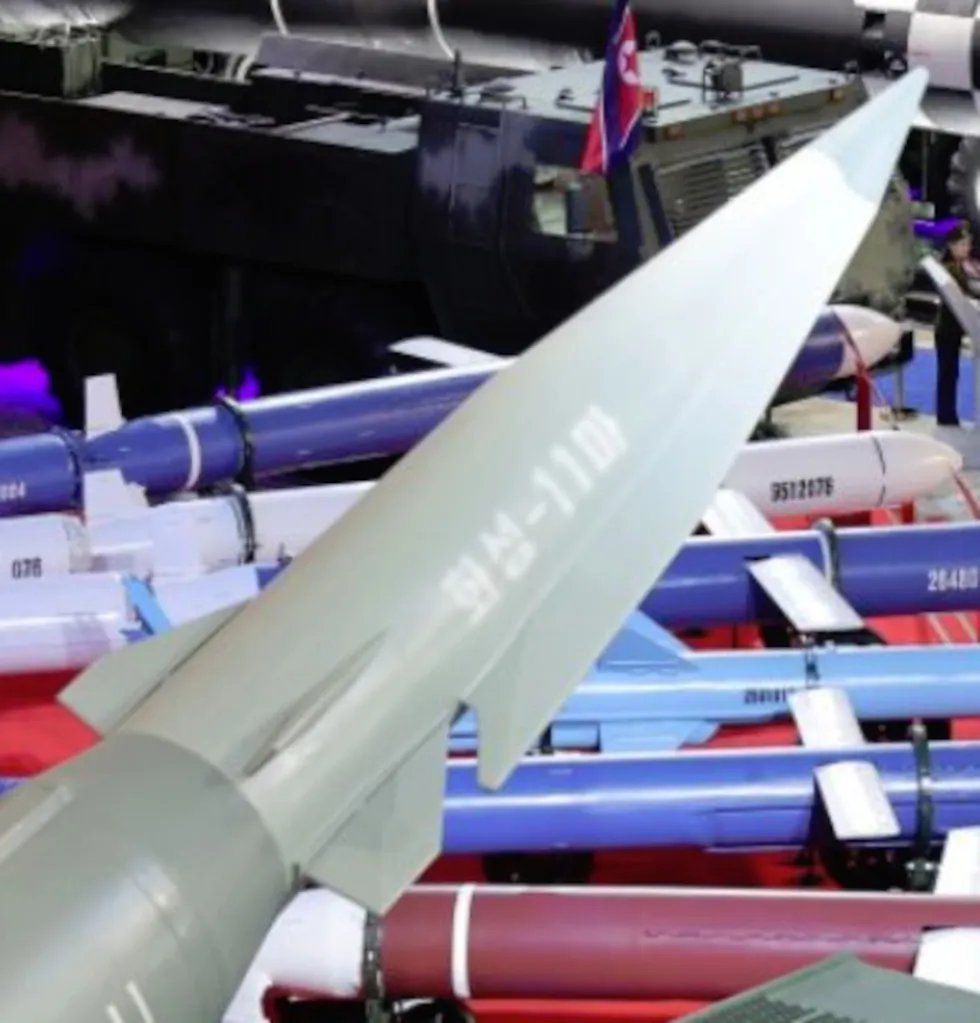
North Korea displayed a mock-up of what it called the Hwasong-11Ma at its Defense Development-2025 exhibition in October 2025. The design uses the basic architecture of the Hwasong-11 family, known in the West as the KN-23 family, but substitutes a distinctive glide wedge-shaped vehicle for the conventional warhead arrangement.
The Hwasong-11Ma, among other weapons, on display at the weapons exhibition in Pyongyang in October 202. North Korean State Media
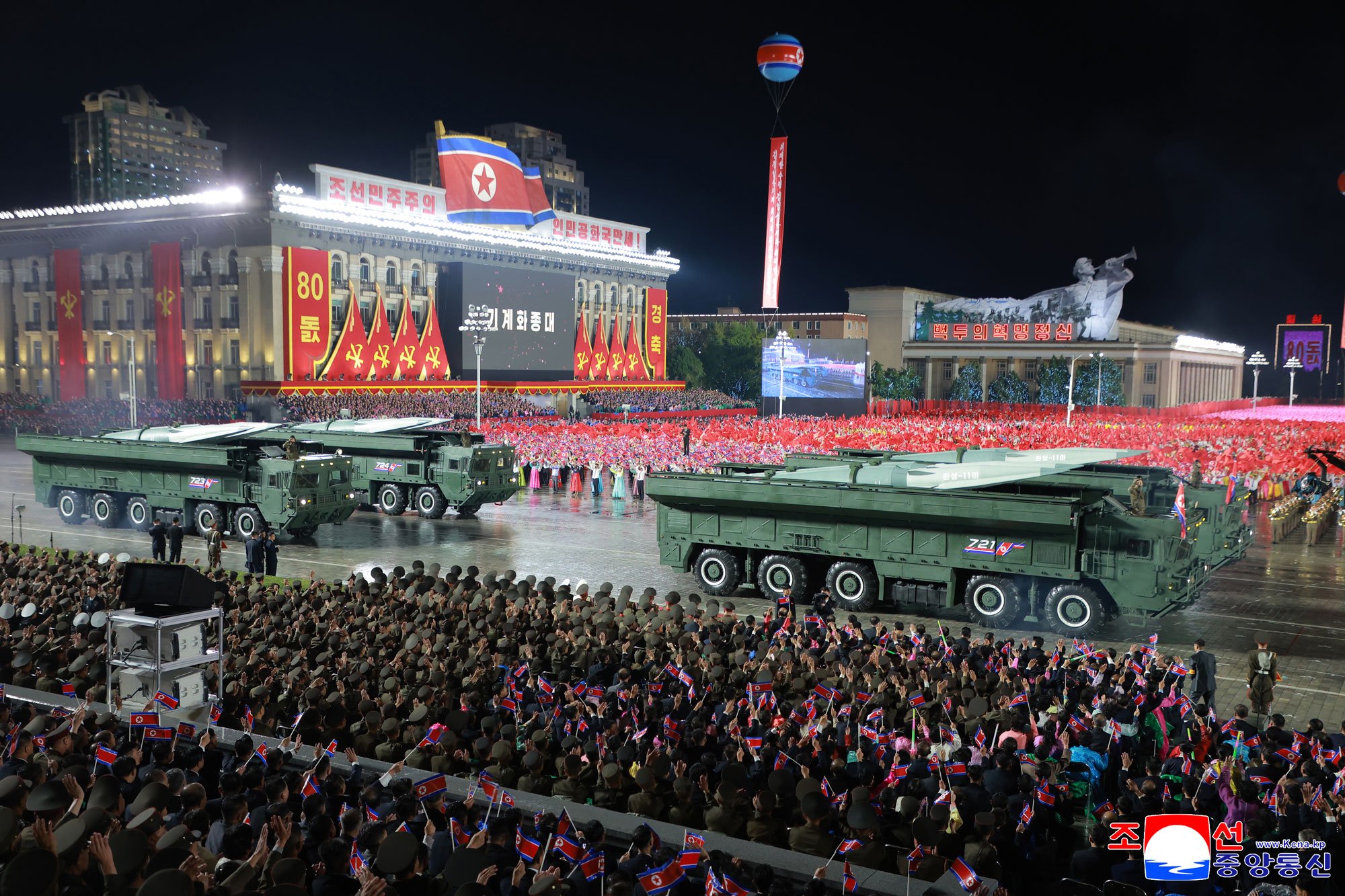
North Korea claimed another hypersonic missile test that same month, but did not release launch imagery clearly connecting that test to the Hwasong-11Ma. The missile was subsequently shown again during a military parade in Pyongyang.
Hwasong-11Ma missiles on five-axle TELs at last October’s military parade in Pyongyang. North Korean State Media
The latest “-1” designation suggests an iterative evolution of the Hwasong-11Ma, although Pyongyang has not explained what modifications it represents.
Based on the imagery, the new configuration also includes a modified launcher, with the missile carried on a six-axle transporter-erector-launcher (TEL). When the Hwasong-11Ma was first shown, it was mounted on a five-axle TEL. The latest vehicle also appears to incorporate modified retractable covers around the missile.
It remains unclear whether the new TEL represents a standardized operational vehicle or a test configuration.
Preliminary illustration of the new launch vehicle for North Korea's hypersonic missiles. pic.twitter.com/dZ31LA1cbn
As with previous North Korean weapons announcements, the country’s state media claims need to be treated very cautiously. Pyongyang has a long record of publicizing weapons systems and test results that cannot be independently verified, while some of its purported hypersonic tests have left outside analysts unable to determine whether the advertised maneuvering performance was actually demonstrated.
Perhaps the most revealing test-related imagery comes from a display screen photographed at the launch site.
Kim Jong Un and his daughter can be seen watching the screen, which shows the apparent flight trajectory of the Hwasong-11Ma-1. The displayed path initially follows a ballistic trajectory before descending and then performing a pull-up maneuver, regaining altitude before continuing toward the target area.
That type of trajectory is consistent with the basic concept behind a hypersonic glide vehicle. The booster provides the initial velocity and altitude, after which the unpowered glide body follows a relatively shallow, atmospheric flight path at hypersonic speeds, while maneuvering rather than following a simple ballistic path.
The graphic is useful for understanding what Pyongyang says the weapon is designed to do, but it does not independently demonstrate that the missile actually followed the depicted trajectory.
The flight data visible on the display provides some unusually specific figures.
Enhancing the original image released by North Korea allows for an excellent view of the HS-11Ma hypersonic glide missile trajectory, providing altitude and speed data. Note: Slight inaccuracies in the numbers may occur due to the use of AI tools. pic.twitter.com/M4LkfF5VYu
According to the North Korean imagery, the missile traveled 908.2 kilometers (564.3 miles), reached an altitude of 35.8 kilometers (22.2 miles), and remained in flight for approximately 445 seconds, or 7.4 minutes.
The display gives a velocity of 2,146 meters per second, equivalent to roughly 4,800 mph. That is hypersonic velocity in the aerodynamic sense, but speed alone is not what makes a hypersonic glide weapon particularly challenging to defend against. More consequential parameters include sustained controlled flight, maneuverability, guidance, and accuracy.
Other portions of the display appear to show additional points along the flight, including different times, altitudes, and speeds. None of these figures have been independently verified.
The TEL raises one of its two Hwasong-11Ma-1 missiles into the launch position. North Korean State Media
The claimed range is particularly noteworthy because it does not match the publicly reported tracking data from South Korea and Japan.
South Korea’s Joint Chiefs of Staff said North Korea launched two SRBMs from the Wonsan area on September 20. The missiles were assessed to have traveled approximately 450 and 600 kilometers, respectively.
Japan similarly reported two launches, assessing the first at approximately 440 kilometers and the second at approximately 590 kilometers, with maximum altitudes of roughly 60 and 70 kilometers.
Those figures are substantially different from the 908.2-kilometer distance shown on North Korea’s display.
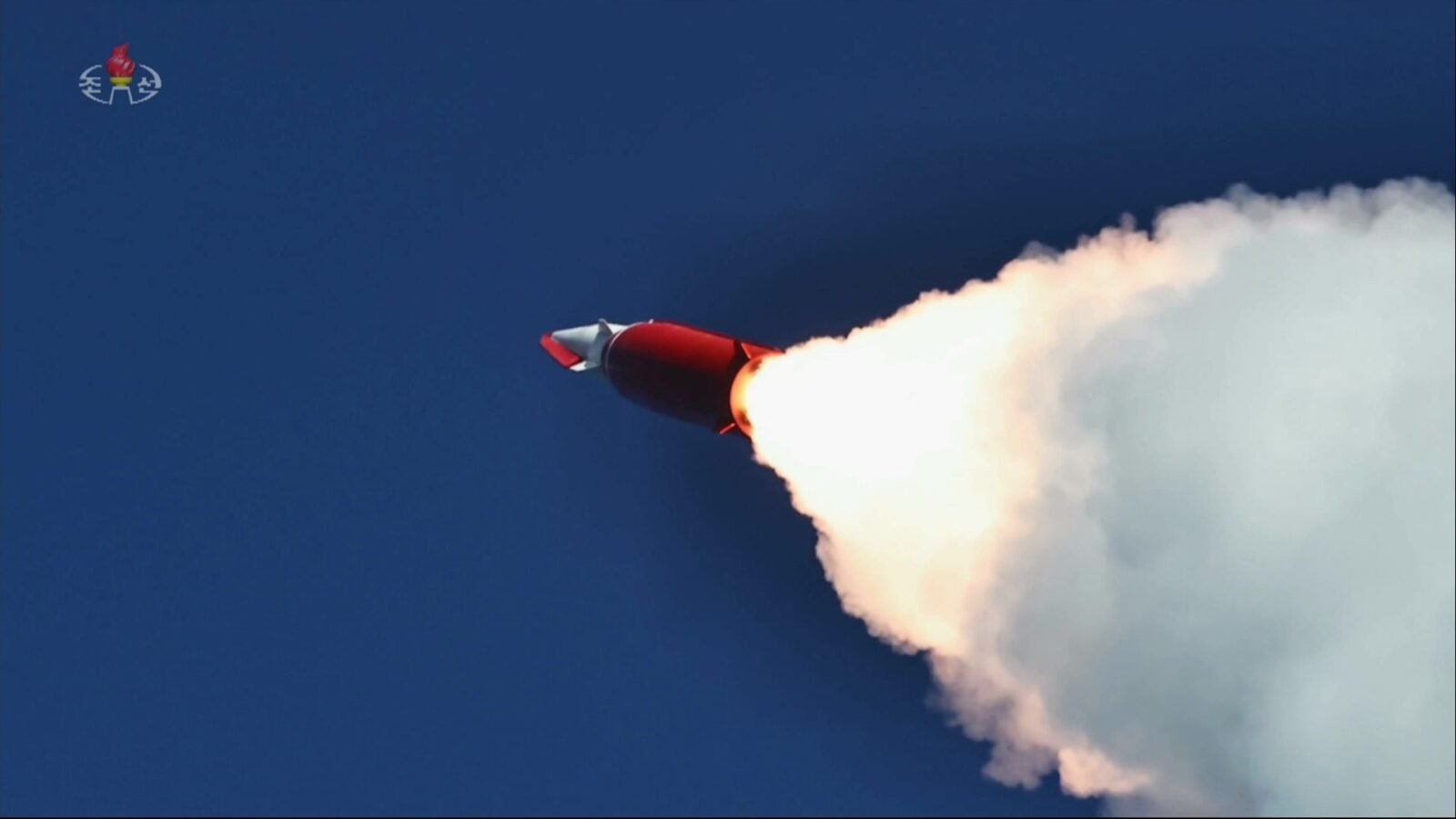
The Hwasong-11Ma-1 climbs after launch. North Korean State Media
The discrepancy does not necessarily establish that either side’s data are incorrect. The North Korean figure could represent a different measurement of the flight path, or could correspond to a portion of the test that was not reflected in the public South Korean and Japanese assessments. It is also possible, if not highly probable, that Pyongyang selectively presented or altered the data.
South Korean analysts have already raised questions about the unusually long distance displayed by North Korea. Yonhap reported that experts suggested Pyongyang may have altered the figure to portray the test as more successful.
Regardless of the range actually achieved in this test, the Hwasong-11Ma/Ma-1 is significant because it represents an attempt to combine a relatively compact SRBM with a maneuvering hypersonic glide vehicle.
The underlying Hwasong-11 family is a well-established North Korean missile design. In its KN-23 configuration, members of the family have also been used by Russia against Ukraine. By placing a glide vehicle on this type of booster, Pyongyang could potentially give a regional strike weapon a flight profile substantially different from that of a conventional ballistic missile. The Hwasong-11Ma/Ma-1 also uses a solid-fuel booster, allowing for faster launches than earlier liquid-fuel designs.
The original North Korean Hwasong-11 short-range ballistic missile. North Korean State Media
In principle, the Hwasong-11Ma/Ma-1 could give North Korea an additional hypersonic strike option against more heavily defended targets in South Korea. Having road-mobile TELs would also provide greater operational flexibility despite their relatively limited range, while making it more difficult for adversaries to locate and track the launchers.
A genuine boost-glide weapon creates significant challenges for defending forces since the sheer speed of the weapon bypasses most air defenses. Its trajectory can also become less predictable after the boost phase. Maneuvering at lower altitudes could also reduce the time available to detect, track, and engage the weapon.
A close-up look at the Hwasong-11Ma’s boost-glide-vehicle. North Korean State Media
However, the available imagery does not establish the extent of the vehicle’s maneuverability, its ability to maintain controlled flight, its accuracy, or the reliability of the complete missile system.
North Korea has made similar claims about its hypersonic weapons in the past.
The challenge is not simply reaching hypersonic speed. A weapon has to sustain controlled flight and maneuverability under extreme thermal loads, while also overcoming demanding materials-science, guidance, and navigation requirements. The terminal phase is harder still. Accurately finding and striking a moving target, particularly a ship, requires a highly capable seeker and guidance system. Integrating a nuclear warhead introduces another layer of engineering and weapons-design challenges.
Those demands have made hypersonic weapons a major technological challenge for the United States and other major powers. China is currently widely regarded as the leading country in deploying and developing operational hypersonic systems, although important questions remain about the capabilities and maturity of individual weapons.
Pyongyang said it first flight-tested a wedge-shaped hypersonic glide vehicle in 2021 aboard the liquid-fuel Hwasong-8, before pairing a similar-looking vehicle with the solid-fueled Hwasong-16B intermediate-range ballistic missile (IRBM) in 2024.
VIDEO: Korean Central Television (KCTV) broadcasted footage of North Korea successfully testing the new "Hwasong-16B" hypersonic intermediate-range ballistic missile (IRBM) on Tuesday. pic.twitter.com/VNdhLAeyyK
In its coverage of the latest test, North Korean state media initially avoided identifying the weapon, describing the event as a successful trial of a “new-type weapon” that it said was significant for the rapid development of weapons technology.
Kim said the development would give adversaries an “incurable headache” and deliver what he described as a “cruel and unavoidable blow.”
Tal Inbar, the head of the Space and UAV Research Center at Israel’s Fisher Institute for Air and Space Strategic Studies identifies the Hwasong-11Ma/Ma-1 as a “very significant weapon, bringing hypersonics to the operational/tactical arena and [posing] a challenge to … air and missile defense systems.”
Whatever the exact achievements of the test, the imagery points to continued development of a weapon North Korea first publicly displayed nearly a year ago. The appearance of a new, six-axle TEL, a potentially modified missile, combined with the apparent flight test, suggests that the Hwasong-11Ma/Ma-1 program has progressed since its initial public unveiling.
What remains uncertain is how much of that progress represents a genuine improvement in operational capability.
The latest test therefore provides another indication of the resources and attention Pyongyang is devoting to hypersonic weapons, but the available evidence is still insufficient to determine how closely the Hwasong-11Ma-1’s actual performance matches the capabilities depicted by North Korean state media.
The Sudanese Armed Forces (SAF) are facing fresh accusations of employing chemical weapons in the ongoing conflict against the Rapid Support Forces(RSF), with the latest reports coming from US media outlets, writes Mohsin Osman.
On Saturday (5 September), The New York Times and The Washington Postpublished dual investigative reports based on leaked intelligence materials. The files include approximately 150 documents, photographs, video clips, and intercepted communications, alongside thousands of text messages retrieved from the phones of Sudanese officers.
The evidence points to an alleged program established in 2024 to manufacture chlorine-based munitions. It details bomb design blueprints, testing operations, and a coordinated cover-up strategy initiated after the plot was uncovered by the United States. The records also outline plans to siphon chlorine gas from a civilian water treatment facility that had originally received the chemical from international aid agencies.
These revelations reignite long-standing allegations of chemical weapons usage that have shadowed SAF leadership since last year, significantly heightening international pressure on the military command.
The United States previously imposed sanctions on Sudan in May 2025 over allegations that the military deployed chemical weapons during the conflict in 2024. The sanctions took effect on July 20, 2025. Authorities in Port Sudan have consistently rejected these accusations, maintaining that they do not produce, stockpile, or use chemical weapons, and emphasizing their adherence to the Chemical Weapons Convention (CWC).
A covert programme amid escalating pressure
According to TheNew York Times, the SAF turned to chemical weapons early in 2024 to break a strategic stalemate, as RSF fighters held firm control over most of the capital, Khartoum.
Leaked records show that Brigadier General Tariq Hussein emerged as a central figure in July 2024, orchestrating the design, planning, and execution of the program. Intercepted messages reveal that Hussein proposed using chlorine to give army forces a tactical edge in the battle for Khartoum. He distributed prototype schematics for an explosive warhead integrated with roughly 33 pounds of chlorine gas, with production commencing that same month.
In messages published by the Times, Hussein noted that the hybrid munitions were designed to maximize lethality—either by shrapnel fragmentation or chlorine gas poisoning—asserting that the explosion would destroy all chemical traces of the attack.
On July 22, an Antonov cargo plane took off from Merowe Airport, roughly 200 miles north of Khartoum, to conduct a test launch. Following the trial, Hussein reported that the experiment was a "100 percent success," attaching a video of a desert explosion and confirming that the munition "hit the target and released the gas."
Brigadier General Amir Idris, identified in records as the supervisor of military drone operations, responded with a single directive: "Top Secret."
Technical hazards and signs of lethality
The communications reveal that the program faced severe technical flaws. Chemical leaks were a recurring issue; on one occasion, workers found dead insects and scorpions on the floor of a hangar after overnight exposure to leaking gas.
The incident underscored the volatile nature of the agent being handled long before it reached the battlefield. Concurrently, the program faced a critical challenge in securing a steady supply of chlorine.
Diverting humanitarian chlorine supplies
According to The New York Times, 20 cylinders of chlorine gas were smuggled across the border from a neighboring country in late August 2024. Hussein calculated that this batch would yield roughly 1,100 bombs.
Hussein subsequently sought internal sources, turning to local civilian infrastructure in violation of international norms. He admitted to sourcing additional chlorine from the Al-Manara water treatment plant in Omdurman—one of the few remaining operational facilities amid the war.
"Al-Manara has some of those cylinders, and we took them from there," Hussein stated in an August 26 voice message to Idris.
The diversion of these supplies carries significant gravity, as the chlorine at the plant was intended for emergency water purification during cholera outbreaks rather than military application.
The International Committee of the Red Cross (ICRC) confirmed to the Times that it had donated 30 chlorine cylinders to the plant in 2023, while CARE reported delivering 35 cylinders across 2024 and 2025. A UNICEF spokesperson added that the organization supplied chlorine to six treatment plants in Khartoum, including Al-Manara, between 2023 and 2025.
By October 2024, Hussein reported manufacturing approximately 300 chemical munitions, most of which were stored at Merowe Airport.
Earlier in September, Hussein sent a notable message to a colleague stating, "They drank the gas," describing an attack on RSF fighters at the Al-Jaili oil refinery north of Khartoum. This account aligns with claims made by the RSF on September 13, when the paramilitary group issued a statement accusing the army of firing "toxic" missiles at the refinery. Footage circulated online at the time showed men in civilian clothing inside the facility wearing oxygen masks.
Command responsibility and cover-up efforts
The New York Times indicates that the program was likely shuttered once U.S. officials detected its existence and moved to apply targeted sanctions.
Intercepted communications reveal that the head of Sudan’s Armed Forces, General Abdel Fattah al-Burhan, instructed Hussein to "erase all traces" of the operation. The response back was: "The operation was completed a month ago."
During a subsequent round of measures in June, the U.S. sanctioned Hussein for importing explosives for bomb production, though that specific designation did not explicitly cite chemical weapons.
By that time, Burhan had established an internal committee to investigate the U.S. allegations. According to documents in the file, Hussein himself—the architect of the program—was appointed as an advisor to the panel.
The intelligence indicates that General Burhan was not merely informed after the fact, but was directly involved in overseeing the chemical weapons program. His direct knowledge was a primary factor in the U.S. decision to impose sanctions on him in January 2025.
While proving chemical weapons usage in conflict zones remains complex, arms experts consulted by The New York Times concurred that available evidence strongly points to their deployment in the Sudanese conflict. However, they stressed the necessity of an independent field investigation.
Addressing the findings, the Emergency Lawyers group, a Sudanese legal advocacy organization, issued a statement calling for a transparent international probe. The group urged that "international experts be granted safe, unconditional access to targeted sites, enable the physical examination of munitions fragments and delivery systems, and be permitted to interview witnesses and victims independently and securely."
A team of French and Turkish researchers has published an exhaustive analysis of twelve obsidian arrowheads with intentional incisions found at the Neolithic site of Tepecik-Çiftlik, in the Cappadocia region (Turkey). These objects, dating between 7100 and 6100 BCE, represent an exceptional archaeological phenomenon: they are extremely rare and have only been found in Central […]
The Director of National Intelligence has revealed the existence of more than 120 U.S.-funded biological laboratories in over 30 countries, including several dozen in Ukraine. This revelation has reignited the debate on transparency and biosafety.
Today, on my final day as Director of National Intelligence, I’m releasing never-before-seen communications and documents exposing how Dr. Fauci provided millions in US taxpayer dollars to fund dangerous gain-of-function research at the Wuhan lab, worked with politicized elements… pic.twitter.com/ZMdliW4zyS
After several months of reviewing intelligence archives, Director of National Intelligence (DNI) Tulsi Gabbard released new information indicating that the United States has long funded more than 120 biolaboratories in over 30 countries.
Gabbard described the release as one of her final actions before leaving her post as Director of National Intelligence. On May 22, she announced her resignation in order to care for her husband, who has been diagnosed with cancer.
The declassified documents, which remain partially redacted, detail the locations and functions of various laboratories that “likely housed dangerous pathogens.”
Highly Dangerous Pathogens, Limited Oversight
According to the documents, the United States “built and supported” 40 biolabs in Ukraine that worked on “particularly dangerous pathogens,” including anthrax, avian influenza, Ebola, plague, and tuberculosis. At least 12 of these laboratories conducted research involving human subjects.
According to an official ODNI statement, “many of these U.S.-government-funded biolabs conducted research on dangerous and highly contagious pathogens, in some cases including studies designed to enhance the functions of these pathogens, with virtually no oversight or supervision.”
The declassified map notably shows that a laboratory in Odesa—a city of one million residents—stored biological agents inherited from the former Soviet biological weapons program, including anthrax, tuberculosis, SARS, Marburg virus, Ebola, Lassa fever, and plague.
Risks in a War Zone Highlighted
Gabbard emphasized that some of these laboratories in Ukraine could be compromised because of the ongoing conflict with Russia. According to her, intelligence agencies had previously warned internally that a U.S.-linked biolaboratory in Ukraine “likely housed dangerous pathogens” and remained vulnerable to Russian attack, seizure, or damage.
Previous Administrations Accused
In a statement, Gabbard said that Dr. Fauci and members of the Biden administration’s national security team “lied to the American people about the existence of U.S.-funded and U.S.-supported biolaboratories and threatened those who attempted to expose the truth.”
The ODNI stated that this information had been “intentionally concealed” by previous administrations.
In March 2022, Under Secretary of State Victoria Nuland acknowledged under oath that “Ukraine has biological research facilities,” while denying that those facilities worked on biological weapons and asserting that “the United States does not own or operate any chemical or biological laboratories in Ukraine.”
End of Funding for High-Risk Research
Gabbard also confirmed a major policy shift under the Trump administration: Washington is ending decades of federal funding for gain-of-function research overseas. The move follows Executive Order 14292, signed by President Trump in May 2025, which aimed to terminate such international funding.
What the Report Does Not Prove
It should be noted that the declassified documents, while exposing serious shortcomings in oversight, risky gain-of-function research, and vulnerabilities in conflict zones, concern programs many of which supported legitimate disease surveillance efforts. The report does not confirm the existence of an illegal offensive biological weapons program, but it does document a striking lack of transparency and oversight spanning several decades.
Sources: ODNI (Official Release No. 10-26, June 12, 2026), Newsweek, Daily Caller, and BizPac Review.

 Login