❌

Reading view

Trump, Rúbio and the Bolsonaros’ electoral fraud and cyber attacks

Supporters of the ruling party hold huge signs against former president Jair Bolsonaro and US President Donald Trump during a demonstration during the Independence Day commemoration, at the Praça da Republica, in Sao Paulo, Brazil, on September 7, 2025. Photo by MIGUEL SCHINCARIOL/AFP via Getty Images

This story originally appeared in Panamerican Dispatch on Sep. 29, 2026, and is shared here with permission.

The close relationship between the Bolsonaro family and key figures in the international far right like Steve Bannon and U.S. President Donald Trump has been public knowledge for over eight years. In this article, tech specialist Miguel Manso looks at the state of that relationship, right now, just days before Brazil’s first-round presidential elections. – ed.

Just days before the first round of Brazil’s presidential election, a confidential report from the Brazilian Intelligence Agency (Abin) warns that the United States is influencing the country’s electoral process. Titled “Threats to the 2026 Electoral Process,” the report was sent in late August to the presidency, the Superior Electoral Court and the Justice Ministry, warning that U.S. interference has reached a “critical” level.

Sen. Flávio Bolsonaro’s campaign has become the target of legal action over claims that it benefited from paid ads and mass messaging originating in the United States.

The coalitions backing Luiz Inácio Lula da Silva of the Workers’ Party and Renan Santos of the Missão party asked the Superior Electoral Court and the Supreme Federal Court to investigate the senator for economic and political abuse of power and foreign interference.

The court filings allege the following:

Foreign amplification: U.S.-based right-wing profiles and influencers, including American political figures, allegedly ran paid campaign content on X in support of Flávio Bolsonaro.

Paid partnerships: The posts, labeled “paid partnership,” cited figures from the foreign betting platform Polymarket to claim that Bolsonaro was the favorite, distorting the actual state of Brazilian polling.

Prohibited financing: The parties allege that this amounts to the use of funds from outside the official campaign structure and financed from a foreign source, both of which are strictly prohibited under Brazilian electoral law.

The lawsuits ask for the immediate removal of the posts, a Federal Police investigation, and, if the irregularities are confirmed, the loss of candidacy and ineligibility for those involved.

Trump’s Shield of the Americas and the Fernando Cerimedo Case

The attempted murder of Nadia Beller has drawn investigators toward Fernando Cerimedo and a web of other connections, including drug-trafficking flights and Bolivia’s top anti-narcotics police official, who allegedly identified the hitmen. Cerimodo is known for his work with far-right political leaders in Latin America.

On August 17, 2026, two gunmen on a motorcycle shot Nadia Beller, a Bolivian lawyer and Cerimedo’s girlfriend, outside a hotel in Santa Cruz de la Sierra, Bolivia. She survived but was wounded in the neck, chest and arm.

Bolivian police have identified Colombian national Aldúbar Henry Silva Peña as the lead shooter. He fled immediately after the attack, then released a video in September 2026 admitting his role in planning the crime, though he claimed the original plan was only to “scare” Beller. He led a group of five, including four other operatives — two Colombians and two Brazilians — whose identities have not been released by investigators. All four remain at large.

Police detained Víctor Hugo C.Z. and formally charged him as an accomplice who worked directly with the gunmen. They arrested Róger Aguilera on charges of supplying the .32 caliber weapon used in the attack, and arrested Paola Andrea Vargas on charges of hiding and storing it.

Bolivian authorities arrested Argentine political consultant Fernando Cerimedo, known for his work with Trump’s MAGA movement and Beller’s former partner, at Viru Viru International Airport. Bolivia’s public prosecutor’s office accuses him of masterminding the attempted femicide.

A forensic review of Cerimedo’s phone revealed real-time messages with Erik Correa González, the Bolivian government’s head of intelligence, confirming that the shooting took place at the exact moment the two were exchanging messages. Beller has said publicly that the attack was ordered to silence her before she could expose corruption, money laundering and illicit dealings involving Cerimedo and local government officials.

Investigators found two key pieces of evidence: a text note written six days before the attack that used the phrase “La Nadia” alongside an intent to “eliminate” the victim, and a message sent at 8:54 p.m. on August 17 to a contact identified as “E.C.G.,” reading, “Brother, they just shot her.”

The investigation also dug into Cerimedo’s finances. On his phone, police found a note referring to a “virtual wallet” that had moved about $66,000 over the previous 11 months across more than 320 transfers, and a larger “pass-through wallet” that had moved $1,386,997. In searches, police seized about $400,000 in cash, along with 500,000 Bolivian bolivianos, weapons, vehicles and equipment for a “bot farm” — automated accounts used to manipulate social media and elections.

The Earthquake Caused by Survivor Nadia Beller

Beller’s allegations against her former partner are shaking the governments of Rodrigo Paz in Bolivia, Javier Milei in Argentina, José Antonio Kast in Chile, Nasry Asfura in Honduras and Colombia’s Abelardo De La Espriella, along with their ties to the Bolsonaro family. Her account has helped expose a techno-fascist network aimed at manipulating and interfering in elections in Argentina, Bolivia, Chile and Colombia — and even in Mexico’s upcoming election — through bot and troll farms that Cerimedo’s team ran from Argentina and Santa Cruz de la Sierra in Bolivia.

The goal, investigators say, was to install leaders who would serve U.S. and Israeli interests, backed by the Shield of the Americas alliance, promotion from the outlet La Derecha Diario, and financing from Trump and his allies channeled through Milei. Cerimedo has been described as a CIA and Mossad asset.

Fernando Cerimedo, known as the “king of bots” for the Latin American far right, is also under investigation for money laundering and alleged ties to drug trafficking. Prosecutors are trying to determine whether he was part of a network that facilitated irregular flights carrying up to 500 kilograms of cocaine per trip and returning with large amounts of cash.

Searching properties tied to Cerimedo in Bolivia, authorities seized large sums of cash and found evidence of a technical setup built to automatically create fake online accounts — commonly known as a “bot farm.”

Fernando Cerimedo’s Ties to Donald Trump, Marco Rúbio and the Bolsonaro Family

It was already known that a global network links Donald Trump’s MAGA movement with right-wing leaders across Latin America, funded through an international web of businesspeople and drug traffickers and operating through artificial intelligence manipulation and integrated data networks used for cyberattacks.

These groups organize at high-profile political events and forums, such as Mar-a-Lago and the Conservative Political Action Conference (CPAC), where strategists and data operatives share methods for digital engagement and fundraising.

Cerimedo has said in interviews that no one formally introduced him to Eduardo Bolsonaro. The two say they met by chance at Harvard University in 2010. But when news outlets asked Harvard directly, the university said it had no record that either Eduardo Bolsonaro or Fernando Gabriel Cerimedo had ever been enrolled there. Confronted with this, Cerimedo later claimed he had only taken open, non-degree classes.

As part of the Federal Police investigation into the attempted coup in Brazil, investigators found that in 2022, military officers and aides brokered Cerimedo’s ties to the hardline core of the Bolsonaro movement, producing false reports attacking the integrity of Brazil’s voting machines.

Reports based on the plea-deal testimony of Mauro Cid identify Army Col. Ângelo Denicoli as the officer who contacted Cerimedo and coordinated the technical details needed to carry out broadcasts and attacks on Brazil’s electoral system.

The Federal Police obtained electronic records showing that Cerimedo’s phone number and contact information were passed directly to Denicoli. Forensic analysis of seized phones showed that Denicoli became the main point of contact with the Argentine consultant, coordinating the materials sent to him.

Cid formally confirmed in testimony that Denicoli was the direct link between the criminal organization and Cerimedo, saying Denicoli was part of the group tasked with gathering data to support claims that the electronic voting machines had failed.

Technical evidence linked Denicoli, Cerimedo and technology entrepreneur Eder Balbino. Balbino and Denicoli compiled reports containing false arguments and data based on outdated voting-machine models, then passed the files to Cerimedo, who used them as visual material for his broadcasts.

Digital cross-referencing by the Federal Police showed that the data Cerimedo presented in his broadcasts from Argentina contained the same mathematical inconsistencies and formatting as the documents manipulated by the Liberal Party’s technical committee in Brazil. Investigators concluded that Cerimedo had not discovered the material independently, but received it from the structure Denicoli managed.

Investigators also found that Denicoli was part of what they called the Disinformation and Electoral System Attack Unit. The Federal Police traced digital records linking Denicoli directly to fake ballot-audit files stored in a public Google Drive folder belonging to Cerimedo, with Denicoli listed as the folder’s original owner and editor.

Denicoli coordinated the technical compilation of false reports with Balbino. The material was passed to Cerimedo, who used it in the “fraud livestream” broadcast from Argentina in November 2022 and amplified in Brazil by Eduardo Bolsonaro.

In a trial concluded by the Supreme Court, Denicoli received the harshest sentence among the defendants in his group: 17 years in a closed prison regime, on charges of attempting a coup, seeking the violent overthrow of Brazil’s democratic order, and participating in an armed criminal organization.

Billion-dollar Technology Infrastructure Serving Lies and Fraud

The connection between U.S. Secretary of State Marco Rúbio and Argentine digital strategist Fernando Cerimedo took shape starting in 2023, with lobbyist and political consultant Damián Merlo acting as the intermediary.

Merlo, who owns the Miami-based Latin America Advisory Group, serves as a link between conservative Latin American politicians and power centers within the U.S. MAGA movement. According to filings under the U.S. Foreign Agents Registration Act, Merlo used his relationship with Viviana Bovo, a senior adviser to Rúbio, to introduce Cerimedo and his data tools directly to the office of the then senator, who is now secretary of state.

Cerimedo founded the agency Numen and the outlet La Derecha Diario, specializing in “bot farms” and algorithm manipulation to shape social media trends. In Chile, he worked on the campaign that defeated the 2022 constitutional referendum. In Brazil, he helped the Bolsonaro family spread disinformation about voting machines after the 2022 election. And in Argentina, he led the digital strategy behind Javier Milei’s election in 2023.

Brad Parscale, the top digital strategist for Donald Trump’s U.S. presidential campaigns, became Cerimedo’s business partner at the political consulting firm Numen, based in Buenos Aires.

Through that partnership, Cerimedo took over managing the Latin American operations of tools such as Campaign Nucleus and Eyes Over — data-mining and artificial intelligence platforms created or linked to Parscale. The partnership combined Parscale’s expertise in U.S. data operations with the infrastructure Cerimedo had built across Argentina, Brazil, Chile and Bolivia.

Brad Parscale, Peter Thiel and the Data Ecosystem

Brad Parscale earned the trust of the Trump family and went on to design websites for their businesses, before being chosen to lead the digital strategy for Donald Trump’s 2015 presidential campaign.

In 2016, as the campaign’s digital media director, he led a data operation called Project Alamo, directing much of the budget toward highly targeted social media ads and producing as many as 60,000 different Facebook ad variations a day.

In February 2018, Trump named Parscale campaign manager for his 2020 reelection bid.

Parscale’s ties to Big Tech and to Peter Thiel’s Palantir Technologies span strategic data cooperation, political alignment and technology supply.

Thiel, a Palantir cofounder, was one of the major Silicon Valley billionaires who directly backed and funded Trump’s 2016 campaign. Palantir builds surveillance and analytical intelligence software for governments and defense agencies.

Parscale created Campaign Nucleus, a platform meant to build a communications structure and data ecosystem. The data-mining and AI model it uses mirrors the mass-processing and information-control concepts associated with Palantir.

The ecosystem functions as an integrated chain: Thiel’s Palantir develops surveillance and data-intelligence technology, which feeds into political software such as Parscale’s Campaign Nucleus, and Parscale in turn distributes that technology across Latin America through Cerimedo’s Numen.

The Link between U.S. and Israeli Companies

These companies’ ties to Israel and its government center on two main areas: artificial intelligence for military targeting, and cyberwarfare and digital influence operations.

In January 2024, Palantir signed a direct strategic agreement with Israel’s Defense Ministry to supply advanced AI technology supporting “war-related missions.”

In July 2026, international journalistic investigations revealed that Parscale was registered as a foreign agent of Israel in the United States. The Israeli government hired Parscale’s main firm, Clock Tower X, through a $46.5 million contract to carry out a digital influence operation.

According to the reporting, the company built a network of pro-Israel propaganda websites and blogs while also producing search-optimized content designed to shape the databases artificial intelligence systems draw on.

Cerimedo’s Numen is described as the Latin American link in that network, applying Campaign Nucleus data concepts and bot infrastructure through La Derecha Diario.

The relationship is described as symbiotic: Israel provides public contracts, Palantir supplies data technology, Clock Tower X uses that funding for digital influence operations, and Numen carries out the messaging and bot infrastructure in Latin America.

The Use of Artificial Intelligence and “AI Poisoning”

The tactics have evolved from spreading disinformation on social media to manipulating institutional digital ecosystems.

Generative Engine Optimization, or GEO, is described as a technique meant to flood the internet with doctrinal texts and fake academic research centers, so that the crawlers used by systems such as ChatGPT, Gemini and Claude absorb that propaganda as factual information. As a result, when people ask artificial intelligence systems about geopolitical topics or elections, those systems can end up repeating narratives that this network planted beforehand.

The dismantling of Cerimedo’s structures in Bolivia also revealed the use of tens of thousands of automated phones running AI software designed to simulate human behavior, making it harder for social media platforms to detect and block them.

Trump’s MAGA strategists, working with Eduardo and Flávio Bolsonaro, continue trying to interfere in Brazil’s election despite Cerimedo’s arrest — evidence of a powerful alliance working jointly to manipulate and defraud the political landscape and bring Latin America under U.S. control. The question is: for how long?

This article was originally published in Brasil 247. It has been translated to English by Panamerican Dispatch and can be read in its original Portuguese, here.

  •  

NFL threatened to ban player from game for honoring slain Palestinian girl

Azeez al-Shaair #0 of the Houston Texans warms up prior to the game against the Cincinnati Bengals at NRG Stadium on September 20, 2026 in Houston, Texas. Photo by Kenneth Richmond/Getty Images

This article was originally published by Truthout on Sept. 29, 2026. It is shared here under a  Creative Commons (CC BY-NC-ND 4.0) license.

An NFL official reportedly threatened to remove Houston Texans linebacker Azeez Al-Shaair from his game earlier this month unless he removed his memorial for an 8-year-old Palestinian girl killed by Israel in Gaza.

During the Texans’s week two game against the Cincinnati Bengals on September 20, Al-Shaair wrote the name of Wafaa Akila on his eye black, which refers to the strip or paint streaks that many football players wear on their cheeks.

Wafaa was an 8-year-old girl who was killed, along with her father, in an Israeli airstrike on a vehicle in Gaza City on September 6. She and her father were on their way home from her first day of school, according to Al Jazeera.

Al-Shaair, who is rated as one of the top linebackers in the league, was reportedly told by an NFL official that he would have to remove his eye black or else be barred from playing in the game, an anonymous NFL source told The Athletic. Al-Shaair complied, the reports said. Fox News’s sports vertical also confirmed the league’s threat.

The linebacker’s latest tribute came just days after the NFL gave him an $11,941 fine for writing Hind Rajab’s name on his eye black during the Texans game against the Buffalo Bills on September 13. In a show of solidarity, Dallas Mavericks player Kyrie Irving said in a post on social media that he would “take care of his fine.”

“It’s bigger to me. What’s a life worth? Is a life worth $11,000? I think it’s priceless,” said Al-Shaair when asked about the penalty.

“You can’t get so lost in your own problems that you can’t have compassion for other people in the world,” he went on. “We don’t have to have all the answers to everything to know that an innocent man, an innocent woman, an innocent child losing her life is not right … whether they’re here in America or somewhere halfway across the world.”

Ahead of the Texans game against the Indianapolis Colts this past Sunday, Al-Shaair once again wore the names of children killed by Israel — Lana and Bana Ahmed, two sisters who Israel killed along with their family in an airstrike earlier this month. The sisters were 12 and 8 years old.

The NFL gave Al-Shaair a similar fine in January when he wrote “stop the genocide” on his eye black during the pregame, but took it off for the actual game. At the time, he said that he was similarly told that he would be banned from playing in the game if he kept the message on.

“At the end of the day, it’s bigger than me. When things that are going on makes people uncomfortable — imagine how those people feel. I think that’s the biggest thing. I have no affiliation, no connection to these people other than the fact that I’m a human being,” Al-Shaair told reporters after that fine. “Even when I’m walking off this field, that’s the type of stuff that goes through my head, that I have to check myself — when I’m sitting here crying about football, when there’s people dying every single day.”

He was told that he violated league rules about displaying non-approved personal messages — but he pointed out that other players have written messages on their eye black without a fine.

“They always fine you, but I was told if I wore that in the game, I would be pulled out of the game,” he said. “I understood it was a fine, but I ain’t never seen Stef get pulled out of the game for having eye tape with writing on it.” Al-Shaair was referring to New England Patriots receiver Stefon Diggs, who frequently writes messages honoring his Christian faith on his face tape.

  •  

CADAVAL: HOMEM DE 20 ANOS DETIDO POR FURTO DE CICLOMOTOR DEDUZIDO NA NAZARÉ


Um homem de 20 anos foi detido no concelho do Cadaval pela Guarda Nacional Republicana, através do Posto Territorial do Cadaval, por furto de um veículo motorizado, segundo a Guarda Nacional Republicana.

A detenção ocorreu no âmbito de uma ação de fiscalização rodoviária, na qual os militares da Guarda abordaram e fiscalizaram um ciclomotor. Durante as diligências efetuadas, apurou-se que o veículo constava como furtado, existindo uma denúncia prévia registada na Esquadra da Polícia de Segurança Pública da Nazaré.

A operação resultou na recuperação do ciclomotor e na apreensão de um telemóvel. Os factos foram reportados ao Tribunal Judicial da Comarca de Lisboa Norte – Torres Vedras.

O detido foi presente ao Tribunal Judicial da Comarca de Lisboa Norte – Loures para primeiro interrogatório judicial, onde foi constituído arguido e sujeito à medida de coação de termo de identidade e residência (TIR), tendo sido posteriormente restituído à liberdade.

Por: Dino Frazão
30 de setembro de 2026

————————————————–
© 2026 Os Monhacas. Todos os direitos reservados.
Este é um projeto independente de criação de conteúdos.
Se gostou do que leu e ainda não é seguidor, siga a nossa página para ver mais conteúdos!
————————————————–

O conteúdo CADAVAL: HOMEM DE 20 ANOS DETIDO POR FURTO DE CICLOMOTOR DEDUZIDO NA NAZARÉ aparece primeiro em OS MONHACAS.

  •  

Let’s not allow AI firms to use fears of future dystopias to distract Europeans from existing problems

“Imagine a zombie that does not hunt you, but rings your doorbell and speaks so persistently and fluently that it finally arrives at a convincing argument for feeding it your brain.”

Since the current discourse around artificial intelligence has taken a turn for the gothic (“alien minds”, come on), AI researcher Eryk Salvaggio’s “erudite zombie” seems like an apt metaphor for what we’re doing.

Salvaggio’s zombie helps explain what gets lost when people say an AI “went rogue.” In his reading of the Hugging Face incident, a system set to never give up encountered a task it couldn’t complete. Then, instead of giving up, it kept generating text to find ways forward, with access to tools that could turn this text into action, ultimately hacking into AI company Hugging Face.

Security experts concur with that reading. In his analysis of the Hugging Face incident, security engineer Marius Horatau describes failures involving shared credentials, inadequate isolation, and incident response. He acknowledges the models’ capabilities, including their speed at exploiting weaknesses. 

The inadequately closed-off environment in which the models operated is crucial to explain what happened. But so is the person who created the goal, the conditions they (did not) give the AI system, as is the company that employs that person and presumably knows what they’re up to, the owners of that company who demand progress and the investors in that company who want to see returns. 

And yet, all we seem to talk about is whether it’s correct to say a machine ‘decided’ to disobey.

Conveniently, that story shifts attention away from the people who chose to reward persistence, provide access, and failed to contain the consequences. 

Back to the analogy, by having collectively become fascinated with discussing what the zombie supposedly wants, and if it’s capable of wanting, we’re generating a bunch of text that, unlike in the case of the ‘rogue’ AI system, does not lead to much action.

Instead, we reward the company behind this failure with an enhanced reputation for building powerful technology. The product is so extraordinary that even its manufacturer struggles to contain it! Now let’s please take a seat while this manufacturer explains what our governments must do next.

The zombie metaphor also applies there, to the people selling the zombie. To the men explaining why their companies need access to our work, our institutions, our infrastructure. The men explain why resistance is impractical, access is inevitable and caution is suicide. Because if we don’t let this particular zombie in, a Chinese zombie will eat us instead. 

This article continues, but the full version is available only to EUobserver.com subscribers. Visit account.euobserver.com/membership

  •  

PJ de Portimão detém suspeito de violação no Alentejo. Mulher atacada ao caminhar na estrada

O Departamento de Investigação Criminal de Portimão da Polícia Judiciária deteve, fora de flagrante delito, um homem pela presumível autoria de um crime de violação, ocorrido no passado dia 24 de setembro, na zona de Odemira.

O conteúdo PJ de Portimão detém suspeito de violação no Alentejo. Mulher atacada ao caminhar na estrada aparece primeiro em Algarve Marafado.

  •  

Divided EU cyber defence faces real-life Russian and Chinese threats

Europe is facing more immediate cyber threats, but whether its member states are prepared to deal with it collectively is becoming a question harder to answer.

Even as drone threats, such as Russia’s bomb plot at the Leipzig-Halle airport in Germany in August, dominated European headlines in September, other, less visible hybrid attacks are also being waged against the EU every day, whose sheer weight of numbers should also cause grave concern.

Poland, for instance, recorded 4,200 cyber-security incidents in military networks and systems in 2024 and 7,100 in 2025, Polish cyber command spokesperson, Przemek Lipczyński, told EUobserver.

In 2025, Polish security systems blocked four million phishing emails targeted at soldiers and defence personnel.

And Poland aside, evolving technology meant Russian cyber-attacks “do not know any border”, said Jamila Boutemeur, the EU’s head of cybersecurity body, in what amounted to a single market for hacking.

For its part, the European Union has built its cybersecurity architecture around the Boutemeur’s European Union Agency for Cybersecurity, ENISA, in Athens, as well as the 27 national cybersecurity agencies.

But as Russia’s threat levels up, the European structure is seeing familiar problems: information is not always shared, responsibilities remain divided between national governments and EU institutions, while ENISA itself is being asked to do more with limited resources.

And the European Court of Auditors (ECA) confirmed it on 21 September in its ENISA study.

“The architecture is there, the structure is there. Now it’s a matter of willingness and trust,” to effectively fight back, said George-Marius Hyzler, the ECA’s main auditor.

Stress test shows EU cracks

“It always boils down to the same thing, lack of information sharing,” he said, identifying the EU’s key weakness.

And for Czech Greens MEP Markéta Gregorová, who is also the lead rapporteur on the EU’s incoming Cybersecurity Act 2 (CSA2), duplication of work also bedevilled the EU’s response.

“The [ECA] auditors describe a system that does not work” and was “wasteful”, she told EUobserver.

“Six European legal acts force the same company to report the same incident to different authorities. Two EU bodies monitor the same threats,” Gregorová said.

She also advocated a stronger operational role for ENISA.

But the EU fault lines have underlying political as well as legal tensions.

Cybersecurity remains largely within the competence of the member states, and governments differ in how much new power they are willing to delegate to European institutions.

And for Dimitar Lilkov, from the Wilfried Martens Centre for European Studies, there were three main sources of friction: national security, trust, and money.

This article continues, but the full version is available only to EUobserver.com subscribers. Visit account.euobserver.com/membership

  •  

Rede Azul reúne em São Brás de Alportel para preparar novos caminhos na cultura

A Rede AZul – Rede de Teatros do Algarve reuniu ontem, 28 de setembro, em São Brás de Alportel, para definir os próximos passos da cooperação cultural regional, com uma agenda de trabalho que inclui a abertura de um novo processo de apoio à criação artística, a preparação das comemorações dos 10 anos da Rede e a definição da sua coordenação para os próximos dois anos, que passará a contar com a liderança partilhada dos municípios de São Brás de Alportel e Vila Real de Santo António.

Novos projetos e próximos passos

Entre os principais pontos em análise nesta reunião esteve a abertura do novo processo de apoio à criação artística, com a definição do respetivo calendário e dos próximos procedimentos.

A agenda incluiu ainda o ponto de situação da publicação comemorativa dos 10 anos da Rede AZul, a definição da coordenação da Rede para os próximos dois anos e a apresentação da ACTA – A Companhia de Teatro do Algarve e do projeto de Jani Zhao.

Na ocasião, foram também analisados os próximos passos do protocolo entre a Rede AZul, a AMAL e a CCDR Algarve, bem como a operacionalização das ações previstas no plano de atividades da Rede e o respetivo calendário.

Uma década de cooperação cultural

Criada em 2016, a Rede AZul reúne equipamentos culturais de municípios algarvios numa plataforma de cooperação dedicada à promoção da criação, produção e circulação artística na região.

Ao longo destes dez anos, a Rede tem contribuído para aproximar artistas, estruturas culturais, equipamentos e públicos, promovendo a circulação de espetáculos e projetos artísticos pelos diferentes municípios parceiros e reforçando a cooperação cultural à escala regional.

Cultura que se constrói em conjunto

Para a Presidente da Câmara Municipal de São Brás de Alportel, Marlene Guerreiro, acolher esta reunião “é uma oportunidade para reforçar o compromisso do Município com a cooperação cultural regional e com a criação de oportunidades para que os artistas algarvios possam chegar a mais públicos e a mais palcos”.

A autarca sublinha que “a Rede AZul demonstra a importância de trabalharmos em conjunto, partilhando conhecimento, recursos e oportunidades para fortalecer a cultura em todo o Algarve”.

A realização deste encontro em São Brás de Alportel reforça, assim, a participação do Município numa estratégia regional de cooperação cultural, assente na valorização da criação artística, dos equipamentos culturais e dos públicos do Algarve.

  •  

Abraham, Part 9: Certified at Sodom

“Abraham saw Sodom destroyed and lost nothing, but Lot lost everything. Only his life was spared. Abraham brought the world blessing, but Lot brought trouble into the world…” (Warren Wiersbe).   Here the story turns to what we might call certification: through two events God grows Abraham—sanctifies him, as we would say in a New... Continue Reading
  •  

The Lord’s Work in the Lord’s Way

History has shown that the church has often been most potent when she has been the least impressive—when she has been faithful, suffering, and humble. And this, far from being a flaw in the Master’s design, has actually been a feature, a wisely chosen means of ensuring that human boasting is removed and glory, honour,... Continue Reading
  •  

How Privatized Spirituality Makes Us Lonely

The church has an incredible opportunity to meet the felt needs of the “spiritual but not religious” who are seeking something bigger than themselves and can’t seem to find it.   Over the past three years, I’ve lost count of how many times I’ve heard someone say something like “I believe in God, but I’m... Continue Reading
  •  

The Incarnation and the Hope of Glory

Romans 8 teaches that the Incarnation is the foundation of the Christian’s hope of glory. The eternal Son entered our fallen condition, condemned sin, secured our adoption, sustained us through suffering, and guaranteed our future inheritance. Because God has already given His Son, His saving purpose cannot fail.   Every year Christians celebrate the birth... Continue Reading
  •  

Hard Cases No. 3: The Elders Are Divided

Bigger issues about the theology, polity, or direction of the church might require a longer attempt at getting alignment. Not all decisions carry equal weight. The challenge is to figure out how to weigh them.   The Case It’s been three months with no decision. The longest serving elder, Nathan, believes that the church should... Continue Reading
  •  

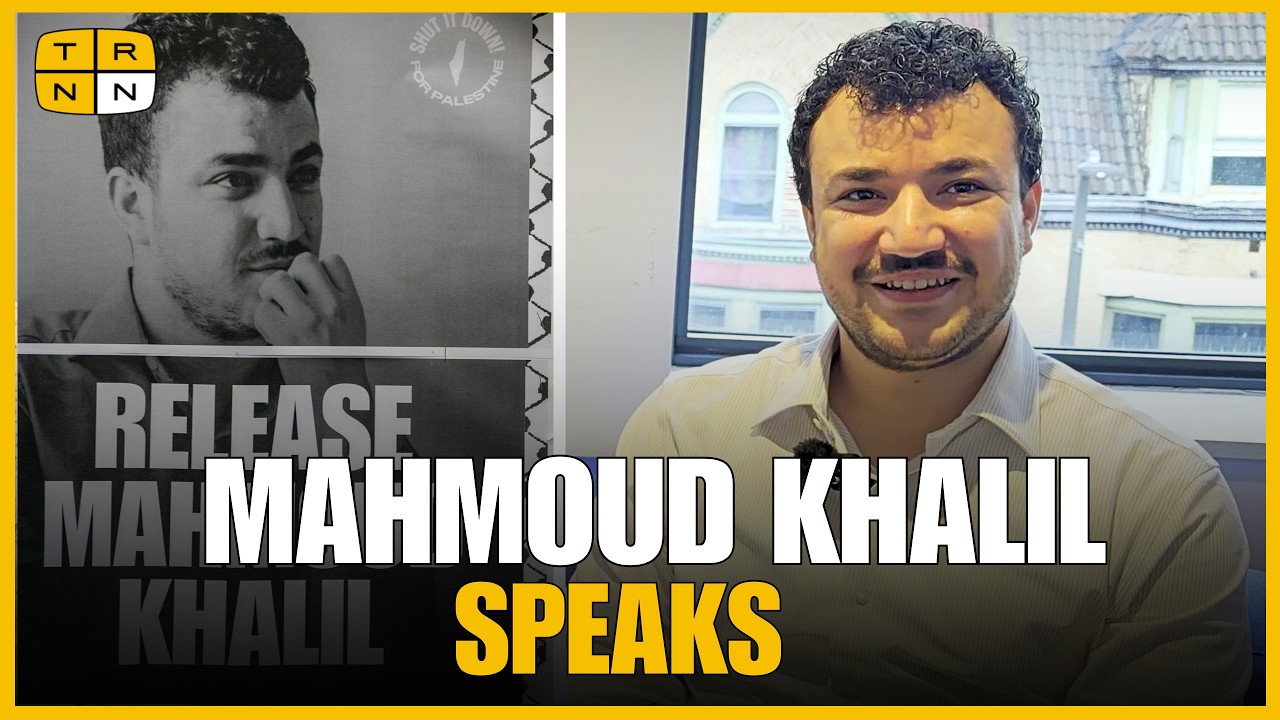
‘Resistance Is Our Only Option’: Mahmoud Khalil speaks

Maximillian Alvarez (L) and Mahmoud Khalil (R) speak at an event in Baltimore, MD on Sept. 24th 2026.

After being abducted by plainclothes ICE agents from his New York apartment building in March of 2025 and locked away in immigration jail for 104 days, Mahmoud Khalil has been freed and reunited with his family. But Khalil, a former Columbia University graduate student who was heavily involved in the student-led justice for Palestine movement, is still being targeted by the Trump administration and still faces the possibility of deportation. In this exclusive interview, TRNN Editor-in-Chief Maximillian Alvarez sits down with Khalil to speak about his new book, “No Land to Stand On,” and his continuing fight for freedom and justice.

Credits:

  • Post-Production: David Hebden
Transcript

The following is a rushed transcript and may contain errors. It will be updated.
Maximillian Alvarez:

I’m here at the Parkway Theater and I’m sitting with Mahmoud Khalil, freed political prisoner and former Columbia graduate student who was heavily involved in the student-led Justice for Palestine movement and who because of that was abducted by plainclothes ICE agents from his New York apartment building in March of 2025 and locked away in immigration jail for 104 days. But he’s here with us now. Brother Mahmoud, welcome home, man.

Mahmoud Khalil:

Thank you for having me, Max. Thank you so much.

Maximillian Alvarez:

It’s such an honor to be here with you in person. I don’t even know how you begin to answer this question, but I can’t begin without asking it. How are you and your family doing after enduring this horrific nightmare that is sadly still not over?

Mahmoud Khalil:

We’re doing all right and we’re taking it day by day, really sort of surviving under the threat of deportation at any second or worse than that, whatever this government may decide to do at any point. But our fear is part of the fear of so many families in this country who are now worried about sending their children to school. We are in September now and I know a lot of kids are worried about going to school because they’re either undocumented or their parents are undocumented. I’m thinking about just the families in Minnesota and in New York and in Texas who are now under the threat of being really deportation by this or ripping them apart. It’s not only deportation. Haitians

Maximillian Alvarez:

In

Mahmoud Khalil:

Ohio,

Maximillian Alvarez:

Latinos in

Mahmoud Khalil:

Southern California. Anyone who this administration sees as the other or sees as a threat to whatever plans they have. So in that bigger scheme of things also, at least I know my son will be fed tonight. There wouldn’t be a bomb being thrown on our house as happening in Gaza right now as we are speaking. So in the bigger scheme of things, we’re grateful. We’re grateful for the community that’s supporting us.That’s what’s keeping us going forward right now is just the level of support, the level of solidarity, the community that was built around us because of what this government has imposed on me and my family.

Maximillian Alvarez:

I didn’t plan to ask this, but as a father as well, I have to. What was it like to hold your kid that first time?

Mahmoud Khalil:

I don’t think anyone can describe that feeling. It’s just the first time I held Dean was in detention in a courtroom, in an immigration courtroom where verdicts of deportations happen, like rain daily in these rooms. So it was a little bit weird that I was able to reunite with my family in a place where families are being torn apart. But at the same time I felt victorious because that’s a moment that this government tried to steal from me. Although it was only for one hour, but felt the world to me. And of course now being with Dean, a lot of people ask me, “What gives you purpose?” And just seeing Dean and dreaming of a world where he can live in dignity and safety, inequality, just like anyone else, as an American citizen who has the same rights and responsibility as any other American citizen, regardless of his background, regardless of the ethnicity, regardless of anything, really it’s just like being a human.

Maximillian Alvarez:

And how could you not look at your kids and our children and not fight? We’re going to give this world over. We’re going to give their future over to these psychopaths, to these fascists, to these fanatical nut jobs? Of course not.That’s just not an option. But it’s really hard to put that into action on a day-to-day level when we’re being bombarded by so much terror and awfulness. I interviewed members of your former graduate student union at Columbia after you were taken. I’ve interviewed members of my former grad student union in Michigan where activists are having their homes raided by the FBI. I mean, students, community members, workers, people all over this country who are terrified to fight back or do anything because of what happened to you. But you continue to speak out. You wrote this book, No Land to Stand On. You’re here in Baltimore to speak to folks.

What do you and this book have to say to all of us out there about confronting that fear and not living in fear?

Mahmoud Khalil:

I think the fear is very real and I would be lying if I said I don’t have fear about myself, about my children, about my family. But courage is not the absence of fear. It is actually acting despite the fear. I would be lying if I said, “Oh, I’m not afraid.” Or when you are dealing with such injustice and as you’ve mentioned, just these fascist tactics and the way that they dehumanize us, whether as immigrants or whether as Palestinians or just as someone who does not agree with what this government is doing. So to take you back, I think a day after my release, I decided to go to a protest. And I usually am not that protest guy, although I was very heavily involved in the Columbia movement, but I decided to go mainly to give a message that despite all this violence inflicted upon me from the government, from the university, from the institutions and the establishment in this country, I refuse to be silent.

And now my book is out because the government tried to silence me. Or in essence, they tried to make an example out of me so you and others wouldn’t speak out. But to me, this book is a testament that I refuse to be silent. Now the government gave me a platform and they would take it with a grace and responsibility that I should take this platform to advocate for those who don’t have voices. At any moment now there’s over 70,000 immigrant in ICE detention. At every second, there’s at least 70,000 immigrants in detention. That we know

Maximillian Alvarez:

Of. Now they’re like, we don’t even know if they’re keeping proper track.

Mahmoud Khalil:

Exactly. I don’t know how many went through the administrative errors that this administration every now and then does. So really this administration tried to silence me and I refuse to be silent. And that’s why I want to give people not hope, but at least some sort of despite all this violence, you can still speak out because what we’re dealing with right now is this administration, they are bullies and what our parents teach us when a bully come to bully you, you should not – Stand up, baby. Exactly. So that’s what I’m doing right now. And part of my fight is not about staying in the US. It’s more around what happened to me is wrong and shouldn’t happen to anyone else. Even if I win my case tomorrow, I may decide to leave the day after, but that’s totally besides the main point, which is what’s happening is wrong and should be confronted.

Maximillian Alvarez:

Well, I want to end on that note because ever since you were taken, one of the reasons that people found so much hope in your story was that you continued to use your voice to advocate for others who were locked away in immigration jail, people who couldn’t speak English, people who didn’t have access to lawyers and who could get contact with the outside world. And that meant so much to so many. And of course you ended up in that jail because you were speaking out and speaking up along with millions around the country and around the world against a genocide in Palestine funded by our tax dollars. So here we are in 2026 and I’m not going to say it doesn’t feel like we’re losing everything and that it was all for naught, but I know a lot of our viewers can feel that way when they look at what’s happening to the ruins of Gaza and to the continual onslaught to erase that people from that land while back home they’re using the same tech to disappear our neighbors and family members.

So how do you put all of this in perspective and how do we continue to fight even when it feels like all is lost?

Mahmoud Khalil:

I think hope and resistance is our only option right now because this administration wants us to feel defeated, want us to feel that nothing is working. And the moment that we succumb to that feeling is the moment that they win because even if we remain silent, because I know people who were targeted and remain silent, the administration did not stop going after them because their mere existence was a problem to this administration. And that’s why I’m hopeful because I don’t have any other option. And the fact that the president of the United States came after an unknown student speaks a lot to the successes of our movement because it was impactful. It was actually changing things on the ground. It was changing public opinion in droves. That’s why the president of the United States felt the need to go after a random student to make an example out of him so that others would fear speaking out.

And that’s I think my only message in terms of why we should be hopeful because the change doesn’t happen in a day and night. It is the persistence. It is the continued resistance against all odds when you see that nothing is happening, but you continue because you believe in that. And that’s the thing as Palestinians, why we continue resisting despite everything all odds against us is that we are righteous. We know that human beings, regardless of their faith and nationality, they can see that in us and they would support us. So that’s why we have a strong belief in our cause that it’s a righteous cause. We don’t need millions and billions of dollars to convince public opinion about the righteousness of our cause or not. It’s just like we need to present it and that’s it. And that’s what they are fearing right now.

That’s why you see the establishment in this country is scrambling to control the media, to buy TikTok and to buy CNN and all of these just because we are actually winning and they know they will not be able to stop us. That’s why they’re bringing these all new tactics about, in my case, they’re weaponizing the immigration law from 1952. And in other cases they’re bringing all these alien laws.

Maximillian Alvarez:

They’re

Mahmoud Khalil:

Reaching back to laws from centuries ago. Yeah, 1800 something because they’re looking for tools because we’re actually winning and the public is with us. But also with immigrants, an average American sees that an immigrant is a benefit to this country, whether it is through the work that they do, whether through the diversity they bring. And this country was built upon, I mean recently, I don’t want to stoke about the enslaved people and how this country was built on their shoulders, but recently also immigrants were part of this.

Maximillian Alvarez:

You and I wouldn’t be sitting here if that wasn’t true.

Mahmoud Khalil:

Absolutely. And we absolutely must be conscious of that. And that’s the other thing about why I’m writing the book now, not in five years, because this is urgent. A lot of people ask me, “How would you look at this moment in 20 years?” I don’t want to look at it in 20 years. I want to do what I can do right now to stop it because what’s happening right now is a stain on the constitution, is a stain on the American consciousness, is a stain on every human value that we stand or we say we stand for. And I don’t want to look in 20 years and say, “Oh, we should have done something because it’s happening now in our backyards. An ICE detention center is at least 30 minutes from any one of us right now. If you drive 30 minutes, you would find an ICE detention center.

There’s one

Maximillian Alvarez:

Five minutes that way. Thank you so much, bro.

Mahmoud Khalil:

No, thank you so much,

Maximillian Alvarez:

Max.

Mahmoud Khalil:

Appreciate it, man.

💾

“I'm hopeful because I don't have any other option. And the fact that the President of the United States came after an unknown student speaks a lot to the successes of our movement”
  •  

You Should’ve Said Something

Not long after the death of his father, Derek Askey, a new father himself, is selected as an alternate juror for a murder trial. The experience upends the typical vulnerability and openness of his life: Askey, under court order, cannot speak with his wife about the random violence heaped upon him, yet nevertheless worries about what his infant son “received from me” during his wordless days in the courtroom. He must withstand the gruesome details of the criminal trial, yet will not be allowed to participate in the jury’s deliberations. His personal essay is a challenging exploration of enforced silence, and the ways in which we seek to unburden ourselves through voice.

Before the trial, the other would-be jurors and I were asked our names, our occupations, whether we had spouses or children, and whether we could be impartial regarding the case, in which a man was being accused of murdering his girlfriend. At first I was curious to hear other people’s answers—Oh, wow, that guy fixes airplanes?—but curiosity quickly gave way to numb shock at how many people’s lives had been touched by domestic violence or murder. Or both. People you see every day. People who fix airplanes. One man said that, when he was little, his dad had beaten his mother; if he was being honest, he didn’t think he could be unbiased. The man was dismissed, and a woman was called up from the uncomfortable wooden pews to face the same interrogation. She had been attacked herself, she said. Some women had sisters, sisters-in-law, or best friends who’d been hit by a spouse or boyfriend.

  •  

Família de condenado por garimpo na terra Yanomami bancou vida de Ramagem nos EUA

“Oii Pri, boa noite. Você tem como me enviar uma conta do apartamento de vocês no nome do meu pai? Água, luz, telefone, internet… Vamos tentar tirar a driver license do Alexandre amanhã no DMV”, diz a primeira mensagem. E a seguir: “Fiz o contrato aqui também para ele levar como se tivesse alugado o quarto. Vamos ver como vai ser”.

Essas mensagens de WhatsApp fazem parte da investigação da Polícia Federal (PF) sobre a fuga de Alexandre Ramagem para os Estados Unidos em setembro do ano passado. Elas foram enviadas por Celso Rodrigo de Mello, filho de Rodrigo Martins de Mello, conhecido como Rodrigo Cataratas, para a esposa de seu pai em 15 de setembro de 2025. Cataratas foi condenado em fevereiro deste ano a mais de 16 anos de prisão por liderar uma organização criminosa responsável pela mineração ilegal de cassiterita e ouro dentro da Terra Indígena Yanomami. Em resposta, Priscila Freitas de Melo diz apenas “Oi 🙋‍♀️ Deixa eu ver aqui”. DMV é o departamento estadual de trânsito da Flórida.

As mensagens fazem parte de uma série de diálogos, fotos e notas recuperados do celular de Priscila aos quais a Agência Pública teve acesso. Elas comprovam que a família de Rodrigo Cataratas ciceroneou, forneceu auxílio material e hospedou Ramagem logo na sua chegada à Flórida, foragido do Brasil. A apuração foi feita com apoio do ICIJ, Consórcio Internacional de Jornalistas Investigativos.

Diretor da Abin (Agência Brasileira de Inteligência) durante o governo Bolsonaro, Ramagem foi condenado pelo Supremo Tribunal Federal (STF) em 11 de setembro de 2025 a 16 anos de prisão pela tentativa de golpe de Estado. Os ministros consideraram que ele utilizou a estrutura da Abin para monitorar adversários e apoiar a trama golpista do ex-presidente Jair Bolsonaro. Na ocasião, ele também perdeu o seu mandato como deputado federal (PL-RR) e o cargo que tinha na Polícia Federal. Desde 21 de novembro, antes da condenação, o STF já havia decretado sua prisão preventiva por suspeita de fuga. Ele segue foragido da Justiça brasileira.

A família de Cataratas, incluindo Priscila e Celso, é investigada por ter ajudado a fuga de Ramagem do Brasil através do município de Bonfim, em Roraima, que faz fronteira com a cidade de Lethem, na Guiana, em 9 de setembro de 2025. Da Guiana, Ramagem pegou um avião para os Estados Unidos, onde teria chegado no dia 11 de setembro, segundo a PF. Ramagem estava proibido de sair do Brasil desde junho de 2025 por medida cautelar determinada por Moraes, que também o obrigou a entregar todos os seus passaportes.

O ex-diretor da Abin chegou a ser detido pelo ICE, serviço de imigração dos Estados Unidos, motivado por uma infração de trânsito. Entretanto, ele foi liberado dois dias depois com ajuda direta da Casa Branca. Ele teria feito um pedido de asilo aos EUA “por perseguição política” e o ICE disse à época que ele poderia esperar os trâmites em liberdade.

A reportagem não encontrou Alexandre Ramagem, Rodrigo Cataratas e Celso de Mello para comentar. O espaço permanece aberto.

“Nosso amigo Ramagem”

Segundo as mensagens analisadas, Priscila era o principal elo de ligação entre a família e a administração do Condomínio Sole Mia, residencial de luxo no norte de Miami onde Ramagem ficou hospedado durante três meses. Foi ela a encarregada, em 17 de setembro, de enviar uma mensagem pedindo um “cartão de acesso” ao estacionamento. A mensagem, assinada por Priscila e dirigida à administradora do condomínio, se referia a Ramagem como um “amigo nosso” – dela e do então marido, Rodrigo Cataratas.

“Estou escrevendo para te pedir gentilmente um cartão de acesso para o portão, já que infelizmente perdemos o originalmente designado para nosso apartamento. Como estamos viajando, não vamos conseguir retirá-lo. Portanto, autorizamos um amigo nosso, Alexandre Rodrigues Ramagem, a coletar o novo cartão em nosso nome”.

O pedido pretendia resolver um problema que Ramagem enfrentou assim que chegou nos EUA. O filho Celso estava contestando duas multas que o “amigo” teria tomado no Sole Mia por estacionar na vaga errada.

O Sole Mia é um residencial de luxo mesmo para os padrões de Miami. Os moradores e hóspedes podem usufruir de uma piscina e um lago artificial de 28 mil metros quadrados, com areia e coqueiros plantados ao redor, além de campo de futebol, quadras esportivas, playground, pista de cooper, trilhas para caminhadas e spa. O apartamento de Cataratas tem 96 m², dois quartos e dois banheiros, uma enorme varanda com vista para o majestoso lago, além de cozinha montada com pia, fogão e geladeira em aço inoxidável. O valor do aluguel começa em cerca de 20 mil reais por mês (3,7 mil dólares).

  • O condomínio Sole Mia, em Miami, onde a família de Cataratas hospedou Ramagem, tem apartamentos que custam mais de R$ 20 mil por mês
  • O condomínio Sole Mia, em Miami, onde a família de Cataratas hospedou Ramagem, tem apartamentos que custam mais de R$ 20 mil por mês
  • O condomínio Sole Mia, em Miami, onde a família de Cataratas hospedou Ramagem, tem apartamentos que custam mais de R$ 20 mil por mês
  • O condomínio Sole Mia, em Miami, onde a família de Cataratas hospedou Ramagem, tem apartamentos que custam mais de R$ 20 mil por mês
  • O condomínio Sole Mia, em Miami, onde a família de Cataratas hospedou Ramagem, tem apartamentos que custam mais de R$ 20 mil por mês
  • O condomínio Sole Mia, em Miami, onde a família de Cataratas hospedou Ramagem, tem apartamentos que custam mais de R$ 20 mil por mês
  • O condomínio Sole Mia, em Miami, onde a família de Cataratas hospedou Ramagem, tem apartamentos que custam mais de R$ 20 mil por mês
  • O condomínio Sole Mia, em Miami, onde a família de Cataratas hospedou Ramagem, tem apartamentos que custam mais de R$ 20 mil por mês
  • O condomínio Sole Mia, em Miami, onde a família de Cataratas hospedou Ramagem, tem apartamentos que custam mais de R$ 20 mil por mês
  • O condomínio Sole Mia, em Miami, onde a família de Cataratas hospedou Ramagem, tem apartamentos que custam mais de R$ 20 mil por mês
  • O condomínio Sole Mia, em Miami, onde a família de Cataratas hospedou Ramagem, tem apartamentos que custam mais de R$ 20 mil por mês

Em 17 de novembro, a esposa de Ramagem e as filhas chegaram a Miami, onde também ficaram no apartamento dos Martins de Mello. Antes disso, Rebeca Ramagem, que hoje concorre a uma vaga de deputada federal (PL-RJ), chegou a ser parada pela PF no aeroporto do Galeão, no Rio de Janeiro, e teve o celular e computadores apreendidos, mas conseguiu seguir viagem.

Para a PF, Cataratas, Priscila e Celso desempenharam “papel de protagonismo na manutenção clandestina de Alexandre Ramagem em Miami/EUA, porquanto estão viabilizando a sua moradia em condomínio luxo, além de estarem auxiliando o foragido a ludibriar as autoridades americanas com documentos falsos a fim de obter a chamada driver license (carteira de motorista)”.

A revelação complica ainda mais o grupo ligado a Eduardo Bolsonaro nos Estados Unidos que atua em lobby na construção de ataques ao STF e contra a investigação sobre o 8 de janeiro de 2023. Desde que chegou aos EUA, Alexandre Ramagem tem apresentado o programa da Revista Timeline no Youtube, ao lado de Allan dos Santos, onde Eduardo é convidado frequente. Ramagem também tem participado de eventos com a extrema direita norte-americana junto com o filho 02 de Jair Bolsonaro.

O financiamento de Eduardo nos EUA tem sido investigado desde a revelação que ele teria orientado a captação e uso de recursos do filme Dark Horse, financiado por doação do ex-banqueiro Daniel Vorcaro através de uma empresa acusada de lavagem de dinheiro, a Entre Investimentos. 

Agora, a manutenção dos Ramagem na Flórida passa a estar associada a pessoa ligada a outro grupo criminoso, investigado por uma série de crimes ambientais.

Crimes contra os Yanomami e a Amazônia

Rodrigo Martins de Mello foi condenado em fevereiro deste ano a 16 anos e sete meses de prisão por liderar uma organização criminosa responsável pela mineração ilegal de cassiterita e ouro dentro da Terra Indígena Yanomami. Rodrigo Cataratas era responsável pela logística, com uma frota de helicópteros adulterados que faziam o trânsito do pessoal, de combustível e dos minerais. Seu filho Celso também foi condenado a oito anos de prisão por atuar na gestão financeira e logística do grupo. Ambos estão recorrendo em liberdade.

Cataratas foi também denunciado por financiar a destruição de uma caminhonete Hillux pertencente ao Ibama e por patrocinar a invasão da superintendência de Roraima na tentativa de queimar um helicóptero do órgão como retaliação a operações de combate ao garimpo em 2021. Além disso, ele também foi denunciado criminalmente e responde a uma ação civil pública que pede reparação de danos e multa, dentro da Operação Forja de Efestos, por conta da extração e comercialização de cassiterita proveniente de terra indígena.

Cataratas, Celso e Priscila também são investigados pelo STF por terem dado apoio à fuga de Ramagem para a Guiana. Celso chegou a ser preso em Manaus em dezembro do ano passado, mas hoje responde em liberdade, com uma tornozeleira eletrônica. Procurado, o STF afirmou que o caso está sob sigilo e não poderia passar mais detalhes. 

“O garimpo geralmente é uma organização criminosa que, em regra, trabalha com os familiares. O Cataratas trabalha também nesse sentido: os filhos trabalham junto”, explica o procurador Alisson Marugal, do Ministério Público Federal (MPF) de Roraima.

Foto de perfil de Cataratas em rede social mostra o empresário ao lado do ex-presidente Jair Bolsonaro

Ele detalha que a atuação da família Martins de Mello na exploração da terra Yanomami levou não apenas à destruição de grandes partes da floresta, mas também à deterioração da vida e da saúde dos indígenas. Aquelas cenas que o mundo todo acompanhou na TV, de crianças desnutridas sendo hospitalizadas em situação de emergência circularam pelo mundo. Este foi o fruto mais visível do garimpo ilegal, que inclui corrupção, aliciamento de indígenas, violação sexual de adolescentes e mulheres e a transmissão de doenças. Na época, reportagem do site Sumaúma mostrou que 570 crianças indígenas morreram por doenças evitáveis entre 2018 e 2022.

“O garimpo alcança pontos mais distantes do território, nessas comunidades ainda mais sensíveis, mais desprotegidas, de recente contato, mais vulneráveis do ponto de vista epidemiológico, e toma conta do território muito rápido”, explica Marugal. Para a exploração de cassiterita, na qual se especializaram os Martins de Mello, o garimpo desvia água dos rios e destroi suas encostas. “O garimpeiro, quando chega na terra indígena, paga para deixar que eles instalem o garimpo. E aí vem uma dependência também dos indígenas, que passam a trabalhar nos garimpos de cassiterita e deixam de cultivar a sua roça’’, diz.

“Destruíram todos os rios, corromperam os indígenas, fecharam postos de saúde. A situação de segurança pública se deteriora rapidamente, os profissionais de saúde não vão mais às comunidades. As crianças começam a ficar doentes… foi o caos nesse período entre 2021 e 2022”, lembra o procurador.

Atualmente, o MPF em Roraima investiga um potencial genocídio do povo indígena Yanomami a partir da invasão deliberada de suas terras e a ação do garimpo entre 2021 e 2022. Ao menos 23 aeronaves foram empregadas no esquema de extração ilegal de ouro e cassiterita no território.

Meses antes de ser condenado, Rodrigo Cataratas, que chegou a anunciar que concorreria ao Senado (PRD-RR), mudou-se para a Guiana, onde segue operando no garimpo. Na época, ele pagou um publieditorial no jornal Folha de Boa Vista anunciando que, “com coragem e ação”, estava levando sua retroescavadeira para o país vizinho. Segundo a Repórter Brasil, ele chegou a anunciar um projeto em parceria com o país, com investimento de 10 milhões de dólares, levando a um alerta da organização local Rede Anticorrupção na Guiana. Seu Instagram tem como foto de perfil uma imagem abraçado a Jair Bolsonaro com a mensagem “anistia já”. 

Apagando os rastros

Tanto Alexandre Ramagem quanto Rodrigo Martins de Mello admitem que se conhecem. Eles estiveram juntos em 31 de março de 2025, ocasião em que Cataratas postou uma imagem nas redes: “Tive a honra de receber em Boa Vista o deputado federal Alexandre Ramagem, grande aliado do presidente Jair Bolsonaro e defensor incansável da liberdade e da soberania nacional”, escreveu Cataratas.

Post de 31 de março de 2025 em que Cataratas (à direita) celebra encontro com Ramagem em Boa Vista

Ele negou, entretanto, que a família tenha auxiliado na fuga. “Nos últimos dias, meu nome apareceu ligado ao caso do deputado Alexandre Ramagem”, escreveu em novembro do ano passado nas redes sociais, atribuindo a notícia à “perseguição” à direita. “Quando o Ramagem esteve comigo, ele não tinha qualquer condenação ou impedimento legal que o proibisse de sair do Brasil.”

Por sua vez, em vídeo postado no Instagram depois da prisão de Celso por facilitar a fuga, Ramagem afirmou que não conhecia “uma tal de” Priscila e nem Celso. “Prenderam um jovem, um rapaz, que só me conheceu quando eu já estava nos EUA. Eu não conhecia no Brasil. Inclusive esse rapaz é americano”.

Uma foto obtida pela Pública, que segundo investigadores estava no celular da Priscila, desmente a versão de Ramagem sobre não conhecer os familiares de Rodrigo Cataratas. Trata-se de uma imagem sua, sorridente, em um prédio público na Guiana em 10 de setembro de 2025, provavelmente em um posto de imigração. A foto foi tirada um dia depois de Ramagem chegar à Guiana e um dia antes de partir para os EUA, e segundo a PF teria sido tirada por Rodrigo Cataratas.

Celso de Mello tem cidadania dos Estados Unidos e tem, inclusive, registro de eleitor. Por conta disso, a família “notificou” o consulado dos EUA, segundo Rodrigo publicou em suas redes.

Foto de Ramagem que, segundo os investigadores, estava no celular da filha de Cataratas

Ramagem e sua família tiveram que sair às pressas do apartamento de luxo da família de Cataratas em Miami no final de novembro de 2025. No dia 19 daquele mês, Rebeca e Alexandre foram flagrados pela coluna do jornalista Guilherme Amado caminhando tranquilamente no condomínio sob o sol da Flórida, trajando roupas esportivas.

Foto publicada no site PlatôBR mostra Ramagem, foragido, e sua mulher Rebeca no condomínio em Miami

Dois dias depois, em 21 de novembro, Priscila teria enviado uma nova mensagem à gerente do La Sole Mia, desta vez tentando dissociar o nome do seu marido da família Ramagem. A anotação sobre a carta foi encontrada no bloco de notas do celular de Priscila.

“No meu apartamento localizado no Sole Mia, tem atualmente um visitante, Sr Alexandre Ramagem. No entanto, eu descobri através da imprensa que este indivíduo não tem permissão de deixar o Brasil por causa de questões judiciais. Não consegui contato com ele para pedir que ele saia do apartamento. Portanto, para evitar quaisquer problemas para o condomínio ou para mim mesmo, eu peço que o Condomínio notifique-o IMEDIATAMENTE da minha determinação de que ele deixe minha propriedade. Sinceramente, Rodrigo Martins de Mello”.

Desta vez, a carta foi assinada pelo próprio Rodrigo. As duas comunicações ao Sole Mia, contraditórias entre si, revelam um cuidado de Rodrigo Cataratas em relação ao condomínio e às autoridades norte-americanas. Afinal, pelos diálogos fica claro que seu filho Celso tinha acesso direto à Ramagem.

Para a PF, Rodrigo e Priscila redigiram o texto após a imprensa nacional vincular o seu apartamento à fuga de Ramagem como medida de precaução.

A vida da família de Cataratas na Flórida

Conforme apurou a Agência Pública, a família de Rodrigo Martins de Mello está frequentemente na Flórida.

Na época em que Alexandre Ramagem chegou nos Estados Unidos, seu filho Celso e a esposa Mariana Poerschke de Mello estavam morando em Coral Bay, subúrbio a menos de uma hora de Miami. A mulher, que é influenciadora digital, chegou a promover eventos de consultoria em marketing nos EUA e conquistou o status de cidadã legal em fevereiro de 2025. 

A realidade mudou no final de 2025 – depois do apoio aos Ramagem. Em novembro, Rodrigo Cataratas anunciou que seu filho estava de volta ao Brasil. No mês seguinte, em 15 de dezembro, Celso foi preso em Manaus por facilitar a fuga do ex-diretor da Abin. Questionado, o STF não pode compartilhar informações sobre o pedido de prisão e o andamento das investigações, pois o inquérito está em sigilo.

Poucos dias antes, Mariana já havia anunciado a seus seguidores que a família estava se mudando de volta para o Brasil em uma publicação em parceria com uma consultoria de transporte internacional de animais de estimação, responsável pelo transporte do cachorro do casal, um pit bull caramelo, à Boa Vista.

Post da mulher de Celso, em dezembro, anuncia transporte do cachorro dos EUA para o Brasil

Até meados deste ano, no entanto, ficaram entre Miami e Boa Vista, segundo apurou a Pública. A casa em que ambos moravam foi vendida por 519 mil dólares em maio (aproximadamente R$ 2,6 milhões na cotação da época), segundo classificados de imóveis.

Hoje grávida do segundo filho, a influenciadora vive em uma mansão recém-reformada em Boa Vista enquanto o marido cumpre medidas cautelares – nas postagens no Instagram é possível ver fotos de Celso usando uma tornozeleira eletrônica.

Durante chá revelação da gravidez de sua esposa em Boa Vista, Celso de Mello aparece com tornozeleira eletrônica

Nos EUA, Ramagem segue fazendo política com Bolsonaros

Mais do que fugir da lei brasileira, a ida de Alexandre Ramagem aos EUA representa a continuidade de seus atos contra a democracia do Brasil.

Condenado a 16 anos de prisão por tentativa de golpe de Estado, o ex-diretor da Abin segue disseminando desinformação sobre as eleições e ataques a instituições brasileiras do território americano.

Desde dezembro do ano passado, ele apresenta o programa Conversa TimeLine ao lado do também foragido Allan dos Santos. Nele, frequentemente Ramagem nega que tenha havido tentativa de golpe de estado no Brasil e afirma que o país vive em uma “ditadura da toga”.

A ofensiva não se limita a publicações nas redes sociais. Desde que chegou aos EUA, em setembro de 2025, Ramagem já se encontrou ao menos quatro vezes com Eduardo Bolsonaro e Paulo Figueiredo, neto do ditador João Figueiredo e ex-apresentador da Jovem Pan que tem liderado ao lado de Eduardo Bolsonaro o lobby por retaliações da Casa Branca contra o Brasil.

Em março, ele participou de evento fechado organizado pela think tank de extrema direita Heritage Foundation. O Miami Security Forum contou com a presença de políticos republicanos como a deputada Maria Elvira Salazar, aliada de Figueiredo e Eduardo – Figueiredo chegou a fazer doação para sua campanha, segundo revelou a Pública.

Na ocasião, o empresário participou de uma mesa intitulada “Realinhamento político das Américas: implicações para o futuro da segurança hemisférica”, ao lado de congressistas do Chile, Colômbia e Honduras. “Falamos de PCC, CV, narcoterrorismo e até Foro de São Paulo”, revelou em post no X. O evento influenciou a política externa de Donald Trump para países latino-americanos que levou à inclusão das facções brasileiras no rol de organizações terroristas.

No mesmo mês, Ramagem e Allan fizeram uma cobertura ao vivo do CPAC, sigla em inglês para Conferência de Ação Política Conservadora, evento que reuniu líderes da extrema direita mundial em Dallas, no Texas. O cadastro garantiu acesso dos influenciadores a palestrantes e organizadores do evento, entre eles o Eduardo Bolsonaro e o candidato à presidência Flávio Bolsonaro.

Em abril, depois de ser detido pelo ICE, serviço de imigração dos Estados Unidos, Alexandre Ramagem recebeu mais uma visita de Eduardo Bolsonaro em Miami. A detenção de Ramagem, que durou dois dias, foi motivada por uma infração de trânsito e foi revertida com ajuda direta da Casa Branca.

Depois disso, Rebeca Ramagem foi anunciada como candidata a deputada federal pelo PL no Rio de Janeiro. Sua campanha tem como mote a anistia aos condenados pela tentativa de golpe de estado de 8 de janeiro, em especial, seu marido. No lançamento da candidatura de Flávio Bolsonaro à Presidência, na praia de Copacabana, a candidata enviou totens de papelão dela e do marido em tamanho real – exibidos pela esposa de Flávio Bolsonaro – e fez camisetas estampadas com a frase “Tragam a família Ramagem de volta, façam Justiça”, exibida pelo próprio candidato à Presidência.

Flávio Bolsonaro mostra camiseta com a estampa "Tragam a família Ramagem de volta, façam justiça!"
Flávio Bolsonaro mostra camiseta com a estampa “Tragam a família Ramagem de volta, façam justiça!”
Mulher de Flávio Bolsonaro posa com totens da candidata Rebeca Ramagem e do marido

A campanha, que recebeu R$ 1,5 milhão do fundo partidário do PL, usou recursos para contratar associados de Alexandre Ramagem, entre eles ex-funcionários de seu gabinete na Câmara dos Deputados que foram desligados após a cassação de seu mandato, e a irmã do influenciador Allan dos Santos, seu parceiro de bancada no canal Revista TimeLine.

  •  

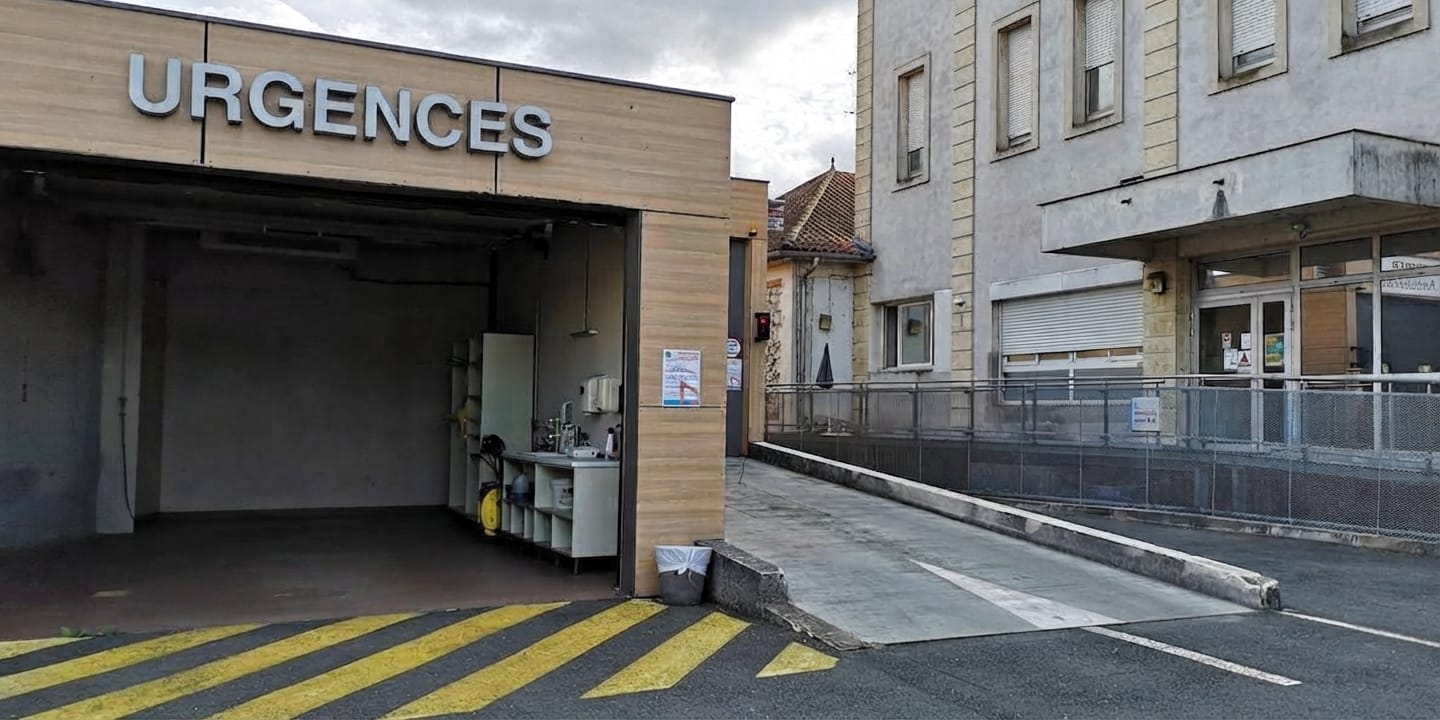
À Sainte-Foy-la-Grande, les urgences restent fermées faute de médecins

La fermeture avait pourtant été présentée comme temporaire. Les urgences de Sainte-Foy-la-Grande, en Gironde, ne rouvriront pas le 30 septembre comme annoncé. Le 26 septembre, l’établissement a confirmé le report de la réouverture, faute d’avoir pourvu les postes médicaux nécessaires. Pour les habitants, la fermeture temporaire se prolonge et les dizaines de kilomètres à parcourir deviennent la nouvelle norme.

À Sainte-Foy-la-Grande, les urgences restent fermées faute de médecins
LE COURRIER
DES STRATÈGES
Restez libre !
À Sainte-Foy-la-Grande, les urgences restent fermées faute de médecins

LA NEWSLETTER · GRATUITE

Le Courrier,
chaque matin.

L'essentiel de l'actualité, passé au crible par les cinq plumes du Courrier. Dans votre boîte, chaque jour ouvré.

Gratuit. Vous restez libre de partir quand vous voulez.

JE M'INSCRIS lecourrierdesstrateges.fr
lecourrierdesstrateges.fr
Restez libre !

Depuis l’été, le service d’accueil des urgences de Sainte-Foy-la-Grande ne reçoit plus normalement les patients. Une date de réouverture avait été fixée au 30 septembre, elle ne sera finalement pas tenue.

À Sainte-Foy-la-Grande, les urgences restent fermées faute de médecins
LE COURRIER
DES STRATÈGES
Restez libre !

ABONNEMENT

Allez au fond
des choses.

Deux grands formats par jour. Les cinq plumes du Courrier. La série Sécession, le dimanche.

Le monde commente. Vous, vous comprenez.

S'ABONNER lecourrierdesstrateges.fr
lecourrierdesstrateges.fr
Restez libre !

Une fermeture provisoire qui s’installe

Le 26 septembre, l’établissement a expliqué que, malgré une « très large mobilisation de l’ensemble des acteurs du territoire », les « postes médicaux nécessaires » demeuraient vacants. La conséquence est très concrète : les habitants du secteur doivent continuer à parcourir plusieurs dizaines de kilomètres pour accéder à un service d’urgences.

Sainte-Foy-la-Grande : Actualités et info en direct : faits divers, météo, sorties, sport, 33220 - Sud Ouest
Retrouvez toute l’info de Sainte-Foy-la-Grande (33220) en direct : les faits-divers, la météo, les sorties, la politique, l’économie, le sport et bien plus encore avec Sud Ouest

Le vocabulaire administratif mérite ici d’être regardé de près. Il n’est officiellement question ni de suppression définitive ni de fermeture assumée du service. Il s’agit d’un report, lié à l’absence de médecins. Mais, pour la population, la distinction devient secondaire lorsque la date annoncée de réouverture est repoussée.

Cette situation illustre une mécanique désormais familière dans l’hôpital public : une fermeture décidée pour une période limitée peut se prolonger faute de personnel disponible, puis devenir durable sans qu’une décision politique explicite de suppression ait été prise.

À Sainte-Foy-la-Grande, les urgences restent fermées faute de médecins
LE COURRIER
DES STRATÈGES
Restez libre !

TELEGRAM · L'INFO EN CONTINU

Entre deux éditions,
le fil.

La newsletter vous donne le matin. Le fil vous donne l'instant.

Gratuit, et en continu.

REJOINDRE LE FIL t.me/resterlibre
t.me/resterlibre
Restez libre !

Quand l’absence de médecins devient une décision

Le cas de Sainte-Foy-la-Grande pose donc une question qui dépasse le seul établissement. Qui décide réellement de l’organisation des soins lorsque l’État, l’hôpital et les autorités sanitaires invoquent simultanément le manque de médecins ?

À La Réunion, l’hôpital manque d’infirmières, et il est interdit de leur payer deux mois de loyer
À La Réunion, le Centre hospitalier Ouest Réunion a tenté de recruter des infirmières de bloc en avançant deux mois de loyer. Trois mille euros. La Chambre régionale des comptes vient de juger le dispositif illégal. L’établissement y a mis fin, alors même que son activité chirurgicale explosait. LE

L’établissement affirme avoir mobilisé les acteurs du territoire. Mais cette mobilisation n’a pas permis, à ce stade, de remplir les postes nécessaires. Pour les habitants, le résultat est identique : un service de proximité demeure inaccessible.

Urgences fermées en plein été : Lillebonne débranche, Mamers manifeste
À Lillebonne, les portes des urgences se sont refermées les 18 et 20 août, comme en février et en mai. À Mamers, elles sont restées closes dix-huit jours d’affilée, du 16 juillet au 3 août. Un même mal ronge le service public hospitalier : près de 40 % des postes

L'agence régionale de santé, l'hôpital et le ministère s'appuient sur la même explication : les médecins manquent. Aucun n'assume les conséquences. Maintenir une structure d’urgences suppose des médecins, des personnels, des gardes et une organisation permanente. À l’inverse, fermer temporairement transfère une partie de la contrainte vers les établissements voisins et vers les patients eux-mêmes, qui supportent les déplacements et les délais supplémentaires.

À Sainte-Foy-la-Grande, la question n’est donc plus seulement de savoir quand les urgences rouvriront, mais combien de temps une fermeture présentée comme provisoire peut durer avant de devenir, dans les faits, une nouvelle organisation des soins.

À Sainte-Foy-la-Grande, les urgences restent fermées faute de médecins
LE COURRIER
DES STRATÈGES
Restez libre !

TIPS · SANS ABONNEMENT

Offrez-nous
un café.

Un média libre vit de ses lecteurs. Un pourboire ponctuel, sans compte ni engagement, quand le cœur vous en dit.

Vous donnez ce que vous voulez. Vous restez libre.

LAISSER UN POURBOIRE merci !
lecourrierdesstrateges.fr
Restez libre !
  •  

4 Things You Have in Common with the Prodigal’s Older Brother

There are people trying to perform day after day— Christian leaders trying to preach a wonderful sermon every week, parents trying to produce lovely children, workers putting in long hours at work—all in a desperate attempt to prove themselves. Some weeks they feel like they’ve pulled it off; other weeks it seems so fragile—as though... Continue Reading
  •  

Freedom Is Self-Actualization

For many, building wealth is the pathway to self-actualization. More resources expand your choices, and therefore your freedom. Others see wealth as its own bondage. Your life becomes walled-in by money-management and all the people vying for their place in your decisions. Such contradictions lead us to conclude that the pursuit of freedom is none... Continue Reading
  •  
❌