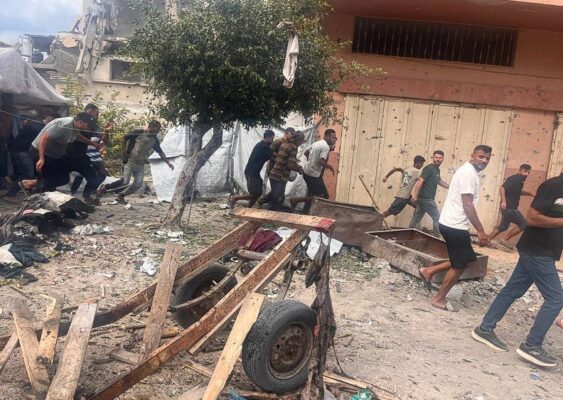
Nothing adds up in Israel’s narrative about the FlyDubai “hijacking”—and CNN just accidentally exposed the truth. Israeli Prime Minister Benjamin Netanyahu has been selling the FlyDubai incident as pure Hollywood heroism: a co-pilot turns terrorist, [...]
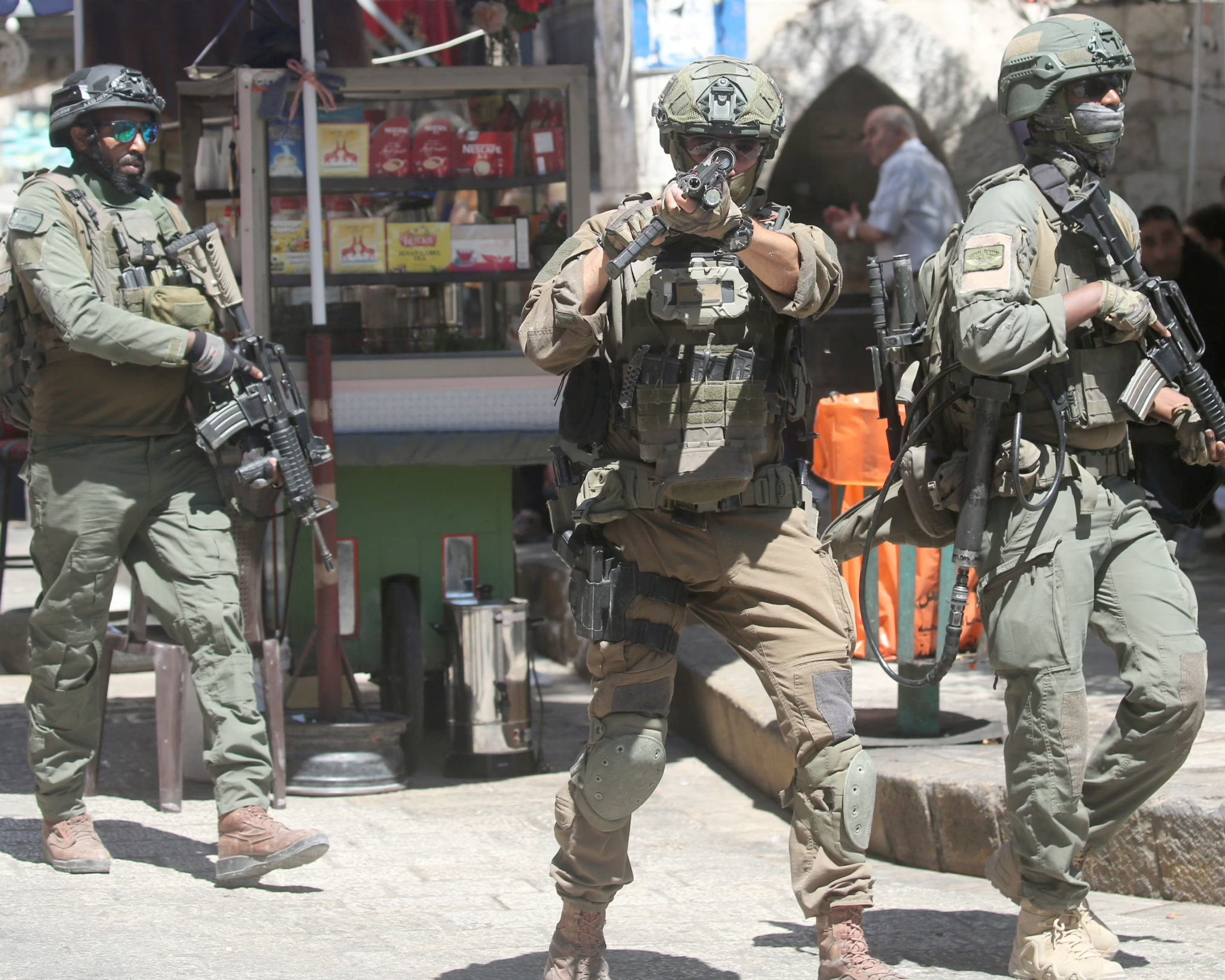
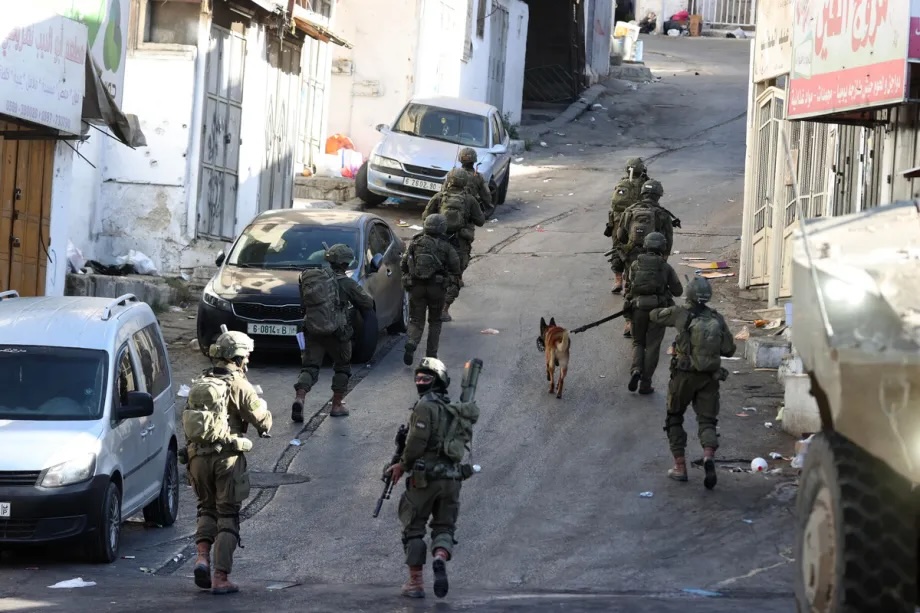
Israeli soldiers invaded communities across the West Bank on Wednesday, abducting at least 22 Palestinians, including 3 children and 2 employees of the Islamic Association for Orphan Care. Soldiers also broke into homes, assaulted residents, & fired gas bombs
Ghana has rejected a proposed health compact with the United States that would have provided an estimated $109 million in US health funding over five years, with President John Dramani Mahama saying the agreement raised serious concerns over health data, financing obligations, and Ghana’s regulatory authority.
The decision places Ghana among a few African countries that have pushed back against new US health agreements introduced as Washington restructures its foreign assistance following the dismantling of USAID. Zimbabwe has also rejected a similar agreement, while Zambia has raised concerns over provisions in its negotiations with the United States.
Ghana raises concerns over health data
Speaking at the Council on Foreign Relations in New York on September 25, Mahama said the proposed compact was presented to Ghana as a replacement for health funding previously provided through USAID.
He said Ghana’s Ministry of Health reviewed the document before preparing a Cabinet Information Paper.
“Ghana is a sovereign nation, and we have our own processes. We are a democratic country,” Mahama said.
According to the President, the Cabinet identified several provisions that raised concerns, particularly those relating to Ghana’s health information.
“One, it says that we shall give the United States our pathogen profile,” he said, adding that the agreement also required Ghana to provide medical records.
“It also says we should give our medical records. I mean, who takes another country’s medical records? And so that was strange.”
Concerns over health-data sharing have been central to resistance to the new US health agreements in several African countries.
No FDA inspection
Mahama also raised concerns about the treatment of medicines and other medical products supplied under the proposed arrangement.
He said Ghana would have been required to contribute funding to the program while, according to his account of the compact, the country’s Food and Drugs Authority would not have been able to inspect medicines or other medical products entering Ghana under the program.
“And then it also says that any medications or any medical products that shall be brought into our country, our Food and Drugs Administration has absolutely no right to inspect,” Mahama said.
“I mean, it was humiliating.”
Ghanaian officials had previously cited concerns about the proposed handling of sensitive health information as a reason for rejecting the agreement. Reporting on the negotiations also indicated that the proposed arrangement would have required additional investment from Ghana alongside the US contribution.
Cabinet rejected the agreement
Mahama said the proposal was rejected after the Health Ministry presented its assessment to the Cabinet.
He described the decision as unusually swift.
“It was the compact that was thrown out in record time in our Cabinet. I’ve never seen anything thrown out as fast as that.”
He said the government subsequently instructed the Health Minister to communicate Ghana’s position to the US ambassador.
“And so, of course, we rejected it. And we asked the health minister to inform the US ambassador that we didn’t need it. We’ll manage ourselves.”
The proposed agreement would have provided Ghana with about $109 million in US health assistance over five years. The negotiations had begun in late 2025.
A wider concern over health sovereignty
Ghana’s decision comes as the United States seeks to shift its approach to global health cooperation. The new US strategy places greater emphasis on recipient countries taking responsibility for financing and delivering health programs, while Washington reduces its traditional aid commitments.
Kenya became the first African country to sign the agreement which was challenged in court, followed by similar arrangements with Rwanda, Liberia, Uganda, Lesotho and Eswatini, among other countries. Ravi Ram from the People’s Health Movement (PHM) East and South Africa, told BreakThrough News in December 2025, that “Bilateral agreements between the US and Kenya and other African countries are meant to limit the ability of any one ‘partner’ country to challenge the terms of implementing the agreement, due to the unequal power relations.”
The concerns among health activists and concerned Africans is the ability of African states to determine their own health priorities, regulate medicines, control sensitive health information, and collectively negotiate the terms of international health cooperation.
Stimolare la crescita, mantenere la competitività e sostenere l’export: queste le sfide che le imprese italiane hanno dimostrato di saper affrontare anche in questa fase di grande instabilità geopolitica. Il...
Stimolare la crescita, mantenere la competitività e sostenere l’export: queste le sfide che le imprese italiane hanno dimostrato di saper affrontare anche in questa fase di grande instabilità geopolitica. Il...
A leaked letter signed by 2 former prime ministers, former heads of all Israeli security services, former judges, & Nobel laureate demanded Israel stop extreme violence and ideology of ethnic cleansing
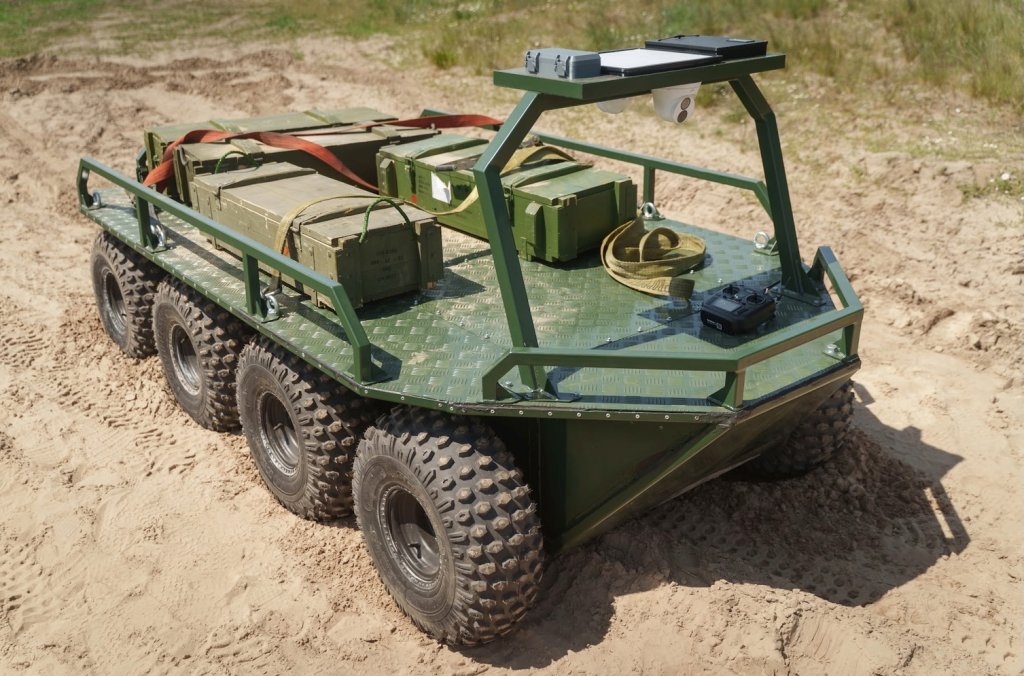
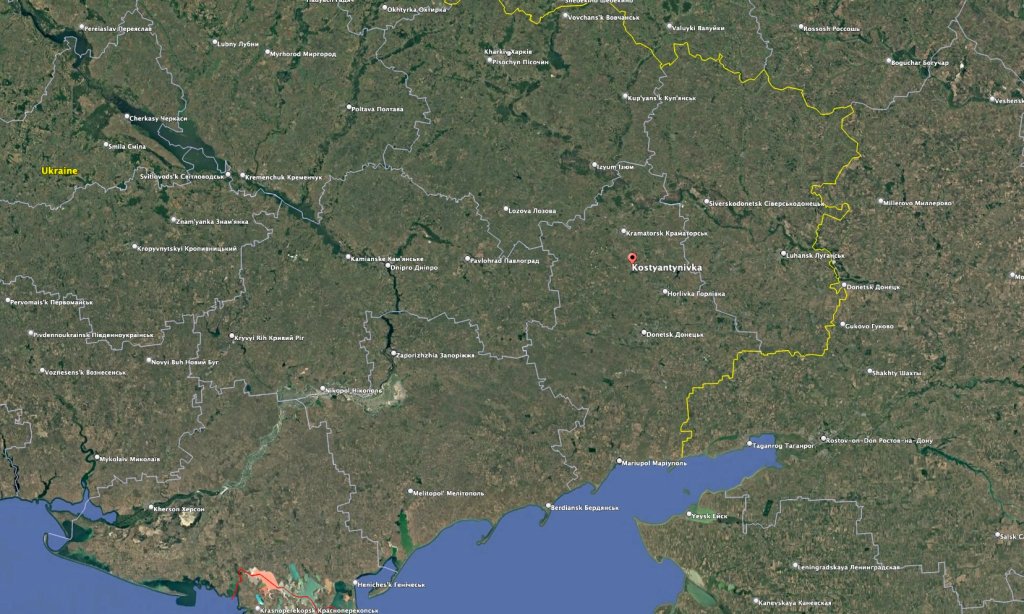
Taking a break from fighting Russians in the Kostiantynivka sector of the eastern Donetsk region, the commander of a Ukrainian uncrewed ground vehicle (UGV) unit spoke with us about innovations in the use of these systems. One was the first deployment of a UGV specifically designed for amphibious operations to deliver supplies to frontline troops in areas impeded by water obstacles. Large areas of the front line are bisected by rivers and wetlands, and the country has many other small waterways and marsh areas. As we have frequently reported, the use of UGVs by both Ukraine and Russia has exploded as the ubiquity of aerial attack drones makes it far too dangerous for human battlefield movements.
In an exclusive interview with TWZ, the commander of the 93rd Separate Mechanized Brigade’s “Alter Ego” UGV unit, who goes by the call sign “Electric,” offered us unique insights into the challenges of developing amphibious UGVs and how they were deployed.
In the first of two parts, Electric talks about why Alter Ego developed amphibious UGVs – including modifying a Triton variant for this – and how the unit made them work. The second part features his insights into using heavy ‘bomber drones’ to drop UGVs behind enemy lines for kamikaze raids. In addition, a representative of Brave1, Ukraine’s weapons technology accelerator, spoke about developing these systems at scale.
Some of the questions and answers have been slightly edited for clarity.
Q: How did the need for amphibious UGVs for logistics operations first come up?
A: We had this idea for a long time, but recently one of the units of the Armed Forces asked for our help to solve this problem, so that the UGV could overcome water obstacles.
There was a crucial need for this kind of means at certain parts of the front, but the units that are located there didn’t have the capacity by themselves to solve this task. So our battalion was asked to solve this problem because we are one of the most experienced units in terms of UGVs.
A first-ever logistics mission on an amphibious UGV: the robot covered 40 kilometers across land and water.
Operators of the "Alter Ego" unit (93rd Brigade) deployed the robotic system across mixed terrain. Facing water obstacles, the UGV seamlessly switched to swimming mode to… pic.twitter.com/rH8waq04a4
Q: How long did it take to design and test the amphibious UGV, and what went into that process?
A: The whole process from development to battle deployment took less than three months.
Q: What did you have to do to make this work?
A: First of all, we looked at amphibious solutions that were on the market, not only in Ukraine, but in the world, and we took two separate approaches. One was taking one of the main UGVs that our unit is using on the ground, and we made it amphibious. And the other approach was that we took one of the solutions that was on the market that already had amphibious capabilities, and we solved several disadvantages that it had. And at the moment, we are using both.
Q: What did you have to do to make the UGV amphibious, and then what were some of the obstacles that had to be overcome to get this operational?
A: First of all, we have to explain that there are different solutions on the market that kind of work on the testing ground — like they can swim, they can drive on the ground, and in the vision of the manufacturer, they are working. But the fact is that these solutions are not ready for the reality on the front line, which is often very different from what is on the testing ground.
And the second point is that the unit has its own workshops where people work near the front line, and the experts, the engineers that work there, they have a very high level of competence to evaluate different solutions and select the one that has potential. And that’s what’s completely different between this unit and everyone else, like manufacturers and others who are working on these solutions, because they don’t understand what’s needed on the battlefield.
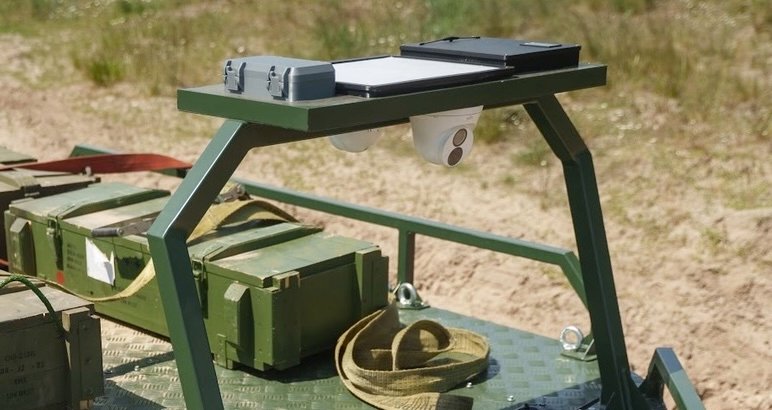
The Alter Ego unit’s uncrewed amphibious ground vehicle (UGV). (Brave1)
Q: So what did you have to change to make it work?
A: Regarding the amphibious one, basically the unit changed almost everything that that UGV had, starting from electronics, the software, the waterproofing, the communications – we basically changed everything. Regarding the one that we already used on the ground, we basically tried to retain what was allowing it to be an effective UGV on the ground, and we added waterproofing and specific mechanics, so that it can work in the water environment.
Q: You mentioned communications. What kind of communications did you add?
A: The communication means that was installed on the UGV by the manufacturer was not sufficient at all. Basically, it didn’t have enough quality for the battlefield situation. It was not working. But we already have our own communications that we were working on, and we have a lot of experience because we have been working for a long time in this UGV area. So we basically helped to install a sufficient level of communications on this UGV.
Q: So how does the amphibious UGV communicate with the controller? Does it use Starlink or some other satellite communications system for navigation?
A: This is satellite navigation, but not only. Satellite navigation is a part of this communication system.
Q: What are the other parts?
A: It’s better not to talk in detail about the other part of the communication system.
Triton amphibious UGV communications and camera systems. (Brave1)
Q: There were probably a lot of different missions that could have been used for this first amphibious UGV logistics delivery. Why was this particular mission chosen?
A: The Alter Ego unit has so much experience in terms of UGVs, and not just experience of using UGVs, but the experience of being the first in the world. We had one of the first evacuation missions, we had one of the first strike missions using UGVs, the paratrooper UGV, and now the amphibious UGV. So basically, we have the systems to make it work for the first time when nobody knows how to conduct this mission.
Q: No, I mean why did this particular mission get chosen to be the first one?
A: There are certain places on the front line where we have water obstacles that prevent logistics from being done by UGV. At the moment, UGVs are carrying hundreds of tons of logistics, probably the most compared to any other means on the front line, but before this, these water obstacles would prevent UGVs from providing logistics for those parts of the front, and that need can’t be fully satisfied by UAVs or other means. That’s why we did this mission with the amphibious UGV, and now our task here is to scale this technology and provide this logistics system for other similar parts of the front where there are water obstacles.
Kostiantynivka, Ukraine. (Google Earth)
Q: Tell me about where and when this mission took place and what it was like to watch it unfold.
A: So unfortunately, we can’t provide information about when and where this operation took place. But regarding how it went and what we felt, this was another big challenge, because this is something that wasn’t done before, and nobody thought this is real. So this was quite difficult, and to tell the truth, the mission didn’t succeed on the first try, actually, and it required a lot of effort in terms of planning, preparing, engineering, and basically it required 100% effort from everyone involved in that mission.
Q: How many times did it fail before, and what went wrong?
A: We had one failed attempt. The reason for failure was a certain technical problem. After that, we analyzed what went wrong, and we worked on solving those issues. Basically, it’s something that nobody had tried to do, it’s kind of hard to know what can go wrong before you actually try it. So the best way to find a solution like that is to try and then iterate on that attempt and make it better and better and better.
Also, I would like to add that although this was the first successful mission regarding an amphibious UGV, it’s not that there was no work on that before that. We were actively talking to and collecting the experience of everyone who was working on these kinds of missions before, and that was also a reason why this mission succeeded.
Q: How far did the amphibious UGV go for this mission?
A: So the UGV went 40 kilometers one way, and then it returned. So probably around 70 kilometers in total, and it carried food and other supplies.
Q: Did this UGV come under Russian fire on this mission?
A: Yes, and it survived.
Q: How does the UGV switch from water to land operations?
A: So the UGV has two separate control systems, one for water and one for land, and basically it switches to the one that is required at the moment. That’s how it can operate in both environments.
The Alter Ego unit’s uncrewed amphibious ground vehicle (UGV). (Brave1)
Q: Is that autonomous, or is that something that the controller at the base has to do as they watch the UGV on its mission?
A: At the moment, the operator fully controls the UGV manually. And basically, before, the operators of UGVs only knew how to move them on land, but now they also had to learn how to move them in the water. So not only was the technology itself developed, but we also had to prepare the operator and come up with tactics for this UGV.
Q: Did you use AI on this mission in any way, and if so, how?
A: We didn’t use AI.
Q: Have there been other missions using amphibious UGVs?
A: Yes.
Q: Can you say how many and what was delivered?
A: No.
Q: Is this designed only for logistics missions, or will it be used in the future for strike missions, either as a one-way attack system or as a platform for machine guns or other weapons?
A: We can use it in different ways in the future.
Q: Mud season is fast approaching, when much maneuvering becomes impossible or severely degraded because of how difficult it is to move in the thick, oozing slop. Will your amphibious UGVs work in the mud?
A: I think it can operate in the mud in the same way it operates in the water.
In the next segment of our interview, Electric talks about using bomber drones to deliver UGVs behind the lines, and a Brave1 representative talks about how the organization is working to develop these systems at scale for wider use.
On October 1, 1949, Mao Zedong stood in Tiananmen Square and declared the founding of the People’s Republic of China, bringing an end to the “Century of Humiliation” and setting a nation representing a quarter of humanity on a path toward self-determination. Seventy-seven years later, China stands as a global superpower, navigating a rapidly shifting multipolar world order and escalating containment pressures from the United States.
Professor of East Asian and global history Dr. Ken Hammond joins Amanda Yee to break down the historical, economic, and geopolitical forces that have shaped modern China’s development and foreign policy over the past 77 years.
Gli USA escludono Regno Unito, Francia (“volonterosi”), stati baltici (art.5!) e diversi altri paesi europei dalla riunione NATO – Politico
Nei circoli diplomatici si teme che la selettività di Washington possa portare a una trasformazione dell’intera alleanza. I rappresentanti dei paesi esclusi affermano di non comprendere i criteri di selezione. “Se provano a dividere la NATO in alleati ‘buoni’ e ‘cattivi’, sarà pericoloso per gli USA”, ha detto un diplomatico.
A food package carries no bioengineered disclosure. Does that mean no genetic engineering went into the food?
No. USDA’s bioengineered food disclosure standard leaves entire categories of genetically engineered foods and ingredients outside mandatory disclosure.
Easing restrictions on natural substances with credible histories of safe use makes sense. Yet natural products face persistent calls for tighter regulation, alongside efforts to suppress truthful information about their benefits.
Meanwhile, novel technologies that fundamentally alter our food are riding a wave of deregulation—even as their implications demand rigorous scrutiny and full transparency.
These priorities are backwards.
A Narrow Definition, Wide Exclusions
Under the current rule, foods generally require disclosure when: 1) they contain genetic material modified through laboratory recombinant-DNA techniques, 2) the modification could not otherwise arise through conventional breeding or nature, and 3) the modified material is detectable.
There are a host of exclusions:
Restaurants and food service: meals can contain engineered ingredients without this disclosure.
Very small manufacturers: businesses with annual receipts below $2.5 million are exempt.
Accidental presence: up to 5% of each ingredient may be bioengineered if its presence is “inadvertent” or technically unavoidable.
Animal feed: meat, milk, and eggs do not require disclosure solely because animals ate engineered feed.
Refined ingredients: oils, sugars, and other ingredients can avoid disclosure when modified genetic material is undetectable.
Processing aids: qualifying incidental additives present at insignificant levels with no final technical or functional effect are excluded.
Certain meat, poultry, and egg products generally fall outside coverage when those ingredients predominate, including after water, broth, or stock.
Many alcoholic beverages: products subject to federal alcohol labeling law fall outside this standard.
Nearly A Quarter of Your Chips
Consider a hypothetical bag of corn chips containing 80% cornmeal, 19% refined soybean oil, and 1% salt.
If 5% of the cornmeal is inadvertently mixed-in bioengineered corn, that represents 4% of the chips. Add oil entirely from engineered soybeans that meets non-detectability requirements: another 19% originates from GE crops.
That is 23% of the product’s weight originating from engineered crops, quite legally without a bioengineered disclosure.
This can also allow proteins made using genetically engineered yeast or bacteria (through a process called “precision fermentation”) to avoid disclosure, depending on what remains in the finished ingredient.
A CRISPR-produced food can escape disclosure if its genetic modification could otherwise be achieved through conventional breeding or found in nature.
But who decides if a modification could arise through conventional breeding or nature?
Essentially it is the food company that makes the decision…
Modern history has consistently taught us that we cannot trust our Federal Government in the U.S. to look out for the interests of consumers, and that includes the USDA and the FDA. Both of these agencies serve Wall Street, and derive much of their revenue from the very businesses they are supposed to be regulating in Big Pharma and Big Ag.
For example, the entire corn crop in the U.S. is contaminated, even if that corn is certified organic by USDA organic standards. There may be some exceptions, but we (Healthy Traditions) have never found any corn in the U.S. that has tested clean for GMO DNA, and we have been testing for 12 years now.
The only corn we have tested that has no trace amounts of GMO DNA and no traces of the cancer-causing herbicide glyphosate, has been from traditional farms in Mexico, where planting GMO corn is illegal.
Therefore, we believe we have some of the highest quality tortilla corn chips in the U.S., and we fry them in coconut oil, not toxic polyunsaturated oils derived from GMO crops like corn and soybeans. We also do not package them in plastic, but special bags that are compostable with no dangerous chemicals.
There may not be a finer tortilla corn chip sold in the U.S.!
DISCLAIMER: Brian Shilhavy is the Editor of Health Impact News, and the founder and CEO of Healthy Traditions. Everything published on the Health Impact News network is available to the public free of charge, with a Creative Commons license offered to all who wish to republish Brian’s articles, with attribution, as he earns his income from Healthy Traditions.
Healthy Traditions, originally Tropical Traditions, has served customers in the U.S. for over 24 years.
A nuclear-powered LNG carrier could cost roughly 2.5 times as much to build as a conventional vessel, but lower fuel costs could significantly change the economics over the ship’s operating...
(Bloomberg) — Turkey and the United Nations have set up fresh talks in Russia and Ukraine to discuss a Black Sea ceasefire, trying to coalesce scattered efforts to protect grain...
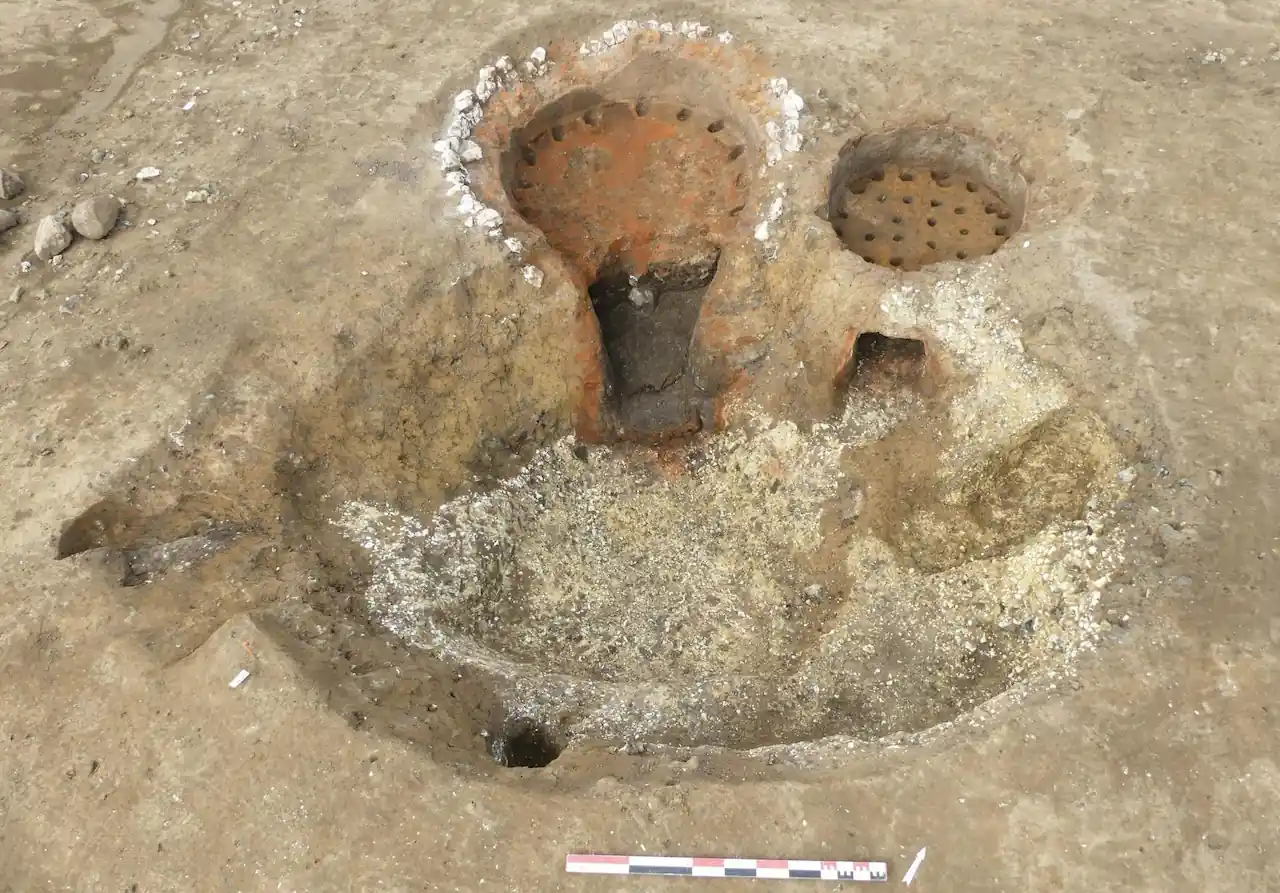
Dig a trench for a canal that will run 107 kilometres (66 miles) across northern France and you expect scraps: a stretch of road, perhaps, or a lone farmstead. At Sermaize, in the Hauts-de-France region, archaeologists from France’s National Institute for Preventive Archaeological Research (Inrap) found something much rarer. It is a complete workshop, with […]
Cuando se abre una zanja para un canal de 106 kilómetros, lo normal es encontrarse con restos sueltos, un tramo de camino o una granja aislada. En Sermaize, un pueblo de la región francesa de Hauts-de-France, los arqueólogos del Instituto Nacional de Investigaciones Arqueológicas Preventivas (Inrap) se han topado con algo bastante menos habitual, un […]
On a Wednesday in July, deep in a coastal restinga area of Brazil’s Paraná state, muffled footsteps broke through the chirping of manakins. Three field researchers from the conservation NGO Society for Wildlife Research and Environmental Education (SPVS) moved carefully along a trail, each carrying a small cage covered in a dark cloth. Each cage held a black-faced lion tamarin, known locally as the caissara lion tamarin (Leontopithecus caissara). Captured safely from the canopy, the three small primates — two males and one female — were carried to a makeshift tent in a forest clearing, where they would make history. Within hours, they would become the first of their species to be vaccinated against yellow fever. A team of researchers and veterinarians was waiting, quickly transferring each tamarin into a cotton bag to be weighed, starting a race against the clock to protect one of Brazil’s most threatened mammals. L. caissara is one of four lion tamarin species endemic to the Atlantic Forest; it ranks among the world’s rarest primates. First found and described by science in 1990, its wild population was estimated at just 392 individuals in a 2011 study. Most tamarins are confined to coastal restinga areas along the São Paulo-Paraná state border. A Society for Wildlife Research and Environmental Education veterinarian examines a sedated black-faced lion tamarin. Image by Gabriel Marchi. The species’ already restricted range has also been fragmented for decades. Part of the problems started with the Varadouro Canal, a 6-kilometer (3.7-mile)-long, 50-meter (164-feet)-wide artificial…This article was originally published on Mongabay
Sen. Chris Murphy (D-CT) says the government should control how much time Americans spend online — and what they do while they are using the internet. Senator Murphy was on Jennifer Welch’s podcast I’ve Had It, [...]
Are top Democrats actually “shifting” on Israel, or is the PR simply getting more sophisticated?
After the midterms wrap up and the race for the Democratic 2028 nominition for president kicks off in earnest, this will be a central question those concerned with the US role in the genocide in Gaza must grapple with clearly, honestly, and with—it turns out—a high degree of skepticism and media literacy. That’s because the forces committed to keeping the weapons flowing to Israel quickly adjusted their tactics to meet the mood of the public, and the mood of Democrats in particular.
Last year for TRNN, I detailed the three main ways AIPAC Democrats will seek to look critical of Israel while assuring that the pro-Israel status quo remains fundamentally unchanged. Since I wrote that breakdown, a fourth talking point—and one that seems inevitable in retrospect—has emerged as a favorite of liberals who want to seem “tough on Israel,” but don’t want to upset the Israel Lobby. This line, which I documented last April, commits to “ending US aid to Israel” which, despite seeming like a meaningful break or a move left, is a policy that first emerged from Israeli Prime Minister Benjamin Netanyahu and the late US Sen. Lindsey Graham. And, as I noted, it was planned out by far-right think tanks Foundation for Defence of Democracies and Heritage Foundation—specifically designed to blunt the primary argument against support for Israel. Last January, Netanyahu told the Economist that he wants to “taper off” formal US military funding. Pro-Israel lobbying organization J-Street then took this right-wing idea and proceeded to sell the “cut off aid to Israel” line to liberals as something they could take to their constituents as evidence that they are in line with Democratic voters’ overwhelming dislike of Israel, while not changing the status quo. Indeed, as IMEU documented in their critique of the plan, the effort would actually further entrench US-Israeli military alignment.
The US can “cut off aid to Israel” and still very much continue to arm them. The only thing that has changed in this scenario is that Israel pays for it rather than the US government, but from the perspective of those being starved and maimed in Gaza this distinction matters about as much as the color of the bombs.
Much like the Biden White House’s slippery and misleading rebranding of “ceasefire,” the “ending aid to Israel” line relies on popular misunderstanding of what the load-bearing word means, in this instance, “aid.” In colloquial or common usage, it’s a word for general support—military, diplomatic, and financial. In reality, it simply means subsidizing—e.g. paying for—Israel’s weapons. The US can “cut off aid to Israel” and still very much continue to arm them. The only thing that has changed in this scenario is that Israel pays for it rather than the US government, but from the perspective of those being starved and maimed in Gaza this distinction matters about as much as the color of the bombs.
As predicted, this “cut off aid” statement is fast becoming the go-to line for Democrats seeking to assure their increasingly anti-Israel base without upsetting the Israel lobby or the Democratic Senate and House leadership they are aligned with. Recently, after receiving criticism for inviting in AIPAC-linked consultants to steer his campaign, Maine Democratic Senate candidate Troy Jackson released a statement calling Gaza a “genocide” and pledging to “stop funding of Israel’s military”:
Troy Jackson’s public statement yesterday expressing his commitment to end the genocide in Gaza and stop funding Israel’s military was driven by a host of supporter letters sent directly to the campaign on those issues. pic.twitter.com/FMrMBPcU2W
This is a perfect example of a J-Street-curated statement that, to the untrained eye, seems critical of Israel and committed to justice for Palestine, but actually says little of substance. There’s a lot of window dressing and gesturing, but ultimately Jackson’s policy is consistent with that of Benjamin Netanyahu’s.
Rep. Ro Khanna, who very much appears to be running for president in 2028 and making Gaza central to his pitch for progressives, is similarly muddled in his stance. Despite supporting partial and temporary embargos here and there, Khanna told Hasan Piker in July that a full arms embargo on Israel would be “probably too far.” He has instead focused on the “cutting off aid” line that emerged out of the Israeli security apparatus and found its way into “progressive” circles via J Street.
Democratic nominee for Senate in Texas, James Talarico, likewise gave a similarly underwhelming answer when asked about his position a few weeks later. Asked about Gaza last August on The Breakfast Club Show, he refused to label it a genocide, instead deferring to the “international criminal court” (and ignoring the overwhelming consensus of human rights groups and genocide scholars). Then he promised to “condition military aid” followed by two minutes of Obama-esque vapid empathy-speak.
That isn’t to say all Democrats are simply rebranding the status quo. It seems, despite his campaigning with central defender of the genocide Kamala Harris, Abdul El-Sayed is expressing a firm commitment to an arms embargo on Israel. Obviously, this is also the case for DSA-endorsed candidates who are not splitting hairs or letting J-Street manage their Israel policy. But these firm commitments are the exceptions. Increasingly, what we’re seeing is a squishy mix of empathy-speak, vague gesturing, highly conditional pledges to “condition aid” and other such abstractions with little in the way of firm commitments.
The only actions Democrats have, at scale, taken to “break from Israel” is recent spattering of Congressional votes over the past year designed to signal disapproval but change nothing of substance. These bills vary between genuine, if partial, arms embargo and the aforementioned “end aid” framework endorsed by Netyanhau and Graham. It’s complicated, but worth dissecting, because it can help illustrate how much energy and effort is going into these pseudo “breaks,” namely those being pushed by Israel lobbying group J-Street. One House bill from last July sought to “end aid” to Israel. The bill had some merit as it isolated Israel as such. But, like all of these bills, it was effectively a “messaging vote” because it had zero chance of passing, and because it aligned with the Netyanhau-approved “ending aid” framework. Almost half of Democrats in Congress supported it, including long-time reliable Israel ally Nancy Pelosi.
A few months later, we saw the slightly more substantive, but ultimately performative, partial arms embargo bills in both the House and Senate. Though different, they both involved preventing further sales of certain weapons to Israel given certain conditions. In the House, 104 Democrats backed the measure, and in the Senate, all but seven Democrats, including major Israel supporters, backed the measure.
These votes, in effect if not intent, end up serving as little more than anti-Israel thingamajigs that liberal zionists in Congress can point to when confronted on the issue as evidence that they are not a rubber stamp for Israeli violence.
But these bills, as everyone involved in their drafting, lobbying, and counter-lobbying know, were totally DOA. They have zero chance of actually passing, much less getting a President Trump veto-proof majority. Thus—despite many activists’ best intentions—they functionally serve as little more than a mechanism for reputation laundering for liberals who’ve backed Israel’s genocide and its broader regional violence, but who can read a poll as well as anyone else. These votes, in effect if not intent, end up serving as little more than anti-Israel thingamajigs that liberal zionists in Congress can point to when confronted on the issue as evidence that they are not a rubber stamp for Israeli violence. Indeed, suspiciously enough, the Senate version last April garnered the support of staunch Israel advocate and AIPAC-money sponge Cory Booker, who grinningly met with Israeli defensive minister Yoav Gallant after Gallant was indicted by the ICC for crimes against humanity. Does anyone think for a second Booker would have backed a bill to prevent weapons sales to Israel if it had a remote chance of passing? Does anyone think his vote in support is evidence he’s “breaking from Israel”? Or is it evidence of something a bit more subtle, and sinister, which is Democrats realize they need to appear as if they’re breaking from Israel without the messiness of actually doing so?
But if the above bills are largely superficial and performative, why would Hakeem Jeffries write a letter in opposition, one may ask? For the same reason Jeffries agreed to let the vote happen and not discipline those supporting it: it’s all part of an intramural scrimmage between zionist allies who disagree on how best to “rein in” Israel. On substance, nothing fundemental is permitted to change, and the idea of ending military support was never on the table. Jeffires and AIPAC both understand that this is a 80/20 issue against them and are allowing their members more latitude in rhetorical and ideological distance, so long as the weapons flow remains unabated which it, of course, securely remains.
One of the more difficult tasks for an activist of good faith is being able to tell the difference between genuine, if incremental, progress, and counterinsurgency—that which appears like incremental progress but is, in fact, a move to the right with better PR.
In his urging of support for the bill earlier this year, Rep. Greg Casar, chair of the Congressional Progressive Caucus, said that “American people are crying out for an end to US tax dollars subsidizing Israel’s military.” But American people are not so much crying out for this, and certainty Palestinians aren’t, as they are an end to the genocide and occupation. It doesn’t matter if this genocide is “subsidized” by “US tax dollars” or not—the source of military funding is mostly arbitrary and inconsequential. What activists are demanding, what Democratic voters are demanding, is not a “message” bill or limited to “defensive weapons” with 18 qualifiers and carveouts, but support for a total arms embargo in principle and as a long term strategy of ending US support for the dispossession and killing of Palestinians.
One of the more difficult tasks for an activist of good faith is being able to tell the difference between genuine, if incremental, progress, and counterinsurgency—that which appears like incremental progress but is, in fact, a move to the right with better PR. Sorting out the difference in the coming months is going to be essential to make sure we don’t just elect a whole new crop of liberals who, despite more convincing crocodile tears and more sophisticated handwringing, just go back to shipping weapons systems and scrambling the sixth fleet to defend Israel’s next “defensive war.”
As voters concerned with the full-scale destruction of Gaza analyze the statements of politicians seeking to appear “good on Gaza” in the coming months, there are two central commitments they must attempt to pin down: (1) support for a full arms embargo without any conditional statements or tortured caveats and (2) support for the Boycott Divestment and Sanction movement, which seeks to economically isolate Israel. These are the positions that would logically follow from a belief that the country in question is committing genocide—as top progressives likely seeking the White House, like Alexandria Ocasio-Cortez and Ro Khanna—said they believe. These measures—not nickel and diming “offensive” versus “defensive,” not singling out “Netanyahu,” not making vague promises to “condition aid” if Israel meets some unknown, arbitrary benchmark of humane mass killing—are the only thing that will move the needle and compel Israel to temper its exterminationist policies and plans. Only one member of Congress, Rep. Rashida Tlaib, unequivocally supports BDS, but certainly far more are capable of committing to a full arms embargo. If they cannot do even this bare minimum, and do so clearly, then the only logical conclusion one can reach is they are simply saying nice-sounding words, and checking the rhetorical box of “genocide,” so they can get elected then go back to enforcing and maintaining the genocidal status quo.
SCHIPKAU, Germany (AP) — A wind turbine described by its developer as the world’s tallest now rises 365 meters (1,197 feet) above the sparsely populated landscape of eastern Germany, surpassing the height of the Eiffel Tower. The colossal turbine has been built at an existing wind farm in Lusatia, southeast of Berlin. Once a major center of lignite mining, the region has increasingly turned to renewable energy in recent years. The prototype reached its full height this week and is due to be inaugurated in mid-November. Jochen Grossmann, chief executive of Gicon, the Dresden-based engineering company that built the tower, said the structure would harness the stronger, more reliable winds found at greater heights. Conventional wind turbines typically have a hub height — the distance from the ground to the center of the rotor — of well below 200 meters (656 feet). “At 300 meters, we have such constant and strong wind that we can produce more than twice as much electrical energy as with the same facility at today’s heights,” Grossmann said on Thursday. He added that it would also be possible to produce electricity for much more of the year than with existing turbines. The turbine has a hub height of 300 meters (984 feet), and its rotor blades bring its total height to 365 meters. That makes it taller than the Eiffel Tower in Paris, at 330 meters (1,083 feet), and leaves it just short of Berlin’s television tower, Germany ‘s tallest building at 368 meters (1,207…This article was originally published on Mongabay
 Login